




Abstract
During the last decades, Ecuador's páramo wetlands have become increasingly important sites for environmental governance. Historically, these humid, highly biodiverse Andean moorland ecosystems were seen as empty desolate and unproductive spaces, and later, between the 1960s and 1990s, as spaces for expanding the agricultural frontier of rural communities. Since the end of the 1990s, this changed as páramos came to be seen as important spaces for biodiversity and water conservation. Using the Foucauldian notion of governmentality we show, first, that a new “narrative” about these spaces leads to new state and non-state interventions that rearrange the socio-material relations in these ecosystems. Then we analyze how the “conservation narrative” has been translated to projects and programs that advance biodiversity conservation and the water regulating capacity of paramos. By analyzing the most important Ecuadorian paramo conservation initiatives of the last three decades, we show how this takes place through different techniques of government that aim to conduct-the-conduct of rural communities. The latter we argue, is a continuation of a centuries old pattern of governing marginalized rural populations to serve the interests of the ruling elite. Historically, this process created longstanding socio-environmental injustices that current initiatives are failing to address. The latter makes many of the conservation interventions fragile in the long run.
Keywords
Introduction
In the last three decades, páramos – biodiverse, high-elevation humid grassland ecosystems found mainly in the Andes above the continuous forest line and below the permanent snow line – have been identified as endangered ecosystems that play an important role in biodiversity, water conservation, and carbon sequestration (Buytaert et al., 2006; Manosalvas et al., 2021; Mosquera et al., 2023). As a result, in Ecuador and other Andean countries, páramos have come to the forefront of political, socio-economic, environmental, and academic debates and disputes (Correa et al., 2020; Duarte-Abadía et al., 2023a; Hidalgo-Bastidas et al., 2022, Mena-Vásconez et al., 2023). The interest in these spaces has led to the development of policies, projects and programs aimed to advance the “restoration, conservation and protection” of these ecosystems, their biodiversity, and related environmental services (de Koning et al., 2011; Jones et al., 2017; Joslin and Jepson, 2018; Krause and Loft, 2013). In international policy and academic debates, Ecuador has often been showcased as exemplary in advancing the environmentalist agenda through innovative, and often market-based, governance arrangements. This makes Ecuador, and particularly its market-environmentalist trajectory of páramo protection, an interesting case to analyze. Today, approximately 1.2 million hectares (ha) of páramos in Ecuador (see Figure 1) are protected under different systems, which represents almost 78% of the country's páramo ecosystems. Most of these areas are protected as national parks by the state and often overlap with other environmental governance initiatives (Wingfield et al., 2021).
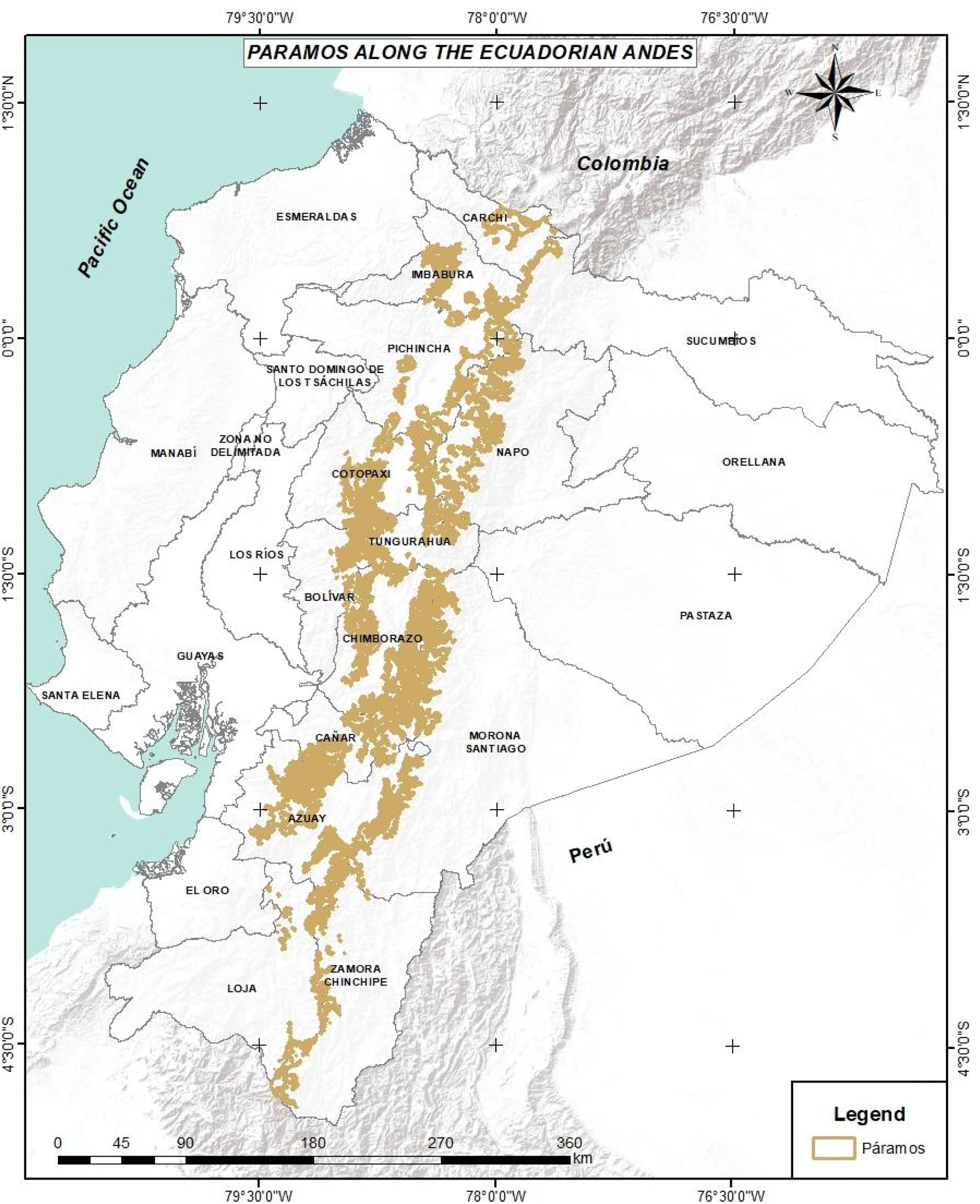
Páramos along the Ecuadorian Andes. Elaborated by S. Terán.
Throughout pre-Hispanic times and Ecuador's modern history, the páramo highlands have always been an arena of ongoing struggle and conflict between powerful rulers and the populations who live in and depend on these spaces. Since the arrival of the Spanish colonizers, páramos have been understood and governed in very different ways. Once regarded by Indigenous populations as spiritual places of worship, páramos came to be seen by colonial and state authorities as unproductive empty spaces that were only suitable for sheep and cattle herding. As a result, during the Ecuadorian agrarian reform (1960s to 1980s) which aimed to redistribute land to those who tilled it, most landlords (hacendados) retained the most productive and fertile “lower” valley soils, while relinquishing the less productive páramo lands. As these lands were transferred to peasant and indigenous communities, they became the focus of state agencies and NGOs as sites for rural development, in which communities were expected to make a living. This resulted in projects that stimulated the intensive use of this land through forestry, agriculture and improved livestock rearing. Around the same time, the first national parks and reserves were established in páramo regions. Since the 1990s, Ecuadorian páramos have been identified and governed as fragile biodiverse ecosystems that, if well conserved, have significant water regulation capacity.
This article contributes to recent environmental governance studies that have evaluated and criticized interventions that are based on neoliberal assumptions; that is, those that depart from the notion that the problem of environmental degradation is fundamentally a problem of economic valuation. These include, among others, the work of Audrey Joslin, who critically examines the neoliberal assumptions and everyday outcomes of the Quito Water Fund (Joslin, 2019, 2020a, 2020b, 2023, Joslin and Jepson, 2018); Jean Carlo Rodríguez de Francisco, whose work fundamentally challenges the success stories regarding Payment for Environmental Services schemes as acclaimed by Ecuadorean policy-makers and international scholarship (Rodríguez de Francisco et al., 2013; Rodríguez de Francisco and Budds, 2015; and Rodríguez de Francisco and Boelens, 2015); and Emilie Dupuits, who elaborates on the synergies and tensions among different forms of knowledge deployed in Ecuadorean water conservation policies and interventions (Dupuits, 2019; Dupuits and García, 2022; Dupuits et al., 2020, 2023). This body of work also draws on broader scholarship on water and páramo politics in Ecuador and Latin America (Boelens et al., 2014; Farley et al., 2011; Heikkinen, 2024; Himley, 2009). These studies have analyzed specific cases, documenting the conflicts and contradictions that often arise when new environmental governance mechanisms are applied on-the-ground. Building on this body of work and taking a historical perspective, this article analyzes how changing overarching narratives about páramos shape the rationale behind territorialization efforts. Specifically, we analyze how the most recent conservation narratives advance particular territorial projects through a mix of different government strategies, or governmentalities (Foucault, 2008). Through this analysis, we show that such efforts are a continuation of a centuries old practice of governing rural populations by prevailing political and economic elites. A process that created, and up-until now has not resolved, longstanding socio-environmental inequities.
In this article we first explore the interlinked notions of territory and governmentality (Foucault, 1991, 2007), which serve as our analytical framework. Then we present how páramos have been understood since pre-Hispanic times, highlighting how evolving perceptions of these landscapes have gone hand in hand with changes in their governance. Next, we analyze the most prominent páramo conservation initiatives that in recent years have tried to advance the conservation of biodiversity and its water regulating capacity. In the conclusions, we reflect on these recent efforts by powerful modern actors to control páramo spaces.
Data for this article was collected through extensive field work by the authors. It consisted of semi-structured and open interviews, as well as participant observation in community assemblies, collective work days, and public events about páramo conservation. Interviews were held with practitioners and policy makers from governmental, non-governmental, and private sectors, as well as with technical staff from international cooperation agencies (n = 14). Additional interviews were also carried out with local indigenous communities and offcials from water trust funds (n = 46). The aim was to understand, from the participants’ own perspectives, the underlying rationales and practices guiding different páramo conservation strategies and programs. We complemented this data with a review of state legal and institutional frameworks.
Territorialization through different techniques of government
Territoriality is defined by Sack (1986) as the “attempt by an individual or group to affect, influence or control people, phenomena, and relationships by delimiting and asserting control over a geographic area. (p. 19)”; in other words, it is about claiming and managing space (see also Vandergeest and Peluso, 1995). This definition aligns with the notion of territory as formulated by Swyngedouw and Boelens (2018: 117): “Politically speaking, territory is the socio-materially constituted and geographically delineated organization and expression of and for the exercise of political power”. This definition is helpful for exploring how a specific understanding of a place relates to strategies aimed at establishing new orders and relationships concerning the use, management, and control of natural resources; in this case, páramo ecosystems (see also Joslin, 2020a; Peluso and Lund, 2011). These strategies are often enacted through the control of people, their activities, and their forms of organization (Gurung, 2023; Soja, 1971). According to Foucault (1991), this control of the social is articulated through the conduct-of-conduct, aimed at establishing a specific socio-material order within defined spatial boundaries (Hoogesteger et al., 2016; Vandergeest and Peluso, 1995).
Territorialization is, in the words of Rasmussen and Lund (2018), “an ambition, a political compulsion, and a project” (p. 392), aimed at using spaces for specific outcomes. To this end, all modern states, as well as indigenous, peasant and vernacular societies, have divided their territories into (often overlapping) regulatory and normative entities and hierarchies, which are engaged in organizing resource control and the surrounding social and material/infrastructural fabric (Hommes et al., 2022). These strategies, however, have been increasingly adopted by diverse non-state actors, such as (international) non-governmental organizations, private entities, and hybrid platforms, that have come to play an increasingly important role in the domain of environmental governance (Fairhead et al., 2012). Their presence, authority, and interventions are legitimized and advanced through knowledge claims about: a) the values (economic, cultural, conservational) attributed to specific socio-natural environments, and b) the most appropriate strategies or rationales for intervening in these environments (Joslin, 2020a).
Dominant knowledge systems, and their related rationale, inform the creation of an object of intervention; a bounded space in need of transformation (Delaney, 2009; Mills-Novoa et al., 2020). This creation of an object is not merely descriptive but is also, and above all, prescriptive and performative. It establishes what the object ought to be; not only what it is, but what it should become. This aspirational aspect of objectification (the creation of an object) forms the foundation and rationale upon which strategies of territorialization are designed and implemented (Clay, 2019; Van Teijlingen, 2023). Alongside the creation of objects –(in this case, páramos) specific subjects are also created. These subjects (people living in and from páramos), are shaped to conform to particular characteristics and behaviors that are expected from them, a process of subjectification (Mills-Novoa et al., 2020). Making both objects (páramos) and subjects (páramo users) align with pre-established norms requires transforming these from what they are into what they are expected to become (Bulkeley, 2012; Joslin and Jepson, 2018).
The notion of governmentality, as developed by Foucault, is a useful lens through which to explore and discern the different strategies used to render subjects governable (Dean, 1999; Foucault, 1991, 2007). In The Birth of Biopolitics, Foucault (2008) distinguished four distinct “arts of government”: truth, sovereign, disciplinary, and neoliberal governmentalities (e.g., Chambers et al., 2020; Fletcher, 2010, 2017).
Truth governmentality is established through the creation and dissemination of seemingly unquestionable knowledge. It refers to the ways in which certain forms of knowledge are made to circulate as absolute truths, imposing dogmas through which objects and subjects are understood, examined, and subsequently acted upon (Foucault, 2008). This set of accepted statements is established as correct and apolitical by those in positions of authority. Over time, the aim is for such truths to become naturalized and normalized among the subjects that are being governed through them. This dominant understanding and its accompanying narrative shape not only the perspectives of “the governors” but also those of “the governed,” guiding specific ways of knowing and its consequential socio-material relations and practices. While, the other three governmentalities deploy different modes of power, they may ultimately contribute towards and result in a similar claim to, and functioning of, overarching truth.
Sovereign governmentality is performed by the state through mechanisms of control exercised over subjects in relation to specific (oftenspatial) objects and related objectives. It operates through the imposition of laws, policies and territorial or environmental planning instruments. This is an important modality of governmental power. Non-compliance is penalized through fines, threats, exclusion of benefits, and, in more extreme cases, the use of physical violence via police or military intervention.
Neoliberal governmentality is based on the assumption that individuals and communities are “rational economic actors”, expected to act as self-interested, utility-maximizing agents (Fletcher, 2010; Foucault, 1991). Therefore, within this rationality, neoliberal governmentalities aim to influence the behavior, thoughts, and practices of populations through economic incentives, and corresponding policy and legal-administrative structures.
Disciplinary governmentality seeks to control the conduct of intervention subjects by legitimizing behaviors and ways of thinking that align with the normative truths of the interveners. In essence, it creates “subjectified subjects” (Foucault, 2008); subjects that self-regulate their thoughts, actions, and practices to conform to the norms and beliefs imposed why those who deploy the interventions (Foucault, 1991).
Although classic dogmatic truth and sovereign governmentalities remain prevalent in water and nature conservation projects, states and other intervening agencies have increasingly adopted a broader palette of modernist modes of government (Joslin and Jepson, 2018; Mills-Novoa et al., 2023; Valladares and Boelens, 2019). Neoliberal and disciplinary governmentalities have gained traction in environmental governance as generative, relational techniques that tend to be internalized by both the dominated (individuals and communities) as well as the dominant actors (states and other interventionists) (Foucault, 2007). These modern modes of governance are subtler, and therefore, often less confrontational, conflictive, and visible (Foucault, 2008). While each governmental rationality maintains its own logic, they do not operate in isolation but “lean on each other, challenge each other, and struggle with each other” (Foucault, 2008, p. 313).
The changing narrative and value of páramos
The Inca colonizers who expanded into what is now Ecuador strategically incorporated the highland region and its páramos as a core part their Empire. One fundamental motivation was the regions role as the source of water and, more broadly, as the bio-physical and meta-physical origin of life; considered the human, more-than-human, and cosmological “navel of the world”, as well as the heart of the empire's political, military and cultural-religious systems (Boelens, 2015). The Incas expanded upon what earlier Andean ethnic cultures had installed as “vertical ecological zoning”, and even fully developed “vertical economies” (Mayer, 2018). These strategies enabled them to incorporate several agricultural sub-sectors, diversify their crops, better control drought and freezing periods, and distribute the risks associated with production (Boelens et al., 2014). Historically, production systems were set in place so that families, communities, and the state, each operating at different but interconnected and nested scales, aimed to control as many altitudinal and climatic zones as possible. This approach combined diverse ecosystems and the creation of diverse agro-production zones (Mayer, 2018). The Incas in particular, extended vertical zoning beyond the micro-watershed level, making it one of the central pillars of their political system and often imposing the “Andean vertical ideal” (Rostworowski, 2000). Large-scale displacement and re-shuffling of human populations by the Inca state, whereby rebel groups were relocated and replaced by Inca-supportive ethnic groups, served both military purposes and the functioning of the agro-ecological state production system (Patterson, 1997; Rostworowski, 2000). Centralized control over rule-making power and over all altitudinal agro-ecological production zones became fundamental to the politics of domination (Boelens, 2015). Within this hierarchical order, until the Spanish conquest, páramos had been sacred and spiritual sites that were mostly “used” for hunting and fruit gathering.
The term páramo originated in Spain and was used to refer to uninhabited, barren mountainous areas, reflecting how the colonizers “knew” these spaces and environments (Medina et al., 2024). Spanish colonizers radically disrupted existing vertical economies at both macro and micro levels through widespread mortality (caused by genocide, slavery, diseases), as well as the expropriation of Indigenous lands for large hacienda farms (Baud, 2010; Patterson, 1997). Haciendas incorporated the most productive lowlands into the capitalist production systems. In doing so, the colonizers severed the hydrological, cosmological, and societal links between the higher páramos and the lower mountain ranges. They disregarded where water came from, how it was produced and how the flow was maintained (Boelens, 2015). As a result, indigenous vertical territorial rationality was replaced by the capitalist logic of monoculture export production. Through the huasipungo system – a debt-peonage arrangement through which the lands of indigenous people were appropriated by haciendas – Indigenous semi-serfs were allowed to cultivate small subsistence plots. However, they were required to deliver their produce to the landlord and to provide unpaid labor for the hacienda. Through this system the Indigenous people were forced to reside in páramos mostly as sheep and cattle herders. As a former huasipunguero recalls: “They wouldn't allow us to go down there because it was hacienda territory. The páramo was the place where my grandparents had to live” (interview, 4 Feb, 2024)
The accumulation of land and water in the hands of a few reflected the power structures that still profoundly mark Ecuador's contemporary land and water distribution (Hidalgo et al., 2017; Hoogesteger, 2013). The huasipungo system came to an end with the Ecuadorian Agrarian reform laws in 1964, which initiated the transfer of land ownership to cooperatives composed of Indigenous and campesino farmers who had formerly worked these lands. The reform primarily expropriated the less productive properties at higher elevations, including extensive expanses of páramo, which were subsequently designated as communally managed lands (Recharte and Gearheard, 2001). In many cases, however, páramos continued to be used primarily as livestock grasslands for sheep and cattle.
The agrarian reform brought about a shift in the dominant valuation and use perspective of the páramo. It advocated for the “efficient and productive use of the land”. Land that was not actively used could be subject to expropriation by the State. As stated in one of the main objectives of the Land Reform: “Expropriation of land exploited in absentee and defective form” (Jordán, 2003: 264). Consequently, páramos that were acquired by Indigenous communities had to be cultivated and actively managed. In an effort to make these lands productive and support communities out of poverty, state agencies and NGOs alike established “development programs” to make these lands arable. These included the introduction of tractors and the construction of community managed irrigation systems (Hoogesteger, 2013). This led to the intensive use of lower páramo lands for either cultivation or grazing, particularly in response to the growing national demand for dairy and fresh vegetables (Larrea, 2006). Other activities that were promoted to make the páramos productive included tree plantations implemented by both community development projects as well as large industrial corporations. As the director of an NGO actively involved in these interventions recalls: “Páramo was then regarded as a productive zone with the potential to enhance the living conditions of the impoverished indigenous communities. […] Not only was technical assistance and training provided [by us], but there were also actions in irrigation, let's say the construction of rural infrastructure” (interview, 19 Jul 2023).
Later, this overarching narrative framing the páramo as a productive zone would shift again. The degradation of páramo at the local level, due to the expansion and intensification of agricultural activities (especially grazing and agriculture) and increased water demands for irrigation and urban centers, prompted a re-evaluation of their role. As one NGO practitioner recalls, their initial programs focused on improving the quality of sheep grazing in the páramo while simultaneously working on irrigation development in the lower reaches of the same catchments. However, the realization that the streams that fed the irrigation canals were drying up, especially during the dry season, turned their attention to the protection of páramos. In efforts to recuperate the water regulating capacity of these grasslands, new initiatives emerged to reduce the grazing pressure in páramos and stop the practice of burning the helm grasses. These conservation efforts were accompanied by a simultaneous intensification of agricultural production in the irrigated areas.
Centering biodiversity and water conservation
After the Earth Summit of 1992, biodiversity conservation rose prominently on the global political agenda. In Ecuador, this agenda accelerated the traction in politics and programs aimed at conservation efforts. Páramos were recognized as one of the very special and fragile ecosystems that had to be protected, especially as these were also identified as especially vulnerable to climate change (Schoolmeester et al., 2016). This new narrative was embraced and legitimized by state agencies, international experts, national and international academic communities and other private actors. These stakeholders became actively engaged in programs for collecting data about the climate, hydrology, biodiversity, soils, and the impacts of human activities on páramo ecosystems. The resulting knowledge base was consequently used as a key foundation for the implementation of intervention projects. In 1998, a Think Tank called The Páramo Working Group was established, bringing together a diverse array of stakeholders that met every three months to discuss problems, and explore possible management and policy solutions for its sustainable future (Mena-Vásconez et al., 2011). Within this working group, a wide range of environmental concerns were discussed, including problems of soil degradation and erosion, biodiversity loss, threats to endangered species, degradation of the water flow regulation or “sponge” functions of these ecosystems, and, more recently, their role as carbon sinks. Science and academic knowledge, especially from the natural sciences such as biology, hydrology and soil sciences, has had a major role in this new valuation and understanding of páramos. The knowledge generated has contributed to a now well established narrative that intensive grazing in the páramo damages the ecosystem by reducing vegetation cover while also leading to soil compaction and erosion (Podwojewski et al., 2002). These processes reduce the ability of the soil and páramo vegetation to retain moisture, negatively affecting stream flows, water availability and water quality (Sarmiento, 2021). This narrative has even been internalized by the peasant inhabitants of Ecuador's central páramos. As one community member from Rumipata remarked: “Up here, for example, if we would live like we used to, raising sheep and burning the páramo, I think, there would be no more water left” (Interview, 23 Jan 2024). This discourse also associates páramo grazing with traditional burning practices that are used to encourage new grassland growth whilst removing woody shrubs (Sarmiento, 2021).
As a result, most activities in the páramos (such as forestry, cultivation, grazing) have been increasingly framed by scientists, practitioners, and others actors involved in the environmental governance of the páramos as drivers of degradation and the decline of natural ecosystems and the services they provide (Hofstede et al., 2023). This dominant narrative, emphasizing the fragility of páramo and the importance of their conservation, has also been increasingly adopted by many communities, who have devised their own environmental governance strategies in response. At the same time this perspective has been the basis upon which state and non-state actors have devised a series of intervention strategies, aimed at preserving and restoring the páramos.
Páramo conservation interventions as different techniques of government
Sovereign governmentalities: state conservation areas to protect biodiversity
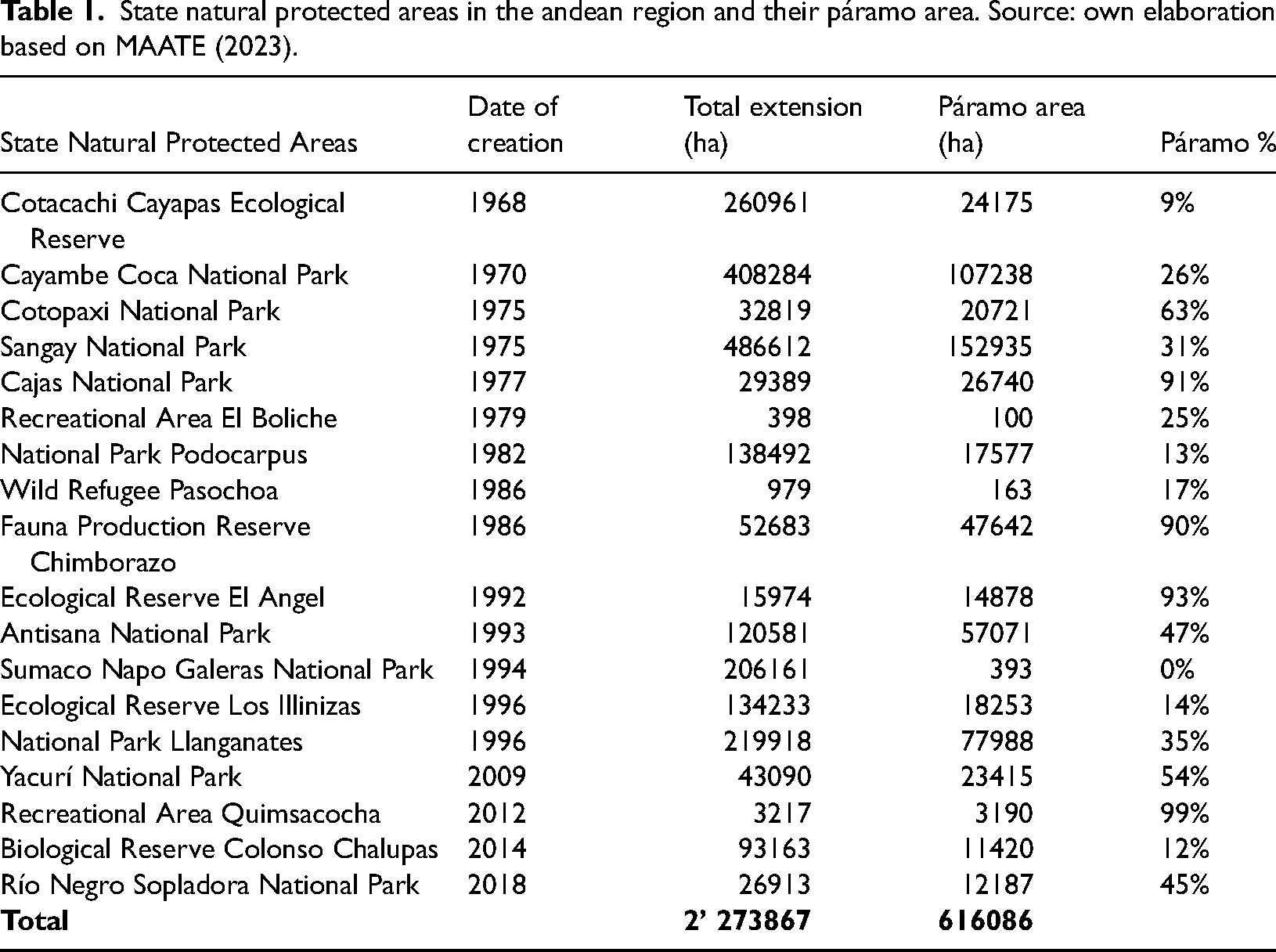
Laws on páramos have evolved significantly in the last decades. Between 1968 and 1996, under the Forestry and Conservation of Natural Areas and Wildlife Law and the First Strategy of Protected Areas (Putney, 1976), the first areas for wildlife conservation were established. From 1968 to 2018, 18 protected areas were declared over large extensions of páramo, covering a total of 616,086 hectares (see Table 1). These State Protected Areas (Figure 2) were established as new spaces for conservation (shown in green). Many of these included vast tracts of páramos (in light brown), especially in regions of lower human occupation. The National Protected Areas System is organized into the following subsystems (Ministerial Decree No. 083 2016): 1). The State National Protected Areas: Managed by the State, these represent 93% of the protected páramo territory in Ecuador; 2) Decentralized Protected Areas: Under provincial or municipal jurisdiction, these areas represent around 5% of the territory and are managed by subnational governments; 3) Private Protected Areas: Covering more or less 0.7%, these areas belong to private owners and; 4) Community Protected Areas: Covering the remaining 1%, these areas are managed by peasant or indigenous communities. In summary, although the State is the “owner and manager” (public ownership) of most protected páramos, numerous communities actively utilize these in state-controlled areas.
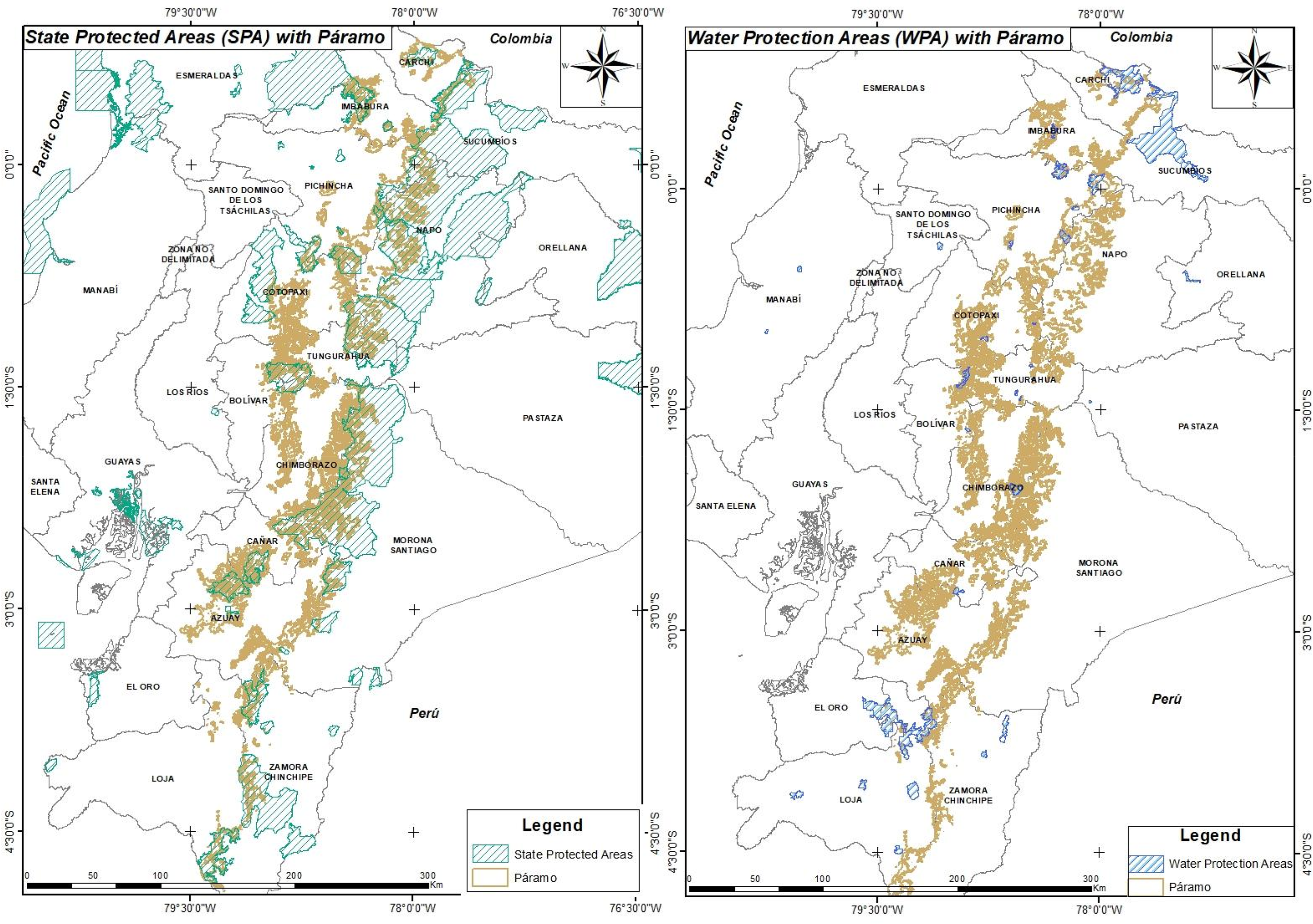
State protected areas (on the left) and water protection areas (on the right) declared over páramos (elaborated by, S. Terán).
State natural protected areas in the andean region and their páramo area. Source: own elaboration based on MAATE (2023).
The 2008 Constitution of Ecuador established additional dispositions for the protection of páramo ecosystems. Article 406 explicitly references these areas, stating: “The State will regulate the conservation, management and sustainable use, recovery, and limitations of the domain of fragile and threatened ecosystems: among others, the páramos”. The Organic Law of Rural Lands and Ancestral Territories, issued in 2016, establishes limits to the use and transformation of páramos as follow in Article 50: The advancement of the agricultural frontier will not be allowed in undisturbed páramos that are above 3300 meters, north of the third parallel, south latitude, and above 2700 meters of altitude, south of that parallel; and in general, in protected natural areas and particularly in territories with high biodiversity or that generate environmental services.
Although the State and its agencies have little presence in most protected areas, and even more so in páramos outside protected zones, there exists a legal instrumentation through which the State is able to threaten and fine people that transgress the conservation regulations. According to the Forestry, Protected Areas and Wildlife Law in these spaces, penalties apply to those who burn the forests and páramos, destroy wildlife, or cause fires in forests (Art. 79). Land use change in these areas is also prohibited. The fines range from 1 to 10 minimum wages and can, in exceptional cases, lead to imprisonment. However, since environmental institutions are weak in Ecuador, enforcement of these regulations is often discretionary. Under MAATE, every Protected Area has an organizational framework through which regulations are controlled and enforced. As a result, the exercise of sovereign governmentality, through legal and institutional instruments, depends on how these frameworks are implemented, the criteria applied, and established sets of relations.
Water conservation areas
Beyond the classical conservation areas, in Ecuador a new legal form of protected areas was developed; namely, the “Water Protection Areas” (WPA). This designation was created through the Ecuadorian Constitution in 2008 and later included in the Water Law issued in 2014. Grounded in Art.12 and 13 of the law, WPAs are defined as the territories where there are water sources declared to be of public interest for their maintenance, conservation and protection, which supply human consumption or guarantee food sovereignty, and which will form part of the National System of Protected Areas (SNAP).
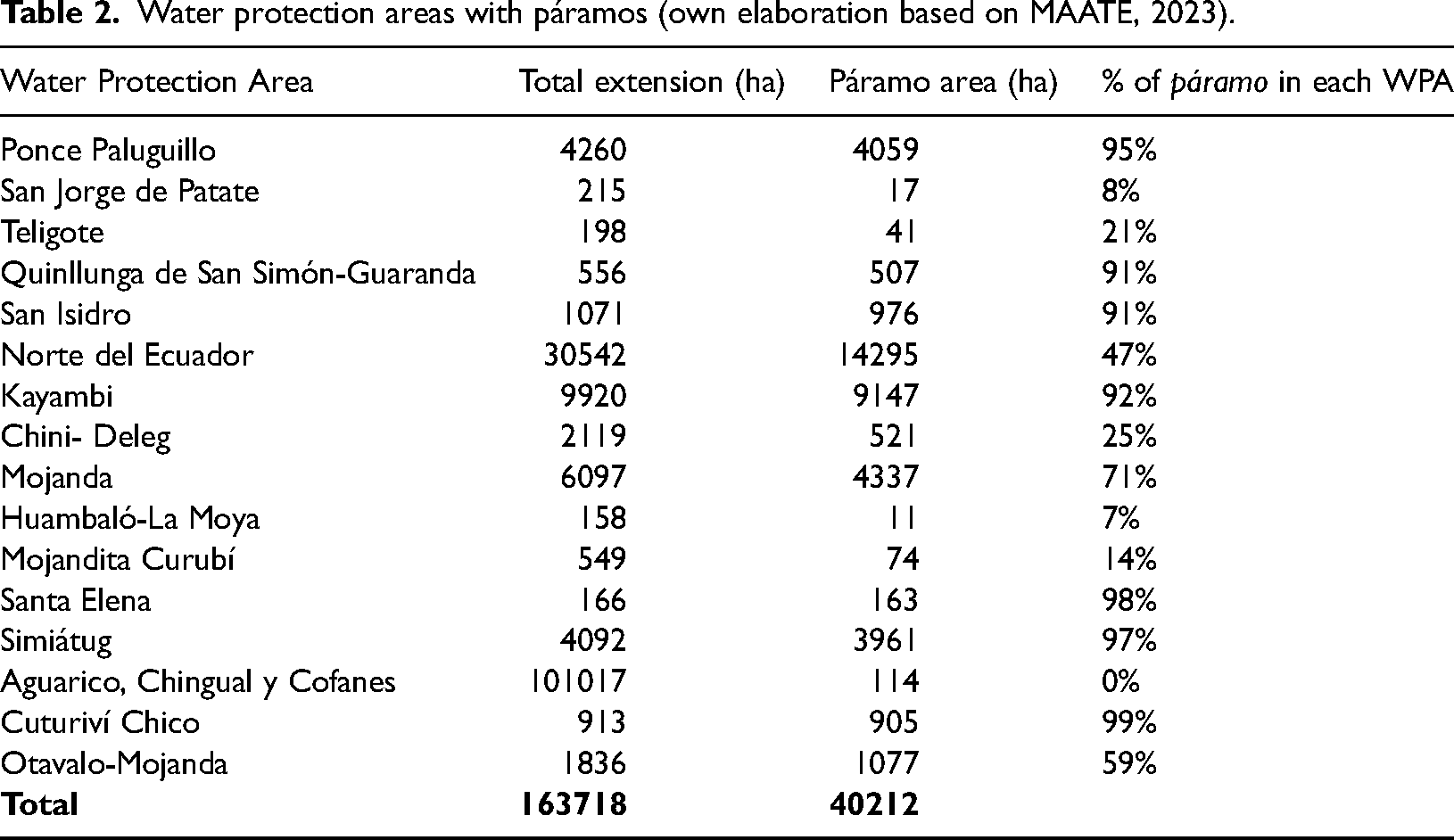
Since 2018, 21 WPAs have been established, covering an area of more than 173,353 ha. Of the total, 16 of these WPAs were created over private or community-managed páramos, covering an extension of 163,718 ha (Table 2, Figure 2). According to the Water Law, the initiative to declare a WPA is not restricted to the Central State; it can also originate from a provincial or municipal government, or even from a local community that wants to guarantee the provision of water.
Water protection areas with páramos (own elaboration based on MAATE, 2023).
Water Protection Areas are frequently created without considering the local context, including pre-existing tensions between páramo communities, or the implementation of an informed prior consultation process (interview NGO Randy Randy president, March 8 2022). These designations frequently ignore preexisting reciprocal relations, community-based forms of management, and rulemaking over páramos (Joslin, 2020a, Manosalvas et al., 2021).
As shown, these legal texts and declarations of protected areas, which position the state as the central authority in regulating páramo ecosystems, have often found little translation to a stricter de-facto control over these spaces. While some declarations have led to conflicts and confrontations, the state's ability to enforce regulations by using sanctions and violence is limited. This is especially so in remote areas that are hard to reach and where population densities are low and have restricted road access. Because of the relatively low policing capacity of the state, and the fact that sovereign governmentalities can lead to resistance and outright confrontations, the past two decades have seen increased attention on more subtle strategies of governance.
Neoliberal governmentalities: the Socio Páramo Program
Since the late 1990s, legal provisions have facilitated the introduction of neoliberal governmentalities that work based on monetary incentives to protect the páramos. The idea behind the Socio Páramo Program – a subchapter of the broader Socio Bosque Program that started in 2009 – is that “economic valuation is both the cause of and the solution to the destruction of nature” (Joslin and Jepson, 2018). This is solved through a Payment for Environmental Services scheme.
Socio Bosque was conceptualized by the international NGO Conservation International (CI) in 2004. The core rationale behind this program was to substitute timber incomes with payments for standing forests through Conservation Incentive Agreements (CIA), later renamed Conservation Agreements (CA). The program was piloted in the northwest region of Ecuador, specifically in the territories that corresponded to the Chachi nationality. For this purpose, Conservation International made an alliance with the German Cooperation Agency GIZ. Based on studies assessing opportunity costs, it was decided that the payment would be set as US$5 per ha per year (an amount way above the estimated economic return from logging US$3.80/ha/year). This payment is made to landowners who, in return, have to “protect” their forests. These agreements were based on a voluntary basis with participating communities. These communities had to decide by consensus on their involvement in these schemes, following the notion of “free, prior and informed consultation”. Of the four communities initially approached, three accepted the agreement. By 2005, when the project officially began, 300 Chachi families had become beneficiaries of the project, collectively managing some 7000 ha (interview Executive Director CI Ecuador, 11 Feb 2022). Four years later, under the auspices of the Minister of the Environment, the initiative became official and took the name of the Socio Bosque Project. The SB objectives were to protect forests and their ecological, economic, and cultural values; reduce deforestation rates and associated greenhouse gas emissions; and alleviate poverty (de Koning et al., 2011). Initially, only forests were considered, but over time, others areas that were vital for the generation of environmental services, such as páramos, were included (interview Executive Director CI Ecuador). In the case of Socio Paramo (SP), the intention was to stop overgrazing and excessive burning for the sake of protecting biodiversity, as well as conserving and restoring the water regulating capacity of these ecosystems. These activities were primarily associated with indigenous and peasant communities, who were thus framed as needing to modify their land use behaviors to maintain biodiversity, soil, water-related ecosystem services, and water provision and regulation (Farley and Bremer, 2017). Agreements are signed for a 20 year term, during which the participating communities must prepare a plan on how they will spend the compensation money. This plan requires approval by the state prior to the disbursement.
The program established a broad range of compensation based on the size of the protected area. As most of the indigenous and peasant communities in páramo have large extensions of land, in many of the agreements the compensation was set at payments of US$2 or as little as US$0.50 per hectare per year.
In July 2008, the National Planning Secretariat declared the SB program as a governmental priority. At the time, the government demanded that monetary compensations with a value of one million US dollars should be reached in the first years of the project. Once this target was achieved, the budget was progressively increased; first to US$3 million per year, then to US$5 million, and eventually to US$11 million per year. Funding was sourced from a combination of international cooperation, such as the German agencies, governmental contributions, private donors, and, more recently, REDD + resources. However, the SB has had its ups and downs. During periods of financial scarcity, when the State delayed the payment of the agreements, some of the partners initiated a series of complaints and others withdrew from the scheme altogether.
Currently the SB project operates across the 3 continental geographical regions of Ecuador – Amazon, Highlands, Coast – and has about 173,000 beneficiaries, covering an area of 1.666.711,52 ha (MAATE, 2025) (see Figure 3). According to the MAATE webpage, within the Socio Páramo subchapter, 257 agreements have been signed, encompassing 52,423 páramo hectares under conservation. Additionally, there are another 45 agreements that protect a combined 78,525 ha of forest and páramo protected ecosystems (Figure 2). The program refers to those who sign the agreement as “beneficiaries”, reporting a total of 75,513 under this category. It also makes a distinction between collective agreements (signed with indigenous or peasant communities) and individual agreements (signed with private landowners). Socio Páramo has 257 agreements with Quichua communities in the Andean provinces of Bolivar, Carchi, Chimborazo, Cotopaxi, Pichincha, and Tungurahua, covering an area of 52.423 ha, and Asociación Bosque Páramo has 45 agreements covering 78.525 ha (MAATE, 2025).
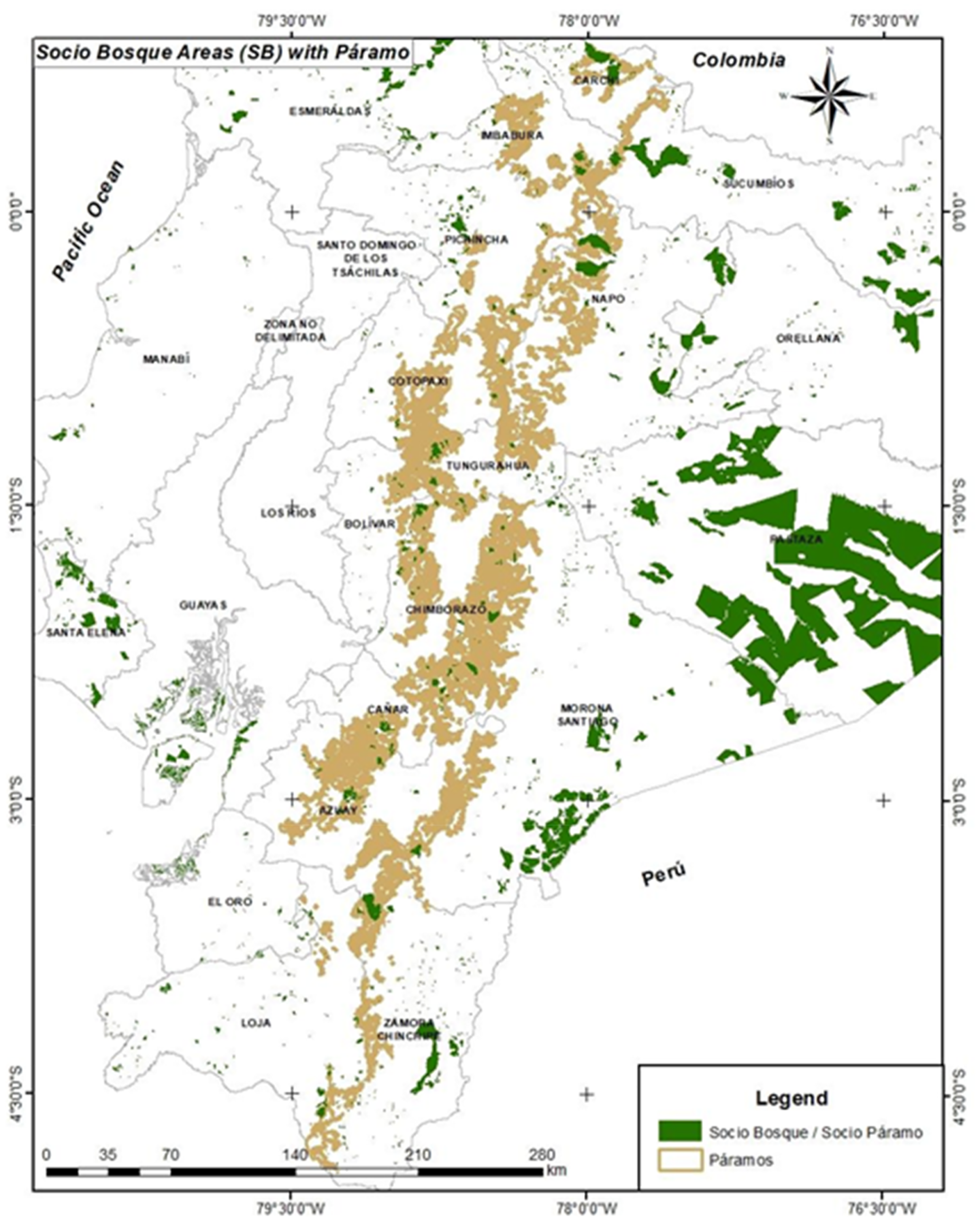
Socio Bosque/Páramo Program plots in the country (in green) and over páramo (elaborated by S. Terán).
External analyses of the impact of the SB program show mixed results. Jones et al., (2017) based on research amongst 63 landholders enrolled in the program in the Amazon forest, found that the SB “reduced average annual deforestation by 0.4–0.5% between 2011 and 2013 for those enrolled, representing as much as a 70% reduction in deforestation attributable to Socio Bosque” (p. 56). However, some authors have criticized the program for including not only forests and well-conserved ecosystems but also already intervened areas that were in agricultural or livestock production. Moreover, they argue that the program did not fulfill its promise of becoming a poverty alleviation mechanism (Farley et al., 2011). Krause and Loft (2013), in an extensive evaluation of the program's conservation contracts, concluded that while the SB does incentivize conservation stewardship, “its distributional equity and ability to reduce rural poverty remain questionable, because poverty levels and population density in collective contracts are not sufficiently considered in the incentive scale” (p. 1170). Farley and Bremer (2017) have similarly observed that this program functioned more as a “conservation reward” for areas that were not yet transformed, rather than as a trigger for major changes in land management. Although new international cooperation funds have recently reactivated the Socio Bosque Program, there is still uncertainty about the degree to which this program is fostering long-term changes in how páramo users and owners engage with and manage páramo spaces and their use.
Mixed governmentalities: governance by and with non-state actors
The Ecuadorian water funds
Water funds (WFs) are financial and governance models developed to secure water, primarily for urban centers, by conserving and restoring water-related ecosystems. In the late 1990s, inspired by the logic of PES schemes, cities, international conservation NGOs (such as The Nature Conservancy, TNC) and the Inter-American Development Bank developed water funds as a mechanism to invest in watershed services (Duarte-Abadía et al., 2023a). Their emergence is often attributed, among other reasons, to the perceived failure of sovereign state strategies to protect water ecosystems. Structurally, WFs are designed as public-private partnerships linking downstream “water users” with upstream “water producers”. Funding for WFs typically comes from government institutions and non-state organizations, such as private companies, NGOs, and international development agencies. According to proponents of WFs, they are designed to improve the water security of downstream users while simultaneously benefiting upstream populations through financial and in-kind compensation (Echavarría, 2014).
The first water fund established in Ecuador was the Quito-based Water Protection Fund (FONAG), promoted by TNC and Quito's water utility (now the municipal drinking water company - EPMAPS). It was established in 2000 to support efforts to ensure the long-term supply of water to Ecuador's capital (Echavarría, 2014). This trust receives financial contributions from Quito's municipal water and electricity companies, TNC private companies such as the National Brewery and Tesalia Springs Company, as well as from international development agencies. Conservation activities carried out by FONAG include land purchase, monitoring, environmental education, the prevention of illegal activities, and the provision of financial incentives for páramos residents to change their practices. Despite the perceived success of FONAG, Villasante-Villafuerte's (2025) research shows that one of its most used intervention tools – the “voluntary conservation agreements” – may exacerbate pre-existing intra-communitarian conflicts, foster social segregation, and raise concerns about the effectiveness of the agreements in protecting páramo ecosystems.
Following the example of FONAG, several other water funds have been established in Ecuador. One notable case is the Tungurahua Páramo and Poverty Reduction Fund (TPF), created in 2008 to protect the province's páramos. TPF includes upstream community representatives on the fund's board. Financial contributions to the fund come from a mix of public and indigenous actors, including the Ambato water company, the HidroAgoyán electricity company, the Tungurahua provincial government, and three of the province's main indigenous movements. However, unlike FONAG's financing agreements, TPF's financial contributions are not fixed and usually depend on the political will of the authorities in power. This fund is financially insecure and therefore has limited operational capacity.
TPF implements páramo management plans structured around three components: environment and conservation, society and capacity building, and agricultural production. These plans are usually drawn up by the leaders of the Second Tier Organisations (STOs) under the guidance of Fund officials and are approved or rejected by the Fund's Board of Directors. In this decision-making structure, marginalized indigenous communities have little influence on decisions about where and how funds are spent. As one community member explained: ‘The president of the [STO] told us that they have already planned the projects, investments and activities for this year, and we are not included.’ (pers. comm. 22 Jan 2025).
In Ecuador, additional water funds have been established. However, they differ greatly in terms of their constituency, financial capacity, political power and intervention strategies. They lean on diverse strategies of “conducting the conduct” of communities that use and manage páramos, whilst often responding to the local political powers and relations.
Combining community development with páramo conservation
Alongside the aforementioned initiatives, there are several programs grounded in ideas of rural development that seek to integrate local economic development goals with páramo conservation. Almost all provincial governments and many municipalities have such programs, though their content and execution vary greatly. Some provincial governments have worked for years through NGOs, while others have worked directly with their own field personnel to promote economic activities that serve as alternatives to páramo grazing. These activities include the stimulation of eco-tourism, the creation of production cooperatives, improvement of grasslands under irrigation, enhancement of dairy cattle, protection of water sources, native species reforestation projects, and handcrafts production, among others. International cooperation funds frequently support these efforts through partnerships with Ecuadorian NGOs. Such programs often combine economic and material incentives with different forms of environmental awareness, education, capacity building programs, and campaigns that aim to transform local understandings of, relationships with, and practices regarding the páramos. The principle conservation messages promoted are: a) stopping the practice of burning páramo grasslands, b) reducing or eliminating the number of livestock in páramos, and c) preventing land use changes within the páramos (see also Manosalvas et al., 2023; Rodríguez-de-Francisco et al., 2019). Currently, many communities have adopted these three strategies in their own páramo management plans and frame themselves as the managers and protectors of the páramos (Dupuits, 2019).
Conclusion: governing the marginalized to produce conservation territories
Páramos have been territorialized since pre-Inca times to serve the interests of the ruling elites. This process of territorialization is premised on governing and conducting-the-conduct of the rural communities that live in and depend on these spaces. This process is reliant on the subjectification of these rural communities and the objectification of the páramos themselves, framed through the narratives and interest of those in power (see Mills-Novoa et al., 2020). Consequently, the páramo as an “object” – what it is and how it is understood –has never been static. This has important consequences for how the “subjects” – communities who live in, use and depend on these páramos – are understood, how they understand themselves, and how they are consequently governed.
Over the last three decades, the páramo narratives that have come to dominate different strategies of government are those centered around nature conservation, restoration and protection to ensure the provision of ecosystem services. In this process, state and non-state actors have increasingly used neoliberal governmentalities to advance their interests. Many páramo conservation efforts are not carried out by single, power-bearing actors or “top-down” institutions, but are advanced through coalitions, partnerships and collaborations between state and non-state actors, including governmental bodies, private entities and community organizations. Hence, in terms of environmental governance strategies, the differences and boundaries between state and non-state actors have become increasingly blurred. Nonetheless, these actors share one common denominator: the territorialization of the páramos by mobilizing communities, families and individuals into conservation efforts.
The conservation imperative and its advancement follows the centuries old pattern of governing marginalized rural populations to serve the interests of the ruling (urban) elite. Through the transformation of rural livelihood strategies and perceptions, and by offering economic incentives, communities are being pushed to reduce their use and dependence on páramos. This is done without addressing the longstanding socio-environmental injustices that originally made these communities dependent on these spaces. As long as these injustices remain unaddressed, there persists a risk that the conservation of páramos will only last as long as the intervention programs that sustain them. The precarious socio-economic conditions faced by most of the páramo dependent communities pose a threat that, if these communities do not see the benefits of conservation in their own livelihoods, they might revert to practices that are harmful to páramo ecosystems. Therefore, current (neoliberal) governmentalities bear the intrinsic risk of failure in the long term. The challenge lies in finding and co-developing sustainable conservation strategies with and through rural communities themselves. Strategies that through empowerment and endogenous development can begin to dismantle the longstanding culture, relations and injustices that have shaped páramo territories.
Highlights
Ecuadorian páramos have become the focus of diverse water and biodiversity conservation initiatives.
New narratives about páramos lead to new territorialization processes.
Diverse sovereign, neoliberal and disciplinary techniques of government are utilized and combined to govern rural populations in páramos.
Current conservation initiatives are fragile as these fail to address historical socio-environmental injustices.
Footnotes
Acknowledgements
We thank the editor Sharlene Mollett and the anonymous reviewers for their valuable suggestions and comments that greatly helped shape the article. We are also grateful to Francesca Hotson for language editing the manuscript. Figures elaborated by S. Terán. The usual disclaimers apply.
Declaration of conflicting interests
The authors declared no potential conflicts of interest with respect to the research, authorship, and/or publication of this article.
Funding
The authors disclosed receipt of the following financial support for the research, authorship, and/or publication of this article: This research was funded by the Nederlandse Organisatie voor Wetenschappelijk Onderzoek (NWO) project nr. 01.65.308.00 (Struggling for Water Security) and EP.1512.21.001 (Bio-Just: BIODIVERSITY AND ECOSYSTEM PROTECTION DRIVEN BY ENVIRONMENTAL JUSTICE) and the European Research Council (ERC), grant agreement No 101002921 (Riverhood).
