



Abstract
This article explores the well-researched topic of Jordan's contentious hydropolitics in the face of scarcity from a new perspective: that afforded by an ethnographic case study of the poor and restive rural district of Dhiban in the highlands of central Jordan. Dhiban, well-known for its frequent protests, is experiencing some of the worst water scarcity in the country but remains relatively understudied in this context. The article traces how shifts between an emphasis on financialised demand management and supply-side megaprojects are experienced among small-scale highland farmers and their wider communities. In much of the extant literature, such communities are portrayed as complicit in wider water scarcity, as the failure of the state and its international backers to reduce groundwater over-abstraction driven by highland agriculture is blamed on the rural tribal patronage networks of highland landowners. A different picture emerges through attending to the fate of Dhiban and its farmers, and their attempts to resist and protest their position within Jordan's hydro-social metabolism. From their view, both supply and demand modes of mitigation have been experienced as forms of dispossession, with dire consequences for socio-ecological reproduction. I argue that this is because both rely on subjecting such places to the various hydraulic missions of the state and its international backers through infrastructure, rendering them zones of anticipatory ruination. This process can be conceived as the entanglement of local socio-ecological environments with global capitalogenic flows, that as they channel, transform, pollute, cheapen and consume water, also generate fragility.
Introduction
Jordan has been described as facing a water crisis for decades, with current trends portending socio-ecological ruination for large areas of the country, especially rural districts. The official picture presented in top-level figures published by Jordan's Ministry of Water and Irrigation (MWI) with help and data from international backers is severe indeed. Most recently in 2022, MWI estimated Jordan's total annual water supply as 1127 million cubic metres (mcm) (MWI, 2022a), allowing only 61 cubic metres per person – well below the UN definition of ‘absolute water scarcity’ at 500 mcm (Falkenmark, 1989, UN Water, 2012) – with a deficit of 188 mcm, and expected with population growth and climate change to further decrease to 35 cubic metres per person by 2040 (MW1, 2023:3). Over half of this total (619 mcm in 2021) comes from groundwater, which is being abstracted at rates far above the estimated sustainable annual limit of 280 mcm (MWI, 2023: 22), making water an extractive industry. The country's water infrastructure has been rapidly expanded to meet the needs of a rapidly growing urban population, especially in the capital, Amman, where urban growth, driven by displaced and forced migrants (UNHCR, 2016), has put existing resources and systems under great pressure and created a huge demand for urban expansion and thus a febrile market in land speculation (Hughes, 2016; Wojnarowski, 2023). The two biggest sources of potable water upon which this system and the possibility of dealing with future pressures currently rest, are both subject to long-term uncertainties; on the one hand, unsustainable groundwater aquifers that will run out eventually (Odeh, 2019), and on the other hand, surface water from the Jordan Valley, of which over 100 mcm is pumped uphill to the cities of Amman and Irbid each year (MWI, 2023), dependent on a transboundary resource shared with Israel and Syria (Haddadin, 2006).
While specific numbers and predictions are frequently disputed on methodological grounds, the general proposition that finding enough water to meet the needs and demands of Jordan's population will be challenging in the future, and that some are already suffering as a result, is unarguable. However, as Mustafa et al. (2016:164) put it, ‘The water scarcity in the country is not an absolute, but rather a politically mediated reality. The cubic meter numbers for Jordan may very well point toward absolute scarcity, but those numbers hide as much as they reveal’. 1 The per capita averages have nothing to say about how water is distributed, between sectors, regions and people. Here, I consider some of the particular dynamics that they hide, through an ethnographic and historical exploration of highland agriculture and the political economy of irrigation in the restive rural district of Dhiban. This is a tribal, rural, highland district, just beyond the edge of the zone of speculation, land grabbing and construction that surrounds the expansion of Amman's urban sprawl but is tied to the growth of the capital city through water infrastructure, through which Dhiban and Amman share what Linton and Budds (2014) term a hydro-social metabolism. It is home to many people reliant on the sort of agriculture which much of the political economic literature sees as complicit in, if not quite responsible for, Jordan's crisis of groundwater over abstraction, arguably the most significant main driver of water scarcity (see for instance Molle et al., 2008; Bonn, 2013; Yorke, 2013, 2016). This is a notion this article will problematise. I draw on 17 months of ethnographic fieldwork (using participant observation) between 2017 and 2023, including semi-structured interviews and oral history collection with 21 households, including eight who were partially or wholly reliant on agriculture, as well as local state employees at the Wala Dam, the Wala Agricultural station, and in the local municipal council, and several protest activists. I also draw on 48 interviews with water officials and consultants, current and former MWI employees, development professionals and hydraulic engineers. I supplement these with a critical reading of strategy and development documents and of the sizeable secondary literature around this topic. I aim for this qualitative approach, grounded in particular experiences of scarcity, to bring clarity to, and problematise areas of over-generalisation, in the existing literature.
I argue that Dhiban has been rendered a fragile landscape by processes of abstraction and financialisaton of water. These processes are tied into the broader more-than-human flows that this special issue takes as its theme, and which we collectively contend have come to characterise this phase of contemporary capitalism, whereby accumulation relies on systemic harm to socio-ecological infrastructure – the ‘Capitalocene’ (Moore, 2018; Malm and Hornborg, 2014). What Patel and Moore (2017) refer to as processes of cheapening occur at every level of this system. The full cost recovery of water relies upon a process of ‘cheapening’ whereby the only costs that are ‘recovered’ are those incurred by the builder and operator of the infrastructure involved, not the externalised costs to environments, ecologies and communities where the water came from. In a wider sense, abstraction of water is a cheapening, it turns water into a replaceable resource, whose particularities and particular location are rendered irrelevant by high energy (which in Jordan is still mostly fossil fuel generated) mega projects, to pump, desalinate and convey water in every greater quantities.
There are two main processes at work here: abstraction (of water from its social and political context, into a general, national resource) and commodification. These two processes are to some degree theoretically separable, but analytically and practically entangled. As Jamie Linton (2010) points out, when water is pumped from specific sources to enter national distributary infrastructures it loses its specific, local associations (with, for instance, healthfulness or sickness, sacredness or profanity, good or bitter taste, with historical memories and familial relationships), becoming instead an abstracted commodity, H2O, with a set value determined by the market; it is telling that the technical term for the extraction of groundwater is ‘abstraction’. Bakker (2004, 2008) influentially pointed out that both water's physical properties, possessing low value for high bulk, leaky and hard to move around effectively, but also its foundational role in life and health, made it an ‘uncooperative commodity’ – a natural commons, as it were. Yet however uncooperative, modernist international development organisations, capitalist state institutions and pro-market reformers have long sort to make water legible, controllable and manageable through techniques of quantification and financialisaton, which ultimately rely on abstraction. These in turn throw up contestations and resistance of various forms – including water insurgencies and movements seeking to establish water commons, making water in Muehlebach's (2023) terms a ‘vital frontier’ of value contestation.
Following Anand (2017) and a general anthropological turn towards the critical study of infrastructure (Larkin, 2013, Harvey and Knox, 2012), I see water also as a material instantiation of the social contract between the state and the citizen, and also of the uneven relationships between different types of citizen, with each other and with the state. Anand shows how Mumbai's water infrastructure both make possible a liberal ‘world-class city’ for certain citizens, yet fail to provide regular flows to the urban poor. These experience a different version of ‘hydraulic citizenship’ characterised by claim-making and using informal and alternative forms of connection to access the system – what Asef Bayat (2015) terms ‘quiet encroachment’. Yet to the managers and proponents of the liberal technopolitical water system, these claims, especially when made through patronage networks, ‘are read as corrupt, inefficient and sign of state failure’ (Farmer, 2023: 5). In a similar way, I argue, the sizeable literature on the political economy and discursive framing of water in Jordan, which I discuss in the next section, treats agricultural areas of the highlands as sites of water wastage, via inefficient if not corrupt allocation shielded from reform by tribal patronage networks. Through examining the case of Dhiban, I suggest a refocusing on the ways rural Jordanians actually experience, contest and resist policies aimed at reforming water in light of scarcity; policies which are tied up with capitalogenic flows shaped by dominant global financial interests through markets and international development organisations. These, I argue, should be the focus of our critique, more than the persistence of highland agriculture.
Framing discourses of scarcity
The idea of an impending crisis of water scarcity is already widely recognised and discussed by the media 2 and the public 3 in Jordan, and it is brought to the attention of even the most casual visitor or observer. 4 This is the result of considerable effort by the government and its international backers. School textbooks teach children that water is under strain due to aggressive upstream actions of neighbouring states and because of the presence of 3–4 million refugees in the country, and that it is their duty to use less water to protect the homeland as their national environmental inheritance (Hussein, 2018b). The Ministry of Awqaf and Islamic Affairs ensures that Imams regularly preach on the topic of water scarcity and the need for conservation in the Friday Khutbah and in religious study circles (Benadi, 2024). The country's national strategy plan puts water scarcity, and the need to tackle it through vast internationally funded megaprojects as well as smaller infrastructural interventions such as waste water treatment centres and networks, as well as water-efficient technological interventions (hydroponic agriculture, for instance) at the centre of its national vision and strategy documents (GoJ, 2022); leading some scholars to see water as a key field from which Jordan extracts developmental and international aid in its securitised rentier economy (see for instance Barham, 2012), and unquestionably one of the major destinations for the roughly 7% of national GDP that comes from international aid (Bonn, 2013: 730).
However, the causes of this scarcity, and therefore the solutions that might mitigate it, remain contentious, with different elements emphasised in different accounts, shifting as prevailing hydropolitical discourse responds to wider shifts in political economy and capitalogenic flows at various scales. Political scientist Hussam Hussein's (2016, 2018a) analysis identifies two broad metanarratives of water scarcity in Jordan, each with corresponding policy prescriptions; water insufficiency and water mismanagement. 5
The ‘water insufficiency narrative’ focuses on factors that are fundamentally inherent: both ‘natural’ – aridity, low rainfall – and external – climate change, transboundary allocation, population growth driven by forced migration. These inherent causes lead to calls for solutions that increase supply, especially the construction of major new infrastructure projects, including pumping stations, desalination plants and wastewater treatment facilities. This meta-narrative draws on particular facts; that average rainfall is only 80 mm a year; that Jordan's population had increased form under a quarter of a million to 11 million in its history (driven largely by those displaced by the Nakba and ongoing settler colonialism in Palestine, and by other wars more recently in Syria, Lebanon and Iraq); that aggressive exploitation of transboundary resources by neighbours (especially Israel) and more unpredictable climate have further reduced surface water over the same period of this demographic expansion; and that consequently this natural scarcity combined with a demographic explosion have imposed the very low per capita water figures mentioned above.
The ‘water mismanagement narrative’, on the other hand, focuses on how water scarcity is exacerbated by mismanagement, theft, subversion and economic inefficiencies and encourages solutions around infrastructural renewal, better enforcement, more efficient delivery, better demand management and since the 1990s especially market competition and cost-recovery. This narrative calls attention to different facts, especially the huge quantities of the so-called non-revenue water – estimated to be around half of the total supply (MWI, 2022a:14) – that leaks and seeps out through both intentional (and to the state, criminal) actions of human agents and the accidental hazards of the system in its constant unravelling. 6 If half the water goes missing, the argument goes, it hardly makes sense to see scarcity as naturally and externally caused. In some variants, especially those concerned with corruption, it also focuses on the roles of illegal private wells tapping groundwater, both for irrigation and for selling water to private tankers (see Mustafa and Talozi, 2018).
Proponents of the management/demand narrative tend to be highly critical of Jordan's use of water in agriculture, especially highland agriculture. 7 The sector's usage of water is seen as economically inefficient and out of all proportion to its importance in GDP or employment terms (Manon Müller, 2013:71, Bonn, 2013), 8 leading some to advocate a reallocation of water away from farming. Proponents of such a move point out that given Jordan is estimated to import 90% of its food, agriculture does not significantly contribute to food security, and that importing ‘virtual water’ (a concept from geographer Tony Allan, 2011) through goods produced under conditions of less pressing scarcity, is economically rational (World Bank 2001). This, as we shall see, has proven a politically and social contentious policy.
The political economy of irrigation
The various strands of cause and solution grouped under Hussein's proposed meta-discourses intermingle, ebbing and flowing at different times, and shifting according to the changing hydraulic mission of the state, in turn shaped by patterns of global political economy. Implicit scholarly accounts of these shifts are regular, somewhat cyclical oscillations in the emphasis placed on these narratives (Yorke, 2016; Bonn, 2013; Liptrot and Hussein, 2020). To a large extent these shifts have originated from large international development donors, who have played an outsized role in Jordan's economy since the 1950s, and have throughout this period played a central role in the processes of financialising and abstracting water set out above, as Jordanian policy actors adopt paradigms in line with current developmental orthodoxies to attract funding streams. The original high-modernist enthusiasm for development through infrastructure and supply projects (dams, canals, roads, etc.,) in the 1960s and 1970s, of the type so heavily critiqued by much social scientific literature (among the most notable, perhaps, see Scott, 1996) was taken up with enthusiasm in Jordan in the 1960s. Here as elsewhere it was accompanied by an attempt by both policy-makers in the postcolonial state, guided and sometimes compelled and bribed by UN and international development agencies, to expand and commercialise cultivation, settling nomadic pastoralists and steering subsistence and cereal growers towards more high-intensity and high-value crops for export, involving a much more intensive exploitation of surface water resources, and the privatisation of commons to avoid their overexploitation à la Hardin (Bocco, 2006). 9 This general phase of development proved both environmentally disastrous and economically ineffective, and so was gradually superseded by a renewed focus on participation and local management (Orlove and Caton, 2010; Yorke, 2016). However, from 1990, this process became entangled with wider projects of neoliberal economic reform pushed by international donors (see Harrigan et al., 2006), centred around financialised demand management. 10 In the wake of the oil shocks and a worsening economy, the Jordanian Government was increasingly beholden to these organisations and to their imposed structural adjustment programmes, bringing the contentious and inherently political issues of efficient allocation, pricing for cost recovery and minimising illegal and informal practices, into their purview.
There was firstly an abortive attempt at imposing privatisation on the water sector, designed to bring in private partners with international experience and expertise in achieving cost recovery form utilities, so that infrastructure could become a site of investment. This was part of a wider trend (as described by Muehlebach, 2023) whereby international water investors, initially keen, soon found that water infrastructures in the Global South were expensive to build and contentious to operate, and by the mid 1990s many were in retreat. 11 The long-term result of this was the emergence of the current quasi-corporate structure of water governance whereby the MWI presides over two state authorities – the Jordan Valley Authority (JVA) and the Water Authority of Jordan (WAJ), and three regional state-owned companies, controlled by nominally independent boards, operating as sole provider of domestic water in their areas. This quasi-privatisation was widely unpopular with Jordanians, although in fact supply and cost apparently remained largely unaffected (Suleiman et al., 2008, Assa'd et al., 2011). Dhiban, like the capital, is under the central water company, Miyahunna (‘our water’ in Arabic), although the WAJ handles large-scale agricultural irrigation and groundwater extraction. Aside from being unpopular, this profusion of bodies has not managed demand any more effectively than centralised ministerial control.
Instead, the focus shifted to sectoral reallocation: away from agriculture and towards municipal and industrial users. In the World Bank's (2001) strategy document for Jordan they announce that ‘the bulk of the projected reduction in abstraction…. will have to come from highland agriculture’ – a reduction they hoped to achieve, initially, through a higher tariff on water used for irrigation (cited in Liptrot and Hussein, 2020: 868). While a tariff was introduced in 1997, as a condition of further international loans, it was not at a price that covered even energy costs, let alone the full cost recovery sort by donors and creditors (Liptrot and Hussein, 2020:: 869). By the time of the 2002 Groundwater Bylaw (No.85) political pressures, including the opposition of the Ministry of Agriculture, and considerable disquiet from rural citizens, forced the inclusion of a threshold of free water, before tariffs would apply (Venot and Molle, 2008). Block tariffs in this watered-down form failed to meaningfully decrease demand, and indeed as Venot and Molle (2008) argue, encouraged farmers to focus on high-value (and also high water intensity) crops to cover their bills, favouring landowners and investors over small-scale farmers and herders.
A major division within Jordan ensued from this initial attempt at reallocation. Major international donors upon whom Jordan was dependant, including the World Bank (2001:8), United States Agency for International Development (USAID) and the German GDZ and KfW, all made funding contingent on such a reallocation, and the MWI itself, increasingly populated by internationally educated water experts and foreign advisors supported the introduction of a higher tariff for highland groundwater (Liprot and Hussein, 2020:868). Such a reallocation, however, would fall hardest on two constituencies which the government, and particularly the royal house, were wary of angering; on the one hand rural and tribal landowning elites, with powerful patronage networks and on whom the Hashemite royal house had politically depended since the foundation of the state, and on the other hand, rural small-scale and subsistence farmers and herders, often from the same tribes as these elites but without their wealth and influence, and already suffering from agricultural subsidy reductions in 1997 and a decrease in government and military jobs, on which most families were economically reliant (Bocco, 2006). Unsurprisingly then, the Ministry of Agriculture, the Ministry of the Interior (already concerned about enforcing water regulations in restive rural areas) and many Jordanian parliamentarians (who are mostly elected to represent the interests of tribal groups) resisted such a move (Liptrot and Hussein, 2020; Zeitoun et al., 2012). In the end, the only reallocation happened in the far south, where several corporately owned desert farms using central-pivot irrigation were closed. These had been encouraged and given government support but drew from deep groundwater wells tapping the al-Disa aquifer that the Water Conveyance Project was also tapping to supply the capital, and so were forced to close in 2009, as part of a transboundary agreement with Saudi Arabia on shared use of the aquifer (Liptrot and Hussein, 2020: 877). Even then, though, the process was extremely partial, with several exceptions made including for the agricultural enterprises of the wealthy Palestinian-Jordanian al-Masri family (who also own Arab Bank), and for the pleasure farm, hunting reserve and artificial oasis of Emirati Prince Mohammed bin Zayed Al Nahyan (Kul Al-Urdun, 2011).
It is striking that the compromise that has transpired since has pleased almost no one; groundwater extraction remains unchecked while the area under cultivation seems to have remained unreduced 12 and is still driven largely by highland irrigation. At the same time, many small-scale farmers have been driven into poverty and forced to sell off land to developers. Below I will assess the critical literature on why this is, as well as suggest some of its limitations, but first, it is worth briefly completing our sketch of the cycle in hydropolitical discourse.
With serious reallocation (or rather expropriation) from farmers impractical, the focus turned to institutional reform and maintenance, targeting the 50% non-revenue water through its Institutional Support and Strengthening Program, and establishing a Water demand Management Unit (Yorke, 2013: 43). Continuing up to the present, USAID and the EU's Water and Environment Support agency (EU, 2022 have targeted a rate of 6% annual reduction in non-revenue water. United States Agency for International Development funded a major $230 million programme of infrastructural renewal of Amman's urban system to update pipes, add metres and purchase a fleet of leak response vans for Miyahuna (USAID, 2019), but the rates of non-revenue water remain largely unchanged (MWI, 2022b). Such programmes never seemed to have achieved buy-in from the mid-level Jordanian officials who carried them out. 13
In practice, financialized demand management became largely lip service in government documents, aspirational but rarely implemented. Following the mass protests of 2011, politically sensitive policies that could provoke unrest were avoided, and donors appeared amenable to easing reforms to maintain Jordan's stability, crucial to US-aligned interests in the region. From 2013 to 2018, a partial return to addressing mismanagement occurred under water minister Hazam al-Nasser, who targeted illegal wells, a major but under-regulated source of groundwater over-abstraction. Costing over 50,000 JOD each, these wells were predominantly linked to wealthy landowners rather than small farmers. In 2014, the MWI claimed to have backfilled 562 wells, a peak never since matched (MWI, 2023: 14). Al-Nasser showcased seized drilling rigs as symbols of his campaign, remarking, ‘One day, people will ask why nothing was done to stop this’ (private interview, February 2023). However, the campaign halted after his 2018 resignation amidst widespread protests over price hikes that also ousted Prime Minister Hani al-Mulki. Hussein (2018c) critiques the campaign's partiality, suggesting it targeted some actors while sparing powerful rural tribal landowners central to Jordan's social contract. Since then, mistrust and corruption have remained dominant themes in Jordan's water discourse. 14
The illegal well campaign notwithstanding, overall, the cycle turned yet again, in the last decade, away from water management and back towards inherent scarcity to be addressed through megaprojects. However, the involvement of international bodies and their corporate partners keen to impose pro-market policies that would open Jordan's protected water sector to international capital flows was, I suggest, able to survive this transition. The reference to ‘important projects’ in the above interview quote reflects a shift back to technocratic solutions; primarily megaprojects financed by international capital. In 2009, Jordan embarked on its most ambitious water project to date, long considered too expensive to be practical. This was the construction of the Disi Water Conveyance Project, taking 4 years to construct, at a cost of $1.1bn, 15 which involved sinking 55 wells down to 700 m to abstract water from the underlying fossil aquifer, proving around 130 mcm for Amman, 325 km further north, and estimated by geologists to be capable of proving 125 mcm a year for the next 50 years at least (Puri, 2018). Successfully completed, though in the process greatly increasing the national debt, it opened the door to future large projects. Jordan's water policy makers are now constantly seeking World Bank funding for climate change adaptation, as well as ‘soft’ loans form international creditors, to build more groundwater wells, waste treatment centres and above all, the Red Sea–Dead Sea Water Conveyance (RSDSWC). This is a plan for seawater desalination on a vast scale, drawing water from the Gulf of Aqaba up to the Dead Sea, or via an alternative route through a pipeline (increasingly likely as cooperation with Israel become politically unfeasible) to the populous north. Jordan's national water strategy (MWI, 2023: 35) relies almost entirely on future supply in a bid to ‘secure new water resources, including large-scale desalination’ (a line repeated in the overall economic vision; GoJ, 2022). The cost in energy and money would dwarf Disi, and it would be economically and politically near impossible to recover costs through consumer water bills (see, for instance, an analysis by Schenk, 2018). However, as with GAMA, fortunes can be made in such projects, and in the meantime, they generate a profitable ecosystem of consultancies and advisors. Ultimately, this all rests on huge transfers from states (Jordan and its international backers) to private companies, who advise on, build, operate and repair such projects. As one water consultant put it to me in an interview ‘We need another Disi, but this time it needs to be bigger. That is the RSDSWC. The risk, the debt, everything will be bigger’.
Shifting the blame: Tribes and the need for stability
This shift in policy and discourse towards supply-side solutions, and away from serious efforts to tackle irrigation has been heavily criticised in the scholarly literature. Liptrot and Hussein (2020: 879) conclude that: While the pipeline strategy was massively expensive, it was within the state's capacity to carry out without rewriting Jordan's social contract. Unfortunately, easy access to foreign credit of megaprojects may delay the reform of its social contract.
Talk of Jordan's social contract often risks conflating elites with ‘tribes’ – that is those Jordanians who identify with an ‘ashīrah, a putatively descent-based grouping most strongly associated with the original pre-1948 ‘East-Banker’ Jordanians, and especially those ancestrally involved in nomadic or seminomadic pastoralism, often called Bedouin (see Tell, 2013). Yorke (2016: 227), for instance, describes how ‘an evolving “political compact” between throne and people, underpinned by patronage, permitted an increasingly powerful Neo-patrimonial, anti-reformist elite – a resilient “shadow state”’ to emerge, drawing on Charles Tripp's (2007) classification. Yorke goes on to describe Transjordan's founding as incorporating ‘inevitable disintegrative pulls’, between Hashemites and subjects, which were addressed through modes of rule by which by which ‘Abdullah [Jordan's founding Hashemite monarch, imposed by the British Mandate] courted the tribes’ and incorporated them into the new elite (2016: 235). Bonn (2013: 735) meanwhile argues that ‘Jordan's big agribusiness… mostly owned by politically well-connected businessmen and representatives of influential tribes’ are responsible for frustrating the water control measures of the MWI and its backers, so that (2013: 732): de jure the existing water laws are obligatory within the whole kingdom but de facto there are so-called ‘tribal areas’ where rights to water are assigned by principles that do not match the official legislation. Granting a certain amount of autonomy to such areas (which are mainly inhabited by kinship-based groups) is a concession made by the Royal House. In return, the Royal House receives the loyalty that helps to preserve its position within Jordan's elite structure. Disruptions to this balanced political order have led to incidents such as attacks.
It is the case that Since the 1970 Black September conflict, the government and military have been ‘Jordanianised’; recruiting mostly form tribal East-banker families and (with important exceptions) excluding those with Palestinian origins, while tribal leaders were given greater access to the king and to the levers of government as part of a new social contract binding ‘tribes’ to the state (Massad, 2001; Tell, 2013). Palestinians, excluded from state employment, and concentrated around the capital, continued to predominate in the private sector (as they had long before 1948). But these new elite strata never included all, or even most rural East Banker or Bedouin Jordanians, no more than the more recent political influence of certain businessmen of Palestinian origin can be extended to those living in camps and poor informal suburbs of East Amman. As neoliberal economic reforms have reduced state employment and as new figures with business links have come to dominate the royal court, this traditional cleavage in Jordanian society is no longer always the most relevant. This cleavage has a complex relationship to rural land ownership and water. While East Bankers were historically (and in many areas remain) the primary landowners, much agricultural land has increasingly been bought by Palestinian–Jordanian-owned agri-businesses, particularly in the North of the country. Elsewhere East Banker or even international owners have created large agri-businesses or speculatory enclosures. Large and wealthy landowners, despite their different origins, tend to enjoy similar protections from regulatory impositions of sort smallholders, of any origin, do not.
Thus while some families from tribal and Bedouin origins were able, in part through claiming to ‘represent’ massed and restive collectives, to carve out a niche among the state elite since the late Ottoman period (Barakat, 2023), many others have not, and instead face economic and social marginalisation, an enforced reliance on dwindling agricultural resources, and exposure to various forms of destructive development intervention. From the perspective of rural tribal Jordanians involved in agriculture, they have been targets of state dispossession. Without coming to a conclusion on the validity of this position, I want at the very least to disaggregate the highlands, and to refocus attention on the colonial and developmental forces and capitalogenic flows that partly reproduced those elements of Jordan's political life criticised in such accounts, and which have dominated Jordan's water policy, whether discursively framed through insufficiency or through mismanagement. In shaping my schematic above, I have tried to foreground the agency and effects of these, rather than Jordanian farmers.
There is a second-related assumption I aim to problematise in the remainder of this article; that the avoidance of tackling groundwater over abstraction in the Jordanian highlands is in defence of social stability. Mustafa and Talozi (2018: 928) summarise this assumption well when they describe a belief among Jordanian water officials that ‘rationality in water use must be sacrificed at the altar of national security’. Similarly, Liptrot and Hussein (202: 874) quote an interview with an MWI water official who tells them that the MWI has not fully applied the policies mandated by international creditors and donors and officially accepted by the Jordanian Government, because, if they did ‘there would be revolution [thawra]’. Relatedly, in my own MWI interviews, I was told repeatedly that enforcement against tankers, illegal wells and water theft was blocked by the Interior Ministry, who had nothing to offer rural residents as a replacement for irrigated agriculture. In one sense, this overall reading of the water system is broadly and unarguably correct and quite justified. But again it assumes that social stability is a state aim (if only due to state weakness) evenly and unproblematically for all Jordanians. But Jordan as a state has, I argue, some unusual and uneven political properties, made up as it was through encompassing tribal polities into the state's ‘zone of submission’ (Barakt, 2023). By focusing on a setting of water expropriation that is also a centre of widespread unrest in my extended case study below, I bring this prioritisation of stability into question.
Both assumptions are premised on a third implicit assumption, which cannot be fully explored here for reasons of space: that groundwater over-abstraction is largely driven by agriculture. This is questionable for two reasons. Firstly, as Klassert et al. (2023: 1407) make clear, the evidence suggests a large proportion (possibly as much as 27% of total groundwater abstracted above sustainable recharge levels) of groundwater from wells around Amman, is taken illegally, either form illegal wells or over the legal amount, not for agriculture but for the tanker market in Amman. While the Miyahuna-run mains supply is the primary source used by domestic users, many businesses, who Miyahuna charge at a higher rate, rely on tanker water as their primary source, especially hotels with very high water consumption rates, and with swimming pools and sizeable lawns. Here, we see that capitalogenic flows and tendencies to financialise extend to informal as much as formal sectors. Secondly, as I discuss elsewhere (Wojnarowski, forthcoming, 2025) much of the irrigation and cultivation going on around Amman is not really done for the purpose of making money from agriculture, but rather to make and solidify land claims, which requires a minimum period of cultivation, at the outer edges of the capital's expanding speculatory bubble. But even assuming it is agriculture to blame, there is still a need to ask; what sort of agriculture, being done by whom?
The rest of this article will begin to address such questions, by relating these national or high-level systemic and political economic analyses to an ethnographic and experiential case study of some of the water system's discontents; residents of a poor and restive rural district in the central Jordanian highlands, Dhiban. As an area with a tribal Bedouin past, a history of unrest and resistance to state authority, and a reliance on a collapsing agricultural economy, Dhiban might seem to exemplify these failures of water management in the highlands. However, far from a site of ‘elite capture’, Dhiban's farmers and activists have been at the centre of protesting issues of water distribution, agrarian justice, pollution and corruption.
The view from Dhiban
Dhiban, a town of 15,000 (DoS, 2019) an hour's drive south of the capital Amman, and the neighbouring district of Jabal Bani Hamida together make up the southernmost part of the Madaba Governorate (see Figure 1). The population of roughly 50,000 are almost entirely part of Bani Hamida tribal group (‘ashīra), who up until the 1980s were economically reliant on semi-nomadic pastoralism (herding goats, sheep and camels) and small-scale mostly rain-fed agriculture, supplemented and increasingly subsidised by, military and government employment and resulting pensions. Consisting of semi-arid steppe in the east, changing to rolling hills and a range of low mountains along with the eastern side of the Dead Sea, the area contains two major sources of surface water, the Wadi Mujib and its tributary, the Wala (which in its lower reaches is called the Hidān). The shift from agriculture to state employment and to life in permanent settlements year-round is part of a broader process through which Jordan's Bedouin was encompassed by the state and settled in the second half of the twentieth century, following the developmental logic of modernisation theory (see Bocco, 2006). This process of encompassment, uneven and patchy, has not been uncontested, and as Barakat (2023: 151–153) has shown, the Bani Hamida have had a combative relationship with state authority since at least late nineteenth-century Ottoman rule, and as such were often portrayed as outside the state's ‘sphere of submission’ and thus also outside the system of state patronage from which other major tribal groups (or rather, their leading families) in the area benefited. This process was, of course, closely tied to the wider environmental and ecological processes of settling nomads and expanding productive, high-intensity agriculture in more and more marginal ecologies (Bocco, 2000). In Dhiban, it led to more intensive exploitation of the Wala for irrigating crops, a shift from herding and growing limited quantitates of cereal crops to a preponderance of olive and fruit trees, aimed at producing crops for sale in urban markets. From 1996, Dhiban and other rural highland districts were hit by a removal of subsidies on animal feeds and fertilisers, and of set prices for agricultural goods, imposed as part of World Bank-led structural adjustment (Rowe, 2006), at the same time as state employment opportunities were drastically curtailed.
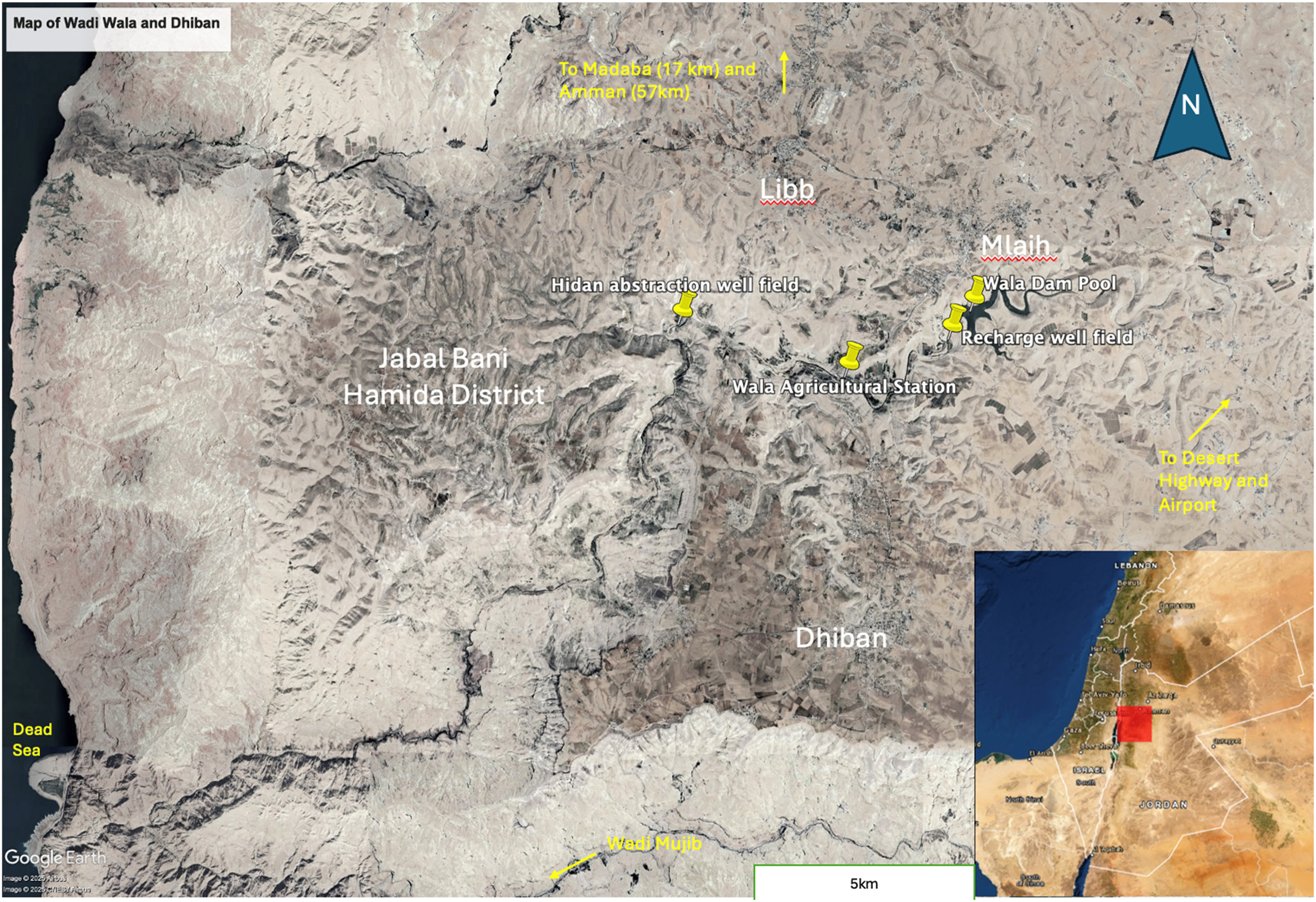
Map of Wadi Wala and Dhiban, with overview inset map of Jordan. Basemap from Google Earth Pro, Version 3.6.10201 (2025). Copyright 2025 Airbus and 2025 CNES Airbus.
Unsurprisingly then, given the resulting high rates of unemployment and poverty, the area became a hotbed of unrest and protest (see, for instance, Yom, 2014). It was in this context that I first came to conduct research there, at the time focused on rural protest. I was told by many protestors that it was in Dhiban, on 7th January 2011, that Jordan's first protests linked to events in Egypt and Tunisia arose, under the slogan that came to define Egypt's 25 January revolution ‘the people demand the fall of the regime’ (al-shaʻb yurīd isqāṭ an-niẓām) and going on to form one of the first and most radical of the rural Hirak movements, which continued unrest long after the more moderate urban protests were dispersed, and which flared up again in 2016 and 2018, occupying the town's central roundabout, burning a police station and bussing protestors to all the national protests in the capital.
Central to this initial organising had been activist and farmer Muhammad al-Snaid, one of my central research interlocutors, who from 2009 had formed and led a labour for labourers given only daily contracts by the Government (Hirak ‘Ummal al-Muyawama), especially the Ministry of Agriculture (Ababneh, 2016). Al-Snaid, who along with other activists in Dhiban had longstanding links to the traditionally left-leaning dock-workers union and to the murdered left-wing intellectual Nahid Hattar, as well as the more nationalist veteran's association, has been in and out of prison since 2011, but has finally been appointed by the Ministry of Agriculture to manage their 800-dunum. 16 Agricultural Station along with the Wala river, 8 km north of Dhiban. Far from purchasing his complicity, al-Snaid saw this as a sort of victory; he had long campaigned to revive the Wala agricultural station, and it was now employing several hundred Dhibanis. During initial fieldwork, my focus was on networks of activism and coordination behind the seemingly leaderless Hirak, and I, like some of the young activists in Dhiban's continuing Hirak, saw al-Snaid's agrarian concerns as peripheral to Hirak. I was at the time little interested in his explanations of how agriculture and water were at the centre of Dhiban's discontent and its tradition of political radicalism, nor in his attempts to salvage local agricultural and pastoral production, except as they touched upon Hirak. I came to adjust my opinion while walking with al-Snaid one hot day in June 22018, along with the rocky and almost dry river-bed of the Wala River as it winds through high cliffs that Mohammad turned to me and pointed at the trickle in the wadi bed and said ‘you see, they are bleeding us’ (yastanzaifunā), going on to show me the pipeline through which the area's water had been appropriated, before being replaced by a dam. Over many following meetings and days spent with Muhammad as he attempted to keep farming the Wala under ever-worsening conditions, adopting ever more water-efficient techniques and varieties, I came to see how, form Muhammad's perspective Dhiban had been rendered abject – a fragile landscape – through redistributory water infrastructures, which had made it an unwilling water ‘donor’. Muhammad had for years campaigned against exploitative state employment contracts, corrupt practices in local hiring and the detention of political prisoners (including himself). But he had also campaigned against water dispossession, which he saw as a loss of the vitality and potential from his once fertile home, and also against water pollution and more general environmental degradation. ‘There was enough rainfall here for the whole population of the district to graze their animals and grow barley. Now, the land is tried and dead’. I began to see how these were not marginal entanglements, but central to his project and to the wider Hirak movement. I began to see why he and other activists had pivoted to water and the environment in their activism. In retrospect, much of this should have been obvious. For decades now, as the climate catastrophe worsens, much scholarship has shown how the environment is not only political but it is politics itself.
Discussing Dhiban with a contact at the MWI, he told me ‘there are problems yes. But you know, this is the kind of place where the system falls apart. There are big problems there with water theft, with corruption. All the water metres are locked in safes, the locals can’t be trusted. Really, it is a very lawless place’. Again, Dhiban is rendered outside the zone of ordered government. But it is not peripheral, but central to Jordan's water system, as we shall see. Muhammad has his own quantifications; he estimates the district's farmers require around 14–18 mcm of irrigation a year, which could be lowered to under 10 with sufficient investment in new techniques and more resistant varieties (though this would mean abandoning some fruit and olive trees). In 2019, local agriculture received around 8 mcm, mostly form the Wala dam pool, and this was reduced to almost nothing in 2021, as the dam was empty for much of the dry season (Wilkorfsky, 2022). Such a deficit is unsustainable in absolute terms but is especially damaging when shortages come during key growing periods. Most local farming relies on small parcels (10–35 dunum) of inherited land – often imprecisely registered but held by custom – but in addition there are two large iqtā’īyyin (longstanding quasi-feudal land grant) farms (around 1500 dunum each), which farm some land themselves (with foreign, mostly Egyptian, labourers), as well as renting out plots to small farmers. These two farms, al-Snaid told me, are the only two with their own deep groundwater wells (aside from the artesian well within the agricultural station, built in its 1960s heyday), which have longstanding licences from when it was still possible to get them, and which also sell excess water to private tankers for 1 JOD per cubic metre. These farms, though legally compliant, are for al-Snaid, the real local examples of ‘corruption’ (fasād).
The water narrative of Muhammad al-Snaid and his allies does not conform to either of the metanarratives or discourses analysed by Hussam Hussein, but instead sees water scarcity as emerging from the hydraulic mission of the state and its developmental backers – one of control and dispossession, driven by crony capitalist accumulation; what al-Snaid refers to as ‘the corruption of the open [as in of open market competition]’ (al-fasād al-muftūha). It is characterised by the unfulfilled promises of development made to settling Bedouin. In an interview with a retired former director at the Ministry of Agriculture, I was told that in the 1970s the policy had been one of expansion; ‘the way people farmed in the Ghor was being applied to the Highlands. The older methods were pastoralism or rainfed. Mainly wheat, barley, birsīm [animal fodder], some vegetables. Farmers were advised to take out loans to put in trees and grow fruit. No one thought much about the water’. It was in this spirit that Jordan's reforming nationalist Prime Minister Wasfī al-Tal established a series of agricultural stations – government-owned farms – to provide jobs and training, but also to act as incubators and demonstrators on best agricultural practice – in formerly pastoral areas, to expand high-intensity modern agriculture. One of these sites was the Wala River. Here, al-Snaid told me, he had attended lectures in an outside amphitheatre, after a hard day of farming, on not only agriculture but poets and political theory too. However, the high-intensity agriculture the site pushed in the district became incompatible with the demands of recent decades for reduction, and the station dwindled to only four employees by the time the protests of 2011 broke out. Indeed, this was one of the reasons Muhammad had become an activist, forming the Day Waged Labour Movement. This, however, was only one of many failed developmental enterprises tied to wider hydropolitical shifts. In Dhiban, local activist ‘Ali al-Brizāt showed me documents from a Jordan River Foundation (JRF) Almond Farm started in the 1990s to great fanfare, and over local objections that Almonds were too later intensive for the area. By 2018, the farm was abandoned, and the almond trees had died and taken on a symbolic value, pointed out as exemplars of the failure of development. ‘No one asked us’ said Muhammad al-Snaid ‘we worked this land, but our knowledge was ignored. We know what can and cannot be done with the water we have’. As in many cases, despite the move away from modernist development of the sort Scott (1996) and others critiqued, models were still imposed by international donors without regard for local knowledge, preferences or modes of life. The result has proven socio-ecologically desctuctive.
Such developmental failures are not unique. Another project, in the more remote villages of the Jabal Bani Hamida, founded by Save the Children but taken over in 2007 by the JRF, encouraged local women to form a weaving collective to produce high-end carpets, while also creating a market for local wool. However, the women weavers found their water supply at home and form local groundwater wells inadequate, given the other demand on them, to wash the local wool of its lanolin and prepare it for processing – the project eventually came to rely on imported wool, woven locally (Jones, 2004) and has since become a marginal enterprise. Indeed the entire area of Jamal Bani Hamada is increasingly depopulating, with the young relocating to Dhiban, Madaba or Amman wherever they can, as precarious livelihoods based mostly on military pensions supplemented with smallholding agriculture become increasingly impossible. Local agriculture here lacks even the ruins of grand developmental schemes, and instead has remained largely in a subsistence mode, reliant on some olives and vegetables, but primarily pastoral, breeding sheep and goats and producing dairy products. There are no official WAJ sources for irrigation here, and even domestic supply is some of the worst in the country. In a series of 12 household interviews, all residents agreed that water supply was normally between 1.5 and 2 hours per week and arrived at a low pressure, often in the middle of the night, causing considerable consternation to the recipients, especially for women who bare the brunt of water-using housework, and who have to get up to carry out water-intensive tasks such as washing clothes and floors, and to fill their water tanks for the week ahead. Anecdotally, supply is often intermittent or non-existent for weeks at a time in the summer. This is despite the water supply coming from Miyahuna, the municipal company that manages to supply up to 36 Horus of supply in most Amman (MWI, 2022b). The frequent complaints of locals to the Miyahuna helpline are, interviewees told me, usually met with no response, (or in one case I followed, resulting in a promise of investigation that never materialised, and in another, backed by the local parliamentary deputy, a formal letter announcing that nothing could be done due to technical limitations); a fact that Um Jihad, a key interlocutor, attributed to their lack the political patronage networks possessed by to some other tribes in the parts of the highlands served by Miyahuna.
Um Jihad is a widowed farmer, whose children have moved away due to the increasing unprofitability of agriculture under these conditions, struggles to maintain her olive trees and flock. Like many here, she relies to water her flock of sheep olive trees and vegetable patch on water mostly from old stone wells -often millennia old, and thus too old to be owned under shari'a and state law, and thus also unregistered and outside the official system (Lancaster and Lancaster, 1999). Their use relies on an intimate, un-abstract water knowledge, of which wells and springs to sue at different times of year, which are healthful and which can only be used on robust crops. Yet Um Jihad and other residents told me wells are getting dryer for longer in summer, and increasingly saline, due to over abstraction elsewhere. Following three successive years of low rainfall, the winter of 2022 had been one of the driest anyone could remember, even though national figures were around average. ‘In the days of my youth, we fed the sheep fodder for two months per year, and the rest was grazing. Now, by god, the opposite!’. The salinity apparently impacts the taste and quantity of milk produced and can kill fruit trees. Instead those who cling on to farming in the Jabal have to supplement their wells with tanker water, but while in Amman this can cost as little as 14 JOD for a 5 cubic metre tank, the remoteness of the area raises prices here to at least 25 JOD. Um Jihad said she had spent nearly 500 JOD on tanker water in 2022, mostly paid for with money from her son working in Saudi Arabia. Another shepherd in the Jabal, Abu Ghazi, told me that his monthly input cot for each sheep was higher than the animal's value in 2022, forcing him to sell off 50 animals at ‘Eid al-Adha when prices are highest. Um Jihad once summed up her situation as ‘next to the well, and you die of thirst’. This is appropriate sentiment, given that this area of the highlands, connected to national water infrastructures as part of a development drive in the 1990s, has been rendered a net water ‘donor’. Indeed, given the aforementioned analysis of Klassert et al. (2023) and of Mustafa and Talozi (2018) it is quite likely that the tanker water she is buying is being drawn from illegal wells that tap the aquifer that once fed local sources.
The Wala River, which is fed by various winding streams and springs coming down from the steps, channels a year-round trickle and large volumes of winter floodwater down from the highlands through steep falls and gorges into the Ghor, and eventually, combining with the Mujib, enters the Dead Sea, discharging 23.18 mcm per year (al-Balawi, 2003). It was, I was told in oral history interviews, a key reason that the Bani Hamida pastoralists had moved north from around Tafilah to settle in this area in the nineteenth century. In 1986, the WAJ installed the Wala Transmission Pipeline just below the Wala agricultural station, pumping 4–5 mcm annually away from the local farmers, and to urban users in Madaba and Amman (Fry et al., 2015). Muhammad would often point out the black plastic remnants of this pipe's pump house, saying that ‘Here they started to bleed us’. He insisted that there had been an understanding with the government, that in return the water supply to the area, especially Jabal Bnai Hamida, would be free or heavily subsidised. Following the process of corporatisation in 1994, Miyahuna has not honoured this understanding, billing customers as usual. By 1992 the WAJ also drilled a well field in the Wadi Hidān (the downstream section of the Wala) to supply Miyahuana with potable water, which are still in use (Xanke et al., 2016). In 2002, the Wala was dammed, with promises of an improved local water situation and greater local irrigation, but the dam water has mostly been used in fact to recharge the aquifer to secure the supply from the Hidān wells (Xanke et al., 2016).
It might seem that the move to a prevailing focus on megaprojects to increase supply would present some relief. Jordan's largest megaproject, the Disi Water Conveyance, was indeed intended to prevent the need to overtax water resources in areas around Amman (Fry et al., 2015). It has, however, failed to do so. The water from the deep wells at Disi proved to contain levels of the radium isotopes at a level that required its water to be blended with equal parts from other sources (see for instance Upson, 2009; Vengosh et al., 2014). About two-thirds of this water ultimately comes, via the Zai treatment centre, from the Jordan River and its tributaries, from which it flows in quantities formally agreed by the 1994 water settlement with Israel into the King Abdullah Canal, and the remaining third (about 25 mcm) comes from the Wala dam pool, both directly and through the Hidān wells (GAMA, 2008:19). This, more than anything, is what local farmers resent; that a project that was supposed to secure a less water scarce national future, has resulted in an intensification of the expropriation of their water, to make their water drinkable for the wealthy in West Amman.
Contamination and the Wala River Dam
The Wala River dam (see Figure 2), a concrete and earth infill barrier for the Wadi Wala's seasonal flood, was completed in 2002 and expanded in 2004 and 2006 to a total theoretical capacity of around 29 mcm with World Bank and USAID funding (Tarawneh, 2022). Its primary use is to store seasonal flood water, to provide domestic water for Madaba and the southern fringes of Amman, via recharging the underlying Hidān aquifer that fed several WAJ wells further down the valley, but also as a direct source at times (Xanke et al., 2016). However, it was sold locally as providing irrigation for agricultural entrepreneurial enterprises. The dam pool was offered as a remedy to agricultural dispossession and subsidy reductions in the previous decade. Farmers were encouraged to take out loans to install sophisticated irrigation systems to grow crops new to the district; potatoes, tomatoes and citrus fruit, as well as olives, and sheep, while grains largely disappeared. A nascent fish farming business was even started by a couple of retired pensioned officers with capital loans.
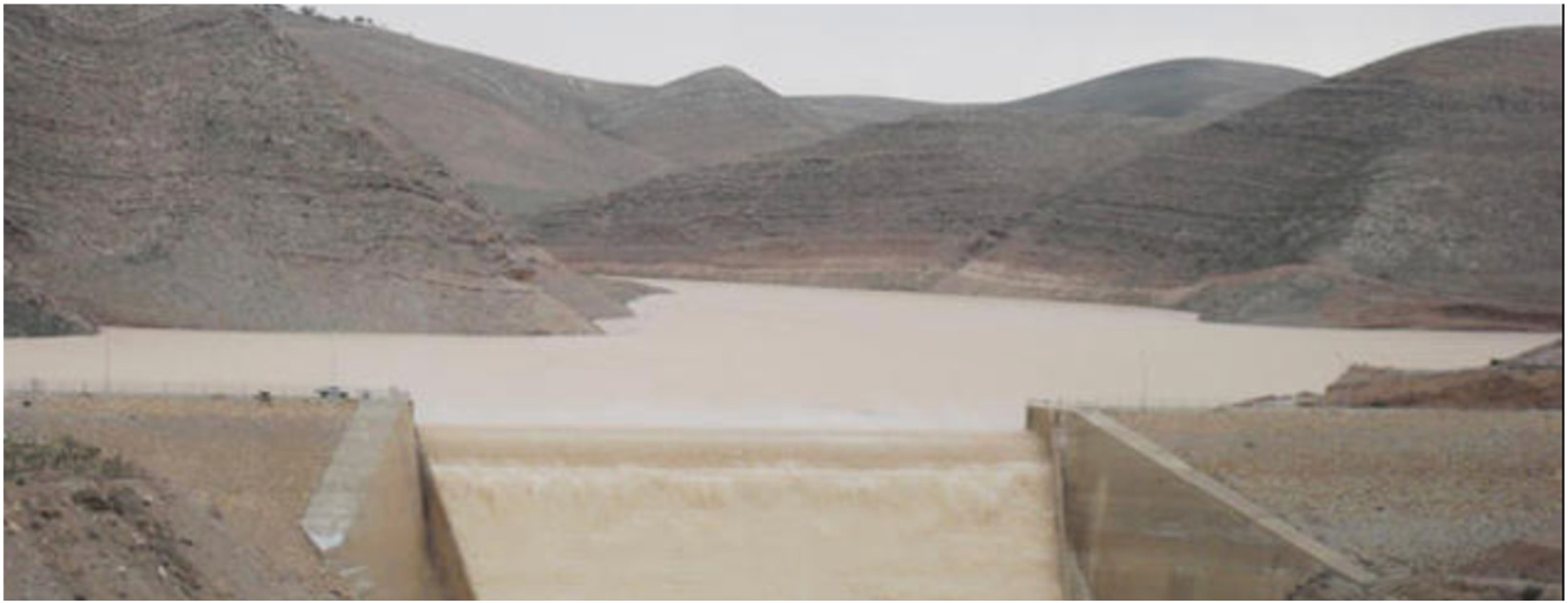
Wala River Dam (Photo by the author).
In June 2021, the water minister Moatasim Saedan announced that the Wala River dam was to be drained. Farmers and livestock owners were forced to buy water brought in by tankers and were driven into debt within months (Wilkorfsky, 2022). The question everyone in Dhiban wanted to know was why, and why now, after a hot summer and poor winter rains? Was this, as local Hirak activist and lawyer Ali Brizāt vocally proclaimed on Facebook, another ‘slap from the king’ in revenge for protests? A series of claims and counterclaims emerged, a localised hydropolitical discourse instructive of the dynamics of larger ones.
A ministry spokesperson was quoted by Jordanian press as saying the dam had exceeded its engineering capacity of 6 billion gallons, and was in danger of catastrophic failure, leading to a 27-story high tsunami swamping everything between it and the dead sea (see Wilkofsky, 2022). Hysham al-Hysa, a local Hirak activist who also works at the JVA, gave a series of press interviews debunking this claim, saying the experts whose testimony this decision was supposedly based on had not actually visited or surveyed the dam, and that it was nowhere near this capacity. Meanwhile, his boss, head of the JVA, Manar Mahasana, denied the reports of a danger of imminent catastrophic collapse and a tsunami, contradicting the Ministry. The dam was instead being filled gradually, to avoid overtaxing it, but was being filled according to plan, and its current empty state was instead blamed on locals overusing it, especially illegal tapping of pipes. Still others speculated that in fact the dam's construction was the real story of corruption, that it had been shoddily made through corrupt contracts, and could not meet the stresses in practice that its foreign designers had intended it to.
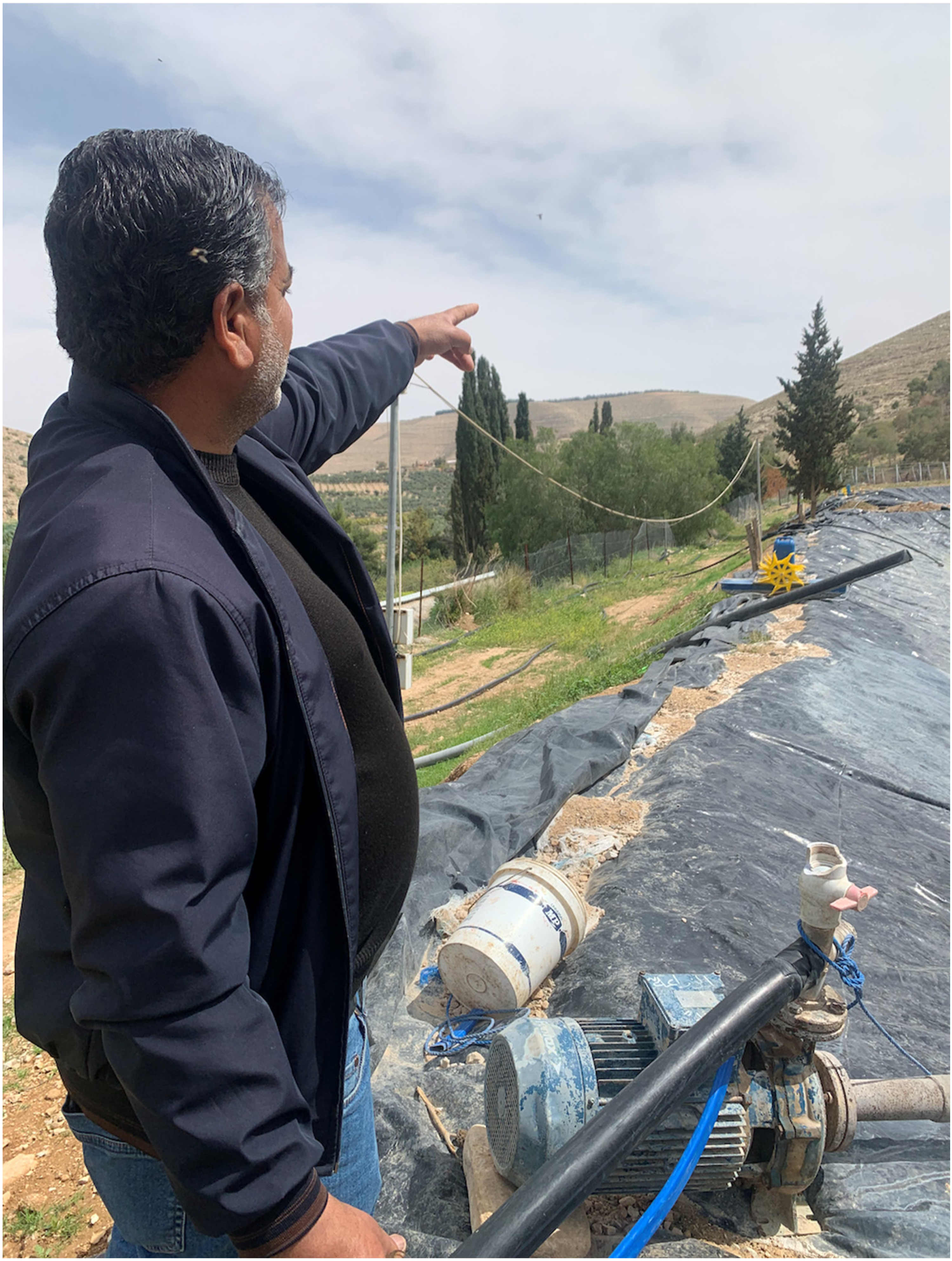
Muhammad Al-snaid at the Wala Agricultural Station, repairing an irrigation pump (Photo by the author).
Muhammad al-Snaid, constantly battling the dangerous build-up of sediments in his irrigation system (see Figure 3) instead blamed pollution. For months before, he had pointed out in social media posts to his followers changes in colour of the Wala dam pool – in one widely shared post he showed a picture of the dark brown dam pool with a caption stating ‘Pepsi streams from the Wala dam. This is a type of Pepsi for the poor areas of south and east Amman and for the district of Dhiban. While the other rich areas of West Amman drink Seven-up [i.e., clear water]’ (see Figure 4). He ended his post with a hashtag ‘down with the Minister for Water’. Al-Snaid maintained in all our conversations that the pollution was most likely from seasonal run-offs from the waste treatment centres at Zizia and Khirbat al-Samra’ south of Amman (see Alraggad and Ahmed, 2021), a theory I put to water experts in Amman who thought it unlikely but not impossible. Pollution from this source is strenuously denied by the MWI, however, who blame instead local farmers themselves. Regardless of source, there clearly have been periods of contamination in the Wala dam pool, and Muhammad has used this issue to form a new local popular committee to protest cases of pollution and environmental ills. The real story of corruption for them was why the water facility had been built where it was by private investors, on the seasonal upper reaches of the Wala catchment, and then had failed to do its job properly. Here was a quite literal case of filth from the capital, fasād in its fullest sense, building up and poisoning life in Dhiban.
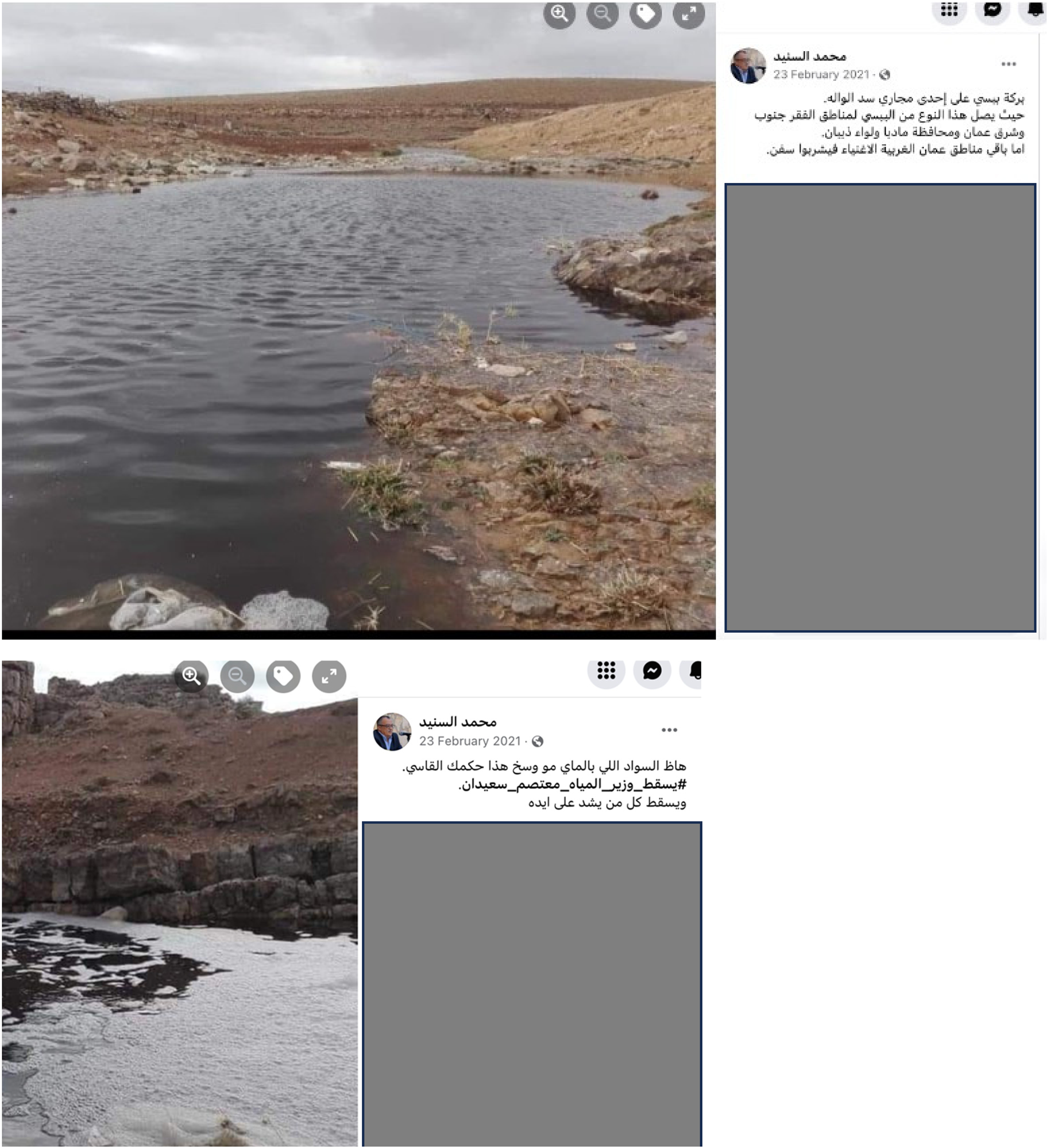
Two-part Facebook post by Muhammad Al-snaid with a picture of the Wala dam pool, complaining about water pollution. The Arabic text reads on the first part reads ‘A pond of Pepsi in one of the Wala Dam pools. This type of Pepsi reaches the poor areas south east of Amman, Madaba and Dhiban, while the rich areas of West Amman drink Seven up’. On the second it reads ‘This blackness in the water is not dirt, but your harsh judgement. Down with the water minister Moatasim Saidin and down with anyone who supports him’ (reproduced from Facebook February 2021, with permission.).
Dhibanis were driven once again to protest, this time outside the agricultural ministry, though they were quickly dispersed. Fuad Qabilāt, an olive farmer I knew distantly, came out on Facebook with an account of being strip searched and humiliated by the darak (gendarmarie). But in general, the state has policed Dhiban lightly since the dam fiasco. Some farmers, apparently, are thought to have been paid compensation – perhaps hush money? But this is thought to be mostly the big cash-crop citrus businesses, which use up a vast share of the allotted water but employ mostly foreign labourers.
Muhammad told me cases like this one removed people's faith in the state and its promised megaproject-based solutions, though he saw a desalination project as necessary. But those in his committee wanted to be able to predict, and, preferably, control, the distribution of increasingly scarce water that was both abstracted and used locally. The dam had taken that away. Of course, in other settings, including Jordan, community management has proved a mixed blessing, and has certainly not lessened charges of inequity or corruption (see Mustafa et al., 2018, on the Water User Associations imposed on the Jordan Valley by a development intervention), but for al-Snaid the issue with such schemes is their subservience to national and international policies, while for him the key to tackling corruption is al-saītara al-sha’bīa – popular, localised control or sovereignty over resources. Couched in terms of Hamida inheritance of the land, control over it and autonomy upon it, he sets out a compelling vision of a ‘return to the land’ allowing ‘a life of dignity’ where the land and agriculture remain ‘foundational’ (asāsī).
In the contestations over the dam pool, the contamination it contains, and its sudden emptying, we see how hydropolitical discourses mirror and partake in discourses of corruption; another ubiquitous term used by pro-market reformers and protestors alike in the Middle East. Corruption can be used to refer to the sort of small-scale practices of ‘quiet encroachment’ (Bayat, 2015) undertaken by those increasingly pauperized, but it can also be used, counter-hegemonically, to offer up powerful moral critique of the powers that be, while avoiding overt sedition (see, for instance, Doughan, 2017; 2023). Likewise, water, itself a subject of various gambits that are variously cast as corrupt, in its varied flows and localised scarcities, and with its potential to carry physical corruption through waste, provides a way of turning the depoliticized terms of the technocrats back on themselves, with renewed political vigour. Water complaints, as such, are not mere service disputes, but are a form of everyday politics, and, as with the colour of the polluted water in the Wala dam, or the withering trees of Jabal Bani Hamida, are powerful instantiations of political and environmental realities that can be resisted.
Conclusion
To conclude, I return to the contention in much of the water literature considered here that the weaknesses of the state in Jordan forces it to prioritise social stability and cohesion over pursuing an economically rational and environmentally responsible (it is interesting how easily the two are conflated) water policy. Two questions need to be asked of this proposition: Is it true? And if it is, to what extent does this hinder just and effective environmental reform? Regarding the first, and returning to the water official's lament that if he were to apply the financialised demand management policies pushed for by donors ‘there would be thawra [revolution]’, I question the degree to which not confronting both the legal and illegal over abstraction of groundwater in the highlands has really been about avoiding popular rural unrest. Given the persistence and radicalism of unrest in Dhiban, the degree that this is entangled with national and international water and development policy, and the degree to which it formed part of a wider rural movement that offered a severe, if not ultimately existential, challenge to the state, it would appear at the least that such a policy has not been entirely successful. Sustainability doesn’t seem to be an overriding motivation of the state here, at least not stability everywhere. Rather, perhaps it would be more accurate to say that since the uprisings of 2011, the state has sought to direct public anger against ‘corruption’ and theft towards some people and places, and away from others. While avoiding the appearance of siding with international capital over local rural constituents, state policy in effect allows the water sector to continue to dispossess those with whom the state is already in contention, while shielding allies and powerful elite interests from any demand management and the consequences of environmental disaster. The status quo may help some big farmers to maintain their wealth and power, but it generates instability and fragility for others as a consequence.
As for the second question, of what consequences this has for environmental justice, I follow Mustafa et al. (2016: 176) in suggesting that; The rationality of the Jordanian state, as well as that of the Jordanian farmers – which in itself is a contested category – is no less legitimate than the rationality of the international donor and policy community. Technocratic rationality premised upon absolute water scarcity fails to capture the politically inflected rationality of present-day water use in Jordan. Sooner the gap between the technocratic and political rationality is recognized by all, sooner one can move beyond the present stalemate between the Jordanian water users, policy makers, and their international funders.
As Liptrot's and Hussein's (2020) reading of farm closures at Mudawara in the wake of the Disi megaproject implicitly acknowledges, the state chooses where and how to expropriate water on the basis not of social stability or cohesion, but on the basis of which actors and constituencies it can afford to alienate, or who are beyond rapprochement. Low level but chronic rural discontent, and even outright unrest, can, it seems, be tolerated, especially where addressing the causes would prove prohibitively expensive to the state and its international backers. As such, water demand management and general environmental conservation reproduce existing hierarchies and inequities. The problems of Dhiban are vast and historically long-standing and specific, but so are those of other areas -especially other areas with an active Hirak movement post-2011. Addressing them may often seem beyond the means of the Jordanian state, and incompatible with wider environmental concerns. However, as in Kasia Paprocki's (2021) account of water contestation in rural Bangladesh, the issue of environmental and ecological justice, including sovereignty over water and the land it irrigates, is implicated in wider moral economies of agrarian justice, from which it is inseparable for many of the people most effected by environmental degradation. Such places might be described, in the language of environmental justice activism, as ‘sacrifice zones’ (see Juskus, 2023), but I instead see Dhiban as what Paprocki (2022: 1399) terms a ‘zone of anticipatory ruination’, where ‘claims about the death of the peasantry in the time of climate change prefigure the very crises they anticipate. 17
Water policy has been, as we have seen, at the heart of the story of Dhiban's socio-ecological ruination, and the resultant forms of activism and resistance that have emerged there. In Dhiban, both the period of financialised demand management, which raised the cost of both water and inputs (such as seed crops and animal feeds) via subsidy reductions while exposing farmers to the vagaries of market prices for agricultural goods, and the subsequent focus on supply-side megaprojects, which in the case of Disi turned out to still require the Wala's water for the urban market, have been experienced as forms of dispossession. Given this, the focus in the literature on a monolithic category of highland agriculture requires further interrogation and particularisation. The farms of Dhiban (with the exception of the two large landowners) are hardly comparable to those Yorke (2016) and Hussein (2018b) take aim at, growing bananas and tomatoes in arid steppe land and shielded from the economic and ecological consequences through political patronage networks. As far as Dhibanis use wāsta, it is more to try to make claims on an increasingly impersonal state and on the basis of a justice based on distribution rather than legality (on this argument in a wider setting, see Doughan, 2017; 2023). So too with the spectre of tribalism in the water literature; the Bani Hamida has a very different history to, say the Bani Sakhr, some of whom have specialised in illegal wells for some time, and in both wide disparities in wealth, political influence and land holdings exist. While the extant literature acknowledges a wide variety of farm sizes in the highlands, it doesn’t offer much sense of the social and geographical cleavages involved, or on where responsibility for undeniably environmentally unsound practises really lies. The focus on elite capture and patronage, then, needs to be modified. This article has argued for shifting our critical attention instead to how local contexts interact with capitalogenic flows, channelled through pro-market international organisations and development agencies, and leaving fragility in their wake. This is not to deny the underlying technical challenges of Jordan's extreme water scarcity or the potential necessity of large-scale interventions, even if imperfect, in addressing Jordan's long-term water needs. But if such interventions are to be politically feasible in the long term, they must be able to provide some answer to the grievances of places like Dhiban that is not premised on continuing dispossession.
Highlights
The article examines Jordan's hydrosocial system from the perspective of some of its discontents – farmers and protestors in a poor rural region facing scarcity and water pollution. After a situating look at how hydropolitical discourse of scarcity function in Jordan and elsewhere, it moves into ethnography. This explores how flows of water are variously experienced, imagined and contested, instantiating and concretising often exploitative social and political–economic relationships between different people and places. The article more broadly seeks to denaturalise and repoliticise water-as-resource, considering it as a capitalogenic flow, reproducing uneven distributions and generating mistrust, infrastructural subversion and potential ruination in its wake.
Footnotes
Declaration of conflicting interests
The author declared no potential conflicts of interest with respect to the research, authorship, and/or publication of this article.
Funding
The author disclosed receipt of the following financial support for the research, authorship, and/or publication of this article: This work was supported by the British Academy, (grant number PF22\220077).
