




Abstract
This article contributes to the growing literature on human-soil relations by exploring how care for agricultural soils unfolds among farmers who engage with alternative agricultural practices across different productions and sites in Norway and Costa Rica. These farmers approach soil as a living being and seek to approach care with macro- and microorganisms in response to soil challenges and economic instabilities. The article follows recent literature on soil care in showing how agricultural practices challenge the dominant approach to soils as passive. However, the article argues the necessity of expanding on existing notions of care. This, I argue, involves ethnographically “unearthing” care: unpacking and situating a diversity of soil care practices, their human and other-than-human entanglements, and how these relations are conditioned by environmental, genealogical, sociocultural, temporal, epistemic, economic, and political mechanisms within and beyond the farm. Considering these variables is essential to keep soil care in the emerging literature from following a romanticizing path toward abstract individualism.
Introduction
This article deals with approaches to soil care by farmers in Norway and Costa Rica. Exploring how farmers relate to, experience, perceive, know, learn to know, and work with agricultural soils, it focuses particularly on farmers who embrace alternative approaches that collaborate with more-than-human beings in response to soil-related challenges. Alternative approaches challenge the conventional model and include divergent and congruent practices applied by farmers who identify with either Regenerative, Conservation, or Sustainable Agriculture respectively. Common among alternative farmers is their quest to seek knowledge about soil and subsequent attempts to stimulate ecosystem processes that allow soil organisms to perform their “natural task.” By focusing on farmers’ dealings with soil biology in particular, the article analyzes how farmers, to different degrees, challenge the hegemonic agro-industrial model's chemical orientation toward soil fertility and passive treatment of soils; further, it contributes with a comparative intervention to the growing human-soil literature that challenge dominant approaches to soil (Evans, 2022; Krzywoszynska and Marchesi, 2020; Münster, 2021; Salazar et al., 2020; Swidler, 2009). However, the article also contends that it is necessary to expand on and unearth prevailing notions of care.
Ethnographically unearthing care, that is, unpacking, expanding, and situating a diversity of soil care practices in two very different contexts is crucial for three reasons. First, soil care, like that of soil degradation, is neither socially (nor culturally, I would add) nor politically neutral (Blaikie, 1985; Engel-Di Mauro, 2014; Malone and McClintock, 2023), but permeates conceptions of what care is, how to care, and who to care for. Second, despite being implicitly framed as “uncaring” (Kallio and LaFleur, 2023; Krzywoszynska, 2019; Puig de la Bellacasa, 2017), I show that conventional farmers also practice soil care, but differently. Third, care is differently conditioned depending on a variety of circumstances.
In short, I argue that unearthing care involves situating soil care practices, their human and other-than-human entanglements, and the dimensions that condition these relations: environmental, genealogical, sociocultural, temporal, epistemic, economic, and political mechanisms within and beyond the farm. Further, I dispute claims that raised awareness of soil and other ecologies as alive will lead to more knowledge, action, and hence more sustainable human-environment relations (Kallio and LaFleur, 2023; Krzywoszynska et al., 2020; O’Brien, 2020; Tsing, 2015). Rather, I call for analytical attention also to the mechanisms that condition care. Overall, the article contributes to environmental anthropology by showing how soil care unfolds and extends beyond multispecies relations of ecology to consider the dimensions that condition these relations.
The article is based on 12 months of ethnographic fieldwork in 2021 and 2022 among farmers in three different productions and geographical sites: dairy farmers in Jæren 1 , southwest Norway; grain producers in Østfold, southeast Norway; and coffee farmers in Turrialba, Costa Rica. In 2023, I conducted brief follow-up visits in Turrialba. This article engages with farmers in Østfold and Turrialba where alternative agricultural practices are emerging. The comparison of Norway and Costa Rica is interesting for several reasons, among them is the tendency in international public and policy discourse to describe the countries as socioeconomic or environmental models to follow. Yet, it was travel restrictions in 2021 during the COVID-19 pandemic that led to the inclusion of Norway as a comparative case to Costa Rica, a practical choice that later revealed congruent human-soil relations despite numerous differences. Given the very different conditions that make such a comparison interesting, what has stimulated the emergence of alternative forms of soil care? How does soil care unfold in these two different contexts? To what extent is soil care conditioned by different contexts?
The article begins with a review of human-soil literature followed by a brief account of the ethnographic contexts in Norway and in Costa Rica. The subsequent section engages with farmers’ experience of soil challenges before showing how their alternative practices challenge the established dominant model through engagement of sensorial and bodily registers, dedication of time for soil, and caretaking together with other humans as well as soil macro and microbiology. The increasing attention to soil care in the literature is narrow and at risk of following a romanticized path toward abstract individualism. Therefore, the final sections highlight the need to expand notions of care by analyzing how soil care unfolds and extends beyond multispecies relations of ecology to consider its conditioning by the many dimensions of care.
Regenerating human-soil research
Soil has for some time been largely undertheorized and treated as a backdrop in social sciences and humanities (Salazar et al., 2020; Swidler, 2009). Despite investigations into the social causes of soil erosion (Blaikie, 1985) and a debunking of the socio-economic dimensions of land degradation in geography (Blaikie and Brookfield, 1987), in addition to ethno-pedologists and anthropologists’ research on different indigenous soil classification systems and the role that indigenous knowledge plays in soil management (Barrera-Bassols and Zinck, 2003; Krogh and Paarup-Laursen, 1997; Posey, 1985; Turner, 1993), scholarship has predominantly approached soil as inert. (In)attention to soil has typically been disguised as land—a natural surface that can be acted upon or a resource that can be adapted to, owned, exploited, and governed. Some connect this passive treatment of soils to the predominance of soil physics and soil chemistry in soil science (Puig de la Bellacasa, 2017) during the latter half of the twentieth century and the accompanied reductive understanding of soil fertility that has treated soil as a medium which absorbs nutrients that cultivars require to grow (Granjou and Meulemans, 2023). This chemical and “modern” conceptualization of soil fertility is typically attributed to the German chemist, Baron Justus von Liebig, whose work was central in the anti-organic campaign in agricultural science from the 1920s onwards and which eventually replaced and silenced bacteriological conceptualizations (Uekoetter, 2006), supporting ideas of soil as a medium of growth. This changed, however, at the turn of the twenty-first century with an ecological orientation in soil sciences (Granjou and Meulemans, 2023), leading to a reemergence of bacteriological understandings, ideas of soil as a living ecosystem (Wall et al., 2004), and an emphasis on relations and interactions between soil organisms and chemical and physical processes (Lavelle and Spain, 2001).
While the human role in soil processes has been a source of debate in soil sciences, it is not until recently that human activity has been considered integral to pedogenesis (Richter et al., 2011), leading to a shift in soil models from natural bodies to incorporate the human impact on accelerated soil change (Richter and Yaalon, 2012). These developments in combination with technological advances in metagenomics (Paul, 2015) and climatic and environmental alterations have arguably influenced a renewed focus on human-soil entanglements (Granjou and Meulemans, 2023; McElwee, 2021) and a turn to more relational and (new) materialist understandings in social sciences and humanities. In anthropology, the “ontological turn” (Graeber, 2015) shifts questions from perspectives on the same world to inquiries on alterity, multiple worlds, and being that subsequently challenge and seek to dissolve nature-society dichotomies, together with the idea of nature as a biophysical reality, such as soil (see Latour, 1999). This is reflected in the growing literature on human-soil relations in related disciplines that celebrates soil liveliness (Puig de la Bellacasa, 2019) and that shifts focus from sociocultural meanings and knowledge of soils to inquiries of soils’ own biophysical agency (Granjou and Meulemans, 2023) and their world-making effects in the Anthropocene.
With contemporary global climatic, environmental, and soil urgencies comes particular attention to how macro- and microorganism lives and deaths are intimately entangled with human social, cultural, political, and economic forces (Hendy et al., 2021; Kirksey and Helmreich, 2010; Lorimer, 2020; Tsing, 2015), leading to debate about ethical and (un)sustainable relations with macro and micro species (Haraway, 2008; Hird, 2009; Münster et al., 2021; Schroer et al., 2021; Tsing, 2015). A central part of this ethical endeavor for scholars working on human-soil relations in social science and humanities, and to which this article contributes, is to raise public and political awareness about ethical doings in human and more-than-human encounters—with animals, cultivars, soil organisms, and their interrelated entities—in hopes of stimulating more attentiveness and more ethical human-soil relations.
Practicing attentiveness—that is, tuning in to, and cultivating, the arts of noticing (Tsing, 2015) the needs of other human or nonhuman beings—is inseparable from care practices (Krzywoszynska, 2019). Relational approaches (Krzywoszynska and Marchesi, 2020) in soil care literature focus on care as an embodied practice (West et al., 2018) of relating and is inspired by new materialisms approaches (Barad, 2007; Bennett, 2010; Latour, 2004), multispecies ethnography (Haraway, 2008), and feminist research that challenge care as an idea that is guided by normative moral dispositions and typically associated with women (Clement, 1996; Robinson, 1999; Tronto, 1993). Fisher and Tronto suggest that care is “a species activity that includes everything we do to maintain, continue, and repair ‘our world’ so that we can live in it as well as possible” (1990: 40). While feminist ethics scholars mainly focus on human relations of care, Puig de la Bellacasa (2017) draws on Fisher and Tronto's open definition to extend care to more-than-human beings. Her eco-social understanding of care is also found in soil care literature that to different degrees implies nonhuman care agency. Challenging binaries such as nature and society, living and inert, biotic, and abiotic, the literature does so often through the compost metaphor, which points to human and nonhuman “togetherness” and how such components “become with each other” (Granjou and Meulemans, 2023: 5) through their agentive effects. Care as a form of (practical) relating manifests through care networks (Krzywoszynska, 2019; Puig de la Bellacasa, 2017) of wormy collaborations (Abrahamsson and Bertoni, 2014; Meulemans, 2020a), making fish hydrolysate (Evans, 2022), through acts of decomposition (Lyons, 2020; Kallio and LaFleur, 2023), reclaiming practices (Meulemans, 2020b), or making of ferment as a form of resistance (Münster, 2021). Common among these works is the emphasis on collective human and nonhuman caretaking of a broken world and its regeneration through the inclusion and stimulation of some microbes, species, and/or matters with the exclusion of others. This suggests that “good” care practices always depend on the relations (and networks) in which care is situated and unfolds. The logic of care (Mol, 2008) in these networks further depends on the needs of the primary subject/object of care (Krzywoszynska, 2019) and the associated responsibility of taking care of these (Krzywoszynska, 2023). This article contributes to this literature with a comparative outlook on human-soil relations, and does so by expanding narrow conceptualizations of care—that tend toward abstract individualism—to discuss the conditioning of care in two very different contexts.
Contextualizing the sites
In 2019, Norway and Costa Rica ratified plans to decarbonize the agricultural sector 2 , which is dominated in both countries by a conventional model that: is based in a chemical approach to soil fertility, promotes monocultures, and relies on agrochemical inputs. These plans coincided with the European Union's launch of the “Green Deal” that will affect farming not only in Norway, but also Costa Rica which exports coffee to European markets. Whereas agricultural land is estimated at 35.5% of Costa Rica's total land area, 3 in Norway it constitutes only 3% of which only 1% is suitable for cultivating grain for human consumption 4 . Norwegian agriculture is heavily regulated by the state through legislation and economic incentives (Forbord et al., 2014) in addition to formal and informal governance and institutions that are strongly communal (Almås, 2002). Since 1950, Norwegian farmers have enjoyed economic predictability and state subsidies through the annual agricultural settlement, which is based on negotiations between two farming organizations (Norges Bondelag and Norges Bonde- og Småbrukarlag) and the government. Although the Costa Rican coffee industry is heavily regulated (Pratt and Harner, 1997), coffee producers do not receive state subsidies. Where the annual agricultural settlement provides an outlook on Norwegian farmers’ economic opportunities in the coming year, tico (Costa Rican) coffee farmers are vulnerable to volatile international coffee prices following the collapse of the International Coffee Agreement in 1989, deregulation (Babin, 2015; Ponte, 2002), and the subsequent coffee crisis in 2001 (Vogt, 2019).
Small-scale farmers with fewer than 5 hectares of cultivated coffee constitute 92% of Costa Rica's coffee producers 5 , and while small farms are fragmenting, most land is owned by the producers themselves (OECD, 2017). Conversely, the average size of Norwegian farms is expanding— 24.9 hectares in 2018 (Knutsen, 2020)—in tandem with more leased land, which in 2019 constituted 46% of the total area in production in 2019 (Løvberget and Rognstad, 2021). The management of Norwegian farms is mechanized and industrialized in contrast to the dependency on manual labor in coffee farming in Costa Rica. Compared to Østfold's relatively flat landscape, Turrialba coffee farms are situated between 500 to 1300 meters above sea level and approximately 58% of the terrain has slopes greater than 30°; this uneven topography makes mechanization of harvesting impossible, meaning that production costs cannot be reduced and making smallholders extremely susceptible to decreases in coffee prices (Avelino et al., 2015: 308). Adding to this economic vulnerability, turrialbeño coffee farmers receive a lower price than other coffee regions in Costa Rica. A humid tropical climate persists in Turrialba, with an average annual precipitation of 2619 mm and an average annual temperature of 21.7°C (Viguera et al., 2019: 335), contrasting Østfold's average annual precipitation between 700 to 900 mm and approximate average annual temperature of 6°C. 6 Despite these differences, alternative practices are emerging in both areas in response to soil challenges that farmers connect to “modern agriculture”. Alternative farmers challenge, to varying degrees, the hegemonic mode of practicing agriculture and the prevailing perception of soils as inert. This hegemonic mode has arguably developed along with an agro-industrial model that favors efficiency and volume, is based in fossil fuel use and practices that have emerged from the Green Revolution, including the shift from a biological to chemical model of soil fertility (Marchesi, 2020). With these developments, soil rhythms have intensified and accelerated in attempts to align with the faster rhythms of production to satisfy human needs—and in the process have not only degraded environments and the global climate (Shiva, 2008), but also silenced soil biology needs.
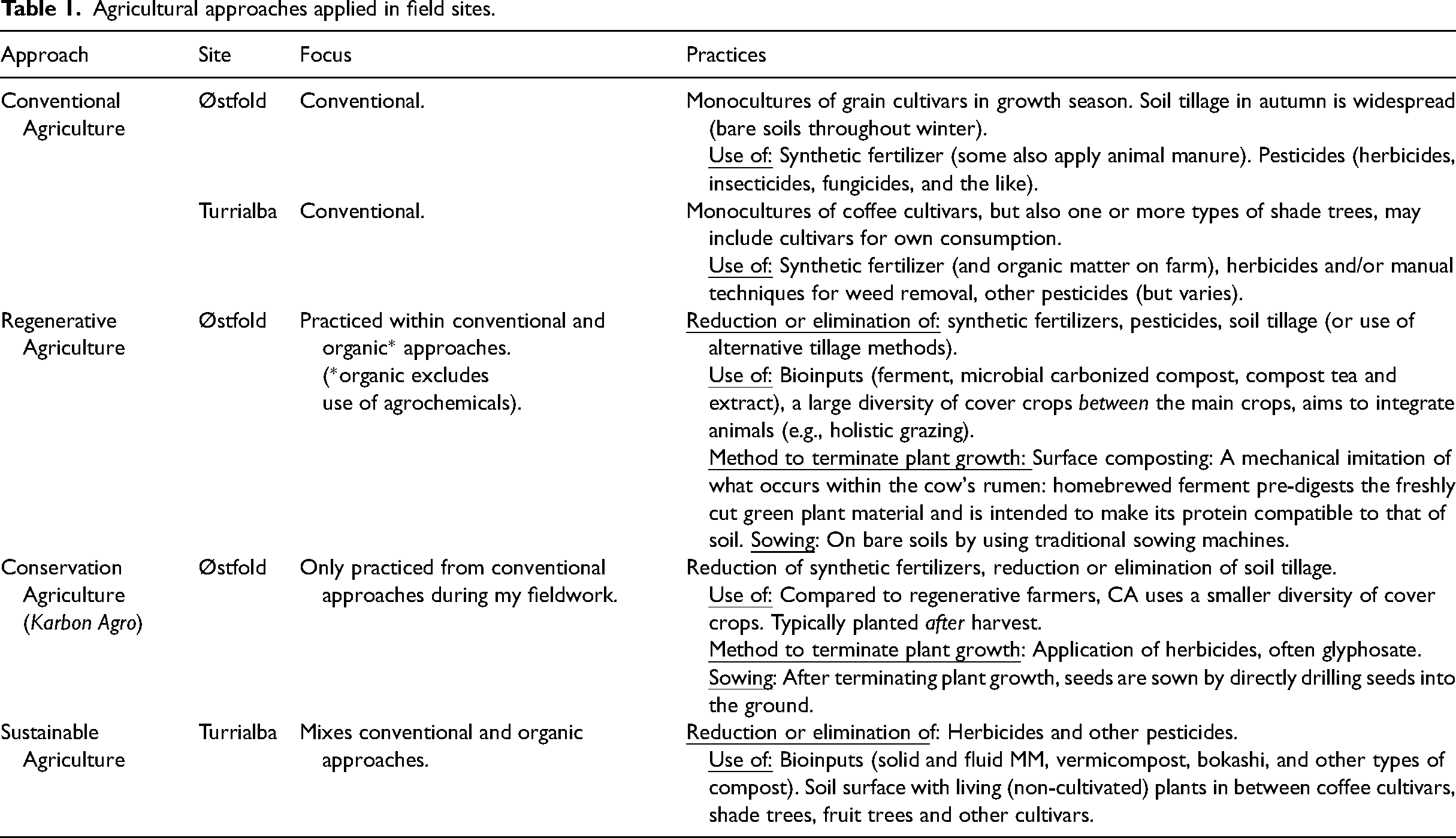
Regenerative Agriculture and Conservation Agriculture are two alternative approaches that are on the rise among grain farmers in Østfold. While farmers of both approaches refer to their practices as being “regenerative”, the former approach is often associated with the project Referansegårdsprosjektet (led by an independent foundation) and the latter with Karbon Agro (a project based in the regional Norwegian Agricultural Extension Service (NLR) office). Both are state-funded and seek to develop new knowledge and practices to improve (i.e., regenerate) soil health—though in different ways as I will discuss later. The concept Regenerative Agriculture was adopted in the early 1980s by the US-based Rodale Institute, but lost momentum for some decades before its use increased exponentially in 2016 (Giller et al., 2021) following the Paris COP21 summit talks exploring the potential for soil carbon sequestration. The term traveled (Gjølberg, 2010) from international contexts to become locally “domesticated” (Knudsen, 2015) in, for example, India (Münster, 2021), Italy, Finland (Kallio and LaFleur, 2023), and New Zealand (Evans, 2022). Compared to Conservation Farming, many advisors in NLR consider Regenerative Agriculture (and its associated practices in Østfold) 7 as the most radical alternative to the hegemonic model. This is partly because of an experimental stance that, according to several NLR advisors, lacks scientific documentation, but also due to its more extensive approach that contrasts with the more intensive and less radical stance of Conservation Agriculture. Another unspoken source of their skepticism may be regenerative farmers’ ambition to not only reduce (as conservation farmers aspire to do), but possibly eliminate their dependency on synthetic fertilizers (see Table 1). This can be considered an attack on the hegemonic conventional model that underpins the powerful vertically integrated agro-industrial food system on national and international scales. While NLR receives state funding in addition to income from member farmers, the organization also receives funding for research from the synthetic fertilizer producer, Yara—a corporation with 36.21% Norwegian state ownership and a goal of generating the highest possible revenue (Statens eierrapport, 2022). This suggests that economic and political agendas influence soil management and care.
Agricultural approaches applied in field sites.
Compared to my first fieldwork in Turrialba in 2015, I noticed upon my return in 2022 the sudden prevalence of “good agricultural practices” (buenas prácticas agrícolas) in talks organized by the regional office of the national coffee organization, ICAFE, and in conversations with coffee farmers. This term emerged with the inception of Nationally Appropriate Mitigation Action in the coffee sector (NAMA Café) in 2015. The intention is to produce and process sustainable coffee while lowering greenhouse gas emissions 8 while, according to an ICAFE technician, simultaneously increasing productivity and reducing costs. ICAFE activities that I attended typically focused on two or more of these practices to stimulate farmers to make “smarter” choices and to shift from reliance on embodied technical know-how to technological measurements with recommendations based on scientific analysis and calculations. The climate smart and productivist reasoning that underpins talks and recommendations given by ICAFE, however, differs from the slightly more extensive understanding of alternative farmers that I focus on in this article, who seek to include bioinputs and reduce or eliminate herbicide use to deal with soil challenges. These farmers frame their approach as “sustainable.”
Soil challenges
“It smells like basement,” said grain farmer Erik 9 with his head in the hole he had just dug by jumping on a shovel to penetrate the hard, dense clay soil that, to me, felt like walking on concrete. “This is why I became interested in regenerative agriculture. It's not supposed to be like this.” (Østfold, September 2021).
We were collecting microorganisms from a mountain forest as coffee farmer Maribel explained that these would improve the soil on her farm which, according to her, had been “worn out” and “sterile” after intensive use of herbicides for years. “Not even weeds wanted to grow!” she exclaimed (Turrialba, March 2022).
Dense soil with poor water drainage is a challenge
10
that Erik shares with several other farmers in Østfold where clay soils constitute about 77% of the agricultural area (Nyborg et al., 2008). Newly sown seeds risk drowning or may not sprout because clay turns into “concrete” after rainfall, explained Erik who, like many farmers, experiences extreme weather events more frequently. Heavy rainfall (e.g., 2017), drought (2018), or a combination (2023) complicate farming and intensify soil challenges, such as compaction, hydraulic and aeolian erosion and may lead to yield loss. This must also be understood in the context of the regional agricultural specialization policy that was established by the Gerhardsen government in the 1950s, when farmers were economically incentivized to adapt their productions in areas that have favorable cultivating conditions for specific crops (Almås, 2002). Østfold is therefore a big producer of grain; however, over time the positive ripple effects of having livestock are fading, explained an NLR advisor: When we had livestock, we cultivated grass and other crops that would both add to, and make use of, the soil's nutrients. But now we harvest a lot of carbohydrates, and that's carbon. […] We have a carbon cycle for soil microorganisms, and they use organic material, carbon, as energy to decompose other plant residues. When you have less of that [carbon], you will basically get a less stable soil that affects structure and the qualities of the soil.
Grain farmers in Østfold who follow Regenerative Agriculture or Conservation Agriculture seek to deal with soil challenges by farming in ways that stimulate ecosystems, soil life, and build soil carbon, thus creating soils that are more resilient to erosion, drought, and flooding, while simultaneously reducing use of agrochemicals and diesel (thus costs) in addition to mitigating climate change. They consider that soil challenges have been provoked by a set of standardized practices (Scott, 1998) on highly diverse soils. Based on scientific knowledge and technologies, such practices include monoculture, application of agrochemicals, soil tillage, and use of heavy machinery. According to regenerative proponents, the result is modern soils that are chemically and biologically out of balance, characterized by compaction, excessive levels of nitrate, bacteria dominant, lacking fungi such as mycorrhiza, and that lay bare in autumn. The practices have arguably also led to ecological degradation of the Oslofjord, where agriculture was the single largest source of anthropogenic phosphorous and nitrogen contamination in 2020 (Walday et al., 2023).
Soil challenges and extreme weather events were also experienced in Turrialba where most coffee farms are located on steep slopes prone to landslides, hydraulic and aeolian erosion that includes the loss of topsoil and nutrients as expressed by local agronomists. Farmers tended to connect reduced soil fertility to years of intensive use of agrochemicals, particularly herbicides, as Maribel stated. Antonio shared her opinion describing such soils as “practically dead and won’t give any results.” In 2022, I learned that Antonio had stopped using herbicides four years previously when he adjusted to “good agricultural practices” that he claims “regenerate” soil by working with nature. In sum, farmers’ direct or indirect engagements with soil over time made them aware of the need to know and care for soil in alternative ways.
Learning to care anew
While farmers did not explicitly speak about care to deal with soil challenges, my etic use of care includes emic Tico and Norwegian terms such as: tend to/take care of (cuidar/ta vare på); conserve (conservar/bevare); regenerate (regenerar/regenerere); and as expressed by coffee farmer Antonio in the following quote, protect (proteger) soil: I’m in love with the earth [la tierra]. If I treat her with love, she’ll always give what I sow. From the earth I receive my daily food. If I treat her well not polluting her, I know that she’ll always be there. Therefore, I need to protect her.
Grain farmers occasionally draw human-plant/soil analogies, yet biophysical perceptions prevail. Approaching the soil as a living ecosystem was, however, pronounced among alternative approaches in Østfold, as expressed by Bjørn: “You work with nature instead of adding too many external inputs […] which creates a dead soil. That is what we’re trying to fix now.” The endeavor to work with nature is intimately related to these farmers’ altered perception of soil, which has to a large degree shifted from a passive medium of growth to a living organism: “You get this idea that there are many other beings living in the soil that may help us, compared to what the traditional mindset portrays. The soil is a living organism,” said Bjørn. This quote captures the essence of alternative approaches in both countries—it points to attempts to work in “probiotic” (Lorimer, 2020) and more bacteriological ways together with animals, a diversity of plants, and macro and micro soil beings considered beneficial.
Below I analyze practices of soil care and how they not only partly or radically challenge the hegemonic model, but also how alternative approaches converge and diverge in Østfold and Turrialba. Their forms of care share three common features: learning to notice soil needs by using sensorial and bodily registers in dealings with plants and soil, making time for soil, and taking care together with human and more-than-human beings.
Sensorial attentiveness to soil needs
The turn to more experiential immersion with soils in Østfold can be considered a reaction to not only contemporary soil challenges but also the growing physical and experiential distance between farmers and “their” soils. Compared to coffee cultivation in Costa Rica where labor is primarily manual and technique oriented, farming in Norway is highly mechanized and technology oriented. Norwegian farmers who practice alternative approaches learn to relate to soils in ways they previously have not—engaging more direct immersion with soil through sensory and bodily knowledge register, which arguably influences their experience of soil as alive (Puig de la Bellacasa, 2019). One regenerative farmer confessed that when an advisor recommended doing spade tests to evaluate his soil, he was ashamed to admit never having done so nor having had such a focus even though he had grown up on a farm. In a public event, a conservation farmer claimed that the spade is the farmers’ most important tool. Common to alternative approaches in Østfold and Turrialba is a focus on training the senses to notice indicators in the landscape and soil to interpret subterranean processes.
In June 2022, I accompanied a group of regenerative farmers who were taking soil samples on their farms to evaluate the soil's response to newly implemented practices, such as using cover crops, applying ferment, and reducing application of synthetic fertilizers. In a field that Erik manages according to regenerative principles, one of the independent advisors inserted a shovel into the soil surface, pressed it down forcefully, and dug up a piece of soil. The force needed differed from a spade test we took at another farm later that day where the shovel sank into the soil like a knife in soft butter. Most of us smelled the sample (Figure 1) and some of us stuck our heads into the hole in the ground. The hint of basement contrasted with the sweet earthy scent of a sample at another farm. We observed the grey color and structure of the clayey soil before the advisor and one of the farmers started breaking it up into pieces. Some tried squeezing small pieces between their fingers to evaluate soil structure—it was hard. Others carefully removed plants in the sample to check root development of cultivars as well as for the presence or absence of the desired rhizoheaths (Figure 2). They checked for earthworms and examined the profile of the hole to evaluate the soil's structure and colors. While Erik described the soil as still “magnesium saturated and compact,” the soil structure was showing signs of improvement compared to 2021. He dug up and showed the group an I-shaped chicory, the roots of which are intended to break up the dense soil. Its form contrasted with the L-shaped chicories we had dug up in 2021, which he concluded must have encountered the hardpan that typically forms at ploughing depths. His comparison of the soil's smell to that of a basement back in 2021 was an attempt to communicate tacit knowledge which he still was learning to embody through continued spade tests. This reference became an image that connected personal experience (Müller 1996) from the basement to the farm where knowledge was co-created with fellow farmers and advisors. Engaging their bodily and sensorial abilities was a way to become attentive to soil needs in a more experience-based manner.
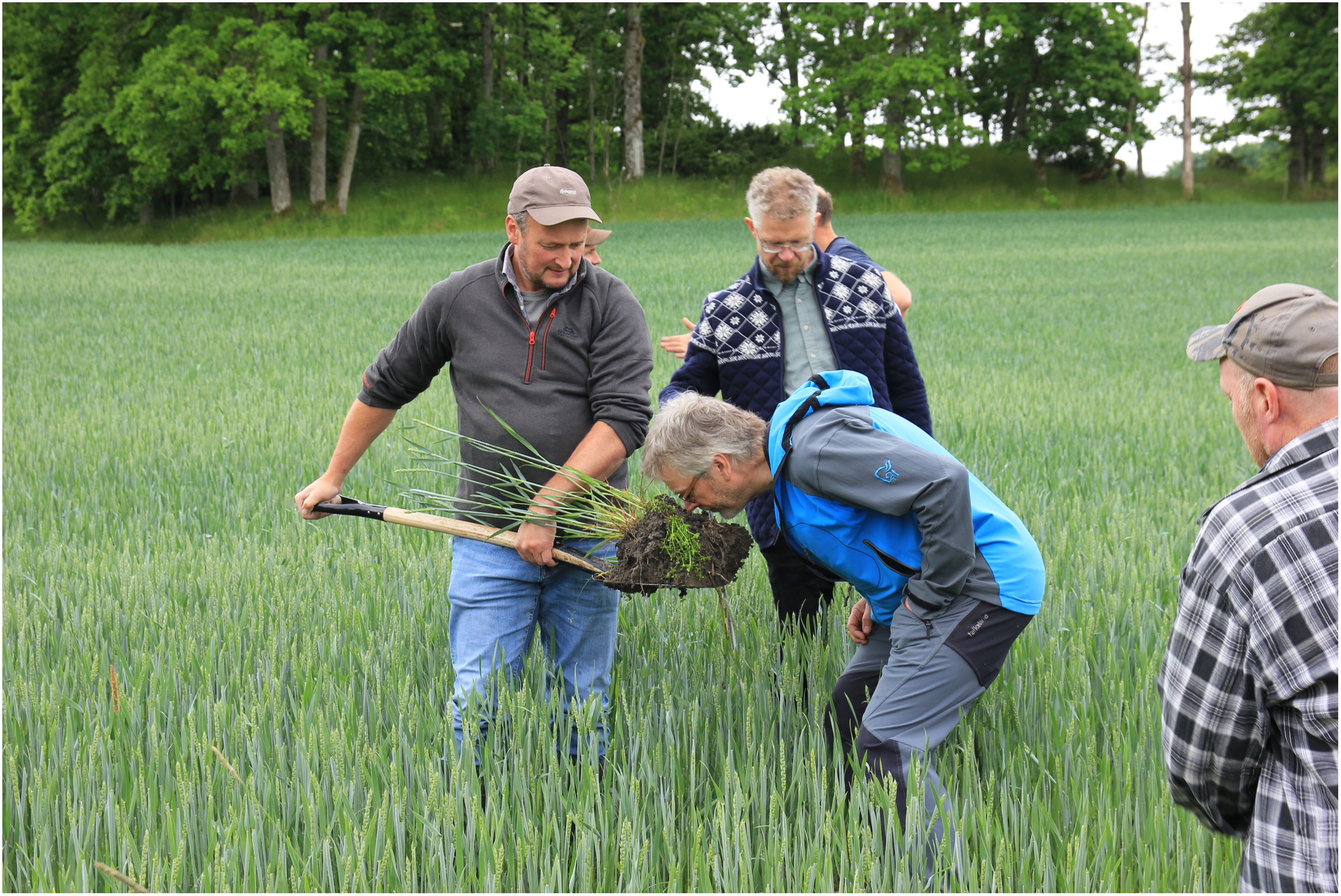
Sensorial engagement during a spade test at a conventionally managed field to compare with regenerative fields. Photo: Isabelle Hugøy.
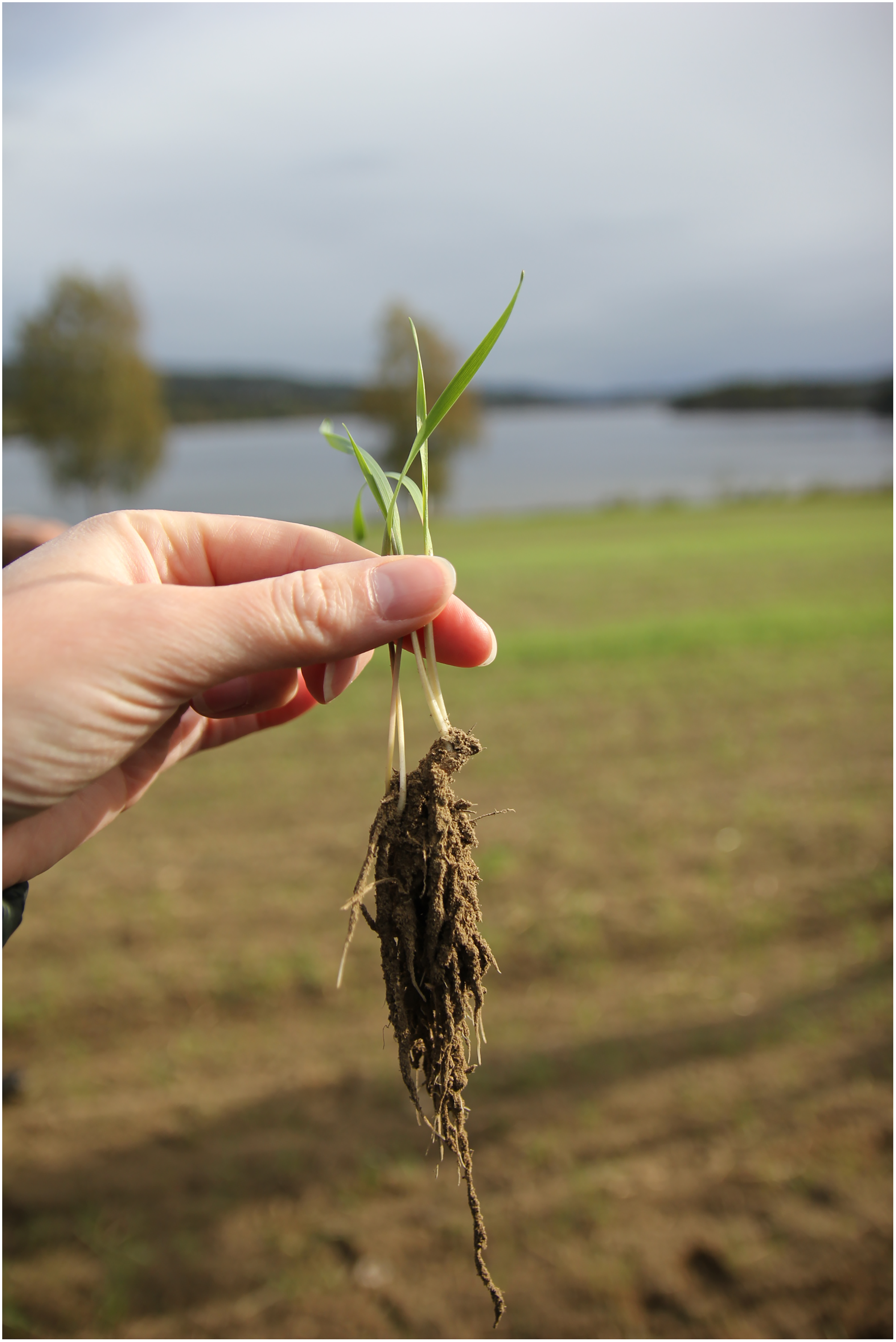
Rhizoheaths. Photo: Isabelle Hugøy.
While taking spade tests, some of the farmers often jokingly exclaimed, “This smells good!” or “This feels good!” followed by laughter, as part of the self-ironic stance which I understood as hinting toward how they produce new knowledge in practice that quietly challenges institutionalized forms of agronomic knowledge (see also Evans, 2022). A Karbon Agro advisor emphasized the importance of scientifically testing and documenting the effects of alternative practices on soil life, yet acknowledged the difficulty of doing so: A lot of what we [proponents of conservation agriculture] do can’t be measured. Measuring fungi and bacteria in soil is difficult.
Coffee farmers in Turrialba, familiar with the soil through more direct physical engagement, did not do spade tests. When they dig in the soil, it is to plant different cultivars for their own consumption or to replace old coffee plants with new ones. They are thus able to notice the presence or absence of “good” or “bad” organisms. Like alternative grain farmers, coffee farmers are attentive to plants as indicators. Antonio, who noticed that tomatoes started popping up on his farm, took these as a “sign that the soil is regenerating.” This, however, takes time.
Making time to take care together
Frequent spade tests are one way in which alternative farmers in Norway devote “care time” for soil—despite concerns of increased workload and lack of economic compensation that many farmers associate with increased political incentives for productivity and efficiency, especially since 2014 (Meld. St 11, [2016–2017]). Care time involves making time for “a range of vital practices and experiences that remain discounted, or crushed […] by the productionist ethos” (Puig de la Bellacasa, 2017: 210). Alternative farmers challenge the faster pace that underpins the dominant agro-industrial model by engaging in slower care practices that tune in to the rhythms, temporalities, and needs of soil and its constituents. This entails using a diversity of plants, earthworms, mycorrhiza fungi, and bacteria, but also engaging with fellow farmers, family, and advisors.
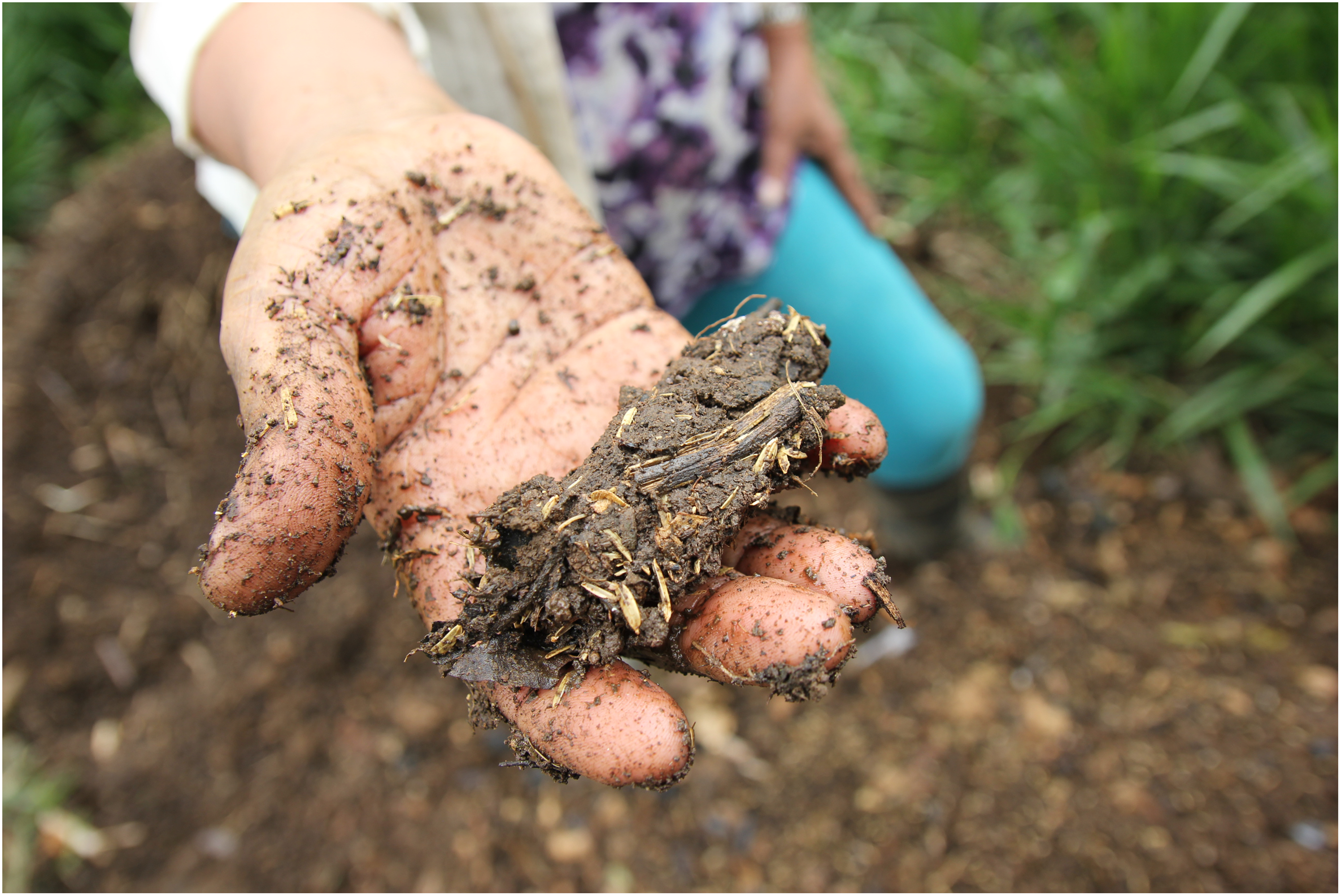
One of the ways that coffee farmers Maribel and Antonio seek to regenerate soils is by taking the time to search for and collect mountain microorganisms (MM) in “virgin lands.” Carlos scraped the soil surface under a tree until a white substance became visible. “Microorganisms! This is pura vida!” 12 exclaimed Carlos as he dug a piece up to show Antonio and me (Figure 3). Back at Antonio's farm, we were joined by his family members and agronomist Marialurdes from the Ministry of Agriculture and Livestock (MAG). She talked about bioinputs that “work with soil life and therefore take more time” than synthetic fertilizers. She talked about MM and the different types of bacteria and fungi they constitute, including their important roles in decomposing organic matter, making nutrients available for plants, and creating soil. “Now we’re going to reproduce them,” she said. Marialurdes emphasized the importance of storing MM in an anaerobic place for one month as the presence of air could lead to decay rather than growth. We gathered around the living MM to remove any fresh leaves, roots, and rocks before blending in semolina followed by molasses mixed with water. To check that the texture was right, Marialurdes took a sample in her hand and squeezed it (Figure 4) before we pressed the lid onto a plastic barrel.
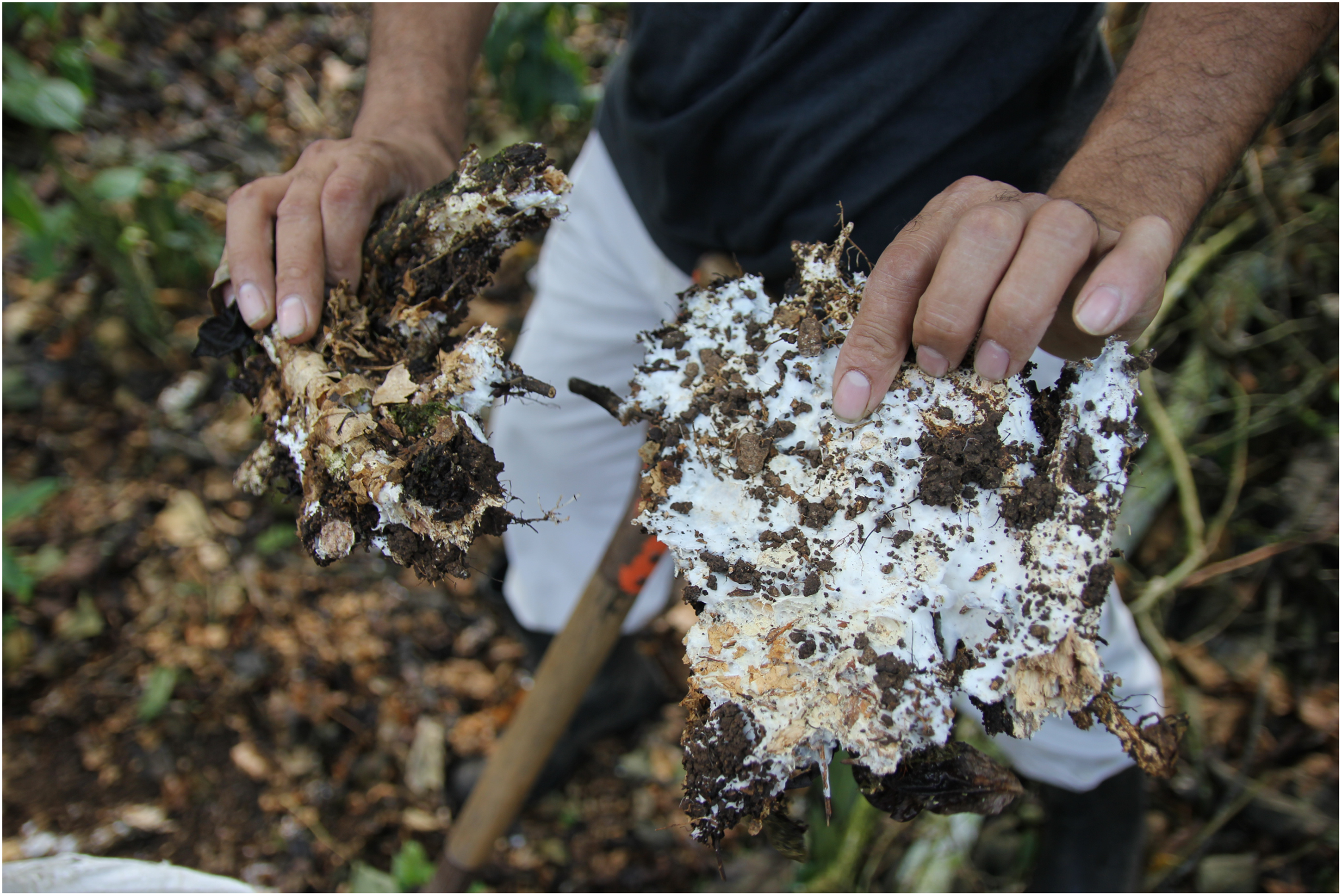
Beneficial mountain microorganisms. Photo: Isabelle Hugøy.
Testing the texture of MM before storage. Photo: Isabelle Hugøy.
The time-consuming and uncertain nature of collecting and growing MM combined with the subsequent making of other solid or liquid organic fertilizers (of which solid MM formed a base) contrast with the rapid temporalities and rhythms of the productionist logic that underpins the agro-industrial model. There is no guarantee that farmers will find MM in abundance and growing it can fail. The slow unfolding of microbial processes and their seemingly unruly dynamic characteristics—microbes may be steered but cannot be fully controlled—contrast with the quicker pace and arguably assured certainty of buying synthetic fertilizers in the store, applying them, and then seeing how cultivars respond. Uncertainty also underpins regenerative farmers’ stimulation of “microbial labor” (Krzywoszynska, 2020) through making of ferment, compost tea, and microbial carbonized compost, all of which are used to activate “good” microorganisms to steer them in a regenerative direction, in the hopes that these microbial cultures (Hendy et al., 2021) will have positive effects on soil and human health. While this time-consuming process of making bioinputs, and potentially remaking them upon failure, may be considered “unproductive” in terms of time and capital, farmers in Østfold and Turrialba nevertheless considered “mistakes” as learning experiences—getting to know the workings of both “good” and “bad” microorganisms. In doing so, they are engaging in microbial ethics (Hird, 2009) where they learn to include and stimulate particular types of microbiology and exclude others in care networks (Krzywoszynska, 2019). However, as I return to later, engaging in such ethics goes beyond individual engagements with soil beings at the farm to include different (human) actors and social arenas.
Alternative farmers in Østfold also seek to devote time to care and seek to work ethically with nature by imitating what is considered natural ecosystem aesthetics and processes through use of cover crops. Cover crops sequester carbon through photosynthesis while simultaneously mitigating soil erosion and the need for synthetic fertilizers. Through photosynthesis, green plants absorb carbon dioxide from the atmosphere and convert it into sugars that pump through the roots into the surrounding soil, creating root exudates (i.e., sugar substances). These sugars provide food for the fungal and bacterial microbiome surrounding the plants’ roots. In return, microorganisms release nutrients which the plants absorb.
However, farmers cultivate cover crops differently. Whereas all six regenerative farmers included in this study cultivate a large diversity of cover crops between the main crop to stimulate a “feeding” of a broad diversity of soil organisms, three out of four conservation farmer interlocutors cultivate monocultures of grain and sow cover crops either shortly before or after harvest. Concerns, such as weeds taking over for main crop, made conservation farmer Sigurd apprehensive for now: I want maximum harvest. The 1% of Norway's area where we can cultivate food is where we must grow as much food as possible and for as many as possible. However, it is tempting to consider soil [needs]. We have tried […] but we must learn more.
Sigurd's orientation toward sustaining and increasing national food production for a growing human population was echoed by an NLR advisor who criticized regenerative farmers’ years-long sacrifice of yield: “We want to preserve yield and production while we take care of the environment and the soil.” This quote points not only to tensions between sustainability and productionist goals, but also to the clash of the relatively slow pace of working with soil ecosystems and the fast-paced demands of the agro-industry. Seen from a productionist-oriented logic and timescale, regenerative farmers’ care time seems unproductive and less legitimate.
In other words, focusing on “feeding” as an act of care (see also Kallio and LaFleur 2023) suggests that conservation farmers’ soil care is more intensive and human-oriented compared to the more extensive approach of regenerative farmers. Yet, the latter aspire to achieve similar harvests, if not better, after a transitional phase when soil reaches a certain point of regeneration. What underpins regenerative care time are short- and long-term economic calculations: while the former breaks with the productionist ethos, the latter aligns with it. Human needs remain important in soil care, although their needs may temporarily and partly be “neglected” in favor of nonhuman needs. Similarly, Antonio's investment of care time was not only out of love for the soil but also from economic considerations: “The better quality the soil has, the better the harvest will be.” This is where the ethnographic material starts to push the boundaries of soil care in the existing literature, namely by exemplifying that soil care at the farm level is not only conditioned by care for the farm business (Krzywoszynska, 2019) but is partly conditioned by care for human needs across scales that exceeds those of soil beings. This requires a deeper engagement with the underlying assumptions that inform care as it is conceptualized in human-soil literature.
Expanding care
There is an established agreement in the growing soil care literature in social sciences and humanities that raised awareness about soil as a living ecosystem will lead to increased attentiveness, knowledge, and thus more ethical relations between humans and soil. While the literature acknowledges interconnections between and co-constitution of inert matter and living organisms in the soil, analytical focus is typically directed toward engagements—by farmers, soil practitioners, or soil scientists—with soil biology, which is likely a consequence of the increased attention to soil as alive. This focus has important analytical implications.
First, the focus on “using life to manage life” (Lorimer, 2020) risks assuming that explicit engagements with soil biota is the only legitimate way of caring, which subsequently may render any less explicit engagements by other groups, such as conventional farmers, as “uncaring.” This manifests through accounts of different agricultural landscapes that implicitly connect to modern agricultural practices (Kallio and LaFleur, 2023), imprecise mixes of terms such as conventional and conservation farming in combination with insinuations that an altered awareness is a prerequisite to caring for soil (Krzywoszynska, 2019) which risk portraying conventional farmers as “uncaring”. While I agree with Krzywoszynska (2019) that modern farming practices tend to render soils passive, I experienced that soil care persists in conventional farming through differing forms. In other cases, the imprecise speculative floating between different levels of scale (Puig de la Bellacasa, 2017) in explorations of “good” care which is implicitly contrasted with “bad” care tends to cast some forms of soil management as more caring than others.
Second, the emphasis on the relational materiality of soil biota and related components in regenerating broken ecologies along with the mutual prospering between human and soil biota tend to veil not only what in alternative agricultural practice may be considered soil-decimating practices (e.g., use of herbicides or soil tillage), but also negotiations between different concerns within a productivist agricultural industry (Evans, 2022).
Third, contributions that suggest a causal relationship between increased attention to soil liveliness, more knowledge, action, and ultimately more ethical human-soil relations veil mechanisms that condition care (Kallio and LaFleur, 2023; Krzywoszynska et al., 2020; O’Brien 2020; Puig de la Bellacasa, 2017). This relates to the tendency to describe human-soil biology-animal-matter relations rather than explaining their conditioning by often foregrounding the making of relations while backgrounding or leaving out important structures and context. While some, notably anthropologists, are more generous in their descriptions of human relations and their situated social, political, economic, and/or ecological circumstances (Lyons, 2020; Evans, 2022; Meulemans, 2020b; Münster, 2021), there is an unfulfilled potential in other contributions to expand on the abovementioned situated drivers beyond the farm (Kallio and LaFleur, 2023; Krzywoszynska, 2019; O’Brien 2020). Puig de la Bellacasa's (2017) exploration of permaculture ethics and human-soil relations remain on a generalized level: humans, more-than-humans, and their significant localized social, cultural, political, and economic contexts are either neutralized or absent in her argument for situated care. Consequently, this lack of situatedness risks returning the immanent, everyday ethical doings to a traditional transcendent and abstract domain: an ethics she seeks at the outset to break away from. Furthermore, Abrahamsson and Bertoni's (2014) description of vermicomposting not only remains on an abstract level that entirely ignores context, it, like Puig de la Bellacasa (2017) and Kallio and LaFleur (2023) collapses the particular capacities of human care, such as farmers’ intentions to accommodate conditions for “good” microorganisms to grow.
Taken together, these tendencies suggest that soil care literature employs a rather narrow and romanticized understanding of care: one that revolves around an abstract individualism. In the following sections, I seek to broaden the approach to soil care by first exemplifying that there are other forms of care in alternative (but also conventional) agriculture that cannot be neatly separated from soil care, and second, that alternative forms of care are conditioned by particular structures and contexts.
More-than-soil care
Ethnography from Østfold and Turrialba suggests a broader reading of soil care that considers not only conventional soil care but also how soil care extends beyond care for the farm business to include collaborative care with and for humans, genealogies, and sociocultural values across temporal and spatial scales. In both regions, most farmer interlocutors inherited (parts of or whole) farms either through consanguinity or affinity. Farmer care for soil and cultivars connects to the continued maintenance of social relations with ancestors who, through their past work and “dwelling” (Ingold, 1993) on the farm, have left a part of themselves that has materialized in the agricultural landscape that farmers continue to work and form relations with in the present.
In Norway, these intergenerational connections are best expressed through an established ideal that orients farmers’ work: one generation should hand over the farm in a better condition than that received. For regenerative farmer Freyr, who is the fifth generation on his farm, improved soil vitality is at the core of this endeavor. It is a means to build on, pay respect to, and further develop his predecessors’ knowledge and work while also seeking to improve the ecological and economic prospects for his son's future inheritance.
Although farmers are attentive to the interconnections between the biological, chemical, and physical properties of the soil, I experienced that regenerative farmers typically foregrounded soil biology while conventional farmers tended to focus on soil physics in talks about good soil management. Conventional grain farmer Olaf stressed the need for patience, waiting for soils to be “ready” before starting våronn (the annual set of practices done in springtime), particularly since machinery have gotten heavier over the last decades. This makes him and other farmers (including alternative) more attentive to air pressure in tractor tires and when and where to drive on soils according to the season, weather, and temperature. They tend to contrast these careful considerations with the careless attitude of their fathers’ generation of being “the first one out.” Driving too early on wet and cold soil compacts the soil affecting yields for many years ahead, potentially not only reducing profit but compromising their predecessors’ work and their ability to support their families. This suggests that soil care, be it alternative or conventional, is not limited to an eye for farm business (Krzywoszynska, 2019), but embeds consideration for the work and care of previous stewards of the farm.
Freyr (like other regenerative interlocutors) was convinced that regenerative practices stimulate long-term synergies between improved soil fertility, food nutritional values 13 , and public, environmental, planetary, and climatic health. Conservation farmers expressed similar convictions, but these did not, in my experience, highlight food quality nor public health. Rather, food quantity was a central concern as expressed by Sigurd—and which resonates with arguments about the need to increase national food production for a growing human population that conventional farmers typically articulated. Norwegian farmers have a critical societal function 14 , and consider it their samfunnsansvar, societal responsibility, to produce as much food as possible, particularly given the limited area that is suitable for cultivating food for human consumption and the political discourse about increased national self-sufficiency (Regjeringen, 2021). Samfunnsansvar is a shared imagined ideal of “morally correct behaviour […] that promotes all actors in society, regardless of socio-economic status, to act responsibly and ethically for the collective good of society” (Maraire and Hugøy, 2023: 63). This ideal is based on Norwegian values of collaboration and equality. During fieldwork, the COVID-19 pandemic actualized the need for increased national self-sufficiency. Conservation farmers’ quantitative-oriented arguments about maintaining yield can therefore be analyzed as a moral responsibility and individual commitment to contribute equally to meet and care for collective human needs at a national (and indirectly international) level. Regenerative farmers’ expectation of increased yield after a transitional phase suggests a comparable orientation. Thus, both alternative and conventional soil care are tightly interconnected with a responsibility—that is guided by sociocultural values—to care for nonhuman and humans’ well-being.
More-than-soil care also prevails in Turrialba, most notably through compassion for coffee cultivars and farming. This affection is not unique for alternative farmers, and is partly manifested in conventional farmers’ dedication of “care time” (Puig de la Bellacasa, 2017) to soil by interchanging manual techniques with application of herbicides for weed removal to balance what they consider “life-taking” and “life-stimulating” practices (Hugøy and Ødegaard, 2021). On several occasions I heard articulations of love and care for soil and plants from conventional farmers similar to those of Antonio. Some of these statements were responses to my questions about why they continue to cultivate coffee despite economic hardships: “We have a lot of love for coffee, that's why we keep on fighting despite all odds. It's our heritage, we can’t just abandon that!” Care for plants and soils are deeply interconnected to care for ancestors’ work and the situated heritage this represents on local, regional, and national levels.
Walking through Maribel's farm, she showed me recently renovated parts of her farm (after the coffee rust epidemic) with newer varieties such as Obatá, which replaced older coffee plants of her father's time that she had harvested from since childhood. Despite the physical absence of these plants, her storytelling hints at the “unvisible” (Finkelstein, 2019) historical layering of the land- and soilscape. Conventional farmer Daniel also renovated parts of his farm, however, unlike Maribel, he kept some less rust-affected Caturra plants that, though less productive, served as “memories” of past glory days and a continuation of the region's “tradition.” Such continued care for coffee plants despite economic hardships can, as suggested in one of the abovementioned quotes, be considered care for turrialbeño regional heritage, which is built on coffee, sugar cane, and dairy farming (Araya, 2003). Dedication to coffee production, despite its economic and regional decline, points to a particular genealogical and historical importance not only on local and regional, but also national spatio-temporal scales. Coffee farmers follow the path of generations before them who have cultivated a crop that has contributed to the country's social, cultural, and economic development. Being a source of capital accumulation during the 19th and a large part of the twentieth century (Paige, 1997), coffee is a national symbol of the tico identity. Care for soil and coffee plants is a means of subsistence and care for family and ancestors at a local level that feeds into regional and national identities and imaginaries. Sustainable farmers’ dedication to work with bioinputs and promote biodiversity further connects to care for the environment and climate. Yet, Daniel's decision was also influenced by temporal and economic concerns: while he considered cattle an alternative to coffee, he weighed the large investments of time and capital.
In short, soil care at the farm level is partly conditioned by care for nonhuman as well as human needs and/or sociocultural imaginaries on different spatio-temporal scales that exceed those of soil beings. This points to the entanglements of care as both a private, individual concern and a collective (human) political and social responsibility (Tronto, 1993). Contemporary soil care literature, however, tends to shift attention from situated collective care relations between primarily humans to more abstract and individual care relations between humans and networks of soil beings and entities. My ethnography about the embeddedness of human social relations in soil care suggests that we should move beyond flat conceptualizations of care to consider the particularities of nurturing human social relations (and human capacity to care/act with intention) in situated contexts. Daniel's case suggests a consideration of economic and other structures that condition soil care.
Motivations and limitations of alternative soil care
While I consider that it was experience with soil challenges that raised awareness among farmers about the need to act, it was arguably the presence of economic, epistemic mechanisms and social networks that enabled the subsequent emergence of alternative soil care. Although conservation and regenerative farmer-interlocutors in Østfold believe that yields will eventually improve by applying alternative practices, these farmers have, compared to turrialbeño coffee farmers, the economic means to take risks through experimentation. It was the absence of such capital and economic vulnerability that was a major factor for coffee farmers to seek alternatives. Of the 50 local coffee farmers that Marialurdes advises, only 2 used bioinputs in 2021 compared to 21 in 2022. She attributed this significant increase to the elevated costs of compound fertilizers, which according to her had increased from approximately 29 USD in November 2021 (per 46 kg) to 64 USD in April 2022.
In both regions, however, the presence of alternative epistemes enabled the development of practices and collective caretaking of soil that, contrary to contributions that focus on individual human engagements with nonhumans (e.g., Abrahamsson and Bertoni, 2014; Kallio and LaFleur, 2023; Krzywoszynska, 2019; Puig de la Bellacasa, 2017), involves different (human) actors and social arenas. Besides the already established Soil Health Group, the state-funded projects in Østfold have arguably enabled social arenas and establishment of networks where farmers and advisors exchange scientific and nonscientific literature, experiences, co-create knowledge, tools, and recommendations about alternative farming in a collaborative manner in farms and beyond: through seminars, podcasts, social media, daily phone calls, and/or coursework. In Turrialba, these social networks between farmers were not as evident to me. Yet, according to Marialurdes, it was through such networks that more farmers reached out to MAG having learned of the training she provided about bioinputs. Besides the few farmers I knew who took courses at the National Learning Institute (INA), such as Antonio and Maribel, Marialurdes's engagement for working with bioinputs and disseminating knowledge about them was important in introducing alternative epistemes. The combination of these mechanisms in the respective regions allowed for the emergence of alternative soil care.
However, unearthing care also means tending to soil decimating practices brought on by farmers’ situatedness in the world economy, particular productions, and ecologies. Despite their increasing attention to soil biology as one dimension of stimulating good soil health, farmers occasionally make decisions that run counter to their conceptions of good soil care. To understand these decisions, it is necessary to scale up from the abstract individualism that dominates contemporary soil care literature to look at political and economic structures that condition soil care.
Erik, who is passionate about soil health and convinced that herbicides kill good microorganisms, decided not to act in accordance with his newly gained insights when high incidences of weeds on parts of his farm had him worried. He cultivates and sells cereal seeds (såkorn) for which he has a contract and receives a higher price compared to grain cultivated for human or animal consumption. There are particularly high standards for “cleanliness” in terms of the presence of “intrusive” non-cultivated crops in between this seed; adherence to these requirements is subject to inspection by the grain trading company with which he contracts. Although the inspection is, according to him, mostly concerned with the potential presence of the unwanted weed, common wild oat (Avena fatua), which is regulated by law 15 , Erik was worried that the inspectors would see the many weeds and suspect him of having lost control over his fields, leading to a possible loss of the contract. He therefore decided to apply herbicides that spare certain cover crops—which he was cultivating in between the main crop for soil regenerating purposes—but that kill “undesirable” plant species. Erik supposed the chemical treatment would slow soil regeneration, which is why he treated only certain areas of the fields for comparison with untreated areas. In doing so, he was arguably striking a balance between different “matters of care” (Puig de la Bellacasa, 2017) while navigating practical and ethical dilemmas within the constraints of a productionist logic (Evans, 2022).
I interpreted Erik's concern as an ethical dilemma that juxtaposed long-term care for soil and short-term care for his family and business, which are inherently entangled. Economic considerations entered in conflict with his conviction of good soil care, making him revert to what he considered antibiotic practices, adopted from the conventional model and established agronomic knowledge.
Despite Maribel and Antonio's mutual understanding that the continued use of herbicides has impaired soil fertility, they both occasionally revert to it. Maribel does so for pragmatic reasons during harvest in order to be able to spot and pick up coffee that falls on the ground. The harvest season is particularly busy for turrialbeño farmers. Climatic conditions in the region lead to an uneven flowering and bean ripening, meaning that farmers must harvest frequently (12 to 14 rounds) compared to regions such as Los Santos where flowering, ripening, and harvest are significantly more concentrated. Removing weed with a handheld cordless mower which runs on petrol, as both Antonio and Maribel do, is time consuming (approximately two weeks) but they consider it worth the investment as it maintains living roots and stimulates soil life. However, its effects are short lived (one month) compared to applying herbicides which can be done in two days and last longer (three months). In other words, time spent removing weeds can potentially mean loss of harvest as ripe berries must be picked within a certain timeframe. Like Maribel, Antonio's decision to apply herbicides on a part of his farm in 2023—after five years of refraining from it—was motivated by pragmatic and economic considerations. His economic situation had changed dramatically since 2022: health issues meant that he could not do occasional work off his farm to help cover car repair and other large expenses; the time he used to make biological fertilizers meant less time to remove weeds and prepare for sowing new coffee plants within a certain timeframe.
In short, care is situated in environmental, economic, social, epistemic, political, temporal, and/or climatic, mechanisms that both enable and complicate alternative forms of soil care in Østfold and Turrialba. These mechanisms complicate ideas of care as different “matters of care” (Puig de la Bellacasa, 2017) that come into conflict and cannot be dealt with simultaneously, forcing care-givers to prioritize who should be the primary subject of care: family and business or soil. In the abovementioned cases, farmers occasionally revert to what they consider soil life decimating practices in combination with probiotic ones to meet immediate needs. This points to the importance of conceptualizing soil care as deeply interconnected with human care and considering the structures that condition these on different levels of scale.
Conclusion
Soil care takes different forms within and across different sites and agricultural approaches. The unearthing of care in two very different contexts shows that there are convergent patterns of working with nature, although the alternative practices for doing so are diverse and challenge the hegemonic conventional model differently. Alternative and conventional forms of care, I argue, cannot be reduced to soil care or multispecies relations of ecology alone: rather, they are conditioned by situated environmental, genealogical, sociocultural, temporal, epistemic, economic, and political dimensions of care. Attention to such structures is particularly important if civil society and policy makers are to push for particular forms of sustainable and biologically diverse farms (Shiva, 2008) in aspirations of more ethical relations between humans and more-than-human beings and entities. Starting in 2023, the project Regenerative Region 16 aims to upscale regenerative agriculture in Viken County, Norway, by identifying mechanisms that prevent farmers from moving toward alternative agriculture is one step. Another is EU's ambition to reduce pesticide use by 50% by 2030 which may markedly affect coffee management in Costa Rica (Fernandez, 2023) and lead to increased inclusion of bioinputs.
However, the (in)attention to such mechanisms in contemporary soil care literature runs the risk of romanticizing ethical doings. This is arguably linked to the underlying assumptions that inform the dominant relational materialist approach to care—namely a flat relational ontology (Knudsen, 2023) that is networked rather than structured, that posits immanence and hybridity while decentering and qualitatively undifferentiating agency (Svensson, 2021: 3). This ontological flattening has shifted notions of care from its original inspiration and preoccupation with human capacities to care, its embedded social relations, and the structural conditionings that enable or disable particular forms of care. I embrace the inclusion of more-than-human beings in matters of care. However, I contend that we must step cautiously to avoid a romantizicing path that indulges in a focus on more-than-human care at the expense of attention to human social relations and intentions with care and its structural conditioning.
Highlights
Alternative agricultural approaches challenge the hegemonic conventional model in different ways and to different extents.
Notions of soil care must be situated and expanded.
Soil care extends beyond multispecies relations of ecology and is conditioned by multiple mechanisms.
Footnotes
Acknowledgements
I am grateful to all research participants who shared their perspectives and experiences with me. I sincerely appreciate my main supervisor Ståle Knudsen for his continued dedication and insightful feedback, and my co-supervisor Cecilie Vindal Ødegaard for her valuable comments. I also thank three anonymous reviewers for their generous comments that have helped improve the article's focus, structure, and content. Thanks also to Katharine Wheeler for assistance with language editing.
Declaration of conflicting interests
The author(s) declared no potential conflicts of interest with respect to the research, authorship, and/or publication of this article.
Funding
The author disclosed receipt of the following financial support for the research, authorship, and/or publication of this article: This work was supported by the L. Meltzers Høyskolefond (grant number 102818107, 103604105).