




Abstract
Rationale and scope: Although soil erosion was recognised as a serious problem in antiquity and research into erosion started in the early 20th century, it remains a substantial problem for agriculture and the environment across the globe. It disrupts agricultural production, threatening food production, increases the severity of floods and droughts and impacts on soil biology and biogeochemical cycling. This review describes the different processes and manifestations of erosion on arable land and the availability of global data. It points out that while there is a good understanding of the processes of erosion, the causes are complex and even if agronomic and landscape solutions are available, their implementation is challenging and needs tailored approaches to account for the specific local socio-economic, political, and institutional contexts.
Keywords
Introduction
Soil erosion is a significant threat to the world’s soils (Evans et al., 2020; Montgomery, 2007) and therefore to provision of food for the Earth’s growing population. It also impacts on water supplies, biodiversity, carbon storage and air quality and threatens life on land and water by disrupting the terrestrial and aquatic ecosystems. It is active on all the continents and recognised since ancient times (Hughes and Thirgood, 1982) and implicated in the fall of civilisations (Montgomery, 2012). Soil erosion occurs naturally in a wide range of environments, but its extent and severity have been increased substantially by the conversion of natural forests and grasslands in order to grow crops and raise animals to feed, clothe and house, a growing global population. Estimates of soil erosion from relatively flat arable areas are similar to those of mountainous areas of the world (Montgomery, 2007) and widely exceed the rates of soil formation (Evans et al., 2020).
Soil erosion processes associated with water, wind, tillage (Figure 1) and crop harvesting all redistribute substantial amounts of soil in the landscape and deliver material to surface waters and the air. This redistribution leads to changes in soil depth, structure and soil quality (Figure 1) which affects the ability of soils to support plant growth and deliver ecosystem services. Where soils thin, crop production can be substantially affected, with the complete collapse of yields in some cases (Montgomery, 2007). However, the impact of soil erosion is closely related to the position of soils in the landscape, with water, wind and tillage erosion all leading to soil thinning or thickening at different landscape positions (Figure 1). This contributes to the development of soil patterns across landscapes and influencing heterogeneity of crop yields (Quinton et al., 2022), the exchange of water and nutrients, soil biodiversity, carbon storage and air quality. Schematic illustration of erosion processes in differently managed agricultural landscapes. Soil erosion mostly leads to a redistribution of soil within (agricultural) landscapes and losses to other ecosystems. The upper panel represents a typical situation under conventional agriculture (intensive tillage, large fields without barriers at field borders) while the lower illustrates an area where soil conservation has been optimized (reduced tillage intensity, improved soil cover management, smaller fields, hedge rows between fields). Following the principles of reducing soil disturbance, increasing soil cover and disrupting connectivity can make a significant reduction in erosion.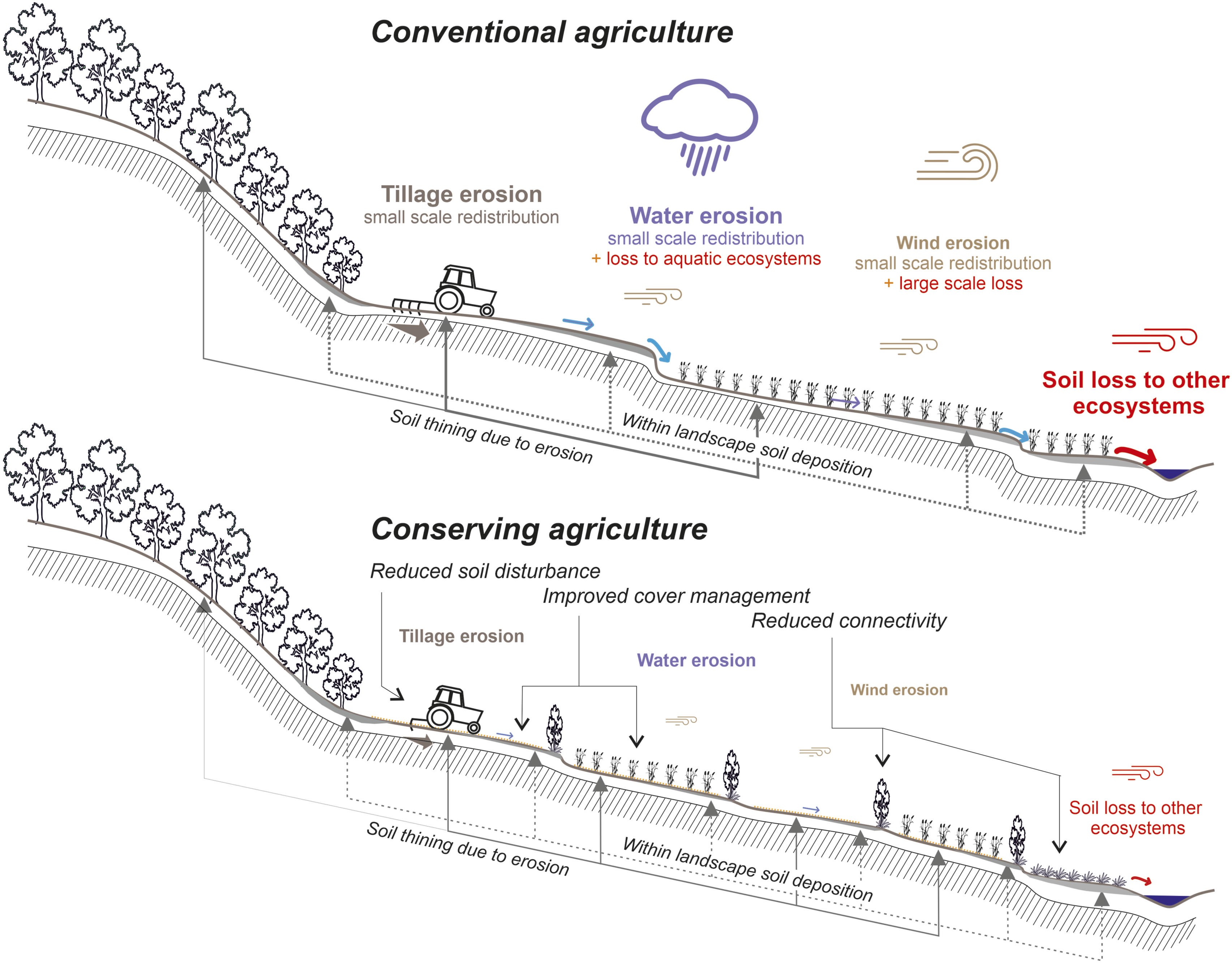
Given the potentially disastrous effects of allowing topsoil to be lost, it is not surprising that soil erosion and the methods for its control have been widely studied. The first documented water erosion experiments were undertaken in Germany by Ewald Wollny in 1890 (Dotterweich, 2013). Since then, substantial research effort has been expended focussing mostly on water and wind erosion with the aim of: developing a toolkit of practical measures that can be implemented to reduce erosion rates; understanding the processes of soil erosion; and the impact of soil erosion on agricultural productivity and macronutrient cycling.
Despite this long history of research, soil erosion continues to destroy the World’s soils threatening food supplies and ecosystem service delivery (FAO, 2015; IPBES, 2018). For this reason, it is timely to take stock and think about what we know and where we need to further our knowledge and to ensure that soils are protected for future generations. We take a broad approach, aiming to provide an access point for those wishing to gain a rapid insight into the topic. Therefore, this review considers the process of water, wind, tillage and harvest erosion on arable land, since it is these areas having in general the highest rates of erosion outside of those in mountainous regions (Montgomery, 2007). It explores the causes of soil erosion, the geomorphic forms it creates and its impacts, both on and offsite. Using a global data set, it illustrates the rates of erosion globally and how effective solutions might be in reducing the problem. It then considers why humanity have struggled to reduce it to a point where its impacts are no longer felt.
Erosion in rangelands, forests and urban areas are intentionally excluded, therefore the drivers at play in these areas, such as grazing intensity (Adimassu et al., 2020; Li et al., 2019) and wildfires (Girona-Garcia et al., 2021; Lopes et al., 2021), are out of the scope of this review. Moreover, we did not examine the considerable advances have been made in the modelling of soil erosion at a range of scales as this aspect has been covered by numerous recent reviews (Batista et al., 2019; Borrelli et al., 2021; Jarrah et al., 2020).
Processes and forms of soil erosion
Soil erosion on arable land can be split into four main forms: water erosion, tillage erosion, wind erosion and harvest erosion, which we discuss here, plus piping, land levelling and explosion for which we refer the reader to the review by Poesen (2018). Water and wind erosion are both natural processes, which apart from in mountain building or arid areas, tend to occur at low rates (Montgomery, 2007), whereas tillage and harvest erosion are the only associated with agricultural activity.
Water erosion
Water erosion has two main components: the detachment of soil caused by the impact of raindrops as they hit the soil surface (Figure 2(a)) and detachment and transport of soil by the action of flowing water on the soil surface. Raindrop detachment is important since not only does it produces much of the sediment that will be transported by overland flow but it also damages the soil surface reducing the rate at which water can infiltrate into the soil and creates turbulent flow conditions in shallow surface runoff keeping transported sediments in suspension (Kinnell, 2005). Flow detachment requires overland flow, which occurs when the rainfall rate exceeds the infiltration rate of the soil or when flow originating upslope enters the site. Flow detachment increases as the velocity of surface runoff increase (Govers et al., 2007). Both rills (Figure 2(b)) and gullies (Figure 2(c)) form episodically in response to a combination of overland flow and other factors, including topography, land use and soil types. Rills form when the soil critical shear stress is exceeded and incision occurs forming a head cut (Govers et al., 1990; Ou et al., 2021; Yao et al., 2008). In gullies, the same set of processes are active but operate at a larger scale with headcut related strongly to slope and the contributing catchment area (Vanmaercke et al., 2016). Processes and forms of water, wind and tillage and erosion. (a) splash erosion taken with high-speed camera; (b) to (f) different forms of linear erosion from relatively small rills (b) to ephemeral gullies (removable during following tillage operation); (c), permanent gullies (d), gully and rill networks (e), and badlands (f); (g) impact of wind erosion on air clarity in Idaho; (h) soil translocation during tillage on a gentle slope; (i) long-term tillage erosion patterns in a hilly ground moraine landscape with eroded hilltops (whitish colour), outcrops of subsoil at slope shoulders (brownish colours) and greyish depositional areas. Photo sources: (a)–(e): J. Quinton; (g): E. Severe; (h) P. Fiener; (i) Google Earth).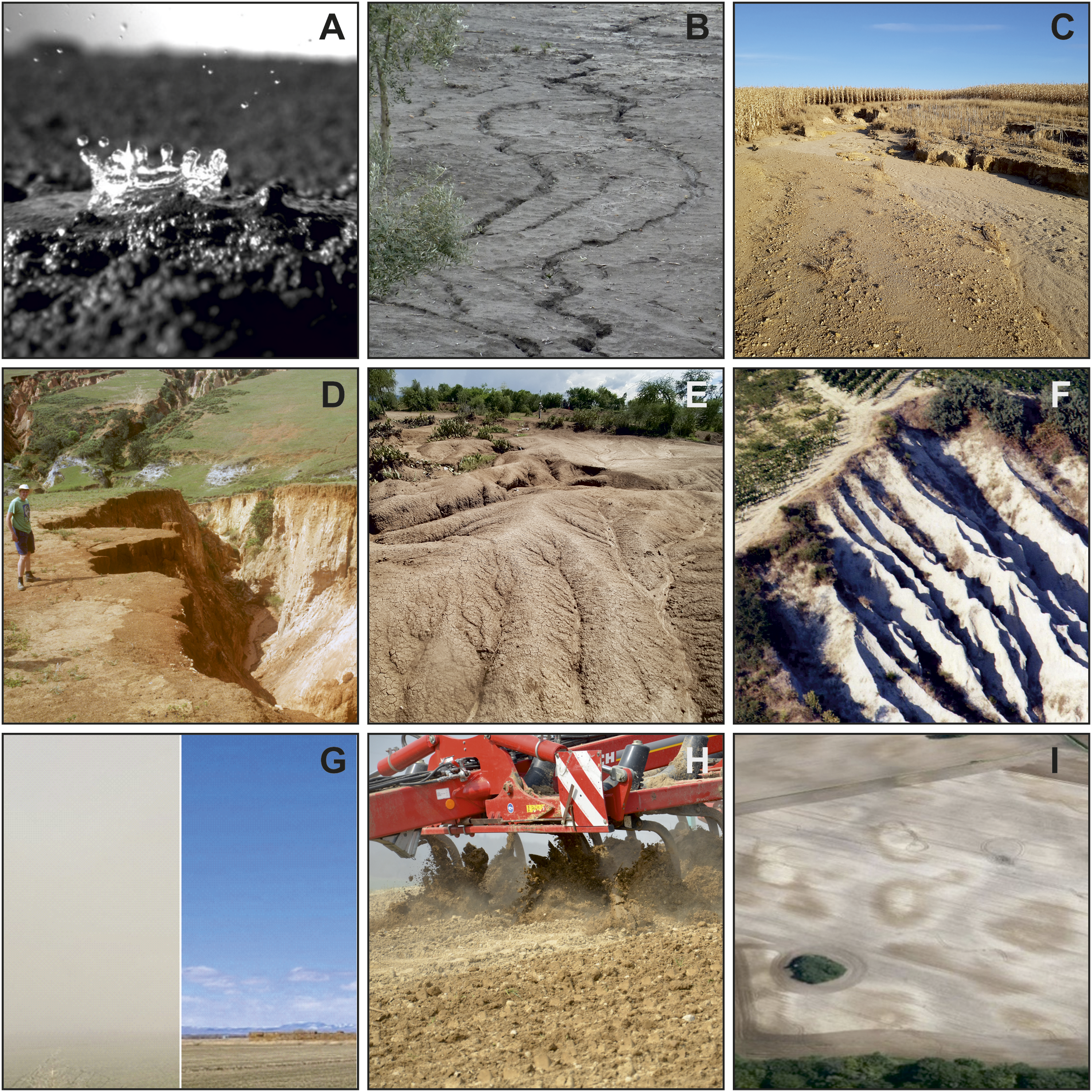
Only a proportion of the sediment generated within a catchment by water erosion processes reaches surface waters. The connectivity of the sediment source with the sediment sink is controlled not only by the erosion and deposition processes, which generate material and flows, but also by the structural characteristics of the catchment and the frequency and magnitude of transport events and their correspondence with sediment availability (Bracken et al., 2015). The structural characteristics of catchments may include features that retard or enhance hydrological and sedimentological connectivity. In general, more patchy landscapes (with a larger number of fields with different crops or regular changes between land uses) reduce surface runoff (Fiener et al., 2011) and increase sediment trapping and hence reduce connectivity. Moreover, connectivity is often intentionally or unintentionally strengthened via linear landscape features as drainage ditches (Moloney et al., 2020), drainage of field roads or an existing gully system (Molina et al., 2009). The frequency and timing of storms and their magnitude is also important for catchment connectivity. This is because when larger rainstorms correspond with a time of high sediment availability, such as when soils are bare following harvest, there is the opportunity for soil detachment and transport of more material over longer distances. Conversely, in smaller storms, sediment may be moved in a series of ‘hops’ being stored for days, months or even centuries before it connects with the aquatic environment.
Wind erosion
Wind erosion occurs when the velocity of the wind is high enough to detach soil particles from the soil surface (Scott, 1995). Windspeed depends upon local and regional meteorological conditions, but is modified by topography, field size (Skidmore, 1988), field boundaries (McNaughton, 1988), the roughness of the soil surface (Skidmore, 1988), the presence of vegetation or plant residues (Wolfe and Nickling, 1993), and as with water erosion, the soil’s erodibility (Webb and Strong, 2011). High sand contents and low moisture contents reduce soil cohesion (Kemper and Rosenau, 1984) and increase soil vulnerability to wind erosion (Smalley, 1970). On arable land, wind erosion is also accelerated due to soil disturbance due to tillage (Webb and Strong, 2011), especially when topsoils are dry. In general, soil particles creep over the soil surface, saltated or are suspended in the air (Figure 2(g)). Those that are suspended tend to be less than 100 μm and often less than 20 μm (Lyles, 1988). As with water erosion, increased vegetation or plant residue cover lead to lower rates of soil detachment by wind (Wolfe and Nickling, 1993) with disturbance of the vegetation, for example, by grazers, fire, vehicle tracks and tillage, all increasing wind erosion rates (Duniway et al., 2019). Additionally, the presence of barriers in the landscape, providing shelter on the lee side and reducing the overall length of soil surface over which the wind can blow unobstructed, can have a substantial impact on wind erosion particularly in coarser textured soils (Jong and Kowalchuk, 1995). Therefore, wind erosion is a particular problem in areas prone to drought and in arid and semi-arid regions, and regions with longer dry spells in times of little soil cover.
Tillage erosion
Even on shallow slopes (Figures 2(h) and (i)) tillage disturbs the soil and moves it down slope. The rate of movement is controlled by the tillage implement, tillage direction and speed and the depth of tillage (Van Oost et al., 2006) as well as the slope, the change in slope and the physical characteristics of the soil (Lobb et al., 1999; Van Oost et al., 2006). As soils are moved downslope, there are areas of the field that lose soil, and others that gain material. Soil depths on hill crests can be reduced to zero with farmers sowing crops into the soil parent material (Fiener et al., 2018), impacting negatively on crop yields, while on foot slopes, along thalwegs and in depressions, soils become deeper leading to a positive change in crop production (Öttl et al., 2021; Van Loo et al., 2017; Quinton et al., 2022). This results in often dramatic changes in soil colour at different landscape positions (Figure 2(i)). In contrast to water and wind erosion, which are mostly associated with extreme weather events, tillage erosion takes place on a regular basis and redistributed soil does not leave the tilled area. In this context, it is important to note that deposition due to tillage often takes place in landscape positions where water erosion is most prominent (Dlugoß et al., 2012). Especially along thalwegs (dry valley bottoms), this can lead to the paradox that areas losing most valuable topsoil via rill and gully erosion are simultaneously the areas within fields with the highest yields as water erosion losses are overcompensated by tillage erosion soil gains.
Harvest erosion
Compared to other erosion processes, little is known about the magnitude and the driving forces of harvest erosion (Kuhwald et al., 2022), which results from the loss of soil material attached to harvested tuber and root crops. Approximately 8% of arable soils world-wide are affected by harvest erosion (Kuhwald et al., 2022), whereas several studies have shown that the loss of soil with harvested tuber and root crops, for example, sugar beet (Ruysschaert et al., 2004), chicory (Poesen et al., 2001) or potato (Auerswald et al., 2006; Ruysschaert et al., 2007) can be in a similar rage as water and tillage erosion, reaching values of up to 22 t ha−1 a−1 as shown for carrots in a study from Turkey (Parlak et al., 2016). In general, four main factors affect the extent of harvest erosion (Ruysschaert et al., 2004): soil characteristics (texture, structure, soil organic carbon content and especially soil moisture during harvest); crop (type of tuber or root crop, frequency of tuber/root crop in crop rotation and crop yield per hectare); agronomic practice (crop yield, plant density and inter-row distance, soil cultivation and plant density); and harvesting technique (lifting, cleaning during harvest, velocity and type of harvester).
While removal of soil attached to tuber and roots crops is homogenously distributed within individual fields, its deposition patterns are quite complex. The extent of soil redistribution from its origin is strongly dependent on crop processing, consumption and marketing patterns of the root crop. Depending on the lifting and cleaning devices of the harvester (Ruysschaert et al., 2004), most soil attached to the crop falls directly back on the field. Then, harvested crops are either transported and stored on-farm or are taken to a processing factory or a reseller. In the first instance, part of the attached soil will be left on-farm, for example, sugar beet is often stored for several days on field to reduced unwanted soil attachment. In the second case, soil ends up at the food processing plant, which may be on or off farm. Here, typically, the soil is removed from the crops by washing with potable water which is then treated and disposed of (Mundi et al., 2017). The variation in the treatment of harvested root crops makes harvest erosion difficult to quantify as it requires individual farm and food chain specific analyses to estimate.
Agriculture and erosion
Arable agriculture often involves the clearance of vegetation, whether it is the previous crop or the existing land use before planting. Sometimes crop residues are burned after harvest. The soil is often left bare until, commonly, the soil is tilled, seedbeds prepared and crops planted. The presence of bare soil is a critical driver for soil erosion (Duniway et al., 2019) and the presence of vegetation covering the soil surface is the most important control on erosion rates. This has been recognised as such since the 1930s (Lowdermilk, 1934), but still attracts significant research attention (Ebabu et al., 2022; Starke et al., 2020). The vegetation protects the soil surface from rain drop impact by intercepting rainfall and breaking up large drops. It also helps to anchor the soil with its roots, enmeshing soil aggregates and using root exudates and root hairs bind the soil to the root surface (Burak et al., 2021; Rillig et al., 2010). Vegetation also increases the roughness of the soil surface, which reduces the velocity of flowing water (Kim et al., 2012) and wind limiting the detachment of soil particles by these erosive agents.
Minimising periods of bare soil in agricultural systems is critically important for water and wind erosion control. Where year-round cropping is possible, such as relay cropping winter camelina (Camelina sativa) with maize (Zea mays) and soybean (Glycine max) in the Mid-West of the US (Berti et al., 2017), these bare soil periods may be counted in days rather than months. In climates where the vegetation period is short due to longer phases of low temperatures or seasonal water shortage, soils may be left bare for several month. A typical example is forage maize cropping in the United Kingdom, where soils may be left bare from October to May and, therefore, susceptible to erosion. Disturbing the soil can exacerbate the problem as soil clods are broken down into smaller more erodible aggregates. However, zero tillage has been shown to promote aggregate stability and microporosity and reduce water erosion (Seitz et al., 2018; Zhang et al., 2007). For comparison, erosion rates are typically about 70% lower from fields with zero tillage compared to those where plough-based tillage is practiced (Strauss et al., 2003).
Where fertiliser and/or animal manures are available, it is possible to reverse fertility decline by making up for the lost nutrients by increasing nutrient applications (Jang et al., 2021). However, in many parts of the world, and particularly in Africa, fertiliser can be expensive and is not always available, requiring subsidy programmes to make its application profitable for farmers (Koussoubé and Nauges, 2016) and recommended manure management practices are not followed (Ndambi et al., 2019). Reductions in soil water availability caused by soil thinning are more difficult to remedy without supplemental irrigation, although some enterprising farmers carry soil back up the slope to rebuild their soils (Lobb, 2011). Thinner soils are also less resilient to climatic shocks: in times of drought as less water can be stored and used by plants (Quinton et al., 2022) and in times of excess rainfall the lack of soil water storage increases the risks of flooding. Thickening soils may see improved yields as they can hold more water and contain more nutrients. Therefore, it is important to recognise that, especially in case of tillage erosion, without transport of soil and attached nutrients to adjacent ecosystems, the yield losses via soil thinning in parts of a field are at least partly compensated via yield gains in other field parts via soil thickening Öttl et al. (2021) (Figure 3). However, if soil thickening exceeds rooting depths, this compensating effect will decline. Relation between soil erosion and deposition and crop yields. Standardized enhanced vegetation index (EVIz) as wheat biomass proxy versus modelled water and tillage erosion rates for a 200 km2 test region north of Berlin. EVIz and model results for about 800 000 raster cells of 5 m × 5 m. Stars denote the significance level of the adjusted coefficient of determination R2 (*** = p value <.001). Data taken from Öttl et al. (2021), which also give details regarding data processing, analysis and modelling.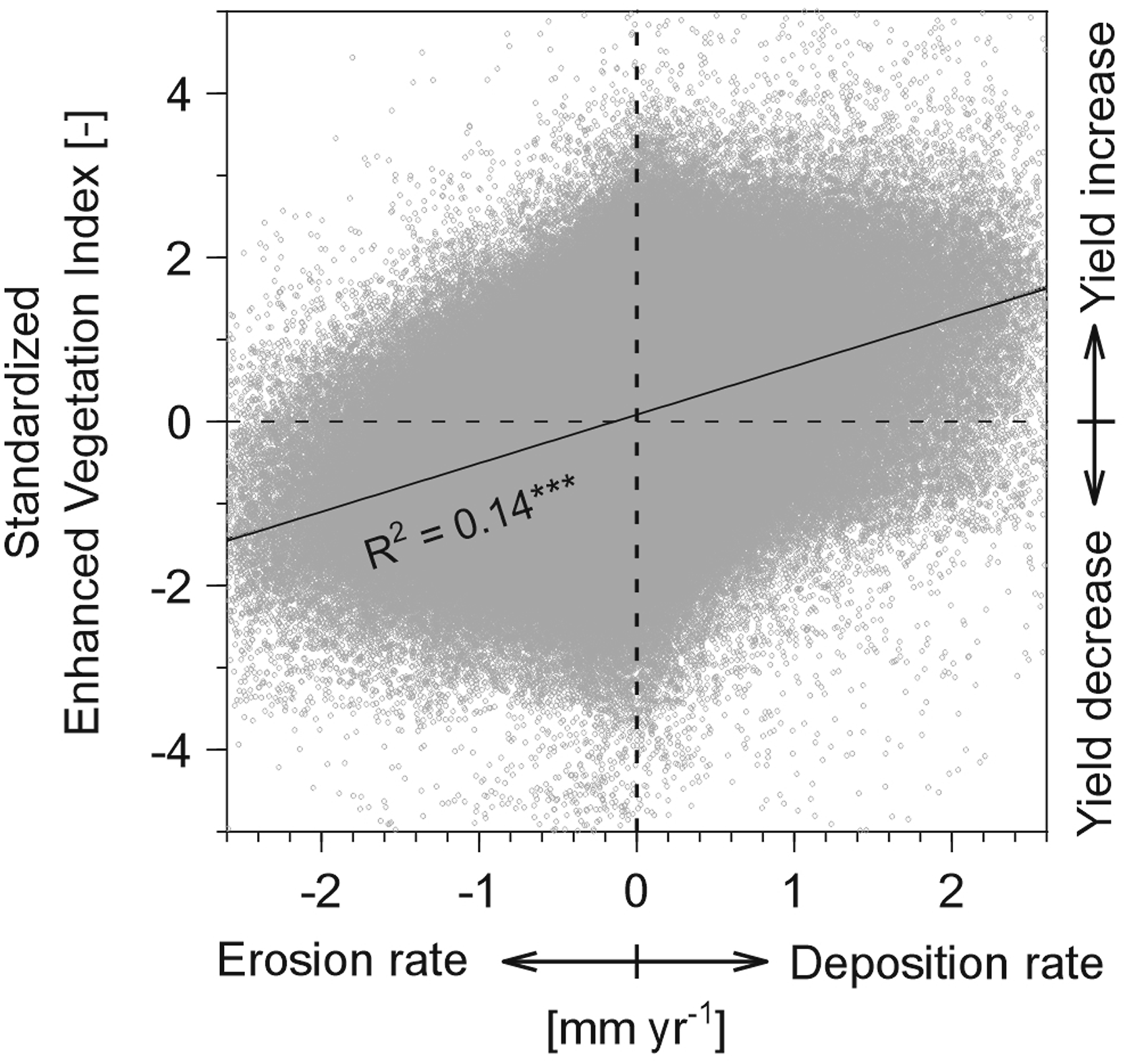
The selection of crops has a significant impact on the rates of erosion. Crops which rapidly cover the soil surface offer the best protection against erosion. Crops grown in ridges, such as potatoes, or in rows, like maize, or those where canopy closure is slow tend to have higher erosion rates as there is little protection offered to the soil surface. Where winter crops are grown, ensuring that they are planted early enough develop substantial cover before growth stops during the winters is important. Or where this is not possible maintaining the residue of the previous crop or introducing rapidly growing cover crops can greatly reduce erosion risk (Blanco-Canqui et al., 2015; Stevens and Quinton, 2009). Protecting the soil surface via cover crop management is also essential among the major orchard crops often prone to erosion (Xiong et al., 2018). However, it is important to note that especially in semi-arid regions, where vineyards or olive plantations are typically found, cover crops compete with the orchard crops for water and in a best case the prevention of surface runoff should offset additional transpiration losses (Ruiz-Colmenero et al., 2011). As this is difficult to achieve, best soil conservation effects, especially in steep vineyards, are often reached with measures as contour terracing (Pijl et al., 2022).
The impact of soil erosion on agricultural production is reliant on two main mechanisms: the reduction of soil depth and the removal of nutrients (Quinton et al., 2001, 2010) and organic matter (Quinton et al., 2006). All forms of erosion can lead to a reduction of soil depth. As material is removed, the soil depth is reduced leading to a reduction in plant available water. As a thinned soil is cultivated nutrient poor material, or in some cases material that can inhibit root growth, may be incorporated into the root zone (Quinton et al., 2022). Water, wind and harvest erosion remove plant nutrients and organic matter from the soil, this is enhanced during water and wind erosion by the enrichment of sediments with fine particles which are selectively transported (Quinton et al., 2001; Schiettecatte et al., 2008; Yan et al., 2018). The transported sediment may leave agricultural land and enter the surface water network, other ecosystems or be redistributed within the field, especially in case of tillage erosion. Clearly, as some soils in the landscape thin, others may gain material and thicken (Figure 1).
Agricultural soil management may also lead to a loss of soil fertility which is another cause of poor soil cover. Across much of Africa, there is a major imbalance between the nutrients removed from the soil by crops and those added to the soil in the form of crop residues and fertiliser (organic or inorganic). It is estimated that the fertilizer input in Sub-Saharan Africa arable and permanent cropland is below 10 kg N ha−1 yr−1 (Druilhe and Barreiro-Hurlé, 2021), and that to provide sufficient maize to meet self-sufficiency in sub-Saharan Africa would require a 15-fold rise in nitrogen additions (Ten Berge et al., 2019). Declining soil fertility leads to poorer plant growth and the vicious circle illustrated in Figure 4 is entered. Tillage erosion can accelerate this process by thinning soils in some parts of a field and harvest erosion by removing soil from the entire field. The vicious circle linking erosion with poor vegetation growth and the decline of soil fertility. The schematic figure illustrates the negative feedback between soil erosion followed by yield decline leading to more soil erosion. This negative feedback leads to either total soil loss with badland formation or reduced soil loss and low yields if less erodible (stony) subsoil comes to the surface.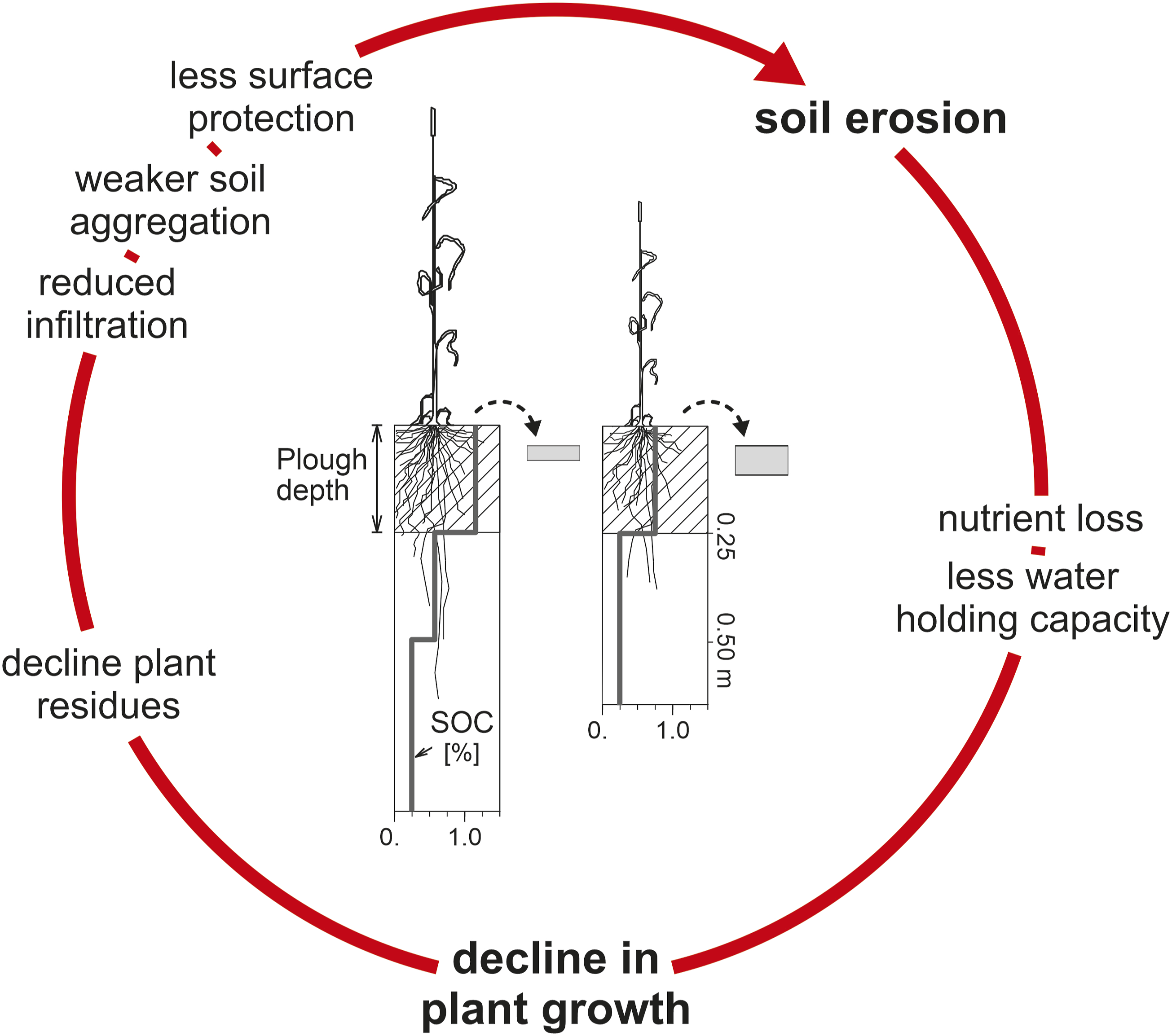
Residue burning, to clear crop residues, providing short-lived fertilisation or pest and weed management (Korontzi et al., 2006), is still a common practice in many countries of the world (Lin and Begho, 2022; Singh et al., 2021; Xie et al., 2016). The burning of rice straw is still a widespread practice in South and East Asia (Singh et al., 2021), for example, it estimated that up to 80% of rice residues are burned in India (Kumar and Singh, 2021). Apart from health impacts, greenhouse gas emissions, loss of soil carbon and general loss of soil fertility, burning will also prolong the time span of uncovered soils making them more susceptible to soil erosion (Lin and Begho, 2022). In some cases, water erosion can also be caused by introducing soil erosion control systems without fully understanding the biophysical and socio-economic environment as seen in Lesotho where gully erosion is associated with large scale terrace and waterway build during colonial and post-colonial times (Showers, 2005).
Soil biology and erosion
Soil erosion will effect soil biology since it can effect both the habitat and the food source for soil organisms (Orgiazzi and Panagos, 2018), and soil biology effects soil erosion by influencing the physical and chemical characteristics of the soil.
Research into the impact of erosion on soil biology is embryonic with few empirical studies. Evidence from degraded and non-degraded grasslands in South Africa suggests that a new ecological niche was introduced into the eroded areas as soil arthropod communities became more diverse in areas which were subjected to erosion (van der Merwe et al., 2020). In Italy, the converse was true for bacteria in extremely eroded badland landscapes, where microbial biodiversity was adversely affected and only Acetobacters were found to survive (Guida et al., 2022), and in China, soil erosion shifted the composition of microbial communities, favouring those associated with nitrogen cycling, but reducing the relative abundance of Proteobacteria, Bacteroidetes and Gemmatimonadetes (Qiu et al., 2021). These observations support the ideas that soil erosion can alter soil biological communities, whether this is by transporting soil biota into and out of the soil, shocking the soil biological system and encourage the development of strategies allowing organisms to cope with erosion (Orgiazzi and Panagos, 2018) or a combination of these factors is, as yet, unclear. In addition, we know little about how erosion may affect the functional behaviour of the soil biological system influencing the ability of organisms to influence key soil processes, such as soil structure development and soil biogeochemical cycling. Soil animals, fungi and bacteria have an impact on soil erosion processes. Arbuscular mycorrhiza mycelium promote soil aggregation (Rillig et al., 2010), although the extent of the effect depends upon the fungal species (Lehmann et al., 2017). In addition, bacterial metabolites and exudates are active in bonding mineral particles, however, this is considered a less important contribution to aggregation than the effect of fungi (Chotte, 2005).
Many soil living invertebrates and vertebrates create soil pores and promote infiltration, however, they may increase erosion by bringing loose, easily eroded soil material to the soil surface. Examples include earthworms which are known to boost infiltration (Bouché and Al-Addan, 1997), yet the presence of the earthworm casts on the soil surface may amplify erosion (Chen et al., 2022; Jouquet et al., 2013). Similar observations have been made for other soil burrowing soil invertebrates, including ants (Cerdà and Jurgensen, 2008), termites (Jouquet et al., 2012) and mole crickets (Li et al., 2018). Likewise, burrowing animals, such as the Chinese zokor (Myospalax fontanierii), create burrows that increase soil macroporosity, but fuel erosion by creating pile of loose, easily eroded soil, at their burrow entrances (Chen et al., 2021). However, many of the studies on the impacts of soil biota on erosion are relatively small scale and of limited duration and there is a need to examine these biological and physical interactions at larger spatial and temporal scales which are more pertinent to landscape responses.
Biogeochemical cycling and soil erosion
Lateral transport of soil via different erosion processes also leads to redistribution of any soil related nutrients either within the landscape or into adjacent ecosystems (Quinton et al., 2010). The probably most extensively studied aspect, where redistribution within the agricultural landscape and not only loss to adjacent ecosystems (mostly inland waters) is considered, is soil organic carbon. Its redistribution has a complex effect on landscape scale carbon exchange between soil and atmosphere as well as carbon storage within the soil.
At erosional sites, the laterally lost carbon is at least partly replaced via new photosynthetic products entering the carbon depleted soil, a process called dynamic replacement (Harden et al., 1999). The extend of this process is regulated via carbon stabilisation mechanisms. These depend on: the geochemical composition of former subsoil which is mixed into the topsoil during tillage operations (Berhe et al., 2012); and carbon inputs from plants (crops), which might be negatively affected due to lateral nutrient loss and decreasing soil water storage capacity (Quinton et al., 2022). Part of the soil organic carbon might be lost during transport (Jacinthe et al., 2002) within surface runoff and also shortly after deposition (van Hemelryck et al., 2010). However, the extend of this carbon loss pathway during and shortly after water erosion events is part of an ongoing debate (Doetterl et al., 2016) and further complicated by erosion induced carbon enrichment during erosion and transport processes (Schiettecatte et al., 2008).
In contrast to erosional sites, soil organic carbon is buried for long time spans at depositional sites (Doetterl et al., 2012; Steger et al., 2019). Depositional sites associated with water erosion are typical in landscape position with wetter soil conditions that limit carbon mineralisation. Moreover, deposition of topsoils in these landscape positions may improve growing conditions for crops (Öttl et al., 2021), hence leading to an increase in carbon inputs via photosynthetic products. In addition, soil organic carbon not deposited within the landscape might be lost to adjacent inland waters where it may increase eutrophication and is, at least partly, mineralized again (Aufdenkampe et al., 2011).
Overall, the interactions and feedbacks caused by erosion to the soil carbon cycle are complex, and there is still no consensus regarding the global effect of soil erosion on the global C cycle (Doetterl et al., 2016; Lugato et al., 2018). The reason of the contrasting estimates in literature lies in substantially different approaches and the underlining assumptions used. For example, some used soil-centred approaches, upscale results from plots or small catchments via parsimonious modelling approaches (Naipal et al., 2018; van Oost et al., 2007; Wang et al., 2017), while others uses sediment-centred approaches estimating erosion induced changes in C cycling from the sediment fluxes measured in macroscale river systems (Smith et al., 2001; Lal, 2003). Overall it can be concluded that an accurate global estimate it is currently not possible due to a lack in data to account for small scale dynamics of lateral soil fluxes and also a lack in process understanding while transporting carbon rich sediment from the hillslope into the oceans (Van Oost and Six, 2022).
Apart from soil organic carbon other nutrients, often associated with the fertilisation of arable soils, are transported during soil erosion events into inland waters. Most prominently studied is phosphorous as it is tightly bound to fine soil mineral particles (Alewell et al., 2020; Quinton et al., 2001; Sharpley et al., 1976). However, other nutrients are also transported in close association with soil particles, for example, potassium, and with soil organic matter, for example, nitrogen. It is important to note that fine mineral soil particles (Sharpley, 1980) as well as less dense organic matter particles (Schiettecatte et al., 2008) have the tendency to be enriched in surface runoff during erosion, transport and deposition. As described above, this input in nutrients can substantially alter the aquatic ecosystems feed back into global biogeochemical cycles.
Off-site impacts of soil erosion
Globally soil erosion from agricultural land is a major source of sediment to the aquatic environment. Sediment apportionment studies demonstrated that agricultural land was the main source of sediment to rivers in Kenya when compared to rural roads and river banks (Stenfert Kroese et al., 2020). Similar observations have been made in Brazil (Tiecher et al., 2017) and Zambia (Collins et al., 2001). In the UK, Collins et al. (2010) found that arable land was a significant sediment source, alongside losses from pastures and eroding riverbanks, with the exact contribution depending on soil management and landscape position and connectivity with the river. Work comparing catchment sediment yields prior to, and after, land conversation to agriculture also implicate agricultural land as a major sediment source. In China, changes in fluvial sediment yield has doubles since land was converted from forest to agriculture (Schmidt et al., 2018), while in the United States, large basin sediment yields were estimated to increase by 5 to 10 times following forest clearance for agriculture (Reusser et al., 2015).
Sediment increases water turbidity which reduces light reaching aquatic plant, periphyton and phytoplankton communities leading to a reduction in primary productivity (Bilotta and Brazier, 2008). Sediment damage to macrophytes impacts on the shelter and food for fish and invertebrates (Wood and Armitage, 1997). Increased sediment concentrations can also lead to the reduction of both the number and diversity of macroinvertebrates which are an important food for fish. Reduced primary productivity alongside the sediment’s oxygen demand can lead to a reduction in oxygen concentrations and changes in water temperature. Even at low sediment concentrations (<180 mg l−1) the behaviour of juvenile Atlantic Salmon (Salmo salar) is altered, with foraging reduced (Robertson et al., 2007). By preventing the diffusion of oxygen to salmon spawn and restricting the removal of waste material, sediment can have a significant negative impact on the incubation of salmonoid embryos having negatively impacting on fish spawning in species such as Atlantic Salmon (Salmo salar) (Greig et al., 2007). However, it is important to note that the siltation and colmation (infilling of pores in gravel beds) of headwater stream beds is not only a result of erosion-based inputs of fines, but also results from fundamental anthropogenic flow regime management (Auerswald and Geist, 2018).
Sediment can also bring adsorbed nutrients, metals and agrochemicals, which may desorb in river and lake environments leading to environmental damage, such as eutrophication and, in the worst case, to fish kills (Harrod, 1994). Fish kills of over 400,000 fish (Nile Perch (Lates niloticus) and tilapia (Oreochromis niloticus)) with a combined mass of 2400 tonnes have been reported in Lake Victoria, Kenya, in response to algal blooms associated with an influx of sediment and nutrients in response to heavy rains (Ochumba, 1990). The algal blooms were broken down by bacteria which reduce the oxygen concentration in the water body, release CO2 which decreases pH and physically clogs the gills of the fish. In China, excess nutrients leading to marine eutrophication is partly associated with phosphorus enriched dust from agricultural areas (Okin et al., 2011). The resulting harmful algal blooms impact on fish, shellfish, birds, mammals and humans and are expect to continue for decades (Wang et al., 2021a).
In addition, sediment can also have a deleterious impact on infrastructure: sediment can block waterways impeding drainage and navigation; reservoirs can become filled with sediment substantially reducing capacity and the lifespan of hydropower schemes. Eroded sediment from fields block roads and gully systems can undermine roads and buildings.
Cost associated with off-site impacts of water erosion are substantial. For example those associated with: hydropower plants in Sao Paulo state, Brazil are estimated at USD 9.8 million per annum (Marques, 2019); all water and infrastructure sectors in UK are between GBP257 and GBP458 million per annum (Posthumus et al., 2015); the dredging of sediments and their disposal from rivers in Europe is estimated to cost EUR900 million per annum (Kuhlman et al., 2010); and 1995 estimates for the USA put the total cost of water erosion at USD7.4 billion per annum (Pimentel et al., 1995).
Wind erosion is a major source of dust in the atmosphere and can impact on human health, affects visibility, economic viability and cause significant substantial climate feedbacks (Duniway et al., 2019; Grini et al., 2005). Wind erosion is a particular problem during prolonged droughts due to lack of soil cohesion, for example, during the Australian Millennium Drought (2001–2010) wind erosion events became a severe health and environmental threat (O’Loingsigh et al., 2015). In Sydney, Australia in September 2009, during a dust storm, daily concentrations of mineral material less than 2.5 μm peaked at 1600 μg l−1 and coarse material (<10 μm) at over 11 000 μg l−1 (Merrifield et al., 2013). This resulted in a 20% risk increase in hospital emergency department presentations for respiratory conditions and a 23% risk increase for asthma presentations (Merrifield et al., 2013). In addition, extensive fungal blooms of Aspergillus sydowii, assumed to have been transported with the dust, and which has been linked to soft coral disease in the Caribbean, occurred in Australian coastal waters (Hallegraeff et al., 2014). The economic cost associated with this storm, which were mostly incurred during clean-up operations, are estimated at A$293–313 million (US$234–250 million) (Tozer and Leys, 2013). This compares with an estimated annual cost associated with wind erosion for the USA, determined in 1995, of USD9.8 billion (Pimentel et al., 1995).
Wind erosion can also increase dust concentrations in the global atmosphere with an estimated 500–5000 Tg yr−1 of mineral material emitted to the atmosphere from land (Grini et al., 2005). The direct impacts of dust due to radiative forcing on the global climate are uncertain, but they are estimated to be in the range of −0.04 to +0.02 Wm−2 K−1 which is a significant proportion of that from all aerosols (Kok et al., 2018). In addition, dust can change the albedo of snow, increasing the rate at which it melts affecting water supplies for people and agriculture. In the Colorado river basin, USA, which supplies 20 million people with water, estimates suggest that mountain snow cover receives five time more dust than it did prior to the westward expansion on Western settlers in the mid-19th Century (Neff et al., 2008). This has shortened the snow cover period in the western United States by 31–51 days impacting on regional hydrology (Siirila-Woodburn et al., 2021).
Global patterns
Human-induced soil erosion is active in every continent. Water erosion tends to be more important than wind erosion which is often associated with areas which are periodically dry and often less intensively used for agriculture. Tillage and harvest erosion are also widespread and are directly linked to arable management practice. Global estimates suggest that soil lost to wind and tillage erosion is between one tenth and one fifth of that eroded by water erosion (Quinton et al., 2010). Using a comprehensive data set for water erosion representing 7000 erosion plot years from five continents (Evans et al., 2020) and differentiating between conventional and soil conservating agriculture allows the illustration of the extend of the global water erosion problem (Figure 5; for data details see Evans et al. (2020)) and the reduction in erosion due to soil conservation practices. The latter getting even more important due to the projected global impact of climate change leading to an increased soil erosion in many regions worldwide (Ebabu et al., 2022) Regional differences in plot-scale erosion on cropland under conventional and soil conservation management. Data extracted from Evans et al. (2020) while using the slope factor of the universal soil loss equation to normalize the measured erosion from plots with variable slopes to a standard slope of 5°. Numbers in whiskers indicate plot-years; boxes give median, 25% and 75% quantile; whiskers give 5% and 95% quantile; dotted lines at lower end of whiskers indicate a 5% quantile <0.01 Mg ha−1 a−1. Conservation practices reduce soil erosion on every continent and in some cases by an order of magnitude and more.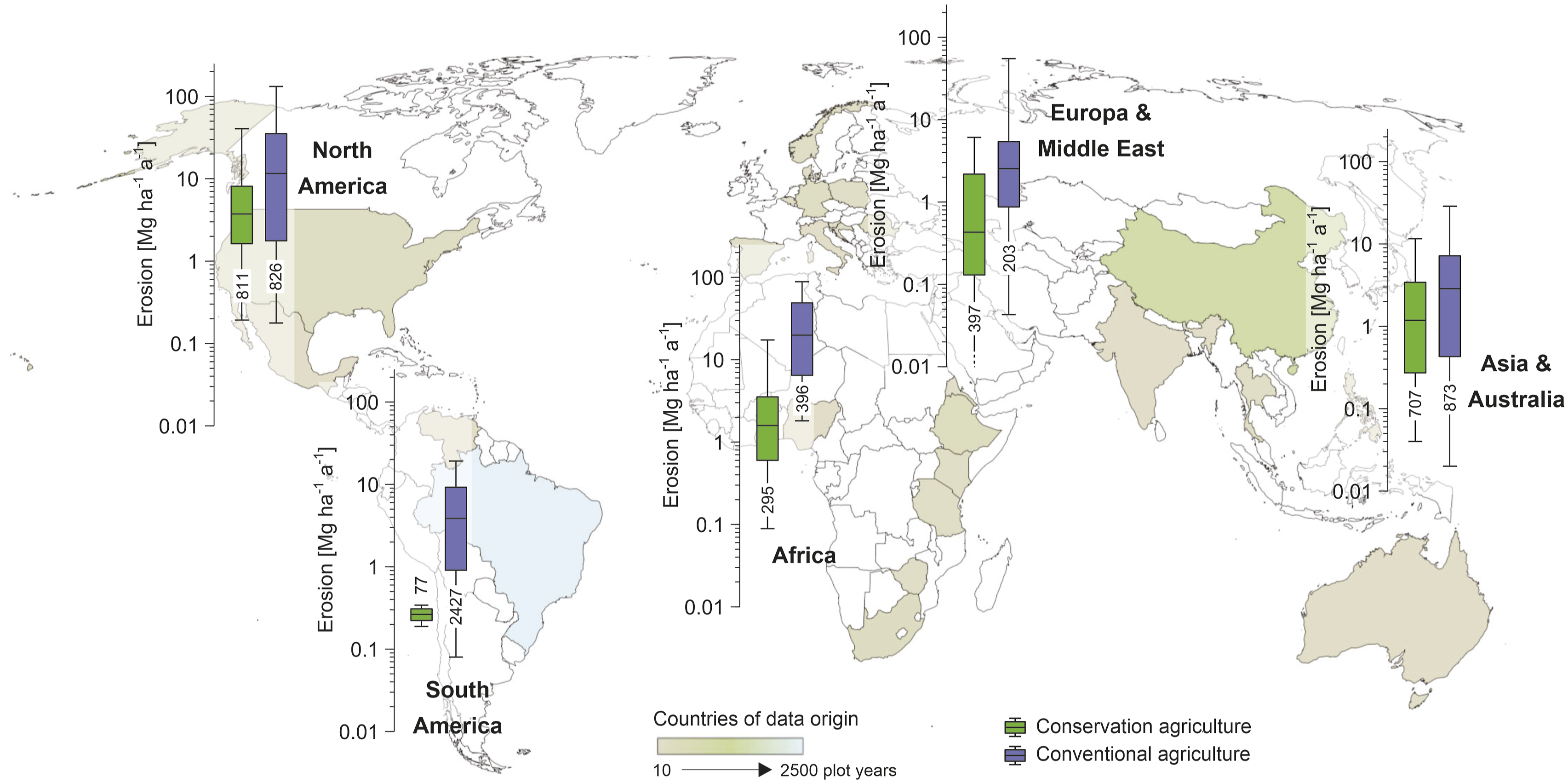
The introduction of conservation practices consistently reduces median water erosion soil losses on every continent, in some cases by an order of magnitude. Apart from Europe and Southern America, median water erosion soil losses are still higher than the mean rates at which soil is formed (Evans et al., 2020). In this context, it is important to note that the very low erosion rates under soil conservation agriculture in Southern America results from the fact that most tested plots in the data-set were under no-till, which is most widely applied on this continent (Derpsch et al., 2010). Globally, for conventionally managed soils, 16% would lose their top 0.3 m in 100 years while only 7% of soils under conservation management would have similarly short lifespans (Evans et al., 2020). There are significant data gaps across all continents and few experiments have data longer than 3 years. Globally, this database only covers a fraction of the potential soil – crop – climate – interactions and points to the need for further data collection in data poor areas to aid with soil conservation planning and to provide data for modelling.
Mitigation and a sustainable soil future
Preventing soil erosion has multiple benefits both to farmers and to wider society, by securing soil needed for food supply, other soil ecosystem services and reducing offsite impacts and the associated economic costs. The ancient civilizations of North Africa, the Mediterranean and China provide us with early examples of soil and water conservation measures, such as stone terraces, some of which still stand, to reduce the slope of hillsides and hold back soil and water. The earliest examples of which date from before from 6000 to 2000 BCE (Sandor, 2006; McNeill and Winiwarter, 2004; Dotterweich, 2013). There is then a hiatus with little documentation about soil conservation practices until the 18th and 19th century. However, it is clear from the historical and archaeological evidence that at least some farmers on all continents were practicing agriculture with soil erosion control in mind (Dotterweich, 2013). Soil conservation approaches began to be documented around the turn of the 18 century with a number of North America authors proposing soil conservation strategies (Dotterweich, 2013). However, the geomorphic evidence suggests that few farmers on the agricultural frontier in the USA at that time were deploying these methods and that there was a serious increase in soil erosion (James, 2011). Thus, over millennia, a toolbox containing a wide range of methods has been developed to prevent erosion and mitigate its effects (Xiong et al., 2018). These can be divided into measures implemented at the scale of the farmer’s field and those which are applied at the landscape level.
At the field scale, there are five key characteristics for water erosion control measures: protect the soil surface; improve infiltration; increase soil and vegetation roughness; reduce the volume of overland flow and reduce the velocity of overland flow, the latter also being important on the landscape scale. In conservation agriculture (CA), the above is typically summarized in three general agronomic principles: minimal soil disturbance; permanent soil cover; and crop rotations or crop diversity (see e.g. Andersson and D’Souza (2014)). There are hundreds of plot and field studies indicating that following these principles has tremendous potential to reduce soil erosion and surface runoff generation, often reducing soil erosion in the range of one order of magnitude (Figure 5). More detail on the effectiveness of soil conservation measures can be found in a large number of reviews that cover the detail of erosion control measure, for example, on terraces (Chen et al., 2017); mulching (Prosdocimi et al., 2016); and contour cultivation (Jia et al., 2020).
It is generally accepted that infield soil conservation is a very effective way in reducing surface runoff generation and sediment transport. However, on a landscape scale, where concentrated surface runoff and the associated sediment transport becomes the most significant problem, a combination of infield soil conservation with landscape planning, for example, grassed waterways, ponds, and increasing the patchiness of land use and management, is the most promising pathway to reduced on-site and off-site effects. While there is a good understanding of surface runoff and sediment transport in terms of the hydrological or geomorphological connectivity of agricultural landscapes, and significant use of modelling approaches for landscape scale optimisation for erosion control (e.g. Jiang et al., 2021; Meyer et al., 2012). However, compared to the extensive data available for infield soil conservation (see Evans et al., 2020) there is relatively little empirical data regarding the potential of landscape scale optimisation. One of the rare long-term studies at the landscape scale showed that over a 8-year monitoring period of 14 small (0.8 to 13.7 ha) catchments (Fiener et al., 2019) combined infield soil conservation with different end of the pipe measures, like grassed waterways (Fiener and Auerswald, 2003) and small temporal ponds (Fiener et al., 2005; Fiener and Auerswald, 2003) leading to a reduction in sediment loss by about two orders of magnitude from about 9 t ha−1 a−1 to about 0.05 ha−1 a−1 (Auerswald et al., 2000). Similar results were found in a longitudinal study in a 187 ha catchment in Tigray indicating that integrated soil conservation measures reduced sediment yield from 8.5 to 1.9 t ha−1 y−1 (Nyssen et al., 2009). Studies at larger scales are harder to find in the literature, which may reflect difficulties in isolating the impact of conservation measures from other influencing factors on river sediments and the practical difficulties involved in gauging and monitoring larger catchments. In China, a comparison of the effectiveness of revegetation schemes at different scales ranging from 1 km2 to >10,000 km2 found that in general sediment reduction was greatest for the smallest catchments (as high as 95%) and lower for larger catchments (10–70%) (Ran et al., 2013). They attribute this to greater spatial heterogeneity in larger catchments, both in sediment sources and delivery mechanisms; and the time taken for the implementation and maturity of conservation practices being different for different parts of the catchment.
The effectiveness of soil conservation measures might be expected to be a function of event size, with measures being more effective in smaller events. However, this was not reflected in the results from two <0.25 km2 semi-arid watersheds in China (Zhu, 2016) where the ratio of the soil loss between the conservation and the non-conservation catchment appeared to remain relatively constant irrespective of event magnitude. In contrast, work in Tunisia in a larger, 1183 km2, catchment found that soil and water conservation works caused a 71–75% fall in basin scale runoff for rainfall events below 40 mm but had no effect on runoff above 40 mm (Lacombe et al., 2008), unfortunately no data on sediment loss was collected.
Protecting the soil surface, adopting no-till systems and conserving water so that the soil does not dry out can be very effective wind erosion control measures (Fryrear and Skidmore, 1985; Rempel et al., 2017; Xiao et al., 2021). In addition, or where the former is not possible, introducing barriers into the landscape which are perpendicular to the prevailing wind direction can further reduce wind erosion (Fryrear and Skidmore, 1985).
Tillage erosion control relies on adopting tillage systems that cause minimal disturbance to the soil. Substantial progress has been made in recent years in the development of no-till agriculture and the reduced costs associated with its use are proving attractive to many farmers (Derpsch et al., 2010; Soane et al., 2012). However, in most areas of mechanized agriculture, some sort of reduced or conventional tillage is still applied, for example, within the European Union, no-till is still rare in most countries (Stroud, 2020). Opportunities also exist to utilise GPS and implement control systems to optimise tillage patterns and tillage speeds within fields to mitigate tillage erosion which opens pathways to new implementation-oriented research.
The main challenge with soil attached to root crops is that it is partly transported from the farms to centralised processing facilities, for example, starch factories in case of potatoes. There is great potential for exploring techniques to improve the on-farm cleaning of root crops. In case of potatoes, farm soil losses could be an order of magnitude lower if potatoes were processed on-farm, as is done when producing seed potatoes or prepare potatoes for direct sales and consumption (Auerswald et al., 2006).
All soil erosion mitigation measures need to be set in the border context of climatic change. Significant shifts in regional and local climates are expected over the coming decades which will challenge the successful implementation of mitigation measures and will call for regional adaptations of common soil conservation practices. These adaptations need to take shifts in vegetation periods and agricultural practice, but also changes in yearly and seasonal erosivity into account. For example in Germany, today’s planting dates for erosion prone maize cultivation is approximately 15 days earlier than in 1960 (Auerswald and Menzel, 2021), while intense rainfall periods have shifted to earlier in spring and later in autumn (Auerswald et al., 2019; Auerswald and Menzel, 2021). Although, it should be noted that this complex interplay of crop cover and rainfall does not always equate to more erosion, with a predicted 10–14% increase in rainfall leading to 49–87% less simulated erosion in Upper Austria due to a shift in the timing of rainfall to when the crop canopy was at its greatest (Scholz et al., 2008)
Adoption of soil erosion control
Adoption of soil erosion control measures is rarely uniform in different regions and broadly speaking depends on the general socio-economic, political and institutional context as well as agronomic, financial and ecological factors at the farm level. There have been significant efforts in recent decades to increase the adoption of conservation agriculture in many regions globally. These range from the individual farm level schemes to large scale policy driven activities. In this respect, the Grain-for-Green initiative (G2G) (Zuo, 2002) in China’s Loess Plateau is one of the most recent, large scale efforts to combat soil erosion (Wang et al., 2021b) and no-till technology has become widespread across the South America (Derpsch et al., 2010). However, in many regions of the world, the uptake of soil conservation remains low and in some cases the use of soil erosion control measures is even in decline. For example, in Saskatchewan, Canada, 40% of 60 surveyed farmers had removed shelterbelts planted to protect soils from wind erosion (Kulshreshtha and Rempel, 2014). Moreover, it is important to note that the global application of soil conservation practice is counterbalanced by a potential overall increase in soil erosion due to cropland expansion, especially in Sub-Sahara Africa, South America and Southeast Asia (Borrelli et al., 2017).
The reasons for adoption or non-adoption of soil erosion control measures are complex and dynamic (Hermans et al., 2021; Wauters and Mathijs, 2014) and related to individual farmers and their bio-physical and socio-economic situation. Recent reviews of adoption of measures to improve soil health and conservation agriculture for US and African farmers highlight a strikingly similar set of higher-level factors (Figure 6) that illustrate the multi-dimensional decision-making landscape that farmers find themselves in. Many studies have considered how the characteristics of the farmer and their farm influence their decision as to whether adopt soil conservation practices or not (Figure 6). It is assumed that well educated, younger farmers may be more willing to adopt soil conservation practices than poorly educated older farmers (Huang et al., 2020); and those farmers with profitable farms are more likely to risk changing practice (Kessler, 2006; Shively, 1997). These local factors are set within a broader financial and socioeconomic context. For example, the use of subsidies has been an important mechanism for incentivising the adoption of soil conservation practices in the Uckermark, Germany (Heyn et al., 2008). Strong support from agricultural extension can also be critically important in encouraging uptake (Asfaw and Neka, 2017; Asafu-Adjaye, 2008). While in individual studies, it is possible to tease out the reasons for adoption of soil conservation practices, when studies are grouped the picture is much less clear (Wauters and Mathijs, 2014) with most factors having an inconsistent and often insignificant impact. Schematic illustration of contextual boundary conditions and factors influencing the adaption of soil conservation and soil health practice as carved out for reviews (Andersson and D’Souza, 2014; Carlisle, 2016; Hermans et al., 2021; Jones-Garcia and Krishna, 2021; Wauters and Mathijs, 2014) focussing on soil conservation adaption in different regions of the world. Factors in red and blue indicate unwanted and wanted effects of adapted practice. Overall, it is important to note that soil conservation techniques are well established nevertheless implementation is lacking and only successful if the socio-economic, political and institutional context is considered.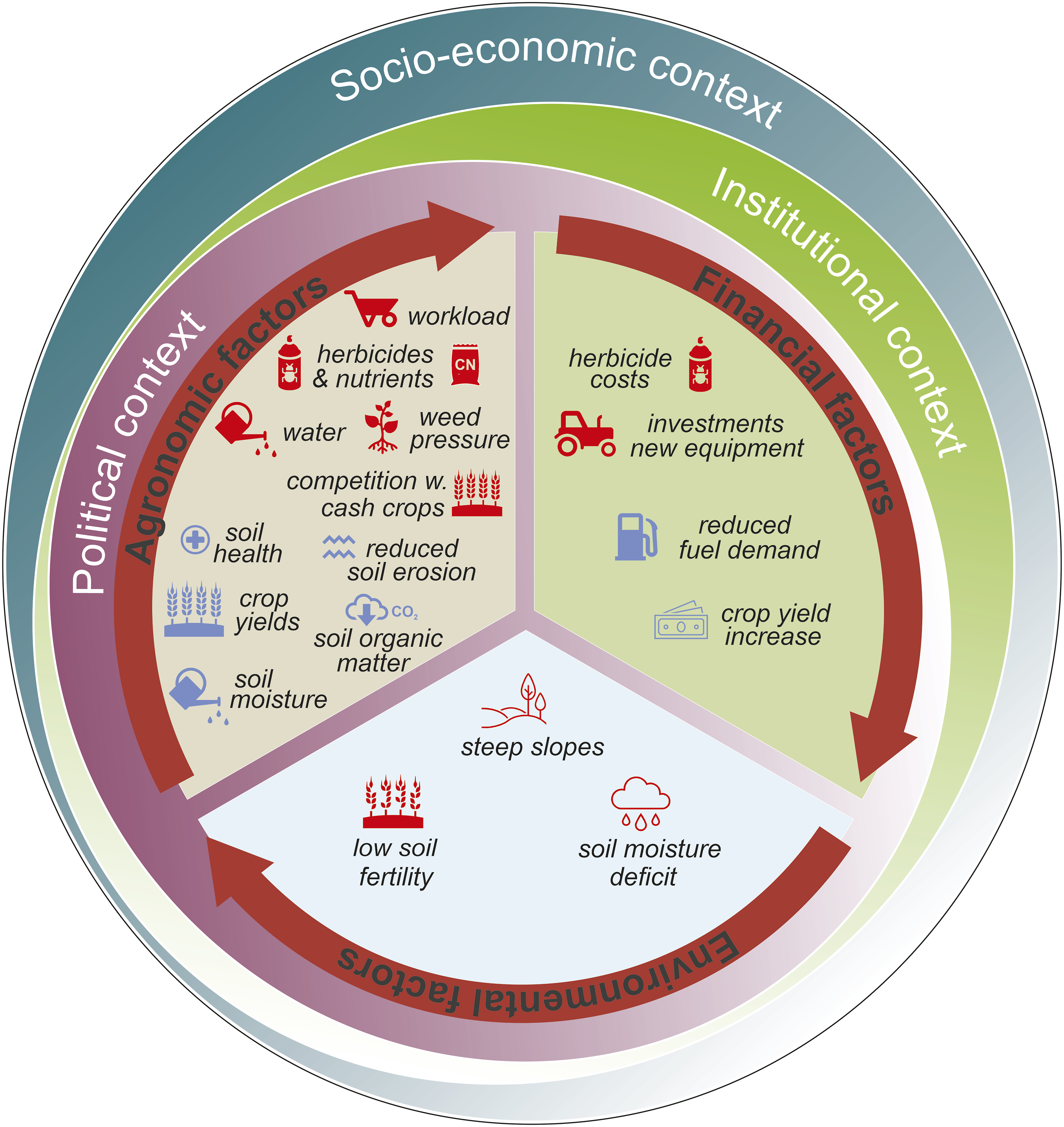
Farmers may be influenced by one or more of the factors in Figure 6 and that influence may occur at different points in time and the trade-offs between them will be different for different farmers (Hermans et al., 2021). This means that the adoption process is not linear, and classifications based on adoption or non-adoption may not be helpful (Wauters and Mathijs, 2014). The process is further complicated by farmers that may experimenting with or modifying methods before adopting or rejecting them (Hermans et al., 2021). Rather than an all or nothing approach to measuring adoption, stage models of behaviour, such as the recognition of the problem, awareness of an innovation, performing a trial of the innovation and finally its implementation may prove to be a more fruitful approach (Prager and Posthumus, 2010).
One further option is the use of laws and enforcement to ensure the adoption of soil conservation practices. Most efforts in this direction have focused on the creation of advisory serves for farmers or putting in place financial support for particular conservation practices. In response to the severe drought of the 1930s in the Great Plains of the USA and the ensuing ‘Dust Bowl’ in which crops failed leaving bare fields vulnerable to wind erosion, the Soil Conservation Act (1935) was passed in 1935 creating a permanent Soil Conservation Service. The act together with subsequent legislation funded soil conservation works, and the organisation of local soil conservation planning. In Africa, grass barrier strips were adopted on almost all arable land in Swaziland following introduce a royal decree of King Sobhuza II in 1948 with 112,000 km of strips laid by the 1950s (Morgan, 2005) many of which are still in use today.
More recently there have been a number of national soil conservation initiatives, where highly erodible land has been taken out of production or there has been major investment in soil conservation practices (de Graaff et al., 2013). Policies have been introduced in many countries which, through time, have mainly shifted from top-down mechanisms to bottom-up farmer and community centred approaches (de Graaff et al., 2013; Nugroho et al., 2022). Some national soil conservation programmes, such as the G2G initiative (Zuo, 2002), where the aim was to take 15 million ha of sloping agricultural land by 2010 (Xu et al., 2006) have caused controversy due to their potential impact on reducing agricultural productions and therefore food security (Xu et al., 2006). Estimates vary, but analysis of the impact suggest that following an early depression in grain production that the overall impact of G2G has been small, due to the targeting of the programme at steep slopes with where yields are already low, and that shortfalls in production are made up by the introduction of improved soil conservation measures (Shi et al., 2020) and the intensification of production on better quality agricultural land (Xu et al., 2006).
Given these complexities in the farmer decision making process it is hard to be prescriptive concerning how best to encourage adoption of beneficial practices, but creating an enabling environment where farmers have good access to information, a supportive policy and financial environment will certainly help. There is a strong argument for moving away from focussing on adoption of specific methods to focussing on the end goal and supporting innovation and farmers own experimentation (Wauters and Mathijs, 2014).
The soil footprint of humanity
In the same way as agricultural products encapsulate a water (Aldaya et al., 2012; Hoekstra and Mekonnen, 2012) and greenhouse gas footprint (Berners-Lee et al., 2012; Weber and Matthews, 2008) they also have a soil footprint. Many countries rely on significant imports of food, animal feeds and natural fibres from around the world as they cannot produce enough food and fibre for their population’s needs. Importer countries being indirectly responsible for the soil loss associated with the production of the crops being imported. For example, based on a mean soil erosion on arable land in Germany of 2.7 t ha−1 yr−1 (Auerswald et al., 2009) any crop export, for example of wheat, would result in a footprint of some 100 g per kg of crop exported. There have been attempts to assess the environmental impact of global food and fibre production (Poore and Nemecek, 2018) but the impact of agricultural production on soil is ignored.
There are also instances where nation states or companies have invested in large scale land acquisition, in their own or other countries in order to produce food and commodities (Deininger et al., 2011). In Africa alone, 8.8 million hectares were acquired between 2000 and 2015, 62% of which was acquired by transnational investors (Mechiche-Alami et al., 2021). At times this land acquisition displaces small-scale farmers with customary or insecure tenure (Deininger et al., 2011; Oberlack et al., 2016). There is a risk that soil erosion in these locations may increase if agriculture is intensified without conservation measures being implemented, and/or if farmers are displaced to less fertile land where further erosion may occur, impacting on livelihoods and future food production.
Summary and future perspectives
Soil erosion has a long history of scientific research which has generated considerable knowledge of processes, interactions with other environmental issues, and also led to the development of suite of mitigation measures. Nevertheless, there is obvious room for improvement especially regarding the implementation of soil conservation on different scales. Research-wise there are still new challenges but also great opportunities: • Understanding soil erosion processes. There is a well-developed conceptual understanding of soil erosion processes, however, our understanding of the interaction between different processes and how they interact across spatial and temporal scales still requires research attention. • Moving from plots to landscapes. This will be key to better understand the impact of losses and gains of soil and the interaction of this with food production and biogeochemical cycling. • Vegetation and biology: Working with crop scientists and soil biologists to develop plants or plant combinations that better bind and protect soil. Phenotyping species and varieties for rapid canopy closure, root hairs and root networks. Understanding how plants and soil biology can promote soil aggregation and porosity. • Conservation practices. Fine tuning practices for particular environments. Understanding the interactions between tillage, wind and water erosion. Confronting the challenges around harvest erosion and how to deal with soil washing to ensure circularity. • Not relying on one approach and one size fits all for adoption. Fostering top-down and bottom-up initiatives and supporting innovation in farming community.
Overall, lasting solutions to soil erosion that sustain the soil resource for future generations will require not only a better understanding of involved processes and environments but also the policy, socio-economic, institution environments that will lead to sustained change in the management of soils at the local level, while keeping in mind the global effects of local adoptions, especially if associated with reduced food production.
Footnotes
Declaration of conflicting interests
The author(s) declared no potential conflicts of interest with respect to the research, authorship, and/or publication of this article.
Funding
The author(s) received no financial support for the research, authorship, and/or publication of this article.
