




Abstract
What will the low-carbon cities of tomorrow be made from? We see an unexpected answer today in the return of ‘premodern’/‘preindustrial’ materials to central cities and skylines. Champions of new mass timber materials have driven a race on iconic ‘plyscrapers’ and, increasingly, novel systems of industrial prefabrication. Drawing on the notion of sociotechnical imaginaries, we explore how advocates attempt to ‘fix’ desirable future cities and urban bioeconomies through this biomaterial. In doing so, we suggest that mass timber's emergent sociotechnical imaginary embodies a distinct kind of futuring, which we label ‘nostalgic futurism’, conjoining ‘technofuturist’ and ‘nostalgic-reparative’ visions. We find that, on the one hand, mass timber proponents embrace competitive novelty, uniting drives for architectural distinction and high-tech disruption. On the other hand, aesthetic advocates put forward visions around the material's more traditional premodern/preindustrial associations, in narratives of biophilic design which claim therapeutic benefits of contact with visible nature in buildings. These conjoined forward- and backward-looking compulsions pose tensions and internal contradictions. Nostalgic-reparative visions risk greenwashing and reproducing unequal access to environmental amenities, while reinscribing regressive appeals to an imagined past. Meanwhile, technofuturist drives extend late capitalist growth imperatives and pressures for accelerated material churn in both forests and urban centres—while obscuring tough questions about mass timber buildings’ expected lifetimes and claims for long-term carbon sequestration. Conversely, a reimagined mass timber project might support more progressive movements for climate restoration, repair, and reparations.
Introduction
What will the cities of tomorrow be made from, and how will that matter be ‘made to matter’ for the 21st century challenge of climate change? In the last 10 years, we have seen a somewhat unexpected response to such questions: the materials of the past. ‘Premodern’ and ‘preindustrial’ materials have returned to central cities today, in new, sometimes unrecognisable forms. For a century and more, urban centres have been dominated by inorganic materials: 20th century innovations in concrete, steel, and glass that reshaped the face of cities. That concrete and steel-backed vertical urbanisation has come at a high climate cost: cement production and the manufacture of iron and steel now, respectively, account for 6.5% and 7% of all global CO2 emissions (Fennell et al., 2022). A growing technoindustrial and design movement now seeks to replace these materials with novel bio-based alternatives. We consider this raft of new ‘advanced’ wood products in the form of mass timber to be central to a broader push for a circular urban bioeconomy, which seeks to extract value from the biophysical basis of cities and their resource flows (Taylor Buck and While, 2021; McNeill, 2022).
Bio-based mass timber products like cross-laminated timber (CLT) inherit a significant 20th century history of industrial experimentation with ‘engineered’ wood and one of the latest parts of the ongoing industrial appropriation of nature (Prudham, 2004). However, that usage has been overwhelmingly low density and residential in the modern era, as a history of devastating urban fires and rising building heights drove timber out of city centres. With transformed qualities of strength and fire resistance—and a case for low-carbon and sustainability benefits—mass timber products like CLT may overturn this trend. Champions for the material have driven an international race on iconic ‘plyscrapers’ (skyscrapers partially or fully made of wood) and now seek to transform building systems more thoroughly via new forms of industrial prefabrication, in a new urban ‘age of timber’ (Frearson, 2015).
Analytically, a central concern for us is the distinctive sociotechnical imaginary (Jasanoff and Kim, 2015) being constituted around mass timber, and the 21st century cities this biomaterial might build. We suggest that as with movements for other bioeconomic resources, the drive for mass timber is an imaginary in the making (see e.g. Birch, 2016), through which advocates attempt to ‘fix’ (or attach) desirable imagined futures to a sociotechnically novel material in a drive for broader public uptake and political legitimation. Doing so, however, raises questions over what 21st century cities can and should become, which we explore by bringing in broader urban scholarship on the cultural politics of cities and vertical urbanisation. This analysis enables us to explore the context shaping (and challenging) the mass timber imaginary, including in the way it has initially coalesced around the charismatic object of the plyscraper. In furthering understanding of the emergence of this imaginary, we look to new formulations of the cultural politics of climate change (Bulkeley et al., 2016), particularly these scholars’ call for more serious consideration of affective and aesthetic (Ghertner, 2015) modes of power within climate-facing urban transformations.
By doing so, we argue that mass timber's emergent sociotechnical imaginary embodies a distinctive kind of futuring work, a form of ‘nostalgic futurism’ which conjoins—not always comfortably—distinctive drives which we term technofuturist and nostalgic-reparative. These conjoined forward- and backward-looking visions run through industrial and aesthetic advocacy for mass timber, sometimes in detached activities but often meeting up within the same projects. However, this nostalgic futurist imaginary driven by mass timber advocates raises several questions. These centre on three key points: 1. How is the mass timber imaginary furthered and by whom? 2. What is the nature of the work the imaginary performs—does it enable a green and low-carbon urban bioeconomy? and 3. If it does, then who has access to it?
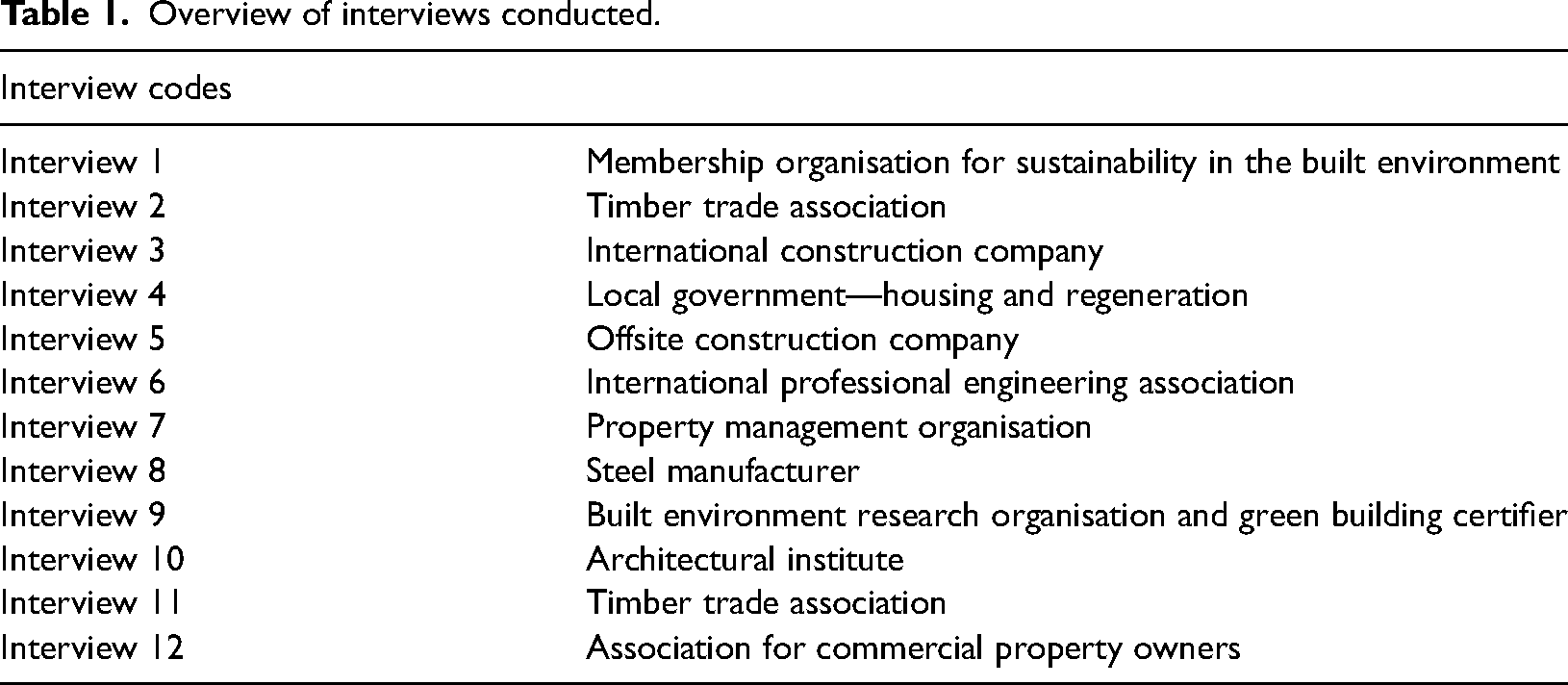
To explore the nostalgic futurist qualities driving the urban mass timber imaginary and the nature of the work they perform, their potential, and their contradictions, this project drew on multiple forms of data gathering, over 4 years of research between 2018 and 2022. A research method used throughout the project was substantial document analysis of relevant technical, trade, and popular press sources on mass timber and plyscraper development. This data gathering included sources across the English language international trade press on mass timber; supporting technical literatures in building technology, green building, carbon accounting, and forest management; and architectural and design literature from online trade publications such as Dezeen and ArchDaily; as well as relevant popular press coverage and primary and secondary historical literature. Another mode of research was UK-based interviews with a dozen building sector participants. An overview of these can be found in Table 1 below. In-person methods pre-COVID also included participant observation at building trade events such as the 2019 Futurebuild conference in London and conferences and workshops organised by the UK Green Building Council and the Alliance for Sustainable Building Products.
Overview of interviews conducted.
In the next section, we set up relevant theoretical engagements with literatures on sociotechnical imaginaries, the cultural politics of climate change, and urban cultural politics. The following section introduces the mass timber sector and plyscraper trend, including historicising both within longer industrial trajectories of engineered wood and timber construction. Following that, we dig deeper into mass timber's technofuturist drive, before turning to its nostalgic-reparative vision. We conclude with critical reflections and closing thoughts on mass timber's ability to support more progressive projects of socioecological repair and restoration.
The material and cultural politics of urban futurology
Materialising sociotechnical imaginaries
Understanding a prospective revolution in urban mass timber requires exploring the ideas and visions driving the project, including what futures are imagined in and through these novel biomaterials. We argue that the science and technology studies (STS) terrain of sociotechnical imaginaries laid out by Jasanoff and Kim (2015) and others is highly relevant to this questioning, enabling us to understand how advocates attempt to advance a sociotechnically novel material through the broader project of re-imagining urban futures in a drive for broader public uptake and political legitimation.
The broader concept of imaginaries has been a frequent concern for political and cultural theory. However, scholarship led by Jasanoff and Kim (2015), Jasanoff (2015), and related thinkers developed a more particular spin on these ideas by putting them into conversation with STS scholarship on sociotechnical systems. For our purposes, imaginaries are important because they embody and communicate a collective vision of a good and desirable future. This means that, methodologically, deploying the concept prompts ‘inquiries into meaning-making … attending to the means by which imaginaries frame and represent alternative futures, link past and future times, enable or restrict actions in space, and naturalise ways of thinking about possible worlds’ (Jasanoff 2015, p. 35). In other words, the becoming of an imaginary can be conceived of as a process of future making, through which actors not only seek to imagine a desired future but also actively bring it into being.
While others have also sought to trace the genealogy of an imaginary or analyse them historically, we suggest that it is equally useful to explore present-day sociotechnical imaginaries—despite the fact that these are inevitably more unsettled, in the making, and potentially never successful or completely realised. Methodologically, this work retains the concept's central purview on certain kinds of visions and narratives that advocacy movements may use to advance sociotechnical projects—ones that hitch their fortunes to distinctive imagined futures/futurologies, which work to persuade broader publics and policymakers of their projects’ feasibility and desirability.
This line of thinking has also been taken up by others studying the bioeconomy. Relevant examples for our purposes include Hilgartner (2007) and Birch (2016) who both consider the bioeconomy to be a future-making project, rather than a mere description of a new sector or resource base. Rather, an imaginary perspective enables a closer look at how the bioeconomy is constituted, how relevant policy frameworks emerge and become aligned to socioeconomic institutions, and which actors are involved in, or excluded, from emergent future visions (Birch, 2016).
This notion of the future, and particularly its promissory nature, has also been raised by others as being especially important when it comes to the bioeconomy and the imaginaries around it. For example, Levidow and Papaioannou (2014) raise the important point that sociotechnical imaginaries can also be used to deflect sustainability critiques, displacing concerns around biofuels via a technooptimistic appeal to imagined future novel biofuels that would (somehow) technologically resolve current problems—while marginalising potential alternative imaginaries. Meanwhile, others have made the point that the notion of the bioeconomy and bioeconomic materials as malleable and filled with promise is both central to dominant imaginaries in the bioeconomy and a key driver of investment and accumulation (Cooper, 2011).
As such, the bioeconomy appears to be characterised by several important technofuturist characteristics. Firstly, scholarship on technofuturism has highlighted how technofuturist visions centre innovation and visions of linear progress (Moore et al., 2022; Hong, 2022). Secondly, there is the identification of concentrations of political power and profit, and the fostering of capital accumulation based on technology and commodities (Chandrashekeran and Sadowski, 2022; Moore et al., 2022). Finally, there is a sense that while technofutures preach revolutionary change, they practise the politics of inertia, sustaining ‘stagnant imaginaries of social relations embedded in those [eternally novel] futures’ (Hong, 2021, p. 1940).
Understanding how such imaginaries become materially embedded is both essential to understanding the ways in which an imaginary is brought into being and its subsequent sociopolitical effects. And this is all the more so when novel materials themselves are the technology around which imaginaries turn. However, despite the ‘sociotechnical’ adjective, the materialities of imaginaries remain understudied. For example, Jasanoff and Kim (2015) assert that sociotechnical imaginaries reside in norms, discourses, metaphors, and meanings. Instead, our approach resonates more closely with Strauss’s (2006) appeal to anthropologists, which argues that analysing the role imaginaries play in sustaining social life requires us to consider them as also residing in material conditions. We therefore follow a small number of studies (e.g. Birch, 2016; Kuchler and Bridge, 2018) which have foregrounded materialities in their analysis of sociotechnical imaginaries. This research argues that imaginaries become concretised precisely in and through processes of ‘fixing’ meanings to particular material objects, institutions, and practices, and—it is hoped—successfully persuading broader publics of these attached meanings (Kuchler and Bridge, 2018).
The cultural politics of climate change
In understanding how sociotechnical imaginaries are made concrete through particular materials, it is important to look to questions of process and means: how do actors, in attempts to advance an imaginary, fix its qualities in an attempt to (re)configure desirable ways of life? We suggest that growing work in the cultural politics of climate change (Bulkeley et al., 2016) provides useful insights on this question. This scholarship broadly engages approaches across cultural politics, cultural economy, and STS to analyse the varied meanings and qualities of materials, and the actions and techniques through which actors seek to fix (pin down) these qualities. In our introduction, we asserted a need to better understand how physical materials and materialities become significant within sociotechnical imaginaries. It is this process of fixing material qualities—which we suggest both takes place through and is constitutive of the becoming of the broader sociotechnical imaginary—that is key to making matter, well, matter.
The cultural–political approach/es advanced in Bulkeley et al. (2016) help us understand how meanings are made specifically in relation to low-carbon futures, and particularly how they come to be embodied and materialised. Adopting a cultural–political lens means considering materials, and the artefacts, practices, and meanings through which they become engrained in society, to be deeply political. Understanding decarbonisation as a ‘thick’ process prompts deeper scrutiny of the throughgoing material disruptions it involves—as well as the openings such transformations create for reimagining societies’ material bases.
Our emphasis on a cultural lens here encourages us to think of these processes not only as processes of material change but also as processes of reimagining the ways in which matter animates society. In particular, how emergent imaginaries seek to prepare the ground for ‘unsticking’ incumbent materials and materialities. Such processes prompt scrutiny into mechanisms for dislodging certain aspects of emissions-intensive materials, structures, and incumbent industries, while potentially maintaining others.
A cultural lens also questions more comprehensively how sites where emissions-intensive materials are entrenched can become more open to alternative low-carbon futures (Bulkeley et al., 2016). These understandings help us grapple with the case explored here, in which proponents are forced to put in considerable cultural–political work to sell and defend a counterintuitive novelty and resource replacement project within their own communities, policymakers, and a broader public.
Also important here are mechanisms to fix the affective qualities of materials and objects like buildings. This study's cultural lens highlights the modes of persuasion through which the qualities of objects and materials are asserted, aiding understanding of the (contested) processes through which relevant sociotechnical imaginaries are brought into being. A cultural–political lens suggests that low-carbon cities may crucially take shape through the dissemination of compelling visualisations of the future and the cultivation of a popular desire for such a future—central to mass timber's aesthetic-reparative vision and the aesthetic architecture and design advocates (Ghertner, 2015; Lauermann, 2020) who have influentially championed it. Also useful here is the work of French social scientists Bessy and Chateauraynaud (2014) (and see Arnold, 2019 for an English language summary), who argue that establishment and evaluation of an object's qualities can take place in meaningful ways through sensory engagement—as we will suggest, an important way in which the embodied qualities of materials and designs are being put to work in and for the mass timber project.
Tall buildings and/in urban futurology
The imaginary we explore here resides not only in novel building materials, rooted in the ongoing industrial appropriation of nature (Prudham, 2004). Rather, through centring a novel material, it advances a broader argument for what 21st century cities can and should become. Here, we therefore wish to explore, in more detail, the distinctive urban context of our research.
First and foremost, plyscraper projects join an existing urban race on height and architectural distinction. Tall skylines have long been an important locus of competition for financial centres and other would-be ‘world cities’. However, this trend has intensified amid today's broad-based wave of ‘vertical urbanisation’ (e.g. Graham, 2016; Drozdz et al., 2018). Craggs (2018) notes that since the turn of the millennium, the number of skyscrapers constructed worldwide has already surpassed the total built in the entire 20th century, while cities and ambitious politicians chase architectural icons and markers of architectural distinction like ‘starchitect’-designed, ‘supertall’, and ‘megatall’ designs (McNeill, 2005, Sklair, 2006).
Vertical urbanisation today builds on past histories, all of which have loaded tall buildings with layers of material, political economic, and cultural–political significance. Frequently invoked, for example, is the significance of the USA in pioneering the skyscraper form in the early 20th century, particularly in New York and Chicago, and subsequent concentration of tall building there for most of the rest of the century (McNeill, 2005). This role was frequently linked to broader ideas of urban modernity and modernisation. As Jacobs (2006) notes, the modernist residential high-rise: has been variously drawn up into a range of indisputably big stories and organizational events: utopian visions for living, stellar architectural careers like that of Le Corbusier, bureaucratic machineries of mass housing provision, national projects of modernization, the claims of critical social sciences and spectacular instances of failure, as well as popular and academic imaginaries about globalization (pp. 3–4).
Explicitly futurological politics of tall building have heated up since the millennium, particularly as rising economies across the Middle East and Asia began to seek new ways to put their cities and economies on the map. For example, Ghertner (2015) has explored how urban politicians pursuing drives for ‘catch-up’ modernisation in Delhi fixed on a circulating aesthetic playbook for a ‘world class look’. McNeill (2005) notes that by the early 21st century, only three of the world's tallest 15 buildings were in the USA and none in Europe. This phenomenon has conversely provoked fears of falling behind in these old centres and loosened their entrenched cultural resistance to ‘super-tall futuristic structures’ (Drozdz et al., 2018, p. 474).
This urban competitiveness, characterised by obsolescence, demolition, and ‘churn’, has generated many harms—from climate concerns to social inequalities (Abramson, 2016; MacLeod, 2018; Knuth, 2020). While urban scholars have long been attentive to these inequities, there are also growing calls in climate-oriented scholarship to foreground the question of what and who ‘cities of the future’ are for (e.g. Pincetl, 2020).
In summary, bringing together literatures on sociotechnical imaginaries, the cultural politics of climate change, and urban cultural politics enables us to consider how matter is made to matter within sociotechnical imaginaries, but also how, in doing so, specific urban futures become materialised. We will next turn our attention to how mass timber, and its associated imaginaries, has been brought into being.
The rise of mass timber
Though one would not necessarily glean it from today's booster narratives, contemporary breakthroughs in mass timber and other ‘advanced’ wood products are rooted in a much longer trajectory of timber-based innovation and industrialisation, one that resists simplistic industrial versus preindustrial binaries.
However, timber usage has seen multiple waves of industrial change since the early 19th century. Particularly significant for the intervention here is the pioneering innovation of light-frame construction techniques using standardised dimensional lumber. These marked a radical departure from traditional heavy timber framing methods which worked with whole trees and logs. In using more numerous but smaller pieces of timber, incorporating part mechanisation in the production of these components, and reducing the on-site time and skill needed for residential construction, light framing's more minimal design radically cut the costs of homes—albeit with sacrifices in durability and fire resistance compared to older, heavier wood techniques. The innovation had far-reaching significance, not least as a driver of deforestation in North American old-growth forests (Prudham, 2004). Light-frame timber techniques continue to dominate residential construction in the USA and Canada today and have spread across contexts like Australia, Scandinavia, and Scotland.
Meanwhile, structural timber had a divergent experience in commercial construction and urban downtowns. The 20th century city became known for technological breakthroughs in glass, steel, and concrete—as well as their most iconic application, the skyscraper. Nonetheless, despite its exclusion from the fabrics of city centres, material innovation in timber has been an ongoing presence in urban–industrial capitalism. Central here is an expanding raft of advanced (or ‘engineered’, or ‘manufactured’) wood products, identified by Prudham (2004) as capital's response to the increasing scarcity of high-quality old-growth timber. Early variants of structural wood composites such as glue-laminated (glulam) timber beams and plywood panels date back to the late 19th and early 20th century. New kinds of synthetic adhesives available from the 1960s fueled the development of further engineered timber forms and structural applications.
Today, newer mass timber materials like CLT are expanding the 20th century's raft of engineered wood products. CLT has received the most attention, but the mass timber designation usually also includes glulam and laminated veneer lumber (LVL). Like many other engineered timber products, CLT is industrially composited out of many smaller pieces of softwood lumber via the application of pressure and/or adhesives giving it homogeneity and strength while remaining relatively lightweight. To manufacture CLT panels, many layers of lumber boards are stacked and glued together in a perpendicular fashion, so that the timber grain of each layer faces against those of adjacent ones. Panels can be flexibly sized and utilised to construct internal or external walls, ceilings, floors, and other applications. This opens new possibilities in structural applications. Meanwhile, CLT also has important continuities with preindustrial heavy-framing techniques, in recapturing—and transformatively scaling up—their benefits in strength, durability, and fire resistance. As such, it and other mass timber products have become vehicles for a broader (re)definitional imaginary of wood as a technologically novel 21st century material, including as a rising competitor with structural steel and concrete in framing very tall, large buildings.
CLT was invented and pioneered in Central Europe in the mid-1990s, but the big international boom for mass timber came in the 2010s. This transformative wave of interest centred around the ‘plyscraper’: skyscrapers built from new mass timber materials, such as the one visible in Figure 1. Though as per usual in the architecture and design field, some proposed plyscraper projects remain only speculative or have been shelved when deals fell through, real numbers have emerged behind the plyscraper trend: As of early 2023, there were more than 139 mass timber plyscrapers (including buildings eight floors in height or taller) completed or in construction worldwide (CTBUH, 2022; and authors’ own analysis). Eighty-four of these had been completed at the time, with an additional 55 under construction, and dozens more at planning stages. Many have been widely publicised throughout their planning processes and upon completion, and new records on plyscraper height and size are now set and surpassed almost every year. These 139 plyscrapers make up only a small part of the mass timber market, but are especially of interest to us due to their high visibility and central role in the imaginary of the low-carbon bioeconomic city.
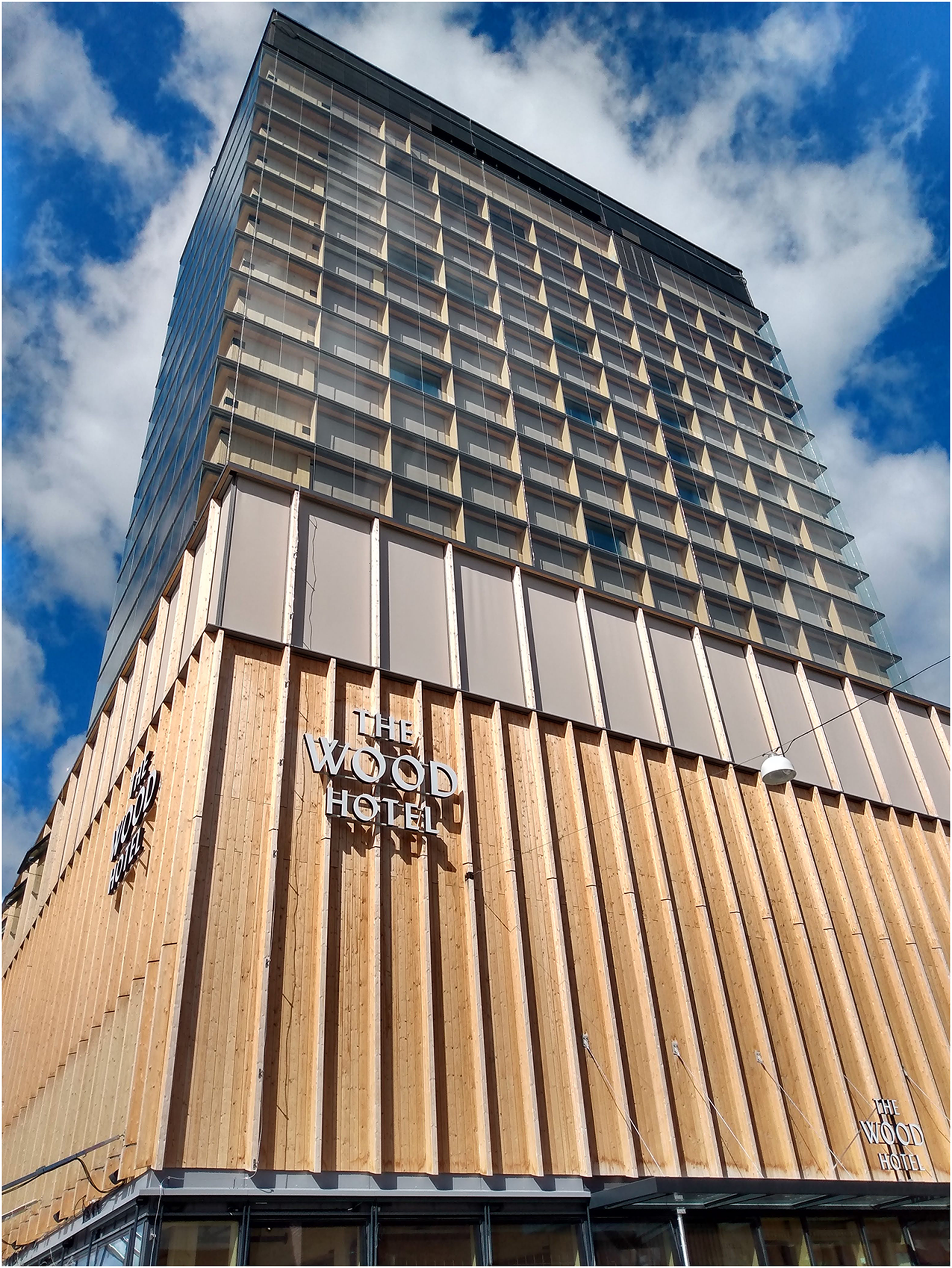
The 75 m high Sara Cultural Centre and Wood Hotel completed in Sweden in 2021.
Mass timber's regional geographies
It is also worth mentioning the uneven geographies of both the towers and the timber they are made from. Approximately 70% of the 84 plyscrapers completed or under construction are in European countries, with North America (17%) and Australia (10%) a distant second and third. As can be seen in Figures 2 and 3 (below), in North America, the Pacific Northwest and Great Lakes regions stand out as key areas of activity, while in Europe, much of the activity is taking place in Scandinavia, the Alps, and London.
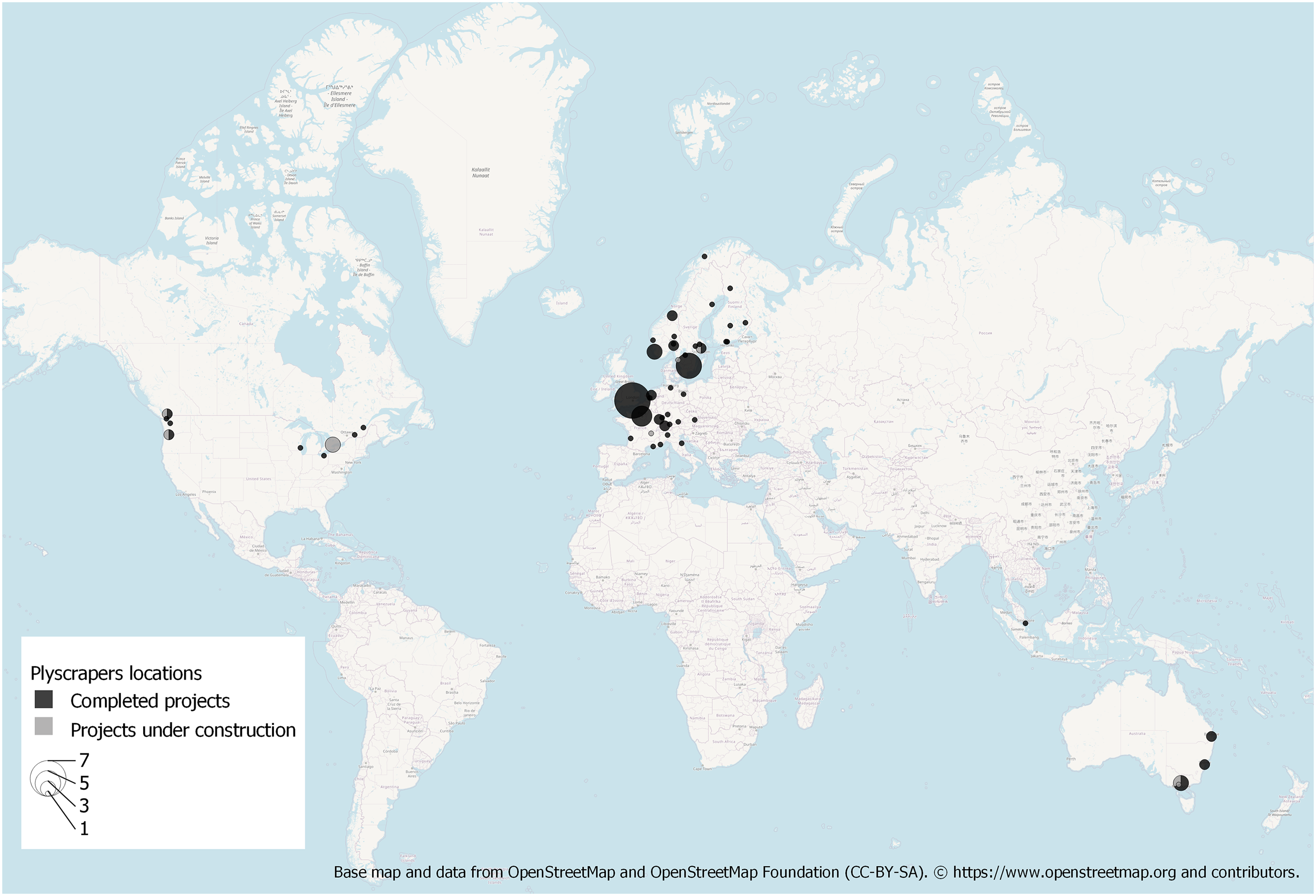
Global distribution of plyscraper projects. Regions with significant timber resources are particularly emerging as centres, as are major cities like London. The analysis is based on data from CTBUH (2022) and the authors’ analyses.
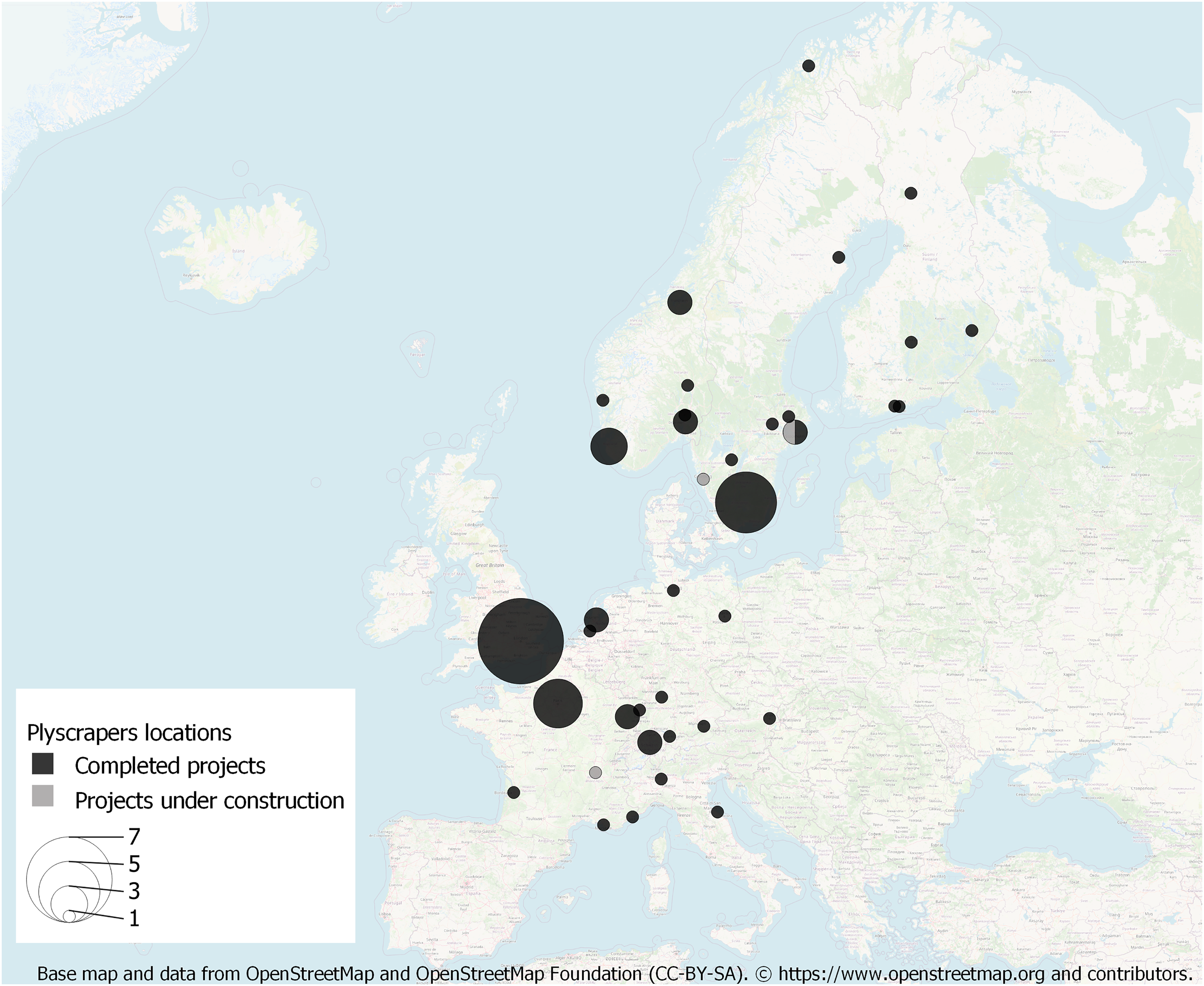
Close up of European distribution of plyscraper projects. Regions with significant timber resources are particularly emerging as centres, as are major cities like London. The analysis is based on data from CTBUH (2022) and the authors’ analyses.
To some extent, these geographies mimic the geographies of mass timber production. Although estimates vary, the oft-cited UN's Annual Market Review of Forest Products puts global CLT production capacity estimated at 2.8 million m3 in 2020, of which 48% was in Europe, 43% in North America, 6% in Oceania, and 3% in Asia, although not all CLT produced in North America is used for structural purposes (UNECE/FAO, 2020). While these production numbers are small compared to annual production of sawn softwood overall (100 million m3 in North America alone; UNECE/FAO, 2020), they can be regionally significant. For example, in Sweden, ‘significant improvements’ in the domestic consumption of sawn softwood have been attributed to the increased demand for engineered wood products, particularly CLT in the building sector (Kumar et al., 2021).
There is some regional variation in the tree species used. For example, in Scandinavia, spruce and pine are usually used, while in Canada, CLT is usually produced from spruce–pine–fir 1 or Douglas fir–larch, the latter especially in western Canada, reflecting the regional presence/absence of particular species. The choice for specific species is generally guided through product standards. These standards can also be reflective of the regional availability of specific species. For example, the North American Product Standard for CLT sets a minimum strength grade that represents the near minimum specific strength of commercially available wood species in North America, thus facilitating the use of domestically grown species (Yeh et al., 2012). A contrasting experience is offered by the UK, where most domestically grown softwood does not meet the minimum strength grade set by the European standard for structural timber. As a result, much of the structural timber used in the UK comes from Scandinavia or the Alps. One implication of the lack of suitable timber in the UK is that many of the British timber trade associations that play an active role in the development of the mass timber imaginary are co-funded by the Swedish timber industry (Interview 2).
What we are thus beginning to see is the emergence of two distinct geographies of mass timber. On the one hand, there are regional clusters in Scandinavia, the Alps, and the Pacific Northwest with substantial forestry industries. Here, the forestry sector (as well as regional and national governments seeking to promote these industries) plays an active role realising the imaginary through the development of CLT production capacity and the promotion of its use alongside more distinctly urban actors like architects, investors, and the tech industry. In contrast, in places that lack a significant forestry sector, such as the Netherlands and the UK, this connection between urban timber use and the domestic forestry is largely absent, meaning the actors behind the mass timber imaginary are primarily further downstream, such as timber traders who have sponsored high-profile architectural competitions, design exhibitions, research projects, and ‘proof-of-concept’ designs (not necessarily intended to be built) featuring the new materials. Other notable actors are architects and urban politicians pursuing a fashionable route to design distinction for their cities and as a vehicle for urban decarbonisation goals.
A ‘nostalgic futurist’ imaginary for mass timber
Having provided a brief overview of the rise of mass timber, we now dig deeper into how this rise has been made possible: how has the mass timber imaginary emerged and become materialised?
Mass timber as technofuturist project
Advocates across the movement for mass timber have assembled an array of futuring narratives to establish the coming ‘age of timber’. To analyse how mass timber has become established as a technofuturist project, we will focus on four key components: firstly, its centring of innovation and progress that repositions an age-old material as novel; secondly, through its urban boosterism that positions cities as ecological stewards while entrenching the notion of buildings as financial assets; thirdly, through its association with ‘modern’ methods of construction; and finally, through its connections with other powerful actors, particularly tech firms.
Firstly, there are the storylines that advance the significant imaginative leaps needed to recast ‘a (supposedly) obsolescent preindustrial material for downtowns and tall commercial buildings’ as a technofuturist innovation for 21st century cities (McCluskey, 2017). For example, we hear in promotional literature from the manufacturer Stora Enso (2017): ‘[t]wo materials defined 20th century architecture—steel and glass. They provided quite literally the backbone for modern western architecture … [but] today it is the turn of wood to bring new forms and functions to architecture and new perspectives on how we will live’ (p. 13).
Architects have been especially prolific producers of this new urban material futurology. We can see much evidence of this in mass timber's coverage in the architecture and design press, e.g. outlets like ArchDaily and Dezeen. In a piece on the ‘Beginning Age of Timber’, Frearson (2015) quotes Alex de Rijke, founding director of dRMM Architects—another mass timber leader—who maintains that ‘[t]he 17th century was the age of stone.… The 18th century was the peak of brick. The 19th century was the era of iron. The 20th century was the century of concrete. The 21st century will be the time for timber’. However, similar kinds of narratives are circulated by wood trade associations, regional and national bioeconomy policies in forestry industry strongholds, and other industrial advocacy groups.
Secondly, these storylines serve the type of urban boosterism that Taylor Buck and White (2021) identified as seeking to reposition cities of the future as environmental custodians. This was evident, for example, in the (in)famous 2019 pronouncement in an Earth Day speech from Bill de Blasio, then-mayor of New York City. De Blasio announced: ‘we are going to introduce legislation to ban the glass and steel skyscrapers that have contributed so much to global warming … they have no place in our city or on our Earth anymore’. He followed up, ‘we’re going to make very clear that the kind of the glass and steel buildings of the past, and some bluntly were being built very recently, are just not going to be allowed anymore’. This ‘ban’ was evidently a somewhat off-the-cuff remark (nothing of the kind ever materialised), which left city officials scrambling and was quickly followed by an industry-reassuring New York Times explainer (Mays, 2019). Nevertheless, such statements, and the political possibilities they open up, continue to circulate.
These political possibilities include the positioning of buildings as agents capable of harnessing biological assets for urban economic value (see also Taylor Buck and White, 2021), as exemplified by one of our interviewees: There is a serious cache of blue chip businesses that would say, “I know the feel-good factor and I know that it will be seen to be sustainable, good for the environment, but I also know that the rental values on that, particularly on a residential build, will be significant”. And we’ll say, “Well, is it the rental values that are the driver?” and they’ll go, “Absolutely”. (Interview 5)
As we will discuss further down, particularly in the UK, these attempts to construct an imaginary through which buildings are capable of harnessing not only current but also future, economic value are also challenged through the focus on fire safety, which disrupts the promise of a steady income flow.
Before getting to this point, however, we want to focus on the third key aspect of this technofuturist vision, and that is the association of mass timber with ‘modern methods of construction’, another term for factory-based offsite construction that seeks to overcome some of the perceived ‘backwardness’ in the traditional construction industry. Factory-based prefabrication is central to engineered wood products of the type used in plyscrapers and elsewhere, both the materials themselves and the broader building systems that they enable. For example, Cooper (2008) argues that the early innovation of plywood products already represented a transformative standardisation, deskilling, and industrialisation of a previously craft material. At the same time, we observe the growing importance of different skill sets: mass timber designers arguing that ‘we’re basically computer scientists now’ (Elbein, 2017), while the offsite construction company we spoke to now employ different kinds of workers, like a wood scientist and fire engineer, to help them to develop new products and ‘a different way of constructing’ (Interview 5).
To date, the uptake of offsite construction has been geographically uneven. For example, mail order kit homes from department stores built over 400,000 US and Canadian dwellings during their early 20th century boom (Harris, 2010). This trend was of particular significance in rural spaces—beyond the reach of urban building trade unions protecting carpentry craft workers and skilled labour traditions (Kazin, 1989; Cooper, 2008). In Sweden, their uptake continues to be very high, with an estimated 45% of all new housing (including 30% of multiresidential developments) using some form of offsite manufacturing (Kinuani, 2018).
While there are multiple reasons for the high level of offsite construction in Sweden, high levels of vertical integration are an important one (Interview 3). In many other regions, the fragmented construction supply chain means that producers who want their materials used in the construction process need: to go further up the chain to either, to clients or architects or engineers, it is those people who decide whether a building's going to be built of steel, whether it's going to be built in concrete, whether it's going to be built in timber or some other material. So we go to them and we try to influence them or make sure that they have correct information so that they can make an informed choice. (Interview 8)
In contrast, high levels of vertical integration in the Swedish offsite manufacturing process are exemplified by Swedish timber company Derome, which has entered the offsite housing industry using a ‘forest to finished house’ approach and which has since expanded further to buying land to build entire new neighbourhoods, or ‘garden cities’ as they call them. While these have largely focused on middensity developments (up to eight floors), it demonstrates how the vision of mass timber is decisively technofuturist, through its close association with ‘modern’ methods of construction, and economically as well as technologically materialised through high levels of vertical supply chain integration (see also Levy and Spicer, 2013).
While technofuturism is conventionally associated with the notion of trickle-down innovation (Chandrashekeran and Sadowski, 2022), here we are seeing a double move, where eye-catching plyscrapers use techniques that have to date been primarily used in smaller developments, with the aim of further expanding their uptake and geographical reach. Thus, another aspect that makes this vision technofuturist is the way in which the material is being increasingly taken up within high-tech communities and their own futurist imperatives. As with architects’ fashion-driven competition for novelty and distinction, tech firms and start-ups are compelled to contend for ‘disruptive’ technologies. Tech clusters like Silicon Valley have historically faced disappointments in most low-carbon manufacturing ventures, including for other capital-intensive green building materials (Knuth, 2014, 2017). However, these communities are beginning to take interest in mass timber. A particularly significant draw here are new opportunities for normalising mass timber-based prefabrication, in and beyond plyscraper applications—a long-thwarted technoindustrial revolution in building practice that might finally see its day. Advocates note that an ability to factory design and engineer mass timber buildings means much simpler and faster assembly processes on site, significantly lowering associated costs.
A particularly important moment in this tech uptake was a 2018 announcement by Alphabet (Google's parent company) that its high-profile Sidewalk Lab megaproject in Toronto would be built from mass timber, using a ‘modular kit of parts’ system sourced by Michael Green Architecture—thereby adding mass timber-based prefabrication to the cutting-edge urban technologies the district was meant to model. Notably too, while Michael Green himself has been another influential mass timber champion, in 2018, his firm was acquired by the Silicon Valley-based tech start-up Katerra—a company whose bid to disrupt the building industry emphasised total vertical integration of mass timber design, engineering, and construction, as well as industrial standardisation in its building systems. Possibilities might include: a line of standardized, customizable, mid-rise apartments and office buildings, largely made of modular mass timber, that developers could order to spec like IKEA sofas—which are, of course, themselves a new-model wood product, built as they are out of medium-density fiberboard (MDF) or compressed wood chips (Elbein, 2017).
While Alphabet cancelled the Sidewalk Project in 2020 (Keil, 2020) and Katerra went bankrupt in 2021—not unusual for (over)ambitious high-tech projects—these novel collaborations serve both as a means of cultivating expectations for what technoscience should look like (Hong, 2022) enabling them to being advanced in other modular prefabrication initiatives.
While the technofuturist vision has enabled the formation of new stakeholder coalitions, for example by strengthening the link between tech firms, architecture agencies, and actors further upstream in the bioeconomy, echoing Birch's (2016) observation on the substitution narrative in the bioeconomy, the push for timber is challenging others’ position of power, particularly those in the concrete and cement industry.
Multiple interviewees remarked that the concrete industry especially is concerned about the advent of mass timber and, in the UK, has been lobbying against it. They have particularly done so through focusing on the risk of fire (Interview 5). In doing so, they build on a longer-standing concern around the use of timber in urban environments (Interview 4). As it stands, concerns around fire have been codified through building codes which keep urban environments locked into using incumbent materials, which, according to these interviewees, the concrete industry would like to keep this way.
Proponents’ argument is that wood's assumed ‘inherent’ qualities like flammability and structural weakness need rethinking, as these attributes are more complex and diverse by product than past dismissals of them have appreciated. Most centrally, advocates maintain that mass timber performs differently enough from older light wood framing products and designs to justify (re)classification as a novel material warranting new rules and rule changes. Such persuasions have been a major focus for trade association lobbying. Their efforts have met with rising success, as several building codes worldwide (for example, recently the US International Building Code) are being eased to permit—and politically legitimate—taller wood construction.
Regardless of who or what is driving the flammability narrative, the continued focus on fire risk has important consequences. One example given to us was the concerns of investors around both the risk of fire and an uncertain legislative landscape, particularly in the UK which banned the use of timber in external walls in the wake of the Grenfell Tower disaster. While the initial ban did not extend to structural timber (though a subsequent ban also applied to new structures over 18 m), an interviewee commented on what the uncertain legislative landscape meant for investors: If you look at all those who see their buildings as assets, they are now thinking about, “Okay, what's the reputational damage if … how likely am I to be able to sell the building … I’ve got planning permission for my 15-storey, CLT, built-to-rent building, but, you know, will I be able to rent this out? Will I be able to sell it if I want to diversify?” (Interview 2)
This challenge to the promissory nature of mass timber, as a long-term income stream, is therefore one key reason why advocates have needed to transform the publicly imagined nature of mass timber materials—to convince regulators to overturn or ease building codes prohibiting tall building in wood.
In summary, there are four key ways in which proponents put forward a technofuturist vision of mass timber: through narratives that reposition an age-old material as novel; through positioning cities as ecological stewards while entrenching the notion of buildings as financial assets; through its association with ‘modern’ methods of construction and vertical supply chain integration; and finally through its connections with other powerful actors, particularly tech firms.
A nostalgic-reparative vision
The first vision we identified combines extant aspects of vertical urbanisation (the push to build ever higher) with a push for technoindustrialisation by high-tech communities. However, we also observe a second type of vision emerging. In this second vision, we see publicity machines for plyscrapers and mass timber designs furthering a specific type of aesthetic advocacy, mobilising ‘devices of affect’ (Bulkeley et al., 2016) such as ‘glossy architectural renderings [and] carefully designed site plans’ (Lauermann, 2020, p. 2), and buildings themselves, alongside narratives interpreting them. These devices help make materials that are embedded and typically subsumed in daily life imaginatively visible to publics in new ways and attach new aesthetic and affective qualities to them. Moreover, they help tie these materials to visions of desirable low-carbon futures, illuminating possibilities for alternative urban worlds (see also Sheppard, 2012). According to our interviewees, this affectively charged and ethically configured meaning-making trumps emission-accounting approaches to furthering mass timber. ‘[T]he narratives that go with doing things well, [and] the interest of our clients in having a good story to tell’ are especially important (Interview 3).
As a result, aesthetic champions have promoted mass timber buildings (and prospective mass timber cities) as simultaneously low-carbon and sustainable, beautiful, and therapeutic to inhabit. For example, Andrew Waugh has argued: ‘[w]hen you build in timber you’re building with a material that is completely renewable, that stores carbon and that is proven to be healthier to live in’ (in Kippenberg, 2017). Such stories, at least initially and perhaps most powerfully, are told visually. Architectural renderings of plyscrapers will often show an indoor environment that combines timber construction with natural light, plants and other greenery, large windows, and open plan spaces, seeking to convey a sense of a peaceful retreat from a bustling city outside (see e.g. HAUT, 2022). Mass timber designs do not have to feature timber as a visible interior or exterior element of buildings: their essential novelty arguably lies first and foremost in their structural innovation in framing, and those framing elements might be covered up by exterior cladding or interior finishing materials. (Indeed, architects of some early plyscraper designs chose to cover up building outsides so as to better ‘fit in’ to existing neighbourhoods, perhaps in fear of public backlash.) However, as exemplified in the photos below, many designs make mass timber visible as a means of promotion in and of itself. When choreographed alongside other visible ‘natural’ attributes inside buildings, this visibility is a way of introducing publics to the material and encouraging them to form specific kinds of attachments to it (Figures 4 and 5).
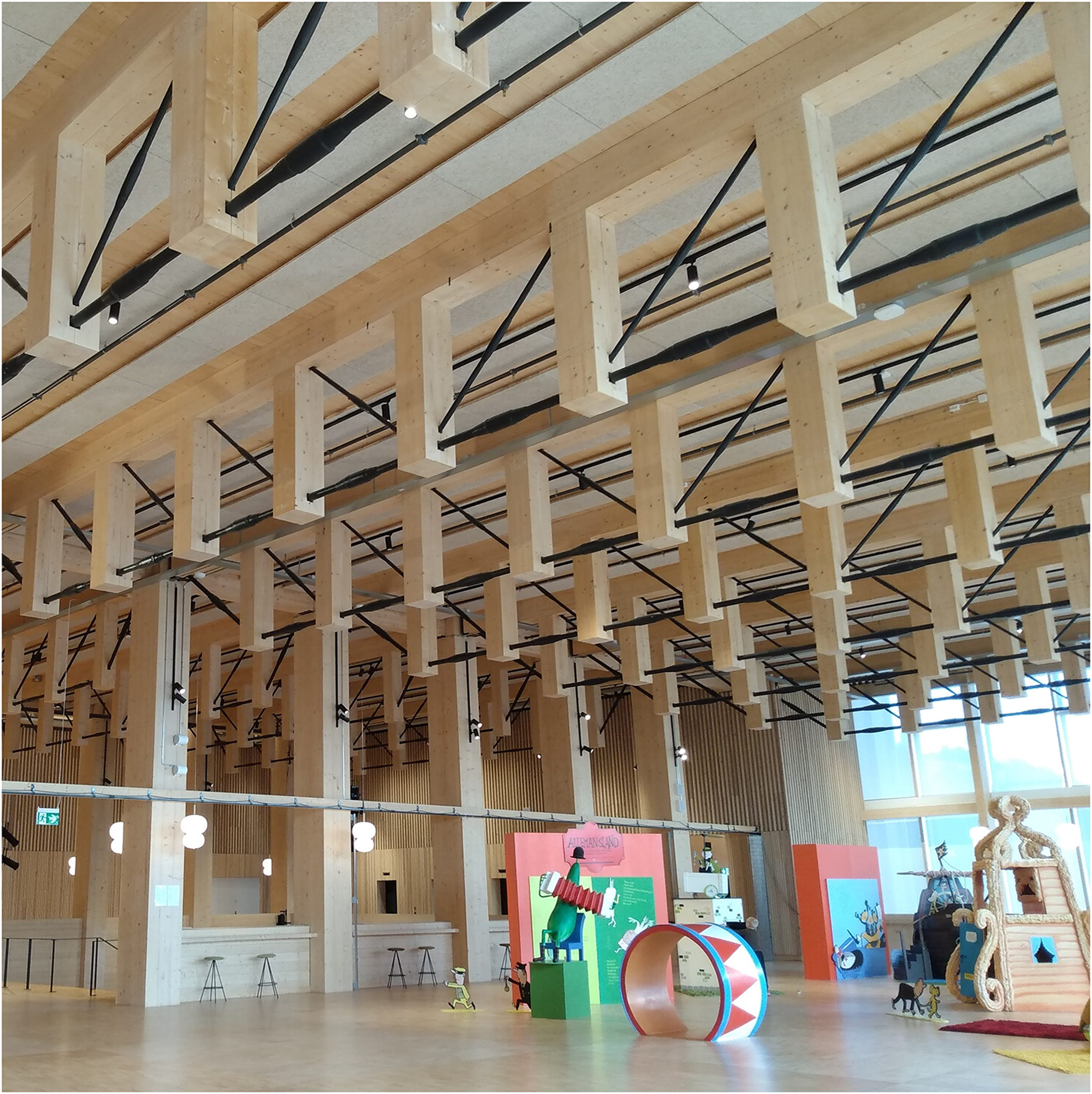
Inside the 75 m tall Sara Cultural Centre in Skellefteå, Sweden, where the extensive use and visibility of wood is ‘an homage to the region's rich timber tradition’ (lead architect Oskar Norelius, White Arkitekter, n.d.).
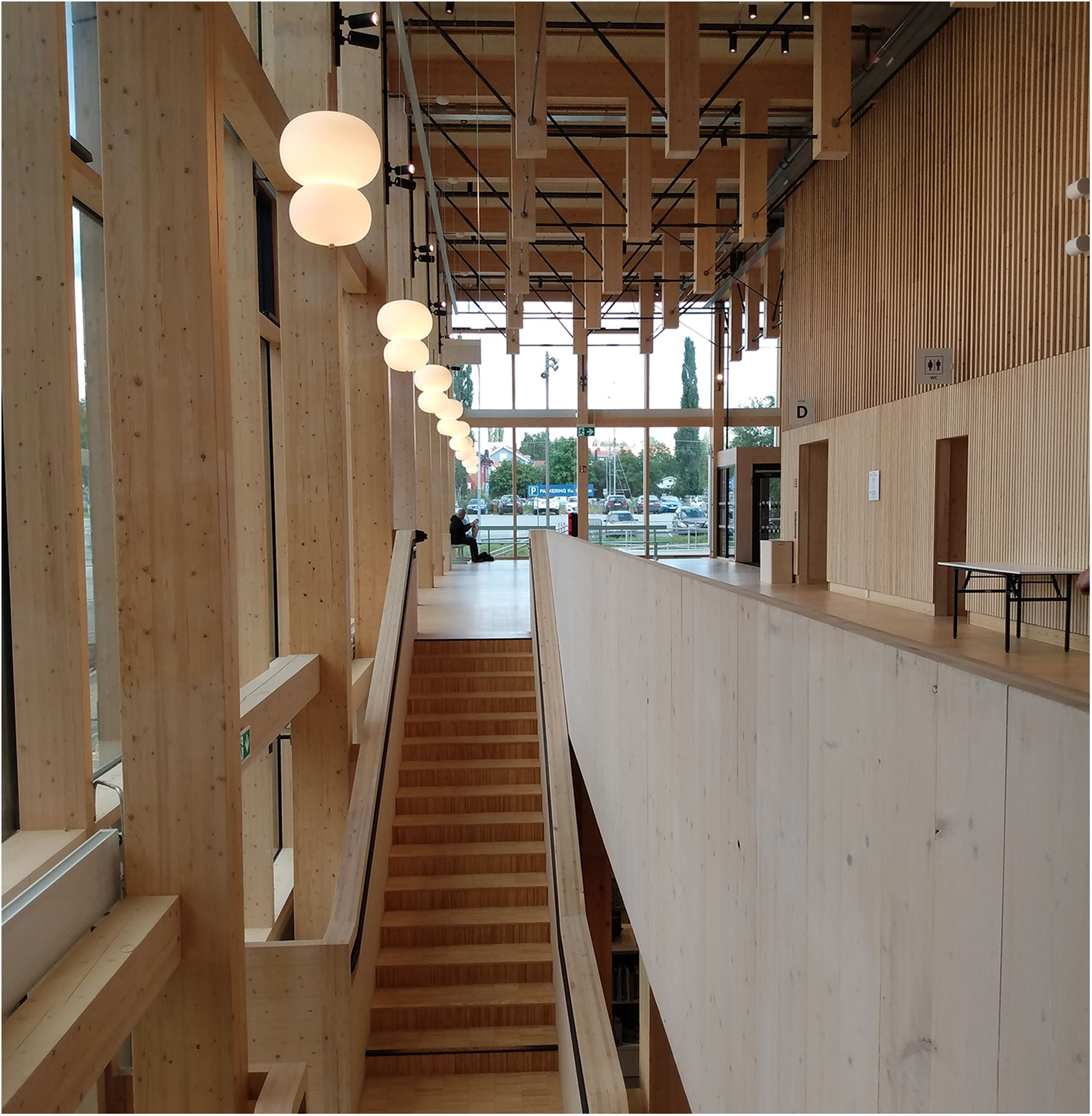
Inside the 75 m tall Sara Cultural Centre in Skellefteå, Sweden, where the extensive use and visibility of wood is ‘an homage to the region's rich timber tradition’ (lead architect Oskar Norelius, White Arkitekter, n.d.).
In narratives interpreting these design visualisations and completed buildings, we find significant if selective appeals back to wood materials’ more traditional premodern and preindustrial associations. Proponents of this nostalgic project seek to fix imagined historical qualities of organic social and ecological unity to mass timber materials and designs. Multifaceted aesthetic (visual impressions) and other sensory (smell and touch) responses to timber materials form the basis of this attempt to pin down timber's meanings and capacities. In doing so, proponents envision tapping into supposedly elemental human responses to and desires for these culturally historically embedded materials: ‘people love timber and that just comes out time and time again in all sorts of polls’ (Interview 2).
Central to this nostalgic vision are narratives promoting ‘biophilic’ design qualities. Both academic literature and our empirical research portray these qualities as emerging in and through building inhabitants’ embodied engagements, both visual and sensory, with materials and design elements around them. Particularly, biophilic design is meant to do therapeutic work for building occupants through designs that feature tangible ‘natural’ elements, thereby (re)connecting humans with nature. According to Franco (2020), ‘biophilic design seeks to improve the well-being of humans through direct contact with nature and organic forms’. He argues that ‘[t]he use of timber in interior spaces can be one of the most direct ways to motivate a ‘connection’ between people and nature, especially when the timber maintains its most rustic and textured state’. There is some evidence to suggest that people have positive affective responses to wood (Sakuragawa et al., 2005; Demattè et al., 2018). However, there are also questions around the universality of such findings (Nyrud and Bringslimark, 2010)—not least, it is important to note that only some cultures have vernacular traditions of building in wood. Moreover, as political ecology and related scholarship have explored at considerable length, human relationships with ‘nature’ have been anything but stable over time (e.g. Williams, 2005).
Aesthetic advocacy for mass timber has actively propagated these biophilic design narratives despite these unsettled factual questions and reservations. To cite one representative example, press for the 2018 ‘Timber Rising’ exhibition argued that wood ‘can benefit our own health as well as the environment’ and that ‘current thinking on [b]iophilia suggests that human beings need to have a closer connection to natural materials’ (Roca Gallery, 2018). We also see such arguments taken up in publicity around high-profile plyscraper projects. For example, advertising for HAUT, a newly finished plyscraper in Amsterdam, argues that the project sets a ‘new standard for healthy building and luxury living’ and points to its wood design: ‘[w]ood has additional qualities; it breathes, it lives. Wood feels warm and therefore provides exceptional comfort’ (HAUT, 2022). Industry actors have also taken up these stories. For example, we see the trade group Trada (2019) championing visible timber via arguments that its ‘natural tactile surface and organic patterns … provide a warmth to building interiors’ (p. 47).
Some proponents connect these individual therapeutic benefits to broader pushes to ‘green’ cities, arguing that widespread mass timber building can promote ‘[a] kind of biophilia for a smart city’ (Flanagan, 2020). Such sentiments connecting the aesthetic and affective properties of timber with a more sustainable built environment were echoed in our interviews—e.g. ‘[h]ealthy buildings is a key thing for us: healthy people and a healthy planet’ (Interview 1)—and at trade shows (see Figure 6 below).
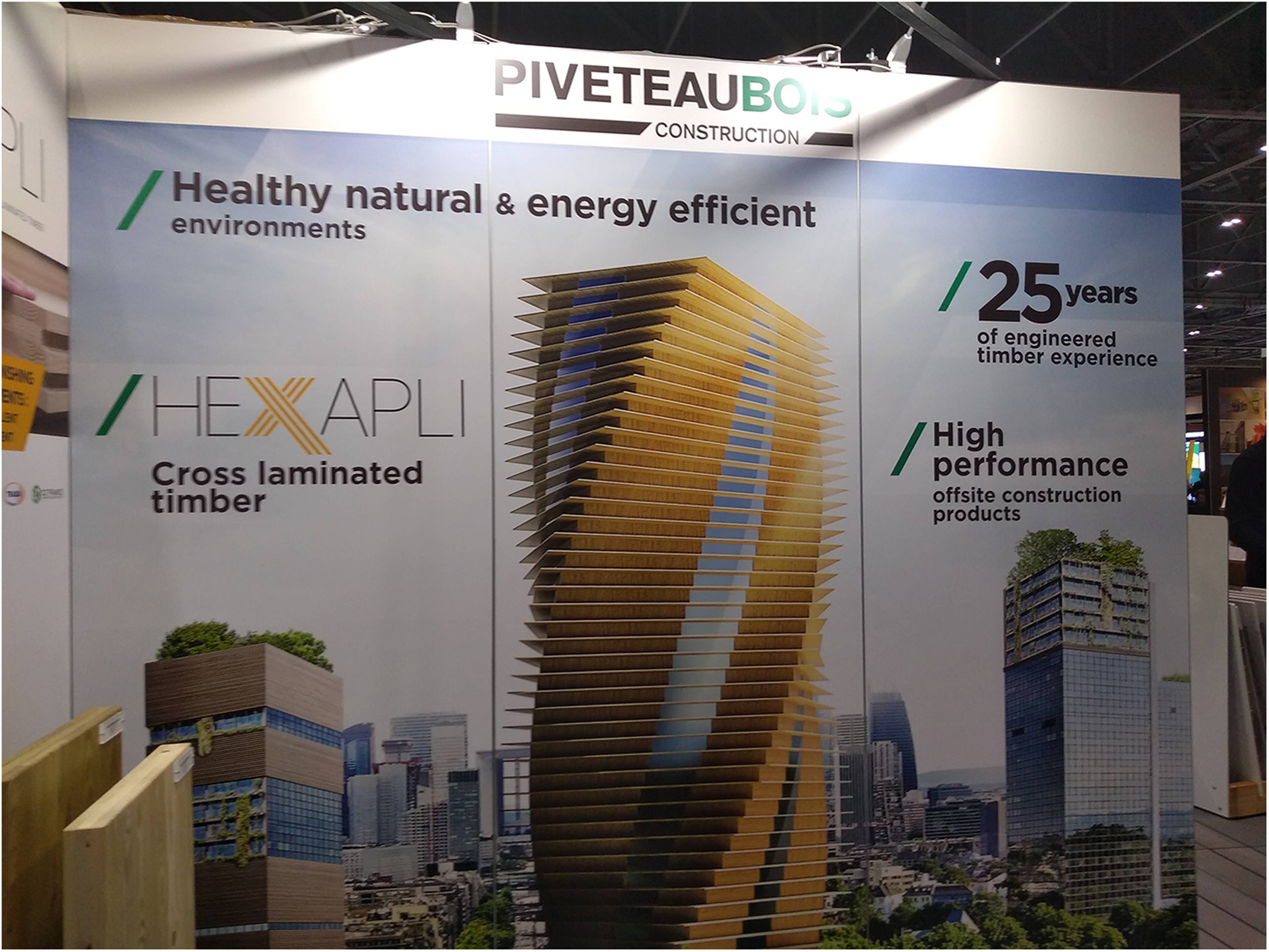
Banner from Piveteaubois, manufacturer of ‘timber solutions’ at the Futurebuild conference 2019—emphasising CLT's supposed ability to contribute to healthy natural environments.
It seems evident, however, that this aesthetic push for timber is little else but strategic. As one interview participant explained when asked why this aesthetic-reparative vision is so strongly emphasised: ‘Any premium propositions where people have the choice whether they live here or there, or in a different place, when you play the health and wellbeing card, when you play the health and wellbeing card, that works really well, because it, basically, is an egotistic argument’, in contrast to more altruistic framings where environmental concerns are ‘too abstract, it's too far away’ (Interview 2).
Discussion and conclusions
In this research, we explored how advocates attempt to ‘fix’ feasible and desirable imagined future cities and urban bioeconomies through the increased use of mass timber. We showed that the ‘fixing’ of material qualities both takes place through and dialectically produces the broader sociotechnical mass timber imaginary. We found that the imaginary embodies a ‘nostalgic futurism’, conjoining two complementary drives, a technofuturist and a nostalgic-reparative one. The former is characterised by a widely publicised international ‘race’ on ever-taller plyscrapers, which repositions timber as a distinctly novel material, and acts through the logics of transformative technological breakthroughs and attempts of cities to reposition themselves as environmental custodians. Meanwhile, mass timber's potential to advance more fully ‘industrialised’ building systems based on factory prefabrication may transform the building sector in more thoroughgoing ways. This performative technofuturism works to publicise real estate and urban development projects, high-tech bids to reinvent building production, and the concept of urban mass timber itself—often to and for investors, developers, and urban political boosters. At the same time, it forwards policy changes necessary to the broader mass timber project, in convincing regulators that existing building code restrictions on wood are technologically outmoded and should be discarded.
On the other hand, we have suggested that equally central to the mass timber imaginary has been a selective appeal back to the material's more traditional premodern and preindustrial associations, driven by forms of ‘aesthetic’ advocacy (Ghertner, 2015; Lauermann, 2020): eye-catching design visualisations and visible manifestations which have been particularly influential in introducing and interpreting mass timber for a wider public. Architecture and design communities (and their enabling development partners and funders, clients, and political allies) have furthered an imaginary of biomaterial-based buildings and urban fabrics that are at once low-carbon and sustainable, beautiful, and therapeutic to inhabit. These aesthetic and affective modes of persuasion are frequently deployed alongside a nostalgic vision centring biophilic design, arguing that contact with visible ‘nature’ in buildings (re)connects inhabitants with nature and thereby makes them meaningfully happier and healthier. This push embodies supposedly elemental human attachments to a premodern and preindustrial material, and imagined qualities of social and ecological unity it is made to stand in for within buildings, and perhaps cities themselves. These therapeutic narratives personalise broader calls for restoration and repair, in and beyond city limits, in the face of climate change (e.g. Collard et al., 2015; Millington, 2019).
However, when reflecting critically on mass timber's sociotechnical imaginary and its conjoined technofuturist and nostalgic-reparative visions, we find important tensions and internal contradictions, which often cut across both visions. Firstly, there are the multiple ways in which the imaginary obfuscates difficult and complex debates about how ‘green’ mass timber truly is, especially because many of these environmental impacts arise at a distance, in the forests intended to produce the new materials (see also Law et al., 2018; Robbins, 2019). The smooth visualisations put forward to architectural competitions and published in design magazines require, serve as a ‘strategic simplification’ (Lauermann, 2020), repackaging complex urban processes into a neater, more politically potent formats. In that sense, the emergent mass timber imaginary is no different to many other climate and sustainability projects that have a troubling tendency to essentialise urban natures based on more superficial visual qualities: ‘if it looks green it is green. The self-evidently natural is assumed to in fact be natural, and moreover to be sustainable’ (Wachsmuth and Angelo, 2018, p. 1043). We argue that this critique holds true for the contemporary mass timber project in noteworthy ways.
Detachment between timber's supposed biophilic advantages in dense urban centres and socioecological harms in resource peripheries also has precedents. To cite one illustrative example, in describing the mid-20th century Euro-American ‘teak boom’ in Danish modern interior design, Conroy (1978) argues: Danish teak was originally designed to furnish the large number of apartment buildings hurriedly built to house Europeans after World War II … but the designer’s real triumph was to make it look warm, casual, homey—so that a sterile, filing cabinet-like concrete high-rise apartment would give the illusion of the European dream of a cottage in the woods.
Simultaneously, the piece noted manufacturers’ growing supply problems in Thailand and other Southeast Asian resource peripheries—now known to have been sites of excessive logging and deforestation in the 20th century teak trade.
Such concerns around the environmental impact of mass timber are largely obscured in the mass timber imaginary. Past bioeconomic projects have been criticised for legitimating capitalist growth imperatives via appeals to bio-based economic ‘decoupling’ and ‘circularity’ (e.g. Birch et al., 2010; Levidow and Papaioannou, 2014). Technofuturist advocacy for mass timber goes even further, actively playing into late capitalist drives for competitive novelty—between cities competing for iconic plyscrapers, architects, and designers vying for distinction via experimentation with the material, and high-tech firms pushing for disruptive innovations, in this case via mass timber-based prefabrication.
Underpinning the imaginary's attempt to recast cities as environmental stewards is the claim that mass timber buildings and cities can durably sequester carbon extracted from these managed forests—building up an important urban carbon sink. However, this argument has been pointedly silent on what the ‘lifetime’ of mass timber buildings might actually be. As Melton (2018) argues: ‘wood products continue to sequester carbon as long as they are in use, but the length of use is all over the map. [One recent study] assumed a useful life of 30 years, while others argue for 60 or even 100’.
One issue is that the mass timber imaginary does not counter issues of urban churn; rather, it reinforces and naturalises it. The accelerated urban churn and obsolescence that many cities experience (e.g. Abramson, 2016; Knuth, 2020) are heightened by the same competitive drives for vertical urbanisation, cutting-edge design, and technological disruption that the mass timber imaginary exploits through its plyscraper races and its association with new methods of construction. These methods are also part of broader bioeconomic narratives championing economic–material circularity (and often ‘climate proofing’). Mass timber prefabrication techniques like modular design are increasingly framed as a useful tool here, aided by timber's particular material qualities. For example, Wiegan (2016) argues: wood is a material that can be easily reused or recycled, or even used as fuel at the end of its use for construction purposes. This energy can be used to heat other wooden buildings or to produce wood-based products. This way, timber can easily become a carbon-neutral material.
Whether or not mass timber buildings can be long-lived enough to be durable carbon sinks, in today's cities, they may be demolished well before we can find out. As Lovell and Smith (2010) note, a historical objection to prefabricated buildings was their association with temporariness. Increasingly, in the mass timber imaginary, that quality is being recast as a virtue.
Particularly, the technofuturist vision's reinforcement of the perceived desirability of material ‘churn’ (which, to some extent, contradicts biophilic appeals to an imagined premodern socioecological unity and stability) has important drivers and impacts beyond city limits. Though not the primary object of this paper, important pushes for churn come from the forestry industry. Influential corners of the industry now argue that intensifying harvesting of managed forests can provide new materials for mass timber (and other bioeconomic products) while actually increasing carbon sequestration—a vision of carbon drawdown through shortening forest rotations that Palmer (2021) has called the ‘carbon conveyor’. This logic builds on earlier forest productivity-maximising speed-up strategies unpacked by Prudham (2004). Scientists and environmental groups are now challenging this argument in various ways, including via new concerns for destabilised forest ecosystems under climate change (e.g. Elbein, 2017; Law et al., 2018; Robbins, 2019).
But it is not only complex and potentially significant environmental impacts that are obscured through this emergent imaginary, so are the social relations within and beyond cities. One common critique of technofuturist imaginaries is that they ‘preach revolutionary change while practicing […] an entrenchment of the same old visions of future societies, of power relations, of ways of living’ (Hong, 2022, p. 373). In our analysis, we observed that both technofuturist and nostalgic-reparative visions sustain extant social relations, not least through their centring of the extraction of economic value through mass timber buildings.
Existing experience demonstrates that privileged forms of natural (re)connection for some can generate socioecological harms for many others, from new critiques of green gentrification (e.g. Anguelovski et al., 2019) to legacy projects of ‘bourgeois utopian’ (Fishman, 1987) reconnection with nature. Those likely to benefit from mass timber design novelties like luxury plyscrapers are not those with most compelling claims on urban repair, including in existing high-rises (MacLeod, 2018; Danewid, 2020). Moreover, nostalgic biophilic visions can take on an uncomfortably regressive cast amidst growing climate movement calls for recognition of past racialised and ecological harms (and their continued hangover into uneven present and future climate vulnerabilities), as well as reparations for those harms. Acknowledgements of historic, contemporary, or future instances of such racialised and classed inequalities or ways for mass timber to address them are completely absent from the emergent imaginary, thus potentially foreclosing alternative futures.
These problems and contradictions are far from inevitable with mass timber. Important calls for climate-facing restoration, repair, and reparations (e.g. Collard et al., 2015; Millington, 2019; Táíwò 2022; Webber et al., 2022) reject both technocapitalist fantasias and regressive nostalgia in favour of more progressive futurism, one which may build more durable low-carbon cities for the 21st century—or choose not to (re)build, but rather conserve urban fabrics. Mass timber may further this drive, particularly if linked to similarly progressive reimaginations of restoration within forest ecosystems under climate change (Nelson et al., 2022) and by remembering the foundational question: what and who should cities be for? (Pincetl, 2020). This integration within broader climate justice movements stands to make an age of timber a far more genuinely desirable project for tomorrow's cities.
Highlights
There is a growing push to use mass timber in the construction of skyscrapers in urban environments.
We explore how advocates attempt to ‘fix’ feasible and desirable imagined future cities and urban bioeconomies through this biomaterial.
Drawing on the notion of sociotechnical imaginaries, we find mass timber's emergent imaginary embodies a ‘nostalgic futurism’.
This imaginary conjoins ‘technofuturist’ and ‘nostalgic-reparative’ appeals, embracing both competitive novelty and disruption and affective, therapeutic benefits.
However, the imaginary's internal contradictions risk greenwashing, reproducing inequalities, and accelerating material churn in both forests and urban centres.
Footnotes
Acknowledgements
The authors would like to thank the editor and three anonymous reviewers for their thoughtful and encouraging comments. The authors also extend their thanks to the REINVENT project team and especially to Harriet Bulkeley for helping us get this research of the ground and providing helpful input throughout.
Funding
The author(s) disclosed receipt of the following financial support for the research, authorship, and/or publication of this article: This project has received funding from the European Union’s Horizon 2020 Research and Innovation Programme under grant agreement no. 730053.
