




Abstract
Since the 1980s, modern shrimp aquaculture has been seriously affected by shrimp diseases worldwide. Shrimp aquaculture cooperates with scientists in the lab to develop biosecurity strategies and biotechnology products, such as specific-pathogen-free shrimp, vaccines and probiotics, to tackle the risk of shrimp disease. Securing shrimp health needs to manage the breeding environment, particularly water quality and water ecologies. Shrimp and water travel between the lab and the field for monitoring, experimentation and disease prevention. This article proposes the notion of hydro-social life to analyse how biosecurity strategies and biotechnology products are developed in the lab and deployed in the field by visiting private, governmental and university laboratories in the Vietnamese Mekong Delta, Hô` Chí Minh City, and Taiwan. I argue that scientists innovate biotechnology products to improve biosecurity strategies by reconfiguring hydro-social lives, like managing shrimp health and water quality. The development and deployment of biosecurity from the lab to the field are influenced by capitalist forms of life and social relations.
Shrimp aquaculture, biosecurity and biotechnology
Since the 1980s, shrimp aquaculture in Asia and Central America has been profoundly affected by Taura Syndrome, White Spot Syndrome, Shrimp Early Mortality Syndrome and other emerging viral diseases. In 2012, the Food and Agriculture Organisation (FAO) assisted the Vietnamese government in investigating the breakout of an unknown shrimp disease in the Mekong Delta, which was later named acute hepatopancreatic necrosis disease, posing a significant threat to farmers’ livelihood and national economies in the region. In response, the FAO (2012) provided recommendations by which the Vietnamese government could strengthen its overall biosecurity strategy. In August 2020, major food retailers in the United Kingdom, such as Tesco, Sainsbury's, and Marks & Spencer, urged Vietnam's Department of Fisheries to upgrade its shrimp health management programmes to enhance the resiliency of the shrimp industry (Sustainable Fisheries Partnership, 2020). To align with these recommendations, in 2021 the Vietnamese government passed Decision 434 (434/QĐ-TTg, 24/03/2021), which established a Disease Prevention in Aquaculture National Plan that will run until 2030. It also identified laboratories, an often overlooked aspect of shrimp economies, as crucial to monitoring shrimp health and reducing the risk of shrimp disease (Vietnamese Government, 2021).
Shrimp economies rely on water, yet more-than-human relations to water within laboratories are not often prioritised in research. Hydro-social research often foregrounds more-than-human relations among microbes, larvae, plants, people and animals in rivers, lakes, seas and cities (Acevedo-Guerrero, 2022; Helmreich, 2011; Hurst et al., 2022; Woelfle Hazard, 2022). Aquaculture, however, is an industry that requires the meticulous management of more-than-human relations in watery environments which present biosecurity concerns that require response both in terms of farming practices and scientific interventions in labs. Since the 1930s, shrimp aquaculture has been conducted in close cooperation with scientific laboratories in the development of new biotechnologies (e.g. genetic engineering) to prevent disease and reduce production times (Banoub et al., 2021). Political economists and political ecologists, however, have tended to focus on agrarian and environmental changes caused by diseases in shrimp farms and their surrounding environment, while paying comparatively little attention to the role of laboratories in shrimp economies (Goss et al., 2001; Huang, 2015; Marks, 2010; Paprocki, 2018, 2019, 2020; Stonich & Vandergeest, 2001; Vandergeest et al., 1999). The shrimp farm, however, is only one of the multiple production sites within the commodity chain. Laboratories present a critical site of analysis because they are integrated into efforts to manage shrimp health, water quality and disease outbreaks across regional economies within and beyond the Mekong Delta.
This article examines how water's more-than-human relations are managed through the formulation and execution of biosecurity strategies, particularly in the context of both capitalist modes of production and hierarchies within and between laboratories. To situate labs amidst multiple human and nonhuman actors, this article develops the idea of hydro-social life as a way to understand the intersections of socio-economic life with the many life forms – not all desirable – at work in shrimp economies. Conceptually, hydro-social life unites the rich literature on hydro-social relations with the ways in which laboratories function as sites where the rhythms of shrimp lives and environments, and those of laboratory staff, are synchronised with the biosecurity demands of capitalist aquaculture. Hydro-social life adopts a hyphenated writing to indicate relations among water, pathogens, shrimp, humans and the environment (Huber, 2010). It argues that hydro-social lives are reconfigured to develop biosecurity strategies by scientists, technicians and workers in different kinds of labs with various tasks. More than just socially situating the scientific practices of different labs, the article points to how biosecurity practices are influenced by capitalist forms of life and other social relations that operate within and beyond the lab.
This article develops its argument by analysing three kinds of laboratory tasks for biosecurity in shrimp aquaculture: testing, experimentation and disease prevention (Table 1). First, testing is a commercial and continuous practice to monitor shrimp health and water ecologies, rendering visible the relations among water, pathogens, shrimp, humans and environments. For testing services, shrimp and water are sampled and delivered from the field to the lab. Second, scientists and technicians conduct shrimp experiments in the lab to develop biotechnology products and evaluate their performance. They reorganise water, pathogen, shrimp, human and environmental relations into controllable and observable conditions. Shrimp then become laboratory animals to be poisoned and killed. Third, scientists develop two anticipatory approaches for disease prevention. They manage shrimp health through pathogen management, immuno-preparedness and using life to manage life (cf. Lorimer, 2020). These two approaches are developed in the lab and deployed in the field with some degree of uncertainty that influences their efficacy and market share. The article concludes by returning to central questions regarding what labs can tell us about hydro-social relations and the place of knowledge practices for biosecurity in shrimp economies. Taken together, the answers to these questions show how different kinds of labs are integrated into shrimp aquaculture by developing various biosecurity strategies to reconfigure water's more-than-human relations under capitalist forms of life and social relations.
This article draws on 12 months of fieldwork conducted in Vietnam, including 4 months following the work of 6 scientists, 3 technicians, 2 lab workers, and 2 shrimp feed companies. These people occupied different labs: one governmental, one at a university, and four private located in the Mekong Delta, Hô` Chí Minh City and Taiwan. While doing fieldwork in the Mekong Delta, I noticed that some farmers and companies worked closely with scientists in labs, which focused my attention on the role of such labs in the industry. Through observation at these sites I explored the power relations of laboratory work, along with the politics of ‘studying up’ in which scientists and technicians are gatekeepers who decide who can enter research institutes (Law, 1994: 36–37; Mukherjee, 2017; Stephens and Lewis, 2017). I gained access to these labs in various ways, via email, phone calls, or by introduction from Vietnamese sales agents and, one case, a Taiwanese businessman with commercial connections. Another challenge for me was to understand scientific knowledge and experiments in labs because ‘you can't ask about something if you don't know it exists’ (Law, 1994: 44). Working from this positioned perspective, I built rapport with scientists and technicians and gained scientific knowledge from them, as well as by reading scientific journal articles, aquaculture textbooks and industry magazines (cf. Myers, 2015). As a Taiwanese geographer, I developed conversational fluency in Vietnamese in order to better interact with local scientists, technicians and workers. My connections to Taiwan also provided access to Taiwanese scholars and networks as I traced transnational flows of knowledge about commercial shrimp farming. Ethically, I followed a careful, ongoing praxis of gaining consent and followed the data management plan of the labs I worked with to avoid potential conflicts of interests and used pseudonyms for individual and company names to preserve anonymity. All experimental data was codified by technicians, and photos of research environments in this paper were taken with permission.
Bridging hydro-social life and biosecurity
This article develops the notion of hydro-social life to shed light on more-than-human relations in water by drawing on the concept of hydro-sociality in water research. Influenced by the early work of Bruno Latour and Donna Haraway on the hybrid object and the cyborg manifesto (Haraway, 1991; Latour, 1993), hydro-social scholarship argues against scientific accounts that reduce to H2O, what Linton (2010) terms ‘modern water’ (Bakker, 2004; Linton & Budds, 2014; Swyngedouw, 2004). This asocial view of modern water neglects other kinds of water (Klaver, 2021). Hydro-social research then developed the notion of hydro-social relations to argue that the particular character of water is constituted by social relations, such as conflicts and tensions among a wide range of human and nonhuman actors within specific contexts (Budds et al., 2014). Water is not a thing that exists in the binary registers of nature and society but a socio-natural and socio-technical hybrid (Bakker, 2012). Yates et al. (2017) encourage scholars to analyse multiple water ontologies by exploring ways of ‘being with water’ (cf. Flaminio, 2021).
Linton (2010: 77–78) developed his view of ‘modern water’ in reference to the production of water as H2O in Antoine Lavoisier's laboratory. By contrast, this article demonstrates that labs are active in multiplying ontologies of water through relations with shrimp, algae, bacteria and viruses. The later works from Donna Haraway on companion species are particularly valuable to thinking about these laboratory relations. Haraway (2007: 3) argues that ‘becoming with’ companion species is a practice of becoming worldly through both giving and receiving patterns among humans and non-humans. As such, humans, water and aquatic animals are not pre-existing subjects or objects but are always entangled in ways that make their agency an emergent feature of their shared relations. Humans and nonhumans in watery environments are mutually constituted, but their relations need to be scrutinised in different contexts (also see Woelfle Hazard, 2022).
Adopting the idea of hydro-social relations, this article proposes the concept of hydro-social life to extend human-water relations to more-than-human relations by focusing on how water, humans and aquatic animals are entangled in three kinds of lab tasks for biosecurity purposes. Hydro-social life conceptually glues together biological life forms and social forms of life in the hydrological cycle. The notion of ‘life form’ refers to organisms with physical, metabolic and ecological possibilities; and ‘form of life’ means the social and cultural ways of thinking and acting in more-than-human society (Helmreich, 2009). Schmidt (2017) argues that water management proceeds through judgements, such as the idea that water is a resource, that fit with social forms of life. Similarly, shrimp aquaculture constructs hydro-social life by making complex judgements that manage more-than-human relations in water and, through these judgements, affects the forms of life of those involved in sustaining shrimp economies and the life forms of commercialised shrimp. Neither takes place in isolation, and the demands of capitalist modes of production are here treated in terms of how they condition the forms of life, and life forms, of the shrimp industry. More specifically, labs function as sites where social forms of life are explicitly designed to organise life forms in water and watery environments themselves for capital accumulation.
Hydro-social life develops the writing of complex, entangled relations of ‘becoming with’ by mobilising hyphens to indicate the composition of hydro-social relations. The hyphen as the semiotic marker in writing practices, specifically in the discussion of nature-society, reflects epistemological and methodological perspectives that appreciate the hybridity of nature/society and yet recognise the sites in which nature/society relations are made concrete (Huber, 2010). Hyphens are also used in other hydro-social contexts. For instance, de Micheaux et al. (2018) use hyphens in water-sediment-society interactions and river-sediment-society metabolism to incorporate sediment into discussions of hydro-sociality that challenge the dualism between land and water. Hyphens in water-pathogen-shrimp-human-environment relations are used here to exhibit an open epistemology towards the multiple ontologies that take shape when labs design specific kinds of environments for testing for different biosecurity concerns. The hyphen-as-uniter glues together the empirical components, such as water, pathogen and shrimp, to capture dynamic relations in hydro-social lives in an experimental context. As sites of experimentation, the different component combinations created in labs generate multiple relations that either increase or decrease the risk of infection. Epistemologically, managing hydro-social life for biosecurity requires understanding these relations among multiple components. And whereas isolating particular points of intervention that make shrimp more profitable is the aim of the accumulative enterprise of crustacean capitalism, it is the broader set of more-than-human lives through which animal health and diseases are relationally determined.
In shrimp aquaculture, hydro-social life requires biosecurity practices to protect animal life and economic interests within a pathogen-based logic (Hinchliffe, 2017). Biosecurity works on a pathogen-based logic by understanding the configuration of disease situations, where diseases are created from host-pathogen and environmental interactions (Hinchliffe et al., 2016: 13–14). In other words, disease situations arise when water-pathogen-shrimp-human-environment relations deteriorate. In this situational and relational approach, animal health is more than identifying pathogens but rather involves proactively managing economic, labour, governmental and multi-species relations that form disease situations. Care practices for animal lives and health are shaped by how scientists, technicians, companies and farmers understand diseases and define good health (Porter, 2019). Shrimp are an aquatic animal, and is thus fundamentally inter-related to other species, such as bacteria and viruses, in water. Thus, securing shrimp health requires managing water-pathogen-shrimp-human-environment relations. It is insufficient to practise biosecurity by only focusing on shrimp and neglecting their relations with water and other species.
Laboratory as a critical site for biosecurity in shrimp aquaculture
The laboratory plays a crucial role in disease prevention, knowledge production and commodity innovation to create new possibilities for shrimp economies. Establishing hydro-social life in the lab is the first step for scientists and technicians to develop biotechnology products and to innovate biosecurity strategies (cf. Blanchette, 2020; Pemberton, 2003). Scientists and technicians reconfigure water-pathogen-shrimp-human-environment relations into observable and controllable conditions, a process known as laboratorisation (Knorr Cetina, 1999: 30). Animals and pathogens in the field, such as viruses and microbes, are sampled and simplified in the lab for biosecurity experiments. These labs create testable habitats for animals. 1 Shrimp are detached from their natural environments and become research animals that function as part of the scientific infrastructure (Druglitrø, 2018; Hartigan, 2017; Johnson, 2017; Keck, 2015; Knorr Cetina, 1992; Lynch, 1988). Labs are operated based on a lab labour hierarchy, which describes the content and division of labour within the lab (Sharp, 2018). In lab labour hierarchies, scientists usually design research projects, while animal technicians are the critical care-givers who work on projects and provide the emotional labour for lab animals (Svendsen & Koch, 2013; Sharp, 2018; Greenhough & Roe, 2019; Message & Greenhough, 2019). Technicians and workers care for laboratory animals, devices and infrastructures in the laboratory (cf. Law, 2010; Singleton & Law, 2013).
Laboratory animals are not only research objects but also living working subjects situated in hydro-social life in laboratories. Laboratory animals are connected to heterogeneous entities, such as water, pathogens, devices and infrastructure, which enable care practices and raise ethical concerns (Johnson, 2015; Krzywoszynska, 2019). However, technicians in the lab not only feed and care for shrimp but also infect and kill them responsibly through disease challenges and blood testing. While farmers in the field seek to protect animals from pathogens or diseases, scientists in the lab intentionally infect the lab animals, seeking to analyse the cause of shrimp diseases and produce biosecurity knowledge (Keck, 2015). This instrumental relation between science and experimental animals is key to expanding understanding of shrimp economies, which render their life a form of potential commodity. The instrumental relation also shows an asymmetrical power relation between humans and shrimp. Even though shrimp are used as research animals for shrimp health and grower interests under instrumental analysis, they still require humans to respond to them (our unfree partner) for their pain and suffering (Haraway, 2007: 72).
In laboratory animal studies, care for laboratory animals varies and is structured by broader economic, political, institutional and cultural landscapes (Greenhough & Roe, 2010; Suzuki, 2021). Labs in the Global North have to follow the ethical principles of Replacement, Reduction and Refinement (3Rs): (1) avoiding the use of conscious living animals or replacing them with insentient material, (2) minimising the number of animals used to obtain sufficient data and (3) minimising animals’ pain or enhancing animals’ welfare in the lab. Although the 3Rs principles are not practised in Vietnam due to the lack of regulation, technicians and workers in labs still seek to minimise their pain and maximise their welfare by tinkering (cf. Mol et al., 2010).
Labs are connected to the commercial world and actively shape industry through innovation (Kleinman, 2003). Disease prevention, knowledge production and commodity innovation usually involve multiple laboratories of different types, such as public, private and university labs (Collins, 1985; Knorr Cetina, 2001: 161). These labs differ in terms of their scale of capital and labour and conduct different tasks, such as disease testing, shrimp experimentation or commodity innovation. Previous studies have mostly conducted fieldwork in academic and university labs (Kleinmam, 1998; Henke, 2008; Myers, 2015; Sharp, 2018). However, commercial, industrial and governmental labs also provide scientific services and contribute to knowledge production and commodity innovation. Labs often work with or are funded by corporations and government agencies (Kleinmam, 1998; Henke, 2008). Their research projects are sometimes designed for industrial needs, and the innovations produced can influence economic activities beyond the lab.
Lab innovations need to be mobile, operative in the real world, such as field trials, to reshape industrial practices (Henke, 2008). To justify the expense of these laboratory trials and experiments, scientists and companies need to make their solutions and innovations practical and commercially viable for biosecurity applications. Farmers and capitalists adopt specific biosecurity strategies depending on their understanding of shrimp health and their calculation of commercial interests. In other words, they manage life forms in water within capitalist forms of life. However, unlike a well-controlled laboratory environment, work in the field is characterised by greater uncertainty that requires different care practices, such as disease management, pathogen management and immuno-preparedness (Hinchliffe et al., 2016: 124–132). Shrimp aquaculture has developed pathogen management and immune-preparedness practices by interbreeding new varieties known as specific-pathogen-free (SPF) shrimp or by innovating vaccines and the viral accommodation of shrimp themselves. The concept of SPF shrimp was borrowed from the idea of clean laboratory animals, like mice, for medical research in the 1940s and in the livestock industries, such as SPF pigs. The use of SPF shrimp can ensure that shrimp do not carry pathogens from hatcheries to shrimp ponds. However, issues related to shrimp physiology and commercial feasibility set limitations on pathogen management and immuno-preparedness. Furthermore, owing to the lack of separate clear water and wastewater canals in the Mekong Delta, it is also hard to implement spatial segregation by dividing healthy and infectious zones and controlling material flows between these two zones. Instead, scientists, companies and farmers currently focus on water quality and ecology management by applying probiotics to shrimp intestines and pond water.
From the field to the lab: Monitoring shrimp health and water quality
For biosecurity concerns, farmers and companies have their shrimp and pond water tested at improvised labs, government stations and private labs. I visited multiple shops selling shrimp feed and medicine in Bạc Liêu, near the southernmost tip of Vietnam. In their shops, the shopkeepers had installed improvised doors and windows to create a simple lab room, separate from the retail space (Figure 1). These labs featured reagents for water testing, a microscope on the desk for identifying algae, and a poster on the wall showing disease symptoms. The Mekong Delta features many such improvised labs providing water quality and algae testing services, free of charge to farmers, regardless of whether they buy anything from the shop, despite the lab services being supported by the commercial space. The shopkeepers I spoke with described testing as an essential service to attract potential customers and maintain customer relationships and friendships. Other private and government labs offer more accurate fee-based diagnostic services, such as polymerase chain reaction (PCR), pathology and microbiology testing, with more accurate testing incurring higher prices and longer processing times.
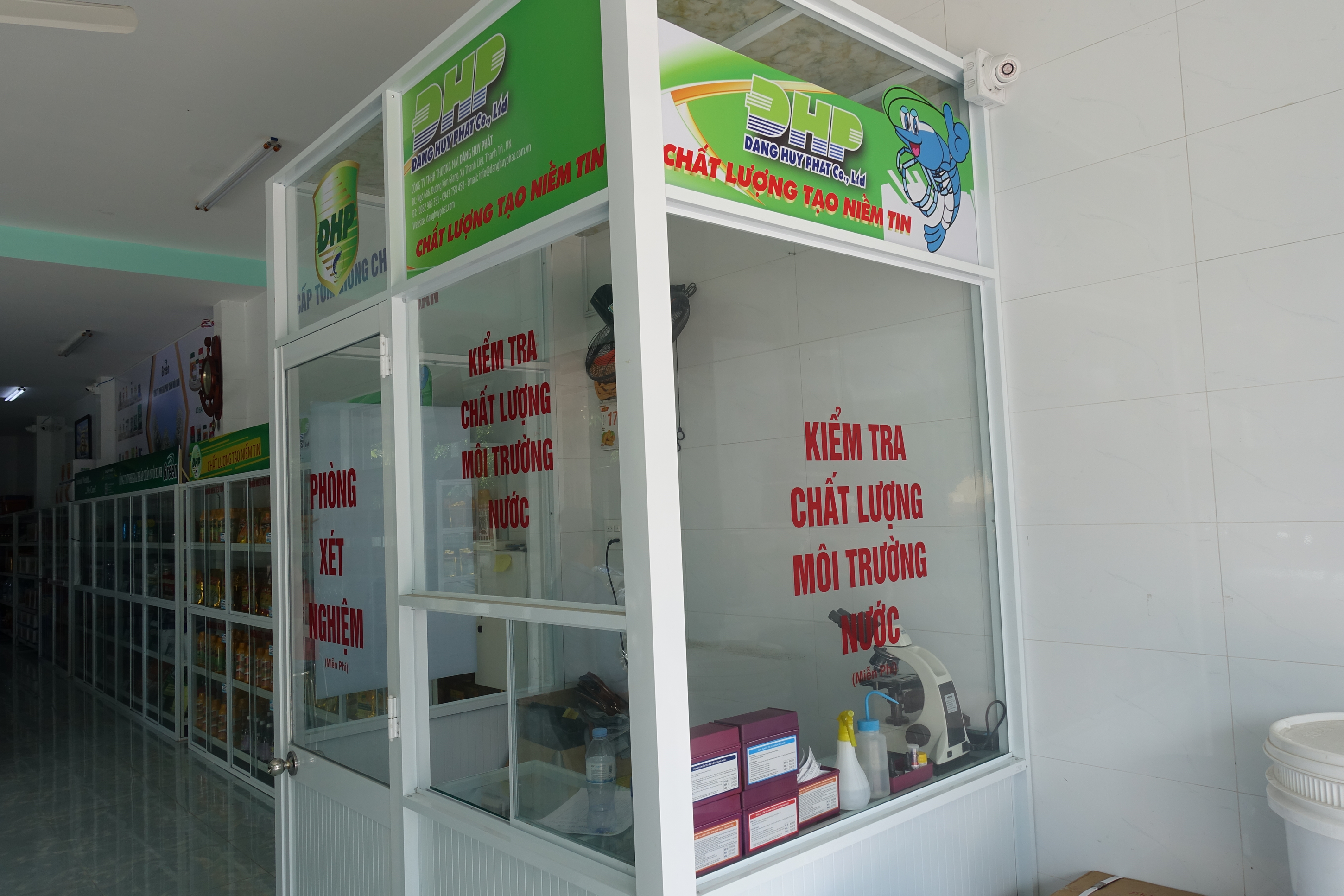
An improvised lab in a shrimp medicine shop. The banner with a cartoon, humanised and healthy shrimp says: ‘Quality makes confidence (Chất lượng tạo niềm tin)’. The red text on the glass reads ‘Free environmental water quality testing (Kiểm tra chất lượng môi trường nước miễn phí)’.
In the improvised labs, shopkeepers usually hire one or two clerks to serve customers and conduct tests. The clerks generally have no background or specific training in aquaculture, but rather learned on the job to conduct simplified and standardised tests for water salinity, pH value, ammonia, nitrogen dioxide and other chemical elements. Clerks also analyse the content of good and bad algae, such as Pyrrophyta, Euglenophyta, Cyanophyte, Chlorophyceae and Thalassiosira, which provide critical indexes for water quality (Hurst et al., 2022). With these reports, clerks compared water quality against a normal standard to provide farmers with suggestions as to how to best adjust their pond management practices. However, given their limited ability and equipment, clerks could only diagnose diseases based on their experience or by identifying common symptoms from simple diagnostic references. Thus, testing water quality and assessing shrimp health is mediated by laboratory practices and sensorial experiences with living beings (Scaramelli, 2013).
Farmers also use their embodied experiences and acquire scientific knowledge to diagnose shrimp health (cf. Harding, 2015: 86). They often check the appearance of shrimp shells and the colour of their intestines. They also bought reagent toolkits from retail shops to test the pond water at their farms. Farmers seeking a more accurate diagnosis can pay for PCR testing from the Aquaculture Research Institute, Governmental Diagnostic Testing Stations for Aquatic Animals (Trạm Kiểm dịch Thủy sản) and private aquaculture labs, which have better equipment and more advanced techniques. After gaining experience with the testing protocols, farmers can specify which diseases they want to check for. Here, scientific knowledge and embodied experience are critical aspects of effectively monitoring shrimp health and water quality.
Doctor Anh is an associate professor in the Department of Aquaculture and owns a private lab in Hô` Chí Minh City. 2 His lab provided farmers and companies in the Mekong Delta with histological, microbiological and molecular biological testing, including PCR testing. During one visit to Anh's lab, I saw a courier deliver a Styrofoam box, containing a plastic bag of dead shrimp and two bottles of pond water. The farmer who had sent the samples requested PCR testing and microbiological testing. I shadowed technicians to observe the testing process. Technicians dissected the dead shrimps and collected the hepatopancreas (shrimp liver) in the molecular biology lab for PCR testing. In the microbiology lab, other technicians diluted the pond water and cultivated Vibrio vulnificus, a bacterium that is one of the main pathogens for shrimp, on a Petri dish with agar. After 24 h, they counted the number of bacteria clusters. Together, these tests provide insight into the viruses, bacteria and algae in shrimp and water.
Testing shrimp health and water quality is an essential and continuous care practice in which shrimp are sacrificed to monitor colony health (cf. Keck, 2015). PCR testing is applied to track shrimp health along the entire production chain. For example, Dr Anh's lab checked oysters and marine worms before feeding broodstocks in his hatchery. Shrimp breeding requires the careful management of water quality, and regular testing helps farmers and companies to adjust pond management practices and make sound economic decisions. The discovery of viral or bacterial infection requires timely response, particularly close to harvest time, with farmers choosing to sell the harvest early or to treat the shrimp and sell them later. The boundary between nurturing these living things and treating them as a commodity is blurred because farmers depend on the shrimp as their primary source of income (Porter, 2019).
However, water quality testing and PCR testing are not the best solutions for disease prevention and provide only limited value. One shrimp feed researcher interviewed said, ‘When farmers notice their shrimps are ill, they usually found vets to help them issue a
Breeding and experimenting with shrimp in the lab
Shrimp aquaculture practitioners have been working closely with scientists in the lab to develop scientific knowledge and biotechnology commodities. In this process, scientists, technicians and workers arrange hydro-social life in the lab into a living environment for shrimp and observable conditions for experiments. In the lab, they breed, feed, poison and kill shrimp to develop scientific knowledge and biotechnological innovations that can reshape the disease situation outside the lab. In experiments, they use shrimp as an instrumental tool to evaluate biotechnology products while seeking to minimise pain and suffering on the part of the experimental subjects.
Setting up hydro-social life in an urban shrimp laboratory
To understand the development of disease prevention practices, I worked with Dr Anh and his research team. Dr Anh's lab is one of only a few wet labs in Vietnam able to breed shrimp and conduct in vivo experiments. Its tight relationships with corporations allows it to conduct experiments and remain self-sustaining. Dr Anh has established long-term business partnerships with Vietnamese processing companies and Taiwanese shrimp feed and breeding companies to provide testing services, experiments on disease challenges, and the trials of probiotics and new shrimp feeds. Dr Anh often needed to evaluate his organisation's lab capacity to meet customer business requirements.
Before conducting in vivo experiments, Dr Anh and his team would create a liveable environment for shrimp and observable conditions for the proposed experiments using plastic bottles, coral stone filters and air pumps (Figure 2). First, shrimp are kept in observable containers. The lab uses containers of two different sizes for various experiments with different amounts of shrimp. Medium-sized plastic bottles only contained a single shrimp for disease challenges, while larger plastic tanks contained multiple shrimp (around 20) to observe subject health and growth in feed experiments. The research team maintains shrimp in the urban lab by mixing fresh and salt water regularly trucked in from Vũng Tàu, a coastal city. Prior to use, the imported sea water is sterilised in two huge water plastic tanks. 3 The water is then infused with oxygen, and air pumps supply the shrimp tanks around the clock. Once the experimental environment is established, technicians and workers introduce SPF shrimp. Given their lack of infection, SPF shrimp are ideal for ensuring experimental accuracy and controlling experimental parameters (cf. Kirk, 2012), while also preventing disease outbreaks in the lab. The SPF shrimp are mainly raised at a commercial hatchery Dr Anh maintains in central Vietnam, though some are sourced from experimental farms in Câ`n Thơ` to simulate specific commercial farming models. In this urban lab, the shrimp become cyborgs entangled within an infrastructure formed of containers, water pipelines and air pumps. Cyborgs are not just machine-organism hybrids but dense material-semiotic things, ontologically heterogeneous and historically situated (Haraway, 2017: 104, 2018: 51). In this controlled laboratory space, technicians and workers are becoming-with shrimp, and the shrimp-container-water-pipeline nexus is composed of capitalist technoscience.
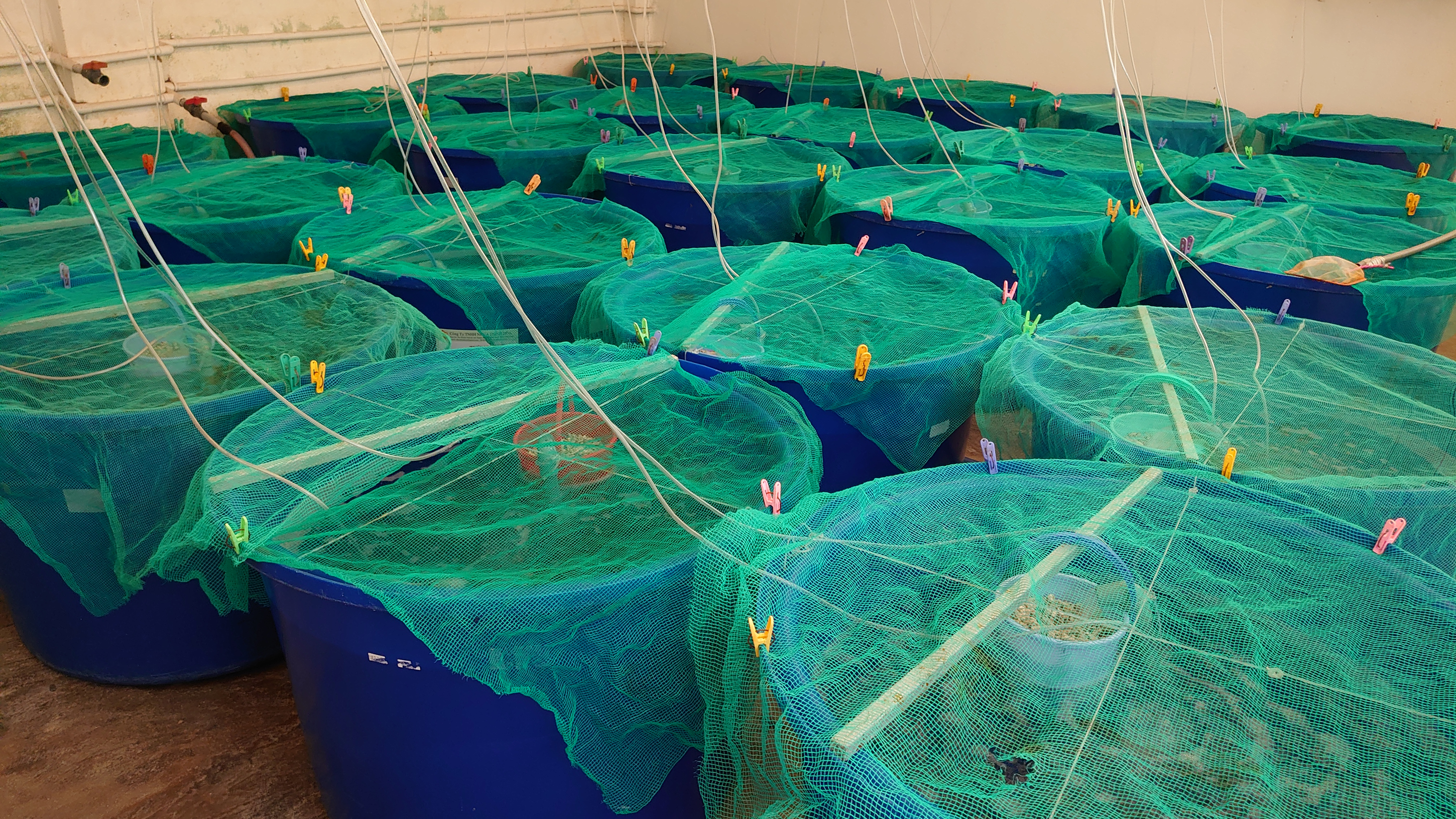
Shrimp in tanks with corals filtering water. Source: Author.
Dr Anh's technicians and workers are trained to care for the research animals and maintain the scientific apparatus. 4 The technicians plan lab schedules and conduct experiments, while lab staffers, mostly rural men with limited formal education perform manual work and often live on-site to immediately respond to emerging situations in the lab facility. The workers assist the technicians in caring for the SPF shrimp, maintain water quality, wash containers and conduct shrimp feed experiments. Laboratory operations require a consistent division of labour and technological upkeep to organise hydro-social life for shrimp experiments. Furthermore, water-pathogen-shrimp-human-environment relations are arranged in the space between potential profits and problematic pathogens.
Shrimp experiments for biosecurity and biotechnology innovation
In Dr Anh's lab, the life and death of the shrimp are determined by the experimental schedule, which governs shrimp feed trials, disease challenges and blood testing. The experiments use shrimp as instrumental tools to understand new diseases and improve commercial products. The most common and routine experiments are trials of new feed products, commissioned by shrimp feed companies and providing the lab with business income. In one trial observed, workers fed shrimp 5 times per day, measuring weight and calculating the survival rate in each container after 30 days. By contrast, disease challenges and blood testing seek to understand how new shrimp feeds and other products impact shrimp health, immune systems and disease resistance. In disease challenges, technicians feed shrimp with contaminated shrimp feed or expose them to viruses. One day in the microbiology lab, two female technicians named Hoa and Lộc were busy extracting bacteria from the nutrition solution and mixing it with shrimp feed and lard. Hoa told me that, based on previous experience, the lard coats the bacterial solution within the shrimp feed, ensuring that the shrimp will ingest the bacteria before it dissolves in the water. After an hour of preparation, Hoa brought the contaminated feed into a room containing six plastic bottles, each containing one shrimp and a small bulk of coral. Hoa selected three bottles as a control group and the other three as the experimental group (Figure 3). The experiment allowed the research team to compare the performance of healthy and infected shrimp using the same shrimp feed, providing shrimp feed producers with insight that allows them to effectively adjust feed composition to enhance shrimp immune response. Technicians collected shrimp blood and hepatopancreas samples to further examine the effects of the feed products. Each stage of the process illustrates the instrumental relationship between humans and shrimp in the lab, in which shrimp are poisoned and sacrificed to produce knowledge and further industry development.
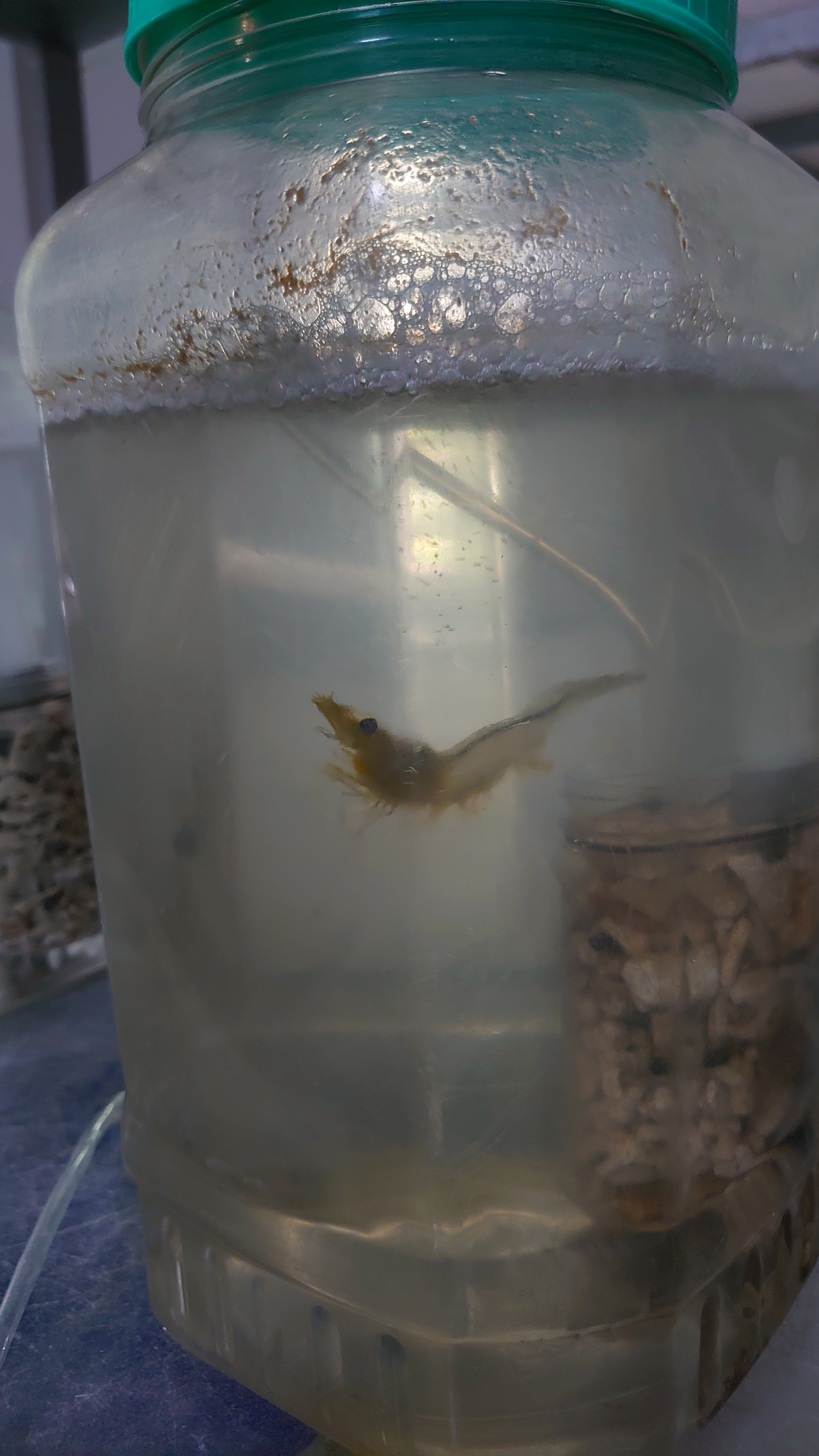
A poisoned shrimp in a plastic bottle kept in a dark room. Source: Author.
Disease challenge and blood testing require technicians to be physically attuned to individual shrimps, seeking to catch quick-moving shrimp with their nets and hands. The technicians then hold the individual shrimps by the tail and inject the virus-bearing solution into the shrimp's back, causing the whiteleg shrimp to take on a more pronounced pink hue (Figure 4). One day at the lab, Hoa was practising taking blood from a black tiger shrimp in preparation for a commercial contract the coming week. A partial goal of her preparation was to reliably minimise pain to the shrimp, a task made more difficult by the rapid movement of the distressed animal and the need to draw blood from a very small area. She was nervous and worried that she could not draw blood from shrimp successfully. In the actual experiment, she added anti-coagulants to the syringes for injection in the carapace, somewhere around the animal's third pair of legs. She bent the shrimp and held it in place with her fingers (the act was like Figure 5). Despite these precautions, the shrimp struggled during the procedure, and Hoa required additional assistance from other technicians to successfully minimise the animal's distress. Through this process, technicians turned the sentient shrimp into research samples.
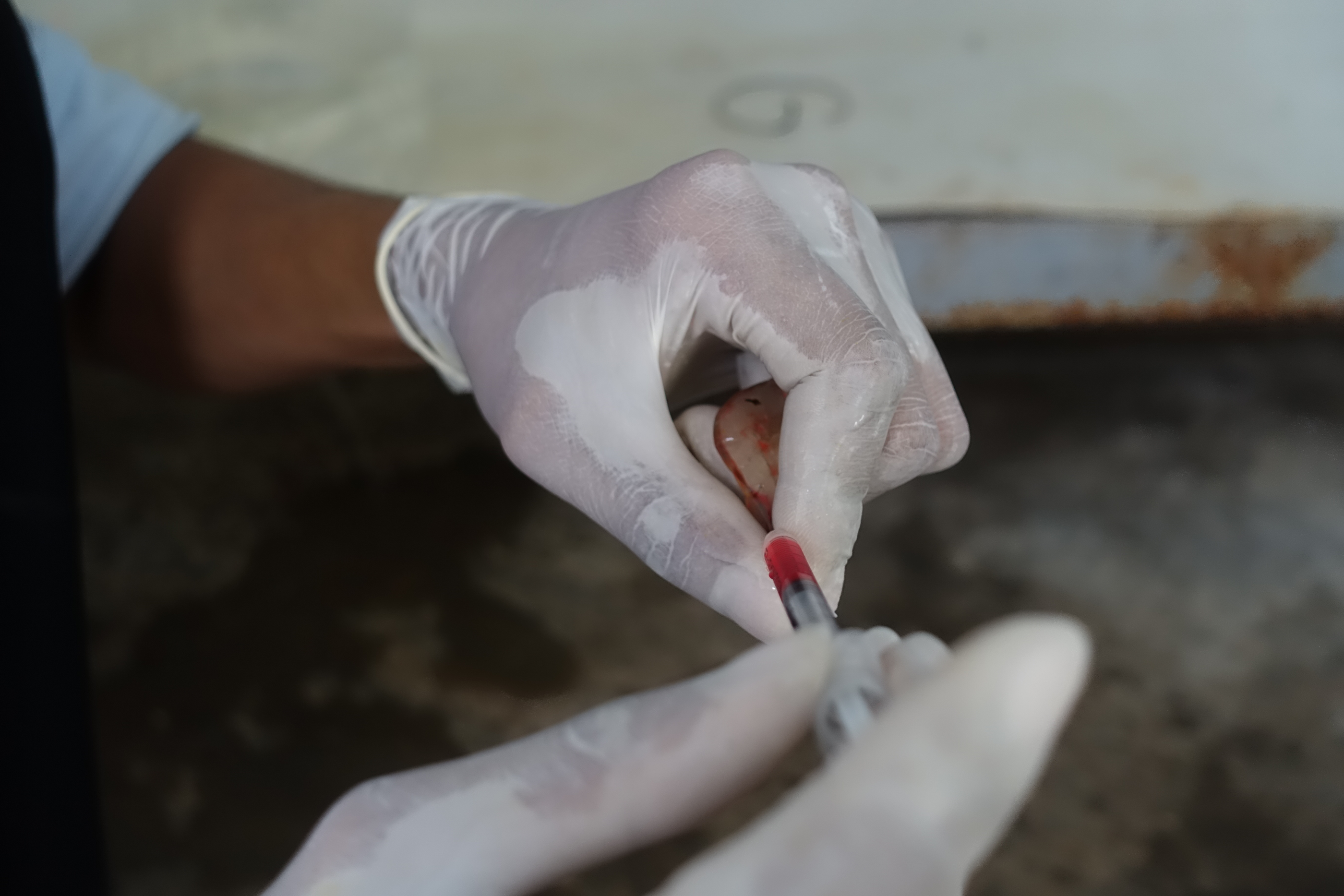
A technician injects a virus into a whiteleg shrimp. Source: Author.
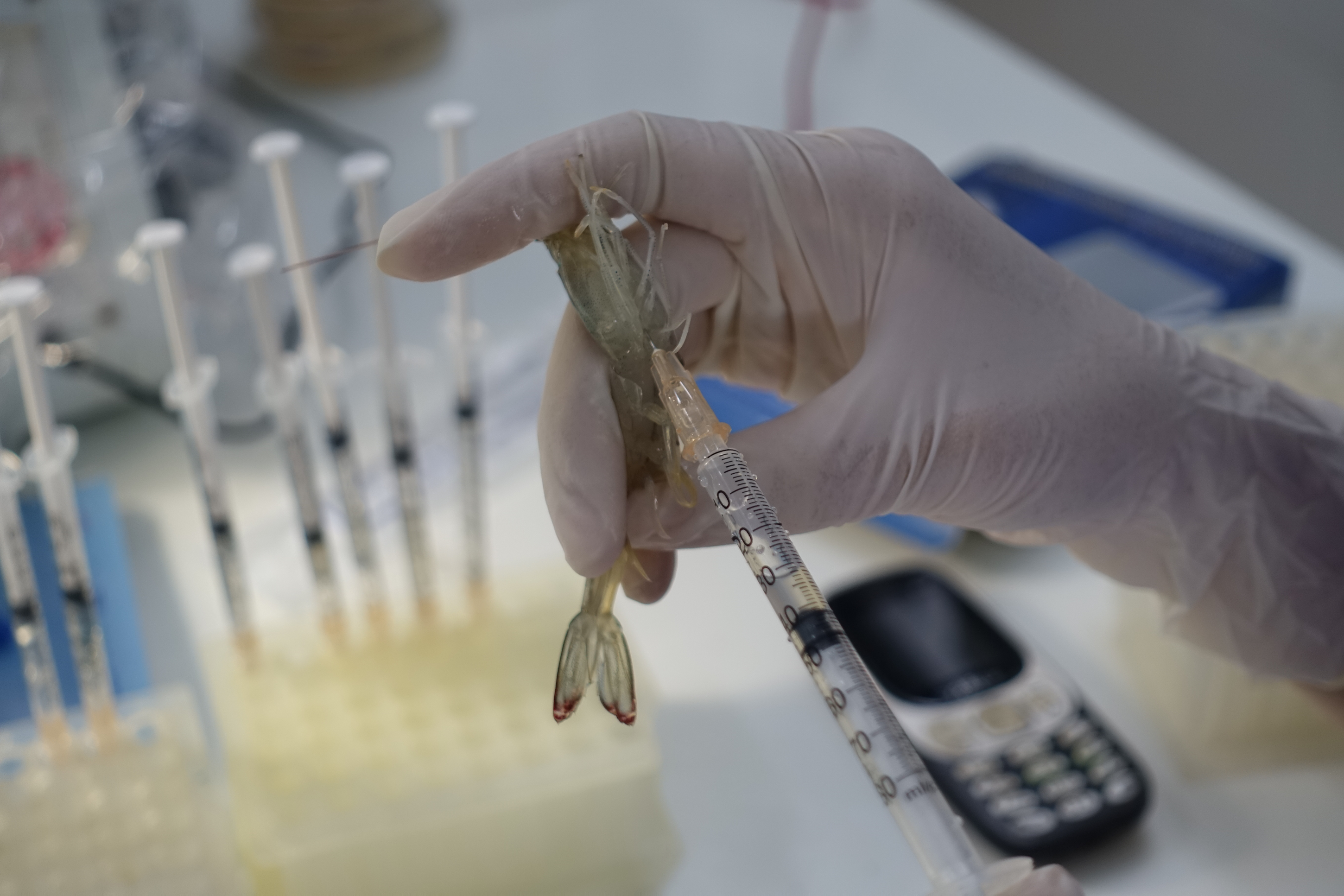
Taking blood from a shrimp. Source: Author.
In the lab, the entire body of the laboratory animal is unmade and remade into a research sample for experiments. After taking blood, Lộc used a knife to bisect the shrimp lengthwise to collect the hepatopancreas (Figure 6). Most samples were subsequently delivered to the customer who wanted to conduct their own analysis to supplement the haemocyte count and serum separation (i.e. haemolymph) conducted at the lab (Figure 7). 5 Dye was added to stain the haemocytes and a blood drop was positioned on a glass slide equipped with a grid which allowed the technician to manually count the haemocytes under a microscope, thereby providing an indicator of the shrimp immune function and health status. At the same time, whole shrimp blood was centrifuged, with the collected serum placed on ice in a Styrofoam cooler for delivery to the client for further analysis. This was the first time I had personally witnessed shrimp dissection for experimentation, and was struck by how the processes of deconstructing the shrimp body, the visible rendering of shrimp haemocytes, and the refining of shrimp serum broke down the living organism into component parts for subsequent reassembly for capitalist ends.
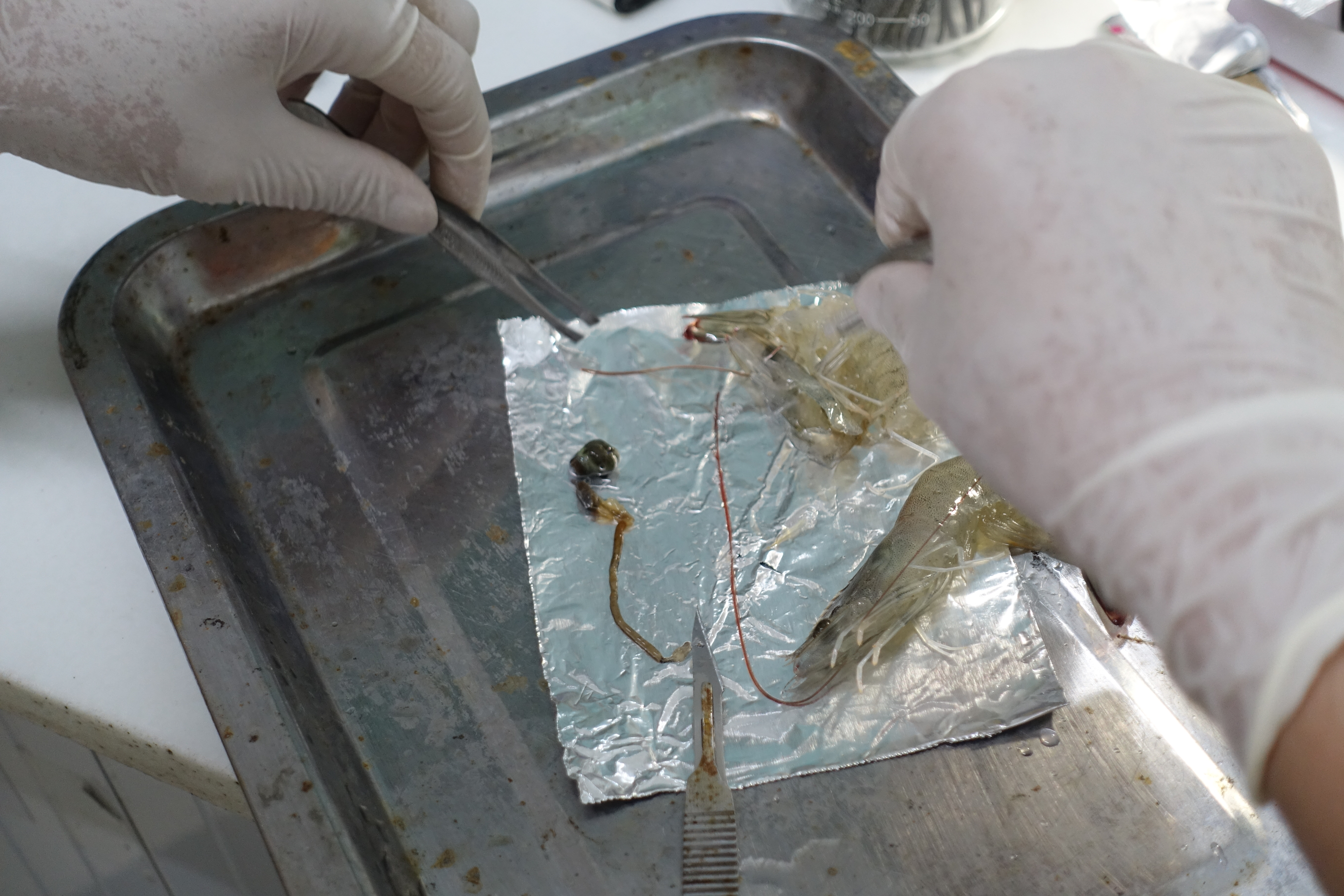
Shrimp dissection and hepatopancreas collection. Source: Author.
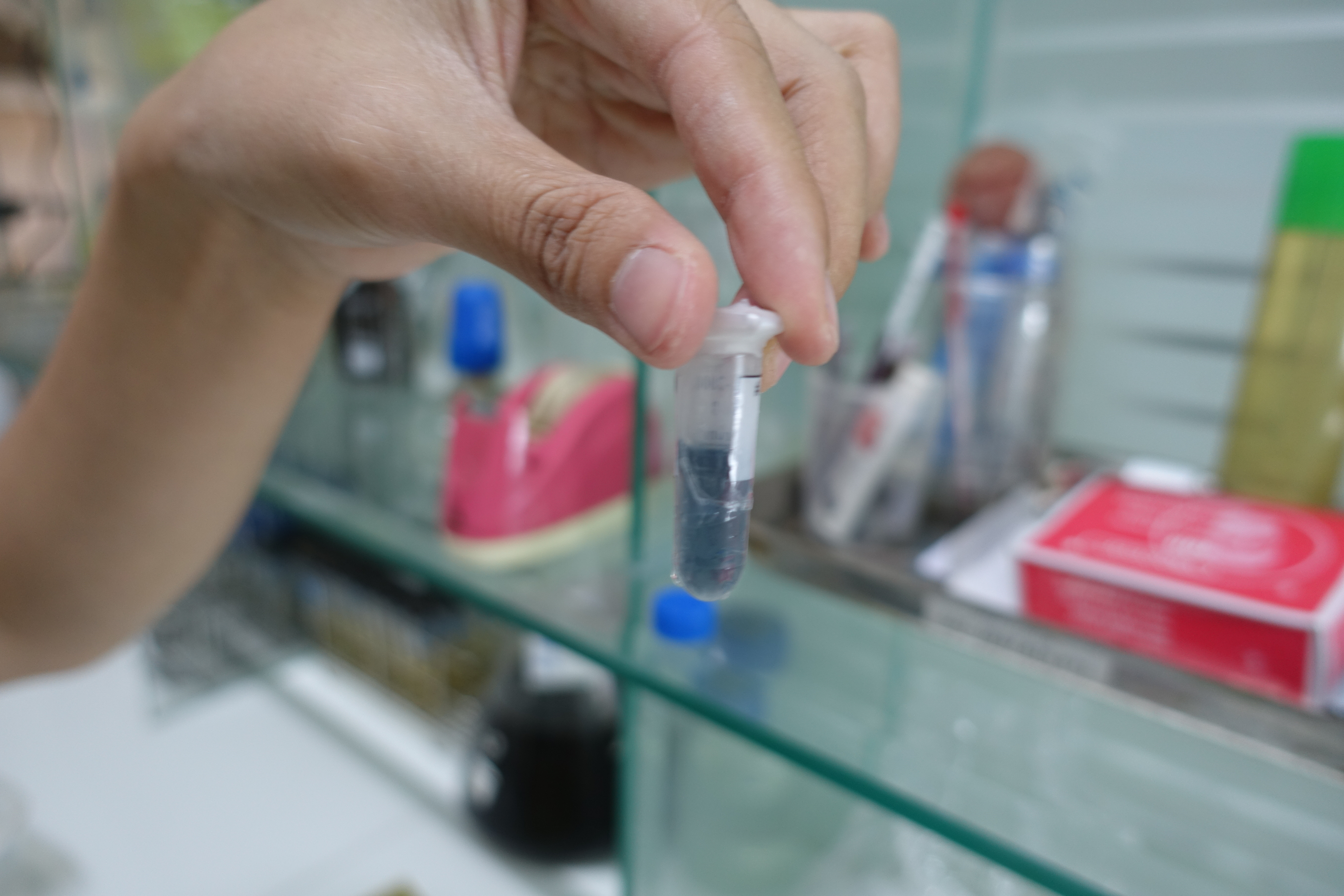
Shrimp serum. Source: Author.
These blood testing processes raise ethical concerns, requiring technicians to actively sacrifice living shrimp, in contrast to the slower and more passive process of poisoning the shrimp or the subsequent post-mortem testing. Following the blood testing process, Hoa and Lộc asked me in Mandarin if I thought they were being cruel. Both Hoa and Lộc were learning Mandarin and asking me this question in Chinese not only served to better ensure that I could understand them, but also served to diffuse the situation by shifting the focus of attention from questions of killing and morality to issues related to linguistics. As Sharp (2018: 13) notes, technicians usually monitor death talk in labs, using euphemisms, such as cull and sacrifice. While I had initially responded to Hoa and Lộc's question with an instinctive ‘not at all’, later upon reflection and outside the social context of the lab itself, I felt increasingly uncomfortable. Shrimp, as an invertebrate and meat animal rarely commands moral sympathy, public interest or ethical concerns inside the lab or elsewhere (Message and Greenhough, 2019). Moreover, Vietnam has never implemented shrimp welfare initiatives or 3R guidelines. I raised concerns about animal ethics and shrimp welfare with a senior technician who had obtained her master's degree in shrimp disease in Australia and previously worked in the governmental department of animal health. While she understood my concerns, she replied that such issues do not typically arise in Vietnam. However, despite the lack of regulatory concern, the technicians sought to minimise pain and suffering by taking blood precisely and quickly. Animal technicians often face ethical tension between providing care for and exploiting the bodies of laboratory animals for utilitarian ends (Greenhough & Roe, 2019). However, such ethical concerns should not be limited to laboratory contexts, but should rather extend to broader political economies, such as shrimp economies (cf. Johnson, 2015). Experimental shrimp were sacrificed to meet the shrimp farming industry's biosecurity needs.
From the lab to the field: Deploying biosecurity strategies
Generally, scientists in the shrimp laboratory developed two anticipatory approaches, later deployed in the field for biosecurity: (1) managing shrimp health through pathogen management and immuno-preparedness and (2) using life to manage life. The first approach focuses on the shrimp themselves via pathogen management to develop SPF shrimp and immuno-preparedness by innovating vaccines and interbreeding shrimp with viral accommodation. The other approach emphasises managing shrimp health by managing bacteria in shrimp bodies and water ecologies. Labs are actively experimenting with probiotics, which Lorimer (2020) describes as a process of using life to manage life. Shifting from antibiotics to probiotics as new biosecurity practice to pond water and shrimp feed moves water-pathogen-shrimp-human-environment relations towards a microbial symbiosis to achieve shrimp health. However, when these biotechnologies are extended from the lab to the field, they face many uncertainties that make them less efficient, such as non-biosecure farming skills, commercial infeasibility, unstable vaccine performance and the misuse of probiotics.
Pathogen management and immuno-preparedness: SPF shrimp, vaccines and the viral accommodation model
The use of SPF shrimp is considered a useful biosecurity strategy for pathogen management, and has been used to reconstruct shrimp economies. In the early 1990s, SPF shrimp were first bred in Hawaii by selecting for genetic traits of faster growth and better disease resistance. In the late 1990s, SPF shrimp were widely sold in Asian countries by multiple suppliers. Companies and their staff scientists sought to increase their market share by developing proprietary SPF shrimp families. For example, Thủy Sản Việt-Úc (a Vietnam-Australia joint venture) established their line of SPF broodstock (10 generations of whiteleg shrimp family) to replace imported broodstocks, and was identified by the Vietnam government as a priority nation-building project. Việt-Úc identified three disadvantages of imported broodstocks: limited supplies, especially at peak times, higher prices, and unstable quality (Tập Đoàn Việt-Úc, 2020). Việt-Úc seeks to establish secure supplies while keeping profits within Vietnam and expanding local influence for shaping the broodstock market. The company's Facebook page features a photo (Figure 8) which shows a technician outfitted in a shirt and tie, rather than the traditional white technician's coat, implanting an electronic chip in a shrimp to trace the animal's health performance. The background features an aquarium with whiteleg shrimp in saline water. The photograph highlights the company's scientific and industrial achievements in developing domestic broodstocks.
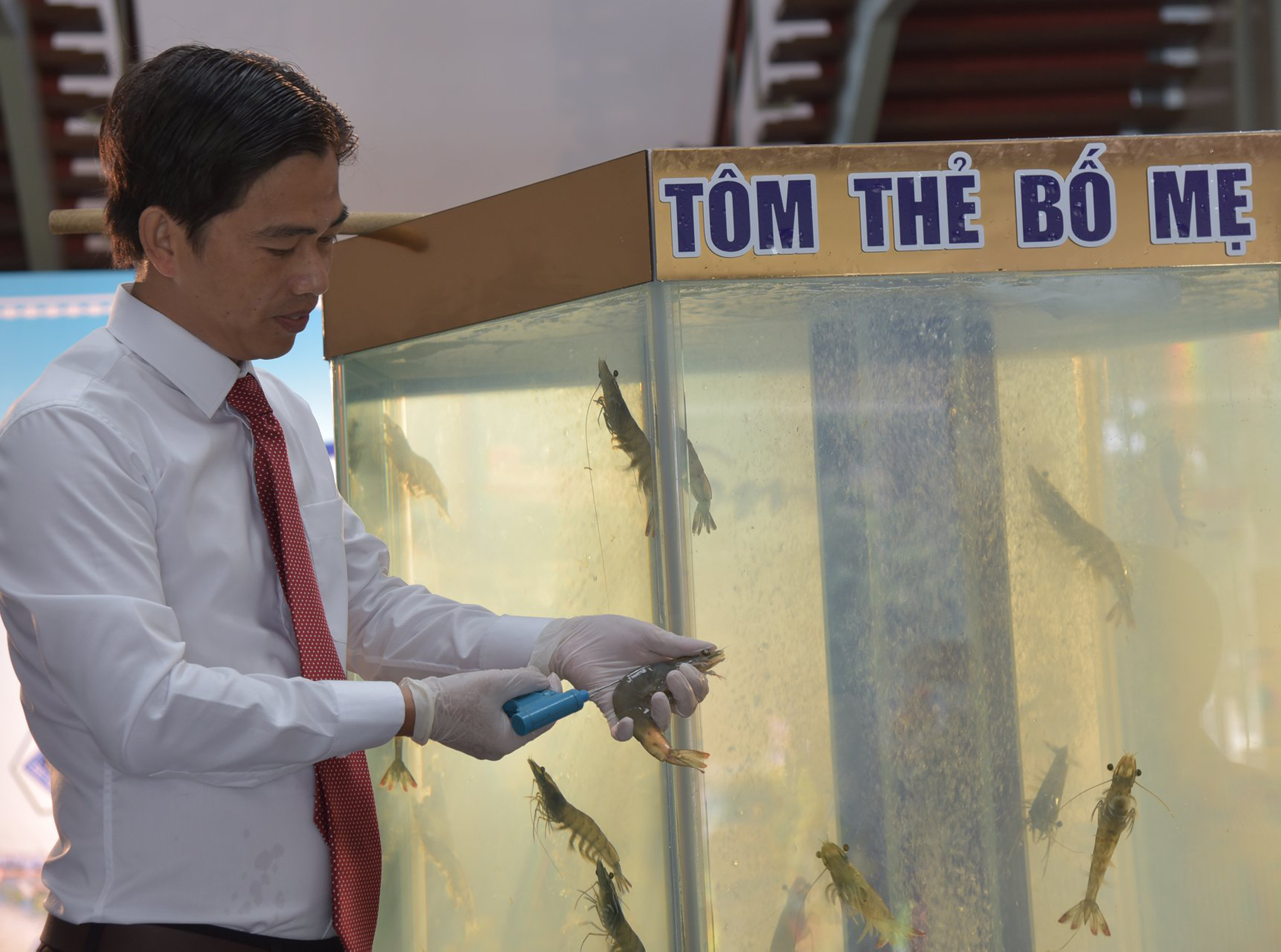
A Việt-Úc technician injects an electronic chip into a shrimp in a presentation. Source: Tập Đoàn Việt-Úc (2020).
Other scientists seek to expand the market for black tiger shrimp by interbreeding a new species of SPF shrimp. Vietnamese aquaculturalists have strong academic connections with their Taiwanese counterparts. During the 1980s, Taiwan was the leading developer of the black tiger shrimp and has long-established expertise in shrimp diseases. Some of the Vietnamese scientists obtained their graduate degrees from universities in Taiwan and actively collaborate with Taiwanese researchers. For example, Dr Anh has conducted joint research on shrimp pathology with Taiwanese biologists and, during fieldwork, Dr Anh and his research team suggested I should visit a Taiwanese shrimp biology researcher, Mei-Yu Chen. In December 2019, I interviewed Professor Chen and her research team on their work on breeding disease-resistant and fast-growth black tiger shrimp larvae as part of an effort to reinvigorate Taiwan's historic prominence in this market. She noted that, despite the widespread cultivation of whiteleg shrimp, which grow faster, farmers and consumers still prize black tiger shrimp for their better quality meat, and would increase cultivation of black tiger shrimp if the risk of disease could be reduced.
Interbreeding SPF shrimp requires transnational cooperation. Professor Chen and her research team worked with a French corporation to collect healthy wild broodstock from the seas around Madagascar, seeking to establish a new SPF shrimp line. These biologists require the assistance of traders to help them collect samples to enrich their existing genetic database. Scientists and companies extract and mobilise wild biological resources through the use of modern biotechnology in animal husbandry to establish new business lines or even secure patents for proprietary shrimp family lines (Helmreich, 2009; Holloway et al., 2009).
Despite their market success, SPF shrimp have experienced some setbacks and reputational damage. The use of SPF larvae can ensure that shrimp are not infected by specific pathogens, but they might contain other unknown viruses (Rosenberry, 2015). The SPF label only signifies current health and sanitary status, thus effectively preventing hereditary infections, but not infectious transmission after being sold to farmers. Farmers still need to maintain their shrimp ponds properly. Farmers who buy SPF larvae from a hatchery but still use traditional farming practices, such as shared labour, water management and stocking expose their shrimp to biocontamination risk (cf. Hinchliffe et al., 2020). Thus, farmers’ decisions of whether to purchase SPF shrimp and choice of supplier are not only price-dependent, but also hinge on the supplier's long-term reputation for quality and trustworthiness. For instance, Professor Chen declined to sell SPF black tiger larvae to an Indian company which she considered to be lacking proper biosecurity practices, and a die-off in the company's ponds had the potential to tarnish the reputation of her lab. Also, hatcheries that sell SPF larvae to farmers and companies usually use PCR testing to verify that larvae are free of specific pathogens, but misreporting can lead to business conflicts. While doing my fieldwork in the Mekong Delta, I heard Ming-Yi Wang, a Taiwanese businessman, complain that a Taiwanese shrimp hatchery in Vietnam sold him non-SPF larvae labelled as SPF on several occasions, causing him severe economic loss. However, it was difficult to say where the fault lay, as there were too many uncertainties in the breeding process. Wang was disappointed that he had been deceived by other Taiwanese operating overseas, suggesting that their shared national identity or ethnic ties should serve as a basis of trust. However, trust in the production networks of Taiwanese enterprises in Vietnam is rather based on reciprocity to increase profits or reduce costs or production risks (Chen et al., 2004). Trust is a precondition for transaction, but the prevention of shrimp diseases is ultimately dependent on farming skills and pond management.
Due to the limitations on SPF shrimp populations in a shrimp pond, some scientists have shifted their focus from pathogen management to immuno-preparedness through vaccine development. Recent work has focused on an immune receptor known as Down syndrome cell adhesion molecule 1 (DSCAM-1) for pancrustacean immunity (Armitage et al., 2017). The application of such vaccines could potentially help shrimp form antibodies, but are not yet commercially viable. Professor Si-Ting Chen, a Taiwanese researcher is conducting vaccine development in cooperation with private firms. Her experimental results show shrimp developing antibodies after a single vaccine administration, but development performance is inconsistent due to animals’ short immune memory. Even if shrimp continued to express antibodies in the second month, by such time they would already be ready for harvest, and thus the immune protection duration does not justify the required investment, and the temporality of vaccination did not match the temporality of shrimp economies. This, combined with unstable vaccine performance, makes vaccines a less-than-ideal solution for disease prevention.
Other scientists have developed viral accommodation models for shrimp interbreeding. This approach, first proposed by Dr Timothy Flegel, suggests that shrimp can be virus tolerant without symptoms because direct exposure to pathogenic environments cause viral genome fragments to be integrated into the shrimp genome (Flegel, 2019). Survivors from infected shrimp ponds are collected as broodstocks (Rocha et al., 2015). This model has been successfully implemented in Thailand and Ecuador, but may be incompatible with super-intensive shrimp farming because of the high environmental pressures in shrimp ponds. Thus, the scope for improving shrimp health and immunity through the use of SPF shrimp, vaccines or the viral accommodation model is limited due to the difficulty of ensuring biosecurity by merely focusing on the shrimp themselves. These three biotechnology products and processes must still be supplemented by effective environmental management. In other words, hydro-social life in the field should not only directly manage the shrimp but also other elements and their interaction in water-pathogen-shrimp-human-environment relations.
Shrimp and water probiotics
Viruses and bacteria are already embedded within industrial farming systems, such as in growth regimes, stock density and clearing schedules (Hinchliffe et al., 2016: 100). Over-emphasising the use of SPF shrimp can restrict understanding of how the industrial farming system itself shapes the formation of disease. Disease situations are meeting places in which heterogeneous species and actors mingle together (Hinchliffe et al., 2016: xv), raising the importance of preventing anaerobic bacteria and maintaining healthy shrimp ponds. When expanding their shrimp populations, farmers increase the use of shrimp feed in their ponds, resulting in greater residue production from feed, shells and excrement. The waste settles on the bottom of the shrimp pond and becomes sludge, forming more anaerobic bacteria. Scientists have also found that white faeces syndrome in shrimp is associated with dysbiosis in the shrimp intestinal microbiota rather than a single pathogen (Huang et al., 2020). When shrimp intestines lack certain kinds of good germs, they become ill more easily. Disease outbreak in this context is a dysbiosis caused by the ecological irrationalities of capitalism and other political economic drivers (see Lorimer, 2020: 135).
Aquaculture has turned its focus from directly managing life to indirectly managing life and environments through the use of probiotics (cf. Lorimer, 2020). In 2013, Chung-I Lin, a Taiwanese professor, collaborated with Vietnamese companies to breed shrimp with probiotics on farms in Câ`n Giơ`. Professor Lin claimed that it is impossible to eradicate either viruses or bacteria from shrimp or shrimp ponds. Shrimp infected by viruses may remain asymptomatic in the absence of enhanced environmental pressure, such as excessive temperature change or anaerobic bacteria, which may cause a virus to shift from a lysogenic to a lytic stage. 6 Thus, it is more efficient to prevent disease by decreasing stocking density, removing sludge from shrimp ponds and increasing the proportion of good bacteria in the water. Farmers typically respond to disease outbreaks by removing pond sediment, which might contain viruses and anaerobic bacteria, but should instead incorporate probiotic use and sludge removal as regular components of pond maintenance. Professor Lin argued that it is critical for farmers to learn how to manage their pond environment and actively decrease pond environmental pressure by incubating probiotic bacteria to depress the anaerobic bacteria load.
Shrimp farming in Vietnam increasingly incorporates the use of probiotics, improving shrimp health and meeting international market requirements. Due to concerns about antibiotic-resistant bacteria in the Global North, the Vietnamese government has increasingly promoted the use of probiotics and forbidden the use of antibiotics to obtain seafood certification and meet export requirements (cf. Hinchliffe et al., 2020; Lorimer, 2020). Dr Anh was commissioned by Ming-Yi Wang, the chairman of a Taiwanese shrimp breeding company in Vietnam, to provide probiotics for their super-intensive shrimp ponds. Wang's company needs to comply with restrictions on the use of medications and antibiotics in order to export its products to the US and EU markets, thus trends towards probiotic use in the Global North are shaping production trends in the Global South, and reflect uneven development between the two regions. The Global North already has health and environmental policies in place regulating the use of probiotics to control microbial ecologies, while the Global South largely lacks the economic, political and ecological conditions for the effective use of probiotics (Lorimer, 2020: 9). Similar to conditions in Bangladesh, many shrimp farmers in Vietnam still use antibiotics, while the relatively few producers that use probiotics command higher prices. Hinchliffe et al. (2018) argue that the use of antibiotics is related to social relations and ecological conditions that shape food production. In Vietnam, the sale of veterinary antibiotics is largely unregulated, significantly contributing to overuse (Luu et al., 2021).
The shift from using antibiotics to probiotics, or transitioning from a Pasteurian to a post-Pasteurian approach for making good germs indicates the emergence of new ecologies in shrimp aquaculture (Paxson, 2012; Paxson & Helmreich, 2014). In a post-Pasteurian approach, humans identify good and bad microbes and harness the former to vanquish the latter (Paxson, 2014: 118). In aquaculture, biotechnology companies use two kinds of probiotics to create their products: one for pond water and the other for shrimp intestines and shrimp feed. Dr Anh and his team bought some probiotic products, such as BiOWiSH AquaFarm, AquaStar Pond, from BiOWiSH Technologies, an American biotechnology company, and AquaStar from an Austrian animal health and nutrition company. 7 The AquaStar packaging stated that ‘the multi-species approach builds on synergies and complementary modes of action between different bacterial species, and ensures users are provided with maximum benefits’. It claims that the product can ameliorate water quality, and organic matter conditions in pond environments, along with pond sediments and shrimp gut. In the early 2000s, Taiwanese shrimp feed companies proposed an intestine theory which called for the application of probiotics and fermentation technology to shrimp feed. In designing shrimp feed, researchers must consider the molecular size in fermentation. Smaller molecules will enhance intestinal digestion and nutrient absorption. Shrimp feed is fermented using green beans, banana skin, dragon fruit skin or fish powder. During fermentation, microbes inhibit and compete with others to produce various kinds of secondary metabolites. The more diverse the microbes population, the more complex the relations among these microbes, which benefits shrimp health. In short, the post-Pasteurian model was adopted by the shrimp feed industry to better adjust water-pathogen-shrimp-human-environment relations.
The proliferation of probiotics (good germs) requires care and technical skills to prevent the accidental incubation of bad germs, potentially due to insufficient light and oxygen. Dr, Anh innovated aerobic bacteria products in a hot and humid room which facilitated bacteria reproduction in large plastic bottles with oxygen fed by an air pump (Figure 9). The technicians used fermented soy milk and molasses as feed to proliferate bacteria for 24 h, and also cultured photosynthetic bacteria in plastic bottles by fluorescent light exposure in the microbiology lab. Scientists and technicians use good germs to develop novel biotechnology products used to shape hydro-social lives in the field. When enriching pond water with probiotics, farmers need to adjust dosages based on shrimp appearance, water temperature and pond liner material (e.g. soil or plastic). They also use ventilators to infuse dissolved oxygen. In the field, farmers care for shrimp health and the population of good germs by managing the breeding environment.
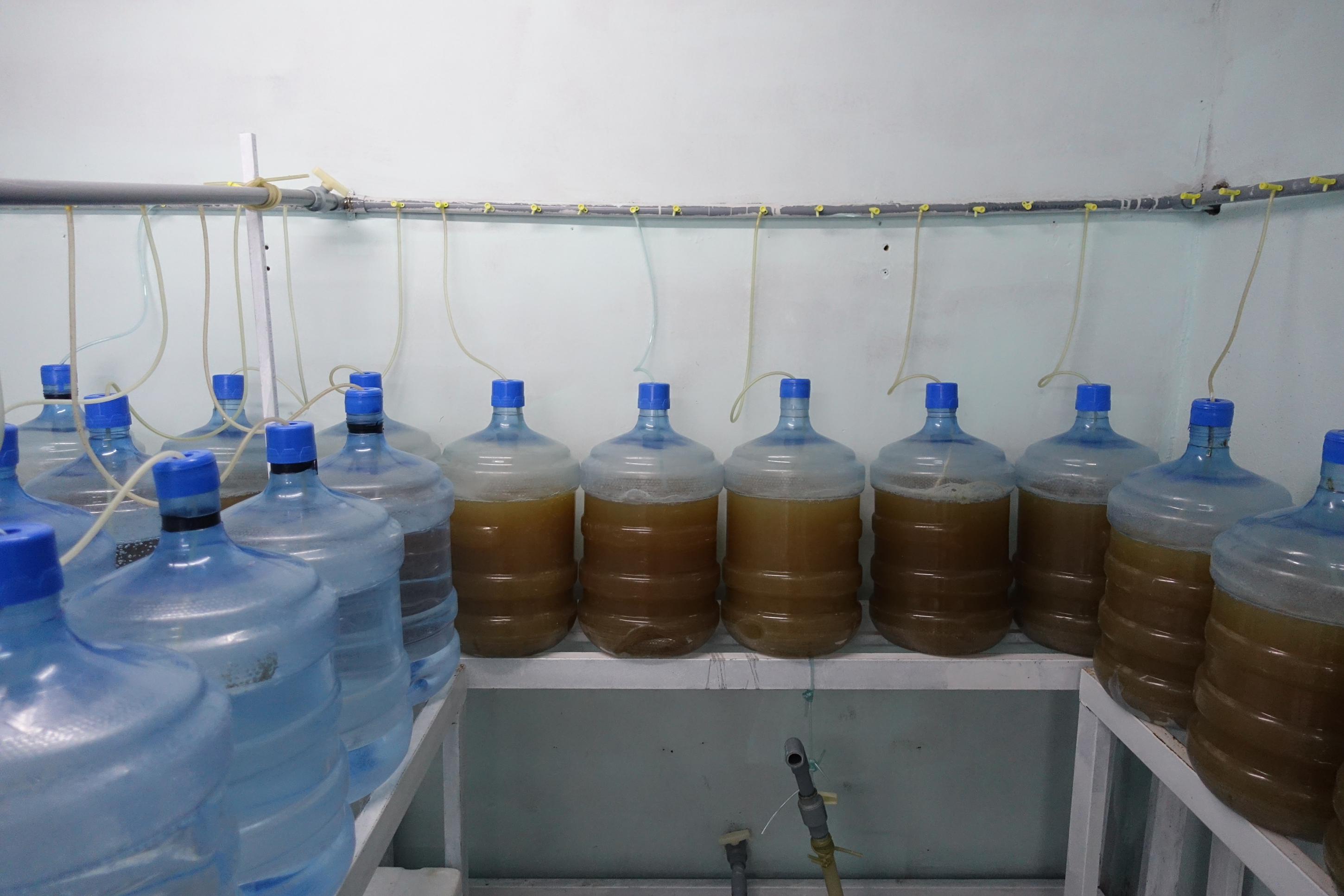
Probiotics for shrimp in the hatchery. Source: Author.
Conclusions
This article examines the configuration of more-than-human relations in shrimp aquaculture for developing biosecurity strategies in the context of both capitalist modes of production and hierarchies within and between laboratories. It follows shrimp and water across the lab and the field, and presents interviews with scientists, technicians, workers and corporate executives to unpack the hydro-social lives in the public and private sectors, along with university and governmental labs. It argues that hydro-social lives are arranged by humans and non-humans to develop biosecurity strategies within the lab, followed by deployment to the field. Furthermore, hydro-social life mobilises the parsing of water-pathogen-shrimp-human-environment relations to capture the intersections of socio-economic life with life forms in shrimp economies.
Labs play a crucial role in shaping biosecurity in the shrimp industry through testing, experimentation and disease prevention. These three tasks are not independent activities but are rather hierarchical undertakings, carried out by labs with different research capacities and capital resources. Testing is a fundamental task for all labs that assist in promoting shrimp health and water quality, making legible the relations among water, pathogens, shrimp, humans and their environments. Commercial and university labs conduct shrimp experiments to develop scientific knowledge and biotechnology products by nesting shrimp in the heterogenous research infrastructure with the lab labour hierarchy. Some commercial or university labs have developed anticipatory approaches to managing water-pathogen-shrimp-human-environment relations for disease prevention through pathogen management, immuno-preparedness and using life to manage life. These three tasks show that water-pathogen-shrimp-human-environment relations are arranged to serve economic interests and biosecurity concerns.
Biosecurity practices are influenced by capitalist forms of life and other social relations that operate within and beyond the lab. The life and death of shrimp in the lab are determined by commercial biosecurity experiments commissioned by Vietnamese and foreign companies seeking to develop biotechnology products to enhance biosecurity, with scientists and companies incentivised to develop proprietary SPF shrimp lines to market in the shrimp aquaculture market. However, the efficiency of these biotechnology products, like SPF shrimp and vaccines, is often undermined by commercial interests or environmental uncertainties in the field. The practical deployment of biotechnology products still needs to be articulated in tandem with social relations, like trust, to reduce potential conflicts. Scientists seek to enhance and maintain their reputations for quality, and are aware that poor implementation by end users can reflect poorly on their work. In short, biosecurity and hydro-social life are underpinned and impeded by capitalist forms of life and other social relations.
The findings present three theoretical implications. First, the article extends discussions of water and life by exploring multiple ways of becoming with water, shrimp, pathogen and bacteria (Bakker, 2012; Flaminio, 2021; Klaver, 2021; Yates et al., 2017). Second, it unpacks how different kinds of labs are integrated into shrimp aquaculture to address biosecurity concerns through laboratory ethnography practices (Hine, 2007). Third, it demonstrates how capitalist forms of life and other social relations affect the development of scientific knowledge and biotechnology products in the lab and their deployment in the field. These implications reflect the importance of water's more-than-human relations and of studying laboratory practices to create a better understanding of knowledge production, biotechnology innovation and biosecurity practices in shrimp aquaculture.
The tasks for biosecurity in shrimp aquaculture.
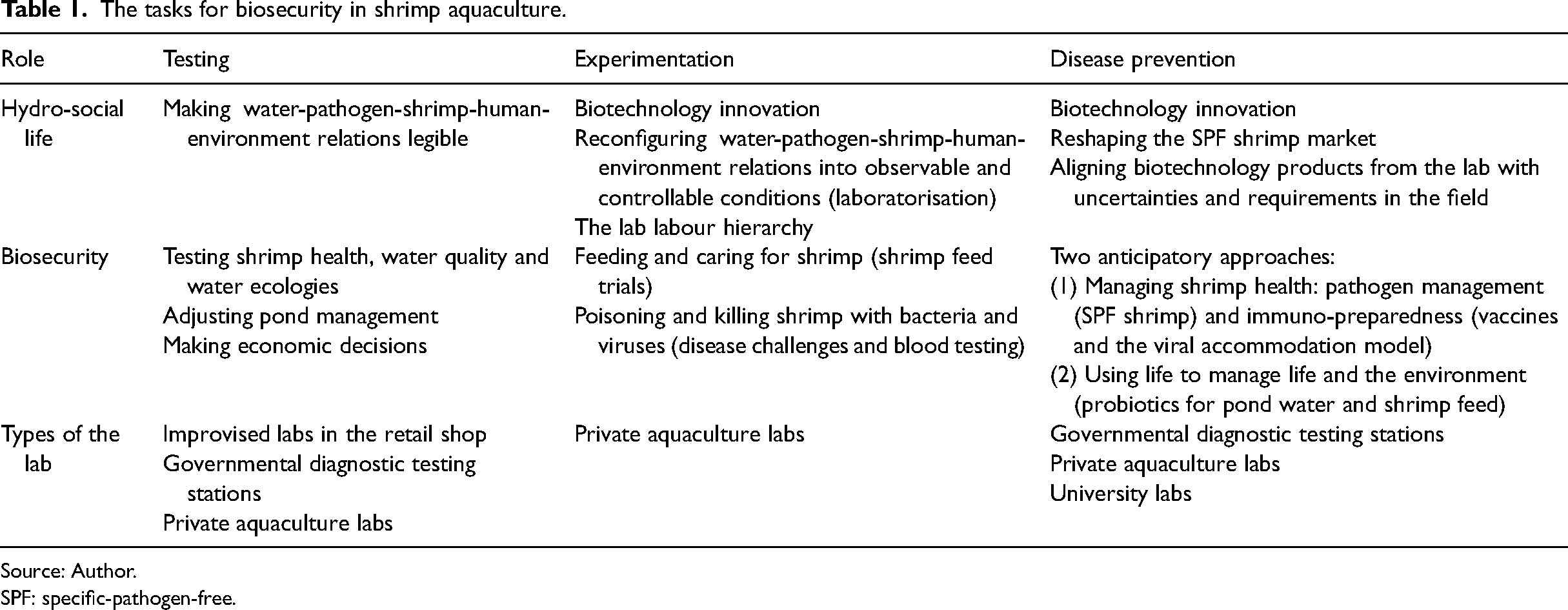
Source: Author.
SPF: specific-pathogen-free.
Highlights
Labs are integrated into shrimp aquaculture into efforts to manage shrimp health, water quality and disease outbreaks.
Hydro-social life conceptually glues together biological life forms and social forms of life in the hydrological cycle.
Hydro-social life develops the parsing of water-pathogen-shrimp-human-environment relations by mobilising hyphens to indicate relations among components.
Scientists and technicians create distinctive hydro-social lives in the lab for experiments and later shape biosecurity in the field with biotechnology innovations.
Biosecurity and hydro-social life are influenced by capitalist forms of life and other social relations in the lab and the field.
Footnotes
Acknowledgement
I thank Jeremy Schmidt, Gavin Bridge and the anonymous reviewers for their insightful comments. Thanks also to Nguyen Hong Quan and Tran Duc Dung for hosting this research at the Center of Water Management and Climate Change, Vietnam National University. All errors are my own.
Author note
Yu-Kai Liao holds a PhD in Human Geography from Durham University. He is currently a postdoctoral fellow at the Research Institute for the Humanities and Social Sciences. His research interests focus on the formation of commercial shrimp farming and its ecological conditions of production across production sites, such as the hatchery, the shrimp farm, and the laboratory in the Mekong Delta.
Declaration of conflicting interests
The author declared no potential conflicts of interest with respect to the research, authorship, and/or publication of this article.
Funding
This work was supported by (1) St. Hild & St. Bede, Durham University, (2) UKRI's Living Delta Hub, (3) Royal Geographical Society with IBG, (4) Taiwan's Ministry of Education, (5) Taiwanese Overseas Pioneers Grants (MOST 110-2424-H-492-001-MY3), (6) Research Institute for the Humanities and Social Sciences, National Science and Technology Council (MOST 110-2420-H-002-003-MY3-D11203).
