




Abstract
This article describes the people and forests in traditional Secwépemc territory in the Interior Plateau of British Columbia (BC), Canada. It examines the intersection of neoliberal forest policy and profound ecological change in the south-central region of the province, with careful attention paid to the wider contexts of settler colonialism. The article critiques the implementation of forest policy reform (the Forest and Range Practices Act, enacted in 2004) as it coincided with one of the first major climate change events of landscape-altering magnitude in BC – the mountain pine beetle outbreak. Between 1998 and 2014, the outbreak resulted in tree mortality for roughly half of the mature lodgepole pine trees in the province. It left an expanse of ‘deadwood’ on the landscape, leading to heightened social and political conflict over how the beetle-affected areas were managed. Research methods include transcripts from a public hearing in Tk’emlúps/Kamloops, supplemented by eighteen semi-structured interviews. The article argues that the confluence of neoliberal forest policy and climate change has further entrenched the settler colonial and corporate capture of forests.
Introduction
It's very important, when we’re talking about our relatives, kweséltken, which are our trees, because they are connected to everything in our culture. It's really important that we’re here today to speak on behalf of our kweséltken. It seems the lake is being drained because of an oil spill. The current gold rush – which is what we call it in our industry – to lock up as much dead pine before it is gone is leading to some very poor planning practices and should not be allowed to continue. ∼ Presentations to the Special Committee on Timber Supply, Tk’emlúps/Kamloops 2012
The first voice represented above speaks to ‘all my relations’, conveying the Secwépemc connection to kweséltken as one of reciprocal accountability with other animate and inanimate beings on the land in their traditional territory. 1 The second excerpt is from a tourism operator lamenting the elevated harvest levels that have transformed the landscape they share with their clients, and the third is from a professional forester. These perspectives were brought forward during the final stop of the SCTS in Tk’emlúps/Kamloops in the south-central interior (see Figure 1) and inform my critical commentary on the production of people, place, and nature through forestry under neoliberalism. The study reveals a further entrenchment of settler colonial and corporate capture of forests.
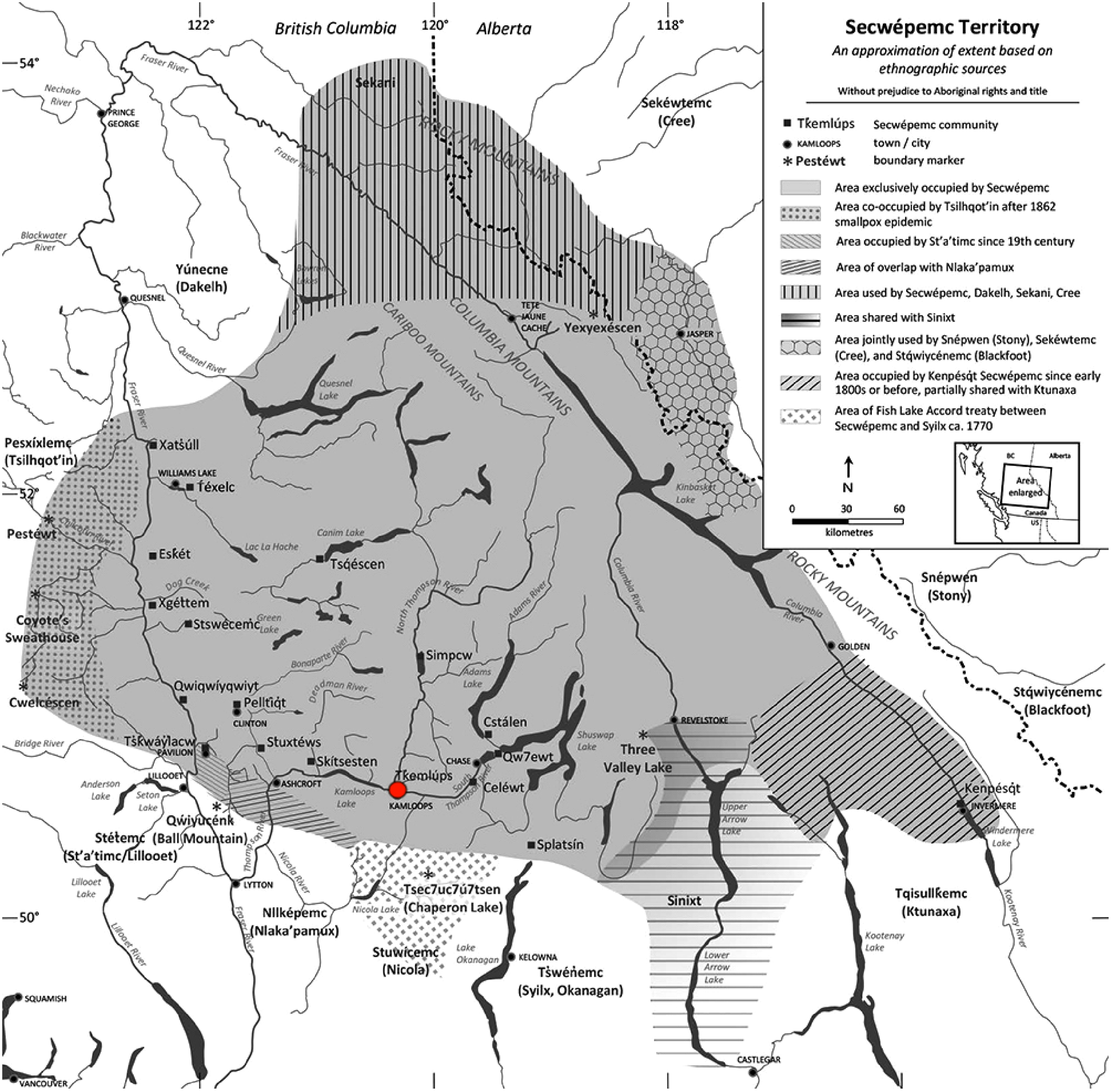
Secwépemc territory as represented in Ignace and Ignace (2017).
Several studies used the beetle epidemic as it unfolded to assess changing socio-ecological dynamics (Petersen and Stuart, 2014), community economics and vulnerability (Parkins and MacKendrick, 2007; Patriquin et al., 2007), and short-term policy responses (Burton, 2010; Nelson, 2007). This research offers a post-epidemic and reflective perspective, and centers policy as a governance structure integral to the production of neoliberal natures. Specifically, the article examines the implications of forest policy reforms following the Forest and Range Practices Act (FRPA) in 2004. It also situates forest policy processes within the context of settler colonialism. This intersection has been critiqued from political ecology (Ekers, 2019; Ekers et al., 2021) and (post)colonial (Braun, 1997) perspectives, and studies that center Indigenous rights and worldviews (Castleden et al., 2009; Caverley et al., 2020). Yet, settler colonial forces remain largely unquestioned within the dominant forest management paradigm in BC.
The article starts with a description of methodology and then turns to data collected from the Tk’emlúps/Kamloops region, offering a community perspective of the most prominent policy and management decisions at play. The SCTS toured the interior to assess the long-term effects of beetle deadwood and increased harvests. They organized hearings in fifteen communities, seeking public input and opinion as they explored options to increase the mid-term timber supply 2 alongside other actions that would alleviate the stress placed on communities. Transcripts from the government-led hearings, in conjunction with semi-structured interviews, are the primary sources used to inform this article. 3 I use these sources to ground my analytical discussion of forest governance, neoliberal natures, and Secwépemc sovereignties in the final section, with hopes that theoretical insights will lead to new conceptualizations of forest stewardship.
The SCTS tour of the province was a successful procedural policy tool in many ways. It provided an opportunity for community perspectives to come forward, and key findings emerged. Commentary related to FRPA conveyed how the shift in the policy regime towards ‘professional reliance’, austerity reforms, public-sector downsizing, and corporate restructuring all contributed to a reactive management approach. Neoliberal governance, in this case, made disruptive climate change impacts worse and local communities (human and non-human) were left to bear the burden of degraded landscapes. There were also many concerns expressed around conceptualizations of community. In essence, they were asking what can be done to halt the erosion of community cohesion, health, and – as one SCTS presenter stated – the “right to live in a good way”, as they watched benefits from the forestry sector flow towards corporate interests. There were calls for greater attention to be paid to Indigenous sovereignties, inclusion, decision-making power, and non-timber forest values.
These themes lead to my discussion of neoliberal natures. However, I start by acknowledging the weaknesses inherent to academic explanations of neoliberalism identified by Bigger and Dempsey (2018), largely due to a lack of racial and gender diversity, particularly in the geographic discipline. I reflect on my identity as a white, settler ally who grew up on Secwépemc territory and acknowledge that my authorship is enabled by a position of racial privilege. I can only hope that the analysis presented here works to unsettle this position as well as the dominant narrative of techno-scientific forestry that has functioned as a key structure of colonization across Canada.
I argue that place matters, and that regional studies such as this allow us to trace the heterogenous ways neoliberalism interacts with (and is constituted by) different places, people, and ecologies. The intent is to fill-in the often abstract and taken-for-granted use of neoliberalism with much needed context-contingent analyzes (Heynen et al., 2007; Sparke, 2006). This study conveys how a shift in policy has led to the ‘hollowing out’ of human communities and forestry as a vocation, despite neoliberal governance strategies that supposedly redirect agency and decision-making powers to local scales (Parkins et al., 2016). Overarching, however, is the argument that the forest governance regime in BC will continue to be mired by conflict if it fails to adequately address Indigenous sovereignties and self-determination. These arguments are realized through an examination of FRPA, as it coincided with the beetle outbreak and the ensuing ‘uplift’ (i.e., elevated harvest) in Annual Allowable Cuts (AACs) that occurred across all beetle-affected areas to deal with the expanse of dead and dying trees on the landscape. The rush to harvest has only amplified the ‘falldown’ effect (i.e., second growth forests of smaller and poorer quality timber) endemic to industrial forestry, at the expense of forestry-based communities.
Methodology
The research methods were designed to reveal a community perspective from those who lived and worked closely with forests in Tk’emlúps/Kamloops and the surrounding region. Transcripts from the government-led public hearings and semi-structured interviews inform the analysis. The SCTS was following a mandate to look at the mid-term fibre supply, particularly in relation to the mountain pine beetle epidemic and the stress placed on forest-based communities. Seven Members of the Legislative Assembly (MLAs) supported by a technical advisory committee (including former Chief Foresters Larry Pedersen and Jim Snetsinger), visited fifteen communities in the Interior. They also held three public hearings in Vancouver and received over 650 written submissions. All meetings were recorded, transcribed, and made publicly available by Hansard Services. The process was the basis for the final report Growing Fibre, Growing Value (Government of British Columbia, 2012a), presented to the Legislative Assembly in August 2012 that informed the Mid-Term Timber Supply Action Plan tabled the following October. A shift to a fibre focus was outlined, and mention of climate change surfaced three times throughout the 70-page report.
The July 11th meeting in Tk’emlúps/Kamloops was the final stop on the committee's tour. The five-hour hearing was a combination of independent presentations by confirmed participants, each allocated fifteen minutes, and follow-up questions from the SCTS in direct response to the issues and concerns the speakers highlighted. The session was organized by way of three broad participant categories, each presenting in turn: 1. local government; 2. First Nations, and 3. other public representatives, which included foresters, tourism operators, cattle ranchers, environmental advocacy groups, and private business. There were nineteen speakers and an audience of approximately fifty people (author included); there was no opportunity for questions or comment from the floor, though the Committee encouraged written submissions from those present.
The process had limitations, as identified by those who participated. The timing was inconvenient for seasonal industries, small business operators could not attend due to resource constraints, and self-selected attendance amplified values not necessarily representative of the wider community. As expressed by one presenter: It has been scheduled at a time when wilderness tourism operators are in peak season. In increasingly tough economic times for tourism, we are all scrambling to make a living…Your board will not be able to collect a fair representation of the level of concern because of the timing of your meetings. In presenting today, one-third of our staff is at this meeting while our guests are being underserved. And these meetings have not been well publicized.
Dissatisfaction was also expressed by Indigenous representatives, with general concern that “the SCTS…does not have a First Nations representative on this committee,” and that “this really isn’t our preferred forum or venue for discussions.” The Committee reiterated throughout the proceeding that ‘this was in no way intended as a proper consultation,” and “that our committee has not been struck to deal with these matters.” In response, Secwépemc speakers reiterated that Indigenous rights to self-determination are overarching and that implicit in any discussion referring to land is also a discussion about colonial harms.
To address some of these limitations, the public consultation data was supplemented by eighteen semi-structured interviews with those not in attendance. The interviewee pool included a variety of actors engaged in forestry issues in the region. I started with professional foresters, including those employed by First Nations, industry, and government ministries. From this primary data source, snowball sampling techniques were used to expand the interviewee pool to include the elected government, First Nations, and forest sector business representatives. The Hansard transcripts and interview responses were coded and analyzed using the same methods to identify overlapping themes and findings.
Depictions of the forest: key themes from a concerned public
The public hearings and interviews revealed a messy situation. Communities in the region were dealing with overlapping challenges: unprecedented and unpredictable ecological changes, elevated harvesting, retraction of the Forest Service, forest sector deregulation, job losses, and economic uncertainty. The response from those who had first-hand experience of the outbreak depicts the lived realities of climate impacts and policy changes in this particular region. I present these voices following the same categories used to structure the SCTS session in Tk’emlúps/Kamloops, which are then assembled into thematic findings in the discussion. SCTS presentations and interviews are differentiated as responses from ‘presenters’ and ‘interviewees’ respectively.
Municipalities and regional districts
Elected representatives from municipalities and regional districts included the City of Kamloops, the District of Clearwater, the Thompson-Nicola Regional District, and the Cariboo Regional District.
Many of their responses pertained directly to FRPA, and the role of foresters in dealing with the situation. According to one interviewee, The government foresters were supposed to be forest stewards and the industry foresters were supposed to be maximizing the timber in those forests and so therefore you’re in collaboration, or in a check-and-balance scenario. You did need it. They weren’t redundant. They were necessary. Now that you’ve taken them out of the picture, I would argue, that what FRPA ended up doing was basically, using the technical term, normalizing the provincial land base. It is the sustained yield writ large.
One SCTS presenter provided similar commentary on the shift towards ‘professional reliance’: “Logging companies incur costs due to a consultant insisting on good environmental practices and may not hire that consultant again if the standards are too high. The concern was that there would be a kind of an arms-length approach in there, rather than the way it is today.”
The shifting role of industry-employed foresters was a recurring concern, but so was the impact of public and private sector reorganization. Between 2001 and 2004, more than one quarter of all Forest District offices (11 of 42) were changed from full-service operations to minimally staffed field offices and 25 jobs were lost in the Kamloops region (Parfitt, 2012). A mayor noted the impact of these job losses in their presentation: We’ve worked with the ministry now to say: these are important to this area. This is where the logs are. This is where the action is taking place. Maybe you need to reconsider some of those policies and put the people back that make it sustainable for people to be here…Three or four or five jobs in Clearwater and in McBride and Dunster are significant jobs. You move them to a centre because it's bureaucratically easier, and you’re destroying some of the fabric. When you take these people away we lose our young families. We lose our sports coaches. We lose our kids in the school.
Public sector downsizing had an impact alongside the job losses associated with mill closures or curtailments that have been particularly disruptive for forestry-based communities.
Perspectives on tenure reform were mixed, referring to the SCTS mandate to discuss a change from volume- to area-based tenures as one way to alleviate timber supply issues. According to one interviewee, “the public generally sees this as a privatization of their land base. They don’t like it and they don’t want it…it gets the failure of the government to invest in the public land base off the government's back and onto the books of the private companies.” Many people argued that the government needs to take a close and careful look at the land base (the call for improved forest inventories surfaces in all respondent categories). As one interviewee states: The allowable cuts are still predicated on sustained yield modeling. While they talk a good talk about taking ecosystems into account and all of that stuff, the reality is, the reason that those AACs are so bankrupt and are becoming a problem is because government is projecting timber that is just…anybody walking out on the land base will just tell you that it doesn’t exist
Indigenous
First Nations participants included those from the Kamloops Indian Band, Shuswap Nation Tribal Council, Simpcw First Nation, Adams Lake Indian Band, Okanagan Nation Alliance, and Neskonlith Indian Band. It is important to note that Indigenous peoples come to these conversations serving multiple roles: they are forest tenure holders, professional foresters, forest technicians, business owners, and government representatives. They are also advocates for Indigenous self-determination, government-to-government negotiations, and community-based learning and healing. Still, the diversity of Se
Forest tenures are generally understood as contractual agreements between the Provincial government (i.e., the Crown) and licensees for the right to harvest set volumes of timber in certain areas. The system is dominated by large licensees. Small tenures, such as community forest agreements or non-renewable forest licenses (NRFLs), are a small percentage of the provincial harvest
4
In the case of NRFLs, they are short term (e.g., five years) and are a common tenure held by First Nations. One presenter argued that it's marginal and that there are inequities when it comes to allocation: It's an after-thought beyond that larger, industrial approach to forest management…The big players are the big companies. They’re the ones that have all the volumes, and they’re the ones that have the political muscle, or the ear of the political muscle, to facilitate changes. It has gone, I think, to the point where the industrial model is really the only thing that's looked at, and that's what's being accommodated here. The communities really aren’t being accommodated, or else you’d put appurtenancy
5
back on the table.
The tenure reform must be to avoid industry concentration, not just a solution for the majors. There are many small harvesters, as well as First Nations and municipalities that are involved in this now.
We’ve had a history of where we are the last ones in. When our rights were recognized initially, we were told that there was no timber available. We’d turn around, and there would be timber made available to the small business. We’d ask again, and they’d say, “No, there's no timber,” and then the woodlots would be established…People like you were saying: “There's no timber available – sorry. Sorry, sorry.” Again, it seems like just as we’re getting to negotiate something, it would appear that there's a diminished opportunity for First Nations to participate in the forest economy, simply because there's less fibre.
Historical and current power-imbalances influence who gets to cut what and accumulate the associated benefits. To unsettle the dominant approach to tenure allocations, “there has to be a way of putting some priority on First Nations interests – legal interests, constitutionally protected interests – in this issue. Without that we are going to continue to be marginalized.” The statements above indicate that the tenure system favours corporate capital and non-Indigenous tenure holders.
The tenure system is also in direct conflict with Indigenous rights and title. All five representatives from Secwépemc communities stated at the beginning of their SCTS presentations that they are not stakeholders, but rightsholders, given that they “have never ceded, sold, or surrendered our land, nor any of our resources in our territory” and “the rights of the Secwépemc people are constitutionally and legally protected by the Supreme Court.” This differentiation between stakeholder and rightsholder was a key element that also surfaced in interviews. As recognized in Section 35 of the Canadian Constitution, the Secwépemc have not ceded their rights to those same trees allocated to corporate tenure holders, and “moving from a volume- to an area-based licence…we see potentially as having direct conflict with our rights to those same trees.” The response from Secwépemc representatives highlights that conceptualizations of Indigenous rights and title underpins all dialogue, whether embedded in a governmental ‘terms of reference’ or not: I just want to reaffirm that First Nations people have a right to live in this world as First Nations people, with rights recognized and respected – to live within our culture; live within our territories; to benefit from the resources within those territories and live in a good way and be able to select our form of representation and government; and to have a decision in the way that we live and the kind and quality of life that our people have.
Several presentations cited the need for a “new relationship” 6 and that “we should be equal decision-makers when it comes to forest management decisions that impact our timber resources on a government-to-government basis.” Many First Nations have chosen to negotiate land and resource issues outside of the treaty process, but still require that government-to-government dialogue needs to foreground policy decisions. They are wanting to engage on forestry matters: “we want to be a big part of all sorts of legislative changes that happen within our territory, that affect our lands, and that affect our traditional territories. We will continue to stand up and assert our governmental rights. We will continue to build and forge relationships within our territory. We believe that's the only way forward.”
Part of this new relationship has to do with equitable opportunity to participate in the forest economy, which has become harder and harder under the current policy. The impact of corporate decision-making and capital flight noted by those that work in municipal government, also surfaces here: When the government took away the apurtenancy clause to their timber tenures, it was almost immediate. In our area when a mill burnt down, they took their insurance money, picked up their stuff and built, I think, in Alberta and are now shipping the timber from our valley out of the valley and benefiting some other communities. We can’t begrudge that in so many ways, but how is it that people who live and work in a place can really benefit from the natural resources – in this case, the timber – that exists in the place that they live? It's as simple as that. We are more than willing to work hard to make sure that we leave the world that we live in, in a better place than when we found it, and that the benefits that we have can be shared. We don’t have the sense of the corporate model where a winner takes all and that we all have to consolidate until there's only one monopoly. We’re all here. We’re going to stay here.
Indigenous speakers criticized the industrial preoccupation with timber or fibre values. Forest inventories are recognized by the government as a necessity of modern forest management; key functions of forest analysis and inventory operations include “monitoring the growth of stands” used to “project stand development and future yield” (Government of British Columbia, n.d.). Forest inventories are stand-focused and production-oriented. There is now a clear call to expand, and to Indigenize, this understanding of forest inventory: “there is a strong need for updated forest inventory that incorporates our cultural and heritage values. Government-to-government land use planning is needed to set goals and objectives that incorporate and update forest inventory information and cultural heritage values,” and “plans must be region-specific.” The diversification of forest values can also result in economic opportunities: There are other issues to the land base that are economically sustainable. People like to go into wilderness areas. They don’t want to go into clearcuts. You don’t have to do much there except to make sure that the timber continues to be there and that the wild areas are there for people to enjoy. They’ll come from all over the world to do that. This is nothing new. I think there should be way of sitting down and doing some larger-scale planning for these areas.
The request for place-based planning surfaces in all respondent categories, but Indigenous participants argued for the importance of the temporal dimension as well: “We always like to plan in hundred years. When we look at our strategic planning, we like to plan for seven generations.” These value-based arguments and multi-generational planning strategies also align with many of the tourism and backcountry operators who spoke towards the end of the SCTS proceeding.
Other publics
Categorizing all of the other voices as a generic ‘public’ obscures diverse identities, but it is difficult to represent the wide variety of people implicated in these issues any other way. Forests are central to the way of life for so many in this region, and these responses convey such multiplicity. The ‘other publics’ category included professional foresters (independent consultants and government employed), tourism operators and outfitters, bioenergy and biofuel business operators, the Backcountry Lodges of BC Association, the BC Cattleman's Association, the Shuswap Environmental Action Society, and the Southern Beetle Action Coalition.
From the perspective of professional foresters working directly with forest stewardship plans, the period between 1998 and 2014 was characterized by uncertainty, inconstancy, and high stress. One government forester broke the beetle outbreak down into three distinct phases (see Figure 2), each characterized by significantly different land-use objectives and public policy measures. Even though the threat to the timber supply was well-perceived (and easily seen upon the landscape), the early years of the outbreak (1998–2004) did not precipitate much change within regional management offices. This shifted significantly in 2004 with the AAC ‘uplift’. The forester described how protocols and standard planning processes were set-aside, leaving managers with limited experience to assess the full extremity of the situation, and little time for additional research, training, or public engagement to get a firm grasp on all dimensions of what was a complex disruption to managerial norms. The forester argued that the uplift phase was a reactive and “out of control” management approach. An interview with another regional manager revealed that at the height of the beetle epidemic, “there was a real demand to get the wood to market. Log prices and lumber prices were high in 2005. Everything was escalating, the pressure was really huge.”
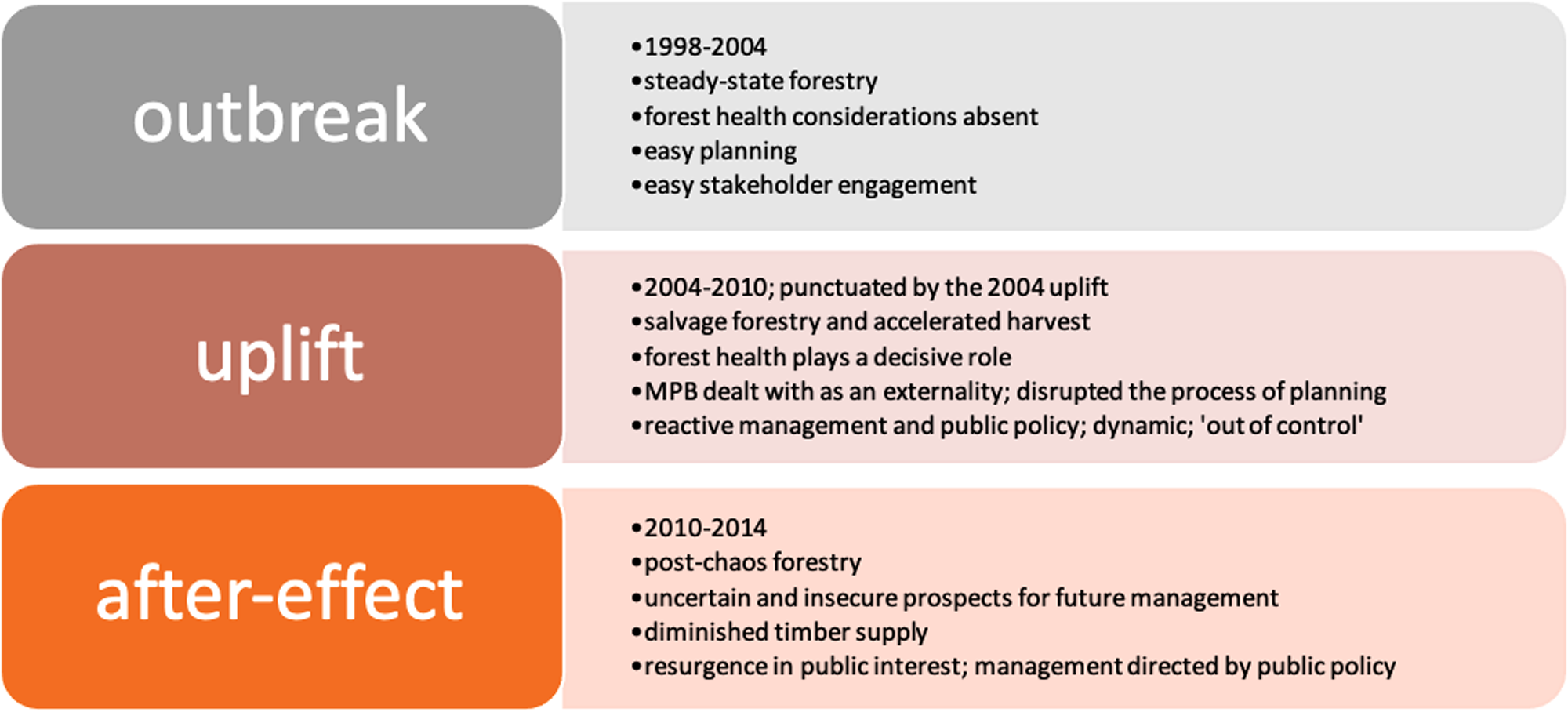
Phases of management in the Tk'emlúps/Kamloops region. 1998–2014 (interview 6).
From the perspective of a forestry consultant presenting at the SCTS meeting, the resource that their jobs and communities depended on was not there: We have to accept the reality that anywhere from 30 to 50 percent of the sawmilling capacity in the southern and central Interior have to come off line in the next few years…Meanwhile the Ministry of Forests continues to issue millions of cubic metres of dead pine licenses. All of us in the timber planning and development world just look at each other and say, ‘Where's all this timber supposed to come from?’ It's a very frustrating thing for all of us professional foresters. It's just basically a rush to get out there and see who's going to get to the dead pine stand first, and it's leading to a lot of really substandard management practices. The sector was forced to take smaller and smaller fish as their resource collapsed, and the timber industry is now looking at the smaller trees in our area. In these past meetings most of our area was deemed to have high [visual quality objective] ratings due to the tourism, recreation and environmental values. These important values have not changed…Increasing extraction is a short-term solution to a long-term problem. When the commercial fishing industry collapsed, did we see nets at the Vancouver Aquarium?
There were many depictions of the forest as a depleted resource and a marked concern over the sustainability of non-timber forest values as a managerial objective.
Harvest levels were elevated just as FRPA was enacted, and transitioning from the prescriptive Forest Practices Code to the performance-based FRPA made the ‘uplift’ hard to navigate. As expressed in an interview with a government resource manager: Foresters are acting professionals for clients and are not engaged as planning operators on the land-base. [The outbreak] didn’t marry with the principles of FRPA. FRPA is now being tested. It was implemented at a time, during the MPB-salvage, state-of-chaos phase, when forest practitioners didn’t have to follow the rules. Legislators were not paying attention to the realities outside of the legislative world.
There were strong opinions about the shift to ‘professional reliance’ at the SCTS meeting as well, described by a tourism operator: “The government of BC has given control of the private sector and is leaving our forests unprotected. The professional reliance model leaves the forest unprotected from economic pressures as there are no enforceable laws regarding harvesting. Clear rules as stated in the [land and resource management plan] regarding visual-quality objectives enable companies to apply the professional standards effectively. Without the rules, harvesting is always in a potential conflict position.”
With the beetle outbreak came an increase in the number and type of tenure holders active on the land base, with a notable increase in non-replaceable timber licenses. As described in a SCTS presentation by an independent forestry consultant: The tenure system as it is now, encourages the entrepreneurial spirit in this province, and the government has done a very good job of that, but I just think you have to be careful of the free-for-all attitude that we’ve created right now. In this district alone, there are 25 non-replaceable license holders. You do not know when you go out in the forest whom you’re going to run into, who's operating where.
Contestation is often due to overlapping or abutting licenses, including range, mining, and recreation tenures, all to be understood in relation to Indigenous right to land and self-determination as described in the previous section. A government resource manager commented on the lack of communication between tenure holders in an interview: One land manager needs to take a more prominent role in coordinating all the licensees in a common landscape management approach, or communication. Part of the reason why I feel that way is because they’ve introduced all these different tenures onto the landscape. It's kind of incumbent on them…That's my take on things, that they need a bigger role to play rather than downloading.”
Here, it is argued that it is incumbent upon the government to play a bigger role, contrary to the direction FRPA has taken forest policy. As reiterated by a tourism operator presentation: “The government needs to recognize that it does not own the forest but is charged with a responsibility to harvest and protect it for future generations. Abdicating responsibility to the private sector is unacceptable.” Many of these voices were arguing for place-based planning and more managerial oversight, something that seemed to be lost through policy revision.
Rethinking forest stewardship
As noted in the introduction, the SCTS tour of the province resulted in some procedural policy successes. Forestry-based communities across the province were able to voice their concerns, and the Hansard transcripts offer a rich body of evidence that strengthens analyses of forest policy. Alongside interview results, they convey multiple and overlapping findings. First, neoliberal governance resulted in a reactive management approach that worsened climate change impacts. Second, local communities (human and non-human) were left to bear the burden of degraded landscapes as they saw benefits flow towards corporate interests. Finally, the results call for an acknowledgement of Indigenous sovereignties, self-determination, and a revitalization of Indigenous-led forest practices. These themes inform my discussion of how neoliberal natures have been produced in this geographical context, in an era of climate change, in ways that have led to further entrenchment of settler colonial and corporate control over forests. This intersection of themes prompts a reconceptualization of forest stewardship that goes beyond the current extractive and neocolonial management paradigm.
Forest governance in a changing climate
The uncertainty associated with climate change has become evident in British Columbian forests over the last several decades (Metsaranta et al., 2011). Shifting wildfire and insect dynamics are among the most notable climate impacts (Kurz et al., 2008; Nitschke and Innes, 2013; Woods et al., 2010) contributing to tremendous unpredictability for those who live and work closely with forests. The mountain pine beetle has flourished 7 in drying forests throughout Western North America (see Figure 3) and wildfires in the region are increasing in severity and frequency. Biological diversity in the Tk’emlúps/Kamloops region is high, exhibiting some of the most arid and some of the wettest continental climates in North America (Parish et al., 1996), from bunchgrass in drier zones to cedar-hemlock within the interior temperate rainforest in its northeastern reaches, and is predicted to undergo a significant climate-induced change (Government of British Columbia 2009).
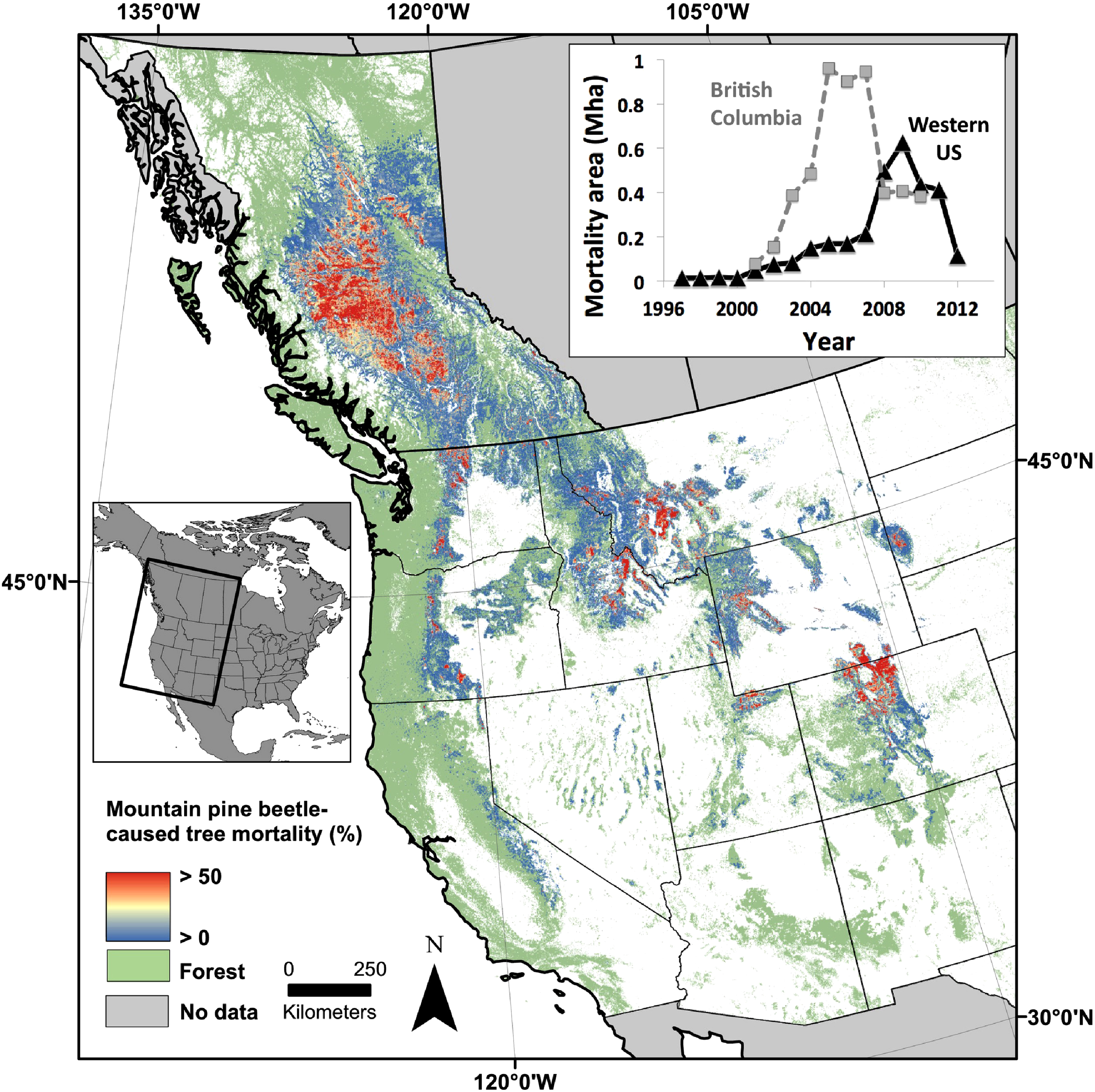
Insect-induced tree mortality across the western United States (1997–2012) and British Columbia (2001–2010) documented via aerial survey data (Huang et al., 2020).
As political, cultural, and ecological factors crossover, the forest industry has recently undergone one of its most dramatic economic downturns, even in relation to historical ‘boom and bust’ resource industry life cycles (Marchak, 1983; Edenhoffer and Hayter, 2013). The 2019 contractions resulted in nine mill closures across the province, with shift reductions and curtailments occurring at half a dozen others, affecting approximately 6000 forestry workers (Canadian Broadcasting Company, 2019). Across the beetle-impacted region, mills are responding to lower harvest levels. These sectoral changes need to be understood within the context of historical management practices, such as fire suppression tactics and tree species-selection in reforestation. Now, changing climate conditions have added to the unprecedented extent and severity of the beetle outbreak and the sectoral restructuring that has resulted, both exposing a forest policy regime that is unable to ensure sustainability for forests and communities.
The 1990s is known in BC as the ‘war in the woods’ decade, when the relationship between government and industry came under scrutiny, exacerbated by global commodity booms. The increase in resource exports brought with it increased social resistance to resource extraction and exploitations (Blomley, 1996; Hatch and Hatch, 1994; Braun, 2002; Magnusson and Shaw, 2002; Berman and Leiren-Young, 2012), as well as a restructuring of governance systems directing resource management decisions (Bowles and Wilson, 2016). In response to sharp criticism, the government sought to maintain control over the industry and encourage socially responsible practices, while appeasing public interest through supports for workers. This came in the form of the Forest Renewal Act (1994) and the Jobs and Timber Accord (2001), both delivering on a more equitable distribution of profits via increased stumpage rates and the creation of new employment opportunities (Cashore et al., 2001; Wilson, 1998). There was a suite of policy reforms deregulating forestry operations during the early 2000s, during what Ekers et al. (2021) call “a pivotal yet overlooked” period in forest politics in BC. Their study examined harvest regimes on private lands, reduced government oversight, and regulatory change facilitating business interests by way of the Private Managed Forest Lands Act in 2003. Another transformative (and understudied) policy change encompassing all public Crown lands came in 2004 with the passing of the Forest and Range Practices Act (FRPA).
FRPA was established as a results-based framework, intended to “reduce government and industry costs through a streamlined approval process, and to encourage innovative forest practices on the part of forest managers and licensees” (Government of British Columbia, 2012b). Industry and professional foresters were given greater ‘freedom to manage’, after the prescriptive, process-oriented framework of the Forest Practices Code (1995) was criticized for its high transactional and operational costs. ‘Professional reliance’ emerged as the operative term of the new policy, with greater responsibility given to industry employed professional foresters to design and monitor company Forest Stewardship Plans (FSPs). The changing role and responsibilities of foresters also coincided with major downsizing of the BC Forest Service. Between 2001 and 2010, the Forest Service lost 1006 positions (approximately 25% of the workforce) and district offices were reduced from 42 to 21 (Parfitt 2010: 5-6). The emblems of neoliberal reforms are apparent here: a reduced public service sector as an austerity measure, and fiscal retrenchment and cost-savings by way of FRPA's ‘professional reliance’ model.
FRPA was critiqued from several angles during the public hearings. Many people spoke about the role of foresters, the shift to ‘professional reliance’, and the ‘hands off’ approach to governance. Despite the belief that deregulation would foster innovative management plans, Hoberg, Malkinson, and Kozak (2016) examined individual FSPs submitted by licensees and found little evidence that this has occurred within operational practices. The policy framework FRPA replaced (i.e., the Forest Practices Code) was predicated on legal means to enforce stewardship practices. In contrast, FRPA has guidelines but does not specify measurable objectives in performance standards; professional reliance off-set the proof of sustainable management to a later date, and they were aiming to satisfy general, qualitative objectives (Hoberg, Malkinson, and Kozak, 2016). This has notable ramifications: There are increasing job vacancies, high staff turnovers, large numbers of retirements, industry consolidations, large AAC impending reductions…. As a result of these compounding changes, forest professionals are taking on largely increased workloads and are needing to work smarter and much harder. Professionals are generally being asked to do more with less. In many cases this means not having the luxury of time to ponder and deliberate, discuss, and design and implement, and take on the added risk associated with proper adaptive management trials needed to fulfill the burden of proof for alternative strategies (Hoberg, Malkinson, and Kozak 2016: 7).
The timber supply crisis and ensuing public criticism indicates that it was not a policy approach well-equipped to deal with the unpredictable and uncertain changes that are now the ‘new norm’ for BC forest ecosystems. The reduced presence of the BC Forest Service signaled less support for ‘boots-on-the-ground’ management by public servants and more support for monitoring and decision-making capacities to be allocated to the private sector. Forest policy, in conjunction with the squeezed civil service, created a gap in oversight. The downsizing of the Ministry and FRPA emerge as key elements of neoliberalism as a political economic project and the production of neoliberal natures.
Neoliberal natures
The theoretical and analytical complexities of neoliberalism have been made clear; it is a contested term, with diverse schools of thought as intellectual foundations (Springer et al., 2016). Scholarly work on neoliberal natures continues to document lived experience as deregulation, austerity, resource extractivism, and the ‘economization’ of life endure in new and ever-evolving forms, and continues to assess the analytical value of the term. I do not take time to fully navigate the academic debate on neoliberal natures here; since the publication of Heynen's Neoliberal Environments (2007) and Foucault's posthumous The Birth of Biopolitics (2008) the field has grown, and has fostered important work that critically examines the relationship between the state, capital markets, and the environment. Reviews of the literature have been offered by Bakker (2009; 2010), Castree (2008b; 2008a; 2010a; 2010b), and others. The empirics in this article paired with theoretical insights from this literature, allow me to better understand the production of neoliberal natures in the Tk’emlúps (Kamloops) example.
The scaled-down fibre focus was a move to stretch and deepen the reach of commodity markets (Lysandrou, 2005), under the banner of saving BC from bigger fires and ‘dead’ landscapes. 8 Yet, the environmental impacts of neoliberal reforms are more than coincident. Rather, as Heynen et al. (2007: 10) argue, neoliberalization works “to expand opportunities for capital investment and accumulation by reworking state-market-civil society relations to allow for the stretching and deepening of commodity production, circulation, and exchange”. The state-industry alliance that has long characterized forestry in BC was clearly articulated; the timber supply in the region was being ‘taken’ from businesses right before their eyes (albeit by a beetle), and the push to get products to market was justified as a maximization of near-term profit. Peterson St-Laurent et al. (2017: 170) argue that, “when industries are hurting, their complaints about threats to competitiveness are likely to be taken much more serious by elected politicians”. It is a long-standing relationship that has concerned forest policy analysts for decades, asking if democratic ideals have been eroded at the investor's table where the “state ends up politically obligated to protect the interests of the forest industry because of its control on key investment decisions, employment, and the general level of economic prosperity” (Drushka, Nixon, and Travers 1993: 175).
Community members observed a deeper and faster commodification of BC forests during a time of significant disruption. The ‘uplift’ and elevated harvests were presented as environmentally safe development with inflections of ‘green neoliberalism’, reducing the risk of wildfires while simultaneously providing feedstock for a growing renewable energy sector. Devine and Baca (2020: 913) describe how ‘win-win’ market-solutions have been deployed in forest management and how “green neoliberalism under that shadow of climate change has yielded a multiplicity of market and scientific claims to authority over how forest should be used by a range of state and non-state actors across multiple scales”. The rationale was appealing to a public experiencing increased eco-anxiety related to climate change, most acute during the catastrophic fire seasons that are occurring at greater frequencies and intensities (Brookes et al., 2021). Deadwood forests were labelled as ‘fire-starters’ and potentially catastrophic carbon sources, despite research showing that clearcuts in sub-boreal forestlands are net sources of carbon dioxide for approximately 8–10 years after harvest (Fredeen et al., 2007). The elevated harvests need to be considered catastrophic from a net greenhouse gas emission perspective.
My analysis does not treat biophysical nature as a passive backdrop to the workings of policy, economy, and industry. In many ways, the beetle has forced socio-economic change on a massive scale as the insect has adapted to a new climate, embedding the economy in nature. This prompts a consideration of the constitutive relationship between nature and culture. As noted at the beginning of the article in reference to kweséltken, or trees, there is a request to think about non-human entities as intricately bound up in the social and economic systems we colloquially categorize as human: sovereignty, health, family, employment. The research participants expressed how trees in their communities are integral to the quality of all these things, exemplifying the forest as an “arena through which neoliberalism has been actively constituted, rather than simply a passive recipient of ‘impacts’” (McCarthy 2005: 995). Their perspectives contribute to scholarship that critiques the nature-culture dualism that neoliberal and neocolonial ideologies rely on. This stimulates discussions about forestry management futures that display a greater accountability for human decisions in a more-than-human world.
Government and industry actors have embraced the terms of ecosystem-based management since it came to the fore in the 1990s (Cameron and Earley 2015), but the AAC determinations and MPB ‘uplifts’ furthered capitalist accumulation. The concept of a socioecological fix (Ekers and Prudham, 2017) is a useful analytical tool in this case. Nature (i.e., beetle-killed deadwood) was “targeted as part of a socioecological fix to a crisis” and as Ekers (2019: 272) argues, “such a fix in a settler context is definitively colonial insofar as it is tied to the further enclosure of Indigenous land”. Beetle-killed trees were categorically dead from an industrial timber supply perspective but from an ecological standpoint, dead or dying trees are support for life and growth in multiple ways: habitat for avian species, soil nutrient cycling, and soil stability, among a multitude of other (often immeasurable) more-than-human uses. The ‘deadwood’ terminology oriented social relations towards both intensive and extensive responses to crisis, made evident through the devolution to fibre as the prioritized forest value and the spatial extension of tree cutting rights via salvage licenses. In other words, the result was an increase in settler-colonial enclosures.
Secwépemc sovereignties
Uncertainty around timber supply endured throughout the outbreak, but it was not until the formation of the SCTS in 2012 that the government committed to a comprehensive assessment of beetle-affected areas. One of the tasks of the SCTS was to gather opinion on tenure reform in the province and of particular interest was a proposed conversion from volume to area-based tenure agreements. 9 The potential shift towards spatial harvest rights came up against opposition from various actors, particularly in Indigenous traditional territories where no treaty agreements have been made and title to the land is unresolved. Here, these conflicts are understood within the context of unextinguished and unceded Aboriginal rights and title that exists throughout Secwepemcuĺecw – defined as the land, and the ways on the land of the Secwépemc peoples, collectively owned (Ignace 2008: 3). The Secwépemc made their declaration of title and right to the land from the outset of colonial encounters. The Laurier Memorial, a document of clear occupancy and responsibility to the land, was presented to Prime Minister Wilfred Laurier as he stopped in Kamloops for a pre-election campaign pitch in 1910. Since then, Secwépemc leaders have continued to represent their communities and organize politically at regional, provincial, and national levels, and this enduring strength is now contributing to Secwépemc-led cultural knowledge and land guardian programs (Qwelmínte Secwépemc, 2023), and climate solutions (Wale, 2022).
Government-led beetle management strategizing was criticized early in the outbreak as lacking Indigenous representation. This prompted the BC First Nations Forestry Council to develop their own MPB Action Plan in 2005. It was a resource designed specifically for their communities, and a clear statement that the epidemic be recognized as an emergency given the inextricable link between First Nations spirit, culture, and land (British Columbia First Nations Leadership Council, 2005). Despite the work of the Council, these links between culture, land, and forest tenure reform were not apparent in the way the SCTS framed the issues for discussion, or the final report Growing Fibre, Growing Value. The research here adds to the critique that the logics and structures of settler colonialism, and the inequities they uphold, are repeatedly left out forest tenure discussions.
Policy has functioned as a key feature of colonial dispossession and assimilation in Canada, as it has elsewhere (Strakosch, 2015). One only needs to look at the creation of the reserve system and Indian residential schools within the Indian Act (1876) to see how the Canadian state was purposeful in severing Indigenous peoples from their lands and subsistence practices (Harris, 2004), and orchestrating genocide via religious-educational institutions (Truth and Reconcilliation Commission of Canada, 2015). The current forest policy paradigm in BC, predicated on Crown lands and tenure-granting authority in the hands of the state, has yet to reckon with this history and colonial present. The bulk of industrial forestry operates on unceded Indigenous territory where rights and title to land and resources remain unresolved. A forest policy regime that does not acknowledge this will continue to be rejected by many Indigenous communities.
Manuel and Derrickson (2015) describe the unwanted impacts and denial of benefits related to harvest licenses granted by the BC Ministry of Forests. In 1995, Chief Manuel attempted to acquire licenses immediately adjacent to Secwépemc reserve lands that were up for renewal but was told they had already been allocated. For Manuel this meant that “Indigenous peoples, despite having Aboriginal title to the land and bearing the brunt of logging's impact on hunting and fishing, were relegated for all time to being employees to the non-Indigenous forestry companies – while facing real racial barriers to acquiring those jobs.” (Manuel and Derrickson, 2015: 125). Two decades onwards, Secwépemc communities are wanting to participate in forestry economies, yet still encounter these barriers as described in the SCTS presentations.
Neoliberal austerity and deregulation coincided with the ‘new relationship’ forged between the Liberal government 10 and BC First Nations in the early 2000s (Bowles and Wilson, 2016; Wood and Rossiter, 2011). The provincial government committed themselves to the Recognition and Reconciliation Act (RRA), to recognize Aboriginal title and promise greater decision-making and revenue-sharing in natural resource management. ‘Government-to-government’ relationships were used to frame resource and forest tenure debates. Negotiations started in 2002 but did not turn into any substantive legislative change; after years of dialogue between the Liberal government and the BC Union of Indian Chiefs, the RRA was abandoned in 2009.
Binding legislative mechanisms did not materialize. Instead, co-management regimes proliferated. According to Wood and Rossiter (2011: 409), the failed RRA ultimately showed that the “province's economic interests in exploiting its natural resources drive a political framing of Aboriginal land claims as inconvenient and irrelevant.” It is essential to note that the reasons why First Nations do or do not participate in legal forms of recognition are varied. As Coulthard (2014) points out, the false promise of recognition and liberal pluralism perpetuates imperialist state formations, and many Nations are not interested in recognition defined by a colonial legal apparatus. Some Secwépemc communities of the Shuswap Nation Tribal Council (SNTC) have chosen to engage in the BC treaty process, and some have chosen to participate by way of forest consultation and revenue sharing agreements. These are economic rather than legally enshrined self-determination pathways, and do not negate the authority embedded in First Nations systems of governance and the inherent rights underpinning forestry (Smith and Bulkan, 2021). ‘New relationships’ and ‘government-to-government’ dialogue were phrases that were spoken by Secwépemc representatives several times at the SCTS meeting.
Procedural justice is lacking. The Secwépemc representatives at the SCTS forum indicated that government-to-government dialogue was not taking place, and that First Nations continued to be treated as peripheral stakeholders rather than rightsholders. Any step towards reframing forest politics and policy will require an explicit rejection of the stakeholder categorization; the stake – a settler tool used to lay claim over territory, a marker of colonial boundaries, foreign ownership, and violent dispossession – is an objectionable term. Though the province has moved towards increased co-management and revenue sharing, they are reticent to admit that forestry operations on Crown land is fundamentally wrought, given unresolved land title. Business-as-usual forest practices will continue to reproduce colonial mentalities in British Columbia (Braun, 2002). Manuel and Derrickson (2015) articulate Indigenous land rights and title as one of the most powerful arguments against extractivism and unsustainable ‘development’. Unresolved questions of sovereignty and territorial authority will beleaguer resource politics in Canada until reconciliation makes meaningful strides forward.
Conclusion
The mountain pine beetle outbreak is only one example of climate-induced ecological change and forest loss in the province. Since 2017, wildfire records have shown unprecedented extremes in the number of fires, total hectares burned, and households evacuated. In 2018, 1,354,284 hectares burned at a cost of $615 million dollars in management and suppression costs (Government of British Columbia, 2020), and the 2021 ‘fire season’ was another devastating one. Other bark beetle species such as the spruce beetle have affected 500,000 hectares in the north-central region of the province (Government of British Columbia, 2018), and elevated harvest levels have once again been used as a response measure. Such climate change impacts have become the new normal in BC forests. How to be stewards in the face of inevitable ‘deadwood’ on the horizon is an ongoing challenge, and not much effort has been made to learn from the 1998–2014 beetle outbreak.
The community perspectives brought forward in this study offer an opportunity to reflect. They help to make sense of the production of space, place, and nature in this specific case and expose some of our managerial failings. Resource extraction practices upheld and promoted via neoliberal environmental policies, compounded by a changing climate, have brought us to a critical moment in forest governance. The priority at the height of the beetle outbreak was the maximization of merchantable biomass by way salvage wood classifications; by default, the sector reverted to a ‘cut and run’ approach during a time of unprecedented biological change. Elevated harvests were used as an adaptive measure, exacerbating the impacts of climate change. Exclusion of Indigenous people from forest tenure negotiation surfaces as a violation of sovereign rights. People, towns, and the land bore the brunt of negative impacts via job losses, retraction of public services, and degraded forests. They experienced this as forest companies harvested salvage wood and, in several cases, closed or curtailed operations in beetle-impacted areas and took their business elsewhere.
The SCTS meeting reviewed here was one of fifteen across the province. Admittedly, forest ecologies and community needs in all of the beetle-affected areas are very diverse, and the conclusions from the Tk’emlúps/Kamloops experience will be different than those in other places. Yet, the government response to a severely deforested and degraded landscape did not match public needs in the region, and there are elements of this study that should be considered relevant by key players in forest governance. The voices from the region offer the context-contingent analyses needed to better understand neoliberalism in practice (Heynen et al., 2007; Sparke, 2006), yet they also expand theoretical discussions on socioecological fixes (Ekers and Prudham, 2017) and the stretching and deepening of commodity markets (Lysandrou, 2005). They pull the ‘politics of recognition’ (Coulthard, 2014) to the fore, in the ways Secwépemc representatives criticized the established processes of engagement and provided their own definitions of what forestry should look like in their traditional territories.
Continued examinations of forest governance in BC should pursue numerous lines of questioning. Forefront for most forestry-based communities are the implications of corporate flight as industrial entities relocate to other geographies to pursue the accumulation of wealth. Applications of David Harvey's work on “accumulation by dispossession” and the power of neoliberal capitalist policies (Harvey, 2004) could add nuance to the BC context. There are also important philosophical questions to ask, exploring the foundations of structural inequities in resource management. The relational ontologies that are embedded in Secwépemc concepts like kweséltken may see us through to the other side of resource extraction, with insights from Secwépemc worldviews (Ignace and Ignace, 2017), other ecosophical approaches (Guattari, 2014), and postcolonial arguments for a planetary perspective in an era of climate change (Chakrabarty, 2021).
A conclusion to this article is that place matters – a common theme in geographic scholarship but one that has been banalized through the neoliberalization of forest governance in BC. Climate change is affecting people and places differently, and a neoliberal, techno-scientific, and maximum sustained yield-oriented forestry fails to consider such diversity. The people I heard from expressed their concerns about community: the use of reactive management strategies and devolution to fibre as a forest value had eroded what they consider to be important in the places they live. Another conclusion is that in the settler colonial context, an understanding of place coincides with an understanding of Indigenous sovereignties. Indigenous rights to territory and participation in local economies can no longer be ignored and suppressed via Crown control over forested lands. Decolonial efforts that are grounded by relational ontologies may usher us towards a kind of forestry that considers multiple generations, the care of trees as relatives, exposes and addresses racial and environmental inequities, and supports forest life over economic gains. Lastly, foresters have been given a poor policy tool. The shift to professional reliance has limited the ability of foresters to steward the land and increased the ability of corporate power to govern forests. Given this summary, it is important to reconsider the dominant managerial paradigm in BC forestry and translate critiques of how neoliberal natures are constituted and operationalized into alternatives for future practice.
Highlights
Post-epidemic reflection of the mountain pine beetle outbreak in British Columbia
Forest policy and governance in an era of climate change
Production of people, place, and nature under neoliberalism
Review of government hearings as a procedural policy tool and evidence from a concerned public via presentations and qualitative interviews
Further entrenchment of settler colonial and corporate capture of forests
Footnotes
Acknowledgements
I am grateful to several people for their guidance in this work. I thank the anonymous reviewers for their careful and thorough reviews of the manuscript. I acknowledge the supportive role that Laura Cameron (Queen's University) and Warren Mabee (Queen's University) played in this research, as represented in my doctoral dissertation. I also thank Catherine Nolin (University of Northern British Columbia) for constructive guidance on early versions of this work.
Declaration of conflicting interests
The author(s) declared no potential conflicts of interest with respect to the research, authorship, and/or publication of this article.
Funding
The author(s) disclosed receipt of the following financial support for the research, authorship, and/or publication of this article: This work was supported by a Queen's Graduate Award (QGA) at Queen's University, Kingston Ontario, Canada.
