




Abstract
Aedes aegypti, the primary vector for dengue, chikungunya and zika, breeds mainly in stored/stagnant water and thrives in contexts of rapid urbanization in tropical countries. Some have warned that climate change, in conjunction with urbanization, could drive the proliferation of Aedes aegypti mosquitoes. In Colombia dengue has been endemic since the 1990s and the country had the highest number of cases of zika virus in the world after Brazil. Studies have found that domestic stored water contributes to high percentages of the total Ae. aegypti pupal population in Colombian urban sectors. In particular, neighborhoods where water service provision is intermittent are vulnerable to mosquito-borne diseases as water is stored inside households. This article draws on archival work, interviews, and entomological literature to reflect on the ways in which rapid urbanization in the context of armed conflict, infrastructural inequality, the absence of formal jobs, and specific water laws and regulations produce water and Aedes aegypti in the city. It offers an initial attempt to theorize water with larvae by focusing on two interrelated processes. First, the historical and geographic processes that underlie the production of stored water, which despite being treated can become a place of fertility where mosquitoes can flourish. Secondly, the processes by which water, mosquitoes, pathogens, and human bodies become interrelated. This entails thinking about some homes in Barranquilla as socioecological assemblages that are dynamically produced, socially and materially.
Introduction
Aedes aegypti (Ae. aegypti), the primary vector for dengue, chikungunya and zika, breeds mainly in stored/stagnant water and thrives in contexts of rapid urbanization in tropical countries 1 . Some have warned that climate change, in conjunction with urbanization, could drive the proliferation of Ae. aegypti mosquitoes, with major consequences for public health and disease control strategies (Reinhold et al., 2018; Paz and Semenza, 2016). Entomologists explain how elevated temperatures will not only have a role in the expansion of this mosquito's geographic range, but they will also contribute to decreasing the incubation period of the pathogen, and increasing of the female mosquitoes biting rate (Mordecai et al., 2020).
In Colombia dengue has been endemic since the 1990s, the country has registered chikungunya outbreaks since 2013, and had the highest number of cases of Zika virus in the world after Brazil (Instituto Nacional de Salud de Colombia, 2019). Studies have found that domestic stored water contributes to high percentages of the total Ae. aegypti pupal population in Colombian urban and peri-urban sectors (Fuentes-Vallejo et al., 2015; Quintero et al., 2014; Garcia-Betancourt et al., 2014; Suárez et al., 2009). In particular, neighborhoods where water service provision is intermittent are vulnerable to mosquito-borne diseases as water is stored in/around households. Once water is stored, mosquitoes can access it, and if this water presents appropriate aquatic conditions in terms of temperature and organic material content, they will lay their eggs, which will in turn grow and develop through three water stages (egg, larval and pupal) (Higa et al., 2015; Overgaard et al., 2017).
In this article I reflect on the significant role of Ae. aegypti in the everyday lives of communities in Barranquilla, the main city of the Colombian Caribbean. From the late 1990s the city became the arrival point for thousands of Colombians, mostly small farmers, displaced by armed groups in rural areas of the country. The article delves on the ways in which rapid urbanization in the context of armed conflict, infrastructural inequality, the absence of formal jobs, and specific water laws and regulations produce water and Ae. aegypti in the city. It engages with debates on the materiality of water to document the ways in which water properties matter, not only as sources of resistance to human intentions to control its quality, but also to the narratives and fears that circulate around it (Braun, 2005). This paper offers an initial attempt to theorize water with larvae. It does so by focusing on two interrelated processes. First, the historical and geographic processes that underlie the production of stored water, which despite being treated and ‘clean’ can become a place of fertility where mosquitoes can flourish. Secondly, the processes by which water, mosquitoes, dengue/chikungunya/zika and human bodies become interrelated. This entails thinking about some homes in Barranquilla as socioecological assemblages that are dynamically produced, socially and materially (Swyngedouw and Heynen, 2003).
The article contributes to scholarship on the political ecology of water by documenting both social power dynamics and the relationships between water and other nonhuman elements and processes (Camargo and Cortesi, 2019; Bear, 2012). I build on the perspective and work of Colombian entomologist Claudia Romero-Vivas and her colleagues at the Tropical Disease Laboratory, as a window into the breeding behavior of mosquitoes in the particular context of Barranquilla. I also draw on urban epidemiology work studying the role of changing geographies on urban health and disease and documenting how both population growth and density can that lead to infectious disease spread (Wolf, 2016; Connolly et al., 2020). Barranquilla, like many other cities in the global south, has expanded under the influence of conflict and war and some low-income neighborhoods have become denser (Simone, 2004; Caldeira, 2016). The article also contributes to accounts of urbanization in the Global South by describing how this water with larvae makes the day-to-day life of displaced communities, trying to make a life in the city, more difficult.
The article stems from qualitative fieldwork conducted in Barranquilla. I analyzed local press from 1985 to 2020 and conducted open-ended interviews with women living in the Southwest of the city, who carry out most domestic water storage activities. I first describe the process of rapid urbanization triggered by forced displacement in the midst of the Colombian armed conflict and paramilitary land grab. The article narrates how, between 1996 and 2014, 117,326 internally displaced people settled in southwest Barranquilla (Unidad de Víctimas, 2016) and how, due to divestment in the extension and maintenance of water supply infrastructure, water intermittence became frequent in their neighborhoods. In this context, domestic water collection and storage routines were established. I explore the dynamics (and frustrations) of families as they intent to control water and keep it larvae-free. Finally, I explore the consequences of living in homes with mosquitoes, describing disease prevention routines and repertories to deal with diseases.
What's in the water? hydrological fertility and mosquito urbanism
Works drawing on science and technology studies, and political ecology have studied water as both political and bio-physical. While much work delves on water-related political processes, since water distributions reflect contested relationships of power, there have been calls to analyse its materiality. That is, the role that its biophysical and ecological characteristics play in shaping “human perceptions, discursive constructions, and responses to water” (Bakker, 2012: 617). By studying technologies such as the water pump (Barnes, 2014), the dam (Kaika, 2005), the water meter (Loftus, 2006; von Schnitzler, 2013), and the barrel (Meehan, 2014) in their specific material contexts, scholarship has documented the relations between water infrastructure and particular societies. Societies that shape, and are shaped by, this infrastructure.
While some of this work has focused on materially-constituted water-related technologies, other work analyzes water as a hybrid, showing how it embodies biochemical and physical properties, cultural and symbolic meanings, and socioeconomic characteristics (Swyngedouw, 1999: 445). Considering water as a hybrid, political ecological analyses delve on the historical and geographical processes underpinning water and its distributions (Gandy, 2002). This, while taking seriously the question of how the different materialities of resources are sources of unpredictability and unruliness and how water is “a substance that is both produced by and productive of political relations” (Barnes and Alatout, 2012: 486).
This article theorizes the material life of water, delving on the question of what water ‘is’ (Yates et al., 2017) and understanding water like a living being. Camargo and Cortesi (2019) have claimed that floodwaters are ecosystems and ‘means for the connection and transportation of other elements and organisms’. In turn, work by Rusca et al. (2017: 138) has highlighted the need for studies on the quality of urban drinking water, arguing for an interdisciplinary approach that captures the interconnectedness between politics/power and its possible physiochemical/microbiological contamination and pointing to the fact that water may contain large communities of complex and diverse organisms, such as Escherichia coli and other bacteria, which might compromise its quality. This article pays attention to another type of life present in, not flood waters nor polluted ones, but in clean water inside the home: mosquito eggs, larvae, and pupa. This focus, on the ways in which treated stored water makes possible the life cycle of Ae. aegypti, contributes to debates on water urbanization and to the broader conversation on the political ecology of water.
I contend that it is important to study water as a place of fertility, in which relationships between water, mosquitoes and communities arise. In homes in the urban South the daily routines of families are mediated by water intermittency and storage. As stored water in tropical areas has the tendency to become a habitat for Ae. aegypti, these are also routines of living with mosquitoes. I document the interrelatedness between socio-economic inequities and stored water and draw on assemblage conceptions of urban life, which enable an ‘(empirical and analytical) opening for the contributions of other species’ (Wolf, 2016: 969).
Urban dilapidation and disinvestment in a conflict-ridden country
The city of Barranquilla, the largest in the Caribbean coast of Colombia, is situated 14 m above sea level, and at the mouth of the Magdelena River. During the1990s, within the context of the country's armed conflict, right-wing paramilitary groups expanded along northern Colombia, through the Caribbean region, with the help of local landowners, businessmen, politicians, and members of the army and national security agencies (Caicedo, 2009; Ojeda, 2015). Groups of displaced persons, displaced by paramilitary armies from their homes in small towns and rural areas, began resettling in Barranquilla and while in 1999, 6240 people arrived to the city, in the following years the figure increased significantly, and in the year 2000 the city received 16,612 people (Martínez, 2001).
Families that were forced to abandon their lands and jobs arrived to the city without many possessions or prospects of work or housing (Memoria Histórica, 2015). By then Barranquilla was already a city with great inequality, in which infrastructure had historically been extended in uneven ways and low-income neighborhoods lacked constant water supply, sewer connections, and proper drainage (World Bank, 1985). Displaced populations settled mainly in the existing neighborhoods of the southwest sector, where most low-income families lived. As more people arrived, the sector expanded: with 10 informal neighborhoods created in the 1990s and 15 more during the early 2000s (Barranquilla cómo vamos?, 2013). Rapid informal urbanization in the less privileged areas of the city gave way to high urban density and led to the construction of houses on small lots (up to 20 square meters), where up to five members of a family lived (Naranjo, 2004). As a consequence, unemployment rates and informal employment rose in Barranquilla and poverty levels increased (Torres, 2009) responding to the challenges faced in the absence of formal employment (von Schnitzler, 2017). Many in the sector engage in what is colloquially known as rebusque; that is, is receiving daily payments (without formal contracts) as street vendors, messengers, cobblers, security guards, gardeners, and construction workers. Women from the sector work mainly as domestic workers, nannies, hair dressers, and street vendors (Torres, 2009; Departamento Administrativo Nacional de Estadística, 2005). Most of them commute to the northern sector to provide these services in higher-income neighborhoods (Cepeda Emiliani, 2011).
It is worth noting that violence and dispossession represented major benefits for some actors, such as regional elites (Ojeda, 2015). In this way, inequality peaked throughout the 2000s. While construction and businesses were growing in the northern sector, the southwest sector, hosting the majority of war victims who settled in the city, had 61% of its population under the poverty line, that is, living on less than US$1.90 a day (Cepeda Emiliani, 2011). By 2010, southwestern Barranquilla faced serious drainage and waste collection problems and their access to water supply was intermittent. This because the Colombian state at different levels made successive decisions to underinvest on its neighborhoods in the midst of the arrival of forced displaced communities. Specifically, to underinvest in the maintenance and extension of drainage, water, and electricity infrastructure, even while as mentioned the city was experiencing a construction boom and business prosperity. Through the issuance of regulations, national and local governments promoted autoconstruction processes for water, drainage and electricity infrastructure (see Caldeira, 2016; Acevedo-Guerrero, 2019). Despite the poor quality of these connections, they were eventually formalized and utilities started charging residents with monthly bills. When the local government did decide to invest in the sector, as the result of city-wide projects funded by development loans, the investments were less important than those made in other sectors of the city 2 .
The lack of maintenance of already substandard infrastructure led to widespread malfunction in southwestern neighborhoods. By early 2013, water service in the southwest was poor due to unexpected cuts, and lack of pressure. For residents of the sector, intermittent water services overlapped with expensive water bills and although some families had engaged in re-payment plans to pay their utility debts by installments, others had their services suspended sporadically and resorted to buying water from neighbors (Dioku, 2014). Occasionally, indebtment and water cuts led to protests in different neighborhoods (Redacción el Heraldo, 2013; Redacción el Heraldo, 2012).
Water intermittence translated into the establishment of domestic water collection and storage routines. Whenever water “arrives” through the faucets, it is stored. Water is stored in cement tanks, built-in for washing clothes inside kitchens or patios. In general, women in the sector are in charge of storing water (see also, Bennett et al., 2005; Streicker, 1995). Sometimes these tasks are divided between mothers, daughters -and aunts and grandmothers, in the case of extended families living under the same roof. Women store water in different ways for different tasks. Some water is stored inside kitchens, in small plastic drums and bottles. This water is treated with chlorine and/or boiled for cooking and drinking (sometimes this water is also used to bathe children). Water is also stored inside bathrooms, in plastic and metal drums, to bathe, clean and flush toilets. Finally, water is stored in cement and plastic tanks in patios or halls, to wash dishes, clothes, and floors (See Figures 1 to 3). While most houses have ground-based water storage containers, some have made a bigger investment to build elevated tanks, which are usually made out of plastic. Although some of these containers are covered (or semi-covered) with lids or plastic bags, many others are uncovered and exposed to air, organic materials, and sun-light.
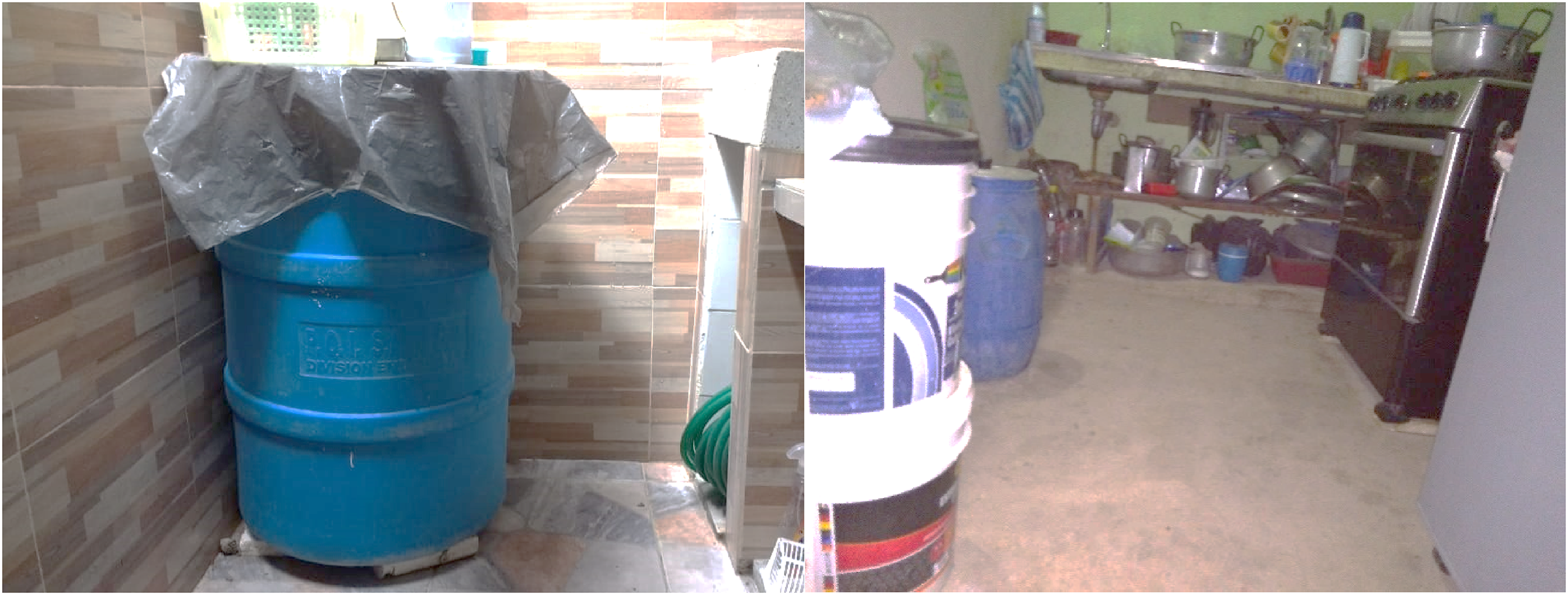
Water stored in kitchens in plastic drums in southwestern barranquilla (photo by Valeria Cueto 2020).
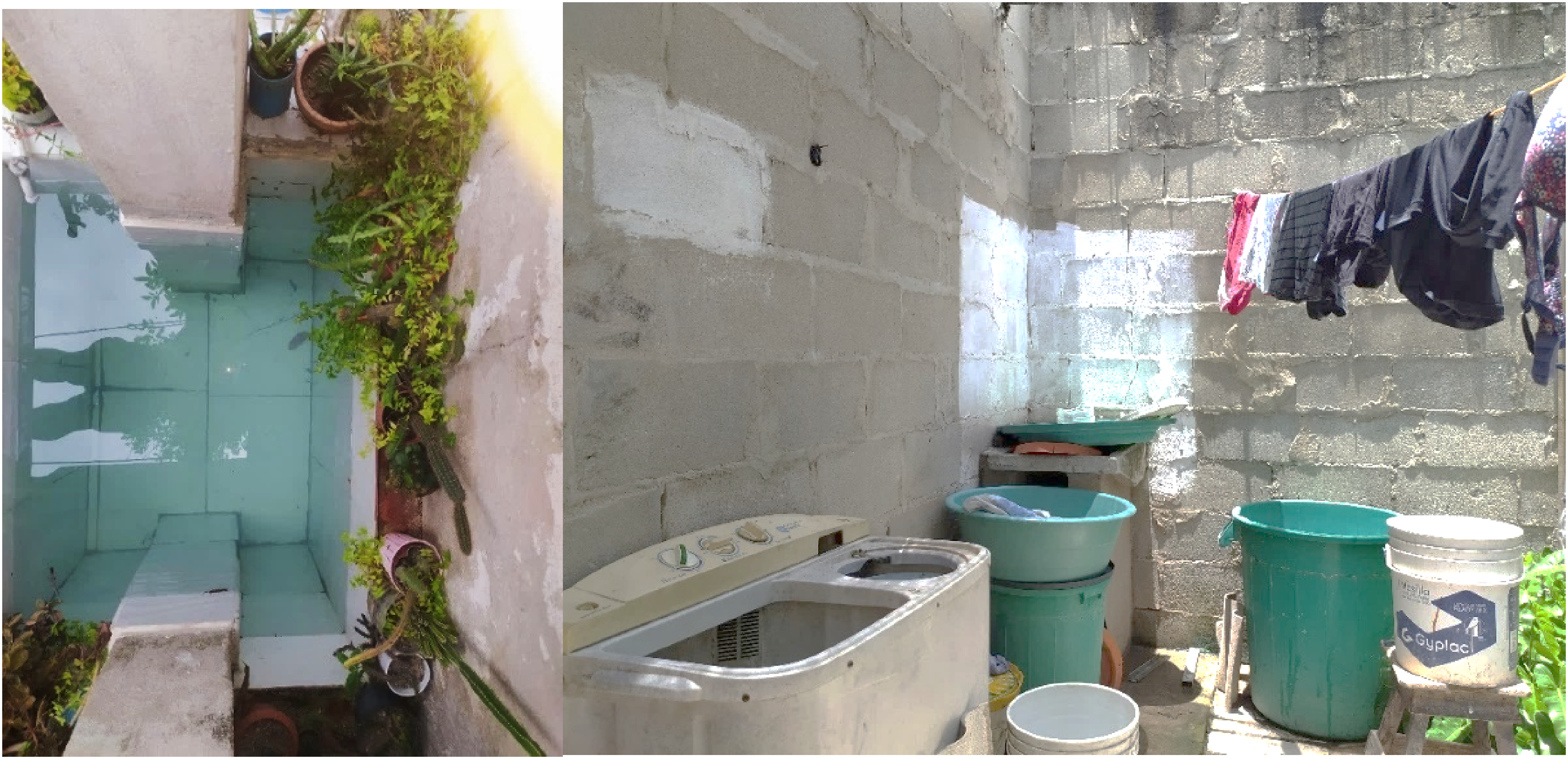
Water stored in patios in cement tanks and plastic drums in southwestern barranquilla (photo by Gabriela Monsalvo 2020).
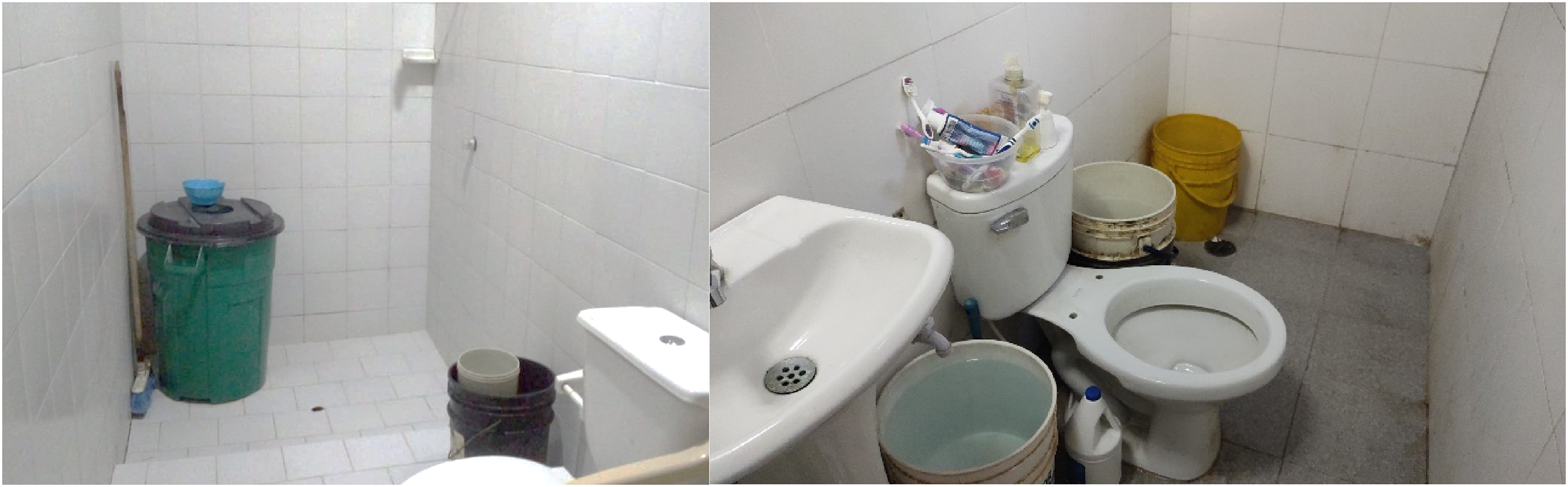
Water stored in the bathrooms in plastic drums in southwestern barranquilla (photo by of Indira Pérez 2020).
We have seen how historical and geographical processes underpin the production of domestic water in Barranquilla. Now, it is necessary to explore water's ecology together with that of Ae. aegypti to account for what happens inside the urban homes in question, as stored water becomes fertile (Bear, 2012).
Water with larvae
The establishment of diseases like dengue, chikungunya, and zika is characterized by interactions among vectors, pathogen, and environments (Leta et al., 2018). That is, complex assemblages between humans and water, humans and insects, insects and pathogens, and among humans, insects, water, and the other elements of their habitat (Wolf, 2016). Nading’s (2014; 2012) work, on the entangled history of people and insect vectors, reminds us how changes in the pattern of dengue's spread entail mosquito adaptations, following processes of economic, political, and social change. While Ae. aegypti mosquitos, are originally from Africa, it is believed that the virus of dengue first emerged in Southeast Asia. Therefore, before becoming a vector, Ae. aegypti went through a long adaptation process, changing habits and moving to places inhabited by humans to feed exclusively on their blood. Throughout processes of imperialism, colonization and enslavement, Ae. aegypti was carried in ships between continents. Upon reaching Southeast Asia, it successfully reproduced, becoming a carrier of Southeast Asian dengue (Endy et al., 2010). This is also how the mosquito reached America, where dengue has been a major public health threat since the 1950s 3 .
Several studies examine the ways in which dengue epidemics are related to population and environmental changes. Recent work has expanded on the relationships between mosquitoes and changes in population density, both in cases of informal and rapid urbanization (Costa et al., 2017; Gubler, 2011) and in cases of planned and sumptuous urbanization, such as the creation of Putrajaya, Malaysia's “garden city” (Mulligan et al., 2012). Others have focused on the relationship between mosquito proliferation, vector-borne diseases, and agrarian changes, such as the construction of dams and the expansion of the agrarian frontier (Mitchell, 2002; Kaup, 2020). What all these cases have in common is the production of water with larvae.
While it is true that Ae. aegypti can reproduce in bodies of stored or stagnant water, from discarded banana peels that store rain to buckets of stored water, not all bodies of water are the same and there are some where mosquitoes can reproduce much more successfully. Ae. aegypti will only thrive when mosquitoes can access stagnant water with appropriate material conditions in terms of organic material content and temperature, only water between 23°C and 32°C provides sufficient habitat conditions for the developmental stages of the mosquito (Christophers, 1960; Overgaard et al., 2017; Gubler, 2011) This varies from context to context, but in urban Colombia this type of fertile water is frequently found indoors, in treated water which is stored domestically (Romero-Vivas et al., 2006; Fuentes-Vallejo et al., 2015; Quintero et al., 2014; Garcia-Betancourt et al., 2014; Suárez et al., 2009). As this empirical data shows, water does not need to be polluted to cause trouble. Clean water, once stored, can become a place of fertility. Although this water is suitable for human consumption, it is used by the mosquito to reproduce. To this extent this is a problematic water, which produces problems for urban communities.
In order to study the breeding of Ae. Aegypti in Barranquilla's homes, I follow the example of anthropologist Raffles (2010), who seeking to document the life of insects, draws on the words and vision of scientific illustrator and artist Cornelia Hesse-Honegger. Having dedicated her life's work to the microscopic observation and illustration of insects throughout different changes and lifecycles, Hesse-Honegger has a privileged point of view because she does not recognize strict ontological hierarchies between humans and insects. With this in mind, I build on the work and perspective of Colombian entomologist Claudia Romero-Vivas.
Romero-Vivas has been studying Ae. aegypti mosquitoes and vector-borne diseases since the early 1990s and, seeking to be closer to her object of study, she set her entomology laboratory in Barranquilla, one of the cities with more dengue incidence in the country. Through her work experience, she has witnessed how the mosquito adapts to urbanization rhythms, becoming closely associated with human habitation (Romero-Vivas et al., 2006; Romero-Vivas and Falconar, 2005; Rigau-Pérez et al., 1998). Facing funding constraints, Romero-Vivas and her research team have conducted inexpensive pupal productivity surveys since 2002, to identify the waters where Ae. aegypti breed in a more successful way. This type of research, which consists of “a simple sweeping method, coupled to calibration factors” was selected to accurately estimate the total numbers of Ae. aegypti pupae in water-storage containers at different water levels” (Romero-Vivas et al., 2010: 269). Likewise, it is a minimally invasive method, since it does not imply major contact with the water that women store in their homes (Romero-Vivas et al., 2002). Although the research group has carried out different investigations in Barranquilla, the most systematic one was carried out between 2004 and 2005 4 . Surveys were conducted during two wet seasons and one dry season between December 2003 (i.e. immediately after a wet season, so that the effects of rainwater in the water-holding containers could be observed) and August 2004 (Romero-Vivas et al., 2006).
After written consent was obtained from the adults in each household in each neighborhood, the number, category, material and use of all containers with water (actual water-holding or wet) and without water (potential for water storage) were recorded. Researchers also tested whether the Ae. aegypti breeding site location (outdoors/indoors) and/or condition (covered/uncovered) had an effect on Ae. aegypti breeding and indices. All the larvae and pupae in the larger containers, such as the tanks and drums used for water storage, were collected using multiple sweeps with large (40 × 40 cm), fine-mesh (1-mm) nets and transferred to white bowls for the counts. The entire contents of small containers were transferred to white bowls, using pipettes, before the pupae were counted. The team focuses on counting pupae since at this stage it is most probable that the mosquito will develop into an adult (see Figure 4). Ae. aegypti were identified by looking at the morphology of the pupae from each breeding site and when more than one Aedes species was detected they were collected into plastic containers, transported to the laboratory, and allowed to emerge into adults so that they could all be identified to species 5 .
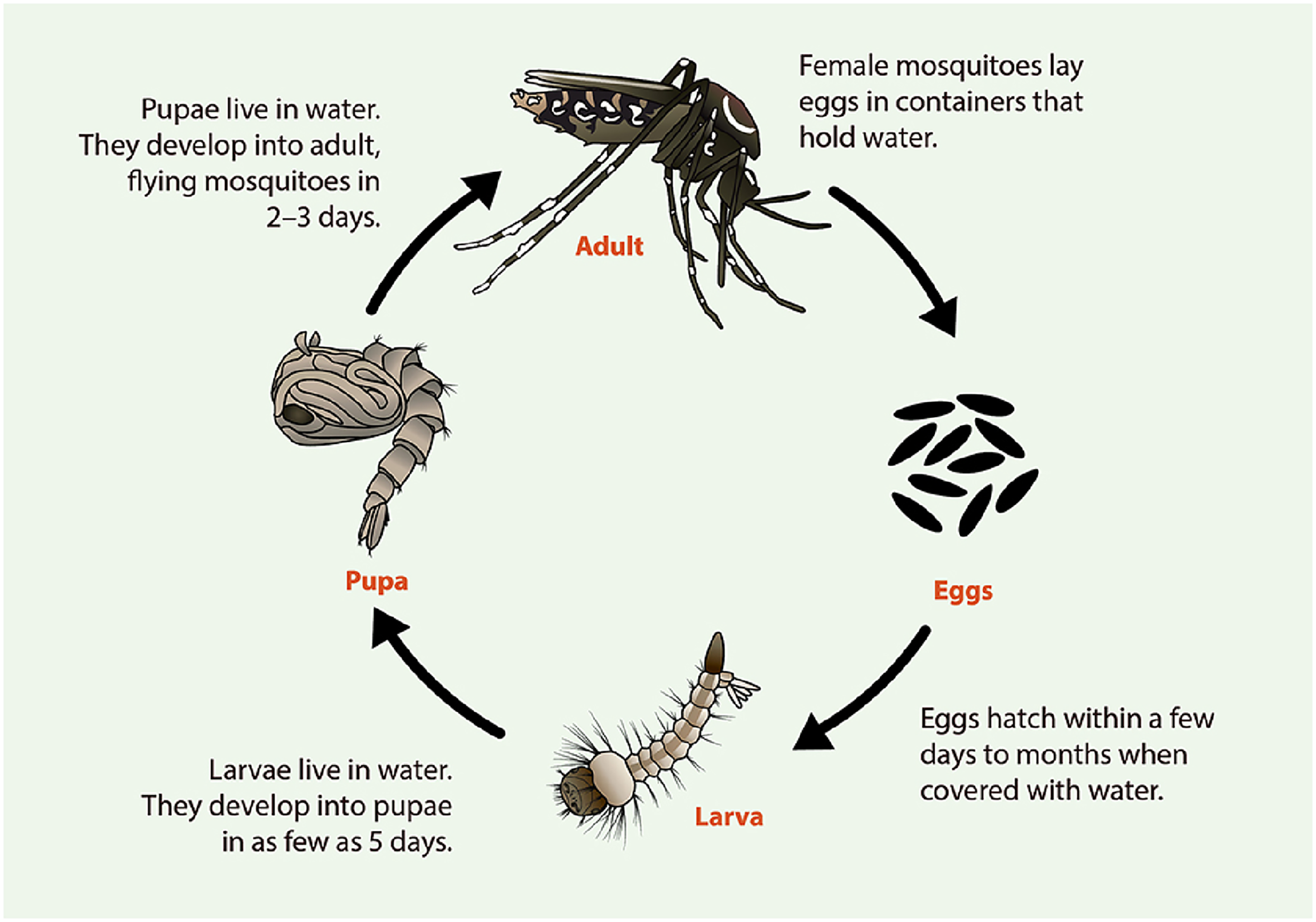
Life cycle of aedes aegypti (tropical disease laboratory, barranquilla 2020).
The potential breeding sites for Ae. aegypti in the city were categorized into ten types: 1) ground-level water tanks made of cement, which had variable dimensions, shapes, and locations, 2) plastic drums which had variable dimensions, shapes, and locations, 3) elevated tanks, 4) metal drums (mainly of 200-liter capacities), 5) car tires, 6) bottles (mainly empty soft-drink bottles), 7) vases, 8) half-discarded containers (most frequently plastic bottles the tops of which had been removed and used to water plants and animals), 9) discarded objects (metal soda cans, plastic containers, and other solid waste that were considered to be rubbish), and 10) “others” (toys, pans, drawers, or plastic baby-baths). The study found that Ae. aegypti pupal productivity (total pupal numbers) and Ae. aegypti pupal densities (pupae/person) in the southwestern area were higher than those recorded in the other areas of the city, whether calculated for the wet or the dry season. The most productive vector-breeding sites were domestic water-storage containers. Large numbers of bottles and of containers classified as “discarded” or “others” were found in each study area, but domestic ground-based water-storage containers of 20- to 6412-litre capacity, such as cement ground tanks and plastic drums, appeared to be the most important breeding sites.
Despite almost every house having access to piped water, the team of entomologists concluded, residents of southwestern Barranquilla experienced intermittency and were storing water in containers such as tanks or drums: “The residents therefore created the principal breeding sites for the local Ae. aegypti, with 65%–95% of the pupae of this species being produced in the water-storage containers” (Romero-Vivas et al., 2006; Romero-Vivas and Falconar, 2005) Successful mosquitoes will depend on stored water availability, the presence of specific water characteristics, and the nearness of humans. Here it is necessary to remember that during the 2000s, when this study was conducted, 15 new neighborhoods were built in the southwest Likewise, throughout the study period 2003 − 2004, approximately 18.109 persons arrived to the area, violently displaced from their homes in rural Colombia. Thus, in the midst of rapid urbanization in the context of armed conflict, infrastructural inequality, the absence of formal jobs, and specific water laws and regulations produced domestic water storage in the southwest This domestic stored water became fertile providing a habitat for female Ae. aegypti to breed and become adults.
Living with mosquitoes
Besides water, Ae. aegypti needs humans to breed. Humans, like Alaimo (2010: 2) reminds us are “always intermeshed with the more-than-human world’. Mature pupae will emerge from the water, break the pupal skin and ingest air to expand their abdomens. After eclosion, females need sugar intake and avidly take several blood meals - which will provide the proteins and lipids needed for yolk synthesis and formation. Aedes mosquitoes expose day-biting behaviors aligned with human household activity, at early morning (5–10 am) and in the late afternoon (3–8 pm). They take shelter and feed inside households – though they are known to move between indoor and outdoor spaces (Reinhold et al., 2018). The typical flight range of these mosquitoes is short (<100 m) and the dispersal of adult Ae. aegypti commonly averages from 30 to 50 meters per day – females rarely visit more than two or three houses in their lifetime (Getis et al., 2003). Therefore, where stored-water is placed in patios, bathrooms and kitchens, places where humans spend significant time, the ubiquitous availability of humans might increase the likelihood of high numbers of adult mosquitoes.
From the late 1990s, Barranquilla was classified as a hyperendemic area of dengue, where epidemic outbreaks are registered every two to three years, with mayor epidemics in 1998, 2002, 2010, 2013, and 2019 (Gutierrez-Barbosa et al., 2020). Since 2013, two emerging viruses, chikungunya and zika, transmitted mainly by Ae. aegypti, have also caused outbreaks. While chikungunya first arrived in the Caribbean in 2013, the first outbreak of zika in Barranquilla was reported in late 2015 (Instituto Nacional de Salud de Colombia, 2019). Since this is also the case in other cities, Colombian health authorities have developed epidemiological surveillance systems and, in case of outbreaks they conduct campaigns spraying neighborhoods with insecticides (targeting adult mosquitoes). During these campaigns government teams also aim to treat possible breeding sites with larvicides, although residents explain that in occasions they will deny these teams access inside the premises, not wanting them to “tamper” with domestic stored water. Local health authorities also carry out prevention programs entailing domestic visits where they instruct residents to “reduce breeding sources” and “reduce vector to human contact”. These two instructions are to be complied to by following nine steps: “1) Change the water in animal drinkers and vases frequently; 2) cover containers/tanks where water is stored; 3) dispose of solid waste stored in patios and outdoor areas; 4) dispose of car tires or store them indoors; 5) use repellants on areas of the body that are uncovered; 6) wear appropriate clothing such as long-sleeved shirts and long pants; 7) use mosquito nets on beds, especially when there are sick family members to prevent them from infecting new mosquitoes or in places where children sleep; 8) periodically wash and thoroughly brush containers/tanks; 9) fill disused septic tanks, drains and abandoned latrines with soil” (District of Barranquilla, 2021).
In general, local governments have emphasized the responsibility of residents in the proliferation of mosquitoes and the diseases they carry. “Dengue is born from our behaviors” is announced on the local government's website, “If we keep our patios clean and we have an adequate use of water and waste, we will avoid creating potential mosquito reservoirs” (District of Barranquilla, 2021). In interviews, women from the southwest of the city explain how they must continue to store water, because water-cuts, even if they last “only” a day, “disrupt life”. At the same time that they continue to store water, they carry out different labor-intensive strategies so that mosquitoes do not reproduce in the stored water. Being problematic, fertile water translates into more housework. One of these strategies is the periodic cleaning of the tanks with detergent and chlorine. Some tanks, storing water for cleaning floors and bathrooms, are also sprayed with insecticides from time to time. Following instructions by health authorities, women also try to cover tanks with lids, or makeshift lids made out of cloth or plastic bags (see Figure 1). When I was about to use the water in the tank, to carry out household activities, I observed that there were many sarapicos (colloquial word for Ae. aegypti larvae) in the water. I then had to dump that water and immediately wash the tank with Clorox (commercial chlorine) and a little bit of detergent, and thoroughly scrub the tank walls, then rinse it. This water had been stored for a week, and was covered with a plastic bag, but sarapicos are like that, they will emerge in clean water
6
.
Despite trying to prevent mosquitoes from breeding, residents describe how they live their day-to-day life with mosquitoes. At this point, it is clear that by documenting the changes water undergoes once stored, we can not only conceptualize it as fertile, but also to account for the limits of human agency (Bakker, 2012; Mitchell, 2002). Relationships between families and mosquitoes living in their homes are thus intense, unstable, and fraught with frustration. Different residents speak, for example, of the places where Ae. aegypti “hide”, inside closets and behind the doors in bedrooms, under the dining table and under desks where children and teenagers do homework, in the curtains, and inside showers. Parents point out that they need to “inspect” children's rooms as mosquitoes can be found “hidden” among the stuffed animals and clothes. The mosquitoes are in an uproar. They can be found in the driest parts of my house: the living room and the three bedrooms. They can be found in the most humid: the two bathrooms, the kitchen and the patio. They are everywhere. We find them inside the pots and in the tanks where we store water; if you sit on the rocking chair in the living room, it is very likely that you will pat yourself while trying to kill them. In my room they are under the bed, in the closet too, hidden, glued to my clothes. In the bathroom it takes you a little longer to locate them, you would think that they are inside the water-storage drum, but no, they are usually standing on the tiles or the walls and when I bathe I usually take a few minutes to kill them
7
.
Mosquitoes interrupt sleep, disrupt moments of concentration (for example, when doing homework) and moments of enjoyment within the home. Communities talk about some family members who have “sweet blood”, which are the ones bitten the most Likewise, residents state that it is “normal” to “walk around with mosquito bites on the face or extremities” (see Figure 5). Families buy fans to sleep to “scare off mosquitoes”, keep windows closed at certain times of the day, and burn egg cartons and Gliricidia, a local tree's, leaves to repel mosquitoes from children's rooms. There are those who highlight the skin problems that these bites cause and the repertoire of creams they buy to relieve skin stinging and swelling. During the early 2000s there were street vendors offering “electric rackets” to combat mosquitoes. In general, families also invest in insecticides to spray bedrooms and homes. While neighbourhood stores, tiendas, sell sprays and electric devices to repel and kill mosquitoes, small neighbourhood businesses also offer professional pesticide spraying services, which families hire once every one or two years. Men are frequently in charge of spraying these pesticides. My father sprays the house with diesel fuel. Sometimes he also burns Gliricidia leaves in a pot and walks through every part of the house. These jobs to fight mosquitoes are considered risky, and are always done by my father. He will send me, my mother, sisters, and nephew to the patio while he sprays inside the house
8
.
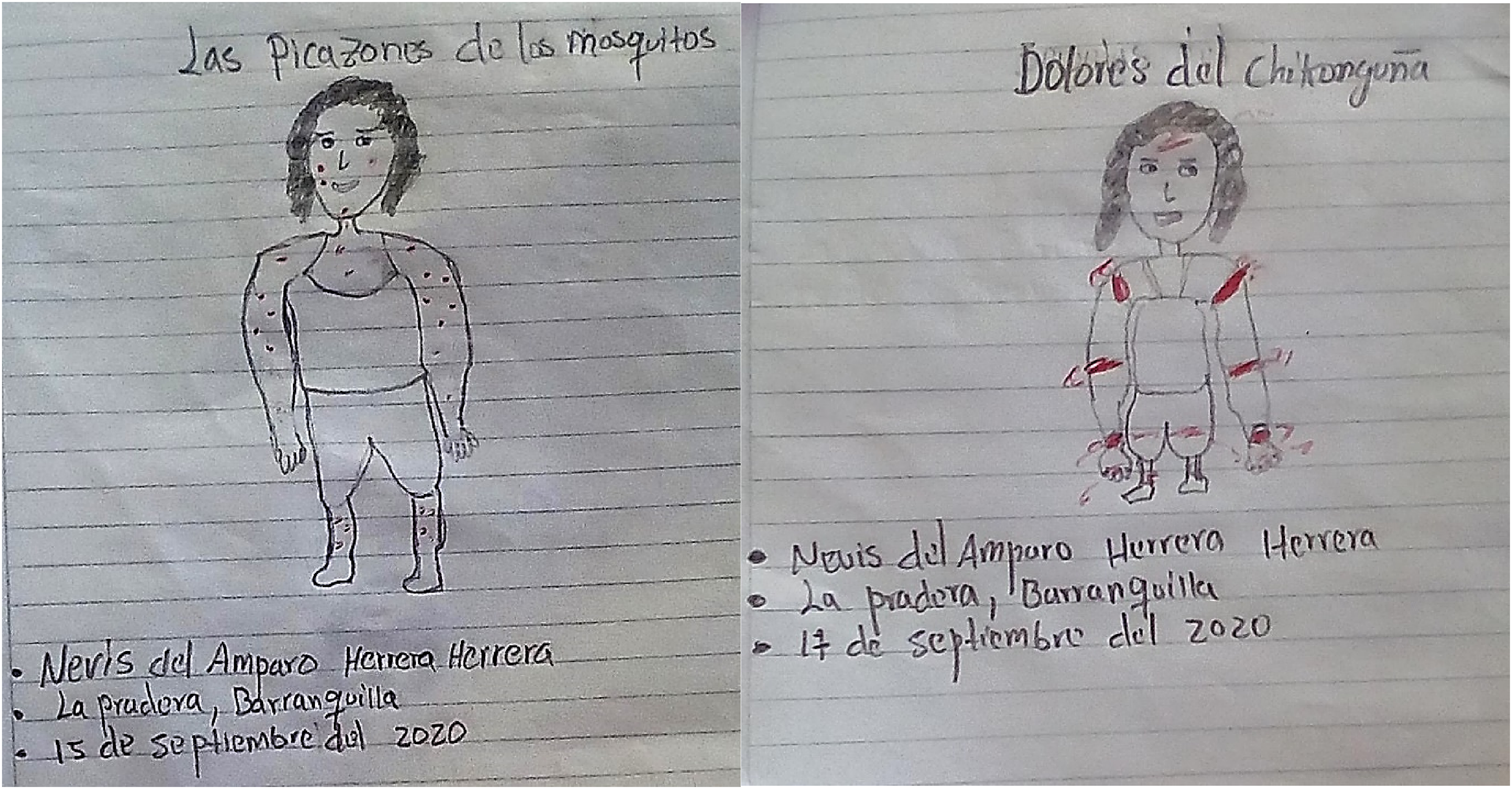
What comes to mind when you think about mosquitoes? “mosquito bites and chikungunya pains”. Southwestern Barranquilla (photo by Brianda Jiménez 2020).
Families also invest in wearable repellents, even though these are expensive, to protect children from bites. Alicia, a woman in her 30 s explains how her son is allergic to mosquito bites, his skin continuously marked by bites and swelling. For this reason they burn mosquito coils bought in local stores and her husband fumigates the bedrooms with Baygon (a commercial insecticide) “almost every day”. Since mosquito coils emit a smoke that stanks, she asks her children to leave the rooms or wait outside the house. They are careful not to spray near food or water. “It's a bit of a stressful thing to do” she says, explaining how pesticidal spraying makes her anxious as she wonders if it will hurt the children. “I do not like to put a lot of Baygon on my son's bedroom because of all the chemicals it has, but there are always mosquitoes, in the morning, in the afternoon, always there in his room”, she adds. We have seen how homes in southwestern Barranquilla are constituted as socioecological assemblages of which pesticides are also part and collaboration with entomologists can extend our understanding of these assemblages.
Living with malaise and guilt
Triggered by infrastructural divestment and decay, water storage routines in southwestern Barranquilla produce fertile Ae. aegypty habitats. Water at certain temperatures and with the right amount of organic material will contribute to the reproduction of adult mosquitoes, which will actively seek to breed on human blood. Infections such as dengue, chikungunya, and zika are thus underpinned by multiple processes of both human and non-human agency (Mitchell, 2002; Beisel, 2010; Gandy, 2019). Dengue infections cause flu-like symptoms including a high fever, muscle, joint, bone pain, and severe headaches, and chikungunya infections are characterized by high fevers and debilitating rheumatic disease in nearly all (>80%) cases, many of which result in sub-chronic or chronic joint disease (Rodríguez-Morales and Willamil-Gómez, 2016). These diseases are so prevalent within the population that they have been incorporated into everyday language and popular music. In his song Chikungunya, for example, singer Jose Quessep discusses this sickness's symptoms such as fever, joint pain, and rashes and compares them with heartbreak.
Many adults in the southwest, engaging in rebusque, prefer not to miss a day of work even if they are sick, and control their symptoms with painkillers bought in local stores. Only in cases where the disease escalates until the person is unable to fend for her/himself, medical care is sought. This has to do with the fact that public hospitals have long waits and most doctors would probably prescribe the same painkillers. Margarita, a woman in her late 30 s narrated how chikungunya “hit” her in 2014, at that time she worked in a restaurant and her chores included being the waitress, kitchen helper and washing the dishes. She first had headaches, fever, bone pain, and it was difficult for her to get out of bed. She went to a hospital's Emergency Room one evening, but they only prescribed ibuprofen and sent her home to rest Bringing the only income in her household, she continued going to work despite her symptoms.
We have seen how fertile water is problematic and translates into more domestic cleaning work for women, but it also translates into more care work. Some of the women in the sector feel guilty when one of the children falls ill with dengue, chikungunya or zika, as it is assumed that it was due to their “lack of care” (falta de cuidado) in storing water. Others, explain that although all care is taken in their homes, children can be infected in schools because these institutions also store water. Families struggle when children fall ill. Mothers, who usually take care of the ill and the children, prefer not to send them to school and must find relatives who can stay with them or stay home themselves and miss the work day. In my house, chikungunya got to us, one after the other, my mother, father, brothers and me -all during the final months of 2014. The discomfort ranged from headaches to body aches, fevers, itching, skin rashes. My dad was the only one of us who needed to go to the doctor when it hit him because he had a very high fever and fainted. I had to stop attending university lectures and my brothers stayed home from school for a few days. My father spent several days in bed, without working. My mother took care of us all, and when she got sick herself, my aunt came to care for her
9
.
In the case of zika, approximately 80% of infections are asymptomatic, and symptomatic patients display lower fevers and milder peripheral symptoms, such as rash, and non-purulent conjunctivitis. However, in the Americas, zika infections have been implicated in causing serious autoimmune neurologic conditions in children and adults, such as Guillain-Barré syndrome and severe congenital abnormalities, such as fetal microcephaly (Instituto Nacional de Salud de Colombia, 2019). After the first congenital microcephaly cases were reported, both international organizations and the national government asked women to delay pregnancy. Scholarship has documented the unequal and differentiated position of women, whose bodies were the target of populationist interventions (Rivera and Camargo, 2020; Williamson, 2018) and how, in general, women were disproportionately impacted by the zika epidemic and their aftermaths (Camacho, 2019; Human Rights Watch, 2017; Williamson, 2017). According to official reports, there were a total of 7029 Zika cases in Barranquilla during the 2015–2016 outbreak (Instituto Nacional de Salud de Colombia, 2019). However since many zika cases are mild or asymptomatic, studies have warned about considerable underreporting in Barranquilla (McHale et al., 2019). As we saw for the cases of dengue and chikungunya, most southwestern families would only seek medical assistance in severe cases. Therefore many of the cases in the city were detected in higher-income sectors, where women have access to private health services and zika tests were performed as part of routine pre-natal care.
Conclusions: “It's in your own hands!”
This paper made calls to study water with larvae by analyzing two interrelated processes. The first one has to do with the ways in which low-income residents living in southwest Barranquilla face water intermittency and have had to resort to water-storage practices. Building on work focusing on water's materiality, I focused on the ways in which treated water changes once it has been stored (in terms of temperature, organic matter, and closeness to humans) and becomes fertile water, where the mosquito develops through its water stages - eggs, larvae and pupae. To do this, I follow the work of entomologists who live and do research in the city and who explain how domestic stored water is the most productive of Ae. aegypti in the sector, when compared to other types of stagnant waters, such as those present in solid waste or drainage channels. Adult mosquitoes emerge from the pupae (and from the water). These adult insects continue their life cycle interacting with the bodies of the community - and the female Ae. aegypti will eventually return to the water to lay their eggs.
The second process explored by the article is that through which water, mosquitoes, dengue/zika/chikungunya pathogens, and human bodies become interrelated. Southwestern homes are described as socioecological assemblages where mosquitoes interact with and co-constitute the everyday of urban communities. We saw how fertile water is problematic and translates into more work for women and difficulties for families who in contexts of informality cannot miss a day of work as absence can result in layoffs or bring significant economic consequences to a family. As such, fertile water not only reflects inequalities but also reproduces them (Truelove, 2011). Although many cases of dengue, chikungunya and zika are not severe nor require complex medical treatment, people who contract these diseases are weakened and have their quality of life impacted (see Wolf, 2016).
“It is in your own hands to stop the mosquito from breeding!” States a mural made by the local health authorities in one of the neighbourhoods of southwestern Barranquilla. This type of communication is widespread in the sector. It advises the community not to store water in the intimacy of the household, and reiterates that if they do decide to store water they must carefully clean the containers to stop the spread of mosquitoes. Both in Barranquilla and in many other cities in the global South, the communities themselves are blamed for the spread of the mosquito without taking into account that diseases, even those that seem new like zika, respond to old water access inequalities. That is to say, to the inequalities in water services seen in Barranquilla during the twentieth century (Acevedo-Guerrero, 2019), which were reinforced by the legacy of dispossession and displacement left by armed conflict.
Accounts on the breeding of Ae. aegypti mosquitoes in domestic stored water are common beyond Barranquilla, in other cities of Colombia (Fuentes-Vallejo et al., 2015), Mexico, Ecuador (Quintero et al., 2014), Brazil (Pamplona et al., 2004) and India (Arunachalam et al., 2004). At the same time, recent studies have warned about the incidence that climate change is having on the proliferation of Ae. aegypti in urban Africa: as temperatures become too hot for Anopheles mosquitoes that transmit malaria, conditions improve for Ae. aegypti and the viruses that it carries (Mordecai et al., 2020). In all these cities the production of water with larvae is underpinned by processes of unequal urbanization where household water storage is a daily practice for home cleaning, laundry, and human consumption (Bayona et al., 2020).
Proposing the idea of hydraulic fertility has conceptual and theoretical implications. In the first place, it highlights the importance of enquiring about the relationships between water and other nonhuman elements and processes. Secondly, it contributes to an understanding of the formation of the city as a process in which water and mosquitoes are “more than the backdrop or landscape through which humans move but actors that mediate urban relations and can change their trajectory” (Gabriel, 2014: 45; Gandy, 2005). A final implication of thinking about hydraulic fertility is that it shows how urban experience within some urban homes is intermediated by clean but problematic water. This reflects the importance of the domestic scale and of studying the home in order to build theory while taking seriously the relations and processes shaping life in the urban South (Lawhon and Truelove, 2019).
Highlights:
Aedes aegypti, the primary vector for dengue, chikungunya and zika, breeds mainly in stored/stagnant water and thrives in contexts of rapid urbanization in tropical countries
Between 1996 and 2014, 117,326 internally displaced people settled in southwest Barranquilla and due to divestment in the extension and maintenance of water infrastructure, water intermittence became frequent in their neighborhoods.
Entomologist Claudia Romero-Vivas and her research team have been using pupal productivity surveys to document how domestic stored water in this area has the tendency to become a habitat for Ae. aegypti.
This article makes an attempt to theorize water with larvae by focusing on: 1) the historical and geographic processes that underlie the production of stored water, which despite being treated can become a place of fertility where mosquitoes can flourish. 2) the processes by which water, mosquitoes, pathogens, and human bodies become interrelated.
Footnotes
Acknowledgements
I am from the Santander region, located between the mountains and river valleys of eastern Colombia. However, the Caribbean region and the city of Barranquilla have always welcomed me with open arms. I would like to thank the women of this city, who have shared their time and their stories with me. I also want to thank Claudia Romero-Vivas, Dhay Potes, Clara and Cecilia Roa-García, Alejandro Camargo, Gabriela Monsalvo, Valeria Cueto, Indira Pérez, and Brianda Jiménez for providing insights into the analysis and arguments presented this article. I also thank the anonymous reviewers of this article for their constructive and generous feedback.
Declaration of conflicting interests
The author(s) declared no potential conflicts of interest with respect to the research, authorship, and/or publication of this article.
Funding
The author(s) disclosed receipt of the following financial support for the research, authorship, and/or publication of this article: Doctoral Research Award. International Development Research Center Canada IDRC.

Notes
Author note
Tatiana Acevedo-Guerrero Universidad de los Andes, Colombia