




Abstract
Gentrification scholars have increasingly acknowledged the importance of socio-nature in encouraging the revaluation of place. Yet relatively little has been said about the role that non-human animals play in changing the material, sensory and affective qualities of place and the ways that they provoke capital investment. In this paper, we provide a corrective by exploring the role of the oyster in the ongoing gentrification of a coastal community (Whitstable in Kent, South East England). The complex natural and social history of oysters in Whitstable shows that how animal agency has contributed to processes of gentrification. Oysters are visceral objects whose affective qualities create hierarchies of taste and distaste through processes of desire and disgust. This animal is a marker of class change that positions the ‘local’ within wider circuits of consumption. Further, oysters are labouring bodies that reconstitute the coastal ecosystem on which the town depends. The arguments illustrate that non-human animals can be – economically, culturally and ecologically – vital and lively components within the dynamic material processes that support gentrification.
Introduction
Whitstable, once the home to some oyster beds and not much more, is now the sine qua non of the London gentrification boom; a High Street full of cool restaurants, the odd chain, funky boutiques and vintage homeware stores; a seafront crammed with hipster homes and beach huts revitalised by their city-dwelling owners … It also has oysters. The Whitstable Natives are famous as oysters go; they’re served bloody everywhere. If you don’t like oysters, watch out: you won’t be able to escape them here. (Leave London Behind, 2017: np)
Against the backcloth of the sea, coastal settlements are constituted by all matter of human and non-human life, including the diverse animals associated with the shore: from the visible and noisy (e.g. the seagulls, terns and plover that feed in shallow saltwater) to the submerged and silent (e.g. the crabs and worms that burrow into the sand, or the fish and marine invertebrates that dwell in tidal waters). The presence of these species is shaped by the short-term lifecycles and rhythms of seasonality, as well as the longer-term changes associated with human activities that alter coastal morphology, the quality of coastal waters and the supply of nutrients from the land. In many instances, the development of urban infrastructure geared towards coastal tourism can have a devastating impact on these species, with the introduction of jetties, boat-launches and waterfront housing destabilising ecosystems and displacing animal inhabitants of the coast (Phillips and Jones, 2006).
This paints a fairly bleak picture of the impact of coastal development on non-human animals, and, in an era when the coast is increasingly valued for its recreational and amenity values (Colburn and Jepson, 2012; Gale, 1991; Thompson et al., 2016) suggests that seaside development has a solely destructive impact on coastal fauna. But, as Barua (2021) points out, this overlooks how animals sometimes respond to, and repurpose, urban environments. In spite of environmental destruction, pollution and poisoning, some animal species adapt and flourish even in contexts where tourist development is prioritised over the preservation of the existing ecosystem. So even though coastal towns increasingly provide a spatial fix for capital via both long- and short-term investments in tourist-oriented property (Cocola-Gant, 2018; Darling, 2005), some animals persist as ‘vital inhabitants’ of these coastal communities.
In this paper, we suggest that the presence of such non-human animals at the coast is one of the attractions that draw in tourists and investors, helping to fuel processes of coastal gentrification. Consider, for example, the centrality of fish, crustaceans and shellfish to the image cultivated by many former fishing resorts which have transitioned from productivism to post-productivism (Colburn and Jepson, 2012). Here, there are synergies between the consumption of seafood, tourist investment and place imagery in which fishing and aquaculture is valued for preserving ‘traditional’ ways of life (Urquhart and Acott, 2014). The fact that coastal gentrification exists in an often-antagonistic relationship with the fishing industry is often glossed-over in this process, even though gentrifiers and fishing communities sometimes clash (White, 2018). However, Salmi (2015) shows it is not always the case that commercial fisheries are displaced, with some diversifying their activity to incorporate tourism, leisure use and biodiversity initiatives, including the protection of ‘keystone’ marine species.
This paper addresses the role of non-human animals in coastal gentrification by focusing on the importance of the oyster in processes of property investment and displacement on the South-East English coast. We do this cogniscant of the arguments of those geographers of the sea, maritime anthropologists and sociologists who have argued for a more critical engagement with the ‘fluidity of oceans and its non-human entities’ (Bear, 2019: 330), as well as the wider body of work that considers non-human animals as active and even knowledgeable agents in the making of place (e.g. Barua and Sinha, 2017; Ingold, 2012; Quinn, 2020). Yet we do so noting that geography has generally had an anthropocentric view of the drivers of gentrification, fixated on human actors: property developers, government officials, creative workers and so on (Hubbard and Brooks, 2021). While there are exceptions, most notably in the literature on the significance of mountains, open spaces, parks and waterfronts in property revaluation (e.g. Anguelovski et al., 2018; Phillips, 2005; Preston-Whyte, 2001), geographical studies of nature in gentrification have largely limited themselves to examining the ‘greenwashing’ of gentrification and the promotion of sustainable eco-living rather than questions of how non-human animals are entwined in the ‘political ecologies of gentrification’ (Quastel, 2009).
This paper examines Whitstable, Kent, a rapidly-gentrifying town with a population of 32,000 and a rich tradition of aquaculture. Todd (2014) argues that fishing and aquaculture represents a potent, if sometimes contradictory, point of engagement between humans, animals and the environment precisely because marine species have agency. Likewise, Satizábal and Dressler (2019: 1867) argue aquatic life has a ‘socio-materiality’ that impacts on the ‘representations, spatialities and political subjectivities’ that produce ‘coastal realities’. In this paper, we build on these insights, suggesting that oysters – seemingly inert bivalve molluscs – have shaped the socio-materialities of Whitstable at the same time they have been central to an ideology of place rooted in traditions of oyster production and consumption (Althusser, 2006). This is an ideology which hails new forms of behaviour, promotes specific norms and, crucially, links Whitstable to the economic and cultural geographies that radiate out from London to the benefit of property owners and the ultimate detriment of displaced locals (Platt, 2014). But in arguing this, we are not simply focused on how oysters become enrolled in gentrification through human agency: rather we wish to build on research that considers animal agency in urban place-making (e.g. Barua, 2019; Kirksey et al., 2018; Silver, 2014). In this way, the paper stakes a claim for the integration of ideas from animal geographies within the frameworks used to comprehend gentrification, offering a political ecology of gentrification that considers how places can be shaped as much – if not more – by non-human animals as by humans.
The gentrification of the coast: Fishing, seafood and animal agency
Businesses have long-capitalised upon human desires to spend time beside the sea. Indeed, they have done more than take advantage: they have instilled a system of ideas – an ideology – that promotes delight in being by the seaside (Freeman and Cheyne, 2008). While this often focuses on notions of leisure, swimming and sunbathing, it also exploits the association between fishing and the sea (Brown and Peters, 2018). As such, the hospitality industries have often made the coast a place of consumption by mobilising aquatic biota, fishing traditions and maritime paraphernalia to produce a distinctive ‘cultural landscape’ (e.g. see Atkinson, 2007, on Hull’s Folk and Maritime festival; Rusher, 2004, on the Bluff oyster festival in New Zealand and Daniel et al., 2008, on Maine’s ‘lobster culture’ tourism). Although the activity of catching fish takes place at sea, Urquhart and Acott (2014: 5) insist that fishing exerts a strong place-based influence on land ‘through the shore-based activities (such as unloading the catch, processing and selling fish) as well as the presence of fishing boats and gear in the harbour’. But even when such activity is not visible, and fishing fleets long-departed, the association between ‘seafood’ and the coast can still be vital in place-making, whether these connections are direct, superficial or complementary (Khakzad and Griffiths, 2016). There are multiple examples where the consumption of seafood is central to rituals of tourism at the coast, with particular fish and shellfish marketed to tourists interested in ‘value-added’ culinary aquaculture (Davies and Brooks, 2021; Everett and Aitchison, 2008; Kim et al., 2017). The fact the seafood may sometimes be imported or harvested in distant waters matters not (Mas, 2015), as traditions of fishing at the coast can be invoked to stress that the goods being consumed are ‘native’ or otherwise tied into ‘local’ histories of place.
This process inflates coastal property markets (Eisinger, 2000). Like mountain and lake resorts or ‘heritage’ towns in national parks (see Darling, 2005; Phillips, 2005), coastal communities can provide a spatial fix for capital in times of crisis or overaccumulation, with these spaces absorbing surplus capital on a periodic basis, leading to the characteristic boom and slump of touristic investment and the opening of ‘rent gaps’ on the coastal margins (Collins, 2013; Freeman and Cheyne, 2008). By way of example, Busby et al. (2013) highlight gentrification in Padstow, Cornwall, where maritime histories and motifs have been exploited by celebrity-chef Rick Stein, who has promoted gastronomy and the consumption of locally-landed fish. In Padstow, once-affordable properties now sell for astronomical amounts as second-home ownership booms.
The fact that an association with fishing and seafood can attract discerning middle-class consumers has proved especially important in the UK given that, since the mid-20th century heyday of seaside tourism, many coastal communities have been in near-terminal decline because of a reduction in domestic tourism, fishery, port services or some combination of these (DCLG, 2008). Many UK coastal communities suffer seasonal unemployment, deprivation and a concentration of Houses in Multiple Occupation (Smith, 2012). In 2019, a House of Lords Select Committee report highlighted the necessity of seaside town ‘reinvention’, promoting initiatives based on arts and culture without acknowledging the problems of gentrification these can cause (Ward, 2018). In the same report, they noted that many coastal towns have benefitted from the framing of England as a ‘world-class seafood destination’. However, there has been scant consideration of the ways that seafood-led strategies have changed the identity of coastal communities, nor acknowledgment of the displacements this might entail (though see White, 2018, on tensions between gentrifiers and crab fishermen in Cromer, Norfolk).
This noted, it is often assumed that the vitalization of British food and drink culture can help regenerate coastal communities. The rise of ‘foodie’ identity – initially used as an ironic term describing how ‘perfectly sane people had suddenly become obsessed with every aspect of food’ (Levy, 2007: np) – has put the onus firmly onto the consumer to be knowledgeable about food’s provenance, its preparation and nutritional properties. This has added value to products regarded as organic, sustainable or local, notwithstanding all of these labels are contestable. What was once an imprecation became an identity readily claimed by upper-middle class consumers. Foodism (food tourism) and the production of food destinations developed hand-in-hand: towns around the UK began to draw custom from a surge in interest in ‘authentic’ food and drink via promotion of ‘local’ foodstuffs (Sims, 2009). In this sense, seaside towns such as Whitstable, Cromer and Padstow share commonalities with those UK market towns (e.g. Ludlow, Melton Mowbary, Bakewell) that are synonymous with food production and consumption (Ilbery and Kneafsey, 2000).
Yet suggesting the prime role of fish and shellfish in processes of gentrification is as ‘local’ food is to underplay the significance of these non-human animals within the ‘ecological infrastructure’ of coastal communities. Satizábal and Dressler (2019) argue that shellfish and fish possess a ‘lively materiality’ (Bennett, 2010) that is politically- and culturally-consequential, active in a variety of strong ways in shaping wider processes of capital accumulation, forms of biopolitical regulation and modes of environmental management. One important dimension of this is that sea life can change the nature of marine ecosystems through quotidian habits of feeding and filtering, as well as more gradual geographies of invasion and succession. Bear (2013) illustrates this with reference to Cardigan Bay, Wales, showing how the local bottlenose dolphin population responded to the increased dredging of scallops, impacting on the shape of the seabed, fishing practices and wider modes of marine management. Moving beyond the idea of the sea as ‘bounded space’, Bear conceptualizes the sea as constituted by mobile and emergent human/non-human associations in and outside the water, a framework taken up by Satizábal and Dressler (2019) when they consider the active role of fish in sustaining or constraining Afro-descendant coastal communities. Both these studies are informed by the ‘wet ontology’ approach – proposed by Steinberg and Peters (2015) – that treats the sea as a material space that is undergoing constant reformation, but more importantly they draw on assemblage thinking, particularly Callon’s (1984) famous study of scallops in St Breiuc bay. In this study, Callon tells of the efforts of scientists, fishermen and scallops themselves to boost their diminishing numbers and outlines how the attempt to introduce Japanese breeding methods on the French coast was thwarted by the ‘refusal’ of the scallops to attach to new breeding containers.
Grasping the material liveliness of sea life is then important given that when we encounter the coast, we do not encounter the water’s edge, but rather a fluid assemblage of non-human animals (Bull, 2011). In recent years, the agency of non-human animals has become a major topic of inquiry for geographers, with non-human agency posited as impacting both individuals and societies through ‘corporeal, geotechnical … pathological and myriad other processes’ (Lorimer, 2007: 912). Distinguishing the affective energies of humans and non-humans is of course problematic (Haraway, 2016), but what is less ambiguous is that non-human animals are present in human settlements not just as passive ‘food animals’, performing other vital roles as forms of metabolic, affective and ecological labour (Barua, 2019). This typology stresses that animals do not just circulate as dead animal commodities within urbanised systems of animal experimentation, food production and slaughter (Arcari et al., 2020) but also embody a mobile form of labour (e.g. producing offspring, processing waste, attracting visitors, etc.). In many instances, animals are then enrolled into urban infrastructural systems as sensors, assistants or companions (Wakefield, 2019) and become caught up in infrastructures of provisioning, resilience, biosecurity and ecology (Barua, 2021): examples range from pollination projects and vermiculture waste-disposal schemes through to stream restoration and programmes of urban ‘rewilding’.
Conceptualised as both ‘lively commodities’ and workers, it can be seen that animals are capable of adding value to place through their agency and behaviour. Increasing efforts are then being taken to explore animal agency as a component of place-making (e.g. Barua, 2021; Gordon, 2020; Ingold, 2012). The challenge is, though, to produce geographical accounts of animal agency which are not simply human geographies of animals (Barua and Sinha, 2017). To date, work that has attempted this, figuring animals as knowledgeable agents, has mainly focused on the presence of charismatic species in urban spaces: feral cats, macaque monkeys, fruit bats, bees and so on (Philo and Wilbert, 2000). This work explores the extent to which humans tolerate and even encourage the presence of such animals in the city but also imbues animals with agency and cunning in terms of their ability to adapt to the urban environment, often inhabiting the interstices of urban life in their search for sustenance and shelter. In the context of coastal communities, this fixation with animals’ ability to scavenge is most obviously manifest in studies of seagulls (Belant, 1997), with herring gulls having increased dramatically in number in North America and Europe over the past century, to the extent that architectural and legal measures are commonly pursued to mitigate human/gull conflicts (Trotter, 2019).
In such contexts, the agency of animals and their ability to sense and shape the atmosphere of place can be revealed through ethology and cultural geography that exposes animals’ sociability and their attachment to place through fieldwork (Lorimer et al., 2019). The value of such approaches are, however, less apparent when considering ‘non-charismatic’ animals such as fish and shellfish and appear particularly difficult to imagine when referring to relatively-inert species such as oysters. Yet Wakefield’s (2019) insightful account of the way oysters have been enrolled in sea-defence projects in New York State argues the physiology of the oyster – and the three related processes of filtration, flesh growth and shell formation – give it particular capacity to become an infrastructure. As bivalve molluscs, oysters are filter feeders that draw water and particulates through their fleshy bodies and form hard substrate shells which, in turn, create a habitat that can be built upon by oysters or other species. The hard-physical materiality of these calcium carbonate shells is important for carbon sequestration, and, over time, biogenetic processes also build up these oyster beds (or reefs) to provide a natural form of coastal protection. Wakefield (2019) documents how oyster beds have been increasingly represented as ‘natural infrastructures’ preventing sea-level inundation, with ‘letting nature do its thing’ a key discourse among those advocating for the bio-protection of coastal communities via oyster propagation (see Lokman, 2017; Orff, 2013). Less obviously, beneath the waves there are indirect benefits of the morphology of oysters. Oyster shells make the seabed surface rougher, encouraging nutrient cycling, changes in turbidity and moderation of wave energy and sediment patterns. By forming heterogenous microhabitats, oyster beds facilitate biodiversity and further contribute to the presence of other organisms that give value to coastal locations. Oysters hence serve as a ‘keystone’ species providing habitat for many other marine organisms, providing ecosystems services that can sustain or enhance coastal communities in multiple ways (Grabowski et al., 2012).
Silver (2014: 83) has argued on this basis that shellfish such as oysters should not be treated as ‘inert natural resources passive in human affairs’ but regarded as active participants in coastal spaces and politics. Building on such insights, and the critical perspectives offered by Wakefield’s (2019) work on coastal ‘oystertecture’, in the remainder of this paper, we seek to bring traditional literatures on urban gentrification into dialogue with such perspectives on animal agency. We do this by focusing first and foremost on the affective qualities of oysters in producing imaginations of Whitstable as a leisured and pleasurable place to visit and live, arguing that the oyster is directly implicated in the inflation of local property markets. Yet we note that such local place-making is only one side of the coin: urban change, and especially gentrification, is also shaped by wider geographies. Here, we argue that by summoning forth particular smells, tastes and memories, the consumption of oysters sustains a distinctive coastal imaginary that sets in motion flows of tourism and investment. Hence, the next section of the paper explores the position of Whitstable within circuits of gentrification that are reifying foodism, outdoor living and leisured consumption at the coast, noting the centrality of the oyster in these networks. Following this discussion, the final section further examines the non-human agency of oysters, exploring how their physical presence has shaped the town past and present, suggesting their ‘lively materiality’ has created heated conflicts over the way that the coastal ecosystem has, and should, be managed. Documenting these varied ‘entanglements’ of objects, subjects and non-human animals (Callon, 1984), this paper argues that oysters contribute to, and even create, infrastructures of gentrification.
This paper draws primarily upon one of the author’s experience of engaging with Whitstable recreationally – as a walker, beach swimmer and customer of local businesses – over a nine-year period (2010–2019). During this time, the town changed in both significant and subtle ways, with the harvesting of local oysters becoming a flashpoint for numerous conflicts between local residents and the fishermen who cultivate them. Questions of the identity and nature of Whitstable have often revolved around the importance of oyster cultivation, with a number of key planning controversies relating to the management of the shoreline sublimating debates around class change into ones about the ecology of oysters (Hubbard, 2020). Attendance at the planning inquiries and licensing hearings relating to these controversies was a key part of our fieldwork, albeit here we are less interested in the legal outcomes of these hearings and more in the ways that a particular narrative of local identity was deployed to either support the activities of the local oyster fishery, or to reproach them. In addition, we use textual analysis of key documents, local histories, newspaper reports, planning applications and other sources to explore how the agency of oysters has been made legible to local residents. As such, this paper combines historical work, observation and site visits, recognising that articulating the role of oysters in gentrification necessitates varied forms of evidence that can capture their affective, imaginative and representational dimensions. In this respect, our approach differs markedly from much existing work on coastal gentrification which tends to focus on the motivations of gentrifiers migrating to the seaside or the amenity values associated with coastal living (Cocola-Gant, 2018; Collins, 2013).
Creating ‘Oysteropolis’
Oyster cultivation on the British coast dates back to at least Roman times, when the oysters found in the estuaries and bays of the Solent (Hampshire), Whitstable (Kent) and Blackwater Valley (Essex) were regarded as delicacies, exported back to Italy. Over time, this status as delicacy was undermined as they became affordable foodstuff for the working poor, with most being pickled rather than eaten raw. However, overfishing in the mid- to late-19th century, health scares associated with sewage contamination and predation by invasive species such as starfish means that only a few active sites of native oyster (Ostrea edulis) production remain. Most oysters in the UK are now the more robust, flatter, Pacific oyster (Crassostrea magallana) first introduced in the early 1900s in small numbers at Poole harbour (Dorset), and then cultivated extensively following a 1965 government initiative designed to replenish the nation’s oyster stocks. These oysters are typically grown in hatcheries and then transferred to the seabed or trestles in the intertidal zone when of sufficient size. The Pacific (or rock) oyster has advantages over the native given it has a faster growth rate, typically reaching edible size in two years (as opposed to four-to-five). It is also available all year round given the sea temperatures of the UK rarely encourage it to spawn, whereas the native tends to be inedible in the summer when spawning, initially as a male, then in following years as a female.
Whitstable, alongside Falmouth (Cornwall) and Maldon (Essex), is one of the few places where native oysters continue to be harvested from traditional beds, typically formed of ‘cultch’ (discarded oyster shells) on which farmed ‘spat’ or ‘seed’ oysters are deposited to grow before being dredged once of sufficient size. The subtidal zone off the coast of Whitstable – the Kentish flats – has long been recognised for the quality of its native oysters, with the Whitstable Oyster Fisheries Company (WOFC) established by Act of Parliament in 1793 as The Company of Free Fishers and Dredgers of Whitstable, and granted exclusive rights to fish an extensive area off the coast: the company later purchased large areas of the foreshore and Whitstable Beach from the Crown Estate in the 19th century (Sheail, 1986). At the peak of production in the 1850s, around 80 million oysters were sent from Whitstable to London’s Billingsgate Market annually (Mayo, 2014: 42), and around 300 fishers or ‘flatsmen’ worked for, or paid rent to, WOFC. However, by the 1970s, there was just one oyster dredger left, with a series of bad winters, disease and pollution having virtually destroyed the stock. Nonetheless, in 1997, Whitstable oysters were given EU Protected Geographical Indication status (WOFC, 2019), by which stage WOFC were not actively farming oysters and had been legally-reconstituted as a property and commercial company. Yet as the popularity of its seafood restaurants burgeoned, WOFC began dredging again in 2001, and in 2009 started to cultivate (imported Pacific) oysters on the foreshore of Whitstable town beach, growing these in plastic-mesh bags on metal trestle tables, a method that is more expensive than traditional harvesting but lowers risks of predation and makes collection of oysters easier. The presence of up to 5000 of these trestles on the foreshore makes the (renewed) production of (now non-native) oysters highly obvious to any visitor to the town at low tide; at high tide, they are submerged but are surrounding by warning buoys and markers which indicate these as a potential hazard to local sailors and swimmers.
Whitstable’s association with the oyster has been long and varied and overshadows the legacy of other industries in the town, such as copperas (green vitriol) extraction from the beach, which constituted one of the earliest examples of commercial chemical production in Britain. Significantly, the association between oysters and the town was renewed at a point when commercial production was at its lowest, with the Whitstable Oyster Festival begun by volunteers in 1985 as a summer festival coinciding with traditional St. James’ day celebrations when oyster fishermen would receive their annual dividend from the WOFC and attend the ‘blessing of the sea’. St James’ Day was also known as the Grotto festival as local children would construct shell grottos (or ‘grotters’) from discarded shells, lighting these internally so they would act as a beacon to returning fishermen. Today, the festival is kicked off by the symbolic landing of the first catch of oysters, ironically using non-native Pacific oysters given the Kentish native oysters are in spate and considered inedible at that time of year (Figure 1).
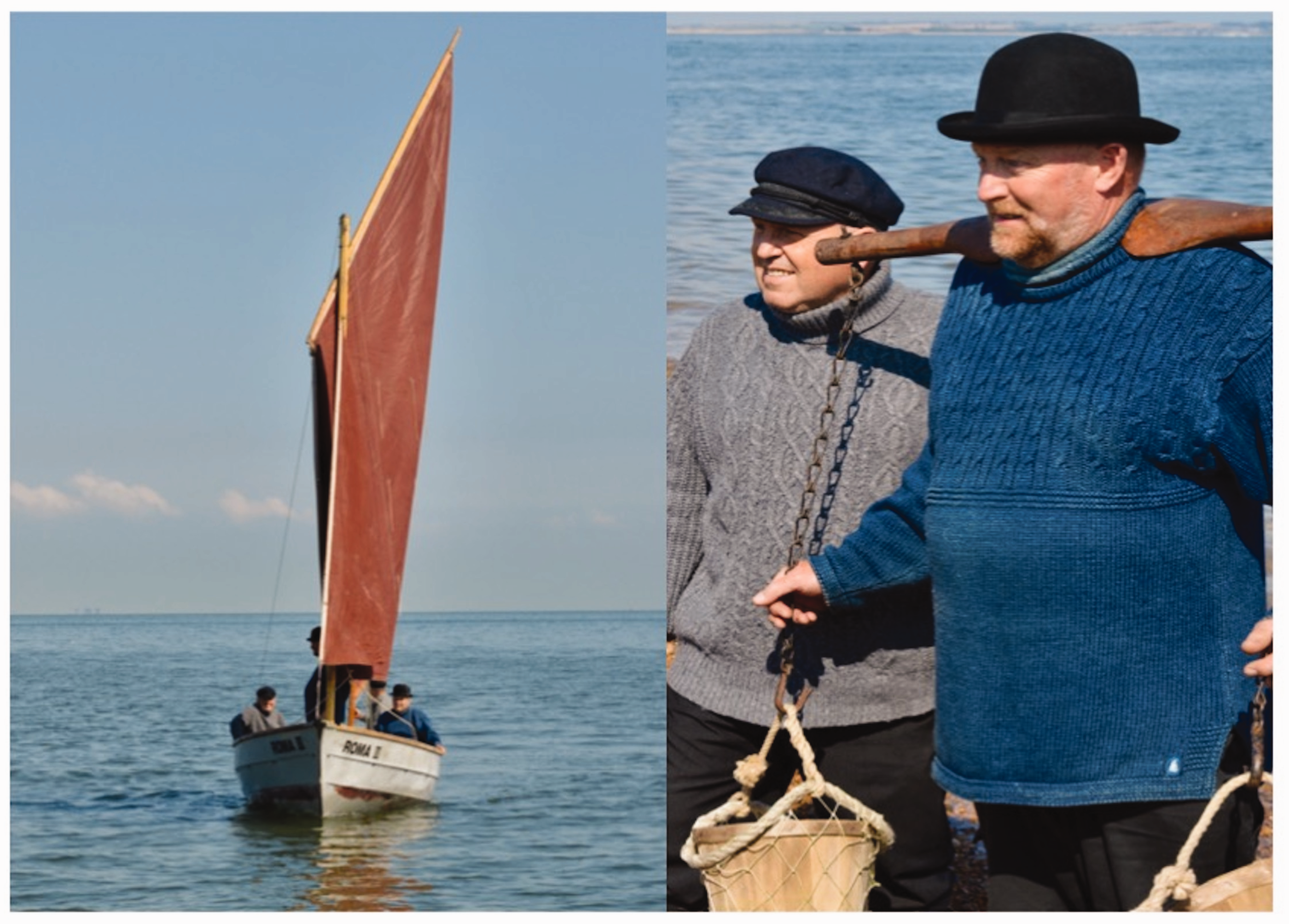
Performing authenticity: landing the oysters during the festival, July 2018.
Alongside such invented traditions, the heritage and iconography of the oyster industry has been celebrated in a series of ventures by the Green family, who have owned WOFC, with business partner John Knight, since 1976. These include the Whitstable Brewery, the Hotel Continental, the East Quay Bar and restaurant, a beachfront oyster shack (The Forge), the Royal Native Oyster Stores restaurant, beach huts and fishermen’s cottages for let, as well as other accommodation replete with oyster branding. In 2016, WOFC won planning permission to turn the ‘Oval Chalet’, a boat storage facility they bought from Canterbury Council for £165,000, into a seafront development of 15 mixed private and holiday homes valued at a combined £10 million. This deploys a familiar local vernacular of black wooden ‘palate’ boarding, echoing the style of the local fishermen’s huts used to stored nets and oyster-dredging equipment. Other companies have deployed this banal localism: when pubco Marston’s opened a brand new pub on the town’s bypass in 2015, they named it The Oyster Bed; holiday rentals are named The Oyster Smack, Oyster Cottage, Fisherman’s Loft.
In this way, the oyster has supported the growth of leisure-oriented businesses in the town, especially those owned by WOFC. Beginning with the Royal Native Oyster Stores restaurant in the late 1980s, WOFC have expanded to employ over 150 staff in their various businesses (WOFC, 2019). They sell oysters, but they also sell an experience economy. The oyster enables the WOFC’s properties to be furnished with a marine-heritage aesthetic, replete with memorabilia of the oyster industry; old boats, nets and weathered signs populate the foreshore (Atkinson, 2007). It is questionable if these are relics of bygone fishing traditions, especially as the seafront looked very different before the beach was subject to flood defence work in the 1980s (Mayo, 2014). Rather like props in the kitsch interior space of an Irish-themed pub or a Tiki bar that liberally borrows Polynesian themes, these icons create a hyper-real setting for consumption (Brown and Patterson, 2000).
This ‘oysterfication’ is so pervasive that for many visitors, the oyster is the ‘one thing they associate with Whitstable’ (according to James Green, development manager of WOFC, quoted in Doward, 2019) (Figure 2). The history of oyster production in Whitstable lends credibility to such claims, establishing the town as a site of ‘local’ food production (Mayo, 2014). In 2010, the New Economics Foundation named Whitstable as Britain’s most ‘home town’ – defined by its proportion of independent shops as opposed to retail multiples – suggesting the town had developed a foodie culture in which environmental, social and economic sustainability were co-dependent (New Economics Foundation, 2010: 21). Here, the celebration of local distinctiveness and sustainability appears to rest on the town’s singular association with the oyster.
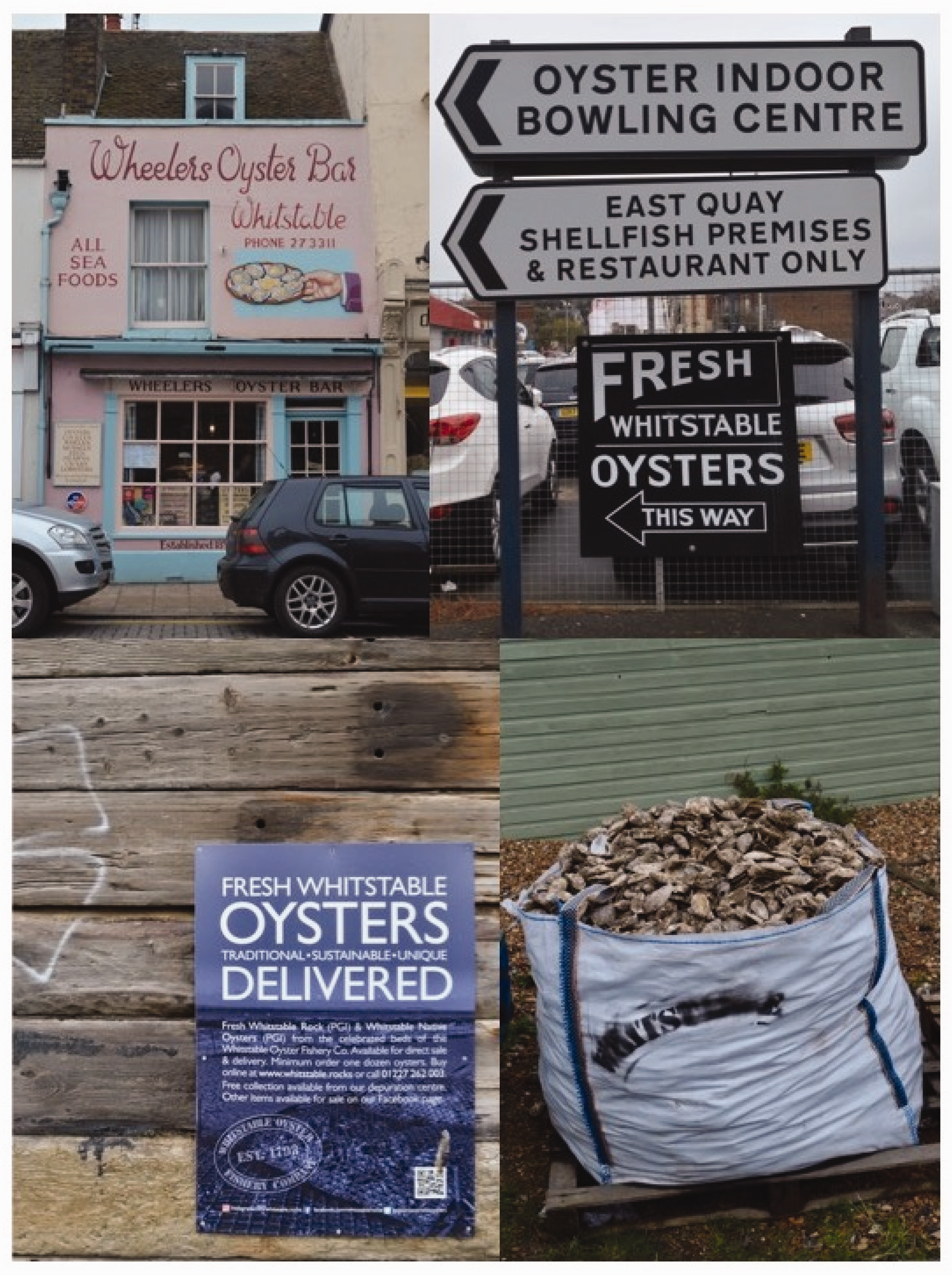
Banal localism in Oysteropolis.
This association between the town and the oyster is something that needs to be understood with reference to the fleshy materiality of the oyster itself. To shuck a raw oyster and swirl its body around your mouth is to taste its strange, cold succulence and experience its distinctive haptic qualities (Fisher, 1988). For Probyn (2016: 52), oysters are as close as any of us get to ‘tasting the sea’. Reputedly, the native oysters of Whitstable taste cleaner, more meaty and metallic than the more-watery Pacific oysters cultivated elsewhere. This leads to their frequent description as an ‘acquired taste’ and one that can cost twice as much than the rock oysters cultivated at Whitstable (which have a mild taste of cut grass and an aroma of seaweed). However, those experienced in tasting oysters suggest those cultivated in different parts of Whistable Bay can taste markedly different, dependent upon processes of filtration. The unique marine conditions, and relative abundance of microalgae in particular parts of the Bay, encourage Whitstable oysters to grow fleshy bodies that subtly reflect the specific biophysical conditions of their residence. So as with a wine connoisseur’s preoccupation with a vine’s terroir, a foodie can call upon the sensory-derived distinctions of place embodied in shellfish’s habitat (Silver, 2014) – what Probyn (2016: 52) terms its merroir.
These reflections on the provenance of Whitstable oysters suggest they possess distinctive affective qualities which render them particularly susceptible to incorporation within foodie cultures that celebrate the distinctiveness of locality. However, it needs to be stressed that the consumption of estuarine seafood is generally not widespread in Britain, and, pre-Brexit, two-thirds of the UK’s oyster production was exported to France and beyond (Herbert et al., 2012). The consumption of oysters tends to be isolated to elite rituals of consumption within high-end restaurants, summoning images of oysters and champagne. The oyster is widely understood in Britain as an emblem of sophistication, and an alleged aphrodisiac (Stott, 2004). Yet it is also positioned within regimes of taste and distaste. For many, the oyster actually evokes disgust reactions and squeamishness: What determines a squirm in many instances, it seems, is not the flavour, smell or texture of food itself. Rather it is the broader cultural associations that spring forth from the encounter with the taste, smell and texture of a foodstuff, and the space in which it is consumed. For, when experiencing any food, we are often not simply responding to our understanding of a flavour, smell or texture, but also to the associations we attach to the combination of the flavour and the wider spatial and cultural milieu in which it is nestled. (Rhys-Taylor, 2013: 238)
The lively, visceral attributes of the oyster and the push and pull of ‘desire and disgust’ that characterises the encounter of human and oyster (Probyn, 2016: 50), hence contribute to its valuation within particular circuits of gentrified consumption. In that regard, the sensual and stylised qualities of native oysters gives them reified agency: they have become a heritage foodstuff, held up as superior to imported oysters on the basis of the succulence and taste. This is in no small part due to the British TV shows, cookery books, chef-endorsed products and restaurants that are powerful economic actors glorifying British products (Barnes, 2017). Here there is a privileging of ‘traditional’ food production because of its contribution to a regional food culture, the environmental benefits associated with short supply-chains and the possibility of re-establishing connections between producers and consumers that yield relations of trust, social regard and pleasure (Parkins and Craig, 2009: 78). In Whitstable, the visibility of oysters growing on the trestle tables is central to anchoring this sense of freshness and reliability within a local food scene that draws on established traditions of aquaculture. The presence of the oyster on the foreshore consolidates this imaginary, with the possibility of consuming an oyster in a leisurely seafront bar or harbourside restaurant adjacent to where it was farmed supporting the valorisation of a slow-food culture promoted through class-based myths of sustainability, morality and value (Hubbard, 2017).
Oysters, gentrification and displacement
The promotion of the oyster in Whitstable has proceeded alongside a rapid gentrification that saw house price growth of +360% from 2000 to 2019, outstripping the Kent average of +226% (Home, 2019). In Harbour ward (which covers central Whitstable), the proportion of NS-SeC1 (higher professional, administrative and professional workers) increased from 6.7% to 11.3% between 2001 and 2011. In the same period, the number of properties with no usual resident, a figure which includes holiday lets and second homes, rose from 172 to 415 in Harbour ward. Significantly, the Whitstable Biennale visual arts festival began in 2002, indicative of a growing population of ‘creatives’, many of whom have drawn inspiration from the fishing heritage of the town. Most notable, perhaps, is Rachel Louise Bailey, whose Black Stuff, 2018, used 7 km of the black rubber bands used to tie mesh sacks to the oyster trestles to create vast sculptural forms which draw attention to marine pollution. More celebratory is Margaret Salmon’s 2014 16 mm film and accompanying flip-book, Oyster, which is a cinematic poem showing the life journey of oysters from hatchery to table, emphasising the homology between the fragile form of the oyster and the local traditions of aquaculture which sustain it. This suggests important connections are being made between foodism, maritime heritage and the arts.
It is difficult to be precise about the date when Whitstable began to gentrify and become associated with such forms of creative art and foodism. As recently as the 1980s, it was described as: … a very lived-in town, unprecious and unprecocious … there is a clean, honest and ingenuous look. There is a hungry smell of boiling whelks, clouds of steam rising from fishermen’s huts; while, on the open sea, still as gravy, an old Thames barge lumbers by … This is the Whitstable I like. You’ll notice I say like, not love; for Whitstable does not encourage sentiment, it doesn’t give a hoot whether you care or not. There’s little enough in the way of hotels, Guide Michelin recommended restaurants and all the rest that make life supportable. (The Times, 1986) In Harbour Street and High Street I found the town working hard at being an offshoot of the London ‘village’. The holidaying Chiswick or Clerkenwell shopper would feel at ease browsing in Naturally Harbour Street, Marco Polos, Seagulls & Flamingos, and Artwork Blue (all fashion and design shops) … I took a frothy cappuccino in Tea and Times (‘Established 1990’ – that’s longevity worth boasting about) sitting on a bottom-contoured high stool and planned my day. (‘A stone’s throw from Islington’, The Sunday Times, 2000)
By the mid-2010s, and in response to changes in London’s housing markets, it seemed to many commentators that Whitstable was thoroughly-gentrified, no longer subject to occasional overspill gentrification but dominated by DFLs who pushed house prices ever-upward: Whitstable has reached stage four of gentrification. We’ve had the Shabby Artists stage, the Cute Vintage Shop stage, the Actually Quite Posh Delis Have Opened stage. Now some serious money has arrived: The Building Of Fancy New Houses That Look As If Their Owners Have Watched Too Many Episodes Of Grand Designs stage. This lot aren’t content with discreet renovations of weatherboarded fishermen’s cottages. They want swagger. They want bling. I hope it’s not the town’s downfall. (Dyckhoff, 2019: np) I’m one of many locals forced out of my home-town [Whitstable] by the influx of DFLs (Down From London) who insist on purchasing holiday homes in the town. Like many locals, DFLs are … a nuiscance [sic] and have contributed to the cliched sea-side town that Whitstable has become. I too avoid the town like the plague in the summer to avoid the arrogant Londoners … it’s not a great town anymore, it used to be … there was a real community spirit, not anymore (just look at all the gated residential complexes - separating the wealthy newcomers from the commoners). (Anon, cited in Wilkins, 2006)
Both retail and residential gentrification have fed upon Whitstable’s reputation as being at the sharp end of the foodie revolution. Two restaurants – Samphire and Harbour Street Tapas – were listed among Britain’s best 50 restaurants in Waitrose’s 2018 Good Food guide, and the long-established Wheeler’s Oyster Bar is routinely touted as a must-visit destination. But the rise in the quality – and price – of Whitstable’s cuisine did not metamorphose in isolation (Terry, 2008). Four miles from Whitstable harbour, yet an icon of the same culinary landscape, is The Sportsman pub, which lists oysters as the first item on the menu and has won multiple Michelin stars, while JoJos in neighbouring Tankerton has been repeatedly-lauded by arch-foodie Jay Rayner in The Guardian. Such accolades are part of a national triumph for British food which is measured in the proliferation of gentrified gastropubs and restaurants, as well as an associated range of independent bakers, coffee shops and gourmet delis. In this light, many of the town’s more affordable pubs and restaurants have rebranded or been taken-over, with the gradual upscaling of the foodscape mirrored in the gentrification of the evening economy: the Continental Hotel (owned by WOFC), for example, was previously the Harbour Lights, a bikers’ hang-out.
This has led commentators to identify Whitstable as a prime example of overspill gentrification with Londoners drawn to a town ‘made famous by the oyster’ (Doward, 2019; Leave London Behind, 2017). Here, it needs to be emphasised that London experienced pronounced housing price growth in the early 2000s, tied to foreign investment and an influx of global capital (Hamnett and Reades, 2018). Since then, the house price disparity between London and the rest of the nation has opened up further, and though pre-Brexit anxiety and coronavirus has ended the boom, homes outside London still look relatively-cheap to those with housing wealth in London. The 2000s registered an explosion of second-home purchases by affluent professionals from London: after exhausting opportunities to extend, improve or move, investing in housing elsewhere provided a material fix for Londoners’ accumulated capital. Whitstable was identified as a serious contender for investment, with The Guardian’s regular ‘Let’s Move To … ’ column on Whitstable in 2009 (and again in 2019) clearly interpellating a middle-class investor from London: There comes a delightful happy moment in property. It happens very rarely. Like a perfect storm. But in a good way. When everything aligns. That's happening in Whitstable right now. Yes, yes, Whitstable went all Padstow years ago: now you can't move for organic nappies and Cath Kidston gingham curtains. But its property inflation has slumped considerably. Nowadays you'll find three-bedroom Victorian terraces for £150,000. But the really sweet thing? The North Kent railway line. Later this year north Kent’s creaking line connects with High Speed One, and whole swaths of hitherto distant climes become far more accessible. Whitstable, they say, will be 72 minutes to London St Pancras and Victoria. Plus it’s one of the rare spots near London that’s artsy, and liberal-ish enough not to turn you honourable Guardian readers all Daily Mail within two weeks. (Dyckhoff, 2009: np)
Here, the connective tissue of mobility is important, not least the fact Whitstable is within easy reach of London by high-speed rail, making it a day-trip destination. The oyster, both physically and metaphorically, articulates this relation: it is not simply that the oyster is used to promote Whitstable as a tourist destination, it is the fact that its distinctive affective qualities (its taste, smell, texture) draws in day-visitors and creatives from London (Wright, 2015). While Whitstable provided oysters to Billingsgate fish market in the 19th century and the fashionable London restaurants of the 20th century (Nesling, 2017), conversely today it is Londoners who come to Whitstable to experience a particular mode of coastal consumption. Since the early 2000s in particular, the rise in UK foodie culture and the reification of geographically-defined products has heightened the appetite for Whitstable’s oysters and cemented the town’s reputation as a foodie mecca and a gentrification hotspot (Levy, 2007; Richards, 2015).
Following Barua’s (2021) suggestion that non-human animals can be part of the material, aesthetic and sensory infrastructure that encourages urban change, thus far we have stressed that this process has involved the oyster as both a symbol of class change and a visceral mediator that articulates changing relations of taste and desire. In both cases, the oyster is imbricated in wider circuits – supply-chains, tourist investments, media discourses – which serve to position the oyster as a central actor in the gentrification process. But in stressing this we are not simply arguing that oysters become enrolled in gentrification through human agency: hence, in our last section, we wish to build further on the research that considers the work that animals do in making and sustaining place (e.g. Barua, 2019; Kirksey et al., 2018; Silver, 2014).
Lively materiality and contested spaces
There is trouble in Oysteropolis: longer-term residents have articulated anxiety about the impacts of gentrification and the influx of ‘Down From Londons’ who descend on the town in the summer months (Doward, 2019). Here, it is significant that much of this disquiet has been registered in relation to the socio-materiality of oysters and the ways they are present in the town. Most notably, opposition to gentrification is channelled through the emblematic annual oyster festival, where children construct ‘grotters’ from oyster shells and competitors attempt to eat six oysters in the fastest time. This festival downscaled in 2017 following resident and business complaints about problems of congestion and parking in the town, as well as drunkenness and anti-sociality among the estimated 40,000 day-trippers who descended on the town, many consuming oysters washed down by beer or champagne on the beach. There are regular complaints on social media about the litter left by picnics and barbeques, with Canterbury City Council seemingly unable to cope with overflowing bins that are regularly scavenged by other non-human animals including seagulls, foxes and feral cats (Chantler-Higgs, 2019).
Nor have the WOFC been immune from criticism, as although the WOFC’s entrepreneurial activities have boosted local trade, some feel that they pursue aquaculture in a way that over-privileges the oyster as part of the coastal ecosystem, promoting the cultivation and protection of oyster stocks at the expense of other possible uses of the ‘coastal commons’ (Hubbard, 2020). Particularly sensitive here has been the matter of their ownership of the beach, with local campaigners (the Whitstable Beach Campaign) alleging that WOFC’s use of trestle tables and the living presence of Pacific rock oysters on the foreshore has displaced recreational swimmers and sailors. Fearful that this was also the prelude to ‘unsightly’ agricultural buildings being constructed on the beach, local campaigners, who have long fought to have a ‘right to roam’ over the beach (McGillivray and Holder, 2007), have lobbied to have the trestle tables removed from the intertidal zone, and in 2018 Canterbury City Council ultimately demanded the removal of those on the landward side of mean low water on the basis that they had been unlawfully-constructed (Hubbard, 2020). While the trestles have been allowed to remain, pending the outcome of an Enforcement Notice appeal postponed because of COVID-19, local groups have continued to oppose WOFC’s expansion of their commercial operations, with a plan to add 120-extra seats to seafront oyster bar The Forge rejected by the City’s licensing committee in 2020 following nearly 200 objections (including many suggesting this seating would block a permissive public right of way along the beach). Of course, it is possible that recent gentrifiers are a significant faction among those who are complaining about the development overseen by the WOFC, the irony being that those who have been drawn to Whitstable because of its reputation as a fishing community are now complaining that the activity of oyster production interferes with their leisured enjoyment of the seafront.
Among the 222 public comments on the WOFCs retrospective planning application for trestles on the foreshore (made in 2018) was the frequent objection that WOFC are using trestles to grow imported Pacific rock oysters, not natives, with many suggesting imported oysters can be environmentally-damaging. For example: I am hugely concerned about the growing of non-native Oysters (pacific oysters) in these warm waters. These oysters are not native to Whitstable, so pose a problem to the delicate ecosystem of which the whole town and tourist industry relies on. The Pacific Oysters will grow exponentially … across the whole beach, not just within the oyster racks, and will ruin the balance of the sea-life in this area. They also present a safety hazard for use of the beach as the shells are razor-sharp. There are campaigns to stop this spread of Pacific oysters in nearby areas of the coastline. The only Oysters that should be allowed to be grown here are Native Oysters. (public comment submitted 11 May 2018)
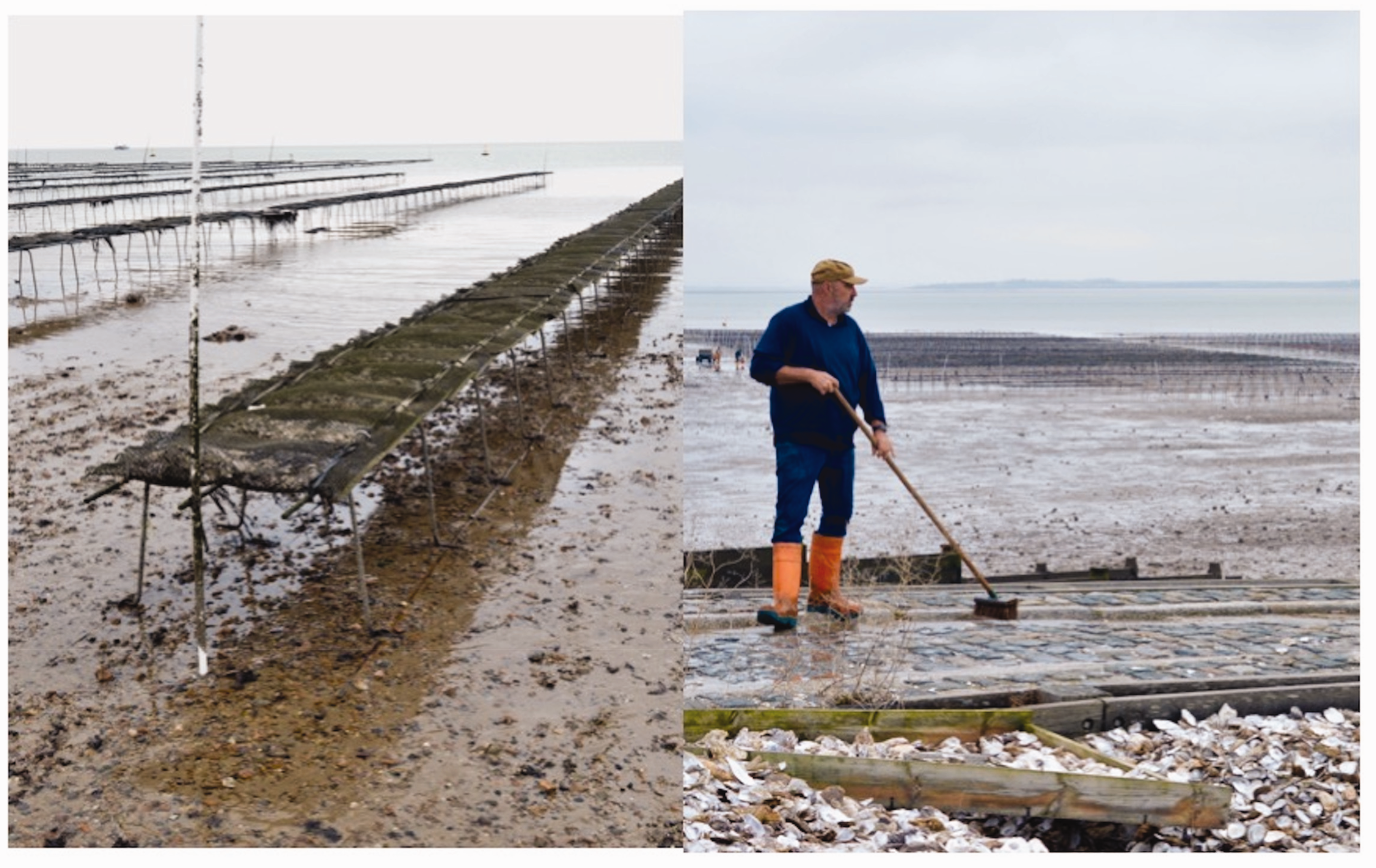
Farming oysters on trestles off Whitstable Beach, 2018.
While the Whitstable ‘flatsmen’ were once dependent on the seasonality of native oyster for their livelihoods, the Pacific oyster now brings year-round prosperity, maintaining supplies of fresh local oyster on-menu. The fact these oysters are visibly cultivated on the foreshore at Whitstable enables WOFC to do more than just set a phantasmagorical stage for consumption: it empowers them to promote an ideology through concrete material forms. Huge piles of empty oyster shells are discarded outside the Royal Native Oyster Stores, but signs warn off thieves by presenting these as part of intricate agricultural production cycle, noting that they are routinely dumped out at sea as cultch for young larval oysters to settle and grow in. This emphasises the mutuality between the town’s development and the presence of oysters, with the coastline itself having historically-changed because of the degradation of the oyster beds on the Kentish flats due to overfishing in the 19th century, and the more-recent deposition of shells part of a restoration of oyster stocks designed, in part, to prevent sea-level inundation (Laing et al., 2006). Equally, the oyster trestle tables that nurture non-native oysters are potentially changing the coastline by slowly altering patterns of sedimentation and long-shore drift: the accompanying artificial structures – posts, nets, ropes, buoys – afford substrate for colonisation by other species, supporting numerous trophic levels (Grabowski et al., 2012).
If we further consider oyster physiology and its role in maintaining ‘ecosystem services’, we can grasp how they have been fundamental to the ecology of Whitstable Bay, and the economy of aquaculture dependent on this. As in most bivalve aquaculture, the oyster’s filter-fed meat is the most important and obvious ‘ecosystem service’ they provide to humans (van der Schatte Olivier et al., 2020). The focus in much of our preceding discussion has been on this flesh, which is primarily destined for human consumption, but there is also waste from dead oysters, and bodies that are not harvested for eating and that feed other trophic levels. As oysters suck in and filter out waters, they digest suspended phytoplankton and zooplankton. What they ingest and cannot digest, oysters eject as pseudofeces, which, coated in mucous, fall to the seabed to be processed by anoxic bacteria. The cleaner, deacidified water oysters leave behind is what just about everything else needs to live (Steel, 2019). Here, local geography is crucial as Whitstable Oysters uniquely suck in and filter the polluted freshwater from the River Thames as it meets the salt waters of the North Sea, cleaning the water, preventing algal blooms and encouraging abundant fish life. This presence of oysters in these shallow waters hence leads to increases of fin-fish and invertebrates, either as a source of food or through their wider contribution to biodiversity. In turn, this attracts seabirds and other predators who reduce the number of starfish and slipper limpets that can quickly out-compete oysters in some areas. Through such processes, the presence of oysters is thought to enhance recreational and artisanal fishing, and by contributing to avian populations, potentially encouraging bird-watching too (van der Schatte Olivier et al., 2020).
While the overall importance of oysters in improving water quality, fighting phytoplankton blooms, and creating a feeding habitat for more mobile marine species is still contested, there is plentiful evidence to show that oysters are not inert, but have the ability to ‘collect, divide, dissolve, disperse, transform’ sediments, nutrients and sea-borne pathogens (cf. Bull, 2011: 2282). In suggesting that changes in aquaculture may disturb an intricate habitat that provides valuable ecosystem services, opponents of the WOFC’s expansion of its activities through the harvesting of non-native oysters are hence making a number of claims about the ‘ecological work’ (Barua, 2019) that native oysters perform. But the evidence that invasive, non-native oysters will ultimately out-compete natives and disturb this established ecosystem is to some extent conjectural, as evidence suggests non-native introductions can greatly enhance overall oyster populations (Ruesink et al., 2005). Against this, the ecosystem-wide impacts of oyster introductions – such as those on flow patterns, sedimentation and nutrient dynamics – are not well understood (Ruesink et al., 2005). But the fact that introduced non-native oysters were themselves nearly totally wiped out in Kent in 2010 by the OsHV-1 virus (an especially lethal strain of herpes never seen before in the UK) suggests they can be vectors for disease-causing organisms which can have devastating impacts.
The fact that debates about the cultivation of oysters has become such a flashpoint within debates about the development of the town underscores the point that oysters are widely understood as ‘lively inhabitants’, to the extent that some campaigners invoke a language of rights when they speak of the importance of oysters to the town (see also Hubbard and Brooks, 2021, on the animal ‘right to remain’). The large area of trestle tables visible in the inter-tidal zone, tended daily by WOFC workers, is important here, reminding residents and visitors alike that the town is the custodian of this vibrant, lively non-human matter (Bennett, 2010). Along the seafront on areas of land owned by WOFC, but to which there is a permissive public right of access, there are notices: ‘No swimming’, ‘Do not take shellfish’, ‘No right of way seaward’ (Figure 4). Such signs create (and defend) WOFC’s territorial rights as much through their moral appeal to visitors as any appeal to the authority of the law: implicit here is that the cultivation of Whitstable oysters needs to be safeguarded to the exclusion of other activities and that the ‘ecosystems services’ provided by oysters deserve to be protected by the WOFC as they see fit in the interest of the wider community. The fact not everyone in the town believes the practices pursued by the WOFC will help maintain these services suggests there is emerging recognition that oysters may not always behave in ways that the managers of the ‘coastal commons’ predict (Wakefield, 2019).
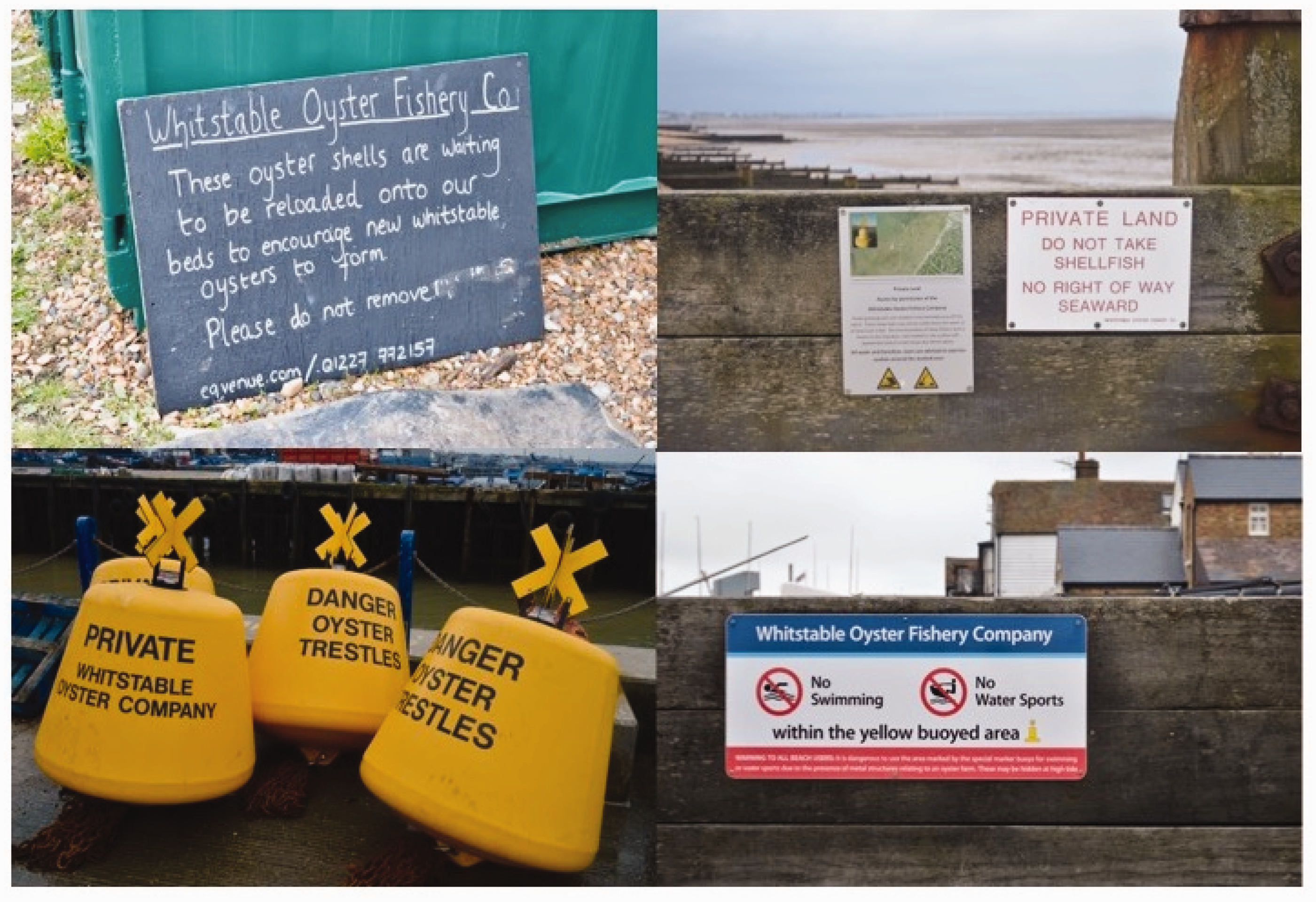
Marking territory, maintaining aquaculture.
Conclusion
Now regularly-dubbed Islington-on-Sea (Wilkins, 2006), Whitstable has undertaken a remarkable transition in recent decades. We have argued this is more than a simple case of overspill gentrification from London, involving the (re)valuation of the town and the fashioning of distinctive foodie cultures fuelled by oyster cultivation and consumption. In this paper, we have argued that the oyster has produced an ‘infrastructure of gentrification’ (cf. Barua, 2021) that has underpinned this process. Admittedly, the same can perhaps be said for other inanimate non-human forms and socio-natures – e.g. the pebbles on the beach or the waves that lap the shore – but the living agency of oysters extends further. It is sensual, seasonal and powerful (Probyn, 2016). Moreover, it is unavoidable: oysters visually inhabit the foreshore and, as a tactile motif, have a socio-materiality which has transformed the appearance and texture of the seafront. Much of the beach is composed of degraded oyster shells and, off-shore, beds of oyster cultch protect the town from inundation.
The complex natural as well as social history of oysters in Whitstable hence shows that the oyster has contributed to processes of gentrification in a variety of ways: it is a visceral object whose affective qualities create hierarchies of taste and distaste through processes of desire and disgust; it is a marker of class change that positions the ‘local’ within wider circuits of consumption, and, finally, it is a labouring body that reconstitutes the coastal ecosystem on which aquaculture depends. In this sense, the revaluation of the ‘humble’ oyster – economically, culturally, ecologically – has accompanied and encouraged the gentrification of the town of Whitstable. This ‘oysterfication’ has though increased pressure on the town as more and more properties become second homes or holiday lets, provoking increased anxiety about the role of the WOFC in promoting gentrification. As we have documented, the WOFC, though an ancient fisheries company, was reconstituted as a commercial and property company in the 1970s, with its investment in restaurants and hotels encouraging re-investment in oyster production as the unofficial ‘Oysteropolis’ branding gained traction and reinvigorated demand for local seafood. However, aquaculture has involved an industrialisation of the foreshore that some gentrifiers (as well as longer-established residents) find unsightly. The modern WOFC workers are not the smocked oyster fishermen of yesteryear, but workers in day-glo vests who quad-bike across the beach to monitor black-plastic mesh bags of lab-hatched oysters.
Foregrounding the oyster in the story of Whitstable’s gentrification is then important and tells us Whitstable’s gentrification is not an exclusively human achievement (Ingold, 2012). Living oysters, particularly imported Pacific oysters, take up space, meaning the oyster itself occupies a fraught position within current battles concerning the development of the town and its seafront. The oyster, in both its fleshy, succulent and shelled forms, needs to be considered as active agent in these battles, its place-making capacities shaping gentrification in a variety of strong ways. The implications of this for wider studies of gentrification are, we hope, clear. First, this example suggests we should not always privilege human agency in gentrification as places are also made through non-human agency (Arcari et al., 2020; Kirksey et al., 2018; Silver, 2014). Second, it shows that animals are not always and inevitably the victims of gentrification, displaced to make way for investments in property and infrastructure: in some cases, it might be more helpful to begin by figuring animals as gentrifiers (see Brooks and Hubbard, 2021). Bringing nature into studies of gentrification is then vital, as many commentators have previously noted (Bryson, 2013; Quastel, 2009), but what is perhaps most important is that we need to be open to the idea that non-human animals can be part of the story of gentrification by performing forms of metabolic, affective and ecological labour (Barua, 2019) that fundamentally challenge and exceed anthropocentric explanations.
Highlights
A new work that stretches research on non-human agency to rethink urban gentrification. A fresh perspective on the haptic qualities of a food as a tactile motif for a coastal community, reformulating the material, sensory and affective qualities of place. An exciting empirical study that positions Oysters, a less charismatic animal, as a vital and lively component within the dynamic material cultures that support gentrification.
Footnotes
Declaration of conflicting interests
The author(s) declared no potential conflicts of interest with respect to the research, authorship, and/or publication of this article.
Funding
The author(s) received no financial support for the research, authorship, and/or publication of this article.