




Abstract
Since almost 50 years L-Dopa is the gold standard for the treatment of patients with Parkinson’s disease (PD). For the first time, a specific chemical abnormality was found in a specific brain disorder. It has been shown that the striatal dopamine (DA) content is greatly reduced in PD patients. The substitution of DA by its precursor L-dopa greatly enhanced the quality of life of PD patients.
In the late 60s and the early 70s of the 20th century, the introduction of levodopa (
L -dopa and dopamine
Dihydroxyphenylalanine (

Markus Guggenheim (1884–1967).
In 1939, just at the start of World War II, Peter Holtz (1902–1970) showed in Germany that
For a long time, DA was considered as a mere metabolic intermediate in the formation of the catecholamines adrenaline and noradrenaline. Only Carlsson et al.
6,7
demonstrated that it is a neurotransmitter occurring on its own]. In animal experiments, ‘catalepsy’ induced by reserpine was completely abolished by
Carlsson (Figure 2) was born in 1926 at Uppsala (Sweden), and he became a professor of pharmacology at the University of Gothenburg in 1959. In 2000, the Nobel Prize was awarded jointly to Arvid Carlsson, Paul Greengard and Eric R. Kandel for their discoveries concerning signal transduction in the nervous system. Many neurologists and neuroscientists regretted that Oleh Hornykiewicz was not awarded at the same time for his crucial contributions to the
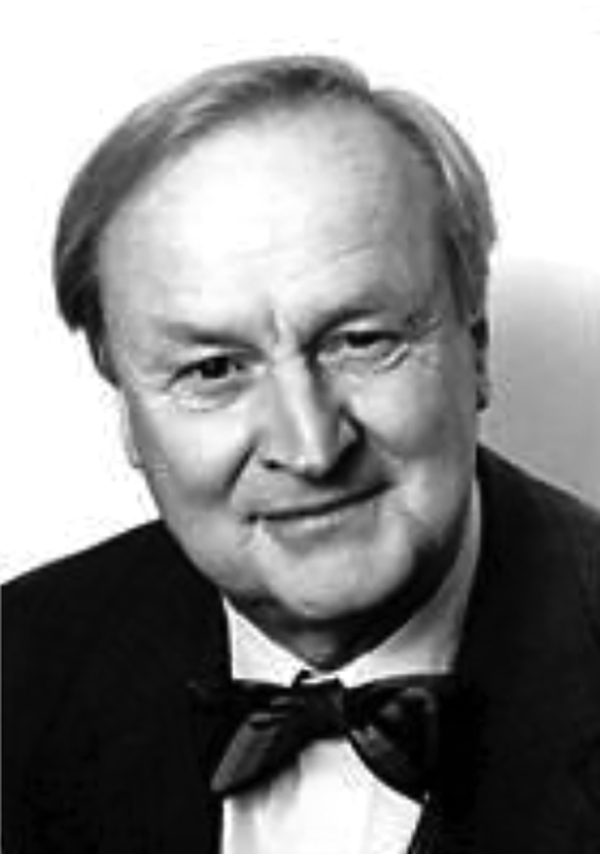
Arvid Carlsson (*1926).
Oleh Hornykiewicz (Figure 3) was born 1926 in Galicia, at the time part of Poland, now in Ukraine. His father, an orthodox priest, moved with his family to Vienna to escape the Stalinist terror. After having learned German, he studied medicine in Vienna after World War II. He graduated in 1953 and started to work at the Department of Pharmacology, at the time chaired by Franz von Brücke. He obtained a scholarship from the British Council with the intention to work with the German-born physician, biochemist and Nobel Laureate Sir Hans Krebs in Oxford. As Krebs had no appropriate project for him, he was recommended to Hugh (Hermann) Blaschko, another German émigré. Under his auspices, Hornykiewicz worked on the role of DA in peripheral tissues. Blaschko 10 had argued that DA in addition to being a metabolic intermediate may have ‘some regulatory functions of its own which are not yet known’.

Oleh Hornykiewicz (*1926).
Back to Vienna, encouraged by Kathleen Montagu’s 11 finding of DA in the brains of different animals and the above-mentioned papers by Sano et al. 8 and by Bertler and Rosengren, 9 Hornykiewicz decided to investigate DA in human brains. Together with his assistant Herbert Ehringer, he examined post-mortem brain material, 3–20 h after death, from 20 controls, 2 patients with Huntington’s chorea, 6 with other extrapyramidal diseases and 6 with PD (4 postencephalitic and 2 PD) with a rather insensitive colorimetric method. In the basal ganglia of controls as well as in the Huntington cases, they found high concentrations of DA, whereas it was diminished by a factor of approximately 10 only in the Parkinsonian patients. 12 In 2007, Hornykiewcz stated, ‘For the first time, a specific chemical abnormality was found in a specific brain region in specific brain disorder…’.
A few months later, Barbeau et al. 13 published that DA excretion in the urine of PD patients is reduced.
Later, with a more sensitive spectrofluorometric method, Hornykiewcz 14 demonstrated DA depletion in the pars compacta of substantia nigra. He concluded that the striatal DA deficiency is a consequence of the nigral cell loss and that there must exist an anatomical connection originating in the melanin-containing substantia nigra and terminating in the striatum.
Treating PD patients with L -dopa
Hornykiewicz was determined to replace the missing DA in PD patients by
He contacted Walther Birkmayer (1910–1996; Figure 4), at the time head of the neurological ward of the Municipal Home for the aged in Lainz-Vienna that permanently housed PD patients, for collaboration. In the beginning, Birkmayer was not very enthusiastic and he delayed the start of the project by 6 months. Later, he confessed that he was taking revenge because 2 years earlier Hornykiewicz had refused to collaborate in a project which was not appealing to him. 16

Walther Birkmayer (1910–1996).
They injected intravenously 50–150 mg of
Subsequently, several authors reported similar effect with intravenous
The therapeutic value of
George Cotzias (1918–1977; Figure 5) was born in the Isle of Crete and started his medical studies at the University of Athens. Because he had served in the Greek army, he had to leave Greece in 1941 when the German army invaded Greece. He immigrated to the United States, and despite initially speaking hardly a word of English, he was, eventually, able to continue his medical education at Harvard Medical School, where he graduated summa cum laude in 1943. He came in contact with Parkinsonism when he was studying toxicity of manganese. Miners from Chile excavating manganese suffered from Parkinsonism. 29

George Cotzias (1918–1977).
Cotzias was aware of the publications from Lund and Vienna; nevertheless, he started dopa treatment with another goal than increasing striatal DA level. He suspected that melanin depletion was the major problem in PD. By giving precursors of melanin, such as melanocyte-stimulating hormone, phenylalanine and dopa, he attempted to increase nigral melanin concentration. Only dopa shows clinical improvement. Nowadays, it is generally accepted that this concept was wrong. Cotzias et al. 30 later spoke of an ‘erroneous but fruitful hypothesis’.
Cotzias et al.
27,28
first used
In a prospective double-blind placebo-controlled study, Yahr et al.
31
confirmed the therapeutic effect of
Oliver Sacks
32
has very vividly described the ‘awakening’ of patients suffering from postencephalitic Parkinsonism by
The advent of decarboxylase inhibitors
It has been mentioned that in the mid-60s of the 20th century,
It goes without saying that the promoters of the DA theory have tried to find more evidence in its favour. One study aimed to prevent
Hoffmann-La Roche in Basle disposed of such an inhibitor (benserazide) which had been tested before without effect in patients with arterial hypertension. Based on previous animal experiments, it was assumed to interfere with the formation of DA from
This seemingly paradoxical clinical observation could best be explained by poor penetration of the inhibitor from the blood to the brain.
36
Subsequently, the combination of
The
Footnotes
Declaration of conflicting interests
The author(s) declared no potential conflicts of interest with respect to the research, authorship, and/or publication of this article.
Funding
The author(s) received no financial support for the research, authorship, and/or publication of this article.