



Abstract
Occupational workers in hot environments face heat strain during temperature up-steps and cardiovascular strain during temperature down-steps. However, existing thermal risk evaluation models primarily focus on heat strain, neglecting potential risk after large temperature down-steps. This study employs a comprehensive multi-indicator approach to assess both heat strain and cardiovascular strain. Method: Six physiological and psychological parameters were selected for evaluation indexes, and four levels of thermal risk were established. Then trigonometric membership functions were proposed to determine the membership degrees related to the evaluation grades. Combined with the entropy weight method, a fuzzy comprehensive evaluation model was developed to assess thermal health risk levels. Results: Results indicated that core temperature, heart rate, and mean skin temperature are important physiological factors for assessing heat strain, while thermal sensation and perceived exertion also contribute significantly. The variation in blood pressure is relevant to cardiovascular strain. The developed model can distinguish the effects of temperature step magnitude and clothing thermal resistance on heat strain. A temperature difference of 40°C (from 40°C to 0°C) leads to a moderate level of cardiovascular strain and a 24% probability of high cardiovascular strain risk. Conclusions: These findings underscore the significance of transitional spaces and appropriate clothing choices in mitigating thermal risks and promoting human health and comfort in environments with substantial temperature variations.
Keywords
Introduction
Sudden temperature changes are common in firefighting and industrial processes. 1 For example, during firefighting, the inside operations are at least 20°C higher than outside. 2 In regions like southern China, temperature differences of 20–40°C between the work environment and non-work environment are typical in winter. 3 These temperature disparities impose significant physiological stress on the body’s thermal regulation system, potentially leading to health issues such as cardiac infarction or stroke. It is crucial to assess thermal risks during exposure to high temperatures and when returning to normal environments to safeguard human health and safety.
Human heat strain in temperature up-steps can be assessed by physiological parameters such as core temperature, skin temperature, heart rate, blood pressure, and sweating rate, as well as psychological parameters including thermal sensation and rating of perceived exertion. 4 However, considering the complexity of the human thermal state, composite indices like PSI 5 and PeSI 6 are increasingly being used. The fuzzy comprehensive evaluation method has gained popularity due to its ability to integrate multi-indexes and handle uncertainty and fuzziness. 7 Researchers have utilized techniques such as the analytical hierarchy approach, fuzzy AHP-VIKOR, and integrated human thermo-physiological models to assess heat strain.8–10 Variable weight theory has been proposed to address the limitations of constant weight approaches.11,12 However, current models primarily focus on physiological parameters and overlook subjective experiences, potentially leading to incomplete conclusions. As a result, incomplete conclusions may arise, failing to accurately reflect the actual situation and neglecting the subjective experiences of individuals. 8
Limited research has addressed the evaluation of cardiovascular strain when transitioning from hot working environments to lower ambient temperatures. However, experimental studies have demonstrated increased blood pressure levels during temperature down-steps, potentially contributing to cardiovascular conditions.13,14 Wu et al. 15 observed significant increases in systolic and diastolic blood pressure within 1 min of entering a cold environment. Higher blood pressure raises the risk of cardiovascular disease. 16 The World Health Organization recommends categorizing blood pressure based on absolute values, while studies suggest that variability in blood pressure and changes in skin temperatures are also relevant.17–19 Therefore, comprehensive evaluation approaches using multiple parameters are necessary for assessing cardiovascular strain.
To overcome the limitations of existing fuzzy comprehensive evaluation models, which overlook subjective perceptions and post-operational cardiovascular strain, this study aims to develop an improved model. By incorporating both physiological and psychological parameters, the proposed model will assess heat strain during high-temperature exposure and cardiovascular strain during ambient temperature down-steps. This comprehensive approach will enhance the accuracy and practicality of human thermal risk evaluations.
Materials and Methods
Experiment
Experimental Conditions
The experiment aimed to emulate temperature fluctuations experienced by firefighters during search and rescue operations after extinguishing a fire. Based on local temperature measurements collected from firefighters engaged in search tasks after water application and room ventilation during firefighting operations, it was observed that the average temperature within the search area exceeded 39.7°C, which was significantly higher than the average temperatures experienced during outside operations (≤20°C). 2 In this study, the outdoor temperature was set at 20, 10, and 0°C to simulate winter temperatures in southern regions. The high temperature is set at 40°C to simulate a search and rescue environment. In addition, considering the impact of clothing insulation on human thermal response, two types of thermal protective clothing were used under the condition of S20 (from 2 to 40 to 20°C).
Table 1 shows the experimental conditions. Two adjacent chambers were utilized to simulate the temperature changes: Chamber I (5 m × 6 m × 2.5 m) represented outdoor winter temperatures, while Chamber II (5 m × 5 m × 2.5 m) represented a high-temperature work environment. The relative humidity was maintained at 50 ± 5%, air velocity at approximately 0.1 m/s, and mean radiation temperature close to the ambient temperature. Two thermal protective clothing ensembles (E1/E2) were used, consistent with the study of Huang et al. 20
Experimental conditions.
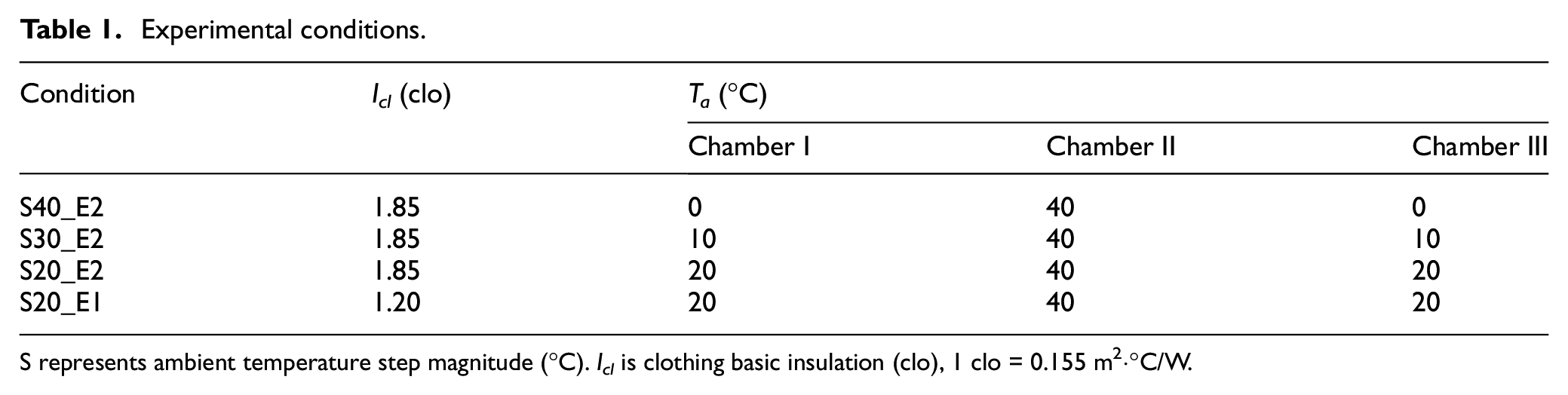
S represents ambient temperature step magnitude (°C). Icl is clothing basic insulation (clo), 1 clo = 0.155 m2·°C/W.
Participants and Measurements
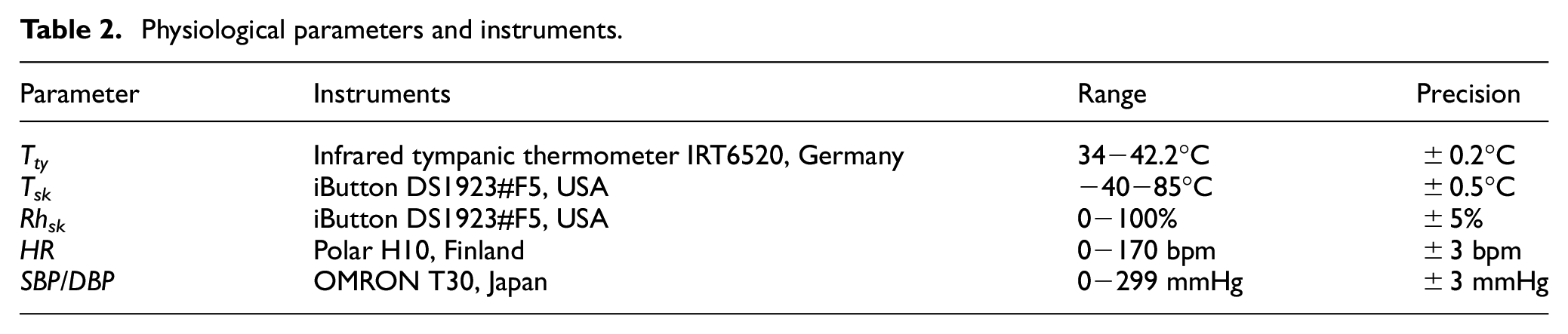
Eleven healthy males (21.5 ± 1.5 years, height 176.0 ± 3.6 cm, weight 63.8 ± 2.6 kg, BMI 20.6 ± 1.1 kg/m2) participated in the chamber tests. Physiological parameters including tympanic temperature (Tty), mean skin temperature (Tsk), heart rate (HR), systolic blood pressure (SBP), diastolic blood pressure (DBP), and mean skin relative humidity (Rhsk), and psychological parameters such as thermal sensation (TS) with a nin-point scale (+4 = very hot, +3 = hot, +2 = warm, +1 = slightly warm, 0 = neutral, −1 = slightly cool, −2 = cool, −3 = cold, −4 = very cold) 21 and rating of perceived exertion (RPE) from 0 to 10 scale (0–1 = extremely easy, 2–3 = easy, 4–5 = somewhat easy, 6–7 = somewhat hard, 8–9 = hard, 10= extremely hard) 22 were measured during the test. Tcr was estimated using Tty+ 0.5°C, considering their consistency in high-temperature environments.23,24Tsk was calculated according to ISO 9886, where the local skin temperatures at eight locations (forehead, upper arm, forearm, hand, left chest, right scapula, thigh, and calf) were measured. A summary of the physiological parameters and measurement instruments is presented in Table 2.
Physiological parameters and instruments.
Experimental Processes
Figure 1 illustrates the experimental procedure. Participants arrived 30 min early for preparation by changing clothes and attaching sensors, and so on. After a 10-min rest period, the test began. It involved a 30-min sedentary period in Chamber I, followed by a quick transition (<10 s) to Chamber II for a 60-min sedentary period. Participants then returned to Chamber I for a 40-min sedentary period. During the experiment, Tty, SBP, DBP, and a subjective questionnaire were recorded at specific times (0, 3, 8, 18, 28, 30, 33, 38, 48, 58, 68, 78, 88, 90, 93, 98, 108, 118, 128 min), while Tsk, Rhsk, and HR were measured continuously every 30 s.
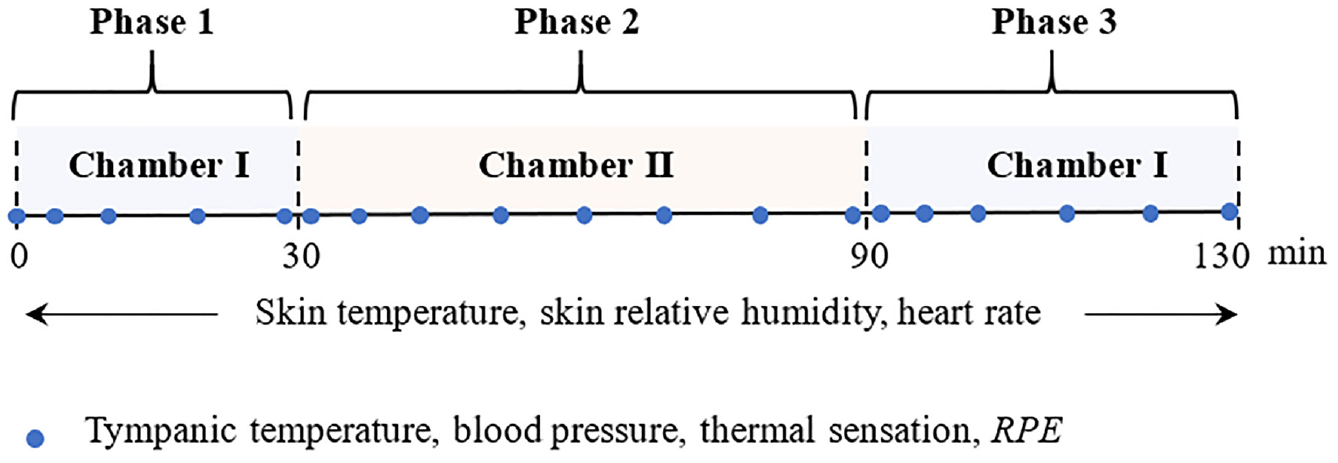
Experimental procedure.
Fuzzy Comprehensive Evaluation Model
The establishment of fuzzy comprehensive evaluation involves five steps: (1) establish the factor set; (2) establish the evaluation set; (3) establish the fuzzy evaluation matrix; (4) establish the weight set; and (5) establish the fuzzy comprehensive evaluation model.25,26 The evaluation results can be determined according to the principle of maximum membership degree.
Determination of Factor Set
Heat Strain Parameters
Heat strain in high-temperature exposure is evaluated by using physiological parameters (Tcr, Tsk, HR, and Rhsk) and psychological parameters (TS and RPE). The thermoregulation process involves vasodilation, sweating, and increased heart rate to maintain body heat balance. Previous research has used indicators like core temperature, skin temperature, heart rate, blood pressure, and sweat rate. 27 However, monitoring sweat rate in real-time is challenging, so skin relative humidity can be used as an alternative indicator of sweat evaporation for clothed individuals. 28 Furthermore, thermal sensation and rating of perceived exertion have proven effective in assessing heat strain. 22
Cardiovascular Strain Parameters
To comprehensively evaluate cardiovascular strain, a path analysis model (Figure 2) examined the relationship between proximal and distal skin temperatures and blood pressure. The path analysis method is commonly used for exploring the mediation of skin temperature in blood pressure responses to ambient temperature. 29 Table 3 presents the path coefficients for 12 paths. Following the principle of positivity and maximum standardized path coefficients f and g, △DBP was represented by paths 2, 3, and 5, and △SBP by path 9. The blood pressure path analysis incorporated chest and hand skin temperatures as proximal and distal skin temperatures, respectively, considering both △DBP and △SBP.
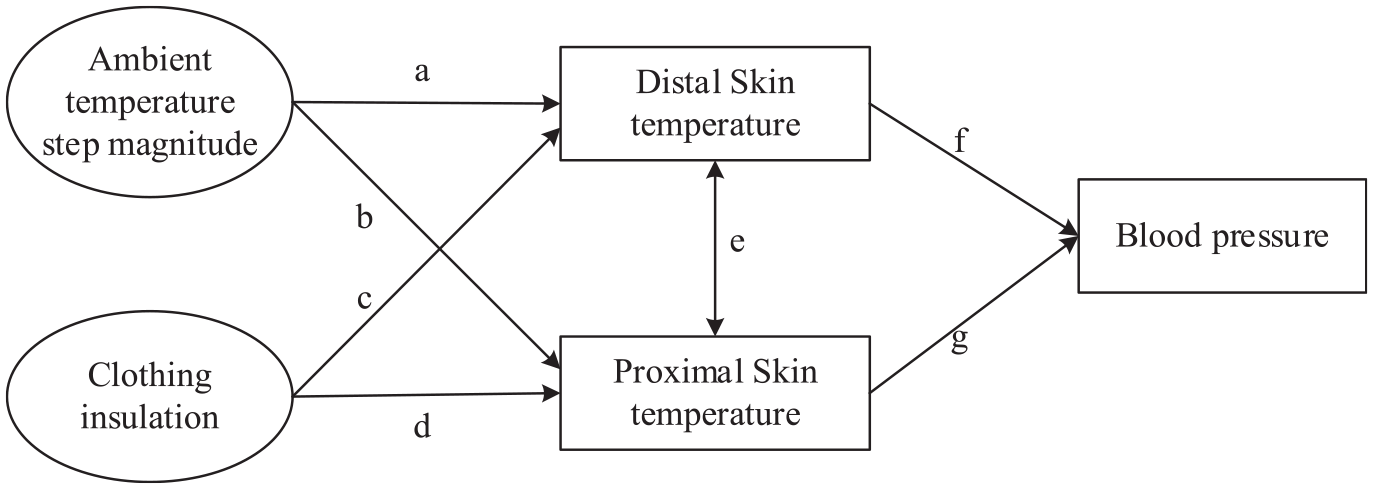
Path analysis of blood pressure, a–g is the path coefficient.
Standardized path coefficients under different local skin temperature parameters.
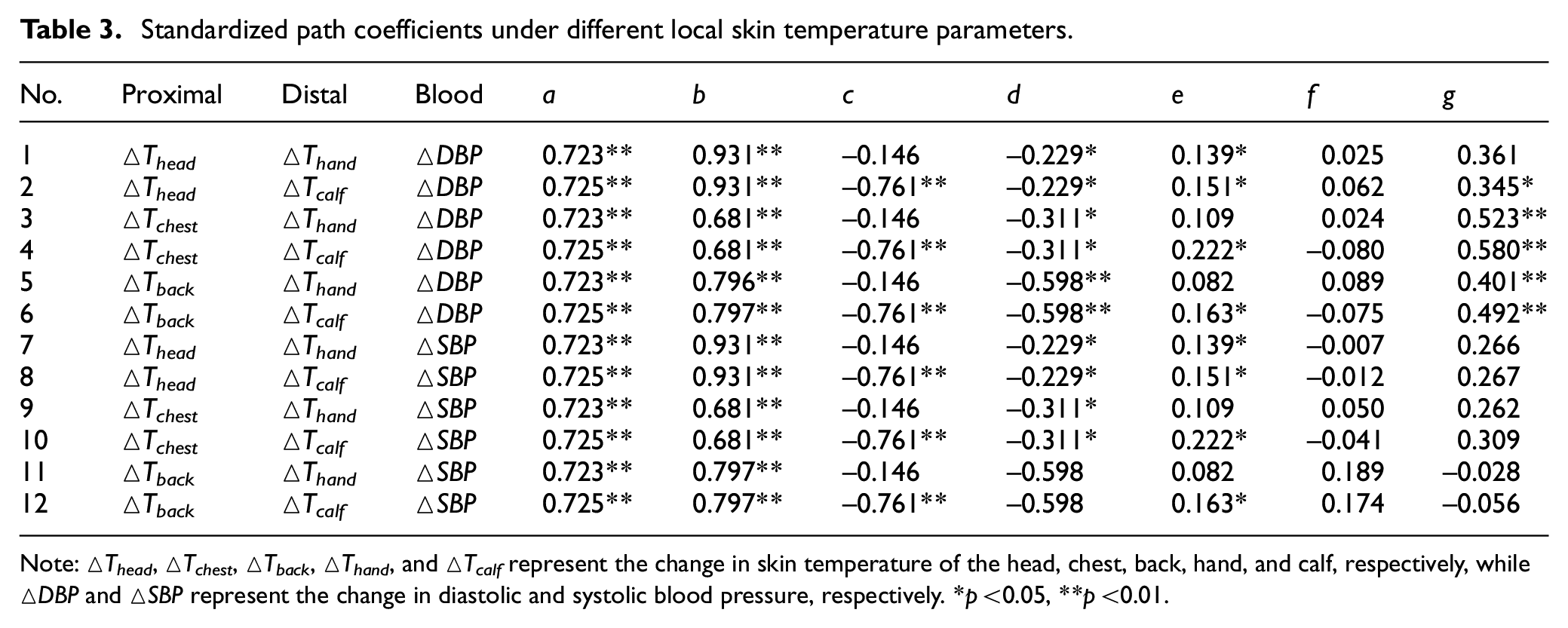
Note: △Thead, △Tchest, △Tback, △Thand, and △Tcalf represent the change in skin temperature of the head, chest, back, hand, and calf, respectively, while △DBP and △SBP represent the change in diastolic and systolic blood pressure, respectively. *p <0.05, **p <0.01.
A regression relationship model was subsequently developed to examine the association between SBP change and chest and hand skin temperature changes (equations (1) and (2)). The model revealed that a 1°C change in chest skin temperature resulted in a 10.049 mmHg change in SBP, while a 1°C change in hand skin temperature led to a 3.1137 mmHg change in SBP as follows:


Therefore, after work completion and returning to the outdoor environment, the effects of temperature down-steps on cardiovascular strain can be evaluated by SBP, DBP, △SBP, △DBP, △Tchest, and △Thand.
The entire assessment process consists of two stages, as shown in Figure 3.
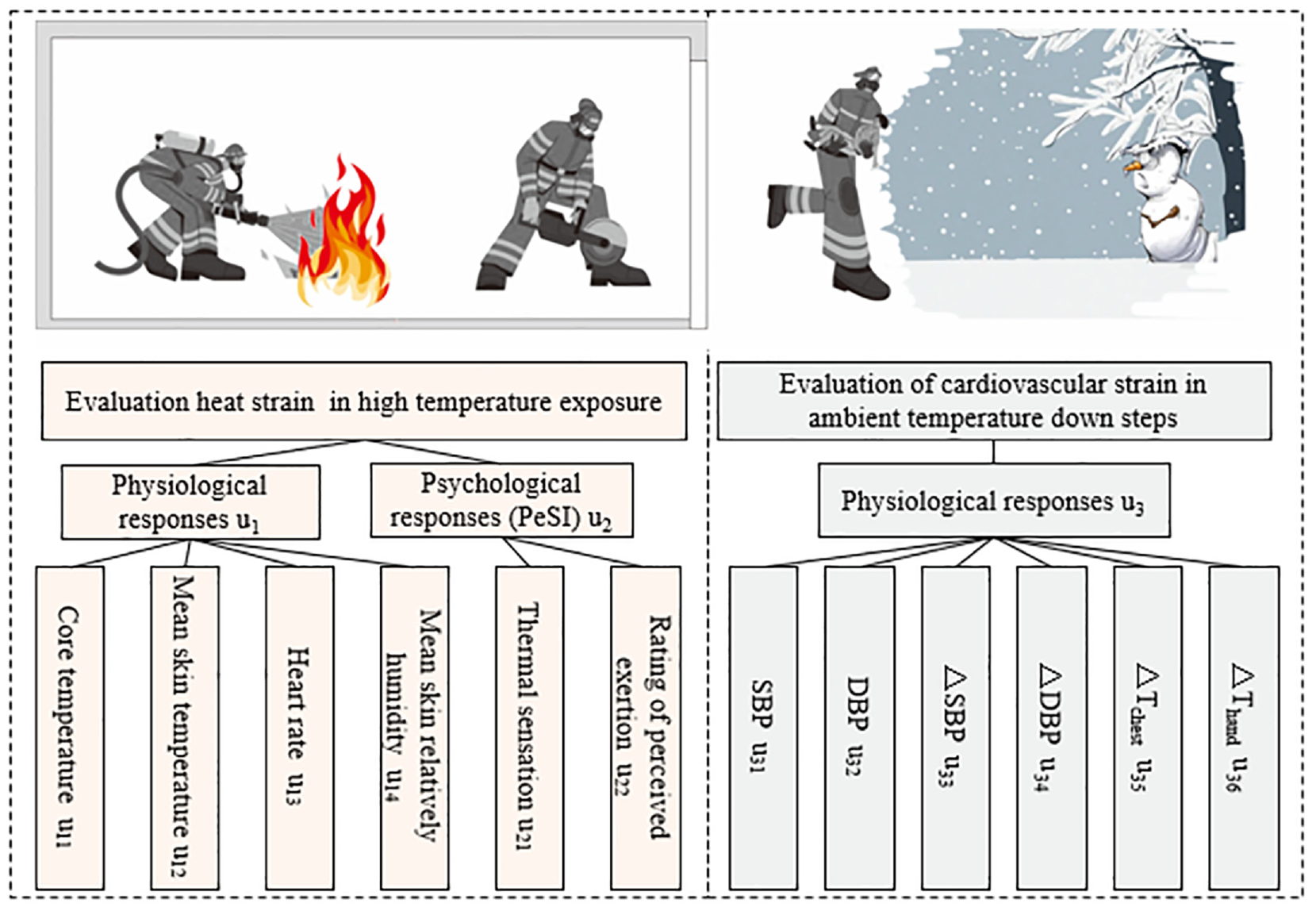
Human risk assessment parameters for ambient temperature up- and down-steps.
Determination of Evaluation Set
Four levels of thermal risk were established. The heat exposure phase was categorized as Level I (no or mild heat strain), Level II (low heat strain), Level III (moderate heat strain), and Level IV (high heat strain). Similarly, the cardiovascular strain after ambient temperature down-steps was classified as Level I (no or mild cardiovascular strain), Level II (low cardiovascular strain), Level III (moderate cardiovascular strain), and Level IV (high cardiovascular strain).
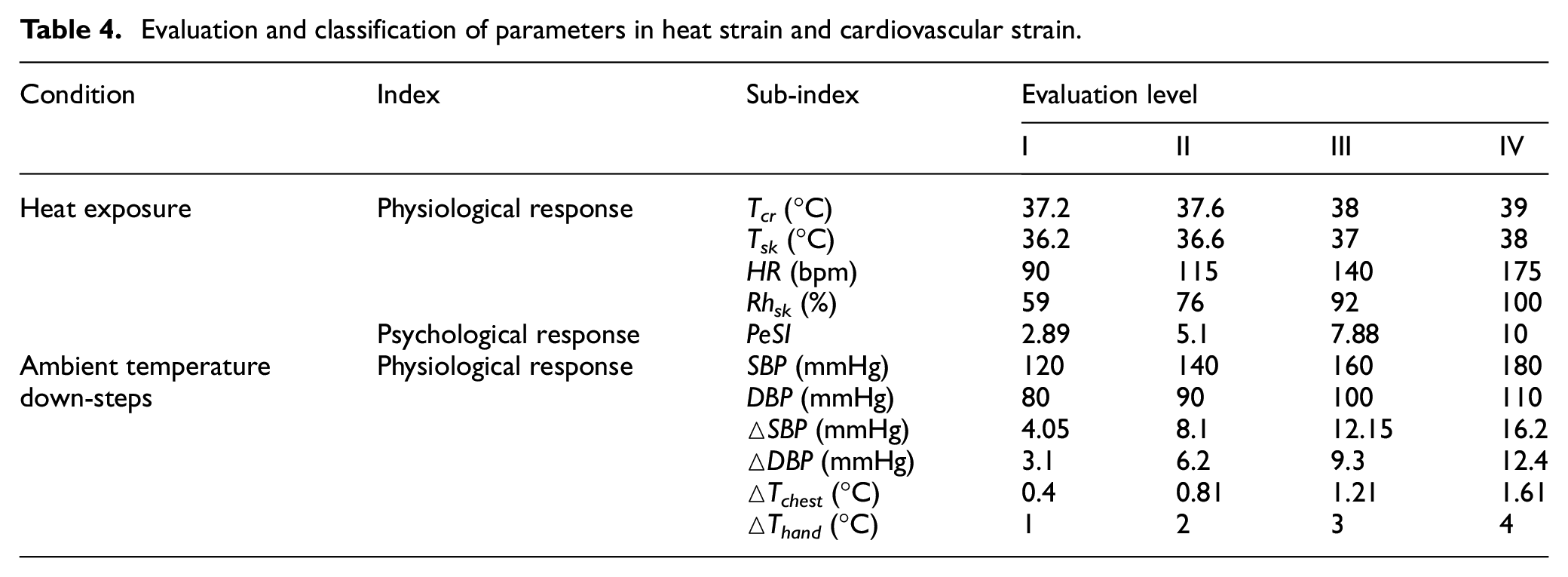
Classification of heat strain parameters: Moran and Pandolf 5 proposed threshold values for each level in HR (90/115/140/175 bpm) and Tcr (37.2/37.6/38.0/38.8°C). ISO 9886: 2004 also provides a threshold of 39.0°C for core temperature, which we used for the fourth level of Tcr instead of 38.8°C. And then the four-level threshold of Tsk is decided referring to the previous study, 30 where each level is set to be 1°C lower than Tcr. 30 The relationship between Rhsk and the percentage of dissatisfaction (PD) was established, that is, 31

Based on the quadrature of PD, the four thresholds of Rhsk were determined as 59%, 76%, 92%, and 100%, respectively. Thermal sensation and RPE were combined in PeSI

which can be divided into four levels: comfort limit (2.89), efficiency limit (5.1), safety limit (7.88), and extremity (10). 32
Classification of cardiovascular strain parameters: The four-level thresholds for SBP and DBP are 120/140/160/180 mmHg and 80/90/100/110 mmHg, respectively. 33 The risk thresholds of 16.2 mmHg for △SBP and 12.4 mmHg for △DBP were identified based on 8939 subjects. 34 These values were used as Level IV thresholds, with four-level thresholds of △SBP set at 4.05/8.10/12.15/16.20 mmHg and △DBP at 3.1/6.2/9.3/12.4 mmHg. Furthermore, the threshold for changes in chest and hand skin temperature can be calculated using equations (1) and (2).
To sum up, the evaluation and classification of parameters in heat strain and cardiovascular strain are shown in Table 4.
Evaluation and classification of parameters in heat strain and cardiovascular strain.
Determination of Membership Function
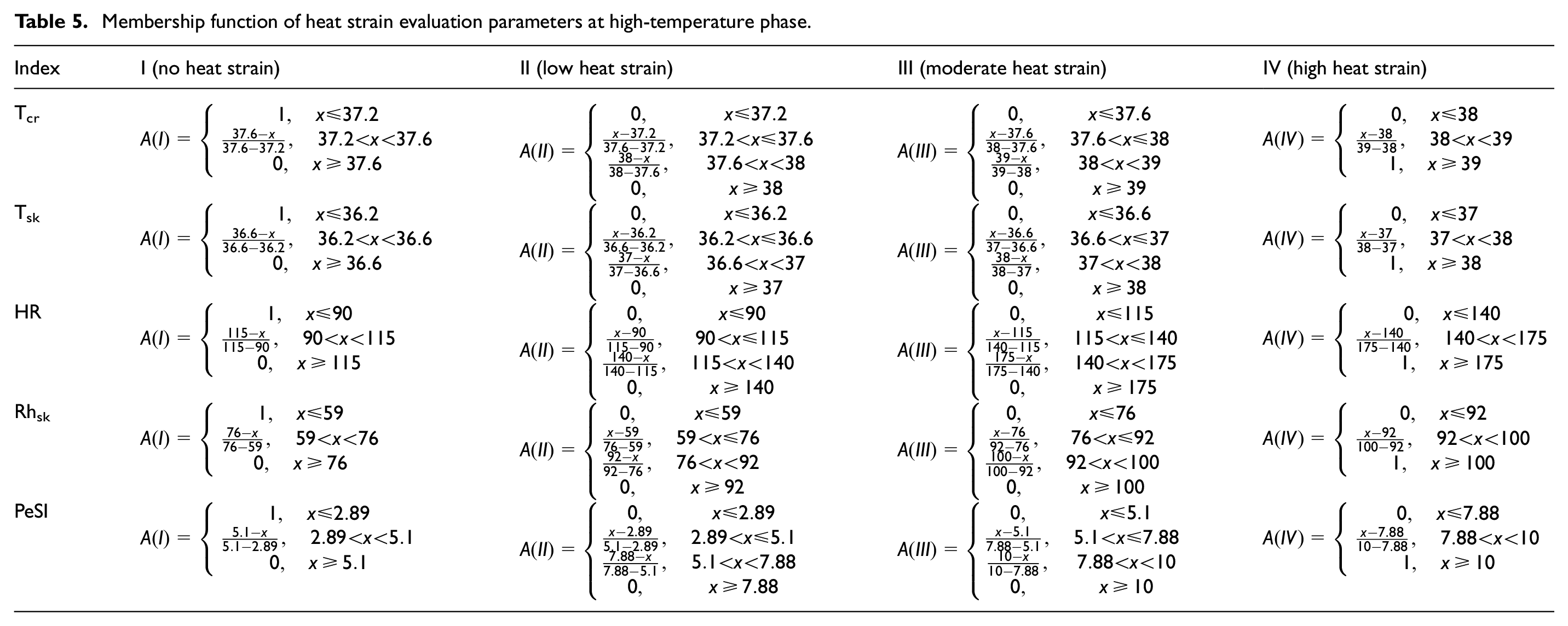
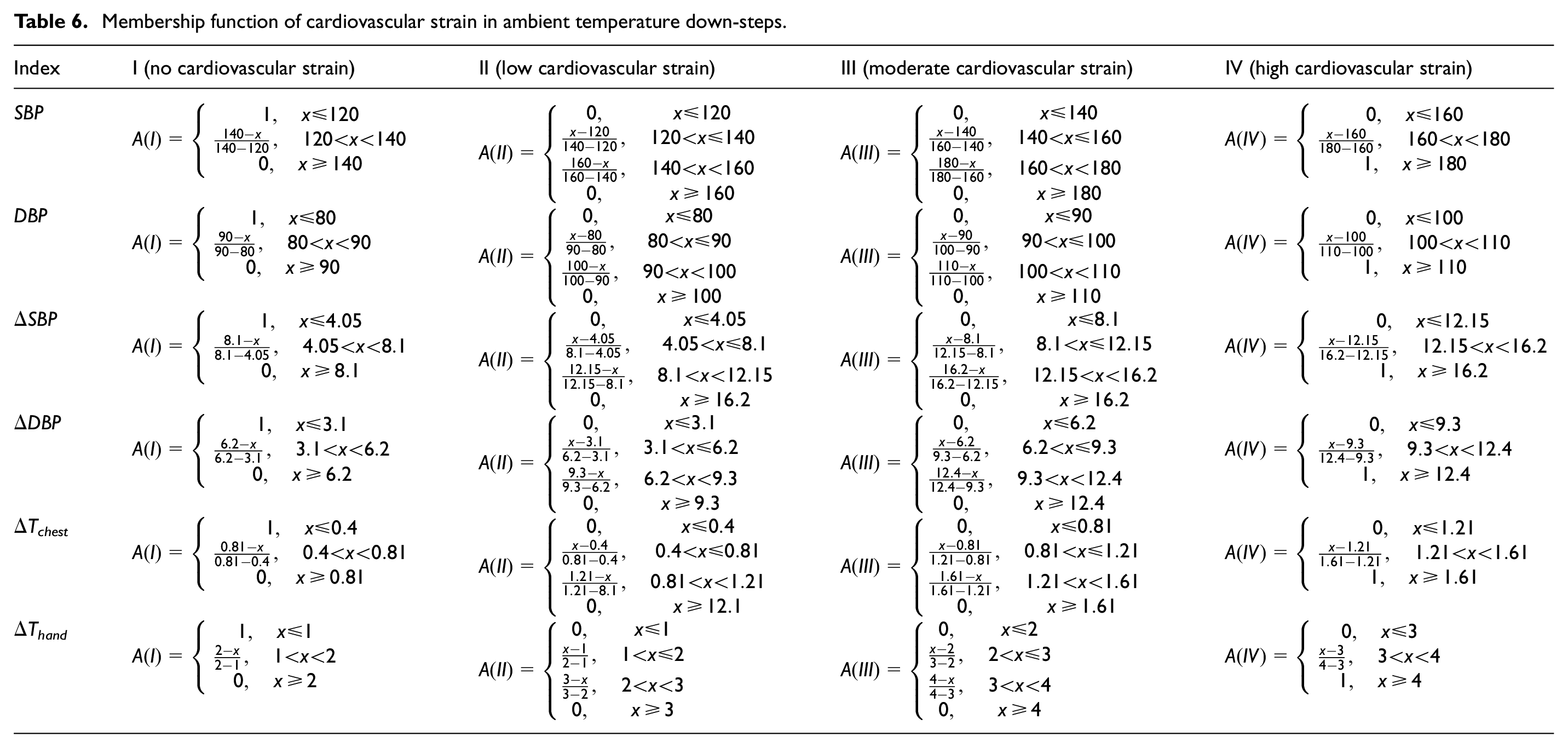
Trigonometric membership functions were employed to represent the thermal parameters and physiological state, as shown in Figure 4. Table 5 shows the membership functions of Tcr, Tsk, HR, Rhsk, and PeSI, while Table 6 shows the membership functions of SBP, DBP, △SBP, △DBP, △Tchest, and △Thand.
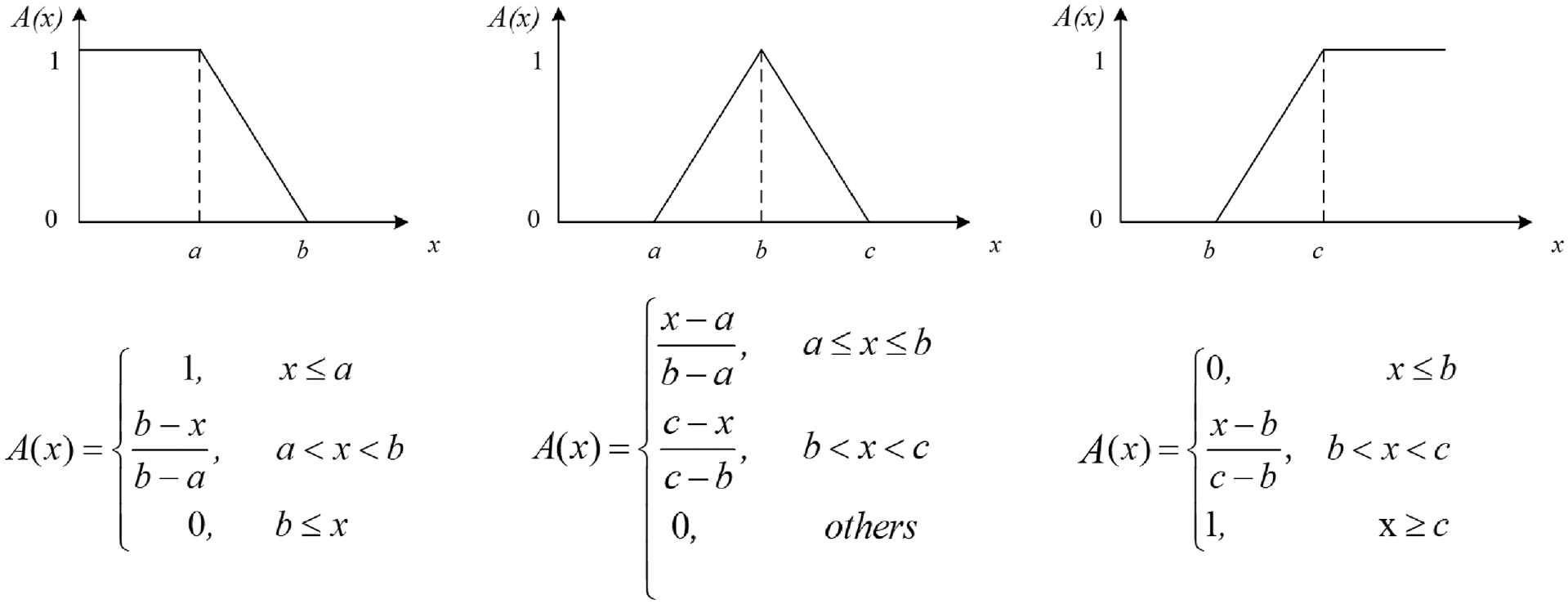
Trigonometric membership function.
Membership function of heat strain evaluation parameters at high-temperature phase.
Membership function of cardiovascular strain in ambient temperature down-steps.
Determination of Factor Weights
Entropy is used in thermodynamics to measure disorder, and in information theory to quantify information. The entropy weight method assigns higher weights to factors with greater variation and smaller information entropy, allowing objective quantification of each factor’s contribution. The calculation process for determining weight using the entropy weight method is as follows:
Positivization: To ensure accurate weight determination, it is essential to confirm that all parameters have positive values, meaning that a higher index corresponds to a higher evaluation value.
Normalization: To make different indicators comparable, all indicators need to be normalized. The formula is as follows:

The probability Pij of the index value of the ith item under the jth index is:

The entropy value ej of the jth index is:

The entropy weight wj of the jth index is:

Results
The Weights of Parameters
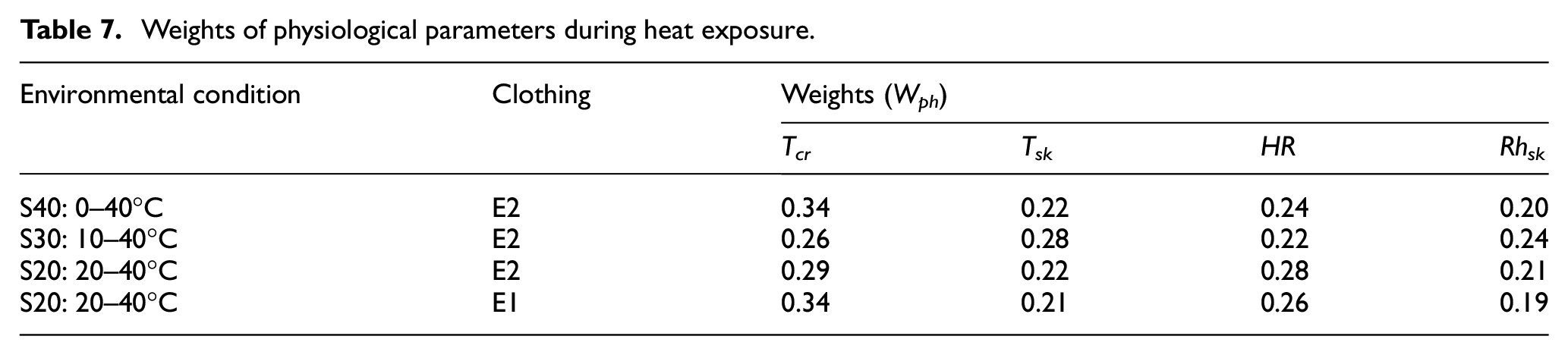
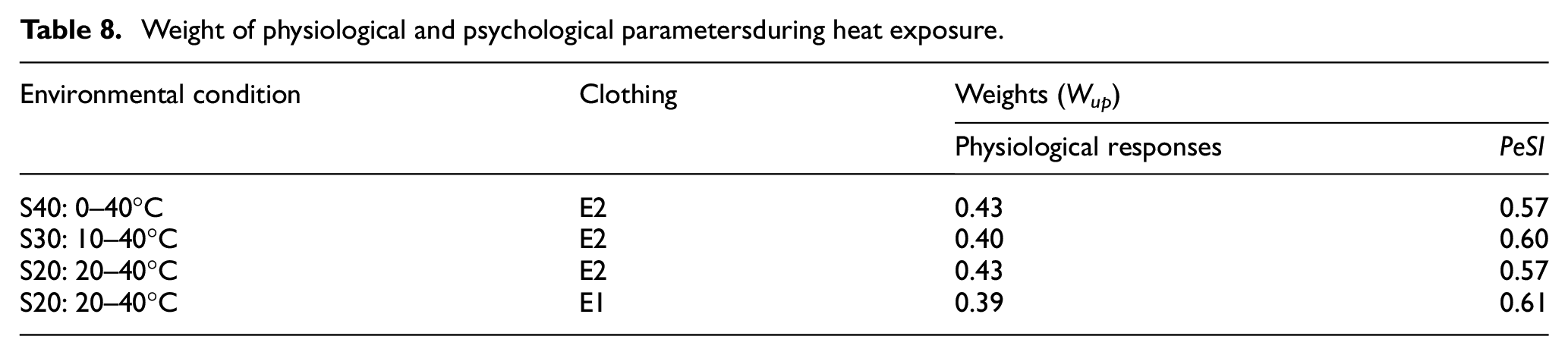
Table 7 shows the weight of physiological parameters during heat exposure in different conditions. The maximum weight was in Tcr (0.26–0.34), followed by HR (0.22–0.28) and Tsk (0.21–0.28), and the minimum weight was in Rhsk (0.19–0.24). Table 8 shows that the weight of the psychological parameter of PeSI (0.57–0.61) was greater than that of physiological parameters (0.39 ∼ 0.43).
Weights of physiological parameters during heat exposure.
Weight of physiological and psychological parametersduring heat exposure.
The six physiological parameters used for evaluating cardiovascular strain, the weight (Wdown) of SBP, DBP, ΔSBP, ΔDBP, ΔTchest, and ΔThand were 0.16, 0.14, 0.17, 0.20, 0.17, and 0.16, respectively.
Comprehensive Evaluation Results
Taking S40_E2 as an example, the fuzzy comprehensive evaluations in heat strain at 90 min in 40°C (phase 2) and cardiovascular strain after ambient temperature down-steps from 40 to 0°C (phase 3) were calculated.
At 90 min, the fuzzy evaluation matrix of physiological responses (Rph) and the fuzzy evaluation matrix of psychological responses (Rps) were as follows:
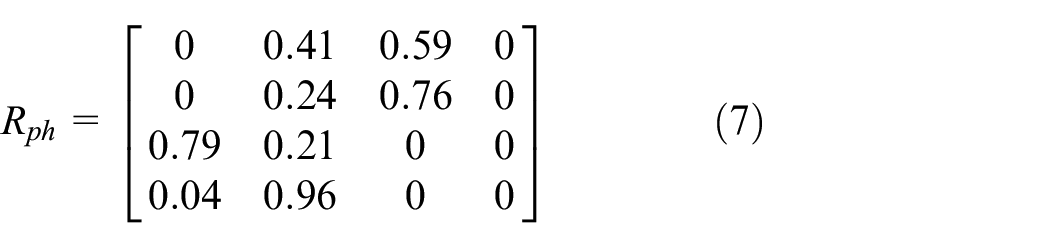

The fuzzy comprehensive evaluation model of physiological responses (Bph) and psychological responses (Bps) was calculated, respectively. Then, the second-level fuzzy comprehensive evaluation model (Bup) was obtained as the final evaluation model for heat strain at 90 min. The results indicated a maximum value of 0.64, corresponding to low heat strain (Level II):



The fuzzy comprehensive matrix of cardiovascular strain (Rdown) was as follows:
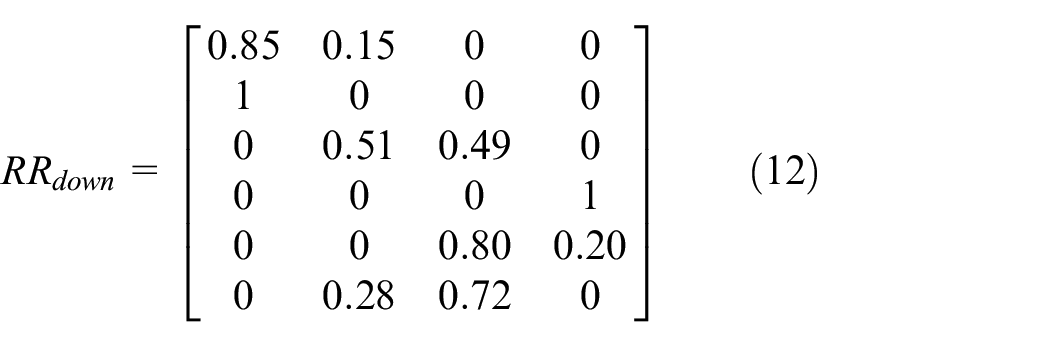
Further calculation of the fuzzy comprehensive evaluation model of cardiovascular strain (Bdown) is shown in equation (13). The results showed that the largest value was 0.34, indicating moderate cardiovascular strain (Level III) after experiencing ambient temperature steps from 40 to 0°C:

Figure 5 illustrates the human health risk assessment under four conditions, each following the above calculation process. With increasing duration of heat exposure, the level of heat strain increased. It can be seen that S20_E2 at 90 min (Figure 5(c)) had moderate heat strain (Level III). S40_E2 (Figure 5(d)) had moderate cardiovascular strain (Level III).
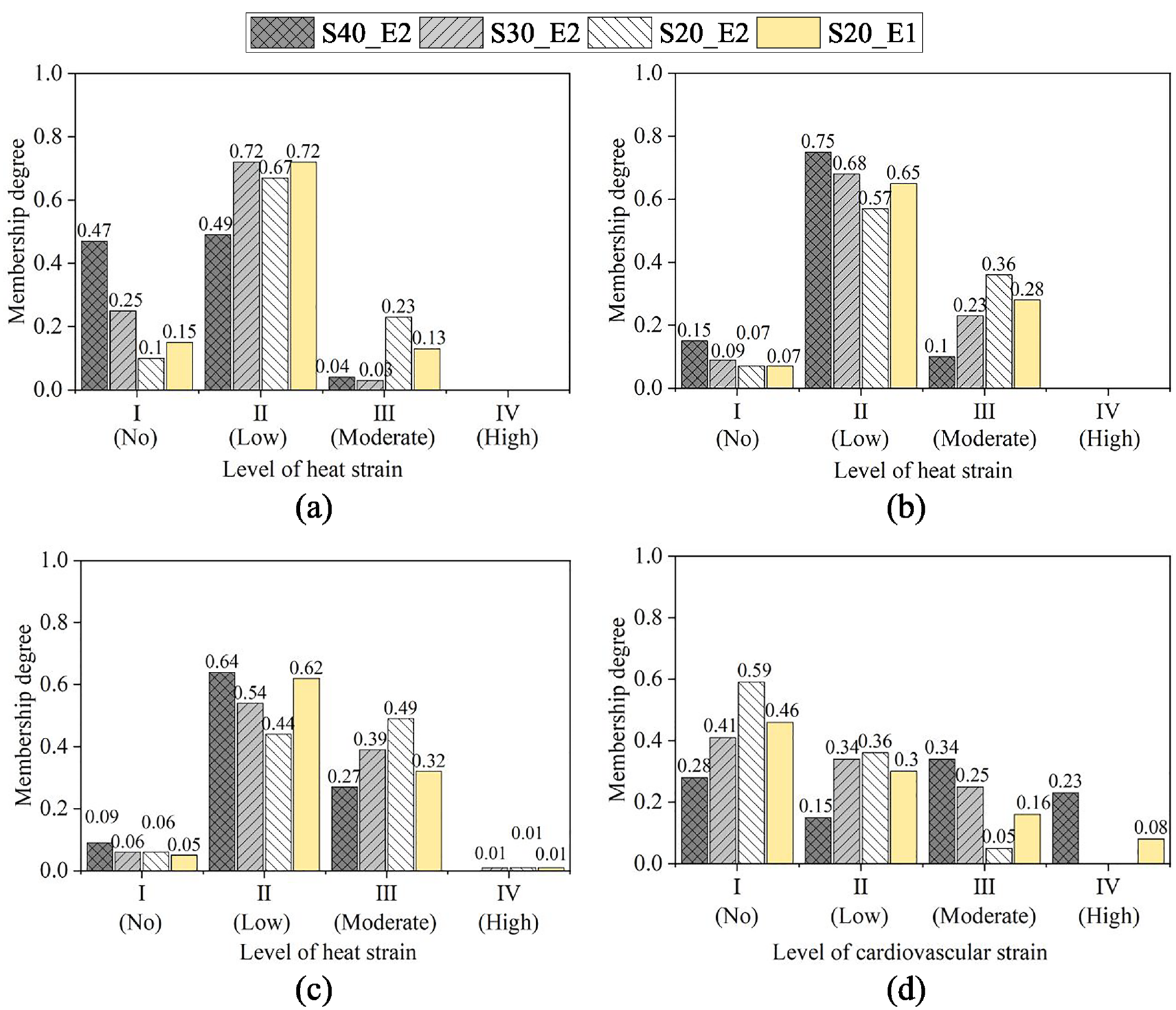
Heat strain assessment at (a) 60 min, (b) 75 min, and (c) 90 min and (d) cardiovascular strain assessment with ambient temperature down-step within 5 min.
Discussion
Six physiological and psychological parameters were selected to assess heat strain. The entropy weight method highlighted the importance of core temperature, heart rate, and mean skin temperature, which accounted for 80% of the weight among the physiological parameters. This aligns with previous studies, such as Moran and Pandolf 5 and Chan et al. 35 However, Zheng et al.11,27 found a minimal impact of heart rate (only 5%) on heat strain at non-extreme high temperatures. The varying findings may be attributed to environmental conditions, because the effects of heart rate on heat strain increase significantly in extremely high temperatures (above 40°C) and under conditions of heavy labor intensity, while it does not significantly increase when the temperature is below 40°C. 36
Psychological parameters play a crucial role in assessing heat strain, as they had a slightly higher weight than physiological parameters. It is important to consider thermal perceptions and behavioral responses to heat stress, as suggested by Yang and Chan. 22 Psychological parameters provide insights into an individual’s subjective experience and perception of their thermal state. Integrating psychological parameters enables the development of a more comprehensive model for effective heat strain assessment.
The weights of SBP, DBP, ΔSBP, ΔDBP, ΔTchest, and ΔThand in cardiovascular strain were comparable, suggesting their similar contributions; 24-h ambulatory blood pressure monitoring is widely used in clinical practice for cardiovascular evaluation. 18 Research has shown significant associations between short-term blood pressure variability and cardiovascular disease, with specific limits for daytime and nighttime variations. 17 Moreover, skin temperature mediates blood pressure responses to ambient temperature changes.19,29 These findings support the integrity and effectiveness of the comprehensive assessment model for cardiovascular strain in this study.
This study developed a fuzzy comprehensive evaluation model for assessment of thermal risk. Figure 5(a) shows that after 30 min of heat exposure, all conditions had the highest membership degrees at Level II, indicating low heat strain. S40 had a 49% probability of low heat strain, while S30 and S20 had higher probabilities (67%, 72%). Transitioning from a non-operating environment to a high-temperature operational setting of 40°C, increasing the temperature step magnitude by lowering the initial temperature can mitigate heat strain. These findings are consistent with the results of the chamber tests conducted by Wu et al. 37 and suggest that increasing temperature step magnitudes through precooling can enhance endurance performance in athletes. 38 Furthermore, clothing type also influenced membership degrees, whereby a reduction in clothing insulation by 0.65 clo (from 1.85 to 1.2 clo) correlated with a 5–18% rise in the probability of experiencing low heat strain and an 8%–17% decrease in the probability of encountering moderate heat strain. Clothing with low thermal resistance facilitates heat dissipation, reducing heat storage. 39 This effect becomes more significant with longer heat exposure, indicating the importance of appropriate clothing for prolonged heat exposure.
This study evaluated the cardiovascular strain levels in temperature down-steps after hot working. The results showed that S40 had moderate cardiovascular strain and a 23% probability of high cardiovascular strain risk, while S30 and S20 showed no cardiovascular strain. Interestingly, exposure to cold outdoor temperatures in winter may increase the cardiovascular burden in individuals with cardiovascular and cerebrovascular diseases due to the temperature difference between indoor and outdoor environments.3,14,40 Xiong et al. 3 found a negative correlation between cardio-cerebrovascular mortality and air temperature, with a temperature gap of up to 40°C imposing a heavy burden on thermal regulation. These findings showed that temperature difference in down-steps above 40°C can exacerbate cardiovascular strain.
Furthermore, clothing selection plays a crucial role in determining cardiovascular strain. Our study found that wearing clothing E2 resulted in no cardiovascular strain, while clothing E1 led to low cardiovascular strain. Clothing with low thermal resistance enhances body heat dissipation, leading to a drop in skin temperature and increased blood pressure. 41 Another study showed that increased body coverage, such as wearing a hat, can alleviate the sympathetically mediated surge in blood pressure. 42 Considering the thermal resistance of different clothing types helps understand their impact on thermoregulation and cardiovascular response. This information guides the selection of appropriate clothing to minimize cardiovascular strain and promote thermal comfort during large temperature down-steps.
This study employs a fuzzy comprehensive evaluation method to assess human thermal risk levels, specifically designed for dynamic conditions with sudden changes in environmental temperature. The developed model also distinguishes the effects of clothing differences, enhancing its practical utility. However, this experimental setting lacks the comparison of the same temperature step magnitude with different initial temperatures (i.e. 10−40°C and 0−30°C), thus compromising the validity of the investigation of human thermal response. Furthermore, it is worth noting that the experiment did not consider the composition of gender in the subjects and the effects of metabolic rate. To improve the scope of application of the model, future studies could involve conditions with the same temperature step magnitude but with a larger sample size comprising subjects of both genders, and could also incorporate varying levels of physical activity.
Conclusion
This study proposed a fuzzy comprehensive evaluation model for assessing heat strain and cardiovascular strain in high-temperature environments and following ambient temperature down-steps, offering comprehensive protection for workers. Findings include the following:
Six parameters were selected for heat strain evaluation, with core temperature, heart rate, and skin temperature being crucial factors.
Path analysis established six parameters for assessing cardiovascular strain, with blood pressure variation playing a relevant role.
The fuzzy comprehensive evaluation model was applied to assess the human thermal risk under sudden temperature changes. The developed model can distinguish the effects of temperature step magnitude and clothing thermal resistance on heat strain.
A temperature step of 40°C from 40 to 0°C led to a moderate cardiovascular strain level and a 24% probability of high strain risk. Wearing clothing with higher thermal resistance effectively reduced cardiovascular strain.
Footnotes
Declaration of conflicting interests
The author(s) declared no potential conflicts of interest with respect to the research, authorship, and/or publication of this article.
Funding
The author(s) disclosed receipt of the following financial support for the research, authorship, and/or publication of this article: Fundamental Research Funds for the Central Universities (grant no. 2232024G-08), International Cooperation Fund of Science and Technology Commission of Shanghai Municipality (grant no. 21130750100) and Graduate Student Innovation Fund of Donghua University (grant no. CUSF-DH-D-2021059).
