



Abstract
This article introduces the fabrication of multifunctional viscose fabric with chitosan, β-thujaplicin, and harmaline. The scanning electron microscope of the produced sample shows excellent distribution of used materials on surface of viscose fabric. After 10, 20, and 30 washing cycles the bactericidal properties and durability were investigated, and the results indicate that the durability of bactericidal action against Shigella and Bacillus cereus was very good. Moreover, abrasion resistance after 500, 700, and 900 cycles rubbing tests was studied, and the results were analyzed in detail. On the contrary, the ultraviolet blocking properties and durability after 10, 20, and 30 washing cycles were investigated. The outcome indicates that the treated fabrics have excellent ultraviolet blocking even after 30 washing cycles. Consequently, the produced multifunctional fabric has excellent physical and chemical properties, such as increased tensile strength and abrasion resistance, antibacterial activity, and ultraviolet blocking.
Introduction
Viscose fabric is made of 100% cellulose which is breathable, hygroscopic, lightweight, soft, and low static electricity. It is an environmentally friendly tissue with many applications in the textile industry due to its special properties, but cellulosic fibers/fabrics are more likely to be a good background for growth of bacteria.1,2 There are many source of cellulose such as cotton, wheat bran, nut shells, cork, and plants.3–7
Chitosan (C6H11NO4) is obtained from the deacetylation of chitin, and due to its high absorption properties, non-toxicity, the possibility of decomposition in nature, economic efficiency, compatibility with the environment, the ability to remove a wide range of metals and colors, fast kinetics and finally, the possibility to prepare many derivatives from it, it is very interesting. Structurally, chitin differs from cellulose in only one acetamide group. The chitosan properties depend on its chemical nature such as crystallinity, molecular weight, ionic charge of functional groups, and degree of deacetylation.8–11 Chitosan, as a non-toxic, biodegradable and environmentally friendly natural biopolymer, is a suitable option for use in the textile industry, and in addition, is used in sportswear, women’s and children’s clothing, and antiodor and hypoallergenic clothes because of the antibacterial properties of this fiber.12,13 Many researchers have tried to modify chitosan in order to increase its properties such as chitosan modification with curcumin, 14 tea polyphenol, 15 geraniol, 16 and ammonium salt. 17 Zhou et al. 18 reported that chitosan due to its high molecules has low natural antibacterial properties but has strong stability. On the contrary, the existence of amino and hydroxyl groups in chitosan gives it the best opportunity for improved antibacterial properties.19–21 Therefore, using a natural material with small molecules can improve these properties. 22 As reported by Liu et al., 23 β-thujaplicin (Hinokitiol) has excellent antibacterial properties due to its small molecules. In medicine, β-thujaplicin is known as a bactericidal and antitumor agent which has antioxidant and anti-inflammatory properties. Also, β-thujaplicin is used in oral care as indicated by Iha et al. 24 and Sakaguchi. 25 Also, some research works have been done on doping harmaline on fabric in order to increase the bactericidal activity due to its ability to stimulate the central nervous system. Monavari et al. concluded that by doping harmaline in the producing process of fibers, the bactericidal effect of the final fiber was increased. 26 Arshad et al. 27 demonstrated that using harmaline can reduce Escherichia coli infection in birds.
The aim of this research was grafting chitosan, β-thujaplicin and harmaline on viscose fabric and we examined some physical (tensile, abrasion) and chemical (ultraviolet (UV) blocking, bactericidal, and durability) properties in order to introduce a multifunctional fabric. The novelty of this research is the use of β-thujaplicin and its connection with harmaline and chitosan in order to modify and improve the multifunctional viscose properties.
Experimental
Materials and Devices
The β-thujaplicin (Hinokitiol) with a molecular weight of 164.2, chitosan (CAS No. 9012764), citric acid (CAS No. 77929), and harmaline (CAS No. 304212) were obtained from Sigma Aldrich. The 100% viscose fabric with a warp density of 21 yarn/cm, weft density of 19 yarn/cm, and fabric weight of 115.7 g/m2 was prepared for use from Yazdbaf Company (Iran). Acetic acid and diethyl ether were prepared from Merck (Germany).
Magnetic stirrer model B0B29G4RKC and a Euronda ultrasonic bath model Eurosonic 4D, 350 W, 50/60 Hz (Italy) were used. The tensile strength was investigated using a tabletop uniaxial testing device (INSTRON 3345). A double-head method of the rotary platform was used in order to investigate the abrasion resistance through ASTM D-3884-09. The specimen’s morphology was studied by scanning electron microscopy (SEM-MIRA3-TESCAN), and the samples were covered by gold film. A PerkinElmer Lambda UV-vis spectrophotometer was used to investigate the UV-blocking properties of the specimens.
Methods
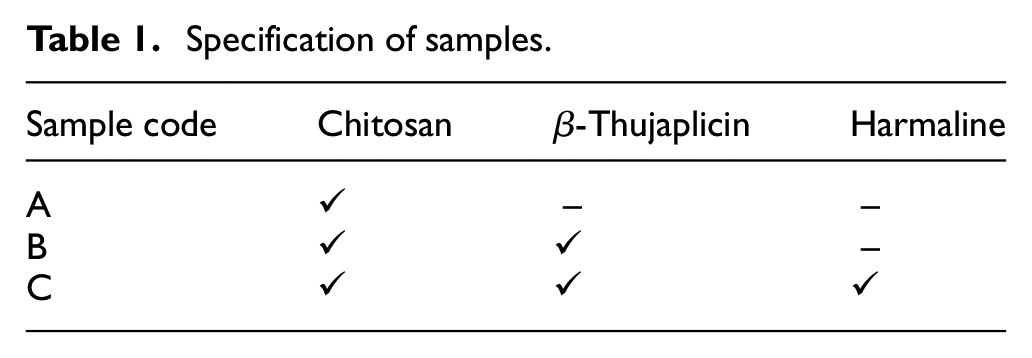
In order to form composite, the magnetic stirrer was used to mix and dissolve 2 mmol of chitosan in 100 mL of acetic acid. The process of complete dissolving was done at 80°C. Then, 2 mmol of β-thujaplicin was added to bath and stirred for 30 min at 60°C in the presence of 2% citric acid as a crosslink agent. Afterwards, 2% of harmaline was added and sonicated for 30 min at 50°C in an ultrasonic bath. Finally, the bath was cooled down at room temperature, and the untreated β-thujaplicin was removed by diethyl ether. The schematic reaction is illustrated in Figure 1. After preparing the solution, in order to modify the viscose, the viscose fabric was cut into 4 × 4 cm2 pieces and immersed in solution then sonicated in the ultrasonic bath for 60 min at 50°C. Then, the treated fabric was dried for 3 min at 80°C and 1 min at 130°C in an oven, respectively. Also, for comparing the samples and the effect of each used material (β-thujaplicin, chitosan, and harmaline) on the final properties, separate samples were prepared. The specification of each sample is demonstrated in Table 1. A bactericidal test, according to the American Association of Textile Chemists and Colorists (AATCC 100–2004), was done with Shigella (Gram-negative) and Bacillus cereus (Gram-positive) bacteria, and the existence of these bacteria was analyzed through equation (1), wherein α and γ are described as the number of live bacteria in the blank sample and treated sample, respectively. Also, AATCC 61-2013 was used in order to estimate the bactericidal durability. For this purpose, the bactericidal properties of samples were measured after 10, 20, and 30 washing cycles.

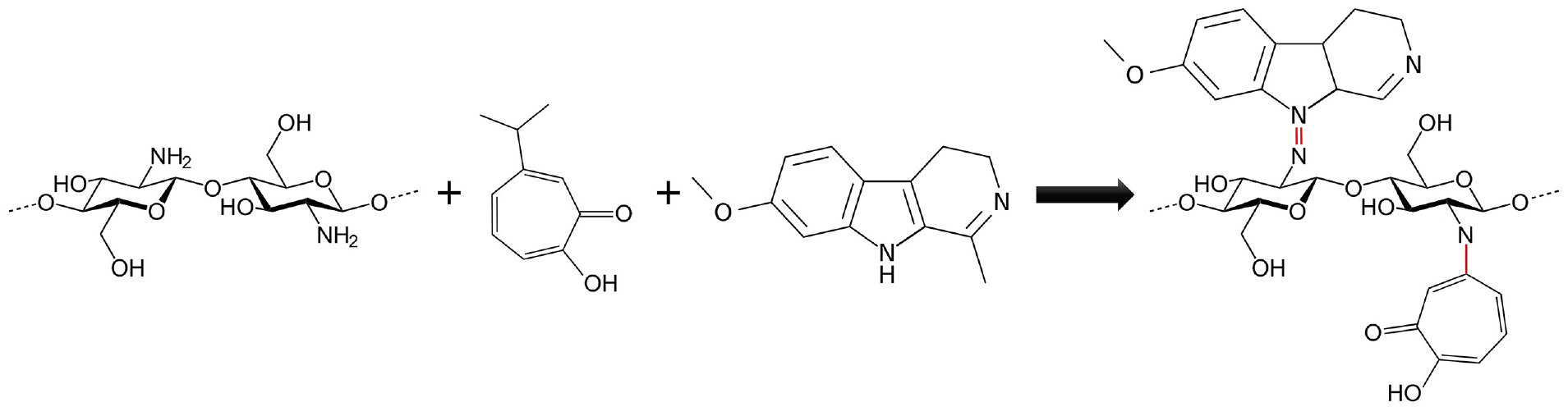
Schematic of grafting β-thujaplicin, chitosan, and harmaline.
Specification of samples.
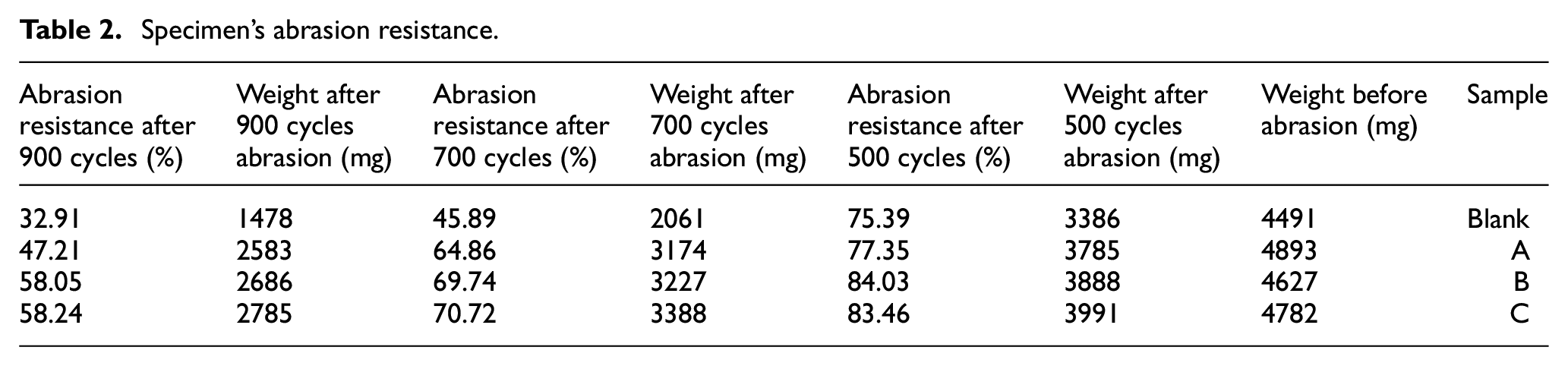
Specimen’s abrasion resistance.
Results and Discussion
Bactericidal Properties and Durability
Many syndromes are caused by Gram-positive and Gram-negative bacteria, such as vomiting syndrome, nausea, urinary tract infections, hemorrhagic colitis, gastroenteritis, diarrhea, and neonatal meningitis.28,29 In this study, the aliveness of above bacteria was verified through the AATCC 100-2004 standard. From the results, the fabric treated just with chitosan had no good bactericidal properties and its ability to prevent the growth of Shigella was 63.1% and that for Bacillus cereus was 59.4%. Sample B, which was treated with chitosan and β-thujaplicin, showed better results and had 78.4% and 76.9% bactericidal properties against Shigella and Bacillus cereus, respectively. This increase in bactericidal activity between samples A and B is due to β-thujaplicin inhibitory effect and the existence of a phenolic hydroxyl group.30,31 In sample C, by doping harmaline, the bactericidal properties of the composite suddenly increased up to 98% and the results showed that the antibacterial properties against Shigella and Bacillus cereus were 100% and 98.7%, respectively. With a closer look, it is concluded that the antibacterial feature of all samples versus Bacillus cereus is a little less in comparison to that for Shigella. This phenomenon is due to differences in thickness of the bacteria cell walls. On the contrary, the durability of bactericidal properties was investigated by measuring the antibacterial percentage of samples after 10, 20, and 30 washing cycles. As shown in Figure 2, for sample A, bactericidal action reduced not more than 3% and for sample C (which has the best bactericidal activity) it was not more than 2% and activity remained above 98% and 96% against Shigella and Bacillus cereus, respectively. One of the reasons for this good retention of bactericidal action is the existence of citric acid which plays the role of crosslinking agent to fix materials onto the fabric. These changes after 30 washing cycles were not significant and proved that the treated samples had excellent bactericidal efficiency and durability.
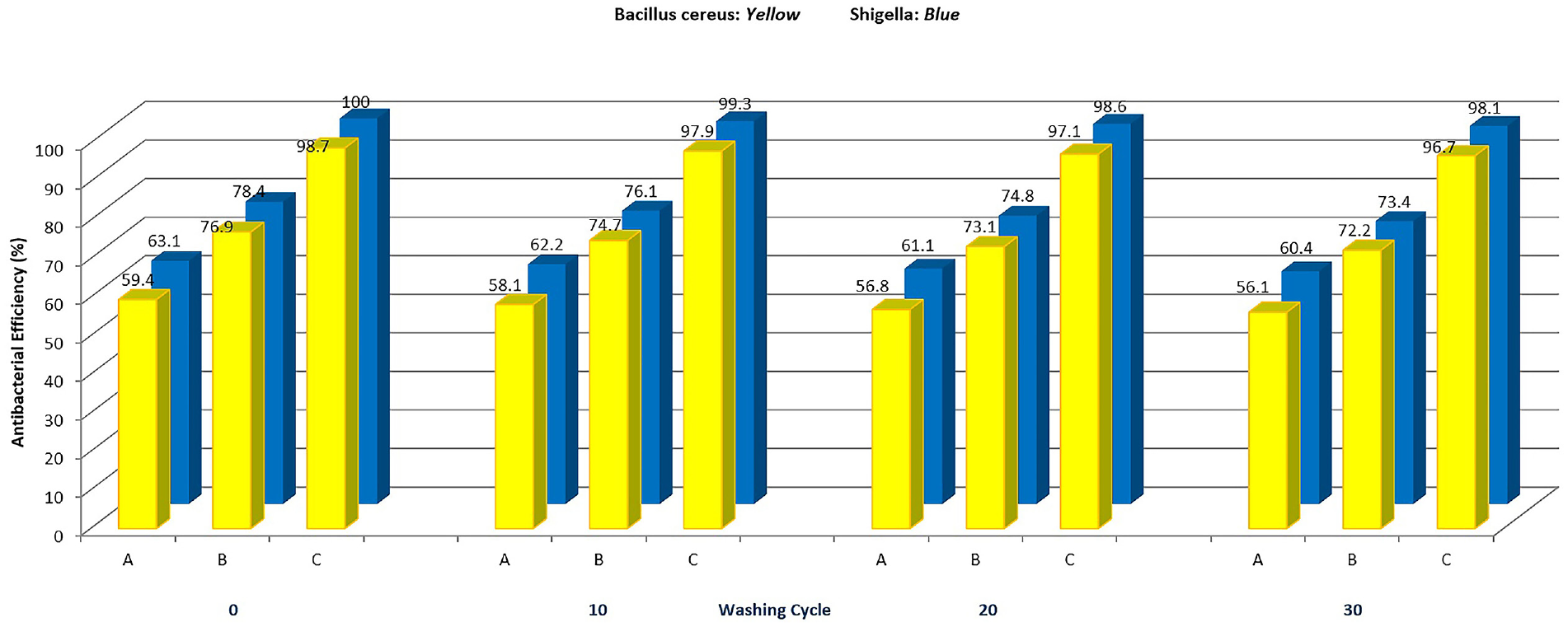
Bactericidal efficiency of samples and their durability.
Tensile and Abrasion Analysis of Samples
The samples were cut into 5 × 2 cm pieces in order to analyze the tensile strength, and the device was set at the rate of 5 mm/min. As the results shown in Figure 3 demonstrate, the tensile strength of sample B increased due to β-thujaplicin–viscose bonding. On the contrary, by doping harmaline, tensile strength increased significantly based on the created strong bond of N=N. Also, it must be mentioned that due to the presence of acetic acid, the hemicellulose will be removed and hydrogen bonds will be created between the fibrils, and this phenomenon is more for increasing the tensile strength.
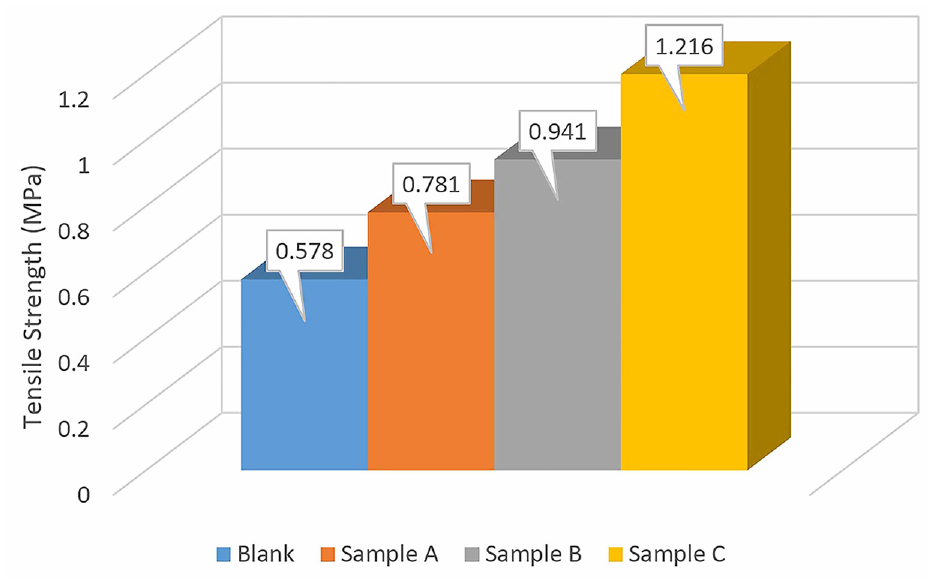
Tensile strength diagram of specimens.
The double-head method of a rotary platform was done for the abrasion test. A rubbing test of 500, 700, and 900 cycles was done for each specimen. After and before abrasion, the mass of samples was investigated and the difference was noted. As the results show, the abrasion resistance of blank sample was 75.39, 45.89, and 32.91 for 500, 700, and 900 cycles, respectively. By finishing the blank sample with chitosan, the abrasion resistance increased to 77.35, 64.86, and 47.21, respectively. This increase is due to the cellulosic base of both viscose and chitosan (the structure of these two is deference just in one acetamide group). On the contrary, creating hydrogen bonds between the fibrils due to the presence of acetic acid caused an increase in abrasion resistance. The next sample finished with both chitosan and β-thujaplicin showed better abrasion resistance. Due to the strong bond between chitosan and the cycle of β-thujaplicin (as shown in Figure 1), the increasing of abrasion resistance of sample (B) is clear. In sample (C), by doping harmaline, the Π bonds are formed and replace the chitosan. So, the abrasion resistance does not change significantly.
UV Blocking of Samples
The UV blocking of samples was investigated through AATCC technique No. 183-2004, and all the samples were exposed to UV light in the range of 200–400 nm. On the contrary, the durability of UV-blocking properties was investigated after 10, 20, and 30 washing cycles. Figure 4 demonstrates the UV-transmission diagram of untreated and treated samples. By comparison of samples A, B, and C demonstrated in Figure 4 (left), it is clear that samples B and C (which contain β-thujaplicin and β-thujaplicin/harmaline, respectively) have lower UV transmittance, which is significant. So, these samples achieve UV-blocking properties, but between these two, sample C, which was doped with both β-thujaplicin and harmaline, has slight better UV blocking which can be due to the synergetic UV absorption of harmaline. On the contrary, the durability of UV-blocking properties was investigated by measuring its transmission after 10, 20, and 30 washing cycles. As shown in Figure 4 (right/up), for sample B, the results for UV blocking do not change until 20 cycles, but after 20 and 30 cycles, the UV blocking is not significant. In other words, reduction of UV blocking occurs only between 10 and 20 cycles, and after that, there is no significant reduction. This phenomenon is also true for the sample C demonstrated in Figure 4 (right/down). So, in conclusion, samples B and C have excellent UV-blocking and UV-blocking durability properties.
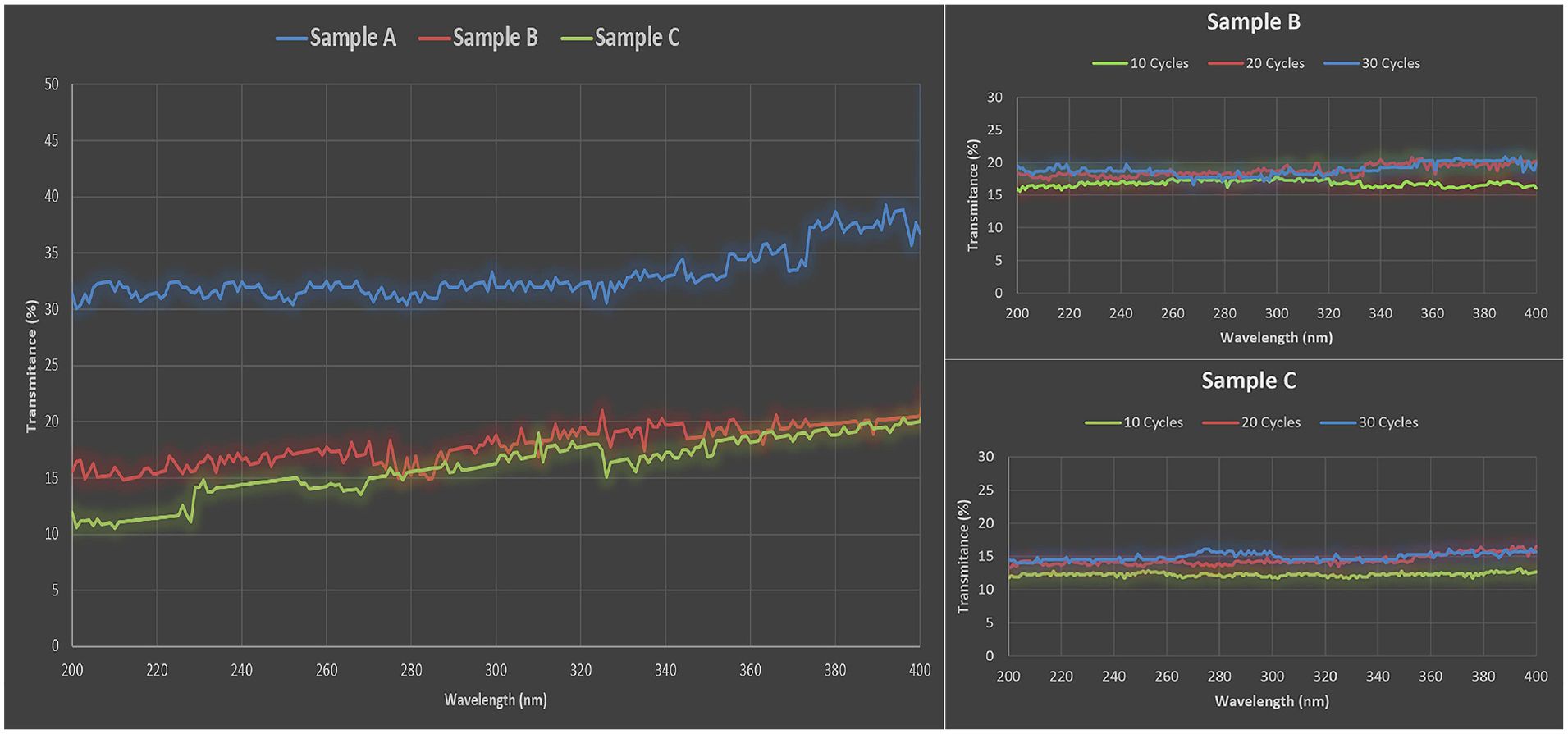
UV-transmission diagram of samples.
SEM Analysis
The scanning electron microscope was used to study and investigate the morphology of treated fabrics. The SEM was done at 15 kV and a magnification of 200× and 1k× (Figure 5). Doping both with β-thujaplicin and harmaline does not have any tangible effect on the composites’ appearance as shown in Figure 5. On the contrary, as shown in Figure 5 (right), the distribution of materials on the viscose surface is almost uniform without aggregation and/or agglomeration.
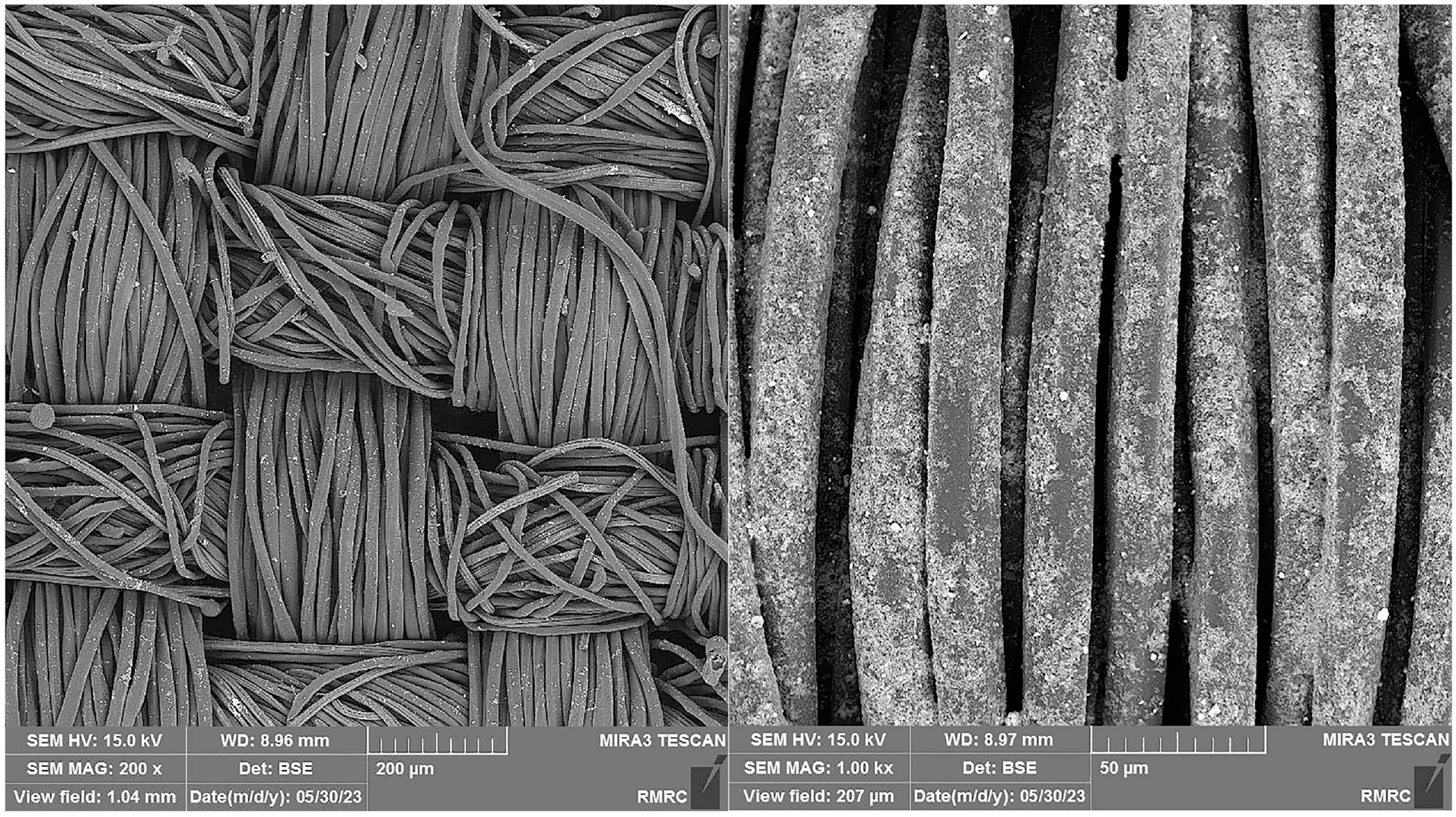
SEM images of sample.
Conclusion
Different apparatuses and special chemical method were used in order to graft chitosan, β-thujaplicin, and harmaline on viscose fabric to produce a multifunctional fabric. SEM images showed great distribution of particles on the viscose surface without any aggregation and/or agglomeration. The existence of β-thujaplicin and harmaline caused the prevention of UV transmission from fabric and its durability through 30 washing cycles was excellent due to the synergetic ultraviolet absorption of these materials. On the contrary, the rubbing test after 500, 700, and 900 cycles indicated that the abrasion resistance of samples finished with these materials was better than the blank one. The tensile strength of the treated samples increased significantly (more than twice) due to the creation of strong N=N bonds. Furthermore, bactericidal properties of produced composite increased by doping these materials, and the results showed that antibacterial properties against Shigella and Bacillus cereus were significant. Also, the bactericidal durability of samples after 10, 20, and 30 washing cycles showed that the reduction is not more than 3% against Shigella and Bacillus cereus due to the presence of citric acid which plays the role of crosslink agent to fix the materials onto the fabric.
Footnotes
Declaration of conflicting interests
The author(s) declared no potential conflicts of interest with respect to the research, authorship, and/or publication of this article.
Funding
The author(s) disclosed receipt of the following financial support for the research, authorship, and/or publication of this article: This work was supported by Islamic Azad University – Yazd Branch.
Ethical approval
The authors confirm that all the research meets ethical guidelines and adheres to the legal requirements of the study country. The research does not involve any human or animal welfare-related issues.
