




Abstract
The COVID-19 pandemic negatively impacted the health and safety of healthcare workers as the supply of personal protective equipment was severely limited at the pandemic’s beginning. Some healthcare facilities took the Centers for Disease Control and Prevention’s recommendations to shift from disposable personal protective equipment to reusable, as an option for extending the life of their personal protective equipment during the pandemic. This research investigated Level 2 isolation gowns to determine whether they met or exceeded the protection specifications of ANSI/AAMI PB70:2012 and the American Society for Testing and Materials: ASTM F3352-19 Standard Specification for Isolation Gowns Intended for Use in Healthcare Facilities. The overall findings show that commercially available reusable gowns initially met the ANSI/AAMI PB70:2012 and ASTM F3352 standards. Out of the six sample groups, gowns in one group failed the ANSI/AAMI PB70:2012 specifications before the end of their intended lifecycle. All gowns met the specifications for durability in ASTM F3352-19, but further research showed tear strength after laundering weakened substantially. The current standard for Level 2 isolation gowns is protecting the lives of healthcare workers. However, the specifications could be improved by ANSI/AAMI by evaluating the performance after laundering instead of as new. Durability specifications would be improved by increasing the requirements for reusable gowns.
Introduction
The COVID-19 pandemic negatively impacted the health and safety of healthcare workers (HCWs) as the supply of personal protective equipment (PPE) was severely limited early at the pandemic’s beginning. With the shortages that HCWs faced, the Centers for Disease Control and Prevention (CDC) provided strategies to optimize PPE use in the healthcare settings. One of these strategies was to identify surge capacity, referring “to the ability to manage a sudden increase in patient volume that would severely challenge or exceed the present capacity of a facility” (CDC, “Optimizing Supply of PPE,” para. 3). 1 In March 2020, healthcare facilities in the United States reached crisis capacity. They began taking various avenues to reprocess and re-sterilize their disposable PPE to extend the life of their PPE. Unfortunately, reprocessing disposable PPE is not a typical option. Disposable PPE, which makes up 80% of the market, is manufactured and marketed to be used only once and then discarded.2–4
Some healthcare facilities took the CDC’s recommendations to shift from disposable PPE to reusable, another attempt at extending the life of their PPE during the pandemic. This situation put pressure on and provided opportunities for suppliers and distributors in the United States, to bridge the gap from relying on exports from other countries to producing and supplying in the same country. Hospitals took the initiative to purchase from new suppliers; however, they were unable to examine the quality of unvetted suppliers. Hospitals were taking risks while HCWs expected safety.
This research aimed to evaluate the performance of commercially available reusable Level 2 isolation gowns over the lifecycle of the gown by assessing the ability to protect at an AAMI Level 2. The researchers investigated Level 2 isolation gowns to determine whether they met or exceeded the protection specifications of American National Standards Institute/Association for the Advancement of Medical Instrumentation (ANSI/AAMI) PB70:2012 5 and the durability requirements of the American Society for Testing and Materials: ASTM) F3352-19 Standard Specification for Isolation Gowns Intended for Use in Healthcare Facilities. 6
Background
Medical Gowns
Aside from gloves, PPE gowns are the second most used product for protection in healthcare settings.4,7 There are three major types of gowns: cover, isolation, and surgical. 4 According to the Food and Drug Administration (FDA), 8 isolation and surgical gowns protect the wearer from transmitting microorganisms and body fluids in high-risk patient isolation situations. Surgical gowns serve a different purpose than isolation gowns. In contrast, both types of gowns are used to reduce the transmission of infections and other potentially infectious materials (OPIM) from patients to HCWs, and vice versa, but surgical gowns are only worn in the operating room.
Limited research has been reported on reusable gowns, especially concerning serviceability components beyond protection, including comfort, durability, and appearance retention. Leonas 9 examined the barrier properties of reusable gowns after 50 commercial wash cycles, finding that frequent laundering reduced the gown’s barrier properties over its lifecycle. However, depending on the thickness (i.e. layered fabrics), she found that gowns with thicker materials had higher barrier performance. In 2020, McQuerry et al. 10 compared the performance of disposable and reusable medical gowns. In their findings, reusable PPE provided higher levels of protection for HCWs. Comfort studies are not widely available; however, Conrardy, Hillanbrand, Myers, & Nussbaum compared comfort factors between disposable and reusable PPE, reporting that surgeons and other HCWs preferred reusable PPE over disposable. 11 The lifecycle of reusable PPEs is vital to the performance and protection of HCWs and their environmental impact. Reusable PPE is considered more cost-effective and sustainable over its lifecycle regarding production costs, waste, and ecological footprints.12–14 These studies highlighted reusable gowns as a tool that offers an alternative to disposable gowns.
Regulations of PPE Isolation Gowns
Although it is not the responsibility of the PPE supply chain to determine standards of safety performance, it is the responsibility of organizations like the ANSI and AAMI. The ANSI/AAMI PB70:2012 Liquid barrier performance and classification of protective apparel and drapes for use in health care facilities 5 establishes “a system of classification for protective apparel and drapes used in health care facilities based on their liquid barrier performance and specifies related labeling requirements and standardized test methods for determining compliance” (p. 1). 5 This Standard establishes minimum barrier performance specifications for protective apparel and drapes, including isolation gowns.
Isolation and surgical gowns are rated according to AAMI standards, which define four levels of protection (Levels 1, 2, 3, and 4). Each protection level requires a standard barrier performance regarding each test considered, detailed in the Association for the Advancement of Medical Instrumentation (ANSI/AAMI PB70:2012) 5 standard, and requires a standard durability performance regarding each test considered, detailed in the ASTM F3352 Standard Specification for Isolation Gowns Intended for use in Healthcare Facilities. 6
In 2007, the CDC published the Guidelines for Isolation Precautions: Preventing Transmission of Infectious Agents in Health Care Settings. The CDC recommends that HCWs wear gowns and other PPE appropriate for the task being performed where contamination or OPIM are anticipated. 15
Performance Standards
Gowns can be marketed as unrated; however, if suppliers claim protection, standard performance tests are required to claim barrier performance. Isolation gowns are rated according to the ANSI/AAMI PB70:2012 standard, defining four protection levels (Levels 1–4). Level 1 and 2 isolation gowns provide a liquid barrier in minimal and low-risk situations. Levels 3 and 4 are surgical gowns, providing the highest liquid repellency. All areas of isolation gowns, including the seams but excluding the bindings, cuffs, and hems, are required to have the highest barrier performance regarding their performance level. 5
Barrier Properties
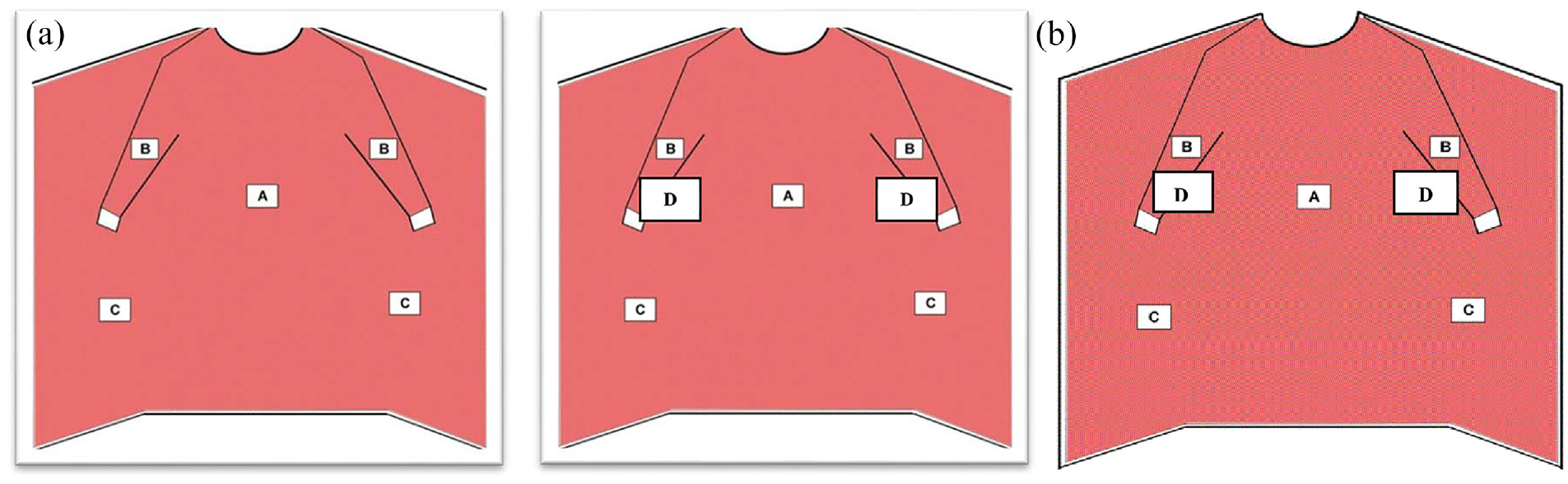
The level of protection, or classification of barrier performance, is determined by the performance of all critical zone components. Each protection level must meet specific standard performance requirements detailed in the ANSI/AAMI PB70:2012 standard. AAMI defines critical zones as areas “where direct contact with blood, body fluids, and OPIM is most likely to occur” (p. 2). 5 The critical zones of isolation gowns, as shown in Figure 1(a), are the front area of the gown, from the chest to knees and the sleeves, excluding the cuffs, hems, and bindings. Figure 1(b) was added to show the specific location of the seams. AAMI defines the critical zone, but Figure 1(a) does not specify the specific location of the seams.
Care and Maintenance
ANSI/AAMI ST65:2008/(R)2018 Processing of Reusable Surgical Textiles for Use in Health Care Facilities provides guidelines for properly handling, processing, and preparing reusable surgical textiles in healthcare facilities. 16 However, standard organizations such as AAMI or ASTM do not outline the recommended processing practices for reusable isolation gowns.
The CDC provides general guidelines and recommendations for infection control in healthcare facilities regarding laundering parameters. According to the CDC’s Guidelines for Environmental Infection Control in Healthcare Facilities, a hot water wash should be conducted at a temperature of at least 71°C for a minimum of 25 min to destroy microorganisms.15,17 Chlorine or oxygen bleach may be used in the chemical wash formula to lower this temperature. A series of rinse cycles at the end of the wash cycle typically involves the addition of a mild acid, or sour, to neutralize the potential alkalinity in the water supply or detergent.15–17
Materials and Methods
The study evaluated the barrier effectiveness and durability properties of Level 2 reusable isolation gowns.
The level of protection was based on the ANSI/AAMI PB70:2012 5 standard, reusability over the product’s lifecycle, finishes, and construction methods.
Sample Selection: Before the COVID-19 pandemic, most isolation gowns were disposable, with limited availability of reusable isolation gowns. For this research, isolation gowns were selected based on their commercial availability to healthcare facilities and other characteristics, including protection level (ANSI/AAMI PB70:2012), 5 reusability over the product life cycle, fabric finishes, and construction methods. Using the selection criteria, six groups of gowns were selected as the sample set. Twelve gowns were sourced for each sample group. The groups, referred to as Groups A, B, C, D, E, and F, are described in Table 1 based on use type, protection level, construction, fiber content, fabric weight, size, number of wash cycle claims, and color.
Characteristics of reusable isolation gowns. a
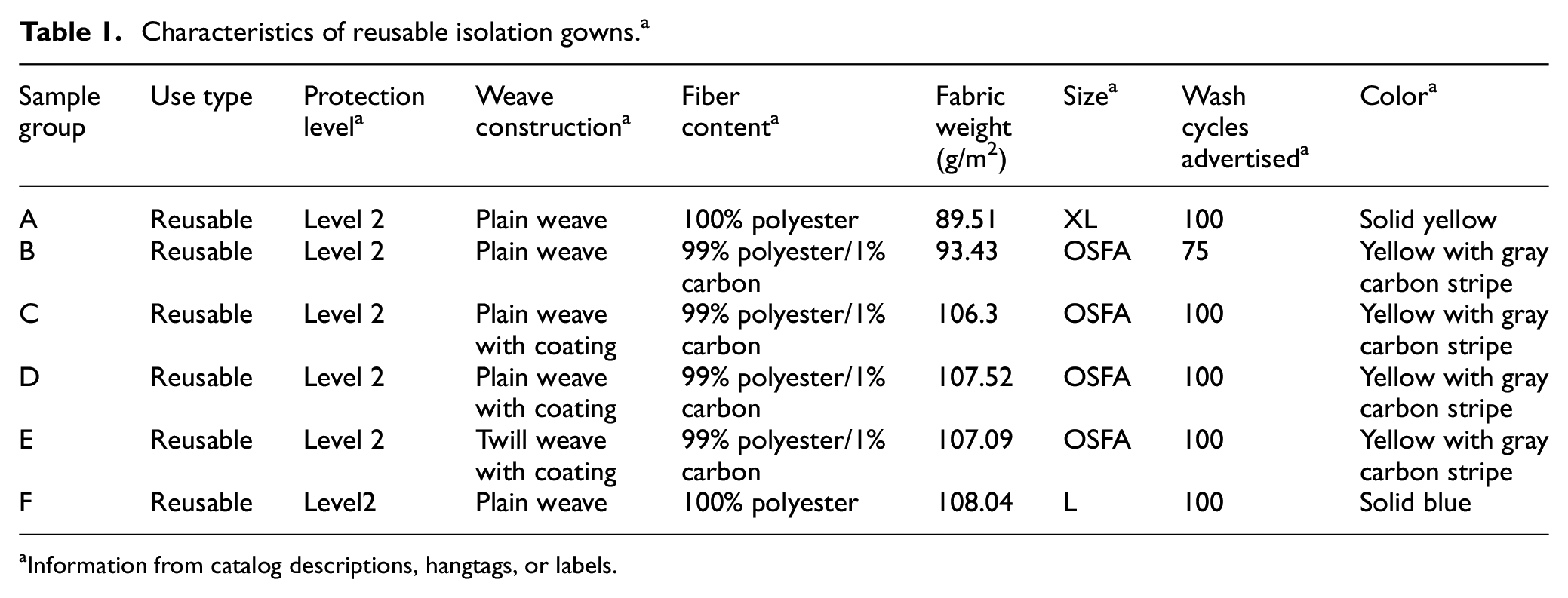
Information from catalog descriptions, hangtags, or labels.
Gowns were preconditioned before testing according to ASTM D1776/D1776M 2020 Standard Practice for Conditioning and Testing Textiles. 18 Samples were placed in an atmospheric chamber at 75°± 4°F and relative humidity of 65% ± 5% for a minimum of 4 h before each test. Two gowns from each sample group were not laundered. One gown was retained as the control, and the second was used to measure the durability characteristics. Before washing, 60, including 10 gowns from each sample group, were evaluated for impact penetration and hydrostatic pressure. After testing the new gowns, they were divided into four loads. Two loads were washed without bleach, and the two loads were washed with bleach included in the wash formula. As specified in ANSI/AAMI PB70:2012, 5 five gowns from each sample group were tested for impact penetration and hydrostatic pressure before they were laundered at intervals of 0, 5, 10, 25, 50, and 75 cycles. After 75 washes, one gown from each load was subjected to durability testing. The barrier performance of the gowns was evaluated against ANSI/AAMI PB70:2012 5 and ASTM F3352 2019 6 standards. Table 2 includes the test methods for evaluating the durability and barrier performance at Level 2 protection across the product’s wash lifecycle.
Standard performance test methods.
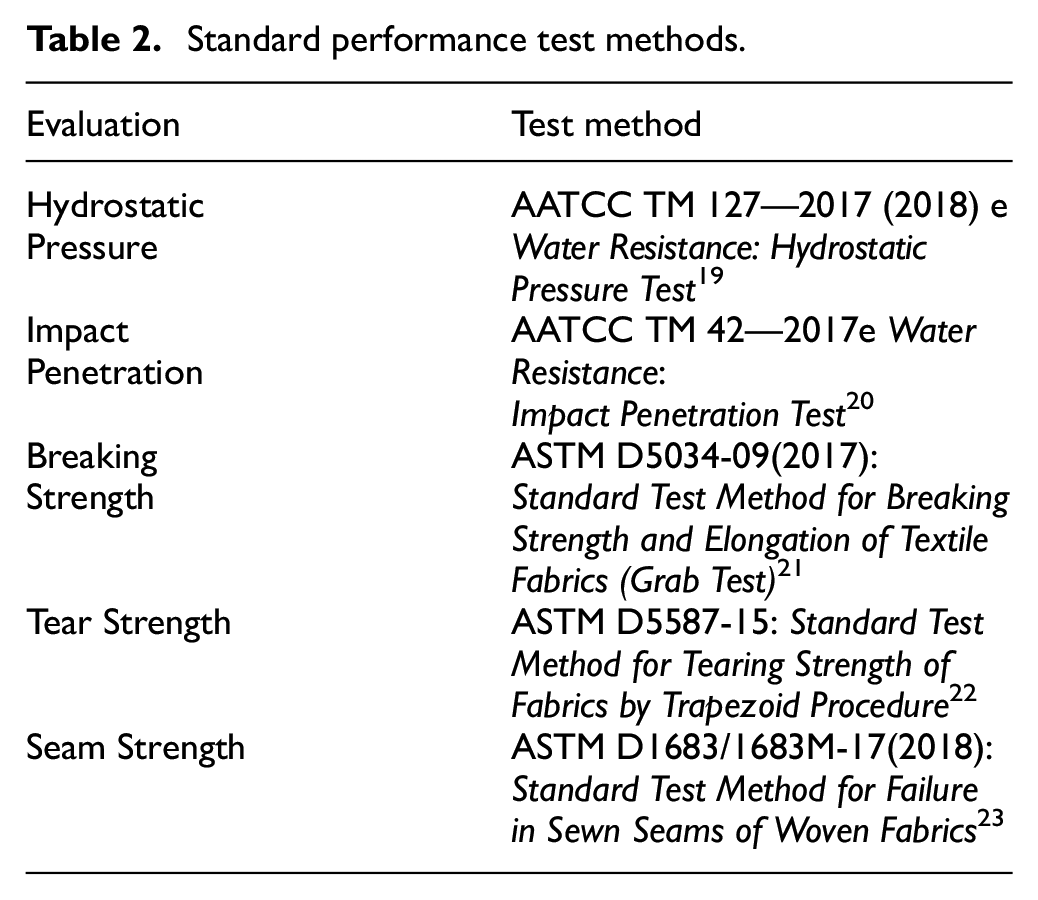
Table 3 provides the minimum requirements for Level 2 isolation gowns per ANSI/AAMI PB70:2012 5 and ASTM F3352 2019 6 standards.
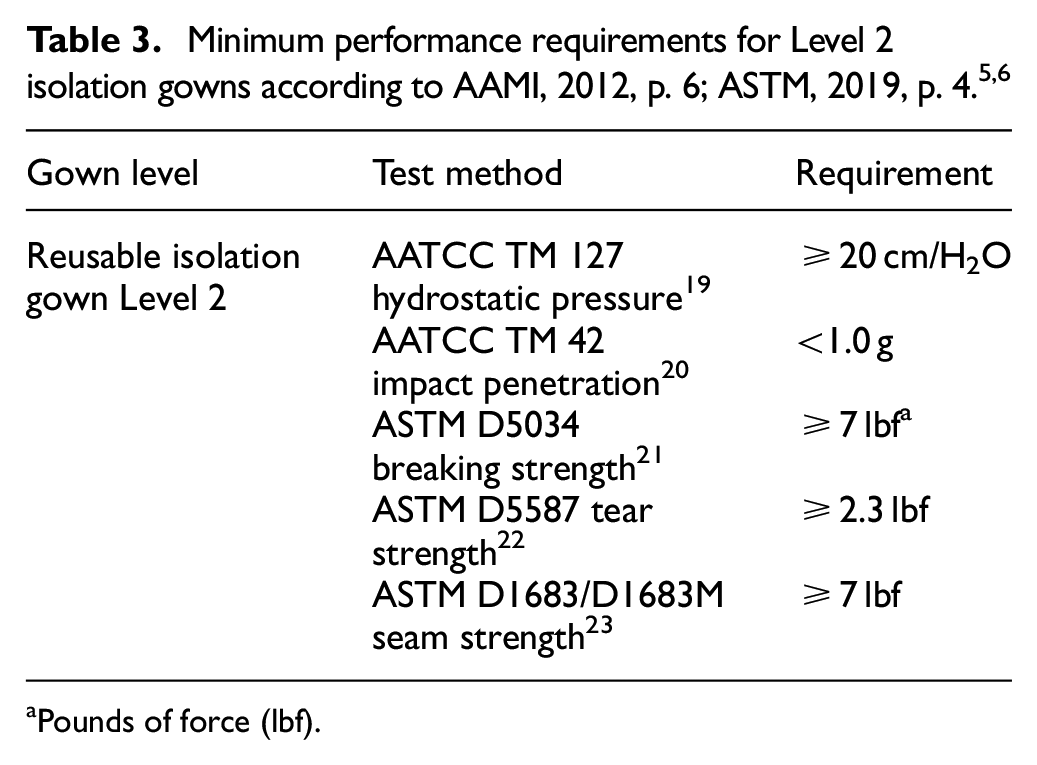
Pounds of force (lbf).
Laundering
Two wash formulas were utilized in this study. Formula 1 included a commercially available industrial laundry detergent, oxygen bleach additive, and a supply of sour to the final wash, drain, and spin. Formula 2 included an industrial laundry detergent, no bleach additive, and a supply of sour to the final wash, drain, rinse, and spin. The parameters of the wash cycles included a hot water temperature of 160°F, three rinse cycles, and a sour for a total of 58-min cycles. All loads were dried at 140°F heat for 30 min, with a cool-down cycle of 5 min. To prevent overcrowding in the washer, the gowns were divided into four loads of 15 gowns/load and laundered together in a UniMac 18 lb commercial washer and UniMac 35 lb commercial dryer. Table 4 summarizes the wash cycles and tests performed at their respective intervals.
Design of experiment for testing the gowns.
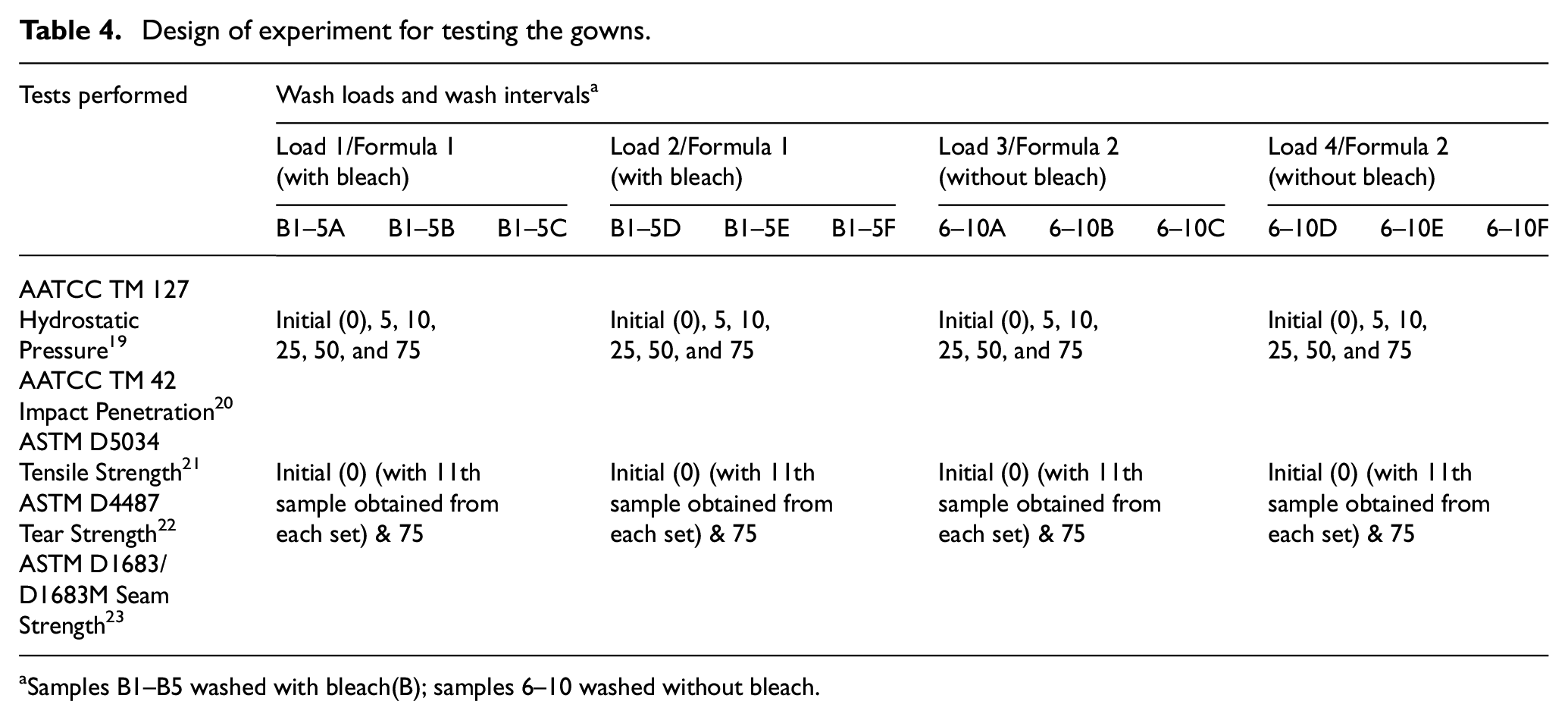
Samples B1–B5 washed with bleach(B); samples 6–10 washed without bleach.
Barrier Properties
The level of protection, or classification of barrier performance, is determined by evaluating the barrier performance at all critical zones. Two AATCC test methods were used to measure the barrier performance: Hydrostatic Pressure Test and Impact Penetration.
Hydrostatic Pressure
Hydrostatic pressure was measured using AATCC TM 127–2017 (2018) e Water Resistance: Hydrostatic Pressure Test. 19 The hydrostatic pressure test was used to determine the gown’s resistance to water penetration under hydrostatic pressure. Five fabric locations were tested by the letters A, B, and C in Figure 1(a) from each gown: back left and right panels, sleeve, and front top and bottom. Two-seam locations on the left and right sleeves, noted by the letter D (Figure 1(b)) were also tested to enable the researcher to evaluate the performance of seams versus fabric. The test was performed on a Textest FX 3000 Hydrostatic Head Tester II, with a test area of 100 cm2 and an increase in pressure of 60 mBar/min. Hydrostatic pressure (mBar) results were converted to find the water column height (mm and cm). The conversion rate was 1 mm H2O = 0.0980665 mBar. 19
Impact Penetration
Impact penetration was measured using AATCC TM 42–2017e Water Resistance: Impact Penetration Test. 20 This test determines the gown’s resistance to water penetration by impact. This test was performed on an SDL Atlas Impact Penetration Tester with AATCC PPE Grade Blotting Paper. Five fabric locations, noted by the letters A, B, and C in Figure 1(a) from each gown were tested: back left and right panels, sleeve, and front top and bottom. Two seam locations on the left and right sleeves, noted by the letter D (Figure 1(b)) were also tested to enable the researcher to evaluate the performance of seams versus fabric. 20
Durability Properties
The durability properties of isolation gowns should be evaluated to determine whether they meet the minimum requirements for tensile strength, tear strength, and seam strength according to the ASTM F3352 2019 standard. 6
Tensile Strength
Tensile strength was measured using ASTM D5034 2021 Standard Test Method for Breaking Strength (Grab Test). This test is used to determine the force required to break the yarns of a specimen. Four 4 × 7-in. specimens were cut in the warp and fill directions. Breaking strength was performed on an Instron Model #4465 utilizing the Grab Test, a tensile test procedure. The results are reported in pounds of force (lbf). 21
Tear Strength
The tearing strength test determines the average force required to continue a single-rip tear from a cut in a piece of fabric. Tear strength was measured using ASTM D5587–15 Standard Test Method for Tearing Strength of Fabrics by Trapezoid Method Procedure (ASTM, 2019). Five 3 × 6-in. specimens were cut in the warp and fill directions. The results are given in pounds of force (lbf). 22
Seam Strength
Seam strength was measured using ASTM D1683/D1683M–17 Standard Test Method for Failure in Sewn Seams of Woven Fabrics (ASTM, 2018). Five 4 × 7-in. specimens were cut from the sleeves of the gown. The results are given in pounds of force (lbf). 22
Data Analysis
To determine the statistical significance between gown performance initially (before washings) and after multiple wash intervals, the data were imported into the JMP statistical software. Descriptive statistics and t-tests were utilized, followed by Tukey’s HSD test to specify the differences between wash intervals within the grouped gowns, including fabric and seam locations and wash formulas. Statistical significance was determined using a 95% confidence interval with a significance level of 0.05.
Results
ANSI/AAMI PB70:2012 Liquid barrier performance and classification of protective apparel and drapes for use in health care facilities 5 and ASTM F3352 2019 Standard Specification for Isolation Gowns Intended for Use in Healthcare Facilities 5 were used to evaluate the results of the laboratory analysis.
Barrier Performance
A barrier performance evaluation was conducted for gowns laundered with and without bleach. Hydrostatic pressure and impact penetration were measured initially and after 5, 10, 25, 50, and 75 laundry cycles. As per the diagram in Figure 1(b), seven locations were tested on five gowns in each sample group. Barrier performance was calculated as the average of five gowns from each sample group, including measurements from seven locations on each gown.
Hydrostatic Pressure
The hydrostatic pressure was measured according to AATCC 127–2017 (2018)e Water Resistance: Hydrostatic Pressure Test. 21 Hydrostatic pressure (mBar) results were converted to determine the height of the water column in centimeters. The data presented in Figures 2 and 3 are the overall average of 5 gowns, which includes the measurement of hydrostatic pressure in seven locations on each gown, as illustrated in Figure 1(b).
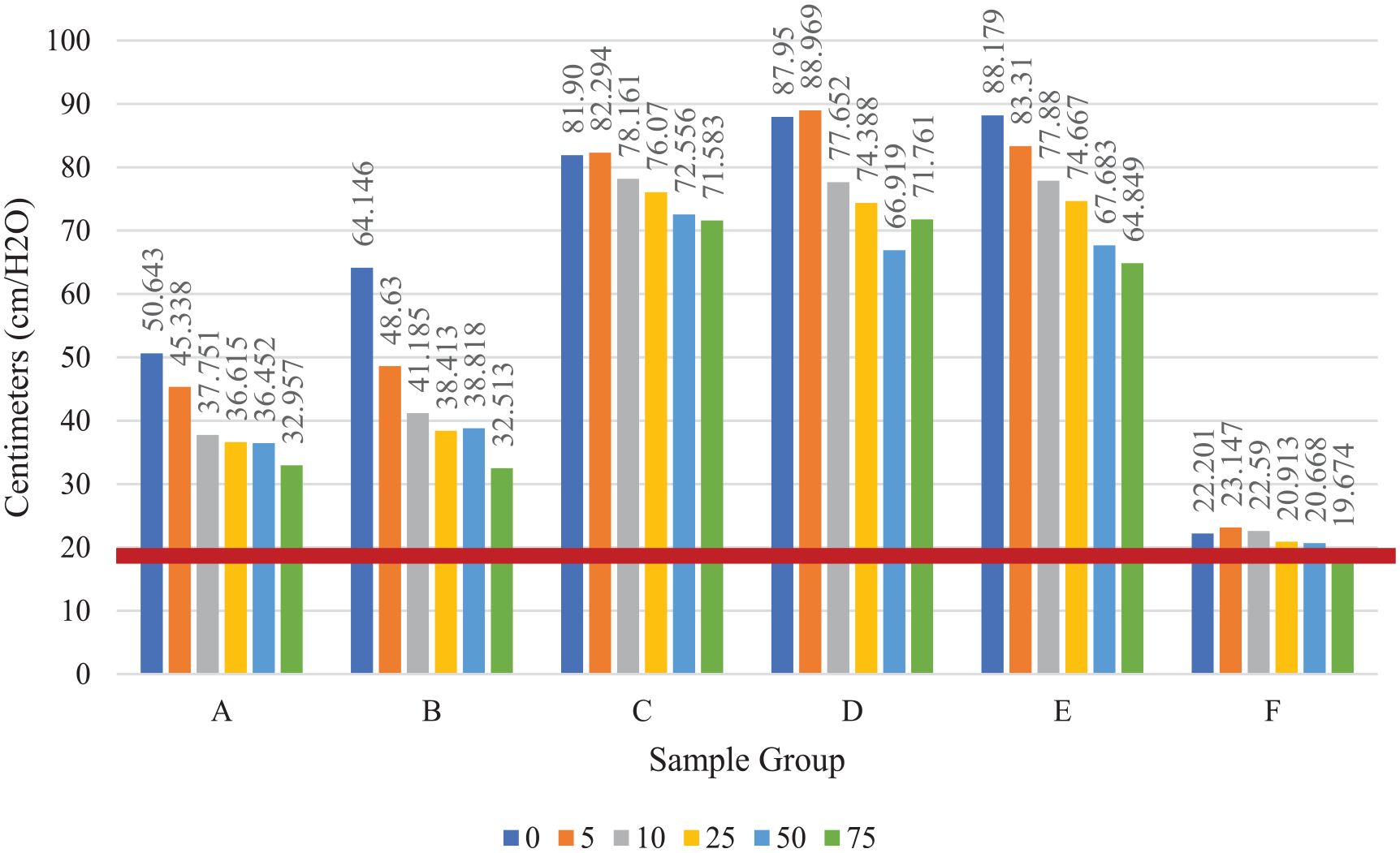
Hydrostatic pressure results with bleach over wash intervals.
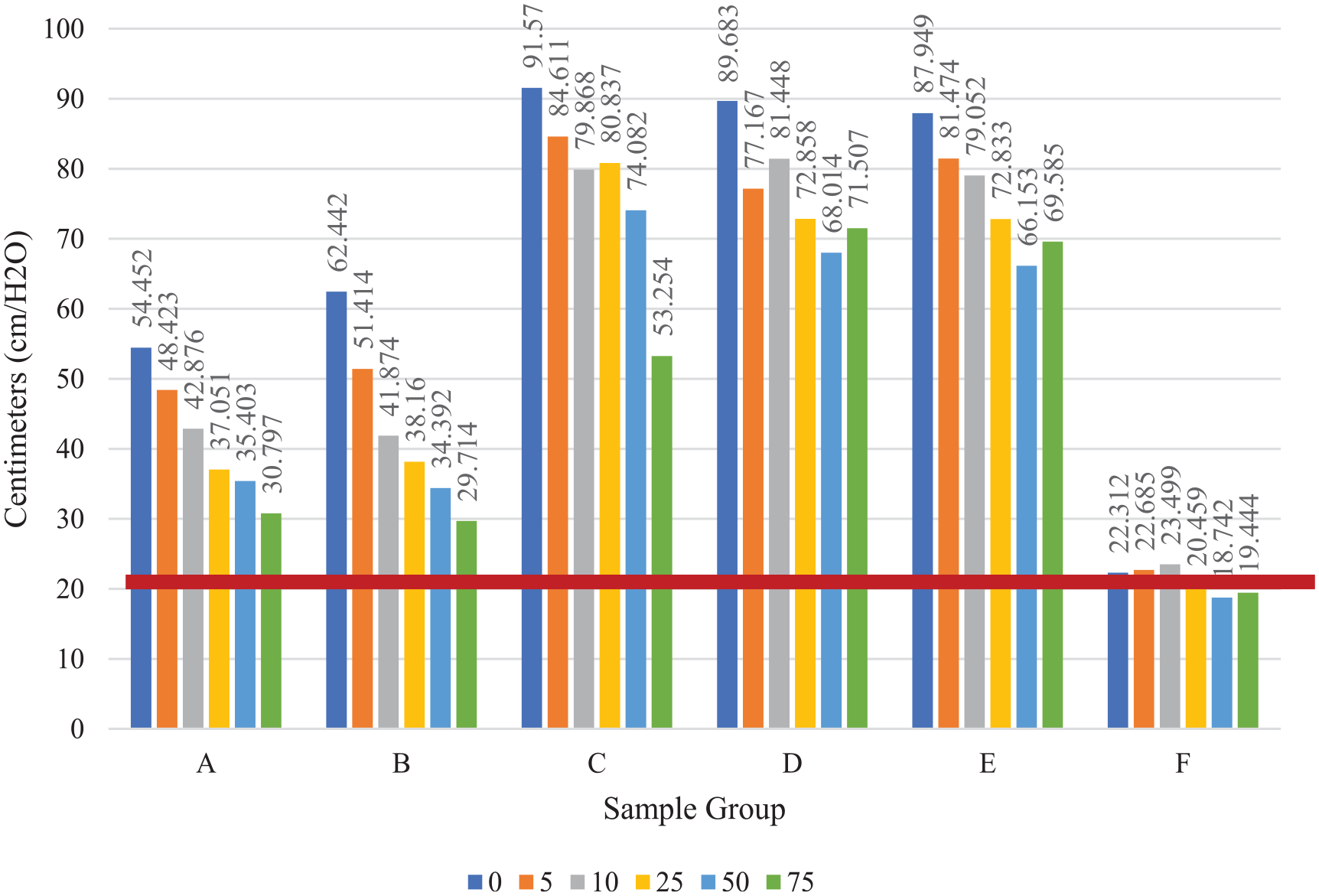
Hydrostatic pressure results without bleach over wash intervals.
According to the ANSI/AAMI PB70:2012 5 standard, a minimum of 20 cm/H2O is required for Level 2 protection. Gowns from Groups A, B, C, D, and E met and exceeded the performance standards over 75 wash cycles. Resistance to hydrostatic pressure decreased after the initial measurement, which was made before washing. In sample Groups A, B, C, D, and E, the decrease or decline in resistance to hydrostatic pressure continued for measurements after 5, 10, 25, 50, and 75 cycles. It is apparent that gowns in sample Groups C, D, and E initially had the highest level of hydrostatic protection at all intervals beginning at 0 or before washing. They continued to exhibit higher resistance to hydrostatic pressure at the end of 75 wash cycles. The hydrostatic protection decreased with increased number of wash cycles but exceeded the minimum of 20 cm/H2O.
Gowns in Group F did not show a decline until after 25 cycles and failed the performance standards after 50 and 75 wash cycles when washed in a formula without bleach and after 75 wash cycles when washed in a formula that included bleach. A t-test on the means confirmed gowns in Group F failed to meet the specifications at wash interval 75 (p-value = 0.9564).
The hydrostatic pressure resistance of fabric versus seams included in this research is based on the experience of testing PPE gowns during the COVID pandemic. The seams were less resistant in disposable and reusable gowns than the fabric. For hydrostatic pressure gowns in Groups C, D, and E, the seams showed a lower level of resistance when compared with the fabric. The resistance to hydrostatic pressure decreased with each interval, but continued not only to meet but to exceed the 20 cm/H2O standard. The resistance to hydrostatic pressure of the seams in Groups A and B gowns was lower than the fabric and decreased at each wash interval. The seams of both groups failed at 25 cycles and continued to decrease through the 75 cycles, both with and without bleach in the wash formula. Resistance to the hydrostatic pressure of seams and fabric in Group F showed no difference until after washing 50 cycles.
Impact Penetration
Impact penetration of the gowns was measured according to AATCC TM 42–2017e Water Resistance: Impact Penetration Test. 20 This test determined the resistance to water penetration by impact. The results are presented in Figures 4 and 5, which is the average weight of the seven locations identified in Figure 1(b) of five gowns in each sample group.
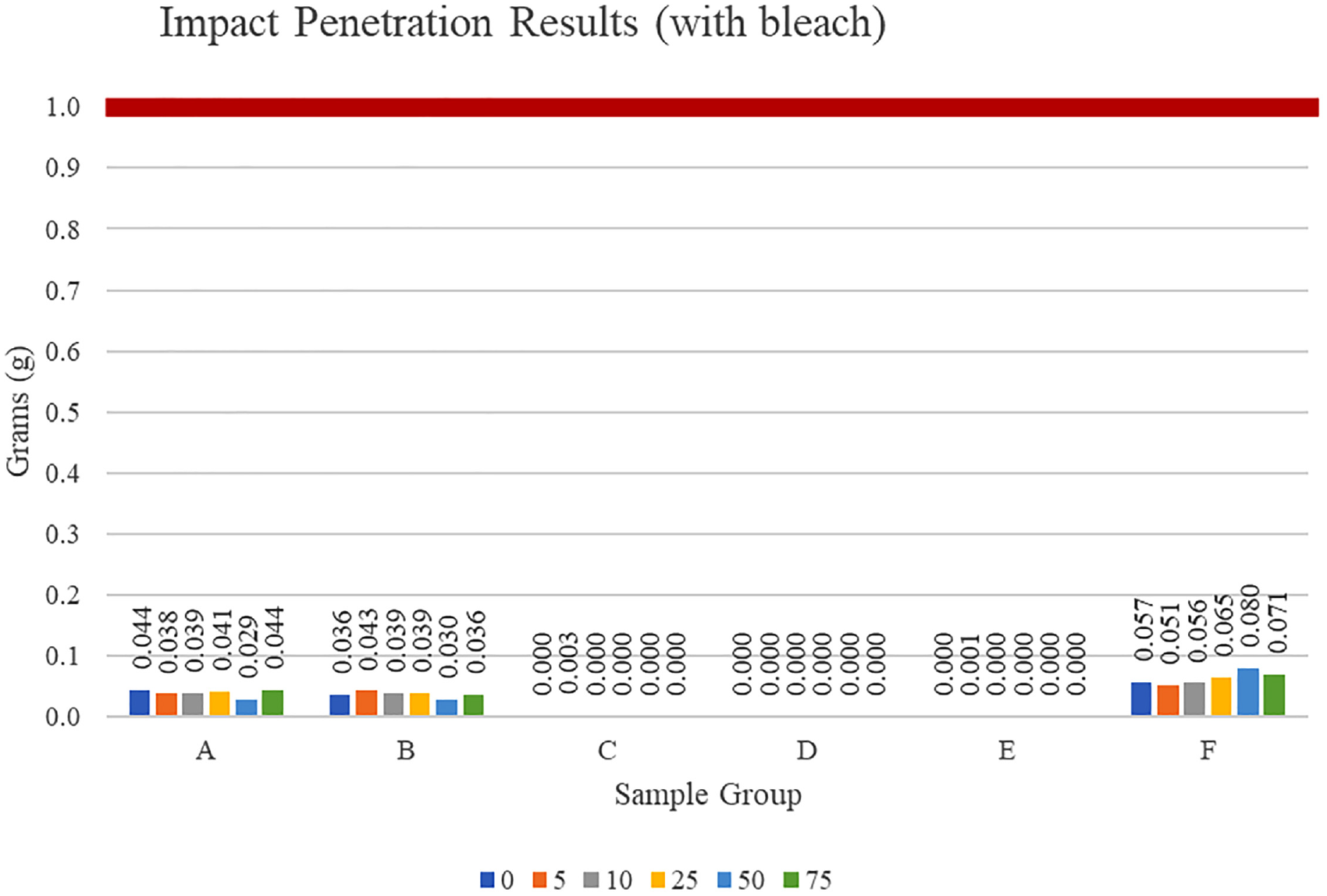
Impact penetration results with bleach over wash intervals.
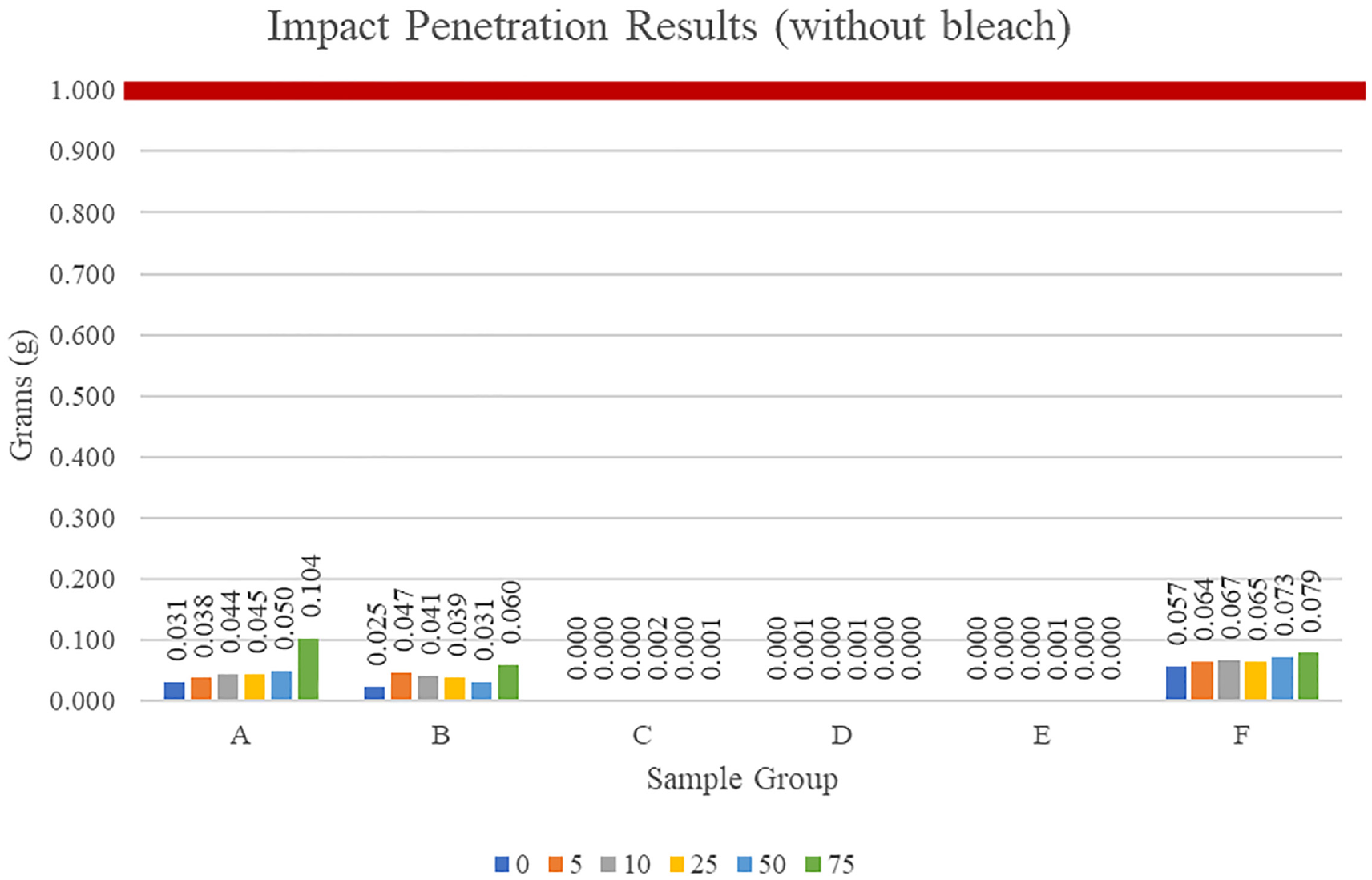
Impact penetration results without bleach over wash intervals.
According to ANSI/AAMI PB70:2012, 5 for Level 2 protection, blotting paper should not exceed a 1-g weight increase for each gown. Based on this criterion, all gowns washed with and without bleach passed the impact penetration requirements for Level 2 isolation gowns. Regardless of fabric type or the addition of a coating or finish, all gowns resulted in less than 1 g of increased weight initially and after each interval of wash cycles. As noted in Figures 3 and 4, gowns in Groups C, D, and E had the highest level of protection from impact. The Gowns in these groups were made of a fabric with a coating (see Table 1). A t-test on the mean confirmed impact penetration over wash intervals for each sample group significantly differs from 1 g, resulting in a p-value of less than 0.05. Furthermore, the resistance to impact penetration of seams versus fabric was comparable and did not decline as the number of wash cycles increased. All seams and fabrics passed the impact penetration requirement for a Level 2 isolation gown.
Durability Performance
To evaluate durability performance, tensile, tear, and seam strength were conducted. One gown from each group was measured initially and after being laundered with and without bleach (picked randomly) and measured after wash interval 75. The results of durability performance are presented below.
Tensile Strength: Tensile strength was measured Instron 4465 tensile testing machine according to ASTM D5034–21 Standard Test Method for Breaking Strength (Grab Test) (ASTM). 21 This test determines the force required to break the yarns of a fabric specimen. The summary of the results is presented in Figure 6.
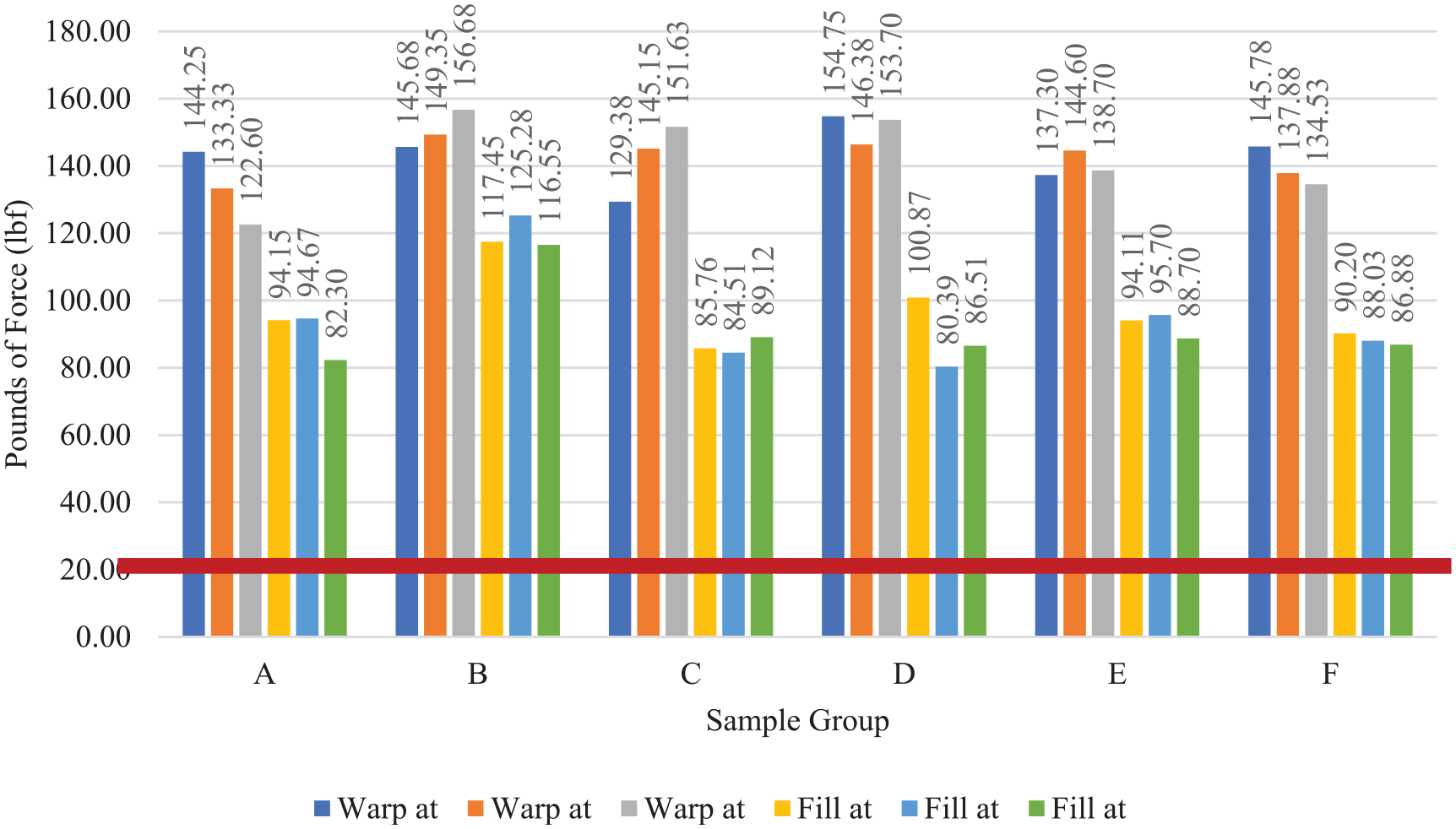
Tensile strength results of initial and after 75 wash cycles.
According to ASTM F3352-19, 6 the required tensile strength for gowns is a minimum of 7 lbf in both the warp and fill directions. As illustrated in Figure 6, the tensile strength of all gowns ranged from 129.38 to 154.75 lbf when new, and 82.30–116.55 lbf after 75 wash cycles. There was a significant difference after wash intervals in the warp direction (p-value = 0.000) but not in the fill direction (p-value = 0.341). Even with a significant decrease in the warp direction, gowns in all sample groups not only met but exceeded the minimum requirement of 7 lbf in the warp and fill directions when tested before laundering and after wash interval 75 with and without bleach. It should be noted that a 7 lbf is low, especially for reusable fabrics. A minimum of 7 lbf was developed for disposable fabrics; therefore, an increase in the minimum should be recommended for reusable fabrics.
Tear Strength
Tear strength was measured on an Instron 4465 tensile testing machine according to ASTM D5587–15 Standard Test Method for Tearing Strength of Fabrics by Trapezoid Method Procedure. 22 A summary of the results is presented in Figure 7.
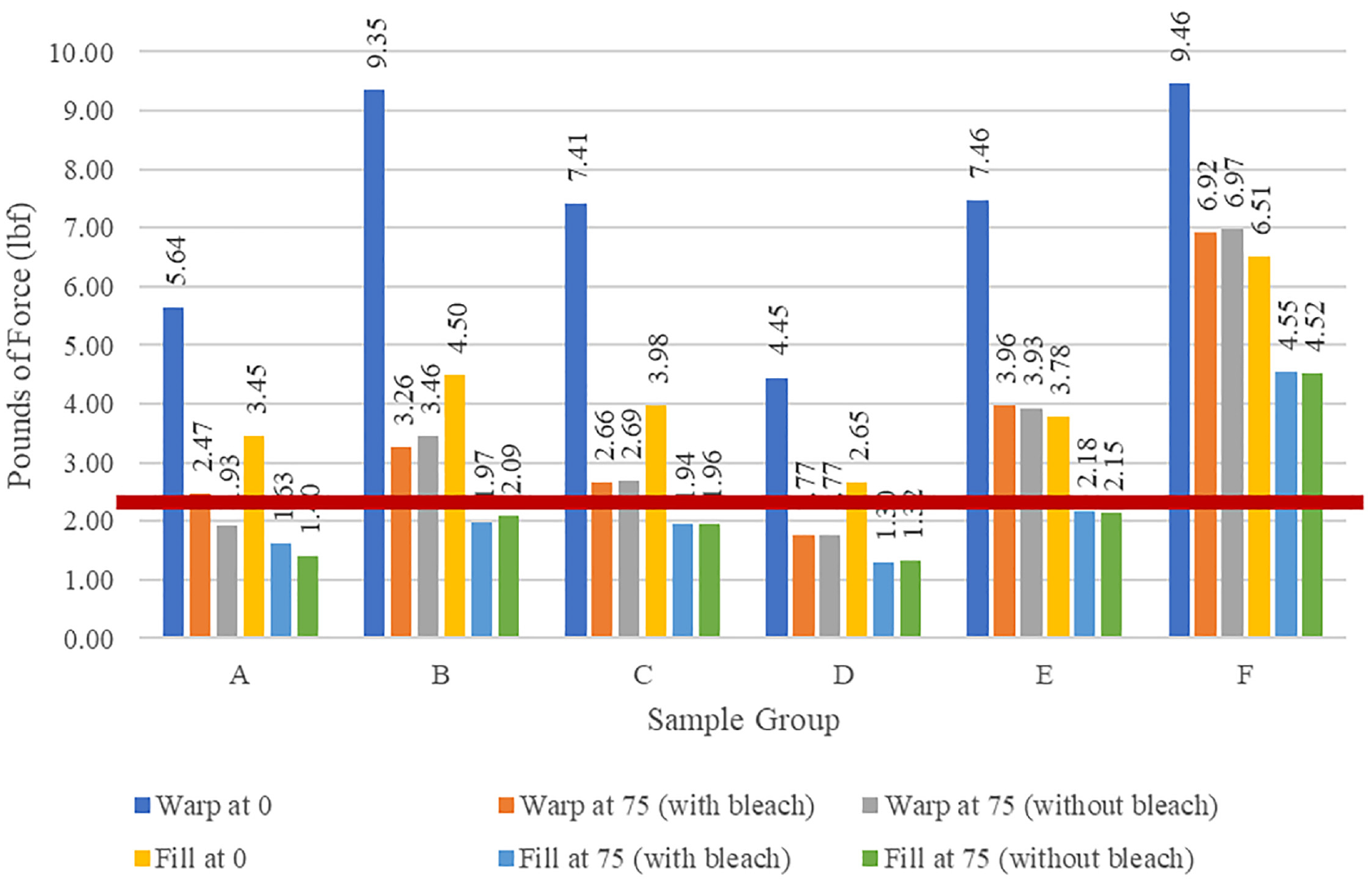
Tear strength results of initial and after 75 wash cycles.
According to ASTM F3352-19, 6 the required tear strength for gowns is a minimum of 2.3 lbf in both the warp and fill directions. Gowns in each sample group exceeded the 2.3 lbf requirement in the warp and filling direction when tested before laundering.
ASTM F3352 requires gowns to be tested for tear strength as new gowns; therefore, all gowns met the standard’s requirements. This requirement was based on disposable gowns; therefore, the researchers tested the gowns after 75 wash cycles to determine whether the tear strength changed from new to the end of service life. Gowns in Groups A, B, C, D, and E failed this requirement in the fill direction after laundering with and without bleach. Group D gowns failed this requirement in warp and fill directions after laundering with and without bleach. Gowns in Group F were the only gowns that met the specifications after laundering with and without bleach.
Seam Strength
Seam strength was measured on an Instron 4465 tensile testing machine according to ASTM D1683/D1683M–17 Standard Test Method for Failure in Sewn Seams of Woven Fabrics. 23 Seam strength data is summarized in Figure 8.
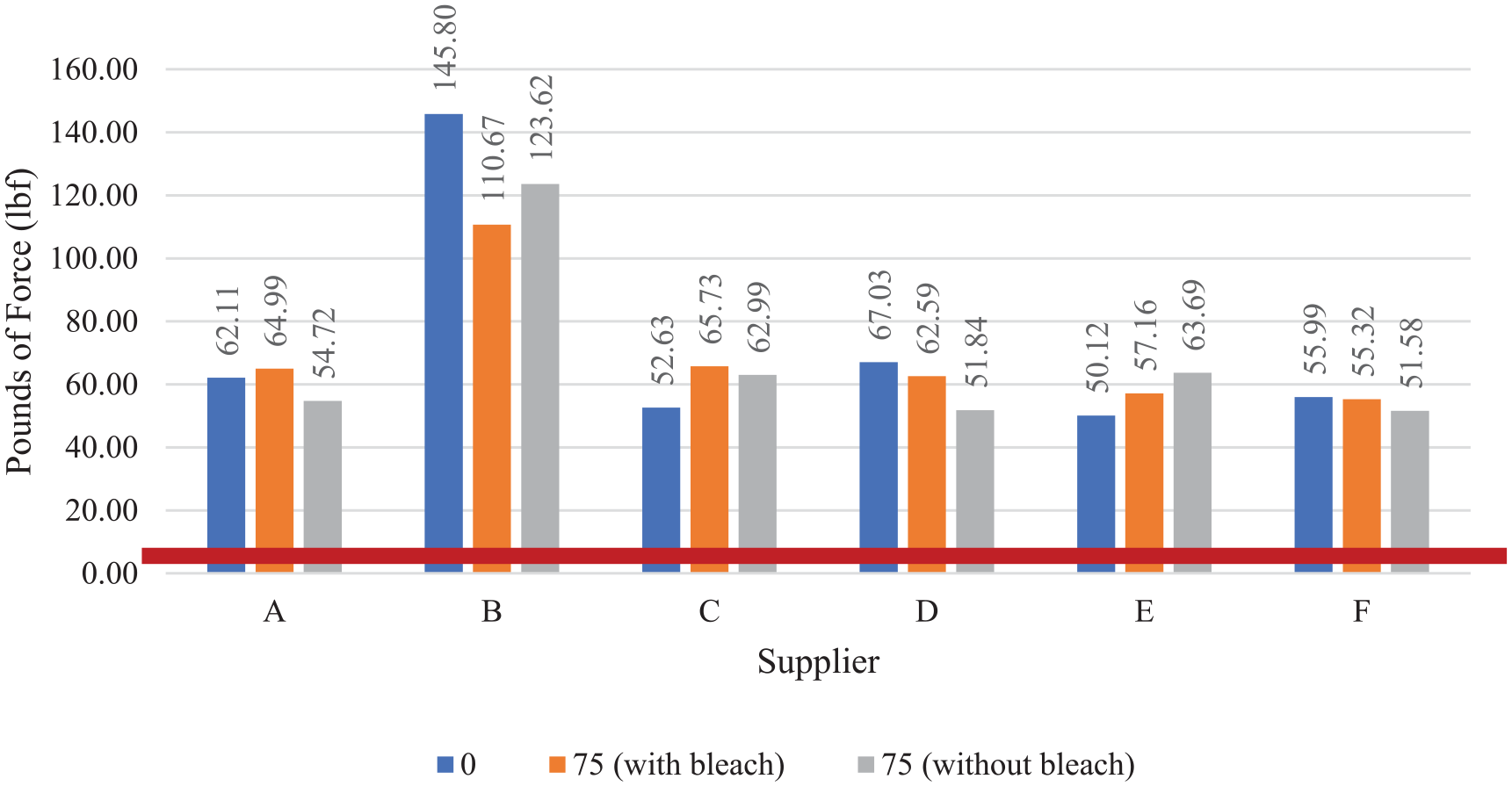
Seam strength results of initial and after 75 wash cycles.
According to ASTM F3352-19, 6 the required seam strength for gowns is a minimum of 7 lbf. Gowns in all groups met and exceeded this requirement before laundering and after wash interval 75 with and without bleach. Stitching of the seams failed for each gown at the stitch line without damaging the fabric of the isolation gown. Therefore, a seam repair could extend the life of a reusable gown.
Discussion
Performance Characteristics of Reusable Gowns
Gowns washed with and without bleach from sample Groups A, B, C, D, and E met AAMI’s Standard of 20 cm for hydrostatic pressure and exceeded the minimum performance before and after each wash interval. Although the data show that laundering resulted in a decline in the hydrostatic pressure results, gowns from Groups A, B, C, D, and E met specifications for overall wash intervals. Gowns in each sample group washed with and without bleach consistently met AAMI’s Standard of 1 g for impact penetration throughout the wash intervals.
Barrier performance in hydrostatic pressure and impact penetration over 75 wash cycles did vary among gowns laundered with and without bleach. Dependence on finishes was apparent in hydrostatic pressure and impact penetration results. The gowns from Groups C, D, and E, which have a water-repellent coating, had the highest level of resistance to hydrostatic pressure and impact penetration at or before wash and continued to have the most consistent barrier performance over the 75 wash cycles. Gowns from Groups A and B that did not have a water-repellent coating performed similarly in hydrostatic and impact penetration over 75 wash cycles. All gowns in Groups A and B showed a decline in barrier performance as the number of wash cycles increased, but they continued to exceed the minimum requirement of the standard.
Group F gowns had the lowest barrier performance over 75 wash cycles, initially meeting the specifications for hydrostatic pressure by approximately 2 cm and failing barrier performance by wash intervals 50 and 75. Gowns in Group F laundered with and without bleach failed AAMI’s Standard of 20 cm for hydrostatic pressure. A t-test on the mean confirmed gowns in Group F failed to meet the specifications at wash interval 75 (p-value = 0.9564).
Durability performance varied among the strength tests. Tensile and seam strength exceeded the specifications outlined in ASTM F3352-19 initially and after wash interval 75. Both tests showed declines and variations from initial (unwashed) throughout the intervals up to 75 wash/dry cycles. However, the tear strength performance significantly declined in all groups laundered with and without bleach. The gowns met specifications before laundering, but there were significant declines after laundering, and by the end of 75 wash cycles, most sample groups failed. Gowns in Groups A, B, C, D, and E failed in tear strength after laundering. Gowns in Group F also significantly declined, but are the only gowns that met the specifications in the warp and fill directions after laundering.
Tear strength was the only test where most gowns failed to meet the specifications after laundering. Tear strength determines how well a material can withstand the effects of tearing. In actual use, it is noted in ANSI/AAMI ST65:2008/(R)2018 16 that gowns with any tears, rips, or damage at any time throughout their lifecycle are to be discarded. Although the specifications for durability are required at initial testing, further research showed tear strength after laundering weakened substantially.
Performance of Fabric and Seam Locations
According to AAMI, five critical zones include both fabric and seam locations, and the results are averaged together to provide the barrier performance of an isolation gown. All gowns met hydrostatic and impact penetration requirements for a Level 2 isolation gown when new. The researchers were interested in tracking the seams and fabric locations separately to determine whether barrier performance differed. The results showed that the gowns met or exceeded the standard’s requirements when averaged together. However, seams were identified as the weak point when evaluating barrier performance over multiple wash intervals when the data were viewed separately. Group A and B seams failed the specification for hydrostatic pressure at wash interval 10 in Group A and continued to decline throughout the remainder of the wash cycles. In Group B, seams failed early in laundering (wash interval 25) and continued to decline after wash intervals 50 and 75. For gowns C, D, and E, seams did not fail specifications in hydrostatic pressure, but had significantly lower performance than their fabric locations after each interval. Gowns in Group F were the only sample that did not vary between fabric and seam locations in hydrostatic pressure. Impact penetration was slightly different; seam locations met the specifications in all gown groups. Groups A, C, and F showed significant differences between the performance of fabric and seam locations. Conversely, Groups D and E did not have significant differences between the two locations.
Impact of Laundering With and Without Oxygen Bleach
At the time of this research, there were no standard laundering instructions for isolation gowns. Other sources, such as ANSI/AAMI ST65:2008, 13 the CDC, and other textile industry leaders, were used to determine a laundry cycle for this study. Gowns in each of the six sample groups were divided into two equal loads that were washed in two chemical formulas, one with oxygen bleach additive and one without oxygen bleach, to test the difference in performance.
For impact penetration, gowns washed without bleach showed a more significant decline in liquid penetration resistance than gowns washed with bleach. However, only Group A gowns exhibited higher performance results with bleach than gowns washed without bleach for all performance tests. Gowns in Groups B, C, D, E, and F had varying results between bleach and without bleach.
Surfactants are a primary component of most laundry detergents. They lower the surface tension of water, allowing more water to spread across the entire fabric to trap and remove soil. Surfactants make it possible to remove soil that cannot be removed by water alone. In lowering the surface tension, liquids are more likely to penetrate the fabric. 24 Consequently, a buildup of surfactants will allow other liquids (like blood and OPIM) to penetrate the fabric and diminish the performance qualities of PPE. Including extra rinse cycles in the wash cycle is crucial for removing residual chemicals to maintain consistent barrier performance. Also, it is essential to note that there was a decline in performance in every test after the gowns were laundered compared with the results before laundering. This may be due to a buildup of surfactants and a reduction in the coating or finish that imparts barrier protection. Isolation gowns should be labeled according to their end-of-life protection level rather than how they perform before laundering. Testing the performance of a gown before initial washing is misleading the consumer about the level of performance properties.
Conclusion
Overall, the findings show that commercially available reusable gowns can meet ANSI/AAMI PB70:2012 and ASTM F3352 performance standards. Out of the six sample groups, gowns in Group F failed ANSI/AAMI PB70:2012 specifications before the end of their intended lifecycle. All gowns technically met the specifications for durability in ASTM F3352-19, but further research showed tear strength after laundering weakened substantially. The current standard for Level 2 isolation gowns protects the lives of HCWs, but specifications could be improved. There were notable differences between the performance of fabric and seam locations. ANSI/AAMI should consider and evaluate a separate specification for seam performance to determine whether seam locations should have a separate specification or whether a required seam construction should be considered to meet the current specifications over the gown’s lifecycle.
Gowns from sample Groups A, B, C, D, and E met the specifications for tear strength before laundering, but failed the specifications after wash intervals. Future studies should consider expanding the sample to other protection levels and other types of PPE gowns, such as surgical and cover gowns. The ability to obtain various samples would aid in randomizing research design. Many gowns comprise polyester, polyester blends, and other synthetic materials. Future studies should include other fabric types as well. In future research, different types of seam stitching should be evaluated over wash intervals to find a stitch type able to withstand their respective protection level over wash intervals. Wear studies should also be considered, as laboratory analysis of durability performance may not mimic actual in-use testing. Finally, recommendations to introduce variables in laundering, such as including rinse cycles to remove residual surfactants, should be considered.
Limitations
The limitations of this research include the method of sample selection. Due to financial and time limitations, only commercially available reusable Level 2 isolation gowns were obtained for this study. The study replicated laundering the gowns and testing their performance after various intervals; however, it did not account for wear studies. In addition, laboratory testing of performance may not mimic actual in-use testing. Certain body areas are subjected to stress and pressure, increasing the chance of penetration of bodily fluids or OPIM to the wearer. Finally, with the many products on the market and in this study, sample groups may have various product designs, making the comparison against isolation gown brands and their barrier effectiveness difficult.
Footnotes
Declaration of conflicting interests
The author(s) declared no potential conflicts of interest with respect to the research, authorship, and/or publication of this article.
Funding
The author(s) received no financial support for the research, authorship, and/or publication of this article.