



Abstract
The influence of stitch length and knit structure on comfort characteristics of moisture management finish microdenier polyester knitted fabrics was determined to identify the suitable stitch length and knit structure. In order to study this effect, microdenier polyester filament yarn of 150 denier containing 108 filaments was taken. The yarn was converted to three knit structures such as single jersey, single airtex, and honeycomb, each containing three different stitch lengths of 2.6, 2.9, and 3.2 mm. The effect of stitch length and knit structure on comfort characteristics of moisture management finish knitted fabrics was significant. It was observed that single jersey fabrics showed quicker sinking times for the wetting test. In the wicking test, the wicking length increased continuously with stitch length for treated fabrics. In transverse wicking test for one drop of water and to reach saturation point, single jersey fabric shows a larger water spreading area. The time taken to reach saturation point is also shorter. In the moisture vapor transfer test for reduction in height and weight of water, single airtex fabrics show higher values. In the air permeability test, the single jersey structure exhibited higher air permeability values. It was observed that the single jersey structure with 2.9-mm stitch length had a superior performance with respect to comfort characteristics.
Introduction
Polyester microfibers have excellent resistance to dirt, alkalis, decay, mold, and most common organic solvents. Excellent heat resistance or thermal stability is also an attribute of polyester microfibers. It is the fiber used most in base fabrics for sportswear and active wear because of its low moisture absorption and easy-care properties. 1 Knitted fabrics with smaller numbers of fabric contact points on the skin can cause an uneven surface, which results in reduced clinging sensation when the skin is sweat-wetted. 2 The lesser the direct contact with skin, the greater the wicking action. 3 Since moisture management and soft hand make major contributions to wearer comfort, the demand of consumers for sportswear that is focused on comfort can be met through chemical finishing of fabrics. 4
Ibrahim et al. 5 stated that properties such as smoothness of the fabric surface, air permeability, heat transmittance, hydrophilicity, knit structure, and the presence of a bio-finish influence the comfort characteristics of the knitted fabric. Patil et al. 6 observed that 3-mm stitch length fabric showed more wicking of water in the wale direction than that shown by 2.5-mm stitch length fabrics. When knitted fabric stitch length increases, the fabric density decreases, and it requires less time for wicking. This is due to the increase in capillary action of the material, when the resistance to water flow decreases because of the lower density of loops. The single jersey fabrics with a 3-mm stitch length show better wicking than other fabrics. The single jersey structure consists of knit loops only, so loop leg orientation is only toward the wale direction, which helps for better wicking in comparison to other structures consisting of a combination of knit and tuck loops. The author also studied the absorption behavior of the different structures. When the density was greater, the number of loops was higher. So at constant time, the area covered by the spreading of water was reduced. This means, when the density of the fabric was greater, the resistance to the absorption of water was higher. Among the four structures such as single jersey, single pique, double pique, and honey comb, the single jersey fabric with 3-mm stitch length fabric has a greter water spreading area than other fabrics due to the lesser stitch density and greater openness of its structure.
Ozdil et al. 7 measured the moisture management properties of knitted fabrics using a moisture management tester. The dynamic liquid transport properties of textiles such as wetting time, maximum absorption rate, and spreading speed were measured and also determined the effects coefficient of yarn count and yarn twist. The study focused on the moisture management properties of the single jersey knitted fabrics produced using cotton yarns in three different yarn counts and twist coefficients. According to the results, the higher twist coefficient value creates a compact structure, maximum absorption rate, spreading speed, and maximum wetted radius decrease, whereas the wetting time of the fabrics increases and vice versa for the maximum absorption rate. The overall moisture management capacity values indicate the moisture behavior of the fabrics.
Özkan and Kaplangiray’s 8 results showed that textured polyester yarn knitted fabrics had the highest air permeability values compared with moisture management polyester in same yarn count and knit structure. El-Newashy et al. 9 studied how sericin-containing baths affected the various knitted polyester fabric structures in an effort to enhance some of their comfort-related characteristics. Without appreciable deterioration in its inherent properties, the different structures of treated polyester fabric exhibited induced hydrophilicity, enhanced electrical conductivity, improved resistance to ultraviolet radiation, and better water vapor permeability. Chen et al. 10 examined the effect of fabric physical properties and knitting parameters on the comfort-related qualities of commercial sportswear fabric in order to evaluate the thermo-physiological comfort properties of various sports fabrics. For the materials used in this study, it was discovered that larger mass was linked to higher air resistance, higher porosity was linked to faster dry speed, and faster vertical wicking rate was linked to quicker water absorption time. Demiryürek and Uysaltürk 11 studied the blends of Viloft with polyester fiber, which is mainly used for underwear, socks, and sportswear fabrics. In this study, thermal-related characteristics — such as the thermal conductivity, thermal diffusivity, thermal absorptivity, thermal resistance, moisture, and air permeabilitycotton /cotton and Viloft/polyester-blended knitted fabrics — were investigated. According to the results, Viloft-rich blends, in general, improved the thermal properties of the fabrics. Çoruh 12 investigated the influence of the knitting structure, loop length, tightness factor, fiber type, and yarn properties on the mechanical and comfort properties of single jersey knitted fabrics. This study was to ensure that the quality of fabric production was maintained according to specific constraints and objectives without producing the comfort properties desired. Saeed et al’s 13 results showed that the single jersey knitted fabric produced from the pure micro polyester yarn combined with the pure tencel yarn provide good overall properties for the hot environment next to the skin.
Based on our previous findings, it is understood that microdenier polyester fabric containing 108 filament yarn showed better results with respect to comfort characteristics. But further investigation is required with regard to the structural parameters of the fabrics. Experiments have been carried out to understand the influence of different stitch lengths and knit structures with respect to comfort characteristics. In order to find the suitable stitch length and corresponding knit structure, microdenier polyester yarn containing 108 filaments was taken for this study.
Materials and Methods
The influence of stitch length and knit structure on moisture management finished microdenier polyester knitted fabrics has been studied. Based on the study, a suitable stitch length and knit structure have been identified. In order to study this effect, commercially available microdenier polyester filament yarn of 150 denier containing 108 filaments was used. The yarn was knitted on a circular knitting machine to produce three different structures such as single jersey, single airtex, and honeycomb structure containing three different stitch lengths of 2.6, 2.9, and 3.2 mm. The comfort characteristics such as wetting, vertical wicking, transverse wicking, moisture vapor transfer, and air permeability were tested. All the test results have been analyzed using statistical tool at 95% confidence level. The structures of the three different knitted fabrics are shown below.
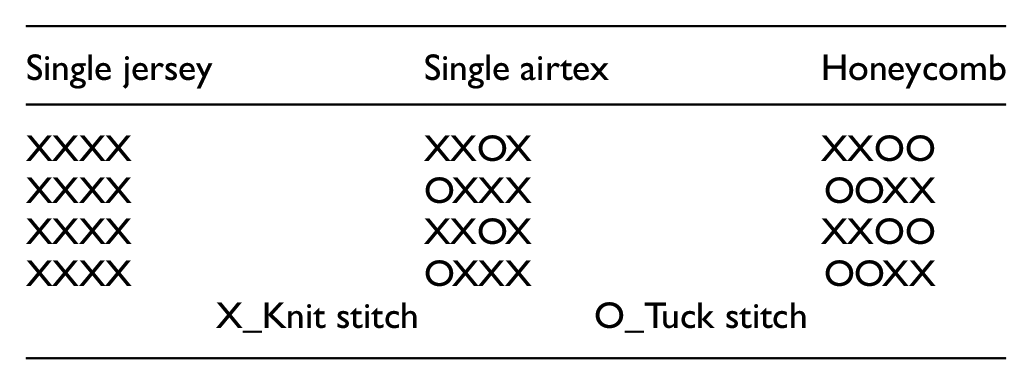
All the nine fabrics were then treated for moisture management finish (MMF). The polyester knitted fabrics were hot washed and bleached. The five fabric samples were treated with a wetting agent consisting of a synergetic blend of ethoxylated alcohol (a fatty alcohol, ethylene oxide, and propylene oxide) at 2% concentration for half an hour at 60–70°C temperature and dried in a stentering machine at 140°C. These fabrics were treated for MMF with a chemical combination of amino silicone polyether copolymer (ASPC) and hydrophilic polymer (HP) in the ratio of 1:2 with pH value of 5.5 at 60–70°C temperature for 30 min. The samples were treated in the finishing bath and padded using a padding mangle. The pressure applied was 30 lb/h with a single nip process. The speed of take up was 5 m per minute to obtain an expression of 85%. Then, it was dried and cured in a stenter at 160–170°C and subjected to relaxation for 48 h.
Methods
The wetting property was evaluated by measuring the time required for a piece of fabric to sink completely from the surface layer of water in a beaker. 14 The fabric was measured by cutting a sample of 30 mm × 30 mm and placing it on the surface layer of water. The time taken for the sample to sink completely in water was measured. The samples were dropped on the surface of distilled water from a standard height, and the time taken to sink the specimen in water was noted. As per BS 3424, the vertical wicking property was evaluated. The moisture vapor transfer test was evaluated using ASTM E-96 cup method. 15 Air permeability test was evaluated as per IS 11056:1984. 16
The scanning electron microscopy (SEM) analysis was done using the Japan Electron Optics Limited (JEOL) model JSM-6360 microscope. It was done to study the fiber characteristics and determine the changes that have occurred in the fiber due to the application of MMF. A 2-kV electric current was applied to obtain a 1000 times image magnification of the sample fabric. The average wales per centimeter and courses per centimeter were measured with the help of a counting glass. The average stitch length was measured using a crimp tester. The average stitch density was measured according to the method IS: 1963:1981. The fabric areal density was measured using an electronic scale according to the method ASTM D 3776. The fabric thickness was measured with the aid of a thickness gauge according to the method ASTM D 1777-96. A novel method has been developed through this research work to measure the water spreading area on the fabric, to find out the transverse wicking behavior of the fabrics. 16
Results and Discussion
To study the influences of stitch length and knit structure, the comfort characteristics such as wetting, vertical wicking, transverse wicking, moisture vapor transfer, and air permeability were tested. At 95% confidence limit, “s” means statistically significant at a 95% confidence level and “ns” means statistically non-significant at a 95% confidence level.
SEM Analysis
The SEM analysis was done in order to study the surface structure of the microdenier polyester fabric. It helped in determining the changes that have occurred in the fabric due to application of MMF. From Figure 1(a) and (b), it was clearly seen that the moisture management finishing agents are integrated into the core of the filament surface. The shiny appearance and smooth feel of MMF fabric itself show that the finishing agents are affixed to the filaments.
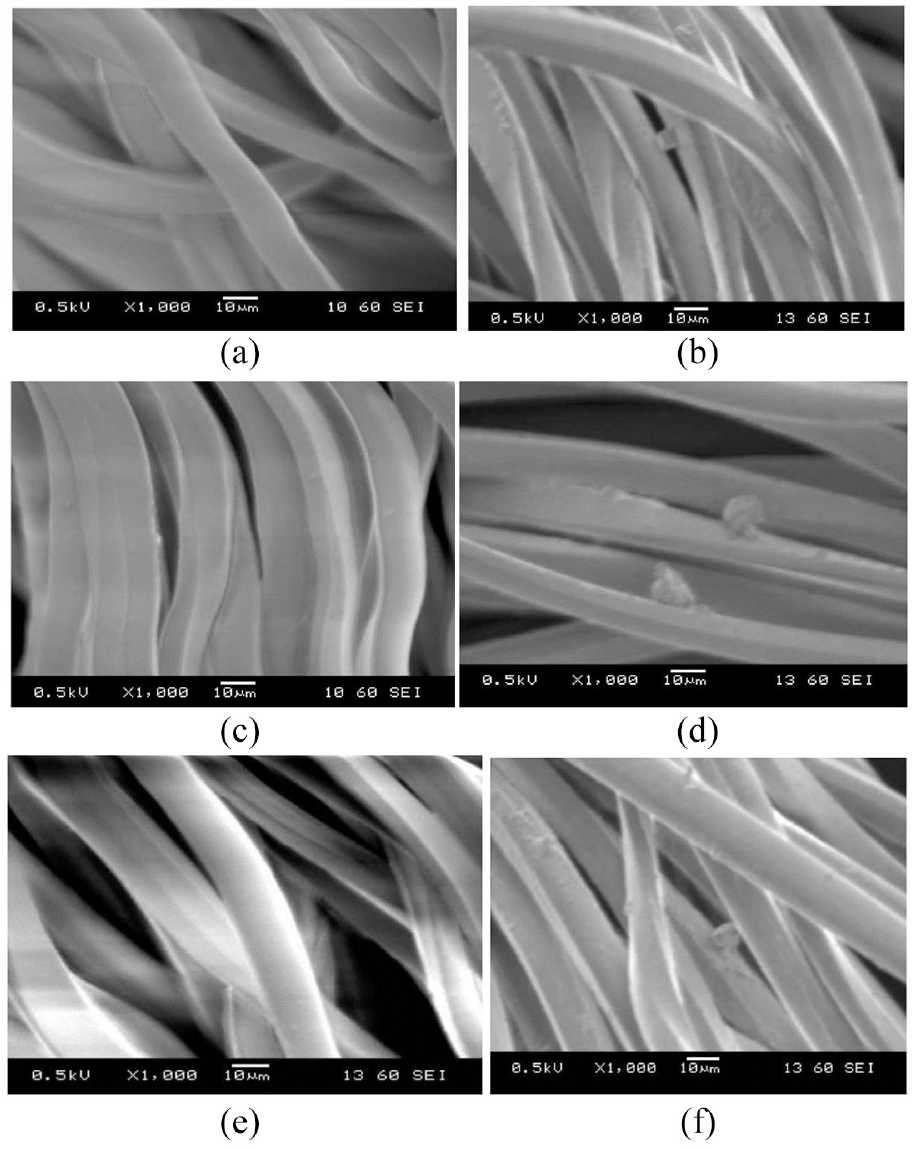
Untreated ((a) single jersey fabric, (c) single airtex, and (e) honey comb) and treated ((b) single jersey fabric, (d) single airtex, and (f) honey comb) fabrics.
Analysis of Wetting Characteristics
The ability of the fabric to sink completely in water was tested and included in Figure 2.
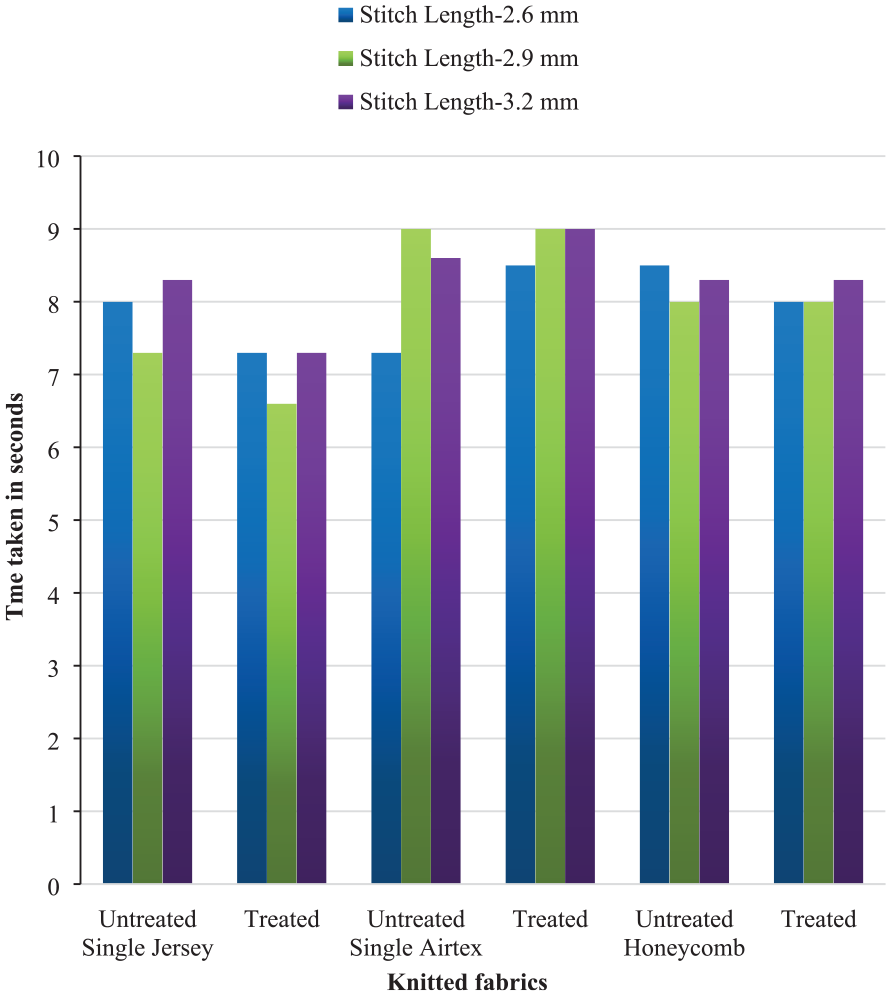
Wetting characteristics of the fabrics.
From Figure 2, it is seen that single jersey fabrics show quicker sinking time than the other two structures. Single airtex and honeycomb take 15% 26% more time to sink completely in water. This is due to the higher density of the fabrics. The absorption by water of any fabric increases when the surface resistance to water is less. This is due to the low contact angle of water with the fabric surface, which is less than 90 degrees in the water while wicking into the material by capillary action. The single airtex and honeycomb fabrics take more time to sink. This is because of the higher density of the fabric which develops the surface resistance of the water. For single airtex and honeycomb fabrics, there is no appreciable change in sinking time for the three different stitch lengths. The MMF-treated fabrics take 9% less time to sink than the untreated fabrics for all the fabrics. This is due to the absorbency of the fabrics being increased after the MMF treatment. There is no correlation between stitch length and wetting time of the fabrics.
Analysis of Wicking Characteristics
The vertical wicking height reached after 5 min was tested and is included in Figure 3. From Figure 3, it is seen that in single jersey fabrics, wicking length increases continuously with stitch length for treated fabrics. When stitch length increases, the fabric density decreases and higher is the wicking length. This is due to the increase in capillary action of the material, when the resistance to water flow decreases because of thelower density of loops. But for the untreated fabrics, it first increases with 2.9-mm stitch length and then reduces with 3.2-mm stitch length. In single airtex fabrics, there is no significant difference between untreated and treated fabrics in terms of wicking length.
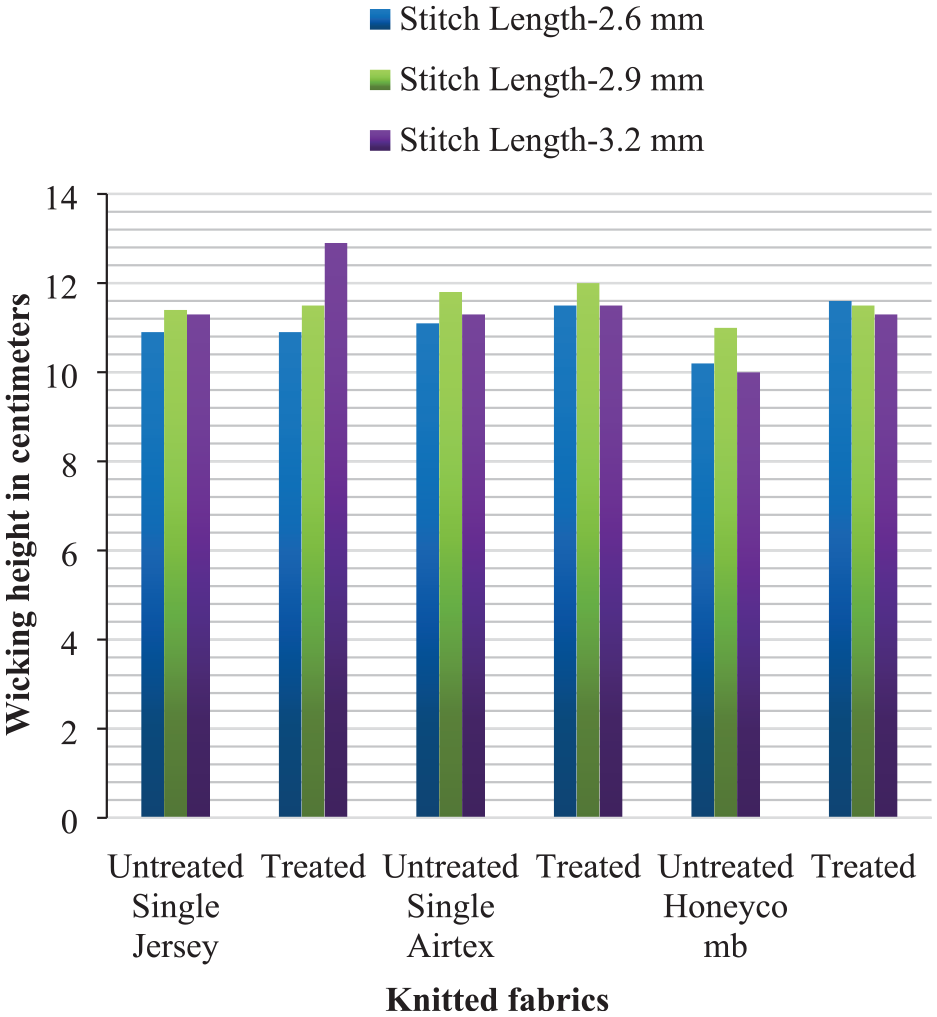
Wicking height reached after 5 min.
In general, honeycomb (treated) fabric has lower wicking length than that of single jersey and single airtex (treated) fabrics. This is because it has more tuck stitches in the repeat structure. Tuck stitches hinder the free flow of water and slow the capillary action of fabrics. Compared with knit stitch, tuck stitch has lower wickability. Single jersey structure consists of knit loops only when compared to other two structures which consist of a combination of knit-and-tuck loops. In knit loops, the loop leg orientation is only toward vertical wale direction which helps in better wicking. The same trend was observed by Patil et al. 6 There is no correlation between stitch length and wickability of the MMF fabrics.
Analysis of Transverse Wicking Characteristics
The area covered by the spreading action of water for one drop and saturation method is given below.
Area of Water Spread (for One Drop of Water and to Reach Saturation)
The area covered by the spreading action of one drop (1 mL) of water was tested and is included in Figure 7. When a liquid drop is placed on a fabric, it is contained within the substrate and spreads under the influence of capillary force. From Figure 4, it is seen that in all three structures, the spreading of water increased with the increase in stitch length. The 3.2-mm stitch length gave a larger area of water spread than 2.9- and 2.6-mm stitch lengths. This may due to the lower density of the fabrics. With the higher stitch length, the number of loops was less, and hence, the density of fabrics was greater also less. The area covered by spread of water was reduced gradually for 2.9- and 2.6-mm stitch lengths. This is because when the density of fabrics was greater, the resistance to water spreading was also greater. A similar trend was observed by Patil et al. 6 This is also due to the fact that, when the capillary spaces in a fabric are not uniform, the liquid may not spread as a continuous front, but may instead penetrate some capillaries before others and does not usually form a circle with a well-defined radius. Higher stitch length fabrics have a lower stitch density and more openness in their structures.
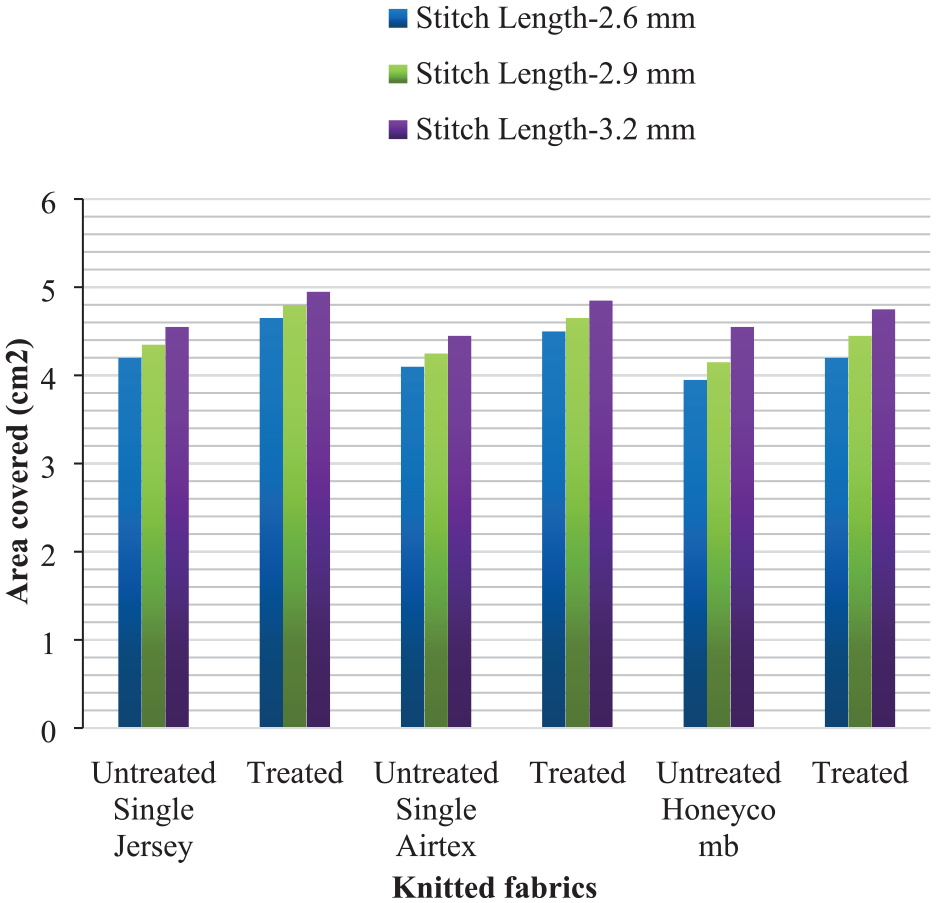
Area of water spread for 1ml of water.
Single jersey fabrics give a larger spreading area followed by single airtex and honey comb fabrics. Compared with the untreated fabrics, the MMF-treated fabrics exhibits 9% larger water spread area for single jersey and single airtex fabrics while it is 6% for honey comb fabrics. Hence, the stitch length plays a significant part in water spreading of fabrics.
Area of Water Spread and Time Taken to Reach Saturation
The area covered and time taken for the fabrics to reach saturation were tested and are included in Figures 5 and 6. From the figure, it is seen that the water spreading area (to reach saturation) has increased with the increase in stitch length for all three fabric structures. The single jersey structure shows a larger water area spread followed by single airtex and honeycomb fabrics, respectively. The spreading by water of any fabric increases when the resistance to water flow is less. In single jersey, this resistance is lower because the fabric thickness is 8% and 20% less than single airtex and honeycomb fabrics. In addition, the fabric density is marginally lower than for the other two fabrics.
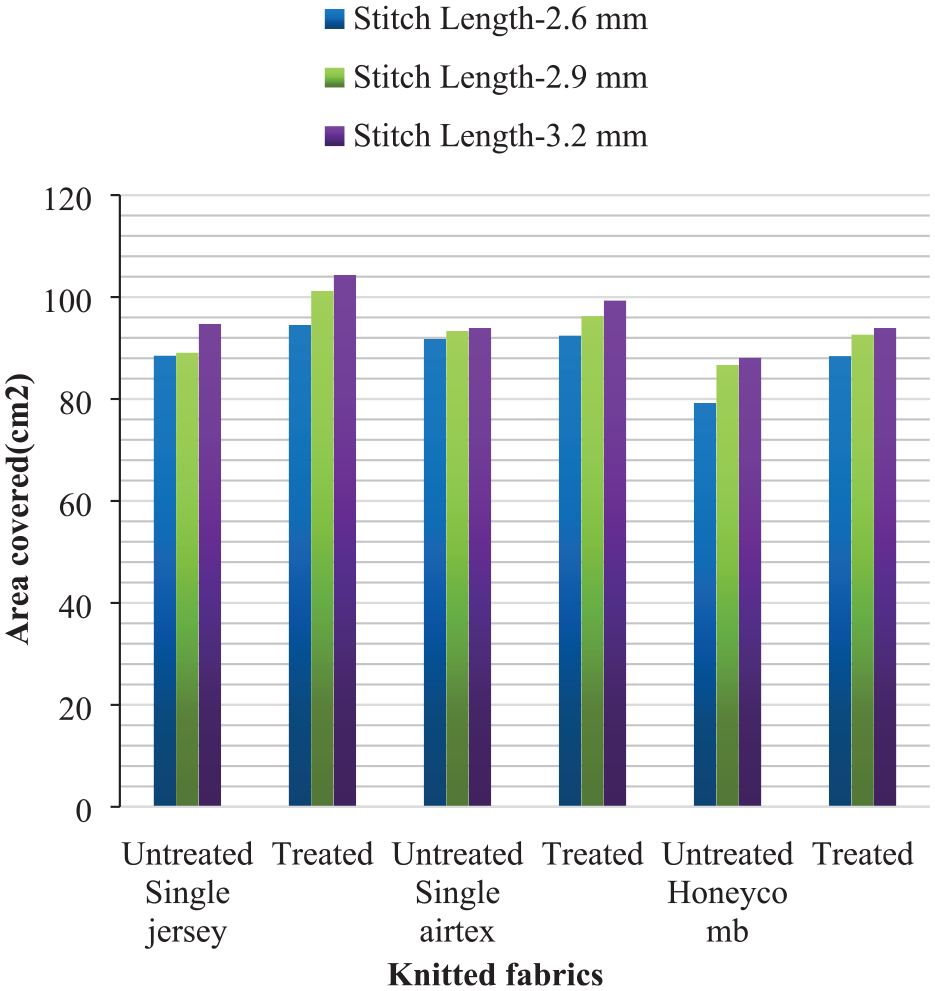
Area of water spread to reach saturation.
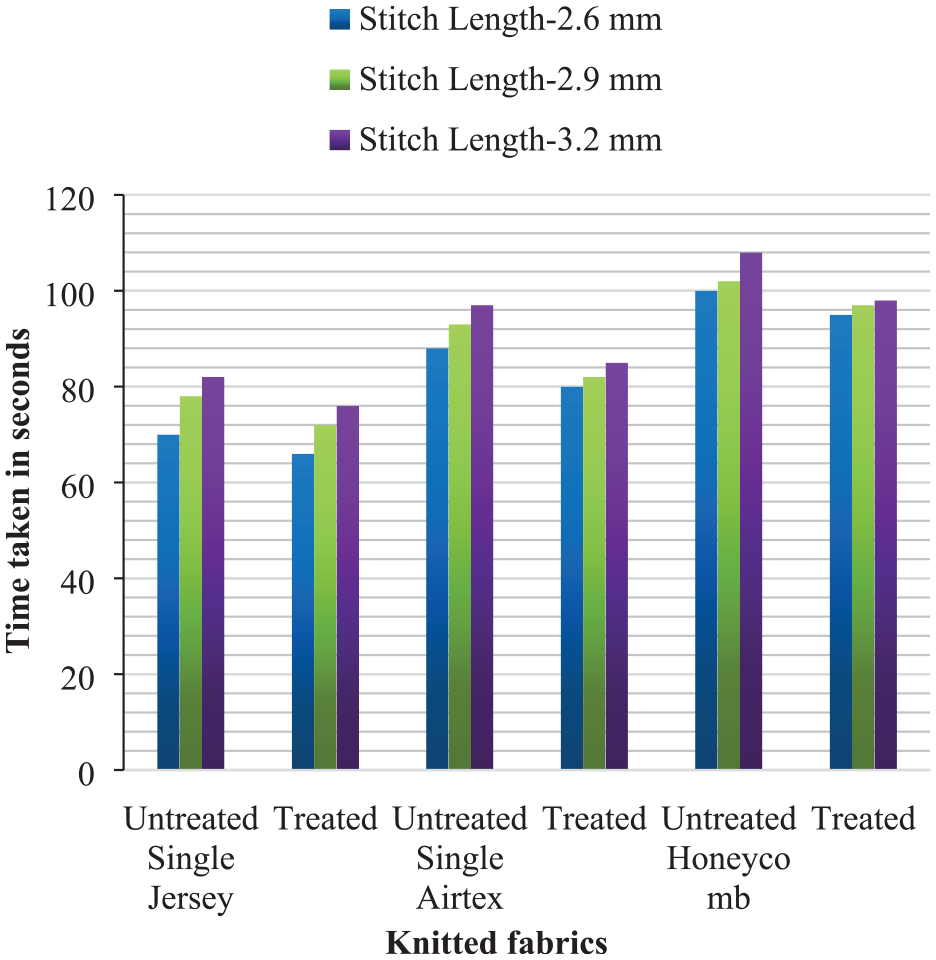
Time taken to reach saturation.
The absorption of water by fiber molecules as well as the moisture fill up in the inter-fiber and inter-yarn pores of the fabric decide the water spread. The amount of water taken up by the pores is dependent on the porosity of the fabrics. Single airtex and honeycomb have a combination of knit and tuck loops while single jersey has only knit loops where in the water is transferred in lateral direction against gravitational force and spreads well in parallel through the capillaries along the fiber axis. This is due to the uniformity of having only knit loops in its structure. The advantage of these assessments is that since transverse wicking is multi-directional, it eliminates the directional effect. The spreading of water increases with the increase in stitch length for all three fabrics. The same trend was found in one drop test. Compared with the untreated fabrics, the MMF-treated fabrics exhibit a 6–12% increase in area spread for single jersey fabrics, 3–6% for single airtex fabrics, and 6–9% for honeycomb fabrics, respectively. A similar trend was seen in one drop test. When the time taken to reach saturation point was longer, correspondingly the area spread was also more. Compared with the treated fabrics, the time taken for the untreated fabrics (to reach saturation) is 6–10% longer even though the area spread was less than that of the treated fabrics. The MMF treatment alters the fabric surface by providing hydrophilic capacity which ensures larger water spread uniformly along the fabric plane.
Analysis of Moisture Vapor Transfer Behavior
The rate at which moisture vapor moved through a treated fabric was tested and is shown in Figure 7.
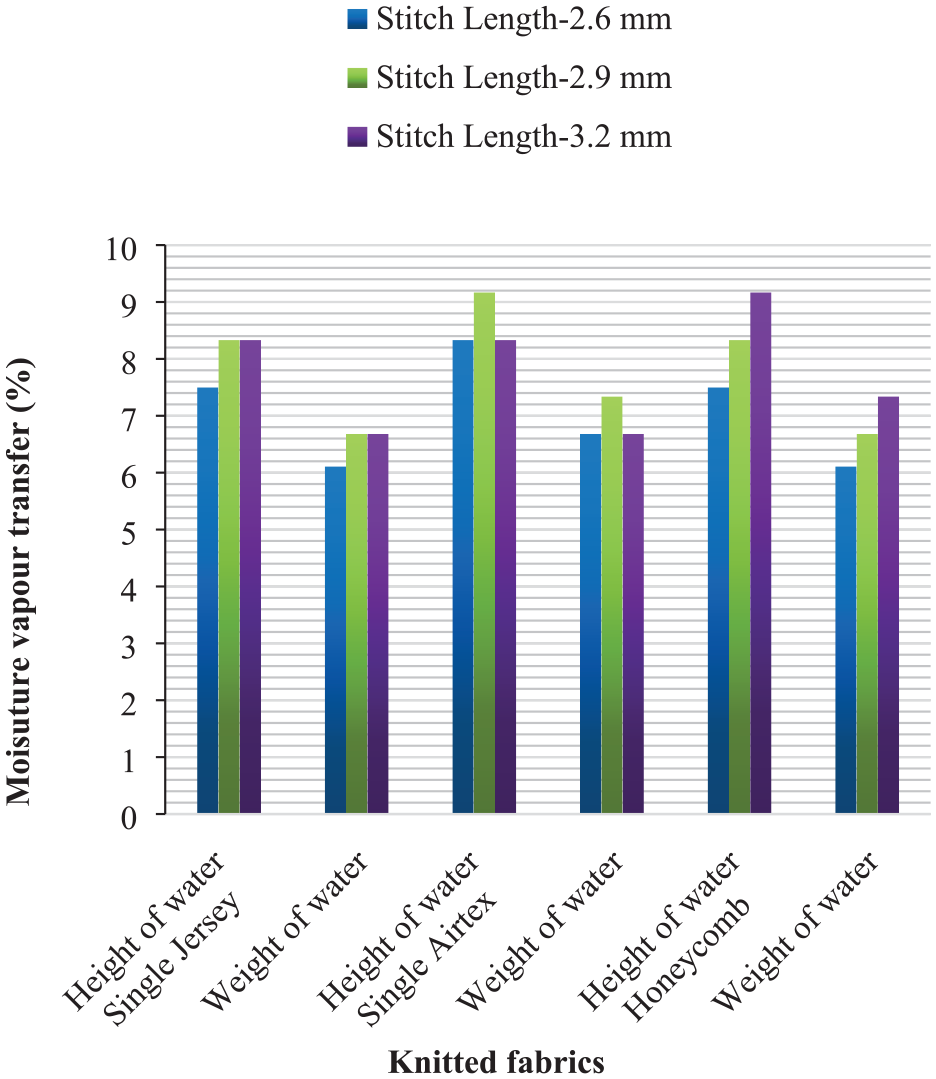
MVT-reduction in height and weight of water for MMF fabric.
From Figure 7, it is seen that single airtex and honeycomb show same moisture vapor transfer (MVT) values that are marginally higher than those for single jersey, but the effect is not significant. This is due to the openness of these structures. Even though the fabric thickness is 8–20% more than that or single jersey, a combination of knit and tuck loops provides more openness in the fabric structure. This gives a higher transmission rate than single jersey fabric. Compared with the untreated fabrics, the treated fabrics show only a marginal improvement in MVT. The hydrophilic coating given on the fabric surface improves the MVT rate of single jersey fabrics. There is no correlation between stitch length and MVT rate with respect to height reduction. From Figure 7, it is seen that single jersey, single airtex, and honeycomb structures show similar values. The marginal difference is insignificant. A similar trend was seen in height reduction values. Compared with the untreated fabrics, only single jersey treated fabrics show a 20% higher weight reduction. As mentioned earlier, the MMF treatment has enhanced the MVT rate of single jersey fabrics alone.
Air Permeability Characteristics
The rate of airflow through the fabric under a differential pressure between the two faces of a fabric was tested and is shown in Figure 8. Figure 8 shows that the air permeability value of the fabrics increases linearly with stitch length. The porosity of the fabrics increases with stitch length because of the increase in void space between yarns of the fabric. Therefore, air permeability increases linearly with the increase in porosity. The same trend was observed by Oinuma 17 and Subrata. 18 When comparing the three structures, single jersey exhibits higher air permeability than single airtex and honeycomb structures. This is due to the lower thickness of single jersey fabrics. Single airtex and honey comb structures shows 8–20% higher thickness, respectively, than single jersey fabrics.
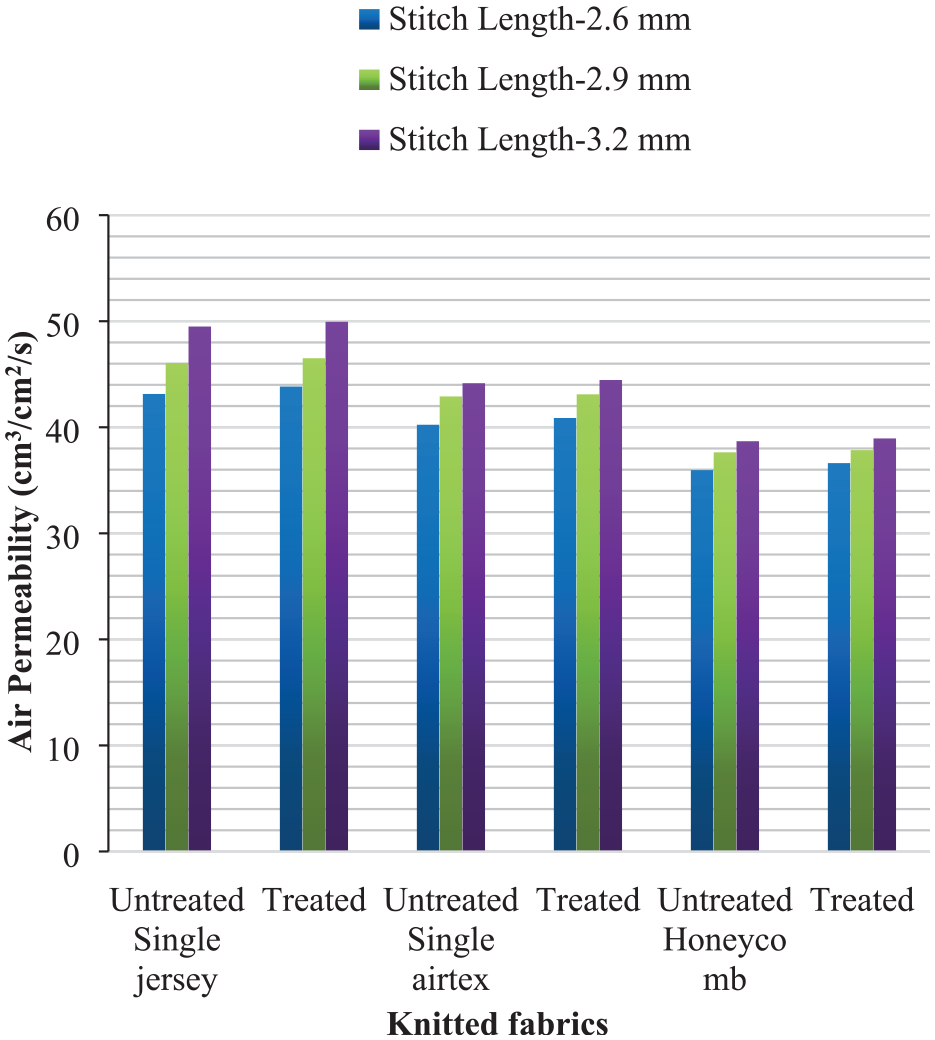
Air permeability of the fabrics.
Conclusion
One of the objectives of this research work is to study the influence of stitch length and knit structure on comfort characteristics of MMF microdenier polyester knitted fabrics. In fabric geometrical characteristics, the stitch density and areal density of the fabrics were increased after the application of MMF. The treated fabric’s thickness values increasesd by 2–4% when compared with the untreated fabrics. In the SEM analysis, it was clearly seen that moisture management finishing agents are integrated into the core of the filament surface. In the wetting test, it was observed that single jersey fabrics showed quicker sinking times than the other two structures. Single airtex and honeycomb fabrics took 15–26% more time to sink completely in water. In the wicking test, it was observed that wicking length increased continuously with stitch length for treated fabrics. But, there was no significant difference between untreated and treated fabrics in terms of wicking length. In the transverse wicking test for one drop of water, it was observed that in all three structures, the spreading of water increased with the increase in stitch length. The 3.2-mm stitch length gaves a larger area of water spread. Single jersey fabric gaves a larger spreading area followed by single airtex and honey comb fabrics. Compared with the untreated fabrics, the treated fabrics exhibitd 9% larger water spread area. In the saturation test, the water spreading area increased with the increase in stitch length for all three fabric structures. The single jersey structure showed a larger water area spread. Compared with the treated fabrics, the time taken for the untreated fabrics to reach saturation was 6–10% more even though the area spread was less than for treated fabrics. In the MVT test for reduction in height and weight of water, single airtex showed higher values. In the air permeability test, the air permeability of the fabrics increased linearly with stitch length. Among the three structures, single jersey exhibited higher air permeability values. Comparing all selected fabrics, it was concluded that the single jersey structure with 2.9-mm stitch length gave a superior performance in the comfort characteristics. The fabric stitch length and the knit structure play a vital role in determining the comfort characteristics of MMF microdenier polyester fabrics.
Footnotes
Correction ( June 2023):
The affiliations of 4th and 5th authors are revised.
Declaration of conflicting interests
The author(s) declared no potential conflicts of interest with respect to the research, authorship, and/or publication of this article.
Funding
The author(s) received no financial support for the research, authorship, and/or publication of this article.