




Abstract
The aim of the article is to report the research of the Advanced Textiles Research Group on the application of heat to enhance the moisture transmission in knitted spacer structures. The current trend in the design and development of moisture management textiles is to use knitted spacer structures. Generally, in moisture management textiles, the moisture is transmitted through the fabric due to capillary forces, which are influenced by the hydrostatic pressure difference between the two fabric layers and the geometry and the dimensions of the capillaries of the sandwiched fibre layer of a knitted spacer structures. However, the hydrostatic pressure difference is also influenced by the outer environmental changes. The research has demonstrated that the moisture transfer rate of up to 30% per 100 cm2 of fabric area can be achieved by creating a temperature gradient between the two layers of a knitted spacer structures. This temperature gradient was achieved by application of heat at one layer of the knitted spacer structures, which influenced the hydrostatic pressure difference of the knitted spacer structures. Application of heat to the knitted spacer structures was achieved by knitting small heater elements on side of knitted spacer structures to create an active moisture management structure. Wash tests, temperature rise rates and moisture wettability experiments of the active moisture management structure were performed, and the results are discussed in the publication.
Introduction
High performance moisture management textiles are an important development in textiles. It largely involves development of textiles, which could be used to design garments with extensive capability of removing perspiration away from the human body. The human body is self thermoregulating and tries to maintain a core body temperature of approximately 37℃. Where the temperature of the external environment is less than that of the body, an internal source of heat is required to maintain the core temperature. The required heat comes from the body’s metabolism. However, if the external temperature is higher than the body temperature, or the level of physical activity is more than is required for a particular purpose, and the heat produced by the body is not properly dissipated, the body releases liquid (sweat) in an effort to reduce the body temperature through evaporation in order to prevent cell damage due to temperature increase [1,2]. There is, therefore, an increasing interest in the transport of heat and liquids through clothing systems to the atmosphere.
Textiles are worn closest to the skin for protection, warmth and self-dignity. Therefore, in situations where moisture (sweat) is required to be removed to the outer environment, textiles may become a problem as it might prevent moisture evaporation to the atmosphere. In some cases, it may cause this moisture to be condensed on the textile surface and cause sense of discomfort due to sudden feel of coldness.
Existing knowledge on moisture management in textiles
There has been a number of developments in textiles which can help the transfer of moisture from the skin to the outside environment without causing discomfort to the wearer. One of the solution was to engineer the fibres used in producing textiles. Research has shown that moisture transfer in a textile can be enhanced by improving the capillary action, which can be influenced by creating multiple channels in the fibre cross sections [3–6]. These channels will enhance and improve moisture movement through textile structure. Another solution is to combine fibre types capable of handling moisture [7]. This involves the use of both hydrophilic and hydrophobic fibres to create a textiles structure, which can absorb moisture quickly and provides a surface for evaporation of moisture to the outside environment. In general, the concept here is that the hydrophilic fibres in the textile structure would absorb moisture quickly whilst the hydrophobic fibres provide a dry surface.
However, currently the most popular concept is to utilise textiles with multiple fabric layers for managing moisture in a textile [1,8–10]. The basic concept here is to employ fabric layers with different moisture handling capabilities, i.e. the fabric layer next to the wearer’s skin is made from hydrophobic fibres in order to provide a surface and facilitate the quick removal of moisture to the outside fabric layer made from hydrophilic fibres due to the capillary action between the fabric layers. Further advancement of the concept is the introduction of a middle layer between the hydrophilic and hydrophobic fabric layers [11]. This middle layer is made with capillaries of predetermined pore structure and size, engineered to enhance the moisture transfer through the middle. This is important for outdoor garment design where the human body has to be kept warm in cold wet environments while maintaining the inner body dry [8].
In all the moisture handling fabrics, which have been developed so far, the focus has been to boost the moisture transfer by enhancing the capillary action [12,13]. This is the process which allows liquids to flow/rise in narrow tubes due to pressure difference between the two ends of a tube. This ability of liquid flow/rise in capillaries would determine the extent and the dynamics of moisture transfer in a textile structure [3,14,15]. Quickly the moisture is transferred through the textile structure of a garment, the efficient it will become in terms of body cooling. As such, this is one of the key factors to be considered when designing textile structures with enhanced moisture management capability.
Lately, knitted spacer structures (KSS) are among the most researched textile structures due to their ability to transfer moisture [13,16–18]. Normally, these consist of two independent knitted fabric layers joined together by stiff monofilament yarns, named spacer yarn, tucked between the two fabric layers. The spacer yarns are tucked between the two fabric layers in a manner that micro-channels are formed, which acts as capillaries for effective moisture transfer.
New concept for enhancing moisture transfer in KSS
Textiles have undergone many evolutions since their first use by humans many thousands of years ago and much research has been conducted to produce efficient and more environmentally friendly products. The concept for managing moisture transfer in textiles demonstrated in this article falls into the category of the sports and recreation area of technical textiles; also called sportex. Currently, the main market of sportex is in Europe, North America and Asia. These regions have relatively cold climates, which makes sportex an ideal material for clothing when performing a sporting activity outdoors. Even indoors sportex materials are used as they enhance the wearer’s performance in sporting activities. The current focus in sports technical textiles is to develop fabrics for improved moisture removal, whilst still being lightweight and providing warmth.
The basic concept used in the design and construction of current sportex materials is to maintain the skin dry by moving the sweat away as quickly as possible, and then enabling it to evaporate into the outer environment. This is achieved today by creating a fabric structure with a hydrophobic surface on one side and a hydrophilic surface on the opposite side of the fabric, which is accomplished by using special chemical finishing processes as well as employing hydrophobic synthetic fibres and/or hydrophilic natural fibres. The hypothesis of the concept, presented in this publication, is to create a temperature gradient within the a KSS, in order to enhance the hydrostatic pressure difference between the two surfaces of the KSS to encourage moisture transfer and fast evaporation of moisture to the outer environment. The use of a KSS would also boost the moisture wicking action within the structure due to improved capillary action.
KSS
As mentioned earlier, KSS consist of two independent fabric layers, which are joined together by spacer yarns [18]. The spacer yarn connects the two fabric layers in zig-zag formation. Normally, KSS are produced by using either double needle bar warp knitting or double needle bed weft knitting technology, and the quantity and type of spacer yarn can be varied to create a multitude of different structures. Generally, the two fabric layers are interconnected by tucking the spacer yarns with the two fabric layers during knitting. The arrangement of spacer yarns between the two fabric layers would form capillaries, which are, generally, aligned parallel and inclined to the fabric layers. A key advantage of employing computerised flat-bed knitting technology to produce spacer fabrics is the ability to create an efficient capillary system with maximum moisture transfer capability.
KSS can be engineered to have excellent absorbency characteristics to capture the sweat secreted from the skin by the fabric layer, which is next to skin and present it to the capillaries formed by spacer yarns for its transfer to the outer fabric layer for evaporation. In textiles, the moisture absorption process could occur in two ways: on the surface and/or within the fibre structure. Absorption within fibres occurs on hydrophilic fibres in which moisture penetrates into the structure of the fibres. On the other hand, the surface absorption involves the moisture being retained only on the surface of the fibres, which is advantageous as less energy would be required to remove this moisture in the drying/evaporation process. In sportex materials moisture absorption and transfer has to be quick, the main reason for using hydrophobic fires in this type of textiles. Also when designing spacer structures for moisture management, one has to select a yarn with superior hydrophobic properties to form the middle layer of the structure. The KSS should also be lightweight and capable of high degree of moisture transfer, absorbency and evaporation.
KSS properties.

After production of these samples, their moisture absorption and transmission properties were investigated. The test equipment used is discussed in detail in ‘Experimentation’ section. Two different size samples were required for testing, and as such 11.5 × 11.5 cm2 samples were produced to measure moisture transmission and 5 × 5 cm2 samples were knitted for moisture absorption experiments. Prior to the start of moisture transmission test, each 11.5 × 11.5 cm2 sample was sprayed with 8.5 g of water and no heat energy was provided to the sample during the test. The results are summarised in Figures 1 to 3 below.
Moisture absorption capacity of KSS. Average water absorbed per gram of dry KSS fabric weight. Moisture transmission drying rate of KSS.


The above experiments were conducted to analyse the moisture absorption characteristics of nine different KSS. It is clear from the data in Figure 1 that 6T samples have a higher moisture holding capacity than 4T and 2T samples. This could be due to 6T samples having more spacer yarns between the two, plain knitted outer layers resulting in the formation of more capillary channels for moisture to pass through. However, 6T is the heaviest and thickest compared to 4T and 2T. This could be an issue as when designing an outdoor garment where one has to consider the fabric weight and the thickness of the material. Therefore, although 6T samples could hold more water than 4T and 2T; it was decided not to investigate 6T further. On the other hand, 2T shows more potential due to its lighter weight and lesser thickness.
Figure 3 demonstrates the moisture transmission (drying times) of nine different test samples whose fabric properties are given in Table 1. These experiments were performed by using the test rig developed by the authors, which is discussed in detail in ‘Experimentation’ section of this article. Figure 3 indicates that heavier structures like 6T3E need more time to dry compared to lighter samples such as 2T1E. This is supported by the experimental results obtained for moisture absorption in KSS showed that heavy structures would hold more water; however, this affects the transmission of moisture within the structure. Knitted structure with 2T appears to have lower time than 6T and 4T. This may be due to the manner in which the spacer yarns are accommodated within the knitted structure. Structure with 2T with three ends showed faster drying time compared to others. The reason could be explained by how the spacer yarns are arranged and their angle of inclination. With 2T configuration, it means the angle of inclination of spacer yarns is higher, which implies the spacer yarn length between the inner and outer layers is significantly lower. This creates shorter capillaries length between the inner and outer layers and thus higher drying times.
Active moisture management structure (AMMS)
The data presented in the previous section led to selecting the 2T2E for the development of the new AMMS due to its light weight and good moisture absorption and transmission properties.
The AMMS development will involve combining of heating system together with the spacer fabric as one product. In order to protect the spacer’s absorption, transmission and aesthetic properties; the heating elements would be preferred to textile based.
Yarn parameters.
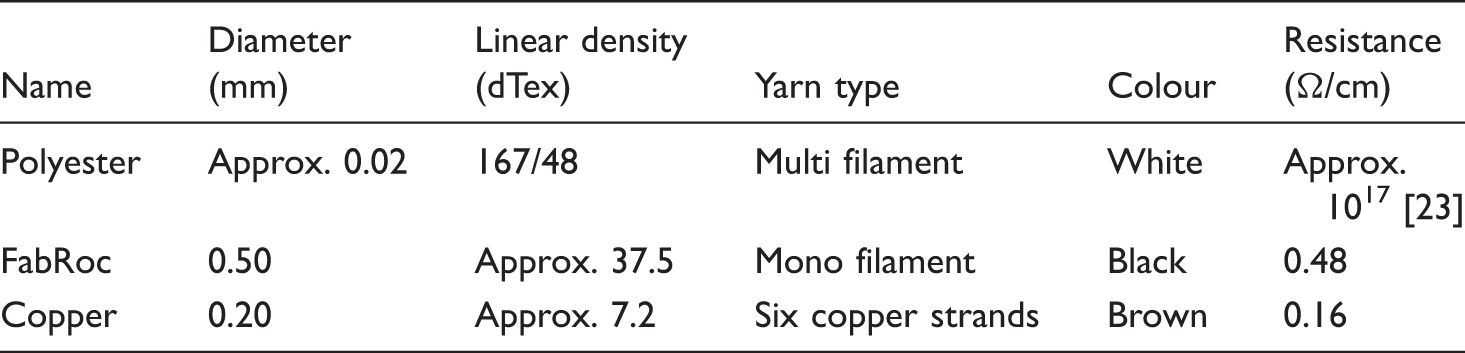
The ThermoKnit system was suitable because it is textile based and achieves temperatures required with different voltage settings. The challenge was to incorporate this technology into a KSS to create an intelligent system with improved moisture transfer capabilities. KSS consist of two plain knitted outer layers and knitted heating elements were integrated on to one plain knitted layer to craft the AMMS. Narrow heating elements of size 7.0 × 2.0 cm2, made with two courses were found to be effective. Bus bars used in the structure consisted of three courses of three copper strands (each strand consist of six fine copper wires each with 0.2 mm diameter). This was effective in terms of low electrical resistance. Figure 4 below illustrates completed knitted AMMS samples both small size and large size (see Table 3 below) with integrated heating elements. These samples were used for experimental tests explained in the next section.
AMMS test samples used for evaluation of moisture absorbency and transmission. AMMS sample properties.

Experimentation
An objective of the research was to study how moisture transmission could be improved by the application of heating on one side of the KSS (AMMS). This would improve hydrostatic pressure difference across the formed capillary tubes by spacer yarns. It is important to understand the AMMS’s behaviour and characteristics when used as a moisture management textile, and, therefore, experiments were carried out to determine moisture absorption, heating rates, moisture transmission, thermal characteristics and wettability of AMMS.
Moisture absorption test
The moisture absorbency of AMMS was evaluated to determine the effect of heating elements in the structure. The MK GATS system was used to compare absorption capabilities of test samples with and without heating elements (Figure 5). Figure 6 below shows the samples used in this experiment. The weight of moisture absorbed by the fabric was measured by M/K245 GATS system in real time. Five samples were tested for each group, i.e. with and without heater elements, and the average results are summarised in Figure 7 below.
MK GATS system set up. Fabric samples with and without heating elements. The effect of heating elements on moisture absorption; test sample size is 5 × 5 cm2.


The above test was conducted to explain the effect of integrating heating elements into spacer fabric on the overall absorption characteristics. Results show that, although there is a reduction of moisture holding capacity and increased absorption time; still the heating system could be introduced into the KSS for increased moisture handling as the heater elements would provide the necessary hydrostatic pressure control across the KSS. The test was conducted while the heater elements were not operating, and heater elements could affect the moisture absorption due to its yarn characteristics. The FabRoc yarn used to produce the heater elements yarns are non-absorbent, which means absorption occurs only on non-heater areas and not in the heater areas. This could explain the drop in moisture absorption characteristics.
Moisture transmission test
The moisture transmission is one of the key attributes of the AMMS and this was investigated by using the test rig developed by the Advanced Textiles Research Group (ATRG) (see Figure 8 below). The test rig consists of two mini-environmental-chambers. These two chambers are designed in such a way to maintain both temperature and humidity levels between the two sides. One side will have hotter conditions and other cold conditions. This is designed to try to replicate the two different conditions of textiles experienced whilst worn by individual.
Experimental test rig developed at ATRG.
The AMMS sample supplied with 4 W of heating energy was placed vertically between the two mini-environmental-chambers on top of the precision weight scale, sprayed with 4.5 g of distilled water and the moisture transfer was captured in real time using LabVIEW data acquisition software written by the author. The temperature and humidity of the two mini environmental chambers can be varied and also measured. The test system is designed to mimic conditions as experienced by humans performing outdoors activities. The cold chamber represents outside conditions while hot chamber represents the space between human skin and textile structure (microclimate). As such, temperature and relative humidity in the hot mini-chamber were set to 37℃ and 25%, respectively. Similarly, cold mini-chamber was selected to mimic outside conditions having temperature and relative humidity of 7℃ and 75%, respectively.
The results of testing the AMMS samples by using the test rig are displayed below in Figure 9 and 10 below. It is apparent from the results of the experiments conducted that the effect of applying heating increased the moisture transmission rate, comparing Figures 9 and 10; an increase of moisture transmission by approximately 30% is observed per 100 cm2 of AMMS sample. This moisture transfer increase can be explained by the increase in vapour pressure in the inner layer of the AMMS due to heat assist on the inner microclimate resulting in increasing the hydrostatic pressure gradient across the fabric. This means the pressure on the inside part of the AMMS capillary network is higher than the outer part and this in turn causes moisture flow to the outer part by capillary force. This heat effect is important as the hydrostatic pressure gradient could be managed and controlled at any given outside and inner conditions due to the active nature of the new developed system.
The results of moisture transfer and its evaporation in spacer structure knitted with two yarn ends and two tucks tested by using the test rig. The results of moisture transfer and its evaporation in AMMS with six heater elements generating 4 W of heat energy tested by using the test rig.
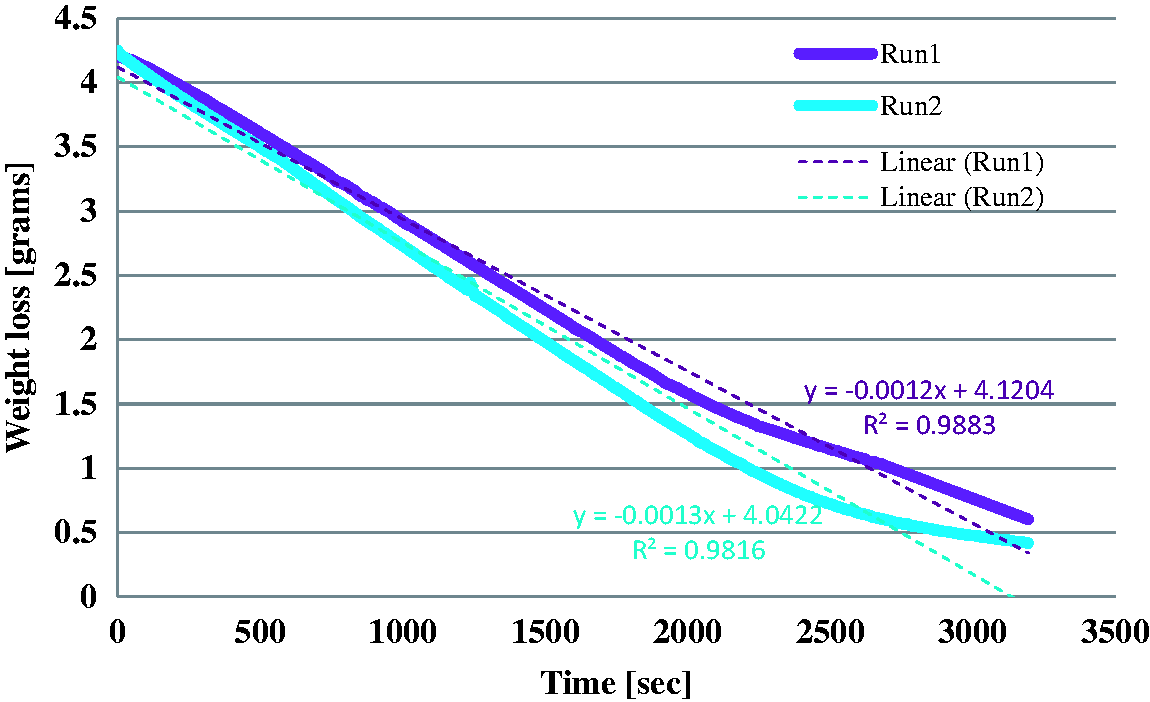
Looking at graphs of Figures 9 and 10, one could conclude that the fluid transfer rates for AMMS samples appear to be dominated by a constant rate of moisture transfer during almost 70% of the drying period. This may be due to the type of fibre used to produce the spacer fabrics. All AMMS samples were produced exclusively from polyester fibres; polyester fibre is hydrophobic, hence, the moisture absorption could occur only between the fibres and minute insignificant amount will be absorbed by the fibres. This would facilitate moisture to be transferred through the fabric structure rather than absorbing it [24,25]. This is evident from the graphs as they exhibit an almost constant rate of moisture transfer compared to the exponential moisture transfer rate curves of other non-spacer natural fabrics. This shows that AMMS have the ability to absorb moisture and release it at constant rates compared to fabrics made of natural fibres.
Thermal characteristics of AMMS
Fabric power supply at various voltages.

The temperature distribution in the samples and the maximum temperatures of the heating elements were established from the thermal images of the camera. Thermal images of the samples were captured at predefined times in order to ascertain the heating rate of AMMS samples.
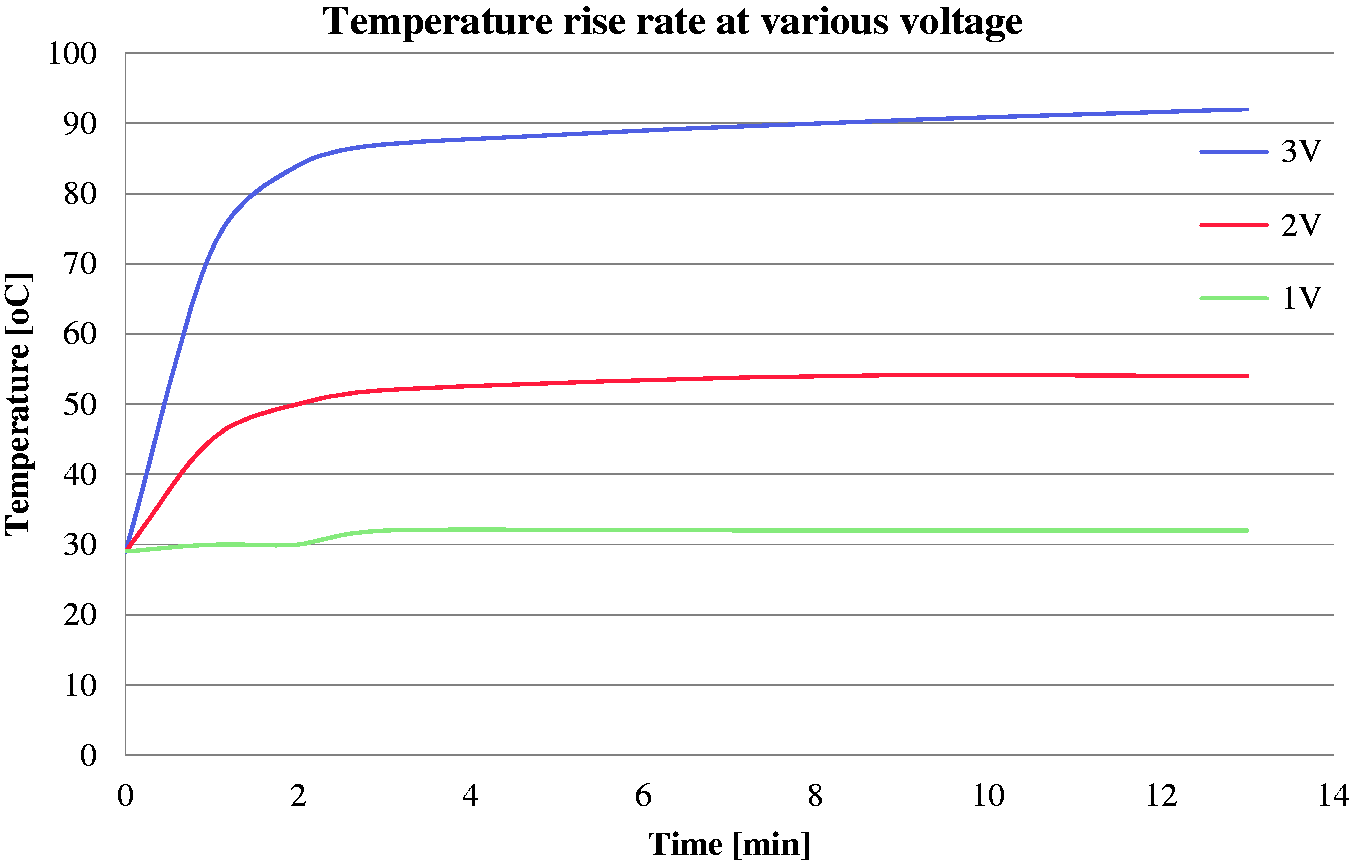
Results of this investigation are summarised in Figures 11 and 12 below. The test data indicate that the temperature (this is the maximum temperature read from the thermal images) in the fabric rose sharply within the first 2 min and then stabilized to maintain a constant value at all three voltages applied. This is important, as heat application needs to be quick when needed to avoid moisture build up in the fabric and create discomfort to the wearer. Also the tests showed that the temperature of the six heating element was stable for a long period (after 2.5 min), which would be an useful safety feature to avoid excessive rise of temperature or an unpredictable heat rise which could cause harm to the wearer or damage to the system. Figure 11 shows an example of thermal images of an AMMS test sample, i.e. a spacer fabric integrated with heating elements. The temperatures achieved at the three different voltages are within the range that could be needed to create the hydrostatic pressure difference across the fabric to improve moisture transfer. For instance, at 1.0 V, a maximum of 32℃ was recorded, which is below the skin temperature, so the wearer could not feel the heat but feel the drying state of the fabric.
Thermal images of AMMS samples when powered at three different voltages. Thermal characteristics of 11.5 × 11.5 cm2 size AMMS sample when powered at different voltages.
Moisture wettability test
It was also important to study how the moisture is absorbed by the KSS of the AMMS would affect the generation of heat by heater elements. When using AMMS to produce outdoor garments, the heating elements could be surrounded by sweat (moisture), and this could result in a change in the electrical conductivity of the knitted heater system. Therefore, the performance of the knitted heater elements of AMMS samples when they are saturated with distilled water was analysed.
The 11.5 × 11.5 cm2 AMMS samples were saturated with 15 g of distilled water and powered at different voltages. The infrared camera, FLIR i7 was used to capture thermal images of the samples at predetermined times and the results are displayed in Figures 13 and 14 below.
Performance of heater elements of 11.5 × 11.5 cm2 AMMS samples saturated with distilled water when powered with 3.0 V. Performance of heater elements of 11.5 × 11.5 cm2 AMMS samples saturated with distilled water wettability test when powered with 2.0 V.

The objective was to investigate the properties of AMMS fabric operating in a wet state. This is the state believed to occur when a fabric is worn besides a sweating skin, and the AMMS samples were tested at 2.0 V and 3.0 V. At 3.0 V, as shown in Figure 13, a decrease in temperature after wetting was observed, however, the temperature increased gradually with time. This demonstrates that the AMMS fabric would operate well when it is wet and fabric heat could be a source of moisture evaporation from the surface of the fabric. However, at 3.0 V, temperature generated is much higher than the human body skin temperature. The results show how the AMMS would operate under wet conditions. Water is regarded as a good electrical conductor and since the heater elements of the AMMS fabric are powered by positive and negative connections (bus bars); therefore, it is possible an electrical short circuit could be created when in contact with water. However, it is evident from the test results that the current would increase when the AMMS fabric becomes wet, however, due to very low voltage requirement (2–3 V) to power the heater elements, there is no risk of an electrical shock to the wearer. This is important as the combination could safely be used for human body protection without causing potential danger.
Wash test
Generally textiles, especially those used in garments, would undergo washing during their lifespan. Similarly, AMMS may be subjected to washing during their use, which might affect its performance. Therefore, the effect of washing on performance of heater elements of AMMS had to be investigated, particularly due to the moisture absorbent nature of the KSS of AMMS. Any distortion of the stitches of the heater elements due to washing could influence their performance. Therefore, in order to understand the effect of washing, the heating of the heater elements were compared before and after wash runs. The washing conditions used was 30℃, 800 rpm and 2.35 h. This is the average textile washing conditions used in households. Since two different samples were made during the research, it was appropriate to use them in this part, not by comparison, but to investigate them separately and also to provide bulk in the washing machine. The thermal images of the heater elements of 11.5 × 11.5 cm2 and 5.0 × 5.0 cm2 AMMS samples were captured with the FLiR i7 camera before and after washing. The samples were powered at 3.0 V. The results are summarised below in Figure 15.
Washing effect on 5.0 × 5.0 cm2 AMMS sample.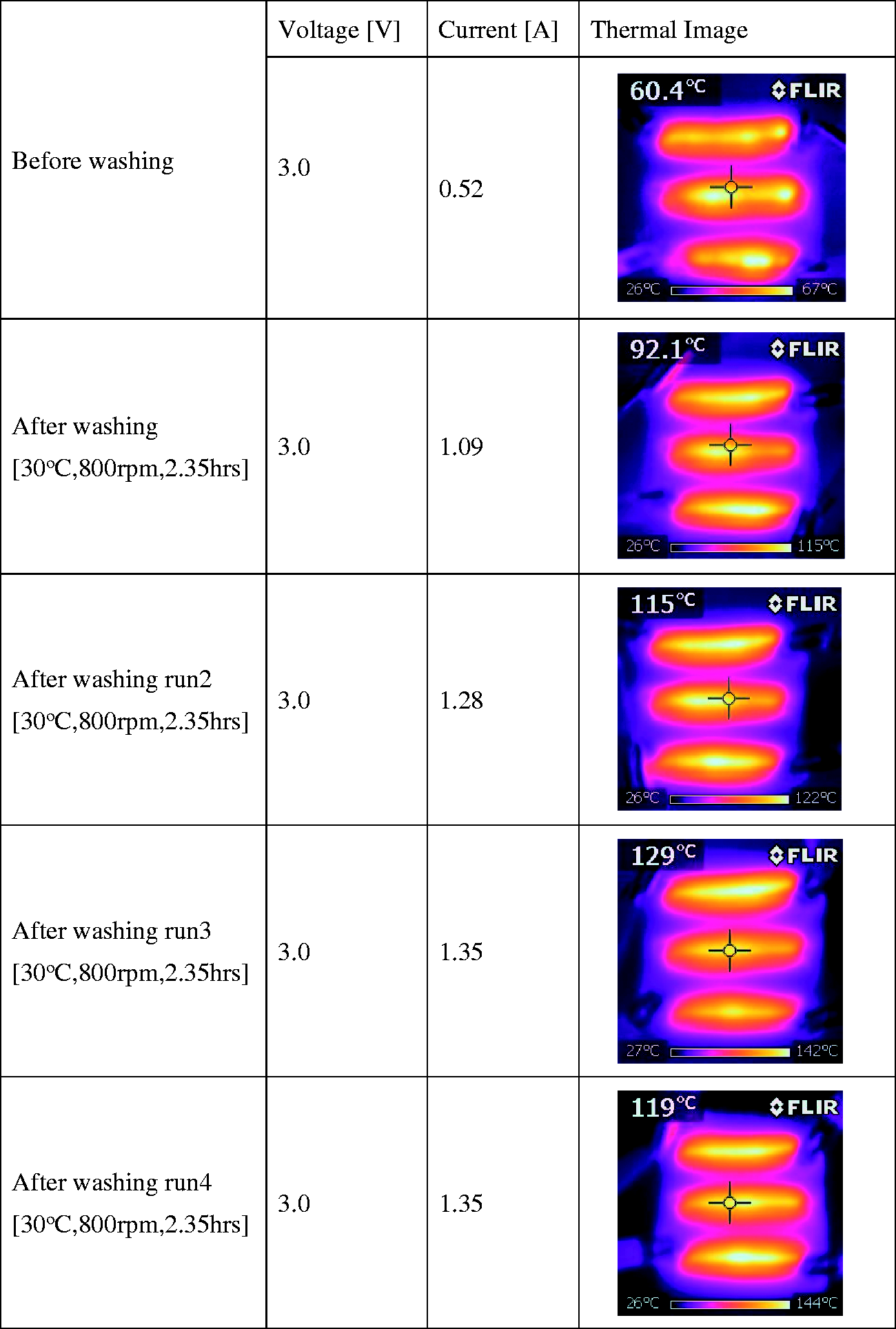
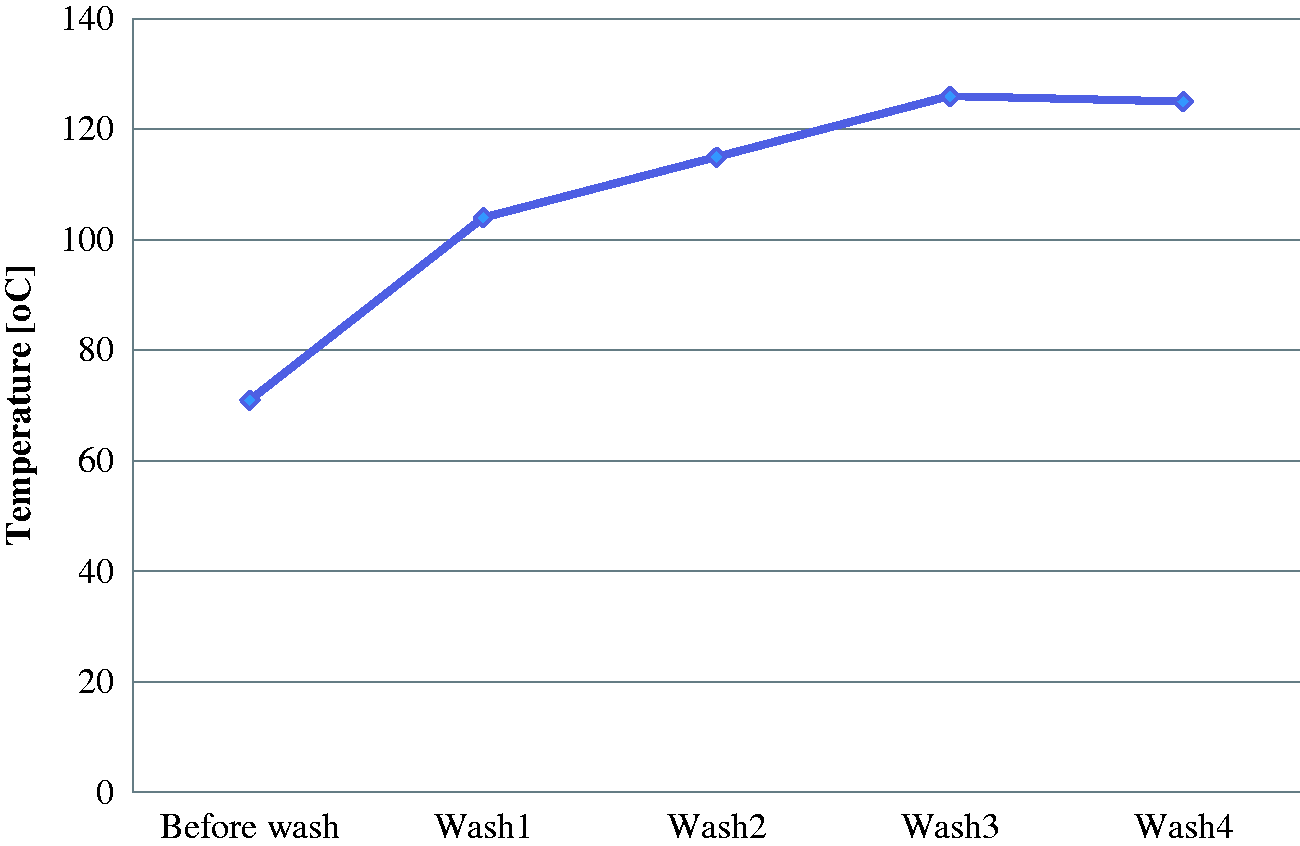
Maximum temperature from the thermal images displayed in Figure 16 above are further illustrated in Figure 17 below; this was performed to understand the temperature trend as the AMMS sample was under wash cycles. Also an observation from the thermal images, it showed unequal heat areas. This could be due to the connections of power supply, which couldn’t distribute evenly to all the heater elements. This could be resolved by revisiting the connection process.
Washing effect on 11.5 × 11.5 cm2 AMMS sample. The influence of washing on maximum temperature of 11.5 × 11.5 cm2 heater elements when powered at 3.0 V.
To investigate the AMMS further after wash cycles, electrical resistance and current flow through the AMMS were checked. As from above results, temperature changes across the AMMS sample would result into changes in electrical properties of AMMS. Thus, it was important to check electrical resistance and current before and after the wash cycles. An Agilent 34410A precision multimetre was used to measure and record the resistance of AMMS sample during and after wash cycle while current draw of heater element was recorded from TTi power supply results are displayed in Figures 18 and 19 below.
The change in electrical resistance of heater elements in 11.5 × 11.5 cm2 AMMS samples due to washing. The influence of washing on current draw of heater elements when powered at 3.0 V.

For both smaller and larger AMMS samples test results (Figures 15 and 16, respectively), it was observed that performance of heater elements improved after the first wash and then stabilized on the next washes. This could be explained as the knit structure on the heater elements would be relaxed after the first wash. This relaxation of the knitted structure would cause the electrical conductivity of the stitches to improve and hence improve heat rates. During the following washes, as the yarns in the KSS are already in a relaxed state, the knitted structure is not affected in terms of dimensional arrangement significantly, thus it remained unchanged. Hence, after several washes, the KSS samples performed literally in the same manner. Figures 18 and 19 show the electrical properties of the heater elements after 4 washes. As before, after first wash, the electrical resistance dropped and the current increased due to improved electrical conductivity in the contact points of the stitches of heater elements and conductive interconnects (bus bars), which then remained constant during the next washes. This shows that the heating elements could be used to provide the necessary thermal gradient within the KSS for improving moisture transfer and still be processed like a normal day to day textile.
Conclusion and recommendation
The aim of the article was to report the investigation of inclusion of heating systems onto a KSS for the purpose of increasing hydrostatic pressure difference across the fabric thickness, which in turn would enhance moisture transmission process and eventually assist keeping the user dry and comfortable. KSS with variant of 2T2E was found to be useful due to its lightweight, quicker moisture transmission and optimum moisture absorption. It was found that adding heating elements affected moisture absorption of the fabric; however, it improved the moisture transmission by an estimated value of 30% per 100 cm2. Another effect of adding heating elements was the ability to perform under wet conditions, which was found to be stable suggesting that the knitted spacer integrated with heater elements (AMMS) can be used in wet conditions. Also the wash trials of AMMS showed that the thermal performance of the knitted heating elements improved after the first wash and remained consistent during the following washes.
Therefore, knitted heating system integrated with KSS can be used to manage and maintain moisture transmission across a textile due to its ability to control hydrostatic pressure difference created between the two outer layers of the KSS, which will enhance comfortability of the wearer by keeping him/her dry.
I would like to recommend that more research on this concept should be done to further develop this idea of using heating as a driving force to improve moisture transfer on sports and recreational textiles. The placement of heating elements, types of conductive yarns and drape ability of KSS should be studied further. This will provide more efficient heater elements and provide better textile aesthetic. This heating idea should be incorporated in various textiles application as heating source to provide heat energy, due to its incorporation into textiles.
Footnotes
Declaration of Conflicting Interests
The author(s) declared no potential conflicts of interest with respect to the research, authorship, and/or publication of this article.
Funding
The author(s) received no financial support for the research, authorship, and/or publication of this article.