




Abstract
Noise pollution is one of the most pressing issues in our society today. Controlling noise has become one of the most essential and prevalent factors in the development of acoustic materials. Traditionally, numerous expensive and synthetic sound-absorption materials, such as glass fibre, carbon fibre and polymer fibres were utilised to suppress noise, posing additional harm to living organisms and the environment. Natural fibres derived from renewable resources can be utilised as sound-absorption materials that are inexpensive, bio-degradable, recyclable and readily available. Natural fibre-reinforced composites are currently exclusively used for diverse applications in the automobile industry, construction, building sectors, furniture and other industries. The risk of physical harm and health issues has been greatly reduced by adopting these natural fibre materials. In this research, an attempt has been made to manufacture composites from four natural fibres: hemp, bagasse, Arenga pinnata and bamboo. These four natural fibres were mixed in a 50:50 proportion along with polypropylene and developed into a textile composite using the thermal bonding method. The developed natural composite materials were tested for sound-absorption co-efficient using the impedance tube method and various physical properties, such as flexural rigidity, thickness, tensile strength, elongation, areal density, air permeability and thermal conductivity, were analysed for the composites using the standard testing procedures. All the possible influential factors that determine the acoustic characteristics property of the fibres are taken into consideration for the enhancement of the acoustic absorption of the composites. The sound-absorption co-efficient percent of the Arenga pinnata/polypropylene composite sample is higher than other fibres.
Introduction
The noise source is the element that disturbs the air. The medium through which the sound energy passes through at various points is called a noise path. The person who could hear the noise or sound that is transmitted is called the noise receiver. Noise control is one of the most important needs of the hour in the fast-moving life and this paves way for a great opportunity to develop and study various acoustic materials. Numerous sound-absorptive materials are used in both indoor and outdoor noise control; these sound-absorptive materials can be granular, cellular or fibrous materials. When compared to the conventional synthetic sound-absorptive material, natural sound-absorptive material is developed out of natural fibres and less hazardous to the environment and the health of a living being. 1 It is highly important to concentrate on human health and social health, which led the way to the boom in natural fibres replacing synthetic fibres.
Various properties such as being bio-degradable, lightweight, non-toxic, non-abrasive and cost-economic have gained attention for the natural fibres substituted for the available commercial synthetic fibres. These natural fibres also possess suitable physical, mechanical and comfort properties that make them more suitable for acoustic applications. The various natural fibres used in general in acoustic application are coir, banana, bagasse, sisal, kenaf and so on. 2 On comparison between synthetic and natural acoustic materials, the performance of the synthetic acoustic materials is high, which is mainly due to the thinner diameter of the synthetic fibre. But, synthetic fibres have a very high negative impact on the environment.3,4 Research was carried out on various natural fibres, and studies revealed that paddy straw has a suitable acoustic property due to its hollow space. Coir, jute and hemp fibres are also highly effective in their sound-absorptive characteristics.5 –7 At a higher frequency level, a good sound-absorption property is found in coconut coir fibre, but it fails in the case of a lower frequency. However, oil palm fibres show good sound absorption even at lower frequencies; this is because of the higher density of the fibre.8 –10 Good sound-absorption property is observed in industrial tea-leaf fibre waste materials at high frequencies. 11 Kenaf fibre also shows a very good sound-absorption property and shows good thermoacoustic application and acts as an excellent sound barrier. 12
There is a lot of study going on right now into using recyclable and bio-degradable materials in manufactured products. Currently, the primary focus of various researchers and scientists is to develop a low-cost, renewable and bio-degradable sound-absorbing material that is non-abrasive, lightweight, a good thermal insulator, hygroscopic and combustible for automotive, household appliance and structural applications. It is evident that various natural fibres are having a great phase in acoustic material developments due to their suitable properties.
This study also explores the interconnection between acoustics and the material’s physical properties such as thickness, areal density, flexural rigidity, elongation %, tensile strength, and air permeability which lead towards a better acoustical performance to replace synthetic fibres as sound absorbers. And in this study, natural fibres such as hemp, bamboo, Arenga pinnata and bagasse were used for developing suitable acoustic materials.
Materials and Methods
Four different natural fibres, hemp, bagasse, Arenga pinnata and bamboo, were chosen for developing the acoustic material.
Extraction of Fibres
Hemp
Hemp fibre is collected from the plant’s stem, where it may be easily adapted to different growth conditions and is valued for its great species diversity. It is sometimes referred to as a rational plant, and its components are used in industries. Because hemp is twice as strong as wood, there is a greater need for bio-degradable, renewable and recyclable materials. Hemp fibres are extracted by soaking hemp stacks to separate the fibres from the non-fibrous herd. Hemp herds are ligneous woody tissues that are considered secondary manufacturing fibre products. Hemp was procured from commercially available sources. The diameter of the single hemp fibre used for this study is 23 µm with a staple length of 5 cm and brown in colour.
Bagasse
Bagasse fibre was self-extracted. Bagasse fibre is a natural fibre that is extracted from the waste of sugarcane. Sugarcane waste was procured from a local shop, and it was self-extraction for the process of extraction of bagasse fibre. The procured fibre was dried under the sun for 8–10 h duration to remove all the moisture present in the sugarcane waste. If the sugarcane waste did not dry completely during the first drying process then the duration of drying could be extended till the fibres were dried off completely. This sun-drying procedure is mainly carried out to prevent the growth of fungus. Then the dried fibres were immersed in a solution of 5% NaOH for 24 h to remove all the dirt and wax contents present in the fibres. Then the immersed fibres were taken out and washed and rinsed with distilled water to remove all the impurities like wax and unwanted contents. Again the fibres were dried under the sun for 8–10 h to remove the moisture. Furthermore, they were heated in a dry oven at 80°C for half an hour to remove all the moisture and make the fibre well dried. Then the well-dried fibre was combed to remove all the protrusions on the surface of the fibre. The diameter of the single Baggase fibre used for this study is 390 µm with a staple length of 5 cm having brownish yellow colour.
Arenga pinnata
Arenga pinnata is a natural fibre extracted from palm sugar trees. These fibres were extracted by the self-extraction process. The fibres were collected and cleaned, and water was sprayed on them and dried out at room temperature. The dried fibre was combed to remove all the protrudsions on the surface of the fibre. The diameter of the single Arenga pinnata fibre used for this study is 340 µm with a staple length of 5 cm and brown in colour.
Bamboo
Bamboo fibre is a natural cellulosic fibre that is regenerated from the bamboo plant. The steam explosion approach is a low-energy method that requires the separation of a plant’s cell walls to produce pulp. Although the steam explosion approach is effective for removing lignin content from plant surfaces, the resulting fibres are hard and black. Fibre cell walls are shattered and bamboo fibres become soft during the steam explosion process, allowing for extraction. The shear resistance of the crushed cell walls impacted into the bamboo fibre surfaces was low. Bamboo was procured from commercially available sources. The diameter of the single bamboo fibres used for this study is 30 µm with a staple length of 5 cm and yellowish colour.
Polypropylene
Polypropylene fibre (PPF) is a linear polymer synthetic fibre made from the polymerization of propylene. Light weight, high strength, high toughness and corrosion resistance are some of its benefits. In the chemical, energy, clothes, environmental protection and building sectors, PPF is frequently employed. Polypropylene is a synthetic fibre, and in this research, it is used as a binder for the formation of non-woven composites. Commercially available polypropylene was procured for this research purpose. The PPF length is 51 mm, denier 2.5, tenacity 6 g/denier, melting temperature 160°C and density of 0.91 g/cc.
Composite Preparation Methodology
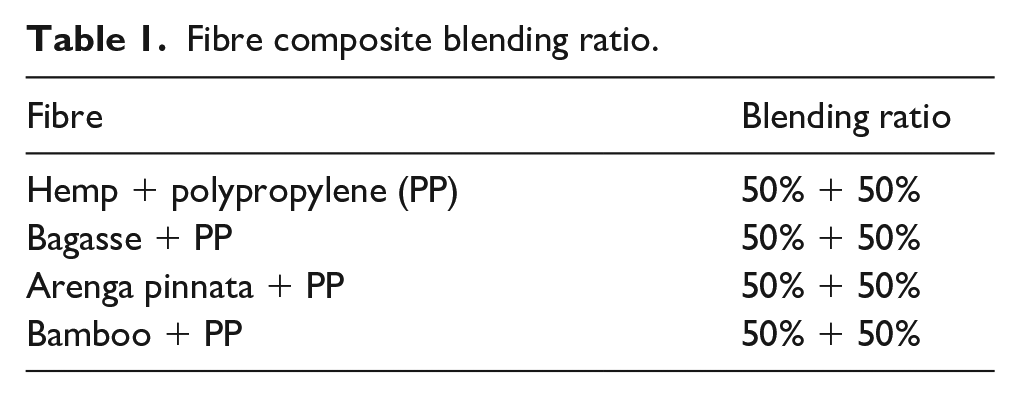
Four types of non-woven composites were developed (Table 1). The blends are taken at 50:50 proportions. The natural fibres bagasse, Arenga pinnata, bamboo and hemp were blended along with the polypropylene at 50:50 proportions each. Webs were developed out of a Trytex miniature carding machine with a licker-in speed of 0.500 r/min and cylinder 900 r/min, and the developed webs were turned out to a composite using a thermal bonding process at 160–180°C since the binder used here is polypropylene. Even though the composites can be made with various proportions, this work is focused only on a 50:50 blending ratio.
Fibre composite blending ratio.
Testing Methodology
Measurement of Physical Properties
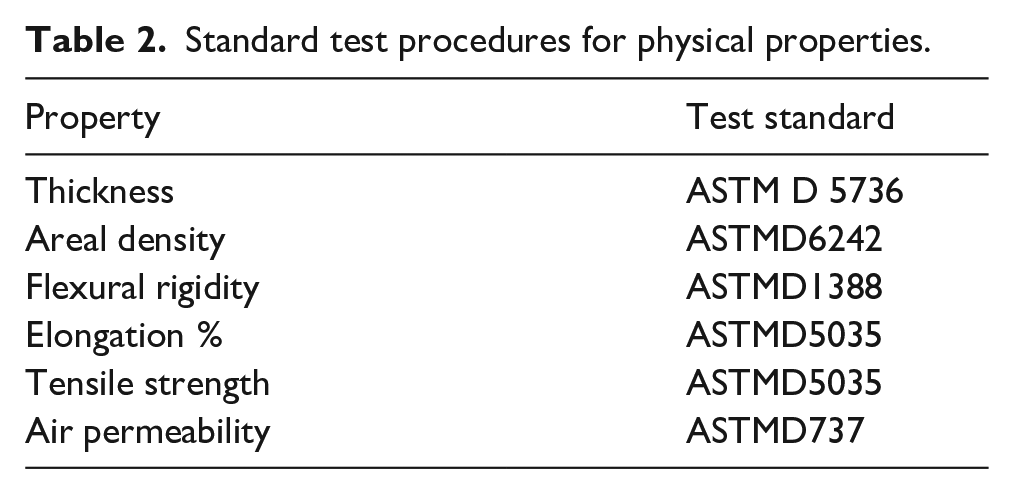
Standard test procedures were used for measuring the physical properties of the developed composite materials (Table 2). The developed samples of composites are shown in Figure 1. The samples were conditioned at 100°C for 24 h to remove any moisture present. To assess the properties, 15 specimens were tested for each sample, and the average values were recorded.
Standard test procedures for physical properties.
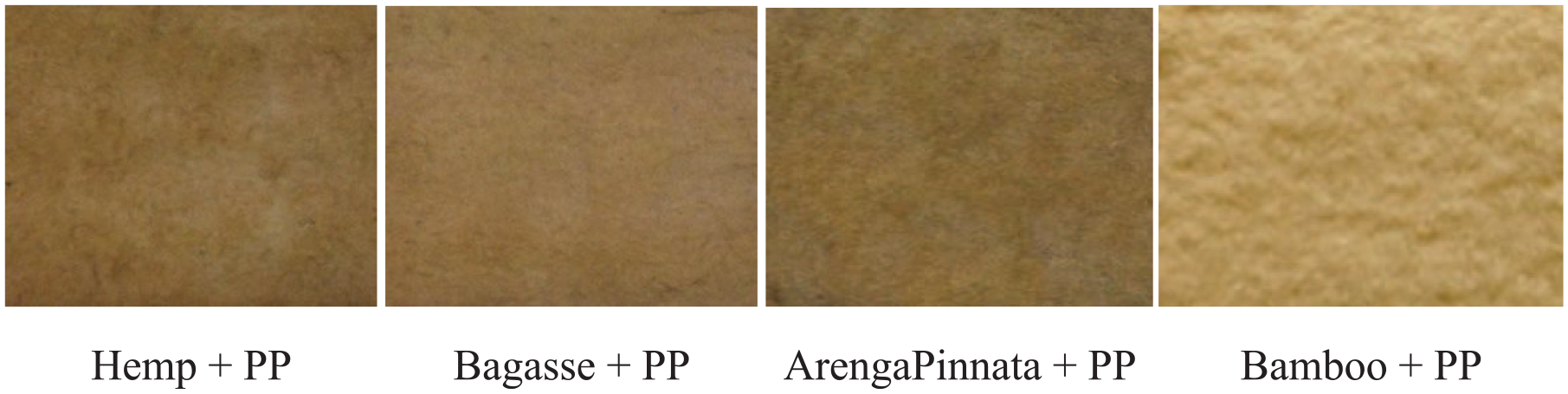
Composite samples.
Measurement of Sound-Absorption Co-efficient Using the Impedance Tube Method
The sound-absorption co-efficient (SAC) of the developed non-woven composites was measured using the impedance tube method (ASTM E 1050-98).
A Bruel and Kjaer Pulse Data Acquisition system with a Type 4206 Impedance Tube kit, two Type 4187 14-in. condenser microphones, a Type 3160-A-042 LAN Xi acquisition module, and a Type 2716C amplifier served as the measurement and analysis system. The device was linked to a laptop PC running the Type 7758 PULSE software for material testing, version 15.1.0.15. A Type 4231 acoustic calibrator and DP-0775 14-in. adaptor were used to calibrate the microphones before and after the experiments.
In this method, a loudspeaker is placed at one end of an impedance tube and a small sample of the developed composites at the other end. Broadband, stationery random sound waves are generated by the loudspeaker. The sound wave propagates through the tube and strikes the sample. The struck wave reflects, resulting in a standing wave inference pattern. The sound-absorption measurements were carried out for the developed composite samples. The measurement process was carried out for a frequency of 150–6000 Hz. The SAC is used for ranking the order of various developed composite materials that reduce the noise level.
Results and Discussion
Physical Properties of the Acoustic Samples
Areal Density and Thickness
The areal density of the acoustic samples was measured as per the ASTMD6242 standard, and the results are shown in Figure 2. The Arenga pinnata/PP sample possesses the highest areal density followed by the bamboo/PP, hemp/PP and bagasse/PP. The thickness of the acoustic samples was measured as per the ASTM D5736 standard and the results are shown in Figure 3. The Arenga pinnata/PP sample has the highest thickness among the other samples. Thickness and areal density are two of the most important factors that play a major role in measuring sound absorption. As the thickness increases, the sound-absorption property increases, and density is an indicator for the porosity content. Bamboo/PP holds the next position to Arenga pinnata/PP followed by Hemp/PP and Bagasse/PP.
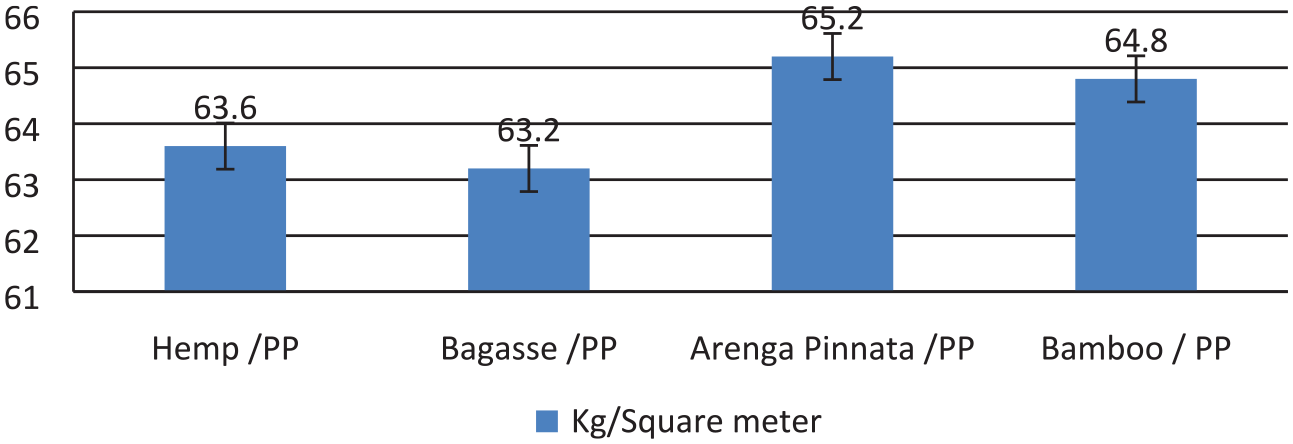
Areal density.
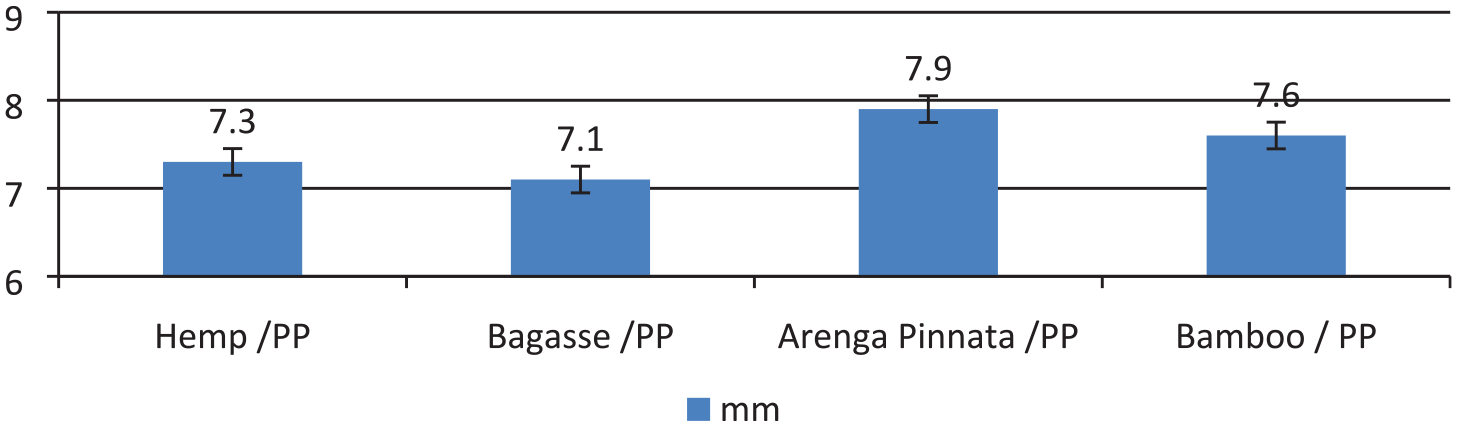
Thickness.
Flexural Rigidity, Tensile Strength and Elongation %
The results of flexural rigidity, tensile strength and elongation % are shown in Figures 4–6, respectively.
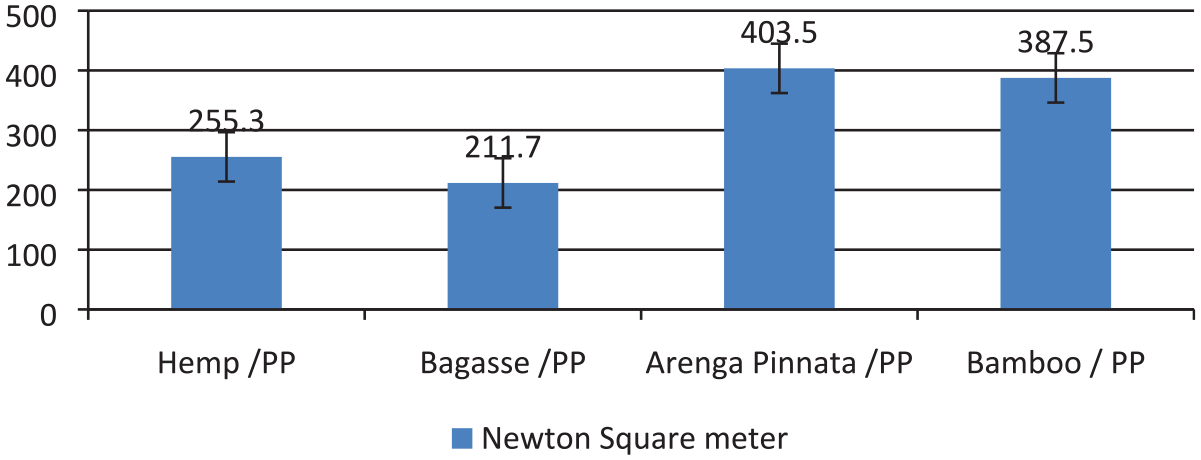
Flexural rigidity.
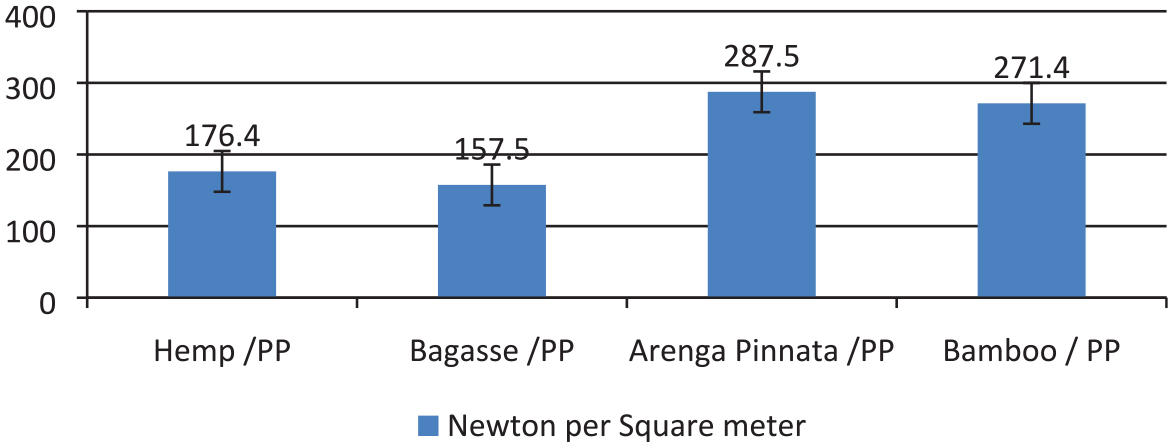
Tensile strength.
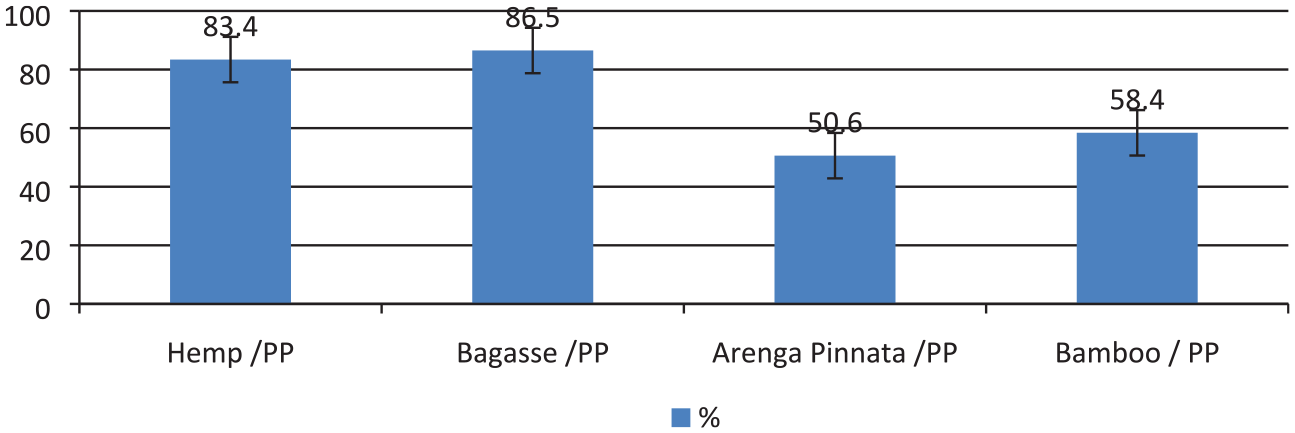
Elongation %.
It is observed that the flexural rigidity of Arenga pinnata/PP is higher than that of other samples. The flexural rigidity of Arenga pinnata/PP is nearly 10% higher than that of bamboo/PP and 50% higher than that of the other two fibres. The flexural rigidity mainly depends on the areal density and the thickness property. The hemp/PP and bagasse/PP acoustic sample shows a low flexural rigidity, that is, the stiffness of these samples is low compared to the others. This is mainly due to the low areal density and thickness property of the bagasse and hemp fibres.
The tensile strength is high for the Arenga pinnata/PP sample followed by the bamboo/PP sample and the other two. The main reason for the higher tensile strength of the Arenga pinnata/PP sample is that the Arenga pinnata fibres have a good interaction with the polypropylene.
The elongation % of the Arenga pinnata/PP and the bamboo/PP acoustic sample is less than that of the hemp/PP and bagasse/PP acoustic samples. The elongation % of the coarser fibres such as hemp/PP and bagasse/PP is closer. But the other two samples Arenga pinnata/PP and bamboo/PP shows poor elongation %, which is mainly due to the compact packed structure of the fibres. The Arenga pinnata/PP and bamboo/PP samples show lesser elongation % because these fibres are finer than that of PPF so they have a good cohesiveness property. It is usually the case that if strength increases then elongation at breaking decreases and vice versa. A higher strength means a harder and thus less-deformable material, so it is hardly deformed and breaks at low strain.
Air Permeability
Air permeability is defined as the amount of air that allows air passage transmission through the material. The air permeability of the developed composite is measured using the ASTMD737. The bagasse/PP sample shows higher air permeability when compared to the other samples. Next to the bagasse/PP, the hemp/PP and the bamboo/PP have their ranges in the air permeability.
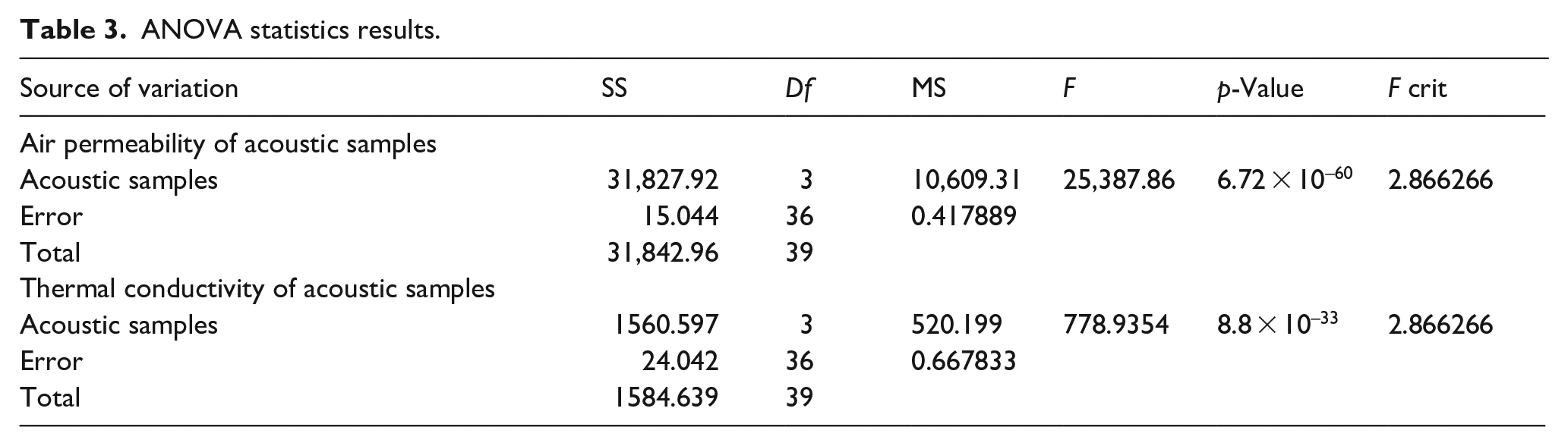
The Arenga pinnata/PP acoustic sample has a poor air permeability property because the fibres occupy more volume density and create a tortuous path, and high resistance to the airflow passage shows a poor air permeability property. The bagasse/PP and the hemp/PP fibres are loosely packed in their structures compared to those of the Arenga pinnata/PP and bamboo/PP. In the case of a loosely packed structure, there is less cohesion between the fibres resulting in the bagasse/PP and hemp/PP acoustic sample showing a high air permeability nature compared to the others (Figure 7). Table 3 shows that the effect of natural fibres on the air permeability of the developed acoustic composite is significant at a 95% confidence level (p-value 6.72 × 10–60).
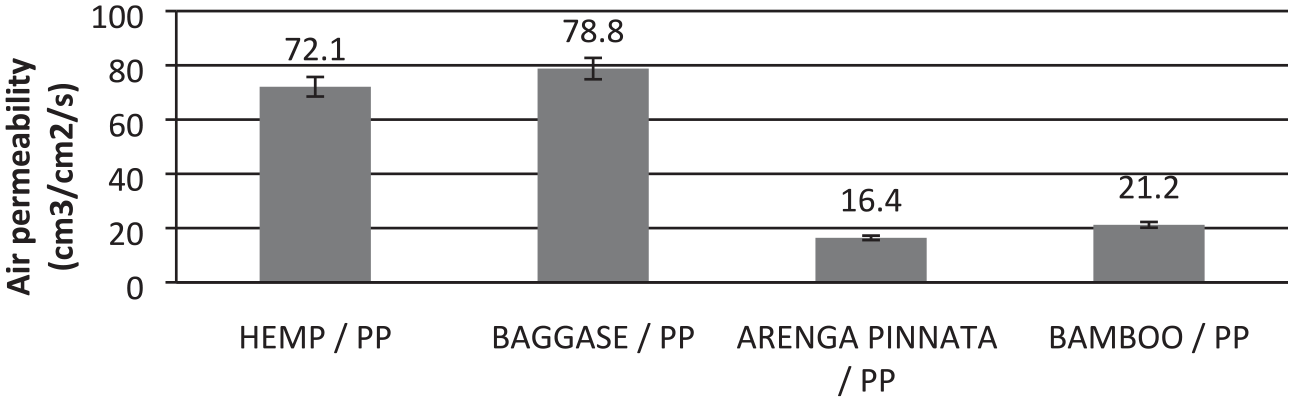
Air permeability.
ANOVA statistics results.
Thermal Conductivity
Thermal conductivity is a characteristic of samples that expresses the heat flux that will be transmitted through the samples on a certain temperature gradient existing over the sample. The thermal conductivity of the Arenga pinnata/PP and the bamboo/PP acoustic sample is less when compared to the other two samples. This is because of the thicker structure of the sample. The hemp/PP and bagasse/PP show a higher thermal conductivity because they possess low areal density and thickness (Figure 8). Table 3 shows that the effect of natural fibres on the thermal conductivity of the developed composite are significant at a 95% confidence level (p-value 8.8 × 10⁻³³).
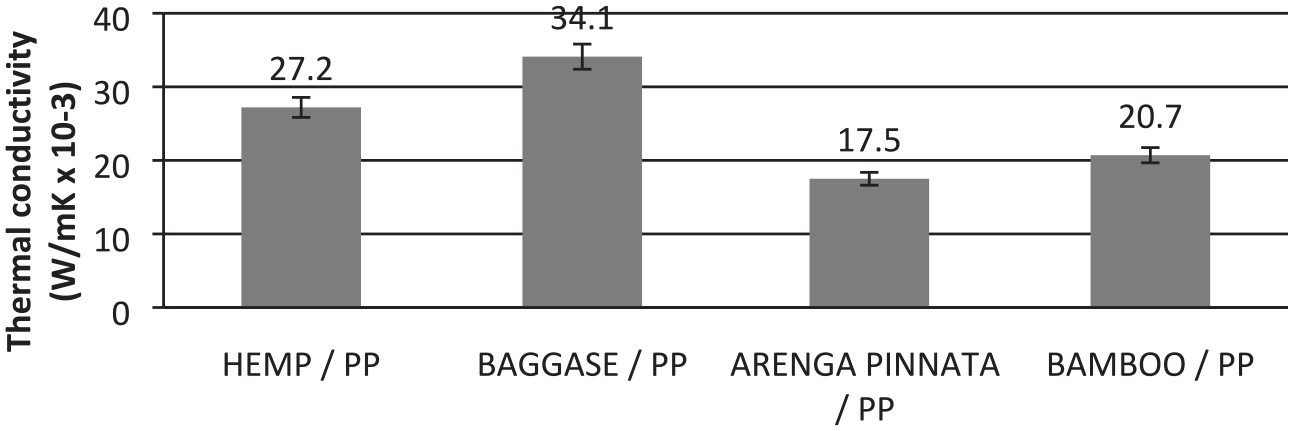
Thermal conductivity.
SACs
The SAC of the four developed samples was measured by the impedance tube method covering a frequency range of 150–6000 Hz (Figure 9). On analysing the SAC of the four developed samples shown in Figure 6, it was observed that the SAC % of the Arenga pinnata/PP sample is greater than that of the hemp/PP, bagasse/PP and bamboo/PP, at all the frequency levels ranging from 150 to 6000 Hz. This is mainly due to the nature of the fibre as it contains more porosity.
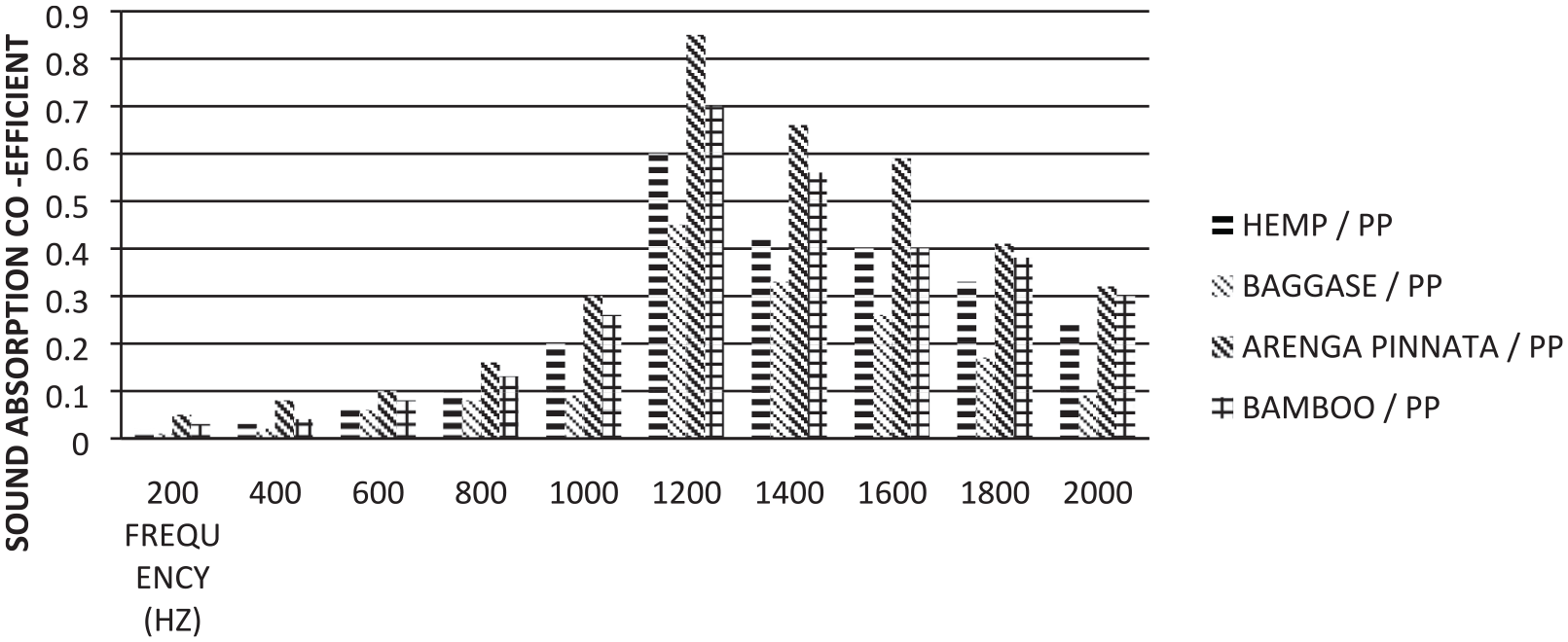
Sound absorption co-efficients.
Porosity should rise along with the propagation of the sound wave, according to previous research that has underlined the importance of porosity. Fabrication of non-woven-type samples has a high SAC; porosity should grow along with the propagation of the sound wave. Physical properties like thickness, porosity and airflow resistivity are incoming parameters that have a significant impact on acoustic performance. This is consistent with the fact that the viscous resistance, also known as the flow resistance, of the air in the porous material, has a significant impact on the sound-absorption process in all typical forms of porous sound-absorbing materials.
As the thickness of the sound acoustic sample is greater, the incident sound wave loses its energy as it needs to travel a longer path through the material. Generally, when the material is thicker, the sound waves need to undergo a long dissipative procedure of thermal conduction in the composite, resulting in a high sound-absorption property. The Arenga pinnata/PP acoustic sample shows a good SAC since the fibre is thinner compared to others and reaches a higher volume density and creates a thicker sample of a good tortuous path. It was observed that an excellent sound absorbency property was observed in the Arenga pinnata/PP sample at all frequency ranges. The fabric thickness has a greater influence on the sound-absorption character. In general, the thicker material exhibits a high SAC at high frequencies. At a frequency range of 1000–1300 Hz, maximum sound absorption is observed in all four fabric samples. It is observed that the efficiency of the sound absorption of the developed samples started decreasing at a frequency attainment of 1300 Hz. By increasing the thickness of the developed sample, the SAC can be improved as the frequency increases. Fibres with a smaller diameter play a major role in the SAC. The diameters of the fibres used in this work are: hemp, 12 mm; bagasse, 1.24 mm; Arenga pinnata, 0.349 mm; and bamboo, 0.54 mm. As the diameter of the fibre decreases, the SAC increases. The main reason is that as the diameter of the fibre is less, more fibres are occupied at a given thickness and reach the required volume density. This creates a more tortuous path and higher resistance to airflow. This results in a good acoustical performance of the Arenga pinnata/PP acoustic sample. 14 The thinner fibres result in a higher specific area. At larger surface areas, the functions between the air molecules are high, resulting in a high SAC. The thinner fibre causes vibration in the air due to easier movement than the thicker fibres resulting in a high sound-absorption property.15,17 Next to the Arenga pinnata/PP sample, good sound absorption is observed in the bamboo/PP sample, followed by the hemp/PP and bagasse/PP.
Conclusion
Four acoustic samples, Arenga pinnata/PP, bamboo/PP, hemp/PP and bagasse/PP, were developed and studied on various properties, such as SAC, physical and comfort properties. It was observed that the Arenga pinnata/PP sample shows an excellent SAC meeting the acoustic need in all frequency ranges. Next to the Arenga pinnata/PP sample, the bamboo/PP sample shows all the desirable properties suitable for the acoustic nature. The manufacture of these natural composites results in the reduction of environmental pollution and increased sustainability. These are also cheaper and serve as a traditional alternative to the existing acoustic composites. The mechanical and acoustic properties of the produced composites had no direct link. The promotion of sound-absorbing materials will be aided by the consideration of environmentally benign, long-lasting materials. These data will, hopefully, aid in the development of new materials as well as the enhancement of existing ones.
Footnotes
Declaration of conflicting interests
The author(s) declared no potential conflicts of interest with respect to the research, authorship and/or publication of this article.
Funding
The author(s) received no financial support for the research, authorship and/or publication of this article.