




Abstract
Background
Most preclinical research on the effects of stress has been done on male subjects, even though women are more prone than men to experience stress-related problems. Chronic social defeat stress (CSDS) is a rodent model of psychosocial stress. However, this model has been challenged in female mouse studies since neither male nor female resident mice attack intruder females. A female-to-female CSDS model is needed to investigate the physiological and behavioral aspects.
Methods
The intruders were either male or female C57BL/6J mice, whereas the residents were male or ovariectomized (OVX) female CD-1 mice. The CD-1 aggressor mice had direct physical contact with the C57BL/6J mice for 10 min before initiating sensory contact with them for 24 h. Jump escape and freezing were evaluated during the social defeat of days 1 and 12. Experimental C57BL/6J mice underwent a social interaction test after suffering social defeat for 12 days.
Results
We found that the number of attack bites and attack latency had a significant negative correlation during the selection of aggressors. In the single-housed OVX mice, 34% of mice met the criterion of the selection of aggressors. However, single-housed OVX mice did not show sustained aggressive behavior (eg, attack bites) through the 12-day CSDS. As a result, we did not find susceptible mice during the social interaction test. In contrast, during the selection of aggressors, 42% of OVX mice housed with partners satisfied the criterion and displayed consistently aggressive behavior. CSDS produced susceptible (50%) and resilient (50%) phenotypes during the social interaction test. Notably, male and OVX female CD-1 mice housed with partners had similar amounts of attack bites and attack rates over the 12-day CSDS. Finally, we found that chronically socially defeated male and female mice displayed different coping behaviors (eg, active vs passive) with social defeat.
Conclusions
Our study demonstrates that OVX CD-1 mice housed with mates exhibited territorial aggression toward female intruders, producing susceptibility and resilience to social avoidance. Additionally, socially defeated male and female mice displayed different behavioral susceptibility to social defeat.
Introduction
Stress is a part of life. Stress can be brought on by anything that requires our time and attention. This type of stress is beneficial and improves performance. We can handle this minor burden. However, excessive stress may have negative effects on our bodies and minds. And sustained adverse stress can result in depression, anxiety, heart disease, and other conditions. The prevalence of depression and anxiety is 4.73% and 6.16% of U.S. respectively. 1
Furthermore, gender inequalities have been noted, with women being twice as likely to suffer stress-related mental disorders as men.1–3 Notably, some people, including those who go through extremely stressful situations over a long period of time, develop severe mental disorders, while others do not. Besides, clinical research and trials concentrate on patients who have already experienced variable, uncontrolled, persistent fear, leading to limited studies of stress-related psychiatric disorders. Therefore, animal models are essential for studying the pathophysiology of stress-related mental disorders.
Most of the preclinical research on the effects of stress has been done on male subjects, despite the fact that there are apparent sex differences in the biology of stress-related disorders.4,5 Chronic social defeat stress (CSDS) is a rodent model of psychosocial stress that causes depression and anxiety. 6 The CSDS model is based on the resident and intruder paradigm. When an intruder mouse is exposed to a novel aggressor, a resident mouse shows aggressive behaviors such as attack bites. 7 After chronic social defeat stress by a novel aggressor daily, the socially defeated intruder mouse shows either susceptibility or resilience to social avoidance during the social interaction test without and with a novel aggressor. CSDS-induced social avoidance is persistent for at least three months. 8 In addition, CSDS-induced social avoidance is reversed by chronic but not acute treatment with clinical antidepressants 9 and acute treatment with ketamine. 10 However, since neither male nor female resident mice attack intruder females, the CSDS paradigm has been challenged in studies with female mice. As a result, the selection of aggressors is a crucial step in the CSDS paradigm. Given that male aggressors show aggressive behaviors during the CSDS, female-directed male aggression has been employed by using male urine treatment on the female's tail and vaginal orifice 11 or chemogenetic activation of the male ventromedial hypothalamus (VMH) 12 or varying lengths of social defeat combined with additional stressors (eg, crowding). 13 It is vital to establish a female-directed female aggression model to avoid 1) abnormal male behaviors toward female mice, such as mounting behavior during the CSDS procedure, and 2) unknown consequences of chronic treatment of male urine on female intruder mice.
Anger, aggression, and anxiety symptoms were more prevalent in post-menopausal women than in non-menopausal women.14,15 In preclinical studies, removing ovaries has been shown to promote aggressive behavior in female rodents.16,17 In this study, we aim to establish the female mouse model of social avoidance using female-directed female aggression. We used ovariectomized (OVX) female CD-1 mouse housed alone or with a partner male CD-1 mouse. Given that the CSDS paradigm depends on selecting the aggressors, we first determined the attack latency and the number of attacks during the selection of aggressors. In male-directed male aggression, we found that 34% of male CD-1 mice (45 out of 131 mice) met the criterion (ie, attack latency is less than 60 s for at least two consecutive sessions). Interestingly, the number of attack bites was negatively correlated with the latency to the first attack bites (R2 = 0.7876, P < 0.0001), indicating that attack latency can be a good indicator of the number of attack bites. Consistent with a previous report , 8 CSDS produced two distinct behavioral phenotypes (ie, susceptible and resilient) during the social interaction test. In female-directed female aggression, 34% of the single-housed OVX mice (12 out of 35 mice) met the criterion, showing a significant negative correlation between attack latency and the number of attacks. However, single-housed OVX mice did not show aggressive behavior (eg, attack bites) to the female intruders during the 12-day CSDS. From Day 6 through Day 12 of the CSDS, 50 to 90% of female aggressors displayed no aggressive behavior against the female intruders. As a result, we did not find mice showing susceptibility to social avoidance during the social interaction test. Given that the OVX mice were left alone for at least 3 weeks during the CSDS process including the period for the selection of aggressors, it is possible that their prolonged aggressive behavior against the intruder female mouse was impacted by this. Male aggressors lived with a partner OVX mouse for at least two weeks prior to beginning the CSDS procedure in the male-directed male CSDS study. We usually observed that male aggressor mice behaved aggressively toward male intruder mice. Therefore, we housed a male partner with an OVX mouse for at least two weeks before starting the CSDS procedure. When choosing the aggressors, 42% (10 out of 24 mice) of OVX mice living with mates satisfied the criterion. Pair-housed OVX mice displayed consistently aggressive behavior toward the female intruders throughout the 12-day CSDS. Like the male-directed male aggression, CSDS produced susceptible and resilient phenotypes during the social interaction test. Importantly, during the 12-day CSDS, male and OVX female CD-1 mice housed with partners exhibited comparable attack rates and bites. Thus, on the last day of social defeat, we found that socially defeated male mice showed more active coping such as jump escape, than female mice. In contrast, socially defeated female mice displayed more passive coping such as freezing, than male mice. Our study suggests that OVX female CD-1 mice in the pair-housed setting with male partners show territorial aggression toward female intruders, producing susceptibility and resilience to social avoidance. More importantly, we observed sex differences in behavioral coping with social defeat.
Methods and Materials
Animals
The size of the intruder mice was an important factor in determining how effectively the social defeat process worked.
18
As a result, male and female CD-1 mice (3 to 6 months old; Envigo) and C57BL/6J mice (7 to 10 weeks old; The Jackson Laboratory) were used in this study. Mice were housed 5 per cage on a 12 h light schedule (on 7:00 AM off 7:00 PM
Ovariectomy
The surgical procedure for ovariectomy was performed as previously described. 19 Female mice were placed into a small induction chamber with oxygen at 0.5L/min and 2% isoflurane for two minutes. Following induction of anesthesia, mice were placed in a ventral recumbent position and had their fur clipped in a square centered around the third lumbar vertebra (eg, 2 to 3 cm lateral to the dorsal spinous process). After fur removal, the surgical site was disinfected with alcohol and betadine before being incised. Each ovary was removed. The incision was closed with an absorbable suture. Mice were placed in a clean recovery cage that is halfway on an appropriate heating surface and were monitored at least every 15 min until fully recovered from anesthesia (eg, time the animals can be moved into their housing room).
Selection of Aggressors
The selection of aggressors was performed as previously described. 8
Male CD-1 aggressor: 3-to-6-month-old male CD-1 mice were co-housed with ovariectomized female CD-1 mice for at least two weeks. Subsequently, male sexually experienced CD-1 mice (residents) were housed individually for one week before being screened for aggression. During the screening process, a ‘screener’ C57BL/6J male mouse was introduced into the cage of a singly housed CD-1 mouse for 3 min/session/day and the latency of the CD-1 mouse to attack the ‘screener’ C57BL/6J mouse during each session was recorded. The screening procedure was repeated for three consecutive days. The male CD-1 mice with the attack latency <60 s for at least two sessions on the last day were selected for aggressors in social defeat experiments.
Female CD-1 aggressor: 3-to-6-month-old ovariectomized female CD-1 mouse was single-housed or pair-housed with male CD-1 mouse for at least two weeks. During the screening process, a male CD-1 mouse was moved to a new cage. A ‘screener’ C57BL/6J female mouse was introduced into the cage of OVX female mouse for 3 min/session/day and the latency of the CD-1 mouse to attack the ‘screener’ C57BL/6J female mouse during each session was recorded. Each male CD-1 mouse was returned to his partner cage after the screening process was completed. The screening procedure was repeated for three consecutive days. The OVX female CD-1 mice with the attack latency <60 s for at least two sessions on the last day were selected for aggressors in social defeat experiments. Throughout the experiments, all selected aggressors (attack latency<60 s) have been employed. The CSDS study did not use moderate (attack latency>60 s) or non-aggressive (no attack during the choosing of aggressors) CD-1 mice.
Chronic Social Defeat Stress
Social defeat was generated using a resident–intruder paradigm with minor modifications.8,18 For the chronic social defeat procedure, male or female C57BL/6J experimental mouse was individually introduced into the large home cage of an aggressor CD-1 mouse for 10 min during which time the experimental mouse was physically defeated. After 10 min aggression encounter session, the CD-1 aggressor mouse and the experimental C57BL/6J mouse were housed together but separated by a perforated Plexiglass divider to allow sensory contact for the remainder of the 24-h period. The following day, the experimental C57BL/6J mouse was re-exposed to a new CD-1 aggressor mouse for 10 min of direct physical contact and then a 24-h period of sensory contact. The procedure was repeated for 12 days total. Control C57BL/6J mice were housed two per cage in the cages identical to those used for socially defeated mice. After the last social defeat stress, control and defeated mice were individually housed in standard cages. Selection of aggressors and social defeat stress were performed between 4 PM and 6 PM On day 1 and day 12 of the CSDS, the first 5 min of social defeat were evaluated for jump escape and freezing. Jump escape depicts a mouse leaping away from an aggressor during a social defeat. The definition of freezing is the lack of any movement except for breathing.
Social Interaction Test
Social interaction test was performed as previously described. 8 Social interaction test was assessed at 24 hr after the last social defeat stress session. Mice were acclimated to a behavior room under red-light conditions (∼ 4 lux) for at least 1 h. The apparatus is made of a box (18 × 18 × 12 in) with a perforated Plexiglass cage (4 × 4 × 12 in) at the middle of one side of the box. The social interaction test consisted of a two-trial procedure under red-light conditions (∼ 4 lux). The experimental mice were placed in the corner of the open arena and allowed to freely explore for 2.5 min (ie, first session without social target). After the first session, an unfamiliar CD1 male mouse was introduced into the perforated Plexiglass cage as a social stimulus for an additional 2.5 min (ie, second session with social target). The surface of the open field was cleaned with 70% EtOH in order to remove permeated odors by previous animals after each trial. A CCD camera placed above the apparatus recorded behavior. A social interaction ratio was calculated as the ratio of the time spent in the interaction zone in the presence of a social target to the time spent in the interaction zone without a social target. Mice with scores more than 1 were defined as “resilient” and those with scores less than 1 were defined as “susceptible”. 18 A custom-written program analyzed behavioral measurement. The behavioral experiment was performed under blind conditions between 4 PM and 6 PM
Results

Male cd-1 aggressors displayed aggressive behavior that produced susceptible and resilient phenotypes during the social interaction test. (A) An illustration showing how the CSDS works. (B) The latency of the first attack bite during the selection of aggressors. (C) A pie chart depicts the percentages of aggressive and non-aggressive behaviors on the third day of selecting aggressors. (D) On day 3, attack bites and attack latency are inversely correlated. (E) The latency of the first attack bite during the 12-day CSDS. (F) Representative video tracking images of control, susceptible, and resilient mice without and with a social target during the social interaction test. (G) CSDS produced susceptible and resilient phenotypes during the social interaction test. Data are expressed as mean ± SEM.
Single-Housed Ovariectomized Female CD-1 Aggressors Displayed Acute but not Sustained Aggressive Behaviors
In general, male or female CD-1 mouse seldom attacks female intruder mouse, making female studies difficult. It has been demonstrated that female rodents become more aggressive when their ovaries are removed.16,17 Thus, we performed ovariectomy on adult female CD-1 mice. After the recovery, the ovariectomized CD-1 mouse was housed alone (Figure 2A). Unlike the intact female CD-1 mouse, OVX CD-1 mouse showed aggressive behavior during the selection of the aggressors (Figure 2B). On day 3, 34% of the single-housed OVX mice (12 out of 35 mice) displayed an attack latency of less than 60 s during the selection of aggressors. There was a significant inverse relationship between the attack latency and the number of attack bites, which is consistent with male CD-1 aggressors (Figure 2D; R2 = 0.6985, p = 0.0004). We discovered that the single-housed OVX CD-1 mice displayed acute but not persistent aggressive behavior during the 12-day CSDS (Figure 2E), in contrast to the male-directed male aggression (Figure 1E). All female C57BL/6J intruder mice showed resilient phenotype during the social interaction test (Figure 2F and G; Mann-Whitney test, p = 0.7670)
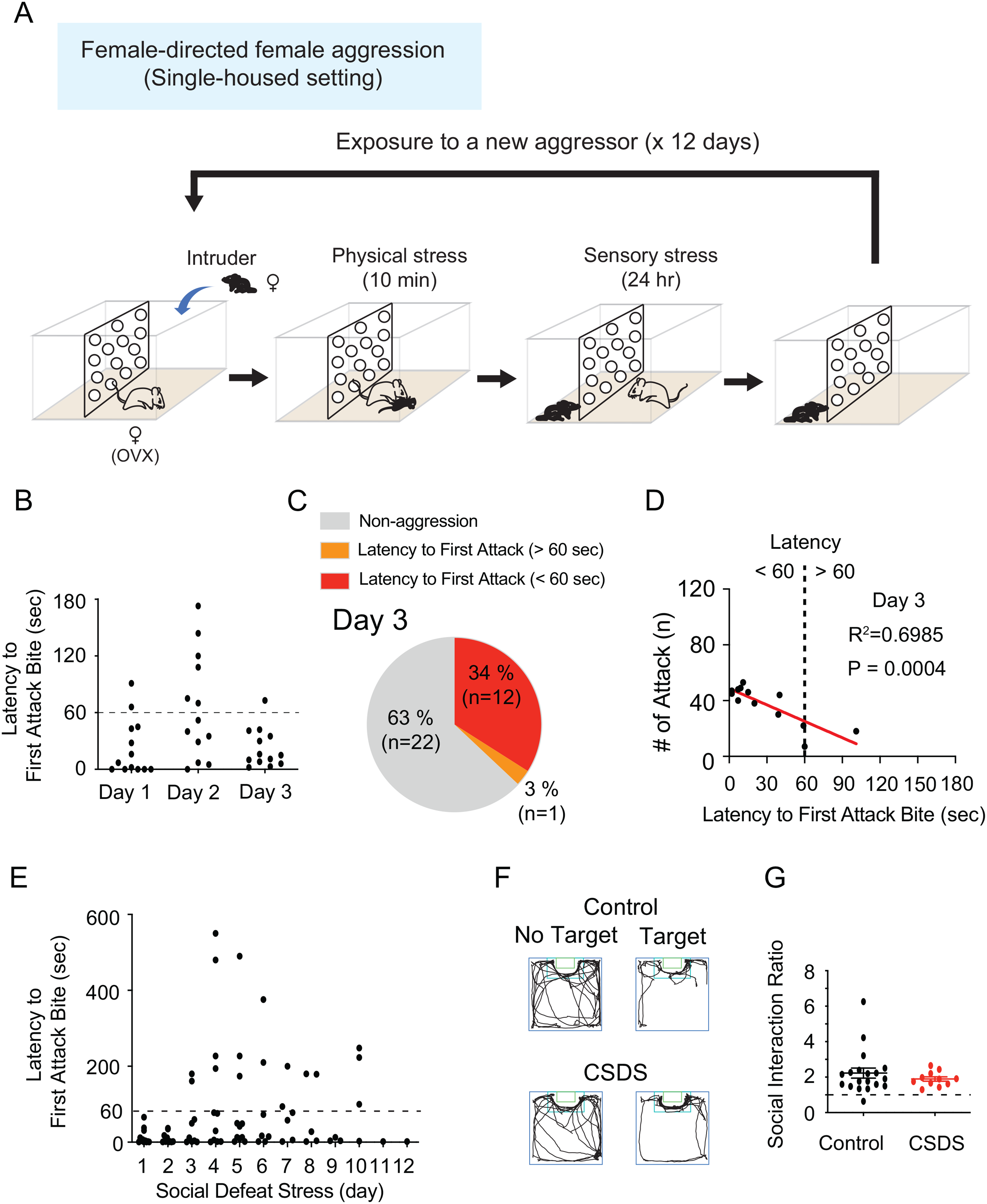
Single-housed ovariectomized cd-1 aggressors displayed acute but not sustained aggressive behavior. (A) An illustration showing how the CSDS works. (B) The latency of the first attack bite during the selection of aggressors. (C) A pie chart depicts the percentages of aggressive and non-aggressive behaviors on the third day of selecting aggressors. (D) Attack bites and attack latency are inversely correlated. (E) The latency of the first attack bite during the 12-day CSDS. (F) Representative video tracking images of control and CSDS mice without and with a social target during the social interaction test. (G) CSDS-exposed mice showed resilient phenotype during the social interaction test. Data are expressed as mean ± SEM.
Ovariectomized Female CD-1 Mice in the Pair-Housed Setting with Male CD-1 Partners Displayed Aggressive Behavior
Because single-housed OVX CD-1 mice displayed acute but not persistent aggressive behavior, the behavior of the female intruder was not significantly affected (Figure 2). Therefore, to boost rival territorial aggressiveness toward invading female mouse, we modified the housing conditions of OVX CD-1 mouse to pair dwelling with a partner CD-1 male mouse (Figure 3A). OVX CD-1 mouse in the pair-housed condition with a mate showed aggressive behavior during choosing the aggressor (Figure 3B). On day 3, 42% of OVX CD-1 mice showed attack latency of under a minute (Figure 3C). Attack latency is substantially negatively associated with the number of attack bites (Figure 3D; R2 = 0.8481, p < 0.0001). Surprisingly, during the 12-day CSDS, OVX CD-1 mice in the pair-housed setting consistently exhibited territorial aggression toward female intruders, comparable to male-directed male aggression (Figure 3E). CSDS could produce susceptible and resilient phenotypes during the social interaction test, in contrast to the single-housed OVX CD-1 mice (Figure 3F and G; F[2,22] = 8.724, p = 0.0016).
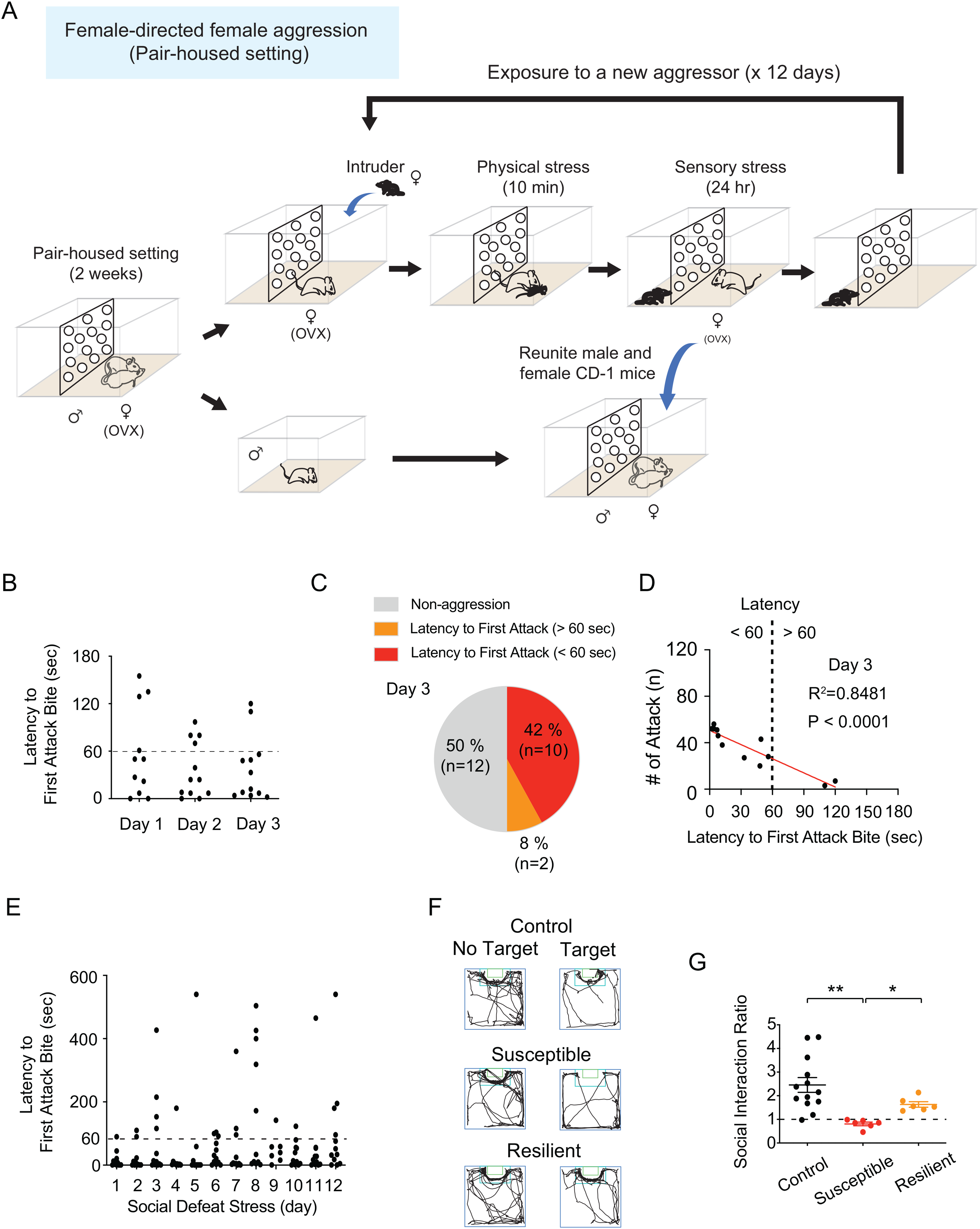
OVX cd-1 female mouse housed with a male partner displayed sustained aggressive behavior. (A) An illustration showing how the CSDS works. (B) The latency of the first attack bite during the selection of aggressors. (C) A pie chart depicts the percentages of aggressive and non-aggressive behaviors on the third day of selecting aggressors. (D) Attack bites and attack latency are inversely correlated. (E) The latency of the first attack bite during the 12-day CSDS. (F) Representative video tracking images of control and CSDS mice without and with a social target during the social interaction test. (G) CSDS produced susceptible and resilient phenotypes during the social interaction test. Data are expressed as mean ± SEM.
Comparable Attack Rates and Bites Were Seen in Male and OVX Female CD-1 Mice, Producing sex Differences in the Behavioral Susceptibility to Social Defeat
On day 3 of the selection of aggressors, male and OVX female aggressors showed a similar inverse relationship between the first attack latency and the number of attack bites (Figure 4A). In male and female OVX CD-1 mice, choosing aggressors from the inbred group ranged from 34% to 42% (Figure 4B). Male and OVX female groups had comparable numbers of attack bites on day 3 of the selection of aggressors (Figure 4C). However, the proportion of “no attack” days over the 12-day CSDS was considerably different (Figure 4D). Male and OVX (pair-housed) CD-1 mice exhibited prolonged aggression, while OVX animals housed alone failed to exhibit sustained aggression (Figure 4D). During the social interaction test, CSDS produced susceptible and resilient phenotypes in the study of male-directed male aggression (Figure 4E). However, CSDS failed to produce inter-individual phenotypes during the social interaction test in a study on female-directed female aggression using single-housed OVX CD-1 mice (Figure 4E). When OVX CD1 mice were housed in pairs and subjected to female-directed female aggression, CSDS successfully made both susceptible and resilient phenotypes during the social interaction test (Figure 4E). Given the differences between the sexes in how they respond to stress, we further examined the behavioral coping with social defeat. During the social defeat, we frequently saw the two typical behaviors of “jump escape” and “freezing”. So, we assessed them during the first five minutes of social defeat on days 1 and 12 (Figure 5A). On the last day of social defeat, socially defeated male mice showed greater jump escape than female mice (Figure 5B; F[3,54] = 4.521, p = 0.0067). Additionally, female mice who experienced social defeat demonstrated fewer jump escapes on day 12 compared to day 1 (Figure 5B; F[3,54] = 4.521, p = 0.0067). On the other hand, socially defeated female mice displayed more freezing than male mice on the last day of social defeat (Figure 5C; F[3,49] = 6.443, p = 0.0009).

Attack rates and bites were similar in OVX female (pair-housed) and male cd-1 mice, resulting in inter-individual differences during the social interaction test. (A) Attack bites and attack latency have an inverse relationship among groups. (B) The proportion of aggressors in the male and OVX female CD-1 mice on the third day of choosing the aggressors. (C) The number of attack bites were similar among groups. (D) Male and pair-housed OVX female mice attacked at similar rates over the 12-day CSDS. (E) Single-housed OVX female CD-1 mice did not produce susceptible phenotypes after CSDS, while male and pair-housed OVX female CD-1 mice did. Data are expressed as mean ± SEM.
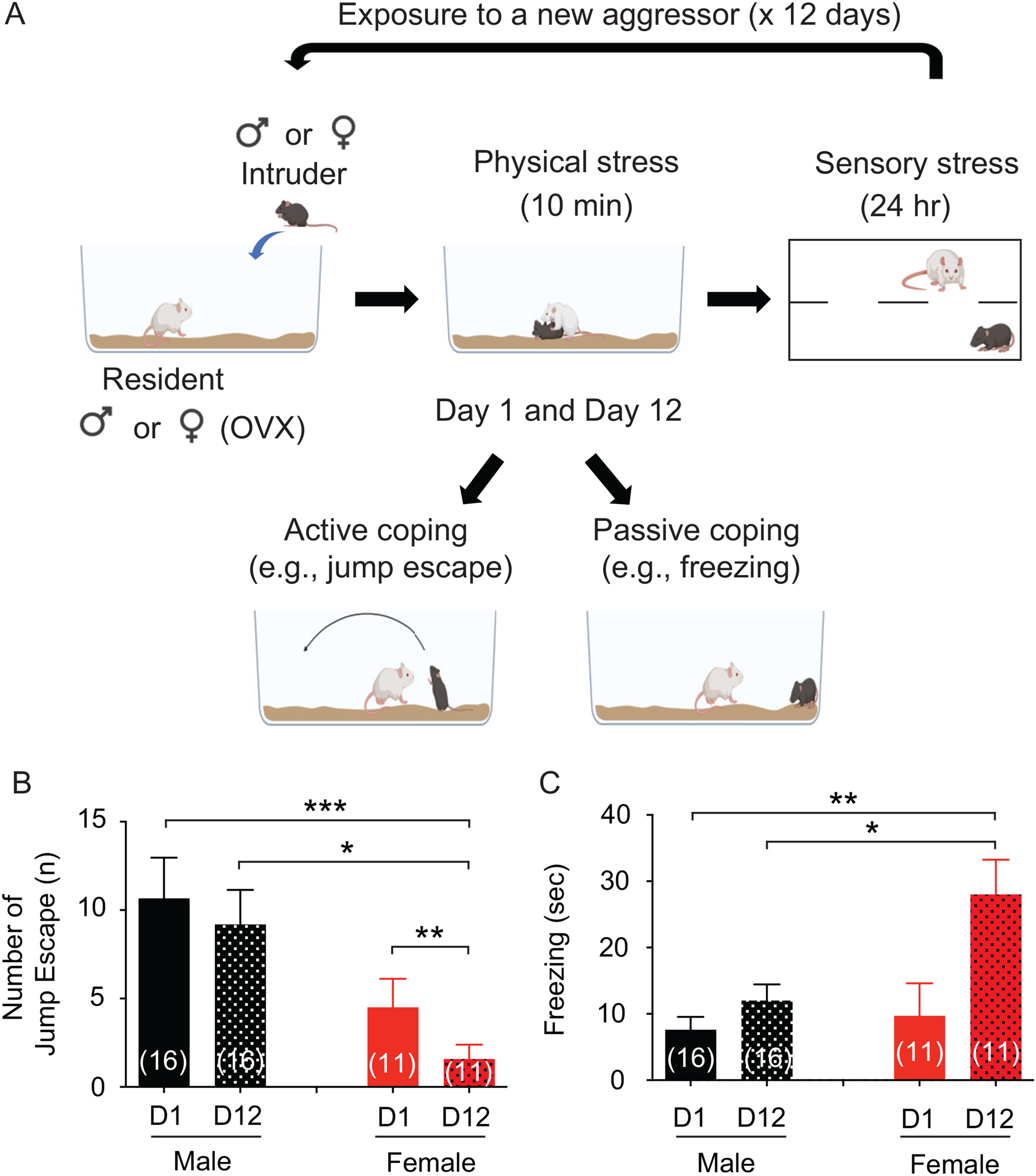
Sex differences in the behavioral susceptibility to social defeat. (A) An illustration showing how the CSDS works. (B) Socially defeated male mice displayed more jump escape than female mice. (C) Socially defeated female mice displayed longer freezing times than male mice.
Discussion
Chronic social defeat stress (CSDS) is a rodent model of psychosocial stress that causes several different symptoms of the stress-related psychiatric disorders such as depression and anxiety. 6 It is noteworthy that CSDS can produce inter-individual variations (ie, susceptible and resilient phenotypes) during the social interaction test, which is comparable to what is found in mental illnesses in people. Mice that are sensitive to social defeat show increased social avoidance, which is reversed by antidepressant treatment that is chronic but not acute. 9 Furthermore, CSDS-induced social avoidance is reversed by ketamine injection, a fast-acting antidepressant. 10 The CSDS model has been challenging to apply to female rodents because of the nature of female animals’ aggression toward other female animals. Consequently, there is a substantial methodological gap in the study of sex differences. In attempt to circumvent this, male aggressors have been used in the female CSDS studies. Smearing the female intruders with male urine causes male aggression. 11 Chemogenetic activation of VMH in male CD-1 mice induces atypical attack behavior toward female intruders. 12 However, there is a potential caveat that atypical male behaviors, such as mounting behavior and abnormal attack behavior during the social defeat, are present.11,12 Other modified CSDS paradigms, such as vicarious CSDS 20 and non-discriminatory social defeat stress, 21 have been developed. Female mice display an increased social avoidance after repeatedly observing adjacent inter-male fights. 20 When male and female intruders are simultaneously exposed to an aggressive conspecific, both socially defeated male and female mice displayed susceptible and resilient phenotypes to social avoidance. 21 However, due to the difference in social defeat between male and female mice (eg, witnessing vs directly experiencing and different number of attack bites/latency),20,21 comparing socially defeated male mice with female mice is challenging.
According to reports,16,17 female rodents exhibit more aggressive tendencies when their ovaries are removed. In order to increase aggression in female CD-1 mice toward female intruders, we removed the ovaries from the female CD-1 mice. Interestingly, 30% to 40% of OVX female CD-1 mice display effective aggression (eg, attack bites) when choosing the aggressors (Figure 4B). The single-housed OVX mice were employed for our initial female-directed female CSDS experiments. We observed that the single-housed OVX aggressors showed acute but not sustained aggressive behavior toward female intruders. If aggressors display aggressiveness ineffectively during the CSDS period, the results are negative, such as no visible difference on the behavioral test. The single-housed OVX female aggression study (Figure 2) did not find any differences in social activity between the control and CSDS groups, in contrast to the male-directed male aggression study (Figure 1). This negative outcome was relied on by the less effective aggression of the 12-day CSDS toward female intruders (Figure 4D). Similar negative results have been reported, including social avoidance, using a female CSDS model.22,23 A modified female-to-female CSDS paradigm, such as 30 min of physical stress followed by 30 min of crowding stress for 15 days, cannot distinguish between control and socially defeated female mice regarding the social interaction ratio. 13 In addition, the social interaction ratio between control and socially defeated female mice do not differ as a result of female-directed male aggression using male urine treatment on the female's tail and vaginal orifice. 22 More importantly, if aggressive behaviors (eg, attack rates and bites) differ between male and female aggressors, it would be difficult to compare stress susceptibility between male and female experimental groups. When selecting the aggressors, both OVX female and male aggressors had similar numbers of attack bites and latency (Figure 4A and C). The only difference was the type of housing—a single versus a pair of houses. Male mice prefer to live with female mice because of their social nature, and vice versa. Prior to the selection of aggressors, OVX female mice were housed with partner male CD-1 mice for at least two weeks. As seen in the male-to-male aggression study (Figure 1), OVX female mice housed with partners displayed aggressive behavior (Figure 3), in contrast to the single-housed OVX female CSDS study (Figure 2). Notably, the attack rate during the 12-day CSDS is comparable for male and OVX female CD-1 mice housed with partners (Figure 4), enabling us to compare behavioral differences between male and female experimental animals.
Despite gender differences in stress-related mental disorders, there is no discernible difference in the social interaction ratio between groups of socially defeated male and female mice (Figures 1G and 3G). This may be because we only paid attention to the end information, such as the time spent in the interaction zone with or without a social target. There is a distinction between the stress response that men and women display. Men exhibit the “fight-or-flight” response and “problem-focused coping”, whereas women show the “tend-and-befriend” response and “emotion-focused, defensive, and palliative coping”.5,24 We further examined behaviors such as active coping (eg, jumping escape) and passive coping (eg, freezing) with social defeat on day 1 and day 12 of CSDS since we consistently noticed that male and female mice displayed distinct reactions to the social defeat. Surprisingly, on day 12 of the CSDS, socially defeated male mice exhibited greater active coping, and socially defeated female intruders showed higher passive coping (Figure 5B and C). Overall, the behavioral susceptibility to social defeat was different between socially defeated male and female mice.
In conclusion, we have demonstrated that OVX female CD-1 mice housed with partners during the 12-day CSDS exhibited aggressive behavior, resulting in susceptibility and resilience to social avoidance. Male and OVX female mice had similar numbers of attack bites and rates during the 12-day CSDS. We found sex differences in the behavioral susceptibility to social defeat, with male mice showing higher active coping and female mice showing greater passive coping.
Footnotes
Acknowledgments
We thank Dr. Payne Y. Chang for the behavioral software.
Author Contributions
C.S.K. conceived the project. C.S.K. designed all experiments. C.S.K and J.K. conducted behavioral experiments. C.S.K., J.K., K.P., and M.S. analyzed data. C.S.K. wrote the first draft of the paper. All authors read and edited the paper.
Declaration of Conflicting Interest
The authors declare that the research was conducted in the absence of any commercial or financial relationships that could be constructed as a potential conflict of interest.
Funding
The author(s) disclosed receipt of the following financial support for the research, authorship, and/or publication of this article: This work was supported by the Startup Fund from the the Medical College of Georgia at Augusta University.
