




Abstract
The centenary cycle of pandemics has produced structural and systemic changes in society. The pandemics of cholera (1820s) and Spanish flu (1920s) forcibly adjusted policies and practices in medicine, health, nutrition, aesthetics, architecture and town planning. When the COVID-19 (2020) pandemic impacted the Philippines with lockdowns and quarantines, Filipinos were socially straightjacketed, but they creatively evolved the ways of survival. This study introduced a mapping matrix that wove heritage attributes into the cycle of a pandemic. Documenting COVID-19 coping narratives in social media, the objective was to plot the intersections of heritage taxonomy (natural, built, intangible and movable) against Shah’s (2016, Pandemic: Tracking contangions from cholera to Ebola and beyond) cycle of pandemic (origin, transmission, condition, community, management, scapegoat, cure and recurrence). With the stringent physical limitations imposed by the government, data were generated for 2020–2021 through social media accounts, personal observations and mobile phone conversations. This contextualization captured compelling heritage case studies on survival and resilience mechanisms that emerged across the country. On hindsight, the pandemic was a dramatic rupture in the Philippine society that innovated heritage-based programmes of sustainability and revived Filipino values of nobleness and humanity.
Background
The COVID-19 pandemic brought panic to the world. The official announcement of the World Health Organization (WHO) in March 2020 on the airborne virulent virus and its deadly effect left mankind totally unprepared (Ghebreyesus, 2020). Countries began to lockdown, travel stood still, economies collapsed, universities closed and everybody was confined in their homes. Hospitals worked overtime, morgues filled up, crematoriums burned and funeral pyres blazed ceaselessly. As statistics of mortality skyrocketed all over the world, the countries frenziedly experimented to discover the vaccine at the soonest possible time.
The Philippines reaction to COVID-19 pandemic was a state of shock and uncertainty. Even though an early case was detected among Chinese tourists from Wuhan vacationing in the central island of Negros Oriental, the incident was downplayed, which allowed the continued influx of tourists and Overseas Filipino Workers (OFWs) into ports of entry. By 15 March 2020, a nationwide lockdown was implemented that abruptly left local governments on their own. Eventually, lockdowns brought devastating costs to marginalized communities across the country (Harvard Humanitarian Initiative Resilient Communities, 2022).
As local governments waited for the national health guidelines, they embarked on their sanitation protocols to contain the rapid transmission (Talabis et al., 2021). Pasig City released drone sprayers and aerial fumigation machines that hovered over remote congested areas and mobile markets were dispatched to central nodes to limit mobility. Iloilo City provided accommodation and food to all frontliners and converted a ship into a hospital quarantine to accommodate incoming OFWs. Marikina City invested on a building as the first COVID testing centre for the residents and distributed food packs to families. Vigan City installed hand-washing corners in strategic spots in the city and distributed sanitation kits to all households. Even with a very limited coffer of resources, the local governments creatively evolved a system to arrest and monitor the spread of COVID-19.
The national government promulgated the Bayanihan to Heal as One Act or RA 11469 on March 2022.
[It] ensure[d] that Local Government Units are acting according to the regulations and directives issued by the national government while implementing the standards of community quarantine to their respective locales. The LGUs still allowed to exercise their autonomy in situations not defined by the national government. (Congress of the Philippines, 2020)
The government constituted the Inter-Agency Task force for COVID-19 to harmonize and consolidate the information and efforts. With the health sector on top of the team, other national agencies complemented the campaign. The national security sector implemented the inter-boundary and inter-regional checkpoints to limit the travel of people. The tourism sector led the documentation of stranded tourists in local destinations and resorts. The trade and industry sector monitored closely the distribution and prices of food and medicine. The education sector implemented a massive transition to online learning delivery format. The agriculture sector asserted their role to impress food security.
The cultural heritage sector stood still and went totally under the radar. National cultural agencies tried to be relevant but efforts were barely felt. With the programmed budget for annual cultural heritage events, everything was realigned and redirected to COVID campaign. As the cultural institutions were handicapped, what were the heritage-based coping mechanisms of the community? What was the role of heritage during the COVID pandemic? How did it figure in the survival and resilience values of the people?
Historical Pandemics in the Philippines
Historically, the Philippines has experienced a cycle of pandemics every hundred years (Vivas, 2020). The impact resulted to immediate slump on the growth of population and the economy, but conversely produced a number of policy and practical adaptations of society. Studies covered the pandemics of cholera in the 1820s and the Spanish flu in the 1920s.
The 1820s Cholera Epidemic
The 1820s cholera pandemic that swept the Philippines during the Spanish era was a scourge that evolved legislations based on health and sanitation. Gleaned from the correspondence of Paciano Rizal to his brother Dr Jose Rizal, Philippine national hero, foremost historian Ambeth Ocampo (2020) graphically narrated the cholera situation that plagued the nineteenth century.
Once cholera spread from the busy port of entry in San Nicolas in Binondo, Manila to the nearby province of Bulacan, the house where the carriers stayed was immediately burned. In the beginning, the officials were hiding the incident carefully so they would not declare the port dirty and consequently, negatively disrupt the bullish export trade.
The rapid spread moved the Governor General to order Flanel blankets and medicines from Hong Kong to be distributed to the provinces. He inspected the public markets in Manila to check on spoilt fruits, meat and fish that needed to be thrown away. Food that could cause the disease such as dried fish (tuyo) and shrimp paste (bagoong) were forbidden.
As devout Catholics, the people went to early morning church masses and attended the processions every night. Some processions even continued until the early daybreak. Novenas for San Roque, Patron saint of the Sick, were recited incessantly. Priests were dispatched everywhere for spiritual aid.
The officials scrambled afterwards to fix quarantine procedures in Philippine ports. Spanish legislations were passed to ensure health and sanitation. Specifically, the Cartilla Higienica y Desinfeccion con las precauciones que deben tomarse en el caso de una invasion colerica [Code of Hygiene and Disinfection with precautions on drinking in case of cholera epidemic] was issued by the Provincial Commission and Council of Sanitation of Madrid in 1884 for the Philippine colony (De Viana, 2001, p. 188).
The 1920s Spanish Flu Epidemic
Historian Francis Gealogo (2009) extensively studied the 1920s Spanish flu pandemic in the Philippines. His introductory discussion highlighted the American colonial officials’ lack of seriousness which even led to misinformation on public health and miscalculation of public health statistics.
The source of the disease was attributed to the longshoremen and other labourer along the waterfronts of Manila port, indicative of the foreign origin of the disease from other parts of the world. Based on the official Philippine health statistics, the Spanish influenza pegged 70,000–90,000 mortality with 6.8–9.2 deaths per thousand of the population (Gealogo, 2009). Marine and land quarantine were imposed.
Various activities were conducted during lockdowns such as lectures on prevention of communicative diseases; distribution of medicine and anti influenza bulletins; inspection of houses and sanitary orders for cleaning; construction of closets of Antipolo system; inspection of market places; sanitary supervision of establishments on sale of candy and ice cream, poisoning of stray dogs. (Gealogo, 2009).
Folk practices on herbal medicine re-emerged and cooking rice porridge or congee (lugaw) with ginger and chicken was recommended.
Behind these measures, problems were encountered in combatting the pandemic. There were problems of retaining the health personnel due to resignation. There was the blame game that ensured within the ranks of the colonial officials. There was no contingent plan for highly congested areas during the outbreak such as prisons or leper colonies. The American government was pre-occupied with the deployment of personnel to the First World War that overlooked the gravity of the epidemic. Eventually, a manual for the management of communicable disease was published in 1919 which provided basic information and protocols on influenza.
The 2020s COVID-19 Pandemic
Totally caught unaware in the first quarter of 2020, the whole world panicked with fear on the rapid surge of the new coronavirus (COVID) that emerged from Wuhan, China. On 15 March 2020, Philippine President Rodrigo Duterte declared a 2-moth lockdown on the whole country. The government provided general guidelines for local government officials to follow under the supervision of the Department of Health. On 25 March 2020, the law Bayanihan to Heal As One Act (RA 11469) was promulgated which granted the President 30 special powers to address the COVID-19 outbreak in the country (Hapal, 2021).
To grasp the magnitude of the COVID-19 impact to the cultural sector, the National Commission for Culture and the Arts (NCCA) launched the ‘Online Survey on the Impact of COVID-19 on Culture and the Arts’. As a bridging assistance, it extended financial help to displaced cultural workers. The assistance programme under the state of calamity provided cash assistance that amounted to PHP 63.8 million ($1.54 million) dedicated to almost 15,000 freelance artists during the strict lockdown (Custodio, 2020).
The NCCA’s, Cultural Recovery and Response Program opened a funding scheme to artists who mounted virtual productions even amid the lockdown. The National Museum closed and, eventually, developed an online virtual tour of the museum and exhibitions. These authorized heritage programmes of the government somehow projected the active involvement of arts and culture in the mid of the pandemic crisis.
Methodology
This qualitative appreciative inquiry intended to surface the role of heritage in its entanglement with the events of COVID-19. Prior to engaging the two concepts, these were defined and dissected that laid the widest possible spectrum of the phenomenon.
The study followed the basic taxonomy of heritage (Figure 1). These were the natural, built, intangible and movable heritages. Each category was characterized by attributes: Thus for natural heritage—weather, geography, minerals, organism, plants, animals, and so on. For built heritage—history, material/substance, form/design, use/function, technique/technology, location/setting, organization/management, language, expression and so on. For intangible heritage—tradition, context, space/area, culture bearer/elders, season/occasion, process/sequence, materials/tools, attire/ornamentation, sounds and music, chants/prayers, language/vocabularies, set up and structure, significance. For object/movable heritage—source, community, material, function condition, associated objects, context and significance.
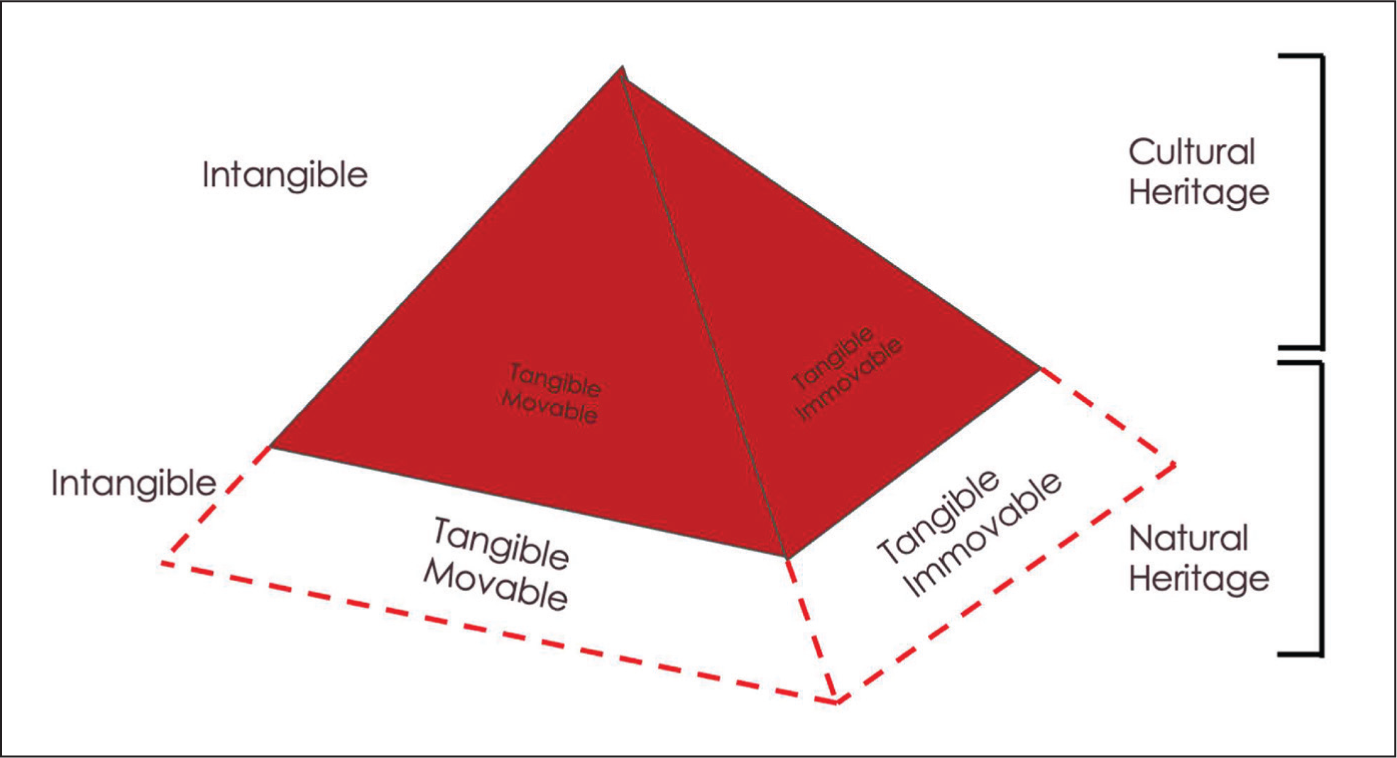
Medical literature was replete with publications on pandemics (Blaser, 2014; Martin, 2015). This COVID-19 study was framed according to the cycle of pandemic by Sonia Shah (2016). In the Philippines, the distinction between ‘illness’ and ‘diseases’ was not made in a daily conversation. The vernacular only used one term which was sakit (Tan, 2008). For Shah, the pandemic covered themes such as source, transmission, condition, community, management, scapegoat, cure and recurrence.
Sonia Shah’s (2016) framework outlined eight stages of the pandemic. These were defined as follows:
Origin (Source): The birthplace of pathogens such as cholera from Bangladesh sea water copepods, Ebola from Democratic Republic of Congo Gorillas, SARS from Guangzhou’s (China) bats and COVID-19 from Wuhan (China) of undetermined origin, with speculation from bats or pangolins or laboratory engineered biological source. Transmission (Locomotion): The modes of transport such as sexual contact for HIV, aerosols for SARS, body liquids for Ebola, excreta and dirty water for Cholera. Condition (Filth): Physical environment reinforcing or stemming the spread. Community (Crowd): Social environment reinforcing or stemming the spread. Management (Corruption): Political, economic or structural response to the pandemic. Scapegoat (Blame): The exorable collapse of morals and manners. Cure: Confluence of biomedicine and social science to eradicate the disease. Recurrence (Revenge): The return of the disease.
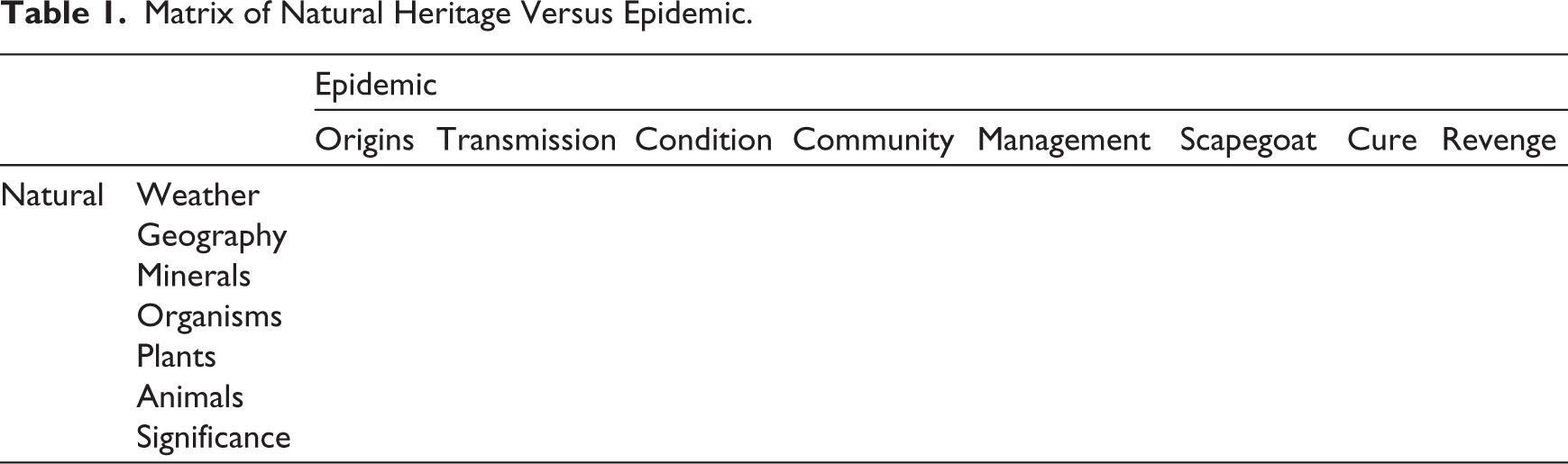
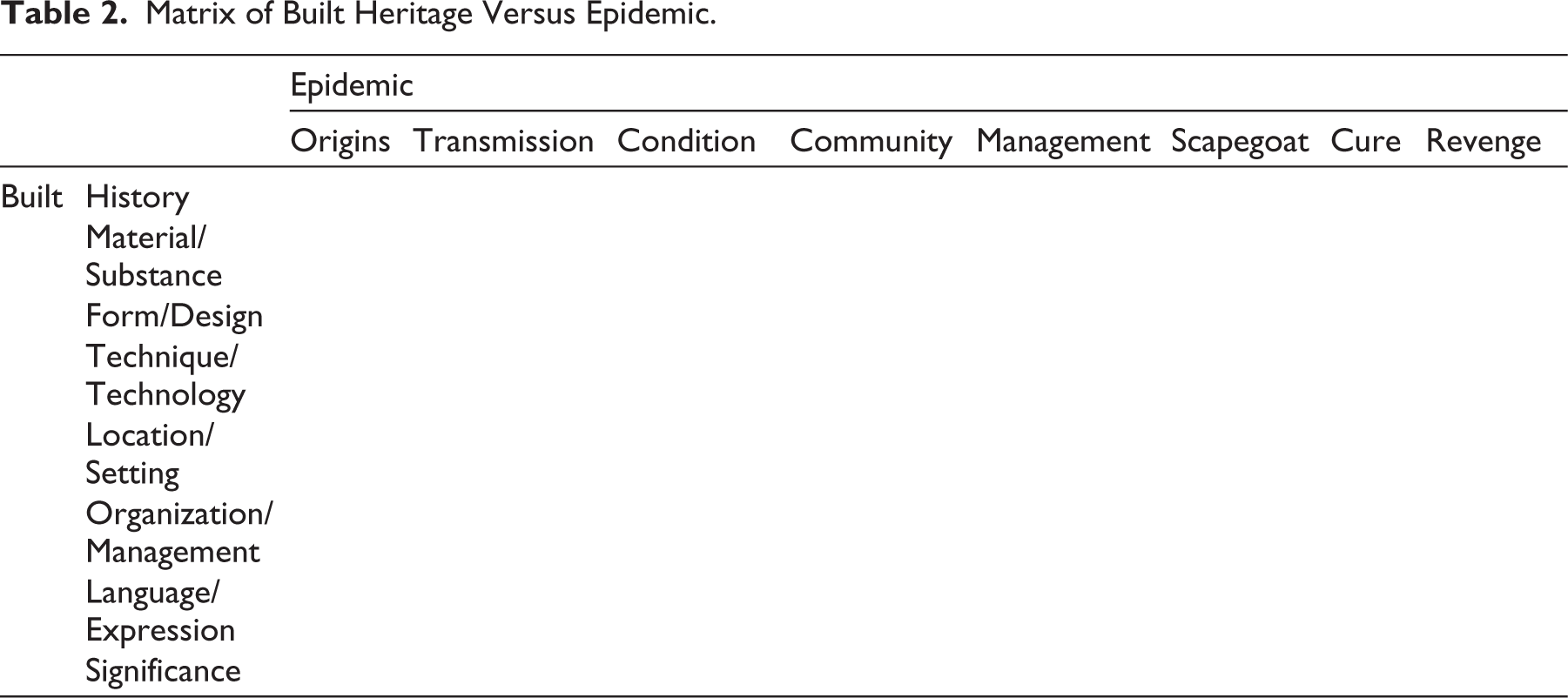
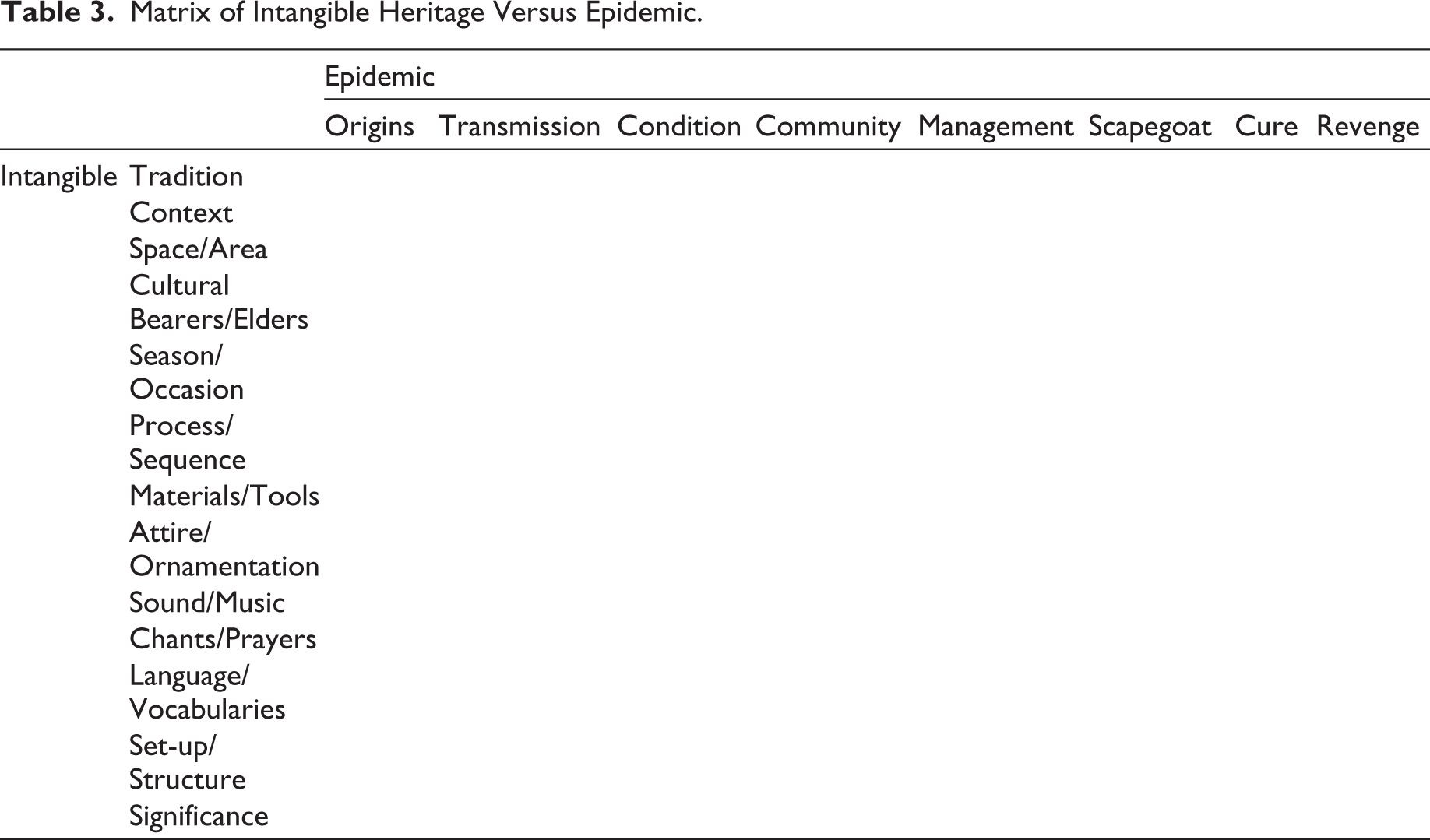
To produce the intersections of the two phenomena, a matrix of the heritage taxonomy vis-à-vis the cycle of pandemic was formatted (see Tables 1–4).
Matrix of Natural Heritage Versus Epidemic.
Matrix of Built Heritage Versus Epidemic.
Matrix of Intangible Heritage Versus Epidemic.
Matrix of Movable Heritage Versus Epidemic.
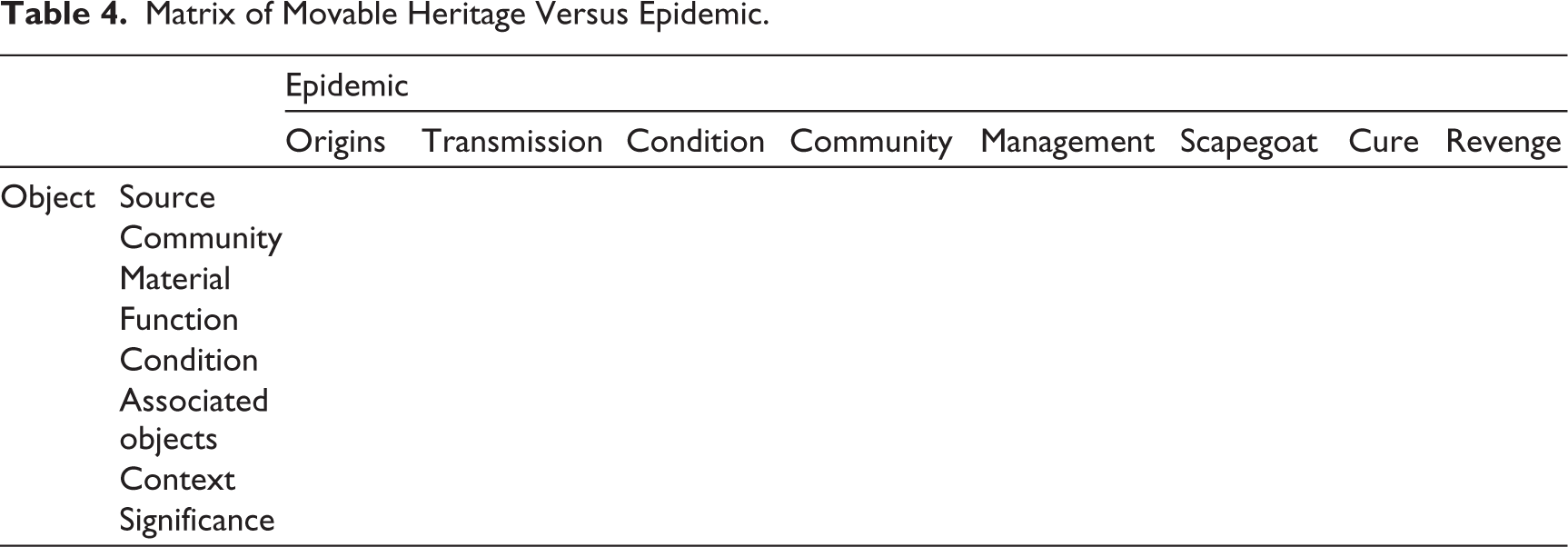
The study gathered heritage-based cases all over the Philippines during the height of COVID-19 pandemic during 2020–2021. The data-gathering method included social media coverage, personal observations and telephone conversations. Due to the stringent protocols in movement, the data gathering was physically confined and limited.
Through the matrix, we were able to plot the case studies that illustrated at what stage of the pandemic our heritage operated, how it operated, and what were the Filipino values that emerged out of this scenario.
Findings and Discussions
Herbal Medicine: Natural Heritage and COVID-19 Pandemic
The mysterious origin of the COVID-19 virus raised uncertainty that caused panic worldwide. The Chinese news agency established Wuhan as the site of origin, but whether it was from a public market of trading for exotic animals or from a high-security laboratory for research remained conjecture. Research revealed that Sars Covid virus had always been associated with bats and monkeys in the tropics but the COVID-19 strain needed further studies.
The visual images of sick people that pass out in the streets and strained hospitals all over the world were live-streamed by broadcast and social media. Medical professional frontliners, the first line of defence, became vulnerable to the COVID-19 attack and many lost their lives. Information on the symptoms of the disease was extensively disseminated and monitored- coughs, fever, sore throat, shortness of breath and flu, to forcibly transfer contaminated individuals to quarantine facilities. Every community practiced vigilance towards any indication of COVID-19 spread.
The standard precautionary paraphernalia were distributed to everybody. Initially, the prices of safety gears skyrocketed, but this eventually levelled off. Enforced practices were wearing a face mask and face shield, constant washing of hands, social distancing and accessing open-air spaces. Without hesitancy, people experimented on almost anything to be spared from COVID-19 contamination (Cordero, 2022).
Thus, many returned to their heritage practices of traditional balance of well-being through herbal medicine (Planta, 2017). Motherly formulations such as tuob (inhalation of steam from boiled water) and drinking of concoction with boiled lagundi leaves were recommended. The revival of heritage practices provided a sense of security and extended the curative feeling to those who could not afford Western medicine and safety gears.
Traditional herbal medicine became a popular research topic and social media and Zoom discussions. As the road to vaccine development was fast-tracked, medical journals highlighted the merits of natural healing. In one research, the study mentioned specific plants in the surroundings that contained immune efficiency characteristics. These were Allium spp. bulbs (bawang), Andrographis paniculate (Burm.f.), Nees leaves (sinta), Cocos nucifera L. oil (niyog), Euphorbia hirta L. leaves (tawa-tawa), Euphorbia neriifolia L. leaves (sorosoro), Moringa oleifera Lam. Leaves (malunggay), Ocinum basilicum L. leaves (balanoy), Piper nigrum L. seeds (paminta), Vitex negundo L. leaves (lagundi), and Zingiber officinale Roscoe rhizome (luya) (Dayrit et al., 2021).
This case study on the intersection between natural heritage and COVID-19 epidemic focused on the aspect of cure. Admittedly, there was a high level of hesitancy and apprehension with regards to Western medicines due to price and accessibility. Traditional practices of herbal therapy handed down through generations provided a sense of familiarity and security for families. With the social media’s popularization of returning to natural healing, reinforced by scientific studies on herbal medicine, Filipinos easily embraced the natural approach provided by common plants from the surroundings.
This scenario surfaced traditional values of environmental responsibility towards a holistic well-being. Just as nature could be the source of unprecedented and deadlier virus, it was likewise the ultimate ingredient in the formulation of the vaccine.
Urban Bahay Kubo: Built Heritage and COVID-19 Pandemic
Food security became a grave concern at the onset of the COVID-19 pandemic. Food sources and food baskets of the Philippines were handicapped because of the limited mobility of people, transportation and finances. On the supply side, the vegetable farms of northern Luzon, such as Benguet and Mountain Provinces, and the rice granary of the central plains, such as Nueva Ecija, were confined to their regions and entailed layers of documentation before the food businesses were allowed. On the consumer side, only one person was allowed to go to the market and groceries to buy the basic food necessities. Small and medium food businesses were shut down and closed because of the slumping economy. This situation impressed the imperative role of food and agriculture to society. Once again, the critical role of farmers and fisherman became an advocacy for which they have been underestimated by development planners for a long time.
The scenario likewise placed a burden on local governments to urgently mobilize food supply to their communities. The City of Gapan distributed a sack of rice to all their residents. The City of Ormoc provided a whole pig to every household. For the communities in the big city centres, mobile grocery trucks were deployed to strategic areas to allow people to do market. In very remote mountain areas, food packs were dropped from army planes and helicopters. The national government implemented its food programme through the Department of Social Welfare and Development (DSWD) through ayuda or relief programme. The Department of Agriculture amplified its call towards urban agriculture. Suddenly food and all its related issues became amplified during the pandemic (Department of Agriculture, 2022).
Food security is well articulated in the classic Filipino song Bahay Kubo. The standard song, taught during the elementary grades in the education system, highlights the lowly country house with a thatched roof and stilts, surrounded by an enumeration of local vegetables. Historically, the bahay kubo was a pre-colonial dwelling built adjacent to an agricultural food source whether a slash-and-burn practice for rice or root crop planting (Zialcita & Tinio, 1997, pp. 11–22). The message of the song resonated loud and clear to all Filipinos, especially the urban dwellers who were deprived of their access to healthy, green vegetables and their fresh rural settings.
Grounded on the heritage of the Bahay Kubo, the urban agriculture movement became a logical adaptation as a practical and eco-friendly solution to the pandemic situation. Urban dwellers planted consumables, particularly vegetables in their small pots and plots. High-rise condominium dwellers developed agricultural gardens along their balconies. Hydroponic technologies and vertical gardening became popular community programmes that filled and occupied empty lots.
The concept of agricultural architecture evolved with ‘Agritectura’ (
This case study on built heritage and COVID-19 pandemic highlighted the aspect of management. Referenced from the composition of the typical Bahay Kubo, COVID-19 conditioned lockdown households to practice green architecture and urban farming. The management of the crisis did not concentrate on the ayuda of the government and relief organizations. This was demonstrated in the early waves of the government’s welfare mechanism that relied heavily on regular food packages and issued market passes. Eventually, local communities reported on the resourcefulness of people to develop projects on food security. Thus, the management aspect of the crises was not top-down but bottom-up and integrated. Values of self-reliance, resourcefulness and healthy options became a common and shared advocacy for survival.
Teer/Tengaw: Intangible Cultural Heritage and COVID-19 Pandemic
The Mountain Province is one of the provinces comprising the Cordillera region which includes Benguet, Ifugao, Kalinga, Payao and Abra. Cordilera traditional leaders put high priority to public welfare, emphasizing social impact of decisions and actions in local governance. According to Governor Bonifacio Lacwasan Jr., ‘As indigenous peoples, we listen to bearers of indigenous wisdom, it has kept our people safe and strong since time immemorial’ (Caren Ringor, Municipal Tourism Officer (Bontoc), personal communication, March 2020).
On 30 March 2020, with the rampage for food relief due to the stringent protocols of COVID-19, Mayor Gabion Gangganga of Sadanga, Mt. Province declared on his Facebook account that his local government would not get relief food packs from the national welfare agency DSWD. Instead, he requested that this be given to more needy areas in the country.
Compulsory village confinement was invoked in the Mt. Province called teer, tengao sedey, far-e, or cabaya by different Cordillera ethnolinguistic groups. In the adjacent Ifugao province, it is called tungoh or tungao, while in Kalinga it is called ngilin. This is a rest day imposed on the community on the first day of the wake (Degawan, 2020).
Teer has many functionaries. It happens before and after a chono (Prill-Bret, 2018). Chono refers to the elaborate feasts of merit among Bontok in mountain provinces. It also gives farmers time to decide on work allocations among household members assess available resources and enforce physical rest from heavy labour which arrests physical exhaustion. It is also resorted to during critical environmental constraints particularly to contain the spread of sickness and pestilence. Finally, it serves as a means to gather the focused attention of the community on critical issues that affect the general welfare (Acabado, 2015; Prill-Bret, 2015)
In one area in the Mt. Province, teer was conducted with the offering of chicken with salted meat called changtey. After the ritual, elders put or hang plant cuttings of tiken on a tree, carabao skulls were festooned in front of houses or a bundle of grasses was tied loosely. This signifies no entry or no movement of locals in and out of the village (Diga Kay Gomez, Municipal Health Officer (Bontoc), personal communication, March 2020; Johanna Padaen, Municipal Disaster Risk Reduction Mgt Officer (Bontoc), personal communication, March 2020).
In Sagada town, the elders performed sedey on 21 March 2020, invoking Lumaweg to protect the town from COVID-19 and other diseases. In the capital city of Bontoc, revered elder Changar Fakat, performed a manengtey on 30 March, which involved divining omens from the internal organs of a chicken. Fires were kept burning for several days as protective charms against the virus.
The case study of intangible cultural heritage and COVID-19 pandemic emphasized the theme of transmission. The shared tradition of teer/tengaw (compulsory rest or compulsory lockdown) of the Cordillerans practiced this in myriad contexts, that is, in times of tribal war/conflict settlement, critical community meetings, pestilence and epidemics and compulsory ‘rest’. Because of this, the village was well equipped, ready and prepared on how to continue their daily activities when COVID-19 spread in the country.
Based on the documentation of teer/tengaw, exemplary indigenous values were manifested which were sources of pride. Throughout the ritual, there were compelling representations of simplicity, mindfulness, cooperation and the future-orientedness of the Bontok people.
Dungaw: Movable Heritage and COVID-19 Pandemic
Part of the government directive to impose community quarantine was the prohibition of mass gatherings defined as ‘planned or spontaneous event where the number of people attending could strain the planning and response resources of the community hosting the event’ (Presidential Communications Operations Office, 2020). In response, the Opus Dei (2020) stated:
We will abide by the government’s directive to suspend all large gatherings from March 15 to April 14. There will be no celebration of the Hoy mass with a large congregation within this period plus other religious activities during the Holy Week which usually attracts huge crowds of the faithful.
In Sto. Domingo Parish, the seat of the Dominican Province in the Philippines and the home of the revered Nuestra Senora de La Naval de Manila, the succeeding weeks saw gradual development on the implementation of online streaming for religious services made virtually accessible. One distinct practice was the ritual of placing the vicarial image of Our Lady of the Holy Rosary at the door of the church which has been later known among friars and devotees as Pagdungaw ng La Naval.
The Pagdungaw ng La Naval or simply Dungaw is rather unique. Unlike the other liturgical celebrations and popular piety, Dungaw was not held in Sto. Domingo until the prior of community quarantine. Following the historical background of some devotions in the Philippines, we realize that these expressions of piety did not start as a collective expression for common belief but as a faith response to a particular event.
There had been a long tradition for the Marian images of Sto. Domingo made accessible to people. It was consistent with various sources (Aduarte, 1640; Ferrando & Fonseca, 1870) that it was the people who sought for this image to be enshrined in a conspicuous place for them to continually venerate it.
On 20 April 2020, Fr Roger C. Quirao OP, Prior of the Convent, asked the student–brothers to place the vicaria of Sto. Rosario near the door of the church. The intention was in order for people to venerate the Our Lady at the least from the front gate along Quezon Avenue. ‘It has been this way during the following days until it was made a daily religious ritual at 08:15
The sequence of Dungaw was as follows (Fray Mervin Lomague OP, brother in the Priory of Sto. Domingo (Quezon City), personal communication, March 2020):
The choir sings the Salve in front of the church. They accompany the people who are silently praying from the front gate. The brothers who are assigned as porteros open the door for the vicarial. Since the image is placed on a wheeled pedestal, the porteros are able to move it solemnly towards the façade. When the image is in place and the singing of the Salve is done, one of the brothers recite or intone the antiphon:
Dignare me laudare te Virgo Sacrata. [Grant that we may praise you O Sacred Virgin.] To which everyone responds with:
Da mihi virtutem contra hostes tu. [Give us strength against our enemies.] The presiding cleric (usually a deacon) chants or recites the Final prayer this way:
Concede nos faulos tuos, quaesumus, Domine Deus, perpetua
Mentis et corporis sanitate gaudere: et gloriosa beatae Mariae
Semepr Virginis intercession, a praesenti liberari tristitia, et
Aeterna parfrui Laetitia. Per Christum Dominum nostrum. [Lord God, give to your people the joy of continual health in mind And body. With the prayers of the Virgin Mary to help us, guide us through the sorrows of this life to eternal happiness in this life to to come. Grant this through Christ our Lord.] All people respond with Amen.
The vicaria was out for public veneration until 08:00
At 08:00
The case study of movable heritage and COVID-19 pandemic delved on the theme of community. The Catholic devotion to the Our Lady of La Naval de Manila was abruptly stymied by the COVID-19 pandemic that forced lockdowns and the social distancing. Religious gatherings and mass congregations were completely banned which made people utilize the effective reach of social media. Other than social media, the Dominicans of Sto. Domingo Priory effort to allow the viewing of the religious image from afar, a social commitment to the community. The visual connection and physical attachment were continued and experienced in real time. The ceremony expressed values of community, particularly care and compassion, perseverance and hope.
Conclusion
The COVID-19 pandemic was an unexpected rupture that created panic across the world. It manifested similar characteristics to previous pandemics in history that have occurred and recurred. In the 1820s cholera epidemic, the source of disease along the Philippine port area was kept in secrecy to protect the booming economy. The COVID-19 pandemic likewise impacted so heavily on small and medium enterprises that business owners kept their contaminated workers in hiding. In the 1920s Spanish flu epidemic, many American doctors resigned due to overfatigue and miscalculations of deaths. The Philippines medical profession also experienced manpower shortage due to risks and deaths in COVID-19 and the poor working condition of health workers, which led to massive resignation. Lessons of history were never learned, but the people instinctively endured and survived.
The Philippines promulgated Bayanihan To Heal as One Act which provided the President emergency powers to contain and monitor of the COVID-19 spread. Notwithstanding the government programmes, many community, groups and individuals developed their own coping mechanisms throughout the cycle of the pandemic. These were heritages that resurfaced, adapted and innovated to address contemporary necessities and uncertainties.
Reviewing four case studies revealed the intersections of heritage and COVID-19 pandemic. Utilizing the matrix framework, based on the heritage taxonomy and Shah’s (2016) pandemic cycle, the documentation highlighted heritage practices at certain stages of the pandemic. The herbal medicine case delved on the cure, the urban bahay kubo case on management, the teer/tengaw case on transmission and the dungaw ceremony case was on the community.
The crisis tested the character of Filipinos. The COVID-19 pandemic forced Filipinos to revert to their heritages that rebounded values of resilience and survival. These experiences served as reminders that should be constantly lived, noble practices that defined the best of humanity, that is, environmental responsibility and holistic well-being in the herbal medicine case; self-reliance and resourcefulness in the urban bahay kubo case; simplicity, cooperation and future-orientedness in teer/tengaw case; and compassion and hope in the dungaw case. Heritage is man’s haven of security and safety and the wellspring of man’s achievement and nobleness.
Footnotes
Declaration of Conflicting Interests
The author declared no potential conflicts of interest with respect to the research, authorship and/or publication of this article.
Funding
The author received no financial support for the research, authorship and/or publication of this article.