




Abstract
What to do with colonial-era monuments has been a major challenge facing southern African nations ever since the demise of colonialism and apartheid in the subregion. To deal with the problem, governments in the region embarked on popular transformative agendas that included decontextualization and the removal of alleged problematic monuments from the public sphere. Such approaches have over the years received the backing of several scholars of heritage and history, who have often cited them as ones capable of offering ever-ending solutions to the issue. However, while recognizing the necessity of transformation, this article nevertheless argues that such a transformative agenda that is characterized by erasures of that which has been accepted as heritage in a particular phase of a country’s history is not a proper way of dealing with such symbols. First, such approaches create possibilities for heritage fundamentalism to filter into the domain of heritage. Second, such approaches were premised on the narrow argument that the notion of problematic heritage is only limited to cases of racial differences or between the former colonizers and the colonized. Instead, by using examples of case studies in one of the countries in the region, the article demonstrates that all heritage is subject to review, either by new political dispensations or by future generations. Hence, when dealing with symbols accepted as heritage, interpretation as opposed to decontextualization or destruction must be resorted to as a guiding framework. When this happens, heritage then ceases to be a platform of contestation and becomes one of continuity.
Introduction
In southern Africa, although the last remnants of colonialism and apartheid ended in 1994 with the installation of a democratic dispensation in South Africa, the state of affairs in the region has nevertheless largely remained tense. Colonial-era heritage has been one such area where tensions have manifested in the public sphere. In Namibia, for instance, anger against such heritage has for now largely remained within the confines of activism against them, rhetoric, and uncertainty. In Zimbabwe, in addition to rhetoric, there have been episodic outbursts of extreme violence against these colonial monuments. In South Africa, with the onset of the Rhodes Must Fall Movement (RMFM), the situation there attained levels of physical violence on colonial heritage that captivated the whole world before returning to just tense. However, this state of affairs in the region has resulted in the issue of what to do with such monuments and memorials remaining one of the most talked about in contemporary heritage management circles in the region.
In previous attempts to deal with questions around colonial monuments, governments in the region embarked on transformative trajectories that saw some of the monuments identified as problematic being removed from the public sphere. Such an approach has also been ably supported by many scholars of heritage who have often pointed to the violent nature of histories that gave birth to them as warranting their complete removal or decontextualization from public spaces (e.g., Chakanyuka, 2005; Knudsen & Andersen, 2019; Mahali, 2019; Mbembe et al., 2011; Newsinger, 2016). According to such scholars, their approaches, although sounding extreme and populist, are the only viable way to effectively solve the problem. Against this background, this article is about the dangers of adopting populist-driven perspectives in the management of heritage in southern Africa. It is about advocating for conservative approaches that are ably supported by the need to respect existing heritage-related laws and adherence to the dictates of liberal democracy, which most countries in the region adopted in the wake of their independence as a framework to guide their conduct. Following Uzzell and Balantyne (1998), the article also strongly advocates for interpretation as opposed to erasures as the preferred framework to resort to in managing heritage. The reason for this is that while interpretation only involves changing of narratives around public monuments to suit present-day accepted versions, it erasures the opposite. They call for the removal or destruction of identified problematic heritage from the public sphere. This will result in those who have never engaged with the monuments, especially future generations, being deprived the opportunity to do so. The article does not have any problems with renaming of places, buildings, and roads since doing this falls within the framework of interpretation. The article draws largely from media reports on heritage-related issues in southern Africa and relevant secondary literature.
The first part explores the history of the deployment of populist approaches on heritage matters in southern Africa. It shows how popular approaches were first adopted by Zambia before spreading to newly independent others. The second part discusses how some groups, seemingly encouraged by the governments’ actions that the removal of unwanted monuments was a possibility, also resorted to extremist tendencies that advocated for the destruction and removal of unwanted monuments. The third section also uses case studies of heritage projects and outstanding independence-era figures in the region to show why warnings against populism-driven policies are necessary. As the cases referred to will show, negative sentiments against heritage or legacies are not only defined by racial differences or those between the former colonizers and the colonized. Instead, they go beyond the mere binary of race, one that seems to be the driving force behind most contemporary negative sentiments against symbols from the region’s violent past. There is no legacy, heritage, or life that is immune to contestation. Even legacies of people belonging to the same racial groups or political beliefs can also be reviewed. In the absence of fame legal frameworks, they can also be subjected to violence.
Populism in Southern African Heritage Management: A Historical Background
In southern Africa, the thinking that coexistence with allegedly controversial relics from a troubled colonial past is unnecessary is one that has its origins in Zambia. It was in Zambia where the script that such monuments were not good for the majority of the public was first designed. After getting its independence from Britain in 1964, Zambia’s immediate heritage action was to ascribe a form of interpretation to a statue known as the Physical Energy statue, which they proceeded to dismantle in December of 1964. This action was later followed by the decontextualization of the statue from the Zambian space through exiling it to the then Southern Rhodesia. As a monument, this particular statue had arrived in Zambia, then Northern Rhodesia, as a gift to the city of Lusaka by the British South African Company (BSAC) in 1959. On arrival, it was erected along King George Avenue at the entrance of the Lusaka High Court (Fisher, 2010, pp. 65–66). However, for the new Zambian government, the statue’s problem was not only its association with the person of Cecil John Rhodes. Rather, as they saw it, it had all the ingredients that confirmed its relationship to colonialism’s most fundamental pillar, racism.
Through an analysis of the statue’s design, the Zambian government reinterpreted it in a different way to the one that had initially informed its construction by Watts in 1898. Deviating from the interpretation that had informed its creation as one that was supposed to depict Rhodes’ energy in what he believed in, the new Zambian government concluded that the statue mocked black people (Fisher, 2010). According to them, its design, which depicted a white man rider of a black horse, confirmed what blacks had always thought about how whites regarded them. This assertion by the Zambian government was further strengthened by earlier mumblings made by Sir Godfrey Huggins, then Federal Prime Minister of the Federation of Rhodesia and Nyasaland (Fisher, 2010, p. 66; Mlambo, 2010). When explaining the relationship between whites and blacks in the federation, Huggins is reputed to have stated that the nature of partnerships between the white and black inhabitants of the countries in the federation was one in which the white was the superior partner, with the black having no chance whatsoever to match them (Mlambo, 2010). Thus, using these forms of interpretation, the statue was dismantled in 1964 and handed over to Southern Rhodesia in 1965. In Southern Rhodesia, the statue was then erected near the then Queen Victoria Memorial Library in the then City of Salisbury, now Harare, in 1966 (Fisher, 2010).
However, although the statue had found refuge in Southern Rhodesia, it was soon followed by the same challenges that it had faced in Zambia. In 1980, Southern Rhodesia also got its independence from Britain and became Zimbabwe. Just like Zambia before them, the new independent Zimbabwe’s first task was to adopt the same populist script that had been used in Zambia to get rid of colonial relics such as the Physical Energy statue. Just after independence, a committee was immediately set up to look at ways of dealing with alleged problematic monuments. Chaired by a cabinet minister, Nathan Shamuyarira, the committee recommended and presided over the removal of supposedly problematic statues from the roads and streets of Harare and Bulawayo (Fisher, 2010, p. 66; Kriger, 1995;). The Physical Energy statue, alongside those of Rhodes and Beit was one of the affected. It was pulled down and thereafter relocated to the backyard of the National Archives of Zimbabwe. Rhodes and Coughlan’s statues that were on the streets of Bulawayo were also treated similarly and relocated to the backyard of Bulawayo’s Natural History Museum (Chipangura, 2017; Fisher, 2010, p. 66; Kriger, 1995). Similarly, the statue of Kingsley Fairbridge that was erected at Christmas Pass near the city of Mutare also faced the same fate. This was after the mold, which comprised of Kingsley, his loyal servant, and a dog, was interpreted by populists as one that was presented in a demeaning racist posture. The statue is now retired from his former house, which ironically is now a National Monument.
By the time when Namibia and South Africa got their freedoms later, in 1988 and 1994, respectively, a heritage transformation script to follow was already in existence. First, Namibia followed it by proceeding to rename streets and buildings previously named after colonial figures. They also went on to remove some of the monuments that were deemed as problematic. The most notable of such monuments was the Reiterdenkmal or Rider statue that had been erected by the former German colonials to commemorate their victory over the local Nama and Herero people (see Becker, 2018; Niezen, 2017; van der Hoog, 2022). This monument had also allegedly been placed ‘at the site of a former concentration camp where the local Nama and Herero had perished’ (van der Hoog, 2022).
On their part, after overcoming the burden of apartheid, South Africa also followed the transformation trajectory of its neighbours. Apart from renaming streets, statues of colonial figures such as that of Totius (JD du Toit), which used to stand on the University of the North West’s Potchesfstroom campus grounds (Goodrich & Bombardella, 2016) and a host of others across the country notably in the KwaZulu Natal Province were removed (see Capa, 2021; Erasmus, 2015; Ndletyana & Web, 2017). In the present, together with Zimbabwe, South Africa is still ceased with the agenda of renaming roads and changing the names of towns and cities to reflect the identity of the new system. While this section provided a background to how populist ideas entered the domain of heritage packaged as transformation in southern Africa’s histories of transition, the next section uses examples of heritage cases to illustrate how populism was gradually adopted by groups who professed concern with heritage, thereby creating problems in its management.
The Problem of Fundamentalism in Southern African Heritage Management
A key problem that has been a direct result of the adoption of populist heritage policies in southern Africa has been the filtration of fundamentalist heritage beliefs into the domain of heritage. In this case, the heritage fundamentalists in southern Africa arrived on the heritage scene under the guise of pressure groups who believed that their actions were meant for the greater good of the majority public in their respective countries. However, when groups and people harbouring such beliefs enter the domain of heritage, the end result is that management problems are created. The reason for this is that, just like the case with religious fundamentalists, the heritage ones also believe in the superiority of their own heritage symbols. They are also particular about their absolute disdain to coexist with other forms of heritage contradicting their beliefs (see Olaniyan & Bello, 2022). They are also reputed for their ‘support or use of violence to achieve ideological, religious or political goals’ (Ponce, 2019).
In southern Africa, the first group to harbour heritage fundamentalist tendencies was a group known as Sangano Munhumutapa, which arrived on the heritage scene in Zimbabwe around the mid-1990s. For heritage, this group advocated for the government of Zimbabwe to continue with the hardline stance that they had taken in the early 1980s that had resulted in the removal of some monuments from the public sphere. The group’s main target was the grave of Cecil John Rhodes, located in the Matopos area of the country, which they wanted to remove (see Muringaniza, 2004). The group’s machinations only failed to succeed after the country’s then President Robert Mugabe intervened and stated that Rhodes was already paying for his sins through the use of his grave as a tourism product (Muringaniza, 2004).
Sangano Munhumutapa was followed by another group known as the war veterans, which was comprised of former fighters of Zimbabwe’s liberation war (1966–1980). As heritage fundamentalists, the war veterans were more successful than their predecessors. Unlike Sangano Munhumutapa, who just issued threats, suspected members of the war veterans succeeded in destroying one monument known as the Thomas Moody Memorial that used to stand in the Chimanimani area of the country (see Chipangura, 2017). However, ever since the destruction, there has been no record of investigations having been carried out to try and prosecute the violators of the Moody Memorial. This was despite the fact that, as a historical relic, the Moody memorial was fully protected by the National Museums and Monuments of Zimbabwe (NMMZ) Act, Chapter 25.11. According to this piece of heritage law, any individual who violates a monument is liable to a ‘fine not exceeding level four to imprisonment for a period of not exceeding three months or to both such fine and such imprisonment’. However, due to the government’s association with popular tendencies, the case of the Moody Memorial has been ignored.
Around 2005, the same veterans also threatened to destroy the statue of David Livingstone located in the Victoria Falls area of the country. According to the veterans, Livingstone had not been as neutral as previously portrayed. Instead, for them, he was a person who had committed the crime of claiming to have discovered the Victoria Falls and went on to rename them after his Queen in England. For them, Livingstone had committed the sin when he was fully aware that the local Tonga and Leya people lived in the area and interacted with the falls well before his arrival (see McGregor & Schumaker, 2006). However, this scheming by the war veterans was not executed partly because of the Zambian government’s intervention and the Zimbabwean one’s reluctance to support them. The former had asked Zimbabwe to allow them to relocate Livingstone’s statue to their country, citing its restlessness in Zimbabwe (see Flanagan, 2004).
In 2019, another incident of heritage extremism also happened in Bulawayo, Zimbabwe’s second-largest city. The group involved in the incident was a political organization known as the Mthwakazi Republic Party (MRP). 1 In this incident, the target of Mthwakazi’s extremist tendencies was a statue of Nehanda that had been mounted at the Mzilikazi Art Craft Centre in the city. In this incident, MRP wanted the statue to be removed from the centre, claiming that it was of ‘little significance, not only to the city but to Mzilikazi Arts Centre situated in Mzilikazi suburb and named after King Mzilikazi’ 2 (New Zimbabwe, 2019). As such, they wanted the Bulawayo City Council to remove the statue within 7 days, failure of which they were going to take it down themselves. MRP never fulfilled their threat, though, as immediately after that threat and others, the government initiated a crackdown on their operations. Many of its leaders were arrested, while others went into hiding.
As late as 2022, Zimbabwe continued to witness more traits of fundamentalism in its domain of heritage. The latest victim is a community-initiated memorial project known as Bhalagwe. Unlike other monuments previously threatened by fundamentalist groups in Zimbabwe, Balagwe was a private memorial whose histories of origin were unrelated to colonialism. It had been erected by a group known as Ibhetshu LikaZulu in the Maphisa area of Matabeleland South Province of the country. Its purpose was to commemorate thousands of people who had succumbed to the Gukurahundi 3 disturbances of the early 1980s (Harris, 2022; Sithole, 2022). These disturbances, which have been referred to in other historical texts as genocidal had affected the country’s two Matabeleland provinces and the Midlands. More than 20,000 people are reported to have died during that period of turmoil (see Catholic Commission for Justice and Peace and the Legal Resources Foundation, 1997). A number of these people are allegedly to have been killed at Bhalagwe, which was a detention centre (Denhere, 2022; Moyo, 2022). However, on the 4 January 2022, a memorial plaque that had been erected by Ibhetsu LikaZulu was bombed by suspected state security agents (Bulawayo Correspondent, 13 January 2022; see also Figure 1). However, just like the Thomas Moody memorial case before it, no sensible investigations have been made to date to trace perpetrators. Instead, the Zimbabwe government even issued warnings to people who were linking them to the memorial’s destruction or questioning their inaction (Harris, 2022).
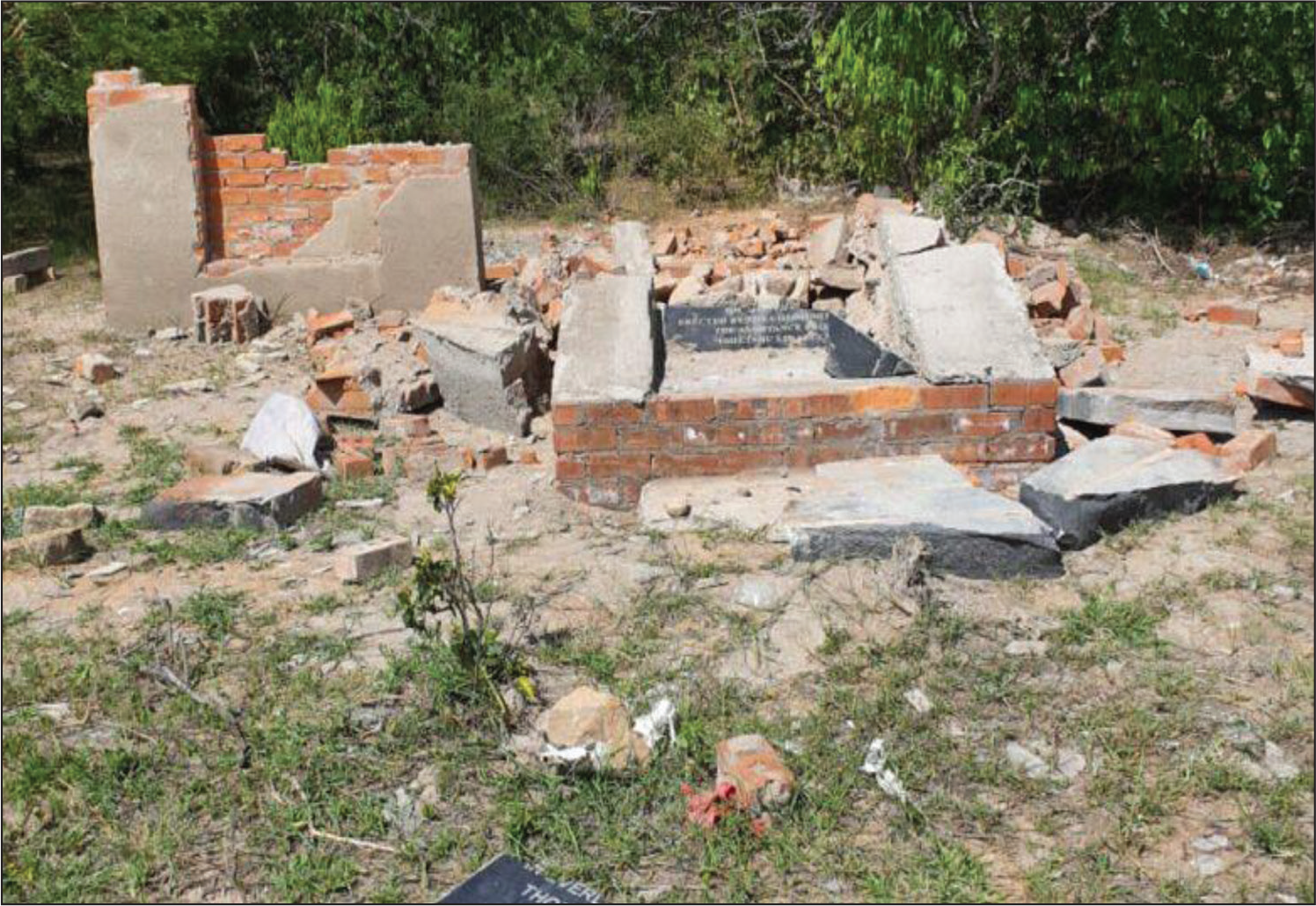
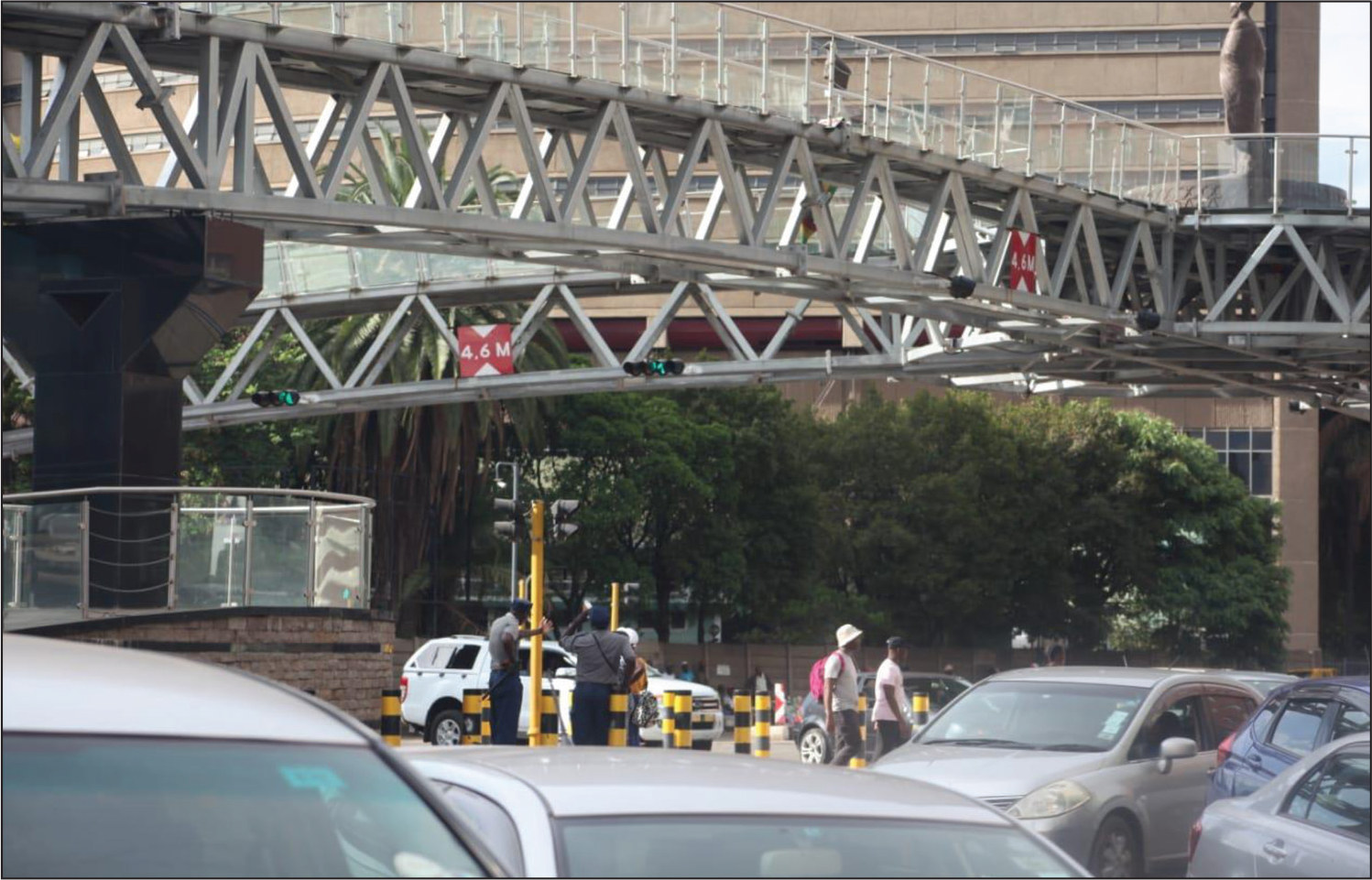
Photo courtesy of Everisto Mangwiro.
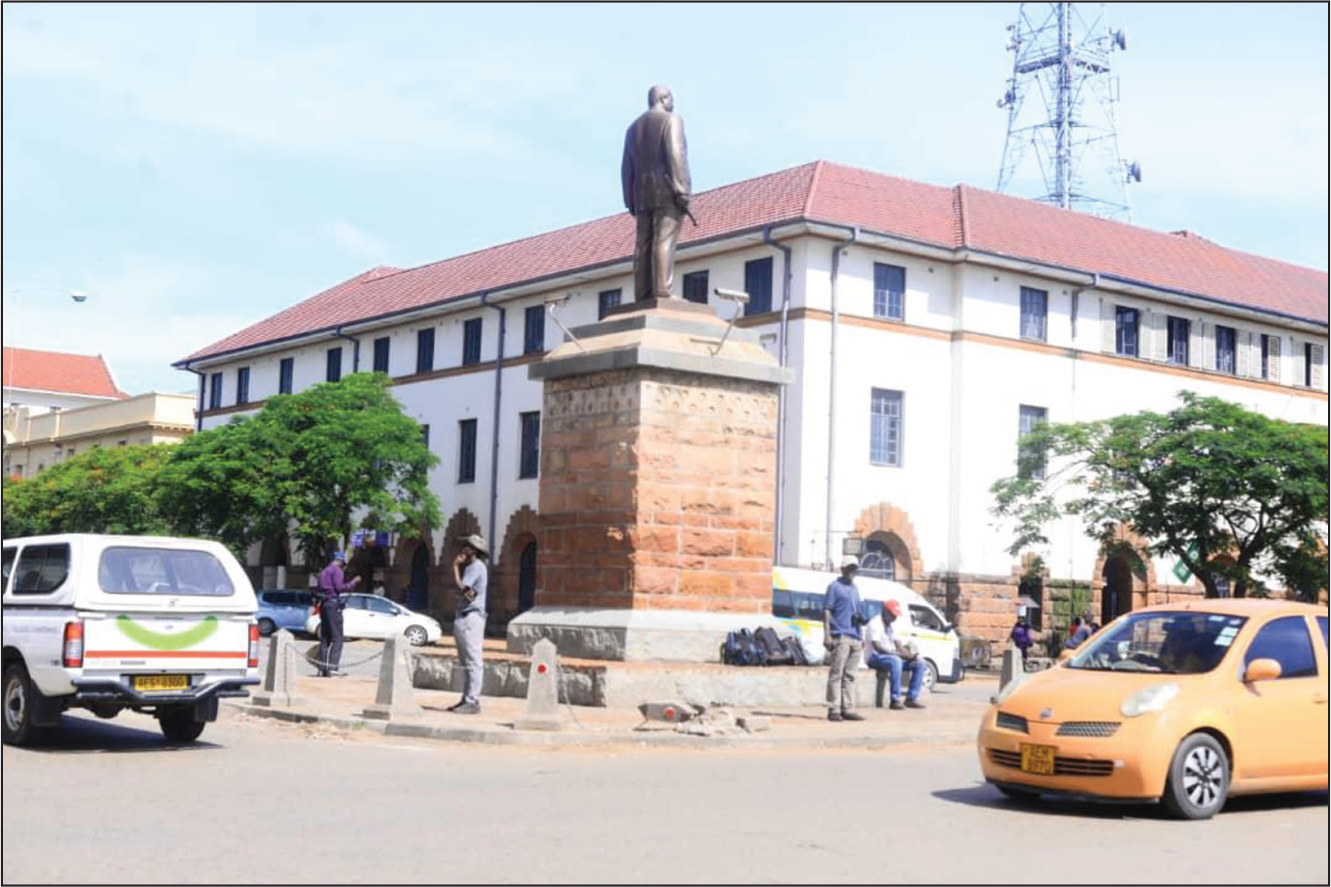
Photo courtesy of Senzeni Khumalo.
However, although Bhalagwe was not a government-initiated memorial and the histories that had given birth to it seemed to have been in direct conflict with the government’s official narrative of the disturbances as anti-dissident wars, its conception as a community project still qualified it for protection under the country’s laws. Although such laws need not to have been the NMMZ Act, as both a memorial to the dead and people’s property, the culprits were still supposed to be traced and charged under other laws of the country guarding against property violations. This has not happened, thus confirming the suspicions of the Zimbabwe government’s unwillingness to sacrifice populist approaches in favour of promoting coexistence and acceptance of minority symbols of commemoration.
Just like Zimbabwe, Namibia has also witnessed the same traits of heritage hardliners. The only difference, though, is that in Namibia, the anti-other heritage sentiments have largely remained within the confines of lobbying. A pressure group known as ‘A Curt Farewell’ has been one such example of a lobby group. Presently, its most successful action was when it successfully lobbied for the removal of Curt von Francois’s statue from the streets of Namibia (see Melber, 2022). Again, the removal of this statue was done despite the protests of his surviving family members, who are also Namibians. In lobbying for the statue’s removal, the group argued that Von Francois had been an agent of colonial Germany ‘who was willing to kill for the establishment of colonial rule’ (Melber, 2022). According to them, the same man had also been ‘wrongly credited’ as was indicated on his statue inscription, as ‘the founder of Windhoek’. Such action tantamounted to a denial of Nama and Herero communities who had always been in that space before Von Francois’ appearance (Melber, 2022).
Just like its counterparts, South Africa has also recorded similar histories of heritage extremism. The most notable case is that involving the statue of Cecil John Rhodes. The statue used to stand on the grounds of the University of Cape Town and fell victim to the RMFM. The other Rhodes-related relic, the Rhodes Memorial, located on the slopes of the Devil’s Peak in Cape Town has also been subjected to violence. However, despite the RMFM’s protests being linked to much broader questions of the transformation, for heritage-related matters, the fact that there was a reluctance to resort to the dictates of the South African Heritage Resources Act (SAHRA), Act No. 25 of 1999, is problematic (see Madida, 2019) and also confirms the problem of populism in heritage management. As the premium heritage law in South Africa, the SAHRA Act was promulgated to protect all aspects of heritage.
Apart from regional governments’ reluctance to implement existing heritage laws when faced with fundamentalistic challenges, what has also been aiding the problem’s persistence has been the absence of counter voices against such fundamentalist vices. South Africa has been a slight exception though. This is because in Namibia, where the only countervoice heard of, seems to have been the family of Von Francois discussed above, no other similar voices have been recorded. On the other hand, Zimbabwe is a different case due to the authoritarian nature of its government, which stifles such voices from expressing themselves physically. This has resulted in those harbouring nostalgia for relics inherited from colonial Rhodesia to confine their activities to social media platforms, where their operations are limited to just nostalgic expressions and love for history. 4 Circumstances prevent them from going beyond the limits of nostalgic expressions to challenge notions of fundamentalism. Doing so risks the groups being labelled as colonial apologists or even agents of Western governments. On the contrary, in South Africa, an organization called AfriForum has been challenging populist ideas legally. 5 Although the organization has since recorded some successes as a counter-voice group, such as a court victory won against the Economic Freedom Fighters (EFF). 6 However, as Sooliman (2022) noted, counter-voice groups like AfriForum are sometimes ineffective when faced with extreme popular voices such as the RMFM. In any case, as a countervoice, AfriForum has also been accused of being a white Afrikaner apologist group.
Why Rethinking Populism in Heritage Management is Necessary?
Whereas countries in southern Africa embarked on the removal of unwanted monuments from the public sphere, as explained above, it seems such approaches were influenced by the thinking that notions of unwanted heritage were only limited to issues of former colonizers and colonized. Instead, there are several examples of legacy cases and heritage projects that show why heritage-related matters should not be subjected to erasure.
1. Post-power lives of political leaders: Kenneth Kaunda and Robert Mugabe
In southern Africa, one platform where lessons about the dangers of populist approaches when dealing with legacies are learned is through tracing the post-power lives of political leaders revered as heroes in their respective countries’ histories. In southern Africa, two such leaders are Kenneth Kaunda of Zambia and Robert Mugabe of Zimbabwe. When the two leaders left power in 1991 and 2017, respectively, both were subjected to humiliations that were inconsistent with their iconic statuses. Kaunda was subjected to ill treatment that had all the ingredients for undoing his iconic legacy. This was regardless of the fact that Kaunda was not only an icon of Zambia alone. Instead, alongside Julius Nyerere, Kaunda had done deeds during his time as president of Zambia to qualify him for the special position of father of southern African liberation (Ntomba, 2021). However, when he lost power, his successor, President Fredrick Jacob Titus Chiluba, did not waste time in levelling allegations of corruption against his predecessor. These were then followed by, first, an imprisonment, which only ended after world leaders had intervened and later, placement under house arrest. However, images of Kaunda spotting an unfamiliar white beard that were circulated around the globe after his release from house arrest were enough to show the vulnerability of all legacies to contestations.
Unlike Kaunda, who was removed from power electorally, Mugabe lost power after the military had intervened in the affairs of his party, claiming that they wanted to restore legacy and remove ‘criminals that were surrounding the President’ (see Mudau & Mangani, 2018). Parallel to the negotiations for Mugabe to step down from power, which also involved two ministers from the South African government, massive demonstrations and celebrations were also taking place in the streets of Harare (Haden, 2017; Simonds, 2017). Although what happened can be interpreted as vandalism of an icon’s legacies, it was what was done by Mugabe’s former comrades in both government and ZANU PF, 7 his former political party, which should serve as a warning about the dangers of perpetuating cycles of heritage contestations.
During his 37 years in power, Mugabe had presided over the affairs of Zimbabwe in a manner that created two legacies. In the first legacy, created between 1980 and 2000, although characterized by episodes of deployment of extreme violence, first against political opponents and the people of the Matabeleland and Midlands provinces and later against members of the Zimbabwe Unity Movement (ZUM) 8 (see Sithole & Makumbe, 1997), Mugabe had largely been a successful leader. During that phase, the country made positive strides, especially in the field of education. Mugabe also managed to take a stand against corruption by his party members and government officials. Notable was the Willowvale scandal, which took place in the late 1980s and claimed the political scalps of several leading government officials. However, it was in the second legacy phase of his rule that Mugabe somehow lost all the values of his presidency. After losing a vote in which he had wanted to change the country’s constitution to the newly formed Movement for Democratic Change (MDC) 9 in 1999, Mugabe later presided over a bloody election in 2000. He had also allowed the veterans of the 1970s liberation struggle to occupy mostly white owned commercial farms (Lahiff & Cousins, 2001). The military was also a notable beneficiary. They were even awarded mining claims in the lucrative and rich Chiadzwa Diamond fields discovered in the eastern parts of the country around 2006 (Jamasmie, 2012).
However, when Mugabe eventually lost power in November of 2017 to his former Vice President, Emerson Mnangagwa, and former proteges and allies, both in ZANU PF, the government and war veterans did not take long to contest his iconic legacy. First, accusations were made that Mugabe had been a sellout. Prominent in parodying such assertions was Oppah Muchinguri, an individual who had been part of Mugabe’s government since the early 80s. The war veterans also added to Muchinguri’s sentiments by stating that they were going to push for a kind of deheritagization of Mugabe’s legacy (Karombo, 2018). They threatened to remove his name from the country’s main airport, which was renamed earlier in his honour (Zimbabwe Mail, 21 August 2018). One of the streets named after Mugabe in Kwekwe, a city in the Midlands province, was renamed after Emerson Mnangagwa, the man who had dethroned him from power. What was humiliating about this action was its execution by a mere council employee. The city fathers, the councillors composed mainly of members from the opposition MDC Alliance party (MDC Alliance), were not even aware (Staff Reporter, 2020; Dziva, 7 February 2020). Despite the protests of the city fathers, querying the name change without their knowledge, nothing changed. The last thing that was said about the issue was the announcement by the Deputy Mayor of Kwekwe that they were going to seek legal action to restore Mugabe’s name (Matendere, 2020).
Meanwhile, Mugabe himself tried to fight the assaults on his legacy. He did this by ensuring that those who had dethroned them were not going to use his legacy for political or any other benefit. Just before his death, he is also reputed to have advised his close family members that upon his death, his body was not supposed to be buried at the national heroes’ acre, a burial space reserved for outstanding individuals. Mugabe’s wish to be buried at his rural home in Kutama won despite the contestations that ensued. However, in spite of his fight back, what is clear from the whole episode is that heritage contestations go beyond binaries of race or political belonging, and they pose a danger to the discourse of heritage.
2. New heritage projects: Joshua Nkomo and Nehanda statues
Post-independence, new heritage projects in Anglophone southern Africa have revolved around Heroes Acres, museums, and statues for the liberation icons. However, of these new projects, it is the ones that were erected in Zimbabwe that have generated much contrast and debate. It is useful to understand why legacies, if translated to heritage products, must then be left to interpretation. For Zimbabwe, its latest offering to the heritage discourse has been in the form of two statues, both of which were erected in honour of two iconic individuals. The first one, erected and unveiled in Zimbabwe’s second city of Bulawayo, was that of Joshua Nkomo. Erected in 2005, the Joshua Nkomo statue now stands at the same place where the one for Rhodes used to stand before its decontextualization (Chipangura, 2017). Nkomo’s statue was then followed by that of Charwe, a medium of a spirit called Mbuya Nehanda. Unveiled in 2021, Nehanda’s revolving bronze statue is located at the intersection of Julius Nyerere Way and Samora Machel Avenue in Harare.
In Zimbabwe’s historical sequence, Charwe as Mbuya Nehanda had been the first of the two figures to appear on the scene in the 1890s. In the struggles against the establishment of colonialism in Zimbabwe, popularly known as the first Chimurenga/umvukela, fought between 1896 and 1898, she is recorded as having played an iconic role. She was later captured by the colonial forces before being executed together with another icon of that struggle, Gumboreshumba, a medium of a spirit known as Kaguvi (see Beach, 1998). However, although Charwe had just been one of a long list of many Nehandas before her, it was her visual image that became an embodiment of the Mbuya Nehanda figure. As such, when the Zimbabwe government declared that they were creating a statue of Mbuya Nehanda in 2021, they used the image of Charwe to create the visual.
On the other hand, in life, Joshua Nkomo was a hero of the second war of resistance against colonialism also known as the second chimurenga/umvukela that resulted in independence in 1980. Thus, upon independence, Nkomo, like many leading participants in the struggles against colonialism was first revered as an icon of liberation. However, this soon changed in less than 2 years after independence, when Nkomo and many of his colleagues from the western parts of Zimbabwe lost their reverence as heroes in the country. The reason for this had been accusations levelled against Nkomo and his party, PF ZAPU, of plotting to overthrow the government (Ndlovu & Williams, 2010; Nkomo, 1984). Since Nkomo was a member of the Ndebele ethnic grouping, the confrontations soon translated to one between the government and people from the Ndebele ethnic grouping. However, upon the signing of the unity accord in 1987, Nkomo and his colleagues regained their national iconic status. Upon his death in 1999, such status resulted in him being memorized through burial at the National Heroes’ Acre and later through the statue project.
In terms of the comparisons and contrasts of the two heritage projects, the Nkomo statue had arrived on the Zimbabwe heritage landscape at the height of the controversial land reform programs. The same period was also the height of violent contests for political dominance between the ruling ZANU PF party and the Movement for Democratic Change (MDC). On the other hand, the Mbuya Nehanda statue project had arrived on the same scene just after the dethronement, through a military intervention, of the country’s long-time ruling leader, Robert Mugabe. As already said, Mugabe was then replaced by Emerson Mnangagwa, his former deputy, whom he had fired just two weeks before his removal. During the time of the statue unveiling, ZANU PF was now embroiled in aggressive political contests for power with the MDC Alliance 10 , a party that had evolved from the MDC founded in 1999. In 2021, the contests later changed to between ZANU PF and the Citizens Coalition for Change (CCC). 11
However, although the two projects were unveiled during periods of different political upheavals and both belonged to iconic individuals, they nevertheless generated lessons that are useful in understanding the temporality of perceptions. Whereas, since its arrival, the statue of Nkomo, being that of an individual who had once lost his iconic status in independent Zimbabwe, has been widely accepted with no drama, the same cannot be said of Nehanda. Ever since its arrival as a decolonial project, the Nehanda statue has been more dramatic and contested. In other words, the statue embodies my central argument that no heritage is immune to contestation. Indeed, after the unveiling of the Nehanda statue, it immediately created two groups with two diverging opinions. The actions of both groups, however, give us a picture about shifting perceptions and also appropriation of heritage.
The first school of thought created by the project pertains to those who purported to be its adherents. This group has viewed the project as the proper way of celebrating bygone ancestors. Ever since unveiling, the group has worshipped the statue and conducted ritual performances around it. However, the actions of this group have been sharply countered by those who opposed to the project. The sentiments of this group have clearly disregarded the whole project, and they view it as a demonstration of irresponsible extravagancy by a government bent on impoverishing the majority (Chingono, 2021). The thinking that the Nehanda statue was an undesirable feature was first expressed on the occasion of its unveiling. On that day, a serviceman from the Air Force of Zimbabwe had collapsed during a parade that was part of the unveiling ceremonies. This led to opponents of the statue to attribute the soldier’s collapse to hunger (Chekai, 2021). For them, his fate was a clear sign of the results of fund misappropriation to cater to non-livelihood things. Religious groups were also among the discontented. Some even equated the statue to idolization (Chikosi, 2020; Sambiri, 2021).
More revelations on the sentiments of the group against the Nehanda statue were revealed when rumours started circulating on social media platforms that the statue had been accidentally knocked down by a truck. The rumours happened just a few days after its unveiling. Although the rumours were later proved to be untrue (Staff Reporter, 2021), the fact that some people were prepared to celebrate its demise means a lot to contestations of heritage. A lot also can be deduced from the actions of the police just after circulation of rumours. Apart from dismissing the news as fake, they also issued stern warnings to the purveyors of the alleged fake news and warned to hunt them. Thus, by going to such extends, the government exposed its fear of the statue as a space of contestation.
There were also further government actions around the Nehanda statue that have also confirmed its status as a space of contestations. As a new project that is in the same category as that of Joshua Nkomo, there are visible differences, however, in terms of the projects’ interactions with their publics. While the Nehanda statue is guarded for 24 hours a day, meaning all interactions happen under the watchful eyes of the police, the Nkomo statue provides an unguarded interactive environment. This is despite the fact that, in the early 80s, many Zimbabweans living in the greater eastern parts of the country had been conscientized to hate Nkomo.
More confirmations of the Nehanda statue as a space of contestation were put to the fore in a recent case involving one Godfrey Karembera, a well-known opposition supporter. Popularly known as Madzibaba we Shanduko. Karembera, as an opposition adherent, had risen to prominence through attending CCC opposition rallies while donning regalia associated with a religious grouping known as the Mapositori, an African independent church common in Zimbabwe. Male followers of these churches are referred to as Madzibaba, and they wear long white garments. The only difference was that Karembera’s own garment was in opposition’s yellow colour. Thus, for this gesture, Karembera earned the nickname Madzibaba we Shanduko, with shanduko being the slogan of CCC. However, whilst going about his business in Harare, Karembera was accosted by some unidentified men whilst in a shop. The men then went on to beat him viciously before causing his arrest (Kachiko, 2022). Contrary to Karembera’s claim of his fate on that day as planned politically inspired brutality, the national spokesperson for the police disputed that. He claimed instead that Karembera had been arrested for attempting to vandalize the Nehanda statue (Taruvinga, 2022). The charge was later changed from an attempt to destroy the Nehanda statue to that of disorderly conduct. Nonetheless, despite the change, the state’s initial suggestion that the Nehanda statue was under threat from an opposition member of the public is quite revealing about the future of the visual. This is despite the fact that the statue is that of a non-colonial icon.
Deep Reflections on Inherited Dark Pasts
One idea that I have tried to advance so far is the need to counter approaches that make heritage a platform for contestation. Indeed, although statues and memorials have been the main victims of populism-motivated violence against colonial heritage, they are not the only aspects of such legacies within our midst. Instead, there are many such relics from the colonial past that will help create understandings of what must be done when dealing with the past. The continued existence of these relics, which include buildings, roads, bridges, and even schools serves as a demonstration that it is possible to coexist with colonial legacies. As Alude Mahali also observed in the case of South Africa, it has been possible to coexist with colonial monuments such as the Castle of Good Hope and the Honoured Dead Memorial in Kimberly, which have remained uncontested in the post-colonial period (Mahali, 2019).
Although adherents of populistic approaches have been loud in calling for the removal of statues of colonial and apartheid leaders, there have been no similar calls to do the same with the relics mentioned above. In most of the cases, renaming has been the preferred approach to deal with such relics (see Magudu et al., 2014). In countries like Zimbabwe, the NMMZ even went to the extent of putting in place a department of historic buildings to protect colonial forms of architecture. In South Africa, the South African Heritage Resources Agency also has a similar institution in place to oversee the same aspects. Yet, it was in some of these buildings that are now being protected, some vicious policies that culminated in the oppression of the majority of the people were mooted. Bridges such as Beitbridge, which links South Africa and Zimbabwe and owes its origins to Alfred Beit, a Rhodes confidante and former business magnet, are also part of colonial heritage. Even the new bridge that was recently constructed to replace the old one still maintained its old name as Beitbridge. This is despite that when the statue of the same individual was targeted for toppling, the same principle was not applied to other numerous Beit legacies. Therefore, what this means is that nations do not necessarily need to apply love and hate policies with colonial heritage as Njabulo Chipangura observed. Instead, there is need to use such dealings as a way to understand that it is possible to coexist with colonial heritage. Understanding that we can use colonial relics in the present also means knowing the power of heritage as a platform for development and continuity. At the same time, knowing that there are other forms of heritage that we have left unscathed, even in our extreme populist selves, also means that there is need to mold new heritage projects along the same models. Thus, instead of expending resources on statue heritage projects, a memorial hospital will be a most welcome idea.
Conclusion
This article proved that heritage transformation approaches adopted by southern African countries upon their independence and freedom were problematic due to their populist tendencies. It found out that although its aim was transformative, the favoured approach created avenues that made it possible for fundamentalist ideas and behaviour to filter into the domain of heritage in southern Africa. When that happened, possibilities for respect of other people’s rights to heritage and coexistence were damaged. The article also used several examples to show the limitations of the basis on which the populist approach had been premised upon. The examples proved that contestation of heritage was not only limited to questions of racial differences or those of the former colonizers and colonized. All heritage is subject to contestations, hence the need to always find ways of discouraging any possibilities for contestations.
Footnotes
Declaration of Conflicting Interests
The authors declared no potential conflicts of interest with respect to the research, authorship and/or publication of this article.
Funding
The authors received no financial support for the research, authorship and/or publication of this article.