



Abstract
Formally trained architects in India participate in building habitation for less than 10 per cent of the Indian population. Even with such small participation, they are unable to provide just spatial configurations that do not perpetuate segregation and discrimination on the basis of class, caste and gender. On the other hand, most inhabitations across the country are built through small contractors involving various kinds of incremental developments. This form too has perpetuated discrimination and segregation and is often built poorly due to low quality construction, planning and infrastructure, affecting the dignity of life of its inhabitants. The ecosystem of architectural education in India is structurally, institutionally and pedagogically unable to address issues related to spatial justice. While it is structurally located within a political economy where education is a money-making enterprise, it is institutionally geared to reduce academia to educational organisations and pedagogically oriented to prepare students for the mainstream building industry. This ecosystem has historically evolved to produce an institutionalisation that is made to feed the formal building industry, dominated by the building of habitation and other structures for the elite or by real-estate developers.
Introduction
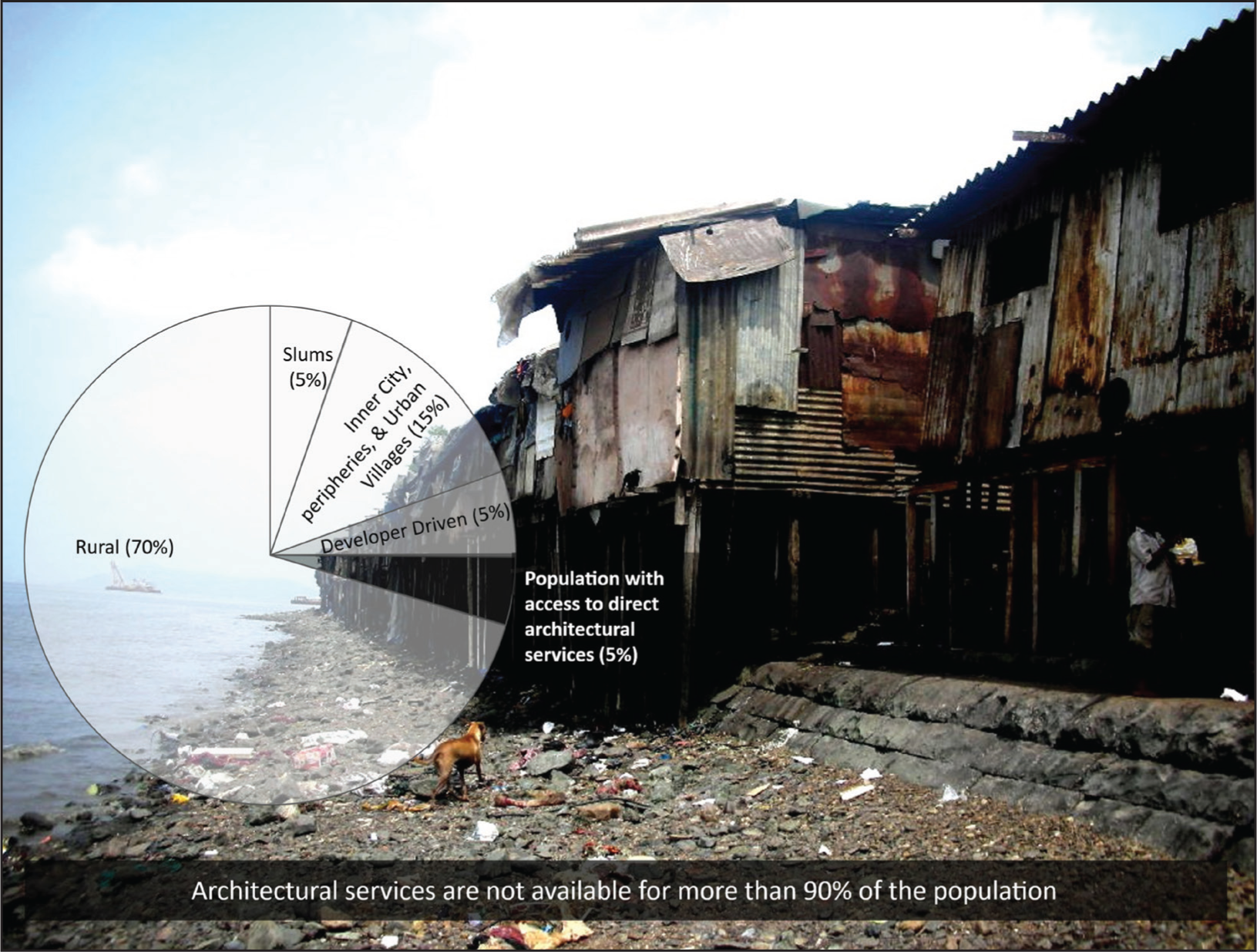
Formally trained architects in India contribute to building habitation for only a tiny fraction of the population. 1 While there are a few trained architects who work for the habitation of the 69 per cent rural population, there are even fewer who work for the 5.4 per cent slum population in the country. 2 Further, a significant proportion of the urban population lives in self-built homes, constructed through small contractors in areas such as urban villages, informally subdivided plots, site-and-service layouts and resettlement zones and dense inner-city neighbourhoods, all of which remain underserved by architects. Moreover, most of the remaining habitation, which largely comprises cooperative housing of various types, is produced through developers where the houses are designed to maximise real-estate profits. Less than 10 per cent of the total population in India benefits from the services of formally trained architects 3 (Figure 1).
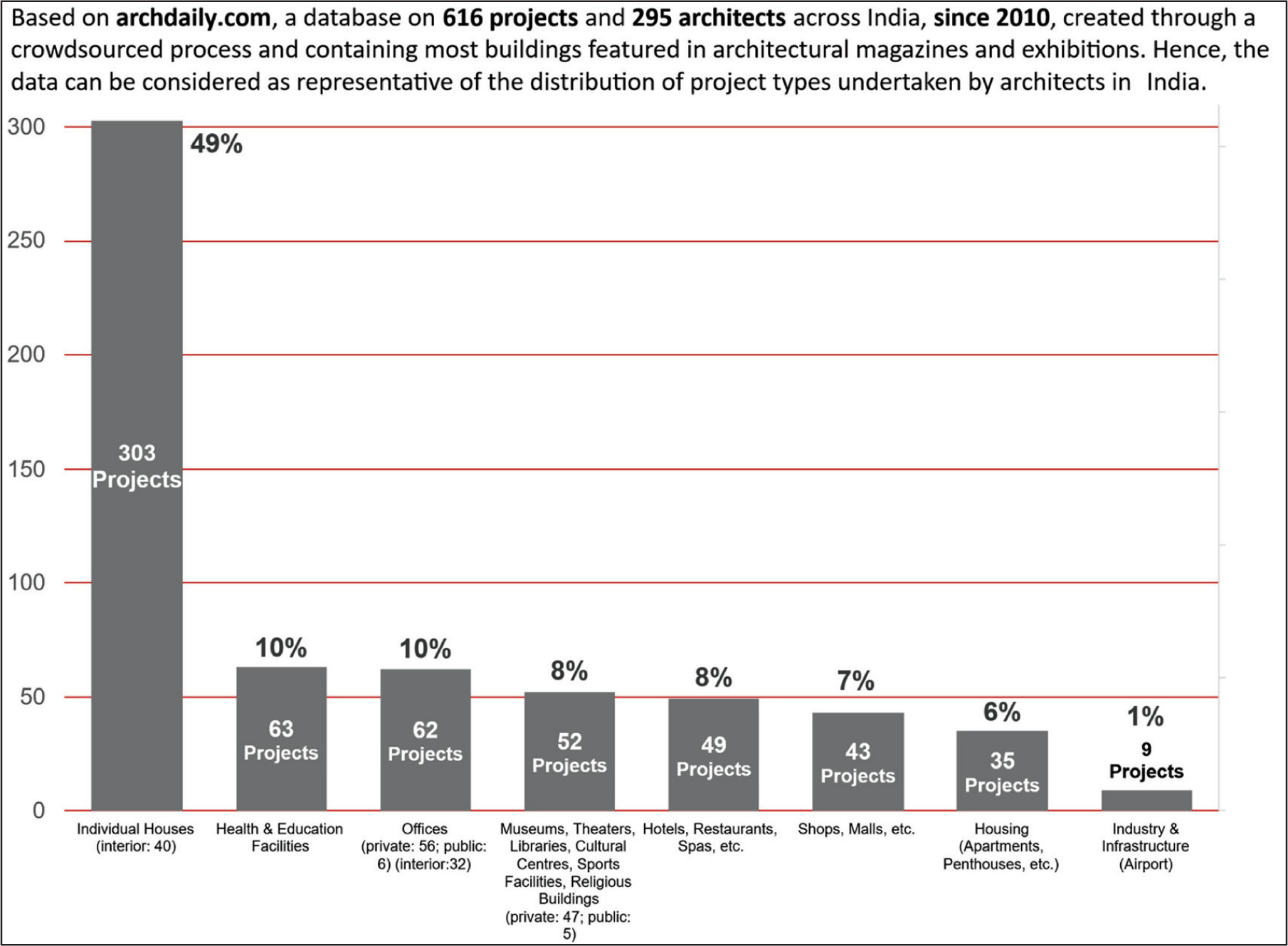
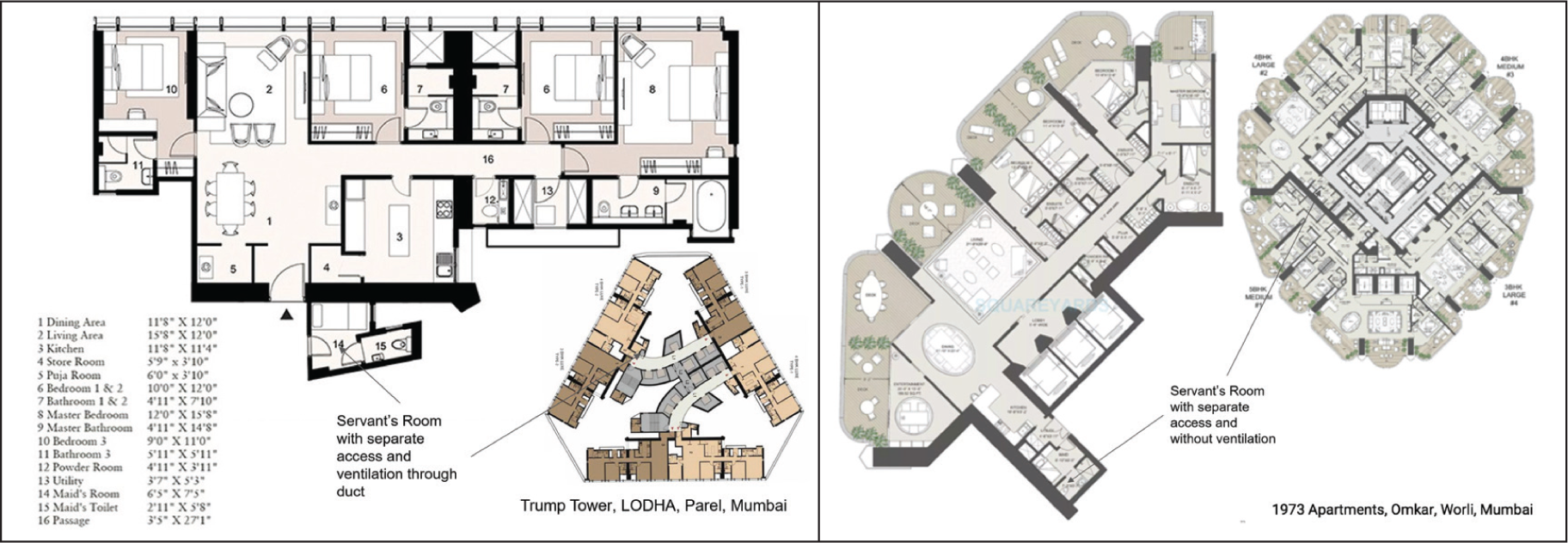
Most architectural projects today focus on single-family homes or second residences (Figure 2). When architects do engage in mass housing—primarily in large cities—the projects fall into two categories: housing for the middle and upper-middle classes and housing for the poor through government schemes. The former often perpetuates privatised, feudal spatial structures. For example, lavish apartments may feature multiple spacious, well-ventilated bedrooms for the primary residents, while providing small, unventilated, dingy quarters for domestic workers, often with separate entrances and toilets (Figure 3).
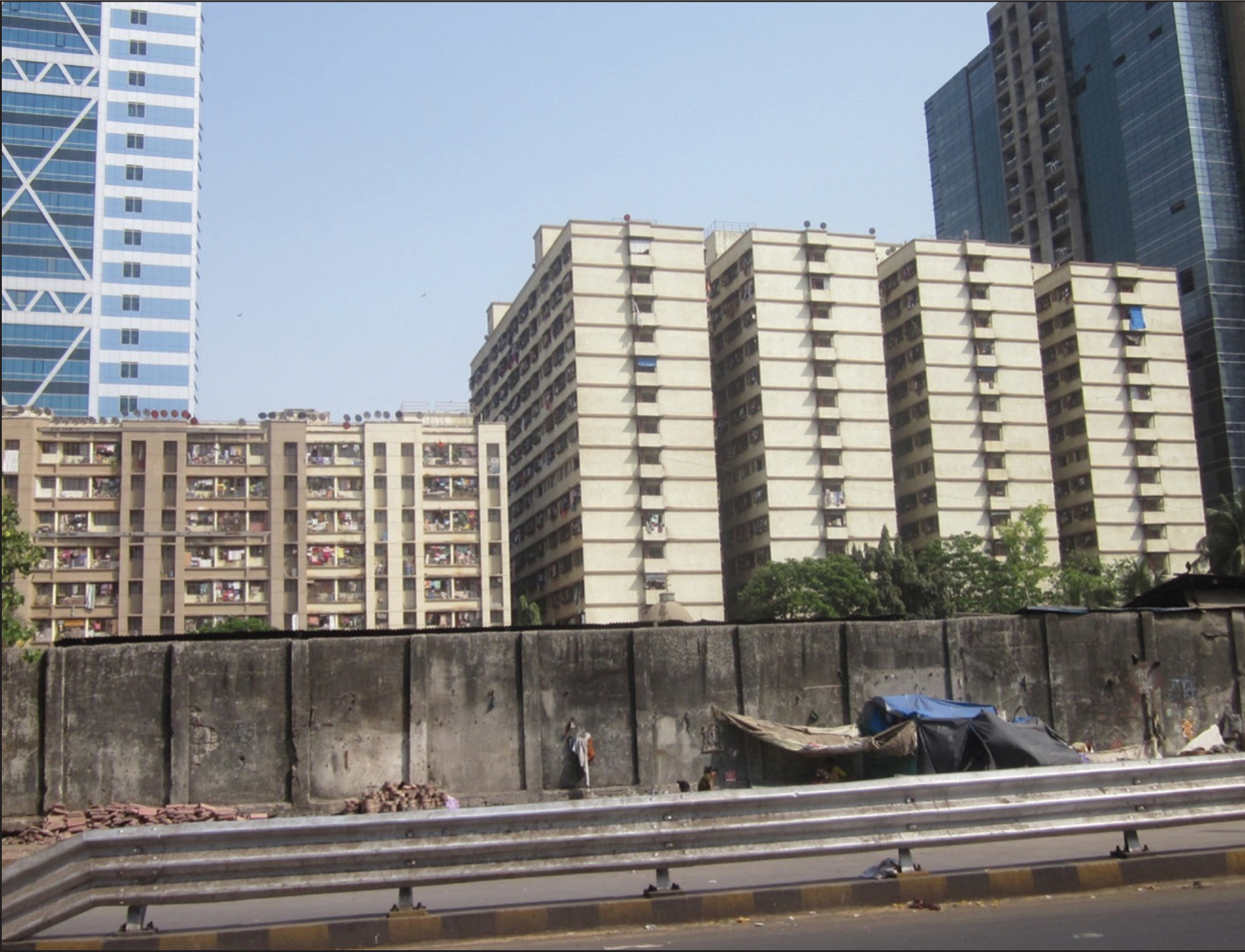
While architects do not get involved with habitation for a significant proportion of the country’s population, when they do engage with habitation, they often create spaces that are highly discriminatory and lead to segregation. The slum rehabilitation schemes, designed by architects, typically result in overcrowded neighbourhoods with small, poorly designed homes, insufficient open spaces, inadequate light and ventilation and subpar infrastructure (Figure 4). Resettlement schemes further exacerbate the problem by relocating slum dwellers to the urban periphery, severing them from their social and economic networks. Studies of slum rehabilitation sites, such as that by Sarkar and Bardhan (2020), highlight the ‘loss of socio-physical liveability’ these projects create.
These designs reflect a spatial injustice, characterised by segregation and inequity. Spatial justice here is defined after Soja (2009) as ‘an intentional and focused emphasis on the spatial or geographical aspects of justice … [involving] the fair and equitable distribution in space of socially valued resources and the opportunities to use them’. Spatial justice also has economic dimensions. Economic opportunities and relationships are often shaped by specific spatial configurations. For instance, a house in a slum acts as an extension of the street, enabling productive activities and work. However, when a family from such a house is relocated to a multi-storied apartment, these work opportunities are lost. Here, the spatial configurations of a slum and an apartment block are active in shaping opportunities for economic activities of households inhabiting them.
Why should formally trained architects engage with the production of habitation for wider populations? A significant segment of society continues to depend on local contractors, masons and carpenters. However, in the absence of systematic academic engagement, such practices risk perpetuating entrenched inequalities of class, caste and gender. Furthermore, architectural education and practice are regulated by the Architect Act of 1972, a national legislation that obligates the profession to serve the broader public interest rather than an exclusive clientele. Inevitably, architects influence social and ecological systems beyond their immediate commissions, rendering societal and environmental concerns integral to their practice. To remain relevant and sustainable, the discipline must demonstrate its value to the larger population. Finally, the expertise and agency of trained architects are crucial for advancing sustainable futures, given that existing modes of habitation production—whether through resource-intensive developers or through informal processes—frequently compromise environmental and social sustainability.
This article, thus, contends that the current educational ecosystem of architecture in India—architectural colleges, universities, state and central regulating agencies, journals and magazines, awards and architectural offices, along with curricula and syllabi, teaching modes and methods and various processes that are involved in the training of an architect—is not geared towards providing spatial justice. The authors recognise that beyond the educational ecosystem, the political economy of architectural production and the mechanics of architectural practice also play a significant role in bringing about spatial justice. While the article discusses some of these aspects, it is focused on the educational ecosystem (that produces architectural graduates), and a separate study would be required to identify and address the problems with the other aspects.
This article presents specific parts of a large-scale study (Shetty et al., 2023)—conducted between February 2022 and October 2023 by the authors—pertaining to the structural, institutional and pedagogic dimensions of the educational ecosystem towards making an argument that it is impossible for such an ecosystem to bring about spatial justice. The study included a review of the Minimum Standards of Education by the Council of Architecture (COA) (1983, 2020), interviews with key stakeholders at the COA and state authorities, a review of syllabi of 15 universities (that control 200 colleges), 4 interviews with the management, faculty and students of 13 institutions, group discussions with 102 students, interviews with managers of journals and awards, online responses for a questionnaire from 30 architectural offices and focus group discussions with 20 pedagogues from across India.
Based on the study, this article argues that there are significant structural, institutional and pedagogic problems with the educational ecosystem, making it impossible to train students on issues of spatial justice. Here, the structural dimensions include the larger political economy within which architectural education is located, mainstream ideas about the role of an architect and the regulatory issues that shape and control the ecosystem. The institutional aspects include various administrative processes, capacities of human resources and agendas of different actors. The pedagogic problems include the curricula and syllabi, the teaching modes and methods and output-related issues such as the profile of graduating students and the production of new knowledge.
Structural Problems
Role of an Architect: Building-making Versus Crafting of Space
On 17 March 2020, the Supreme Court of India ruled that neither a professional degree nor registration under the Architects Act, 1972, is a prerequisite for engaging in architectural practice (Council of Architecture v. Mukesh Goyal & Others, 2020). The Court delineated architectural practice to encompass activities such as client consultations, site evaluation and development, structural design, the integration of sanitary, electrical and mechanical systems and the periodic inspection of construction works. It further noted that these tasks are routinely undertaken in collaboration with a range of professionals, including engineers, builders, draughtspersons and other allied practitioners. Imposing an absolute prohibition on unregistered individuals, the Court argued, would create significant ambiguity regarding the scope of architectural practice. Consequently, this judgment has diluted the architect’s central role within the construction industry, highlighting two critical concerns: first, the assumption that architecture is primarily limited to the facilitation of building construction and, second, a fundamental uncertainty about the unique domain of architectural expertise, which is often conflated with the roles of engineers, contractors or other specialists. As the building industry asserts increasing control over the discipline, the architect’s essential capacity to critically understand and produce space risks being marginalised in favour of logistical and technical concerns.
This rendering of the role of an architect and a building-maker restricts the understanding of space, spatial configurations and their relation with life. The understanding of spatial justice, which is rooted in this relation, therefore remains unattended and uncared for.
Education as a Private Enterprise
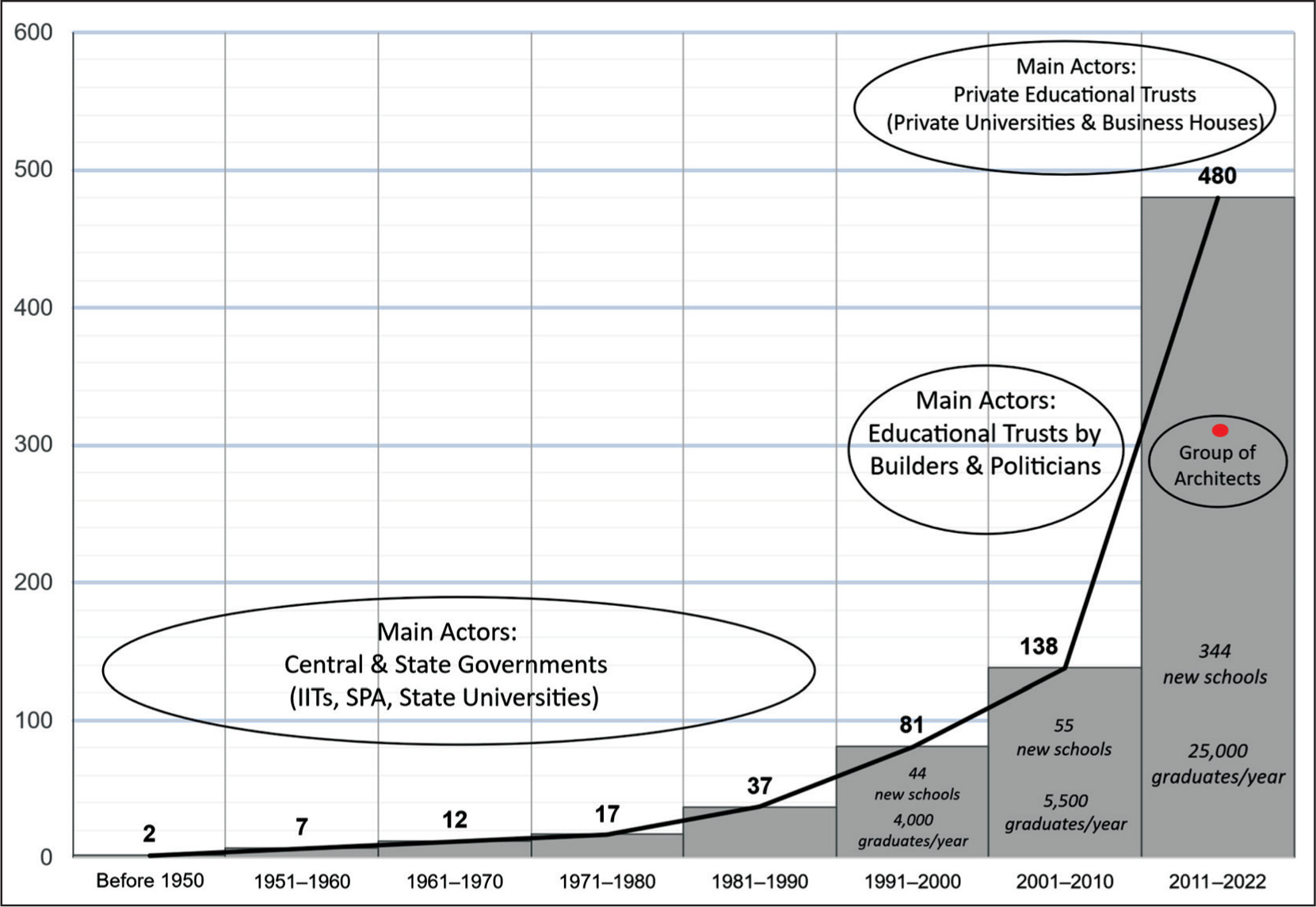
While there were 30 colleges, run by the government or educational trusts, teaching architecture in India in 1990, by 2010, there were 92 colleges, most of which were managed by politicians or developers. By 2022, there were 480 colleges across 200 universities offering a Bachelor of Architecture (B.Arch.) programme, with 61 per cent of these being private institutions affiliated with state universities. 5 Many of these were initiated by mainstream business houses. 6 This surge of private institutions after 2010 indicates that architectural education has shifted from a socialist state or concerned philanthropic endeavour to a privately organised, money-making enterprise. These self-financed private institutions bear the largest burden of educating architects. The dependence on private institutions has escalated the cost of education, with annual fees ranging from ₹50,000 to over ₹4 lakh. 7 Concurrently, graduate numbers have risen from 1,800 in 1990 to over 25,000 in 2021, saturating the market and suppressing wages (Figure 5).
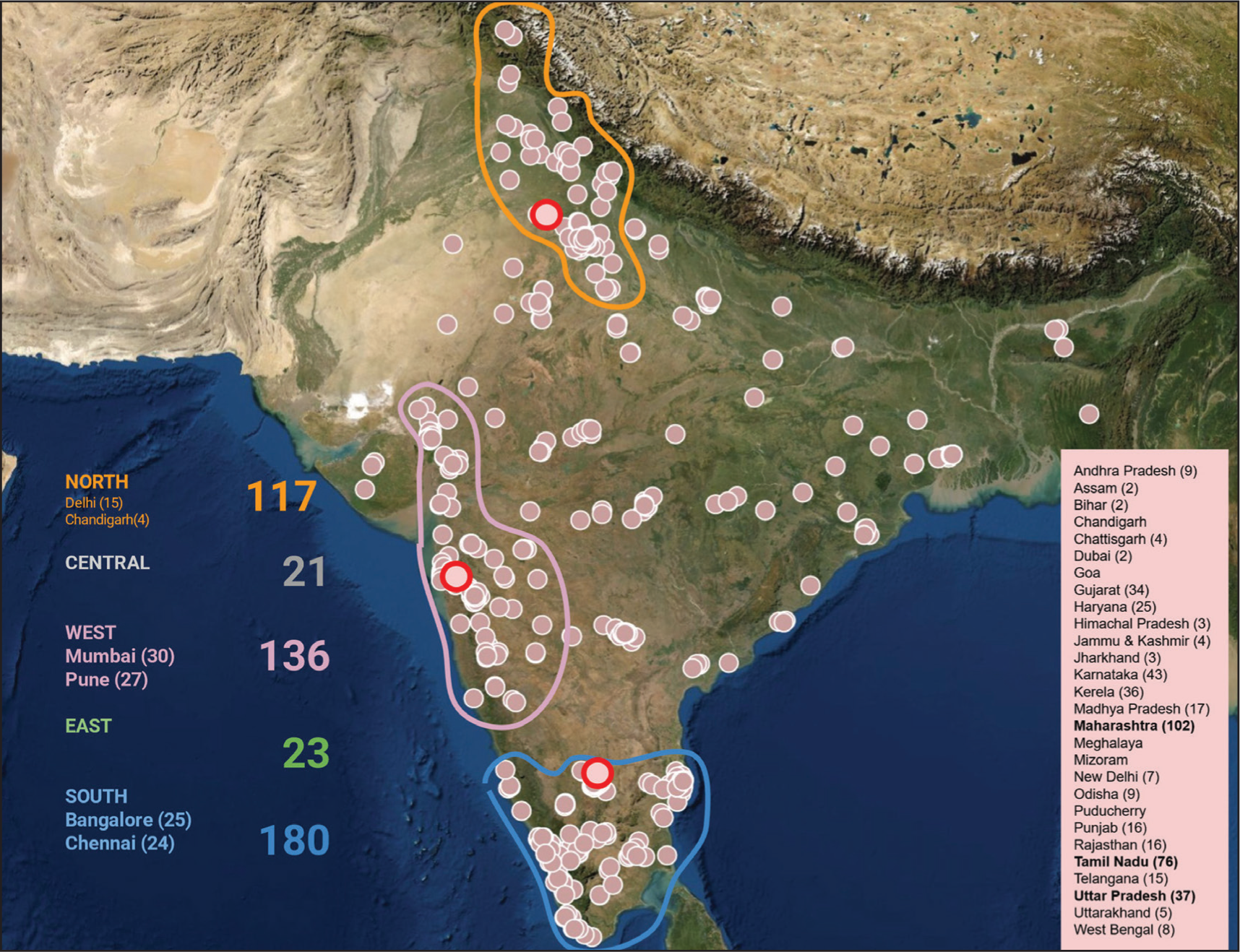
There is also a notable concentration of institutions clustered around major urban centres and specific states. For example, the western corridor encompassing Mumbai, Ahmedabad and Pune hosts 136 institutions; the southern region comprising Chennai, Bengaluru and Thiruvananthapuram accounts for 180 and the National Capital Region contains 117. In contrast, central India accommodates only 21 institutions, while the eastern region has merely 23 (Figure 6).
As architectural education has become a fully profit-driven enterprise with high fees and is concentrated in and around metropolitan areas, the expectations from graduates have also shifted towards higher earnings. Working for the urban and rural poor rarely generates significant fees, as projects are small and materials are inexpensive. Consequently, architects tend to disengage from this section of society. Buildings for the wealthy, on the other hand, often embed deep segregation and discrimination through features like tiny, poorly ventilated ‘servants’ rooms’ and ‘efficient kitchens’ that are cramped and usually lack a place to sit. In many cases, toilets, lifts and corridors within the same project are designed separately for the rich and the poor. Any pursuit of spatial justice seems absent in the purview of architects shaped by an education system that promotes such building design.
Regulatory Constraints
The regulatory agencies maintain a tight bureaucratic grip on institutions. Every year, a typical architectural institution needs to undergo three approval processes: first, by the COA; second, by the affiliating universities (for all self-financed private institutions); and third, by state agencies that regulate admissions, fix fees and control student scholarships. The relationship between the COA, state agencies, universities and affiliated institutions is hierarchical and bureaucratic. But the colleges do not get support from these agencies in terms of resources (like access to journals, books, special teachers, etc.), capacity augmentation measures for teachers (except for the periodic training programmes organised by the COA, which most teachers have reported to be not useful), protection and security of employment for staff, etc. Most pedagogues interviewed during the study felt that these agencies occupied the faculty members in non-productive ways, like making them fill forms with repetitive information, undertaking non-academic activities like planting trees or attending yoga sessions, etc. They also felt that regulatory agencies need to provide space for teaching and institutional aspirations, make approvals easier, protect institutions, provide resources, foster collaborations and research and develop a good system for evaluation that is encouraging and not threatening.
The Government of India, through the COA, has prescribed the Minimum Standards of Architectural Education (Council of Architecture, 1983, 2020), defining criteria for entry, infrastructure and human resources for architectural institutions. One of the requirements is that the managing body of the institution should own land with the potential of building 20,000 sq feet of built area. This excludes all groups that are interested and capable of providing education, but do not own such land.
While the regulations instituted by various government agencies seek to ensure transparency, equity and accountability in processes such as admissions, fee structures and curriculum development—and to uphold prescribed standards—they remain largely disconnected from any explicit commitment to spatial justice. Addressing this gap would require deliberate strategies to build the capacities of educators, reframe the agendas of institutional managements and develop and disseminate educational resources capable of reorienting architectural education towards questions of spatial justice.
The Architectural Industry
The practice of architecture today is deeply shaped by systems of patronage and personal networks. Despite being trained to design and manage diverse building types, graduates often find that access to projects hinges less on professional competence and more on social connections and inherited networks of influence. As a result, some of the most capable designers may remain marginalised, while those with privileged access secure the bulk of commissions. In this landscape, caste, class, ethnicity and social background continue to play decisive roles in determining opportunities and outcomes. Unsurprisingly, the ‘architecture industry’ remains dominated by upper-caste men, reflecting broader patterns of social exclusion that persist within the profession. 8
The employment patterns of architectural graduates vary by location. In large cities, graduates diversify into related design fields (30%), pursue postgraduate education (30%), work in architectural firms (30%) or start independent practices (10%). In smaller towns, 40 per cent establish their own practices, with fewer diversifying or pursuing further education. In cities like Bengaluru and Hyderabad, graduates often work for furniture or contracting firms, offering architectural services on commission. Most students interviewed felt that students who did well in school were not the ones who had completed the most projects or who acquired projects easily. Even with about 30–50 per cent caste reservations and more than 60 per cent of enrolled students being women, one finds few architectural offices independently led by persons from the Scheduled Castes, Scheduled Tribes or by women. 9 Obtaining projects largely depends upon familial and other networks, and students from upper castes and classes have better networks and access to initial capital to start their practice. The interviews also revealed that, overall, the architectural industry remains informal, with average monthly salaries for interns at ₹5,000 and fresh graduates at ₹15,000, rising to ₹35,000 after three years. 10 Many small firms rely on interns and fresh graduates for operations, further exacerbating conditions for maintaining low wages.
On the other hand, the architectural offices’ expectations of interns and graduates are largely about professional skills. While 80 per cent of office heads stated that they needed employees with good representation and drawing, model-making, software and communication skills, one office indicated that they needed employees with knowledge of building construction, climatic responses and services. Only 10 per cent expressed a need for curiosity, criticality and familiarity with history, theory, contemporary works and practices.
The mechanisms for critically evaluating architecture in India have historically remained underdeveloped. Within the dominant middle-class imagination, the value of architecture has often been measured by the use of costly materials, creation of expansive and privatised spaces, provision of mechanised comfort, rigid separation of spaces according to function and hierarchy and visual connections to nature or curated wilderness—aspirations largely shaped by mass media, cinema and advertising.
India’s first architecture magazine, the Journal of the Indian Institute of Architects, was launched in the 1930s. While its early issues engaged seriously with questions of planning, design and urban development until the 1970s, it gradually shifted towards reproducing project portfolios and advertisements, with minimal critical discourse. The late 1970s and 1980s saw the emergence of other publications, including Inside Outside (1978), which focused primarily on glossy interior design content, and two promising titles—Architecture Plus Design (1984) and Indian Architect and Builder (1986)—that initially offered documentation of diverse practices, practitioner profiles and essays by academics and professionals. However, since the early 2000s, even these magazines have largely pivoted to presenting uncritical project showcases alongside extensive advertising content. In recent years, several new magazines have continued this trend, further limiting spaces for rigorous architectural critique. Notwithstanding these dominant tendencies, a handful of small, resource-constrained initiatives have sought to nurture serious writing on architecture, 11 though their reach and impact remain limited.
On the other hand, many architecture awards are organised by product manufacturers and suppliers. 12 These organisers often ensure a large number of awards are given out by creating oddly specific categories, for instance, awards for the best use of glass or best washroom design. In addition, there are large annual expos 13 hosted by event management companies, where material suppliers typically act as sponsors and set up stalls. Together, these awards and expos have influenced how architects and architectural practices are perceived. Heavily promoted, they attract students and the general public alike. Throughout these events and their publicity, architects are portrayed and marketed as confident corporate professionals. The narrative promoted is predominantly technocratic, with an emphasis on materials and technology driven by the suppliers at the centre of these gatherings.
The ecosystem of architectural education is structurally embedded within a political economy in which education functions primarily as a profit-generating enterprise, while practice is equated with participation in the building industry. Only organisations with substantial resources are able to establish architectural institutions, and access to these institutions is largely restricted to students who can afford high fees. These institutions are oriented towards producing ‘professionals’ trained to participate efficiently in the building industry. The idea of the ‘professional’ is shaped by the orientation of regulatory bodies and universities that design and prescribe curricula; by the apparatuses of validation, including events, journals and awards; and by the intensely competitive building industry governed by the logics of contemporary capitalism. The resulting image is that of a hybrid corporate worker and designer—someone fluent in market codes and practices, assertive with clients and contractors, and adept at navigating approval processes and construction oversight. Expectations of spatial justice cannot reasonably be placed upon architects produced within such a system. Such an orientation would require embracing an alternative professional identity: one willing to work with non-glamorous clients in modest contexts, using affordable materials, collaborating with local and small-scale contractors and often taking positions that challenge elite and powerful interests in society.
Institutional Problems
Only ‘Registered Architects’ Can Be Teachers
The Minimum Standards for Education 2020 mandate that core faculty members at educational institutions must be registered with the COA. This registration is automatically granted to those holding a Bachelor of Architecture (B.Arch.) degree. However, individuals who choose not to register—whether due to opting out of practising in the construction industry or not using the title of ‘architect’—are deemed ineligible to serve as core faculty. Additionally, professional experience is only counted from the year of registration. While there are provisions for ‘allied’ faculty from other disciplines, they must hold formal degrees, effectively excluding masons, carpenters and small contractors from taking on teaching roles. Interviews with pedagogues highlighted the need to broaden the definition of core faculty to include professionals such as social scientists, philosophers, artists, artisans and small contractors. They also advocated for reimagining the classroom, proposing that spaces like neighbourhoods, construction sites, environmentally sensitive areas and artist or architect studios could serve as educational environments.
The appointment regulations not only place a restriction on practitioners and scholars from other disciplines but also prohibit practitioners who have been culturally involved and are currently dominant in the building-making process for the masses. Without multidisciplinary engagement with the people who think and build for the masses, the institutions remain isolated from the ideas of spatial justice.
Admission-related Issues
Admissions at most state and central universities and affiliated colleges are conducted through centralised processes, often incorporating caste- and class-based reservation systems. Private universities, however, follow their own admission protocols, sometimes aligned with state reservation policies. These varied admission processes result in significant disparities between institutions. Central and state universities are often preferred due to their legacy, government validation, campus infrastructure, subsidised fees and generous funding. However, they tend to admit high-scoring students, who are not necessarily from economically weaker backgrounds. Consequently, such institutions often end up subsidising wealthier students. Affiliated colleges, in contrast, typically admit lower-scoring students, although some private universities and affiliated institutions have gained popularity due to quality or specialised offerings. Affiliated colleges often rely heavily on ‘management’ or ‘offline’ seats, which generate a significant proportion of their income but come with varying fee structures. This dependence highlights the precarious financial situation of many affiliated institutions. 14
The admission mechanics of the ecosystem in many ways favour the education of the privileged, who are embedded in a specific political economy that often does not facilitate bringing about spatial justice.
Precarity of Teachers
The study by Shetty et al. (2023) found that teachers in most private institutions affiliated with state universities experience a sense of insecurity due to oversight and control by various government agencies. This control takes the form of approval procedures, centralised admissions, reservation policies, fee regulations and centralised examination and evaluation systems. In contrast, although permanent faculty in central and state university colleges enjoy a degree of job security, a significant proportion of their time is consumed by bureaucratic tasks delegated by the government. Teachers in private institutions reported that they work far more than their counterparts in state and central colleges, receive lower pay and still fear losing their jobs. During the COVID-19 pandemic, many private institutions cut staff and salaries, while faculty in state and central universities continued to receive full pay.
At present, the systematic training of architecture faculty in India remains largely absent, with many educators expressing deep concerns about the limited effectiveness of the workshops offered by the COA. Faculty members frequently report that they attend these programmes not for their pedagogical value but because participation contributes to the compliance scores required for institutional approval, rendering the exercise largely perfunctory and coercive in nature. Furthermore, it is common practice to invite architects primarily engaged in professional building practice to lead design studios. However, these practitioners often lack any formal preparation in pedagogy, thereby limiting their effectiveness as educators. Compounding this situation is the absence of robust mechanisms for the systematic evaluation of courses, curricular frameworks, teaching methods or faculty performance. Insights drawn from interviews and discussions with educators reveal widespread concerns regarding the quality of teaching and the disconnect between content delivery and genuine pedagogical engagement. A prevailing view is that architectural education has become increasingly oriented towards the mere transmission of information, rather than the articulation of clear learning objectives, the cultivation of students’ critical and independent learning capacities and the rigorous evaluation of these capacities beyond end products. Addressing these gaps necessitates a shift towards training faculty not only in disciplinary content but also in contemporary and effective teaching practices. Many respondents emphasised the need for the COA to develop a comprehensive and systematic teacher training framework that addresses the diverse dimensions of architectural pedagogy. Four priority areas emerged from these discussions: first, the design and delivery of courses, including the preparation of course briefs, content, teaching methodologies, reading lists and assessment frameworks; second, the integration of emerging bodies of knowledge; third, the advancement of faculty research competencies and fourth, the development of skills in academic administration and institutional governance. Such initiatives are critical to strengthening the pedagogical foundations of architectural education in India and ensuring that faculty are equipped to meet the evolving intellectual and professional demands of the discipline.
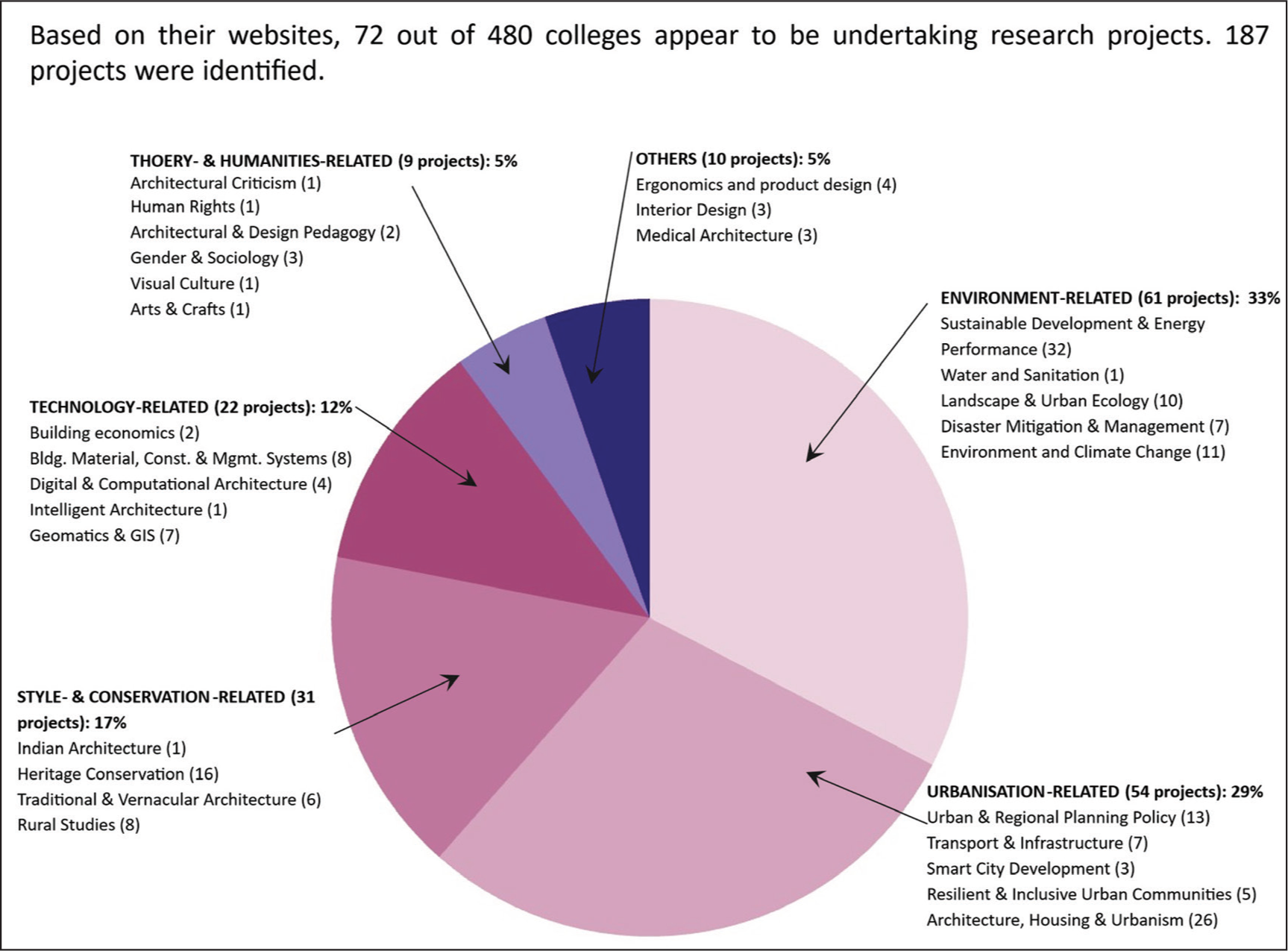
Opportunities for faculty in architecture schools to engage in meaningful research remain scarce. An examination of institutional websites suggests that, of approximately 480 schools, only 72 appear to be actively pursuing research, and just 27 have design or consultancy cells undertaking research or community projects (Figure 7). Such initiatives are largely concentrated within government institutions or departments of private universities. Faculty in colleges affiliated with state universities rarely have the means or incentives to conduct research. In government schools, research typically emerges through university-led initiatives or commissions from government departments. Some private universities have begun providing limited resources to support faculty research. By contrast, faculty in state-university-affiliated private colleges often supplement their income through private practice or employment with architectural firms—an option usually prohibited in government or private universities. Moreover, students are seldom trained in systematic research methods, and faculty rarely publish in reputable academic journals. When research does occur, it often borrows paradigms from technology or the social sciences rather than developing frameworks rooted in architectural practice. This context has produced three significant limitations: a lack of indigenous knowledge production, a narrowing of the academic role to teaching alone and an absence of a culture of experimentation and critical inquiry, resulting in largely reproductive practices.
The precarity of overworked teachers and the few opportunities for research and self-development relegates them to being dormant employees implementing the syllabus defined by the universities. And since these syllabi do not contain aspects of spatial justice, there is no pedagogy developed for it.
Architectural education faces significant challenges. Admissions are declining, fees are insufficient and architecture programmes struggle to compete with skill-based courses tailored for immediate employment. Core faculty members are often relegated to dealing with administrative tasks like attendance, with expertise sourced from visiting faculty instead. Full-time teachers are rarely supported in developing their practice or research, leaving them overburdened and underpaid. Regulatory bodies further complicate the situation with frequent inspections and bureaucratic demands consuming faculty time. The profession itself faces an identity crisis, with roles often encroached upon by engineers and interior designers holding short-term certifications.
The current ecosystem is institutionally structured to limit academia to functioning as training grounds that supply skilled workers for the building industry. 15 Academia’s broader role—to question society, generate new knowledge, expand possibilities for living and actively shape social realities—appears to have weakened. Meaningful academic research in architecture, especially research independent of market demands, is largely absent, and supportive research environments are lacking. There is also little rigorous evaluation of pedagogy; courses are rarely updated systematically and, when they are, changes tend to be ad hoc. Despite shouldering the bulk of architectural education, private colleges affiliated with state universities receive little support from state agencies, while their faculty members endure exploitation, low pay and job insecurity. 16 Moreover, the institutionalisation of architectural education excludes artisans, small contractors and alternative practitioners, even though they construct 90 per cent of the country’s habitats. This disconnect diminishes the relevance of architectural academia, turning it into a preparatory space for market-driven roles rather than a transformative societal force to bring about spatial justice.
Pedagogic Problems
The Technological Bias and the Absence of Humanities
Students aspiring to study architecture must pass an entrance examination in addition to their Class 12 examinations, with physics, chemistry and mathematics as mandatory subjects. This places architecture firmly within the realm of science and technology, distancing it from the humanities. Consequently, students with backgrounds in disciplines like history, biology and economics are excluded.
Universities across India develop their curricula in line with the Minimum Standards for Architectural Education, 2020. Broadly, the courses are organised into four categories: design, technology, humanities and professional logistics. Design courses cover areas such as architectural design, basic design, ergonomics, architectural drawing, design thesis, housing design, urban design, landscape design, interior design and related subjects. Technology courses include structural mechanics, building construction and materials, building services, construction drawings, specifications, quantification, estimation, climatology and similar topics. Humanities courses explore the history of architecture, design theory, sociology, economics and allied disciplines. Professional logistics courses address building by-laws, internships or practical training, professional practice and administrative aspects of the field. On average, most universities allocate around 37 per cent of coursework to design and professional logistics, about 46 per cent to technology and roughly 17 per cent to humanities (Shetty et al., 2023).
In state universities with numerous self-financed, affiliated institutions, the curriculum is broadly consistent, with minor variations. Design courses often emphasise programme development, functional planning, anthropometrics and climatic responses. As students advance, they tackle larger-scale projects, focusing on building codes, technological management and large-scale logistics. Many schools incorporate rural, urban and mass housing projects into their design studios. First-year students typically study ‘basic design’, while subsequent years cover interior design, landscape design and urban design or town planning. However, the teaching of design courses is generally unstructured, relying heavily on the discretion and interests of individual faculty members, many of whom are visiting faculty.
Technology courses largely focus on steel and concrete construction, while indigenous building techniques are either overlooked or treated as marginal topics. The skills taught typically include drafting, basic construction methods, building systems, cost estimation, quantity surveying and preparation of working drawings. Although structural mechanics are taught across institutions, they are often approached mainly as examination requirements rather than as subjects of deeper inquiry. Courses related to the environment tend to have a technological emphasis as well, centring either on local or indigenous methods or on industry-led green technologies. There is growing interest in climate change, global warming and the use of sustainable materials. However, deeper issues—such as the cultural dimensions of the environment, cultural sustainability, environmental politics, ecological perspectives and experiential aspects of the environment—are generally not addressed.
Humanities courses are often limited to stylistic histories of architecture, rarely addressing critical issues such as caste, class, gender discrimination or spatial segregation. Efforts to incorporate social issues into design studios or field studies are sporadic and lack systemic organisation. Subjects like sociology and economics are included in some curricula but are not taught comprehensively. Theory of design/architecture courses are among the most disorganised and are largely left to the teachers teaching them. Professional practice courses primarily cover office logistics, legalities, office management, taxation, billing and fees, with ethics largely excluded. Training programmes, conducted in the later semesters, are informally structured. Most institutions include a thesis or dissertation in the final year. Design-based theses require students to choose a site, define a project, develop a programme and design a building. Research-based theses, though rare, involve methodologies akin to those in the social sciences, including fieldwork, archival research and analysis. However, architectural theses often lack clear processes and structured guidance.
The absence or marginal inclusion of humanities courses, the fragmented approach to spatial theory and an excessive emphasis on technology together limit architecture students’ capacity to critically engage with sociological issues. As a result, students are often conditioned to view building production as the primary, if not the sole, means of addressing complex problems. Consequently, questions of spatial justice remain largely peripheral—if not entirely absent—from their intellectual and professional horizons.
The Disjunct Between What Is Taught and How Things Happen
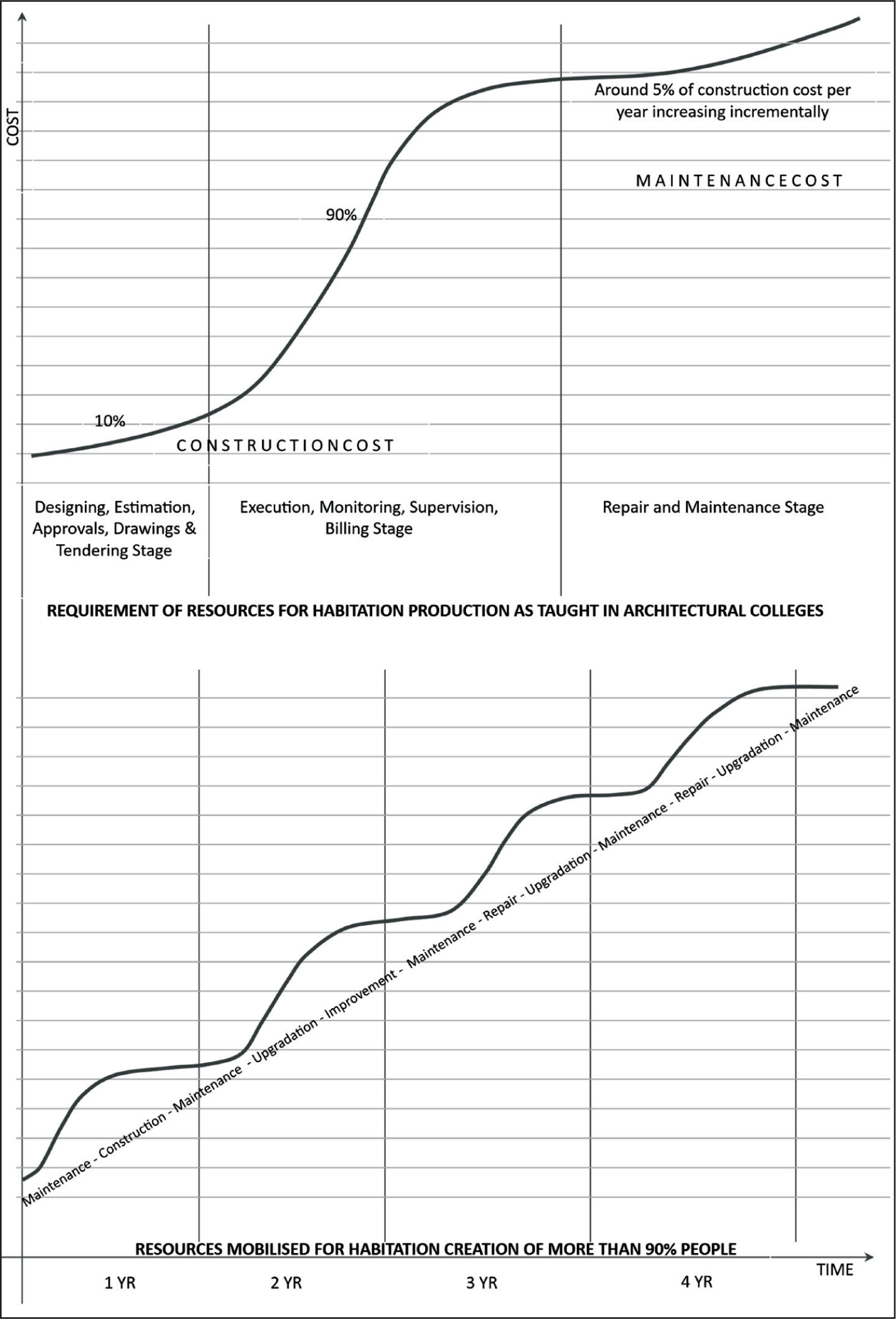
Architectural education teaches a linear, project-based approach for architectural production: the client approaches the architect, provides land documents and a programme; and the architect creates a conceptual design and estimate, refines it based on client feedback and prepares detailed designs. Consultants are involved for structure and services, followed by specifications, quantification, estimates, statutory approvals, tendering, contractor appointment, supervision, payment approvals and, finally, project completion and handover. However, this process applies to only 5–10 per cent of the population served by professional architects. For the majority living in slums, villages, urban peripheries and inner-city areas, habitation evolves incrementally through expansions, repairs and retrofitting, driven by necessity and resource availability. These informal and collaborative practices often involve small contractors, artisans and community members, with women frequently playing significant roles. The process of house-making is rarely straightforward. It involves negotiations, bribes and covert practices (e.g., weekend construction to evade municipal authorities). Demand often arises from circumstances like house demolition, government schemes, family changes, furniture access or material deterioration (Figure 8). These needs are time-sensitive and lack one-time solutions. Such practices rely on networks of material banks and entrepreneurial efforts to recycle materials, source affordable components or prefabricate cost-effective building elements. These systems have significant potential for economic growth and employment through the informal economy and innovative, resource-conscious design. Standards are often disregarded to optimise available space. Private and public spaces often blend, creating extensions where a neighbour’s house, the neighbourhood or even the street becomes part of one’s home. These configurations foster intimate, communal spaces that are lost in slum rehabilitation projects, where regimented corridors limit opportunities for shared use.
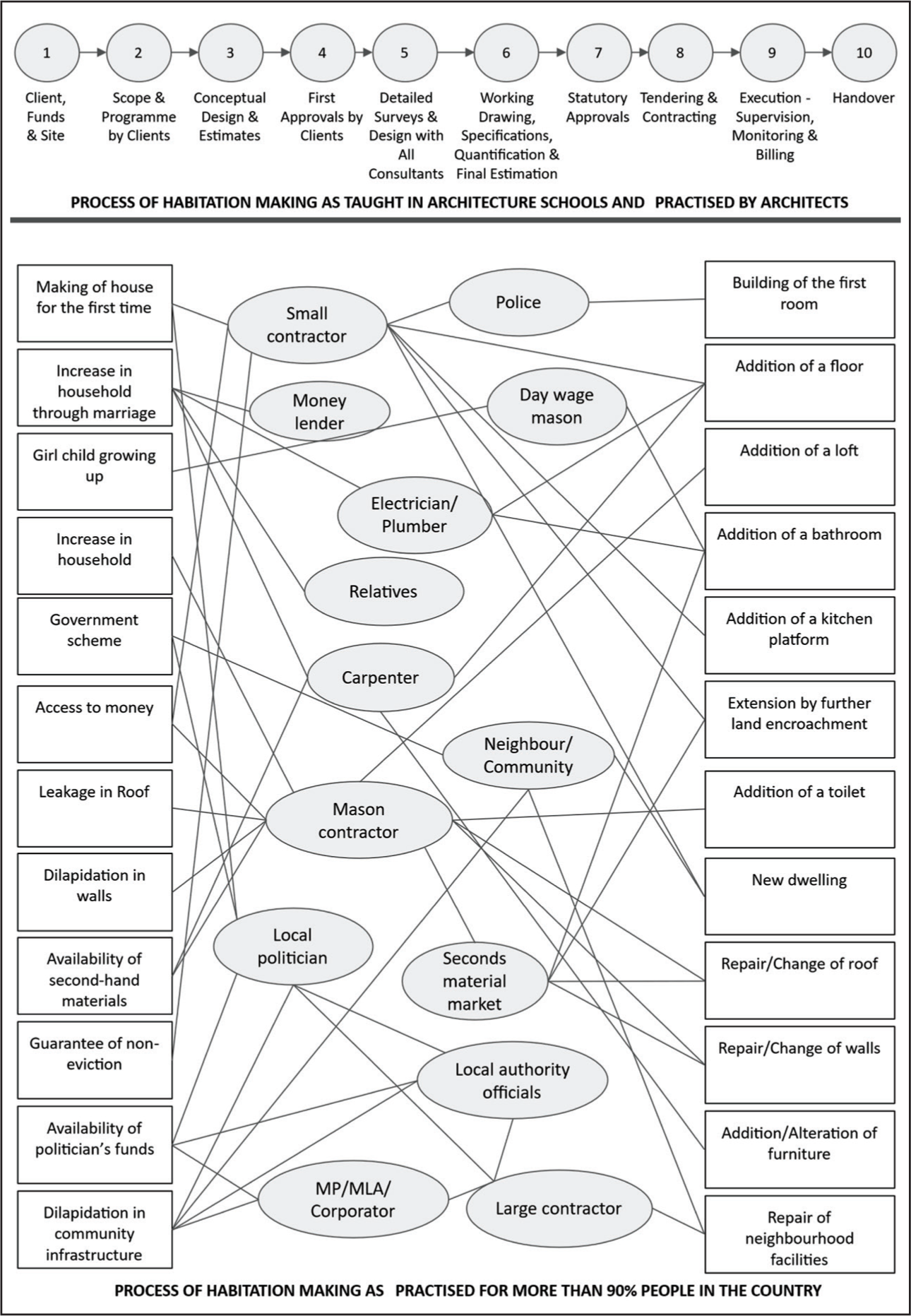
This disjunct between how building-making is taught and how it happens in most of the country is critical, as architects are not equipped to design for the majority population. The pedagogy of architecture lacks orientation, strategy or focus on addressing this issue. While mass or low-cost housing may feature briefly in one or two semesters, they are treated like any other building project, with no recognition of how habitation actually unfolds in diverse contexts. Architectural education focuses on orthographic projections, basic construction, functional space planning, stylistic history, fragmented insights into contemporary society and technology-driven environmental understanding. Most syllabi ignore emerging cultural, economic, environmental and technological dimensions. The objectives and competencies to be taught are often undefined, leaving teaching methods unstructured. Information is usually delivered as subject content, with unclear design processes shaped by individual instructors. Evaluation typically focuses on student work rather than methods, often lacking objectivity and proper literature references. Architectural training promotes a linear approach to building, which diverges from the complex, non-linear processes followed by 90 per cent of the population (Figure 9). Consequently, architects remain disconnected from these realities.
Expectations of an Architectural Graduate: ‘Office-ready Versus Sensitive’
The ex-president of the COA emphasised producing ‘office- and practice-ready’ graduates, advocating for pedagogy aligned with market demands. 17 Conversely, pedagogues interviewed argued that education should transcend technical training to nurture human growth and societal understanding. They emphasised that schools should not be mere preparatory grounds for offices but spaces where students grow holistically, learning about the world. They also stressed that architectural offices should share responsibility for training students in the trade and in serving society. They also pointed out that if 90 per cent of the population does not avail the services of architects, then the problem lies beyond education, with the way offices are structured.
Pedagogues highlighted the broader roles of architectural education: fostering personal growth, enabling livelihoods and improving society. They called for pedagogy to instill sensitivity, fairness, integrity, empathy and social responsibility, while broadening architectural practice to include research, exploratory work and community engagement. Suggestions included an outcome-based pedagogy prioritising affordability in habitation and expanding architects’ societal roles. They proposed reformulating curricula to create markets serving an extended society and redefining architectural education to address these challenges effectively.
In the absence of strong humanities courses that engage with social and spatial questions—such as ethics, caste, class, gender, justice and political economy—professional ethics in architectural education is often reduced to mere logistical or managerial concerns. This has given the course a corporate, managerial orientation rather than a socially engaged one. The neglect of humanities has bred indifference among architects towards pressing social issues. Furthermore, institutions rarely provide robust spatial specialisations, and the lack of an environment supporting and enabling research has left a significant theoretical gap in architectural education. As a result, architects are mostly viewed as creators of efficient, visually appealing buildings, while environmental, artistic and cultural aspects of their vocation are treated as afterthoughts. Often, the architect’s role remains ill-defined. Many architects end up presenting themselves as rough engineers, amateur environmentalists, untrained social theorists or self-styled aesthetes, working with vague, untested intuitions rather than grounded frameworks. There is little rigorous theoretical exploration of space and its human consequences. Concerns like affordability and sustainability are typically addressed through corporatised or tokenistic ‘indigenous’ narratives, with solutions rooted in technology instead of deeper cultural and social contexts.
Conclusions
The current architecture education system is defined by tightly regulated, under-resourced institutions with limited capacity to question established norms or generate original knowledge. Critical humanities and locally relevant theory are largely absent, while excessive focus on technological efficiency often sidelines concerns of equity. Environmental discourse, too, is frequently appropriated by dominant interests, limiting genuine ecological engagement. This ecosystem has thus evolved to reinforce an institutional structure that primarily serves the formal building industry, which remains heavily controlled by elite actors and real-estate developers, rather than fostering critical and inclusive architectural practice.
On the other hand, students are not trained to engage with mainstream habitation processes that shape the majority of built environments across the country. Regulatory bodies tightly control syllabi, fees, approvals and institutional resources. Their rigid standards for human resources exclude artisans and craftspersons from participating in teaching, further narrowing the scope of architectural education. Repeated regulatory inspections divert institutional focus toward meeting minimum compliance requirements, leaving little room for innovation. The validating bodies propagate an image of the architect as a competitive corporate worker, while professional offices primarily demand basic skills in drawing and construction.
Within this ecosystem, mass habitation challenges are reduced to technological solutions for affordability, environmental issues are addressed through local or eco-friendly technologies, and questions of caste, class and gender inequity are largely ignored. As a result, the system fosters a spatial culture centred on privatised utopias for a privileged few. It is ill-equipped to achieve spatial justice or cultural sustainability and remains misaligned with the broader practices of habitation-making prevalent in the country. This structural, institutional and pedagogical inadequacy makes the current ecosystem incapable of fostering a relevant spatial culture, achieving spatial justice and promoting cultural sustainability.
Despite these challenges, several opportunities exist to reform and reorient the ecosystem. First, while the past decade has seen a five-fold increase in architecture graduates, leading to job market saturation and declining salaries, an untapped opportunity lies in serving the 90 per cent population that currently lacks access to architectural services. This presents a significant avenue for architects if appropriate pedagogy is designed and implemented to address this need. Second, institutions, like the COA, and state universities and directorates of technical education, because of their centralised structures, have the potential to drive large-scale policy changes. These agencies possess both the resources and the intent to improve pedagogy through teacher training, curriculum development and the validation of innovative practices. And third, the architecture community is a committed and concerned fraternity. Practising architects frequently run architecture colleges and are invested in enhancing institutional performance. Faculty across institutions have already initiated innovative efforts to make architectural education more relevant and responsive, despite systemic constraints.
From the foregoing discussion, several specific directions may be considered. At the structural level, it would be valuable to revisit the role of the architect, viewing them as professionals engaged in imagining new and contextually appropriate forms of space for varied ways of life, rather than focusing solely on building production. Such a shift would call for thoughtful curricular changes by the COA and universities. Alongside this, greater state support could help make architectural education more affordable and accessible. There is also a need to simplify and decentralise approval processes so that they do not become unnecessarily burdensome. Furthermore, the COA and the Indian Institute of Architects might explore ways to support rigorous, high-quality journals and credible award systems, while critically examining and moving away from current superfluous practices of reportage and recognition.
At the institutional level, revising COA recruitment norms could make it possible to bring together more diverse, multidisciplinary teaching teams, including artisans whose knowledge is often underrepresented. Efforts to widen caste, class and religious diversity among students could benefit from adjustments to entrance criteria, closer oversight of private admissions and targeted support for students in need, guided by careful data analysis. It may also be worth considering measures to protect faculty, such as appropriate insurance schemes and safeguards against arbitrary dismissals. Equally important is the encouragement of a stronger research culture within colleges, supported by adequate allocation of time and resources for teachers. The education culture in institutions could be reframed from being teaching–learning of knowledge to co-production of knowledge because new knowledge creation in architecture has been largely limited to stylistics and technological enquiries. This would mean a non-hierarchical environment where institutions are a gathering of teacher-practitioners and students pass through these practices as collaborators.
Pedagogical approaches, too, could be reconsidered. Incorporating more courses in the humanities, theory and ethics may help students develop greater sensitivity and critical engagement with questions of human life and its spatial dimensions. Introducing courses on repair and retrofitting could open ways for students to address the needs of communities that often remain outside the purview of mainstream architectural practice. Finally, it may be helpful to design teaching materials and methods that nurture a deeper commitment to equity, freedom and justice, better preparing future architects to respond thoughtfully to the diverse and changing needs of society.
It is evident that this educational ecosystem, like any complex system, demands a multifaceted strategy for meaningful reform. Despite structural constraints, architectural institutions—central nodes within this system—have consistently demonstrated resilience and innovation in their efforts to remain relevant. Their continued initiatives will be pivotal in driving systemic transformation; for, ultimately, no policy framework or external support can substitute the agency of institutions themselves in steering change. Reorienting this culture will not be straightforward. It calls for a fundamental conceptual shift: institutions must evolve into vibrant academic spaces where research and experimentation are prioritised, and where students not only acquire technical skills but also develop critical inquiry and reflective engagement skills. Regulatory bodies must become enablers, providing robust support rather than mere oversight. Validating agencies should function as ethical custodians and watchdogs. Finally, professional offices should partner meaningfully with institutions, contributing to the development of skills essential for contemporary practice.
Footnotes
Acknowledgements
The article is based on a study conducted between February 2022 and October 2023. The two authors were the PI and the co-PI for the study. The other researchers involved in the study were Dipti Bhaindarkar and Vastavikta Bhagat. The study was titled ‘Educational Ecosystem of Architecture in India: A Review’ and was a part of the Transforming Education for Sustainable Futures (TESF) research network under the UK Global Challenges Research Fund through the Economic and Social Research Council Network Plus scheme anchored by the University of Bristol. The Indian part of the study was anchored and supported by the Indian Institute for Human Settlements.
Declaration of Conflicting Interests
The authors declared no potential conflicts of interest with respect to the research, authorship and/or publication of this article.
Funding
The authors disclosed receipt of the following financial support for the research, authorship, and/or publication of this article: UKRI GCRF Transforming Education Systems for Sustainable Development [TES4SD] Network Plus.