




Abstract
While the governance of global migration is a growing conversation in policy and academia, internal migration has remained under-researched and under-represented as an area of focus. The increased policy attention on internal migrants during the COVID-19 pandemic provides an opportunity for examining the governance of internal migration. Drawing on a review of literature and two consequent rounds of an ex ante policy indexing tool—the Interstate Migrant Policy Index (IMPEX) 2019 and IMPEX 2021—this article focuses on policies formulated by Indian state governments that are prominent recipients of internal migrants in the pre- and post-pandemic period. We find that while the COVID-19 pandemic revealed the vulnerability of low-income internal migrants in India, it only partially translated into long-term policy measures. This article demonstrates that the complexity of migration policymaking governance in federal democracies like India is an important aspect of global migration governance. It argues that such a focus will enable a number of developing economies to refine labour and social protection policies toward sustainable economics and human development. The article motivates a research and policy agenda that can especially help developing countries improve labour mobility patterns for economic development as well as ensure fuller coverage of social welfare measures in response to climate migration.
Introduction
Migration governance has become an increasingly important aspect of policymaking since the early 2000s. Integration policies have received particular attention since the onset of the refugee crisis in the European Union (EU) (Betts, 2011; Hampshire, 2016), with integration being viewed as a multidimensional process of creating tangible conditions that would enable migrants to access the welfare system and meet their livelihood needs (Aggarwal et al., 2020). Globally, the conceptualisation and study of migration governance have overwhelmingly been seen through a Eurocentric gaze with a predisposition towards international migrants. However, the flows of internal migration (i.e., within a country) account for three times the flow of international migration (UNESCO, 2013). Yet, internal migration has been given scant attention in policy and governance frameworks.
This article explores the dynamics of integration in the context of interstate internal migration from low-income households in India. These households face multidimensional deprivations but are often eclipsed in existing poverty indices and the Sustainable Development Goals (Adepoju, 2020; Gallardo, 2020; Liu et al., 2021; Novignon et al., 2012; Wagle & Devkota, 2018). While internal migration has been a prominent feature of India’s structural transformation (Deshingkar & Akter, 2009; Deshingkar & Farrington, 2009), it has gained considerable attention as a subject of policymaking since the COVID-19 pandemic–induced lockdowns in 2020 and 2021 (Agarwal, 2022; Khan & Arokkiaraj, 2021; Rajan & Bhagat, 2021; Rajan et al., 2020). The unprecedented nationwide lockdown of urban economies triggered a migration crisis due to the mass return of the low-income urban workforce to their villages.
Internal migrants in India are protected by the principles of free movement under clauses (d) and (e) of Article 19(1) of the Indian Constitution, which guarantees to all citizens the fundamental right to move, reside, work and settle in any part of the country without restrictions. Among the 400 million plus migrants in India, low-income interstate migrants account for 41 million and they power crucial sectors of the Indian economy. However, the recognition of their vulnerability remains patchy and fragmented across the different states and levels of government (Aggarwal et al., 2020). At the central level, policies such as the Inter-state Migrant Workmen Act (ISMWA), 1979, and a few rights-based schemes such as the right to education and healthcare have tried to address the vulnerability of interstate migrants (Government of India [GoI], 2017). However, the functionality of these schemes and the portability of these rights remain contested (Srivastava, 2020). At the state level, access to schemes is restricted as most of them require recipients to establish domicile (Srivastava, 2011). 1 Over the years, different states in India have taken initiatives to expand the scope of welfare. However, these remain fragmented and varied owing to differential fiscal capacities, economic imperatives and political attitudes towards internal migrants (Mittal & Naqvi, 2018; Tillin et al., 2015). Despite internal migration being an omnipresent reality, its governance remains a nascent area of policy deliberation in India, leaving migrants who move across state borders vulnerable to employment and livelihood insecurity (Kone et al., 2018).
In 2020, the onset of the COVID-19 pandemic and the resulting migrant exodus were marked by widespread livelihood loss, with many forced to walk hundreds of kilometres and others stranded in hostile locations, plagued by hunger, housing evictions and indebtedness (Suresh et al., 2020). The crisis was exacerbated by the inadequate incorporation of migrants into social protection mechanisms, which failed to recognise circular and seasonal mobility patterns even as they aimed to reduce the vulnerability of the poor. Specifically, the lack of adequate portability measures and provincial residency barriers meant that migrants could not access social protection and welfare-oriented public services at destination locations (Deshingkar et al., 2022). The COVID-19 pandemic revealed systemic lapses in the Indian social protection and welfare ecosystem with respect to low-income internal migrants and households. It reiterated the inadequacy of current data sets on migration, which has been adequately highlighted in migration scholarship (Chandrasekhar et al., 2017; GoI, 2017). Further, the pandemic exposed widespread oversight in the policy ecosystem about the reality of migrants, emphasising the need to examine the governance of internal migration in India.
The initial government response to COVID-19 was in the form of a nationally mandated lockdown that started on 25 March 2020. However, the implementation of this lockdown and the associated health measures and mobility restrictions became the prerogative of the state governments. Many migrant-focused initiatives were adopted by the states in collaboration with civil society organisations. However, the extent of their subsequent institutionalisation remains to be seen. In the aftermath of the pandemic, as states design their recovery policies, there is a need to systematically assess the nature of migrant inclusion in policy imagination.
This article seeks to initiate an empirically grounded discussion on the governance of internal migration, a significant gap in policy studies. The article makes use of the Interstate Migrant Policy Index (IMPEX), an ex ante index of state-level migration policies. It draws upon the two iterations of IMPEX conducted in 2019 and 2021 in particular to understand the pre- and post-COVID-19 differences in destination states’ policies of internal migration governance, what sectors they prioritise in policy responses and how these responses have evolved. Based on this, the article explores how COVID-19 shifted the needle on internal migration governance and what were the key takeaways that can inform future policy directions, specifically for integration. Finally, the article nudges towards the scope for future research on how India’s experience may be helpful to other countries facing high levels of internal migration.
Review of the Policy Landscape of Internal Migration
As mentioned earlier, the Indian Constitution grants citizens the right to reside and work in anywhere in the country. Along with this, the Constitution uses rights-based language for certain domains, such as education and food, to encourage inclusive legislative frameworks. Specific legislation such as the ISMWA has been passed at the central level to recognise the vulnerability of migrant workers and protect them from exploitation across state borders.
India has a three-tiered federalist structure of government: central, state and local (urban and rural). Policy areas are constitutionally divided between the first two tiers into the union, state and concurrent lists. Subjects such as railways, highways and communications fall under the central list, giving the union government exclusive rights to policy legislation in these areas while maintaining a degree of uniformity across states. Subjects in the state list, such as healthcare, are decided upon by the state governments. The concurrent list, which includes subjects such as labour and education, allows both the union and the state governments to pass policy legislation. The third tier of government was empowered through the 73rd and 74th Amendments in 1992, which devolved power to gram panchayats (village councils) in rural areas and municipal governments in urban areas. However, local governments in India are largely under-resourced and dependent on grants from the state government (Singh, 2013). Hence, state governments are crucial locations for policy formulation in the Indian context.
Policies for Migrants as Workers: An Unclear Picture
Low-income interstate migrants are largely concentrated in the unorganised sector, which comprises the overwhelming majority of India’s workforce. Their key vulnerability emerges from lack of employment and social security. Even though several laws exist to protect unorganised workers—such as the Minimum Wages Act, 1948; Contract Labour (Regulation and Abolition) Act, 1970; Equal Remuneration Act, 1976; Building and Other Construction Workers (Regulation of Employment and Conditions of Service) Act, 1996; and Unorganised Workers’ Social Security Act, 2008—interstate migrants are often unaware of or unable to claim protections under these laws due to weak social networks. These workers are also protected by the ISMWA, which prescribes that employers and contractors must comply with labour laws and support migrant workers. The act has a provision for the registration of interstate migrants, which, had it been diligently implemented, would have been an effective way to distribute benefits during the pandemic-triggered migrant crisis (Deshingkar et. al., 2022).
Historically, labour legislation in India has responded to the demands of worker unions, but the fragmented landscape of laws has recently been amalgamated into four labour codes: the Code on Wages, 2019; Industrial Relations Code, 2020; Occupational Safety, Health and Working Conditions Code, 2020; and Code on Social Security, 2020. These codes subsume a number of the aforementioned pre-existing laws. At present, the states are in varying stages of adopting these codes and notifying rules for their implementation. Labour legislation in India is undergoing a transformation, raising questions about how the concerns of interstate migrant workers will be addressed by states.
Migrants’ Access to Social Welfare: Universal Principles, Conditional Implementation
Beyond the labour codes, there is a gamut of legislations, welfare policies and schemes for food, education and healthcare that cover all Indians, whether they live in their place of origin or elsewhere. For example, the Right to Education Act, 2009, and its corresponding scheme, Samagra Shiksha Abhiyan, enshrine free and compulsory education as a right for children up to 14 years of age and ensure a budgetary allocation and institutional structure for their implementation. Other universal policies for child welfare that include migrants are the Integrated Child Development Services, National Policy for Children and Integrated Child Protection Services. Similarly, the National Food Security Act, 2013, and a bevy of centrally funded health schemes are, in principle, accessible to migrants wherever they might be. These central government policies provide a broad framework for state-level policies. Thus, welfare is operationalised through a myriad of schemes, missions and programmes at the union and state levels with their own eligibility criteria. These are implemented by state governments and tend to exclude migrants deliberately or inadvertently by placing conditions related to domicile and language, among others.
This complex and overlapping landscape in turn defines the contours of migrant incorporation in policy imagination and governance. Prior to the pandemic, internal migrants in India fell far behind in being provided adequate coverage and access to welfare schemes. The socio-economic positionality of internal migrants in the lower spectrum of the labour market (Srivastava, 2012; UNESCO, 2013), along with their marginalised history in collectivisation and bargaining, negated their presence in policy imagination. Further, a sedentary bias in policy planning coupled with non-portability of schemes prohibited their ability to access welfare schemes across state borders (Kone et al., 2018; Kundu, 2007). Access to services and rights is frequently linked to residence in one state and it cannot be easily or automatically transferred when one moves to another state. Migrants often lack proper personal identification proof at destination locations; this includes Aadhaar, the national identification system, and domicile, the state identification system. In order to avail benefits, migrants are expected to get their name removed from the source state’s list (Kone et al., 2018) and submit proof of residence in the destination state, instituting a barrier. For instance, prior to the pandemic, migrants were unable to access rations under the public distribution system (PDS) in destination states. PDS is a key scheme that ensures the food security of poor households. Due to the lack of portability within the scheme, migrants, who are often from households split between multiple locations, were forced to choose between foregoing rations in the source state or not availing them in the destination state (Dreze & Khera, 2013).
Even where scheme design for universal forms of welfare is inclusive of interstate migrants, exclusionary practices persist: the absence of integration mechanisms leads to many migrant children dropping out of school despite the universal coverage of Samagra Shiksha Abhiyan. Reasons for this include lack of educational facilities in the mother tongue in destination states, limitations in enrolling children of circular migrants in the middle of the academic year, and the administrative burden of availing transfer certificates when changing schools (Centre for Policy Research [CPR] & UNICEF, 2021).
Similarly, in the health domain, policies and schemes such as the National Health Policy 2017 and the Ayushman Bharat promote equitable access to public health services across the country. Beneficiaries of health schemes implemented by the states (e.g., Mahatma Jyotirao Phule Jan Arogya Yojana in Maharashtra) and state life insurance schemes (e.g., Atal Pension Yojana in Punjab) are typically determined by domicile criteria (CPR & UNICEF, 2021). Studies on migrants’ access to healthcare highlight that the amplified vulnerabilities in availing healthcare in destination locations (Faetanini & Tankha, 2013) are largely due to access barriers, information asymmetry and limited public healthcare infrastructure in urban areas (Borhade, 2012).
In this context, socio-economic vulnerabilities and institutional failures make accessing welfare difficult for migrants in destination locations. The migrant crisis highlighted these issues in the political discourse and renewed interest in the portability of schemes. Prior to the pandemic, migrants’ access to welfare benefits under schemes such as the PDS was abysmally low (UNESCO, 2013). The migrant crisis led to judicial intervention, expediting the Indian government’s adoption of the One Nation One Ration Card (ONORC) scheme (Economic Times, 2021). This scheme enables PDS portability through an information technology (IT)-driven system that includes the installation of electronic point-of-sale devices at fair price shops, seeding ration cards with Aadhaar numbers and operationalising biometric transitions.
Review of Government Relief Measures for Migrants During COVID-19
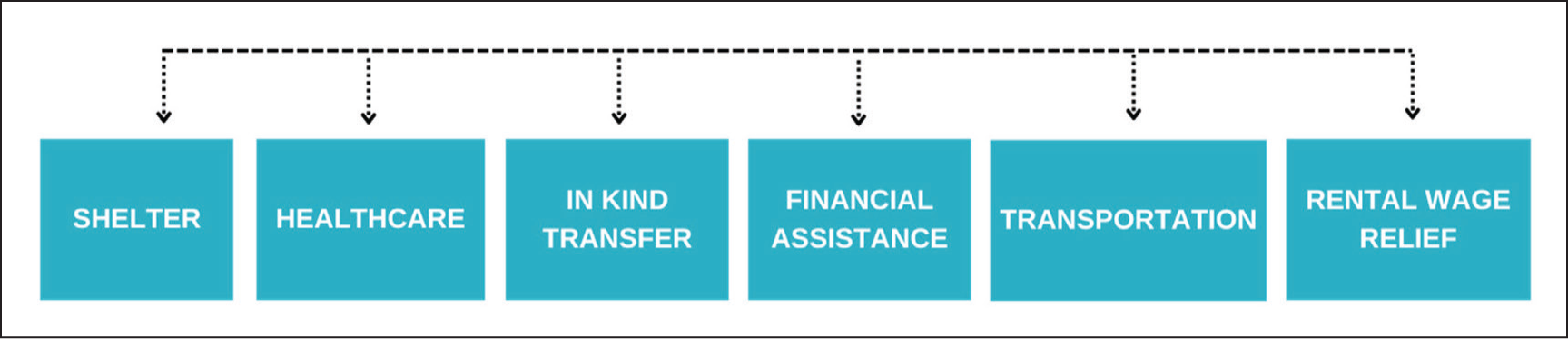
In response to the pandemic and the migrant crisis, numerous central and state schemes and initiatives were introduced for internal migrants, as shown in Figure 1.
Typology of Government Relief Responses during the COVID-19 Pandemic.
Union Government Responses
The union government issued multiple short-term directives to provide relief to migrants stranded in cities and across state borders. In 2020, the centre ordered the states to utilise the State Disaster Risk Management Fund to provide temporary shelter, clothing, food and medical assistance to stranded and homeless workers (Press Information Bureau [PIB], 2020a). In March that year, the Ministry of Home Affairs issued an order for continued wage payments to workers and non-eviction of migrants staying in rental accommodation for one month (GoI, 2020a). The Ministry of Labour and Employment issued a directive encouraging states to set up helpline numbers for distress calls and monitor provisions for the non-termination of ongoing work across states (GoI, 2020b).
As migrants returned to their source states during the lockdown, the central government, in coordination with 11 ministries, introduced the Gareeb Kalyan Rojgar Abhiyaan, a rural employment and public works programme that aimed at producing livelihood opportunities to returning migrants in 116 districts across six states (PIB, 2020c). As the lockdown-induced movement of migrant workers increased, the Ministry of Railways plied Shramik Special trains to aid the transportation of stranded (PIB, 2020b). In the aftermath of a suo motu case filed in the Supreme Court (In re: Problems and miseries of migrant labourers, 2021), the union government issued a directive for states to provide rations (5 kg grain and 1 kg chana) to all needy/stranded migrants, even if unregistered, till the Disaster Management Act was in force (GoI, 2021). Migrants were provided financial assistance of ₹1,000 and ₹5,000 as part of the direct benefit transfers made by the centre though the Pradhan Mantri Garib Kalyan Yojana and the Building and Other Construction Workers Welfare Board (Ministry of Labour and Employment, 2020). However, a review of evidence suggests that in the absence of prior infrastructure and delivery mechanisms for these policies, migrant workers faced multiple barriers in accessing relief during the pandemic (Azim Premji University, 2020; Stranded Workers’ Action Network, 2020a; 2020b; 2021).
Beyond temporary relief measures, two initiatives catering to migrants were institutionalised at the union level. First, in August 2021, as a response to a Supreme Court order (In re: Problems and miseries of migrant labourers, 2021), the Ministry of Labour and Employment introduced the e-Shram portal, which aims to create a national database for unorganised workers, including migrant workers. Second, ONORC scheme was systematically adopted by all states to aid and enable interstate portability of foodgrains for migrants.
State Initiatives
Similar to the centre, many states implemented ad hoc measures to provide relief to migrants who were either not targeted as beneficiaries in schemes or excluded from the mandates of state provisioning. In 2020, in the aftermath of the migrant crisis, two immediate initiatives were taken by major destination state governments. In Delhi, Gujarat, Haryana, Kerala and Maharashtra, relief camps and repurposed areas were designated as shelter homes for stranded migrants (Dvara, 2020; PRS, 2020). Gujarat, through the Anna Brahma Yojana, was among the first to provide in-kind transfer of rations to migrant workers who did not have ration cards (Government of Gujarat, 2021). Similarly, the Delhi government provided free cooked meals and dry ration through an e-coupon-based system for migrants and other non-ration-card holders (Dvara, 2020). In Maharashtra and Haryana, food was distributed to migrants under the Shiv Bhojan Thali scheme and the Free Cooked Meal scheme, respectively (Free Press Journal, 2020; PRS, 2020). Tamil Nadu provided in-kind transfer of ration along with a moratorium on rent payment for two months. In Telangana, migrants who stayed back during the lockdown were given ₹500 cash relief (Government of Telangana, 2020). Additionally, all states set up quarantine, vaccination and healthcare facilities to cater to migrants and other unorganised workers.
In the source states of Bihar, Jharkhand, Odisha and West Bengal, temporary shelters were set up as quarantine centres to facilitate, monitor and aid the assimilation of returning migrants (PRS, n.d.). In particular, the response of Bihar was two-pronged: migrants stranded in other states were provided with reimbursement, allowance and cash transfer of ₹1,000 in coordination with the destination states; and return migrants were provided shelter, basic kits, cash transfer of ₹500 and, in some cases, jobs in public works projects. In Jharkhand, alongside shelter and cooked food provisions, multiple distress helplines were established to assist migrant workers and a direct benefit transfer of ₹1,000 was made via the Chief Minister Special Assistance Scheme Mobile App (PRS, n.d.). The Odisha government constituted special control rooms to coordinate with other states for the safe return of Odisha migrants and their distress resolution (Government of Odisha, 2020).
Thus, various migrant relief responses emerged from the union and state governments as measures towards crisis resolution. In states with funds allocated under the Disaster Management Act, the responses carried a crisis framing in them, thereby only initiating a short-duration aid system. As the pandemic prolonged, many of these initiatives were rolled back with little to no structured policy changes. An exception was the ONORC scheme, which, following the Supreme Court’s intervention during the first wave of COVID-19, saw increased adoption nationwide, improving ration portability for migrants. However, even after four years, as the crisis subsides, the structural inclusion of migrants in state- and union-level policy is still pending.
Theoretical Approaches
We mobilise three theoretical concepts from global literature on migration governance in this article. The first is that of migrant integration, which refers to the process of (permanent and non-permanent) settlement, interaction with the host society and social changes due to (international or internal) migration. Integration refers to practical and tangible means for migrants to meet their needs of livelihood, including but not restricted to access to employment, health systems and being registered with the municipality. The integration of migrants depends on the destination government’s ability to create conditions that allow migrants to assimilate. In India, in the aftermath of the pandemic, many destination states implemented ad hoc measures to provide relief to migrants who were either not targeted as beneficiaries in schemes or excluded in the mandates of state provisioning.
Second, in focusing on states as a scale of intervention, the article draws on the idea of multilevel governance, which departs from understanding nation-states as the only channel of intervention and emphasises the role of different levels of government in responding to the complexity of migration policy. This analytical framework was used in the aftermath of the 2014 European refugee crisis. Responses at the supranational EU level and the member-state level proved incomplete to understand the nature of policy response within the EU, where provincial and local governments often hold autonomous positions, considering their own fiscal, political and economic conditions (Caponia & Jones-Correa, 2018; Scholten & Penninx, 2016). In India, to improve the integration of interstate migrants, some provisions exist at the union government level. These provisions apply to all Indian nationals, irrespective of whether they live in the state where they were born, thus, following the principle of universality and, in turn, provide broad frameworks for state-level policies. However, similar to the EU, national frameworks are often set aside by states while integrating internal migrants since they have greater political incentives in favouring their own residents and voters.
Third, we mobilise the concept of mainstreaming, which proposes a governance approach to addressing the complexity of migration processes. This approach evolved from the recognition that quick-fix migration control and integration policies have not been successful in addressing the many facets of migration, like dynamic patterns of movement (Engbersen, 2012), cultural tensions between diverse ethnicities (Westin, 2010) and the increased co-dependence of multiple policy areas (Scholten, 2019). Building on complexity governance literature, mainstreaming has two important facets. First, because sectoral solutions and narrow policies do not solve complex problems, mainstreaming is conceptualised as a multi-sectoral, multi-actor and multilevel approach. This cuts across traditional policy sectors and engages networks of policy actors at various levels of government, with a view to addressing diverse populations (Scholten, 2019). Unlike integration, the idea here is not merely to focus on migrant populations as a target group, but to see migrants as part of a diverse society, where policy problems are addressed through holistic, collaborative and networked approaches (Scholten & Penninx, 2016). Such a ‘whole society’ approach neither seeks to assimilate migrants nor does it advocate for multiculturalism; rather it reflects an ‘intercultural’ approach that focuses on equal opportunities, inter-ethnic contact and a shared sense of belonging. Second, mainstreaming eschews a fixed ‘policy model’ and adopts a flexible approach, one that is premised on contingencies and a process of learning from previous experiences and outcomes (Scholten, 2019). Modifying policy responses over time is a key aspect of this approach to governance, signifying the need for governance processes and institutional structures that are able to adapt to changing circumstances. In this article, we build on both aspects of mainstreaming. We first rely on IMPEX’s multi-sectoral approach to examine migration policy. IMPEX expands the notion of integration to see it as a multidimensional process covering eight policy areas (Aggarwal et al., 2020). Then, we examine reflexivity and flexibility in the policymaking process by studying two consecutive iterations of IMPEX.
Methodology
This article draws on two iterations of IMPEX, conducted before and during the COVID-19 pandemic, and an extensive survey of literature and policies. IMPEX is an established ex ante tool to analyse and assess state-level policy response to internal migration). 2 A detailed explanation of IMPEX will be provided later in this article, while a more extensive version can be found in Aggarwal et al. (2020). A comparison of IMPEX scores from 2019 and 2021 reveals how select destination state governments addressed the needs of interstate migrants. The literature review situates the data captured by IMPEX within the broader context of policymaking during a time when states were responding to urgent pandemic-related issues faced by internal migrants.
Why Indexing?
Due to the lack of updated, comparable and standardised data sets on migration in India, we adopted the practice of ex ante migration indexing to measure governance and policy response (Aggarwal et al., 2020). This approach allows us to assess migrant integration within and across borders using established indices utilised by policymakers worldwide. Migration indices such as Determinants of International Migration (DEMIG), 3 Global Migration Barometer, 4 Migrant Integration Policy Index (MIPEX) 5 and Migration Governance Indicators 6 are used as strategic tools to evaluate and generate comparative insights on best practices and measures towards an equitable migration system (Aggarwal et al., 2020).
What Is IMPEX? (And What Is It Not?)
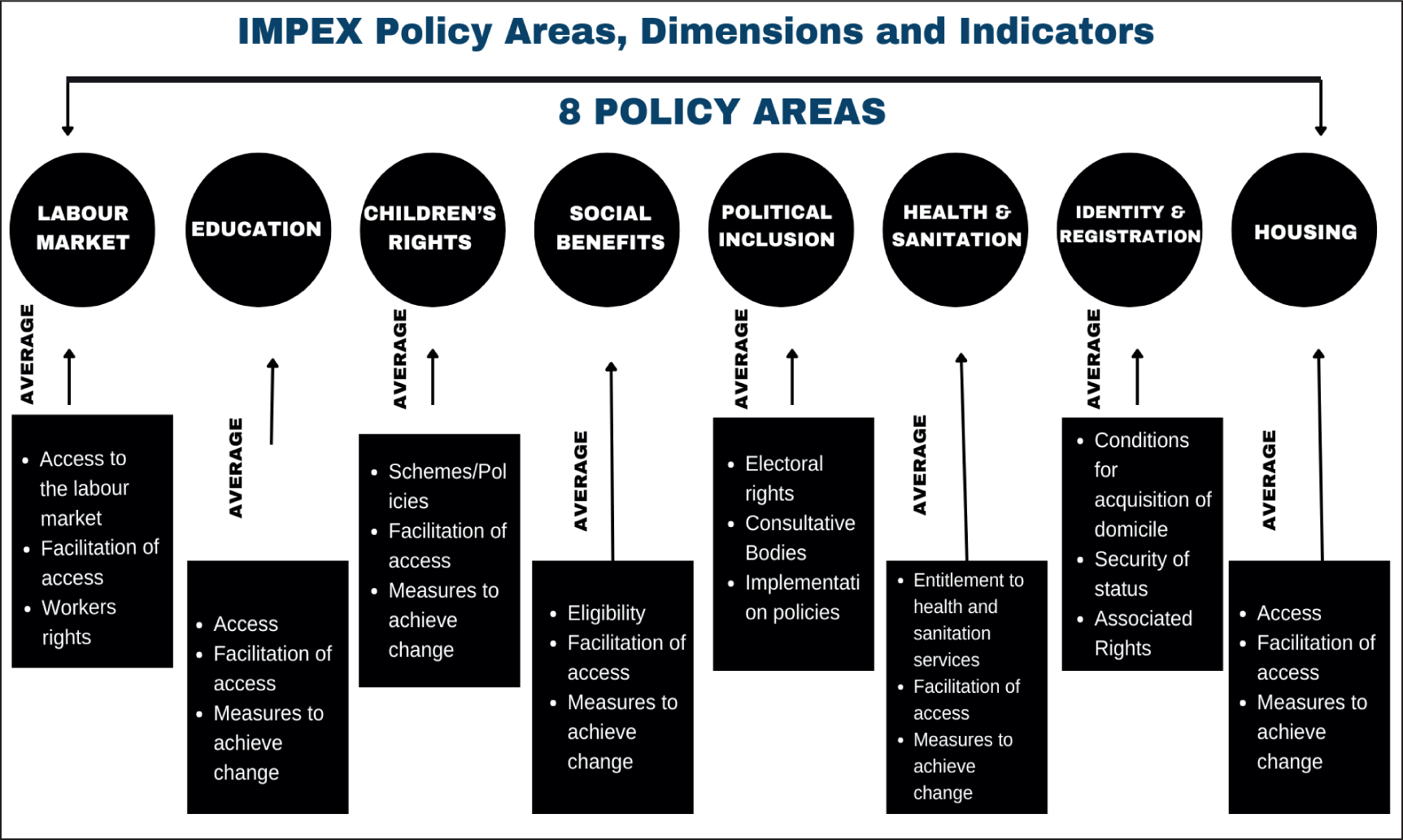
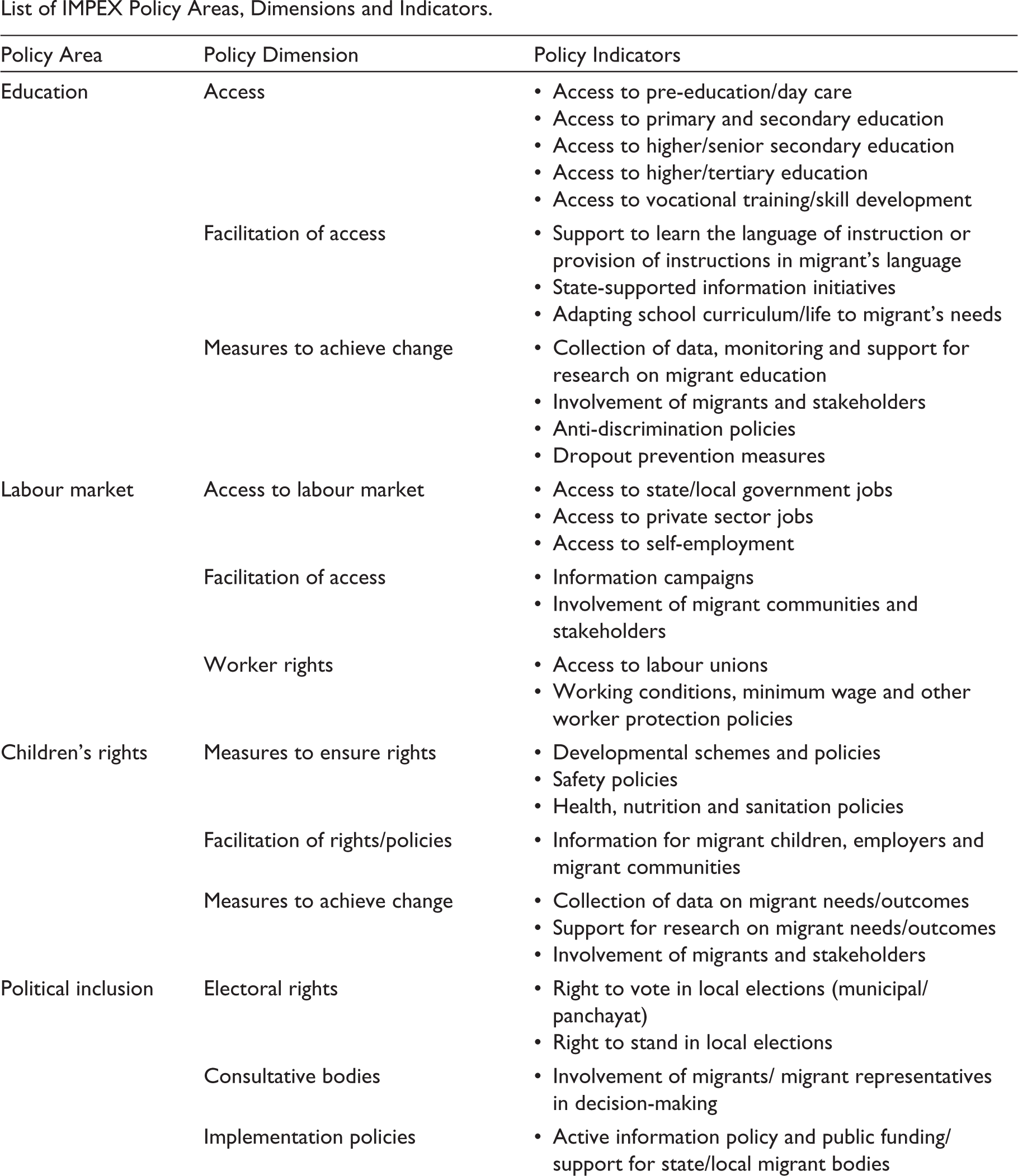
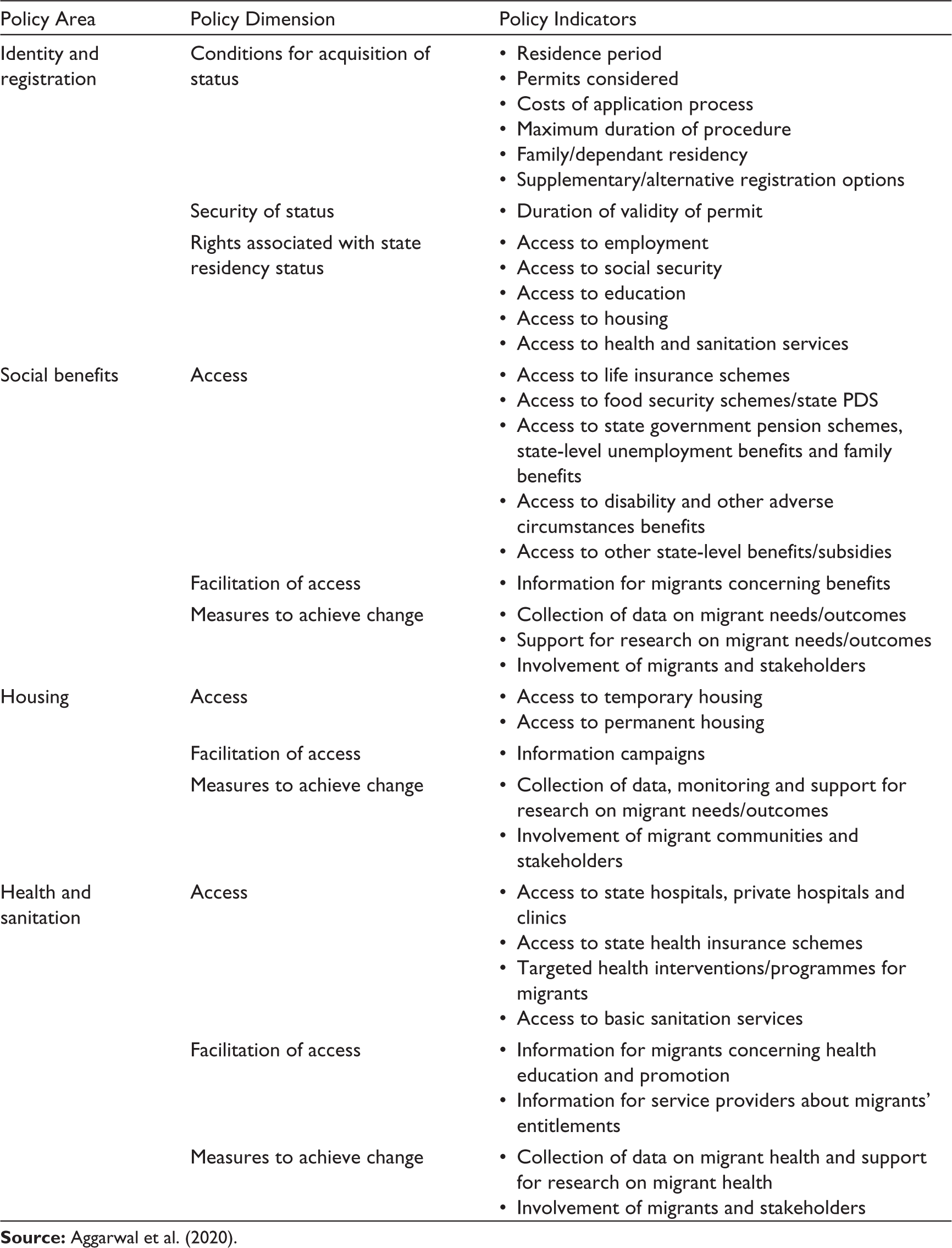
IMPEX is an ex ante evaluation tool that ranks and compares the states of India based on their migrant integration policies from a destination perspective. IMPEX takes inspiration from MIPEX (Huddleston et al., 2015), an index that evaluates and assesses integration policies for migrants (Triollet et al., 2018). It follows the principle of equality of opportunity between state residents and migrants and addresses migrant vulnerability via ad hoc policy initiatives. It looks at eight key welfare policy areas: housing, labour market, education, health and sanitation, children’s rights, political inclusion, social benefits, and identity and registration (Aggarwal et al., 2020). Each of these policy areas is broken down into policy dimensions, that are further broken down to policy indicators (Figure 2). This follows the standard practice for the creation of policy indices (Beine et al., 2016; Bjerre et al., 2015; Triollet et al., 2018). Each indicator is framed as a question, looking at the extent to which a state policy measure addresses the needs of interstate migrants (Aggarwal et al., 2020). A full list of policy areas, dimensions and indicators can be found in the Appendix.
IMPEX focuses solely on interstate migrants and does not include intrastate migrants due to the comparatively lower legal and administrative barriers faced by them (Kone et al., 2018). The index also does not assess policy implementation or practice; it solely evaluates state policies from the perspective of destination states. In the 2019 evaluation, policies active in 2018 were considered, while the 2021 evaluation included active policies as of 2021. Consequently, short-term relief measures implemented by state governments after the 2020 lockdowns are not reflected in the index and are discussed in the literature and policy review section.
IMPEX mainly uses multilateral directives along with expert commission reports, suggestions from experts, best practices and meta-analyses of internal migration policy literature (including scientific publications and reports by non-governmental organisations [NGOs]). IMPEX also relies on the initiatives and programmes of Indian NGOs and migrant welfare organisations (Aggarwal et al., 2020).
From Policies to Scores
Each policy indicator is framed as a question and has three possible answers, generating scores of 0, 50 or 100 according to the MIPEX scoring system (Aggarwal et al., 2020). The average of all the indicators within a policy dimension gives the score of the dimension; the average of all dimensions within a policy area gives the score of the policy area; and the average score of all policy areas gives the final score of the state (Aggarwal et al., 2020). The IMPEX average score of the year is the average of all the states scores. This aggregation procedure aligns with other indices as well (Huddleston et al., 2015). Our exhaustive policy review encompassed various policies, legislations, government orders, schemes, programmes, campaigns and drives. We assigned scores to these policies based on their alignment with the relevant policy indicators. For example, policies supporting migrant needs, such as migrant scholarships in the access to higher/tertiary education policy indicator, received a score of 100, whereas policies benefiting the entire population of the state, including interstate migrants, received a score of 50. Policies that restricted interstate migrant access, such as access to colleges through state domicile quotas, received a score of 0 (Aggarwal et al., 2020).
Rationale for Selecting the Seven States
To provide an overall picture of integration policy in India, we used the IMPEX indicators to assess the policies of seven states: Delhi, Gujarat, Haryana, Kerala, Maharashtra, Punjab and Tamil Nadu (Aggarwal et al., 2020). They collectively account for 51 per cent of India’s total interstate migrants. According to the 2011 Census of India, Maharashtra had 9 million migrants, Delhi had 6.3 million, Gujarat had 3.9 million, Haryana had 3.6 million, Punjab had 2.4 million, Tamil Nadu had 1.6 million and Kerala had 0.6 million (Aggarwal et al., 2020; Government of India, 2011). These seven states were selected based on the number of interstate migrants, migration flows and geographical variation. They are among the major migrant-receiving states in India with significant immigration flows in recent years (Kone et al., 2018; Nayyar & Kim, 2018). Maharashtra, Delhi, Gujarat and Haryana have a long history of receiving migrants and the account for some of the highest numbers of interstate migrants, while Punjab, Kerala and Tamil Nadu have emerged as major destination states more recently, with the latter two experiencing the highest migration net values (GoI, 2017). Additionally, these states were chosen to represent the north, west and south regions of India, where most interstate migrants reside, making them key immigration states in their respective regions.
Process of Evaluation
The policy assessment and scoring process involved legal and migration experts as principal investigators. The evaluation considered various publicly available documents, including government orders, state legislations, rules, schemes, policy papers and documents, reputable secondary sources and direct queries to relevant government departments (Aggarwal et al., 2020). Translators and formal inquiries with lawyers practising in specific states were used to understand documents published in the official language of the state. Additionally, direct contact with state government departments and representatives was made when necessary (Aggarwal et al., 2020).
The results of all the evaluated states were verified and reviewed by the principal investigators. The data of the selected seven states were collected and analysed by the principal investigators and external reviewers for the 2019 iteration (Aggarwal et al., 2020). Additionally, this article presents the preliminary results of IMPEX 2021, as the final results are pending evaluation by external reviewers, which may lead to changes in the scores presented in this analysis.
IMPEX Results: Overall Performance of the Seven States
The IMPEX average score increased from 41 in 2019 to 46 in 2021. The average score of the seven states stayed below 50 in both 2019 and 2021 (Figure 3). All states scored poorly in the policy areas of political inclusion, housing and social benefits, and overall, variations across the states were high.
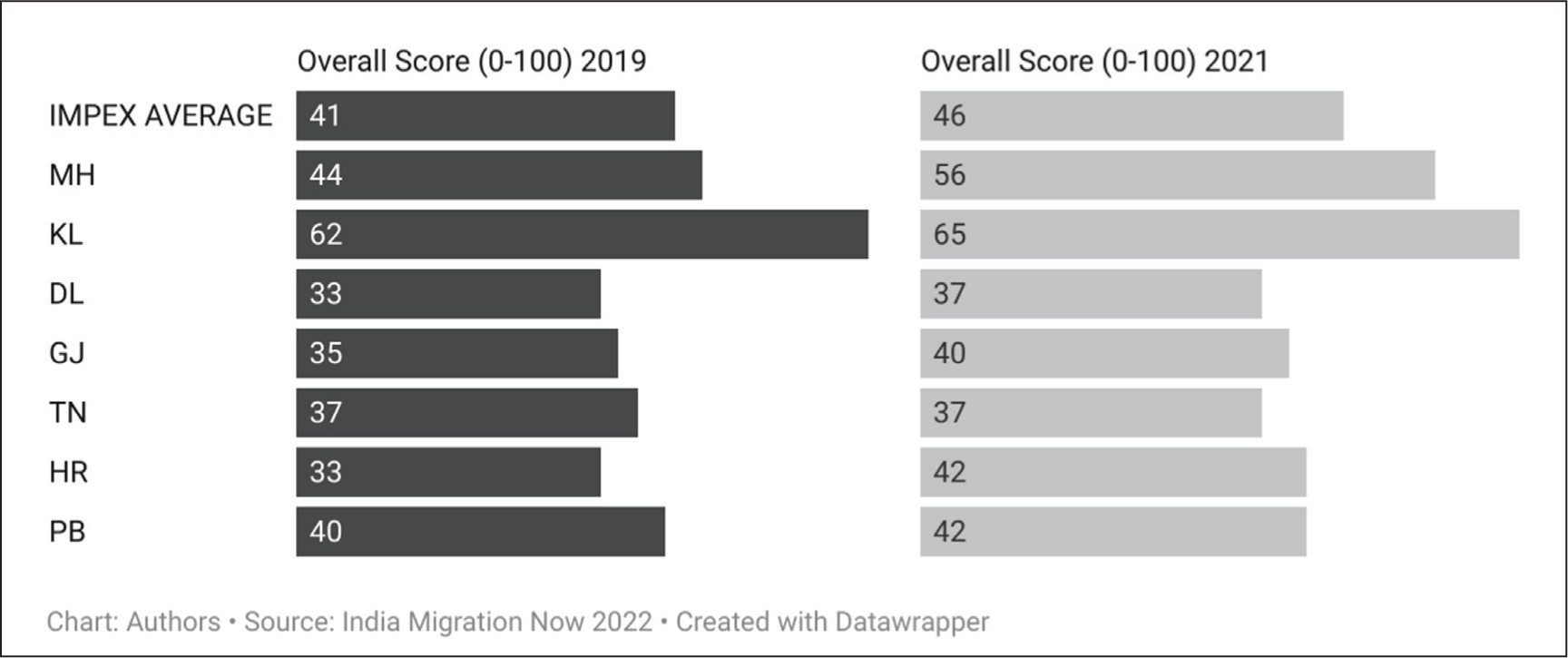
Kerala scored the highest in both the IMPEX evaluations, and the state’s score increased from 62 in 2019 to 65 in 2021. The scores of Tamil Nadu, Gujarat and Delhi in both the years remained low, which is a matter of concern given the magnitude of migration to these states. Migrants in these states face barriers across most policy areas such as employment, social benefits, healthcare and education (Aggarwal et al., 2020). Maharashtra scored second-highest in 2019 and 2021, with the state’s IMPEX score rising from 44 in 2019 to 56 in 2021. Delhi and Tamil Nadu scored the lowest at 37 in the 2021 iteration. While Delhi’s score increased from 33 in 2019, there was no change in Tamil Nadu’s overall score between the two years. Punjab’s score increased marginally, from 40 in 2019 to 42 in 2021. Meanwhile, Haryana scored 42 in the 2021 evaluation, just above Gujarat (Figure 4).
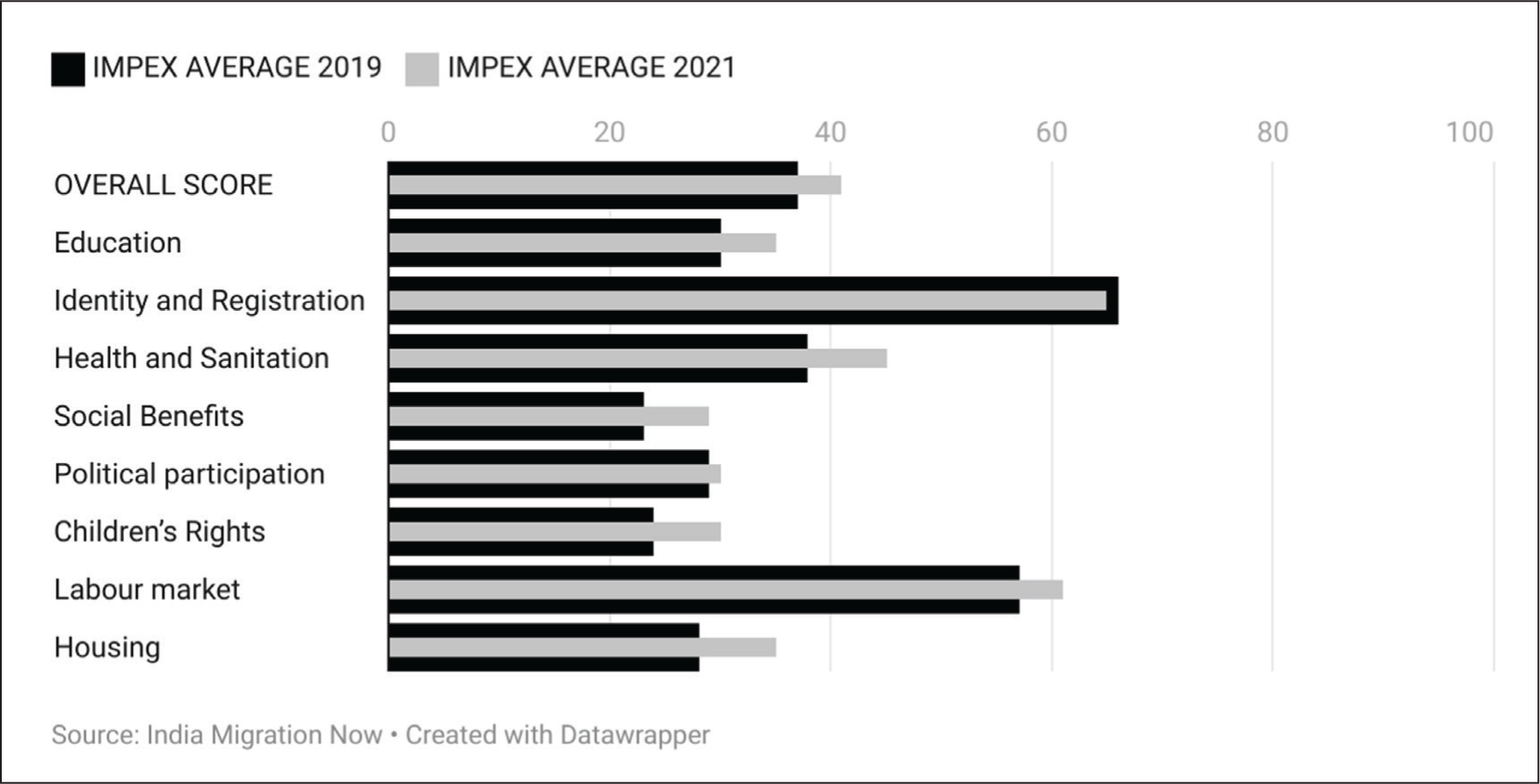
Performance Across Policy Areas
Maharashtra’s score improved in the policy area of health and sanitation due to the Mahatma Jyotirao Phule Jan Arogya Yojana implemented in 2020. This is a universal healthcare scheme for the state, with no explicit barriers for interstate migrants. Explicit measures for children of migrants in the Maharashtra Child Policy 2014 and measures under the Inter-state Migrant Workmen (Regulation of Employment and Conditions of Service) Rules for Maharashtra have also helped boost its score.
In Delhi, access to the healthcare system improved through the Aam Aadmi Mohalla Clinics, which are available to interstate migrants. However, financial support is available only for those with residency permits, lowering the state’s score on the access dimension. Neither Maharashtra nor Delhi have published their Occupational Safety, Health and Working Conditions Code, which would improve their scores in future evaluations.
Gujarat scored 40 in the 2021 IMPEX evaluation, an increase from its 2019 score of 35. The state greatly improved in the social benefits policy area, chiefly owing to the implementation of the Anna Brahma Yojana that expanded the scope of the PDS to include interstate migrants with proper documentation. Gujarat also adopted the Occupational Safety, Health and Working Conditions Code in December 2021, thus improving its score in the policy areas of labour market and health and sanitation.
Punjab’s score in the education policy area improved due to the implementation of the Punjab Occupational Safety, Health and Working Conditions Rules, 2021 (Figure 4). These rules prescribe that employers provide and maintain creche facilities for children of contract labourers and impart primary education to children. Punjab’s health and sanitation score also improved to 42 with the introduction of a scheme to provide free insurance to families left out by the Ayushman Bharat PM-Jay Mukh Mantri Sehat Bima Yojna. 7
From Policy Areas to Policy Dimensions
IMPEX has three policy dimensions under each policy area. The dimension of access indicates whether migrants have access to entitlements in the destination state and assesses if they are integrated among the locals by providing equal access or attempts are made to identify their unique requirements and vulnerabilities. Haryana and Punjab scored 42 and 43, respectively, just above Gujarat, in 2021. Haryana has published its Occupational Safety, Health and Working Conditions Code, which subsumes the rules of ISMWA. As a result, several explicit provisions that were available to interstate migrants are now absent. For instance, there is no specific provision in the code to disseminate information in the language spoken by the majority of migrants, which existed under ISMWA. There is also no mention of residential accommodation for migrant workers in the code, which was explicitly mentioned in ISMWA. However, several new provisions in the code have helped improve Haryana’s overall score from 33 in 2019 to 42 in 2021. Section 141 of the code requires the employer to ensure educational facilities for workers’ children aged between 6 and 12 years, where the number of workers is more than 25. The policy dimensions also help us understand whether specific districts have made attempts to integrate migrant communities. In Gurgaon, an alternative ID has been provided to unorganised workers under the provisions of the code. The code also proposes conducting studies about migrant needs through the involvement of stakeholders, experts and the union government, improving scores in the policy dimension of measures to achieve change. Changes in this dimension indicate an attempt to involve migrant communities and experts in decision-making in order to mainstream migration.
Kerala’s Targeted PDS (Control) Order, 2021, paved the way for the portability of ration cards, although its functionality was dependent on other source states implementing the same. This led to an increase in Kerala’s score in the social benefits policy area from 50 in 2019 to 58 in 2021. Project Roshni, a unique educational project for migrant children by the district administration of Ernakulam, improved the state’s score in the policy area of education in comparison to other evaluated destination states. The enactment of the Kerala Occupational Safety, Health and Working Conditions Rules, 2021 also added to the state’s labour market policy area scores. The rules contain provisions for data collection, improving the score of the state in the policy dimension of measures to achieve change in the labour market policy area.
Maharashtra has launched general awareness campaigns under the Maharashtra Child Policy 2014 to inform migrants and their children about their rights and policies benefiting them. This improved the state’s score in the facilitation of rights/policies dimension in the children’s rights policy area from 0 in 2019 to 50 in 2021. The implementation of the Mahatma Jyotirao Phule Jan Arogya Yojana also increased Maharashtra’s score in the policy area of health and sanitation to 75. This universal health scheme provides free access to medical care in government empanelled hospitals and does not specify explicit barriers to interstate migrants.
Delhi’s Aam Aadmi Mohalla Clinics provide migrants access to neighbourhood clinics for primary healthcare, adding to the state’s score in the policy area of health and sanitation. Within the policy area of education, Delhi’s score in the measures to achieve change dimension decreased from 25 to 0 (Figure 5). This is due to the lack of migrant-specific education policies implemented in the state; migrants only benefit from general support provisions for all students.
During the lockdowns, Gujarat provided take-home rations to children aged 3–6 years, improving the state’s score in the schemes/policies dimension under the children’s rights policy area. Under this initiative, the state also provided rations to children aged 6 months to 3 years and adolescent girls on a weekly basis. Gujarat’s score under the political inclusion policy area increased from 0 in 2019 to 25 in 2021. The establishment of the Sthalantarit Adivasi Shramik Manch, a statewide coalition of trade unions of Adivasi migrant workers, increased its score in the consultative bodies policy dimension from 0 in 2019 to 50 in 2021 (Figure 5).
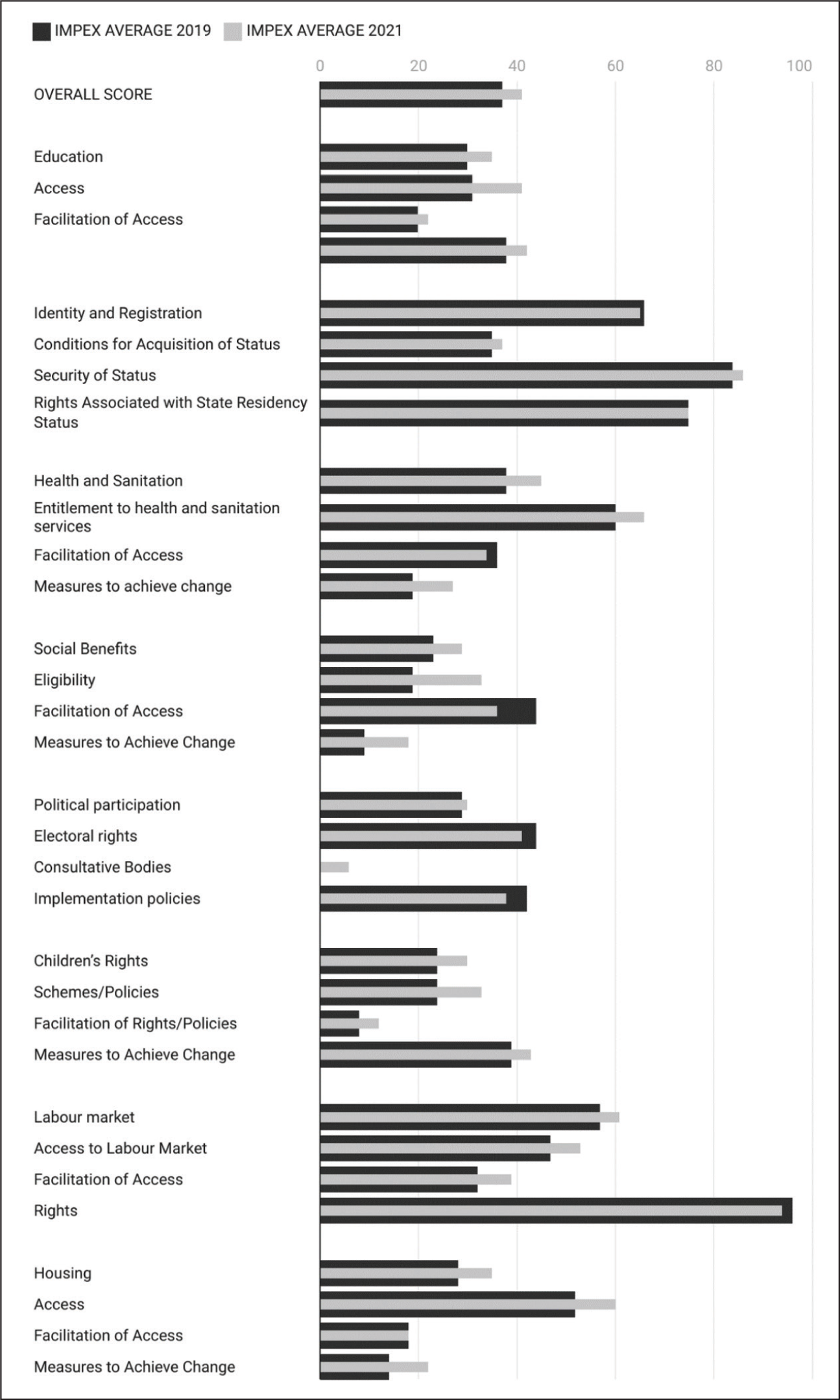
Tamil Nadu’s score in the access to housing policy dimension increased from 50 in 2019 to 100 in 2021. This is due to the implementation of the Affordable Rental Housing Complexes scheme, which aims to provide affordable housing to migrant workers near their workplace.
Punjab’s score in the access to education policy dimension increased from 20 in 2019 to 60 in 2021. This is due to the implementation of the Punjab Occupational Safety, Health and Working Conditions Rules, 2021, which prescribes that employers provide facilities such as creches and primary education to migrant children. The state’s score also increased in schemes/policies dimension under the children’s rights policy area from 17 in 2019 to 33 in 2021. The Punjab State Action Plan for Total Abolition of Child Labour, 2015, contributed to this increase as it prescribes the repatriation of migrant child labourers with their families to ensure that they are not entrapped in child labour again. Punjab has also improved from a score of 63 in 2019 to 75 in 2021 in the policy dimension of entitlements to health and sanitation services. This is due to the government’s 2021 scheme to provide free insurance coverage to families left out of the Ayushman Bharat–Sarbat Sehat Bima Yojana.
Discussion
The state-level policy changes that emerged through the comparison of data from IMPEX 2019 and 2021 indicate the key directions in migration policy and governance, even though IMPEX does not capture vital aspects of policy articulation. By reading these results against the broader policy landscape, it is possible to make some observations about how ideas of integration and mainstreaming have been reflected in post-COVID-19 migration policy.
Though the COVID-19 pandemic brought particular attention to the exclusions faced by internal migrants, no clear definitions of ‘migrants’ has emerged in policy. They remain a ‘flux category’ in policy discourse, located fuzzily within two larger categories that have long troubled policymakers: unorganised workers and the urban poor (Naik & Aggarwal, 2022). These unclear categorisations pose significant barriers for integration. For example, even with over 200 million registrations of unorganised workers on the e-Shram portal, it is not possible to clearly identify the subset of migrant workers in the database. Low-income workers often become policy beneficiaries by qualifying as the urban poor, while their migration status is not explicitly recognised. For example, slum development continues as the primary medium for alleviating affordable housing concerns. Most migrants live, not in slums, but in informal worksites or cramped housing in peri-urban areas, and thus get left out of housing policy (Naik & Aggarwal, 2022).
Despite this, the pandemic pushed states to improve migrants’ access to welfare areas such as food security and healthcare. These were understandably prominent, given that COVID-19 and the lockdowns posed a direct threat on essential requirements. The states’ thrust on expanding coverage and improving implementation of existing policies was in line with the reflexivity inherent to mainstreaming, where integration policy is built iteratively on existing provisions and policy implementation experiences. For example, universal health insurance schemes were expanded to cover migrants. Delhi’s Mohalla Clinics and e-coupon system for availing food rations under PDS were promoted to include migrant workers. Similarly, in Haryana, benefits available to native workers of a given establishment, including the Employees’ Provident Fund and Employee State Insurance, and access to medical facilities were extended to migrant workers. Gujarat’s Anna Brahma Yojana, for food rations, and Kerala’s Shramik Bandhu Kendras, which are last-mile facilitation centres, were also notable initiatives.
Highly visible subgroups such as child migrants became a growing focus of migration governance during this period, demonstrating how the pandemic drew attention to potential avenues of migrant integration. A notable example of this is Kerala’s education initiatives for children of migrant households that have paved the way for integration-focused initiatives and encourage a view of migrants as long-term participants in the state. Punjab and Haryana also put in provisions focusing on the education of children of migrant workers. Punjab has provisions for creche facilities, which are important for family-based migration streams and enable migrant households to enhance income by enabling women to work and earn wages. Maharashtra is working towards expanding creche facilities in its urban areas to support migrant families and, in partnership with the UNICEF, has put in place a last-mile system for tracking child migrants in rural areas of the state. That many of these initiatives are dovetailed within central schemes demonstrates how multilevel migration governance is continually operationalised in the Indian context.
Conversely, a lack of reflexivity often resulted in a mismatch between policy provisions and demand for migrant workers. For instance, while the expansion of foodgrain provisions under the ONORC scheme was required, migrants in destination areas preferred cooked food provisions as they lacked kitchen/cooking facilities (like oils, utensils, etc.). Such demand-sensitive initiatives were a feature of the ad hoc relief measures implemented during the crisis but were not institutionalised by states.
Integration has been a persistent challenge for interstate migrants and, through the pandemic, continues to be affected by legacy domicile and nativist requirements such as local registration and residency requirements. Registration requirements that sought local address proof at Delhi’s Mohalla Clinics diluted uptake amongst migrant workers. Most states continue to be reluctant to allocate fiscal spending on non-native residents.
Post-COVID-19, we see greater variations in policy measures and the perception of interstate migrants between states. The Kerala government’s measures suggest that they see all categories of interstate migrants as long-term stakeholders. Gujarat, Punjab and Haryana are more labour migration focused, demonstrated by their quick adoption of the labour codes and expansion of benefits for unorganised workers to migrants. Maharashtra, meanwhile, has taken a more household and intrastate migration approach (which has not been discussed in this article) with a focus on health and child migration.
There is also a sense that source states are more proactive in supporting interstate migrants, with major migrant-sending states such as Odisha, Jharkhand and Chhattisgarh undertaking measures to support returning migrants and adopting bilateral initiatives (for instance, agreements between Odisha and Tamil Nadu, and Odisha and Andhra Pradesh). In fact, Tamil Nadu’s sole notable initiative for interstate migrants was initiated upon request from Odisha. With respect to long-term and short-term migrants, a mixed picture appears to be emerging: while union government initiatives around rental housing will support short-term migrants, initiatives by Kerala are more supportive of long-term migrants.
Going forward, this problem can be potentially addressed by building on both vertical and horizontal aspects of mainstreaming; for example, bilateral or multilateral mediation structures guided by the central government can help source states provide fiscal resources to destination states to extend services to short-term migrants. A memorandum of understanding between the Odisha and Andhra Pradesh labour departments in 2011 inspired similar initiatives by Odisha, Tamil Nadu and Jharkhand (Kumar & Sharalya, 2022). Such bilateral arrangements underscore the importance of policy design initiatives, even if poorly implemented. Such coordination measures can also address exclusionary practices that prevent migrants from gaining long-term residency status owing to opportunity costs of switching identity cards, political participation and caps on critical aspects of social protection like food security (i.e., ration cards). Several measures towards integration were less effective because a large proportion of migrant beneficiaries were not aware of them (CPR & UNICEF, 2021; SWAN, 2020a). Building further on the horizontal dimension of mainstreaming, which would involve collaboration across several departments of the state government, and civil society organisations in policy design, implementation and facilitation could help states move towards more effective integration.
Conclusion
Despite the relative nascency of migrant policymaking and governance in India, the policy review and comparison of IMPEX 2019 and 2021 reflect a slowly improving trend, most likely driven by the COVID-19–induced migrant crisis. But will this momentum last?
The emergence of a draft National Migration Policy Document from the union government (Mehrotra, 2021) and draft state-level migration policies (e.g., Jharkhand, Chhattisgarh and Telangana) 8 currently in the pipeline show long-term promise towards policy change. But state governments require fiscal, strategic and technical support along with accountability measures, perhaps via a structure created by the union government, before they can formalise their initiatives into official policy.
This article draws on a robust theoretical framework, encapsulating three key concepts in the discourse of migration governance: migrant integration, multilevel governance and mainstreaming. While the theoretical foundation provides a comprehensive lens, the empirical exploration in the context of India reveals a nuanced scenario. Whereas the union government’s push for policy recognition has predominantly centred on labour migration, at the level of the destination state governments, an inconsistent recognition and institutionalisation of interstate migrants exists. The theoretical framework’s emphasis on multilevel governance becomes crucial in understanding this disparity. In some states, there has been a commendable autonomous effort in recognising broader concerns of health, nutrition and child migration in the context of policymaking. States’ innovations within and beyond central policy design signal a departure from the conventional approach. They reveal a promising shift towards a multi-sectoral, multilevel governance of migration, where the household—not merely the individual worker—becomes the focus of policy attention. This shift aligns with the theoretical notion of mainstreaming, advocating for a comprehensive, flexible and adaptive governance approach. The potential for future mainstreaming into policy is evident, especially as state governments recognise the diverse needs of migrant populations.
However, it is imperative to acknowledge certain limitations. The lack of consistent policy recognition for interstate migrants in major destination states poses a challenge. Despite encouraging signs in certain sectors, the broader institutionalisation of migration governance at the state level remains uneven. This article demonstrated the complexity of migration policymaking in the context of federal democracies like India, as seen by the tension in destination states between economic imperatives to attract migrants and nativist politics which fragments migration policy. The interest of source states in extending help beyond their own jurisdictions is pushing institutional arrangements and emergent system-level responses like bilateral arrangements, which could pave the way for multilateral ones in the future.
The article’s analysis emphasises the need for a more concerted effort in aligning policy frameworks with the theoretical underpinnings and reorienting the gaze of understanding these concepts to develop a more contextualised and nuanced approach to migration governance in the context of internal migration. The convergence and coordination across state-level policy departments horizontally as well as across multiple levels of governance is essential for effective long-term migration governance. Moreover, the ability of states to ramp up implementation where policies already existed demonstrates the important role of ex ante policy articulation, even without institutionalisation and implementation in the area of migration governance.
Many of the above lessons from state-level migration policy in India in the wake of the COVID-19 pandemic offer insights for other countries with large migrant populations and federal states. A closer look at how federal systems are responding to the issue of internal migration at different levels must be an integral agenda for global migration governance. The ongoing regional and transnational deliberations in the African and European context can open doors for theoretical and empirical exploration on how different levels of government, including the municipality, can play a crucial role in designing the contours of migration governance (Angenendt et al., 2021; Caponio, 2022; Caponio & Jones-Correa, 2018; Matusz, 2020; Panizzon & Riemsdjik, 2019; Stürner-Siovitz & Nzamba, 2022). Such a research and policy agenda can especially help developing countries improve labour mobility patterns for economic development and address emerging concerns from climate change–induced migration.
Footnotes
Data Availability Statement
The IMPEX policy scoring sheet, containing the evaluations for 2019 and 2021, can be found here:
Declaration of Conflicting Interests
The authors declared no potential conflicts of interest with respect to the research, authorship and/or publication of this article.
Funding
The authors received no financial support for the research, authorship and/or publication of this article.
Appendix
List of IMPEX Policy Areas, Dimensions and Indicators.
| Policy Area | Policy Dimension | Policy Indicators |
| Education | Access | • Access to pre-education/day care • Access to primary and secondary education • Access to higher/senior secondary education • Access to higher/tertiary education • Access to vocational training/skill development |
| Facilitation of access | • Support to learn the language of instruction or provision of instructions in migrant’s language • State-supported information initiatives • Adapting school curriculum/life to migrant’s needs |
|
| Measures to achieve change | • Collection of data, monitoring and support for research on migrant education • Involvement of migrants and stakeholders • Anti-discrimination policies • Dropout prevention measures |
|
| Labour market | Access to labour market | • Access to state/local government jobs • Access to private sector jobs • Access to self-employment |
| Facilitation of access | • Information campaigns • Involvement of migrant communities and stakeholders |
|
| Worker rights | • Access to labour unions • Working conditions, minimum wage and other worker protection policies |
|
| Children’s rights | Measures to ensure rights | • Developmental schemes and policies • Safety policies • Health, nutrition and sanitation policies |
| Facilitation of rights/policies | • Information for migrant children, employers and migrant communities | |
| Measures to achieve change | • Collection of data on migrant needs/outcomes • Support for research on migrant needs/outcomes • Involvement of migrants and stakeholders |
|
| Political inclusion | Electoral rights | • Right to vote in local elections (municipal/panchayat) • Right to stand in local elections |
| Consultative bodies | • Involvement of migrants/ migrant representatives in decision-making | |
| Implementation policies | • Active information policy and public funding/support for state/local migrant bodies | |
| Identity and registration | Conditions for acquisition of status | • Residence period • Permits considered • Costs of application process • Maximum duration of procedure • Family/dependant residency • Supplementary/alternative registration options |
| Security of status | • Duration of validity of permit | |
| Rights associated with state residency status | • Access to employment • Access to social security • Access to education • Access to housing • Access to health and sanitation services |
|
| Social benefits | Access | • Access to life insurance schemes • Access to food security schemes/state PDS • Access to state government pension schemes, state-level unemployment benefits and family benefits • Access to disability and other adverse circumstances benefits • Access to other state-level benefits/subsidies |
| Facilitation of access | • Information for migrants concerning benefits | |
| Measures to achieve change | • Collection of data on migrant needs/outcomes • Support for research on migrant needs/outcomes • Involvement of migrants and stakeholders |
|
| Housing | Access | • Access to temporary housing • Access to permanent housing |
| Facilitation of access | • Information campaigns | |
| Measures to achieve change | • Collection of data, monitoring and support for research on migrant needs/outcomes • Involvement of migrant communities and stakeholders |
|
| Health and sanitation | Access | • Access to state hospitals, private hospitals and clinics • Access to state health insurance schemes • Targeted health interventions/programmes for migrants • Access to basic sanitation services |
| Facilitation of access | • Information for migrants concerning health education and promotion • Information for service providers about migrants’ entitlements |
|
| Measures to achieve change | • Collection of data on migrant health and support for research on migrant health • Involvement of migrants and stakeholders |