



Abstract
A global shift in urban slum improvement programmes is underway to step beyond the conventional approach by practicing a more participatory approach. Previous studies have found that slum upgrading projects are likely to be ineffective and unsustainable without the active participation of slum dwellers. Therefore, it is imperative to identify the pathways to improve or enhance slum dwellers’ participation in slum upgrading projects. Several studies highlight the need to consider socio-psychological attributes of the community. However, empirical evidence of the comparative significance of these attributes in predicting participatory behavioural intention of the slum dwellers has not been previously explored. In this article, we examine the factors that influence slum dwellers’ intention to participate in slum upgrading projects in Mauritius, which has been one of the early implementers of UN-Habitat’s flagship initiative, Participatory Slum Upgrading Programme. We conducted a household survey in highly dense slum areas in Cité EDC and Barkly. Using the Partial Least Squares Structural Equation Modelling approach to analyse the relationships among the constructs affecting participatory behaviour, we find that enhancement of awareness and trust on authority can promote willingness to participate at a higher level in slum upgrading projects. Such information can be useful to design appropriate pathways to increase effective participation in slum upgrading programmes.
Introduction
According to recent UN-Habitat estimates, around one billion people live in slum conditions. This number is projected to double by 2030 (UN-Habitat, 2015, 2016). The proliferation of slums is common in developing countries and regions. For example, 56 per cent of the urban population lives in slums in sub-Saharan Africa and South and Southeast Asia (Ezeh et al., 2016, p. 3) facing poverty, inequality and deprivation. Improving the living conditions of slums has become an integral component of the sustainable urban agenda in developing countries. It is particularly underscored by the targets of the successive global development agendas (e.g., Millennium Development Goals [MDGs] and Sustainable Development Goals [SDGs]). Slum improvements involve a wide range of approaches including ex-situ/in-situ resettlement, improving sanitation, livelihood improvements and provision of education/training (Minnery et al., 2013; UN-Habitat, 2016). Like many other development projects, there is an increasing shift from a top-down approach to more inclusive and integrated strategies to derive long-lasting solutions. The World Cities Report (2016) strongly emphasised the need for ‘commitment of the authorities and the engagement of the concerned communities to enhance a better understanding of the slum challenge’ (UN-Habitat, 2016, p. 57). It has been further reinforced by the Participatory Slum Upgrading Programme (PSUP), a global initiative established by the UN-Habitat, which is currently providing enabling frameworks in almost about 190 cities in 40 countries (UN-Habitat, n.d.).
The agenda of local participation in development projects has been a long-standing preoccupation in the developing world and has received increasing attention in the contemporary development lexicon (Davies, 2001; Russ & Takahashi, 2013). Since the late 1960s, the idea of local participation has continuously evolved and has been promoted by planning scholars to develop a better understanding of local problems, achieve efficiency in the planning process and allow for appropriate representation of powerless groups in decision-making (Buckingham-Hatfield & Percy, 1999; Burby, 2003; Gilbert & Ward, 1984; Godschalk & Mills, 1966; Imparato & Ruster, 2003; Rydin & Pennington, 2000). Russ and Takahashi (2013) found that participation can enhance the satisfaction of slum dwellers over project outcomes. Meanwhile, empirical evidences from Latin American and South and Southeast Asian cities suggest that the majority of development projects undertaken to improve the physical and environmental conditions of informal settlements suffered from lack of local engagements and often failed to achieve the expected level of participation (Archer, 2012; Imparato & Ruster, 2003; Minnery et al., 2013).
The discourses of ‘deliberation’ and governance played a key role in shaping the institutional space of participation (Melo & Baiocchi, 2006). Hence, Swapan (2014) argues that ‘ideal institutional context supportive to participation merely has failed to guarantee a fair public turn out’ (p. 192). In this regard, planning scholars emphasise the importance of social and psychological attributes (e.g., self-capacity, social capital, place attachment and trust) of the target population that influence their intention to participate and subsequently motivate participatory behaviour (Ciorici & Dantzler, 2019; Mace & Tewdwr-Jones, 2019; Russ & Takahashi, 2013; Xu et al., 2010). Socio-psychological attributes can be defined as the perceived social and psychological values of the target community that motivate an individual’s propensity to take part or restrains them from engaging in the planning or decision-making process (van Riper et al., 2012). However, empirical evidence of the comparative significance of such attributes in predicting the participatory behavioural intention of the slum dwellers is yet to be explored. An insight into the predictors affecting the extent and magnitude (from high to low) of their participatory behavioural intention is even rarer (Talò et al., 2014).
This study aims to contribute by providing an insight into the broader spectrum of the social and psychological attributes of slum dwellers in Mauritius to predict their participatory behavioural intention. This empirical study on the community aims to answer two research objectives: (i) develop an integrated model to investigate participatory behaviour of the slum dwellers, and (ii) explore the critical predictors of attitude and behavioural intention of the slum dwellers to be engaged in the slum upgrading project. Answering these questions will be useful in designing appropriate pathways to encourage participation in slum improvement programmes.
Theoretical Framework and Hypothesis
Literature on Behavioural Prediction
The behavioural intention of the community has been examined in various fields of knowledge, including environmental psychology (Ajzen, 1991), occupational therapy, social work, public health and, recently, use of urban green space (Wan & Shen, 2015; Yen et al., 2017). The theory of planned behaviour (TPB), one of the most popular models used for this purpose, predicts the behavioural intention of individuals by considering three constructs: one’s ‘attitude towards the behaviour, the perceived behavioural control and the subjective norms’ (Ajzen, 1991; Yen et al., 2017, p. 99). An individual’s attitude towards a behaviour could be influenced by the belief and perceived expectation about the positive or negative outcomes of the plan or action. Perceived behavioural control relates to self-efficacy and confidence, which are determined by the level of awareness and access to information (Wan & Shen, 2015). Finally, subjective norms refer to the perception of social norms that could be developed from various parallel (e.g., with family members and neighbours) and vertical (e.g., with political leaders and even institutions) networks.
Factors affecting Participatory Behaviour
In order to build the research model, we further reviewed urban planning, community development and social science literature towards understanding TPB in terms of predicting participatory behaviour in urban development projects. Makerani (2007) and Tosun (2000) indicated various urban characteristics within informal settlements that should be considered while analysing participatory behaviour of the target population. Tosun (2000) and Laurian (2003) also came up with a set of cultural and educational factors that could affect local participation, such as socio-economic profile, level of awareness and perceived beliefs around the collective benefits of the plans. Awareness and access to information have been reported as critical indicators for a positive attitude towards participation. For example, Pahl-Wostl and Hare (2004) reported on the importance of knowledge and information for long-term participatory management of integrated resource management projects. Several scholars also argued for increasing awareness and knowledge on environmental management and technical matters in promoting effective public participation (Kamaruddin et al., 2016; Švaljek et al., 2019; Zellatifanny et al., 2021). It is contended that self-efficacy and elements contributing to local empowerment could lead to a positive attitude towards participation.
Another set of literature indicated ‘sense of community’ as a vehicle to understand an individual’s mindset and willingness to invest time and effort in the provision of collective goods (Lelieveldt, 2004; Ramkissoon et al., 2013; Rydin & Pennington, 2000). Sense of community often influences mutual perception and heightens individual awareness of the collective benefits of participation (McMillan & Chavis, 1986). Such emotional bonding has been studied heavily in the tourism and environmental psychology disciplines to investigate pro-environmental behaviours (Junot et al., 2018; Ramkissoon et al., 2013). Sense of community revolves around psychological and emotional bonds among neighbours based on ‘a shared history, interests and concerns’ or from strong place attachment (Xu et al., 2010, p. 261). Place attachment is defined as ‘an emotional bond between people and their environments [place]’ (Anton & Lawrence, 2014, p. 452). Findings from Israeli (Mesch & Manor, 1998) and West Australian (Anton & Lawrence, 2014) studies suggest that residents who are more attached to their place tend to show greater involvement at local clubs and events. However, relatively few studies have investigated the implications of place attachment for slum residents.
Sense of community and place attachment are often intertwined, ‘since both can motivate community members to participate in neighbourhood improvement and planning efforts’ (Manzo & Perkins, 2006, p. 339). This construct is commonly used to investigate the psychological connection to a place and environmental behaviour (Rollero & De Piccoli, 2010).
Manzo and Perkins (2006) advocate a more asset-based perspective of community development. Lack of community assets such as social capital and place attachment ‘can greatly hinder public commitment to plans and the planning process’ (Manzo & Perkins, 2006, p. 341). The theory of social capital includes structural components such as social networks and ties with organisations and local leaders and elites for resource mining and accessing information (Putnam, 2000). The urban poor, who predominantly reside in informal settlements, having no legal access to municipal services, often rely on local politicians or agents forming an informal network to obtain urban services (Swapan, 2016).
Palmer et al. (2011, p. 91) assert that ‘social networks and cohesion lead to active participation in local services and voluntary associations’. For example, Chavis and Wandersman (1990) identified a positive influence of these attributes on local households in participating in block organisations of American neighbourhoods. Xu et al. (2010) also found similar relationships among Chinese populations in terms of political participation. Another study, however, suggests an extremely weak effect on participation among migrant workers within the context of urban areas in China (Palmer et al., 2011). Studies carried out across Western countries and cultures (such as Baltimore and Iowa in the United States (Brodsky et al., 1999; Liu & Besser, 2003); Rome in Italy (Liu & Besser, 2003) and Malmö in Sweden (Lindström, 2005)) reveal more consistent relationships between psychological and structural ties and participation, while cases in developing countries tend to be less consistent (Palmer et al., 2011; Xu et al., 2010). A review of participation literature by Talò et al. (2014) indicates a dearth of knowledge around the effects of social ties and networks on the magnitude and different forms of participation.
Previous studies also claim that perceived beliefs on local inclusion in the planning stage and the benefits of the project contributing to the quality of life encourage citizens to participate (Bloomfield et al., 2001; Davies, 2001; Kumar & Paddison, 2000). Davenport et al. (2007) have emphasised building a relationship and trust between citizens and the development agencies for effective public participation. Other studies have cautioned that the level of trust may decline due to corruption, conspiracy, political and elite biases and, above all, dissatisfaction with the interventions and services provided by the public agencies (Kumar & Paddison, 2000; Swain & Tait, 2007).
Research Hypotheses
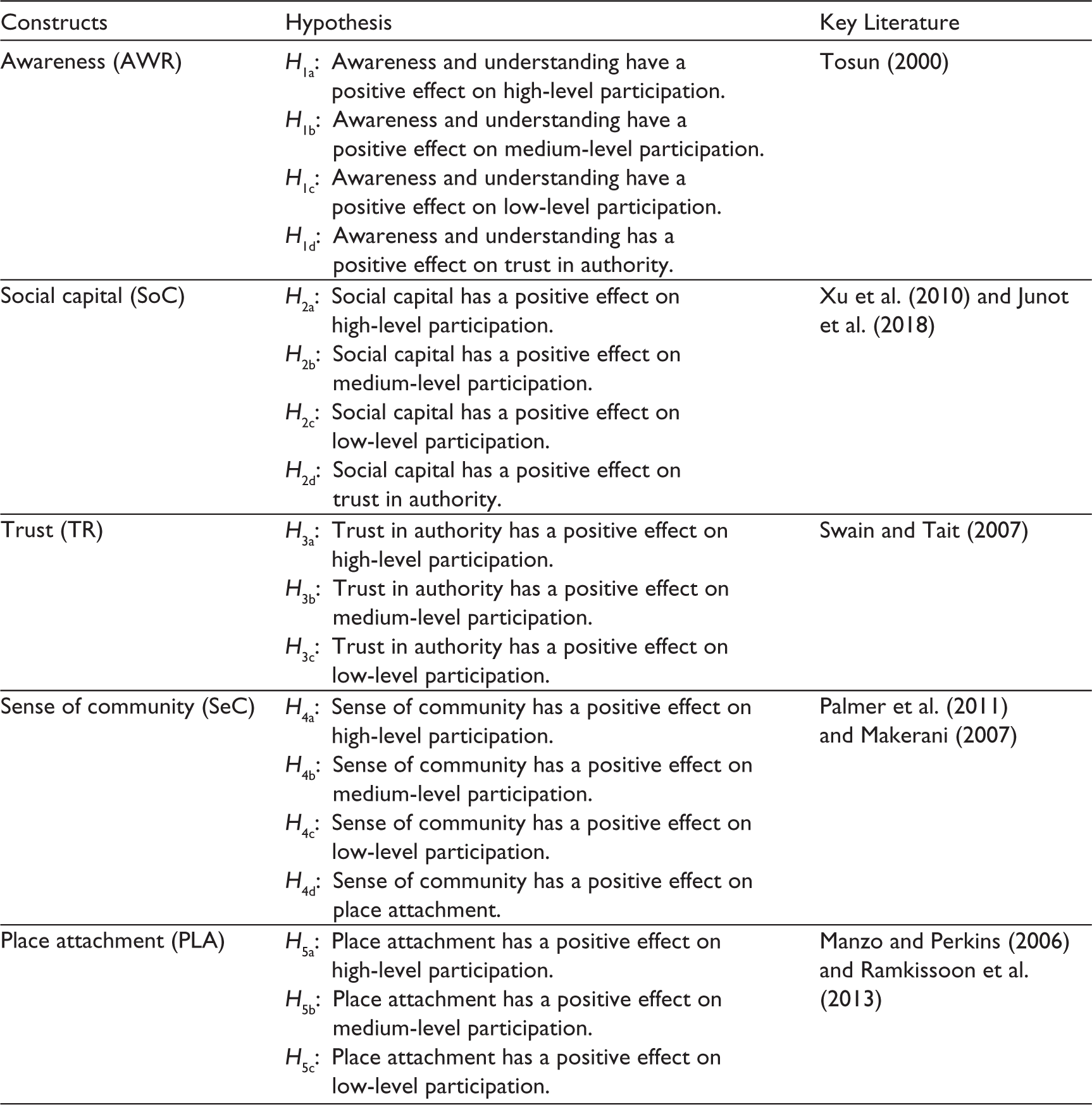
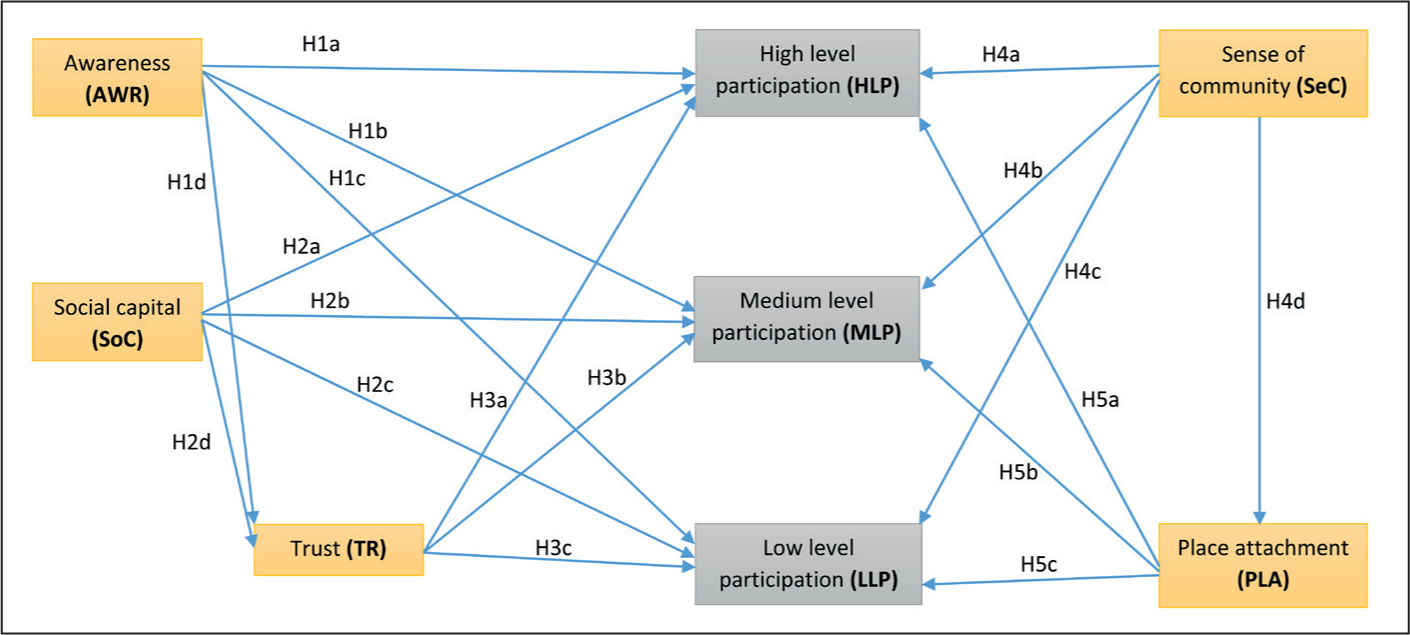
Based on the literature review, Table 1 and Figure 1 show the proposed hypotheses to investigate the participatory behaviour of the slum dwellers.
Description of Research Hypotheses.
To develop the research model, we examined the influences of each independent construct with residents’ intention to participate on a three-point participation scale (dependent variables). These were conceptualised and aggregated from the classic and popular models of Arnstein (1969) and IAP2 (2014):
Low-level participation (LLP): I want to receive information only. Medium-level participation (MLP): I want to be consulted (attending meeting, consultation forum, etc.). High-level participation (HLP): I am willing to contribute and take shared responsibility to design, implement and operate the development project.
Methods and Materials
Background of the Study Area
Mauritius is an archipelago state located in the Indian Ocean, approximately 2,000 kilometres off the southeastern coast of the African continent. The country had a total population of 1.29 million (in 2011), of which 42 per cent resides in urban areas (Oozeer, 2013). The urban settlements are mostly ‘concentrated in a conurbation strip running from Port Louis to Curepipe’ (UN-Habitat, 2012, p. 12). The growth of slums and squatters are mostly found around the periphery of the capital city, Port Luis, and around the southwestern coastal region. A UN-Habitat study reported ‘225 pockets of extreme poverty affecting 6,983 families’ in Mauritius (UN-Habitat, 2012, p. 19).
The planning approach in Mauritius is predominantly controlled and regulated by the government and is heavily configured by its European colonial legacy. The recent planning instruments, including the National Development Strategy (NDS) of 2003, offer limited room for including relevant stakeholders (MOHAL, 2003). Regularisation of squatter settlements has been regularly undertaken by the Ministry of Housing and Lands (now Ministry of Housing and Land Use Planning). UN-Habitat’s flagship initiative, PSUP was launched in 2008 and a National Urban Profile was completed in 2011 for Mauritius. The second phase, which was delayed, aimed at executing a planning exercise for improving housing and living conditions of 600 households in three informal settlements: Cité EDC, Barkly and Karo Kalyptus (UN-Habitat, 2012). The aim of the current study is, however, not to evaluate the participation mechanisms of PSUP, but rather to explore the views of the slum dwellers on their engagement in the slum improvement programmes.
The study was conducted in highly dense slum areas in Cité EDC and Barkly. In Cité EDC, the study area has 162 households accommodating 778 persons, with an average household size of 4.8 persons/household (Statistics Mauritius, 2011). On the other hand, the study area in Barkly has a relatively higher slum population consisting of around 644 households, with an average household size of 4.4 persons/household (Statistics Mauritius, 2011). Most of the houses are semi-permanent and constructed with temporary building materials (Sooben, 2016). The average monthly income of the population in the study areas is around MUR 950 (USD 275), which is one-third of the national average.
Questionnaire Design and Data Collection
A structured questionnaire survey was conducted in June 2017. The construction of the questionnaire was guided by the hypotheses (Table 1) and relevant existing literature. The households were selected randomly, and the heads of the families were surveyed. We received 110 valid responses from Cité EDC (40) and Barkey (70). The questionnaire was divided into two sections. The first section included a series of questions on the demographic profile of the respondents. The second section contained questions to investigate the five core constructs of the modified TPB model. A five-point Likert scale was used to measure the agreement or disagreement of the respondents for any question included in the core constructs (latent variables) by selecting ‘1 = strongly disagree to 5 = strongly agree’. Finally, the respondents could choose any of the options representing the hierarchical intention to participate (observed variable). We operationalised all the constructs as shown in Table 1 using the five-point Likert scale. Measures for awareness were adapted from Tosun (2000). Items for social network were adapted from Makerani (2007) and Swapan (2014). Measures for place attachment and trust were derived from Ramkissoon et al. (2013).
PLS-SEM Analysis
SmartPLS 3.2.3 software, developed by Ringle et al. (2015), was used to analyse the research model. The software has been extensively used to analyse Partial Least Squares Structural Equation Modelling (PLS-SEM). This method has gained popularity with researchers, with applications in the areas of tourism (Hallak & Assaker, 2016), urban planning (Belanche et al., 2016; Nigro & González Císaro, 2014), and social sciences (Sawatsky et al., 2015). In the current study, PLS-SEM has been used for several reasons. First, PLS-SEM does not require the normality assumption like covariance-based structural equation modelling (Lowry & Gaskin, 2014). Second, PLS-SEM is conducive for estimating path coefficients when the sample size is small (Chin & Newsted, 1999). Finally, PLS-SEM provides an alternative method to test theory (Lowry & Gaskin, 2014).
The Evaluation of PLS-SEM Analysis
PLS-SEM is a multivariate statistical analysis method which consists of estimating the measurement model and the structural model. The relationship between the latent variable and its observed indicators is estimated in the measurement model and the relationship between the constructs under examination is estimated in the structural model (Henseler, 2017).
The following sections provide a summary of how the two components of PLS-SEM are evaluated.
Measurement Model
The assessment of model quality is based on its ability to predict the endogenous constructs. It is critical for the measurement model to possess the minimum required properties of acceptable reliability and validity, otherwise the results from the structural model will not be meaningful (Henseler et al., 2016). In general, the following criteria are used to assess the validity and reliability of the measurement model: Cronbach α, composite reliability (CR), convergent validity and discriminant validity (Hair et al., 2016). A value of the Cronbach α measured at greater than 0.70 should be used to assess the internal consistency reliability for each of the latent variable (Hair et al., 2016). However, Henseler et al. (2016) suggest that it typically underestimates the true reliability and, therefore, should be considered as a lower boundary to the assessment of reliability. The value of CR varies between 0 and 1, where values over 0.7 indicate higher reliability (Sarstedt et al., 2017). The convergent validity is assessed with an indicator reliability and the average variance extracted (AVE). The indicator reliability is determined by the loading of a predictor for its respective construct to which the loading of the respective items should be higher than 0.70, to show its association with the corresponding constructs (Hair et al., 2016). The value of AVE should be greater than the threshold value of 0.5, which means that a latent variable should be able to capture at least 50 per cent of each indicator’s variance (Henseler et al., 2016). Discriminant validity is assessed through Fornell-Larcker’s criterion to confirm that a latent variable is distinctly different from other latent variables in the model (Henseler et al., 2016). The square root of AVE for a latent variable should be higher than the correlation with other latent variables to meet the discriminant validity (Fornell & Larcker, 1981). In addition, heterotrait–monotrait (HTMT) ratio of correlations can be used to assess discriminant validity (Henseler et al., 2015). The HTMT ratio is calculated by dividing the mean value of the indicator correlations across constructs by the geometric mean of the average correlations of the indicators measuring the construct (Sarstedt et al., 2017). A value of less than 1 for HTMT ratio is acceptable to meet discriminant validity (Henseler et al., 2016). We note that a recent study suggests that HTMT ratio may exhibit upward biased if the measurement of the latent variables is not τ-equivalent and the correlation between the latent variables approaches 1 (Roemer et al., 2021).
Structural Models
The structural model is the relationship among the independent and dependent constructs (Henseler, 2017). Researchers need to determine the values of R-square (R2), path coefficients (t-value), effect size (f2), Q2 predictive relevance and collinearity to measure the structural model (Henseler, 2017; Sarstedt et al., 2017). R2 indicates the percentage of variability accounted for by the exogenous constructs in the model (Henseler et al., 2016). Next, the path coefficients are tested for statistical significance. Henseler et al. (2016) recommends using a bootstrap resampling routine of 4,999 samples. When the p-value of a path coefficient is below a pre-determined significance level, the path coefficient is considered as being significant (Henseler, 2017). Effect size (f2) is used to quantify how substantial and significant the effects of the path coefficients are. Generally, f2 values above 0.02, 0.15 and 0.35 are considered as being weak, moderate and strong, respectively (Henseler, 2017). A model’s predictive accuracy is assessed using Q2 value, which builds on the blindfolding procedure (Sarstedt et al., 2017). A Q2 value greater than zero for a particular construct indicates an acceptable predictive accuracy for that particular construct (Sarstedt et al., 2017). Multi-collinearity is assessed with the variance inflation factor (VIF) to examine the presence of collinearity (Hair et al., 2016). A value of VIF greater than 5 implies a potential collinearity issue (Sarstedt et al., 2017). Approximate model fit of the structural model was assessed by examining the value of standardised root mean square residual (SRMR; Henseler, 2017), where a value of less than 0.08 indicates an acceptable fit for the structural model (Henseler et al., 2016).
Result
Demographic Profile of the Respondents
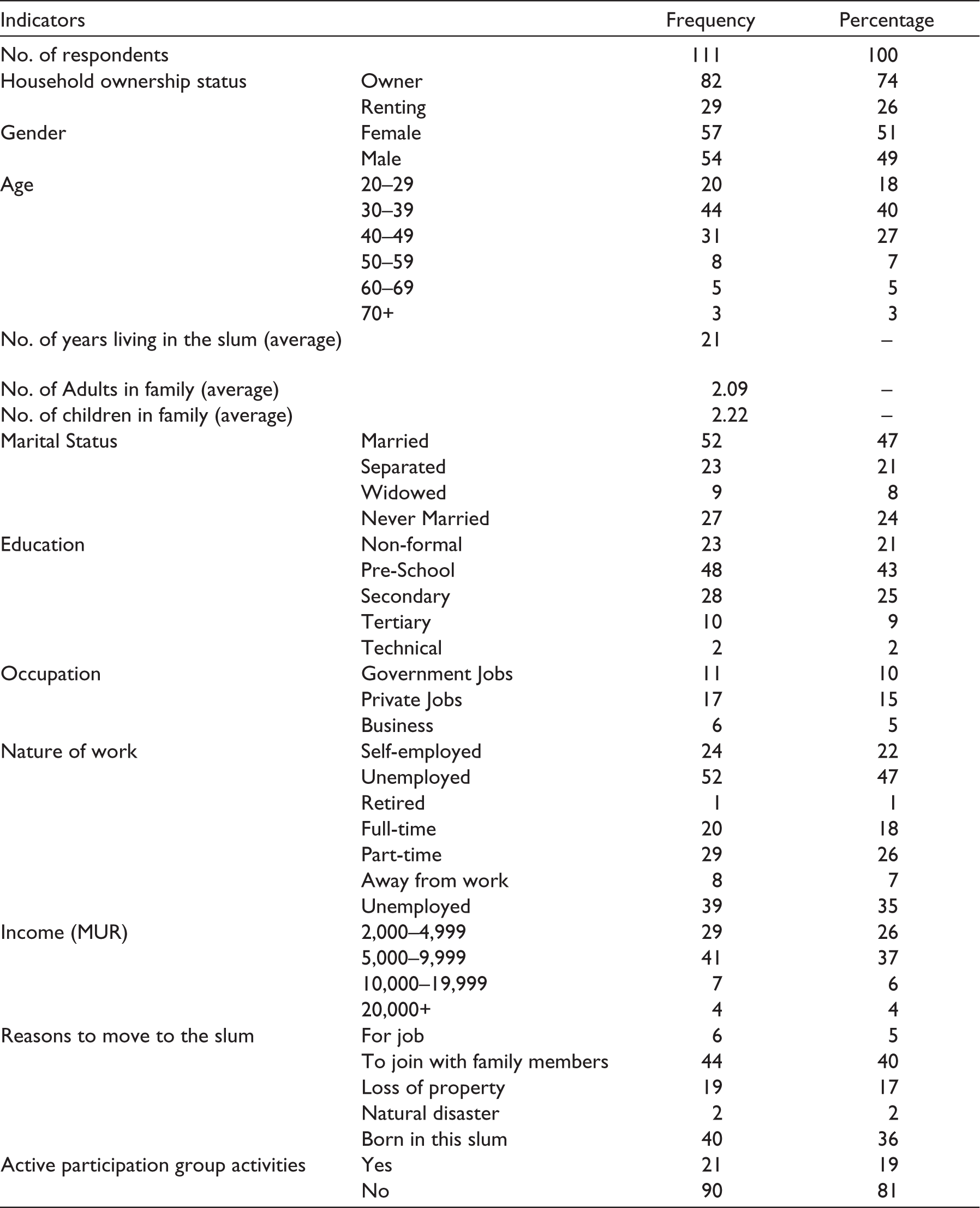
The socio-demographic profile of the respondents is presented in Table 2. The sample was evenly distributed between males and females. The majority of respondents (85 per cent) were below 50 years of age. Almost half of them were unemployed and had an income less than MUR 10,000 per month. Only around 10 per cent of them had completed technical or university degrees. These estimates indicate the relatively poorer condition of the respondents. On the other hand, the majority of them own their house and a large proportion of them were born there. This could potentially influence their sense of place and willingness to participate in the development projects.
Socio-Demographic Profile of the Respondents.
Summary of Perceptions
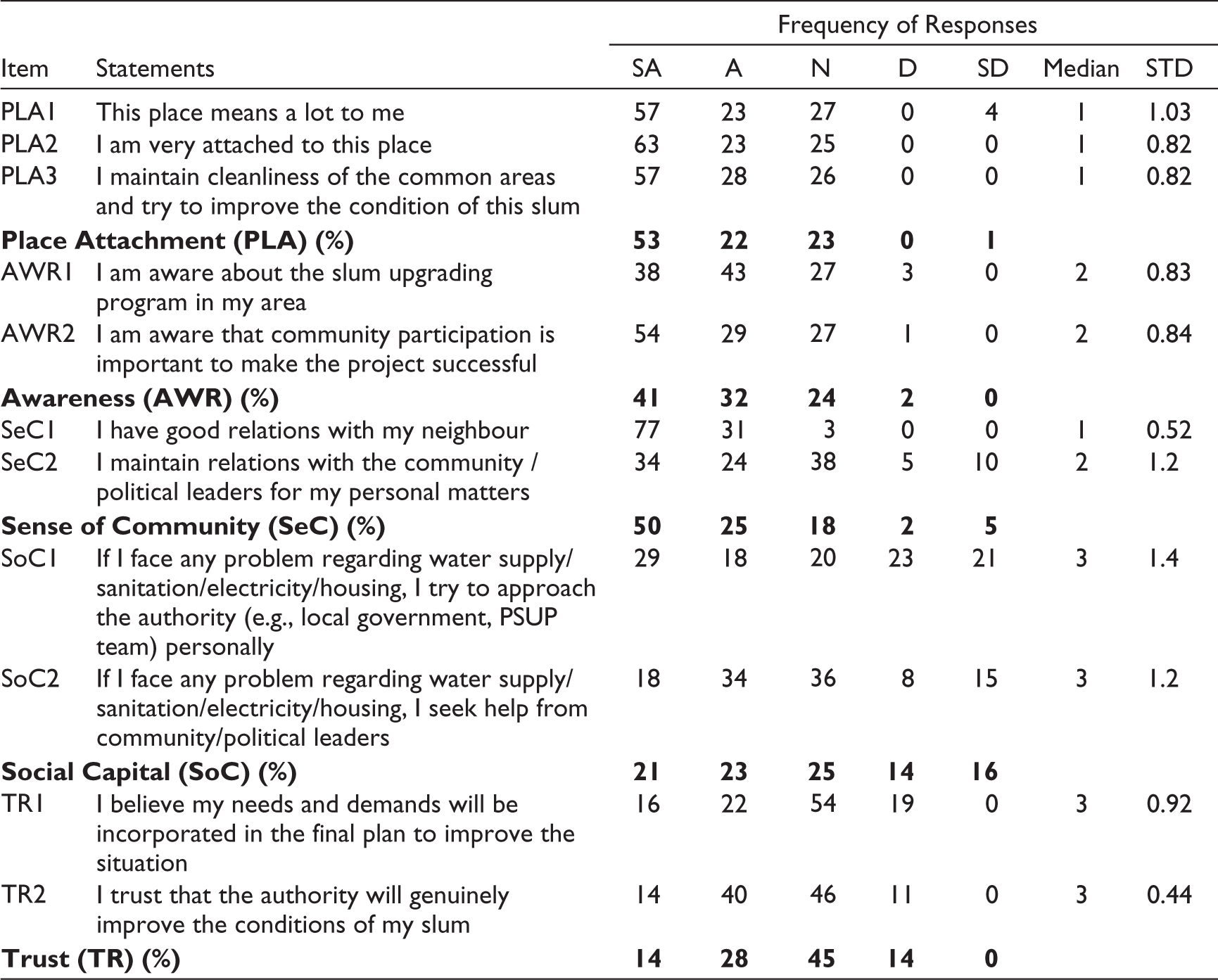
Table 3 presents the percentage of agreements/disagreements against each statement framing the constructs. An overall average agreement/disagreement percentage is calculated for each construct from the total responses derived from representative statements. The respondents showed a strong sense of place attachment. For example, 63 per cent strongly agreed with the statement that they were very attached to the place and 57 per cent agreed with the statement that the place meant a lot to them (Table 3). Table 3 provides further information on behavioural intention of the respondents. Around 38 per cent and 43 per cent of the respondents strongly agreed and agreed, respectively, with the statement on the awareness of the slum upgrading project. The majority also strongly agreed with the idea that community participation was important to make the project successful. While the majority of the respondents maintained a good relationship with their neighbours (77 per cent agreed with the statement), their relationship with the community/political leaders was of a mixed nature. The state of social capital seems to be poor, as less than half of the respondents seek help from the authorities (such as government agencies) and community/political leaders. They also have mixed feelings about whether their demands will be reflected in the planning outcomes (the majority recorded a neutral response). The trust on authorities to improve the condition of the slum is very low (only 14 per cent strongly agreed with the statement). Further, the respondents showed strong intention to participate in the slum upgrading project: 87 per cent expressed their willingness for a high level of participation (i.e., contributing and sharing of responsibility to design, implement and operate the project), 10 per cent for a medium level of participation (i.e., opinion sharing and participating in the consultation process), and 3 per cent for a low level of participation (i.e., receiving information).
Measurement of Latent Variables and Observed Variables.
PLS-SEM Analysis
Measurement Model
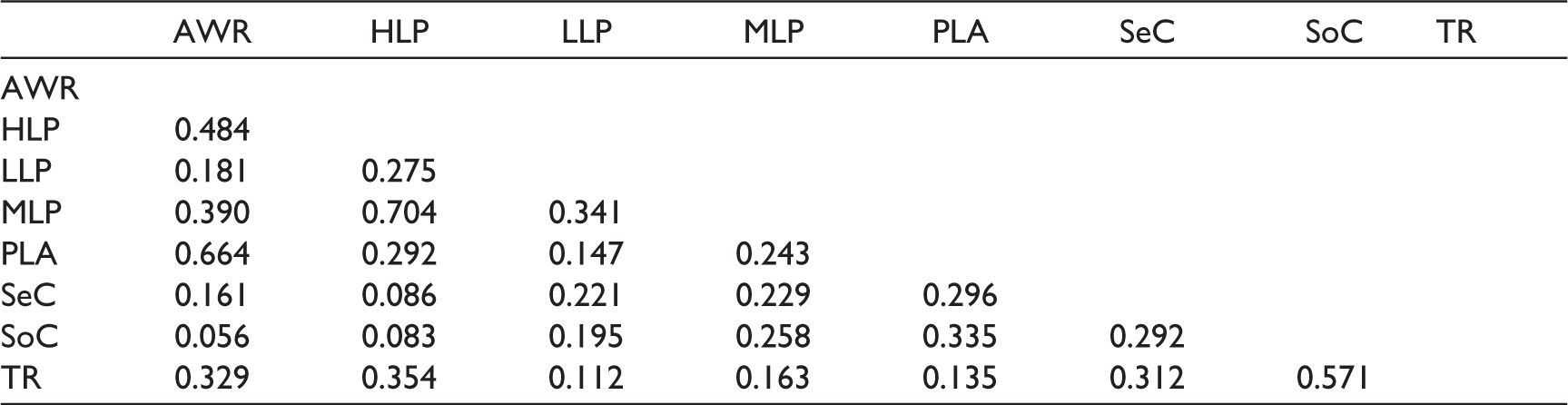
Table 4 shows that the outer loadings of each reflective measure on its corresponding construct are greater than the recommended cut-off value of 0.70 (Hair et al., 2016). This suggests that the indicators represent their relevant latent indicators well. To measure internal consistency (i.e., that the indicators go together for that particular latent construct), the study used Cronbach α and composite reliability. Generally, Cronbach α of over 0.70 is considered good for internal consistency. However, Cronbach α values of two of the constructs (sense of community and social capital) are less than the recommended cut-off value of 0.70. However, it has been suggested that for PLS-SEM, composite reliability is a better measure of internal consistency compared to Cronbach α (Hair et al., 2016). As illustrated in Table 4, the composite reliability of all constructs is greater than 0.70, indicating adequate internal consistency for all the latent constructs (Hair et al., 2016). Hence, the two constructs (sense of community and social capital) have been retained for further analysis. Convergent validity is confirmed because the AVE values for all the constructs are greater than the recommended 0.50 cut-off value (Hair et al., 2016). Discriminant validity is confirmed because the square root of the AVEs for each construct are greater than the squared correlation with other constructs (Fornell & Larcker, 1981). Table 4 reports the results of discriminant validity. Table 5 shows that the HTMT ratios for all the constructs are less than 1, indicating adequate discriminant validity (Henseler et al., 2016).
Reliability and Validity of Latent Variables and Observed Variables.
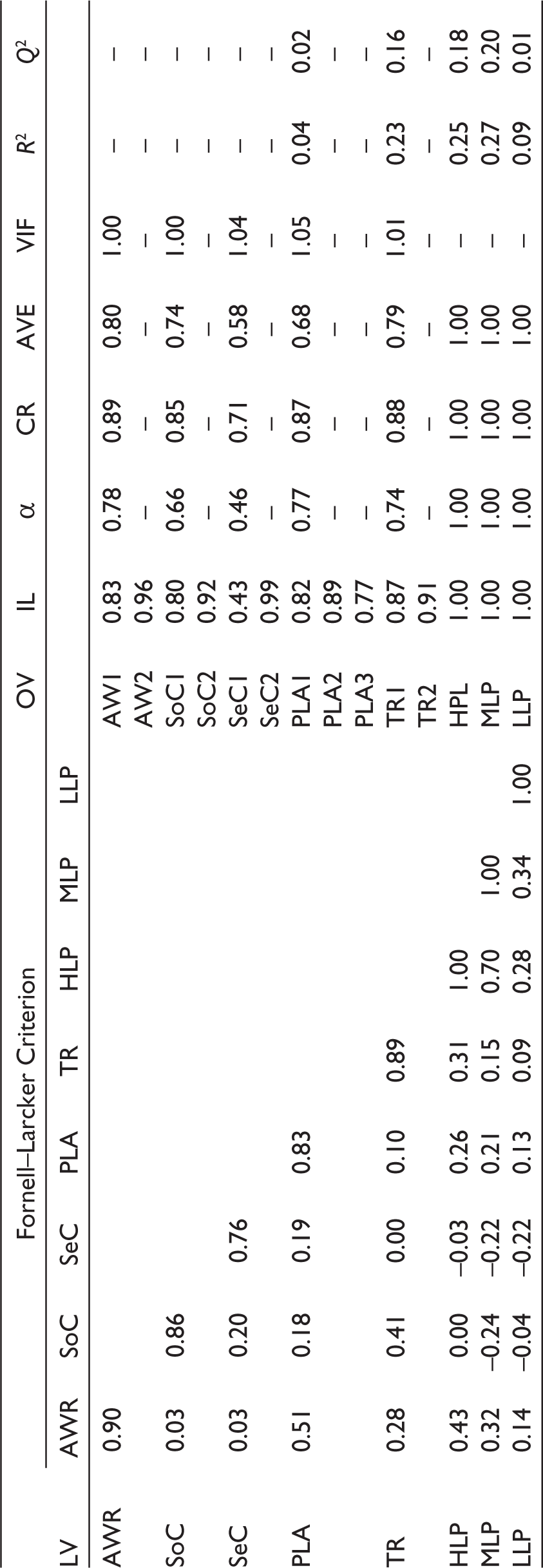
LV: latent variables; OV: observed variables; IL: indicator’s loading; α: Cronbach α; CR: composite reliability; AVE: average variance extracted; VIF: variance inflation factor; R2: coefficient of determination; Q2: predictive relevance; AWR: awareness; SoC: social capital; TR: trust; SeC: sense of community; PLA: place attachment; HLP: high-level participation; MLP: medium-level participation; LLP: low-level participation.
Heterotrait–Monotrait Ratio (HTMT) for Discriminant Validity.
Hypothesis Tests Results.
Structural Model and Hypothesis Testing
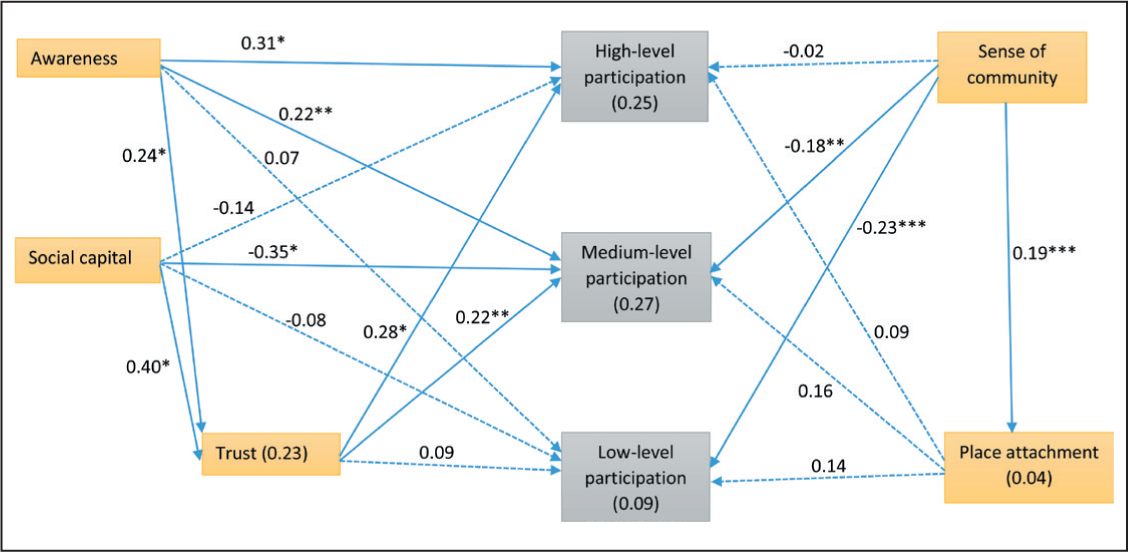
The predictive validity of the structural model was assessed using the measure of explained variance (R2). As shown in Table 4, the R2 value for trust, place attachment, high-level participation, medium-level participation and low-level participation latent constructs are 23 per cent, 4 per cent, 25 per cent, 27 per cent and 9 per cent, respectively. The same table shows that the values for cross-validated redundancy Q2 are greater than 0 (zero) suggesting predictive accuracy for all latent variables (Hair et al., 2016). Q2 ranged from 0.02 (place attachment) to 0.20 (medium-level participation).
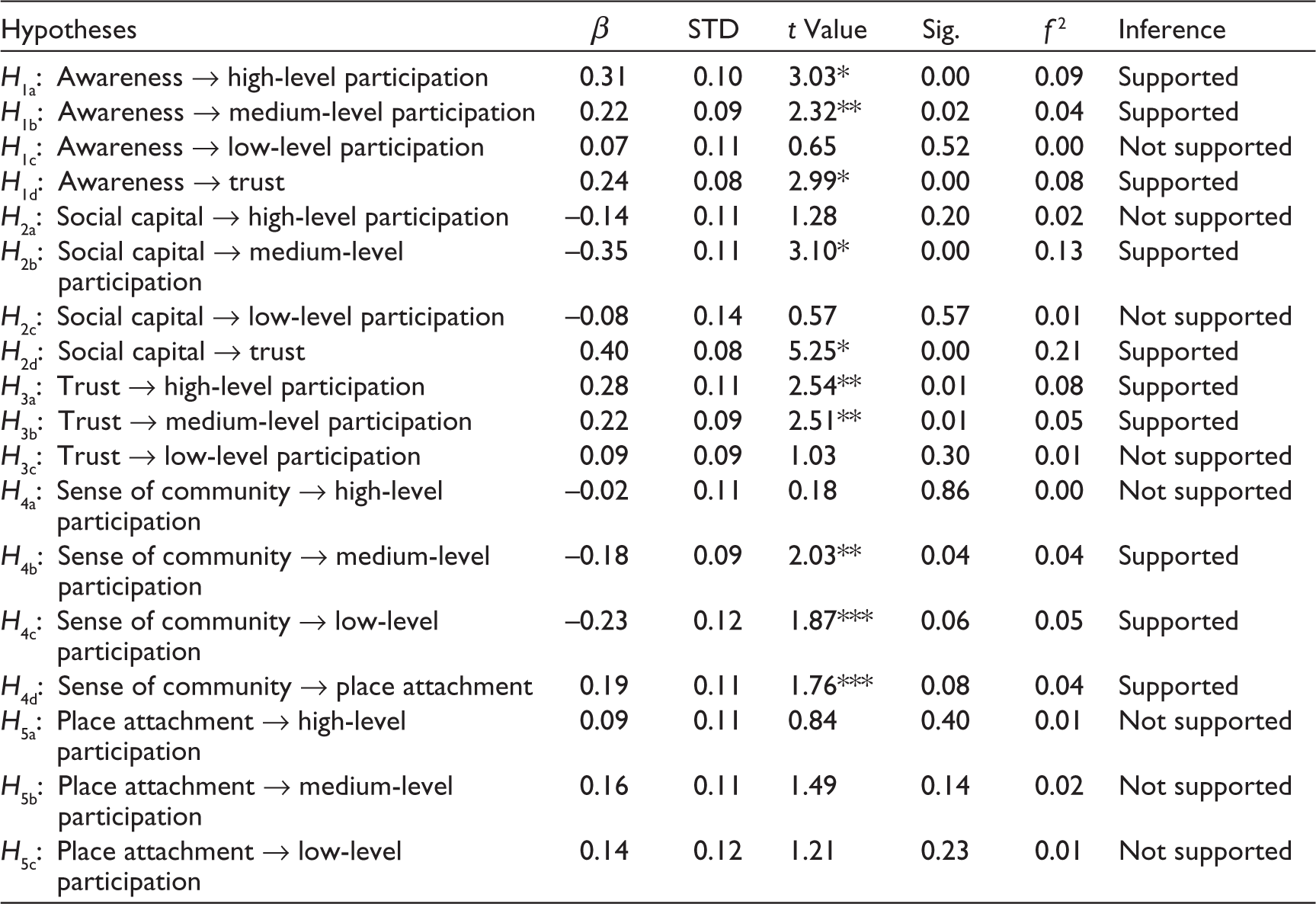
Next, we used the non-parametric bootstrapping method using 110 cases and 4,999 bootstrap samples (Henseler et al., 2016) to test for significance of path coefficients. As can be seen from Table 6 and Figure 2, awareness positively influences high-level participation, H1a (β = 0.31, t = 3.03, p < 0.01, f2 = 0.09), medium-level participation, H1b (β = 0.22, t = 2.32, p < 0.05, f2 = 0.04) and trust, H1d (β = 0.24, t = 2.99, p < 0.01, f2 = 0.08). Social capital negatively and weakly influences medium-level participation, H2b (β = –0.35, t = 3.10, p < 0.01, f2 = 0.13) and positively influences trust, H2d (β = 0.40, t = 5.25, p < 0.01, f2 = 0.21). Trust positively and weakly influences high-level participation, H3a (β = 0.28, t = 2.54, p < 0.05, f2 = 0.08) and medium-level participation, H3b (β = 0.22, t = 2.51, p < 0.05, f2 = 0.05). Sense of community negatively influences medium-level participation, H4b (β = –0.18, t = 2.03, p < 0.05, f2 = 0.04), low-level participation, H4c (β = –0.23, t = 1.87, p < 0.10, f2 = 0.05) and positively influences place attachment, H4d (β = 0.19, t = 1.76, p < 0.10, f2 = 0.08). On the other hand, awareness does not influence low-level participation, social capital does not influence high- or low-level participation, trust does not influence low-level participation, sense of community does not influence high-level participation and finally, place attachment does not influence any of the levels of participation. The implications are discussed in the following section.
Discussion
Theoretically, the point of departure of this study is to step beyond the traditional approach and conceptualise the socio-psychological factors related to the process and place that influence the participatory behaviour of the community. The influence of the individual factors is further measured in relation to passive as well as active levels of participation that the respondents perceive. Active participation by critical stakeholders is key to any development project (Talò et al., 2014). It has been shown in many countries that without active participation of slum dwellers, slum upgrading projects are likely to be unsuccessful in achieving long-term targets (Das & Takahashi, 2009). It is evident that that community participation improves the performance of the projects and increases their impact (Imparato & Ruster, 2003). Therefore, it is important to identify the pathways to resolve the issue of non-participation in slum upgrading projects.
In this article, we examined the factors influencing people’s intention to participate in slum upgrading projects in Mauritius. Thus far, this has not been empirically tested in the countries where PSUP is being implemented (UN-Habitat, 2012). We conducted a household survey of slum dwellers and adopted a PLS-SEM approach to identify critical predictors of attitude and behavioural intention of the slum dwellers to be engaged in the slum upgrading project. Our analysis reveals two distinct pathways by which higher willingness to participate in upgrading projects could be achieved.
The first pathway is through enhancement of awareness. Genuine engagement requires informed citizens for innovative and deliberative forums (Owens, 2000). The more aware the residents are of the slum upgrading project (product) and of the importance of participation (process) in the project, the more willing they are to engage in high-level participation. To activate this pathway, providing more information about the project to the slum dwellers and engaging with them could be useful (Patel, 2013). Building awareness and access to information (transparency) can further create a better image of the authority (Newport & Jawahar, 2003; Tosun, 2000), which in turn contributes to increased credibility and acceptance.
However, Davies (2001, p. 212) recapitulates that ‘even when this knowledge [about product and process] exists, or is provided, there is scepticism about the efficacy of participating’. In this regard, the second pathway emphasises establishment of trust between planning authorities and the beneficiaries. The findings from this study suggest that the degree of awareness and social capital positively influence trust on authorities (p = 0.40). This implies that the more trust the slum dwellers have on authorities, the more they are willing to engage with a greater and active role in the improvement projects. As a result, authorities have higher propensity to ensure effective community engagement to obtain critical input and community knowledge around the development project. Similar findings have been made in Enyedi (2004), Bari and Efroymson (2009) and Swapan (2014).
The sense of community has an indirect relationship with the level of participation. The higher the sense of community, the lower the willingness to participate in low and medium levels of participation. In our study, sense of community has been defined by two items: relation with neighbours and relation with community/political leaders. The agencies could play an informal role in promoting more interaction between the community and local leaders. If local leaders are part of the formal project management groups, they could be encouraged to interact more with the local communities to gain their trust. This would enhance the communities’ sense of community as well as their social capital (Minnery et al., 2013), which ultimately help improve the performance of the projects (Viratkapan & Perera, 2006).
Sense of community also has a strong positive impact on place attachment, even though place attachment does not significantly affect high-level participation. This finding supports Xu et al. (2010) and Manzo and Perkins (2006) but is a contrast to the findings of Anton and Lawrence (2014) and Mesch and Manor (1998). Place attachment is a personal characteristic, which depends on the personal connection with the place, number of years living in the place, etc. Sense of community also grows from the relationships with neighbours and staying for a longer term in a single place. In this case study, slum dwellers faced risk of eviction and uncertainty, which might contribute to the insignificant tendency to participate reflected from a lack of sense of community and place attachment. This could also be related to the notion that slum dwellers are involved in informal economic activities and would prefer to stay close to their place of work, even though they have insecure tenure and poor living conditions in the slums. Therefore, the agencies may not have much influence on this factor.
Conclusion
Our study is one of the first studies to apply PLS-SEM in exploring the factors affecting slum dwellers’ intention/willingness to participate in slum upgrading projects. We acknowledge that the reliability of the model could be raised with a larger sample size. Having said that, the study identifies two distinct pathways relating process and place to encourage the number and degree of participation in a slum upgrading project in Mauritius: investing time and resources to uplift awareness and ensuring a higher level of trust. Increased levels of awareness and trust can create more participation opportunities through constructive dialogues with the beneficiaries (Davies, 2001). Such information could be used to design more targeted development programmes for the community.
However, there are several issues which could be explored further. For example, even though the benefits of effective community participation are substantial, it is not without costs. Potential participants (i.e., the slum dwellers) are time and resource poor. They face enormous transaction costs to participate in activities. However, we have not explored this issue. Further, conducting similar studies in other cities in Mauritius and in other countries could be useful to test the robustness of the findings.
Footnotes
Declaration of Conflicting Interests
The authors declared no potential conflicts of interest with respect to the research, authorship and/or publication of this article.
Funding
The authors have received no financial support for the research, authorship and/or publication of this article.