



Abstract
With six years left before realising Vision 2030 plans, Namibia finds itself with the current generation, that is, young people (youth) not interested/un-motivated to take up agriculture as a form of income-generating activity. Scientific literature is lacking in this area in Namibia, yet there is an argument that social protection (SP) programmes in agriculture are important to help increase agricultural output among the youth and in turn, sustainable food security and reduction in unemployment. Using the theory of market failure, this article sets out to identify challenges experienced by the youth in Namibia in participating in agriculture and discuss how coupling agriculture with SP could contribute to agricultural transformation. A qualitative methodological approach was employed as this approach helps with understanding how people think and act and, in this case, how the youth perceive the agricultural sector. It is found that a lack of infrastructure, income uncertainty, lack of farming protection and access to land deter the youth from participating in agriculture with some categorising farming as ‘not a job’. For agricultural transformation to come about, an enabling environment needs to be created to realise Vision 2030. This study contributes to the literature on proposed solutions in creating an enabling environment for those aspiring to go into agriculture as per the aspiration of the current policies and programmes.
Introduction
The transition from small farm-based alternatives to sustainable agriculture in any country can happen only if there is a generation of men and women interested in taking up the challenge (White, 2012). To take up this challenge, sustainable and lasting agrarian change needs a supportive institutional environment (Ruben & Beekman, 2019). This environment requires governments to support accessible finance modalities for farmers and small-scale agro-entrepreneurs who lack collateral, insurance schemes that are conducive for mitigating risks and assist farmers to invest even though risk aversion is high. Access to finance as well as insurance scheme, especially in southern geographical areas including Namibia where drought (a major risking risk) is more frequent but where crop insurance is less common, points to the need to reform extant policies to move toward a holistic approach for risk management (Santeramo et al., 2024). This could allow innovations and value addition in food value chains to take off, creating substantial new employment opportunities for farmers aspiring non-farm jobs (Ruben & Beekman, 2019). This means agriculture represents one of the most vulnerable sectors to extreme weather events that are projected to increase with climate change. Insurance has been advocated as a more efficient means to ensure financial security to farmers, than post-disaster aid for damages (Doherty et al., 2021).
The government of the Republic of Namibia has developed a Vision 2030 document that defines clearly where the country is and where it wants to be by 2030. The document reveals and points to something new, beyond what is already available and accessible (Government of the Republic of Namibia, 2004). In terms of prosperity, ‘something new’ means there is social security support that guarantees Namibians an acceptable quality of life. It also means, there is equity in income distribution across all groups, and the disparity between rural and urban living, in terms of social and economic conditions, is at a minimum. The social protection (SP) policy developed in 2021 is aligned to Namibia’s Vision 2030 in terms of improving people’s quality of life (Republic of Namibia, 2022) and having youth (by 2030) who are ‘motivated to take up entrepreneurial opportunities and are well equipped with appropriate skills, abilities and attitudes’ towards the country’s development (Government of the Republic of Namibia, 2004, p. 35). In line with this, the SP policy specifies that disadvantaged individuals should be provided with social security that ensures a decent quality of life (meaning strengthening the coverage of social grants as well as developing new approaches for social and economic upliftment of poor and vulnerable people in the country) at least by 2022 as a 2030 Vision (Republic of Namibia, 2022). By 2022, many of the people especially the youth still had challenges accessing productive assets, capital and land (United Nations Namibia, 2023). Although social protection spending has increased over the years, as per Vision 2030, it is largely skewed towards the elderly compared to young people (UNICEF, 2024).
With only six years to go before the year 2030, the country finds itself with young people (youth) not interested in taking up agriculture as a form of employment even though most of Namibia’s population is dependent directly or indirectly on the agricultural sector for their livelihoods (International Trade Administration, 2021). Youth in Namibia refers to people aged 15–34 years (Namibia Statistics Agency [NSA], 2018). The average Namibian farmer is aged 68 years (NSA, 2017). This presents a concern as it contradicts the goals outlined in Vision 2030, which aims to provide educational and training opportunities for all individuals under the age of 30 in Namibia by 2030. The intention is to inspire these young men and women to pursue entrepreneurial endeavours in various fields, including agriculture (Government of the Republic of Namibia, 2004). Unemployment affects the youth disproportionately (President of the Republic of Namibia, 2021). Overall, the unemployment rate in Namibia stands at 28.1% (NSA, 2018), but the percentage of youth in Namibia without employment has increased from 39% in 2014 to 46.1% in 2018 (NSA, 2018).
There has been a vast amount of literature in many developing countries, for example, in Kenya, (Afande et al., 2015), Ethiopia, (Bezu & Holden, 2014), South Africa (Magagula & Tsvakirai, 2020), Ghana (Naamwintome & Bagson, 2013) and Zimbabwe (Thebe, 2018), that has pointed out the challenges and perceptions of youth when it comes to agriculture. However, according to the researcher’s knowledge, there is no academic literature on this topic with a strict focus on Namibia and how to create an enabling environment through SP for the youth. The question therefore remains whether Namibia’s national development plans can be achieved without generational renewal of, and greater support for, smallholder farming. This is an important question because Namibia has been ranked the second most unequal country in the world after South Africa, with a Gini coefficient that now stands at 0.5 (Office of the President and National Planning Commission, 2020). Agriculture remains the highest employment sector in Namibia, accounting for 23.0% of the employed persons; however, it is also recognised as one of the industries with the lowest average salary, with workers earning an average of N$3,393 per month (NSA, 2018).
The aim of this article is to identify challenges experienced by the youth in Namibia in fully participating in agriculture and discuss how coupling agriculture with SP could contribute to an interest in agriculture and, subsequently, poverty reduction. This article also reviews the experiences of a few developing countries that have coupled agriculture with SP in order to attract youth in agriculture. SP in the article focuses specifically on protection in terms of enhancing workers’ productivity and employability (Carter et al., 2019). SP is a set of interventions whose objective is to reduce social and economic risk and vulnerability and to alleviate extreme poverty and deprivation (Falola & Hoyer, 2017). The most commonly used conceptual framework describes four SP functions as protective: providing relief from deprivation (e.g., income benefits, state pensions), preventative: averting deprivation (e.g., savings clubs, social insurance), promotive: enhancing incomes and capabilities (e.g., inputs) and transformative: social equity and inclusion, empowerment and rights (e.g., labour laws) (Devereux & Sabates-Wheeler (2004) cited in Friedrich-Ebert-Stiftung [FES], 2016). Projects that combine elements of SP tend to emphasise broad poverty and vulnerability reduction goals relative to those that do not (Arnall et al., 2010).
Literature Review
One of the main challenges to youth participation in agriculture is the lack of resources, organisation and coordination among youth in agriculture and agribusiness (Fiedler, 2020; Salvago et al., 2019). As a result, many youths end up farming on a part-time basis because of limited experience, access to credit (due to insufficient security), low income and land access (Fasakin et al., 2022). Furthermore, low remuneration in agriculture (NSA, 2019), alongside the rising costs of essential services, work fragility and transition and failing safety nets (United Nations Food Systems Summit, 2021), influence the decision to farm on a part-time basis. This is due to the necessity of being able to both afford and repay credit, often leading individuals to balance their farming responsibilities with urban employment opportunities (CORTEVA Agriscience, 2018). In addition to these challenges, poor access to markets makes it difficult to guarantee income (Amadhila & Ikhide, 2016). This normally occurs due to competition from food imports and as a result, farmers encounter market competition (Akrong & Kotu, 2022). When market competition is coupled with insufficient business knowledge, scarcity of primary resources and lack of access to technology (Akrong & Kotu, 2022), it affects the supply of resources from relevant stakeholders. For example, in South Africa, the challenges faced by youth in agriculture fall into two categories: The demand and the supply side. The factors categorised on the demand side are (a) government regulations, (b) lack of a relationship with stakeholders, (c) limited support from the government, (d) limited support from private sector players and (e) lack of youth inclusion in development programmes, among others. The factors on the supply side include (a) lack of access to credit and finance, (b) lack of access to information, (c) lack of awareness of initiatives and programmes and (d) lack of entrepreneurship education (Geza et al., 2022).
In Uganda, most youth do not participate in agriculture because assets like land are divided among the many older family members and the resulting small farm sizes may not be viable, hence the reduction in the probability of undertaking agriculture (Konrad-Adenauer-Stiftung, 2015). Furthermore, decreased precipitation affect participation in agriculture, and thus the call for government to provide safety nets in agriculture as a form of drought protection (Holzmann & Jogensen, 2000). In Ghana, a free crop insurance project was introduced that tries to protect farmers from falling into poverty due to climate change-related issues of extreme weather, pest infestations and crop disease outbreaks becoming increasingly destructive, which greatly attracted many farmers into agriculture (World Economic Forum, 2022).
Access to electricity can improve agricultural activities from the more traditional uses for irrigation and cold storage to the more sophisticated digital applications for real-time weather forecasting and resource use monitoring (Hafner et al., 2018). In sub-Saharan Africa (SSA), the share of electricity in total energy consumption is as low as 4% (against the 19% of North Africa). Mostly, electricity is consumed to power two key industrial activities: mining and refining, and the rest is equally distributed between services and the residential sector (Blimpo & Malcolm, 2009). In Namibia, less than 50% of the population has access to power (van den Berg, 2022) but it is expected that by 2030, there are basic social services and infrastructural facilities available for more than 70% of the population in both urban and rural areas of the country (Government of the Republic of Namibia, 2004).
Poor road transport characterised by potholes, dust and mud especially when it rains, impedes mobility and affects the marketing of agriculture produce, and subsequently causes high incidence of post-harvest losses (Morgan et al., 2019). Males indicate higher level of participation (in terms of number activities they undertake) in agriculture because they experience less constraints (such as motherhood, limited schooling, access to land due to cultural inheritance practices, etc.) than females (Njeru & Mwangi, 2017). These gender constraints affect access to other resources and job opportunities. For example, the unemployment rate in Namibia is skewed towards males (Office of the President and National Planning Commission [NPC], 2020), and only 23% of the commercial farms are owned by females as opposed to the 66.2% of the farms owned by males (NSA, 2014).
Youth will be the driving force behind economic prosperity in future decades, but only if SP policies and programmes coupled with agricultural interventions are in place to enhance their opportunities in agriculture. SP when directed to the agricultural sector makes the farmers less vulnerable to risk and shocks, and thus lower the rate of poverty (Matthew et al., 2019). Existing literature has provided insight into the challenges faced by the youth in agriculture, but the challenges faced in Namibia are missing and context-specific evidence is needed for better response to the challenges.
Agriculture in Namibia and the Importance of Creating an Enabling Environment
Namibia is the driest country in SSA and depends largely on groundwater. Only 2% of Namibia’s land receives sufficient rainfall to grow crops. Low and variable rainfall and the intrinsically poor soils are major obstacles to optimum agriculture production. As all inland rivers are ephemeral, irrigation is only possible in the valleys of the border rivers Orange, Kunene and Okavango. As a result, less than 1% of the entire land area is suitable for arable farming. The country’s commercial agricultural sector is complemented by a large informal sector characterised by subsistence farming. The commercial sector covers about 44% of the total land, though it accommodates only 10% of the population. The communal sector covers 41% of the total land area and accommodates about 60% of the population. Livestock farming contributes approximately two-thirds of agricultural production, with crop farming and forestry making up the remaining third. Meat processing (which is classified as manufacturing by the Namibian government) contributes another 0.2–0.4% of GDP. The country is a net exporter of unprocessed agro-products, especially from the livestock sub-sector although it relies heavily upon imports of food products. Most imports come from South Africa and the European Union member states. Due to Namibia’s extreme climate challenges, the country needs to adopt agricultural practices that strengthen the resilience to climate change and variability to ensure food and livelihood security of its increasing population (Deutsche Gesellschaft für Internationale Zusammenarbeit [GIZ], 2023). Most farming is practised in the northern regions of the country where most households plant/farm between 1 and 4 ha each year. Farmers with the biggest herds of cattle are in Caprivi and Kavango and then much more in Ohangwena, Oshikoto, Oshana and Omusati. While Agriculture and Land Reform Ministry was allocated about $61 million of government expenditure (Republic of Namibia, 2022), as one of the efforts made to promote agricultural production in Namibia, evidence on efforts to promote labour market SP, that is, employability and productivity efforts in agriculture remain obscure.
Successful implementation of Vision 2030 to achieve sustainable agriculture would require the existence of a conducive enabling environment (Government of the Republic of Namibia, 2004). In agriculture, an enabling environment for SP is a function of international consensus, dialogue and collaboration with country citizens as it is a platform from which to assess whether nations have tackled their obligations of conduct and result with respect to duties to respect, protect and fulfil (facilitate and provide) the right to adequate food and/or food security (Food and Agriculture Organization [FAO], 2016). SP programmes that encourage youth participation are those programmes that allow for investment in productive activities and assets and broadening employment opportunities (FAO, 2016) to create an enabling environment. SP programmes in agriculture are important to help increase agricultural output among the youth and in turn, sustainable food security and reduction in unemployment (Osabohien et al., 2020a). Further, these programmes will ensure inclusive economic growth as a sustainable way to break the cycle of rural poverty because many households in SSA including Namibia rely on agriculture for livelihood and the high share of expenditure on food makes agriculture key to poverty and hunger alleviation interventions. Investment in agriculture is the most effective way to provide opportunities to generate income and improve nutrition, especially for women and youth in rural areas (Niyogi, 2015).
Initiatives Taken in Some African Countries to Encourage Youth Participation in Agriculture
Impact evaluations show that combined interventions of agriculture and SP can be more effective in tackling hunger and poverty than stand-alone programmes (FAO, 2016). For example, Information Communication Technology (ICT) interventions in Rwanda inspired more youth by improving availability, access and use of ICT technologies, thus contributing to the change in mindset about agriculture as a career (Yami et al., 2019). The use of ICT (e.g., using radio by giving youth airtime) enabled the youth to discuss agricultural topics and shared successes. This contributed to employment and enhanced the productivity and profitability of farming activities through high-yield prices and farm income (Yami et al., 2019). The use of ICTs provided reliable markets and modern production information on existing livestock and crops and provided better access to profitable markets (Irungu et al., 2015).
In Zambia, factors like the private sector support, diversified business portfolios and government support were some of the enabling factors helping the youth entrepreneurs succeed (Hjortsø et al., 2017). The Universities, Business and Research in Agricultural Innovation (UniBRAIN) model introduced in Zambia has been successful in engaging local communities with academic and research institutions, and business networks as partners in youth agribusiness interventions and created opportunities for the sustainability of positive outcomes such as better employment (Hjortsø et al., 2017).
Private sector initiatives in Mali, for example, the MasterCard Foundation programme on finance for youth, focusing on the chronic need for finance for risk management and life cycle events provide youth with access to financial services and strengthening of their financial skills. This stimulated the youth to participate and invest in agriculture because they learned different skills to manage risk in agriculture and there was evidence that participants had increased their savings or had invested in agriculture. Results of the programme demonstrated that youth were more able to save for bigger life events such as marriage (Geiling, 2016).
Tanzania is among the leading African nations actively developing dedicated agro-processing parks and agro-industrial growth corridors, supported by development partners such as the African Development Bank (John, 2024). Tanzanian Agriculture Climate Resilience Plan (2014–2019) clearly recognises cases where education has helped to increase the adoption of climate smart agriculture (CSA) approaches, while improving knowledge of the nutritional risks associated with climate change (Chevallier, 2023). CSA is presented as an ‘integrative approach’ to address interlinked challenges of food security, climate change and mitigation through (a) adapting and building resilience of agricultural and food and nutrition security systems to climate change at multiple levels and (b) reducing greenhouse gas emissions from agriculture (including crops, livestock and fisheries) (Beattie & Sallu, 2021). Climate change adaptations such as irrigation significantly increased household income and diversification and encouraged many people including the youth to venture into agriculture as these practices reduced water use and conflicts (Mdemu et al., 2024).
Although there are some agricultural interventions that are working well or have worked in some countries, it should be noted that context matters, and it should not be automatically assumed that what worked in one country will work in another. Success or failure of any project depends on the devotion and hard work of the youth (Yami et al., 2019). Existing literature has only looked at the challenges of participating in agriculture without considering the aspect of SP programmes.
The theory of market failure, that is, the inability of an economy to reach certain desirable outcomes in resource use, guides this study (Datta-Chaudhuri, 1990). Most of the economic growth comes from the ability of an economic organisation to utilise its productive resources more effectively without the naïve belief that once the physical capital is available, for example, machineries, the subsequent problems of production and productivity improvement would automatically be resolved (Datta-Chaudhuri, 1990). It is for this reason the researcher puts forward an argument to couple agriculture with SP through government and market intervention to reach desirable outcomes.
Materials and Methods
This article employed the interpretive paradigm to obtain real issues shaped by human experiences, that is, youth. The researcher’s intention was to gauge perceptions of the youth (between the ages of 15 and 34) on the topic. The study was exploratory and qualitative in nature. It not only aimed to have a better understanding of the problem, but to also focus on a particular group (case) to conduct an empirical investigation of a contemporary phenomenon within its real-life context (Saunders et al., 2016). Further, qualitative methodology helps with understanding how people think and act and, in this case, how the youth perceive the agricultural sector (Aityan, 2022).
Sampling Strategy
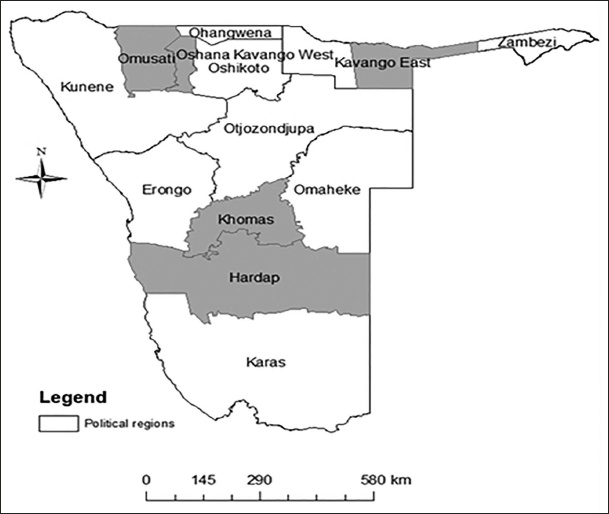
The study employed non-probability sampling methods, specifically purposive sampling (using judgement to select cases) in terms of age (15–34) and snowball sampling, that is, requesting participants to suggest other youth in the same age category of 15–34 years (Saunders et al., 2016). To apply snow-ball sampling, the researcher created a Google Forms link, then shared it with one individual (youth) in one local community in Namibia who then shared contacts with the researcher of other individuals to contact. The sample size was determined by the code and meaning saturation method. Code and meaning saturation refers to achieving a full understanding of codes as the indicator of saturation. It involves reviewing an interview and noting each issue (or code) identified, then in subsequent interviews identifying whether any new aspects, dimensions, or nuances of that code are identified, until nothing new is identified and the code has reached saturation (Faulkner & Trotter, 2017; Hennink & Kaiser, 2022). This code and meaning saturation method (as compared to, e.g., code and frequency saturation method) is applicable when one has a sample size between 5 and 24 because the researcher can adequately contextualise quotations, combine them with interpretative discussions to fully communicate the research story (Hennink & Kaiser, 2022). The data started giving similar codes from the 13th interview. The study interviewed 21 participants, of which five were males and 16 were females from the regions of Khomas, Oshana, Oshikoto, Ohangwena and Omaheke regions (see map in Figure 1 to have an idea of the location of these regions). Although the selection of participants in this study was based on their availability and willingness, more females participated. The participation of more women could be caused by their availability because more females do not have jobs (due to gender difference constraints) compared to men and therefore have time to participate in research projects (NSA, 2018). Furthermore, fewer males (72%) than females (79%) participate in agricultural activities in Namibia and female small-scale farmers tend to outperform male small-scale farmers in terms of high crop yield and profit (NSA, 2014), despite the challenges experienced. Although it was the researcher’s wish to have an equal representation of both males and females in the sample size, most of the requests sent to males to participate in the research went unanswered. Stat Planet that was used to generate Figure 1 is a software for interactive data visualisation and mapping.
Data Collection
The study employed semi-structured interviews as primary data. Due to the COVID-19 pandemic at the time of data collection, a link was created, and participants answered the questions online where they were encouraged to write in detail. For any answer that was not answered in detail or not clear to the author, follow-up interviews were done via Zoom for further elaboration. All interviews required further elaboration. Follow-up interviews via Zoom allowed the researcher to gain more understanding about the participants’ views on the subject. The data were collected between the months of May 2021 and January 2022. Participants were asked to give consent before the commencement of the interviews. The interview time frame was between 15 and 30 min.
Data Analysis
Interviews were recorded and transcribed and written in a dialogue format, after which the study employed a thematic analysis using the ATLAS.ti software version 9. The following steps were taken. First, the researcher familiarised herself with the data by reading through the transcripts. Second, she coded important information from the interviews related to the objective of the study. Third, themes were generated from the codes and in the final step, a review of the themes was done to ensure that they spoke to the study’s research objective (Friese, 2014). The narratives appear in the findings section to provide a sense of how participants view agriculture. The data were summarised into a report format with quotes from participants. Some of the codes generated were farming experience, type of farming, reason for choice of study, land affordability, access to capital and insurance for farming. The three main themes that emanated from the codes were: (a) mode of farming, (b) farming protection and (c) infrastructural support.
Research Ethics
The study was conducted according to the guidelines of the Declaration of Helsinki, and approved by the Ethics Committee of Stellenbosch University Business School (Ethics Code: BD104—financing agricultural small- and medium-scale enterprises in Namibia) as part of a bigger research project. The study ensured privacy and confidentiality of participants by not requesting personal identification of participants. This enabled the study to comply with research ethical standards used in research such as those which pertain to normative codes and guidelines (Vanclay et al., 2013). Privacy was ensured by creating an independent link that did not ask for personal information, and not sending responses to the researcher’s e-mail account (Saunders et al., 2016). The participants were made aware of what the study sought to achieve and gave both online and verbal (via Zoom) consent to participate. The researcher employed integrity, maintained objectivity by being free of conflict of interest (e.g., not interviewing friends), and by making sure that she did not distort facts or subordinate judgement to participants.
Results
Description of the Interviewees
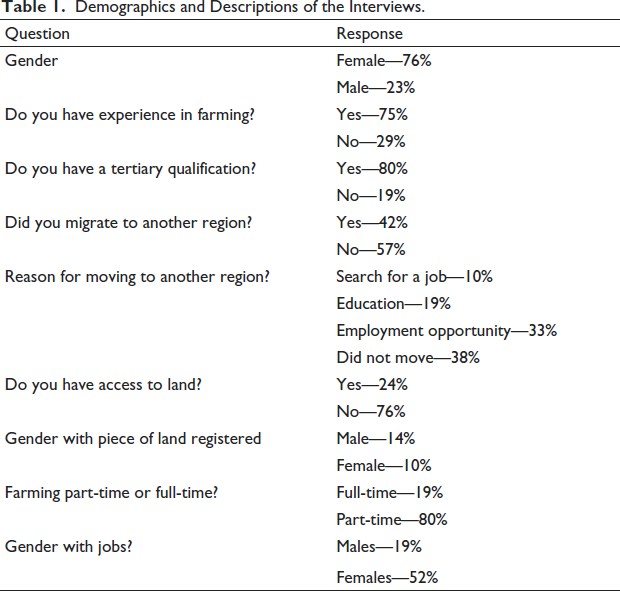
Participants were asked to provide demographic information related to access to land. Most of the participants without access to land cited reasons related to exorbitant prices of land. Although 61% had formal jobs where they earn an income, they cannot afford to purchase land as their salaries were way too low compared to the price of farmland. In Namibia, 50% of employees earn N$17,400 (Salaryexplorer, 2022) or less per month and those with higher salaries (about 25%) earn up to N$77,900 per month. However, farmland costs N$5,200,000–N$15,600,000 (NamibiaHub.com, 2022). Only four participants were farming on private land and the rest practised on communal land. Communal land is land that owned by the state and held in trust for local communities. This land cannot be sold; transfers of use rights must go through the traditional authorities and land Board. Agriculture is, however, mostly practised in the communal areas. Private land on the other hand refers to freehold land in Namibia were owners have rights to hold the land in perpetuity, to use, transfer and dispose of the land, and to exclude others from the land. Prior to Independence in 1990, all commercial farming land in Namibia was held in freehold, mostly by white commercial farmers with large livestock farms. Forty-four per cent of Namibia’s land is privately owned. Thirty-nine per cent of Namibia’s land is communal land. The rest is state land including national parks and restricted areas (USAID, 2010). Those on private land, acquired the land as part of residential plots but only one person practised farming full-time. Similarly, despite experiences in farming (75%), only four participants in total (one male and three females) practised farming on a full-time basis and the rest opted for part-time farming mode, while others said they were not interested. For those without experience in farming or not interested in farming, this is attributed to the fact that the sampling used was strictly by age category and therefore although some participants qualified in terms of the criteria used to select, they did not have any farming experience. Farming experience means any form (cultivating the soil, producing crops and raising livestock) at either subsistence or commercial level undertaken. However, the ‘uninterested’ group still provided valuable information on how they view agriculture in Namibia in general. What was most interesting is that the male participant who farms on a full-time basis by selling cash crops did not regard farming as a job because when asked whether he has a job, he responded with a ‘No’ as the returns are too low.
Close to 50% of participants moved to other regions within the country (mainly Khomas regions) to search for work or education. This was an important question to ask because there is evidence that a large proportion (68%) of people within the age group of 18–30 were interested in urban life (NSA, 2015). Most youth in Namibia tend to migrate to the Khomas region (an urban region) from mostly rural regions, where agriculture is the primary source of subsistence, which include Omusati, Kunene, Ohangwena, Oshikoto, Oshana, Kavango West and East and Zambezi regions. These youth migrate to look for formal employment in the Khomas region, specifically in Windhoek (the capital city).
In Table 1, it appears more females have jobs than males, but this is because more females participated in the study. The reality is, only one male did not have a job out of the six who took part in the study while there were five females without jobs out of the 16 females who took part.
Table 1 provides demographics on how participants responded to questions asked.
Demographics and Descriptions of the Interviews.
Some of the questions that participants were asked include the following: Would you farm on a part-time or full-time basis? If farming on a part-time basis, what are your reasons? The answers to these questions gave the author a picture of the dimensions of risk to which insurance (SP) might be a solution. Participants were also asked the following questions: What are your views on insurance for farming in Namibia? What challenges do you believe farmers in Namibia experience when compared to other African countries? There were three main key findings: (a) Most youth prefer to farm on a part-time basis than full-time, (b) farming protection (insurance) is considered a necessity and (c) lack of infrastructure support defeats the purpose of agriculture transformation by 2030. The next section provides narratives of these findings to help gain a better understanding of the participants’ viewpoints.
Mode of Farming
Most of the young farmers felt that going into farming on a full-time basis is not profitable as one does not get much support either in terms of funding or they do not have access to land to make it a full-time job. The following quotes illustrate. Due to lack or limited access to funding, I require a fixed income to support farming activities. (Oshana, female, 30–34) I need land south of the veterinary cordon fence to farm economically on a full-time basis and provide employment which I do not currently have.(Khomas, male, 30–34) It is not a lucrative business. I want an income and full-time farming will not allow me to get the income I want. (Khomas, male, age 26–29)
With regard to the preference of land at the veterinary cordon fence as mentioned by the male participant from the Khomas region, this is because the government recently decided to compel its entities to buy meat products from suppliers north of the red line, creating a new market. These entities include but are not limited to public schools, universities, state hospitals and correctional facilities. The decision seeks to put into practice section 71 and 72 of the Public Procurement Act, which gives locals preference in the state’s procurement through the reservation of certain procurement of goods (Mumbuu, 2023).
Farming Protection
With regard to farm protection, none of the participants had labour market protection (insurance) for their agriculture activities due to the lack of knowledge on whether it exists and unaffordability. All participants narrated that insurance (farm protection) for farmers is important mainly to protect against natural disasters like floods. The farm protection that is considered in this case is the provision of relief from deprivation (e.g., income benefits and state pensions). This desire is spurred by the context of climate change and anticipated extreme weather events in Namibia. Three participants narrated as follows:
Farmers need to be insured against drought or flood damages which are common in the country. Recently in the country we had locusts attacking subsistence farmers’ fields and no one will compensate for that loss. (Oshikoto region, female, age 26–29) Yes, due to unforeseen events like drought, food and mouth disease amongst others, farmers need to secure their assets to ensure they can be recovered after a great loss but I am not aware of any farming insurance. (Omaheke region, female, age 30–34) In case of poor rainfall, insurance is essential or during strong floods that destroy crops but it is expensive. (Oshana region, male, age 30–34)
Infrastructure Support
The last main theme that emerged from analysing the data were the lack of infrastructural and risk management support. These include the scarcity of water and skills on how to manage risks that may occur, access to markets and cost of products. Some participants narrated the following:
Supply of water, access to electricity, strong and very bad sandy road is a challenge in Namibia when it comes to farming. (Oshana region, male, age 30–34) Cost of infrastructures make it hard to solely depend on agricultural activities because the market is not well established. (Oshana region, female, 26–29) Risk management skills during disasters such floods, droughts, etc. are lacking. (Omaheke region, female, 30–34)
Participants pointed out other challenges related to irrigation, access to markets and opportunities for growth in agriculture when they were asked about the challenges to farming in Namibia. There is no access to markets where we can sell our produce. (Ohangwena, female, 30–34) Land, skills especially in modern farming, capital and recognition, e.g., accessing market, are absent factors. (Omusati, female, 30–34) Besides natural disasters like droughts and floods, young farmers in Namibia seem to not really be literate about financing and education opportunities that can help them expand their farming into commercial farming. With institutions like DBN and Farmers Association in place, more advocacy needs to be done, on platforms that are attractive to young people. (Oshikoto, female, 26–29)
Other questions asked and of note were related to why young people want to farm. The few who wanted to do farming provided reasons, such as
I see agriculture is a way to go, we need to produce our own food in Namibia, but not to import everything while we have enough land. (Omusati region, male, 30–34) As we know Namibia imports most of agricultural produce, and the one we produce, we hardly add value to it. Thus, I have decided to do and study agriculture. (Ohangwena, female, 30–34)
There were participants who expressed their desire to take up farming but were not doing it because of lack of resources. One participant said:
Perhaps I’d farm if I have access to resources such as land and starting capitals for machines. (Oshana, female, 26–29) I cannot financially afford any piece of land and to farm you need land. (Oshana, female, 26–29)
Other participants were not interested in farming at all because past experience gave them an impression that it is not lucrative. I grew up cultivating and looking after livestock, I thought it was fair enough to follow a career in education than agriculture/farming as it will make a difference at home. (Omusati region, male, 30–34) I grew up in a poverty stricken home yet my parents were farming. (Omaheke region, female, 30–34)
Discussion
The aim of this article was to identify the challenges experienced by the youth in Namibia in participating in agriculture and discuss how coupling agriculture with SP could contribute to agricultural transformation in order to achieve Vision 2030. Participants lamented the issue of access to land among others. More than 70% of youth do not own land, and this is an issue because young people cannot think of starting farming with or without insurance and other kinds of support if there is no land available. This is simply because they cannot afford it. Only 1% is arable farmland in Namibia, and this could be a factor in the high cost of farmland as it is very limited. Although the researcher did not enquire about the salary of the participants, the type of jobs they held varied from IT, lecturers, researchers, statisticians, to bankers. These jobs are considered as well-paying jobs in Namibia but there is still a huge gap between the salaries earned (when one takes into account the highest salary one can earn per month) and the price of farmland. Haikali (2018), cited in Amadhila, 2021) argues that youth access to land is problematic in Namibia in the sense that in almost all cases, the land is controlled by the elders and inheritance practices tend to restrict benefit to the oldest person in the family or household. The others must move out or scrabble for small plots of land; female youth may lose even minimal access if they marry an outsider (though this may be the reverse in matrilineal systems), and as a result, agricultural extension services go to the elderly farmers who own the land (Haikali, 2018). Matrilineal descent systems are found in the north of the country but even within these systems there is much variation and complexity. Matrilineal kinship simply means that people, generally males, inherit through their mothers (Gordon, 2005). Regardless of the form of inheritance, it should be noted that the land attachment is different for different generations of farmers, which affects the decision of the family’s land use behaviour. In particular, the new and younger generation, which is strong and has a certain amount of capital, has a relatively weak land attachment, but its human resource endowment still has a great potential to play in the agricultural field (Zhang et al., 2022).
The young farmers interviewed prefer to farm on a part-time basis because of their formal sector jobs. This is attributed to them having tertiary education qualifications. Most participants (80%) have tertiary education and formal education has a negative relationship with the choice of farming in a sense that youth who received formal education are less likely to venture into agribusiness and more likely to be entrepreneurs in other sectors of the economy that appear more lucrative (Akrong & Kotu, 2022). The main driver of rural labour flowing into cities is not the actual income gap, but the expected income gap. Therefore, ‘while paying attention to farmers’ emotional appeals, retaining nostalgia and inheriting farming culture, we should also earnestly safeguard the dominant position of farmers, effectively protect their rights and improve their well-being’. (Zhang et al., 2022, p. 14)
In addition, the finding on the preference to farm on a part-time basis is evidence that farming aspiration requires accessibility of productive resources such as land, access to capital, labour and farm inputs to farmers from stakeholders such as parents and government (Geza et al., 2022) The educated youth’s reluctance to participate in agriculture due to low income is a sign of market failure and heightens the need to increase investments in agriculture through agricultural training, provision of basic infrastructure such as water, electricity, better roads and access to markets to increase the financial returns of agriculture in order to attract more youth into farming. Akin to Fasakin et al. (2022), issues such as access to credit and low income influence the decision to farm part-time.
The one participant who did not regard farming as a job cited that due to a lack of capital and limited potential for expansion, he does not view agriculture as having a job. This has an implication in the shifting character of agrarian sector in Namibia. The future of farming in Namibia may largely remain at a subsistence level than move to commercially oriented agricultural systems if the challenges in agriculture are not addressed. The government, research community, and private companies need to focus their investments, innovations and policies on helping smallholders manage risk, improve their resilience to shocks while promoting future growth (Fan & Rue, 2020).
Given the very arid dry country that Namibia is, one would expect protection for farming to be a priority for government but none of the participants in farming had labour market protection for their farming activities. This is similar to the findings in Osabohien et al. (2020b) and Amadhila (2023) that many farmers in Africa lack SP programmes which impacts their productivity. This is in contrast with the Social Protection Policy and National Development Plan that disadvantaged individuals should be provided with social security that ensures a decent quality of life and productivity of young Namibians by 2022 as a Vision for 2030 (Republic of Namibia, 2022). The government should mainly provide ‘social safety nets for risk coping’ (Holzmann & Jogensen, 2000) especially in times of drought where it can be discouraging for agriculturalists and aspiring agriculturalists. SP programmes through the provision of household’s safety net programmes such as insurance, enhancement of households’ access to mechanisation services, access to quality and affordability of agricultural input materials are needed to increase productivity, and thereby leading to food security (Osabohien et al., 2020a). Low and irregular incomes expose farmers to additional risks. When experiencing income losses, they may resort to harmful coping strategies, such as the distress sale of assets or taking on predatory loans (United Nations Food Systems Summit, 2021). Furthermore, decreased precipitation without farming protection, for example, risk management and insurance affect young farmers’ interest in participating in agriculture (World Economic Forum, 2022) as well as the lack of water, access to markets and other productive investments such as electricity and better roads (Morgan et al., 2019).
Lastly, it is evident from the participants’ statements that little emphasis is given to infrastructure support and economic dimensions that shape the aspirations of youth towards engaging in agribusiness activities. This is similar to the findings of Akrong and Kotu (2022) in Benin and this is a catalyst to the push factors of youth out of agriculture (Salvago et al., 2019). Knowledge on how to manage agricultural risk is critical (World Economic Forum, 2022) in a drought prone country like Namibia, otherwise it defeats the aims of Vision 2030.
Conclusion
Many of the findings in this article are not new but majority of existing literature has only looked at the challenges of participating in agriculture without considering the aspect of SP programmes and how this could contribute to agricultural transformation. To conclude, the perception is that in Namibia, for one to have an income, people need to juggle agriculture with other work, farming protection is lacking, and the lack of infrastructure support impedes productivity. The practical implication of this article is that there are several limitations in the design and implementation of the agricultural sector more especially that there are still young people who do not view agriculture as a job. The results can be used to evaluate the progress made so far towards Vision 2030. It should not be assumed that all youth are willing to engage in agriculture. The success of any youth employment programme depends on whether the youth actually aspire the type of jobs offered and programmes and policies should be based on supporting those that do have real aspirations in farming. According to Geiling (2016), this might mean a focus on quality rather than on quantity. In acknowledging the limitations of the sample, the author acknowledges that due to the study’s qualitative research design and the associated lesser sample size (21 interviews), the findings are not statistically representative of the social groups studied although the data were collected from a number of regions across the country. The results cannot be generalised and do not represent all the youth in the country. Nonetheless, there is an inherent value in qualitative research in terms of its ability to generate rich, in-depth responses, which is what this study also attempted to achieve. Future research could look at specific factors influencing the choice of agri-business activities among the youth in Namibia using a larger dataset. The challenges identified in this article provide policy guidance to create an ‘enabling environment’ where the youth are motivated to take up entrepreneurial opportunities in agriculture.
Footnotes
Declaration of Conflicting Interests
The author declared no potential conflicts of interest with respect to the research, authorship and/or publication of this article.
Funding
The author received no financial support for the research, authorship and/or publication of this article.
