



Abstract
The present study provides field based socio-economic data of women slum dwellers in the city of Lucknow, the administrative capital of Uttar Pradesh, India. Being one of the most developed cities in Uttar Pradesh, Lucknow attracts a lot of migrants most of whom come for better economic opportunities and settle in the low-income neighbourhood of the city. Consequently, the number and population of slum colonies have grown simultaneously. In the present times, an increasing number of women migrate independently and are the principal wage earners for themselves and their families. However, since women come with limited job skills and other limited resources, many of them end up in urban slums wherein they remain at a disadvantage in terms of equitable access to work and other resources compared to their male counterparts. In order to draw a holistic picture of the status of female slum dwellers, an exhaustive socio-economic field survey (2020–2021) for 240 women respondents, across a sample of 20 slum colonies was carried out, collecting data on 121 diverse aspects. This high granularity socio economic dataset can be used for carrying out interdisciplinary research as well as formulation and implementation of slum development and urban poverty alleviation programmes.
Introduction
The 2011 Census of India revealed that the urban population of the country stood at 377.1 million which is 31.16 per cent of the total population. India's urban population is likely to double to reach 600 million by 2030, a figure twice as high as its present urban population (Bhagat, 2018). In keeping with this trend, Lucknow grew exponentially between 1981 and 1991, with a decadal growth rate of up to 70 per cent followed by 35.01 per cent and 28.87 per cent during 1991–2001 and 2001–2011 respectively (Population Census, 2001, 2011). With rapid increase in urbanisation in the country, there has been a steady shift in the concentration of poverty to towns and cities (World Urbanization Prospects Report, 2018). Being one of the most developed cities in Uttar Pradesh, Lucknow attracts a lot of migrants most of whom come in search for better economic opportunities and settle in the low-income neighbourhood of the city. While cities are the producers of a nation's wealth, there are large sections of the poor in the cities, especially the slum dwellers, who are bypassed by the process of growth (State of Slums in India, A Statistical Compendium, 2013). Consequently, the number and population of slum colonies have grown simultaneously. While the urban population grew from 3.64 million in 2001 to 4.59 million in 2011 (Population Census, 2001, 2011), the slum population rose concomitantly from 12.95 per cent in 2001 (Population Census, 2001) to 27 per cent in 2011 (Revised City Development Plan of Lucknow city- Vol. II., 2015). Average population density in the slums is 76,559 people per sq.km which is way higher than city density of 1,815 per km2 (Population Census, 2011).
In the present times globally, about half of international and national migrants are women (Gomez, 2008). While previous studies indicated that most women join or accompany their husbands/ families while migrating to the cities, newer trends indicate an increasing number of women migrating independently and are also the principal wage earners for their families (Cities for Women: Urban Assessment Framework Through Gender Lens report, 2020). However, since women come with limited education and job skills, most of them end up in urban slums wherein they remain at a disadvantage compared to their male counterparts (Chant, 2008). Urban poverty has a distinct gendered dimension (Tacoli, 2012). It is experienced differently according to gender, age, caste, class and ethnicity. These women invariably face severe economic exploitation as they frequently find themselves working in the informal sector which lacks worker protection aspects like minimum wages, safe workplace conditions, and stipulated hours of work (Pande, 2021). Based on exhaustive field survey carried out in 2020–2021, an attempt has been made to provide high granularity field data regarding the social and economic conditions of women in slums of Lucknow city. The data collected includes data on 121 variables spread across 10 diverse categories like income and expenditure patterns, accessibility to financial systems, levels of literacy and education, accessibility to basic infrastructural facilities like toilets, health status, incidences and types of violence faced and other similar aspects have been analysed.
Relevance of the Dataset
While probing into the issues face by slum communities, one of the biggest challenges faced is that, despite their wide spread presence, their needs, difficulties and problems are often invisible due to lack of representation. The problem is even more accentuated when we consider the female slum dwellers who suffer excessively, not only because they are by and large, poorer than men but also because they face greater struggles and difficulties in getting access to resources, services as well as in decision making opportunities (UN Habitat Annual Report, 2020).
In order to address and create slum development programmes and poverty alleviation methods, it is necessary to understand the needs of these communities as closely as possible. Therefore, high granularity data are required. But unfortunately, there is a scarcity of highly granular data at the level of individual slums. The data collected and represented in this paper precisely aims to fulfil this gap wherein data sets possessing high degree of re-use, have been collected on diverse range of topics. For instance, in order to measure poverty in slums, data on water, sanitation, housing and food requirements can be used to formulate a Bare Necessities Index (Economic Survey 2020–2021, Vol. 1). Well-being and vulnerability indicators (Deaton, 2008) require data on household assets, access to financial services and formal safety networks. Similarly, information on housing infrastructure, demographic features, economic indicators as well as psychological indicators is needed to formulate the Quality-of-Life index for the people in slum communities (Dawn, 2020). Information regarding reproductive behaviour and choice of contraception of female slum dwellers is one of the key pieces of information required while formulating state/ district/ local level component of the population policy. This has direct implications on the health policies and medical infrastructure of the state. Data on emotional, physical, sexual abuse and their consequences faced by women at home and at workplace as well as their autonomy in decision making can be utilised to better understand the social standing of women in the slum communities. Comprehensive data on women's type of occupation, income, expenditure and saving pattern, their accessibility to micro finance can be used in improving the public distribution system as well as can be of special significance for the banking sector while formulating their policies regarding financial inclusion of the excluded groups under the Government of India's Pradhan Mantri Jan Dhan Yojana.
Additionally, the data set presented in the paper can be useful in the following ways:
High granularity gender dataset focussing exclusively on women will help in understanding the existing status of the socio-economic conditions of women as well as the gaps in their accessibility of resources in the marginalised slum communities. It can help governments understand the advancements and impediments in women's lives and create policies and programs for slum development and urban poverty alleviation. The dataset can facilitate inter disciplinary research. Aspects covered in the study can have implications for urban planning, demographers, economists, gender studies and governments and policy makers alike. The dataset can be further analysed using more advanced statistical techniques to generate more insights into understanding the lives of women in marginalised slum colonies in a fast-urbanising Lucknow city.
The present dataset can be used to determine the factors of slum growth using techniques like the predictive data mining methods. These methods for instance, correlate the information about temporal development of the slums along with economic, ecological and demographic factors to understand other factors dependent on slum development. Also, there exist various other learning algorithms, such as decision rules and decision trees which can be used to understand descriptive models for slum development from data. The results can be assessed with commonly used attribute evaluation methods known from data mining. Further, machine learning algorithms can help in analysing various types of socio-economic data to identify trends and patterns. For instance, by analysing data on education, job opportunities, and access to healthcare, organisations can identify the underlying causes of poverty and develop strategies to address the causes.
The dataset used alongside urban analytics models and AI can be used to support targeted action to improve living conditions in areas of ‘unplanned urbanisation’, which often lack access to public water and sanitation infrastructure.
Similarly, data science methods can be used in identifying areas where poverty is most rampant. Data on income levels, expenditure as well as housing can provide valuable insights in identifying areas that are at most risk. Appropriate resource allocation can then be done for these identified areas. Also, data science techniques can be used to evaluate the effectiveness of poverty alleviation programs more accurately. By analysing large-scale survey data, economic indicators, along with satellite images, researchers can measure the impact of interventions and identify the most successful strategies.
Data science can play a vital role in increasing access to financial services for underprivileged populations. By closely analysing data sources, such as possession of assets, income level, mobile phone usage and expenditure on utilities and healthcare, financial institutions can assess creditworthiness and offer loans to individuals without traditional credit histories. This can play an important role in improving the financial inclusion of the marginalised community. For example, machine learning algorithms to analyse mobile money transaction data and determine loan eligibility. This approach has enabled millions of previously underserved individuals to access credit and savings products.
Database and Methods
The primary aim of the survey was to better comprehend the social and economic milieu of women folk in the slums of Lucknow; to understand the problems faced by them, both socially and professionally and how do these women contribute to the household income.
Data Sources
In order to achieve the above objectives, the study is based on data obtained from both primary and secondary sources. The primary data were collected from the ground survey of the sampled slum colonies (2020–21), while the secondary data were obtained from the offices of the State Urban Development Authority (SUDA) and District Urban Development Authority (DUDA), Lucknow.
Sampling Procedure
As per the District Urban Development Authority, 2001, there are total 609 slum colonies in the city, of which 502 are regularised slum colonies and remaining 107 are non-regularised slum colonies. Out of the regularised slums, 427 lie in the Cis Gomti region. The present study is based on 20 regularised slum colonies selected using the nested mean method. At first, the slum colonies were arranged in descending order of their total population size. Arithmetic mean of the whole distribution was then computed which divided the distribution in two classes. The arithmetic mean of each of the two classes was calculated which further divided it into four classes with smaller intervals. The process was repeated till ten classes with smaller intervals were obtained. Two slum colonies with highest and lowest populations were selected from each class. Thus, 20 slum colonies were obtained for field survey. The selected slums have 4, 804 households of which 240 households (5 per cent from each slum) were selected for detailed analysis. The sample size of 240 was determined with only one female respondent from every household being interviewed. In order to ensure fair representation, every fifth household was selected for the survey. This was purposely done due to high density of households in the slum colonies.
Data Collection and Survey Execution
The field study was executed in Lucknow city, India in two stages, the first lasting from March to May, 2020 covering 10 slums and second from August to October, 2021 covering the remaining 11 slums. It was accomplished with help from sanitary inspectors or ‘safai nayaks’ of the respective wards of the city, who are entrusted with the task of maintaining sanitary conditions through regular cleaning and solid waste management. They provided the researcher with vital information including the socio-economic milieu of the slum dwellers.
Data were collated by the researcher proficient in Hindi and English. Personal interviews were conducted using a semi structured socio-economic questionnaire. The questionnaire also comprised of some open-ended questions which allowed the respondents to voice their difficulties and issues faced by them. Before the administration of the questionnaire, it was tested preliminarily on 30 respondents in a specific slum not a part of our sampled colonies. This was done to ensure that the questions are in keeping with the research objectives and are relevant and meaningful to the study. After the preliminary testing, the questionnaire was modified and finalised for field data collection.
Interview was conducted with one female respondent of the household who was found to be at home at the time of survey. Care was taken to make the research as participatory as possible, which often required the researcher to visit a particular household in a slum more than once, expending a significant amount of time observing and interacting with the respondent. This helped build rapport and trust thereby ensuring a high degree of validity in the answers especially in context of sensitive questions regarding violence faced at home/ workplace as well as not making the interviewing exercise look like a formal question- answer session. Repeated interview methodology was adopted which ensured reduced social desirability bias, as well as checked for any contradictions and falsities within the respondent's narratives.
To complement the collated data as well as to ensure precision, a few direct observations were made regarding the following aspects: whether there was garbage dumped around or near the household, stagnant water, open drains, visible deposits of solid waste, human excreta around the house, type of toilet used, source, regularity and quality of water used and other similar aspects. Transect walks were taken through the selected slums colonies with special attention being paid to the sanitation facilities present there. During these walks people were randomly asked questions about sanitation conditions in their area.
The data gathered during the survey underwent cleaning and was stored as Excel worksheets for elementary quantitative analysis techniques including median, arithmetic mean, simple percent, and charts and bar graphs.
The Questionnaire
In addition to questions relating to socio-demographic and infrastructural details, questions relating to aspects like reproduction, contraception, decision making and autonomy as well as violence faced at home/workplace were selectively drawn from the National Family Health Survey (NFHS) 5 Woman's questionnaire (2019–21).
To ensure the survey procedure was free from any researcher bias, an objective sampling methodology using nested mean method was adopted as has already been mentioned above. In order to make the questionnaire as objective as possible, it was closely modelled along the lines of NFHS questionnaire and was pre tested before being used for actual data collection. Further, the questionnaire was constructed in such a way that the respondents were asked more general questions like their names, age, educational qualifications first, before requiring their answers on specific/ sensitive topics like income, autonomy in decision making and violence faced at home/workplace. This was done in order to reduce the chances of question order bias in the survey. The questionnaire items were placed in separate categories in order to reduce the halo effect bias wherein the interviewer described one topic during the survey before moving on to the next category. This strategy was helpful in understanding the respondent's viewpoint about a specific topic and helped in creating meaningful interpretations to support the data. Effort was made, especially in case of some open-ended questions, to note down an interviewee's responses in their own words, phrases, sentences. This was done to reduce the possibility of cultural bias and was specifically helpful in seeking explanations about some unfamiliar vocabulary/ term which helped in better understanding the responses. Additionally, the responses recorded were made known to the respondent before moving to next household for survey. This helped the respondents in determining that their perspective has been fairly represented while also reducing the possibility of bias. All the survey sheets on which the responses were obtained were carefully collated by the researcher and the responses were duly transferred into excel worksheets on a daily basis. The data thus gathered were studied daily for comprehensiveness. Lastly, the sampling strategy, findings of the study as well as the data collected were shown and discussed with knowledgeable peers and seniors and their suggestions were incorporated.
Results and Discussion
Socio Demographic Parameters
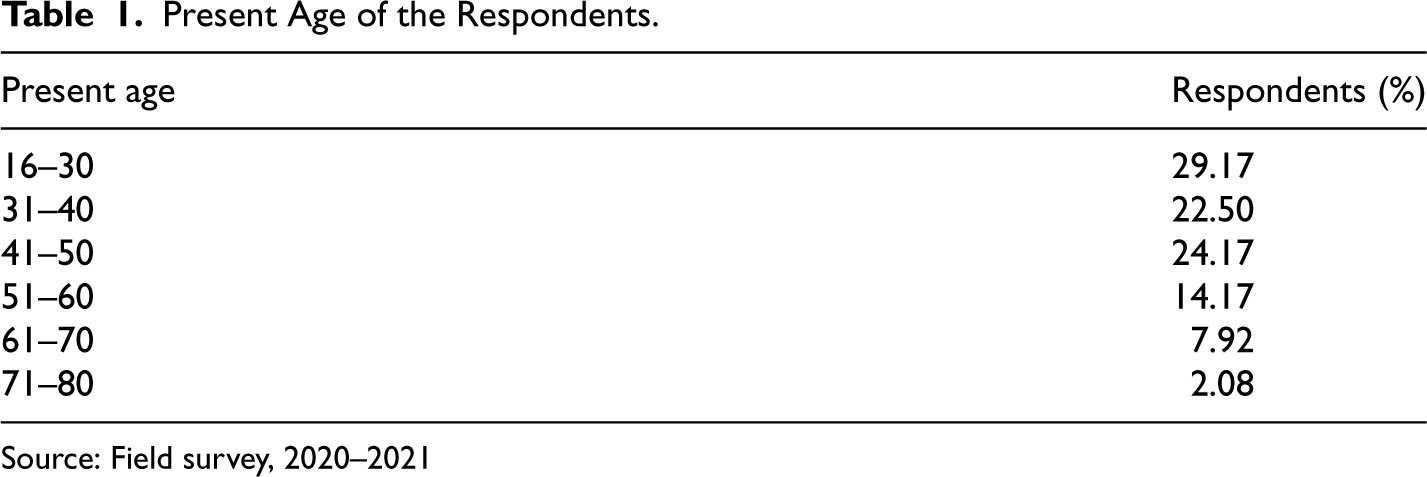
The population of women respondents in the slums of Lucknow is young, with majority (29.17%) of the respondents belonging to age group of 16–30 years (Table 1). This is followed by 24.17% respondents belonging to age group of 41–50 years. The median age of the respondents is 44 years. Majority of the surveyed households (56.67%) are Hindus and in terms of caste, a significant proportion of minority communities were found to be living in the slums. These included 52.08% other backward classes (OBC), followed by the scheduled caste (SC) and scheduled tribe (ST) communities. The native language for all the slums surveyed is Hindi.
Present Age of the Respondents.
Source: Field survey, 2020–2021
From the sampled respondents, almost equal percentages of literates and semi literates were found with the proportion of literates (35%) being slightly higher than semi literates (33.75%). Literates were people who had completed at least their primary education while primary school dropouts were considered as semi literates. The highest level of education was that of post-graduation (1.25%) while the majority consisted of respondents who had completed their primary education level. Both literates and semi literates however, could read and write their names in their native language. Remaining 31.25% were illiterates for whom formal education was never initiated (25%).
Lack of interest (48.33%) followed by financial constraints (22.08%) were the two most commonly cited reasons for quitting education. Marriage as a reason for quitting education accounts for 22.92%. Additionally, one of the underlying causes for dropping out of school was fear of elopement (Rai, 2019). Frequent absenteeism of teachers and not having female teachers in school also keeps away many girl students from going to school. Furthermore, frequent illnesses, household chores as well as greater distance between the home and school discourage them from going to school.
Infrastructural Facilities
Majority respondents were staying in owned (58.33%) pucca houses (72.92%). Almost all houses had access to electricity (86.67%) as a means of home lighting followed by usage of kerosene (41.67%) and candles (25.42%). Another 17.92% reported stealing electricity through makeshift connections made by throwing a ‘katiya’ or a bent wire over the nearby main power line. The selected slums had adequate supply of water through tapped supply water, community tanks, hand pumps and public taps. More than 70 per cent of the slum dwellers accessed tap water supply through individual water connections from the Lucknow Municipal Corporation followed by community tanks, public taps and handpumps as reliable sources of potable water. The duration of piped water supply across the selected slums varied between 1 to 2 h daily. However, there were issues related to the regularity and quality of water supply particularly during the summer season.
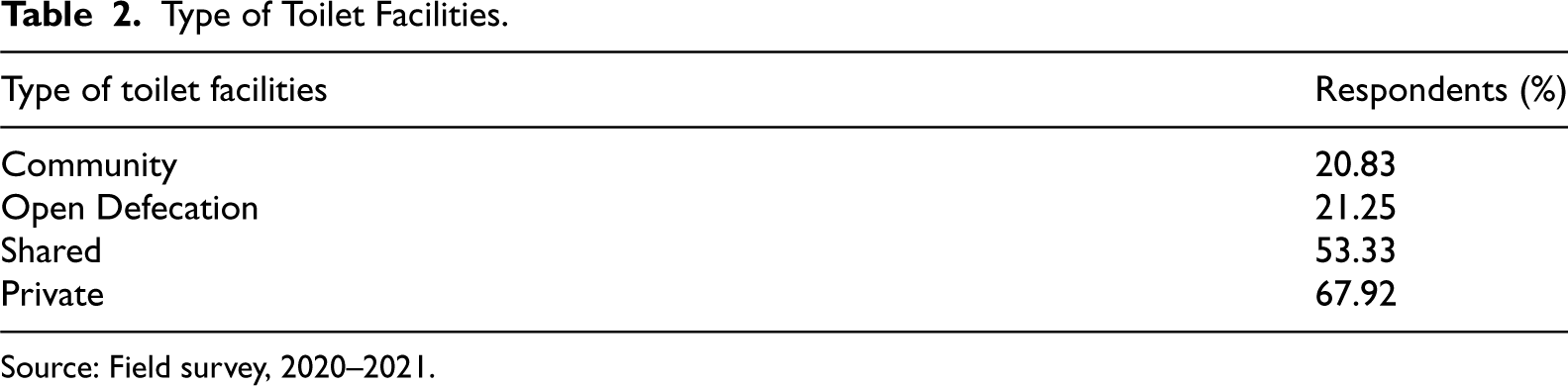
An important determinant of the status of women in a society is the type of sanitation facilities used by them. Hundreds of thousands of people living in the slums and informal settlements are challenged on a daily basis by inadequate access to sanitation facilities. These sanitation disparities often have critical implications on the health and social status of women and girls as it is directly connected with their need for privacy, safety and cleanliness. In most cases, women are routinely compelled to use hazardous spaces for their sanitation needs which invariably puts them at a greater risk of gender-based violence. As far as respondents’ access to sanitation is concerned, almost all respondents had access to toilets, with a majority using private toilets (67.92%) followed by shared (53.33%) and community toilets (20.83%) on pay and use basis (Table 2). Many respondents also consented to open defecation (21.53%). Corburn and Hildebrand (2015) found in their study on Nairobi's slum found out that faecal contamination due to open defecation in urban slums contributes to high rates of cholera, typhoid fever, dysentery, and intestinal parasites. This burden of diseases ultimately culminates into higher expenditure on health, morbidity and mortality.
Type of Toilet Facilities.
Source: Field survey, 2020–2021.
Reproduction
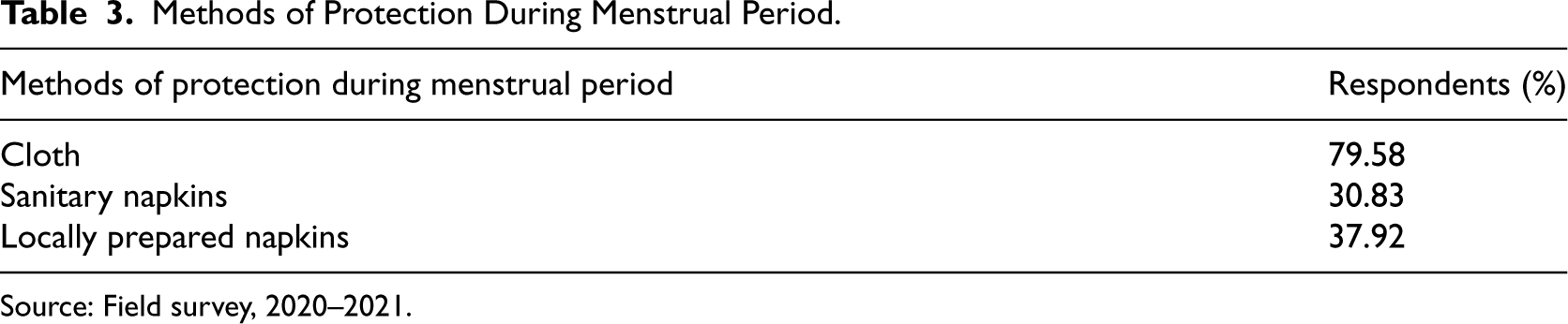
Most respondents reported getting their first menstrual period at 16 years of age. While cloth (79.58%) was the most popular method of protection, sanitary napkins were used by 30.83 per cent of respondents (Table 3). This is similar to the findings by Nongkynrih and Reddaiah (2004) in their study on menstrual hygiene practices by women in a resettlement colony in Delhi.
Methods of Protection During Menstrual Period.
Source: Field survey, 2020–2021.
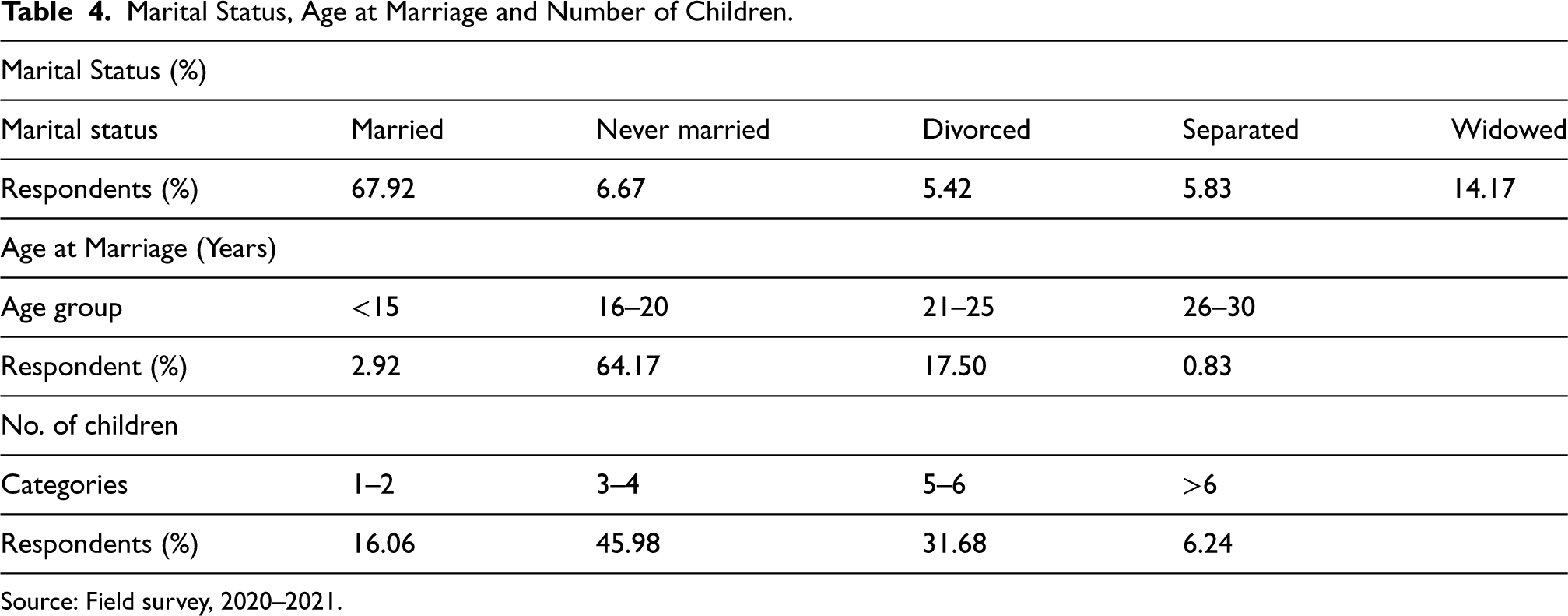
Average age at marriage for women in slums of Lucknow is 20 years. However, 35.42% of all women in the survey were married before attaining the age of 18 years while only 14.58% were married after attaining18 years of age. The median age at first pregnancy was found out to be 21 years. This is similar to the findings by Agarwal and Yadav (2015) who found that a significant proportion of women from slum communities were married before the age of 18 and that majority were above 18 years of age at the time of first conception. The maximum and minimum age for first pregnancy was 27 and 13 years respectively. On the other hand, maximum and minimum age at last pregnancy was fount out to be 41 and 19 years respectively. Thus, the female slum dwellers have a larger fertility window compared to their urban non- slum counterparts in the city. This partially explains larger family size in the surveyed houses in the sums. This is consistent with the findings of Sambisa et al. (2011) on their study on women in urban Bangladesh.
The urban poor households tend to have bigger family size as they have limited access to education and awareness, higher mortality rate, early marriage and gender stereotypes as well as need for extra labour. It was found that just 16.06 per cent families had the number of children ranging between 1 and 2, while a whopping majority, 77.66 per cent families, had total number of children ranging between 3 and 6 in the study area. This was followed by 6.24 per cent families having more than 6 children (Table 4). The median of total number of children in the slums of Lucknow is 4. These are comparable to reported values in various slum studies of Lucknow (Gupta et al., 2010).
Marital Status, Age at Marriage and Number of Children.
Source: Field survey, 2020–2021.
The age at which women get married has serious implications on their fertility, level of education, health, life expectancy as well as their social status. Early marriage and consequent childbearing can have adverse health impacts on both the mother and the offspring including malnutrition, high rate of morbidity and mortality (Marphatia et al., 2017). Quite a few respondents (38.75%) reported suffering a miscarriage while instances of still births and neo natal deaths were also reported. 15 per cent respondents reported terminating the pregnancy with economic constraints (8.33%) being the most common reason followed by the pregnancy being unplanned (7. 08%).
Contraception
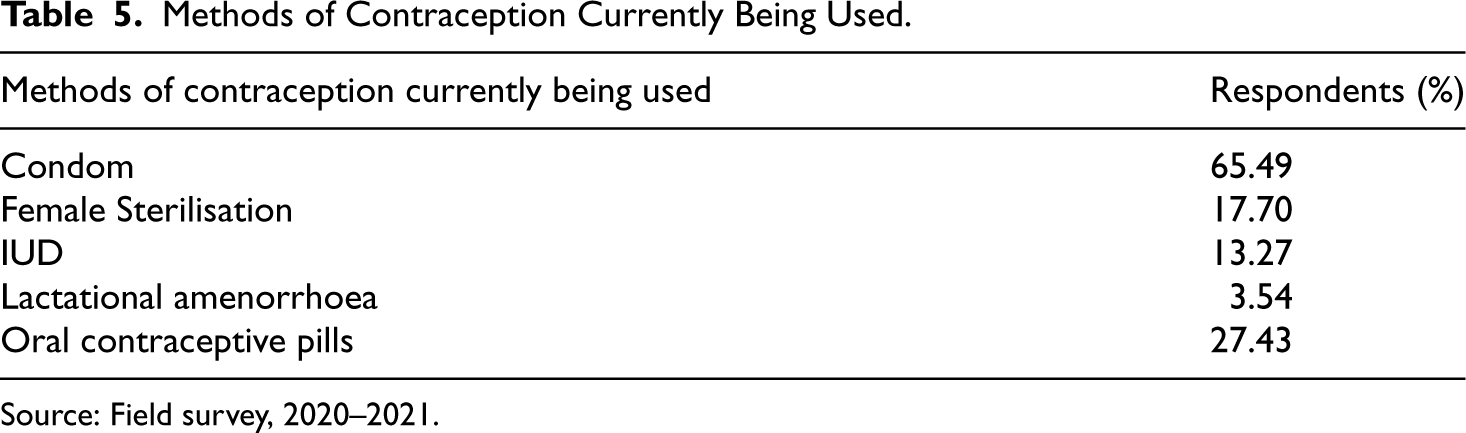
Majority respondents (50.45%) reported knowing and having used at least one form of contraception. Condoms (65.49%) followed by oral contraceptive pills (OCPs) (27.43%) were the most popular methods of contraception (Table 5). This is supported by the findings of NFHS-5 as well as the study made by Rizvi, et al. (2013) on contraceptive use by married women in urban slums in Lucknow. Respondents prefer buying them from government dispensaries/ hospitals (24.17%) followed by drug stores/ pharmacies (22.08%). It is worth noting that female sterilisation as a method of contraception was adopted by 17.70% respondents, most of whom were aged 40 years and above and had at least one male child as one of their surviving children. Similar results were obtained in other studies done on women slum dwellers in Bangalore city (Edmeades et al., 2011).
Methods of Contraception Currently Being Used.
Source: Field survey, 2020–2021.
Health and Contact with Community Health Workers
Majority women reported meeting with a community healthcare provider (ANM/ LHV/ ASHA worker) in the last three months at home (54.97%), at health facility (30.99%) and at Anganwadi centre (AWC) (14.04%). These community level healthcare workers are appointed in urban areas by the government under the National Urban Health Mission (NUHM) and play the crucial role of facilitating access to public healthcare by the poor and marginalised sections in urban areas. Malaria control (29.58%), education regarding nutrition/ health/ pre-school/ family life (24.58%), obtaining supplementary food (21.25%) and immunisation of children (22.08%) were the most common purposes to meet a community health care worker.
Amongst the commonly reported chronic infectious diseases, dysentery was commonly reported (58.75%). This can be attributed to the consumption of unclean drinking water and food. Malaria (47.08%), common flu (43.33%), jaundice (40.83%), urinary tract infections (UTI) (36.7%) were the commonly reported chronic infectious diseases. Women are physiologically more prone to a UTI infection than men (Tan & Chlebicki, 2016). Unavailability of clean bathrooms and toilets as well as long working hours with no access to toilets are the most common cause for the spread of the disease. Most of the women preferred visiting a government hospital for the treatment (Riley et al., 2007).
Most cases were dealt through self-medication.
Amongst the chronic non-infectious diseases, obesity was the most commonly reported (36.25%). This was followed by 27.08 percent women respondents reported suffering from acute respiratory issues with bronchial asthma being the next most commonly reported ailment. Women across all age groups reported suffering from asthma including girls as young as 10 years. Apart from genetic predisposition, exposure to severe air pollutants and irritants as well as weak immune system is the probable causes of asthma.
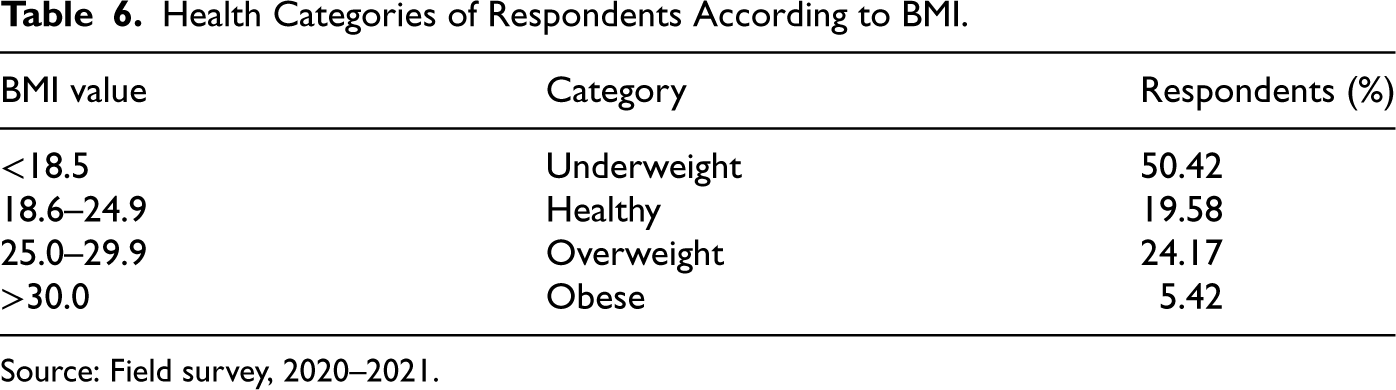
It should be noted that all aforementioned diseases were self-reported by the respondents. The health status of women slum dwellers was examined through an important measure of the Body Mass Index (BMI) (Table 6). In terms of BMI, majority women fell the ‘underweight’ category with the BMI being below 18.5, indicating the fact that they are malnourished. It should however, be noted that a significant proportion of respondents (29.59%) were in the ‘overweight’ and ‘obese’ categories and are at a greater risk of diseases compared to those in the healthy BMI range. This is consistent with the findings of Purwaningrum et al. (2012) who are of the view that the major risk factors for obesity among poor women living in urban slum areas were partly due to low level of physical activity and excessive carbohydrate intake. Higher BMI also explains the prevalence of cardiac issues amongst the respondents albeit a small percentage (3.33%). Reduced physical (in) activity due to reasons like inflammation of the knee joint as well as access to calorie dense foods are the possible reasons for obesity. A relatively lesser percent of women fell in the ‘healthy’ category with BMI ranging between 18.6–24.9.
Health Categories of Respondents According to BMI.
Source: Field survey, 2020–2021.
Mental health problems like anxiety, depression as well as thoughts of self-harm, low self-esteem and substance abuse were reported by a small percentage of women. As serious as the impacts of chronic infectious diseases are, perhaps, even more damaging are the impacts of mental health problems as they are often ignored, go unreported, undiagnosed and therefore untreated. In fact, the social causes of women's mental health problems are often overlooked. These can have long lasting impacts on an individual's overall wellbeing. The trend is worrisome because mental health services are in an appalling state in India as mental health care has been given very less importance. As compared to 15% of all women, 11% of all men suffer from mental health problems (Sarojini et al., 2006).
Women's Occupation and Financial Inclusion
Our study found that 53.33% respondents were working and earning a monthly income while the rest 47% were not. The latter included the elderly, housewives, medically unfit people, students, housewives. Almost all working respondents were found to be employed in the informal sector as there are little or almost insignificant barriers of skill, training and other formalities in the informal sector (Chaudhuri, 2019). Women enter into these odd jobs so as to supplement their family income and their interest is simply in survival. As a result, many of them are not able to succeed in making enough income to make ends meet.
Of the women who were working, majority were employed as domestic help (34.88%) for cooking, washing, cleaning. 12.40% respondents were engaged as commercial workers, employed as teachers in a private school, labourer in a garment factory, worker in a nearby brick kiln and flour mill.
The graph below shows the monthly income patterns of the respondents and their contribution to monthly household expenditure (Figure 1). 24.81% women earned between Rs. 2,500–5,000 (30–60 USD) monthly out of which they spent 71% on basic amenities (Figure 2). Majority respondents (28.68%) earned between Rs. 5,001–7,500 (60–90 USD) per month and spent 62% on basic amenities. 20.16% respondents earned between Rs. 7501–10,000 (90–120 USD) and spent 51% on basic amenities. Average monthly expenditure on food is the highest (Rs. 1,541) (18.54 USD) followed by monthly expenditure on health/medicines (Rs. 967) (11.63 USD). These are comparable to findings on slum dwellers’ expenditure on food and health by Malik et al. (2018) and Nayak and Surendra (2023) The monthly median income for sampled women respondents in the slum in Lucknow is Rs. 7,500 (90.23 USD).
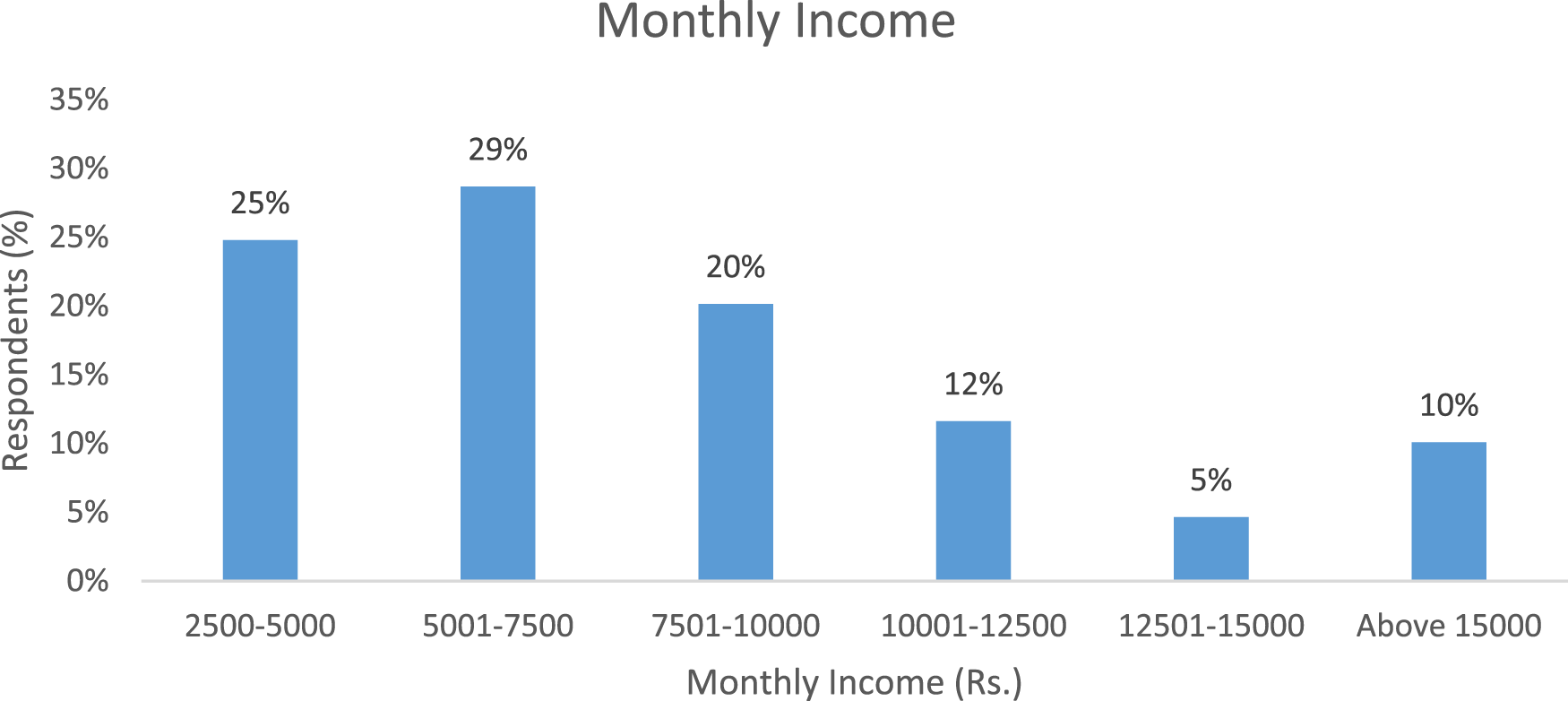
Monthly income. Source: Field survey, 2020–2021.
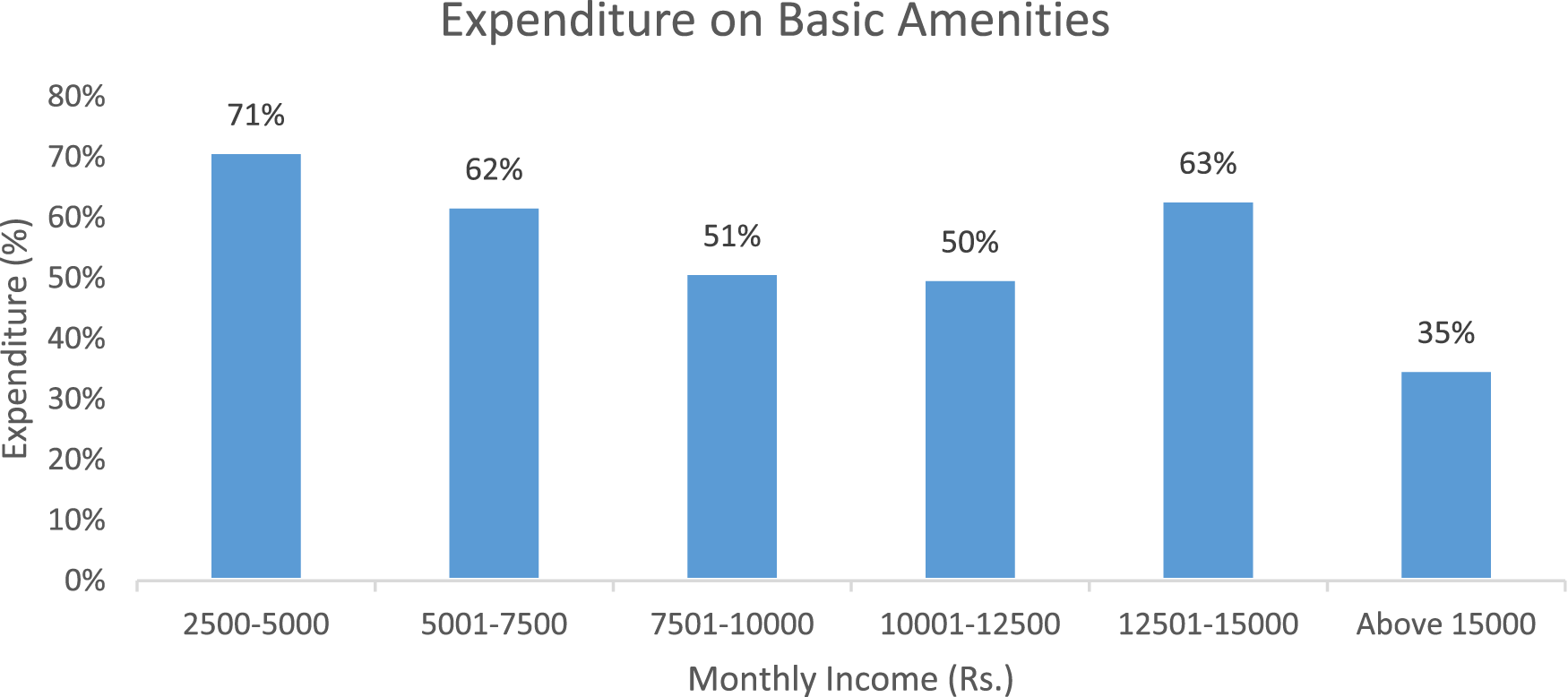
Expenditure of monthly income on basic amenities. Source: Field survey, 2020–2021.
It is worth noticing that expenditure on education has received due importance across all income categories with respondents spending as less as Rs. 350 (4.21 USD) to as much as Rs. 2,570 (30.92 USD) monthly, depending on their income. Almost all women reported sending their children to nearby government schools/ Anganwadi centres where the students have access to quality education at no or minimal fee. Free books, uniform as well as free meal at the school provides the required encouragement to both the students and the parents to send the children to school. This also reflects the aspiration of women who want to ensure a better future for their children by making sure they send them to school.
However, it should be noted that while it is encouraging to see respondents across income groups sending their children to school, expenditure on education accounts for only 5.5% of total income. Other aspects like food (18.98%) health (12.19%), clothing (5.91%), debt repayment (5.7%) take far greater precedence. These are similar to the findings by Roy et al. (2018) in their study on slums of Bangalore.
Financial Inclusion
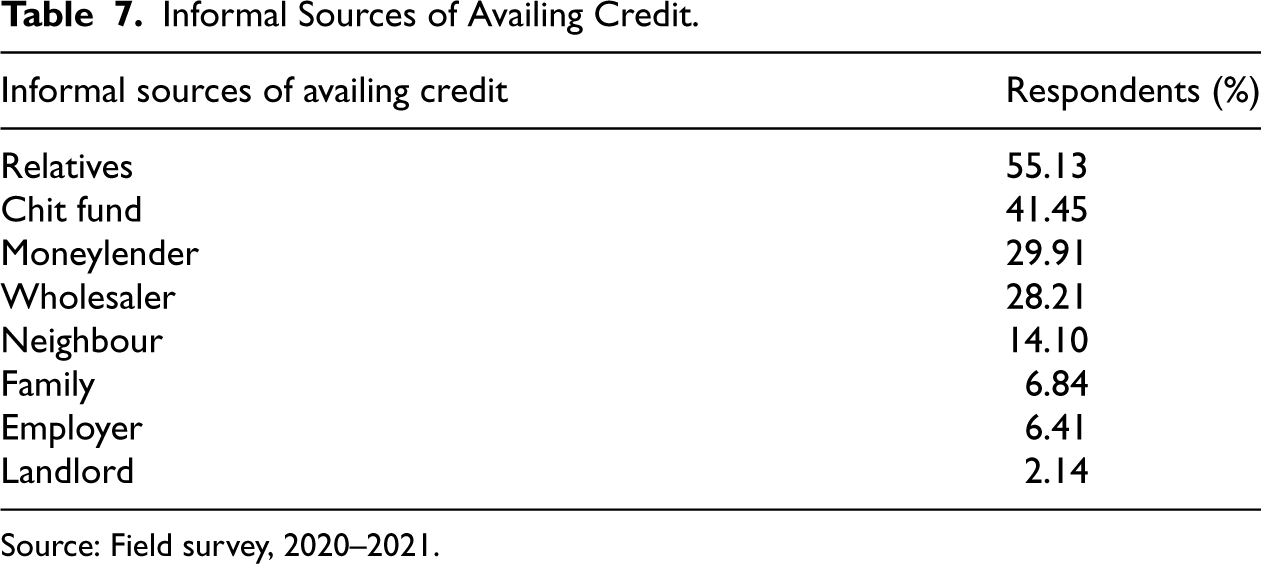
Majority respondents did not own a bank account (52.08%) while 47.92% respondents did. This is supported by the findings of Malik et al. (2020) in their study on financial inclusion of beggars and slum dwellers in Lucknow. Of the women who owned a bank account, it was not older than 8 years (11.30%) followed by another 10.43% who owned a bank account since 5 years. However, their frequency of usage of bank account was very low, ranging between 2 to 3 times in a year. A meagre 5.22% women reported availing a loan from the bank. Amongst the major problems which deterred the respondents from availing credit from formal banking institutions was unavailability of valid income and residence proof (32.08%), no guarantor (23.33%) as well as insufficient collateral (13.75%). These problems have also been identified by Bhatia and Chatterjee (2010) in their study on financial inclusion of slum dwellers in Mumbai. The study also revealed that availing informal credit was popular amongst women (97.5%) with majority (55.13%) choosing to borrow from their relatives followed by availing credit from chit funds (41.45%) to which they regularly contribute a small amount also (Table 7). Rupambara (2007) in their study are of similar view wherein they state that borrowing from friends/relatives is always preferred even at exorbitant rates as lenders live within the borrowers’ community and understand the latter's financial predicament and constraints.
Informal Sources of Availing Credit.
Source: Field survey, 2020–2021.
Majority women (24.41%) borrowed small amounts ranging up to Rs.1000 (12.03 USD) followed by another 19.25% who borrowed between Rs.1001–2000 (12–24 USD). Popular purposes for availing credit include providing for medical expenses (30.42%), family emergency (16.67%) as well as repaying past loans (36%). As far as savings are concerned as many as 50% respondents choose to save money in cash at home followed by 34.17% contributing to chit fund as a means to save money. These are similar to findings by Aliber (2015) in their study on informal finance in slums of India and Uganda.
Decision Making and Autonomy
In terms of decision making and autonomy, the results are in confirmation with a patriarchal outlook. For majority of working women, it was their husbands who decided how the money she earned would be spent (28.13%). This was followed by 25.78% women who along with their husband s decided how the money she earned would be spent. Only 16.41% respondents decided on their own about spending the money they earned. Most women's monthly earnings were less than their husbands’, sons’, fathers’. Similar trend could be deciphered when for most respondents, it was their husbands who were the decision makers regarding their own health, regarding making major household purchases as well as deciding on the respondent's visit to her maiden home.
Majority respondents reported that they had to be accompanied with someone while visiting the market (61.25%), health facility (88.75%), places outside the slum/ community (92.92%). These findings are in keeping with the findings of Sangappa and Kavle (2010) who state that women are far behind their male counterparts in terms of decision-making autonomy and nutritional status. They have to continuously seek permission, typically from husbands and in laws in financial sphere and also for healthcare.
Domestic Violence
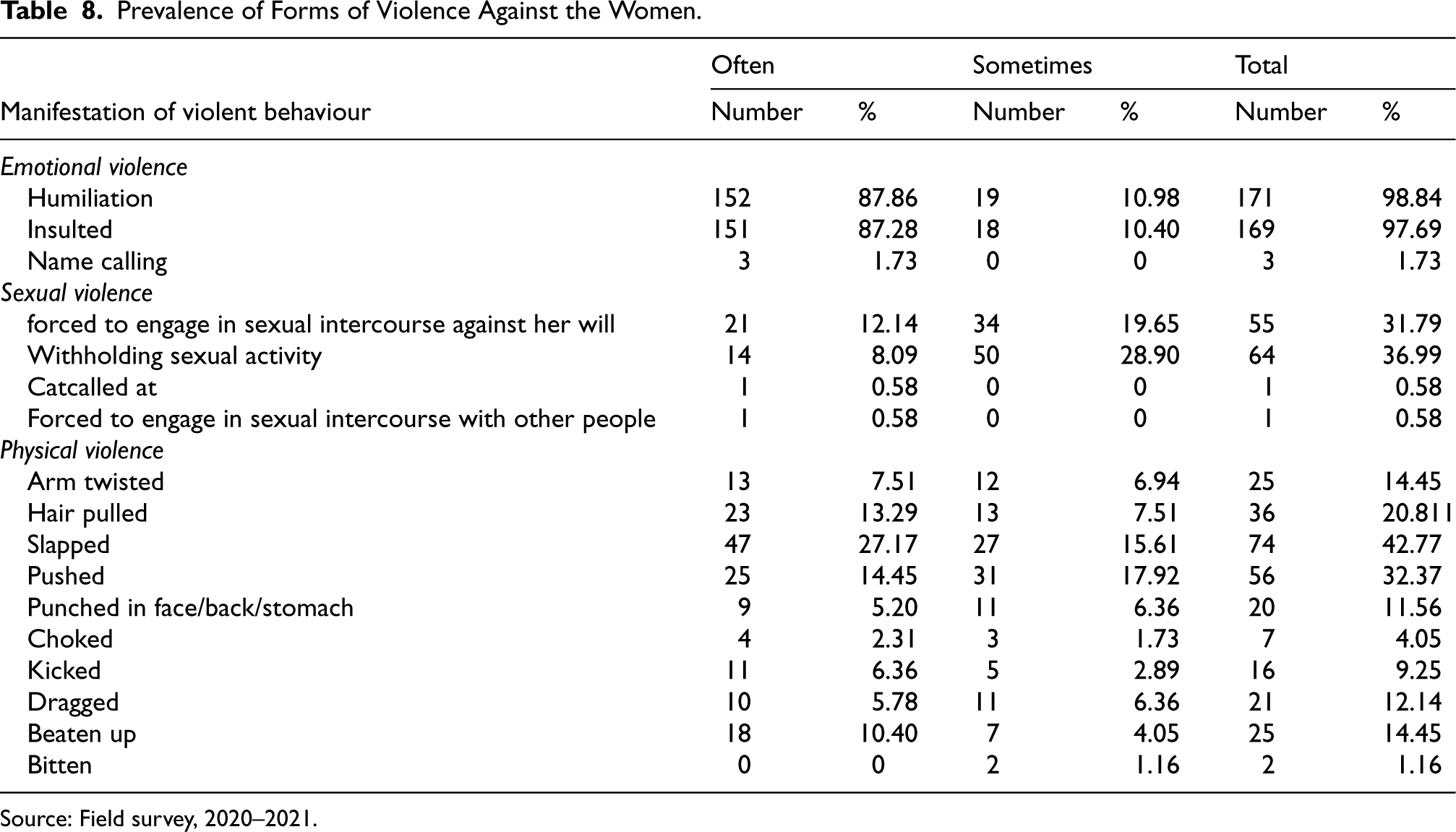
Kinds of abuse women suffer can be broadly divided into physical and oral. Emotional and mental distress caused by verbal abuses is as much a crime as is the bodily hurt and injury caused by physical violence. Domestic violence is perhaps the most common form of violence against women as well as the most common cause of non-fatal injury to women in the developing countries. Almost all of the women respondents had experienced some form of violence either at their workplace or at home (Table 8). While married women reported often being subjected to physical and verbal abuse at the hands of their husbands and in laws, other women respondents suffered abuse at the hands of their fathers, brothers as well as colleagues at workplace. It should be noted that 27.92% women did not consent to answer questions on violence.
Prevalence of Forms of Violence Against the Women.
Source: Field survey, 2020–2021.
Instances of physical violence were very common with slapping in the face being the most widely reported (30.83%). Instances of emotional violence including humiliation (71.25%) and insults (70.42%) were reported as happening ‘often’ (64.17%) by a majority of women. Withholding sexual activity or affection was the most form of sexual violence (27.92%) followed by being forced to have sex against her will (22.92%). Husbands (37.50%) followed by father-in-law (1.25%) were the people commonly reported committing this violence.
As far as the physical impacts of these instances of violence is concerned, almost all respondents reported sustaining injuries, bruises, cuts, fractures, joint dislocations of varying magnitude and seriousness on different parts of the body. Equally serious are the mental health consequences of violence, which if left untreated, can have long lasting impacts on an individual's overall wellbeing. It was found out that 18.75% women suffered from poor self-esteem, while 16.25% women reported having difficulty in sleeping soundly. Feeling constantly stressed, isolated, emotionally withdrawn, experiencing frequent intrusive negative thoughts as well as lacking trust on family members are indicators of mental and emotional distress. Even more disturbing were the instances of substance abuse, wherein women reported drinking or overeating as a means to numb and cope with the negative feelings. This partially explains the high incidences of obesity/ overweighted as one of the chronic non-infectious diseases. These are similar to the findings by Mechanic, et al. (2008) on their study on mental health impacts of intimate partner abuse.
Help Seeking Behaviour
Most women (30.42%) never told anyone about the violence they suffered. Only 15% women sought help. Respondents’ own family and relatives (14.58%) were the most commonly contacted people by the respondent for help followed by neighbours (4.17%), police (1%) and school administration (1%). These findings are consistent with the findings of NFHS-5 (2019–21).
Limitations and Challenges of the Study
Time and monetary limitations allowed only for a smaller sample of household to be surveyed. Larger fund allocation and time would have allowed for a relatively larger team and a larger sample size to be surveyed.
Major challenges faced during the study include, first, the study was time intensive, the field survey lasting for about six months as the survey was being conducted by a single researcher. The nature of research was such that it required the interviewer to visit the same slum colony more than once, even visiting the same household as the questionnaire consisted of questions on diverse fields.
Second, building a rapport of trust, anonymity and confidentiality was as much a challenge as it was a requirement. This was primarily due to sensitive nature of questions on certain aspects like income, decision making and violence faced. In fewer cases in which the respondent did consent to answer the questions, maintaining privacy was indeed challenging. The interviewer had to repeatedly check for the presence of others in the vicinity and also frequently assure the respondent of the confidentiality of the data and that it will be made use of strictly for research purposes.
Conclusion
An analysis of primary data revealed that in terms of economic participation, women are more prominently employed in the informal sector than the formal sector facing challenges like lower wages, longer working hours, poor working conditions to name a few. Though the enrolment of girls in schools is satisfactory but because of social stigma and concern for their safety, the dropout rates among them is very high especially after completing education till higher secondary level or less. Existence of poor to moderate sanitation facilities and lack of awareness have posed a serious challenge to the health of slum dwellers specially women folk. Good number of women respondents reported suffering from a host of chronic illnesses, both infectious and non-infectious. Further, almost all women respondents in the study area, irrespective of their age, reported having faced at least one form of violence both at home and at workplace with only a very small percentage ever trying to seek help. In terms of decision making, most respondents depended on their husbands to make most of the decisions followed by only a very small percentage who jointly along with their husband decided on various matters.
Clearly, the urbanisation phenomenon has brought with itself critical concerns like human right violations regarding humanity at large and women in specific whose situation and condition needs to be understood and dealt with sensitivity and gender specific ways. There is felt a need for a more robust and stable approach on accomplishing gender equality to empower women in our society. This approach needs to centre on both the rural and the urban vulnerable populations, and the numerous linkages between them. When urban design and services— including water, sanitation, transport and markets—address gender discrimination and promote equal opportunities, greater social and economic benefits can be achieved (Women Watch: Gender Equality and Sustainable Urbanisation, 2009).
Footnotes
Funding
The authors received no financial support for the research, authorship, and/or publication of this article.
Declaration of Conflicting Interests
The authors declared no potential conflicts of interest with respect to the research, authorship, and/or publication of this article.