




Abstract
The unprecedented urbanisation observed in leading developing countries has placed immense pressure on effective and efficient land management. The significance of land-use efficiency in the Chinese context has been addressed in the literature, particularly on the measurements of land-use efficiency and key influencing factors. However, quantifying the interdependence between land-use efficiency, local government revenue, employment and infrastructure development whilst controlling for significant cross-city differences remains a gap in the literature. Based on data for 272 prefecture-level Chinese cities between 2012 and 2017, this study employs a novel modelling approach, combining latent class analysis (LCA) in a generalised structural equation model. The incorporation of LCA helps to control for the significant, non-linear heterogeneity across city samples. The empirical model identifies both the direct (one-off land conveyance fee and transaction-related tax revenue from land transactions) and indirect (corporate and personal taxes generated from employment and business growth) channels, through which land development contributes to local government revenue. It also provides one of the first quantified evidence, confirming that employment growth provides higher long-term return than a one-off, land conveyance fee to government revenue in China, controlling for significant cross-city heterogeneity in land-use efficiency and wage.
Introduction
Many emerging economies have been experiencing a transformative urbanisation process of unprecedented scale and speed. Fast urbanisation is often accompanied by rapid spatial expansion of urban built-up areas. Despite increasing negative externalities (e.g., traffic congestion and the encroachment of the natural environment), the significant land value uplift due to a change in land development status and infrastructure improvement enables local governments to boost their revenues from land (or development right) transactions. Figure 1 shows the extraordinary growth of ‘land conveyance fees’ (which are paid to local governments to obtain development rights) relative to the expansion of urban development land in mainland China. From 2012 to 2017, total urban construction land in China increased by 20.6% (3.8% p.a.), whilst the total land conveyance fee increased by 69.9% (11.2% p.a.), from 2804.2 billion CNY in 2012 to 4765.0 billion CNY in 2017 (based on constant price level as of 2012, adjusted using official GDP deflators). The decrease of the total land conveyance fee during 2013–2015 is mainly due to tightened land transaction regulations imposed in major cities by the central government (Cheng et al., 2022). The bounce back since 2015 implies a sustained reliance on land revenue income to finance local development. The significance of urban land and development in China (2012 = 100, constant price; data sources: the China Urban Construction Statistical Yearbook series, the China Land and Resources Statistical Yearbook series, and the China City Statistical Yearbook series).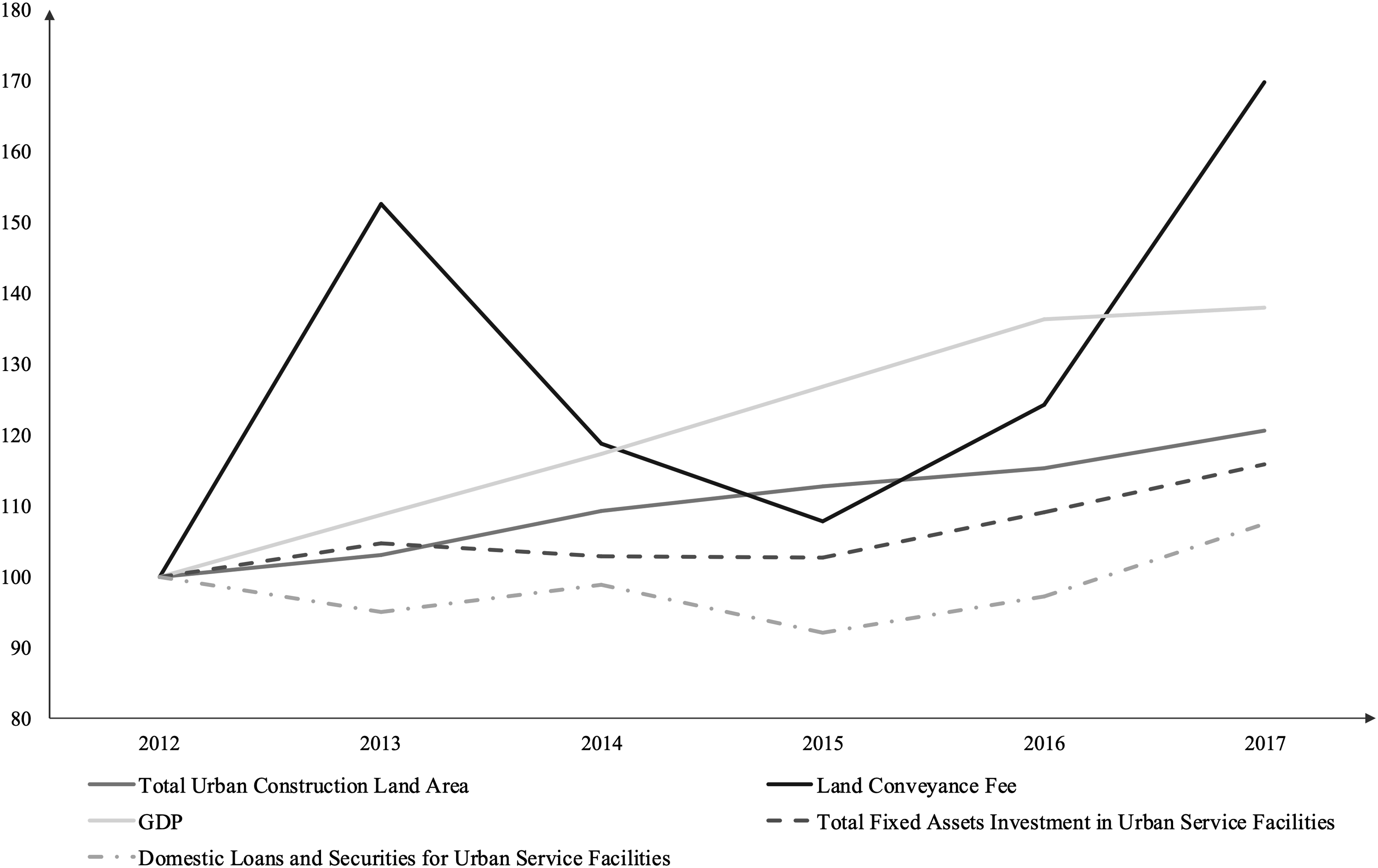
The significance of efficient urban land use has been addressed in the existing literature, particularly through examining the measurements of land-use efficiency (Gao et al., 2022; Jiao et al., 2020) and key factors influencing land-use efficiency in the Chinese context (Chang et al., 2023). On land-use efficiency measurement, existing studies primarily use unit land value (land conveyance fee divided by land area transacted) (Liu et al., 2018). In this study, the price-based measurement is complemented with an additional measurement, the land-supply-to-employment ratio. This ratio is important because it explicitly links land supply (note that not all supply will be utilised) with employment growth, and thus, it can capture the possible oversupply of land, where unit land value may remain high due to speculation and non-market interference but only a small proportion of the land supply is utilised, implying low land-use efficiency.
Another major gap in existing studies is that few research studies quantitatively examine how land-use efficiency contributes to local government revenue through two distinct channels, that is, the direct (one-off land conveyance fee and transaction-related taxes from land transactions) and indirect (corporate and personal tax income generated from additional employment and business growth) channels. Additionally, existing studies using city-level samples tend to use continuous, linear variables (e.g., GDP, GDP per capita, aggregate sectoral composition and population density) to control for contextual differences among cities (Wu et al., 2019; Zhong et al., 2019). However, the significant development disparities observed across Chinese cities (e.g., the 249-fold difference between the highest and lowest unit land value across cities in 2017 in mainland China) suggest that using continuous, linear variables alone are inadequate to capture the structural differences among cities, thus leading to biased model estimates.
This study addresses the above challenges by proposing a novel modelling strategy that combines structural equation modelling (SEM) with latent class analysis (LCA). SEM provides a feasible analytical method for handling a large number of interdependent variables (Kim and Noh, 2023). LCA is used to identify latent classes (groups) of cities based on purposely constructed city-level land-use efficiency measurements and covariates. The latent city groups identified by the LCA are then incorporated in a generalised SEM, the design of which is informed by the particular local government revenue structure in mainland China (see Figures 2 and 3). The categorical city-group variables are expected to control for the non-linear, structural differences among cities, which then allows the linear effect within each city group to be estimated with minimal bias. Land-related income and local government revenue in Chinese cities. Overall analytical framework.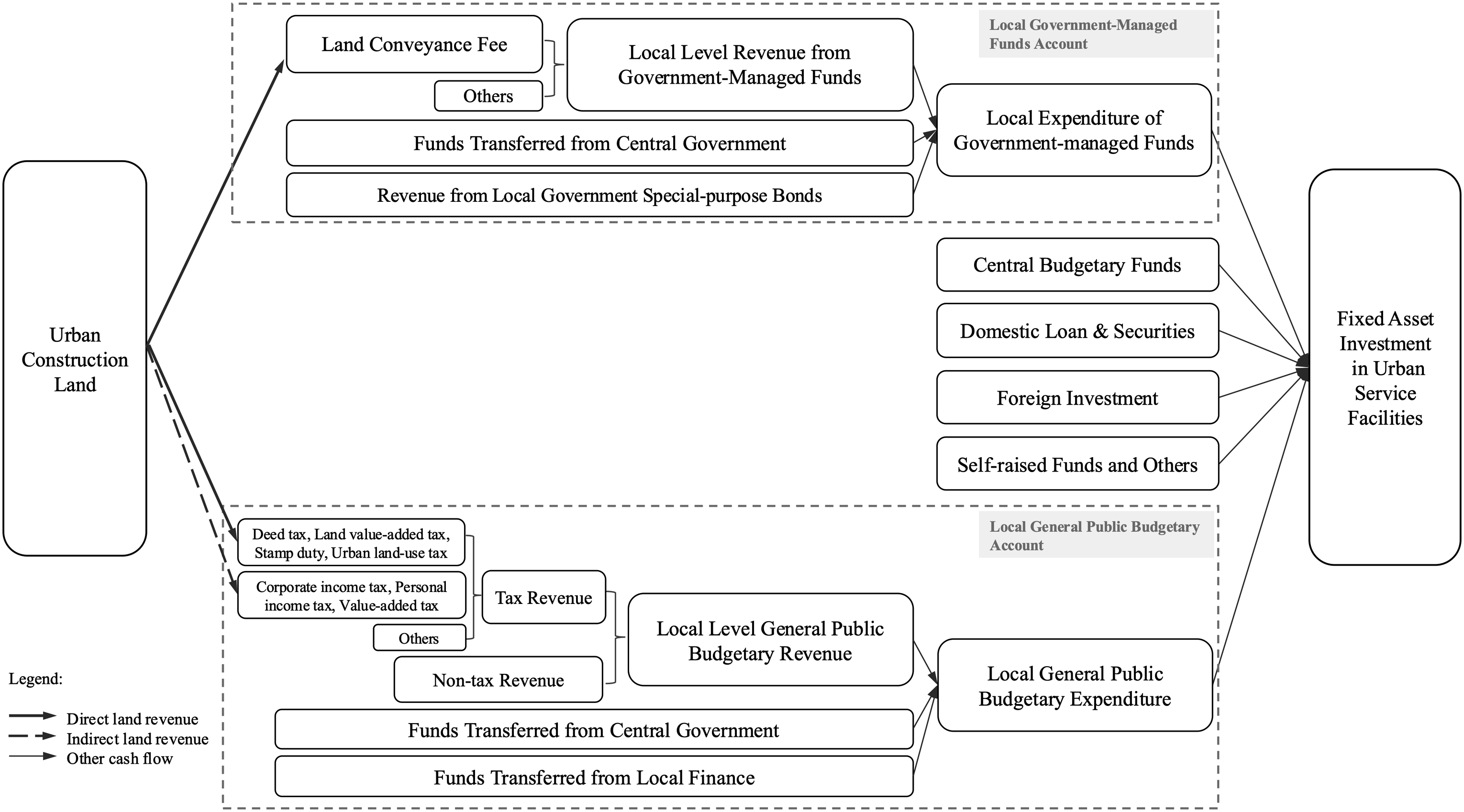
To estimate the LCA-SEM model, we collect and cross-check city-level statistical data from multiple official sources in China to develop a consistent city development database for 272 prefecture-level Chinese cities from 2012 to 2017, which is available to the research community upon request. Robust elasticity estimates of government revenue with respect to the unit change of land supply and transaction volume are provided for each latent city group.
In light of the soaring debts of local governments in China and the slowdown of the wider economy (Horn et al., 2023), this study sheds light on how local governments may strengthen their revenue streams and achieve wider sustainability co-benefits through improving land-use efficiency, focussing particularly on the indirect, long-term tax revenue from additional employment and industrial growth, as opposed to the short-term, one-off income from land transactions. It also demonstrates how bridging the cross-city gaps in land-use efficiency could be a new source of growth for the national economy of China as a whole.
The remainder of this paper proceeds as follows. Section 2 briefly introduces the background of land markets in China while section 3 discusses the analytical framework. Section 4 outlines the data and methods used. Section 5 provides the model results, followed by discussions and conclusions in sections 6 and 7, respectively.
Background: Land market and local government revenue in China
Figure 2 provides an overview of the local government revenue structure in China, through which land, as a dominant factor of production, contributes to local government revenue, drawing upon fiscal records from the Finance Yearbook of China series. Among the four fiscal accounts in local government finance in China, two accounts (namely, the local general public budgetary (LGPB) account and the local government-managed funds (LGMF) account) are closely related to the land market. Specifically, land contributes to local government revenue through the following channels: • Direct channel: land transactions generate transaction-based tax income (e.g., deed tax, stamp duty), contributing directly to the LGPB account, although the total share of such tax income in the LGPB account appears marginal (14.11% as of 2017); and the transaction of construction land contributes directly to the LGMF account through the land conveyance fee collection, which accounted for about 81.3% of total LGMF as of 2017. • Indirect channel: land development also contributes indirectly to the LGPB account through non-transaction-based tax income (e.g., corporate and personal tax generated from additional business and employment growth associated with land development), which accounted for about 64.13% of total LGPB as of 2017 (Source: Finance Yearbook of China series). In contrast to the one-off lump-sum revenue from the direct channel, the indirect channel represents a long-term, sustainable revenue source for local governments.
Local governments in China rely heavily on land-related income to finance local development. The LGPB and LGMF accounts together contribute nearly 50% of the total investments for public infrastructure 1 . However, recent territorial planning reform, featuring legally binding spatial boundaries for regulating urban expansion and preserving the natural environment, signals the aspiration of the central government for tightening land use control. The impacts of the planning reform on local governments are not yet fully unfolded, but a tightening of land supply would suggest that local governments may need to re-address the efficiency of land use to sustain land-related income. Therefore, a quantitative analysis of how land contributes to local government revenue through various direct and indirect channels is needed to inform land use policymaking.
Analytical framework
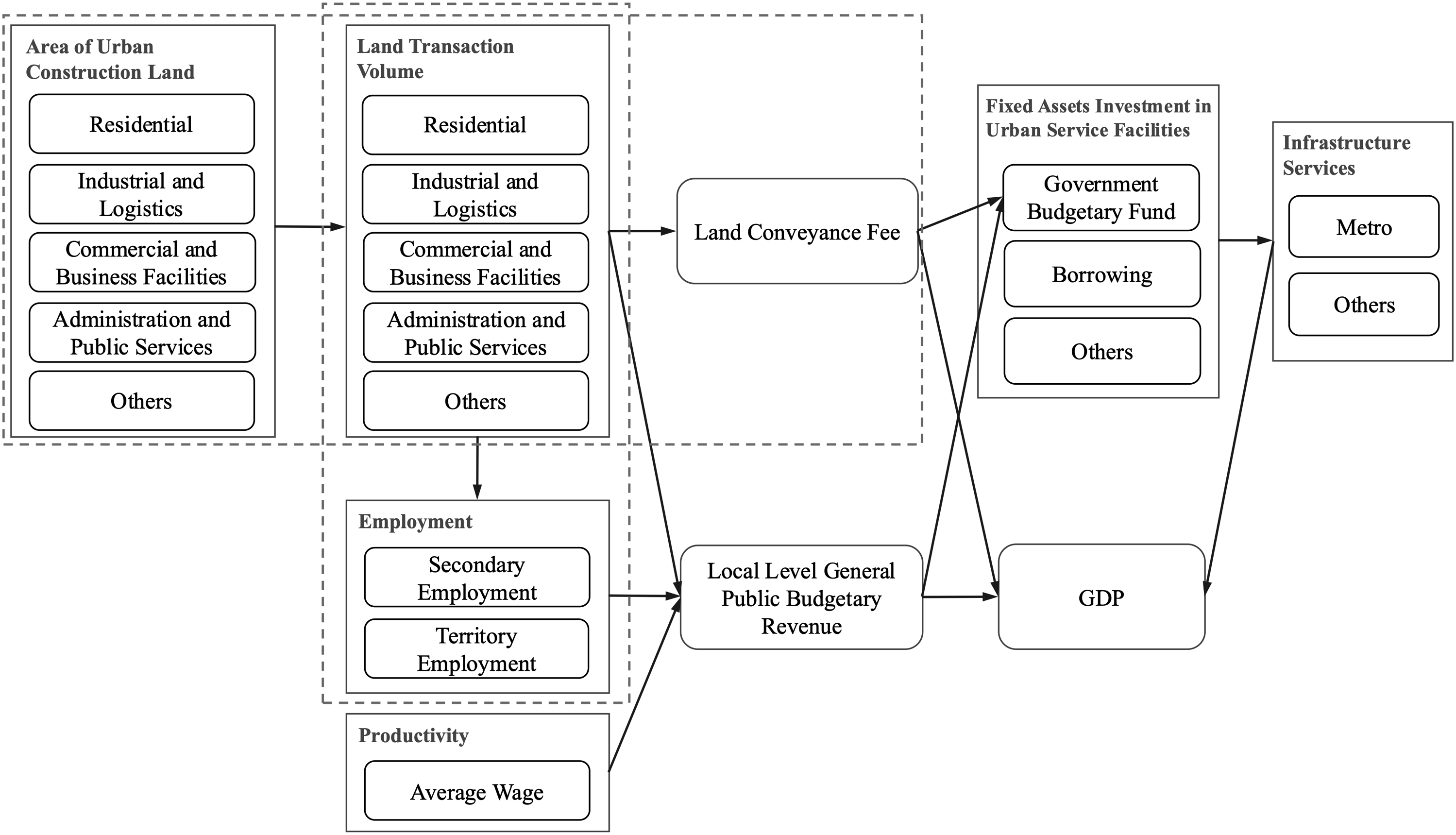
Based on the substantive interconnections between the land market, government revenue and urban development outcomes illustrated in Figure 2, Figure 3 shows the analytical framework of this study.
On the left-hand side of Figure 3, the city-wide total area of construction land, approved by a higher-tier authority, stipulates the maximum amount of land that could be utilised by land-use category during the planning period, hence representing the total land supply. The land transaction volume reflects the actual land utilisation through two main channels, that is, development rights transfer and allocation. The former accounts for 66.2%–74.3% of total land transactions during 2012–2017 in terms of the number of plots, being the predominant source of land conveyance fee income for local governments in China; the latter is usually applicable for public or administrative land uses only. Nonetheless, administration and public services as a specific land-use type is included in the analytical framework because of the significant positive externalities exerted on the adjacent land, notably in government relocation projects (Lu et al., 2019) and through the provision of major public amenities (e.g., schools, hospitals, libraries) (Zheng et al., 2016). The incorporation of city-specific ‘Area of Urban Construction Land’ (year-end total land stock) and ‘Land Transaction Volume’ (annual change of land utilisation) and the associated conveyance fee in the model aims to answer two interrelated questions: (1) how much land is actually utilised through transactions of development rights? and (2) how much does each land-use type contribute to the total land conveyance fee? Both are key dimensions for measuring the land-use efficiency in the Chinese context.
On the right-hand side of Figure 3, Fixed Assets Investment in Urban Service Facilities (Inv) and the development of Metro and city-level GDP are incorporated as outcome variables of urban development. We incorporate the Inv variable into the model as it reflects the city’s overall financial capability for infrastructure development, controlling for borrowing and other funding sources. The significant role of the metro in stimulating urban development is well recognised in the literature (Gonzalez-Navarro and Turner, 2018). Apart from the direct and indirect channels through which land-related income contributes to GDP (see discussions in Section 2), metro development is used as a proxy to represent the wider economic benefits of accessibility improvements and the multiplier effect on GDP.
Despite the incorporation of GDP in the model, the proposed analytical framework is primarily focused on local government revenue accounts (LGPB and LGMF). This is a distinct feature of this study and reflects the following two considerations. First, GDP is a highly aggregate measure of economic output, which may be inflated by debts and less relevant items, notably defence and policing expenditures, and is subject to data manipulation concerns. Secondly, the two local government revenue accounts are practical and robust measurements of the financial capability of the local government, and they exhibit a notably better longitudinal consistency than the GDP data series at city level in official statistical sources.
At the bottom of Figure 3, local government revenue accounts are affected by both land transactions and employment change, which captures the direct and the indirect channel, respectively. The employment is added to the analytical framework as a proxy for tax revenue as total tax revenue is not readily available for the full range of our city samples.
Data and methods
Data
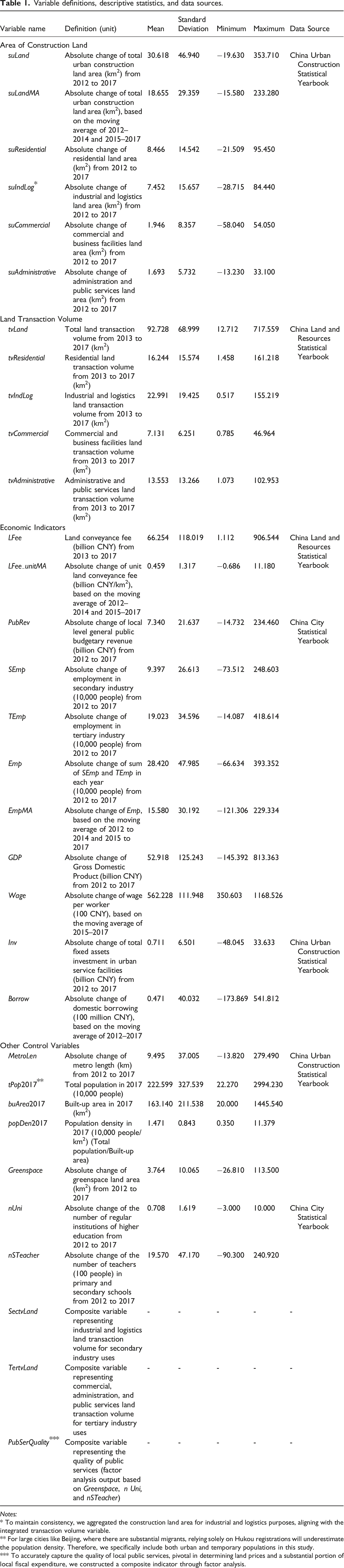
Data for this modelling research are compiled from multiple official sources, including the China Urban Construction Statistical Yearbook series, the China Land and Resources Statistical Yearbook series and the China City Statistical Yearbook series. Provincial and city-specific statistical yearbooks are also used to cross-check the data. Extensive cross-validation has been conducted and data errors identified have been either corrected or removed from the analysis. Details of the data validation and correction process are discussed in the Supplemental Material.
Variable definitions, descriptive statistics, and data sources.
Notes:
* To maintain consistency, we aggregated the construction land area for industrial and logistics purposes, aligning with the integrated transaction volume variable.
** For large cities like Beijing, where there are substantial migrants, relying solely on Hukou registrations will underestimate the population density. Therefore, we specifically include both urban and temporary populations in this study.
*** To accurately capture the quality of local public services, pivotal in determining land prices and a substantial portion of local fiscal expenditure, we constructed a composite indicator through factor analysis.
Methods
Structural equation modelling (SEM) is a recognised analytical tool for quantifying the interrelationship among a large number of variables. However, conventional SEM is designed to address linear correlations among continuous variables, while the significant heterogeneity across our city samples (due to distinct development stages, historical and institutional contexts) is likely to exhibit non-linear relationships. If not properly addressed, a linear function form would lead to statistically insignificant or biased estimations. To address this salient estimation issue, latent class analysis (LCA) is employed to capture the non-linear heterogeneity across cities. LCA can identify distinct city groups based on selected explanatory variables through maximising cross-group variance and minimising within-group variance (Wang and Wan, 2022). The categorical LCA variables are then incorporated in SEM. To demonstrate the analytical advantage of the new model, we estimate models with and without the LCA variables and then compare the goodness-of-fit statistics. Results for models without the LCA variables and the related interaction terms are presented in the Supplementary Material (Table S4–S6).
Prior to LCA, cities are pre-classified into three levels according to the administrative hierarchy in China 2 . The pre-classification reflects the multi-level governance structure in China. Level-1 and 2 cities have more devolved power, particularly in approving major land-use plans and budgeting power, than Level-3 cities. Additionally, Level-1 cities have implemented stringent land use controls during the study period, thus exhibiting a distinct pattern in the land market, which requires them to be treated separately in the model.
Based on the analytical framework in Figure 3, we developed three structural equation models (see path diagrams in Figure 4). Model 1 examines the utilisation of land, that is, how much land supply is converted into a land conveyance fee through transactions of development rights. Model 2 investigates factors within the land market and beyond that influence employment growth. Model 3 combines Models 1 and 2 and establishes further links with other development outcome variables. Further details of the model specification can be found in Section 2 in the Supplemental Material. Model specification for (1) Model 1, (2) Model 2, and (3) Model 3.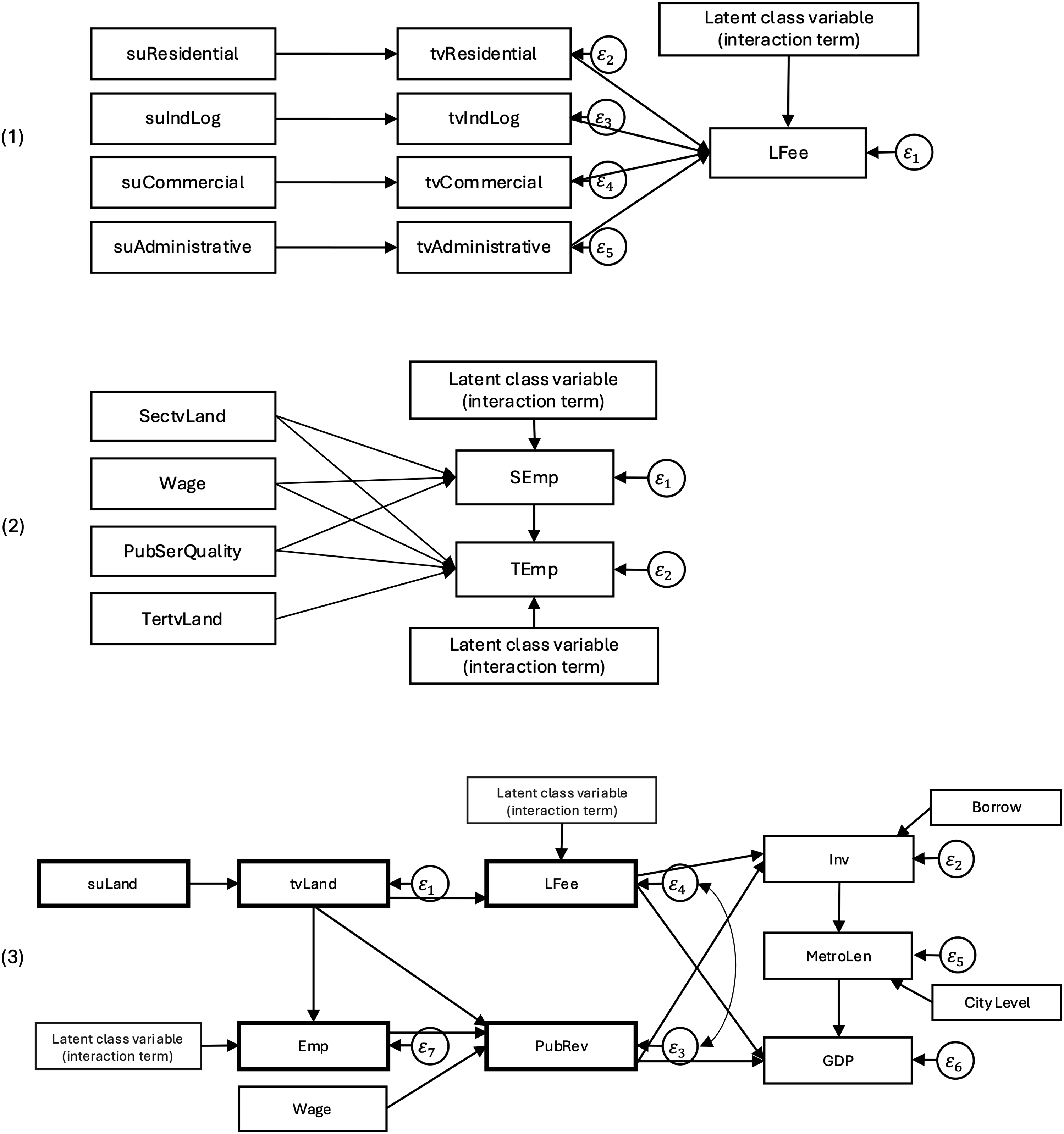
Results
Model 1: relationship between land supply and land conveyance fee
LCA results for Model 1
The LCA identifies three latent classes of cities for Level-2 and Level-3 cities, respectively. Figure 5(a) shows the mean values of explanatory variables for each latent class. Within the Level-2 group, three cities (Nanjing, Hangzhou and Wuhan) have high ratios between land supply and unit land value changes, and thus are classified as high efficiency (HighEff). In contrast, four cities (Tianjin, Chengdu, Xi’an and Chongqing) are classified as low efficiency (LowEff), indicating the unit land value increase has outpaced the supply increase. The remaining 21 cities in Level-2 are classified as Normal. Similarly, three latent classes are identified for Level-3 cities: seven HighEff cities, 49 LowEff cities, and 184 Normal cities. The full city list and descriptive statistics by latent class are provided in Table S2 in the Supplementary Material. To limit the number of interaction terms in the SEM model, we use a binary variable to distinguish HighEff city class from other classes (hence the reference case). (a). LCA results: mean values of explanatory variables for each latent class for Model 1 (For ease of comparison, variable suLandMA is divided by 100). (b). SEM results for Model 1.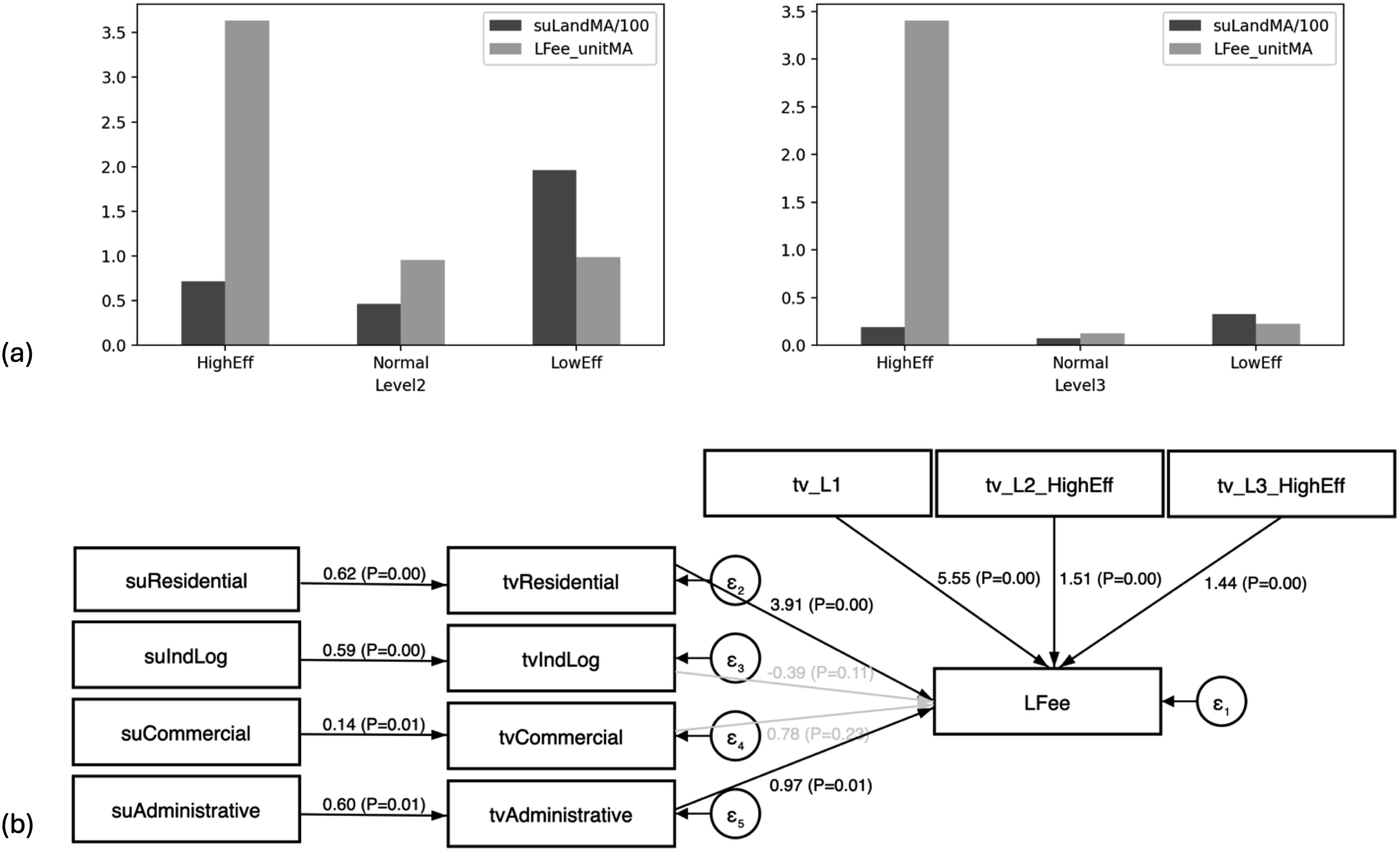
SEM results for Model 1
Figure 5(b) shows the unstandardised coefficient for Model 1. We report that the incorporation of LCA-based interaction terms leads to significant improvement in goodness-of-fit statistics over the model without interaction terms (see Table S4 in Supplemental Material).
The unstandardised coefficients on the left-hand side show an indicative land utilisation rate for each land-use type. For example, on average, 62% of newly available residential land as per the approved local plan would be utilised through land transactions, which is the highest among the four land-use types. In contrast, only 14% of commercial land would be utilised during the study period, implying a significant mismatch between demand and supply.
Regarding the relationship between transaction volume and land conveyance fee, on average, a one km2 net increase of a residential land transaction would lead to a 3.91 billion CNY increase in the land conveyance fee for the local government (equivalent to 3910 CNY/m2). To validate the estimate, we refer to the official land price benchmark data for selected Chinese cities 3 . For example, the 2018 land price benchmark for Class-1 residential land was 3950 CNY/m2 in Zhengzhou, a typical 2nd-tier provincial capital city in China, indicating a good consistency with our estimate.
Transactions of industrial and logistics land are not significantly correlated with the land conveyance fee, which is perhaps not entirely surprising because industrial land typically has the lowest unit value among leasable land uses (Bao et al., 2014), and it is not uncommon that cities would offer industrial land at a rock-bottom price or provide a conveyance fee pay-back scheme to attract industrial investments. Despite the statistical insignificance, industrial development plays an important role in driving local employment and income growth, which is explored in Models 2 and 3.
A significant land value premium (5.55 billion CNY per km2, equivalent to 5550 CNY/m2) is observed for Level-1 cities (
Model 2: relationship between land development and employment growth
LCA results for Model 2
In Model 2, the LCA identifies two latent classes for both Level-2 and Level-3 cities. Figure 6(a) shows the mean value of each explanatory variable for each latent class. Sixteen cities in Level-2 are classified as high efficiency (HighEff) due to employment growth outpacing the change of land transaction volume. The remaining 12 cities are classified as Normal. For Level-3 cities, 14 cities are classified as HighEff cities, and 226 cities as Normal. The list of cities and descriptive statistics by latent class are provided in Table S3 in the Supplementary Material. When incorporating latent class variables in the SEM model, the Normal group is used as the reference. (a). Mean values of explanatory variables for each latent class from the LCA for Model 2 (For visualisation purpose, variable tvLand is divided by 100). (b). SEM results for Model 2.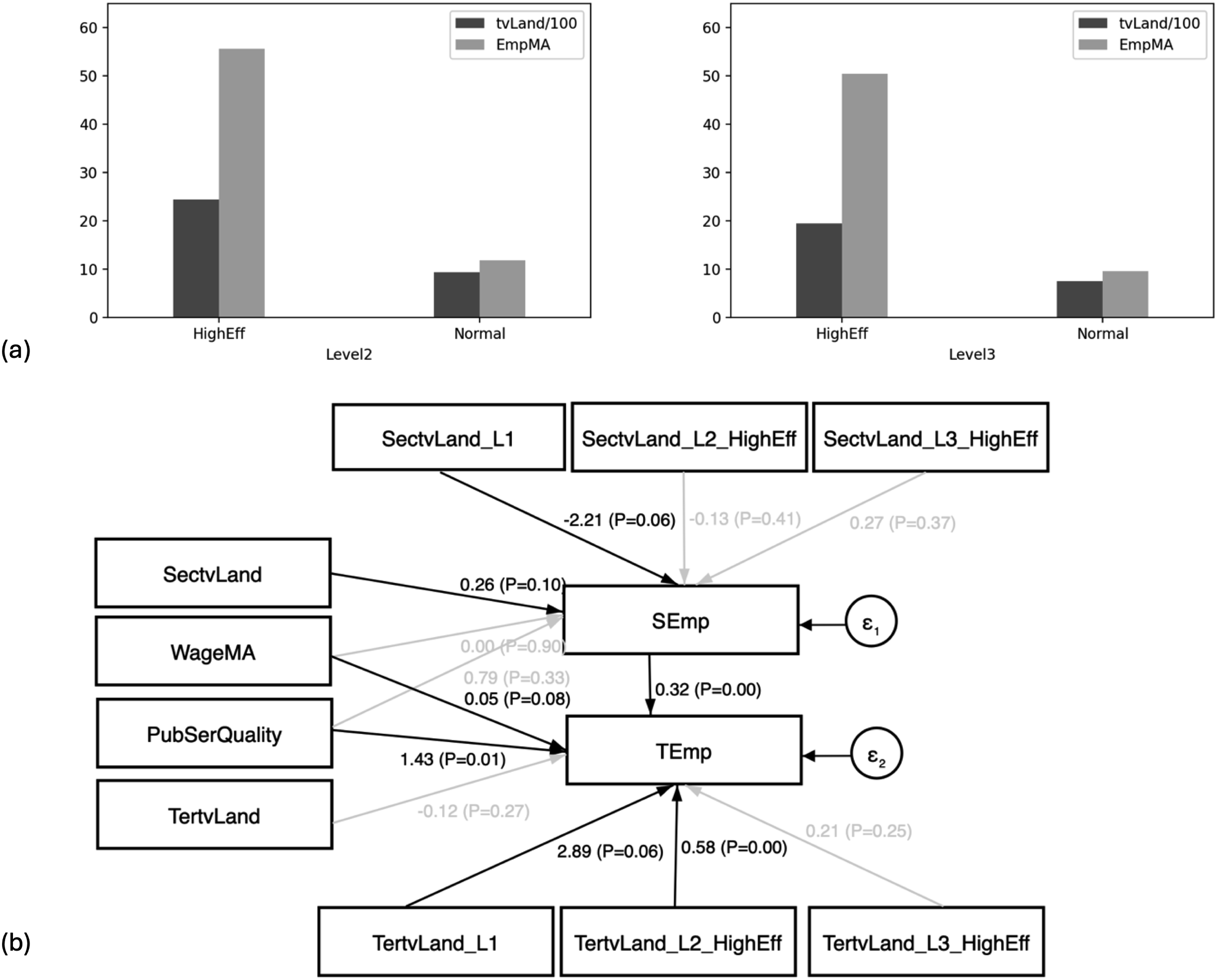
SEM results for Model 2
Figure 6(b) shows the unstandardised coefficients of Model 2. First, a higher transaction volume of industrial and logistics land (SectvLand) is associated with a higher employment growth in the secondary industry (SEmp), with one km2 industrial and logistics land adding 2600 jobs on average. For Level-1 cities, the negative correlation between land transaction and secondary employment (SectvLand_L1) suggests that industrial employment in those cities has continued to grow despite a reduction in industrial land transactions.
Secondly, a higher labour wage (WageMA) and better public service quality (PubSerQuality) are associated with higher employment growth in tertiary industry (TEmp). The finding corroborates the role of inter-city wage and amenity differentials in influencing labour migration. The transaction volume of non-industrial-use land (TertvLand) is not statistically correlated with tertiary sector job growth. Nonetheless, a positive relationship between the two is captured for Level-1 and Level-2 HighEff cities, respectively. Specifically, a one km2 increase in non-industrial land is associated with 28,900 tertiary employment growth for Level-1 cities, and 5800 jobs in Level-2 HighEff cities. The significant difference in model estimates reflects the distinct economies of agglomeration in Level-1 cities.
Furthermore, a strong correlation between secondary and tertiary sector employment is identified. Each additional secondary sector job is associated with an average of 0.32 new jobs in the tertiary sector, which aligns with Wang and Chanda (2018), who identified that one manufacturing job increase in China was associated with 0.34 job increase in non-tradable sectors. The strong multiplier effect emphasises the significance of a strong industrial base for local economic development.
Model 3: an integrated model of land use, employment, government revenue, and urban development outcomes
Figure 7 shows the unstandardised coefficients for Model 3. To preserve the degree of freedom, aggregated measurements are used for land-use variables (suLand and tvLand) and employment (Emp). The latent class variables are retained from Models 1 and 2. SEM results for Model 3.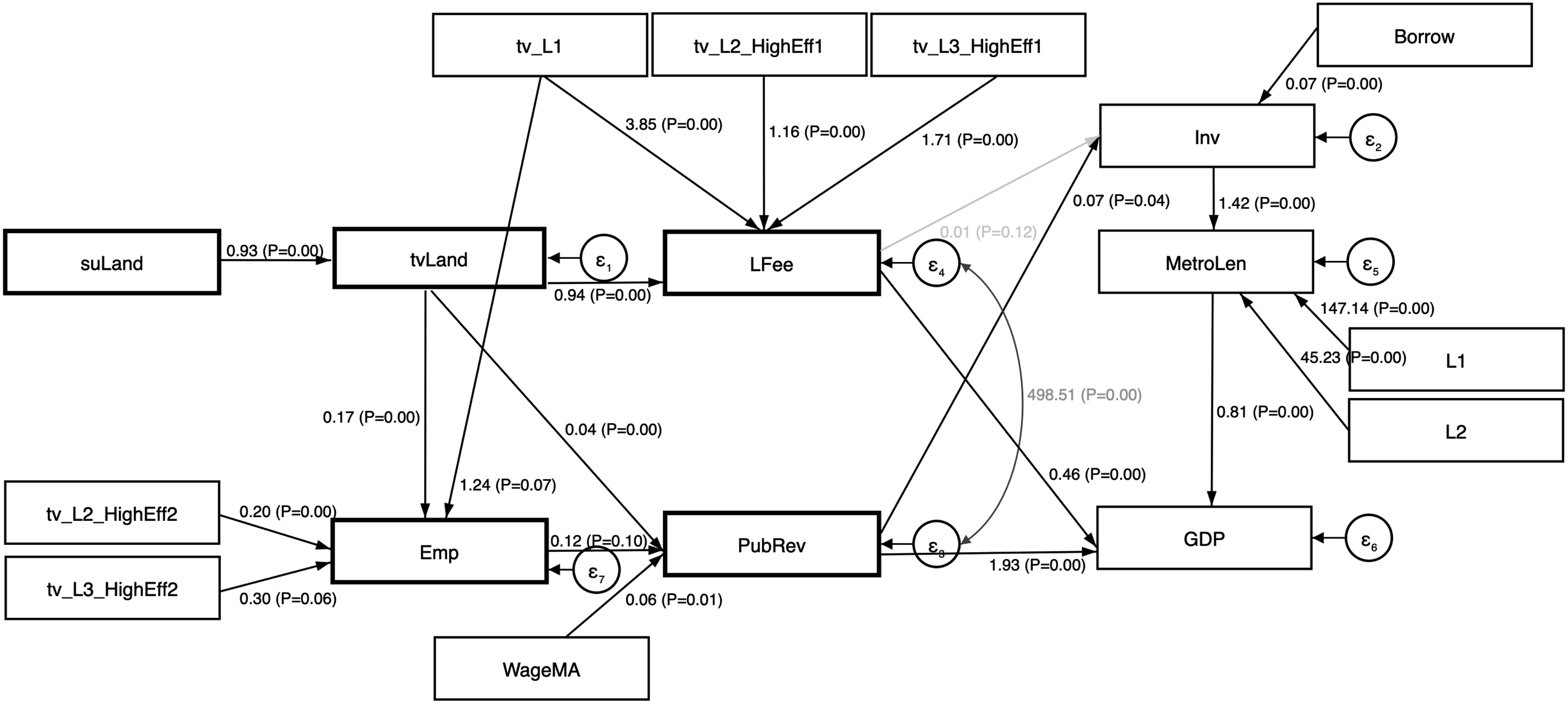
Model 3 confirms that land contributes significantly to local government revenue through both direct and indirect channels, after controlling for cross-latent-class variance and cross-city wage differentials. On direct channels, a 1 km2 increase in land transaction (tvLand) is associated with an additional 0.94 billion CNY increase to the land conveyance fee (LFee) and a 0.04 billion CNY transaction-related tax income to the local general public budgetary revenue (PubRev) on average. The indirect contribution is via employment growth, where a 1 km2 increase in the land transaction (tvLand) is associated with a 1700 employment growth (Emp) in secondary and tertiary industries combined; each new job created is then associated with a 12,000 CNY increase in local general public budgetary revenue.
On development outcome variables, the land conveyance fee (LFee), the local general public budgetary revenue (PubRev) and domestic borrowing (
The statistical significance of latent class variables confirms the great heterogeneity across cities. For example, for Level-1 cities (Level-2 HighEff) cities, increasing a one km2 land transaction could bring
Discussion
This study contributes to the literature on land economics in China with the following key findings. First, land supply and land-use planning should prioritise efficiency over quantify. Our model confirms the significance of both direct (land conveyance fee income) and indirect (tax revenue from employment and productivity growth) channels, through which land-related income contributes to local government revenue and subsequently urban development outcomes. Looking forward, direct channels are likely to shrink due to (1) a tightening of land supply control by the central government through planning reform (Cheng et al., 2022), (2) a recent overhaul in the domestic property market (Han et al., 2021), and (3) the slowdown of the export economy due to geopolitical frictions (Bekkers et al., 2021). The first factor reduces the supply of urban construction land, hence limiting the overall land transaction volume. The increased scarcity, in theory, would push up the land value. However, given the low land utilisation rates (implying oversupply of land) revealed in our analysis, the upward pressure on the land value due to a supply-side constraint may only manifest in a small number of fast-growing cities. The second and third factors may dampen the market demand for houses for investments and the demand for industrial development, which will place a downward pressure on land value. Enhancing the indirect channel thus becomes ever more crucial for sustaining urban economic growth.
Secondly, our analysis further identifies a significant land-use efficiency gap within both Level-2 and Level-3 cities. By bridging such a gap, significant economic gains and sustainability co-benefits could be achieved at both city and national levels. Such efficiency gaps across cities are consistent with findings in Wu et al. (2019), while we further conduct counterfactual analysis to gauge the magnitude of such a potential. Supposing cities within each level were able to achieve the same level of land-use efficiency as their high-efficiency counterparts, an average Level-2 (Level-3) city could achieve an annual revenue boost of 34.79 billion (23.39 billion) CNY from land transactions 4 . Given the average GDP of 336.90 billion (68.20 billion) CNY for Level-2 (Level-3) cities, such a contribution is not marginal.
Thirdly, the study reaffirms the fundamental role of industrial employment in driving local economies. While industrial land does not significantly correlate with the land conveyance fee, it is significantly associated with secondary employment growth, which subsequently contributes to tertiary employment growth and government tax revenue. Such a multiplier effect, aligning with the findings in Wang and Chanda (2018), provides a viable and realistic approach for sustaining and upgrading the local economy. A leapfrog from a primitive stage of industrialisation to a service economy, although not impossible (e.g., the exceptional case of Shenzhen), would require extraordinary political and financial support, which may be beyond the reach of most cities in contemporary China. From our analysis, fostering local industrial development and providing quality public infrastructure and amenities appear to be the prerequisites for raising the tertiary sector.
Lastly, our model provides quantified evidence that lower-tier cities in China can achieve high land-use efficiency comparable to their higher-tier counterparts. In light of the urbanisation rate in 1st-tier and 2nd-tier cities approaching a saturated level (Liu et al., 2018) and the observed outflow of labour from 1st-tier cities induced by the COVID-19 pandemic (Batty et al., 2022; Li et al., 2022; Li and Wan, 2022), it seems possible for some lower-tier cities to catch up or even outperform higher-tier cities in land-use efficiency. In other words, market forces and effective local policymaking can overshadow administrative hierarchical advantages. Future research could further explore the factors and policies driving high land-use efficiency in lower-tier cities.
Conclusion
This paper investigated the multi-channel effects of land-use efficiency on local government revenue through a novel LCA-SEM modelling approach. Our model contributes to the literature in three ways. First, the incorporation of LCA addresses a major limitation in conventional SEM applications, where continuous, linear covariates are inadequate to control for the significant heterogeneity across cities. The analytical framework is informed by the particular revenue structure of local governments in China. Secondly, we proposed a new land-use efficiency measure, namely the land-supply-to-employment ratio. This measure can capture possible oversupply of land, where a high ratio indicates low utilisation of land while the unit land value may remain high due to non-market interference. The new measure thus complements the price-based measure that is dominant in the literature. Thirdly, our model results provide quantified evidence on the direct (one-off land conveyance fee and transaction-related tax revenue) and indirect (tax income generated from employment and business growth) channels through which land transactions and development contribute to local government revenue. Our empirical estimates also indicate that employment growth provides higher long-term return than a one-off, land conveyance fee to government revenue in China, controlling for significant cross-city heterogeneity in land-use efficiency and productivity (average worker wage as a proxy).
While our empirical results are based on the Chinese context, the findings and the new modelling method have wider implications for other emerging economies currently undergoing rapid urbanisation processes. First, in terms of land finance, the need to shift the policy focus from short-term one-off gains (from land transactions) to long-term tax revenue (from employment and productivity growth) seems relevant to other cities at similar, intermediate stages of development. Secondly, for balancing regional development disparities, our analysis shows that lower-tier cities can achieve equal, if not higher, land-use efficiency compared with 1st-tier cities, captured by a new set of land-use efficiency measures (unit land value and the land-supply-to-employment ratio). The high land-use efficiency achieved in these leading lower-tier cities marks the success of ‘localised urbanisation’, a distinct feature of which is the absence of large-scale interregional labour migration. More research is thus called for to identify good planning policy practice from those leading lower-tier cities, which may offer an alternative model that would drive the next stage of urbanisation as the level and rate of urbanisation saturates in major metropolitan areas. Lastly, the new LCA-SEM method can be readily applied to other city contexts.
Regarding research limitations, despite our best efforts, measurement errors remain in our compiled data set. City-specific land-use policies are not controlled for in the model. The relationship between land transactions and development outcomes can be explored further (e.g., the significant correlation between metro and GDP corroborates the wider literature on how improved accessibility and connectivity can enhance agglomeration effect on productivity). Nonetheless, such effects are not yet fully verified in the current model, due to the omission of feedback loops between infrastructure development, land value and labour productivity. Such a feedback loop could be further explored using non-recursive SEM techniques in future research when more, fine-grain data become available. It is worth to note that this study primarily focuses on the impact of land-use efficiency on explicit local government accounts, and thus the wider impacts beyond public accounts (e.g., through local government financial vehicles and Chengtou bonds) are not considered. Lastly, data inconsistency resulting from a major policy reform in 2018 prohibited the incorporation of more recent data. Future research is required to test for possible trend changes in land-use efficiency patterns since 2018.
Supplemental Material
Supplemental Material - Land-use efficiency and local government revenue: Evidence from 272 Chinese cities using a novel structural equation modelling approach
Supplemental Material for Land-use efficiency and local government revenue: Evidence from 272 Chinese cities using a novel structural equation modelling approach by Tianyuan Wang, Li Wan and Helen XH Bao in Environment and Planning B: Urban Analytics and City Science
Footnotes
Acknowledgements
The authors would like to thank the anonymous reviewers for their insightful comments and suggestions.
Declaration of conflicting interests
The author(s) declared no potential conflicts of interest with respect to the research, authorship, and/or publication of this article.
Funding
The author(s) disclosed receipt of the following financial support for the research, authorship, and/or publication of this article: This work is supported by the Master student scholarship from Selwyn College, University of Cambridge and the PhD student scholarship from both the China Scholarship Council and the Cambridge, Commenwealth, European and International Trust.

Data availability statement
The data that support the findings of this study are available upon resonable request from the correspondng author.
Supplemental Material
Supplemental material for this article is available online.
Notes
References
Supplementary Material
Please find the following supplemental material available below.
For Open Access articles published under a Creative Commons License, all supplemental material carries the same license as the article it is associated with.
For non-Open Access articles published, all supplemental material carries a non-exclusive license, and permission requests for re-use of supplemental material or any part of supplemental material shall be sent directly to the copyright owner as specified in the copyright notice associated with the article.
