




Abstract
This study investigates why sanitation outcomes vary across urban poor communities in Delhi, India. Unequal access to quality sanitation has serious implications for the health, dignity, and economic well-being of the poor and public health in general due to risks of environmental contamination. For this multiple-case study, a sample of 7 communities is drawn from slums, public housing, and homeless shelters. The database comprises of direct observations of sanitation outcomes in these communities, interviews with 67 key policy informants, official documents of relevant government agencies, newspaper articles, and court filings. The qualitative dataset is analyzed using process-tracing to uncover policy decisions across communities. Findings show that inequitable sanitation outcomes are manufactured by biases that blame the poor for service deficits and make the provision of entitled benefits contingent on political mobilization of exhibiting “good citizenship.” This has serious implications for democratic accountability between the government and the very citizens that are most in need of public services to meet their sanitation needs.
Introduction
The problem of inadequate provision of hygienic, convenient, and affordable sanitation (i.e., toilets and waste removal and treatment systems) is rapidly urbanizing, especially in developing countries like India where a growing number of its urban population is also poor and largely dependent on public services to meet their basic human needs. Even as the poor disproportionately bear the burden of weak public services, there is emerging empirical evidence to suggest further disparities in service provision among the poor based on where they live (Heller, 2014). In fact, some scholars like Auerbach and Thachil (2021) have shown that there is much more segregation among residential settlements of the poor by basic services like water and sanitation in Indian cities than by otherwise salient social demographics like caste. This paper tests extant empirical studies in urban distributive politics to examine whether some poor may be more “privileged” or “deserving” than others in terms of access to better sanitation outcomes in Delhi. The question anchoring this research inquiry seeks to investigate why sanitation outcomes vary across communities of the poor in Delhi, India. The purpose of this paper is to examine how policymakers’ perceptions of deservingness of the poor inform the design and content of sanitation policy in the process of service delivery.
I engage a normative theory of social construction of target populations to examine the policy decision-making processes associated with framing of the sanitation problem, policy targets, and implementation rules and procedures. These reasoning processes are uncovered via in-depth interviews with 67 key informants such as sanitation agency bureaucrats, politicians, residents, and NGOs, and triangulated with newspaper reports, archival government documents, court filings, and field observations. Using the analytic techniques of process-tracing and pattern-matching, findings reveal a tension between path-dependent perceptions of the poor as lacking personal responsibility in managing their own sanitation service needs and keeping their communities clean, and incorrigible “deviants” who are habituated in unhygienic practices and cultures. These perceptions influenced the willingness and timing of bureaucratic compliance with agency rules and procedures of service delivery. Elected and non-elected policymakers can also hold strategic perceptions of deservingness when communities are organized and mobilized to exert continuous political pressure that shifts the policy agenda and forces bureaucrats to bend implementation rules to deliver improved sanitation outcomes.
This study makes an original empirical contribution by undertaking the first systematic analysis of the sanitation policymaking process that foregrounds the tension between competing frames of deservingness curated by politicians and bureaucrats. This insight offers a nuanced understanding of how and why policy outcomes can vary within a relatively stable framework of governing the poor from a distance. The article also makes an important contribution to the literature on distributive politics in India by using a normative theory of deservingness as one of the explanatory factors underlying disparate provision of public sanitation to the poor.
Theory
The theory of social construction of target populations was developed by Anne Schneider and Helen Ingram (1993; 2013) to understand how policy treats some people better (or worse) than others by examining the design and content of public policy in the policymaking process (see also Ingram et al., 2007). The theory adopts a clear normative-evaluative stance in the study of politics of policymaking, best captured by the Lasswellian dilemma of “who gets what, when, and how” (Lasswell, 1936). Because public officials care about political consequences of policy decisions, social construction of target populations is itself a cognitive process in the minds of policymakers based on both the stereotypes that they themselves hold and those they believe are held by the public at large—the latter being important for policies to be perceived legitimate (actively or tacitly) in democratic societies. Because elections matter in democracies, policymakers also pay heed to the perceived political power (e.g., ability to organize and mobilize) of the target group on whom they wish to confer burdens or benefits. This convergence of perceived public images and political power of target populations led Schneider and Ingram (1993: 334) to develop a 2x2 typology of four broad categories of social construction of target populations and the commensurate policy designs that lead to the following hypotheses in the context of sanitation for the urban poor:
H1 (Advantaged)
Communities will be expected to receive better sanitation outcomes because policymakers don’t want to be seen punishing good citizens with a positive public image and high propensity to mobilize. Therefore, sanitation problems of these communities will be deemed worthy of government attention and timely resolution.
H2 (Contenders)
Communities will be expected to receive better sanitation outcomes, despite their negative public image, because of their propensity to political mobilization. Sanitation benefits will be hidden from public view because rewarding negatively-viewed groups may invite public backlash. So, these communities will be viewed surreptitiously deserving of policy support for problem-solving.
H3 (Dependents)
Communities will be expected to receive sporadically better sanitation outcomes, despite their somewhat positive public image as needy populations because their political weakness will allow policymakers to ignore them as much as possible. So, these communities will only be symbolically deserving of policy support for problem-solving.
H4 (Deviants)
Communities will be expected to receive poor sanitation outcomes because public officials will want to be seen as punishing negatively-viewed, politically-powerless target groups whose inherent failures will be blamed for causing the sanitation problem they face. As such, these communities will be deemed undeserving of policy support for problem-solving.
The dominant framing of the sanitation problem by policymakers in the global south, which engenders a “demand-side” thinking on the issue, tends to further stigmatize and marginalize the disproportionately-impacted poor populations. That is, the poor tend to be rarely seen positively by the public at large as “good citizens” or “advantaged target populations”. Scholars like Comaroff and Comaroff (1997), Engel and Susilo (2014), and Barrington et al. (2017) argue that sanitation was a key policy area of discipling the poor in a colonial public health administration across cities in countries of the global south like Bangladesh, South Africa, and the Philippines. Agreeing with these scholarly accounts, McFarlane (2008, 2012) argues that the construction of the sanitation problem in post-colonial urban India has remained embroiled in a general discourse on dirt, disease, and disorder—the only difference being that the key agents in this discourse are domestic middle-class elites rather than foreigners. The problem of sanitation inequality is produced by a “malevolent urbanism” where the poor are increasingly seen “out of place” within elite visions of urban development. And the moral operations of urban policy proceed with an unwillingness to recognize service deficits and engage poor communities to provide sanitation they actually want to use.
The Schneider-Ingram framework (1993) sheds light on why some policy rules and tools are chosen over others, and how the intersectionality of social construction and political power of target populations impinge upon the selection of formal and informal rules to produce differential policy impact. Anti-poverty policies in the global south, as Berner and Phillips (2005), and Engel (2017) argue, are not designed to establish direct engagement with the poor to assess their deprivations and demands. Left to their own devices, the rules of poverty alleviation focus on “empowering” the dependent poor to help themselves to overcome service deficits by constituting community organizations to co-produce or manage basic public amenities. Evaluating the impact of a large-scale slum sanitation program in Mumbai in India, Sharma and Bhide (2005) found that participation rules restricted participation of only those community groups who accepted the municipality’s framing of the sanitation agenda and implementation plan for service improvement. And without government compliance with its own oversight rules to ensure service upkeep, or transfer of resources to the poor to manage their own sanitation, the outcome was that the community toilet facilities built by the municipality again fell into disrepair.
What holds and sustains these different policy design elements—policy agenda, policy implementation rules, and procedures—is the policy rationales that policymakers posit to justify the appropriateness of policy (in-)action. With rapid urbanization of poverty in the global south, the ideological stance of governments supporting neoliberal principles like “polluter-pays” has focused on individualistic causes of deprivation, and thus justified limited policy support to bridge urban health inequities (Stephens, 1996: 17). The problem of inequality under neoliberal governmentality is framed not in terms of what the poor lack (because the government has not provided) but what they are unwilling to do (unwillingness to pay for public services, or assume personal responsibility in their upkeep). By asking the poor to pay for using or managing sanitation facilities in their communities that they did not consent to, and that are often inadequate to meet their needs, the principle of polluter-pays pushes the rationale of “individual responsibility” in poverty alleviation, and has become a metaphor for punishing and reforming sanitation-related behavioral delinquencies of the poor (Berner and Phillips, 2005; Rusca and Schwartz, 2018).
Method
The research question anchoring this qualitative inquiry is as follows:
Why do sanitation outcomes vary across urban poor communities in Delhi?
Sanitation outcomes.
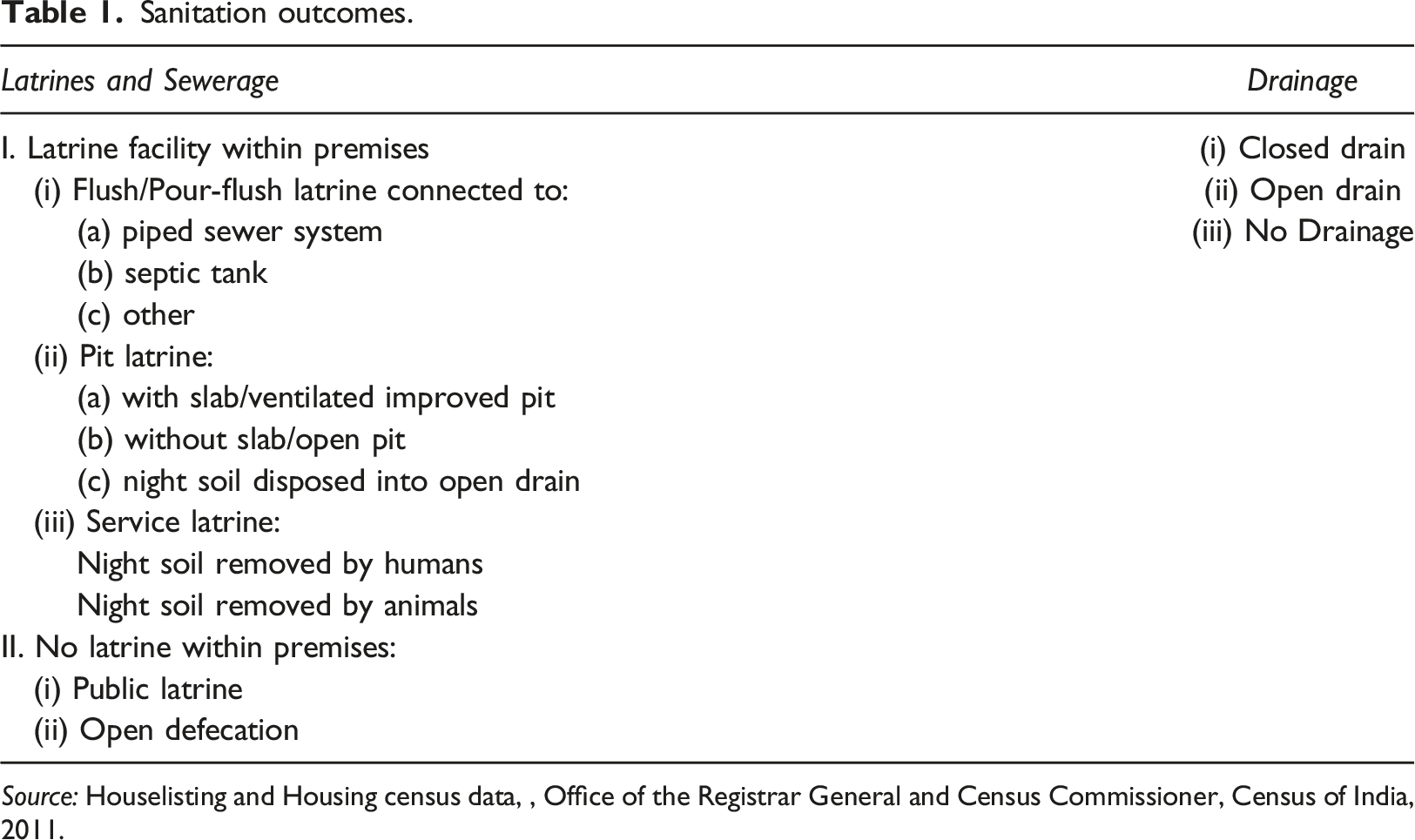
Source: Houselisting and Housing census data, , Office of the Registrar General and Census Commissioner, Census of India, 2011.
Delhi is chosen as the site of this study because it is a unique case to study the politics in policy design emanating from a fragmented structure of sanitation governance where state-level parastatals (Delhi Jal Board, DJB; Delhi Urban Shelter Improvement Board, DUSIB) and the Municipal Corporation of Delhi (MCD) are responsible for delivering different components of public sanitation across different types of urban poor communities. Although this disjoint governance framework is also seen in other metropolitan cities in India, Delhi is unique because the political boundaries of state and municipal governments are coterminous. This means that the corresponding sanitation bureaucracies are directly responsible to all the residents of this city-state.
Unit of analysis and case selection
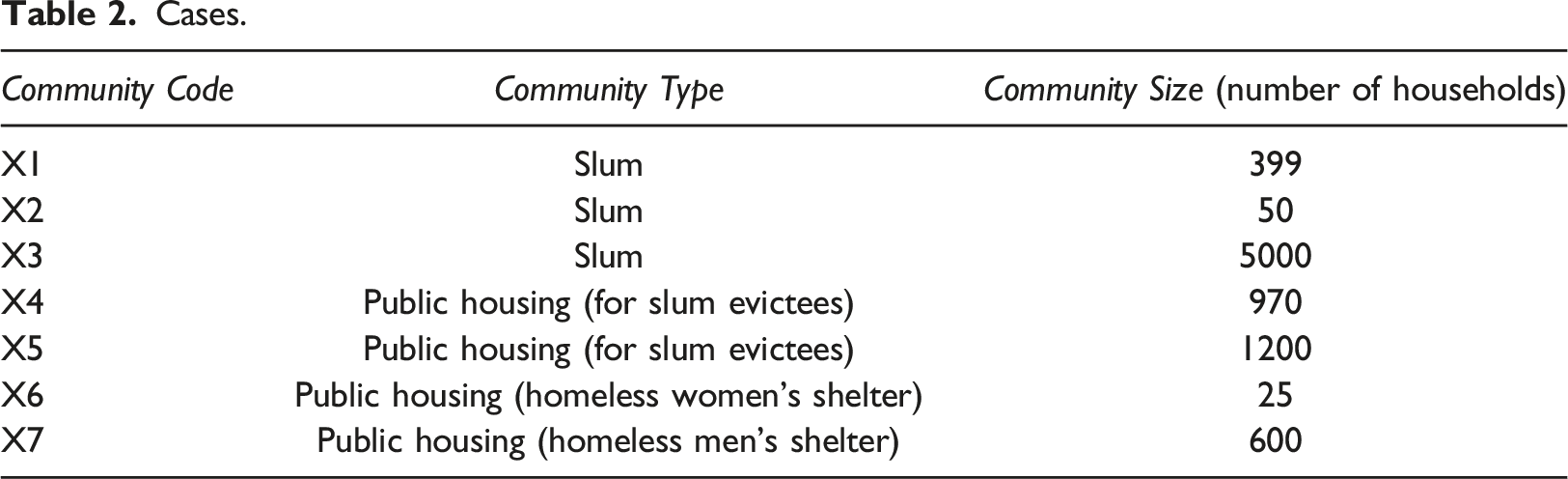
The unit of analysis in this study is housing settlements of the poor in Delhi. Since this study focuses on public sanitation provided to settlements, rather than individuals, using shelter-related indicators to sample the urban poor is methodologically appropriate. To operationalize shelter poverty for identifying urban poor populations, I consider two types of housing categories: privately-built housing (i.e., slums), and government-provided housing (i.e., public housing projects and homeless shelters). This sampling frame goes beyond most studies that equate shelter poverty with the presence of urban slums, and ensures inclusion of a large section of the urban poor. I used the official database of the government of Delhi that contains information on the name, location, and size of settlements (i.e., number of households) under each of the aforementioned settlement categories.
The selection of urban poor communities proceeded as follows. First, I stratified each housing category (slums, public housing, and shelters) by settlement size. The rationale for stratification was to allow for maximum cross-case variation for analytic generalizability of empirical findings (Yin, 2009). The stratification categories (number of households comprising a small, medium, or a large settlement) were iteratively determined because no uniform size-classification for such a diverse set of settlements is available, or perhaps even possible. For example, the largest homeless shelter has a capacity for 600 occupants that equals a medium-sized slum in Delhi (DUSIB, 2017). I was able to construct 3 strata to sample a small, medium, and a large slum, 2 strata for a medium and large-sized public housing for slum evictees, and 2 strata for a small and large shelter.
Cases.
Data
Three types of qualitative data were gathered: (i) field observations of sanitation outcomes in the sampled communities; (ii) documentary and archival data on sanitation policy for the poor obtained from the three sanitation bureaucracies; legislative record of elected officials obtained from the websites of relevant legislatures; newspaper articles on sanitation programs/policies; and reports by NGOs and court records pertaining to sanitation in sampled communities; and (iii) in-depth interviews with 67 key informants representing sanitation bureaucrats, state and city-level elected officials, community members, and NGO personnel.
In addition to observing and recording sanitation outcomes using census indicators, I also took copious notes on socio-spatial characteristics of the communities to contextualize and corroborate interviewee narratives. These observations included: (i) spatial characteristics of communities (e.g., type of housing, type of commercial establishments in the community, and socio-economic characteristics of adjoining areas), and physical condition of public infrastructure (sanitation and water supply); (ii) interactions between key informants and their colleagues about sanitation matters (e.g., problem-solving among residents; policy implementation discussions among bureaucrats). I recorded these data on paper.
Twenty-two government documents were collected. These documents were comprised of governing acts of the three bureaucracies that define the scope of activity, and conditions and zones (settlements) of exclusion; annual reports (2011-17) and board meetings (2014-17) that articulate the progress on existing programs and/or new policy proposals; internal memos on new sanitation programs and/or policies (2016 and 2017); and a shelter-management manual that specifies the roles and responsibilities of the state and NGOs vis-à-vis service provision (2017-18). A total of 29 articles from two leading newspapers in English (Hindustan Times) and Hindi (Navbharat Times) from 1 January 2017 to 30 April 2018 were used to capture information on any sanitation policy or program that the government may have introduced or discontinued, in the months leading up to the start of the data collection in the field in August 2017 until the end in April 2018. These data were used for developing the protocol and triangulating evidence from key informant interviews.
The sample of informants was comprised of 19 residents drawn from the 7 sampled sites, 7 elected officials representing these communities at the state and city legislatures, 25 bureaucrats holding senior and mid-level positions at state (DJB and DUSIB), and city (MCD) government agencies, and 16 NGO officials engaged in the provision/evaluation of sanitation service in these communities. The contact details of public officials, and the NGOs contracted for sanitation upkeep in some sampled communities were obtained from the Delhi government database. Recruitment of community informants proceeded via perusal of a Government of Delhi (2010) database that contained the names and contact information of members of residents’ welfare associations registered with the government.
Analytic strategy
To answer the research question, I used the method of process-tracing where I began with observing sanitation outcomes in each community. Next, I worked backwards to investigate the sequence of policy decisions, and the rationales underlying these decision choices, in the process of sanitation policymaking that led to the observed sanitation outcome. For key informant/elite interviewees, especially public officials, I also utilized published research materials that served as counterfactual evidence (e.g., sanitation outcomes in comparable communities, not part of the study sample but in a politician’s constituency, that were studied by other researchers). 2 This, as Hochschild (2009:125) argues, gives the interviewer the credibility as a knowledgeable person, and also helps to keep the respondent from giving partial or “imaginative” narratives.
To capture the emic responses of the respondents, I began the interviews by asking open-ended questions like “how did this sanitation outcome(s) come about in your community?” and “why do we see variations in outcomes across these communities?” (see Table S1 in the Supplementary Materials for the interview protocol used in this study). Since the investigation of the policymaking process began with a broad research question, pursuing a broad and open-ended line of inquiry allowed for capturing and testing of multiple explanations for observed variations in sanitation outcomes.
To determine the dominant thematic explanation for the observed sanitation outcome in each community, I used the Crosstab Query function in NVivoTM software that computes a coding reference rate for each theme out of the total coded material under each case/community (QSR NVivo, 2018). That is, estimation of the dominant explanatory theme in NVivoTM is based on the quantum of text coded under each thematic category. Other documents such as news articles, sanitation audit reports by NGOs, and court filings relating directly to the sampled communities were included with their respective interview transcripts to comprise the full qualitative dataset. These data were organized and coded in NVivoTM (version 12.1).
To strengthen the validity of dominant thematic explanations for varied sanitation outcomes of the policy process, I provide a count of the number of interviewees who referenced a given thematic frame in the dataset (Miles and Huberman, 1994). However, two caveats must be noted. First, even though key informants, especially government elites, were chosen based on their current position in the decision-making process, the average age of the community being 31 years meant that not all were equally informed about how the decision-making process unfolded in the past, which led to communities’ differential access to sanitation. Therefore, responses such as “don’t know...it happened before my term in office”, “I was not involved in deliberations”, “the community is not in my administrative ward/constituency” were also articulated by interviewees. Second, since the three sanitation bureaucracies are responsible for delivering different aspects of sanitation service to different settlement-types, DJB officials could not respond to questions about sanitation outcomes (community toilets, drainage) in illegal slums or shelters, and DUSIB officials to inquiries about sewerage in public housing projects. Municipality officials could only respond to questions about drainage services, except for those in slums.
The dominant thematic frames identified using the foregoing combination of coding reference rate and counting codes were analyzed by pattern-matching as a form of hypothesis-testing. This method entails comparison of observed patterns of decision-making underlying a sanitation outcome in the data with theoretically-proposed patterns to determine whether the empirically observed policy actions match with those predicted by the hypothesized theoretical explanations (Bennett, 2010; Collier, 2011).
Evidence
This section presents the data from key informant interviews on the sequential process of decision-making that shaped the design(s) and outcome(s) of sanitation policy across the seven communities. The data are organized to reveal how sanitation outcomes can vary across communities of the same type, and why similar communities can be perceived differently by policymakers in a way that justifies disparate service provision. These justifications of deservingness are uncovered through framing of the sanitation problem and formal and informal policy rules and procedures of delivering sanitation to the poor.
Sanitation outcomes in slum communities.
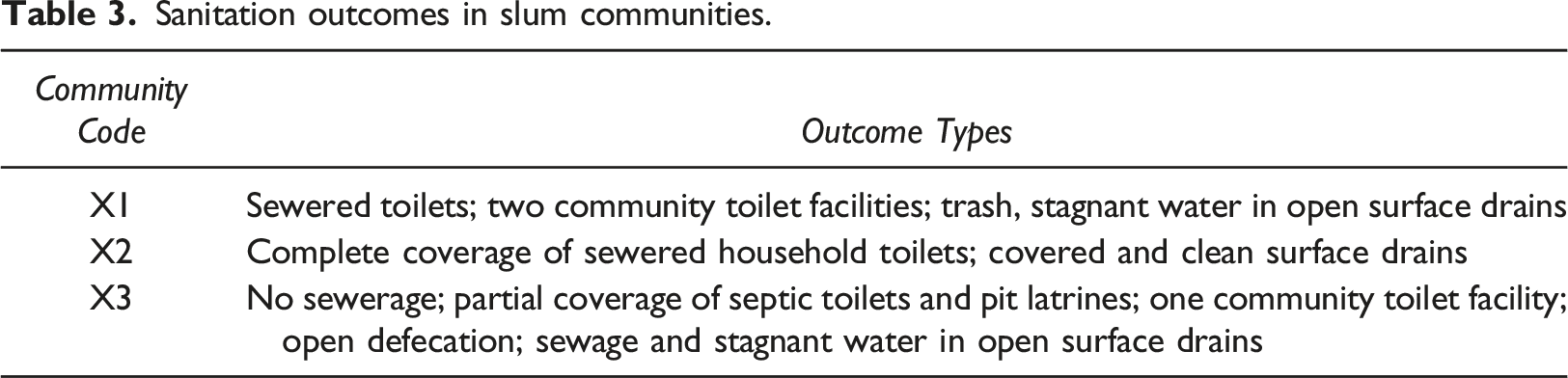
Despite being illegal encroachments on vacant public lands, X1 and X2 enjoy access to formal public sewer systems. Describing how X1 achieved sewerage, community leader, Gopal, said, “the two community toilet complexes in our community had come under tremendous stress over the years.. our community was growing.. there would be long lines...and women faced problems. Before the first state assembly elections were held in 1993, Anand [former state representative] visited our community for election campaigning. We asked him why the government was making us live without the dignity of having household toilets” echoing the other 2 resident-informants (emphasis added). Gopal also added that he told the then candidate (Anand) that the community would vote for him en masse if he promised to deliver sewerage. “These poor had been living in gross conditions...they have large families.. packed into small shacks. Where is the dignity in that?” said the politician, to rationalize sewerage to X1. When I presented him with the findings of a research study (Sheikh et al., 2014) that showed unsanitary conditions in a slum adjacent to X1 also in his constituency, he smiled and said, “X1 is the biggest slum of central Delhi.. they were united and willing to vote for me.. which politician will say no to such a large voter base?”
Aware of their political clout, community informants agreed with a senior municipal officer who said that “the municipality doesn’t service the slums [because].. they are occupying this government land illegally. We can’t be seen as legitimizing illegal slums by providing them formal services...but the community has been politically active. We want to do our jobs in peace without any conflict with the leadership...so we made this exception” echoing other 3 of 8 officials about bending agency “norms” to install sewers in X1. So then when I asked how then the drains in X1 lay open with stagnant water and some trash, unlike X2, the senior official echoing the other 3 of 8 officers stated that “cleaning of drains can’t be done routinely in an illegal slum...we are bending the rules, and that has to be done discreetly. Sanitation workers visit once a week to clean. Especially during monsoon, Gopal calls me more often to say that the drains are overflowing. In such situations I send someone to do a quick cleanup...but that can’t happen every day..”
The women informants of X2 reported receiving sewerage in their community a few months prior to the 2013 state assembly elections in Delhi. “Fights would break out at the public toilet facility with residents of the adjacent public housing project.. they would claim first-use and push us out of the waiting line.” Frustrated with futile visits and patient sit-ins at the office to meet with their elected official, “I convinced other women that we had to take a radical step. We made our young children defecate outside the politician’s office every morning. It’s across the street, and we did this for a few weeks. When he finally visited our community, we told him that if we got sewerage we would vote for him in the upcoming elections” explained Veena, echoing the view of the other 2 community women. The state representative of X2 reiterated the “disgusting imagery” of feces outside his office. “My staff was sick of the filth outside.. I was busy with elections but every day I would hear of children ‘going’ on the pavement outside. Frustrated with these complaints.. when I finally heard their demands of at-home toilets, I knew sewerage could be extended ‘without any problem’. It would look like a minor everyday road-side construction, and nobody would raise any objections on how DJB was providing sewer connections in a slum .” Like X1, women of X2 slum were aware of their privileged status: “we know that this is an exception...the government only extended sewerage because our MLA [state representative] put pressure.. all these years we struggled and suffered, but they [bureaucracy] did not care..” (emphasis added).
The two politicians’ claims that the sewer jobs were “off-the-book” plans for which no budget or construction contract was prepared by the bureaucracy was supported by 8 of 16 officials at DJB and municipality. A representative view of a senior DJB official among this group emphasized the politicized nature of administrative functioning by saying that “we are heavily dependent on loans and grants from the state government...there is no formal rule against sewers in slums...so we install sewers wherever and whenever political leadership wants. Nobody likes to get pulled up..” When probed about covered drains only in X2, a mid-rank municipal officer echoing the view of all 8 officers said, “we have a policy to keep drains open, but some communities clandestinely cover them with the support of politicians...we do not come in the way of these politics.”
Contrary to the benefits secured by X1 and X2, three women resident-respondents from X3 narrate the plight of their elected representative’s apathy towards the worsening sanitation situation in their community of 5000 households. Sonia, head of an informal women’s welfare group in X3 said, “there are just 12 stalls each for men and women in the community toilet, and it is agonizing to wait in line in the mornings. When our turn finally comes, all we get is a dirty toilet. The water system installed by the government breaks down often. When some of us went to complain about this to our MLA, he spoke rudely to us saying that we were not his only constituents...we were shown the door.” While two of three women have, over time, built rudimentary septic toilets at home, the third informant was among those families who could not afford to build a private toilet, and had “no option” but to defecate in the open as the public facility was inadequate and often dirty.
When I asked the state representative as to why it was that the slum had no sewerage, unlike the other two sampled slums of his party’s colleagues, he characterized the undeservingness of X3’s residents by explaining that “after I won the election, I got rid of water truck mafia [unlicensed operators delivering potable water in slums and other neighborhoods unconnected with piped water supplies] ..now there is no water problem. But you see these people will never be happy...their entire life in the city is a web of illegality ..they want all legal services...the more you give them, the bigger their bellies become..” (emphasis added). Field observations and interviews with DJB officials revealed that the community toilet is served by groundwater (not water trucks) whose levels have been rapidly depleting.
“It was one of the 259 OD [open defecation] spots we identified in Delhi. So we provided a community toilet there, but still people are going in the open.. Our facilities are sufficient ..No, we did not calculate it [number of toilet stalls] based on slum population because, you see, ultimately these jhuggies [slums] will be demolished. So we’re doing the bare minimum. It’s a culture of convenience actually. We have provided the infrastructure, but their mindset is why pay when you can go in the open as many times for free?” said a senior DUSIB official, representing the view of his other 4 of 9 officers to questions on provisioning rules. When I asked about varied upkeep of open drains in X3 compared to other two slums, a senior officer representing the view of 5 of 8 municipal officers said, “we have no role in slums… DUSIB is responsible for slums. People have connected their toilets to open drains. Raw sewage is flowing in the open. Their culture must change, first. Only then community toilets will be used properly.” Responding to better sanitation in the other two slums, “when our MLA has shunned us, why would the government [bureaucracy] care? If our MLA supported us, they [bureaucrats] would have treated us with respect when we approached them with our problems” said Sonia, representing the view of the other 2 of 3 women (emphasis added).
Sanitation outcomes in public housing.
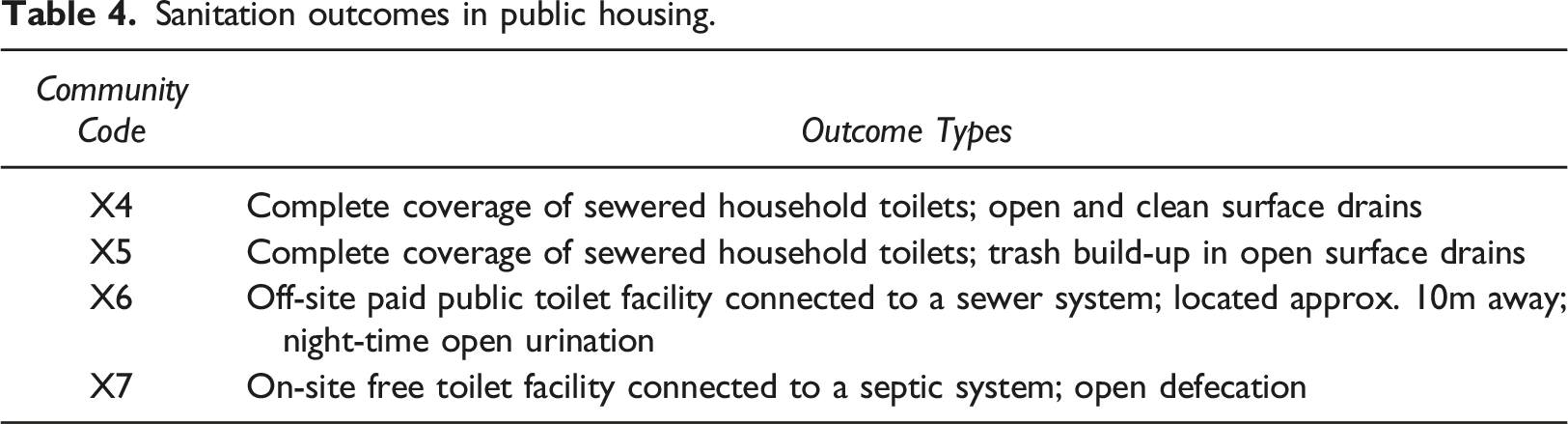
Policymakers’ rationale for observed disparities in sanitation outcomes across recently-settled public housing projects reveals how policies can be implemented to teach lessons in “personal responsibility” and changing “slum cultures” of poor hygiene. When I asked why open drains were well-kept in X4 but not in X5, a mid-rank officer said: “we have chosen this community because it was the first EWS project we built ...our field staff is working hard to oversee upkeep of common services like sewerage and drainage for 5 years. This is sufficient time for residents to learn and replicate good community-living practices later on. The purpose of this 5-year sanitation management policy is to educate these people by setting a service standard that they can emulate...they have never lived like this before. Have you seen a slum look like this...so clean?” echoing the views of the other 4 of 9 DUSIB officials. The two community informants at X4 said that DUSIB was overseeing sanitation upkeep (drains and sewers) because families had paid the agency for these services at the time of moving-in.
“DUSIB cannot provide these services everywhere...residents will have to assume personal responsibility” is how the state representative of X5 responded to the question of absent on-site DUSIB officials to comply with formal rules of oversight for drain-cleaning as in X4. Three resident-informants of X5 agreed that the on-site government office was merely symbolic: “we paid for upkeep before we moved into these apartments, but we have no power over these officers. The office is hardly ever open...it doesn’t matter to them that drains are dirty, trash is piling up and is making us all sick.. They are not here to see if sanitation workers are doing their job properly… nobody cares about us” said Ali, echoing the other two residents. Lack of government presence was explained as thus: “there are many problems here.. nobody wants to be here and listen to these people complain all the time. They play cards the whole day but won’t step up to clean the drains outside their homes. These people have to learn to live like residents of formal housing localities..they are not living in a slum anymore. They must set up an RWA [residents’ welfare association] and collect money from households to pay for service upkeep. They must change old habits of expecting us [government] to do everything.. otherwise this place will begin to look like a slum after 5 years” explained the mid-rank DUSIB officer who I managed to meet, on-site, with some difficulty.
The observed variations in sanitation outcomes between homeless shelters for men and women also reveal a largely laissez faire mentality in enforcing formal oversight rules by the government. “The NGO told us to use porta toilets only for urination...we go down there [by the riverbed] to relieve ourselves… it has been like this for over a month now..” said Javed, echoing another older resident of X7, a homeless shelter for men, when I asked why 6 of 9 porta toilets on the premises were locked. “All 12 septics are overflowing, but we have kept 3 toilets open.. only for urination.. otherwise it will become a big problem for us. We have complained and DUSIB engineers come for inspections...but so far nothing has been done. Problems of the homeless are not urgent for the government. Maybe by December [of 2017] something happens...that is [winter months] when the media is active..” smirked Shailendra, representing the view of 6 of 15 NGO officials about the problem of open defecation and expected timeline for problem-resolution (i.e., two months after the interview). A review of news reports published in two national language dailies between January 2017 and August 2018 lent support to the claims by NGO staff. Out of a total of 16 stories on homelessness over the period, 9 were published in December-January alone and all were field pieces.
As the problem of leaking septics continued into the winter months of 2018, 6 of 9 DUSIB bureaucrats responded to unsanitary conditions at X7, unlike in the other shelter, X6:“Delhi is facing a problem of excessive migration from rural areas...and X7 is a located in a major district of Delhi that is a hub of these new arrivals. As such, the facilities are overused, and these rural folk have a bad habit of throwing cigarette stubs, tobacco packets inside the toilets...which causes frequent malfunctions” was a representative quote by a senior official. When I probed as to why then DUSIB engineers were inspecting the malfunction if the problem could be fixed by merely informing residents not to throw trash in toilets, the officials said that “these people don’t listen” and “old habits are hard to change.”
Mobilization of political agency by a group of homeless women residing in X6 produced an improvement in public sanitation, though not for long. “This public toilet was in a bad shape way back in September 2015. The two porta toilets provided by DUSIB as replacement also broke down due to poor maintenance. One day, out of frustration, I visited Sunil beta’s [son] office to complain about the broken toilet and DUSIB’s inaction to fix them. He was the only one who could help us. He took a small group of us women to meet a senior woman officer in December [2015].. she told us that DUSIB will take care of our problem..” said Amma. Sunil heads a local advocacy NGO and is Amma’s former employer. Showing me the papers Sunil said, “after DUSIB responded to my RTI query [counterpart of FOIA in the US] that the public toilet was MCD’s property and they had no role in its upkeep.. I took them [homeless women] to meet Maliwal [Chairperson of Delhi Commission for Women (DCW), a state agency] to report their grievances. Maliwal was appointed to the Commission by the Chief Minister [who also serves as the chairperson of DUSIB]..and was the only one who could put pressure. Soon after our visit, DUSIB sent an updated response to my RTI in December [2015].. they had taken ownership from MCD and were undertaking repairs,” echoing 3 of 16 NGO officers who knew about this event. Corroborating these narratives, DCW’s annual report (2016: 49) states “..group of homeless women complained about a non-functional public toilet…Chairperson issued notices to DUSIB CEO for immediate action ..public toilet was repaired and opened in August 2016.”
Though the toilet facility was functional when I visited in September 2017, two porta toilets were provided later by DUSIB that could be used after the main facility closed at 10PM. These porta toilets were without water or electricity that forced women to urinate in the open in a place behind the shelter that receives a faint glow from the streetlight. “We have built shelter for these needy, destitute women, and hired a private contractor to manage operations at the toilet facility. So now it’s not in our hands… these [shelter] women should organize to hold the contractor responsible for keeping the porta toilets clean and in running condition” said a senior officer echoing the view of 6 of 9 DUSIB officials. A senior official of the NGO managing the women’s shelter said that “DUSIB doesn’t care for the plight of these women, or their safety at night. We have complained to the toilet contractor numerous times ..but he has stopped taking my calls, Why will he bother if DUSIB is unwilling to exercise any oversight...or penalize him for these dysfunctional porta toilets? They want the NGOs to do everything. We are heavily dependent on government funding and cannot afford to pay for additional responsibilities. DUSIB have just washed their hands off all responsibility,” echoing the sentiments of Sunil and 7 other NGO officials, and the two homeless women informants.
Discussion and policy implications
The answer to why sanitation outcomes vary across poor communities in Delhi revealed that the dominant explanation for variation was policymakers’ perceptions of community traits that shaped, and re-shaped policy agendas and implementation rules of delivering or withholding public sanitation. While the communities largely fell along the dependent-deviant spectrum of symbolically-deserving to outright undeserving of sanitation support, the dynamic process of social construction meant that the same type of communities could receive different service outcomes and vice-versa.
Supporting Schneider and Ingram’s (1993) thesis of discreet policy benefits to politically-mobilized “contenders”, the bureaucracies implemented the campaign promise of politicians to provide sewerage in X1 and X2 slums, through surreptitiously-looking “minor works”, so as to avoid the threat of public backlash against benefits of formal sewerage being extended to negatively-viewed illegal encroachers on public lands (H2 observed). When formal provisioning rules are absent—as is the case for sewers in slums (DJB Act, 1998) or closing of stormwater drains (DMC Act, 1957)—bureaucratic perceptions of deservedness can reflect electoral promises of politicians and result in disparate outcomes. That is, to the extent that service bureaucracies are embedded in the larger political system, moral frames of “whom to serve and when” can be shaped by informal interactions between the political class and citizens.
It is important to point out the interpretive distinctions between politically-resourceful “contender” target populations and clientelistic relations between citizens and political patrons that manifest in service disparities. The politics of patronage rests on the ability of the patron-politician to establish credibility by showing that he/she can deliver the goods and fulfill campaign promises. On the other hand, while “contender” targets may be clients of a political actor, the distribution of resources is hidden because of the largely negative public image of the client-community (e.g., illegal slums). This is the key conceptual difference.
That perceptions of (organized) political power can play an important role in shaping deservedness for policy benefits and community members’ views of their own image in the eyes of the bureaucracy was articulated by residents of X3 slum. Blaming improper cultures and deviant habits of X3 slum is salient to the framing of the sanitation problem by policymakers (H4 observed). This problem frame then informs a bare-minimum infrastructure provision (under-provided toilet seats per capita) and justifies non-compliance with oversight rules for service upkeep. Therefore, bureaucratic discretion in service (non-)provision operates within the context of image-making of target populations as “uncivilized” deviants through causal, and not necessarily factual, storytelling that legitimizes non-compliance with formal policy rules of service provision and monitoring (Engel and Susilo, 2014; Maynard-Moody and Musheno, 2000).
Policymakers’ framing of the poor as rural migrants who are un-acculturated in the proper use of a toilet was also observed for the homeless male residents of X7. Policymakers’ lack of urgency, at best, and unconcern, at worst, to address the deteriorating sanitation conditions at X7 shelter was justified by externalizing the cause of the problem. The nuisance and impropriety of the “rural migrants” engaging in open defecation and unsafe practices of waste disposal then becomes a metaphor for cultural deficiencies, not policy failure of piecemeal sanitation provision and largely hands-off governance (H4 observed). Despite growing prominence of privately-built septic toilets across formal and informal settlements of the poor in Delhi, the DJB has yet to amend its constitution to articulate legal provisions and rules relating to septage management. At the time of this study, there was no separate septage treatment plant in the city or any regulatory mechanism to monitor the activities and fees charged by a largely informal network of private emptiers (Centre for Science and Environment, 2016). Despite nearly 45% of Delhi’s population unconnected to sewerage, 3 the DJB officials that I interviewed clearly stated that their mandate was only to build sewers regardless of their feasibility in a largely unplanned city.
The process of constructing the deserving poor, however, is not as static as the Schneider-Ingram typological framework would suggest. A short-lived activation of homeless women’s political power, engineered by a policy entrepreneur, was temporarily able to break the status quo of bureaucratic disregard for safe sanitation for the symbolically-deserving, “needy” homeless women (H3 observed). However, once the main sanitation facility became operational and the political pressure waned, the sanitation needs of these women again dropped off from DUSIB’s policy agenda. I would argue that this re-set in the deservingness of homeless women—from “dependents” (H3) to “contenders” (H2) to “dependents” (H3)—by DUSIB attests to the path-dependent “core belief” of their symbolic policy deservingness (having a positive public image of being needy but lacking sufficient political power) that rationalized and legitimized policy inaction.
For constructivists like Ingram and Schneider (2005:7), core beliefs are widely-held and path-dependent social constructions of target populations such that the longer they embed formal and informal governing rules, the harder it becomes to strategically manipulate them to produce policy change. Following political scientists like Béland (2016) and Goldstein and Keohane (1993) who define beliefs as mental roadmaps broadly constitutive of perceptions, values, and judgments held by individual and collective policy actors, I would argue that strategic beliefs of deservingness can be seen as more malleable mental constructs held by bureaucrats that are activated to maximize or safeguard their personal interests (e.g., job security) in response to pressures emanating from the broader political environment within which policymaking takes place (Keiser and Soss, 1998; Nath, 2018). The observed differential effect of core and strategic constructions in influencing the framing and re-framing of the deserving poor draws attention to the role of bureaucratic discretions in shaping policy design and policy outcomes. Therefore, bureaucrats as agential policymakers challenges Schneider and Ingram’s (1993) assumption of a unitary public official whose motivation to win elections becomes the causal logic that shapes policy design commensurate with perceived deservedness.
Bureaucrats as strategic policymakers is also illuminated in the cross-case comparison of X4 and X5 public housing projects. As the case of X4 shows, rule-enforcement had more to do with the DUSIB’s strategic interest in curating its own positive image and imparting moral education to the poor in decent living. For X5, the design rationale for policy (non-)implementation conveys and perpetuates entrenched stereotypes of the poor that unsanitary conditions result from their own unwillingness to take personal responsibility and self-learn the lessons in proper living. Therefore, policymakers defined the “deserving limit” of support to these communities based on the latter’s ability to learn and exhibit “good civic behaviors” (Hasenfeld, 2000; Schneider and Ingram, 2005). Whilst both the cases reflect governing mentalities associated with policymaking for largely dependent target populations (H3), they also illuminate the messy and dynamic nature of constructing deservingness. Bureaucrats’ path-dependent core beliefs that frame the problem of sanitation as either a function of lack of personal responsibility or past unsanitary habits conflict with their strategic beliefs of deservedness of the residents for sanitation upkeep during specific periods of active political interest/oversight. These tensions in the competitive framing of deservingness by policymakers can help us understand how these unstable constructions manifest in discretionary (re-)distribution of benefits and punishments via policy designs.
Policy implications
The discretionary and discriminatory impact of social constructions on policy designs that manufacture disparities in sanitation outcomes has two major implications for policymaking for the poor in a democracy. First, compliance with informal rules of fixed and limited community sanitation, and non-compliance with formal rules of improved provision and government-monitored service upkeep weakens the accountability between the bureaucracies and the poor. Citizens’ experiences of government apathy via a hands-off or punishing policy designs can create feelings that the “government does not work” for them and weaken trust in public institutions. Second, when citizens observe deliberate re-direction of resources by policymaking bureaucrats to serve powerful political interests, they may be perversely incentivized to vote for politicians who can deliver targeted benefits but not necessarily those that are most qualified to govern. This can, in turn, weaken the quality of governance that has disproportionate consequences for the poor because they depend the most on public services.
Conclusion
The investigation of sanitation policy decision-making processes across seven urban poor communities in Delhi revealed the distinct policy rationales and deliberative strategies of elected public officials and non-elected bureaucrats when confronted with the socio-political realities of policymaking on the ground. Through a cross-case study design, data shows that the policy decisions associated with who gets what, when, why, and how were not always linear nor immediately obvious, even for the same type of urban poor communities. Broadly speaking, social constructions of the poor communities shifted between “dependents” and “deviants” emerged as the dominant explanation for varied outcomes. These thematic explanations shaped the bureaucratic decision-making processes by influencing the willingness and timing of compliance with agency rules and procedures to provide/withhold access to improved sanitation outcomes in target communities. Despite persistent over-representation of marginalized castes in sanitation occupation in India, and their perceived “impurity” by the elites as a result, I find no evidence of caste-based framing of deservingness of the poor. The ethnic diversity of sampled communities likely minimized the usefulness of ethnic cues for treating some poor communities better than others vis-à-vis sanitation. This striking finding resonates with emerging research on urban distributive politics in India (Auerbach and Thachil, 2021) and Ghana (Nathan, 2016) that demonstrates how ethnic heterogeneity in poor communities and urban densities weaken the causal link between co-ethnicity and preferential provision of public goods and services.
Politicians evaluate the deservingness of communities for sanitation benefits based on voter loyalty and political mobilization for electoral support. Beyond responding to political pressures during election cycles or heightened public scrutiny, agency bureaucrats also rationalize their actions or inactions vis-à-vis sanitation provision and upkeep based on their evaluations of who exhibits or can be trained in “good citizenship” behaviors of keeping one’s own community clean with limited state dependency. Co-existence of loosely-held strategic beliefs with path-dependent core beliefs of deservingness recognizes the agency and role of bureaucrats as “makers” of public policies. The addition of strategic beliefs of client-deservingness and bureaucrats as non-elected policymakers offers a deeper understanding of the application of the theoretical framework by accommodating a more discretionary, and a less rigid typological approach to studying the policymaking process. This insight sharpens the analytical power of social construction theory by showing that public officials are not monolithic entities in framing deservingness of the poor.
The tension between competitive framing of deservingness offers a nuanced understanding of how and why policy outcomes can vary within a relatively stable framework of rules that govern the poor from a distance. This study advances empirical knowledge on urban distributive politics in India by undertaking the first systematic analysis of the role of perceptions of the poor in the policy design process that manufacture disparate sanitation outcomes. This article is perhaps the first to test the core tenets of social construction theory for sanitation policy in South Asia, and is among the few that expand the scope of its empirical application outside the global north (see Pierce et al., 2014 for a full review). Future research should test this theory to investigate the policymaking processes of other public services to the poor in other cities.
Supplemental Material
Supplement Material - Deserving poor in public sanitation: Tracing the policymaking processes of who gets what, when, how, and why in Delhi
Supplemental Material for Deserving poor in public sanitation: Tracing the policymaking processes of who gets what, when, how, and why in Delhi by Tanushree Bhan in Environment and Planning B: Urban Analytics and City Science.
Footnotes
Declaration of conflicting interests
The author(s) declared no potential conflicts of interest with respect to the research, authorship, and/or publication of this article.
Funding
The author(s) received no financial support for the research, authorship, and/or publication of this article.
Supplemental Material
Supplemental material for this article is available online.
Notes
References
Supplementary Material
Please find the following supplemental material available below.
For Open Access articles published under a Creative Commons License, all supplemental material carries the same license as the article it is associated with.
For non-Open Access articles published, all supplemental material carries a non-exclusive license, and permission requests for re-use of supplemental material or any part of supplemental material shall be sent directly to the copyright owner as specified in the copyright notice associated with the article.
