




Abstract
The common practice for desludging of septic tanks is ‘demand-based desludging’ rather than a regular service. Such practices have adverse social and environmental impacts. Scheduled desludging is advocated to maintain the performance of septic tanks and avoid adverse effects on the environment. Wai, a small town in the state of Maharashtra, India, is the first city in India to implement scheduled desludging. This paper discusses impact of scheduled desludging on water quality. The quality of water before scheduled desludging and after scheduled desludging is assessed. It describes monitoring the quality of groundwater, river water, effluent from drains and supernatants from septic tanks. It reflects the linkages of scheduled desludging and improved supernatants and drain water quality which as a result improves the river and groundwater quality. The results suggest positive impact of regular desludging on the performance of septic tanks. This has led to improvement in the quality of drain water, ground water and river water.
Keywords
Introduction
There is a wide prevalence of onsite and mixed sanitation systems in urban India. According to Census of India 2011, 47% of urban households depend on onsite sanitation systems and this proportion is increasing (MoUD, 2017: 10). In 2014, Government of India introduced a countrywide program, Swachh Bharat Mission (SBM), which aimed to make India open defecation free. The recent programs move beyond toilet construction and focus on safe management of sanitation to meet the sanitation target of Sustainable Development Goal 6 (SDG–6.2). In India, of 4700 cities, only 400 cities have sewerage networks that are connected to treatment plants. The toilets in the remaining 4300 plus cities are mainly dependant on onsite systems such as septic tanks. ‘These small cities, of populations <100,000, are fully dependent on onsite sanitation systems’. (Mehta et al., 2019: 2).
As per Joint Monitoring Programme (JMP) (2017), if the excreta produced is ‘stored temporarily and then emptied and treated off-site’ it classifies as a safely managed system. Onsite sanitation systems with regular desludging practice imply this. If the stored septage is not desludged regularly, it deteriorates the performance of the septic tank as well. ‘Further, when the tanks overflow, the septage seeps into the ground and mixes with drinking water sources. This has negative environmental impacts on groundwater and surface water, and eventually on the health of local populations’. (Mehta et al., 2019: 2). To achieve safe sanitation practices with onsite sanitation systems, it becomes crucial that the septic tanks are regularly desludged to make them perform efficiently. This paper is based on the experience of scheduled desludging in the city of Wai in Maharashtra (India). The study focuses on the impact of scheduled desludging on the quality of supernatants which further affects quality of river water and ground water.
Problem: Need for regular desludging of septic tanks
‘A septic tank is a combined sedimentation and anaerobic digestion tank where the sewage is held for one or two days. During this period, the suspended solids to settle down to the bottom’ Central Public Health and Environmental Engineering Organization (CPHEEO, 2013: 18). ‘The supernatant or effluent of the septic tank overflows to soak pits or soakaway fields’ (Mehta et al., 2019: 2). The supernatant which comes out of the septic tank is only partially treated thus having appreciable amount of dissolved and suspended putrescible organic solids and pathogens. ‘The unemptied systems can continue to operate for much longer than designed (some systems have been used for more than 20 years without being emptied) but no longer function as septic systems. When eventually such tanks are emptied, the heavily solidified sludge is difficult to pump out or must be removed manually’ (ISF-UTS & SNV, 2019: 7–8). It is crucial to desludge septic tank at a regular interval to ensure that they continue to function as designed.
Guidelines by the Central Public Health and Environmental Engineering Organization (CPHEEO) of Government of India recommend that septic tank need to be desludged at an interval of 2–3 years for it to function well. It suggests that ‘yearly desludging of septic tank is desirable, but if it is not feasible or economical, then septic tanks should be cleaned at least once in 2–3 years, provided the tank is not overloaded due to use by more than the number of persons for which it is designed’ (CPHEEO, 2013: 22). A review by Mehta et al. (2019) on standards for frequency of septic tank desludging derives that across many countries the norm for regular desludging of septic tank ranges from 2 to 5 years.
To maintain performance of septic tanks
A septic tank is designed as a preliminary treatment unit where the settled solids are anaerobically digested. ‘The quiescent condition inside the tank allows portion of suspended solids (SS) to settle and floatable solids to rise up and provides storage space for biological processes to occur’ (Nam et al., 2009: 1). ‘When septic tanks are not emptied regularly, the sludge fills up, there is inadequate volume for settling, and the effluent quality reduces’ (ISF-UTS & SNV, 2019: 7). ‘When septic tank system fails to work effectively, nearby groundwater and surface waters can become contaminated with polluted leachate or surface runoff, which may have direct consequences for human and environmental health’ (Withers et al., 2014: 124). Regular desludging of septic tank is significant for its effective functioning. ‘Most septic system failures are caused by lack of maintenance or poor siting. Required maintenance may include desludging or needed repairs, whereas poor siting may be due to inappropriate soil type, inadequate sizing, or close proximity to groundwater’ (Williams and Overbo, 2015: 22). The study by Moelants et al. (2008) on field performance assessment of onsite individual wastewater treatment systems reported that septic tanks with regular maintenance contracts had nearly half the average effluent levels of Chemical Oxygen Demand (COD), Biological Oxygen Demand (BOD) and Suspended Solids (SS). Another study by Nam et al. (2009) on Hanoi and Bangkok’s onsite sanitation systems indicates that insufficient maintenance of septic tank affects the performance of it. ‘The septic tanks were just converting the pollutants from solid phase to dissolved phase, which escape with the septic tank effluent due to insufficient retention time’ (Nam et al., 2009: 8). Missing on the primary treatment of the supernatant, these systems then stop functioning as a primary treatment unit and dispose the supernatant with high concentrations of BOD, COD, and Total Suspended Solids (TSS). Figure 1 below shows the efficiency of septic tanks with regular desludging. Performance of septic tank with regular desludging practice. Source: Mills, 2013 as cited in ISF-UTS & SNV (2019: 8).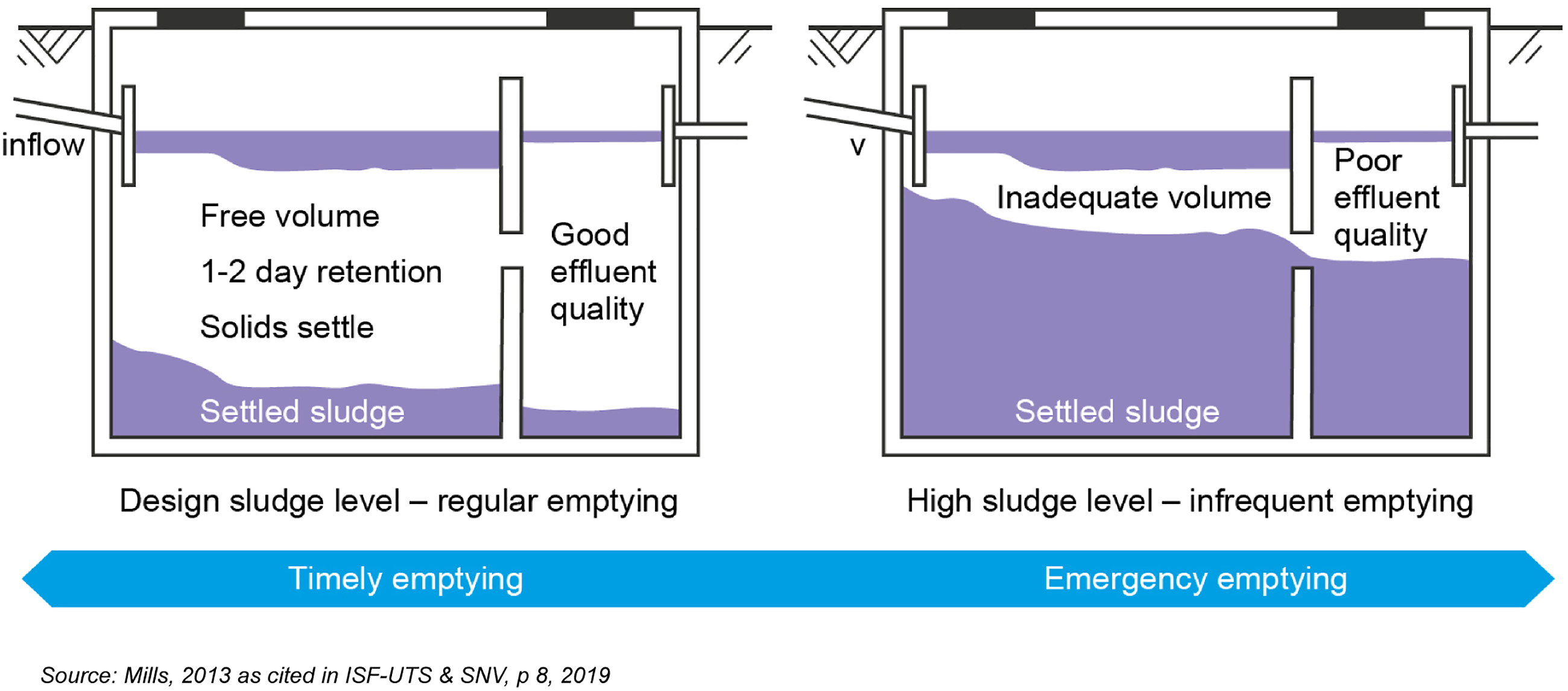
To avoid adverse impact on environment
The supernatant or effluent from septic tanks overflows to soak pits or soakaway fields. ‘The effluent although clarified to a large extent, will still contain appreciable amount of dissolved and suspended putrescible organic solids and pathogens’ (CPHEEO, 2013: 18). In many cities, the septic tanks are not connected to soak pits and directly dispose their supernatants to the open drains. This in turn affects the quality of surface water and groundwater as the drain water gets disposed into it. ‘..., in some developing countries, the septic tank effluent quality is not regulated, and the effluent could be discharged into sewers or leached into ground. This causes serious environmental problems in those countries’. (Nam et al., 2009: 1).
Various studies have shown that the onsite sanitation systems, if not managed safely pose a threat of contamination to the surrounding surface water bodies and groundwater. ‘The environmental impacts of groundwater with elevated levels of wastewater-derived nitrate discharging to freshwater lakes and coastal waters are an increasing concern’ (Cape Cod Commission, 2015; Harris, 1995; Persky, 1986 as quoted in Robertson, 2021). In a study on relations of onsite sanitation and groundwater conducted by Quamar et al. (2017), intrusion of the nutrients and pathogen was observed in groundwater in Yamuna sub-basin area. ‘Many steps of the sanitation service chain are left unmanaged and unregulated. Untreated faecal sludge is then discharged into drains and waterways, creating public health risks and environmental pollution’. (ISF-UTS & SNV, 2019: 6). With better performance of septic tanks and managing the onsite sanitation safely, the risks towards the environment and health can be mitigated.
Methodology
Desludging of septic tanks is considered to be the responsibility of households. However, due to high desludging charges and lack of awareness regarding the desired frequency of desludging of septic tanks, the households do not get desludging done regularly. Scheduled desludging of septic tanks represents a planned effort to ensure regular desludging. In this, every property of the city is covered along a defined route and the property occupiers are informed in advance about desludging. Every property in the city that has a septic tank receives a scheduled service to desludge its septic tank as per the plan. This helps ensure that all septic tanks are desludged on a regular basis.
Wai is a small town in the state of Maharashtra, India, with a population of 43,000. As per the city sanitation plan of Wai prepared in 2014 (PAS Project CEPT University, 2014), 95 percent of toilets in this town are mainly connected to septic tanks. The effluent from these septic tanks goes to the open drains. These drains discharge water into the river.
The city of Wai is the first in India to implement scheduled desludging of septic tanks. It introduced scheduled desludging as a municipal service partially financed by sanitation tax. A private company provides desludging service on ‘pay for performance’ by the city government (see Mehta et al., 2019 for details of this arrangement). The desludging service is provided in the city as per a planned schedule to cover all residential and non-residential properties over a 3-year cycle. The 3-year cycle was decided on the basis of the CPHEEO guidelines that recommend septic tanks desludging once in 2–3 years. Gill et al. (2016) also suggested ‘a desludging frequency of 3 years is optimal for septic tank systems over 3.5 m3, depending on household occupancy’. Most septic tanks in Wai are of 3 m3 capacity. For implementation of a 3-year cycle, the city was divided into three zones and each zone is covered in a year.
A water quality monitoring plan was initiated to understand impact of scheduled desludging on the performance of septic tank, on river water and on groundwater in the city. Studies were conducted to test the quality of supernatants flowing from the septic tanks after desludging and to test the quality of drain water, groundwater and river water during the scheduled desludging cycle.
Sampling design and selection of samples
A water quality monitoring system based on the guidelines provided by the Central Pollution Control Board (CPCB) and the Maharashtra State Pollution Control Board (MPCB) was developed. It defined sample selection process and frequency of the sampling and testing. Further, the test parameters for supernatant, drain, river and groundwater were identified. Opinions of four sector experts were also considered to define the monitoring regime. The experts included three university professors and one engineer in laboratory at a local utility. They helped in determining the test parameters and sampling procedure for the regime. The assessment began in the baseline year 2019, when scheduled desludging was initiated.
Sample locations were selected to follow the flow of septage and effluent from the household containment system into the urban environment. Sampling location for river was identified at upstream, intermediary and downstream points. For the baseline level of river, a sample at the dam at upstream location was chosen. Grab samples were collected across the cross-section of the river at the sampling locations.
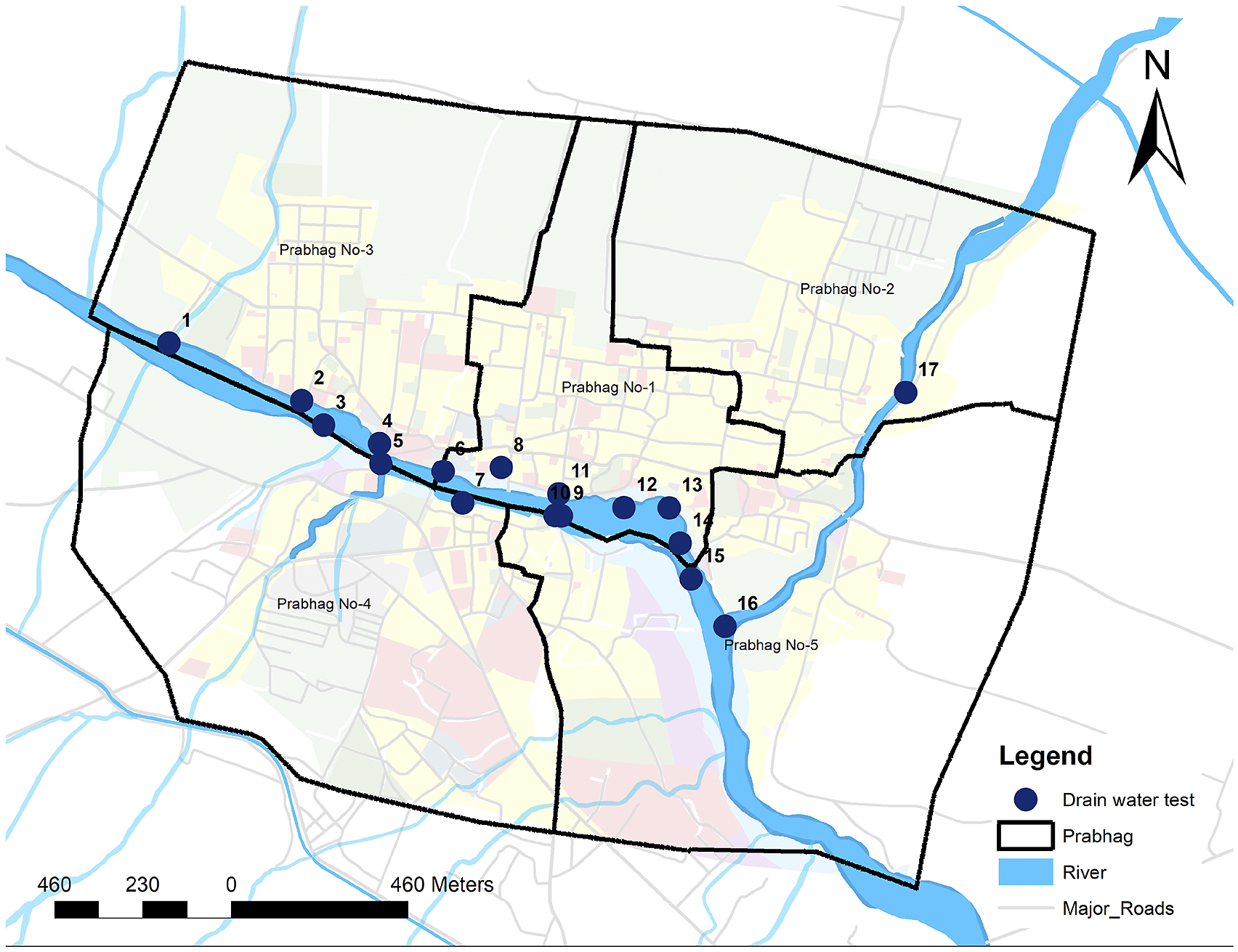
Sixty groundwater samples located across the city were selected. Care was taken to select a few samples near septic tanks. The drain water samples were taken from 17 major outfall points of drain into the river. Figures 2 and 3 show the spread of groundwater, river water, drain water and supernatants samples across Wai. Spread of groundwater and river water samples across Wai. Spread of drain water and supernatant samples across Wai.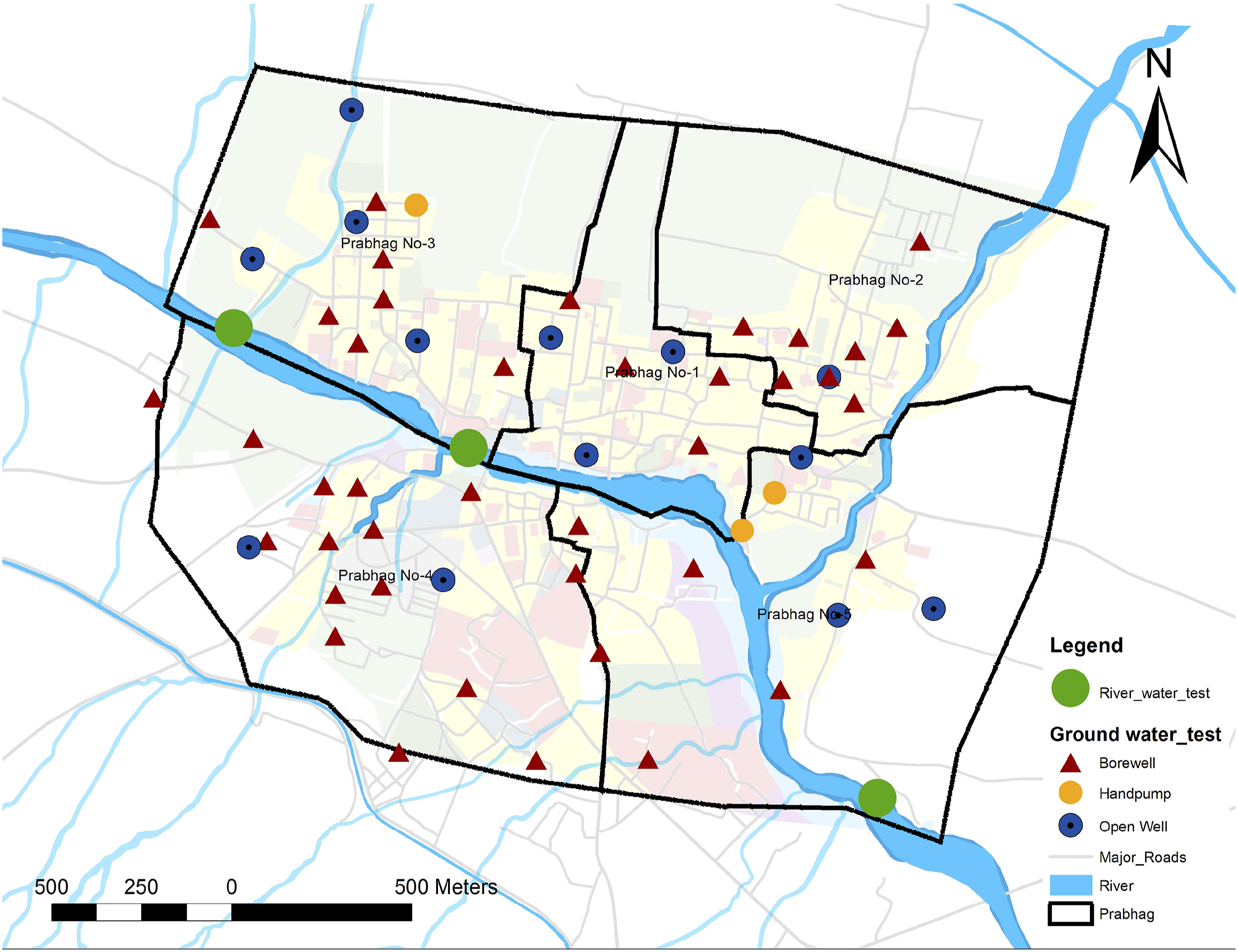
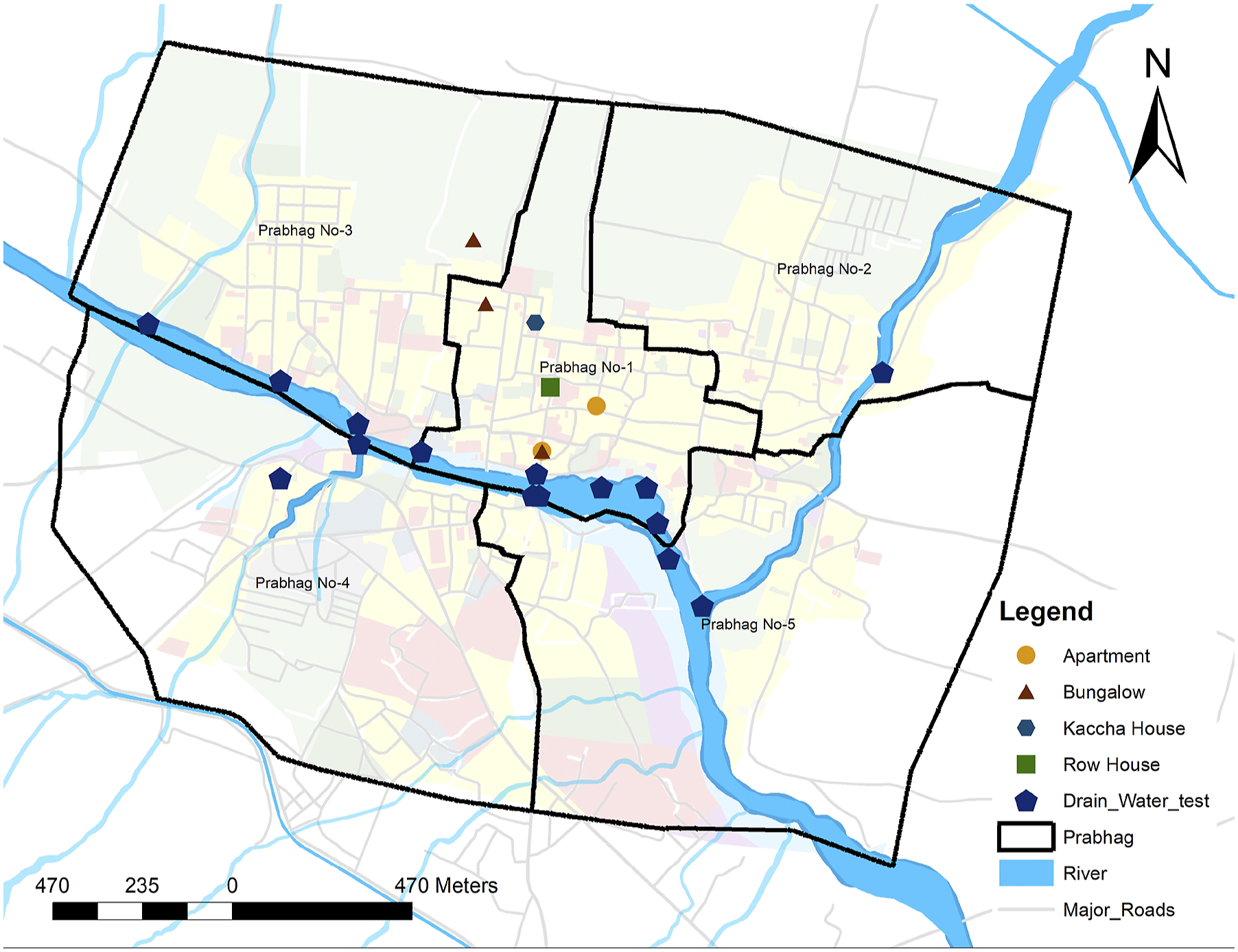
For supernatant samples, 7 septic tanks that were desludged in the first year of desludging cycle were selected. These represented various housing types such as apartments, bungalows, row-house and slum. Samples from septic tanks were collected before desludging and after one month of desludging to relate the performance of septic tanks with desludging frequency. Later after desludging, samples were collected at a regular interval of one month to study the performance of septic tanks. Composite drain and supernatant samples were collected from each location from morning 7 a.m. to 11 a.m.
The river, drain and ground water samples were tested at pre- and post-monsoon periods for every year from 2019 1 . For river water samples, monthly samples were collected in baseline year. To understand the performance of septic tank after desludging, monthly testing of the supernatant was carried out.
Water and wastewater test parameters
Test parameters adopted for river water, groundwater and drain and supernatant parameters.
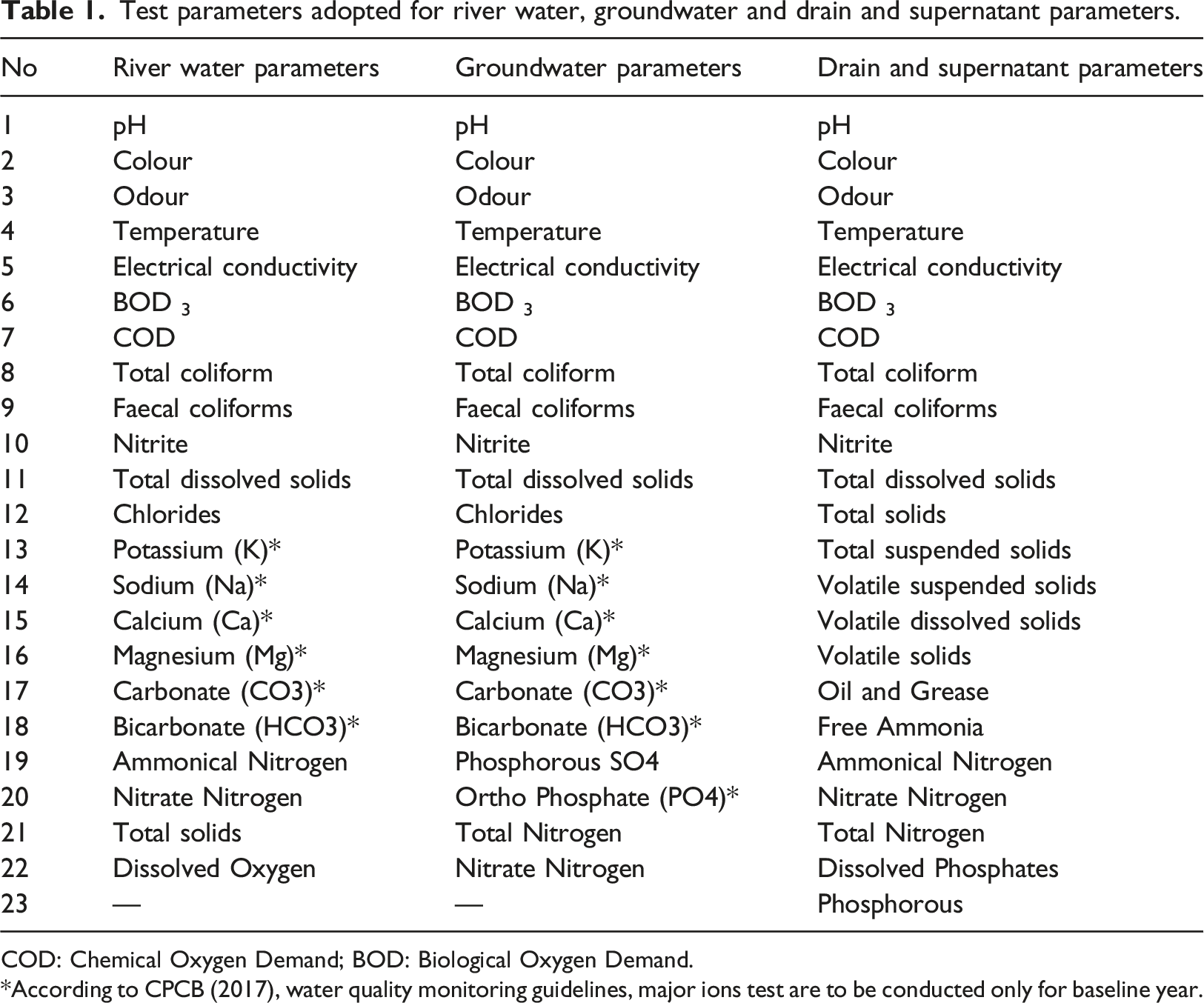
COD: Chemical Oxygen Demand; BOD: Biological Oxygen Demand.
*According to CPCB (2017), water quality monitoring guidelines, major ions test are to be conducted only for baseline year.
Results: Improvements in performance of septic tank after desludging
The overall result of monitoring suggests that there is considerable overall improvement in the quality of supernatant and resultant improvement in both groundwater and river water.
One of the major aims of scheduled desludging is to maintain the performance of septic tanks. With regular desludging of septic tanks, the quality of supernatant overflowing from the septic tank will be better in comparison to the septic tanks which have not been desludged for many years.
Our results corroborate findings of Abhijeet et al. (2017: 442). They highlighted that it is important to frequently desludge the septic tanks for maintaining the retention period of the effluents. ‘Given enough detention time, the septic tank can achieve as much as 81% total suspended solids removal, 68% BOD removal, 65% phosphate removal and 66% faecal coliform removal’ (Seabloom et al., 1982; Rahman et al., 1999 as quoted in Abhijeet et al., 2017: 443).
Performance of septic tank, before and after desludging in Wai (All values in mg/L).
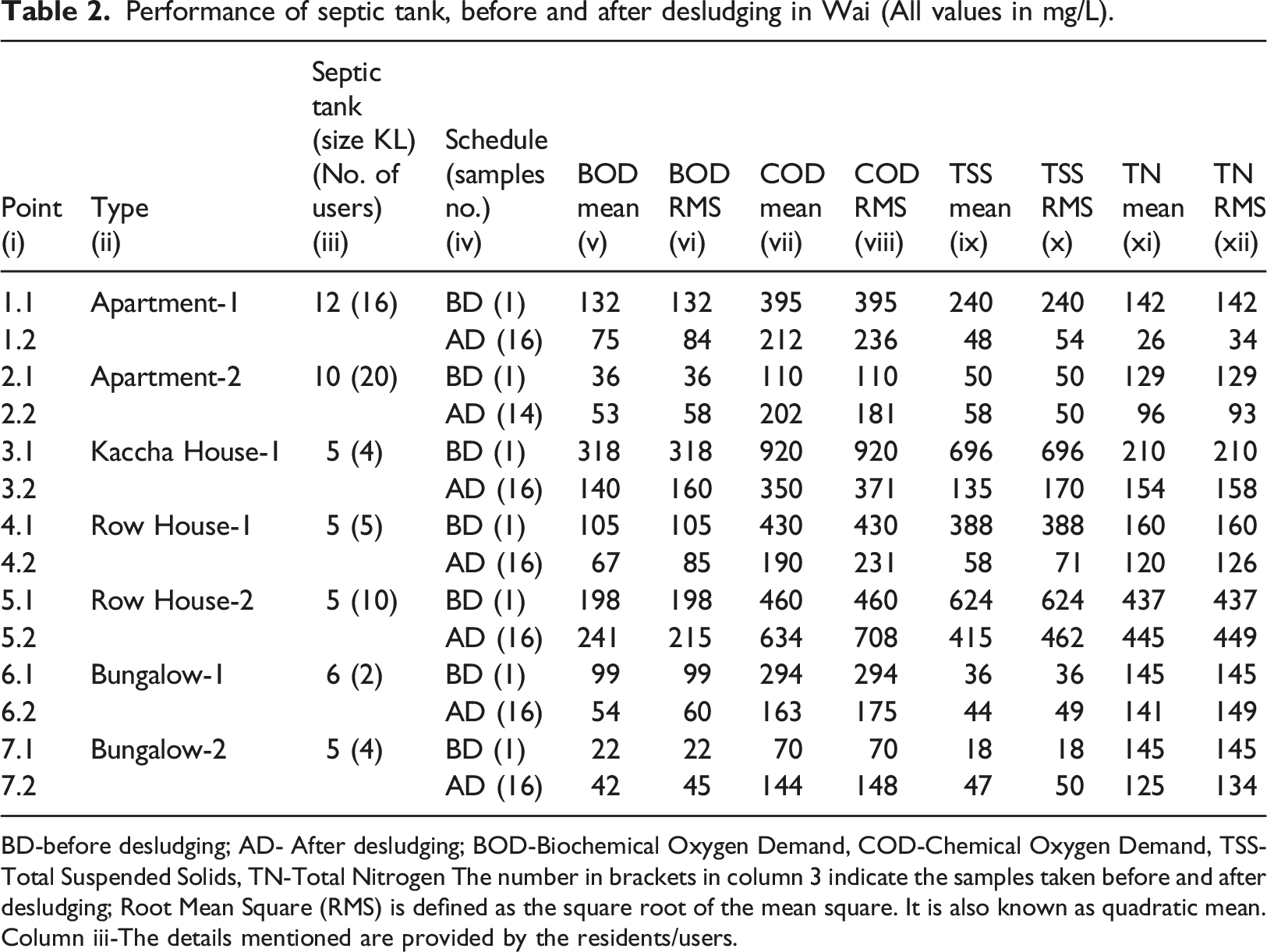
BD-before desludging; AD- After desludging; BOD-Biochemical Oxygen Demand, COD-Chemical Oxygen Demand, TSS-Total Suspended Solids, TN-Total Nitrogen The number in brackets in column 3 indicate the samples taken before and after desludging; Root Mean Square (RMS) is defined as the square root of the mean square. It is also known as quadratic mean. Column iii-The details mentioned are provided by the residents/users.
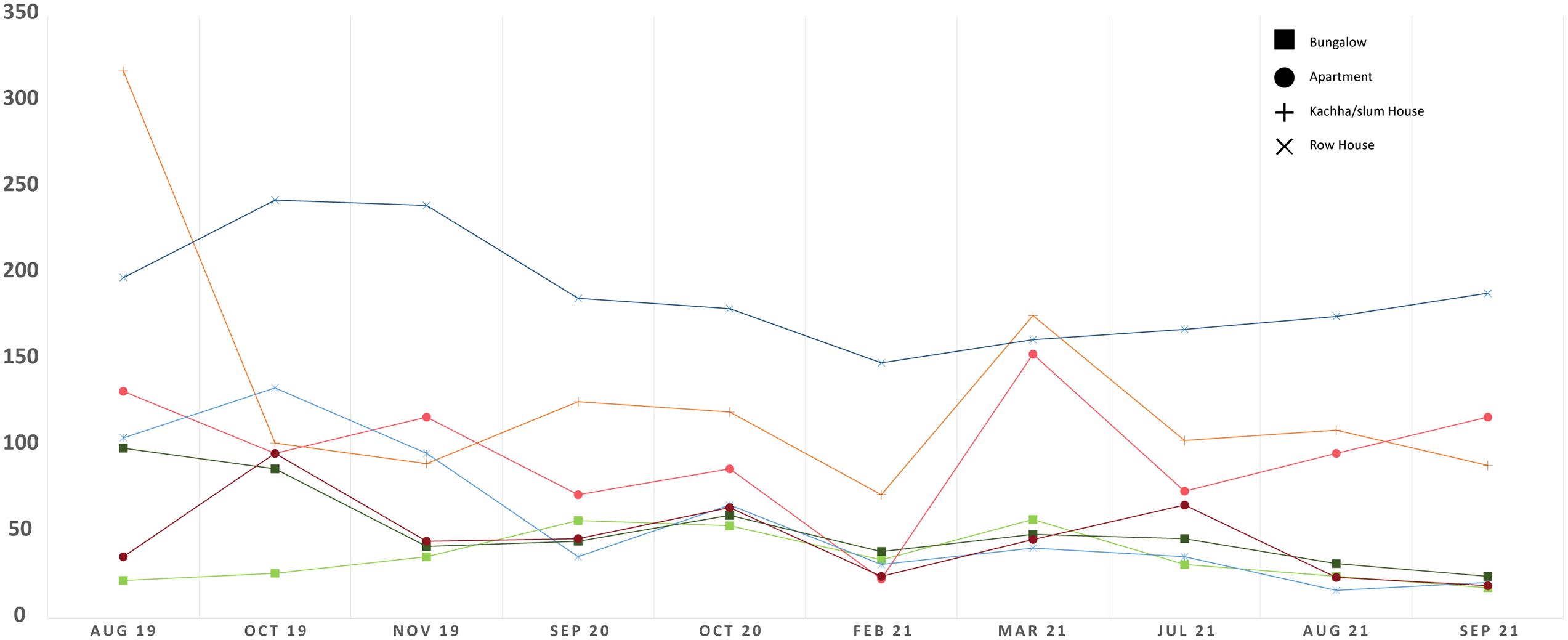
Graph showing values of Biological Oxygen Demand (mg/L) of supernatant from septic tanks – before and after desludging. Note: The septic tanks were desludged in August 2019 and samples were taken before desludging. Later every month samples were taken to understand the performance of septic tank after desludging.
For the row-house-2 where the performance of septic tank has not improved is probably due to age of septic tank. The septic tank is 40 years old and since it wasn’t desludged regularly, the bottom sludge had thickened. It appears that during the desludging operation, this septic tank could not be emptied completely. This further corroborates the fact that if the septic tank is not desludged regularly, it would lead to thickening of sludge at the bottom and impact performance of the septic tank.
For septic tanks at bungalow-2 and apartment-2, Figure 4 shows that there are fluctuations in BOD after desludging. A major factor causing this fluctuation is the inlet quality of effluent. Study by Jowett and Ip, 2004 has shown that household disinfectants have an adverse effect on septic tank BOD treatment performance. They affect treatment by a combination of inhibiting microbiology in the septic tank and interfere with the settling ability of solids. Also, in comparison to bungalow-1 and apartment-1, the number of users dependent on the septic tank is higher in bungalow-2 and apartment-2 but the size of septic tank is small. We surmise that this fluctuation maybe caused by greater use of disinfectants; however, we have not assessed use of chemicals and cleaning agents by the residents at these locations.
Improvement in drain water quality
The quality of water in drains has improved progressively during scheduled desludging. The organic load content has reduced in the drains as more septic tanks were desludged. As shown in Figure 5 and Table 3, in the second year of desludging, eight drain samples showed reduction the BOD load while in the third year of desludging 14 drain samples have shown reduction in BOD. One of the influencing factors for improving drain quality is the discharge from the septic tank. With the desludging, the quality of supernatants has improved and this has led to betterment in the quality of drain water. However, as explained earlier, at some locations, for example, Sample 4 and sample 9, the BOD levels have risen. This may be due to old septic tanks that have not been desludged fully, or heavy use of disinfectants in those households, see Figure 6 for Location of drain samples in Wai. Graph showing value of Biological Oxygen Demand (mg/L) in drains across three years. Quality of drain water across three years. Note: For year-1, the results are RMS values of Pre- and Post-monsoon samples, For year-2, 2020, pre-monsoon samples were not collected due to the Pandemic. For year- 3, 2021, the post-monsoon results will be collected in November 2021; BOD-Biochemical Oxygen Demand, TSS-Total Suspended Solids, TN-Total Nitrogen, DP-Dissolved Phosphates. Location of drain samples in Wai.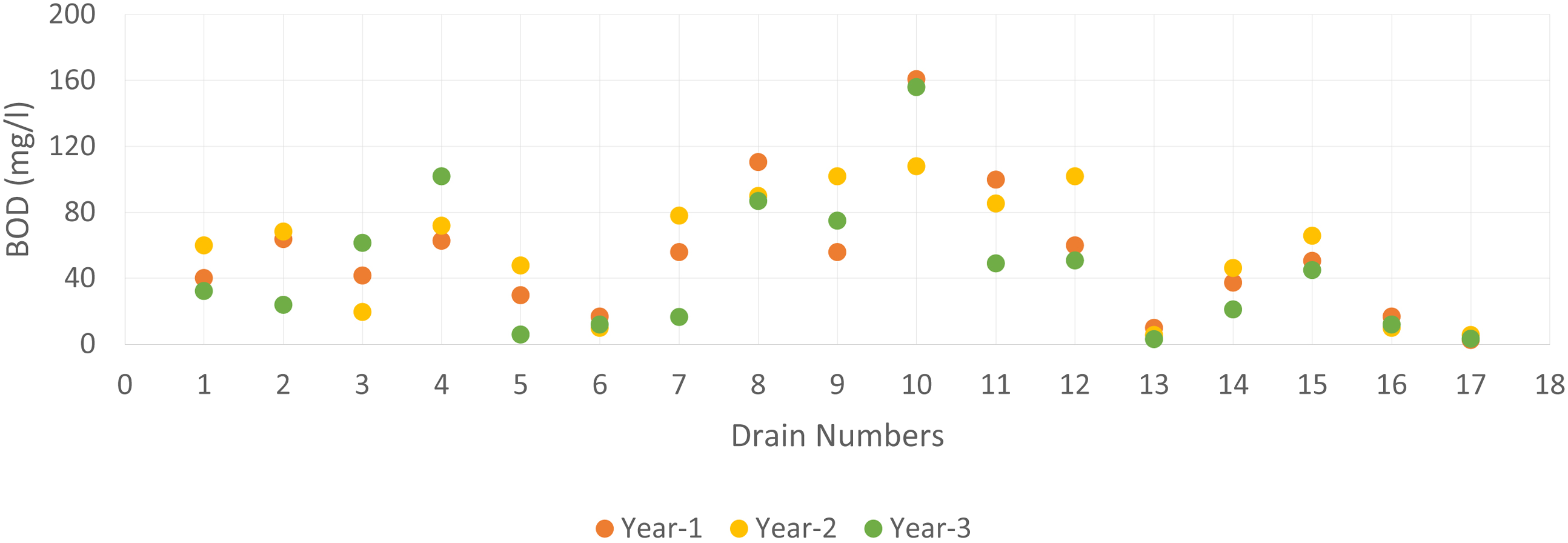
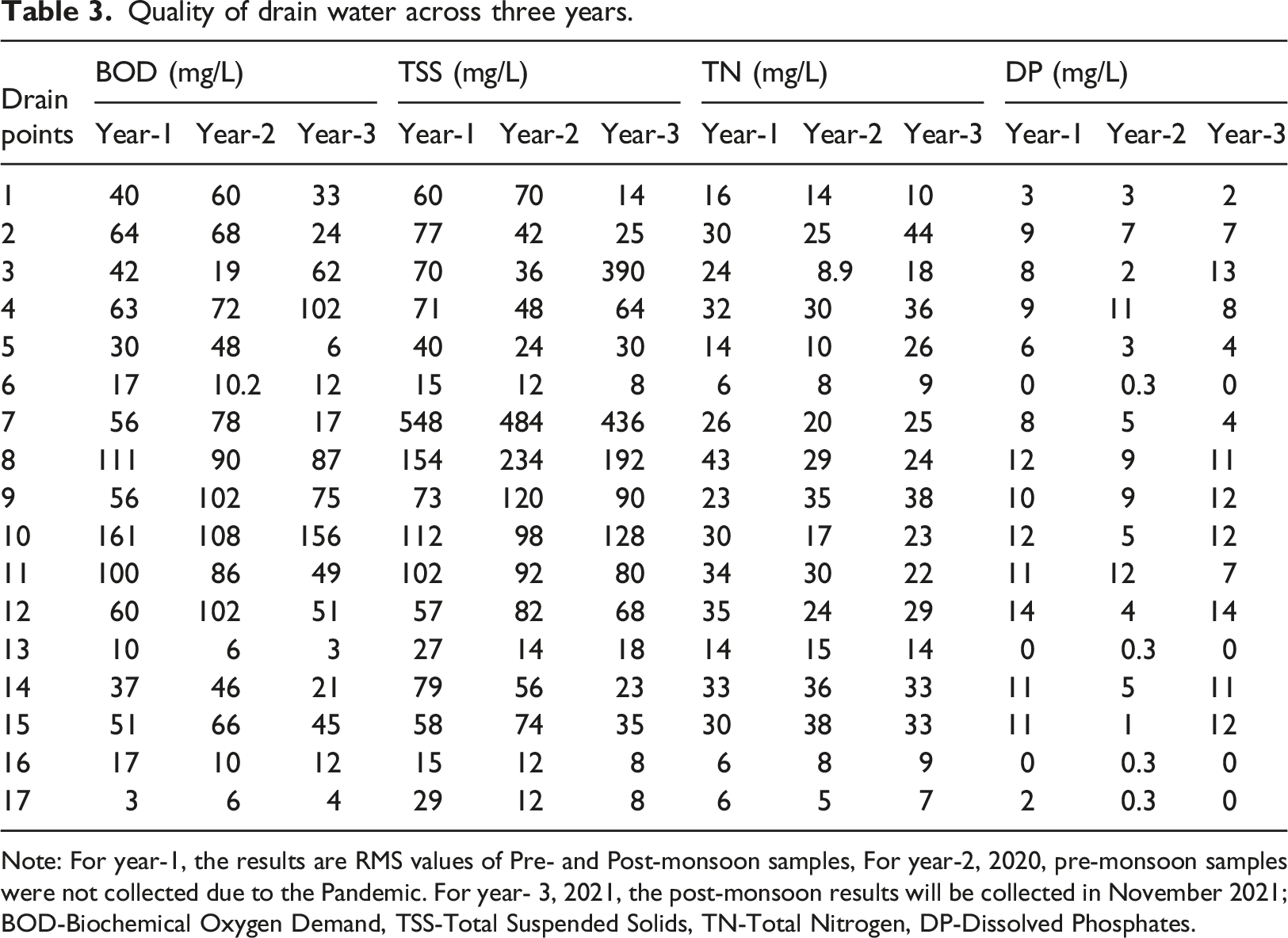
As shown in Figure 7, the value of faecal coliform has reduced in many of the drains. 14 out of the 17 drains showed reduction in faecal coliform values in year-2 and 11 drains showed reduction in year-3. The amount of nutrients also has reduced in many drains over the years after commencement of scheduled desludging. 14 samples of the 17 drain samples have shown reduction in dissolved phosphate values in the third year in comparison to the base year. 11 drain samples have shown reduction in total nitrogen values of drains in year two and three. The reduced TSS load of supernatants in the desludged zones has impacted the reduction of TSS in the drains flowing through those areas. In 12 drains, there is a considerable decrease of TSS. Faecal Coliform in drains over three years in Wai (MPN/100 mL, values in thousand- 10^3). Sampling and results period: Year-1: Nov-2019, Year-2: Nov 2020, Year-3: June 2021.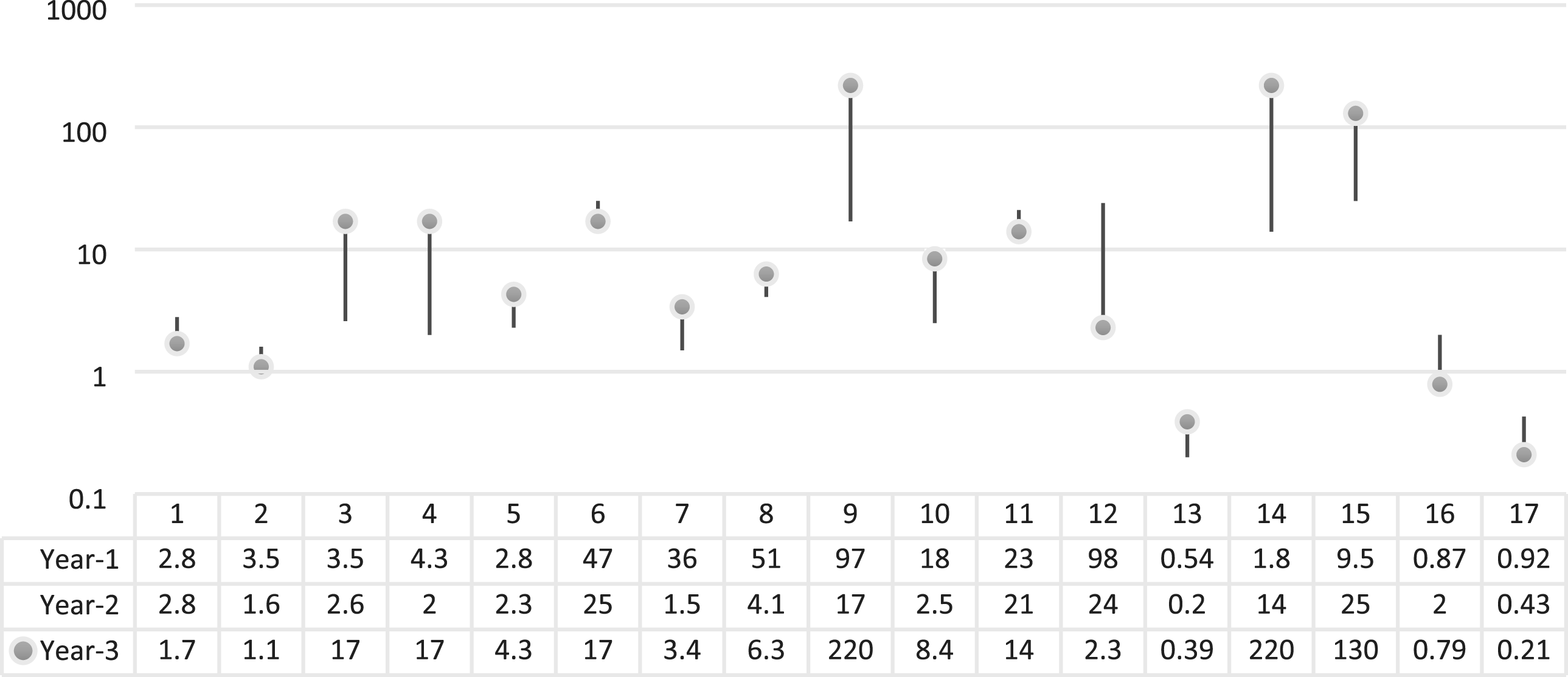
We have to be cautious in assessing the improvement in quality of drain water. As suggested earlier, the drains carry not only the effluents from septic tanks but also the grey water from bathroom and kitchen. It is thus likely that the drain water contains many chemicals and disinfectants, as well as organic wastes. This can also affect the quality of drain water.
In most cities ‘… the effluent is commonly discharged to open stormwater drains. This causes another type of pollution menace such as unsightly conditions, eutrophication, odour, vector and water related diseases’. (CPHEEO, 2013: 2). The results from Wai show that when septic tanks are emptied regularly, there is a likelihood of improvement in the effluent quality. In Wai, one sees improvement in the quality of drain water in year-3 of scheduled desludging in comparison to year-1. There are, however, some drains where this does not hold true. As suggested earlier, the drain water is a mix of septic tank effluent and other wastewater from households. What we see at our sample locations is the aggregate quality of drain water. It is likely that a few non-functioning septic tanks along the drains have led to higher faecal coliform values. Further investigations along the path of these drains are needed to verify this. In Wai, since the drain water gets discharged into the river, the improvement in the quality of drain water also aids in improving the quality of river water.
‘Excess untreated wastewater can run off or percolate down to groundwater, causing contamination of drinking water supplies with faecal wastes and other pollutants which may contribute significantly to the spread of diseases amongst our population’ (Ogbonna and Erheriene, 2017: 1). The pathogen load from the drains in Wai has reduced. This suggests likelihood of reduction in harmful effect of wastewater on the health of people.
Improvement in River water and ground water quality
‘The risk of contamination of groundwater and surface water resources due to excess nutrients and pathogens from onsite systems is a major concern, particularly if used as a potable source’ (Carroll and Goonetilleke, 2004: 2). Most of the reported instances of nitrate contamination appear to be related to irrigated agriculture and the use of chemical fertilizers or to domestic sewage. (Central Ground Water Board (CGWB), 2014: 70).
Concentration of Dissolved Oxygen (mg/L), BOD (mg/L), Nitrate nitrogen and faecal coliform in river Krishna over three years.
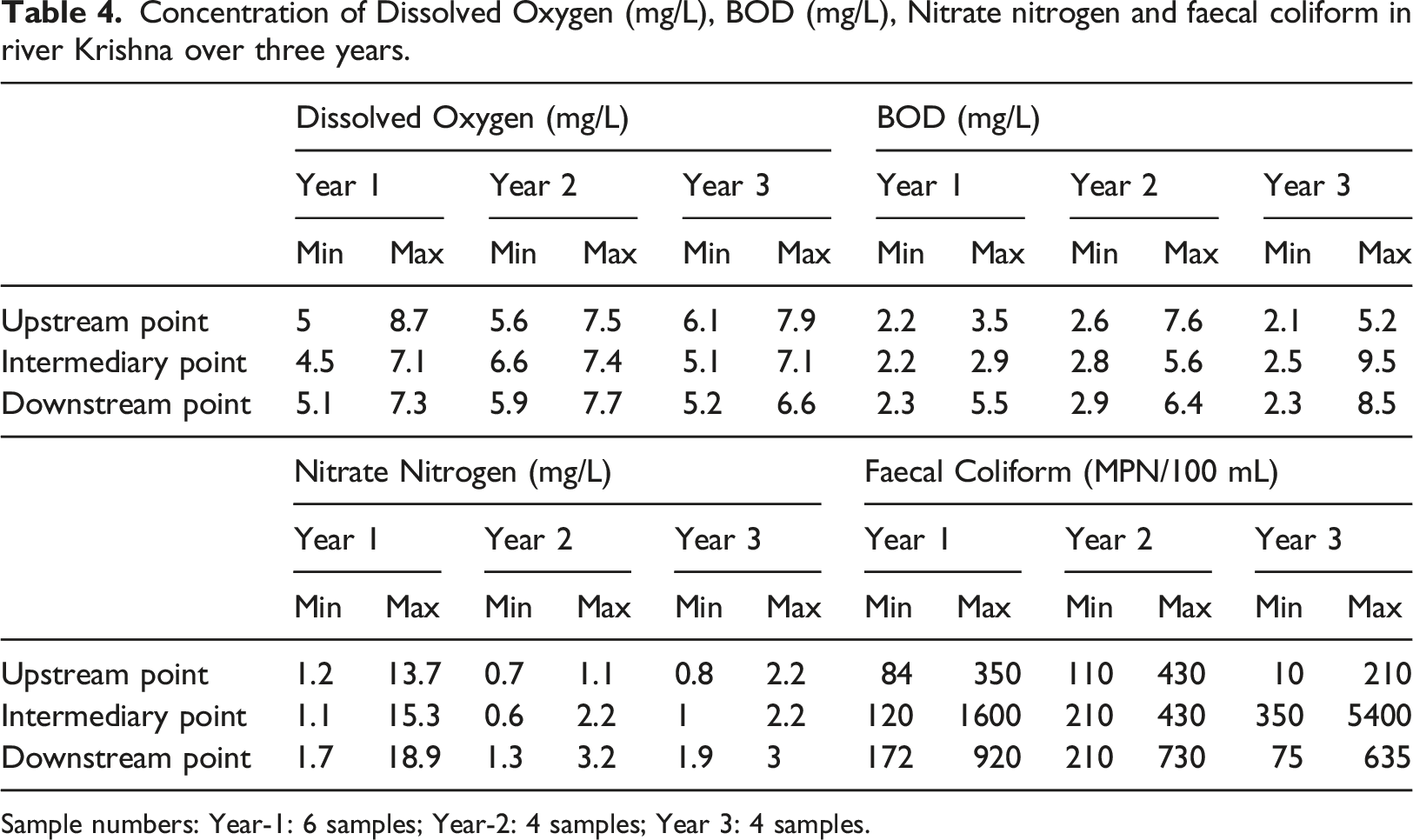
Sample numbers: Year-1: 6 samples; Year-2: 4 samples; Year 3: 4 samples.
With the traces of faecal coliform reducing at the downstream of the river for the third year, it is expected that in subsequent years it should reduce further as more septic tanks begin to function properly after scheduled desludging. With time and continuous implementation of scheduled desludging, there will be an improvement in septic tank performance and drain water quality. Correspondingly, the nutrient and pathogen load are likely to reduce in river water. Also, if the drain water is further treated through primary treatments, the quality of river water will see more improvement.
Groundwater analysis
The overall quality of groundwater is good considering the drinking water standards of Bureau of Indian Standards (BIS) (Bureau of Indian Standards BIS 10500:2012, 2012). However, there is presence of faecal coliform in a few of the groundwater samples in Wai. As per the drinking water standards, the coliforms shall not be detectable in any 100 mL sample of the water, though the groundwater sources are currently used only for washing and cleaning purposes and not for drinking/cooking water.
Samples of groundwater with presence of faecal coliforms.
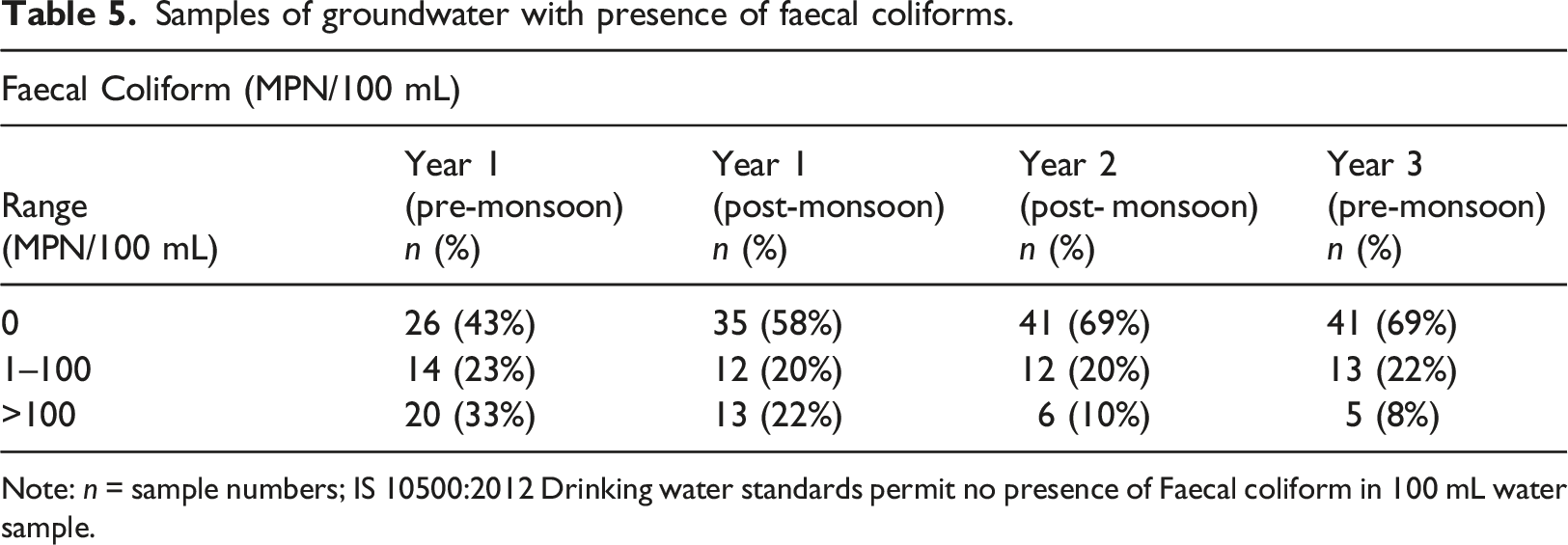
Note: n = sample numbers; IS 10500:2012 Drinking water standards permit no presence of Faecal coliform in 100 mL water sample.
Conclusion
The paper has highlighted the experience of Wai city in India where scheduled desludging is practiced. Impact of this practice on water and wastewater quality was assessed. The results suggest positive association of regular desludging and improved performance of septic tanks. Though we recognize that septic tank performance is also influenced by various factors of design, capacity, users and maintenance, regular desludging certainly helps in improving performance. Such studies can inform decision making at state and national level to strengthen their recommendation of desludging.
A key finding from this study is that the practice of scheduled desludging helps in improving the performance of septic tank and consequently the quality of drain water and river water quality. However, since the drain water is a mix of effluent from septic tank as well as other wastewater from properties, it is recognized that further studies will be needed to isolate effect of septic tank effluent. The findings of this study can be further amplified over the next cycle of scheduled desludging.
Footnotes
Acknowledgements
This article is based on studies and on-field activities carried out by a team at Center for Water and Sanitation (CWAS), CRDF, CEPT University. CWAS is a technical support partner to Wai city for the implementation of its plans for improving sanitation services. The paper draws on the work under a project on Citywide Inclusive Sanitation (CWIS) funded by the Bill and Melinda Gates Foundation. We acknowledge the extensive support of Wai city officials and their teams. We are thankful to the residents of Wai who cooperated with us during the samples collection process. The samples were collected and analyzed by Polytest Laboratory of Pune. We thank Dr Hitesh Solanki, Head of Environment Science Laboratory, Gujarat University, Dr Hiren Mandaliya, Head of Central Laboratory, Ahmedabad Municipal Corporation, Associate Professor. Ashwani Kumar, CEPT University and Associate Professor. Dipsha Shah, Laboratory coordinator, CEPT University for their valuable feedback on the monitoring procedures. Prof Dipsha Shah also supported interpretation of the results. Besides the authors, the CWAS team included, Aasim Mansuri, Dhruv Bhavsar, Upasana Yadav, Bhushan Tawlare, Bina Udeshi and Gaurav Kushwaha.
Declaration of conflicting interests
The author(s) declared the following potential conflicts of interest with respect to the research, authorship, and/or publication of this article: The authors declare that the research was conducted in the absence of any commercial or financial relationships that could be construed as a potential conflict of interest.
Funding
The author(s) disclosed receipt of the following financial support for the research, authorship, and/or publication of this article: The work described in this paper was funded by the Bill & Melinda Gates Foundation under grant agreement (OPP1192038) ‘Wai - Citywide Inclusive Sanitation’.
