




Abstract
Urban metabolism studies have gained momentum in recent years as a means to assess the environmental performance of cities and to point to more resource-efficient strategies for urban development. Recent literature reviews report a growing number of applications of the industrial ecology model for material flow analysis in the design of the built environment. However, applications of material flow analysis in green infrastructure development are scarce. In this article, we argue that: (i) the use of material flow analysis in green infrastructure practice can inform decision-making towards more resource-efficient urban planning; (ii) the ecosystem service concept is critical to operationalize material flow analysis for green infrastructure planning and design, and, through this, can enhance the impact of urban metabolism research on policy making and planning practice. The article draws from a systematic review of literature on urban ecosystem services and benefits provided by green infrastructure in urban regions. The review focuses on ecosystem services that can contribute to a more energy-efficient and less carbon-intensive urban metabolism. Using the Common International Classification of Ecosystem Services as a baseline, we then discuss opportunities for integrating energy provision and climate regulation ecosystem services in material flow analysis. Our discussion demonstrates that the accounting of ecosystem services in material flow analysis enables expressing impacts of green infrastructure on the urban energy mix (renewable energy provision), the magnitude of energy use (mitigation of building energy demand) and the dynamics of biogeochemical processes in cities (carbon sequestration). We finally propose an expanded model for material flow analysis that illustrates a way forward to integrate the ecosystem service concept in urban metabolism models and to enable their application in green infrastructure planning and design.
Keywords
Introduction
Urban metabolism (UM) research is nowadays a growing field of study spanning across a wide spectrum of disciplines. A Scopus Boolean search on journal articles including “urban metabolism” OR “metabolism of cities” in the title, abstract or keywords shows that the publication pace has accelerated from an average of two papers per year in the early 2000s to 80 in 2017. Such figures are in line with the rejuvenation of metabolic studies since the 2000s, described in several UM review articles (e.g. Kennedy, 2016; Zhang et al. 2015). The popularity of UM studies reflects a growing consensus in the scientific community that UM research can help address critical sustainable development issues, such as resource erosion and the impact on climate change of the growing energy demand in cities (Ferrão and Fernández, 2013).
The industrial ecology approach to UM
UM research is far from being a monolithic field of study. It includes different lines of thinking such as industrial ecology, urban ecology, political ecology (Castàn Broto et al., 2012) and, more recently, political-industrial ecology (Newell et al., 2017). In terms of the number of publications and cited articles, industrial ecology is the most influential research path in UM studies (Newell and Cousins, 2014). In industrial ecology, UM is defined as the totality of processes through which cities import, produce and export materials, energy and other resources (and expel waste) to ensure their maintenance and growth (Kennedy et al., 2007).
The mass-balance model for material flow analysis (MFA) formalized by Eurostat (2001) (Figure 1) is considered as the “mainstream” approach (Kennedy et al., 2011) or the “traditional” UM method within industrial ecology (Newell and Cousins, 2014). Initially employed as a standardized input-output model for material flow accounting at the national scale, the Eurostat’s MFA was adapted at the regional and city’s scale by Hammer et al. (2003a), and subsequently used in a large number of studies of urban systems (e.g. Barles, 2009; Hammer et al., 2003b; Niza et al., 2009; Voskamp et al., 2017). The MFA model has reached a maturity that enables metabolic indicators to complement traditional economic and demographic data in informing decision-making toward an optimized use of resources (Fischer-Kowalski et al., 2011).
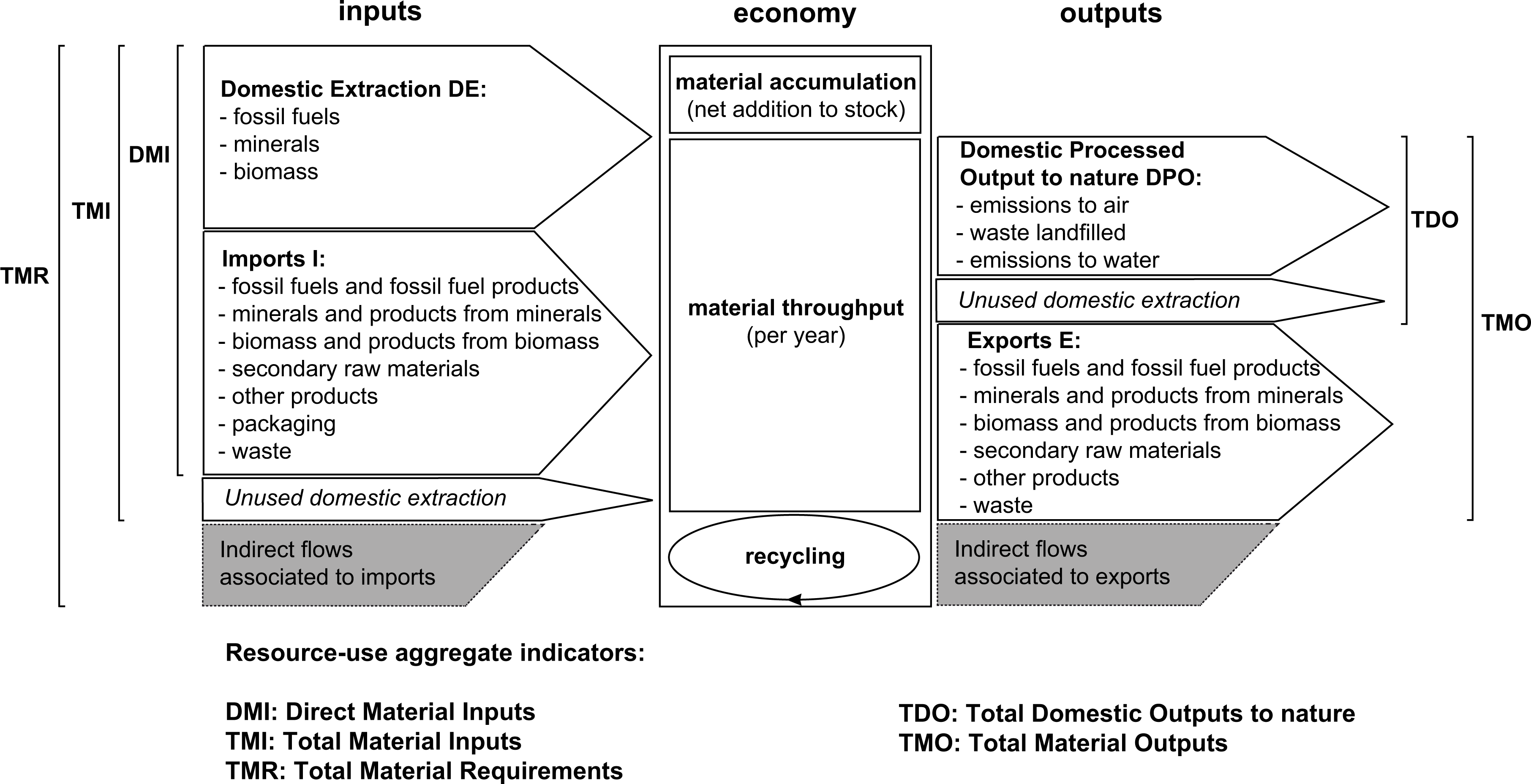
Eurostat’s input-output model for material flow analysis (MFA) and resource-use aggregate indicators. Adapted from Eurostat (2001: 16).
Applications of UM models in urban planning and design
A metabolic perspective can help decision makers understand and assess the socio-technical processes associated with the harvesting and use of resources in cities. A deeper understanding of the scale of resource flows that are required for the growth and maintenance of urban systems, and their impacts on the local, regional or global environment, can enable more resource-efficient urban planning and effective waste-minimization strategies (Barles, 2010).
In response to the growing concerns about urban sustainability, several attempts to tailor industrial ecology UM models to urban planning and design were conducted over the last decade, both in academia (e.g. Fernández, 2007; Quinn, 2012; Roy et al., 2015) and in professional practice (e.g. Tillie et al., 2014; Metabolic et al., 2015). MFA has been applied in the planning and design of utility networks (e.g. water and energy supply, waste management), new residential developments and building design. For example, MFA was used to assess the material and energy intensity of the building sector in various metropolitan regions in the USA and China, leading to the formulation of alternative low-carbon models of urban development (Fernández, 2007; Quinn, 2012). At the neighborhood scale, data on resource flows have been translated into design concepts and diagrams for future resource-efficient residential districts in Toronto (Codoban and Kennedy, 2008). In the regeneration of the post-industrial neighborhood Buiksloterham in Amsterdam, an MFA assessing the neighborhood’s current and future resource inflows and outflows led to a design concept for a residential development, which incorporates passive design strategies for more efficient management of energy and water flows at the building and neighborhood scale (Metabolic et al., 2015).
UM models and green infrastructure
Despite the considerable attention paid recently to the application of UM research in urban planning and design, metabolic models are to date only scarcely used to inform green infrastructure development in cities. A second Scopus search combining “urban metabolism” AND “green infrastructure” in journal article title, abstract or keywords returned only two records, both published recently (Chelleri et al., 2016; Finewood, 2016). The two articles, however, do not directly discuss applications of metabolic models in green infrastructure development.
In this article, we argue that:
the application of UM models in green infrastructure development can assist decision makers, urban planners and landscape architects in pursuing more energy-efficient and less carbon-intensive urban development; the ecosystem service concept provides a way forward to operationalize UM models for green infrastructure planning and design and, through this, can enhance the impact of UM research on policy and practice.
Green infrastructure is defined as a spatially and functionally integrated network of green areas supported by built infrastructure, which provides complementary ecosystem and landscape functions to the public (Ahern et al., 2014). Strategically planned and designed green infrastructure can enhance the environmental quality and improve the energy efficiency of cities through the optimization of biogeochemical cycles (Gill et al., 2007). Ecosystem services are defined as the benefits people obtain from ecosystems (Millennium Ecosystem Assessment, 2005). Recent studies show that the ecosystem service concept is valuable to explicitly identify, assess and value the multiple functions of the urban green infrastructure, and to establish an evidence base to address emerging environmental challenges in cities (Hansen and Pauleit, 2014; Kremer et al., 2016). Moreover, local authorities have growing ambitions to employ nature-based solutions (e.g. biomass-fuelled district heating, transport biofuels, carbon sequestration by urban vegetation) as a means to minimize the environmental pressure of cities and facilitate the delivery of low-carbon agendas (Hansen et al., 2015; Williams, 2013). As such, supporting decision makers’ goals and needs represents a compelling argument to foster the use of the ecosystem service concept in UM studies.
The purpose of this article is to explore opportunities to integrate the ecosystem service concept in UM research as a way forward to enhance UM models and enable their application in green infrastructure planning and design. We focus on the urban energy metabolism, that is all the inflows, outflows and internal flows of energy in the form of electricity, heating and transport fuel (excluding the energy contents of materials and embodied energy), which are processed within the urban system, as well as the waste resulting from energy consumption (e.g. carbon dioxide emissions). This allows streamlining our discussion on policy and urban planning strategies that aim at countering unsustainable trends in energy use and the related carbon footprint.
Amongst the ecosystem services provided by urban green infrastructure (Ahern et al., 2014), this article focuses on energy provisioning and climate regulating services, as these can be directly linked to the urban energy metabolism and the remit of UM studies. Through consideration of these services, urban green infrastructure is proposed as a driver of flows and stocks of energy, materials and substances (e.g. biomass, carbon), which are a part of the energy metabolism of urban systems. These flows and stocks are studied for their impacts on the energy-related inputs and outputs associated with other components of the urban system, such as buildings (e.g. mitigation of heating/cooling demand through vegetation), as well as transport and utility networks (e.g. sequestration of fossil-fuel carbon dioxide by plants and soils; provision of biofuels and other forms of bioenergy). We make use of the Common International Classification of Ecosystem Services (CICES version 5.1) (Haines-Young and Potschin, 2018) as a baseline for our study. CICES allows for a more comprehensive consideration of energy provisioning services compared to other classifications and includes services provided by abiotic outputs of ecosystems (see Table S.1, Supplemental Materials) (Potschin and Haines-Young, 2016).
The article is structured as follows. In the following section, we describe the method and materials as well as the main findings of the literature review we conducted as the starting point of our research. In the subsequent section, we present a new approach for linking UM models with the ecosystem service concept. To this end, we critically discuss whether the Eurostat’s model for MFA is well equipped to account for the delivery of key ecosystem services highlighted in the review. We then present opportunities and strategies to account for ecosystem services in MFA, departing from recently established integrated industrial ecology UM models. Finally, to illustrate our new approach, we propose an expanded model for MFA that incorporates energy provisioning and climate regulating services provided by urban green infrastructure.
Literature review
Method and materials
We conducted a literature review with the purpose of analyzing how the study of the ecosystem services and benefits provided by green infrastructure can help identify its contribution to a more energy-efficient and less carbon-intensive UM. In order to address this purpose, we performed a Scopus search using the following Boolean operators: journal articles including the terms “ecosystem” AND (“service” OR “benefit”) AND “energy” AND “climate” AND “urban” in their abstract, title or keywords, published in English between 2005 (year in which the Synthesis Report of the Millennium Ecosystem Assessment was published) and the end of 2017 (moment at which the review was completed). The search returned 78 initial documents. After reading the abstracts of all initial documents, we selected 26 final publications that met all of the following three criteria:
focus on ecosystem services provided by green infrastructure in urban regions or (if located outside urban areas) to urban populations; use of the “ecosystem service” concept or explicit mention of benefits provided by green infrastructure to urban populations; and explicit goal to inform decision-making and urban planning through knowledge of ecosystem services or benefits by green infrastructure.
The 26 selected publications included six review articles summarizing knowledge, tools and methods to classify and value urban ecosystem services, and to apply the concept in practice (Elmqvist et al., 2015; Gómez-Baggethun and Barton, 2013; Haase et al., 2014; Hubacek and Kronenberg, 2013; Luederitz et al., 2015; Wang et al., 2014).
Findings
Our review shows that concerns about climate change and the need to transit towards more energy-efficient and less carbon-intensive models of urban development have resulted in a substantial growth of studies on renewable energy provision and climate regulation services provided by green infrastructure (Grêt-Regamey et al., 2017; Hansen et al., 2015; Hauck et al., 2013; Hubacek and Kronenberg, 2013).
District heating systems or combined heat and power plants fuelled by plant-based biomass (e.g. wood chips from urban forest maintenance, waste and agricultural residuals) are increasingly adopted at the local authority level in Europe (Kraxner et al., 2016; Perrotti and Henrion, 2013; Proskurina et al., 2016). Similarly, the production of transport biofuels such as bioethanol and biodiesel from C3 crops (e.g. poplar, willow, wheat and other cereals) and C4 grasses (e.g. maize, sorghum, miscanthus and sugarcane) has substantially increased worldwide in the last decades, with a nearly 5-fold increase of bioethanol, and a 20-fold increase of biodiesel between 2000 and 2010; this growth is predicted to continue, given the targets set by world’s largest producers (e.g. USA, Brazil, EU) (Koçar and Civaş, 2013). Cities such as Berlin, Milan, Helsinki and London have played a significant role in implementing national and supranational directives on the promotion of transport biofuel (e.g. EU Biofuels Directives 2003/30/EC), for example through the financing of biogas plants and the development of dedicated transport strategies at the local level (Silvestrini et al., 2010).
The contribution of urban forests to atmospheric carbon storage and sequestration, and the economic benefits associated with the delivery of global climate regulating services have been studied in several cities (e.g. Nowak et al., 2013a). For example, in Syracuse (NY), a mid-sized city in the US with high tree cover and density (average 167.4 trees/ha in 2009), urban forests can store approximately 165,900 metric tons of carbon and remove 5,300 metric tons of carbon annually (Nowak et al., 2016). The economic value associated with these ecosystem services has been estimated to be $13 million in total and $417,000 per year (yr). Based on evidence of carbon sequestration and storage capacity of woody species, some local authorities have planned densification of urban forests as a means to reduce atmospheric carbon concentration. The City of Toronto, for example, set the target to double its existing tree canopy by 2020, as one of its main strategies to achieve 30% reduction in greenhouse gas (GHG) emissions compared to the 1990 level (Mohareb and Kennedy, 2012). Trees in Toronto (average 160.4 trees/ha in 2008) are estimated to store 1.1 million metric tons (CAD$25 million) and remove about 46,700 metric tons (CAD$1.1 million/yr) of carbon annually (Nowak et al., 2013b).
Modeling studies and field measurements in different climate zones provide a growing evidence base for the contribution of microclimate regulation services by green infrastructure vegetation, showing that street trees, green roofs and façades can mitigate the energy demand for cooling and heating in buildings both in summer and in winter (Elmqvist et al., 2015; Wang et al., 2014). The above-mentioned study of Syracuse, NY shows that in residential buildings annual savings in energy use from trees can reach up to $1.1 million/yr ($636,000/yr in reduced heating and $483,000/yr in reduced cooling) (Nowak et al., 2016). In the UK, computational simulations of naturally ventilated office buildings in Edinburgh show that shelterbelt trees can reduce heating energy consumption by 18% (Liu and Harris, 2008). An empirical study conducted in Reading using heated brick cuboids showed that green façades can reduced mean heating energy use by 37% and up to 50% in extreme weather conditions (Cameron et al., 2015). However, none of the reviewed studies explicitly refers to microclimate regulation services provided by abiotic (non-vegetational) components of green infrastructure (topography and inorganic structures that support vegetation), which are included in CICES v5.1 (Table S.1, Supplemental Materials).
Several reviewed works point at the need for more research into how plant choice affects the delivery of ecosystem services, and potential “disservices” or tradeoffs between different services (Cameron and Blanusa, 2016; Haase et al., 2014; Pataki et al., 2011). More generally, several authors stress that, despite the recent progress in ecosystem services research, integration of the ecosystem service concept in decision-making and planning practice remains challenging for different reasons (e.g. Ahern et al., 2014; Grêt-Regamey et al., 2016; Hansen and Pauleit, 2014; Kremer et al., 2016). These range from the limited transferability of findings, to the need for clarifying definitions in multidisciplinary studies and for increased involvement of stakeholders in ecosystem service assessment (Luederitz et al., 2015).
Table 1 presents a systematization of the main findings of our literature review through the use of the ecosystem service concept and following the categories of the ecosystem service classification established in CICES v5.1 (Section, Division, Group and Class). It summarizes the provision and regulation/maintenance services provided by urban ecosystems and their abiotic outputs that have a direct impact on the urban energy metabolism (energy efficiency and carbon intensity). Each service is associated with the benefits provided by green infrastructure towards the optimization of the urban energy metabolism (renewable energy provision, mitigation of building energy demand, decrease of atmospheric carbon concentration). Examples of reviewed studies discussing each service are listed.
Provision and regulation/maintenance services provided by urban ecosystems and their abiotic outputs as classified in CICES v5.1 with direct impacts on UEM; associated benefits by GI towards optimization of UEM; examples of studies discussing each service.
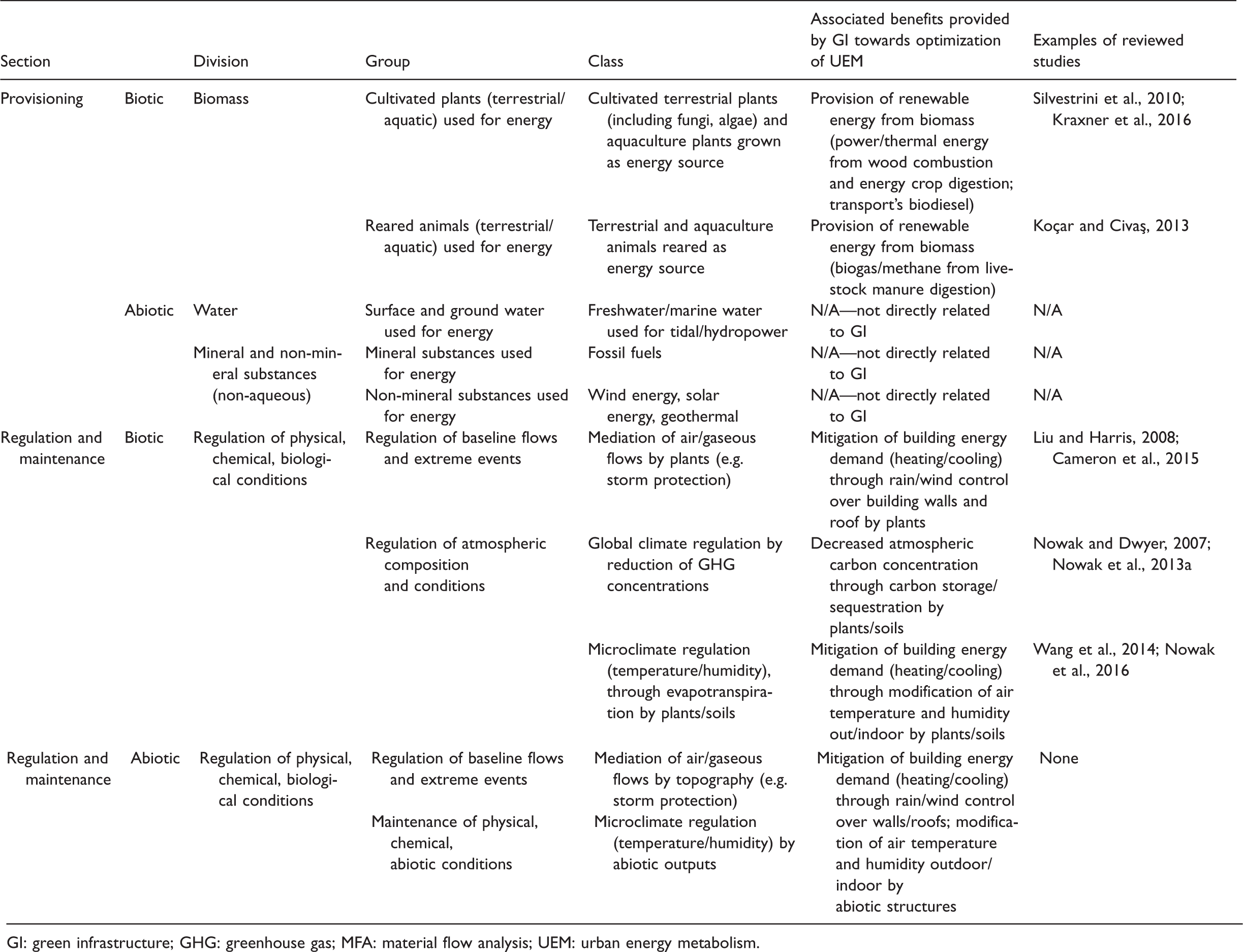
GI: green infrastructure; GHG: greenhouse gas; MFA: material flow analysis; UEM: urban energy metabolism.
A new approach to link MFA and the ecosystem service concept
Ecosystems service accounting in MFA
The results of our literature review show that the concepts of provisioning and regulation/maintenance ecosystem services (as classified in CICES v5.1) can foster the identification of the benefits provided by green infrastructure towards an optimized urban energy metabolism (Table 1). Based on this finding, we will now discuss whether MFA, in its current state, is well equipped to account for the delivery of these ecosystem services in urban systems. For this, the Eurostat’s methodological guide (Eurostat, 2001) served as a baseline.
As summarized in Table S.1 (Supplemental Materials), the Eurostat’s MFA (Figure 1) accounts for a limited number of provisioning services. Minerals, fossil fuels and fossil fuel products are included as domestic extraction, imports or exports of the economy and, following CICES, can be considered as provisioning services by abiotic outputs of ecosystems, as they are the result of geochemical processes over a long time period. The Eurostat’s model does not directly include water flows (drinking water and wastewater). Eurostat recommends presenting these flows separately due to their much higher magnitude (one order more than all other flows) (Eurostat, 2001). In practice, water flows are only accounted for in a limited number of MFA studies (e.g. Voskamp et al., 2017). Despite the lack of systematic accounting of global climate regulation services (e.g. carbon sequestration by green infrastructure) (see Table S.1, Supplemental Materials), MFA is potentially relevant in providing this level of information, as it includes data on the carbon emissions associated with energy use. Some urban scale models for GHG emission assessment (e.g. Mohareb and Kennedy, 2012) allow for quantifying carbon storage by forests and soils; they can be coupled with MFA to account for the provision of climate regulation ecosystem services. In general, regulation/maintenance ecosystem services are routinely excluded from MFA studies. This can be explained by the fact that, in MFA, the system boundaries are set according to the economy of the system (Figure 1). Consequently, benefits provided by natural processes and resources that are not translated into monetary terms and do not directly affect the economy of the system are not taken into account. Among the few exceptions are studies from the early stages of industrial ecology, such as the studies of Tokyo (Akiyama, 1994) and Brussels (Duvigneaud and Denaeyer-De Smet, 1977), and a more recent MFA of Paris (Barles, 2009). At a more general level, some authors argue that the lack of systemic and comprehensive consideration of all ecosystem service categories in MFA results from the limited consideration of biophysical flows and geochemical processes in the industrial ecology “black-box” modeling of urban systems (Golubiewski, 2012; Zhang et al., 2015). This would be due to the supposed small contribution of natural processes and resources to material and energy flows in cities, and would reflect the tendency of technical systems to dominate natural systems when the UM aggregated macroview is taken (Kennedy, 2012). Our findings are in line with previous UM review articles, which highlight that ecosystem services are not yet systemically and comprehensively integrated into industrial ecology UM models, and that more research into expanded UM frameworks is needed (Golubiewski, 2012; Pincetl et al., 2012; Zhang et al., 2010, 2015).
Opportunities for integrating ecosystem services in MFA
Substantial progress has been made in recent years to enhance the MFA method and account for natural flows of the UM. The Eurostat’s MFA has been expanded with parameters that are typically quantified in energy and water balance modeling or substance flow analysis (Bringezu and Moriguchi, 2002). For example, in an MFA of Amsterdam, Voskamp et al. (2017) propose a detailed breakdown of the water provision flows (including storm water and groundwater entering the sewer), and incorporate renewable energy provision (wind, solar and biomass) in the domestic extraction category. Notwithstanding the relatively small share of biomass-based renewables in the Amsterdam’s energy mix, their integration in MFA provides a more complete picture of how local natural resources are used in the city and suggests strategies to increase the city’s self-sufficiency and decarbonize its energy supply.
Prior to the Amsterdam’s study, Kennedy and Hoornweg (2012) developed a framework allowing for more comprehensive consideration of biophysical stocks and flows in the UM (Figure S.1, Supplemental Materials). Natural resources (e.g. biomass for fuel, groundwater flows and precipitations, substances) are captured in terms of inflows, outflows, internal flows, production and storage, beside stocks and flows of building materials and minerals. This research led to the elaboration of a multi-layered set of indicators to perform metabolic analyses of megacities with better incorporation of natural components of the UM (Kennedy et al., 2014).
Daigger et al. (2016) reviewed the MFA method, alongside other metabolic accounting methods (e.g. socio-ecological infrastructure systems framework, multi-sectoral systems analysis, ecological network analysis), and suggested integrated modeling approaches to better assess the benefits of up-scaling urban agriculture and its impacts on food-energy-water systems in city-regions. Informed by complementary UM lines of thinking, the study pointed to key socio-economic and ecological factors influencing the UM, including urban ecosystem services.
Other precedents to better account for ecosystem services in UM can be found in meteorology and climate science approaches to UM research. For example, the UM model underpinning the BRIDGE Decision Support System (Chrysoulakis et al., 2013) integrates microclimatic measurements and simulations with socio-economic data of the UM. The model enables accounting for the heat transfers between built and vegetated surfaces, among other energy flows, as well as for the effects of the urban vegetation on pollutant fluxes (Lietzke et al., 2015).
Expanded MFA model to advance green infrastructure planning
Integrated UM frameworks such as those developed by Kennedy and Hoornweg (2012), Chrysoulakis et al. (2013), Daigger et al. (2016) and Voskamp et al. (2017) show that the combination of models originated in complementary approaches to UM research (e.g. urban ecology and meteorology) can facilitate the incorporation of ecosystem services in industrial ecology UM analyses.
Figure 2 presents an ecosystem-service expanded model for MFA (based on Eurostat, 2001, Figure 1), with categories and resource-use indicators normalized to account only for energy-related flows.
Expanded model for Eurostat’s MFA and aggregate resource-use indicators, capturing energy-related inputs, outputs and internal cycling of flows, as well as flows associated with the delivery of energy provision and climate regulation ecosystem services (ES) by urban green infrastructure.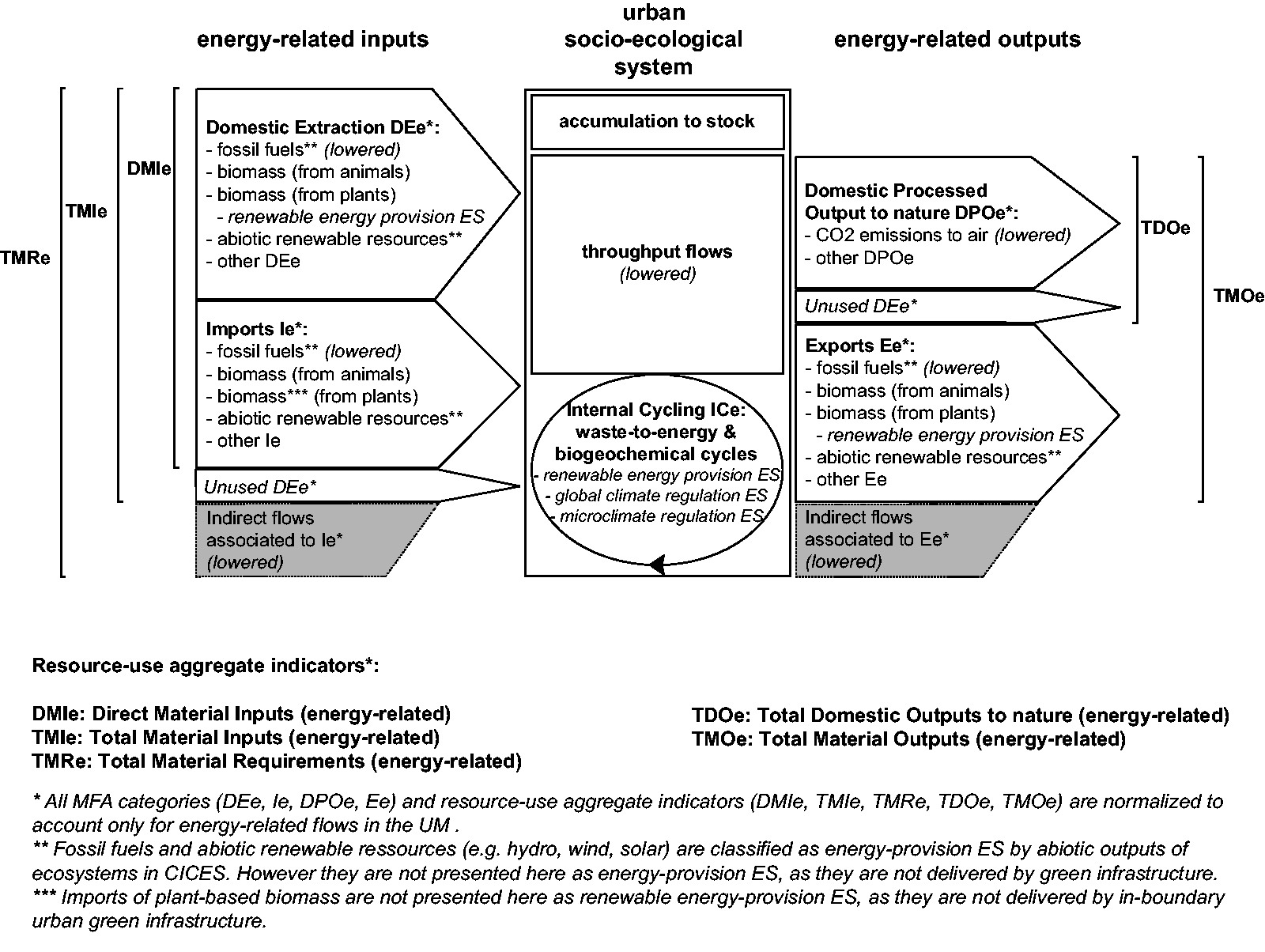
Besides the outputs to nature, the expanded MFA enables the assessment of how energy flows associated with ecosystem services can offset carbon-intensive energy-related inputs and increase the overall energy efficiency of the UM. Renewable energy provision can minimize fossil fuel inputs; microclimate regulation by green infrastructure can decrease energy use in buildings and, consequently, can reduce the magnitude of the energy flows entering the system. In more general terms, the integration of energy provision and climate regulation ecosystem services in MFA enables capturing changes in internal cycling and in locally extracted energy-related inputs (DEe), as well as changes in energy-related imports (Ie). This is particularly critical to reduce cities’ dependency on external sourcing and to enhance cities’ self-sufficiency, for Ie are routinely of much higher magnitude than DEe in urban systems.
Table 2 summarizes which ecosystem services provided by in-boundary urban green infrastructure (cf. CICES v5.1 classes in Table 1) are captured in the expanded MFA model (Figure 2), referring to the specific category in which each service is captured (1). It also presents the impacts of each ecosystem service on the urban energy metabolism, following the energy-related input/output/internal cycling categories of the expanded MFA model (2). Additionally, possible design criteria to maximize impacts on the urban energy metabolism, including physical layout and structure of biotic/abiotic green infrastructure elements as well as planting selection, are listed (3).
Ecosystem services provided by in-boundary urban GI (following classes in CICES v5.1) with direct impacts on UEM (Table 1), and: 1. Corresponding category in expanded MFA where service is captured; 2. Associated impacts on UEM following the categories of expanded MFA (Figure 2); 3. GI design criteria to maximize impacts on UEM.
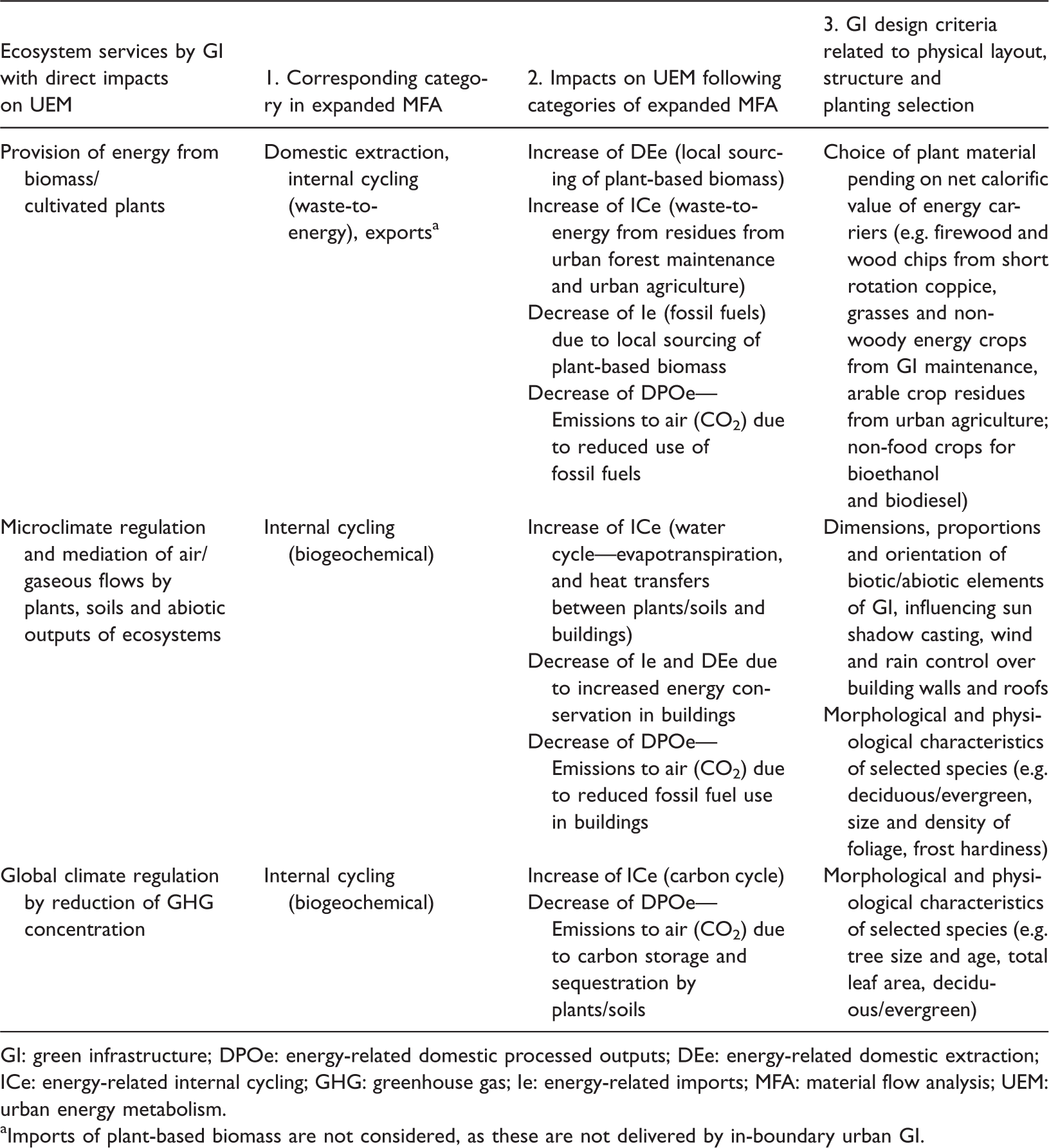
GI: green infrastructure; DPOe: energy-related domestic processed outputs; DEe: energy-related domestic extraction; ICe: energy-related internal cycling; GHG: greenhouse gas; Ie: energy-related imports; MFA: material flow analysis; UEM: urban energy metabolism.
aImports of plant-based biomass are not considered, as these are not delivered by in-boundary urban GI.
Conclusion
Over the last decades, UM research has significantly contributed to an increased awareness of the environmental pressure associated with urbanization and to the discourse on more resource-efficient urban planning and design. It is however widely acknowledged in the UM research community that more efforts to enhance the applicability of UM studies in urban planning and design are needed. There is, therefore, a clear need for UM research to further expand beyond accounting exercises and to engage more substantially with urban planning agendas in order to support communities’ aspirations and goals more effectively. In this article, we have argued that the application of UM models in green infrastructure planning and design represents a promising new frontier for UM research, especially in light of local authorities’ growing ambitions to make use of nature-based solutions in pursuing a more sustainable UM (e.g. carbon sequestration and storage through green infrastructure, locally sourced bioenergy and biofuels). To this end, we have argued that the ecosystem service concept can help operationalize UM models and can foster their applications in green infrastructure planning and design.
The ecosystem service concept can assist in systematizing knowledge of the multiple benefits provided by green infrastructure and their contribution to a more energy-efficient and less carbon-intensive UM. Ecosystem services frameworks like CICES can help systematically account for energy provision and climate regulation services provided by urban green infrastructure. Based on the findings of our literature review, we have discussed that the integration of these ecosystem services in UM models such as MFA can both reveal and quantify the contribution of green infrastructure to an optimized urban energy metabolism. Accounting for these ecosystem services can provide a more accurate picture of the composition of the urban energy mix (renewable energy provision from local biomass), as well as reveal the impacts of green infrastructure on the magnitude of energy use (mitigation of energy demand in buildings), and the dynamics of biogeochemical processes in cities (microclimate regulation and carbon sequestration by plants and soils). We have illustrated this argument through the development of an expanded model for the Eurostat’s MFA that integrates ecosystem services, using the CICES framework as a baseline. The expanded MFA incorporates energy provision and climate regulation services provided by urban green infrastructure among other inflows, outflows and internal flows of the urban energy metabolism. The model illustrates a possible way forward to integrate UM analyses and the ecosystem service concept, well beyond the here discussed selection of provisioning and regulating services. We hope that our research can contribute to the development of extended UM models that can advance the planning and design of green infrastructure, while enhancing both the scope and the impact of UM research on real-world decision-making and planning practice.
Supplemental Material
Supplemental figure - Supplemental material for Can urban metabolism models advance green infrastructure planning? Insights from ecosystem services research
Supplemental material, Supplemental figure for Can urban metabolism models advance green infrastructure planning? Insights from ecosystem services research by Daniela Perrotti and Sven Stremke in Environment and Planning B: Urban Analytics and City Science
Supplemental Material
Supplemental table - Supplemental material for Can urban metabolism models advance green infrastructure planning? Insights from ecosystem services research
Supplemental material, Supplemental table for Can urban metabolism models advance green infrastructure planning? Insights from ecosystem services research by Daniela Perrotti and Sven Stremke in Environment and Planning B: Urban Analytics and City Science
Footnotes
Acknowledgements
The authors are grateful to the anonymous reviewers of the journal for their insightful comments and thoughtful suggestions, as well as to Dr. Eugene Mohareb (University of Reading) and Dr. Gijsbert Korevaar (Delft University of Technology) for their valuable feedback on the manuscript.
Declaration of conflicting interests
The author(s) declared no potential conflicts of interest with respect to the research, authorship, and/or publication of this article.
Funding
The author(s) disclosed receipt of the following financial support for the research, authorship, and/or publication of this article: This work was supported by the Wageningen Institute for Environment and Climate Research through a senior research grant awarded to the corresponding author [grant number WIMEK-066].
Supplemental material
Supplemental material for this article is available online.
References
Supplementary Material
Please find the following supplemental material available below.
For Open Access articles published under a Creative Commons License, all supplemental material carries the same license as the article it is associated with.
For non-Open Access articles published, all supplemental material carries a non-exclusive license, and permission requests for re-use of supplemental material or any part of supplemental material shall be sent directly to the copyright owner as specified in the copyright notice associated with the article.
