




Abstract
Small hydropower has widely been considered a renewable energy source with minimum adverse social and environmental impacts. However, the expansion of small hydropower in the northwest uplands of Vietnam over the last two decades has created and even normalized persistent and multidimensional water injustice for ethnic minority groups in the region. For some, this expansion has meant persistent, but silent, generational, and cumulative experiences of marginalization and impoverishment as well as the erosion of a way of life. Extractive activities reconstruct identities and redistribute resources and decision-making power, but not without igniting resistance. Local ethnic minority households struggle in negotiating their everyday realities, which are occupied with livelihood maintenance, social interactions, and fights over their use and control of resources. This paper unravels the particular gendered workings in responding to slow violence, drawing on photovoice and over a decade of fieldwork in the northwest uplands where hundreds of small hydrodevelopment projects have been planned and implemented since the early 2000s. The paper argues that the seemingly mundane tasks that women carry out, including cooking, weaving and dyeing fabrics, and growing crops, which are revealed through a gendered perspective to be foundational in cultivating community resilience, self-help, solidarity, resistance, and reworking in the face of ongoing structural injustices and hardships brought about by small hydropower development in Vietnam’s northwest uplands.
Introduction
Research on slow violence associated with hydropower focuses on megadams due to their massive impact on human livelihoods and nature, including displacement, floods, the large-scale losses of forests, villages and towns, and the disruption of fish habitats and migratory paths (Baird, 2021; Blake and Barney, 2018; Chen et al., 2023). Small hydropower (SHP) development is also associated with socioeconomic uncertainties, landscape transformation, and habitat degradation that often go unchecked by policymakers, academics, non-governmental organizations (NGOs), and the wider public (Lange et al., 2019). Since the 1990s, a boom of SHP investment globally is the result of strong resistance to large dams and commitments to climatic goals and phasing out nuclear and coal-fired power (Lange et al., 2019). Capacity-based definitions of SHP vary, ranging from up to 1 megawatt (MW) in Germany and Burundi to up to 50 MW for facilities in Canada, China, and Pakistan (Couto and Olden 2018). In Vietnam, it is up to 30 MW (Lawnet, 2012). By 2018, at least 82,891 SHP projects were operating or under construction in 150 countries (Couto and Olden, 2018). This proliferation is also partly due to a perception that “smaller” equates to lower socioecological impacts (Gleick, 1992).
However, scientific research suggests that environmental impacts of SHP versus large HPs may not differ significantly, including in instances of land inundation, hydrological flow alteration, and the loss of habitat connectivity (Couto and Olden, 2018). Limited research on their socio-cultural impacts reveals that SHP projects are not benign (Harlan et al., 2021; Fung et al., 2019). In Vietnam, SHP expansion in the northwest uplands since 2000 has created and even normalized persistent and multidimensional water injustice and livelihood losses for local ethnic minority groups. This structural injustice that prioritizes power generation for economic development over local livelihoods and environment has produced various forms of slow violence, which are gradually deteriorating marginalized people’s ways of living. Simultaneously, structural injustice may also lead to fast violence borne by marginalized communities as I will discuss in this paper.
With nearly 3500 rivers and streams over 10 kilometers, Vietnam has abundant hydroelectric potential; its total capacity is about 35,000 MW with an electricity output of about 300 billion kWh annually (MOIT, 2017). By 2018, it had 818 large and medium HP plants with a total installed capacity of 23,182 MW (EVN, 2018). SHPs are growing densely, averaging five to six projects per river. In the northwest uplands, hundreds of plants exist, are planned, or are under construction (Vo, 2017). While SHPs generate electricity for the national grid, their accumulated environmental and societal impacts are significant. It is worth noting that impacts occur not only due to single dams but also cumulated with other dams. Current environmental policies, however, fail to ensure that SHP projects meet socio-environmental compliance standards.
This paper contextualizes slow violence associated with SHP development and engendered responses in Vietnam’s northwest uplands. It addresses the following questions: (1) how structural injustice/violence associated with SHP development in Vietnam leads to both slow and fast violence; (2) what forms of slow violence local villagers endure; and (3) how age, gender, ethnicity, and educational backgrounds affect people’s strategies to cope with changes. It unravels the gendered workings resisting slow violence through everyday practices, drawing on community photovoice and over a decade of fieldwork in the northwest uplands where hundreds of projects have been planned and implemented since the early 2000s. The paper argues that seemingly mundane tasks that women carry out—cooking, weaving, dyeing fabrics, and growing crops—are revealed through a gendered perspective to be foundational in cultivating community resilience, self-help, solidarity, resistance, and reworking in the face of ongoing structural injustices and hardships that SHP have wrought here.
I first examine the analytical framework, focusing on interlinkages between structural, fast, and slow violence and the importance of integrating Feminist Political Ecology (FPE) in their study. The study site section is followed by an overview of SHP development in Lao Cai province and a discussion on how structural violence mutates into fast and slow violence. I then elaborate on how livelihoods and cultural losses can be characterized as slow violence. Before concluding, I discuss gendered responses and people’s everyday practices under the complex web of violence in Vietnam’s northwest uplands.
Analytical framework
Slow violence, as Nixon (2011: 2) explains: “is a violence that occurs gradually and out of sight, a violence of delayed destruction that is dispersed across time and space, an attritional violence that is typically not viewed as violence at all.” Fast violence, however, erupts suddenly, causes shocks, and demands immediate public concern and attention (Christian and Dowler, 2019). Baird (2021) considers catastrophes (like floods) a type of fast violence due to their level of speed and forces of destruction. Thus, temporality and spatiality are keys for both types of violence.
Research on slow violence focuses on environmental justice and pollution (Davies, 2022; Nixon 2011; Perkins, 2022), but other topics are being explored including land/house dispossession (Cahill and Pain, 2019; Pain, 2019) and climate change (O’Lear, 2016). In Southeast Asia, researchers like Baird (2021) and Blake and Barney (2018) draw on slow violence to examine Mekong large dams’ impacts, and Brickell (2024) explores debt as a form of slow violence in Cambodia. In most studies, we see an inextricable linkage between slow violence and structural violence.
Galtung (1969) coined the term “indirect or structural violence”: suffering caused by institutionalized forms of inequality, including racism and sexism. Galtung sees violence as static and embedded in a harmful structure of inequality. Structural injustice or inequality is at the same time structural violence. The narrative framing and/or dominant discourse of development that is tightly associated with unequal power structures can further exacerbate these structural imbalances/violence. It involves the systematic depletion of not only ecosystems and human health, but also culture and knowledge. Following Davies (2022), I argue that by considering structural violence, we can see that slow violence is not only about time and gradual social harms, but also about uneven structures that facilitate the gradual demise of humans and ecologies. These three types of violence—slow, fast, and structural—have significantly affected local communities’ lives and livelihoods, who constantly work on their various responses, which include acts of resistance, resilience, and reworking. Their resistance is largely in “everyday” forms (Scott, 1986), that involves “little or no organization” to show people’s “disgust, anger, indignation or opposition” to what they consider as unjust or unfair actions by powerful people or institutions (Kerkvliet, 2009: 233).
In reflecting on the intertwined everyday practices of resilience, reworking, and resistance, Katz (2022) highlights their temporality and spatiality nature. She argues: “At times and in some places, it may be that act of resistance or reworking cultivate enduring grounds of resilience, fortifying people and communities for invigorated action and organizing in everyday life” (Katz, 2022: 1). Echoing this statement, Soukhaphon and Baird emphasize: “For some Indigenous Peoples and people from other marginalized groups, small acts of defiance in the form of presence-making through cultural practices can serve as powerful testimonies of resistance” (2024: 5). Reworking practices, according to Katz (2004: 247) are those that “alter the conditions of people’s existence to enable more workable lives and create more viable terrains of practice.” Reworking projects embraced under hegemonic social relations do not attempt to undo or challenge these relations, but to undermine its inequalities. Drawing on these literatures, I conceptualize reworking as self-help acts of affected people that sustain and enable them to cope with the slow violence brought about by structural violence and/or fast violence, while holding on to their traditional practices. The material social practices of reworking contain two interconnected aspects: one is linked to redirecting or redistributing available resources and the other to people’s adjusting themselves as political subjects or social actors (Katz, 2004: 247).
As the literature engaging with slow violence expands, the FPE approach may offer a crucial pathway to address the representational challenges of slow violence’s invisibility. FPE scholars highlight the importance of recognizing and challenging these power dynamics, advocating for justice that “acknowledges the rights and interconnectedness of all beings” (Ojeda et al., 2022: 151). Most FPE analysis concerns women and gendered differences in environmental struggles, revealing gendered, intersectional, and emotional struggles over natural resources (Dao, 2018; Sultana, 2011). To understand the intergenerational and intersectional dimensions of struggles over power, justice, and resource governance, FPE scholars focus “on resource access and control, gendered constructions of knowledge, and the embeddedness of local gendered environmental struggles in regional and global political economic contexts” (Resurrección and Elmhirst, 2008: 7). This focus opens FPE analysis up to further exploration of political responses that facilitate healing in ways that can transform emotional subjectivities (González-Hidalgo and Zografos, 2020; Soukhaphon and Baird, 2024).
Building on an intersectional FPE framework helps us to better understand the practices of reworking in responses to slow violence. Intersectional inequalities based on age, gender, ethnicity, and class complicate the effects and experiences of slow violence as well as the power dynamics that drive them in water-related contexts. In Southeast Asia, issues of generation/age did not seem to draw sufficient attention in analyses of resistance and environmental changes (Fung and Lamb, 2023; Park and White, 2017); less research is available on generation in analyses of reworking. Relations between generational groups contain aspects of social identity as well as cultural and spatial elements that permit an analysis of difference between members of a marginalized community regarding nature and local development (Camacho and Park, 2022). Thus, by examining how communities who experience livelihood and culture losses respond to changes and how those responses are conditioned by gender, age, ethnicity, and education backgrounds, we can begin to unravel the power structures and politics that sustain slow violence embedded in structural violence, uneven geographies of development, and gender inequality.
Methods
This paper draws on the author’s fieldwork conducted in Vietnam’s northwest uplands (2009–24, 1–12 weeks/year excluding 2020–21 during the COVID-19 pandemic). In Lao Cai province alone, I interviewed 115 SHP-impacted families, and government officials (six provincial/district and four commune-level). As I draw on Nixon’s theory of slow violence, it is important to ask questions about which representational practices and tools are effective in provoking visibility and attention. In my research, I see livelihood and culture losses due to HPs as forms of slow violence, but how can we uncover hidden and gradual violence—losses of culture, income, and livelihoods, environmental degradation, or forced out-migration—that is invisible to powerful people? Nixon appraises imaginative writing to “help make the unapparent appear, making it accessible and tangible by humanizing drawn-out threats inaccessible to the immediate senses” (2011: 15). Other scholars address this challenge by relying on films (Brickell, 2024) or on song writing or producing music (Pain, 2019; Magrane et al., 2016). Despite decades of research in the region, as an outsider, I found that interviews and focused group discussions (FGDs) alone may not be sufficient to ensure representational accounts of slow violence. I was only in the villages once or twice annually and I don’t speak local languages. I could only interview villagers who are fluent in Vietnamese. For older women (age 65+) who don’t speak Vietnamese well, I needed to rely on villages’ Women Union representatives as interpreters. In 2019, I started discussions with a local NGO and villagers about using photovoice and photo exhibitions as creative practices to reveal slow violence and project the often silenced voices. As a creative and participatory method, photovoice involves co-researchers—the affected villagers themselves—who document aspects of their quotidian lives and their communities via photography. Co-researchers are then engaged in dialogue about their images via interviews and FGDs; images and the process itself are collaboratively analyzed.
Villagers were very supportive of the idea and did not appear to be concerned about the sensitive nature of the topic. They shared that they had petitioned and complained to the local authorities and confronted security people of SHP plants located in the area many times; they were not afraid of speaking the truth. Indeed, they wanted to spread the words and have as many people possible to know about their issues. After careful discussions on pros and cons of the work, we agreed that the photovoice should both reflect the villagers’ hardship endured due to HPs construction in the area and show how the villagers have reworked their everyday practices to cope. In January 2020, with support from the NGO partner and local authorities, villagers established two women’s photovoice groups (January—April 2020). Timing, language barriers, and other factors limited groups to Tay ethnic women from Du Mi and Du La villages. The NGO partner and research assistants trained the women in basic photography and provided advice on telling stories via pictures. The COVID-19 pandemic then stalled the work, which resumed in December 2022 until March 2023. In August 2023, villagers had their first photovoice photo stories exhibited in their commune. They received positive feedback from public and local authorities. It helped them become more confident to continue their work (May—July 2024). The research team organized six FGDs on 120 photos (selected by villagers) out of 367 photos taken (two FGDs each period, 10 to 12 people per group). In these FGDs, we used Wang and Burris (1997) VOICE method (Voicing Our Individual and Collective Experience), which focused on the participants contextualizing and codifying the data. Villagers could retake the photos if they felt it helped tell their stories better. Guided by feminist theories that consider knowledge is situated and multiple “truths” exist (Harding, 2004), we value the importance of narratives, dialogue, relationship, and interconnectedness in conducting our photovoice (Photograph 1). Photovoice FGD.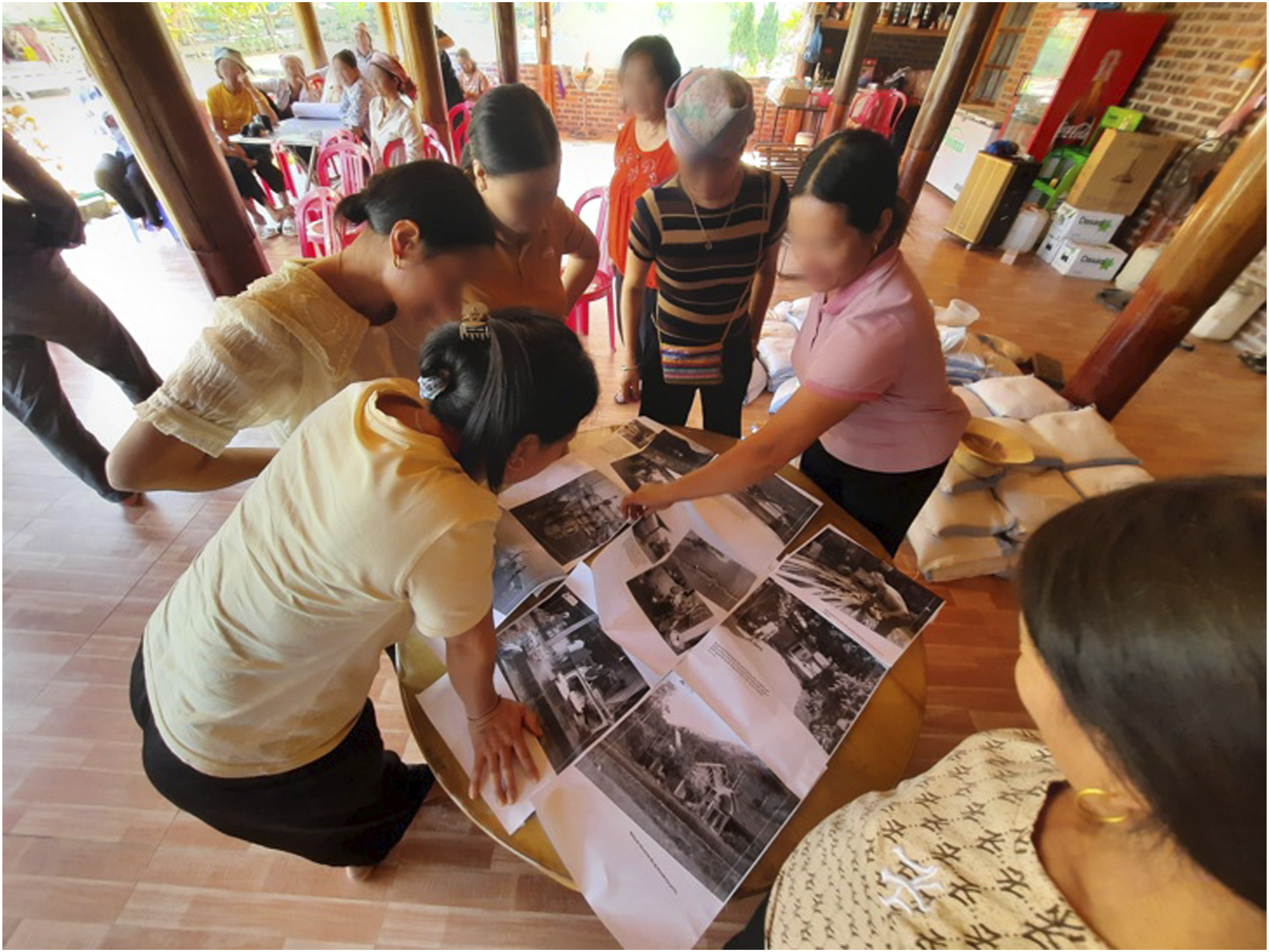
Credit: G Linh
As the women took more ownership of the project, their perceptions of themselves transformed. They learned to work in groups and to present their ideas and stories. They became confident and actively worked together in every step of the project. My NGO colleagues and the villagers who participated have given permission and entrusted me to work on their behalf to document our collective effort. In addition to photovoice, interviews and FGDs, for this paper, I also used media outlet outputs and reviewed relevant academic and gray literature.
Study site
The study was conducted in Du Mi and Du La—neighboring villages located on two sites of Suoi Hien stream—of Bien La commune, Lao Cai province. Bien La is a valley surrounded by mountain ranges (approximately 11,031 hectares [ha]). In 2023, the commune’s population was about 3000 people from four main ethnic groups: Hmong (16.2%), Tay (35.6%), Dao (or Iu-Mien in their own language) (41.4%), and Kinh (6.8%) (interview with the commune head, May 2024). Cultural practices and customs are diverse in the commune 1 ; each ethnic group has their own traditions, festivals, agricultural practices, worship, housing, and attire. Bien La is the meeting place of two large streams—the Suoi Hien and the Suoi Mai—that create a beautiful landscape with waterfalls; it is a popular eco-tourist site in the region. Bien La comprises forest and agricultural land with villagers’ income largely based on agricultural production. They grow one rice crop per year in terraced fields (155 ha), cash crops like maize and soybeans (125 ha), raise cattle, chicken, and pigs for extra income and domestic consumption (Warecod, 2020).
A local NGO surveyed 85 households in 2020 to learn more about SHP’s impacts on locals’ income in Bien La commune. It found that most households interviewed (91.8%) reported losing their income due to hydropower. A miniscule 1.2% was negligibly affected. A few households with family members working far from home or who are running small businesses did not lose their income (5.9%). Only two households gained more income thank to family members employed part-time as construction workers at a hydropower plant (1.2%). Among the 91.8% of households who lost income, cultivation losses were the most severe at 91% while 33.3% of households lost income from livestock due to barn demolition, and 26.9% lost income previously earned from catching fish in the streams, which impacted their livelihoods and daily nutrition. Just over 19% lost income related to forestry with the narrowing of forest areas, which also enabled outsiders’ access to the forest, causing biodiversity degradation, animal habitat loss, and illegal logging. Income losses related to tourism and selling traditional products accounts for 59% and 37.2%, respectively. The data show that prior to the arrival of SHP in Bien La, villagers’ livelihoods were diverse, with complementary sources of income that made local people’s lives and livelihoods sustainable (Warecod, 2020).
SHP development in Lao Cai province
Lao Cai has great potential for small and medium hydropower (Quoc, 2022). However, it is also infamous for SHP’s destructive impacts on the environment and local communities (Thi, 2023). The list is long—displacement, floods, out-migration, destruction of physical assets and biodiversity as well as land, job, income, and cultural losses—resulting in frustration and social conflicts. The Lao Cai provincial government, however, continues to support the hydropower development within its boundaries. Energy production has become a provincial priority for boosting economic growth (Thi, 2023). According to Lao Cai Department of Industry and Trade (2022) data, small and medium hydropower have provided approximately 4800 billion VND annually in revenues (Quoc, 2022). 2 The province set a goal that by 2030, the total installed capacity of small and medium hydropower plants will be about 1800 MW (Thi, 2023).
In Sa Pa district, where our study site is located, 21 SHP plants have been built, of which seven plants have directly or indirectly impacted Bien La commune. While Seo Chong Ho, Su Pan 1, and Nam Cun 2 are in upstream neighboring communes, Ban Ho, Nam Sai, Nam Toong, and Su Pan 2 are either wholly or partially located in Bien La (Figure 1 and Table 1). SHP plants in Lao Cai province. Source: Lao Cai provincial government, 2023 (Credit: Le Ha Dang). SHP projects that directly or indirectly affect Bien La. Source: Lao Cai provincial government, 2023.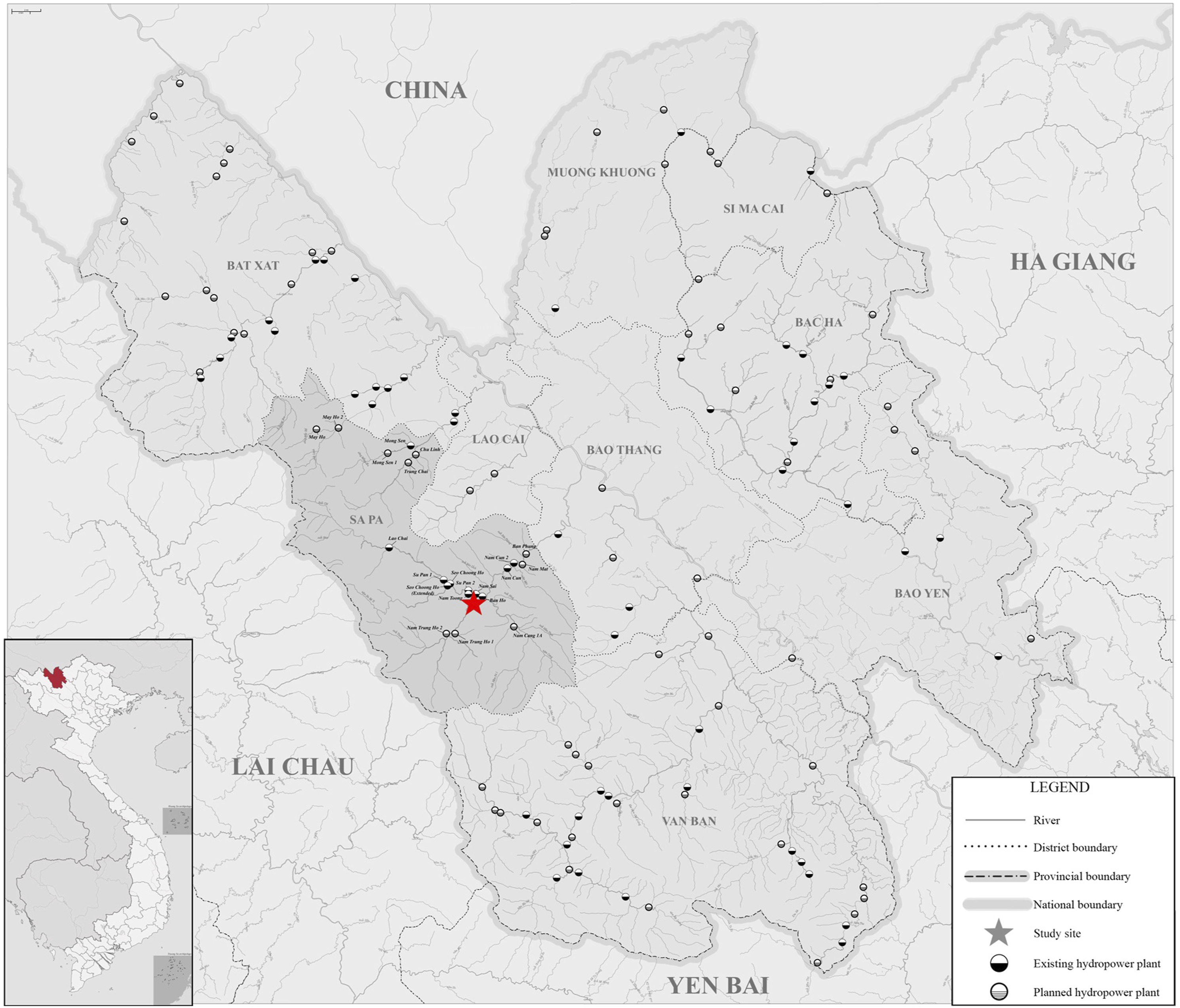
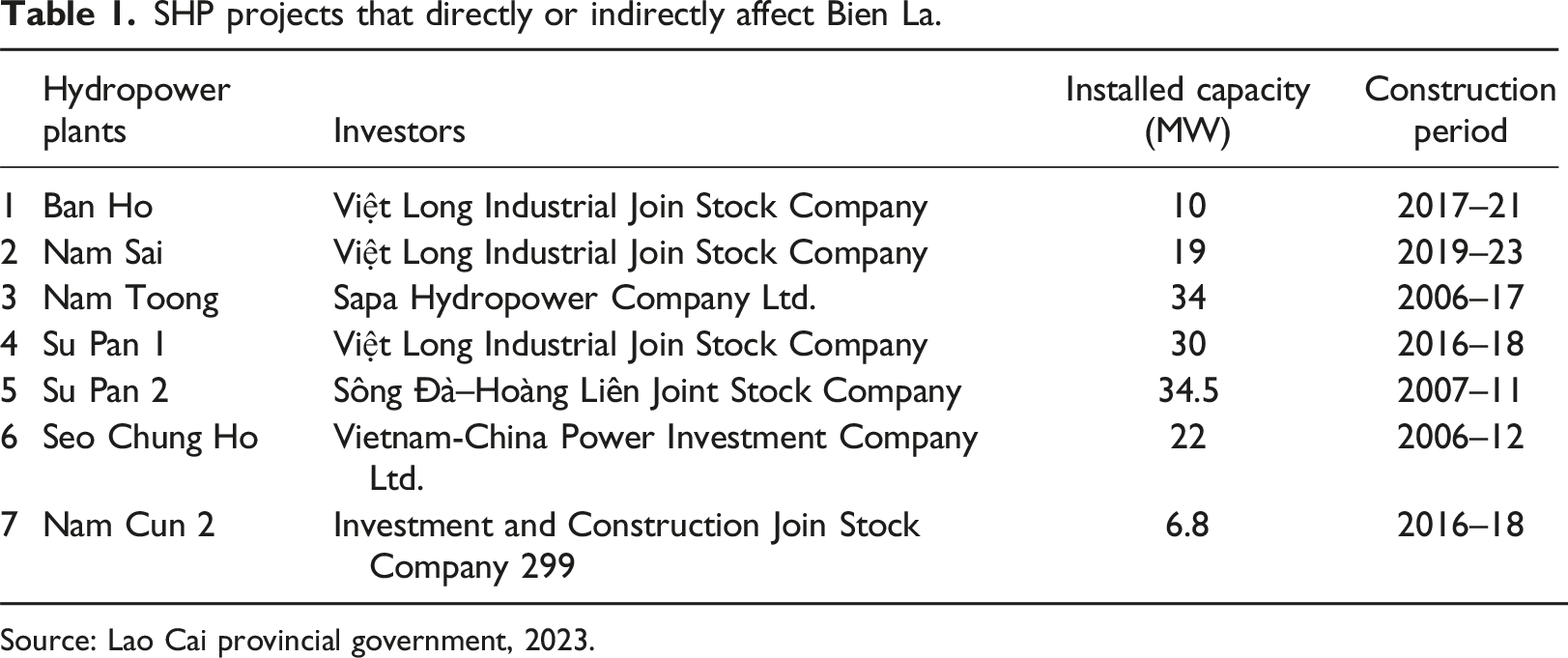
Su Pan 2 is the province’s largest SHP plant. Construction began in 2007 and it was expected to be complete 3 years later but landslides from Nam Toong SHP in 2010 caused delays. The construction site took 30 hectares of villagers’ land, but the plant also required land for a two-kilometer pipeline to channel water through a mountain to the plant’s powerhouse. The pipeline’s construction damaged Du Mi village’s drinking water supply system in 2007. According to local informants, when the plant became operational, the howling noise of water moving through the pipe forced 11 households in the village displace.
Nam Toong was built during the same period as Su Pan 2. Scheduled for completion in 2009, it only became operational in 2017 after various incidents, including a 2010 explosion that caused a landslide to inundate the Suoi Hien stream with mud. The provincial government-assigned investigation team attributed the landside to the developer’s disregard for the mitigation processes highlighted in the approved environmental impact assessment.
Ban Ho plant construction began in 2017 in the center of Bien La commune, subsuming 30 hectares of agricultural and residential land. During the construction period, the developer approved the dumping of dirt and rock directly into Suoi Hien stream. The construction site’s concrete mixing area did not have a wastewater collection tank system so the stream was further contaminated with wastewater and discharge. Dust and smoke were constant problems for villagers. The newest plant, the Nam Sai project took 4 years to complete (2019–23). This project appropriates 30 hectares of land in three neighboring communes, including Bien La, mostly agricultural land for rice and forest land. All of these SHPs in Bien La are not multi purposed structures—they are only for electricity generation that flows to the national grid. Thus, as with large dams in Vietnam and elsewhere, structural and power inequalities mean that villagers at dam sites or downstream bear the brunt of the impacts while investors and the national economy benefit (Baird 2021; Middleton, 2022). The construction and operation processes have impacted the local environment and population in various ways as I will discuss in the following sections.
The complex web of violence
Early on the morning of June 24, 2019, a flash flood caused serious damage to more than 60 households in Bien La. A villager shared: “It was 3 in the morning. I opened the door and saw water was everywhere. So much fear. We ran upstairs. Without warning, we didn’t know what to do. Later, we realized that our TV and furniture were flushed away by the water” (Interview, 2020).
The Su Pan 1 SHP, located in an upstream commune, caused the flood. To protect its reservoir from damage due to heavy rain, the operations staff opened all four of its water discharge gates without informing local authorities or residents. Su Pan 1 was put into operation in December 2018, and it caused this terrifying flash flood only 6 months later. Beside flushing away and damaging crops and villagers’ properties, the flood collapsed the suspension bridge connecting Du Mi village with Du La village and other areas of the district. The story made the front page of many newspapers provincially and nationally (Huong, 2019; Quang, 2019; TTXVN, 2019).
As with most of Vietnam’s development projects, the SHP plants’ construction has been a top-down process with very limited public participation (Nguyen et al., 2010; Dao and Phuong, 2015). The main actors involved in decision-making on SHP investment include the Province’s People Committee (PPC), Department of Industry and Trade, Department of Investment and Planning, and various investors. The PPC has the final say on whether a SHP plant will be built (Nguyen et al., 2010). Local communities suffer the most from the SHP development-induced impacts but are only included in passive and minimum consultation regarding proposed projects; developers often only organize consultation meetings with affected communities after final decisions are made. Since downstream impacts of dams are generally underappreciated compared to reservoir areas, downstream communities are not consulted both before and during construction. Media and civil society provide information and social critique to the wider public but have very minimal influence on the process.
In these circumstances, Su Pan 1 was built, premised on the so-called urgent need for electricity, to help meet the demands for the province’s economic growth. Su Pan 1’s developer—Việt Long Industrial Join Stock Company—also built Ban Ho and Nam Sai SHP plants. Bien La’s villagers were very disappointed to learn of Su Pan 1’s construction after experiencing the negative impacts of SHP projects built on their land and in upstream neighboring communes since 2006. Complaints or requests for consultation were futile—the provincial government had already approved the project. The fast violence and slow violence associated with SHP development in the Bien La context are structural because their origins lie in the socio-technological frame of hydraulic development. Policymakers, engineers, and investors produced a powerful image of the basin as the key tool for enabling river development and economic growth, and of dams as the key technological means for achieving these goals. The project pieces are then operationalized through key regulating institutions and guiding policies (Blake and Barney, 2018; Resurrección et al., 2011).
What happened in the Bien La context echoes what Christian and Dowler highlight in their research on slow and fast violence: “slow forms of violence imbricate with the fast, and the fast inescapably shapes the slow” (2019: 1072). Indeed, feminist scholars have long unwrapped these temporal binaries, arguing: “If fast violence draws our attention, linking it with violence in our analysis lends urgency and visibility to the slow” (Christian and Dowler, 2019: 1072). Baird (2021) makes a similar point, in relation to dam impacts in Laos. In the case of Bien La commune, it’s not only about fast and slow, but also about structural injustice. The fast and slow violence associated with SHP development are inseparable and shaped by persistent ongoing structural inequality where policymakers prioritize national economic growth over local livelihoods, and where marginalized communities’ voices are often muted. Slow, fast, and structural violence are all woven into a single complex web of violence.
In Bien La, villagers have experienced land, livelihood, and culture losses due to SHP dam development, and have not received the appropriate attention from the provincial authorities. Dams continue to be approved and built regardless of their impacts, which have proven to be disruptive, destructive, and even deadly. The case of Su Pan 1 flash flood elicited a different response. With the deluge making headlines, the provincial government quickly appointed a team to investigate the incident and they provided minimum support to help villagers recover. Temporality and the nature of the disaster explain the difference (Baird, 2021). It is worth noting that in this case, fast violence not only mobilized attention and support, it also gave the wider public a better understanding of the slow violence that accompanies SHP development.
Livelihoods and culture losses as slow violence
As mentioned above, most research on slow violence centers on environmental injustice and pollution (Perkins, 2022; Davies, 2022; Baird 2021) with some exceptions (Brickell, 2024; Pain, 2019). This paper extends the existing literature by highlighting livelihood and culture losses as forms of slow violence. Before the flash flood in Bien La, slow violence was present in various forms and all were gradual, deposited, and attritional. As photovoice findings and our interviews testify, slow violence is not always an invisible form of harm. The most visible direct impacts from hydropower include loss of agricultural land, disappearing waterfalls and hot springs, and the destructive reshaping of the Suoi Hien stream. Income losses stem from landscape changes and from the ways that locals access the land, water, and forest. In the past, homestay tourism was popular and created good income for many alongside traditional indigo textile fabrication. However, since 2006, four SHP plants have been built in Bien La and three in upstream neighboring communes—all have altered the quantity and quality of stream water. With their arrival, Bien La no longer received as many tourists; this income source has faded away. By 2022, up to 40% of young people, mostly male, have out-migrated to earn their living. Many others find paid jobs in nearby Sa Pa town, including women. When I visited in 2022 during the off-cropping season, there were mainly women, children, and the elderly in the village.
According to our interviews, photovoice, and FGDs, agriculture in Bien La was affected by land losses and water shortages, with SHP projects as the main cause. The power plants control the hydrological flow of the stream behind the dam, holding the water or releasing it depending on their needs, regardless of local or downstream impacts. As these SHPs’ sole purpose is for electricity generation, they do not provide water for irrigation like some large dams. The flash flood in June 2019 washed away fertile soil from the fields on the stream’s banks. Water shortages have also constrained villagers’ attempts to dig fishponds to restore this income and food source. FGDs (January 2020) revealed that villagers used to draw water from small but abundant and accessible mountain springs for generations. When Su Pan 1 pipeline construction began, the water from the springs became turbid. It now only flows sporadically and is insufficient for families’ daily use. As a result, potable water is scarce despite these villages being situated near these springs and streams. A Tay female villager in Du Mi (age 50+) shared with us the stream’s condition during the dry season (Photograph 2): You know, when the water is released, fish come along with the water. But then they close the gate, fish become stuck among the dry rock and die. My husband loves fishing. Before the hydropower construction, my husband caught fish with other fellow villagers every night. Suoi Hien had a lot of fish. Each night he could catch tens of kilograms of fish. It was not only his hobby. It provided extra income and nutrition for our family. Now, it’s only memories, (Interview, 2020) Dried-out Suoi Hien and broken irrigation pipe due to SHP construction.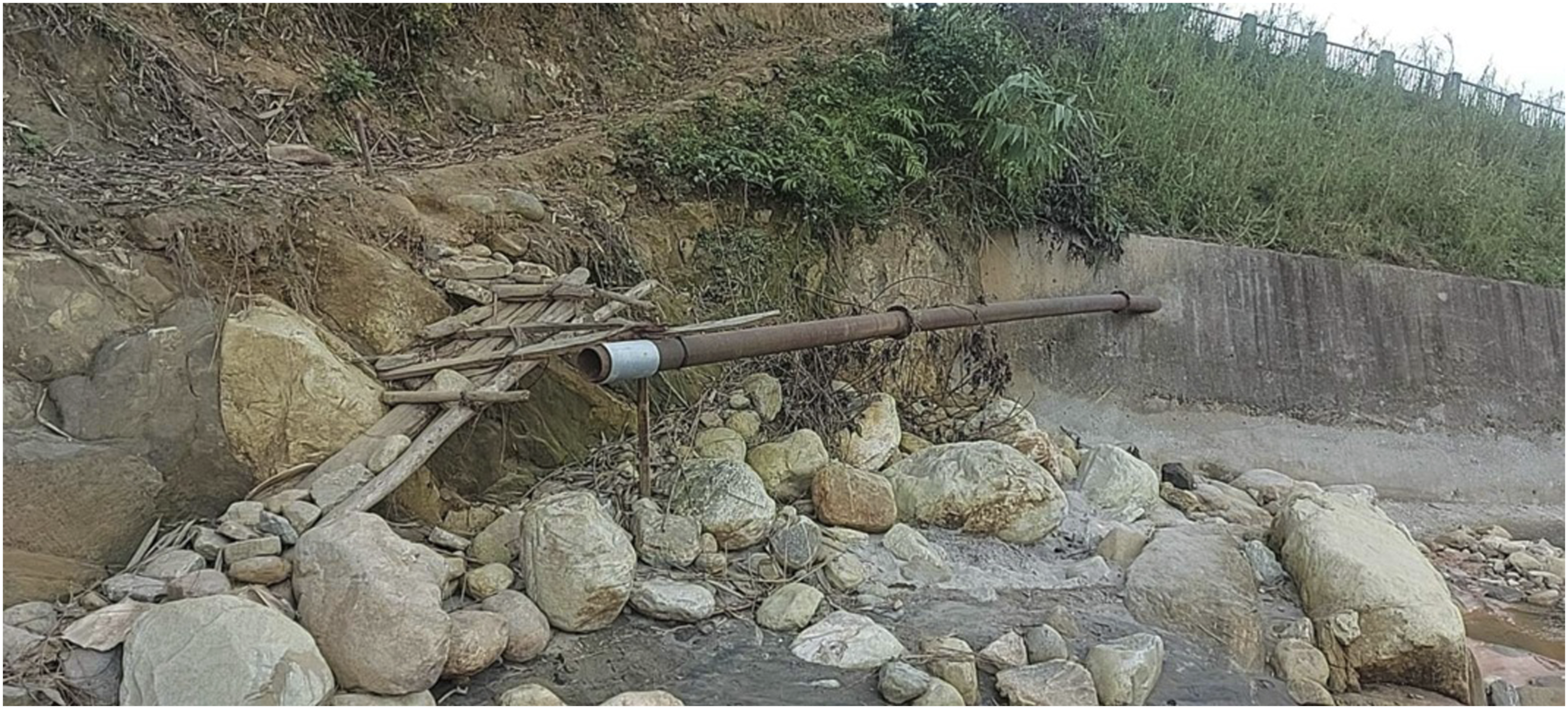
Credit: T Nghia
Du Mi had four hot springs; three were buried by rock during SHP construction. A woman (age 55+) shared her frustration: “My family borrowed money from the bank to build a hot water pool, hoping to earn extra income from its services, but in less than three months, it was damaged by Su Pan 2’s water pipeline. We rebuilt it on the other side of the stream, but Nam Toong SHP kept discharging waste and dumping rocks. A few months later, the hot water source was completely buried. We lost all the money. Now our sons have to go find work in Sa Pa. Not sure when we will be able to pay the debt.” Villagers also suffered from air and noise pollution during construction, including from rock blasting. At least seven households were left with structurally compromised and crack-ridden homes due to explosions at the Nam Sai construction site. A young father shared: “My house is only about 60 meters from the water gate construction site, so it was greatly affected. My son was six months old. He was startled all the time by the rock blasting and he couldn’t sleep well. My family requested the developer to have a plan to help us to move to a safer place, but they did not agree” (Interview, 2022).
As mentioned earlier, eco-tourism and related services used to be important sources of income for Bien La’s people. Tens of thousands of visitors traveled to this remote area annually to enjoy nature, try local foods, and learned about traditional textiles, ethnic customs, and traditions. Since hydropower’s arrival, especially since 2016 when five out of seven plants were put into operation, the tourist trade dried up virtually overnight. While there might be other factors in place, almost 100% of our interviewees responded that hydropower seriously affected tourism. No longer able to attract tourists, most tourism-based occupations have gradually disappeared here or are significantly reduced, including performances of traditional dances and songs, bamboo basket weaving, and traditional textile and brocade weaving. According to the Bien La chairman, while the commune population has continuously increased, the number of working-age people leaving the villages for paid work has also increased significantly. The previously diverse and stable economy of agriculture combined with tourism, forestry, fishing, and small businesses has been replaced with out-migration. Mrs. Sim, a Tay female villager (age 45+) shared: “We lost 80% of our rice land to Ban Ho SHP project in 2017. My husband now has to find work in town. I pick up whatever work available around here so I can help my daughter with her kids as she works full time in a nearby resort. We don’t have a lot of saving or other sources of income. We were among the village’s poor families before, and I don’t think with what happened, we can ever get out of poverty (Photograph 3).” A woman engaged in construction work to earn additional income.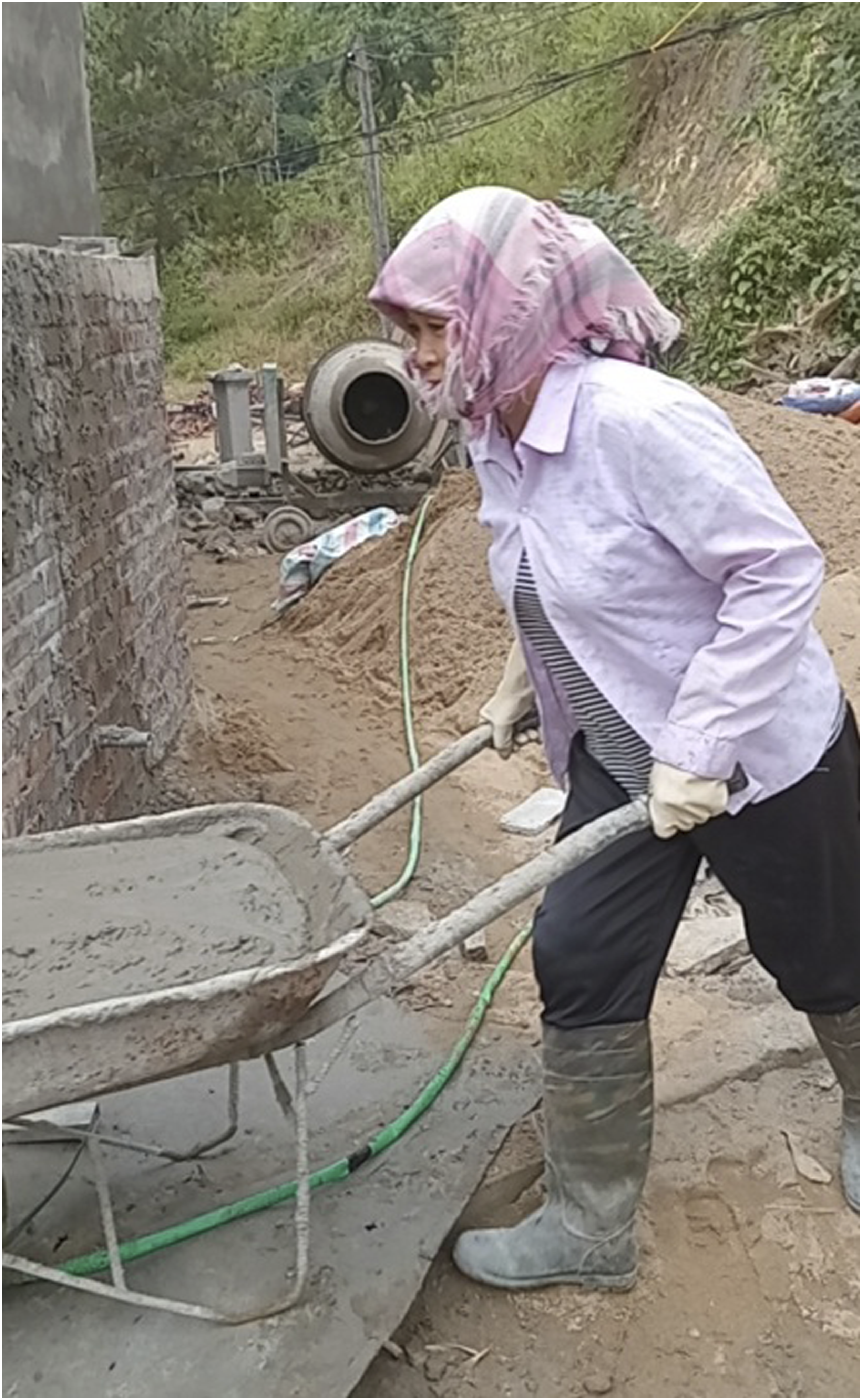
Credit: M Thu
Many ethnic minority groups call Bien La home, creating rich cultural diversity. Each group has its own cultural identity and maintains many traditional practices. Our interviews reveal that Tay people practice their land preparing festival, Dao people hold a dance festival during Lunar New Year, and Hmong and Dao people share the Nào Cống festival to worship village founders, the Mountain God, and the Stream God. In recent years, especially after income losses associated with hydropower development, the practice of customs and the scale of these festivals have been significantly reduced. Villagers had to adjust depending on available resources. A headman of a Hmong village upstream of Ban Ho SHP complained: “We used to catch fish from Suoi Hien stream to serve as offerings during important worship events. But now villagers must use other forms of offerings like chicken or pig.” Residing in the valley and by the streams, Tay villagers in Du Mi and Du La were hit harder when compared to Hmong and Dao people who live at higher elevations. More than half of our interviewees were concerned about fading traditions and cultural losses. A Tay woman (age 55+) shared: Younger people take these cultural losses less seriously compared to my (and older) generations. For us, our life was so tightly connected to the stream and the land. We have so many memories about the stream and life before the hydropower. We are also at the age that’s not easy to find other types of work elsewhere . . . we’re hit harder.” (Interview, 2024)
With income and livelihood losses, almost every household that we interviewed had to borrow money, either from a bank, friends, relatives, or other lenders. This was a new need for many households who had to borrow to continue some form of production (new crops or livestock) or to obtain funds to invest in old or new businesses after SHP development caused income losses. Many people had to borrow funds more than once before finding success or to be able to support their families. Households who are unable to borrow from Bank for the Poor or commercial banks must rely on informal lenders who demand a much higher interest rate. We also interviewed several people who borrowed to cover medical expenses. While the loan size may not be significant, for poor families with unstable livelihoods, freeing oneself from debt is difficult. In her research on debt in Cambodia, Brickell (2024: 2) highlights: “The slow violence of debt is manifest in its temporal stretch and command over time in these ‘vicious cycles’ and its ‘tethering’—its welding—onto the task of reproducing life under capitalism.” Thus, making livelihood losses and debt visible to policymakers is a challenging task in addressing slow violence associated with SHP development in Bien La in particular.
Gendered geographies of resisting slow violence: opposition, reworking, and self-help
Even though affected villagers were not consulted prior to SHP construction, they did not simply accept the situation. Their political responses sometime can be overt. For example, when developers ignored villagers’ request to solve dust and noise problems at the Nam Sai construction site, Du La’s villagers decided to fence off the road to block trucks from entering. After the flood in 2019, unhappy with the way the plant’s management dealt with the damages, members of more than 40 affected Tay families from Du Mi and Du La protested in front of Su Pan 1 hydropower plant. In both cases, district authorities had to send their officials to the commune to calm residents and plead with them to return home. Villagers refused, insisting that they would remain on site until they met the person responsible for the plant. Police and security forces were present to ensure that villagers did not damage company property or clash with plant workers. Even though only a few elderly women joined the protests’ front lines, it did not mean that women were not key players in the resistance. Rather, they fought in their own ways, depending on their age, their educational background, and their networks. A woman (age 70+) told us: “We Tay people don’t like fighting. But we need to sometimes. I wanted to be there (on the front line). As I’m a woman . . . they would feel to be a coward if they, strong young men with weapons hurt an old lady.” Another woman (age 40) shared: “We can’t all go there. We need someone at home to help just in case things go sour. We need someone to cook and bring foods to the ones at the site” (Interviews, 2023). Others like Mrs. Chu or Mrs. An found different ways. As members of the village’s “wealthy” group and with better education and connections, they reached out to journalists for help to cover the stories and connected with NGOs in search for alternative livelihood solutions.
The existing patriarchal divisions of labor explain the centrality that gender has recently gained as an analytical and a political tool (Ojeda et al., 2022: 154–55). As in other parts of the northwest and globally, Bien La’s women undertake most of the care work needed to guarantee social reproduction, and often take on the additional work to support their families in their new circumstances. One thing that all interviewees—male and female—agreed on in 2020 was that women were hit harder by SHP’s impacts. They needed to step outside of their normal daily routines into unfamiliar territory to diversify income sources. Women like Mrs. Sim received less support from their husbands and grown children who often out-migrated or engaged in wage work outside of the commune. Some women shared that they had to work much harder and could not spend time with small children. Mrs. Mi (age 24) said: “We have almost no farming land left. My husband got seasonal paid work in Lao Cai, sometimes he is not home for a week. I work as a waitress for a restaurant in town. I’m exhausted at the end of each day and can’t really spend much time with my 3-year-old girl. She mostly stays with my parents.”
As time passed, Du Mi and Du La’s women found their own ways to cope and survive. Many young, unmarried women found paid work outside the commune, but were then unable to join community activities. Hoa (age 20) shared: “I was lucky to find a job as a receptionist in a resort about 12 km from home. The job requires a high school diploma. Some of my friends in the village did not finish high school could not get a job there. It’s not a hard work, but I often have to work 8 to 10 hours a day. So, I don’t really have much time for other activities.” Those who remain in the village are largely married women who need to take care for elders and young children in their husbands’ absence. With the water shortages, many villagers leave their remaining land idle. In 2022, four women in their mid-50s from our photovoice group in Du Mi agreed to participate in a pilot project planting drought-resistant groundnuts. They wanted to try something new versus leaving the land idle. After 1 year, half of the households in these two villages grow this new variety of groundnut. With a local NGO’s support, they learned how to compost using probiotics. Mrs. Nghe enthusiastically said: “I’ve learned a great deal doing compost. Now we don’t waste farming residues. I just got a successful harvest of organic cucumber, which I could sell with higher price (12VND/kg) compared to the regular ones (8VND/kg).”
Villagers also encouraged each other to maintain weaving and indigo dyeing traditions. Mrs. Hue (age 40+) excitedly talked about their traditional indigo textile work (Photograph 4): For so long, we were known for our traditional textile and indigo dyeing. Over the last almost 10 years, we stopped doing it. Now most young people don’t know how to do it. My mom is one of the only two artists left in the village who try to keep it. I feel like we’ve lost our identity. So, for three years now, I organize instructions for village kids, hoping that they will help keep our tradition. Many of them love it. We try to connect with some traders and tour guide companies to find ways to sell our products. I hope one day outside people will know about our textile again. (Interview, 2023) Teaching kids about traditional textiles.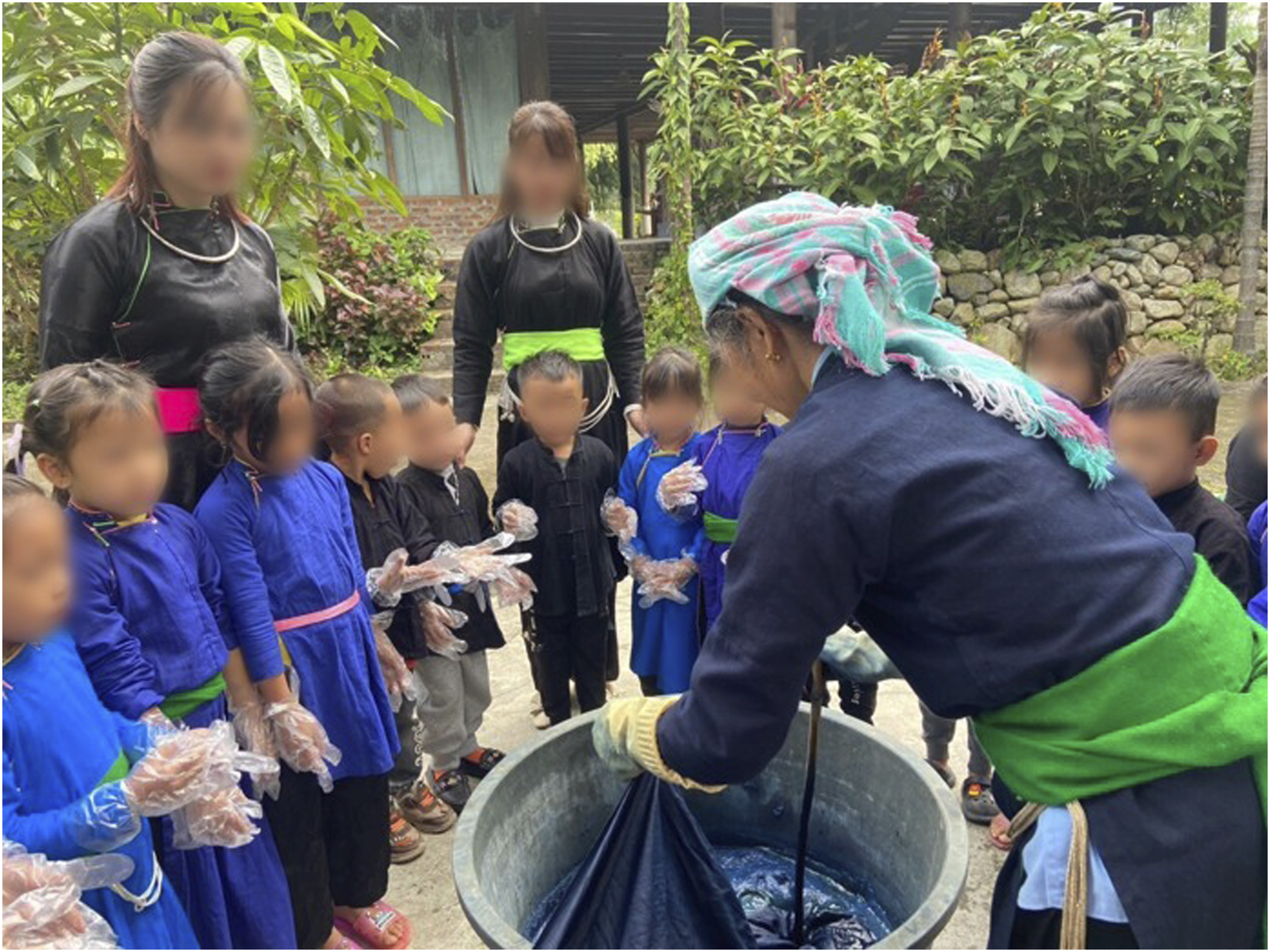
Credit: V Thuyen
Joining a photovoice group empowered Bien La women in many ways. Women supported each other in learning how to take photos, practiced writing short stories about their photos, and how to present their ideas in front of a group. Learning and working together united them and increased their confidence. Photovoice helped these women to tell their stories. Mrs. Chu, Mrs. An, and Mrs. Hue represented the group at the 2023 exhibition. Afterward, many chose to display their photos at home to remind them of their struggles and how they persevered. A woman (age 50) shared: We’re having so much fun doing this (photovoice). First, we learned it in group, so we learned while socializing. Second, when we took pictures of something, no matter if it’s just a fish or a plant or some daily activities, we have to think about why we did it, what stories we wanted to tell people. Then we discussed our pictures. It not only brought so many memories about our life, our traditions, but also how we worked together to deal with the situation and overcome difficult time. That makes us want to do more to keep our traditions and ways of life. (FGD, 2024)
The photovoice group also mobilized other villagers and initiated several community activities like planting flowers in the village, and installing solar panels to electrify streetlights. In 2023, they organized a household competition for traditional dishes, weaving, and other handicraft products. One woman (age 55+) said: “Since the arrival of many SHPs in our locale, this is the first time we had that much fun together. Those activities brighten our life up.” Thus, photovoice as a creative work, like music and film, offers ways to address representational challenges of slow violence and bring people together. Academic-activist-villager collaborations via photovoice can be a powerful way to evoke greater public awareness and empathy for problematic situations (Magrane et al., 2016; Pain, 2019). At its core, in the cultivation of new crops, cooking traditional dishes, and weaving and dyeing traditional fabrics, embodied reworking and resilience unfold. As Soukhaphon and Baird emphasize: “feelings of sorrow, longing and resolve, too, are embodied in, and provide meaning to, these practices, while also illuminating women’s agency in helping to constitute these spaces” (2024: 15).
Conclusion
In employing slow violence and FPE frameworks, this paper uses the case study of Bien La to unfold the connections between structural, fast, and slow violence and gendered responses to the unfairness and oppression that SHP development imposed on marginalized ethnic minority groups in Vietnam’s northwest uplands. Fast or catastrophic violence causes different types of impacts, but they are not necessarily more dramatic. Slow violence in the forms of land and income losses can lead to serious problems such as debt, conflict, and resistance. The impacts of the 2019 flash flood lingered for years, multiplied by other forms of loss, before and after the event. While it might be crucial to differentiate fast and slow violence and their responses as temporality matters and because fast violence can help reveal and draw attention to slow violence, Baird argues: “the boundaries are often blurred between the two, and are constantly shifting” (2021: 1182). More importantly, behind fast and slow violence in Bien La commune is structural violence—a persistent, ongoing structural inequality where a marginalized communities’ voices are often muted. The slow brutalities and uneven geographies of development are products of a structural violence, a violence that “renders some lives less worthy than others” (Davies, 2022: 418). In Bien La, marginalized ethnic minority groups are the one who suffer while investors benefit in the name of national economic growth.
This paper not only contributes to the field of FPE but also to a better understanding of a complex web of violence that includes fast, slow, and structural violence. Photovoice as a creative mode of representation helps unveil how local people endure slow violence, their strategies to cope with changes, and how age, gender, ethnicity, and educational background condition their responses. While young people are more energetic and generally have a better education and larger networks, they often out-migrate for work when women and older people stay and try to hold on to their land. They have learned to adapt to changes while holding onto the rhythms of their quotidian lives and traditions as much as possible. As Tay people live in the valley, they have experienced more impacts (both from upstream dams and the dams located in the commune) compared to Hmong and Dao people who live in higher elevations. That might explain the fact that Tay people are more overt in their fight. Ethnicity alone in this case had no bearing on ways villagers engaged in resisting violence. While mostly men (and some older women) joined protests against developers’ wrongdoings, other women stood beside them and resourcefully used their connections to secure outside support. We found several examples of reworking either to redirect resources like growing drought-resistance groundnut on the remaining land or composting, or to retool themselves as political/social actors through reviving traditional textiles, keeping traditional dishes, joining photovoice, or presenting their work to policymakers and the public. These acts serve as a powerful foundation for cultivating community resilience and resistance. Each villager may find their own way of coping and living their life despite the odds, they united and fought together when needed. Through these struggles, the people of Bien La refuse “to be wiped off the map of history” (Pile and Keith, 1997: xi). Photovoice not only addressed representational visibility challenge of slow violence, but it empowered these women to fight for themselves and their families through strong opposition and daily quotidian activities. Photovoice helps us to understand everyday slow violence through these women’s lens as well as their important roles in maintaining their traditions and communities. Their efforts and accomplishments contribute to a fight for justice in the region and provide policymakers and the national public with a more comprehensive view of SHP and its impacts.
Footnotes
Acknowledgements
I am very grateful to all the villagers/researchers who conducted the photovoice and granted me permission to use their data and photos. I thank my friends and colleagues in Vietnam and the people whom I interviewed there. Special thanks to NGO colleagues and my research assistants for field research support. I thank the villagers for their hospitality during my stay. I also would like to thank the anonymous reviewers for who spent time reading and gave me valuable comments and suggestions.
Declaration of conflicting interests
The author(s) declared no potential conflicts of interest with respect to the research, authorship, and/or publication of this article.
Funding
The author(s) disclosed receipt of the following financial support for the research, authorship, and/or publication of this article: Part of the funding for this research was provided by the Canadian Social Sciences and Humanities Research Council (SSHRC), 890-2022-0061.
