




Abstract
This paper interrogates and problematizes the intimate role of architecture in the dispossession and displacement of people. It explores the case of Ayn Hawd, a dispossessed Palestinian village that was transformed into an Israeli Artists colony in 1951. It found that architecture is deeply involved in executing, facilitating, legitimizing, and aestheticizing the violent act of dispossessing people. I theorize this as architecture of dispossession, a coherent aesthetic, economic, and political regime of practices, in which a social reality is manipulated and transformed spatially to construct a new, spectacular and imaginary, reality in the dispossessed space. The architecture of dispossession involves three distinct yet interrelated logics: political, economic, and aesthetic. The logic of accumulation by dispossession involves the seizure of the dispossessed’s property as assets used for the purpose of profit. It can take place in various ways, including privatization, the commodification of cultural forms, and dispossession. The logic of the exclusion of presence focuses on both the actual exclusion of a group of persons and the subjective or “existential” effects, intended or not, on the dispossessed, experienced as a loss not just of property and belonging but of their identity, form of life, or “being” as such; a kind of existential or ontological negation. Finally, an aesthetic logic of dispossession is a use of art and architecture to describe the dispossession in ways that legitimize it by representing or dissimulating it so that it can be advertised and appreciated as something more and other than the violence it involves. There is an important role for architectural criticism in showing not only that some population has been excluded, but how this is rationalized and legitimated in the ways the new forms and uses are constructed, described, represented, or advertised.
Introduction
On the morning of May 20, 1948, shortly following Israel’s declaration of independence on May 14 and the resulting “Arab-Israeli War,” the Jewish Haganah, the military group that would soon become part of the Israel Defense Forces (IDF), occupied Ayn Hawd, a Palestinian village that had been continuously populated since the twelfth century. As the socialist Zionist newspaper Al Ha-Mishmar (1948) put it, “The place was cleansed from the gangs [meaning the residents] by the Haganah at 7:30 in the morning.” 1 Five years later, in 1953, Jewish Israeli architects and artists colonized the village, renaming it the Artists’ Village of Ein Hod (Slyomovics, 2002). Its resident artists and architects subsequently transformed its appearance, aiming at the effectively imaginary construction of a wholly new village. This transformation raises critical questions regarding the role of architectural and artistic practices in dispossessing and transforming appropriated spaces and constructing a new socio-spatial reality at the expense of the dispossessed and displaced former inhabitants.
There are different ways of thinking about the role of architecture and planning in such contexts, which may be thought of as exclusive or complementary. In a Marxist perspective, displacement functions to achieve capital ‘accumulation for the sake of accumulation’ (e.g., Harvey, 2003, 2008). It is true that capital accumulation is usually involved in the transformation of spaces dispossessed of their inhabitants until then, though in cases such as this it surely is not the whole story. Among studies that address the uses of architectural and urban planning practices in constructing new spatial orders, some look at their uses, in colonial contexts and others, in regulating activities within a territory, or segregating and controlling populations (e.g., Al-Sayyad, 1992; Crinson, 1996; Jabareen, 2010, 2014a, 2019; King, 1967; Kusno, 2000; Rabinow, 1989; Wright, 1992; Yacobi and Tzfadia, 2019; Yeoh, 1996). The uses of architecture and planning for such policing functions can become manifestly aggressive, for instance, with the use of installations in public spaces to prevent undesirable behaviours such as sitting on them, where such inclinations would be evoked essentially as a way of harassing those susceptible to them (Starolis, 2020). A third possibility is the use of “aesthetic” strategies intelligible on their own account, yet also importantly related to the displacement that they legitimize or facilitate and further, including in the ways they are advertised to potential new occupants.
The role of architectural practices in displacing and dispossessing people, even in contexts such as this, is widely ignored. Yet, architecture can be seen as intimately and deeply involved in executing, facilitating, legitimizing, and aestheticizing the violent act of dispossessing social, ethnic, or racial groups and minorities. I call this the architecture of dispossession, by which I mean a coherent aesthetic, economic, and political regime of practices, in which a social reality is manipulated and transformed spatially to construct a new, spectacular and imaginary, reality in the dispossessed space after and through its destruction. I conceptualize the architecture of dispossession as involving three distinct yet interrelated logics: political, economic, and aesthetic. The logic of accumulation by dispossession involves the seizure of the dispossessed’s property as assets used for the purpose of profit. It can take place in various ways, including privatization (converting public assets into private property), the commodification of cultural forms, and dispossession (Harvey, 1982, 2008). The logic of the exclusion of presence focuses on both the actual exclusion of a group of persons and the subjective or “existential” effects, intended or not, on the dispossessed, experienced as a loss not just of property and belonging but of their identity, form of life, or “being” as such (Butler and Athanasiou, 2013; Said, 1995); a kind of existential or ontological negation. Finally, an aesthetic logic of dispossession is a use of art and architecture to describe the dispossession in ways that legitimize it by representing or dissimulating it so that it can be advertised and appreciated as something more and other than the violence it involves. In the discussion that follows, I will look at what was involved with the dispossession of the people of the original village of Ayn Hawd, and how it was both facilitated and legitimized through these three logics working together. I will use the case of study of what happened to this village in light of this conceptual framework, which I propose for understanding the uses of architecture today as a political practice, both in “colonial,” “post-colonial, and more general contexts.
The destruction and reinvention of a village
Ayn Hawd was established in the twelfth century in northern Palestine by Abu al-Hayja’, a commander in the army of Salah al-Din (Saladin), in recognition for his service during the campaign to expel the crusaders from the land (Celestin, 2002). The descendants of the original villagers continued to live there for centuries (Slyomovics, 2002), until, upon the establishment of Israel in 1948, the residents were forced to leave during the ensuing war. They lived nearby, believing that after the war they would be able to return to their houses. However, the Israeli military forces prevented this (Slyomovics 1998). In 1953, with the army’s permission, Israeli artists and architects colonized the town and announced the establishment of the Artists’ Village of Ein Hod.
In the aftermath of the Arab-Israeli war of 1948, 780,000 Palestinians were displaced from the newly-established State of Israel (Abu-Lughod, 1971; Morris, 1987). Only 156,000 Palestinians remained, becoming Israeli citizens, while the overwhelming majority were expelled from the country and became refugees in the West Bank, the Gaza Strip, and nearby Arab nations. The establishment of the State of Israel brought with it the destruction and depopulation of hundreds of Palestinian villages (Abu Sitta, 1998; Abu-Lughod, 1971). The fate of Ayn Hawd and its indigenous residents was similar to that of many other depopulated villages. However, while most of them were entirely destroyed by the Israeli army to prevent displaced people from returning to them, Ayn Hawd was not destroyed; it has remained intact, though without its original inhabitants.
The Artists’ Village of Ein Hod is governed by a cooperative association. Its Selection Committee, representing the resident artists, decides who is eligible to live there, with the General Assembly of the Village making the final decision (Bar-Gal, 2009; Ein Hod, 2022). Successful candidates must be “artists, writers, or painters” and should fit the community’s objectives culturally. At present, several hundred families live in the village. While 21% of Israel’s total population is Palestinian, almost none of the village’s residents are (Jabareen, 2017a; 2017b; Jabareen et al., 2017).
Since its colonization in 1953, the original Palestinian residents have not been allowed to return to their houses, nor has any Palestinian family been allowed to join the Artists’ Village. Meanwhile, the village’s artists and architects have transformed it, making use of the material forms they took over. Ayn Hawd is a fascinating case study for examining and conceptualizing these practices of socio-spatial transformation. In doing so, I have looked at municipal documents, official spatial plans, newspapers in Arabic and Hebrew, and the village’s website.
Dispossession and exclusion
Prior to its occupation, the Palestinian village Ayn Hawd covered approximately 12,000 dunams (3000 acres), much of which was pasture, where the villagers “grazed cattle, sheep and goats, and grew cereal crop and sesame, as well as harvesting the plentiful olive, carob and fruit trees” (Cook, 2005: 202). All of this ended when they were dispossessed of these lands during the 1948 War.
The displaced inhabitants found refuge near their old village, hoping to return to it soon. However, since the state prevented them from doing so, they built new homes near the original village site and called the new village Ayn Hawd, the same name as the original.
The first step undertaken by the Israeli colonizers was to change the village’s name from Ayn Hawd to Ein Hod. In his book The Zionist Bible, Nur Masalha documents the superimposition and replacement of Hebrew Israeli place names for Arabic Palestinian ones in the Jewish “artistic colonies,” of which Ein Hod was one of several (2013: 169–170).
For decades, Israeli authorities did not recognize the new Palestinian village, and did not give it any formal status, but considered it an illegal entity. In 1971, the area of the new village was declared part of the Carmel Park Nature Reserve. As the authorities refused to recognize the village as such, it was not incorporated into the region’s municipal system. This refusal to give the village a formal status as a rural entity was rationalized on ecological grounds as, according to the authorities, it was located in a green area and therefore could not be recognized as a separate municipal entity. As a result, the inhabitants lived for decades in an unrecognized village, without running water, electricity, or any basic services or infrastructure (Slyomovics, 1998). The village was also not on official maps produced by the government, which refused to include it in the state’s national plans.
The residents of Ayn Hawd collectively struggled against their expulsion from the original village, while also asking the Israeli government to formally recognize their new village (Photo 1). They established an NGO, the Association of Forty, which publicly fought to achieve recognition. In 2005, after 57 years of hard work, they succeeded in getting Interior Minister Ophir Paz-Pines to authorize the village’s incorporation into the Hof Carmel Regional Council. Six decades after its establishment, the first home in Ayn Hawd was connected to the Israeli electrical grid (Ayadat, 2007). The Israeli authorities and colonizer artists were dismissive of the claims of the dispossessed people that they were denied human rights, including access to basic utilities and the right to a cemetery. While the Palestinian residents of the new Ayn Hawd struggled for recognition and basic infrastructure, the Jewish artists in neighboring Ein Hod established a unique and impressive artistic and tourism enterprise on the remains of the original village. The new Ayn Hawd, home of residents of the former village. Source: Photo by author.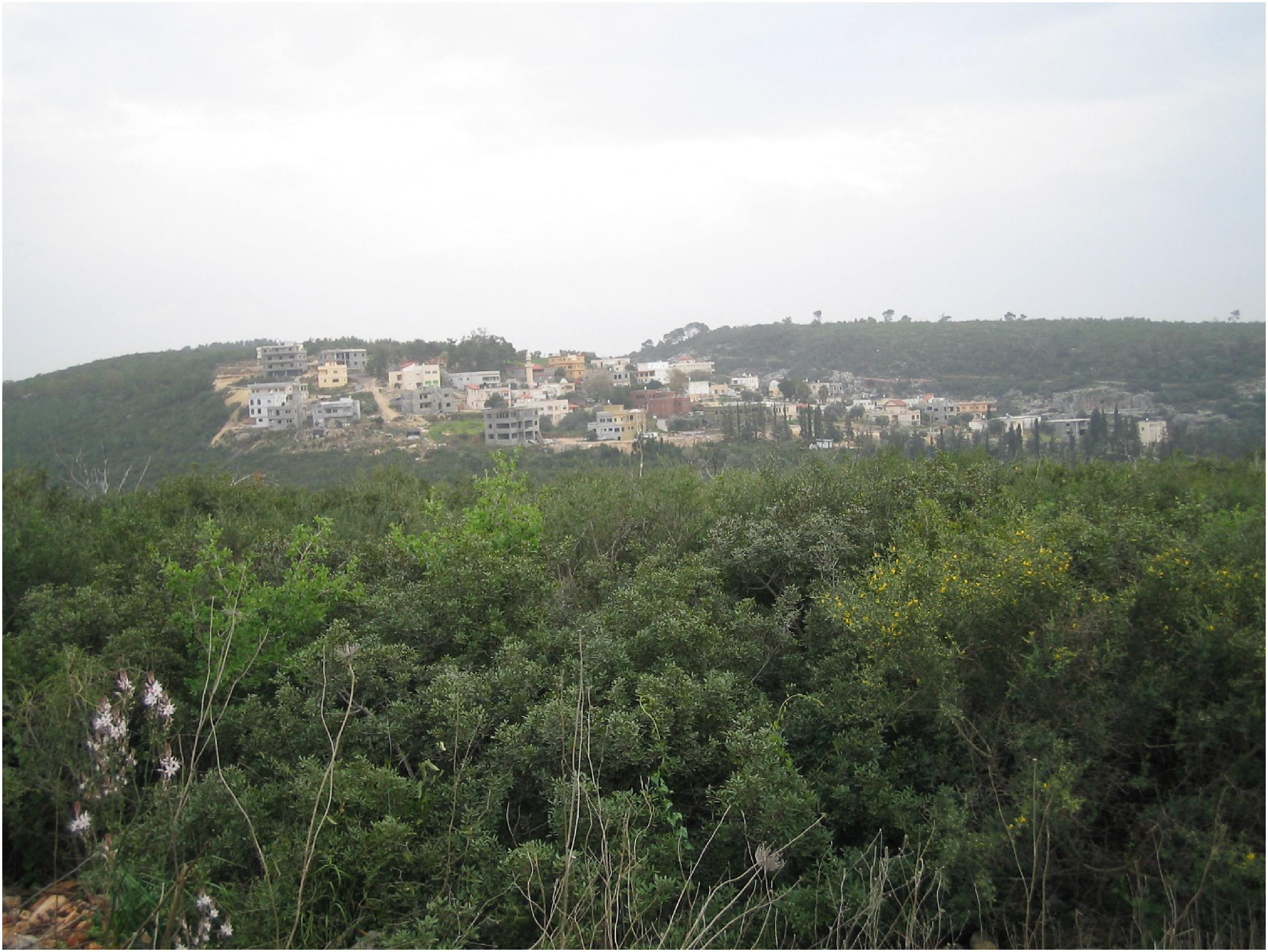
The very existence of the original Palestinian village was denied through the spatial transformation practices. These are part of the Israeli colonial-settler project, which involved a massive spatial and demographic transformation of the authentic Palestinian villages and urban spaces (see. e.g., Jabareen, 2015, 2014b; Kimmerling and Migdal, 2003; Masalha, 2013; Rouhana and Huneidi, 2017; Sabbagh-Khoury, 2022; Said, 1979; Salamanca, 2016; Samour, 2020; Zoabi and Fuller, 2024; Zureik, 1979). Makdisi (2010) speaks of “an endless process of covering over, removing, or managing a stubbornly persistent Palestinian presence” (527). As Edward Said argues in The Politics of Dispossession (1994), the almost invariably violent and brutal acts through which such dislocation, displacement, and dispossession of people is undertaken have as their aim the forceful exclusion of the displaced people’s actual and potential presence, which may involve figuring in various ways their effective non-existence in the contested place.
The architectural and artistic transformation of the village involved various practices, which the original community saw as aggressive and egregious. The historic mosque of the original village was converted into a restaurant and bar (Photo 2), and the Muslim cemetery was turned into a parking lot.. An artist who lived in the village protested that “you are immediately acknowledging thereby that some sort of—I don’t know—injustice took place and turning them into unfortunates who were uprooted from their land”; and that they seemed to be concerned that if the displaced inhabitants were to return, they “would undermine our right to the place and our possession” (Grossman, 1992, 71, quoted in Benvenisti, 2000). Raz-Krakotzkin (2005) describes the thinking involved: “The old Ayn Hawd is one of the only villages that Israel did not destroy. It was decided to turn it into an original village—the Zionist ideal realized: an Arab village without any Arabs.” In light of the Interior Minister’s recognition of the village, he continues: One might demand that the disgraceful use of alcohol and pork-serving establishments be removed from holy places [the Mosque] […] Perhaps the village Ein Hod would be even more authentic if Arabs lived there, if Jews and Arabs were to simply live there together based on equality. Of course, there is no justification for not returning the homes to their owners, but surely some sort of arrangement could be worked out. In this way, maybe Ein Hod could serve as a model for the possibility of a different kind of thinking altogether. (Raz-Krakotzkin, 2005) The former mosque of Ayn Hawd, in the Israeli village of Ein Hod. Source: Photo by author.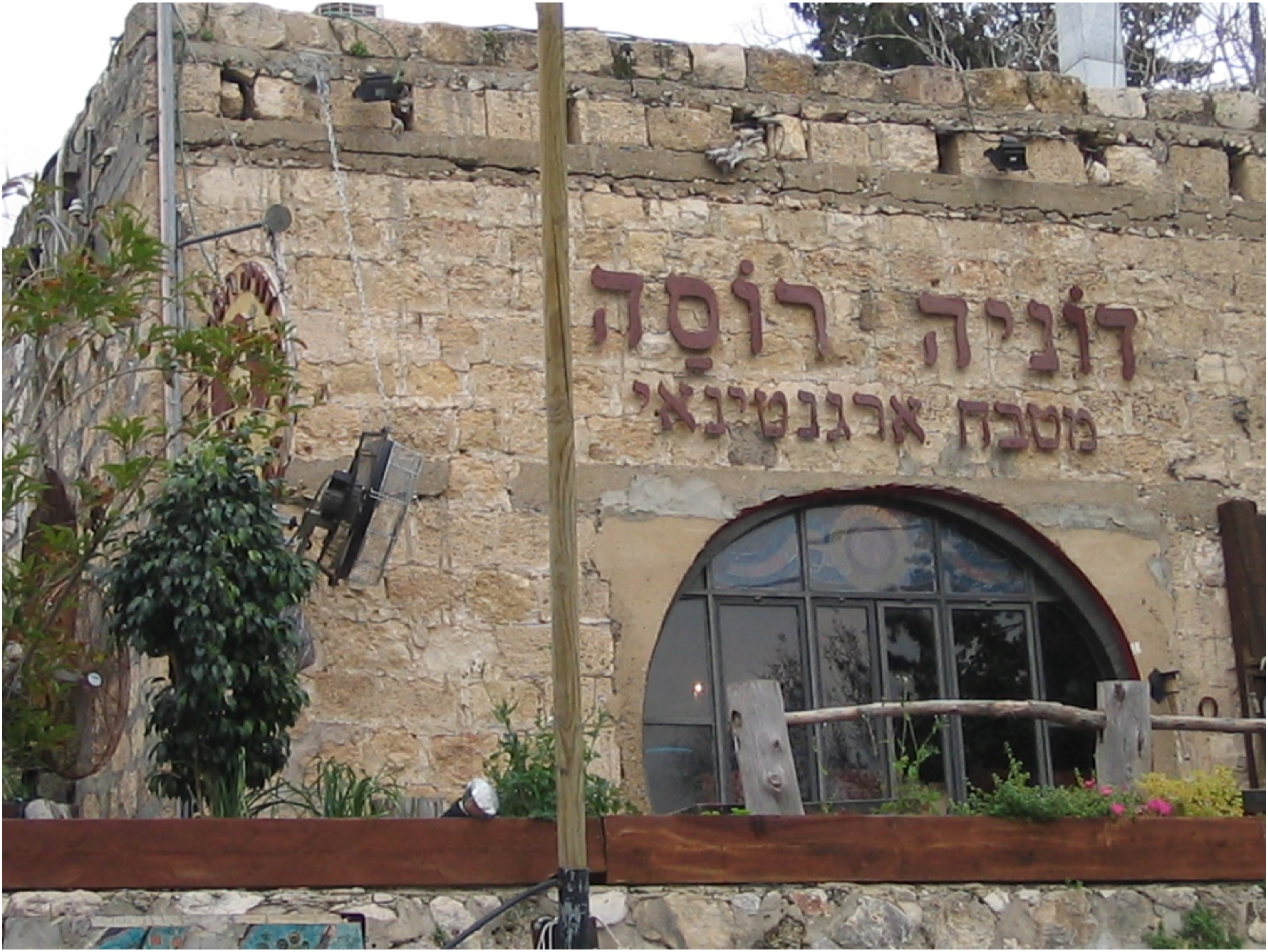
A village that had long been the residents of a community of Palestinians became transformed into something else. What was involved in this transformation?
Accumulation by dispossession
The logic of accumulation by dispossession is one whereby a spatial strategy facilitates the generation of profits. The economic motives may be the main ones, or the political motives and functions involved may be effectively intertwined with them. Thus, while the State of Israel’s main objective was to achieve control over territory and prevent the return of the dispossessed Palestinians, the artistic, architectural, and planning practices involved also served functions of capital accumulation.
After the inhabitants of the original village of Ayn Hawd were forced to leave, and their privately-owned lands confiscated, the entire village, with its houses and its fields, was taken over under the Israeli Absentee Property Law, the main legal instrument used by Israel to take possession of lands belonging to Palestinians and to Muslim and Christian Waqfs (religious philanthropic properties) across the territory of the new state (Adalah, 2005). According to this law, the natives of Ayn Hawd were considered “absentees,” even though most of them were present nearby the village from which they had been dispossessed, and were clearly desirous of returning – to the point of giving their new village the old one’s name, to mark it as the place of residents whose proper home was the village they had been forced to leave, and not as the settlers had transformed it. Accordingly, the lands of the village officially fell under public ownership.
The confiscated lands were transformed from state ownership to individual Jewish artists at zero expense to the latter: there was no land transaction cost. This situation represents perfectly how accumulation by dispossession may function financially: denied all value in its existing form and to its displaced inhabitants, it is given as void and “free” to the new ones. Though if it has value, including “aesthetically,” to the new regime, it may be taken and put to new uses: in 1948, more than 400 Palestinian villages were destroyed (Khalidi, 1999), but some others were preserved for their architectural heritage and uniqueness. In his book, Sacred Landscape, Meron Benvenisti (2000) claims that “the most obvious example of the preservation of an Arab village ‘as an aesthetic gem’ suitable for the accommodation of writers, painters, and other artists is that of Ayn Hawd, which was renamed Ein Hod.” The reason, he avers, is that it was “too valuable to allow its destruction” (p. 169). The state was, accordingly, convinced by the artists to keep the village.
In the beginning, Jewish immigrants from Tunisia and Algeria were recruited to colonize the dispossessed village through the Moshavim Movement (an Israeli moshav being a communal agricultural settlement), whose aim was to colonize lands in order to establish such settlements. In 1949, approximately 92 families received financial grants, as did other immigrants who settled in abandoned villages. Each settler received a house, a sum of money to repair their new home, a new farm, and a plot of land for cultivating crops. Even though the settler families were satisfied with their new village, the Moshav Movement decided that the abandoned village was not a suitable site on which to establish a permanent settlement: the physical form of the crowded Arab village was perceived as not fitting for the scattered settlements for which the movement was striving (Benvenisti, 2000). Following the abandonment of the settlers, the Israeli authorities decided to demolish the village entirely, as they had done to many other Arab villages.
However, Marcel Janco (shown in Photo 3), a painter and architect who had immigrated to the country in 1940, along with a coalition of artists and military officers, secured formal permission to preserve Ein Hawd (Zommer-Tal, 2006). Janco worked in the Planning Department in the Prime Minister’s Office as a designer of national parks with responsibility for the conservation of buildings and landscapes (Yavin, 2006). As a planner for the new state, he persuaded the authorities to refrain from destroying this “architectural gem.” In 1953, he succeeded in obtaining the rights to Ein Hod for himself and a group of artists and architects, and began transforming the town into an artists’ village (Popper, 2024). Janco described the way he founded the artists’ colony: In 1953, when I was working as an architect for the government, I was involved with planning the country’s parks. I had to travel around the country to find the areas best suited for big parks. One day I was on the Carmel range looking for a suitable space for a park when suddenly I heard explosions. I looked down and saw houses being blown up. I was told the army was demolishing a village that had been abandoned five years before, during the war of independence, because the buildings served the infiltrators who used them in their raids on the nearby communities. As a senior official in the Ministry of the Interior, I was able to get them to stop the demolition. Then I saw, with my architect’s and artist’s eyes, that this was no ordinary Arab village but an ancient historical site […] There no doubt were other archaeological remains there, awaiting discovery […] The houses were very handsome, solid stone houses […] We got the demolition halted, appealed to various government agencies and in the end received permission to keep the village as it was. But the authorities stipulated that we should settle there—they had no interest in keeping a collection of ruins intact […] Finally, it was decided that it would be an artist’s village, but on condition that the artists themselves invest in it and convert the buildings into houses, workshops and so forth. (Yoffe and Lotan, 1986, 13) Marcel Janco, at the entrance to a transformed former Arab house. Source: Fotocollectie Van de Poll, Netherlands, 1964.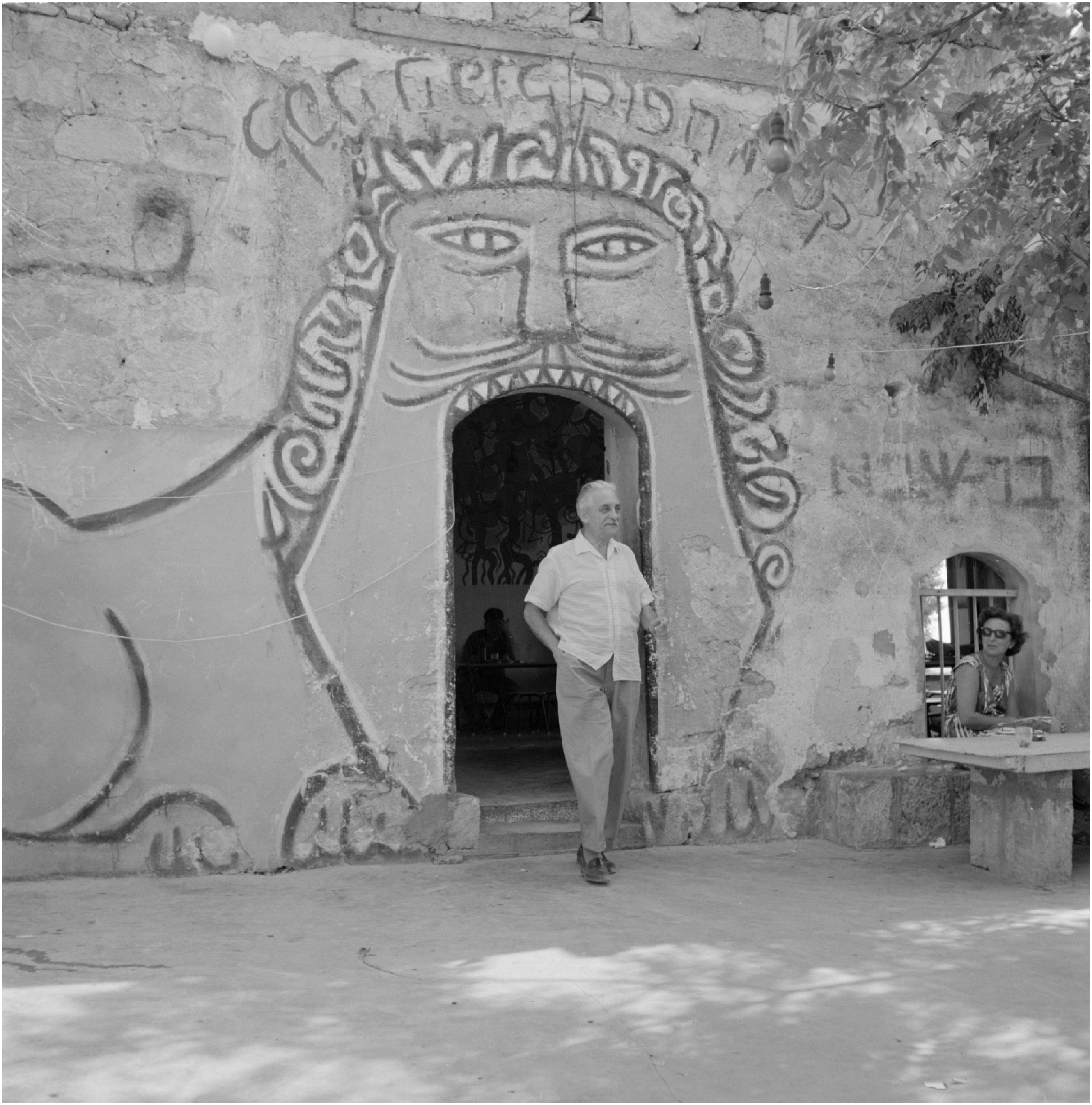
The dispossessed assets were distributed among artists and architects through the Village Artists’ Cooperative Settlement Ein Hod Ltd. This included preparing a new master plan of land use for the village and determining its land and housing property rights. In 1964, the state approved the first master zoning plan for Ein Hod (HK-35), which provided the formal legal rights of the settlers, and in 1998, the second plan HK-35-D, “A Detailed Plan for Ein Hod” was greenlighted. These plans distributed the legal property rights among the resident architects and artists.
Accumulation by dispossession means that the architecture of dispossession serves the interests of “business,” making profits from the dispossessed assets. Zvi Efrat (2001), an Israeli architectural historian, identifies two types of elites in Israel related to the colonization of dispossessed Palestinian villages and urban neighborhoods. One is the academic elite, which preferred urban neighborhoods such as Ein Kerem and Musrara in Jerusalem, and Wadi Salib in Haifa, and the artistic and bohemian avant-garde elite, which settled the Malha neighborhood in Jerusalem, the Old Jaffa and Old Safed neighborhoods of those cities, and artists’ colonies such as Ein Hod. Beyond their business interests, the fondness of Israeli elites for the Palestinian landscape and properties belonging to it reflects a romantic longing for everything that could represent “authentic” locality—a longing that permeated much that was done with the land from the beginning of the Jewish colonization in Palestine (Efrat, 2019: 150).
Dispossession and aesthetics
Janco, the artist colony’s founder, rationalized the the colonization of the village by presenting its reasons in terms of aesthetics. Implicitly referencing a demand for authenticity, he asserted as the project’s aim the furtherance of a new collective Israeli folklore and popular art, which the state had theretofore lacked: Unfortunately, Israel is today perhaps the only country that does not have its own folk art like the Romanians, Turks, Tatars, Chinese, Indians, Mexicans, etc. have. Everyone has popular sources of inspiration, except for us […]. We at Ein Hod have tried to the best of our ability to contribute to the creation of popular Israeli art. (quoted in Efrat, 2001: 56) The artists’ village of Ein Hod was based on my old ideas about the social function of art and the need for artists to act collectively. I feel that it was a natural continuation of Dada and the artists’ groups I had belonged to in the past, both in Romania and in Israel. Here too we set out to produce the atmosphere needed for creativity which will reach the hearts of men and society. (Quoted in Yoffe and Lotan 1986: 14)
To achieve this political and aesthetic end, the Israeli artists of the village use various artistic practices to erase, cover, coat, mask, or otherwise manipulate and transform its original Palestinian, Arabic, and Islamic architectural characteristics. The Palestinian village had an authentic Arabic and Islamic architectural morphology, which was now being overwritten; among other things, it had been arranged accordingly, with a mosque at the center, public spaces and neighborhoods around it, and stone houses roofed with wooden beams.
After colonizing the village, the settler artists created a “new,” imagined space that took advantage of the indigenous architectural heritage, now recognized as a marker of authenticity and value, out of and over which the new village evolved. Architectural practices here combatively opposed an existing reality in producing an alternative one, in (an ultimately contradictory) two-fold strategy of using the existing, richly significant, settings, and concealing their original ethnic and cultural appurtenance on which in fact depended the claim of authenticity. The architects of the artists’ colony made great efforts to preserve the village’s original structures and layout, but at the same time invested an almost equal effort in denying the cultural and historical meanings from which they were, however, inseparable.
The spatial planning of Ein Hod since the 1960s has aimed to preserve legally the original morphology of the colonized village, in its structures and other features, including even its flora. The Detailed Plan for Ein Hod states its goals as follows: To plan and develop the village, keeping its characteristics, preserving all buildings that have architectural and archaeological value, including trees, walls, and specific unique details of the village. (HK-35-D: A Detailed Plan for Ein Hod, 1998: 4)
The architects of the legally authorized master plans HK-35 and HK-35-D dismissed, along with displaced inhabitants, the identity and character of the village as a Palestinian, Arabic, and Muslim space, which they never mention. Indeed, in the plans, the uniqueness, architectural characteristics, and beauty of the place seem related to some unknown and abstract entity that has no ethnic identity or affiliation, a void to be filled by colonization like a tabula rasa on which wholly new characters can be written.
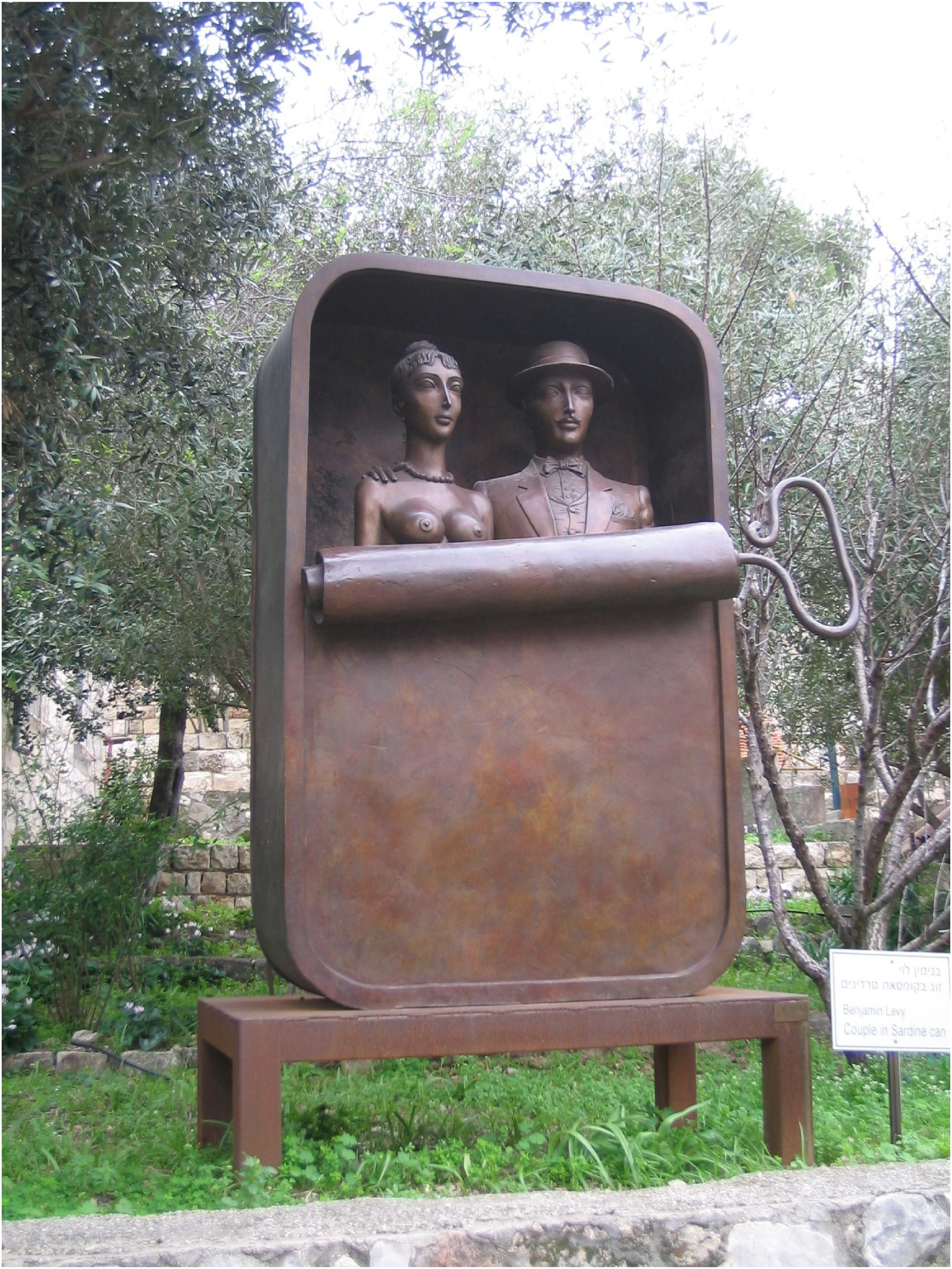
The artistic expressions of Jewish Israeli artists contributed to rationalizing this dispossession and erasure. The conceptions and representations of the space that were invoked all correspond to a political and ideological agenda. As Lefebvre (1991: 31) has shown in great detail, space has always been political, not just in its uses but in the very ways it is articulated, and the forms it takes. In this case, many pieces of art produced by Ein Hod architects and artists seem deliberately aimed at obfuscating the traces of the original Palestinian presence. The statue The Naked Woman (Photo 4) and Benjamin Levy’s Couple in Sardine Can (Photo 5) are certainly foreign to the original Palestinian landscape and the Islamic culture that historically characterized the village, but they also seem to have a polemical intent, a belligerent act of both contestation and erasure (Zoabi and Savaya, 2016). The village’s Westernization, argued and partly achieved by means of representations such as these, produced by modern artists whose works are clearly intelligible in the European traditions legible to the Israelis, then of mostly European origins, in ways that they could not be to the earlier residents, played a major role in displacing its original “Oriental” character. The Naked Woman (photo by author). Benjamin Levy’s Couple in Sardine Can (photo by author).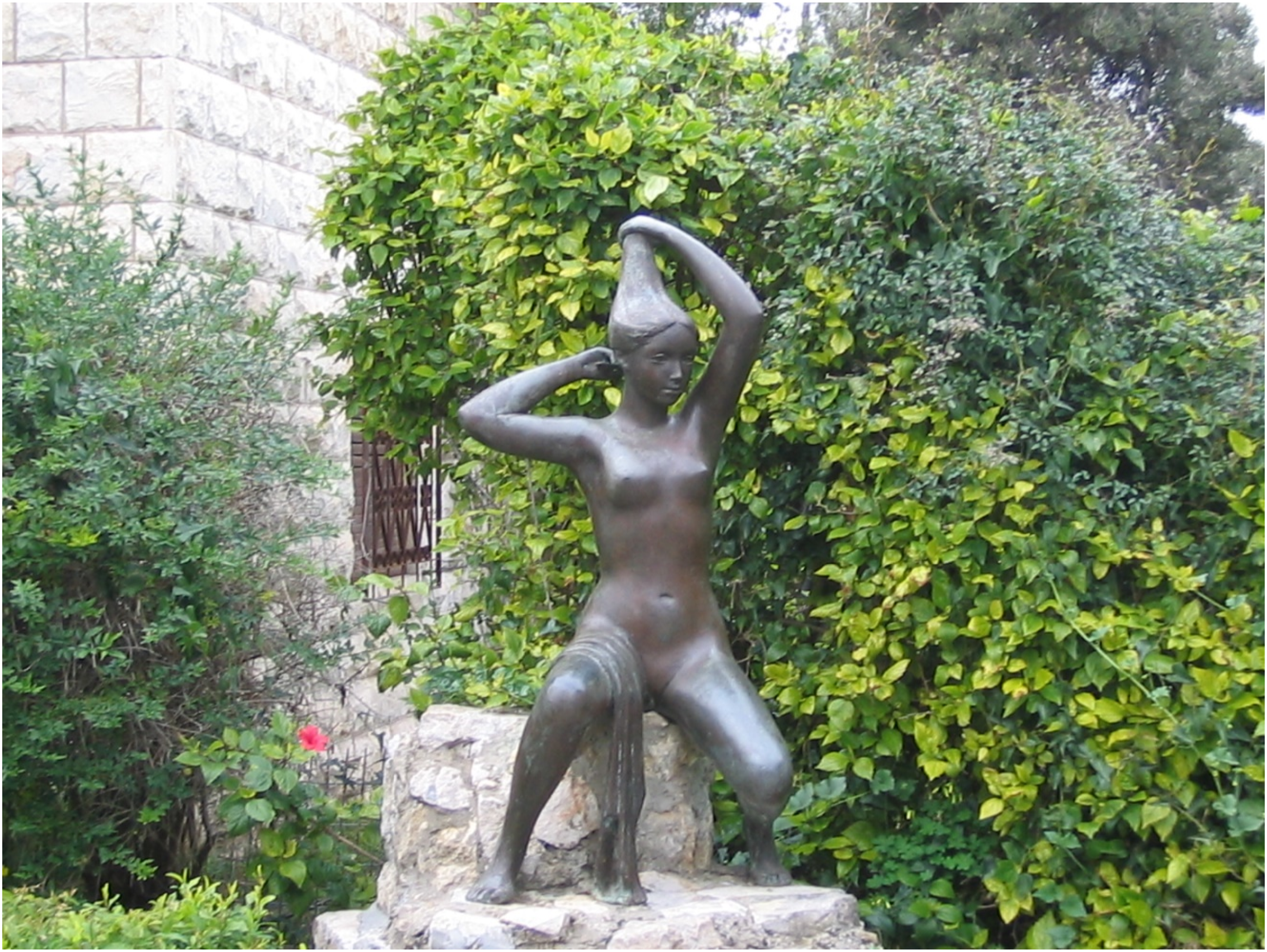
The art and architecture of Ein Hod are something of a palimpsest. Within a complex effort to both replace and overwrite them, they retain visible indications of the previous cultural worlds of the place, their “traces and redundancies, obsolescences and irrationalities—things that remain as a mark: the burden of the past or an inheritance, depending on your point of view” (Crang, 1996: 430). This is so even as, for those original forms and meanings, the reworked landscape only provides clues to what has been transformed and eradicated.
At the heart of the village, the mosque was transformed into a restaurant, called “Donna Rossa” (Photo 2), which is described as having authentic Argentinian cuisine, an appealing otherness quite different from anything that might be associated with the village’s original inhabitants, not to mention its religious significations.
The settlers’ artistic and architectural practices were largely an effort to normalize the dispossession, representing the new village as a “pure” and “neutral,” “artistic” or “spiritual” space, retaining its spatial and physical heritage with some manipulation of the palimpsest. The space as actually “experienced” both prohibits the expression of the underlying conflicts and conceals, manipulates, or dissemblingly transforms them. On the one hand, the space is presented as one pertaining to Western art and artists, and a liberal space of freely associated identifications, even while on the other hand, the stones and heritage of the dispossessed are, inevitably, preserved underneath.
The architecture of dispossession has its own discourses and representations regarding places and economics. The artists’ village is portrayed to the broader public as a unique and picturesque site that is authentically one of both a properly “Israeli” beauty and an appropriated and partially re-written “Oriental” space: The Ein Hod artists’ village is worth a special trip. One never tires of this charming spot, because each time you look, even for just a moment, there is always something new […] What else do the artists offer? Here’s a partial list: a glass blowing demonstration, a museum mosaic workshop, a photography center, the Manola Gallery, pottery and ceramics, a mask-making workshop with Magen, Claude and Batia Antiquities, […] In Ein Hod, you don’t have to stop at a museum. You can just stroll through the picturesque alleyways and feel like you are abroad. (Raziel, 2005; translated from the Hebrew)
2
One attraction offered by the village to visitors and potential residents is a “theatrical tour.” According to the village’s official website, “Jessica the dancer will lead you on a tour of the village […] with dancing steps, a plier, and you will visit a local artist’s workshop. Jessica will tell you about the history of the village, about the artists living there, and, equally important, about herself.” 3 These representations both portray the locality as a historic space and construct it as a kind of exotic fantasy object, which draws on the Palestinian past while simultaneously denying it. Removing the real Palestinians from the local space facilitated the site’s preservation as a symbolic space frozen in time. This irony is further sharpened by the fact that the village’s former Palestinian residents are not entirely out of sight, as they live nearby. These contradictions have not prevented the “original village” from becoming a thriving business based on the successful marketing of its artistic enterprise.
In 1993, the Ministry of Tourism, the Israel Government Tourism Company and the Hof Carmel Regional Council undertook a joint commercialization effort. The initiative was nicknamed “The Plan for Tourist Development in Ein Hod” and was aimed at marketing the village by highlighting its unique artistic character. The plan sought to increase the number of visitors to Ein Hod to 250,000 people a year and increase income by approximately US$1.5 million (A.B. Planning 1993). In their official narrative, the “founding” artists and architects of Ein Hod made effective use of Zionist ideology by employing some of its characteristic terminology, underlining the central Zionist motif of settlement by emphasizing the ideal of making the wilderness bloom: During the 1950s, a group of artists led by the well-known Dadaist artist Mercel Janco formulated the idea of transforming the village into a site of artistic creation, opening workshops, and creating an educational environment that would contribute to the new, developing society. Although the dream of the founders was met with the realities of those days, persistence, idealism, and vision resulted in the gradual establishment of the only artists’ village in Israel, and one of the few places in the world in which all kinds of artists—from plastic art to music, literature, and theatre—live. (Ein Hod Artist Village, 2020)
4
Additional fictively idealizing descriptions in this spirit tout the idea that the modern history of the locality began in 1954, and that its long history is linked primarily to the biblical period: The artists’ village of Ein Hod was established in 1954 by painters and other artists who settled here and turned it into an artists’ village. The village was named for a verse in the book of Psalms: “Splendor [Hebrew: hod] and majesty are before him: strength and beauty are in his sanctuary.”
The imaginary narrative not only denies the Palestinian origins of the village; it replaces its Palestinian identity with the reference to a general “Mediterranean culture” lacking any specific identity or concrete origins: Few places in the country were able to preserve this unique character, which belongs to a Mediterranean culture of a different period. The village structures reveal many textures from the Crusader and Turkish periods, including those that were preserved and that retained their special character. However, it is the nature, the flora, and the landscape which might very well present the most unique and moving aspects of the place: a natural Mediterranean thicket combined with groves of fruit trees, olives, pomegranates, figs, almonds, grapes, and carob. Ein Hod was and remains a nature preserve of an environment of ancient Israel, an environment which makes a great contribution to fruitful work and creation. (Ein Hod Artist Village, 2020)
5
This description portrays the village by means of a complex assortment of contradictory claims that draw on the depths of ancient history and ignore the more recent past. This mythological representation seems just as absurd every time it comes up or is used in justification. Yacobi (2009) describes thusly the way the remnant traces of the Palestinian presence are the object of what is at once an identification and a disavowal: The Palestinian landscape is a subject of mimicry through which a symbolic indigenization of the settlers takes place. As in other ethnocentric national projects, the above can be described as “an obsession for archaeology,” which makes use of historical remains to prove a sense of belonging… In this process, the indigenous landscape is uprooted from its political and historical context, redefined as local—such as in the Negev Center project—and replanted through a double mimicry act into the “build your own home” sites. (p. 115)
The architecture of dispossession: a conceptual framework
Various things, then, are said, as others are done. The transformation of the Palestinian village of Ayn Hawd into the Israeli Jewish one of Ein Hod is an exemplary window onto aspects of the larger Zionist project, some of which may ring familiar. It was a complex process involving a number of distinct but co-operating deliberate activities. It was a political and economic project, conceived as both of these, and was also an aesthetic project, which was understood in terms that were partly autonomously “aesthetic” in their meanings and purposes, yet consistently intelligible in terms of the project of dispossession.
The aesthetics of dispossession in transforming Ayn Hawd into Ein Hod dissimulated the violence thereof, changing the forms, meanings, names, and identities of various buildings and sites, sometimes with a blatant disregard that is also an insulting aggression towards their origins. It made ample use of a rhetoric of authenticity, advertising the place to settling Israeli artists as a site of cultural distinction and authenticity, drawing upon the historic character of the place and its buildings as having the exotic charm of an indifferent foreign heritage and character ripe for appropriation, settlement, and touristic enjoyment. Its “Oriental” character, partly preserved, partly destroyed, and partly overwritten, was made suitable for the occupation of a select, privileged, specially “deserving,” group of Jewish Israelis eager to inhabit a place both new and interesting. The site appropriated was conceptualized as both a neutral tabula rasa and an older place that “really” belonged to the Israelis who, in the national imaginary, were its true original inhabitants, in contrast to those immediately visible as such, in ancient biblical lore. The underlying contradiction in all this may be that this place and its built environment had an existing character and heritage that could neither be obliterated without trace nor allowed to remain as it was.
What does this case tell us about the role of architecture in the dispossession and displacement of people, in terms of how it can be best conceptualized? We have seen that the economic, political, and aesthetic “logics” or ways of thinking about it work together. They can be considered as together forming an architecture of dispossession, by which I mean a coherent regime of practices that transforms an existing socio-spatial reality and constructs a new one that replaces it, to the advantage of the new possessors and the disadvantage of those they have displaced.
The logic of accumulation by dispossession captures the way architecture and planning are used to extract profits from the dispossessed places. This may result in capital accumulation while also serving the state’s social and political agenda. For example, in many cases the displacement of the poor, or specific ethnic or racial groups, from cities or certain sites in them—such as with slum clearance in the US—aim to create profits while also “cleaning” urban areas of undesired “others.” Accumulation by dispossession is a form of displacement that lies at the core of urbanization under capitalism; Harvey (2008) calls it “the mirror-image of capital absorption through urban redevelopment” (Harvey, 2008: 34). This process is typically backed by both a strong state—itself a powerful spatial agent—and architects, artists, and development agents who facilitate the process and make it spatially and economically feasible.
The logic of the exclusion of presence is an essentially violent practice of architecture and planning that excludes the dispossessed not only from literally being there or returning, but also by eliminating and/or overwriting their culture, which had been visibly present there, and the traces and markers of their history, tradition, and memory that were part of the landscape of the place. This involves a psychic and socio-cultural violence that may be, and often is, experienced as a kind of existential harm, a spiritual and ethical erasure, the destruction of features of their form of life, that complements and is inseparable from their actual removal from the place. People who inhabit a place experience a kind of “ontological security” (Eizenberg et al., 2022; Hirsh et al., 2020; Jabareen et al., 2017a, 2019) that is embodied in their everyday routines, and the social and physical fabric of the place that is their site. When dispossessed of this place, they are not merely subjected and made powerless, denied control of their lives, but their form of life (if not, as is also possible, their remaining alive as such), is radically excluded. In the logic of the exclusion of presence, a new presence instituted in its replacement may both conceal and mark an absence: the dispossessor’s presence denotes the (alas, representable) absence of the dispossessed, and also reveals the violent, willed transformation of the latter’s presence into an absence, as the character of the place whose people have been dispossessed is violently transformed. Butler (2013) puts the violence of this ideological project by saying that “being dispossessed” involves “processes and ideologies by which persons are disowned and abjected by normative and normalizing powers that define cultural intelligibility and that regulate the distribution of vulnerability” (p. 2). These powers define who counts (and who is vulnerable, or has been or can be victimized), and what the identity and character of a place of habitation is said to be, including how it will henceforth appear and be described. That the character and identity of objects and places is a “political” matter in this sense gives weight to the aesthetics involved, in the sense of the determination of how things appear and are attractive and appealing (and to whom).
The aesthetics of dispossession grasps the ways in which the architecture of dispossession may conceal and distort the original reality of the place, and create a new one through architecture’s spatial, design, and artistic practices. One way it does this is by presenting a political (and/or economic) reality as an aesthetic one. Another is through producing palimpsests, which are aimed at both erasing the traces of the dispossessed residents of the place, and appropriating and overwriting them. In this way, the art and architecture present the place as belonging to its new residents, with any references to its previous texture reinscribed in a discourse proper to the settlers, and no longer attractive, or “legible,” to the dispossessed.
The three logics are intertwined and work together. The ontological foundation of the architecture of dispossession is the fact of its original population’s displacement, and its people being deprived of properties, including lands, houses, and communal buildings. The logic of accumulation by dispossession is one in which capital accumulation is facilitated by the commodification and profitable uses of the architecture and material culture, and the history and heritage it involves, of the dispossessed spaces. Both the physical appropriation of buildings and spaces and their uses for profit and accumulation are facilitated by the aesthetics involved, which determine what and how the appropriated sites and buildings appear as or “are.” The aesthetic practices thereby legitimate the dispossession, and they also transform the appropriated urban landscape in ways mean to “improve” the artistic and architectural values of the place, and thus their economic value as well. The manipulations that are part of the aesthetic strategies are also said to, at the same time, improve the living conditions in ways that serve the Israeli public interest.
The logic of the exclusion of presence is manifest in the artistic, architectural, and planning strategies involved in the dispossession, in part because it, and the suffering involved, are ignored or denied. Denial is a powerful tool in the logic of excluding presence. It may be thought of as a shared psychological defense mechanism, which rationalizes the violence of dispossession through various aesthetic and other justifications. The three logics are intertwined in this rationalization, which legitimates the dispossession with reference to the political and economic processes involved, as well as the aesthetics, in the intentional construction of a new reality, one that is supposedly improved, and desirable to settlers and tourists (and profitable to investors).
The architecture of dispossession as socio-spatial practice is certainly political, and it serves both economic interests and a hegemonic conceptual topology that is linked to the authority and power of the state. This is partly a power of definition, as what is proper or improper, which is defined in terms of both social identity and economic development, and thus includes an articulation as well of what and who is privileged/unprivileged, included/excluded, legal/illegal, sacred/profane, us/them, etc. The architecture of dispossession can be understood as a joint project of the Israel state, which has a monopoly over spatial planning and the uses of territoriality, economic interests that stand to gain from projects of commercial and residential redevelopments and transformations, and the practices and professions of architecture and art, which provide powerful tools of intervention and of aesthetic rationalization.
The case study of Ayn Hawd helps to show how the three logics, and their interrelationships, give us a better understanding of dispossession and displacement through the practice of architecture and art. The architecture of dispossession here is a settler-colonial regime of practice that violently transforms existing indigenous socio-spatial reality into a new aestheticized colonized space. It both takes advantage of, and takes part in, the violent colonization of indigenous spaces, and it makes use of the thinking of a racial capitalism in the powerful aesthetic measures used to ensure that the produced alternative spaces are normalized, legitimized, aesthetically founded, and economically productive. The practices involved are meant to provide new symbolic values and social and spatial realities on top of the older architectural and artistic forms, and their meanings in the cultural lifeworld that has been displaced and locally obliterated.
The dispossessed Palestinians of Ayn Hawd have resisted the violent practices of the architecture of dispossession, which, as is the experience of many displaced persons, shattered their lives and ontological security, and left them seeking refuge elsewhere (nearby, as they hoped to return). After their displacement, they lived for more than 60 years in an unrecognized, illegal village that has been under the threat of state demolition. They struggled for decade to formalize the status of this new village and receive state recognition, while they had to watch as the houses in their former village were occupied by others, Israeli artists and architects who were able to use the opportunity to build a new village to their tastes, one that referred to its predecessor, but as both refashioned and defunct.
Conclusion
My aim in this paper was to interrogate and problematize the intimate role of architecture in the dispossession and displacement of people that lay behind the creation of a “new” village for a desirable population in a case such as that of Ayn Hawd/Ein Hod. Architecture here has been deeply involved in the facilitation, execution, legitimation, and aestheticization of the violent process of dispossessing a social, ethnic, and religious group from a place of habitation it securely occupied for generations (indeed, many centuries). These multifaceted uses of architecture are not accidental ones but are integral to the workings of an architecture of dispossession, which is constructed and operates as a coherent aesthetic, economic, and political regime of practices. In this regime architecture manipulates an existing social and spatial reality while constructing a new, imaginary and spectacular, reality upon the dispossession of its inhabitants and the destruction of their habitats and the material aspects of their form of life. Architecture in this case is “political” not only in the ways that all art and architecture can be said to be, because of the ways they figure, configure, or relate to forms of life, but also in a particular way that is, however else it seems to function and have “meaning,” a set of tactics that serve the interest of one population group that is engaged in a form of combat against another. It is a politics not just of statecraft and states of things, but of a kind of war. Like the larger civil conflict of which it is a part, and which has defined the Zionist project and the State of Israel, this set of practices serves various uses and interests. I have called this the architecture of dispossession.
Study of the architecture of dispossession can help to explain the role of architecture in governmental projects that involve the displacement and dispossession of people for purposes of urban development and “renewal,” gentrification, and other large-scale transformations of urban landscape. This should give professionals in architecture and urban planning and its criticism tools for understanding what forms and practices contribute to such displacements, and how alternative practices might be formulated that could counteract or resist such shifts, given that they advantage some groups while greatly disadvantaging and harming others. Much architectural practice and thought is aimed only at the construction of what is useful or beautiful without sufficient regard to the question of who loses when the construction’s new occupants and investors or other interested parties gain. That architecture can also have a “dark side” is easily overlooked.
The three interrelated logics of the architecture of dispossession are important to keep in mind in many cases where urban planning and architecture are involved in the displacements typically entailed in privatizations (the converting of public assets into private property), and the commodification of cultural forms, which typically also depend on the intervention of the state. Capital accumulation in these cases both does and does not occur for its own sake, as it is typically intertwined with the realization of other purposes, which in turn legitimate and further it. This can include the dispossession of social classes or population groups whose residency in the targeted area is deemed undesirable by the state, or who are simply in the way of other groups or uses. It is of crucial importance in such cases to understand that an aesthetic logic is usually involved that both is and is not autonomous in its functioning (Rancière, 2010). What is beautiful or attractively useful in a built environment is rarely if ever without some relationship to the uses and interests of particular groups, which typically also means the disadvantage of others. This is especially true in all those cases where what is being created depends on something else being destroyed. Aesthetic valuation promoting some use or appearance as “superior” to some other is very likely not politically neutral. Aesthetic value may be legitimizing of social preferences or displacements. New uses and occupants may also work, often intentionally, to exclude others, even to the point of denying their existence or their actual, previous, or potential presence. Architecture also has such effects even when the only obvious aim other than aesthetic and broadly utilitarian ones is to be profitable, for profitable uses often involve population displacements, if more so perhaps when they are also authorized by ideological and political projects that are partly independent of economic interests. Thus, architecture is a powerful profit-agent in providing the spatial settings, and the rationality and legitimacy, for dispossessing people and groups while creating new architecturally sound or attractive spaces. There is an important role for architectural criticism in showing not only that some population has been excluded, but how this is rationalized and legitimated in the ways the new forms and uses are constructed, described, represented, or advertised.
It is worth asking what would the future study of design, planning, and space production look like if it took account of how much, and by what means, architecture is intimately involved in dispossessing and displacing people, whose fate or lives may well be at stake. As this also suggests that much architectural thought and practice today has important, if profitable, one-sided uses and blind spots, inattentive, often, to the populations not served but affected, the criticism of these uses and processes may be a first step towards the development of an alternative.
Footnotes
Declaration of conflicting interests
The author(s) declared no potential conflicts of interest with respect to the research, authorship, and/or publication of this article.
Funding
The author(s) disclosed receipt of the following financial support for the research, authorship, and/or publication of this article: This work was supported by the Israel Science Foundation; 1583/23.
