




Abstract
In 2008, Iceland experienced one of the largest banking crashes in history. Protests against the government emerged, and as a response the country set in motion a process to rewrite its constitution. In 2011 the world’s first ‘crowdsourced constitution’ was presented to Parliament, following which two-thirds of voters in a national referendum said “yes” to the document being the basis for the Constitution of Iceland. Despite this, successive governments have repeatedly failed to implement constitutional reform. In this context, grassroots activists have campaigned to keep the issue of the new constitution alive, including through an artistic campaign. This article is the first study of this art and consideration of how Iceland’s political struggles have played out in space. Applying Duncombe’s methodology of affective effect, we present an evidence-based case of art achieving quantifiable goals, suggesting broader social change. Given that policies pursued by the government have changed the nature and use of space in the country, activist art is shown to have a significant capacity to reinvigorate the democratic functions of space, with effects that can be observed both within and without political institutions.
Introduction
Art has been a key tool deployed by activists calling for constitutional reform in Iceland, especially since 2017. Despite this, there has yet to be a study of the aims and effects of activist art since the world’s first ‘crowdsourced constitution’ was presented to – and subsequently blocked by – the Icelandic Parliament. This article takes as case studies several notable examples of art produced by activists for constitutional reform in Iceland. These cases are considered in light of debates around public space under neoliberalism, the role of art in social movements, and how art is used to communicate ideas. Alongside visual data, this article also makes use of quantitative data, including opinion polls and internal data from two NGOs (Stjórnarskrárfélagið, or the Icelandic Constitution Society, and Samtök kvenna um nýja stjórnarskrá, or the Association of Women for a New Constitution) on signatures gathered for a petition to Parliament, the largest such petition in Icelandic history. 1 We demonstrate that activist art played an important role in achieving its creators’ aims of moving the constitution into parliamentary discussions and the mainstream of political debate. It has also sparked engagement from young people and women, centring two groups that are often underrepresented in politics. As one of several forms of action employed by the activists, we contend that art has shown the capacity to reinvigorate the democratic functions of space against a backdrop of neoliberalism, with observable effects both within and without institutions.
Three key examples of art are highlighted in this article, although others are referenced. The first is a spraypainted stencil posing the question ‘HVAR ER NÝJA STJÓRNARSKRÁIN?’, or ‘where is the new constitution?’ that was sprayed across Reykjavík pavements, with copies subsequently appearing in locations across the whole country. The second is a large mural behind the Ministry of Fisheries building in downtown Reykjavík posing the same question, which was removed by the authorities in 2020. The third is a one-day artistic performance event throughout Reykjavík that ended on Austurvöllur, the central square of the city and a key centre for protests throughout Icelandic history, where a group of artists emblazoned the slogan ‘nýju stjórnarskrána takk!’ (‘the new constitution, thanks!’) on an enormous banner in front of Parliament. This performance won the Icelandic Visual Art Prize in 2021. We apply Duncombe’s (2016) methodology of æfficacy to analyse the impact of these examples from the artistic campaign. Æfficacy seeks to determine affective effect using quantifiable metrics to understand whether activist art was successful, through identifying the artists’ aims and measuring outcomes against these aims. Through using data on verified signatures of a petition signed by over 17% of the Icelandic electorate, supplemented with data showing shifts in public opinions, alongside examples of coverage of the issue in mainstream media, we demonstrate that the activists’ art campaign was able to have a substantial impact on public engagement with the issues raised. Moreover, attempts to suppress this activism appear to have ironically increased engagement, showing that the forms of suppression identified by Martin (2016) may produce adverse effects.
The following section introduces the context of the crowdsourced constitution and the wider situation in Iceland since the Global Financial Crisis. Following on from this is a review of literature. We then briefly describe the data used in this article and outline our methodology before presenting findings. We close by noting the achievements of the activism thus far and future considerations based on our research.
The crowdsourced constitution
Iceland was hit heavily by the Global Financial Crisis of 2007–08. All three of the country’s major banks defaulted, and the resulting debt was many times larger than Icelandic GDP. Indeed, relative to the size of its economy, this was the largest banking collapse experienced by any country in history (Bernburg, 2016). Researchers have noted the strong ties between politicians and the country’s finance sector that were strengthened by the reduced transparency of neoliberal policies in the decades leading up to the crash, including through a series of privatisations that removed public scrutiny of decisions in key economic sectors (Árnason and Hafsteinsson, 2018; Durrenberger and Palsson, 2015). As such, when the crash hit, this precipitated a systemic crisis. Mass demonstrations outside Parliament, referred to as the Pots and Pans Revolution, triggered the resignation of the government and the ousting of the conservative Independence Party that had been in power for an overwhelming majority of the period since Icelandic independence in 1944. Elections in 2009 were the first in which the Independence Party did not win the largest share of the vote, and a new left-wing coalition government was formed by the Social Democratic Party and Left-Green Alliance. The coalition set in motion a process to revise the Constitution of Iceland, which has only been altered a few times, originating from the colonial-era Danish Constitution of 1849 and widely seen as one of the weak points of Icelandic legislation in relation to the crash (Alþingi, 2010). Elections were organised for a Constitutional Council in 2011; 25 citizens, including one author of this paper, were elected and appointed by Parliament to draft a new constitution.
Iceland’s process of drafting a ‘crowdsourced constitution’ broke with processes of generating constitutions seen throughout history (see Congleton and Swedenborg, 2006). The Constitutional Council made unprecedented use of public participation, taking submissions through Facebook, YouTube, Flickr, Twitter and a dedicated website (Valtysson, 2013). The resulting draft constitution has been positively reviewed by subject-matter experts, with researchers highlighting the deliberative democratic qualities of the public engagement and transparency of the process (Hudson, 2018; Landemore, 2020; Popescu and Loveland, 2021). Nevertheless, some have criticised the ‘activist stance’ of the Constitutional Council and the document it produced (Ólafsson, 2016). With just four months to draft a new constitution, there have also been comments regarding the content of the document. For instance, the Venice Commission (2016) found the document to be overly complex in places and too vague in others. There was additionally a significant gender disparity in the participation, skewed towards males (Helgadóttir, 2014). These criticisms notwithstanding, the draft document was approved as the basis of a new constitution by 69% of voters in a non-binding national referendum in 2012.
However, in the decade that followed, the issue of constitutional reform has repeatedly failed to make headway in Parliament. Various reasons have been identified, including suggestions that the document was too radical, especially due to articles on common ownership of natural resources that were opposed by the country’s business elites and figures within the Independence Party (Oddsdóttir, 2014). The conservatives have since come first in the past four elections, most recently at the time of writing in 2021. Attempts to raise constitutional reform in Parliament have been unsuccessful, owing to opposition by the Independence Party which has used methods such as filibustering to block discussion. In this context, grassroots activists and campaigns coordinated by small and largely unfunded NGOs have sought to keep the issue alive. One such group is the Icelandic Constitution Society (ICS), which was formed by members of the public, including some who had been elected to the Constitutional Council, to advocate for the draft constitution. As part of a network of activists and other civil organisations, ICS has held a series of open discussions, publications, street art projects, digital activism, civil disobedience, rallies and protests, as well as online campaigns. One of the largest efforts in this regard came in 2020, where an NGO linked to the ICS, the Association of Women for a New Constitution (AWNC), launched an online petition over four months, handed to the Prime Minster on the 20th October 2020, the eighth anniversary of the referendum. The petition used a government platform to receive 43,423 signatures which were verified by the electronic ID numbers of each individual (Ćirić, 2020). The Icelandic electorate comprised 252,152 people in that same year (Hagstofa Íslands, 2020). As such, over 17% of the country’s voting population signed the petition – the largest ever petition of confirmed signatures – with constitutional reform going on to become one of the key issues of the 2021 election.
Literature review
There are three main bodies of literature that we identified as being relevant to this article. The first considers the political and social aspects of street art, given that several examples of activist art analysed here can be considered as examples of this form. The second is literature on public space and its reconstitution under neoliberalism. The third is literature on the role of art in social movements.
There is an ongoing discussion about whether a distinction should be made between street art and graffiti, on the basis that, unlike graffiti, street art may be commissioned or valourised by businesses and authorities (McAuliffe, 2016). One dimension this relates to is the perception of vandalism, or the extent to which actions ‘are considered as damage by the actor(s) as well as by the victim in relation to the norms that rule the situation’ (Moser, 1992: 54). We use the term street art in an all-encompassing sense as referring to artistic creation that takes place in the public realm either with or without official approval, termed as either street art or graffiti in the literature. To the best of our knowledge, there has not yet been research on street art in Iceland published in English, and nor has there been scholarly attention paid to the use of art in the demands for constitutional reform.
Graffiti, or the writing of slogans in public spaces, is an ancient art form. However, the graffiti commonly seen in cities today emerged in the context of late 1960s New York, during a period when youth culture and anti-war protests were at their height, ‘white flight’ from the city was accelerating, and economic restructuring saw large parts of the inner city thrown into economic turmoil (Beck, 2017). The ‘Broken Windows’ theory, embraced by New York’s Republican mayor in the 1990s, framed graffiti as a sign of urban social and economic decay linked to criminality. This saw graffiti swept up into a moral panic heavily imbued with racist overtones (Pavoni, 2021: 156). For a long time, there was relatively little academic research conducted on this topic. While Lachmann (1988) posited that graffiti is a subcultural activity outside dominant hegemonic norms that is worthy of attention, for several decades there was a paucity of literature. This situation has since changed. Scholars have increasingly highlighted the connections between graffiti and dissent, best summarised by Stahl who writes that ‘[i]t can be supposed that graffiti has been a continuous factor in the history of protest’ (2016: 229).
Research has considered the role of graffiti in the protests of the Arab Spring, such as work on activist networks of street artists in Egypt (Abdelmagid, 2012). Hanauer (2011) has studied graffiti on a separation wall between Jerusalem and the Occupied Territories, arguing that the wall is a microcosm of the issues contained within the Palestinian-Israeli conflict. The use of graffiti to spread subversive messages in protests that toppled Serbian President Slobodan Milošević has also received attention (Dragićević-Šešić, 2009). A particularly rich literature exists on the role of graffiti in the context of the economic crisis in Greece. Alexandrakis (2016) argues that political graffiti lessens the capacity of the state to manufacture consent for austerity measures. Likewise, Zaimakis (2015) contends that the production of graffiti amidst the dystopia of crisis and austerity creates counter-hegemonic spaces of representation that are physically expressed across space, posing a challenge to the enforcement and maintenance of social order and control. It is worthwhile at this point to reflect on the distinction between message and intent in the production of graffiti. In some contexts, graffiti may be deployed with clear political intent to build a collective identity through its messaging, constructing an ‘other’ against which viewers can define themselves, such as in the case of Greek graffiti that targets the institutions implementing austerity (Serafis et al., 2018). In other cases, graffiti may be understood only by specific audiences, as in the case of graffiti used by gangs to delineate their ‘turfs’, or areas of control vis-à-vis rival gangs (Ley and Cybriwsky, 1974). Graffiti may also be a way for writers to construct their own identities, with the intent of being seen and recognised by others (Halsey and Young, 2006).
The notion of what constitutes public space, and how individuals should use that space, is a longstanding debate. Hatuka defines public space as something that belongs to all citizens and can be understood as ‘a sphere of multiplicity and plurality’, serving a democratic function as ‘a significant location for cultures to negotiate, protest, modify, and present their values and traditions’ (2016: 284). Teune likewise considers public spaces alongside public institutions and public practices as democratic zones in which ‘meaning is produced collectively’ as core components of the conceptual public sphere (2016: 275). Underpinning these debates is the work of scholars such as Lefebvre, whose ‘right to the city’ (1968) stands in opposition to the privatisation and segregation of urban space, instead favouring the right of the public to use and protest in space. We synthesise these definitions, highlighting that public space belongs to citizens and serves important democratic functions, particularly with regards to dissent. Of interest to this study are transformations of public space in times of crisis, which are moments when prevailing social norms and power structures may be most intensively questioned, with this made visible through protest. Kallianos (2013) contends that moments of crisis open the potential for public spaces to be transformed from spaces of and for representation towards functioning as sites for the subversion of social relations, through demonstrations, occupations, and material damage or modification. There is thus an aesthetic dimension whereby public spaces such as squares and streets, which physically embody the history and values of their societies in their architecture and design, can be overlaid and symbolically challenged through creative actions and protest during moments of crisis.
Pavoni (2021) reflects on the notion of vandalising the commons, positing that the typical framing of public space as a depletable resource that needs to be protected against appropriation and abuse is at odds with a more complex and nuanced understanding of how such spaces function in democratic societies. Far from being a subtractive resource that is negatively affected by use and should be understood in a depoliticised sense, Pavoni argues that urban spaces can be reactivated through creative uses; that is, graffiti can ‘break the spell’ (2021: 158) of the notion of sacred property rights through reappropriating space, drawing attention to the forces governing urban life and opening the possibility for a reimagining of the social relations of space. Pavoni goes on to note that the aesthetic of graffiti can be strategically deployed by the forces of neoliberalism, with street art serving as a marker of an up-and-coming neighbourhood ripe for gentrification. This point is also made by (Tunali, 2020), who argues that the aesthetic of street art has been co-opted by neoliberalism, with its appropriation by developers robbing graffiti of much of its capacity for dissidence. However, this is not to say that all examples of commissioned street art are devoid of the capacity to provoke challenge in public space, as the example of Black artists commissioned by local authorities to create works on racial discrimination in Vancouver demonstrates (Landau-Donnelly, 2023).
The appropriation of street art’s aesthetics by developers, bereft of the subversive intent or capacity for dissent, typifies the neoliberal restructuring of public space that is profoundly at odds with the democratic functions these spaces play. Scholars have studied the impact of neoliberalism in sapping urban spaces of their senses of community and vitality in the quest to create sanitised zones geared towards investment and consumption. Design features of neoliberal, increasingly privatised ‘public’ spaces seek to deter incursions by ‘undesirables’, employing prominent cameras, fences and private security guards (Petty, 2016). In this vein Fernandez (2008) considers how states make use of tools from the arsenal of hostile architecture, such as mass surveillance through CCTV, to police dissent, undermine the right to protest and internalise social control, neutralising resistance to policies of globalisation. The stigmatisation of graffiti on the one hand and appropriation of its aesthetics on the other can therefore be understood as a means of neutralising the potential challenge that street art in public space poses to the propagation and/or enforcement of neoliberal ideas. This is situated within the wider emergence of authoritarian neoliberalism, or the ‘reconfiguring of the state into a less democratic entity through constitutional and legal changes that seek to insulate it from social and political conflict’ (Bruff, 2013: 113). The argument that neoliberalism is in crisis owing to a perfect storm of environmental, economic and social catastrophe has been widespread since the Global Financial Crisis (Gills, 2011). However, we have seen the intensification of neoliberalism since the last crash, with a seemingly endless state of crisis exploited by governments to justify ‘emergency solutions’ such as austerity, privatisation and the further commodification of space (Pavoni et al., 2021). The political ideology of authoritarian neoliberalism is played out in cities, visible in the dead zones of urban cores given over to forces of speculation and capital accumulation, a moral panic over graffiti produced by marginalised citizens alongside the selective deployment of street art aesthetics as a marker for investment potential in poorer areas of cities, and the defensive or hostile design guarding of new developments (Soules, 2021).
Within the context of a prevailing political and economic ideology that seeks to entrench and defend itself from challenge, activist art in public space poses a threat. Art and politics are closely intertwined, and researchers have explored the extensive links between art and activism, along with the extent to which art is a political action that can be an agent for social change (Wright, 2018). Recent studies have explored the socio-political objectives of ‘artivism’, or ‘arts practices in public-accessible sites which… address/redress social marginalisation through galvanising critical thought and promoting inclusive change’ (Zebracki, 2020). In a landmark work on social movements, Tilly (2004) notes the range of actions undertaken by social movements, many of which enter the world of artistic production. Other scholars have considered how movements make use of art to communicate information about themselves and their cause, attract resources and new involvement, foster useful emotions, and create symbols that can communicate an identity, mark membership, and solidify commitment (Adams, 2002). Literature on the role of art in social movements spans a range of times and geographies, from feminist art for lesbian activism in New Zealand (Collard, 2006) to political murals about police brutality in Latin America (Ryan, 2017) and graffiti used by Syrian activists to convey anti-regime messages (Wedeen, 2013). The carnival aesthetics of the Gezi Park protests in Turkey have been framed as displacing established modes of perception, in the process creating new communities of like-minded social activists (Tunali, 2018). According to Duncombe and Lambert (2018), this combination of activism with art results in both an emotional affect, or response to the art itself, and a political effect, resulting from the changes this response causes in individuals.
As this literature review has demonstrated, art and public space are deeply political. Activist (street) art should be set within a wider context of political discourses, media narratives and opposition to both – alongside a discussion of the aesthetic judgments of individual artists (Rowe and Hulton, 2012). Of relevance to this article is activist art in public spaces that has an overtly political intent of encouraging dissent and collective identity formation, which is a direct challenge to neoliberalism that reimagines space as a commodity for consumption and investment, reconstituting citizens as consumers. Street art has become swept up in a wave of hipster-themed gentrification in cities across the world (Beck, 2017). Indeed, in many cases, street art has become the marker of a fashionable and desirable neighbourhood (Brighenti, 2016). Nevertheless, we maintain that there remains a subversive potential to the act of creating art that articulates a challenge to the existing spatial order. Street art can revitalise the democratic functions of space, being employed ‘to produce counter-hegemonic discourses used by marginalized people and political actors who lack access to institutionalized forms of political participation’, or spread a message by those who doubt that conventional politics can bring about the change they seek (Waldner and Dobratz, 2013: 387). We contend that, when accompanied by social organisation led by activist movements, activist art can play a crucial role in the process of building a collective identity and re-politicising space, in turn reinvigorating democracy itself.
Data and methodology
This article uses data from a variety of sources, both quantitative and visual, along with articles from the Icelandic media. By analysing the 43,423 verified signatures on a petition to the Icelandic Parliament, we calculate the gender and age distribution of those who signed a petition calling for immediate ratification of the new constitution, and make some suggestions as to the reasons for these demographic factors. Analysis of the data makes it possible to plot a graph of the number of citizens who signed the petition on each day of the campaign. As such, we can note moments of rapid increase which correlate with actions. Visual data is supplemented by public opinion polls on the issue of the new constitution, demonstrating clear change over the course of the campaign. Hence, this case study comprises an unusually well-documented instance of arts activism with supporting data. While it is of course impossible to isolate cause and effect, we are confident that the political outcome and the evidence of shifts in social attitudes observed in the data can be attributed to the campaign by the activists. This is because the campaign was a joint effort by the two largest NGOs for constitutional reform in Iceland, and owing to actions taken across the country it received significant media attention. However, we also note that there are additional factors at play. The campaign benefited from grassroots activism by individual campaigners outside the NGOs, and citizens carrying out their own actions. Finally, it should be noted that the final stages of the campaign took place during Covid-19 lockdowns and as such there was a move to online campaigning. We suggest the impacts of this in our analysis.
The examples of activist art presented form part of a campaign of actions driven by decisions within the NGOs. They have been chosen as they represent key moments of the campaign and were able to attract media attention, spark media debates and even win a national art award in one case. The activist art is also significant in that it faced the suppression of protest identified by Martin (2016). We believe that the act of covering up and erasing the street art serves as a powerful metaphor for attempts to suppress debates about constitutional reform, especially within Parliament.
There are to date very few studies that empirically measure the impact of creative forms of activism. One such study comes from McClennen et al. (2023), who analyse data on ‘dilemma actions’ as part of civil disobedience campaigns that provoke ‘response dilemmas’ from their targets. Another recent study employed follow-up surveys of people who encountered creative activism to test for durable shifts in opinion (Duncombe and Harrebye, 2022). We seek to advance the literature on empirical studies of creative activism and to that end analyse the data gathered here with Duncombe’s (2016) methodology of affective effect, or æffect. Duncombe introduces a formula for quantifying the ’success’ of activist art which relies on gathering empirical data (see Figure 1). While the notion of success in this context is difficult to define, Duncombe argues that thinking about success is crucial to avoid retreating into academic ‘mysticism’ that ‘[resists] attempts at comprehension and validation’, calling for researchers to reflect on what activist artists seek to achieve and gather evidence on the extent to which these aims were achieved (2016: 120). Given that we know the activists in this context sought to increase public support for constitutional reform, we propose to measure æffect through the petition and opinion polling data, as well as discussions on the constitution sparked in the media and within Parliament. Formula for measuring the affective effect of activist art (Duncombe, 2016: 126).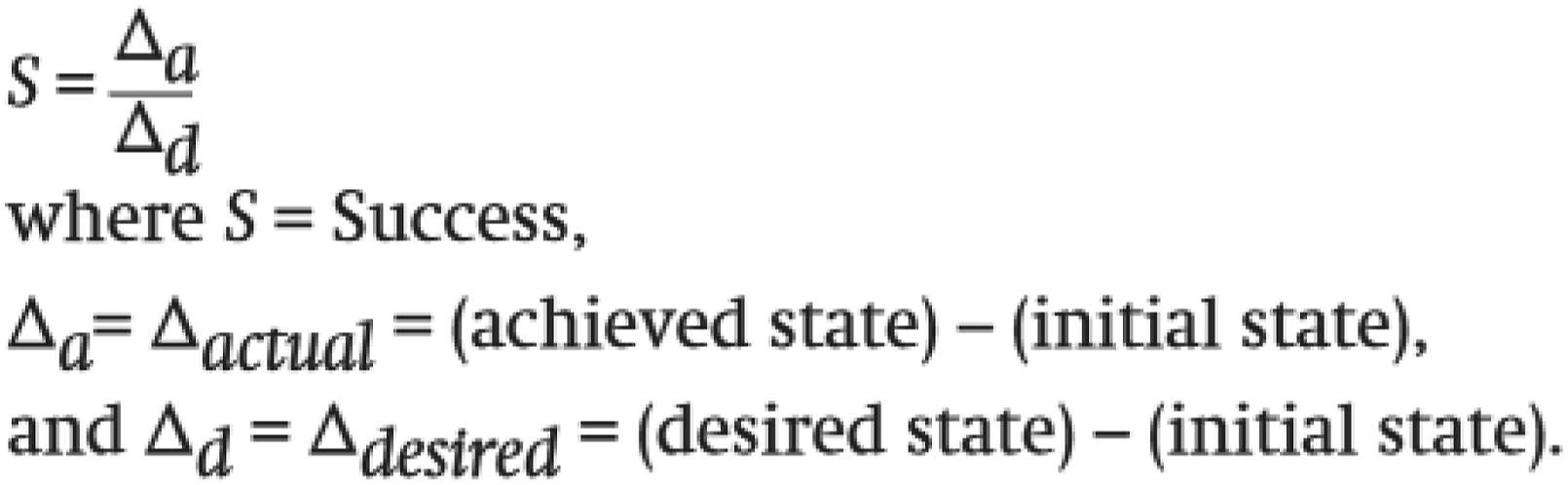
Discussion
Following years of political deadlock over the issue of constitutional reform – including the failure of the government to act on the results of a national referendum held in 2012, in which two-thirds of voters approved the crowdsourced constitution as the basis for a new constitution – activist groups decided to change their tactics. As previously mentioned, the two largest groups in the campaign for constitutional reform are the Icelandic Constitution Society (ICS) and the Association of Women for a New Constitution (AWNC). In 2017, the groups decided to collaborate and focus on strategies of street art, digital activism and civil disobedience. In June 2020 the AWNC launched a petition on a website supplied by the Icelandic National Registry (Þjóðskrá) calling for immediate constitutional reform. The benefits of this approach were that it was hoped it could provoke an official response if enough people signed, but the process was more laborious in that signees would have to register with their real name and kennitala, or ID number, to be verified. A target of 25,000 signatures was set. This number has symbolic resonance as it amounted to 10% of the electorate which, according to the draft constitution, is the number needed to propose legislation to the parliament. Over the 4 months of the petition, 43,423 people signed, equating to over 17% of the Icelandic electorate. This means 170% of the goal was achieved. As Figure 2 demonstrates, there were several key moments at which the rate of signatures accelerated. Timeline of signatures of the petition for constitutional reform, October 2020 (data: AWNC).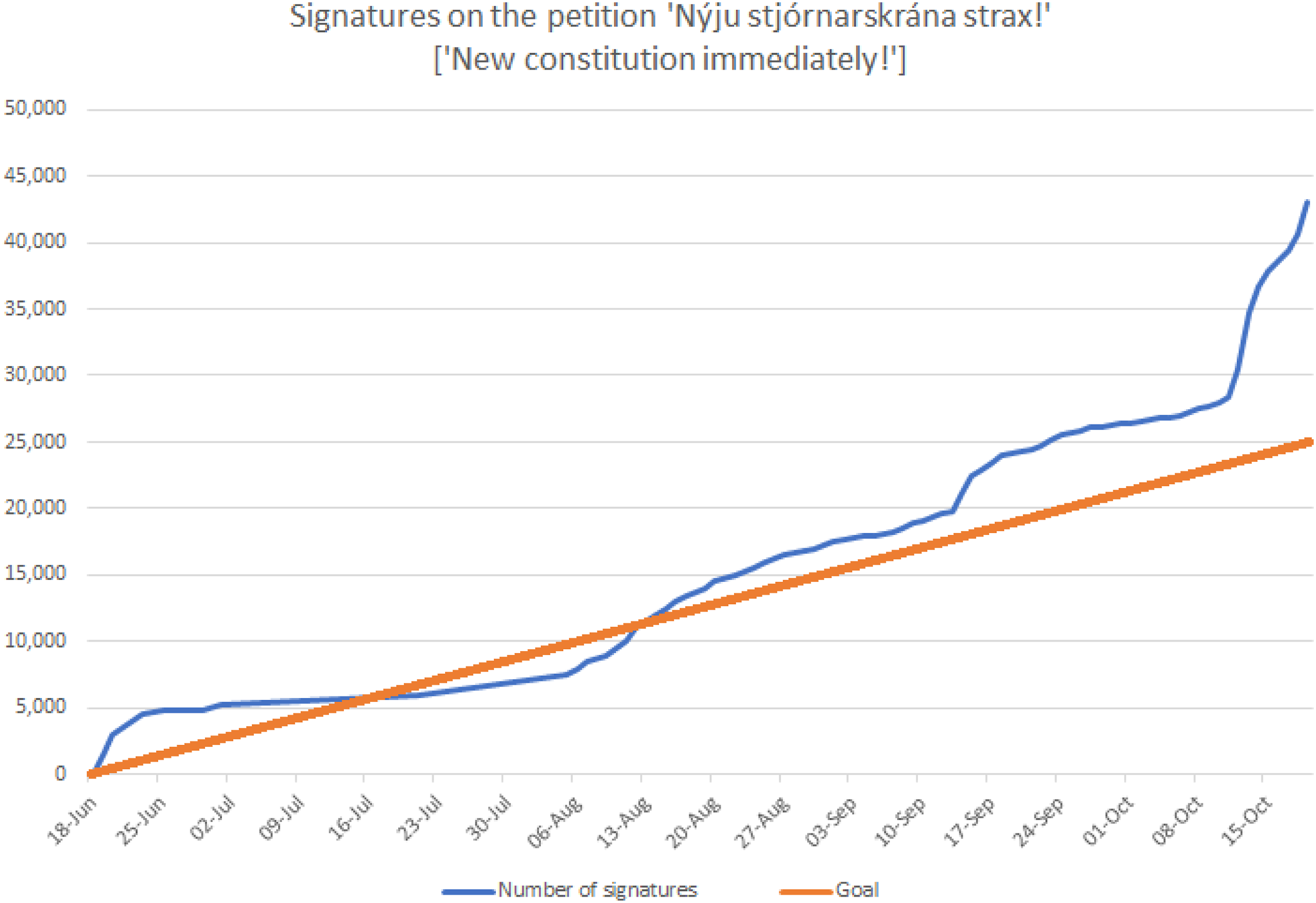
Upon the launch of the petition, activists from ICS spraypainted the question ‘HVAR ER NÝJA STJÓRNARSKRÁIN?’ across downtown Reykjavík (Figure 3). The message was present in hundreds of locations, including next to political institutions, tourist attractions and along the major roads of the city. This act of dissent symbolically reclaimed the urban space of a city that has been increasingly dominated by neoliberal development. Central Reykjavík today is characterised by hotels, souvenir shops, short-term tourist rental properties, and national cultural institutions and government offices. A deluge of tourism in recent years has driven intense real estate development, dramatically changing the cityscape. Much of the urban core of Iceland’s capital has been given over to the needs and desires of investors and the tourist economy. In a story common to cities worldwide, high rental prices and growing numbers of short-term rental properties have the effect of displacing existing residents and creating barriers to accessing affordable and secure housing (Iceland Iceland Magazine, 2017). The number of hotel rooms in Reykjavík increased by 42% over the period 2010 to 2015; the number of properties listed on Airbnb increased by 126% over 2014–15 alone (McConnon, 2016). Stencil and spraypainted street art, June 2020 (source: authors).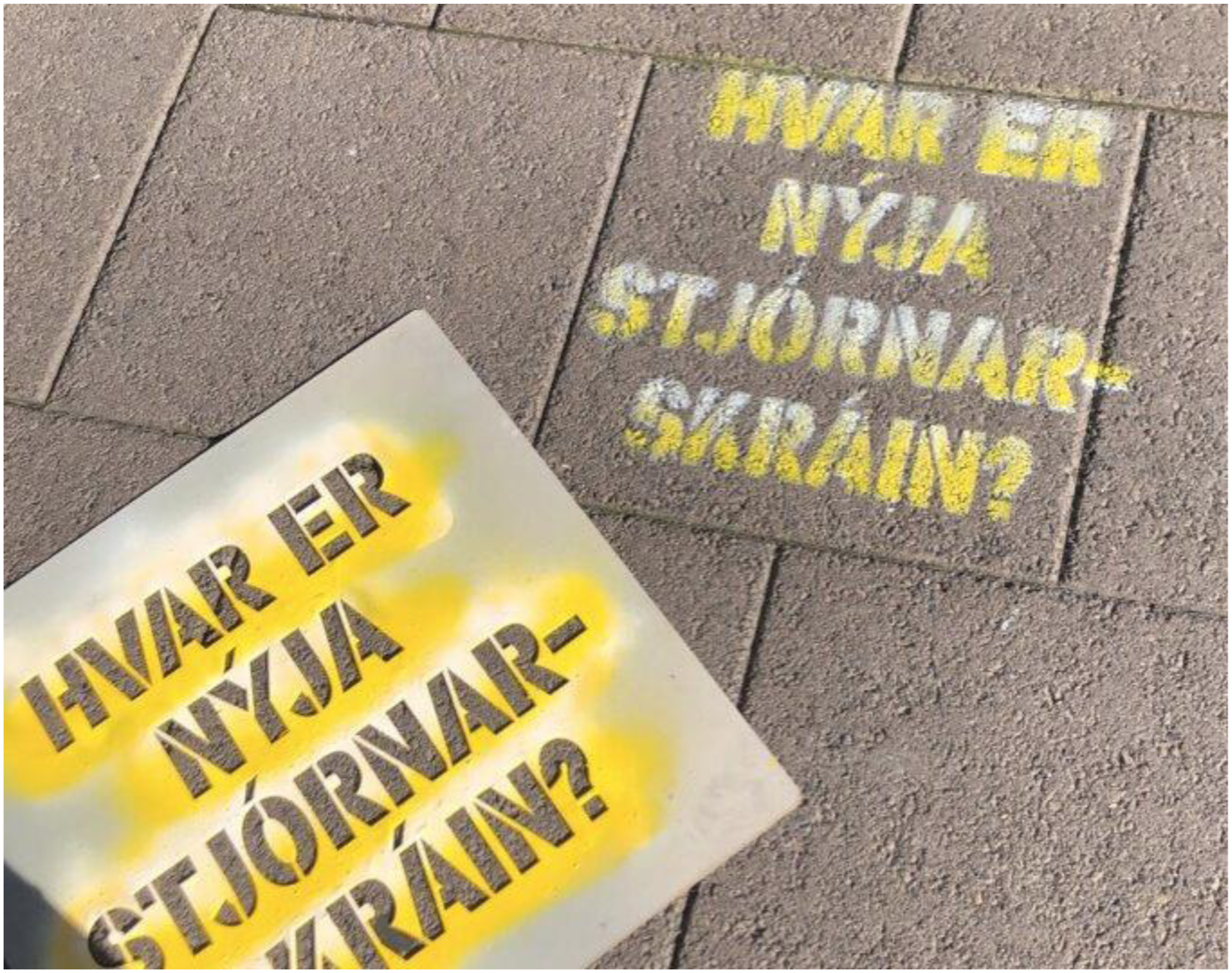
We contend that through covering the city centre with a spraypainted demand targeted at residents in their native language, the first phase of the activists’ campaign disrupted the politics of space of the urban core and sought to create a subversive collective identity among viewers, many of whom would be aware that the government continued to block promised constitutional reform. The formation of such an identity set the stage for the launch of the activists’ petition and a series of further actions. The authorities identified the threat that this posed: while other graffiti sprayedremained untouched, the city council acted quickly to clean these messages away. In response, the ICS uploaded files online for anyone to create their own stencil, and in the weeks and months that followed the message was seen in towns across Iceland, an example of grassroots activism inspired by the campaign. At the launch there was an initial period of high rates of signatures that corresponds to the first activist artistic action of the spraypainting across the country, which gradually slowed.
The petition was symbolically launched on Women’s Rights Day (19 June) as constitutional reform is seen by the AWNC as part of the struggle of women in Iceland for equality and undoing the structural effects of patriarchy, highlighting that women have historically been excluded from constitution making across the globe. Our analysis of data from the campaign shows that women played a disproportionate role in the activism, including signing the petition, and were significantly more likely than men to support constitution reform according to opinion polling data. We consider that this overrepresentation of women is linked in part to the long history of women’s groups in Iceland in agitating for political change (Minelgaite Snaebjornsson, 2016). Iceland is unique in preserving a system of patronymic names, by which a large majority of the inhabitants do not take surnames but instead take the name of their father (or more rarely their mother), followed by ‘son’ for male children and ‘dóttir’ for female children. This rule does not hold for those who migrate to the country and preserve their surnames, and a few Icelandic families do have surnames, including a small number of women who inherit names with the ‘son’ prefix. Moreover, some people, particularly those in the trans community, may choose to forego the ‘son’ or ‘dóttir’ suffix. Census data shows that 82% of the population have traditional patronymic names (Hagstofa Íslands, 2018). Given that individuals signed with their legal names, we can conduct an analysis using surnames as a proxy for gender identity. 50.4% of those who signed had a female last name, 42.6% had male last names, and seven percent had names that do not fit into the Icelandic naming convention. This means the petition was more likely to be supported by women, also noting that the factors presented above mean we may have even underestimated the number of women who signed.
Following the launch of the petition, within days the rate of signatures slowed. This was until events of 10 August, which triggered a second acceleration in support that was unrelated to the activists’ campaign but dovetailed with arguments being made by the NGOs. In late 2019, WikiLeaks published documents referred to as the Fishrot Files, laying out in detail the corruption within Samherji, one of Iceland’s largest fishing companies operating in a key economic sector of the country. The files suggested the company was bribing officials in Namibia to secure access to the country’s fishing quota, profits of which were then moved offshore. Reports in the media in August described how individuals within Samherji appeared to have launched a campaign to harass and intimidate whistle-blowers and journalists who reported on the case (Beck and Ingólfsson, 2020). Given that the crowdsourced constitution included provisions on the protection of whistle-blowers and on the nation being the rightful owner of all natural resources, including fisheries, this brought fresh media attention to the issue of constitutional reform.
A third acceleration in signatures happened on 14 September, coinciding with the date when the NGOs launched videos on Instagram to promote messages, particularly to young people who are typically less active in politics (voting at lower rates, for instance) but are more avid users of social media. The videos tackled the contents of the new constitution through accessible texts delivered by many of the country’s most popular artists and influencers. The budget for the entire campaign, including social media and radio ads, was very small; around 2.4 million Icelandic Króna (approximately €18,000) was raised from donations and a grant from Mauraþúfan or the Anthill, a thinktank formed after the financial crash that instigated the first national forum on constitutional reform, a model that was later adopted by politicians (Júlíusson, 2020). As always in this campaign, those involved essentially donated their time and work for free of charge, which included the digital strategy company that consulted on audience targeting. Using social media was a successful strategic move, as evidenced by data from the petition and subsequent opinion polls. Given that those who signed needed to register with their real name and kennitala, it is possible to analyse the data by birth year. The kennitala is a 10-digit ID number, the fifth and sixth digit of which refer to birth year (e.g., XXXX91-XXXX indicates somebody born in 1991). Through isolating these digits, we can plot the age distribution of those who signed (see Figure 4). Those born after 1987 and especially younger people are the largest group of signatories. This is interesting from the perspective that many among this generation were children at the time of the crash and the mass protests that led to the creation of the new constitution. As such, the campaign appears to have had success in connecting with the youngest generation of voters in the country, which suggests that the issue of constitutional reform will continue to have political salience in the years to come. Age distribution of signatories of the petition for constitutional reform (data: AWNC).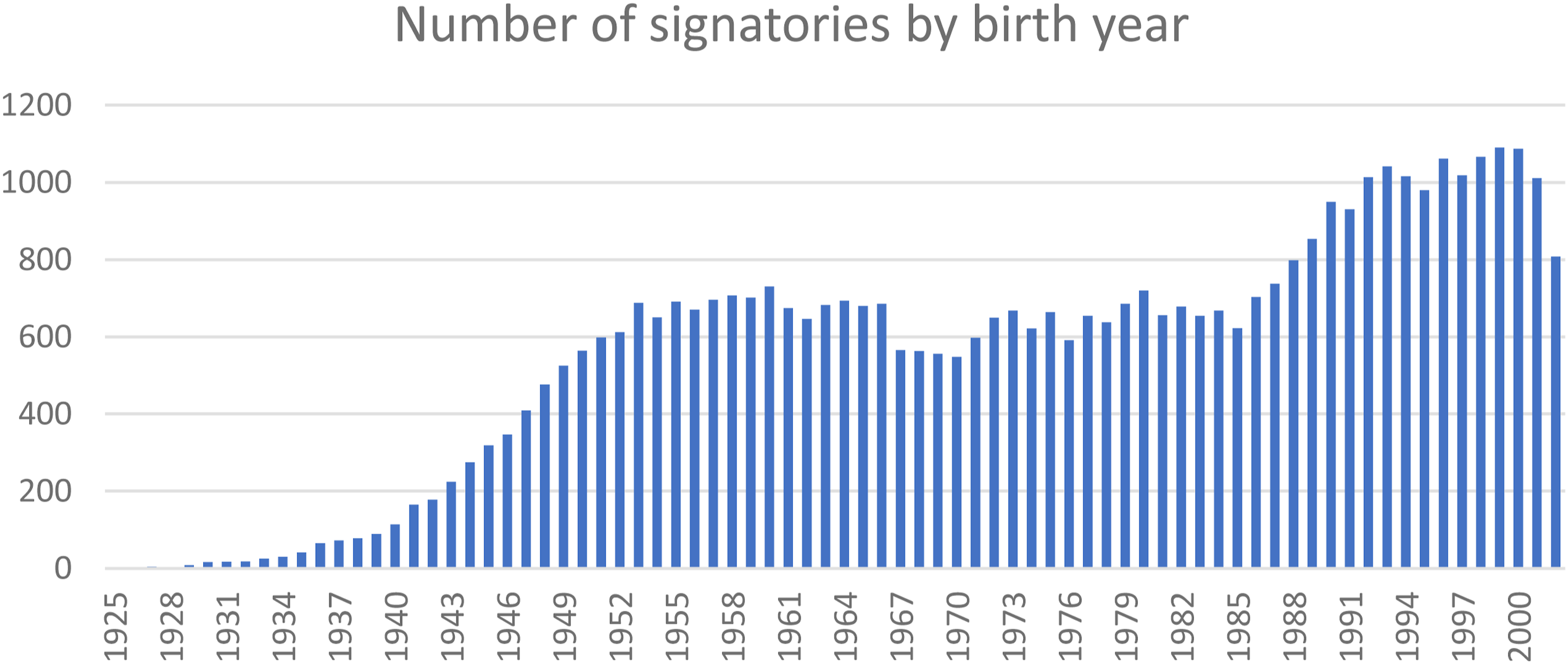
The final weeks of the campaign were marked by two major pieces of activist art. The first was a performance on 3 October by the artistic duo Libia Castro and Ólafur Ólafsson in collaboration with ICS and other NGOs, framed by the artists as “the Magic Team”, in which a group of musicians performed the text of the new constitution in whole at the Reykjavík Art Museum. Afterwards, banners calling for constitutional reform were carried into the street in a parade, which ended with a carnival in Austurvöllur where a banner was hung in front of Parliament (Figure 5). The artists confirmed in emails to the authors that their intention was to raise awareness of the need for constitutional reform. This piece went on to win the Icelandic Visual Art Prize and was described by reviewers from the Icelandic Art Center (2021) as ‘[searching] for a communal experience that evades the failures of democracy and the division of countries along unequal lines.’ Much like Tunali’s (2018) study of the ‘carnival aesthetics’ of Turkey’s Gezi Park protests, the parade and artistic occupation of the central square of the city disrupted dominant modes of perception, creating a spectacle that strengthened the community of activists (as in Adams, 2002) while articulating the activists’ demands to a wider audience. The occupation of space by this street art also challenged hegemonic power relations; the Icelandic Parliament that was blocking constitutional reform became the artists’ canvas and framed demands for change. Applying the lens of Kallianos (2013), this central ‘space for representation’ of the nation was thus transformed into a site for subversion of social relations. However, the action was overshadowed by a larger news item: it was announced that on the following day, a strict lockdown would be enforced owing to the Covid-19 pandemic. As such, media outlets were preoccupied in the days that followed with discussing the implications of lockdown. We suggest this may explain why there was no acceleration in signatures afterwards, although alternatively it may be that such officially sanctioned spectacles are less successful than grassroots campaigns. ‘New constitution thanks!’ banner hung in front of the Icelandic Parliament (source: Owen Fiene, used with permission).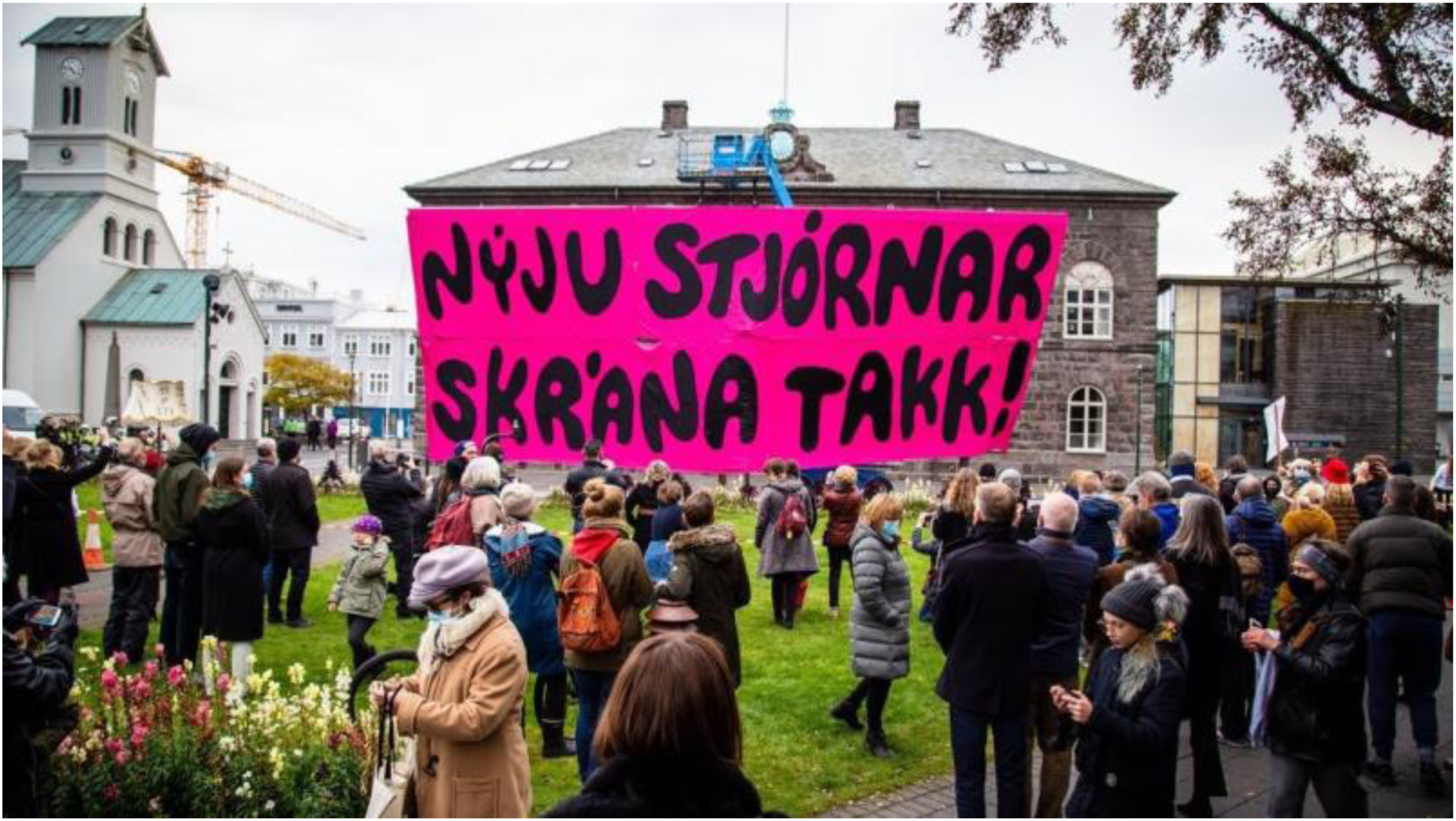
The second piece of art we highlight here was a mural painted by Narfi Þorsteinsson, an independent visual and street artist in contact with activists of the ICS (see Figure 6). Flanked by the Ministry of Fisheries – a significant site given that the issue of ownership of national resources was a key issue in the crowdsourced constitution – this mural appeared on 10 October and powerfully restated the demand for a new constitution in the heart of the government district, asking once more the forbidden question of ‘where is the new constitution?’ The following working day, a team was sent by the government to wash away the mural. This moment symbolically represented attempts by Parliament to erase the issue of constitutional reform, more than eight years after voters had approved the draft crowdsourced constitution in a referendum. Those living in the city will know that the same wall had been covered in graffiti for years and had not previously been cleaned. We can therefore be confident that it was the message of the mural that triggered this suppression, covering-up the campaigners’ message through an official-channel attack (Martin, 2016).While the many ‘tags’, or stylised signatures made with spray paint were left, an earlier, smaller version of the same message that appeared before the mural but was painted on the actual wall of the ministry was also removed (Júlíusson, 2020). To use the words of Pavoni, this earlier action potentially ‘broke the spell’ of the social order governing the space and may have brought this prominent location into focus as a site for activist art. Mural painted in the government district, 10 October 2020 (source: authors)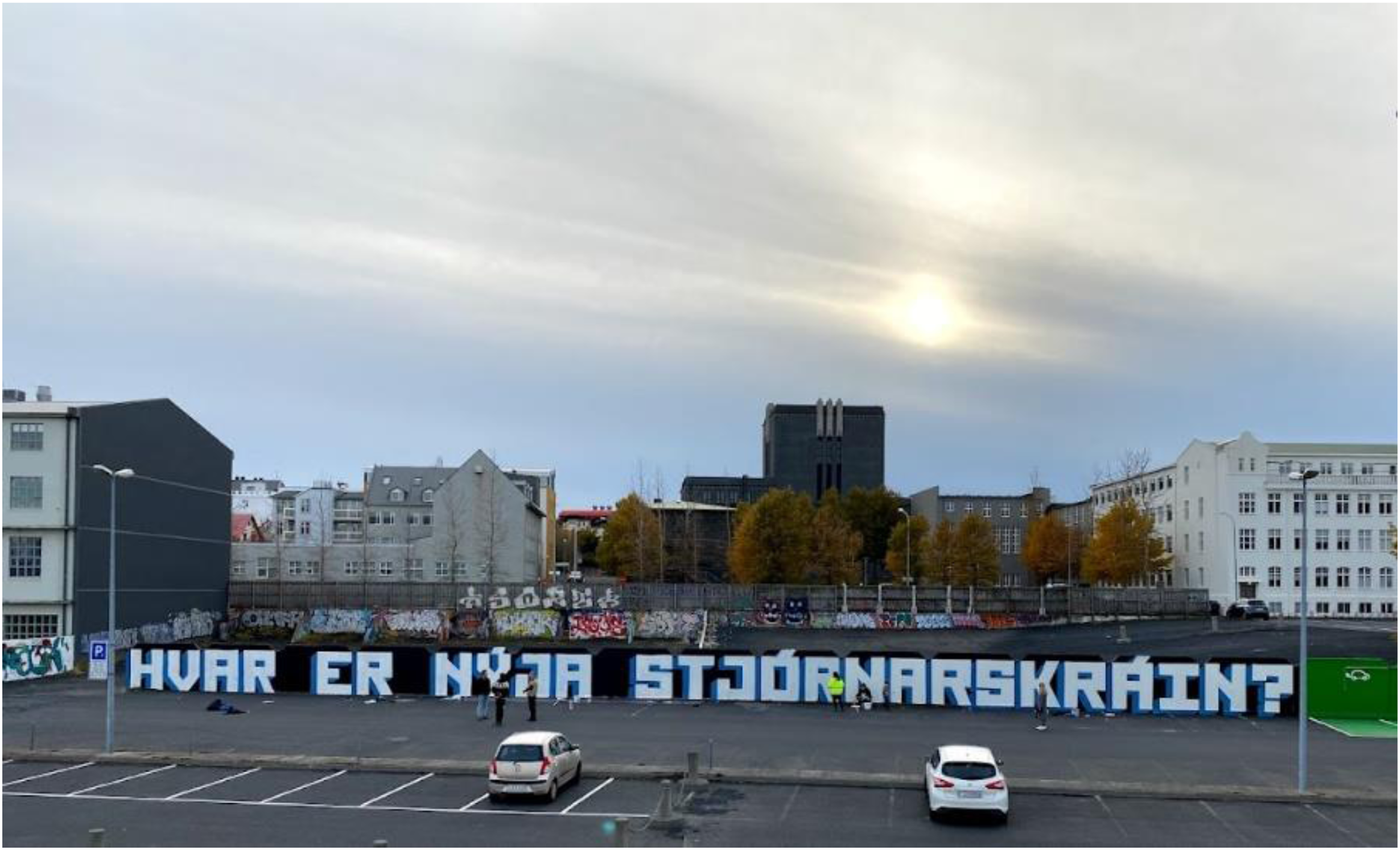
However, washing away the mural backfired on the government. Shortly afterwards, a team of activists returned to paint an even larger wall which was located behind the first one with the same message, accompanied by a mural downtown near the iconic Hallgrímskirkja church. In addition, outrage prompted by the washing away of the mural led to a spike in signatures on the new petition, and the perception of the government seeking to literally erase the issue of constitutional reform led to debate across the Icelandic media (Fontaine, 2020). Alongside the greater coverage of this action, unlike the street art performance the week prior that was overshadowed by the announcement of a lockdown, it may also be that the mural as a more ‘rebellious’ act than a ‘legal’ art exhibit was able to spark greater interest. The mural is more obviously a ‘dilemma action’ that forced the authorities to make a response (McClennen et al., 2023) Moreover, this action sparked a discussion in the media around the lack of protection for street art, and whether it is necessary to legally protect art from the threat of destructive or censorious actions by the state (Ingilínardóttir, 2020). There previously existed no legislation referring to street art and to the best of our knowledge there has not been a particular tradition of political street art in Iceland, with no literature on the topic. The removal of the mural made the front page of Iceland’s most widely read newspaper, Fréttablaðið, on 13 October 2020, signifying how newsworthy these actions were considered. Although the authorities neither washed the rest of this widely graffitied wall nor removed the two constitutional murals that were painted immediately after the first one was cleaned away, a wider pattern of silencing can be detected. In 2022 another piece of art demanding constitutional change by Ólafur Ólafsson and Libia Castro was painted in Hafnarfjörður, a town in the wider Icelandic Capital Region, stating ‘we have a new constitution’. This piece was washed away, again leaving other graffiti at the same site untouched. The artists humorously responded to this censorship by painting the wall again with two chickens, one saying, ‘just don’t mention the new constitution’ and the other responding, ‘oh no, now we will be painted over!’ Mindful of counting our chickens, this piece has not yet been erased to the knowledge of the authors.
By the time the petition closed on 19th October 2020, 43,423 citizens had signed, making this the largest such petition in the country’s history, well exceeding the target set. The government gave no official response. Nevertheless, according to Duncombe’s (2016) methodology of æffect, we regard this as a successful case of activist art achieving many of its social and political goals. With regards to the former, opinion polls in October 2020 found a 7-point increase in support for the new constitution compared to October 2018, from 52% to 59% (MMR, 2018; MMR, 2020). Notably, there was a very sharp increase in support among women (12-point increase) and young people (14-point increase), the two groups targeted by the campaign. This means that 67% of women favoured the new constitution, while only 51% of men agreed. Alongside the tradition of influential feminist movements in Iceland (Minelgaite Snaebjornsson, 2016), the involvement of the women’s rights movement may be why support for constitutional reform is higher among women and partly explain why women have made the constitutional battle their own, given that they have been largely blocked from constitution writing in Iceland and globally throughout history. Further work is required to understand the causes of the sharp increase in support among young people, but it does appear to suggest that arts activism that young people can participate in, involving popular cultural figures taking place both online and in public space with a subversive aspect, may be a particularly effective way of targeting this group.
Across almost all groups surveyed, a majority was in favour of constitutional reform; this includes those living in the rural regions. It may be that the shift to online activism through platforms such as Facebook and Instagram that resulted from Covid-19 lockdowns meant that rural citizens felt more involved in the resulting more geographically fluid campaign. The role of national media in covering street art on government buildings will also have raised awareness nationally. For example, the Facebook group that AWNC started for the campaign attracted almost 18,000 women from all over the country in a short space of time, with multiple posts per day showing women taking actions in their local areas to raise awareness of the petition. 2 One major exception to the increases in support is when attitudes are measured by political party allegiance. 80% of voters of the conservative Independence Party were opposed (MMR, 2020). Therefore, the figures suggest that the issue of constitutional reform has become divided along party lines in Iceland. Despite this, the shifts in public opinion around the issue give cause for optimism. While the government has not yet introduced the new constitution, the issue was moved back into the mainstream of politics despite official attempts to silence the issue. For example, constitutional reform was finally debated in Parliament after the washing away of the mural (Beck, 2020). In addition, the crowdsourced constitution and issues contained within it (particularly public ownership of natural resources) were named as major issues by voters in the 2021 elections (Maskína, 2021).
Conclusion
This paper presented activist art in Iceland, taking examples from a campaign coordinated by two NGOs that advocate constitutional reform. Iceland’s ongoing constitutional struggle is partly rooted in the economic collapse of 2008 that discredited political elites and the regulations of the colonial-era constitution. The refusal of those same elites to accept the crowdsourced constitution commissioned by Parliament, owing to perceptions of radicalism in the document, stands in opposition to the results of a national referendum, the largest petition in the country’s history, and successive opinion polls showing a majority in favour of the new constitution. This political deadlock has sparked ongoing debates over the power of citizens vis-à-vis the state – debates that have visibly made their mark on public space. While the government perceives activist street art as vandalism to be washed away, we contend that the activists are reactivating the crucial democratic function of public spaces as sites of dissent and debate.
Using Duncombe’s (2016) methodology of æffect, we consider this to be a successful campaign that achieved many of its key aims. Constitutional reform was discussed in Parliament and the media, it featured as a key issue in the 2021 elections, and polls show meaningful increases in support for constitutional reform from across society, with the exception of those who vote conservative, whose opposition appears to have become entrenched. We therefore draw several lessons for other activist groups who seek to achieve their aims. The campaign was united around a clear, measurable goal – in this case the petition – with an accessible slogan. Resources were shared openly, such as the files for individuals to make their own stencils. Operating in both physical and virtual space, the activists tapped into the support of groups that are underrepresented in politics (women and young people) and framed the campaign as a way to give a voice to the concerns of these groups. Crucially, the involvement of artists and use of artistic activism as spectacle gave a visual appeal that sparked wider discussions on the constitution as well as the place of (street) art in society.
A new constitution for Iceland remains an unfulfilled aspiration, more than a decade since the process to replace the discredited constitution inherited from Denmark began. However, the increased numbers of supporters for a new constitution, particularly among the young, ensures that this issue will remain salient. We close, therefore, by noting that in many cases, the ultimate aims of activist art may not be achieved until well into the future. Seeking to create wider social change requires first engaging with the difficult process of winning hearts and minds over to the cause.
Footnotes
Acknowledgements
We thank all those who participated in the actions named in this article and in particular we thank Samtök kvenna um nýja stjórnarskrá – the Association of Women for a New Constitution for providing us with quantitative data. Professor Sigurjón Baldur Hafsteinsson at the University of Iceland provided invaluable feedback on an earlier version of this paper that helped with further developing its arguments. We also thank Joshua Swann at the University of Birmingham for advice on analysing quantitative data. A presentation drawing from this article was presented at the ‘Art and the City: Urban Space, Art and Social Change’ conference, organised by Tijen Tunali at Aarhus University, 23–25 June 2022. We thank the audience for their constructive comments that helped us to sharpen the analysis of our work. Finally, we are grateful to the reviewers and editor, whose comments enabled us to substantially improve the quality of this paper.
Declaration of conflicting interests
The author(s) declared the following potential conflicts of interest with respect to the research, authorship, and/or publication of this article: Katrín Oddsdóttir is the Chair of Stjórnarskrárfélagið – the Icelandic Constitution Society and until May 2022 was a board member of Samtök kvenna um nýja stjórnarskrá – the Association of Women for a New Constitution. She was elected and appointed as a member of the Icelandic Constitutional Council that drafted a new constitution for Iceland.
Funding
The author(s) received no financial support for the research, authorship, and/or publication of this article.
