




Abstract
We draw on several emerging literatures on contamination and waste and our own fieldwork on e-waste contamination in a Palestinian-Israeli border space to describe a “flowing” approach to toxic phenomena. We use this term as a shorthand to underscore the particular complexities of the socio-material-biological node called “toxics,” and the corresponding epistemic, methodological, and moral demands of studying them. Some episodes from typical days of field work assessing the dispersal of heavy metals from sites of e-waste burning illustrate our claims. Even this attempt to use straightforward techniques to measure the presence of an object of apparent elemental materiality was continually permeated and unsettled by the inescapable flowiness of toxics. Their sources, generation processes and fates were mobile and multiscalar, remarkably patchy heterogeneous and contingent in ways that mattered. At issue was not (just) inadequate knowledge, but the inescapably relational biophysical and social nature of toxics; their entanglement not only with the technical means, processes and definitions that make them perceptible, but with the multiple and often disjunct social contexts that allow, inform, and motivate attention and access to toxics sites, and the production of knowledge from them.
Keywords
This paper draws on literatures on contamination and waste and our own fieldwork on electronic waste (e-waste) contamination to advocate a “flowing” approach to studying toxics. We use “flow” as a handy label to describe the kinds of relationality and contextual embeddedness we found in analyzing the production and consequences of contaminants in a Palestinian-Israeli border space, and our emerging efforts to reflect these in our theories, practices, methods, and interventions. A decade of scientific research and community-embedded advocacy have shown us the value--indeed, necessity--of admitting this relationality. It pervades not only the social contexts of toxic production, dispersal, and impact, but even the “harder” core to understand and tackle contaminants as techno-chemical objects (quantifying elemental concentrations, pathways, and impacts), as well as the public health and environmental protection phases of analysis and intervention. While this entire range of toxic “flowiness” is in the background of this essay, our focus is on entanglements arising from community-engaged knowledge production.
Our perspective crystalized over a decade of practical and theoretical engagement with toxic issues emerging in and around the cluster of Palestinian villages that evolved into the main regional e-waste recycling hub processing a large portion of Israeli electronic waste. As in similar hubs globally, this hub augments local livelihoods at great environmental and health costs. Since 2011, we have worked with communities of this area to understand the flows and impacts of toxics and co-produce avenues for change (Davis and Garb, 2016; Davis and Garb, 2019a; Davis and Garb, 2019b; Davis and Garb, 2020). In addition to open burning of household and “ordinary” solid waste, the burning of e-waste to extract copper was identified as a key source of concern: people consistently complained of thick black smoke and ash, dust covering their rooftops and olive trees, decimated beehives and sheep herds, and a panoply of human afflictions (Garb, 2014). Such burning is familiar in other e-waste hubs in China and Africa as a major source of toxic flows (Brigden et al., 2005; Brigden et al., 2008; Sepúlveda et al., 2010; Little, 2016).
In 2019, Garb and Leblond, in partnership with the Charitable Society for Development and Family Improvement, a local women’s organisation also known as Tatweer wa Nahda, began systematically tracking heavy metals using a portable XRF device (p-XRF), suited to the patchy geography of burning and flows and the kind of nimble low-budget sampling procedure required for community-based research in a conflicted and divided terrain. This bottom-up microscale field study and a sustained dialogue with inhabitants and waste workers provided an entry point into the fluidities of toxics. While field efforts began in a simple descriptive register, tracking e-waste value chains and mapping the distribution of heavy metals in soils, we were soon pulled into the relational unruly multiscale motilities of the elements we were measuring and how these entangled the social, cultural, and material. As we went, more demanding tensions arose between the standpoints of different social locations (what questions are important to whom?) and disciplinary commitments (are we sociologists dabbling in geochemistry or environmental scientists making social observations as we go?). These phased into deeper, standpoint-epistemic questions: if and how does the location of our partners and ourselves shape not just the direction in which our toxic knowledge is applied, but its substance? And, if knowledges and ignorances are situated in this way, and cutting between material and social worlds in multiple and sometimes unpredictable directions, what can serve as a compass for research beneficial to e-waste hubs inhabitants?
This essay is a first pass at drawing together the various aspects of the fluidity or entanglement of field-embedded toxics research. It is too early to push through focused rigorous claims about how the social world shaped not only the circumstances of discovery, but also the objects of our research and their apparent characteristics, or, on the reverse arc, the implications of this altered scientific work for those around us. This kind of work is key to the analytics of the field of STS (Science Studies), and, more programmatically, in the call for developing a “strong objectivity” made by numerous others before us (Gramaglia and Mélard, 2019; Harding, 1992; Allen, 2003), that place daily acts of perceiving and coexistence at the forefront of a revised research epistemics (Davies, 2019; Fiske, 2020; Liboiron, 2021). Here we want to link these approaches to the domain of toxic through the instance of our own work.
To accomplish this, our article opens with these nested aporia and entanglements of the substantive, social, and technical contexts of toxics, and locate fluidity within several strands of literature (
Toxic research: Locating fluidity
Our call for approaches grasping the fluidity of toxics converges with at least four impulses and their associated strands of literature. These include (1) efforts to align toxic research with the long-term expectations of residents and workers, looking for research supportive of their aspirations, capacities and resources. Fluidity also surfaces in (2) the emerging subfield of discard studies. The field of (3) STS, also lays the ground for interpreting fluidity in the scientific categories and techniques of ecotoxicology. Finally, (4) political ecology and citizen/participatory science offer ways to analyze and redirect the power relations that embed environmental research. This variegated literature informs the kind of reflexive and community-immersed stance we describe here, fleshing out the various dimensions of the “flowiness’ of toxics. They move from the material mobility of toxics in time, space, and substrates, through the more familiar anthropological insight of the constructedness of “pollution” as a social category (Douglas, 1966), to understanding contaminants as objects whose constitution, implications, and meanings are deeply processual and relational, to the frontier we faced, which some have termed the “political ecologies of toxics” (Theriault and Kang, 2021), of why, for whom, and how to document toxicity, in a reflexive, empowering, and collaborative way.
One impulse that paves the way for more relational and positional approaches to toxics and toxicity comes from inhabitants of contaminated areas, who are often first hand witnesses of how contaminants fluidly impact their landscapes and lives. Locals are often most able to detect and alert us to clues of unseen hazards, whether the worrying smell of oil in Amazonian rivers (Fiske, 2020), alligators fleeing the area where trains offload their petrochemical cargo in Louisiana (Davies, 2018), and fruit trees that no longer blossom (Auyero and Swistun, 2009). They are also more familiar with the benefits and comfort of the chemo-socialities formed around and supported by chemicals and toxic livelihoods (Shapiro and Kirksey, 2017). While we all, to some degree, are in this category to some extent, those with the most dramatic forms of imposed cohabitation with contaminants are more explicitly forced to shape fluid sensibilities as they constantly and seamlessly arbitrate between various aspirations and constraints of crafting ways to grow families and attachments in what can unfairly be reduced to “toxic places” (Gramaglia, 2023). Their daily predicament and its clash with conventional approaches to communities at risk have led to calls to suspend studies that reinforce a damage-centered framework that leaves communities worst off, with “finger-shaped bruises on our [their] pulse points” (Tuck, 2009). These parallel an increased attention to communities’ complex personhoods and contradictory desires, and efforts for more mutually beneficial roles for academics in community research. These underscore and unsettle the often-privileged background of researchers doing toxic research, and bring a critical perspective on how their “fetishization of purity obscures complex forms of toxic entanglement” (Theriault and Kang, 2021).
Discard studies (https://discardstudies.com/) provides a perspective on the multiscalar and multitemporal awareness needed to grasp the social worlds of waste and their epistemic communities. Once a subject for historians of technology or urban infrastructures (Tarr, 1996), studies of waste have become an important domain of environmental and social research in its own right, scaled to a claim that anthropogenic waste is ubiquitous, at the core of systems of colonial, racial, or class domination (Liboiron, 2021), to the point of being epoch-defining (Boudia et al., 2018; Crutzen, 2006; Hecht, 2018; Johnson, 2019; Nixon, 2011). Waste is theorized as essential to, rather than a byproduct, of capitalist and technical systems (Gidwani and Reddy, 2011; Moore, 2012). The perspective brings to the fore the afterlife of objects and the multiple fluxes involved in the practices of value and devaluation, especially for those engaging with the collection, disposal, refurbishing and recycling of waste (Coletto and Bisschop, 2017; Doron, 2021; Hartmann, 2018).
The global perspective on the political-economy of waste and its social entanglement is a framing that aligns readily with our field observations. Materials burned in the villages we worked in contain chips likely to be designed in Intel factories a few dozen miles away, assembled in China or Korea, with elements extracted in African mines. Their fate as waste pulses with the rhythms of the London Metal Exchange, continually monitored by metal traders that sell copper by the container and even by the children who scrabble through toxic ash to collect chunks left by the somewhat older teenagers that burn as a profession. Increasingly, the future of such hubs is mediated not only by markets, but by distant sources of e-waste knowledges, discourses and protective aspirations: toxicology labs in Japan, waste policy conferences in Belgium, and the exposés of a NGO in Seattle. More proximally, the industry’s fate is buffeted by the geopolitical travails of an increasingly inevitable yet impossible occupation. The scrap sector soared to its current dominance after Israeli restrictions on the movement of Palestinian workers. Yet, these far-flung linkages are radically patchy and contingent. The informal dismantling and recycling industry that has constituted the West Bank’s second largest export to Israel for more than a decade, is familiar to any child from the processing villages; yet, until recently, it has evaded the knowledge and control of the most sophisticated army in the Middle East, and of the Palestinian Authority. Becoming enmeshed in the lived fabric of multiple contradictory communities thus offered not only a window into the social construction of knowledge, but an exercise in agnotology: the study of the production of ignorance, i.e. how stakeholders and organizations are able to not know what they and others know (Moore, 2012; Proctor and Schiebinger, 2008; Richter et al., 2018). These shifting linkages of matter and knowledge are another form of fluidity, as remote circumstances and things come to matter, and then not, as places become connected and disconnected from global circuits in shifting ways that can, at best, be seen only in hindsight.
The fluid contingency and patchiness of toxics is characteristic not only of toxics as social objects, but, also, as chemical ones. It took 30 years of work by a persistent geochemist committed to community-engaged listening and bumbling to uncover the fickle discipline-traversing flows of mercury contamination in the Amazon, thereby unsettling familiar artisanal gold mining narratives with the added complexity of slash and burn agriculture and dam building (Guimaraes, 2020). Our own scientific work did not lack fickle findings. Adjacency to a burn site can sometimes mean a lot, and at other times nothing, with lead levels remaining elevated above safe levels a mile downstream of a burn site, yet undetectable a few meters downhill of another. Thus, the instability of toxic objects is not just found on the “softer” social edges of our scientific efforts, but keeps popping up in scientific practice itself. Simplest to deal with are ambiguities in measurement: is the reading from instrumentation due to an impurity introduced in the lab or a misinterpretation because of overlap in the spectra of different elements? More fundamental are questions of what it means to draw inferences on the toxicity of these elements when this is defined by their concentration after complex samples have been rendered legible and commensurable through the artificial extraction process of grinding and complete acid digestion. Measuring sheer concentrations in this way flattens the mass of lead, whether its source is a single mostly inert lump of solder or bound to dispersed particulates in smoke, or tiny nanoparticles able to deeply penetrate bodies and cells. Similarly, the same metal can be biologically active or inert, depending on oxidation state, and what it binds to in air, soils, streams or foods.
The entanglement and patchiness deepens as we widen consideration to the context of the samples and labs in which they are analysed. Is the lead-laden ash covered or buried? On a road where it will be spread by tires or not? What age and sex are those likely to exposed, and how? Which villages can rightfully serve as the “control” areas to which “elevated” levels are compared? Which labs are to be used, and using which analysis protocols? Politics and science entwine when Palestinian labs struggle to obtain the acids necessary for their inductively coupled plasma spectrometry (ICP) analysis, as these are “dual use” products whose import is highly restricted. An academic lab abroad might do thoughtful high-quality analyses, but not hold the expensive certifications of local commercial labs, which might eventually be necessary to trigger policy or remedial interventions. Such contextual incursions into the very substance of science are canonical in Science and Technology Studies, for example, in the Strong Programme (Barnes et al., 1996; Bloor, 1991; Collins and Pinch, 1994), and its extension to technoscientific domains by the social construction of technology (SCOT) traditions. They have pushed us, and many others, to revise the understandings of toxics and toxicity, showing how the apparent solidity of thresholds, quantification practices, and dose-response models mask over relational and fluid material, methodological and ethical choices.
A further stream of thoughts into the flowing dimension of toxicity and of the approaches needed to work in contexts of (sometimes) elevated concentrations comes from community based approaches or citizen science engagements with contamination. The critique of extractive and disempowering epidemiologic and environmental studies (Auyero and Swistun, 2009; Centemeri, 2014; Little, 2019, 2021; Tschakert and Singha, 2007), has paved the way for citizen based/participatory approaches with strategic reflections on which exposures and flows to focus on and which ones to disregard (Gramaglia and Dauphin, 2017; Ottinger, 2010; Wylie et al., 2017). Investigations of communities’ attachements to place (Davies, 2013; Edelstein 2003; Kroll-Smith and Couch, 2009; Tironi, 2018), and on the positional dilemmas of toxic fieldwork, navigating between the sterile remove from lived experience, the lure of a voyeuristic form of intimacy in damaged locations (Davies, 2013; Houdart and Pavy, 2019; Lyons, 2018), and the risk of being so stunned as to lose the ability to offer the benefit of hard-worn analytic tools (Bonneuil and Fressoz, 2016: 88), have also prepared researchers to track the ontological fluidity of this thing called “toxics”.
Context (toxic flows)
Paying attention to fluidity does not mean disregarding structural factors which set elements in motion, rather it is about using these to more deeply contextualize flows and the way they come to be known and acted upon (or not). The field work we describe takes place in and around an e-waste hub in what used to be known as Palestine under British rule, now referred to as the occupied West Bank by the Palestinian Authority and the international community, and as Judea and Samaria by the Israeli government and settlers (Figure 1). This hub operates in a 10 by 20 km rectangle at the eastern margin of the Southern West Bank, in a string of villages (Idhna, Al Kum, Deir Sammet and Beit Awwa), collectively known as “The West Line”, an area punctuated by several Israeli settlements, and paralleled by a string of Israeli neighborhoods in the Lachish area just over the separation barrier to the west. Location Map of the West Line, a hub processing several thousands of tons of electric and electronic waste annually since 2004.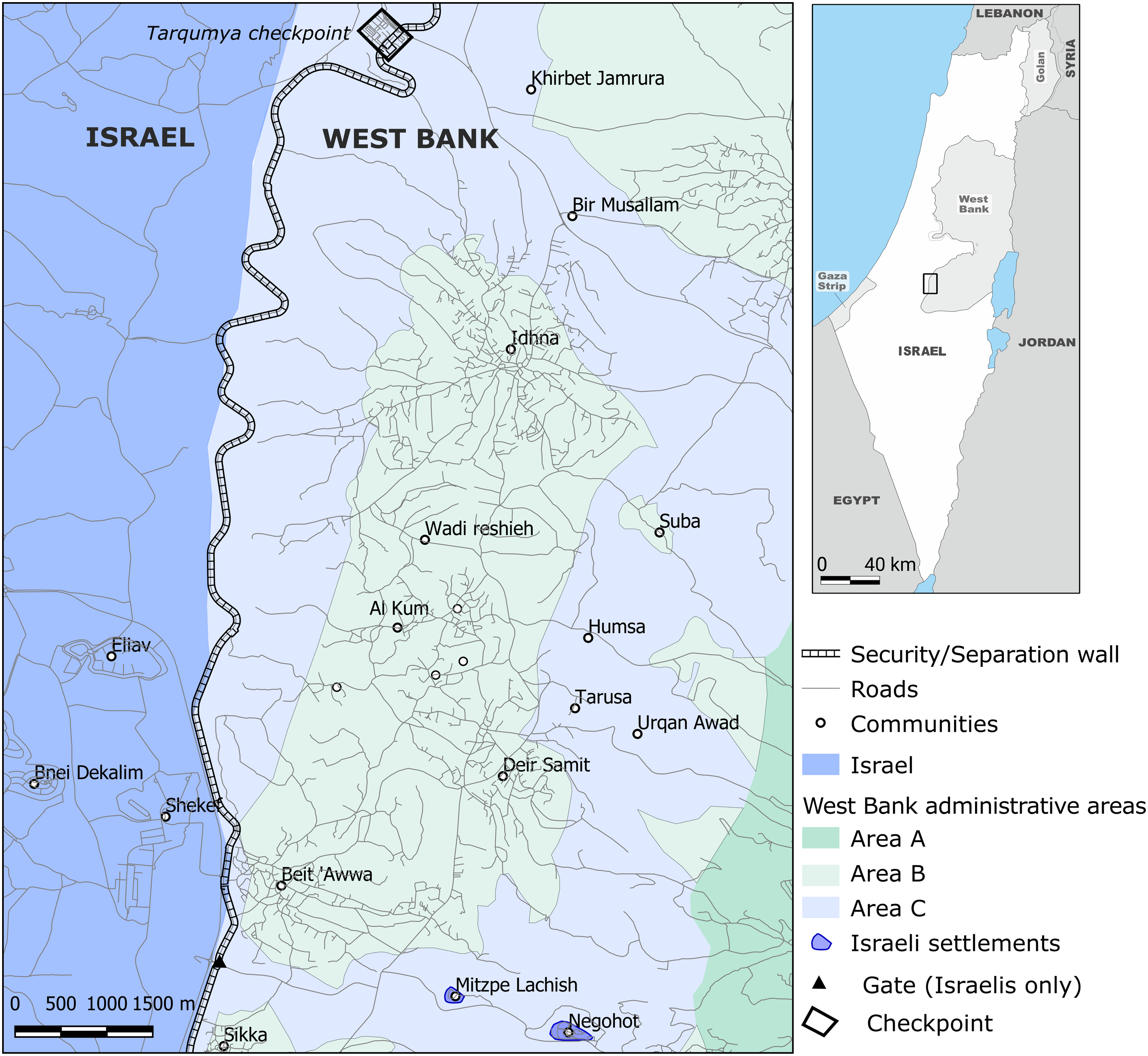
Over the last two decades, these historically and outwardly agricultural areas of the West Line adapted to import and process over 50% of Israeli electronic waste (Davis and Garb, 2019b). This informal industry operated “under the radar” for many years, relieving the formal Israeli waste management system of tens of thousands of tons of hazardous discards annually, while providing livelihoods to a large percentage of West Line households in a chronically deprived economy (Davis et al., 2019; Davis and Garb, 2019b). At the same time, this symbiosis, led to improper processing and/or disposal of electronic products and generated thousands of tons of toxic substances, whose release and dispersal is altering the bodies and health of inhabitants (Khlaif and Qumsiyeh, 2017; Davis and Garb, 2019a) (Figure 2). Of particular concern is the burning of waste, whether to extract copper from cables or dispose of valueless remnants (Davis and Garb, 2015). This tends to occur in the C areas demarcated by the Oslo agreement’s spatial configuration of the Palestinian Authority, which remained under Israel’s civil and military control. The decades-long persistence of this “transitional” governance arrangement here created a governance vacuum in which Palestinian authorities cannot enter or act, while Israeli authorities are loathe to assume anything but a bare-bones security role (Davis and Garb, 2020). E-waste burn site in activity on the Palestinian side of the separation fence.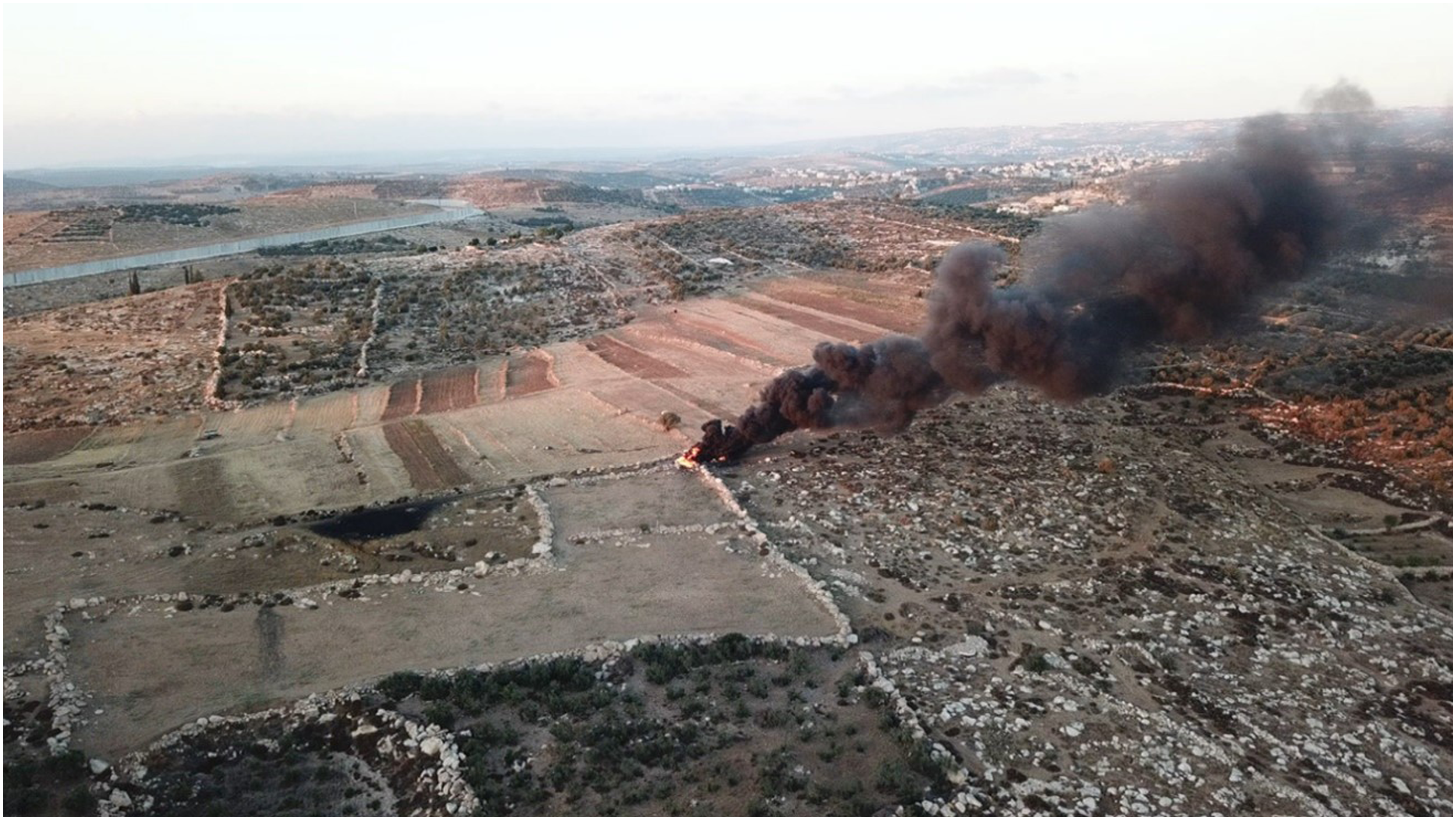
This West Line hub boomed in 2004 after the solidification of the 1980s security/separation fence into a wall following the Second Intifada (2000–2005), coinciding with the global soaring of metal prices. The resultant loss of employment options for Palestinians in Israel and the possibility for extracting considerable value from Israeli scrap intensified the flows of discarded goods. These could continue in the context of Israel’s ongoing occupation of Palestinian areas as the persistence of Israeli settlements within these and the impossibility for Palestinian control of the border made for a leaky boundary. This allowed (indeed, relied on) a murkiness that served the industry well since incoming scrap and outgoing extracted metals are carried on trucks with Israeli plates potentially destined to or originating from Israeli Settlements (Garb, 2008; Garb, 2016; Davis and Garb, 2016).
The simultaneous fencing-off and occupation of the West line, which both blurred and sharpened its borders, created economic, geopolitical, and logistic conditions facilitating the passage, transformation, and reckless dispersal of toxics in areas of deprivation and governance vacuum. Here, remote from the knowledge or concern of Israeli authorities and from the centers of Palestinian rule, the slow violence of toxic livelihoods is regularly punctuated by episodes of the more familiar and visible kinds of very fast violence. Israeli residents on the Israeli side of the Green Line or in settlements embedded in the Palestinian side have suffered from the smoke of waste burning for decades, and tried with only partial success to pressure the authorities to send in the army to apprehend burners or at least, push the burning “somewhere else.” This contamination has the potential to feed back into and aggravate tensions. Right-wing politicians use burning as an additional rationale for their longstanding call to annex these areas to Israel, “saving” them from Palestinian environmental recklessness. Palestinian politicians, for their part, can easily declare this burning as another expression of Israel’s occupation, through a narrative of colonial toxic dumping (that somehow obscures the crucial role of Palestinian entrepreneurs in the process). They insist that little can be done without first ending Israel’s occupation, discounting the local community-based burn enforcement efforts that have been effective in the shorter term.
To illustrate the lived texture of these entanglements, we next bring two episodes containing a series of encounters as we traced toxic flows on each side of the separation wall.
Toxic entanglements: Two episodes
“Even if Ahmad killed all my sheep, he would still be family”
2 July 2019. Ahmad has agreed to bring us to sites where he used to burn cables. He is in his early twenties but has been burning for a decade, leading a team of several young men who provide their services to scrap yards and dismantlers. The background to his invitation to go on this guided toxic tour are preoccupations about his health after years of exposure and hopes for professional reconversion. Though his work is lucrative (he supports over 20 people in his extended family), he increasingly feels this money is haram, forbidden. Mounting critiques of villagers led him to a pilgrimage to Mecca in which he swore to turn a new leaf. Upon his return, we expended considerable efforts to plead his case to the Israeli authorities, arguing a job permit would efficiently lessen the burning phenomenon they try to stamp out forcedly. Unfortunately, this ultimately ran into a Catch 22: his request for a work permit as a way out of burning was denied as he did not pass the security screening, as he has a police record (for burning waste….). This was still not clear at this point, and his tour in support of our research on this summer day was his token of thanks for our efforts, and a way for him to solidify our relationship.
We leave our rental car near the mostly unstaffed Palestinian control post that stands right below the Israeli military pillbox located at the entrance of Idhna and hop in Ahmad’s beaten-up plateless vehicle. He navigates a series of dirt roads towards the northern end of the Area C corridor alongside the Separation Barrier, where much burning takes place. He parks in front of a herder’s shed. It is a single room construction made of raw concrete blocks with no paint, a sofa, a metal bed with a thin mattress, and a small wooden cupboard stuffed with scruffy bottles of veterinary antibiotics and syringes for his animals. The shepherd, who turns out to be Ahmad’s brother-in-law, is deeply affected by e-waste. Burn sites punctuate his grazing area, and he lost 100 out of 300 lambs this year, in what he identifies as poisoning from suckling their mothers’ contaminated udders. He serves us tea, a drink we first decline out of politeness but then accept once asked if we fear contaminated water. We instinctively let commensality override our cautionary calls and chemical assessments.
From there we walk together towards the burn site spread across a dirt road that parallels the separation fence (Figure 3), the herder points to his animal’s grazing trajectory. Is he angry at Ahmad for contaminating his surroundings and prejudicing his livelihood? Does he ask for compensation from him? Not at all. “Even if Ahmad killed all my sheep, he would still be family,” he explains. The burner is aware of the structural constraints that pushed Ahmad into burning: occupation, a wall barring young men from jobs, family responsibilities. Burn site near the separation wall, blocked by stones (on the left) introduced by Israeli military to limit burning.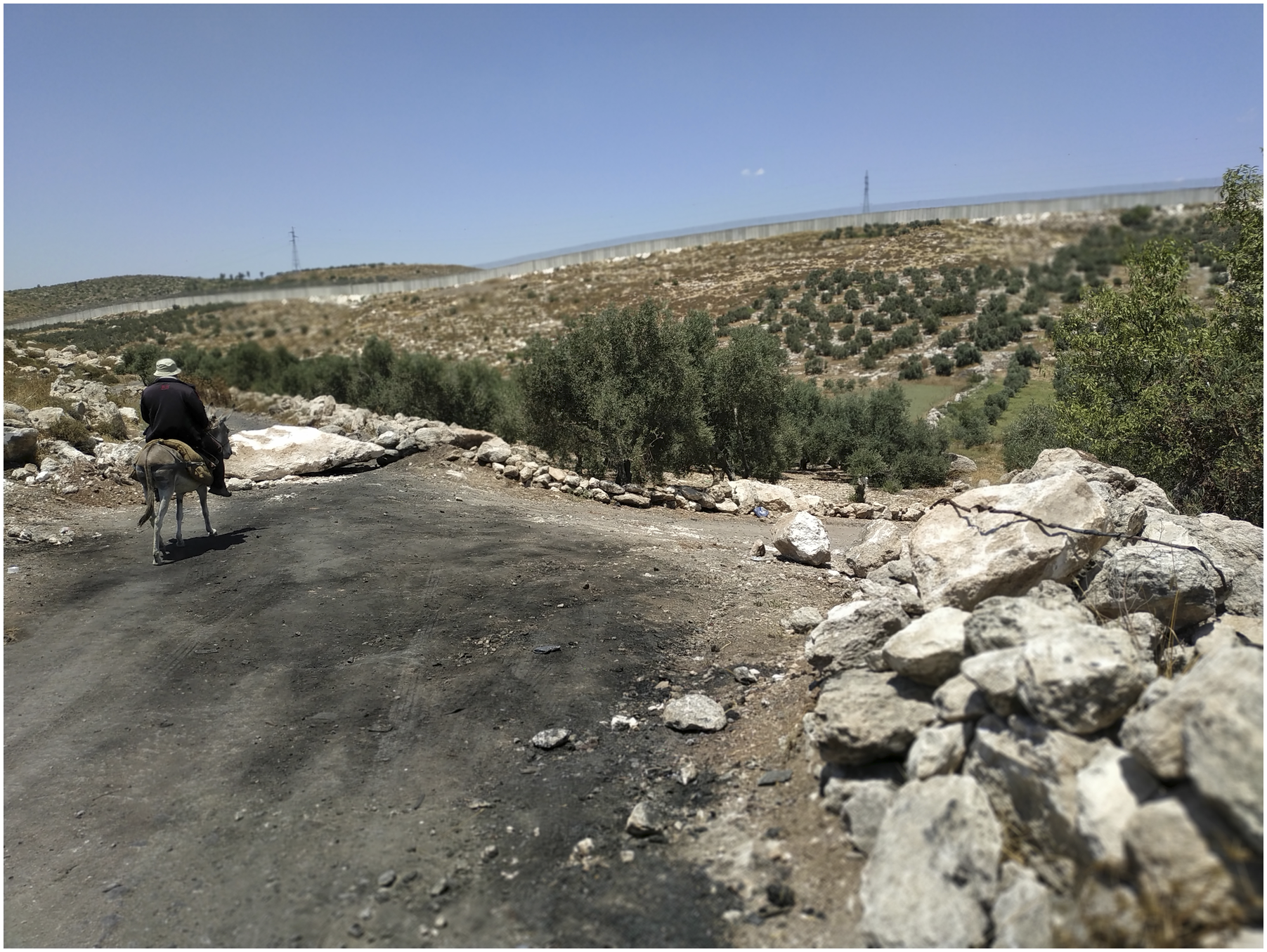
As we discuss our sampling strategy for these burn sites, we notice Ahmad is on and off his cellular phone in worried side conversations, and starts to look nervous, asking how long our sampling will take. We can’t really tell. He does not want to venture any further down the road and is afraid to be caught here with us. Apparently, he has been getting calls from villagers that have seen us together, and from burners who had set out with an intention to burn close to our destination. It would be treason to his fellow burners to be seen with outsiders - including a researcher with an Israeli identity - around the burning sites and word of his continued cooperation with burners would also disappoint the villagers he has promised to stop burning. Ahmad is clearly anxious about the things he is balancing. A stream of information coming in by phone from his burner colleagues and suspicious friends, the considerable challenges of the terrain, our potential visibility to army video and patrols (later there is also a small military drone overhead) are clearly beginning to outweigh his desire to show us the best and largest sites he has produced. We, too, are a bit nervous to see him flustered, and to be close to the militarized wall, in areas classified as B, where we are not supposed to enter.
We curtail our efforts at these sites, taking only three quick soil samples, aiming for the core and easily distinguishable points that will be identifiable later on high resolution images. When we measure these the next day at our near-site desk, we find, unsurprisingly, that the soil is highly toxic from the burnt cables: lead is between 2789 and 5190 ppm, an order of magnitude beyond the threshold defining an industrially polluted site.
From here, we proceed to a more southerly and less fraught set of burns, also produced by our guide and his companions in the recent past, where we sample in a more leisurely manner, including forensic collection of circuit boards that obviously come from the quality control phase of a local Israeli printed circuit fabrication facility. Then we set off to the cable grinding facility that serves as a key alternative to burning. One of the owners has offered a job to Ahmad as a cable supplier. Since he has the connections to the scrap yards and dismantlers from whom he collected cables for many years, he could redirect this network to supply this grinding facility. The salary offered is decent from our University perspective, but not from Ahmad’s. He needs to substitute for the 30,000 shekels ($9,200) he makes monthly from his informal profession. Toxic livelihoods are not just chemical flows; they are also social and economic relations that can’t be so easily escaped. This conclusion confronts us again from a rather different angle later that month, on our visit some kilometres away but on the other side of this same separation barrier.
“What is your interest in not having this problem solved?”
30 July 2019. We arrive at Maya’s house a bit before midday, unannounced. She lives in Shekef, on the Israeli side of the separation wall, once a grazing area for the herds of West Line inhabitants. Her home is the part of the neighbourhood closest to the Palestinian villages and to the area of frequent burns, and, therefore, a good place to sample settled dust from airborne transport. It is also a convenient point to meet the neighbourhood’s security officer, who can ensure that our intended sampling of streams passing under the separation wall into Israel avoids military firing zones.
Though she welcomes us with cake and lemonade, Maya seems unhappy to hosts us in her fine cosmopolitan living room decorated by Israeli-Palestinian traditional motifs. Last time we had visited was accompanied by a New York Times photojournalist (Kalifa, 2019), during a period of intense debates about a court case related to the burning. A right-wing environmental group wanted to file a complaint against one of the Israeli recycling companies and was looking to integrate Israeli or Palestinian residents as plaintiffs. In the end, the Israeli villages voted not to join, sensing this group concealed an overtly political agenda, and possibly murky business motivations as well. This had left a bad taste for Maya, the sole resident that signed on to this legal petition as a co-plaintiff, enabling the right-wing organizer to present their suit as anchored in local concerns rather than in broader national contentious politics, for which it was notorious. The petition had been turned down by the Israeli High Court, and the Eliav and Shekef communities later decided to bring their own independent case, perhaps raising Maya’s suspicions about the role of our measurements in her backyard. Her doubts about our intentions were, perhaps, further raised by Garb’s intervention to explain that burning was not, as she and others had initially suggested, a case of eco-terrorism against the Jewish people but industrial pollution, hurting Palestinian villages first and foremost. Were we here to support her? Was her health our priority or were we covering our “Palestinian friends”?
Maya looks worn out and stressed. As Garb spreads out the printed maps in front of the security officer who has just joined, Maya explains to Leblond that all of this is about money. She tells her about Israeli companies up North, near the Lebanese border, which, she says, bring hundreds of trucks to the West Line, dumping toxic waste for big money. “It has nothing to do with poor people. It is about money and corruption.” Mechanically, she starts to scrub her windows, performing her annoyance, to show the extra-work caused by burning, and the dust poisoning her. Paradoxically, this intense demonstration has been repeated so many times that the windows are already very clean, but her expression continues where her words leave off: her life is poisoned. She says they built a dream house, but it is like living in a prison: she has to keep the windows and doors shut, and forgo her daily walks to enjoy the view and the fresh air. Her life is eaten up by smoke, the possibility of exposure and her powerlessness.
Meanwhile, the security guy is using a black marker to cover our maps with the “NO GO” areas where we risk getting shot. Garb works with him to identify a location that is outside of the firing zone but would allow us to sample sediments of a large transboundary stream draining a contaminated valley on the Palestinian side, as the point where this crosses under the Separation Barrier to the Israeli side. At that moment, a burn starts behind the wall, thick black smoke rising into the horizon. Maya draws her phone out to take pictures and report the burn on the WhatsApp group on which residents signal burn events to pressure the administration and their officials. As she photographs, she continues to complain and ask what we are doing for her. “I speak directly.” she says. “What is your interest in having this problem carrying on from year to year?” Turning to Garb, she accuses: “Excuse me for asking, maybe there is an interest for you in not having this problem solved?”
Her questions target the inadequacy of our work over the years: it has only yielded evidence contradicting her narrative of being poisoned by corruption/big profit/ecoterrorism. Our equipment, which measures in the parts per million range is more than adequate to register the severe contamination on the Palestinian side, which can reach tens of thousands of PPM at burn sites, cannot detect the trace levels airborne to her house. These require a clean lab that can register levels at parts per billion levels. For her, Garb’s factual description of the environmental and health burden in Palestinian villages diverts attention away from her suffering, and his analysis of the economic and political drivers of burning complicate her cause further. Radical ignorance of the other side or the demonization of Palestinians as malevolent chemical terrorists is easier to imagine and respond to than nuanced accounts of toxic livelihoods under occupation and Palestinian municipalities whose budgets are not adequate for collection of ordinary household waste, which also contributes substantially to the burns she sees. This knowledge continually unsettles the simpler solutions that come to mind for Lachish inhabitants: “educating” Palestinians about the danger of burning, sending in the army, or blocking trucks entering the West Bank.
Offended by Maya’s attitude and malignment of our motivations, we depart as soon as the sampling maps are ready. Garb has invested much effort understanding the situation, carefully measuring the contaminant-saturated landscapes she sees from her windows, and lobbying for protecting those affected, including protecting Maya’s health from even the trace levels that reach her. Back at the sampling table some days later, Leblond’s analysis of agricultural soils and dust immediately on the Israeli side of the transboundary stream confirms lead and copper concentrations one 100th of the West Bank samples, though some are slightly above-background levels (Figure 4). We know that there is no such thing as a safe (blood) lead level yet find ourselves reluctant to proactively report our results back to Maya as we usually do in the villages, fearing another round of insults or further fuelling her conspiracy theories. Soil sampling in an agricultural valley with e-waste burn activities on both sides of the separation/security wall.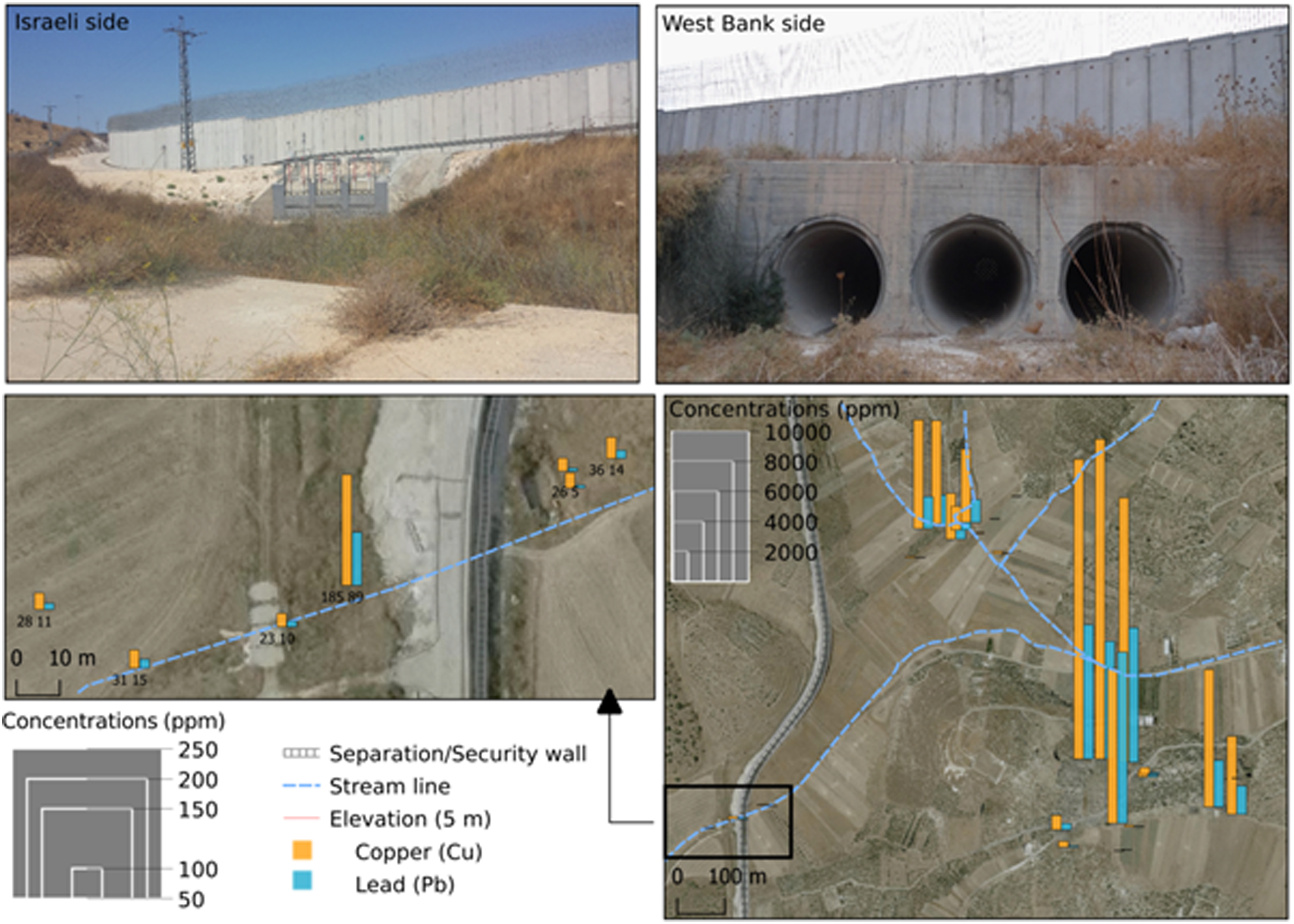
Working on and in toxic flows
These adjacent incidents are striking but not exceptional, and illustrate the typical entanglements we encountered in our sustained engagement with the fluid nature of toxicity and contaminated communities. Entanglements and conflicting aspirations are not only external, but extend to researchers’ “bifurcated consciousness” well known to standpoint theorists (Harding, 1992: 66). How do you spend one day surrounded by kids in sandals curiously accompanying your careful triple bag sampling of the toxics ash in which they play, and the next day analyse these at the parts-per-million (PPM) level in a sterile lab, with gloves and under a negative pressure hood, according to strict toxic protocols? How do you incorporate the irreconcilable points of view of people positioned opposite one another in an impossible situation?
These frictions generated by a multiplicity of flows - waste and molecules, researchers and samples, journalists and court cases - bring risks, pains, and liabilities, but also benefits and pleasures. In pragmatic terms, our ethnographic and scientific production are delayed by other objectives such as dealing with health issues, raising funds to support our eclectic community-based work, collecting toxic evidence prior to the season’s first rain, interventions to the Civil Administration, and responses to journalists and law firms. These often took precedence over analysis or reflexive writing. In disciplinary terms, we constantly navigate the risk of seeming inexplicable to our scientific audience and banal to social-scientific colleagues, or, perhaps, just plain muddled to both. The “critical” or community-engaged approaches that may be novel or disruptively challenging to geochemists, are time-honoured for STS scholars. Our “strong objectivity” approach to heavy metal analysis challenges conventional toxic assessments and their pre-established exposure models (Fiske, 2020), but seemed axiomatic to anthropologists. Conversely, a toxicologist might consider our community-embedded chemo-ethnographic practice as containing only the bare minimum of empirical anchoring.
These kinds of flux, frictions, and unsolvable tangles of field immersion are, at this point, a given in contemporary ethnographic thinking. Researchers must shift among multiple worlds to better understand, but in doing so must constantly make commitments that challenge and constrain their placement. Do you drink the tea or taste the cheese offered by the shepherd whose land and products will be sampled and sent to a lab using the protocols required for handling hazardous waste? Decide on the spot: are you there to learn or to teach? Should professional risk standards and the anticipated results of analysis override human trust and good manners?
These tangles and contradictions are at the core of what some call “chemosociality”--“longstanding relationships and emergent social forms that arise from chemical exposures and dependencies” (Shapiro and Kirksey, 2017). They pervade the realities suggested by the previous ethnographic fragments and our analysis. Our encounters with Ahmad and Maya hint to the profound fluidity and relationality of toxicity, with multi-facetted resonances and asymmetries on both side of the wall. Slow violence might be out of sight to environmental authorities and ministries but it clearly is not to the communities who have witnessed the progressive contamination of their neighborhoods (Davies, 2019). The stacks of smoke, sheep carcasses, and pervasive black dust have turned their houses into “prisons” and fertile landscapes into poisonous ground, provoking what Edelstein (2003: 96) calls the “inversion of home.” Ahmad’s wife had several miscarriages and his brother-in-law lost hundreds of sheep, while Maya suffers from severe psychological distress induced by the ambiguous probabilities of physical harm (Freudenburg, 1997: 27). The concerns and convictions of these communities motivates and facilitates our engagements with toxic flows, and their observations and metaphors serve as valuable entry points to track toxic exposure (Fiske, 2020).
But this same enmeshment is likely, sooner or later, to make us into disappointing or even deceiving allies, as residents cultivate expectations for our findings that can be incompatible within and across each side of the separation wall. Our knowledge of toxics flows is both too little, and too much, and often too late. Though we would like our findings of heavy metal contamination and toxicity of e-waste burn sites to move readily to communities as well as to decision makers and onwards, into policies and change, as residents hope and demand, contradictory forces immobilize our knowledge. Inhabitants bring our attention to places and mechanisms such as the reconversion of burn sites to schools and homes, without remediation, the deposit of black ash on the hands of olive pickers, or to cottage industry areas where waste processing is performed at home, and rather than waiting for the finished publication we generate intermediary outputs, insights, and doubts, that we share as they occur (Figure 5). We are not only environmental scientists, but political ecologists and critical physical geographers (McClintock, 2015; Lave et al., 2018; Wylie et al., 2017), and, as such, we adapt devices and methods to suit these unconventional starting points and needs of science production. Report sent to a resident who brought Author 2 to his olive grove to show the exposure from e-waste burning on neighbouring scrap yards. Such encounters were critical to concentrating our attention on toxic ash deposits on olive groves and this pathway as a source of exposure for farm workers.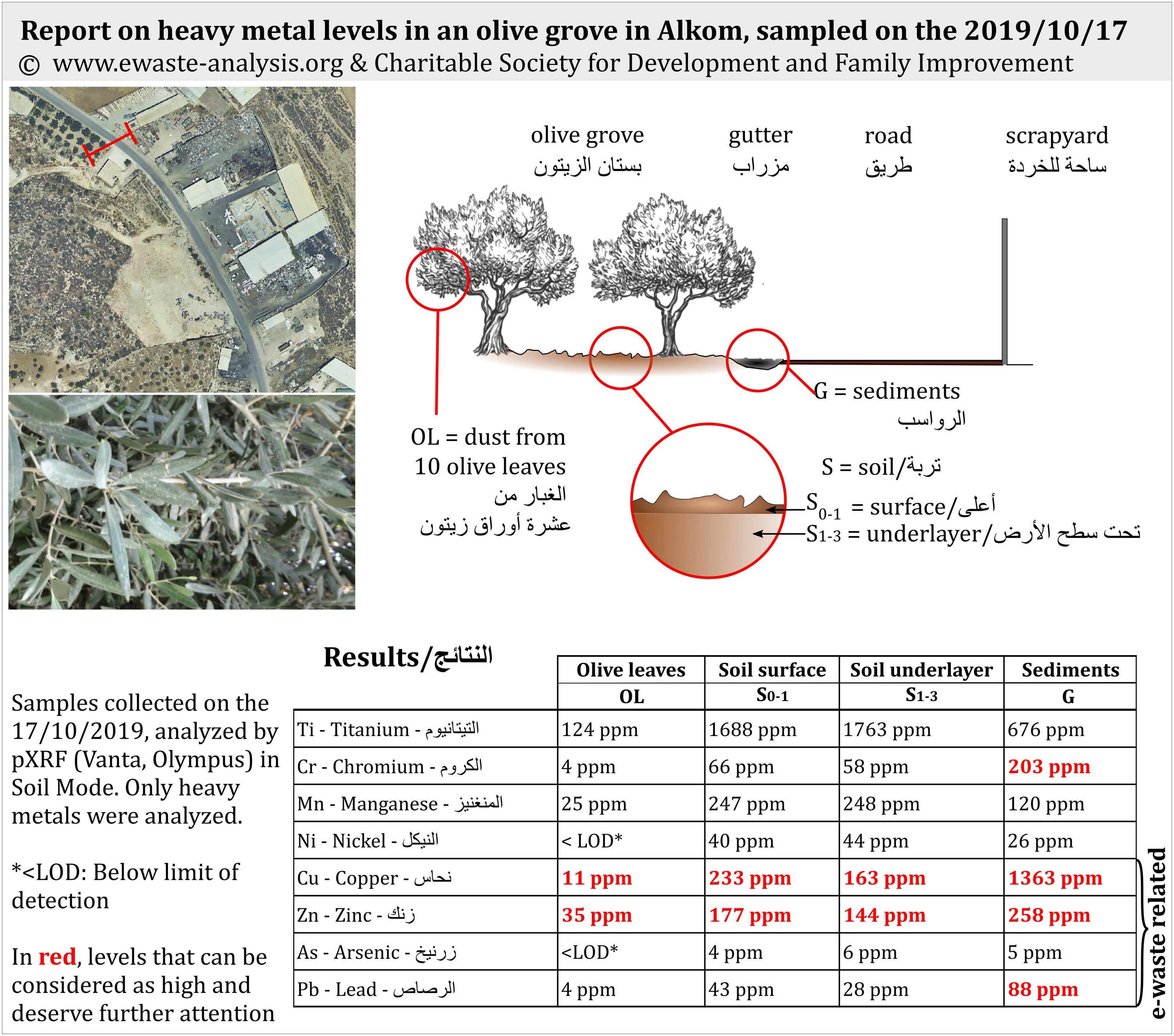
At the same time, our knowledge is more fluid than we would like, as new observations unsettle previous conclusions. For example, we thought we understood the typical distance decay of toxicity levels over the hundreds to 2-km range of burn sites, until we measured only background levels just 10 m down the slope from a horrendous decade-old one. We thought cadmium to be a negligible part of the story, until measuring one site in the rain, which caused the soil to bubble with high concentrations of it. We thought (and had quantitatively proven) that black ash serves as a remarkably good proxy for lead levels, until healthy-looking soil around a machine grinding lead battery casings displayed lead and arsenic levels dwarfing anything we had measured in all the ashy sites we had encountered over the years until then. Our knowledge sometimes feels inadequate when it cannot flow to the places we want but at other times because it is so flowy that is loses its shape when challenged by some new data.
Thus, science, our calling card and ally, is sometimes deceptive, and does not always deliver the goods as expected. It can betray, rather than support, the acute awareness, hopes and specific relations put forward by residents, or simply be ignored. The Israeli air quality monitoring station that was mounted for a month very close to Maya’s house at the insistence of the residents showed nothing outside of the standard. Our STS- analytic bent and experience with contingencies in soils helped us understand that several things were at play. These measurements happened to be done in a month of reduced burning. In fact, activists on the Israeli side murmur their suspicions that the coincidence of this reduction with the monitoring period is due to some arrangement by the Civil Administration, which is linked both to the villages as well as to the Ministry that funds the sampling. In any event, the monitoring reports relied on averaging over time, which diluted the very brief pulses of smoke that annoy residents, so that, on average, their air was considerably cleaner than those in any large Israeli city with low but continuous cumulative levels of contamination. Also, overall particulate levels were investigated rather than the burden of exotic chemicals released by e-waste burning. In 2021, when the regional agency proposed to install a similar monitoring system, to back the Israeli resident’s High Court appeal for urgent measures to reduce hazardous exposures, we warned this would produce evidence the opposite to their hopes. (Indeed, they discovered this some months later, when they went ahead anyway). The herder, too, may be let down by the voluminous scientific studies on e-waste contamination, which are heavily based on Chinese and Indian case studies. While they provide important insights on heavy metal uptake in the context of rice plants in contaminated paddies, and their implications for duck meat and fishponds, we are still left guessing when it comes to the Mediterranean pathways, from pasture to sheep, from olive trees to oil, and the kinds of contamination transport that occurs during hot and dry dusty summer seasons, and through ephemeral streams. Even our quick conversations with the herder, for example, suggests the limits of the conventional approach of sampling milk versus the need to investigate the deposition of dust on udders through which direct ingestion of ash might poison lambs.
In this way, local entanglement can translate community observation into investigation, supporting some understandings (“this area is actually OK, but that one is really bad”), perhaps generate novel science, and eventually, sometimes, drive policies and action on their behalf. But entanglements entail risks beyond the sip of potentially contaminated tea. You become an outlet for the hope of mothers, both Palestinian and Israeli, that burn sites will be remediated, and burning will stop or, at least, move further away from their houses. For Israelis, their pressure to reduce burning in the C Areas west of the villages, close to the Green Line, can simply drive the phenomenon to the east, posing a new frontier for Palestinian contamination and exposure.
Engagement on the quandaries of toxic livelihoods over-flows professional boundaries: Palestinian burners will naturally turn to you for help with a work permit that would allow them a cleaner living and mothers in desperation need your intervention when the Palestinian health system cannot cope with the leukaemia produced by the burning you study.
Meeting these all is impossible. At times, even adhering to the modest injunction of “Do no harm” in one’s knowledge production seems unrealistic in a context of permanent exposure and sustained military occupation. Stark structural inequalities and continually oppressive power relations, can amplify the powerlessness of researchers to the detriment of those most affected by toxic flows (Boudia and Jas, 2014).
Staying with the flow
Toxics are difficult to track and seize due to their patchy and highly situated effects. This fluidity makes them an “interscalar vehicle” into and within the unevenness of the Anthropocene (Hecht, 2018: 115). The waste from which toxics emerge are sociologically potent and provocative not simply because they also move across and blur space and time, but also cross actually and dialectically between key social categories. The materials they contain traverse the main phases of capitalist attention (extraction, production, and consumption), and continue beyond, into the nether-world of waste. Almost by definition, this begins beyond formal economic systems, in which quantities (production, sales) are tracked and valuated, in the informal shadow realm of the afterlife of formal consumption, where goods discarded and then forgotten by some are claimed by others, reused, cannibalized, and disposed of, again. This transition is often one of class, and of the global North and South, represented in microcosm by Israel and the West Bank--only a stone’s throw away, but with income and GDP per capita an order of magnitude lower. Waste also crosses cultural and psychic realms--first as its existence is banished and repressed, and then when it returns to trouble us. We brush it aside from the present, the domain of value and use, to elsewhere: some deferred future or distant people or place. We imagine a world in which shiny goods are continually possible without having to deal with the slimy bad by- and end-products they entail (Sofia, 1984).
As we evolved orientations and field practices to engage with the material, geographic, social, epistemic and even ontological fluidity of toxics and waste, we came to embrace that staying with their flow means constantly processing the feedbacks of reward and discomfort to calibrate the most useful distance for our engagement. Having the luxury of doing the kind of systematic scientific analysis we were trained for was our value added and entry ticket into these communities. But sometimes it seems that our ethnographic and scientific insights are best employed in the service, of doing other things--shaping a cleaner industry, obtaining funds to remediate burn sites, raising awareness among students of local schools, supporting a local women association, connecting health impacts to certain segments of the processing chain, investigating a herder’s observation. This led us to simultaneously engage up (ministers, CEOs, and generals) and down (smugglers, scrap workers, and mothers whose children are sickened or whose laundry is soiled by black smoke), and with less familiar parts of the political spectrum in the Israeli-Palestinian conflict. Families of Palestinian martyrs/terrorists, far Right Israeli groups politicizing environmental issues to annex the West Bank, harried Israeli Civil Administration personnel working to manage the occupation, as well as Palestinian officials that feel they must ignore local Palestinian needs to stave off national scale threats—all our interlocutors are entangled in our research in non-trivial ways.
We have sketched here the existing research of relevance and provided some illustration of the texture of the contexts in which we have grappled with the multiple dimensions of what we have labelled the fluidity of toxics. Our attempt to evolve a critical geography and ethnography of toxic flows can support research that recognizes this flow, and thus create knowledge “with” rather than “of” communities. These questions are the terrain of the “Strong objectivity” forwarded by Sandra Harding (1992)--simultaneously an epistemology (a reflection on who can produce knowledge), a philosophy of science (what goals should be pursued?) and a sociology (what are the social conditions of knowledge production?) (Naples, 2017). Advancing “both a material and epistemological struggle over the relationship between knowledge, power, and struggles for justice” (Fiske, 2020: 22) does not prove easy however. One must advance slowly and carefully as aspirations and interests conflict and/or connect in unexpected ways. But there is no replacement for the knowledge and change produced by following toxic flows in this way.
Supplemental Material
Supplemental Material - Flowing toxics: E-waste field work in the Palestinian-Israeli space
Supplemental Material for Flowing toxics: E-waste field work in the Palestinian-Israeli space by Yaakov Garb and Nelly Leblond in Environment and Planning C: Politics and Space
Footnotes
Declaration of conflicting interests
The author(s) declared no potential conflicts of interest with respect to the research, authorship, and/or publication of this article.
Funding
The author(s) disclosed receipt of the following financial support for the research, authorship, and/or publication of this article: This work was supported by the Michael Fischer (Donation) and United States Agency for International Development (SIS70018GR33015/MERC Proposal No. M33-015).

Supplemental Material
Supplemental material for this article is available online.
Note
References
Supplementary Material
Please find the following supplemental material available below.
For Open Access articles published under a Creative Commons License, all supplemental material carries the same license as the article it is associated with.
For non-Open Access articles published, all supplemental material carries a non-exclusive license, and permission requests for re-use of supplemental material or any part of supplemental material shall be sent directly to the copyright owner as specified in the copyright notice associated with the article.
