




Abstract
While the problematic role of knowledge in controversial policy processes is widely acknowledged, relatively little is known about how protesting citizen groups involved in such controversies construct, mobilize and use knowledge. This article explores these issues in two conflicts about planned interventions in the Netherlands. The first case, about energy policies, concerns protests against plans for shale gas extraction. In the second case, concerning flood risk management, citizens organized protests against a planned ‘bypass’ of the River Waal. To better understand the role of citizen groups as knowledge actors, we analyse how these groups organized and strategized their protests and produced, used and contested knowledge to claim voice in decision-making. The study shows the key role of citizen groups as knowledge actors in contested planning processes, and of their knowledge strategies in internally divided communities. It also shows the importance of the source and type of knowledge and how it is constructed, mobilized and used in various stages of resistance against policy plans.
Introduction
Spatial-environmental issues tend to generate debates about policy solutions to deal with them. The crucial role of knowledge in negotiating authority and voice in such policy processes about controversial issues is widely acknowledged (Boswell, 2009; Hoppe, 2010; Weingart, 1999). This article explores the construction, mobilization and uses of knowledge by citizen groups in two conflicts about planned interventions in the Netherlands, in which these groups protested and organized against plans for shale gas extraction and flood risk management. We examine how these groups dealt with knowledge to claim voice in decision-making about their living environment. Thus we contribute to a growing body of literature that investigates how citizens and social movements use knowledge in contested policy processes.
Earlier contributions have shown that policy-making is not a linear process of knowledge ‘informing’ policy, but a messy one in which knowledge is a contested resource in interactions between ‘knowledge actors’ —government agencies, policy institutions, scientists, experts, citizens, NGOs etc.— reflecting different meanings people attach to knowledge in specific contexts (see Wesselink et al., 2013). Taking these insights as starting point, we choose to focus on how knowledge is constructed, mobilized and used by citizen groups when confronted with interventions justified by knowledge claims of experts and policy-makers. This perspective is often lacking in public administration research of ‘governance’ issues, which mostly focuses on decision-making processes (e.g. Yang and Pandey, 2011) rather than researching the production, mobilization and use of knowledge by citizens.
The citizen-as-knowledge-actor perspective is relevant for several reasons. First, citizens confronted with (plans for) interventions often face a near-hegemonic position of science-based expert knowledge claims that they find hard to understand and contest, while also lacking time and resources to close this knowledge gap. Hence, they are disadvantaged compared to initiators of plans (Aitken, 2009). Additionally, protesting citizen groups risk being negatively labelled as ‘NIMBY’ (Pellizzoni, 2011; Schively, 2007), and criticized for lacking credibility as representatives of citizen concerns. Furthermore, citizens often face a dilemma of ‘capture’ and co-option in the ‘invited spaces’ of government-orchestrated participation, versus ‘autonomy’ and critical distance, which may both have advantages and disadvantages (O’Hare, 2018; see Brock et al., 2001; Gaventa, 2006). Finally, democratic decision-making on controversial public affairs requires a space for critical appreciation of knowledge claims by all knowledge actors, including protesting citizen groups (see Jasanoff and Simmet, 2017).
In view of the relative scarcity of in-depth studies on the role of knowledge in shaping citizens’ responses to interventions, our research aims to answer the following question: how do citizen groups mobilize, produce and use knowledge to claim and negotiate voice in planning and decision-making in spatial-environmental conflicts? Approaching knowledge as a political resource in interactions between knowledge actors, we analyse local knowledge actors’ practices of organizing around contested issues, deciding on forms of engagement, making knowledge available and accepted, building support networks, and developing alternatives. Thus we bring together literature on knowledge-policy processes and on how social movements use, contest and produce knowledge. We compare and analyse two recent cases of planned intervention that illustrate these knowledge dimensions of citizens’ struggles. The first, on energy policies in the context of the energy transition, concerns resistance against national government plans for shale gas extraction in Noordoostpolder, a municipality in Flevoland Province. In the second case, concerning flood risk management policies, inhabitants of the villages of Varik and Heesselt in Gelderland Province organized protests against a planned ‘bypass’ of the River Waal (see figure 1).
While neither was finally implemented, analysis of their development provides important insights into the role of knowledge in the local organization of protest by citizen groups. In both cases, planning activities moved towards implementation of plans that were framed as imperative for national interests. Without local protests, the government would probably have implemented the plans without seriously considering possible downsides or alternatives. Given the central role of knowledge, better understanding of local knowledge practices could contribute to a rethinking of the role of citizen groups as knowledge actors in contested policy processes.
The article proceeds as follows: first, we discuss our approach to knowledge in policy processes and social mobilization. Next, we introduce the research methods and describe the cases and their policy contexts. We then analyse development of the cases from a knowledge perspective, focusing on how residents were confronted with and reacted to the plans, how they dealt with knowledge, organized protest and developed strategies of resistance, brought in new knowledge actors, and related to formal arrangements for participation in their efforts to claim representation and voice. Finally, we discuss our findings and present our conclusions.
Knowledge in policy processes and claim-making
More than scientific knowledge
Despite decades of criticism of assumptions on the problem-solving linearity of knowledge in policy processes (Funtowicz and Ravetz, 1993; Jasanoff, 2004; Nowotny et al., 2001), knowledge is often still understood reductionistically by policy-makers and scientists: as a science-based tool for rational decision-making (Boswell, 2009; Stoutenborough and Vedlitz, 2016). This presupposes that actors agree on what knowledge is, which knowledge is relevant, and how and by whom it can or should be produced. It further assumes that ‘objective’ knowledge can separate ‘facts’ from values and interests, assuming a clear boundary between ‘facts’ and prescriptive policies (Jasanoff, 2004; Jasanoff and Simmet, 2017).
It is increasingly acknowledged that objective, value-free knowledge is hard to find in complex and controversial social-environmental problems involving multiple actors with competing world views, values and powers (Wesselink et al., 2013; see Moore et al., 2018). As knowledge can serve many purposes, knowledge-policy interactions are not always guided by instrumental rationality (knowledge ‘informing’ policy). It also has ‘symbolic’ functions, to claim ‘epistemic authority’, jurisdiction and resources, justify decisions or delegitimize alternatives (Boswell, 2009). In its symbolic and political dimension, knowledge wraps facts, values, interests and power relations together. This adds a crucial dimension to the study of knowledge-policy interfaces.
Knowledge is often associated with scientific and science-based professional domains, as evidenced by terms like ‘science-policy interface’ (e.g. Wesselink et al., 2013) or ‘science-policy interaction’ (e.g. Floor et al., 2019). However, knowledge refers to more than scientific knowledge only, including other expertise and skills, science-certified or not (Pellizzoni, 2011; Schatzki, 2001; Wynne, 1992). Resonating with Wesselink et al. (2013), but using this more inclusive meaning of ‘knowledge’, we consider knowledge-policy interactions as interactions between multiple knowledge actors. We see knowledge as a contested field, and its production and use as a social process involving interpretation and meaning-making in a political context (Jasanoff, 2004). In relation to policy processes, its production and use is interwoven with definitions of problem and solution (Wesselink, 2013).
While scientific knowledge is produced by specific professionals (scientists) through specific procedures in academic or research institutions, expert knowledge or expertise refers to a broader field of applied specialized knowledge, skills (technical, manual, intellectual, social) and experience. Expert knowledge is basically social and performative, bridging the formal (having knowledge) and the applied (flexibility; capacity to act and respond). Like scientific knowledge, it is often regarded as specialist knowledge and contrasted with lay knowledge (Grundmann, 2017; Pellizzoni, 2011; Wesselink et al., 2013). It is practically-oriented, seeking to combine understanding and doing (Schatzki, 2001: 6), technical and practical rationality, cognitive and moral judgement, means and ends (Wynne, 1992). Grundmann (2017) also stresses its relational dimension, such as between knowledge providers and those who demand knowledge, which is also essential in our exploration of how citizen groups claim and negotiate voice and recognition.
Trust is an important relational dimension of knowledge: what knowledge may do depends on people’s trust in it. According to Wynne (1992), public understanding of science is affected by how trust is embedded in social relationships and identities, rather than being an intrinsic characteristic of that knowledge. Science may receive a negative public response when it fails to acknowledge such relational aspects. Judgments of the trustworthiness of science are thus affected by people’s relationships with experts. For non-scientific expertise, such relationships of trust, ascribed primarily by those who ‘demand’ knowledge, are particularly important (Grundmann, 2017). Horowitz (2010) broadens this discussion to trust in information in general. Trust depends not simply upon knowledge actors themselves —knowledge provider or receiver— but rather on their perceptions of each other. As we will show, social relationships are important in understanding knowledge use in contestations.
According to Leach and Scoones (2007), citizens and social movements engage strategically in knowledge production, contestation and use. This can be transformative in itself but also support broader opposition, lobbying and claiming of rights. Concerned citizens, then, become engaged in political processes by producing, contesting and negotiating knowledge — seeking scientific authority for a political claim, and questioning and disputing control over, and uses and content of science (Epstein, 1996). Diverse forms of knowledge are at work in mobilisation processes. Social movements can draw on ‘experiential expertise’ (Collins and Evans, 2007; Leach and Scoones, 2007). Citizens can also form alliances with scientific experts to strengthen their claims and legitimacy. In so doing and through activism more generally, citizens may become experts with ‘lay expertise’ themselves (Grundmann, 2017). Therefore, dichotomies between lay and expert knowledge, and between scientific and other expertise need nuancing (Boswell, 2009).
Knowledge challenges for citizens
A bias towards science-based expert knowledge may marginalize other forms of knowledge (Aitken, 2009; Wesselink, 2013). Despite this criticism, scientific knowledge has largely retained its central position. Knowledge expressed through numbers and statistics, considered ‘facts’, often has a privileged status, while lay knowledge is often regarded as less credible (Chilvers and Kearnes, 2020). Where they meet, ‘the onus is on lay people to be flexible and learn new styles of communication’ (Aitken, 2009: 49). As Aitken concludes for wind power conflicts, this hegemonic position is reinforced, as ‘opponents were complicit in the social control to which they were subjected’ (2009: 63). When conflicting parties refer to the same type of knowledge, they reproduce its claims to authority, reliability and legitimacy. This primacy of scientific claims may also influence participation processes.
Excessive authority accorded to one type of knowledge may create an insatiable hunger for ‘data’ (see Jasanoff and Simmet, 2017). In fracking research in Canada, Moore et al. (2018) found that the expression of an ongoing need for more data by conflicting parties masked the basic political contestations about whose and which data are relevant. The debate appears technical and value-neutral, but hides fundamental disagreements over accountability, transparency and trust. In both cases discussed here we found a similar search for ‘neutral’, ‘objective’ knowledge. As we will show, knowledge is also contextualized for people to be able to identify with knowledge actors. Hence, how knowledge becomes politically effective is shaped by multiple factors, including the role of intermediaries who may either enhance or degrade its credibility (Cowell and Lennon, 2014; see Wesselink et al., 2013).
In conflict situations, ‘scientization’ (McCormick, 2007) may harm protesting groups. With decision-making controlled by the party with privileged access to knowledge, citizens are at a disadvantage, lacking the capacity and authority to digest and critically review knowledge claims: they face a serious ‘knowledge gap’ (Aitken, 2009; Moore et al., 2018). In addition, local protests are often vilified or decried as ‘NIMBY’ (Aitken, 2009; Dean, 2018; Pellizzoni, 2011; Schively, 2007), knowledge supporting protests as unreliable, and actions based on it as illegitimate. NIMBY explanations have rightly been criticized as simplistic because they disregard multiple motivations, perceptions and interests behind protest and resistance (Wolsink, 2000; see Aitken, 2016). As awareness of such inequalities grew, issues of democratic legitimacy entered knowledge-policy debates (Nowotny, 2003). By demanding a share in political representation and knowledge construction, citizen groups are actively formulating alternatives in their strategies and future visions, to strengthen the legitimacy of local protest.
As our cases show, however, getting alternative knowledge accepted remains a challenge for such groups. The socio-political, discursive and power dimensions of knowledge-policy interfaces become acutely felt here. Externally defined and prescribed norms of ‘good’ and ‘legitimate’ participation may exclude, disempower and depoliticize participation practices (see Chilvers and Kearnes, 2020). Especially in government-initiated participatory arrangements, where techno-scientific discourses and consensus-biased approaches are dominant, there is a risk of depoliticization, of masking ‘the political’ —‘the antagonism […] constitutive of human societies’ (Mouffe, 2005: 9). Contrary to Floor et al. (2019), we regard depoliticization as potential part of the problem. As Pellizzoni (2011: 771) stresses, ‘politicisation means neither factiousness … nor replacement of facts with principles or interests, but simply the opening, broadening or restoring of a public space of discussion’. Our cases show that, where government-determined rules and boundaries of participation are restrictive, protesting groups may distance themselves from or even opt out of such arrangements. The resulting lack of critical knowledge interaction between governmental and citizen parties may hamper a serious appreciation of the knowledge claims of both.
Research methods, context, and introduction to the cases
Shale gas plans for the Noordoostpolder
This case study, based on fieldwork between 2014 and 2018, was designed as engaged ethnographic research (Hale, 2006; Kirsch 2002). 1 The researchers engaged with the main partnership against shale gas, called Tegengas, involving them in the research. This obviously co-shaped the findings, and may have limited access to proponents of hydraulic fracturing. It did, however, provide access to research data inaccessible without such engagement. The researchers conducted research (52 research participants): activists (local and national), local politicians, residents around proposed drilling sites, and proponents of exploitation. They conducted participant observation in Tegengas meetings, during manifestations and press conferences, and in the visitors’ centre of a new wind park. They also analysed local newspapers, websites, meeting minutes, posters, press communications, and communication with politicians.
Dutch energy consumption is strongly fossil-oriented: almost 94 per cent in 2018, 44 per cent of which natural gas, which came mainly from the Groningen gas fields in the northern Netherlands. Exploitation of these fields has been considerably reduced because it causes earthquakes. 2 All subsoil resources in the Netherlands are state property, so landowners have no say in their exploitation or rights to benefit from them. Hence, conflicts occur between governments at various levels and communities confronted with (gas) extraction. In Groningen, increasingly serious ‘gasquakes’ resulted in growing resistancee (Metze, 2014). With returns diminishing —because of shrinking reserves, but especially in reaction to resistance— the national government presented shale gas as a useful transition fuel towards renewable energy. Without public consultation, it granted permits for exploratory drilling in the Noordoostpolder and Boxtel to the UK-based company Cuadrilla. Test drilling was supposed to start in 2013 in Boxtel, and in 2014 in the Noordoostpolder.
The Noordoostpolder was reclaimed from the sea for food production in the 1940s. The polder and its micro-society were designed on the drawing-table: everything was planned, and settlers had to be modern farmers and good housewives. In 2017, the Noordoostpolder had 46,544 inhabitants (CBS, 2017), often descending from the settlers. Conservative parties dominate local politics. The municipality is strongly agriculture-oriented, has fertile soils and exports seed potatoes worldwide. In 2013, the Dutch government earmarked two sites as possible locations for shale gas exploitation. However, various citizen groups mobilised against this and the municipality declared itself ‘shale gas free’. The national government subsequently gradually changed its position by declaring a moratorium and, in February 2018, cancelling its plans.
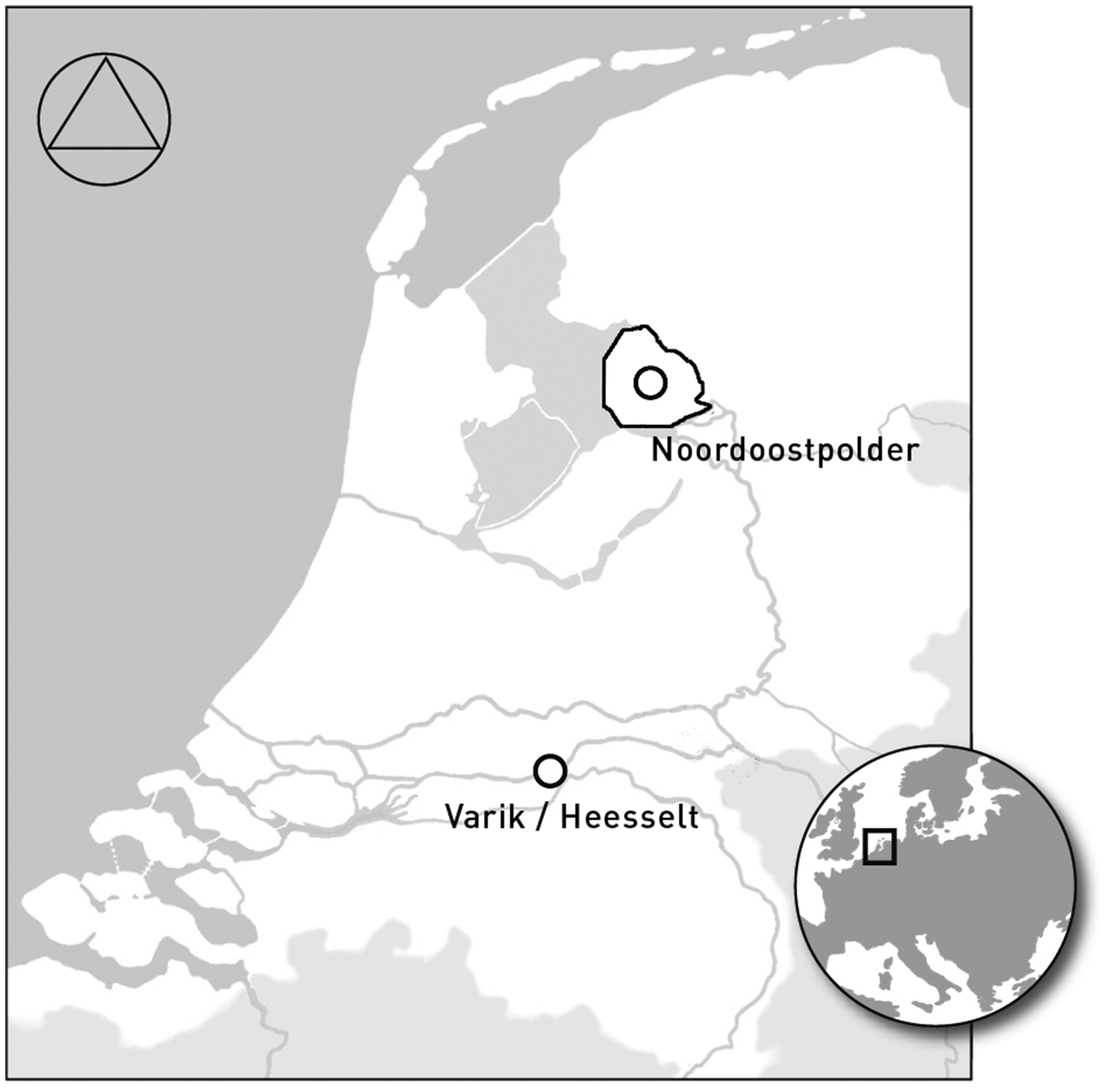
The case study locations.
Plans for a river bypass in Varik-Heesselt
For this case, the researchers conducted 47 in-depth interviews between 2014 and 2019: 35 with inhabitants, three with citizen organization Waalzinnig, three with experts, and six with professionals, including various agency staff, policy advisors of the Ministry of the Interior, and a manager of water authority Rivierenland. Inhabitants were interviewed on their views of the bypass plan, involvement in planning, and strategies and choices in case of implementation. Interviews with professionals focused on their (organization’s) role in planning. Interviews with Waalzinnig focused on general developments, objectives, perceptions, strategies and activities of its active members. The researchers were involved as members of the scientific supervisory committee for research on the bypass by the Wageningen University and Research (WUR) Science Shop (see below).
Until recently, the Dutch protected themselves against river floods mainly by dikes. However, since extreme river discharges in the 1990s, strategies shifted towards combined spatial-infrastructural solutions like water storage areas, floodplain deepening and river bypasses. This new approach, anticipating on climate change impacts, was the basis for the ‘Room for the River’ program (2000–2015). Since 2015, the ‘Delta program’ continues along these lines, based on long-term adaptive planning and a ‘multi-layered security’ approach combining protection, prevention, and preparedness. Estimations of required protection levels remain based on a ‘design discharge’ that the river system should cope with. While in Room for the River this was 16,000 m3/sec for the Rhine branches, in the Delta program it became 17,000 for 2050 and 18,000 by 2100. 3 The Rhine branches should cope with this (maximum) discharge, assuming a flood probability of once in 1,250 years. The highest measured discharge occurred in 1926: around 12,600; all later peak discharges were lower. As the Rhine enters the Netherlands from Germany, branching into Nederrijn, IJssel and Waal, developments in the Netherlands are influenced by changes in Germany. Current conditions and management strategies in Germany make discharges above 14,500 reaching the Netherlands through the river system unlikely (During et al., 2016). 4
Varik and Heesselt are situated in Gelderland Province, in a bend of the River Waal. In 2016 these villages, located in a major fruit-producing region, had a joint population of around 1,500. In 2013, the inhabitants were suddenly confronted with a government plan for constructing a ‘river bypass’ to smoothen the flow in the River Waal during peak discharges. This option had been identified earlier, but remained shelved for future use if necessitated by climate-induced discharge increases. However, the plan was revived in 2013, as planning of dike enhancements would depend on decision-making about the bypass. The first sketch had already been made, cutting through the local graveyard. The inhabitants were stunned, and some of them started organizing protests by establishing an association called Waalzinnig (‘Rhinediculous’). 5 After five years of uncertainty, lobbying and action, in June 2018 the bypass plan was voted down in the national parliament.
Confrontation with the plans and initial reactions
In both cases, inhabitants were surprised by, and concerned about, the plans for their areas. In this section we describe their initial responses aimed at seeking and spreading basic information and knowledge. Furthermore, we discuss how they started organizing themselves, attracted media attention and used social media, and considered alternative frames and plans to counter the positive framing of the government plans.
Noordoostpolder
When plans for test drilling in the Noordoostpolder were made public, few people knew what shale gas was, nor that it could be extracted there. The farmer on whose land test drills had been planned found out when, looking out over his land, he saw a camera crew filming people of the municipality and drilling company Cuadrilla, which had an exploration permit. Others found out through social networks or the local newspaper. Nils 6 and Lia realized they were looking out over one of two test drilling spots whilst reading their local newspaper. Lia recalls how she had to look at the accompanying map again and again to understand what it showed her. Even for Hylke, who knew about possible shale gas extraction through his Friends of the Earth network, this was a surprise. With friends he founded the first civic committee against shale gas in the polder: Schaliegasvrij Noordoostpolder (Shale Gas Free Noordoostpolder). He had learned from the Boxtel case (where exploitation plans had already been announced) that local organizing was key to getting the media attention needed to obtain support from other inhabitants and national politicians. Schaliegasvrij Noordoostpolder was still, Hylke admits, partly bluff: just a Facebook page, a flyer and some motivated people supported by friends and family. Getting media attention proved crucial: after Hylke had been interviewed by several national television channels, it was time to consider next steps.
Needing more information, Schaliegasvrij Noordoostpolder started seeking, and gradually also producing, knowledge about shale gas, which was published on its website, through social media, and during festivities. Many inhabitants initially had no clue about the consequences, except through the film ‘Gasland’ with its distressing footage of burning tap water. 7 To inform inhabitants, the Schaliegasvrij Noordoostpolder website provided key arguments against shale gas and its extraction technique, ‘hydraulic fracturing’: 8 landscape disruption, traffic nuisance, small economic benefits, groundwater pollution and a postponed energy transition. Schaliegasvrij Noordoostpolder identified south-facing windows and warm jumpers, wind and solar energy, heat storage and improved thermal insulation as alternatives, under the heading ‘it is time for real solutions’.
Parallel to (and in coordination with) these local actions, in March 2013 Friends of the Earth organised the first evenings to inform inhabitants. These meetings were not received well: many inhabitants considered the information too activist, leftist and environmentalist. Noordoostpolder residents, who strongly identify with the region’s agricultural character, neither like nor trust environmentalists who, they feel, make farmers’ lives difficult. They saw the evenings as ‘just a way to convey the same message again’ and wanted ‘objective’ information on shale gas instead. A research participant: ‘first give me the facts, then I will decide on my position. We don’t want to be irrational or emotional’.
Varik-Heesselt
Early September 2013, the webmaster of the Varik website 9 uploaded a sketch of a river bypass plan he had found online. The sketch, unknown to the villagers, showed the bypass cutting through parts of Varik and its surroundings. A neighbour of the later chairman of Waalzinnig asked the municipal administrator responsible for spatial planning about the sketch. The latter confirmed the existence of a bypass plan to shorten the river bend near Varik-Heesselt, saying ‘the island of Varik-Heesselt will help the Netherlands’. She informed the later chairman, who wrote his neighbours a notice urging for action and started a website. When many people supported the initiative, some of them established Waalzinnig.
Loyal to government authority and inexperienced in protest, many villagers initially believed the provincial government’s story about benefits of the bypass. However, they also remembered dike enhancements in the 1990s, when many dike houses had been unnecessarily demolished. When people met about the bypass, concern mixed with fatalism: ‘whatever they decide will be pushed through. If they say there will be a bypass […] that will happen’. 10 Many inhabitants felt voiceless, and leaned back, waiting for things to develop. The community became divided between active citizens and those who remained undecided, inactive and silent. Despite such differences, Waalzinnig soon had around 180 members (out of 1,500 inhabitants), most living around the planned bypass location. Others feared the potential risk of living in a village surrounded by dikes and water. 11 Potentially heavily affected were the fruit growers. Although most were against the plan, only a few joined Waalzinnig. Lacking time to seek information, most decided to continue business as usual, seize any opportunities, and take position on the bypass as it came. The villagers, who generally do not show much solidarity with people outside the village, did worry about the economically important fruit growers and the future of the area.
The initiators of Waalzinnig, who had settled into the area, had no experience with protests. They discovered that municipality and province had worked on the plan for over two years, without informing citizens. The bypass was promoted as a ‘pearl project’ for cost-efficient water level reduction, creating synergies (meekoppelkansen) with regional development. Waalzinnig rejected this framing, using the media to criticize the positive ‘fruit island’ image of the bypass as a win-win. 12 The group started exploring potential risks by gathering internet information and through conversations with experts. This showed that, in calamity situations, the area could rapidly fill up with six meters water. Hence, Waalzinnig countered with a ‘bathtub’ image of people locked up by bypass and dikes in a rapidly inundating area, used effectively by earlier protest groups (see van Buuren and Warner, 2014).
Organizing protest and developing strategies of contestation
Shortly after these initial reactions and actions, it became clear that the battles could not be easily won, and that more strategic choices for organisation and contestation were needed. Aside from multi-level political lobbying to win support, gaining more trust and legitimacy among the local population was important in both areas. Knowledge played an important role in decisions on how to organize protest and formulate claims.
Noordoostpolder
In September 2013, the municipal council had declared the municipality ‘shale gas free’, an initiative of the Green Left political party, of which Hylke was a council representative. The municipality realized, however, that this might not stop the plans. To reach a broader public, the shale gas story had to be retold by people the inhabitants could identify with. In April 2014 it organized an information meeting with talks by a scientist and ‘experiential experts’ from Groningen and Boxtel. The mayor asked support for the municipality’s anti-shale gas stance, undoing the protest from its ‘leftist’ and ‘greenish’ connotations and calling for public protest. The call was repeated in a local newspaper advertisement. Some weeks later the workgroup Schaliegas Nee Noordoostpolder (Shale Gas No Noordoostpolder) was founded to reach those (potentially) against shale gas but uncomfortable with the Schaliegasvrij group. Schaliegas Nee sought to reach more conservative inhabitants by producing ‘objective knowledge’. The information on its website and social media was similar, but the story was told using other sources.
Soon after this, Tegengas, Polderbreed Partnerschap tegen Schaliegas (Polder-Wide Partnership Against Shale Gas) was created. 13 Tegengas represented the interests of both local businesses and inhabitants, to express neutrality. Schaliegas Nee and Schaliegasvrij were also part of the partnership. The production and dissemination of ‘objective’ knowledge (to make people conclude that shale gas was a threat) became central to anti-shale gas activities. Knowledge was primarily disseminated through village-based information evenings, often in collaboration with village councils. The basic idea was that, if people knew ‘the truth’ about shale gas, they would oppose it. Thus, Tegengas gradually built awareness and support among Noordoostpolder residents.
Varik-Heesselt
After a while, growth of Waalzinnig stagnated. Membership was not self-evident: inhabitants would not be equally affected by the bypass. Another division also played a role: between ‘locals’ born in the area, and those born elsewhere, often called ‘import’ by the locals. Waalzinnig’s initiators belonged to the ‘import’. Some locals were contemptuous of Waalzinnig, sometimes framing its organizers as ‘loudmouths’ who are ‘only sleeping here and working elsewhere’ and exaggerated the impact of the bypass. ‘Import’ people, in turn, expressed irritation at the limited involvement of ‘locals’ in village affairs. Meanwhile, Waalzinnig tried hard to convince representatives and politicians at various levels, starting with municipal council members. Two political parties gradually turned against the bypass: VVD (liberals) and SGP (conservative Christian party), while others were sitting on the fence. Finally, the municipal council decided to shelve its decision until after the next elections. Due to a regional administrative re-division, the municipality lost its lead role in the local organization of the planning process. Instead, the VVD took over this role and informed the minister, members of the provincial council and the House of Representatives.
The province was difficult to convince, as the provincial delegate responsible for spatial planning and water was a strong bypass supporter. The Waalzinnig chairman: ‘We talked with her three times. She is done with us, and we with her as well’. 14 The director of the Delta Program for Rivers held the same opinion as the provincial delegate. Options for influencing the Minister of Transport and Public Infrastructure and the Delta Commissioner were bleak, as they also supported the bypass. However, there were also small initial successes: using Dutch legislation for the protection of graves, Waalzinnig forced changes in the original bypass plan to spare the graveyard and affect less houses and enterprises, 35 in total.
Waalzinnig found that alternatives had never been seriously studied. Therefore, the group decided to focus its strategy on disclosing ‘the facts’ about river discharges by contesting the design discharge. In an interview, a Waalzinnig spokesman stated: ‘12.600 m3/sec is the highest volume that ever reached us, [in 1926]. An expert […] told me that 18,000 m3/sec is impossible because the water will flow into Germany. I asked him whether he could publicly make that statement, but he refused to do that. He just said “this is between us”.’ 15 The chairman: ‘in principle, we are against this measure, unless they can show that it is necessary for safety reasons. That has not happened yet’. 16
In 2014, Waalzinnig commissioned research by the WUR Science Shop on the design discharge, the basis of the bypass plan. 17 The resulting report was critical of various aspects. It concluded, among others, that, in view of the current situation in Germany, an 18,000 m3/sec discharge between the dikes is ‘physically impossible’ (During et al., 2016). The report, however, did not cause a big stir. 18 There were hardly any official government reactions, except for the province, which continued to support the plan. Waalzinnig’s position was also problematic: it demanded certainty and ‘the facts’ about a problem —estimations of future river discharges— that is, by definition, uncertain.
Bringing in new knowledge actors
In the Noordoostpolder, Tegengas had become the unifying partnership that stressed ‘objective’ knowledge in its communication. In Varik-Heesselt, Waalzinnig had not made much progress through its liaison with the WUR Science Shop, whose report had been largely ignored by the government. This section describes further developments in the citizen groups’ search for local legitimacy and expert justification of their protests.
Noordoostpolder
Established shortly after Schaliegasvrij Noordoostpolder, Tegengas strongly favoured quantifiable science-based arguments expressed in models and figures. As voiced at a Tegengas meeting: ‘numbers are important. They show that we are not just saying anything.’ Data were, for example, compiled from the Compendium of Scientific, Medical, and Media Findings Demonstrating Risks and Harms of Fracking. 19 In meetings, Tegengas underlined that its fact sheet should have the strongest possible (scientific) references. Its content, used for communication with politicians and inhabitants, was a recurring theme in these meetings. 20 To convince Noordoostpolder residents of the dangers of shale gas, Tegengas ‘translated’ and ‘recalculated’ information from the United States and the United Kingdom (where extraction actually takes place) to the local situation, to answer questions like: how high is a drilling rig? How much traffic will the transportation of water and equipment cause, and where? How will extraction affect property prices, tourism and the international image of agricultural produce? Knowledge was, thus, reworked and recycled to visualize possible direct risks and consequences: pollution, traffic, and especially impact on the local economy.
Gradually this created a strong support base against shale gas, and legitimated Tegengas’ claim to recognition as a political actor in energy decisions. Farmers and local entrepreneurs in agricultural service industries regarded shale gas as a threat. This viewpoint was supported by LTO (Land– en Tuinbouw Organisatie; Dutch Agricultural and Horticultural Association), a powerful representative of the sector. Living in a polder initially designed for food production, they saw a stance against shale gas as the only rational one. Business woman Annette, for example, considers fracking something that may yield short-term benefits, while ruining the land ‘may be forever. [….] Based on a cost-benefit analysis, nobody would ever start fracking here’. 21
While this strategy strengthened local support, more was needed to convince national politicians. To solidify its economic argument for the wider political arena, in 2016 Tegengas hired a consultancy firm with a solid reputation in making assessments for the government: CE Delft. Its findings, was the reasoning, could not be ignored by the government. The research calculated an enormous local economic cost of shale gas development. Real estate value was expected to drop by 10%, while damages to agricultural export were estimated between 67 and 705 million Euro. Drilling locations, noise and traffic nuisance would keep tourists away. Benefits were expected to accrue primarily to overseas investors. Loss of jobs was expected to outweigh the few local jobs and other local economic benefits. Tegengas actively used the CE Delft report to influence national policies and political parties in meetings with members of parliament. It also invited national politicians to the polder to share local concerns.
Varik-Heesselt
The critical WUR report had drawn the attention of several people with water engineering or other expertise needed to criticize the bypass plans in the professional language of planners and engineers. Three citizen experts, in particular, came to advise Waalzinnig. The first was a retired water expert living near Varik-Heesselt but not directly affected. He sketched an alternative solution in the floodplain but was not involved in protest actions. The second, also water expert and retired CEO of a well-known engineering company, developed a similar alternative: a side-channel in the floodplain. Still involved in water management, his networks spread across governmental levels, with access to key players. In meetings and publications he was outspoken about the unacceptable risks of the bypass. The third expert had been lead partner of innovation projects in the private and public sector. Born in Varik as the son of a fruit grower, he had family ties there and knew the people. He contributed his networks and organizational expertise to give the local protest a higher profile.
These experts gradually brought important changes. As the new experts, in diverse alliances including political parties active inhabitants, had taken the initiative to organize protest actions, Waalzinnig’s role gradually declined — though the group remained important in supporting new initiatives and activities. Further, more critical research reports were emerging. In late 2017, the bathtub narrative, long denied by the government, was corroborated by an environmental assessment report (SWECO, 2018 22 ). There was also growing criticism of the assumed ‘synergies’ by which the bypass had been justified as a win-win regional development opportunity.
How to make knowledge count? Knowledge, representation, and voice
While the above sections provided a chronological account of the role of knowledge in both citizen groups, this section looks into the interactions between the citizen groups and formal arrangements for citizen participation over the years. Strategies of developing, producing and using knowledge were, to some extent, successful in creating and strengthening legitimacy and trust locally and beyond. In this section we discuss how this opened doors into the formal policy-making fora.
Noordoostpolder
In June 2012 a national ‘sounding-board group’ (klankbordgroep; SBG) had been established to accompany a study about the ‘goods’ and ‘bads’ of shale gas extraction. This study, commissioned by the Ministery of Economic Affairs, was carried out by a consultancy firm. The SBG consisted of representatives of various municipalities, and delegates of Friends of the Earth and Schaliegasvrij Netherland. However, in June 2013 the Minister asked the members to sign a confidentiality statement concerning the research outcomes. As this contradicted initial agreements and blocked the members’ access to research results, they refused to sign and were no longer allowed to attend meetings. All municipal and provincial representatives, including the Noordoostpolder, decided to leave the group, the Ministry of Economic Affairs remaining the only member. 23
After this failure, submitting an ‘opinion’ (zienswijze) was a first act of formal participation at the national level. 24 In reaction to the ‘Notitie Rijkwijdte en Detailniveau’ (‘Memorandum Scope and Level of Detail’), 25 municipalities, groups, and individuals were invited to file an opinion about hydraulic fracturing. The municipal council subsequently requested Schaliegas Nee Noordoostpolder to prepare such an opinion as the basis for opinions filed by other groups. Although the exact impact of such opinions cannot be established, they have probably contributed to the later demise of the shale gas plans. Partly because of unrelenting protests against extraction, the Minister revoked the drilling permit in mid-2016. After several unclear moratoriums, this was the first positive decision for Tegengas. A court case about the revoked permit in 2018 held that the Minister was to take a new decision. However, the parliament decided not to allow shale gas extraction, after which Tegengas announced victory and disbanded.
Varik-Heesselt
In Varik-Heesselt, the government presented its plan as the only possible solution, arguing from the design discharge norm. It used a restrictive form of participation that allowed thinking about ‘alternatives’ only within government-determined parameters. Although the project team spent considerable time and resources on facilitating participatory processes, it also narrowly circumscribed them. This ambivalence influenced two activities. In 2014, the bypass project office started working in Atelier Varik, a former supermarket. It had been established by the project steering committee, consisting of administrators of province and municipality, water authority (waterschap) and a national government representative. Meetings were organized as ‘creative work form’: ‘for two years the project partners will get going creatively, together with experts, stakeholders, inhabitants and users of the area. Rolling up our sleeves […] exploring while designing, shaping developments together’. 26
The project office also established an SBG with a narrow design mission, not allowing discussion of alternatives. To create support, it organized trips to earlier bypass projects. Water experts, who stressed the need for the bypass and not its downsides and risks, were invited to inform the inhabitants. The only ‘alternatives’ allowed were alternative bypass trajectories, not alternatives to the bypass. Local criticism of the narrow project vision was not heeded, despite problematic interactions between projects (nature development, flood risk management interventions) around Varik-Heesselt.
Triggered by the first bypass design right through the local graveyard, 27 Waalzinnig chose a twofold strategy: participating in the SBG meetings for access to information, while also following its own pathway. It challenged the design discharge, proposed alternatives through the experts, and organised alternative meetings. Experiences in the SBG raised the important strategic question whether to continue joining government-initiated consultative bodies. While participating meant sitting at the table and remaining informed, critics regarded it as legitimizing the very organizational structures that controlled planning, participation, and discussions.
While the SBG gradually became marginal, the experts took on a key role. Their involvement considerably increased the legitimacy of the opponents. In January 2018 the local branch of VVD organized a well-attended information meeting, where two experts explained and criticized the plan. Many inhabitants finally changed their opinions from undecided to ‘against’. With the expertise of one of them, the Varik-Heesselt community organized protest manifestations at two public meetings, one with the minister of Infrastructure and Water Management in February 2018, directed at the preliminary ministerial decision; another with the Commission on Infrastructure and Water Management of the national parliament in June 2018, directed at the final decision. Both were organized independently from the SBG. The meetings confronted the Minister and the Commission with critical reports, alternatives, and opposing citizens, entrepreneurs and local politicians.
Particularly the ministerial change of mind and the viable alternatives caused the demise of the bypass plan in June 2018. In February, the steering committee had advised a solution without bypass, as a result of the minister’s action after her visit to Varik. She commissioned the Directorate-General for Public Works and Water Management (Rijkswaterstaat), the national agency responsible for the main rivers, to review the plan. This showed that the bypass would create a risk exceeding the targeted protection level of 1:100.000 (the local individual risk should not exceed 1/100.000 per year). Probably its coincidence with several sensitive national issues confronting the relatively new national cabinet, like the Groningen earthquakes, contributed to this decision.
Discussion: Protest, knowledge, and voice in planning and decision-making
Challenges for local movements
Fighting the knowledge gap
While governmental actors had easy access to knowledge, production of critical knowledge was a challenge for both protesting groups (Aitken, 2009; Himley, 2014; Moore, 2018). Both cases illustrate how they coped with this knowledge gap. Schaliegasvrij Noordoostpolder could learn from experiences with shale gas protests elsewhere. Tegengas hired CE Delft to produce a report that was accepted by lobbyists, policy-makers and politicians. Waalzinnig started from scratch, using the internet and experts, as most ‘accepted’ expert knowledge on flood risk management is not available for citizens. Commissioning the WUR Science Shop, the group opted for a science-based strategy. However, in the policy arena this was not regarded as an acceptable source (knowledge actor in the field of water management). The turning point came with the experts joining the protest. Importantly, for both groups the process of making up for their knowledge disadvantage was also a gradual process of becoming ‘lay expert’, suppliers of knowledge (see Grundmann, 2017).
The search for alternatives and the dilemma of participation
The Noordoostpolder citizen groups were propagating alternatives to shale gas extraction. They were part of a national network, while also joining formal participatory arrangements. Against the background of the transition debate and the Groningen ‘gasquakes’, the Noordoostpolder protest came to be widely seen as legitimate. As for participation, the national SBG on shale gas had fallen apart after the conflict about information-sharing. The groups in the Noordoostpolder did, however, file a formal ‘opinion’ later, in accordance with national decision-making procedures. Waalzinnig had initially put its bets on contesting the design discharge. After this had failed, the experts contributed alternative solutions. Throughout the process, Waalzinnig used opportunities for formal participation through ‘opinions’ at various levels, and continued participating in the SBG. Although it criticized the lack of debate, it decided not to exit.
Making knowledge count and accounting for knowledge
Both protesting groups thus lacked spaces to feed their knowledge and alternatives into planning and decision-making. The SBGs were not the places where oppositional knowledge was allowed and claims of various parties, plans and alternatives could be critically scrutinized. Both ‘invited spaces’ were technocratic and depoliticized, and characterized by secrecy (shale gas) and marginalization of alternatives (bypass). Both protest groups —in the Noordoostpolder earlier than in Varik-Heesselt— were aware of these limitations and sought alternative channels to influence decision-making. For the Noordoostpolder, these could be found in the national movement; for Waalzinnig, the breakthrough came with the experts.
The role of knowledge in local protests
Knowledge as ‘facts’
Despite inherent knowledge uncertainties —not only of incomplete knowledge, but also about unpredictability and ambiguity (see Floor et al., 2019)— surrounding both cases, both citizen groups focused on ‘facts’. Incomplete knowledge was seen as the problem and, hence, more research producing ‘facts’ as the solution (Moore et al., 2018). In the Noordoostpolder, citizens regarded such knowledge as more valid than ‘leftist’ and ‘green’ knowledge. Waalzinnig assumed that using the WUR Science Shop to find the ‘facts’ could wreck the bypass plan. This search for ‘facts’ also reinforced the privileged position of knowledge supporting the plans, and of technocratic assumptions about the superior problem-solving capacity of more research data (Aitken, 2009; Moore et al., 2018). However, it also provided opportunities for both groups to confront the government with the knowledge gaps in its own plans, present their counter-knowledge claims to strengthen societal support and convince politicians of the scientific legitimacy of their objections and the validity of alternatives. Further, it shows ‘people’s manifest respect for evidence that matters to their condition’ (Jasanoff and Simmet, 2017: 752).
Relational aspects of knowledge
Both citizen groups’ engagements with knowledge as ‘lay experts’ are evidence of its social-relational aspects. Both groups became knowledge mediators and providers, interacting with other knowledge actors (see Grundmann, 2017). A major social gap to be bridged through their knowledge strategies concerned the relationships to part of their own communities. Local images of protesting citizens —as ‘green’ and ‘leftist’ in the Noordoostpolder; as ‘import’ in Varik-Heesselt— influenced perceptions of their trustworthiness as knowledge providers. Critical knowledge only became widely accepted locally when it was framed as neutral and science-based (Noordoostpolder) or came from the experts (Varik-Heesselt) (see Horowitz, 2010). Such trust issues were largely unrelated to knowledge itself (see Grundmann, 2017; Wynne, 1992). Similar relational aspects played a role with other knowledge actors, such as the WUR Science Shop and the experts: while the former was not accepted, the latter were acknowledged as authoritative and accepted. In the Noordoostpolder, the CE Delft report was accepted by both policy-makers and protesters.
Knowledge inside and outside ‘invited spaces’
The ‘invited’ spaces for participation restricted the scope of debates allowed on the agenda. The collaborative approach of the SBG in Varik-Heesselt —foregrounding co-creation; avoiding contestation— depoliticized debates about the bypass. This can be seen as part of ‘post-political’ (Mouffe, 2005) techniques of government that produce compliance, co-opt people or communities into activities that legitimize interventions, and silence protests. Concurrent with O’Hare (2018), however, we think that seeing only ‘capture’ and no space for ‘autonomy’ would be too fatalistic. As the cases show, strategies aiming at restricting autonomy and silencing critical voices may backfire, spurring autonomous action and resistance outside such formal spaces.
Repoliticizing knowledge
Knowledge was essential in making visible ‘the political’, the contested character of decision-making (Dean, 2018; Mouffe, 2005). Criticizing collaborative approaches, Dean (2018), following Mouffe, stresses the importance of agonistic relations, where actors can be opponents: ‘the democratic project is not a search for shared solutions to shared problems but one of turning enemies into adversaries who mutually recognise each other’s legitimacy to inhabit the political space’ (2018: 182). Collaborative arrangements failing to recognize agonistic practices may make oppositional engagement difficult. Critical citizens are squeezed into a participatory format privileging collaborators over contestants (Dean, 2018). In contrast, agonistic ‘counter-governance’ approaches, allowing for oppositional relations, can contribute to the repoliticization of knowledge in cases like those discussed here.
Regarding these debates about ‘the (post-)political’, however, Whitehead et al. (2020), analysing consensus formation in Dutch behavioural public policies and state-citizen relations, rightly criticize ‘the often absolutist assumptions about the nature of the political, expertise, and consensus that characterize post-political forms of inquiry’ (2020: 214). They remark that ‘if a lack of consensus does not necessarily signal overt antagonism, and consensus can easily give way to dissensus, it is important not to assume that the post-political condition is either militated against by a lack of consensus or, necessarily, guaranteed by consensual actions’ (2020: 221). It may also serve as a warning against dangerous assumptions that all government plans are, by definition, bad, and local protest or ‘alternative facts’ good.
Despite this, the cases clearly show that these citizen groups had a real struggle to make their legitimate concerns heard by the government. Due mainly to depolitizicing government strategies, there was no space for oppositional knowledge exchanges. Aside from the fact that this government strategy backfired, this raises questions about both the democratic quality of government-citizen relations and the critical appreciation of knowledge. Hence, a rethinking of the role of citizen groups is absolutely needed. If not for these citizen groups, who would have played this critical role? Through their protests, citizens basically stated that, to cite Jasanoff and Simmet (2017: 751) ‘governments should be held accountable for explaining who generated public facts, in response to which sets of concerns, and with what opportunities for deliberation and closure’.
Conclusion
Using the cases of shale gas extraction in Noordoostpolder and a river bypass in Varik-Heesselt, we explored how protesting citizen groups dealt with knowledge to claim and negotiate voice in planning and decision-making. Our aim was to better understand their role as knowledge actors, in view of the knowledge gap they face, the negative labelling of local protest, the dilemma of either joining the ‘invited spaces’ for participation or resist, and the absence of spaces for critical weighing of knowledge claims. We approached the mobilization, use, production and contestation of knowledge as social processes, in which knowledge is a key resource for citizens to understand, appreciate and resist plans for intervention, create trust and legitimacy, and develop alternatives.
Both cases underlined the importance of initiatives by citizens as knowledge actors. On the face of it, there was no problem: parliament decided not to implement the plans. In reality, both planning processes discouraged the production and mobilization of critical knowledge, and facilitated knowledge that justified the interventions (see Boswell, 2009). Both cases were depoliticised by technification, selective information sharing, and a restrictive collaborative bias. Only through local organization and resistance could counter-knowledge be mobilized and made to count as well. The ‘invited spaces’ for participation played a dubious role, but stimulated protesting groups to repoliticize knowledge through alternative networks. Once freed from government-controlled arrangements, the government plans were defeated by repoliticizing knowledge in two senses: showing its contested character and using it as a political instrument to influence decision-making.
Footnotes
Declaration of conflicting interests
The author(s) declared no potential conflicts of interest with respect to the research, authorship, and/or publication of this article.
Funding
The author(s) received no financial support for the research, authorship, and/or publication of this article.
