




Abstract
The purpose of this paper is to increase our understanding of the governing of flood risk mitigation in advanced liberal society, through an in-depth Swedish case study. By combining social network analysis and genealogy, this paper investigates who is involved, how they organise, their modes of thinking, how they mitigate flood risk, as well as how such regime of practises have come into being. The findings suggest dominant rationalities that reduce the actual complexity of flood risk in spatial and temporal terms to fit the legal and institutional environment. The resulting fragmentation is associated with a commodification of flood risk mitigation, in which actors expect to be able to procure modules of safety and sustainability on the market. This commodification materialises in a vacuum of responsibilisation, when obligations are imposed without commensurate guidelines. These processes of fragmentation, commodification, and responsibilisation are core constituents of neoliberalisation, which is clearly shaping the governing of flood risk mitigation even in Sweden; a bastion of the strong welfare state. Regardless of the notable individual capacities of the involved actors, systemic constraints in the governmentality have generated these detrimental processes in the face of overwhelming complexity. These systemic constraints must be removed or overcome for the governing of flood risk mitigation to match the complexity of flood risk in the catchment area. This paper thus provides input that can inform policy changes for a more sustainable future in the face of unprecedented change.
Introduction
Flood risk is a great global concern (Grobicki et al., 2015).While many of the most vulnerable live in developing countries (Dilley et al., 2005), flood risk is threatening to undermine sustainable development also in the most affluent liberal democracies (Priest et al., 2016). This has spurred intense interest in the systems governing flood risk across administrative levels (Johannessen et al., 2019). Foucault’s contribution focuses explicitly on governing in advanced liberal society—conceptualised as governmentality (Miller and Rose, 2008)—and has informed important thinking about governing sustainability in general (e.g. Lövbrand et al., 2009) and water issues in particular (e.g. Vos and Boelens, 2014). However, few scholars have applied these perspectives to the governing of flood risk (e.g. Butler and Pidgeon, 2011; Demeritt and Nobert, 2014).
Sweden is an advanced liberal society, struggling with escalating flood risk. The Swedish legal framework concentrates responsibility for mitigating flood risk to the municipal level. The constitution (SFS 1974:152) stipulates local self-government and the Planning and Building Act (SFS 2010:900) grants municipalities sovereign right to adopt land use plans, explicitly pointing out considerations for health, safety, and floods (Ch.2, Sect.5). The municipalities are responsible for removing surface water from settled areas (SFS 2006:412), for mitigating risk (SFS 2003:778), and for assessing risk and vulnerability within their jurisdiction (SFS 2006:544). The decentralisation cuts across most policy areas in Sweden, making municipal administrations relatively large and complex organisations. Governmentality has been suggested to be a particularly well suited analytical perspective when studying such organisational settings (Fougère, 2010).
It is not until the last decade that flood risk has become a priority issue for many Swedish municipalities. For Lomma Municipality in Southern Sweden, it started with the floods in July 2007. Although not catastrophic, they were enough to disrupt everyday life for many people. Significant floods had happened 75 km away in Kristianstad in 2002, but flood risk had not been considered much of a problem in Lomma before. Then, the cities of Copenhagen (2010) and Malmö (2014) experienced the worst floods in modern history. It was instantly appreciated by policymakers, professionals, and the public that those cloudbursts could just as well have occurred in Lomma, only 10–30 km away. The flood risk mitigation activities that had started to attract more attention in 2007 escalated and flood risk was suddenly a priority issue to govern for the sustainable development of society. But floods did not start to happen in 2007. There are documented examples of significant floods in Lomma throughout the last century (Simonsson et al., 2017). There have been legal provisions for mitigating flood risk in Sweden since the mid 1980s (SFS 1987:10; SFS 1986:1102; Prop., 1985/86:150 Bil. 3), and practices to reduce the risk of being affected by floods have been around since time immemorial (cf. Swierczynski et al., 2013). However, it is not until the last decade that the governing of flood risk is called into question, and programmes are launched to strengthen it. This recent problematisation of flood risk is particularly interesting to study with a governmentality perspective, which focuses not only on how flood risk mitigation is governed in contemporary Sweden, but also on how it has become something governed in the first place (Dean, 2010).
Although all Swedish municipal administrations have civil servants working at least part-time on issues explicitly related to the mitigation of flood risk, its governing entails a network of actors from both within and outside the administration (Renn, 2008). This paper therefore involves an approach to governmentality that combines structural and genealogical analysis, expanding Foucault’s first notion of governmentality, as an assemblage of “the institutions, procedures, analyses and reflections, the calculations and tactics” (Foucault, 1991: 102), to an even more catholic conception of rationalities and technologies that also include networks of involved actors (Miller and Rose, 2008: 34–35).
The purpose of this paper is to contribute to our understanding of the governing of flood risk mitigation in advanced liberal society, through an in-depth case study of Lomma municipality in Sweden. By investigating who is involved, how these actors organise, their modes of thinking, how they mitigate flood risk, as well as how such regime of practises have come into being, the paper attempts to provide a critique that can contribute to more effective governing of flood risk mitigation for the sustainable development of society. To meet its purpose, the paper attempts to answer the following research question:
How is the current problematisation of flood risk mitigation affecting its governing in Lomma Municipality, Sweden?
Theoretical framework
The processes behind floods are complex and any specific flood event can be the result of a combination of pluvial, fluvial, coastal, and groundwater processes in the hydrological cycle (Becker, 2018). Mitigation of flood risk is here defined as comprising all proactive activities that reduce the likelihood of floods and/or their consequences before occurring (Coppola, 2011). Although risk is a more contested concept (Aven and Renn, 2009), most definitions share some explicit or implicit notion of risk as a combination of likelihood and consequence (Becker, 2014). However, it is important to note that there is nothing objective about risk, since any notion of it is based on perceptions, is culturally mediated, and can be socially amplified (Renn, 2008). Risk can also be viewed as governmentality in itself; a rationality and technology for governing the self and society (Ewald, 1991). However, this paper is not about risk as governmentality, but about the governmentality of risk. It is about the governing of the mitigation of flood risk, where uncertain and socially constructed notions of likelihood and consequence are acted upon to anticipate and address potential floods.
The governing of risk has been approached from a range of perspectives, spanning from rather technocratic frameworks (Meyer and Reniers, 2016: 294) to more descriptive accounts of different risk regulation regimes (Hood et al., 2001). Risk governance, in contrast to traditional risk management, emphasises situations with many actors, but no single authority who can make binding decisions, considering multiple and often conflicting values (Renn, 2008). It examines “the complex web of actors, rules, conventions, processes and mechanisms” engaged in governing risk (Renn, 2008: 9). Governmentality has proven a useful heuristic when studying the governing of a range of risks (O’Malley, 2008), including flood risk (e.g. Butler and Pidgeon, 2011; Demeritt and Nobert, 2014). It is customised to investigate governing in advanced liberal societies (or late modern), where power is distributed and people are not only governed directly from above, but also through their own regulated choices as free and responsible actors (Miller and Rose, 2008).
Miller and Rose (2008) suggest to start any analysis of governing in such contexts from the practices of governing themselves. Governing is in this context defined as the “conduct of conduct” (Dean, 2010: 17). It is the situated activities undertaken by various actors, employing a range of technologies and rationalities, seeking to shape conduct by influencing the beliefs, interests, desires and aspirations of others, as well as themselves, for specific but shifting objectives and with relatively unpredictable outcomes (Dean, 2010; Rose and Miller, 1992). Governmentality is then how governing is done in advanced liberal society (Miller and Rose, 2008). Rationalities are here modes of thinking; ways of rendering reality thinkable in such a way that it is amenable to analysis and action. Technologies, on the other hand, refer to all people, techniques, tools, definitions, equipment and other resources that enable actors to envisage and act upon the conduct of others, individually and collectively, and often on a distance (Miller and Rose, 2008). Investigating how the current problematisation of flood risk mitigation is affecting its governing requires studying the regime of practices comprising the rationalities and technologies through which that is done (Dean, 2010).
Studying governing entails attention to the complex interdependencies that enable programmes of governing to act upon the places and actors of concern (Miller and Rose, 2008). This involves the perspective that the mitigation of flood risk is jointly governed by a network of actors (Renn, 2008), who are not independent of each other but dependent on various resources and affected by the decisions and actions of others (Becker, 2014). The patterns of social relations among actors in such “networks of rule” (Rose and Miller, 1992: 189) are fundamental for society’s capacity to reduce risk (Becker, 2018; Ingold et al., 2010). These social relations are not only formed because actors are dependent upon each other for some resource, but also when actors convince each other that their problems or objectives are shared or linked, and can be addressed together (Miller and Rose, 2008). Regardless of how the social relations are formed, they denote some kind of dependence after being established (Luhmann, 1979).
Governmentality is as such fundamentally relational (Emirbayer, 1997), but there are different approaches to such relationality: Structural approaches that represent various social relations formally to be analysed using graphical or mathematical methods (Borgatti et al., 2018), and interpretative approaches that study their meaning and the context they are embedded into (Dean, 2010; Walters, 2012). While both has their respective strengths and weaknesses, combining the two has been suggested for a rich relational analysis (Crossley, 2010).
Studying a regime of practices presupposes the identification of the actors involved. One way of doing that is to start with actors known to contribute actively to mitigating flood risk—with known local “centres of calculation” if you like (Miller and Rose, 2008: 20)—and trace who they are dependent on in this regard. This requires an operationalisation of relevant dependencies. Although there are numerous kinds of dependencies and many ways to categorise them, Becker (2018) suggests a framework of seven types that is deemed sufficient for the purpose of this study: reports of activities, equipment and material, funding, technical information, rules and policy, advice and technical support, and pepping and moral support.
Methodology
Case study research is a central methodology for more localised and empirically oriented studies of governmentality (Dean, 2010; Miller and Rose, 2008). A single-case study research design with multiple embedded units of analysis was used (Yin, 2003), selecting an extreme case. However, to be considered extreme has less to do with extreme magnitudes of flood risk and more with the complexity of the flood problem. Lomma is a town in southern Sweden that fits that description (Becker, 2018). It is exposed to as many types of floods as possible and is currently experiencing significant changes in terms of population growth and urbanisation, exploitation of new areas, and densification of existing areas.
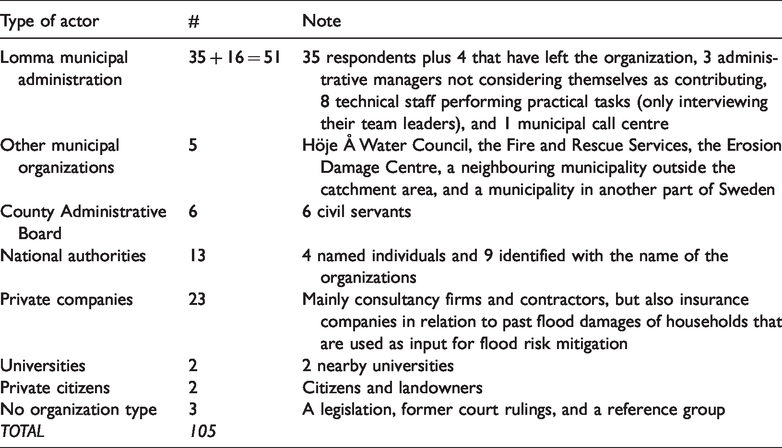
Social network analysis (Borgatti et al., 2018) and genealogy (Walters, 2012) were combined to study both structural and interpretative aspects of the governing of flood risk mitigation. Although social network analysis is unconventional for studying governmentality, O’Malley (2008:68–69) argues that governmentality perspectives are both theoretically and methodologically flexible, and thus open to be articulated with sociological analysis. He even carefully suggests such cross-fertilisation to overcome common challenges. Social network analysis has been suggested the most developed and widely used structural approach (Emirbayer, 1997: 298) and genealogy the conventional interpretative approach to governmentality. Both parts presuppose knowledge of the social organisation of contributing actors in its entirety. Since its boundary was unknown from the outset, the respondents were selected by means of snowballing (Borgatti et al., 2018). The snowballing started with 10 respondents within the municipal administration identified as likely to contribute to the mitigation of flood risk, using a name-generating question concerning who each respondent depends upon for input to be able to contribute to mitigating flood risk. It continued until no more new respondents were identified. This resulted in 35 respondents within the municipal administration, together identifying 105 formal actors (including the respondents themselves) who contribute to the governing of the mitigation of flood risk in the municipality (Table 1).
Types of actors contributing to the governing of flood risk mitigation in Lomma Municipality.
The social network data were collected through structured interviews. The dependence between actors was operationalised as the importance of the seven different types of input listed above, rated on a five-point Likert scale from not at all (0) to extremely important (4). The respondents were also asked to rate the level of trust they have that they will be provided with the input they need from each identified actor (on a similar Likert scale from no trust to full trust), and to rate the level of influence these actors have over the respondents’ ability to contribute to mitigate flood risk (from no influence to extremely big influence). The importance of the different inputs was then aggregated and normalised (divided by the maximum possible sum of 28) to produce a scale between zero (no importance) and one (maximum importance). The strengths of trust and influence were also equally normalised for coherence.
Qualitative data were collected through an open qualitative question during the interviews, asking the respondents who, what organisation, part of organisation or type of actor, in the entire universe, they consider having most influence over the mitigation of flood risk in Lomma. The question was probed until the respondents could not list more (no rank), or a maximum of five had been listed. Qualitative data were also collected through the informal interviews ensuing from the conversations around the formal interview parts. Data for the genealogy were also collected in the form of maps, legislation, policies, court rulings, strategies, plans, and consultation minutes.
Each interview took between 60 and 90 minutes, with a few shorter interviews with actors less engaged in flood risk mitigation. All interviews were done face-to-face to minimise non-responses and to allow for clarifications and probing (Borgatti et al., 2018) and the informal interviews. The social network data were analysed with the assistance of the software UCINET (Borgatti et al., 2002) and the qualitative data were analysed using a series of coding and categorisations (Charmaz, 2006).
The social network data were analysed for factions and different centrality measures. Faction analysis is a conventional way to identify subgroups in a network based on how the actors interact, regardless of their formal organisational structure (Borgatti et al., 2018). It entails optimising the division of the actors into a set number of groups based on the extent to which the groups form separate clique-like structures (Borgatti et al., 2002). A final proportion correct is then calculated to assess the fit of the optimisation function (0 = no fit; 1 = perfect fit). Centrality measures are commonly used to analyse power structurally (Scott, 2004). The more an actor has many actors being highly dependent on her input, the more local control she has over resources. This is operationalised as in-degree centrality (Borgatti et al., 2018). The more an actor falls on the shortest paths between pairs of other actors, the more control she has over resource flows through the network, which is operationalised as directional betweenness centrality (Brass and Burkhardt, 1992). Finally, the more influence an actor has over other influential actors, the more structurally powerful she is (Brass and Burkhardt, 1992). This is operationalised as in-eigenvector centrality.
Results
The results of the study are presented in four main sections. The first summarises the overall findings of the historical developments of Lomma and its flood problem. Thereafter follows two sections presenting the analysis of the actors involved in mitigating flood risk and of how they organise and do so. The last section summarises modes of thinking among the respondents.
The past influencing the present
The highest points of what is today Lomma Municipality started to be visible over the sea surface around 13 200 years ago, after having been pushed down by the Scandinavian Ice Sheet. The lime-rich soils of the area turned out to be excellent when agriculture was introduced, the water was rich in fish, and the ice had deposited clay that eventually turned into a valuable resource. Although Lomma was mentioned as early as 1058, it was still in early 19th century just a village of about 20 houses along the eastern bank of the river Höje Å (Figure 1).
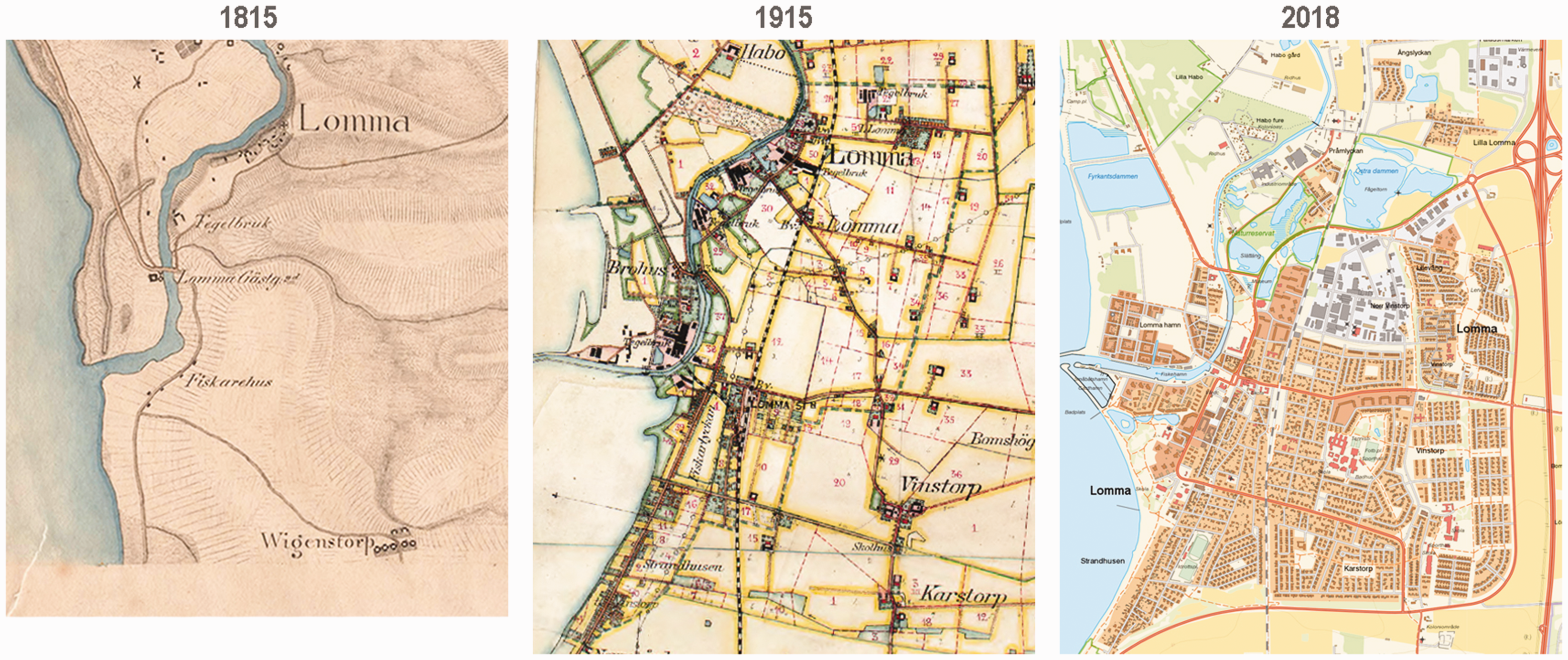
Maps of Lomma town from 1815 (Skånska rekognosceringskartan), 1915 (Häradsekonomiska kartan), and 2018 (Lantmäteriets karta).
The brick making expanded with the Industrial Revolution and by early 20th century there were wall-to-wall brickyards where the old village had been and at the mouth of the river (Figure 1). A pier had been constructed to protect the harbour in the river, obstructing natural sedimentary movements resulting in accretion to the north and erosion to the south. The town centre had moved down to just south-east of the river mouth, but still comprising mainly small fishermen’s houses along the main road and larger villas along the street to the train station built half a century earlier.
Urbanisation, which had just begun in 1915, escalated in the course of the 20th century, and the town started to extend across the fertile farmland that once was the reason for settling there (Figure 1). The population grew by an order of magnitude per century, from hundreds in early 19th century to tens of thousands today. Similarly for the towns upstream, Lund had barely grown outside the ancient town wall in 1915 and Staffanstorp did not yet exist. Today, they drain large areas with their impermeable surfaces and storm water drainage systems, affecting river flow downstream. The first such drainage systems in Lomma were ad hoc and not based on any long-term planning. Although that started to change in the mid 20th century, the drainage of new areas continued to be connected to these poorly documented older systems until recently. The eroded land south of the river mouth was reclaimed and extended in mid 20th century to provide space for both urban and harbour expansion, and after the last factory across the river closed in 1977, the new millennium has seen residential areas also being built there; along the beach and river (Figure 1). These developments are linked to a radical demographic transformation of Lomma in the last half century, from a rather disadvantaged working-class town with two-third majority support for the Social democratic party, to an affluent seaside town with strong support for the Conservative party.
Although areas along the river and coast, as well as local topographical low points, have been temporarily submerged throughout the ages, floods were rare in 1815, with the village located on the higher of the two riverbanks. Floods were still rare in 1915. Even if much of the wetlands in the river’s catchment area had been drained in the agricultural developments of the previous century, there was still much space within Lomma town itself to divert and retain water from an overflowing river, storm surge, as well as heavy rainfall. Floods are still relatively rare today, but flood risk has been exacerbated by a complex combination of decisions and actions throughout history and is anticipated to be further aggravated in the future.
Actors involved
There is substantial diversity among the 105 actors contributing to the governing of flood risk mitigation in Lomma Municipality (including the 35 respondents), representing both public and private spheres, and spanning from local to national levels (Table 1). All of whom being either highly educated (many MSc and even PhDs), very experienced, or both. However, it is striking to note that no actors representing any of the municipalities upstream in the catchment area are identified by the respondents, regardless of the impact upstream activities have on river flow through Lomma.
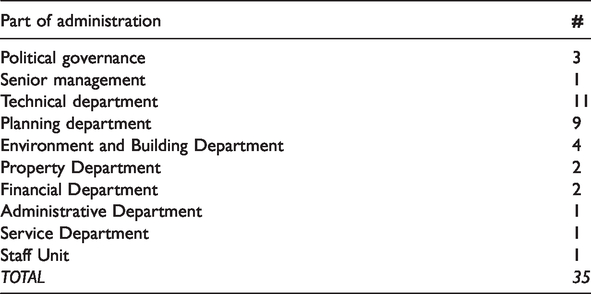
There is also great diversity among the 35 actors (the respondents) actively contributing to mitigate flood risk within the municipal administration itself (Table 2). This is in sharp contrast to before the 2007 floods, when flood risk mitigation engaged few staff working with water and sewage, tasked to manage storm water from rainfall with return periods up to ten years, and planners working on detailed development plans, which have been legally required to consider flood risk since the mid 1980s (SFS, 1987:10). This intensification of focus is particularly evident in the comprehensive plans stipulating overall land use, which do not mention flood risk at all in the comprehensive plans from 1990 1 and 2000. In contrast to dedicating a full chapter to it in 2010, and using flood risk as a key planning assumption throughout the plan. Although the increasing focus on flood risk in the detailed development plans started already the two years before the 2007 floods, in the planning of the new developments along the river and coastline, flood risk was generally addressed rather nominally in both planning and urban drainage. Moreover, most respondents who had worked at the municipal administration for long time refer to the flood in 2007 as the initiating event:
Actors per part of the municipal administration contributing actively to the governing of flood risk mitigation.
“Everything started with the floods in 2007.” (Male head of department)
Social organisation and action
Patterns of interaction within the municipal administration
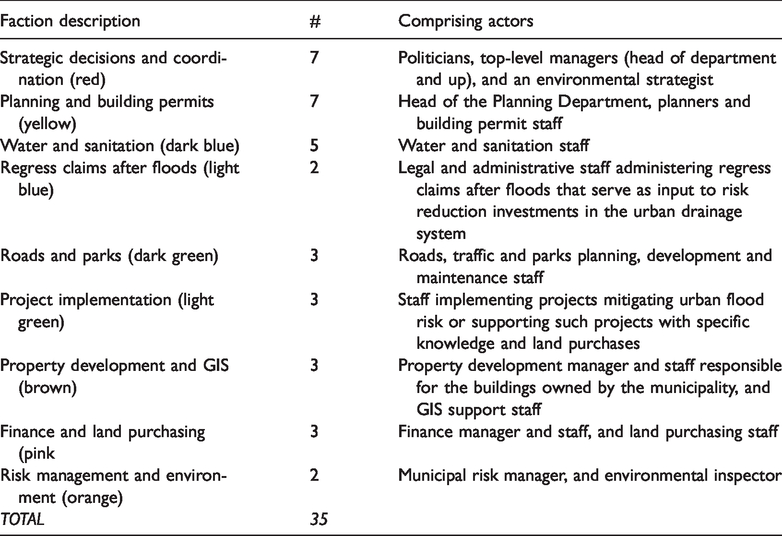
There are still most actors engaged in flood risk mitigation at the Technical- and Planning departments (Table 2), but the analysis displays significant interaction between the many involved parts of the administration 2 . To grasp the regime of practices, the interaction is first explored structurally with faction analysis (see Methodology) to identify more informal groups in the institutional arrangements. This elicits particularly interesting results when done with nine factions 3 , with remarkable congruence of tasks (Table 3). This means that the identified factions correspond to groups of actors contributing to the mitigation of flood risk in similar ways. It is then particularly interesting to consider the structural positions of each faction in relation to other factions and the network as a whole (Figure 2).
Types of factions contributing to the governing of flood risk mitigation in Lomma Municipality (colour references in faction descriptions refer to Figure 2).
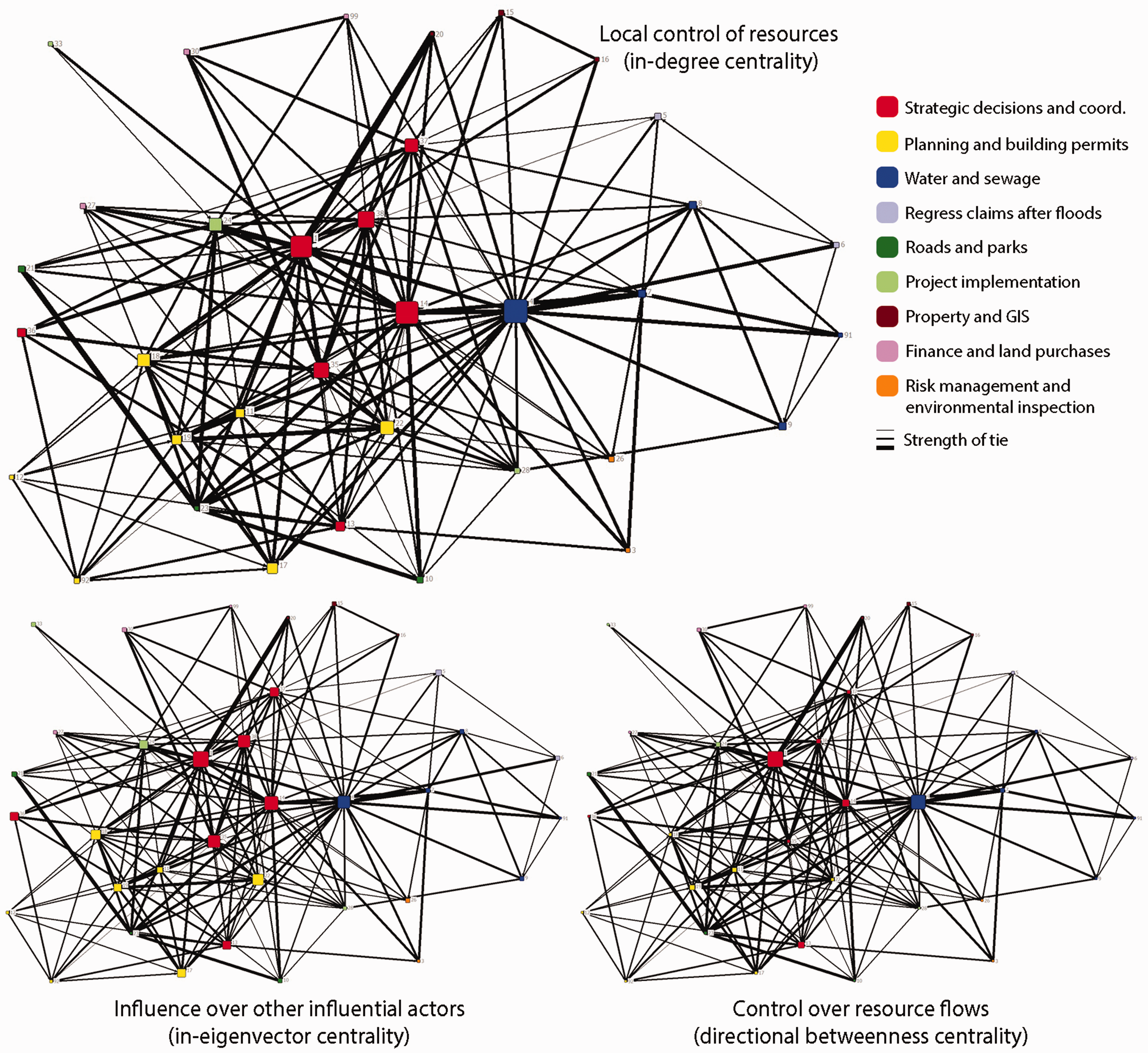
Network of all seven dependencies among actors actively contributing to mitigate flood risk within Lomma municipal administration, with
The strategic decisions and coordination faction (red) is most central in the network, with planning and building permits (yellow) and water and sanitation (dark blue) on each side. Planners are, however, much more central in the network than building permit staff, and everything in the water and sanitation unit revolves around its manager. The two parts of the municipal administration nominally engaged already before the recent problematisation of flood risk are thus still central, but now having flood risk as a priority issue and the active support and coordination of politicians, senior management, and an environmental strategist driving the work. This suggests that the main activities comprise planning and water and sewage, but with several other functions having either supporting or subsidiary roles (Figure 2), and that the mitigation of flood risk has transformed from a technical- to a political issue:
“Flood and climate issues are high on the agenda with us. We love our water but are located in an exposed manner, here furthest down along the river and beach.” (Male politician)
“I have worked a long time to get everybody involved. Some came along right away. When the politicians started to think it was important, all managers became interested and then everybody was involved shortly thereafter. […] More or less interested.” (Female civil servant)
Although included as a key planning assumption in the current comprehensive plan, it is in the detailed development planning for specific areas that the mitigation of flood risk is addressed in practice. When analysing the current 176 detailed development plans, having entered legal effect from 1932 to just months ago, it is not only clear that flood risk is increasingly addressed since 2005, but also that it is addressed for each planning area in isolation. It is the legal requirement of the developer requesting the detailed development plan (including the municipality) to provide the necessary assessments of urban drainage and flood risk for that specific area. The area is usually delineated by land ownership, with boundaries generally without any hydrological significance, and the assessments only focusing on the planning area as such and based on the planned situation within the area and the current situation of the areas around. This is recognised as potentially problematic by planners:
“Yes, it is perhaps problematic, but that is how planning must be done. How should flood risk be assessed otherwise? The law says that it is the landowner who must show that flood risk is taken into account and they pay for the necessary assessments. They cannot be forced to pay for assessments of flood risk for areas bigger than the area they own and have requested a detailed development plan for. Who should pay for it then? This is how planners in Sweden do it.” (Female civil servant)
“We who work with water & sewage are, of course, very dependent of what they [planners] do. […] I trust them fully, but there are difficulties in the contribution of planning to [flood] mitigation in the legislation.” (Female civil servant)
Urban drainage systems are generally designed to handle rainfall with return periods up to ten years, following guidelines from the water & sewage trade association, with some exceptions in areas with a history of recurrent floods. New and existing urban drainage systems are designed with the assistance of consultants in both hydrological modelling and measuring. Investments in existing urban drainage system are also informed by actual floods, both observed on the surface and identified through the regress claims from households flooded by backflow from the sewage system, particularly when combined with the urban drainage system.
Social relations with external actors
When analysing the social relations with external actors (Table 1), interesting patterns emerge 4 (Figure 3). First of all, it is important to restate that there are no direct links to the municipal administrations upstream in the catchment area.
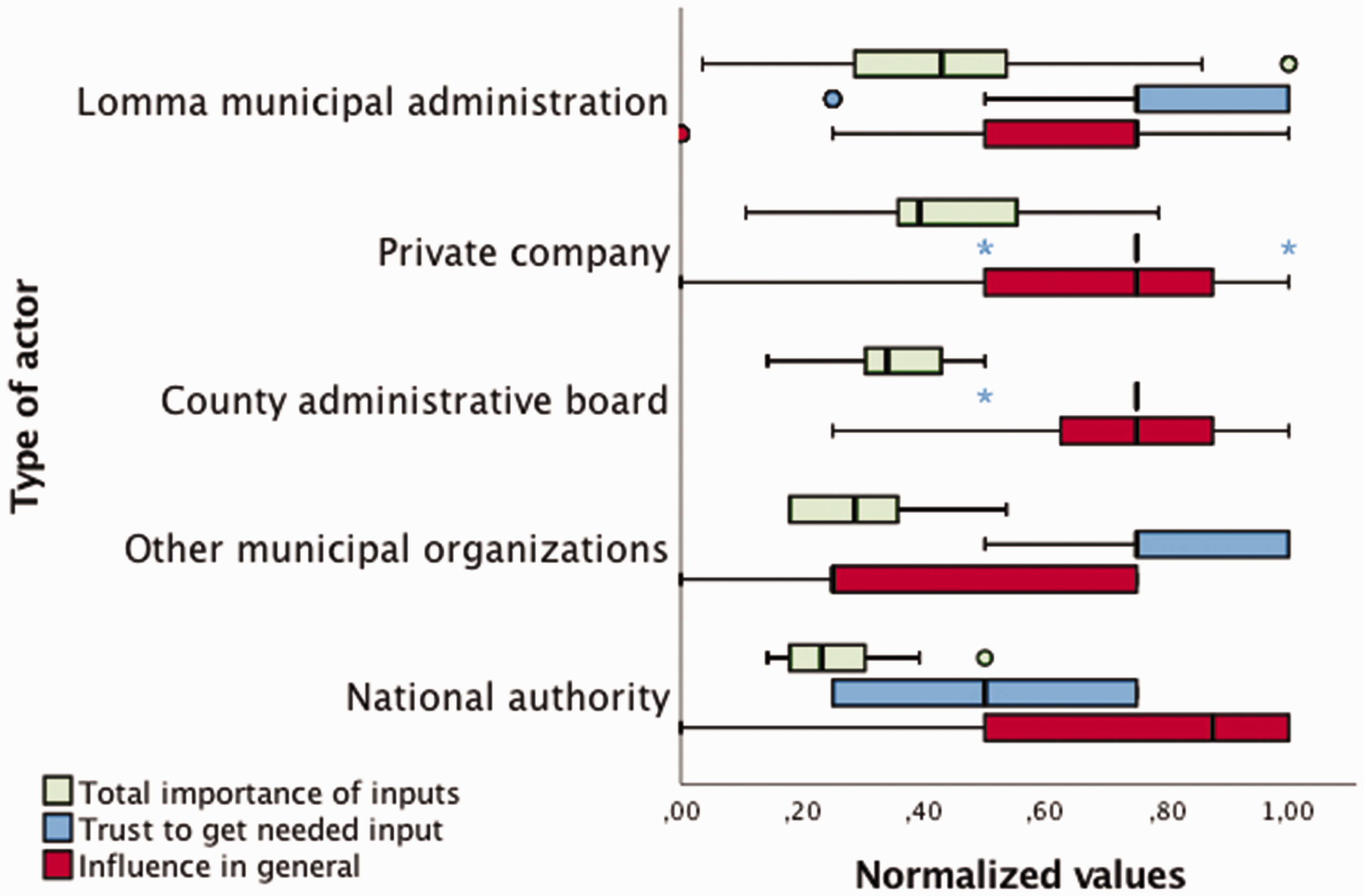
Boxplots with total importance of inputs, trust to get the needed input, and influence in general, of different types of actors (0 = None; 1 = Maximum).
Secondly, only private companies are as important in providing input on average as actors within Lomma municipal administration itself, with statistically significant
5
lower average importance of the input from the County Administrative Board* and even lower from national authorities*** (Figure 3). This regardless of the County Administrative Board having authority to repeal plans if not showing necessary consideration to legislation or national interests, which has happened in the region when the plans have included demands on retention of water on private property. The difference between the importance of the County Administrative Board and national authorities is also statistically significant**. The importance of private companies can be explained by most of the assessments, reports, and designs mentioned above being produced by various consultants, spanning from hydrological modelling to landscaping, and they are generally seen as delivering what they have been procured to do:
“Hahaha! Yes, we have consultants for almost everything whatsoever. We procure many different firms for different things, but [company name] is big and capable of many things. They did a good job, I think.” (Male civil servant)
Thirdly, although the very high levels of trust on average within the municipal administration is significantly higher than for both private companies*** and the County Administrative Board**, they still enjoy high levels of trust that they will provide what the municipal administration needs (Figure 3). The trust that national authorities will do the same is much lower*** (Figure 3), and the differences between national authorities and the County Administrative Board* or private companies*** are also statistically significant. However, national authorities are seen as having much influence over flood risk mitigation in Lomma municipal administration, although no differences in averages are statistically significant (Figure 3).
When considering these patterns together, two key findings emerge. First, private companies have become the most important and trusted external providers of the input needed for the governing of flood risk mitigation in Lomma. Second, although national authorities are considered very influential, what they do provide is considered of little importance and the municipal administration has low trust they will provide what is needed. This indicates that national authorities are seen as withdrawing from their responsibilities of providing guidelines to the municipalities, which is also mentioned explicitly by several respondents:
“I think they are withdrawing. When we contact them and ask for guidelines, they dodge the question or refer to legislation. They seem insecure.” (Female civil servant)
Modes of thinking
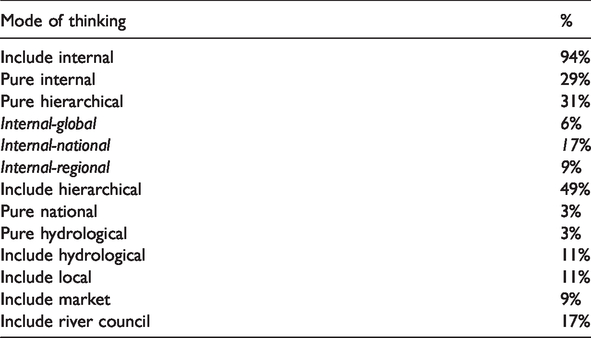
When contemplating what actors have most influence over the mitigation of flood risk in Lomma reputationally, the respondents express a range of perspectives (Figure 4). These perspectives are elicited from what actors they name, which combine into different modes of thinking depending on the combination of perspectives each of them includes. Almost two thirds of the actors considered influential in this context are categorised as internal, including either the municipal administration itself, some of its parts, or specific politicians or civil servants. Practically everybody includes such internal perspectives in their modes of thinking, out of which nearly a third include only internal perspectives and another third only add other administrative levels (e.g. the County Administrative Board, national authorities, the Parliament, the Government, IPCC) in purely hierarchical modes of thinking about influence (Table 4). It is important to note that these other administrative levels are mentioned as providing support or constraints for the municipality, and not as mitigating flood risk directly. Half the respondents include such hierarchical modes of thinking, while only around one in ten include local actors (citizens living in Lomma) or market actors (property developers). It is particularly interesting to note that only one in ten include any hydrological perspectives, pointing out actors influencing river flow upstream, while one in six include the River Council, which is a voluntary association of municipalities, industries, water treatment companies, and others affected by the water in Höje Å catchment area (Table 4).
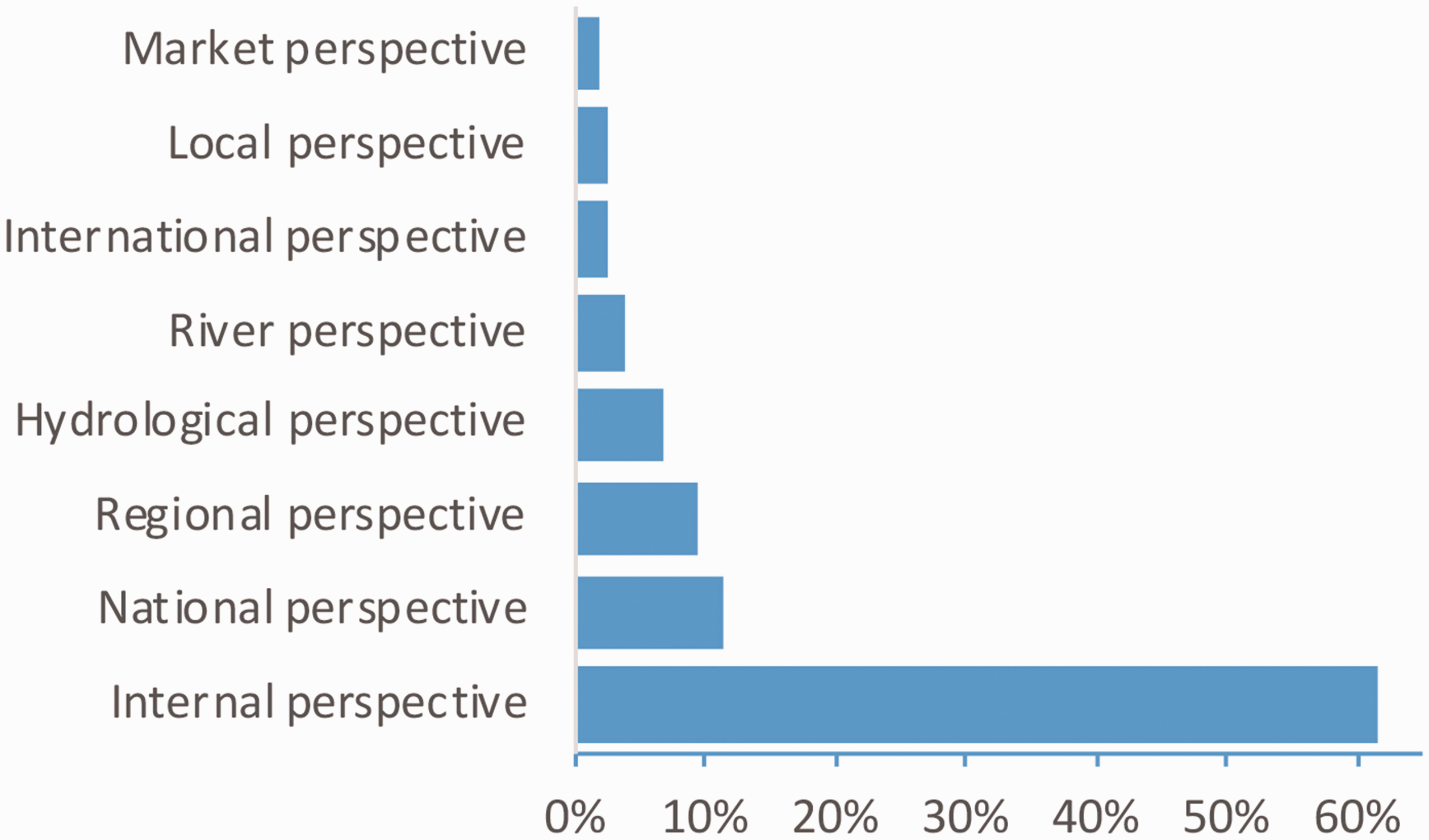
Distribution of perspectives in actors’ accounts of influence over flood risk mitigation in Lomma.
Prevalence of actors’ modes of thinking about influence over flood risk mitigation in Lomma.
These patterns of modes of thinking demonstrate the fundamental importance of the municipal border in structuring how flood risk mitigation is governed. While the environmental strategist is advocating for a hydrological mode of thinking—explicitly visible in the interview, in River Council documents and in a court case between the municipality and a golf course wanting to build/rehabilitate levees along the river upstream—all activities described in the other interviews and documents focus explicitly on Lomma municipality. Since it is fair to assume that all actors know that water flows from upstream to downstream, this must suggest the existence of a dominant rationality providing the basis for current activities by allowing for simplified definitions of particular flood issues.
Discussion
Flood risk in Lomma is the result of myriad decisions and actions over a long time period. In theory, all the way back to the first settlers millennia ago, but in practice, mainly over the last two centuries. Risk is thus not only constructed in the intersection of hazard and vulnerability, but essentially through the historical processes that affect them (Oliver-Smith, 1999). There is significant path dependency in the development of society (Mahoney, 2000), meaning that previous decisions and actions limit, or even lock-in (Payo et al., 2016), the set of possible decisions and actions at any point in time and increasingly over time; also in the institutions, procedures and practices central to governmentality (cf. Joseph and Juncos, 2019). However, that does not mean Lomma is predestined for disaster, but that future flood risk demands serious attention in the present.
Path dependency is also a more viable framework for explaining the timing of the problematisation of flood risk than any simple causal inference to the experience of an actual flood (cf. Johnson and Levin, 2009). Although the 2007 flood played a decisive role, remember that Lomma had been flooded several times before. It happened instead at a time when flood risk was already gaining attention. This emerging focus also coincided with the recruitment of the environmental strategist, who today is the most central actor in the network governing flood risk mitigation, which is a key technology through which actors conduct the conduct of themselves and others. It is therefore likely that timing and sequence mattered for the problematisation to occur and the governing of flood risk mitigation to become a priority (Dean, 2010).
The geographical border of the municipality is also largely determining how flood risk mitigation is governed. Regardless of water flowing from upstream to downstream, in a catchment area with significant anthropogenic alterations of hydrology, there are no direct links to upstream actors (Table 1) and few respondents include any hydrological considerations in their modes of thinking (Table 4). The geographical border is thus, notwithstanding its contingent nature over time, a central technology in governing flood risk mitigation. The apparent explanation for this is the combination of the extended tradition of local self-governance, reaching as far back as the Viking assemblies and the medieval parishes still delineating the borders of the municipality, and the recurring extension of municipal obligations. Although others point out the legal framework as hindering cross-border linkages (Johannessen and Granit, 2015), the explanation becomes richer when considering this technology as intrinsically linked with a dominant rationality—as is indicative of governmentality (Miller and Rose, 2008)—that reduces the actual complexity of flood risk in spatial terms to fit the legal and institutional environment.
The results suggest that the same reductionist rationality also shapes how the mitigation of flood risk is governed within the municipality. This is particularly evident in planning, which involves two key technologies in the form of the comprehensive plan and detailed development plan (cf. Moisio and Luukkonen, 2015). While the former follows the municipal border by definition, the latter is also spatially fixated but on the boundaries of the planning area itself. By assessing and addressing urban drainage and flood risk for each planning area in isolation, ignoring that virtually no planning areas coincide with hydrological boundaries, the process fails to grasp how measures to mitigate flood risk and other planning specifications in one area may impact flood risk in other planning areas. Both in the sense of engendering or exacerbating flood risk in already planned areas by inadvertently blocking or redirecting water, and by restricting the future land use of areas not yet planned. Although less common today, such problems have not always been restricted to neighbouring planning areas, but have appeared across the town when the drainage of new areas got connected to and overwhelmed available urban drainage systems, which are also key technologies for governing flood risk mitigation (Boyd et al., 2014).
The rationality reducing the actual complexity of flood risk in spatial terms is tightly linked to another rationality doing the same in temporal terms. The results show that detailed development plans and urban drainage systems are based on a snapshot of what the planning area would look like, assuming that other relevant conditions remain the same at the same time as several such conditions cannot be regulated. This rationality of ceteris paribus is particularly evident in the use of the results from hydrological modelling; another key technology and one that is time-consuming, expensive, and demanding expertise. These results are used even as many basic conditions have changed. Particularly the more comprehensive flood risk mapping of the entire town, which is still used after years of immense urban development.
These rationalities and technologies combine into a process of fragmentation of the issue of flood risk over space and time, which seems to be a common theme across the world (Hegger et al., 2016; Marks, 2019). This could partly be explained, at least in advanced liberal societies, by the pervasive fragmenting effect of neoliberalism (Bevir, 2011). Governmentality literature is rife of investigations of neoliberal reforms of the public sector precipitating radical changes in the governing of water related issues (e.g. Baviskar, 2007; Boelens et al., 2015). The resulting process of fragmentation is intrinsically linked to increasing dependence of the state on other organisations to fulfil its intentions (Bevir, 2011).
This fragmentation is in the present case associated with a process of commodification of flood risk mitigation based on the rationality that safety is the automatic aggregated result of various goods and services procured on the market, including hydrological modelling, risk maps, reports, and other key technologies. The recent problematisation of flood risk has not only mobilised many different parts of the municipal administration (Table 2). It has also amplified the need for external input, since the expanding municipal responsibility for flood risk mitigation has not been met with a corresponding increase in staff. The input from private companies is more important on average than from the other types of external actors (Figure 3), but is largely delivered by various consultants in a fragmented fashion. It is rather understandable that different consultants might be needed for different areas of expertise, but the fragmentation does not stop there. There are regularly different consultants with the same expertise engaged in neighbouring planning areas, and even in different phases of the planning process for one area. This excessive fragmentation further complicates the mitigation of flood risk, both as knowledge is lost in the gaps (Almklov and Antonsen, 2010) and as flood risk mitigation requires integration of many parts into a comprehensive whole (Becker, 2014). Although such integration is the responsibility of the professional staff of the municipal administration, much of the fragmentation is an unfortunate side effect of procurement regulations that could be addressed through more strategic application of them. However, the actors within the municipal administration trust the consultants to provide the parts they need (Figure 3) and expect to be able to source them on the market. This implies a commodification of flood risk mitigation, which is suggested by Almklov and Antonsen (2010) to be associated with fragmentation and loss of ownership and informal networks.
Commodification of public services is an inherent part of neoliberalism (Connell, 2010), which also involves the withdrawal of the state from providing them (Harvey, 2005). There is no doubt that neoliberalism has penetrated the Swedish welfare state (Harvey, 2005) and toppled the “strong state” (Lindvall and Rothstein, 2006), but the responsibility for flood risk mitigation still resides with the state; but on the municipal level. Even if the involved actors on the national level are perceived as having much influence over flood risk mitigation in Lomma, the actors in the municipal administration have little trust that they will get what they need from them (Figure 3) and only a quarter of the respondents mentions the national level at all when contemplating influential actors in general (Table 4). It is obvious that the parliament passes laws and the government implements them—represented regionally by the County Administrative Board—but the municipal administration perceives national authorities as reluctant to provide necessary guidelines on how to implement legislation. The national level is seen as withdrawing from the governing of flood risk mitigation, consistent with a neoliberal agenda, but at the same time making sure that the municipal level maintains the state responsibility through the oversight of the County Administrative Board.
This process concentrating the responsibility for mitigating flood risk to the municipal administration is not decentralisation towards polycentrism, advocated by influential voices in relation to governing complex problems (Ostrom, 1990; Pahl-Wostl et al., 2012). At least not if their meaning of polycentrism is maintained, and not used as a mere synonym of decentralisation to local government (e.g. Johannessen et al., 2019). Polycentrism is increasingly related to governmentality (e.g. Boelens et al., 2015; Moisio and Luukkonen, 2015) and is about distributed power without the loss of coordination between actors across administrative boundaries and levels, as well as societal spheres, in relation to a spatially bounded problem (Andersson and Ostrom, 2008; Pahl-Wostl et al., 2012). The concentration of responsibility could be seen as a sign of decentralisation, but it is a clear sign of weak polycentrism (cf. Andersson and Ostrom, 2008); just as the fixation on the municipal border discussed above. It has been pointed out that governing can be more or less polycentric (Andersson and Ostrom, 2008), and it is obvious that the present case exhibits a number of such traits. However, passive or withdrawing national authorities undermine the governing of flood risk mitigation, as sufficient interaction with actors on higher administrative levels has been shown to have positive effects on governing outcomes (Angst et al., 2018). This process of responsibilisation is also occurring by blocking the mobilisation of other important actors. This is particularly evident concerning the issue of the municipal administration attempting to demand retention of water on private property, which is likely to be indispensable for climate change adaptation since it is impossible to manage all future water on the fraction of useful urban land that is public. Even after the main conclusion of the Swedish Commission on Climate and Vulnerability (2007) stipulated the need to allocate more responsibility for risk reduction to private property owners and households, the County Administrative Board blocks any such demands and a recent court ruling against a neighbouring municipality further cements this interpretation of the legislation. It is, in other words, so far not the citizens being subject to responsibilisation, as commonly found in governmentality literature (e.g. Welsh, 2014), but the municipal administration. This is clearly visible in their perspectives and modes of thinking concerning influence (Figure 4 and Table 4). It is also in the gap between the increasing responsibility for mitigating flood risk and the lack of guidelines and resources for carrying it out—in the vacuum of responsibilisation if you like—that market actors emerge to provide their services.
It is clear that flood risk mitigation is a priority issue for the municipal administration in Lomma. Even if much still revolves around planning and water and sewage, a broad range of other functions are involved (Table 3) and top-level politicians and managers are central (Figure 2). This shift is crucial for effective governing, as flood risk mitigation is not only a technical problem but a political issue (Johannessen and Hahn, 2013). There is neither any doubt that politicians are seen as very influential and have the formal decision-making power in Swedish municipalities, nor that there is a clear hierarchy of authority between management levels. However, when simultaneously considering local control of resources, influence over other influential actors, and control over resource flows in the municipal administration (Figure 2), it is clear that the environmental strategist is the most powerful actor in the governing of flood risk mitigation structurally.
Regardless of who has been driving the process, the municipal administration in Lomma has managed to mobilise an impressive amount of expertise, experience, and resolve. The critique provided in this paper has therefore little to do with the performance of individual actors. The processes of fragmentation, commodification, and responsibilisation—resulting from the rationalities and technologies of the governing of flood risk mitigation—emerge instead in the collective response to overwhelming complexity, driven by systemic constraints. Since the law of requisite variety stipulates that any system governing another larger complex system must have a degree of complexity comparable to the system it is governing (Ashby, 1957), the systemic constraints must be removed or overcome so the governing of flood risk mitigation can match the complexity of flood risk in the catchment area.
Conclusion
Combining structural and genealogical analysis provides new opportunities for increasing our understanding of the governing of flood risk mitigation in advanced liberal society, which in the present case come out as a recent contingent reaction to a path dependent problem. The regime of practices for governing flood risk mitigation involves a number of key technologies, such as legislations, guidelines, plans, drainage systems, risk maps, hydrological models. However, it also involves the municipal border and the boundaries of detailed development plans, which are less obvious but fundamental in shaping conduct. These technologies are intrinsically linked with dominant rationalities that reduce the actual complexity of flood risk in spatial and temporal terms to fit the legal and institutional environment, consistently obscuring cross-boundary and cross-time connections. This fragmentation is associated with a commodification of flood risk mitigation, in which the municipal administration expects to be able to procure modules of safety and sustainability on the market. This commodification materialises in a vacuum of responsibilisation, when obligations are imposed without commensurate resources. Regardless of the notable individual capacities of the involved actors, systemic constraints in the governmentality of flood risk have generated detrimental processes of fragmentation, commodification, and responsibilisation in the face of overwhelming complexity. These systemic constraints must be removed or overcome for the governing of flood risk mitigation to match the complexity of flood risk in the catchment area. This is crucial for facilitating sustainable development for the time ahead.
Fragmentation, commodification, and responsibilisation are core constituent processes of neoliberalisation, which is clearly shaping the governing of flood risk mitigation even in Sweden; a bastion of the strong welfare state. However, while individual citizens are increasingly responsibilised to prepare and respond in the event of an actual flood (Rådestad and Larsson, 2020), which is in accordance with the governmentality in several other affluent liberal democracies (Bergström, 2018), it is interesting to note that the responsibilisation of the prevention and mitigation of future floods falls on municipal administrations. It is impossible to ascertain without further research if this is unique to Sweden, or perhaps to the decentralised Nordic version of the welfare state, or if the displacement of responsibility for governing complex issues towards a less powerful societal level is a general feature of advanced liberal societies. Regardless of which, such broader conceptualisation of responsibilisation might be constructive for governmentality as a heuristic to further grasp the intricacies of governing complex sustainability challenges.
Footnotes
Acknowledgements
This study would not have been possible without the keen participation of the politicians and civil servants of Lomma municipal administration.
Declaration of conflicting interests
The author(s) declared no potential conflicts of interest with respect to the research, authorship, and/or publication of this article.
Funding
The author(s) disclosed receipt of the following financial support for the research, authorship, and/or publication of this article: The study is part of the research project ‘Sustainable Urban Flood Management’, which is funded by FORMAS (2015-149).
