




Abstract
In the wake of the COVID-19 pandemic, knowledge workers have transitioned from passive occupants of corporate spaces to active agents navigating diverse workspaces. As organizations attempt to recall employees to central offices, they encounter widespread reluctance, as the company premises now compete with other locations. This study examines how knowledge workers navigate the growing array of work location choices and the resulting mobilities. Through 25 semi-structured interviews with knowledge workers in Germany, Austria, and Switzerland who have flexible working arrangements, we explore the factors influencing employees’ location choices. Specifically, we examine the underlying drivers of location selection, work preferences, and the associated geographic mobility within the context of the ongoing remote work transformation. Our results show that employees experience flexibility as a daily negotiation shaped by personal preferences, resource constraints, and evolving definitions of “workplace.” From this, we develop a decision-making framework that maps how resource allocation shapes mobility patterns along a continuum—from micromobility through mesomobility to macromobility. Furthermore, we have conceptualized effective and ineffective organizational responses to shaping employee mobility. By bridging the gap between organizational policies and employee agency, this research advances the geographic mobility literature, offering actionable insights for firms grappling with hybrid work models. It encourages practitioners to reconsider “flexibility” as a strategic resource rather than a perk, suggesting that aligning spatial policies with employee-driven needs can mitigate attrition and support sustainable productivity.
Introduction
The post-pandemic “work from anywhere” era has granted knowledge workers unprecedented autonomy, fundamentally shifting the employer-employee spatial contract. This transition moves beyond fixed locations to a spectrum of negotiated options, from homes and cafés to coworking spaces and cross-border relocations (Bosch, 2004; Schoukens and Barrio, 2017). While organizations often frame flexibility as a policy (e.g., hybrid work mandates), employees increasingly treat it as a practice, a daily negotiation shaped by personal preferences, resource constraints, and evolving definitions of “workplace” (Wang et al., 2021). Yet, research remains disproportionately focused on organizational outcomes like productivity and cost savings (Choudhury, 2021), neglecting how employees themselves conceptualize and enact mobility. However, without understanding the decision-making processes that drive individual choices, policies risk misalignment with employee needs, undermining retention, well-being, and the very flexibility they aim to promote.
For knowledge workers, this new frontier of location fluidity is double-edged. While remote work dismantles geographic constraints, it gives rise to tensions between professional obligations and personal life (Sandoval-Reyes et al., 2021; Yang et al., 2021). As employees embrace this agency, organizations are backtracking, citing concerns over collaboration deficits and slipping performance (Kowalski and Ślebarska, 2022). Leaders pushing to get their employees back to the office, face reluctance (Gibson et al., 2023). Employees increasingly question the purpose of the office, demanding flexibility to choose when and whether to commute (Murphy, 2021; Smite et al., 2022). This exposes a crisis of trust: remote work erodes managerial confidence (Parker et al., 2020; Stavrova et al., 2023; Taboroši et al., 2020), while rigid return-to-office mandates strip workers of schedule control and can cause brain drain (Ding et al., 2024). Workers, however, do not reject offices outright; they seek spaces that align with their needs, whether for collaboration, focus, or community (Wöhrmann et al., 2021).
The core of this conflict lies in misalignment: organizations cling to legacy assumptions about presence and productivity, while employees view mobility as a tool to reclaim work-life sovereignty. To bridge this divide, it is crucial to understand how workers navigate their expanding spatial choices. Thus, our study asks: (1) How do employees navigate their work location choices and (2) what factors shape the adoption of different mobility forms?
The prevailing literature on hybrid and remote work, while extensive, is constrained by two primary limitations that our study aims to address. First, it predominantly conceptualizes mobility through an organization-centric and static lens, framing it as a binary choice between the office and a single remote location (typically home) or a fixed weekly schedule (Appel-Meulenbroek et al., 2022; de Laat, 2023). This perspective overlooks the multi-scalar and fluid nature of worker mobility, which ranges from daily shifts between home and secondary locations to longer-term relocations. Second, existing research often portrays employees as passive recipients of corporate policy, thereby under-theorizing the active, agentic decision-making processes that drive their daily location choices (Ferreira et al., 2021; Wöhrmann et al., 2021). This leaves a theoretical gap in understanding why and how workers navigate their spatial options beyond mere compliance with organizational mandates.
Our study addresses these gaps by offering a novel theoretical synthesis: we adapt Lee’s (1966) classic push-pull framework, a theory traditionally originating in migration studies, to theorize the mobility decisions knowledge workers make in the context of hybrid work. This analytical shift allows us to foreground employee agency and reframe location choice as a dynamic process of balancing competing attractions and expulsions. This approach offers original value by extending theories of geographic mobility into the contemporary workplace, where location fluidity is both a privilege and a paradox (Ding et al., 2024; Stavrova et al., 2023).
Our contributions are directly tied to filling these identified gaps:
To address the gap in scalar understanding, we develop a multi-scale typology (micro-, meso-, macro-) that captures the heterogeneity of knowledge workers’ spatial strategies. Unlike organization-centric models, this typology provides a more granular language to differentiate between transient adjustments (e.g., daily café use) and transformative relocations, a distinction critical for aligning workspace design with employees’ lived realities.
To fill the theoretical gap concerning employee agency, we propose a decision-making framework that operationalizes the push-pull model for daily work. This framework moves beyond seeing workers as policy-takers and instead models them as active agents who weigh factors like home distractions (push) against co-working amenities (pull), constrained by individual circumstances and systemic inequities.
Last, by bridging these theoretical gaps, we offer practical guidance for organizations to respond to the dynamics of location choice. Our findings equip HR practitioners to address the misalignment between policy and practice by designing “pull-centric” workplaces that incentivise attendance rather than enforce it, thereby minimizing friction and improving employee satisfaction.
This work responds directly to calls for more granular and theoretically-grounded insights into the drivers of remote work adoption (Gifford, 2022; Kaiser et al., 2022) and the understudied relationship between geographic flexibilization and workplace selection motives (Choudhury, 2021; Lazarova et al., 2023).
Geographic mobility in the context of remote work
One of the most significant constraints on worker mobility has traditionally been the necessity of physical proximity to a fixed workplace (Bosch, 2004). This “workplace tether” restricted mobility before, during, and after work hours. Remote work disrupts this paradigm, decoupling productivity from geographic proximity and enabling autonomy in workplace selection (Absalyamova and Absalyamov, 2015; ILO, 2016). As virtual collaboration increasingly replaces face-to-face interactions (Selmer et al., 2022), the necessity of physical presence diminishes, allowing workers to operate independently of employer locations, provided they possess requisite resources like digital infrastructure (Henson et al., 2002). This shift has sparked competition among localities vying to attract high-skilled remote workers, whose economic contributions increasingly incentivise regions to position themselves as mobility-friendly hubs (Teodorovicz et al., 2023).
However, motives for embracing flexibility diverge between organizations and employees. Individuals prioritize time and cost savings, reduced commuting burdens, and enhanced work-life integration (Beno, 2021; Sundermeyer, 2024). A closer examination of these motives reveals nuanced drivers behind the adoption of this flexibility. A study by Shockley (2012) found that employees were more likely to use flexibility for work-related motives (e.g., increasing productivity) than for life management reasons (e.g., childcare, household tasks). Individual differences further shaped these preferences: workers with greater family responsibilities or marital ties prioritized life management, while those with strong work-nonwork segmentation preferences used flexibility to create boundaries that enhanced focus (Shockley, 2012).
Organizations, conversely, leverage flexibility to reduce overhead costs, broaden talent pools, and boost productivity by aligning workspaces with task-specific needs (Choudhury et al., 2021; Mondragon and Wieland, 2022). While employers frame remote policies as tools to boast employer attractiveness (Felstead and Henseke, 2017; Ozimek, 2020), this transactional view often overlooks employee agency in redefining how and why mobility occurs. While flexibility creates the conditions for movement, mobility reflects how people act within or against those conditions.
Geographic mobility now manifests heterogeneously, spanning transnational relocation, intra-country migration, and micro-scale adjustments like co-working space use (Urry and Sheller, 2012). Despite the potential for long-distance moves, most workers opt for proximate mobility (Choudhury, 2021; Kruglov et al., 2020), balancing flexibility with social and logistical ties. Research on academic mobility, for instance, reveals how career stage, family obligations, and location amenities (e.g., housing, childcare) interact to shape decisions (Petzold, 2020). Importantly, Thorn (2009) notes that the relative importance of these factors can shift throughout an individual’s career trajectory and life journey, underscoring the fluidity of mobility drivers. However, critical gaps remain in understanding the role of these factors under conditions of heightened flexibility. Existing studies (Aksoy et al., 2023; Beno, 2021; Bloom et al., 2014) often isolate individual, organizational, or location variables, neglecting the dynamic interplay between autonomy, constraints, and evolving work norms. By interrogating these tensions, our study provides a holistic framework for mobility decision-making in an era of contested flexibility.
The push-pull theory and location selection of knowledge workers
Knowledge workers—defined as professionals who leverage theoretical expertise and technical tools to create value (Drucker, 2011)—have historically faced a paradox: despite their inherent career mobility, for example, relocating for global assignments or office transfers (Wright et al., 2018), they were often tethered to physical workplaces due to regulatory constraints, employer-controlled infrastructure, or task-specific dependencies (Hermann and Paris, 2020; Jooss et al., 2021). Remote work has disrupted this dynamic, enabling spatial autonomy and amplifying their capacity to act on mobility aspirations (Aydemir et al., 2021). This group, which includes consultants, IT specialists, and managers, is uniquely positioned to exploit geographic flexibility due to high human capital, elevated salaries, and globalized labor markets (Aydemir et al., 2021; Kampelmann et al., 2018).
While knowledge workers possess structural capacity for mobility, individual decision-making remains complex. Even within this privileged group, mobility choices are shaped by personal circumstances, aspirations, and constraints (Jooss et al., 2021). High salaries and global labor markets facilitate geographic flexibility but do not solely determine decisions, which are based along the lines of life stage, identity, and competing priorities. Mobility motives are diverse and Include intrinsic drivers, such as work-life balance or lifestyle preferences, which intersect with extrinsic incentives like career advancement and tax benefits, mediated by age, gender, family obligations, and nationality (Brewster et al., 2021; Selmer and Lauring, 2011).
In order to understand mobility decisions, Everett Lee’s (1966) push-pull framework, initially developed to comprehend migration patterns, remains highly pertinent. The theory identifies factors that prompt individuals to leave their current residence (push factors) and attract them to settle in a new location (pull factors). Push factors may include economic hardship, political instability, environmental degradation, or poor living conditions, while pull factors encompass better job prospects, improved quality of life, political stability, or cultural amenities. Critically, Lee emphasizes that these factors are not fixed; their influence depends on individual perceptions of opportunities and constraints (Lee, 1966). While rooted in migration studies, the push-pull framework has proven adaptable across diverse mobility contexts. Scholars have successfully applied it to explain consumer switching behavior (Bansal et al., 2005), residential relocation (Speare, 1974; Steele et al., 2016), and tourism destination choices (Kim Lian Chan and Baum, 2007) by reconceptualizing geographic mobility as a subset of general switching behavior. These applications underscore its flexibility in modelling decision-making processes shaped by the interplay of negative drivers (e.g., dissatisfaction with services) and positive attractors (e.g., superior alternatives). In extending this logic, we argue that migration represents one facet of a broader mobility continuum, where the core framework of push-pull dynamics applies equally to similar transitions, such as workplace location decisions.
Ultimately, the push-pull framework’s generality lies in its recognition of human agency: individuals dynamically and iteratively weigh perceived negatives against potential positives, whether migrating across borders, switching brands, or opting to work remotely. This theoretical alignment strengthens our understanding of modern mobility, emphasizing that geographic and non-geographic transitions share fundamental motivational underpinnings.
Method
To investigate knowledge workers’ location choices and mobility tensions, we employed a qualitative, interpretivist approach using semi-structured interviews (Clarke and Braun, 2017). This methodology enabled us to explore participants’ subjective perceptions and lived experiences navigating work flexibility, focusing on the how and why behind their decisions regarding geographic mobility, professional demands, and personal constraints (Romani et al., 2018; Rubin and Rubin, 2005).
Aligned with Eisenhardt and Graebner’s (2007) theory-building framework, we utilized purposive sampling to select 25 knowledge workers from professional services (e.g., consulting, digital marketing, manufacturing) who have been given the opportunity to work flexibly from home and other locations in recent years. This ensured direct experience with remote work policies and mobility challenges (Wright et al., 2018). Our sample inherently comprised individuals with middle to high incomes and location-independent workflows. This inherent composition allowed us to examine individuals unconstrained by typical financial pressures tied to location or employment. Consequently, their heightened financial agency renders this group particularly insightful for studying the dynamics of mobility trade-offs and location preference enactment (Bussin and Brigman, 2019; Zhao et al., 2016). While recruiting our interview partners, we leveraged professional networks (e.g., consultants, creatives, project managers) to identify contrasting patterns within the core phenomenon (Eisenhardt and Graebner, 2007). This cohort’s inherent mobility, characterized by frequent travel and location-independent work, provides a critical lens for understanding the limitations even resource-rich workers face in optimizing location choices, addressing a gap in current remote work scholarship (Jooss et al., 2021).
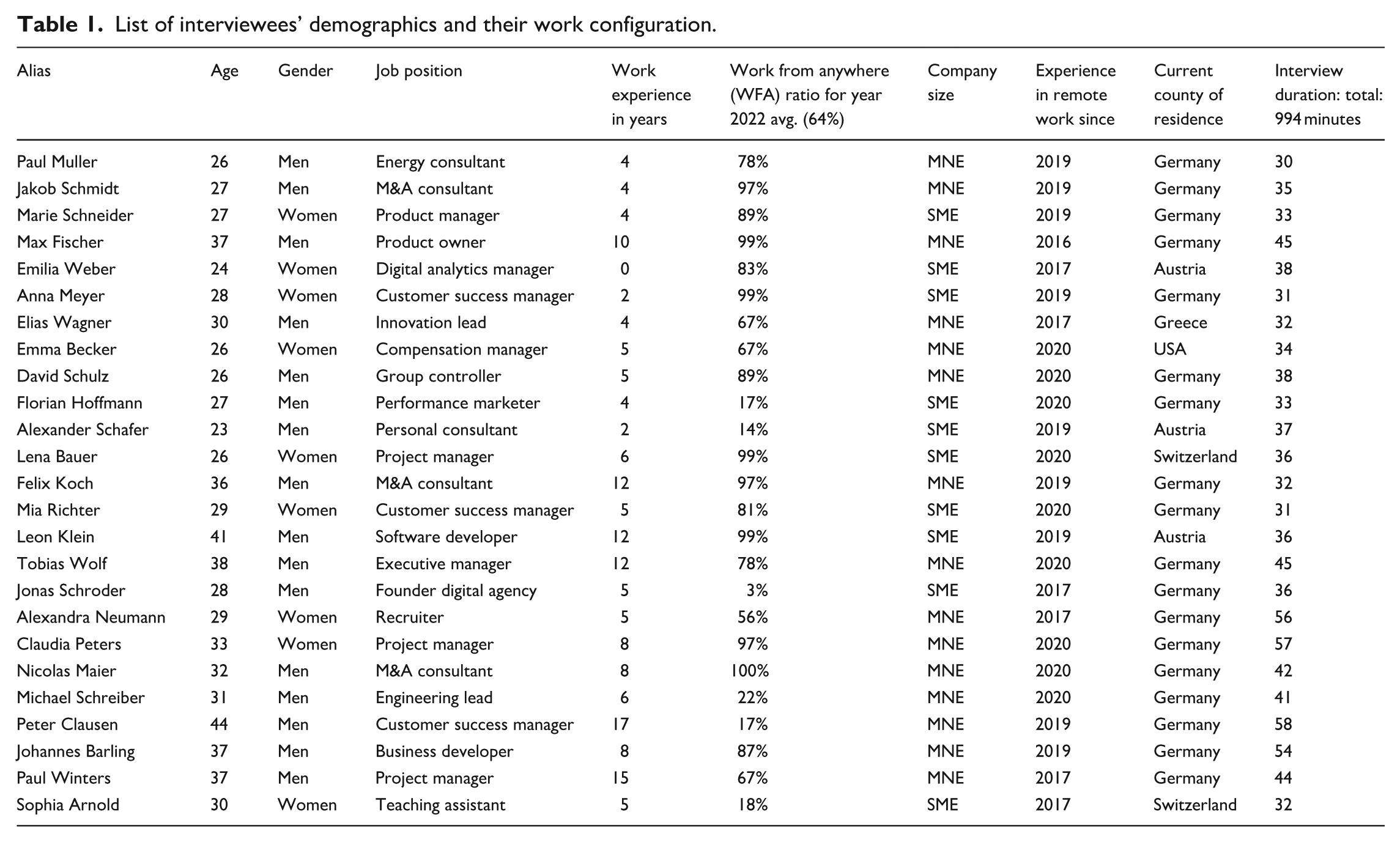
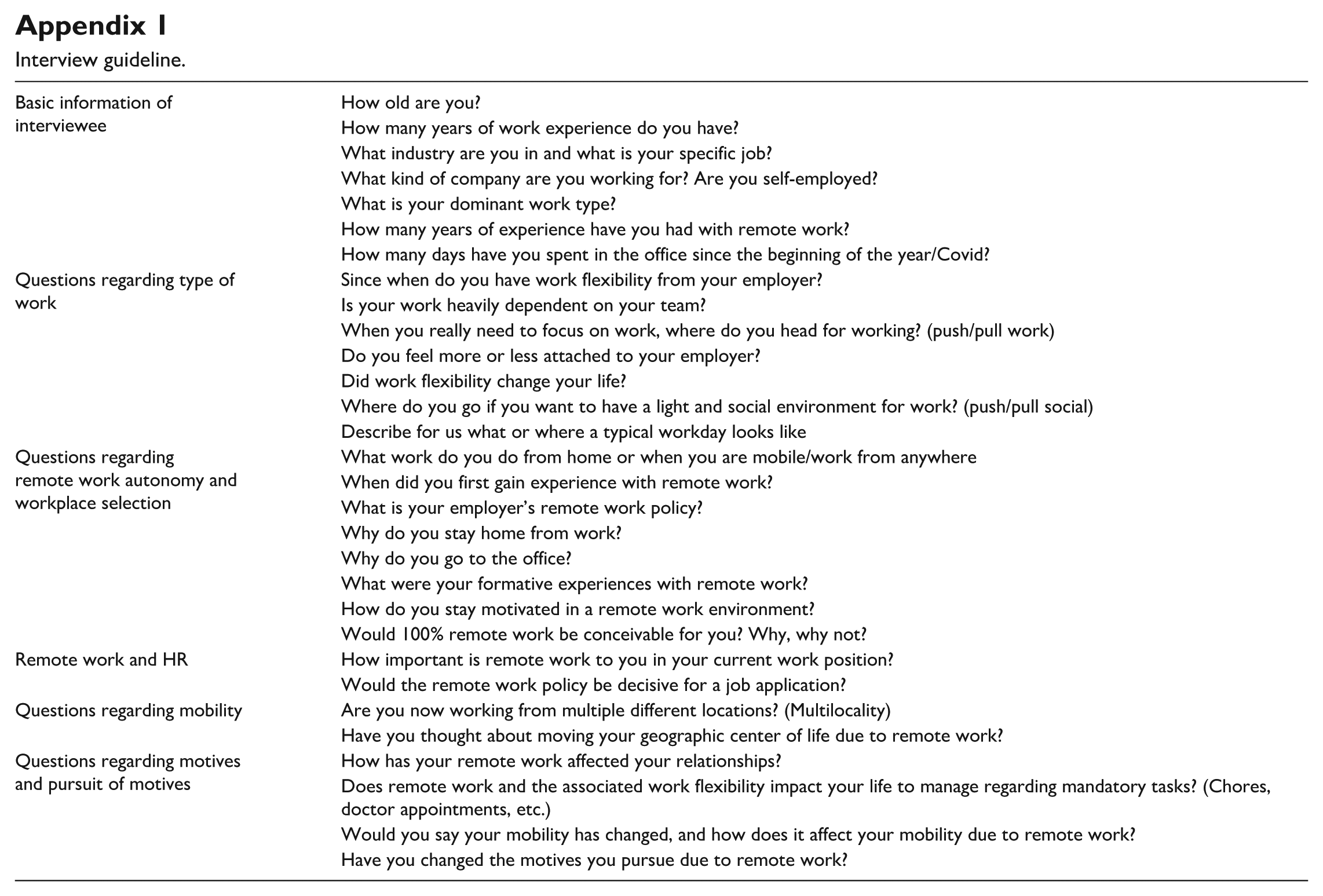
Data collection occurred between August and December 2022, with 25 participants (9 women, 16 men) employed in Germany, Austria, or Switzerland (DACH region)—a region selected for its shared linguistic, cultural, and geographic context (Kiefhaber, 2018) and high prevalence of remote-work-compatible roles (Holgersen et al., 2021). Participants worked in the service sector, were early- to mid-career professionals, and had remote work flexibility (⩾2 days/week). Table 1 summarizes their demographics and roles. All interviews were conducted via Zoom, with participants informed of GDPR-compliant data handling, including audio recording, pseudonymization, and confidentiality safeguards. While pseudonyms replaced real names, contextual details (age, gender, job) were retained for analysis (see Table 1); the master list of identifiers is held securely by the first author. Prior to primary data collection, nine preliminary interviews informed the refinement of semi-structured guidelines (Appendix 1). These sessions clarified key themes, remote work experiences, mobility patterns, and location choice rationales, which shaped the final guideline. The first author conducted these interviews (30–60 minutes) which included with broad reflections on remote work transitions before probing specific decisions and tensions. Follow-up questions encouraged elaboration on unanticipated themes.
List of interviewees’ demographics and their work configuration.
Data saturation occurred at 21 interviews, with four additional confirmatory interviews ensuring thematic consistency. Interviews were transcribed verbatim and the analysis of our data was carried out in an abductive manner with deductive (Kyngäs and Kaakinen, 2020) and inductive elements (Gioia et al., 2013). Overall, we followed a thematic content analysis approach through coding of the interview transcripts, followed by a summary of the coded segments (Bell et al., 2019; Flick, 2019; King and Horrocks, 2010). The deductive codes were generated based on the proposed research questions and the literature, while the inductive codes emerged from the data (Bazeley, 2013). We followed the approach by Kuckartz (2014) and conducted the thematic qualitative text analysis as a two-stage coding process. In the first coding process, we analyzed the data based on the deductive codes and developed inductive codes based on the interview data. In the second coding process, we analyzed all data again and assigned all codes (deductive and inductive) to the data. Afterwards, we aimed to analyze and summarize the data based on the developed codes by searching for relationships, commonalities and differences (Flick, 2019). Emerging patterns were validated through member checking, with five participants reviewing interpretations for resonance with their experiences.
Our coding process prioritized rigor through an iterative and collaborative team-based approach as discussed by Cofie et al. (2022) and Campbell et al. (2013). Rather than conducting independent parallel coding, we employed a shared-interpretation model in which the lead author performed initial coding and developed a provisional codebook. This codebook was continuously refined through structured team discussions that aimed to enhance clarity, conceptual fit, and consistency. No substantial disagreements emerged; instead, interpretive nuances were discussed and aligned early in the process, reflecting a high degree of analytical convergence.
To ensure transparency and external validation, we presented preliminary findings and coding structures to professional audiences and incorporated their feedback into the framework. A co-author supervised the entire process to guarantee coherence with the study’s theoretical foundations. This approach aligns with rigorous qualitative methodologies that prioritize collaborative interpretation, theoretical anchoring, and expert triangulation over purely statistical inter-coder reliability (Campbell et al., 2013; Cofie et al., 2022). Finally, we adopt a descriptive model to analyze the present decision-making process for the conceptual framework development. This approach facilitates the detection of biases, inconsistencies, and bounded rationality (Bazerman and Moore, 2012).
Findings
The findings outlined in Figure 1 below show the main dimensions that explain the choice of geographic location of knowledge workers and their motives influencing work location selection.
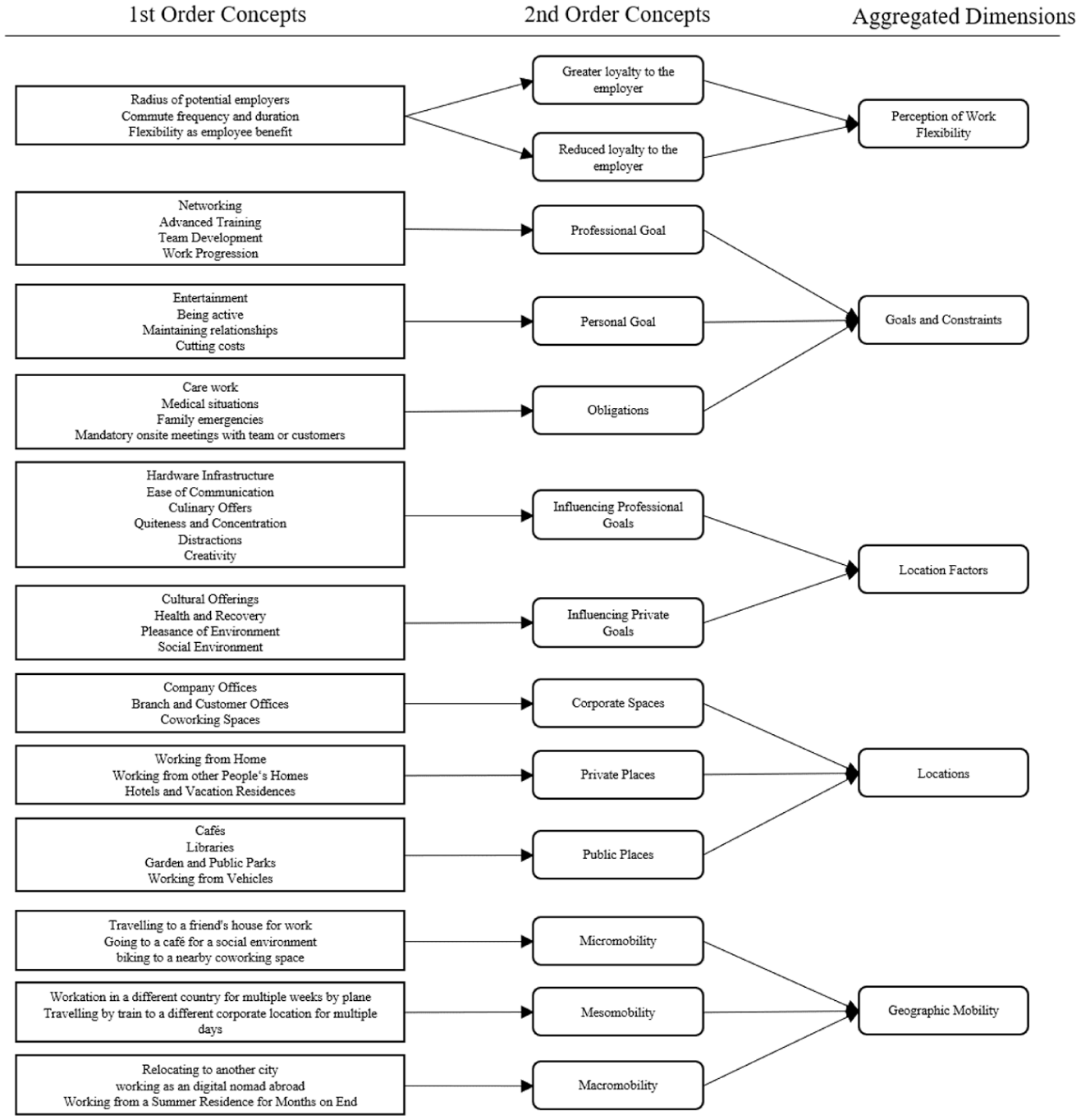
Data structure based on the Gioia Method (Gioia et al., 2013).
Five dimensions emerged from our data analysis that determines the decision-making of knowledge workers regarding their work location: (1) Perception of Work Flexibility, (2) Goals and Constraints, (3) Location Factors, (4) Locations, and (5) Geographic Mobility.
Perception of work flexibility by knowledge workers
Prior to the COVID-19 pandemic, the majority of respondents (18 out of 25) had experience with occasional remote work, though flexibility expanded significantly post-pandemic and persisted even after the removal of government and organizational health mandates. Organizational policies emerged as a critical determinant of this flexibility, ranging from unrestricted workplace autonomy, including international remote work, to hybrid models mandating specific office days. These policies directly influenced perceptions of employer-employee relationships: while many viewed flexibility as a benefit enhancing loyalty, others noted it reduced their dependence on employers by expanding their geographic and professional mobility.
Whether it is possible to work from home as before or to do a large part of it from home expands my radius extremely because I think it is much more difficult now, even with a partner, for both of them to find the same employer in the same city at the same time. The possibilities to change employers are much greater now. Nicolas Maier
Several respondents emphasized that revoking remote work policies would prompt them to resign, prioritizing lifestyle and autonomy over rigid office requirements.
When it came to revoking the company’s rules on remote work, I told my supervisor that I had finally fulfilled my dream and had moved 500 km away from the office. I told her that we would either have to find a solution or I would have to resign. Felix Koch I am just enjoying life more than before; I’m not going to let that go away, Johannes Barling
The exception was one participant who lived close to the employer’s office and could arrange his office freely, framing the workspace as an extension of his home environment.
There’s never the excuse of saying it’s not worth going to the office today because it’s so close. I can also arrange my workplace the way I want. If I want more plants or a sofa, then I put that in. I also have more space here, so the design options here are greater for me than at home. I see the office as an extension of my home. Jonas Schroder
A recurring theme was the demand for purposeful workspaces aligned with individual needs. Respondents universally rejected returning to full-time office work, citing inflexible mandates as a source of conflict when perceived as undermining autonomy. Office attendance required clear value, with many questioning its necessity if it failed to enhance productivity or well-being. This underscores a broader shift in expectations, where flexibility is no longer a perk but a non-negotiable element of modern work arrangements.
I simply see no added value in going to the office, so why should I? Claudia Peters
Goals and constraints
Pursuing professional goals
Our interviews revealed distinct patterns in how individuals strategically leverage workplace flexibility to align with professional objectives, environmental preferences, and mobility constraints. A recurring theme was prioritizing of environments perceived to optimize productivity. Many participants actively avoided workspaces that hindered focus, though preferences diverged based on personal circumstances.
For some, office spaces provided necessary structure. Peter Clausen, for example, emphasized how the quiet atmosphere of his office enabled sustained concentration: I have two small children at home, and they were always at home during the pandemic. Now they are in kindergarten, but only until 1 pm. But then I went to the office because I had more peace and they understood better that I must concentrate during working hours. If I were at home, they would still always ask me something and ask for help. Peter Clausen
Conversely, other participants found office environments detrimental to focus. Marie Schneider critiqued open-plan layouts: When I want to concentrate on my work, I prefer to be at home. At work, we have an open office concept with flexible workplaces, which is still quite crowded, so there are many distractions and more stress due to noise and conversations with colleagues. Marie Schneider
Paul Winters echoed this sentiment, noting how collegial interactions could disrupt workflow: We have a completely open and very modern office. But of course, that means that now and then, someone comes by and says, long time no see, let’s have a coffee. The kind of distraction you have in the office. Paul Winters
By contrast, Anna Meyer described the office as a safeguard against domestic distractions: I prefer to be in the office when I want to work effectively since I feel a bit observed by other colleagues. At home, I can do many other things, like watching TV, turning on the dishwasher and getting distracted by many other things. I like to get my household in order during working hours, but at work, I can work away more sensibly in one piece. Anna Meyer
Beyond environmental optimization, several interviewees utilized flexibility to pursue advanced education or entrepreneurial ventures. Johannes Barling highlighted the transformative potential of remote arrangements: Thanks to work flexibility, I was allowed to start my doctorate alongside my job, not depending on the university’s location. Before the pandemic, that would never have been possible. Johannes Barling
Similarly, Claudia Peters credited location independence with enabling her startup’s development: I had the idea of starting a startup with a friend even before we switched to work flexibility, but we were both always so busy that it was challenging to manage time-wise. We have made the most progress in the pandemic, and soon, we will be at a point where we have to decide if we don’t want to pursue the project full-time. Claudia Peters
Pursuing personal goals
Work flexibility also emerged as a critical tool for harmonizing professional and personal priorities. Respondents overwhelmingly cited improved work-life balance through reduced commuting, streamlined errands, and enhanced caregiving capacity. Mia Richter illustrated this convenience-driven approach: When I’m at home, I usually take care of the washing machine, let any handyman in, and receive packages. And if I want to, I take a break to go for lunch with friends and a little walk after that. Mia Richter
For others, flexibility facilitated deeper familial connections. Alexandra Neumann restructured her schedule to care for her grandmother: The fact that I already travel to my grandmother on Thursday evenings and work at her place on Fridays means that, on the one hand, the train fares are cheaper, I have more time with her, and I feel more relaxed overall because the time is less crowded since we now spend Thursday evening to Monday evening together instead of Friday evening to Sunday evening. And for Friday and Monday, I always have work that can be easily solved remotely. Alexandra Neumann
Parental responsibilities similarly influenced location choices, though with divergent outcomes. While Peter Clausen (quoted earlier) sought separation from childcare demands, Tobias Wolf leveraged remote work to engage more actively with his family: During the pandemic, my girlfriend and I had twins, and I am really happy that I can take care of the children together and relieve each other. I think my performance has remained the same. Still, with work flexibility, I was able to cancel my apartment near my employer. I am saving the weekly trip to work, and at the same time, I can see my family more. I am no longer in the unpleasant environment I was in before. Tobias Wolf
Flexibility also facilitated the realization of lifestyle objectives. David Schulz highlighted pet ownership as a flexibility accomplishment, which was once at odds with office work: During the pandemic, my girlfriend and I fulfilled our dream and got a dog. We had always wanted this, and because we were at home, we had a lot of time to take care of him. My employer is not very flexible regarding dogs, which is why I rely on work flexibility to take care of the dog. David Schulz I enjoy cycling, but especially in winter, it is usually dark after work, and it doesn’t make sense to go on a tour because I am often tired after work. That’s why I plan my bike rides for the morning or midday and continue working afterwards from home. Florian Hoffmann
Constraints
Health-related constraints emerged as another critical factor shaping workplace decisions. Alexandra Neumann’s experience recovering from injury underscored remote work’s role in accommodating physical limitations: When I tore my meniscus and my movements were severely restricted by the splint on my knee, I took advantage of the fact that I could work from home to simply save myself the physical strain of commuting and recover more quickly. Alexandra Neumann
For individuals like Sophia Arnold who manage chronic conditions, having location independence reduced the need to explain leaving the office for medical appointments.
I have a chronic illness that is currently very active and forces me to go to the hospital and see doctors. When I was in the office, I felt more pressured to justify why I was going. Now it’s more convenient to go to the doctor and get treatment when I need it. Sophia Arnold
Unexpected caregiving demands also compelled rapid adjustments. Peter Clausen described navigating childcare disruptions: Sometimes the school calls and tells me there is no afternoon care, then I have to spontaneously pick up the children and continue working in the afternoon or evening. Peter Clausen
Locations and location factors
Locations
The workspaces chosen by interviewees fell into five distinct categories: (1) company offices, branch/customer offices, and coworking spaces; (2) home offices; (3) others’ homes, hotels, or vacation residences; (4) cafés, libraries, or outdoor spaces (e.g., parks, gardens); and (5) vehicles. These results are in line with Stiles and Smart’s (2021) findings.
Among the 25 interviewees, 18 identified working from home as their primary mode, while hybrid arrangements (split between home and office) were reported by five interviewees. Only three maintained office-centric routines. Notably, non-traditional workspaces such as cafés, parks, or vehicles were described as supplementary rather than dominant workspaces, often interspersed within daily routines to accommodate specific tasks or lifestyle preferences.
Location factors
Interviewees’ location choices emerged from a range of push and pull factors. Push factors, constraints or dissatisfactions with a current workspace, motivated individuals to seek alternatives, while pull factors, attractive features of a new location, guided their preferences.
Workplace infrastructure proved pivotal in shaping these decisions. Some participants were drawn to locations offering superior technical setups or ergonomic conditions, whereas others avoided spaces lacking these resources. For example: I wouldn’t want to work anywhere else but at home because I have the perfect workplace here. My computer setup is better here, which makes my work more efficient, plus my environment is more congenial and more comfortable than the office. Jakob Schmidt I think that one of the reasons why I still go to the office despite being able to work from home and also benefiting from it is precisely because my home setup is not as professional as it can be in the office. So, I think if I had a better office setup at home, I might stay home more often. Sophia Arnold
Conversely, a subset of interviewees prioritised flexibility over infrastructure. For these individuals, mobility and minimal reliance on location-specific tools outweighed the need for dedicated workspaces: I try to be minimalist here, which I think has become so natural over the years. I have always worked remotely and, therefore, only needed the laptop. Often, I worked from the train or the subway, briefly in a meadow in the park if the weather was nice and then back in the office. Thus, the laptop has proven to be my only work utensil. Leon Klein
For some employees, workplace flexibility enabled significant lifestyle adjustments, including relocating or cancelling secondary housing arrangements. Reduced office attendance requirements allowed individuals like Max Fischer to optimize living costs while retaining access to onsite meetings: I originally come from a small town, and for the job, I also had an apartment near the office so that I could get to the office quickly. Since we still meet fortnightly in the office for onsite meetings, I was able to give up my flat and save a lot of money by using my original flat as my main place of work. Max Fischer
A notable divide emerged between fully remote workers and hybrid employees with mandated office days. Fully remote participants often described office spaces as “empty hubs,” with some expressing ambivalence about the loss of workplace socialization. For instance, Emilia Weber noted how this void influenced her workspace choices: After being in my first job and looking forward to meeting my colleagues and connecting, I realized that no one was in the office, and also, people from my team were not well connected. This, unfortunately, reduces the work to something very mechanical, and I miss the social component. Therefore, I often work in cafés to have someone around me. Emilia Weber
Hybrid workers, by contrast, maintained structured office routines but still leveraged flexibility to balance cost, convenience, and social needs.
Beyond practicality, interviewees emphasized how personal aspirations shaped their workspace decisions. Quality of life factors, such as proximity to nature, cultural amenities, or opportunities for recreation, often outweighed traditional workplace considerations. Alexander Schafer and Emma Becker exemplified this trend: Sometimes I just need to get out of the office after sitting there for hours working; I feel an urgent need to go outside. Working outside in the sun under trees just gives me a different energy. Alexander Schafer Last year, I worked with my partner from a location in Austria, and this year, we have already spent a week working in Denmark, simply because it is so nice to go hiking or explore the city in the afternoon, for example, Emma Becker
Geographic mobility
The fourth theme, geographic mobility, explores how individuals adapt their work locations to align with personal and professional motives. To systematize these dynamics, we developed the Mobility Matrix (Figure 2), which maps factors influencing location changes across three mobility scales (micro, meso, macro) and workplace types. This framework highlights how the intensity of push-pull factors, such as resource constraints or lifestyle aspirations, shapes mobility decisions.
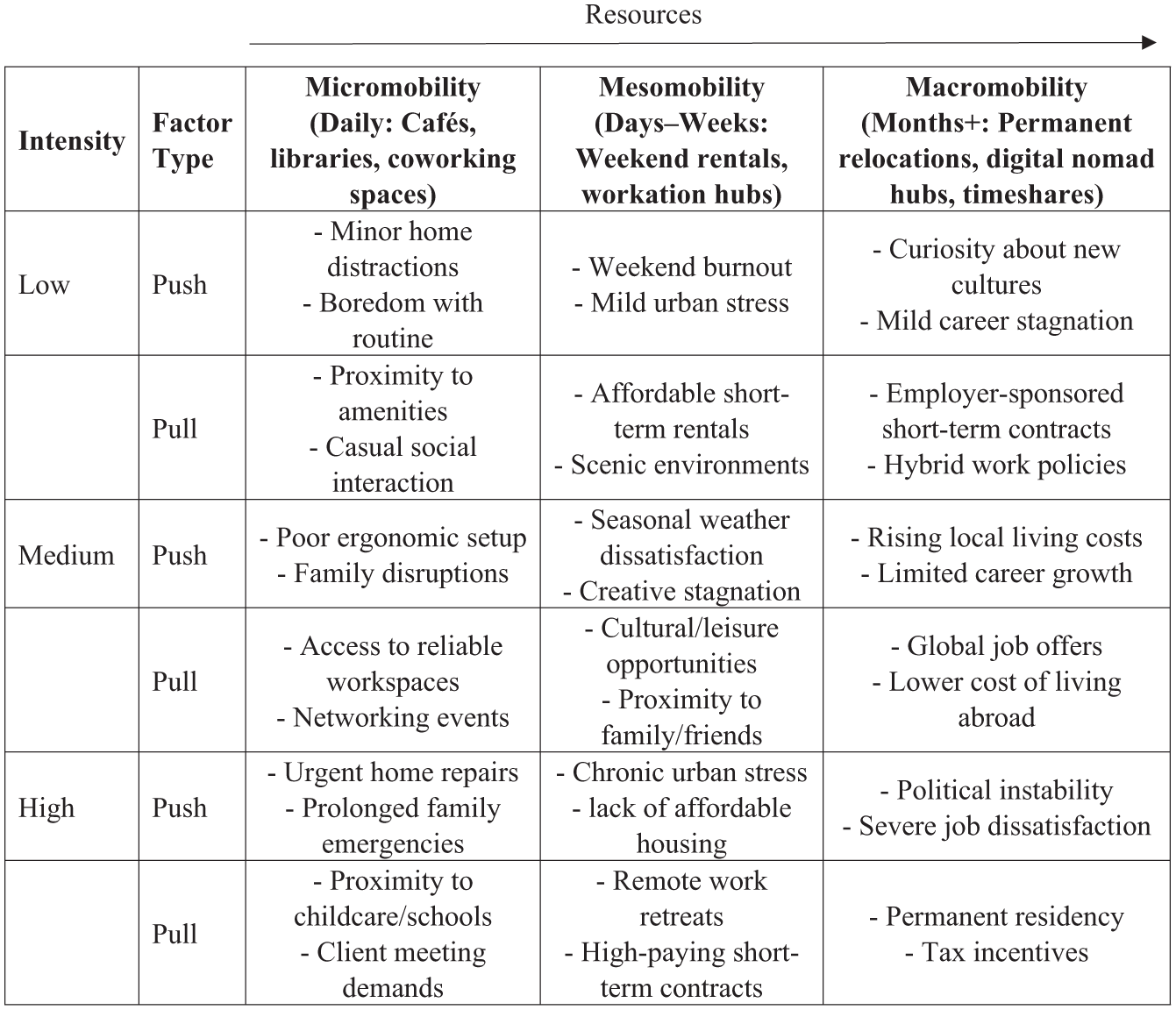
Mobility Matrix showcasing mobility scales and push pull factors along intensity.
Interviewees’ mobility patterns varied by frequency, distance, duration, and resource investment. These were categorized into three tiers:
Micromobility
Short-distance, frequent location changes, often multiple times a day, dominated interviewee behaviors. Common shifts included alternating between homes, cafés, libraries, or friends’ residences, fuelled by a mix of practicality and personal preference.
For me, it’s the change of workplace to get out of that monotony. I just appreciate the variety that keeps me awake. Max Fischer
The main driver that led to these mobilities, however, was the interim completion of care work, chores, and other smaller tasks, as well as diversions such as some walking and sporting activities.
Since my gym is right across the street, I just enjoy going to the gym at lunchtime when I can’t concentrate anymore and then continue working. Alexandra Neumann
However, these newly created micromobilities have only emerged by replacing the old daily micromobility of commuting to work.
So I really did spend a lot of money, and with the current fuel prices, it was clear to me that I would save time and money if I didn’t drive to the office every day. Jakob Schmidt
Mesomobility
Mesomobility encompasses location changes spanning days to weeks, requiring coordination with third parties (e.g., employers, landlords) and strategic planning. A prominent example is the workation, extending a vacation to include remote work, enabling individuals to blend leisure with productivity. Motivations include cultural immersion, cost or time efficiencies, and balancing urgent projects with personal travel.
When I saw the opportunity to extend my vacation and make it a professional stay and continue to work temporarily in this great country, it was important for me to keep this working mode in the future. Lena Bauer
Hybrid work schedules that require biweekly or even less frequent onsite meetings create a mesomobility as well by offering some employees to substitute shorter more frequent commutes to longer less frequent commutes due to change of center of life to optimize cost and lifestyle.
When I started working remotely, I was able to cancel my contract with my second flat at my workplace and nearly cut commuting. Working at home made me aware of how much time and money I lost with inefficiencies. I simply see no need for the office anymore. Now I’ve got much more time for my hobbies, family and friends. Max Fischer
Macromobility
Macromobility involves permanent or semi-permanent relocations (months–years), such as pursuing digital nomadism, moving to secondary residences, or exiting high-cost urban centers. These shifts demand significant resource investment (financial, logistical, emotional) and were exclusively pursued by interviewees with full work flexibility.
One of our interviewees saw this work flexibility as an incentive to adopt nomadic lifestyles, relocating every few months, which became possible after the employer changed the insurance regulations during the pandemic for stays abroad.
It wasn’t until I took the step to go abroad and continue working remotely that I discovered real fulfilment in my work. I informed my employer that I wanted to keep my current work style, and he was supportive, especially with the tax and insurance caveats. Elias Wagner
Others permanently decoupled from employer proximity, prioritising affordability, space, and quality of life.
We have now moved in with friends into a semi-detached house; they are on the left, and we are on the right. We had always planned to do that, but now, with the pandemic and the changed way of working, it just made sense to relocate. The previous city had been annoying us for a while as far as prices and unavailability of living space were concerned. On top of that, we didn’t have enough space to work at home, so now was the time to move. Felix Koch
These macromobilities often reflected systemic frustrations (e.g., rising living costs, inadequate housing) and were framed as long-term solutions rather than temporary adjustments.
Discussion
This study addresses the question on how employees choose their work location and the factors impacting such decisions. Our findings largely align with a growing body of literature emphasizing the increasing complexity of hybrid work and the limitations of simplistic office-centric or home-centric models (Bloom, 2021; Ferreira et al., 2021; Smite et al., 2023). This research increasingly recognizes employee agency and the limits of rigid policies. In this respect, our study supports the emerging consensus that flexibility cannot be viewed as binary but it is rather a spectrum, where employee preferences and circumstances are crucial determinants of effective hybrid work arrangements. In line with (Barrero et al., 2023) examination of diverse “work from anywhere” employee characteristics, our analysis emphasizes the highly individual nature of location preferences, personal circumstances, and motivations, reinforcing that the traditional office was never a one-fits-all solution. Furthermore, similar to Haapakangas et al. (2018), Qiu and Dauth (2022), and Wohlers and Hertel (2017), our study acknowledges the continued importance of the office for focused work and social interaction, highlighting the need to maintain and improve the office environment even in hybrid models. However, our study also offers novel contributions that provide a more granular and structured perspective. While prior research acknowledges hybrid work complexities and firm-induced migration (Choudhury, 2021), our research develops three key frameworks to advance this field.
Unpacking employee mobility in the era of flexibilization
Our findings offer a nuanced understanding of employee work location decisions in an era of workplace flexibilization. The identified “push-pull” dynamic, balancing undesirable “push” factors against attractive “pull” factors, underscores the personalized and agentic nature of mobility, highlighting hybridity as a dynamic, employee-driven process.
In terms of what factors shape mobility, our study provides a structured perspective through the lens of the mobility matrix (Table 1). We observed that locations are perceived as either conducive or obstructive to individual objectives, fostering attraction or aversion mediated by resource costs, aligning with the fundamental principles of the push-pull framework, which posits migration as a product of influences propelling or deterring movement between places (Nikou and Luukkonen, 2023). Our research extends drivers of mobility motives beyond flexible scheduling, commute avoidance, or cost savings, as we show higher-order considerations like career progression and financial optimization in a globalized work landscape, as well as avoiding discomfort, conflict, or managing medical conditions. By categorizing push-pull factors and intensity, we delineated a typology resulting in micro-, meso-, and macromobility. This framework (described in more detail below and in Figure 3), coupled with our focus on individual location preferences and motivations—encompassing professional and personal goals, extends existing migration frameworks into the context of contemporary knowledge work mobility and offers actionable tools for organizations seeking to navigate this evolving landscape effectively. Our findings also resonate with the concept of the boundaryless career (Arthur and Rousseau, 1996), where career development unfolds beyond the constraints of a single organization or location. As knowledge workers navigate daily decisions about where to work, they are not only managing short-term productivity but also actively shaping longer-term career trajectories. This reflects elements of career crafting (Tims and Akkermans, 2020), whereby individuals align their career paths with evolving personal values and life circumstances. The cumulative effect of these flexible, self-directed choices demonstrates how geographic mobility becomes embedded in broader career strategies under conditions of new work.
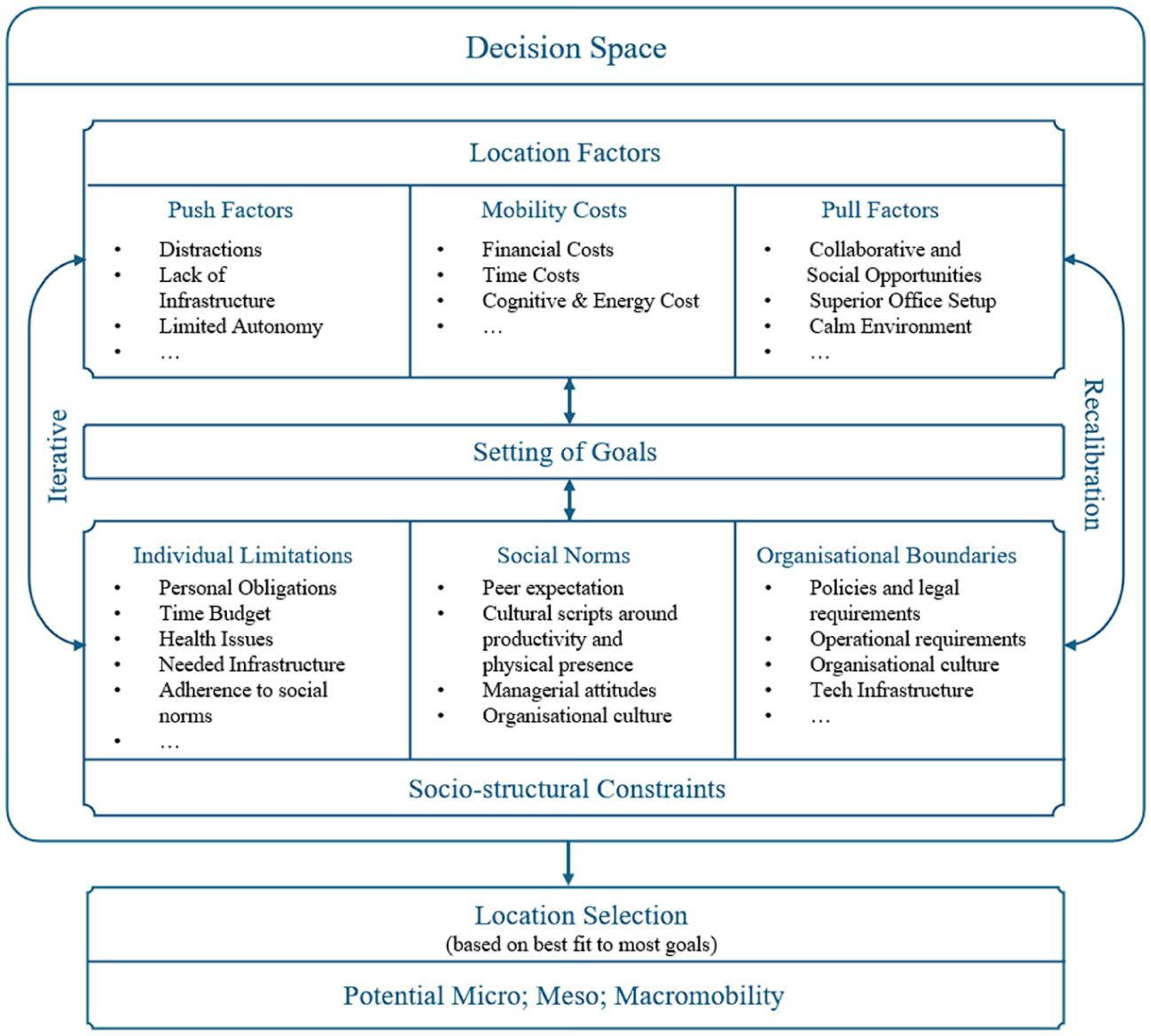
Conceptual framework of the decision-making process for location selection.
Regarding how employees navigate these choices, our results demonstrate that they are not passive recipients of organizational policies but active agents strategically balancing personal circumstances and perceived opportunities. Our Decision-Making Framework (Figure 3) illustrates the cognitive evaluation processes knowledge workers undertake when faced with the “push” and “pull” factors outlined in our matrix. This framework highlights that employees weigh practical cost constraints and engage in cognitive evaluation processes to arrive at a mobility decision. The Framework reveals the process through which knowledge workers actively engage with and respond to the “what” of the Mobility Matrix.
A decision-making framework of work location selection
Following the factors influencing work-location selection as well as the identified types of mobility, we can deduce a conceptual decision-making framework. In this framework, a particular goal is assessed in relation to one or more alternative work locations. It was evident that locations may provide a favorable environment for pursuing these goals, but may also have negative impacts, pushing individuals to consider other locations. This recurring theme highlights how certain locations may hinder the attainment of specific goals.
This framework illustrates how knowledge workers choose their work location by considering their personal goals, potential workplaces, and the broader set of individual, social, and organizational influences that shape these decisions. The process begins with goal setting, such as reducing commute costs, enhancing concentration, or fostering collaboration, which determines what an individual seeks to achieve on a given day.
Within this decision space, workers evaluate location factors by weighing push and pull dynamics, along with mobility costs. Push factors, including distractions, inadequate infrastructure, or limited autonomy, discourage staying in a particular location. In contrast, pull factors like opportunities for social interaction, access to specialized equipment, or a calm environment make other locations more appealing. Mobility costs, such as time investments, financial expenses, and cognitive effort, further shape the feasibility of switching locations.
At the same time, individual constraints, ranging from health issues to personal obligations, and organizational boundaries, encompassing policies, legal requirements, cultural norms, and tech infrastructure further define the viability of each location. In addition, social norms may shape an individual’s decision making regarding mobility, as these might provide a blueprint of what is acceptable in terms of work arrangements, as shown in recent studies that outline how normative pressure guides mobility patterns in organizations with informal expectations influencing employees’ decisions to be “visible” on-site, even when work could be performed remotely (Akahori et al., 2024; Smite et al., 2025).
By balancing these factors, knowledge workers select the location option at the micro, meso, or macro level that best aligns with their goals while offering a favorable cost-benefit ratio. Because this process is iterative, the same individual may revise their preferences over time as goals and circumstances evolve. Organizations can respond by recalibrating policies or resources, such as offering enhanced office setups or flexible remote work options, to better support adaptive location choices. This integrated push-pull framework thus provides a dynamic guide for both employees and employers navigating the complexities of flexible work.
Organizational responses to employee mobility
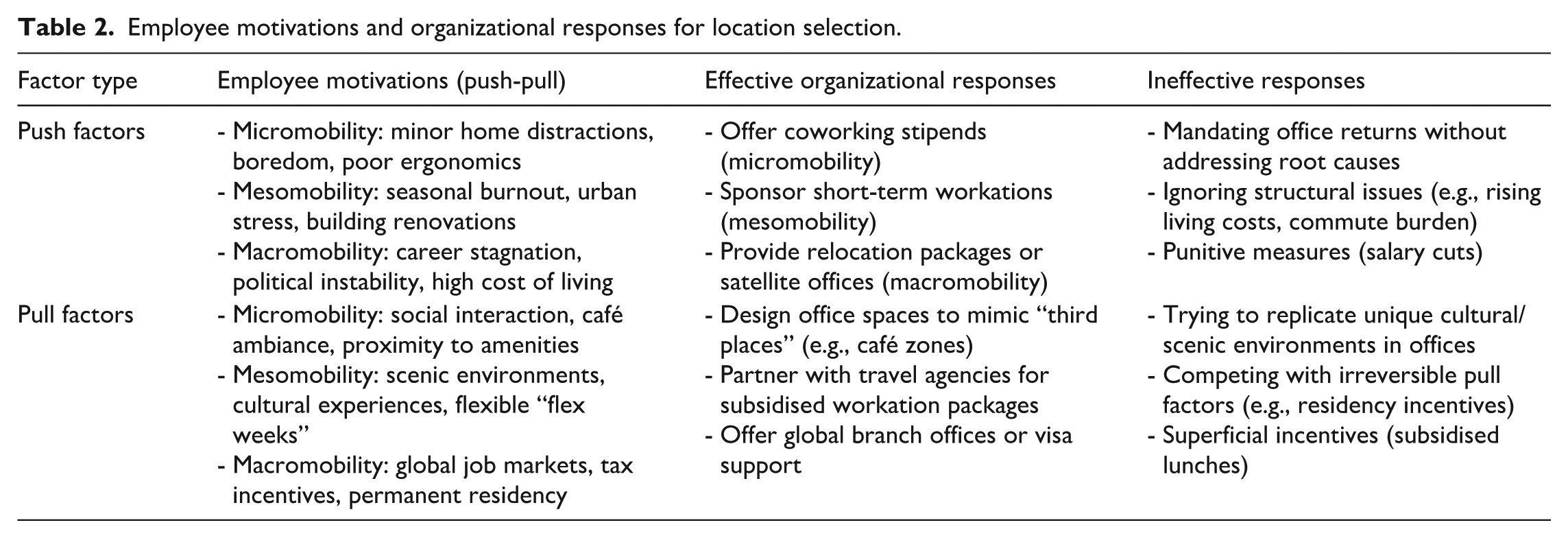
The rise of geographically dispersed workforces demands that organizations adapt to the push-pull dynamics driving employee mobility. Our analysis (Table 2) categorizes these motivations and evaluates organizational strategies, offering a framework to align policies with employee needs across micromobility (daily), mesomobility (days–weeks), and macromobility (months+) scales (Figure 2).
Employee motivations and organizational responses for location selection.
Effective responses
Organizations can address push factors, such as micromobility triggers like home distractions or macromobility drivers like career stagnation, with targeted solutions. For instance, coworking stipends mitigate daily disruptions, while relocation packages alleviate long-term pressures like rising living costs. Similarly, pull factors like cultural experiences (mesomobility) or global job markets (macromobility) can be leveraged through partnerships with travel agencies or visa sponsorship programs. These strategies acknowledge mobility as a legitimate preference rather than a compliance challenge.
Ineffective approaches
Many organizations default to rigid policies, such as mandating office returns to counter micromobility or attempting to replicate unique pull factors (e.g., building office “cafés” to compete with third-place appeal). Such efforts often fail (Ding et al., 2024) because they ignore systemic issues (e.g., urban stress, residency incentives) or underestimate employees’ agency in prioritizing irreplaceable benefits like tax advantages or scenic environments.
Our framework underscores that mobility is not a binary choice but a spectrum requiring nuanced support. For example, subsidized workations (mesomobility) or satellite offices (macromobility) balance flexibility with organisational needs, whereas inflexible mandates risk disengagement. Future policies should focus on collaborative mobility—aligning organizational resources with employee motivations—rather than resisting inevitable shifts in work-location preferences. By doing so, firms can turn mobility from a disruption into a strategic advantage, fostering loyalty and productivity in an increasingly mobile workforce.
Implications for theory and practice
Current discussions on remote and hybrid work often oversimplify flexibility as a binary choice (home vs office), neglecting the complex reality that employees face. Our findings make it evident that work location selection is not a simple either-or decision, but a continuous negotiation shaped by dynamic push and pull forces. Thus, by reframing workplace choice through the lens of the push-pull theory, we extend its application beyond traditional migration contexts. We demonstrate that this classic model remains highly pertinent in modern work-life decisions: knowledge workers weigh negatives (e.g., distractions, isolation) against positives (e.g., better facilities, community) in deciding where to work, just as migrants weigh conditions when deciding where to live. This theoretical alignment reinforces the idea that both geographic migrations and everyday workplace moves share fundamental motivational underpinnings. Notably, push-pull logic has been successfully applied to explain phenomena as diverse as consumer service switching (Bansal et al., 2005) and tourist destination choices (Kim Lian Chan and Baum, 2007). Our study harnesses it for explaining knowledge workers’ day-to-day mobility to cross-border migration, confirming the framework’s broad explanatory power in the realm of remote work, thus creating a theoretical foundation that connects individual agency with broader mobility patterns.
Our research also contributes a new perspective to the mobility literature by integrating multiple scales of movement into a single analytical framework. We address this gap by introducing a typology of micromobility, mesomobility, and macromobility that maps how varying intensities of push-pull factors shape mobility at different scales. In doing so, we bridge the divide between studies of commuting or short-term moves and studies of migration. By conceptualizing knowledge worker mobility as a continuum, we provide a theoretical vocabulary for discussing movement ranging from minor daily adjustments to major life relocations under one coherent lens. This is a novel contribution that goes beyond the traditional home-versus-office narrative in remote work research and beyond the long term relocation focus that is often addressed in migration studies.
Crucially, our study directly engages with and expands upon key existing literature—Whereas prior remote work research has largely centered on organizational outcomes (Beno, 2021; Choudhury et al., 2020) or treated flexibility as a static arrangement (Kaiser et al., 2022; Mergener and Trübner, 2022), we shift the focus to the employee’s active decision-making process in choosing work locations. This answers recent calls for more granular insight into the drivers of remote work behavior and the interplay between geographic flexibility and workplace choice motives (Gifford, 2022; Kaiser et al., 2022; Petzold, 2020; Smite et al., 2022; Soroui, 2021). Furthermore, we connect two streams of literature within our study: global mobility and remote work. Global mobility studies (e.g., on expatriation and self-initiated moves) traditionally examine career-driven relocations spanning countries (Al Ariss and Crowley-Henry, 2013; Doherty et al., 2011), while telework studies often examine the impact of working from home versus office on individuals and firms (Choudhury et al., 2020; de Vos et al., 2018; Holgersen et al., 2021). Our findings intertwine these perspectives by revealing that the same underlying mechanisms influencing a professional to accept an overseas assignment also influence day-to-day choices like working from a café or co-working space.
Our findings also carry important practical implications for organizations and policymakers. For employers, the key takeaway is that flexibility should not be managed as a simple perk or policy mandate, but as a strategic resource that can be tuned to employee needs. Organizations that acknowledge the diverse mobility preferences of their workforce can craft more effective and responsive policies. Rather than imposing one-size-fits-all rules (e.g., blanket return-to-office mandates), managers would benefit from addressing the why behind employees’ location choices. Our push-pull approach provides a diagnostic tool in this regard: by identifying what is “pushing” employees away from the office or home and “pulling” them toward alternative workplaces, organizations can intervene better. For example, if in-office frustrations such as noise or poor ergonomics (Gonsalves, 2020) are a push factor, an employer can offer co-working stipends or improve office setups to remove those irritants. The overarching principle for practitioners is to proactively align organizational resources with employee mobility motives, turning potential points of friction into opportunities for engagement. By doing so, firms can pre-empt challenges—for instance, providing a subsidized “workation” program for employees could channel their mesomobility impulses constructively, preventing a permanent exit while rejuvenating their motivation. In essence, organizations that adapt in this way can better retain talent and maintain productivity, as they are meeting employees where their needs are, literally and figuratively.
Our study, in line with emerging evidence (Ding et al., 2024; Gibson et al., 2023), suggests that simply mandating a return-to-office without addressing underlying push-pull factors is an ineffective strategy. Employees who feel strong discontent (push) or see irresistible advantages elsewhere (pull) may respond to rigid requirements by disengaging or even leaving the organization, as recent research (Ding et al., 2024) has already observed phenomena like “brain drain” when companies enforce strict return-to-office policies. To avoid such outcomes, leaders should focus on building trust and demonstrating that they take employee preferences seriously. This could include training managers to explicitly valuing results over physical presence (Chung, 2020). When mobility and remote work are approached as a mutually beneficial negotiation rather than a managerial threat, organizations can enhance both employee retention and their attractiveness as employers. Research indicates that thoughtfully implemented flexible work arrangements are associated with improved retention (Choi, 2020; George and Poluru, 2024) and can significantly boost organizational appeal in the eyes of potential and current employees (Kröll et al., 2018; Moens et al., 2024). Our findings bolster this: participants valued employers that recognized their mobility needs, and they expressed greater commitment to those organizations.
Our findings offer several key takeaways for HR professionals navigating the ongoing transformation of work location flexibility. First, HRM can play a critical role in designing spatial policies that are perceived as fair and adaptive, taking into account the heterogeneity of employee preferences and constraints (e.g., caregiving responsibilities, housing conditions, or commuting burdens). Research highlights the need for more employee-centered flexibility models that are responsive to life stages, job roles, and psychological needs (Chung, 2020; Appel-Meulenbroek et al., 2022; Wang et al., 2021).
Second, we identify an opportunity for HR to act as a translator between organizational strategy and employee lived experience, mediating the tension between top-down policy and informal social norms around presence and productivity. HR can facilitate internal mobility and cross-location collaboration by recognizing how cumulative location decisions shape access to networks, visibility, and long-term career development (Gibson et al., 2023; Lazarova et al., 2023).
Third, HRM should lead efforts to reduce flexibility stigma and ensure that performance evaluations do not unintentionally favor physical presence. Evidence suggests that employees using flexible arrangements often fear being perceived as less committed (Chung, 2020; Cech & Blair-Loy, 2014), which can lead to self-selection out of career-enhancing opportunities. HR policies should therefore explicitly decouple presence from performance and communicate trust-based flexibility as a cultural norm (Mergener and Trübner, 2022; Parker et al., 2020).
Finally, our study suggests that traditional HR practices that equate proximity with loyalty or engagement must evolve. Metrics for talent management, engagement, and development need to be recalibrated to support distributed, mobile work arrangements (Choudhury et al., 2020; Jooss et al., 2021). HR departments are thus positioned not only as implementers of flexible work, but as strategic actors shaping the long-term sustainability of hybrid work cultures.
We also contribute to the ongoing research on location competition (Teodorovicz et al., 2023) by refining the understanding of location selection processes. Policymakers and urban planners can draw valuable insights from this research. As work becomes more decoupled from any single location, cities and regions are increasingly in competition to attract skilled remote workers. Understanding the push-pull factors can inform more effective regional policies. For instance, if high living costs or inadequate local infrastructure are pushing remote workers away, local governments might implement tax breaks, housing incentives, or invest in better digital infrastructure to counter those push factors. On the other hand, if certain locations offer strong pull factors, such as a vibrant cultural scene or natural amenities, policymakers could market these advantages or create programs (like digital nomad visas and startup hubs) to draw remote workers in. National governments, too, should note that labor mobility is taking new forms. Regulations and social security systems may need updates to accommodate people who work for an employer in one country while living in another, or those who move periodically. By crafting supportive regulations, for example, clarifying remote work taxation, enabling portability of benefits, or encouraging companies to offer “work-from-anywhere” options, policymakers can help align workforce mobility with economic development goals.
Limitations of this study include the mixed flexibility arrangements of our data, which may affect the comparability of mobility decisions across participants. Future research could focus on fully flexible workers to generate more targeted insights. Additionally, our sample was limited to knowledge workers in the service sector- while this group is particularly relevant for studying remote work due to their location-independent tasks, it also constrains the transferability of our findings to other sectors, such as manufacturing, healthcare, or education. We therefore encourage future studies to replicate and extend our framework across different occupational groups and industries to test its broader applicability.
In addition, our study did not systematically capture the role of social norms in shaping location decisions, such as peer expectations (Choudhury, 2021; Mergener and Trübner, 2022), managerial attitudes (Stavrova et al., 2023), or cultural scripts around presence and productivity (Cech and Blair-Loy, 2014). These informal pressures likely influence how employees navigate flexibility in practice. Future research could explicitly explore how such norms interact with formal policies and individual preferences to affect mobility decisions.
Exploring diverse geographic regions beyond German-speaking countries and examining how mobility decisions evolve across different workforce segments would also enrich the generalizability of findings. Moreover, since our data was collected in 2022, when mandatory work-from-home policies were still partially in effect and return-to-office debates were only beginning, a follow-up study could revisit these decisions in light of changing expectations.
Conclusion
This study advances our understanding of how geographical work flexibility reshapes knowledge workers’ location decisions, revealing a complex interplay between individual agency and organizational strategy. By framing flexibility as a dynamic spectrum rather than a binary choice, we introduce a push-pull framework that illustrates the motivations driving workplace mobility, from daily adjustments to cross-border relocations. Our resource-based typology and decision-making model demonstrate that workers prioritize locations optimizing both productivity and personal well-being, contingent on mobility costs (e.g., time, financial burden). Key contributions include bridging individual preferences, such as the tension between employer loyalty and mobility-driven autonomy, with organizational imperatives. For practitioners, this underscores the need to balance diverse location options, aligning workspace strategies with individual, team, and organizational goals. Policymakers, too, must adapt to location-agnostic work trends, crafting regulations that support evolving mobility patterns.
Theoretically, this work enriches discourse on non-standard work and geographic mobility (Allen et al., 2013; Angelici and Profeta, 2020; Choudhury et al., 2020), offering a foundation for exploring how personal circumstances and cultural contexts shape mobility decisions. Future research should quantify scales of mobility, examine longitudinal trends in hybrid work evolution, and investigate regional variations in flexibility adoption. Ultimately, organizations thriving in this new era will be those that embrace flexibility as a strategic resource, transforming push-pull tensions into opportunities for engagement and innovation.
Footnotes
Appendix
Interview guideline.
| Basic information of interviewee | How old are you? |
| How many years of work experience do you have? | |
| What industry are you in and what is your specific job? | |
| What kind of company are you working for? Are you self-employed? | |
| What is your dominant work type? | |
| How many years of experience have you had with remote work? | |
| How many days have you spent in the office since the beginning of the year/Covid? | |
| Questions regarding type of work | Since when do you have work flexibility from your employer? |
| Is your work heavily dependent on your team? | |
| When you really need to focus on work, where do you head for working? (push/pull work) | |
| Do you feel more or less attached to your employer? | |
| Did work flexibility change your life? | |
| Where do you go if you want to have a light and social environment for work? (push/pull social) | |
| Describe for us what or where a typical workday looks like | |
| Questions regarding remote work autonomy and workplace selection | What work do you do from home or when you are mobile/work from anywhere |
| When did you first gain experience with remote work? | |
| What is your employer’s remote work policy? | |
| Why do you stay home from work? | |
| Why do you go to the office? | |
| What were your formative experiences with remote work? | |
| How do you stay motivated in a remote work environment? | |
| Would 100% remote work be conceivable for you? Why, why not? | |
| Remote work and HR | How important is remote work to you in your current work position? |
| Would the remote work policy be decisive for a job application? | |
| Questions regarding mobility | Are you now working from multiple different locations? (Multilocality) |
| Have you thought about moving your geographic center of life due to remote work? | |
| Questions regarding motives and pursuit of motives | How has your remote work affected your relationships? |
| Does remote work and the associated work flexibility impact your life to manage regarding mandatory tasks? (Chores, doctor appointments, etc.) | |
| Would you say your mobility has changed, and how does it affect your mobility due to remote work? | |
| Have you changed the motives you pursue due to remote work? |
Funding
The authors received no financial support for the research, authorship, and/or publication of this article.
Ethical approval
This study involved interviews with remote workers to understand their experiences and decision-making processes regarding work location and mobility. Formal ethics approval was not sought, as the research did not engage with sensitive personal data, vulnerable populations, or involve interventions that could pose risks to the participants. The study adhered to standard ethical practices commonly applied in qualitative research with adult participants in non-sensitive contexts.
Informed consent
Participants were thoroughly informed about the study’s nature and objectives before the interviews began. Participation was entirely voluntary, with individuals providing explicit verbal consent. Anonymity and confidentiality were strictly maintained throughout the research process to protect participants’ identities and responses.
Data availability
The data supporting this study’s findings are available from the corresponding author upon request.
