




Abstract
Gamification has recently been presented as a promising opportunity to improve human resource management (HRM) practices and tools. However, while the number of publications on gamification has been increasing in recent years, an overview of the current landscape of HRM-related literature of gamification is missing so far. Intending to support and ease the understanding of prior research findings in this field, this article conducts a systematic literature review. This study contributes to the field of human resources research by examining 45 research papers, aiming to explore areas of application and outcomes of the use of gamification in HRM. Propositions are outlined along with elaborating risks and approaches on how to mitigate the risks of using game design elements in HRM.
Introduction
During the last decade, the trending topic of gamification, most widely understood as the use of game elements in non-game contexts, has experienced a major popularity boom (Deterding et al., 2011). The application of game design elements, such as points, badges, and leaderboards, became an established practice throughout society (Rapp et al., 2019). Over the years, an enormous amount of research has been carried out in an attempt to design frameworks and taxonomies for gamification and game design elements. Studies have explored systems, designs, architectures, and, lately, the effects of gamified systems (Nacke and Deterding, 2017). Recently, considerable research attention has been paid to the use of game design elements to reinvent and improve human resource management (HRM) practices and tools. In this vein, a number of recent scholars are devoted to look at the effects of game design elements on the behavior of employees, as well as ways on how to implement gamification in HRM (e.g. Araújo and Pestana, 2017; Ērgle, 2015; Kumar and Raghavendran, 2015).
To move research on gamification in HRM toward a greater understanding of research findings in past studies, this article aims at summarizing the existing research landscape about gamification in HRM, including approaches to meaningful gamification design, as well as discussing possible risks of gamifying HRM practices and tools. Hence, the first part of this article focuses on the “what” of gamification in HRM, answering the research question, “In which areas of HRM is gamification applied and what are the reported outcomes of it?” The second question, “How can gamification be applied in HRM?” moves on to consider the “how” of gamification design, examining which elements of gamification should be combined, and pointing to risks of gamification in HRM. To answer these questions, the current paper utilizes a systematic literature review. Analyzing and synthesizing recent research findings, methodologies, and possible applications of the use of game design elements in HRM allows scientists to critically assess the use of gamification in HRM.
Methodology
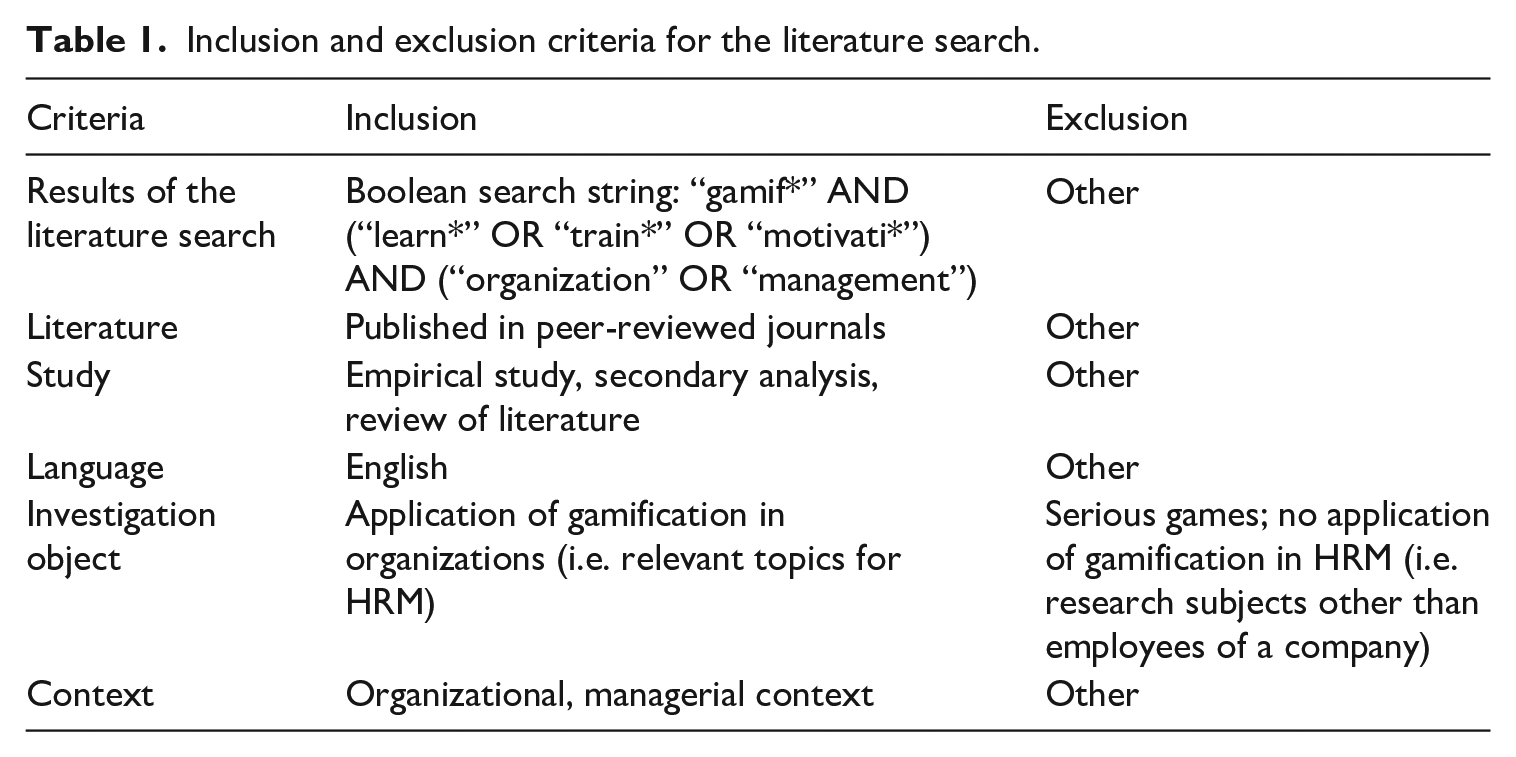
Following the study purpose, this article adopts a systematic literature review method to probe into existing scholarly articles on gamification in HRM. The literature search was performed using the best-known digital libraries regarding the fields of management: Web of Science, Scopus, and EBSCO. These databases cover a large number of full-text materials in the area under study. They also involve almost all peer-reviewed business and management journals that typically publish high quality research. The selected databases offer the possibility to filter high quality contributions in the search settings. This article includes research papers that have been published in peer-reviewed journals, which means that the literature has been reviewed by external experts (Bornmann, 2013). Contributions from books and publications without peer review, as well as literature that has not or not yet been classically published, so-called gray literature, are excluded. Contributions from specialist journals that represent empirical studies, secondary analyses, or literature reviews are included in the analysis. To address an international public, and to make the research comprehensible, the search is limited to English language publications. The literature to be examined is not filtered by year, as gamification research has continued to be a popular topic in academic circles since around 2010 (Deterding et al., 2011).
To perform the automated searches in the digital libraries selected, Boolean operators were used. The following search string was inserted in every database: “gamif*” AND (“learn*” OR “train*” OR “motivati*”) AND (“organization” OR “management”). The search term gamif* was chosen because it considers all possible forms derived from the root (i.e. the noun gamification and the verb gamify, in all its forms). To ensure that widely comparable studies are included in the analysis, this review builds on the definition of gamification as “the process of making activities in non-game contexts more game-like by using game design elements” (Sailer et al., 2017: 372). This definition suits best because Sailer and colleagues (2017) combine different foci of gamification by drawing on the definitions according to Werbach (2014) and Deterding and colleagues (2011). Thus, gamification is considered the integration of game design elements that evoke user experiences typical of games (Deterding et al., 2011; Sailer et al., 2017; Werbach, 2014). Building on previous reviews on gamification, this article assumes effects of gamification on learning processes, training, and motivation (Hamari et al., 2014; Sailer and Homner, 2020). Hence, to review current literature of gamification referring to HRM, the terms “organization” and “management,” were added.
In summary, Table 1 outlines the inclusion and exclusion criteria for evaluating and identifying the most relevant studies of those retrieved.
Inclusion and exclusion criteria for the literature search.
The literature search was conducted on 17 January 2020. Figure 1 describes the procedure and the selection of relevant research contributions for the analysis conducted in this study.
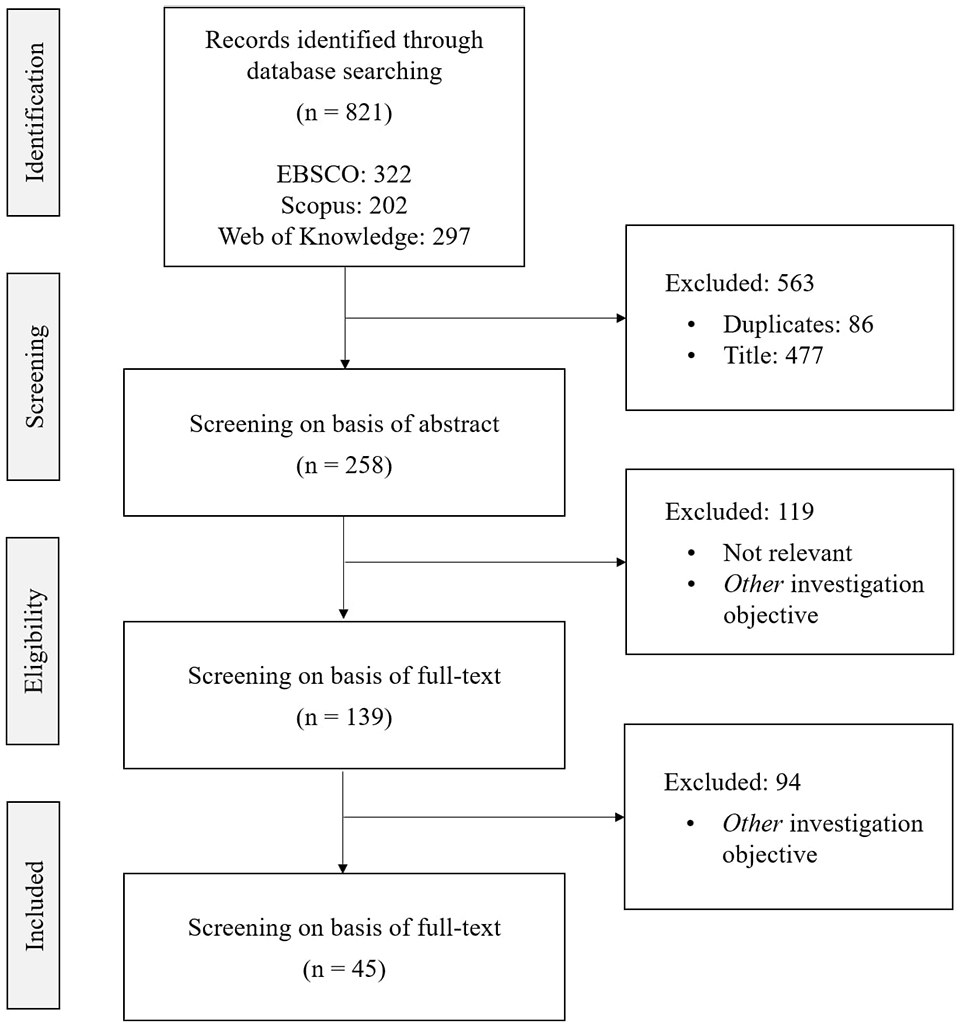
Process diagram of the literature review.
Results
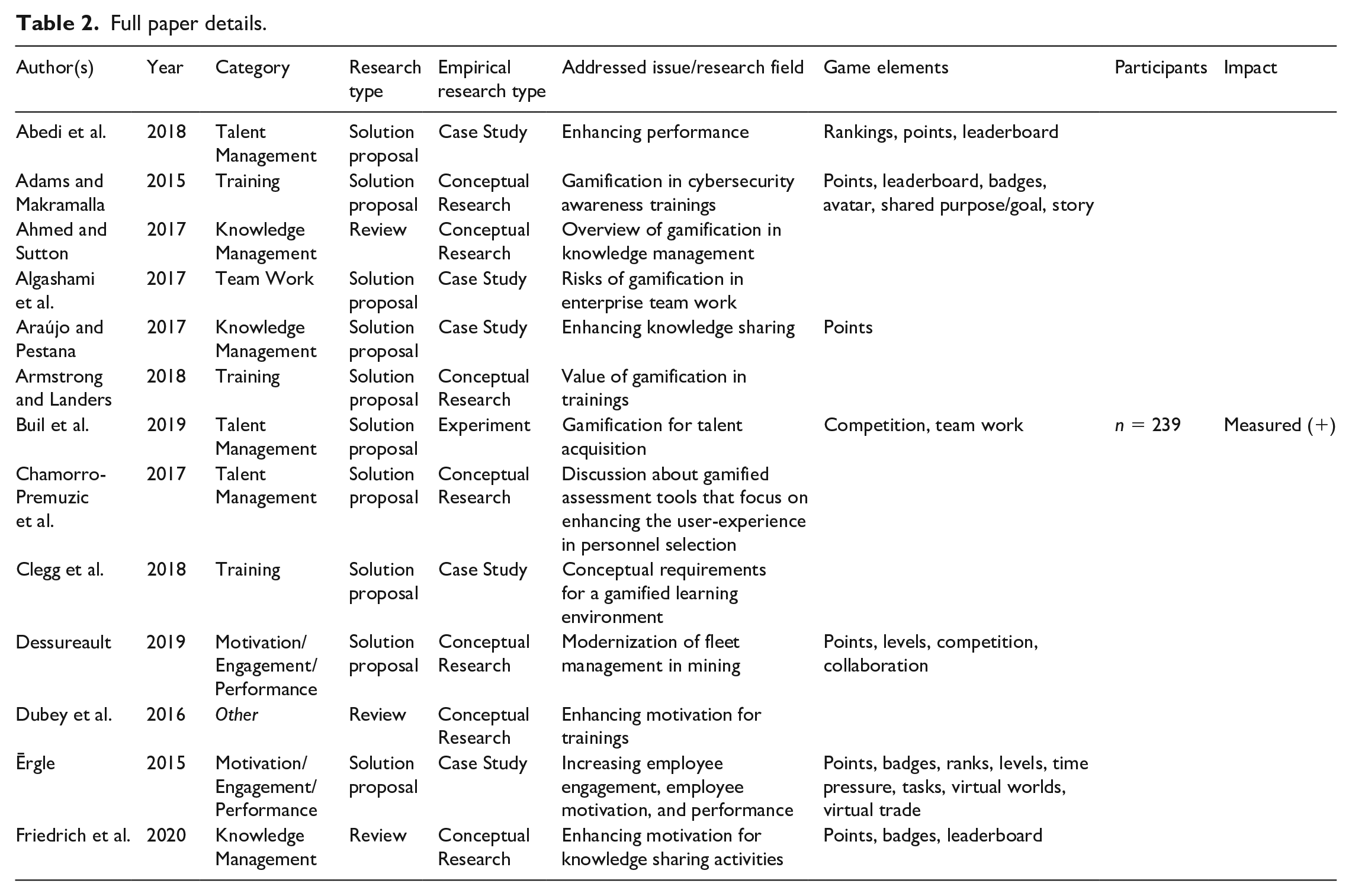
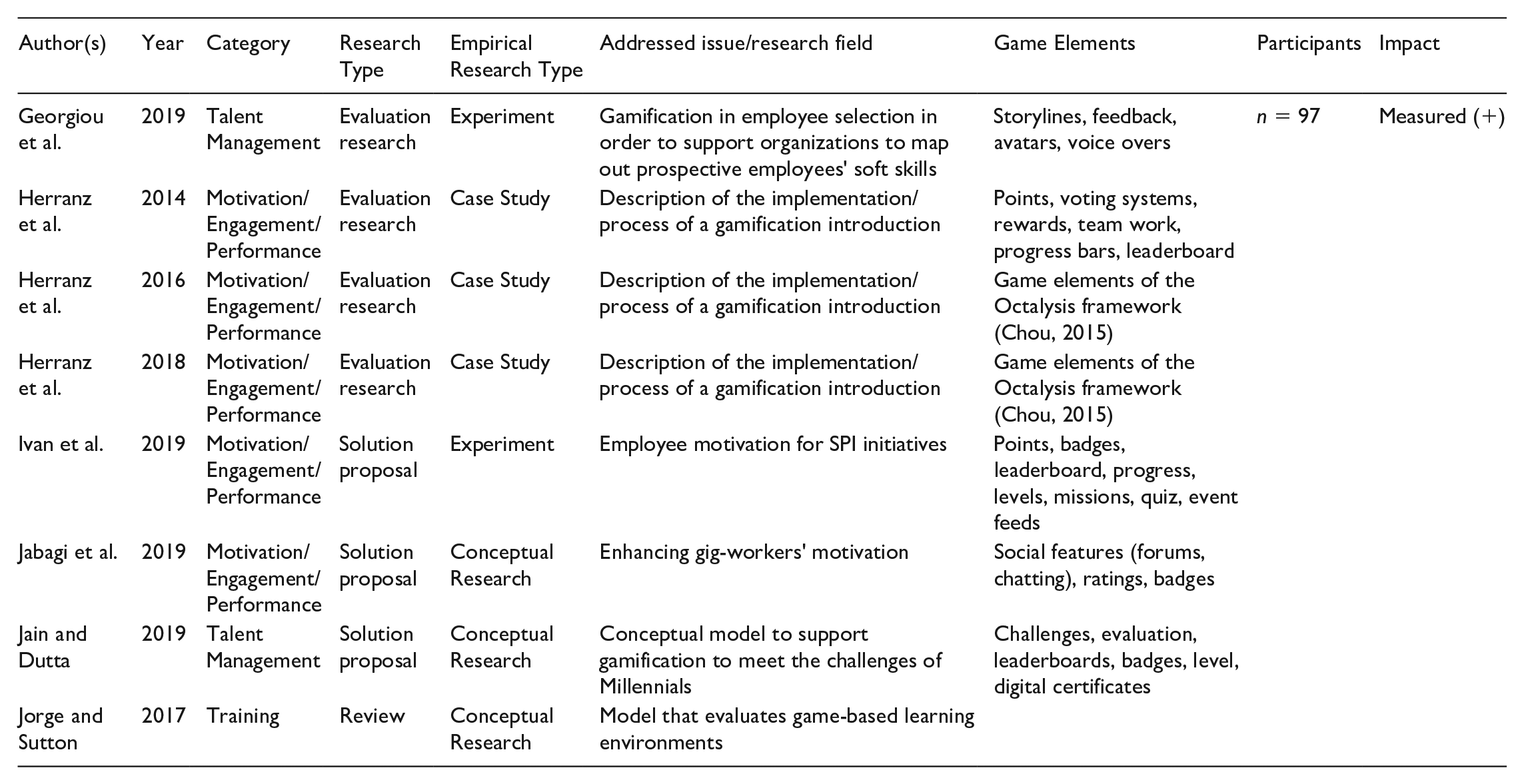
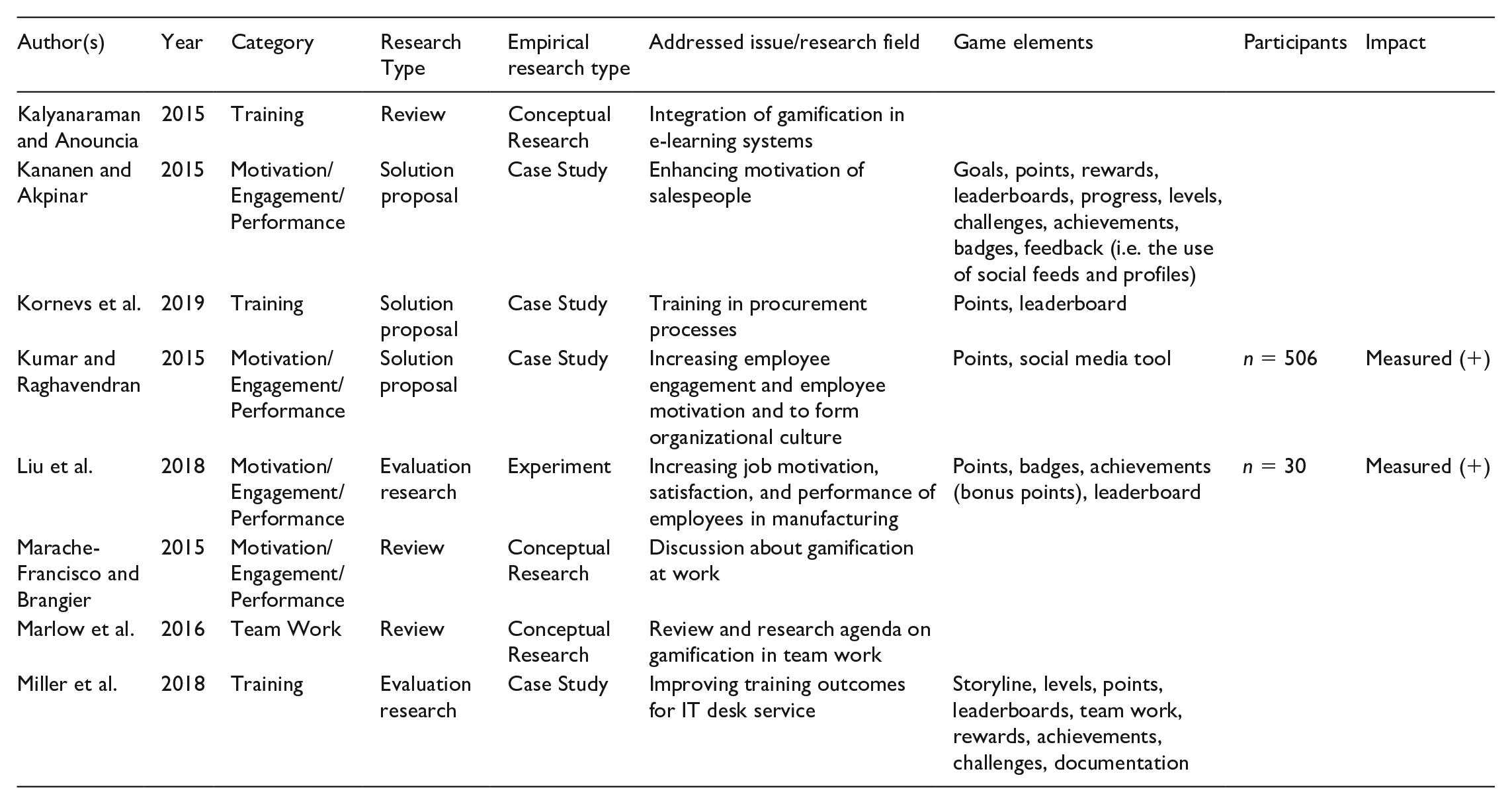
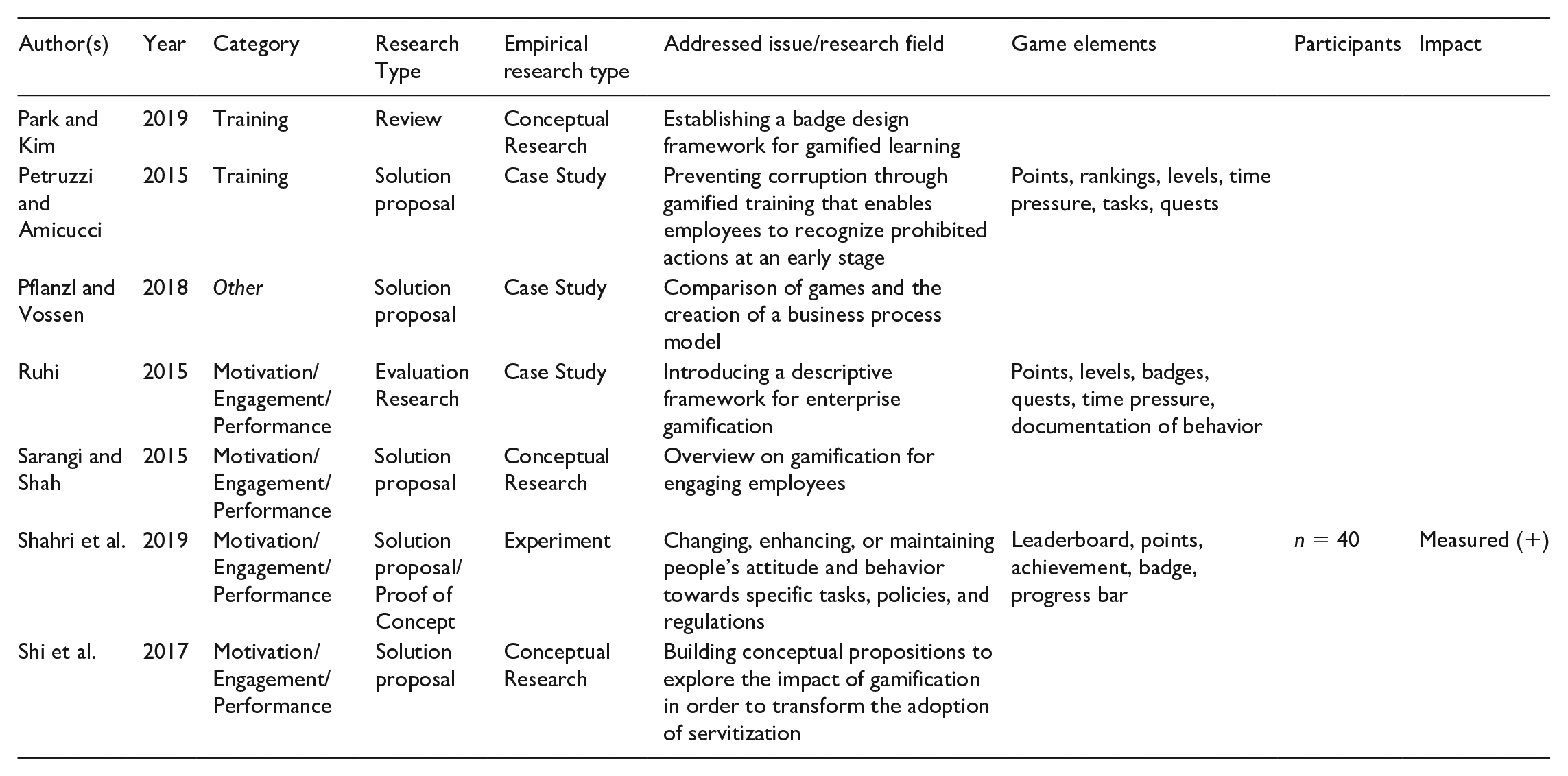
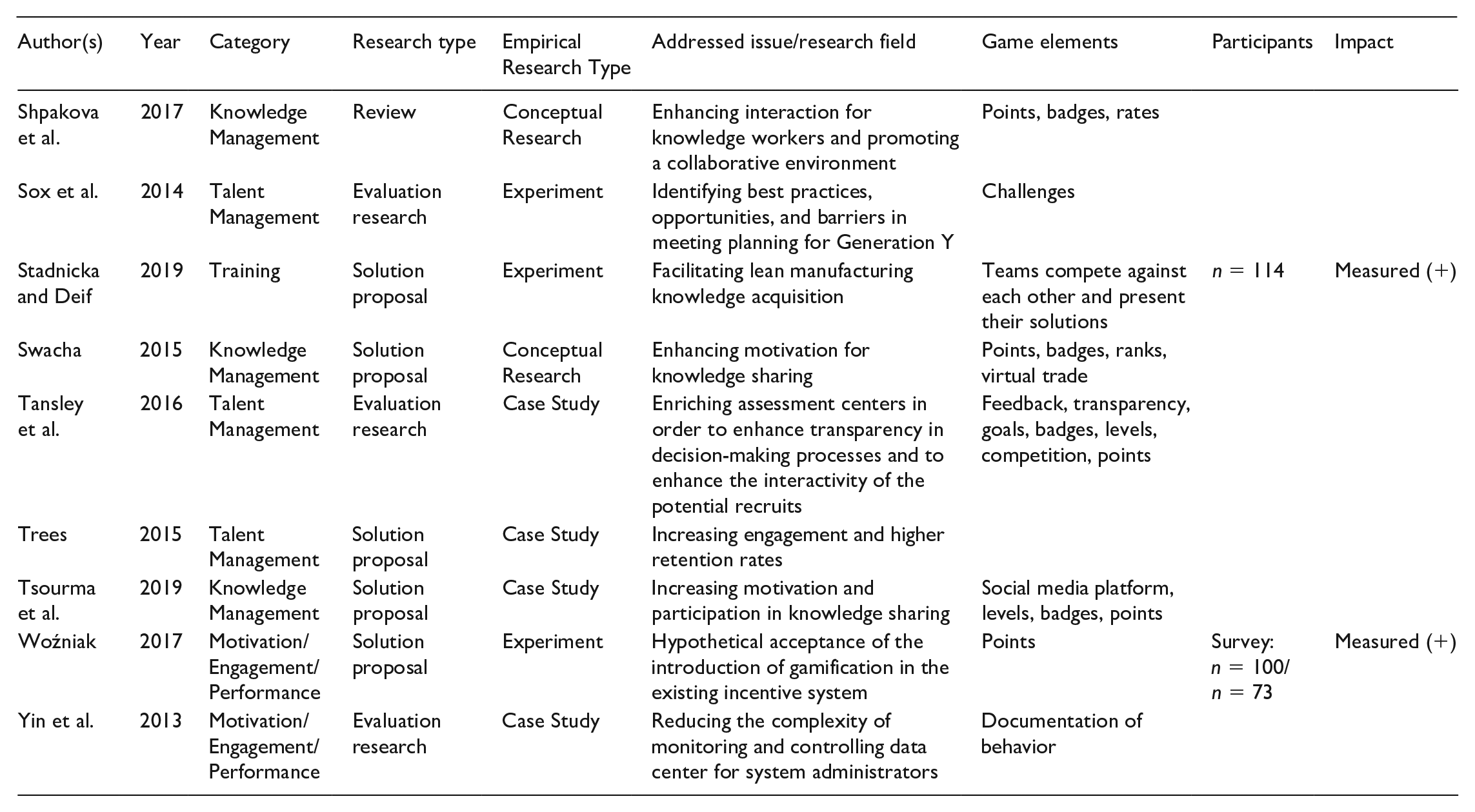
After an initial review of titles and the exclusion of duplicates, 258 papers were examined on the basis of their abstracts. A further 119 articles were excluded. The most frequent reason for exclusion in the course of the screening of the titles, abstracts, and full texts was the research objective not matching the research interest of this paper (e.g. the use of gamification in education or students as research subjects). The final 45 articles eligible for review were then classified into category, research type, empirical research type, addressed issue/research field, and, if applicable, game design elements, participants and measured impact (see Table 2).
Full paper details.
Gamification in HRM: Current state-of-the-art
This section aims at answering the first research question of this study, “In which areas of HRM is gamification applied and what are the reported outcomes of it?”
Areas of application
Increase employee motivation, engagement and performance
More than a third (n = 18) of studies examine the role of game design elements for employee motivation, engagement, and performance. Previous research has demonstrated that gamification seems to be a powerful way of engaging employees and motivating them to further develop work-related skills (Dubey et al., 2016; Ērgle, 2015; Jabagi et al., 2019; Ruhi, 2015). Current literature argues that game design elements can contribute to the employees’ opinions of their jobs as more challenging and interesting (Liu et al., 2018; Sarangi and Shah, 2015).
A number of studies consider the increased degree of digitization in organizations when assessing the use of gamification to enhance motivation, engagement, and performance (e.g. Herranz et al., 2018; Kumar and Raghavendran, 2015; Yin et al., 2013). Kumar and Raghavendran (2015) discuss that today’s world of work no longer demands the simple performance of activities, but innovative thinking and the sharing of knowledge within the organization. Likewise, Shahri and colleagues (2019) suppose that the latest “digital incarnation of motivation” (Shahri et al., 2019: 2) increases pressure and stress within the workplace. In their experiment, Shahri and colleagues (2019) found that game design elements lead to higher digital motivation (i.e. to the “use of software-based solutions to change, enhance, or maintain people’s attitude and behavior towards specific tasks, policies, and regulations”) that can lead to higher well-being at the workplace (Shahri et al., 2019: 1). More specifically, Herranz and colleagues (2018) examine the impact of gamification in software process improvement (SPI), assuming that the primary issue regarding SPI is employee motivation. They point to the use of game design elements as a tool to help employees better understand the relevance of SPI initiatives through communication between the teams and the company (Herranz et al., 2018). In discussing competitions in organizations, Ērgle (2015) argues that these can foster innovative, participatory thinking, and action, as well as improve internal communication. The author presents a gamified application that contains information on internal projects, pending decisions, and business ideas. News from the company, which are linked to the application, enable employees to have the logic behind strategic decisions. Building on a comprehensive analysis, the author found that this leads to an increase in employee engagement and work motivation (Ērgle, 2015). These findings are congruent with the work of Kumar and Raghavendran (2015), who found that the use of competitions in organizations can lead to a change in organizational culture (i.e. towards a sense of pride). As an example of implementing gamification to increase salesforce motivation, consider the study of Kananen and Akpinar (2015) who argue that game design elements such as point systems, rewards, leaderboards, and badges (i.e. the use of social feeds and profiles) lead to an increased work motivation. In a similar vein, Woźniak (2017) found that professionals would endorse the introduction of gamification in an existing incentive system with deferred rewards through later redemption of points instead of receiving financial bonuses (Woźniak, 2017).
Moreover, a number of past studies have yielded some important insights into the use of gamification to cope with the challenges Millennials face (e.g. Jain and Dutta, 2019; Sox et al., 2014; Trees, 2015). Current literature points to meaningful work experiences, learning, and developmental opportunities as well as the possibility to engage in learning activities as predominant expectations of Millennials (e.g. Eddy et al., 2010; Howe and Strauss, 1991; Skiba and Barton, 2006). As Jain and Dutta (2019) point out, the core traits of Millennials are high confidence, team orientation, and a striving for achievement. Sox and colleagues (2014) argue that a strong desire for self-actualization and comprehensive feedback coupled with a weakness of not being able to deal attentively and intensively with tasks, will comprise key challenges of satisfying Millennials at work. According to Jain and Dutta (2019), game design elements in learning environments will appear to Millennials as a familiar opportunity to actively contribute to learning processes. The authors argue that gamified HR tools will enable Millennials to participate in corporate decisions and processes, as well as to develop individually, creatively, and intellectually (Jain and Dutta, 2019). Jain and Dutta (2019) conclude that gamification can lead to higher acceptance of HR practices, because game design elements such as badges can meet the need for achievement and the desire for technology driven tools at work. Trees (2015) presents a social networking tool that allows frequent feedback, social learning, and teamwork in organizations. Based on the analysis of current research contributions and survey results, the author found that gamified platforms can help in onboarding Millennials and promoting the knowledge exchange of experienced employees and young colleagues. Moreover, Trees (2015) notes that the use of social networking represents a potential tool to satisfy Millennials and provide them the feeling of belonging inside the company, so as to increase retention rates. However, the author state that older colleagues were skeptical towards the tool, as social media at work can distract employees from their work (Trees, 2015).
Improve training in organizations
Considerable research attention has been devoted to the use of gamification to improve training outcomes (n = 10). Recent research shows that gamification enables employees to feel confident with succeeding in tasks, and increases motivation within a learning environment (e.g. Jorge and Sutton, 2017; Stadnicka and Deif, 2019).
A number of studies review current literature to introduce models and frameworks that describe the use of gamification in trainings (e.g. Armstrong and Landers, 2018; Jorge and Sutton, 2017; Kalyanaraman and Anouncia, 2018; Park and Kim, 2019; Stadnicka and Deif, 2019). Jorge and Sutton (2017), drawing on the flow theory according to Csikszentmihalyi (2014), stress the importance of making the workplace more fun. They argue that gamification provides a promising opportunity to change behavior with regard to organizational strategies and goals, as well as to increase engagement and retention within the learning environment by fostering the feeling of being in a flow (Jorge and Sutton, 2016). In a similar vein, Miller and colleagues (2018) emphasize that gamified training increases employee loyalty and customer satisfaction through increased training effectiveness. The authors present a gamified software tool, including game design elements such as levels, points, leaderboards, teamwork, and rewards to improve IT training outcomes. Park and Kim (2019) claim that badges, as a scale for measuring learner knowledge and skills, increase the engagement within a learning environment. Petruzzi and Amicucci (2015) confirm the use of game design elements to establish a self-reflective attitude towards one’s own behavior through immediate feedback on the knowledge learned (Petruzzi and Amicucci, 2015). Kornevs and colleagues (2019) went even further. They discuss the increasing complexity of the procurement process and the need for improved training for specialists. They found that the use of gamification can motivate employees to obtain and apply new knowledge (Kornevs et al., 2019). Moreover, drawing on the ARCS (attention, relevance, confidence, and satisfaction) model of motivational design (Keller, 1987), Stadnicka and Deif (2019) suggest that gamified training sessions should not only include knowledge creation but also increase motivation to deal with specific topics. As such, Adams and Makramalla (2015) discuss the use of avatars that allow employees from departments outside the field of IT to see a cyber-attack through the eyes of a hacker. By applying gamification in trainings, the authors suggest an increased awareness of employees from all areas of the company for cybersecurity (Adams and Makramalla, 2015). Clegg and colleagues (2018) confirm that gamified learning environments can serve as information platforms to improve customer service (Clegg et al., 2018).
Optimize talent management measures
A number of studies (n = 8) have studied game design elements in talent management measures (Buil et al., 2019; Chamorro-Premuzic et al., 2017; Georgiou et al., 2019; Tansley et al., 2016). Recent literature deals with the use of gamification in assessment centers and talent identification (e.g. Georgiou et al., 2019; Tansley et al., 2016). Specifically, Georgiou and colleagues (2019) report that game design elements can help identify the soft skills of employees and reduce the costs of bad hires. The authors argue that the choice of avatars, storytelling, rewards, and progress bars can be a supporting measure for the identification of soft skills (Georgiou et al., 2019). Chamorro-Premuzic and colleagues (2017) confirm the opportunity to use game design elements for talent identification. Drawing on past studies that investigate cognitive skills and the mental processes required to win in video games (e.g. Foroughi et al., 2016; Quiroga et al., 2015; Unsworth et al., 2015), Chamorro-Premuzic and colleagues (2017) claim that individuals who enjoy playing online games and role-playing possess increased coordination and leadership skills that employees utilize in everyday work.
Enhance knowledge management activities
A number of studies (n = 6) consider the use of game design elements in knowledge management activities (e.g. Abedi et al., 2018; Shpakova et al., 2017; Swacha, 2015; Tsourma et al., 2019). According to recent studies, game design elements such as points, badges, and potential rewards for knowledge sharing are helpful tools to enhance the quality of knowledge sharing and cooperative behavior, when the corporate culture is characterized by feedback and openness (e.g. Araújo and Pestana, 2017; Friedrich et al., 2020; Tsourma et al., 2019).
Outcomes of gamification in HRM
In total, seven articles use quantitative research measuring the effectiveness of gamification in HRM whose reported outcomes are described below (Buil et al., 2019; Georgiou et al., 2019; Kumar and Raghavendran, 2015; Liu et al., 2018; Shahri, et al., 2019; Yin et al., 2013; Woźniak, 2017). Researchers find empirical evidence that gamification can enhance employee engagement (Kumar and Raghavendran, 2015), as well as employee motivation, and job satisfaction (Liu et al., 2018; Shahri et al., 2019). Moreover, it has been noted that the use of game design elements can improve talent acquisition (i.e. increase the candidates’ attitude toward the organization and perceiving it as an attractive place to work) (e.g. Buil et al., 2019; Georgiou et al., 2019). Current research also attempted to examine the role of gamification in transforming organizational cultures. Kumar and Raghavendran (2015) found that gamification has a positive impact on organizational attributes such as “networking opportunity, fun and engaging environment, and teaming opportunity” (Kumar and Raghavendran, 2015: 10). Likewise, Georgiou and colleagues (2019) claimed that game design elements can elicit desired behaviors and predict job performance versus the control group (Georgiou et al., 2019). Empirical research that measures the impact of gamification on employee training and knowledge management could not be identified.
Applying gamification in HRM
So far, this paper has focused on the “what” of gamification in HRM, investigating areas of applications and reported outcomes. Moving on to the “how” of gamification design, the second research question “How can gamification be applied in HRM?” is being answered in the following.
Designing gamification in HRM
This review reveals that HRM-related literature on gamification mostly applies badges, leaderboards, levels, achievements, and points in HRM (e.g. Araújo and Pestana, 2017; Dessureault, 2019; Ērgle, 2015; Liu et al., 2018). However, recent studies seem to agree that the mere implementation of gamification mechanisms does not automatically lead to improved HR practices and tools (e.g. Hamari et al., 2014; Herranz et al., 2018; Marache-Francisco and Brangier, 2015). Rather, current literature suggests that meaningful gamification design (i.e. that evokes intended behavior) considers the employees’ characteristics and needs (e.g. Georgiou et al., 2019; Ivan et al., 2019; Sailer et al., 2017; Sox et al., 2014; Stadnicka and Deif, 2019). Hunicke and colleagues (2004: 5) confirm the centrality of human-centered gamification design by suggesting, “by understanding how formal decisions about gameplay impact the end user experience, we are able to better decompose that experience, and use it to fuel new designs, research and criticism respectively.” Moreover, numerous scholars have stressed the importance of designing games through iterative approximation and continuous improvement (e.g. Georgiou et al., 2019; Ivan et al., 2019). Hence, most researchers working in the area of gamification in HRM agree that gathering feedback on gamification environments from as many individual employees as possible, and adapting the design likewise ensures an ever-increasing effectiveness of the use of gamification (e.g. Georgiou et al., 2019; Ivan et al., 2019). Against this backdrop, researchers establish models and frameworks specifically customized to the situation and needs of both the employees and the company which evoke intended behavior through iterative approximation and continuous improvement (e.g. Georgiou et al., 2019; Ivan et al., 2019; Pflanzl and Vossen, 2018; Sox et al., 2014).
Risks of using gamification in HR practices and tools
While the characteristics and needs of the employees initially determine the choice of game design elements, it is generally accepted wisdom that potential risks should also be considered when designing and implementing gamification in HRM (e.g. Algashami et al., 2017; Lai, 2001; Marlow et al., 2016; Sailer and Homner, 2020). Sailer and Homner (2020) found that game design elements that provide positive feedback can increase motivation, but otherwise, when the feedback is negative, it can be perceived as controlling and can reduce motivation. Likewise, referring to the study of Forsyth (2018) and Shahri and colleagues (2019), Algashami and colleagues (2017) argue that performance transparency (i.e. achieved through leaderboards) can reduce perceived unfairness, on the one hand, but can trigger pressure and counterproductive comparison, on the other hand (Algashami et al., 2017). Moreover, introducing game design elements in large teams can yield social loafing through collective performance measures (Kumar and Raghavendran, 2015). As an example of using gamification in teamwork, consider the study of Algashami and colleagues (2017) that suggests that leaderboards can lead to intimidation, as well as clustering within teams and the separation of high-performance team members. According to the authors, game design elements that provide feedback can lead to a separation of high-performance team members and a decline of self-esteem of individuals who often receive poor feedback (Algashami et al., 2017).
Discussion
This paper set out to explore the seemingly multifaceted research landscape about gamification in HRM through a systematic literature review. This article summarized existing HRM-related literature of gamification, and systemized the findings in this regard into four potential application areas of gamification, being (1) supporting employee motivation, engagement, and performance, (2) improving training outcomes, (3) supporting talent management measures, and (4) fostering knowledge management activities. Within these categories, the use of game design elements to enhance motivation, engagement, and performance within the workplace is the most used area of focus. Current proponents of gamification emphasize the importance of holistic approaches to gamification design, considering the employee’s needs and characteristics, as they have major impact on the effectiveness of the use of game design elements. Furthermore, numerous scholars point to the existence of potential risks when using game design elements in HRM. In this regard, there have been many attempts in the HRM-related literature on gamification to overcome these issues. Scientists develop frameworks and models that iteratively approach gamification design through gathering feedback from as many recipients as possible, being aware of and avoiding potential risks, as well as continuously improving and adapting the design.
However, although the advantage of using quantitative approaches to assess the use of game design elements in HRM is well-documented (Mekler et al., 2015; Rapp et al., 2019; Sailer and Homner, 2020), only seven of the identified scholars use empirical research to measure the actual effects of gamification in HRM. Notwithstanding, taking a closer look at indicator-based findings on the effects of gamification in HRM, the current review yields interesting patterns. In contrast to some reports in the literature (e.g. Mekler et al., 2015; Sailer and Homner, 2020), this review provides convincing evidence in favor of positive behavioral and motivational outcomes on employees through gamification. Recent scholarship provides empirical evidence to suggest that the use of game design elements can improve HR practices and tools (e.g. Buil et al., 2019; Kumar and Raghavendran, 2015; Woźniak, 2017). A possible interpretation of this finding is that HR scientists are already aware of potential risks of gamification and consider these when implementing gamification (e.g. Araújo and Pestana, 2017; Jorge and Sutton, 2016; Park and Kim, 2019; Ruhi, 2015). Besides, the studies identified in this literature review focus on the circumstances under which gamification works in the specific area of application (e.g. Abedi et al., 2018; Chamorro-Premuzic et al., 2017; Dubey et al., 2016), rather than on “how” it works in particular contexts. This is in contrast to the findings of Nacke and Deterding (2017), who found that research on gamification is shifting from exploring systems, designs, and architectures to investigating the effects of gamified systems.
However, research on gamification in HRM lacks rigor in a few major aspects. Although HR scientists consider potential risks of gamification (e.g. Georgiou et al., 2019; Ivan et al., 2019; Sox et al., 2014), long-term effects have not been fully explored yet. Moreover, other than what Rapp and colleagues (2019) highlight in their elaboration on how to strengthen gamification research in general, HR scientists tend not to reflect on the ethics of the use of game design elements to influence the employees’ behavior and motivation (i.e. whether gamification exploits the inherent play instinct of human beings). While it is generally agreed that gamification positively influences employee behavior and motivation, there is less consensus on indicators and aspects describing gamification. Although researchers frequently refer to Deterding and colleagues (2011) when defining gamification (Liu et al., 2018), views differ on which game elements represent a gamified system. If there is no consensus on the definition of game design elements that form a gamification system, research results on the effectiveness of gamification continue to be hardly comparable, transferrable, and therefore generalizable. Hence, HR scientists will have to deepen our understanding on how the gamified system (i.e. a composition of several game design elements), and the design of a single game design element determine whether potential risks of gamification occur (e.g. Algashami et al., 2017; Armstrong and Landers, 2018; Marache-Francisco and Brangier, 2015; Mekler et al., 2015; Sailer and Homner, 2020). Thus, this review highlights the need for indicator-based studies that examine the effects of gamification in HRM to further understand “how” and “when” the use of game design elements adds value to organizations.
However, although this systematic literature review contributes to HR research and offers important insights into the ongoing research on gamification in HRM, the current review has limitations. Systematic literature reviews should always be kept up to date to take the steadily increasing number of research findings in this field into account, and represents only a snapshot of HRM-related literature of gamification. Besides, the relatively low number of studies found could relate to the quite strict criteria of this review. However, these criteria ensure the rigor of the study, or at least make it more probable.
This study has shown that HR scientists are at the beginning of a journey to explore the phenomenon of gamification. So far, there is broad agreement that the use of gamification can improve HR practices and tools. Nevertheless, researchers should continue to apply and research the effects of individual game design elements, and gamification systems on employee behavior in as many areas of applications possible. Based on this broad range of cause-effect relationships, more general statements can be derived on “how” and “when” gamification adds value to HRM. Accordingly, further literature reviews like the current will help summarize the results, allowing researchers to embed their research in the existing research landscape.
