Abstract
ESOC 2022 – Oral Presentations
O001 / 332
Scientific Communications 1 - Service Organisation / Quality Improvement
EMERGENCY MEDICAL SERVICES ACTIVATION FOLLOWING FACE, ARM, SPEECH, TIME (FAST) PUBLIC AWARENESS CAMPAIGNS IN QUEBEC, CANADA
1McGill University, Faculty of Medicine, Montreal, Canada, 2Centre Hospitalier de l'Université de Montréal (CHUM), Department of Medicine (Neurology), Montreal, Canada, 3Centre de Recherche du Centre Hospitalier de l'Université de Montréal (CRCHUM), Montreal, Canada, 4University of Montreal, Department of Neurosciences, Faculty of Medicine, Montreal, Canada, 5Urgences-Santé Corporation, Montreal, Canada
O002 / 1002
Scientific Communications 1 - Service Organisation / Quality Improvement
IMPLEMENTATION OF ‘F.A.S.T. HEROES’ ON A GLOBAL LEVEL: A SCHOOL-BASED STROKE EDUCATIONAL PROGRAM FOR THE WHOLE FAMILY
1University of Macedonia, Department of Educational and Social Policy, Thessaloniki, Greece, 2Boehringer Ingelheim International GmbH, Healthcare Affairs & Patient Engagement, Ingelheim, Germany, 3University of Iceland, Faculty of Nursing, School of Health Sciences, Reykjavik, Iceland, 4Twelve, 3 Liverpool Gardens, Worthing, West Sussex, United Kingdom, 5Universidade Federal do Rio Grande do Sul, Rio Grande do Sul, Brazil
O003 / 405
Scientific Communications 1 - Service Organisation / Quality Improvement
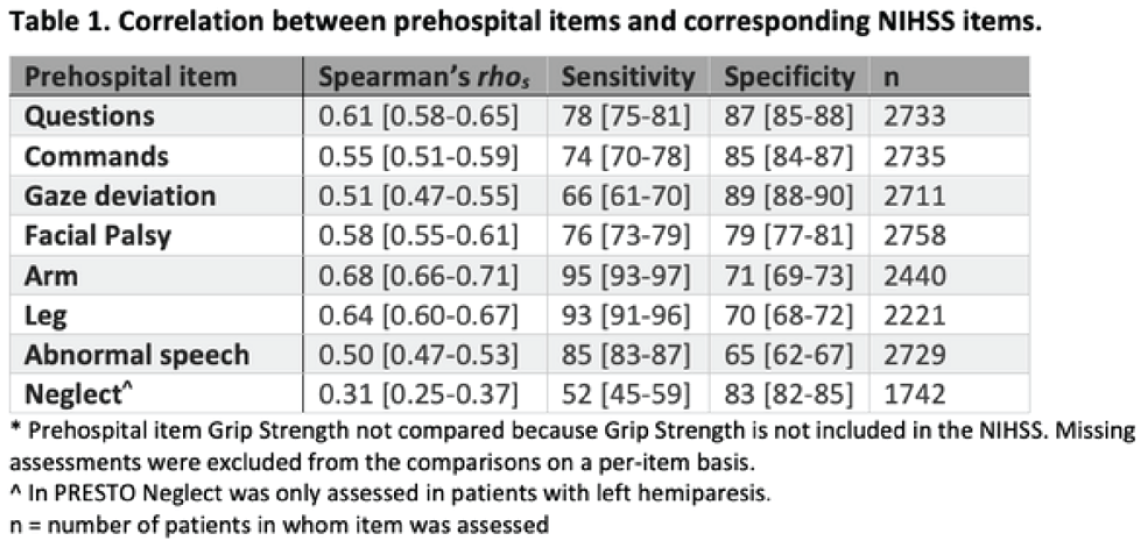
PREHOSPITAL STROKE ASSESSMENT BY PARAMEDICS COMPARED TO IN-HOSPITAL ASSESSMENT BY PHYSICIANS IN A COMPREHENSIVE COHORT OF PATIENTS WITH SUSPECTED STROKE
1Leiden University Medical Center, Neurology, Leiden, Netherlands, 2Erasmus MC University Medical Center, Neurology, Rotterdam, Netherlands, 3Erasmus MC University Medical Center, Emergency Medicine, Rotterdam, Netherlands, 4Erasmus MC University Medical Center, Public Health, Rotterdam, Netherlands, 5Erasmus MC University Medical Center, Radiology & Nuclear Medicine, Rotterdam, Netherlands, 6Leiden University Medical Center, Radiology, Leiden, Netherlands, 7Albert Schweitzer Hospital, Neurology, Dordrecht, Netherlands, 8Maasstad hospital, Neurology, Rotterdam, Netherlands, 9Franciscus Gasthuis & Vlietland, Neurology, Rotterdam, Netherlands, 10IJsseland Hospital, Radiology, Capelle a/d IJssel, Netherlands, 11Maasstad Hospital, Radiology, Rotterdam, Netherlands, 12Emergency Medical Services Hollands–Midden, Leiden, Netherlands, 13Emergency Medical Services Haaglanden, The Hague, Netherlands, 14Leiden University Medical Center, Medical Statistics, Leiden, Netherlands, 15Alrijne Hospital, Neurology, Leiderdorp, Netherlands, 16Groene Hart Hospital, Neurology, Gouda, Netherlands, 17Haga Hospital, Neurology, The Hague, Netherlands, 18Reinier de Graaf Gasthuis Hospital, Neurology, Delft, Netherlands, 19Langeland Hospital, Neurology, Zoetermeer, Netherlands
O004 / 1149
Scientific Communications 1 - Service Organisation / Quality Improvement
‘DRIVE THE DOCTOR’ FOR ENDOVASCULAR THROMBECTOMY IN A RURAL AREA; A SIMULATION STUDY
1University Medical Center Groningen, Department of Neurology, Groningen, Netherlands, 2University Medical Center Groningen, Health Technology Assessment, Department of Epidemiology, Groningen, Netherlands, 3University of Groningen, Department of Operations, Faculty of Economics & Business, Groningen, Netherlands, 4University Medical Center Groningen, Department of Radiology, Medical Imaging Center, Groningen, Netherlands
O005 / 718
Scientific Communications 1 - Service Organisation / Quality Improvement
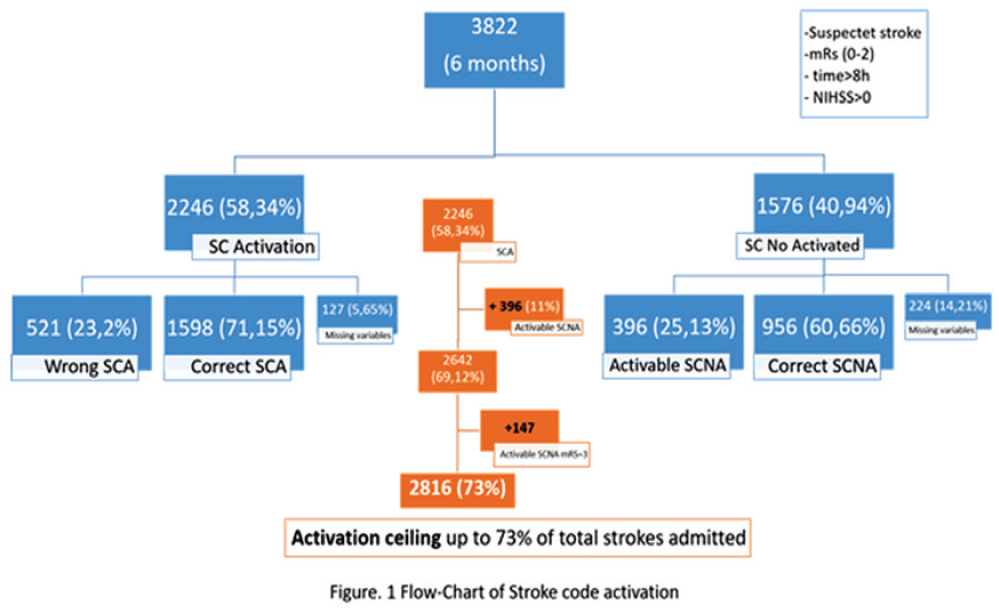
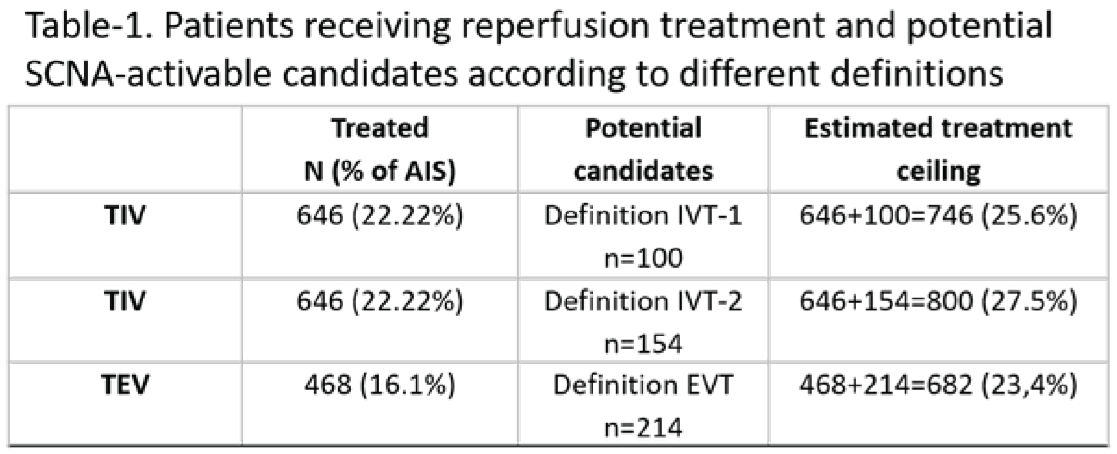
SENSITIVITY OF A REGIONAL MODEL OF ACUTE STROKE CARE. STROKE ACTIVATION AND REPERFUSION CEILING IN CATALONIA IN 2019
1Catalan Stroke Program, Health Department, Agency for Health Quality and Assessment (AQuAS), CIBER Epidemiología y Salud Pública (CIBERESP), Barcelona, Spain, 2Catalan Stroke Program, Health Department & Hospital Universitari Germans Trias i Pujol, Barcelona, Spain, 3Fundació Ictus, Barcelona, Spain, 4Catalan Stroke Program, Health Department, Agency for Health Quality and Assessment (AQuAS), Barcelona, Spain, 5Agency for Health Quality and Assessment (AQuAS), Health Department, Barcelona, Spain, 6Direcció Assistencial d’Hospitals. Institut Català de la Salut. Departament de Salut, Barcelona, Spain
O006 / 504
Scientific Communications 1 - Service Organisation / Quality Improvement
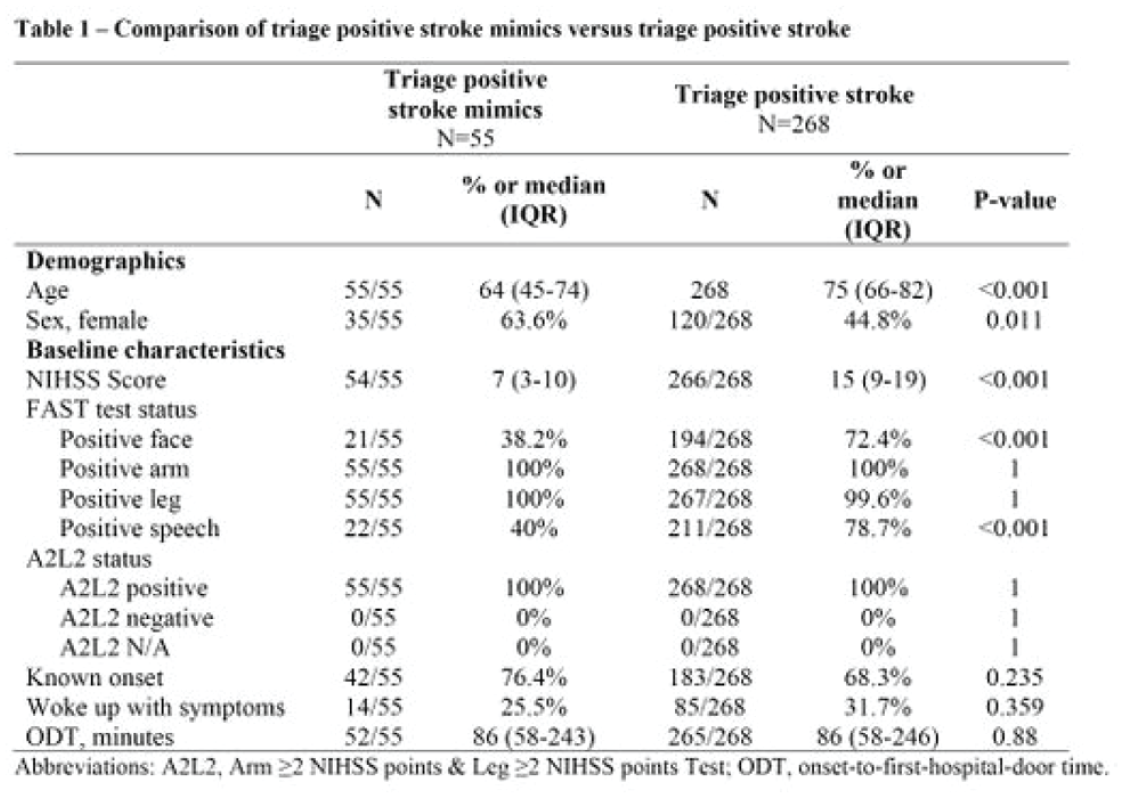
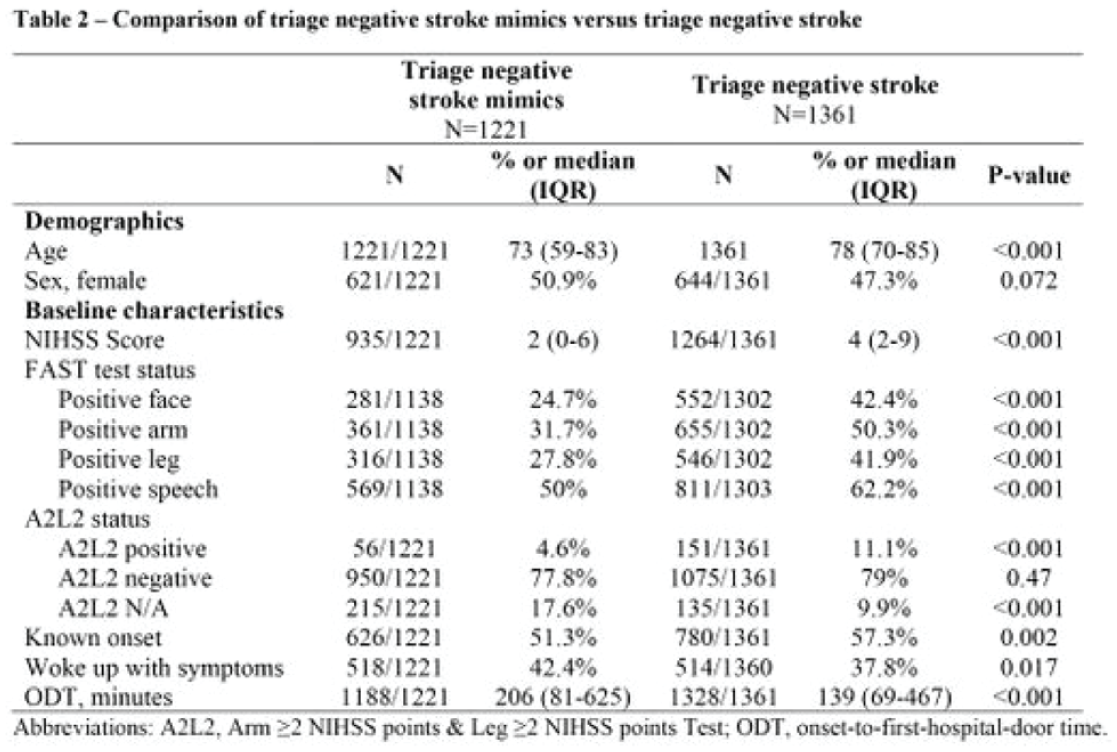
PREHOSPITAL STROKE MIMICS IN THE STOCKHOLM STROKE TRIAGE SYSTEM
1Karolinska Institutet, Department of Clinical Neuroscience, Stockholm, Sweden, 2Karolinska University Hospital, Department of Neurology, Stockholm, Sweden, 3Danderyd Hospital, Department of Neurology, Stockholm, Sweden
O007 / 1100
Scientific Communications 1 - Service Organisation / Quality Improvement
IMPACT OF ADDITIONAL MOBILE STROKE UNIT DISPATCH ON 3-MONTH FUNCTIONAL OUTCOMES AMONG ALL STROKE AND TIA PATIENTS: RESULTS FROM THE B_PROUD STUDY
1Charité - Universitätsmedizin Berlin, Center for Stroke Research Berlin, Berlin, Germany, 2Charité - Universitätsmedizin Berlin, Institute of Public Health, Berlin, Germany, 3Medical Park Berlin Humboldtmühle, Klinik für Neurologie, Berlin, Germany, 4Unfallkrankenhaus Berlin, Klinik für Neurologie mit Stroke Unit und Frührehabilitation, Berlin, Germany, 5Charité - Universtitätsmedizin Berlin, Klinik und Hochschulambulanz für Neurologie, Berlin, Germany, 6Vivantes Klinikum Neukölln, Klinik für Neurologie mit Stroke Unit, Berlin, Germany, 7Berlin Institute of Health, Berlin, Germany, 8German Centre for Cardiovascular Research (DZHK), Partner site Berlin, Berlin, Germany, 9Unfallkrankenhaus Berlin, Berlin, Germany, 10NeuroCure Cluster of Excellence, Berlin, Germany, 11German Center for Neurodegenerative Diseases (DZNE), Partner site Berlin, Berlin, Germany
O008 / 1303
Scientific Communications 1 - Service Organisation / Quality Improvement
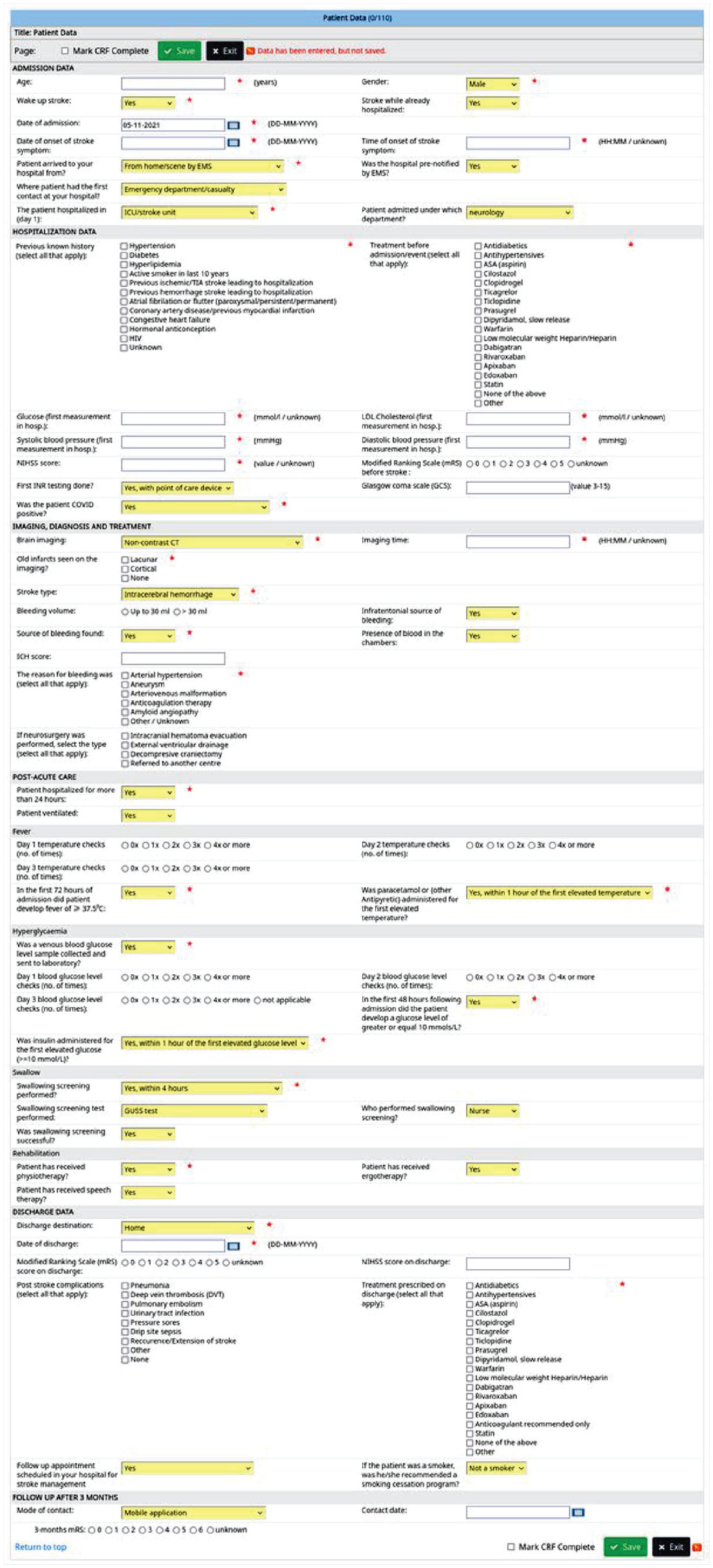
HARMONIZATION OF REGISTRY OF STROKE CARE QUALITY (RES-Q 3.0) DATA COLLECTION FORM FOR MONITORING AND IMPROVING STROKE CARE WORLDWIDE
1Military University Hospital Prague, Prague, Czech Republic, 2St. Anne’s University Hospital Brno, International Clinical Research Center, Brno, Czech Republic, 3University of Illinois, Chicago (UIC), Chicago, United States, 4Universidade Federal do Rio Grande do Sul, Porto Alegre, Brazil, 5St Vincent’s Hospital Melbourne and Australian Catholic University, Darlinghurst, Australia, 6Boehringer Ingelheim International GmbH, Ingelheim/Rhein, Germany
O009 / 1071
Scientific Communications 2 - Neurointervention – Imaging and Reperfusion
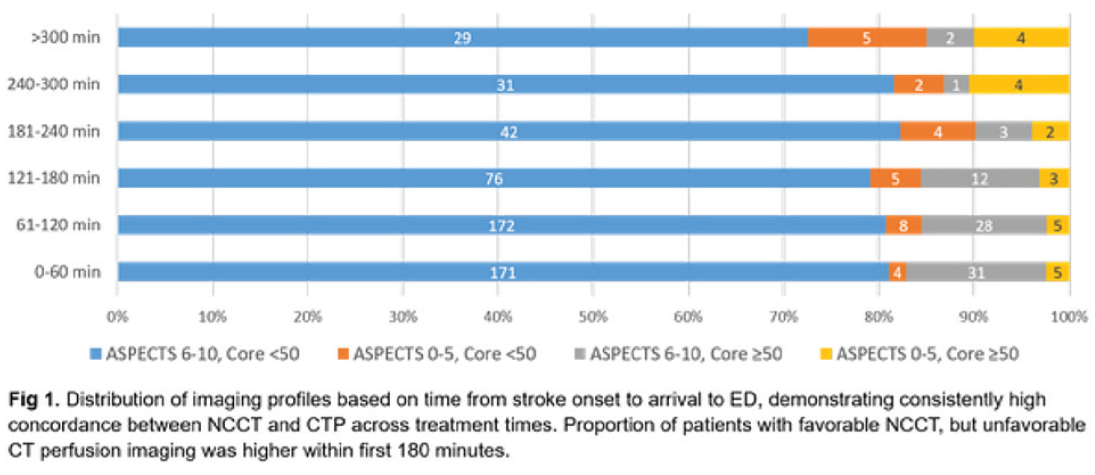
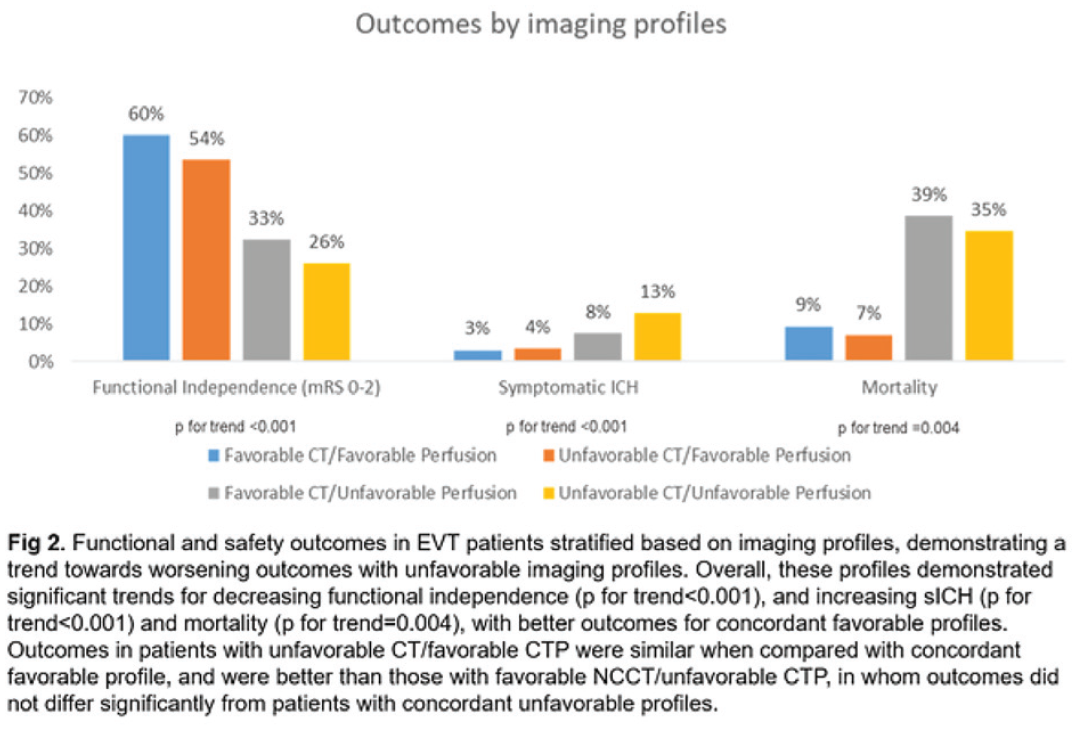
INCIDENCE AND OUTCOMES OF CONCORDANCE AND DISCORDANCE ON CT AND CT PERFUSION: A POOLED, PATIENT-LEVEL ANALYSIS OF EXTEND-IA TRIALS AND SELECT
1Case Western Reserve University, Neurology, Cleveland, United States, 2University Hospitals Cleveland Medical Center, Neurology, Cleveland, United States, 3The Royal Melbourne Hospital, Neurology, Melbourne, Australia, 4Valley Baptist Medical Center, Neurology, Harlingen, United States, 5University of Kansas Medical Center, Neurology, Kansas City, United States, 6Rush University Medical Center, Neurosurgery, Chicago, United States, 7University of Texas Health Science Center, Houston, United States, 8University of Iowa, Neurology, Iowa City, United States, 9Thomas Jefferson University Hospitals, Neurosurgery, Philadelphia, United States, 10Cleveland Clinic, Cerebrovascular Center, Cleveland, United States, 11OhioHealth - Riverside Methodist Hospital, Columbus, United States, 12Christchurch Hospital, Neurology, Christchurch, New Zealand, 13Spectrum Health, Neurosurgery, Grand Rapid, United States, 14Royal Adelaide Hospital, Neurology, Adelaide, Australia, 15The Royal Melbourne Hospital, Radiology, Melbourne, Australia, 16Gold Coast Health, Southport, Australia, 17Monash University Faculty of Medicine, Neurology, Clayton, Australia, 18Florey Neuroscience Institutes, Parkville, Australia, 19Emory University, Neurology, Atlanta, United States, 20University of Melbourne, Parkville, Australia, 21Hospital Universitario Valle de Hebrón, Neurology, Barcelona, Spain, 22Hospital Clínic de Barcelona, Barcelona, Spain, 23Hospital Clínico Universitario de Valladolid, Neurology, Valladolid, Spain, 24Wellstar Health System, Neurology, Marietta, United States, 25Stanford University, Neurology, Stanford, United States, 26University of Pennsylvania, Neurology, Philadelphia, United States, 27Liverpool Hospital - South Western Sydney Clinical School, Neurology, Liverpool, Australia, 28Memorial Hermann Hospital at Texas Medical Center, Neurology, Houston, United States
O010 / 1041
Scientific Communications 2 - Neurointervention – Imaging and Reperfusion
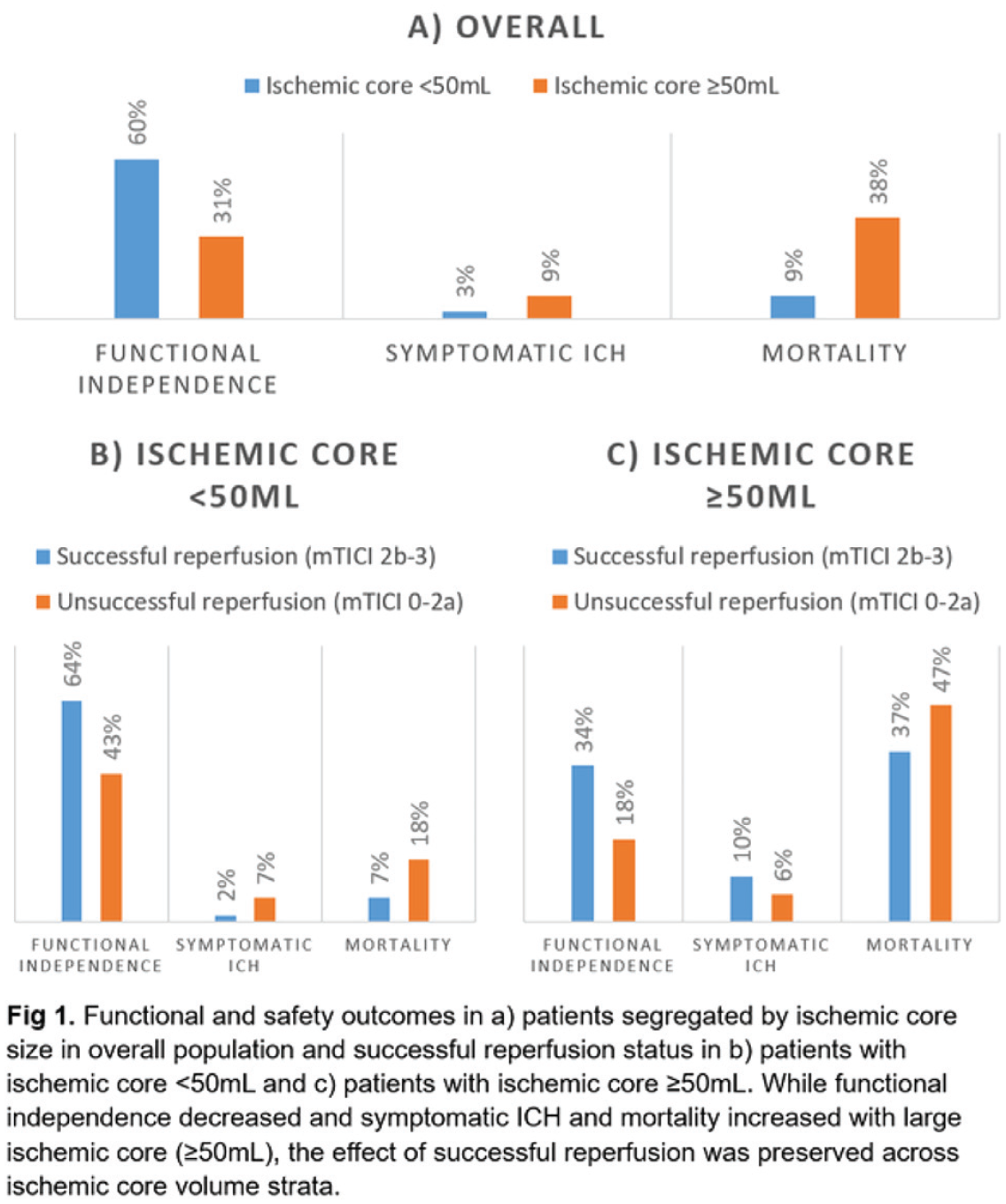
EFFECT OF SUCCESSFUL REPERFUSION IS INDEPENDENT OF CT-PERFUSION ISCHEMIC CORE VOLUME BUT IS MODIFIED BY MISMATCH VOLUME AND MEDIATED THROUGH REDUCED INFARCT GROWTH FROM BASELINE
1Case Western Reserve University, Neurology, Cleveland, United States, 2University Hospitals Cleveland Medical Center, Neurology, Cleveland, United States, 3Valley Baptist Medical Center, Neurology, Harlingen, United States, 4University of Kansas Medical Center, Neurology, Kansas City, United States, 5Rush University Medical Center, Neurosurgery, Chicago, United States, 6University of Texas Health Science Center, Houston, United States, 7University of Iowa, Neurology, Iowa City, United States, 8Thomas Jefferson University Hospitals, Neurosurgery, Philadelphia, United States, 9Cleveland Clinic, Cerebrovascular Center, Cleveland, United States, 10OhioHealth - Riverside Methodist Hospital, Columbus, United States, 11Christchurch Hospital, Neurology, Christchurch, New Zealand, 12Spectrum Health, Neurosurgery, Grand Rapid, United States, 13Royal Adelaide Hospital, Neurology, Adelaide, Australia, 14The Royal Melbourne Hospital, Neurology, Melbourne, Australia, 15Gold Coast Health, Southport, Australia, 16Monash University Faculty of Medicine, Neurology, Clayton, Australia, 17Florey Neuroscience Institutes, Parkville, Australia, 18Emory University, Neurology, Atlanta, United States, 19University of Melbourne, Parkville, Australia, 20Hospital Universitario Valle de Hebrón, Neurology, Barcelona, Spain, 21Hospital Clínic de Barcelona, Barcelona, Spain, 22Hospital Clínico Universitario de Valladolid, Neurology, Valladolid, Spain, 23Wellstar Health System, Neurology, Marietta, United States, 24The Royal Melbourne Hospital, Radiology, Melbourne, Australia, 25Stanford University, Neurology, Stanford, United States, 26University of Pennsylvania, Neurology, Philadelphia, United States, 27Liverpool Hospital - South Western Sydney Clinical School, Neurology, Liverpool, Australia, 28Memorial Hermann Hospital at Texas Medical Center, Neurology, Houston, United States
Successful reperfusion(aOR=2.48, 95%CI=1.50-4.10, p<0.001) was associated with functional independence but became insignificant after including infarct growth(aOR=1.19, 95%CI=0.66-2.16, p=0.56). Infarct growth was independently associated with functional independence(aOR=0.98, 95%CI=0.97-0.98, p<0.001 per mL infarct growth). In mediation analysis, successful reperfusion was associated with 20% total effect on functional independence with infarct growth associated with 17% average causal mediation effect, suggesting 86% of reperfusion benefit was mediated through limiting infarct growth.
O011 / 607
Scientific Communications 2 - Neurointervention – Imaging and Reperfusion
PERSISTENT TISSUE-LEVEL HYPOPERFUSION DESPITE SUCCESSFUL ANGIOGRAPHIC REPERFUSION (NO-REFLOW) NEGATES THE CLINICAL BENEFIT OF THROMBECTOMY ON FUNCTIONAL OUTCOME
1Royal Melbourne Hospital, Department of Neurology, Melbourne, Australia, 2Austin Hospital, Melbourne, Australia, 3University of Melbourne, Melbourne, Australia, 4Royal Melbourne Hospital, Melbourne, Australia, 5Royal Adelaide Hospital, Adelaide, Australia, 6Christchurch Hospital, Christchurch, New Zealand, 7Princess Alexandra Hospital, Brisbane, Australia, 8Eastern Health, Melbourne, Australia, 9University of New South Wales, Sydney, Australia
O012 / 1396
Scientific Communications 2 - Neurointervention – Imaging and Reperfusion
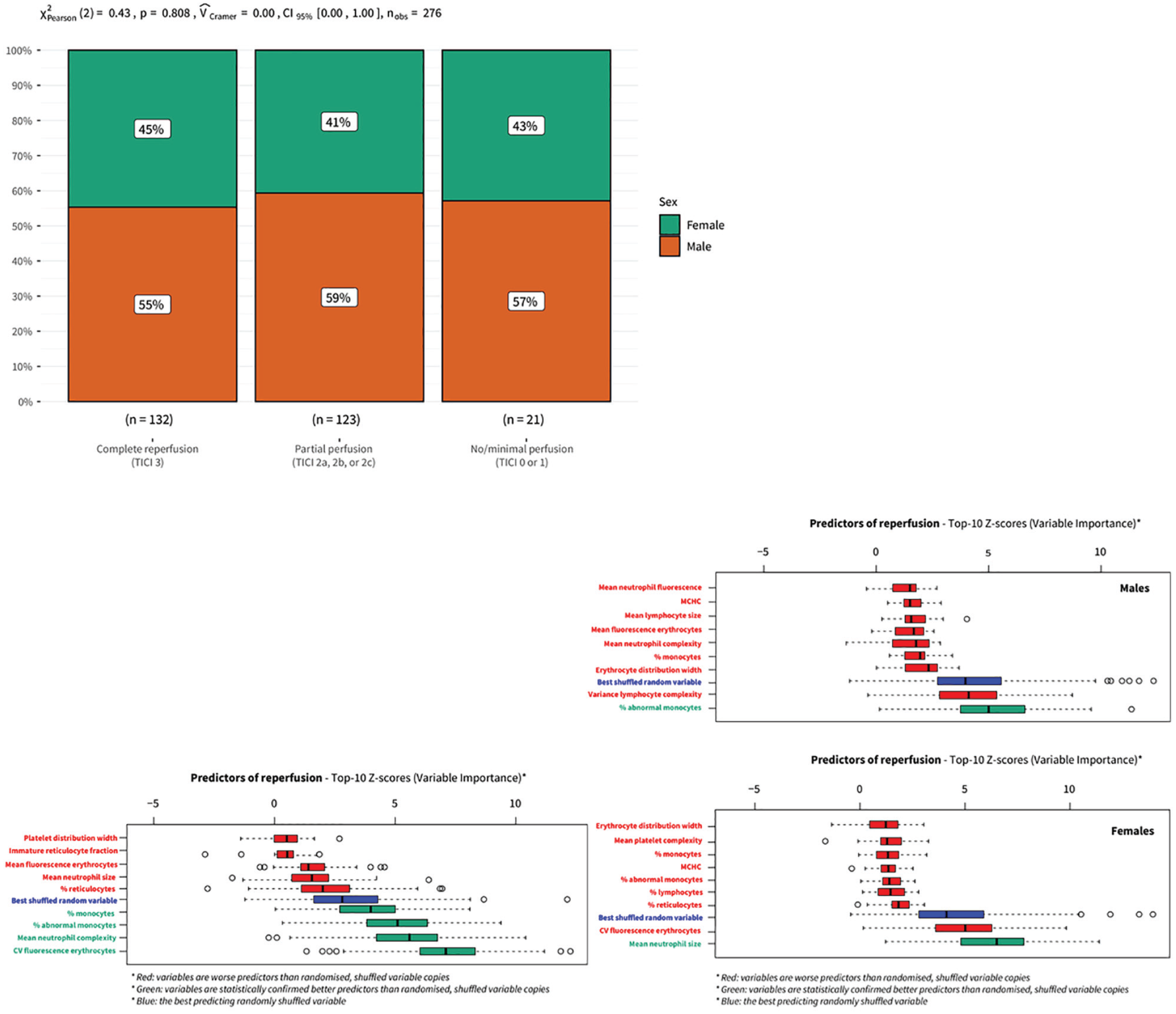
HEMATOLOGICAL VARIABLES ASSOCIATED WITH DEGREE OF REPERFUSION AFTER INTRA-ARTERIAL THROMBECTOMY DIFFER BETWEEN MEN AND WOMEN
1University Medical Center Utrecht, Central Diagnostic Laboratory, Utrecht, Netherlands, 2University Medical Center Utrecht, Department of Neurology, Utrecht, Netherlands
O013 / 100
Scientific Communications 2 - Neurointervention – Imaging and Reperfusion
EFFICACY AND SAFETY OUTCOMES OF MECHANICAL THROMBECTOMY FOR MEDIUM VESSEL OCCLUSION
1National Cerebral and Cardiovascular Center, Department of Neurology, Suita, Japan, 2National Cerebral and Cardiovascular Center, Division of Stroke Care Unit, Suita, Japan, 3National Cerebral and Cardiovascular Center, Department of Cerebrovascular Medicine, Suita, Japan, 4National Cerebral and Cardiovascular Center, Department of Neurosurgery, Suita, Japan
O014 / 1519
Scientific Communications 2 - Neurointervention – Imaging and Reperfusion
NATIONAL TRENDS OVER TIME IN PATIENT COMPLEXITY, INTERVENTIONAL TECHNIQUES AND OUTCOMES OF ENDOVASCULAR TREATMENT FOR ACUTE ISCHEMIC STROKE: THE COMPLETED MR CLEAN REGISTRY
1Maastricht University Medical Center+ and School for Cardiovascular Diseases (CARIM), Neurology, Maastricht, Netherlands, 2Amsterdam University Medical Centers, Neurology, Amsterdam, Netherlands, 3Erasmus University Medical Center, Neurology, Rotterdam, Netherlands, 4Amsterdam University Medical Centers, Radiology, Amsterdam, Netherlands, 5Erasmus University Medical Center, Public Health, Rotterdam, Netherlands, 6Amsterdam University Medical Centers, Radiology and Nuclear Medicine, Amsterdam, Netherlands, 7Erasmus University Medical Center, Radiology, Rotterdam, Netherlands, 8Maastricht University Medical Center+ and School for Cardiovascular Diseases (CARIM), Radiology, Maastricht, Netherlands
O015 / 210
Scientific Communications 2 - Neurointervention – Imaging and Reperfusion
INCIDENCE AND PREDICTORS OF DELAYED FUNCTIONAL INDEPENDENCE IN THE TREVO RETRIEVER REGISTRY
1Barrow Neurological Institute, Neurosurgery, Phoenix, United States, 2HonorHealth Research Institute, Neurology, Scottsdale, United States, 3Wellstar Hospital, Neurology, Atlanta, United States, 4Erlanger Medical Center, Chattanooga, United States, 5Lausanne University Hospital, Lausanne, Switzerland, 6Charles University Hospital, Radiology, Hradec Kralove, Czech Republic, 7California Pacific Medical Center, San Francisco, United States, 8University of California Los Angeles, Los Angeles, United States, 9Emory University, Neurology, Atlanta, United States, 10Drexel University, Philadelphia, United States, 11Riverside Methodist Hospital, Columbus, United States
O016 / 1613
Scientific Communications 2 - Neurointervention – Imaging and Reperfusion
COMPARISON OF OPERATOR TECHNIQUES FOR MECHANICAL THROMBECTOMY IN ACUTE ISCHEMIC STROKE – INSIGHTS FROM THE ASSIST REGISTRY
1WellStar Health System, Department of Neurology, Marietta, United States, 2Hospital Son Espases, Mallorca, Spain, 3McLaren Regional Medical Center, Flint, United States, 4Medical University of South Carolina, Charleston, United States, 5Klinikum Vest Recklinghausen, Recklinghausen, Germany, 6Hospital Clínico Universitario de Valladolid, Valladolid, Spain, 7Rhode Island Hospital, Providence, United States, 8Ghent University Hospital, Gent, Belgium, 9Hospital Universitario Central de Asturias-HUCA, Oviedo, Spain, 10Bon Secours Mercy Health St. Vincent Medical Center, Neuroscience Department, Toledo, United States, 11David Geffen School of Medicine, University of California, Los Angeles, Department of Neurology and Comprehensive Stroke Center, Los Angeles, United States, 12West Virginia University Hospital, Morgantown, United States, 13Charles University Hospital, Hradec Kralove, Czech Republic, 14University Hospital Basel, Basel, Switzerland, 15Toronto Western Hospital, Toronto, Canada, 16Chonnam National University Hospital, Gwangju, Korea, Republic of, 17University Hospital Cleveland Medical Center, Cleveland, United States, 18University of Massachusetts Medical School, Worcester, United States, 19Heidelberg University Hospital, Heidelberg, Germany
ClinicalTrials.gov ID: NCT03845491
O017 / 1021
Scientific Communications 3 - Rehab and Recovery
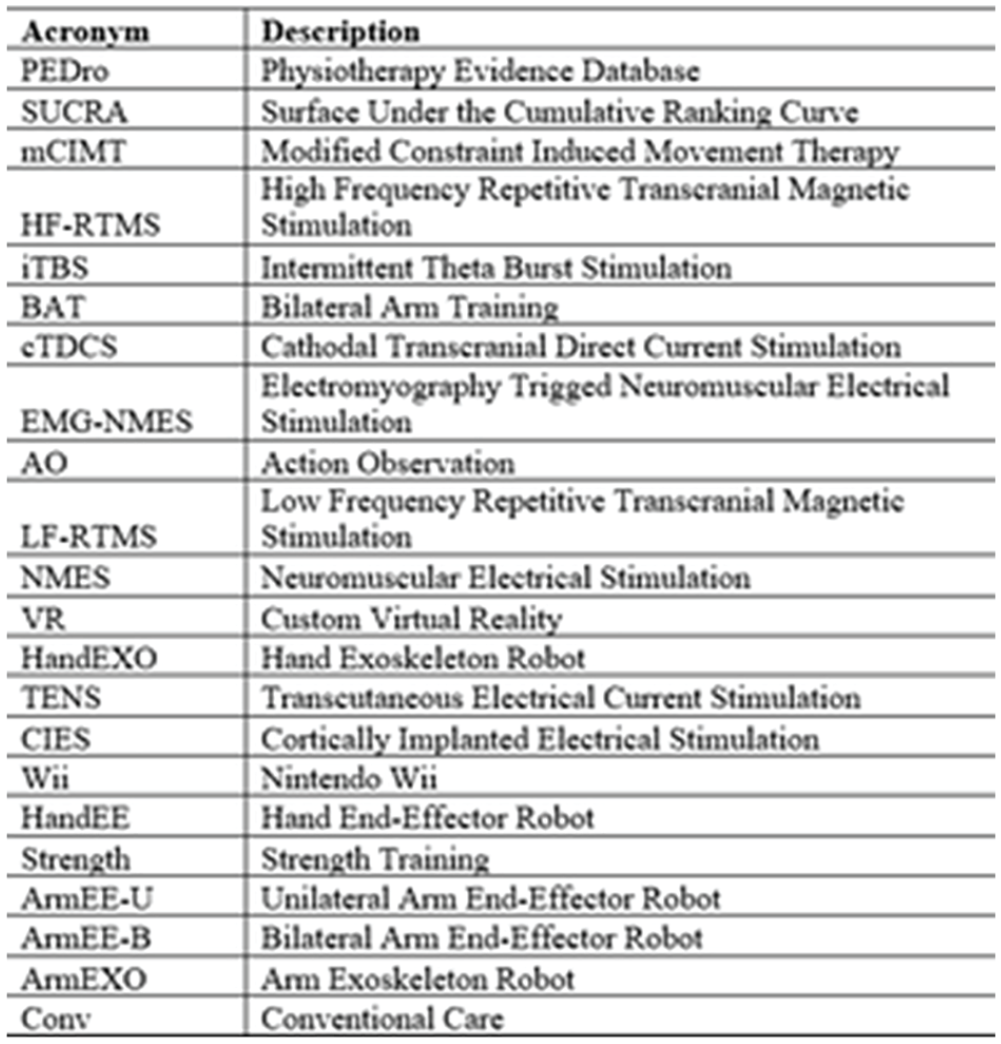
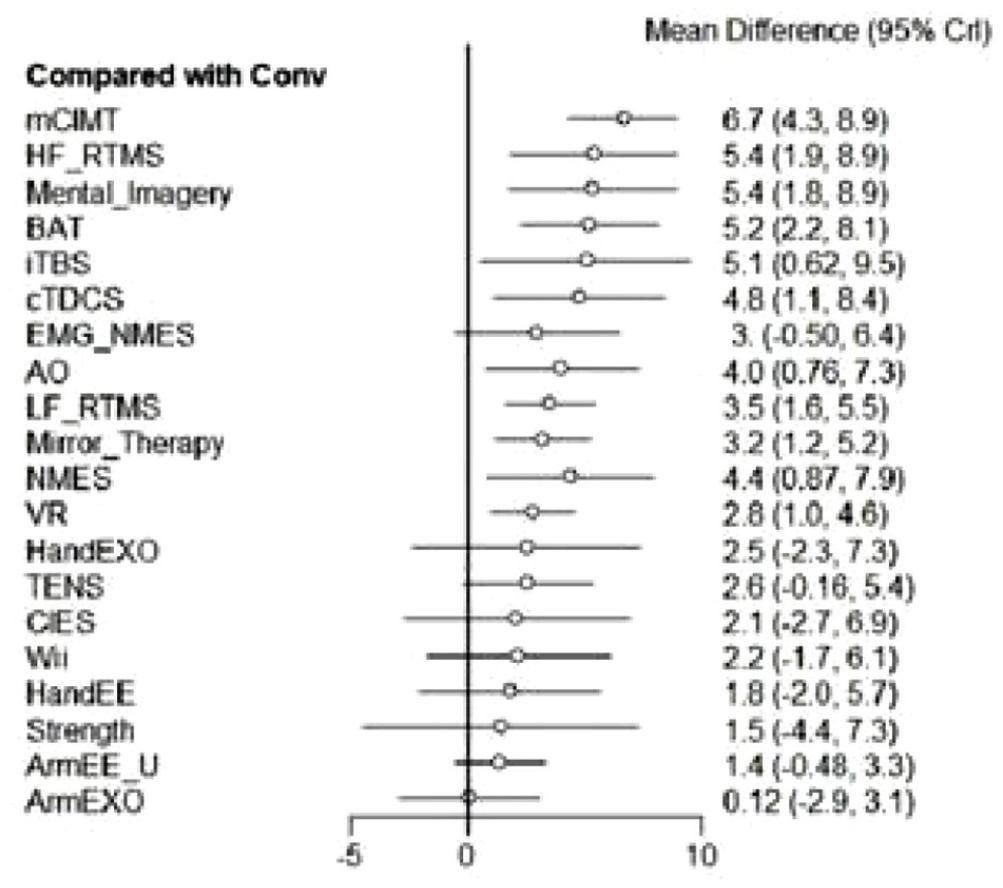
A SYSTEMATIC REVIEW AND NETWORK META-ANALYSIS OF NON-CONVENTIONAL THERAPIES FOR IMPROVING UPPER EXTREMITY MOTOR IMPAIRMENT POST STROKE
1Lawson Health Research Institute, Parkwood Institute Research, London, Canada, 2St. Joseph's Health Care London, Parkwood Institute, London, Canada, 3Western University, Schulich School of Medicine and Dentistry, London, Canada
O018 / 279
Scientific Communications 3 - Rehab and Recovery
COMPUTATIONAL ASSESSMENT OF HAND MOTOR SKILLS IN STROKE PATIENTS
1Hospital La Paz Institute for Health Research (IdiPAZ), Neurology, Stroke Center, University Hospital La Paz, Madrid, Spain, 2Hospital La Paz Institute for Health Research (IdiPAZ), Universidad Autónoma de Madrid, Neurology, Stroke Center, University Hospital La Paz, Madrid, Spain, 3ETSI Telecomunicación, Universidad Politécnica de Madrid, Madrid, Spain, 4Hospital La Paz Institute for Health Research (IdiPAZ), Universidad Autónoma de Madrid, Rehabilitation, University Hospital La Paz, Madrid, Spain
(1) wrist flexion-extension
(2) finger-grip opening-closing
(3) finger spread
(4) fist opening-closing.
A validation study comparing data from patients with mild to moderate hand motor deficit was done. Correlations with the FMA-UE (hand items) score were analysed.
O019 / 464
Scientific Communications 3 - Rehab and Recovery
TRUNK CONTROL TEST AS A POTENTIAL PREDICTOR OF STROKE REHABILITATION OUTCOME, ASSESSED BY THE MODIFIED BARTHEL INDEX: RESULTS OF A RETROSPECTIVE ANALYSIS
1IRCCS Fondazione Don Carlo Gnocchi, Florence, Italy, 2University of Florence, NEUROFARBA, Florence, Italy, 3Istituto di Biorobotica, Scuola Superiore Sant'Anna, Pontedera, Italy, 4Fondazione Don Carlo Gnocchi, Marina di Massa, Italy, 5University of Florence, Department of Experimental and Clinical Medicine, Florence, Italy
O020 / 758
Scientific Communications 3 - Rehab and Recovery
LONG-TERM PROSPECTIVE MULTI-FACETED FUNCTIONAL RECOVERY IN THE FIRST-EVER STROKE SURVIVORS: THE KOSCO STUDY
1Samsung Medical Center, Department of Physical and Rehabilitation Medicine, Center for Prevention and Rehabilitation, Heart Vascular Stroke Institute, Seoul, Korea, Republic of, 2College of Medicine, Chungnam National University, Department of Rehabilitation Medicine, Chungnam, Korea, Republic of, 3Konkuk University School of Medicine, Department of Rehabilitation Medicine, Seoul, Korea, Republic of, 4Yonsei University College of Medicine, Department and Research Institute of Rehabilitation Medicine, Seoul, Korea, Republic of, 5Pusan National University Yangsan Hospital, Department of Rehabilitation Medicine, Pusan National University School of Medicine, Pusan, Korea, Republic of, 6Wonkwang University, School of Medicine, Department of Preventive Medicine, Iksan, Korea, Republic of, 7Kyungpook National University School of Medicine, Department of Rehabilitation Medicine, Daegu, Korea, Republic of, 8Wonkwang University, School of Medicine, Department of Rehabilitation Medicine, Iksan, Korea, Republic of, 9Jeju National University Hospital, Department of Rehabilitation Medicine, Jeju, Korea, Republic of, 10Chonnam National University Medical School, Department of Physical and Rehabilitation Medicine, Gwang-ju, Korea, Republic of, 11Hallym University, Department of Statistics, Gang-won, Korea, Republic of, 12Ewha Womans University, Department of Health Convergence, Seoul, Korea, Republic of, 13Korea Disease Control and Prevention Agency, Division of Chronic Disease Prevention, Cheongju, Korea, Republic of, 14Sungkyunkwan University, Department of Health Science and Technology, Department of Medical Device Management and Research, Department of Digital Healthcare, SAIHST, Suwon, Korea, Republic of
O021 / 876
Scientific Communications 3 - Rehab and Recovery
EFFECTIVENESS OF INTERVENTIONS TO SUPPORT THE TRANSITION HOME AFTER ACUTE STROKE: SYSTEMATIC REVIEW AND META-ANALYSIS
1Royal College of Surgeons in Ireland, RCSI School of Physiotherapy, Dublin, Ireland, 2Royal College of Surgeons in Ireland, Division of Population Health Sciences, Dublin, Ireland, 3Royal College of Surgeons in Ireland, RCSI Library, Dublin, Ireland, 4University of Glasgow, Institute of Cardiovascular and Medical Sciences, Glasgow, United Kingdom, 5University of Limerick, School of Allied Health, Faculty of Education and Health Sciences, Ageing Research Centre, Health Research Institute, Limerick, Ireland
Randomised controlled trials recruiting stroke patients to receive either usual care or any support intervention, were included.
Two authors determined eligibility and extracted data. We performed meta-analyses where possible; and assessed risk of bias (ROB2 tool); and certainty of evidence (GRADE).
Support interventions may improve quality of life up to 3-months (p<0.00001), reduce depression (p=0.007) and anxiety (p=0.0005) at 6 -12 months. Effects on other secondary outcomes remain inconclusive.
O022 / 229
Scientific Communications 3 - Rehab and Recovery
WHAT LESSONS CAN WE LEARN FROM RECENT LARGE RANDOMISED CONTROLLED TRIALS IN STROKE REHABILITATION?
1Medical Research Institute of New Zealand, Stroke/Rehabilitation research, Wellington, New Zealand, 2AUT University, Rehabilitation, Auckland, New Zealand, 3Hawkes Bay DHB, Medicine, Hastings, New Zealand, 4University of Auckland, Medicine and Health Sciences, Auckland, New Zealand
O023 / 594
Scientific Communications 3 - Rehab and Recovery
‘TAKE CHARGE’ IS THE MOST EFFECTIVE STROKE INTERVENTION AVAILABLE: WHAT ARE THE BARRIERS TO IMPLEMENTATION?
1Medical Research Institute of New Zealand, Stroke/Rehabilitation Research, Wellington, New Zealand, 2Hawkes Bay DHB, Medicine, Hastings, New Zealand, 3AUT University, Rehabilitation, Auckland, New Zealand, 4University of Auckland, Medicine and Health Sciences, Auckland, New Zealand
1) ‘We don’t believe it’ i.e. how could a simple ‘psychological’ intervention delivered after discharge and weeks after stroke possibly improve independence?
2) ‘We are already doing this’ i.e. the belief that our current rehabilitation practice is already completely person-centred.
3) ‘This approach will interfere with rehabilitation’ i.e. the clash of the current ‘SMART’ (Specific/Measurable/Achievable/Realistic/Timed) approach to goal setting with Take Charge ‘big goals’.
4) ‘Let’s wait for the guidelines’ i.e. keep the status quo until experts advise otherwise.
The presentation will focus on ways of addressing these reasons using evidence from rehabilitation theory, randomised controlled trials, experience from education and sport, and other easily understood analogies.
O024 / 1246
Scientific Communications 3 - Rehab and Recovery
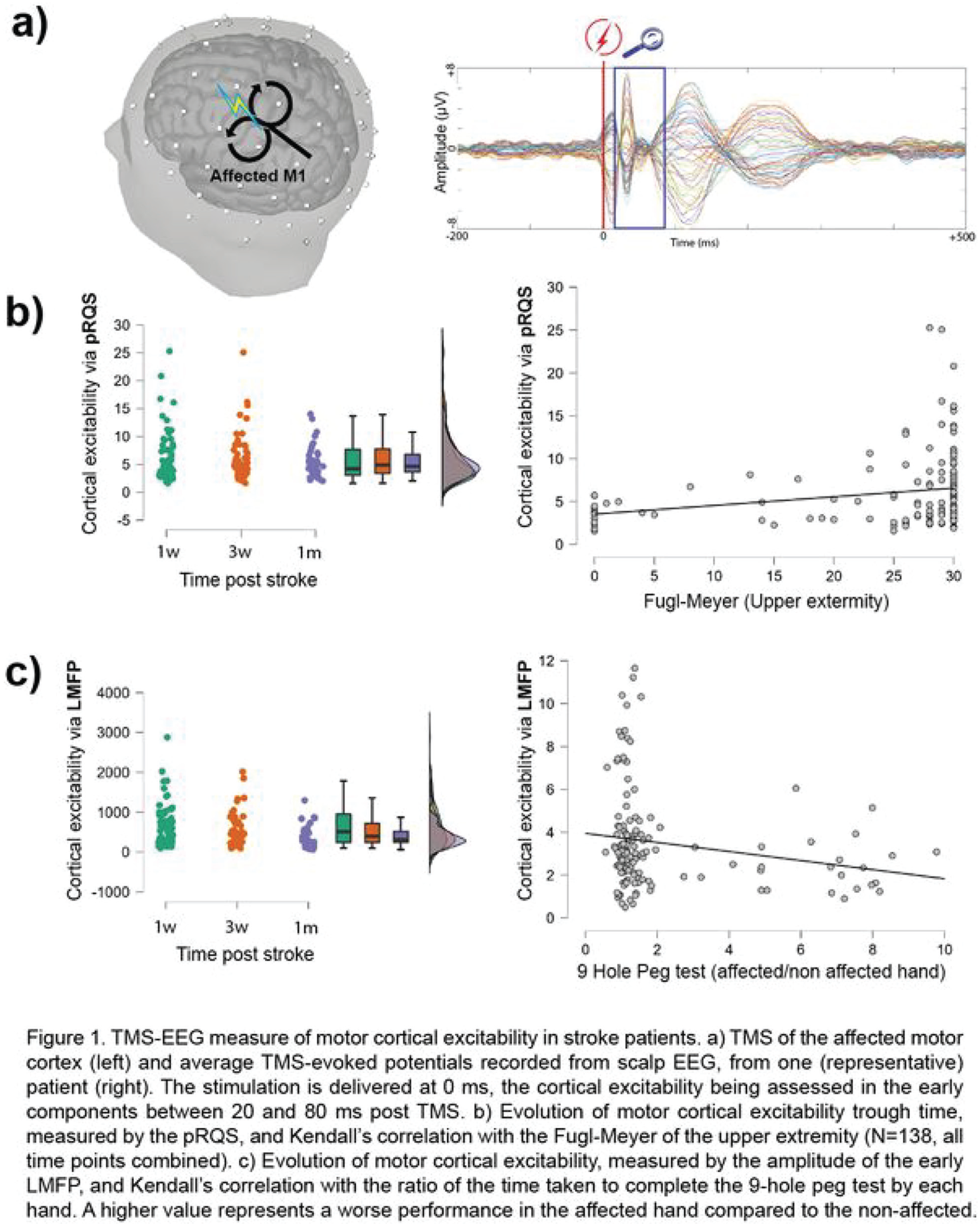
THE ROLE OF IPSILESIONAL MOTOR CORTICAL EXCITABILITY AND UPPER LIMB FUNCTION AFTER A STROKE – A TMS-EEG COUPLING STUDY
1Center for Neuroprosthetics and Brain Mind Institute, Swiss Federal Institute of Technology (EPFL), Defitech Chair of Clinical Neuroengineering, Geneva, Switzerland, 2Center for Neuroprosthetics and Brain Mind Institute, Swiss Federal Institute of Technology (EPFL Valais), Defitech Chair of Clinical Neuroengineering, Clinique Romande de Réadaptation, Sion, Switzerland, 3Center for Neuroprosthetics & Brain Mind Institute, Swiss Federal Institute of Technology (EPFL), Laboratory of Cognitive Neuroscience, Geneva, Switzerland, 4University of Geneva, Department of Neurology, Geneva, Switzerland, 5Institute of Bioengineering, Swiss Federal Institute of Technology (EPFL), Medical Image Processing Laboratory, Geneva, Switzerland, 6University of Geneva, Department of Radiology and Medical Informatics, Geneva, Switzerland, 7Hôpital du Valais, Department of Radiology, Sion, Switzerland, 8Berner Klinik Montana, Crans-Montana, Switzerland, 9Hôpital du Valais, Department of Neurology, Sion, Switzerland, 10Clinique Romande de Réadaptation, Sion, Switzerland, 11University of Lübeck, Department of Neurology, Lübeck, Germany, 12University of Lübeck, Center of Brain, Behavior and Metabolism (CBBM), Lübeckgermge, Germany, 13University Hospital Würzburg, Department of Neurology, Würzburg, Germany, 14Geneva University Hospitals, Department of Neurology, Geneva, Switzerland
O025 / 243
Scientific Communications 4 - Clinical Practice, Management and Care
EXPLORING STROKE CARE DIFFERENCES BETWEEN HIGH AND MIDDLE INCOME EUROPEAN COUNTRIES FOR FEVER, SUGAR AND SWALLOW MANAGEMENT (THE QASC EUROPE PROJECT)
1Australian Catholic University, Nursing Research Institute, Sydney, Australia, 2Australian Catholic University, Nursing Research Institute, Melbourne, Australia, 3Angels Initiative, Boehringer Ingelheim International GmbH, Ingelheim, Germany, 4Angels Initiative, Boehringer Ingelheim International GmbH, Prague, Czech Republic, 5St. Ann's University Hospital and Masaryk University, International Clinical Research Centre, Neurology Department, Brno, Czech Republic, 6Monash University, Stroke and Ageing Research, School of Clinical Sciences at Monash Health, Clayton, Australia, 7Australian National University, National Centre for Epidemiology and Population Health (NCEPH), Canberra, Australia, 8John Hunter Health and Innovation Precinct, Hunter New England Local Health District, Newcastle, Australia, 9University of Newcastle, Department of Medicine, Newcastle, Australia, 10University of Ottawa, Ottawa, Canada, 11Prince of Wales Hospital, Speech Pathology Department, Randwick, Australia, 12University of Sydney, Centre for Diabetes and Endocrinology Research, Westmead Hospital, Westmead, Australia, 13Klinikum Lüneburg, Department of Neurology and Clinical Neurophysiology, Lüneburg, Germany
O026 / 1573
Scientific Communications 4 - Clinical Practice, Management and Care
SYSTEM OPTIMISATION IN TIMES OF CRISIS
1 East Kent Hospitals University Foundation NHS Trust, Stroke Medicine, Canterbury, United Kingdom
Planned and delivered over 10 days in May 2020:
Innovations introduced:
1) Prehospital: telemedicine assessment between stroke specialist and ambulance crew; improving sensitivity and specificity of triage to support time critical access to Thrombolysis and Thrombectomy.
2) Adherence to a National Optimal Stroke Imaging Pathway (NOSIP): 24/7 access to CTA, CTP with AI support and 12hrs access to MRI.
3) Autonomy of stroke bed base
4) Inpatient stroke care redesign: to deliver initial acute care (72 hours) and early rehabilitation (post 72 hours) with medical and therapy care delivered routinely 7 days per week.
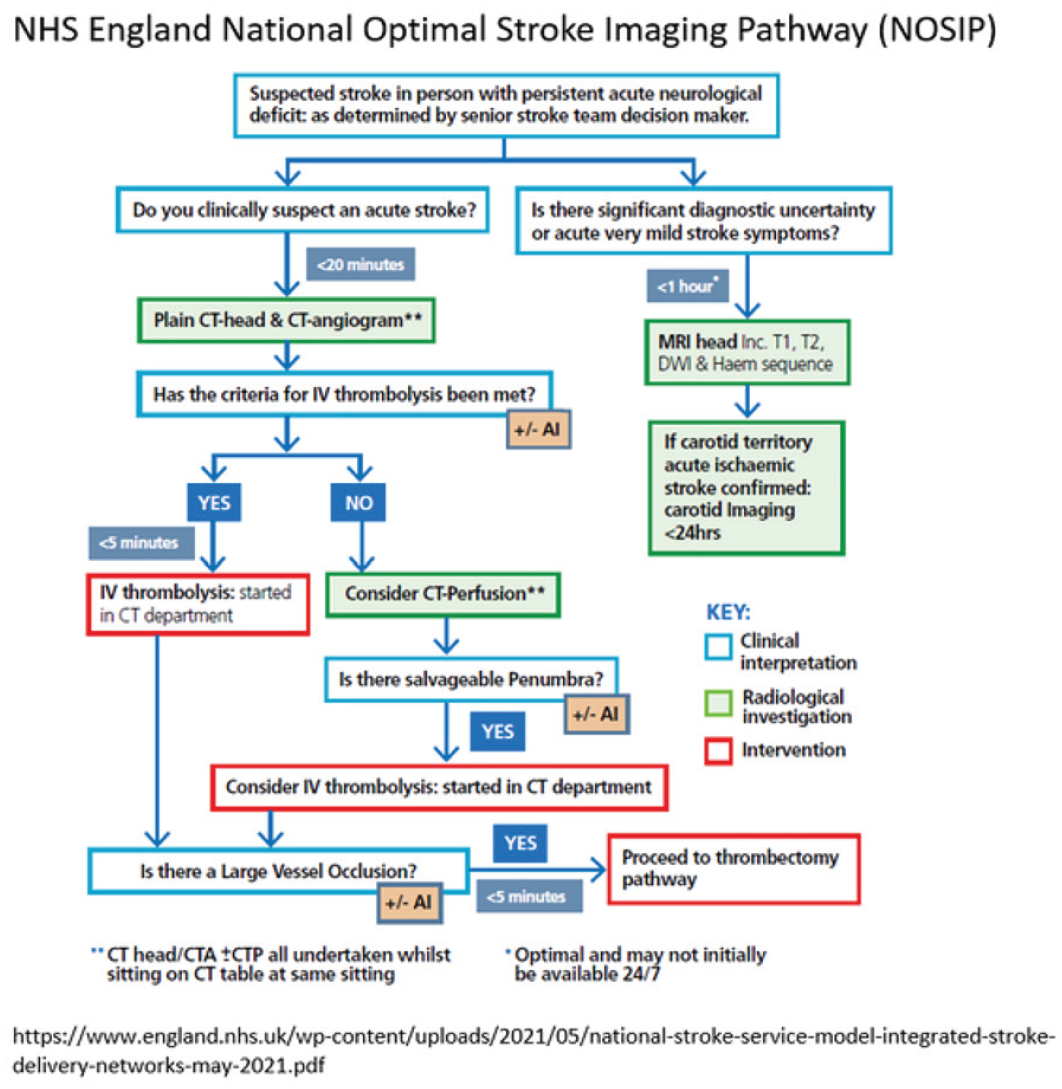
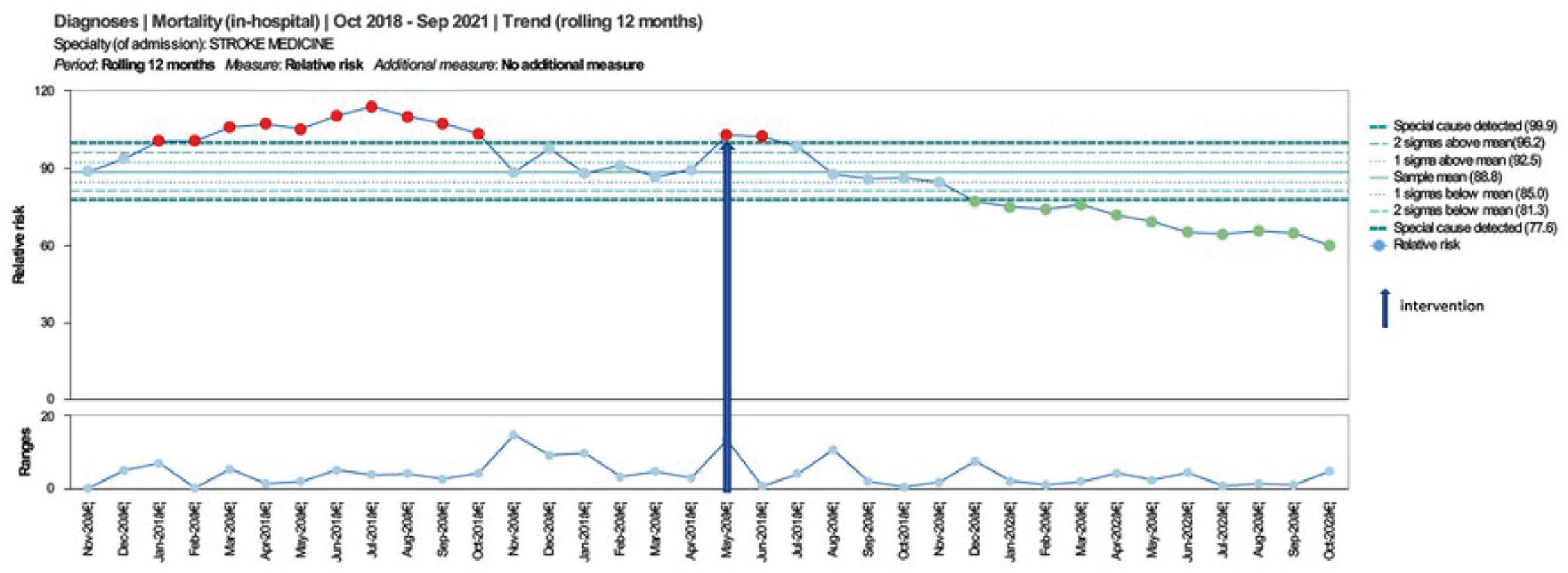
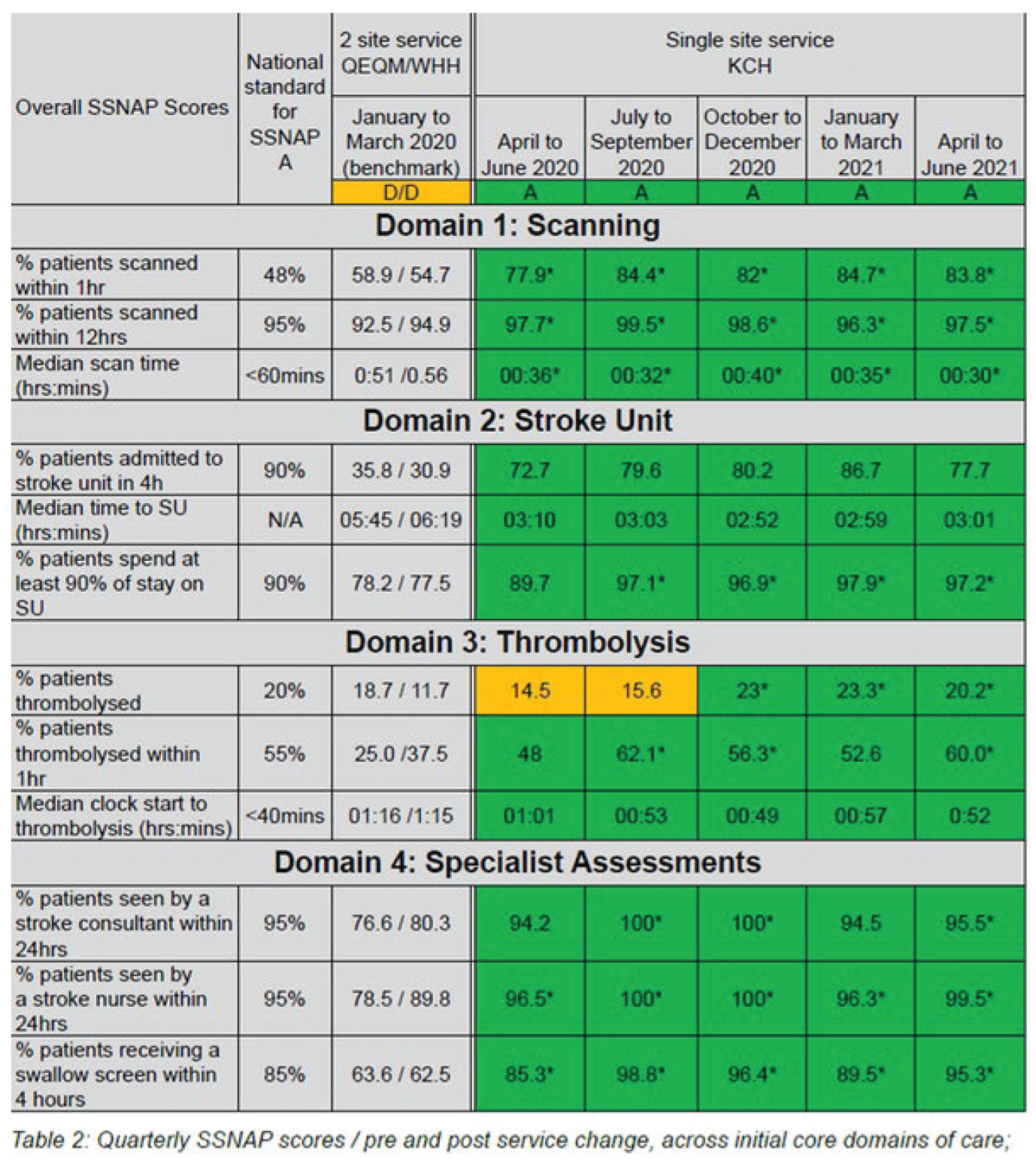
Monthly evaluation of quality indicators (SSNAP) enabled evaluation, benchmarked against local (pre-pandemic) and national performance. Mortality and length of stay outcomes analysed.
O027 / 1518
Scientific Communications 4 - Clinical Practice, Management and Care
INTRACEREBRAL HEMORRHAGE CARE BUNDLE: A QUALITY IMPROVEMENT INITIATIVE
1University Hospital Limerick, Ageing & Therapeutics, Limerick, Ireland, 2St James Hospital, Clinical Pharmacology & Therapeutics, Dublin, Ireland, 3St James Hospital, Department of Intensive Care Medicine, Limerick, Ireland, 4University Hospital Limerick, Pharmacy, Limerick, Ireland, 5Mater Hospital, Geriatrics & Stroke medicine, Dubline, Ireland, 6University Hospital Limerick, Geriatrics & Stroke medicine, Dubline, Ireland, 7University Hospital Limerick, Hematology & Coagulation, Limerick, Ireland, 8University Hospital Limerick, Coagulation, Limerick, Ireland, 9University of Limerick, School of Allied health, Limerick, Ireland, 10Mater Hospital, Geriatrics & Stroke medicine, Dublin, Ireland
O028 / 386
Scientific Communications 4 - Clinical Practice, Management and Care
ASSOCIATION OF DELIRIUM INCIDENCE WITH VISITATION RESTRICTIONS DUE TO COVID-19 PANDEMIC IN PATIENTS WITH ACUTE CEREBROVASCULAR DISEASE IN A STROKE-UNIT SETTING
1 University Medical Center of the Johannes Gutenberg University Mainz, Department of Neurology, Mainz, Germany
O029 / 395
Scientific Communications 4 - Clinical Practice, Management and Care
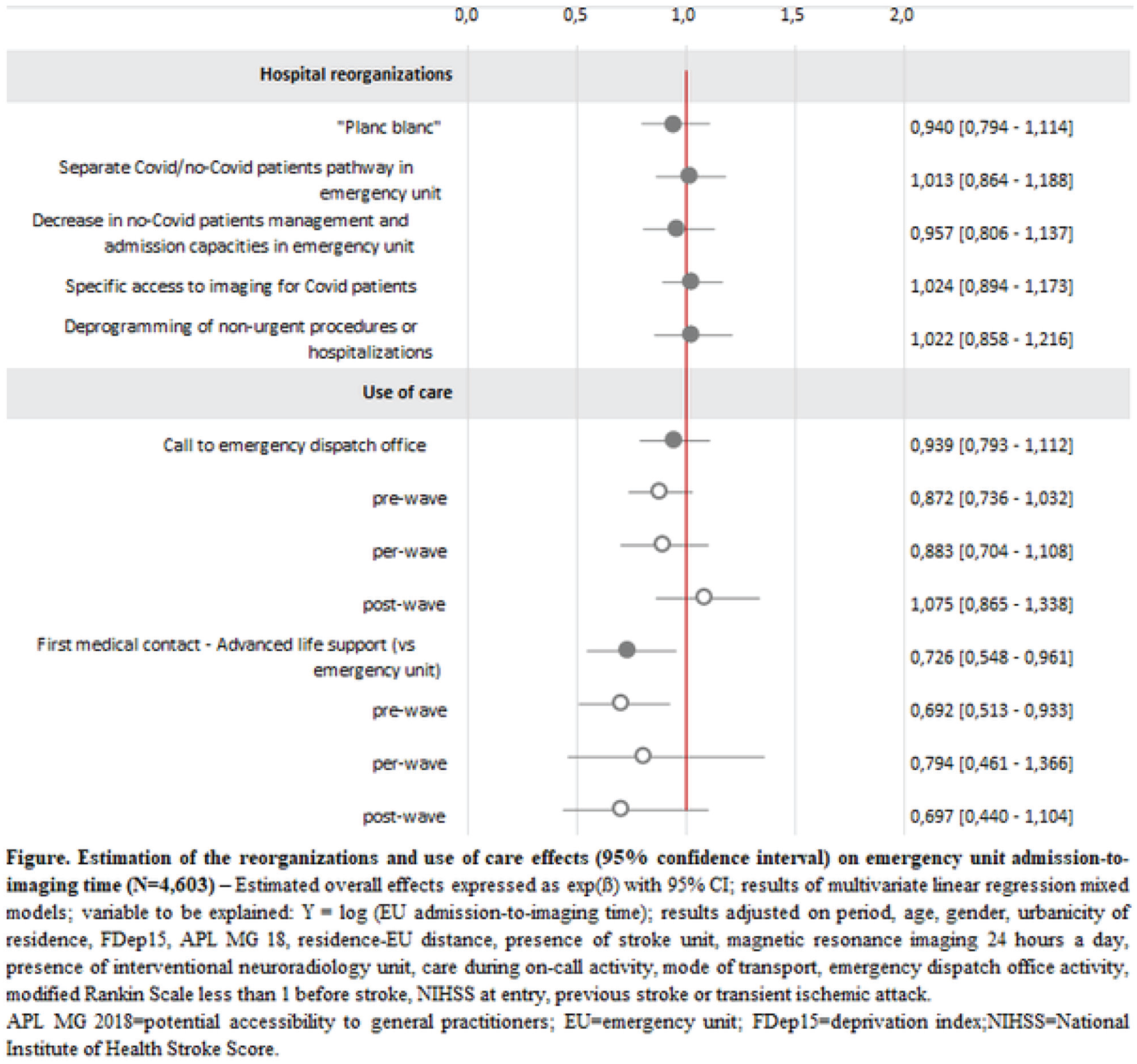
IMPACT OF THE HEALTHCARE SYSTEM TRANSFORMATIONS SPURRED BY THE COVID-19 PANDEMIC ON STROKE MANAGEMENT: RESULTS FROM A FRENCH REGIONAL STROKE OBSERVATORY
1Bordeaux Population Health, University of Bordeaux, ISPED, Centre INSERM U 1219, Bordeaux, France, 2CHU de Bordeaux, CIC-EC 14-01, Bordeaux, France, 3CHU de Bordeaux, Pôle de Santé Publique, Service d’Information Médicale, Bordeaux, France, 4Bordeaux University Hospital Neurology, Stroke Unit, Bordeaux, France, 5Bayonne Hospital Neurology, Stroke Unit, Bayonne, France, 6Pau Hospital Neurology, Stroke Unit, Pau, France, 7Agen Hospital Neurology, Stroke Unit, Agen, France, 8Arcachon Hospital Neurology, Stroke Unit, Arcachon, France, 9University of Bordeaux, INCIA CNRS UMR 5287, Bordeaux, France
O030 / 185
WITHDRAWN Scientific Communications 4 - Clinical Practice, Management and Care
GLOBAL IMPACT OF THE COVID-19 PANDEMIC ON STROKE VOLUMES AND CEREBROVASCULAR EVENTS: ONE-YEAR FOLLOW-UP
1Boston University School of Medicine, Boston Medical Center, Neurology, Radiology, Boston, United States, 2Boston Medical Center, Radiology, Radiation Oncology, Boston, United States, 3National Hospital Organization, Osaka National Hospital, Stroke Neurology, Osaka, Japan, 4International Clinical Research Centre, St Anne’s University Hospital and Faculty of Medicine, Masaryk University, Neurology, Brno, Czech Republic, 5Institute of Psychiatry and Neurology, 2nd Department of Neurology, Warsaw, Poland, 6Boston Medical Center, Boston University School of Medicine, Radiology, Boston, United States, 7Boston University School of Medicine, Boston, United States, 8Alexandria University Stroke and Neurointervention Unit, Neurology, Alexandria, Egypt, 9Cleveland Clinic, Neurology, Ohio, United States, 10Centre Hospitalier de l'Université de Bordeaux, INSERM, Bordeaux Population Health Research Center, Bordeaux, France, 11Ohio Health Riverside Methodist Hospital, Neurology, Riverside, United States, 12Attikon University Hospital, National and Kapodistrian University of Athens, Neurology, Athens, Greece, 13Leuven University Hospital, Neurology, Leuven, Belgium, 14University of Tennessee Health Science Center, Neurology, Tennessee, United States, 15Cooper Neurological Institute, Cooper University Hospital, Neurology, Camden, United States, 16Hospital de Santa Maria - CHULN, Neurology, Lisbon, Portugal, 17Hospital de Egas Moniz, Centro Hospitalar Lisboa Ocidental, Neurology, Lisbon, Portugal, 18Institute for Neurological Research, Neurology, Buenos Aires, Argentina, 19Stroke Unit Ramos Mejia Hospital, Neurology, Buenos Aires, Argentina, 20Melbourne Brain Centre at the Royal Melbourne Hospital, University of Melbourne, Medicine and Neurology, Melbourne, Australia, 21Royal North Shore Hospital, Sydney, Australia, 22Liverpool Hospital, Neurophysiology, New South Wales, Australia, 23Liverpool Hospital, Neurology, New South Wales, Australia, 24Monash University, Neurology, Melbourne, Australia, 25Monash University, Melbourne, Australia, 26Mater Hospital, Neurology, Brisbane, Australia, 27Medical University of Graz, Neurology, Graz, Austria, 28Sir Salimullah Medical College, Neurology, Dhaka, Bangladesh, 29Hopital Erasme, Brussels, Belgium, 30Universitair Ziekenhuis Brussel, Center for Neurosciences, Vrije Universiteit Brussel, Brussels, Belgium, 31Hopital Erasme, Neurology, Brussels, Belgium, 32Universitair Ziekenhuis Brussel, Center for Neurosciences, Vrije Universiteit Brussel, Neurology, Brussels, Belgium, 33Hospital das Clínicas, São Paulo University, São Paulo, Brazil, 34Moinhos de Vento Hospital, Porto Alegre, Brazil, 35Copenhagen University Hospital, Copenhagen, Denmark, 36Heidelberg University Hospital, Neurology, Heidelberg, Germany, 37Amita Health and University of Illinois-Chicago, Chicago, United States, 38University of L'Aquila, Biotechnological and Applied Clinical Sciences, L'Aquila, Italy, 39University of Siena, Siena, Italy, 40IRCCS Istituto delle Scienze Neurologiche di Bologna, Bologna, Italy, 41Akershus University Hospital, University of Oslo, Neurology, Oslo, Norway, 42Imperial College Healthcare NHS Trust, Charing Cross Hospital, London, United Kingdom, 43Amsterdam University Medical Centers, Neurology, Amsterdam, Netherlands, 44Bern University Hospital, University of Bern, Basel University Hospital, University of Basel, Neurology, Basel, Switzerland, 45Lausanne University Hospital and University of Lausanne, Neurology, Lausanne, Switzerland, 46Emory University School of Medicine, Neurology, Atlanta, United States
O031 / 442
Scientific Communications 4 - Clinical Practice, Management and Care
QUALITY OF ACUTE STROKE CARE AND OUTCOMES: THE FIRST TWO WAVES OF THE COVID-19 PANDEMIC IN THE UNITED KINGDOM
1King’s College London, Population Health Sciences, London, United Kingdom, 2Guys’ and St Thomas’ NHS Foundation Trust, London, United Kingdom, 3Royal Devon and Exeter NHS Foundation Trust, Exeter, United Kingdom
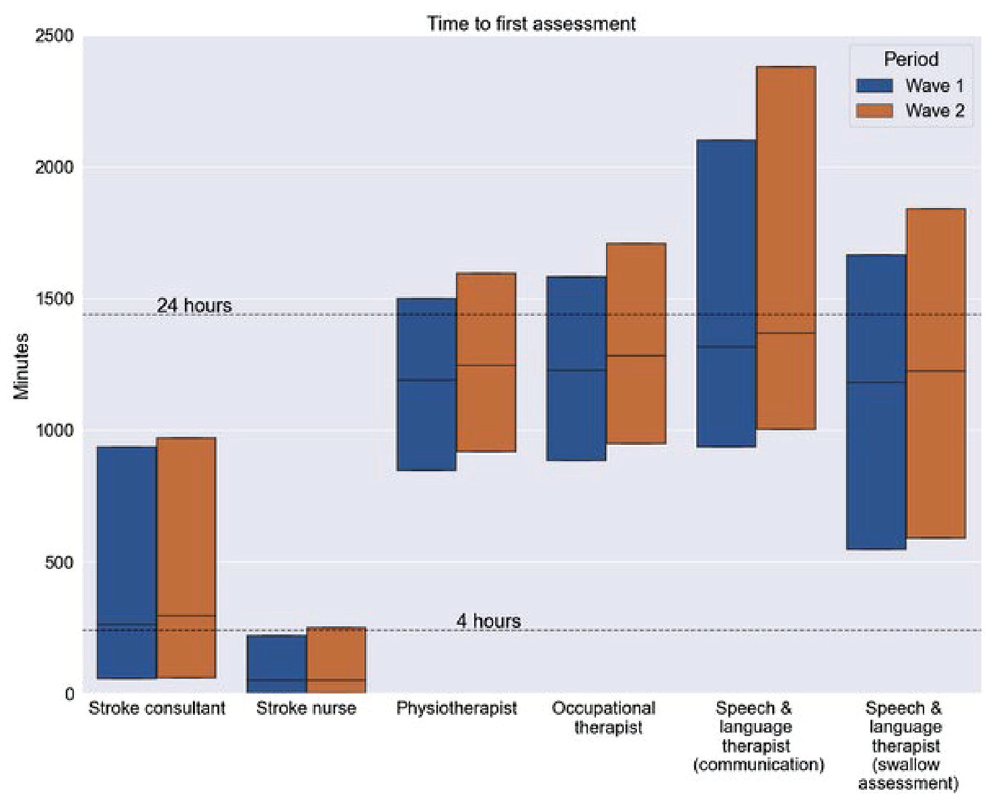
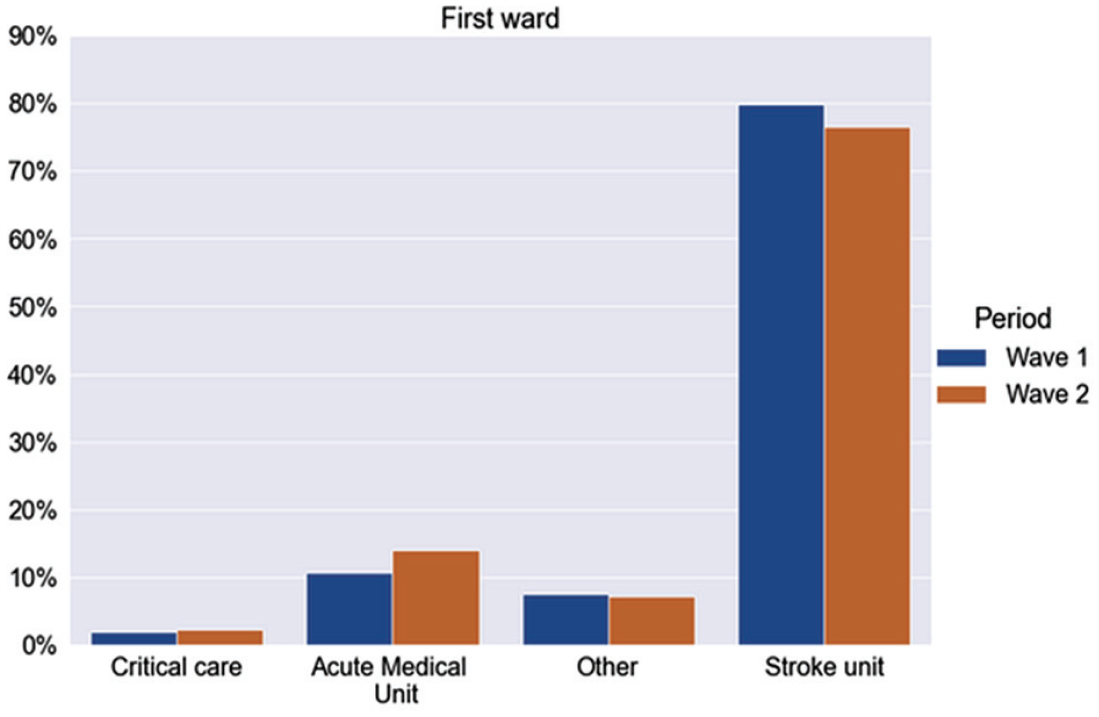
The second wave was characterised by a decrease in direct stroke unit admission (79.8% to 76.6% ; p<0.001). Time to initial assessment by all specialists increased. Time to stroke consultant assessment increased by 34 minutes (262 vs 296 minutes; p<0.001).
Complications (pneumonia: 8.6% to 9.4%, UTI: 3.3% to 3.9%; both p < 0.001) and in-hospital mortality (10.6% to 12.4%; p<0.001) increased significantly. Moderate and moderately-severe disability were more prevalent at discharge (18.1 to 18.6%, 18.3% to 19.9% respectively; p<0.001). Early supported discharge increased from 39.1% to 44.5% (p>0.001).
O032 / 1324
Official Welcome & Large Clinical Trials
ACUTE FEBRILE ILLNESS, INFLUENZA VACCINATION AND THE RISK OF ACUTE STROKE - THE INTERSTROKE STUDY
1Städtisches Klinikum Ludwigshafen, Department of Neurology, Ludwigshafen am Rhein, Germany, 2McMaster University and Hamilton Health Sciences, Hamilton, Canada, 3St John’s Medical College and Research Institute, Bangalore, India, 4Beijing Hypertension League Institute, Beijing, China, 5Universidad de Santander / Instituto de Investigaciones MASIRA, Bucaramanga, Colombia, 6Eduardo Mondlane University / Faculty of Medicine, Maputo, Mozambique, 7University of Western Australia / Faculty of Health and Medical Sciences, Perth, Australia, 8University of Glasgow / Glasgow Royal Infirmary, Glasgow, United Kingdom, 9University of Gothenburg and Region Västra Götaland / Sahlgrenska University Hospital, Department of Molecular and Clinical Medicine, Gothenburg, Sweden, 10University of the Philippines / College of Medicine, Manila, Philippines, 11Al Shaab Teaching Hospital, Khartoum, Sudan, 12International Research Center / Hospital Alemão Oswaldo Cruz, São Paulo, Brazil, 13Uganda Heart Institute / Mulago Hospital, Kampala, Uganda, 14Military Institute of Aviation Medicine, Warsaw, Poland, 15Institute of Psychiatry and Neurology, Warsaw, Poland, 16National Medical Research Center of Cardiology, Moscow, Russian Federation, 17Estudios Clínicos Latino America (ECLA) / Instituto Cardiovascular de Rosario (ICR), Rosario, Argentina, 18Istanbul Medeniyet University / Faculty of Medicine, Department of Internal Medicine, Istanbul, Turkey, 19Faculty of Medicine / Universidad de La Frontera, Temuco, Chile, 20University College Hospital, Department of Medicine, Ibadan, Nigeria, 21Rigshospitalet / University of Copenhagen, Department of Neurology, Copenhagen, Denmark, 22Hatta Hospital, Dubai Health Authority/Dubai Medical College, Dubai, United Arab Emirates, 23Rush University, Neurology Division, Dept. of Medicine, Chicago, United States, 24College of Medicine / King Saud University, Riyadh, Saudi Arabia, 25HRB-Clinical Research Facility / NUI Galway, Galway, Ireland
Influenza vaccination was associated with lower odds of all stroke (AOR 0.53; 0.46-0.60), ischemic stroke (AOR 0.57; 0.50-0.67) and intracerebral hemorrhage (AOR 0.34; 0.25-0.46). The odds of stroke were lower among those with five Influenza vaccinations, than one to four vaccinations, within the last five years.
O033 / 1163
Official Welcome & Large Clinical Trials
THE PARAMEDIC NORWEGIAN ACUTE STROKE PREHOSPITAL PROJECT (PARANASPP);DIAGNOSTICS AND TRIAGE OF ACUTE STROKE BY PARAMEDICS USING THE NATIONAL INSTITUTES OF HEALTH STROKE SCALE
1Norwegian Air Ambulance Foundation, Department of Research, Oslo, Norway, 2Oslo University Hospital, Division of Prehospital Services, Oslo, Norway, 3University of Oslo, Institute of Clinical Medicine, Oslo, Norway, 4Oslo University Hospital, Department of Neurology, Stroke Unit, Oslo, Norway, 5Norwegian Air Ambulance Foundation, Department of Development, Oslo, Norway, 6Østfold University College, Research and Dissemination, Halden, Norway, 7University of Oslo, Institute of Basic Medical Sciences, Oslo, Norway, 8Oslo University Hospital, Norwegian National Advisory Unit on Prehospital Emergency Medicine (NAKOS) and Air Ambulance Dept., Division of Prehospital Services, Oslo, Norway, 9Oslo University Hospital, Department of Neurology, Oslo, Norway, 10Oslo Metropolitan University, Department of Health Science, Oslo, Norway
The primary outcome was positive predictive value (PPV) of a final stroke related diagnosis. Secondary outcomes included time variables, prehospital NIHSS quantification, infarction volume and functional outcome at 90 days.
O035 / 928
Official Welcome & Large Clinical Trials
PROCEDURAL SEDATION VERSUS GENERAL ANESTHESIA IN ANTERIOR CIRCULATION LARGE VESSEL OCCLUSION THROMBECTOMY :THE ANESTHESIA MANAGEMENT IN ENDOVASCULAR THERAPY FOR ISCHEMIC STROKE (AMETIS) RANDOMIZED CONTROLLED TRIAL
1University Hospital Clermont-Ferrand, Neurocritical Care and Neuroanesthesiology Clinic / Perioperative Medicine Department, Clermont-Ferrand, France, 2University Hospital of Toulouse, Toulouse NeuroImaging Center and University Toulouse 3-Paul Sabatier, Department of Anesthesiology and Critical Care, Toulouse, France, 3Hospices Civils de Lyon and Université Lyon 1, Service d’Anesthésie Réanimation Hôpital Neurologique Pierre Wertheimer, Lyon, France, 4CHU de Montpellier, Service d’Anesthésie Réanimation, Pôle Neurosciences Tête et Cou, Hôpital Gui de Chauliac, Montpellier, France, 5Assistance Publique Hôpitaux de Paris (AP-HP), Groupe Hospitalier Pitié-Salpêtrière and Université Pierre et Marie Curie, Anesthésie et Neuro-Réanimation Chirurgicale Babinski, Département d’Anesthésie-Réanimation, Paris, France, 6CHRU Lille, Pôle Anesthésie Réanimation, Lille, France, 7CHU de St-Etienne and Université Jean Monnet, Service d’Anesthésie Réanimation, Saint-Etienne, France, 8Assistance Publique Hôpitaux de Marseille (AP-HM) and Institut des Neurosciences, MeCA, Aix Marseille Université, Service d’Anesthésie Réanimation, Hôpital La Timone, Marseille, France, 9Assistance Publique Hôpitaux de Paris (AP-HP), Hôpital Saint-Antoine and Institut Pasteur, Département d’Anesthésie-Réanimation, Paris, France, 10University Hospital of Toulouse, Toulouse NeuroImaging Center, University Toulouse 3-Paul Sabatier, INSERM, Department of Neurology, Toulouse, France, 11Department of Diagnostic and Therapeutic Neuroradiology, University Hospital of Toulouse, University Toulouse 3-Paul Sabatier, Toulouse, France, 12University Hospital Clermont-Ferrand, Department of Neuroradiology, Clermont-Ferrand, France, 13University Hospital Clermont-Ferrand, Department of Neurology, Clermont-Ferrand, France, 14University Hospital Clermont-Ferrand, Biostatistics Unit of the Department of Clinical Research and Innovation (DRCI), Clermont-Ferrand, France, 15University Hospital Clermont-Ferrand, Department of Perioperative Medicine and Université Clermont Auvergne, GRED, CNRS, Inserm U1103, Clermont-Ferrand, France
General anesthesia (GA) or procedural sedation (PS) for mechanical thrombectomy (MT) could modify outcome of anterior circulation AIS with conflicting results in the literature.
Pragmatic, multicenter, randomized, open label with blinded outcome assessment, controlled trial evaluating GA versus PS for anterior circulation LVO MT (NCT03229148).
Exclusion criteria were coma/altered vigilance and premorbid disability.
Primary composite outcome was functional independence (a score of 0-2 on the mRS) by day90 and absence of major periprocedural complication (intervention-associated arterial perforation/dissection, pneumonia, myocardial infarction, cardiogenic acute pulmonary edema or malignant stroke) occurring by day7. Choice of sedatives and/or analgesics and the thrombectomy technique were at the discretion of the attending physicians. Systolic blood pressure was maintained between 140 and 180mmHg during the procedure.
273 patients were enrolled (135 assigned to GA and 138 to PS). The primary composite outcome occurred in 28.2% in the GA group and in 36.2% in the PS group (RR 1.29; 95% CI, 0.91 to 1.82; P=0.15). At 3 months, 33.3% of patients in the GA group and 39.1% in the PS group were independent (P=0.32). Absence of major periprocedural complication by day 7 was reported in 65.9% of participants in the GA group and 67.4% in the PS group (P=0.80). There was no mortality and reperfusion delay difference between groups. Hypotension occurred in 87.4% of patients in the GA group and in 44.9% in the PS group (P<0.001).
In MT for anterior circulation AIS, GA or PS were not different related to 3 months functional independence and perioperative complications.
O036 / 990
Official Welcome & Large Clinical Trials
TREATMENT OF INTRACEREBRAL HEMORRHAGE IN PATIENTS ON NON-VITAMIN K ORAL ANTICOAGULANTS WITH TRANEXAMIC ACID (TICH-NOAC)
1Department of Neurology and Stroke Center, University Hospital Basel and University of Basel, Basel, Switzerland, 2Clinical Trial Unit, Department of Clinical Research, University Hospital Basel and University of Basel, Basel, Switzerland, 3Department of Neuroradiology, Cantonal Hospital Lucerne, Lucerne, Switzerland, 4Neurology and Neurorehabilitation, University Department of Geriatric Medicine Felix Platter, University of Basel, Basel, Switzerland, 5Department of Neurology and Stroke Center, Hirslanden Hospital, Zurich, Switzerland, 6Department of Neurology, Inselspital, University Hospital Bern and University of Bern, Bern, Switzerland
O037 / 1495
Official Welcome & Large Clinical Trials
APIXABAN FOR TREATMENT OF EMBOLIC STROKE OF UNDETERMINED SOURCE - ATTICUS RANDOMIZED TRIAL
1University of Tübingen, Department of Neurology & Stroke, Tübingen, Germany, 2University of Tübingen, Institute for Clinical Epidemiology and Applied Biometry, Tübingen, Germany, 3Klinikum Stuttgart, Department of Neurology, Stuttgart, Germany, 4Krankenhaus Martha-Maria Halle-Dölau, Department of Neurology, Halle-Dölau, Germany, 5Rems-Murr-Kliniken Winnenden, Department of Neurology, Winnenden, Germany, 6Carl-von-Basedow-Clinic Saalekreis, Department of Neurology, Merseburg, Germany, 7University of Göttingen, Department of Neurology, Göttingen, Germany, 8University of Göttingen, Department of Cardiology, Göttingen, Germany, 9Schwarzwald-Baar Hospital, Department of Neurology, Villingen-Schwenningen, Germany, 10Schwarzwald-Baar Hospital, Department of Cardiology, Villingen-Schwenningen, Germany, 11Medical Campus Lake Constance, Department of Neurology, Friedrichshafen, Germany, 12Marien Hospital Stuttgart, Department of Neurology, Stuttgart, Germany, 13University of Ulm, Department of Neurology, Ulm, Germany, 14University of Kiel, Department of Neurology, Kiel, Germany, 15Klinikum Ludwisburg, Department of Neurology, Ludwigsburg, Germany, 16University of Bonn, Department of Neurology, Bonn, Germany, 17Regiomed Kliniken Coburg, Department of Cardiology, Coburg, Germany, 18Medical Park Berlin Humboldtmühle, Department of Neurology, Berlin, Germany, 19University of Tübingen, Department of Cardiology, Tübingen, Germany
Aim of ATTICUS was to determine whether apixaban, initiated within 28 days after ESUS, is superior to ASA in preventing new ischemic lesions on 12-month follow-up MRI (primary endpoint) in subjects with remote cardiac monitoring.
Enrollment stopped after interims analysis due to futility. Of 373 patients screened, 178/175 were enrolled into the apixaban/ASA treatment arm.
O038 / 839
Official Welcome & Large Clinical Trials
THE EFFECTS OF LONG-TERM ORAL ANTICOAGULANT AGENTS FOR ATRIAL FIBRILLATION (AF) AFTER INTRACRANIAL HAEMORRHAGE (ICH): PROSPECTIVE INDIVIDUAL PARTICIPANT DATA META-ANALYSIS (IPDMA) OF RANDOMISED CONTROLLED TRIALS
1The University of Edinburgh, Centre for Clinical Brain Sciences, Edinburgh, United Kingdom, 2The University of Edinburgh, Edinburgh Clinical Trials Unit, Edinburgh, United Kingdom, 3McMaster University / Population Health Research Institute, Department of Medicine (Neurology), Hamilton, Canada, 4Radboud University Medical Center, Donders Institute for Brain, Cognition and Behavior, Nijmegen, Netherlands, 5University Medical Center Utrecht, Department of Neurology and Neurosurgery, Brain Center, Utrecht, Netherlands
O041 / 866
Scientific Communications 5 – Cardioembolism & Heart-Brain Interactions
CARDIOVASCULAR MAGNETIC RESONANCE DETECTS SUBCLINICAL MYOCARDIAL INJURY IN PATIENTS WITH ACUTE ISCHEMIC STROKE
1Charité – Universitätsmedizin Berlin, Department of Neurology, Berlin, Germany, 2Berlin Institute of Health at Charité – Universitätsmedizin Berlin, Berlin, Germany, 3Center for Stroke Research Berlin, Charité – Universitätsmedizin Berlin, Berlin, Germany, 4Charité – Universitätsmedizin Berlin, Working Group on Cardiovascular Magnetic Resonance, Experimental and Clinical Research Center a joint cooperation between the Charité Medical Faculty and the Max-Delbrueck Center for Molecular Medicine, HELIOS Klinikum Berlin Buch, Cardiology, Berlin, Germany, 5DZHK (German Centre for Cardiovascular Research), partner site Berlin, Berlin, Germany, 6Excellence Cluster NeuroCure, Charité – Universitätsmedizin Berlin, Berlin, Germany, 7German Center for Neurodegenerative Diseases (DZNE), partner site Berlin, Berlin, Germany
O042 / 515
Scientific Communications 5 – Cardioembolism & Heart-Brain Interactions
EARLY VERSUS LATE INITIATION OF ANTICOAGULATION IN PATIENTS WITH ATRIAL FIBRILLATION AFTER ACUTE STROKE OR TIA – THE PRODAST STUDY
1 University Duisburg-Essen, Institute for Medical Informatics, Biometry and Epidemiology, Essen, Germany
O043 / 1175
Scientific Communications 5 – Cardioembolism & Heart-Brain Interactions
SINUS RHYTHM RESTORATION AND IMPROVED OUTCOMES IN PATIENTS WITH ACUTE ISCHEMIC STROKE AND PAROXYSMAL ATRIAL FIBRILLATION
1University of Thessaly, Department of Internal Medicine and Research Laboratory, Larissa, Greece, 2National and Kapodistrian University of Athens, Department of Clinical Therapeutics, Athens, Greece, 3Mitera Hospital, Hygeia Group, Department of Cardiology, Athens, Greece, 4National and Kapodistrian University of Athens, Department of Clinical Therapeutics, Section of Interventional Cardiology, Athens, Greece, 5University of Ioannina, Department of Internal Medicine, Medical School, Ioannina, Greece, 6National and Kapodistrian University of Athens, Department of Radiology, Aretaieion Hospital, Medical School, Athens, Greece, 7Henry Dunant Hospital Center, Electrophysiology & Pacing Division, First Cardiac Department, Athens, Greece, 8University of Liverpool and Liverpool Heart & Chest Hospital, Liverpool Centre for Cardiovascular Science, Liverpool, United Kingdom, 9Hellenic Cardiovascular Research Society, Athens, Greece
O044 / 1065
Scientific Communications 5 – Cardioembolism & Heart-Brain Interactions
LEFT ATRIAL APPENDAGE CLOSURE YIELDS FAVORABLE CARDIO- AND CEREBROVASCULAR OUTCOMES IN PATIENTS WITH NON-VALVULAR ATRIAL FIBRILLATION AND PRIOR STROKE
1Helmut-G.-Walther-Klinikum, Department of Cardiology, Lichtenfels, Germany, 2Zhengzhou Ninth People’s Hospital, Heart Center, Zhengzhou, China, 3Beijing Tiantan Hospital, Capital Medical University, Department of Neurology, Beijing, China, 4University of Minnesota Medical School, Minneapolis, United States, 5Catholic Medical Center, Clinic for General Internal Medicine and Cardiology, Koblenz-Montabaur, Germany, 6Kunming Medical University, Department of Cardiology, Kunming, China
O045 / 984
Scientific Communications 5 – Cardioembolism & Heart-Brain Interactions
NATRIURETIC PEPTIDES IMPROVE THE PERFORMANCE OF ATRIAL FIBRILLATION RISK SCORES: DATA FROM THE BIOSIGNAL COHORT
1University of Glasgow, Institute of Cardiovascular and Medical Sciences, Glasgow, United Kingdom, 2University of Zurich, Department of Neurology, Zurich, Switzerland, 3Universit Hospital Bern, Department of Neurology, Bern, Switzerland, 4University Hospital Basel and University of Basel, Department of Neurology, Basel, Switzerland, 5Cantonal Hospital Aarau, Department of Neurology, Aarau, Switzerland, 6Regional Hospital of Lugano, Stroke Center EOC, Neurocenter of Southern Switzerland, Lugano, Switzerland, 7Cantonal Hospital St. Gallen, Department of Neurology, St. Gallen, Switzerland, 8Vall d'Hebron Institute of Research (VHIR), Neurovascular Research Laboratory, Barcelona, Spain, 9Hospital Universitario Virgen Macarena, Stroke Research Program, Institute of Biomedicine of Seville, IBiS/Hospital Universitario Virgen del Rocío/CSIC/University of Seville & Department of Neurology, Seville, Spain, 10University of Thessaly, Department of Internal Medicine, Faculty of Medicine, School of Health Sciences, Larissa, Greece, 11Goethe University, Department of Neurology, Frankfurt, Germany, 12University Hospital of Zurich, Institute of Clinical Chemistry, Zurich, Switzerland
AUROC-curves (95%CI) for AF risk scores applied to the dataset are detailed in Table 1. Adding ln-MRproANP or ln-NTproBNP to existing scores improved the performance of all scores (all p<0.001, Table 1).
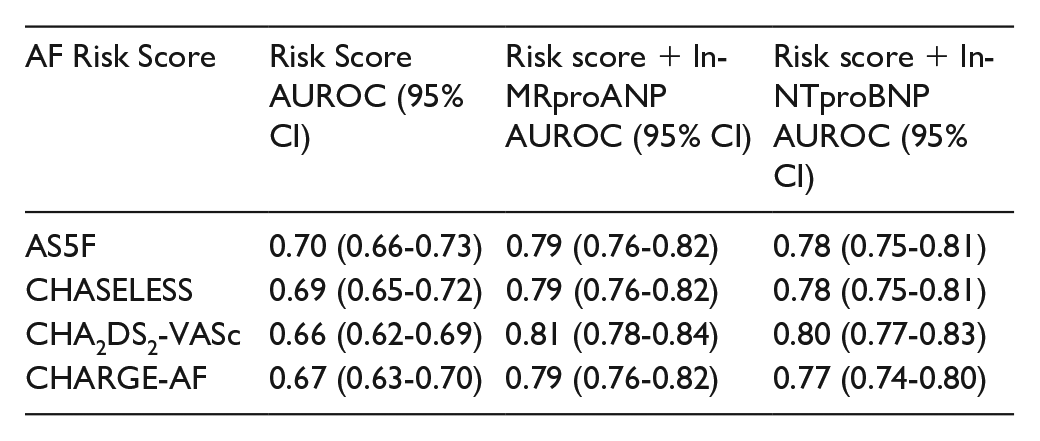
In direct comparison of AUROC curves, the effect of including ln-MRproANP versus ln-NTproBNP was similar for all scores (all p>0.05).
O046 / 385
Scientific Communications 5 – Cardioembolism & Heart-Brain Interactions
ATRIAL FIBRILLATION IN CRYPTOGENIC STROKE AND TIA PATIENTS IN THE NORDIC ATRIAL FIBRILLATION AND STROKE (NOR-FIB) STUDY: TOPLINE RESULTS. (CLINICALTRIALS.GOV NONCT02937077)
1Østfold Hospital Trust, Department of Neurology, Grålum, Norway, 2University of Oslo, Institute of Clinical Medicine, Oslo, Norway, 3Østfold Hospital Trust, Department of Cardiology, Grålum, Norway, 4Nordlandssykehuset, Department for Neurology, Bodø, Norway, 5Innlandet Hospital Trust, Lillehammer Hospital, Department of Neurology, Lillehammer, Norway, 6Molde Hospital, Department of Neurology, Molde, Norway, 7Diakonhjemmet Hospital, Department of Internal Medicine, Oslo, Norway, 8Oslo University Hospital, Ullevål, Stroke Unit, Oslo, Norway, 9Vestre Viken Hospital Trust, Bærum Hospital, Department of Internal Medicine, Gjettum, Norway, 10University Hospital of North Norway, Department of Neurology, Tromsø, Norway, 11Skåne University Hospital, Department of Neurology, Malmö, Sweden, 12Vestfold Hospital, Department of Neurology, Tønsberg, Norway, 13Herlev Gentofte Hospital, Department of Neurology, Herlev, Denmark, 14Stavanger University Hospital, Department of Neurology, Stavanger, Norway, 15Vestre Viken Hospital Trust, Drammen Hospital, Department of Neurology, Drammen, Norway, 16Haukeland University Hospital, Department of Neurology, Bergen, Norway, 17Telemark Hospital, Department of Neurology, Skien, Norway, 18Rigshospitalet University Hospital, Department of Neurology, Copenhagen, Denmark, 19Bispebjerg University Hospital, Department of Neurology, Copenhagen, Denmark, 20Oslo University Hospital, Ullevål, Department of Cardiology, Oslo, Norway, 21Oslo University Hospital, Rikshospitalet, Department of Neurology, Oslo, Norway
In 86.5% AF was detected within the first months of monitoring (mean 47.7 days ± 52.1). Recurrent AF occurred in 91.9% and 97.3% of the AF patients were switched to OAC. Recurrent strokes occurred in 2 AF patients (2.7 %) and in 9 non-AF patients (4.9 %).
O047 / 1280
Scientific Communications 5 – Cardioembolism & Heart-Brain Interactions
ISCHAEMIC STROKES ON ORAL ANTICOAGULANT IN PATIENTS WITH ATRIAL FIBRILLATION: THE NEURO-AFIB STUDY
1Massachusetts General Hospital, Neurology, Boston, United States, 2Beth Israel Deaconess Medical Center, Neurology, Boston, United States, 3University of Calgary, Neurology, Calgary, Canada, 4Brown University, Neurology, Providence, United States
O048 / 882
Scientific Communications 5 – Cardioembolism & Heart-Brain Interactions
TROPONIN LEVEL BUT NOT CARDIAC MORPHOLOGY CORRELATES WITH WHITE MATTER LESIONS IN PATIENTS WITH ACUTE ISCHAEMIC STROKE. RESULTS OF THE PROSPECTIVE SICFAIL COHORT STUDY
1University of Würzburg, Institute of Clinical Epidemiology and Biometry, Würzburg, Germany, 2University Hospital Würzburg, Department of Neurology, Würzburg, Germany, 3Comprehensive Heart Failure Center, University and University Hospital Würzburg, Würzburg, Germany, 4University Hospital Würzburg, Department of Diagnostic and Interventional Neuroradiology, Würzburg, Germany, 5Charité – Universitätsmedizin Berlin, Berlin, Germany, 6University Hospital Würzburg, Department of Internal Medicine I, Würzburg, Germany, 7University Hospital Essen, Department of Neurology, Essen, Germany, 8University Hospital Würzburg, Clinical Trial Centre, Würzburg, Germany
O049 / 639
Scientific Communications 6 - Intravenous Thrombolysis
INTRAVENOUS THROMBOLYSIS WITH TENECTEPLASE VERSUS ALTEPLASE IN ACUTE ISCHEMIC STROKE PATIENTS WITHIN 4.5 HOURS FROM SYMPTOM ONSET: A PROPENSITY SCORE-MATCHED ANALYSIS FROM THE SITS-ISTR REGISTRY
1McMaster University, Hamilton, Canada, 2University of Ioannina, Ioannina, Greece, 3Hassan II University Teaching Hospital, Fez, Morocco, 4Newcastle-Upon-Tyne Hospitals NHS Foundation Trust, Newcastle-Upon-Tyne, United Kingdom, 5National and Kapodistrian University of Athens, Athens, Greece, 6Postgraduate Institute of Medical Education and Research, Chandigarh, India, 7University of Bari 'Aldo Moro', Bari, Italy, 8Metropolitan Hospital, Piraeus, Greece, 9University of Aberdeen, Aberdeen, United Kingdom, 10Karolinska Institutet, Stockholm, Sweden
O050 / 547
Scientific Communications 6 - Intravenous Thrombolysis
TREATMENT TIMES, FUNCTIONAL OUTCOME AND HEMORRHAGE RATES AFTER SWITCHING TO TENECTEPLASE FOR STROKE THROMBOLYSIS A SUBGROUP STUDY OF THE TETRIS REGISTRY
1APHP, Sorbonne Université, Pité-Salpêtrière and Saint-Antoine Hospitals, Urgences Cérébro-Vasculaires, Paris, France, 2CHU de Bordeaux, Neurology department, Bordeaux, France, 3Hôpital Sud Francilien, Unité de Recherche Clinique, Corbeil-Essonnes, France, 4CHU de Bordeaux, Neuroradiology department, Bordeaux, France, 5APHP, Sorbonne Université, Pité-Salpêtrière Hospital, Neuroradiology department, Paris, France, 6Hôpital Sud Francilien, Neurology, Corbeil-Essonnes, France, 7GHU Paris Psychiatrie et Neurosciences, Neurology, Paris, France
O051 / 1236
Scientific Communications 6 - Intravenous Thrombolysis
INTRAVENOUS THROMBOLYSIS IN PATIENTS WITH ISCHAEMIC STROKE TAKING DIRECT ORAL ANTICOAGULANTS – AN INTERNATIONAL COLLABORATION
1Heidelberg University Hospital, Department of Neurology, Heidelberg, Germany, 2Christchurch Hospital, Department of Neurology, Christchurch, New Zealand, 3New Zealand Brain Research Institute, Christchurch, New Zealand, 4Inselspital University Hospital Bern, Department of Neurology, Bern, Switzerland, 5University Hospital Basel, Department of Neurology and Stroke Center, Basel, Switzerland, 6Charité-Universitätsmedizin Berlin, Center for Stroke Research Berlin, Berlin, Germany, 7Charité-Universitätsmedizin Berlin, Klinik und Hochschulambulanz für Neurologie, Berlin, Germany, 8University of Basel, University Department of Geriatric Medicine Felix Platter, Neurology and Neurorehabilitation, Basel, Switzerland
O052 / 1133
Scientific Communications 6 - Intravenous Thrombolysis
INTRAVENOUS THROMBOLYSIS VERSUS DUAL ANTIPLATELET THERAPY IN PATIENTS WITH MILD ISCHEMIC STROKE
1SFU Vienna, Neurology, Vienna, Austria, 2St. John Hospital, Neurology, Vienna, Austria, 3GOEG, Vienna, Austria, 4Sigmund Freud University Vienna, Neurology, Vienna, Austria
O053 / 1001
Scientific Communications 6 - Intravenous Thrombolysis
INTRAVENOUS THROMBOLYSIS BEFORE MECHANICAL THROMBECTOMY FOR ACUTE ISCHEMIC STROKE DUE TO LARGE VESSEL OCCLUSION; SHOULD WE CROSS THAT BRIDGE? A SYSTEMATIC REVIEW AND META-ANALYSIS OF 36,123 PATIENTS
1Al-Azhar University, Faculty of Medicine, Cairo, Egypt, 2Harvard Medical School, Department of Global Health, Boston, Massachusetts, United States, 3South Valley University, Faculty of Medicine, Qina, Egypt, 4Zagazig University, Faculty of Medicine, Zagazig, Egypt, 5October 6 University, Giza, Egypt, Faculty of Medicine, October, Egypt, 6Misr University for Science and Technology, 6th October city, Egypt, Faculty of Medicine, October, Egypt, 7Menofia University, Menofia, Egypt, Faculty of Medicine, Menofia, Egypt, 8Association of Future African Neurosurgeons, Yaounde, Cameroon, Research department, Yaounde, Cameroon, 9University of Nebraska Medical Centre, Omaha, Nebraska, USA, Department of Neurological Sciences, Omaha, Nebraska, United States
O054 / 493
Scientific Communications 6 - Intravenous Thrombolysis
INFLUENCE OF TIME METRICS ON THE EFFECT OF INTRAVENOUS ALTEPLASE PRIOR TO ENDOVASCULAR TREATMENT IN THE MR CLEAN NO-IV TRIAL
1Amsterdam University Medical Centres, Location AMC, Neurology, Amsterdam, Netherlands, 2Amsterdam University Medical Centres, Location AMC, Radiology and Nuclear Medicine, Amsterdam, Netherlands, 3Erasmus MC University Medical Centre, Public Health, Rotterdam, Netherlands, 4Maastricht University Medical Centre, Radiology and Nuclear Medicine, Maastricht, Netherlands, 5University Medical Centre Groningen, Neurology, Groningen, Netherlands, 6University Medical Centre Groningen, Radiology and Nuclear Medicine, Groningen, Netherlands, 7Erasmus MC University Medical Centre, Neurology, Rotterdam, Netherlands
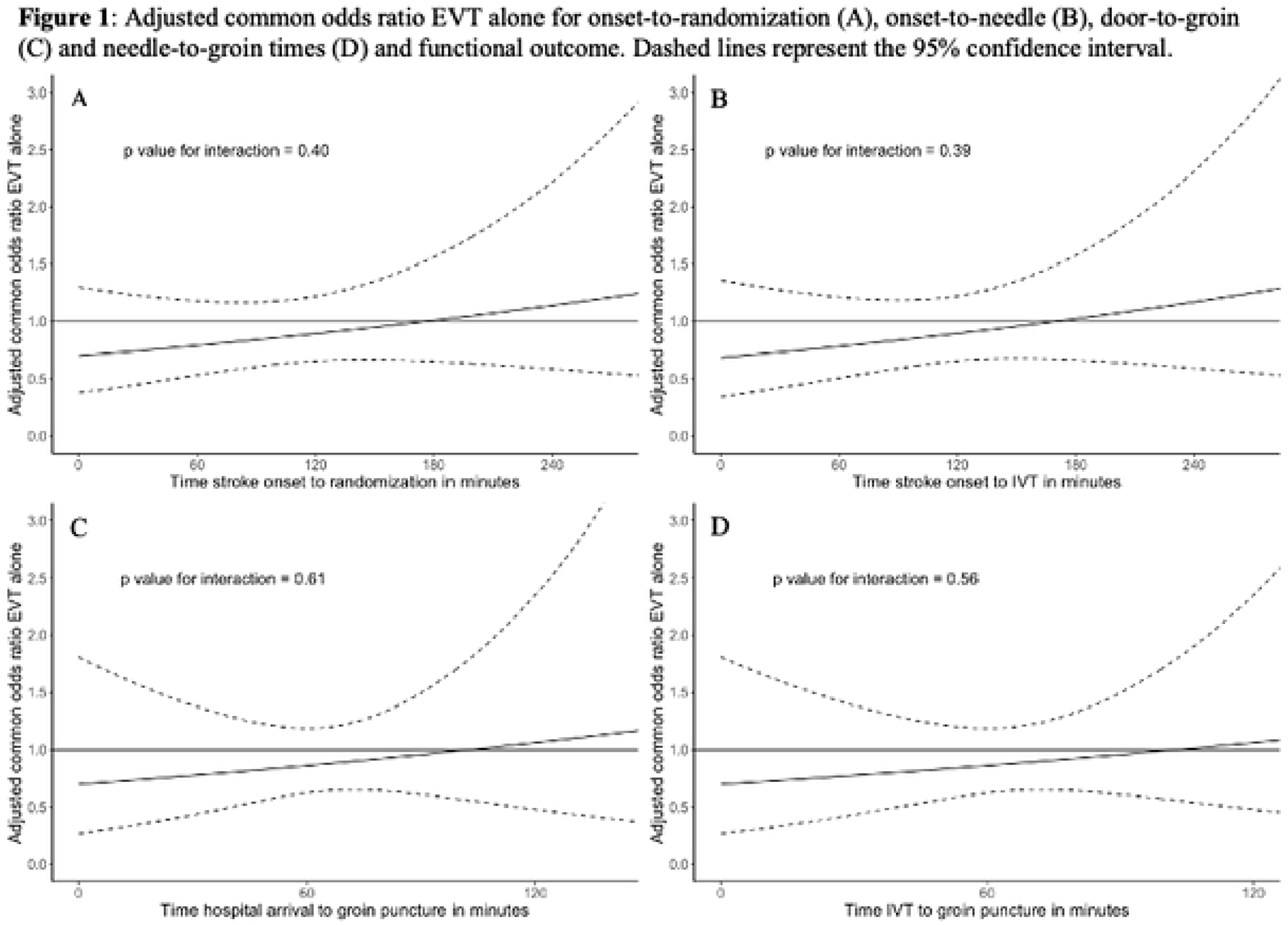
O055 / 1130
Scientific Communications 6 - Intravenous Thrombolysis
TRENDS OF FUNCTIONAL OUTCOME IN ACUTE STROKE PATIENTS TREATED WITH INTRAVENOUS THROMBOLYSIS;
1Medical University of Vienna, Department of Neurology, Vienna, Austria, 2Gesundheit Österreich GmbH, Vienna, Austria, 3Krankenanstalt Rudolfstiftung, Department of Neurology, Vienna, Austria, 4Krankenhaus Barmherzige Brüder, Department of Neurology, Vienna, Austria, 5Medical University of Innsbruck, Department of Neurology, Innsbruck, Austria
O056 / 611
Scientific Communications 6 - Intravenous Thrombolysis
EFFECT OF INTRAVENOUS ALTEPLASE ON PATIENT-REPORTED HEALTH-RELATED QUALITY OF LIFE AFTER STROKE IN THE WAKE-UP TRIAL
1University Medical Center Hamburg-Eppendorf, Department of Neurology, Hamburg, Germany, 2University Medical Center Hamburg-Eppendorf, Hamburg, Germany, 3Hospices Civils de Lyon, Lyon, France, 4Charité - Universitätsmedizin Berlin, Berlin, Germany, 5Florey Institute of Neuroscience and Mental Health, Melbourne, Australia, 6University Hospitals Leuven, Leuven, Belgium, 7University of Glasgow, Glasgow, United Kingdom, 8Université Claude Bernard Lyon 1, Lyon, France, 9Hospital Dr Josep Trueta, Institut d’Investigació Biomèdica de Girona (IDIBGI), Girona, Spain, 10Aarhus University Hospital, Aarhus, Denmark, 11University Medical Center-Hamburg Eppendorf, Hamburg, Germany
O057 / 850
Scientific Communications 7 - Risk Factors, Primary Prevention
CHILDHOOD DEVELOPMENTAL MILESTONES AND RISK OF ADULT CEREBROVASCULAR DISEASE - THE NORTHERN FINLAND BIRTH COHORT 1966
1University of Oulu, Center for Life Course Health Research, Oulu, Finland, 2University of Oulu, Medical Research Center, Oulu, Finland, 3University Medical Center Utrecht, Julius Center for Health Sciences and Primary Care, Utrecht, Netherlands, 4University of Oulu, PEDEGO Research Unit, Oulu, Finland, 5Finnish Institute for Health and Welfare, Population Health Unit, Helsinki, Finland, 6Norwegian University of Science and Technology, Department of Clinical and Molecular Medicine, Trondheim, Norway, 7Oulu University Hospital, Department of Neurology, Oulu, Finland
O058 / 599
Scientific Communications 7 - Risk Factors, Primary Prevention
OVERWEIGHT IN ADOLESCENCE AND EARLY ADULTHOOD IN ASSOCIATION WITH EARLY ONSET STROKE – THE NORTHERN FINLAND BIRTH COHORT 1966 STUDY
1University of Oulu, Center for Life Course Health Research, Oulu, Finland, 2University of Oulu, Medical Research Center, Oulu, Finland, 3University Medical Center Utrecht, Julius Center for Health Sciences and Primary Care, Utrecht, Netherlands, 4Oulu University Hospital, Department of Neurology, Oulu, Finland, 5University of Oulu, PEDEGO Research Unit, Oulu, Finland, 6Finnish Institute for Health and Welfare, Population Health Unit, Helsinki, Finland, 7Norwegian University of Science and Technology, Department of Clinical and Molecular Medicine, Trondheim, Finland
O059 / 487
Scientific Communications 7 - Risk Factors, Primary Prevention
POLYGENIC RISK, MIDLIFE LIFE’S SIMPLE 7, AND LIFETIME RISK OF STROKE
1University of Texas Health Science Center at Houston, Institute of Molecular Medicine, Houston, United States, 2University of Mississippi Medical Center, Jackson, United States, 3University of Texas Health Science Center at Houston, Houston, United States, 4National Institute of Neurological Disorders and Stroke, Bethesda, United States
O060 / 526
Scientific Communications 7 - Risk Factors, Primary Prevention
TYPE 2 DIABETES MELLITUS IN PATIENTS WITH ISCHEMIC STROKE - A NATIONWIDE STUDY
1Aarhus University Hospital, Danish Stroke Center, Department of Neurology, Aarhus N, Denmark, 2Aalborg University, Danish Center for Clinical Health Services Research, Department of Clinical Medicine, Aalborg, Denmark, 3Bispebjerg University Hospital, Department of Endocrinology IC, Copenhagen, Denmark
– To determine the prevalence of diabetes 2 among acute IS patients.
– To explore changes in the risk profile over time among IS patients with diabetes 2.
– To compare time trends in clinical outcomes including mortality, re-strokes, readmissions and length-of-stay in IS patients with diabetes 2 and no-diabetes.
The stroke patients with co-morbid diabetes were identified by using information from the Danish Prescription Database, the Danish National Patient Registry and DSR.
Stroke patients with diabetes 2 were compared to stroke patients without diabetes using weighted analyses adjusting for differences in age, sex, stroke severity, living-arrangements, previous stroke, atrial fibrillation, smoking, hypertension, Charlson-Comorbidity-Index, migrant status, income and occupational status.
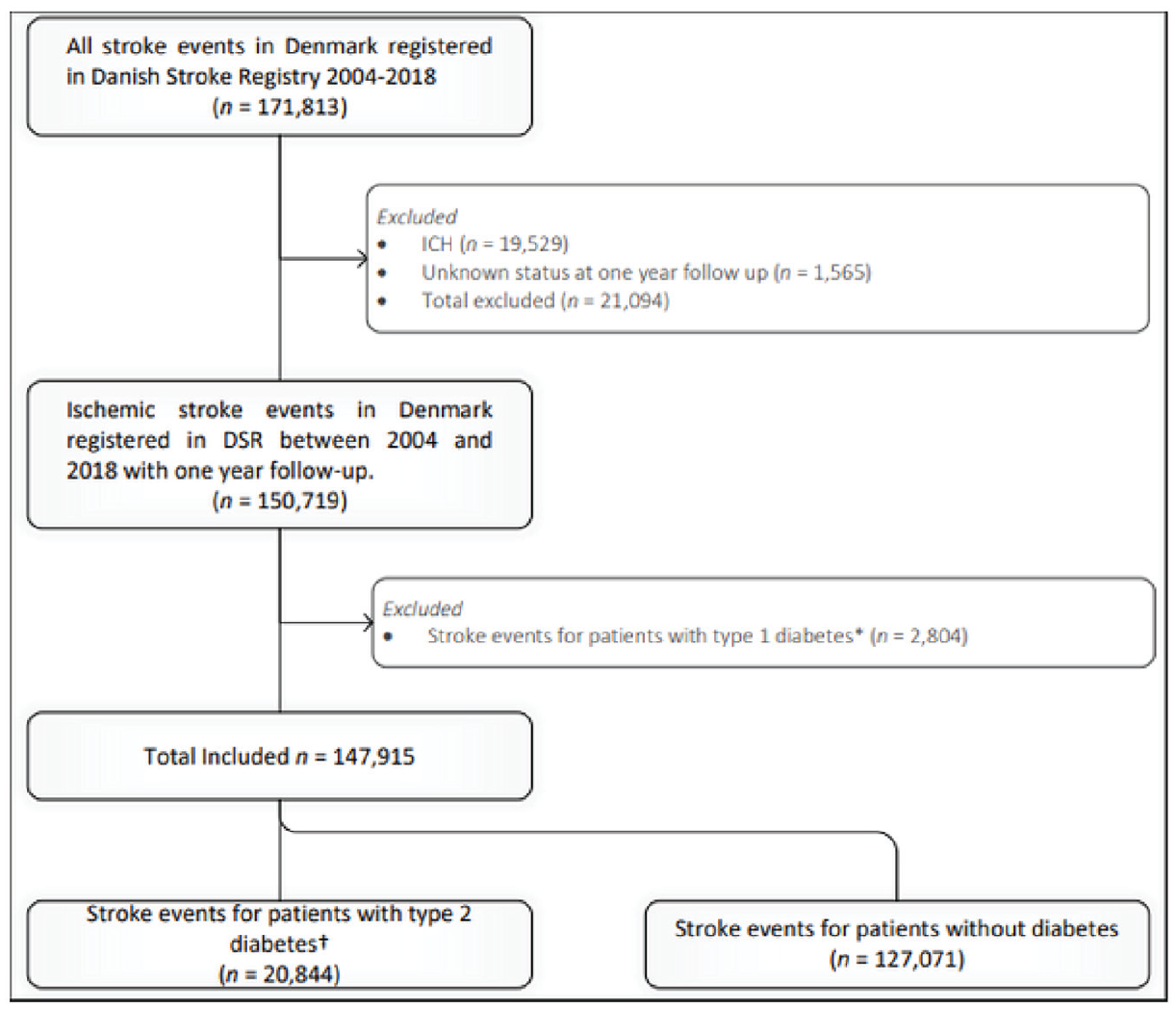

2019-2020 data are pending; ¤Stroke = ischemic stroke


O061 / 1549
Scientific Communications 7 - Risk Factors, Primary Prevention
ATRIAL FIBRILLATION SCREENING REDUCES THE RISK OF STROKE: A SYSTEMATIC REVIEW AND META-ANALYSIS
1Department of Internal Medicine, School of Medicine, University of Ioannina, Ioannina, Greece, Ioannina, Greece, 2Department of Medicine and Research Laboratory of Internal Medicine, National Expertise Center of Greece in Autoimmune Liver Diseases, General University Hospital of Larissa, Larissa, Greece, 3Department of Clinical Therapeutics, Alexandra Hospital, University of Athens, Athens, Greece, Athens, Greece, 4Imperial College London, London, United Kingdom, London, United Kingdom
O062 / 1151
Scientific Communications 7 - Risk Factors, Primary Prevention
CHANGE IN MANAGEMENT AND DECREASE IN MORTALITY OF CEREBRAL VENOUS SINUS THROMBOSIS WITH THROMBOCYTOPENIA AFTER SARS-COV-2 VACCINATION
1Inselspital, Bern University Hospital, University of Bern, Bern, Switzerland, Department of Neurology, Bern, Switzerland, 2Amsterdam University Medical Centers, University of Amsterdam, Department of Neurology, Amsterdam, Netherlands, 3Eberhard-Karls University, Tuebingen, Department of Neurology & Stroke, Tuebingen, Germany, 4Neurology Service, Hospital de Santa Maria/CHULN, University of Lisbon, Department of Neurosciences and Mental Health, Lisbon, Portugal, 5University of Lille, Degenerative and Vascular Cognitive Disorders, CHU Lille, Department of Neurology, Lille, France, 6Royal Adelaide Hospital, Department of Neurology, Adelaide, Australia, 7Sahlgrenska Academy at University of Gothenburg, Department of Clinical Neuroscience, Institute of Neuroscience and Physiology, Gothenburg, Sweden, 8Sahlgrenska University Hospital, Department of Neurology, Gothenburg, Sweden, 9Carlo Poma Hospital, Azienda Socio Sanitaria Territoriale di Mantova, Department of Neurology, Mantua, Italy, 10Jena University Hospital, Department of Neurology, Jena, Germany, 11Radboud University Medical Center, Department of Internal Medicine & Radboud Institute of Health Sciences (RIHS), Nijmegen, Netherlands, 12National Institute for Health Research University College London Hospitals (UCLH) Biomedical Research Centre, London, United Kingdom, 13Amsterdam University Medical Centers, University of Amsterdam, Department of Vascular Medicine, Amsterdam, Netherlands, 14University Hospital Rostock, Department of Neurology, Rostock, Germany, 15Oslo University Hospital, Department of Neurology, Oslo, Norway, 16Leipzig University Hospital, Department of Neurology, Leipzig, Germany, 17University of British Columbia, Vancouver Stroke Program, Division of Neurology, Vancouver, Canada, 18Universitätsklinikum Bonn, Department of Neurology, Bonn, Germany, 19Saudi German Hospital, Department of Neurology, Jeddah, Saudi Arabia, 20University Hospital Leuven, Department of Neurology, Leuven, Belgium, 21Policlinic San Martino Hospital, Department of Neuroscience, Genoa, Italy, 22Hospital Complex of Toledo, Department of Neurology, Toledo, Spain, 23Policlinico di Bari, Department of Neuroradiology, Bari, Italy, 24AOU Consorziale Policlinico di Bari, Department of Neurology, Bari, Italy, 25John Hunter Hospital, Department of Neurology, Newcastle, Australia, 26Heidelberg University Hospital, Department of Neurology, Heidelberg, Germany, 27Inselspital, Bern University Hospital, University of Bern, Department of Hematology, Bern, Switzerland, 28Erasmus University Medical Center, Department of Hematology, Rotterdam, Netherlands, 29Instituto de Medicina Molecular João Lobo Antunes, Faculdade de Medicina, Universidade de Lisboa, Lisbon, Portugal, 30Inselspital, Bern University Hospital, University of Bern, Department of Neurology, Bern, Switzerland, 31Eberhard-Karls University, Hertie Institute for Clinical Brain Research, Tuebingen, Germany
O063 / 958
Scientific Communications 7 - Risk Factors, Primary Prevention
ABSOLUTE RISK OF ISCHEMIC AND HEMORRHAGIC STROKE IN DANISH WOMEN USING ORAL CONTRACEPTIVES
1Bispebjerg University Hospital, Neurology, Copenhagen, Denmark, 2Danish Cancer Society Research Center, Copenhagen, Denmark
O065 / 1196
Scientific Communications 8 - Cognition and Vascular Cognitive Impairment
PREVALENCE AND RISK FACTORS OF POST-STROKE COGNITIVE IMPAIRMENT IN ACUTE MILD STROKE
1University Hospital, Department of Neurology, Bern, Switzerland, 2University Hospital, Department of Neuroradiology, Bern, Switzerland, 3Memory Clinic, University Department of Geriatric Medicine FELIX PLATTER, Basel, Switzerland, 4University Hospital, Department of Neurology, Basel, Switzerland
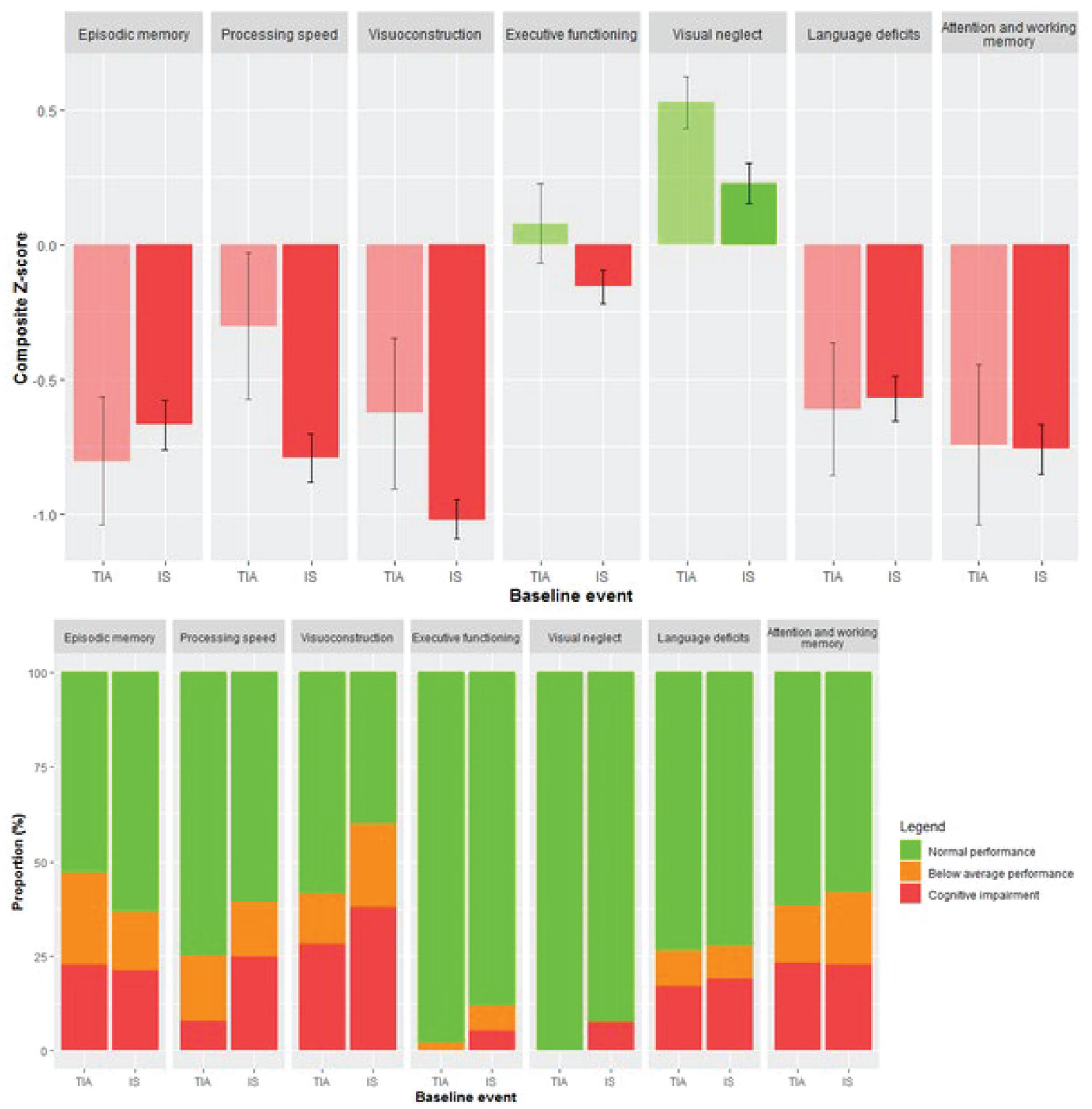
We observed severe deficits in global cognition, episodic memory, executive functions and working memory in ⩾ 25% of patients (Figure2). Lower education (p=0.04), higher stroke severity (p=0.003) and history of TIA (p=0.01) were risk factors for deficits in ⩾ 2 domains.
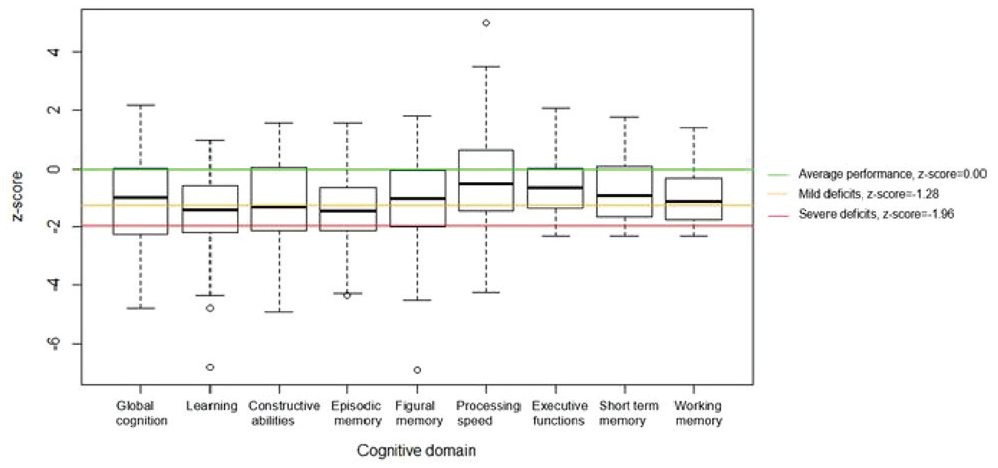
Performance in each cognitive domain.
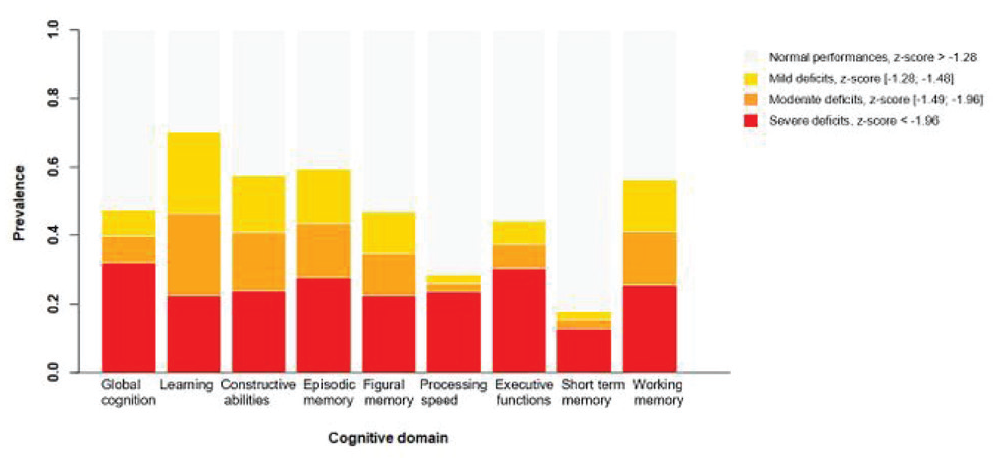
Prevalence of PSCI.
O066 / 1457
Scientific Communications 8 - Cognition and Vascular Cognitive Impairment
LOW VALUES FOR BLOOD PRESSURE, BMI AND NON-HDL CHOLESTEROL SIGNAL HIGHER LATE-LIFE DEMENTIA RISK
1Radboud University Medical Center, Nijmegen, Netherlands, 2Amsterdam UMC, Amsterdam, Netherlands
O067 / 397
Scientific Communications 8 - Cognition and Vascular Cognitive Impairment
THALAMIC VOLUME AND PROCESSING SPEED IN CEREBRAL SMALL VESSEL DISEASE
1Radboud University Medical Centre, Department of Neurology, Nijmegen, Netherlands, 2Donders Center for Medical Neurosciences, Nijmegen, Netherlands, 3Radboud University, Donders Institute for Brain, Cognition and Behavior, Nijmegen, Netherlands, 4University Hospital, LMU Munich, Institute for Stroke and Dementia Research (ISD), Munich, Germany, 5University of Basel, MedicalImage Analysis Center (MIAC) and qbig, Department of Biomedical Engineering, Basel, Switzerland
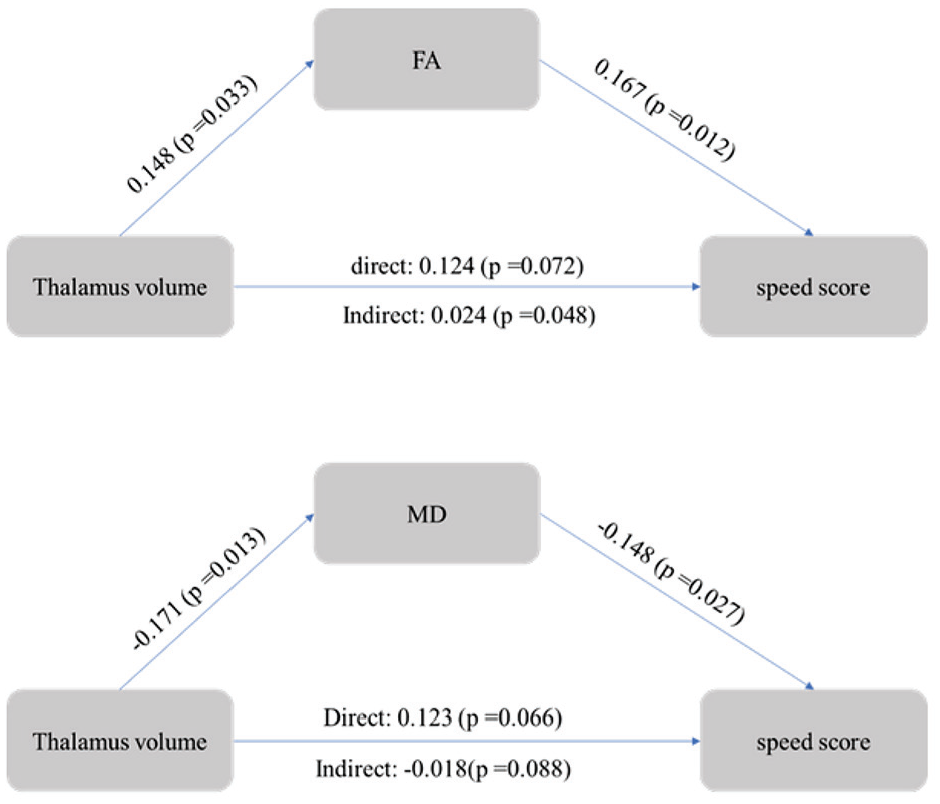
mediation analysis
O068 / 658
Scientific Communications 8 - Cognition and Vascular Cognitive Impairment
COGNITIVE IMPAIRMENT AFTER FIRST-EVER TRANSIENT ISCHEMIC ATTACK OR ISCHEMIC STROKE IN YOUNG ADULTS THE ODYSSEY STUDY
1Radboud University Medical Centre, Neurology, Nijmegen, Netherlands, 2Amphia Hospital, Neurology, Breda, Netherlands, 3Medisch Spectrum Twente, Neurology, Enschede, Netherlands, 4Canisius-Wilhelmina Hospital, Neurology, Nijmegen, Netherlands, 5Catharina Hospital, Neurology, Eindhoven, Netherlands, 6Franciscus Gasthuis & Vlietland, Neurology, Rotterdam, Netherlands, 7Elisabeth-Twee Steden Hospital, Neurology, Tilburg, Netherlands, 8Haga Hospital, Neurology, Den Haag, Netherlands, 9Rijnstate Hospital, Neurology, Arnhem, Netherlands, 10Jeroen Bosch Hospital, Neurology, Den Bosch, Netherlands, 11Maastricht University Medical Centre, Neurology, Maastricht, Netherlands, 12Leiden University Medical Centre, Neurology, Leiden, Netherlands, 13Amsterdam University Medical Centre, Neurology, Amsterdam, Netherlands, 14Medical Centre Leeuwarden, Neurology, Leeuwarden, Netherlands, 15Haaglanden Medical Center, Neurology, Den Haag, Netherlands, 16Radboud University, Donders Institute for Brain, Cognition and Behaviour, Center for Cognition, Nijmegen, Netherlands, 17Vincent van Gogh Institute for Psychiatry, Venray, Netherlands
Baseline characteristics.
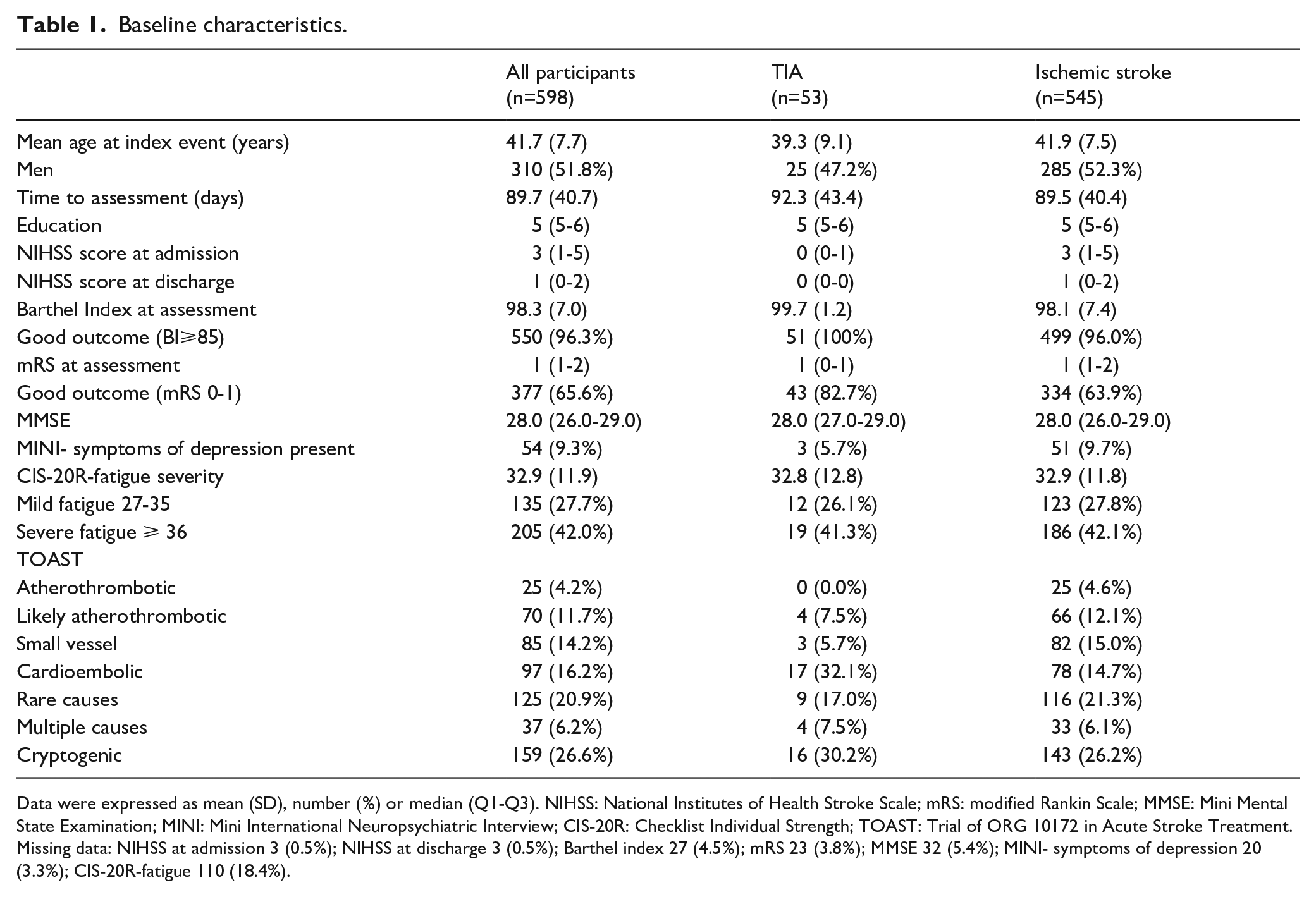
Data were expressed as mean (SD), number (%) or median (Q1-Q3). NIHSS: National Institutes of Health Stroke Scale; mRS: modified Rankin Scale; MMSE: Mini Mental State Examination; MINI: Mini International Neuropsychiatric Interview; CIS-20R: Checklist Individual Strength; TOAST: Trial of ORG 10172 in Acute Stroke Treatment.
Missing data: NIHSS at admission 3 (0.5%); NIHSS at discharge 3 (0.5%); Barthel index 27 (4.5%); mRS 23 (3.8%); MMSE 32 (5.4%); MINI- symptoms of depression 20 (3.3%); CIS-20R-fatigue 110 (18.4%).
Neuropsychological test scores of patients.
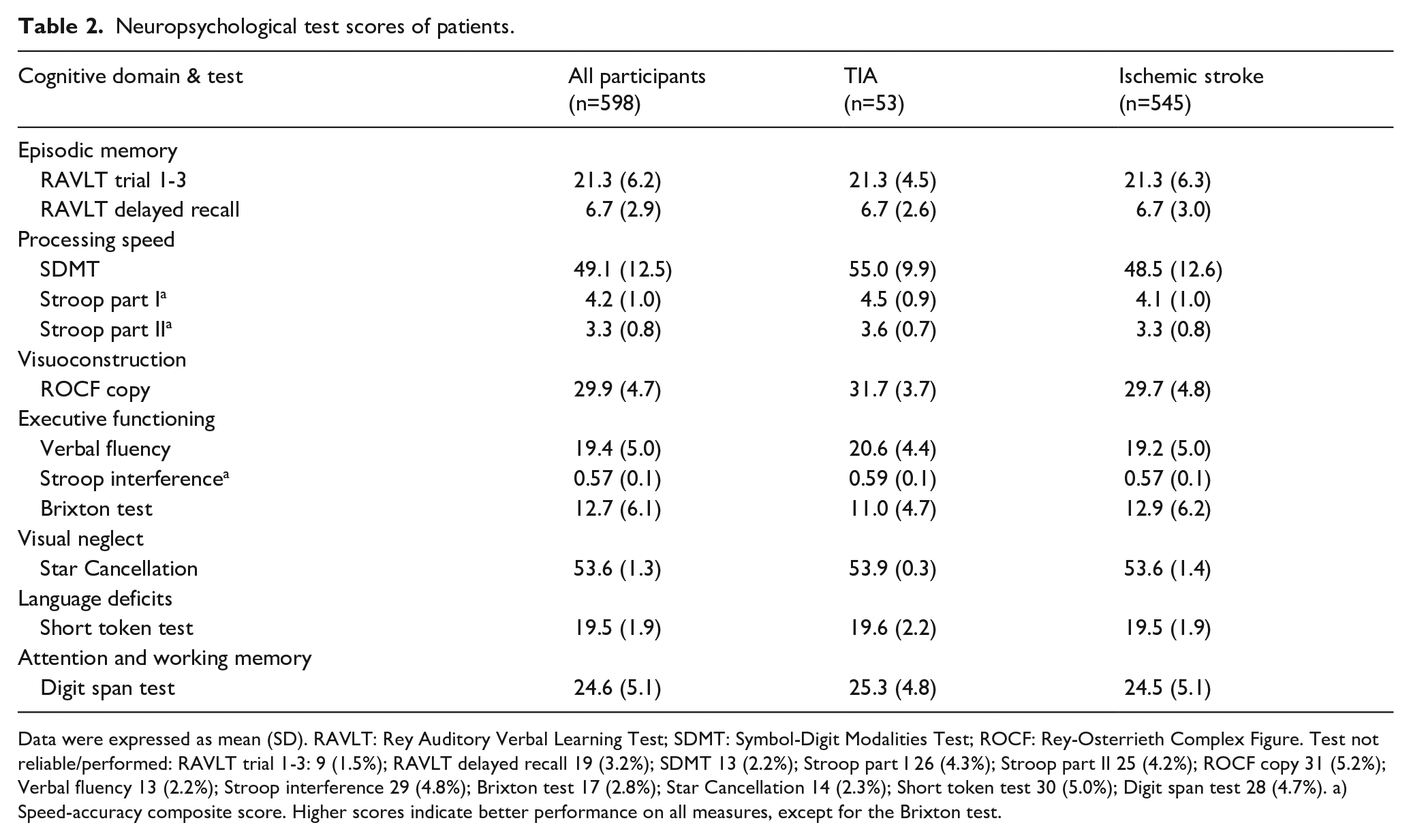
Data were expressed as mean (SD). RAVLT: Rey Auditory Verbal Learning Test; SDMT: Symbol-Digit Modalities Test; ROCF: Rey-Osterrieth Complex Figure. Test not reliable/performed: RAVLT trial 1-3: 9 (1.5%); RAVLT delayed recall 19 (3.2%); SDMT 13 (2.2%); Stroop part I 26 (4.3%); Stroop part II 25 (4.2%); ROCF copy 31 (5.2%); Verbal fluency 13 (2.2%); Stroop interference 29 (4.8%); Brixton test 17 (2.8%); Star Cancellation 14 (2.3%); Short token test 30 (5.0%); Digit span test 28 (4.7%). a) Speed-accuracy composite score. Higher scores indicate better performance on all measures, except for the Brixton test.
Patients with mild and major vascular cognitive disorder and no cognitive disorder.
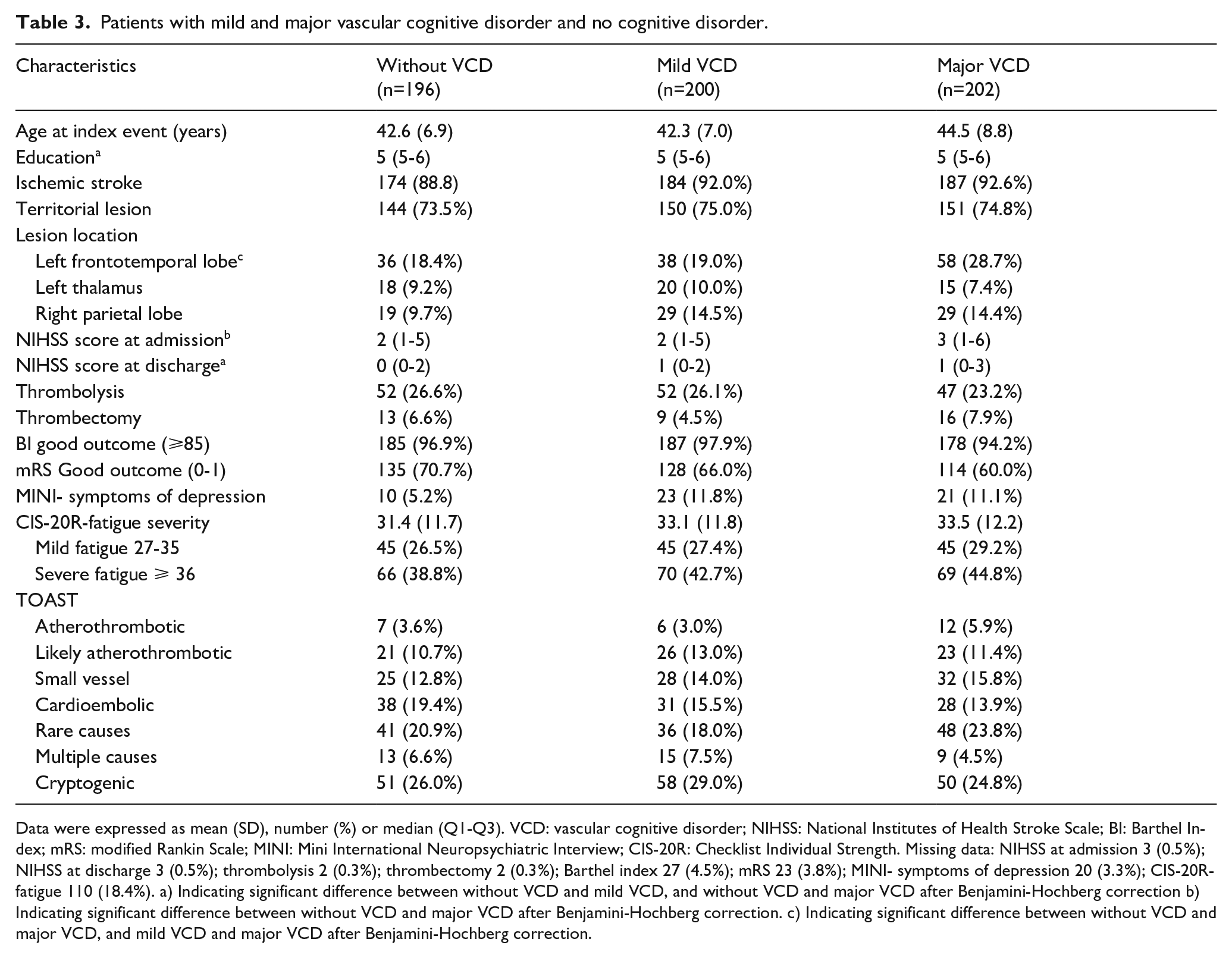
Data were expressed as mean (SD), number (%) or median (Q1-Q3). VCD: vascular cognitive disorder; NIHSS: National Institutes of Health Stroke Scale; BI: Barthel Index; mRS: modified Rankin Scale; MINI: Mini International Neuropsychiatric Interview; CIS-20R: Checklist Individual Strength. Missing data: NIHSS at admission 3 (0.5%); NIHSS at discharge 3 (0.5%); thrombolysis 2 (0.3%); thrombectomy 2 (0.3%); Barthel index 27 (4.5%); mRS 23 (3.8%); MINI- symptoms of depression 20 (3.3%); CIS-20R-fatigue 110 (18.4%). a) Indicating significant difference between without VCD and mild VCD, and without VCD and major VCD after Benjamini-Hochberg correction b) Indicating significant difference between without VCD and major VCD after Benjamini-Hochberg correction. c) Indicating significant difference between without VCD and major VCD, and mild VCD and major VCD after Benjamini-Hochberg correction.
O069 / 909
Scientific Communications 8 - Cognition and Vascular Cognitive Impairment
MULTIVARIATE COGNITIVE PROFILES AFTER STROKE
1KU Leuven, Brain and Cognition, Leuven, Belgium, 2KU Leuven, Leuven Brain Institute, Leuven, Belgium, 3Tuscany Rehabilitation Clinic, Montevarchi, Italy, 4University of Oxford, Department of Experimental Psychology, Oxford, United Kingdom
O070 / 1289
Scientific Communications 8 - Cognition and Vascular Cognitive Impairment
COGNITION AFTER STROKE, TIA, MI AND HOSPITALISATION: AN INDIVIDUAL PARTICIPANT DATA META-ANALYSIS OF SIX RANDOMISED CONTROLLED TRIALS
1Centre for Clinical Brain Sciences, University of Edinburgh, Edinburgh, United Kingdom, 2Population Health Research Institute, Hamilton, Canada, 3Department of Medicine (Neurology), McMaster University, Hamilton, Canada, 4Institute of Endocrinology, Sheba Medical Center, Ramat Gan, Israel, 5Edinburgh Dementia Prevention, Centre for Clinical Brain Sciences, Edinburgh, United Kingdom, 6HRB-Clinical Research Facility, National University of Ireland, Galway, Ireland, 7Department of Geriatric and Stroke Medicine, Galway University Hospital, Galway, Ireland, 8Global Program Head Thrombosis, Bayer Pharmaceuticals, Leverkusen, Germany, 9Department of Health Research Methods, Evidence, and Impact, McMaster University, Hamilton, Canada, 10Department of Medicine (Cardiology), McMaster University, Hamilton, Canada, 11School of Rehabilitation Science, McMaster University, Hamilton, Canada, 12Nuffield Department of Population Health, Oxford, United Kingdom
O071 / 283
Scientific Communications 8 - Cognition and Vascular Cognitive Impairment
CEREBRAL SMALL VESSEL DISEASE BURDEN AND COGNITIVE AND FUNCTIONAL OUTCOMES AFTER STROKE: A MULTICENTER PROSPECTIVE COHORT STUDY
1Institute for Stroke and Dementia Research (ISD), University Hospital, LMU Munich, Munich, Germany, 2German Center for Neurodegenerative Diseases (DZNE), Bonn, Germany, 3Division of Vascular Neurology, Department of Neurology, University Hospital Bonn, Bonn, Germany, 4University Medical Center Göttingen, Department of Neurology, Göttingen, Germany, 5Charité - Univeristätsmedizin Berlin, Department of Neurology with Experimental Neurology, Berlin, Germany, 6German Center for Neurodegenerative Diseases (DZNE), Berlin, Germany, 7Berlin Institute of Health (BIH), Berlin, Germany, 8Center for Stroke Research Berlin (CSB), Charité - Universitätsmedizin Berlin, Berlin, Germany, 9Klinikum rechts der Isar, School of Medicine, Technical University of Munich, Department of Neurology, Munich, Germany, 10Helios Klinikum München West, Neurology Department, Munich, Germany, 11German Center for Neurodegenerative Diseases (DZNE), Magdeburg, Germany, 12Otto von Guericke University, Magdeburg, Germany, 13Leibniz Institute for Neurobiology, Magdeburg, Germany, 14Center for Behavioral Brain Sciences, Magdeburg, Germany, 15German Center for Neurodegenerative Diseases (DZNE), Munich, Germany, 16Otto von Guericke University, Department of Neurology, Magdeburg, Germany, 17German Centre for Cardiovascular Research (DZHK), Berlin, Germany, 18German Center for Neurodegenerative Diseases (DZNE), Göttingen, Germany
O073 / 970
Scientific Communications 9 - Diagnosis / Investigation of Stroke Etiology and Pathophysiology
GENETICS OF STROKE OF UNDETERMINED SOURCE: OVERLAP WITH KNOWN STROKE ETIOLOGIES AND ASSOCIATIONS WITH MODIFIABLE RISK FACTORS
1Massachusetts General Hospital, Center for Genomic Medicine, Boston, United States, 2Massachusetts General Hospital, Boston, United States, 3Ludwig-Maximilians-University (LMU) Munich, Munich, Germany, 4National and Kapodistrian University of Athens, Athens, Greece, 5Jagiellonian Uniwersity, Krakow, Poland, 6University of Miami, Miami, United States, 7Brigham and Women's Hospital, Boston, United States
O074 / 888
Scientific Communications 9 - Diagnosis / Investigation of Stroke Etiology and Pathophysiology
DOES INFLAMMATORY PROFILE AFFECT PENUMBRA SALVAGE IN ACUTE ISCHEMIC STROKE?
1Hospices Civils de Lyon, Stroke Department, Lyon, France, 2Université Lyon 1, Univ Lyon, CarMeN Laboratory, INSERM, INRA, Lyon, France, 3Université Lyon 1, CREATIS, CNRS UMR 5220, INSERM U1044, Lyon, France, 4Hospices Civils de Lyon, Neuroradiology Department, Lyon, France, 5Hospices Civils de Lyon, Cardiac Intensive Care Unit, Lyon, France, 6Hospices Civils de Lyon, Clinical Investigation Center, INSERM 1407, Lyon, France, 7Hospices Civils de Lyon, Cellule Recherche Imagerie, Lyon, France
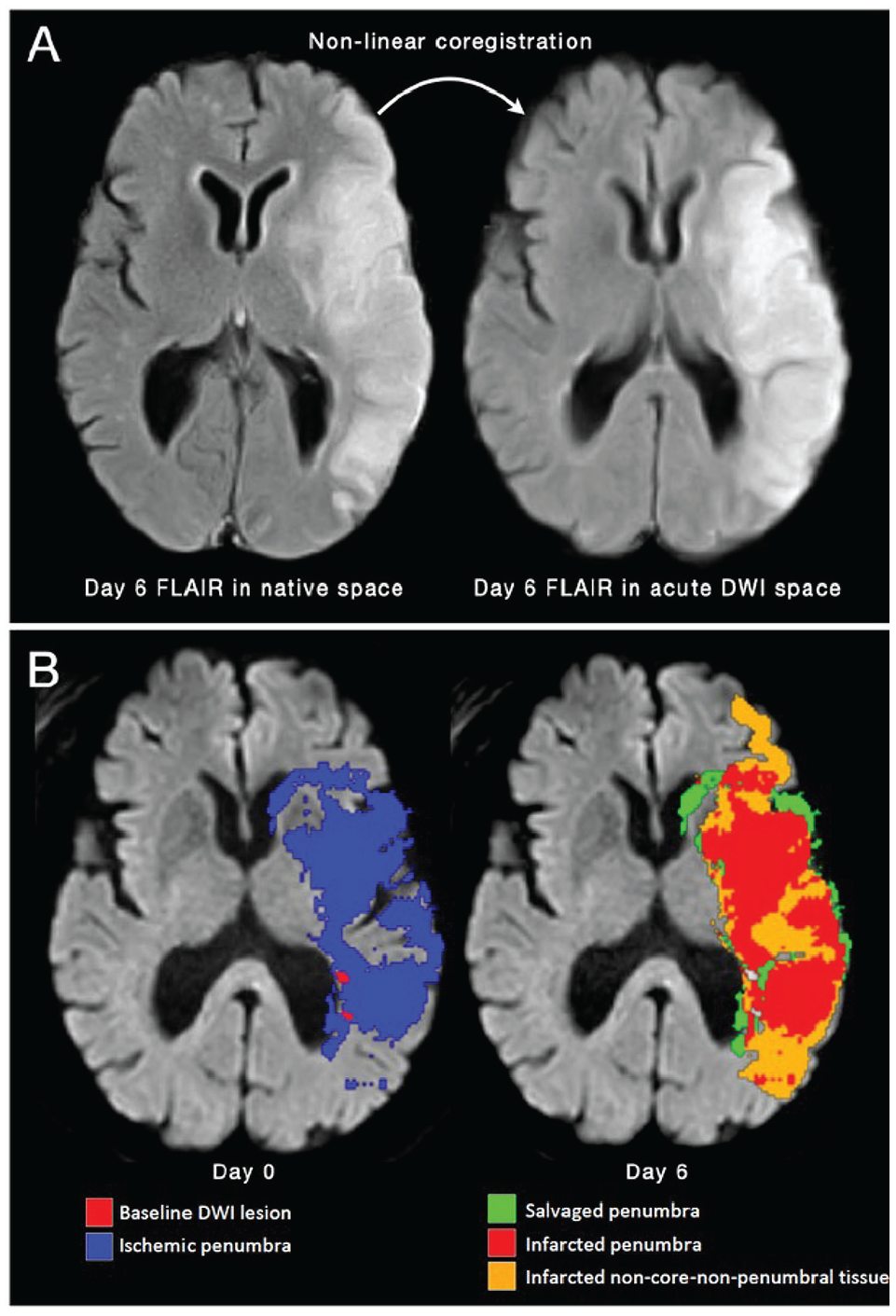
Index case illustrating the MRI post processing method
O075 / 1334
Scientific Communications 9 - Diagnosis / Investigation of Stroke Etiology and Pathophysiology
EICOSAPENTAENOIC ACID (EPA) MODULATES EXPRESSION OF NEUTROPHIL DEGRANULATION PROTEINS IN BRAIN ENDOTHELIUM FOLLOWING CYTOKINE CHALLENGE
1Elucida Research LLC, Beverly, United States, 2University of New Hampshire, Durham, United States, 3Brigham and Women's Hospital, Harvard Medical School, Boston, United States
O076 / 860
Scientific Communications 9 - Diagnosis / Investigation of Stroke Etiology and Pathophysiology
LONG-TERM OUTCOME OF CEREBRAL VENOUS THROMBOSIS DUE TO SARS-COV-2 VACCINE–INDUCED IMMUNE THROMBOTIC THROMBOCYTOPENIA
1Amsterdam University Medical Centers, University of Amsterdam, Department of Neurology, Amsterdam, Netherlands, 2Royal Adelaide Hospital, Department of Neurology, Adelaide, Australia, 3University of British Columbia, Vancouver Stroke Program, Division of Neurology, Vancouver, Canada, 4Lille University Hospital, Department of Neurosciences and Cognition, Lille, France, 5Eberhard-Karls University, Department of Neurology & Stroke, Tuebingen, Germany, 6Eberhard-Karls University, Hertie Institute for Clinical Brain Research, Tuebingen, Germany, 7Inselspital, Bern University Hospital, University of Bern, Department of Neurology, Bern, Switzerland, 8Sahlgrenska University Hospital, Department of Neurology, Gothenburg, Sweden, 9Institute of Neuroscience and Physiology, Sahlgrenska Academy at University of Gothenburg, Department of Clinical Neuroscience, Gothenburg, Sweden, 10UZ Leuven, Department of Neurology, Leuven, Belgium, 11Shiraz University of Medical Sciences, Department of Neurology, Shiraz, Iran, Islamic Republic of, 12Carlo Poma Hospital, Azienda Socio Sanitaria Territoriale di Mantova, Department of Neurology, Mantua, Italy, 13Medical University of Graz, Department of Neurology, Graz, Austria, 14University Hospital Rostock, Department of Neurology, Rostock, Germany, 15Heidelberg University Hospital, Department of Neurology, Heidelberg, Germany, 16Radboud University Medical Center, Department of Internal Medicine & Radboud Institute of Health Sciences, Nijmegen, Netherlands, 17National Institute for Health Research, University College London Hospitals (UCLH) Biomedical Research Centre, London, United Kingdom, 18Amsterdam University Medical Centers, University of Amsterdam, Department of Vascular Medicine, Amsterdam, Netherlands, 19Inselspital, Bern University Hospital, University of Bern, Department of Hematology, Bern, Switzerland, 20Jena University Hospital, Department of Neurology, Jena, Germany, 21Helsinki University Hospital, University of Helsinki, Department of Neurology, Helsinki, Finland, 22Hospital de Santa Maria, Centro Hospitalar Universitario Lisboa Norte, University of Lisbon, Department of Neurosciences and Mental Health, Lisbon, Portugal, 23Instituto de Medicina Molecular João Lobo Antunes, Faculdade de Medicina, Universidade de Lisboa, Lisbon, Portugal
O077 / 341
Scientific Communications 9 - Diagnosis / Investigation of Stroke Etiology and Pathophysiology
ABSENCE OF SUSCEPTIBILITY VESSEL SIGN IN PATIENTS WITH MALIGNANCY-RELATED ACUTE ISCHEMIC STROKE TREATED WITH MECHANICAL THROMBECTOMY
1Inselspital, Bern University Hospital, and University of Bern, Department of Neurology, Bern, Switzerland, 2Inselspital, Bern University Hospital, and University of Bern, Institute for Diagnostic and Interventional Neuroradiology, Bern, Switzerland, 3University Hospital of Freiburg, Department of Neuroradiology, Freiburg, Germany, 4University Hospital of Basel, University of Basel, Department of Neurology, Basel, Switzerland, 5Inselspital, Bern University Hospital, and University of Bern, Department of Oncology, Bern, Switzerland
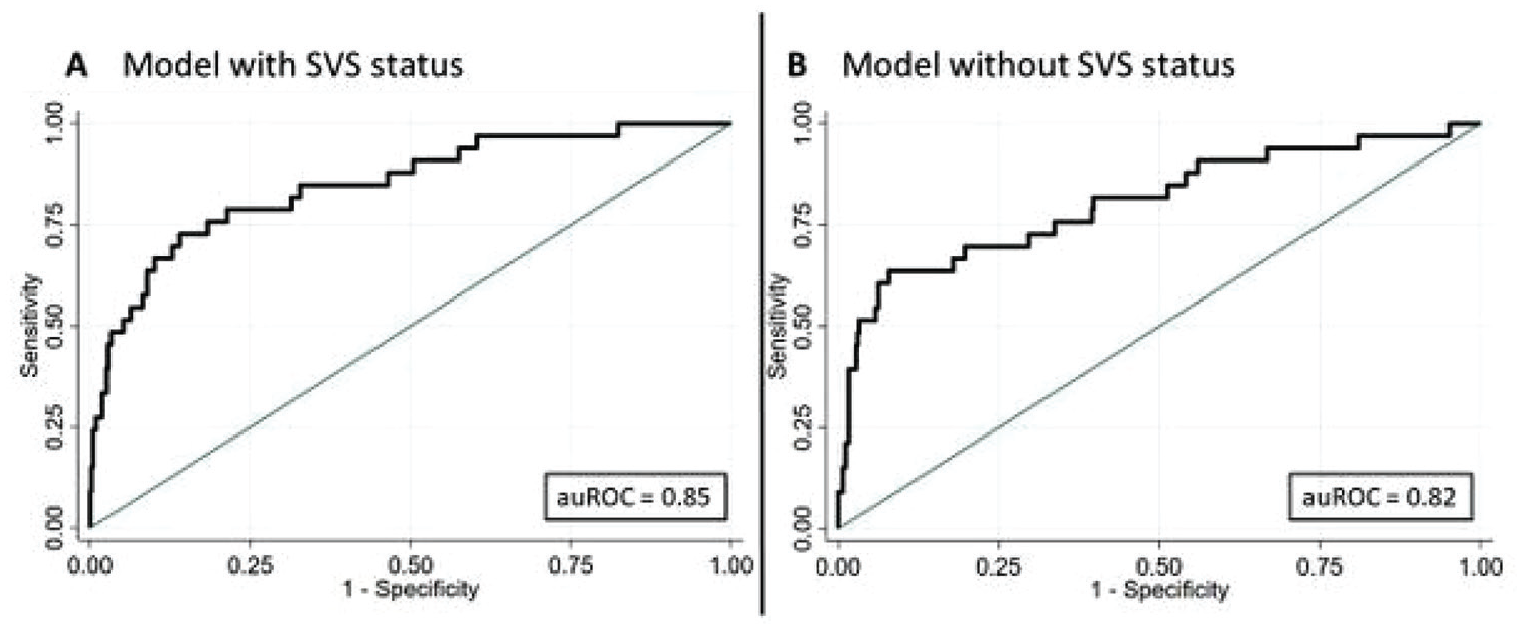
O078 / 710
Scientific Communications 9 - Diagnosis / Investigation of Stroke Etiology and Pathophysiology
MASS SPECTROMETRY-BASED PROTEOMIC CHARACTERIZATION OF FORMALIN FIXED PARAFFIN-EMBEDDED ACUTE ISCHEMIC STROKE (AIS) BLOOD CLOTS REVEALS POSSIBLE BIOMARKERS FOR STROKE ETIOLOGY
1National University of Ireland Galway, Physiology, Galway, Ireland, 2National University of Ireland Galway, School of Mathematical & Statistical Sciences, Galway, Ireland, 3National University of Ireland Galway, CÚRAM–SFI Research Centre for Medical Devices, Galway, Ireland, 4Cerenovus, Galway, Ireland, 5Metropolitan Hospital, Stroke Unit, Athens, Greece, 6National & Kapodistrian University of Athens, “Attikon” University Hospital, Second department of neurology, Athens, Greece, 7National Institute of Clinical Neurosciences, Department of Neurointerventions, Budapest, Hungary, 8Sahlgrenska University Hospital, Department of Neurology, Gothenburg, Sweden, 9Sahlgrenska University Hospital, 9Department of Interventional and Diagnostic Neuroradiology, Gothenburg, Sweden, 10Beaumont Hospital, Department of Radiology, Royal College of Surgeons in Ireland, Dublin, Ireland
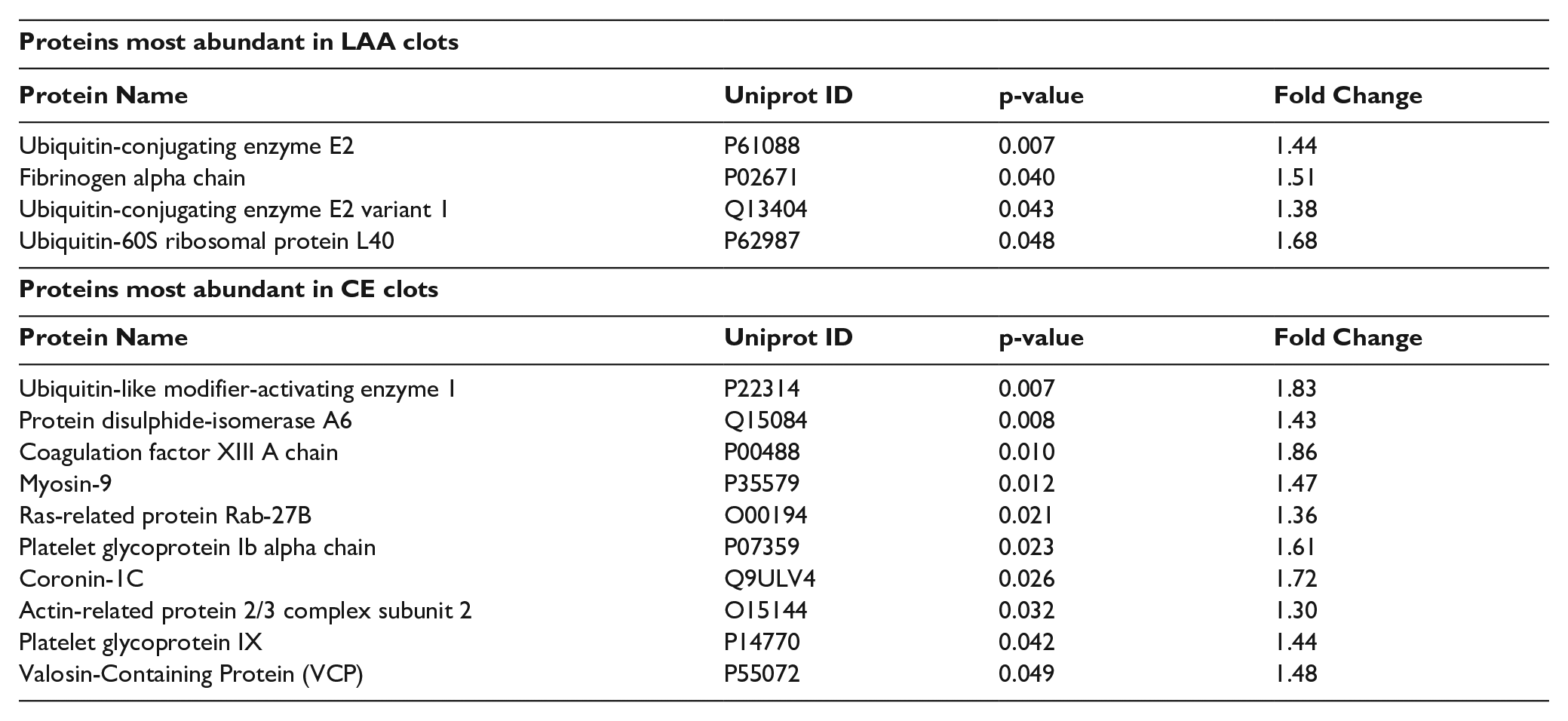
O079 / 1296
Scientific Communications 9 - Diagnosis / Investigation of Stroke Etiology and Pathophysiology
GROWTH DIFFERENTIATION FACTOR 15 (GDF-15), A NOVEL PROGNOSTIC MARKER FOR POST STROKE MORTALITY: RESULTS FROM THE BIOSIGNAL STUDY
1University Hospital Zurich, Neurology, Zurich, Switzerland, 2Inselspital, Neurology, Bern, Switzerland, 3University Hospital Basel, Basel, Switzerland, 4Cantonal Hospital Aarau, Aarau, Switzerland, 5Neurocentro della Svizzera Italiana, Lugano, Switzerland, 6Cantonal Hospital St. Gallen, St Gallen, Switzerland, 7Vall d`Hebron Institute of Research, Barcelona, Spain, 8University of Thessaly, Larissa, Greece, 9University Hospital of Frankfurt, Frankfurt, Germany, 10University Hospital Zurich, Clinical Chemistry, Zurich, Switzerland
O080 / 803
Scientific Communications 9 - Diagnosis / Investigation of Stroke Etiology and Pathophysiology
LIVER FIBROSIS IS RELATED TO ATRIAL FIBRILLATION AND OUTCOME IN ACUTE ISCHEMIC STROKE
1Medical University of Graz, Department of Neurology, Graz, Austria, 2Medical University of Graz, Division of Gastroenterology and Hepatology, Department of Internal Medicine, Graz, Austria, 3Medical University of Graz, Clinical Institute of Medical and Chemical Laboratory Diagnostics, Graz, Austria, 4Medical University of Graz, Institute for Medical Informatics, Statistics and Documentation, Graz, Austria, 5Medical University of Graz, Division of Neuroradiology, Vascular and Interventional Radiology, Department of Radiology, Graz, Austria
O082 / 88
Scientific Communications 10 - Prognosis and Outcome After Stroke
DEVELOPING AND VALIDATING A MULTIVARIABLE PREDICTION MODEL FOR FUTILE ACUTE REVASCULARIZATION THERAPIES IN PATIENTS WITH ACUTE ISCHEMIC STROKE
1 Stroke Research Center Bern, Inselspital, University of Bern, Bern, Switzerland
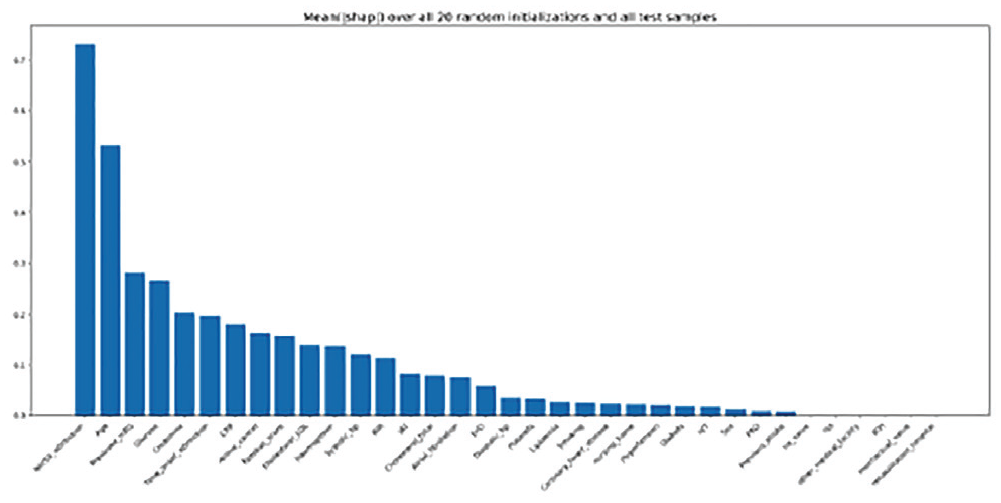
Feature-Importance
O083 / 1179
Scientific Communications 10 - Prognosis and Outcome After Stroke
TIMING AND CAUSES OF DEATH AFTER ENDOVASCULAR TREATMENT IN PATIENTS WITH ACUTE ISCHAEMIC STROKE
1University Medical Center Utrecht, Neurology, Utrecht, Netherlands, 2Maastricht University Medical Center, Neurology, Maastricht, Netherlands, 3Amsterdam University Medical Centers, Location AMC, Radiology and Nuclear Medicine, Amsterdam, Netherlands, 4University Medical Center Groningen, Radiology, Groningen, Netherlands, 5Amsterdam University Medical Centers, Location VUmc, Radiology and Nuclear Medicine, Amsterdam, Netherlands, 6Erasmus MC University Medical Center, Public Health, Rotterdam, Netherlands, 7Rijnstate Hospital, Neurology, Arnhem, Netherlands, 8Maastricht University Medical Center, Radiology, Maastricht, Netherlands
O084 / 129
Scientific Communications 10 - Prognosis and Outcome After Stroke
NINETY-DAY STROKE RECURRENCE RATE IN MINOR STROKE: A META-ANALYSIS OF RANDOMIZED TRIALS AND OBSERVATIONAL STUDIES
1Monash University, Department of Medicine, Melbourne, Australia, 2Monash Medical Centre, Department of Emergency Medicine, Melbourne, Australia, 3Monash Medical Centre, Department of Neurology, Melbourne, Australia, 4Dell Medical School, The University of Texas at Austin, Austin, United States, 5Department of Neurology, Beijing Tiantan Hospital, Capital Medical University, Beijing, China, 6China National Clinical Research Centre for Neurological Diseases, Beijing, China, 7Hotchkiss Brain Institute, University of Calgary, Calgary, Alberta, Canada, 8Servicio de Neurologia, Hospital del Mar, Barcelona, Spain, 9Department of Medicine, University of Toronto, Toronto, Canada, 10Department of Neurology, Innsbruck Medical University, Innsbruck, Austria, 11Stroke Trials Unit, Division of Clinical Neuroscience, University of Nottingham, Queen’s Medical Centre, Nottingham, United Kingdom
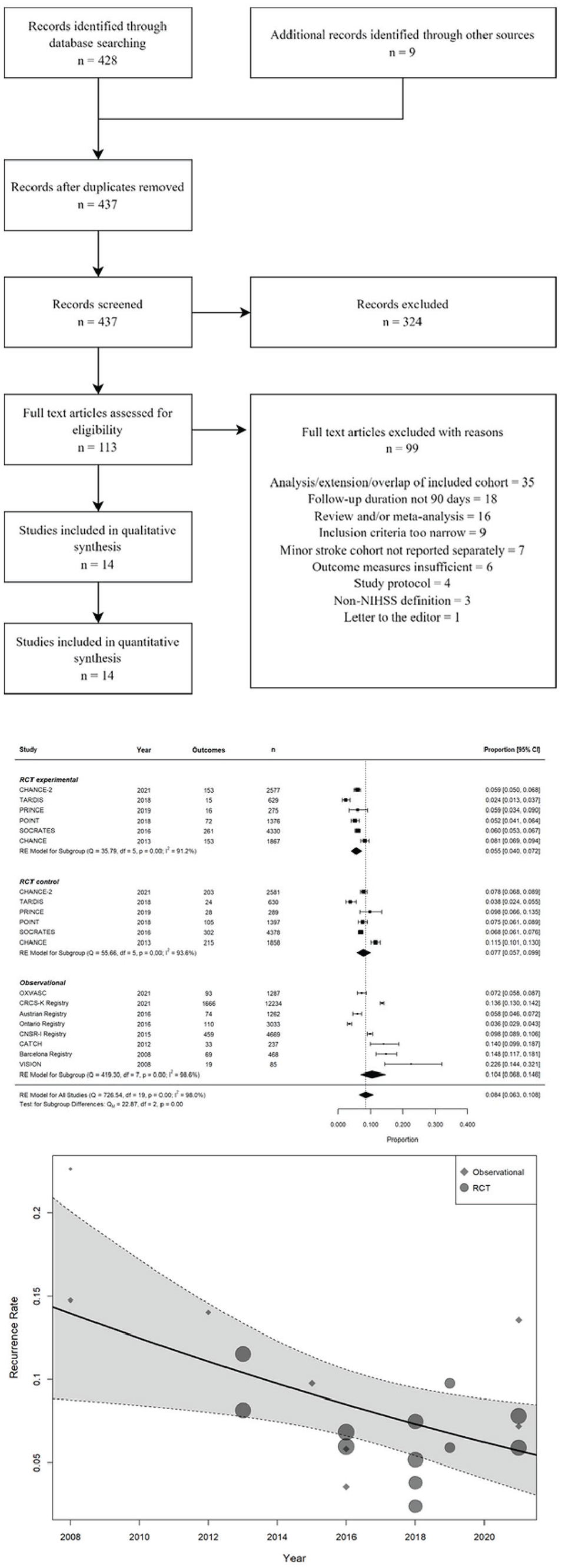
O085 / 1615
Scientific Communications 10 - Prognosis and Outcome After Stroke
PREDICTORS OF POOR OUTCOME IN LARGE VESSEL OCCLUSION STROKE UNDERWENT MECHANICAL THROMBECTOMY WITH SMALL FINAL INFARCT VOLUME
1Emory University School of Medicine, Grady memorial hospital, Marcus Stroke Center, Neurology department, Atlanta, United States, 2Beni-Suef University, Beni-Suef, Egypt
O086 / 357
Scientific Communications 10 - Prognosis and Outcome After Stroke
COMORBIDITY BURDEN IS A RISK FACTOR FOR WORSE FUNCTIONAL OUTCOME AFTER THROMBECTOMY FOR ACUTE ISCHEMIC STROKE
1University Medical Center Hamburg-Eppendorf, Klinik und Poliklinik für Neurologie, Hamburg, Germany, 2University Medical Center Hamburg-Eppendorf, Hamburg, Germany
O087 / 1365
Scientific Communications 10 - Prognosis and Outcome After Stroke
THE LEISTAR EYE STUDY: DOES SYMPTOM DURATION AFFECT OUTCOME IN PATIENTS WITH RETINAL ISCHAEMIC EVENTS PRESENTING TO THE UNIVERSITY HOSPITALS OF LEICESTER (UHL) TIA CLINIC?
1University Hospitals of Leicester NHS Trust, Department of Stroke Medicine, Leicester, United Kingdom, 2University of Leicester, Cardiovascular Sciences, Leicester, United Kingdom, 3University of Leicester, Department of Health Sciences, Leicester, United Kingdom
O088 / 847
Scientific Communications 10 - Prognosis and Outcome After Stroke
PRESENTATION AND TREATMENT OUTCOMES OF ACUTE BASILAR ARTERY OCCLUSION: A 13-YEAR RETROSPECTIVE COHORT STUDY
1Mayo Clinic, Neurology, Scottsdale, United States, 2Mayo Clinic, Neurology, Mankato, United States, 3Mayo Clinic, Neurosurgery, Rochester, United States, 4Mayo Clinic, Neurology, Jacksonville, United States, 5Ceders-Sinai, Neurology, Los Angeles, United States, 6Mayo Clinic, Neurology, Rochester, United States
O089 / 1225
Scientific Communications 10 - Prognosis and Outcome After Stroke
CHANGES IN SLEEP-DISORDERED BREATHING FOLLOWING STROKE
1 University of Michigan, Ann Arbor, United States
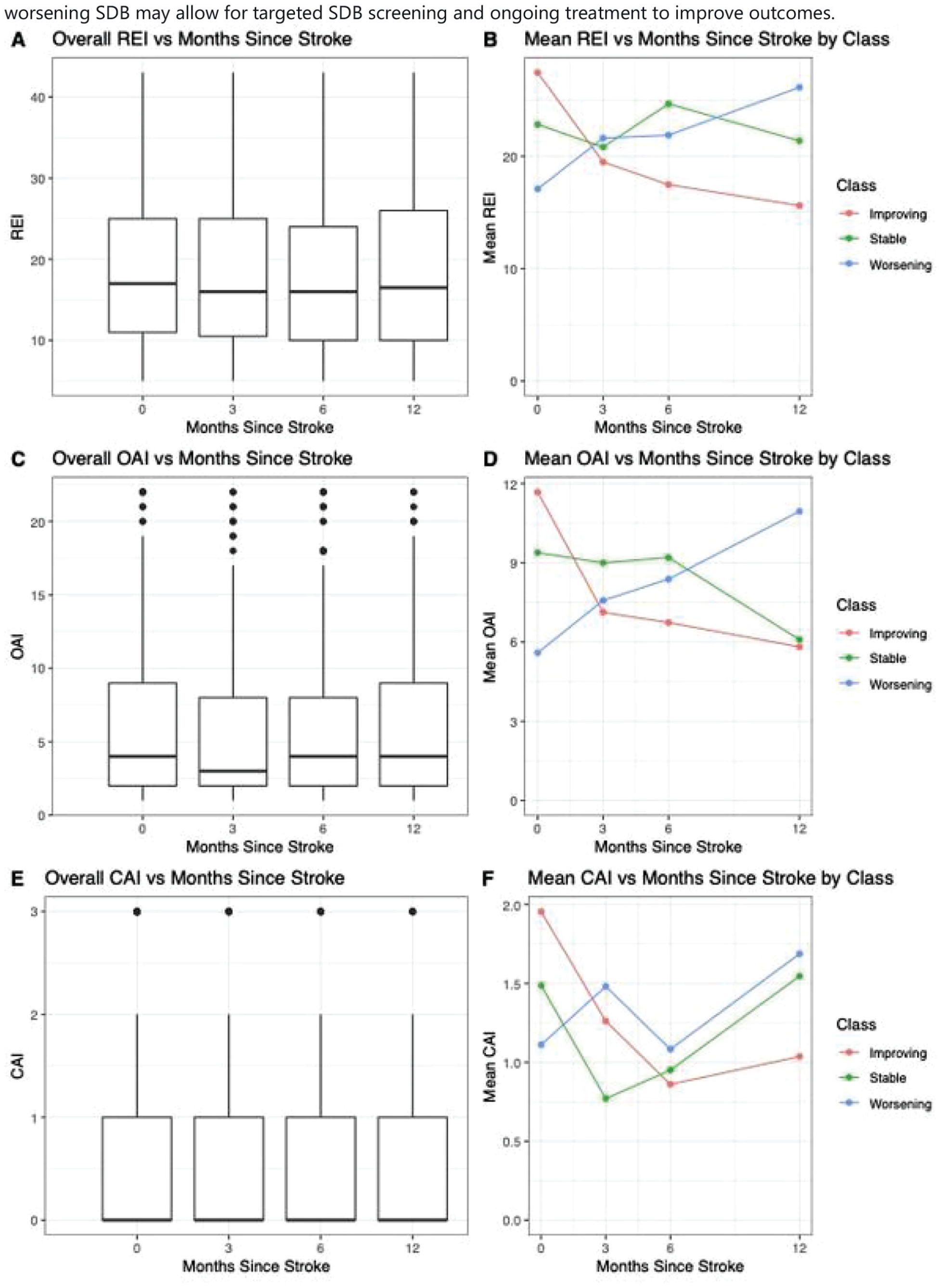
O090 / 959
Scientific Communications 11 - Neurointervention – Organisation and Outcome
DIFFERENCES BETWEEN CENTER TYPES IN THE PERFORMANCE OF ENDOVASCULAR THROMBECTOMY FOR ACUTE ISCHEMIC STROKE: RESULTS FROM THE MR CLEAN REGISTRY
1Maastricht University Medical Center+ and School for Cardiovascular Diseases (CARIM), Maastricht, Department of Neurology, Maastricht, Netherlands, 2Erasmus MC, University Medical Center, Department of Public Health, Rotterdam, Netherlands, 3Zuyderland MC, Department of Neurology, Heerlen, Netherlands, 4Sint Antonius Hospital, Department of Neurology, Nieuwegein, Netherlands, 5Sint Antonius Hospital, Department of Radiology, Nieuwegein, Netherlands, 6Catharina Hospital, Department of Radiology, Eindhoven, Netherlands, 7Amsterdam University Medical Center, Department of Neurology, Amsterdam, Netherlands, 8Maastricht University Medical Center+ and School for Cardiovascular Diseases (CARIM), Maastricht, Department of Radiology, Maastricht, Netherlands, 9Erasmus MC, University Medical Center, Department of Neurology, Rotterdam, Netherlands
O091 / 421
Scientific Communications 11 - Neurointervention – Organisation and Outcome
DRAWBACKS AND POTENTIAL FOR IMPROVEMENT OF THE DRIP-AND-SHIP PARADIGM FOR ISCHEMIC STROKE PATIENTS UNDERGOING ENDOVASCULAR TREATMENT – RESULTS FROM THE GERMAN STROKE REGISTRY
1University Hospital Frankfurt, Goethe University, Department of Neurology, Frankfurt, Germany, 2University Hospital Frankfurt, Goethe University, Department of Neuroradiology, Frankfurt, Germany, 3Klinikum Lüneburg, Department of Neurology, Lüneburg, Germany
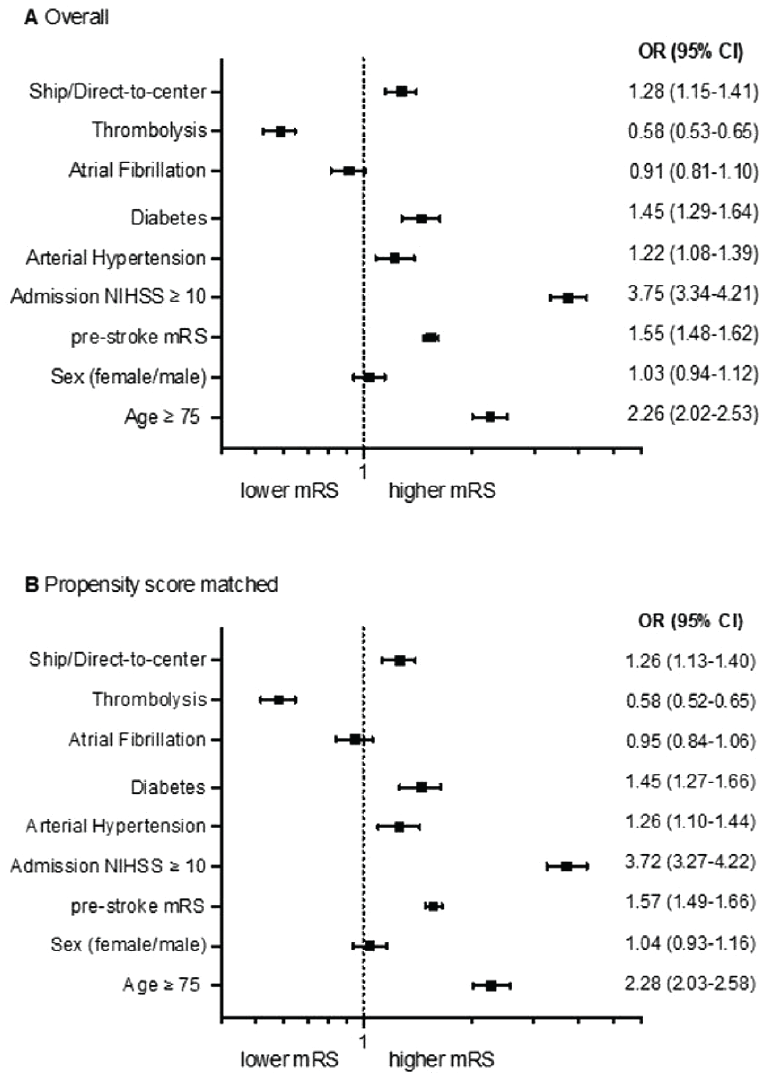
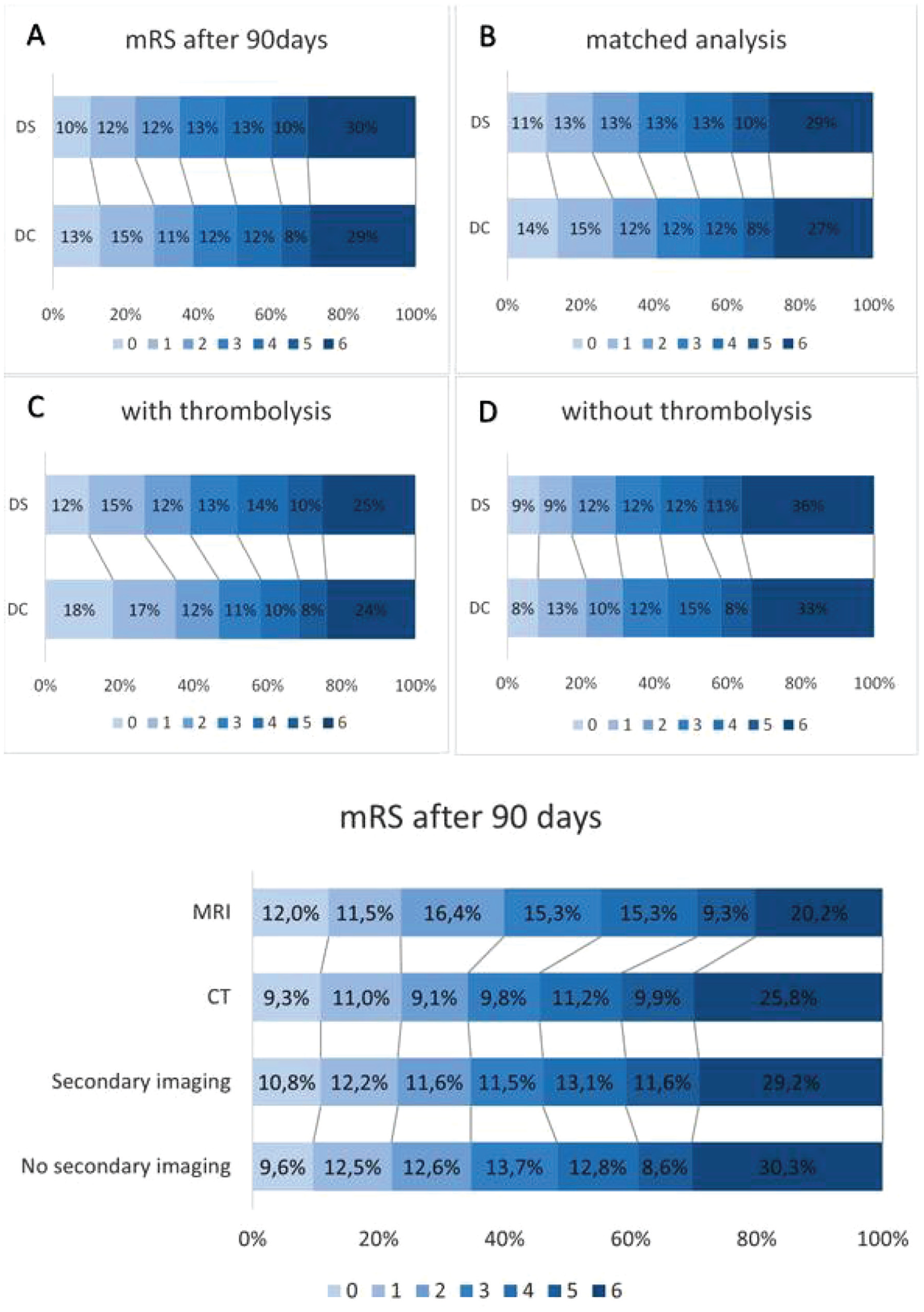
O092 / 302
Scientific Communications 11 - Neurointervention – Organisation and Outcome
SEX DIFFERENCES IN ONSET TO HOSPITAL ARRIVAL TIME, PRESTROKE DISABILITY AND CLINICAL SYMPTOMS IN PATIENTS WITH A LARGE VESSEL OCCLUSION: A MR CLEAN REGISTRY STUDY
1Amsterdam UMC, Vrije Universiteit Amsterdam, Neurology, Amsterdam, Netherlands, 2Leiden University Medical Center, Neurology, Leiden, Netherlands, 3Amsterdam UMC, Vrije Universiteit Amsterdam, Surgery, Amsterdam, Netherlands, 4Leiden University Medical Center, Biomedical Data Sciences, Leiden, Netherlands, 5Zaans Medical Center, Neurology, Zaandam, Netherlands, 6Rijnstate Hospital, Neurology, Arnhem, Netherlands, 7Amsterdam UMC, University of Amsterdam, Neurology, Amsterdam, Netherlands, 8Haaglanden Medical Center, Neurology, The Hague, Netherlands, 9University Neurovascular Center Leiden-The Hague, Neurology, Leiden, Netherlands, 10Amsterdam UMC, University of Amsterdam, Radiology and Nuclear Medicine, Amsterdam, Netherlands, 11Sint Antonius Hospital, Neurology, Nieuwegein, Netherlands, 12Leiden University Medical Center, Radiology, Leiden, Netherlands
O093 / 280
Scientific Communications 11 - Neurointervention – Organisation and Outcome
ENDOVASCULAR THROMBECTOMY BEYOND 24 HOURS FROM ISCHAEMIC STROKE ONSET: A PROPENSITY SCORE-MATCHED COHORT STUDY
1Nottingham University Hospitals NHS Trust, Interventional Neuroradiology, Nottingham, United Kingdom, 2University of Nottingham, Radiological Sciences, Mental Health and Clinical Neuroscience, Nottingham, United Kingdom, 3University Hospitals Birmingham NHS Trust, Interventional Neuroradiology, Birmingham, United Kingdom, 4University of Nottingham, NIHR Nottingham Biomedical Research Centre, Nottingham, United Kingdom, 5Manchester University NHS Foundation Trust, Research and Innovation (Medical Statistics), Manchester, United Kingdom, 6University of Manchester, Centre for Biostatistics, Faculty of Biology Medicine and Health, Manchester, United Kingdom, 7University of Exeter Medical School, Exeter, United Kingdom, 8Royal Devon and Exeter NHS Foundation Trust, Exeter, United Kingdom, 9King’s College London, Sentinel Stroke National Audit Programme, London, United Kingdom, 10University of Nottingham, Stroke, Mental Health and Clinical Neuroscience, Nottingham, United Kingdom, 11University Hospitals of Derby and Burton NHS Foundation Trust, Stroke, Derby, United Kingdom
O094 / 287
Scientific Communications 11 - Neurointervention – Organisation and Outcome
ASSOCIATION BETWEEN TIME TO TREATMENT AND CLINICAL OUTCOMES IN ENDOVASCULAR THROMBECTOMY BEYOND 6 HOURS WITHOUT ADVANCED IMAGING SELECTION
1Nottingham University Hospitals NHS Trust, Interventional Neuroradiology, Nottingham, United Kingdom, 2University Hospitals Birmingham NHS Trust, Interventional Neuroradiology, Birmingham, United Kingdom, 3University of Nottingham, NIHR Nottingham Biomedical Research Centre, Nottingham, United Kingdom, 4The Royal London Hospital Barts Health NHS Trust, Interventional Neuroradiology, London, United Kingdom, 5The Royal London Hospital Barts Health NHS Trust, Stroke Medicine, London, United Kingdom, 6Nottingham University Hospitals NHS Trust, Stroke Medicine, Nottingham, United Kingdom, 7University of Nottingham, Stroke Trials Unit, Mental Health and Clinical Neuroscience, Nottingham, United Kingdom, 8North Bristol NHS Trust, Interventional Neuroradiology, Southmead Hospital, Bristol, United Kingdom, 9King’s College Hospital NHS Foundation Trust, Neuroradiology, London, United Kingdom, 10King’s College London, School of Biomedical Engineering & Imaging Sciences, London, United Kingdom, 11Imperial College Healthcare NHS Trust, Interventional Neuroradiology, Charing Cross Hospital, London, United Kingdom, 12Newcastle University, Translational and Clinical Research Institute, Faculty of Medical Sciences, Newcastle, United Kingdom, 13Newcastle upon Tyne Hospitals NHS Foundation Trust, Interventional Neuroradiology, Newcastle, United Kingdom, 14Royal Devon and Exeter NHS Foundation Trust, Exeter, United Kingdom, 15University of Exeter Medical School, Exeter, United Kingdom, 16King’s College London, Sentinel Stroke National Audit Programme, London, United Kingdom, 17University of Nottingham, Stroke, Mental Health and Clinical Neuroscience, Nottingham, United Kingdom, 18University of Nottingham, Radiological Sciences, Mental Health and Clinical Neuroscience, Nottingham, United Kingdom, 19University Hospitals of Derby and Burton NHS Foundation Trust, Stroke, Derby, United Kingdom
O095 / 836
Scientific Communications 11 - Neurointervention – Organisation and Outcome
EXACT BASILAR ARTERY OCCLUSION SITE PREDICTS RECANALIZATION RESULT AND STROKE ETIOLOGY IN STROKE PATIENTS ELIGIBLE FOR MECHANICAL THROMBECTOMY
1University Hospital Heidelberg, Neuroradiology, Heidelberg, Germany, 2University Hospital Heidelberg, Neurology, Heidelberg, Germany
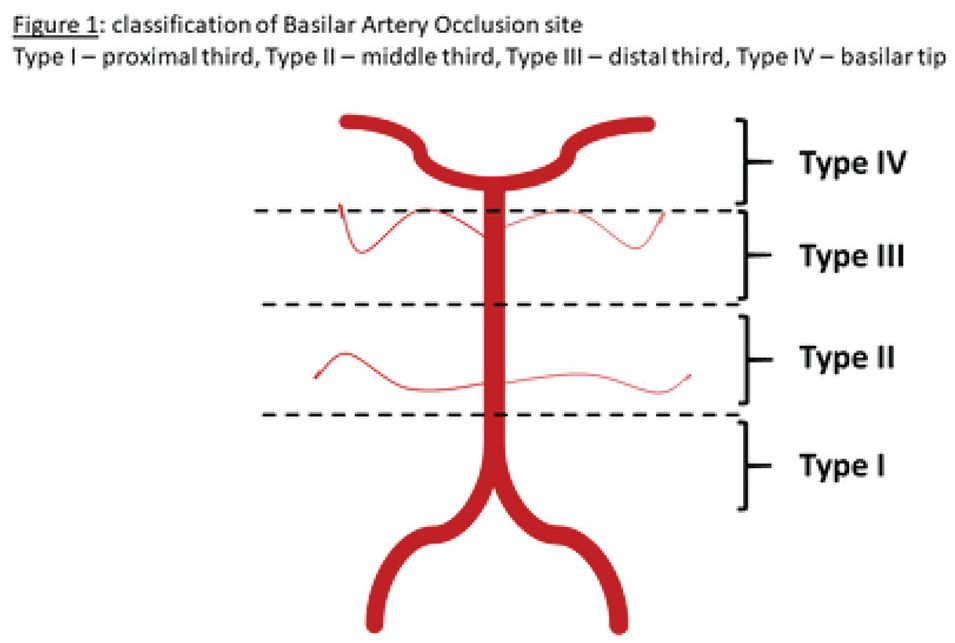
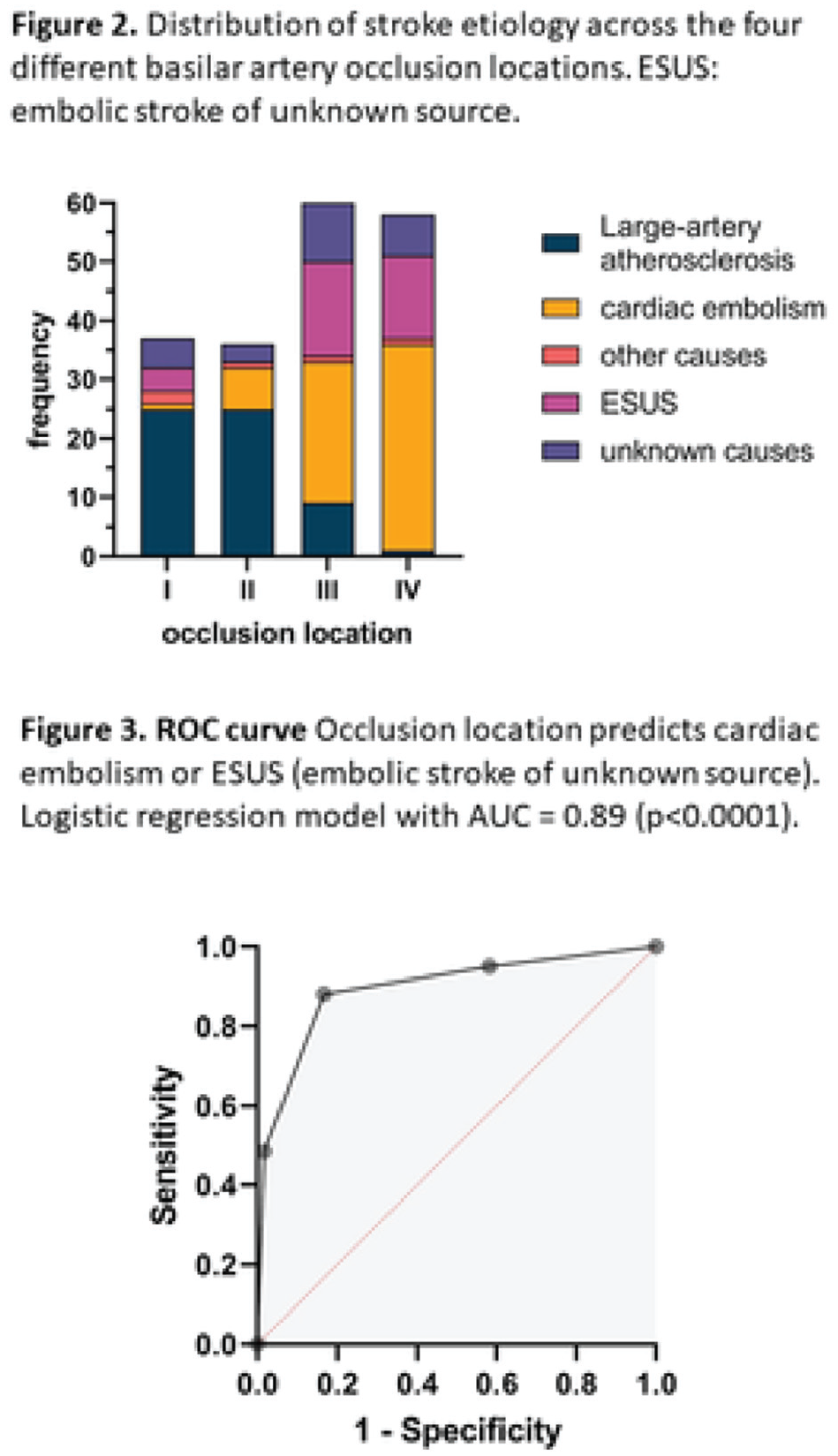
O096 / 1603
Scientific Communications 11 - Neurointervention – Organisation and Outcome
CHARACTERIZATION OF ENDOVASCULAR INJURY INDUCED BY STENT-RETRIEVER THROMBECTOMY IN SWINE
1Erasmus MC University Medical Center, Cardiology, Rotterdam, Netherlands, 2Erasmus MC University Medical Center, Neurology, Rotterdam, Netherlands, 3Haaglanden Medical Center, Radiology, The Hague, Netherlands, 4Erasmus MC University Medical Center, Radiology, Rotterdam, Netherlands, 5Leiden University Medical Center, Radiology, Leiden, Netherlands
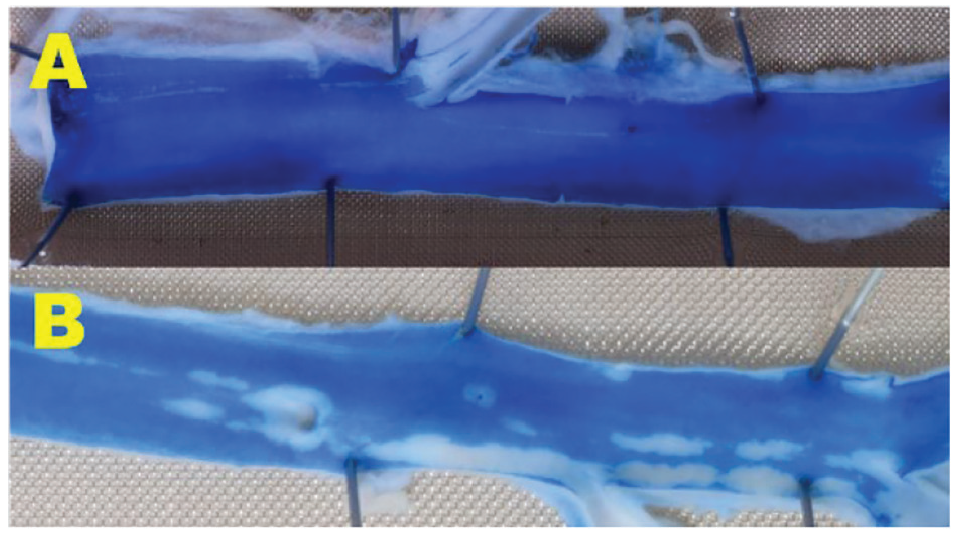
Luminal surface after Evans Blue perfusion: acute(
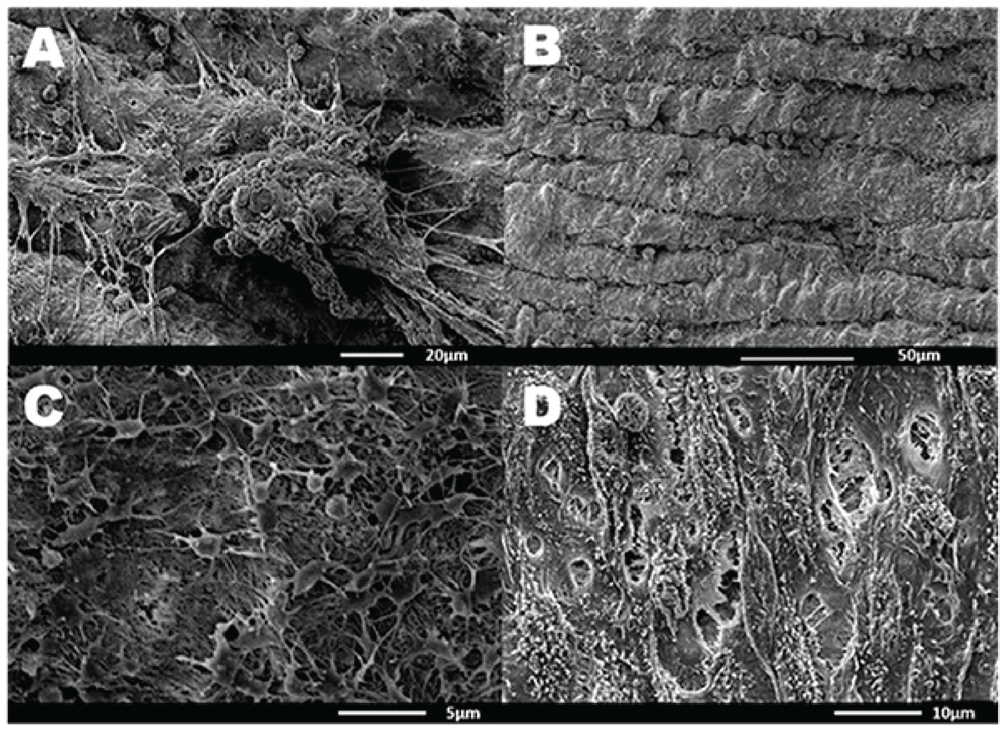
SEM images of acute vascular injury showing a microthrombus(A), leukocytes(B) and activated platelets on denudated endothelium(C). At three days follow-up increased surface folds indicate activated endothelium(D).
O097 / 1535
Scientific Communications 11 - Neurointervention – Organisation and Outcome
MIDDLE MENINGEAL ARTERY EMBOLIZATION FOR CHRONIC SUBDURAL HEMATOMA: A SYSTEMATIC REVIEW AND META-ANALYSIS
1Al-Azhar University, Faculty of Medicine, Cairo, Egypt, 2Harvard Medical School, Department of Global Health, Boston, Massachusetts, United States, 3South Valley University, Faculty of Medicine, Qina, Egypt, 4The Hashemite University, Faculty of Medicine, Zarqa, Jordan, 5Zagazig University, Faculty of Medicine, Zagazig, Egypt, 6Aleppo University, Facutly of medicine, Aleppo, Syrian Arab Republic
O098 / 788
Scientific Communications 12 - Epidemiology
ASSOCIATION OF AIR QUALITY OF BUSHFIRE SMOKE DAYS WITH CEREBROVASCULAR DISEASE-RELATED HOSPITAL ADMISSIONS DURING AUSTRALIA'S 2019-2020 BUSHFIRE SEASON
1University of Newcastle, Newcastle, Australia, 2John Hunter Hospital, Hunter New England Local Health District, Newcastle, Australia, 3Hunter New England Local Health District, Newcastle, Australia, 4University of Wollongong, Wollongong, Australia
O099 / 781
Scientific Communications 12 - Epidemiology
CHANGES IN OVERALL FEATURES OF ISCHEMIC STROKE OR TIA BETWEEN 2011 AND 2020: FINDINGS FROM A NATIONWIDE MUTICENTER REGISTER
1Seoul National University College of Medicine, Seoul National University Bundang Hospital, Neurology, Seongnam-si, Korea, Republic of, 2Seoul Medical Center, Neurology, Seoul, Korea, Republic of, 3Korea University College of Medicine, Biostatistics, Seoul, Korea, Republic of, 4Hallym University College of Medicine, Neurology, Anyang, Korea, Republic of
O100 / 1412
Scientific Communications 12 – Epidemiology
WE ARE NOT THE SAME: GEOGRAPHIC DIFFERENCE IN INCIDENCE AND EPIDEMIOLOGY FOR ISCHAEMIC STROKE IN SPAIN. NEUROEPI STUDY.
1Torrecardenas University Hospital, Neurology, Almeria, Spain, 2Torrecardenas University Hospital, Emergency, Almeria, Spain
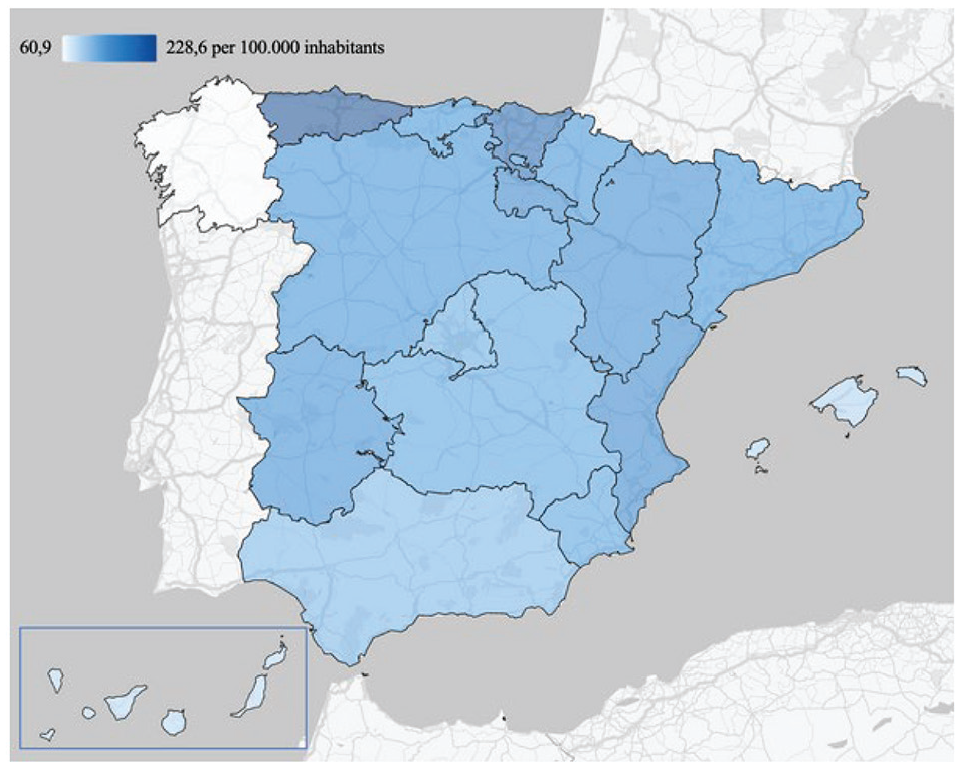
O101 / 508
Scientific Communications 12 - Epidemiology
STROKE INCIDENCE AND CASE-FATALITY IN MAINLAND CHINA, HONG KONG, AND MACAO: SYSTEMATIC REVIEW AND META-ANALYSIS
1La Trobe University, John Richards Centre for Rural Ageing Research, La Trobe Rural Health School, Bendigo, Australia, 2La Trobe University, John Richards Centre for Rural Ageing Research, La Trobe Rural Health School, Albury-Wodonga, Australia, 3The Second Affiliated Hospital of Kunming Medical University, Department of Rehabilitation, Kunming, China, 4Peking Union Medical College Hospital, Chinese Academy of Medical Sciences and Peking Union Medical College, Department of Healthcare, Beijing, China, 5La Trobe University, Rural Department of Community Health, La Trobe Rural Health School, Bendigo, Australia
O102 / 351
Scientific Communications 12 - Epidemiology
TRENDS IN INCIDENCE OF FIRST-EVER AND RECURRENT ISCHEMIC STROKES IN SWEDEN 2010 - 2019 – A RIKSSTROKE STUDY
1Lund University, and Neurology, Skåne University Hospital, Neurology, Department of Clinical Sciences, Malmö, Sweden, 2Lund University, Perinatal and Cardiovascular Epidemiology, Department of Clinical Sciences, Malmö, Sweden
O103 / 751
Scientific Communications 12 - Epidemiology
THE INCIDENCE OF STROKE IN THE ABORIGINAL AND NON-ABORIGINAL POPULATIONS OF WESTERN AUSTRALIA, SOUTH AUSTRALIA, AND THE NORTHERN TERRITORY
1Monash University, Department of Medicine, Melbourne, Australia, 2Alfred Health, Department of Neurology, Melbourne, Australia, 3University of Melbourne, Department of Medicine and Neurology, Melbourne Brain Centre at Royal Melbourne Hospital, Melbourne, Australia, 4University of Western Australia, School of Population and Global Health, Perth, Australia, 5Royal Adelaide Hospital, Department of Neurology, Adelaide, Australia, 6University of Adelaide, Faculty of Health and Medical Science, Adelaide, Australia, 7South Australian Health and Medical Research Institute, Aboriginal Health Equity, Adelaide, Australia, 8Charles Darwin University, Menzies School of Health Research, Darwin, Australia, 9University of New South Wales, Faculty of Medicine and Health, Kensington, Australia
O104 / 955
Scientific Communications 12 - Epidemiology
SOCIOECONOMIC POSITION BY INCOME RELATED TO AGE AT FIRST STROKE, STROKE SEVERITY AND PREVALENCE OF STROKE RISK FACTORS IN THE DANISH STROKE POPULATION
1Bispebjerg University Hospital, Neurology, Copenhagen, Denmark, 2Danish Cancer Society Research Center, Copenhagen, Denmark
O106 / 727
Scientific Communications 13 - SAH and ICH
SUBARACHNOID HEMORRHAGE DURING PREGNANCY AND PUERPERIUM – A POPULATION-BASED STUDY WITH CHART VALIDATION
1Helsinki University Hospital and University of Helsinki, Neurology, Helsinki, Finland, 2Helsinki University Hospital and University of Helsinki, Obstetrics and Gynecology, Helsinki, Finland, 3Tampere University Hospital and Tampere University, Faculty of Medicine and Health Technology, Department of Obstetrics and Gynecology, Tampere, Finland, 4Finnish Institute for Health and Welfare, Department of Information Services, Helsinki, Finland, 5University of Helsinki, Obstetrics and Gynecology, Helsinki, Finland
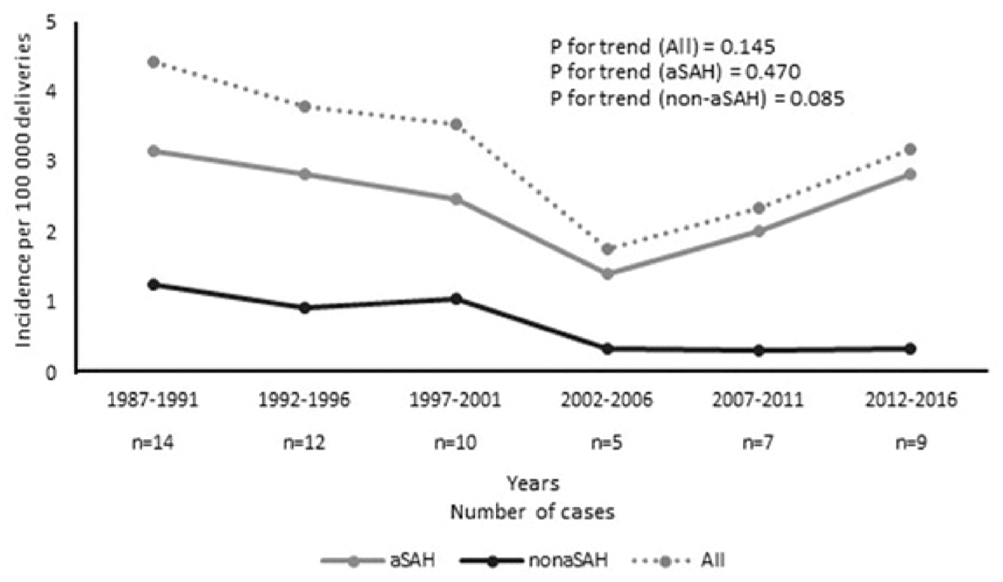
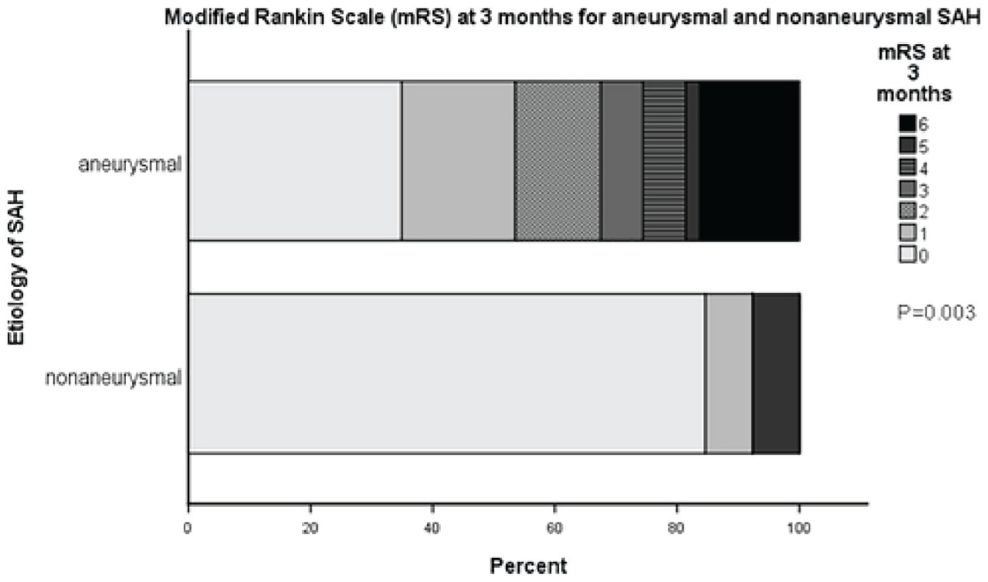
O107 / 883
Scientific Communications 13 - SAH and ICH
INTRACRANIAL ANEURYSM WALL ENHANCEMENT PREDICTS ANEURYSM INSTABILITY DURING FOLLOW-UP: A MULTICENTER COHORT STUDY
1UMC Utrecht, Neurology and Neurosurgery, Utrecht, Netherlands, 2Assistance Publique Hôpitaux de Paris, Department of Radiology, Paris, France, 3Université Paris Descartes Sorbonne Paris Cité, Department of Radiology, Paris, France, 4Hiroshima City Asa Citizens Hospital, Department of Neurosurgery and Interventional Neuroradiology, Hiroshima, Japan, 5University Hospital Southampton, Department of Neurosurgery, Southampton, United Kingdom, 6University of California San Francisco, Department of Radiology and Biomedical Imaging, San Francisco, United States, 7Capital Medical University Xuanwu Hospital, Department of Neurosurgery, Bejing, China, 8University of Washington School of Medicine, Department of Radiology, Seattle, United States, 9Changhai Hospital, Department of Radiology, Shanghai, China, 10Hiroshima University, Department of Neurosurgery and Interventional Neuroradiology, Hiroshima, Japan, 11The First Affiliated Hospital of Zhengzhou University, Department of Magnetic Resonance, Zhengzhou, China, 12Renji Hospital, Department of Radiology, Shanghai, China, 13Tsinghua University, Department of Biomedical Engineering, Bejing, China, 14UMC Utrecht, Department of Radiology, Utrecht, Netherlands
O108 / 256
Scientific Communications 13 - SAH and ICH
ANTI-EPILEPTIC DRUG TARGET PERTURBATION AND INTRACRANIAL ANEURYSM RISK: MENDELIAN RANDOMIZATION AND COLOCALIZATION STUDY
1University Medical Center Utrecht, Neurology and Neurosurgery, Utrecht, Netherlands, 2McMaster University, Population Health Research Institute, Thrombosis and Atherosclerosis Research Institute; Department of Pathology and Molecular Medicine, Hamilton, Canada, 3Imperial College London, Department of Epidemiology and Biostatistics, School of Public Health, London, United Kingdom
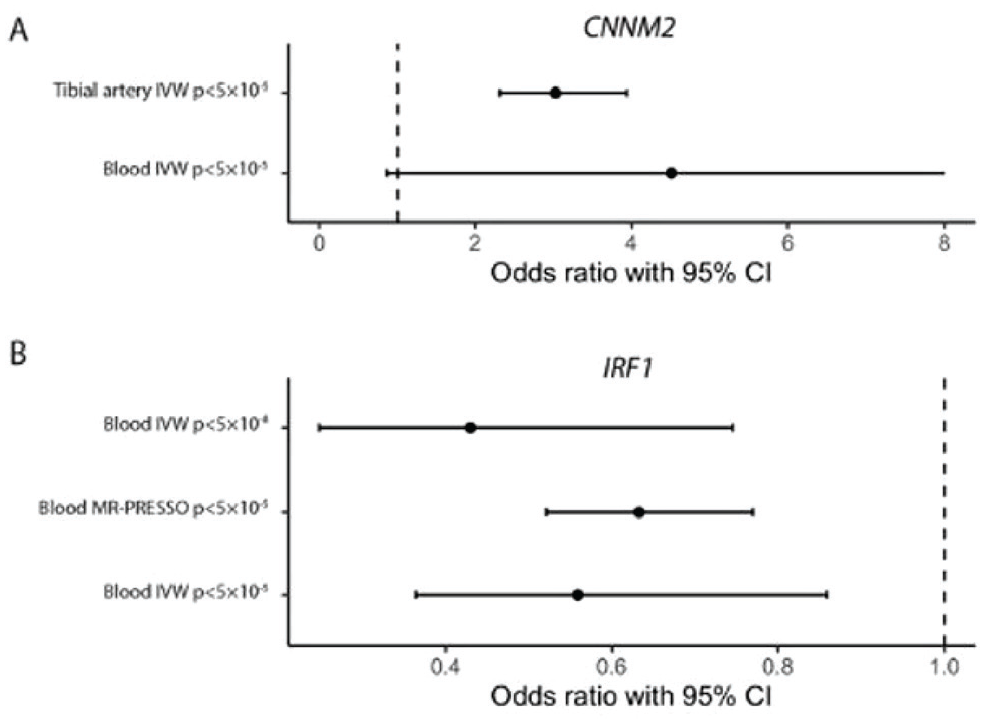
O109 / 1517
Scientific Communications 13 - SAH and ICH
IS TRANEXAMIC ACID BENEFICIAL FOR PATIENTS WITH ANEURYSMAL SUBARACHNOID HEMORRHAGE? A SYSTEMATIC REVIEW AND META-ANALYSIS OF 2991 PATIENTS
1Al-Azhar University, Faculty of Medicine, Cairo, Egypt, 2Harvard Medical School, Department of Global Health, Boston, Massachusetts, United States, 3South Valley University, Faculty of Medicine, Qina, Egypt, 4Association of Future African Neurosurgeons, Yaounde, Cameroon, Research department, Yaounde, Cameroon, 5Faculty of Health Sciences, University of Bamenda, Bambili, Cameroon, Neurosurgery Department, Bambili, Cameroon, 6Aleppo University, Facutly of medicine, Aleppo, Syrian Arab Republic
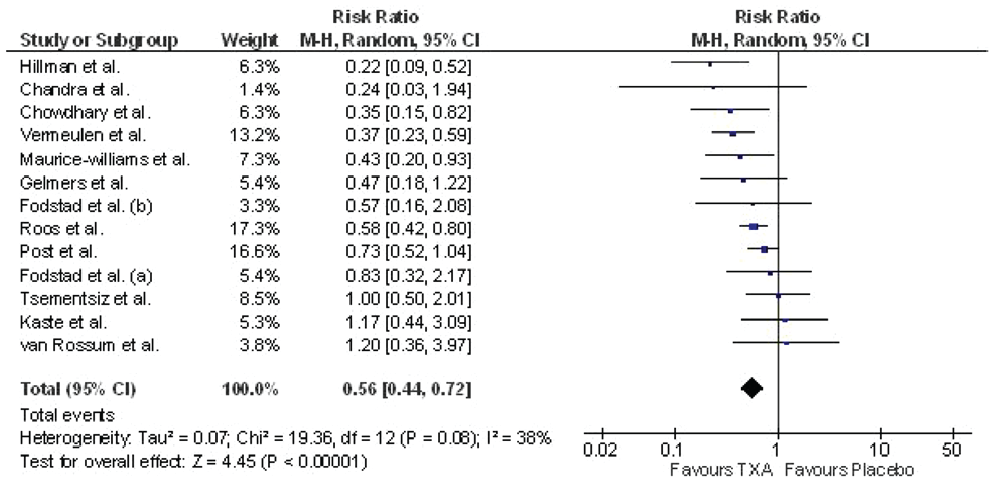
Forest plot of the pooled RR of rebleeding and the corresponding 95% confidence intervals. RR= risk ratio; M-H=Mantel-Haenszel; CI=confidence interval
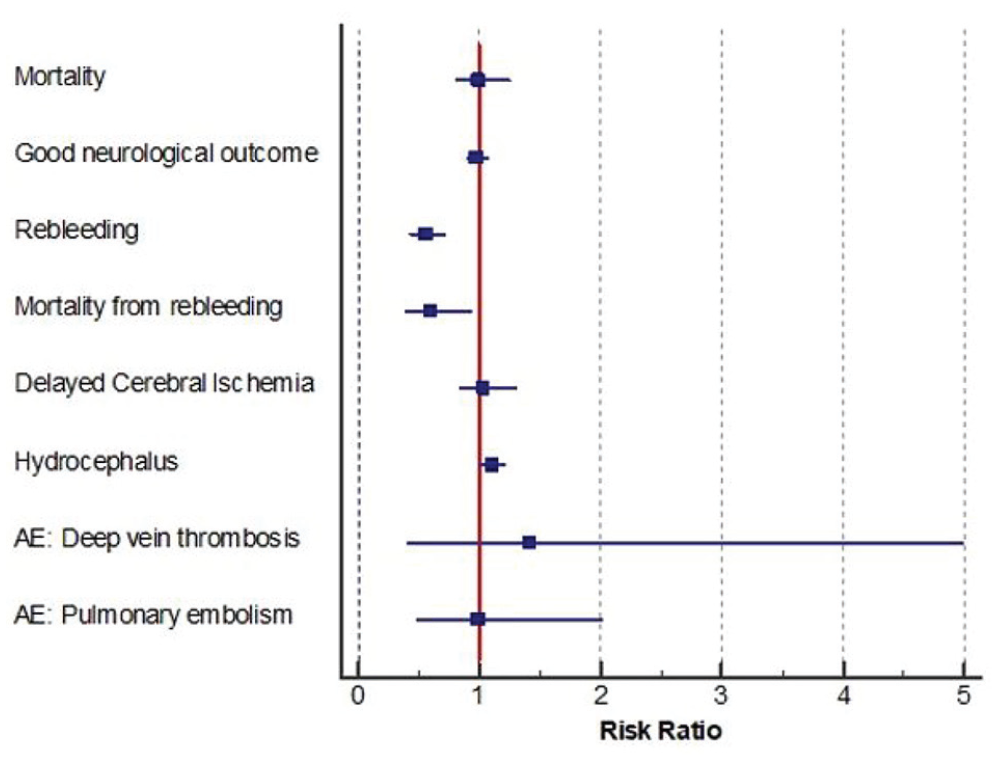
O110 / 908
Scientific Communications 13 - SAH and ICH
LONG-TERM RISK OF RECURRENT STROKE AFTER A FIRST-EVER PRIMARY INTRACEREBRAL HEMORRHAGE : A POPULATION-BASED STUDY FROM THE BREST STROKE REGISTRY
1CHU Brest, Brest, France, 2INSERM CIC 1412, Brest, France, 3Université de Brest - INSERM, EFS, UMR 1078, Brest, France
O111 / 1171
Scientific Communications 13 - SAH and ICH
CT MARKERS OF CEREBRAL AMYLOID ANGIOPATHY AND HAEMOSTATIC TREATMENT WITH TRANEXAMIC ACID – A SUB-ANALYSIS OF THE TRANEXAMIC ACID IN INTRACEREBRAL HAEMORRHAGE TRIAL (TICH-2)
1Inselspital University Hospital Bern, Bern, Switzerland, 2University Hospital of Basel, Neurology, Basel, Switzerland, 3University of Nottingham, Stroke Trials Unit, Nottingham, United Kingdom, 4National University of Malaysia, Medicine, Bangi, Malaysia, 5Nottingham University Hospitals NHS Trust, Stroke, Nottingham, United Kingdom, 6Queen Square Institute of Neurology, UCL, London, United Kingdom, 7University of Edinburgh, Center for Clinical Brain Sciences, Edinburgh, United Kingdom, 8University of Nottingham, Radiological Sciences, Nottingham, United Kingdom, 9NIHR Nottingham, Biomedical Research, Nottingham, United Kingdom, 10University of Basel, Department of Geriatric Medicine Felix Platter Hospital, Basel, Switzerland, 11Hirslanden Hospital Zurich, Stroke Center, Zurich, Switzerland
O112 / 1388
Scientific Communications 13 - SAH and ICH
CEREBROSPINAL FLUID BIOMARKERS FOR CEREBRAL AMYLOID ANGIOPATHY
1University hospital Erlangen, Neurology, Erlangen, Germany, 2University hospital Erlangen, Neuroradiology, Erlangen, Germany, 3University hospital Erlangen, Psychiatry, Erlangen, Germany
O113 / 154
Scientific Communications 13 - SAH and ICH
TRANEXAMIC ACID AFTER ANEURYSMAL SUBARACHNOID HEMORRHAGE: POST-HOC ANALYSIS OF A RANDOMIZED CONTROLLED TRIAL
1University Hospital Zurich, Neurosurgery, Zürich, Switzerland, 2Amsterdam University Medical Centers, Location AMC, Neurosurgery, Amsterdam, Netherlands
Primary endpoint was the modified Rankin Scale at six months assessed by a person who was blinded for the intervention, and dichotomized into good (0-3) and poor (4-6) outcome.
O114 / 1006
Scientific Communications 14 - Genetics, Omics and Biomarkers
A MULTIVARIABLE MENDELIAN RANDOMIZATION ANALYSIS INVESTIGATING CHRONIC KIDNEY DISEASE, HYPERTENSION AND STROKE
1Massachusetts General Hospital, Harvard Medical School, Philip Kistler Stroke Research Center, Department of Neurology, Boston, United States, 2Institute for Stroke and Dementia Research, University Hospital of LMU Munich, Munich, Germany, 3Massachusetts General Hospital, McCance Center for Brain Health, Boston, United States, 4Broad Institute, Program in Medical and Population Genetics, Cambridge, United States, 5Harvard T. H. Chan School of Public Health, Department of Epidemiology, Boston, United States, 6Massachusetts General Hospital, Harvard Medical School, Department of Psychiatry, Boston, United States, 7Brigham and Women’s Hospital, Department of Neurology, Boston, United States
O115 / 1347
Scientific Communications 14 - Genetics, Omics and Biomarkers
THE GUT MICROBIOME INFLUENCES THE RISK OF ACUTE ISCHEMIC STROKE: A MENDELIAN RANDOMIZATION STUDY
1 Yale University, Neurology, New Haven, United States
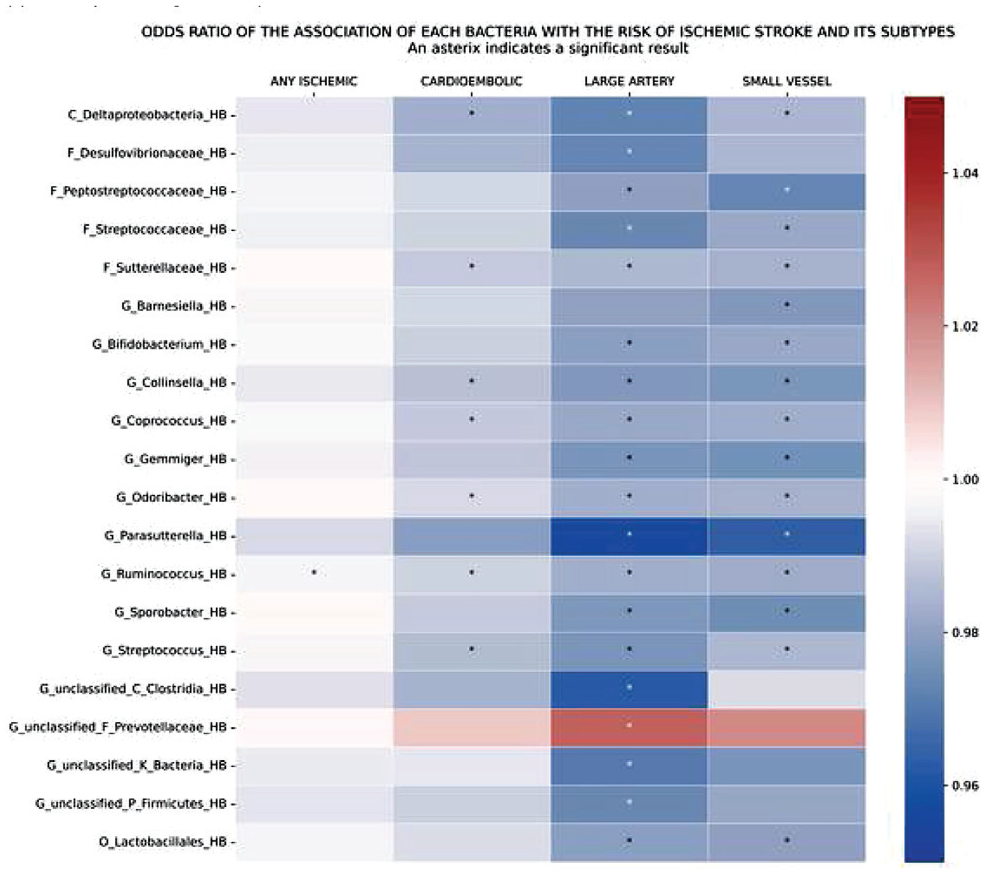
O116 / 1024
Scientific Communications 14 - Genetics, Omics and Biomarkers
GENETICALLY PREDICTED ON-STATIN LDL RESPONSE IS ASSOCIATED WITH HIGHER RISK OF INTRACEREBRAL HEMORRHAGE
1Massachusetts General Hospital, Harvard Medical School, Department of Neurology, Boston, United States, 2Massachusetts General Hospital, Center for Genomic Medicine, Boston, United States, 3Broad Institute of Harvard and the Massachusetts Institute of Technology, Program in Medical and Population Genetics, Cambridge, United States, 4Ludwig-Maximilians-University, Institute for Stroke and Dementia Research (ISD), Munich, Germany, 5Brigham and Women’s Hospital, Department of Neurology, Boston, United States
O117 / 580
Scientific Communications 14 - Genetics, Omics and Biomarkers
POST-STROKE MOTOR RECOVERY GENOME-WIDE ASSOCIATION STUDY: A DOMAIN-SPECIFIC APPROACH
1University of Virginia, Department of Neurology, Charlottesville, United States, 2East Carolina University, Department of Biology, Greenville, United States, 3East Carolina University, Center for Health Disparities, Brody School of Medicine, Greenville, United States, 4Wake Forest School of Medicine, Department of Biostatistics and Data Science, Division of Public Health Sciences, Winston-Salem, United States, 5University of Virginia, Center for Public Health Genomics, Charlottesville, United States, 6University of Virginia, Department of Public Health Sciences, Charlottesville, United States
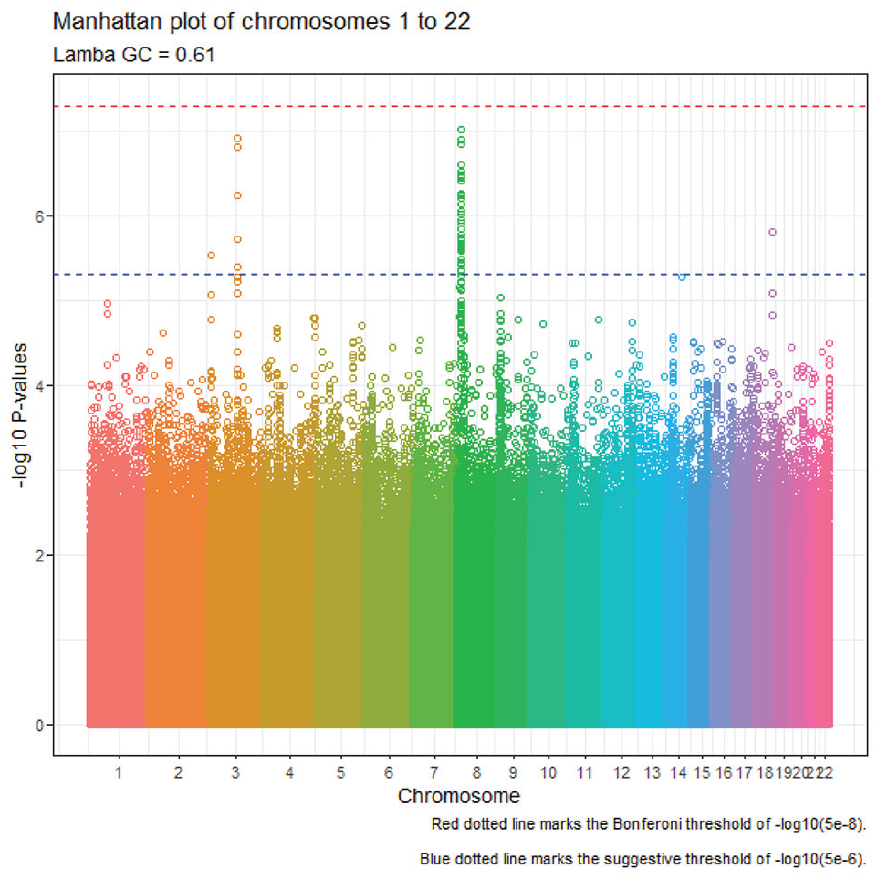
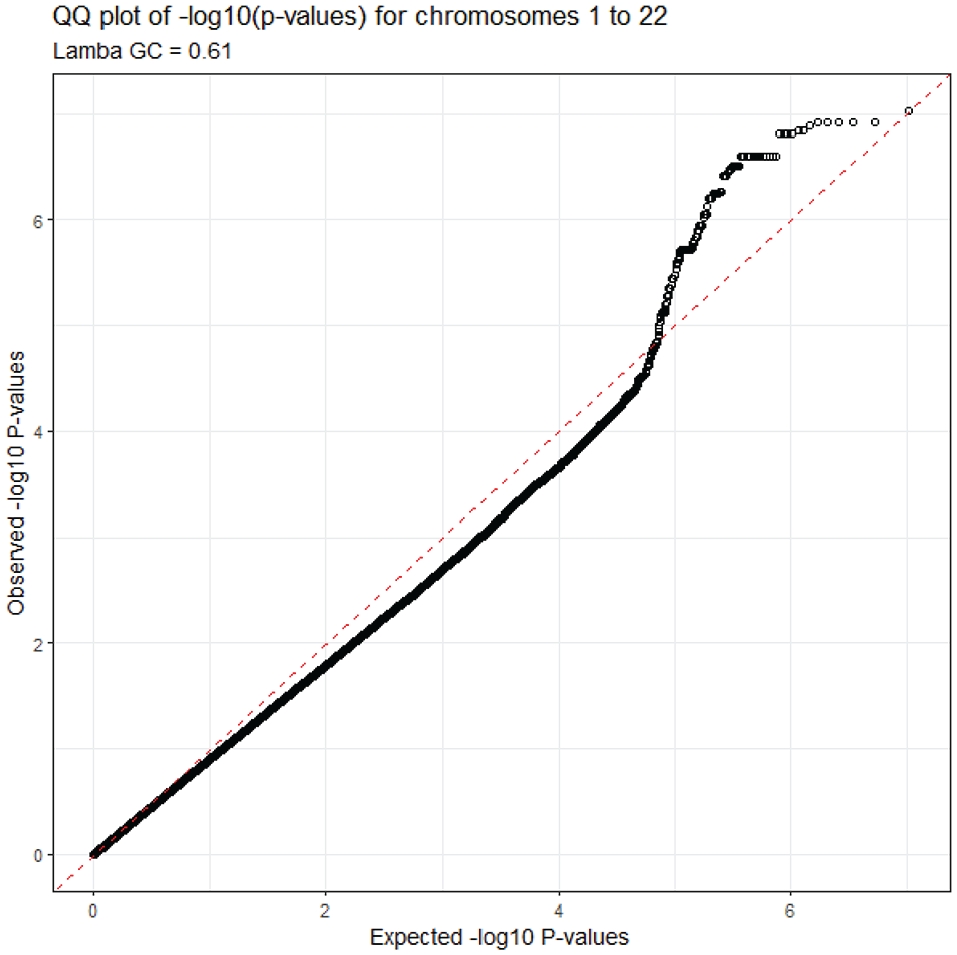
O118 / 1460
Scientific Communications 14 - Genetics, Omics and Biomarkers
LVO-CHECK: A RAPID POINT-OF-CARE BLOOD TEST TO DIAGNOSE LVO-PATIENTS AND REFER THEM TO THROMBECTOMY CENTERS ADDS PROGNOSTIC INFORMATION ON THE SUCCESS OF ENDOVASCUSCULAR REPERFUSION THERAPIES
1Hospital Universitario Virgen Macarena, Seville, Spain, 2Hospital Universitario Virgen del Rocio, Seville, Spain, 3Vall d’Hebron Research Institute (VHIR), Barcelona, Spain, 4Instituto de Biomedicina de Sevilla (IBIS), Seville, Spain, 5Servicio de Urgencias de Atención Primaria, Seville, Spain, 6Empresa Pública de Emergencias Sanitarias, Seville, Spain, 7Unviersite de Geneve, Geneve, Switzerland
O119 / 1466
Scientific Communications 14 - Genetics, Omics and Biomarkers
PREVIOUS RETINOGRAPHY FINDINGS IN PATIENTS WITH ACUTE STROKE: A SIMPLE NON-INVASIVE METHOD TO PREDICT COLLATERAL STATUS
1Hospital Universitario Virgen Macarena, Seville, Spain, 2Instituto de Biomedicina de Sevilla (IBIS), Seville, Spain, 3Hospital Universitario Virgen del Rocio, Seville, Spain
O120 / 1427
Scientific Communications 14 - Genetics, Omics and Biomarkers
LECTIN COMPLEMENT PATHWAY IN ACUTE ISCHEMIC STROKE PATIENTS TREATED WITH THROMBECTOMY
1Hospices Civils de Lyon, Stroke Department, Lyon, France, 2Université Lyon 1, Univ Lyon, CarMeN Laboratory, INSERM, INRA, Lyon, France, 3IRCCS – Istituto di Ricerche Farmacologiche Mario Negri, Department of Neuroscience, Milan, Italy, 4Hospices Civils de Lyon, Neuroradiology Department, Lyon, France
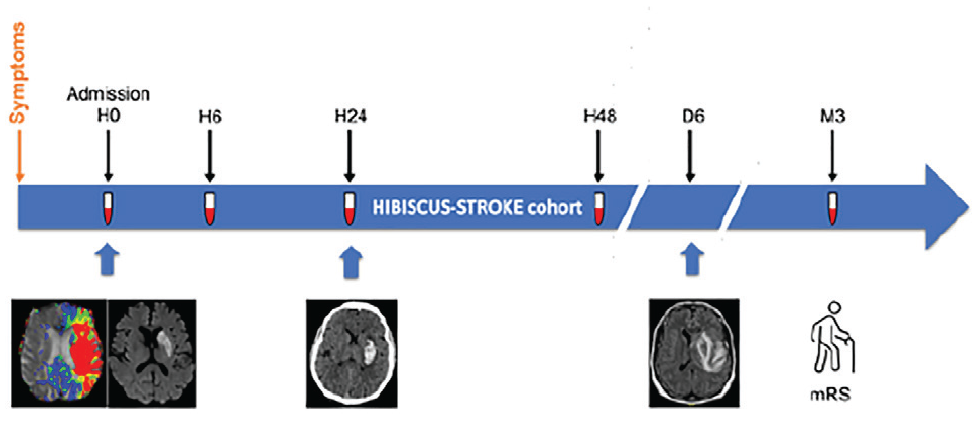
Study timeline (mRS: modified rankin scale)
O121 / 481
Scientific Communications 14 - Genetics, Omics and Biomarkers
EXTRACELLULAR MATRIX ORGANIZATION, INFLAMMATION, AND SIGNAL TRANSDUCTION PROCESSES RELATE TO LOWER CEREBRAL BLOOD FLOW IN PATIENTS WITH CARDIOVASCULAR DISEASE
1University Medical Center Utrecht, Central Diagnostic Laboratory, Utrecht, Netherlands, 2University Medical Center Utrecht, Department of Neurology, Utrecht, Netherlands, 3Leiden University, Department of Radiology, Leiden, Netherlands, 4Erasmus Medical Center, Department of Radiology & Nuclear Medicine, Rotterdam, Netherlands, 5Amsterdam University Medical Center, Department of Clinical Chemistry, Amsterdam, Netherlands
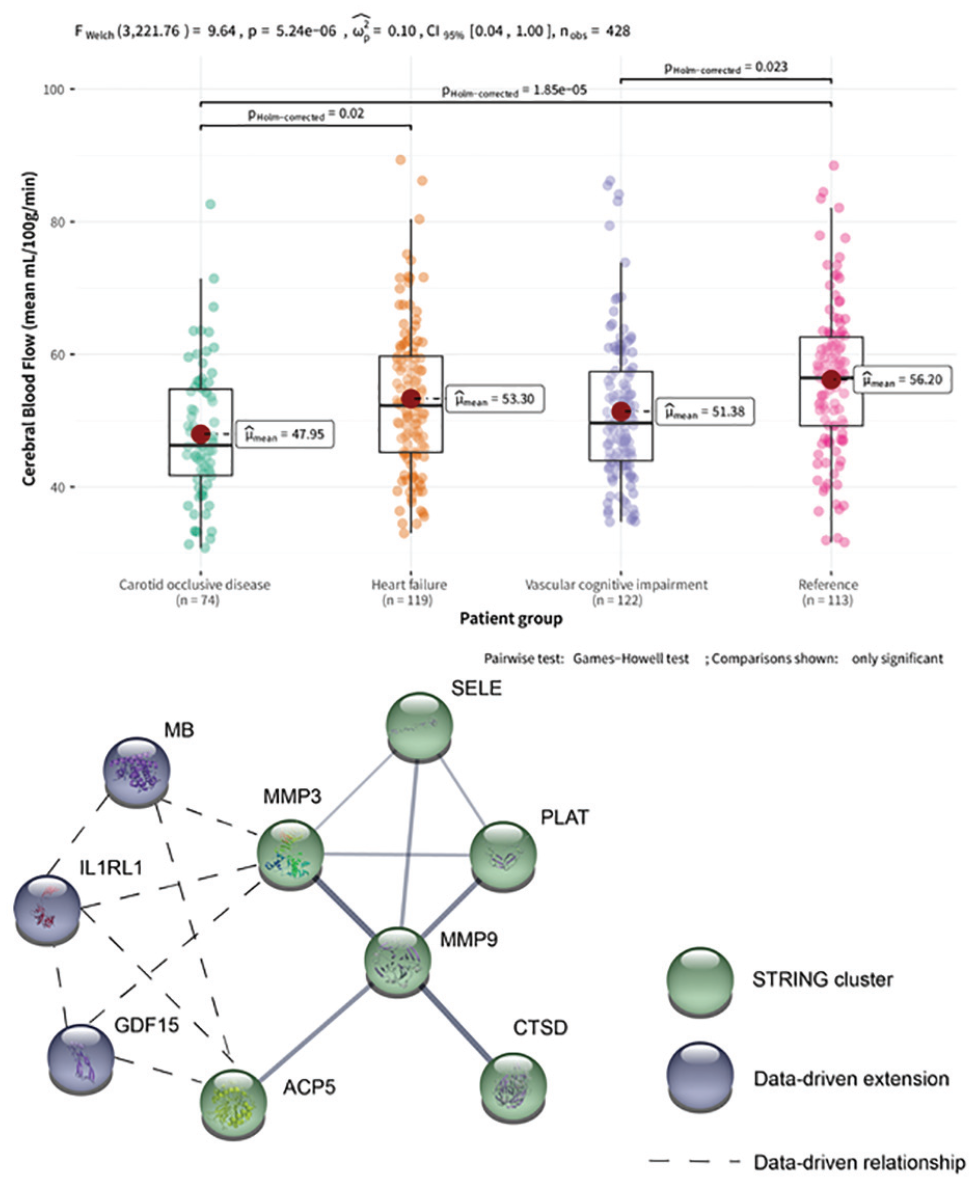
O122 / 258
Presidential Symposium Awards, Studies & Trials
COMPOSITION OF PM 2.5 AND COMORBIDITIES ASSOCIATED WITH HEMORRHAGIC STROKE HOSPITALIZATION IN THAILAND
1North-Eastern Stroke Research Group, KhonKaen University, KhonKaen, Thailand, 2KhonKaen University, Internal Medicine, KhonKaen, Thailand, 3KhonKaen University, Chronic Kidney Disease Northeast Thailand (CKDNET), KhonKaen, Thailand
O123 / 730
Presidential Symposium Awards, Studies & Trials
STROKE GENETICS INFORMS DRUG DISCOVERY AND RISK PREDICTION ACROSS ANCESTRIES
1University of Bordeaux, Inserm, Bordeaux Population Health Research Center, UMR 1219, Bordeaux, France, 2Institute for Stroke and Dementia Research, Munich, Germany, 3Iwate Tohoku Medical Megabank Organization, Morioka, Japan, 4Estonian Genome Centre, Institute of Genomics, University of Tartu, Tartu, Estonia, 5Osaka University Graduate School of Medicine, Department of Statistical Genetics, Suita, Japan, 6Institute of Medical Sciences, The University of Tokyo, Division of Molecular Pathology, Tokyo, Japan, 7TIMI Study Group, Boston, United States, 8University of Tokyo, Graduate School of Frontier Sciences, Laboratory of Complex Trait Genomics, Tokyo, Japan, 9University of Bordeaux, Inserm, Bordeaux Population Health Research Center, UMR 1219, F-33000 Bordeaux, France, 10Oslo University Hospital, Department of Research and Innovation, Division of Clinical Neuroscience, Oslo, Norway, 11Rajendra Institute of Medical Sciences, Rachi, India, 12Population Health Research Institute (PHRI), David Braley Cardiac, Vascular and Stroke Research Institute, Hamilton Health Sciences, Thrombosis and Atherosclerosis Research Institute, Hamilton, Canada, 13Klinik und Hochschulambulanz für Neurologie, Charité-Universitätsmedizin, Berlin, Germany, 14University of the Region of Joinville, Department of Medicine and Joinville Stroke Biobank, Post-Graduation Program on Health and Environment, Joinville, Brazil, 15University of Maryland School of Medicine, Department of Neurology, Baltimore, United States, 16Monash University, Melbourne, Department of Epidemiology and Preventive Medicine, School of Public Health and Preventive Medicine, Melbourne, Australia, 17University of Maryland School of Medicine, Department of Medicine, Baltimore, United States, 18University of Oxford, Nuffield Department of Population Health, Oxford, United Kingdom, 19Department of Clinical Genetics, Department of Radiology and Nuclear Medicine, Rotterdam, Netherlands, 20University of Southern Denmark, The Danish Twin Registry, Department of Public Health, Odense, Denmark, 21University of Miami, Miller School of Medicine, Miami, United States, 22Yonsei University, Institute for Health Promotion, Graduate School of Public Health, Seoul, Korea, Republic of, 23University of Tartu, Department of Neurology and Neurosurgery, Tartu, Estonia, 24University Medical Center Utrecht & Utrecht University, Julius Center for Health Sciences and Primary Care, Utrecht, Netherlands, 25Geisinger Neuroscience Institute, Geisinger Health System, Danville, United States, 26Copenhagen University Hospital - Rigshospitalet, Department of Clinical Biochemistry, Copenhagen, Denmark, 27Radboud University Medical Center, Department of Neurology, Donders Center for Medical Neuroscience, Nijmegen, Netherlands, 28Universitätsklinikum Würzburg, Department of Neurology, Würzburg, Germany, 29University of Virginia, Center for Public Health Genomics, Charlottesville, United States, 30University Medical Center Utrecht, Department of Neurology and Neurosurgery, UMC Utrecht Brain Center, Utrecht, Netherlands, 31University of Würzburg, Institute of Clinical Epidemiology and Biometry, Würzburg, Germany, 32University of Texas Health Science Center at Houston, Brown Foundation Institute of Molecular Medicine, McGovern Medical School, Houston, United States, 33University of Washington, Department of Neurology, Seattle, United States, 34University of Texas Health Sciences Center, Glenn Biggs Institute for Alzheimer’s and Neurodegenerative Diseases, San Antonio, United States, 35Biomedical Research Institute Sant Pau (IIB Sant Pau), Stroke Pharmacogenomics and Genetics Laboratory, Barcelona, Spain, 36Institute for Stroke and Dementia Research, University Hospital, Munich, Germany
O124 / 997
Presidential Symposium Awards, Studies & Trials
EPIGENETIC AGE AND STROKE - FINDINGS FROM THE HEALTH AND RETIREMENT STUDY
1Medical University of Warsaw, Neurology, Warsaw, Poland, 2Yale University, New Haven, United States
The influence of prevalent stroke on epigenetic aging defined by different epigenetic clocks.
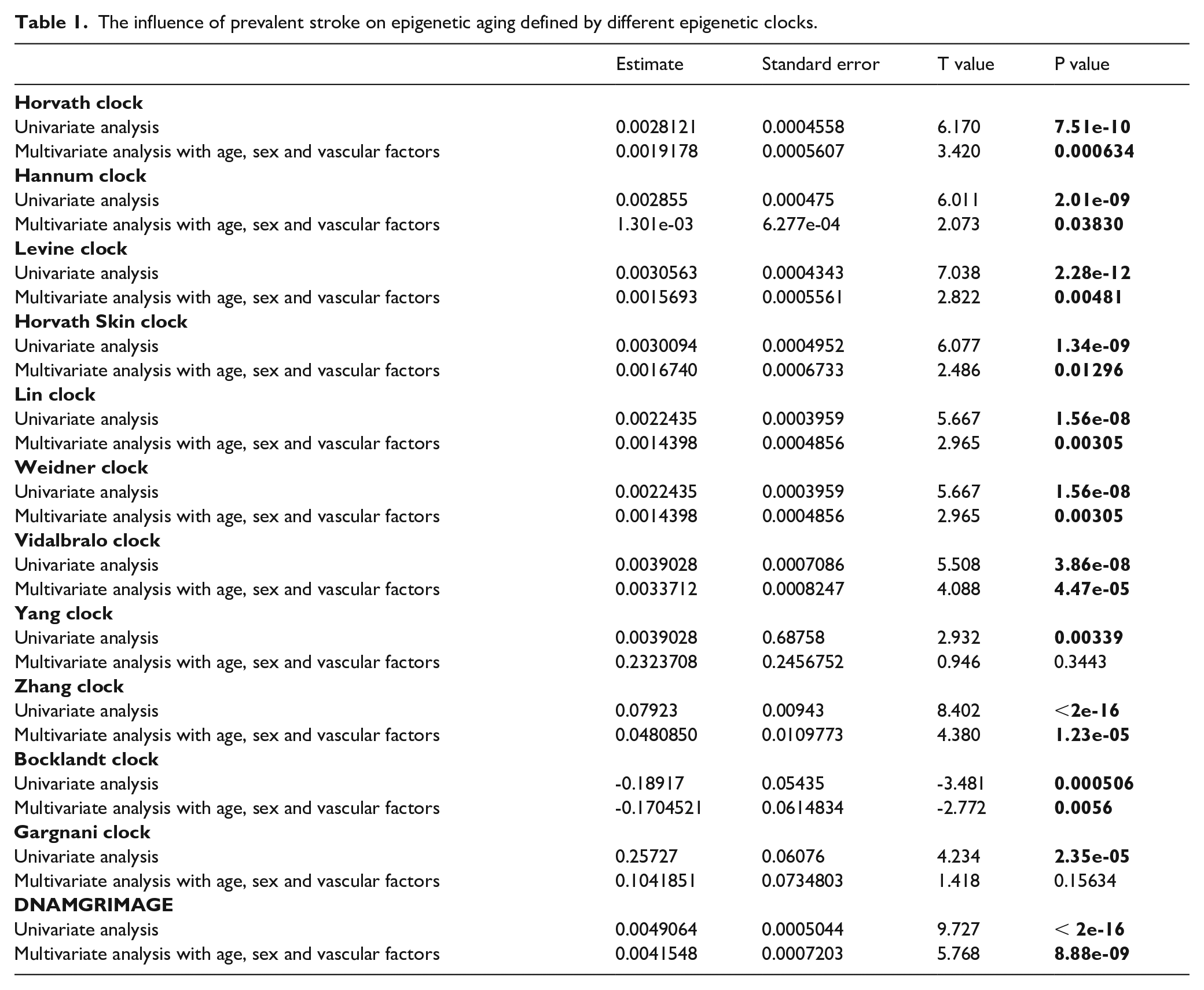
The influence of epigenetic aging on incident stroke.
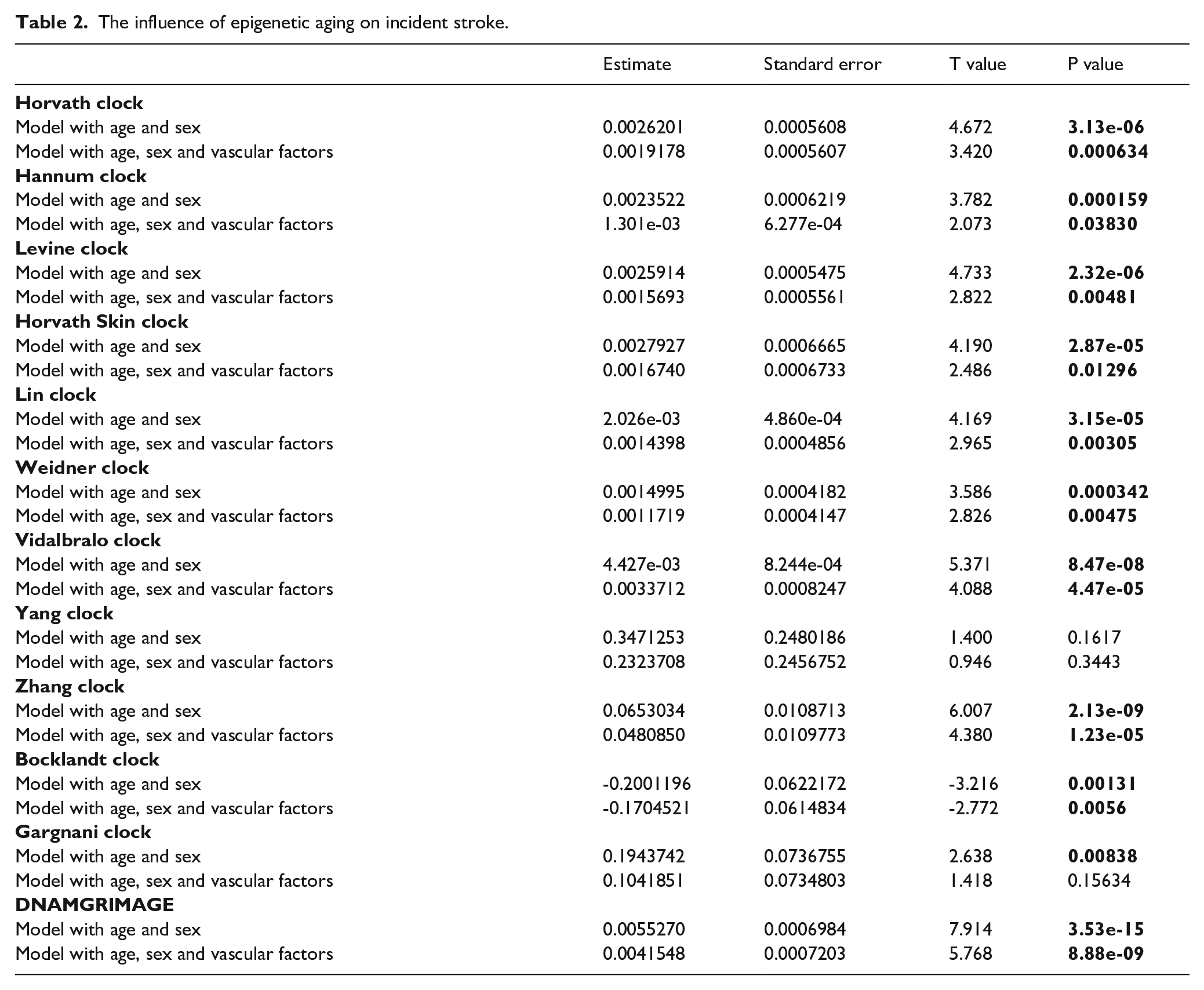
O125 / 497
Presidential Symposium Awards, Studies & Trials
OUTCOMES OF PATIENTS WITH ATRIAL FIBRILLATION AND ISCHAEMIC STROKE DESPITE RECEIVING ORAL ANTICOAGULATION
1Population Health Research Institute, McMaster University, Hamilton, Canada, 2J. W. Goethe University, Department of Cardiology, Frankfurt, Germany, 3Duke Clinical Research Institute, Duke University, Durham, United States, 4Brigham and Women’s Hospital, Harvard Medical School, TIMI Study Group, Boston, United States, 5Uppsala Clinical Research Center, Uppsala University, Uppsala, Sweden, 6School of Epidemiology and Public Health, University of Ottawa, Ottawa, Canada
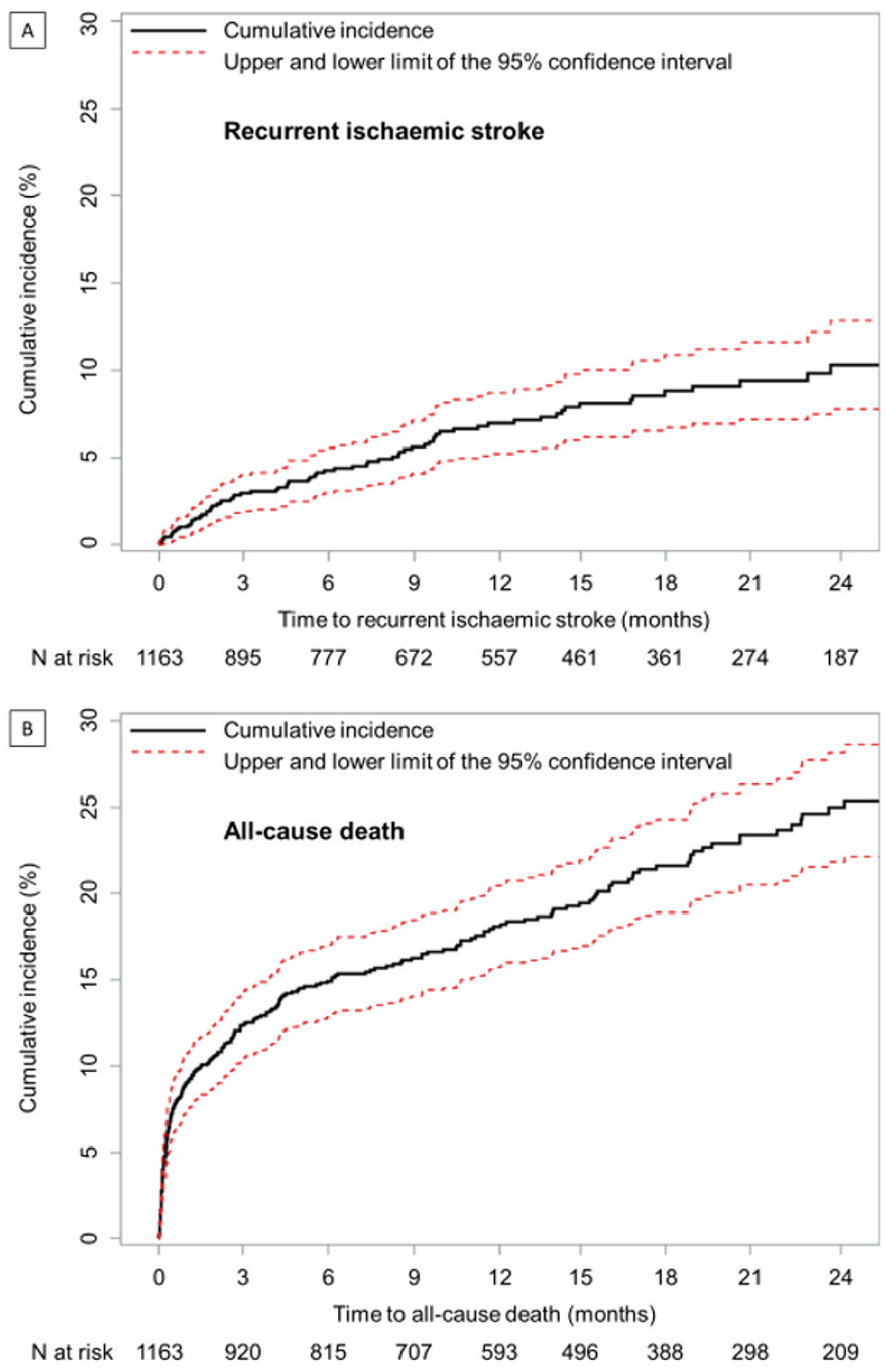
O126 / 765
Presidential Symposium Awards, Studies & Trials
CIRCULATING INTERLEUKIN-6 PREDICTS CAROTID PLAQUE SEVERITY, VULNERABILITY, AND PROGRESSION IN THE CARDIOVASCULAR HEALTH STUDY
1University of Alberta, Neuroscience and Mental Health Institute, Edmonton, Canada, 2University of Cagliari, Department of Radiology, Cagliari, Italy, 3University Hospital Bern, Department of Neurology, Bern, Switzerland, 4University Medical Center Utrecht, Department of Neurology and Neurosurgery, Utrecht, Netherlands, 5University Medical Center Utrecht, Department of Vascular Surgery, Utrecht, Netherlands, 6University of Miami Miller School of Medicine, Department of Neurology, Miami, United States, 7University of Patras Medical School, Department of Vascular Surgery, Patras, Greece, 8University of Maryland, Department of Neurology, Baltimore, United States, 9Academic Teaching Hospital Wels-Grieskirchen, Wels, Australia, 10Tufts University School of Medicine, Department of Radiology, Boston, United States, 11University of Alberta, Department of Medicine, Edmonton, Canada
O127 / 1410
Presidential Symposium Awards, Studies & Trials
STROKE IN THE YOUNG: CANCER IN DISGUISE?
1Radboud University Medical Centre, Donders Institute for Brain, Cognition and Behaviour, Neurology, Nijmegen, Netherlands, 2Sint Jans Gasthuis, Neurology, Weert, Netherlands, 3Dutch Expert Centre for Screening, Nijmegen, Netherlands, 4Radboud Institute for Health Sciences, Nijmegen, Netherlands, 5Radboud University Medical Centre, Oncology, Nijmegen, Netherlands, 6Julius Center for Health Sciences and Primary Care, University Medical Centre Utrecht, Epidemiology, Utrecht, Netherlands
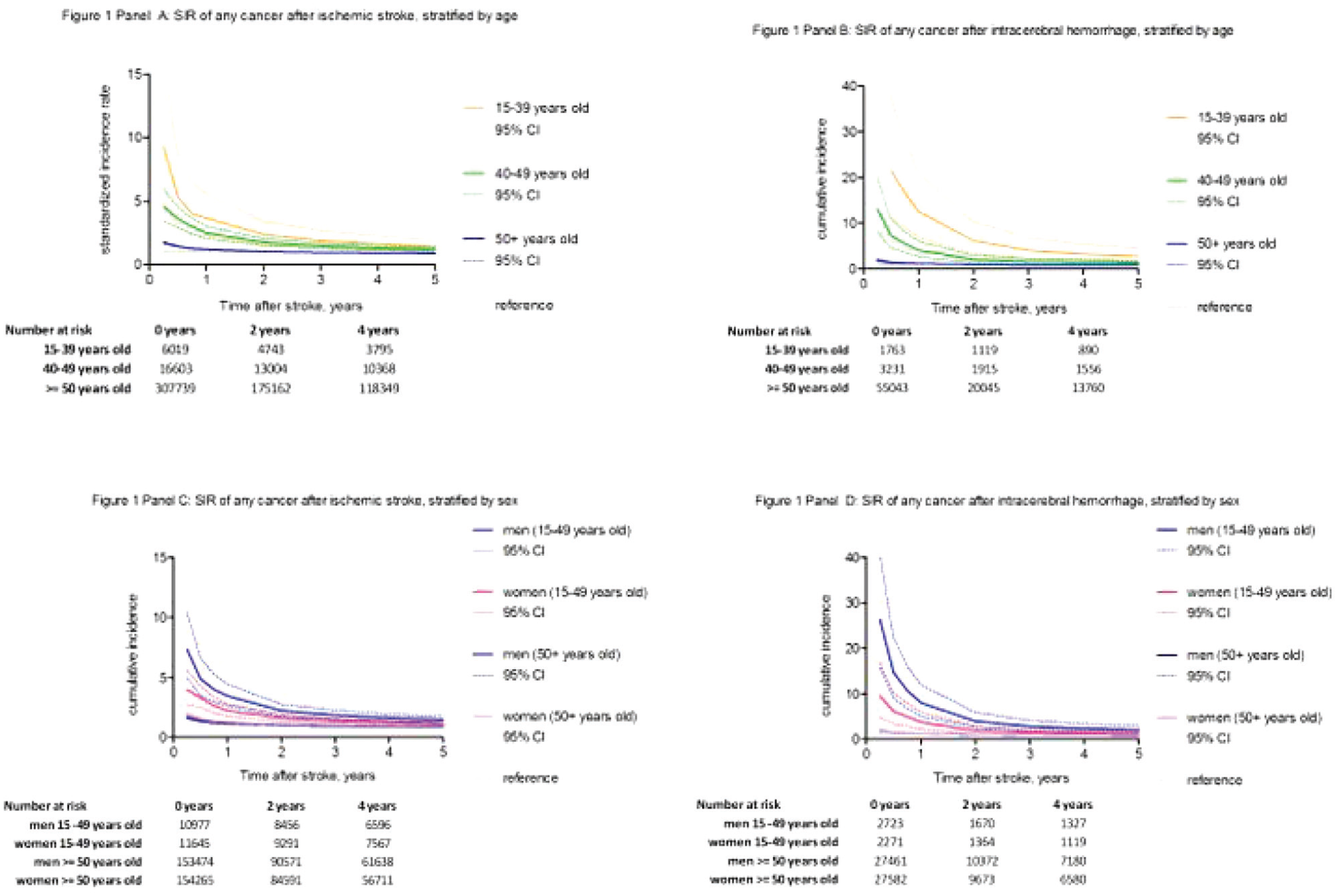
O129 / 833
Scientific Communications 15 - Atherosclerosis & Stroke
COMPLICATED CAROTID ARTERY PLAQUES AND RISK OF RECURRENT ISCHEMIC STROKE OR TIA
1LMU Munich, Institute for Stroke and Dementia Research, Munich, Germany, 2LMU Munich, Department of Radiology, Munich, Germany, 3Technical University of Munich, Department of Neuroradiology, Munich, Germany, 4Klinikum Fürstenfeldbruck, Department of Neurology, Fürstenfeldbruck, Germany, 5Technical University of Munich, Department of Neurology, Munich, Germany, 6University of Tübingen, Department of Neurology and Stroke, and Hertie Institute for Clinical Brain Research, Tübingen, Germany, 7University of Freiburg, Department of Neurology and Neurophysiology, Freiburg, Germany, 8Helios Dr Horst-Schmidt-Kliniken, Department of Neurology, Wiesbaden, Germany, 9University of Tübingen, Department of Diagnostic and Interventional Neuroradiology, Tübingen, Germany, 10Hirslanden/Klinik im Park, Radiology and Neuroradiology Zurich, Zurich, Switzerland, 11Helios Klinikum München West, Department of Neurology, Munich, Germany, 12Radiologisches Zentrum Rosenheim, Rosenheim, Germany
O130 / 242
Scientific Communications 15 - Atherosclerosis & Stroke
MORPHOLOGY OF INTRACRANIAL ATHEROSCLEROTIC PLAQUES IN THE ANTERIOR VERSUS POSTERIOR CIRCULATION: A THREE-DIMENSIONAL ROTATIONAL ANGIOGRAPHY STUDY
1The Chinese University of Hong Kong, Department of Medicine & Therapeutics, Hong Kong, Hong Kong, SAR of China, 2The Chinese University of Hong Kong, Department of Imaging and Interventional Radiology, Hong Kong, Hong Kong, SAR of China
O131 / 438
Scientific Communications 15 - Atherosclerosis & Stroke
LIPOPROTEIN (A) IS A NEWLY VALIDATED BIOMARKER FOR LARGE-ARTERY-ATHEROSCLEROSIS STROKE AETIOLOGY
1University Hospital Basel, Neurology, Basel, Switzerland, 2Cantonal Hospital Schaffhausen, Internal Medicine, Schaffhausen, Switzerland, 3University Hospital Zürich, Neurology, Zürich, Switzerland, 4University of Basel, Clinical Research, Basel, Switzerland, 5University Department of Geriatric Medicine Felix Platter, Neurology and Neurorehabilitation, Basel, Switzerland, 6Hirslanden Hospital Zurich, Neurology, Zürich, Switzerland, 7Inselspital, University Hospital Bern, Neurology, Bern, Switzerland, 8University Hospital Basel, Laboratory Medicine, Basel, Switzerland, 9University Hospital Basel, Endocrinology, Basel, Switzerland
Baseline and Outcome Characteristics of Patients with an acute ischemic stroke.
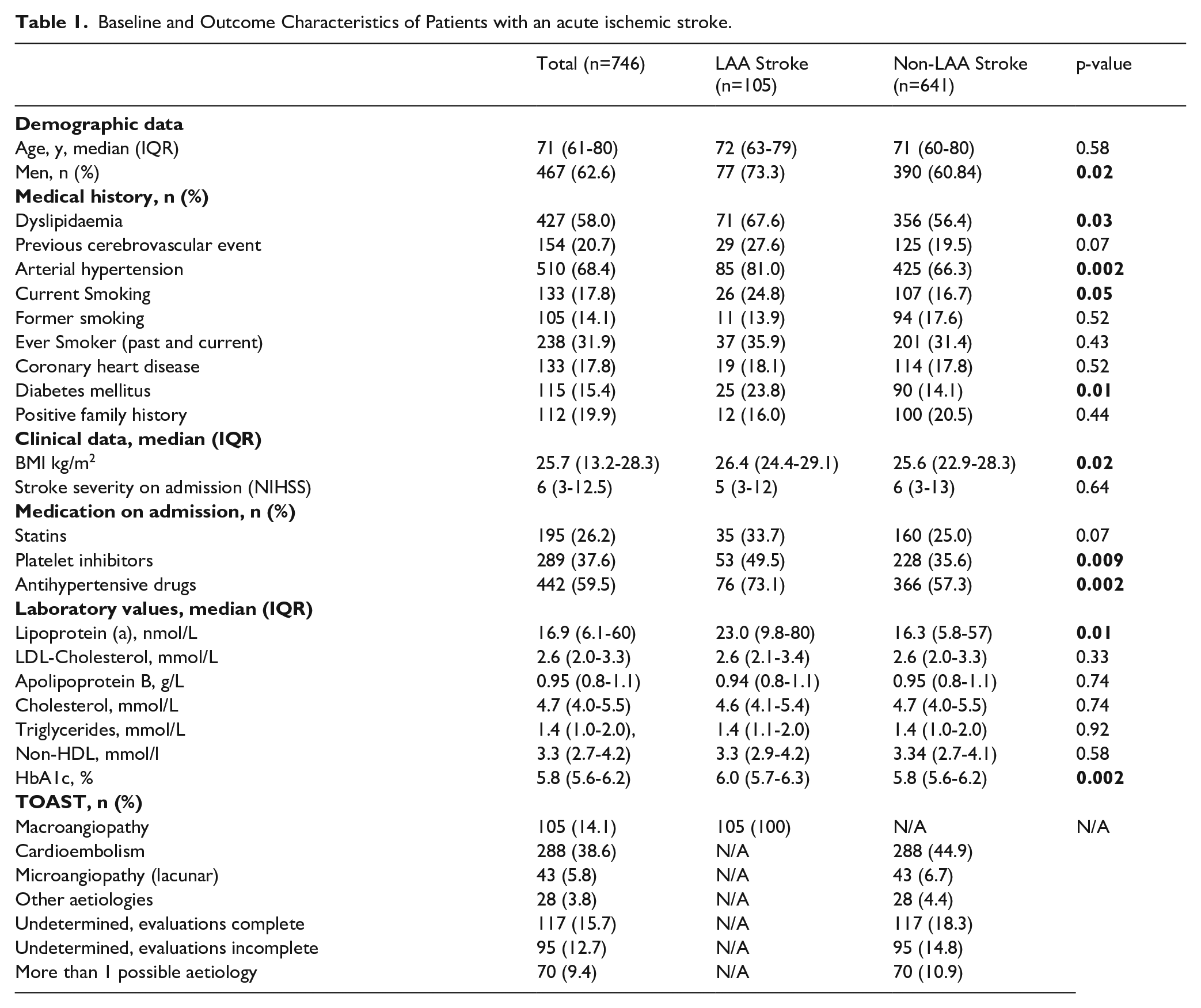
Multivariable logistic regression model for the association with large artery atherosclerotic stroke and Lipoprotein (a).
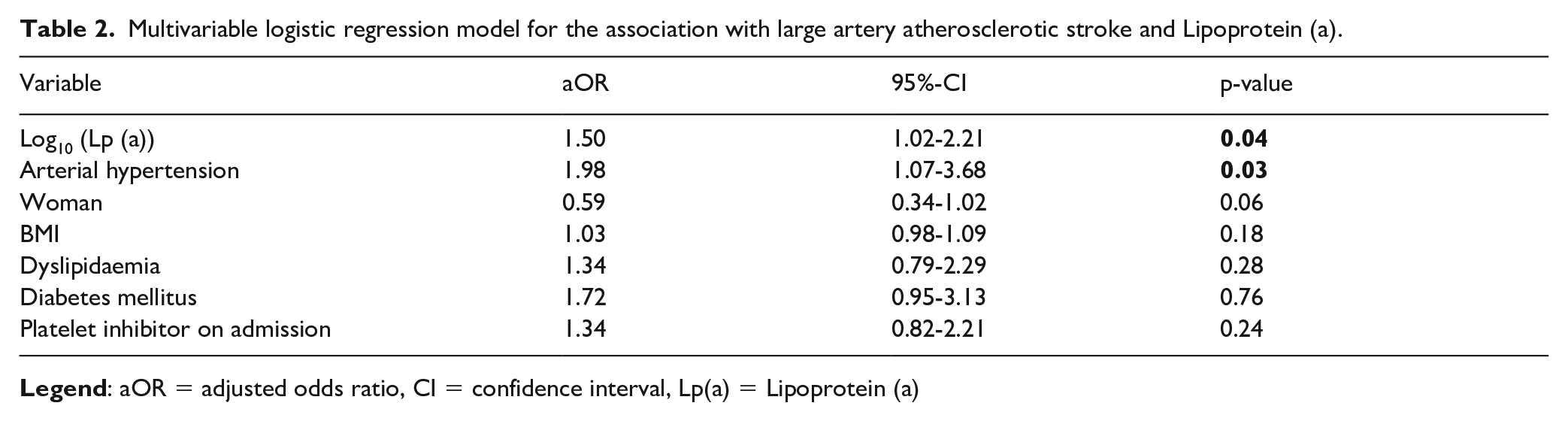
O132 / 900
Scientific Communications 15 - Atherosclerosis & Stroke
DISCORDANCE BETWEEN LDL-C AND APOLIPOPROTEIN B IS ASSOCIATED WITH LARGE-ARTERY-ATHEROSCLEROSIS ISCHEMIC STROKE ⩽70 YEARS OF AGE
1University Hospital Basel, Neurology, Basel, Switzerland, 2Cantonal Hospital Schaffhausen, Internal Medicine, Schaffhausen, Switzerland, 3University Hospital Zürich, Clinical Chemistry, Laboratory Medicine, Zürich, Switzerland, 4University Zürich, Zürich, Switzerland, 5University Hospital Zürich, Neurology, Zürich, Switzerland, 6Hirslanden Hospital Zurich, Neurology, Zürich, Switzerland, 7University Department of Geriatric Medicine Felix Platter, Neurology and Neurorehabilitation, Basel, Switzerland, 8Inselspital, University Hospital Bern, Neurology, Bern, Switzerland, 9University of Basel, Clinical Research, Basel, Switzerland, 10University Hospital Basel, Endocrinology, Basel, Switzerland, 11University Hospital Basel, Laboratory Medicine, Basel, Switzerland
Baseline and Outcome Characteristics of Patients ⩽70 years of age and an acute ischemic stroke.
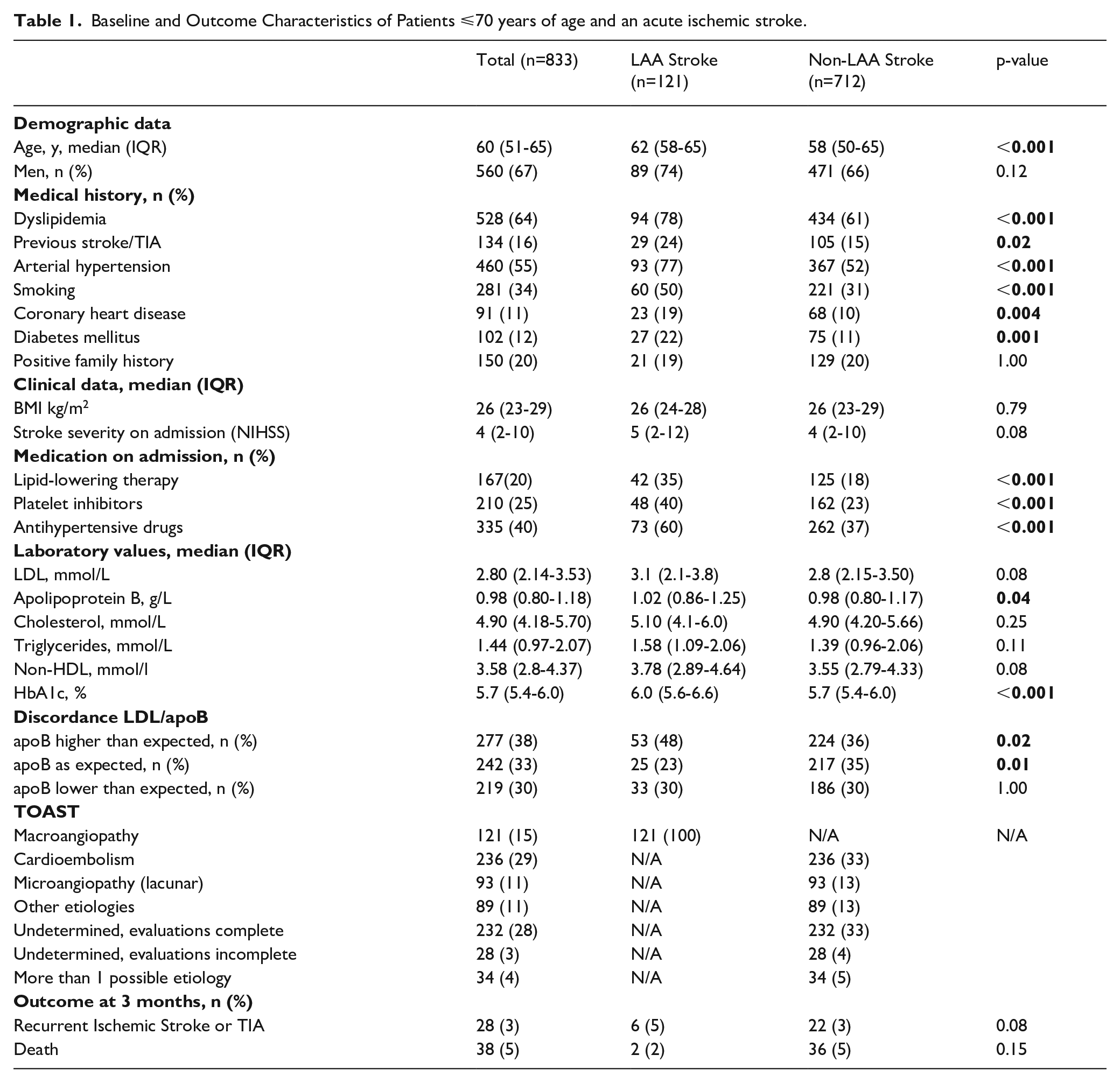
Multivariable logistic regression model for the association with large artery atherosclerotic stroke.
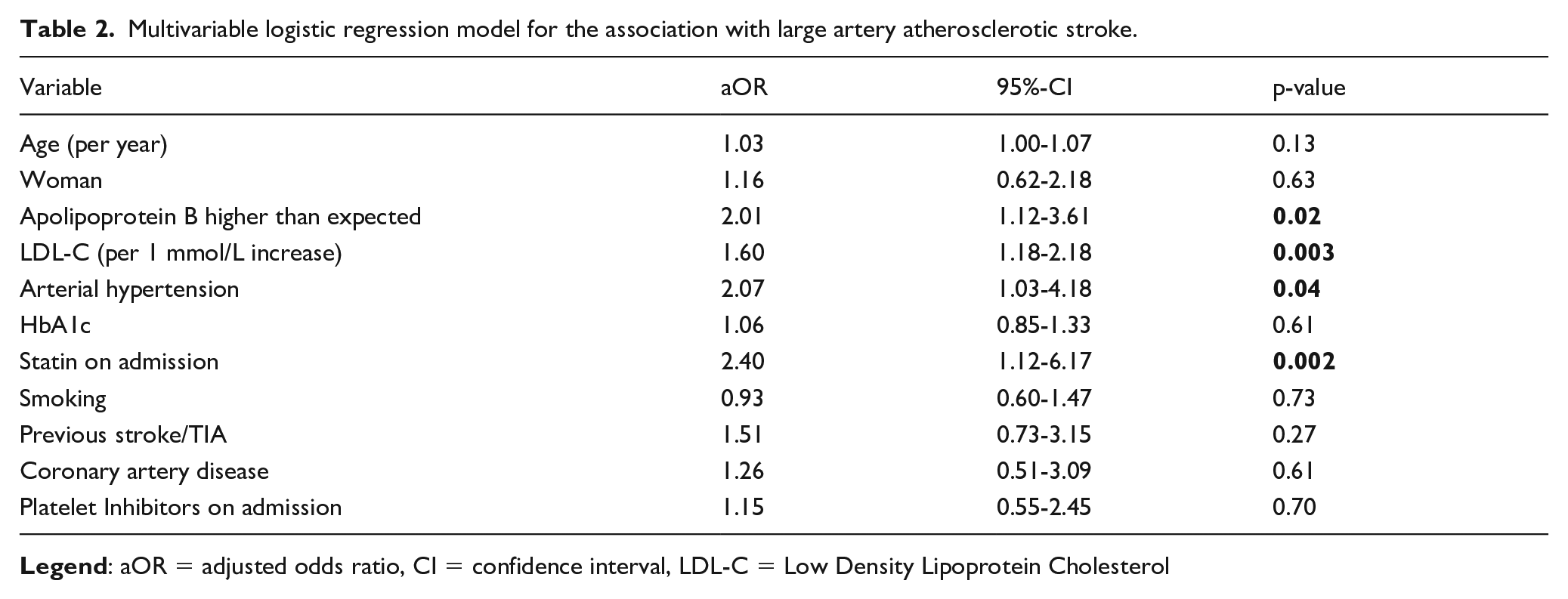
O133 / 832
Scientific Communications 15 - Atherosclerosis & Stroke
HDL CHOLESTEROL AND MORTALITY IN STROKE PATIENTS WITH OR WITHOUT IMPAIRED KIDNEY FUNCTION – RESULTS OF THE MONDAFIS STUDY
1Charite Universitätsmedizin Berlin, Center for Stroke Research Berlin, Berlin, Germany, 2University Hospital Würzburg, Institute of Clinical Epidemiology and Biometry, Würzburg, Germany, 3University Hamburg, University Heart and Vascular Center Hamburg, Hamburg, Germany, 4Universitätsklinikum Leipzig, Klinik und Poliklinik für Kardiologie, Leipzig, Germany, 5Vivantes Klinikum Neukölln, Department of Neurology, Berlin, Germany, 6Asklepios Klinik Altona, Department of Neurology, Hamburg, Germany, 7University Medical Center Hamburg-Eppendorf, Department of Neurology, Hamburg, Germany, 8Alfried Krupp Krankenhaus, Department of Neurology, Essen, Germany, 9Universitätsklinikum Würzburg, Department of Neurology, Würzburg, Germany, 10Charité-Universitätsmedizin Berlin, Klinik und Hochschulambulanz für Neurologie mit Abteilung für Experimentelle Neurologie, Berlin, Germany
O134 / 235
Scientific Communications 15 - Atherosclerosis & Stroke
CLONAL HEMATOPOIESIS IS ENRICHED IN YOUNG ISCHEMIC STROKE PATIENTS AND IS ASSOCIATED WITH ATHEROSCLEROTIC TRAITS
1University of Freiburg, Department of Neurology and Neurophysiology, Freiburg, Germany, 2Massachusetts General Hospital, Harvard Medical School, Department of Neurology, Boston, United States, 3Broad Institute of Harvard and the Massachusetts Institute of Technology, Program in Medical and Population Genetics, Cambridge, United States, 4University of Freiburg, Department of Medicine I, Freiburg, Germany, 5Ludwig-Maximilians-University, Institute for Stroke and Dementia Research (ISD), Munich, Germany, 6University of Freiburg, Institute of Clinical Chemistry and Laboratory Medicine, Freiburg, Germany, 7MLL Munich Leukemia Laboratory, Munich, Germany, 8Brigham and Women’s Hospital, Department of Neurology, Boston, United States
O135 / 213
Scientific Communications 15 - Atherosclerosis & Stroke
RNF213 VARIANT PREDICTS PROGRESSION AND PROGNOSIS OF INTRACRANIAL ARTERY STENOSIS: A 15-YEAR FOLLOW-UP STUDY
1Osaka University Graduate School of Medicine, Neurology, Osaka, Japan, 2National Cerebral and Cardiovascular Center, Neurology, Osaka, Japan, 3Osaka University Graduate School of Medicine, Neurosurgery, Osaka, Japan, 4Osaka University Hospital, Data Coordinating Center, Osaka, Japan, 5Osaka University Graduate School of Medicine, Department of Medical Informatics, Osaka, Japan
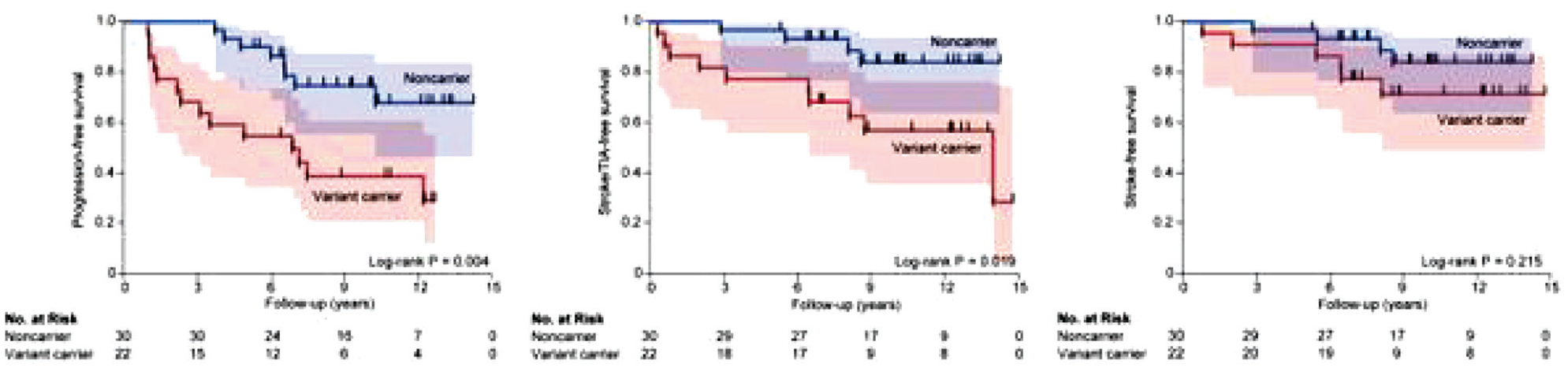
O141 / 119
Scientific Communications 17 - Small Vessel Disease
ASSOCIATION OF CHRONIC COVERT CEREBRAL INFARCTIONS AND WHITE MATTER HYPERINTENSITIES WITH LONG-TERM SURVIVAL IN ISCHEMIC STROKE AND TIA PATIENTS - A COHORT STUDY
1 Stroke Research Center Bern, Inselspital, University of Bern, Bern, Switzerland
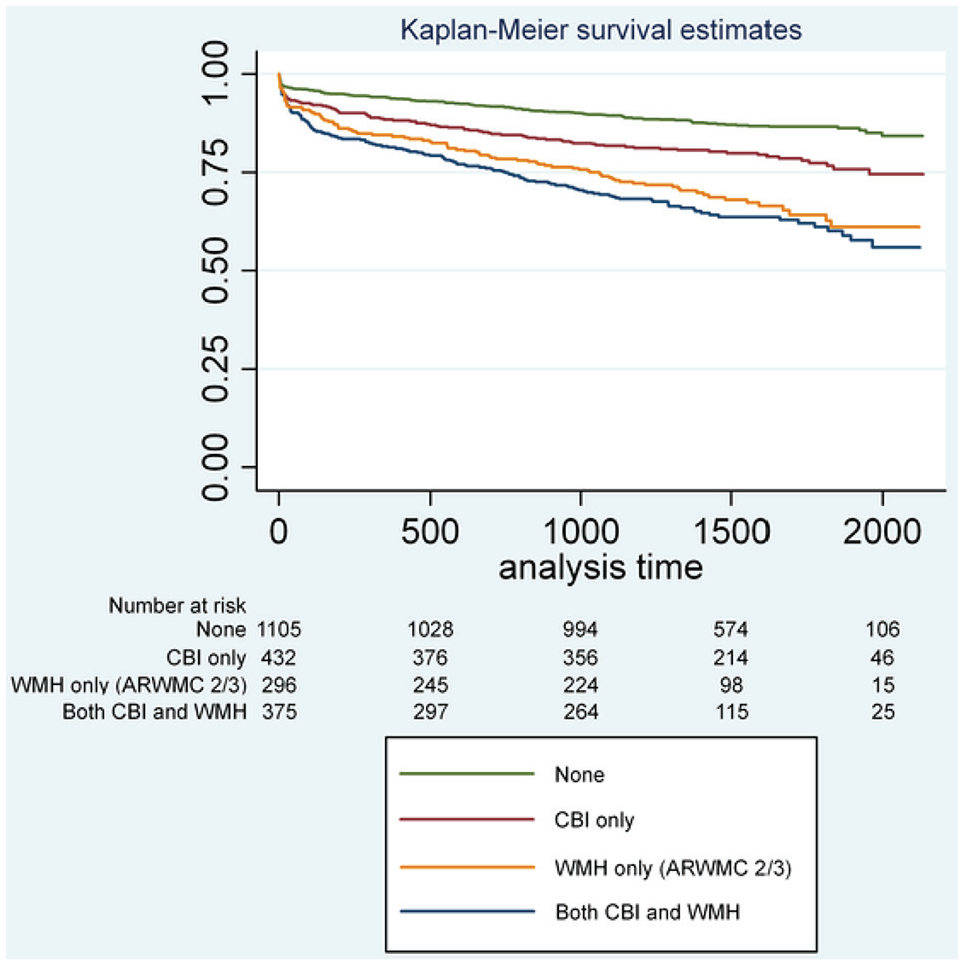
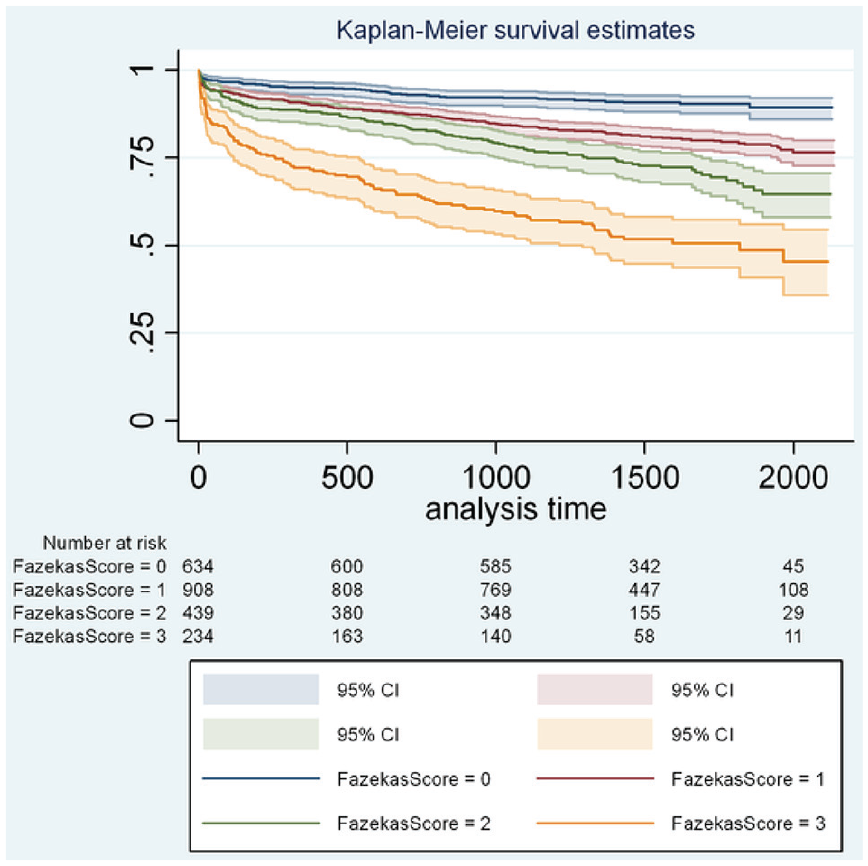
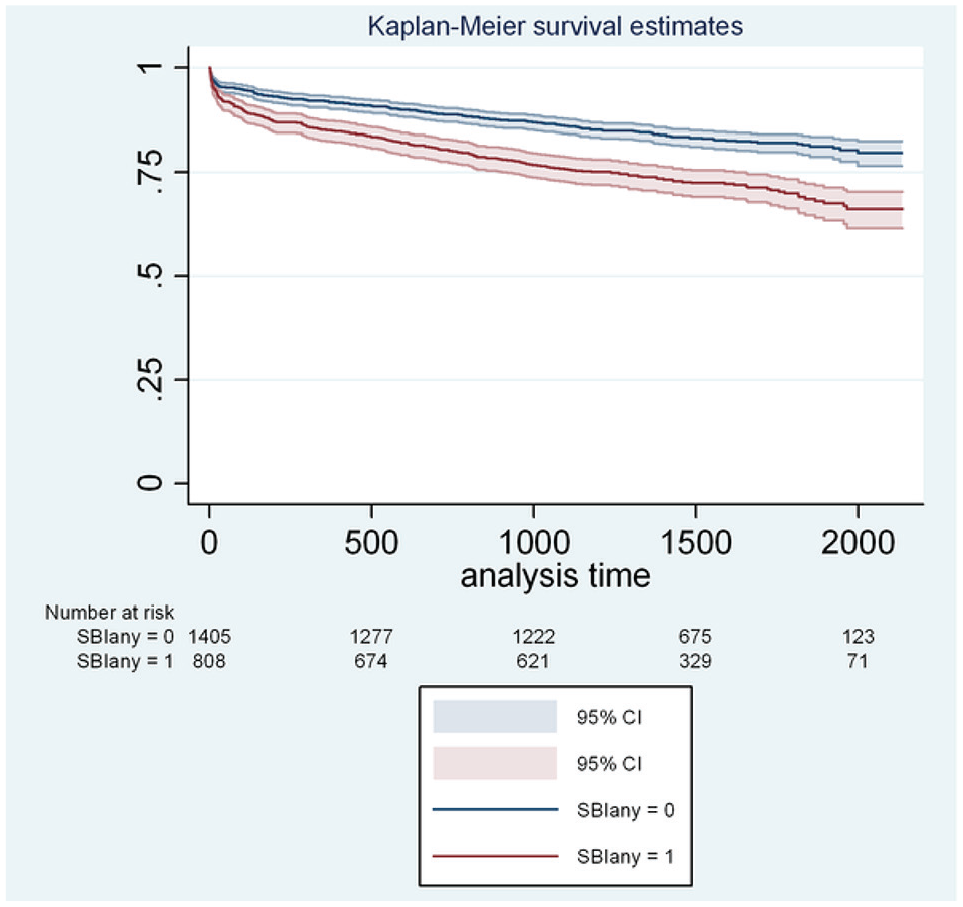
O142 / 202
Scientific Communications 17 - Small Vessel Disease
DETERMINANTS AND TEMPORAL DYNAMICS OF CEREBRAL SMALL VESSEL DISEASE: 14-YEAR FOLLOW-UP
1Radboud University, Nijmegen, Netherlands, 2University of Basel, Basel, Switzerland
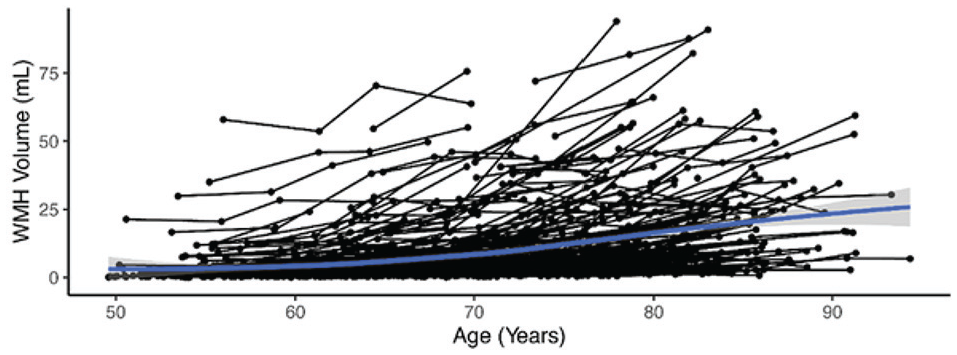
Figure 1.
WMH temporal dynamics over 14-year follow-up.
O143 / 1513
Scientific Communications 17 - Small Vessel Disease
INCIDENT INFARCTS, WMH PROGRESSION, AND DECLINING COGNITION AFTER A STROKE
1University of Edinburgh, Centre for Clinical Brain Sciences, Edinburgh, United Kingdom, 2Sichuan University, Center of Cerebrovascular Diseases, Department of Neurology, West China Hospital, Chengdu, China, 3The University of Hong Kong, Division of Neurology, Department of Medicine, Li Ka Shing Faculty of Medicine, Hong Kong, Hong Kong, SAR of China, 4Shanghai Jiao Tong University School of Medicine, Department of Neurology, Shanghai General Hospital, Shanghai, China, 5University of Barcelona and August Pi i Sunyer Biomedical Research Institute, Comprehensive Stroke Center, Department of Neuroscience, Barcelona, Spain
O144 / 1173
Scientific Communications 17 - Small Vessel Disease
CEREBRAL SMALL VESSEL DISEASE INCREASES THE RISK OF INCIDENT PARKINSONISM
1Radboud University Medical Centre; Donders Center for Medical Neuroscience, Nijmegen; The Netherlands, Department of Neurology, Nijmegen, Netherlands, 2Medical Image Analysis Center (MIAC AG) and qbig, Department of Biomedical Engineering, University of Basel, Basel, Switzerland, Basel, Switzerland
Parkinsonism diagnostic work-up was performed until December 2020, and was based on the UK Brain Bank criteria, and stratified into vascular parkinsonism (VP) or idiopathic Parkinson’s Disease. Cox-regression analysis was used to investigate predictors of incident parkinsonism, while considering death as competing risk.
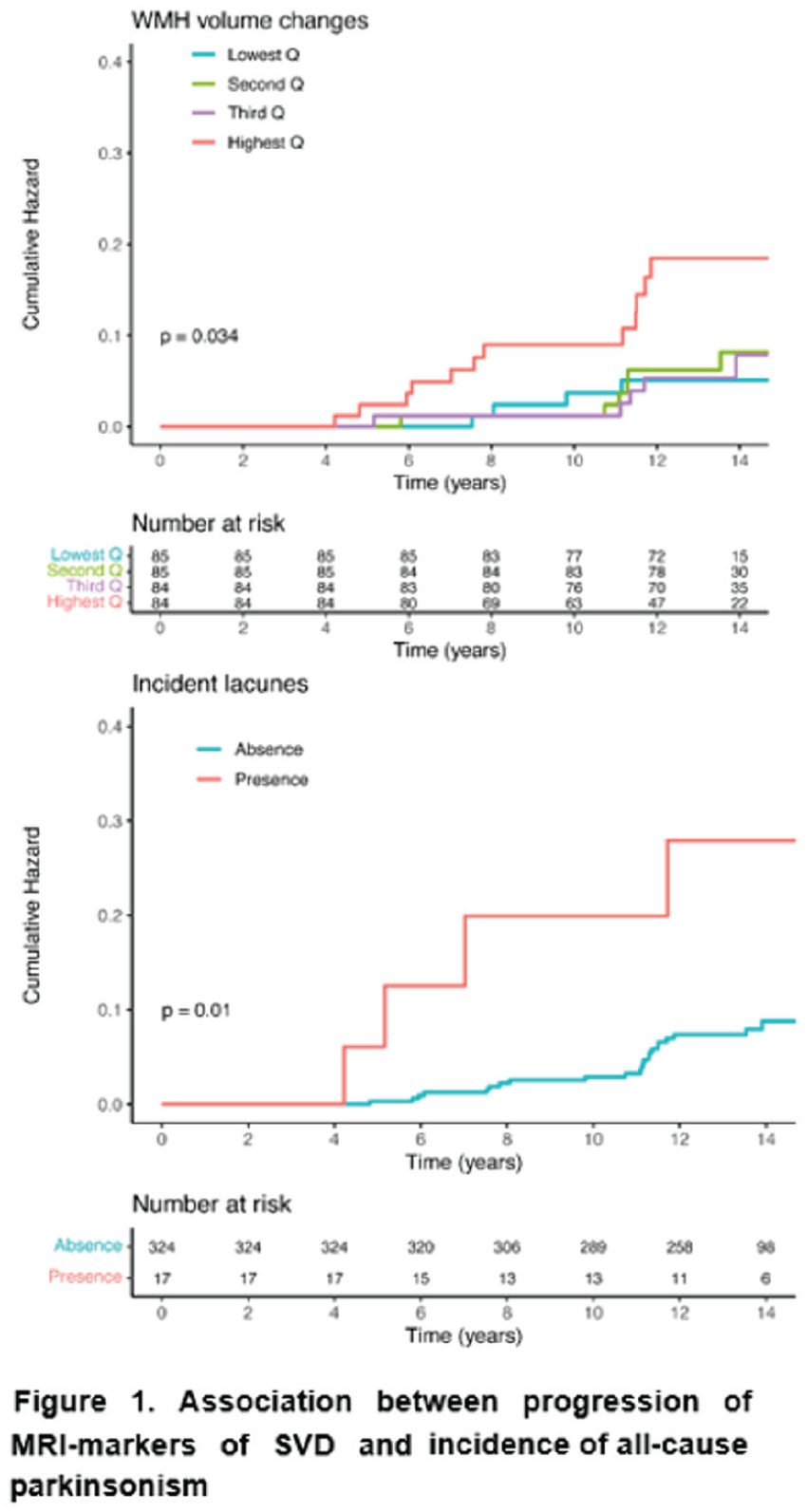
O145 / 583
Scientific Communications 17 - Small Vessel Disease
CLINICAL RELEVANCE OF WHITE MATTER HYPERINTENSITY ‘CAPS’ AND ‘TRACKS’ APPEARING LONG TERM AFTER RECENT SMALL SUBCORTICAL INFARCTS
1Centre for Clinical Brain Sciences, Edinburgh Imaging and the UK Dementia Research Institute at the University of Edinburgh, Edinburgh, United Kingdom, 2Department of Neurology, West China Hospital, Sichuan University, Chengdu, China
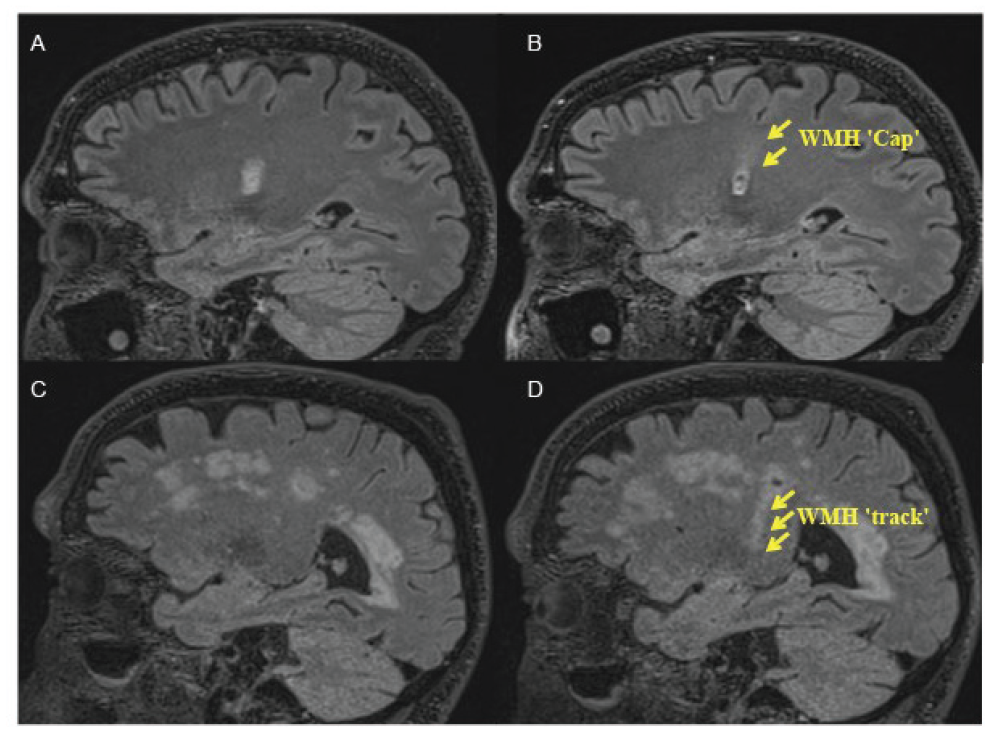
O146 / 1326
Scientific Communications 17 - Small Vessel Disease
CLINICAL ASSOCIATIONS AND PROGNOSTIC SIGNIFICANCE OF ENLARGED PERIVASCULAR SPACES IN PATIENTS WITH PREVIOUS ISCHAEMIC STROKE OR TIA: A POOLED ANALYSIS OF INDIVIDUAL PATIENT DATA
1Stroke Research Centre, Department of Brain Repair and Rehabilitation, UCL Queen Square Institute of Neurology, University College London, London, United Kingdom, 2Department of Statistical Science, University College London, London, United Kingdom, 3New Zealand Brain Research Institute, Christchurch, New Zealand, 4Stroke Research Centre, Department of Neurology, Fujian Medical University Union Hospital, Fuzhou, China, 5Department of Neurology, Seoul National University Bundang Hospital, Seoul National University College of Medicine, Seongnam, Korea, Republic of, 6Department of Neurology, Asan Medical Center, University of Ulsan College of Medicine, Seoul, Korea, Republic of, 7Division of Neurology, Department of Medicine, The University of Hong Kong, Hong Kong, Hong Kong, SAR of China, 8Department of Diagnostic Radiology, The University of Hong Kong, Hong Kong, Hong Kong, SAR of China, 9Department of Neurology, Yonsei University College of Medicine, Seoul, Korea, Republic of, 10Department of Neurology, Seoul Hospital, Ewha Womans University College of Medicine, Seoul, Korea, Republic of, 11Department of Neurology, Sisli Hamidiye Etfal Teaching and Research Hospital, University of Health Sciences Turkey, Istanbul, Turkey, 12Department of Radiology, Saga University Faculty of Medicine, Saga, Japan, 13Division of Neurology, Department of Internal Medicine, Saga University Faculty of Medicine, Saga, Japan, 14Stroke Center Klinik Hirslanden Zürich, Zürich, Switzerland, 15University of Basel, Basel, Switzerland, 16Department of Neurology and Stroke Center University Hospital, Basel, Switzerland, 17Centre for Clinical Brain Sciences, School of Clinical Sciences, University of Edinburgh, Edinburgh, United Kingdom, 18Lysholm Department of Neuroradiology and the Neuroradiological Academic Unit, Department of Brain Repair and Rehabilitation, UCL Institute of Neurology and the National Hospital for Neurology and Neurosurgery, London, United Kingdom, 19Liverpool Centre for Cardiovascular Science, University of Liverpool and Liverpool Heart & Chest Hospital, Liverpool, United Kingdom, 20Department of Clinical Medicine, Aalborg University, Aalborg, Denmark, 21Department of Neurology, Inselspital, Bern University Hospital, Bern, Switzerland, 22University of Bern, Bern, Switzerland, 23Department of Interventional Radiology, Monash Health, Clayton, Australia, 24Peninsula Clinical School, Peninsula Health, Monash University, Melbourne, Australia, 25Stroke and Ageing Research Group, School of Clinical Sciences at Monash Health, Monash University, Melbourne, Australia, 26Department of Neurology, University Hospital of Würzburg, Würzburg, Germany, 27Department of Imaging and Interventional Radiology, Prince of Wales Hospital, The Chinese University of Hong Kong, Hong Kong, Hong Kong, SAR of China, 28Department of Medicine and Therapeutics, Prince of Wales Hospital, The Chinese University of Hong Kong, Hong Kong, Hong Kong, SAR of China, 29Centre for Clinical Brain Sciences, Edinburgh Imaging; and UK Dementia Institute at the University of Edinburgh, Edinburgh, United Kingdom, 30Institute of Applied Health Sciences, University of Aberdeen, Aberdeen, United Kingdom, 31Department of Radiology and Nuclear Medicine, Erasmus University Medical Centre, Rotterdam, Netherlands, 32Department of Radiology and Nuclear Medicine, CARIM School for Cardiovascular Diseases, Maastricht University Medical Centre, Maastricht, Netherlands, 33Department of Psychiatry and Neuropsychology, School for Mental Health and Neuroscience, Maastricht University Medical Centre, Maastricht, Netherlands, 34Department of Neurology and Cardiovascular Research Institute Maastricht (CARIM), Maastricht University Medical Centre, Maastricht, Netherlands, 35University of Lille, Inserm, CHU de Lille. ‘Degenerative and vascular cognitive disorders’ U1171, Lille, France, 36Biomedical Imaging Group Rotterdam, Department of Radiology and Nuclear Medicine, Erasmus University Medical Centre, Rotterdam, Netherlands, 37Department of Neurology, Kansai Medical University, Hirakata, Japan, 38Department of Neurology, Istanbul Arel University, Istanbul, Turkey
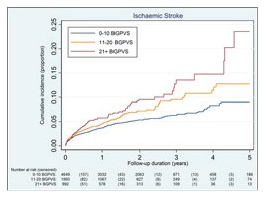
O147 / 252
Scientific Communications 17 - Small Vessel Disease
DIFFERENT PATTERN OF SMALL VESSEL DYSFUNCTION ON 7T MRI IN SPORADIC CEREBRAL SMALL VESSEL DISEASE COMPARED WITH CADASIL - THE ZOOM@SVDS STUDY
1UMC Utrecht, Utrecht, Netherlands, 2LMU Munich, Munich, Germany, 3Spinoza Centre for Neuroimaging Amsterdam, Amsterdam, Netherlands, 4University of Basel, Basel, Switzerland, 5Munich Cluster for Systems Neurology, Munich, Germany, 6German Center for Neurodegenerative Disease, Munich, Germany
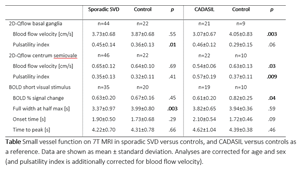
O148 / 571
Scientific Communications 17 - Small Vessel Disease
IRON DEPOSITS AND REACTIVE ASTROCYTES COLOCALIZE IN CORTICAL TISSUE WITH CORTICAL SUPERFICIAL SIDEROSIS IN CEREBRAL AMYLOID ANGIOPATHY
1Massachusetts General Hospital, MassGeneral Institute for Neurodegenerative Disease, Charlestown, United States, 2Massachusetts General Hospital, J. Philip Kistler Stroke Research Center, Boston, United States, 3Otto-von-Guericke University, Department of Neurology, Magdeburg, Germany
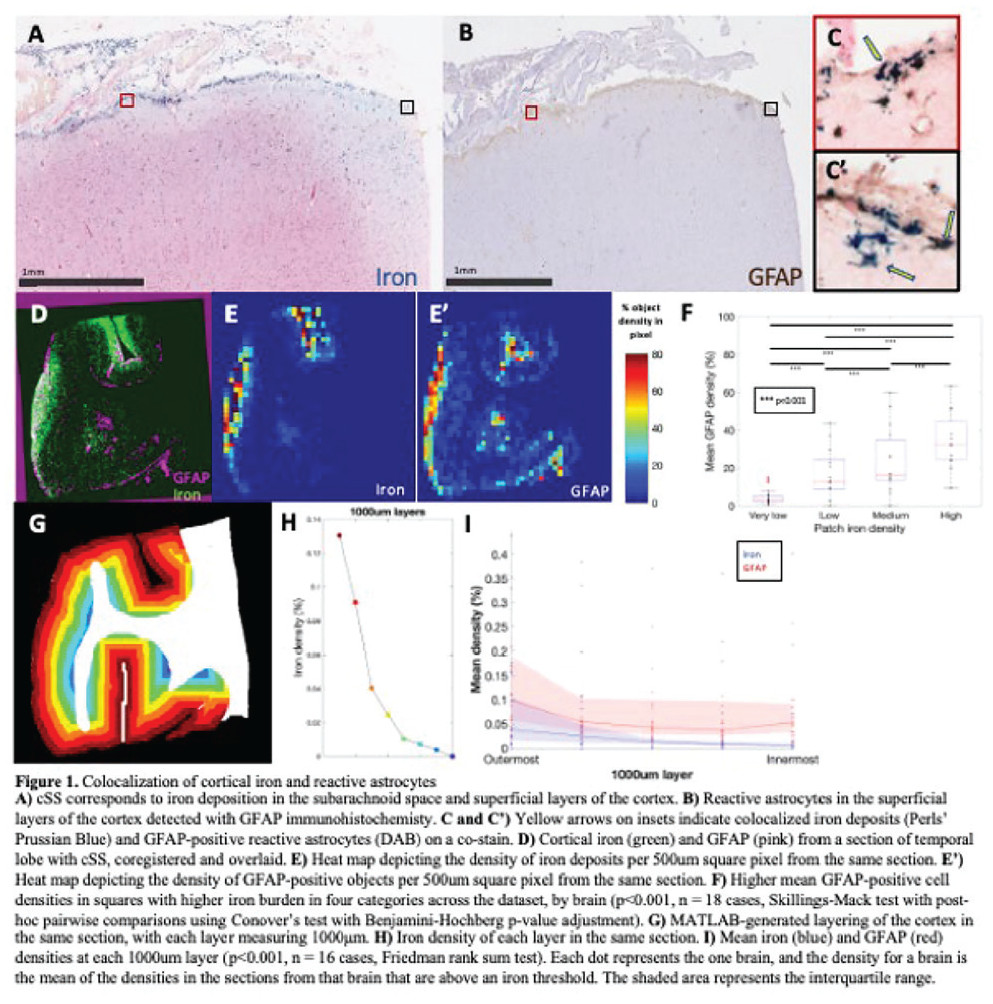
O149 / 433
Scientific Communications 18 - Imaging
EARLY POST-THROMBECTOMY CONTRAST EXTRAVASATION ON DUAL-ENERGY CT IS PREDICTIVE OF STROKE OUTCOMES AND COMPLICATIONS: A TEN-YEAR SINGLE-CENTRE EXPERIENCE
1MUMC+, Department of Radiology and Nuclear Medicine, Maastricht, Netherlands, 2MUMC+, Department of Neurology, Maastricht, Netherlands, 3Maastricht University, CARIM, Maastricht, Netherlands, 4Radboud UMC, Department of Neurosurgery, Nijmegen, Netherlands
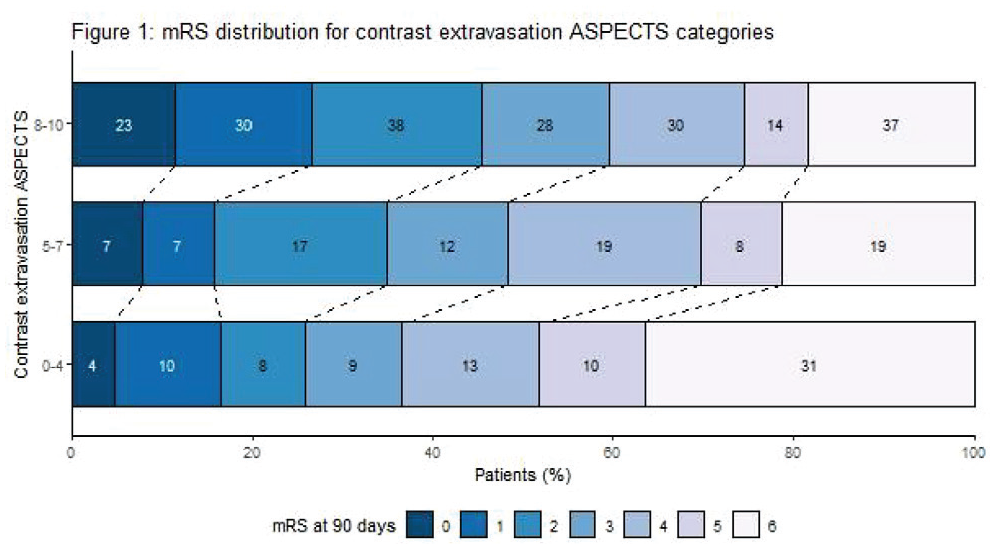
O150 / 316
Scientific Communications 18 - Imaging
REVERSIBILITY OF DIFFUSION WEIGHTED IMAGING LESIONS IN ISCHEMIC STROKE PATIENTS IN THE WAKE-UP TRIAL
1University Hospitals Leuven, Neurology, Leuven, Belgium, 2Amsterdam University Medical Centers, Neurology, Amsterdam, Netherlands, 3KU Leuven, Elektrotechniek (ESAT), Leuven, Belgium, 4KU Leuven, Neurosciences, Leuven, Belgium, 5Hospices Civils de Lyon, Biostatistique, Lyon, France, 6University Medical Center Hamburg-Eppendorf, Klinik und Poliklinik für Neurologie, Kopf- und Neurozentrum, Hamburg, Germany, 7Universitätsmedizin Berlin, Center for Stroke Research Berlin (CSB), Charité, Berlin, Germany, 8University of Glasgow, Institute of Neuroscience & Psychology, Glasgow, United Kingdom, 9Hospices Civils de Lyon, Department of Stroke Medicine, Lyon, France, 10Hospital Dr Josep Trueta, Radiology, Girona, Spain, 11Aarhus University Hospital, Department of Neurology, Aarhus, Denmark, 12University of Melbourne, Stroke Theme, Florey Institute of Neuroscience and Mental Health, Heidelberg, Victoria, Australia
O151 / 557
Scientific Communications 18 - Imaging
SEX-SPECIFIC RELEVANCE OF LESIONS IN RICH CLUB REGIONS FOR FUNCTIONAL OUTCOMES POST-STROKE
1Massachusetts General Hospital/Harvard Medical School, Department of Neurology, Boston, United States, 2University of Gothenburg, Gothenburg, Sweden, 3Lund University, Lund, Sweden, 4University of Technology Sydney, Sydney, Australia, 5Massachusetts General Hospital/Harvard Medical School, Boston, United States
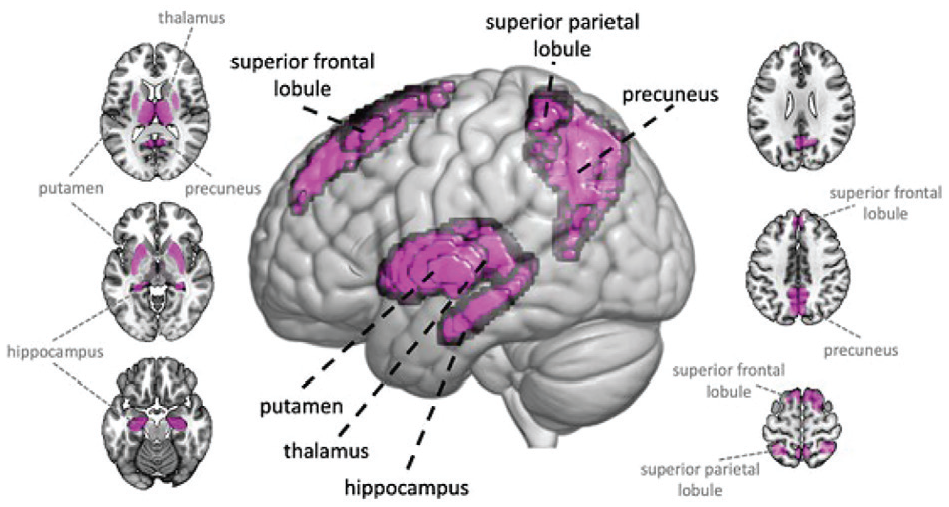
O152 / 312
Scientific Communications 18 - Imaging
RADIOMICS DERIVED BRAIN AGE PREDICTS FUNCTIONAL OUTCOME AFTER ACUTE ISCHEMIC STROKE
1Mass General Brigham, Harvard Medical School, Neurology, Boston, United States, 2Université de Lille, Inserm, CHU Lille, U 1172 - LilNCog (JPARC) - Lille Neurosciences & Cognition, Lille, France, 3Massachusetts Institute of Technology, Computer Science and Artificial Intelligence Lab, Cambridge, United States, 4Brigham and Women’s Hospital, Division of Preventive Medicine, Department of Medicine, Boston, United States, 5CNRS, Institut Pasteur de Lille, US 41 - UMS 2014 - PLBS, Lille, France
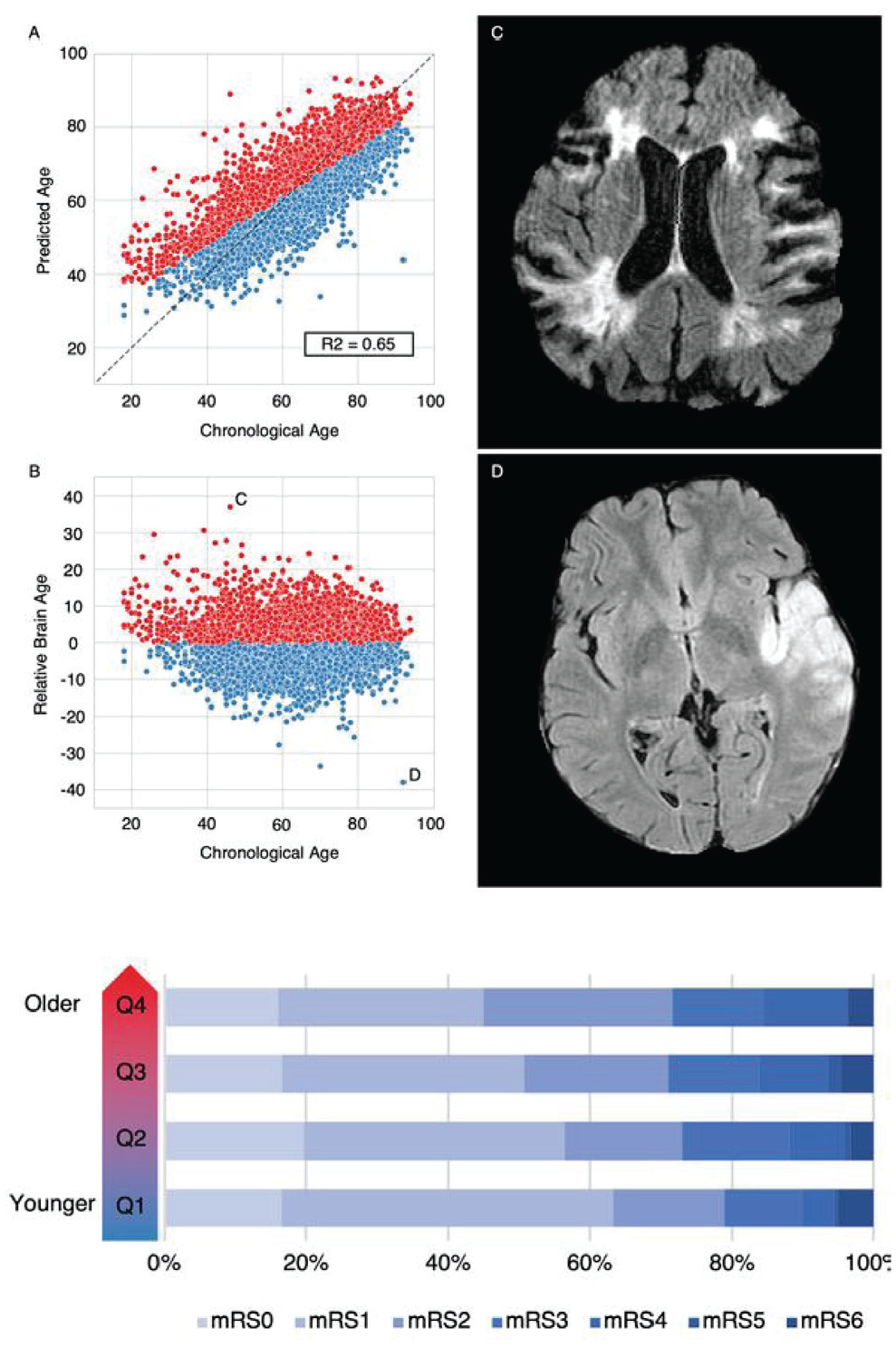
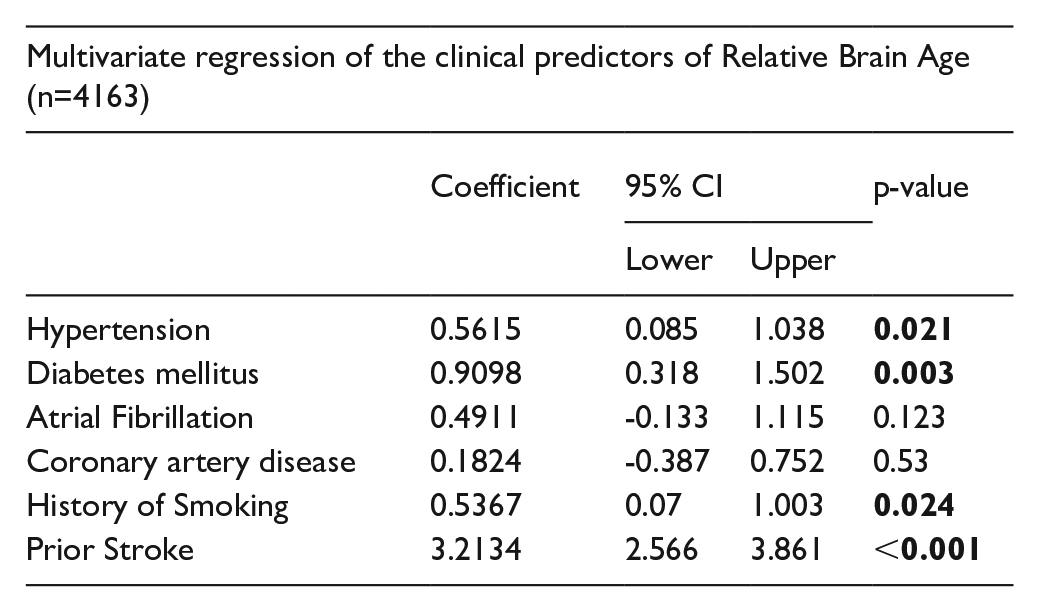
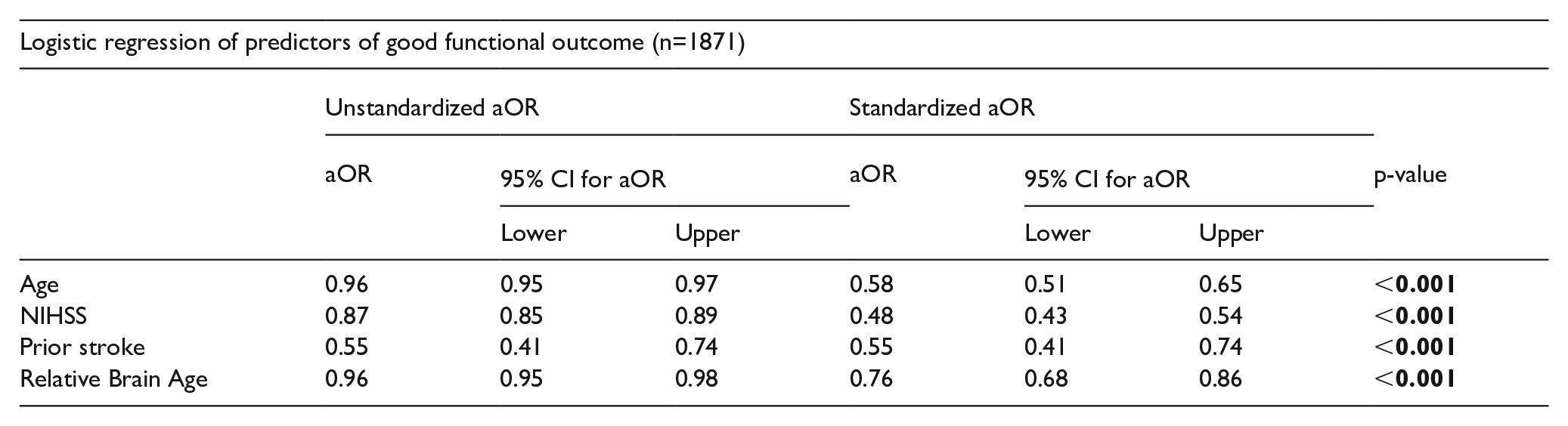
O153 / 669
Scientific Communications 18 - Imaging
CORTICAL THICKNESS ALTERATIONS ACCOMPANYING METABOLIC SYNDROME PREDICT COGNITIVE FUNCTION
1 University Medical Center Hamburg-Eppendorf, Neurology, Hamburg, Germany
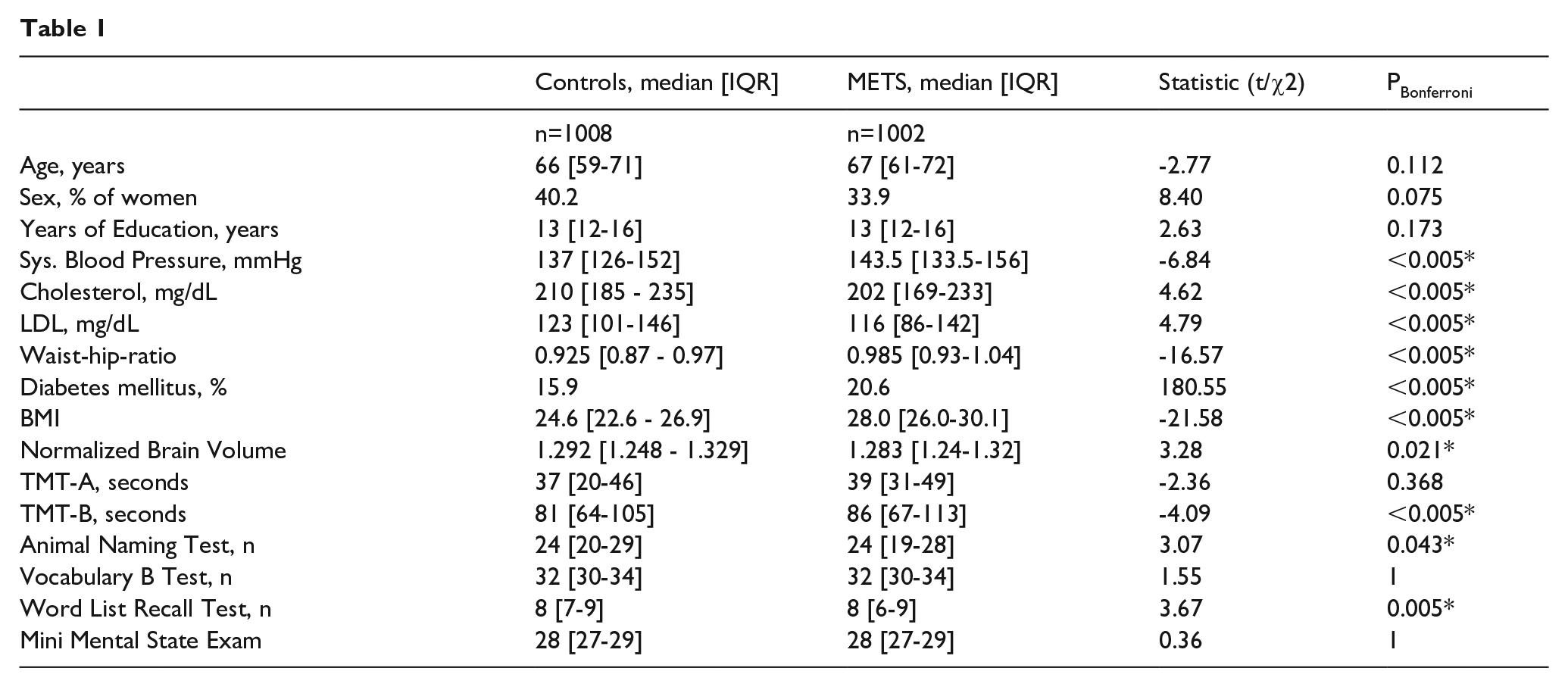
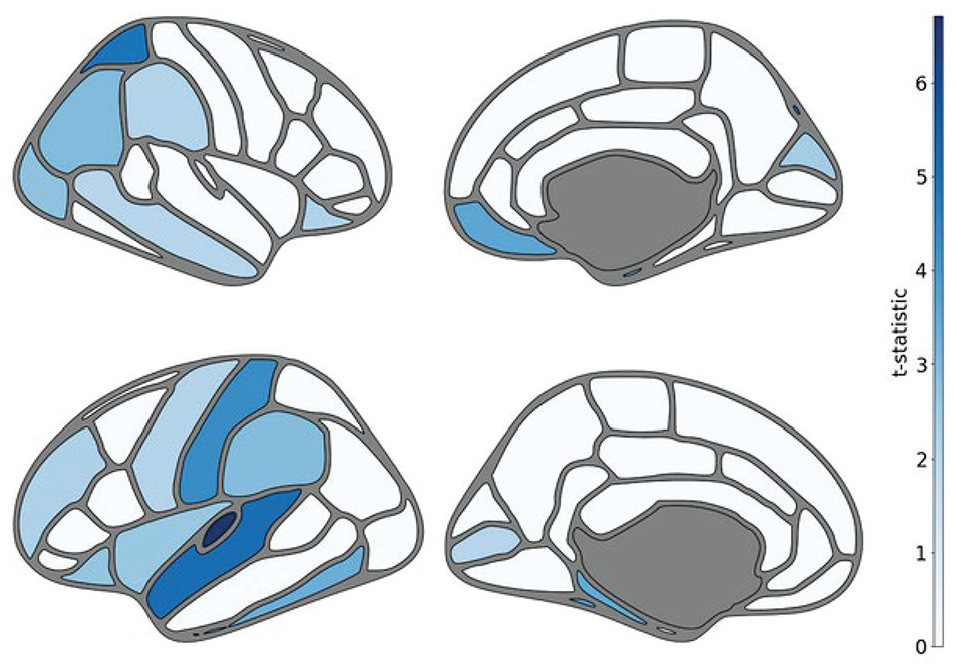
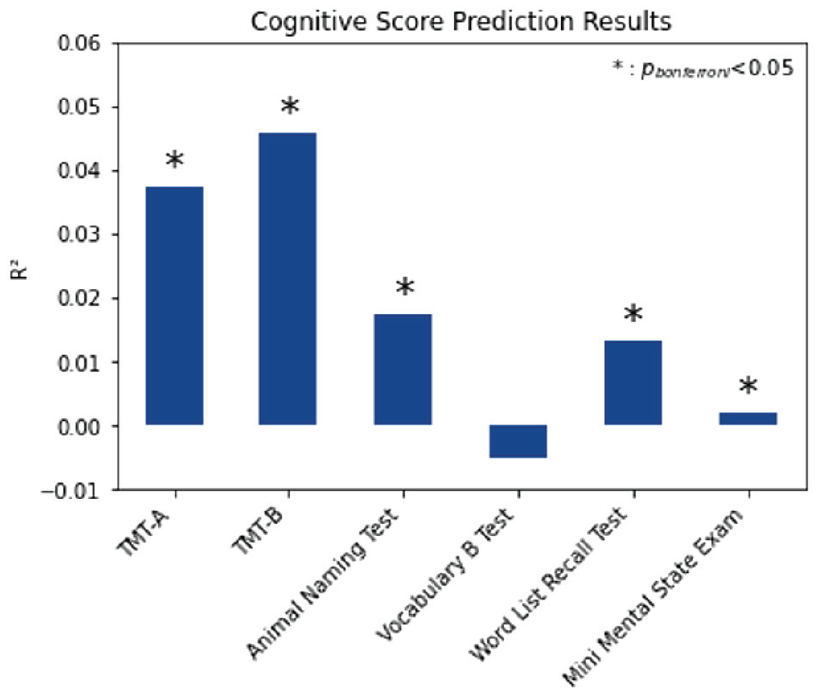
O154 / 664
Scientific Communications 18 - Imaging
PREDICTION OF COGNITIVE RECOVERY AFTER STROKE (PROCRAS): THE VALUE OF DIFFUSION-WEIGHTED IMAGING BASED MEASURES OF BRAIN CONNECTIVITY
1Elisabeth Tweesteden Hospital Tilburg, Neurology, Tilburg, Netherlands, 2Elisabeth Tweesteden Hospital Tilburg, Trauma TopCare, Tilburg, Netherlands, 3UMC Utrecht Brain Center, Neurology, Utrecht, Netherlands, 4University Medical Center Groningen, Clinical Neuropsychology, Groningen, Netherlands, 5UMC Utrecht Brain Center, Rehabilitation, Physical Therapy Science & Sports, Utrecht, Netherlands
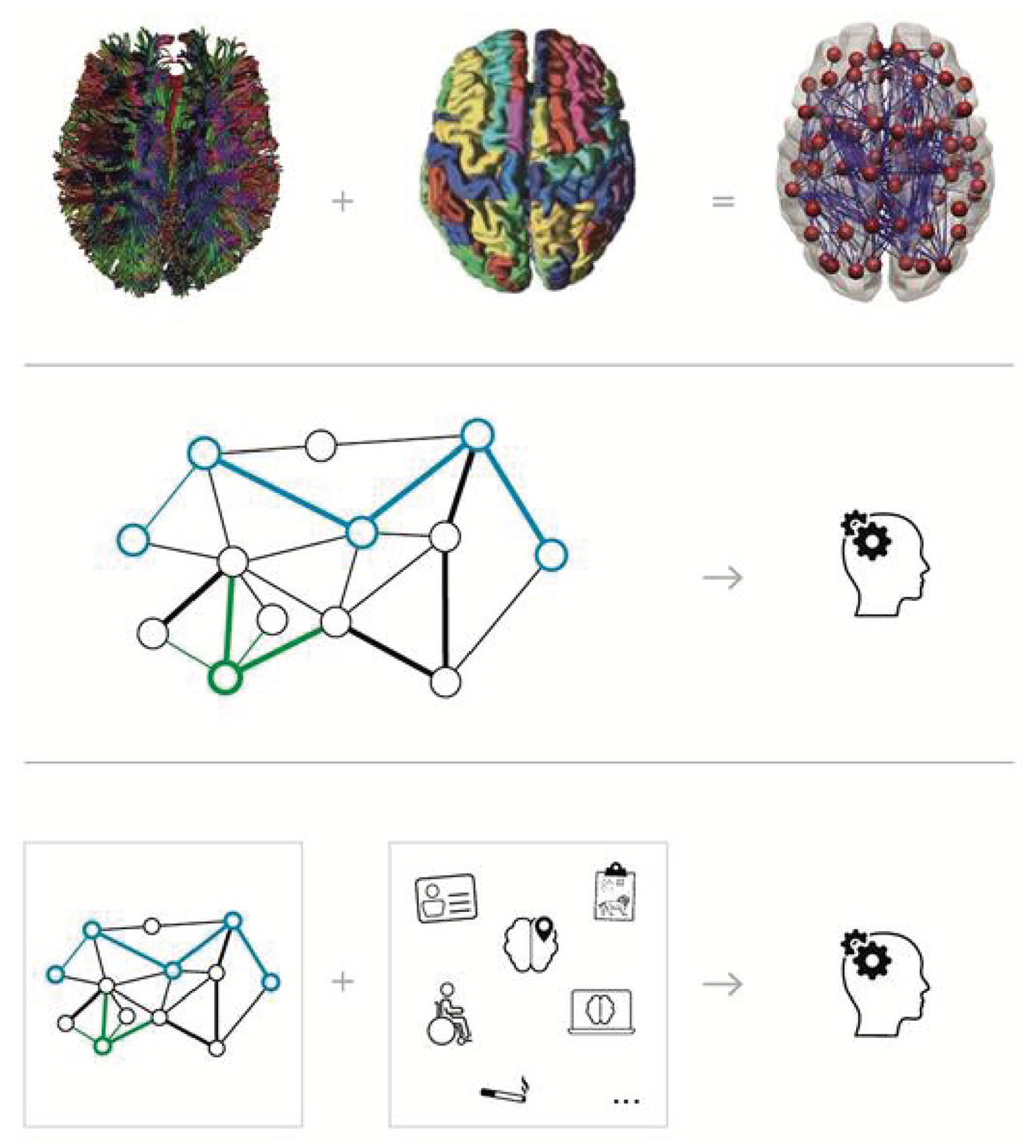
O155 / 270
Scientific Communications 18 - Imaging
IMPAIRMENT OF GLYMPHATIC FUNCTION OF MRI-VISIBLE PERIVASCULAR SPACES IN AGING HUMANS
1Second Affiliated Hospital of Zhejiang University, School of Medicine, Department of Neurology, Hangzhou, China, 2Hangzhou Traditional Chinese Medicine Hospital Affiliated to Zhejiang Chinese Medical University, Hangzhou, China
O156 / 933
Scientific Communications 18 - Imaging
IMPACT OF CEREBRAL MICROBLEEDS IN STROKE PATIENTS WITH ATRIAL FIBRILLATION TAKING ANTITHROMBOTICS: A SUB-ANALYSIS FROM THE MICROBLEEDS INTERNATIONAL COLLABORATIVE NETWORK (MICON)
1The Chinese University of Hong Kong, Department of Medicine and Therapeutics, Hong Kong, Hong Kong, SAR of China, 2University Hospital Basel, University of Basel, Department of Neurology and Stroke Centre, Basel, Switzerland, 3The Chinese University of Hong Kong, Department of Imaging and Interventional Radiology, Hong Kong, Hong Kong, SAR of China, 4University of Basel and University of Bern, Department of Neurology and Stroke Centre, Basel, Switzerland, 5UCL Queen Square Institute of Neurology, Department of Brain Repair and Rehabilitation, London, United Kingdom
O157 / 534
Scientific Communications 19 - Experimental / Translational Medicine
PLATELETS REGULATE THE EARLY LOCAL VASCULAR RECRUITMENT OF INFILTRATING NEUTROPHILS DURING MIDDLE CEREBRAL ARTERY OCCLUSION BEFORE RECANALIZATION
1University Hospital Würzburg, Department of Neurology, Würzburg, Germany, 2University of Würzburg, Rudolf Virchow Center for Integrative and Translational Bioimaging, Würzburg, Germany, 3University Hospital Würzburg, Institute of Experimental Biomedicine, Würzburg, Germany, 4University Hospital Würzburg, Department of Neuroradiology, Würzburg, Germany
O158 / 649
Scientific Communications 19 - Experimental / Translational Medicine
A NOVEL SEVERE CEREBRAL VENOUS THROMBOSIS RAT MODEL BASED ON SEMI-LIGATION COMBINED WITH FERRIC CHLORIDE AND THROMBIN
1Xuanwu Hospital, Capital Medical University, Department of Emergency and Neurology, Beijing, China, 2The People’s Hospital of Qingxian, Department of Neurology, Hebei, China, 3Xuanwu Hospital, Capital Medical University, Department of Neurology, Beijing, China
O159 / 1105
Scientific Communications 19 - Experimental / Translational Medicine
NEUTROPHIL EXTRACELLULAR TRAPS IN CEREBRAL ISCHEMIA AND REPERFUSION INJURY IN ISCHEMIC STROKE
1KU Leuven Kulak, Cardiovascular Sciences, Kortrijk, Belgium, 2KU Leuven Kulak, Chemistry, Kortrijk, Belgium
O160 / 1083
Scientific Communications 19 - Experimental / Translational Medicine
HUMAN ESC-DERIVED IMMUNITY- AND- MATRIX REGULATORY CELLS AMELIORATED VASCULAR COGNITIVE IMPAIRMENT IN RATS SUBJECTED TO CHRONIC CEREBRAL HYPOPERFUSION
1Beijing Tiantan Hospital, Beijing, China, 2Beijing Tiantan Hospital, BeiJing, China
O161 / 1155
Scientific Communications 19 - Experimental / Translational Medicine
DYNAMIC PROGRESSION OF NEURO-INFLAMMATION IN A NON-HUMAN PRIMATE MODEL OF STROKE
1University Claude Bernard Lyon 1, CarMeN Laboratory, Lyon, France, 2University Claude Bernard Lyon 1, Cognitive Neuroscience Center, Lyon, France, 3University Claude Bernard Lyon 1, CREATIS, Lyon, France, 4Hospices Civils de Lyon, Lyon, France, 5Cynbiose, Lyon, France, 6CERMEP - Imagerie du vivant, Lyon, France, 7University Claude Bernard Lyon 1, Institut Lumière Matière, Lyon, France
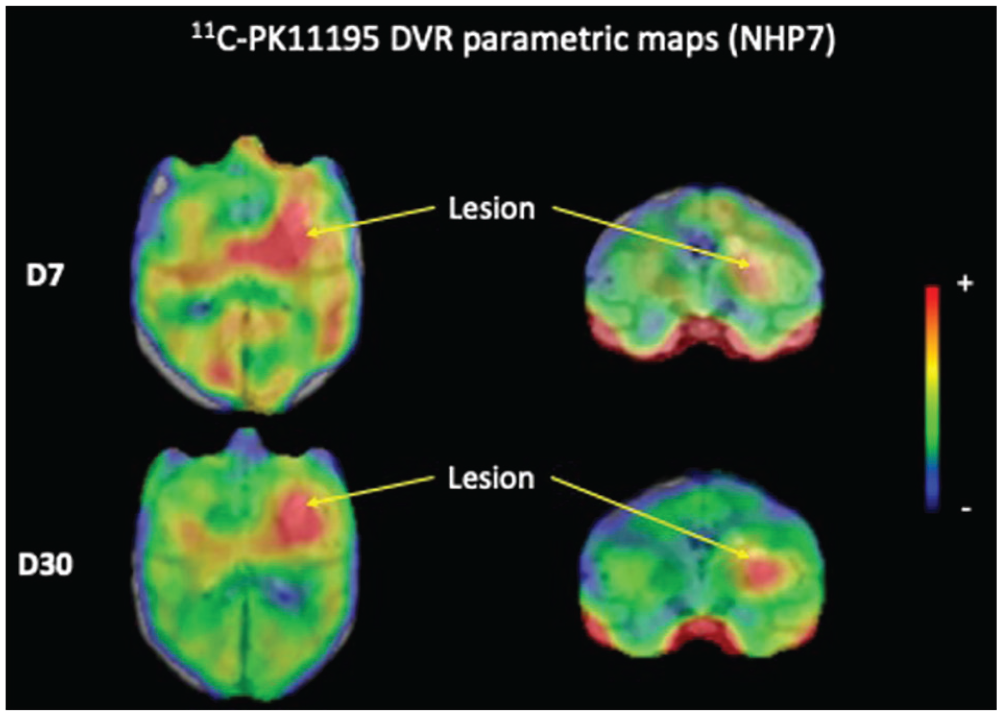
Illustrative maps of 11C-PK11195 binding at day 7 and day 30.
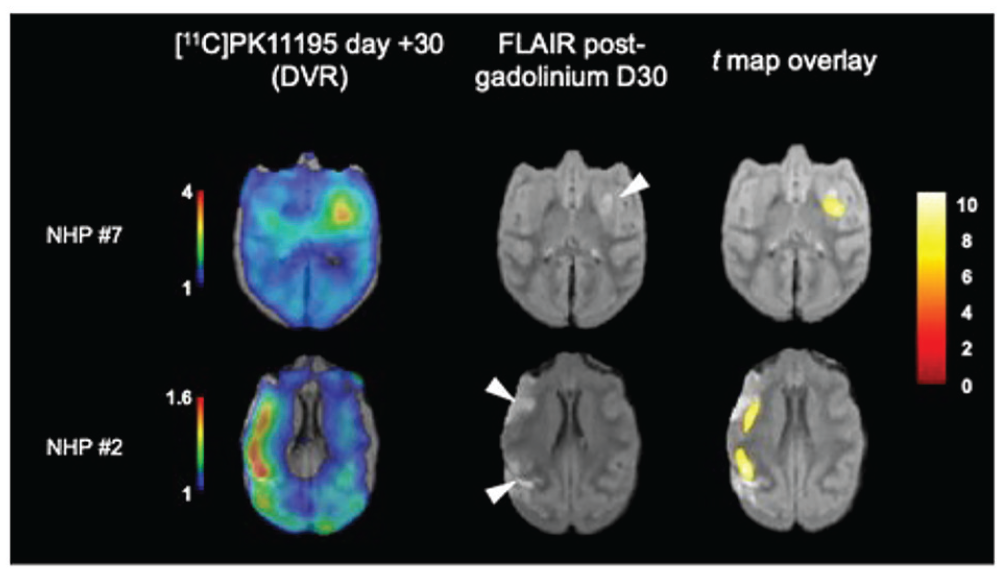
Individual voxel-wise analyses of two NHP at day 30.
Acknowledgment
ANR-15-CE17-0020-01
ANR-16-RHUS-0009
O162 / 595
Scientific Communications 19 - Experimental / Translational Medicine
CHARACTERISTICS OF THE NO-REFLOW AREA AFTER MECHANICAL RECANALIZATION IN ISCHEMIC STROKE
1Université Lyon, CarMeN Laboratory, INSERM, INRAE, Université Claude Bernard Lyon 1, Bron, France, 2Hospices Civils de Lyon, Université Lyon, Interventional Neuroradiology, Bron, France, 3Hospices Civils de Lyon, Université Lyon, CarMeN Lab., INSERM, INRAE, Neurology Department, Bron, France, 4Hospices Civils de Lyon, Université Lyon, Neuroradiology, Bron, France, 5Cynbiose SAS, Lyon, France, 6Cermep Imagerie du Vivant, Bron, France, 7Université Lyon, Institut Lumière Matière ILM, CNRS, Université Claude Bernard Lyon 1, Villeurbanne, France, 8Olea Medical, La Ciotat, France
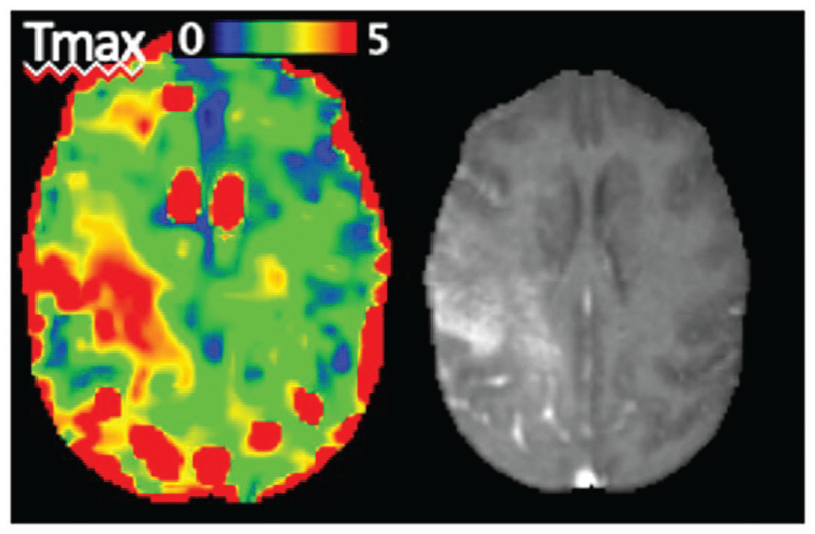
MRI no-reflow (left) with hemorrhage on post-gadolinium T1 (right).
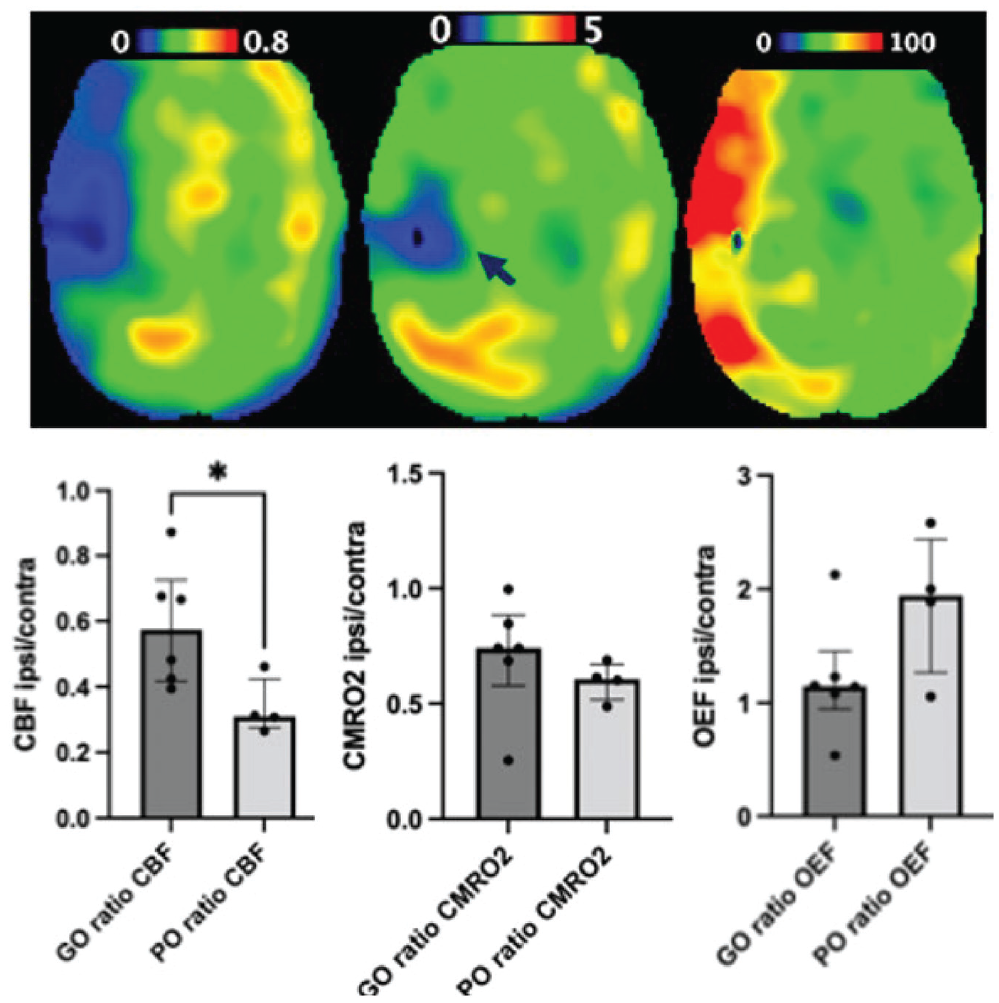
Poor outcome (PO) NHPs had more severe ischemic no-reflow with compromised O2 consumption (CMRO2 low despite high OEF, arrow) than good outcome (GO).
ANR-15-CE17-0020-01
ANR-16-RHUS-0009
O163 / 575
Scientific Communications 19 - Experimental / Translational Medicine
HEAD DOWN TILT 15° INCREASES COLLATERAL BLOOD FLOW IN ACUTE ISCHEMIC STROKE DUE TO LARGE VESSEL OCCLUSION: A PERFUSION MRI STUDY IN RATS
1University of Milano Bicocca, Department of Medicine and Surgery, Monza, Italy, 2University of Oxford, Radcliffe Department of Medicine, Oxford, United Kingdom, 3Université Claude Bernard Lyon 1, Lyon, France
Cerebral collaterals are recruited after large vessel occlusion (LVO) and highly affect tissue outcome in acute ischemic stroke. We investigated head down tilt 15° (HDT15) as a treatment for increasing collateral blood flow in a rat model of LVO ischemic stroke. Endovascular occlusion of the proximal middle cerebral artery was induced for 90 minutes in Wistar rats (n = 22), followed by reperfusion. Rats were randomly assigned to HDT15 or flat position for 60 minutes, starting 30 minutes after arterial occlusion. Brain MRI sequences including MRI angiography, dynamic susceptibility contrast perfusion imaging, apparent diffusion coefficient and T2 structural imaging were acquired before treatment, 60 minutes after treatment and 24 hours after reperfusion. The primary outcome was change in cerebral perfusion in the ischemic hemisphere after treatment. Secondary outcomes were hemodynamic rescue of severely ischemic tissue with relative cerebral blood flow < 40% and infarct growth in the first 24 hours. Application of HDT15 improved cerebral perfusion, decreasing time-to-peak (TTP) values in the ischemic hemisphere (-26.25% versus -2.87%, p = 0.034), and was associated with a smaller infarct growth (45 mm3 versus 158 mm3; p = 0.035), compared to flat position. The median volume of severely ischemic tissue rescued by HDT15 was 16% (interquartile range -5% to 39%; p = 0.038). Our findings suggest that HDT15 acutely increases collateral blood flow in acute ischemic stroke due to LVO and provides a tissue-saving effect. Further research is needed to develop HDT15 as a pre-hospital emergency therapy for acute ischemic stroke.
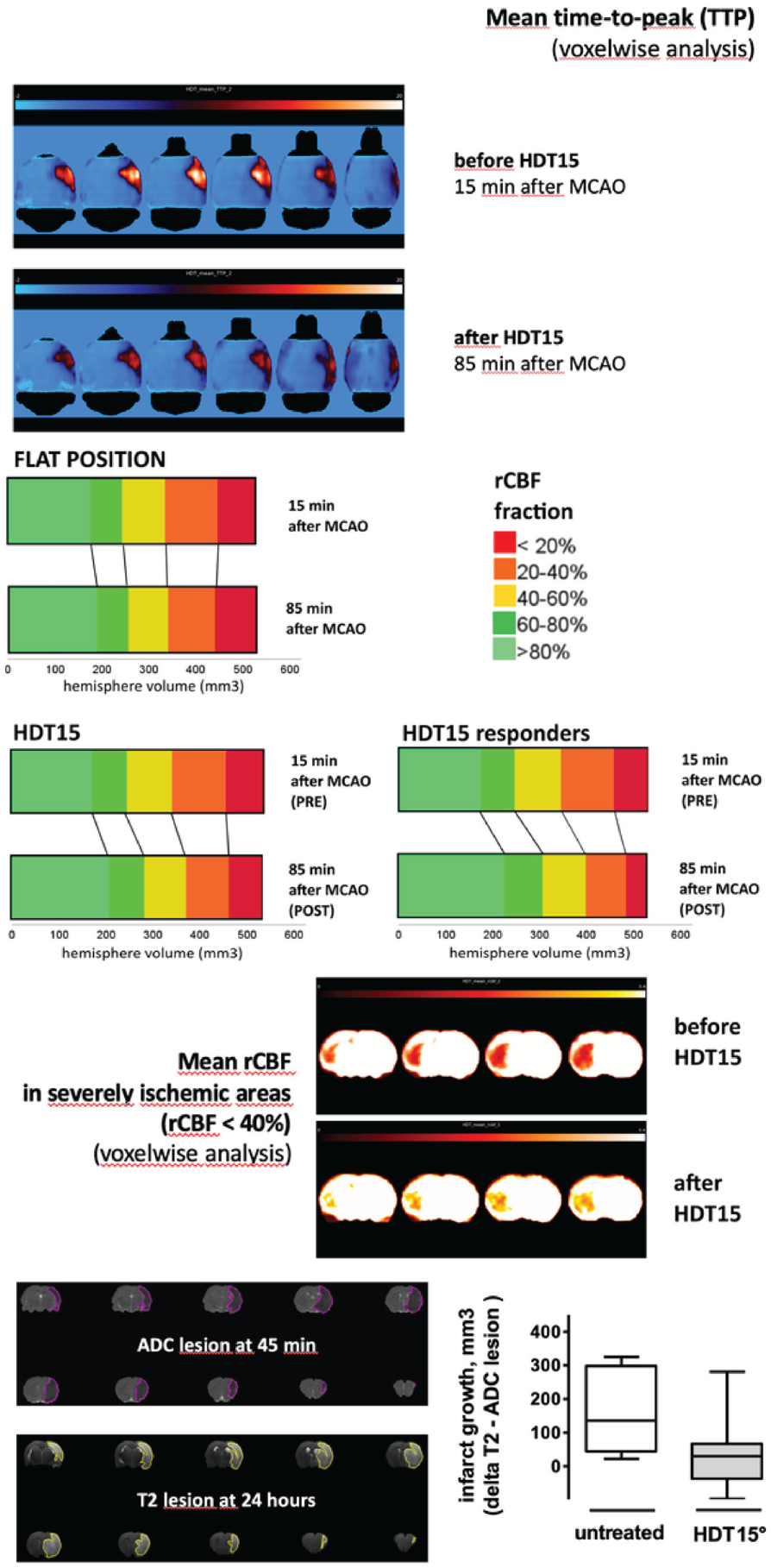
O164 / 175
Scientific Communications 19 - Experimental / Translational Medicine
ZEBRAFISH DRUG SCREENING IDENTIFIES CANDIDATE THERAPIES FOR NEUROPROTECTION AFTER SPONTANEOUS INTRACEREBRAL HAEMORRHAGE
1The University of Manchester, Manchester, United Kingdom, 2University of New South Wales, Sydney, Australia
O165 / 1174
Scientific Communications 20 - Intracerebral Haemorrhage
INTRAVENTRICULAR HAEMORRHAGE: CLINICAL CHARACTERISTICS AND RELATIONSHIPS WITH OUTCOMES
1Nottingham University Hospitals NHS Trust, Stroke, Department of Acute Medicine, Nottingham, United Kingdom, 2University of Nottingham, Stroke Trials Unit, Nottingham, United Kingdom, 3National University of Malaysia, Department of Medicine, Kuala Lumpur, Malaysia, 4University Hospitals Birmingham NHS Foundation Trust, Stroke, Department of Medicine, Birmingham, United Kingdom, 5University of Birmingham, Institute of Applied Health Research, College of Dental and Medical Sciences, Birmingham, United Kingdom, 6Nottingham Biomedical Research Centre, University of Nottingham, Nottingham, United Kingdom, 7University of Edinburgh, Centre for Clinical Brain Sciences, UK Dementia Research Centre, Edinburgh, United Kingdom
O166 / 602
Scientific Communications 20 - Intracerebral Haemorrhage
ASSOCIATION BETWEEN STEREOTACTIC THROMBOLYSIS WITH ALTEPLASE FOR INTRACEREBRAL HEMORRHAGE AND INTRAVENTRICULAR HEMATOMA VOLUME: A SECONDARY ANALYSIS OF THE MISTIE-III TRIAL
1Johns Hopkins University School of Medicine, Division of Neurosciences Critical Care, Department of Neurology, Baltimore, United States, 2Johns Hopkins University School of Medicine, Brain Injury Outcomes Division, Baltimore, United States, 3University of Chicago School of Medicine, Department of Neurological Surgery, Chicago, United States, 4Feil Family Brain and Mind Research Institute, Weill Cornell Medicine, Clinical and Translational Neuroscience Unit and Department of Neurology, New York, United States
O167 / 680
Scientific Communications 20 - Intracerebral Haemorrhage
THE ROLE OF HYPERGLYCEMIA IN THE OUTCOME OF INTRACEREBRAL HEMORRHAGE: A CAUSATIVE ANALYSIS
1 Harvard University / Beth Israel Deaconess Medical Center, Neurology, Boston, United States
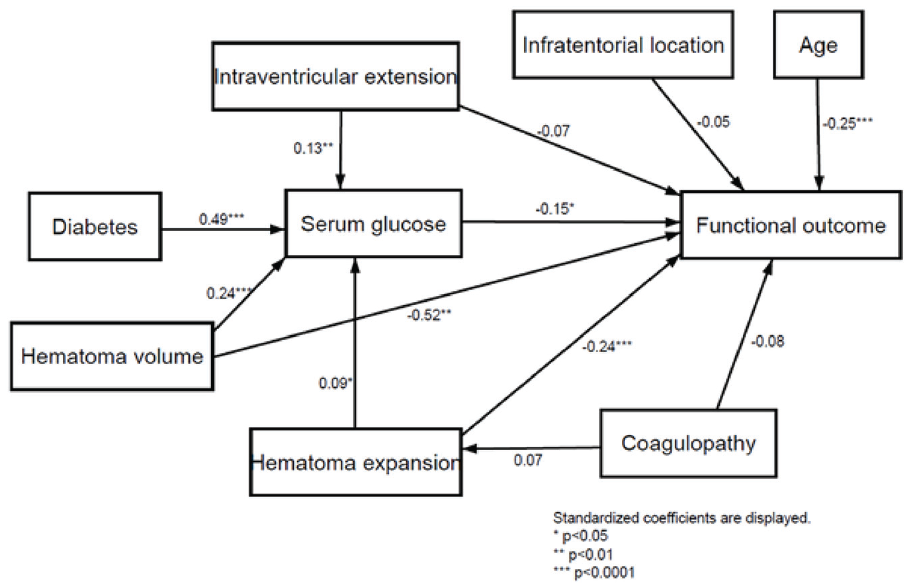
O168 / 467
Scientific Communications 20 - Intracerebral Haemorrhage
RISK OF MAJOR VASCULAR EVENTS IN PEOPLE WITH AND WITHOUT HISTORY OF INTRACEREBRAL HAEMORRHAGE: A DANISH NATIONWIDE COHORT STUDY
1Odense University Hospital, University of Southern Denmark, Research Unit for Neurology, Odense, Denmark, 2Centro Español Investigación Farmacoepidemiológica (CEIFE), Madrid, Spain, 3Odense University Hospital, University of Southern Denmark, Open Patient Data Explorative Network (OPEN), Department of Clinical Research, Odense, Denmark, 4University of Southern Denmark, Department Of Clinical Pharmacology & Pharmacy, Odense, Denmark, 5University of Edinburgh, Centre for Clinical Brain Sciences, Edinburgh, United Kingdom
O169 / 324
Scientific Communications 20 - Intracerebral Haemorrhage
PREVENTION OF EPILEPTIC SEIZURES IN ACUTE INTRACEREBRAL HAEMORRHAGE (PEACH): A DOUBLE-BLIND RANDOMISED PLACEBO-CONTROLLED TRIAL
1Hospices Civils de Lyon, Neurology, Lyon, France, 2Centre Hospitalier de Bourg-en-Bresse, Neurology, Bourg-en-Bresse, France, 3CHU de Saint-Etienne, Neurology, Saint-Etienne, France, 4Hospices Civils de Lyon, Public Health, Lyon, France, 5Hospices Civils de Lyon, Biostatistics, Lyon, France, 6Hospices Civils de Lyon, Pharmacy, Lyon, France, 7Hospices Civils de Lyon, Neuroradiology, Lyon, France
O170 / 1168
Scientific Communications 20 - Intracerebral Haemorrhage
IATROGENIC CEREBRAL AMYLOID ANGIOPATHY AFTER NEUROSURGERY; FREQUENCY, FEATURES, AND OUTCOME
1Leiden University Medical Center, Neurology, Leiden, Netherlands, 2Leiden University Medical Center, Clinical Epidemiology, Leiden, Netherlands, 3University Medical Center Utrecht, Neurology, Utrecht, Netherlands, 4Radboud University Medical Center, Neurology, Donders Institute for Brain, Cognition and Behaviour, Nijmegen, Netherlands, 5Leiden University Medical Center, Neurosurgery, Leiden, Netherlands, 6Leiden University Medical Center, Radiology, Leiden, Netherlands
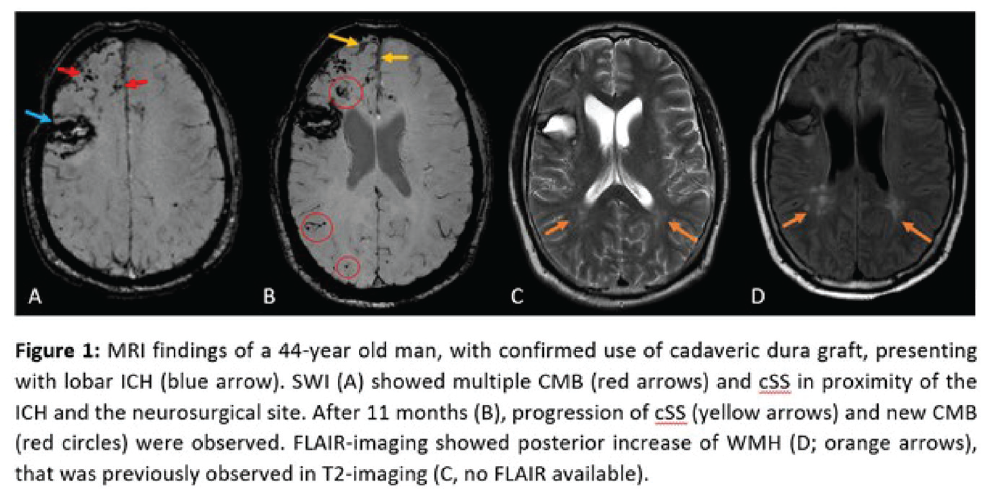
O171 / 996
Scientific Communications 20 - Intracerebral Haemorrhage
SUBGROUP ANALYSES FROM TICH-NOAC (TREATMENT OF INTRACEREBRAL HEMORRHAGE IN PATIENTS ON NOAC WITH TRANEXAMIC ACID): EFFECTS OF PROTHROMBIN COMPLEX CONCENTRATE, CLINICAL AND IMAGING CHARACTERISTICS
1Department of Neurology and Stroke Center, University Hospital Basel and University of Basel, Basel, Switzerland, 2Department of Neurology, Inselspital, University Hospital Bern and University of Bern, Bern, Switzerland, 3Clinical Trial Unit, Department of Clinical Research, University Hospital Basel and University of Basel, Basel, Switzerland, 4Department of Neuroradiology, Cantonal Hospital Lucerne, Lucerne, Switzerland, 5Neurology and Neurorehabilitation, University Department of Geriatric Medicine Felix Platter, University of Basel, Basel, Switzerland, 6Department of Neurology and Stroke Center, Hirslanden Hospital, Zurich, Switzerland
O172 / 666
Scientific Communications 20 - Intracerebral Haemorrhage
AN MRI-BASED SMALL VESSEL DISEASE-PHAENOTYPE CLASSIFICATION OF INTRACEREBRAL HAEMORRHAGE SUBTYPES AND RISK OF RECURRENT CEREBROVASCULAR EVENTS
1Inselspital Bern University Hospital and University of Bern, Department of Neurology, Bern, Switzerland, 2University of Bern, Graduate School for Health Sciences, Bern, Switzerland, 3Inselspital Bern University Hospital and University of Bern, University Institute for Diagnostic and Interventional Neuroradiology, Bern, Switzerland, 4Lausanne University Hospital and University of Lausanne, Service of Neurology, Department of Clinical Neurosciences, Lausanne, Switzerland, 5Cantonal Hospital St. Gallen, Department of Radiology, St. Gallen, Switzerland, 6HFR Fribourg – Cantonal Hospital, Stroke Unit and Division of Neurology, Fribourg, Switzerland, 7Klinik Hirslanden Zurich, Stroke Center Hirslanden, Zurich, Switzerland, 8University Hospital and Faculty of Medicine Geneva, Stroke Research Group, Department of Clinical Neurosciences, Geneva, Switzerland, 9Luzerner Kantonsspital, Department of Radiology and Nuclear Medicine, Lucerne, Switzerland, 10Neurocenter of Southern Switzerland, Lugano, Stroke Center EOC, Lugano, Switzerland, 11Hôpital de zone de Nyon, Stroke unit, GHOL, Nyon, Switzerland, 12Stadtspitäler Triemli und Waid, Zurich, Switzerland, 13University Hospital and University of Zurich, Department of Neurology, Zurich, Switzerland, 14Kantonsspital Winterthur, Department of Radiology and Nuclear Medicine, Winterthur, Switzerland, 15University Hospital Basel, Department of Neurology, Basel, Switzerland, 16Kantonsspital Graubünden, Department of Neurology, Chur, Switzerland, 17University Hospital Basel, Diagnostic and Interventional Neuroradiology, Department of Radiology and Nuclear Medicine, Basel, Switzerland, 18Buergerspital Solothurn, Department of Neurology, Solothurn, Switzerland, 19Inselspital Bern University Hospital and University of Bern, Department of Neurosurgery, Bern, Switzerland
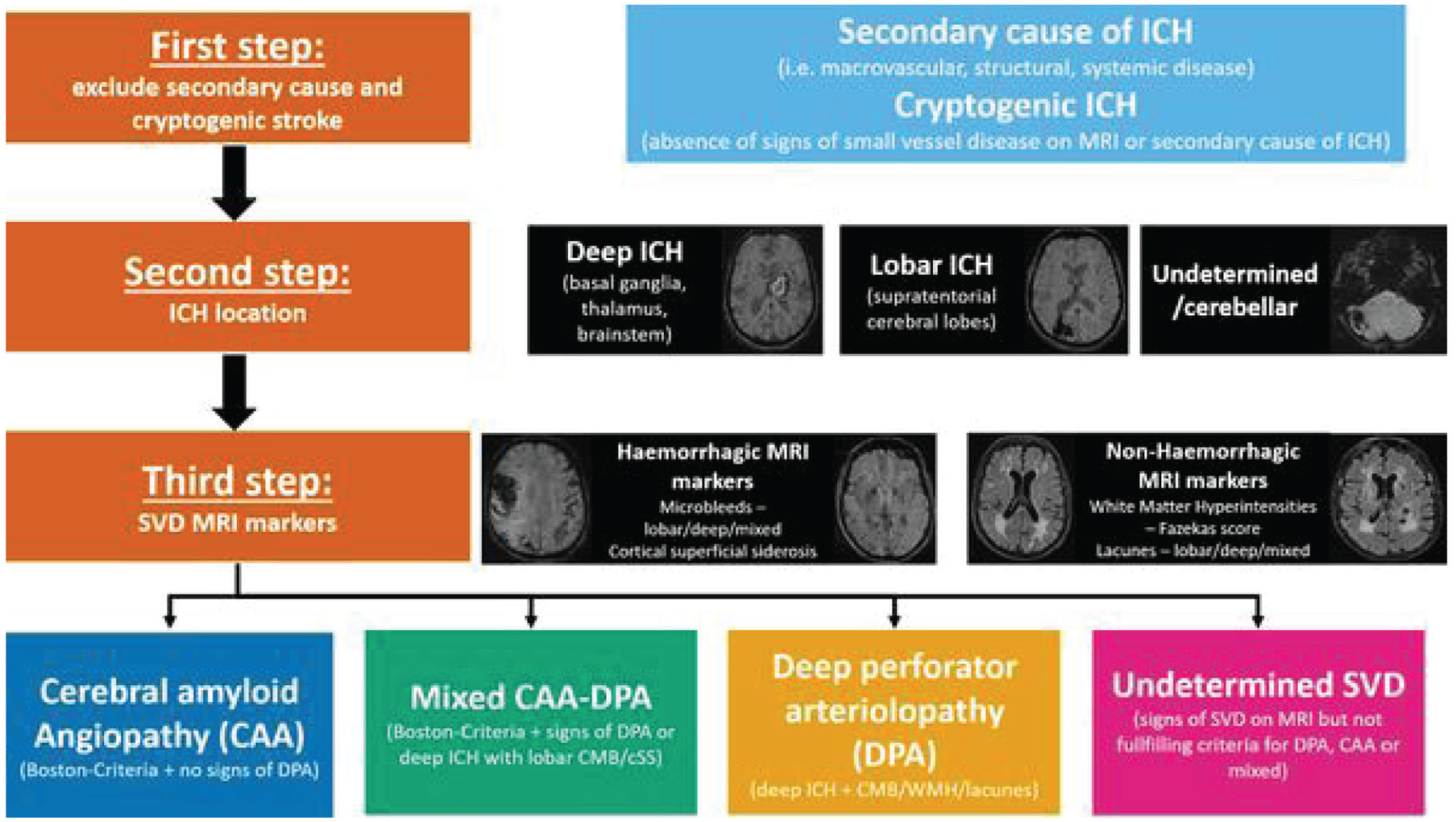
O173 / 436
Scientific Communications 21 - Rare Causes, Stroke in the Young
ACUTE ISCHEMIC STROKE IN PATIENTS WITH NEWLY DIAGNOSED VERSUS KNOWN ACTIVE CANCER: CHARACTERISTICS, MECHANISMS, AND RECURRENCES
1Lausanne University Hospital and University of Lausanne, Department of Clinical Neurosciences, Lausanne, Switzerland, 2University of Ioannina, Ioannina, Greece, 3Weill Cornell Medicine, Feil Brain and Mind Research Institute and Department of Neurology, New York, United States
Patient characteristics and results.
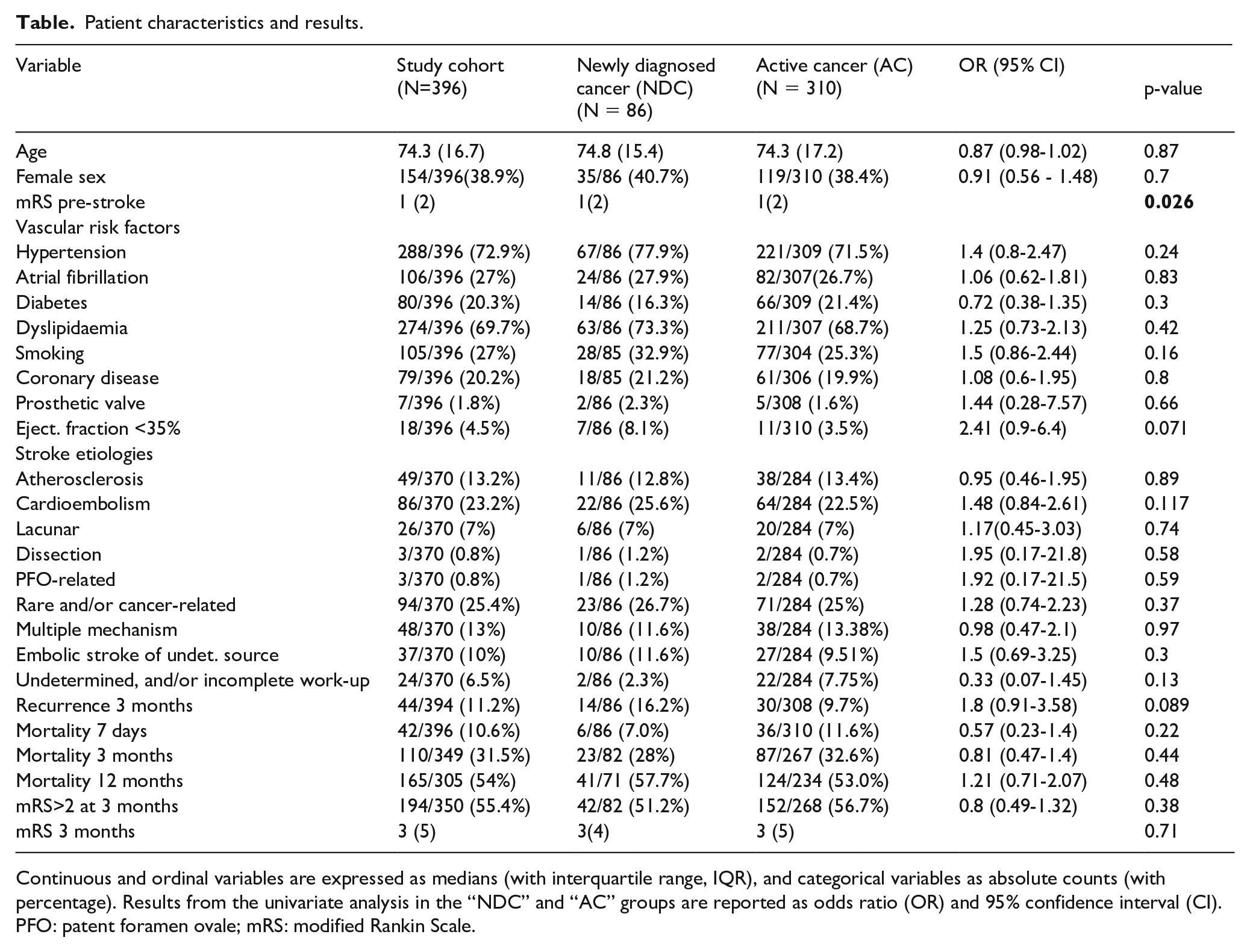
Continuous and ordinal variables are expressed as medians (with interquartile range, IQR), and categorical variables as absolute counts (with percentage). Results from the univariate analysis in the “NDC” and “AC” groups are reported as odds ratio (OR) and 95% confidence interval (CI). PFO: patent foramen ovale; mRS: modified Rankin Scale.
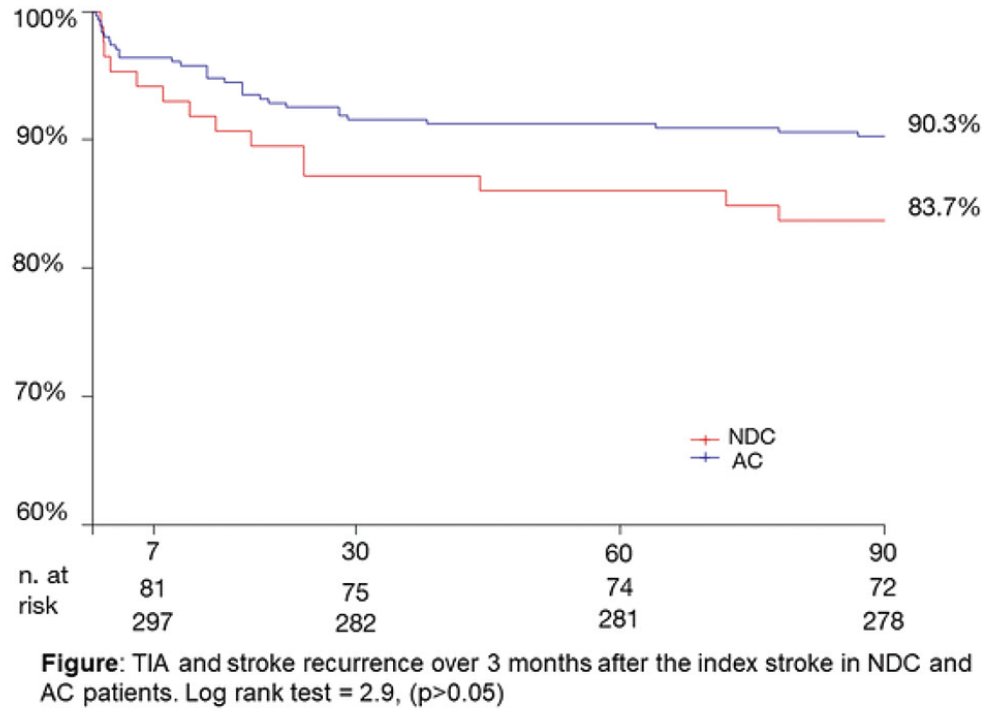
O174 / 671
Scientific Communications 21 - Rare Causes, Stroke in the Young
TRIGGER FACTORS FOR STROKE IN YOUNG ADULTS: A CASE-CROSSOVER STUDY
1Radboudumc, Neurology, Nijmegen, Netherlands, 2Amphia Ziekenhuis, Breda, Netherlands, 3Medisch Spectum Twente, Enschede, Netherlands, 4Canisius Wilhelmina Ziekenhuis, Nijmegen, Netherlands, 5Catharina Ziekenhuis, Eindhoven, Netherlands, 6Sint Franciscus Gasthuis, Rotterdam, Netherlands, 7Elisabeth Tweesteden Ziekenhuis, Tilburg, Netherlands, 8Haga Ziekenhuis, Den Haag, Netherlands, 9Rijnstate Ziekenhuis, Arnhem, Netherlands, 10Jeroen Bosch Ziekenhuis, Den Bosch, Netherlands, 11MUMC+, Maastricht, Netherlands, 12LUMC, Leiden, Netherlands, 13Amsterdam UMC, Amsterdam, Netherlands, 14Albert Schweitzer Ziekenhuis, Dordrecht, Netherlands, 15Zuyderland Ziekenhuis, Sittard-Geleen, Netherlands, 16Medisch Centrum Leeuwarden, Leeuwarden, Netherlands, 17Haaglanden Medisch Centrum, Den Haag, Netherlands
O175 / 1233
Scientific Communications 21 - Rare Causes, Stroke in the Young
LONG-TERM CLINICAL OUTCOME OF DISSECTING PSEUDOANEURYSM IN CERVICAL INTERNAL CAROTID ARTERY TREATED WITH MEDICAL THERAPY
1Mayo Clinic, Neurology, Rochester, United States, 2Mayo Clinic, Division of Vascular Medicine, Department of Cardiology, Rochester, United States, 3Mayo Clinic, Neurosurgery, Rochester, United States
O176 / 120
Scientific Communications 21 - Rare Causes, Stroke in the Young
NEUROIMAGING FEATURES OF ANTIPHOSPHOLIPID ANTIBODY-RELATED STROKE COMPARED TO ATRIAL FIBRILLATION-RELATED STROKE
1 Seoul National University Hospital, Neurology, Seoul, Korea, Republic of
O177 / 223
Scientific Communications 21 - Rare Causes, Stroke in the Young
CLINICAL AND RADIOLOGICAL COMPLICATIONS OF REVERSIBLE CEREBRAL VASOCONSTRICTION SYNDROME IN RELATION TO AGE
1Charité - University Hospital Berlin, Department for Neurology, Center for Stroke Research Berlin (CSB), Berlin, Germany, 2University Hospital Montpellier, Department of Neurology, Montpellier, France, 3University Hospital of Caen, Department of Neurology, Caen, France, 4Lariboisière Hospital, Emergency Headache Center, Department of Neurology, Paris, France, 5University Hospital of Montpellier, Clinical Research and Epidemiology Unit, Department of Medical Information, Montpellier, France, 6University Hospital of Montpellier, Charles Coulomb Laboratory, CNRS UMR 5221, Montpellier, France
O178 / 439
Scientific Communications 21 - Rare Causes, Stroke in the Young
FACTORS ASSOCIATED WITH ADVERSE OUTCOMES FOLLOWING CVT: ANALYSIS OF ACTION-CVT
1Boston Medical Center, Boston University School of Medicine, Department of Neurology, Boston, United States, 2Brown University, Department of Neurology, Providence, United States, 3Cooper Neurological Institute, Cooper University Hospital, Department of Neurology, Camden, United States, 4University of Colorado School of Medicine, Department of Neurology, Aurora, United States, 5University of Florida, Department of Neurology, Gainesville, United States, 6Inselspital, University Hospital Bern, University of Bern, Department of Neurology, Bern, Switzerland, 7Yale University, Department of Neurology, New Haven, United States, 8University Hospital Basel, Department of Neuroradiology, Clinic of Radiology and Nuclear Medicine, Basel, Switzerland, 9University of Perugia, Department of Medicine and Surgery, Perugia, Italy, 10IRCCS MultiMedica, Neurology – Stroke Unit, Milan, Italy, 11University of California at Los Angeles, Department of Neurology, Los Angeles, United States, 12Hospital de Santa Maria/CHULN, University of Lisbon, Department of Neurosciences and Mental Health, Neurology Service, Lisbon, Portugal, 13Amsterdam University Medical Center, Location AMC, Department of Neurology, Amsterdam, Netherlands
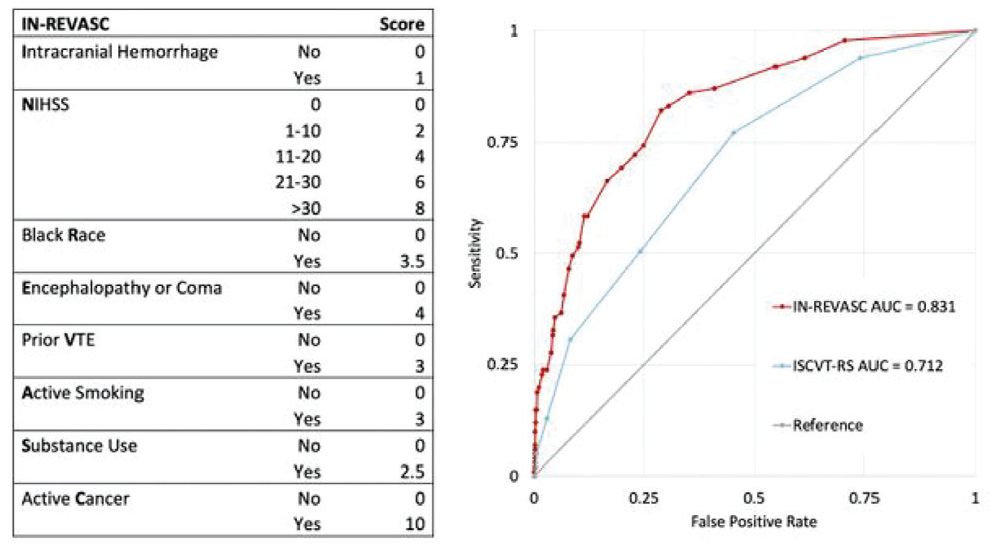
O179 / 1234
Scientific Communications 21 - Rare Causes, Stroke in the Young
PREVALENCE OF FABRY DISEASE IN YOUNG-ADULT PATIENTS HOSPITALIZED FOR TIA, ISCHEMIC STROKE, OR INTRACEREBRAL HEMORRHAGE. FIRST REPORT FROM THE FABRY-STROKE ITALIAN REGISTRY (FSIR)
1University of Florence, NEUROFARBA, Firenze, Italy, 2Santa Maria Nuova Hospital, Reggio Emilia, Italy, 3Spaziani Hospital, Frosinone, Italy, 4Bianchi-Melacrino-Morelli Hospital, Reggio Calabria, Italy, 5Brotzu Hospital, Cagliari, Italy, 6Sapienza University of Rome, Rome, Italy, 7Lucca Hospital, Lucca, Italy, 8AOU Policlinico G. Martino, University of Messina, Messina, Italy, 9Di Summa - Perrino Hospital, Brindisi, Italy, 10Santo Stefano Hospital, Prato, Italy, 11Fazzi Hospital, Lecce, Italy, 12Vittorio Emanuele University Hospital, Catania, Italy, 13C. E G. Mazzoni Hospital and Madonna del Soccorso Hospital, Ascoli Piceno, Italy, 14Parma University Hospital, Parma, Italy, 15Bari Polyclinic Hospital, Bari, Italy, 16Siena University Hospital, Siena, Italy, 17Tor Vergata Polyclinic Hospital, Rome, Italy, 18C. Mondino Foundation, Pavia, Italy, 19San Iacopo Hospital, Pistoia, Italy, 20Apuane Hospital, Massa, Italy, 21Sant’Agostino Estense New Hospital, Modena, Italy, 22SS Filippo E Nicola Hospital, Avezzano, Italy, 23San Donato Hospital, Arezzo, Italy, 24Città Di Castello Hospital and Gubbio-Gualdo Tadino Hospital, Città di Castello, Italy, 25Guzzardi Hospital, Ragusa, Italy, 26Verona University Hospital, Verona, Italy, 27Sant’Andrea Hospital, Rome, Italy, 28Belcolle Hospital, Viterbo, Italy, 29Circolo University Hospital, Varese, Italy, 30Bolzano Hospital, Bolzano, Italy, 31Monserrato University Hospital, Cagliari, Italy
O180 / 1362
Scientific Communications 21 - Rare Causes, Stroke in the Young
MECHANICAL TROMBECTOMY IN YOUNG ADULTS WITH ACUTE ISCHEMIC STROKE FROM LARGE VESSELS OCCLUSION: DATA FROM THE ITALIAN REGISTRY OF ENDOVASCULAR TREATMENT IN ACUTE STROKE
1Policlinico Umberto I - Sapienza University of Rome, Stroke Unit, Rome, Italy, 2Neurology and Stroke Unit, Santa Corona Hospital, Pietra Ligure, Italy, 3NEUROFARBA Department, University of Florence, Florence, Italy, 4Sapienza University of Rome, Department of Human Neurosciences, Rome, Italy
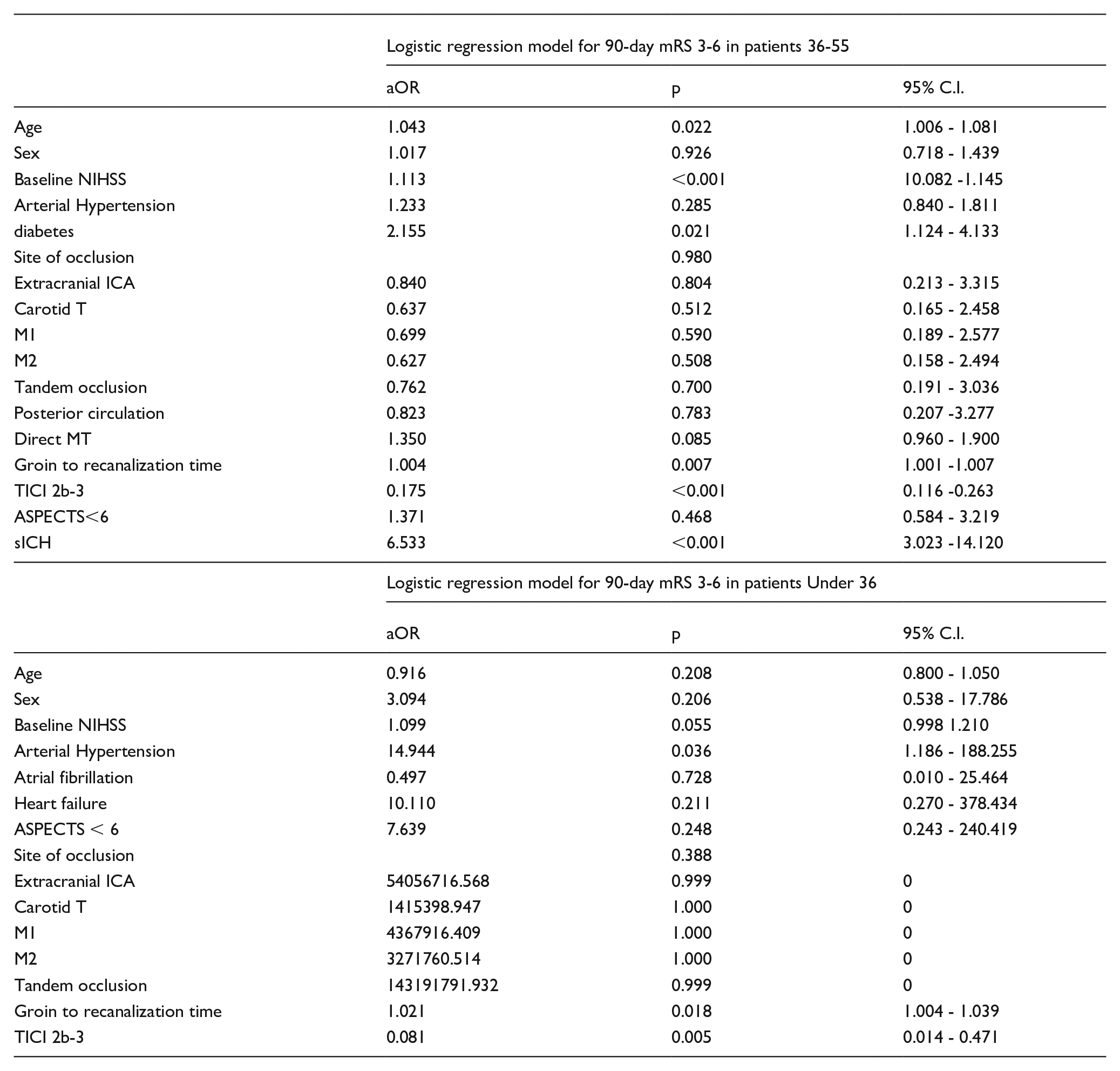
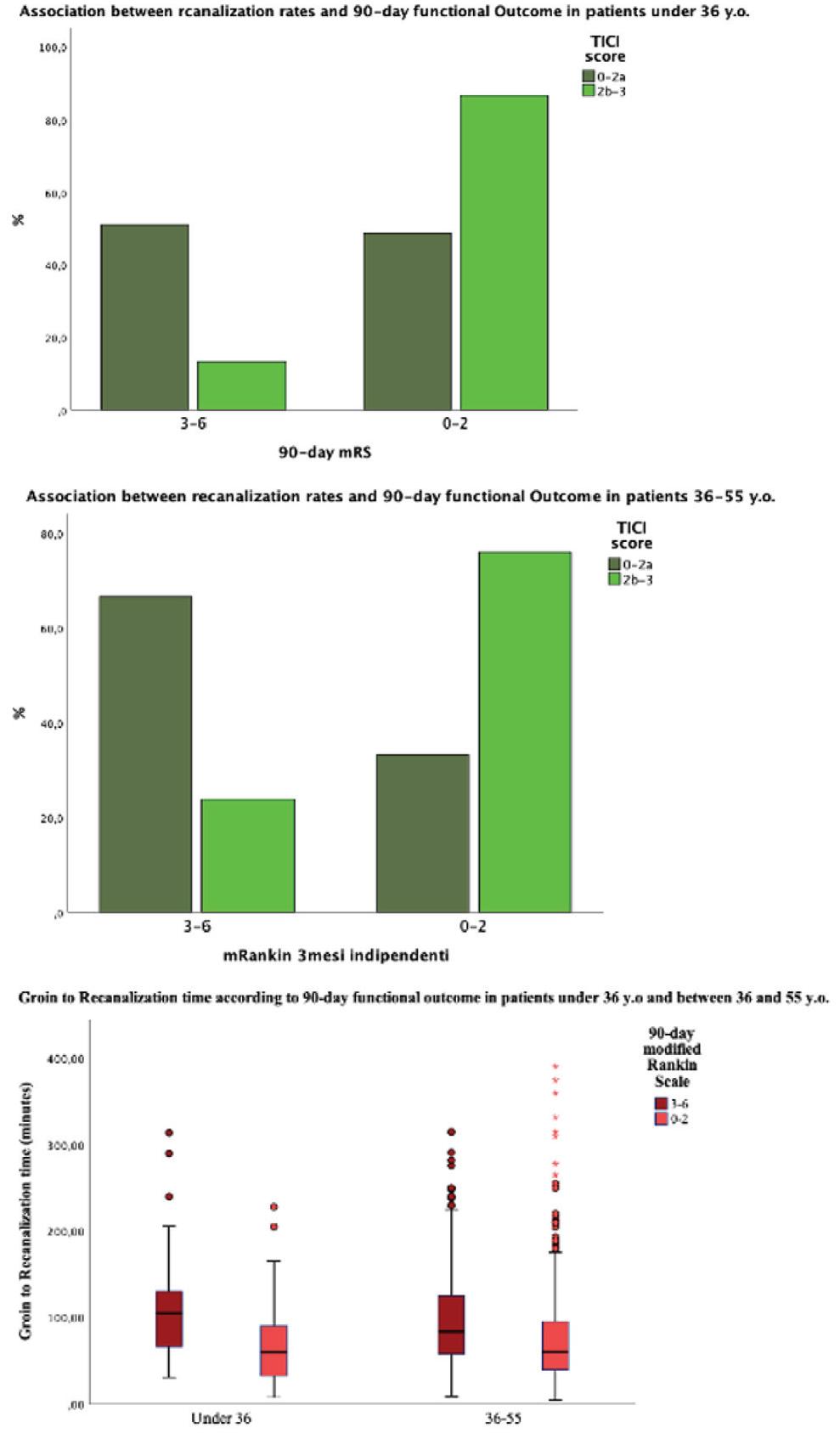
O181 / 228
Scientific Communications 22 - Stroke Complications & Outcome
SELECTIVE SEROTONIN REUPTAKE INHIBITORS FOR THE PREVENTION OF POST-STROKE DEPRESSION: A SYSTEMATIC REVIEW AND META-ANALYSIS
1Ruhr-University Bochum, Neurology, St. Josef-Hospital, Bochum, Germany, 2Ruhr-University Bochum, Psychiatry, LWL-Klinik, Bochum, Germany, 3McMaster University and Population Health Research Institute, Neurology, Hamilton, Canada, 4Ruhr-University Bochum, Bochum, Germany
O182 / 631
Scientific Communications 22 - Stroke Complications & Outcome
REMOTE INTRACRANIAL HEMORRHAGE IN ACUTE ISCHEMIC STROKE: IMPACT OF INTRAVENOUS THROMBOLYSIS AND RISK FACTORS
1Hospices Civils de Lyon, Stroke Unit, Lyon, France, 2Hospices Civils de Lyon, Neuroradiology Department, Lyon, France, 3Charité – Universitätsmedizin, Department of Neurology, Berlin, Germany, 4Universitätsklinikum Hamburg–Eppendorf, Klinik und Poliklinik für Neurologie, Hamburg, Germany, 5University of Leuven, Department of Neurosciences, Leuven, Belgium, 6University of Glasgow, Institute of Neurosciences and Psychology, Glasgow, United Kingdom, 7Hospital Universitari Doctor Josep Trueta, Girona, Spain, 8Aarhus University Hospital, Danish stroke Center, Aarhus, Denmark
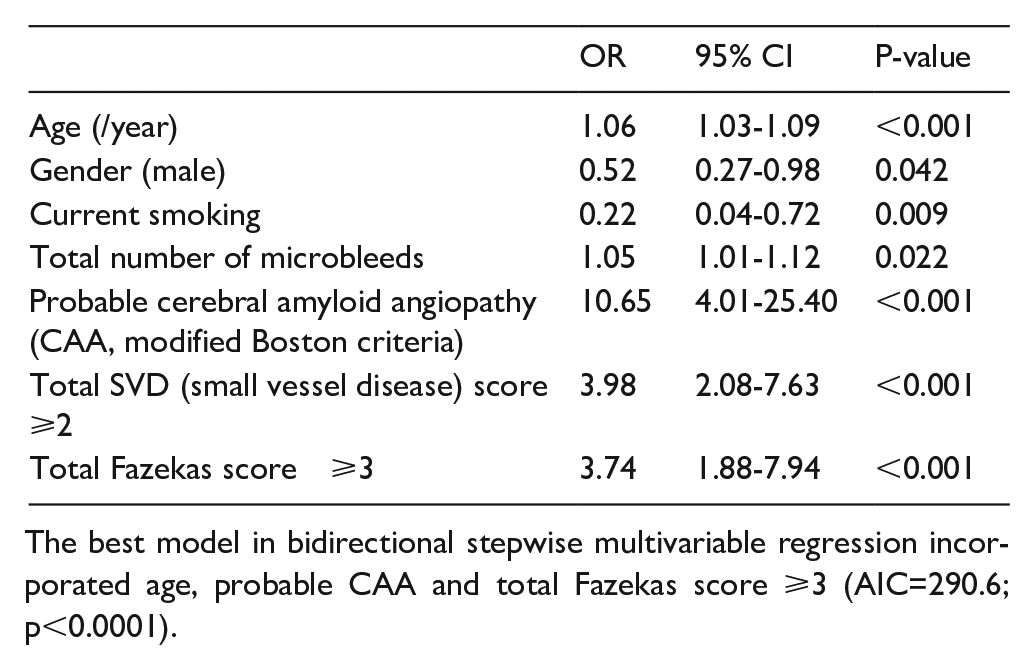
The best model in bidirectional stepwise multivariable regression incorporated age, probable CAA and total Fazekas score ⩾3 (AIC=290.6; p<0.0001).
O183 / 343
Scientific Communications 22 - Stroke Complications & Outcome
SAFETY AND OUTCOME OF REVASCULARIZATION TREATMENTS IN PATIENTS WITH ACUTE ISCHEMIC STROKE AND COVID-19: RESULTS OF THE GLOBAL COVID-19 STROKE REGISTRY
1Hospital de Egas Moniz, Centro Hospitalar Lisboa Ocidental, Neurology, Lisbon, Portugal, 2Lausanne University Hospital, Stroke Center, Neurology Service, Department of Neurological Sciences, Lausanne, Switzerland, 3Faculty of Medicine, School of Health Sciences, University of Thessaly, Internal Medicine, Larissa, Greece, 4Boston Medical Center, Boston University School of Medicine, Neurology and Radiology, Boston, United States, 5Charles University Faculty of Medicine and University Hospital, Neurology, Comprehensive Stroke Center, Hradec Králové, Czech Republic, 6Institute of Psychiatry and Neurology, 2nd Department of Neurology, Warsaw, Poland, 7Leuven University Hospital, Neurology, Leuven, Belgium, 8Alexandria University Hospitals and Affiliated Stroke Network, Alexandria, Egypt, 9School of Biomedical Engineering and Imaging Sciences, St Thomas Hospital, King’s College London, London, United Kingdom, 10National and Kapodistrian University of Athens, Clinical Therapeutics, Athens, Greece, 11Grady Memorial Hospital, Radiology, Neurology and Neurosurgery, Atlanta, United States
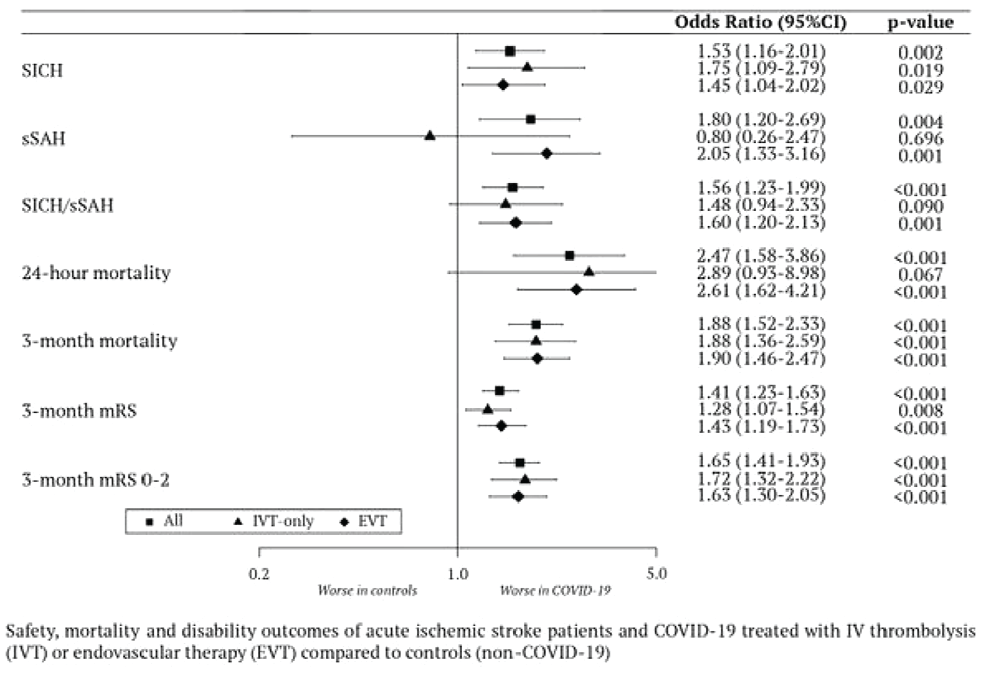
O184 / 559
Scientific Communications 22 - Stroke Complications & Outcome
THE TIMING OF STROKE CARE PROCESSES AND DEVELOPMENT OF STROKE ASSOCIATED PNEUMONIA: A NATIONAL REGISTRY COHORT STUDY
1University of Manchester, Division of Cardiovascular Sciences, Manchester, United Kingdom, 2University of Manchester, Centre for Biostatistics, Manchester, United Kingdom, 3King’s College London, School of Population Health and Environmental Sciences, London, United Kingdom
O185 / 638
Scientific Communications 22 - Stroke Complications & Outcome
SEX DIFFERENCES IN INTENSITY OF CARE AND OUTCOMES AFTER ACUTE ISCHEMIC STROKE ACROSS THE LIFESPAN
1University of Toronto, Toronto, Canada, 2ICES, Toronto, Canada, 3University of Calgary, Calgary, Canada, 4McMaster University, Hamilton, Canada, 5University of Ottawa, Ottawa, Canada, 6Michigan State University, East Lansing, United States
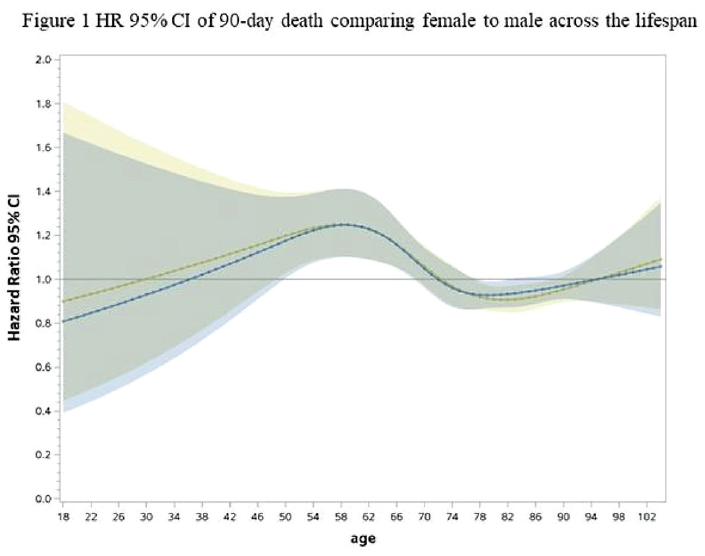
O186 / 654
Scientific Communications 22 - Stroke Complications & Outcome
COEXISTENT CEREBRAL SMALL VESSEL DISEASE AND MULTIPLE INFARCTIONS PREDICT RECURRENC IN PATIENTS WITH ACUTE MINOR STROKE OR TRANSIENT ISCHAEMIC ATTACK
1Beijing Tiantan Hospital of Capital Medical University, Neurology, Beijing, China, 2Chinese Institute for Brain Research, Beijing, China, 3China National Clinical Research Center for Neurological Diseases, Beijing, China, 4Advanced Innovation Center for Human Brain Protection of Capital Medical University, Beijing, China, 5Beijing Key Laboratory of Translational Medicine for Cerebrovascular Disease, Beijing, China
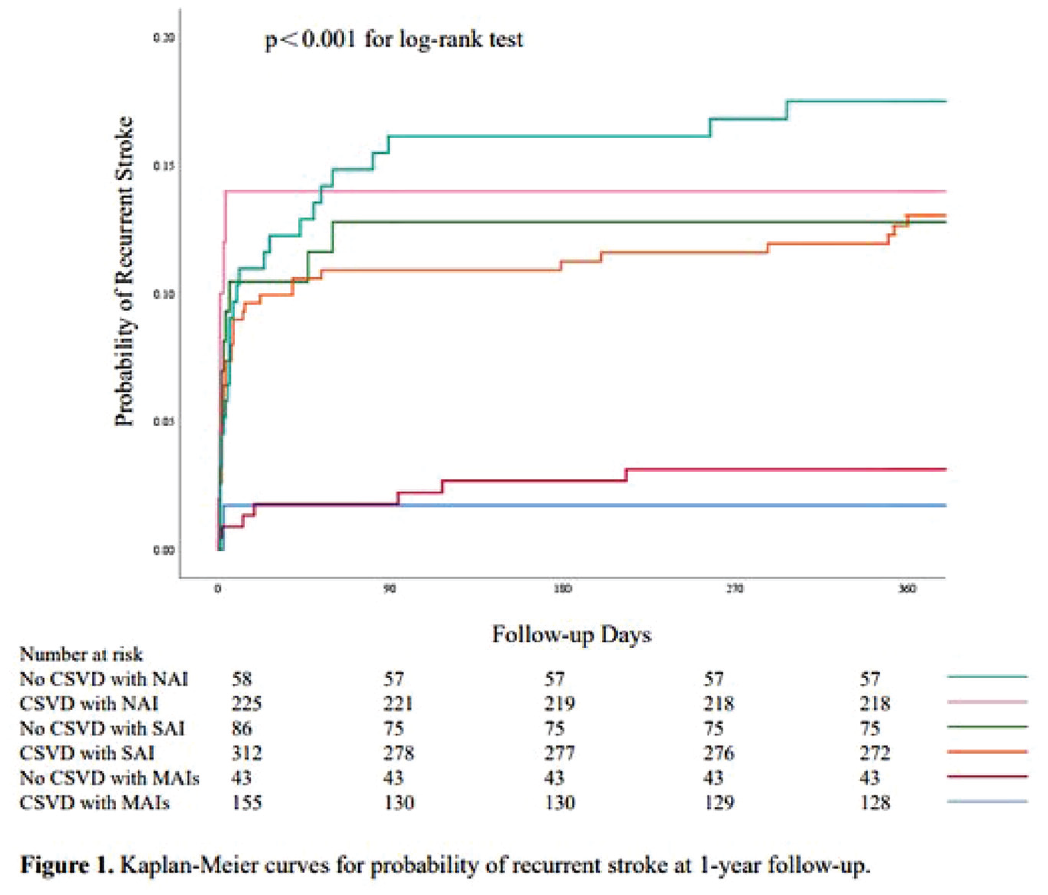
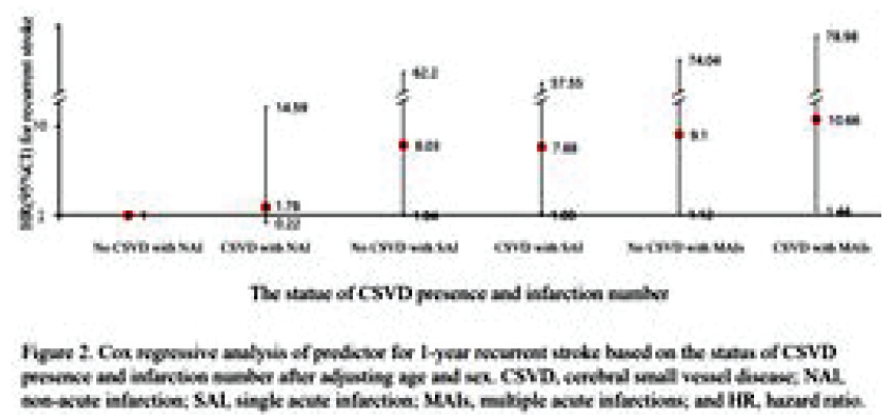
Risk of outcomes by CSVD and infarction number in patients with minor ischaemic stroke or TIA at 1-year follow-up.
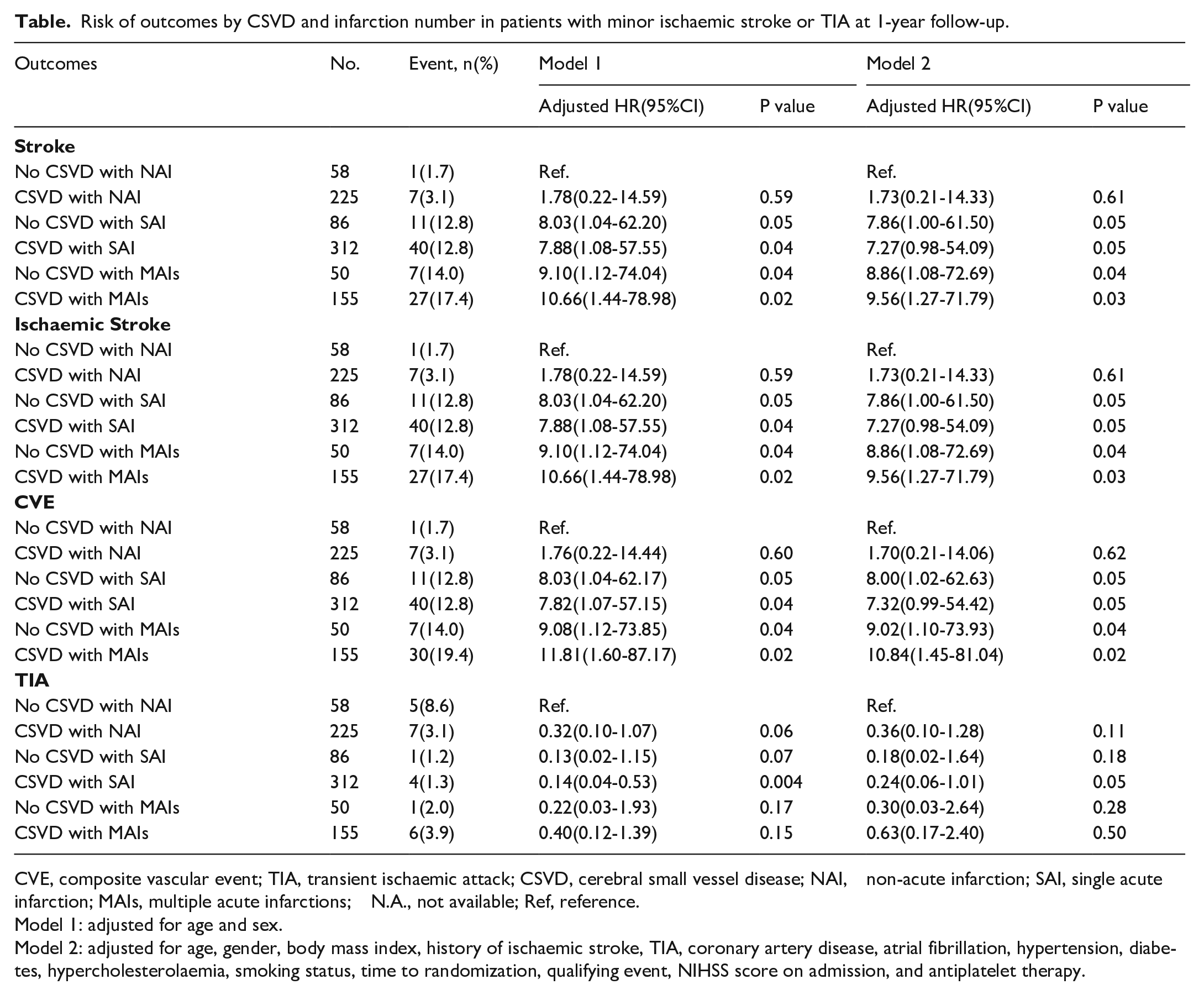
CVE, composite vascular event; TIA, transient ischaemic attack; CSVD, cerebral small vessel disease; NAI, non-acute infarction; SAI, single acute infarction; MAIs, multiple acute infarctions; N.A., not available; Ref, reference.
Model 1: adjusted for age and sex.
Model 2: adjusted for age, gender, body mass index, history of ischaemic stroke, TIA, coronary artery disease, atrial fibrillation, hypertension, diabetes, hypercholesterolaemia, smoking status, time to randomization, qualifying event, NIHSS score on admission, and antiplatelet therapy.
O187 / 726
Scientific Communications 22 - Stroke Complications & Outcome
COMPARISON OF OUTCOMES BETWEEN IN-PERSON AND VIRTUAL TIA CLINIC VISITS
1Western University / London Health Science Centre, Clinical Neurological Sciences, London, Canada, 2Lawson Research Institute, London, ON, Canada, London, Canada, 3Robarts Research Institute, London, Canada
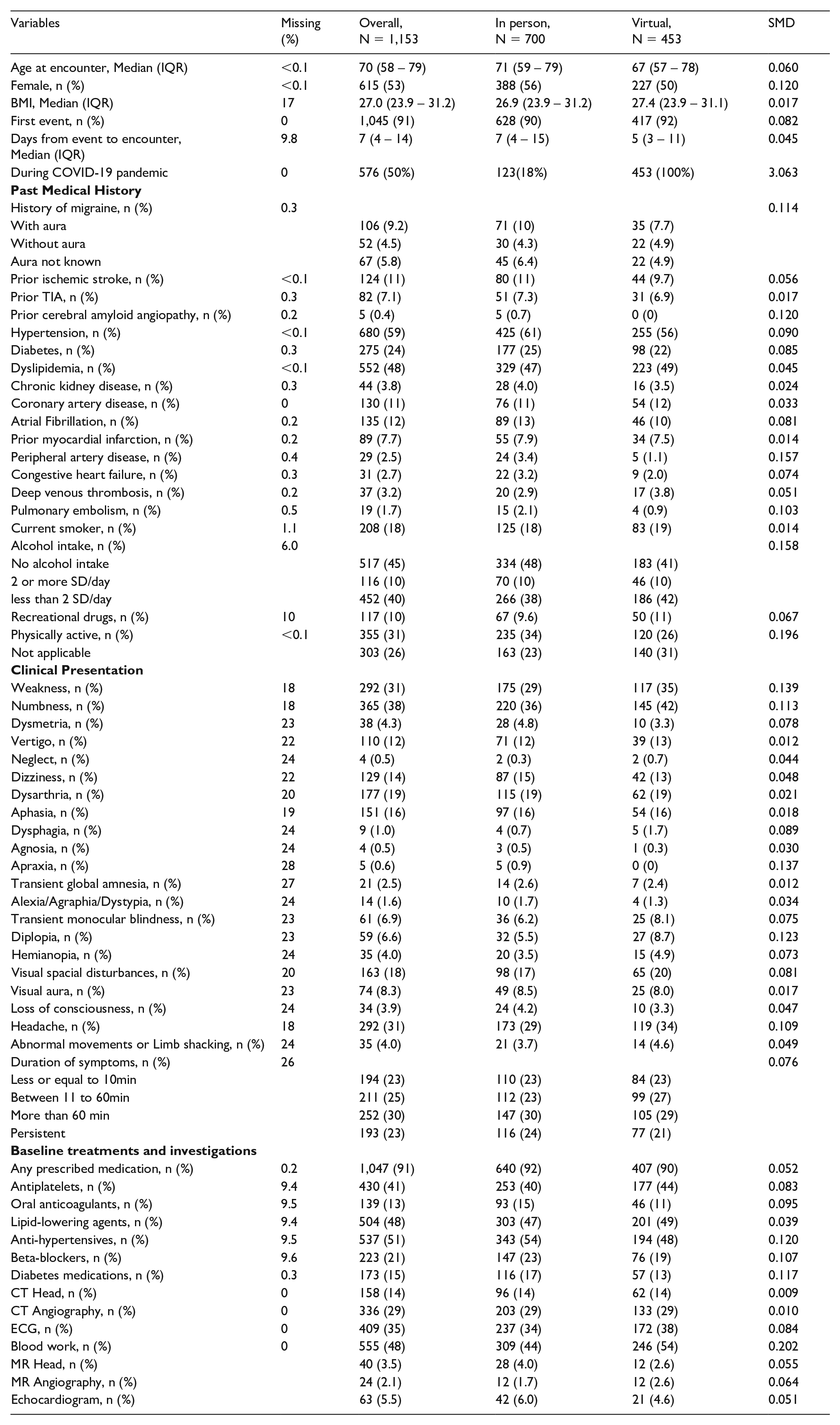
O188 / 1112
Scientific Communications 22 - Stroke Complications & Outcome
PRESTROKE PHYSICAL INACTIVITY PREDICTS MODERATE TO SEVERE STROKE IN MALE AND FEMALE PATIENTS
1University of Gothenburg, Institute of Neuroscience and Physiology, Department of Clinical Neuroscience, Rehabilitation Medicine, Gothenburg, Sweden, 2Sahlgrenska University Hospital, Department of Occupational Therapy and Physiotherapy, Gothenburg, Sweden
O189 / 1063
Scientific Communications 23 - Secondary Prevention
MULTIMORBIDITY AND RISK OF MAJOR BLEEDING ON ANTIPLATLET TREATMENT AFTER TIA OR STROKE: A POPULATION BASED STUDY
1 University of Oxford, Nuffield Department of Clinical Neuroscience, Oxford, United Kingdom
O190 / 260
Scientific Communications 23 - Secondary Prevention
CEREBROVASCULAR EVENTS AND INFLUENCE OF ANTITHROMBOTIC THERAPY DURING FOLLOW-UP OF PATIENTS WITH ISCHEMIC STROKE OR TRANSIENT ISCHEMIC ATTACKS AND CORTICAL SUPERFICIAL SIDEROSIS
1Hospital de la Santa Creu i Sant Pau, Biomedical Research institute Sant Pau, Neurology, Barcelona, Spain, 2Stroke Research Centre, UCL Queen Square Institute of Neurology, Brain Repair and Rehabilitation, London, United Kingdom
O191 / 1247
Scientific Communications 23 - Secondary Prevention
APPLICATION OF NEUROIMAGING PREDICTORS FOR STROKE RECURRENCE IN PATIENTS WITH ATRIAL FIBRILLATION
1Seoul National University Bundang Hospital, Seoul National University College of Medicine, Department of Neurology and Cerebrovascular Center, Seongnam, Korea, Republic of, 2Chonnam National University Hospital, Department of Neurology, Gwangju, Korea, Republic of, 3Chungbuk National University Hospital, Department of Neurology, Cheongju, Korea, Republic of, 4Dong-A University Hospital, Dong-A University College of Medicine, Department of Neurology, Busan, Korea, Republic of, 5Dongguk University Ilsan Hospital, Department of Neurology, Goyang, Korea, Republic of, 6Uijeongbu Eulji Medical Center, Eulji University School of Medicine, Department of Neurology, Uijeongbu, Korea, Republic of, 7Nowon Eulji Medical Center, Eulji University School of Medicine, Department of Neurology, Seoul, Korea, Republic of, 8Daejeon Eulji Medical Center, Eulji University School of Medicine, Department of Neurology, Daejeon, Korea, Republic of, 9Hallym University Sacred Heart Hospital, Department of Neurology, Anyang, Korea, Republic of, 10Inje University Ilsan Paik Hospital, Inje University College of Medicine, Department of Neurology, Goyang, Korea, Republic of, 11Jeju National University Hospital, Jeju National University School of Medicine, Department of Neurology, Jeju, Korea, Republic of, 12Keimyung University Dongsan Medical Center, Department of Neurology, Daegu, Korea, Republic of, 13Seoul Medical Center, Department of Neurology, Seoul, Korea, Republic of, 14Soonchunhyang University Hospital, College of Medicine, Department of Neurology, Seoul, Korea, Republic of, 15Ulsan University Hospital, Ulsan University College of Medicine, Department of Neurology, Ulsan, Korea, Republic of, 16Yeungnam University Hospital, Department of Neurology, Daegu, Korea, Republic of, 17Asan Medical Center, Clinical Research Center, Seoul, Korea, Republic of, 18Korea University College of Medicine, Department of Biostatistics, Seoul, Korea, Republic of
We defined CHA2DS2-VASc-NIP score as a sum of CHA2DS2-VASc score and scores from each neuroimaging parameters of P-value <0.05 in the multivariable model.
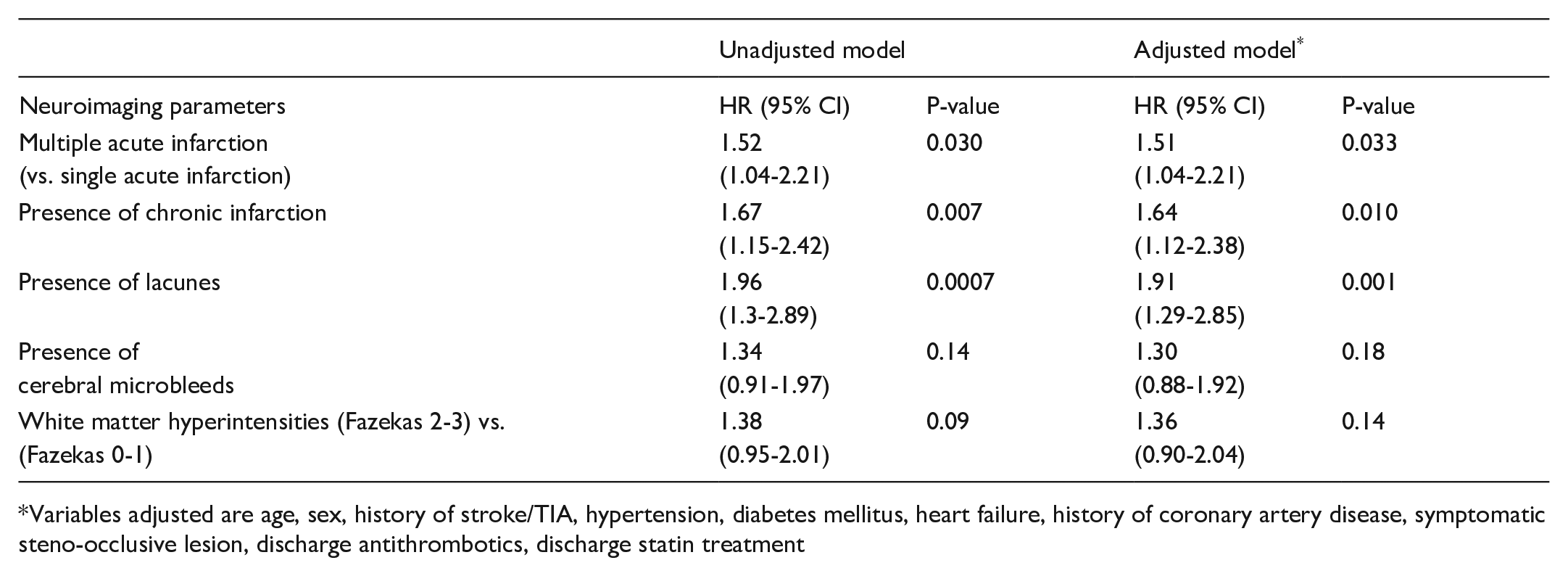
Variables adjusted are age, sex, history of stroke/TIA, hypertension, diabetes mellitus, heart failure, history of coronary artery disease, symptomatic steno-occlusive lesion, discharge antithrombotics, discharge statin treatment
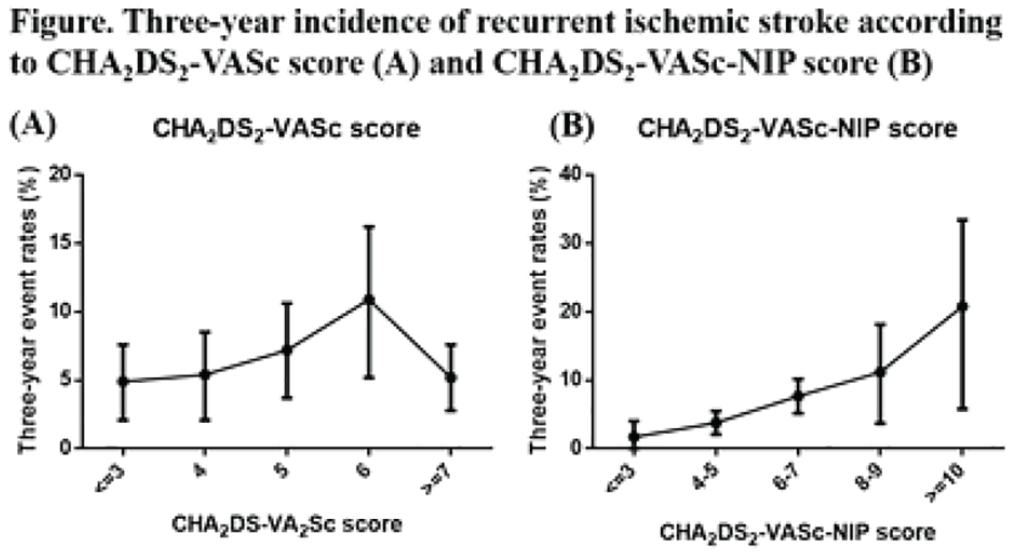
O192 / 1206
Scientific Communications 23 - Secondary Prevention
NOT USING OF STATIN THERAPY AND OUTCOMES AFTER ISCHEMIC STROKE
1University of Turku, Neurocenter, Turku University Hospital and Clinical neurosciences, Turku, Finland, 2Institute of Biomedicine University of Turku, Clinical Pharmacology, Turku University Hospital and Integrative Physiology and Pharmacology, Turku, Finland, 3University of Turku, Turku, Clinical Research Center, Turku University Hospital and Department of Public Health, Turku, Finland, 4University of Turku, Heart Center, Turku University Hospital and Clinical Research Centre of Applied and Preventive Cardiovascular Medicine, Turku, Finland, 5University of Turku, Center for Population Health Research, Turku University Hospital, Turku, Finland, 6University of Helsinki, Department of Public Health, Helsinki, Finland
O193 / 1492
Scientific Communications 23 - Secondary Prevention
CHARACTERISTICS ASSOCIATED WITH SELF-MONITORING OF BLOOD PRESSURE (BP) 90 DAYS AFTER DISCHARGE IN PATIENTS WITH STROKE OR TIA: THE COMPREHENSIVE POST-ACUTE STROKE SERVICES (COMPASS) STUDY
1Wake Forest School of Medicine, Neurology, Winston Salem, United States, 2University of North Carolina at Chapel Hill, Chapel Hill, United States, 3East Carolina University, Greenville, United States, 4University of North Carolina at Wilmington, Wilmington, United States, 5Wake Forest School of Medicine, Winston Salem, United States, 6Duke University, Durham, United States, 7University of Kentucky, Lexington, United States
O194 / 838
Scientific Communications 23 - Secondary Prevention
PLASMA FIBRINOGEN AND RISK OF VASCULAR RECURRENCE AFTER ISCHAEMIC STROKE: AN INDIVIDUAL PARTICIPANT DATA META-ANALYSIS OF PROSPECTIVE COHORT STUDIES
1Stroke Clinical Trials Network Ireland, Dublin, Ireland, 2Mater Misericordiae University Hospital, Dublin, Ireland, 3University College Dublin, School of Medicine, Dublin, Ireland, 4University of Limerick, Health Research Institute and Mathematics Applications Consortium for Science and Industry (MACSI), Department of Mathematics and Statistics, Limerick, Ireland, 5Health Research Institute of Santiago de Compostela, Clinical Neuroscience Research Laboratory, Santiago de Compostela, Spain, 6The George Institute for Global Health, University of New South Wales, Sydney, Australia, 7Institute of Biomedicine, the Sahlgrenska Academy, University of Gothenburg, Department of Laboratory Medicine, Gothenburg, Sweden, 8Sahlgrenska University Hospital, Department of Clinical Genetics and Genomics, Gothenburg, Sweden, 9Wolfson Centre for the Prevention of Stroke and Dementia, University of Oxford, Oxford, United Kingdom, 10Juntendo University School of Medicine, Department of Neurology, Tokyo, Japan, 11Hospital Universitari Vall d’Hebron, Department of Neurology, Barcelona, Spain, 12Institute de Biomedicine of Seville, IBiS/Hospital Universitario Virgen del Rocío/CSIC/University of Seville, Seville, Spain, 13Virgen Macarena Hospital, Department of Neurology, Sevilla, Spain, 14Vall d’Hebron Institute of Research, Universitat Autònoma de Barcelona, Neurovascular Research Laboratory, Barcelona, Spain, 15Hospital Universitari Arnau de Vilanova, Department of Neurology, Lleida, Spain, 16Institut Reserca Biomèdica Lleida, Department of Clinical Neurosciences, Lleida, Spain, 17Usher Institute of Population Health Sciences and Informatics, University of Edinburgh, Centre for Medical Informatics, Edinburgh, United Kingdom, 18University of Edinburgh, Centre for Clinical Brain Sciences, Edinburgh, United Kingdom, 19University of Oxford, Nuffield Department of Population Health, Oxford, United Kingdom, 20George Institute for Global Health, Imperial College London, London, United Kingdom, 21Johns Hopkins University, Department of Epidemiology, Baltimore, United States
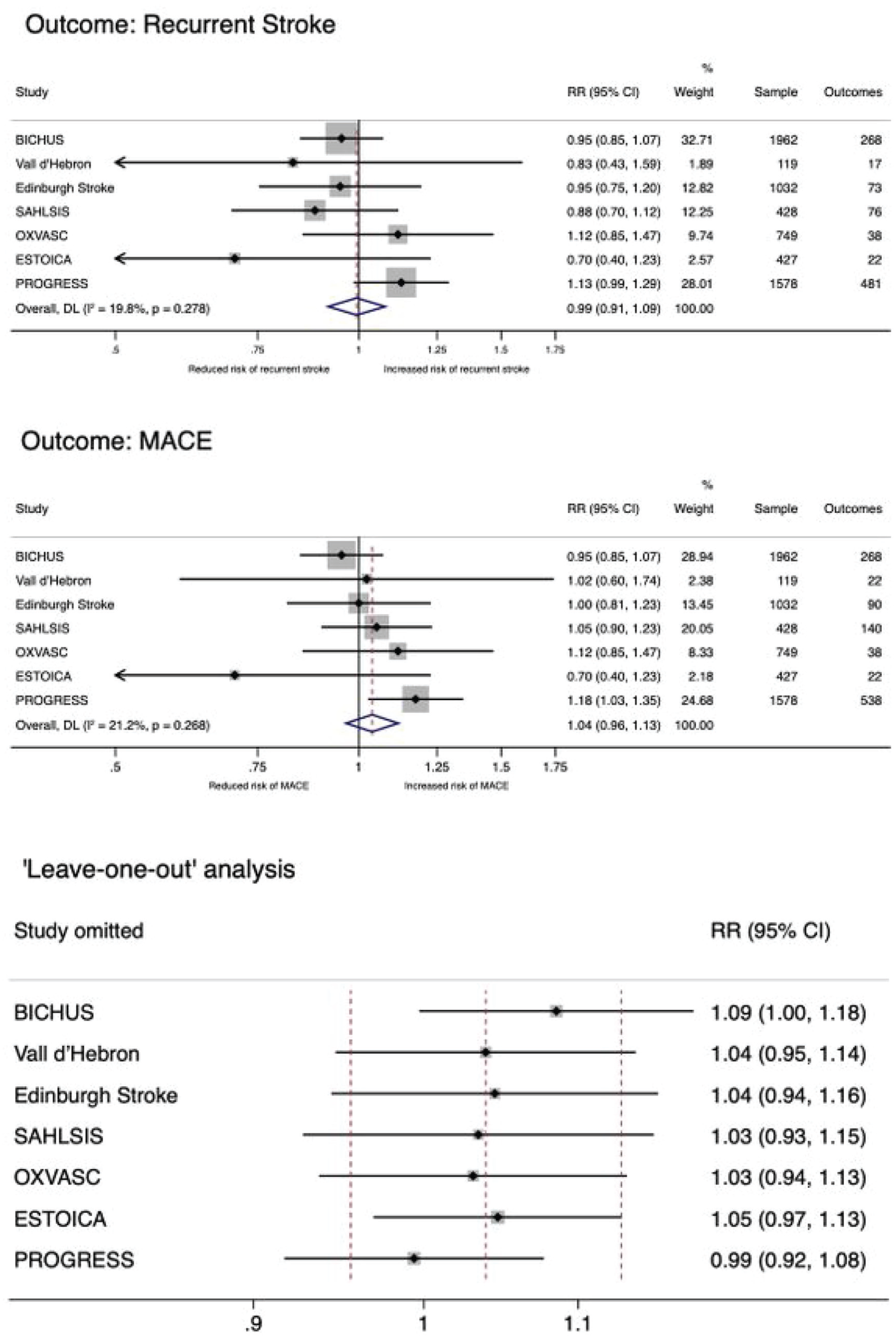
O195 / 477
Scientific Communications 23 - Secondary Prevention
REANALYSIS OF VASCULAR EVENT OUTCOMES IN PREVENTION TRIALS USING GLOBAL ANALYSIS METHODS
1University of Nottingham, Stroke Trials Unit, Mental Health & Clinical Neurosciences, Nottingham, United Kingdom, 2University of Nottingham, Nottingham Clinical Trials Unit, Nottingham, United Kingdom
O197 / 545
Scientific Communications 24 - Hyperacute Management
ANALYSIS AND MODELLING OF MISTRIAGE IN THE STOCKHOLM STROKE TRIAGE SYSTEM
1Karolinska Institutet, Department of Clinical Neuroscience, Stockholm, Sweden, 2Karolinska University Hospital, Department of Neurology, Stockholm, Sweden, 3Karolinska Institutet, Unit of Biostatistics, Stockholm, Sweden, 4Karolinska Institutet, Stroke Research Network at Södersjukhuset, Department of Clinical Science and Education, Stockholm, Sweden, 5Örebro University, School of Medicine, Örebro, Sweden, 6Karolinska University Hospital, Department of Neuroradiology, Stockholm, Sweden, 7Karolinska Institutet, Danderyd Hospital, Department of Clinical Sciences, Stockholm, Sweden, 8Capio S:t Görans Hospital, Department of Neurology, Stockholm, Sweden
O198 / 1167
Scientific Communications 24 - Hyperacute Management
STROKE MIMICS: FINDINGS FROM THE FIRST NATIONWIDE AUDIT OF MIMIC ACTIVITY IN THE UK
1King’s College London, Department of Population Health Sciences, London, United Kingdom, 2Guy’s and St Thomas’ NHS Foundation Trust, London, United Kingdom, 3Royal Devon and Exeter NHS Foundation Trust, Exeter, United Kingdom
O199 / 950
Scientific Communications 24 - Hyperacute Management
GOLDEN HOUR TREATMENT WITH TISSUE PLASMINOGEN ACTIVATOR IN THE BEST-MSU STUDY
1Indiana University School of Medicine, Indianapolis, United States, 2University of Texas School of Public Health, Houston, United States, 3University of Texas McGovern Medical School, Houston, United States, 4University of Colorado, Aurora, United States, 5Mills Peninsula Medical Center, Burlingame, United States, 6Ronald Reagan UCLA Medical Center, Los Angeles, United States, 7Memorial Hermann Hospital-Texas Medical Center, Houston, United States
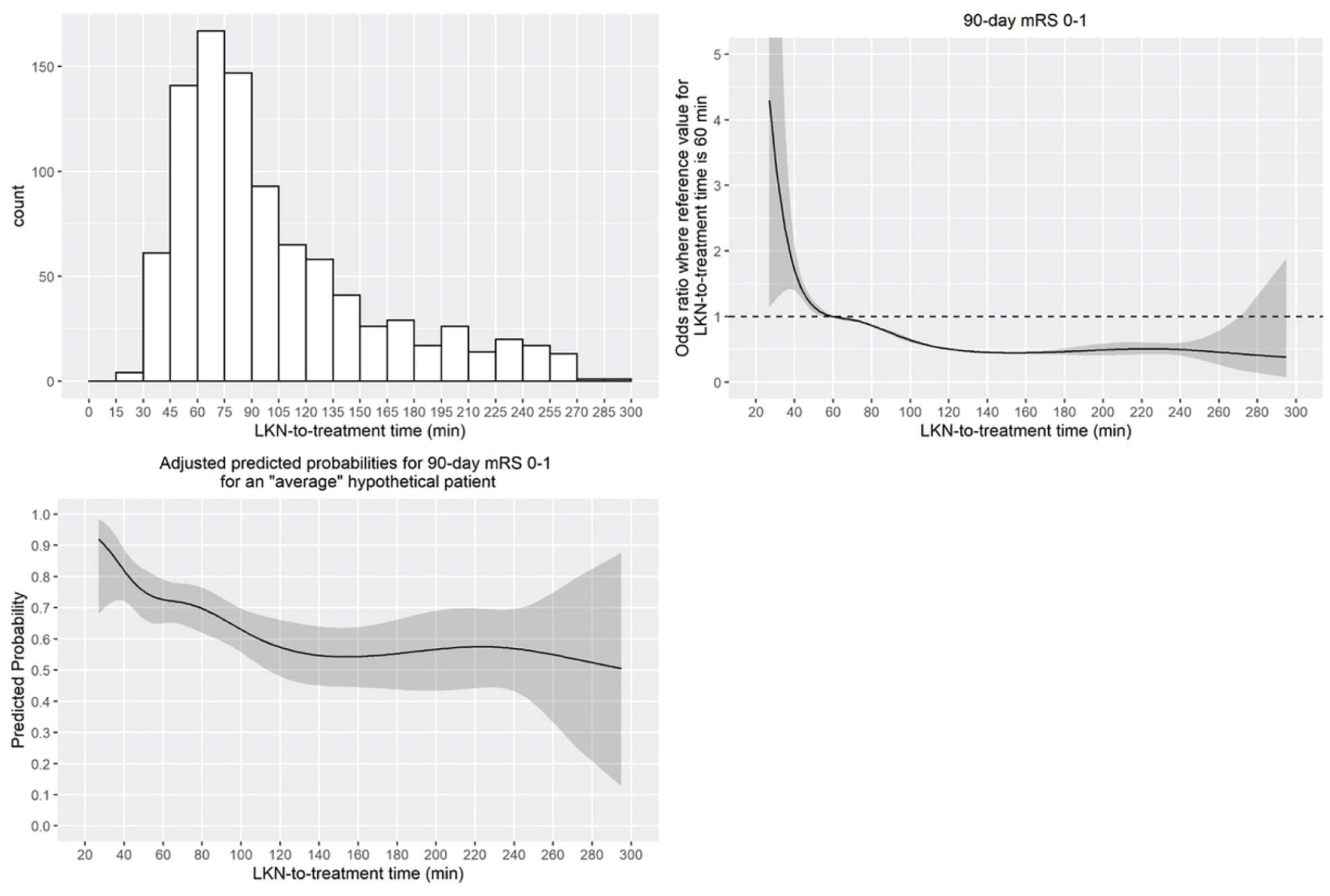
O200 / 460
Scientific Communications 24 - Hyperacute Management
GLYCERYL TRINITRATE IN PATIENTS WITH ACUTE ISCHEMIC STROKE TREATED WITH INTRAVENOUS THROMBOLYSIS OR ENDOVASCULAR THROMBECTOMY – RESULTS FROM THE MR ASAP TRIAL
1UMC Utrecht, Neurology and Neurosurgery, Utrecht, Netherlands, 2Amsterdam UMC, Neurology, Amsterdam, Netherlands, 3Erasmus MC, Radiology & Nuclear Medicine, Rotterdam, Netherlands, 4Amsterdam UMC, Radiology and Nuclear Medicine, Amsterdam, Netherlands, 5Catharina Hospital, Radiology, Eindhoven, Netherlands, 6Rijnstate, Neurology, Arnhem, Netherlands
O201 / 711
Scientific Communications 24 - Hyperacute Management
CLINICAL OUTCOME OF POPULATION INCLUDED IN RACECAT TRIAL COMPARED TO PATIENTS LIVING IN URBAN AREAS INITIALLY ATTENDED IN THROMBECTOMY CENTERS
1Hospital Universitari Germans Trias i Pujol, Neurology, Stroke Unit, Badalona, Spain, 2Hospital Vall d’Hebrón, Neurology, Stroke Unit, Barcelona, Spain, 3Stroke Programme, Catalan Health Department, Agency for Health Quality and Assessment of Catalonia, Barcelona, Spain, 4Emergency Medical Services (SEM) of Catalonia, Barcelona, Spain, 5Hospital Clínic, Barcelona, Spain, 6Hospital Bellvitge, Barcelona, Spain, 7Hospital de Granollers, Granollers, Spain, 8Hospital Arnau de Vilanova, Lleida, Spain, 9Hospital Josep Trueta, Girona, Spain, 10Universitat Politècnica de Catalunya, Statistics and Operational Research, Barcelona, Spain, 11Neurological Institute, Cooper University Hospital, Camden, New Jersey, United States
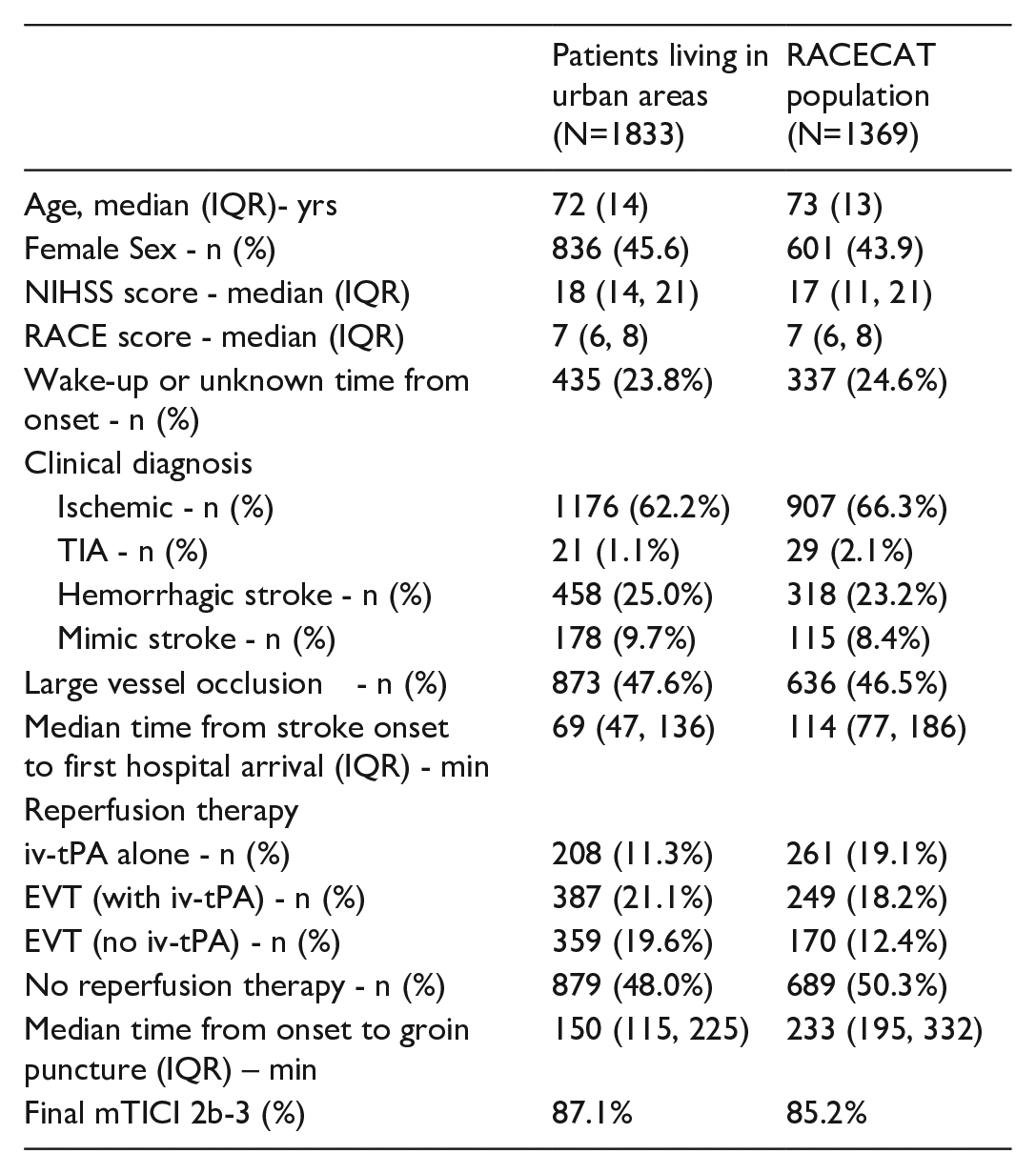
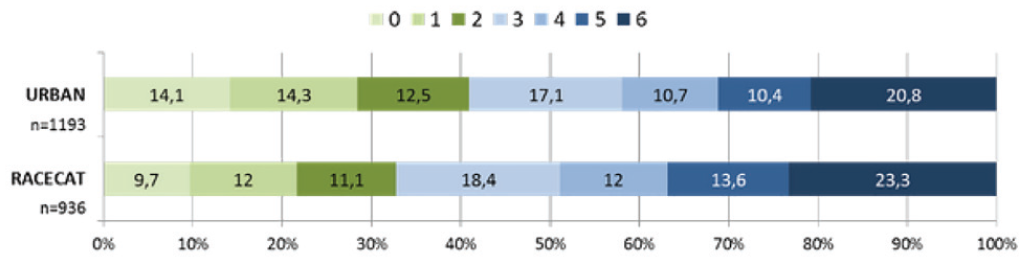
O202 / 576
Scientific Communications 24 - Hyperacute Management
SAFETY AND EFFICACY OF ENDOVASCULAR THROMBECTOMY PLUS INTRAVENOUS THROMBOLYSIS VS. INTRAVENOUS THROMBOLYSIS ALONE IN MILD SYMPTOMS STROKES WITH LARGE VESSEL OCCLUSION: PROPENSITY SCORE MATCHED ANALYSIS
1Fondazione IRCCS Ca’ Granda Ospedale Maggiore Policlinico, Stroke Unit, Milan, Italy, 2Stroke Research Centre, University College London, Institute of Neurology, London, United Kingdom, 3Karolinska University Hospital, Department of Neurology, Stockholm, Sweden, 4Karolinska Institutet, Department of Clinical Neuroscience, Stockholm, Sweden, 5Attikon University Hospital, National & Kapodistrian University of Athens, School of Medicine, Second Department of Neurology, Athens, Greece, 6Stroke Unit, Saint Joseph’s Hospital, Central Lisbon University Hospital Centre, Lisbon, Portugal, 7Neurological Clinic, University of Pisa and Azienda Ospedaliera Universitaria Pisana, Department of Clinical and Experimental Medicine, Pisa, Italy, 8IRCCS Istituto delle Scienze Neurologiche di Bologna, Department of Neurology and Stroke Center, Maggiore Hospital, Bologna, Italy, 9Neurology and Stroke Unit, AORN Antonio Cardarelli, Naples, Italy, 10North Estonia Medical Centre Foundation, Department of Neurology, Tallinn, Estonia
O203 / 1198
Scientific Communications 24 - Hyperacute Management
MULTIMODAL IMAGING IN THE SELECTION OF PATIENTS WITH ACUTE STROKE UNDERGOING ENDOVASCULAR TREATMENT (EVT).THE IMAGECAT CLINICAL TRIAL (CLINICALTRIALS.GOV IDENTIFIER: NCT03745391)
1Germans Trias Pujol Hospital, Neurosciences, Badalona, Spain, 2Germans Trias Pujol Hospital, Radiology, Badalona, Spain
Baseline and outcome characteristics by group in patients with acute ischemic stroke.
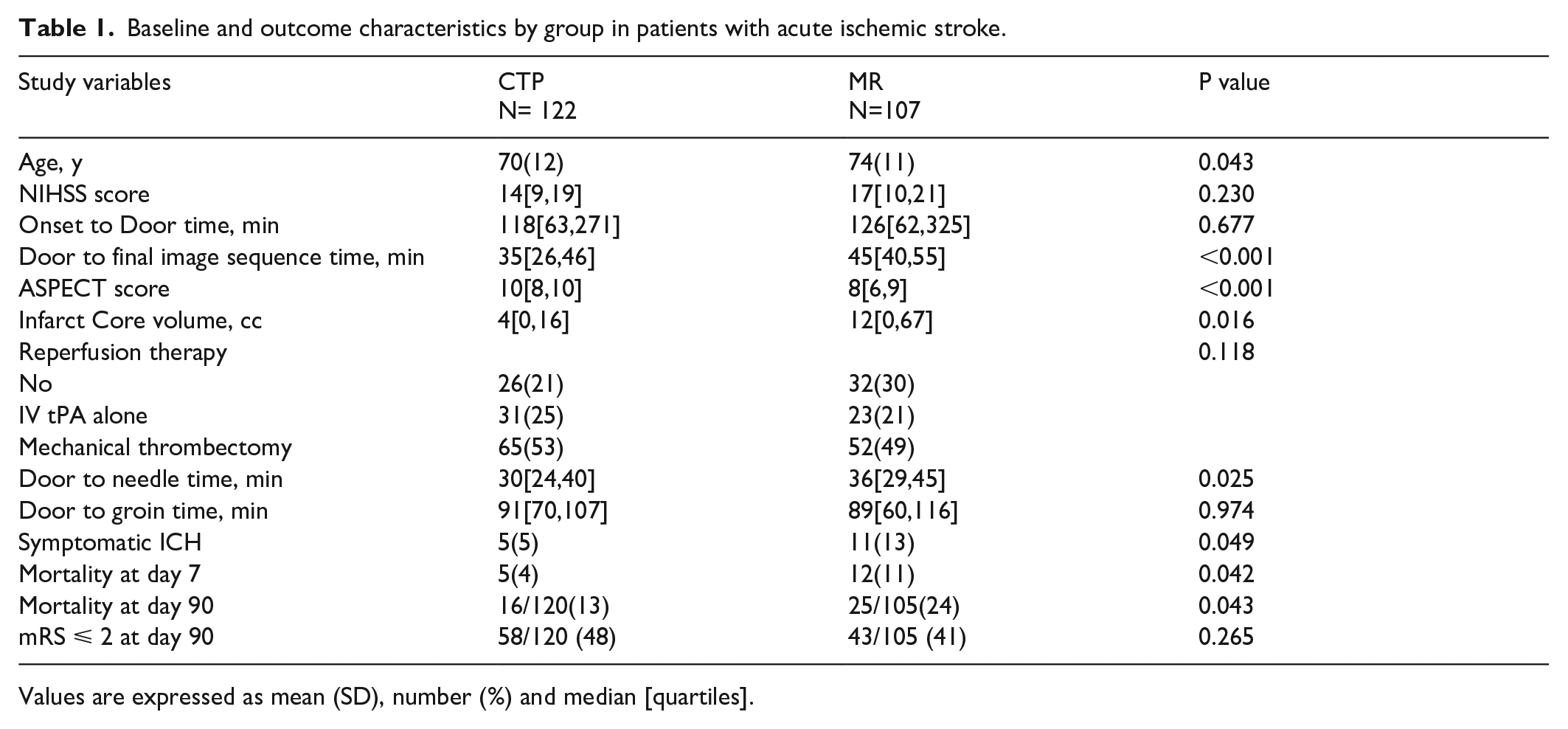
Values are expressed as mean (SD), number (%) and median [quartiles].
Baseline and outcome characteristics by group in patients who underwent endovascular treatment.
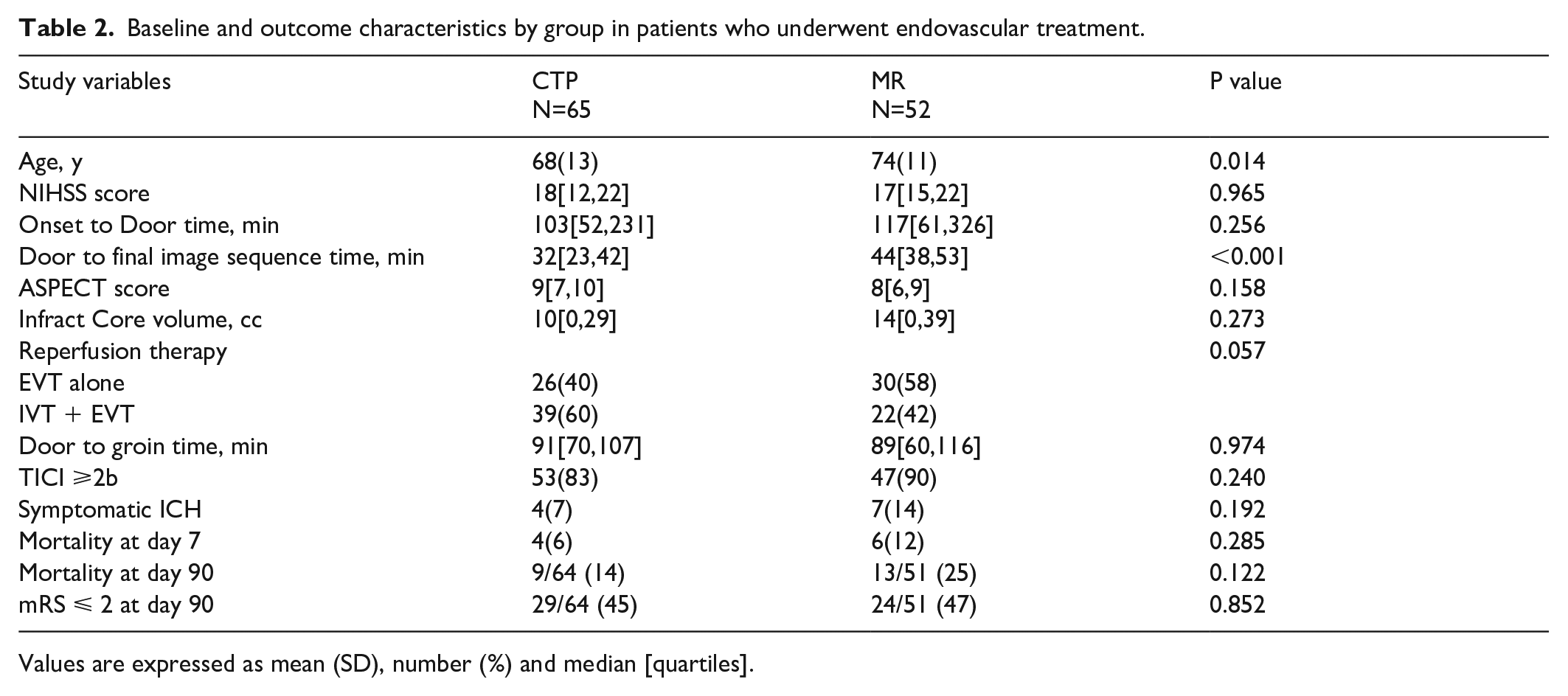
Values are expressed as mean (SD), number (%) and median [quartiles].
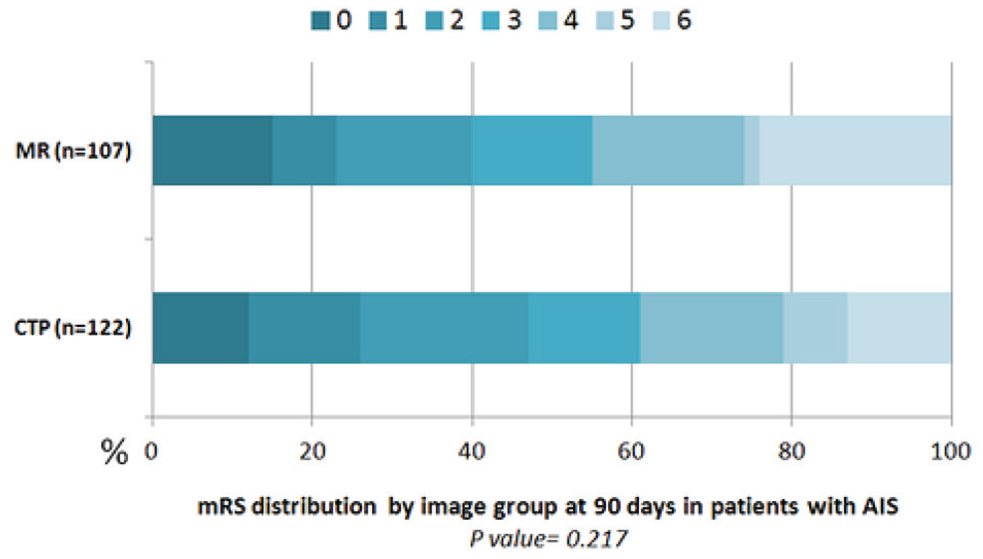
O204 / 92
WITHDARWN Scientific Communications 24 - Hyperacute Management
INTRACRANIAL PRESSURE MONITORING IN SPONTANEOUS INTRACEREBRAL HEMORRHAGE. INSIGHTS FROM THE SYNAPSE-ICU STUDY
1University of Milano Bicocca, Neurointensive Care Unit, Department Neuroscience, San Gerardo Hospital, Monza, Milano, Italy, 2Policlinico San Martino IRCCS for Oncology and Neuroscience, Department of Anaesthesia and Intensive Care, Genova, Italy, 3University of Milano Bicocca, Bicocca Bioinformatics Biostatistics and Bioimaging B4 Center, Milano, Italy, 4University of California, San Francisco, Department of Neurology, San Francisco, United States, 5University of Milano Bicocca, Neurointensive Care Unit, Department Neuroscience, San Gerardo Hospital, Milano, Italy
O205 / 874
Closing Ceremony & Large Clinical Trials 2
DRIP-AND-SHIP VS MOTHERSHIP TRANSFER PROTOCOLS IN PATIENTS WITH INTRACRANIAL HEMORRHAGE: SECONDARY ANALYSIS OF RACECAT TRIAL
1Hospital Universitari Germans Trias i Pujol, Stroke Unit, Neurology, Badalona, Spain, 2Hospital Universitari Vall d’Hebrón, Stroke Unit, Neurology, Barcelona, Spain, 3Hospital de la Santa Creu i Sant Pau, Stroke Unit, Neurology, Barcelona, Spain, 4Hospital Universitari Dr Josep Trueta, Stroke Unit, Neurology, Girona, Spain, 5Sistema d’Emergències Mèdiques, Barcelona, Spain, 6Departament de Salut, Barcelona, Spain
O207 / 505
Closing Ceremony & Large Clinical Trials 2
EFFECTS OF INTENSIVE BLOOD PRESSURE LOWERING ON CEREBRAL ISCHAEMIA: INSIGHTS FROM THE ENCHANTED TRIAL
1Shanghai East Hospital, School of Medicine, Tongji University, Shanghai, China, 2The George Institute for Global Health, University of New South Wales, Sydney, Australia, 3The George Institute China at Peking University Health Sciences Center, Beijing, China, 4Hospital Queen Elizabeth, Sabah, Malaysia, 5Macquarie University, Department of Clinical Medicine, Faculty of Medicine, Health and Human Sciences, Sydney, Australia, 6University of Bordeaux, Bordeaux, France, 7Westmead Applied Research Centre, Faculty of Medicine and Health, University of Sydney, Westmead Hospital, Sydney, Australia, 8Ingham Institute for Applied Medical Research, Liverpool Hospital, University of New South Wales, Sydney, Australia
(i) increased the size of cerebral ischaemia and
(ii) this modified the effects of BP lowering on functional recovery.
O209 / 924
Closing Ceremony & Large Clinical Trials 2
ASSOCIATION OF INTRAVENTRICULAR FIBRINOLYSIS WITH CLINICAL OUTCOMES IN PATIENTS WITH INTRACEREBRAL HEMORRHAGE: AN INDIVIDUAL PARTICIPANT DATA META-ANALYSIS
1University Hospital Erlangen, Neurology, Erlangen, Germany, 2University Hospital Erlangen, Erlangen, Germany, 3Johns Hopkins, Baltimore, United States
ESOC 2022 – E-PosterACUTE MANAGEMENT – NEITHER THROMBOLYSIS NOR THROMBECTOMY
P0001 / 889
RELIABILITY OF BLINK REFLEX (BR), MEP AND BAEP IN POSTERIOR CIRCULATION ISCHEMIC STROKE
1Masaryk Hospital, Krajska Zdravotni a.s., Department of Neurology, Ústí nad Labem, Czech Republic, 2Faculty of Health Studies UJEP, Radiological Department, Ústí nad Labem, Czech Republic
P0002 / 801
RESULTS OF AN OPEN-LABEL, MULTICENTER, CASE-CONTROL STUDY OF THE EFFECTS OF CONCOMITANT THERAPY WITH “KSAVRON” ON THE CONSEQUENCES OF ISCHEMIC STROKE IN CLINICAL PRACTICE SETTING
1 National Pirogov Memorial Medical University, Vinnytsya, Neurology, Vinnytsya, Ukraine
P0003 / 1327
HIGH DOSE METHYLPREDNISOLONE FOR PREVENTION OF MALIGNANT ANTERIOR CIRCULATION STROKE IN THROMBOLYSED PATIENTS, A PILOT STUDY.
1 Saudi German Hospital, Neurology Department, Jeddah, Saudi Arabia
P0004 / 678
ASSESSMENT OF 3 MR PERFUSION SOFTWARE PACKAGES IN PREDICTING FINAL INFARCT VOLUME AFTER MECHANICAL THROMBECTOMY
1Hospices Civils de Lyon, Neuroradiology, Bron, France, 2Hospices Civils de Lyon, Stroke, Bron, France, 3Hospices Civils de Lyon, Clinical Investigations Center, Bron, France
In patients with successful revascularization, ischemic core volumes did not differ significantly from FIV regardless of the package used for uncorrected and corrected volumes (P>0.15). Conversely, assessment of PDV revealed significant differences for uncorrected volumes. In patients with unsuccessful revascularization, the uncorrected PDV of packages A (median absolute difference: -40.9mL) and B (median absolute difference: -67.0mL) overestimated FIV to a lesser degree compared with package C (median absolute difference: -118.7mL, P=0.03 and P=0.12, respectively). After correction, PDV did not differ significantly from FIV for all three packages (P⩾0.99).
P0005 / 1569
VALIDATION OF THE PERFORMANCE OF ICH SCORE FOR PREDICTING MORTALITY IN CERBRAL HEMORRHAGE IN THE EMERGENCY DEPARTEMENT
1Habib thameur hospital, Emergency, Tunis, Tunisia, 2Habib thameur hospital, Emergency departement, Tunis, Tunisia, 3Habib thameur hospital, Intensive care Unit, Tunis, Tunisia
Patients were divided into 5 groups according to the ICH score n(%): 0 (23.8), 1(23.8), 2(21.4), 3(23.8), 4(7.1). Threshold value of the ICH score for predicting 30-day mortality determined by the ROC curve was 3. The AUC was 0.76; with IC 95% [0.61-0.91] ans p=0.001. Sensitivity and specificity were respectively 57.2% and 95.2%; Positive Predictive Value =92.3% and Negative Predictive Value =69%.
P0006 / 205
DELIRIUM IN A NORWEGIAN STROKE UNIT
1Bærum Hospital, Vestre Viken Hospital Trust, Department of Medicine, Drammen, Norway, 2Bærum Hospital, Vestre Viken Hospital Trust, Department of Medical Research, Drammen, Norway
P0007 / 1114
THE BLOOD BRAIN BARRIER PERMEABILITY IN PATIENTS WITH ASYMPTOMATIC CAROTID ARTERY STENOSIS
1 Clinical Medical College of Yangzhou University, Yangzhou, China
P0008 / 254
QUALITY IN ACUTE STROKE CARE (QASC) EUROPE - FACTORS INFLUENCING INTERNATIONAL UPSCALE OF NURSE-LED STROKE PROTOCOLS IN 64 EUROPEAN HOSPITALS: A QUALITATIVE STUDY
1Australian Catholic University, Nursing Research Institute, Melbourne, Australia, 2Australian Catholic University, Nursing Research Institute, Sydney, Australia, 3University of Ottawa, Ottawa, Canada, 4Klinikum Lüneburg, Department of Neurology and Clinical Neurophysiology, Lüneburg, Germany, 5Monash University, Stroke and Ageing Research, School of Clinical Sciences at Monash Health, Clayton, Australia
P0009 / 491
EFFECTS OF EDARAVONE DEXBORNEOL ON NEUROLOGICAL FUNCTION AND SERUM INFLAMMATORY FACTORS IN PATIENTS WITH ACUTE ISCHEMIC STROKE
1 Dezhou People’s Hospital, Department of Neurology, Dezhou, China
P0010 / 699
BRUSH SIGN AND COLLATERAL SUPPLY AS POTENTIAL MARKERS OF INFARCT GROWTH AFTER SUCCESSFUL THROMBECTOMY
1Hospices Civils de Lyon, Neuroradiology, Bron, France, 2Hospices Civils de Lyon, Stroke, Bron, France, 3Hospices Civils de Lyon, Clinical Investigations Center, Bron, France
P0011 / 686
CLINICAL CHARACTERISTICS OF PATIENTS WITH ACUTE ISCHEMIC STROKE: A REPORT FROM THE ACUTE STROKE DATABASE INCLUDING NEUROSONOLOGY LAB
1 National Health Insurance Service Ilsan Hospital, Neurology, Goyang-si, Korea, Republic of
P0012 / 387
COMPARISON OF FUNCTIONAL NEUROLOGICAL OUTCOME WITH PROPOFOL TOTAL INTRAVENOUS ANAESTHESIA AND SEVOFLURANE BASED BALANCED ANAESTHESIA IN PATIENTS UNDERGOING DECOMPRESSIVE CRANIECTOMY FOR SUPRATENTORIAL ACUTE ISCHAEMIC STROKE
1All India Institute of Medical Sciences, Department of Neuroanaesthesiology and Critical Care, Neurosciences Center, New Delhi, India, 2All India Institute of Medical Sciences, Department of Neurology, Neurosciences Center, New Delhi, India, 3All India Institute of Medical Sciences, Department of Neurosurgery, Neurosciences Center, New Delhi, India
P0013 / 381
THE EFFECTS OF BUTYLPHTHALIDE IN PATIENTS WITH LARGE HEMISPHERIC INFARCTION: A MULTICENTRE, INTERVENTIONAL STUDY
1 The First Affiliated Hospital of Wenzhou Medical University, Wenzhou, China
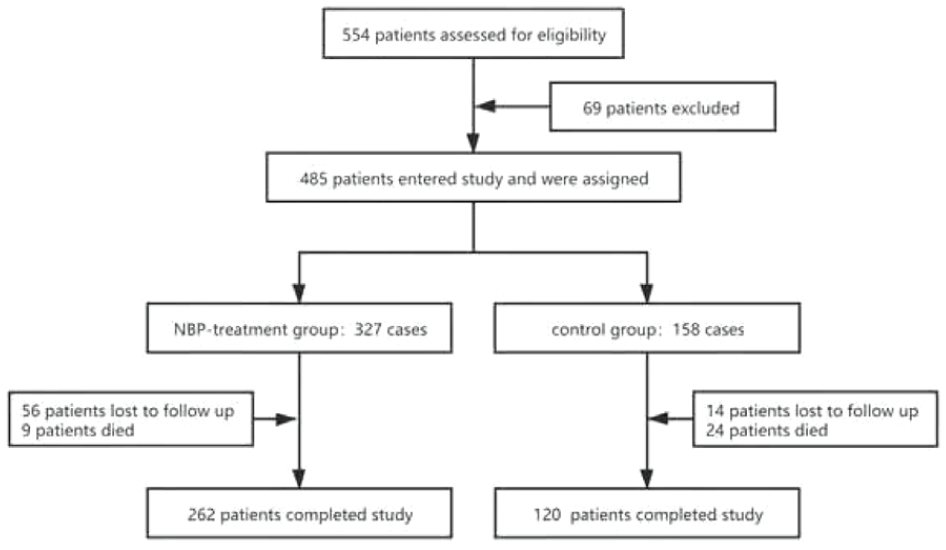
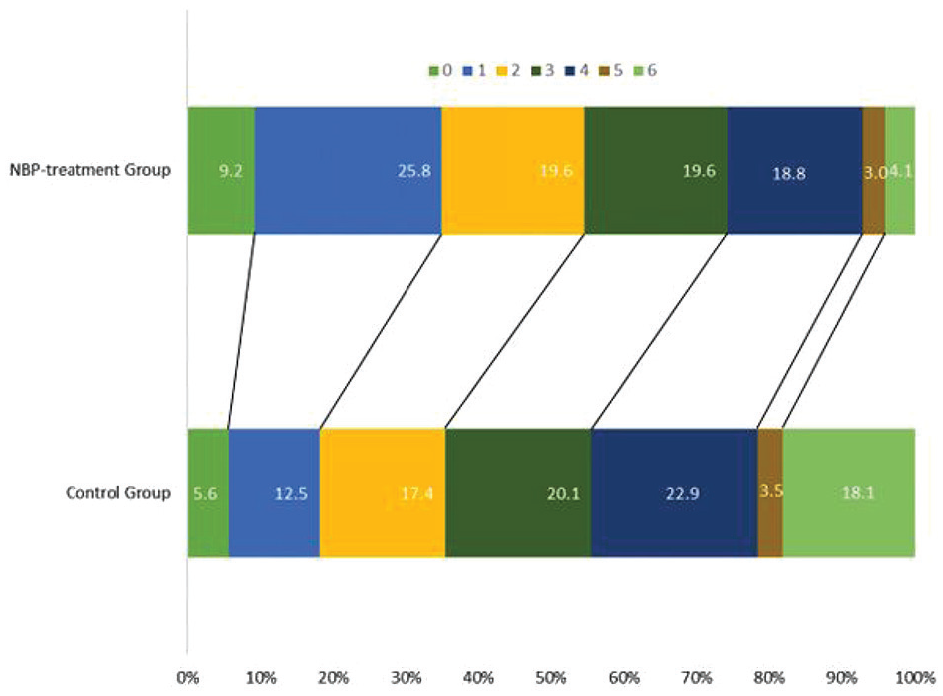
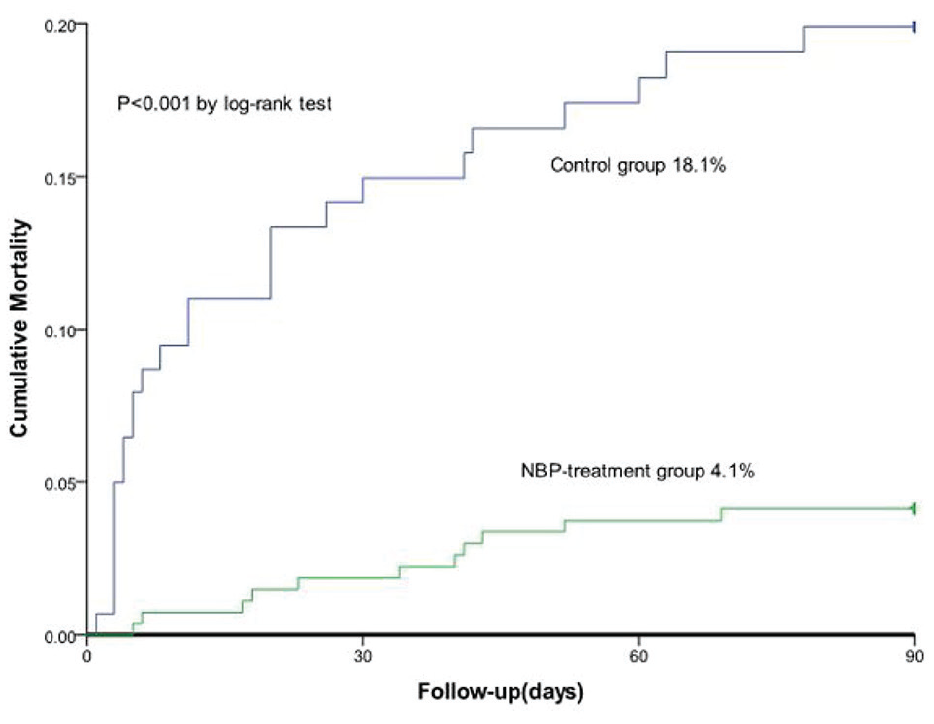
P0014 / 1110
RISK OF CEREBRAL VASCULAR ACCIDENT IN CHILDREN WITH CONGENITAL CEREBRAL MALFORMATIONS
1IMSPSCMC V. Ignatenco, Pediatria, Chisinau, Moldova, Republic of, 2State University N. Testimitanu, Pediatria, Chisinau, Moldova, Republic of, 3State University N. Testimitanu, Pediatria, Chisinau, Micronesia, Federated States of
P0015 / 130
HEALTHCARE PROFESSIONAL’S VIEWS ON THE BARRIERS AND ENABLERS OF THROMBOLYSIS IN ACUTE ISCHAEMIC STROKE PATIENTS: A MIXED - METHOD SYSTEMATIC REVIEW
1Tipperary University Hospital, Stroke Unit, Clonmel, Ireland, 2University College, Cork, Catherine McAuley of School of Nursing and Midwifery, Cork, Ireland, 3University Colege, Cork, Catherine McAuley of School of Nursing and Midwifery, Cork, Ireland
P0016 / 966
CORRELATION OF COLLATERAL SCORES DERIVED FROM WHOLE BRAIN TIME-RESOLVED FLAT PANEL DETECTOR IMAGING IN ACUTE ISCHEMIC STROKE
1University Hospital Bern, Inselspital, Department of Diagnostic and Interventional Neuroradiology, Bern, Switzerland, 2University Hospital Bern, Inselspital, Institute of Neurology, Bern, Switzerland
P0017 / 935
ASSOCIATION BETWEEN HYDRATION STATUS AND CLINICAL OUTCOME IN ACUTE ISCHEMIC STROKE PATIENTS WITH LARGE VESSEL OCCLUSION RECEIVING MECHANICAL THROMBECTOMY
1 Ruhr University Bochum, Bochum, Germany
An elevated Blood Urea Nitrogen / Creatinin ratio (BUN/Cr) ⩾ 15 was chosen as the dehydration
Marker, and patients were categorized in two groups (A=dehydrated vs. B=non dehydrated). Clinical and procedural data were analyzed between two groups.
P0018 / 1527
THROMBUS PERVIOUSNESS IN LARGE VESSEL STROKE AS A PREDICTOR OF OUTCOME TO TENECTEPLASE
1Centro Hospitalar Universitário de São João, Department of Neurology, Porto, Portugal, 2Faculty of Medicine of University of Porto, Department of Clinical Neurosciences and Mental Health, Porto, Portugal, 3Centro Hospitalar Universitário de São João, Department of Neuroradiology, Porto, Portugal, 4I3S – Institute for Research and Innovation in Health, Porto, Portugal, 5Centro Hospitalar Universitário de São João, Department of Internal Medicine, Porto, Portugal, 6Faculty of Medicine of University of Porto, Cardiovascular R&D Unit, Porto, Portugal
P0019 / 1004
SEX-SPECIFIC DIFFERENCES IN OCTAGENARIAN STROKE PATIENTS RECEIVING THROMBOLYSIS
1Evangelisches Klinikum Bethel, University Hospital OWL of the University Bielefeld, Campus Bielefeld-Bethel, Department of Neurology, Bielefeld, Germany, 2University of Marburg, Medical School, Marburg, Germany, 3University of Aachen, Medical School, Aachen, Germany, 4Evangelisches Klinikum Bethel, University Hospital OWL of the University Bielefeld, Campus Bielefeld-Bethel, Department of Neuroradiology, Bielefeld, Germany, 5Bielefeld University, Department of Psychology, Bielefeld, Germany
P0021 / 383
ADDITIONAL INTRAVENOUS THROMBOLYSIS WITH TENECTEPLASE FOR ACUTE ALTEPLASE-RESISTANT MEDIUM VESSEL OCCLUSION STROKES
1Université Paris-Saclay/Centre Hospitalier Sud-Francilien, Neurology, Corbeil-Essonnes, France, 2CHU Bordeaux, Neurology, Bordeaux, France, 3Centre Hospitalier Sud-Francilien, Neurology, Corbeil-Essonnes, France, 4Centre Hospitalier Sud-Francilien, Biostatistic, Corbeil-Essonnes, France
P0022 / 219
ACUTE REPERFUSION TREATMENT DURING THE COVID-19 PANDEMIC: FINDINGS FROM SHANGHAI STROKE SERVICE SYSTEM
1 Huashan Hospital, Fudan University, Shanghai, China, Department of Neurology, Shanghai, China
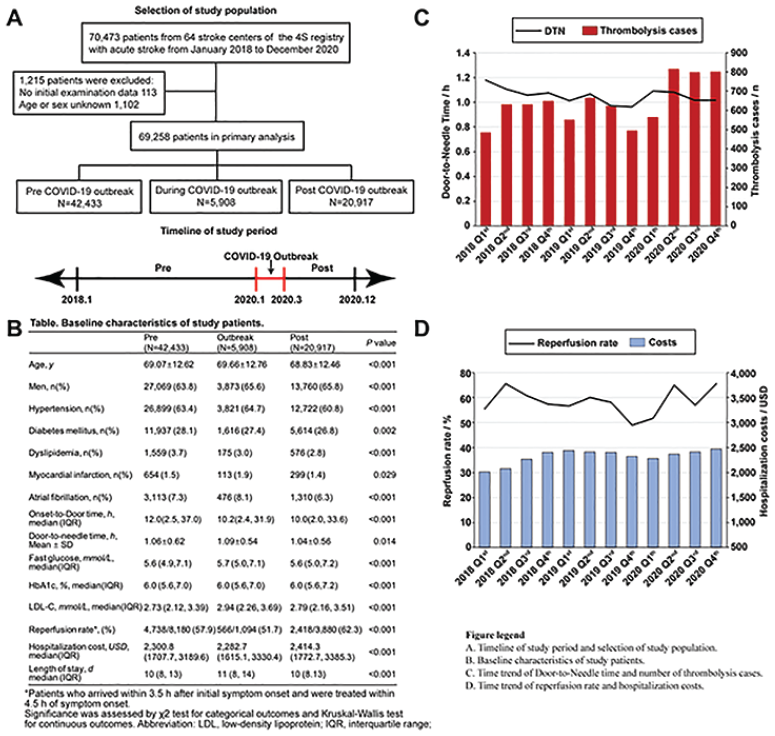
P0023 / 226
DIRECT BYPASS TO ENDOVASCULAR CAPABLE STROKE CENTER COMPARED TO SECONDARY TRANSFER FROM PRIMARY STROKE CENTRES
1Auckland District Health Board, Neurology, Auckland, New Zealand, 2University of Auckland, Faculty of Health and Medical Sciences, Auckland, New Zealand
P0024 / 525
DIAGNOSTIC IMPACT OF FUTILE RECANALIZATION ON PARENCHYMAL BLOOD VOLUME AFTER REPERFUSION FOR ACUTE ISCHEMIC STROKE
1 Nara Medical University, Neurosurgery, Kashihara, Nara, Japan
P0025 / 225
FULLY AUTOMATIC SCORING OF COLLATERAL STATUS ON MULTIPHASE CTA AND ITS CLINICAL VALUE IN PREDICTING PROGNOSIS OF PATIENTS WITH ACUTE ISCHEMIC STROKE
1Soochow University, Department of Radiology, Institute of Medical Imaging, Suzhou, China, 2Neufost Medical System, Shanghai, China
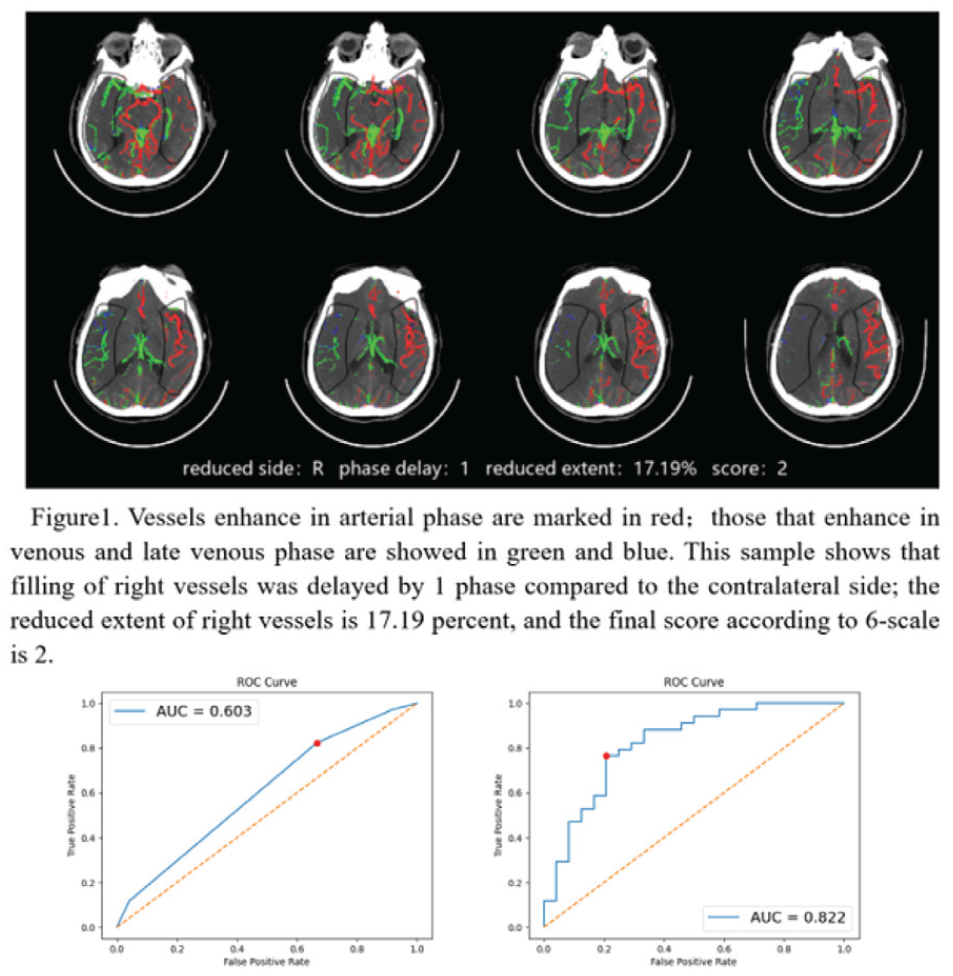
PREVENTION
P0026 / 475
OPTIMISING THE ANALYSIS OF VASCULAR PREVENTION TRIALS: RE-ASSESSMENT OF THE TARDIS TRIAL, THE FIRST PREVENTION TRIAL TO ADOPT AN ORDINAL PRIMARY OUTCOME MEASURE
1University of Nottingham, Stroke Trials Unit, Mental Health & Clinical Neurosciences, Nottingham, United Kingdom, 2University of Nottingham, Nottingham Clinical Trials Unit, Nottingham, United Kingdom, 3London School of Hygiene & Tropical Medicine, London, United Kingdom, 4University of Otago Wellington, Department of Medicine, Wellington, New Zealand
P0027 / 1342
PATENT FORAMEN OVALE IN CRYPTOGENIC STROKE: TO CLOSE OR NOT TO CLOSE
1Radboud university medical centre, Neurology, Nijmegen, Netherlands, 2Radboud university medical centre, Cardiology, Nijmegen, Netherlands
We therefore wanted to investigate the relation between PFO and stroke among referrals to one of four congenital cardiac centers in the Netherlands.
P0028 / 1086
PERSISTENCE TO ORAL ANTICOAGULATION AND HEALTH-RELATED QUALITY OF LIFE IN STROKE SURVIVORS WITH ATRIAL FIBRILLATION – THE BERLIN ATRIAL FIBRILLATION REGISTRY
1Charité - Universitätsmedizin Berlin, Center for stroke research, Berlin, Germany, 2Charité - Universitätsmedizin Berlin, Department of Neurology with Experimental Neurology, Berlin, Germany, 3Charité - Universitätsmedizin Berlin, Institute of Biometry and Clinical Epidemiology, Berlin, Germany, 4University Würzburg, Institute of Clinical Epidemiology and Biometry, Würzburg, Germany, 5Berlin Institute of Health (BIH), Berlin, Germany, 6Excellence Cluster NeuroCure, Berlin, Germany, 7German Center for Cardiovascular Research, Partner Site Berlin, Germany, 8German Center for Neurodegenerative Diseases, Partner Site Berlin, Germany, 9University Hospital Würzburg, Department of Neurology, Würzburg, Germany
P0029 / 934
SMOKERS WITH ELEVATED GLYCATED ALBUMIN COULD NOT BENEFIT FROM DUAL ANTIPLATELET THERAPY AFTER MINOR STROKE OR TRANSIENT ISCHEMIC ATTACK
1 Beijing Tiantan Hospital, Capital Medical University, Neurology, Beijing, China
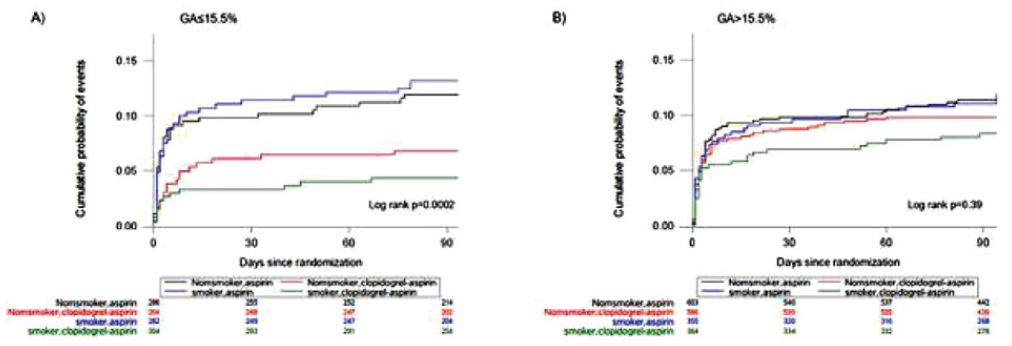
P0030 / 1266
VALIDATION OF A PREHOSPITAL TRIAGE SYSTEM FOR STROKE IN OSAKA
1Osaka City University, Trauma and Critical Care Medicine, Osaka, Japan, 2Osaka University, Traumatology and Acute Critical Medicine, Osaka, Japan
The EMS-Stroke group was found to be significantly more likely to have a stroke with p<0.001 (x2 test).
In stroke, there are many symptoms of acute onset, and “convulsions” are inappropriate items to suspect stroke among the items suspected of stroke by EMS used in ORION.
P0031 / 1165
TIME INTERVAL BETWEEN NOAC LAST INTAKE AND ISCHEMIC STROKE RECURRENCE - DATA FROM THE RENO-EXTEND DATABASE
1Policlinico Umberto I, Emergency Department - Stroke Unit, Roma, Italy, 2IRCCS Istituto delle Scienze Neurologiche di Bologna, UOC Neurologia e Rete Stroke Metropolitana Ospedale Maggiore, Bologna, Italy, 3University of Perugia, Stroke Unit and Division of Cardiovascular Medicine, Perugia, Italy, 4La Sapienza Università di Roma, Dipartimento di Neuroscienze Umane, Roma, Italy
P0032 / 251
PREVALENCE AND RISK FACTORS OF OBSTRUCTIVE SLEEP APNEA IN ACUTE ISCHEMIC STROKE PATIENTS USING OVERNIGHT PULSE OXIMETRY
1Chulalongkorn University, Medicine, Bangkok, Thailand, 2Chulalongkorn University, Bangkok, Thailand
The objective of this study was to investigate the prevalence of OSA in patients with acute ischemic stroke, to find out variable risk factors of OSA in these patients, and to generate the predictive mathematic equation for OSA in stroke patients.
We consecutively recruited stroke patients aged > 18 years with the diagnosis of stroke/TIA. All patients were assessed using NONIN PureSAT Model 3150 (WristOx2 3150).
This consisted of three parts:
a) Data collection of baseline characteristics of stroke patients.
b) The Berlin’s and STOPBANG questionnaire for evaluation of OSA risk together with the evaluation of daytime sleepiness using the Epworth Sleepiness Scale, and
c) Using overnight pulse oximetry and data collection.
Early detection of OSA may play an important role in enhancing quality of life of these individuals.
P0033 / 265
DIAGNOSTIC UTILITY OF BRAIN MRI IN PATIENTS WITH SPONTANEOUS INTRACEREBRAL HEMORRHAGE
1 Beth Israel Deaconess Medical Center/Harvard Medical School, Neurology, Boston, United States
P0034 / 1243
UNDERTREATMENT OF ANTICOAGULANT THERAPY IN HOSPITALIZED ACUTE ISCHEMIC STROKE PATIENTS WITH ATRIAL FIBRILLATION
1 The Second Affiliated Hospital of Zhejiang University, School of Medicine, Neurology, Hangzhou, China
P0035 / 1377
THE EFFECT OF ALLOPURINOL ON VISIT-TO-VISIT BLOOD PRESSURE VARIABILITY FOLLOWING ISCHAEMIC STROKE AND TRANSIENT ISCHAEMIC ATTACK – AN EXPLORATORY ANALYSIS OF THE XILO-FIST STUDY
1University of Glasgow, Glasgow, United Kingdom, 2Robertson Centre for Biostatistics, Institute of Health and Wellbeing, College of Medical, Veterinary & Life Sciences, University of Glasgow, Glasgow, United Kingdom, 3Institute of Cardiovascular and Medical Sciences, College of Medical, Veterinary & Life Sciences, Queen Elizabeth University Hospital, University of Glasgow, Glasgow, United Kingdom, 4Stroke Psychology, West Glasgow Ambulatory Care Hospital, Glasgow, United Kingdom, 5Department of Neurology, Institute of Neurological Sciences Glasgow, Queen Elizabeth University Hospital, Glasgow, United Kingdom, 6DD Analytics Cubed Ltd, Bishopton, United Kingdom, 7Medicine Monitoring Unit (MEMO), School of Medicine, University of Dundee, Ninewells Hospital, Dundee, United Kingdom, 8Division of Molecular and Clinical Medicine, School of Medicine, Ninewells Hospital, Dundee, United Kingdom, 9Stroke Trials Unit, Mental Health & Clinical Neuroscience, University of Nottingham, Nottingham, United Kingdom
P0036 / 962
REMOTE ISCHAEMIC CONDITIONING FOR SECONDARY STROKE PREVENTION (RIC-PREVENT) – A PILOT RANDOMISED CONTROLLED TRIAL
1Sheffield Teaching Hospitals, Neuroscience, Sheffield, United Kingdom, 2University of Sheffield, Neuroscience, Sheffield, United Kingdom, 3Biomedical Research Centre, Sheffield, United Kingdom, 4Sheffield Teaching Hospitals, Geriatrics and Stroke Medicine, Sheffield, United Kingdom
REHABILITATION & RECOVERY
P0037 / 239
WITHDRAWN VALIDITY OF THE MODIFIED RANKIN SCALE IN PATIENTS WITH ANEURYSMAL SUBARACHNOID HEMORRHAGE
1Radboud University Medical Center, Neurosurgery, Nijmegen, Netherlands, 2Amsterdam UMC, Amsterdam, Netherlands, 3Radboud University Medical Center, IQ healthcare, Nijmegen, Netherlands, 4University Medical Center Groningen, Groningen, Netherlands, 5Maastricht University Medical Center, Maastricht, Netherlands, 6Haaglanden Medical Center, The Hague, Netherlands, 7Isala Hospital, Zwolle, Netherlands, 8Canisius Wilhelmina Hospital, Nijmegen, Netherlands, 9Radboud University Medical Center, Nijmegen, Netherlands
1) convergent validity of the mRS;
2) responsiveness of the mRS; and
3) the distribution of mRS scores across patient reported outcome measures (PROMs).
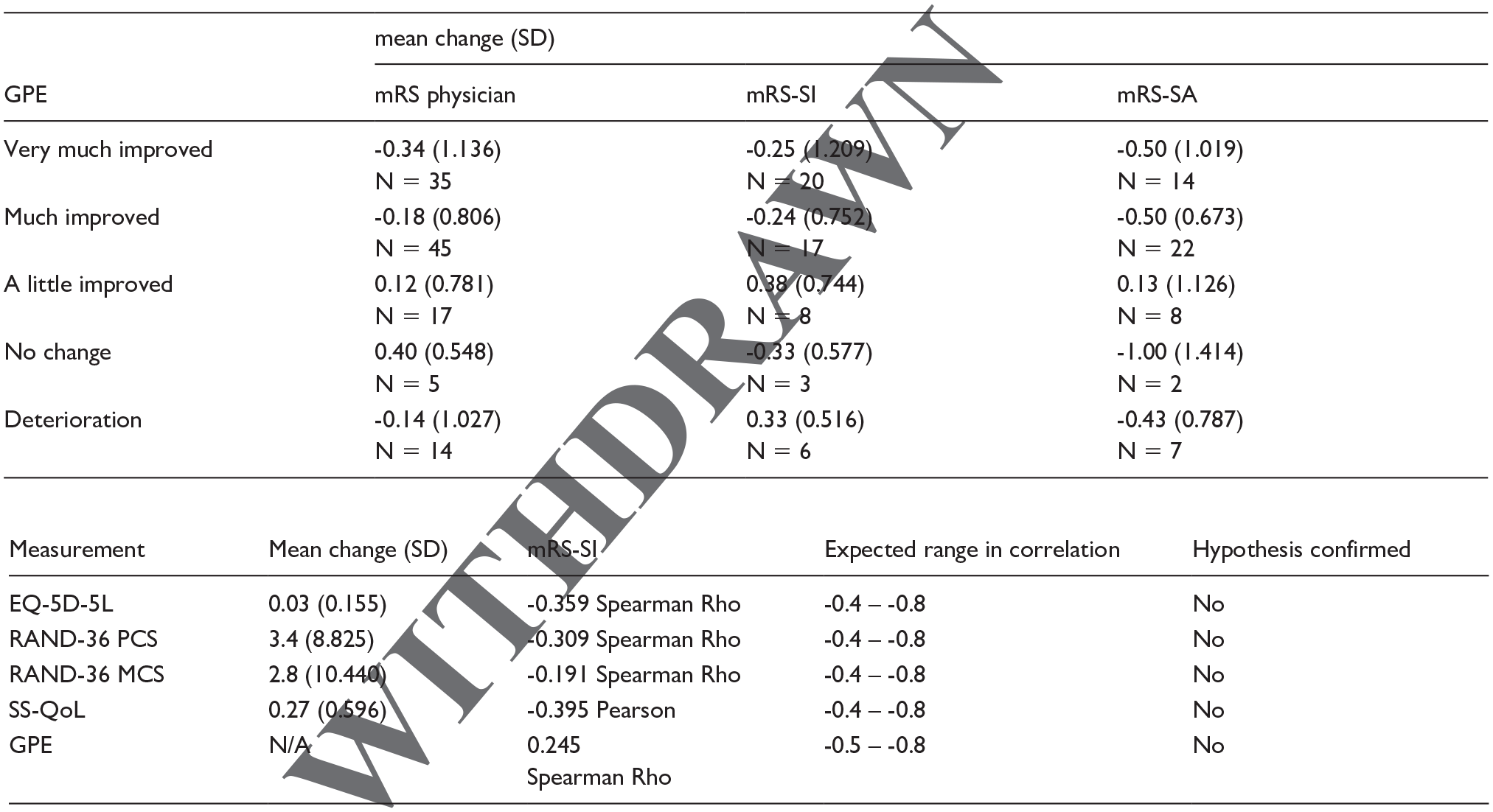
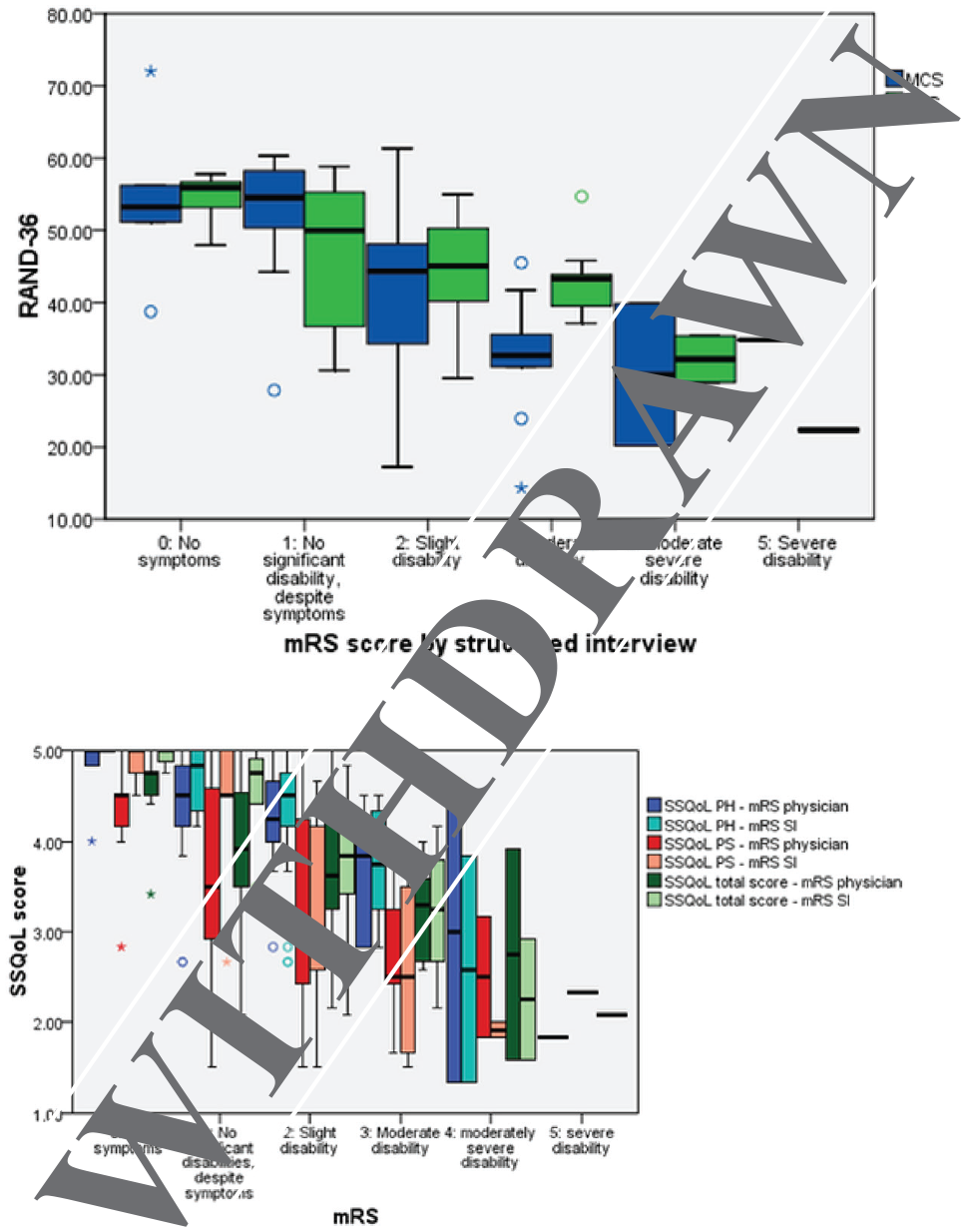
P0038 / 261
MAK EXOSKELETON FOR REHABILITATION IN STROKE PATIENTS: A NEW DEVICE FOCUSED ON THERAPY AND FUNCTIONAL TASKS
1King Juan Carlos University, International Doctoral School, Madrid, Spain, 2Marsi Bionics S.L., Madrid, Spain, 3Spanish National Research Council (CSIC-UPM), Centre for Automation and Robotics, Madrid, Spain, 4Polytechnic University of Madrid, Madrid, Spain, 5Alcalá de Henares University, Doctoral Program in Health Sciences, Madrid, Spain, 6Rey Juan Carlos University, Physiotherapy, Occupational Therapy, Rehabilitation and Physical Medicine, Faculty of Health Sciences, Madrid, Spain, 7La Zarzuela University Hospital, Rehabilitation, Madrid, Spain
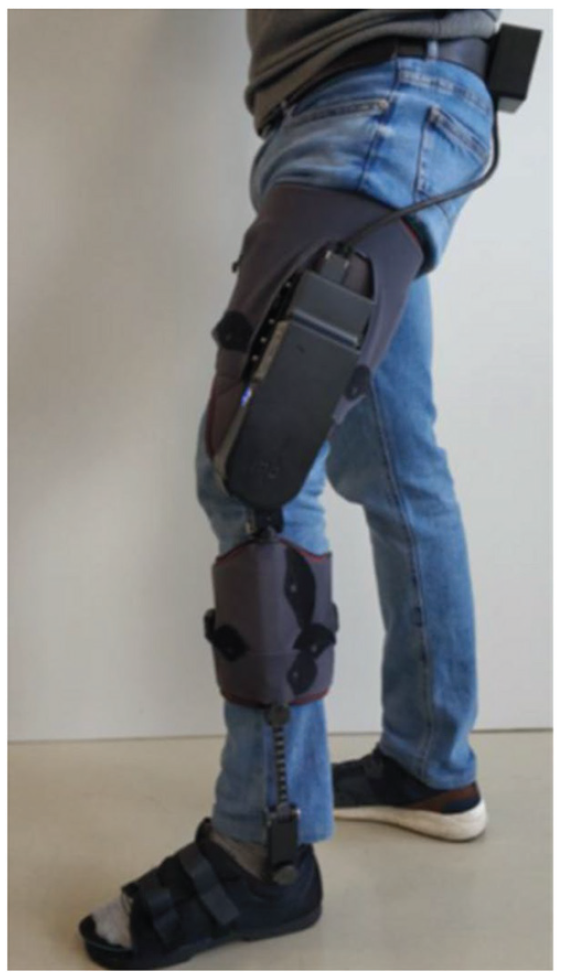
MAK exoskeleton attached to user’s lower limb.
The objective of this trial was to assess if the device could assist during the proposed functional tasks.
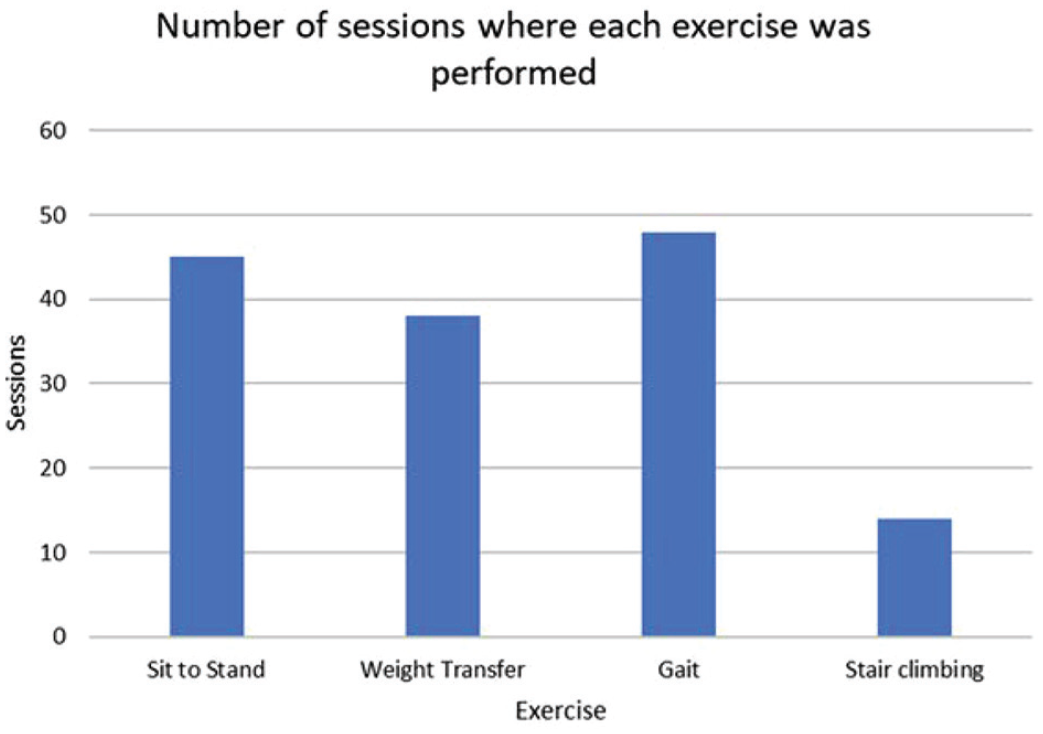
Number of sessions where each exercise was performed.
P0039 / 1509
STROKE MECHANISMS AND SEVERITY IN ISCHEMIC STROKE PATIENTS WITH APHASIA
1Department of Clinical Sciences Lund, Neurology, Lund University, Department of Neurology, Skåne University Hospital, Lund, Sweden, 2Division of Speech and Language Pathology, University of Gothenburg, The Sahlgrenska Academy, Gothenburg, Sweden
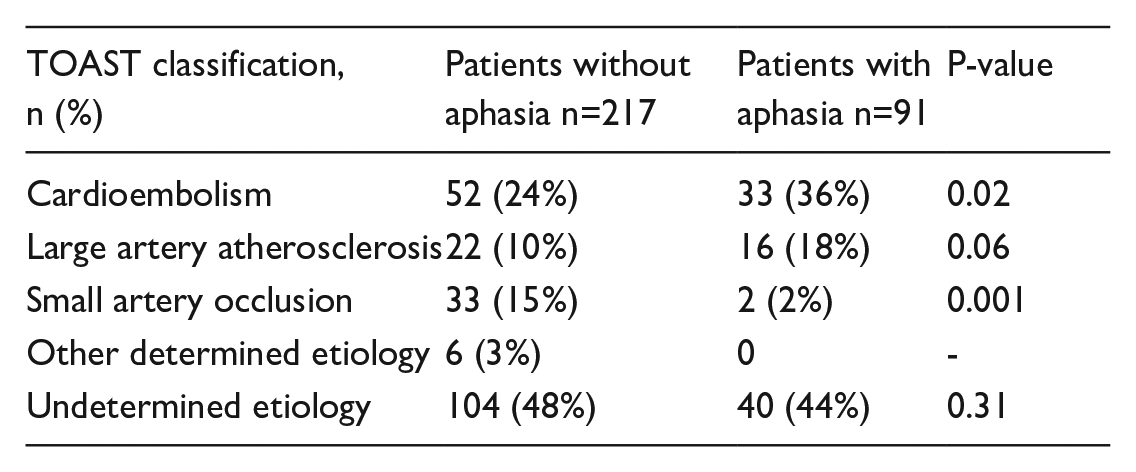
P0040 / 1242
EFFECT OF TELEREHABILITATION IN FACILITATING UPPER EXTREMITY HOME PROGRAMS AND ASSOCIATED FUNCTIONAL REGAIN AMONG CHRONIC STROKE SURVIVORS: A PILOT STUDY
1Yobe State University Teaching Hospital, physiotherapy, Damaturu, Nigeria, 2Hong Kong Polytechnic University, Hong Kong, SAR, China, Rehabilitation Sciences, Hong Kong, China, 3Yobe State Specialist Hospital, physiotherapy, Damaturu, Nigeria, 4Yobe State Specialist Hospital, paediatrics, Damaturu, Nigeria, 5Bayero University Kano, physiotherapy, Kano, Nigeria, 6University of Maiduguri, medical Rehabilitation, Maiduguri, Nigeria, 7Ahmadu Bello University, physiotherapy, Zaria, Nigeria
P0041 / 884
LOWER BLOOD NUTRIENT LEVELS, HIGHLY PREVALENT MALNUTRITION, AND LOWER NUTRITIONAL INTAKE IN SUB-ACUTE STROKE PATIENTS WITH OR WITHOUT DYSPHAGIA
1Fachklinik Rhein Ruhr, Neurologie und Neurorehabilitation, Essen, Germany, 2University of Düsseldorf, Neurology Department, Düsseldorf, Germany, 3Danone Nutricia Research, Utrecht, Netherlands, 4Formerly at St. Mauritius Therapieklinik, Meerbusch, Germany, 5University of Düsseldorf, Institute for Clinical Neuroscience, Medical Faculty, Düsseldorf, Germany, 6Neurologisches Zentrum, Mainkofen, Germany
P0042 / 840
CCR5-Δ32 POLYMORPHISM - A POSSIBLE PROTECTIVE FACTOR FOR POST-STROKE GAIT FUNCTION
1Tel Aviv Sourasky Medical Center, Tel Aviv, Israel, 2Shaare Zedek Medical Center, Jerusalem, Israel, 3Tel Aviv Sourasky Medical Center, Tel aviv, Israel
P0043 / 916
HEMIPLEGIC SHOULDER PAIN AND SUBLUXATION: CAN WE OFFER MORE THAN A PILLOW? A COLLABORATION
1St James’s Hospital, Physiotherapy, Dublin, Ireland, 2St James’s Hospital, Mercer’s Institute for Successful Ageing, Dublin, Ireland, 3St James’s Hospital, Medical Physics and Bioengineering, Dublin, Ireland, 4St James’s Hospital, Occupational Therapy, Dublin, Ireland, 5National College of Art and Design, Dublin, Ireland
P0044 / 215
WITHDRAWN ONLINE MINDFULNESS FOR ANXIETY AND DEPRESSION SYMPTOMS AFTER STROKE: A MIXED METHODS STUDY
1 Glasgow Caledonian University, Department of Nursing and Community Health, Glasgow, United Kingdom
P0045 / 337
SELF-ASSESSED HEALTH OF PATIENTS WITH ACUTE RETINAL ISCHEMIA
1University Medical Center Hamburg-Eppendorf, Neurology, Hamburg, Germany, 2University Medical Center Hamburg-Eppendorf, Medical Psychology, Hamburg, Germany, 3University Medical Center Hamburg Eppendorf, Medical Psychology, Hamburg, Germany
P0046 / 754
TASK-RELATED HEMODYNAMIC CHANGES BY HIGH-DEFINITION TRANSCRANIAL DIRECT CURRENT STIMULATION IN CHRONIC STROKE PATIENTS: AN FNIRS STUDY
1Samsung Medical Center, Sungkyunkwan University School of Medicine, Department of Physical and Rehabilitation Medicine, Seoul, Korea, Republic of, 2SAIHST, Sungkyunkwan University, Department of Health Sciences and Technology, Seoul, Korea, Republic of, 3SAIHST, Sungkyunkwan University, Department of Medical Device Management & Research, Seoul, Korea, Republic of
P0047 / 952
CAN VISUAL FIELD RECOVERY AFTER STROKE BE ENHANCED BY ORCHESTRATED MULTIFOCAL CROSS-FREQUENCY TACS?
1Swiss Federal Institute of Technology (EPFL), Geneva, Switzerland, 2Swiss Federal Institute of Technology (EPFL Valais), Sion, Switzerland, 3Clinique Romande de Réadaptation, Sion, Switzerland, 4University of Geneva, Geneva, Switzerland, 5Hôpital du Valais, Sion, Switzerland
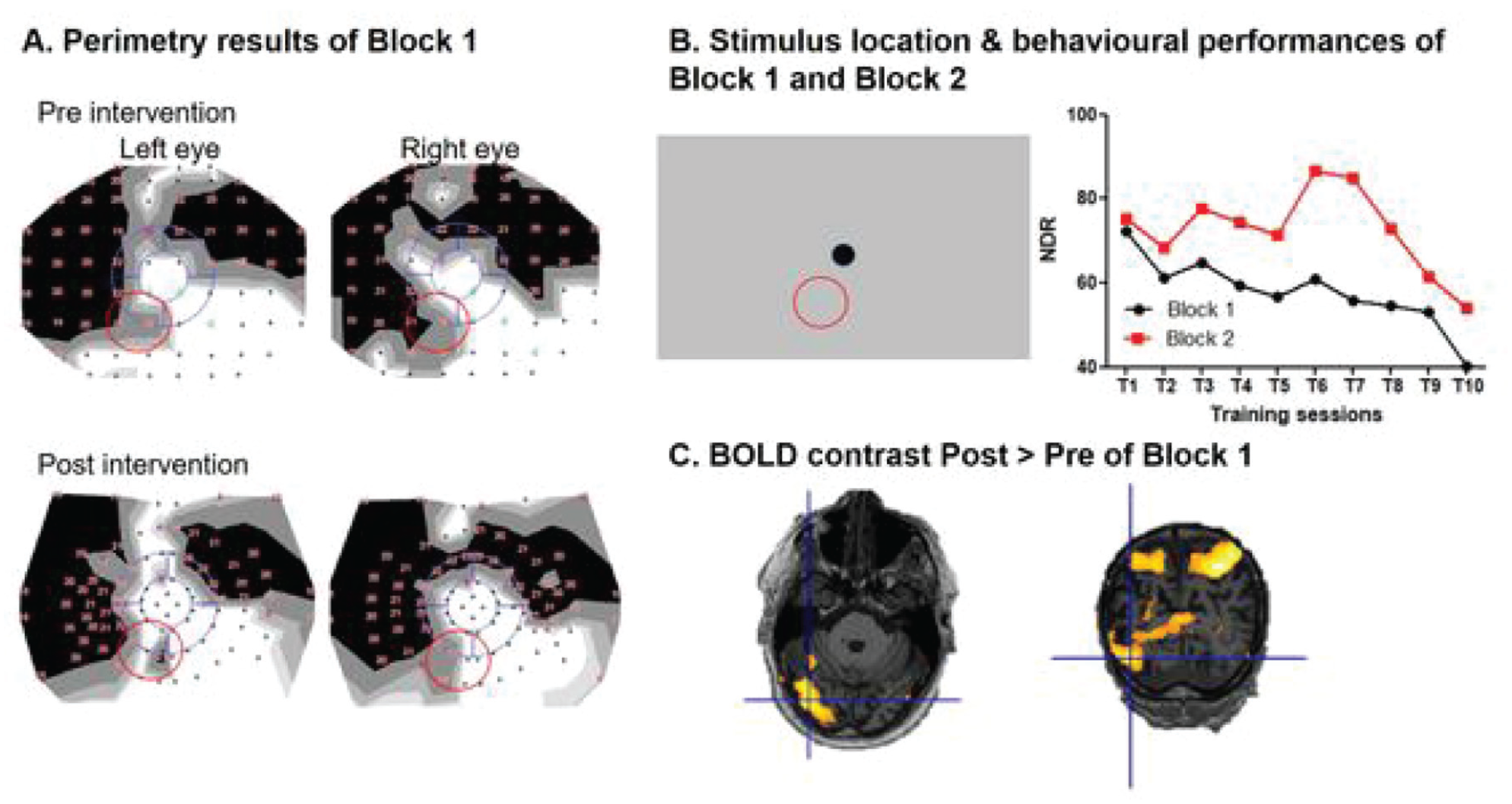
P0048 / 231
IMPROVING SLEEP IN REHABILITATION AFTER STROKE (INSPIRES)
1University of Oxford, Wellcome Centre for Integrative Neuroimaging, Nuffield Department of Clinical Neurosciences, Oxford, United Kingdom, 2University of Oxford, Sleep & Circadian Neuroscience Institute, Nuffield Department of Clinical Neurosciences, Oxford, United Kingdom, 3Big Health Ltd., London, United Kingdom, 4University of Oxford, Health Economics Research Centre, Nuffield Department of Population Health, Oxford, United Kingdom
P0049 / 427
HIGH-INTENSITY INTERVAL TRAINING AFTER STROKE (THE HIIT STROKE STUDY) - EFFECTS ON COGNITIVE FUNCTION
1Norwegian University of Science and Technology, Department of Neuromedicine and Movement Science, Trondheim, Norway, 2University of Oslo, Institute of Clinical Medicine, Oslo, Norway, 3Norwegian University of Science and Technology, NeXt Move, Trondheim, Norway, 4Sunnaas Rehabilitation Hospital, Department of Research, Oslo, Norway, 5Ålesund Hospital, Department of Physical Medicine and Rehabilitation, Ålesund, Norway, 6Norwegian University of Science and Technology, Regional Centre for Child and Youth Mental Health and Child Welfare, Trondheim, Norway
P0050 / 1497
ASSESSING THE BENEFIT, ACCEPTABILITY AND FEASIBILITY OF A STROKE-SPECIFIC PSYCHOLOGICAL SELF-MANAGEMENT INTERVENTION, HEADS:UP
1 Glasgow Caledonian University, School of Health & Life Science, Glasgow, United Kingdom
Pooled results showed positive trends toward improvement in symptoms of mood disorder (Table 1):
Results Time 0/1 - Becks Anxiety & Depression Indices (example of outcomes measures used).
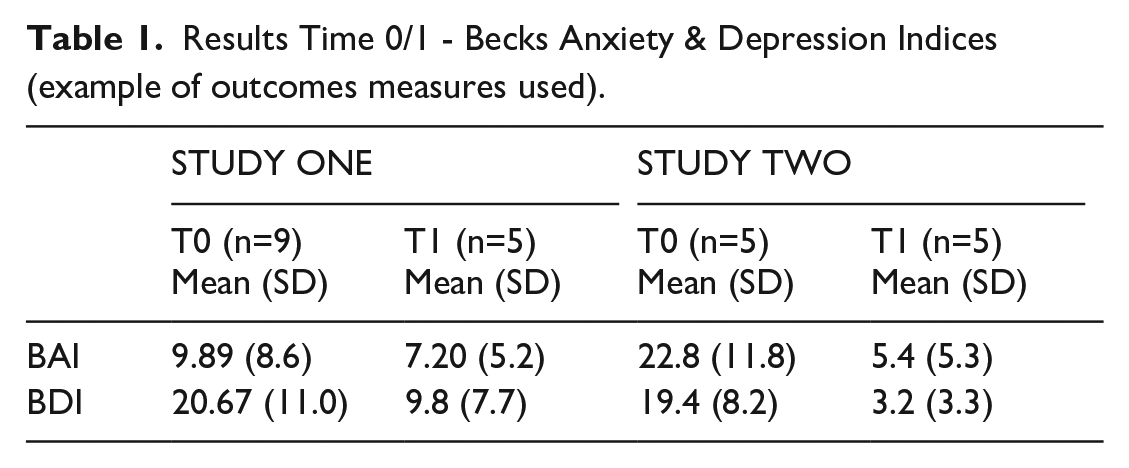
Qualitative data informed changes to research processes and HEADS: UP course materials. Participants found the course accessible and beneficial, “It’s helped dramatically; I can’t explain how much.”
P0051 / 693
EVALUATION OF THE DIGITAL TOOL ‘STROKEHÄLSA’- A SUPPORT TO PREPARE FOR A CLINICAL VISIT AND TO ADDRESS UNMET NEEDS
1 University of Gothenburg, Institute of Neuroscience and Physiology, Department of Clinical Neuroscience, Sahlgrenska Academy, Gothenburg, Sweden
P0052 / 153
ASSOCIATION OF NEUROPHYSIOLOGICAL PARAMETERS AND NEUROLOGICAL DEFICIENCY IN ATHEROSCLEROTIC CAROTID ARTERY DISEASE
1Ryazan State Medical University, Vascular Surgery, Ryazan, Russian Federation, 2Ryazan State Medical University, Ryazan, Russian Federation
P0053 / 646
ESTIMATION OF IMPACT OF STROKE ON SELF-RATED HEALTH: A CROSS-SECTIONAL STUDY IN SLOVENIA
1 University Clinical Centre of Ljubljana, Vascular Neurology, Ljubljana, Slovenia
P0054 / 1011
INTRAVENOUS FRESH ALLOGENIC ADIPOSE-DERIVED MESENCHYMAL STEM CELLS AFTER STROKE: A PHASE 1A, SAFETY TRIAL (RESSTORE)
1CHU Grenoble Alpes, Neurology, Grenoble, France, 2Univ. Grenoble Alpes UGA, Grenoble Institute of Neurosciences, Inserm U 1216, Grenoble, France, 3EFS Auvergne Rhône Alpes, Cell Therapy and Engineering Unit, St ISMIER, France, 4Univ. Grenoble Alpes UGA, AGEIS EA 7407, Grenoble, France, 5CHU Grenoble Alpes, Research Department, Grenoble, France, 6CHU Grenoble Alpes, IRMaGe, Inserm US17 CNRS UMS 3552-UGA, Grenoble, France, 7HCL La Croix Rousse, Plastic Surgery, Lyon, France, 8CHU Grenoble Alpes, Neuroradiology - MRI, Grenoble, France
P0055 / 1607
HASHTAG RESEARCH: UTILISING SOCIAL MEDIA FOR RECRUITMENT OF STROKE SURVIVORS TO THE HEADS: UP ONLINE RANDOMISED CONTROLLED TRIAL, A STROKE-SPECIFIC PSYCHOLOGICAL SELF-MANAGEMENT INTERVENTION
1 Glasgow Caledonian University, Department of Nursing and Community Health, School of Health and Life Sciences, Glasgow, United Kingdom
Methods: We recruited community-dwelling stroke survivors (SS) with self-reported anxiety and depression using community networks and social media. Social media recruitment allowed for direct communication with potential participants through the development of Twitter (@HeadsUpStroke), YouTube and Reddit accounts. Facebook posts were shared on the researchers’ personal accounts and UK-based stroke organization Facebook pages and groups.
P0056 / 807
MOVING BEYOND PATIENT FACTORS IN THE DESIGN OF STROKE CARE ENVIRONMENTS: A VIRTUAL REALITY EXPLORATION OF THE IMPACT OF HOSPITAL PATIENT ROOM DESIGN
1The Florey Institute of Neuroscience and Mental Health, Stroke Theme, Heidelberg, Australia, 2Monash University, Rehabilitation Medicine, Melbourne, Australia, 3Swinburne University, Centre for Design Innovation, Melbourne, Australia, 4Dalarna University, Falun, Sweden
(i) Pick-a-Mood Scale (affect) and
(ii) Visual Analogue Scale (choice-preference). Interactions between factors were explored using regression analyses.
P0057 / 746
REMOTE ISCHAEMIC CONDITIONING FOR FATIGUE AFTER STROKE: A PILOT RANDOMISED CONTROLLED TRIAL (RICFAST)
1University of Sheffield, Neuroscience, Sheffield, United Kingdom, 2Biomedical Research Centre, Sheffield, United Kingdom, 3Sheffield Hallam University, Sheffield, United Kingdom, 4Sheffield Teaching Hospitals, Neuroscience, Sheffield, United Kingdom, 5Sheffield Teaching Hospitals, Geriatrics and Stroke Medicine, Sheffield, United Kingdom
P0058 / 796
IS AGE AN IMPORTANT FACTOR FOR SPONTANEOUS MOTOR RECOVERY OF THE UPPER PARETC LIMB AFTER STROKE?
1OLVG, Neurology, Amsterdam, Netherlands, 2Amsterdam Rehabilitation Research Centre Reade, Neurorehabilitation, Amsterdam, Netherlands, 3Amsterdam UMC, Vrije Universiteit Amsterdam, Rehabilitation Medicine, Amsterdam, Netherlands, 4Feinberg School of Medicine, Northwestern University, Physical Therapy and Human Movement Sciences, Chicago, United States, 5OLVG, Research and Epidemiology, Amsterdam, Netherlands, 6Erasmus MC, Rehabilitation Medicine, Rotterdam, Netherlands, 7Erasmus MC, Plastic and Reconstructive Surgery, Rotterdam, Netherlands, 8Amsterdam Rehabilitation Research Center Reade, Amsterdam, Netherlands, 9Amsterdam UMC, Location AMC, Neurology, Amsterdam, Netherlands
P0059 / 548
QUALITY OF SLEEP IN PATIENTS WITH ACUTE ISCHEMIC STROKE ASSOCIATED WITH COVID-19
1University Clinical Center Nis, Nis, Serbia, 2Special Psychiatric Hospital Gornja Toponica Nis, Nis, Serbia
P0061 / 445
COGNITION AS A MEDIATOR OF CHANGES IN ACTIVITY LEVELS AND DEPRESSION IN CHRONIC STROKE
1 University of Oxford, Department of Experimental Psychology, Oxford, United Kingdom
ONGOING TRIALS
P0062 / 502
THE LINK BETWEEN MRI-CEREBRAL SMALL VESSEL DISEASE FEATURES AND BLOOD PRESSURE VARIABILITY
1 National Pirogov Memorial Medical University, Neurology, Vinnytsya, Ukraine
The aim of our study was to find out relationships between BP parameters and MRI-features of CSVD (white matter hyperintensity (WMH), lacunes, enlarged perivascular spaces (EPVS), brain atrophy) in acute-stroke patients during hospitalization time.
P0063 / 1290
THE BENEFIT OF EXTENDING ORAL ANTICOAGULANT TREATMENT AFTER ACUTE CEREBRAL VEIN THROMBOSIS (EXCOA-CVT): A CLUSTER OBSERVATIONAL STUDY
1Lisbon School of Medicine, University of Lisbon, Lisbon, Portugal, 2Centro Hospitalar Lisboa Norte - Hospital de Santa Maria, Neurology, Lisboa, Portugal, Lisbon, Portugal, 3Christian Medical College and Hospital, Department of Neurological Sciences, Vellore, India, 4Instituto Nacional de Neurologia y Neurocirurgia Manuel Velasco Suarez, Department of Neurology, Mexico City, Mexico, 5Hospital H+, Department of Neurology, Queretáro, Mexico, 6Shiraz University of Medical Sciences, Clinical Neurology Research Center, Shiraz, Iran, Islamic Republic of, 7Hospital de São João - Centro Hospitalar São João, Neurology Department, Porto, Portugal, 8Hospital das Clínicas - São Paulo University, Neurology Clinical Division, São Paulo, Brazil, 9Academic Medical Center, Department of Neurology, Amsterdam, Netherlands
EXCOA-CVT is a prospective study with a cluster-randomised allocation design that aims to compare a policy of standard (3-6 months) versus extended (12 months) OAC in the prevention of VTEs after CVT.
P0064 / 1582
THE METOCLOPRAMIDE FOR AVOIDING PNEUMONIA AFTER STROKE (MAPS-2) TRIAL: A SINGLE-BLIND RCT OF METOCLOPRAMIDE FOR THE PREVENTION OF PNEUMONIA IN PATIENTS WITH DYSPHAGIA AFTER STROKE
1Royal Stroke University Hospital, Stoke-on-Trent, United Kingdom, 2University of Manchester, Salford, United Kingdom, 3Freeman Hospital, Newcastle upon Tyne, United Kingdom, 4University of Nottingham, Nottingham, United Kingdom, 5Patient and Public Involvement Representative, Birmingham, United Kingdom, 6Patient and Public Involvement Representative, Coventry, United Kingdom, 7Keele University, Newcastle under Lyme, United Kingdom, 8University of Birmingham, Birmingham, United Kingdom, 9Royal Stoke University Hospital, Neurosciences, Stoke-on-Trent, United Kingdom, 10Keele University, School of Medicine, Newcastle under Lyme, United Kingdom
1. Adults admitted to hospital with a diagnosis of acute stroke and
2. Within 9 hours of symptom onset and
3. Moderate to severe neurological impairment (NIHSS 10 or greater) and
4. Dysphagia (assessed by bedside clinical screen)
P0065 / 1642
RANDOMIZATION TO EXTEND STROKE INTRAVENOUS THROMBOLYSIS IN EVOLVING NON-LARGE VESSEL OCCLUSION WITH TNK (RESILIENT- EXTEND-IV)
1HIAE/UNIFESP, Academic Research Organization ( AR0)-HIAE/ Neurology Departament, São Paulo, Brazil, 2Emory University, Neurology, Atlanta, United States, 3FMUSP, Neurology, São Paulo, Brazil, 4Hosp Moinhos de Vento, Porto Alegre, Brazil, 5UNIFESP, Neurology Departament, São Paulo, Brazil, 6Hospital Geral de Fortaleza, Neurology, Fortaleza, Brazil, 7Universidade Federal da Bahia, Neurology, Salvador, Brazil, 8Hospital de Base, Neurology, Brasilia, Brazil, 9Hospital de Clínicas de Porto Alegre, Neurology, Porto Alegre, Brazil
Prospective, multi-center, randomized, controlled, double-blinded trial with an adaptive design andpopulation enrichment. The randomization employs a 1:1 ratio of intravenous thrombolysis withtenecteplase (TNK) versus placebo in patients who suffer a non-large vessel occlusion ischemic strokebetween 4.5 and 12 hours from time last seen well (TLSW) and have evidence of salvageable brain tissue onperfusion imaging. Randomization will be done under a minimization process using age, baseline NIHSS,baseline infarct volume, baseline perfusion mismatch volume, therapeutic window (4.5-9 or 9-12 hoursafter TLKW), and clinical site. The candidate enriched populations that the trial considers are based on timelast known well (TLKW) to randomization (4.5-9 vs. 9-12 hours) and mismatch volumes as measured usinge-Mismatch MR-DWI or CTP-rCBF maps. For the primary Endpoint,subjects will be followed for 90 days post-randomization. Study Objective: To evaluate the hypothesis thatintravenous thrombolysis with Tenecteplase (TNK) ata dose of 0.25 mg/Kg is superior to standard medicalmanagement in achieving more favorable outcomes according to the modified Rankin Scale scores at 90days in subjects presenting with acute ischemic stroke not related to a large vessel occlusion within 4.5-12hours from symptom onset. Primary endpoint Distribution of themodified Rankin Scale scores at 90 days (shift analysis) as evaluated by two separate assessors at the centralcore lab) who are blinded to treatment. Primary Endpoint will only consider central core lab readings (videointerview with RFA method) with local reading as a backup mechanism. Interim Analyses Conducted: when the first 386 patients enrolled have completed their study involvement. Sample size: 642 patients.
P0066 / 188
TIROFIBAN VERSUS INTRAVENOUS ASPIRIN IN PATIENTS WITH ACUTE ISCHEMIC STROKE SECONDARY TO TANDEM LESION TREATED WITH MECHANICAL THROMBECTOMY(ATILA-TRIAL): A PHASE IV, RANDOMIZED, CONTROLLED MULTICENTER TRIAL
1Instituto de Investigación Biomédica de Sevilla, Neurovascular Laboratory Research, Seville, Spain, 2Hopital Universitario Virgen del Rocio, Interventional Neurorradiology, Sevilla, Spain, 3Hospital Universitario Virgen del Rocio, Stroke neurology, Seville, Spain, 4Hospital Universitario Reina Sofía, Interventional Neurorradiology, Cordoba, Spain, 5Hospital Universitario Cruces, Interventional Neurorradiology, Bilbao, Spain, 6Hospital Universitario Cruces, Stroke Neurology, Bilbao, Spain, 7Hospital Universitari i Politècnic La Fe, Stroke Neurology, Valencia, Spain, 8Complejo Hospitalario Universitario A Coruña, Stroke Neurology, A Coruña, Spain, 9Complejo Hospitalario Universitario A Coruña, Interventional Neurorradiology, A Coruña, Spain, 10Hospital Universitario Torrecardenas, Neurology, Almeria, Spain, 11Hospital Universitario Torrecardenas, Interventional Neurorradiology, Almeria, Spain, 12Hospital Universitario de Badajoz, Neurology, Badajoz, Spain, 13Hospital Universitario de Badajoz, Interventional Neurorradiology, Badajoz, Spain, 14Hospital Juan Ramon Jimémez, Stroke Neurology, Huelva, Spain, 15Hospital Universitario Virgen Macarena, Stroke Neurology, Sevilla, Spain, 16Hospital Clínico Universitario Virgen de la Arrixaca, Interventional Neurorradiology, Murcia, Spain
P0067 / 1274
STUDY OF ANTITHROMBOTIC TREATMENT AFTER INTRACEREBRAL HAEMORRHAGE (STATICH)
1Oslo University Hospital, Oslo, Norway, 2University of Oslo, Oslo, Norway, 3Akershus University Hospital, Lørenskog, Norway, 4Norrlands Universitetssjukhus, Umeå, Sweden, 5Herlev and Gentofte Hospital, Copenhagen, Denmark, 6University of Tromsø, Tromsø, Norway, 7Nordlandssykehuset HF Bodø, Bodø, Norway, 8University of Edinburgh, Edinburgh, United Kingdom
P0068 / 1055
EFFICACY OF NITRIC OXIDE IN STRIKE-2 (ENOS-2): RATIONALE AND DESIGN OF A PHASE IIB SINGLE BLIND RANDOMISED CONTROLLED SINGLE-CENTRE TRIAL
1University of Nottingham, Stroke Trials Unit, Mental Health and Clinical Neurosciences, Nottingham, United Kingdom, 2Nottingham University Hospitals NHS Trust, Clinical Stroke Trial Unit, Division of Clinical Neuroscience, Faculty of Medicine & Health Sciences, Nottingham, United Kingdom, 3University of Nottingham, Nottingham Clinical Trials Unit, Nottingham, United Kingdom, 4University of Nottingham, Cinical Stroke Trial Unit, Division of Clinical Neuroscience, Faculty of Medicine & Health Sciences, Derby, United Kingdom
Patients will be randomised (1:1) to receive 5mg GTN or matching comparator Duoderm patch placed on back or shoulders applied for 2 days. Patients, relatives, researchers and outcome assessors will be masked to treatment allocation.
Feasibility outcomes include recruitment of 100 is patients and 20 ICH patients, rate of recruitment, proportion of patients approached being randomised, adherence to treatment and follow up. Secondary outcomes include BP and heart rate over the first 2 days, discharge destination, serious adverse events up to day 2 and fatal SAEs up to day 90 and mortality, disability, cognition, mood and quality of life at day 90.
P0069 / 779
SWISS TRIAL OF INITIAL DECOMPRESSIVE CRANIECTOMY VERSUS BEST MEDICAL TREATMENT OF SPONTANEOUS SUPRATENTORIAL INTRACEREBRAL HEMORRHAGE: A RANDOMIZED TRIAL (SWITCH)
1Medical Center - University of Freiburg, Freiburg, Germany, 2Helsinki University Central Hospital, Helsinki, Finland, 3Johannes Gutenberg University Mainz, Mainz, Germany, 4Bern University Hospital and University of Bern, Bern, Switzerland, 5University Hospital Basel, Basel, Switzerland
P0070 / 1610
A RCT OF INTERMITTENT SURFACE NEUROMUSCULAR STIMULATION USING THE GEKO™ DEVICE COMPARED WITH INTERMITTENT PNEUMATIC COMPRESSION TO PREVENT VENOUS THROMBOEMBOLISM IN IMMOBILE ACUTE STROKE PATIENTS
1Royal Stoke University Hospital, Neurosciences, Stoke-on-Trent, United Kingdom, 2Keele University, Newcastle under Lyme, United Kingdom, 3Royal Stroke University Hospital, Stoke-on-Trent, United Kingdom, 4Bournemouth University, Bournemouth, United Kingdom, 5University of California, Irvine, United States, 6Patient and Public Involvement Representative, Birmingham, United Kingdom, 7Firstkind Ltd, High Wycombe, United Kingdom
1. Adults admitted to hospital with a diagnosis of acute stroke and
2. Within 36h of symptom onset and
3. unable to get up from a chair/bed and walk to the toilet without help
1. Unwitnessed onset with a long lie on the floor
2. Clinically apparent deep vein thrombosis at screening
3. Expected to require palliative care within 14d
4. Contraindications to IPC or geko™
Follow-up: at 7, 14, 30 days (in person) and 6 months by telephone
Leg pain and swelling, VTE, disability (mRS), quality of life, length of stay, discharge destination, home time at 90 days
1200 participants will be recruited from 10-20 UK hospitals.
P0071 / 1042
INTENSIVE AMBULANCE-DELIVERED BLOOD PRESSURE REDUCTION IN HYPER-ACUTE STROKE TRIAL (INTERACT4): PROGRESS UPDATE
1The George Institute China at Peking University Health Sciences Center, Beijing, China, 2The George Institute for Global Health, University of New South Wales, Sydney, Australia, 3Department of Neurology, Shanghai Eastern Hospital, Tongji University, Shanghai, China, 4Department of Neurology, The First Affiliated Hospital of Chengdu Medical College, Chengdu, China, 5Department of Neurology, Sichuan Academy of Medical Sciences & Sichuan Provincial People’s Hospital, Sichuan, China, 6Department of Preventive Medicine and Public Health, Faculty of Medicine, Fukuoka University, Fukuoka, Japan, 7Neurology Department, Royal Prince Alfred Hospital, Sydney, Australia
P0072 / 200
COMPARISION OF DIFFERENT ROBOTIC-ASISTED GAIT TRAINING DEVICES FOR GAIT REHABILITATION IN PEOPLE WITH STROKE
1Neuron, Physical Therapy, Madrid, Spain, 2La Salle Centro Universitario, Physical Therapy, Madrid, Spain
One of the main goals of stroke patients is gait recovery, however one third of patients remain wheelchair bound for the first 3 months. In recent years, gait rehabilitation has changed greatly due to the appearance of new robotic devices that facilitate and enhance recovery, such as exoskeletons or body-weight-supported systems with augmented reality. Nevertheless, the dose of treatment that should be applied in each case and the type of device that is most beneficial for each patient is still unknown. Therefore, the aim of this study is to test the effectiveness of the C-Mill (a body-weight-supported treadmill system with augmented reality) in comparison to the Ekso exoskeleton and a body-weight-supported treadmill system without augmented reality in the recovery of walking in stroke patients. Patients will therefore be divided into 3 groups, who will receive 2 to 5 sessions with one of the walking devices for 30-50 minutes during 4 weeks. After reassessment, 2 weeks will be left as a washout period to test the effects of the robot-assisted gait treatment in comparison to the conventional treatment based on task-oriented training and strength exercise. After the last re-evaluation, the same assessment tests as realized at baseline will be performed after this period. The results of the study will be exposed to assess the effectiveness of each device and a subgroup analysis will be done to identify which aspects of gait shows the greatest improvement with each of the devices.
P0073 / 486
RATIONALE AND DESIGN OF THE STATISTICAL ANALYSIS TECHNIQUES VERSUS ARTIFICIAL NEURAL NETWORKS FOR DIAGNOSIS AND OUTCOME PREDICTION AFTER ACUTE STROKE (SAVANNAS) COLLABORATION STUDY
1University of Nottingham, Stroke Trials Unit, Mental Health & Clinical Neurosciences, Nottingham, United Kingdom, 2University of Nottingham, School of Computer Science, Nottingham, United Kingdom, 3University of Nottingham, Nottingham Clinical Trials Unit, Nottingham, United Kingdom, 4University of Glasgow, Cardiovascular & Medical Sciences, Glasgow, United Kingdom
P0074 / 897
SCREENING AND PATIENT-TAILORED CARE FOR EMOTIONAL AND COGNITIVE PROBLEMS IN PATIENTS DISCHARGED HOME AFTER ISCHEMIC STROKE (ECO-STROKE TRIAL)
1OLVG, Neurology, Amsterdam, Netherlands, 2Maastricht University, School for Mental Health & Neuroscience, Maastricht, Netherlands, 3UMC Utrecht, Center of Excellence for Rehabilitation Medicine, Utrecht, Netherlands
P0075 / 259
AN INTERVIEW STUDY OF THE REASONS’ PATIENTS HAVE TO CONSENT IN A RANDOMISED CONTROLLED TRIAL
1Karolinska Institute, Department of Clinical Sciences Danderyd Hospital, Stockholm, Sweden, 2Karolinska Institutet, Department of Neurobiology Care Sciences and Society, Huddinge, Sweden, 3Karolinska Institutet, Department of Clinical Sciences Danderyd Hospital, Stockholm, Sweden, 4Karolinska Institutet, Department of Learning Informatics Management and Ethics, Solna, Sweden, 5Uppsala University, Department of Neurosciences, Uppsala, Sweden
The protocol is registered at the Northern Ireland Hub for trials methodology research.
P0076 / 253
SHARED DECISION-MAKING SUPPORTED BY OUTCOME INFORMATION AMONG PATIENTS WITH STROKE
1OLVG, Neurology, Amsterdam, Netherlands, 2Santeon, Utrecht, Netherlands, 3OLVG, Quality and Improvement, Amsterdam, Netherlands, 4Amsterdam Rehabilitation Research Centre Reade, Amsterdam, Netherlands, 5Medisch Spectrum Twente, Neurology, Enschede, Netherlands, 6St. Antonius Hospital, Neurology, Nieuwegein, Netherlands, 7St. Antonius Hospital, Value Based Healthcare, Nieuwegein, Netherlands, 8St. Antonius Hospital, Clinical Pharmacy, Nieuwegein, Netherlands, 9Maasstad Hospital, Neurology, Rotterdam, Netherlands, 10Catharina Hospital, Neurology, Eindhoven, Netherlands, 11Martini Hospital, Neurology, Groningen, Netherlands, 12CWZ, Neurology, Nijmegen, Netherlands, 13Radboud University Medical Center, Radboud Institute for Health Sciences, IQ Healthcare, Nijmegen, Netherlands, 14Amsterdam UMC, Location AMC, Neurology, Amsterdam, Netherlands
P0077 / 920
GAPLESS ECG-MONITORING IN STROKE AT HIGH RISK OF ATRIAL FIBRILLATION - GEMS AF PRELIMINARY RESULTS
1Medical University of Vienna, Department of Neurology, Vienna, Austria, 2Medical University of Vienna, Department of Medicine II, Division of Cardiology, Vienna, Austria, 3Clinic Landstrasse (Rudolfstiftung Hospital), Department of Neurology, Vienna, Austria, 4Clinic Landstrasse (Rudolfstiftung Hospital), Department of Cardiology, Vienna, Austria, 5Medical University of Salzburg, Department of Neurology, Salzburg, Austria
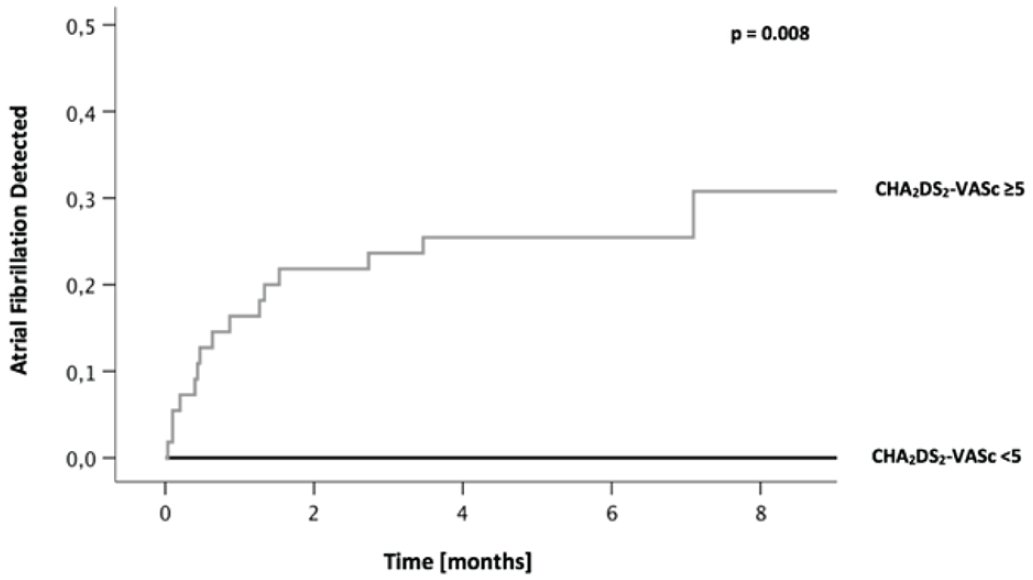
P0078 / 271
USING ARTIFICIAL INTELLIGENCE (AI) NETWORKS TO DETECT ATRIAL FIBRILLATION (AF) AFTER STROKE - AIAF PILOT STUDY
1Sheffield Institute of Translational Neuroscience, University of Sheffield, Sheffield, United Kingdom, 2Stroke Unit, Royal Hallamshire Hospital, Sheffield Teaching Hospitals, Sheffield, United Kingdom
P0079 / 1238
PERFORMANCE OF THE CPSSS IN PRE-HOSPITAL CARE TO DETECT CEREBRAL INFARCTION RELATED TO PROXIMAL ARTERIAL OCCLUSION
1Hospices Civils de Lyon, SAMU, Lyon, France, 2Hospices Civils de Lyon, Hôpital Pierre Wertheimer, Service Neuro-vasculaire, Lyon, France, 3Université Claude Bernard Lyon 1, Research on Healthcare Performance (RESHAPE), INSERM U1290, Lyon, France, 4Hospices Civils de Lyon, Pôle de Sante Publique, Service Recherche et Epidémiologie Cliniques, Lyon, France
P0080 / 431
DUAL THROMBOLYTIC THERAPY WITH MUTANT PRO-UROKINASE AND LOW DOSE ALTEPLASE FOR ISCHEMIC STROKE (DUMAS)
1Erasmus MC University Medical Center, Neurology, Rotterdam, Netherlands, 2Erasmus MC University Medical Center, Radiology & Nuclear Medicine, Rotterdam, Netherlands, 3Reinier de Graaf, Neurology, Delft, Netherlands, 4Reinier de Graaf, Radiology & Nuclear Medicine, Delft, Netherlands, 5Haaglanden Medical Center, Neurology, The Hague, Netherlands, 6Haaglanden Medical Center, Radiology & Nuclear Medicine, The Hague, Netherlands, 7Isala Klinieken, Neurology, Zwolle, Netherlands, 8Isala Klinieken, Radiology & Nuclear Medicine, Zwolle, Netherlands, 9Erasmus MC University Medical Center, Public Health, Rotterdam, Netherlands
P0081 / 987
TRANEXAMIC ACID FOR INTRACEREBRAL HAEMORRHAGE 3 (TICH-3): RATIONALE AND DESIGN OF A PHASE III DOUBLE BLIND RANDOMISED CONTROLLED MULTI-CENTRED SUPERIORITY TRIAL
1University of Nottingham, Stroke Trials Unit, Mental Health and Clinical Neurosciences, NG7 2UH, United Kingdom, 2University of Nottingham, Cinical Stroke Trial Unit, Division of Clinical Neuroscience, Faculty of Medicine & Health Sciences, Nottingham, United Kingdom, 3University of Edinburgh, Professor of Clinical Neurology, Edinburgh, United Kingdom, 4University Hospitals of North Midlands NHS Trust, Consultant Stroke Physician, Stoke, United Kingdom, 5UCL Institute of Neurology, Professor of Clinical Neurology, London, United Kingdom, 6University of Nottingham, Cinical Stroke Trial Unit, Division of Clinical Neuroscience, Faculty of Medicine & Health Sciences, Derby, United Kingdom, 7University of Leicester, Professor of Emergency Medicine, Leicester, United Kingdom, 8University of Nottingham, Professor of Health Economics, Nottingham, United Kingdom, 9University of Nottingham, Nottingham Clinical Trials Unit, Nottingham, United Kingdom, 10University of Leicester, Professor of Stroke Medicine, Liecester, United Kingdom, 11London School of Hygiene & Tropical Medicine, London, United Kingdom, 12University of Nottingham, Clinical Trials Unit, Nottingham, United Kingdom
Rapid emergency consent will take place and patients will be randomised (1:1) by simple randomisation to receive intravenous TXA 2g; 1g bolus loading dose given as 100ml infused over 10 minutes, followed by another 1g in 250ml infused over 8hrs or matching placebo. Patients, relatives, researchers and outcome assessors will be masked to treatment allocation.
The primary outcome is mortality by day 7. Secondary outcomes include dependency (using the modified Rankin Scale) and Quality of Life (including health economics outcomes) at day 180, serious adverse events (SAE) up to 7 days and fatal SAEs up to day 180.
P0082 / 1559
CEREBROLYSIN IN PATIENTS WITH SUBARACHNOIDAL HAEMORRHAGE AND HIGH INITIAL HUNT-HESS GRADE
1Medical Faculty Zagreb, University Hospital Zagreb, Neurology, Zagreb, Croatia, 2University Hospital Zagreb, Neurology, Zagreb, Croatia
P0083 / 291
S TROKE IN PATIENTS WITH LARGE I SCHAEMIC C ORE: A SSESSMENT OF R EPERFUSION THERAPY I MPACT ON O UTCOME (SICARIO) TRIAL
1John Hunter Hospital, Neurology, New Lambton Heights, Australia, 2University of New South Wales South Western Sydney Clinical School, Sydney, Australia, 3Royal Melbourne Hospital, Melbourne, Australia, 4University of Melbourne, Melbourne, Australia, 5Prince of Wales hospital, Sydney, Australia, 6University of Newcastle, Newcastle, Australia, 7The Florey Institute of Neuroscience and Mental Health, Melbourne, Australia, 8Deakin University, Geelong, Australia
Sub-study 1 (CTP core 70-100mL) is a prospective, randomized, open-label, blinded endpoint, international, parallel 2-arm Bayesian Optimal Phase 2 (BOP2) design trial (Sample size: 150 patients).
Sub-study 2 (CTP core >100mL) is a prospective, single arm, international, BOP2 design trial (Sample size: 180 patients).
Population: Ischaemic stroke patients with anterior LVO within 24 hours of onset with an ischemic core of >70mL and a premorbid mRS<3.
Primary Outcome: Substudy 1: Proportion of mRS 0-2 at 3 months.
Substudy 2: Proportion of mRS 0-4 at 3 months.
P0084 / 1153
DOES PHARYNGEAL ELECTRICAL STIMULATION IMPROVE SWALLOWING IN ACUTE STROKE DYSPHAGIA? THE PHEAST TRIAL
1University of Nottingham, Stroke Trials Unit, Mental Health & Clinical Neurosciences, Nottingham, United Kingdom, 2University of Manchester, Division of Diabetes, Endocrinology & Gastroenterology, Manchester, United Kingdom, 3University of Nottingham, Nottingham Clinical Trials Unit, Nottingham, United Kingdom, 4University of Manchester, Division of Cardiovascular Sciences, Manchester, United Kingdom
Patients will be randomised (1:1), with stratification on country and minimisation on age, sex, dysphagia severity rating scale (DSRS), impairment, stroke type, circulation and time to randomisation, to receive either PES or No PES. The PES group will receive six, once daily (10 minute) treatments of PES. Both groups will receive standard dysphagia rehabilitation.
The primary outcome is dysphagia status, assessed using the Dysphagia Severity Rating Scale (DSRS) at day 14. Secondary outcomes include PES threshold and tolerability at day 7, dysphagia status, dependency, disability, quality of life, cognition, mood and disposition at 90 and all-cause mortality at day 365.
P0085 / 204
COMPUTER-ASSISTED SELF-TRAINING TO IMPROVE EXECUTIVE FUNCTION VERSUS UNSPECIFIC TRAINING IN PATIENTS AFTER STROKE, CARDIAC ARREST OR IN PARKINSON’S DISEASE: A RANDOMIZED CONTROLLED TRIAL: THE COMPEX-TRIAL
1Bispebjerg Hospital, University of Copenhagen, Neurology, Copenhagen NV, Denmark, 2Bispebjerg Hospital, Neurology, Copenhagen NV, Denmark
P0086 / 370
TOWARDS INDIVIDUALIZED MEDICINE IN STROKE - THE TIMES PROJECT: A LONGITUDINAL, MULTI-DOMAIN, MULTI-MODAL STUDY OF STROKE PATIENTS DURING THE FIRST YEAR AFTER THE ICTAL EVENT
1Swiss Federal Institute of Technology (EPFL), Defitech Chair of Clinical Neuroengineering, Center for Neuroprosthetics and Brain Mind Institute, Sion, Switzerland, 2Swiss Federal Institute of Technology (EPFL), Defitech Chair of Clinical Neuroengineering, Center for Neuroprosthetics and Brain Mind Institute, Geneva, Switzerland, 3Hôpital du Valais (HVS), Hôpital de Sion, Sion, Switzerland, 4Clinique Romande de Réadaptation, Sion, Switzerland, 5Berner Klinik Montana, Crans-Montana, Switzerland, 6University of Geneva Medical School, Clinical Neuroscience, Geneva, Switzerland
Despite recent improvements, complete motor recovery occurs in less than 15% of patients. To improve the therapeutic outcomes, there is a strong need to tailor treatments to each individual patient. However, there is a lack of knowledge concerning the precise neuronal mechanisms underlying motor recovery. The TiMeS project is an ongoing longitudinal exploratory study aiming at characterizing stroke phenotypes of a large, representative stroke cohort through an extensive, multi-modal evaluation. The ultimate goal of the study is to identify biomarkers allowing to predict the individual course of motor recovery and paving the way for treatment stratification of individual patients.
A total of up to 100 patients will be assessed at 4 timepoints over the first year after the stroke: during the first (T1) and third (T2) week, then three (T3) and twelve (T4) months after stroke onset. To assess underlying mechanisms of recovery with a focus on brain connectivity, we will apply synergistic state-of-the-art systems neuroscience methods: functional and structural magnetic resonance imaging (MRI), and electrophysiological recordings including transcranial magnetic stimulation (TMS) coupled with electroencephalography (EEG) and electromyography (EMG). In addition, an extensive, multi-domain neuropsychological evaluation will be performed at each timepoint, covering all sensorimotor and cognitive domains according to the DSM-V.
Ending in December 2022, this project will provide a multi-dimensional dataset serving as a basis to develop biomarkers that will help to predict outcomes and promote personalized stratification towards individually tailored treatment concepts using neuro-technologies. This will pave the way towards personalized precision medicine approaches in stroke rehabilitation.
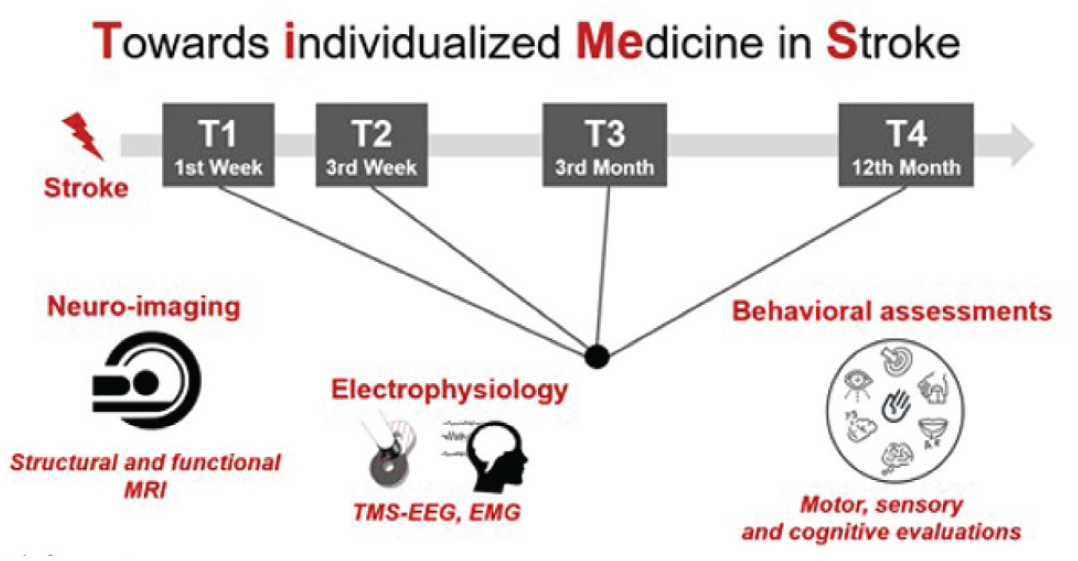
P0087 / 355
AURORA: DUTCH-TYPE HEREDITARY CEREBRAL AMYLOID ANGIOPATHY NATURAL HISTORY STUDY
1Leiden University Medical Center, Neurology, Leiden, Netherlands, 2Leiden University Medical Center, Radiology, Leiden, Netherlands, 3Radboud University Medical Center, Neurology, Nijmegen, Netherlands, 4Leiden University Medical Center, Biomedical Data Sciences, Leiden, Netherlands
P0088 / 454
TRIPLE THERAPY PREVENTION OF RECURRENT INTRACEREBRAL DISEASE EVENTS TRIAL (TRIDENT): PROGRESS REPORT
1The George Institute for Global Health, University of New South Wales, Sydney, Australia, 2Clinical Trials Unit, Department of Pharmacology, Faculty of Medicine, University of Kelaniya, Colombo, Sri Lanka, 3Institute of Neurology, National Hospital of Sri Lanka, Colombo, Sri Lanka, 4Universidade Federal do Rio Grande do Sul, Hospital de Clínicas de Porto, Alegre, Brazil, 5Neurology Service Hospital Moinhos de Vento, Porto Alegre, Brazil, 6Department of Neurology, Donders Institute for Brain, Cognition, and Behaviour, Radboud University Medical Center, Nijmegen, Netherlands, 7Neurology Department, National Hospital of Sri Lanka, Colombo, Sri Lanka, 8The George Institute for Global Health, School of Public Health, Imperial College, London, United Kingdom, 9University of Bordeaux, Bordeaux, France, 10Department of Preventive Medicine and Public Health, Faculty of Medicine, Fukuoka University, Fukuoka, Japan, 11Stroke Unit, 115 Hospital, Ho Chi Minh City, Vietnam, 12Department of Medicine, Universiti Kebangsaan Malaysia Medical Center, Kuala Lumpur, Malaysia, 13Urgent Neurological Clinic Neurology, Tbilisi State Medical University, Tbilisi, Georgia, 14Department of Medicine, University of Ilorin, Ilorin, Nigeria, 15Department of Neurology University Hospital Bern and University of Bern, Bern, Switzerland, 16Department of Neurology, University Hospital Basel, Basel, Switzerland, 17Stroke Center and Department of Neurology, Linkou Chang Gung Memorial Hospital, Taoyuan City, Taiwan, Province of China, 18College of Medicine, Chang Gung University, Taoyuan, Taiwan, Province of China, 19Department of Pharmacology, Yong Loo Lin School of Medicine, National University of Singapore, Singapore, Singapore, 20Department of Neurosciences and Behavioural Sciences, Ribeirao Preto School of Medicine, University of Sao Paulo, Ribeirao Preto, Brazil, 21College of Life Sciences and NIHR Biomedical Research Centre, University of Leicester, Leicester, United Kingdom, 22Centre for Epidemiological Studies and Clinical Trials, Ruijin Hospital, Shanghai Jiaotong University School of Medicine, Shanghai, China, 23Westmead Applied Research Centre, Faculty of Medicine and Health, University of Sydney, Westmead Hospital, Sydney, Australia, 24Centre for Clinical Brain Sciences, University of Edinburgh, Edinburgh, United Kingdom
P0089 / 1037
INTENSIVE CARE BUNDLE WITH BLOOD PRESSURE REDUCTION IN ACUTE CEREBRAL HAEMORRHAGE TRIAL (INTERACT3): PROGRESS REPORT
1The George Institute China at Peking University Health Sciences Center, Beijing, China, 2The George Institute for Global Health, University of New South Wales, Sydney, Australia, 3West China Hospital, Sichuan University, Department of Neurosurgery, Chengdu, China, 4Royal Prince Alfred Hospital, Neurology Department, Sydney, Australia, 5Sydney Medical School, University of Sydney, Sydney, Australia
P0090 / 1109
SAFETY AND TOLERABILITY OF AZD6482 IN REPERFUSION FOR STROKE (STARS)
1Macquarie University, Department of Clinical Medicine, Faculty of Medicine, Health and Human Sciences, Sydney, Australia, 2The George Institute, Sydney, Australia, 3Heart Research Institute, Charles Perkins Centre, University of Sydney, Sydney, Australia, 4Department of Neurology, John Hunter Hospital, University of Newcastle, Newcastle, New South Wales, Australia; Hunter Medical Research Institute, University of Newcastle, Newcastle, Australia
The new drug is an enzyme PI 3-kinase (PI3K) inhibitor Type Ia p110β isoform which is a safe and effective way to inhibit pathological thrombus formation without causing bleeding based on robust animal and healthy volunteers’ trials.
P0091 / 1467
ALAMEDA - A SYSTEM DESIGNED TO OPEN NEW AVENUES IN PATIENTS’ REHABILITATION AFTER STROKE
1University Emergency Hospital Bucharest, Neurology, Bucharest, Romania, 2University Emergency Hospital Bucharest, Bucharest, Romania
ALAMEDA is an international research project that involves 15 partners and organizes three pilot studies in 3 sites, one for each disease (Greece for Parkinson, Italy for Multiple Sclerosis, Romania for Stroke).
The aim of our project is to help predict episodes of worsening of the disease and to design the most appropriate treatment and rehabilitation path in the case of stroke patients.
- wearing the devices
- filling out Patient Reported Outcomes
- the Conversational Agent
- the Disease Self-Management Module
By monitoring patients using smart devices (Smart watch, Smart bracelet, Shoe pressure sensors, Belt sensors, Sleep Monitoring Mattress, Smartphone/Tablet Camera), we attempt to open new means to amplify gains in recovery after stroke and to anticipate an eventual aggravation of the deficits.
P0092 / 501
MEASURING CHANGES IN BLOOD BIOMARKERS AFTER A NEUROPROTECTIVE INTERVENTION (REMOTE ISCHEMIC CONDITIONING) IN A PREHOSPITAL STROKE TRIAL
1Aarhus University Hospital, Department of Neurology & Danish Stroke Center, Aarhus, Denmark, 2Medical College of Georgia, Augusta University, Department of Neurology, Augusta, United States, 3Prehospital Emergency Medical Services, Central Denmark Region, Department of Research and Development, Aarhus, Denmark, 4Aarhus University Hospital, Department of Clinical Biochemistry, Aarhus, Denmark, 5Center of Functionally Integrative Neuroscience, Department of Clinical Medicine, Aarhus, Denmark
P0093 / 269
TELEMEDICINE EFFICACY IN MEDICATION ADHERENCE IN POST-ISCHEMIC STROKE PATIENTS: ONGOING CLINICAL TRIAL
1Hospital Internacional de Colombia, Instituto Neurológico, Piedecuesta, Colombia, 2Fundación Cardiovascular de Colombia, Grupo de Ciencias Neurovasculares, Floridablanca, Colombia, 3Universidad Industrial de Santander, Bucaramanga, Colombia, 4Universidad de La Sabana, Bogotá D.C, Colombia
Several studies have demonstrated that stroke patients benefit with the implementation of telemedicine by providing timely and appropriate neurological consultation, diminishing accessible barriers, improving medication adherence for secondary prevention, and facilitating linkages between patient and physician. We aim to determine the efficacy of telemedicine on preventive medication adherence in Stroke survivors.
Trial registration: NCT04877171.
This work is supported by Minciencias (No. 80740-043-2021).
P0094 / 523
CHLORHEXIDINE OR TOOTHPASTE, MANUAL OR POWERED BRUSHING TO PREVENT PNEUMONIA COMPLICATING STROKE (CHOSEN): A 2X2 FACTORIAL RANDOMISED CONTROLLED FEASIBILITY TRIAL
1University of Manchester, Division of Cardiovascular Sciences, Manchester, United Kingdom, 2University of Central Lancashire, School of Nursing, Preston, United Kingdom, 3Bangor University, School of Medical and Health Sciences, Bangor, United Kingdom, 4Geoffrey Jefferson Brain Research Centre, Manchester, United Kingdom, 5Glasgow Caledonian University, School of Health and Life Sciences, Glasgow, United Kingdom, 6Newcastle University, School of Dental Sciences, Newcastle, United Kingdom, 7University of Glasgow, Institute of Cardiovascular and Medical Sciences, Glasgow, United Kingdom
ISRCTN52421361
P0095 / 483
DESMOPRESSIN FOR REVERSAL OF ANTIPLATELET DRUGS IN STROKE DUE TO HAEMORRHAGE (DASH): RATIONALE AND DESIGN OF A PHASE II DOUBLE BLIND RANDOMISED CONTROLLED TRIAL
1University of Nottingham, Stroke Trials Unit, Mental Health & Clinical Neurosciences, Nottingham, United Kingdom, 2Oxford University Hospitals, Oxford, United Kingdom, 3University of Edinburgh, Centre for Clinical Brain Sciences, Edinburgh, United Kingdom, 4NHS Blood and Transplant, Oxford, United Kingdom, 5University of Nottingham, Radiological Sciences, Mental Health & Clinical Neurosciences, Nottingham, United Kingdom, 6University of Leicester, Department of Cardiovascular Sciences, Leicester, United Kingdom, 7Patient Representative, Nottingham, United Kingdom, 8University of Nottingham, Nottingham Clinical Trials Unit, Nottingham, United Kingdom
Patients will be randomised (1:1) to receive intravenous desmopressin 20μg in 50 mls Sodium Chloride 0.9% infused over 20 minutes or matching placebo. Randomisation will involve minimisation on key prognostic factors: age; sex; time since onset; systolic blood pressure; and presence of intraventricular haemorrhage. Patients, relatives, researchers and outcome assessors will be masked to treatment allocation.
Feasibility outcomes include number of patients receiving allocated treatment, rate of recruitment, proportion of patients approached being randomised, adherence to treatment and follow up. Secondary outcomes include hyponatremia at 24 hour, death within 7 days, serious adverse events up to 90 days and haematoma growth at 24 hours.
P0096 / 1244
AUTOMATIC PREDICTION OF EDEMA AFTER STROKE (APICES)
1University of Tübingen, Department of Neurology & Stroke, Tübingen, Germany, 2Fraunhofer Institute for Digital Medicine MEVIS, Bremen, Germany, 3University of Tübingen, Department of Diagnostic and Interventional Neuroradiology, Tübingen, Germany, 4University of Ulm, Department of Neurology, Ulm, Germany, 5Klinikum Stuttgart, Department of Neurology, Stuttgart, Germany, 6University of Heidelberg, Department of Neuroradiology, Heidelberg, Germany, 7Charité-Universitätsmedizin Berlin, Department of Neuroradiology, Berlin, Germany, 8Ludwig-Maximilian University of Munich, Department of Neurology, Munich, Germany, 9Charité-Universitätsmedizin Berlin, Department of Neurology, Berlin, Germany, 10University of Hamburg-Eppendorf, Department of Neuroradiology, Hamburg, Germany, 11University of Würzburg, Department of Neurology, Würzburg, Germany, 12University of Hannover, Department of Neurology, Hannover, Germany, 13Ludwig-Maximilian University of Munich, Department of Neuroradiology, Munich, Germany, 14University of Göttingen, Department of Neurology, Göttingen, Germany, 15University of Düsseldorf, Department of Neurology, Düsseldorf, Germany, 16University of Leipzig, Department of Neurology, Leipzig, Germany, 17University of Münster, Department of Neurology, Münster, Germany, 18University of Bonn, Department of Neurology, Bonn, Germany, 19University of Heidelberg, Department of Neurology, Heidelberg, Germany, 20University of Regensburg, Department of Neurology, Regensburg, Germany, 21University of Frankfurt, Department of Neurology, Frankfurt, Germany, 22University of Hamburg-Eppendorf, Department of Neurology, Hamburg, Germany, 23Technical University of Munich, Department of Neurology, Munich, Germany
P0097 / 480
AN APP TO MEASURE OBJECTIVE MOTIVATION IN STROKE PATIENTS UNDERGOING REHABILITATION
1Imperial College London, Brain Sciences, London, United Kingdom, 2Imperial College London, Bioengineering, London, United Kingdom
P0098 / 503
A RANDOMIZED TRIAL ON HEMODYNAMIC OPTIMIZATION OF CEREBRAL PERFUSION AFTER ENDOVASCULAR THERAPY IN PATIENTS WITH ACUTE ISCHEMIC STROKE (HOPE STUDY)
1Hospital de la Santa Creu i Sant Pau, Biomedical Research institute Sant Pau, Neurology, Barcelona, Spain, 2Hospital Universitario Virgen del Rocío, Sevilla, Spain, 3Hospital Universitari Dr Josep Trueta, Girona, Spain, 4Hospital Universitario de A Coruña, La Coruña, Spain, 5Hospital Universitario Central de Asturias, Oviedo, Spain, 6Hospital Universitario de Cruces, Baracaldo, Spain, 7Hospital Universitario y Politécnico La Fe, Valencia, Spain, 8Hospital del Mar, Barcelona, Spain, 9Hospital Clínico Universitario de Santiago CHUS, Santiago de Compostela, Spain
Primary end-point: Functional outcome assessed by the Rankin scale score at 3 months by a blinded investigator. We will perform a shift analysis to demonstrate differences on the mRS score distribution between both groups. We will compare also the common odds ratio of worsening 1 point on the mRS score between groups using ordinal logistic regression.
P0099 / 479
EFFICACY OF CEREBROLYSIN TREATMENT AS AN ADD-ON THERAPY TO MECHANICAL THROMBECTOMY – PRELIMINARY RESULTS OF WIM-CEREBROLYSIN STUDY
1Military Institute of Medicine, Clinic of Neurology, Warsaw, Poland, 2Military Institute of Medicine, Radiology Department, Warsaw, Poland, 3Military Institute of Medicine, Neurorehabilitation Department, Warsaw, Poland
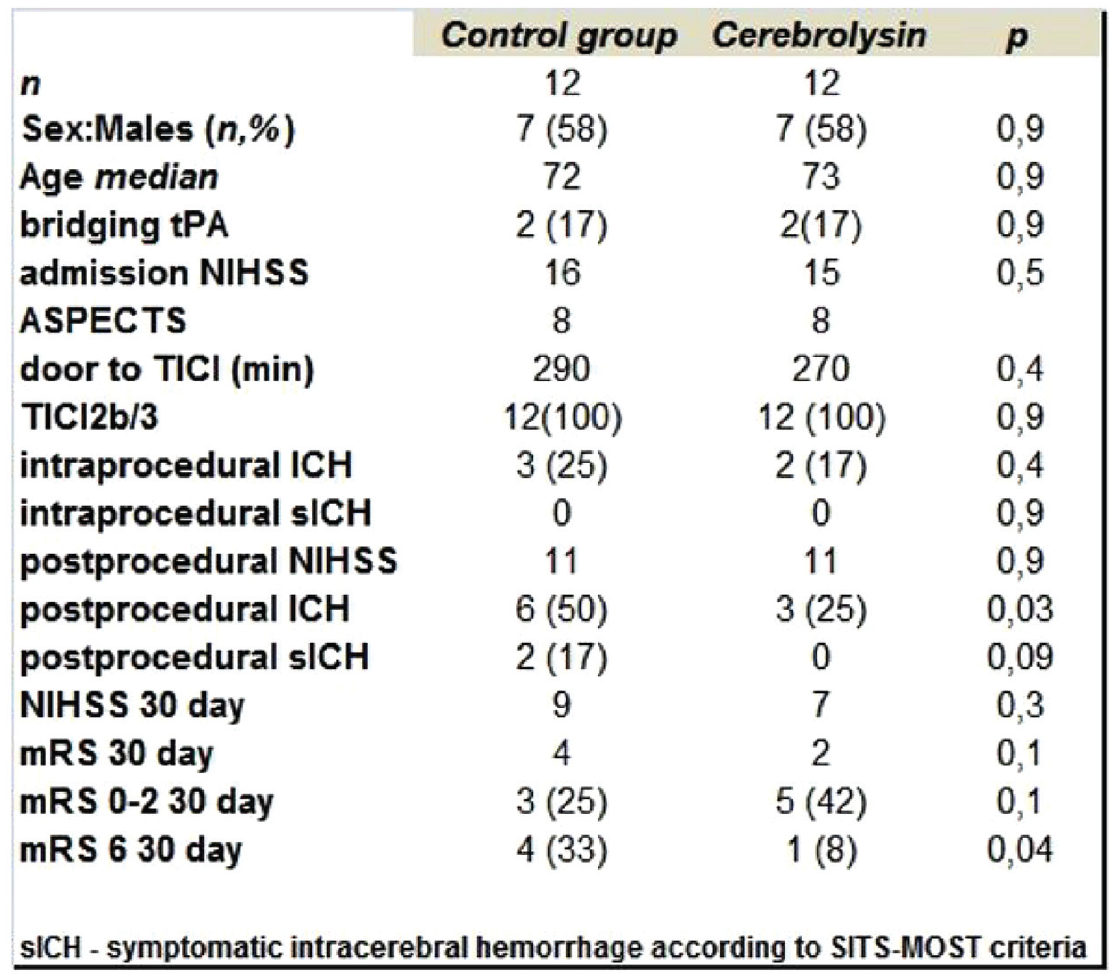
P0100 / 1372
VASCULAR RISK FACTORS: CEREBRAL COLLATERAL EFFICIENCY AND BURDEN OF SMALL VESSEL DISEASE IN ANTERIOR CIRCULATION LARGE VESSEL OCCLUSION STROKE
1Beth Israel Deaconess Medical Center, Neurology, Boston, United States, 2Beth Israel Deaconess Medical Center, Boston, United States
P0101 / 1310
EFFICACY AND SAFETY OF INJECTION TENECTEPLASE IN 4.5 TO 24 HOURS IMAGING ELIGIBLE WINDOW PATIENTS WITH ACUTE ISCHEMIC STROKE
1All India Institute of Medical Sciences, Neurology, New Delhi, India, 2All India Institute of Medical Sciences, Neuroradiology, New Delhi, India
P0102 / 1458
ASSOCIATION OF PHYSICAL ACTIVITY INTENSITY LEVELS AT 3 MONTHS AND MAJOR VASCULAR EVENTS FOLLOWING FIRST-EVER ISCHEMIC STROKE AT 1 – YEAR. THE MIDNOR STROKE STUDY
1 Norwegian University of Science and Technology, Medicine and Health Sciences, Trondheim, Norway
This study aims to evaluate the association between physical activity intensity measured 3 months after stroke and major vascular events registered 1 year after stroke, and to assess how function, stroke severity and comorbidity burden modify this association.
Multivariate regression models will be used to investigate the association between PA levels, all-cause mortality, and major vascular events.
P0103 / 665
A DUBBING PROCEDURE TO IMPROVE COMMUNICATION IN POST-STROKE APHASIA: THE DUBBING LANGUAGE-THERAPY CINEMA-BASED IN APHASIA POST-STROKE (DULCINEA) TRIAL
1La Paz University Hospital, Universidad Autónoma de Madrid, IdiPAZ Health Research Institute, Neurology, Madrid, Spain, 2IdiPAZ Health Research Institute, Neurosciences Area, Madrid, Spain, 3Universidad Autónoma de Madrid, Psychology, Madrid, Spain, 4Universidad Pontificia Comillas, Psychology, Madrid, Spain, 5La Paz University Hospital and Universidad Complutense de Madrid, Department of Rehabilitation. Speech and Language Unit, Madrid, Spain, 6La Paz University Hospital, Department of Rehabilitation, Speech and Language Unit, Madrid, Spain, 7Universidad Autónoma de Madrid and the University of Auckland, Psychology, Madrid, Spain, 8La Paz University Hospital, Universidad Autónoma de Madrid, IdiPAZ Health Research Institute, Clinical Pharmacology, Clinical Trials Unit, Madrid, Spain, 9Asociación Afasia Activa, Madrid, Spain
P0104 / 905
EARLY VERSUS LATE INITIATION OF DIRECT ORAL ANTICOAGULANTS IN POST-ISCHAEMIC STROKE PATIENTS WITH ATRIAL FIBRILLATION (ELAN): AN INTERNATIONAL, MULTICENTRE, RANDOMISED-CONTROLLED, TWO-ARM, ASSESSOR-BLINDED TRIAL
1Bern University Hospital, Inselspital, Department of Neurology, Bern, Switzerland, 2University Hospital Basel, Department of Neurology, Basel, Switzerland, 3University Hospital Helsinki, Department of Neurology, Helsinki, Finland, 4University Hospital Perugia, Department of Internal Medicine, Perugia, Italy, 5University Medical Center Hamburg-Eppendorf, Department of Neurology, Hamburg, Germany, 6University of Thessaly, Department of Internal Medicine, Larissa, Greece, 7University Hospital Lausanne, Department of Neurology, Lausanne, Switzerland, 8Cantonal Hospital Aarau, Department of Neurology, Aarau, Switzerland, 9University Hospital and University of Bern, Clinical Trial Unit, Bern, Switzerland, 10Medical University of Graz, Department of Neurology, Graz, Austria, 11Oslo University Hospital, Department of Neurology, Oslo, Norway, 12University Hospitals Leuven, Department of Neurology, Leuven, Belgium, 13National Cerebral and Cardiovascular Center Osaka, Department of Cerebrovascular Medicine, Osaka, Japan, 14Sree Chitra Tirunal Institute for Medical Sciences and Technology, Department of Neurology, Kerala, India, 15Hospital de Santa Maria, Department of Neurology, Lisbon, Portugal, 16University of Glasgow, Department of Neurology, Glasgow, United Kingdom
P0105 / 713
RATIONALE AND DESIGN FOR A CLINICAL TRIAL OF SELECTIVE BRAIN HYPOTHERMIA IN LVO ACUTE ISCHEMIC STROKE: HYBERNIA POST-MECHANICAL THROMBECTOMY- ENDOVASCULAR CEREBRAL HYPOTHERMIA TRIAL (POST-MTECH TRIAL)
1University of California Los Angeles, Stroke Center, Los Angeles, United States, 2University of Pittsburgh Medical Center, Stroke Center, Pittsburgh, United States, 3University of Tuebingen, Neurology, Tuebingen, Germany, 4University of Boston Medical Center, Stroke Center, Boston, United States, 5Rush University Medical Center, Neurosurgery, Chicago, United States, 6Yale New Haven Medical Center, Neurosurgery, New Haven, United States, 7NSPC Brain & Spine Surgery, Neurovascular Center, Lake Success, United States
P0106 / 1129
AMASCIS-02: ALLOGENEIC ADIPOSE TISSUE-DERIVED MESENCHYMAL STEM CELLS IN ISCHAEMIC STROKE. A PHASE IIB, MULTICENTRE, DOUBLE-BLIND, PLACEBO-CONTROLLED CLINICAL TRIAL
1Department of Neurology and Stroke Center, Neurological Sciences and Cerebrovascular Research Laboratory, La Paz University Hospital, IdiPAZ Health Research Institute, Universidad Autónoma de Madrid, Madrid, Spain, 2Department of Neurology and Stroke Research Program, Hospital Universitario Virgen del Rocío.Institute of Biomedicine of Seville, IBiS/Hospital Universitario Virgen del Rocío/CSIC/University of Seville, Seville, Spain, 3Department of Neurology and Stroke Research Program, Hospital Universitario Virgen Macarena,Institute of Biomedicine of Seville, IBiS/Hospital Universitario Virgen del Rocío/CSIC/University of Seville, Seville, Spain, 4Department of Clinical Pharmacology, Hospital La Paz Institute for Health Research-IdiPAZ (La Paz University Hospital-Universidad Autónoma de Madrid), Madrid, Spain
Trial registration: Eudra CT 2019-001724-35; NCT04280003.
P0107 / 1132
RATES, RISKS AND ROUTES TO REDUCE VASCULAR DEMENTIA (R4VAD)
1 University of Edinburgh, Centre for Clinical Brain Sciences, Edinburgh, United Kingdom
P0108 / 549
CEREBRAL HEMODYNAMICS DURING EARLY VERTICALIZATION AFTER SUCCESSFUL THROMBECTOMY POSTSTROKE (CHEST-STUDY)
1University Hospital Zurich and University of Zurich, Department of Neurology, Zurich, Switzerland, 2University of Zurich, Clinical Neuroscience Center, Zurich, Switzerland, 3cereneo Center for Neurology and Rehabilitation, Vitznau, Switzerland, 4Valens Clinics, Rehabilitation Center Triemli Zurich, Zurich, Switzerland
P0109 / 1203
OPTIMAL BLOOD PRESSURE FOR THE PREVENTION OF MAJOR VASCULAR EVENTS IN STROKE PATIENTS (OPTIMAL- STROKE)
1HIAE/UNIFESP, Academic Research Organization ( AR0)/ HIAE, São Paulo, Brazil, 2HIAE, Academic Research Organization ( AR0)/ HIAE, São Paulo, Brazil, 3FMUSP, Neurology, São Paulo, Brazil, 4Hospital de Clínicas de Porto Alegre, Neurology, Porto Alegre, Brazil, 5Hospital de Clínicas de Porto Alegre, Cardiology, Porto Alegre, Brazil
P0110 / 656
ENDOVASCULAR THERAPY PLUS BEST MEDICAL TREATMENT (BMT) VERSUS BMT ALONE FOR MEDIUM VESSEL OCCLUSION STROKE - A PRAGMATIC, INTERNATIONAL, MULTICENTRE, RANDOMIZED TRIAL (DISTAL)
1University of Basel, Basel, Switzerland, 2University Hospital Hamburg Eppendorf, Hamburg, Germany, 3Centro Hospitalar Universitário Lisboa Central, Lisboa, Portugal, 4Inselspital Bern, Bern, Switzerland, 5Hadassa Medical Centers the Hebrew University Jerusalem, Jerusalem, Israel, 6Hôpitaux Universitaires de Genève, Geneve, Switzerland, 7Hospital Vall d’Hebron, Barcelona, Spain, 8University of California, Los Angeles, United States, 9HUS, Neurocenter, Helsinki, Finland, 10TU München, München, Germany

P0111 / 488
REMOTE ISCHAEMIC CONDITIONING AFTER STROKE 3 (RECAST-3): A MULTICENTRE RANDOMISED CONTROLLED TRIAL
1University of Nottingham, Cinical Stroke Trial Unit, Division of Clinical Neuroscience, Faculty of Medicine & Health Sciences, Derby, United Kingdom, 2University of Nottingham, Stroke Trials Unit, Mental Health and Clinical Neurosciences, Nottingham, United Kingdom, 3University of Nottingham, Cinical Stroke Trial Unit, Division of Clinical Neuroscience, Faculty of Medicine & Health Sciences, Nottingham, United Kingdom
P0112 / 1344
STELO: A NEW EXOSKELETON CONCEPT FOR PEOPLE WITH STROKE. AN ON-GOING TRIAL
1Centre for Automation and Robotics (Spanish National Research Council), Madrid, Spain, 2International Doctorate School of the Rey Juan Carlos University, Madrid, Spain, 3Marsi Bionics, Madrid, Spain, 4Technical University of Madrid, Madrid, Spain, 5Doctorate Programme in Health Sciences, University of Alcalá, Madrid, Spain
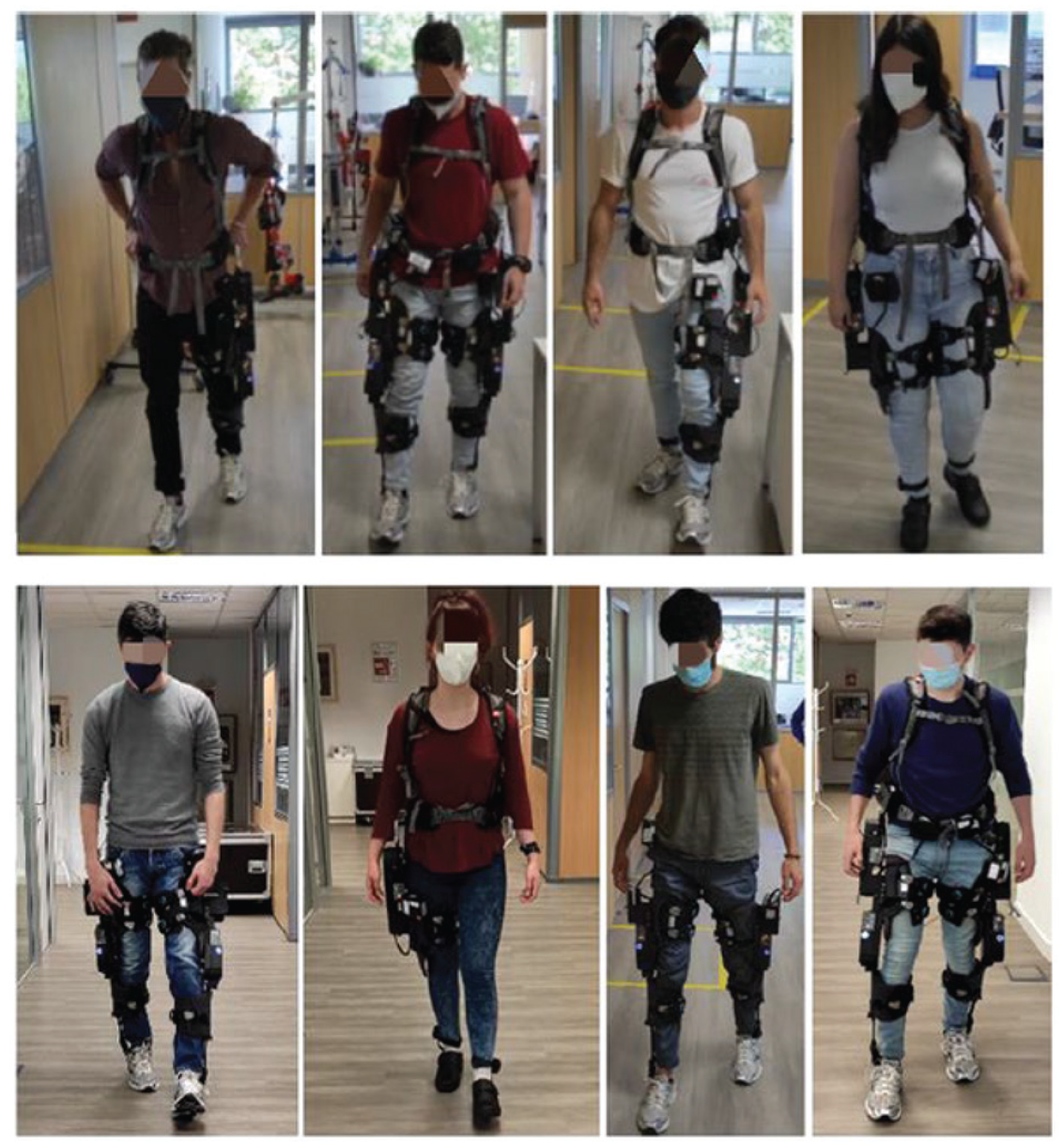
Main configurations of STELO modular exoskeleton.
P0113 / 297
NON-INVASIVE VAGUS NERVE STIMULATION IN ACUTE ISCHEMIC STROKE (NOVIS)
1Leiden University Medical Center, Neurology, Leiden, Netherlands, 2Leiden University Medical Center, Radiology, Leiden, Netherlands, 3Leiden University Medical Center, Medical Statistics, Leiden, Netherlands, 4electroCore, Inc., Rockaway, United States
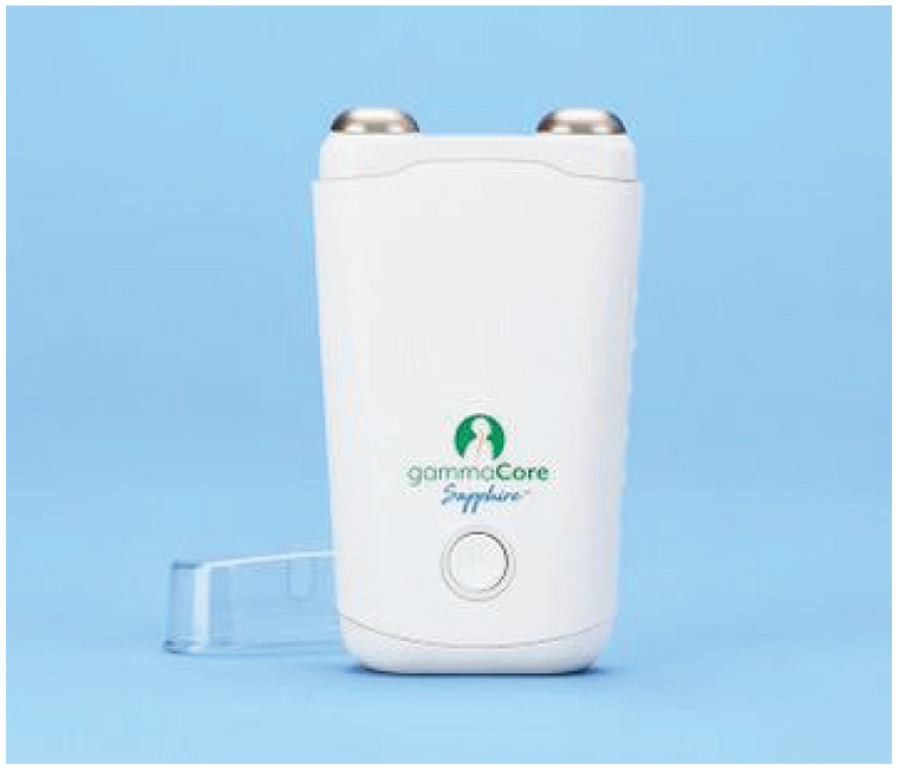
P0114 / 177
FIBRINOGEN REPLACEMENT TO PREVENT INTRACRANIAL HAEMORRHAGE IN ISCHAEMIC STROKE PATIENTS AFTER THROMBOLYSIS: A PILOT PROBE RANDOMIZED CONTROLLED TRIAL
1IRCCS Istituto delle Scienze Neurologiche di Bologna, Bologna, Italy, 2Azienda Ospedaliero-Universitaria di Modena, Modena, Italy, 3“M. Bufalini” Hospital, AUSL Romagna, Cesena, Italy
P0115 / 286
EFFECT OF PROXIMAL BLOOD FLOW ARREST DURING ENDOVASCULAR THROMBECTOMY (PROFATE) - PROTOCOL FOR A RANDOMISED CONTROLLED TRIAL
1Nottingham University Hospitals NHS Trust, Interventional Neuroradiology, Nottingham, United Kingdom, 2University of Nottingham, Radiological Sciences, Nottingham, United Kingdom, 3University Hospitals Birmingham NHS Trust, Interventional Neuroradiology, Birmingham, United Kingdom, 4University of Nottingham, NIHR Nottingham Biomedical Research Centre, Nottingham, United Kingdom, 5The Royal London Hospital Barts Health NHS Trust, Interventional Neuroradiology, London, United Kingdom, 6University of Nottingham, Radiological Sciences, Mental Health and Clinical Neuroscience, Nottingham, United Kingdom, 7University of Nottingham, Stroke, Mental Health and Clinical Neuroscience, Nottingham, United Kingdom, 8University Hospitals of Derby and Burton NHS Foundation Trust, Stroke, Derby, United Kingdom
P0116 / 1026
CHINESE HERBAL MEDICINE IN ACUTE INTRACEREBRAL HAEMORRHAGE (CHAIN) RANDOMISED TRIAL: STUDY PROGRESS
1The George Institute China at Peking University Health Sciences Center, Beijing, China, 2The George Institute for Global Health, University of New South Wales, Sydney, Australia, 3Department of Neurology, Guangdong Provincial Hospital of Chinese Medicine, Guangzhou, China, 4Neurology Department, Royal Prince Alfred Hospital, Sydney, Australia
P0117 / 790
ACTION: ANAKINRA IN CEREBRAL HAEMORRHAGE TO TARGET SECONDARY INJURY RESULTING FROM NEUROINFLAMMATION – A PHASE II CLINICAL TRIAL
1Donders Institute for Brain, Cognition and Behaviour, Radboud University Medical Center, Department of Neurology, Nijmegen, Netherlands, 2Rijnstate Hospital, Department of Neurology, Arnhem, Netherlands, 3Isala Hospital, Department of Neurology, Zwolle, Netherlands
P0118 / 793
STROKE ASSOCIATED IMMUNE MEDIATED PATHWAYS AND COGNITIVE TRAJECTORY (STROKE-IMPACT)
1University of Manchester, Neurosciences and experimental psychology, Manchester, United Kingdom, 2University of Manchester, Manchester, United Kingdom, 3Stanford University, California, United States, 4Weill Cornell Medical College, New York, United States, 5University of Washington, Washington, United States, 6University of Edinburgh, Edinburgh, United Kingdom, 7University of Arizona, Arizona, United States, 8University of Berlin, Berlin, Germany, 9University of Madrid, Madrid, Spain, 10Columbia University College of Physicians and Surgeons, New york, United States
P0119 / 764
INTRA- AND INTER-HEMISPHERIC CONNECTIVITY DURING HD-TDCS IN CHRONIC STROKE: AN FNIRS STUDY
1Samsung Medical Center, Sungkyunkwan University School of Medicine, Department of Physical and Rehabilitation Medicine, Center for Prevention and Rehabilitation, Heart Vascular Stroke Institute, Seoul, Korea, Republic of, 2Sungkyunkwan University, Department of Health Sciences and Technology, SAIHST, Seoul, Korea, Republic of, 3Sungkyunkwan University, Department of Medical Device Management & Research, Department of Digital Health, SAIHST, Seoul, Korea, Republic of
P0120 / 895
EVALUATION OF MICROVASCULAR RAREFACTION IN VASCULAR COGNTIVE IMPAIRMENT AND HEART FAILURE: CRUCIAL-VCI
1Maastricht University Medical Center+, Neurology, Maastricht, Netherlands, 2Maastricht University Medical Center +, Radiology and Nuclear Medicine, Maastricht, Netherlands, 3University College London, Cardiovascular Science, London, United Kingdom, 4Clínica Universidad de Navarra, Radiology, Pamplona, Spain, 5CIMA Universidad de Navarra, Cardiovascular Diseases, Pamplona, Spain, 6KU Leuven, Cardiovascular Sciences, Leuven, Belgium, 7Maastricht University Medical Center+, Radiology and Nuclear Medicine, Maastricht, Netherlands
P0121 / 1199
CONVINCE: COLCHICINE FOR THE PREVENTION OF VASCULAR INFLAMMATION IN NON-CARDIOEMBOLIC STROKE - A RANDOMISED CONTROLLED TRIAL
1University College Dublin, Stroke Clinical Trials Network Ireland, Dublin, Ireland, 2Newcastle University, Stroke Research Group, Newcastle-Upon-Tyne, United Kingdom, 3UZ Leuven, Department of Neurology, Leuven, Belgium, 4University Duisburg-Essen, Faculty of Medicine, Essen, Germany, 5BDH Clinic, Elzach, Germany, 6Universitat de Lleida- Hospital Universitario Arnau de Vilanova de Lleida, Department of Neurology, Lleida, Spain, 7University Of Central Lancashire, Lancashire Clinical Trials Unit, Preston, United Kingdom, 8Institute of Psychiatry and Neurology, 2nd Department of Neurology, Warsaw, Poland, 9University Hospital Inselspital, Acute Neurology and Stroke, Bern, Switzerland, 10Hospital de Santa Maria, Department of Neurology, Lisbon, Portugal, 11University of Calgary, Department of Clinical Neurosciences, Calgary, Canada, 12Vilnius University Clinic of Neurology and Neurosurgery Republic Vilnius University Hospital, Department of Neurology, Vilnius, Lithuania, 13University of Tartu, Department of Neurology and Neurosurgery, Tartu, Estonia, 14Copenhagen University Hospital-Herlev Gentofte Hospital, Department of Neurology, Copenhagen, Denmark, 15St Anne’s University Hospital, Neurology Department, Brno, Czech Republic, 16Mater Misericordiae University Hospital, Acute Stroke Service, Dublin, Ireland, 17RCSI University of Medicine and Health Sciences, School of Medicine, Dublin, Ireland, 18Academic Medical Center, Department of Neurology, Amsterdam, Netherlands
P0122 / 792
ALTEPLASE-TENECTEPLASE TRIAL EVALUATION FOR STROKE THROMBOLYSIS (ATTEST 2)
1University of Glasgow, School of Psychology and Neuroscience, Glasgow, United Kingdom, 2University of Glasgow, Robertson Centre of Biostatistics, Glasgow, United Kingdom, 3University of Edinburgh, Centre for Clinical Brain Sciences, Edinburgh, United Kingdom, 4Oxford University Hospitals NHS Foundation Trust, Geriatric Medicine, Oxford, United Kingdom
This pragmatic trial compares tenecteplase 0.25mg/kg to alteplase 0.9mg/kg using simple and universally available clinical and imaging criteria for patient selection. Non-inferior safety and efficacy compared to alteplase would potentially modify clinical practice as tenecteplase is significantly easier to administer than alteplase.
P0123 / 802
EEG CONTROLLED TRIAGE IN THE AMBULANCE FOR ACUTE ISCHEMIC STROKE TRIAL (ELECTRA-STROKE)
1Amsterdam University Medical Centers, University of Amsterdam, Neurology, Amsterdam, Netherlands, 2Witte Kruis Ambulance Care Alkmaar, Alkmaar, Netherlands, 3Ambulancezorg Nederland, Zwolle, Netherlands, 4Ambulance Amsterdam, Amsterdam, Netherlands, 5Amsterdam University Medical Centers, University of Amsterdam, Biomedical Engineering and Physics, Amsterdam, Netherlands, 6Amsterdam University Medical Centers, University of Amsterdam, Radiology and Nuclear Medicine, Amsterdam, Netherlands
P0124 / 1125
TEN ECTEPLASE IN CENTRAL R ETINAL A RTERY O CCLUSION S TUDY - TENCRAOS: A PROSPECTIVE, RANDOMISED-CONTROLLED, DOUBLE-DUMMY, DOUBLE-BLIND PHASE 3 MULTI-CENTRE TRIAL NCT04526951)
1Oslo University Hospital, Neurology, Oslo, Norway, 2Oslo University Hospital, Ophthalmology, Oslo, Norway, 3Helsinki, Helsinki, Finland, 4Drammen Hospital, Drammen, Norway, 5Tønsberg Hospital, Tønsberg, Norway, 6Rigshospitalet Copenhagen, Copenhagen, Denmark, 7Vilnius University Hospital Santaros klinikos, Vilnius, Lithuania, 8Karolinska University Hospital, Stockholm, Sweden, 9Mater Misericordiae University Hospital, Dublin, Ireland, 10Turku University Hospital, Turku, Finland, 11University Hospital Antwerp, Antwerp, Belgium, 12Respublican Vilnius University Hospital, Vilnius, Lithuania, 13Hospital of Lithuanian University of Health Sciences, Kauno klinikos, Kaunas, Lithuania, 14University Hospital Waterford, Waterford, Ireland, 15University Hospital Limerick, Limerick, Ireland, 16Centro Hospitalar Universitário de São João, Porto, Portugal, 17Helsinki University Hospital, Helsinki, Finland, 18Aarhus University Hospital, Aarhus, Denmark, 19Helse Nord Trøndelag Trust, Namsos, Namsos, Norway, 20University Hospital of North Norway, Tromsø, Tromsø, Norway, 21St. Olav University Hospital, Trondheim, Norway, 22Haukeland University Hospital, Bergen, Norway, 23Stavanger University Hospital, Stavanger, Norway, 24Sørlandet Hospital Trust, Kristiansand, Norway, 25Telemark Hospital Trust, Skien, Norway, 26Nordmøre and Romsdal Regional Hospital, Molde, Norway, 27Innlandet Hospital Trust, Lillehammer, Norway, 28Akershus University Hospital, Lørenskog, Norway
Patients are recruited after an ophthalmologist has confirmed CRAO and they can be treated within 4.5hrs. After observation in the stroke unit, patients will be re-examined by an ophthalmologist and a neurologist as an out-patient at 30 and 90-day follow-up.
The primary outcome is the proportion of patients with ⩽ 0.7 logMAR best-corrected visual acuity (BCVA) in the affected eye at 30 days after treatment, representing an improvement in BCVA of at least 0.3 logMAR.
P0125 / 921
E NHANCEMENT OF ST ROKE RE HABILITATION WITH L EVODOPA (ESTREL-STUDY) - DESIGN AND PROGRESS OF THE ONGOING MULTICENTER PLACEBO-CONTROLLED RANDOMIZED TRIAL
1University of Basel, Neurology and Neurorehabilitation, University Department of Geriatric Medicine FELIX PLATTER, Basel, Switzerland, 2University Hospital Basel and University of Basel, Department of Neurology and Stroke Center, Basel, Switzerland, 3University Hospital Basel and University of Basel, Basel, Switzerland, 4University Hospital Basel and University of Basel, Clinical Trial Unit, Department of Clinical Research, Basel, Switzerland, 5Inselspital, Department of Neurology and Cognitive and Restorative Neurology, Bern, Switzerland, 6University Hospital Basel and University of Basel, Switzerland, Department of Clinical Research, Basel, Switzerland, 7Stanford University, Meta-Research Innovation Center at Stanford (METRICS), Stanford (California), United States, 8Berlin Institute of Health, Meta-Research Innovation Center Berlin (METRIC-B), Berlin, Switzerland, 9University Hospital Lausanne, Stroke Center Lausanne, Lausanne, Switzerland, 10University Hospital Zurich, Vascular Neurology and Neurorehabilitation, Stroke Center, Zürich, Switzerland, 11Valens Clinics, Rehabilitation Triemli Zurich, Zürich, Switzerland, 12University of Oxford, Oxford University Hospitals NHS Foundation Trust, Oxford, United Kingdom, 13Center for Neurology and Rehabilitation, cereneo, Vitznau, Switzerland
P0126 / 1069
RANDOMIZATION TO ENDOVASCULAR TREATMENT ALONE OR PRECEDED BY SYSTEMIC THROMBOLYSIS WITH TENECTEPLASE IN ACUTE ISCHEMIC STROKE DUE TO LARGE INTRACRANIAL VESSEL OCCLUSION TRIAL -RESILIENT DIRECT-TNK
1Ribeirão Preto Medical School - University of São Paulo, Neuroscience and Behavioral Sciences, Ribeirão Preto, Brazil, 2Federal University of Rio Grande do Sul and Hospital Moinhos de Vento, Porto Alegre, Brazil, 3Federal University of São Paulo and Hospital Israelita Albert Einstein, São Paulo, Brazil, 4Hospital Moinhos de Vento, Porto Alegre, Brazil, 5Ribeirão Preto Medical School - University of São Paulo, Ribeirão Preto, Brazil, 6Pro Cardiaco Hospital, Rio de Janeiro, Brazil, 7Federal university of Bahia, Salvador, Brazil, 8Hospital Geral de Fortaleza, Ribeirão Preto, Brazil, 9Hospital de Base de Brasilia, Brasilia, Brazil, 10Federal University of Rio Grande do Sul, Porto Alegre, Brazil, 11Emory University, Atlanta, United States
P0127 / 948
FEASIBILITY AND SAFETY STUDY TO EVALUATE THE NEUROPROTECTIVE EFFECT OF HEMODIALYSIS IN ACUTE ISCHEMIC STROKE (DIAGLUICTUS2)
1Stroke Center, Neurology Department, La Princesa Health Research Institute, Hospital Universitario de la Princesa, Madrid, Spain, 2Nephrology Department, La Princesa Health Research Institute, Hospital Universitario de la Princesa, Madrid, Spain, 3Neurology Nursing. La Princesa Health Research Institute, Hospital Universitario de la Princesa, Madrid, Spain, 4Nephrology Nursing. La Princesa Health Research Institute, Hospital Universitario de la Princesa, Madrid, Spain, 5Neuroradiology. La Princesa Health Research Institute, Hospital Universitario de la Princesa, Madrid, Spain, 6Interventional Neuroradiology. La Princesa Health Research Institute, Hospital Universitario de la Princesa, Madrid, Spain, 7Department of Biochemistry and Molecular Biology, Faculty of Veterinary Medicine, Complutense University, Madrid, Spain, 8Department of Pharmacology and Toxicology, Faculty of Medicine, Complutense University, Madrid, Spain
P0128 / 441
THE DUTCH INTRACEREBRAL HAEMORRHAGE SURGERY TRIAL (DIST); MINIMALLY-INVASIVE ENDOSCOPY-GUIDED SURGERY IN PATIENTS WITH SPONTANEOUS, SUPRATENTORIAL INTRACEREBRAL HAEMORRHAGE
1Radboud University Medical Center, Donders Institute for Brain, Cognition and Behavior, Department of Neurology, Nijmegen, Netherlands, 2Erasmus Medical Center, Erasmus MC Stroke Center, Department of Neurosurgery, Rotterdam, Netherlands
P0129 / 294
THE AVANCER CLINICAL TRIAL PROTOCOL: DOSE-PERSONALIZATION AND COMBINATION OF NEUROTECHNOLOGIES FOR UPPER-LIMB REHABILITATION IN SEVERELY IMPAIRED CHRONIC STROKE PATIENTS
1École Polytechnique Fédérale de Lausanne, Defitech Chair of Clinical Neuroengineering, Center for Neuroprosthetics (CNP) and Brain Mind Institute (BMI), Geneva, Switzerland, 2École Polytechnique Fédérale de Lausanne, Defitech Chair of Clinical Neuroengineering, Center for Neuroprosthetics (CNP) and Brain Mind Institute (BMI), Clinique Romande de Réadaptation, Sion, Switzerland, 3École Polytechnique Fédérale de Lausanne, Bertarelli Foundation Chair in Translational Neuroengineering, Centre for Neuroprosthetics and Institute of Bioengineering, School of Engineering, Geneva, Switzerland, 4AGO Neurotechnologies, sàrl, Geneva, Switzerland, 5confinis AG, Sursee, Switzerland, 6Wyss Center for Bio and Neuroengineering, Geneva, Switzerland, 7University Hospital Würzburg, Department of Neurology, Würzburg, Germany, 8Wallis Hospital, Division of Neurology, Sion, Switzerland, 9Neurological Rehabilitation Department of Clinique Romande de Réadaptation SUVA, Sion, Switzerland, 10University of Tuebingen, Department of Medical Psychology and Behavioral Neurobiology, Tuebingen, Germany, 11University of Geneva Medical School, Clinical Neuroscience, Geneva, Switzerland
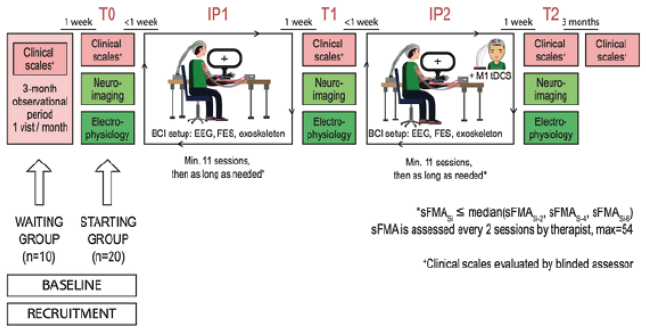
P0130 / 1106
ATRIAL FIBRILLATION AND ATRIAL FLUTTER IN PATIENTS WITH ARTERIAL HYPERTENSION ACCORDING TO SYSTEMIC INFLAMMATION AND IMMUNE STATUS
1 National Scientific Center "M. Strazhesko Institute of Cardiology" of the National Academy of Sciences of Ukraine, Department of Clinical Arrhythmology and Electrophysiology, Kyiv, Ukraine
P0131 / 1035
SECOND, ENHANCED CONTROL OF HYPERTENSION AND THROMBECTOMY STROKE STUDY (ENCHANTED-MT): PROGRESS REPORT
1The George Institute China at Peking University Health Sciences Center, Beijing, China, 2The George Institute for Global Health, University of New South Wales, Sydney, Australia, 3Changhai Hospital, Second Military Medical University, Shanghai, China, 4Royal Prince Alfred Hospital, Neurology Department, Sydney, Australia
P0132 / 246
IMAGING, COGNITION, AND NEUROPSYCHOLOGICAL OUTCOMES AFTER SUBARACHNOID HAEMORRHAGE (ICONS): PROTOCOL OF A LONGITUDINAL, PROSPECTIVE, COHORT STUDY TO INVESTIGATE RECOVERY AFTER SUBARACHNOID HAEMORRHAGE
1University Medical Centre Groningen, Neurology, unit Neuropsychology, Groningen, Netherlands, 2University of Groningen, Psychometrics and Statistics, Groningen, Netherlands, 3University Medical Centre Groningen, Radiology, Groningen, Netherlands, 4University Medical Centre Groningen, Neurosurgery, Groningen, Netherlands
P0133 / 881
PRE-STROKE PHYSICAL ACTIVITY AND ASSOCIATIONS WITH HEALTH-RELATED QUALITY OF LIFE THREE MONTHS AFTER STROKE – A REGISTER-BASED STUDY
1 University of Gothenburg, Department of Clinical Neuroscience, Göteborg, Sweden
THROMBOLYSIS – EXCLUDING CLINICAL TRIAL RESULTS
P0134 / 887
DOES INTRAVENOUS THROMBOLYSIS PROMOTE DELAYED REPERFUSION AFTER INCOMPLETE MECHANICAL THROMBECTOMY?
1University Hospital Bern Inselspital, University Institute of Diagnostic and Interventional Neuroradiology, Bern, Switzerland, 2University Hospital Bern Inselspital, University Institute of Diagnostic, Interventional and Pediatric Radiology, Bern, Switzerland, 3University Hospital Bern Inselspital, Department of Neurology, Bern, Switzerland
P0135 / 1606
RECANALIZATION THERAPIES IN ACUTE ISCHEMIC STROKE: THE EXPERIENCE OF A BRAZILIAN UNIVERSITY HOSPITAL
1 Faculdade de Medicina de Ribeirão Preto da Universidade de São Paulo, Ribeirao Preto, Brazil
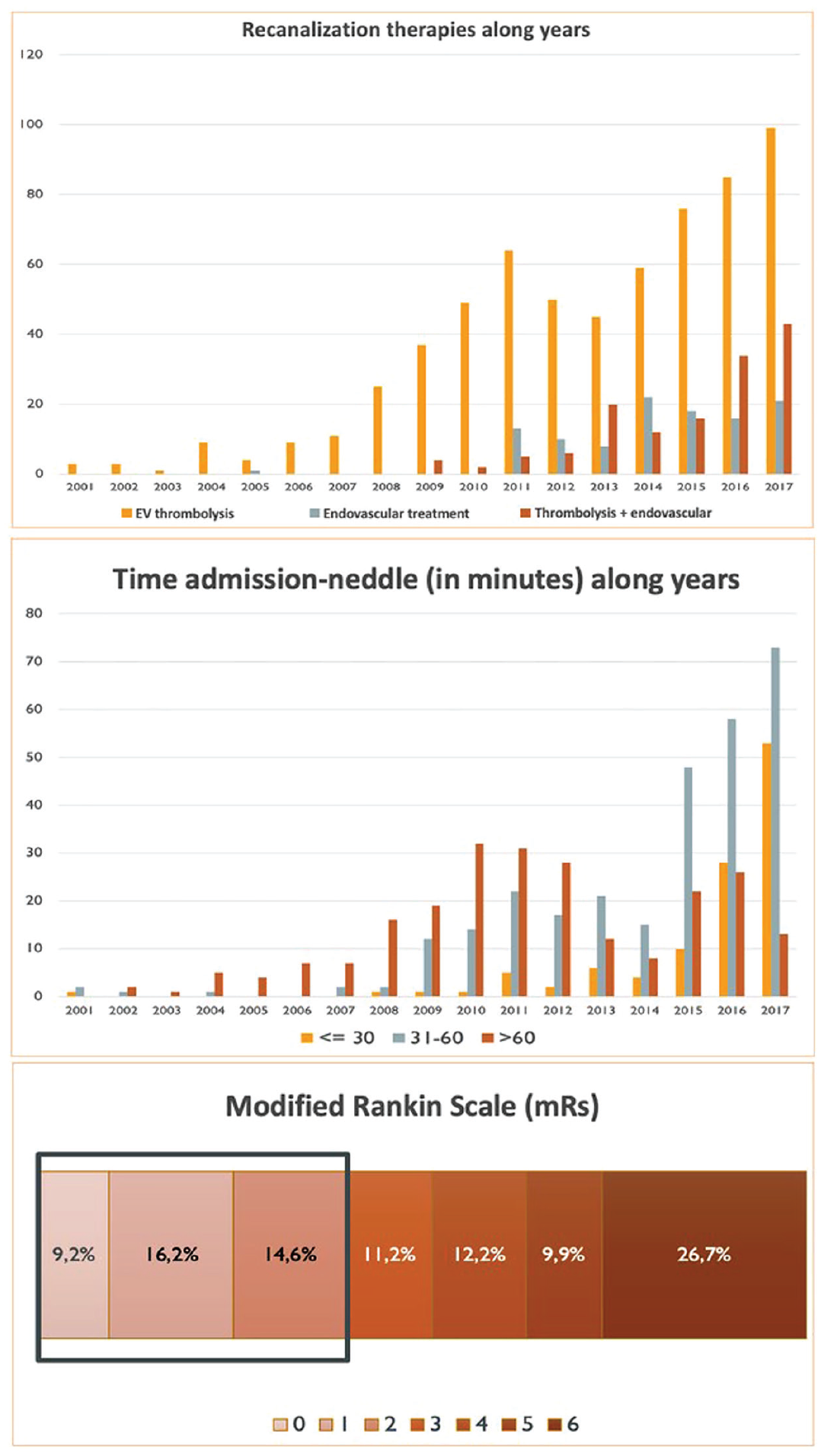
P0136 / 506
FIBRINOLYTIC CAPACITY AND THE IN VIVO RESPONSE TO TPA VARIES OVER 100-FOLD IN PATIENTS WITH ACUTE ISCHAEMIC STROKE
1Monash University, Australian Centre for Blood Diseases, Melbourne, Australia, 2University of Newcastle, Newcastle, Australia, 3Monash University, Clinical Neuroscience, Melbourne, Australia, 4University of Newcastle, School of Medicine and Public Health, Newcastle, Australia, 5Hunter Medical Research Institute, Newcastle, Australia, 6University of Melbourne, Department of Neurology, Melbourne, Australia, 7Monash University, Eastern Health Clinical School, Box Hill, Australia, 8Royal Adelaide Hospital, Department of Neurology, Adelaide, Australia, 9University of Adelaide, Department of Neurology, Adelaide, Australia, 10Vall d'Hebron Institute of Research, Barcelona, Spain, 11University of Debrecen, Department of Laboratory Medicine, Debrecen, Hungary
P0137 / 945
THE COMPARISON OF REVASCULARIZATION RATE IN STROKE WITH LARGE VESSEL OCLUSSION USING TENECTAPLASE VS ALTEPLASE
1Riga Stradins University, Neurology and Neurosurgery, Riga, Latvia, 2Pauls Stradiņš Clinical University Hospital, Neurology, Riga, Latvia, 3Riga Stradins University, Faculty of Residency, Riga, Latvia, 4Riga Stradins University, Radiology, Riga, Latvia
P0138 / 541
AN IMMUNOTHERAPY PREVENTING THE DELETERIOUS EFFECTS OF BOTH ENDOGENOUS AND RECOMBINANT TPA REDUCES DAMAGES AFTER ISCHEMIC STROKE: GLUNOMAB, A NEW HOPE FOR PATIENTS?
1INSERM UMRS U 1237 PhIND, Caen, France, 2Pôle de Recherche et Innovation en Santé, Caen, France, 3Lys Therapeutics, Caen & Lyon, France, 4Caen-Normandie University Hospital, CHU, Department of Urgency, Caen, France, 5Caen-Normandie University Hospital, CHU, Department of Clinical Research, Caen, France
P0139 / 1137
CHARACTERISATION OF THE THROMBIN MODEL OF STROKE AND REPERFUSION IN RATS
1University of Zürich, Neuroscience Centre Zürich, Zürich, Switzerland, 2University Hospital Zürich, Department of Neurology, Zürich, Switzerland, 3Institute of Pharmacology and Toxicology, Experimental Imaging and Neuroenergetics, University of Zürich, Zürich, Switzerland
Animal models are an essential part of preclinical research. However, there is still an urgent need for animal models of stroke that are clinically relevant and therefore provide more translational research. The thrombin model of stroke, which is well described in mice, offers the possibility of thrombolysis and recanalization of the occluded vessel using recombinant tissue plasminogen activator (rt-PA). So far, there is little data from this model in rats. Our aim is to characterise and establish the thrombin model of stroke and rt-PA treatment in rats.
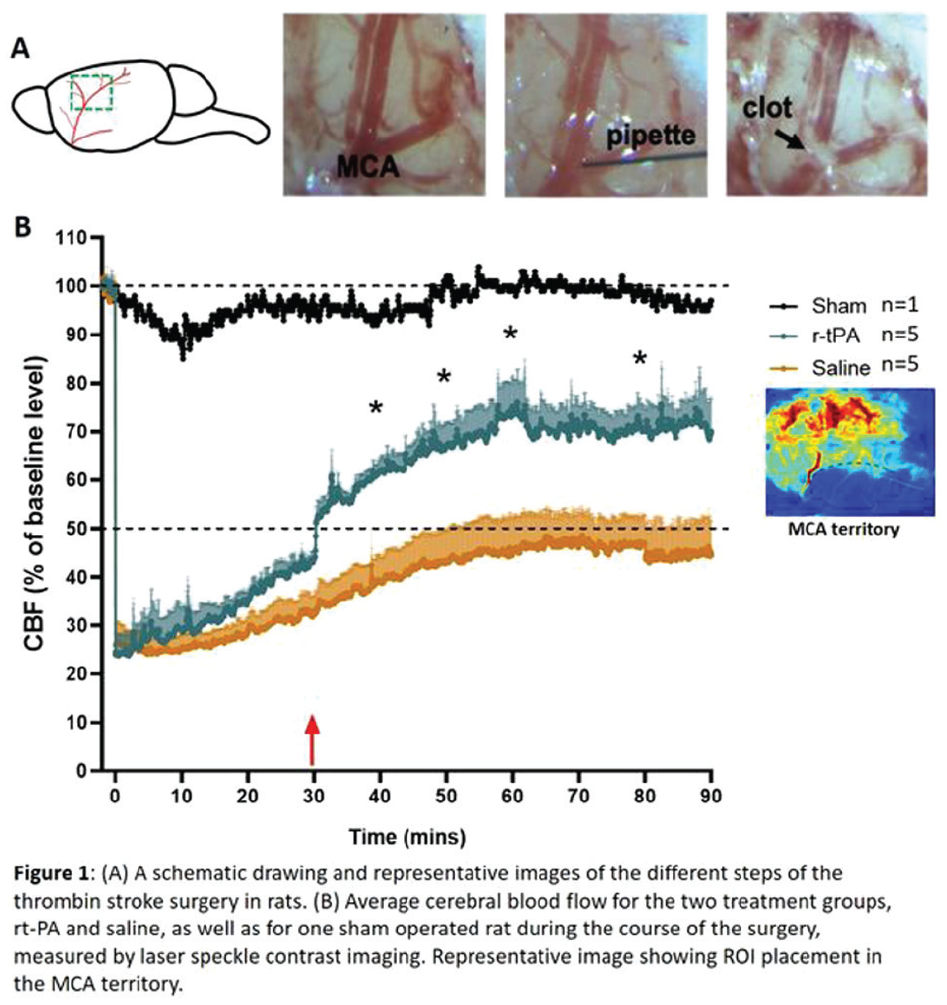
P0140 / 558
HOW THE REGISTRY OF STROKE CARE QUALITY (RES-Q) HELPS TO sIDENTIFY BARRIERS TO SYSTEMIC THROMBOLYTIC THERAPY IN ACUTE ISCHEMIC STROKE
1Pirogov National Medical University, Neurology, Vinnytsya, Ukraine, 2ESO EAST/ANGELS Steering Committee for Ukraine, Kyiv, Ukraine, 3Bogomolets National Medical University, Kyiv, Ukraine, 4Medical Center 'Universal Clinic 'Oberig', Stroke Center, Kyiv, Ukraine, 5Pirogov National Medical University, Vinnytsya, Ukraine, 6Medical Center 'Universal Clinuic 'Oberig', Stroke Center, Kyiv, Ukraine
P0141 / 1136
LEPTOMENINGEAL COLLATERALS REGULATE BLOOD FLOW RECOVERY IN STROKE AND RESCUE THE BRAIN FROM REPERFUSION INJURY
1University Hospital Zurich and University of Zurich, Department of Neurology, Zurich, Switzerland, 2Physics for Medicine, PSL Research University, INSERM U1273, ESPCI Paris, CNRS UMR 8063, Paris, France, 3University of Zurich, Institute of Pharmacology and Toxicology, Experimental Imaging and Neuroenergetics, Zurich, Switzerland, 4Normandie University, UNICAEN, Physiopathology and Imaging of Neurological Disorders (PhIND), GIP Cyceron, Caen, France
P0142 / 1191
FIBRINOGEN DEPLETION COAGULOPATHY AND SYMPTOMATIC INTRACEREBRAL HEMORRHAGE AFTER THROMBOLYSIS: A MULTICENTER PROSPECTIVE STUDY
1Neurologia, Neuroscience, Cesena, Italy, 2Stroke Unit, Modena, Italy, 3Clinical Unit of Neurology, Trieste, Italy, 4Neurology and Stroke Unit, Cagliari, Italy, 5IRCCS San Martino, Genova, Italy, 6Policlinico Martino, Messina, Italy, 7IRCCS IStituto delle Scienze Neurologiche di Bologna, Bologna, Italy, 8Medicina di Laboratorio e Anatomia Patologica AOU Modena, Modena, Italy, 9Laboratorio Unico Metropolitano, Bologna, Italy, 10Regional Blood Center, Bologna, Italy, 11Dept of Biomedical, Metabolic and Neural Science, Modena, Italy
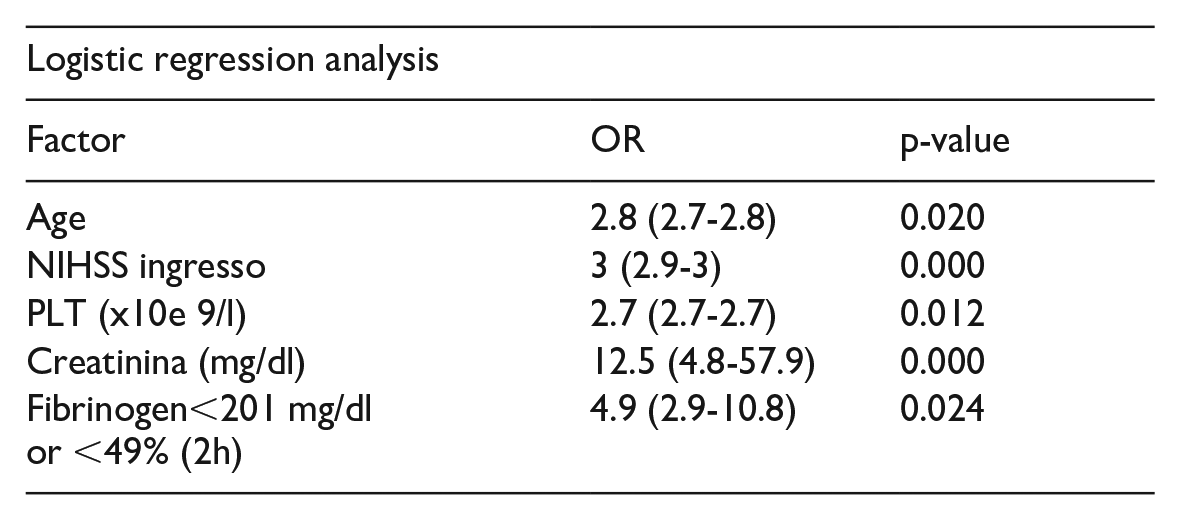
P0143 / 1552
INTRAVENOUS THROMBOLYSIS WITH RT-PA FOR ACUTE ISCHEMIC STROKE: CLINICAL EXPERIENCE ABOUT 120 PATIENTS
1 Nedir Mohammed Teaching Hospital, Tizi-Ouzou, Algeria
P0144 / 1054
COVID IMPACT ON DOOR-TO-NEEDLE TIME
1 University of Glasgow, Imaging Centre of Excellence, Glasgow, United Kingdom
Hospital responses to COVID-19 included re-organisation of services to limit infection spread, restricted access for family members, and redeployment of staff and other resources, which may be reflected in door-to-needle time (DNT) for thrombolysis. We reviewed routinely collected data on DNT over the course of the pandemic.
Regression analysis revealed the odds of DNT <60mins were reduced by 94% during the post-COVID period (CI=0.009-0.379,p<0.01), adjusted for NIHSS, year of presentation, anticoagulation at onset and hospital transfer status. The model displayed significant predictive power, AUROC 0.771 (0.712-0.830,p<0.01).
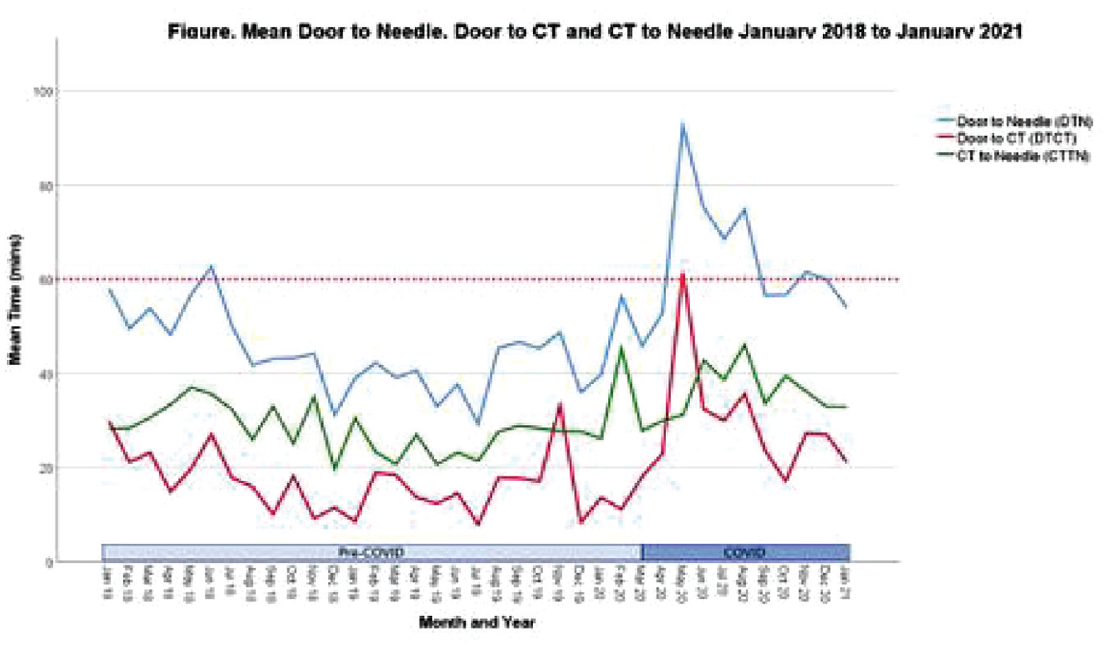
P0145 / 1415
CEREBRAL SMALL VESSEL DISEASE MARKERS ARE ASSOCIATED WITH LESS SALVAGEABLE TISSUE IN ACUTE ISCHEMIC STROKE TREATED WITH INTRAVENOUS THROMBOLYSIS
1Careggi University Hospital, Stroke Unit, Emergency Department, Firenze, Italy, 2Johns Hopkins Institute, Department of Neurology, Baltimore, United States, 3University of Texas, Department of Neurology, Austin, United States, 4National Institutes of Health, National Institute of Neurological Disorders and Stroke, Bethesda, United States, 5University of Glasgow, School of Medicine, Dentistry, and Nursing, Glasgow, United Kingdom, 6University of Glasgow, Institute of Cardiovascular and Medical Sciences, College of Medical, Veterinary & Life Sciences, Glasgow, United Kingdom
P0146 / 822
INTRAVENOUS THROMBOLYSIS BEFORE THROMBECTOMY UP TO 9 HOURS OF ONSET IN STROKES PATIENTS SELECTED BY PERFUSION IMAGING
1University Hospital, Geneva, Neurology, Geneva, Switzerland, 2University Hospital, Geneva, Neuroradiology, Geneva, Switzerland
P0147 / 772
D-DIMER AFTER ENDOVASCULAR TREATMENT CAN PREDICT OUTCOME IN ACUTE ISCHAEMIC STROKE
1Yonsei University College of Medicine, Department of Neurology, Seoul, Korea, Republic of, 2Yongin Severance Hospital, Department of Neurology, Yongin, Korea, Republic of, 3Brain Research Institute, Keimyung University School of Medicine, Department of Neurology, Daegu, Korea, Republic of, 4Yonsei University College of Medicine, Department of Radiology, Seoul, Korea, Republic of, 5Samsung Medical Center, Sungkyunkwan University School of Medicine, Department of Neurology, Seoul, Korea, Republic of, 6Yonsei University College of Medicine, Department of Preventive Medicine, Seoul, Korea, Republic of, 7Yonsei Institute for Pharmaceutical Research, Yonsei University, College of Pharmacy, Incheon, Korea, Republic of, 8Gangnam Severance Hospital, Severance Institute for Vascular and Metabolic Research, Yonsei University College of Medicine, Department of Neurology, Seoul, Korea, Republic of, 9Biostatistics Collaboration Unit, Yonsei University College of Medicine, Department of Research Affairs, Seoul, Korea, Republic of, 10Gachon University Gil Medical Center, Department of Neurology, Incheon, Korea, Republic of, 11Kyung Hee University Hospital at Gangdong, Kyung Hee University School of Medicine, Department of Neurology, Seoul, Korea, Republic of, 12National Medical Center, Department of Neurology, Seoul, Korea, Republic of, 13Kangbuk Samsung Hospital, Sungkyunkwan University School of Medicine, Department of Neurology, Seoul, Korea, Republic of, 14National Health Insurance Service Ilsan Hospital, Department of Neurology, Goyang, Korea, Republic of, 15Yonsei University Wonju College of Medicine, Department of Neurology, Wonju, Korea, Republic of, 16College of Medicine, Ewha Woman’s University, Department of Neurology, Seoul, Korea, Republic of, 17Sanggye Paik Hospital, Inje University College of Medicine, Department of Neurology, Seoul, Korea, Republic of, 18Pusan National University School of Medicine, Department of Neurology, Busan, Korea, Republic of, 19Chosun University School of Medicine, Department of Neurology, Gwangju, Korea, Republic of, 20Sanbon Hospital, Wonkwang University School of Medicine, Department of Neurology, Sanbon, Korea, Republic of
P0148 / 358
ASSOCIATION OF WHITE BLOOD CELL COUNT WITH CLINICAL OUTCOME INDEPENDENT OF TREATMENT WITH ALTEPLASE IN ACUTE ISCHEMIC STROKE
1University Medical Center Hamburg-Eppendorf, Hamburg, Germany, 2Hospices Civils de Lyon, Lyon, France, 3Charité – Universitätsmedizin Berlin, Berlin, Germany, 4University of Melbourne, Melbourne, Australia, 5University Hospitals Leuven, Leuven, Belgium, 6University of Glasgow, Glasgow, United Kingdom, 7Institut de Diagnostic per la Image, Girona, Spain, 8Aarhus University Hospital, Aarhus, Denmark
P0149 / 1399
INTRAVENOUS THROMBOLYSIS IN ACUTE ISCHAEMIC STROKE AFTER REVERSAL OF UNFRACTIONATED HEPARIN WITH PROTAMINE: CASE SERIES ANS SYSTEMATIC REVIEW OF LITERATURE
1 University of Tübingen, Department of Neurology, Tübingen, Germany
P0150 / 1555
COMPUTERIZED CLINICAL DECISION SUPPORT SYSTEM IMPROVES DOOR-TO-NEEDLE TIME FOR ACUTE ISCHEMIC STROKE
1Baylor College of Medicine, Neurology, Neurosurgery and Center for Space Medicine, Houston, United States, 2Baylor St Luke's Medical Center, Neurosciences, Houston, United States, 3Baylor College of Medicine, Neurology, Houston, United States, 4DECISIOInsight, Houston, United States
P0151 / 1374
VALIDATION OF ISCHEMIC STROKE MODELS FOR USE IN TRANSLATIONAL RESEARCH:IN VITRO FLOW AND IN VIVO RAT MODELS
1St. Anne's University Hospital Brno, International Clinical Research Center, Brno, Czech Republic, 2Institute of Biophysics AS CR, Department of Biophysics of Immune System, Brno, Czech Republic, 3Masaryk University, Faculty of Science, Department of Biochemistry, Brno, Czech Republic, 4Masaryk University, Faculty of Pharmacy, Department of Pharmacology and Toxicology, Brno, Czech Republic, 5St. Anne's University Hospital Brno, International Clinical Research Center, Center of Biomolecular and Cell Engineering, Brno, Czech Republic
P0152 / 1587
EIGHT-YEAR EVOLUTION OF TEMPORAL TRENDS IN REPERFUSION THERAPY IN PATIENTS WITH ACUTE ISCHEMIC STROKE
1RESUVal, ARS Auvergne Rhône-Alpes, Vienne, France, 2Louis Pradel Hospital, Hospices Civils de Lyon (HCL), Department of ambulatory cardiology, Bron, France, 3University of Lyon, Laboratory Systemic Health Care, EA4129, Lyon, France, 4Hôpital Neurologique, Hospices Civils de Lyon (HCL), Department of stroke medicine, Bron, France, 5Université Claude Bernard Lyon 1, Research on Healthcare Performance (RESHAPE), INSERM U1290, Lyon, France, 6Hospices Civils de Lyon, Clinical Investigation Center, Lyon, France, 7Hôpital de Villefranche sur Saône, Department of Stroke Medicine, Villefranche sur Saône, France, 8Hôpital de Bourg en Bresse, Department of Stroke Medicine, Bourg en Bresse, France, 9Hôpital de Valence, Department of Stroke Medicine, Valence, France, 10Hôpital de Vienne, Department of Stroke Medicine, Vienne, France
P0153 / 106
EVALUATION OF STROKE PROGNOSTICATION USING AGE AND NIH STROKE SCALE INDEX (SPAN-100 INDEX) IN DELAYED INTRAVENOUS THROMBOLYSIS PATIENTS (BEYOND 4.5 HOURS)
1Faculty of Medicine, Mansoura University, Neurology Department, Mansoura, Egypt, 2Ospedale Civile di Baggiovara, AOU di Modena, Stroke Unit – Neurology Clinic, Department of Neuroscience, Modena, Italy, 3Ospedale Civile di Baggiovara, AOU di Modena, Stroke Unit – Neurology Clinic, Department of Radiology, Modena, Italy
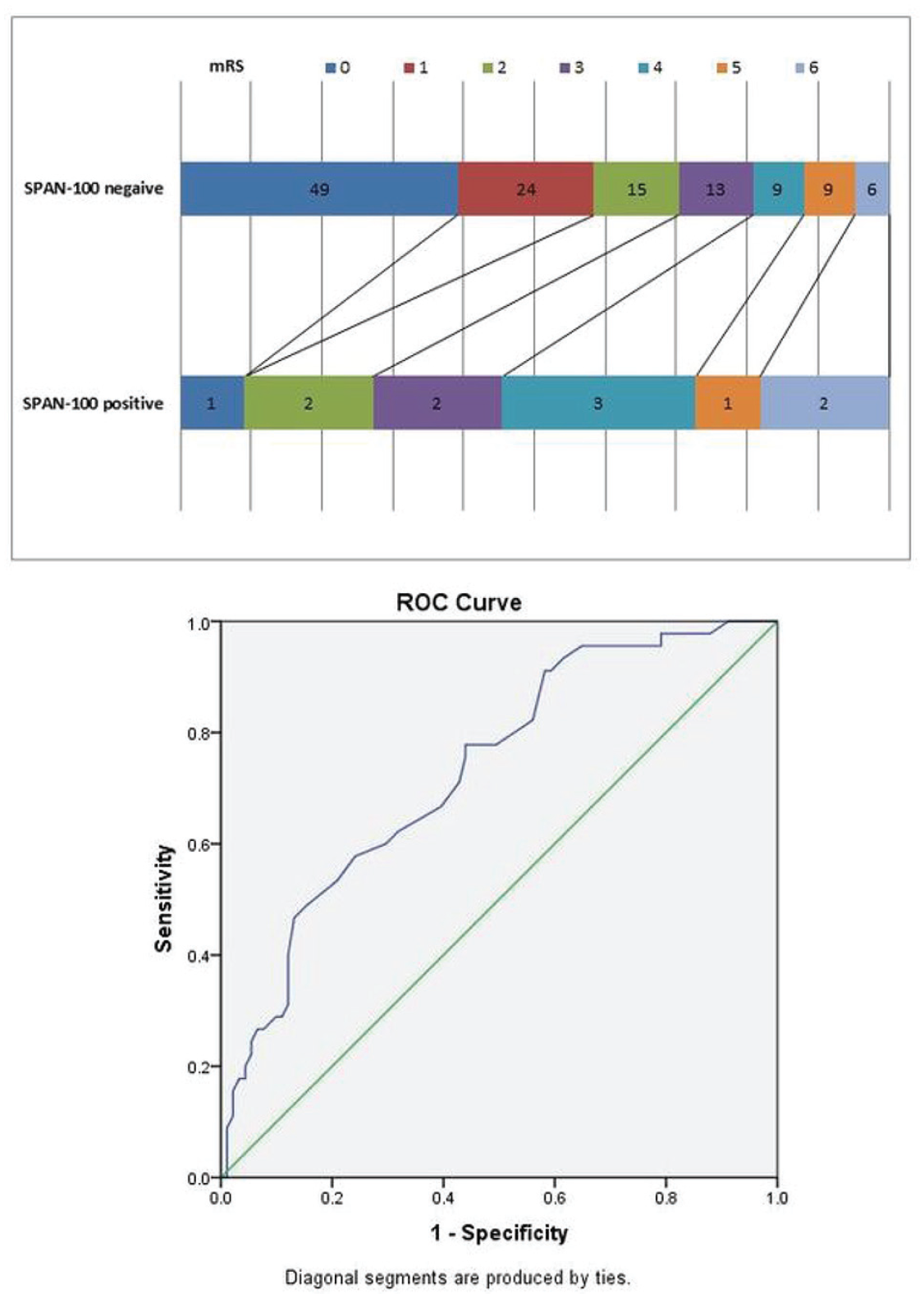
P0154 / 333
INTRAVENOUS THROMBOLYSIS AND ENDOVASCULAR THROMBECTOMY FOR ACUTE ISCHAEMIC STROKE IN MOYAMOYA DISEASE PATIENTS - A SYSTEMATIC REVIEW OF CASE REPORTS
1Lee Kong Chian School of Medicine, Nanyang Technological University, Singapore, Singapore, 2Division of Neurology, Department of Medicine, National University Health System, Singapore, Singapore, 3Royal Free London NHS Foundation Trust, London, United Kingdom
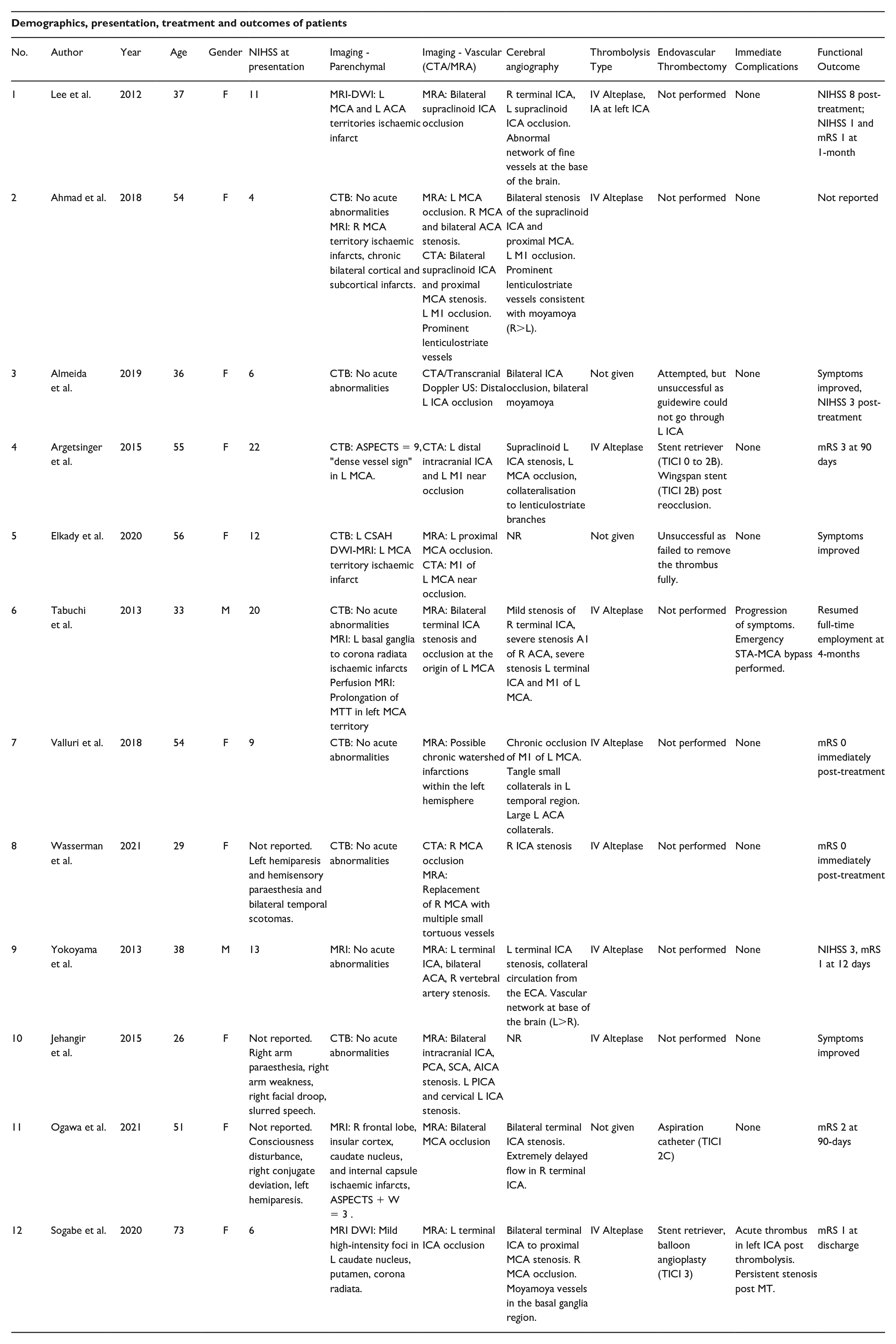
P0155 / 692
AGE-RELATED FEATURES OF THROMBOLYSIS IN ISCHEMIC STROKE
1 M.F. Vladimirskiy Moscow Regional Research Clinical Institute, Department of Neurology, Moscow, Russian Federation
P0156 / 1591
A SINGLE-CENTER EXPERIENCE OF INTRAVENOUS THROMBOLYSIS AND MECHANICAL THROMBECTOMY FOR ACUTE ISCHEMIC STROKE IN UKRAINE
1Dnipro State Medical University, Dnipro, Ukraine, 2Dnipropetrovsk Regional Clinical Hospital named after I.I. Mechnykov, Dnipro, Ukraine
P0157 / 1187
IS BRIDGING THERAPY ADVANTAGEOUS IN PATIENTS WITH FINAL TICI 2B?
1Coimbra University Hospital Centre, Neurology, Coimbra, Portugal, 2Coimbra University Hospital Centre, Neuroradiology, Coimbra, Portugal, 3Coimbra University Hospital Centre, Internal Medicine, Coimbra, Portugal, 4Leiria Hospital Centre, Internal Medicine, Leiria, Portugal, 5Faculty of Medicine, University of Coimbra, Coimbra, Portugal
The aim of this work is to investigate whether IVT+EVT is superior to EVT alone in TICI 2b patients.
P0158 / 1120
WITHDRAWN HOSPITAL DISPARITIES IN REPERFUSION THERAPY FOR PATIENTS WITH ACUTE ISCHEMIC STROKE
1Uijeongbu Eulji Medical Center, Eulji University, Neurology, Uijeongbu, Korea, Republic of, 2Inje University Ilsan Paik Hospital, Goyang, Korea, Republic of, 3Seoul National University Bundang Hospital, Seongnam, Korea, Republic of, 4Chung-Ang University Hospital, Seoul, Korea, Republic of, 5Soonchunhyang University Hospital, Seoul, Korea, Republic of, 6Daejeon Eulji Medical Center, Eulji University, Daejeon, Korea, Republic of, 7Asan Medical Center, Clinical Research Center, Seoul, Korea, Republic of, 8Korea University College of Medicine, Seoul, Korea, Republic of
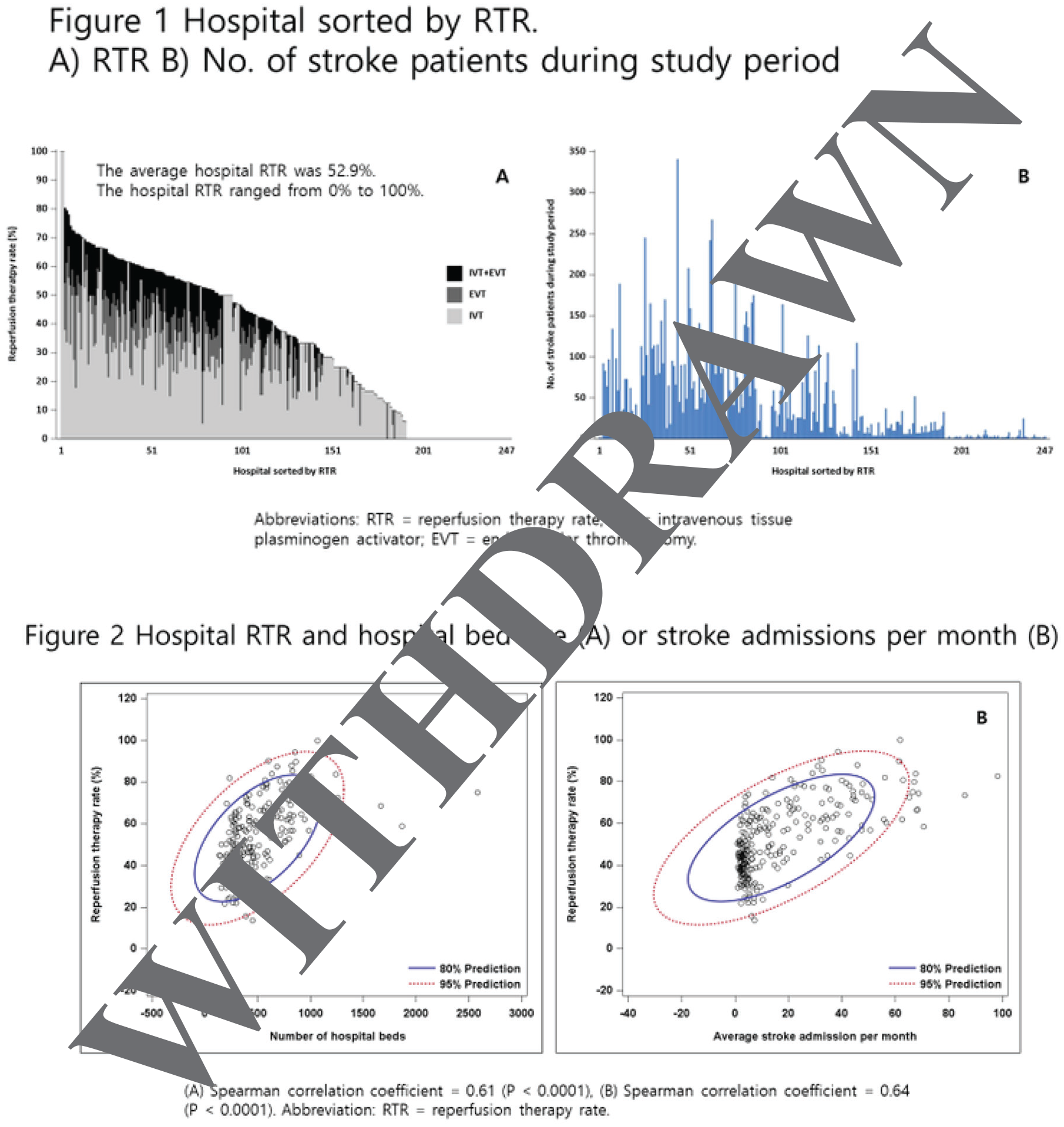
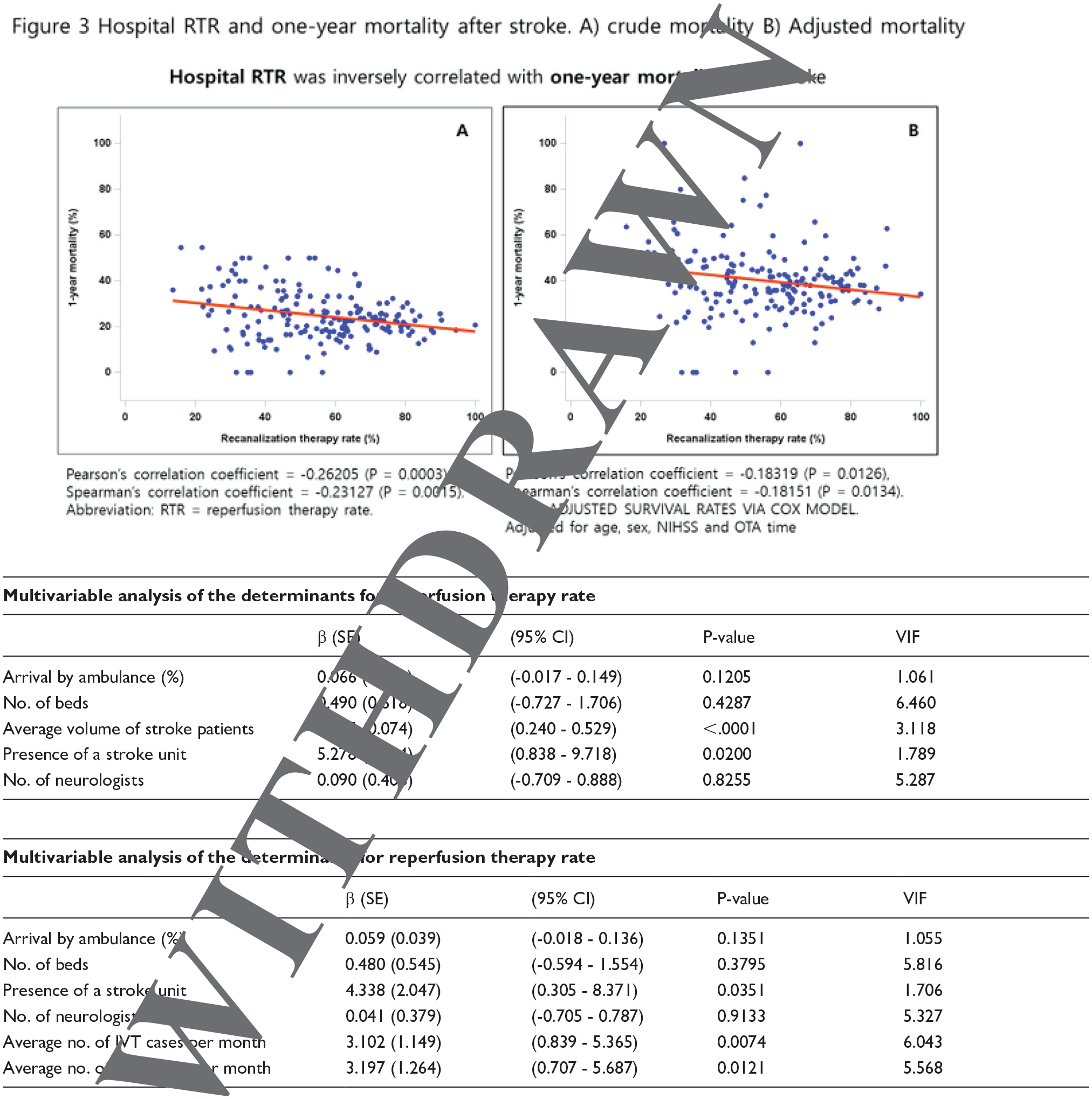
P0159 / 1422
HIGHER EFFICACY OF THROMBOLYSIS IN CARDIOEMBOLIC STROKE
1Azienda Ospedaliera Universitaria di Sassari, Stroke Unit, Sassari, Italy, 2Azienda Ospedaliera Universitaria di Sassari, Clinical Epidemiology and Medical Statistics Unit, Sassari, Italy
P0160 / 1361
A STUDY OF OUTCOME OF STANDARD VERSUS LOW DOSE THROMBOLYSIS IN ACUTE ISCHEMIC STROKE
1Indraprastha Apollo Hospital, Department of neurosciences, New Delhi, India, 2Max Super Speciality Hospital, Department of Neurology, New Delhi, India
P0161 / 1087
ANTIPLATELET VS. ANTICOAGULATION IN CERVICAL ARTERY DISSECTION
1Xuanwu Hospital, Capital Medical University, Department of Neurosurgery, Beijing, China, 2Peking Union Medical College, Department of Clinical Medicine, Beijing, China, 3Imperial College London, National Heart & Lung Institute, London, United Kingdom
P0162 / 771
CLINICAL FEATURES AND THROMBOLYSIS TREATMENT RESULT OF ISCHEMIC STROKE PATIENTS BEYOND 4.5 HOURS
1Bachmai Hospital, Stroke Center, Hanoi, Vietnam, 2Thanhnhan General Hospital, Intensive Care Department, Hanoi, Vietnam, 3Bachmai Hospital, Radiology Center, Hanoi, Vietnam
P0163 / 122
STROKE THROMBOLYSIS DURING THE COVID PANDEMIC IN INDIA - A TALE OF TWO WAVES & LESSONS LEARNT
1 All India Institute of Medical Sciences, Neurology, New Delhi, India
P0164 / 105
THROMBOTIC EVENTS IN CHILDREN AND ADOLESCENT PATIENTS WITH SARS-COV-2 INFECTION: A SYSTEMATIC REVIEW WITH METANALYSIS ON INCIDENCE AND MANAGEMENT
1University of Ferrara, Ferrara, Italy, 2University of Catania, Catania, Italy
Less than half patients who developed inflammatory disease were under anticoagulant prophylactic treatment, and dosages of therapeutic anticoagulant protocols vary from different centres. Thrombotic events solved after the onset of unfractioned heprin (UFH) therapy in the majority of cases, even if 1.06% died. Two of these deaths had peripheral severe gangrene.
No difference in the incidence of thrombotic events between patients under prophylactic low molecular weight heparin (LMWH) and without was found in metanalysis.
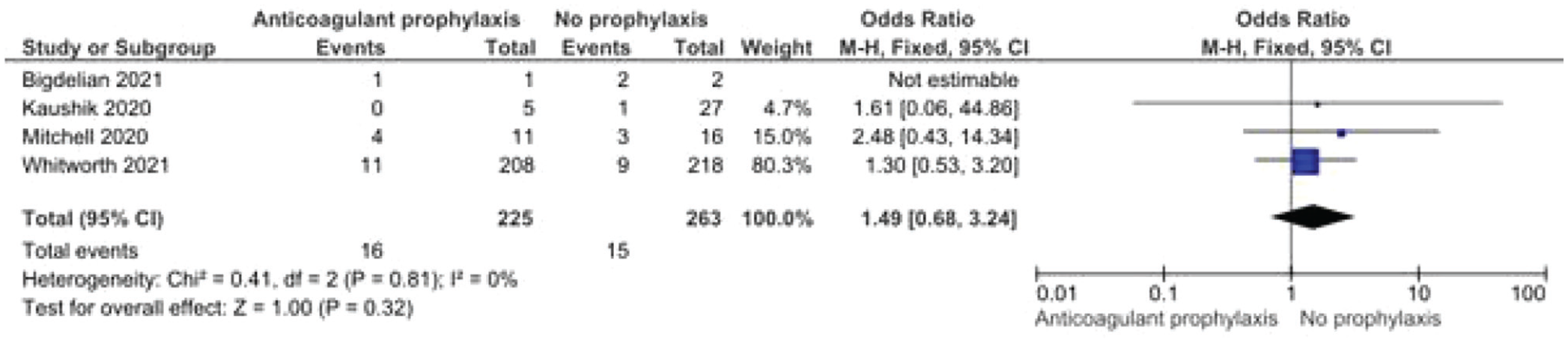
P0165 / 917
BRIDGING INTRAVENOUS THROMBOLYSIS IN PATIENTS WITH ATRIAL FIBRILLATION
1University Hospital Bern Inselspital, University Institute of Diagnostic and Interventional Neuroradiology, Bern, Switzerland, 2University Hospital Vall d’Hebron, Department of Neurology, Barcelona, Spain, 3Klinikum rechts der Isar der Technischen Universität München, Department of Diagnostic and Interventional Neuroradiology, München, Germany, 4Centre Hospitalier Universitaire Reims, Department of Neuroradiology, Reims, France, 5Toronto Western Hospital, Joint Department of Medical Imaging, Ontario, Canada, 6Hospital Center University De Montpellier, Department of Neuroradiology, Montpellier, France, 7University Hospital Bern Inselspital, Department of Neurology, Bern, Switzerland
P0166 / 201
EARLY EFFECT OF THROMBOLYSIS ON STRUCTURAL BRAIN NETWORK ORGANISATION AFTER ANTERIOR-CIRCULATION STROKE
1 University Medical Center Hamburg Eppendorf, Neurology, Hamburg, Germany
NEUROINTERVENTION – EXCLUDING CLINICAL TRIAL RESULTS
P0167 / 617
ENDOVASCULAR TREATMENT OF ISCHEMIC STROKE DUE TO ISOLATED INTERNAL CAROTID ARTERY OCCLUSION: ETIS REGISTRY DATA ANALYSIS
1CHU Gui de Chauliac, CHU Montpellier, Neurology, Montpellier, France, 2Fondation Rothschild Hospital, Neurology, Paris, France, 3CHU Gui de Chauliac, CHU Montpellier, Neuroradiology, Montpellier, France, 4Fondation Rothschild Hospital, Neuroradiology, Paris, France, 5CHRU Nancy, Neuroradiology, Nancy, France, 6CHRU Nancy, Neurology, Nancy, France, 7University Hospital of Bordeaux, Neuroradiology, Bordeaux, France, 8University Hospital of Bordeaux, Neurology, Bordeaux, France, 9University Hospital of Nantes, Neurology, Nantes, France, 10University Hospital of Nantes, Neuroradiology, Nantes, France, 11CHU Bicêtre, Neurology, Le Kremlin Bicêtre, France, 12CHU Bicêtre, Neuroradiology, Le Kremlin Bicêtre, France, 13CHU Lille, Univ Lille, ULR 2694-METRICS, Évaluation des Technologies de Santé et des Pratiques Médicales, Lille, France, 14Foch Hospital, Neuroradiology, Suresnes, France, 15Foch Hospital, Neurology, Suresnes, France
P0168 / 1181
HIGH PROPORTION OF GRANULOCYTES FROM INTRACRANIAL THROMBUS PREDICTS FAILURE OF CONVENTIONAL MECHANICAL THROMBECTOMY
1Vall d’Hebron University Hospital ; Vall d ’Hebron Research Institute, Stroke Unit, Department of Neurology, Barcelona, Spain, 2Vall d Hebron University Hospital, Barcelona, Spain
P0169 / 288
PERFUSION IMAGING FOR ENDOVASCULAR THROMBECTOMY IN ACUTE ISCHAEMIC STROKE IS ASSOCIATED WITH IMPROVED FUNCTIONAL OUTCOMES IN THE EARLY AND LATE TIME WINDOWS
1Nottingham University Hospitals NHS Trust, Interventional Neuroradiology, Nottingham, United Kingdom, 2University of Nottingham, Radiological Sciences, Mental Health and Clinical Neuroscience, Nottingham, United Kingdom, 3University of Nottingham, NIHR Nottingham Biomedical Research Centre, Nottingham, United Kingdom, 4University Hospitals Birmingham NHS Trust, Interventional Neuroradiology, Birmingham, United Kingdom, 5King’s College Hospital NHS Foundation Trust, Neuroradiology, London, United Kingdom, 6King’s College London, School of Biomedical Engineering & Imaging Sciences, London, United Kingdom, 7The Royal London Hospital Barts Health NHS Trust, Interventional Neuroradiology, London, United Kingdom, 8The Royal London Hospital Barts Health NHS Trust, Stroke Medicine, London, United Kingdom, 9North Bristol NHS Trust, Interventional Neuroradiology, Southmead Hospital, Bristol, United Kingdom, 10University of Birmingham, Institute of Applied Health Research, College of Dental and Medical Sciences, Birmingham, United Kingdom, 11University Hospitals Birmingham NHS Trust, Stroke, Birmingham, United Kingdom, 12Nottingham University Hospitals NHS Trust, Stroke Medicine, Nottingham, United Kingdom, 13University of Nottingham, Stroke Trials Unit, Mental Health and Clinical Neuroscience, Nottingham, United Kingdom, 14Hull and East Yorkshire Hospitals NHS Trust, Interventional Neuroradiology, Hull Royal Infirmary, Hull, United Kingdom, 15Imperial College Healthcare NHS Trust, Interventional Neuroradiology, Charing Cross Hospital, London, United Kingdom, 16Newcastle University, Translational and Clinical Research Institute, Faculty of Medical Sciences, Newcastle, United Kingdom, 17Newcastle upon Tyne Hospitals NHS Foundation Trust, Interventional Neuroradiology, Newcastle, United Kingdom, 18Royal Devon and Exeter NHS Foundation Trust, Exeter, United Kingdom, 19University of Exeter Medical School, Exeter, United Kingdom, 20King’s College London, Sentinel Stroke National Audit Programme, London, United Kingdom, 21University of Nottingham, Stroke, Mental Health and Clinical Neuroscience, Nottingham, United Kingdom, 22University Hospitals of Derby and Burton NHS Foundation Trust, Stroke, Derby, United Kingdom
P0170 / 1254
ENDOVASCULAR THROMBECTOMY FOR ANTERIOR CIRCULATION STROKE BEYOND 6 HOURS OF ONSET IN SWEDEN 2015 TO 2020 – RATES AND OUTCOMES IN A NATIONWIDE REGISTER-BASED STUDY
1Lund University, Institution of Clinical Sciences, Neurology, Dept. of neurology, Dept. of medical imaging, Lund, Sweden, 2Örebro University, School of Medicine, Neurology, Örebro, Sweden, 3Umeå Univeristy, Department of Public Health and Clinical Science, Neurology, Umeå, Sweden, 4Department of Clinical Neuroscience, Karolinska Institute, Department of Neuroradiology, Stcokholm, Sweden, 5Department of Clinical Neuroscience, Karolinska Institute, Department of Neuroradiology, Stockholm, Sweden
P0171 / 1060
CEREBRAL SMALL VESSEL DISEASE BURDEN AND FUTILE REPERFUSION AFTER ENDOVASCULAR THROMBECTOMY FOR ACUTE ISCHEMIC STROKE PATIENTS
1Hallym University Sacred Heart Hospital, Department of Neurology, Anyang, Korea, Republic of, 2Kangdong Sacred Heart Hospital, Department of Neurology, Seoul, Korea, Republic of, 3Dongtan Sacred Heart Hospital, Department of Neurology, Hwa seong, Korea, Republic of, 4Chunchon Sacred Heart Hospital, Department of Neurology, Chunchon, Korea, Republic of
P0172 / 1078
GENERAL ANESTHESIA VERSUS CONSCIOUS SEDATION FOR ENDOVASCULAR THERAPY IN ACUTE ISCHEMIC STROKE
1Xuanwu Hospital, Capital Medical University, Department of Neurosurgery, Beijing, China, 2China Medical University, Shenyang, China, 3Xuanwu Hospital, Capital Medical University, Medical Library, Beijing, China, 4Xuanwu Hospital, Capital Medical University, Department of Neurology, Beijing, China
P0173 / 179
MENISCUS SIGN IN PATIENTS WITH ANTERIOR CIRCULATION LARGE VESSEL OCCLUSION STROKE
1Centro Hospitalar Vila Nova de Gaia/Espinho, Imagiology Department, Neuroradiology Unit, Vila Nova de Gaia, Portugal, 2University Hospital RWTH Aachen, Department of Neurology, Aachen, Germany, 3University Hospital RWTH Aachen, Department of Diagnostic and Interventional Neuroradiology, Aachen, Germany
P0174 / 553
AUTOTICI: AUTOMATED TICI SCORING IN ISCHEMIC STROKE PATIENTS
1 ErasmusMC, Radiology & Nuclear Medicine, Rotterdam, Netherlands
P0175 / 1449
ENDOVASCULAR TREATMENT IN MCA STROKE BEYOND THERAPEUTIC WINDOW: A MULTICENTRIC STUDY IN THE REGION OF MADRID.
1Hospital Universitario La Princesa, Neurology, Madrid, Spain, 2Hospital Clínico San Carlos, Neurology, Madrid, Spain, 3Hospital Universitario Ramón y Cajal, Neurology, Madrid, Spain, 4Hospital Universitario 12 de Octubre, Neurology, Madrid, Spain, 5Hospital Universitario Gregorio Marañón, Neurology, Madrid, Spain, 6Hospital Universitario Rey Juan Carlos, Neurology, Madrid, Spain, 7Hospital Universitario Rey Juan Carlos, Radiology, Madrid, Spain, 8Hospital Universitario 12 de Octubre, Radiology, Madrid, Spain, 9Hospital Clínico San Carlos, Radiology, Madrid, Spain, 10Hospital Universitario La Princesa, Radiology, Madrid, Spain
P0176 / 1058
UNDERSTANDING NEUROLOGISTS’ AND NEUROINTERVENTIONALISTS’ DECISION-MAKING AROUND ENDOVASCULAR THERAPY IN ACUTE STROKE: A PILOT STUDY ON INTERDISCIPLINARY COLLABORATION USING THE THEORETICAL DOMAINS FRAMEWORK
1The Ottawa Hospital, University of Ottawa, Neurology, Ottawa, Canada, 2The Ottawa Research Institute, Neurology, Ottawa, Canada, 3University of Ottawa, Department of Innovation in Medical Education, Ottawa, Canada, 4Université de Montréal, Neurosciences, Montreal, Canada
P0177 / 819
OUTCOME IN PATIENTS WITH CAROTID ARTERY DISSECTION TREATED WITH ENDOVASCULAR TREATMENT
1Rigshospitalet, Copenhagen University Hospital, Department of Neurology, Copenhagen, Denmark, 2Rigshospitalet, Copenhagen University Hospital, Department of Radiology, Copenhagen, Denmark, 3University of Copenhagen, Faculty of Health Sciences, Copenhagen, Denmark
P0178 / 867
A NATIONWIDE ANALYSIS OF THE DECLINE IN MECHANICAL THROMBECTOMY DURING THE COVID-19 EPIDEMIC IN HUNGARY
1National Institute of Mental Health, Neurology and Neurosurgery, Budapest, Hungary, 2Semmelweis University, Department of Neurology, Budapest, Hungary, 3Semmelweis University, János Szentágothai Doctoral School of Neurosciences, Budapest, Hungary, 4Medical Centre, Hungarian Defence Forces, Department of Neurology, Budapest, Hungary, 5Eötvös Loránd University, Department of Probability Theory and Statistics, Budapest, Hungary, 6MTA-SE, Neuroepidemiology Research Group ELKH, Budapest, Hungary, 7Semmelweis University, Department of Neurosurgery, Budapest, Hungary, 8European Academy of Neurology, EANcore COVID-19 Task Force, Vienna, Austria
P0179 / 702
MECHANICAL THROMBECTOMY IN ACUTE STROKE PATIENTS WITH MODERATE TO SEVERE PRE-STROKE DISABILITY
1Sigmund Freud University Vienna, Neurology, Vienna, Austria, 2St. John Hospital, Neurology, Vienna, Austria, 3University Lausanne, Neurology, Lausanne, Switzerland, 4University of Technology, Vienna, Austria, 5GOEG, Vienna, Austria, 6SFU Vienna, Neurology, Vienna, Austria, 7University Graz, Neurology, Graz, Austria, 8University Innsbruck, Neuroradiology, Innsbruck, Austria, 9University Graz, Neuroradiology, Graz, Austria, 10St. John Hospital, Radiology, Vienna, Austria
P0180 / 1156
INCREASED NUMBER OF PASSES AND DOUBLE STENT RETRIEVER TECHNIQUE INDUCES CUMULATIVE INJURY ON ARTERIAL WALL AFTER MECHANICAL THROMBECTOMY IN A SWINE MODEL
1Hospital de Puerto Montt, Neurosurgery and Interventional Neuroradiology, Puerto Montt, Chile, 2Hospital Vall d Hebron, Interventional Neuroradiology, Barcelona, Spain, 3Hospital Universitario Marques de Valdecilla, Interventional Neuroradiology, Santander, Spain
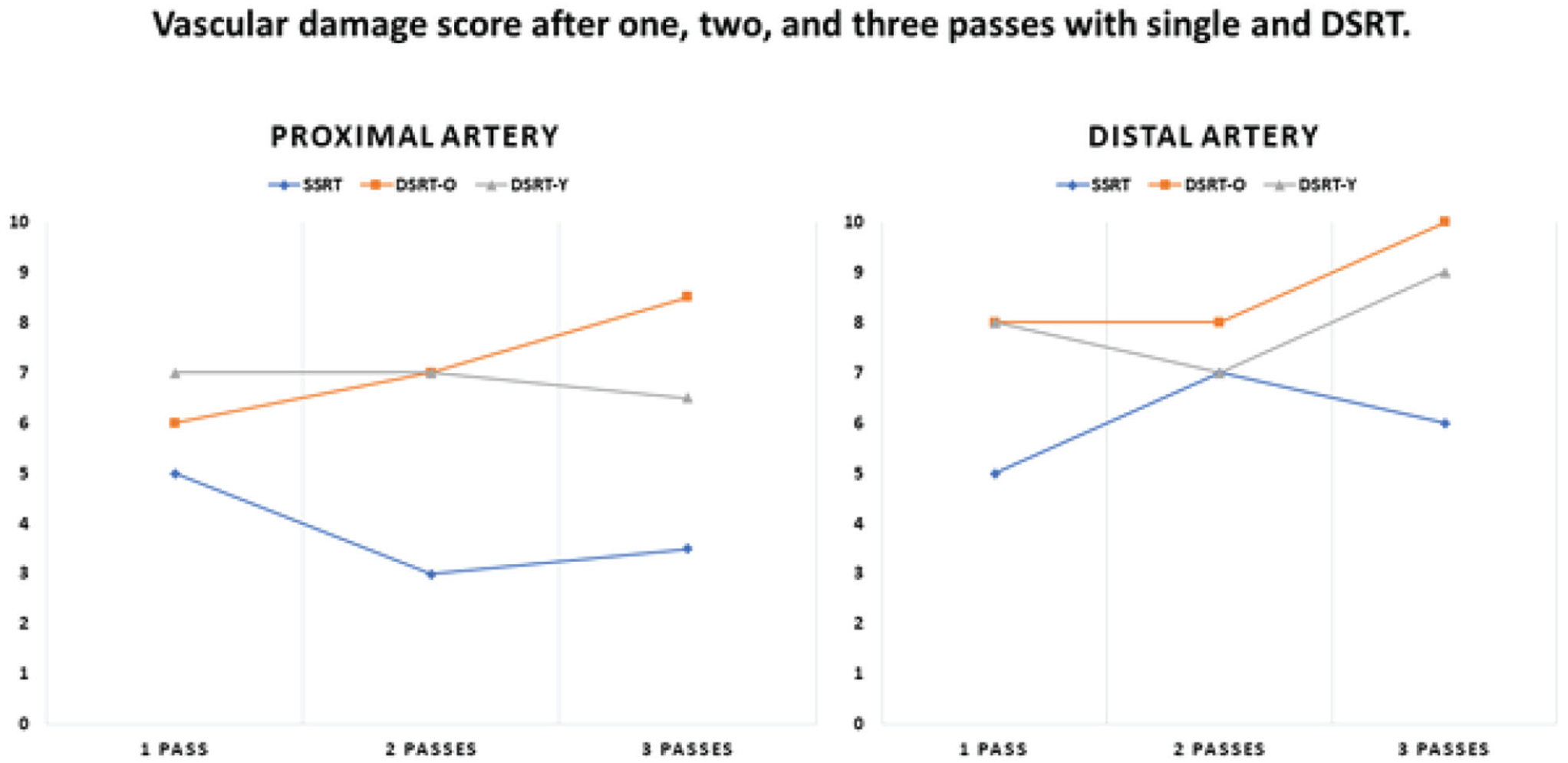
P0181 / 1538
DIAGNOSIS AND MANAGEMENT OF PATIENTS WITH CAROTID WEB: EXPERIENCE OF A COMPREHENSIVE STROKE CENTRE
1Torrecardenas University Hospital, Radiology department, Almeria, Spain, 2Torrecardenas University Hospital, Stroke Centre. Department of Neurology, Almeria, Spain
P0182 / 677
SAFETY AND EFFICACY OF ENDOVASCULAR THROMBECTOMY IN PATIENTS WITH SEVERE CEREBRAL VENOUS THROMBOSIS: A META-ANALYSIS
1 Tribhuvan University Institute of Medicine, Internal Medicine, Kathmandu, Nepal
P0183 / 907
ASSOCIATION BETWEEN THROMBOEMBOLUS COMPOSITION AND FIRST PASS RECANALISATION AFTER THROMBECTOMY
1KU Leuven, Campus Kulak Kortrijk, Laboratory for Thrombosis Research, Kortrijk, Belgium, 2AZ Groeninge, Department of Medical Imaging, Kortrijk, Belgium, 3AZ Groeninge, Department of Neurology, Kortrijk, Belgium, 4University Hospitals Antwerp, Department of Neurology, Antwerp, Belgium, 5University of Antwerp, Department of Translational Neuroscience, Antwerp, Belgium, 6Karolinska University Hospital, and Clinical Neuroscience, Karolinska Institutet, Departments of Neuroradiology, Stockholm, Sweden
P0184 / 612
SAFETY AND OUTCOME OF REVASCULARIZATION TREATMENTS IN PATIENTS WITH ACUTE ISCHEMIC STROKE AND ACTIVE CANCER
A. Avanzo1, C. Gonçalves1, M. Magriço1, M. Serôdio1, R. Ventura1, A. Sobral-Pinho1, J.N. Ramos2,
1Hospital Egas Moniz, Neurology, Lisbon, Portugal, 2Hospital Egas Moniz, Neuroradiology, Lisbon, Portugal
P0185 / 696
CLINICAL FRAILTY AND OUTCOME AFTER MECHANICAL THROMBECTOMY FOR ACUTE ISCHEMIC STROKE IN PATIENTS AGED ⩾ 80 YEARS
1Helsinki University Hospital and University of Helsinki, Department of Neurology, Helsinki, Finland, 2Helsinki University Hospital and University of Helsinki, Department of Radiology, Helsinki, Finland
P0186 / 640
SIDE MATTERS: DIFFERENCES IN FUNCTIONAL OUTCOME AND QUALITY OF LIFE AFTER THROMBECTOMY IN LEFT AND RIGHT HEMISPHERIC STROKE
1University Medical Center Hamburg Eppendorf, Neurology, Hamburg, Germany, 2University Medical Center Hamburg Eppendorf, Neuroradiology, Hamburg, Germany
P0187 / 520
CLINICAL AND TECHNICAL OUTCOMES AFTER DIRECT ASPIRATION THROMBECTOMY VS STENT RETRIEVER THROMBECTOMY IN BASILAR-ARTERY OCCLUSIONS: A BASICS TRIAL SUB-STUDY
1Maastricht University Medical Center +, Radiology, Maastricht, Netherlands, 2Rijnstate, Radiology, Arnhem, Netherlands, 3St. Antonius Ziekenhuis, Radiology, Nieuwegein, Netherlands, 4Maastricht University Medical Center +, Neurology, Maastricht, Netherlands, 5Centre Hospitalier Universitaire Vaudois, Neurology, Lausanne, Switzerland, 6Rijnstate, Neurology, Arnhem, Netherlands, 7Maastricht University Medical Center +, Clinical Epidemiology, Maastricht, Netherlands, 8Amsterdam University Medical Center, Radiology, Amsterdam, Netherlands, 9Haaglanden Medical Center, Radiology, Den Haag, Netherlands, 10Haaglanden Medical Center, Neurology, Den Haag, Netherlands, 11Technical University Dresden, Neurology, Dresden, Germany, 12Technical University Dresden, Radiology, Dresden, Germany, 13Hospital Foundation Adolphe de Rothschild, Radiology, Paris, France, 14Hospital das Clinicas de Ribeirao Preto, Neurology, Sao Paulo, Brazil, 15Fortaleza General Hospital, Radiology, Fortaleza, Brazil, 16Texas Stroke Institute, Radiology, Fort Worth, United States, 17St. Antonius Ziekenhuis, Neurology, Nieuwegein, Netherlands
P0188 / 1212
PREDICTING FACTORS OF PROLONGED MECHANICAL VENTILATION AFTER ENDOVASCULAR TREATMENT IN LARGE VESSEL OCCLUSION STROKE
1La Princesa Health Research Institute, Hospital Universitario de la Princesa, Stroke Center. Neurology department, Madrid, Spain, 2La Princesa Health Research Institute, Hospital Universitario de la Princesa, Radiology department, Madrid, Spain, 3La Princesa Health Research Institute, Hospital Universitario de la Princesa, Intensive Care Unit, Madrid, Spain
Factors associated to a higher risk of PMV after EVT were: basilar occlusion (OR=12.3, IC95%[5.3-28.4],p<0,001); ASPECTS ⩽7 (OR=3, IC95%[1.4-6.1],p=0,003) and NIHSS ⩾18 (OR=2.8, IC95%[1.3-5.8],p=0,006). Patients with PMV had a higher risk of mortality (OR=6.5, IC95%[3.3-12.8],p<0,001) and functional dependence (OR=5.1, IC95%[2.4-1],p<0,001) at three months.
P0189 / 892
ENDOVASCULAR RECANALISATION THERAPY BEYOND 24 HOURS IN ACUTE STROKE OF THE ANTERIOR AND POSTERIOR CIRCULATION
1Heidelberg University Hospital, Department of Neurology, Heidelberg, Germany, 2Heidelberg University Hospital, Department of Neuroradiology, Heidelberg, Germany
P0190 / 776
DEFICIENCY IN NEUROSERPIN EXACERBATES COCL2 INDUCED HYPOXIC INJURY IN ZEBRAFISH MODEL BY INCREASED OXIDATIVE STRESS
1 Huashan Hospital, Fudan University, Department of Neurology, Shanghai, China
P0191 / 1536
ENDOVASCULAR TREATMENT IN TANDEM OCCLUSIONS
1Oslo University Hospital, Neurology, Oslo, Norway, 2Oslo University Hospital, Neuroradiology, Oslo, Norway, 3University of Oslo, Molecular Medicine, Oslo, Norway, 4University of Oslo, Institute of Clnical Medicine, Oslo, Norway
Tandem occlusions (TO) occur in approximately 15% of stroke patients with medium (MeVO) and large vessel occlusions (LVO). Optimal management in patients with TO remains uncertain as no RCTs focused on TO have been completed. The aim of this study is to assess factors that may be associated to efficacy and safety in the management of TO.
P0192 / 763
PREVALENCE AND PREDICTORS OF UNFAVORABLE OUTCOME IN STROKE PATIENTS SUCCESSFULLY TREATED WITH EVT IN THE LATE TIME WINDOW
1University of Calgary, Calgary, Canada, 2University of Ferrara, Ferrara, Italy, 3University of Lausanne, Lausanne, Switzerland, 4University of Florence, Florence, Italy, 5Beaumont Hospital, Dublin, Ireland, 6Santa Corona Hospital, Pietra Ligure, Italy, 7Interventional Neuroradiology Unit, Pozzilli, Italy, 8Sapienza University Hospital, Rome, Italy, 9University College Dublin, Dublin, Ireland, 10Seoul National University Bundang Hospital, Seoul, Korea, Republic of
P0193 / 708
MECHANICAL THROMBECTOMY VERSUS MEDICAL TREATMENT FOR LARGE VESSEL OCCLUSION BETWEEN 6 AND 24 HOURS AFTER STROKE ONSET IN PATIENTS NOT FULFILLING DEFUSE-3 AND DAWN CRITERIA
1University Hospital Basel and University of Basel, Department of Neurology, Basel, Switzerland, 2Cantonal Hospital Schaffhausen, Department of Internal Medicine, Schaffhausen, Switzerland, 3Hirslanden Hospital Zurich, Department of Neurology and Stroke Center, Basel, Switzerland, 4Hirslanden Hospital Zurich, Department of Neurology and Stroke Center, Zurich, Switzerland, 5University Hospital Zurich, Department of Neurology, Zurich, Switzerland, 6University Hospital Zurich, Department of Neuroradiology, Zurich, Switzerland, 7EOC Neurocenter of Southern Switzerland, Department of Neuroradiology, Lugano, Switzerland, 8EOC Neurocenter of Southern Switzerland, Department of Neurology and Stroke Center, Lugano, Switzerland, 9Cantonal Hospital of Lucerne, Department of Radiology and Nuclear Medicine, Lucerne, Switzerland, 10University Hospital Basel, Department of Neuroradiology, Basel, Switzerland, 11University Hospital Basel, Department of Intensive Care Medicine, Basel, Switzerland
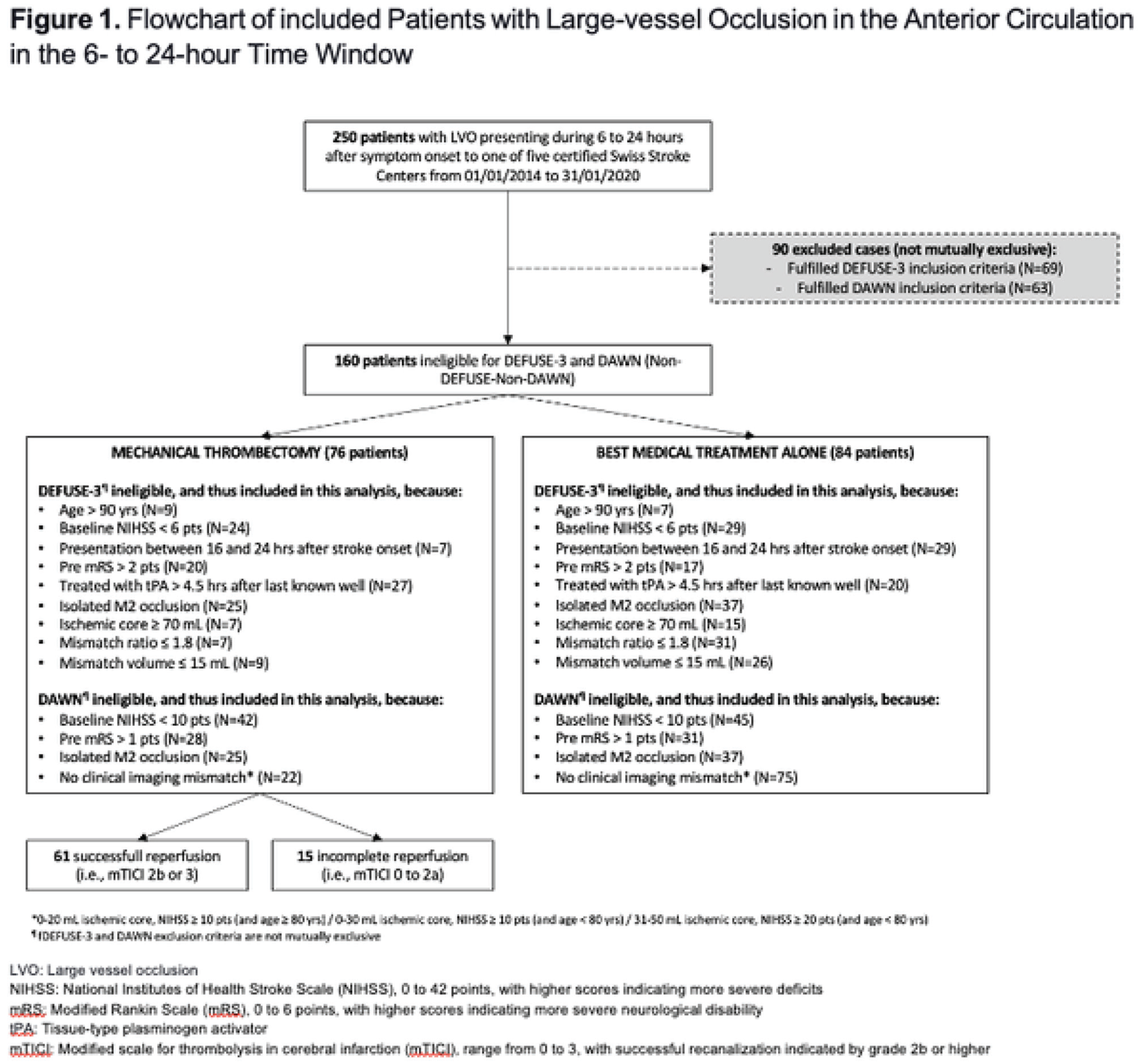
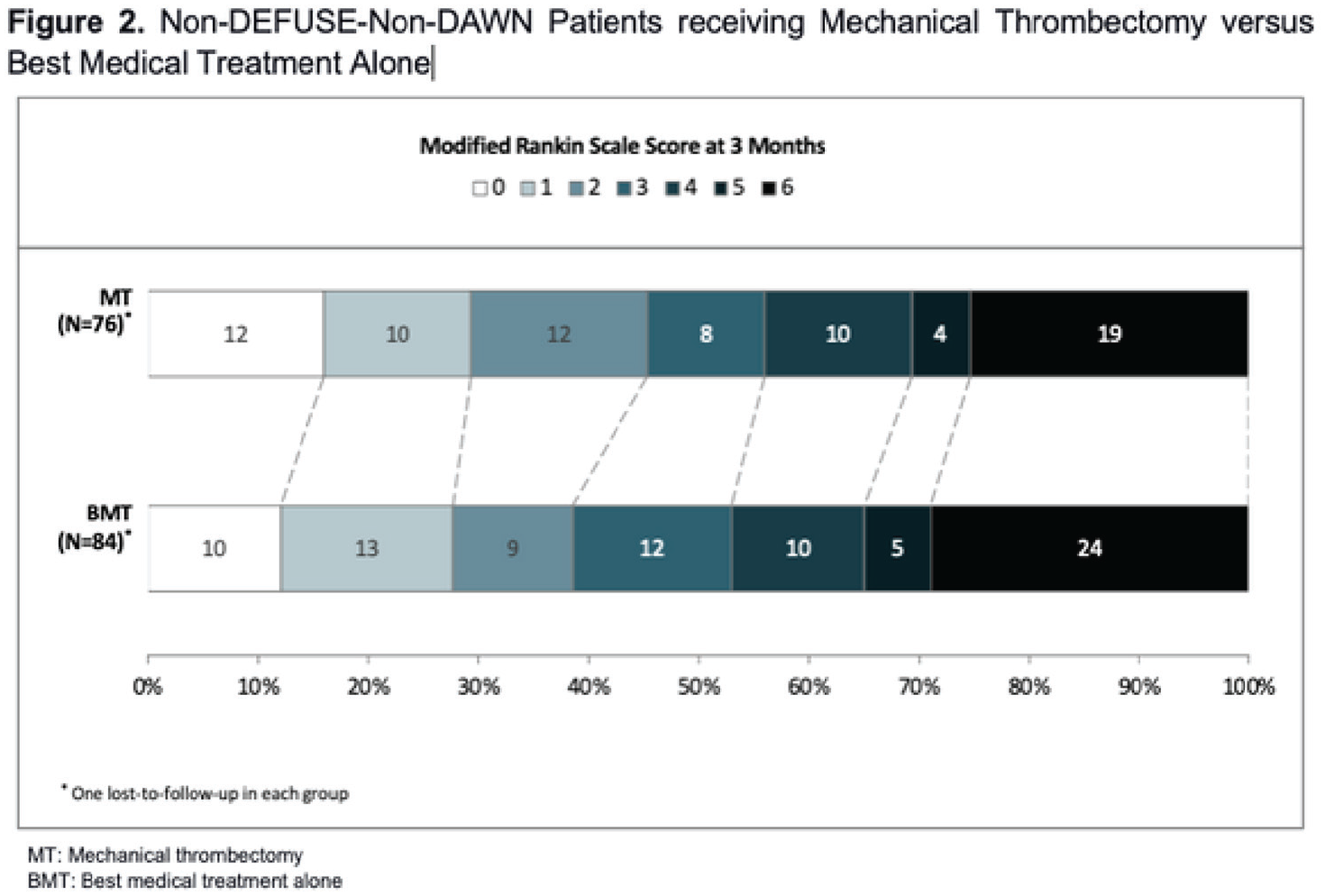
Admission Characteristics of Patients admitted 6 to 24 Hours after Symptom Onset.
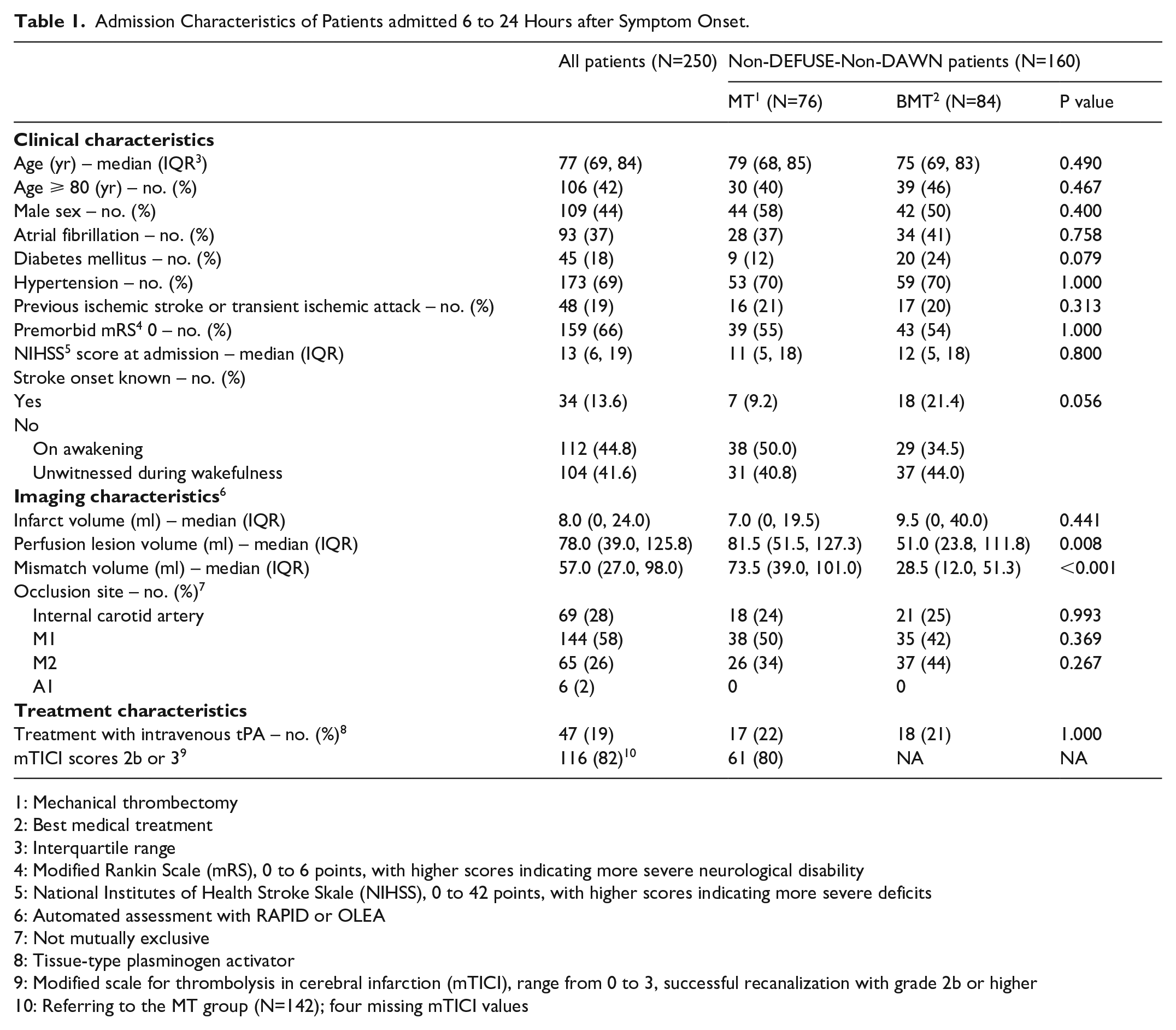
1: Mechanical thrombectomy
2: Best medical treatment
3: Interquartile range
4: Modified Rankin Scale (mRS), 0 to 6 points, with higher scores indicating more severe neurological disability
5: National Institutes of Health Stroke Skale (NIHSS), 0 to 42 points, with higher scores indicating more severe deficits
6: Automated assessment with RAPID or OLEA
7: Not mutually exclusive
8: Tissue-type plasminogen activator
9: Modified scale for thrombolysis in cerebral infarction (mTICI), range from 0 to 3, successful recanalization with grade 2b or higher
10: Referring to the MT group (N=142); four missing mTICI values
P0194 / 818
ENDOVASCULAR STROKE THERAPY OUTSIDE REGULAR WORKING HOURS IN A NATIONWIDE STROKE SYSTEM
1Medical University of Graz, Department of Neurology, Graz, Austria, 2Austrian National Public Health Institute, Vienna, Austria, 3Medical University of Graz, Division of Neuroradiology, Vascular and Interventional Radiology, Department of Radiology, Graz, Austria, 4Medical University of Innsbruck, Department of Neuroradiology, Innsbruck, Austria, 5St John's Hospital, Department of Neurology, Vienna, Austria, 6Medical University of Innsbruck, Department of Neurology, Innsbruck, Austria, 7Christian Doppler Medical Center, Paracelsus Medical University, Department of Neurology, Salzburg, Austria
P0195 / 1309
SEIMLESS TECHNIQUE FOR THE TREATMENT OF TANDEM OCCUSIONS IN ACUTE STROKE. SINGLE CENTER EXPERIENCE.
1Hospital Universitari i Politècnic La Fe, Neuroradiology - Stroke Unit, Valencia, Spain, 2Hospital Universitari i Politècnic La Fe, Neuroradiology, Valencia, Spain
P0196 / 532
INFLUENCE OF REPERFUSION STATUS AFTER ENDOVASCULAR STROKE TREATMENT ON THE EFFECT OF PERIPROCEDURAL UNFRACTIONATED HEPARIN AND ACETYLSALICYLIC ACID
1Erasmus MC University Medical Center, Department of Neurology, Rotterdam, Netherlands, 2Erasmus MC University Medical Center, Department of Radiology and Nuclear Medicine, Rotterdam, Netherlands, 3Amsterdam University Medical Center, University of Amsterdam, Department of Radiology and Nuclear Medicine, Amsterdam, Netherlands, 4Amsterdam University Medical Center, University of Amsterdam, Department of Biomedical Engineering & Physics, Amsterdam, Netherlands, 5Isala, Department of Neurology, Zwolle, Netherlands, 6Leiden University Medical Center, Department of Radiology, Leiden, Netherlands, 7Maastricht University Medical Center, Cardiovascular Research Institute Maastricht (CARIM), Department of Neurology, Maastricht, Netherlands, 8Maastricht University Medical Centre, Cardiovascular Research Institute Maastricht (CARIM), Department of Radiology and Nuclear Medicine, Maastricht, Netherlands, 9Erasmus MC University Medical Center, Department of Public Health, Rotterdam, Netherlands
P0197 / 414
ASPIRATION THROMBECTOMY FOR ACUTE ISCHEMIC STROKE PATIENTS PRESENTING AFTER 6 HOURS
1University of Texas Rio Grande Valley, Valley Baptist Medical Center, Harlingen, United States, 2Icahn School of Medicine at Mount Sinai, New York, United States, 3Mercy Health St. Vincent Medical Center, Toledo, United States
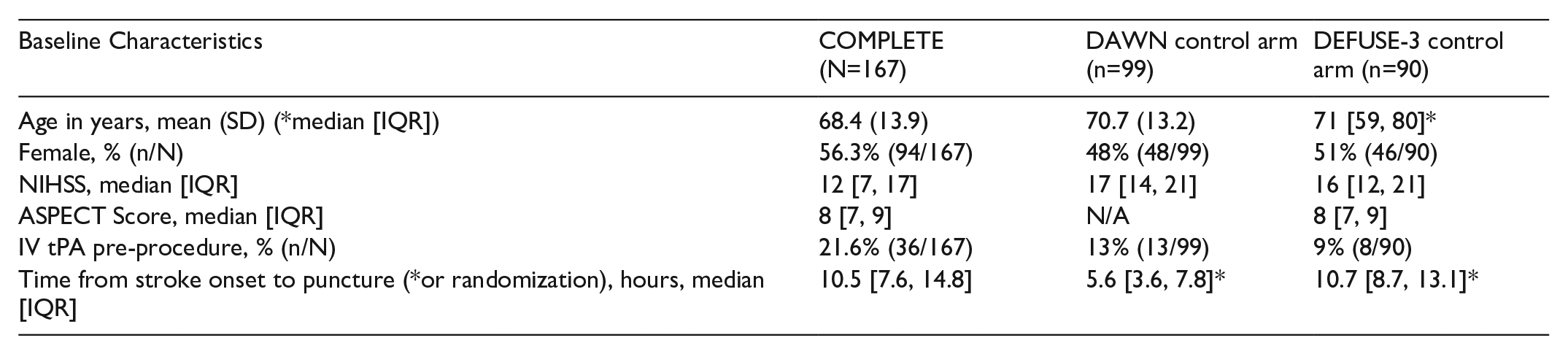
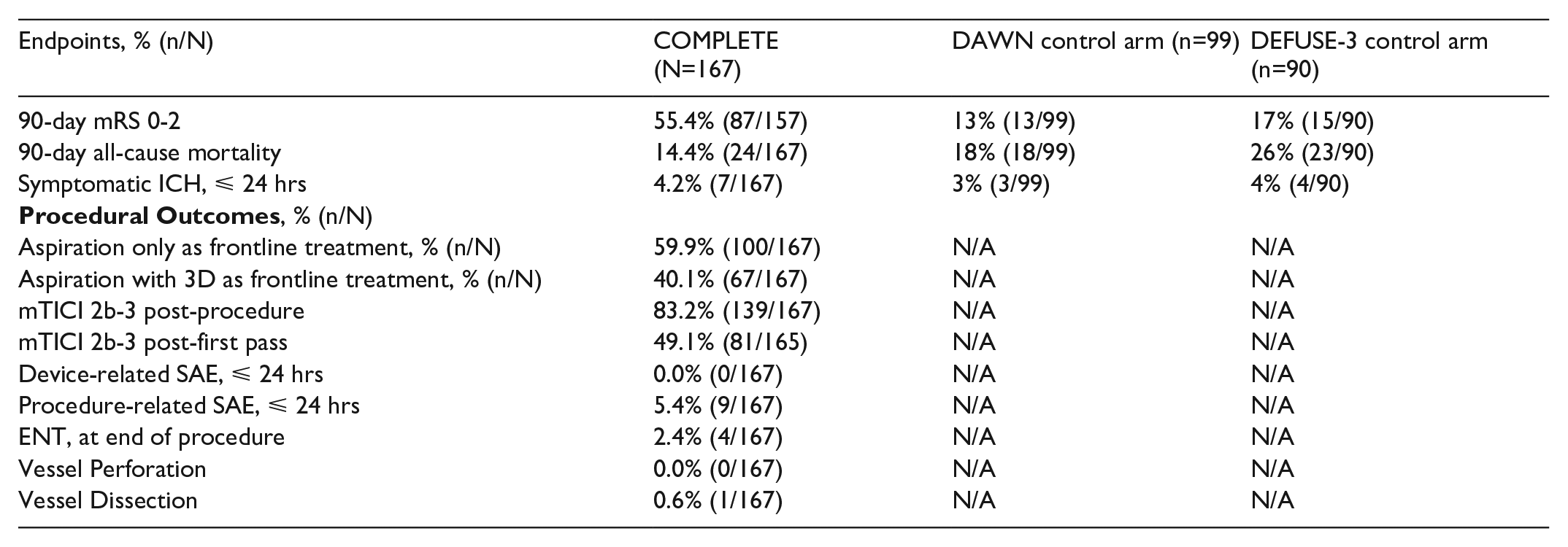
P0198 / 1515
MANAGEMENT OF ACUTE ISCHEMIC STROKE PATIENTS WITH TANDEM LESIONS: ANALYSIS FROM THE PROXIMAL INTERNAL CAROTID ARTERY ACUTE STROKE SECONDARY TO TANDEM OCCLUSION (PICASSO) REGISTRY
1University of New Mexico, Albuquerque, United States, 2University of Iowa Hospitals and Clinics, Iowa City, United States, 3University of Toledo, Toledo, United States, 4Vall De Hebron, Barcelona, Spain, 5University of Kansas Medical Center, Kansas City, United States, 6Mount Sinai, New York City, United States, 7Yale School of Medicine, New Haven, United States, 8Mercy Health St. Vincent Hospital, Toledo, United States, 9University of Miami, Miami, United States, 10University of South Florida, Tampa, United States, 11Cooper University Hospital, Camden, United States, 12Boston University, Boston, United States, 13University of Texas health Sciences Center, Houston, United States, 14Texas Stroke Center, Dallas, United States, 15Pomona Medical Center, Pomona, United States, 16Saint Louis University, Saint Louis, United States, 17Valley Baptist Medical Center, Harlingen, United States
P0199 / 1650
THE POSSIBILITY OF ENDOVASCULAR EMBOLIZATION AS MONOTHERAPY FOR THE TREATMENT OF CEREBRAL ARTERIOVENOUS MALFORMATIONS
1Dnipro State Medical University, Dnipro, Ukraine, 2Dnipropetrovsk Regional Clinical Hospital named after I.I. Mechnykov, Dnipro, Ukraine
P0200 / 292
OUTCOME IN ELDERLY PATIENTS WITH ACUTE ISCHEMIC STROKE TREATED WITH THROMBECTOMY - REAL WORLD ANALYSIS
1 University of Münster, Münster, Germany
P0201 / 326
A COMPARIONS OF DIFFERENT ENDOVASCULAR TREATMENT FOR VERTEBRAL ARTERY ORIGIN STENOSIS
1 Huashan Hospital, Fudan University, Department of Neurology and Institute of Neurology, Shanghai, China
P0202 / 1170
RECURRENT STROKE AFTER ENDOVASCULAR TREATMENT FOR SYMPTOMATIC INTRACRANIAL ARTERY ATHEROMATOUS STENOSIS: A RETROSPECTIVE COHORT STUDY
1Hôpital Pasteur 2, Neurovascular Unit, Nice, France, 2Hôpital Pasteur 2, Neurointerventional Unit, Nice, France
P0203 / 1081
INFLUENCE OF FIRST-PASS EFFECT ON RECANALIZATION OUTCOMES IN THE ERA OF MECHANICAL THROMBECTOMY
1Xuanwu Hospital, Capital Medical University, Department of Neurosurgery, Beijing, China, 2Johns Hopkins University School of Medicine, Department of Neurosurgery, Baltimore, United States, 3China Medical University, Shenyang, China, 4Xuanwu Hospital, Capital Medical University, Department of Evidence-Based Medicine, Beijing, China, 5Xuanwu Hospital, Capital Medical University, Medical Library, Beijing, China, 6Xuanwu Hospital, Capital Medical University, Department of Neurology, Beijing, China
P0204 / 1245
EFFECT OF AGE ON THE EFFICACY AND SAFETY OF INTRAVENOUS THROMBOLYSIS BEFORE MECHANICAL THROMBECTOMY
1Hadassah-Hebrew University Medical Center, Department of Neurology, Jerusalem, Israel, 2Tel-Aviv Sourasky Medical Center, Departement of Neurology & Stroke, Tel-Aviv, Israel
P0205 / 1566
ASSOCIATION OF INTRACRANIAL HEMORRHAGE AFTER ENDOVASCULAR STROKE TREATMENT WITH FUNCTIONAL OUTCOME
1Erasmus MC University Medical Center, Department of Neurology, Rotterdam, Netherlands, 2Erasmus MC University Medical Center, Department of Radiology and Nuclear Medicine, Rotterdam, Netherlands, 3Amsterdam University Medical Center, University of Amsterdam, Department of Neurology, Amsterdam, Netherlands, 4Amsterdam University Medical Center, University of Amsterdam, Department of Radiology and Nuclear Medicine, Amsterdam, Netherlands, 5Amsterdam University Medical Center, University of Amsterdam, Department of Biomedical Engineering & Physics, Amsterdam, Netherlands, 6Maastricht University Medical Center, Cardiovascular Research Institute Maastricht (CARIM), Department of Neurology, Maastricht, Netherlands, 7Erasmus MC University Medical Center, Department of Public Health, Rotterdam, Netherlands
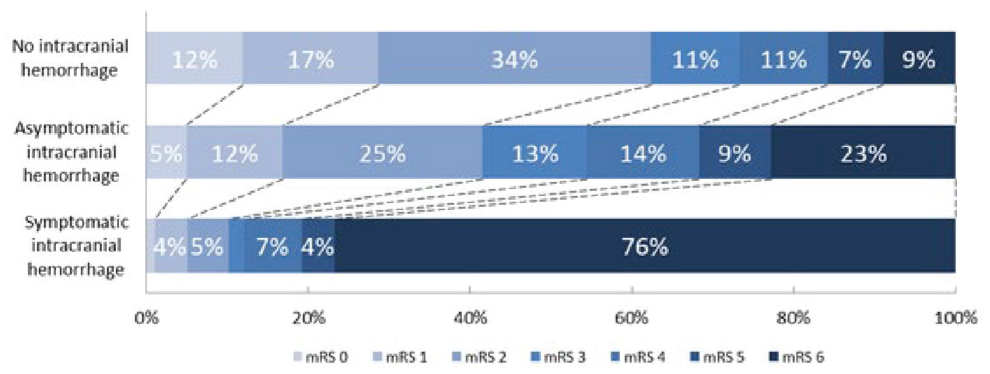
P0206 / 1520
CLINICAL AND RADIOLOGICAL FEATURES OF TREATED PATIENTS WITH ACUTE ISCHEMIC STROKE DUE TO MEDIUM-VESSEL OCCLUSIONS
1University of Bari, Neurology Department and Stroke Unit, Bari, Italy, 2Cesena "M.Bufalini" Hospital- AUSL Romagna, Neurology Department and Stroke Unit, Cesena, Italy, 3AOU Consorziale Policlinico, Neurology Department and Stroke Unit, Bari, Italy, 4IRCCS Istituto delle Scienze Neurologiche di Bologna, Ospedale Maggiore, Department of Neurology and Stroke Center, Bologna, Italy, 5IRCCS Istituto di Scienze Neurologiche di Bologna, Ospedale Maggiore, Neuroradiology Unit, Bologna, Italy
P0207 / 189
OUTCOME AFTER ENDOVASCULAR THROMBECTOMY FOR ACUTE ISCHEMIC STROKE IN PATIENTS AGED 80 YEARS OR OLDER
1Rigshospitalet, Copenhagen University Hospital, Department of Neurology, Copenhagen, Denmark, 2Rigshospitalet, Copenhagen University Hospital, Department of Radiology, Copenhagen, Denmark, 3University of Copenhagen, Faculty of Health Sciences, Copenhagen, Denmark
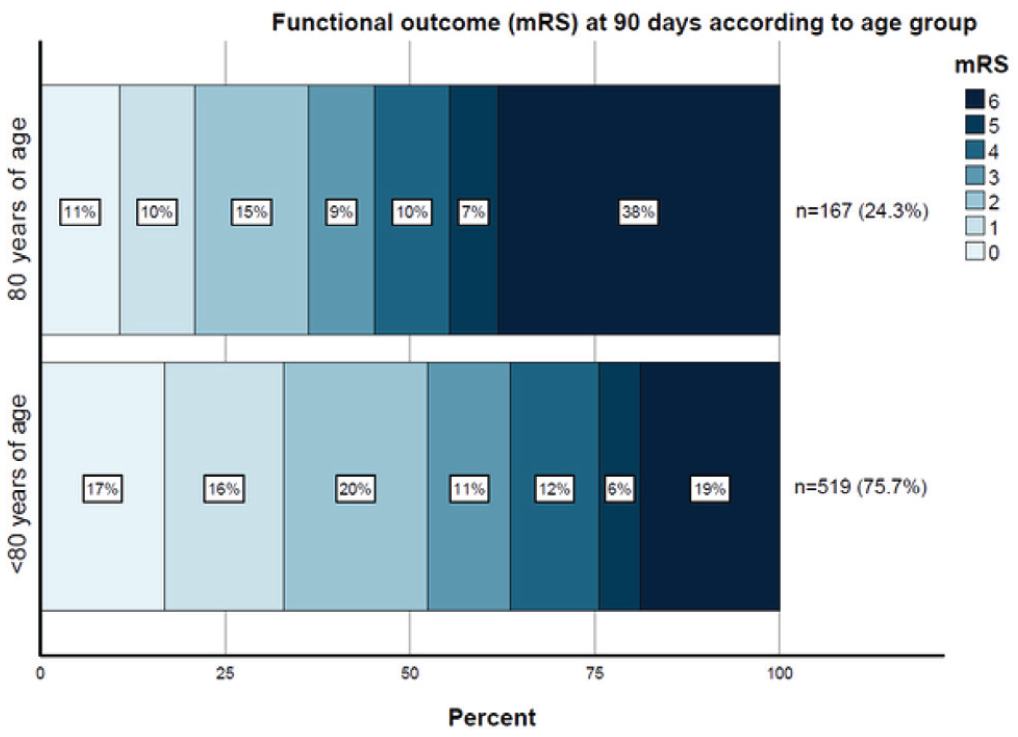
P0208 / 209
ULTRA-EARLY FUNCTIONAL IMPROVEMENT AFTER STROKE THROMBECTOMY – PREDICTORS AND IMPLICATIONS
1HonorHealth Research Institute, Neurology, Scottsdale, United States, 2Barrow Neurological Institute, Neurosurgery, Phoenix, United States, 3University of Pittsburgh, Neurosurgery, Pittsburgh, United States, 4University of Pittsburgh School of Medicine, Neurology, Pittsburgh, United States, 5Barrow Neurological Institute, Neurology, Phoenix, United States, 6Cooper University, Neurology, Camden, United States
P0209 / 1500
INTRAOPERATIVE MONITORING MIGHT IMPROVE THE CLINICAL OUTCOME OF SURGICAL EXTRACRANIAL INTERNAL CAROTID ARTERY RECANALIZATION
1Hospital České Budějovice a.s., Department of Neurology, České Budějovice - Budweis, Czech Republic, 2First Faculty of Medicine Charles University in Prague and Military University Hospital Prague, Department of Neurosurgery and Neurooncology, Prague, Czech Republic, 3Hospital České Budějovice a.s., Department of Neurosurgery, České Budějovice - Budweis, Czech Republic, 4Hospital České Budějovice a.s., Department of Radiology, České Budějovice - Budweis, Czech Republic, 5Faculty of Medicine in Plzeň, Charles University in Prague, Department of Neurosurgery, Pilsen, Czech Republic
Exclusion criteria: pre-stroke disability – modified Rankin score (mRS) > 2.
Parameters measured: proportion of intraoperative ipsilateral significant SEP amplitude decrease < 50% of baseline, 3-month functional outcome according to mRS.
Ipsilateral SEP amplitude significantly decreased in 6 (18.2%). Sufficient for recovery was mean arterial pressure increase > 100 mmHg, rapid eICA blood flow restoration, and intraluminal shunt insertion in 3, 1, and 2 respectively.
3-months after surgery favorable outcome (mRS 0-2) was reached in 28 (84.8%), severe disability (mRS 4-5) in 2 (6.1%), three patients (9.1%) died.
Supported by NV19-09-00199, NV19-04-00270.
P0210 / 208
DURATION OF ISCHEMIA IMPACTS POST-REPERFUSION CLINICAL OUTCOMES INDEPENDENT OF FOLLOW-UP INFARCT VOLUME
1HonorHealth Research Institute, Neurology, Scottsdale, United States, 2Baptist Health, Neurosurgery, Jacksonville, United States, 3Cooper Univeristy, Neurology, Camden, United States, 4Barrow Neurological Institute, Neurology, Phoenix, United States, 5Barrow Neurological Institute, Neurosurgery, Phoenix, United States, 6Cooper University, Neurology, Camden, United States
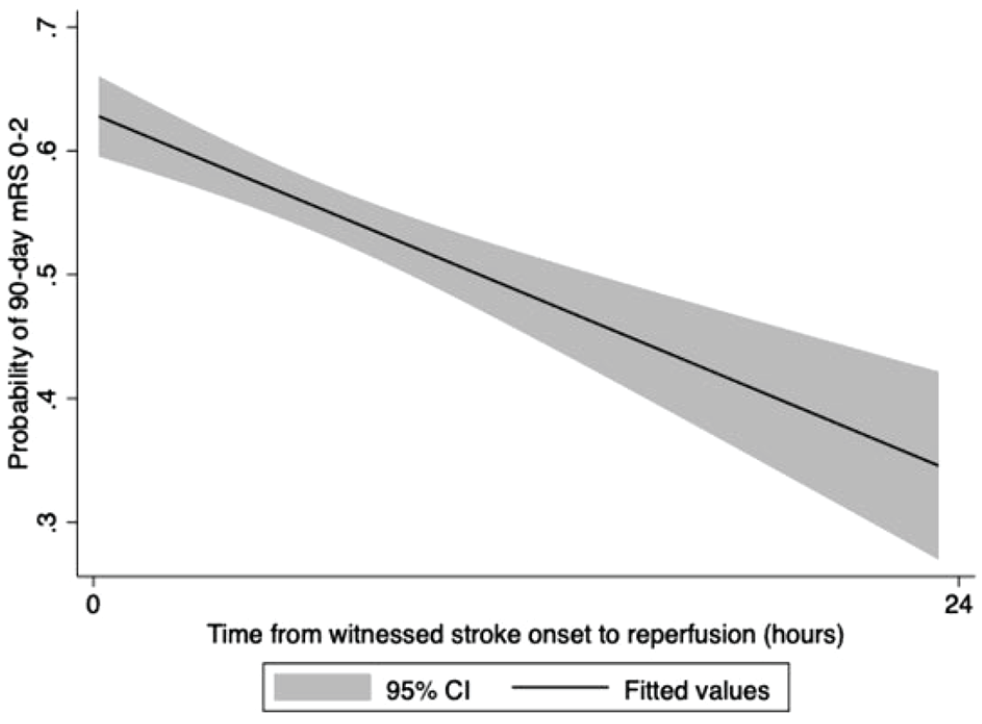
Figure 1
P0211 / 1502
PRE-TREATMENT THROMBUS MIGRATION IN THE POSTERIOR CIRCULATION: PREVALENCE AND ASSOCIATION WITH CLINICAL AND TECHNICAL OUTCOMES
1Charité Universitätsmedizin Berlin, Department of Neurology and Center for Stroke Research, Berlin, Germany, 2Charité Universitätsmedizin Berlin, Institute of Neuroradiology, Berlin, Germany
P0212 / 1140
PREDICTORS OF OUTCOMES AFTER ENDOVASCULAR TREATMENT IN ACUTE BASILAR ARTERY OCCLUSION: A NATIONAL MULTICENTER STUDY
1Hospital Universitario de La Princesa, Madrid, Spain, 2Hospital Universitario Virgen del Rocío, Sevilla, Spain, 3Hospital Universitario Centras de Asturias, Oviedo, Spain, 4Hospital Universitario Ramón y Cajal, Madrid, Spain, 5Hospital Clínico San Carlos, Madrid, Spain, 6Hospital Universitario La Paz, Madrid, Spain, 7Hospital Universitario 12 de Octubre, Madrid, Spain, 8Hospital Universitario Miguel Servet, Zaragoza, Spain
P0213 / 1612
DAYTIME TELEVISION DECREASES DELIRIUM PREVALENCE IN A CEREBROVASCULAR DISEASE WARD
1Coimbra University Hospital Centre, Neurology, Coimbra, Portugal, 2Coimbra University Hospital Centre, Internal Medicine, Coimbra, Portugal, 3Meio Tejo Hospital Centre, Internal Medicine, Abrantes, Portugal, 4Tâmega e Sousa Hospital Centre, Physics and Reabilitation Medicine, Penafiel, Portugal
SECONDARY PREVENTION – EXCLUDING CLINICAL TRIAL RESULTS
P0214 / 273
APPLICATION OF THE VASCULAR RISK CATEGORIES OF THE 2019 ESC/EAS DYSLIPIDEMIA GUIDELINE TO PATIENTS WITH STROKE. HOW DO WE OPTIMIZE THE TARGETING THERAPY FOR CHOLESTEROL?
1Badajoz University Hospital, Stroke Center, Neurology, Badajoz, Spain, 2Extremadura University, Faculty of Medicine and Health Sciences, Biomedical Sciences, Badajoz, Spain
P0215 / 960
INITIATION OF DIRECT ORAL ANTICOAGULATION AFTER REPERFUSION THERAPY IN ISCHEMIC STROKE IN CLINICAL PRACTICE: RESULTS FROM SITS-INTERNATIONAL STROKE REGISTRY
1Karolinska Institutet, Department of Clinical Neuroscience, Stockholm, Sweden, 2Karolinska University Hospital, Department of Neurology, Stockholm, Sweden, 3Hospital Clinico Universitario San Carlos, Department of Neurology, Madrid, Spain, 4Universidade de Lisboa, Department of Neurosciences, Faculdade de Medicina, Lisboa, Portugal, 5University of Tartu, Department of Neurology and Neurosurgery, Institute of Clinical Medicine, Tartu, Estonia, 6Azienda Ospedaliera G.Brotzu, SC Neurologia e Stroke Unit, Cagliari, Italy, 7Cliniques Universitaires Saint-Luc, Department of Neurology, Bruxelles, Belgium, 8University of Bari, Stroke Unit, AOU Consorziale Policlinico, Bari, Italy, 9North Estonia Medical Centre, Department of Neurology, Tallin, Estonia, 10Vilnius University, Stroke Center, Clinic of Neurology and Neurosurgery, Vilnius, Lithuania
P0216 / 943
ANALYSIS OF COMPLIANCE WITH ANTICOAGULANT THERAPY IN PATIENTS WITH ISCHEMIC STROKE AND ATRIAL FIBRILLATION
1 National Pirogov Memorial Medical University, Vinnytsya,Ukraine, neurology, Vinnytsya, Ukraine
The aim of the study was to evaluate the adherence to oral anticoagulants for stroke prevention among patients with IS and AF.
P0217 / 348
EFFICACY AND SAFETY OF EARLY ANTICOAGULATION IN PATIENTS WITH ACUTE ISCHEMIC STROKE DUE TO ATRIAL FIBRILLATION: A SYSTEMATIC REVIEW AND META-ANALYSIS
1National and Kapodistrian University of Athens, Second Department of Neurology, Athens, Greece, 2Population Health Research Institute, McMaster University, Hamilton, Canada, 3University of Perugia, Perugia, Italy, 4University of L'Aquila, L'Aquila, Italy, 5University Hospital of Basel, Basel, Switzerland, 6Allegheny Health Network, Pittsburgh, United States, 7University of Lisbon, Lisbon, Portugal, 8National and Kapodistrian University of Athens, Athens, Greece, 9University Hospital Bern, Bern, Switzerland
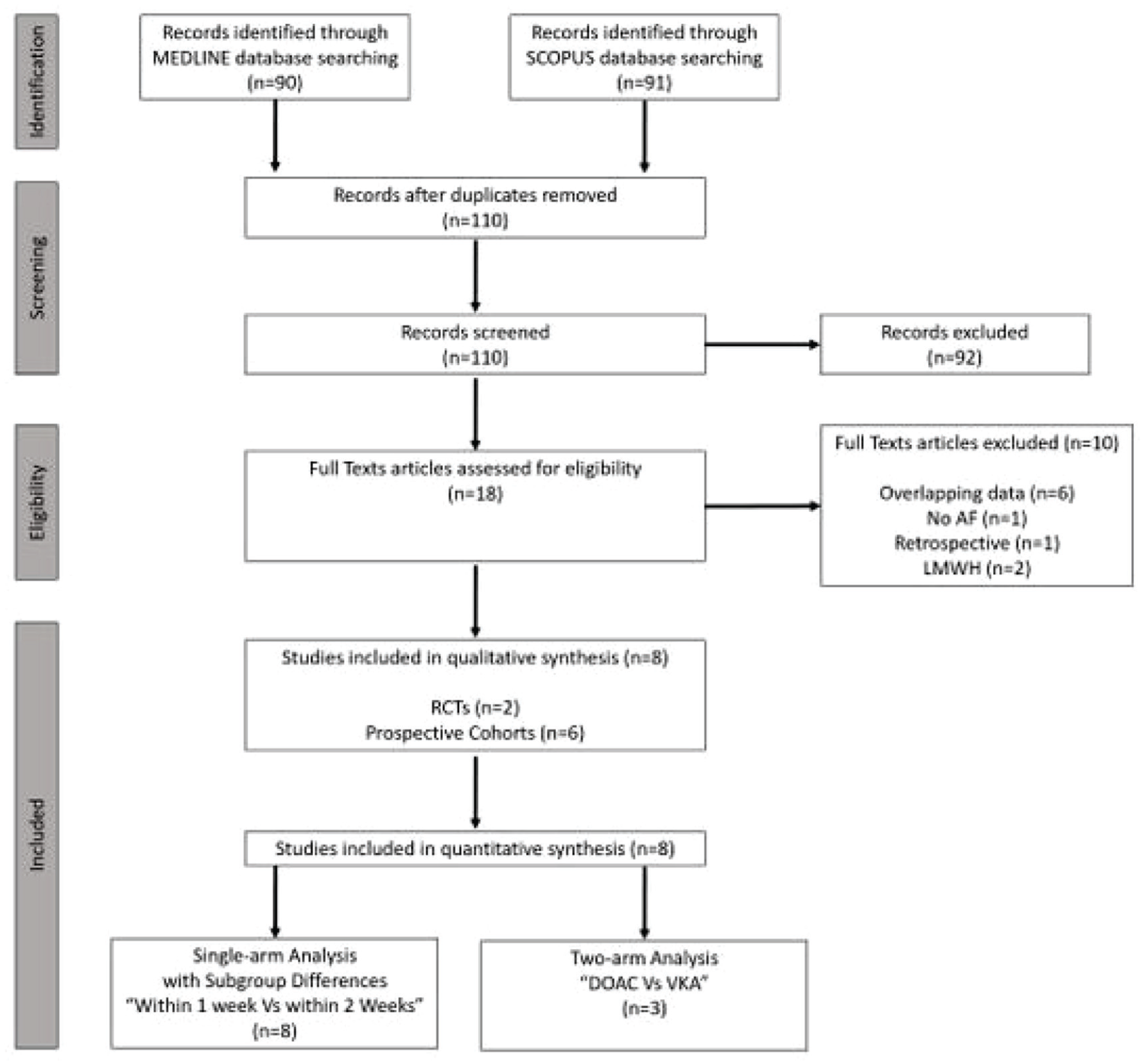
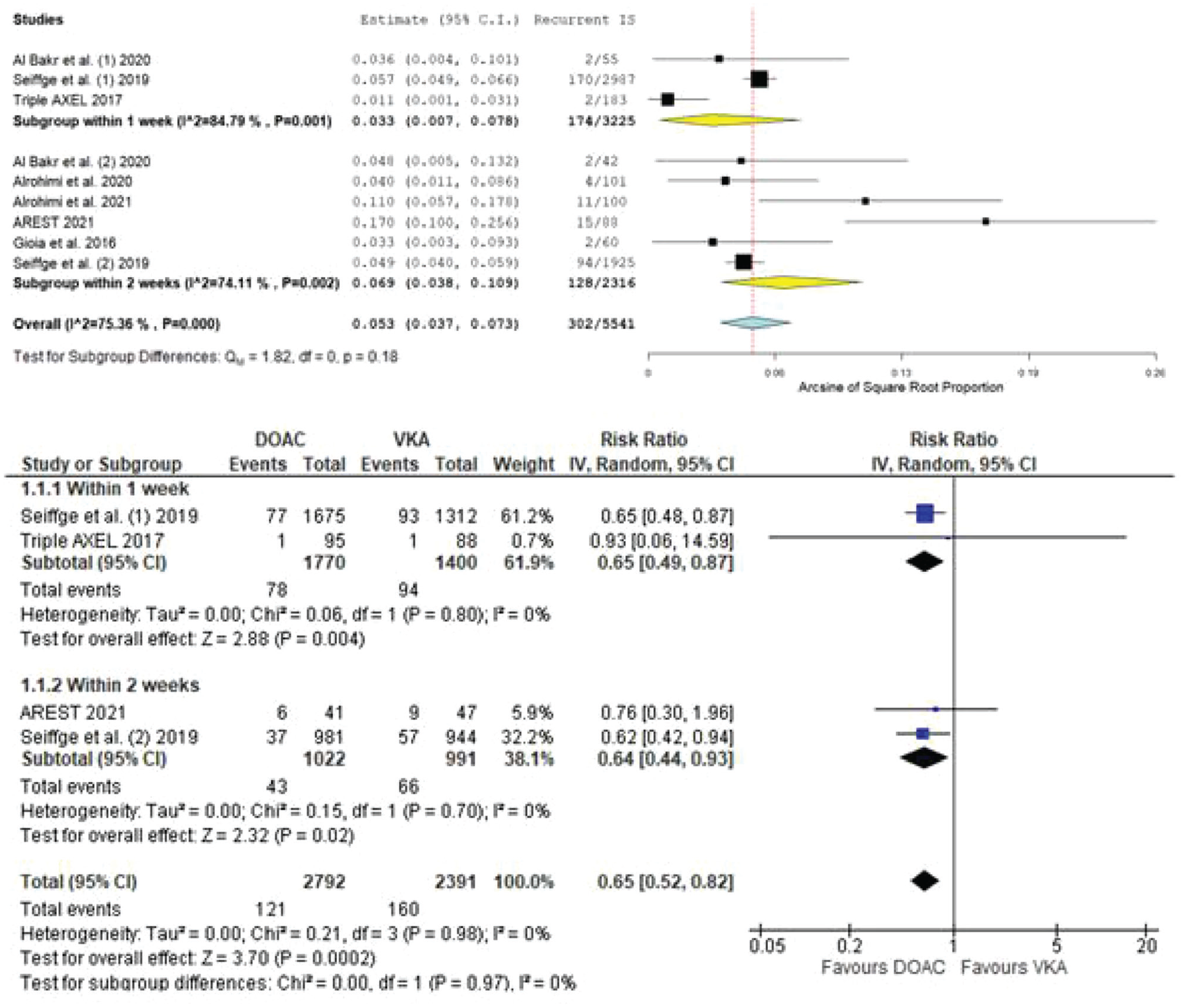
P0218 / 466
A REAL-LIFE STUDY ON SHORT-TERM DUAL ANTIPLATELET TREATMENT IN PATIENTS WITH ISCHEMIC STROKE OR TRANSIENT ISCHEMIC ATTACK (READAPT): PRELIMINARY EFFICACY AND SAFETY DATA
1University of L'Aquila, Neuroscience Section, Department of Applied Clinical Sciences and Biotechnology, L'Aquila, Italy, 2ASST Cremona, Department of Neurology, Cremona, Italy, 3Casa Sollievo della Sofferenza, Department of Neurology, San Giovanni Rotondo, Italy, 4Santa Corona Hospital, Department of Neurology, Pietra Ligure, Italy, 5Città di Castello Hospital, Department of Neurology, Città di Castello, Italy, 6AOU Consorziate Policlinico, Stroke Unit, Bari, Italy, 7University Hospital of Perugia, Stroke Unit, Perugia, Italy, 8San Giuseppe Hospital, IRCCS MultiMedica, Department of Neurology and Stroke Unit, Milan, Italy, 9ASST Ovest Milanese, Department of Neurology, Legnano, Italy, 10University Hospital of Tor Vergata, Department of Neurology and Stroke Unit, Rome, Italy, 11E. Agnelli Hospital Pinerolo, Department of Neurology and Stroke Unit, Pinerolo, Italy, 12Giovanni Paolo II Hospital, Neuro-Cardio-Vascular Department, Ragusa, Italy, 13A. Perrino Hospital, Department of Neurology, Brindisi, Italy, 14S. Eugenio Hospital, Department of Neurology and Stroke Unit, Rome, Italy, 15"A. Murri" Hospital Fermo, Department of Neurology, Fermo, Italy, 16Azienda Ospedaliero-Universitaria di Parma, Department of Emergency, Parma, Italy, 17IRCCS Istituto Neurologico Mondino, Department of Cerebrovascular disease and Stroke Unit, Pavia, Italy, 18Di Venere Hospital ASL Bari, Neurosensorial Department, Bari, Italy, 19Cittadella Hospital, Department of Neurology, Cittadella, Italy, 20Madonna del Soccorso Hospital, Department of Neurology and Stroke Unit, San Bendetto del Tronto, Italy, 21Arzignano Hospital, Department of Neurology and Stroke Unit, Arzignano, Italy, 22San Salvatore Hospital, University of L'Aquila, Neuroscience Section, Department of Applied Clinical Sciences and Biotechnology, L'Aquila, Italy, 23San Jacopo Hospital, Department of Neurology, Pistoia, Italy, 24S. Bortolo Hospital AULSS8 Vicenza, Department of Neurology, Vicenza, Italy, 25Marche Polytechnic University, Neurological Clinic, Ancona, Italy, 26Istituto Ospedaliero Fondazione Poliambulanza, Department of Head and Neck diseases, Brescia, Italy, 27S.Spirito Hospital of Pescara, Department of Neurology, Pescara, Italy, 28San Filippo Neri Hospital, Department of Neurology, Rome, Italy, 29Ente Ecclesiastico Ospedale Generale Regionale Miulli, Department of Neurology, Acquaviva delle Fonti, Italy, 30Azienda Ospedaliero-Universitaria "Maggiore della Carità”, Department of Neurology and Stroke Unit, Novara, Italy, 31Fatebenefratelli Hospital, Department of Neurology, Rome, Italy, 32Policlinico Gemelli Hospital, Department of Neurology, Rome, Italy, 33Umberto I Hospital, Department of Neurology, Siracusa, Italy, 34SS Annunziata Hospital, Department of Neurology and Stroke Unit, Chieti, Italy, 35San Giovanni di Dio Hospital, Department of Neurology, Firenze, Italy, 36SS. Annunziata Hospital, Department of Neurology, Savigliano, Italy, 37SS. Giovanni e Paolo Hospital, Department of Neurology, Venezia, Italy, 38USL Umbria 1, Gubbio and Città di Castello Hospital, Department of Neurology and Stroke Unit, Perugia, Italy, 39Sapienza University of Rome, Department of Human Neurosciences, Rome, Italy
P0219 / 320
SECONDARY PREVENTIVE EFFECTS OF NON-VITAMIN K ORAL ANTICOAGULANTS IN ISCHEMIC STROKE PATIENTS WITH ATRIAL FIBRILLATION: KOREAN REAL-WORLD DATA
1 Seoul Metropolitan Government-Seoul National University Boramae Medical Center, Neurology, Seoul, Korea, Republic of
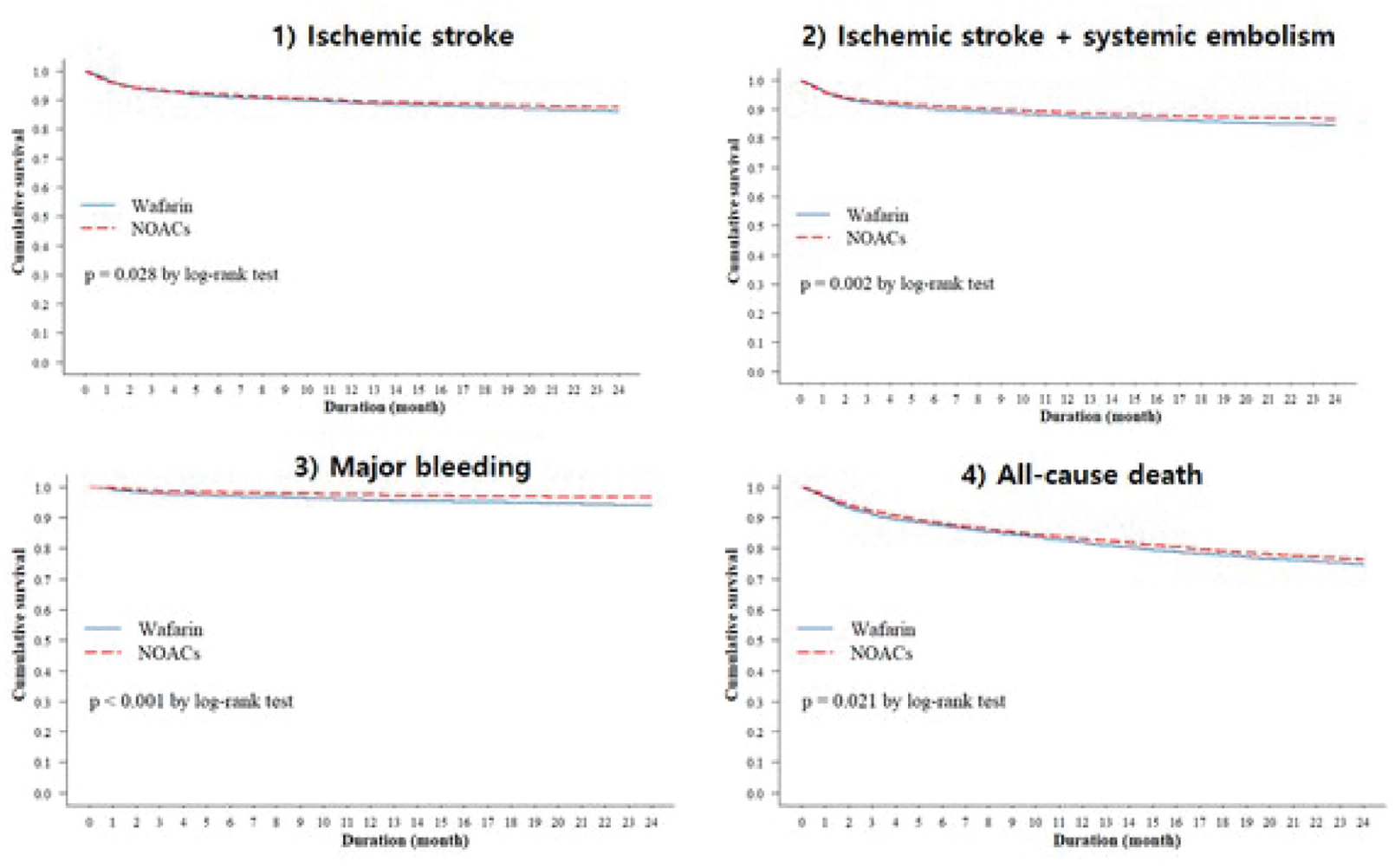
P0220 / 800
PROTOCOL OF PROCESS EVALUATION OF SECONDARY PREVENTION BY STRUCTURED SEMI-INTERACTIVE STROKE PREVENTION PACKAGE IN INDIA (SPRINT INDIA) STUDY
1Christian Medical College and Hospital, Neurology, Ludhiana, India, 2Desh Bhagat University, School of Pharmacy, Mandi Gobindgarh, India, 3Sri Chitra Tirunal Institute of Medical Sciences and Technology, Neurology, Thiruvananthapuram, India, 4Indian Council of Medical Research, Non-Communicable Diseases Section, New Delhi, India
P0221 / 1250
ANTITHROMBOTIC PRESCRIBING AFTER ISCHAEMIC STROKE AND SURVIVAL TO ONE YEAR IN SCOTLAND: A NATIONAL DATABASE STUDY
1University of Aberdeen, School of Medicine, Medical Sciences and Nutrition, Aberdeen, United Kingdom, 2NHS Lanarkshire/Chair Scottish Stroke Care Audit, University Hospital Monklands, Airdrie, North Lanarkshire, United Kingdom, 3University of Glasgow, Institute of Cardiovascular & Medical Sciences, Glasgow, United Kingdom
P0222 / 1423
PERCUTANEOUS LEFT ATRIAL APPENDAGE OCCLUSION DATA FROM MATER DEI HOSPITAL; MALTA
1Mater Dei Hospital, Department of Neurosciences, Msida, Malta, 2Mater Dei Hospital, Department of Cardiology, Msida, Malta
P0223 / 566
HYPERTRIGLYCERIDEMIA AS A NOVEL TREATMENT TARGET FOR STROKE PREVENTION
1 University of Maryland, Neurology, Baltimore, United States
P0224 / 1251
ANTITHROMBOTIC TREATMENT AND OUTCOME AFTER ENDOVASCULAR THROMBECTOMY AND STENTING IN STROKE PATIENTS WITH ATRIAL FIBRILLATION: ANTICOAGULATION REDUCES MORTALITY
1University Hospital Bonn, Department of Neurology, Bonn, Germany, 2University Hospital Bonn, Department of Neuroradiology, Bonn, Germany, 3German Center for Neurodegenerative Diseases (DZNE), Bonn, Germany
P0225 / 307
STROKE ILR SERVICE - SOUTHEND UNIVERSITY HOSPITAL
1Southend University Hospital, Stroke Medicine, Southend-on-Sea, United Kingdom, 2Southend University Hospital, Cardiology, Southend-on-Sea, United Kingdom
More recently there has now been Positive NICE Guidance recommending Reveal LINQ (ILR) for the long-term monitoring of this Stroke patient sub-group, this guidance further supports the service and its expansion across the MSE.
Currently the service has over 300 ILR patients in active follow up, and in recent years the service has seen a steady increase in the Cryptogenic Stroke referrals for the purpose of identifying Paroxysmal AF with an aim to improve secondary stroke prevention.
Outcomes from the 2020* Fast Track Stroke ILR Implants:
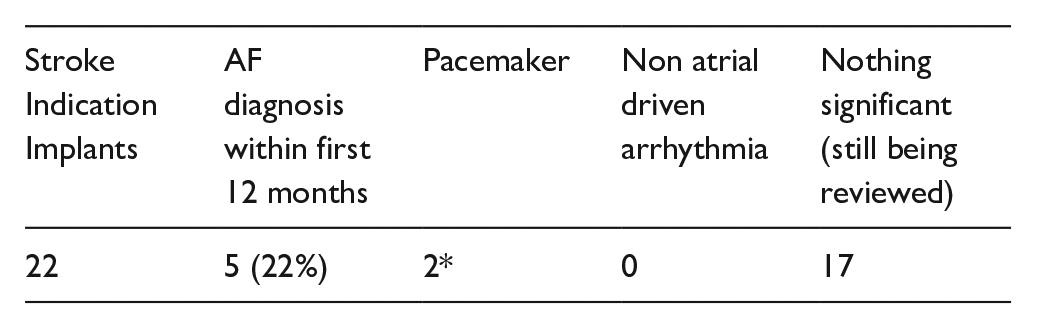
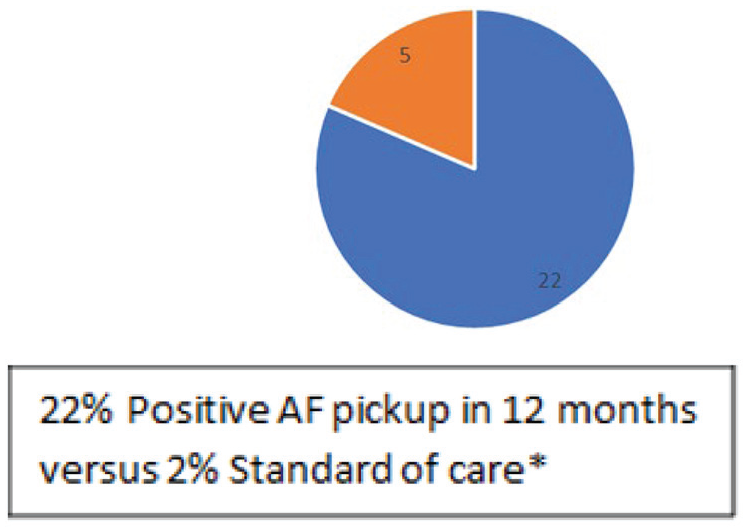
Key Data points
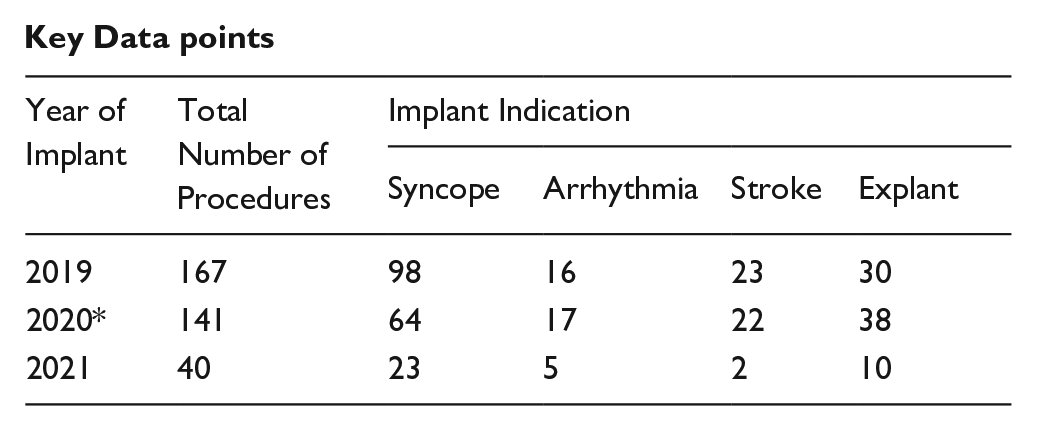
Info below taken from data reviewed for implants 2015-2019
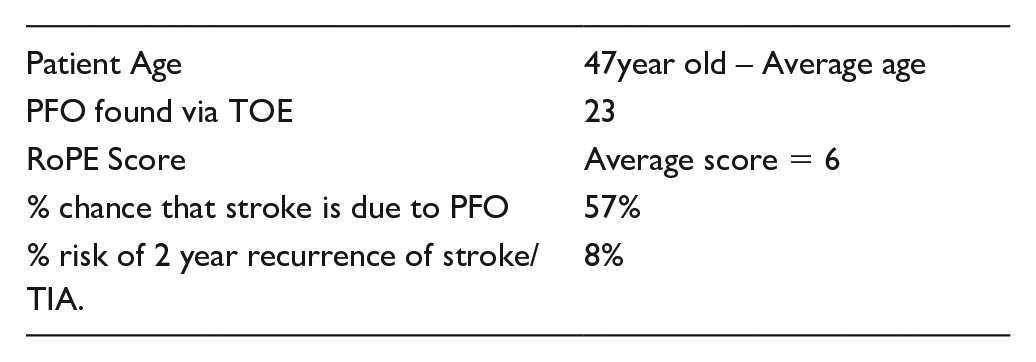
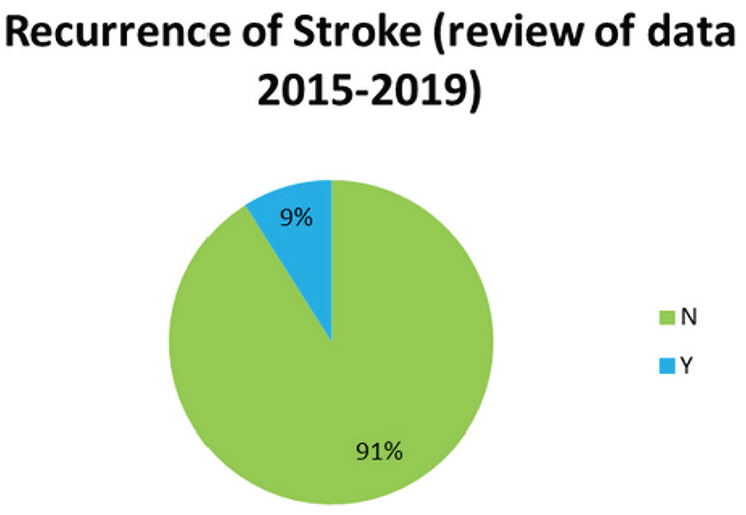
P0226 / 598
DUAL ANTIPLATELET THERAPY IN PATIENTS WITH MINOR STROKE RECEIVING INTRAVENOUS THROMBOLYSIS
1 Nanjing First Hospital, Nanjing Medical University, Department of Neurology, Nanjing, China
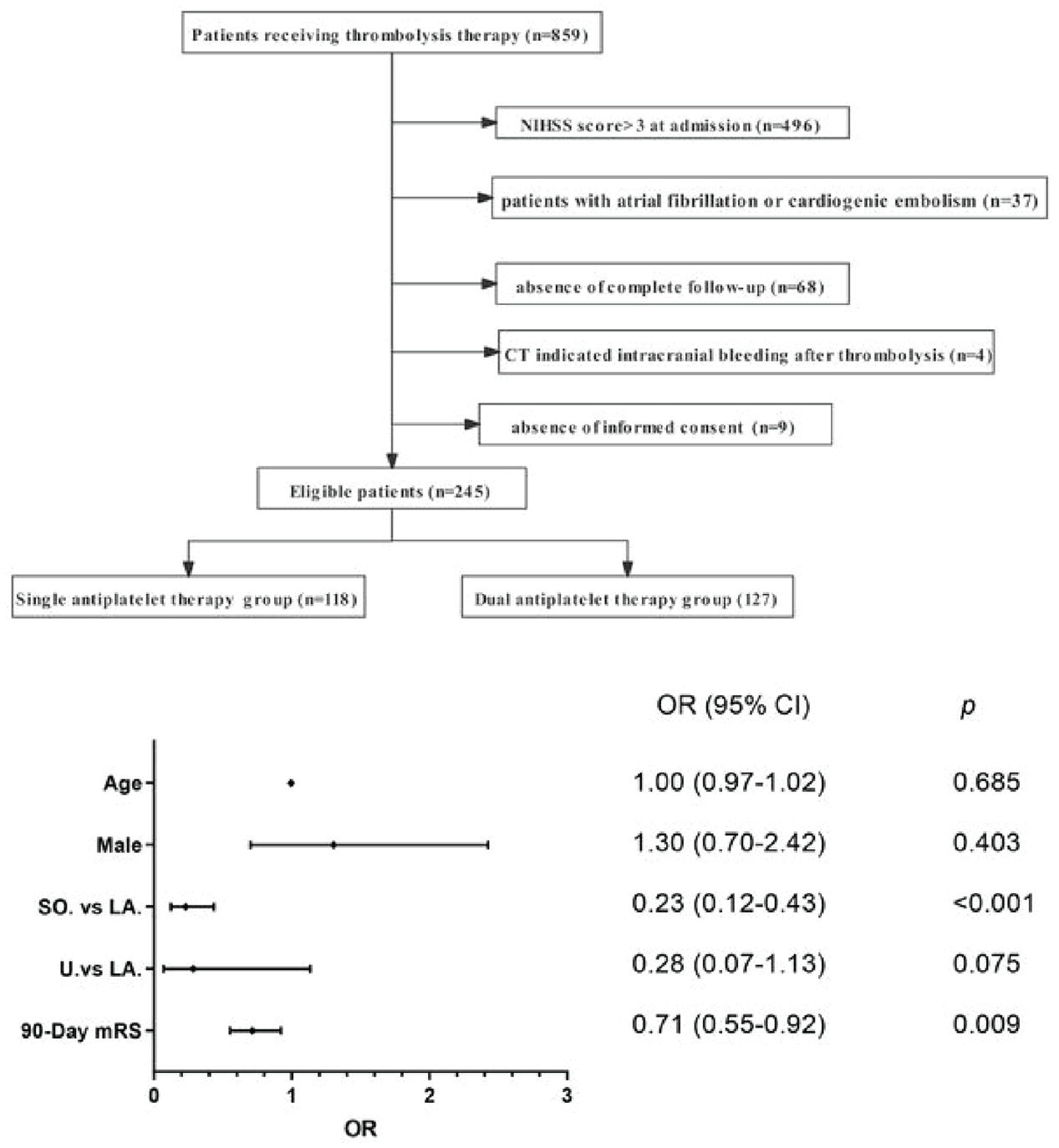
P0227 / 1545
EXERCISE AND EXERCISE-BASED SUPPORT PREFERENCES OF PEOPLE WITH TRANSIENT ISCHAEMIC ATTACK OR MILD STROKE: A SYSTEMATIC REVIEW
1 Australian Catholic University, Physiotherapy, School of Allied Health, Ballarat, Australia
Unfunded, registered PROSPERO 2020 CRD42020184479
P0228 / 823
PROTOCOL FOR MULTIMORBIDITY IN STROKE IN SPRINT INDIA TRIAL
1Christian Medical College and Hospital, Neurology, Ludhiana, India, 2Desh Bhagat University, Pharmacology, Mandi Gobindgarh, India, 3Sree Chitra Tirunal Institute for Medical Sciences & Technology, Neurology, Thiruvananthapuram, India
P0229 / 1200
ANTITHROMBOTIC MANAGEMENT OF ACUTE NON-DISABLING ISCHAEMIC STROKE AND TIA: A SURVEY OF BRITISH AND IRISH STROKE PHYSICIANS
1University Hospitals Birmingham NHS Foundation Trust, Stroke, Birmingham, United Kingdom, 2University of Birmingham, Institute of Applied Health Research, College of Dental and Medical Sciences, Birmingham, United Kingdom, 3National University of Malaysia, Department of Medicine, Kuala Lumpur, Malaysia, 4University of Leicester, Department of Cardiovascular Sciences, Leicester, United Kingdom, 5University of Nottingham, Stroke Trials Unit, Division of Mental Health and Clinical Neuroscience, Nottingham, United Kingdom, 6University Hospitals of Derby and Burton NHS Foundation Trust, Stroke, Royal Derby Hospital, Derby, United Kingdom, 7Nottingham University Hospitals NHS Trust, Stroke, Department of Acute Medicine, Nottingham, United Kingdom
P0230 / 721
WHEN TO PERFORM CAROTID ENDARTERECTOMY AFTER INTRAVENOUS THROMBOLYSIS FOR ACUTE STROKE?
1University of Bari Aldo Moro, Neurology Unit, Department of Basic Medical Sciences, Neurosciences and Sense Organs, Bari, Italy, 2University of Bari Aldo Moro, Department of Emergency and Organ Transplantation, Vascular and Endovascular Surgery Unit, Bari, Italy
P0231 / 709
ASSOCIATION OF ABCD2 SCORE AND RISK LEVEL WITH STROKE EVENT AFTER TRANSIENT ISCHEMIC ATTACK: A LONG-TERM 12-MONTHS FOLLOW-UP
1 Walailak University, School of Nursing, Thasala, Thailand
P0232 / 1235
STATIN TREATMENT USE IN THE SETTING OF SECONDARY PREVENTION OF STROKE: AN OBSERVATIONAL RETROSPECTIVE ANALYSIS
1University Emergency Hospital Bucharest, Neurology, Bucharest, Romania, 2University Emergency Hospital Bucharest, Interventional Radiology, Bucharest, Romania
P0233 / 738
PREDICTORS OF CORRECT ANTIPLATELET RESPONSE IN STROKE PREVENTION MEASURED WITH ELECTRICAL IMPEDENCE AGGREGOMETRY
1Stroke Unit, Neurology Unit, Ospedale Civile, Azienda Ospedaliera Universitaria di Modena, Department of Neuroscience, Modena, Italy, 2Federico II University, Department of Neurosciences, Reproductive and Odontostomatological Sciences, Napoli, Italy, 3University of Modena and Reggio Emilia, Department of Biomedical, Metabolic and Neural Sciences, Modena, Italy, 4Laboratory of Clinical Pathology and Toxicology, Ospedale Civile, Azienda Ospedaliera Universitaria di Modena, Department of Laboratory Medicine, Modena, Italy, 5Neuroradiology Unit, Ospedale Civile S. Agostino-Estense, Azienda Ospedaliero-Universitaria di Modena, University of Modena and Reggio Emilia, Department of Neuroscience, Modena, Italy
P0234 / 1637
BARRIERS AND ENABLERS TO PHYSICAL ACTIVITY FOLLOWING TRANSIENT ISCHAEMIC ATTACK AND MILD STROKE: A SYSTEMATIC REVIEW
1 Australian Catholic University, Physiotherapy, School of Allied Health, Ballarat, Australia
Unfunded study. Registered on PROSPERO (CRD42020184476).
P0235 / 715
IMPROVED ATRIAL FIBRILLATION (AF) DETECTION DURING THE COVID-19 PANDEMIC USING HOME DELIVERED AND PATIENT ADMINISTERED AMBULATORY ECG MONITORS
1 Croydon University Hospital, Stroke Department, London, United Kingdom
Ischaemic strokes secondary to atrial fibrillation (AF) have a high morbidity and mortality thus, detection of AF post stroke is crucial for secondary prevention. Cardiology services were already struggling to provide timely Holter monitoring and the COVID-19 pandemic resulted in further delays. We collaborated with an external company to deliver adhesive ambulatory electrocardiographic monitors (AECG) to patient’s homes which ensured compliance with infection control measures to reduce investigation wait times. We conducted a retrospective study looking at AF detection rates when changing from a traditional 24-hour Holter monitor to a 7-day AECG which was delivered and collected from patients’ homes during the pandemic.
78 patients were included in this study. 37 patients had a 24-hour Holter monitor applied and removed by a health care professional in an outpatient setting. 41 patients had a 7-day AECG posted to their home where it was self-administered, removed and collected by a courier.
AF was detected in a total of 7 patients. 1 out of 37 (1.2%) patients were found to have AF in the 24-hour Holter monitor group. 6 out of 41 patients (7.7%) were found to have AF when using AECG monitors.
We conclude that 7-day AECG monitoring is more effective at detecting AF than 24-hour Holter monitoring. The model of a self-administered monitoring device with a longer observation period helps to reduce wait times for ambulatory monitoring whilst improve the detection rate of AF when used during the COVID-19 pandemic and may be beneficial for use in the future.
P0236 / 778
IMPLEMENTATION OF ONLINE TOOLS FOR PERIOPERATIVE ANTICOAGULANT MANAGEMENT: IMPACT ON CEREBROVASCULAR EVENTS
1AZ Groeninge, Department of Clinical Pharmacy, Kortrijk, Belgium, 2AZ Groeninge, Department of Neurology, Kortrijk, Belgium, 3Antwerp University Hospital, Neurovascular Reference Center, Department of Neurology, Antwerp, Belgium
REHABILITATION – EXCLUDING CLINICAL TRIAL RESULTS
P0237 / 1418
THE EFFECT OF GAMIFIED ROBOT-ENHANCED TRAINING ON MOTOR PERFORMANCE IN CHRONIC STROKE SURVIVORS
1Swiss Federal Institute of Technology Lausanne (EPFL), Center for Neuroprosthetics (CNP) and Brain Mind Institute (BMI), Geneva, Switzerland, 2Swiss Federal Institute of Technology (EPFL), Computer Human Interaction in Learning and Instruction (CHILI), Lausanne, Switzerland, 3University of San Diego, San Diego, United States, 4Swiss Federal Institute of Technology Lausanne (EPFL), Center for Neuroprosthetics (CNP) and Brain Mind Institute (BMI), Sion, Switzerland, 5University of New South Wales Sydney, Sydney, Australia, 6Swiss Federal Institute of Technology (EPFL), Center for Neuroprosthetics and School of Engineering, Lausanne, Switzerland, 7Clinique Romande de Réadaptation (SUVA), Sion, Switzerland
P0238 / 249
A QUALITATIVE STUDY EXPLORING HOW PATIENTS' EXPECTATIONS AND UNDERSTANDING OF STROKE EARLY SUPPORTED DISCHARGE SHAPED THEIR EXPERIENCE AND ENGAGEMENT WITH THE SERVICE
1University of Nottingham, School of Medicine ARU1 Mental Health and Clinical Neurosciences, Nottingham, United Kingdom, 2University of Leicester, College of Life Sciences, Leicester, United Kingdom, 3University of Glasgow, Institute of Cardiovascular & Medical Science, Glasgow, United Kingdom
1) ESD as a post-stroke recovery tool,
2) desire to recover quickly,
3) psychosocial impact and support.
Stroke survivors were uncertain about what to expect from the service, however, their experience of ESD exceeded their expectations. Patients valued the team’s goal-oriented approach which motivated, engaged and encouraged extension of therapy practice outside of formal sessions. Rehabilitation at home was perceived as positive and practical, encouraging independence within real-life contexts. Psycho-social support played an important role in the patients’ rehabilitation.
P0239 / 1620
THE EFFECTIVENESS OF TRANSCRANIAL DIRECT CURRENT STIMULATION ON HAND DEXTERITY IN STROKE PATIENTS: A SYSTEMATIC REVIEW AND META-ANALYSIS
1University of Birmingham, Birmingham, United Kingdom, 2Imam Abdulrahman Bin Faisal University, Physical Therapy, Dammam, Saudi Arabia, 3University of Birmingham, School of Psychology, Birmingham, United Kingdom, 4University of Birmingham, School of Sport, Exercise and Rehabilitation Sciences, Birmingham, United Kingdom
P0240 / 1560
ADAPTING THE STROKE RECOVERY IN MOTION (SRIM) PLANNER TO SUPPORT CULTURALLY RELEVANT POST STROKE COMMUNITY-BASED EXERCISE PROGRAMS IN ETHNICALLY DIVERSE COMMUNITIES
1March of Dimes Canada, Toronto, Canada, 2University of Toronto, Toronto, Canada, 3Bridgepoint Collaboratory for Research and Innovation, Toronto, Canada, 4Lunenfeld-Tanenbaum Research Institute Sinai Health, Toronto, Canada, 5SRIM Team, Toronto, Canada
P0241 / 1443
AWARENESS AND USE OF STROKE REHABILITATION INTERVENTIONS IN CLINICAL PRACTICE AMONG OCCUPATIONAL THERAPISTS (OT) AND OT ASSISTANTS
1Parkwood Institute, London, Canada, 2St. Josephs Health Care London, London, Canada, 3University of Western Ontario, London, Canada
Background and Aims: To examine occupational therapists (OT) and OT assistants (OTA) awareness and use of stroke rehabilitation interventions, as well as the factors associated with intervention use and non-use in real world clinical practice.
Methods: Participants were recruited from medical centres providing stroke rehabilitation to stroke patients in each of the ten provinces across Canada. OT/OTAs meeting the following inclusion criteria completed a bilingual survey: 1) provide direct stroke rehabilitative care to individuals after a stroke; 2) 18+ years old; and 3) read and write in English or French. The survey asked questions about therapists’ work setting, patient demographic, and how they stay up-to-date. Therapists were also asked about their awareness and use of OT stroke rehabilitation interventions. Surveys were completed January-July 2021.
Results: 127 OT/OTAs (female=89.8%), mainly from Ontario or Quebec (62.2%) were included; most worked full-time (80.3%) in moderate-large (86.1%) cities. The highest awareness and use of interventions were those applied to the body peripherally, without a technological component. Few individuals were aware of interventions applied to the brain (priming or stimulating) with a technological component, and they were rarely, if ever, used. Greatest barriers to using adjunct therapies appear to be cost, access, time, and the perception that they are outside therapists’ role or scope of practice.
Conclusions: Investigating therapists’ perspectives on OT stroke rehabilitation interventions, as well as the barriers and facilitators to therapy use, have the potential to inform future guidelines, enhance OT service provision, and provide strategic direction to future research initiatives.
P0242 / 554
PREDICTORS OF INDEPENDENT AMBULATION IN STROKE PATIENTS
1Bogomolets National Medical University, Physical and Rehabilitation Medicine, Kyiv, Ukraine, 2Medical Center 'Universal Clinic 'Oberig', Stroke Center, Kyiv, Ukraine
P0243 / 266
MINDFULNESS FOR ALLEVIATING FATIGUE AFTER STROKE
1 Gothenburg University, Neuroscience and Physiology, Göteborg, Sweden
Mindfulness, with the program Mindfulness Stress Reduction (MBSR) is promising for many illnesses, including stroke. MBSR includes meditation, group discussions with specific teams including insight of unhealthy reactions and with increase the awareness of healthy responses and meeting life on its own terms, with compassion.
P0244 / 521
ASSESSING THE RELIABILITY AND VALIDITY OF 4-METER AND 10-METER WALKING TEST FOR MEASUREMENTS OF GAIT SPEED IN CHRONIC STROKE SURVIVORS
1Universitat Internacional de Catalunya, Physical Therapy, Barcelona, Spain, 2Fundació Institut Universitari per a la recerca a l'Atenció Primària de Salut Jordi Gol i Gurina (IDIAPJGol), Physical Therapy, Barcelona, Spain, 3Universitat Internacional de Catalunya, Basic Sciences Department, Actium Functional Anatomy Research Group, Barcelona, Spain, 4Neurorehabilitación Clinic, Physical Therapy, Barcelona, Spain
Sample characteristics of participants n=20.
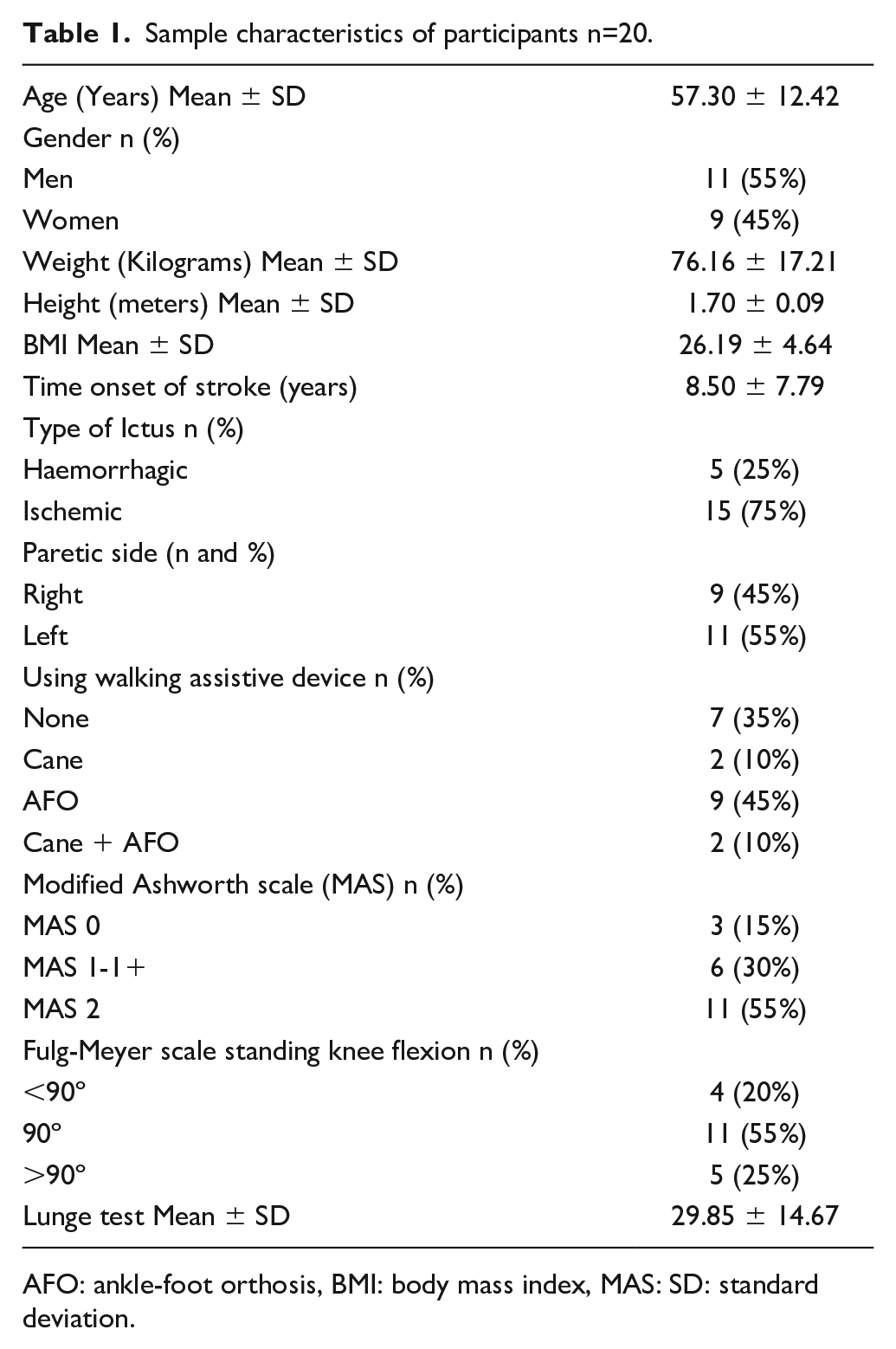
AFO: ankle-foot orthosis, BMI: body mass index, MAS: SD: standard deviation.
Test-Retest Reliability Coefficients, Standard error measurement and Minimal detectable change between the 4-Meter Walk test and the 10-Meter Walk test.
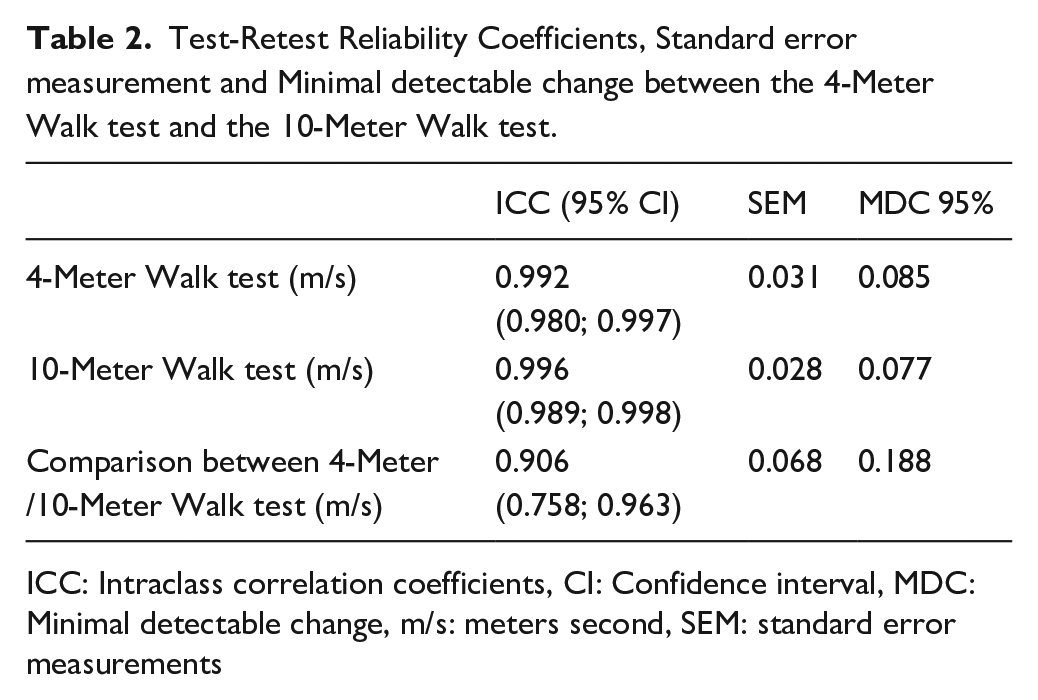
ICC: Intraclass correlation coefficients, CI: Confidence interval, MDC: Minimal detectable change, m/s: meters second, SEM: standard error measurements
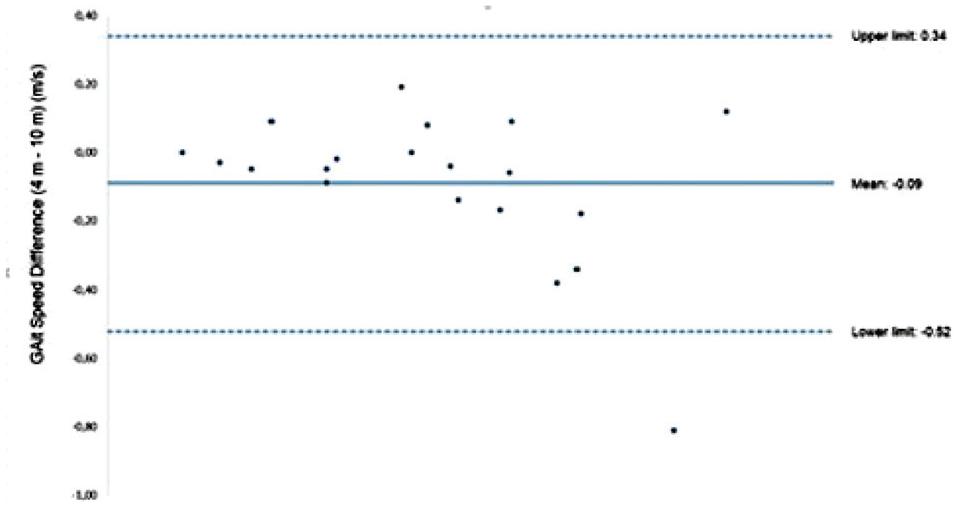
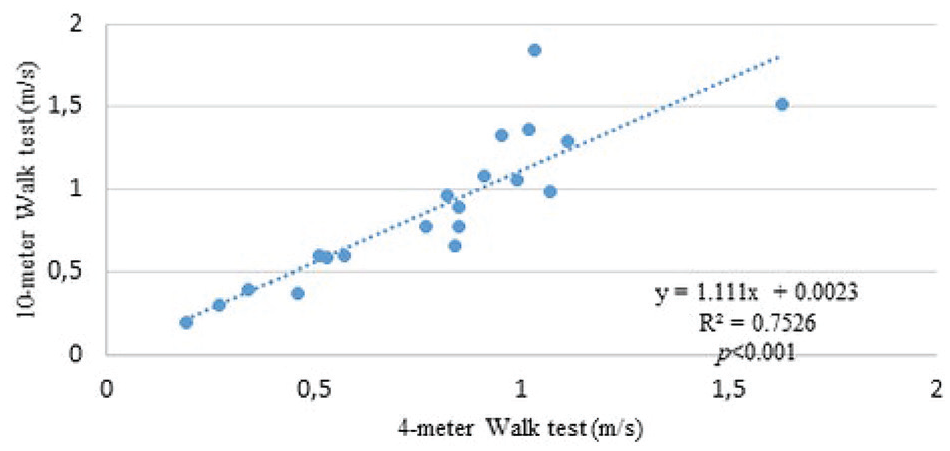
P0245 / 1596
HOW MANY MUSCLES SHOULD WE PROBE TO ELICIT MOTOR EVOKED POTENTIALS IN STROKE PATIENTS?
1Federal State Budgetary Institution «Federal Center of Brain Research and Neurotechnologies» of the Federal Medical Biological Agency, Moscow, Russia, Moscow, Russian Federation, 2Center for Cognition and Decision Making, National Research University Higher School of Economics, Moscow, Russia, Moscow, Russian Federation, 3MPI for Human Cognitive and Brain Sciences, Department of Neurology, Leipzig, Germany
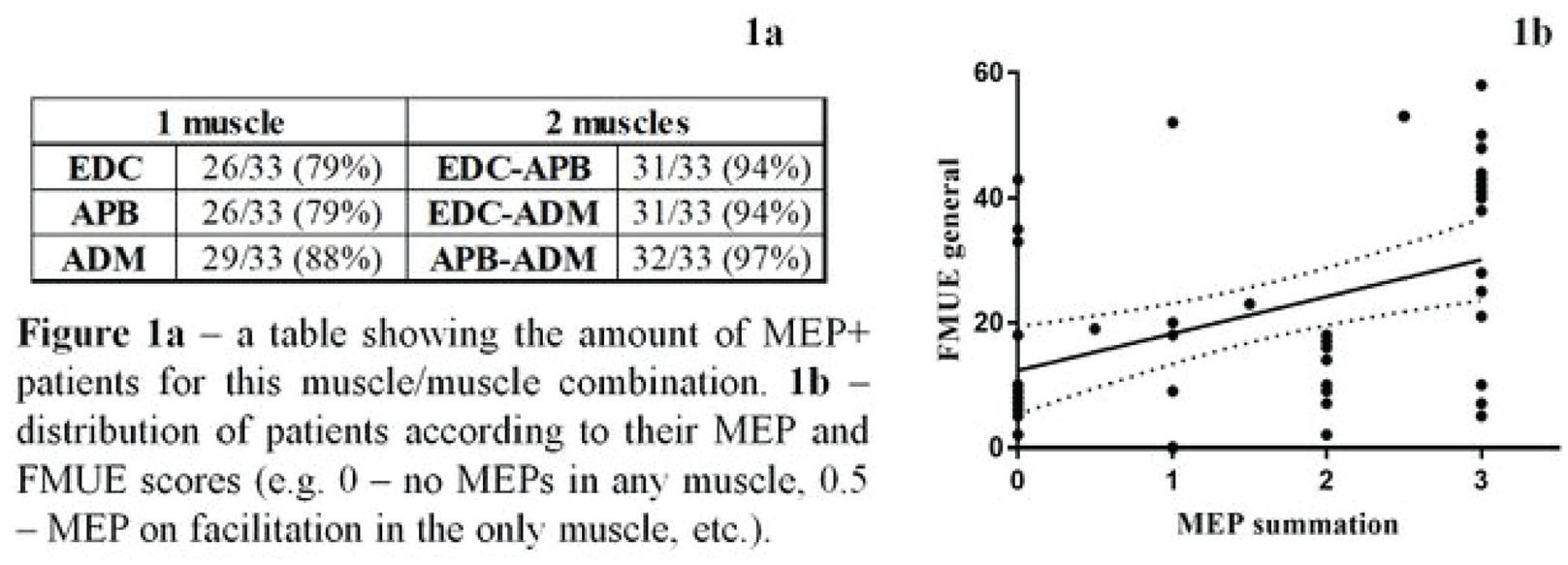
P0246 / 994
STROKE IN YOUNG ADULTS: THE FEASIBILITY OF AN OUTDOOR REHABILITATION PROGRAMME INVESTIGATING WALKING PERFORMANCE AND QUALITY OF LIFE s
1Manchester Metropolitan University, Life Sciences, Manchester, United Kingdom, 2Manchester Metropolitan University, Environmental Sciences, Manchester, United Kingdom, 3NHS Wales, Aneurin Bevan University Health Board, NP20 4SZ, United Kingdom, 4NHS Wales, Cwm Taf University Health Board, CF45 4SN, United Kingdom, 5NHS Wales, Betsi Cadwaladr University Health Board, LL57 2PW, United Kingdom
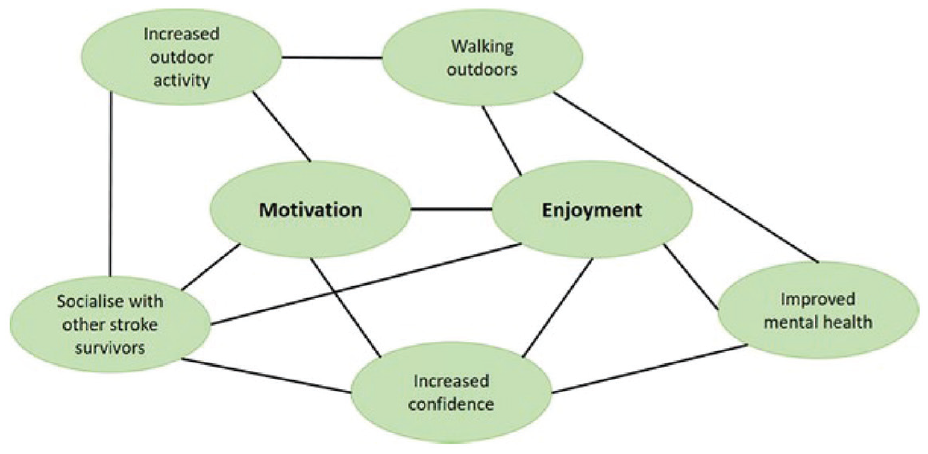
Figure 1.
Key themes identified from participant feedback of feasibility study
P0247 / 118
INTRODUCING A MINDFULNESS-BASED PROTOCOL FOR RECOVERY FROM STROKE (MBRFS)
1 Western Michigan University, Integrative Holistic Health and Wellness, Kalamazoo, United States
P0248 / 1262
INTERVENTIONS FOR IMPROVING PSYCHOSOCIAL WELL-BEING AFTER STROKE
1University of Applied Sciences Utrecht, Research Group Proactive Care for Elderly People Living at Home, Utrecht, Netherlands, 2University of Oslo, Oslo, Norway, 3Oslo Metropolitan University, Faculty of Health Sciences, Oslo, Norway, 4Oslo University Hospital, Department of Physical Medicine and Rehabilitation, Oslo, Norway, 5University Medical Center Utrecht, Department of Nursing Science Julius Center for Health Sciences and Primary Care, Utrecht, Netherlands, 6University Medical Center Utrecht, Department of Rehabilitation, Physical Therapy Science & Sports, UMC Utrecht Brain Center, Utrecht, Netherlands, 7University of Oslo, Department of Nursing Science and Research Center for habilitation and rehabilitation services and models (CHARM), Oslo, Norway, 8Oslo Metropolitan University, Department of Occupational Therapy, Prosthetics and Orthotics, Oslo, Norway
P0249 / 1378
HEADS: UP APHASIA: CO-CREATING A MINDFULNESS-BASED COURSE FOR STROKE SURVIVORS WITH APHASIA. FINDINGS FROM A PROFESSIONAL STAKEHOLDER SURVEY
1Glasgow Caledonian University, Nursing and Community Health Department, Glasgow, United Kingdom, 2University of Strathclyde, School of Psychological Sciences & Health, Glasgow, United Kingdom, 3Speakeasy, Bury, United Kingdom
P0250 / 1184
STROKE IN YOUNG ADULTS: THE INFLUENCE OF AN OUTDOOR-WALKING REHABILITATION PROGRAMME ON WALKING SPEED, ENERGY COST AND QUALITY OF LIFE
1Manchester Metropolitan University, Life Sciences, Manchester, United Kingdom, 2Manchester Metropolitan University, Environmental Sciences, Manchester, United Kingdom, 3NHS Wales, Aneurin Bevan University Health Board, NP20 4SZ, United Kingdom, 4NHS Wales, Cwm Taf University Health Board, CF45 4SN, United Kingdom, 5NHS Wales, Swansea Bay University Health Board, SA12 7BR, United Kingdom, 6NHS Wales, Betsi Cadwaladr University Health Board, LL57 2PW, United Kingdom
P0251 / 241
INDIVIDUAL PEER SUPPORT FOR STROKE SURVIVORS: REPRESENTATIONS OF STROKE REHABILITATION TEAM MEMBERS
1Université Lyon 1, RESHAPE Inserm U 1290 Laboratory, Lyon, France, 2Hospices Civils de Lyon, Service de Recherche et d'Épidémiologie Cliniques, Lyon, France, 3Hospices Civils de Lyon, Service de Rééducation Post-AVC Hôpital Henry Gabrielle, Saint Genis Laval, France
P0252 / 1013
A SYSTEMATIC REVIEW OF RANDOMIZED CONTROLLED TRIAL CHARACTERISTICS FOR INTERVENTIONS TO IMPROVE UPPER EXTREMITY MOTOR RECOVERY POST STROKE
1Lawson Health Research Institute, Parkwood Institute Research, London, Canada, 2St. Joseph's Health Care London, Parkwood Institute, London, Canada, 3Western University, Schulich School of Medicine and Dentistry, London, Canada
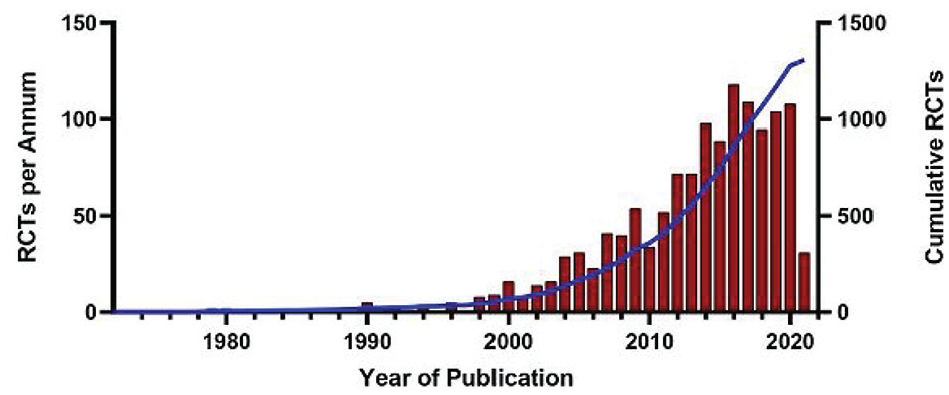
P0253 / 1103
IMPACT OF THE COVID-19 PANDEMIC ON QUALITY OF LIFE IN A NORWEGIAN STROKE COHORT
1Norwegian University of Science and Technology, Department of Neuromedicine and Movement Science (INB), Trondheim, Norway, 2Akershus University Hospital, Department of Neurology, Nordbyhagen, Norway, 3Bærum Hospital, Vestre Viken Hospital Trust, Department of Internal Medicine, Gjettum, Norway
The study aimed to assess how changes in physical activity levels, mental health, and feeling of loneliness were associated with QOL during the pandemic.
P0254 / 841
AGE FEATURES OF REHABILITATION OF PATIENTS WITH POST-STROKE DISTURBANCES OF THE MOTION FUNCTIONS
1 M.F. Vladimirskiy Moscow Regional Research Clinical Institute, Department of Neurology, Moscow, Russian Federation
P0255 / 1253
EVALUATION OF THE EFFECTIVENESS OF REHABILITATION IN THE RECOVERY PERIOD OF ISCHEMIC STROKE BASED ON CHANGES IN THE DEGREE OF MUSCLE SPASTICITY
1 SI Institute of Neurology,Psychiatry and Narcology of NAMS of Ukraine, Department of Vascular pathology of the brain and neurorehabilitation, Kharkiv, Ukraine
High stiffness of the biceps on the spastic side was found - the average value of the Young's modulus was 105.31 kPa; on the unaffected side, this figure was 32.18 kPa [Figure 1]. After rehabilitation muscle stiffness on the intact side, did not change (34.31 kPa), byt on the spastic side significantly decreased to 64.79 kP.
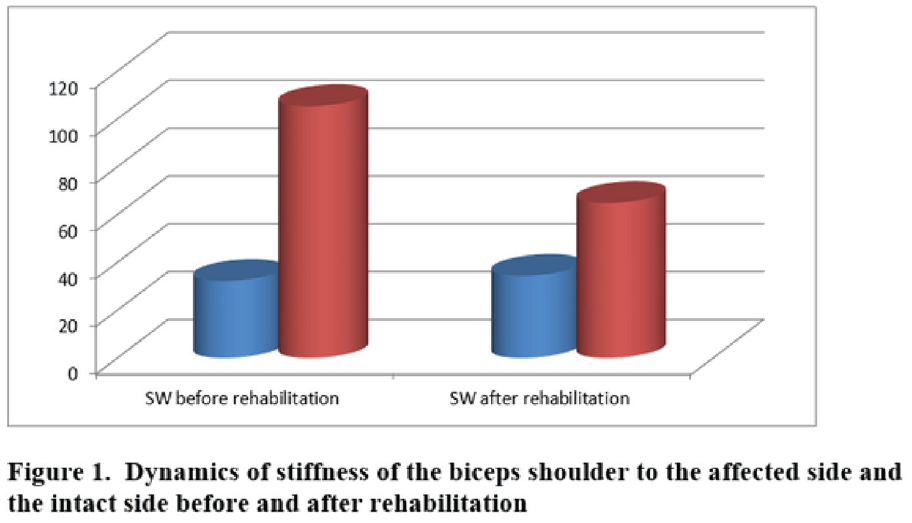
P0256 / 1593
REHABILITATION SERVICE ACCESS WITHIN THE REGIONAL STROKE NETWORK OF LAZIO REGION - PRELIMINARY RESULTS
1San Camillo Forlanini Hospital, Neuroscience, Rome, Italy, 2Lazio Regional Governament, Health Department, Rome, Italy
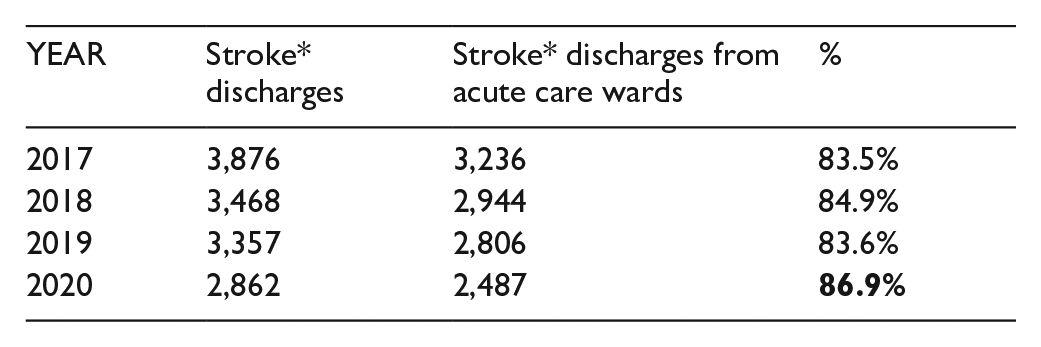
(*) Codes 431.XX, 430.XX and 432.XX (with the exclusion of traumas 800 to 904 and 910 to 959), 43301, 43311, 43321, 43331, 43381, 43391, 43401, 43411, 43491, 436.XX
P0257 / 1312
THE EFFECT OF TRANSCRANIAL DIRECT CURRENT STIMULATION ON UPPER LIMB FUNCTION: SECONDARY RESEARCH
1University of Birmingham, Birmingham, United Kingdom, 2Imam Abdulrahman Bin Faisal University, Physical Therapy, Dammam, Saudi Arabia, 3University of Birmingham, School of Sport, Exercise and Rehabilitation Sciences, Birmingham, United Kingdom
Study participants: 24 chronic stroke patients were suffering from upper limb hemiparesis randomised into two groups: anodal and sham. The anodal group included 11 participants who received anodal tDCS and motor training. The sham group included 13 participants who received sham tDCS and motor training.
Study procedures: Reanalyse the data of the outcome measures: Action Research Arm Test (ARAT), Fugl Meyer Test (FMT) and Wolf Motor Function Test (WMFT) after separating the outcome measure items into those that preferentially measured hand and arm function.
P0258 / 1406
UNDERSTANDING THE LANDSCAPE OF PHYSICAL ACTIVITY AND EXERCISE IN STROKE REHABILITATION FOR OLDER ADULTS: A SCOPING REVIEW
1University of Lincoln, School of Sport and Exercise Science, Lincoln, United Kingdom, 2University of Copenhagen, Department of Nutrition, Exercise and Sports, Copenhagen, Denmark
P0259 / 1216
HEADS: UP MIXED METHODS DEVELOPMENT STUDY: WORKING WITH STAKEHOLDERS TO ADAPT A MINDFULNESS BASED STRESS REDUCTION COURSE FOR STROKE SURVIVORS WITH MOOD DISORDER
1 Glasgow Caledonian University, Nursing and Community Health, Glasgow, United Kingdom
P0260 / 592
TIME TO MOVE ON: WE NEED TO BROADEN OUR APPROACH TO STROKE REHABILITATION
1AUT University, Rehabilitation, Auckland, New Zealand, 2University of Auckland, Medicine and Health Sciences, Auckland, New Zealand, 3Medical Research Institute of New Zealand, Stroke/Rehabilitation research, Wellington, New Zealand, 4Hawkes Bay DHB, Medicine, Hastings, New Zealand
P0261 / 539
SUPPORTED SELF-MANAGEMENT: WHAT MAKES IT WORK IN COMMUNITY STROKE REHABILITATION? A REALIST EVALUATION (THE IMPETUS STUDY)
1University of Glasgow, School of Medicine, Dentistry & Nursing, Glasgow, United Kingdom, 2University of Glasgow, Institute of Cardiovascular and Medical Sciences, Glasgow, United Kingdom, 3Glasgow Caledonian University, Yunis Centre for Social Business and Health, Glasgow, United Kingdom, 4University of Glasgow, Institute of Health and Wellbeing, General Practice and Primary Care, Glasgow, United Kingdom, 5St Georges University of London/Kingston University, Centre for Health and Social Care Research, London, United Kingdom, 6University of Nottingham, Faculty of Medicine and Health Sciences, Nottingham, United Kingdom, 7NHS Grampian/Scottish Government Stroke Improvement Programme, Woodend Hospital, Aberdeen, United Kingdom, 8NHS Lanarkshire/Scottish Government Stroke Improvement Programme, University Hospital Monklands, Airdrie, United Kingdom, 9NHS Lanarkshire/Scottish Government Stroke Improvement Programme, Coatbridge, United Kingdom, 10NHS Lothian/Scottish Government Stroke Improvement Programme, Edinburgh, United Kingdom
P0262 / 1454
PHYSIOTHERAPISTS’ (PT) AND PT ASSISTANTS’ (PTA) AWARENESS AND USE OF STROKE REHABILITATION INTERVENTIONS IN CLINICAL PRACTICE
1Parkwood Institute, London, Canada, 2St. Josephs Health Care London, London, Canada, 3University of Western Ontario, London, Canada
P0263 / 940
GAIT SPEED RECOVERY IN PATIENTS WITH ISCHEMIC STROKE IN ANTERIOR CIRCULATION
1University Hospital Olomouc, Department of Rehabilitation, Olomouc, Czech Republic, 2University Hospital Olomouc, Comprehensive Stroke Center, Dept. of Neurology, Olomouc, Czech Republic
P0264 / 1462
AN ASSESSMENT OF SPEECH LANGUAGE PATHOLOGISTS (SLP) AWARENESS AND USE OF STROKE REHABILITATION INTERVENTIONS IN CLINICAL PRACTICE
1Parkwood Institute, London, Canada, 2St. Josephs Health Care London, London, Canada, 3University of Western Ontario, London, Canada
EPIDEMIOLOGY & RISK FACTORS
P0265 / 834
RESULTS OF RES-Q REGISTRY IN UKRAINE
1V.N. Karazin KharkivNational University, Department of Neurology, Psychiatry, Narcology and Medical Psychology, Kharkiv, Ukraine, 2Kiev Regional Clinical Hospital, Kiev, Ukraine, 3Universal Clinic “Oberig”, Kiev, Ukraine
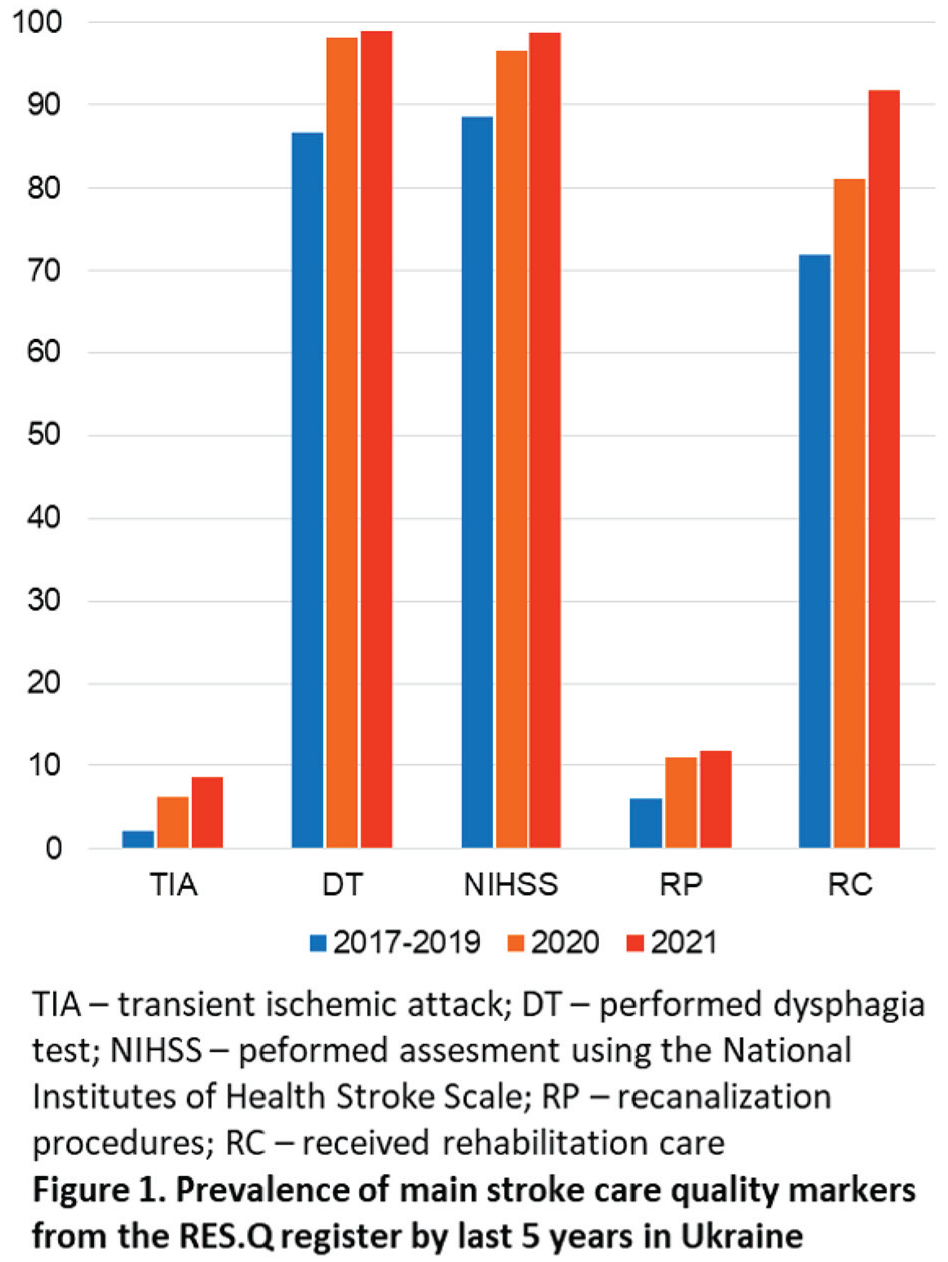
P0266 / 1465
NEUROVASCULAR DISEASE IN CHILDREN UNDER 18 YEARS OF AGE IN SPAIN: NATIONWIDE EPIDEMIOLOGICAL STUDY
1 Torrecardenas General Hospital, Almeria, Spain
P0267 / 163
STROKE DEATH BURDEN IN COLOMBIA:1995-2020
1 Fundacion Cardioinfantil, Neurology, Bogota, Colombia
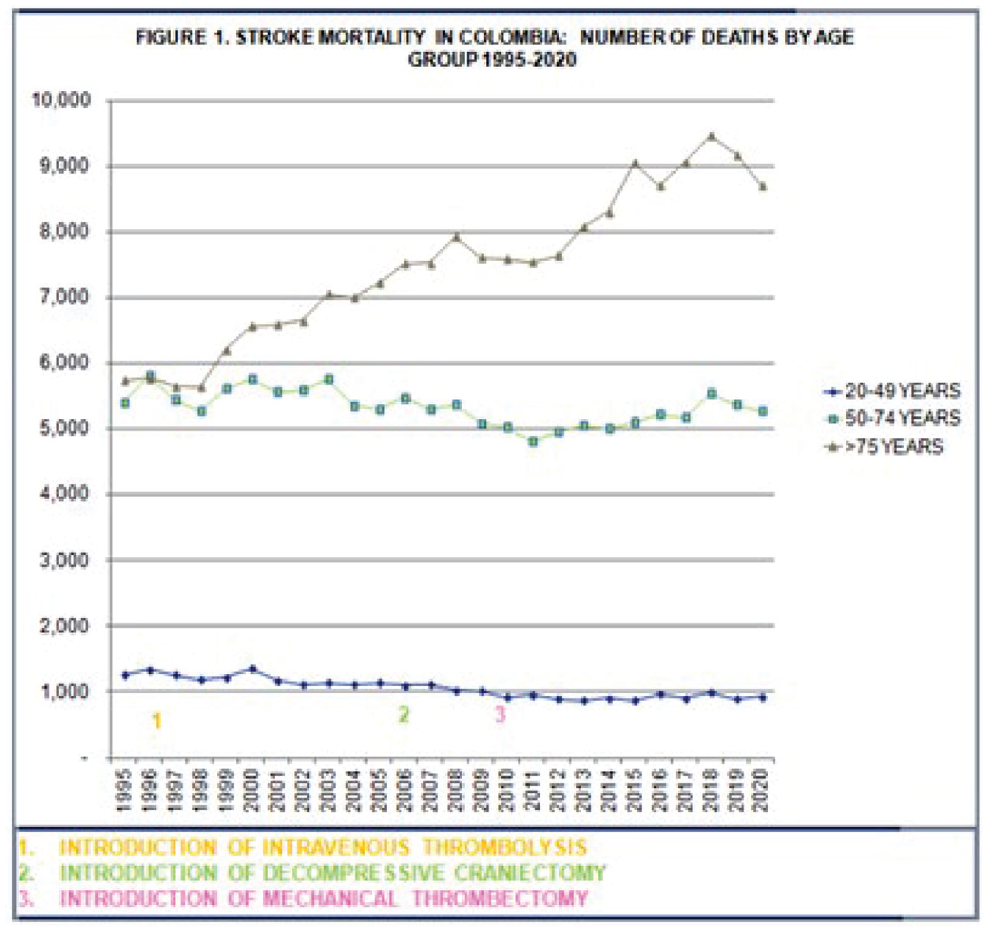
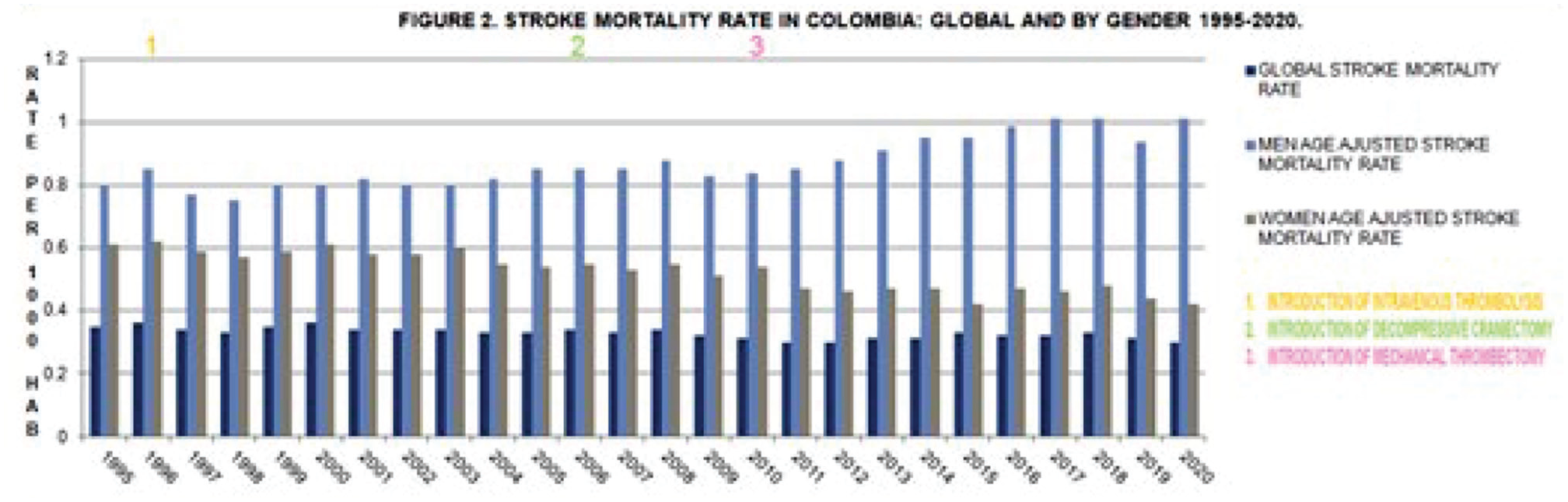
P0268 / 1258
INFLUENCE OF METEOROLOGICAL FACTORS ON THE OCCURENCE OF INTRACEREBRAL HEMORRHAGE
1University Emergency Hospital Bucharest, Neurology, Bucharest, Romania, 2National Administration for Meteorology, Bucharest, Romania, 3University Emergency Hospital Bucharest, Interventional Radiology, Bucharest, Romania
P0269 / 1489
CHANGES IN STROKE CARE DURING THE FIRST WAVE OF COVID-19 PANDEMIC IN A HOSPITAL IN SWEDEN, A REGISTERED-BASED STUDY
1 Karolinska Institute, Stockholm, Sweden
During the study period 2020 1428 patients with a COVID-19 diagnosis were treated.
There was an increased delay from onset to arrival to the ED and door-to needle time. The rate of admission to Stroke Unit care and the rate of thrombolysis was maintained.
P0270 / 1077
EPIDEMIOLOGY OF STROKE AT ORAN UNIVERSITY HOSPITAL (ALGERIA)
1 Faculty of Medicine of Oran, Medecine, Oran, Algeria
The predictive factors of poor prognosis were:the age which multiplies the risk of death by 2,86 (HZa=2,86;(1,8-4,34),the number of co-morbid factors that multiply the risk of death by 2,25(HZa=2,25;(1,33-3,80)),
P0271 / 207
COMMUNITY AWARENESS OF STROKE RISK FACTORS, WARNING SIGNS, AND THERAPEUTIC OPTIONS AMONG GENERAL POPULATION IN EASTERN BULGARIA: PILOT STUDY
1Medical University 'Prof. Paraskev Stoyanov', Department of Neurology and Neuroscience, Varna, Bulgaria, 2University Hospital 'St. Marina', Second Clinic of Neurology with ICU and Stroke Unit, Varna, Bulgaria, 3Medical University 'Prof. Paraskev Stoyanov', Department of Physiotherapy, Rehabilitation, Thalassotherapy and Occupational Diseases, Varna, Bulgaria, 4Medical University 'Prof. Paraskev Stoyanov', Department of Social Medicine and Health Care Organization, Varna, Bulgaria, 5Medical University 'Prof. Paraskev Stoyanov', Department of Medical Equipment, Electronic and Information Technologies in Healthcare, Varna, Bulgaria
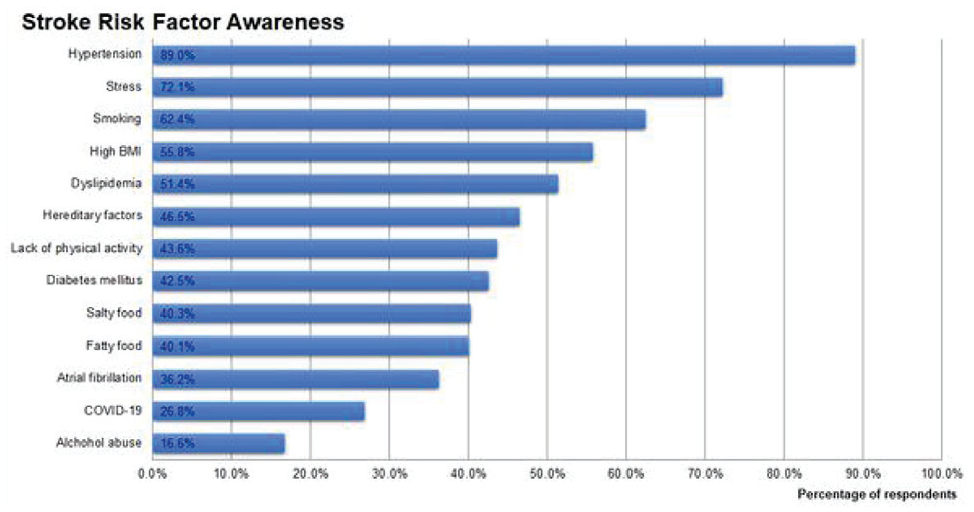
The most familiar stroke signs were facial asymmetry/weakness (87.4%), limb paralysis/weakness (86.8%), speech disorders (85.2%), and dizziness/vertigo (67.6%).
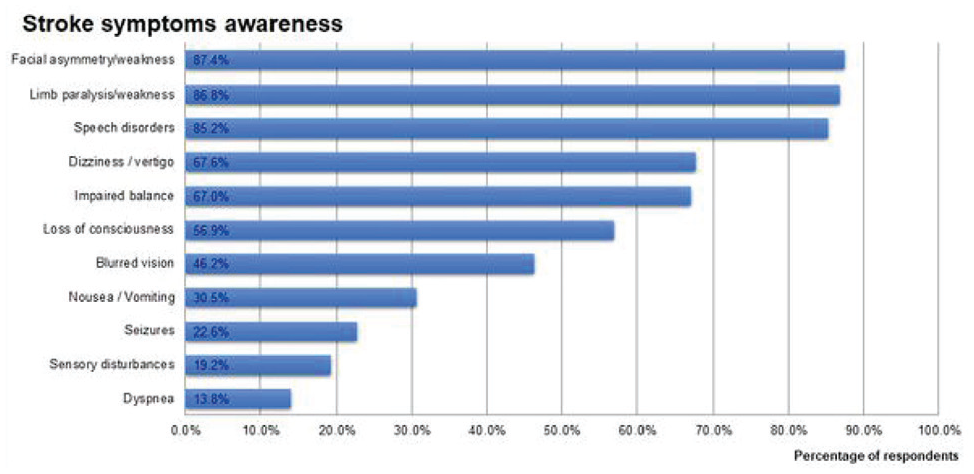
Half (56.3%) of the participants were informed for intravenous thrombolysis and (42.8%) were aware of the 4.5h therapeutic-window, while (44.3%) were informed about endovascular treatment and only (29.9%) were aware of the 6h therapeutic-window.
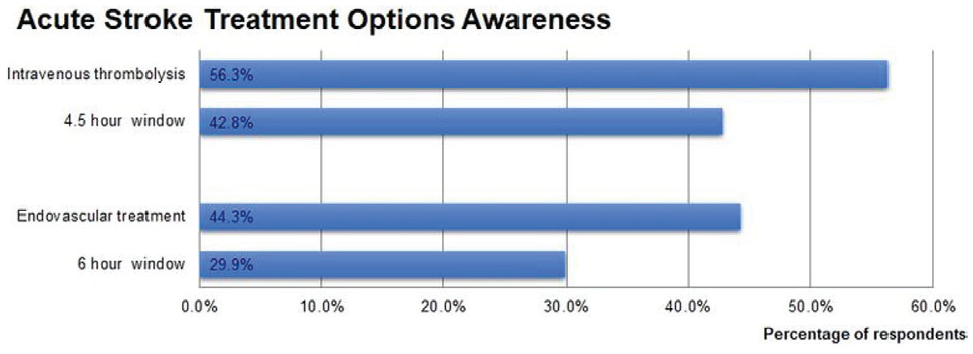
P0272 / 1148
PREDICTORS OF POOR OUTCOME AFTER A FIRST EVER STROKE IN A POPULATION-BASED STUDY IN BRAZIL
1 Ribeirão Preto Medical School, University of São Paulo, Department of Neurosciences and Behavioral Sciences, Ribeirão Preto, Brazil
P0273 / 695
RISK FOR RECURRENT ISCHEMIC STROKE IN SUBJECTS NEWLY DIAGNOSED WITH CANCER VARIES SIGNIFICANTLY ACCORDING TO PREVIOUS HISTORY OF STROKE
1The Ottawa Hospital, Department of Medicine: Division of Neurology, Stroke Program, Ottawa, Canada, 2University of Ottawa, School of Epidemiology and Public Health, Ottawa, Canada, 3McMaster University, Hamilton, Canada, 4The Ottawa Hospital, Department of Medicine: Division of Hematology, Thrombosis Program, Ottawa, Canada, 5Ottawa Hospital Research Institute, Ottawa, Canada, 6University of Toronto, Department of Medicine, Toronto, Canada, 7University of Toronto, Dalla Lana School of Public Health, Toronto, Canada
P0274 / 131
STROKE UNIT TREATMENT AND RISK FACTOR CONTROL REDUCE RECURRENT STROKE RISK
1SCTIMST, Neurology, Trivandrum, India, 2AMCHSS, SCTIMST, Epidemiology, Trivandrum, India, 3AMCHSS, SCTIMST, Statistics, Trivandrum, India, 4SCTIMST, Social Work, Trivandrum, India, 5SCTIMST, Neurolgy, Trivandrum, India, 6Amala Institute of Health Sciences, Research, Trissur, India
P0275 / 1451
ANALYSIS OF CAUSES AND CLINICAL REPERCUSSION IN SMOKERS AFTER MECHANICAL THROMBECTOMY (MT) IN PACIENTS WITH ACUTE ISCHEMIC STROKE (AIS)
1Hospital Universitario de Canarias, Neurology, San Cristóbal de la Laguna, Spain, 2Hospital Universitario de Canarias, San Cristóbal de La Laguna, Spain, 3Hospital Universitario de Canarias, San Cristóbal de la Laguna, Spain
We propose to investigate tobacco influence in patients with AIS treated with MT.
We classified patients in three groups: smokers (S), non-smokers (NS) and previous-smokers (PS) and we analyzed aetiology of the stroke, treatment effectivity (NIHSS at discharge), presence of Intracranial Hemorrhage (ICH) and functional prognosis at discharge.
While we didn’t find differences in clinical severity (NIHSS at admission) or the risk of ICH after treatment, we found that clinical improvement was higher in NS (7.4 points NIHSS).
At discharge, 54.1% showed functional independence (mRS 0-2), with a better functional prognosis in NS patients with a higher rate of patients with mRS 0-1 (minimal symptoms).
P0276 / 600
CLINICAL PHENOTYPE OF PATIENTS WITH DISTURBED GLUCOSE METABOLISM AFTER ISCHEMIC STROKE OR TIA
1Erasmus MC, Internal Medicine, Rotterdam, Netherlands, 2Isala Hospital, Neurology, Zwolle, Netherlands, 3Spaarne Gasthuis, Neurology, Haarlem, Netherlands, 4Erasmus MC, Neurology, Rotterdam, Netherlands
P0277 / 606
HIGH-DENSITY LIPOPROTEIN CHOLESTEROL PREDICTS ADVERSE OUTCOMES IN ACUTE ISCHEMIC STROKE WITH DIABETES MELLITUS
1Beijing Tiantan Hospital, Capital Medical University, Beijing, China, 2China National Clinical Research Center for Neurological Diseases, Beijing, China
P0278 / 902
THE LEISTAR EYE STUDY: CAROTID DISEASE IN PATIENTS WITH RETINAL ISCHAEMIC EVENTS PRESENTING TO THE UNIVERSITY HOSPITALS OF LEICESTER TIA CLINIC
1University Hospitals of Leicester NHS Trust, Stroke Medicine, Leicester, United Kingdom, 2University of Leicester, Cardiovascular Sciences, Leicester, United Kingdom, 3University of Leicester, Leicester, United Kingdom, 4University Hospitals of Leicester, Stroke Medicine, Leicester, United Kingdom
Carotid Doppler was undertaken in 87% (590), 117 (19.2%) had ipsilateral carotid stenosis (CS, NASCET >50%). CS was associated with significantly reduced survival at end of follow up 58.9% (versus 74.2%)
P0279 / 339
ANALYSIS OF THE POTENTIAL ROLE OF PATENT FORAMEN OVALE IN THE HIGH CEREBROVASCULAR RISK OF OBSTRUCTIVE SLEEP APNEA SYNDROME
1Semmelweis University, Department of Neurology, Budapest, Hungary, 2Medical Centre, Hungarian Defence Forces, Department of Cardiology, Budapest, Hungary, 3Medical Centre, Hungarian Defence Forces, Department of Neurology, Budapest, Hungary, 4Semmelweis University, János Szentágothai Doctoral School of Neurosciences, Budapest, Hungary, 5National Institute of Mental Health, Neurology and Neurosurgery, Department of Neurointervention, Budapest, Hungary
P0280 / 1096
INFLAMMATORY BIOMARKERS IN ACUTE ISCHEMIC STROKE PATIENTS WITH DEMENTIA
1 Tashkent Medical Academy, Tashkent, Uzbekistan
P0281 / 353
A NOVEL TECHNOLOGY TO MEASURE MULTIPLE-PULSE WAVE VELOCITY FOR MEASUREMENT OF CEREBROVASCULAR STIFFNESS USING MRI
1Gil Medical Center, Gachon University College of Medicine, Neurology, Incheon, Korea, Republic of, 2Gachon University Graduate School, Health Science, Incheon, Korea, Republic of, 3College of Health Science, Gachon University, Radiological Science, Incheon, Korea, Republic of
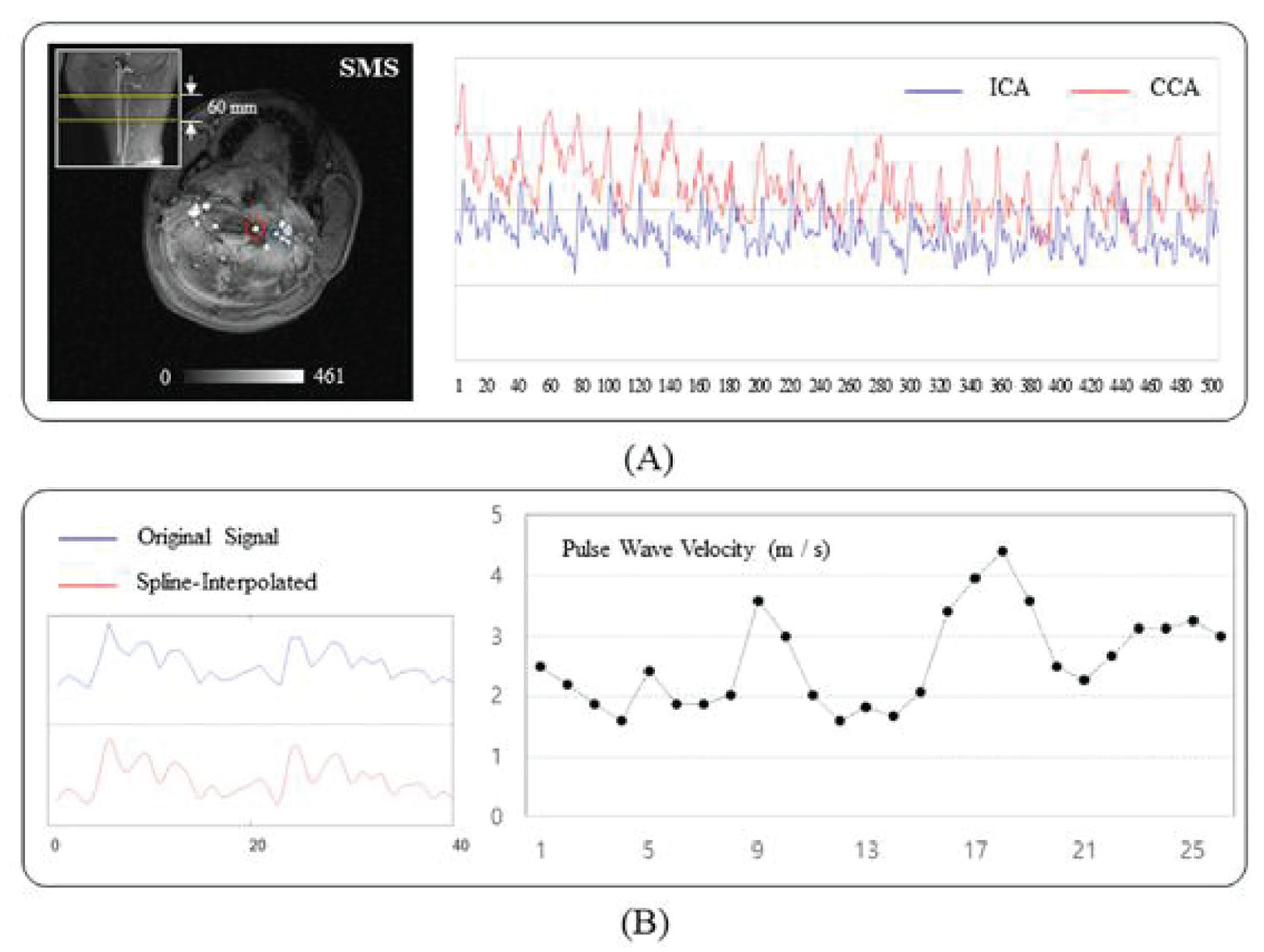
P0282 / 524
ASSOCIATIONS FOR PROGRESSION OF CEREBRAL SMALL VESSEL BURDEN IN HEALTHY ADULTS: THE KASHIMA SCAN STUDY
1Saga University, Faculty of Medicine, Division of Neurology, Department of Internal Medicine, Saga, Japan, 2Kansai Medical University, Department of Neurology, Hirakata, Japan, 3Saga University Faculty of Medicine, Department of Neurosurgery, Saga, Japan, 4Saga University Faculty of Medicine, Department of Radiology, Saga, Japan, 5Saga University Faculty of Medicine, Department of Social Medicine, Saga, Japan
P0283 / 1625
INCIDENCE OF TRANSIENT INSCHEMIC ATTACK (TIA): A NEW POPULATION-BASED COHORT AND META-ANALYSIS
1Caen University Hospital, Neurology, Caen, France, 2INSERM, Caen, France
P0284 / 1189
ASSOCIATION OF HIGH LIPOPROTEIN(A) WITH STROKE IN A NATIONALLY REPRESENTATIVE CROSS-SECTIONAL GERMAN POPULATION – RESULTS FROM THE GERMAN NATIONAL HEALTH INTERVIEW AND EXAMINATION SURVEY 1998 (GNHIES98)
1Charité - Universitätsmedizin Berlin, Center for Stroke Research Berlin (CSB), Berlin, Germany, 2Charité - Universitätsmedizin Berlin, Klinik und Hochschulambulanz für Neurologie, Berlin, Germany, 3Charité - Universitätsmedizin Berlin, Institut für Biometrie und Klinische Epidemiologie, Berlin, Germany, 4Berlin Institute of Health (BIH), Berlin, Germany, 5Charité - Universitätsmedizin Berlin, NeuroCure Clinical Research Center, Berlin, Germany, 6German Center for Neurodegenerative Disease, Partner Site Berlin, Berlin, Germany, 7Robert Koch Institute, Berlin, Germany, 8German Center for Cardiovascular Disease (DHZK), Berlin, Germany
P0285 / 1530
SHORT-TERM EFFECT OF AIR POLLUTION ON STROKE INCIDENCE
1Medical University of Bialystok, Department of Invasive Cardiology, Białystok, Poland, 2University of Lodz, Faculty of Economics and Sociology, Łódź, Poland, 3Medical University of Silesia, Department of Cardiology and Structural Heart Diseases, Katowice, Poland, 4Medical University of Bialystok, Department of Clinical Medicine, Białystok, Poland
P0286 / 284
INCIDENCE AND MORTALITY RATES OF STROKES IN KAZAKHSTAN
1Nazarbayev University, Department of Medicine, Nur-Sultan, Kazakhstan, 2Multidisciplinary City Hospital #2, Department of Neurology, Nur-Sultan, Kazakhstan
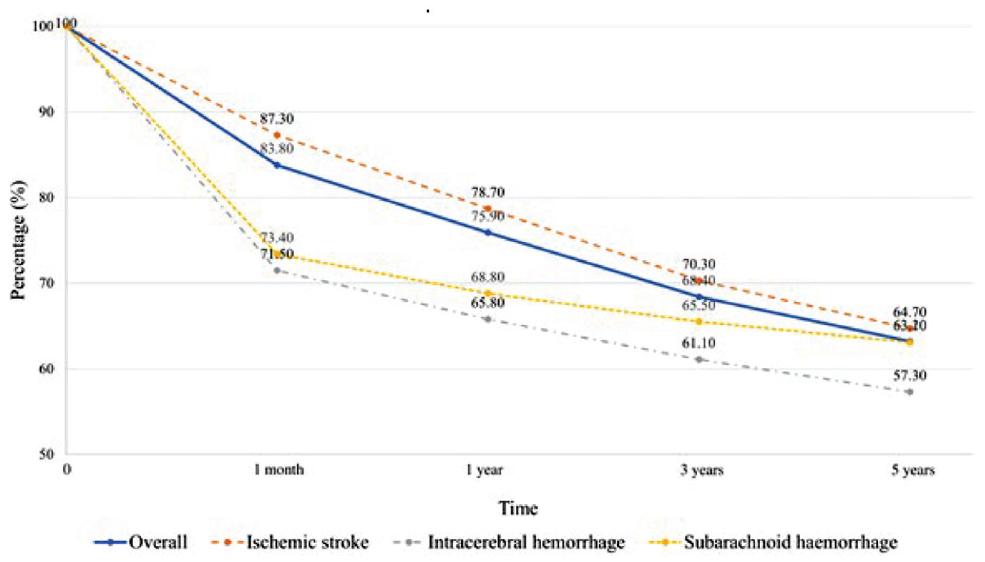
Survival rates of stroke patients
P0287 / 936
LONG TERM USE OF ANTICOAGULATION IN CVT IN A TERTIARY HOSPITAL
1 Universidad Nacional Autonoma de Mexico / Instituto Mexicano del Seguro Social, Neurology Department, Hospital de Especialidades Centro Médico Nacional Siglo XXI IMSS, Mexico City, Mexico
Comparison of baseline features in the groups treated with OAC within and over 12 months.
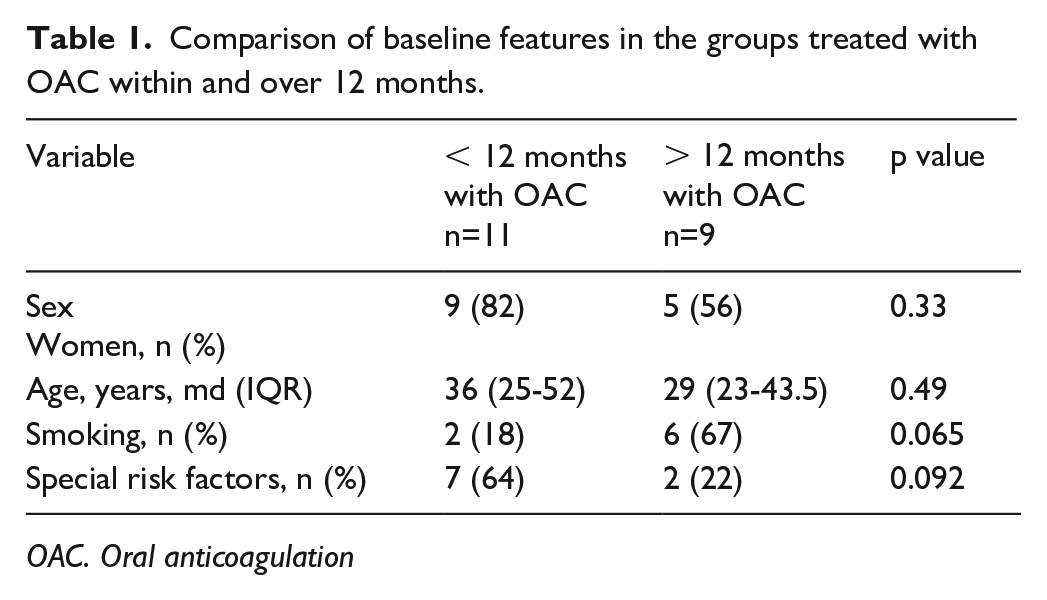
OAC. Oral anticoagulation
Factors related to chronic use of OAC.
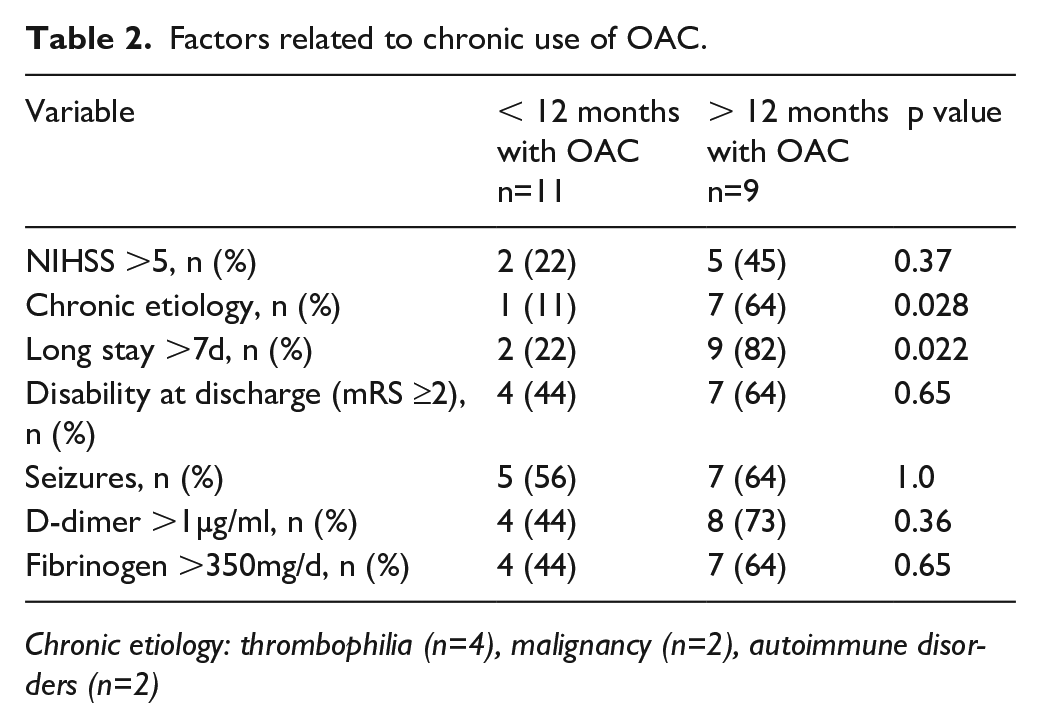
Chronic etiology: thrombophilia (n=4), malignancy (n=2), autoimmune disorders (n=2)
P0288 / 655
PREVALENCE OF LARGE VESSEL OCCLUSIONS IN AN UNSELECTED HOSPITAL-BASED STROKE COHORT
1Karolinska Institutet, Clinical Neuroscience, Stockholm, Sweden, 2Academic Specialist Center, Center of Neurology, Stockholm, Sweden
P0289 / 531
COGNITIVE FUNCTION EARLY AFTER ISCHAEMIC STROKE AND TRANSIENT ISCHAEMIC ATTACK – AN ANALYSIS OF DATA FROM THE XILO-FIST TRIAL
1The First Affiliated Hospital of Harbin Medical University, Harbin, China, 2University of Glasgow, Glasgow, United Kingdom, 3Queen Elizabeth University Hospital, Glasgow, United Kingdom, 4Analytics Cubed Ltd, Bishopton, United Kingdom, 5University of Dundee, Dundee, United Kingdom, 6Ninewells Hospital, Dundee, United Kingdom, 7Glasgow Royal Infirmary, Glasgow, United Kingdom, 8University of Nottingham, Nottingham, United Kingdom
1) age, gender and education year, and
2) these factors plus stroke subtype and NIHSS score.
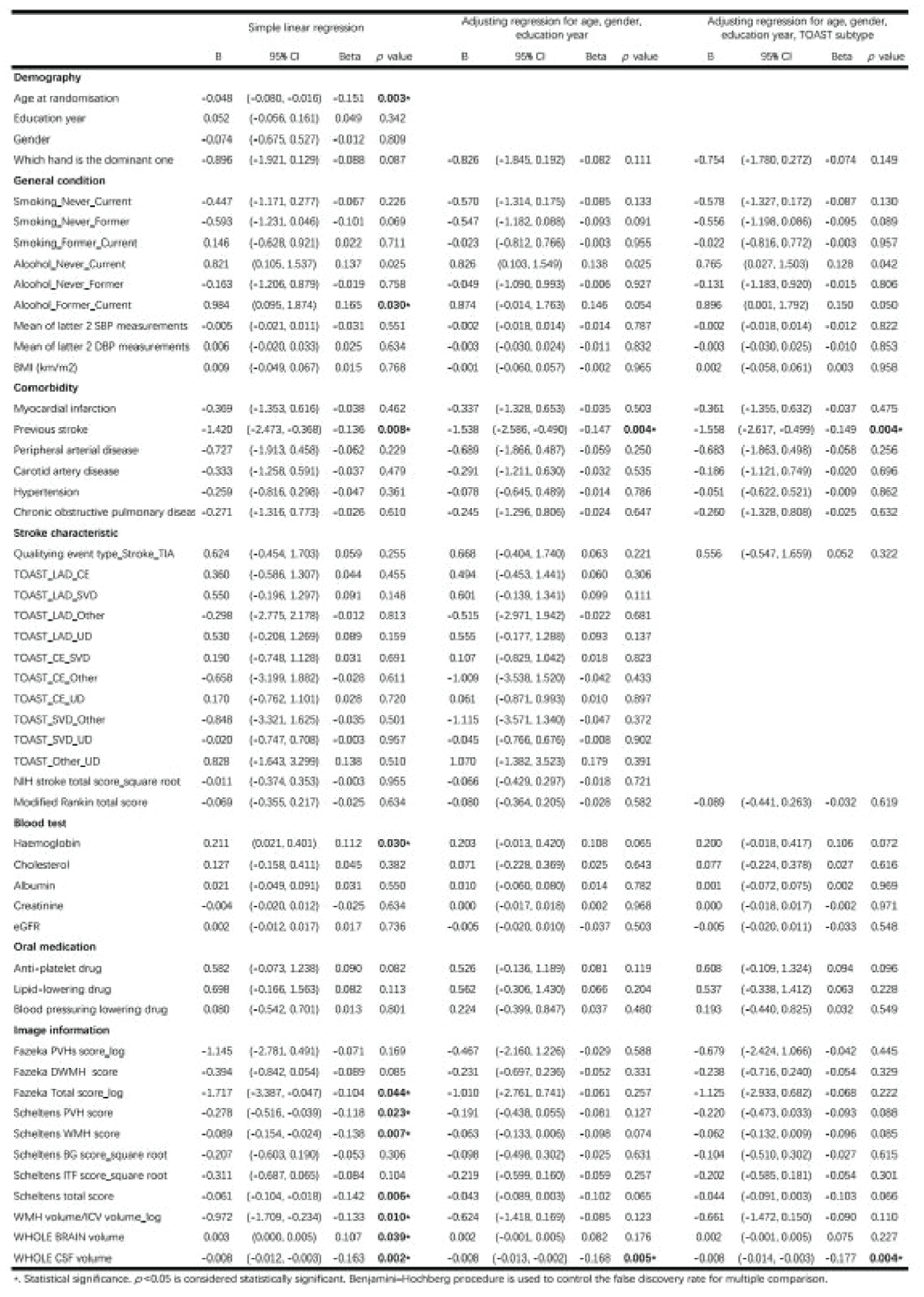
P0290 / 1345
LOGISTIC REGRESSION MODELS TO EXAMINE THE NON-PROPORTIONALITY OF STROKE RISK FACTORS BY AGE
1 Technological University Dublin, Dublin, Ireland
P0291 / 986
RISK FACTORS FOR BLEEDING IN THE PREVENTION OF STROKE IN PATIENTS WITH ATRIAL FIBRILLATION ON THE HAS-BLED SCALE DEPENDING ON THE PREVIOUS INFECTION WITH COVID-19
1 National Scientific Center 'M. Strazhesko Institute of Cardiology' of the National Academy of Sciences of Ukraine, Department of Clinical Arrhythmology and Electrophysiology, Kyiv, Ukraine
"A" - who had AF before COVID-19 (72 pts (61%), and "B" who did not have this arrhythmia before infection (46 pts (39 %). As a result, the fact was established that the pts of subgroup, "B" had higher values of the HAS-BLED scale compared to the subjects of group "A" (1.82 + 0.02 and 1.33 + 0.03, p <0.001).
P0292 / 1557
THE CLINICAL AND PROGRESSIVE ASPECTS OF CEREBRAL VENOUS THROMBOSES AT THE ORAN HOSPITAL AND UNIVERSITY CENTER
1 Oran Faculty of Medicine, Medecine, Oran, Algeria
P0293 / 1561
HYPONATREMIA ADVERSELY AFFECTS MORTALITY IN PATIENTS WITH ACUTE STROKE: A SYSTEMATIC REVIEW AND META-ANALYSIS
1University of Ioannina, School of Medicine, Department of Internal Medicine, Ioannina, Greece, 2University of Ioannina, School of Medicine, Department of of Hygiene and Epidemiology, Ioannina, Greece, 3Addenbrooke's Hospital, Cambridge University Hospitals NHS Foundation Trust, Department of Acute and General Internal Medicine, Cambridge, United Kingdom, 4University of Thessaly, School of Medicine, Department of Internal Medicine, Larisa, Greece
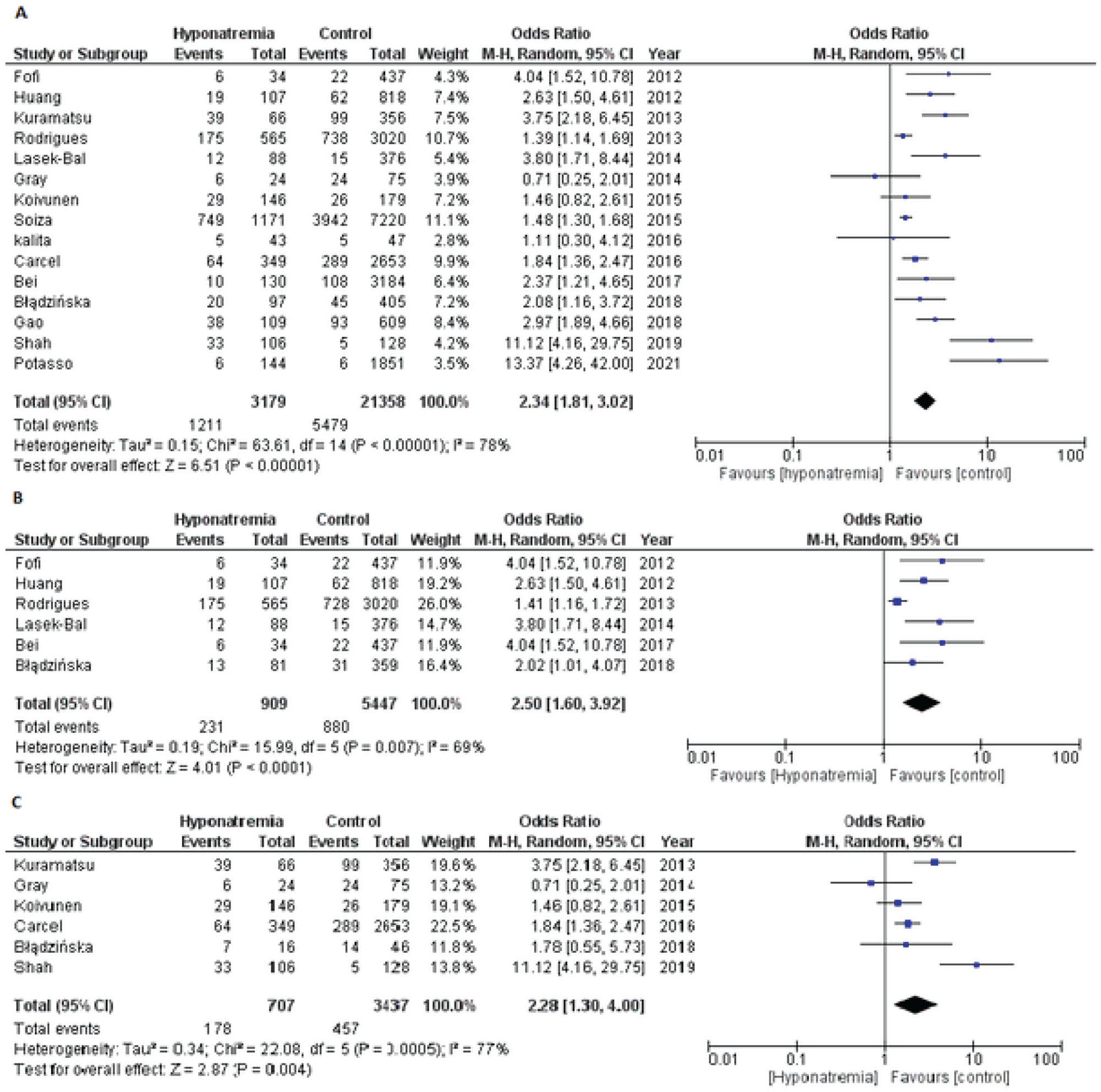
Hyponatremia and stroke mortality
P0294 / 719
THE PECULIARITIES OF THE ASSOCIATION BETWEEN STROKE AND DIFFERENT TYPES OF CIRRHOSIS
1Bogomolets National Medical University, Department of Internal Medicine 3, Kyiv, Ukraine, 2Bogomolets National Medical University, Neurology Department, Kyiv, Ukraine
P0295 / 723
STROKE SUBTYPE PRESENTATION DURING THE FIRST WAVE OF THE COVID-19 PANDEMIC
1University of Toronto, Medicine, Division of Neurology, Toronto, Canada, 2Hamilton Health Sciences, McMaster University, Medicine (Neurology), Hamilton, Canada, 3University Health Network, Toronto Western Hospital, University of Toronto, Division of Neurology, Toronto, Canada, 4University Health Network, Toronto General Hospital Research Institute, University of Toronto, Toronto, Canada, 5McMaster University, Hamilton, Canada
P0296 / 1575
ISCHEMIC STROKE MANAGED IN EMERGENCY DEPARTMENTS BETWEEN 2016 AND 2019
1RESUVal, ARS Auvergne Rhône-Alpes, Vienne, France, 2Observatoire Régional des Urgences (ORU), Agence Régionale de Santé Auvergne Rhône-Alpes, Lyon, France, 3Université Claude Bernard Lyon 1, Research on Healthcare Performance (RESHAPE), INSERM U1290, Lyon, France, 4REULIAN Network, ARS Auvergne Rhône-Alpes, Firminy, France, 5RENAU Network, ARS Auvergne Rhone-Alpes, Annecy, France, 6RAMU Network, ARS Auvergne Rhône-Alpes, Aurillac, France
P0297 / 1014
PREVALENCE OF FABRY DISEASE IN STROKE PATIENTS: META-ANALYSIS
1 Monash Health and Monash University, Neurology, Clayton, Australia
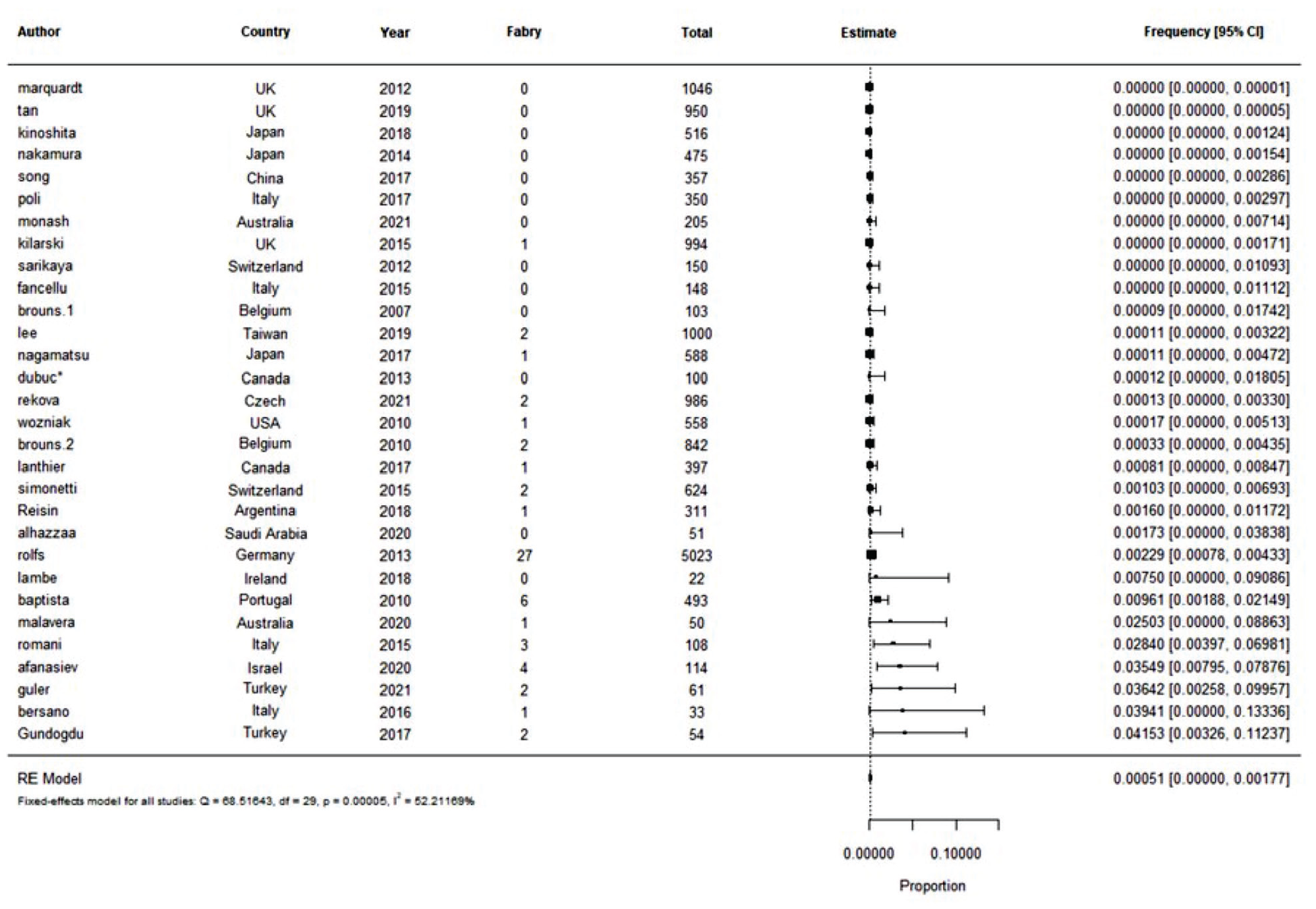
P0298 / 1335
ADMISSION TIME DELAY IN STROKE AFFECTS DOOR TO CT SCAN TIME
1Universidad Nacional Autonoma de Mexico/ IMSS, Neurology, Mexico city, Mexico, 2Universidad Nacional Autonoma de Mexico/ IMSS, Stroke clinic / Neurology department. Hospital de especialidades Centro Médico Nacional Siglo XXI IMSS, Mexico city, Mexico, 3Universidad Nacional Autonoma de Mexico/ IMSS, Neurology department. Hospital de especialidades Centro Médico Nacional Siglo XXI IMSS, Mexico city, Mexico, 4Universidad Nacional Autonoma de Mexico/ IMSS, Emergency medicine Department. Hospital de especialidades Centro Médico Nacional Siglo XXI IMSS, Mexico city, Mexico
Baseline characteristics of 410 patients included in this study.
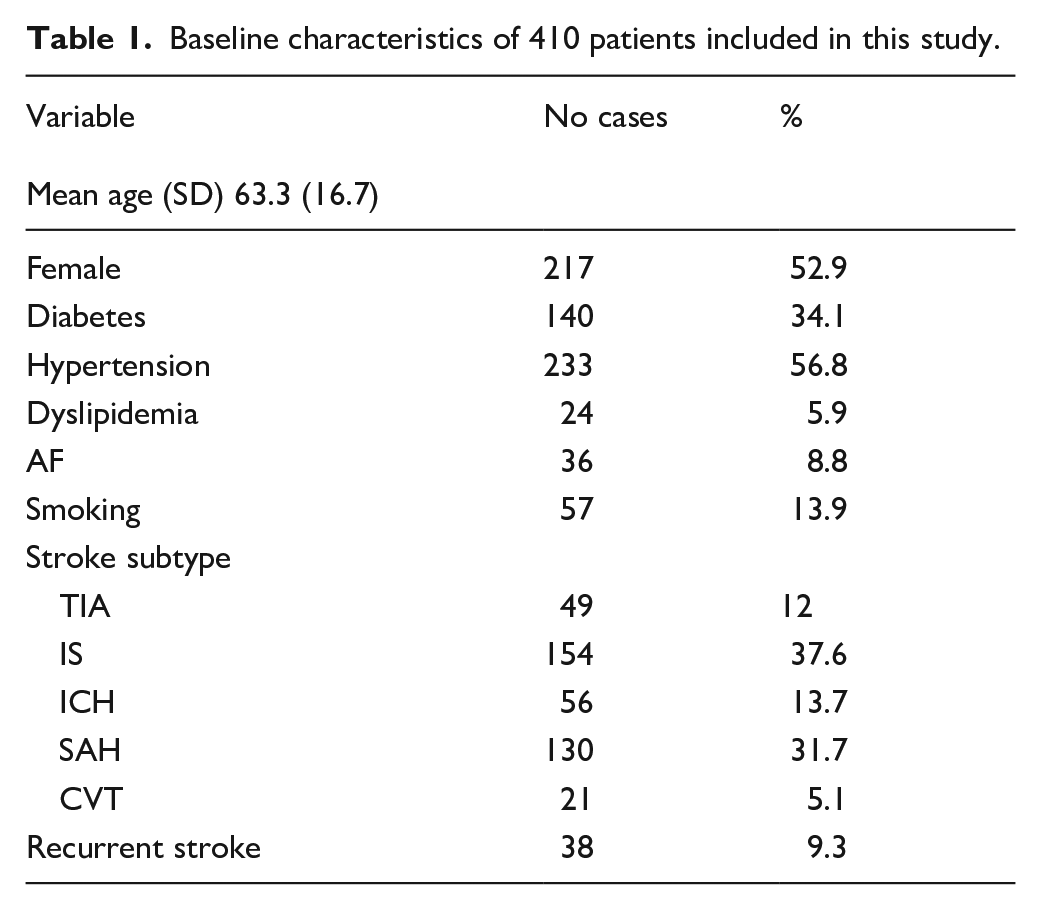
Clinical patterns and stroke subtypes of 410 included in this study.
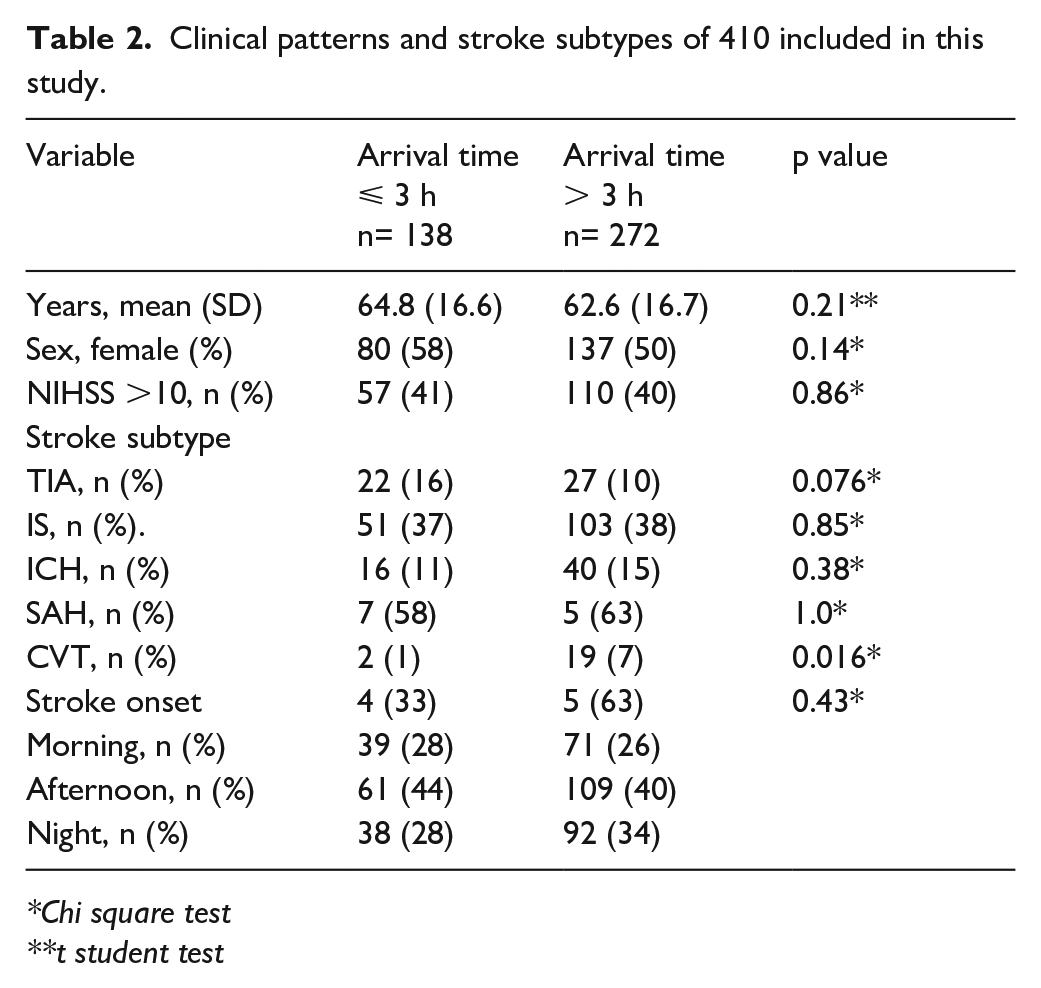
Chi square test
t student test
P0299 / 447
DELAYED CEREBRAL ISCHEMIA AFTER ANEURYSMAL SUBARACHNOID HEMORRHAGE IN YOUNG PATIENTS WITH A HISTORY OF MIGRAINE
1Leiden University Medical Center, Department of Neurology, Leiden, Netherlands, 2Amsterdam UMC, Department of Neurosurgery and Neuroscience, Amsterdam, Netherlands, 3University Medical Center Utrecht and Utrecht University, Department of Neurology and Neurosurgery, UMC Utrecht Brain Center, Utrecht, Netherlands, 4Haaglanden Medical Center, Department of intensive Care, Den Haag, Netherlands, 5University of Amsterdam, Department of Intensive Care, Amsterdam UMC, Amsterdam, Netherlands
P0300 / 1540
CHRONOBIOLOGY AND THE EFFECT OF PMS ON STROKE INCIDENCE
1Medical University of Bialystok, Department of Invasive Cardiology, Białystok, Poland, 2University of Lodz, Faculty of Economics and Sociology, Łódź, Poland, 3Medical University of Bialystok, Department of Clinical Medicine, Białystok, Poland
P0301 / 829
LOWER EXTREMITY PERIPHERAL ARTERY DISEASE IS COMMON AMONG PATIENTS WITH ISCHEMIC STROKE AND TIA
1Karolinska Institutet, Dept of Clinical Sciences Danderyd Hospital, Stockholm, Sweden, 2Karolinska Institutet, Dept of Neurology, Danderyd Hospital, Stockholm, Sweden, 3Umeå University, Dept of Public Health & Clinical Medicine, Umeå, Sweden
P0302 / 630
PRE-STROKE MULTIMORBIDITY AND MORTALITY AFTER STROKE: A POPULATION BASED STUDY
1 University of Oxford, Nuffield Department of Clinical Neuroscience, Oxford, United Kingdom
P0303 / 1429
SOCIOECONOMIC RISK FACTORS IN EARLY FAMILY AND RISK FOR STROKE UNTIL MIDLIFE – NORTHERN FINLAND BIRTH COHORT 1966
1University of Oulu, Center for Life Course Health Research, Oulu, Finland, 2University of Oulu, Medical Research Center, Oulu, Finland, 3Oulu University Hospital, Department of Neurology, Oulu, Finland, 4University Medical Center Utrecht, Julius Center for Health Sciences and Primary Care, Utrecht, Netherlands
P0304 / 724
SILENT ISCHEMIC STROKE IN PATIENTS WITH ACUTE CARDIOEMBOLIC STROKE
1Hassan II University Hospital Center, Neurology, Fez, Morocco, 2Laboratory of Epidemiology, Clinical Research, and Health Community, Faculty of Medicine and Pharmacy, Sidi Mohammed Ben Abdallah University, Fez, Morocco
For valvular patients, the prevalence of SIS was 48%. Moderate or severe mitral stenosis and the enlarged left atrium (LA) were significantly associated to the occurrence of SIS (P=0.02, P=0.002 respectively).
For non-valvular patients, the prevalence of SIS was 45%. Enlarged LA, labile international normalized ratio (INR), the association of AF to the enlarged LA, a history of previous symptomatic stroke and a CHA2DS2-VASc ⩾ 4 were significantly associated to the occurrence of SIS ((P=0.0001, P=0.06, P=0.01, P=0.013 and P=0.032 respectively).
For the 2 groups, there was no significant difference between permanent and paroxysmal AF.
P0305 / 176
THROMBUS LOCATION AND VOLUME ARE THE MAIN RISK FACTORS FOR THE DEVELOPMENT OF SECONDARY INTRACRANIAL HYPERTENSION IN ACUTE CEREBRAL VENOUS THROMBOSIS
1University Hospital Freiburg, Neurology and Neurophysiology, Freiburg, Germany, 2University Hospital Freiburg, Neuroradiology, Freiburg, Germany, 3University Hospital Freiburg, Neuroophthalmology, Freiburg, Germany, 4Klinikum Ludwigsburg, Institute of Diagnostic and Interventional Neuroradiology, Ludwigsburg, Germany
P0306 / 1461
SEX DIFFERENCES IN RISK FACTORS FOR STROKE INCIDENCE AND RECURRENCE – THE UCC-SMART STUDY
1University Medical Center Utrecht and Utrecht University, Julius Center for Health Sciences and Primary Care, Utrecht, Netherlands, 2University Medical Center Utrecht and Utrecht University, Department of Neurology, Utrecht, Netherlands, 3Imperial College London, The George Institute for Global Health, School of Public Health, London, United Kingdom, 4University of New South Wales, The George Institute for Global Health, Sydney, Australia, 5University Medical Center Utrecht and Utrecht University, Department of Vascular Medicine, Utrecht, Netherlands
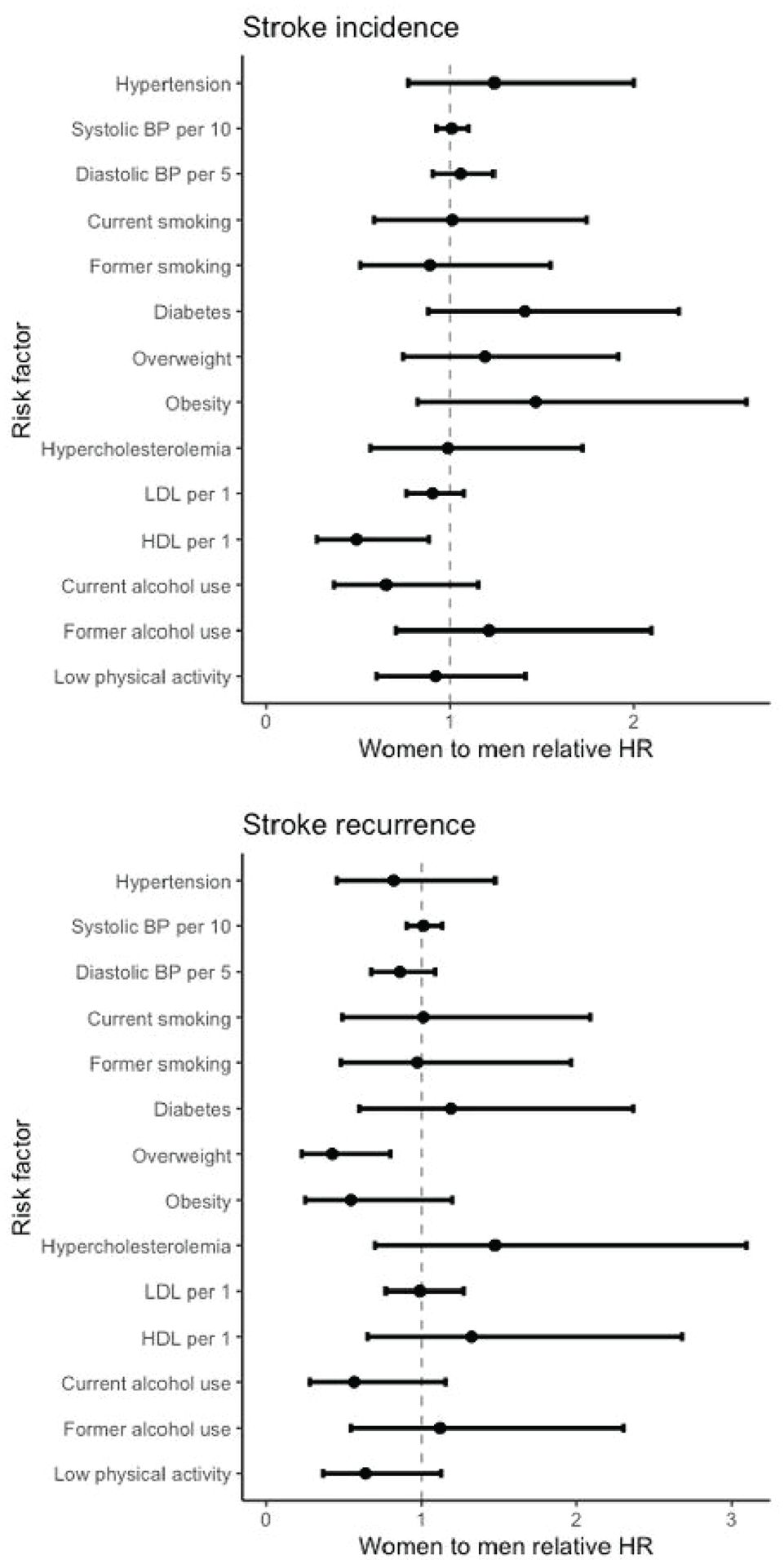
P0307 / 856
FKBP5 RISK HAPLOTYPE AND CLINICAL OUTCOME AFTER FIRST ISCHEMIC STROKE: THE PROSPECTIVE COHORT WITH INCIDENT STROKE STUDY BERLIN (PROSCIS-B)
1Charité, Neurology, Berlin, Germany, 2Max Planck Institute of Psychiatry, Translational Research in Psychiatry, Munich, Germany
P0308 / 830
COVID-19 DID NOT RESULT IN INCREASED HOSPITALIZATION FOR STROKE AND TRANSIENT ISCHEMIC ATTACK: A NATIONWIDE STUDY
1Aarhus University Hospital, Neurology, Aarhus, Denmark, 2Aalborg University, Department of Clinical Medicine, Aalborg, Denmark, 3Copenhagen University Hospital-Herlev Gentofte, Neurology, Copenhagen, Denmark, 4Odense University Hospital, Neurology, Odense, Denmark, 5Zealand University Hospital, Neurology, Roskilde, Denmark, 6Aalborg University Hospital, Neurology, Aalborg, Denmark
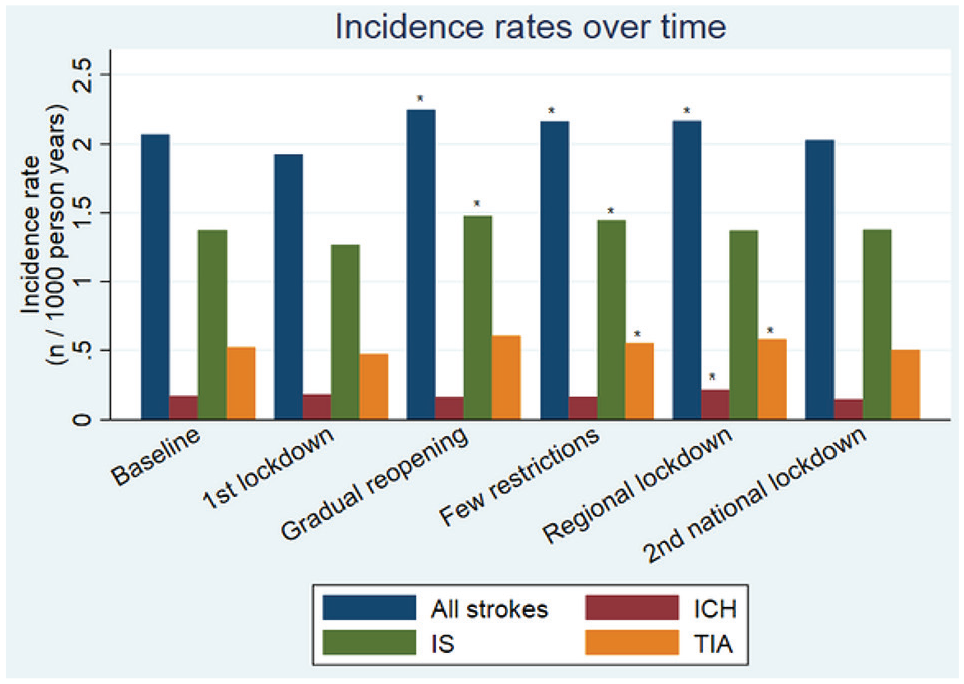
P0309 / 1407
LIPID LEVELS AND OUTCOME AFTER ENDOVASCULAR THERAPY IN ACUTE ISCHAEMIC STROKE WITH LARGE VESSEL OCCLUSION
1Inselspital, University Hospital and University of Bern, Department of Neurology, Bern, Switzerland, 2Queen Giovanna University Hospital, Department of Neurology, Sofia, Bulgaria, 3Medical University of Plovdiv, Department of Neurology, Plovdiv, Bulgaria, 4Inselspital, University Hospital and University of Bern, Institute of Diagnostic and Interventional Neuroradiology, Bern, Switzerland, 5Inselspital, University Hospital and University of Bern, Department of Neurosurgery, Bern, Switzerland, 6Inselspital, University Hospital and University of Bern, Department of Diabetes, Endocrinology, Clinical Nutrition and Metabolism, Bern, Switzerland, 7Inselspital, University Hospital and University of Bern, Department of Cardiology, Bern, Switzerland
P0310 / 783
TRENDS OF RECANALIZATION THERAPIES AND STATE OF ART FOR ISCHAEMIC STROKE TREATMENT IN CAMPANIA REGION, ITALY IN 2019 AND 2020
1AORN "A. Cardarelli", Naples, Italy, 2University of Salerno "San Giovanni di Dio e Ruggi d'Aragona", Neurology and Stroke Unit, Salerno, Italy
P0311 / 770
CLINICAL CHARACTERISTICS AND TREATMENT RESULT OF ACUTE ISCHEMIC STROKE PATIENTS UNDER 45 YEARS OLD IN VIETNAM
1Bachmai Hospital, Stroke Center, Hanoi, Vietnam, 2Hadong Hospital, Hanoi, Vietnam, 3Bachmai Hospital, Emergency Center, Hanoi, Vietnam
This study aimed to identify the clinical features, some risk factors, and treatment results of cerebral infarction patients under 45 years old at Bachmai hospital, Vietnam.
P0312 / 1352
STROKE AFTER COVID-19 ERA: IS THERE A “STROKE WAVE” RESULTING FROM THE PANDEMIC?
1 Hospital Universitario Virgen Macarena, Neurology, Sevilla, Spain
Our objective is to evaluate the effect of the SARS-CoV-2 pandemic on stroke unit admission rates.
P0313 / 407
THE ASSOCIATION BETWEEN ISCHEMIC STROKE SUBTYPE AND STROKE SEVERITY: THE ARIC STUDY
1The Johns Hopkins University School of Medicine, Cerebrovascular Neurology, Baltimore, United States, 2The Johns Hopkins University School of Public Health, Epidemiology and Biostatistics, Baltimore, United States, 3University of North Carolina, Chapel Hill, United States, 4University of Pennsylvania, Philadelphia, United States, 5Massachusetts General Hospital, Boston, United States, 6Virginia Commonwealth University, Richmond, United States, 7University of Minnesota, Minneapolis, United States, 8The Johns Hopkins University School of Public Health, Baltimore, United States, 9National Institutes of Neurological Disorders and Stroke Intramural Program, Bethesda, United States, 10Stanley Steyer School of Health Professions, Tel Aviv, Israel
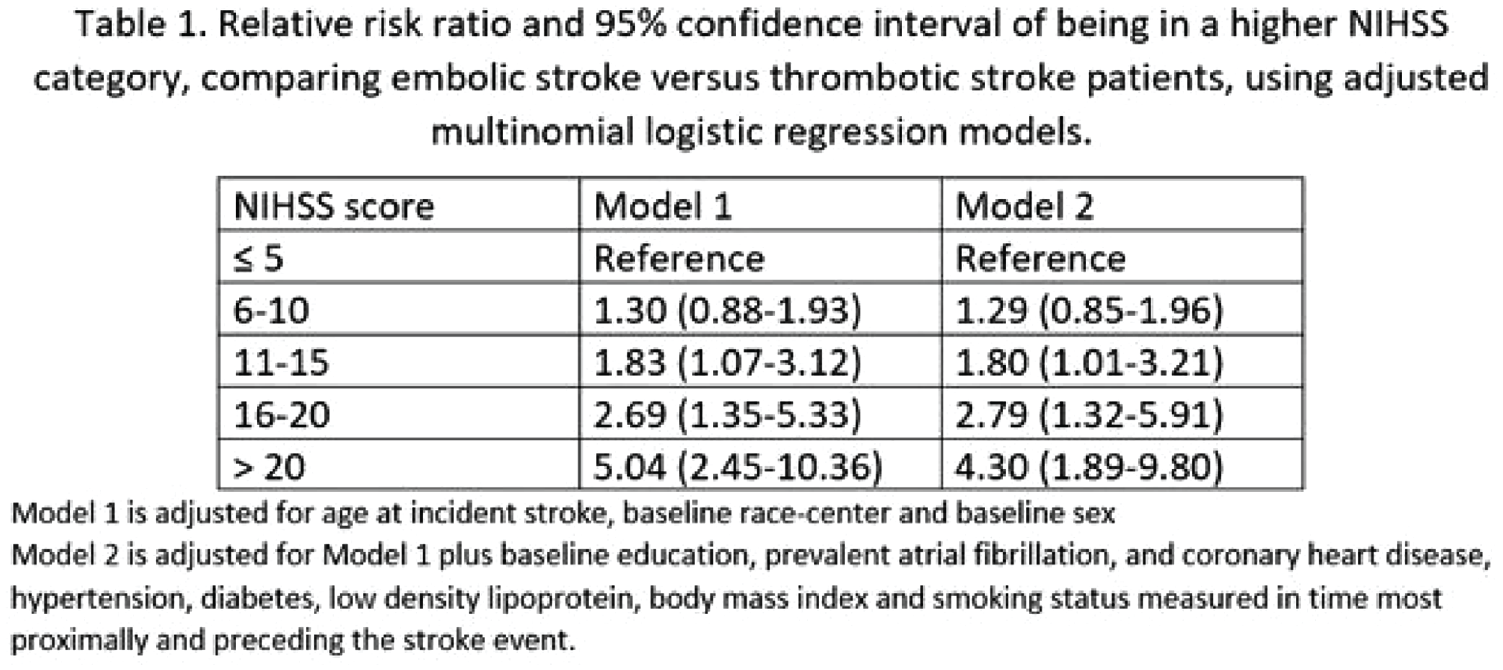
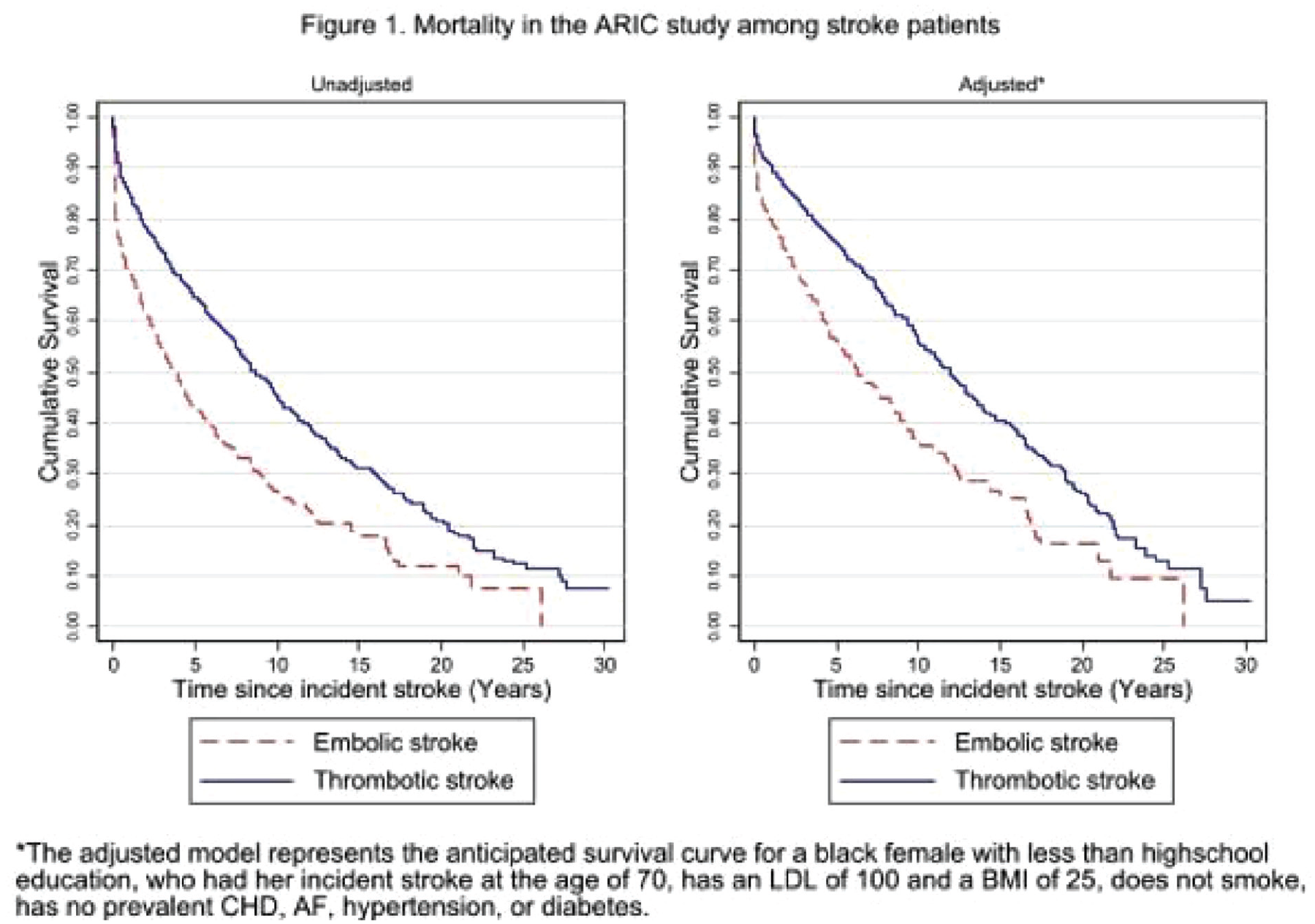
P0314 / 992
STROKE ILLITERACY IN SOUTHWEST PORTUGAL
1Unidade Local de Saúde do Litoral Alentejano, UCSP Sines, Sines, Portugal, 2Unidade Local de Saúde do Litoral Alentejano, UCSP Alcácer do Sal, Alcácer do Sal, Portugal, 3Universidade do Algarve, Faro, Portugal, 4Centro Hospitalar Universitário do Algarve - Portimão, Portimão, Portugal
P0315 / 1018
INSTANTANEOUS STROKE RISK ASSESSMENT OF ADULTS IN ENUGU, SOUTH EAST NIGERIA – RESULTS FROM A RANDOM POINT SURVEY
1 University of Nigeria Teaching Hospital, Department of Medicine, Enugu, Nigeria
P0316 / 476
EQUAL RISK FOR SICK LEAVE IN PATIENTS WITH TRANSIENT ISCHEMIC ATTACK AND STROKE
1Aalborg University Hospital, Department of Physiotherapy and Occupational Therapy, Aalborg, Denmark, 2Aalborg University, Department of Health Science and Technology, Aalborg, Denmark, 3Region North Psychiatry, Aalborg, Denmark, 4Aalborg University, Danish Center for Clinical Health Services Research, Aalborg, Denmark, 5Aalborg University Hospital, Department of Physiotherapy and Occupational therapy, Aalborg, Denmark, 6Aalborg University, Center for General Practice, Aalborg, Denmark, 7Aalborg University Hospital, Department of Neurology, Aalborg, Denmark, 8Aalborg Municipality, Aalborg Center of Health and Rehabilitation, Aalborg, Denmark
P0317 / 1618
STROKE ETIOLOGY OF LARGE VESSEL OCCLUSION ACUTE ISCHEMIC STROKE (LVO-AIS) & THROMBECTOMY OUTCOMES IN MULTI-ETHNIC YOUNG ADULTS (AGE 18-49)
1 Cleveland Clinic Foundation, Cerebrovascular Center, Cleveland, United States
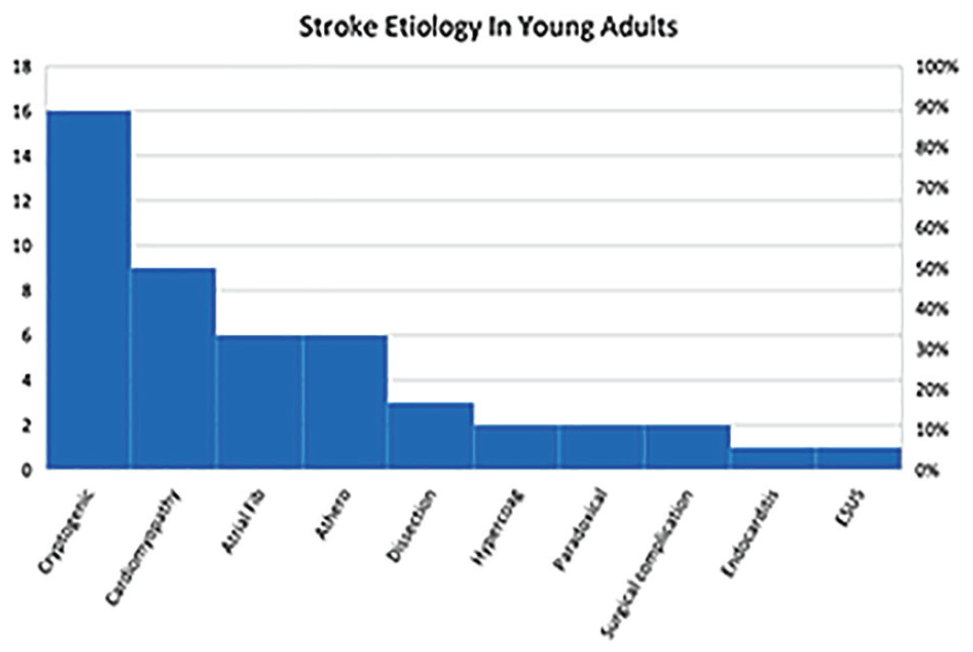
P0318 / 1282
HOW STROKE MIMICS MANAGEMENT EVOLVES WITH IMPROVEMENT OF ACCESS TO REPERFUSION THERAPY? THE STROKE69 COHORT STUDY
1Université Claude Bernard Lyon 1, Research on Healthcare Performance (RESHAPE), INSERM U1290, Lyon, France, 2Hospices Civils de Lyon, Pôle de Sante Publique, Service Recherche et Epidémiologie Cliniques, Lyon, France, 3Hospices Civils de Lyon, Hôpital Lyon Sud, Service des Urgences, Pierre-Bénite, France, 4Hospices Civils de Lyon, Hôpital Edouard Herriot, Service des Urgences, Lyon, France, 5Hospices Civils de Lyon, Hôpital Pierre Wertheimer, Service Neuro-vasculaire, Lyon, France
P0319 / 403
STATIN THERAPY FOR PREVENTING RECURRENT STROKE IN PATIENTS WITH ISCHAEMIC STROKE: A SYSTEMATIC REVIEW AND META-ANALYSIS OF RANDOMISED CONTROLLED TRIALS AND OBSERVATIONAL COHORT STUDIES
1 King's College London, Population Health Sciences, London, United Kingdom
P0320 / 1092
CEREBROVASCULAR DISEASE INCIDENCE AND MORTALITY CORRELATED WITH AIR TEMPERATURE AMONG NUR-SULTAN ADULT POPULATION
1 Astana Medical University, Nur-Sultan, Kazakhstan
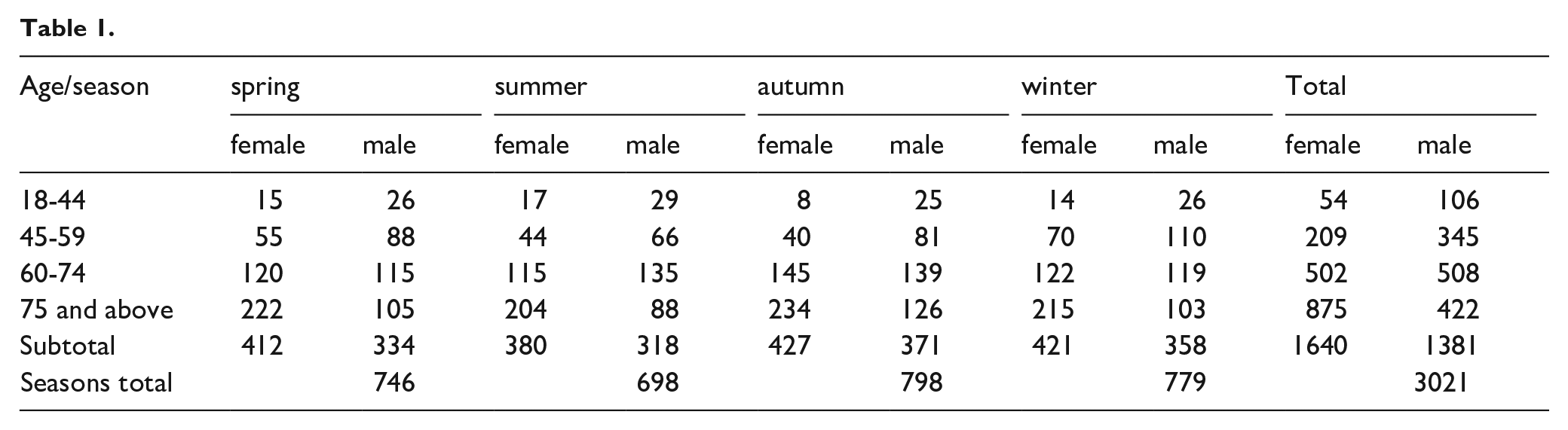
Month, season, period, sex and age groups -based analysis of materials was conducted: young, middle, elderly and senile with determination of Spearman and Pearson correlation coefficient. Age group distribution of patients: 117 (5.2%), 441 (19.4%), 853 (37.5%) and 861 (37.9%), respectively. Moreover, in first 2 age groups, mortality prevailed among men, especially young age, in senility among women - 589. Autumn -583 died, winter -582, slightly less in spring -575 and summer -532. Relationship between mortality and temperatures by seasons was mostly weak (r = up to 0.300).
P0321 / 647
INCIDENCE RATES AND RISK FACTORS FOR MAJOR GASTROINTESTINAL BLEEDING AFTER ISCHEMIC STROKE
1Seoul National University Bundang Hospital, Seoul National University College of Medicine, Neurology, Seongnam, Korea, Republic of, 2Uijeonbu Eulji Medical Center, Eulji University, Neurology, Uijeongbu, Korea, Republic of, 3Nowon Eulji Medical Center, Eulji University, Neurology, Seoul, Korea, Republic of, 4Eulji University Hospital, Eulji University College of Medicine, Neurology, Daejeon, Korea, Republic of, 5Dong-A University Hospital, Dong-A University College of Medicine, Neurology, Busan, Korea, Republic of, 6Seoul Medical Center, Neurology, Seoul, Korea, Republic of, 7Soonchunhyang University Hospital, Soonchunhyang University College of Medicine, Neurology, Seoul, Korea, Republic of, 8Inje University Ilsan Paik Hospital, Neurology, Goyang, Korea, Republic of, 9Chonnam National University Hospital, Chonnam National University College of Medicine, Neurology, Gwangju, Korea, Republic of, 10Dongguk University Ilsan Hospital, Neurology, Goyang, Korea, Republic of, 11Jeju National University Hospital, Jeju National University School of Medicine, Neurology, Jeju, Korea, Republic of, 12Hallym University Sacred Heart Hospital, Hallym University College of Medicine, Neurology, Anyang, Korea, Republic of, 13Chung-Ang University Hospital, Chung-Ang University College of Medicine, Neurology, Seoul, Korea, Republic of, 14Asan Institute for Life Sciences, Asan Medical Center, Clinical Research Center, Seoul, Korea, Republic of, 15Korea University College of Medicine, Biostatistics, Seoul, Korea, Republic of
P0322 / 1016
ISCHEMIC STROKE IN YOUNG ADULTS IN SPAIN: CHANGE IN STROKE TRENDS FROM 2000 TO 2018
1Torrecardenas University Hospital, Neurology, Almeria, Spain, 2Torrecardenas University Hospital, Emergency, Almería, Spain, 3University of Almeria, Health Sciences, Almeria, Spain
P0324 / 1389
EFFECT OF PRECONDIOTIONING INDUCED BY PREVIOUS TRANSIENT ISCHEMIC ATTACK PHENOMENA IN THE OUTCOME OF ACUTE ISCHEMIC PATIENTS, A META-ANALYSIS UPDATE
1Hospital Universitari Arnau de Vilanova de Lleida, Stroke Unit, Lleida, Spain, 2IRBLleida, Lleida, Spain, 3UdL, Lleida, Spain, 4Hospital Universitari Arnau de Vilanova de Lleia, Stroke Unit, Lleida, Spain
P0325 / 804
PRE-STROKE PHYSICAL ACTIVITY IS ASSOCIATED WITH SMALLER HEMATOMA VOLUMES IN PATIENTS WITH PRIMARY INTRACEREBRAL HEMORRHAGE, A RETROSPECTIVE REGISTRY-BASED STUDY IN SWEDEN
1 University of Gothenburg, Institute of Neuroscience and Physiology, Gothenburg, Sweden
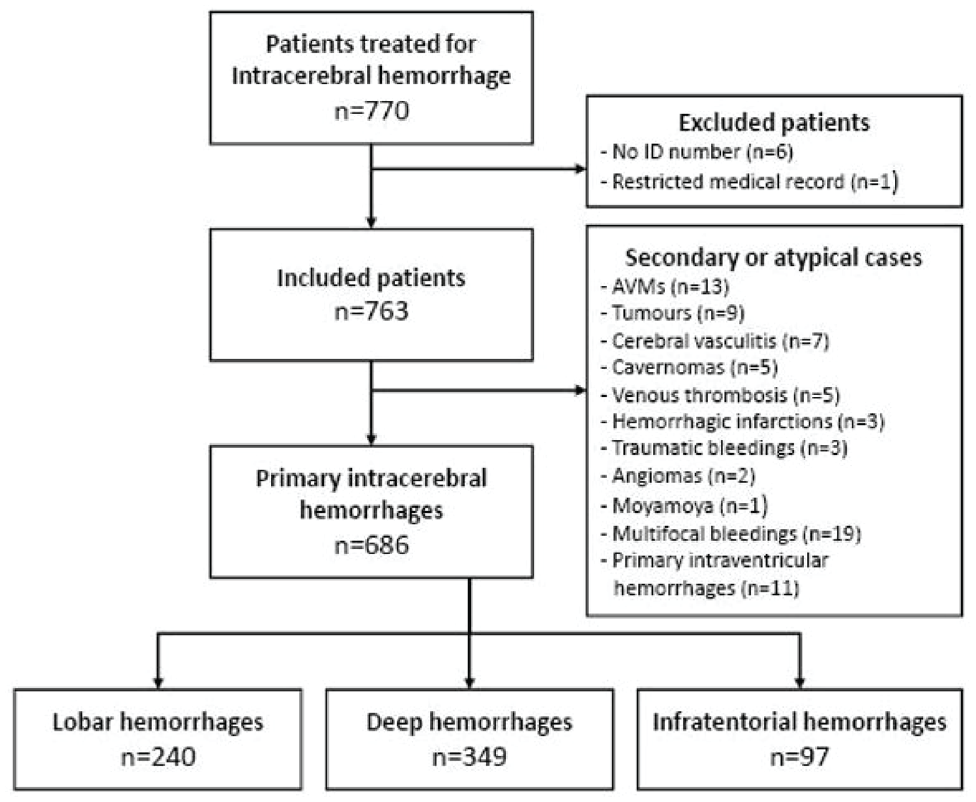
P0326 / 416
CONCERNINGLY HIGH INCIDENCE AND POOR OUTCOME FOR STROKE IN MONGOLIA: A PROSPECTIVE POPULATION-BASED STUDY IN ULAANBAATAR DURING 2019-2021
1Department of Neurology, Institute of Medical Sciences, National University of Medical Sciences, Ulaanbaatar, Mongolia, 2Department of Neurology, Institute of Medical Sciences, Mongolian National University of Medical Sciences, Ulaanbaatar, Mongolia, 3School of Medicine, Mongolian National University of Medical Sciences, Ulaanbaatar, Mongolia, 4Ach Medical University, Ulaanbaatar, Mongolia, 5The George Institute for Global Health, University of New South Wales, Sydney, Australia
P0327 / 308
INCIDENCE, AETIOLOGY AND 30-DAY-MORTALITY RATE OF INTRACEREBRAL HAEMORRHAGE: A POPULATION-BASED STUDY
1University of Caen Normandie, Caen, France, 2University of Caen Normandie-INSERM U 1237, Neurology, Caen, France, 3University Caen Normandie-INSERM U 1086 ANTICIPE, Caen, France
P0328 / 586
PREVALENCE OF DIABETES AND ITS EFFECTS ON IN-HOSPITAL OUTCOMES AMONG PATIENTS WITH ACUTE ISCHEMIC STROKE ACROSS CHINA
1Beijing Tiantan Hospital, Capital Medical University, Beijing, China, 2China National Clinical Research Center for Neurological Diseases, Beijing, China
P0329 / 390
RISK FACTORS IN STROKE PATIENTS IN THE REPUBLIC OF MOLDOVA: ANALYSIS OF FIRST DATA FROM THE RES-Q REGISTRY
1Nicolae Testemitanu State University of Medicine and Pharmacy, Neurology Department 2, Chisinau, Moldova, Republic of, 2Institute of Emergency Medicine, Chisinau, Moldova, Republic of, 3Nicolae Testemitanu State University of Medicine and Pharmacy, Neurology Department 1, Chisinau, Moldova, Republic of, 4Diomid Gherman Institute of Neurology and Neurosurgery, Chisinau, Moldova, Republic of
The aim of our study was to analyse risk factors in stroke patients based on the RES-Q registry.
P0330 / 1229
LOGISTIC FACTORS INFLUENSING IN-HOSPITAL OUTCOME AND MORTALITY IN PATIENTS WITH INTRACEREBRAL HEMORRHAGE (DATA FROM POMERANIAN STROKE REGISTER)
1Regional Hospital in Kielce, Department of Neurology and Stroke Unit, Kielce, Poland, 2Collegium Medicum of Jan Kochanowski University, Department of Neurology and Storke Unit in Sandomierz, Sandomierz, Poland, 3Jan Kochanowski University, Kielce, Department of Neurology and Storke Unit in Sandomierz, Sandomierz, Poland, 4Medical University of Gdańsk, Medical Simulation Center, Gdańsk, Poland
P0331 / 305
OUTCOMES AND COMPLICATIONS IN ACUTE STROKE WITH AND WITHOUT THALASSEMIA IN THAILAND
1Khon Kaen University, Internal Medicine, Khon Kaen, Thailand, 2Khon Kaen University, Khon Kaen, Thailand, 3Khon Kaen University, North-Eastern Stroke Research Group, Khon Kaen, Thailand
P0332 / 1180
RISK FACTORS FOR ISCHAEMIC STROKE IN RURAL AND URBAN RESIDENTS - A COMPARATIVE ANALYSIS OF DATA FROM POMERANIAN STROKE REGISTER
1Regional Hospital, Department of Neurology and Stroke Unit, Kielce, Poland, 2Jan Kochanowski University, Department of Neurology and Stroke Unit in Sandomierz, Sandomierz, Poland, 3Collegium Medicum of Jan Kochanowski University, Department of Neurology and Stroke Unit in Sandomierz, Kielce, Poland, 4Medical University of Gdańsk, Medical Simulation Center, Gdansk, Poland
P0333 / 543
PREVALENCE AND DISTRIBUTION OF LACUNAR INFARCTION IN CHINA: RESULTS FROM THE NESS-CHINA STUDY
1Beijing Tiantan Hospital, Neurology, Beijing, China, 2Beijing Neurosurgical Institute, Beijing, China
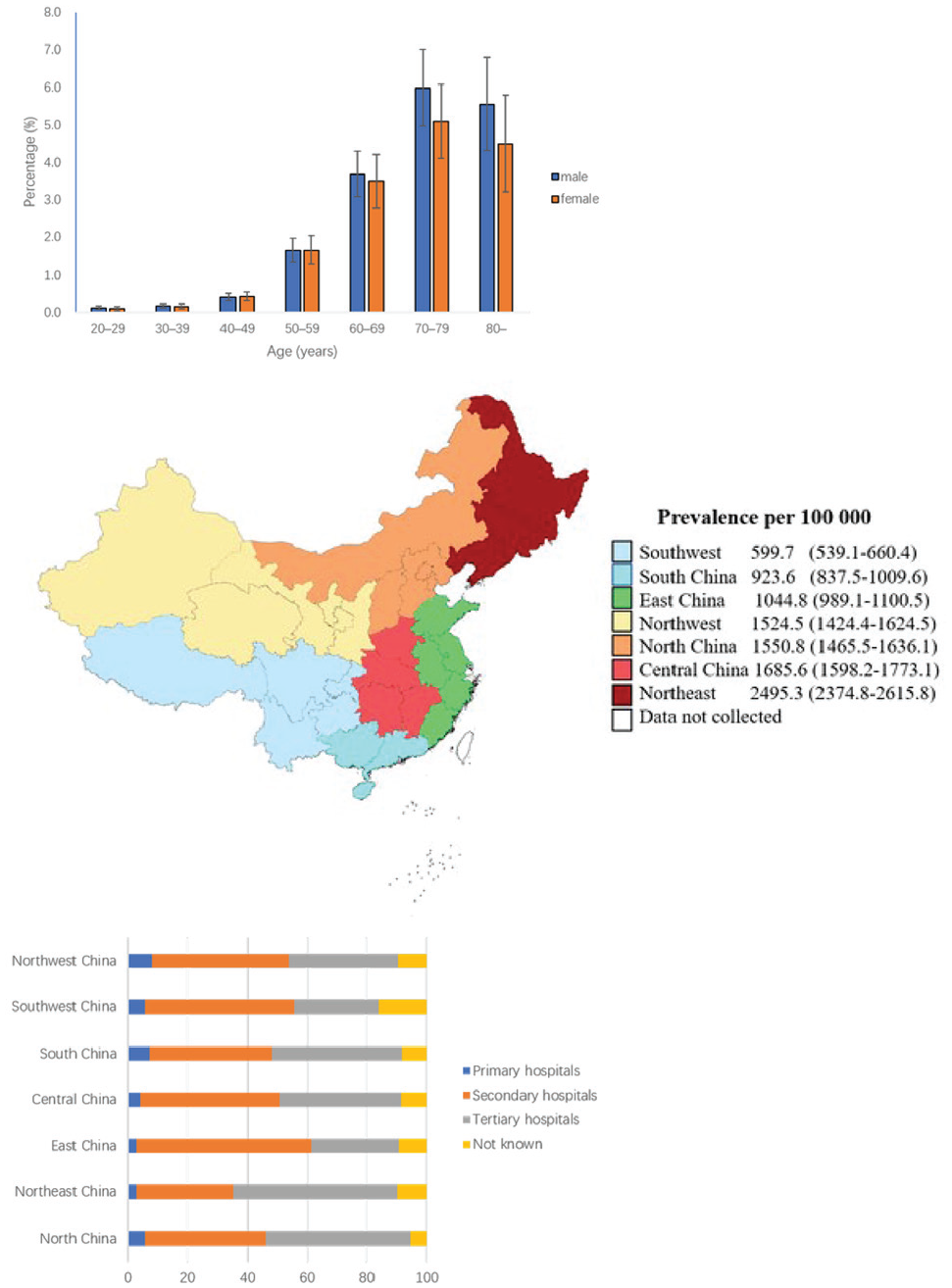
IMAGING – HYPERACUTE
P0334 / 1178
ISCHEMIC LESION EVOLUTION IN PATIENTS WITH ACUTE ISCHEMIC STROKE TREATED WITH INTRAVENOUS ALTEPLASE FOLLOWED BY ENDOVASCULAR TREATMENT VERSUS ENDOVASCULAR TREATMENT ALONE
1Amsterdam University Medical Centers, University of Amsterdam, Radiology and Nuclear Medicine, Amsterdam, Netherlands, 2Amsterdam University Medical Centers, University of Amsterdam, Neurology, Amsterdam, Netherlands, 3Amsterdam University Medical Centers, University of Amsterdam, Biomedical Engineering and Physics; Radiology and Nuclear Medicine, Amsterdam, Netherlands, 4Amsterdam University Medical Centers, University of Amsterdam, Biomedical Engineering and Physics, Amsterdam, Netherlands, 5Haaglanden Medical Center, Neurology, The Hague, Netherlands, 6Erasmus University Medical Center, Public Health, Rotterdam, Netherlands
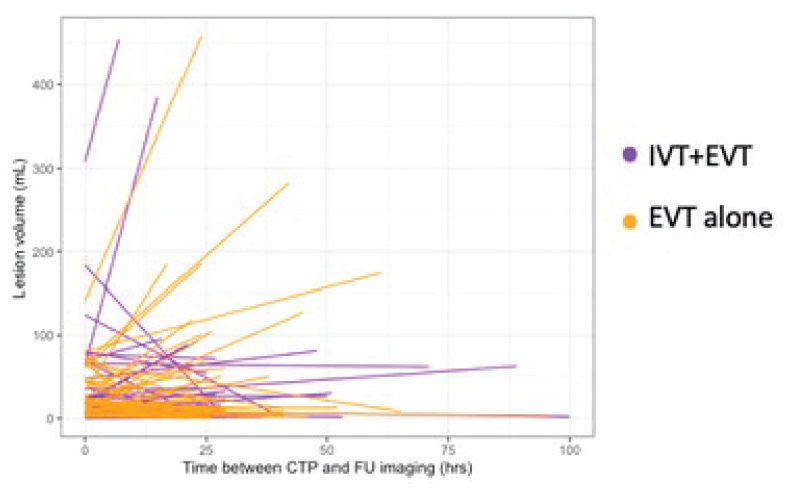
P0335 / 1249
MULTIPHASE CT ANGIOGRAPHY PERFUSION PREDICTS FOLLOW-UP INFARCTION AS WELL AS CT PERFUSION
1Circle Neurovascular Imaging, Calgary, Canada, 2University of Calgary, Calgary, Canada
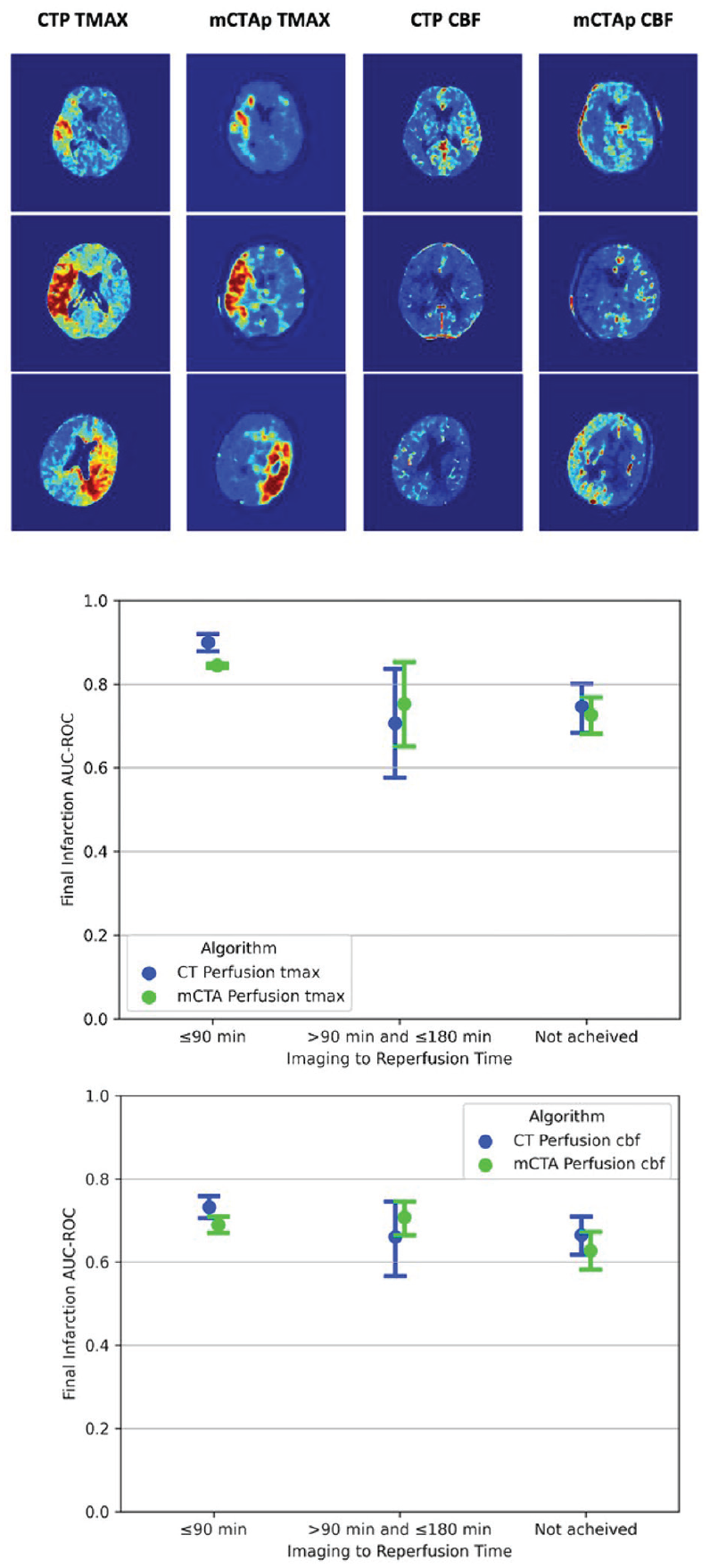
P0336 / 1315
HYPERACUTE DWI POSITIVE MRI LESIONS IN PATIENTS WITH TIA: CLINICAL PREDICTORS AND OUTCOME RELATIONSHIP
1Hospital Virgen Macarena, Neurology, Seville, Spain, 2Hospital Virgen Macarena, Radiology, Seville, Spain, 3Hospital Virgen Macarena, Emergency, Seville, Spain
DWI positive patients had a higher rate of recurrence in the first month (11.5% vs 0%; p=0.023).
P0337 / 1284
GLYMPHATICS COUNT: INCORPORATING INFORMATION ON GLYMPHATICS USING BOLD-MRI IMPROVES PREDICTION OF CEREBRAL EDEMA
1University of Oxford, Acute Vascular Imaging Centre, Radcliffe Department of Medicine, Oxford, United Kingdom, 2Niguarda Hospital, S.C. Neurologia e Stroke Unit, Milan, Italy, 3University of Florence, NEUROFARBA Department, Neuroscience Section, Florence, Italy, 4University of Oxford, FMRIB, Wellcome Centre for Integrative Neuroimaging, Nuffield Department of Clinical Neurosciences, Oxford, United Kingdom
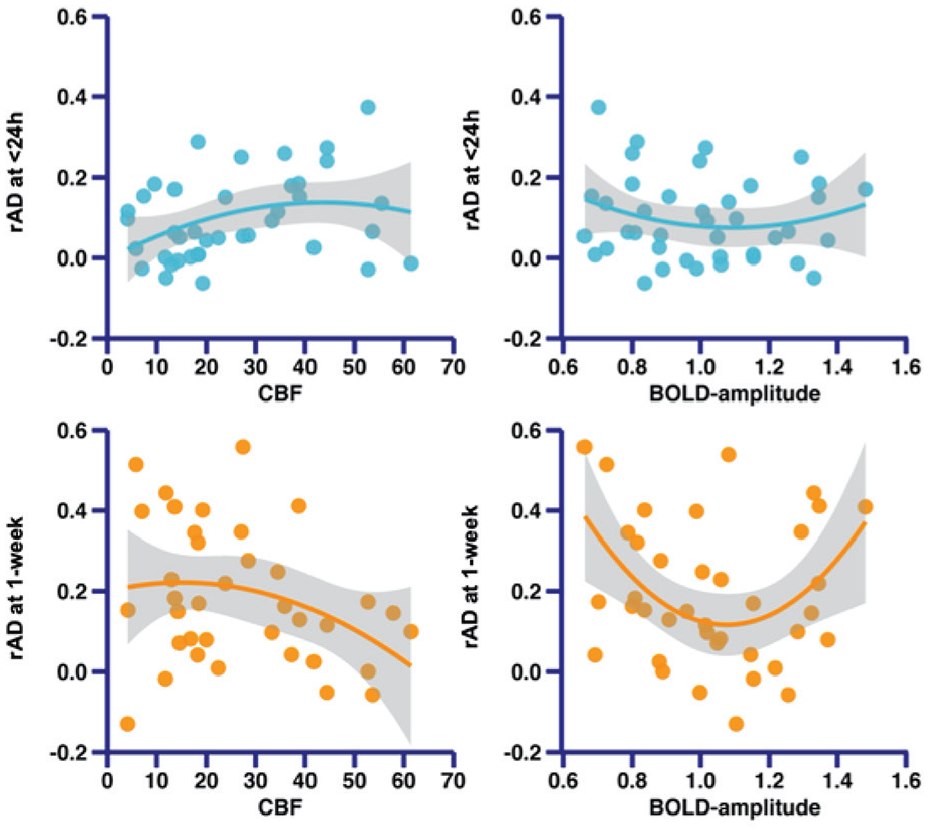
P0338 / 1341
COLLATERAL FLOW ASSESSMENT IN PATIENTS WITH RECURRENT STROKE UNDERGOING MECHANICAL THROMBECTOMY
1University Hospital Virgen del Rocio, Stroke Unit, Sevilla, Spain, 2Instituto de Biomedicina de Sevilla, Sevilla, Spain, 3University Hospital Virgen del Rocio, Interventional Neuroradiology Unit, Sevilla, Spain
P0339 / 1288
RAPID AUTOMATED SOFTWARE UTILITY FOR ESTIMATING THE CONSERVED COLLATERAL CIRCULATION INDEX: A PRECISION TOOL
1Hospital Universitario La Princesa, Neurology, Madrid, Spain, 2Hospital Universitario La Princesa, Radiology, Madrid, Spain
P0340 / 123
ATYPICAL CLINICAL PRESENTATIONS OF SUSPECTED TIA AND MINOR ISCHAEMIC STROKE ARE COMMON IN PATIENTS WITH DWI-MRI CONFIRMED CEREBRAL ISCHAEMIA
1The National Hospital for Neurology and Neurosurgery, Stroke, London, United Kingdom, 2University College London, Medical School, London, United Kingdom
P0341 / 167
A PRELIMINARY REPORT ON ONE-STOP MULTIMODAL-MRI WORKFLOW IN THE IMAGING PROCESS OF PATIENTS WITH ACUTE ISCHEMIC STROKE RECEIVING INTRAVENOUS THROMBOLYSIS
1 Nanjing First Hospital, Nanjing Medical University, Department of Neurology, Nanjing, China
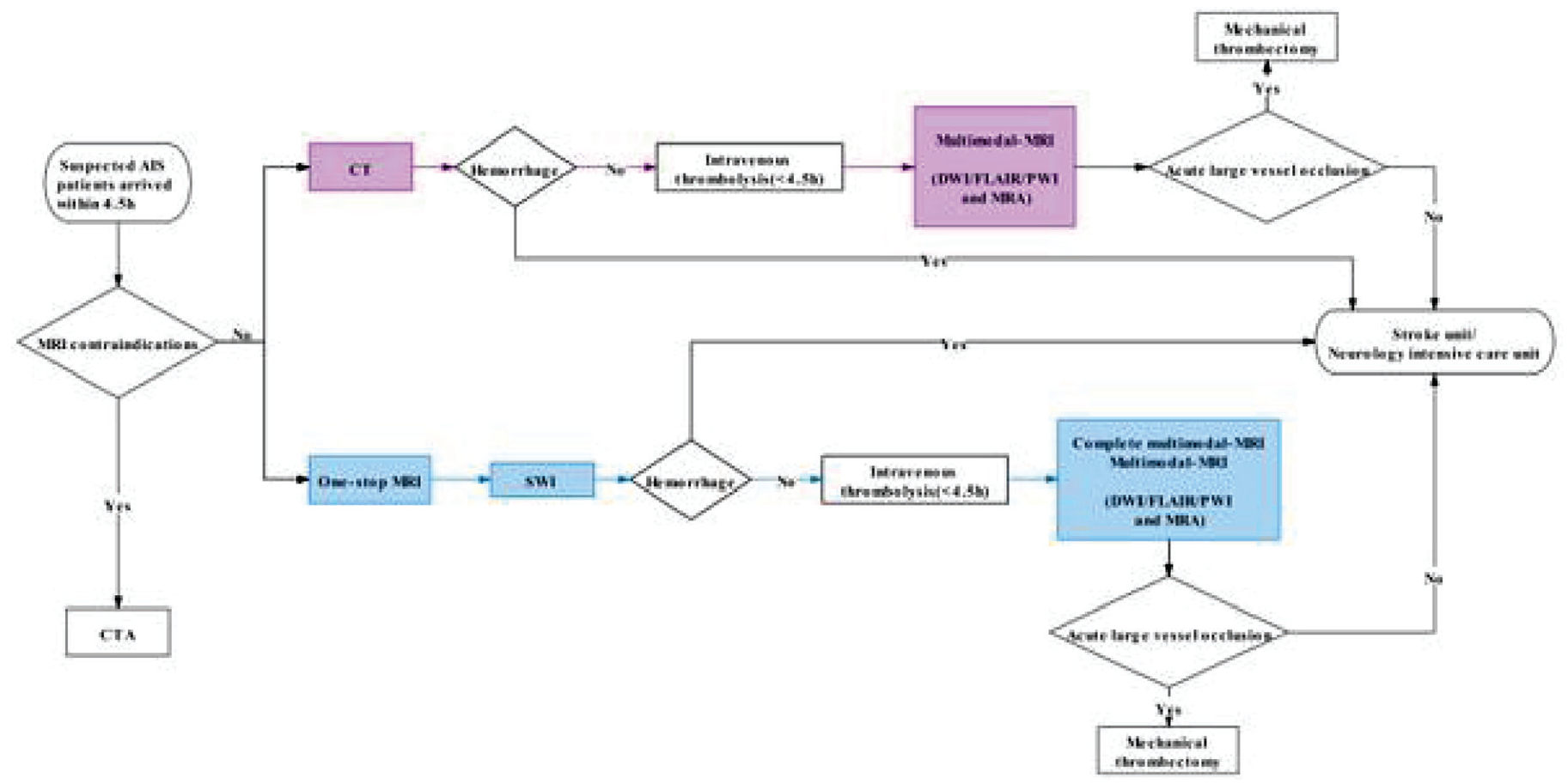
Trial registration: ClinicalTrials.gov NCT04175691. Registered November 21, 2019, https://www.clinicaltrials.gov/ct2/show/NCT04175691.
P0342 / 371
LESION-DEFICIT MAPPING AND FUNCTIONAL RELEVANCE OF A NOVEL DEFICIT DIMENSION STRUCTURE OF THE NIHSS
1University Medical Center Hamburg Eppendorf, Department of Neurology, Hamburg, Germany, 2Zhejiang University, Department of Psychology and Behavioral Sciences, Hangzhou, China, 3Research Centre Jülich, Institute of Neuroscience and Medicine, Brain &Behaviour (INM-7), Jülich, Germany
(1) left and
(2) right motor deficits,
(3) dysarthria/ facial palsy,
(4) language, and
(5) neglect.
LDM related deficit dimensions to differential brain regions, including the internal capsules, left precentral cortex, frontal and temporal cortex, and right subcortical and temporal cortical cortex. Functional characterization of LDM results aligned with the detected deficit dimensions.
P0343 / 379
DIAGNOSTIC ACCURACY OF 0.5T VERSUS 1.5T MRI IN SUSPECTED ACUTE STROKE
1Dalhousie University, Halifax, Canada, 2QEII Health Sciences Centre, Neuroradiology, Halifax, Canada, 3QEII Health Sciences Centre, Radiology, Halifax, Canada, 4BIOTIC, Halifax, Canada, 5QEII Health Sciences Centre, Neurology, Halifax, Canada
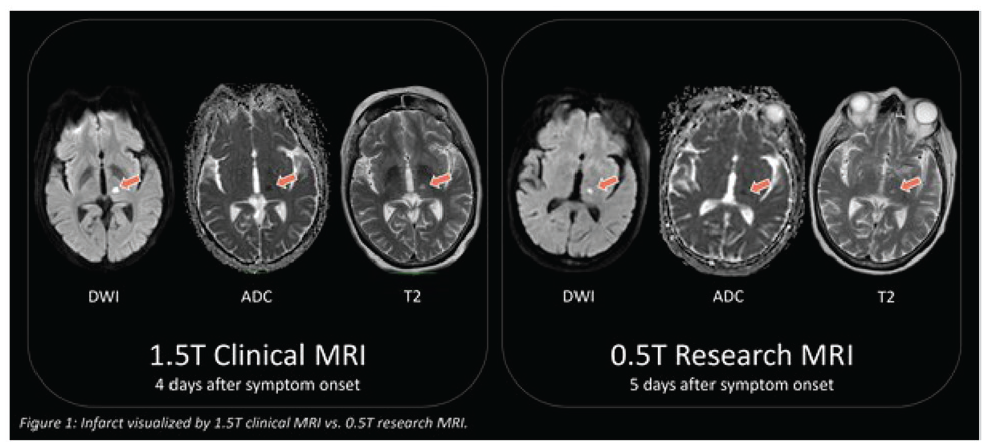
P0344 / 402
CT HYPOPERFUSION-HYPODENSITY MISMATCH TO IDENTIFY PATIENTS WITH ACUTE ISCHEMIC STROKE WITHIN 4.5 HOURS OF SYMPTOM ONSET
1University of Muenster, Department of Neurology, Münster, Germany, 2University of Basel, Department of Neuroradiology, Basel, Switzerland
P0345 / 396
YIELD OF COMPUTED TOMOGRAPHY PERFUSION IN STROKE MANAGEMENT
1St. Anne’s University Hospital in Brno and Faculty of Medicine at Masaryk University, Brno, Czech Republic, Department of Neurology, Brno, Czech Republic, 2International Clinical Research Centre, St. Anne’s University Hospital in Brno, Brno, Czech Republic, Brno, Czech Republic
P0346 / 398
POTENTIAL OF STROKE-IMAGING USING A NEW PROTOTYPE OF LOW-FIELD MRI: A PROSPECTIVE DIRECT 0.55T-1.5T-SCANNER COMPARISON
1University of Basel, Department of Neuroradiology, Basel, Switzerland, 2University of Basel, Department of Neurology, Basel, Switzerland
False-positive findings did not occur. Detection of number/location of FLAIR-lesions was mostly equivalent between 0.55T-/1.5T-sequences. No significant difference (p=0.789-0.104) for FLAIR-resolution and -contrast was observed regarding Likert-scaling. For DWI/ADC-noise the 0.55T-sequences were significantly superior (p < 0.026). Otherwise, the 1.5T-sequences were significantly superior (p < 0.029). There was no significant difference in infarct-volume and volume of infarct-demarcation between the 0.55T- and 1.5T-sequences, when detectable.
P0347 / 474
BOLD-MRI DETECTS MICROVASCULAR PERFUSION FAILURE AT A TISSSUE LEVEL
1University of Oxford, Acute Vascular Imaging Centre, Radcliffe Department of Medicine, Oxford, United Kingdom, 2Niguarda Hospital, S.C. Neurologia e Stroke Unit, Milan, Italy, 3University of Florence, NEUROFARBA Department, Neuroscience Section, Florence, Italy, 4University of Oxford, FMRIB, Wellcome Centre for Integrative Neuroimaging, Nuffield Department of Clinical Neurosciences, Oxford, United Kingdom
P0348 / 1554
ALTERED PATTERN IN PERFUSION CT OF PATIENTS WITH SUSPECTED POSTERIOR REVERSIBLE ENCEPHALOPATHY
1Hospital Universitario de La Princesa, Neurology, Madrid, Spain, 2Hospital Universitario de La Princesa, Radiology, Madrid, Spain
TCP alterations were mostly identified in time maps, 13(92.9%), and bihemispheric 8(57.1%), altering flow maps in 7(50%) and volume maps in 2(14.3%). Corresponding mainly to posterior parieto-occipital territories 11(84.6%), observing bihemispheric involvement in 8(72.7%) and focal non-vascular unilateral in 3(27.3%).
P0349 / 1416
AUTOMATED SCORING OF COLLATERALS, BLOOD PRESSURE AND CLINICAL OUTCOME AFTER ENDOVASCULAR TREATMENT IN PATIENTS WITH ACUTE ISCHEMIC STROKE AND LARGE-VESSEL OCCLUSION
1Hospital de la Santa Creu i Sant Pau, Biomedical Research Institute Sant Pau, Universitat Autònoma de Barcelona, Stroke Unit, Department of Neurology, Barcelona, Spain, 2UDIAT Corporació Sanitària Parc Taulí, Department of Radiology, Sabadell, Spain
P0350 / 1202
PREVALENCE OF "TARGET MISMATCH" WITHIN 24 HOURS AFTER STROKE ONSET
1 University of Glasgow, Glasgow, United Kingdom
Penumbra was defined as Tmax>6 seconds and ischaemic core as Tmax>6 seconds and relative cerebral blood flow [CBF]<30%. “Target mismatch” was defined as core<70ml, penumbra
51% of patients within the 4.5 to 12 hour window met target mismatch criteria and 10% of patients met criteria >12 hours (Table 1). Volumes of core and penumbra did not differ by time window among target mismatch cases (Kruskal-Wallis test, p=0.585 and p=0.418 respectively).
Number meeting mismatch within time windows.
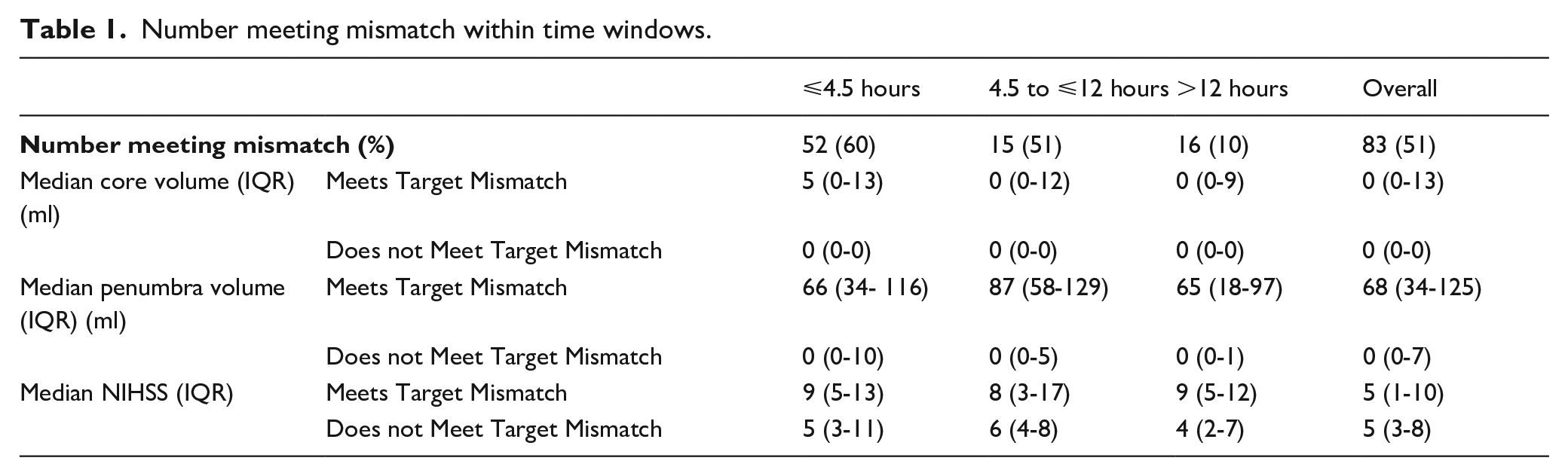
Baseline Clinical and Demographic Data for Subjects Suitable for Analysis n=162.
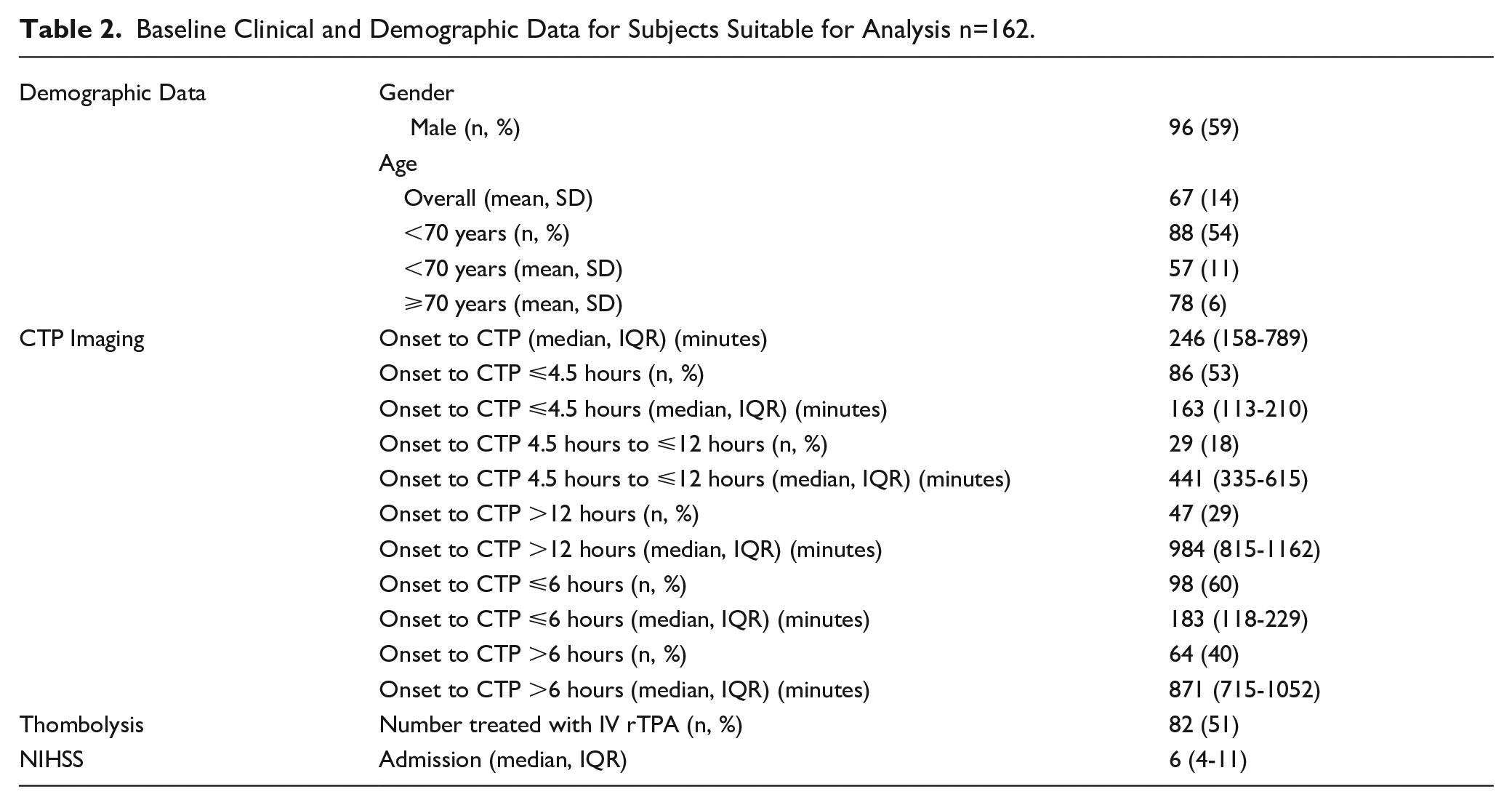
P0351 / 1584
EFFECT OF ONSET-TO-IMAGING TIME AND QUANTITATIVE COLLATERAL SCORE ON CT PERFUSION ISCHEMIC CORE VOLUMES IN ACUTE ISCHEMIC STROKE
1Amsterdam UMC, location AMC, Department of Radiology and Nuclear Medicine, Amsterdam, Netherlands, 2Amsterdam UMC, location AMC, Department of Biomedical Engineering and Physics, Amsterdam, Netherlands, 3Amsterdam UMC, location AMC, Department of Neurology, Amsterdam, Netherlands
P0352 / 145
THE ROLE OF AUTOMATED COMPUTED TOPOGRAPHY PERFUSION IN PREDICTION OF HEMORRHAGIC TRANSFORMATION AFTER ACUTE ISCHEMIC STROKE
1Mansoura University, Faculty of medicine, Neurology, Mansoura, Egypt, 2Ospedale Civile di Baggiovara, AOU di Modena, Stroke Unit – Neurology Clinic, Department of Neuroscience, Modena, Italy, 3Ospedale Civile di Baggiovara, AOU di Modena, Stroke Unit – Neurology Clinic, Department of Neuroradiology, Modena, Italy
P0353 / 400
CEREBROVASCULAR COLLATERAL INTEGRITY IN PEDIATRIC LARGE VESSEL OCCLUSION: ANALYSIS OF THE SAVE CHILDS STUDY
1Stanford Stroke Center, Department of Neurology & Neurological Sciences, Stanford, United States, 2University of Basel, Department of Neuroradiology, Basel, Switzerland
P0354 / 593
EARLY VEIN FILLING, MORE BLEEDING: A NEW ANGIOGRAPHIC SIGN TO PREDICT INTRACEREBRAL HEMORRHAGE?
1Besançon University Hospital, Neurology, Besançon, France, 2Besançon University Hospital, Interventional Neuroradiology, Besançon, France
P0355 / 109
OPTIMAL THRESHOLDS OF DIFFUSION SIGNAL AND APPARENT DIFFUSION COEFFICIENT FOR AUTOMATED SEGMENTATION OF INFARCT CORE
1Hokkaido University, Department of Diagnostic Imaging, Graduate School of Medicine, Sapporo City, Japan, 2Hokkaido University, Department of Diagnostic Imaging, Faculty of Medicine and Global Center for Biomedical Science and Engineering, Faculty of Medicine, Sapporo City, Japan, 3Hokkaido University, Department of Diagnostic Imaging, Faculty of Medicine, Sapporo City, Japan, 4Hokkaido University, Department of Neurosurgery, Faculty of Medicine and Graduate School, Sapporo City, Japan, 5Kashiwaba Neurosurgical Hospital, Department of Neurosurgery, Sapporo City, Japan, 6Hokkaido Medical Center, Department of Neurosurgery, Sapporo City, Japan
The infarct core in patients with RELAXED study was manually segmented on DWI by four neuroradiologists, which was used for gold standard of core volume. The same DWI data was analyzed by RAPID and PMA software, and their correlation coefficients were evaluated. In the PMA analysis, the thresholds of ADC values and DWI signals were varied to perform a comprehensive analysis to determine the optimal threshold.
In the external validation, the optimal settings in PMA were achieved with DWI signal of mean +0.8SD and ADC of 660, to predict the core volume of 70mL in RAPID (PPV of 0.84 and NPV of 1.0).
P0356 / 1185
FEASIBILITY OF USING CEREBRAL ATTENUATION CHANGES ON NON-ENHANCED CT BRAIN TO PREDICT TISSUE FATE AT FOLLOW-UP AFTER ACUTE ISCHAEMIC STROKE
1University of Edinburgh, Centre for Clinical Brain Sciences, Edinburgh, United Kingdom, 2King Abdulaziz University, Department of Diagnostic Radiology, Faculty of Applied Medical Sciences, Jeddah, Saudi Arabia, 3University of Dundee, Medical School, Dundee, United Kingdom, 4University of Edinburgh, Edinburgh Imaging, and UK Dementia Research Institute at the University of Edinburgh and Centre for Clinical Brain Sciences, Edinburgh, United Kingdom
P0357 / 329
THROMBUS IMAGING CHARACTERISTICS TO PREDICT EARLY RECANALIZATION IN TRANSFERRED PATIENTS WITH LARGE VESSEL OCCLUSION STROKE
1Amsterdam UMC, location AMC, Department of Biomedical Engineering and Physics, Amsterdam, Netherlands, 2Amsterdam UMC, location AMC, Department of Radiology and Nuclear Medicine, Amsterdam, Netherlands, 3Amsterdam UMC, location AMC, Department of Neurology, Amsterdam, Netherlands
P0358 / 937
DETECTION OF THE INFARCT CORE AND PENUMBRAL TISSUE ON NON-ENHANCED CT AND CT PERFUSION IN ACUTE ISCHAEMIC STROKE
1King Abdulaziz University, Department of Diagnostic Radiology, Faculty of Applied Medical Sciences, Jeddah, Saudi Arabia, 2University of Edinburgh, Centre for Clinical Brain Sciences, Edinburgh, United Kingdom, 3University of Dundee, Medical School, Dundee, United Kingdom, 4King Abdulaziz University Hospital, Department of Radiology, Jeddah, Saudi Arabia, 5University of Edinburgh, Edinburgh Imaging, and UK Dementia Research Institute at the University of Edinburgh and Centre for Clinical Brain Sciences, Edinburgh, United Kingdom
P0359 / 306
MONOENERGETIC CONE-BEAM CT ANGIOGRAPHY IS NON-INFERIOR TO STANDARD CT ANGIOGRAPHY – A PROSPECTIVE OPEN LABEL TRIAL IN STROKE PATIENTS
1Karolinska Institutet, Clinical Neuroscience, Solna, Sweden, 2Karolinska University Hospital, Neuroradiology, Solna, Sweden, 3Philips, Image-Guided Therapy Systems, Best, Netherlands, 4Karolinska University Hospital, Neurology, Solna, Sweden
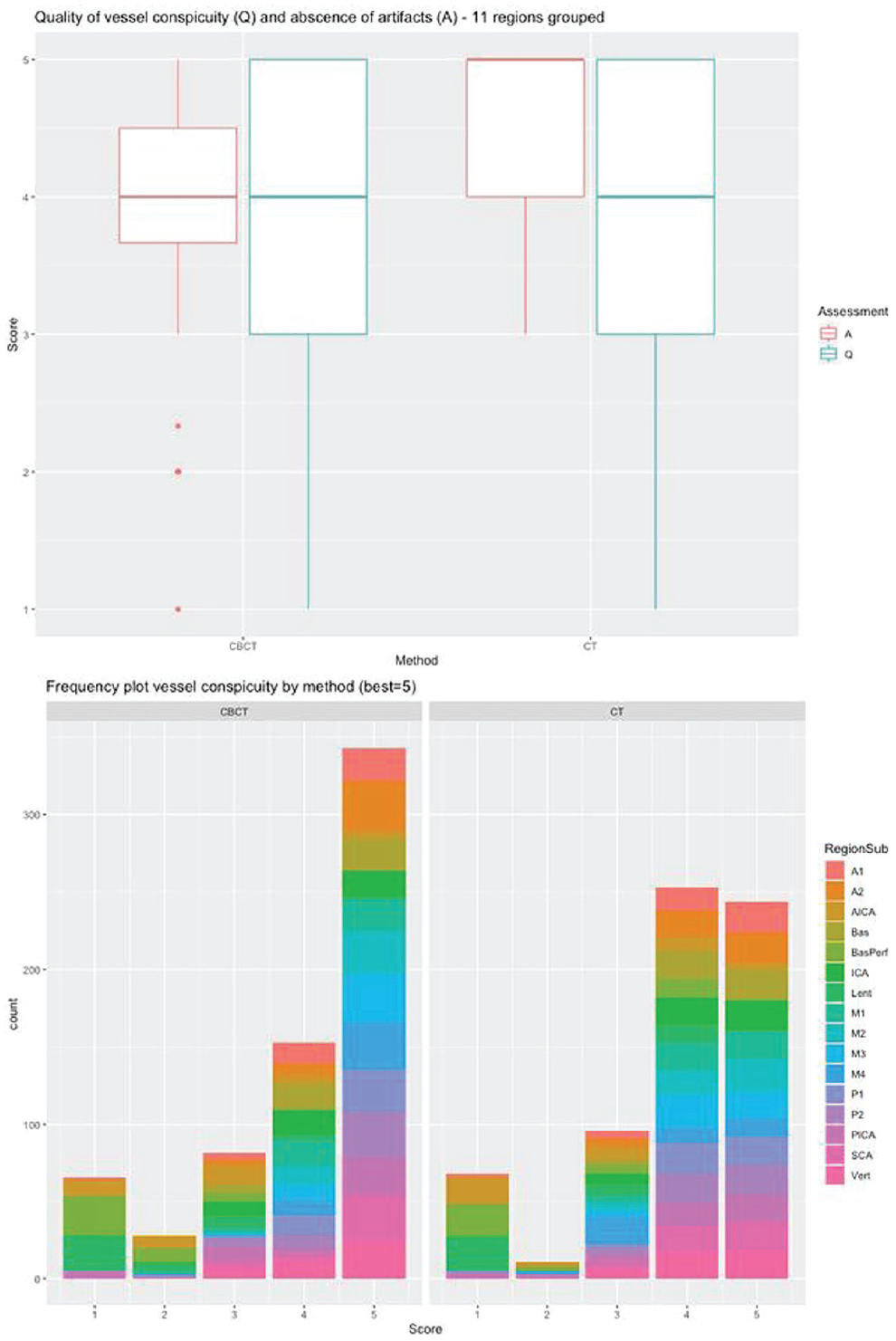
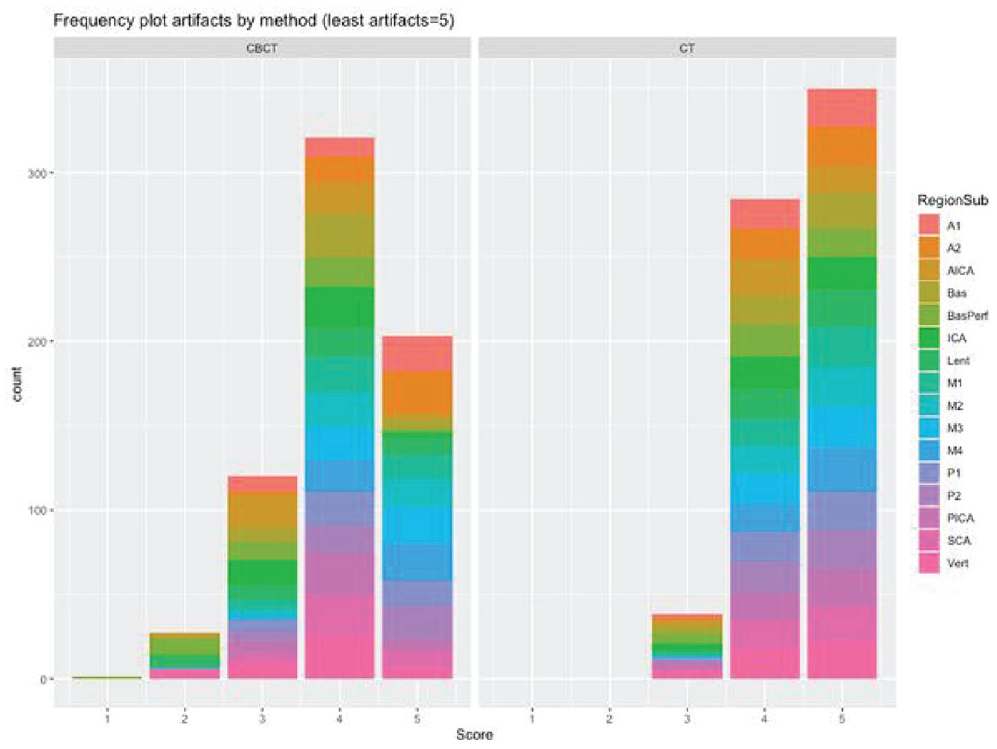
P0360 / 1228
ACUTE ISCHEMIC STROKE CORE ESTIMATION IS IMPROVED BY ONSET TIME-DEPENDENT RELATIVE CEREBRAL BLOOD FLOW THRESHOLDS
1KU Leuven, Electrical Engineering, Leuven, Belgium, 2University Hospitals Leuven, Neurology, Leuven, Belgium, 3University Hospitals Leuven, Radiology, Leuven, Belgium, 4Karolinska University Hospital, Neuroradiology and Clinical Neuroscience, Stockholm, Sweden, 5Stanford University, Stanford Stroke Center, Stanford, United States, 6Stanford University, Stanford Stroke Center, Stanford, United States
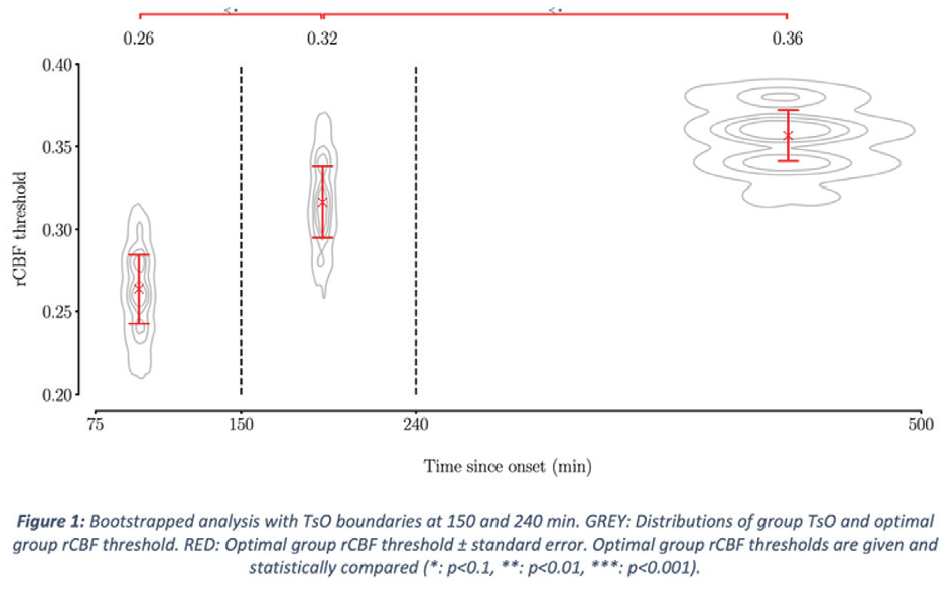
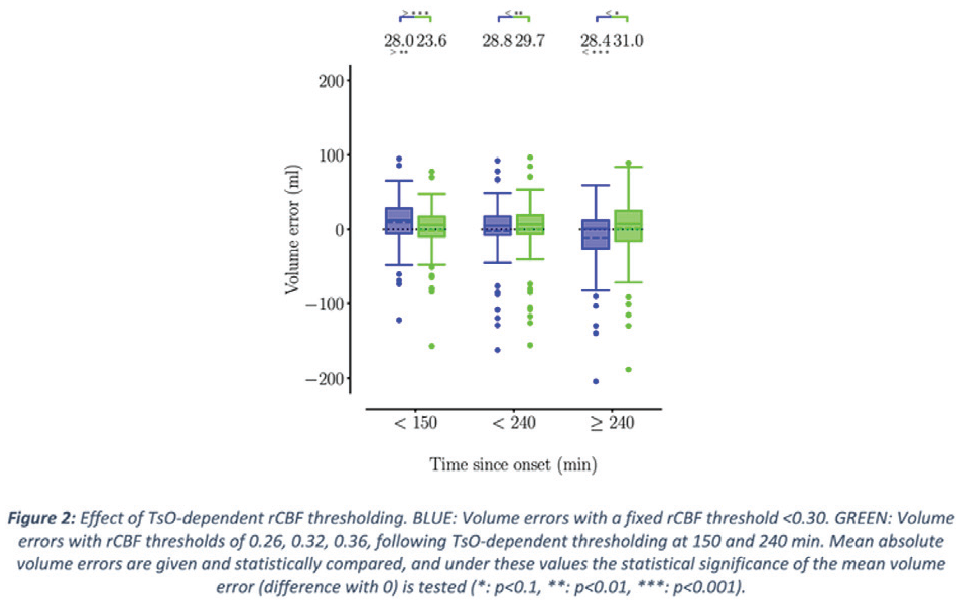
P0361 / 760
CORRELATION OF THE AUTOMATICALLY-DERIVED CT PERFUSION VOLUMES AND THE MULTIPHASE CTA COLLATERAL SCORE
1University of Calgary, Department of Radiology, Calgary, Canada, 2St. Anne's University Hospital Brno and Faculty of Medicine Masaryk University Brno, Department of Medical Imaging, Brno, Czech Republic, 3Charles University in Prague, Faculty of Medicine Hradec Kralove, Hradec Kralove, Czech Republic, 4Seoul National University Bundang Hospital, Department of Neurology and Cerebrovascular Center, Seoul, Korea, Republic of, 5University Hospital in Ostrava, Department of Neurology, Ostrava, Czech Republic, 6St. Anne's University Hospital Brno, International Clinical Research Centre, Stroke Research Program, Brno, Czech Republic, 7University Hospital Hradec Kralove and Faculty of Medicine Charles University, Department of Radiology, Hradec Kralove, Czech Republic, 8St. Anne's University Hospital Brno and Faculty of Medicine Masaryk University Brno, Department of Neurology, Brno, Czech Republic
Comparison of hypoperfusion volumes for different collateral grades.
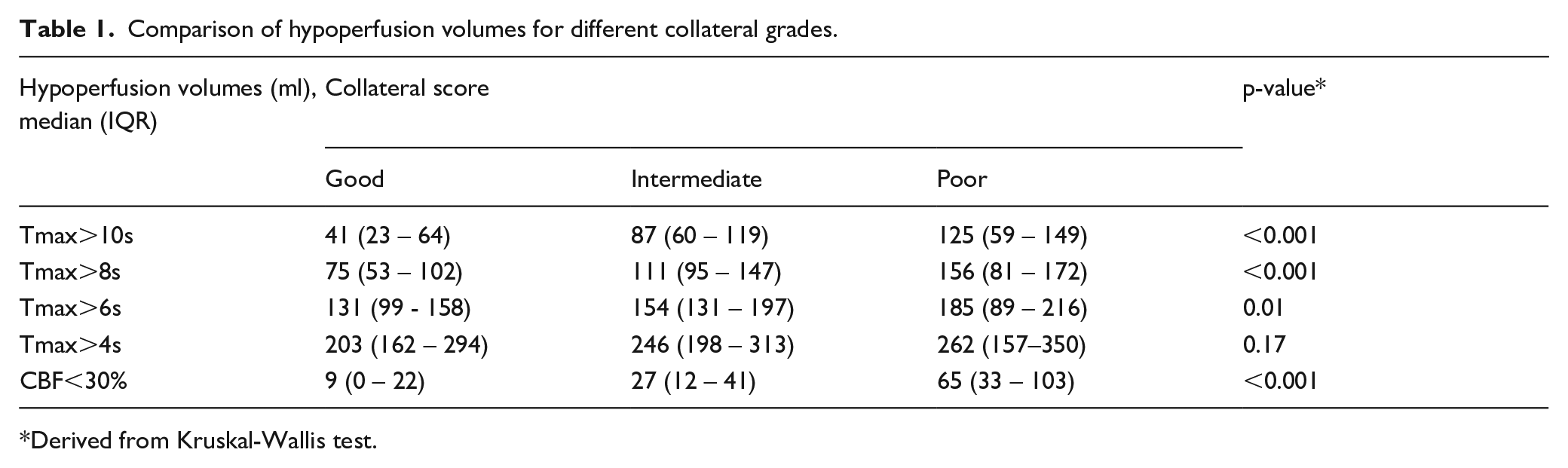
Derived from Kruskal-Wallis test.
Comparison of hypoperfusion volumes in patients with poor collaterals and different times from the symptom onset to CT.
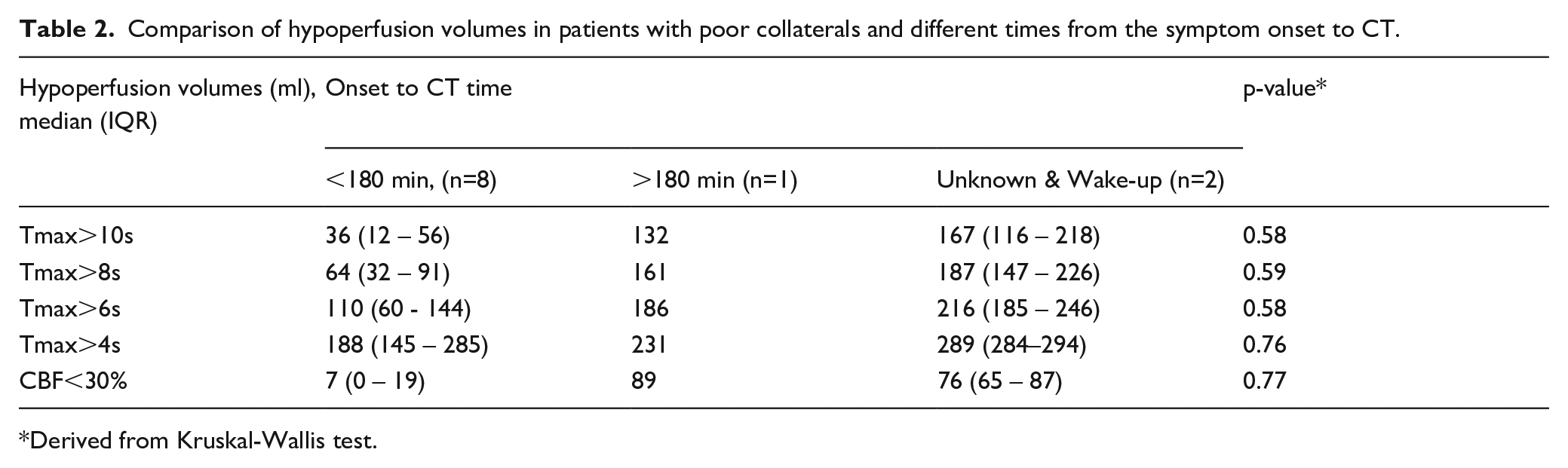
Derived from Kruskal-Wallis test.
P0362 / 828
SUSCEPTIBILITY VESSEL SIGN IN ACUTE STROKE: DOES THE PRESENCE OF AN SVS DEPEND ON TIME FROM SYMPTOM ONSET IN ADDITION TO STROKE ETIOLOGY?
1Besançon University Hospital, Neurology, Besançon, France, 2Besançon University Hospital, Interventional Neuroradiology, Besançon, France
P0363 / 1119
REPERFUSION INJURY CONTRIBUTES TO POOR OUTCOME IN PATIENTS WITH RECANALIZATION AFTER THROMBECTOMY
1 The Second Affiliated Hospital of Zhejiang University, School of Medicine, Department of Neurology, Hangzhou, China
P0364 / 1442
CORRELATION BETWEEN CT ANGIOGRAPHY SOURCE IMAGE INFARCT VOLUME AND RAPID CT PERFUSION CORE VOLUME
1 Eskisehir Osmangazi University, Neurology, Eskisehir, Turkey
P0365 / 1452
EVALUATION OF PERFUSION IMAGING IN LATE WINDOW THROMBECTOMY IN EVERYDAY CLINICAL PRACTICE : RESULTS OF A PROSPECTIVE REGISTRY FROM A NETWORK OF BELGIAN HOSPITALS
1Centre Hospitalier Chrétien, Stroke Unit, Liège, Belgium, 2Centre Hospitalier Chrétien, Interventional Neuro-radiology, Liège, Belgium
P0366 / 1104
CORRELATION BETWEEN LOCAL CEREBRAL PERFUSION AND EEG FREQUENCY IN PATIENTS WITH SUSPECTED ACUTE ISCHEMIC STROKE
1Amsterdam UMC, University of Amsterdam, Neurology, Amsterdam, Netherlands, 2Amsterdam UMC, University of Amsterdam, Clinical Neurophysiology, Amsterdam, Netherlands, 3Amsterdam UMC, University of Amsterdam, Biomedical Engineering and Physics, Amsterdam, Netherlands, 4Amsterdam UMC, University of Amsterdam, Radiology and Nuclear Medicine, Amsterdam, Netherlands
P0367 / 853
ASSESSMENT OF THROMBUS USING FILTERED PHASE IMAGES OF SUSCEPTIBILITY-WEIGHTED IMAGING IN PATIENTS WITH LARGE VESSEL OCCLUSION OF ACUTE ISCHEMIC STROKE
1 Inje University Haeundae Paik Hospital, Department of Neurology, Busan, Korea, Republic of
P0368 / 192
NORMAL APPEARING ISCHAEMIC BRAIN TISSUE ON CT AND OUTCOME AFTER INTRAVENOUS ALTEPLASE
1 University of Edinburgh, Centre for Clinical Brain Sciences, Edinburgh, United Kingdom
P0369 / 401
A FEASIBILITY STUDY ON APPLYING DEEP LEARNING METHODS TO QUANTITATIVE T2 MRI RELAXATION TIMES FOR STROKE ONSET TIME ESTIMATION
1Technological University Dublin, PRECISE4Q Predictive Modelling in Stroke, Dublin, Ireland, 2University of Bristol, School of Psychological Science, Bristol, United Kingdom, 3Southmead Hosptial North Bristol NHS Trust, Stroke Neurology, Bristol, United Kingdom, 4Southmead Hospital North Bristol NHS Trust, Stroke Neurology, Bristol, United Kingdom, 5University of Bristol, Bristol Medical School, Bristol, United Kingdom, 6University of Glasgow, Queen Elizabeth University Hospital, Glasgow, United Kingdom, 7University of Bristol, Department of Electrical and Electronic Engineering, Bristol, United Kingdom, 8Technological University Dublin, ADAPT Research Centre, ICE Research Institute, Dublin, Ireland
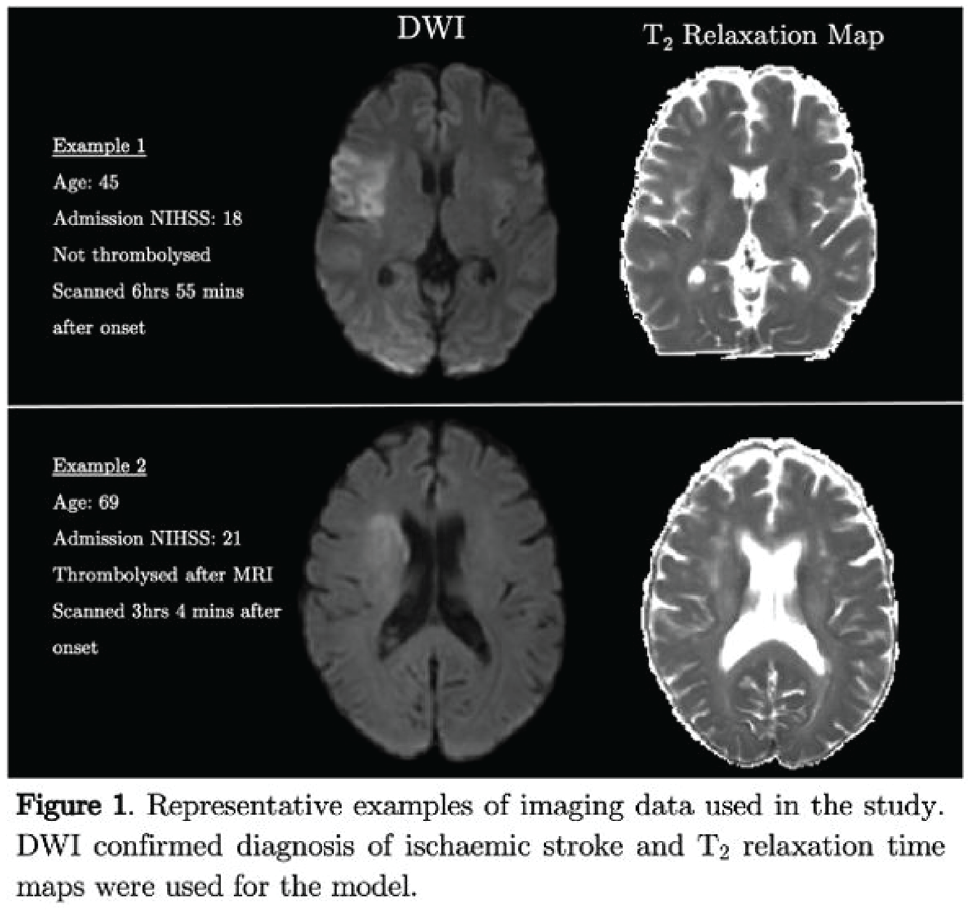
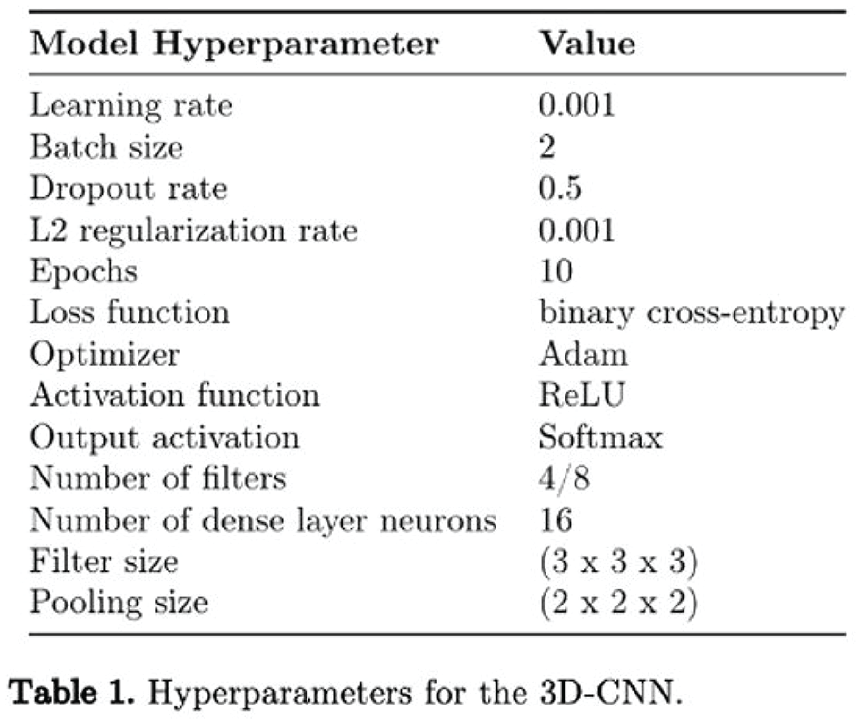
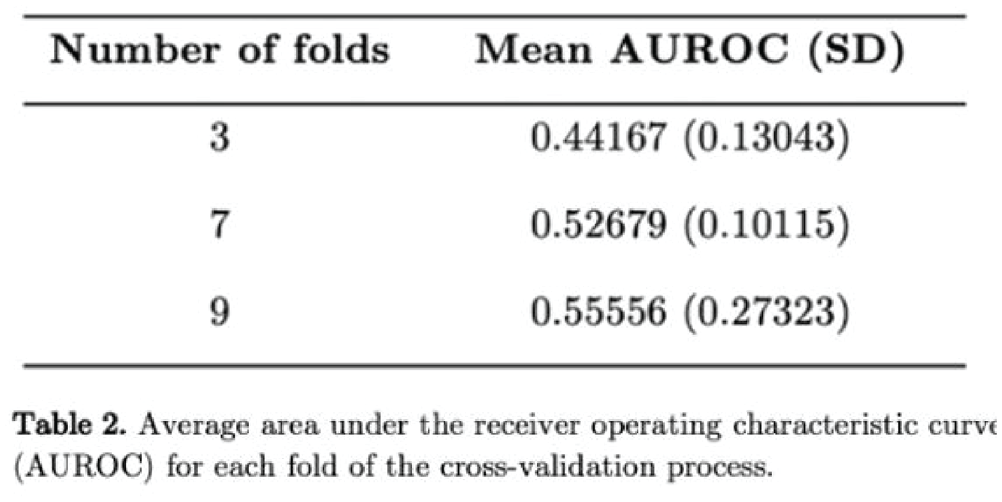
P0370 / 965
COMPUTED TOMOGRAPHY PERFUSION IMAGING-BASED INTRAVENOUS THROMBOLYSIS IN MINOR STROKE PATIENTS
1Eberhard-Karls University of Tübingen, Department of Neurology & Stroke, and Hertie Institute for Clinical Brain Research, Tübingen, Germany, 2Eberhard-Karls University of Tübingen, Department of Diagnostic and Interventional Neuroradiology, Tübingen, Germany
P0371 / 973
ASSISTANCE FROM ASPECT SOFTWARE COULD IMPROVE TELESTROKE PERFORMANCE
1Hospital Universitario Virgen Macarena, Seville, Spain, 2Hospital Universitario Virgen del Rocio, Seville, Spain, 3Hospital Universitario de Torrecárdenas, Almeria, Spain, 4Hospital Puerta del Mar, Cádiz, Spain, 5Hospital de Jerez, Jerez de la Frontera, Spain, 6Hospital Universitario Reina Sofia, Córdoba, Spain
The aim of the study is to analyze the impact that such software would have had on our network to see if it could be a useful tool that deserves to be implemented in daily practice at CATI.
IA software use would have supposed a change in the management of 15% of patients: increasing treatment rates(7%), avoiding futile transfers to thrombectomy centers(4%), or avoiding unnecessary consultations(4%).
P0372 / 1621
A COMPARISON OF CLINICAL CHARACTERISTICS AND OUTCOMES FOR CT ANGIOGRAPHY AND CT PERFUSION PATIENT EVALUATION
1Hospital Universitari Arnau de Vilanova de Lleida, Stroke Unit, Lleida, Spain, 2IRBLleida, Lleida, Spain, 3UdL, Lleida, Spain
P0373 / 198
POSTERIOR CIRCULATION ALBERTA STROKE PROGRAM EARLY COMPUTED TOMOGRAPHY SCORE (PC-ASPECT) FOR THE EVALUATION OF CEREBELLAR INFARCTS
1Gazi University Faculty of Medicine, Neurology, Ankara, Turkey, 2Gazi University Faculty of Medicine, Radiology, Ankara, Turkey
P0374 / 1565
CT ANGIOGRAPHY COLLATERAL SCORE HELPS TO OPTIMIZE PATIENT SELECTION FOR INTER-HOSPITAL TRANSFER IN LATE-WINDOW STROKE WITHOUT ADVANCED IMAGING
1Centro Hospitalar e Universitário de Coimbra, Neurology, Coimbra, Portugal, 2Centro Hospitalar e Universitário de Coimbra, Neuroradiology, Coimbra, Portugal, 3Faculdade de Medicina da Universidade de Coimbra, Coimbra, Portugal, 4Centro Hospitalar e Universitário Lisboa Norte, Lisboa, Portugal
We aimed to evaluate transferred patients presenting to PSC in late-window submitted to thrombectomy and the role of computed tomography angiography (CTA) in optimizing transfer decisions.
P0375 / 86
DIAGNOSTIC UTILITY OF CT PERFUSION IN THE TELESTROKE SETTING
1Prince of Wales Clinical School, University of New South Wales, Clinical Neurosciences, Randwick, Australia, 2Gosford Hospital, Department of Neurosciences, Gosford, Australia, 3Royal Prince Alfred Hospital, Departments of Neurology and Radiology, Camperdown, Australia, 4John Hunter Hospital, Department of Neurology, New Lambton Heights, Australia, 5Ingham Institute for Applied Medical Research Institute, Sydney Brain Centre, Liverpool, Australia, 6South Western Sydney Clinical School, University of New South Wales, Department of Neurology and Neurophysiology, Liverpool, Australia, 7The University of Newcastle, School of Biomedical Sciences and Pharmacy, Callaghan, Australia, 8The George Institute for Global Health, University of New South Wales, Neurological and Mental Health Division, Newtown, Australia
P0376 / 1062
INCIDENCE AND UTILITY OF INCIDENTAL FINDINGS ON NON-ECG GATED CARDIAC CT ANGIOGRAPHY DURING ACUTE STROKE IMAGING
1Queen’s University, Kingston, Canada, 2Queen’s University, Radiology, Kingston, Canada, 3Queen’s University, Medicine, Kingston, Canada
P0377 / 1048
ROLE OF CARDIAC COMPUTED TOMOGRAPHY IN HYPERACUTE STROKE ASSESSMENT: ONE-YEAR EXPERIENCE
1Hunter Medical Research Institute, Newcastle, Australia, 2John Hunter Hospital, Neurology, Newcastle, Australia, 3John Hunter Hospital, Radiology, Newcastle, Australia, 4University of Newcastle, College of Health, Medicine, and Wellbeing, Newcastle, Australia, 5University of New South Wales, South Western Sydney Clinical School, Sydney, Australia
P0378 / 1480
AUTOMATED PREDICTION OF ISCHEMIC LESION AGE FROM UNENHANCED CT: A VALIDATION STUDY
1 Imperial College London, Brain Sciences, London, United Kingdom
P0379 / 1121
OPTIMAL CT PERFUSION THRESHOLDS FOR CORE AND PENUMBRA IN ACUTE POSTERIOR CIRCULATION ISCHAEMIC STROKE
1Liverpool Hospital, Neurology and Neurophysiology, Sydney, Australia, 2University of New South Wales, South Western Sydney Clinical School, Sydney, Australia, 3Ingham Institute of Applied Medical Research, Sydney Brain Centre, Sydney, Australia, 4University of Melbourne, Melbourne brain centre at the Royal Melbourne Hospital, Melbourne, Australia
P0380 / 1118
U-NET MODELS BASED ON COMPUTED TOMOGRAPHY PERFUSION PREDICT TISSUE OUTCOME IN PATIENTS WITH DIFFERENT REPERFUSION PATTERNS
1 The Second Affiliated Hospital of Zhejiang University, School of Medicine, Department of Neurology, Hangzhou, China
P0381 / 1438
UTILITY OF MULTIPHASE CT ANGIOGRAPHY IN THE MANAGEMENT OF PATIENTS WITH ACUTE ISCHEMIC STROKE IN A STROKE CENTER
1Hospital Universitario 12 de Octubre, Centro de Ictus. Servicio de Neurología, Madrid, Spain, 2Instituto de Investigación Hospital 12 de Octubre (i+12), Madrid, Spain, 3Hospital Universitario 12 de Octubre, Servicio de Radiología, Madrid, Spain, 4Universidad Complutense de Madrid, Unidad de Investigación Neurovascular. Dpto. Farmacología y Toxicología, Facultad de Medicina., Madrid, Spain
P0382 / 1126
NON-POROUS THROMBI ARE LESS PERVIOUS AND EASIER TO BE RETRIEVED: IMPLICATION FROM SCANNING ELECTRON MICROSCOPY STUDY
1 The Second Affiliated Hospital of Zhejiang University, School of Medicine, Department of Neurology, Hangzhou, China
P0383 / 1431
COMPARISON OF THE PROGNOSTIC UTILITY OF RAPID AUTOMATED SOFTWARE WITH VISUAL PARAMETERS IN THROMBECTOMY-TREATED PATIENTS
1Hospital Universitario La Princesa, Neurology, Madrid, Spain, 2Hospital Universitario La Princesa, Radiology, Madrid, Spain
P0384 / 1425
HYPERGLYCAEMIA PREDICTS COLLATERAL STATUS IN PATIENTS PRESENTING WITHIN 24 HOURS OF ACUTE ISCHAEMIC STROKE
1 University of Glasgow, Glasgow, United Kingdom
We defined penumbra as Tmax>6 seconds, ischaemic core as Tmax>6 seconds and relative cerebral blood flow [CBF]<30%, HIR as Tmax >10s / Tmax>6s volume, high HIR as >0.2 and hyperglycaemia as admission glucose >7.0mmol/l. We used binary logistic regression to identify factors relating to poor collateral status.
Of 168 patients with final diagnosis of AIS, 3 did not undergo CTP, 3 scans were not evaluable by the software and 2 patients did not have admission blood glucose recorded. 160 patients’ scans were analysed.
Mean age was 67, median onset to CTP with interquartile range was 246 (159-782), median NIHSS was 6 (4-11).
High HIR (poor collaterals) was significantly associated with admission hyperglycaemia (p=0.023, odds ratio 2.4, 95% confidence intervals 1.133 to 5.166) after adjusting for onset to CTP time and presence of known diabetes. Diabetes was not significantly associated.
P0385 / 1172
COMPARISON OF HYPOPERFUSION LESION VOLUMES AND TARGET MISMATCH ON CT PERFUSION FROM DIFFERENT SOFTWARE PROGRAMS
1University of Glasgow, Glasgow, United Kingdom, 2Western Health and Social Care Trust Londonderry County Borough, Derry, United Kingdom, 3University of Melbourne, Melbourne, Australia, 4University of Melbourne, Melbourne, United Kingdom, 5University of Newcastle, Callaghan, Australia
Penumbra was defined as delay time [DT]>3 seconds or Tmax>6 seconds, ischaemic core as DT>3 seconds or Tmax>6 seconds and relative cerebral blood flow [CBF]<30%, and target mismatch as core<70ml and penumbra
Absolute and percentage differences between core and penumbra volumes were calculated. Outliers, non-processed scans and those concordant for no perfusion lesion were excluded. Bias and 95% limits of agreement [LOA] were calculated by the Bland-Altman method.
Pairwise comparisons showed small absolute volume biases for core and penumbra but wide LOA and percentage biases (Figure).
Overall agreement for target mismatch was 72.8% (43.8% with and 29% without mismatch), of 224 patients suitable for analysis. Target mismatch presence in individual software ranged from 51% to 65%.
In 224 evaluable scans, agreement for absence of perfusion lesion (0ml volume) was seen in 28 (13%) while agreement for presence of a total volume lesion was seen in 156 (70%). Disagreement over 0ml lesions (core or penumbra) was present in 105 scans (47%) (Table).
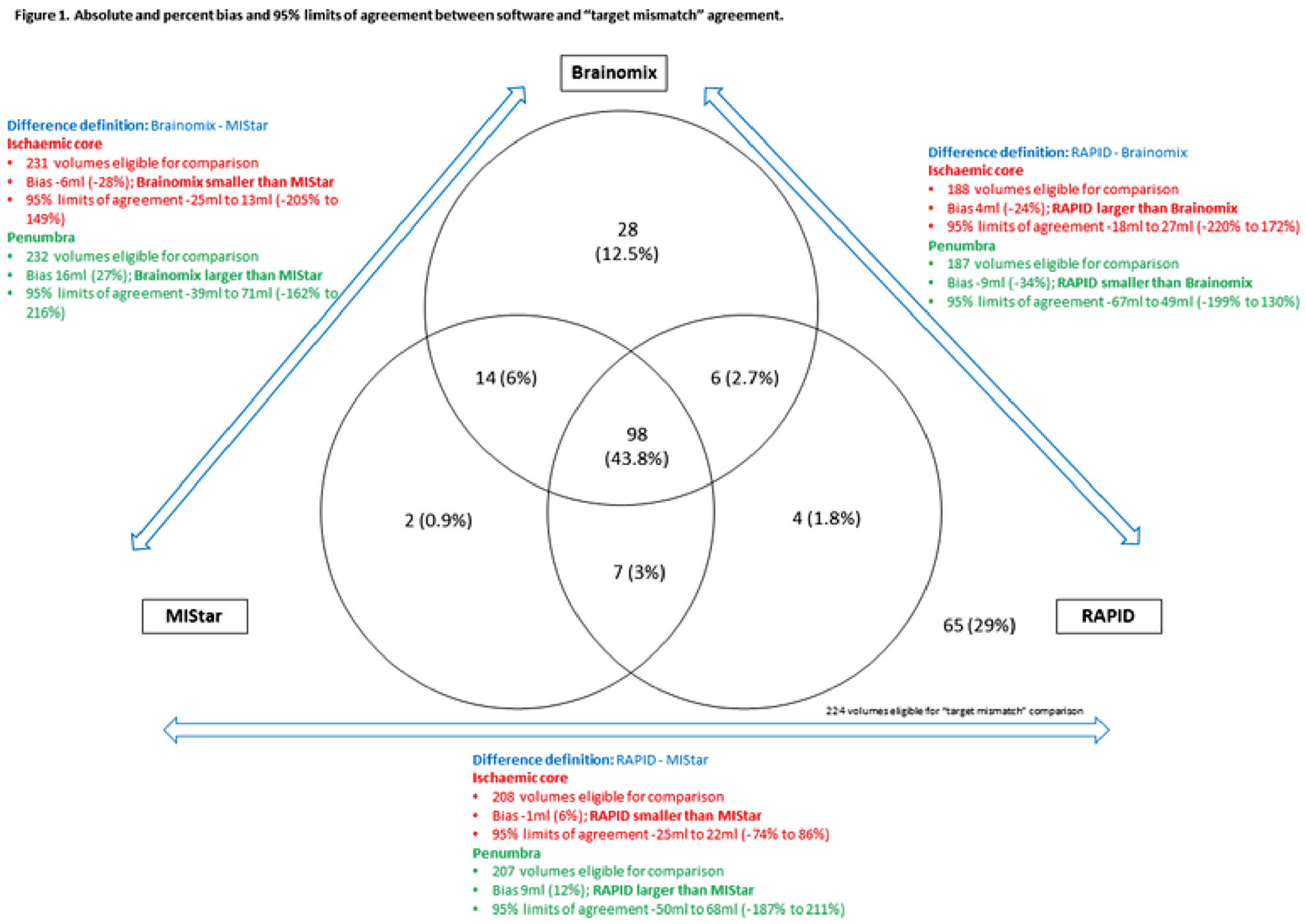
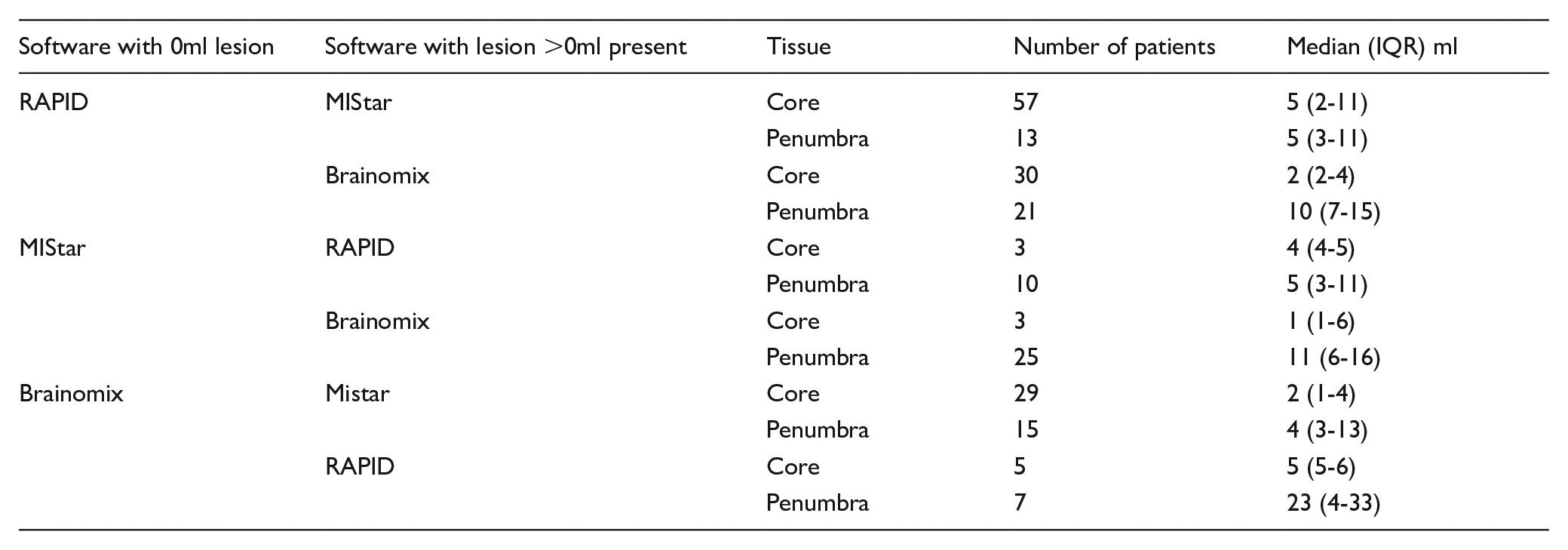
P0386 / 1193
AUTOMATED CT PERFUSION RELIABILITY IN INFARCT CORE VOLUME PREDICTION IN ACUTE ISCHEMIC STROKE DUE TO TANDEM OCCLUSION
1Tor Vergata University - Stroke center, Rome, Italy, 2Tor Vergata University - Interventional Radiology Unit, Rome, Italy
IMAGING – NON ACUTE INCLUDING NEUROSONOLOGY
P0387 / 1553
RELATION OF ENLARGED PERIVASCULAR SPACES TO OTHER MARKERS OF CEREBRAL SMALL VESSEL DISEASE
1Boston University School of Medicine, Boston, United States, 2Boston University School of Public Health, Department of Biostatistics, Boston, United States, 3NHLBI’s Framingham Heart Study, Framingham, United States, 4University of California Davis Health, Davis, United States, 5Boston University School of Medicine, Department of Neurology, Boston, United States, 6University of Texas Health, San Antonio, United States
P0388 / 1306
DOPPLER FLOW CHARACTERISTICS OF EXTRACRANIAL ARTERIES PREDICT AORTIC VALVE PATHOLOGIES IN PATIENTS WITH ISCHEMIC STROKE
1 University Medicine Göttingen, Neurology, Göttingen, Germany
P0389 / 1259
TOPOGRAPHICAL ASSOCIATION BETWEEN LEFT VENTRICULAR MYOCARDIAL STRAIN AND BRAIN LESIONS IN ACUTE STROKE PATIENTS
1Samung Medical Center, Neurology, Seoul, Korea, Republic of, 2Samsung Medical Center, Cardiology, Seoul, Korea, Republic of, 3Sungkyunkwan university, Samsung Advanced Institute of Health Sciences & Technology, Seoul, Korea, Republic of
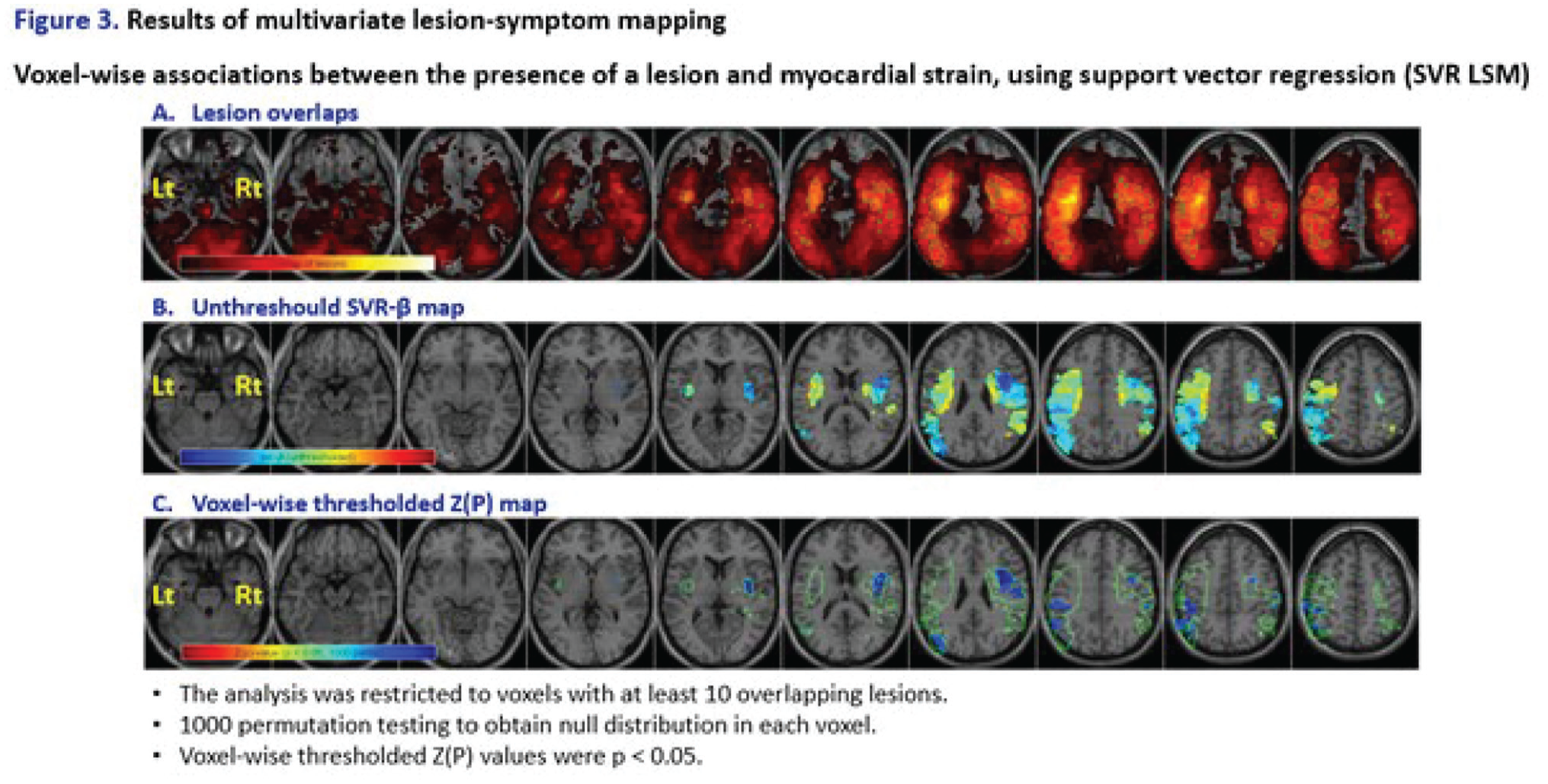
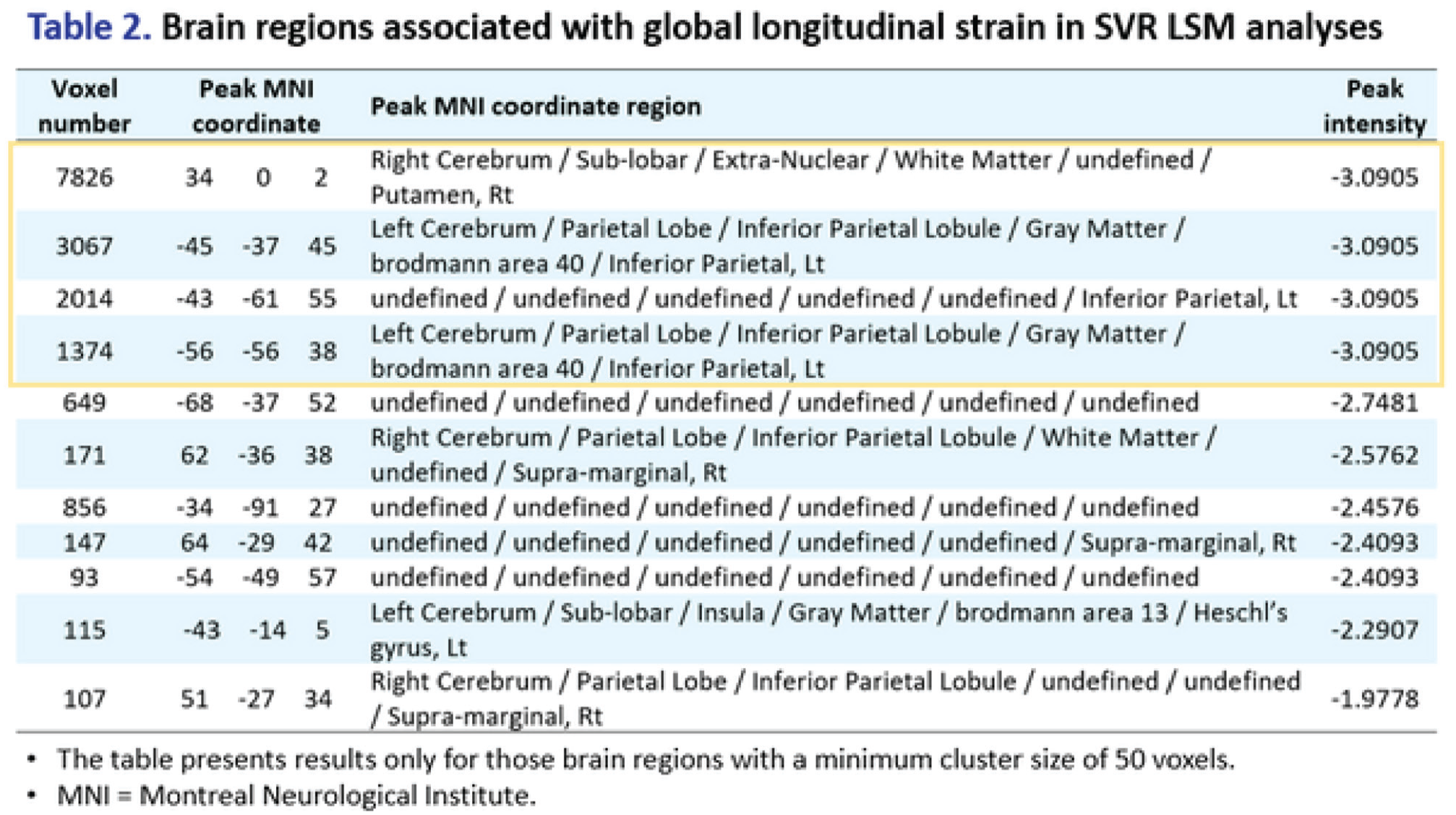
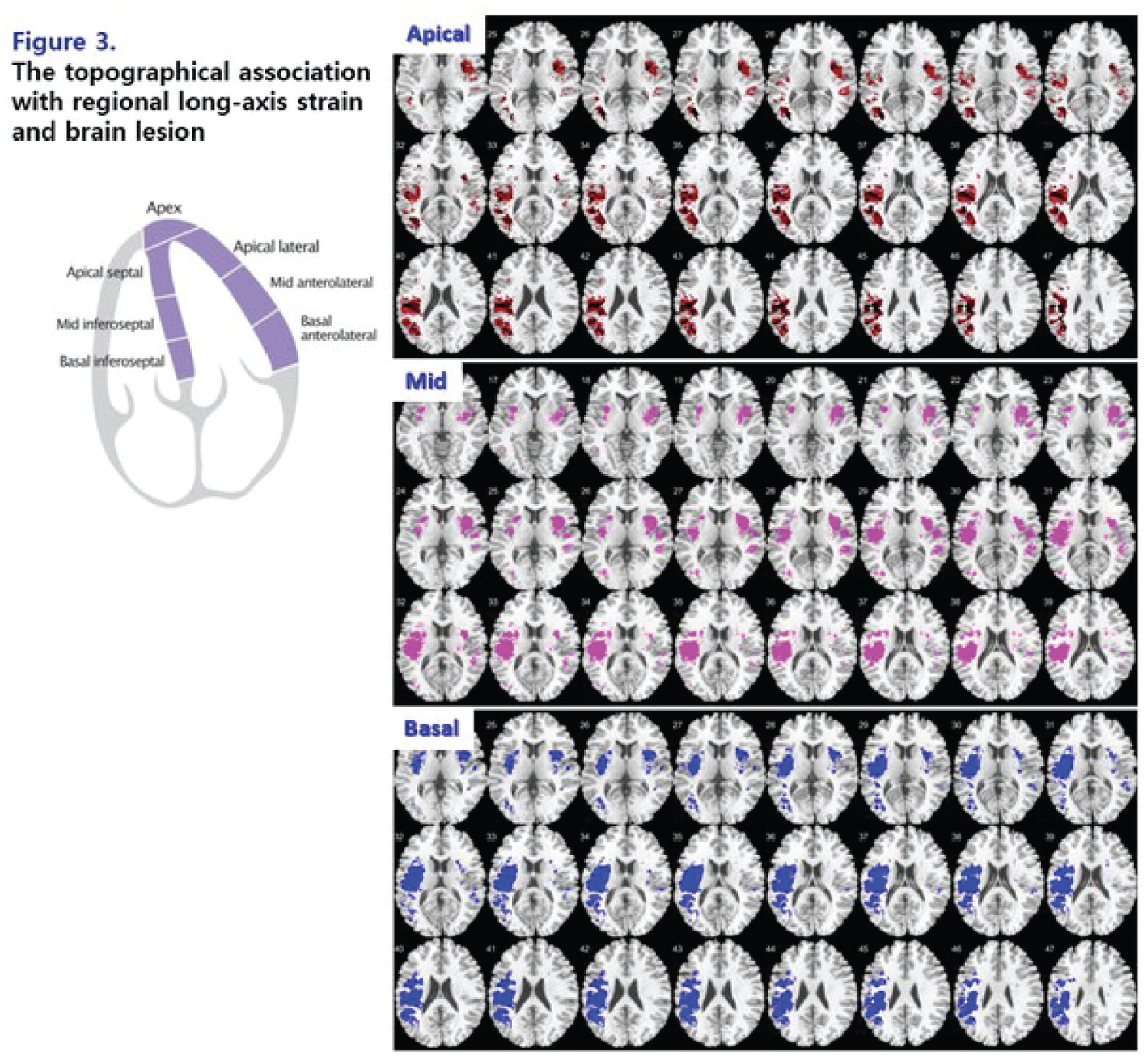
P0390 / 700
FREE-WATER IMAGING IN THE PENUMBRA OF SUB-CORTICAL ISCHEMIC STROKE LESIONS
1 University Medical Center Hamburg-Eppendorf, Department of Neurology, Hamburg, Germany
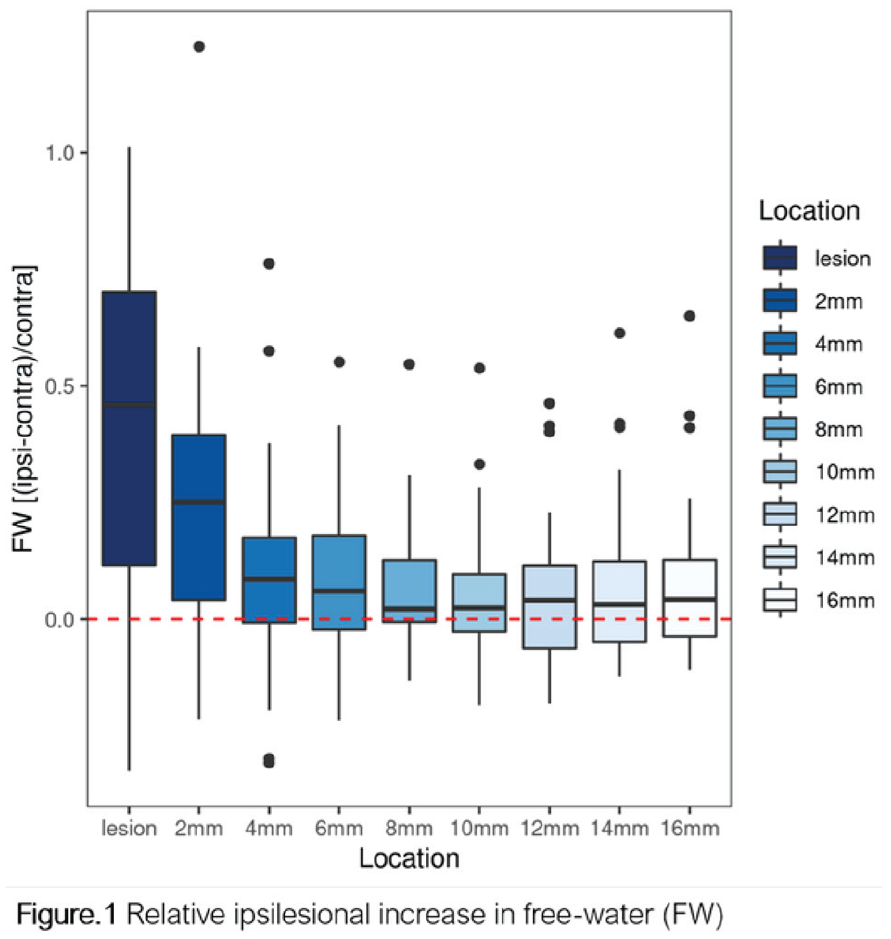
P0391 / 1380
REPERFUSION FAILURE AFTER SUCCESSFUL THROMBECTOMY OF LARGE VESSEL OCCLUSION (LVO) STROKE: CLINICAL AND IMAGING EVIDENCE
1University Hospital Zurich, Neurology, Zurich, Switzerland, 2University of Zurich, Clinical Neuroscience Center, Zurich, Switzerland, 3University Hospital Zurich, Neuroradiology, Zurich, Switzerland, 4University Hospital Zurich, Neurosurgery, Zurich, Switzerland, 5Cenereo Center for Neurology and Rehabilitation, Vitznau, Switzerland, 6University of Zurich, Center of Applied Biotechnology and Molecular Medicine, Zurich, Switzerland
We stratified patients based on their first (d1-2) follow-up PWI into: 1) hypoperfusion 2) normalization 3) hyperperfusion of the initially affected area.
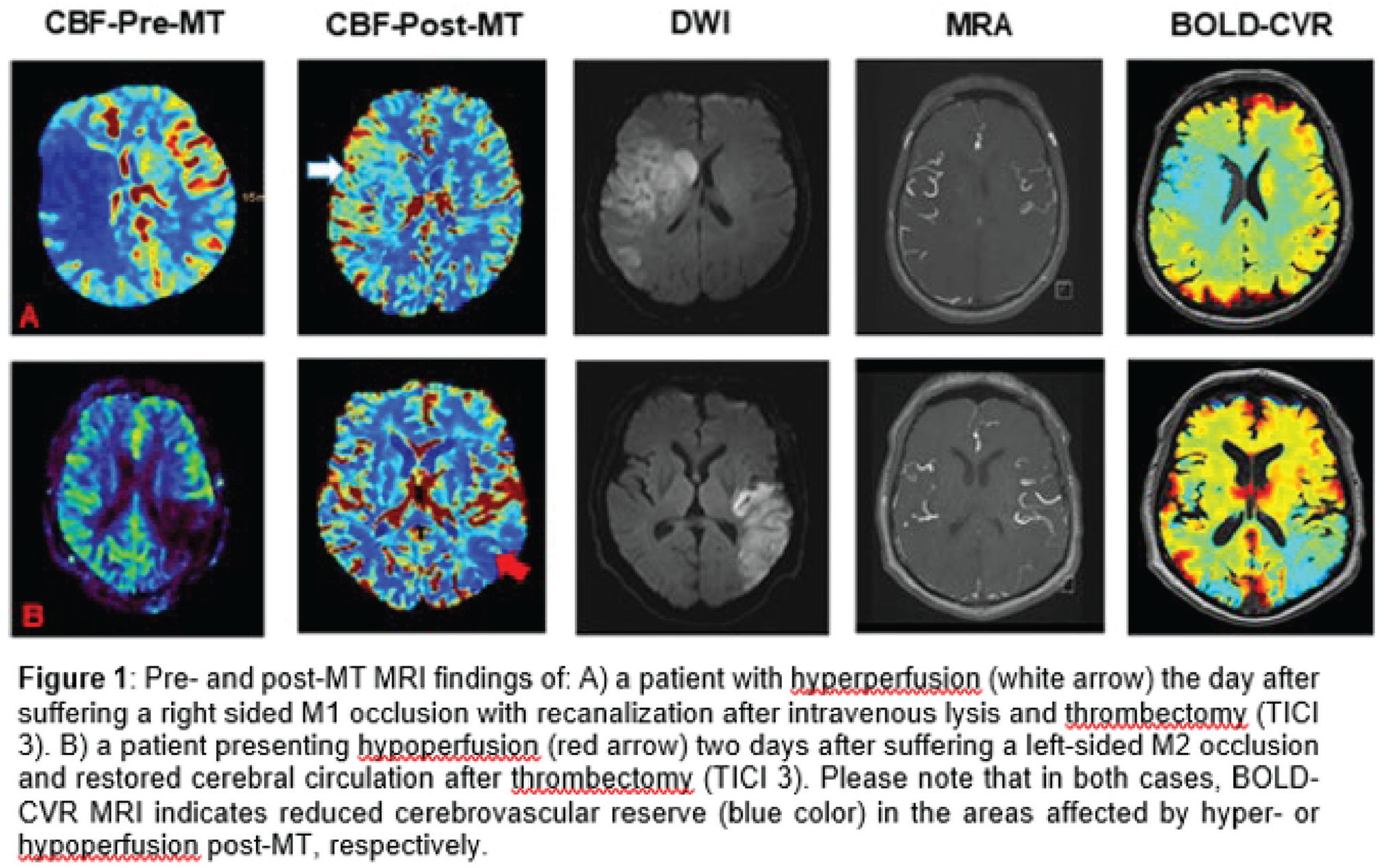
P0392 / 1479
LARGER INTRAPARENCHYMAL HEMORRHAGE VOLUME IS ASSOCIATED WITH MORE SEVERE PERIHEMATOMAL BLOOD-BRAIN BARRIER DISRUPTION
1Johns Hopkins University School of Medicine, Neurology, Baltimore, United States, 2University of Chicago Medicine and Biological Sciences, Neurovascular Surgery, Chicago, United States
P0393 / 1053
ARTIFICIAL INTELLIGENCE FOR THE MONITORING OF CEREBRAL HEMODYNAMICS
1Johannes Kepler University, Linz, Austria, 2University of Padua School of Medicine, Padua, Italy
P0394 / 529
CORRELATION BETWEEN TRANSCRANIAL DUPLEX SONOGRAPHY AND PERFUSION MRI TO IDENTIFY CEREBRAL HYPERPERFUSION AFTER STROKE THROMBECTOMY
1Medical University of Graz, Department of Neurology, Graz, Austria, 2Medical University of Graz, Division of Neuroradiology, Vascular and Interventional Radiology, Department of Radiology, Graz, Austria
P0395 / 1339
MULTI-DELAY ARTERIAL SPIN LABELING MRI FOR EVALUATING CEREBRAL BLOOD FLOW AFTER ISCHEMIC STROKE
1Erasmus MC University Medical Center, Radiology and Nuclear Medicine, Rotterdam, Netherlands, 2Erasmus MC University Medical Center, Neurology, Rotterdam, Netherlands
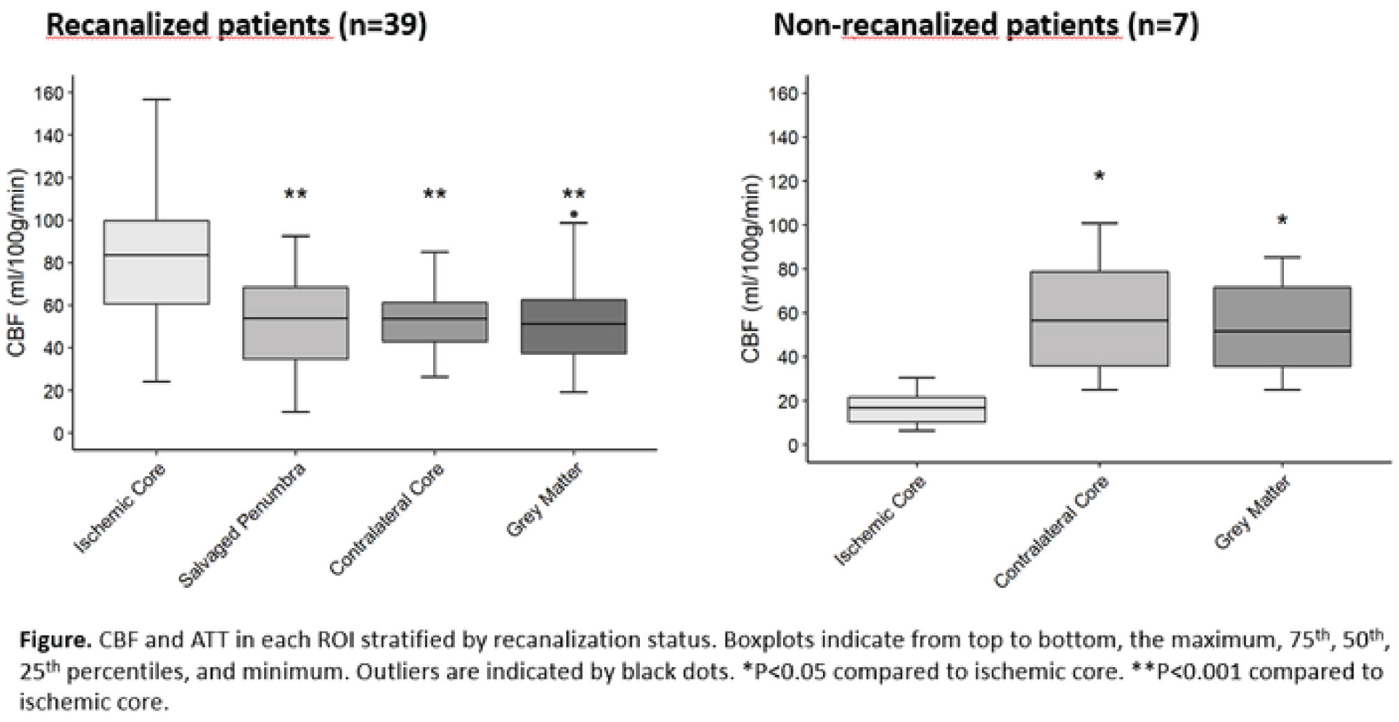
P0396 / 556
IMPORTANCE OF TRANSCRANIAL DOPPLER MONITORING IN PATIENTS WITH ACUTE CERVICAL DISSECTION
1Universidad del Desarrollo, Centro de Estudios Clínicos, Instituto de Ciencias e Innovación en Medicina, Facultad de Medicina, Santiago de Chile, Chile, 2Clínica Alemana, Universidad del Desarrollo, Unidad de Tratamiento del Ataque Cerebrovascular (UTAC), Santiago de Chile, Chile, 3Clínica Alemana, Universidad del Desarrollo, Centro de Estudios Clínicos, Instituto de Ciencias e Innovación en Medicina, Facultad de Medicina, Santiago de Chile, Chile
P0397 / 1192
PHASE CONTRAST MRI CAN SEPARATE CONVENTIONAL ⩾50% CAROTID STENOSIS AND NEAR-OCCLUSION WITH HIGH SENSITIVITY AND SPECIFICTY
1Umeå University, Umeå, Sweden, 2Umeå University, Clinical Science, Umeå, Sweden
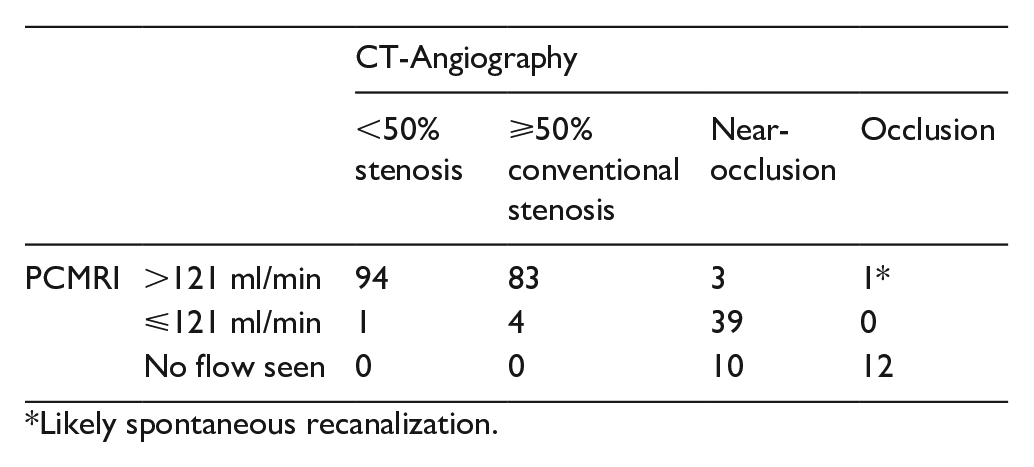
Likely spontaneous recanalization.
P0398 / 552
THE INFLUENCE OF BLOOD PRESSURE ON CONTRAST EXTRAVASATION ON DUAL ENERGY COMPUTED TOMOGRAPHY AFTER ENDOVASCULAR TREATMENT FOR ISCHEMIC STROKE
1Maastricht University Medical Centre, Department of Radiology and Nuclear Medicine, Maastricht, Netherlands, 2School for Cardiovascular Diseases (CARIM), Maastricht, Netherlands, 3Maastricht University Medical Centre, Department of Neurology, Maastricht, Netherlands
P0399 / 1382
MULTISPRECTRAL OPTOACOUSTIC IMAGING OF CEREBROVASCULAR DISEASE
1University Hospital Zurich, Department of Neurology, Zurich, Switzerland, 2University of Zurich, Zurich, Switzerland, 3Clinical Neuroscience Center, Zurich, Switzerland, 4Institute for Biomedical Engineering and Institute of Pharmacology and Toxicology, University of Zurich, Zurich, Switzerland, 5Institute for Biomedical Engineering, ETH Zurich, Department of Information Technology and Electrical Engineering, Zurich, Switzerland, 6University Hospital Zurich, Department of Ophthalmology, Zurich, Switzerland, 7Cereneo Center for Neurology and Rehabiliation, Vitznau, Switzerland, 8Institute of Diagnostic and Interventional Radiology, University Hospital Zurich, Zurich, Switzerland
P0400 / 250
IN VIVO DETECTION OF 18F-MK-6240 BINDING AFTER ISCHEMIC STROKE
1KU Leuven University Hospitals, Neurology, Leuven, Belgium, 2KU Leuven, Rehabilitation Sciences, Leuven, Belgium, 3KU Leuven, Nuclear Medicine and Molecular Imaging, Leuven, Belgium, 4KU Leuven University Hospitals, Radiology, Leuven, Belgium, 5KU Leuven University Hospitals, Psychiatry, Leuven, Belgium, 6KU Leuven University Hospitals, Nuclear Medicine and Molecular Imaging, Leuven, Belgium
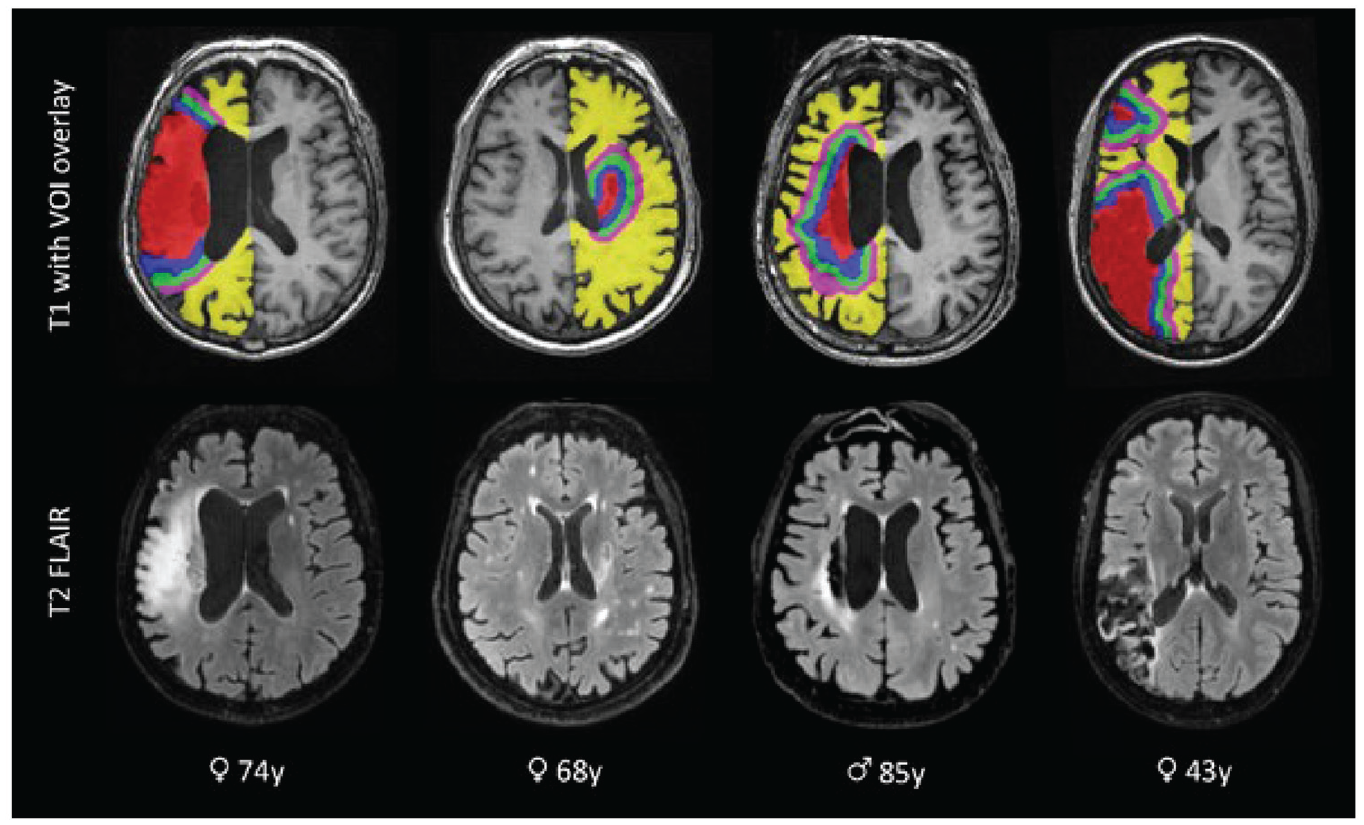
Figure 1
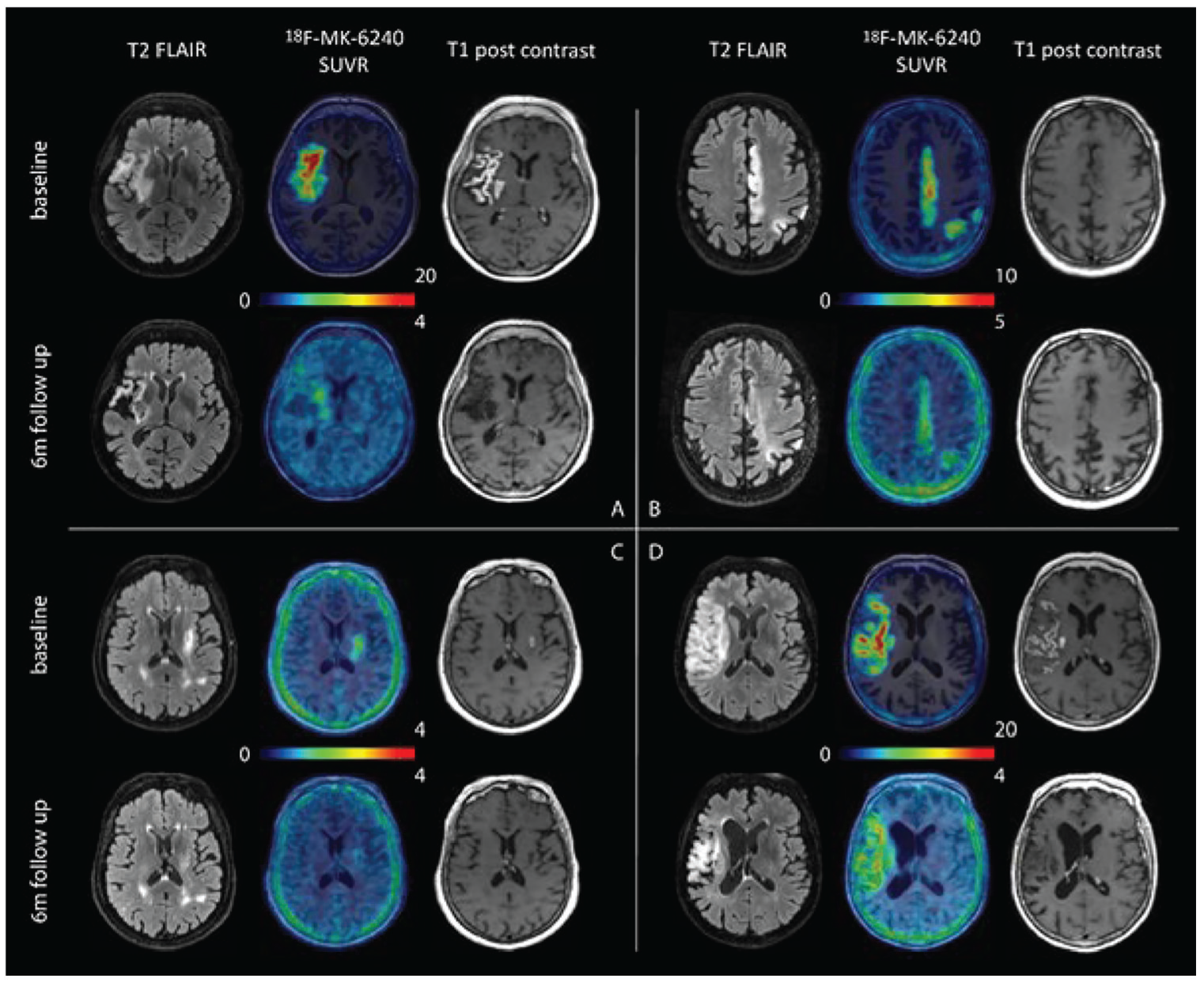
Figure 2
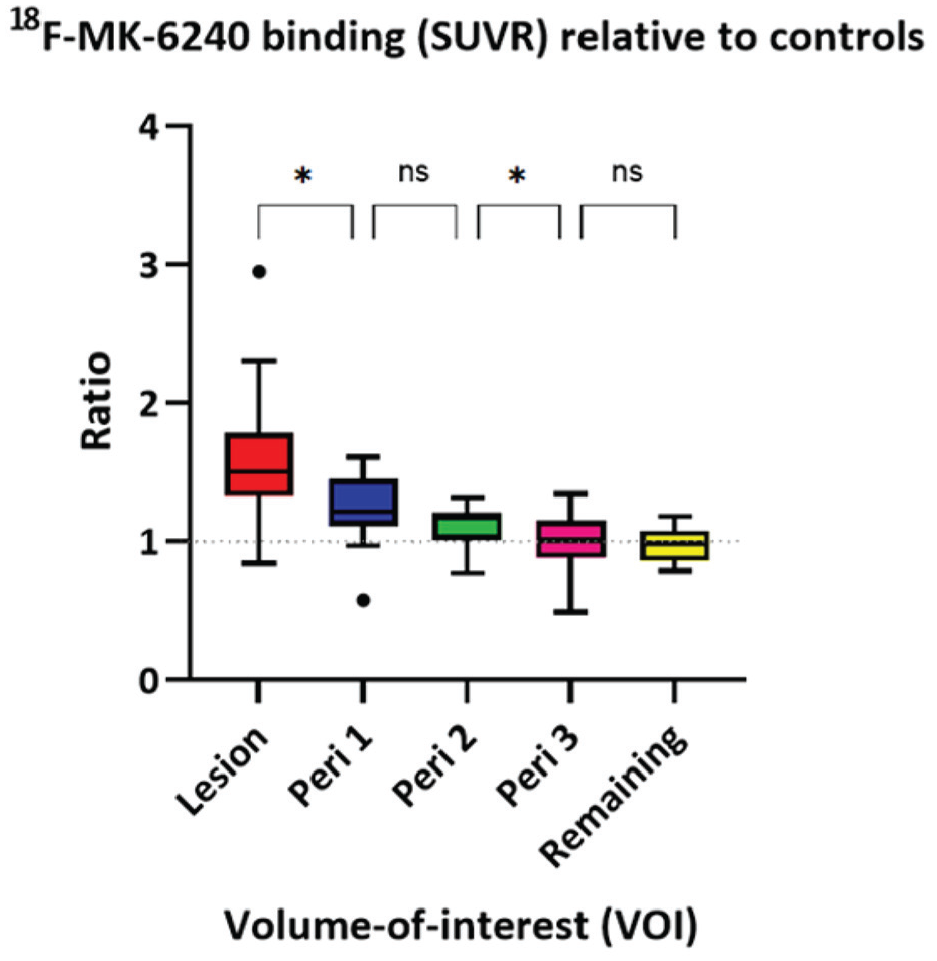
Figure 3
P0401 / 415
ASSOCIATION BETWEEN SPONTANEOUS INTERNAL CAROTID ARTERY DISSECTION AND PERIVASCULAR ADIPOSE TISSUE ATTENUATION ON COMPUTED TOMOGRAPHY ANGIOGRAPHY
1Monash University and Monash Heart, Monash Cardiovascular Research Centre, Victorian Heart Institute, Melbourne, Australia, 2Monash University, Department of Medicine, Melbourne, Australia, 3Cedars-Sinai Medical Centre, Biomedical Imaging Research Institute, Los Angeles, United States, 4Clínica Alemana de Santiago, Universidad del Desarrollo, Departamento de Imagenología, Santiago, Chile, 5Clínica Alemana de Santiago, Universidad del Desarrollo, Departamento de Imagenología, Santiago, Chile, 6Clínica Alemana de Santiago, Universidad del Desarrollo, Servicio de Neurología, Departamento de Neurología y Psiquiatría, Santiago, Chile, 7Clínica Alemana, Universidad del Desarrollo, Centro de Estudios Clínicos, Instituto de Ciencias e Innovación en Medicina, Santiago, Chile, 8Royal Prince Alfred Hospital, Department of Cardiology, Sydney, Australia, 9University of Sydney, The George Institute for Global Health, Sydney, Australia
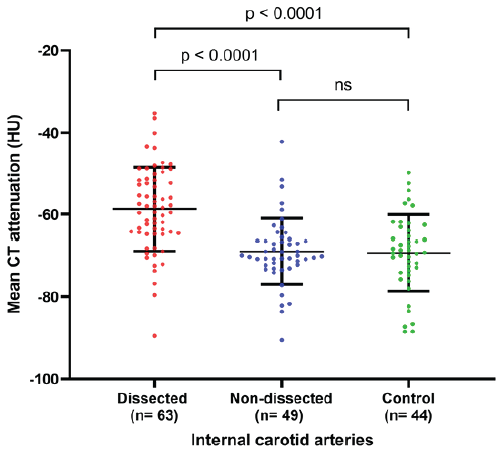
P0402 / 1045
ASSESSMENT OF CEREBRAL VASOMOTOR REACTIVITY IN PATIENTS WITH ACUTE MILD STROKE AND TRANSIENT ISCHEMIC ATTACK (TIA) WITH DIFFERENT ETIOPATHOGENESIS: PRELIMINARY RESULTS
1Campus Bio-Medico University of Rome, Headache and Neurosonology Unit, Neurology Unit, Rome, Italy, 2Policlinico of Bari “Aldo Moro”, Neurology Unit, Bari, Italy
P0403 / 1183
DIAGNOSING CAROTID NEAR-OCCLUSION WITH POSTOPERATIVE CT-ANGIOGRAPHY
1Umeå University, Clinical Science, Umeå, Sweden, 2Sunnybrook Health Science Centre, Medical Imaging, Toronto, Canada
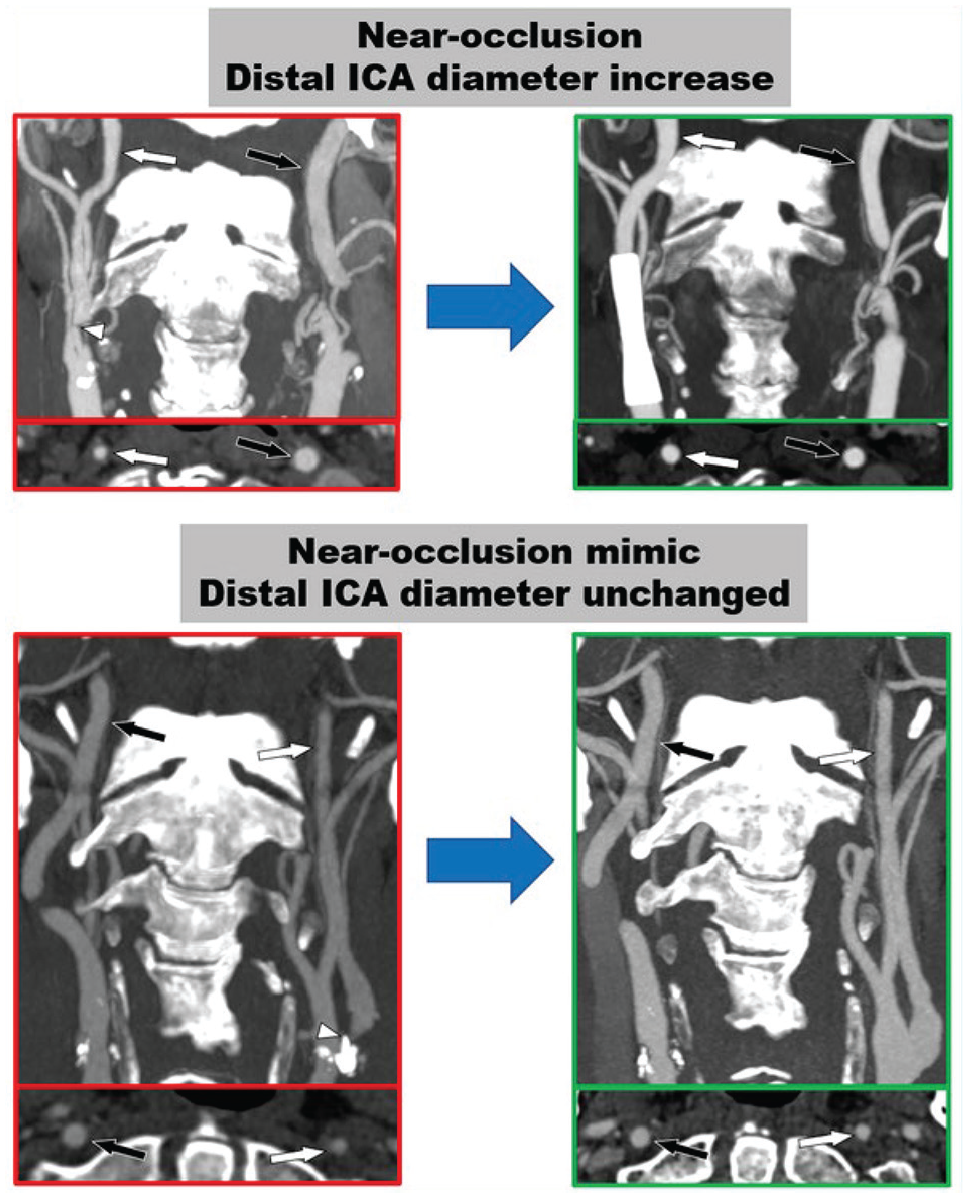
P0404 / 1122
INTEROBSERVER AGREEMENT ON THE HEIDELBERG BLEEDING CLASSIFICATION ON MAGNETIC RESONANCE IMAGING
1Erasmus MC University Medical Center, Neurology, Rotterdam, Netherlands, 2Erasmus MC University Medical Center, Radiology & Nuclear Medicine, Rotterdam, Netherlands, 3Isala Klinieken, Radiology & Nuclear Medicine, Zwolle, Netherlands, 4Haaglanden Medical Center, Radiology & Nuclear Medicine, The Hague, Netherlands, 5Maastricht University Medical Center and School for Mental Health and Sciences, Radiology & Nuclear Medicine, Maastricht, Netherlands, 6University Medical Center Groningen, Radiology & Nuclear Medicine, Groningen, Netherlands, 7Haukeland University Hospital, Neurology, Bergen, Norway, 8University Hospital of Nancy, Department of Diagnostics and Interventional Neuroradiology, Nancy, France
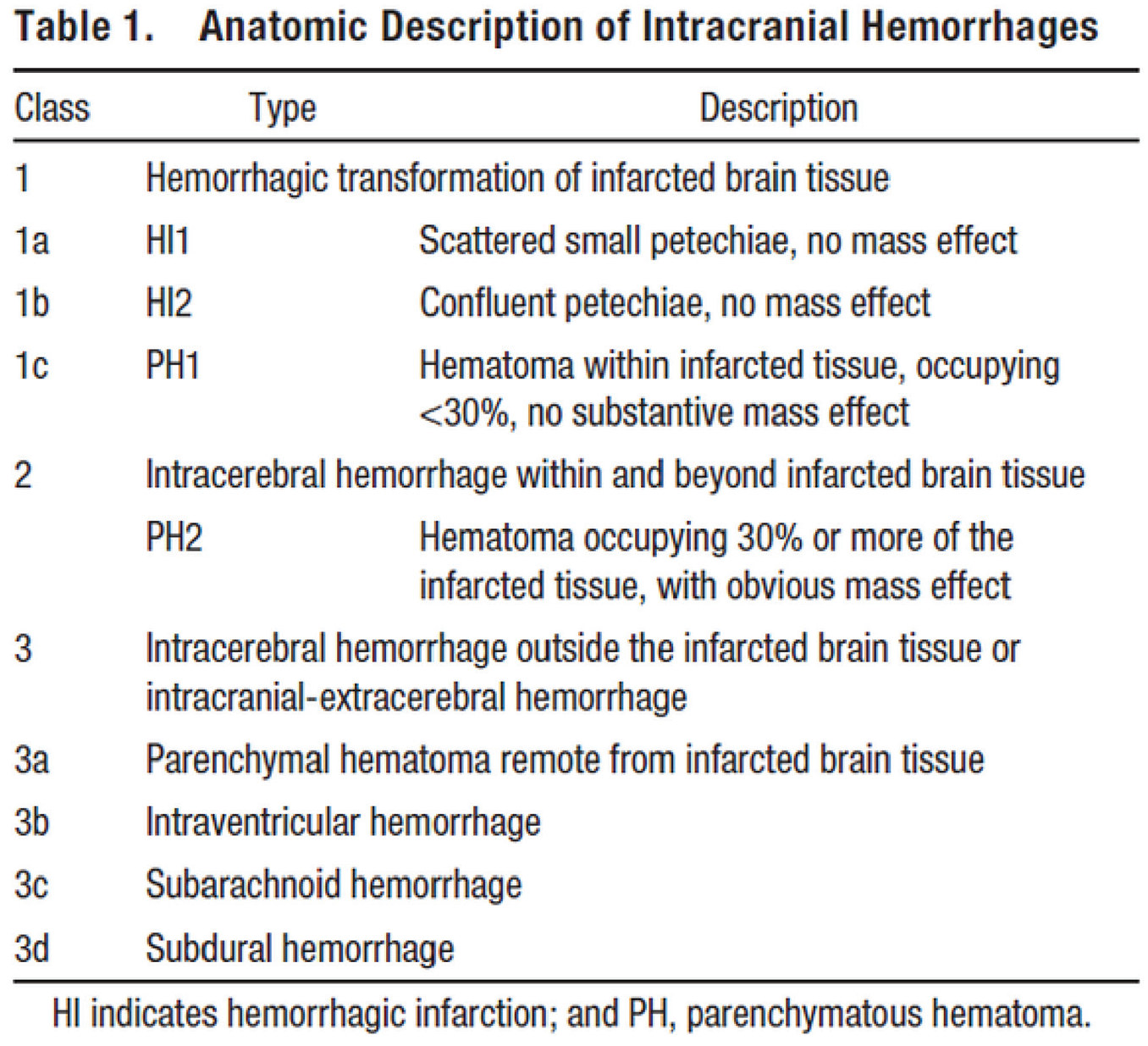
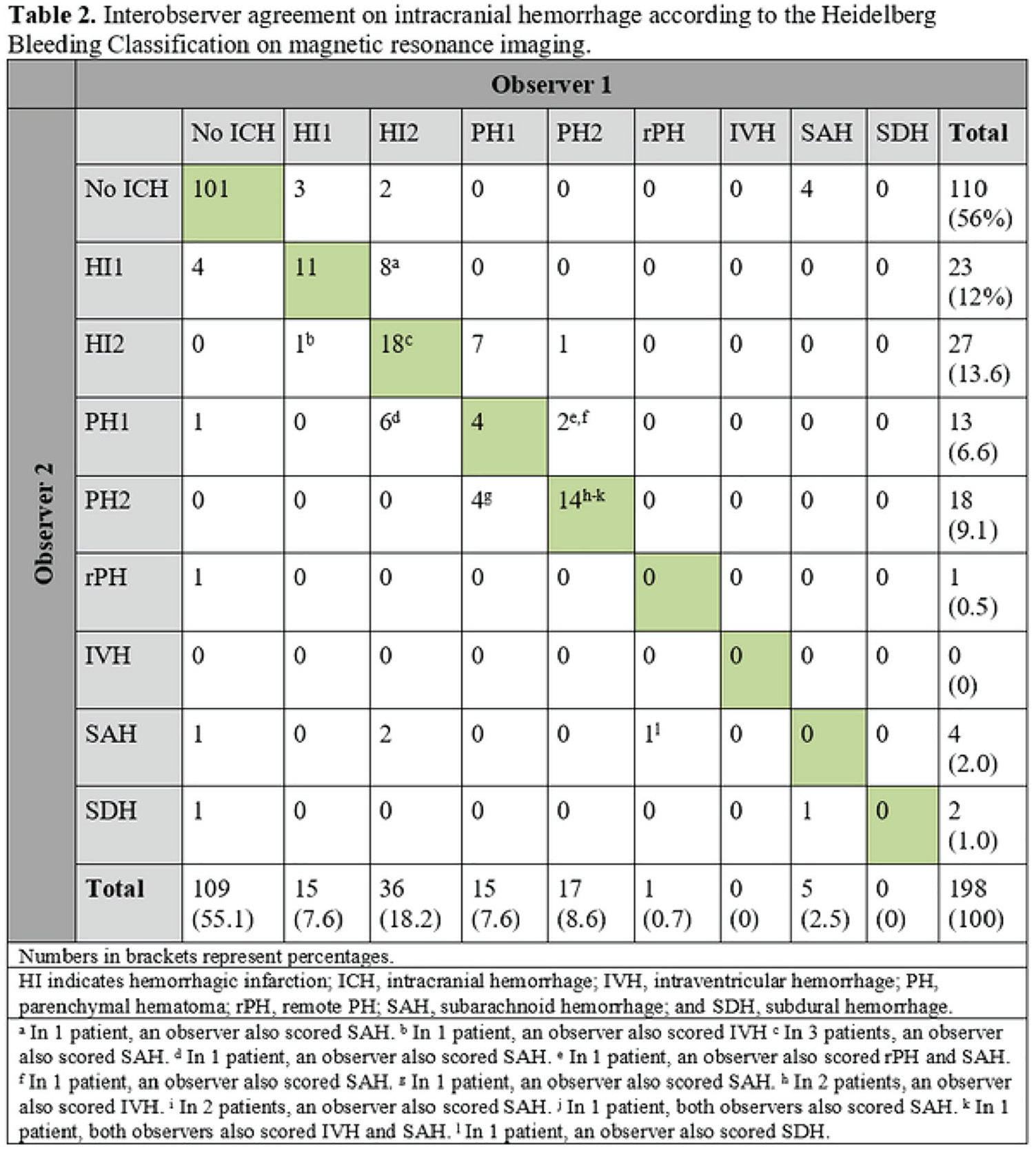
P0405 / 1516
EFFECTS OF NORADRENALINE AND LABETALOL ON CEREBRAL BLOOD FLOW
1Umeå University, Department of Clinical Sciences, Umeå, Sweden, 2Umeå University, Umeå, Sweden, 3Umeå University, Department of Radiation Sciences, Umeå, Sweden, 4Umeå University, Department of Applied Physics and Electronics, Umeå, Sweden, 5Umeå University, Department of Surgical and Perioperative Sciences, Umeå, Sweden
P0406 / 1308
ACUTE CHANGES IN THE COUPLING STRENGTH BETWEEN BRAIN STRUCTURE AND FUNCTION FOLLOWING A STROKE
1Ecole Polytechnique Fédérale de Lausanne, Defitech Chair of Clinical Neuroengineering, Center for Neuroprosthetics and Brain Mind Institute, Geneva, Switzerland, 2Ecole Polytechnique Fédérale de Lausanne, Defitech Chair of Clinical Neuroengineering, Clinique Romande de Réadaptation, Center for Neuroprosthetics and Brain Mind Institute, Sion, Switzerland, 3University of Lübeck, Department of Neurology, Lübeck, Germany, 4University of Lübeck, Center of Brain, Behavior and Metabolism (CBBM), Lübeck, Germany, 5Ecole Polytechnique Fédérale de Lausanne, Medical Image Processing Laboratory, Institute of Bioengineering, Geneva, Switzerland, 6University of Geneva, Department of Radiology and Medical Informatics, Geneva, Switzerland, 7University Hospital Würzburg, Department of Neurology, Würzburg, Germany, 8Ecole Polytechnique Fédérale de Lausanne, Laboratory of Cognitive Neuroscience, Center for Neuroprosthetics and Brain Mind Institute, Geneva, Switzerland, 9Geneva University Hospitals, Department of Neurology, Geneva, Switzerland, 10Berner Klinik Montana, Crans-Montana, Switzerland, 11Hôpital du Valais, Department of Radiology, Sion, Switzerland, 12Hôpital du Valais, Department of Neurology, Sion, Switzerland, 13Clinique Romande de Réadaptation, Sion, Switzerland
P0407 / 1617
PREDICTORS OF CONGRUENCY BETWEEN CLINICAL AND RADIOGRAPHIC OXFORSHIRE COMMUNITY STROKE PROJECT CLASSIFICATION SUBTYPES
1Universidade Federal de Sao Paulo, Sao Paulo, Brazil, 2Columbia University, New York City, United States, 3Hospital Geral de Fortaleza, Fortaleza, Brazil, 4Universidade Estadual do Ceara, Fortaleza, Brazil, 5Centro Universitario Sao Camilo, Sao Paulo, Brazil
P0408 / 910
COMPARISON OF DIFFUSION WEIGHTED IMAGING B0 AND SUSCEPTIBILITY WEIGHTED IMAGING OR GRADIENT-ECHO MRI FOR DETECTION OF POST-ISCHEMIC INTRACRANIAL HEMORRHAGE
1Erasmus MC University Medical Center, Radiology and Nuclear Medicine, Rotterdam, Netherlands, 2Erasmus MC University Medical Center, Neurology, Rotterdam, Netherlands, 3Isala Klinieken, Radiology, Zwolle, Netherlands, 4Haaglanden Medisch Centrum, Radiology, Den Haag, Netherlands, 5Maastricht Universitair Medisch Centrum, Radiology, Maastricht, Netherlands, 6Universitair Medisch Centrum Groningen, Radiology, Groningen, Netherlands, 7Haukeland University Hospital, Neurology, Bergen, Norway, 8University Hospital of Nancy, Diagnostic and Interventional Neuroradiology, Nancy, France
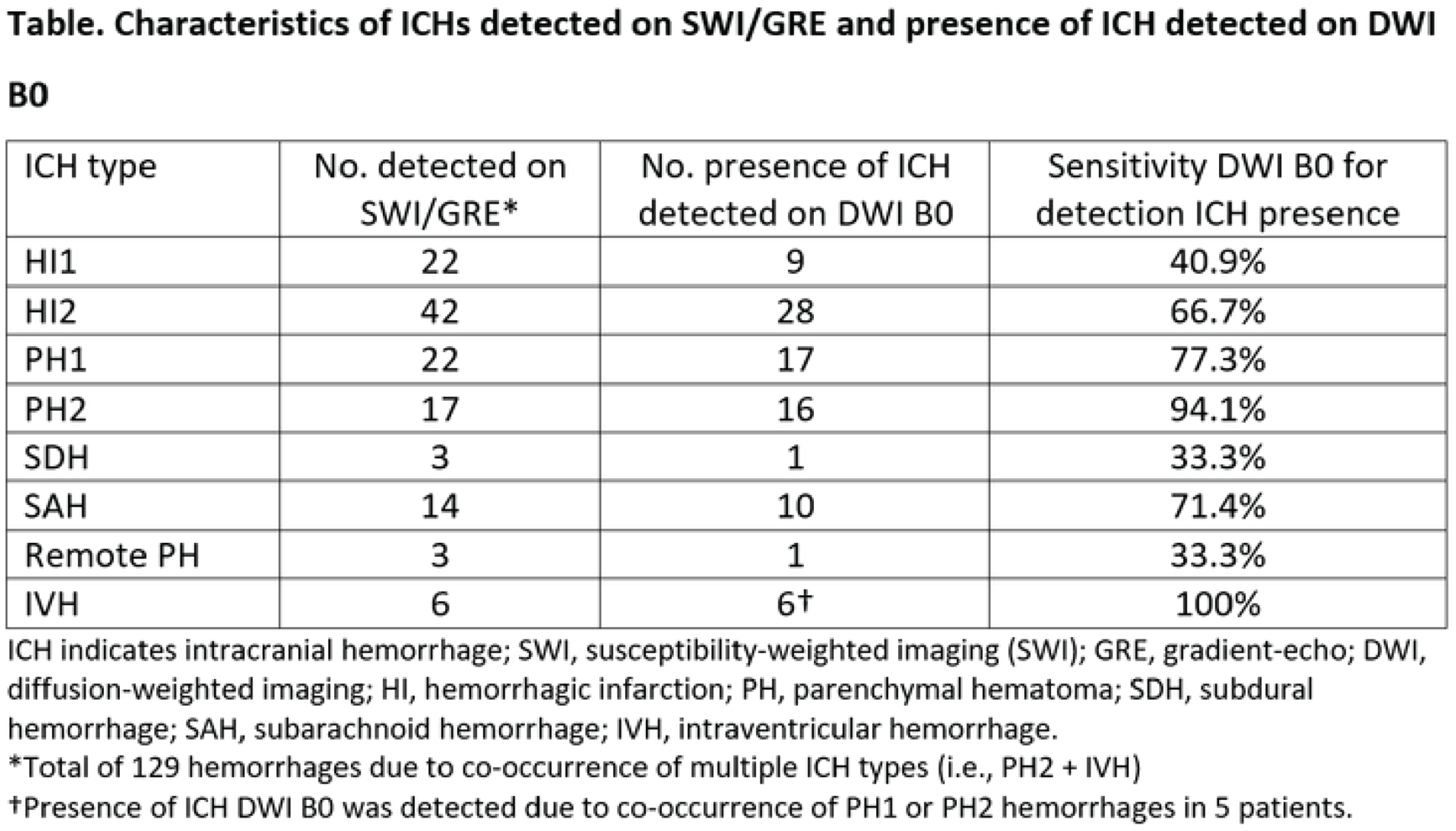
P0409 / 925
ESTIMATION OF COMPENSATION FOR CIRCLE OF WILLIS ANASTOMOSES IN PATIENTS WITH SIGNIFICANT CAROTID STENOSIS - TCD STUDY
1Semmelweis University, Neurology Department, Budapest, Hungary, 2Semmelweis University, János Szentágothai Neurosciences School of PhD Studies, Budapest, Hungary, 3Semmelweis University, Faculty of Medicine, Budapest, Hungary, 4Semmelweis University, Department of Vascular Surgery, Budapest, Hungary, 5University of Physical Education, Research Center for Sport Physiology, Budapest, Hungary
P0410 / 1522
CEREBRAL COLLATERAL CIRCULATION AND CAROTID PLAQUES IN VARIOUS NEUROVASCULAR PRESENTATIONS
1 Aristotelian University of Thessaloniki, A Neurology Department, AHEPA Hospital, Thessaloniki, Greece
P0411 / 507
AUTOMATICALLY QUANTIFYING SIGNIFICANT EMBOLIC EVENTS FROM EXTENDED TRANSCRANIAL DOPPLER ULTRASOUND MONITORING DURING HIGH STROKE RISK PROCEDURES
1 NovaSignal Corp., Innovation, Los Angeles, United States
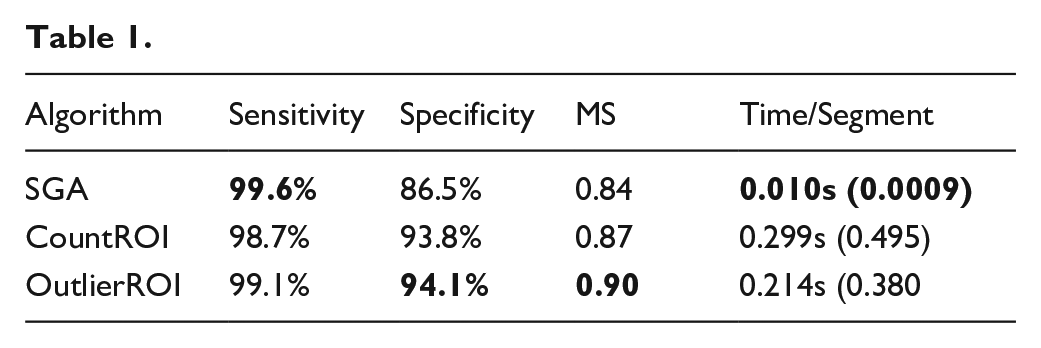
DIAGNOSIS/INVESTIGATION OF STROKE ETIOLOGY
P0412 / 911
INTERNAL CAROTID ARTERY ANEURYSM PRESENTING AS UNILATERAL TONGUE SWELLING DUE TO HYPOGLOSSAL NERVE PALSY
1 Royal Berkshire Hospital, Reading, United Kingdom
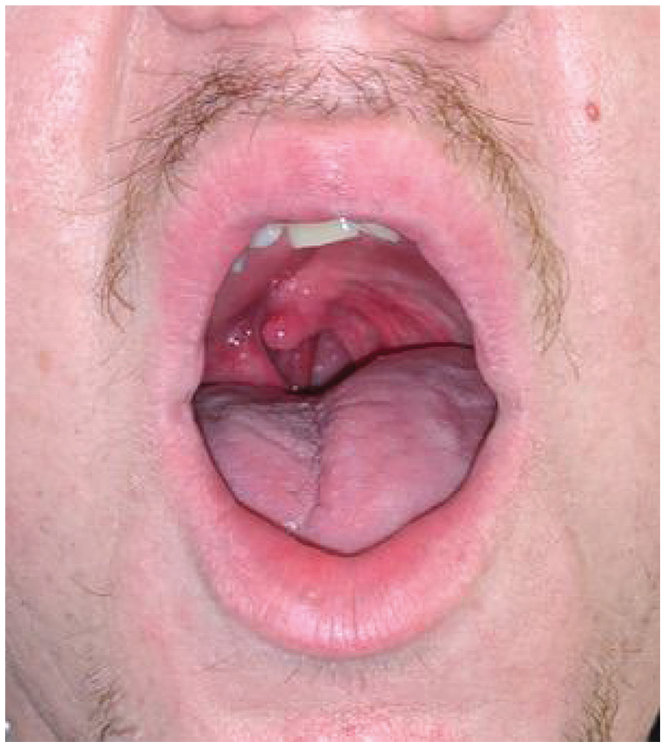
Figure 1
A CT angiogram of the carotid artery demonstrated a saccular aneurysm of the ICA at the skull base (Figure 2) and he was diagnosed with a hypoglossal and vagus nerve palsy secondary to dissection and aneurysm of the ICA caused by vomiting. He was treated with dual anti-platelet therapy, anti-hypertensive medication and weight loss advice.
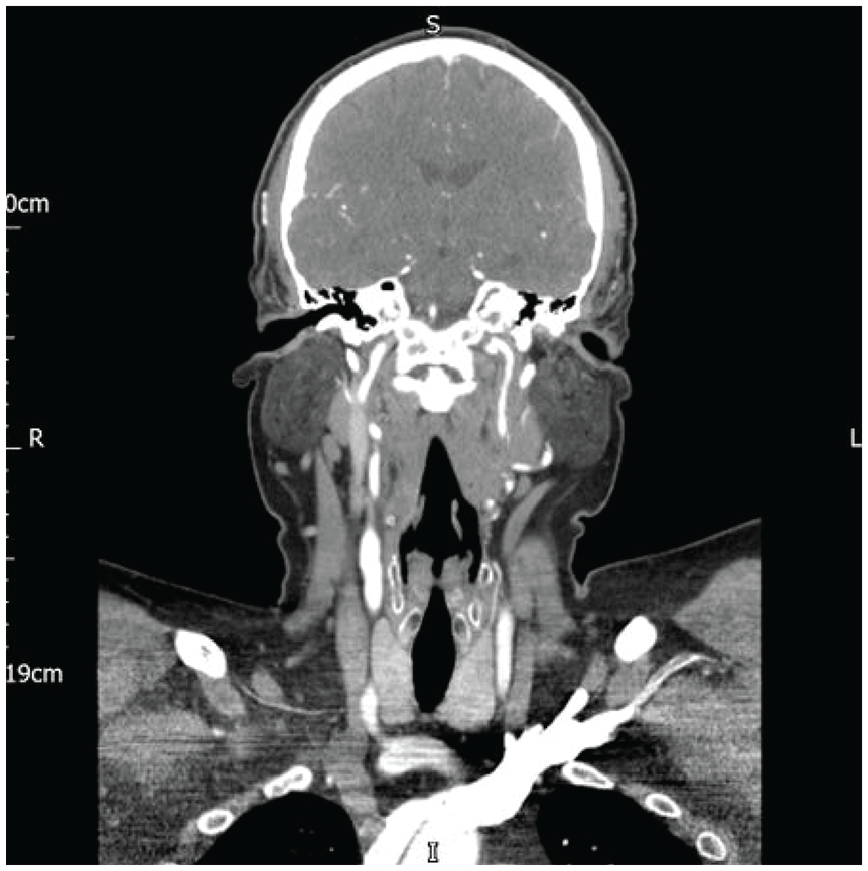
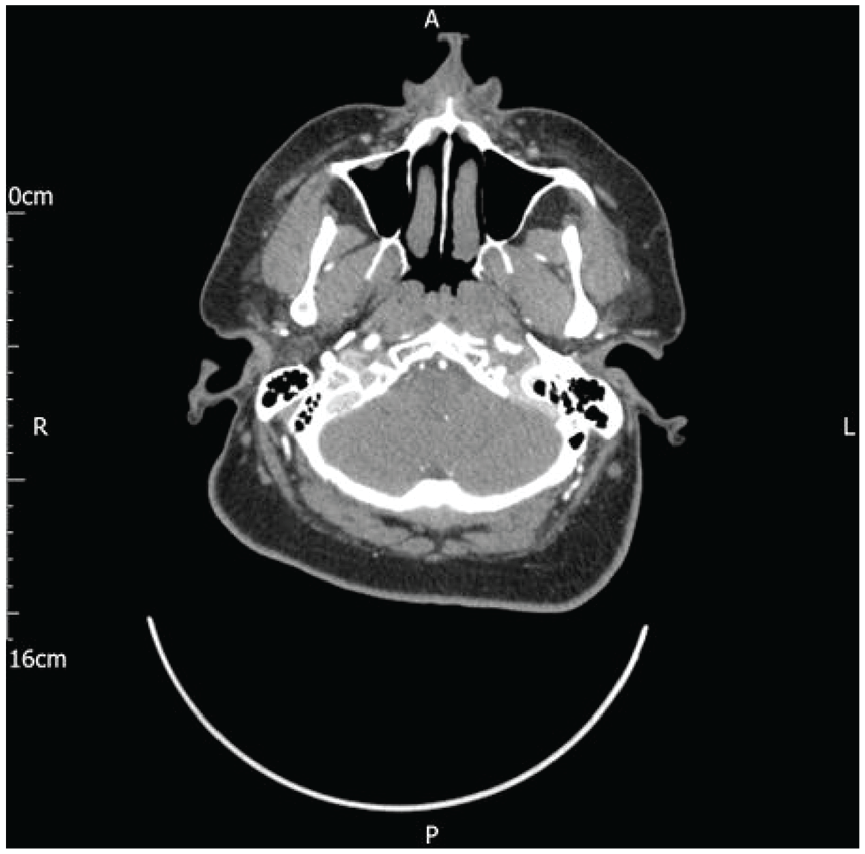
Figure 2
P0413 / 406
IMPACT OF ECHOCARDIOGRAPHY PERFORMED BY NEUROLOGISTS IN THE INTEGRATED PROCESS FOR STROKE CARE IN CARDIAC IMAGING UNITS
1Clinical Hospital of Santiago de Compostela, Neurology, Santiago de Compostela, Spain, 2Clinical Hospital of Santiago de Compostela, Cardiology, Santiago de Compostela, Spain
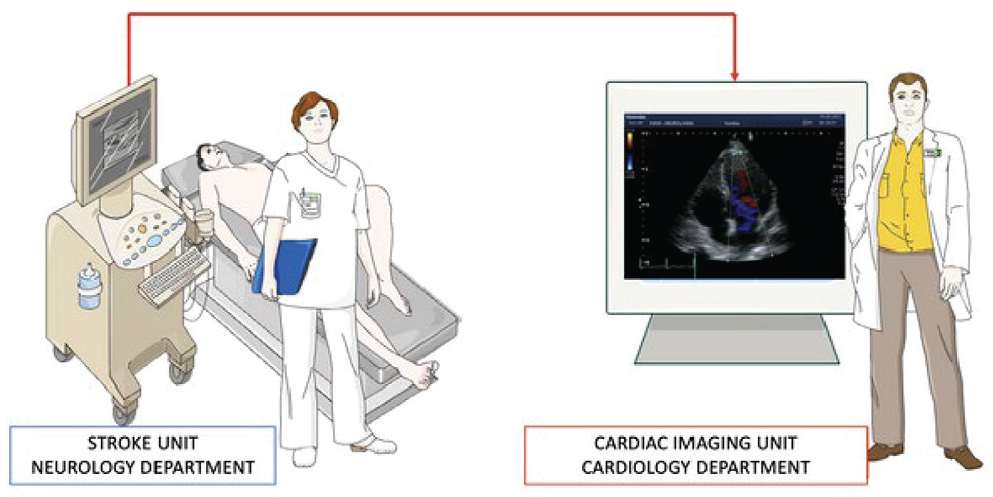
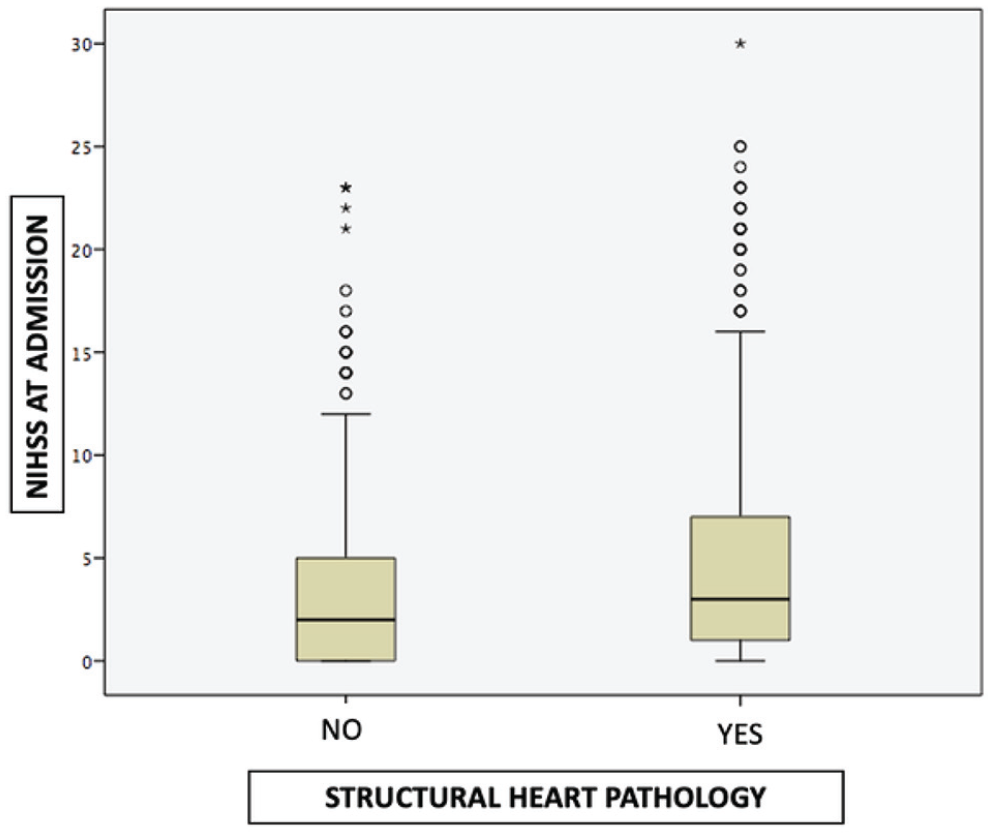
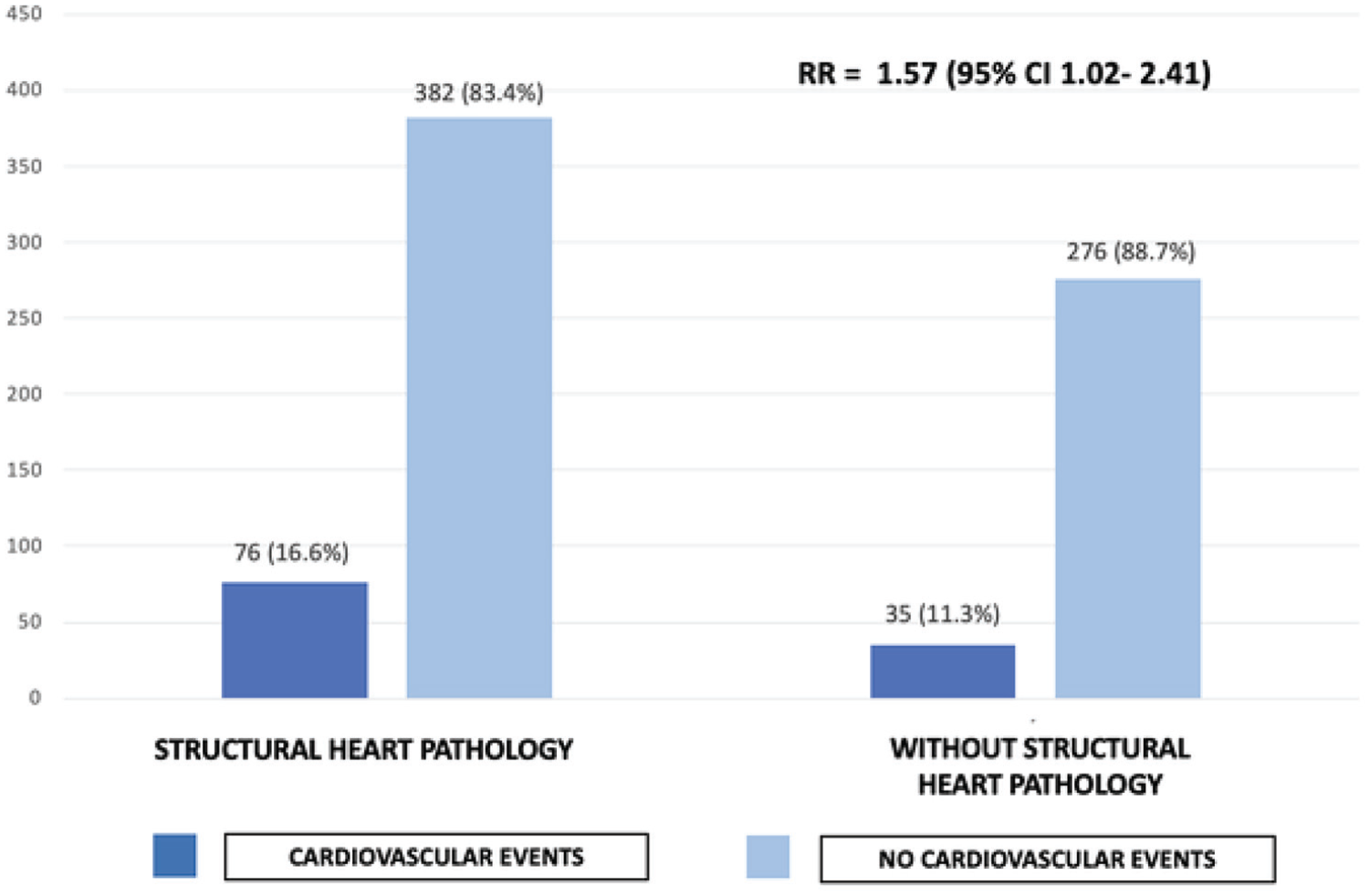
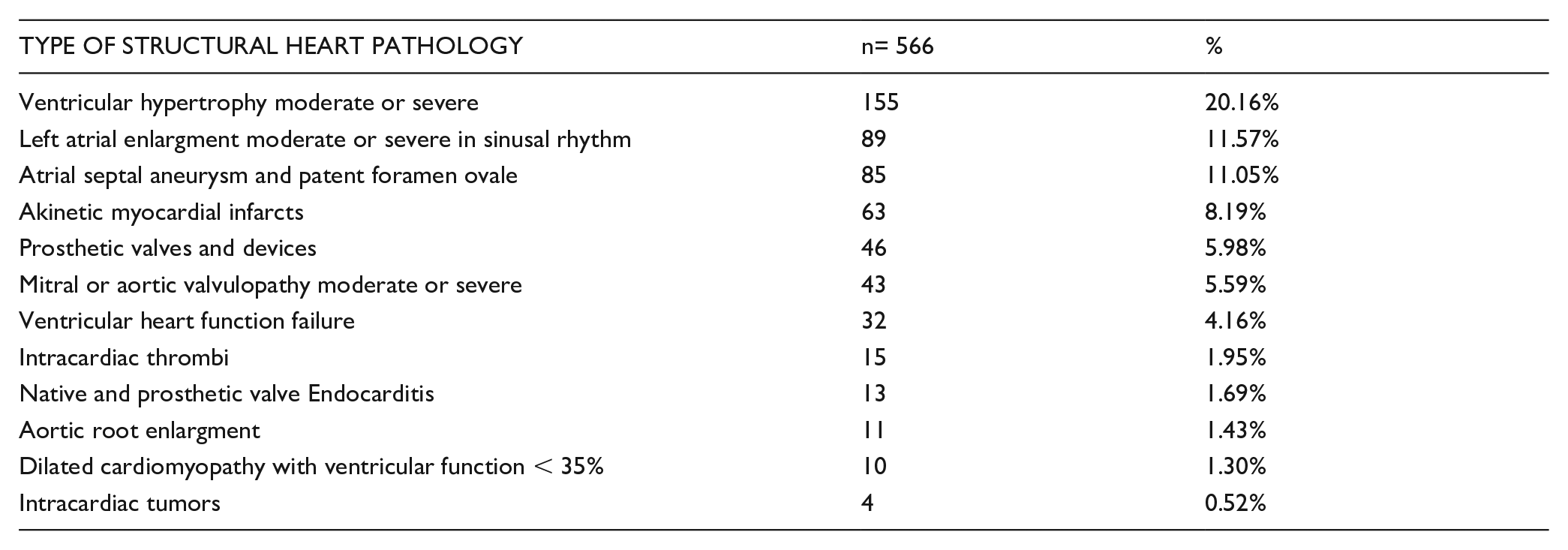
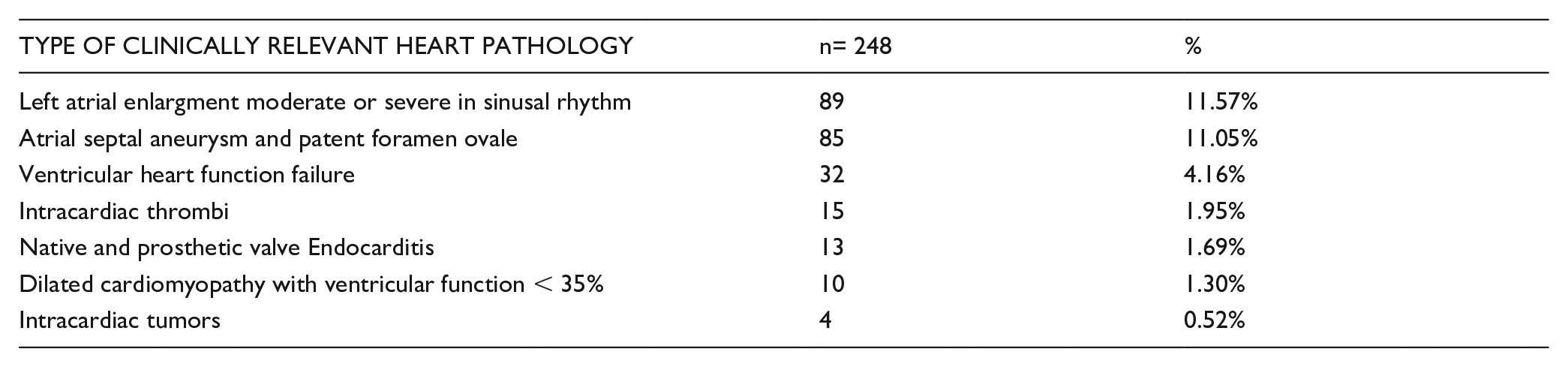
P0414 / 499
CLINICAL DIAGNOSIS AND MRI IMAGING IN PATIENTS WITH TRANSIENT AND MINOR NEUROLOGICAL SYMPTOMS: A COHORT STUDY
1University of Edinburgh, Edinburgh, United Kingdom, 2Kunming Medical University, Kunming, China
P0415 / 904
ULTRASOUND-GUIDED DIAGNOSIS OF AN UNCOMMON STROKE: A CASE OF GIANT CELL ARTERITIS
1San Giuseppe Hospital, Department of Neurology, Empoli, Italy, 2San Giuseppe Hospital, Internal Medicine, Empoli, Italy, 3San Giuseppe Hospital, Internal Medicine and Rheumatology, Empoli, Italy, 4San Giuseppe Hospital, Departmento of Radiology, Empoli, Italy
Giant cell arteritis (GCA) is an immune-mediated vasculitis of large- and medium-sized vessels like superficial temporal arteries, extradural vertebral (VA) and carotid arteries (CA). Stroke happens in 3% to 7% of the cases and identifying GCA properly is important because potentially curative treatment exists.
An 83-year-old woman had a sudden onset of postural instability and bilateral hypoacusia. Laboratory tests didn’t show significant pathological findings.
TC-Angiography showed a filiform lumen of right VA and occlusion of left VA, right AICA and left PICA. Brain MRI pointed out restricted diffusion lesions in bilateral cerebellar dentate nuclei, consistent with acute ischemic stroke (Figure 1).
Ultrasonography didn’t show relevant anomalies in CA; instead, VA presented an homogeneous, hypoechogenic and concentric dark area (the so-called “halo sign”) around the lumen of the bilateral V2 segment (Figure 2).
The uncommon stroke localization and the ultrasound findings suggested vasculitic etiology of lesions, like GCA. An ultrasound examination of the TA was performed and, interestingly, it highlighted the “halo sign” also in the bilateral temporal arteries.
MR-angiography confirmed the previous intracranial vascular findings. Finally, the patient performed a 18FDG-PETwhich highlighted increased FDG uptake of inflamed vertebral artery walls. Patient was treated with a high dose of iv steroids and oral antiplatelet therapy, with improvement of clinical status.
In our patient clinical diagnosis of GCA was challenging due to limited classical symptoms. Arguments in favor of arteritis were the symmetric involvement of the VA, the sonographic halo sign and atypical stroke localization.
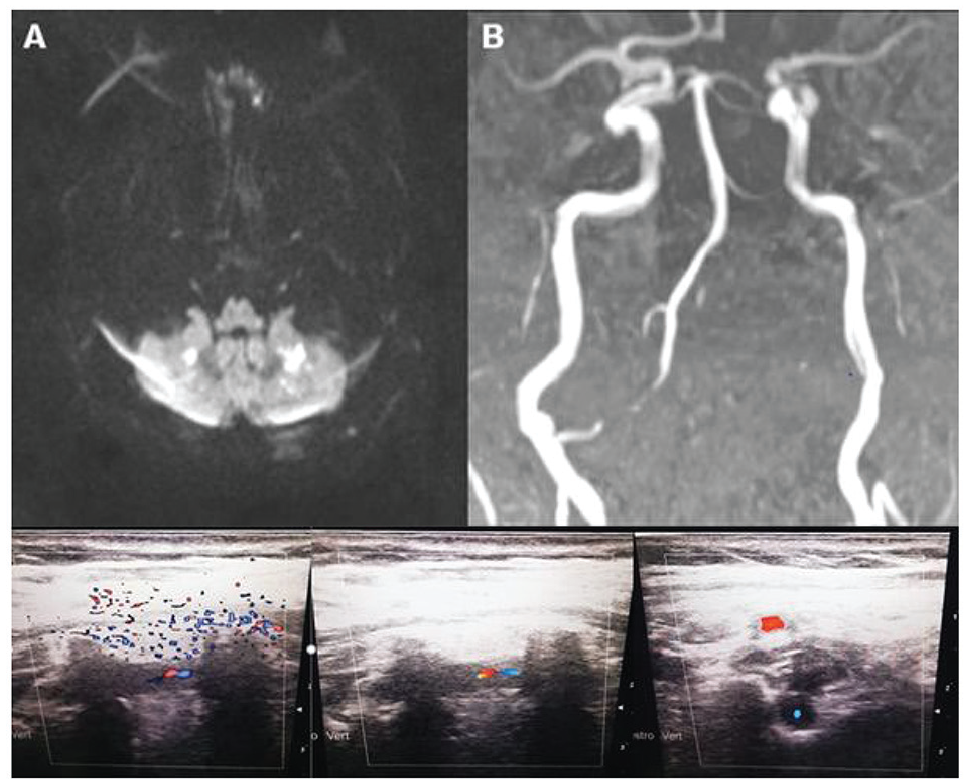
Figure 1 e Figure 2
P0416 / 1073
CLOT BURDEN IN CERVICAL ARTERIAL DISSECTION: CORRELATION OF THE INTRAMURAL THROMBUS VOLUME WITH THE EXTENSION OF THE CEREBRAL INFARCT
1Instituto Nacional de Neurología y Neurocirugía, Stroke clinic, Ciudad de Mexico, Mexico, 2Instituto Nacional de Neurología y Neurocirugía, Endovascular therapy, Ciudad de Mexico, Mexico
P0417 / 1190
THE ROLE OF COMPETING STROKE ETIOLOGIES IN STROKE PATIENTS WITH ATRIAL FIBRILLATION
1University Hospital Basel and University of Basel, Department of Neurology and Stroke Center, Basel, Switzerland, 2University Hospital Basel and University of Basel, Switzerland, Department of Clinical Research, Basel, Switzerland, 3University Hospital Basel, Department of Intensive Care Medicine, Basel, Switzerland, 4University Hospital and University of Bern, Department of Neurology, Inselspital, Bern, Switzerland, 5University of Basel, Neurology and Neurorehabilitation, University Department of Geriatric Medicine FELIX PLATTER, Basel, Switzerland, 6Klinik Hirslanden, Stroke center, Zürich, Switzerland
P0418 / 1107
ETIOLOGY AND RISK FACTORS OF ISCHEMIC STROKE IN PREGNANCY AND PUERPERIUM
1University of Helsinki and Helsinki University Hospital, Neurology, Helsinki, Finland, 2University of Helsinki and Helsinki University Hospital, Obstetrics and Gynecology, Helsinki, Finland, 3University of Helsinki and Helsinki University Hospital, Medical and Clinical Genetics, Helsinki, Finland, 4Institute for Molecular Medicine Finland, Helsinki Institute of Life Science, University of Helsinki, Helsinki, Finland, 5Tampere University Hospital and Tampere University, Faculty of Medicine and Health Technology, Obstetrics and Gynecology, Tampere, Finland, 6Karolinska Institute, Academic Primary Health Care Centre & Department of Molecular Medicine and Surgery, Stockholm, Sweden, 7Department of Information Services, Finnish Institute for Health and Welfare, Helsinki, Finland
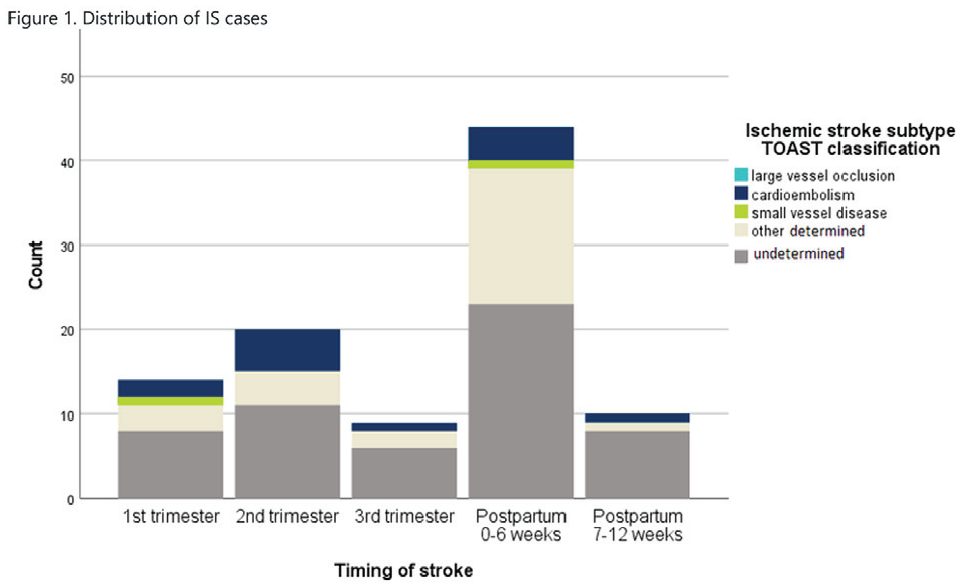
P0419 / 1131
INCIDENCE OF MALIGNANT NEOPLASM IN YOUNG ADULTS WITH ISCHEMIC STROKE IN ARAGON
1Hospital Universitario Miguel Servet, Neurology, Stroke Unit, Zaragoza, Spain, 2Instituto de Investigación Sanitaria (IIS) de Aragón, Grupo de Investigación en Neurociencias, Zaragoza, Spain, 3Hospital Universitario Miguel Servet, Radiology, Interventional Neuroradiology, Zaragoza, Spain
P0420 / 1066
EVALUATION OF ENDOTHELIAL GLYCOCALYX INJURY IN PATIENTS WITH ACUTE ISCHEMIC STROKE
1Ribeirão Preto Medical School - University of São Paulo, Neuroscience and Behavioral Sciences, Ribeirão Preto, Brazil, 2Ribeirão Preto Medical School - University of São Paulo, Internal Medicine, Ribeirão Preto, Brazil
Among the 20 control subjects, the mean age was 61.4 ± 10.45 years, 45% were male. The syndecan-1 levels between 24-48 hours were higher among patients then controls (78.9 ± 66.9 ng/dL versus 53.1 ± 52.5 ng/dL, p=0.023). We found no diference between hyaluronan-1, and chondroitin sulfate (aggrecan) levels in patients and controls.
P0421 / 1194
NON-STENOTIC, COMPLICATED ATHEROSCLEROTIC PLAQUE IN EMBOLIC STROKE OF UNDETERMINED SOURCE (ESUS): A POSSIBLE ETIOLOGY?
1Careggi, University Hospital, Stroke Unit, Florence, Italy, 2Careggi, University Hospital, Neuroradiology, Florence, Italy, 3Careggi, University Hospital, Stroke Unit; Neurofarba Department, Florence, Italy
P0422 / 1188
OBSTRUCTIVE SLEEP APNOEA SCREENING IN STROKE INPATIENTS
1 The National Hospital for Neurology and Neurosurgery, Stroke, London, United Kingdom
P0423 / 457
REDUCED MAGNETIC RESONANCE ANGIOGRAPHY SIGNAL INTENSITY IN THE MIDDLE CEREBRAL ARTERY IPSILATERAL TO SEVERE CAROTID STENOSIS MAY BE A PRACTICAL INDEX OF HIGH OXYGEN EXTRACTION FRACTION
1 Shonan Kamakura General Hospital, Stroke Treatment, Kamakura, Japan
P0424 / 1368
RESTRICTION IN HIPPOCAMPAL DIFFUSION IN 3 PATIENTS WITH TRANSIENT GLOBAL AMNESIA
1Hospital Universitario Virgen Macarena, Neurology, Sevilla, Spain, 2Hospital General Universitario de Ciudad Real, Neurology, Ciudad Real, Spain, 3Hospital Universitario Virgen Macarena, Internal Medicine, Sevilla, Spain
P0425 / 1523
THE UTILITY OF CARDIAC RHYTHM MONITORING IN YOUNG ADULTS WITH TRANSIENT ISCHAEMIC ATTACK AND MINOR STROKE
1National Hospital for Neurology & Neurosurgery, Comprehensive Stroke Service, London, United Kingdom, 2University College London Medical School, London, United Kingdom, 3University College London Hospital, Cardiology, London, United Kingdom, 4North Middlesex Hospital, Neurology, London, United Kingdom
123(85%) of ECG at presentation showed normal sinus rhythm and four(3.2%) atrial fibrillation(AF)/paroxysmal AF. 106(74%) patients underwent ECG-Holter monitor, six(4.2%) showed known(2) or new AF [median age 41.5(36-53), CHADVASCS2 Score 2-4]. 3(2.1%) had supraventricular or ventricular tachycardia. All four patients with new diagnoses of AF were identified on acute ECG. All patients with known or new AF had at least one significant vascular risk factor, most common being smoking. Two showed left atrial dilation on Echocardiogram with no left ventricular hypertrophy or left axis deviation on presentation ECG.
P0426 / 1318
A CASE OF SPONTANEOUS INTRACRANIAL ARTERY DISSECTION DUE TO ALPHA-1-ANTRYTRIPSIN DEFICIENCY
1Emergency University Hospital, Bucharest, Romania, Neurology, Bucharest, Romania, 2“Carol Davila” University of Medicine and Pharmacy, Bucharest, Romania
P0427 / 1597
THROMBI ASSOCIATED WITH IRON DEFICIENCY ANEMIA AS A CAUSE OF STROKE: SYSTEMATIC REVIEW AND CASE SERIES
1Universidade de Lisboa, Lisboa, Portugal, 2Hospital de Santa Maria, Neurology, Lisboa, Portugal
P0428 / 1640
COMBINATION OF THROMBUS MARKERS AND BIOMARKERS TO DETECT THE CAUSE OF THE STROKE; RESULTS FROM THE ITACAT MULTICENTRIC REGISTRY
1Vall d’Hebron Hospital, Barcelona, Spain, 2Germans Trias i Pujol Hospital, Badalona, Spain, 3Bellvitge Hospital, Hospitalet de Llobregat, Spain
P0429 / 827
THE USEFULNESS OF THE VARIATION OF BRAIN NATRIURETIC PEPTIDE TO PREDICT OCCULT ATRIAL FIBRILLATION AFTER CRYPTOGENIC STROKE
1Nagasaki University Hospital, Department of Neurology and Strokology, Nagasaki, Japan, 2Nagasaki University Hospital, Department of Neurosurgery, Nagasaki, Japan
P0430 / 1491
DUPLEX ULTRASOUND AS A ESSENTIAL TOOL IN EARLY DIAGNOSIS OF STROKE RELATED TO GIANT CELL ARTERITIS
1Universidad Pública de Navarra, Neurology, Pamplona, Spain, 2Universidad Pública de Navarra, Rheumathology, Pamplona, Spain
We found a mycrocitic anemia and raised C-reactive protein and erythrocyte sedimentation rate. GCA was suspected and temporal artery(TA) study was added in the early routinary duplex examination. Brain MRI, angio-MRI, PET and temporal artery biopsy were also requested.
P0431 / 1571
SILENT MYOCARDIAL INFARCTION IN PATIENTS WITH ISCHEMIC STROKE: A CARDIAC MAGNETIC RESONANCE IMAGING STUDY
1Hospital de Santa Maria, Neurology, Lisboa, Portugal, 2Hospital Egas Moniz, Lisbon, Portugal, 3Hospital Beatriz Angelo, Loures, Portugal, 4Hospital de Santa Maria, Cardiology, Lisboa, Portugal
We aimed to determine the prevalence of SMI in a cohort of ischemic stroke patients that underwent cardiac magnetic resonance (CMR) and to determine if SMI was most frequently associated to an undetermined stroke etiology.
P0432 / 1044
ATRIAL CARDIOPATHY AND EMBOLIC STROKE OF UNKNOWN SOURCE IN PATIENTS YOUNGER THAN 60 YEARS: A RETROSPECTIVE STUDY
1ASST Grande Ospedale Metropolitano Niguarda, Neurology & Stroke Unit, Milan, Italy, 2University of Campania “Luigi Vanvitelli”, Division of Neurology, Naples, Italy, 3ASST Grande Ospedale Metropolitano Niguarda, Division of Cardiology, Milan, Italy
P0433 / 1487
A STUDY OF ATRIAL CARDIOPATHY IN VARIOUS SUBTYPES OF ACUTE ISCHEMIC STROKE
1 Indraprastha Apollo Hospitals, Neurology, New Delhi, India
P0434 / 1574
ACUTE MULTITERRITORIAL ISCHEMIC STROKE WITHOUT KNOWN ATRIAL FIBRILLATION. UPDATE OF A PROSPECTIVE REGISTRY
1 Hospital Clínico Universitario, Valencia, Spain
P0435 / 963
PREDICTING THE MECHANISM OF CRYPTOGENIC ISCHEMIC STROKE IN PATIENTS WITH CANCER
1University of California at Davis School of Medicine, Neurology, Sacramento, United States, 2Weill Cornell Medicine, Neurology, New York, United States, 3Feil Family Brain and Mind Research Institute, Weill Cornell Medicine, New York, United States, 4Memorial Sloan Kettering, Neurology, New York, United States, 5Columbia University, Neurology, New York, United States, 6University of Alberta, Medicine, Edmonton, Canada
P0436 / 1068
SUPRACARDIAC AND NON-STENOTIC PLAQUES COULD BE A SIGN FOR RECURRENT STROKE IN ESUS PATIENTS: AN OBSERVATIONAL STUDY
1 İstanbul University School of Medicine, Neurology, Istanbul, Turkey
P0437 / 1600
ISCHEMIC AND THROMBOEMBOLIC VASCULAR COMPLICATIONS FOLLOWING COVID 19 VACCINATION
1Mohamed V Military Hospital, Mohamed V University, Cardiology Department, Rabat, Morocco, 2Mohamed V Military Hospital, Cardiology Department, Rabat, Morocco
Observation 1: a 46 years old woman consulted for a sudden left sided hemiparesis seven days following the second dose of covid-19 vaccine. The initial brain scan was normal and she received thrombolytic treatment. Control scan showed signs of ischemic stroke of right superficial cerebral artery with haemorrhagic transformation. Supra-aortic ultrasound was performed showing a fresh mobile thrombus with complete obstruction of the right internal carotid artery.
Observation 2: a 52 year old patient admitted for accute dyspnea, three days after receiving the third dose of covid-19 vaccine. CT angiography revealed a thrombosis of left pulmonary artery. Five days later, an ischemic vascular accident occurs confirmed by CT scan, so we made a supra-aortic ultrasound revealing a thrombosis of right proximal internal carotid artery.
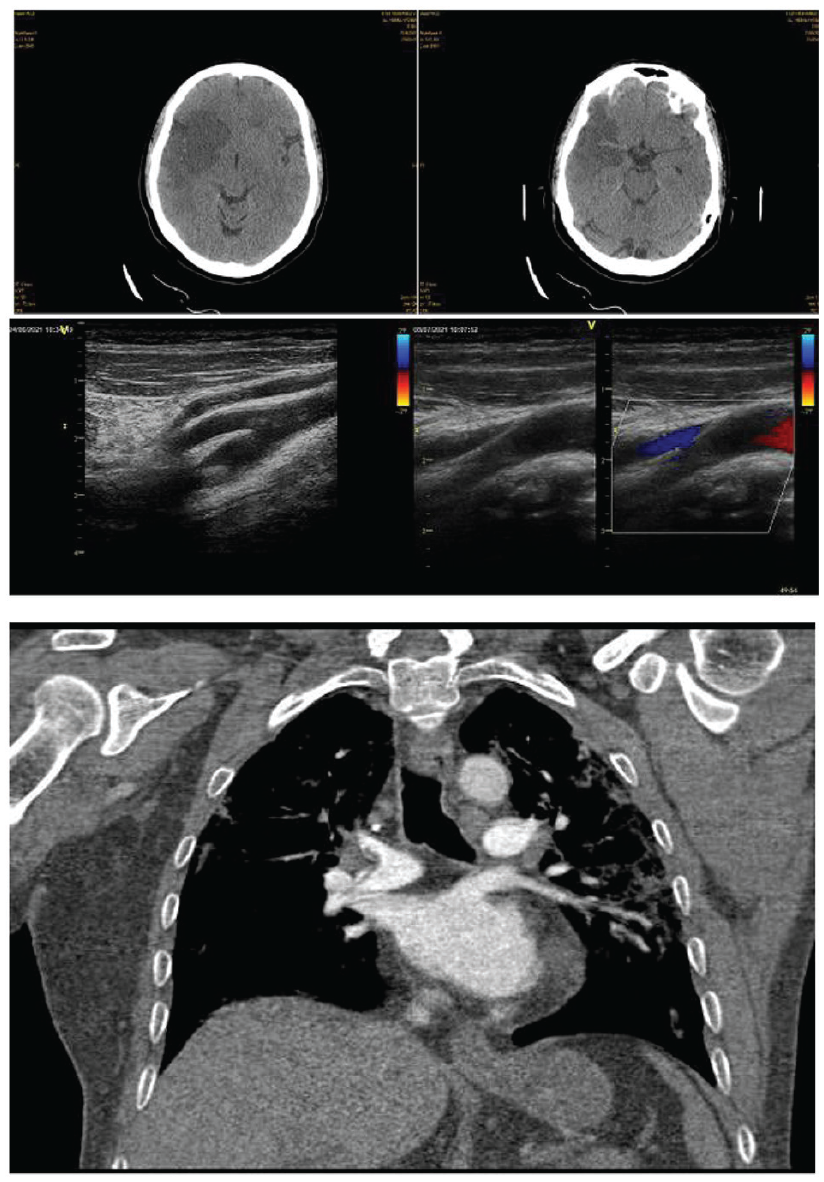
P0438 / 1583
MACHINE LEARNING ANALYSIS OF TROMBI AND PLASMA EXOSOMES OF LARGE VESSEL OCCLUSION STROKE PATIENTS
1Hospital Universitari de Bellvitge, Stroke Unit. Neurology Department, L’Hospitalet de Llobregat, Barcelona, Spain, 2IDIBELL Institut d’Investigació Biomèdica de Bellvitge, L’Hospitalet de Llobregat, Barcelona, Spain, 3Josep Carreras Leukaemia Research Institute, Badalona, Barcelona, Spain, 4Hospital Universitari de Bellvitge, Neurointerventional Radiology, L’Hospitalet de Llobregat, Barcelona, Spain, 5Hospital Universitari de la Vall d’Hebron, Stroke Unit. Neurology Department, Barcelona, Spain, 6Hospital Universitari Germans Trias i Pujol, Stroke Unit. Neurology Department, Badalona, Barcelona, Spain
P0439 / 919
IMPORTANCE OF THE INFECTIOUS-INFLAMMATORY ANTECEDENTS IN ISCHEMIC STROKE
1Complejo Hospitalario Universitario de Albacete, Neurology, Albacete, Spain, 2Complejo Hospitalario Universitario de Albacete, Radiology, Albacete, Spain, 3Complejo Hospitalario Universitario de Albacete, Research Unit, Albacete, Spain
P0440 / 663
MARKERS OF ATRIAL CARDIOPATHY IN NON-MINOR EMBOLIC STROKES OF UNDETERMINED SOURCE
1Azienda Ospedaliera Universitaria Senese, Stroke Unit, Department of Emergency-Urgency and Transplants, Siena, Italy, 2University of Siena, Department of Medical Sciences, Surgery and Neurosciences, Siena, Italy
P0441 / 661
THE GENETIC BACKGROUND OF RIGHT-TO-LEFT SHUNTS (RLS)
1Fudan University, Shanghai Medical College, Shanghai, China, 2Huashan Hospital, Fudan University, Shanghai, China
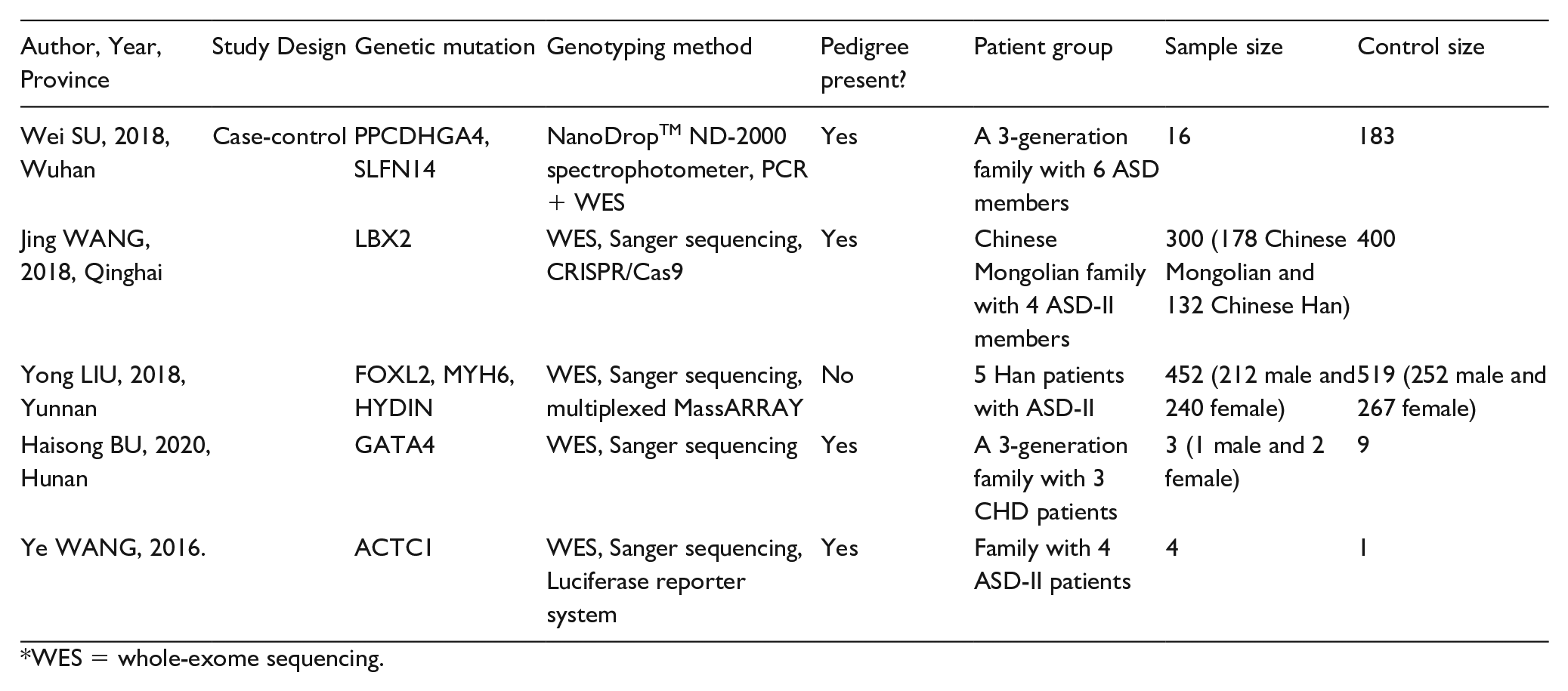
WES = whole-exome sequencing.
P0442 / 969
NOVEL DIAGNOSTIC APPROACHES TO IDENTIFY ANTIPHOSPHOLIPID ANTIBODIES IN CRYPTOGENIC STROKE AND SERONEGATIVE ANTIPHOSPHOLIPID SYNDROME: PRELIMINARY RESULTS IN A CASE SERIES
1La Sapienza University of Rome, Emergency Department - Stroke Unit - Policlinico Umberto 1 - Rome, Rome, Italy, 2La Sapienza University of Rome, Lupus Clinic, Rome, Italy, 3La Sapienza University of Rome, Rome, Italy, 4La Sapienza University of Rome, Pathology, Rome, Italy
P0443 / 995
EVALUATION OF THE CEREBRAL VASOMOTOR REACTIVITY IN PATIENTS WITH TRANSIENT ISCHEMIC ATTACKS
1 Kharkiv National Medical University, Department of Neurology, Kharkiv, Ukraine
P0444 / 1366
CLINICAL AND AETIOLOGICAL SUBTYPES OF ACUTE ISCHEMIC STROKES OF SRI LANKA; SIGNIFICANCE OF INTRACRANIAL ARTERIAL STENOSIS
1University of Kelaniya, Pharmacology, Ragama, Sri Lanka, 2University of Kelaniya, Medicine, Ragama, Sri Lanka, 3North Colombo Teaching Hospital, Radiology, Ragama, Sri Lanka, 4North Colombo Teaching Hospital, Professorial Medical Unit, Ragama, Sri Lanka
P0445 / 1291
HOW GOOD ARE NEUROLOGISTS? A PROSPECTIVE OBSERVATIONAL STUDY ASSESSING THE DIAGNOSTIC ACCURACY OF NEUROLOGISTS IN THE EMERGENCY SETTING
1Inselspital, Bern University Hospital, Department of Neurology, Bern, Switzerland, 2University of Bern, CTU Bern, Bern, Switzerland, 3Inselspital, Bern University Hospital, Department of Neuroradiology, Bern, Switzerland, 4University Hospital Basel, Department of Neurology, Basel, Switzerland
Compared to residents, neurologists were significantly better in predicting vascular pathologies (accuracy 0.86 [95%CI: 0.83-0.89] vs. 0.79 [0.76-0.82]; p<0.001), presence of occlusion, the lesion territory, and the affected blood vessel. Compared to students (accuracy 0.80 [0.74-0.86]), neurologists were also better, however the difference was not significant (p=0.098), probably due to the low number of students involved.
P0446 / 528
NON-INVASIVE IN VIVO THROMBUS IMAGING IN PATIENTS WITH ISCHAEMIC STROKE OR TRANSIENT ISCHAEMIC ATTACK
1University of Edinburgh, Centre for Cardiovascular Science, Edinburgh, United Kingdom, 2University of Edinburgh, Centre for Clinical Brain Sciences, Edinburgh, United Kingdom, 3University of Edinburgh, Edinburgh Imaging Facility QMRI, Edinburgh, United Kingdom, 4Cedars-Sinai Medical Center, Department of Imaging, Los Angeles, United States
Life Molecular Imaging provided GP1 reagents.
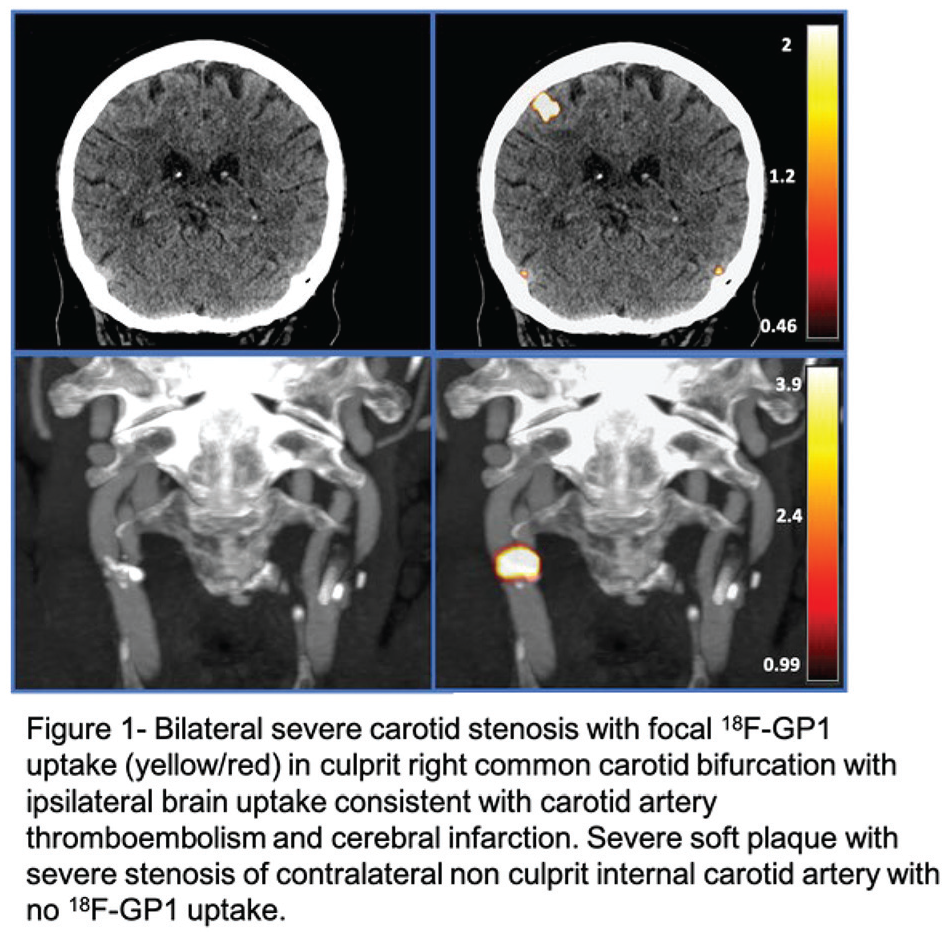
P0447 / 939
DETECTION RATES OF ATRIAL FIBRILLATION BY PROLONGED RHYTHM MONITORING WITH OR WITHOUT PRESELECTION BY BIOMARKERS IN PATIENTS WITH EMBOLIC STROKES OF UNDETERMINED SOURCE
1Kantonsspital St. Gallen, Neurology, St. Gallen, Switzerland, 2Kantonsspital St. Gallen, Cardiology, St. Gallen, Switzerland
P0448 / 151
MARKERS OF NEUTROPHIL EXTRACELLULAR TRAPS (NETS) IN PATIENTS WITH LEFT VENTRICULAR ASSIST DEVICE – A PROGNOSTIC FACTOR FOR CEREBROVASCULAR EVENTS?
1Hannover Medical School, Neurology, Hannover, Germany, 2Hannover Medical School, Department of Hematology, Hemostasis, Oncology and Stem Cell Transplantation, Hannover, Germany, 3Hannover Medical School, Department of Cardiac, Thoracic, Transplantation And Vascular Surgery, Hannover, Germany, 4University of Veterinary Medicine Hannover, Department of Biochemistry, Hannover, Germany, 5University of Veterinary Medicine Hannover, Research Center For Emerging Infections And Zoonoses (RIZ), Hannover, Germany
P0449 / 1287
VALIDATION OF THE PARANASPP APPLICATION, A TOOL FOR PREHOSPITAL NATIONAL INSTITUTES OF HEALTH STROKE SCALE IN PATIENTS WITH SUSPECTED ACUTE STROKE
1University of Oslo, Institute of Clinical Medicine, Oslo, Norway, 2Norwegian Air Ambulance Foundation, Research, Oslo, Norway, 3Oslo University Hospital, Department of Neurology, Oslo, Norway, 4Oslo University Hospital, Department of Prehospital Medicine, Oslo, Norway, 5University of Oslo, Institute of Basal Medical Science, Oslo, Norway, 6University of Stavanger, Faculty of Health Sciences, Stavanger, Norway, 7Oslo University Hospital, Department of Neurology, Stroke Unit, Oslo, Norway
P0450 / 211
THE UTILITY OF THE FAST TEST IN PATIENTS TRANSFERRED TO AN EMERGENCY DEPARTMENT OF A LONDON CSC (COMPREHENSIVE STROKE CENTRE)
1 Imperial College Healthcare Trust, London, United Kingdom
PROGNOSIS AND OUTCOME AFTER STROKE
P0451 / 1464
FIBRINOGEN CONCENTRATION IN ACUTE ISCHAEMIC STROKE AND FUNCTIONAL INDEPENDENCE AT DISCHARGE
1 Hospital Universitario de Canarias, Neurologia, San Cristóbal de La Laguna, Spain
It is necessary to design more studies in order to better establish which variables affect hyperfibrinogenemia and if it could be used as a short-term prognostic factor.
P0452 / 174
INFLUENCE OF THE GUT MICROBIOME IN ISCHEMIC STROKE RISK AND ISCHEMIC STROKE OUTCOME
1Sant Pau Research Institute, Stroke Pharmacogenomics and Genetics Laboratory, Barcelona, Spain, 2Universitat de Barcelona, Departament de Genètica, Microbiologia i Estadística, Barcelona, Spain, 3Fundación Docència I Recerca Mútua Terrassa, Stroke Pharmacogenomics and Genetics Laboratory, Terrassa, Spain, 4Institut d’Investigacions Biomèdiques de Barcelona, Department of Brain Ischemia and Neurodegeneration, Barcelona, Spain, 5Hospital de la Santa Creu i Sant Pau, Department of Neurology, Barcelona, Spain
P0453 / 190
PREDICTION OF DEMENTIA USING CT IMAGING IN STROKE (PRODUCTS) - A PROSPECTIVE OBSERVATIONAL COHORT STUDY
1Amsterdam UMC/University of Amsterdam, Department of Neurology, Amsterdam, Netherlands, 2University of Glasgow, Institute of Cardiovascular and Medical Sciences, Glasgow, United Kingdom, 3Amsterdam UMC/University of Amsterdam, Department of Public and Occupational Health, Amsterdam, Netherlands, 4Radboud University Medical Centre, Department of Neurology, Donders Institute of Brain, Behaviour and Cognition, Nijmegen, Netherlands
P0454 / 277
PROGNOSIS OF PATIENTS ASSISTED IN THE EMERGENCY UNIT BY THE “TIA PROTOCOL” IN A THIRD-LEVEL HOSPITAL AT 90 DAYS
1Santa Barbara Hospital, Neurology, Soria, Spain, 2Vithas Hospital, Neurology, Málaga, Spain, 3Aragon Research Institution, Zaragoza, Spain, 4Santa Barbara Hospital, Cardiology, Soria, Spain, 5Monteprincipe Hospital, Arrhythmias/Cardiology, Boadilla de Monte, Spain
P0455 / 268
A POPULATION-BASED STUDY OF DO NOT RESUSCITATE ORDERS IN STROKE PATIENTS BEFORE AND DURING THE PANDEMIC
1University of Michigan, Stroke Program, Ann Arbor, United States, 2University of Michigan, Biostatistics, Ann Arbor, United States
P0456 / 304
FACTORS ASSOCIATED WITH POOR OUTCOME IN ISCHEMIC STROKE PATIENTS WITH AND WITHOUT THROMBOLYTIC THERAPY
1Khon Kaen University, Internal Medicine, Khon Kaen, Thailand, 2Khon Kaen University, Khon Kaen, Thailand, 3Khon Kaen University, North-Eastern Stroke Research Group, Khon Kaen, Thailand
P0457 / 328
CORRELATION OF POSTERIOR CIRCULATION ARTERIAL OCCLUSION AND COLLATERAL STATUS WITH LONG-TERM FUNCTIONAL OUTCOME: DEVELOPMENT OF THE POSTERIOR CIRCULATION CLOT BURDEN SCORE
1Lausanne University Hospital and University of Lausanne, Stroke Center, Department of Clinical Neurosciences, Lausanne, Switzerland, 2Lausanne University Hospital and University of Lausanne, Department of Diagnostic and Interventional Radiology, Lausanne, Switzerland
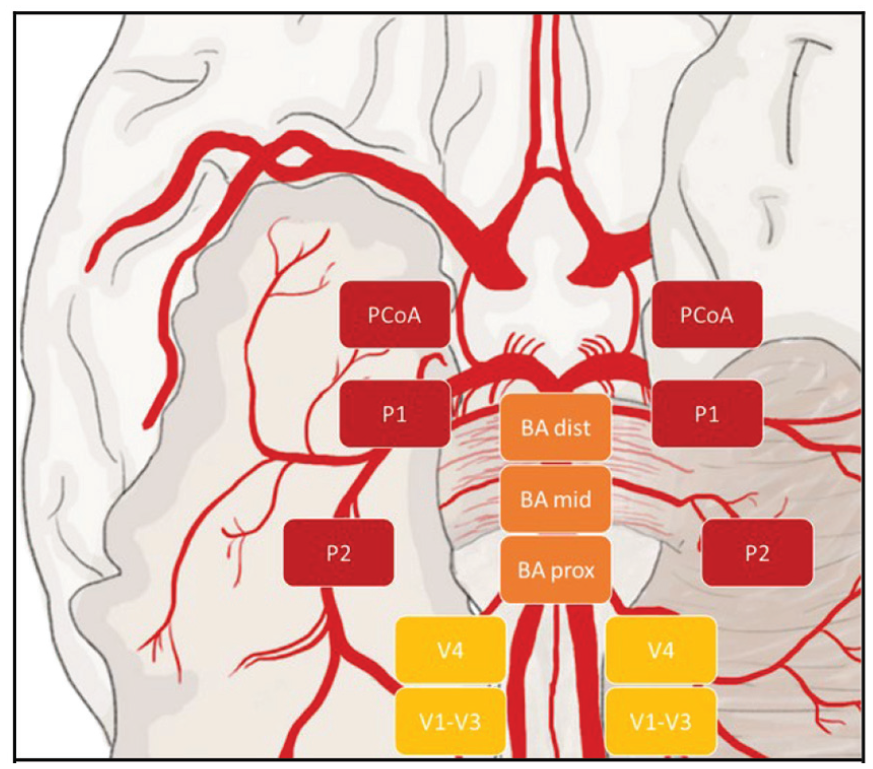
A score of 0 indicates occlusion of all major posterior circulation segments and absence of efficient Posterior Communicating Arteries (PCoA). PCoA is rated as either absent/hairline (diameter <1,0 mm), smaller than the ipsilateral P1, equal or bigger than the ipsilateral P1. Foetal variants with PCA arising from the anterior circulation and absence of P1 have been excluded from the current analysis. Stenosis do not affect scoring unless they generate a hairline aspect of the artery. Figure adapted from Salerno et al, Int J Stroke, 2021.
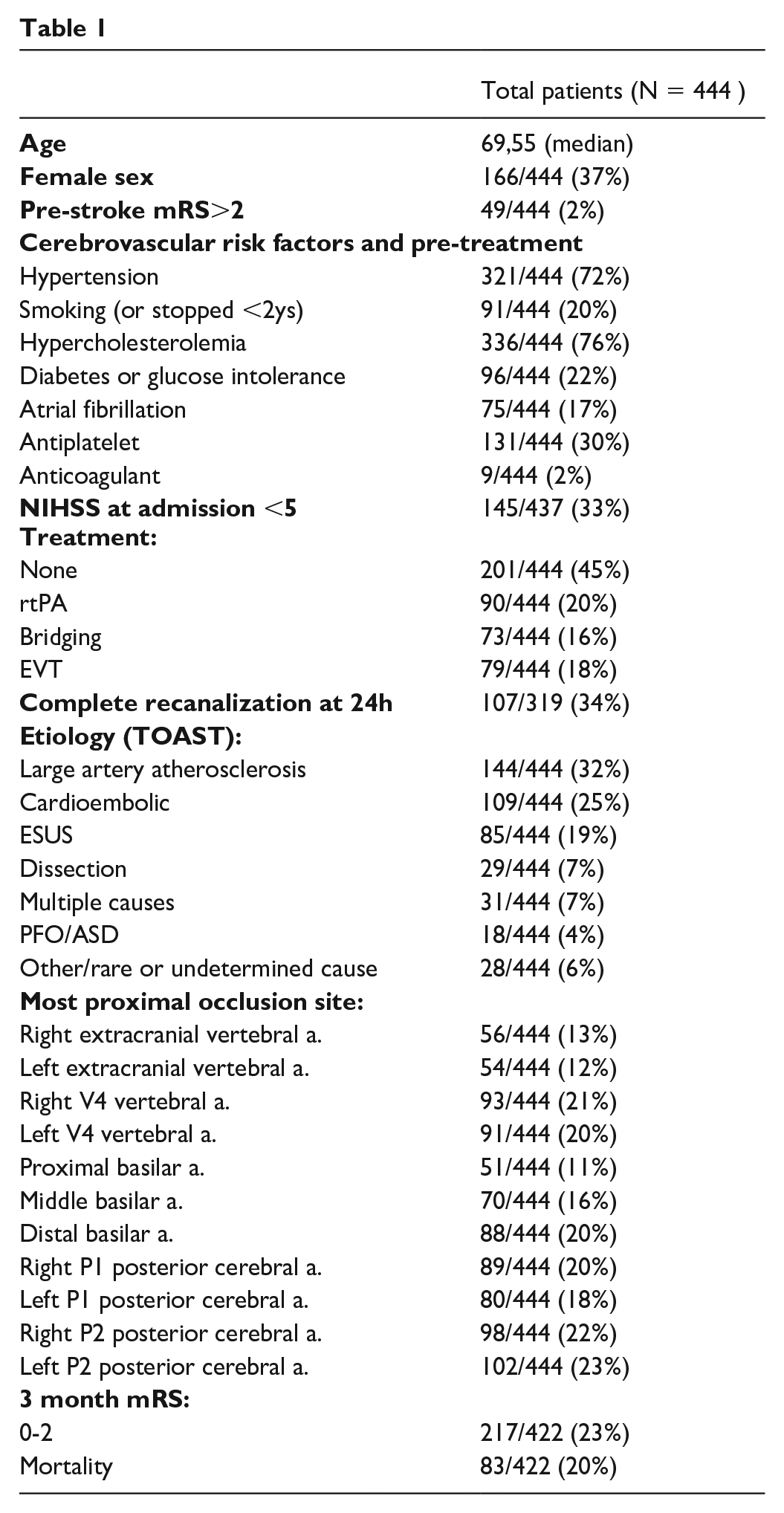
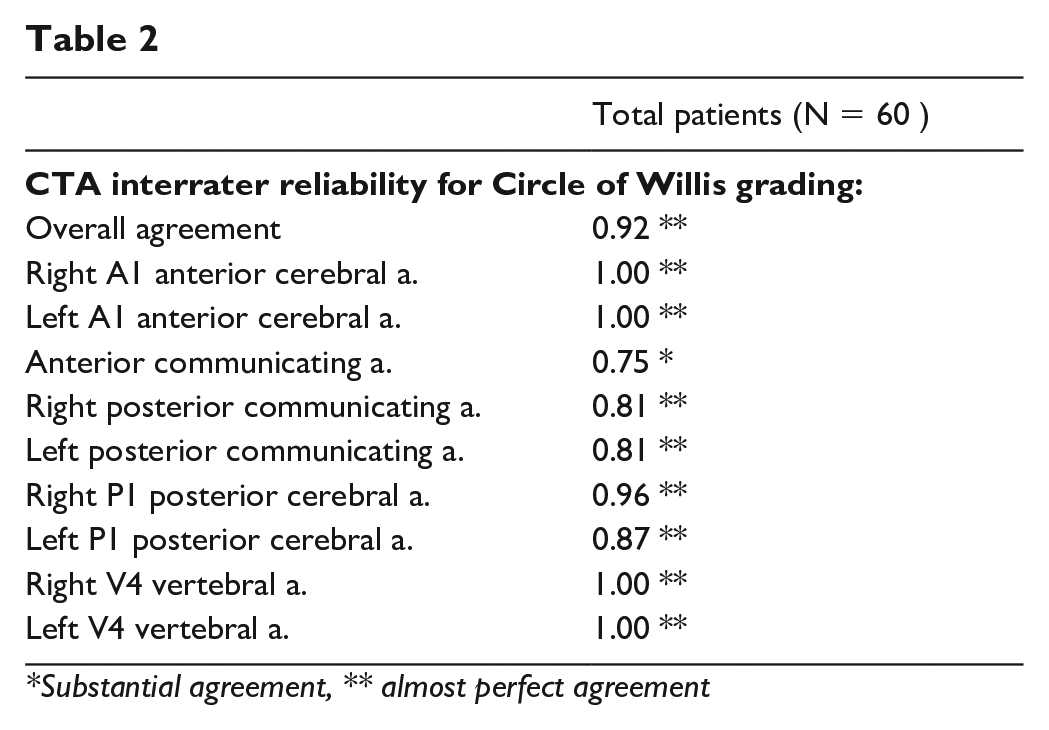
Substantial agreement, ** almost perfect agreement
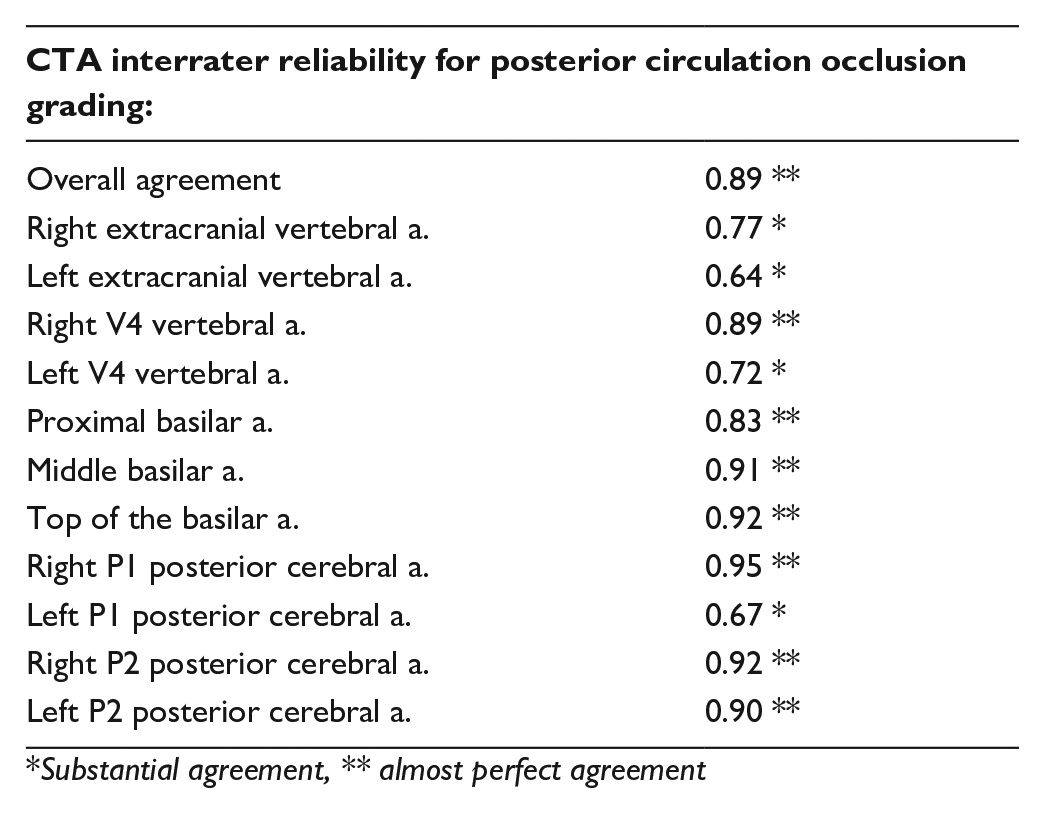
Substantial agreement, ** almost perfect agreement
P0458 / 296
EFFECT OF METFORMIN ON OUTCOME AFTER ACUTE ISCHEMIC STROKE IN PATIENTS WITH DIABETES MELLITUS TYPE 2
1Medisch Spectrum Twente, Neurology, Enschede, Netherlands, 2Medisch Spectrum Twente, Enschede, Netherlands, 3Erasmus Medisch Centrum, Rotterdam, Netherlands, 4Isala, Zwolle, Netherlands
P0459 / 369
ENDOVASCULAR TREATMENT IN PATIENTS WITH ACUTE ISCHEMIC STROKE AND CANCER: SYSTEMATIC REVIEW AND META-ANALYSIS
1University of Florence, NEUROFARBA Department, Florence, Italy, 2Ospedale San Jacopo, Pistoia, Italy, 3Careggi University Hospital, Neurovascular Interventional Unit, Florence, Italy, 4Careggi University Hospital, Stroke Unit, Florence, Italy, 5Royal Melbourne Hospital, University of Melbourne, Department of Medicine and Neurology, Melbourne, Australia, 6Ospedale Civile di Baggiovara, Azienda Ospedaliero-Universitaria di Modena, Modena, Italy, 7ASST Spedali Civili di Brescia, Dipartimento di Scienze Neurologiche e della Visione, Brescia, Italy, 8University of Rome La Sapienza, Department of Human Neurosciences, Rome, Italy, 9IRCCS Istituto delle Scienze Neurologiche di Bologna, Maggiore Hospital, Department of Neurology and Stroke Center, Bologna, Italy
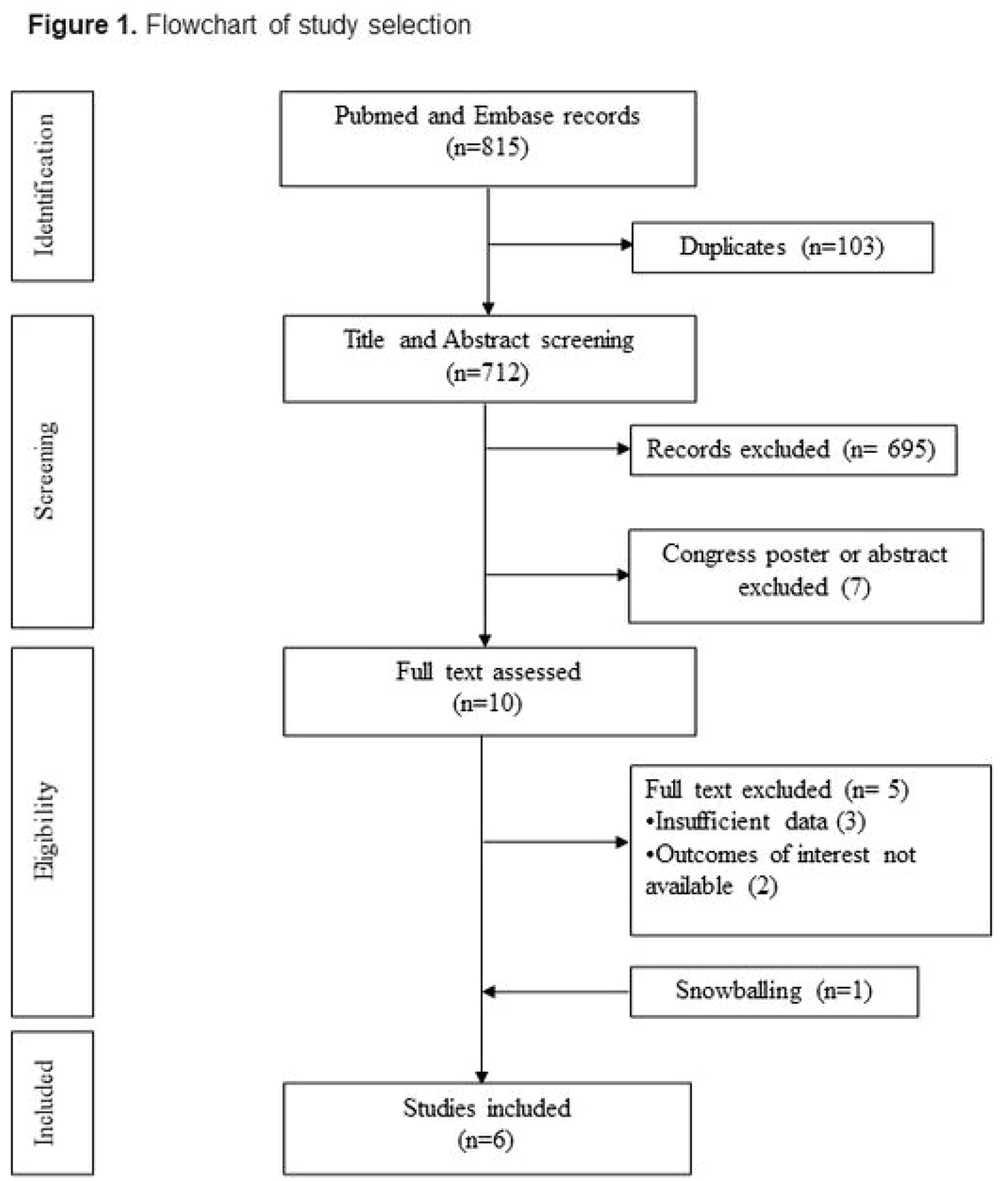
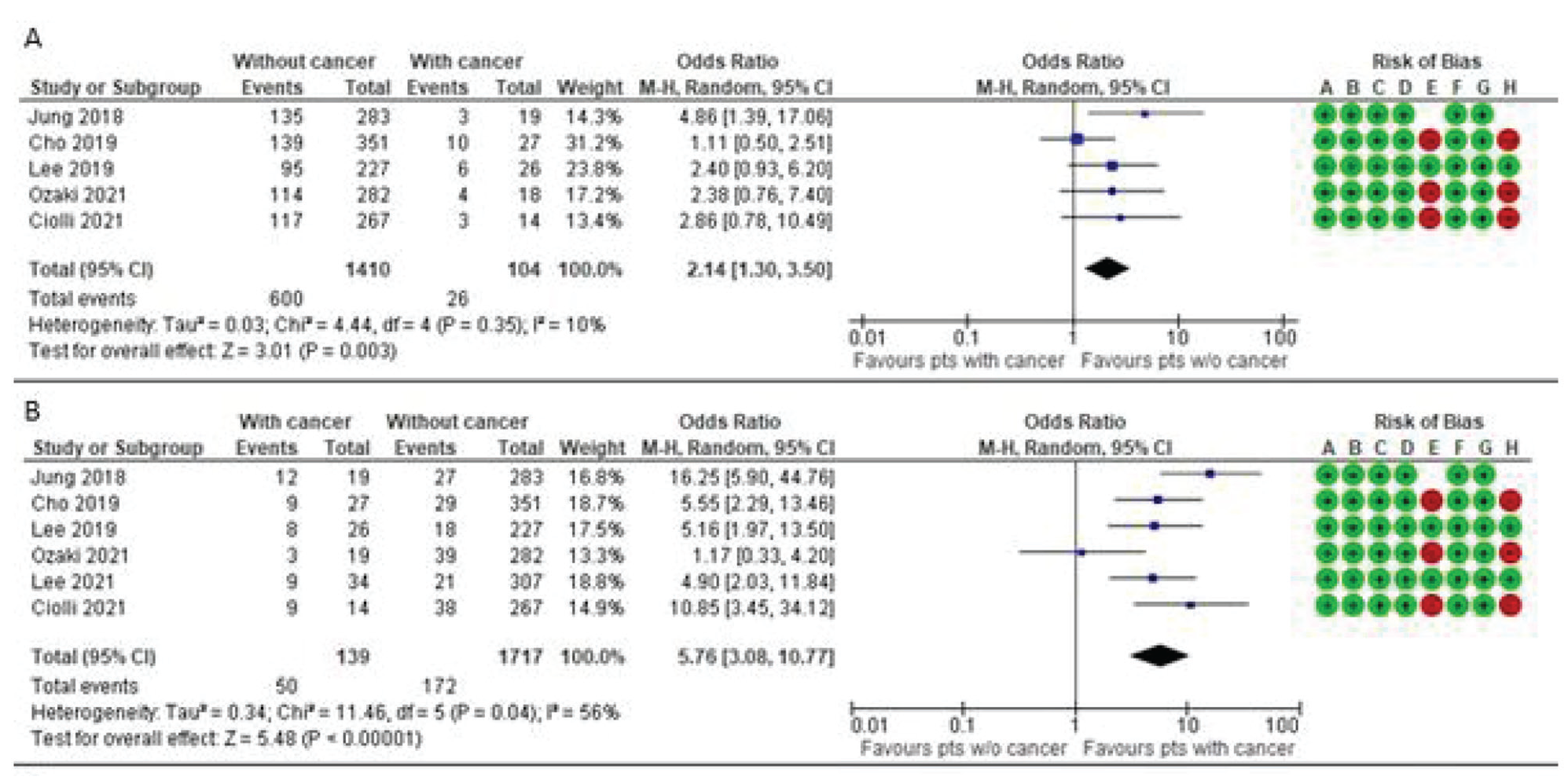
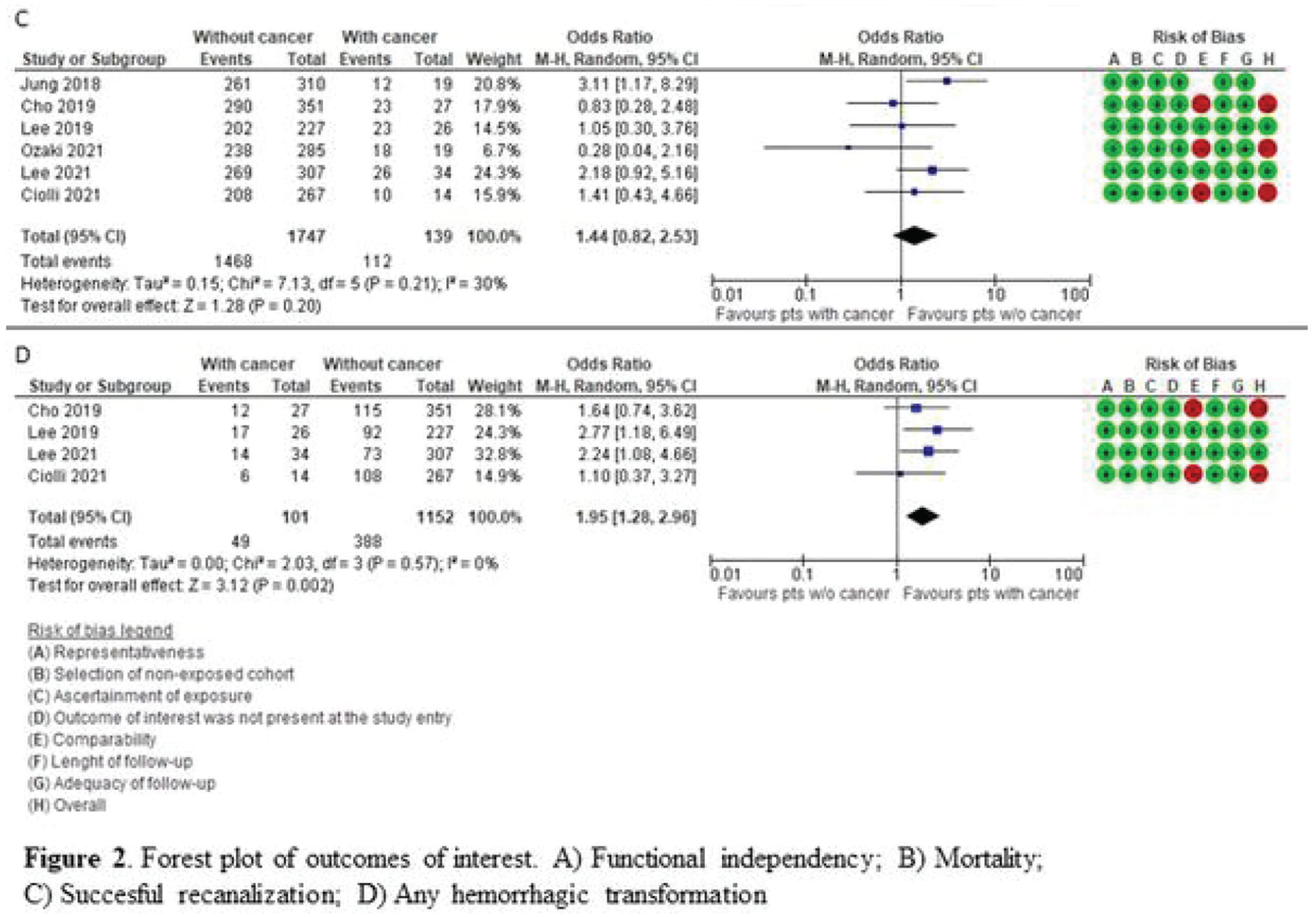
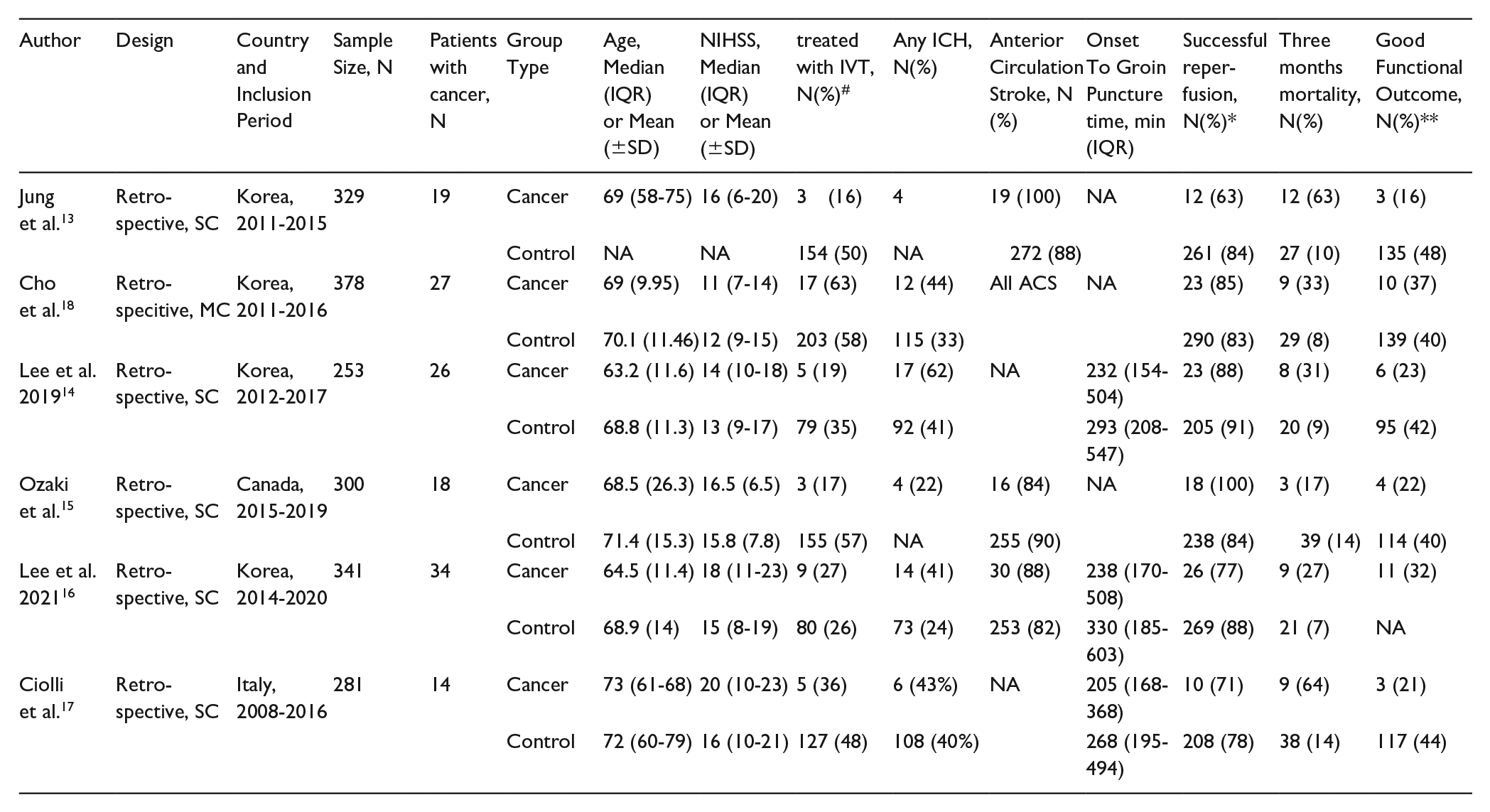
P0460 / 365
A RETROSPECTIVE REVIEW OF THE PROGNOSTIC VALUE OF GRAEB’S SCORE IN SUBARACHNOID HEMORRHAGE PATIENTS WITH CONCURRENT INTRAVENTRICULAR HEMORRHAGE
1 The Chinese University of Hong Kong, Hong Kong, Hong Kong, SAR of China
P0461 / 463
IMMIMENT STUDY: EPIDEMIOLOGY AND OUTCOME OF PATIENTS WITH MINOR STROKE AND HIGH-RISK TRANSIENT ISCHEMIC ATTACK. OBSERVATIONAL DATA FROM THE NORDICTUS GROUP
1Instituto de Investigación Biomédica de Salamanca, Hospital Universitario de Salamanca, Neurology, Salamanca, Spain, 2Hospital Clínico Universitario de Valladolid, Neurology, Stroke Unit, Valladolid, Spain, 3Instituto de Investigación Biomédica de A Coruña, Hospital Universitario de A Coruña, Neurology, A Coruña, Spain, 4Hospital Universitario Central de Asturias, Neurology, Stroke Unit, Oviedo, Spain, 5Hospital Universitario Miguel Servet, Neurology, Stroke Unit, Zaragoza, Spain, 6Hospital Universitario Miguel Servet, Radiology, Neurointerventionism Unit, Zaragoza, Spain, 7Hospital Universitario de Cabueñes, Neurology, Gijón, Spain, 8Complejo Asistencial Universitario de León, Neurology, León, Spain, 9Complejo Hospitalario Universitario de Vigo, Neurology, Vigo, Spain, 10Hospital de Basurto, Neurology, Bilbao, Spain, 11Hospital Universitario de Donostia, Neurology, San Sebastián, Spain, 12Hospital Galdakao-Usansolo, Neurology, Bizkaia, Spain, 13Cruces Hospital, Biocruces Research Health Institute, Neurology, Barakaldo, Spain, 14Hospital Universitario Marqués de Valdecilla, Neurology, Santander, Spain, 15Complejo Hospitalario Universitario de Santiago, Neurology, Santiago de Compostela, Spain, 16Hospital Universitario de Álava, Neurology, Stroke Unit, Vitoria, Spain, 17Hospital Universitario de Burgos, Neurology, Burgos, Spain, 18Hospital Clínico Universitario Lozano Blesa, Neurology, Zaragoza, Spain, 19Hospital San Pedro, Logroño, Spain, 20Hospital Universitario de Navarra, Neurology, Navarra, Spain
P0462 / 1143
SCAIL PLAQUE INFLAMMATION-STENOSIS SCORE COMPARED WITH OXFORD CAROTID STENOSIS AND ESSEN STROKE RISK SCORES TO PREDICT LATE IPSILATERAL ISCHAEMIC STROKE AFTER SYMPTOMATIC CAROTID STENOSIS
1Health Research Board, Stroke Clinical Trials Network Ireland, Dublin, Ireland, 2University College Dublin, School of Medicine, Dublin, Ireland, 3Addenbrooke’s Hospital, Cambridge, United Kingdom, 4Hospital de la Santa Creu i Sant Pau, Department of Neurology, Barcelona, Spain, 5Universitat Autònoma de Barcelona, Biomedical Research Institute Sant Pau, Barcelona, Spain, 6University of Sydney, Discipline of Medical Imaging Science, Faculty of Medicine and Health, Sydney, Australia, 7Tallaght University Hospital, Department of Age-Related Health Care, Dublin, Ireland, 8Mater Misericordiae University Hospital, Acute Stroke Service, Dublin, Ireland, 9St Vincent’s University Hospital, Department of Vascular Surgery, Dublin, Ireland, 10St James’s Hospital, Neurovascular Service, Dublin, Ireland, 11Trinity College Dublin, Department of Medical Gerontology, Dublin, Ireland, 12Cork University Hospital, Department of Neurology, Cork, Ireland, 13RCSI University of Medicine and Health Sciences, School of Medicine, Dublin, Ireland, 14Connolly Hospital Blanchardstown, Department of Geriatric Medicine, Dublin, Ireland, 15St Vincent’s University Hopsital, Department of Geriatric Medicine, Dublin, Ireland, 16Mater Misericordiae University Hospital, Department of Vascular Surgery, Dublin, Ireland, 17Mater Misericordiae University Hospital, Department of Radiology, Dublin, Ireland, 18Hospital de la Santa Creu i Sant Pau, Department of Nuclear Medicine, Barcelona, Spain
On multivariate Cox regression, baseline SCAIL predicted recurrent stroke (adjusted HR 1.8; 95% CI 1.1-2.95, p=0.018). The HR for OCST was 1.0 (95% CI 0.99-1.008, p=0.96) and ESRS was 1.33 (95% CI 0.96 – 1.86, p=0.08) (all HRs per 1-point score increase).
The c-statistic for SCAIL was 0.66 (95% CI 0.54-0.78) versus 0.61 (95% CI 0.49-0.73) for OCST and 0.61 (95% CI 0.49-0.73) for ESRS. No statistical difference was observed between risk scores (p=0.6).
P0463 / 816
DIFFERENCES IN LONG-TERM DISABILITY, INSTITUTIONALISATION AND QUALITY OF LIFE BETWEEN AETIOLOGICAL SUBTYPES OF STROKE: IMPLICATIONS FOR COST-EFFECTIVENESS STUDIES
1 University of Oxford, Centre for Prevention of Stroke and Dementia, Oxford, United Kingdom
P0464 / 516
ADMISSION DIASTOLIC BLOOD PRESSURE & MEAN ARTERIAL PRESSURE ARE THE PREDICTORS OF MASSIVE CEREBRAL EDEMA AND FUNCTIONAL OUTCOME AFTER SEVERE STROKE TREATED BY THROMBOLYTICS
1Seberang Jaya Hospital, Neurology, Penang, Malaysia, 2Queen Elizabeth Hospital, Neurology, Kota Kinabalu, Malaysia
P0465 / 495
STANDARDIZING PROGNOSTICATION OF BASAL GANGLIA HEMORRHAGE: A NOVEL SCORING SYSTEM
1 ABVIMS & Dr RML Hospital, Neurosurgery, New Delhi, India
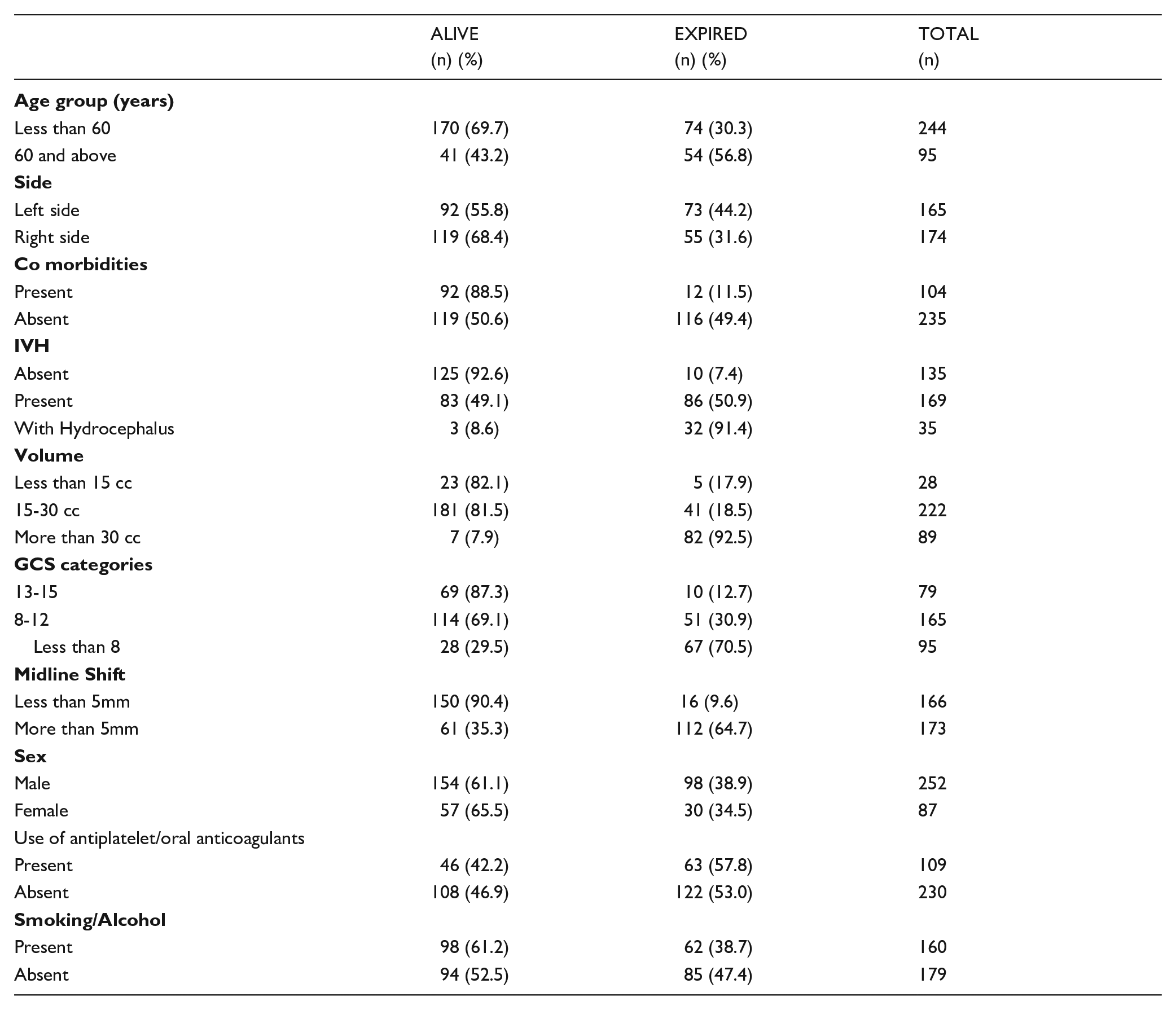
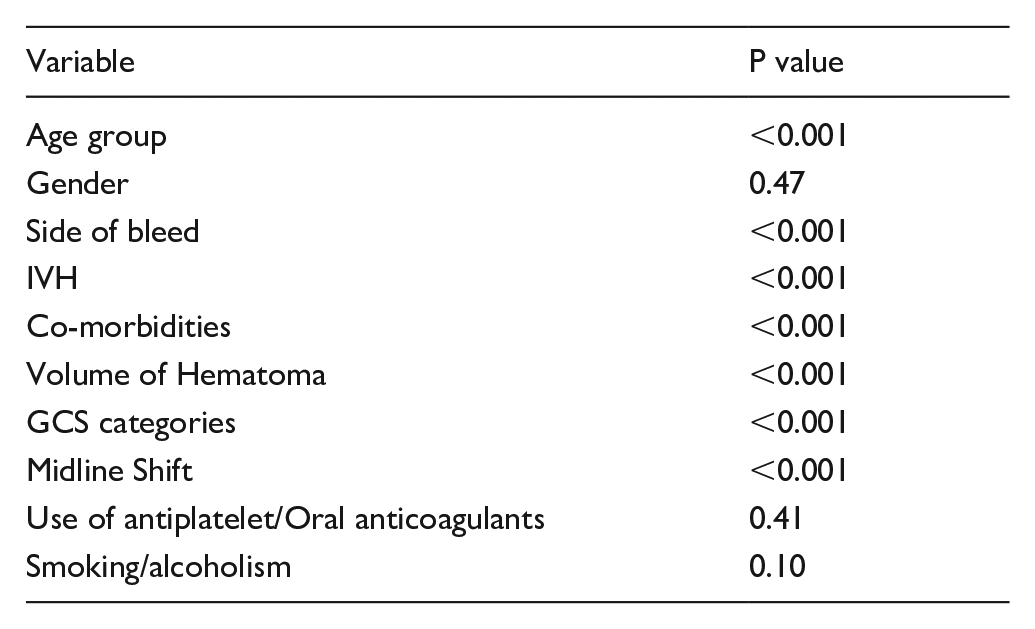
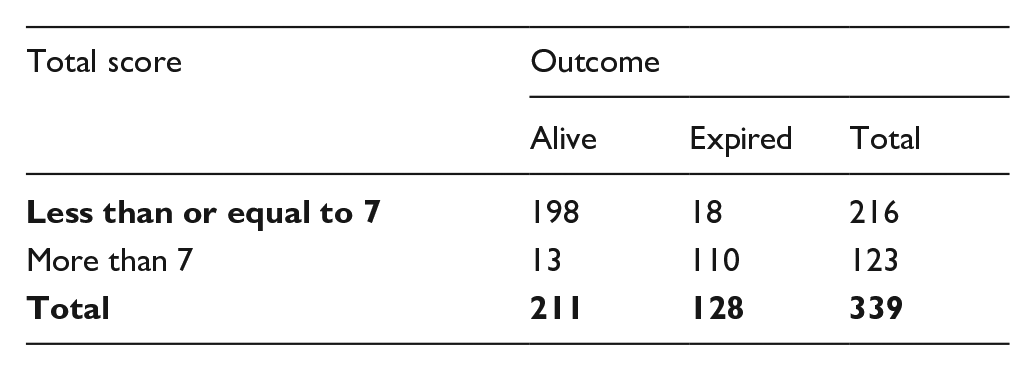
P0466 / 572
ACUTE ISCHEMIC STROKE PATIENTS WITH PARKINSON’S DISEASE
1Hospital de Egas Moniz, Centro Hospitalar de Lisboa Ocidental, Neurology, Lisbon, Portugal, 2NOVA Medical School, Lisbon, Portugal
P0467 / 1292
ROUTINE INFLAMMATORY MARKERS FOR OUTCOME PREDICTION IN STROKE PATIENTS TREATED WITH ENDOVASCULAR THERAPY
1Medical University of Graz, Department of Neurology, Graz, Austria, 2Medical University of Graz, Institute for Medical Informatics, Statistics and Documentation, Graz, Austria, 3Medical University of Graz, Department of Radiology, Division of Neuroradiology, Vascular and Interventional Radiology, Graz, Austria
P0468 / 1099
CONSULTATION TO THE EMERGENCY TELEPHONE TRIAGE SERVICE IS ASSOCIATED WITH BETTER OUTCOME OF PATIENTS WITH CEREBROVASCULAR DISEASES. A PROPENSITY SCORE ANALYSES WITH POPULATION-BASED REGISTRY
1Osaka City University Graduate School of Medicine, Traumatology and Critical Care Medicine, Osaka, Japan, 2Osaka University Graduate School of Medicine, Traumatology and Acute Critical Medicine, Suita, Japan
P0469 / 613
A NEW PROGNOSTIC SCALE IN ISCHEMIC STROKE: SELCUK SCORE
1 Selcuk University, Konya, Turkey
P0470 / 1064
CLINICAL OUTCOMES OF RADIATION-INDUCED CAROTID STENOSIS
1Xuanwu Hospital, Capital Medical University, Department of Neurosurgery, Beijing, China, 2Peking Union Medical College, Department of Clinical Medicine, Beijing, China, 3Xuanwu Hospital, Capital Medical University, Department of Evidence-Based Medicine, Beijing, China, 4Xuanwu Hospital, Capital Medical University, Medical Library, Beijing, China
P0471 / 1070
FACTORS INFLUENCING RECANALIZATION AFTER MECHANICAL THROMBECTOMY WITH FIRST PASS EFFECT FOR ACUTE ISCHEMIC STROKE
1Xuanwu Hospital, Capital Medical University, Department of Neurosurgery, Beijing, China, 2Neuroradiology&Neurointervention Service, Brigham and Women’s Hospital, Harvard Medical School, Boston, United States, 3Pontifical Bolivarian University, Medellín, Antioquia, Colombia, 4Xuanwu Hospital, Capital Medical University, Department of Evidence-Based Medicine, Beijing, China, 5Xuanwu Hospital, Capital Medical University, Medical Library, Beijing, China, 6Xuanwu Hospital, Capital Medical University, Department of Neurology, Beijing, China
P0472 / 627
THROMBOLYSIS’ BENEFITS ON POST-STROKE APHASIA RECOVERY – THE BULGARIAN EXPERIENCE
1‘St. Anna’ University Hospital, Department of Neurology, Sofia, Bulgaria, 2South-West University ‘Neofit Rilski’ (SWU), Blagoevgrad, Bulgaria
P0473 / 651
THE CLINICAL VALUE OF MIR-23A-3P IN ACUTE ISCHEMIC STROKE AND ITS REGULATION OF CYP2C19
1Chengdu Medical College, School of Pharmacy, Chengdu, China, 2Sichuan Provincial People’s Hospital, University of Electronic Science and Technology of China, Department of Neurology, Chengdu, China, 3Clinical Medical College and The First Affiliated Hospital of Chengdu Medical College, Chengdu, China, 4Chengdu Medical College, School of Bioscience and Technology, Chengdu, China
P0474 / 733
CLINICAL AND LABORATORY PREDICTORS OF RECURRENT ISCHEMIC STROKE MORTALITY
1Mohamed Abdelbary, Neurology, Sohag, Egypt, 2Sohag University, Sohag, Egypt
P0475 / 722
CLINICAL OUTCOME OF STROKE PATIENTS THAT RECEIVED INTRAVENOUS THROMBOLYSIS - FIRST 400 CASES
1County Emergency Clinical Hospital, Neurology, Brasov, Romania, 2Transilvania University, Faculty of Medicine, Neurology, Brasov, Romania
The aim of this study is to assess the outcome of the patients with stroke that undergone intravenous thrombolysis in our stroke center.
P0476 / 787
SOLUBLE UROKINASE RECEPTOR (SUPAR) AS A PROGNOSTIC BIOMARKER IN THE ISCHEMIC NEUROVASCULAR EVENT: A NEW CANDIDATE?
1University of Caen/ CHU de Caen/ Inserm U1237/ BB@C Institute, Emergency Medicine, Caen, France, 2University of Caen/ CHU de Caen/ Inserm U1237/ Cyceron/ BB@C Institut, Department of Neurology, Caen, France, 3CHU de Caen, Emergency Medicine, Caen, France, 4University of Caen/ CHU de Caen/ Inserm U1237/ BB@C Institute, Caen, France, 5Inserm U1237, Caen, France
P0477 / 786
DYNAMIC CHANGE OF TRIGLYCERIDE LEVELS DURING AN ORAL TRIGYLCERIDE TOLERANCE TEST AFTER ISCHAEMIC STROKE AND THE RISK OF RECURRENT VASCULAR EVENTS
1Charité- Universitätsmedizin Berlin, Department of Neurology and experimental Neurology, Berlin, Germany, 2Center for Stroke Research Berlin, Charité- Universitätsmedizin Berlin, Berlin, Germany, 3German Center for Cardiovascular Research, partner site Berlin, Berlin, Germany, 4Berlin Institute of Health (BIH), Berlin, Germany, 5Charité- Universitätsmedizin Berlin, Department of Endocrinology and Metabolism, Berlin, Germany, 6Leiden University Medical Center, Department of Clinical Epidemiology, Leiden, Netherlands, 7Universitätsklinik Leipzig, Department of Cardiology, Leipzig, Germany, 8University of Würzburg, Institute of Clinical Epidemiology and Biometry, Würzburg, Germany, 9University Hospital Würzburg, Clinical Trial Center Würzburg, Würzburg, Germany, 10Medical Park Humboldtmühle, Department of Neurology, Berlin, Germany, 11German Center for Neurodegnerative Diseases, partner site Berlin, Berlin, Germany
P0478 / 825
IMPACT OF RHYTHMIC TRANSCRANIAL MAGNETIC STIMULATION ON DISABILITY LEVEL IN PATIENTS IN LATE RECOVERY PERIOD OF ISCHEMIC CAROTID STROKE
1 SI Institute of Neurology,Psychiatry and Narcology of NAMS of Ukraine, Department of Vascular pathology of the brain and neurorehabilitation, Kharkiv, Ukraine
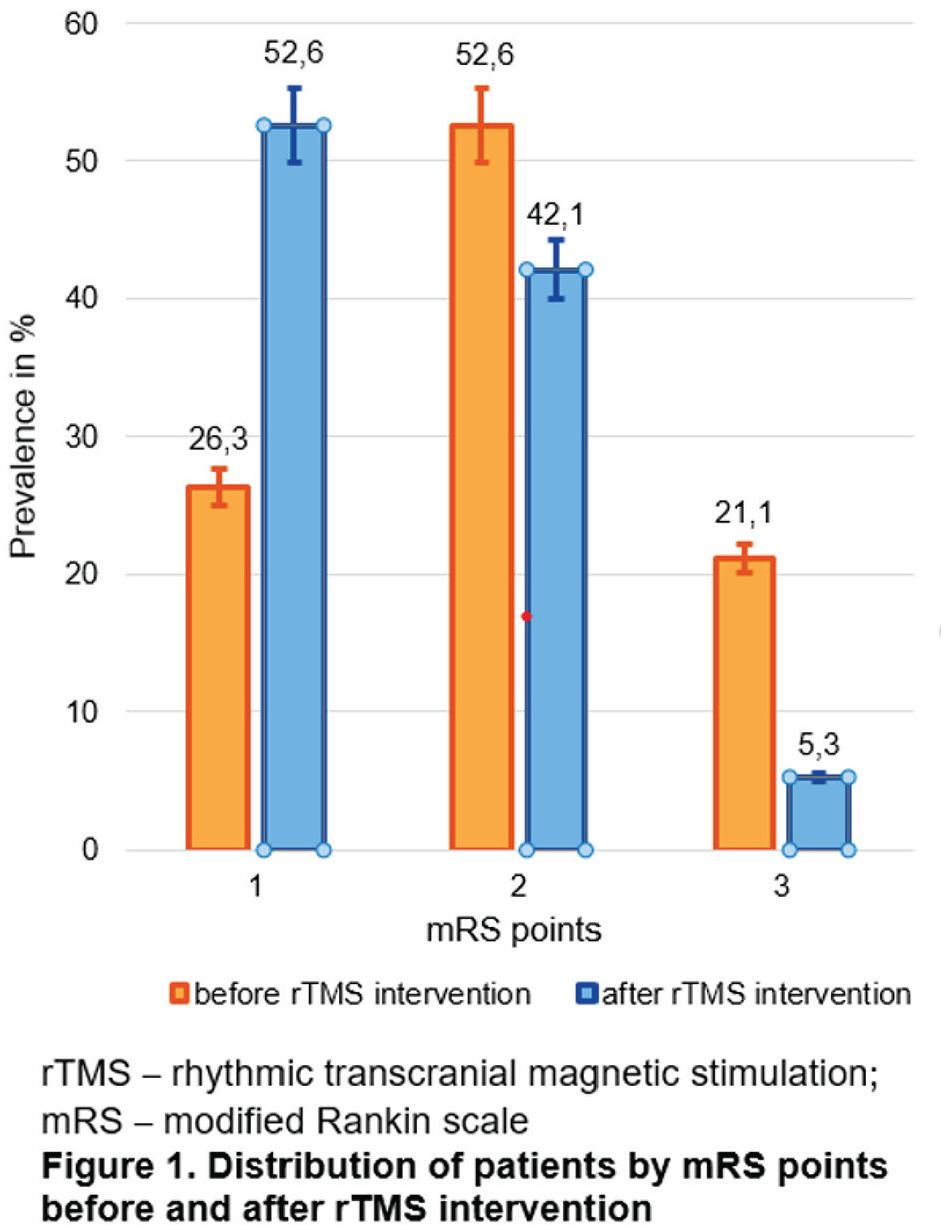
P0479 / 873
PREDICTING RISK OF BLEEDING ON ANTIPLATELET THERAPY IN YOUNG STROKE PATIENTS
1Radboud University Medical Center, Department of Neurology, Donders Center for Medical Neuroscience, Nijmegen, Netherlands, 2F. Hoffmann – La Roche Ltd, Basel, Switzerland, 3Luzerner Kantonsspital, Neurocentre, Department of Neurology and Neurorehabilitation, Luzern, Switzerland
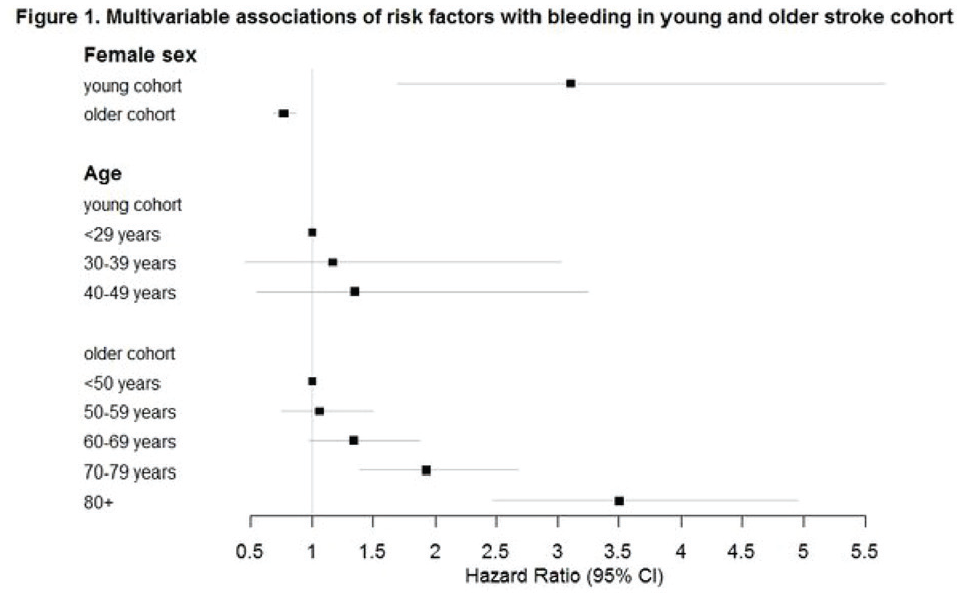
P0480 / 981
PILOT STUDY FOR CRITICAL CEREBRAL VENOUS THROMBOSIS PREDICTION: VENTISCA SCORE
1Hospital Universitario de La Princesa, Neurology, Madrid, Spain, 2Hospital Universitario de La Princesa, Radiology, Madrid, Spain
P0481 / 1227
CLINICAL AND RADIOLOGICAL PREDICTORS OF FUTILE RECANALIZATION IN PATIENTS WITH ACUTE ISCHEMIC STROKE TREATED WITH MECHANICAL THROMBECTOMY
1Stroke Unit, Neurology Unit, Ospedale Civile, Azienda Ospedaliera Universitaria di Modena, Department of Neuroscience, Modena, Italy, 2University of Bari “Aldo Moro”, Department of Basic Medical Sciences, Neurosciences and Sense Organs, Bari, Italy, 3University of Modena and Reggio Emilia, Department of Biomedical, Metabolic and Neural Sciences, Modena, Italy, 4Neuroradiology Unit, Ospedale Civile S.Agostino-Estense, Azienda Ospedaliero-Universitaria di Modena, Department of Neuroscience, Modena, Italy
P0482 / 1218
BALANCE AT THREE MONTHS POST STROKE PREDICTS COGNITIVE PERFORMANCE UP TO TWO YEARS FOLLOW-UP
1Maxima MC, medical psychology, Veldhoven, Netherlands, 2Tilburg University, Cognitive Neuropsychology, Tilburg, Netherlands
P0483 / 1305
SIRTUIN 6 LEVELS ARE INDEPENDENTLY ASSOCIATED WITH POST-STROKE MORTALITY: PILOT DATA FROM THE COSMOS COHORT
1University Hospital Zurich, Neurology, Zurich, Switzerland, 2University of Zurich, Center for Molecular Cardiology, Zurich, Switzerland, 3University of Genoa, Internal Medicine, Genoa, Italy, 4University Hospital Basel, Endocrinology, Basel, Switzerland
P0484 / 1319
MORTALITY PREDICTION MODEL FOR NON-REPERFUSED ISCHEMIC STROKE AND INTERNAL VALIDATION BY BOOTSTRAPPING
1Torrecárdenas University Hospital, Department of Neurology. Stroke Center, Almería, Spain, 2Torrecárdenas University Hospital, Neurology. Stroke Centre, Almería, Spain, 3Torrecárdenas University Hospital, Emergency Department. Research Biomedical Unit, Almería, Spain
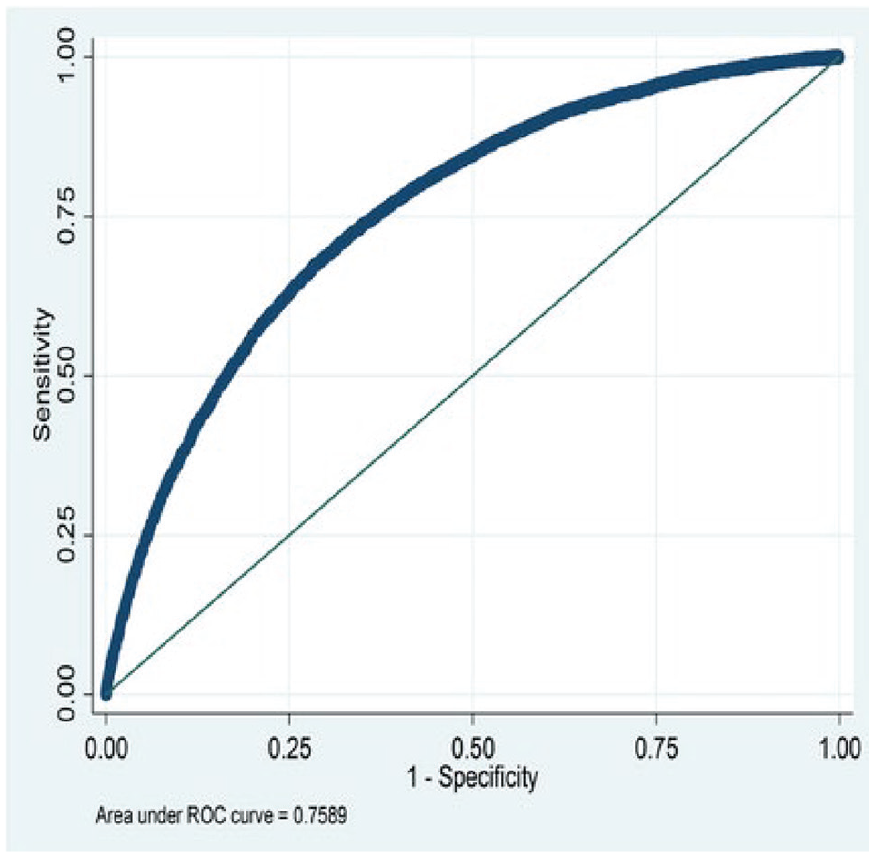
P0485 / 1444
ASSESSMENT OF COGNITIVE IMPAIRMENTS WITH STROKE RELATED DISABILITY AND ITS CORRELATIVE ANALYSIS IN POST-STROKE PATIENTS
1 Tashkent Medical Academy, Neurology, Tashkent, Uzbekistan
P0486 / 1214
ASSOCIATION OF ADMISSION NEUTROPHIL ELASTASE LEVEL WITH THE OUTCOMES OF SUPER-ACUTE ISCHEMIC STROKE
1 Xuanwu hospital, Capital medical university, Department of Neurology, Beijing, China
P0487 / 1501
TOPOLOGICAL ACUTE ISCHEMIC STROKE VOLUMES ARE PROGNOSTIC TO OUTCOMES MEASURED BY 90-DAY MODIFIED RANKIN SCALE
1Houston Methodist Research Institute, Systems Medicine and Bioengineering, Houston, United States, 2Texas A&M University, College of Medicine, Bryan, United States, 3Houston Methodist Institute for Academic Medicine, Department of Neurology, Houston, United States, 4Houston Methodist Cancer Center, Systems Medicine and Bioengineering, Houston, United States, 5The Ting Tsung and Wei Fong Chao Center for BRAIN, Houston, United States, 6Houston Methodist Institute for Academic Medicine, Department of Radiology, Houston, United States, 7Texas A&M University, College of Medicine, Department of Neuroscience and Experimental Therapeutics, Bryan, United States
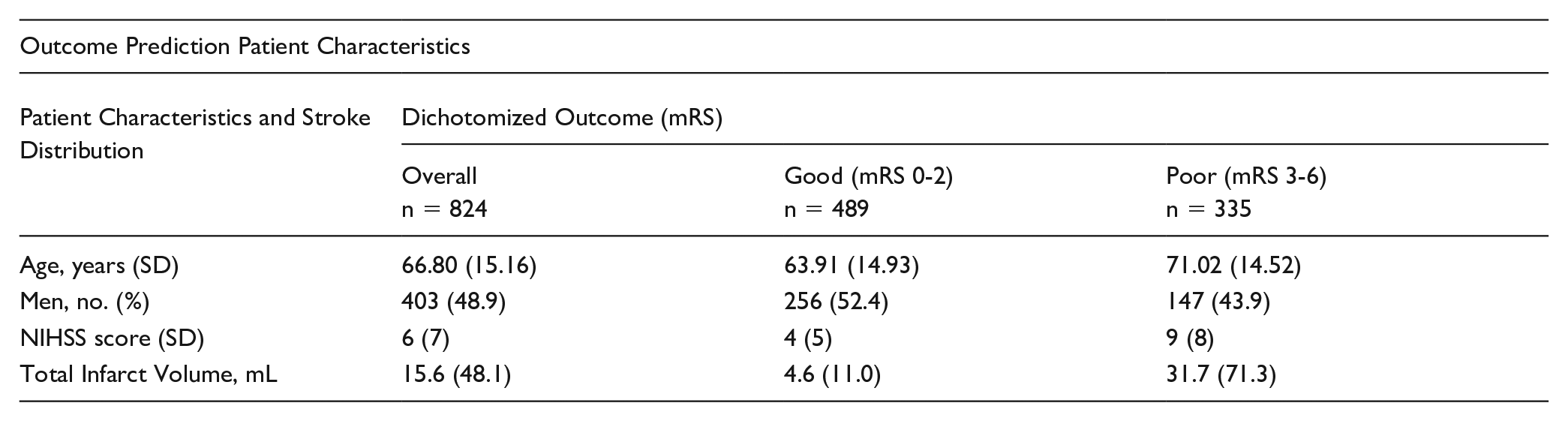
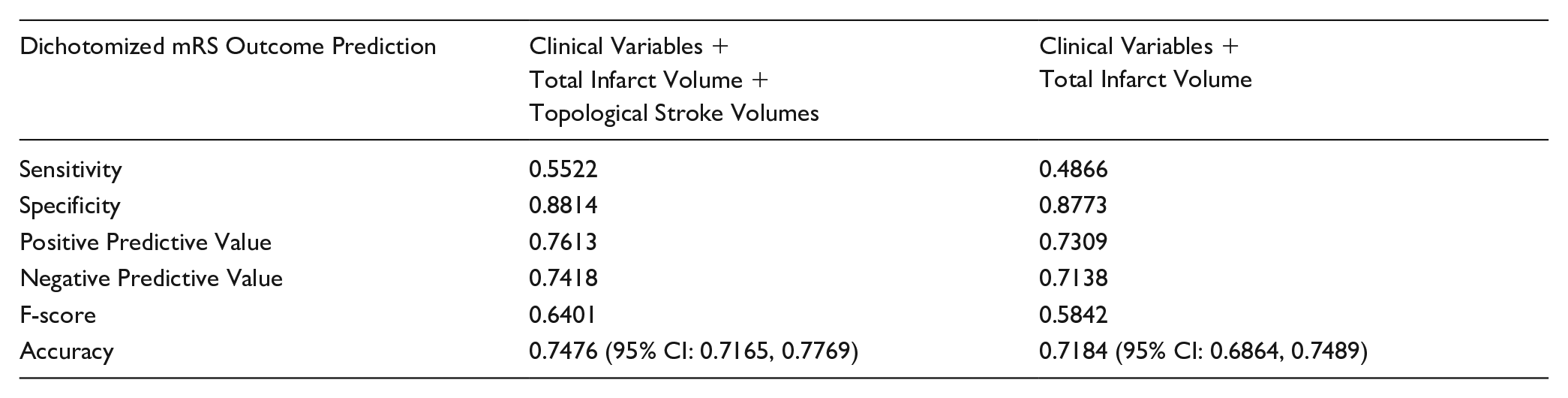
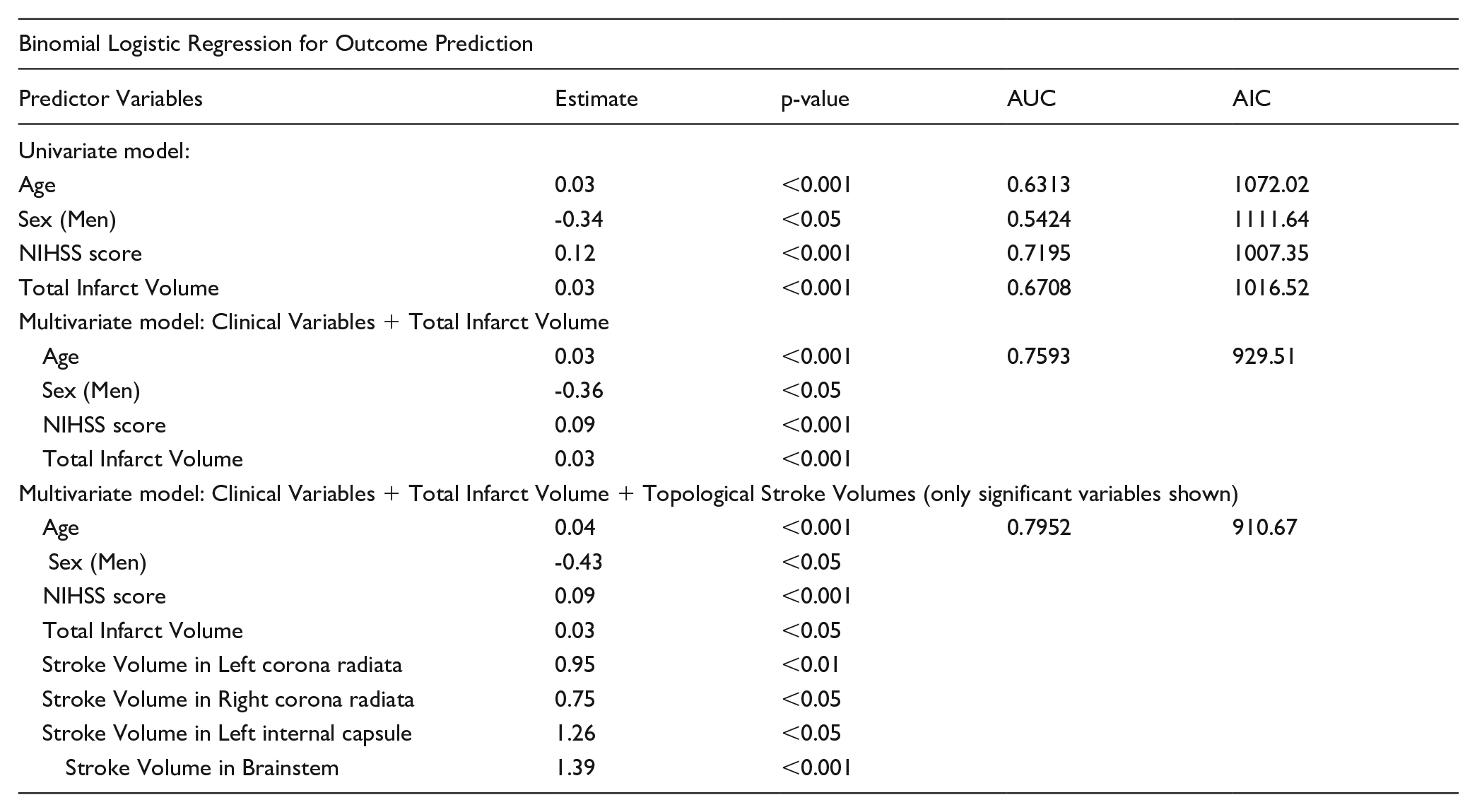
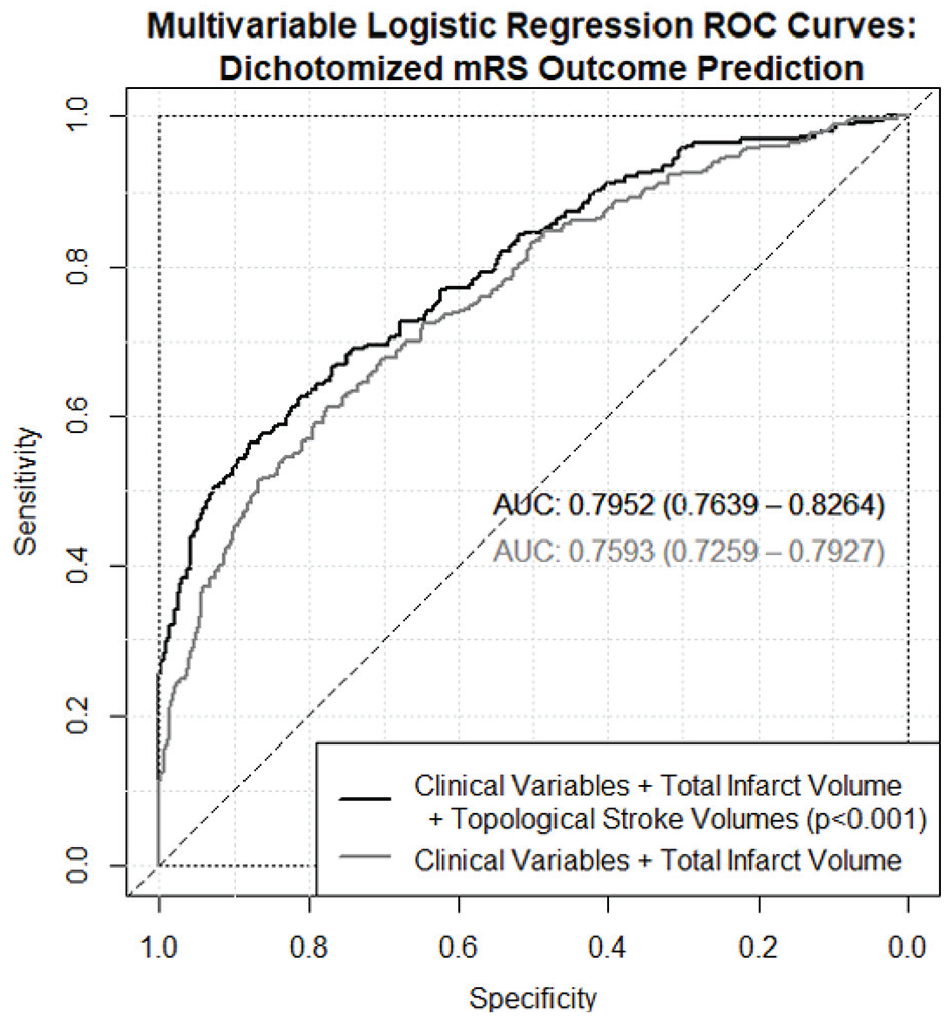
P0488 / 544
IMPACT OF AGE AND SEX DIFFERENCES ON OUTCOMES AFTER MECHANICAL THROMBECTOMY FOR ACUTE ISCHEMIC STROKE
1Masaryk Hospital, Krajská zdravotní a.s., Ústí nad Labem, Czech Republic, 2Palacký University Medical School and Hospital, Olomouc, Czech Republic, 3Masaryk Hospital Ústí nad Labem KZ a.s. and Faculty of Health Studies, J.E. Purkinje University, Radi, Ústí nad Labem, Czech Republic
P0489 / 1294
PULSE WAVE VELOCITY RATIO IS INDEPENDENTLY ASSOCIATED WITH EARLY FUNCTIONAL OUTCOME AFTER ISCHEMIC STROKE
1Medical University of Gdańsk, Department of Adult Neurology, Gdańsk, Poland, 2Medical University of Gdańsk, Department of Hypertension and Diabetology, Gdańsk, Poland
P0490 / 852
PROGNOSIS AT 6 MONTHS FOR NONAGENARIAN PATIENTS HOSPITALIZED FOR CEREBRAL INFARCTION
1Université de Franche Comté, Faculté de médecine, Besançon, France, 2Université de Franche Comté, Médecine, Besançon, France
The primary aim of our study was to describe the prognosis at 6 months of nonagenarians hospitalized for a cerebral infarction. The secondary aim was to identify the independent predictive factors associated with prognosis.
a care facility before the cerebral infarction (p<0.01), NIHSS < 5 at admission (p<0.01), proximal occlusion (p<0.01), and symptomatic haemorrhagic transformation (p<0.01). Intravenous thrombolysis was independently associated with a favorable outcome (p=0.03). Mechanical thrombectomy was not significantly associated with prognosis at 6 months (p=0.79).
P0491 / 490
DEATH AND ADL-DEPENDENCY AFTER SCORING ZERO ON THE NIHSS, A SWEDISH RETROSPECTIVE REGISTRY-BASED STUDY
1Umeå University, Department of Public Health and Clinical Medicine, Sunderby Research Unit, Umeå, Sweden, 2University of Gothenburg, Institute of Neuroscience and Physiology, Department of Clinical Neuroscience, Rehabilitation Research Group, Gothenburg, Sweden, 3Sahlgrenska University Hospital, Gothenburg, Sweden
P0492 / 743
BLOOD PRESSURE CONTROL DECREASED FROM 2011 TO 2019 IN PATIENTS 90 DAYS AFTER STROKE
1 University of Michigan, Ann Arbor, United States
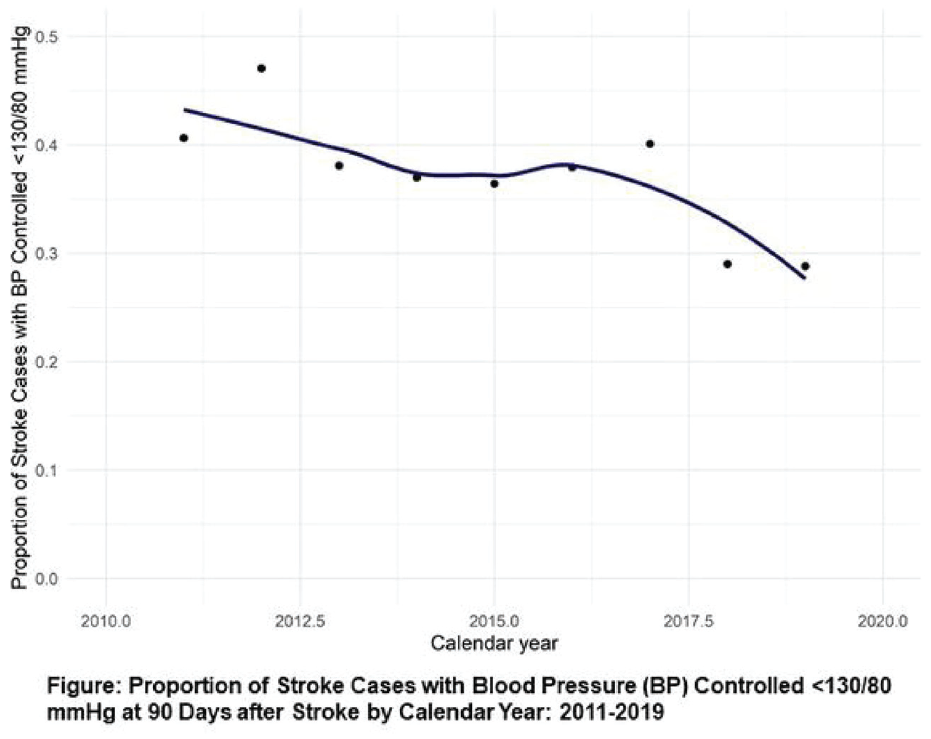
P0493 / 136
NEUROIMAGING MARKERS OF DUAL IMPAIRMENT IN COGNITION AND PHYSICAL PERFORMANCE FOLLOWING STROKE: THE NORWEGIAN COGNITIVE IMPAIRMENT AFTER STROKE (NOR-COAST) STUDY
1Norwegian University of Science and Technology, Department of Neuromedicine and Movement Science, Faculty of Medicine and Health Sciences, Trondheim, Norway, 2Oslo University Hospital, Division of Radiology and Nuclear Medicine, Oslo, Norway, 3University of Oslo, Institute of Clinical Medicine, Oslo, Norway, 4Norwegian University of Science and Technology, Department of Mental Health, Faculty of Medicine and Health Sciences, Trondheim, Norway, 5St. Olavs Hospital, Trondheim University Hospital, Department of Geriatric Medicine, Trondheim, Norway
P0494 / 1470
INFLUENCE OF DEHYDRATION ON COLLATERAL CIRCULATION AND CLINICAL OUTCOME IN PATIENTS WITH ACUTE ISCHEMIC STROKE TREATED WITH ENDOVASCULAR TREATMENT
1Hospital de la Santa Creu i Sant Pau, Biomedical Research Institute Sant Pau, Neurology, Barcelona, Spain, 2Hospital del Mar, Neurology, Barcelona, Spain, 3University Hospital La Paz, Neurology, Madrid, Spain, 4University Hospital Cruces, Neurology, Barakaldo, Spain, 5University Hospital Virgen del Rocío, Neurology, Sevilla, Spain, 6University Hospital of Valladolid, Neurology, Valladolid, Spain
P0495 / 1316
DETAILED MULTI-DOMAIN NEUROPSYCHOLOGICAL EVALUATION OF STROKE PATIENTS IN THE FIRST WEEK AFTER STROKE ONSET: DIVERSITY OF COGNITIVE AND MOTOR PROFILES
1Swiss Federal Institute of Technology (EPFL), Defitech Chair of Clinical Neuroengineering, Center for Neuroprosthetics and Brain Mind Institute, Sion, Switzerland, 2Swiss Federal Institute of Technology (EPFL), Defitech Chair of Clinical Neuroengineering, Center for Neuroprosthetics and Brain Mind Institute, Geneva, Switzerland, 3Amsterdam University Medical Center, Amsterdam, Netherlands, 4Hôpital du Valais (HVS), Hôpital de Sion, Sion, Switzerland, 5Berner Klinik Montana, Crans-Montana, Switzerland, 6Clinique Romande de Réadaptation, Sion, Switzerland, 7Hôpital du Valais (HVS), Sion, Switzerland, 8University of Geneva Medical School, Clinical Neuroscience, Geneva, Switzerland
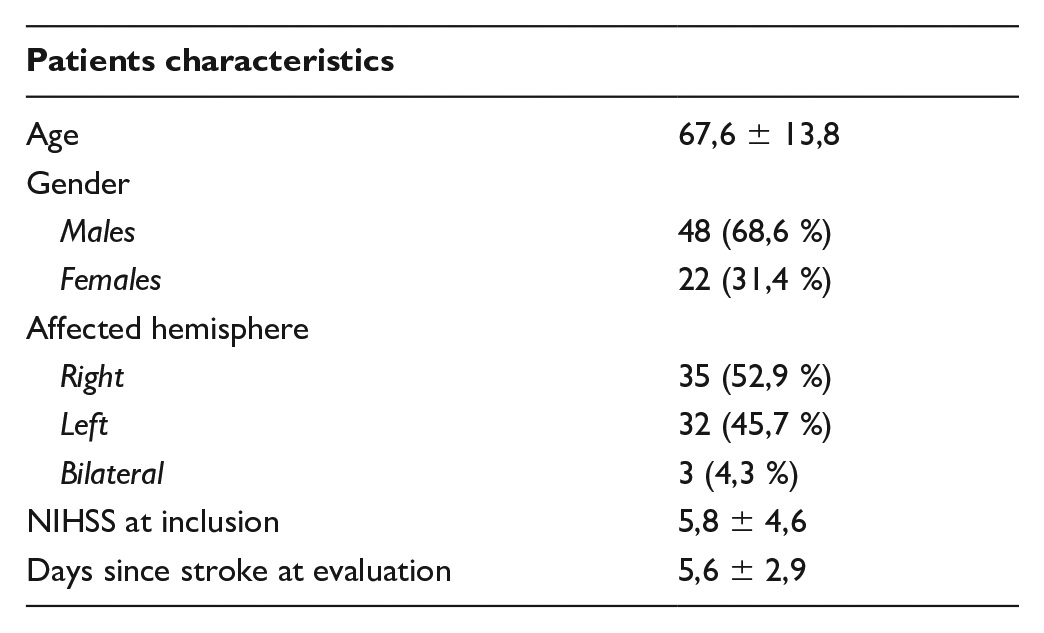
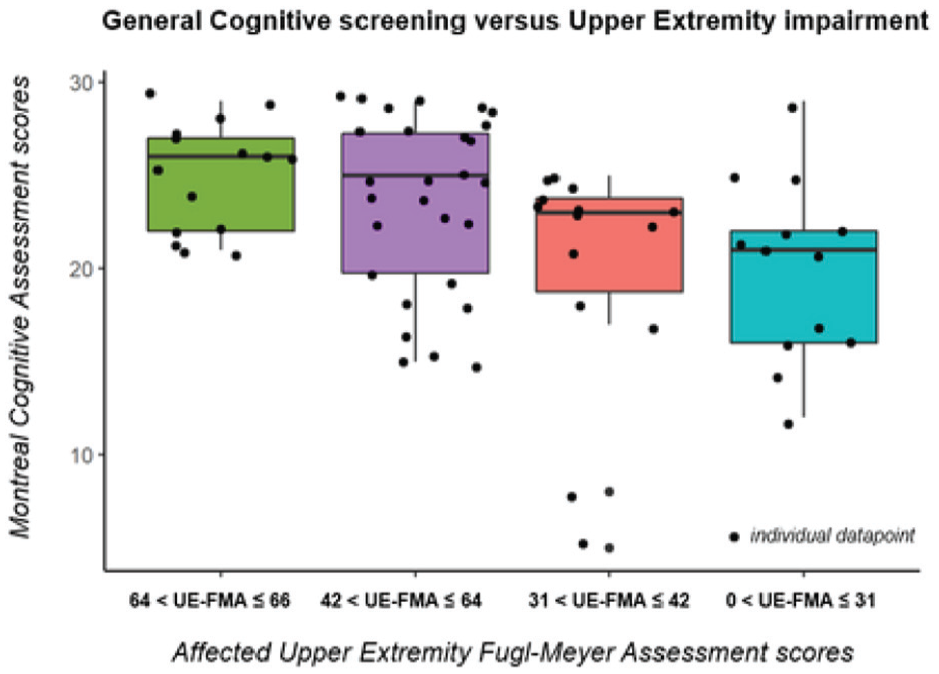
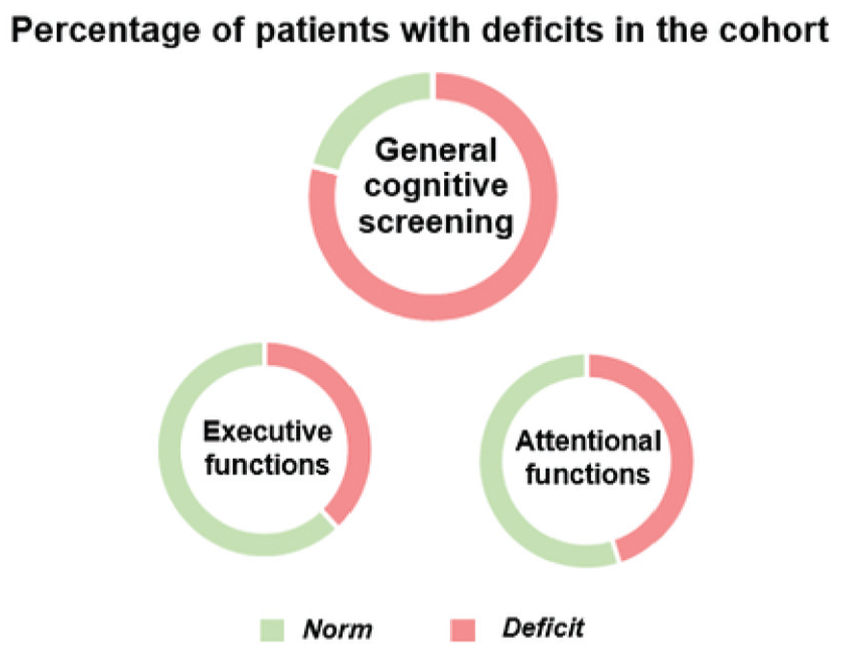
P0496 / 334
EFFECT OF FRAILTY ON OUTCOMES OF ENDOVASCULAR TREATMENT FOR ACUTE ISCHEMIC STROKE IN ELDERLY PATIENTS
1National University Hospital, Singapore, Neurology, Singapore, Singapore, 2Alexandra Hospital, Singapore, Division of Healthy Ageing, Singapore, Singapore
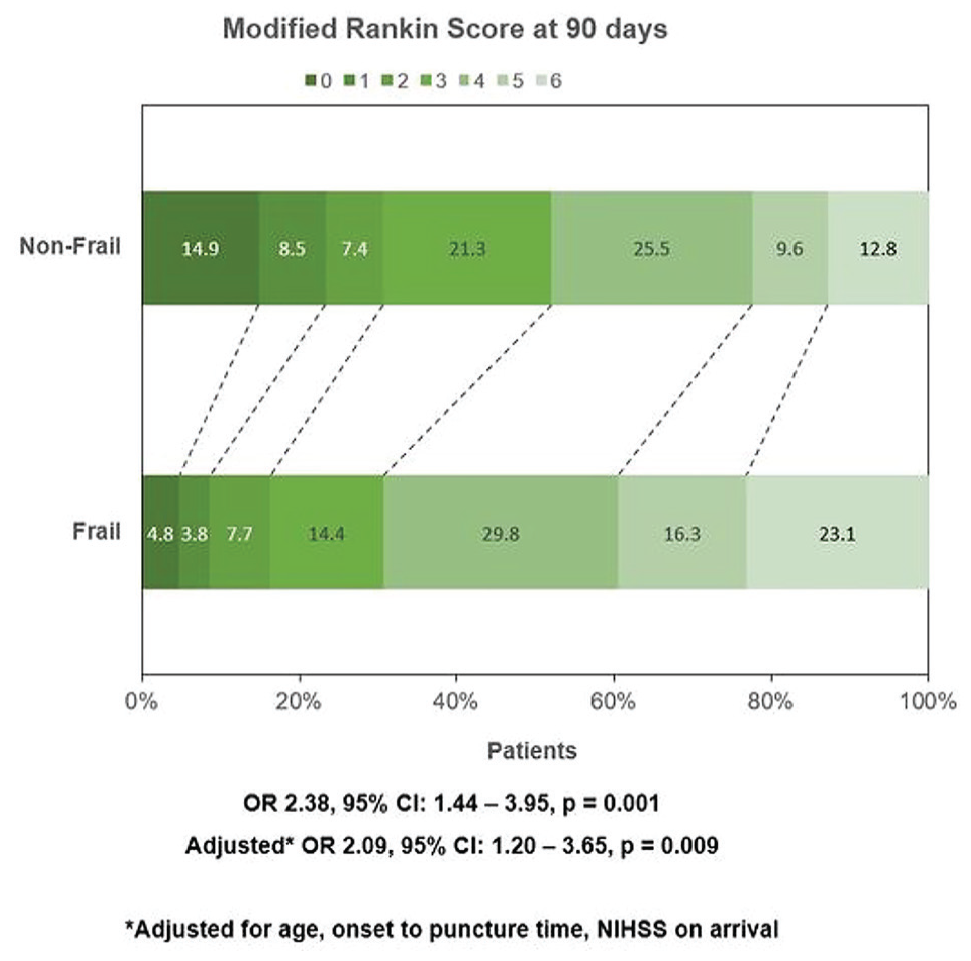
P0497 / 891
NETS AS MARKERS OF ISCHEMIC STROKE PROGNOSIS
1Universidad Complutense, Hospital Doce de Octubre, Pharmacology, Madrid, Spain, 2Spanish National Center for Cardiovascular Research, Madrid, Spain
P0498 / 1498
IMPROVEMENT OF COGNITIVE FUNCTION AFTER CAROTID STENTING
1 Hospital Clínico Universitario Lozano Blesa, Neurologia, Zaragoza, Spain
This a nonrandomized and prospective single-center experience.
P0499 / 1093
ASSOCIATION BETWEEN LOW-GRADE INFLAMMATION AND STROKE RECURRENCE
1 Tashkent Medical Academy, Tashkent, Uzbekistan
P0500 / 1141
FUNCTIONAL OUTCOME AND CHARACTERISTICS OF ACUTE ISCHEMIC STROKE PATIENTS REQUIRING MECHANICAL VENTILATION
1Helsinki University Hospital, Neurosurgery, Helsinki, Finland, 2Helsinki University Hospital, Intensive Care, Helsinki, Finland, 3Helsinki University Hospital, Neurology, Helsinki, Finland
We retrospectively collected data on demographics, medical history and index stroke. Our outcomes of interest were modified Rankin Scale (mRS) at three months, as well as mortality and living arrangements at 12 months.
Three month mRS was available for 114 (94%) patients with the following distribution: 0-2 18%, 3-5 28%, and 6 (dead) 54%. Data for living arrangements at 12 months was available for 113 (93%), 58% had died and 30% lived at home.
The best outcomes were seen in patients intubated pre-procedurally or because of agitation (12-month mortality 28% and 44% lived at home). In contrast, 12-month mortality was highest (59%) in patients intubated because of unconsciousness or respiratory failure.
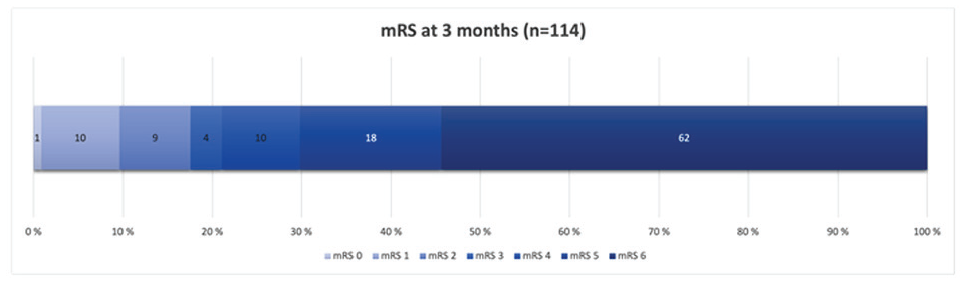
P0501 / 382
SCATTERED CEREBRAL INFARCTION IN THE CORONA RADIATA PREDICTS WORSE OUTCOMES
1 Nagano Munincipal Hospital, Nagano, Japan
P0502 / 734
EFFICACY AND OUTCOMES OF REPERFUSION THERAPIES FOR ACUTE ISCHEMIC STROKE IN COVID-19 PATIENTS: A NATION-WIDE MULTI-CENTER STUDY
1Stroke Centre, Republican Vilnius University Hospital, Vilnius, Lithuania, 2Center of Neurology, Vilnius University, Vilnius, Lithuania, 3Lithuanian University of Health Sciences, Department of Neurology, Kaunas, Lithuania, 4Laboratory of Behavioral Medicine (Palanga), Neuroscience Institute, Lithuanian University of Health Sciences, Palanga, Lithuania, 5Republican Panevėžys Hospital, Department of Neurology, Panevėžys, Lithuania, 6Republican Šiauliai Hospital, Department of Neurology, Šiauliai, Lithuania, 7Clinic of Neurology and Neurosurgery, Vilnius University, Vilnius, Lithuania
P0503 / 473
POST-STROKE EXECUTIVE FUNCTION IMPAIRMENTS IN RELATION TO WHITE MATTER DAMAGE DUE TO STROKE LESIONS VERSUS LEUKOARAIOSIS
1 University of Oxford, Oxford, United Kingdom
P0504 / 1186
THE EFFECT OF ANEMIA ON CLINICAL OUTCOME IN STROKE PATIENTS AFTER ENDOVASCULAR THROMBECTOMY
1MUMC+, Neurology, Maastricht, Netherlands, 2MUMC+, Radiology and Neurology, Maastricht, Netherlands, 3MUMC+, Radiology, Maastricht, Netherlands
P0505 / 533
THE IMPACT OF STROKE ON THE ABILITY TO LIVE AN INDEPENDENT LIFE AT OLD AGE. A COMMUNITY BASED STUDY ON VERY OLD SWEDISH MEN
1 Uppsala University, Medical Sciences, Uppsala, Sweden
P0506 / 716
IMPROVEMENT IN QUALITY OF LIFE AFTER A “SLEEP APNEA-HYPOPNEA SYNDROME TREATMENT PROGRAM” IN PATIENTS WITH ACUTE ISCHEMIC STROKE
1 Hospital Universitario Virgen Macarena, Sevilla, Spain
P0507 / 1644
MORTALITY FOLLOWING HEMICRANIECTOMY FOR MALIGNANT MIDDLE CEREBRAL ARTERY INFARCTION – EXPERIENCE FROM A TERTIARY NEUROSCIENCE CENTRE
1St Georges Hospital, Neurology, London, United Kingdom, 2St Georges Hospital, Neurosurgery, London, United Kingdom
P0508 / 1364
FUNCTIONAL OUTCOME AND DEATH THREE YEARS AFTER DISCHARGE FROM AN INTENSIVE REHABILITATION HOSPITAL IN MODERATE SEVERE STROKE PATIENTS
1University of Florence and IRCCS Fondazione Don Carlo Gnocchi, NEUROFARBA Department, Neuroscience Section, Florence, Italy, 2University of Florence, NEUROFARBA Department, Neuroscience Section, Florence, Italy, 3IRCCS Fondazione Don Carlo Gnocchi, Florence, Italy
P0509 / 330
GENDER DIFFERENCES IN MORTALITY AFTER STROKE IN THAI PATIENTS. A NATIONAL COHORT STUDY
1University of Aberdeen, Ageing Clinical and Experimental Research (ACER) Team, Institute of Applied Health Sciences, School of Medicine, Medical Sciences & Nutrition, University of Aberdeen, Aberdeen, United Kingdom, 2Khon Kaen University, Neurology Division, Department of Medicine, Faculty of Medicine, Khon Kaen University, Khon Kaen, Thailand, 3Khon Kaen University, Ambulatory Medicine Division, Department of Medicine, Faculty of Medicine, Khon Kaen, Thailand, 4Keele University, Keele Cardiovascular Research Group, Centre for Prognosis Research, Institute for Primary Care and Health Sciences, Keele University, Stoke-on-Trent, United Kingdom
P0510 / 1300
SHORT- AND LONG-TERM MORTALITY AFTER LACUNAR INFARCT
1Akershus University Hospital, Neurology, Lørenskog, Norway, 2University of Oslo, Institute of Clinical Medicine, Oslo, Norway, 3Örebro University, School of Medical Sciences, Örebro, Sweden, 4Central Hospital Karlstad, Department of Internal Medicine, Karlstad, Sweden, 5University of Oslo, Department of General Practice, Institute of Health and Society, Oslo, Norway
In the multivariate regression analysis, only age was significantly associated with mortality.
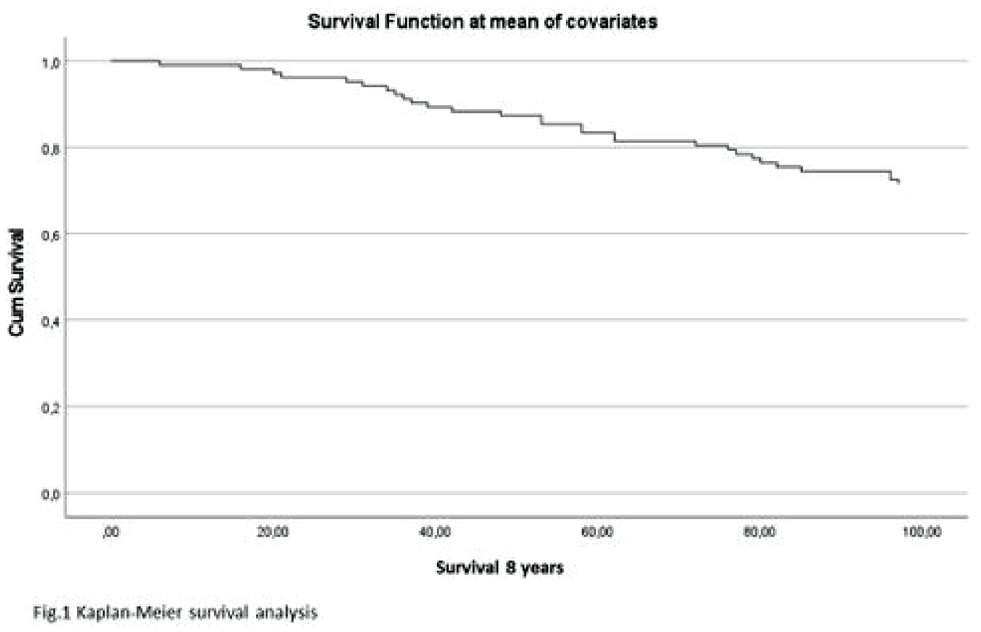
P0511 / 1568
HOW DOES SOCIO-PROFESSIONAL CATEGORY AFFECT RETURN TO WORK AFTER STROKE?
1 CHU Jean Minjoz, Neurology, Besançon, France
Multivariate analysis showed that SPC (p<0.01), age, mRS at discharge and follow-up, time to follow-up, anticoagulant treatment, anxiety/depression, and pathology were associated with return to work. Laborers and office workers were less likely to return to work (40% and 53%) than farmers (76%), managers (73%), tradespeople (65%), and intermediate professions (63%).
Pain reported at follow-up (p<0.001), decreased Multifactorial Fatigue Inventory score (p<0.001), Hamilton rating scale for depression score (p<0.001), and decreased MoCA score (p=0.012) also affected return to work.
P0512 / 1563
PLASMA BIOMARKER DYNAMIC PROFILES PREDICT EARLY NEUROLOGICAL RECOVERY AFTER ACUTE ISCHEMIC STROKE
1Hospital de Santo António, Centro Hospitalar Universitário do Porto, Neurology Department, Porto, Portugal, 2Universidade do Porto/Instituto de Investigação e Inovação em Saúde e - Instituto de Biologia Molecular e Celular, Porto, Portugal, 3Department of Psychiatry and Neurochemistry, Institute of Neuroscience and Physiology, Sahlgrenska Academy, University of Gothenburg, Gothenburg, Sweden, 4Hospital de Braga e Serviço de Neurorradiologia, Centro Hospitalar Universitário do Porto, Neuroradiology Department, Porto, Portugal, 5Instituto de Investigação e Inovação em Saúde & Instituto de Patologia e Imunologia Molecular (IPATIMUP), Porto, Portugal, 6Hospital de Santo António - Centro Hospitalar Universitário do Porto, Neuroradiology Department, Porto, Portugal, 7Centro Hospitalar Universitário de São João, Neurology Department, Porto, Portugal, 8Clinical Neurochemistry Laboratory, Sahlgrenska University Hospital, Sahlgrenska, Sweden, 9Hospital de Santo António - Centro Hospitalar Universitário do Porto, Polyvalent Intensive Care Unit, Porto, Portugal, 10Instituto de Ciências Biomédicas Abel Salazar (ICBAS), Universidade do Porto, Porto, Portugal
P0513 / 1076
MECHANICAL THROMBECTOMY IN NONAGENARIANS
1Xuanwu Hospital, Capital Medical University, Department of Neurosurgery, Beijing, China, 2Xuanwu Hospital, Capital Medical University, Medical Administration Division, Beijing, China, 3Johns Hopkins University School of Medicine, Department of Neurosurgery, Baltimore, United States, 4China Medical University, Shenyang, China, 5Xuanwu Hospital, Capital Medical University, Department of Evidence-Based Medicine, Beijing, China, 6Xuanwu Hospital, Capital Medical University, Medical Library, Beijing, China
P0514 / 706
DIFFERENCES IN MORTALITY RATES IN ISCHEMIC STROKES DURING THE 4 WAVES OF COVID-19
1County Emergency Clinical Hospital, Neurology, Brasov, Romania, 2Transilvania University, Faculty of Medicine, Neurology, Brasov, Romania
The total number of patients with mRS score of 6/death having IS was 71: in the first wave 12 patients (14,63%), in the second wave were 27 patients (18,49%), in the third wave 15 patients (26,31%) and in the fourth wave 17 patients (30,35%).
Among all patients with IS we identified 79 with COVID-19 and among patients with mRS score of 6/death 23 with COVID-19: i. the first wave 7/1 patients (14,28%); ii. the second wave 43/8 patients (18,6%); iii. the third wave 13/6 patients (46,15%); iv. the fourth wave 16/8 patients (50%).
P0515 / 915
RELEVANCE OF DELAYED REPERFUSION FOR TISSUE AND CLINICAL OUTCOMES IN PATIENTS TREATED WITH THROMBECTOMY
1University Hospital Bern Inselspital, University Institute of Diagnostic and Interventional Neuroradiology, Bern, Switzerland, 2University Hospital Bern Inselspital, Department of Neurology, Bern, Switzerland
P0516 / 967
BLOOD PRESSURE VARIABILITY INDICES FOR OUTCOME PREDICTION AFTER THROMBECTOMY IN STROKE USING HIGH-RESOLUTION DATA
1University Hospital Zurich, Zurich, Switzerland, Neurocritical Care Unit, Dept. of Neurosurgery and Inst. of Intensive Care Medicine; Department of Neurology; Zurich, Switzerland, 2University Hospital Zurich, Neurocritical Care Unit, Dept. of Neurosurgery and Inst. of Intensive Care Medicine, Zurich, Switzerland, 3University Hospital Zurich, Department of Neurology, Zurich, Switzerland, 4University Hospital Zurich, Department of Neuroradiology, Zurich, Switzerland, 5University Hospital Zurich, Neurocritical Care Unit, Dept. of Neurosurgery and Inst. of Intensive Care Medicine; Department of Neurology, Zurich, Switzerland
P0517 / 443
PATIENT RANK-BASED CURRICULUM LEARNING FOR PREDICTING FUNCTIONAL OUTCOME IN STROKE AFTER THROMBECTOMY
1INSA-Lyon/Creatis, Lyon, France, 2Hospices Civils de Lyon, Lyon, France, 3Université d’Angers, Angers, France
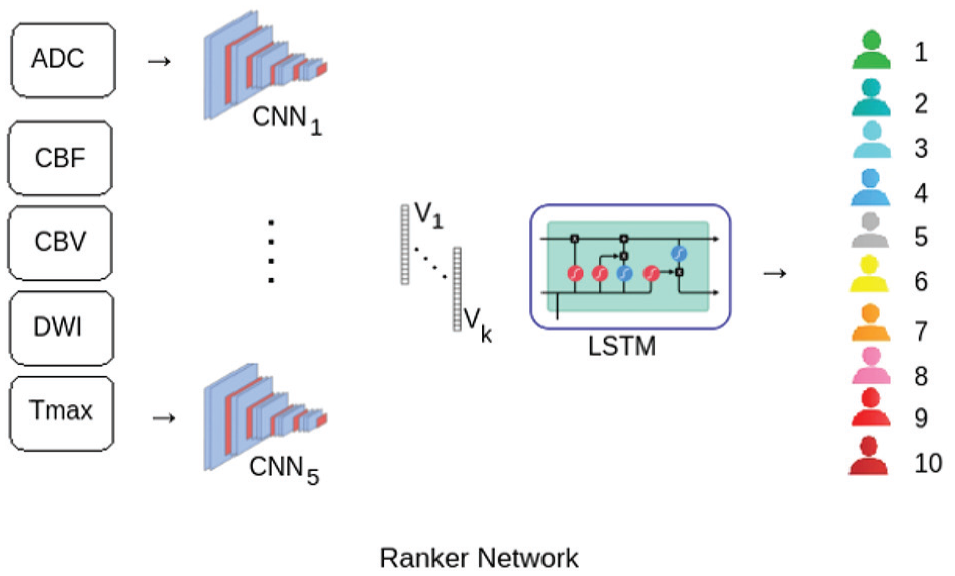
Figure 1.
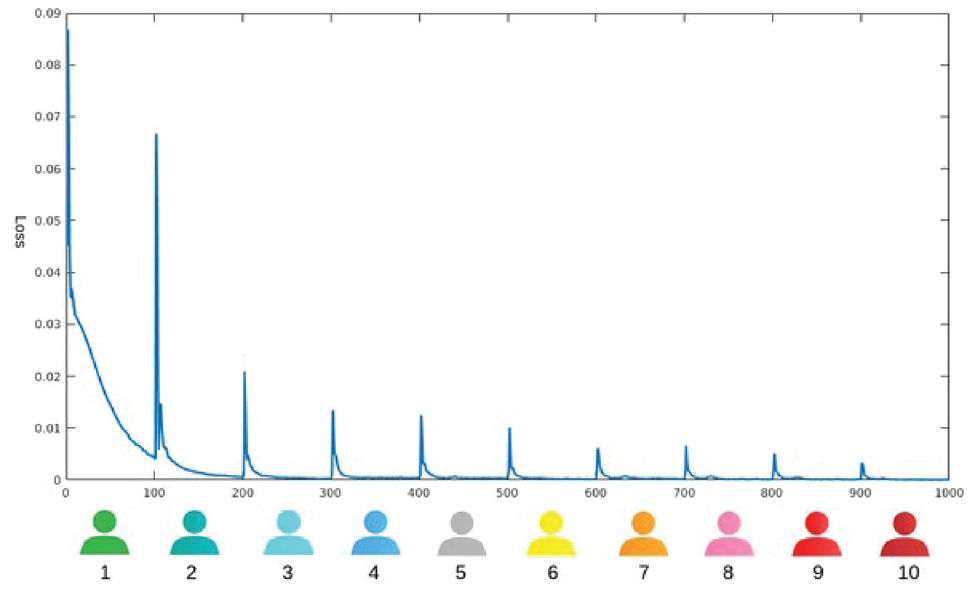
Figure 2.
Learning curve of the CNN-LSTM using rank-based curriculum learning.

P0518 / 1390
THE RECOVERY FROM APHASIA RELATED TO INSULAR CORTEX INVOLVEMENT IN MONOLINGUAL AND BILINGUAL STROKE PATIENTS
1Riga Stradiņš University, Faculty of Residency, Riga, Latvia, 2Pauls Stradiņš Clinical University Hospital, Department of Neurology, Riga, Latvia, 3University of Latvia, Faculty of Residency, Riga, Latvia, 4Pauls Stradiņš Clinical University, Diagnostic Radiology Institute, Riga, Latvia, 5Riga Stradiņš University, Department of Radiology, Riga, Latvia, 6Riga Stradiņš University, Department of Neurology and Neurosurgery, Riga, Latvia
P0519 / 1067
ASSOCIATION BETWEEN LOW ANKLE-BRACHIAL INDEX AND POOR OUTCOMES IN PATIENTS WITH EMBOLIC STROKE OF UNDETERMINED SOURCE
1Yonsei University College of Medicine, Neurology, Seoul, Korea, Republic of, 2Yonsei University College of Medicine, Seoul, Korea, Republic of
P0520 / 1581
PREDICTORS OF HEMORRHAGIC TRANSFORMATION AFTER A SUCCESSFUL MECHANICAL THROMBECTOMY
1Centro Hospitalar e Universitário de Coimbra, Neurology, Coimbra, Portugal, 2Centro Hospitalar e Universitário de Coimbra, Neuroradiology, Coimbra, Portugal, 3Faculdade de Medicina da Universidade de Coimbra, Coimbra, Portugal, 4Centro Hospitalar e Universitário Lisboa Norte, Lisboa, Portugal
P0521 / 1383
LOOKING BACK, BEFORE LOOKING FORWARD. FIVE YEARS DATA FROM RES-Q REGISTRY IN ROMANIA
1Spitalul Universitar de Urgenta Bucuresti, Bucharest, Romania, 2County Hospital Oradea, Neurology, Oradea, Romania, 3County Hospital Timisoara, Timisoara, Romania, 4National Institute of Neurology and Neurovascular disorders, Bucharest, Romania, 5University Emergency Hospital Elias, Bucharest, Romania, 6County Hospital Tg Mures, Tg Mures, Romania
P0522 / 1624
CLINICAL PRESENTATION AND LONG-TERM OUTCOMES OF CEREBRAL VENOUS THROMBOSIS IN A NORWEGIAN POPULATION
1Akershus University Hospital, Department of Neurology, Lørenskog, Norway, 2Akershus University Hospital, Department of Radiology, Lørenskog, Norway, 3University of Copenhagen, Danish Headache Centre, Copenhagen, Denmark
P0523 / 1472
A RETROSPECTIVE ANALYSIS OF OUTCOMES IN MECHANICAL THROMBECTOMY FOR BASILAR ARTERY OCCLUSION IN RELATION TO BASELINE STROKE SEVERITY AND THROMBOLYSIS
1Royal Stoke University Hospital, Department of Neurosciences, Stoke-on-Trent, United Kingdom, 2Royal Stoke University Hospital, Department of Interventional Neuroradiology, Stoke-on-Trent, United Kingdom, 3Keele University, School of Medicine, Keele, United Kingdom
Outcomes.
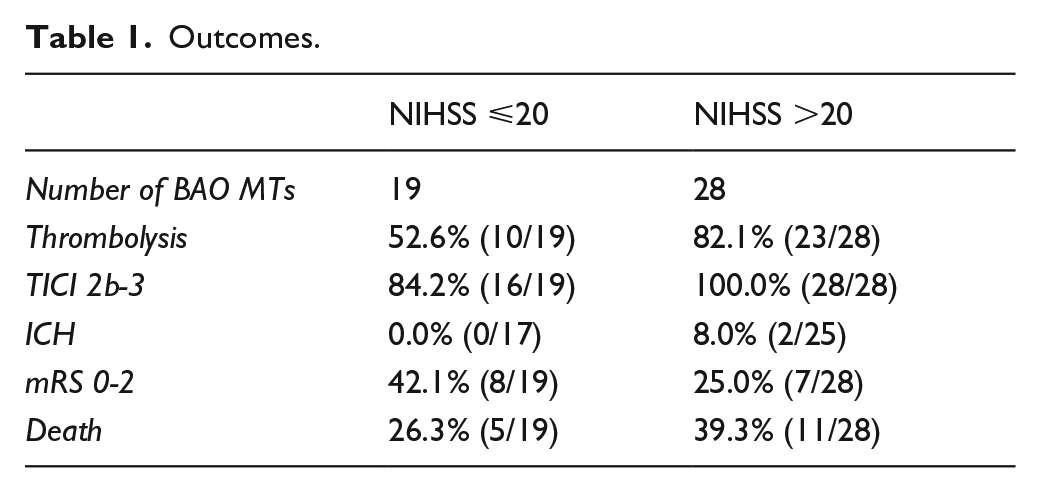
Effect of thrombolysis on outcomes.
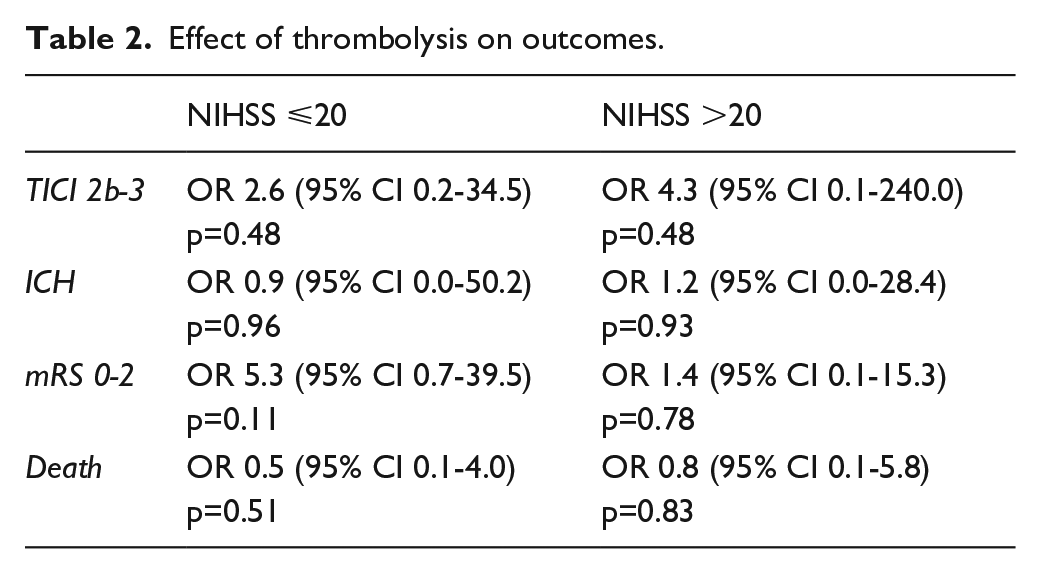
P0524 / 274
GENDER DIFFERENCES IN MORTALITY OF HOSPITALISED STROKE PATIENTS. SYSTEMATIC REVIEW AND META-ANALYSIS
1University of Aberdeen, Ageing Clinical and Experimental Research (ACER) Team, Institute of Applied Health Sciences, School of Medicine, Medical Sciences & Nutrition, University of Aberdeen, Aberdeen, United Kingdom, 2University of Oxford, Nuffield Department of Orthopaedics, Rheumatology and Musculoskeletal Sciences, University of Oxford, Oxford, United Kingdom, 3Keele University, Keele Cardiovascular Research Group, Centre for Prognosis Research, Institute for Primary Care and Health Sciences, Keele University, Stoke-on-Trent, United Kingdom
P0525 / 820
DEPENDENCY IN ACTIVITIES OF DAILY LIVING, HRQOL AND CORRELATED CONDITIONS 3-4 YEARS AFTER FIRST-EVER STROKE
1Lund University, Department of Clinical Sciences, Neurology, Lund, Sweden, 2Blekinge Hospital, Department of Medicine, Karlskrona, Sweden, 3Danderyd University Hospital, Department of Cardiology, Stockholm, Sweden, 4Skåne University Hospital, Department of Emergency Medicine, Lund, Sweden, 5Skåne University Hospital, Department of Neurology and Rehabilitation Medicine, Lund, Sweden
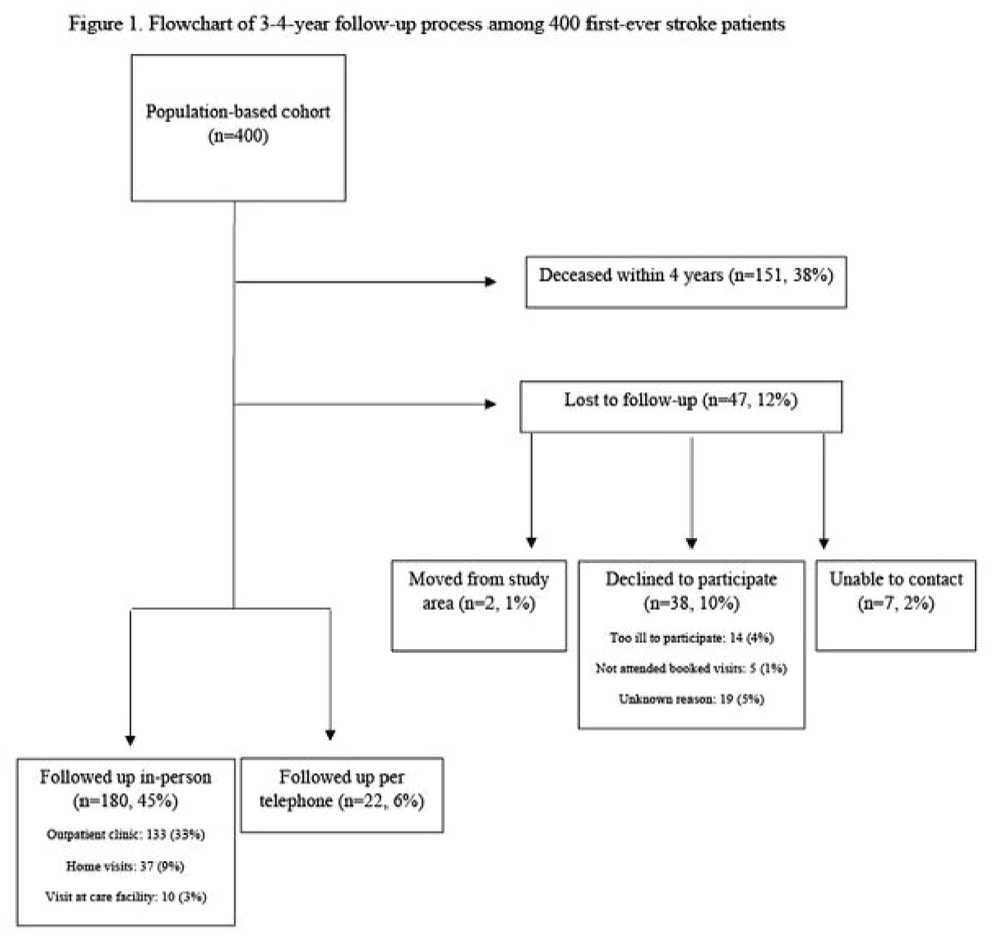
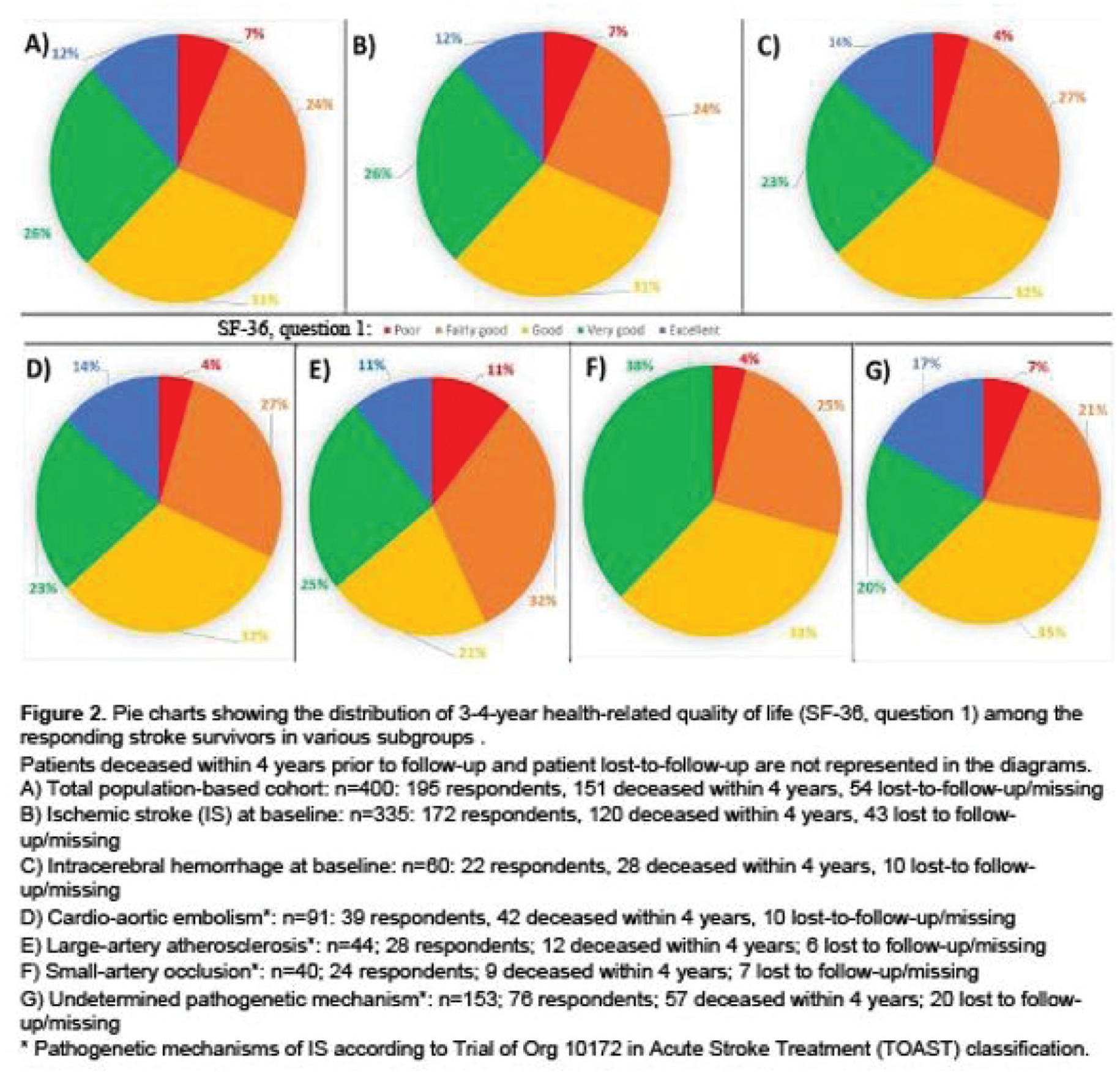
Baseline characteristics of followed-up stroke survivors and those lost to follow-up.
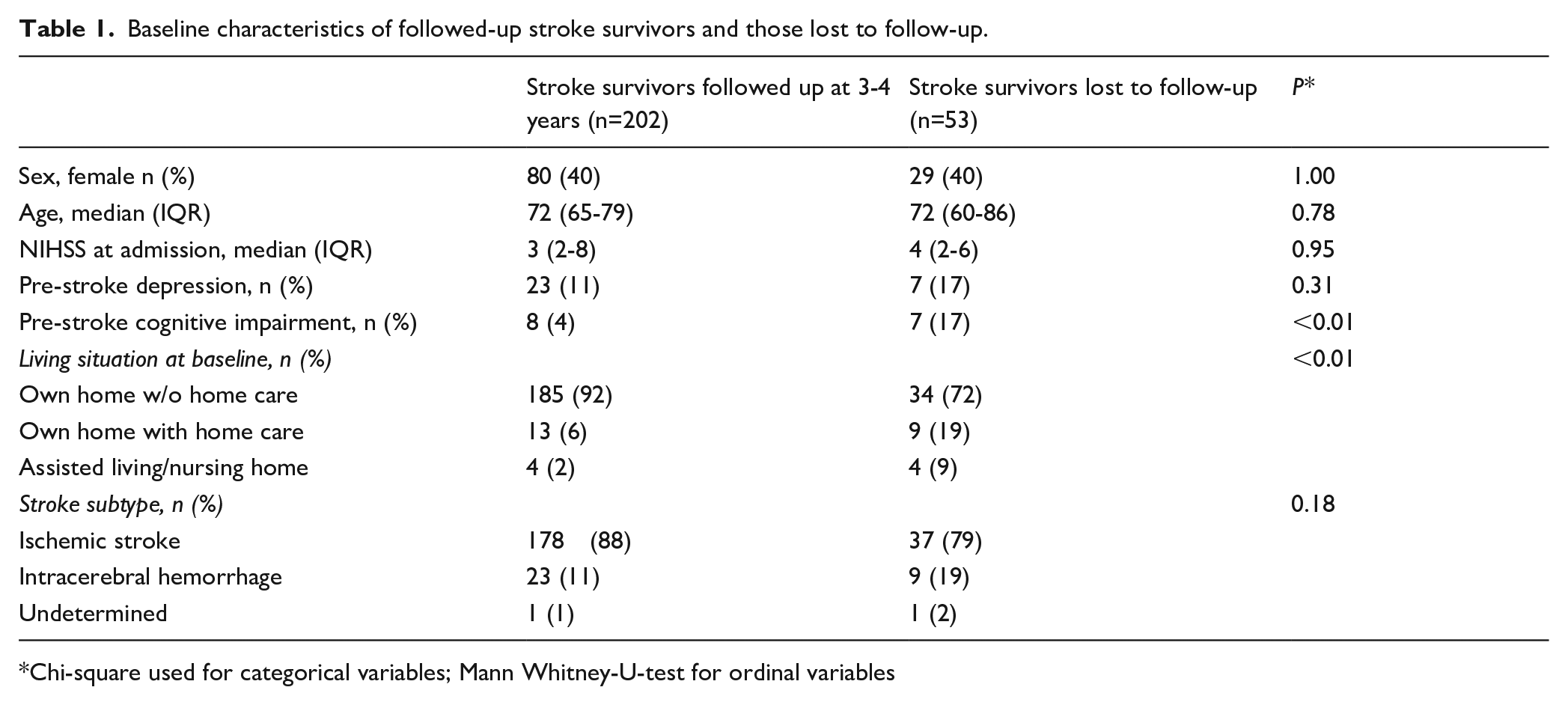
Chi-square used for categorical variables; Mann Whitney-U-test for ordinal variables
Multiple regression analysis of associations between follow-up assessments at 3-4 years and dependency in activities of daily living (ADL) (n=167).
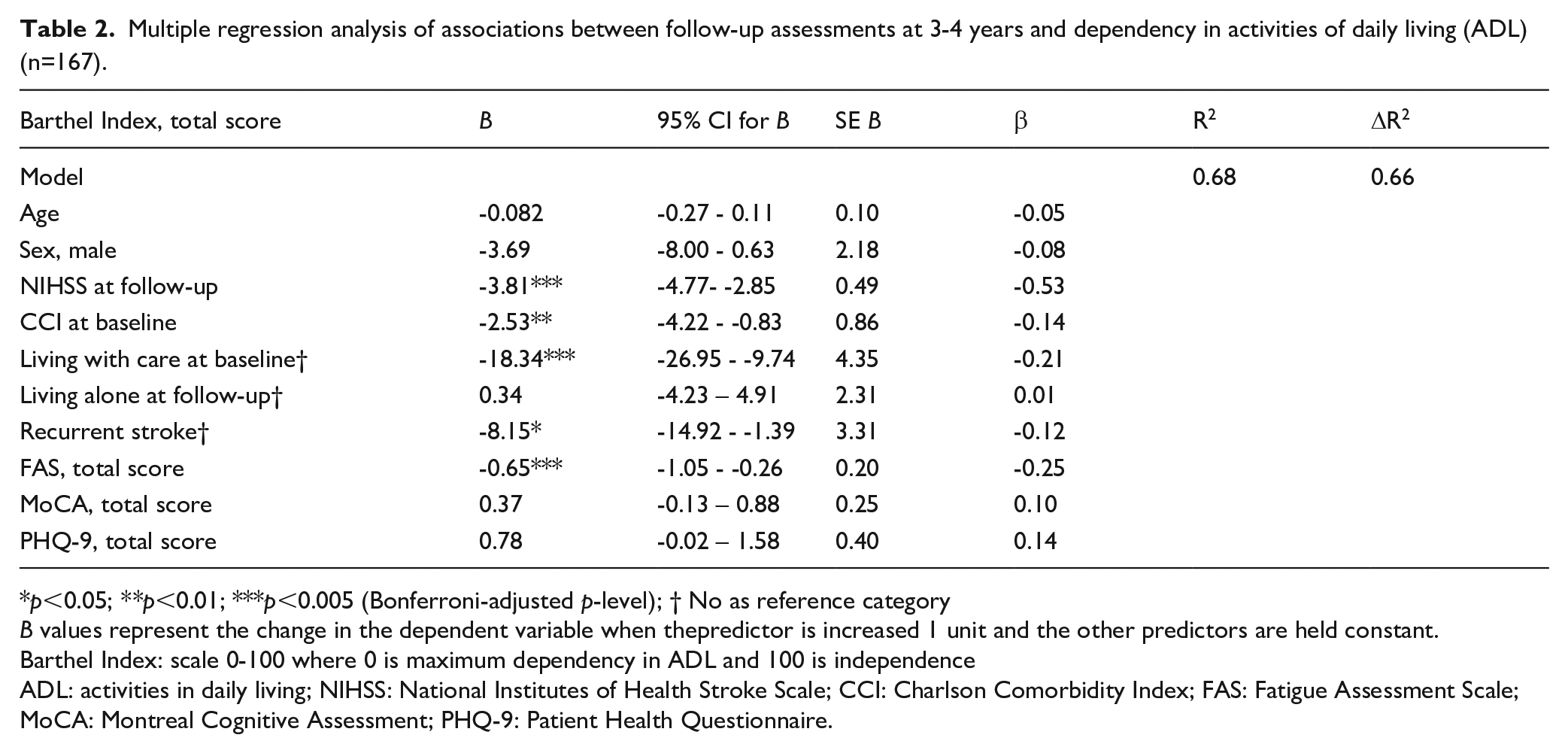
p<0.05; **p<0.01; ***p<0.005 (Bonferroni-adjusted p-level); † No as reference category
B values represent the change in the dependent variable when thepredictor is increased 1 unit and the other predictors are held constant.
Barthel Index: scale 0-100 where 0 is maximum dependency in ADL and 100 is independence
ADL: activities in daily living; NIHSS: National Institutes of Health Stroke Scale; CCI: Charlson Comorbidity Index; FAS: Fatigue Assessment Scale; MoCA: Montreal Cognitive Assessment; PHQ-9: Patient Health Questionnaire.
Ordinal multivariable regression analysis of associations between follow-up assessments at 3-4 years and HRQoL (SF-36, question 1) (n=167).
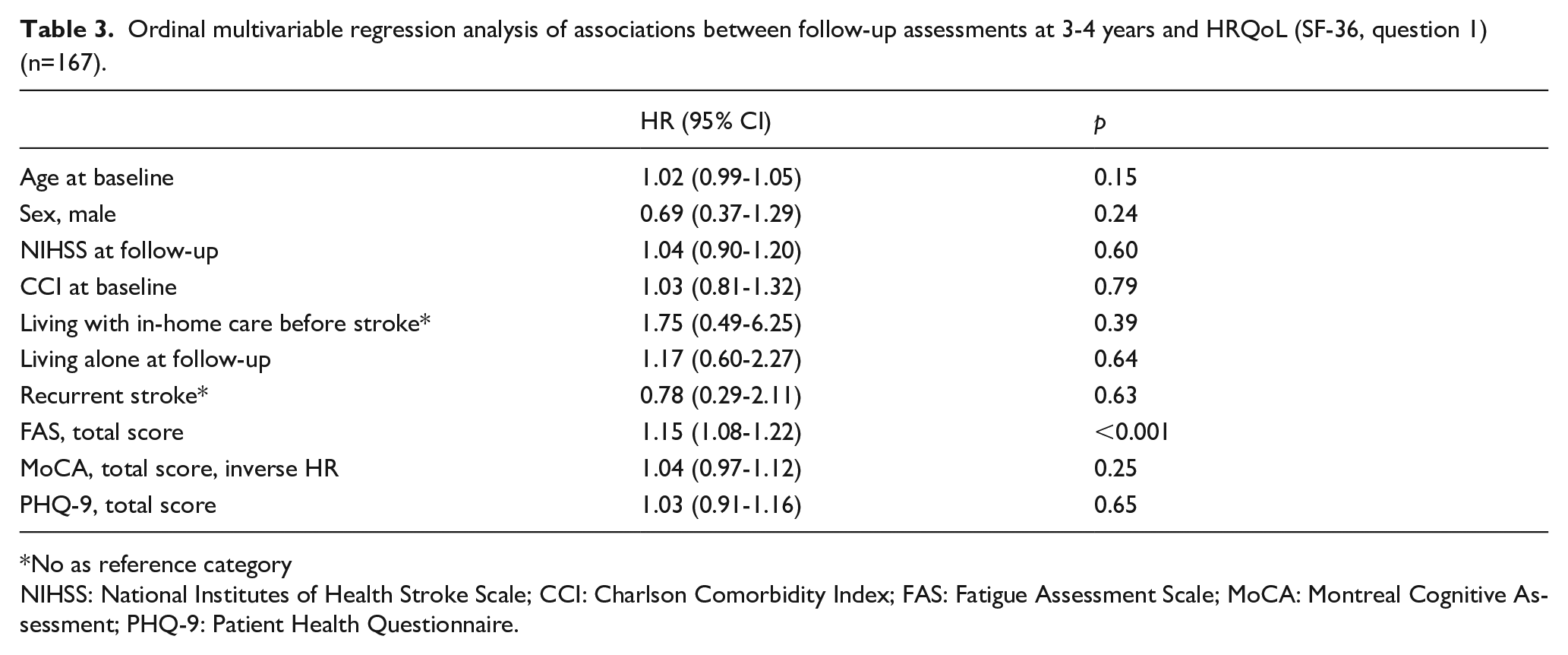
No as reference category
NIHSS: National Institutes of Health Stroke Scale; CCI: Charlson Comorbidity Index; FAS: Fatigue Assessment Scale; MoCA: Montreal Cognitive Assessment; PHQ-9: Patient Health Questionnaire.
P0526 / 1648
INFLUENCE OF HEMATOCRIT ON RECANALIZATION RESULT AND CLINICAL OUTCOME AFTER ENDOVASCULAR THERAPY FOR ANTERIOR CIRCULATION LARGE VESSEL OCCLUSION
1University Hospital Carl Gustav Carus, Department of Neurology, Dresden, Germany, 2University Hospital Carl Gustav, Department of Neuroradiology, Dresden, Germany
P0527 / 290
REDEFINING DISABILITY - THE ADDED VALUE OF PATIENT REPORTED OUTCOME MEASURES AFTER TIA AND MINOR STROKE
1Hospital Unviersitari Vall d’Hebron, Stroke Unit, Barcelona, Spain, 2Vall d’Hebron Institut de Recerca, Barcelona, Spain
P0528 / 1645
AGE OVER 80 IS ASSOCIATED WITH POOR DISCHARGE OUTCOMES AFTER ENDOVASCULAR THROMBECTOMY: FLORIDA STROKE REGISTRY
1NYU, New York, United States, 2University of Miami, Miami, United States, 3Memorial Healthcare System, Miami, United States
P0529 / 1275
THE RISK OF RECURRENT VASCULAR EVENTS A DECADE AFTER STROKE IN YOUNG ADULTS BETWEEN 18-49 YEARS OLD
1Radboud University Medical Centre, Neurology, Nijmegen, Netherlands, 2Amphia Hospital, Neurology, Breda, Netherlands, 3Medical Spectrum Twente, Neurology, Enschede, Netherlands, 4Canisius-Wilhelmina Hospital, Neurology, Nijmegen, Netherlands, 5Catharina Hospital, Neurology, Eindhoven, Netherlands, 6Sint Franciscus Gasthuis Hospital, Neurology, Rotterdam, Netherlands, 7Elisabeth-Tweesteden Hospital, Neurology, Tilburg, Netherlands, 8Haga Hospital, Neurology, The Hague, Netherlands, 9Rijnstate Hospital, Neurology, Arnhem, Netherlands, 10Jeroen Bosch Hospital, Neurology, ‘s-Hertogenboch, Netherlands, 11Maastricht University Medical Centre, Neurology, Maastricht, Netherlands, 12Leiden University Medical Centre, Neurology, Leiden, Netherlands, 13Amsterdam University Medical Centre, Neurology, Amsterdam, Netherlands, 14Albert Schweitzer Hospital, Neurology, Dordrecht, Netherlands, 15Zuyderland Hospital, Neurology, Sittard-Geleen, Netherlands, 16Medical Centre Leeuwarden, Neurology, Leeuwarden, Netherlands, 17Haaglanden Medical Centre, Neurology, The Hague, Netherlands
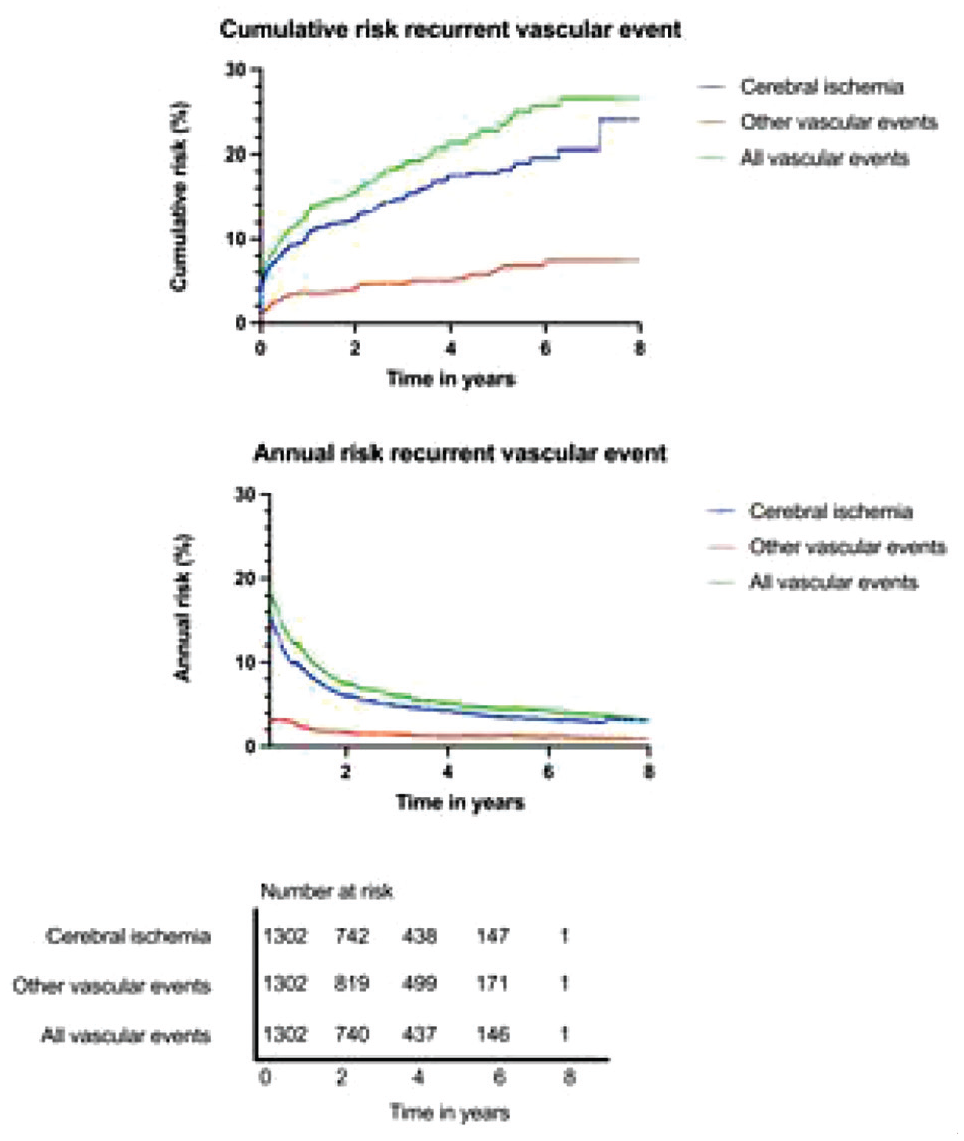
Annual and cumulative risk of recurrent vascular events with available date (n=1302).
P0530 / 1264
THE INFLUENCE OF FRAILTY IN GERIATRIC PATIENTS ON NEUROLOGICAL OUTCOME AND MORTALITY AFTER ENDOVASCULAR TREATMENT IN STROKE – AN ANALYSIS OF THE GERMAN STROKE REGISTRY
1University Medical Center Göttingen, Neurology, Göttingen, Germany, 2University Medical Göttingen, Neurology, Göttingen, Germany, 3University Medical Center Hamburg-Eppendorf, Neurology, Hamburg, Germany, 4Technical University of Munich, Neurology, München, Germany, 5Charité Berlin, Neurology, Berlin, Germany, 6RWTH Aachen University, Neurology, Aachen, Germany, 7University Hospital Bonn, Neurology, Bonn, Germany, 8University Hospital of Munich, Neurology, München, Germany, 9University Medical Center Göttingen, Geriatrics, Göttingen, Germany
Frailty is a clinical syndrome in elderly patients and is associated with an increased risk of adverse health-care outcome. The Hospital Frailty Risk Score (HFRS), an ICD-10 diagnostic code-based score, has been proven to be capable of identifying patients which are at high risk of adverse outcomes. Previous, small single center analysis could demonstrate an impact of frailty on neurological outcome and mortality in geriatric patients in endovascular treated patients with stroke. Thus, we aimed to investigate this question in a large multicentric stroke cohort.
We retrospectively analyzed the German Stroke Registry (GSR) regarding the impact of frailty on endovascular treatment in stroke. We calculated the HFRS in all patients ⩾ 65 years. Regression analysis was performed on mortality and neurological outcome and we corrected for factors associated with an impact on outcome such as ASPECTS and Tici.
1559 patients fulfilled the inclusion criteria. The mean HFRS was 2.5(± 3.8). 1257(80.5%) patients had a low-frailty risk (HFRS <5), 230(14.7%) had a moderate-frailty risk (HFRS 5-15) and 25(1.6%) a high-frailty risk (HFRS >15). 29.6%(372) of the low-frailty risk group, 16.6 %(38) of the moderate-frailty risk group and 0%(0) of the high frailty risk group had a good outcome (p<0.001). Multivariate regression analysis showed a significant influence on mortality (CI (95%) 0.915 - 0.977; OR 0.946) and neurological outcome after three months measured by the mRS (CI (95%) 1.065 - 1.236; OR 1.174).
We identified frailty as an impact factor on functional outcome and mortality in patients undergoing thrombectomy in LVOS.
P0531 / 1146
IMPACT OF ADMISSION HYPONATREMIA ON OUTCOME AFTER REPERFUSION THERAPY IN ACUTE ISCHEMIC STROKE
1Erasmus Medical Center, Internal Medicine-Nephrology, Rotterdam, Netherlands, 2Erasmus Medical Center, Internal Medicine, Rotterdam, Netherlands, 3Isala Hospital, Neurology, Zwolle, Netherlands
P0532 / 458
INTRA-CRANIAL CALCIFICATION – A PROGNOSTIC AND PREDICTIVE VALUE FOR POST STROKE COGNITIVE DECLINE AND BRAIN ATROPHY ON LONG TERM FOLLOW UP
1Tel-Aviv Sourasky Medical Center, Stroke Department, Division of Neurology, Tel- Aviv, Israel, 2Tel Aviv Sourasky Medical Center, Radiology Department, Tel-Aviv, Israel, 3Shaare Zedek Medical Center, Brain Center, Jerusalem, Israel
Multiple regression models exploring the association between the ICC score and advanced brain MRI measures. Model 1 – unadjusted. Model 2- adjusted for age, gender, education years and vascular risk factors: history of hypertension, T2DM, dyslipidemia.
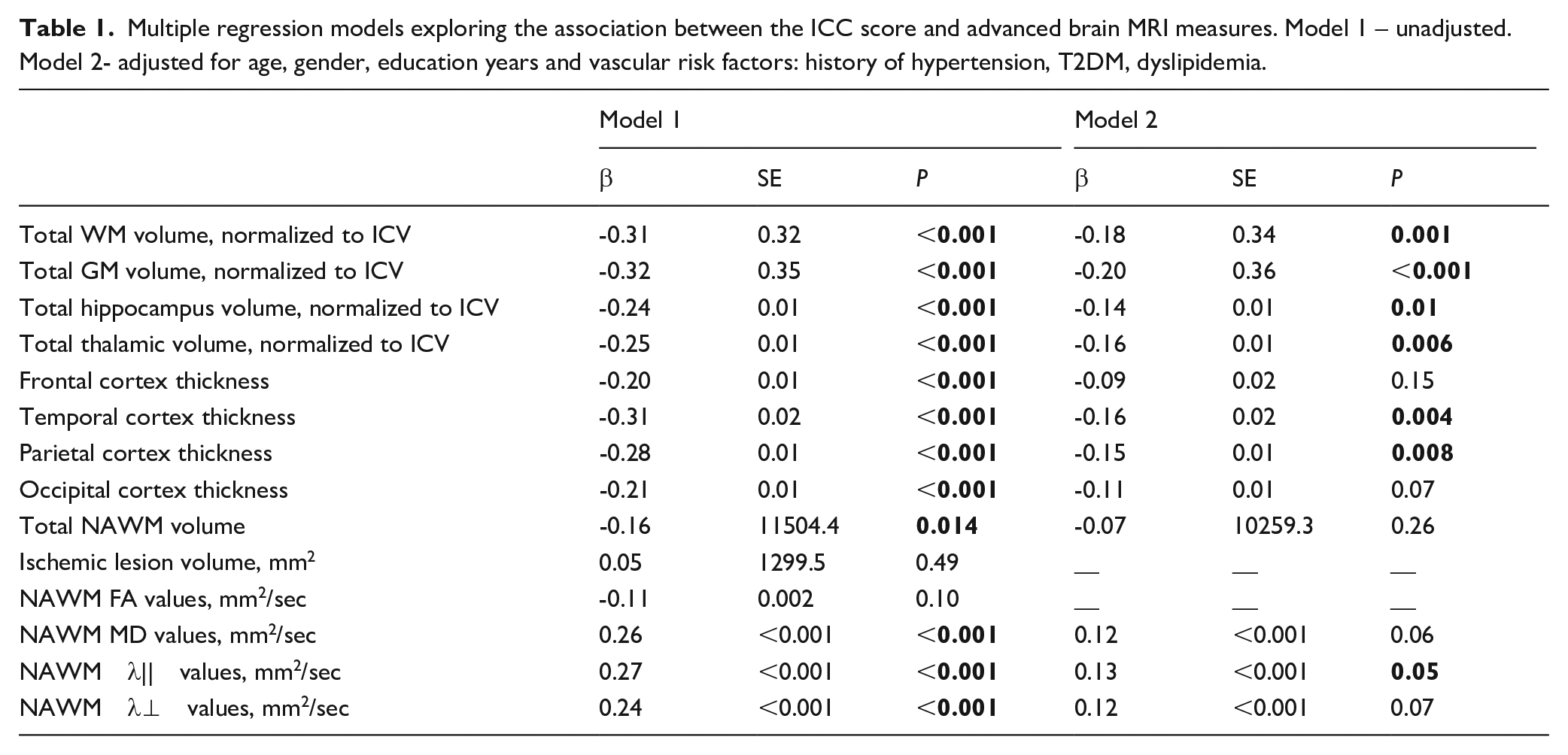
Multiple regression analysis exploring the relation between ICC score and prospective longitudinal cognitive outcomes. Model 1 – unadjusted. Model 2- adjusted for age, gender, education years, stroke severity (NIHSS) and the presence of acute lesion in MRI.
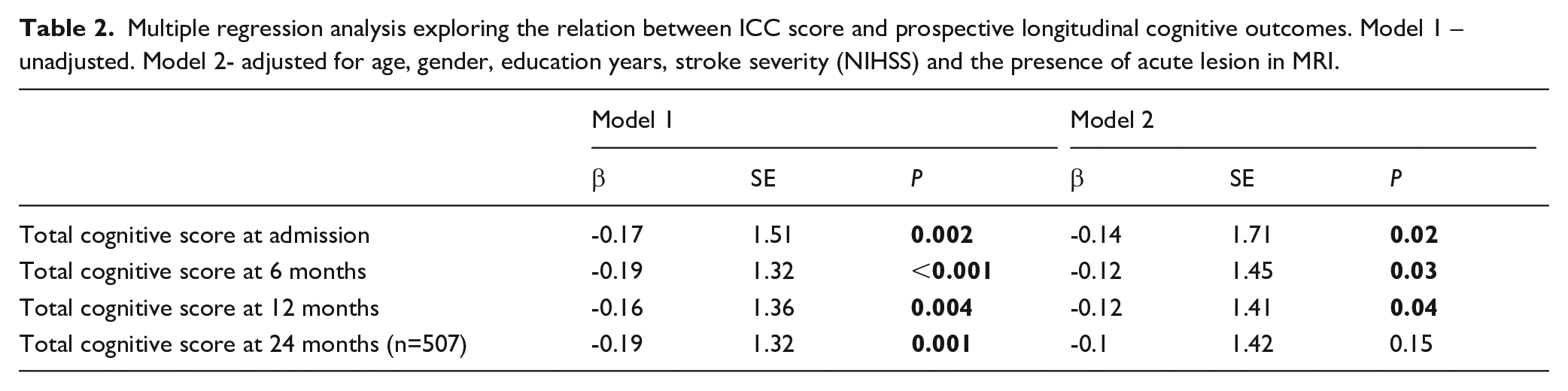
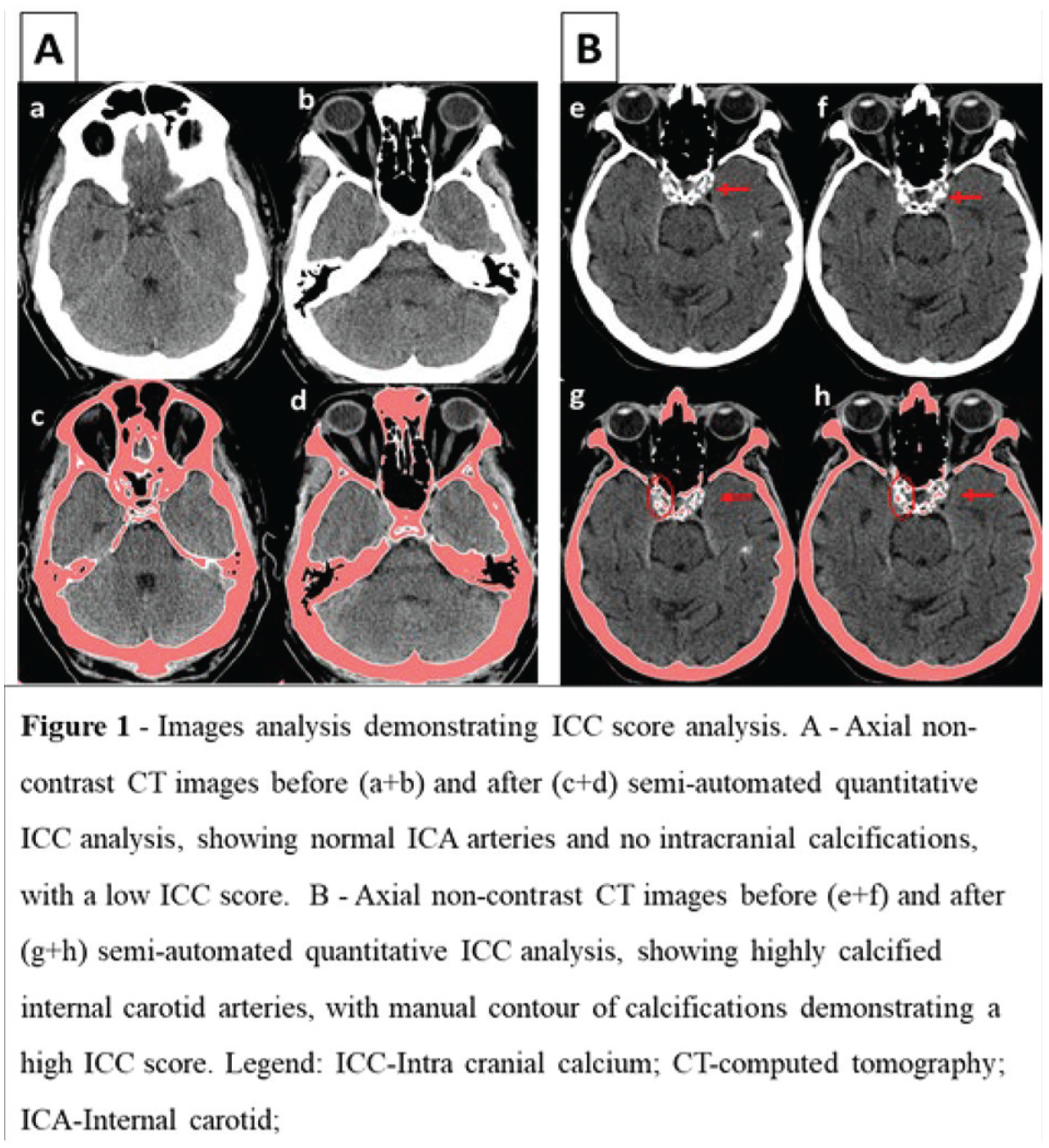
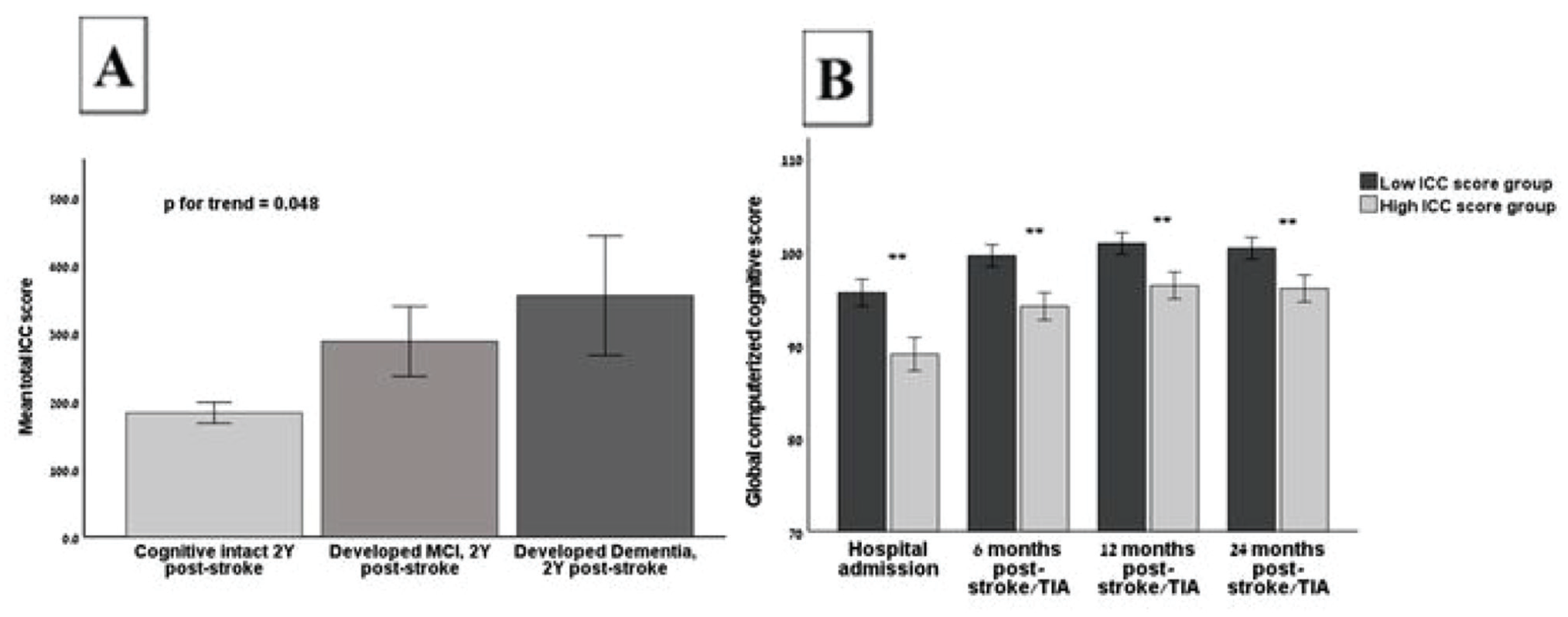
P0533 / 1371
FUNCTIONAL, MOTOR AND LANGUAGE OUTCOME ARE ASSOCIATED WITH LESION CHARACTERISTICS – A PROOF-OF-CONCEPT STUDY BASED ON DATA FROM A VERY EARLY REHABILITATION TRIAL
1The Florey Institute of Neuroscience and Mental Health, University of Melbourne, Heidelberg, Australia, 2Melbourne Brain Centre at the Royal Melbourne Hospital, University of Melbourne, Parkville, Australia, 3Austin Health, Department of Neurology, Heidelberg, Australia, 4Menofia University, Schibin al-Kaum, Egypt, 5Royal Melbourne Hospital, University of Melbourne, Parkville, Australia, 6The Walter and Eliza Hall Institute of Medical Research, Parkville, Australia
P0534 / 1150
LOBAR HEMORRHAGE, MICROBLEEDS AND CORTICAL SUPERFICIAL SIDEROSIS AS PREDICTORS OF 5-YEAR MORTALITY IN ICH: THE FRENCH BREST STROKE REGISTRY
1CHU Brest, Brest, France, 2INSERM CIC 1412, Brest, France, 3Université de Brest - INSERM, EFS, UMR 1078, Brest, France
STROKE COMPLICATIONS
P0535 / 1548
CLINICAL-RADIOLOGICAL PROFILE OF PATIENTS WITH ISCHEMIC STROKE AND SEIZURES
1 Hospital Universitario de la Princesa, Neurology, Madrid, Spain
Focal motor seizures were the most frequent(26 cases, 37.1%), seizures were the first presentation of stroke in 8 cases (11.4%) and happened during the first week in 64 cases(91.42%). Status epilepticus(SS) was suspected in 26 cases(37.1%). Delayed start of antiepileptic drugs(AED) in 7 cases(10%). Seizure control was achieved in 39 cases (55.7%). In-hospital mortality was 25 cases(35.7%).
Seizure control was associated with mRS at 3 month(p<0.001). The use of a second AED(p=0.001), no seizure control and SS were associated with in-hospital mortality(p<0.001). AED underdosing was associated with one-year mortality(p<0.043).
P0536 / 1622
PREVALENCE AND RISK FACTORS OF LATE SEIZURE IN ISCHAEMIC STROKE PATIENTS
1Charles University and Motol University Hospital, Department of Neurology, Prague, Czech Republic, 2Czech Academy of Sciences, Institute of Physiology, Prague, Czech Republic, 3Kepler Universitätsklinikum, Med Campus III, Department of Neurology 2, Linz, Austria
P0537 / 812
NETS AND POST-STROKE INFECTION
1Universidad Complutense de Madrid, Hospital 12 de Octubre, Neurovascular Research Unit, Madrid, Spain, 2Centro Nacional de Investigaciones Cardiovasculares (CNIC), Madrid, Spain
P0538 / 1085
RISK FACTORS FOR NEW ISCHEMIC CEREBRAL LESIONS AFTER CAROTID ARTERY STENTING
1Xuanwu Hospital, Capital Medical University, Department of Neurosurgery, Beijing, China, 2Xuanwu Hospital, Capital Medical University, Department of Evidence-Based Medicine, Beijing, China
P0539 / 1448
OPTIC NERVE SONOGRAPHY TO DETECT CEREBRAL EDEMA AFTER ISCHEMIC STROKE
1University Hospital Zurich and University of Zurich, Department of Neurology, Zurich, Switzerland, 2Cereneo Center for Neurology and Rehabilitation, Vitznau, Switzerland
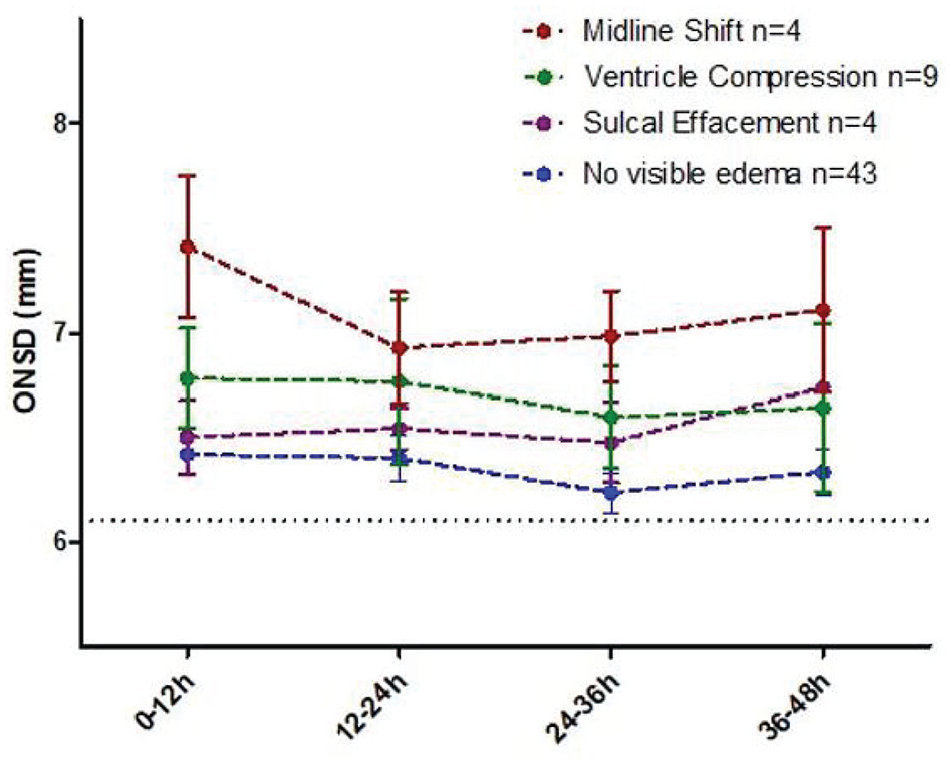
P0540 / 1484
RELATIONSHIP BETWEEN ANTICHOLINERGIC BURDEN AND POST-STROKE DELIRIUM
1UZ Brussel, Neurology, Brussels, Belgium, 2OLV Aalst, Neurology, Aalst, Belgium
P0541 / 762
PREVALENCE OF SELF-REPORTED FATIGUE AND ASSOCIATED FACTORS IN INDIVIDUALS WITH CHRONIC STROKE IN THAILAND
1 Khon Kaen University, Department of Rehabilitation Medicine, Khon Kaen, Thailand
P0542 / 1494
PRE-STROKE CARDIOVASCULAR MEDICATION USE AND POST-STROKE DELIRIUM
1UZ Brussel, Neurology, Brussels, Belgium, 2OLV Aalst, Neurology, Aalst, Belgium
P0543 / 1459
THE PREVALENCE OF MENTAL HEALTH DISORDERS AFTER STROKE IN YOUNG ADULTS
1 University of Tartu, Department of Neurology and Neurosurgery, Tartu, Estonia
P0544 / 340
DECOMPRESSIVE HEMICRANIECTOMY SERVICE OVERVIEW IN A LARGE TERTIARY NEUROSCIENCE CENTER IN THE UK
1 King’s College Hospital NHS Foundation Trust, Neurosciences, London, United Kingdom
Factors conferring lower discharge mortality rates included, age less than 60 years (p=0.063), and sole MCA territory involvement (p=0.025). The latter was also associated with fewer complications (p=0.026), and shorter ITU admissions (p=0.059). Operations performed beyond 48 hours of stroke did not have a significantly greater discharge mortality rate (p=0.39).
P0545 / 98
CAROTID ENDARTERECTOMY FOR ASYMPTOMATIC INTERNAL CAROTID ARTERY STENOSIS: PREDICTIVE FACTORS FOR 30-DAY STROKE AND MORTALITY RATES: ARETROSPECTIVE COHORT STUDY
1Faculty of Medicine for Males, Al-Azhar University, Cairo, Egypt, Vascular Surgery & Endovascular Therapy, Cairo, Egypt, 2Helwan University, Cairo, Egypt, 3King Faisal Specialist Hospital & Research Center, Vascular Surgery & Endovascular Therapy, Riyadh, Saudi Arabia
P0546 / 562
DO STROKE CARE PROCESSES MODIFY CLINICAL OUTCOMES IN PATIENTS WITH STROKE ASSOCIATED PNEUMONIA? A REGISTRY COHORT STUDY IN ENGLAND AND WALES
1University of Manchester, Division of Cardiovascular Sciences, Manchester, United Kingdom, 2University of Manchester, Centre for Biostatistics, Manchester, United Kingdom, 3King’s College London, School of Population Health and Environmental Sciences, London, United Kingdom
P0547 / 1630
PREDICTING HEMORRHAGIC TRANSFORMATION IN POSTERIOR CIRCULATION STROKE PATIENTS NOT SUBMITTED TO REPERFUSION THERAPIES
1Universidade Federal de Sao Paulo, Sao Paulo, Brazil, 2Columbia University, New York City, United States, 3Centro Universitario Sao Camilo, Sao Paulo, Brazil, 4Universidade Estadual do Ceara, Fortaleza, Brazil, 5Hospital Geral de Fortaleza, Fortaleza, Brazil, 6Universidade de Sao Paulo, Ribeirao Preto, Brazil, 7Hospital Instituto de Neurologia de Curitiba, Curitiba, Brazil, 8Hospital Israelita Brasileiro Albert Einstein, Sao Paulo, Brazil
P0548 / 342
INTEGRATING NOVEL NEUROIMAGING MEASUREMENTS AND CIRCULATING BIOMARKERS FOR THE PREDICTION OF SECONDARY INJURY FOLLOWING STROKE: FROM BENCH TO BEDSIDE. PROTOCOL PRESENTATION OF THE NIMBLE STUDY
1University of Florence, NEUROFARBA, Florence, Italy, 2Careggi University Hospital, SOD Stroke Unit, Florence, Italy, 3Neuroscience Institute, National Research Council, Pisa, Italy, 4European Laboratory for Non-Linear Spectroscopy, Florence, Italy, 5University of Florence, Department of Biomedical, Experimental and Clinical Sciences, Florence, Italy, 6Careggi University Hospital, Florence, Italy, 7Careggi University Hospital, Atherothrombotic Diseases Center, Florence, Italy, 8University of Florence, Department of Experimental and Clinical Medicine, Florence, Italy, 9University of Oxford, Acute Vascular Imaging Centre, Radcliffe Department of Medicine, Oxford, United Kingdom, 10Neuroscience Institute, National Research Council, Florence, Italy
Preclinical section: mouse model of photothrombotic occlusion and recanalization. Functional evaluation. Circulating biomarkers (see above) at baseline and 24 hours. In vivo BBB (advanced optical imaging techniques) and ex-vivo BE (Evans-blue diffusion) evaluation.
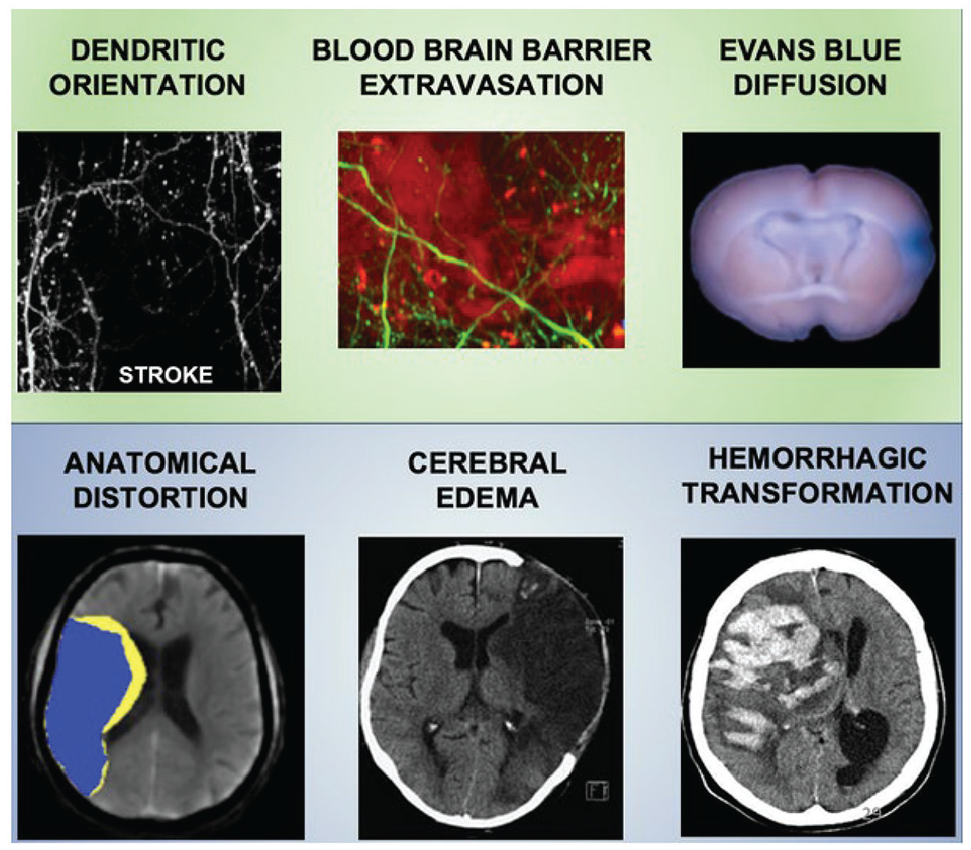
P0549 / 628
A NEW WORLD UPON GRAY COLORS
1 Hospital de Braga, Neurology, Braga, Portugal
She was admitted to our hospital claiming sudden loss of color perception, describing everything in “gray tones with color desaturation”, red being the best perceived color. She had no other ocular symptoms including eye pain, tearing, or photophobia. She denied headache, trauma or loss of consciousness. No history of non-compliance or changes in medication.
Fundoscopy revealed well-defined contours on both optical discs, an age-related vascular pattern and unaltered maculas. On examination she had left upper quadrantanopsy and inability to perceive colors, but not shapes and faces, in the entire visual field. Brain CT revealed a recent right temporo-occipital cortico-subcortical infarct and left occipital and cerebellar sequelae. Angiographic study was unremarkable. Anticoagulant therapy was maintained.
The role of different areas of the primary and associative visual cortex in color processing and how a defect results in central dyschromatopsia is not yet fully understood.
P0550 / 857
PREDICTION OF ACUTE MYOCARDIAL INFARCTION IN ASIAN PATIENTS WITH ACUTE ISCHEMIC STROKE: THE CTRAN SCORE
1 The Second Affiliated Hospital of Zhejiang University, Department of Neurology, Hangzhou, China
P0551 / 846
A PANEL OF BLOOD BIOMARKERS PROVIDES A HIGH SENSITIVITY TO RULE OUT STROKE-ASSOCIATED PNEUMONIA
1Vall d’Hebron Institute of Research (VHIR), Barcelona, Spain, 2Hospital Universitari Germans Trias i Pujol, Badalona, Spain, 3Hospital Universitari Vall d’Hebron, Barcelona, Spain, 4Hospital de Mataró, Mataró, Spain, 5Hospital de Jaén, Jaen, Spain, 6Hospital Universitario Virgen Macarena, Sevilla, Spain, 7Hospital del Mar, Barcelona, Spain, 8Hospital de Cruces, Bilbao, Spain, 9Hospital Universitario Virgen del Rocío, Sevilla, Spain, 10Hospital Universitario de Albacete, Albacete, Spain
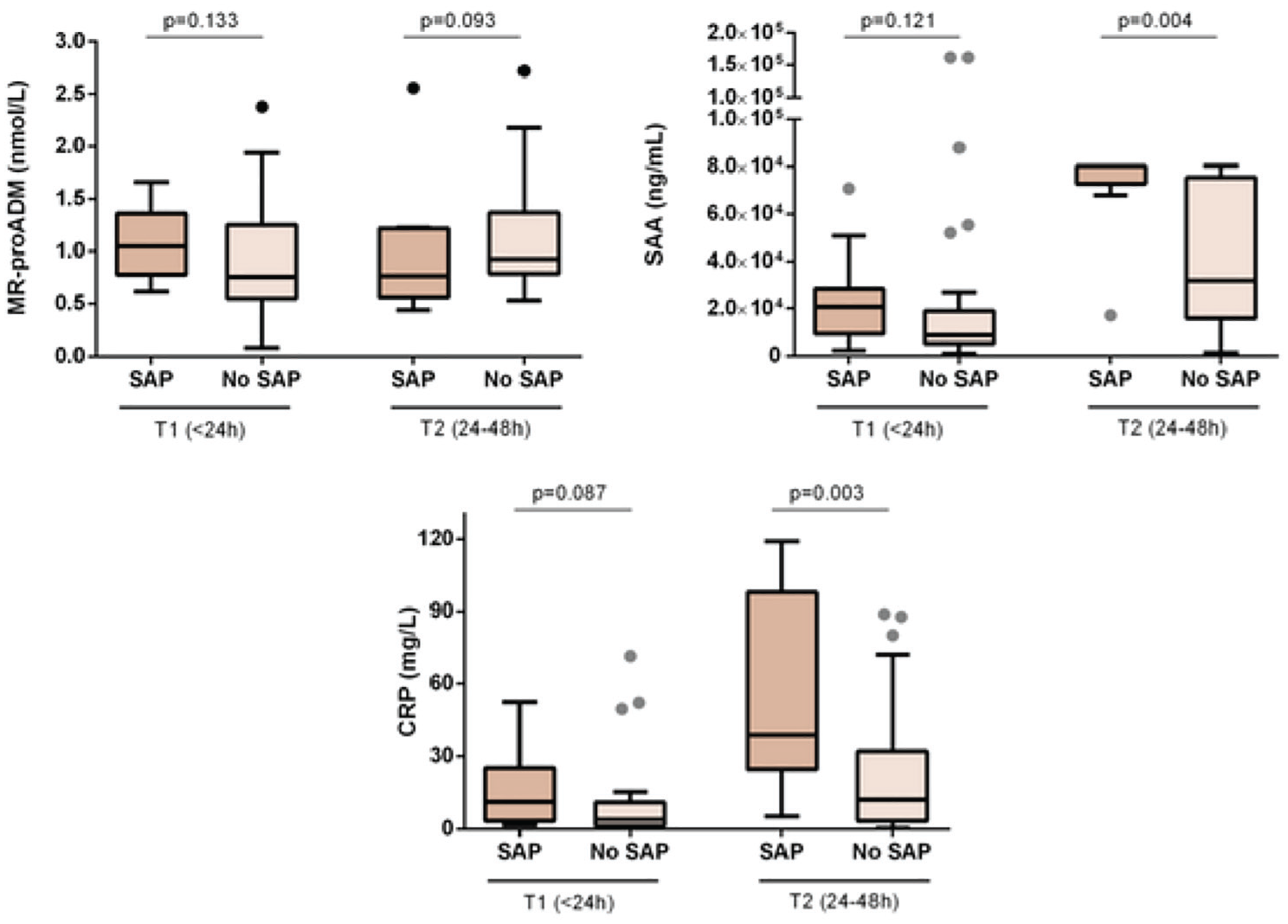
P0552 / 923
PREVALENCE AND PREDICTIVE FACTORS FOR SARCOPENIA IN CHRONIC STROKE PATIENTS: A PRELIMINARY STUDY
1 Khon Kaen University, Physical Medicine and Rehabilitation, Khon Kaen, Thailand
P0553 / 941
CIRCULATING MARKERS OF INFLAMMATION AS EARLY INDICATOR FOR LOWER RESPIRATORY INFECTIONS IN ACUTE ISCHAEMIC STROKE
1Hanover Medical School, Department of Neurology, Hannover, Germany, 2Hanover Medical School, Institute of Clinical Chemistry, Hannover, Germany
P0554 / 1381
EVALUATION OF RISK PREDICTION EQUATION FOR NEW-ONSET RENAL INSUFFICIENCY IN PATIENTS WITH ACUTE ISCHEMIC STROKE OR TRANSIENT ISCHEMIC ATTACK
1 Beijing Tiantan Hospital, Capital Medical University, Neurology, Beijing, China
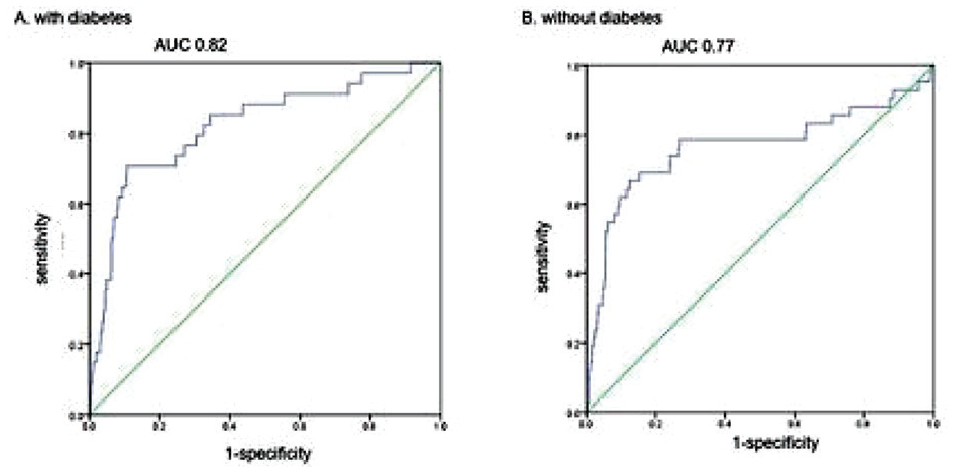
P0555 / 1257
COVID-19 INFECTION INFLUENCE ON ISCHEMIC STROKE PATIENTS AND THEIR TREATMENT – SINGLE CENTRE EXPERIENCE
1‘St. Anna’ University Hospital, Department of Neurology, Sofia, Bulgaria, 2South-West University “Neofit Rilski” (SWU), Blagoevgrad, Bulgaria
P0556 / 914
EVALUATION OF PHYSIOLOGICAL VARIABLES IN DETERMINING TIME TO MORTALITY AFTER STROKE ASSOCIATED PNEUMONIA
1University of Manchester, School of Medical Sciences, Faculty of Biology, Medicine and Health, Manchester, United Kingdom, 2University of Manchester, Centre for Biostatistics, Manchester Academic Health Science Centre, Manchester, United Kingdom, 3Salford Royal Foundation Trust, Greater Manchester Comprehensive Stroke Centre, Geoffrey Jefferson Brain Research Centre, Manchester Academic Health Science Centre, Northern Care Alliance, Manchester, United Kingdom, 4University of Manchester, Division of Cardiovascular Sciences, Faculty of Biology, Medicine and Health, Manchester, United Kingdom
P0557 / 855
ACCURACY OF SARC-F QUESTIONNAIRE AS A SCREENING METHOD FOR SARCOPENIA IN CHRONIC STROKE PATIENTS: A PRELIMINARY STUDY
1 Khon Kaen University, Rehabilitation medicine, Khon Kaen, Thailand
P0558 / 988
ASSOCIATION OF N-TERMINAL PRO-BRAIN NATRIURETIC PEPTIDE LEVEL WITH IN-HOSPITAL COMPLICATIONS AFTER AN ACUTE ISCHEMIC STROKE
1Stroke Unit, Department of Neurology, Torrecárdenas University Hospital, Almeria, Spain, 2Stroke Unit, Department of Neurology, Torrecárdenas University Hospital, Almería, Spain, 3Department of Emergency Medicine. Torrecárdenas University Hospital, Almería, Spain
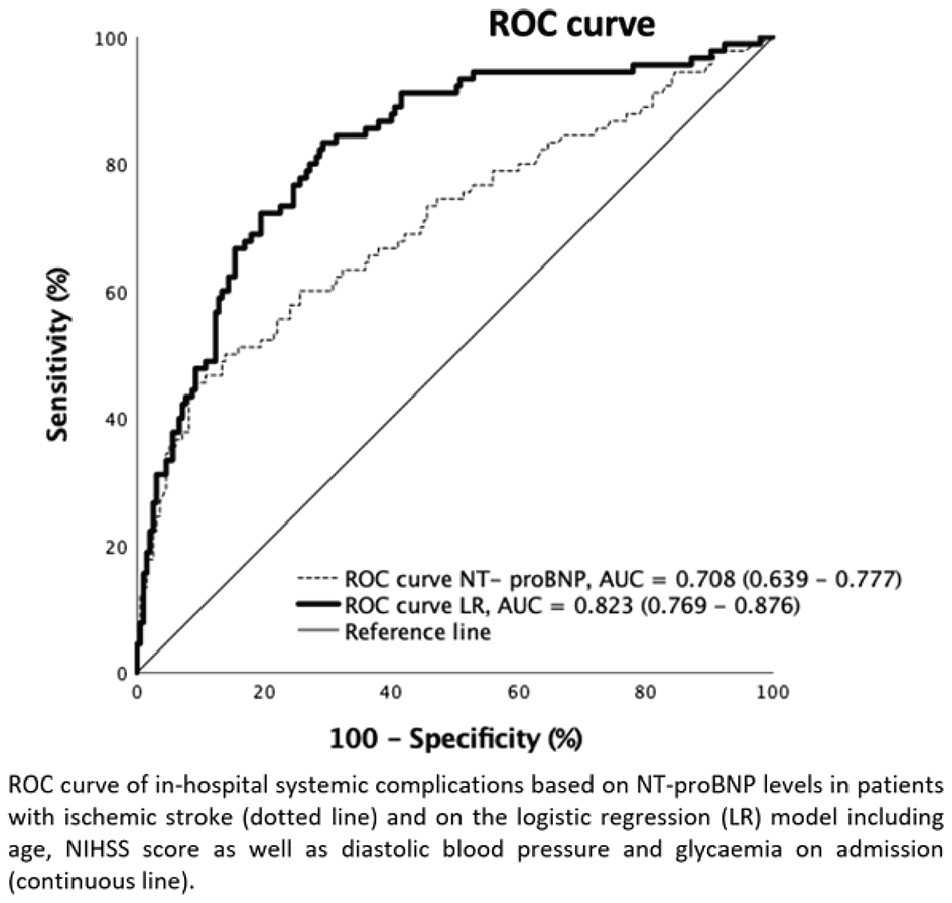
P0559 / 1595
THE RELATIONSHIP BETWEEN BLOOD GLUCOSE LEVELS AND HEMORRHAGIC TRANSFORMATION RISK IN PATIENTS TREATED BY MECHANICAL THROMBECTOMY -NEUROLOGY DEPARTMENT OF MEDICAL UNIVERSITY OF BIALYSTOK EXPERIENCE
1Medical University of Bialystok, Neurology, Bialystok, Poland, 2Medical University of Bialystok, Radiology, Bialystok, Poland
CEREBROVASCULAR MANIFESTATIONS OF COVID-19 AND OTHER INFECTIONS
P0560 / 729
CEREBRAL VENOUS SINUS THROMBOSIS IN THE SETTING OF COVID-19 VACCINATION: A SYSTEMATIC REVIEW AND META-ANALYSIS
1National and Kapodistrian University of Athens, Second Department of Neurology, Athens, Greece, 2University of Lisbon, Department of Neurosciences and Mental Health, Hospital de Santa Maria, CHULN, Lisbon, Portugal, 3University of Amsterdam, Department of Neurology, Amsterdam UMC, Amsterdam, Netherlands, 4University of West Attica, Department of Physiotherapy, Athens, Greece, 5National and Kapodistrian University of Athens, Third Department of Pediatrics, Athens, Greece, 6National and Kapodistrian University of Athens, Third Department of Critical Care Medicine, Athens, Greece, 7National and Kapodistrian University of Athens, Fourth Department of Internal Medicine, Athens, Greece, 8National and Kapodistrian University of Athens, Department of Anatomy and Surgical Anatomy, Athens, Greece
P0561 / 432
SHARED GENETIC MECHANISMS AMONG STROKE POST-COVID-19 CASES AND ISCHEMIC STROKE SUBTYPES
1Biomedical Research Institute Sant Pau (IIB Sant Pau), Stroke Pharmacogenomics and Genetics Laboratory, Barcelona, Spain, 2Institut d’Investigacions Biomèdiques de Barcelona (IIBB-CSIC), Department of Brain Ischemia and Neurodegeneration, Barcelona, Spain, 3Fundación Docència I Recerca Mútua Terrassa, Stroke Pharmacogenomics and Genetics Laboratory, Terrassa, Spain, 4Universitat Autònoma de Barcelona, Department of Medicine, Barcelona, Spain, 5Universitat de Barcelona, Departament de Genètica, Microbiologia i Estadística, Barcelona, Spain, 6University Hospital of Albacete, Department of Neurology, Albacete, Spain, 7University Hospital of Albacete, Research Unit, Albacete, Spain, 8Biomedical Research Institute Sant Pau (IIB Sant Pau), Department of Neurology, Barcelona, Spain, 9Health Research Institute Germans Trias i Pujol (IGTP), Genomes for Life-GCAT Lab Group - Program of Predictive and Personalized Medicine of Cancer (PMPPC), Barcelona, Spain, 10Hospital Universitario Ramón Y Cajal, Madrid, Spain, 11Institute of Biomedicine of Seville, Seville, Spain, 12Hospital Universitario Virgen Macarena, Seville, Spain, 13Instituto de Física de Cantabria (IFCA-CSIC), Santander, Spain, 14Centro Nacional de Biotecnología (CNB-CSIC), Department of Molecular and Cell Biology, Madrid, Spain, 15Institute of Biomedicine of Valencia (IBV), Valencia, Spain, 16Network Center for Biomedical Research on Neurodegenerative Diseases (CIBERNED), Valencia, Spain, 17Institut d’Investigacions Biomèdiques August Pi i Sunyer (IDIBAPS), Barcelona, Spain
P0562 / 694
VACCINE-INDUCED IMMUNE THROMBOTIC THROMBOCYTOPENIA: A POSSIBLE PATHOGENETIC ROLE OF CHADOX1 NCOV-19 VACCINE ENCODED SOLUBLE SARS-COV-2 SPIKE PROTEIN
1Sapienza University of Rome, Emergency Department, Stroke Unit, Rome, Italy, 2Istituto Superiore di sanità, Department of Neuroscience, Rome, Italy, 3Sapienza University of Rome, Department of Radiology, Oncology and Pathological Science, Rome, Italy, 4Sapienza University of Rome, Department of Medico-surgical sciences and Biotechnologies, Rome, Italy, 5Sapienza University of Rome, Department of Translational and Precision Medicine, Rome, Italy, 6Sapienza University of Rome, Department of Experimental Medicine, Rome, Italy, 7Sapienza University of Rome, Hematology, Department of Translational and Precision Medicine, Rome, Italy, 8Sapienza University of Rome, Neuroradiology Unit, Department of Human Neurosciences, Rome, Italy, 9Sapienza University of Rome, Department of Human Neurosciences, Rome, Italy
P0563 / 1599
CEREBROVASCULAR DISEASES IN PATIENTS WITH SARS-COV-2 INFECTION: A NATIONAL SERIES
1Universidade Federal de Sao Paulo, Sao Paulo, Brazil, 2Hospital Geral de Fortaleza, Fortaleza, Brazil, 3Universidade Federal do Rio Grande do Sul, Porto Alegre, Brazil, 4Universidade Estadual Paulista, Botucatu, Brazil, 5Hospital Regional do Sertao Central, Quixeramobim, Brazil, 6Hospital Israelita Brasileiro Albert Einstein, Sao Paulo, Brazil, 7Universidade de Sao Paulo, Ribeirao Preto, Brazil, 8Universidade de Sao Paulo, Sao Paulo, Brazil, 9Universidade Federal de Alagoas, Maceio, Brazil, 10Hospital Municipal Sao Jose, Joinville, Brazil, 11Hospital Instituto de Neurologia de Curitiba, Curitiba, Brazil, 12Hospital Santa Casa de Misericordia de Sao Paulo, Sao Paulo, Brazil, 13Hospital Santa Marcelina, Sao Paulo, Brazil
P0564 / 745
STROKE CARE IN CROATIA DURING COVID-19 PANDEMIC THROUGH RES-Q REGISTRY DATA
1Sveti Duh University Hospital, Department of Neurology, Zagreb, Croatia, 2University Hospital Center Zagreb, Department of Neurology, Zagreb, Croatia, 3General Hospital Zabok, Department of Neurology, Zabok, Croatia, 4General Hospital Virovitica, Department of Neurology, Virovitica, Croatia, 5General Hospital Sibenik, Department of Neurology, Sibenik, Croatia, 6General Hospital Karlovac, Department of Neurology, Karlovac, Croatia, 7County Hospital Cakovec, Department of Neurology, Cakovec, Croatia, 8General County Hospital Vukovar, Department of Neurology, Vukovar, Croatia
The aim was to compare results captured from RES-Q registry in Croatia in March 2019 and March 2020 and March 2021, before, during the first wave, and third wave of the COVID-19 pandemic in Croatia
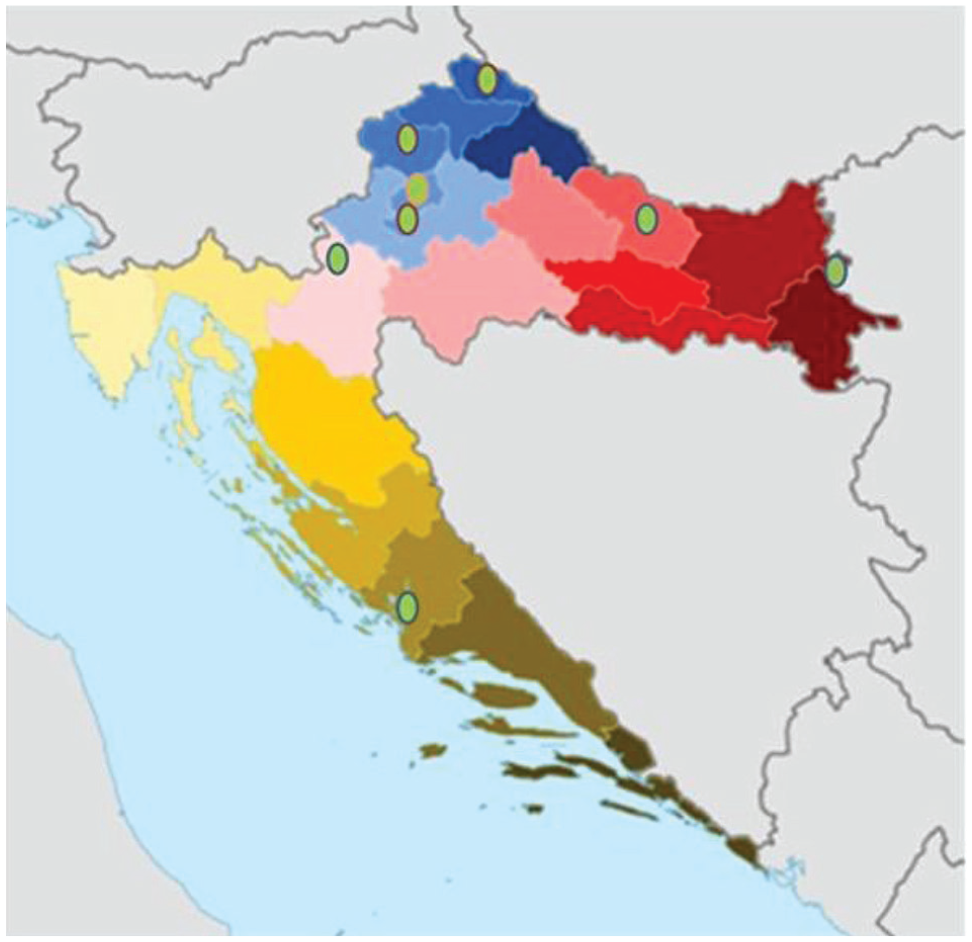
shows the map of Croatia with participating centers.
Shows the number of patients recruited by participating centers.
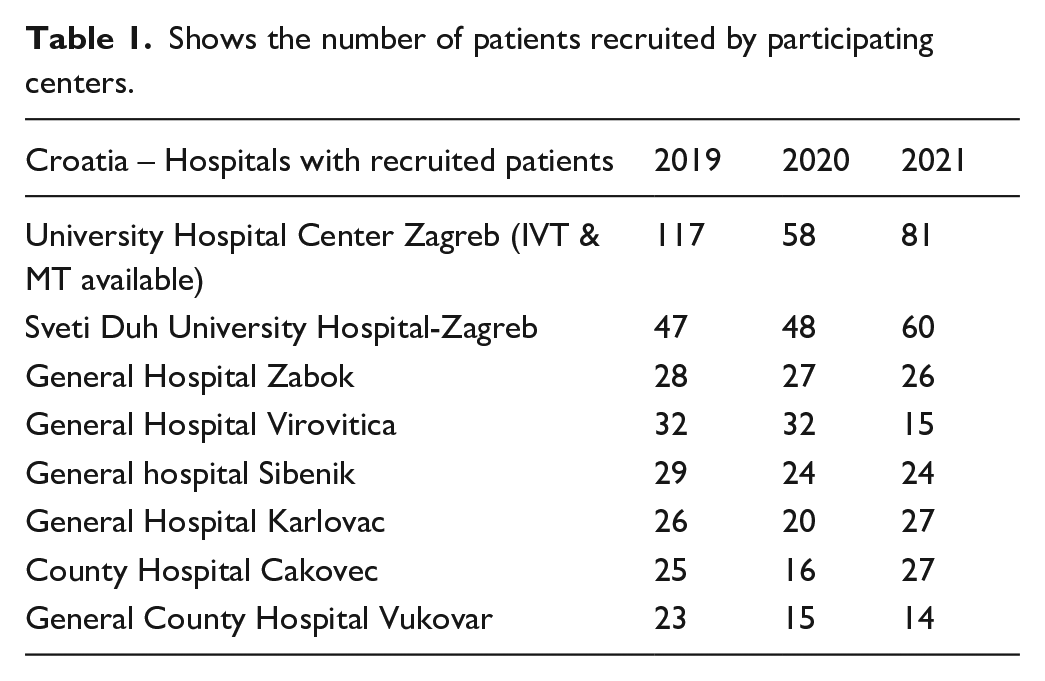
Shows patients’ main baseline characteristics and outcome measures.
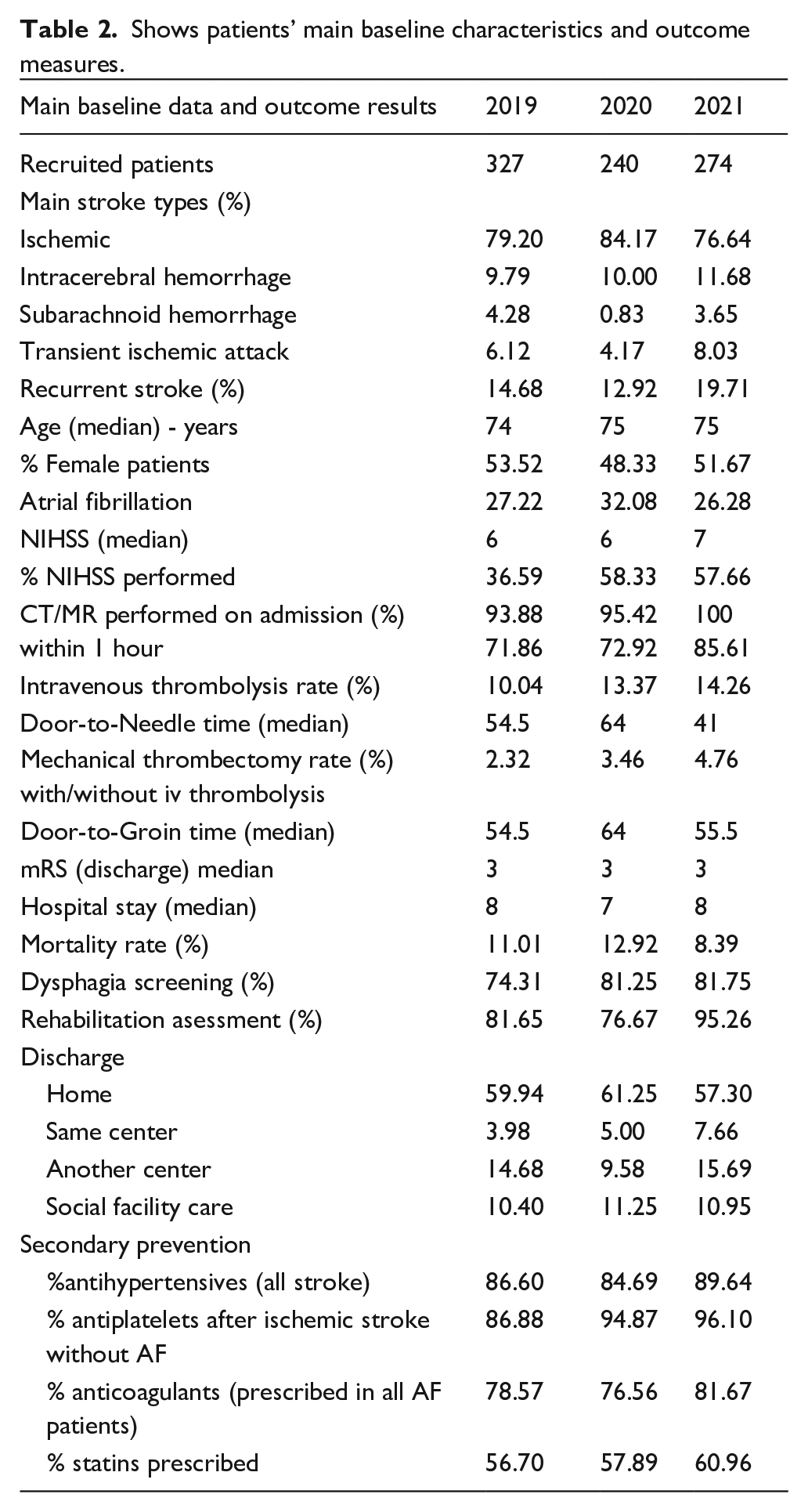
P0565 / 424
PREVALENCE OF CEREBROVASCULAR MRI MARKERS IN HOSPITALIZED PATIENTS WITH COVID-19
1Radboud University Medical Center, Neurology, Nijmegen, Netherlands, 2Leiden University Medical Center Leiden, Neurology, Leiden, Netherlands, 3University Medical Center Utrecht, Neurology, Utrecht, Netherlands, 4Radboud University Medical Center, Radiology, Nijmegen, Netherlands, 5Leiden University Medical Center Leiden, Radiology, Leiden, Netherlands, 6University Medical Center Utrecht, Radiology, Utrecht, Netherlands, 7Leiden University Medical Center Leiden, Thrombosis and Hemostasis, Leiden, Netherlands, 8Leiden University Medical Center Leiden, Clinical Epidemiology, Leiden, Netherlands
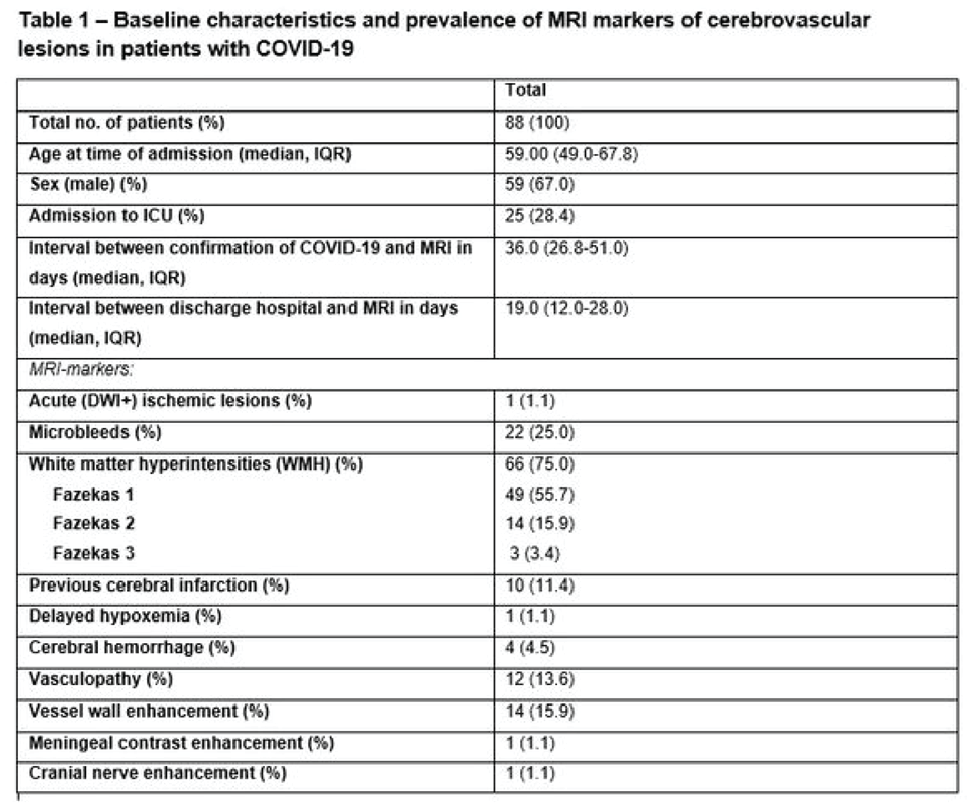
P0566 / 1506
STROKE AND HIV INFECTION IN A TERTIARY HOSPITAL SETTING IN FREETOWN, SIERRA LEONE. CLINICAL PERSPECTIVES AND OUTCOMES
1University of Sierra Leone, College of Medicine and Allied Health Sciences, Freetown, Sierra Leone, 2King’s College London, King’s Centre for Global Health and Health Partnerships, School of Life Course and Population Sciences, London, United Kingdom, 3University of Nottingham, Faculty of Medicine and Health Sciences, Nottingham, United Kingdom
• Provisional findings demonstrate 1106 patients recruited in the first 24 months. 927 of the total were classified as stroke.
• 473 (51%) of total stroke patients were tested for HIV, 35/473 (7.4%) were HIV+ve, 48% were male, and a mean age of 48 years.
• Stroke type: Ischaemic (68.6%), Haemorrhagic (17.1%), Sub-arachnoid (2.9%), and Undetermined (11.4%). Complications included hypertension: 62.7%, and diabetes mellitus: 11.8%.
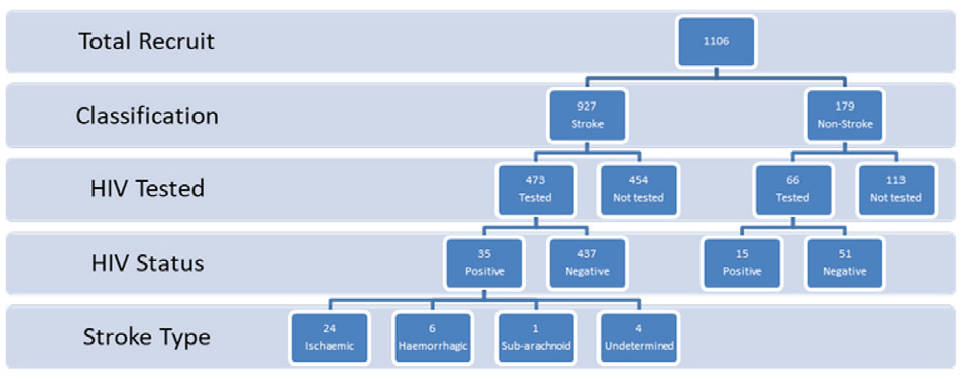
• This is the first study done in Sierra Leone on the prevalence of stroke in People Living with HIV infection (PLHIV).
• Further work is required to assess longer-term outcomes, secondary stroke prevention, and the effects of antiretroviral therapy.
P0567 / 361
ISCHEMIC STROKE SHORTLY AFTER VACCINATION AGAINST SARS-COV-2: A CASE-CONTROL STUDY
1ASST Cremona, Neurology Unit, Cremona, Italy, 2ASST Cremona, Cremona, Italy
P0568 / 346
EFFECTS OF LOW MOLECULAR WEIGHT HEPARIN AND FONDAPARINUX ON MORTALITY, HEMORRHAGIC AND THROMBOTIC COMPLICATIONS IN COVID-19 PATIENTS: A SYSTEMATIC REVIEW AND META-ANALYSIS
1National and Kapodistrian University of Athens, Second Department of Neurology, Athens, Greece, 2National and Kapodistrian University of Athens, Athens, Greece, 3Population Health Research Institute, McMaster University, Hamilton, Canada
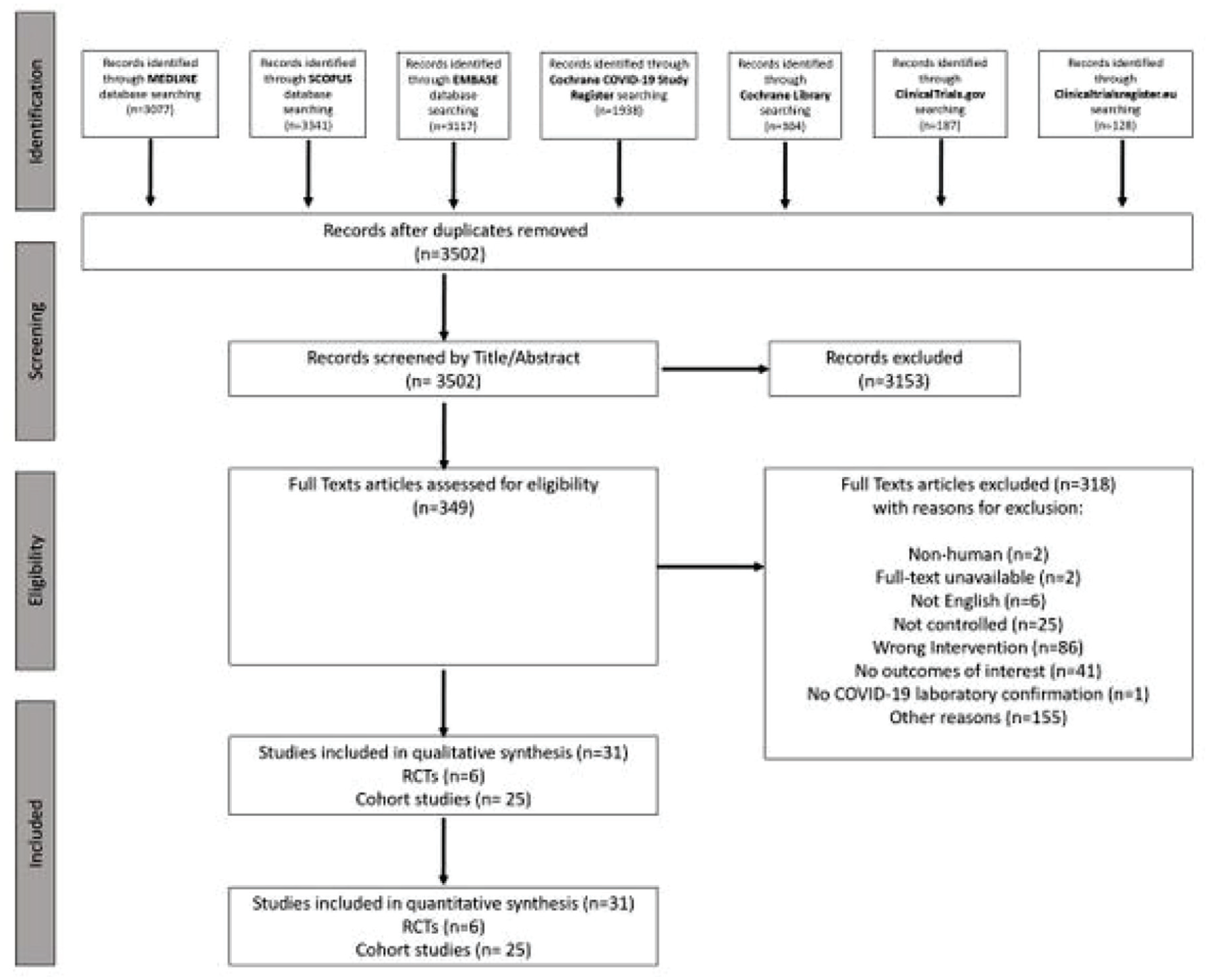
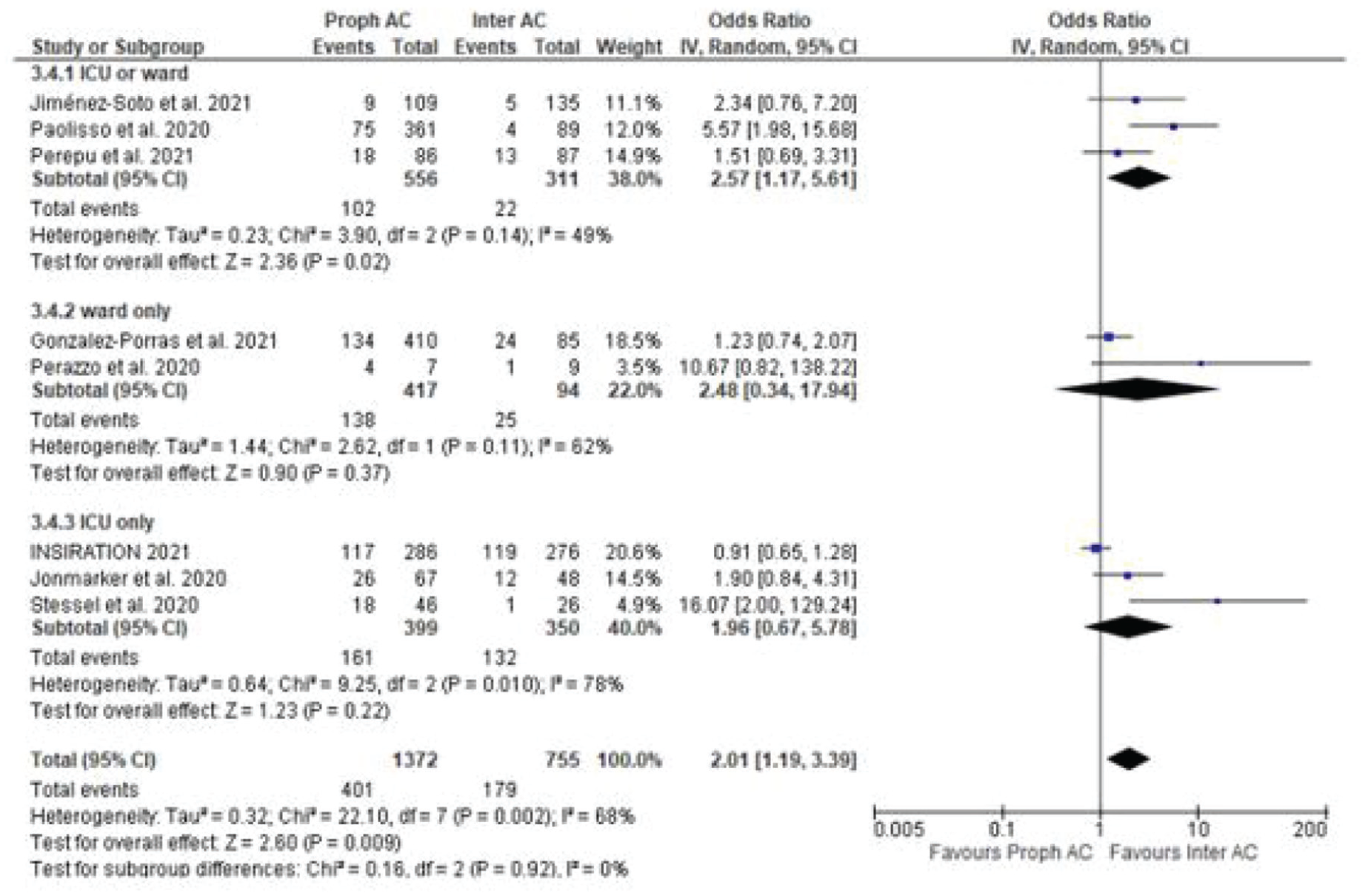
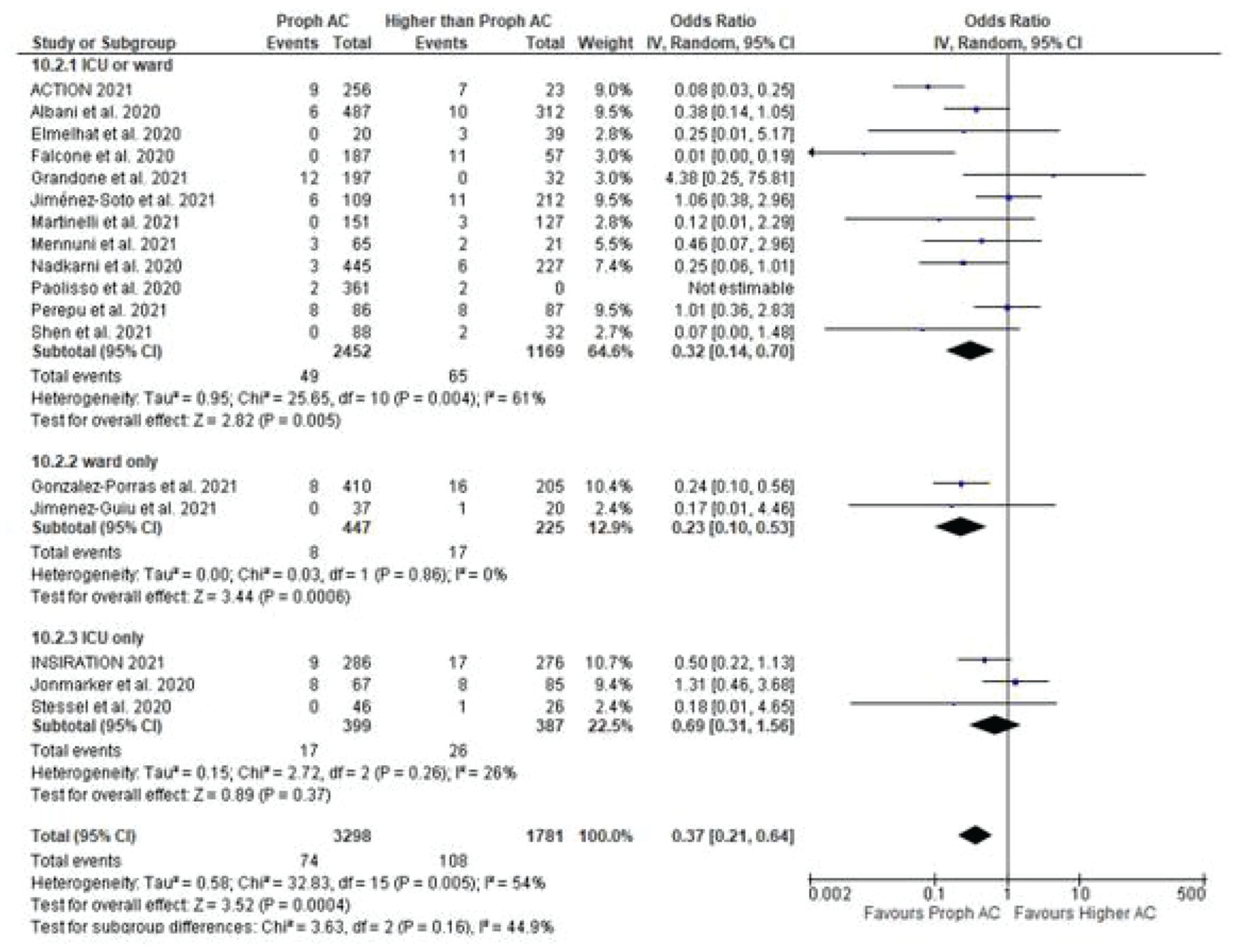
P0569 / 1507
FUNCTIONAL OUTCOME OF STROKE IN ACUTE SARS-COV2 INFECTION: A MULTICENTER STUDY IN MEXICO
1Juárez Hospital of Mexico, Neurology, Mexico City, Mexico, 2National Institute of Neurology, Cerebrovascular disease, Mexico City, Mexico, 3National Institute of Neurology, Medical Director, Mexico City, Mexico, 4National Institute of Respiratory Diseases, Neurology, Mexico City, Mexico, 5National Institute of Respiratory Diseases, CIENI-INER, Mexico City, Mexico
P0570 / 1176
CEREBRAL MICROBLEEDS IN PATIENTS WITH NEUROLOGICAL SYMPTOMS ASSOCIATED WITH COVID-19: DISTRIBUTION AND POSSIBLE PATHOPHYSIOLOGICAL MECHANISMS
1Geneva University Hospital, Clinical Neurosciences, Geneva, Switzerland, 2Massachusetts General Hospital, Harvard Medical School, Neurology, Boston, United States, 3Lithuanian University of Health Sciences, Institute of Cardiology, Kaunas, Lithuania, 4Geneva University Hospital, Neuroradiology, Geneva, Switzerland, 5Lausanne University Hospital and University of Lausanne, Leenaards Memory Center, Lausanne, Switzerland
Cerebral microbleeds (CMB) emerged as a possible complication of COVID-19. We aimed to assess CMB presence, distribution, and potential underlying pathophysiological mechanisms in hospitalised COVID-19 patients.
In a cohort of 112 COVID-19 patients with neurological symptoms admitted to the Geneva University Hospital between March 2020 and May 2021, we assessed CMB distribution, and associations with clinical/radiological variables. Neuroimaging was performed on a 1.5 T MRI with susceptibility-weighted images, 3D time-of-flight angiography, and 3D-contrast-enhanced fat-saturated T1 black blood VISTA sequences. Two neurologists rated CMB using the Microbleed Anatomic Rating Scale and white matter hyperintensities using the Age-Related White Matter Changes score.
53 patients (47.0%) had CMB; in 45.3% of cases, CMB were found in lobar regions with a predilection for temporal (58.3%) and frontal (29.2%) lobes. Deep CMB were present in 18.9%, with corpus callosum CMB found in 15.0%, in 35.9% CMB distribution was mixed. CMB presence was not related to intubation, pulmonary involvement, nor to radiologic signs of endothelitis. Patients with CMB were more likely to have a higher burden of white matter hyperintensities (OR 1.13, p=0.005, 95% CI: 1.03-1.24), to have hypertension as a comorbidity (OR= 2.34, p= 0.04, 95% CI: 1.04 – 5.30) and to suffer from an acute stroke during hospitalisation (OR: 3.50 p= 0.012, 95% CI:1.31-9.18).
In our sample, COVID-19 patients with neurological symptoms had a high burden of CMB. Their distribution suggests that they may be related to cardiovascular risk factors and cerebral amyloid angiopathy. CMB were also associated with an increased risk of acute stroke.
P0571 / 1089
PREVALENCE OF STROKE IN MUCORMYCOSIS PATIENTS WITH COVID-19 INFECTION IN INDIA
1 All India Institute of Medical Sciences, Department of Neurology, New Delhi, India
P0572 / 171
RECURRENCE OF CEREBRAL VENOUS THROMBOSIS IN PATIENTS IMMUNIZED AGAINST SARS-COV-2: A COHORT STUDY
1 Federal University of Bahia, Salvador, Brazil
ATHEROSCLEROSIS & STROKE
P0573 / 584
PLATELETS-DERIVED MIR-200A-3P MODULATE THE EXPRESSION OF ET-1 AND VEGFA IN ENDOTHELIAL CELLS VIA TARGETING MAPK14
1Sichuan Provincial People’s Hospital, University of Electronic Science and Technology of China, Department of Neurology, Chengdu, China, 2Clinical Medical College and The First Affiliated Hospital of Chengdu Medical College, Chengdu, China, 3Chengdu Medical College, School of Pharmacy, Chengdu, China, 4Chengdu Medical College, School of Bioscience and Technology, Chengdu, China
P0574 / 1329
PREVALENCE OF COMPLEX AORTIC ATHEROSCLEROTIC PLAQUES IN PATIENTS WITH ISCHEMIC STROKE
1Amsterdam UMC, University of Amsterdam, Neurology, Amsterdam, Netherlands, 2Amsterdam UMC, University of Amsterdam, Radiology and Nuclear Medicine, Amsterdam, Netherlands, 3Amsterdam UMC, University of Amsterdam, Cardiology, Amsterdam, Netherlands, 4Amsterdam UMC, University of Amsterdam, Radiology and Nuclear Medicine & Biomedical Engineering and Physics, Amsterdam, Netherlands
P0575 / 104
ASSESSMENT OF THE DIAGNOSTIC ACCURACY OF TRANSCRANIAL DOPPLER ULTRASOUND (TCD) FOR MIDDLE CEREBRAL ARTERY (MCA) ATHEROSCLEROSIS STENOSIS ⩾70%
1Centre Hospitalier Sud Francilien, Neurology, Corbeil-Esonnnes, France, 2Centre Hospitalier Universitaire de Nice, Neurology, Nice, France
P0576 / 662
VALIDATION OF PREDICTION MODELS OF IPSILATERAL ISCHEMIC STROKE IN PATIENTS WITH MEDICALLY TREATED ASYMPTOMATIC CAROTID STENOSIS
1UMC Utrecht, Department of Neurology, Utrecht, Netherlands, 2UMC Utrecht, Julius Centre for Health Sciences and Primary Care, Utrecht, Netherlands, 3UMC Utrecht, Department of Vascular Medicine, Utrecht, Netherlands, 4UMC Utrecht, Department of Vascular Surgery, Utrecht, Netherlands
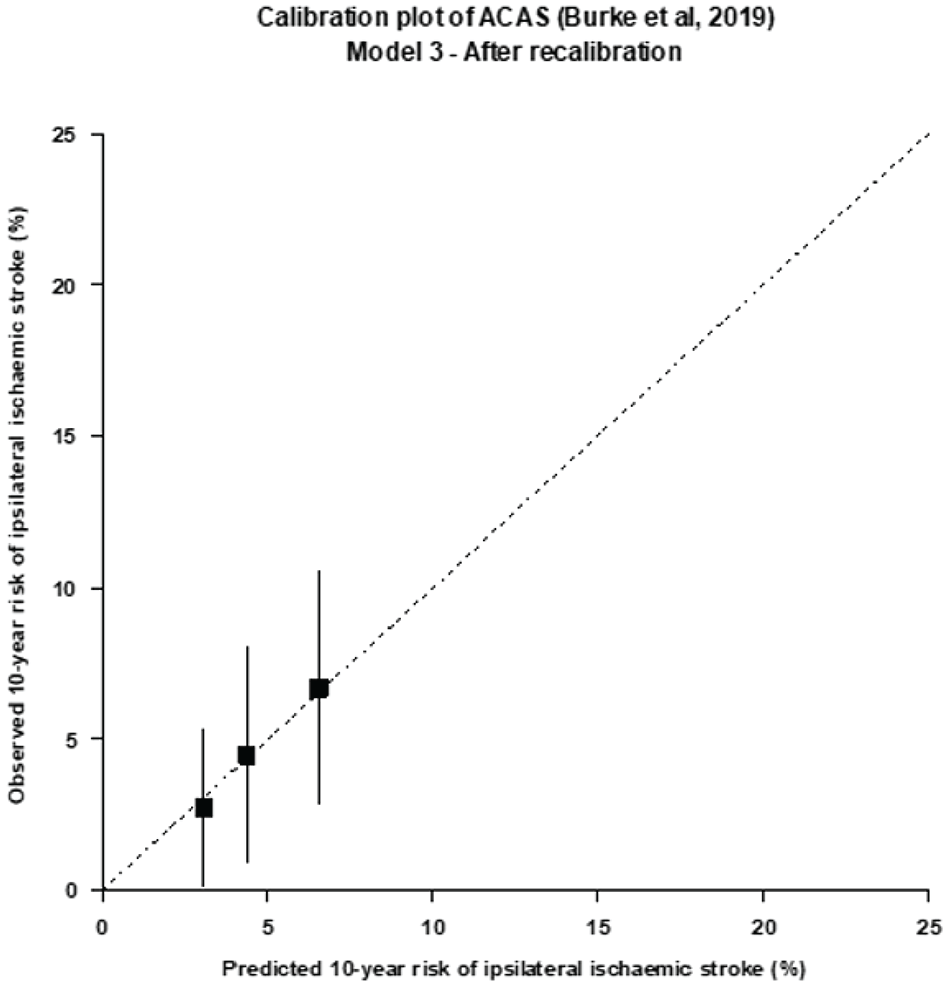
P0577 / 244
INTRACRANIAL ARTERIAL STENOSIS WITH RNF213 P.R4810K VARIANT ASSOCIATES WITH A LOW ATHEROSCLEROTIC BURDEN
1Osaka University Graduate School of Medicine, Suita, Japan, 2National Cerebral and Cardiovascular Center, Suita, Japan, 3Kobe City Medical Center General Hospital, Kobe, Japan
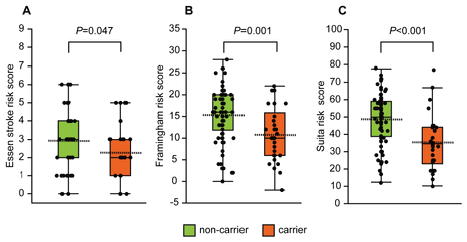
P0578 / 1504
CLINICAL IMPLICATION OF CAROTID PLAQUE IMAGING IN SYMPTOMATIC STROKE PATIENTS.
1Erasmus Medical Center, Department of Radiology and Nuclear Medicine, Rotterdam, Netherlands, 2Academic Medical Center, Department of Neurology, Amsterdam, Netherlands, 3University Medical Center Utrecht, Department of Radiology and Nuclear Medicine, Utrecht, Netherlands, 4Maastricht University Medical Center, Department of Radiology and Nuclear Medicine, Maastricht, Netherlands, 5Erasmus Medical Center, Department of Epidemiology, Rotterdam, Netherlands
P0579 / 1394
ASSOCIATION OF INTIMA-MEDIA-THICKNESS WITH FIRST PASS REPERFUSION IN PATIENTS WITH LARGE ANTERIOR VESSEL OCCLUSION UNDERGOING ENDOVASCULAR THERAPY
1Carl Gustav Carus University Hospital, Technische Universität Dresden, Neurology, Dresden, Germany, 2Carl Gustav Carus University Hospital, Technische Universität Dresden, Neuroradiology, Dresden, Germany
P0580 / 1020
WHAT IS THE IMPACT OF FULL COLLAPSE IN THE RISK OF ISCHEMIC STROKE IN PATIENTS WITH CAROTID NEAR-OCCLUSION? A META-ANALYSIS
1 Hospital General Universitario Gregorio Marañón, Neurology, Madrid, Spain
P0581 / 1098
DISTINCT LIPID PROFILES OF RADIATION-INDUCED CAROTID PLAQUES FROM ATHEROSCLEROTIC CAROTID PLAQUES REVEALED BY UPLC-QTOF-MS AND DESI– MSI
1Xuanwu Hospital, Capital Medical University, Department of Neurosurgery, Beijing, China, 2Xuanwu Hospital, Capital Medical University, Department of Neurology, Beijing, China, 3National Center for Occupational Safety and Health, Beijing, China, 4Liaocheng Brain Hospital, Department of Neurosurgery, Liaocheng, China, 5Zhongguancun Biological and Medical Big Data Center, Beijing, China
P0582 / 619
CHANGING CAROTID PLAQUE BURDEN DURING FOLLOW-UP: A LONGITUDINAL STUDY IN TIA AND ISCHEMIC STROKE PATIENTS
1Erasmus University Medical Center Rotterdam, Radiology and Nuclear Medicine, Rotterdam, Netherlands, 2Erasmus University Medical Center Rotterdam, Neurology, Rotterdam, Netherlands, 3CARIM School for Cardiovascular Diseases, Maastricht University Medical Center, Radiology and Nuclear Medicine, Maastricht, Netherlands, 4University Medical Center Utrecht, Radiology and Nuclear Medicine, Utrecht, Netherlands, 5Amsterdam UMC, University of Amsterdam, Neurology, Amsterdam, Netherlands, 6Erasmus University Medical Center Rotterdam, Epidemiology, Rotterdam, Netherlands
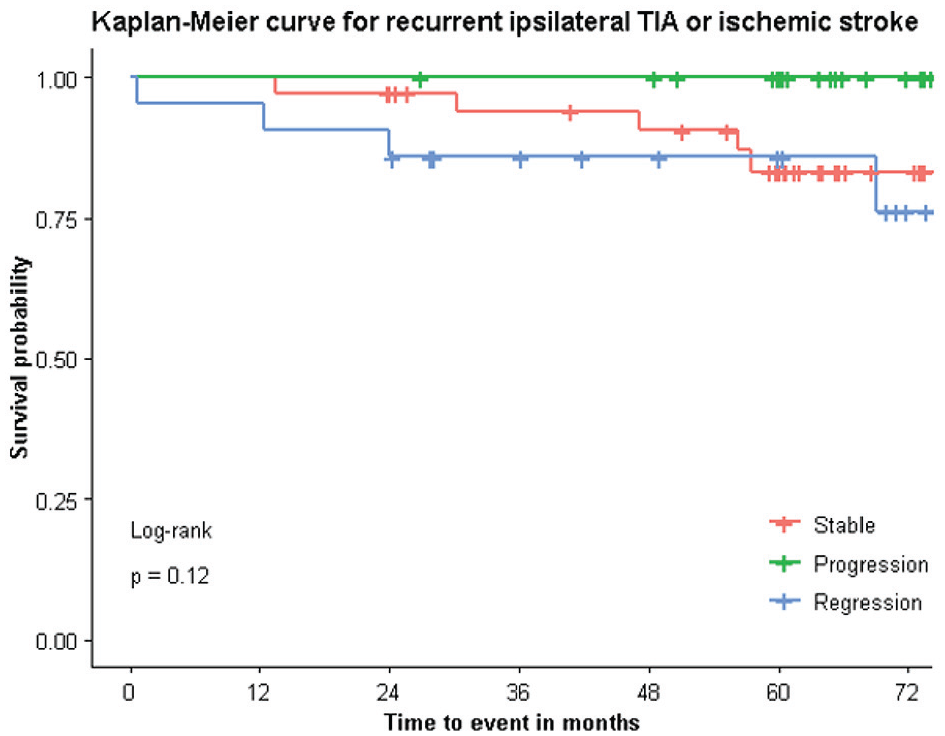
P0583 / 1159
ELECTRONEGATIVE LOW DENSITY LIPOPROTEIN IS ASSOCIATED WITH STENOSIS SEVERITY IN PATIENTS WITH RECENT ISCHEMIC STROKE AND CAROTID ATHEROSCLEROSIS
1Biomedical Research Institute Sant Pau (IIB-Sant Pau), Hospital de la Santa Creu i Sant Pau, Stroke Unit - Neurology, Barcelona, Spain, 2Biomedical Research Institute Sant Pau (IIB-Sant Pau), Hospital de la Santa Creu i Sant Pau, Cardiovascular Biochemistry, Barcelona, Spain
P0584 / 835
SYSTEMIC INFLAMMATION IS ASSOCIATED WITH PROGRESSION OF SYMPTOMATIC INTRACRANIAL ATHEROSCLEROTIC STENOSIS UNDER OPTIMAL MEDICAL TREATMENT
1The Chinese University of Hong Kong, Department of Medicine and Therapeutics, Hong Kong, Hong Kong, SAR of China, 2Coventry University, Research Centre of Intelligent Healthcare, Faculty of Health and Life Science, Coventry, United Kingdom, 3The Chinese University of Hong Kong, Department of Imaging and Interventional Radiology, Hong Kong, Hong Kong, SAR of China, 4First Affiliated Hospital of Sun Yat-sen University, Department of Neurology, Guangzhou, China
P0585 / 1267
COMBINING HEMODYNAMIC ANALYSIS AND CAROTID PLAQUE TISSUE CHARACTERIZATION TO ASSESS PLAQUE VULNERABILITY
1 Department of Interventional Neuroradiology, Xuanwu Hospital, Capital Medical University, Beijing, China 45 Changchun St, Xicheng District, Beijing, China 100053, Department of Interventional Neuroradiology, Beijing, China
RARE CAUSES, STROKE IN THE YOUNG (INCLUDING PAEDIATRIC STROKE)
P0586 / 1558
RARE PEDIATRIC STROKE: ISOLATED POSTERIOR CEREBRAL ARTERY DISSECTION
1Indraprastha Apollo Hospital, New Delhi, Neurosciences, New Delhi, India, 2Holy Family Hospital, New Delhi, Critical Care Medicine, New Delhi, India
P0587 / 1010
PREDICTORS AND INCIDENCE OF LONG-TERM HEADACHE IN REVERSIBLE VASOCONSTRICTION SYNDROME AND EXTERNAL VALIDATION OF THE RCVS2 SCORE
1 Beth Israel Deaconess Medical Center, Neurology, Boston, United States
P0588 / 518
ACUTE TRIAGE OF CHILDHOOD STROKE IN EASTERN DENMARK
1University Hospital of Copenhagen, Rigshospitalet, Neurology, Copenhagen, Denmark, 2University Hospital of Copenhagen, Rigshospitalet, Pediatrics, Copenhagen, Denmark
This study aimed to examine the precision of triage by acute recanalization indication.
The most common stroke mimics were migraine(24.7%) and seizures (10.8%). Non-CeVD neurological emergencies (i.e. status epilepticus and encephalitis) were present in 5 (10.4%) events triaged to an acute stroke assessment respectively in 9 (8.5%) triaged to a PED.
P0589 / 1476
LARGE VESSEL OCCLUSION STROKE IN A 17 YEAR OLD MALE WITH PAEDIATRIC INFLAMMATORY MULTI-SYSTEM SYNDROME ASSOCIATED WITH SARS-COV-2
1 Charing Cross Hospital, Imperial College London, Stroke, London, United Kingdom
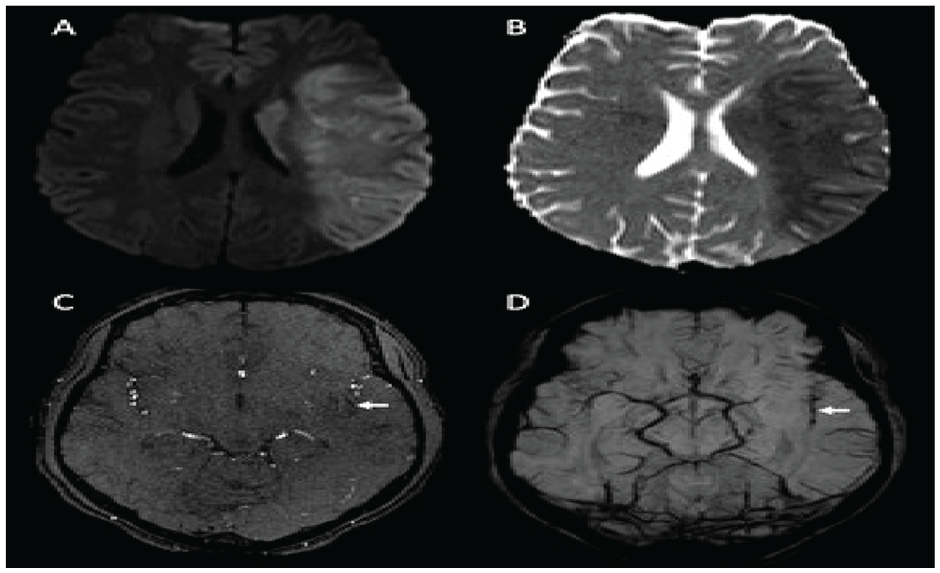
Axial DWI (A), ADC (B) MRI demonstrate large left MCA territory infarct. Axial MRA (C) shows occlusion of the left M2 branches, signal drop-out on SWI (D)
P0590 / 517
DIFFERENCES BETWEEN SINGLE AND MULTIPLE CERVICOCEPHALIC ARTERY DISSECTIONS
1Istanbul University Istanbul Faculty of Medicine, Fatih, Turkey, 2Istanbul Bağcilar Research and Training Hospital, Neurology Department, Istanbul, Turkey, 3Istanbul Medicine Hospital, İstanbul, Turkey
P0591 / 1003
THROMBECTOMY FOR PEDIATRIC CEREBRAL VENOUS THROMBOSIS. CASE REPORT AND LITERATURE REVIEW
1ASST Grande Ospedale Metropolitano Niguarda, Stroke Unit - Neurological Department, Milan, Italy, 2ASST Grande Ospedale Metropolitano Niguarda, Interventional Neuroradiology, Milan, Italy, 3Grande Ospedale Metropolitano Niguarda, Infantile Neuropsychiatry, Milano, Italy, 4ASST Grande Ospedale Metropolitano Niguarda, Pediatry, Milan, Italy, 5ASST Grande Ospedale Metropolitano Niguarda, Neurological Department, Milan, Italy
P0592 / 1025
RECURRENCE OF CERVICAL ARTERY DISSECTION: A SYSTEMATIC REVIEW AND META-ANALYSIS
1University of Ottawa, Medicine, Ottawa, Canada, 2Ottawa Hospital Research Institute, Ottawa, Canada, 3University of Ottawa, Department of Medicine, Ottawa, Canada
P0593 / 206
CEREBRAL VENOUS THROMBOSIS DUE TO VACCINE-INDUCED IMMUNE THROMBOTIC THROMBOCYTOPENIA AFTER A SECOND CHADOX1 NCOV-19 VACCINE DOSE
1Amsterdam University Medical Centers, University of Amsterdam, Department of Neurology, Amsterdam, Netherlands, 2Universitätsklinikum Bonn, Department of Neurology, Bonn, Germany, 3Fondazione Policlinico Universitario Agostino Gemelli IRCCS, Department of Neurology, Rome, Italy, 4School of Medicine and Faculty of Health Sciences, Aristotle University of Thessaloniki, AHEPA University Hospital, Second Department of Neurology, Thessaloniki, Greece, 5Inselspital, Bern University Hospital, University of Bern, Department of Neurology, Bern, Switzerland, 6Instituto de Medicina Molecular João Lobo Antunes, Faculdade de Medicina, Universidade de Lisboa, Lisbon, Portugal, 7Hospital de Santa Maria, Centro Hospitalar Universitario Lisboa Norte, University of Lisbon, Department of Neurosciences and Mental Health, Lisbon, Portugal
P0594 / 564
CEREBROVASCULAR DISEASE ASSOCIATED WITH SYSTEMIC SCLEROSIS: CASE SERIES AND SYSTEMATIC REVIEW
1SUNY Downstate Health Sciences University, Neurology, Brooklyn, United States, 2Jaffe Stroke Center, Maimonides Medical Center, Neurology, Brooklyn, United States, 3Kings County Hospital Center, Neurology, Brooklyn, United States
Systematic review: 932 abstracts were screened after removal of duplicates (Fig.1); 110 articles were selected yielding 93 patients (mean age 48 years, 78.5% female). CBVDs were vasculitis (n=22, 23.7%), any intracranial hemorrhage (n=19, 20.4%), ischemic stroke (n=18, 19.3%), unruptured aneurysms (n=10, 10.7%), small vessel disease (n=6, 6.4%), Moya-Moya syndrome (n=4, 4.3%), others (n=14, 15%).
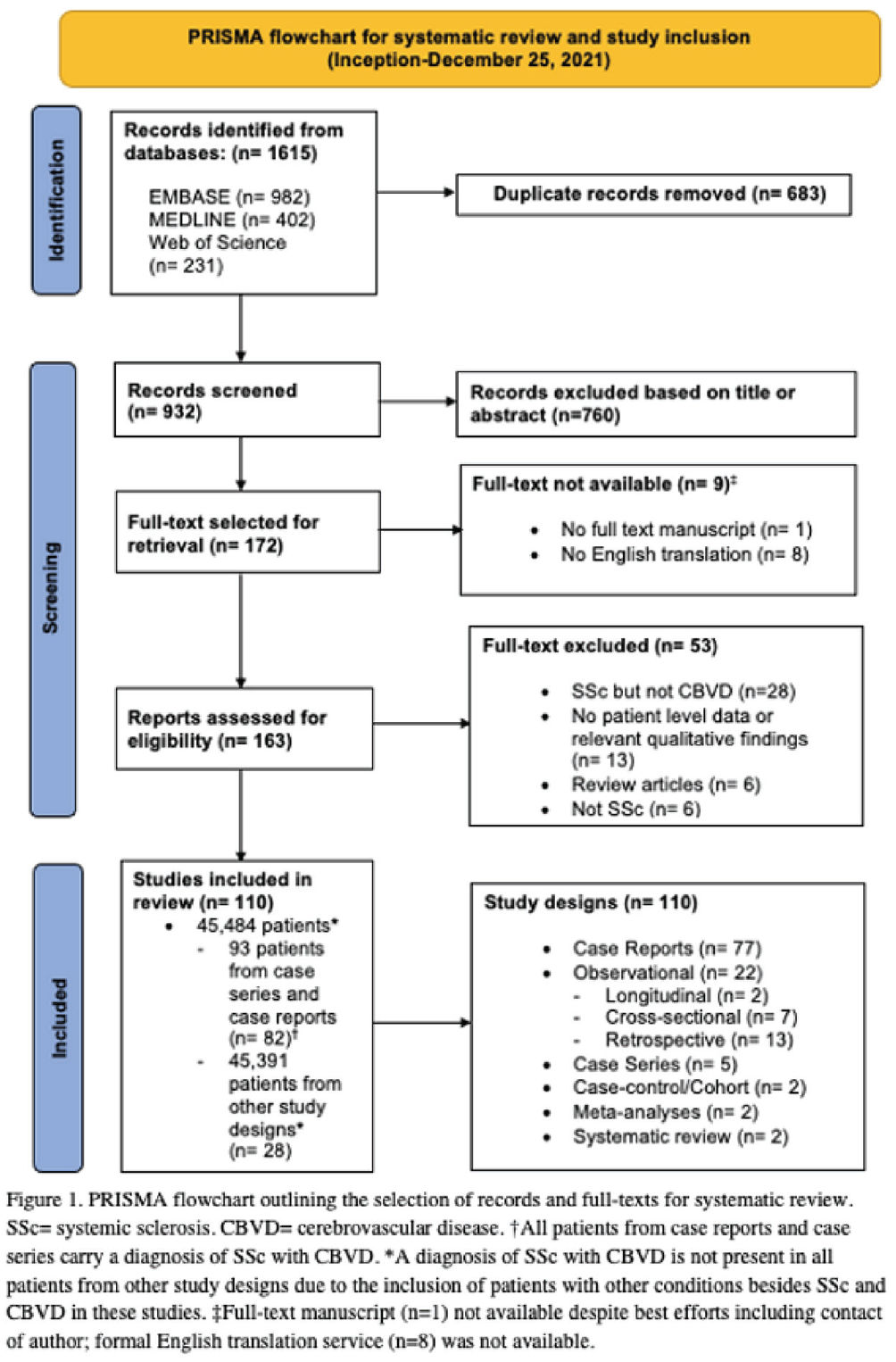
P0595 / 1539
HIGH PREVALENCE OF FIRST-DEGREE RELATIVES WITH YOUNG CARDIOVASCULAR DISEASE IN PATIENTS WITH ISCHEMIC STROKE AT YOUNG AGE
1 Radboud University Medical Center, Donders Center for Medical Neuroscience, Neurology, Nijmegen, Netherlands
P0596 / 621
RECURRENT RIGHT HEMISPHERE STROKE IN A YOUNG WOMAN CASE REPORT: A WEB OF RARE CAUSES
1Hospital Fundación Jiménez Díaz, Neurology, Madrid, Spain, 2Hospital Fundación Jiménez Díaz, Radiology, Madrid, Spain, 3Hospital Fundación Jiménez Díaz, Interventional Neuroradiology, Madrid, Spain
During the following year, she had two new episodes of right hemisphere ischemic stroke under correct treatment with antiplatelet and then anticoagulant therapy. AngioCT showed persistence of the initial structure in the right ICA. However, its smaller size and the lack of an axial septum wasn’t conclusive of a CW, indicating a Small Protruding Lesion (SPL), possibly an earlier stage of the same entity.
DSA and right ICA stenting were performed without incidences (November 2021,
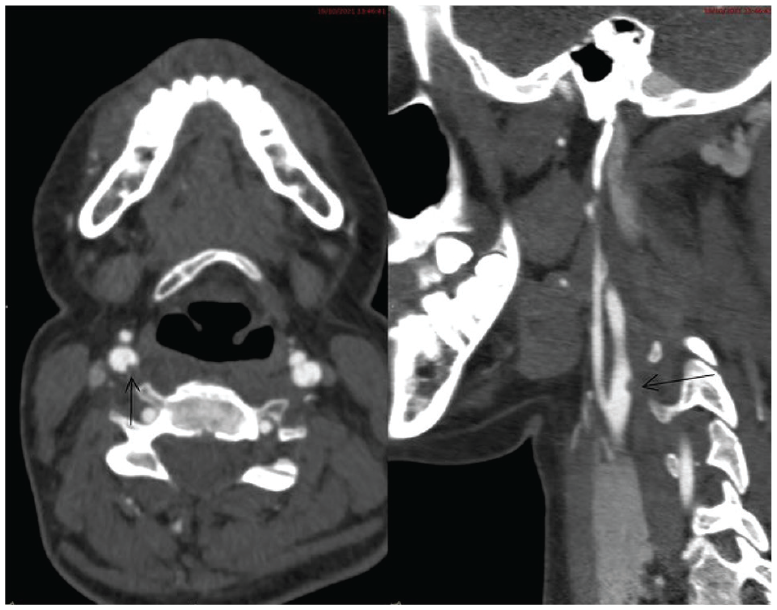
Figure 1
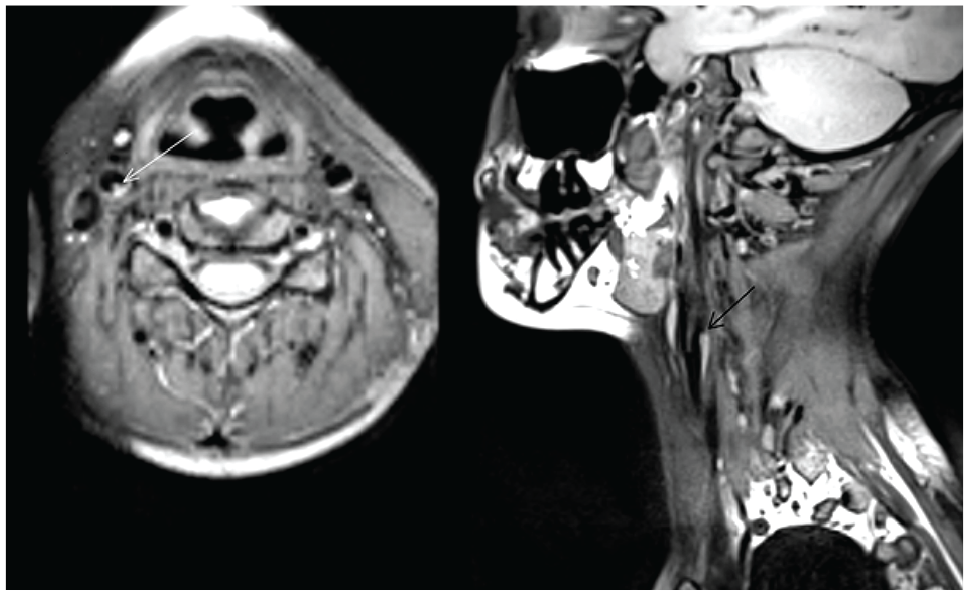
Figure 2
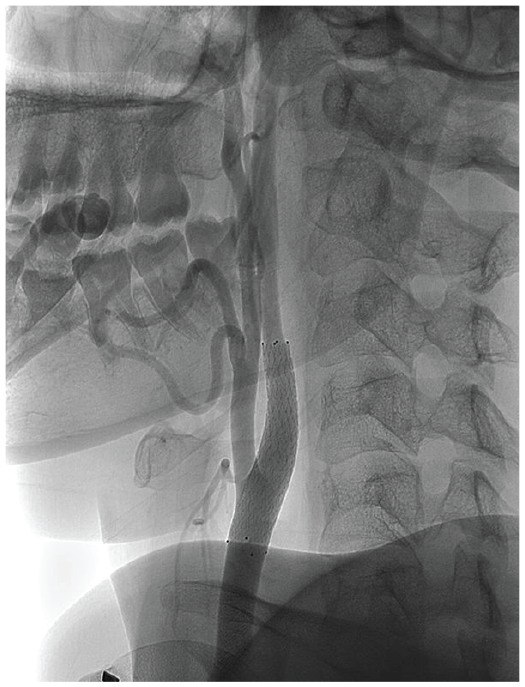
Figure 3
P0597 / 289
DIRECT ORAL ANTICOAGULANTS FOR THE TREATMENT OF CEREBRAL VENOUS THROMBOSIS (DOAC-CVT)
1Amsterdam University Medical Centers, University of Amsterdam, Department of Neurology, Amsterdam, Netherlands, 2Neurology Service, Hospital de Santa Maria/CHULN, University of Lisbon, Department of Neurosciences and Mental Health, Lisbon, Portugal, 3Inselspital, Bern University Hospital, University of Bern, Bern, Switzerland, Department of Neurology, Bern, Switzerland, 4Christian Medical College Hospital, Department of Neurology, Vellore, India, 5Xuanwu Hospital Capital Medical University, Department of Neurology, Beijing, China, 6Hadassah-Hebrew University Medical Center, Department of Neurology, Jerusalem, Israel, 7Sahlgrenska Academy at University of Gothenburg, Department of Clinical Neuroscience, Institute of Neuroscience and Physiology, Gothenburg, Sweden, 8Sahlgrenska University Hospital, Department of Neurology, Gothenburg, Sweden, 9Istanbul Faculty of Medicine, Neurology, Istanbul, Turkey, 10Centre Hospitalier Régional Universitaire de Nice, Department of Neurology, Nice, France, 11Duke University Hospital, Department of Neurology, Durham, United States, 12Royal Adelaide Hospital, Department of Neurology, Adelaide, Australia, 13University Hospital Leuven, Department of Neurology, Leuven, Belgium, 14São Paulo University Hospital, Department of Neurology, São Paulo, Brazil, 15Hospital Dr. Rafael A. Calderon Guardia, Department of Neurology, San José, Costa Rica, 16Bispebjerg & Frederiksberg Hospitals, University of Copenhagen, Department of Neurology, Copenhagen, Denmark, 17Charité Universitätsmedizin Berlin, Department of Neurology, Berlin, Germany, 18Rajendra Institute of Medical Sciences, Department of Neurology, New Delhi, India, 19Uniwersytet Kardynała Stefana Wyszyńskiego, Department of Neurology, Warsaw, Poland, 20University of Insubria, Varese, Italy, 21Instituto Nacional de Neurologia y Neurocirugia, Mexico City, Mexico, 22Sverdlovsk Regional Clinical Hospital #1, Department of Neurology, Yekaterinenburg, Russian Federation, 23Hospital Germans Trias, Department of Neurology, Badalona, Spain, 24Christchurch Hospital, Department of Neurology, Christchurch, New Zealand, 25Akershus Universitetssykehus, University of Oslo, Deparment of Neurology, Oslo, Norway, 26Azienda Sanitaria Locale di di Vallecamonica-Sebino, Department of Neurology, Valcamonica, Spain, 27King Faisal Specialist Hospital and Research Center, Riyadh, Saudi Arabia, 28Xuanwu Hospital Capital Medical University, Department of Neurosurgery, Beijing, China, 29Helsinki University Hospital, Department of Neurology, Helsinki, Finland, 30Instituto de Medicina Molecular João Lobo Antunes, Faculdade de Medicina, Universidade de Lisboa, Lisbon, Portugal
P0598 / 1134
NEUTROPHIL TO LYMPHOCYTE RATIO PREDICTS THE OCCURRENCE OF ARTERIAL DISSECTION IN YOUNG STROKE PATIENTS
1Western Health, Neurology, Melbourne, Australia, 2Western Health, Department of Neurology, Melbourne, Australia
Arterial dissection is one of the most common causes of stroke occurring in young patients. There is evidence to show that inflammation is central to its pathogenesis as demonstrated by biochemical studies and functional neuroimaging. The neutrophil to lymphocyte ratio (NLR) and the platelet to lymphocyte ratio (PLR) are simple and readily available biomarkers which may provide information on an individual’s state of inflammation. In this retrospective review, we compared the NLR and PLR values on admission of young stroke patients with or without MRI-confirmed arterial dissection. Compared to controls, young stroke patients with arterial dissection had higher PLR (152.64 vs 183.89) and NLR (3.73 vs 6.65) values, with the latter achieving statistically significant levels (p=0.03). Furthermore, Receiver Operator Curve (ROC) analysis shows that the area under the curve for NLR was 0.682 (p=0.03) while that of the PLR was 0.631 (p=0.118). This study demonstrates the utility of NLR in predicting the occurrence of cervical dissection among young stroke patients
P0599 / 851
BDNF IMPORTANCE IN NEUROPLASTICITY IN CHILDREN AFTER ISCHEMIC STROKE
1State University of Medicine and Pharmacy “Nicolae Testemitanu”, Chisinau, Moldova, Republic of, 2Research Institute for Mother and Child Health Care, Chisinau, Moldova, Republic of, 3National Epileptology Center, Chisinau, Moldova, Republic of
P0600 / 1486
UTILITY OF BLOOD TESTS SCREENING IN YOUNG PATIENTS WITH TRANSIENT ISCHAEMIC ATTACK OR MINOR STROKE
1National Hospital for Neurology & Neurosurgery, Comprehensive Stroke Service, London, United Kingdom, 2University College London Medical School, London, United Kingdom, 3North Middlesex University Hospital NHS Trust, Neurology Department, London, United Kingdom
One of 62(2%) positive for hepatitis B -new diagnosis. One of 99(1%) known positive for HIV. Unrelated to aetiology. No syphilis identified.
Autoimmune testing yield was low. Of 96, 18(19%) had abnormal ANA, of which 14(78%) had low titres(1:80). One(1:1280) was diagnosed with Sjogren’s syndrome, unrelated to aetiology.
Of 97(67%) ANCA screens, seven(7%) were positive, only two with elevated PR3 levels. None changed management.
Thrombophilia screening was positive in 17/110(16%). Four diagnosed with antiphospholipid syndrome and anticoagulated – two known Systemic Lupus Erythematous, one with recurrent miscarriages. The remainder did not change management: one protein C and S deficiency, two heterozygous Factor V Leiden and one Prothrombin G20210A mutation. Seven had subsequent negative tests, two awaiting repeat.
P0601 / 1590
CARDIAC PAPILLARY FIBROELASTOMA: A RARE CAUSE OF EMBOLIC STROKE
1 Basurto University Hospital, Neurology, Bilbao, Spain
PF is generally detected as an incidental finding, although it can be presented as cardiac symptomatology or embolization, being the ischemic stroke the most common presentation.
We describe two ischemic stroke cases due to PF.
Case 2: a 66-year old male suffered an ischemic stroke in the right cerebral posterior artery territory. Usual examination did not show any pathological results. Transesophageal echocardiography showed a subvalvular mitral hyperechogenic mobile mass (11x5.5 mm) (image 2).
Case 1: surgical intervention extracted a 12x14 mm tumour. Histopathologic examination confirmed a PF.
Case 2: surgery was postponed due to CoVid-19 pandemic. Treated with DOAC until surgery was performed. No new events. Histopathology exam confirmed the diagnosis.
Neither of the patients had complications during the follow-up. No medical treatment was needed for secondary prevention.
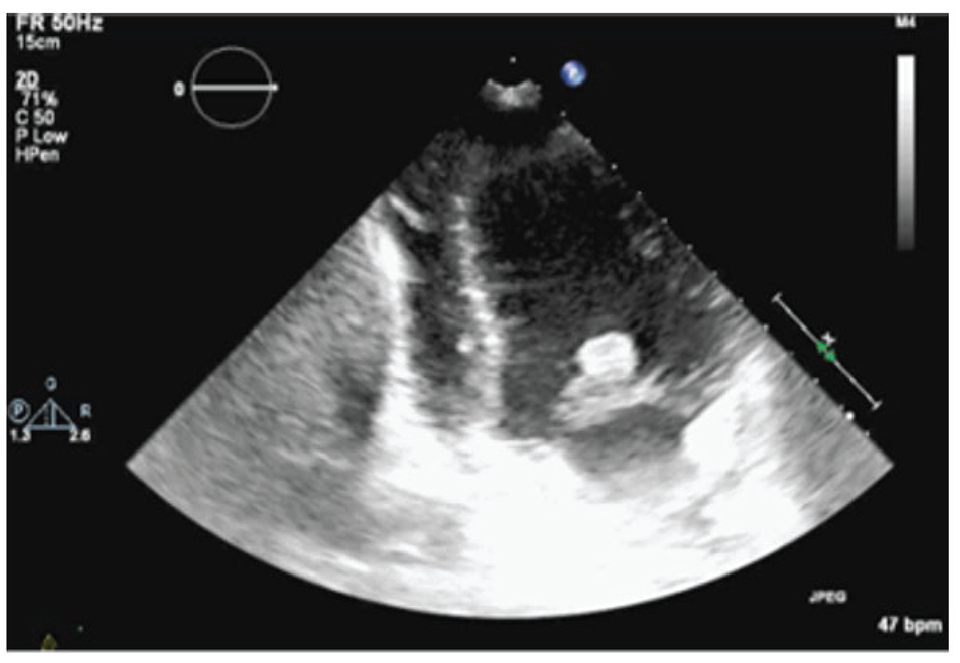
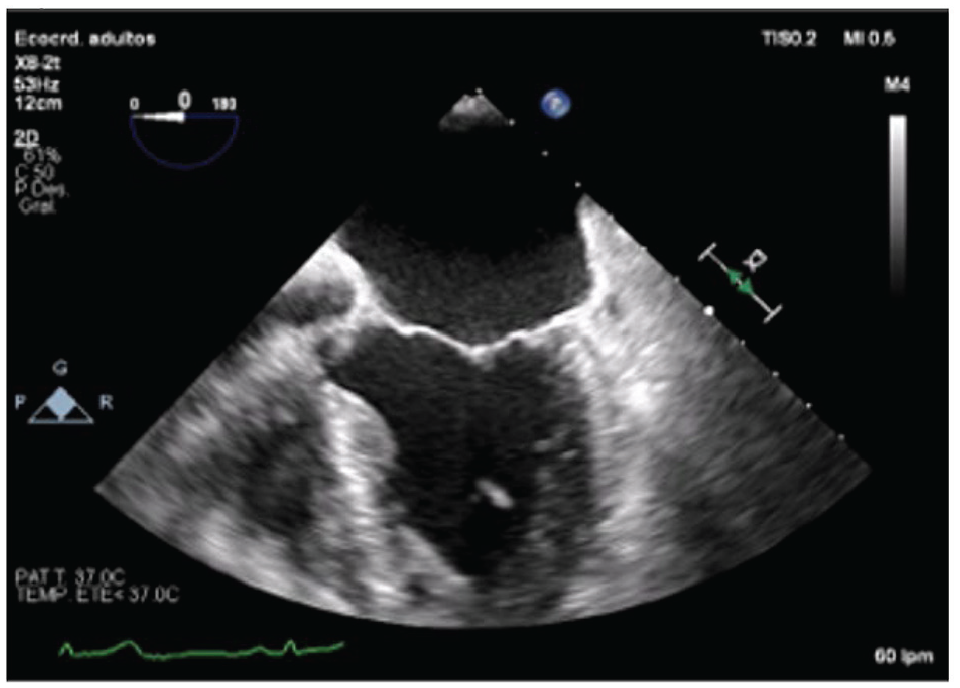
P0602 / 313
BI-ALLELIC LOSS-OF-FUNCTION MUTATIONS IN THE ENDOTHELIAL NITRIC OXIDE SYNTHASE GENE CAUSE EARLY-ONSET MOYAMOYA ANGIOPATHY
1Université de Paris, Inserm, INSERM UMR-S 1161, Paris, France, 2AP-HP, Hôpital Lariboisière, Service de Neurologie, Centre de Référence des Maladies Vasculaires Rares du Cerveau et de l’Oeil, Paris, France, 3AP-HP, University Hospital Necker-Enfants Malades, French Center for Pediatric Stroke, Department of Pediatric Neurology, Paris, France, 4Université Paris-Saclay, INSERM, UMR-S-MD 1197, Villejuif, France, 5AP-HP, Hôpitaux Lariboisière- Saint-Louis, Service de Génétique Moléculaire Neurovasculaire, Paris, France, 6Université Catholique de Louvain (UCLouvain) and Cliniques Universitaires Saint-Luc, Pole of Pharmacology and Therapeutics (FATH), Institute of Experimental and Clinical Research (IREC), Brussels, Belgium
P0603 / 1128
INITIAL PRESENTING SYMPTOMS OF CADASIL DISEASE – DATA FROM CZECH COHORT OF PATIENTS
12nd Faculty of Medicine, Charles University and Motol University Hospital, Department of Neurology, Prague, Czech Republic, 21st Faculty of Medicine, Charles University and General University Hospital, Department of Paediatrics and Inherited Metabolic Disorders, Prague, Czech Republic, 3Faculty of Biomedical Engineering, Czech Technical University, Prague, Czech Republic, 4Institute of Physiology of the Academy of Sciences of the Czech Republic, Department of Developmental Epileptology, Prague, Czech Republic
P0604 / 1012
CLINICAL CHARACTERISTICS AND OUTCOME PREDICTORS IN PATIENTS WITH CERVICAL ARTERY DISSECTION
1University Clinical Center of Vojvodina, Department od Neurology, Novi Sad, Serbia, 2Faculty of Medicine University in Novi Sad, Department of Neurology, Novi Sad, Serbia
P0605 / 1419
VERTEBROBASILAR DOLICHOECTASIA: INTERVENTION OR SYMPTOMATIC CONTROL?
1Centro Hospitalar Universitário de São João, E.P.E., Neurology, Porto, Portugal, 2Medical Faculty, Porto University, Clinical Neurosciences and Mental Health, Porto, Portugal, 3Centro Hospitalar Universitário de São João, E.P.E., Neuroradiology, Porto, Portugal, 4Centro Hospitalar Universitário de São João, E.P.E., Stroke Unit, Porto, Portugal
P0606 / 569
DECOMPRESSIVE SURGERY IN CEREBRAL VENOUS SINUS THROMBOSIS WITH VACCINE-INDUCED IMMUNE THROMBOTIC THROMBOCYTOPENIA
1Amsterdam University Medical Centers, University of Amsterdam, Department of Neurology, Amsterdam, Netherlands, 2Hospital de Santa Maria, Centro Hospitalar Universitario Lisboa Norte, University of Lisbon, Department of Neurosciences and Mental Health, Lisbon, Portugal, 3Sahlgrenska University Hospital, Department of Neurology, Gothenburg, Sweden, 4Sahlgrenska Academy at University of Gothenburg, Department of Clinical Neuroscience, Institute of Neuroscience and Physiology, Gothenburg, Sweden, 5Inselspital, Bern University Hospital, University of Bern, Department of Neurology, Bern, Switzerland, 6University Hospital Leuven, Department of Neurology, Leuven, Belgium, 7University of British Columbia, Vancouver Stroke Program, Division of Neurology, Vancouver, Canada, 8Leipzig University Hospital, Department of Neurology, Leipzig, Germany, 9Northumbria Healthcare NHS Foundation Trust, Respiratory Department, Cramlington, United Kingdom, 10Jena University Hospital, Department of Neurology, Jena, Germany, 11Heidelberg University Hospital, Department of Neurology, Heidelberg, Germany, 12Polyclinic Hospital G. Martino Messina, Department of Neurology, Messina, Italy, 13Oslo University Hospital, Department of Neurosurgery, Oslo, Norway, 14AOU Consorziale Policlinico di Bari, Department of Neurology, Bari, Italy, 15University Hospitals Leuven, Department of Neurology, Leuven, Belgium, 16Akershus University Hospital, Department of Neurology, Oslo, Norway, 17Policlinic San Martino Hospital, Department of Neuroscience, Genoa, Italy, 18Royal North Shore Hospital, Department of Neurology, Sydney, Australia, 19Inselspital, Bern University Hospital, University of Bern, Department of Hematology, Bern, Switzerland, 20Royal Adelaide Hospital, Department of Neurology, Adelaide, Australia, 21Radboud University Medical Center, Department of Internal Medicine & Radboud Institute of Health Sciences (RIHS), Nijmegen, Netherlands, 22National Institute for Health Research University College London Hospitals (UCLH) Biomedical Research Centre, London, United Kingdom, 23Amsterdam University Medical Centers, University of Amsterdam, Department of Vascular Medicine, Amsterdam, Netherlands, 24Eberhard-Karls University, Department of Neurology & Stroke, Tuebingen, Germany, 25Carlo Poma Hospital, Azienda Socio Sanitaria Territoriale di Mantova, Department of Neurology, Mantua, Italy, 26Erasmus University Medical Center, Department of Hematology, Rotterdam, Netherlands, 27Helsinki University Hospital, Department of Neurology, Helsinki, Finland, 28University Hospital Rostock, Department of Neurology, Rostock, Germany, 29Oslo University Hospital, Department of Neurology, Oslo, Norway, 30Universitätsklinikum Bonn, Department of Neurology, Bonn, Germany, 31CHU Dijon, Department of Biological Haematology, Dijon, France, 32Toulouse University Hospital, Department of Neuroradiology, Toulouse, France, 33Toulouse University Hospital, Department of Anesthesiology and Critical Care, Toulouse, France, 34University Hospital of Grenoble, Grenoble, France, 35CHU Grenoble, Grenoble, France, 36University of Lille, Degenerative and Vascular Cognitive Disorders, CHU Lille, Department of Neurology, Lille, France, 37Instituto de Medicina Molecular João Lobo Antunes, Faculdade de Medicina, Universidade de Lisboa, Lisbon, Portugal
CARDIOEMBOLISM & HEART-BRAIN INTERACTIONS
P0607 / 672
SHUNT SIZE IS ASSOCIATED WITH STROKE RECURRENCE IN MEDICALLY MANAGED PATIENTS WITH CRYPTOGENIC STROKE AND PATENT FORAMEN OVALE
1Yong Loo Lin School of Medicine, National University of Singapore, Department of Medicine, Singapore, Singapore, 2National University Hospital, Division of Neurology, Department of Medicine, Singapore, Singapore, 3National University Heart Centre, Department of Cardiology, Singapore, Singapore
Comparing Baseline Characteristics of PFO Patients with and without Recurrent Stroke.
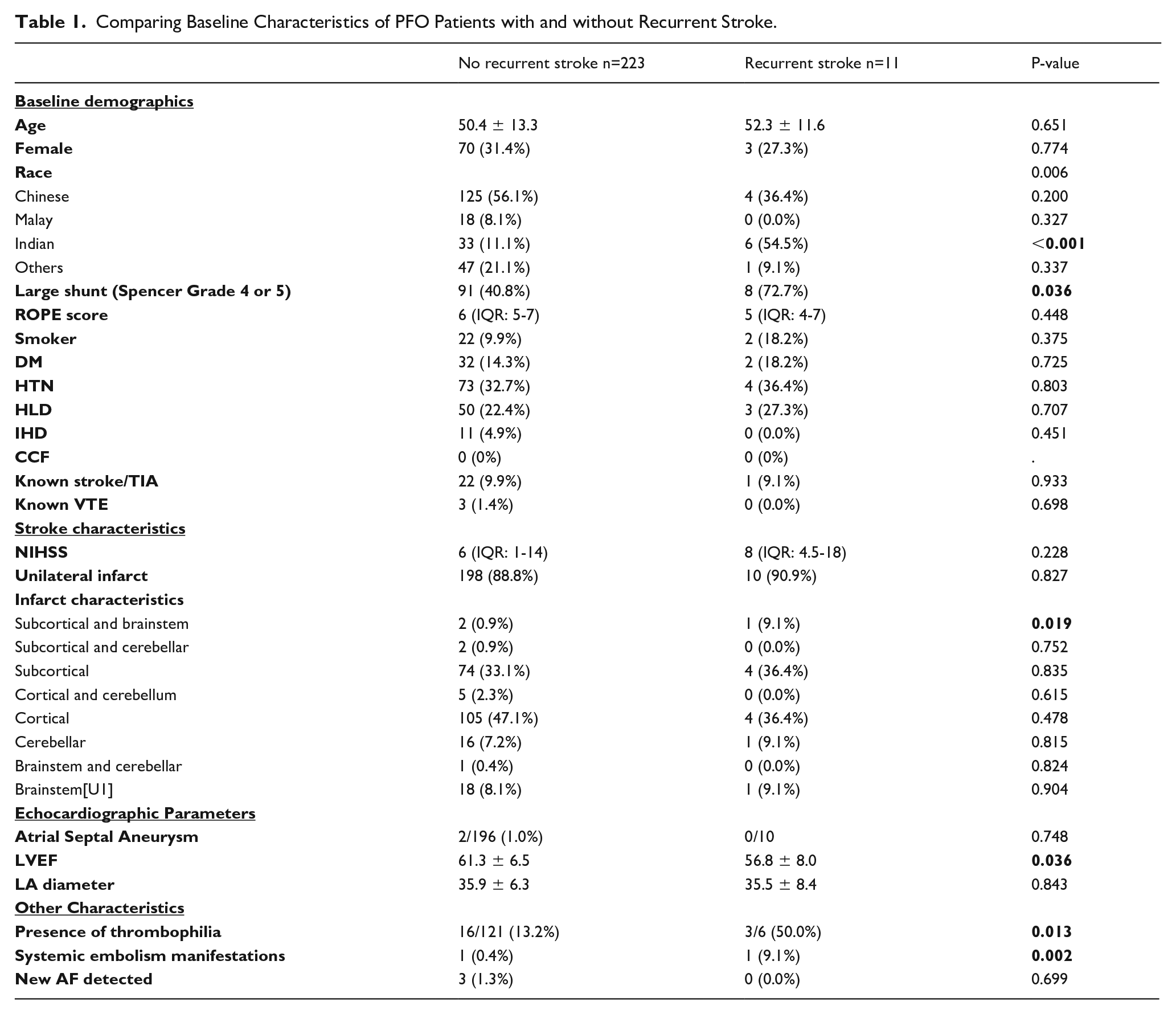
P0608 / 1430
ATRIAL IMAGING AND CARDIAC RHYTHM IN CRYPTOGENIC EMBOLIC STROKE: A PRELIMINARY ANALYSIS OF ARIES STUDY
1Hospital Universitario La Paz. IdiPaz Health Research Institute. Universidad Autónoma de Madrid, Department of Neurology and Stroke Center, Madrid, Spain, 2Hospital Universitario La Paz. IdiPaz Health Research Institute. Universidad Autónoma de Madrid, Robotic and Cardiac Electrophysiology Unit, Department of Cardiology, Madrid, Spain, 3Hospital Universitario La Paz. IdiPaz Health Research Institute. Universidad Autónoma de Madrid, Cardiac Image Unit, Department of Cardiology, Madrid, Spain
P0609 / 1369
INFECTIOUS ENDOCARDITIS AND VASCULAR CEREBRAL DISEASE: A RETROSPECTIVE REVIEW OF TEN YEARS
1 Fundación Jiménez Díaz, Neurology, Madrid, Spain
Most patients did not receive reperfusion therapy because low NIHSS score, critical clinical situation or established stroke. Only 3 patients received reperfusion therapy. Two of them thrombectomy (died because of systemic complications) and one intravenous fibrinolysis who achieved a complete recovery.
P0610 / 1508
THE UTILITY OF STRUCTURAL CARDIAC IMAGING IN YOUNG ADULTS WITH TRANSIENT ISCHAEMIC ATTACK AND MINOR STROKE
1National Hospital for Neurology & Neurosurgery, Comprehensive Stroke Service, London, United Kingdom, 2University College London Medical School, London, United Kingdom, 3University College London Hospital, Cardiology, London, United Kingdom, 4North Middlesex Hospital, Neurology, London, United Kingdom
107(74%) underwent TTE. 7(6.5%) had Ejection Fraction <50%, and 50% of these had BMI>30 kg/m2. Twenty(18%) had enlarged left atrium, of which two(10%) had AF, seven(6%) Patent Foramen Ovale(PFO) and two(2%) atrial septal aneurysm(ASA). Twenty-six(23%) patients were found to have valve dysfunction however only four(3.6%) had moderate to severe regurgitation. No intra-cardiac thrombus or aortic root atheroma were found.
Seven(7%) patients had a PFO on TTE. Thirty-nine(28%) had bubble echocardiogram. PFO found in 25[65%, median age 40(17-53)]. Eighteen(48%) underwent closure. Main indicators for bubble echo were unknown aetiology(18 cases,41%), multi-territory strokes(11, 25%), migraine(8,18%) or confirmation of possible PFO/ASA on TTE(5,11%).
P0611 / 1330
PROLONGED CONTINUOUS ARRHYTHMIAS MONITORING AFTER PFO CLOSURE WITH ROOTI-RX SUPRACUTANEOUS DEVICE: PROTOCOL PRESENTATION AND PRELIMINARY RESULTS OF THE ARMONIC STUDY
1University of Florence, NEUROFARBA, Florence, Italy, 2Careggi University Hospital, Structural Interventional Cardiology, Florence, Italy, 3Careggi University Hospital, Department of Heart and Vessels, Florence, Italy, 4Careggi University Hospital, Neurosonology Unit, Florence, Italy, 5Careggi University Hospital, Stroke Unit, Florence, Italy
P0612 / 670
ARE TROPONIN LEVELS IN THE SETTING OF AN ACUTE ISCHAEMIC STROKE A PREDICTOR OF A CARDIAC CAUSE: A SINGLE-CENTRE RETROSPECTIVE OBSERVATIONAL STUDY
1 OLOL Hospital Drogheda, Stroke Medicine, Drogheda, Ireland
P0613 / 444
INFLAMMATION AND HAEMOSTASIS IN THE STRATIFICATION OF BLEEDING AND THROMBOTIC RISK OF ATRIAL FIBRILLATION ON ORAL ANTICOAGULANT THERAPY: INSIGHTS FROM STRAT-AF STUDY
1University of Florence, Department of Experimental and Clinical Medicine, Florence, Italy, 2University of Florence, NEUROFARBA Department, Neuroscience Section, Florence, Italy
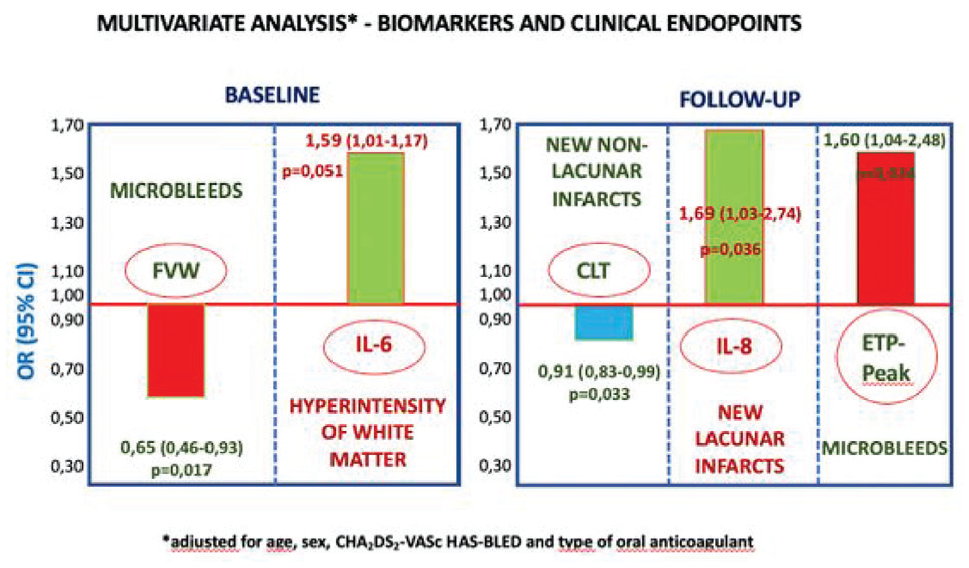
P0614 / 144
IMPACT OF LEFT VENTRICULAR LATE DIASTOLIC DYSFUNCTION AND LEFT ATRIAL DILATATION ON LONG-TERM RISK OF ISCHEMIC STROKE IN POST-STEMI PATIENTS
1Sor Clinic, Ulaanbaatar, Mongolia, 2Intermed Hospital, Cardiology Department, Ulaanbaatar, Mongolia
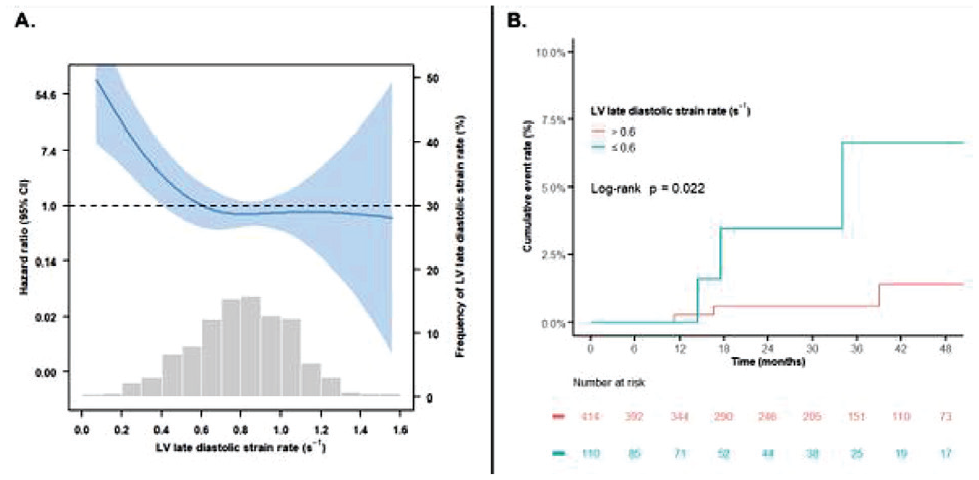
P0615 / 1237
MYOCARDIAL INJURY IN CEREBRAL VENOUS THROMBOSIS
1 Charité-Universitätsmedizin Berlin, Neurology, Berlin, Germany
P0616 / 578
ONCE VERSUS TWICE DAILY DIRECT ORAL ANTICOAGULANTS IN PATIENTS WITH RECENT STROKE AND ATRIAL FIBRILLATION
1University Hospital Basel and University of Basel, Department of Neurology and Stroke Center, Basel, Switzerland, 2Neurology and Neurorehabilitation, University Department of Geriatric Medicine Felix Platter, University of Basel, Basel, Switzerland, 3University Hospital Basel and University of Basel, Department of Intensive Care Medicine, Basel, Switzerland, 4University Hospital and University of Bern, Department of Neurology, Inselspital, Bern, Switzerland, 5Medical Faculty, University of Basel, Basel, Switzerland, 6Hirslanden Hospital, Department of Neurology and Stroke Center, Zurich, Switzerland
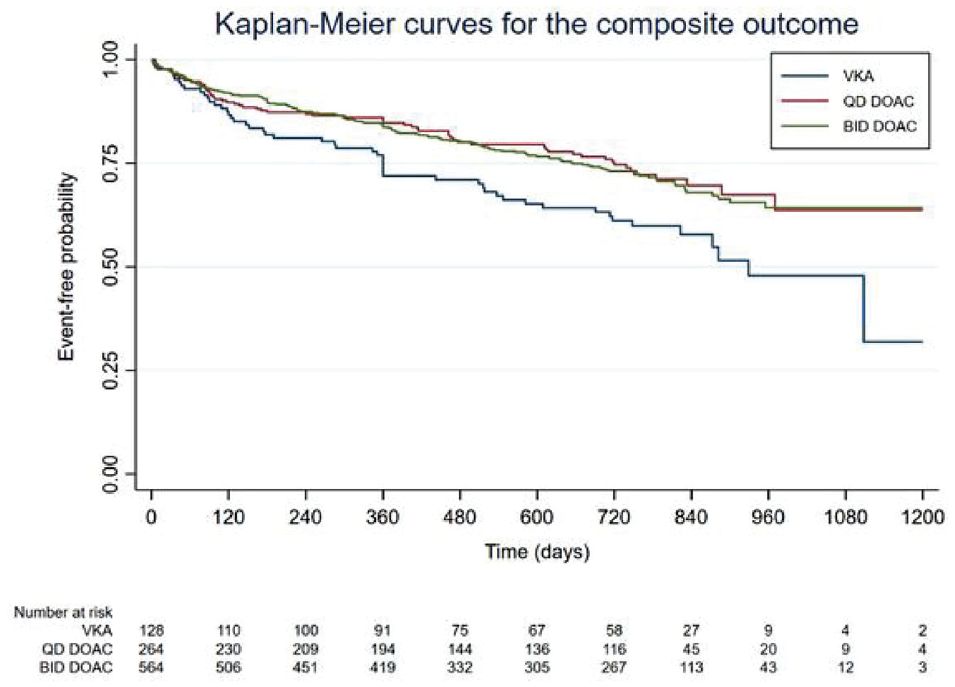
P0617 / 1323
A HIGHLY SPECIFIC PREDICTIVE MODEL FOR THE DETECTION OF ATRIAL FIBRILLATION USING CLINICAL AND RHYTHM BIOMARKERS
1Hospital Virgen Macarena, Neurology, Seville, Spain, 2Hospital Regional Universitario Malaga, Neurology, Malaga, Spain, 3Hospital Virgen del Rocio, Neurology, Seville, Spain, 4Hospital Universitario San Cecilio, Neurology, Granada, Spain, 5Hospital Universitario Virgen de las Nieves, Neurology, Granada, Spain, 6Hospital Universitario Virgen de las Nieves, Cardiology, Granada, Spain, 7Hospital Universitario Torrecárdenas, Neurology, Almeria, Spain, 8Hospital Universitario Juan Ramon Jimenez, Neurology, Huelva, Spain, 9Hospital Virgen de la Victoria, Neurology, Malaga, Spain, 10Hospital Universitario Reina Sofia, Neurology, Cordoba, Spain, 11Hospital Virgen Macarena, Cardiology, Seville, Spain
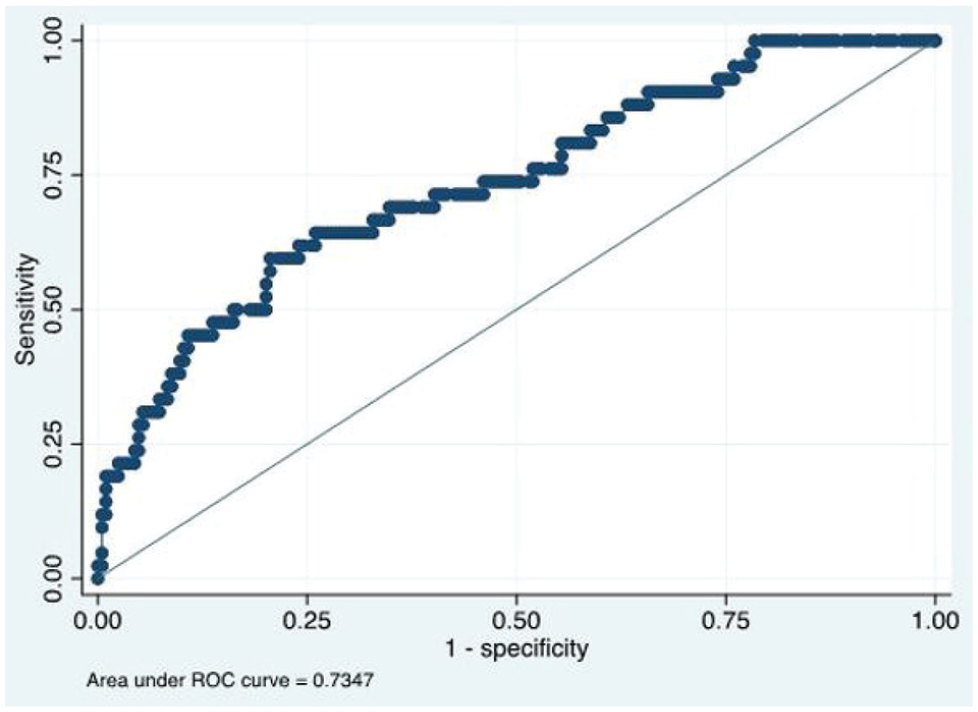
P0618 / 942
TRANSCRANIAL DOPPLER MONITORING DURING TRANSCATHETER AORTIC VALVE IMPLANTATION – IS IT MORE TO THE EMBOLIC LOAD THAN WE ALREADY KNOW – CASE SERIES
1Emergency University Hospital Bucharest, Neurology, Bucharest, Romania, 2Emergency University Hospital Bucharest, Cardiology, Bucharest, Romania
P0619 / 1019
NEUROIMAGING MARKERS OF CEREBROVASCULAR DISEASE AND COGNITION IN ADULTS WITH MODERATE-SEVERE COMPLEXITY CONGENITAL HEART DISEASE
1University of British Columbia, Medicine/Neurology, Vancouver, Canada, 2University of British Columbia, Radiology, Vancouver, Canada, 3University of British Columbia, Medicine/Cardiology, Vancouver, Canada, 4Pacific Adult Congenital Heart Disease Clinic, Providence Health Care, Vancouver, Canada
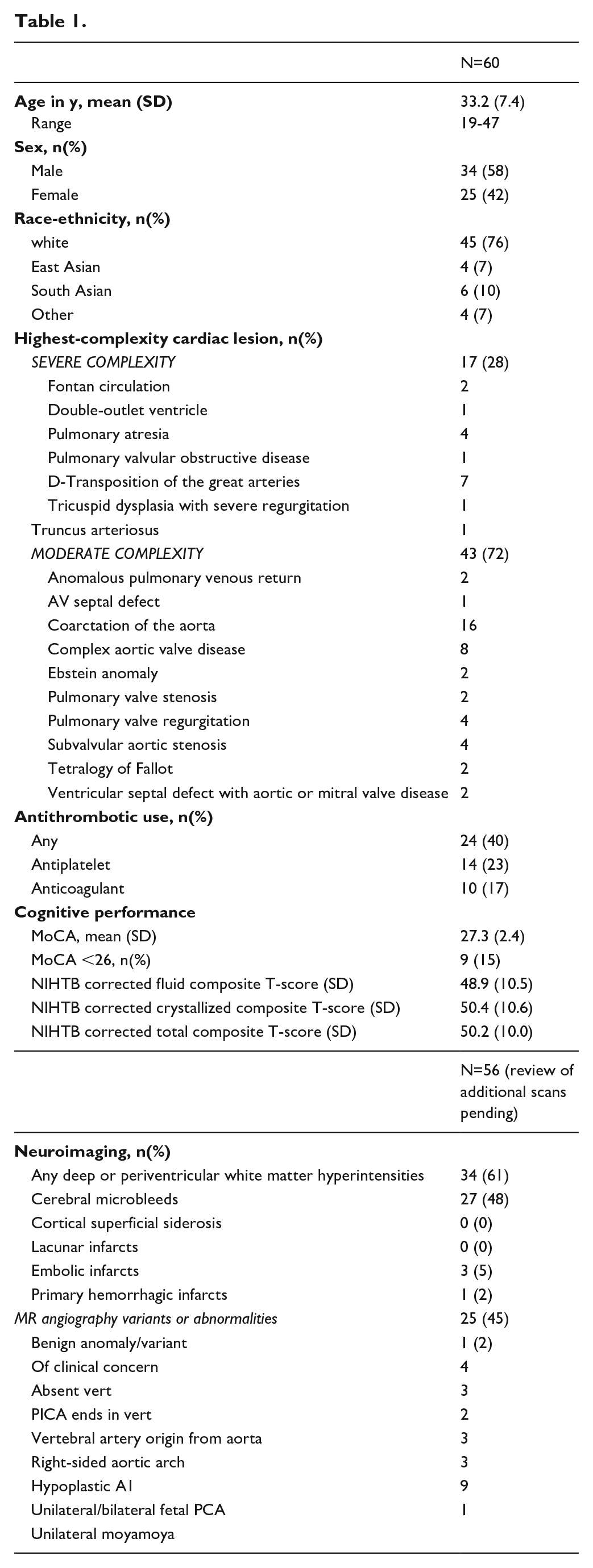
P0620 / 896
NATRIURETIC PEPTIDES MAY HELP TO IDENTIFY PEOPLE WITH LOW RISK OF NEWLY DETECTED ATRIAL FIBRILLATION: DATA FROM THE BIOSIGNAL COHORT
1University of Glasgow, Institute of Cardiovascular and Medical Sciences, Glasgow, United Kingdom, 2University of Zurich, Department of Neurology, Zurich, Switzerland, 3Universit Hospital Bern, Department of Neurology, Bern, Switzerland, 4University Hospital Basel and University of Basel, Department of Neurology, Basel, Switzerland, 5Cantonal Hospital Aarau, Department of Neurology, Aarau, Switzerland, 6Regional Hospital of Lugano, Stroke Center EOC, Neurocenter of Southern Switzerland, Lugano, Switzerland, 7Cantonal Hospital St. Gallen, Department of Neurology, St. Gallen, Switzerland, 8Vall d’Hebron Institute of Research (VHIR), Neurovascular Research Laboratory, Barcelona, Spain, 9Hospital Universitario Virgen Macarena, Stroke Research Program, Institute of Biomedicine of Seville, IBiS/Hospital Universitario Virgen del Rocío/CSIC/University of Seville & Department of Neurology, Seville, Spain, 10University of Thessaly, Department of Internal Medicine, Faculty of Medicine, School of Health Sciences, Larissa, Greece, 11Goethe University, Department of Neurology, Frankfurt, Germany, 12University Hospital of Zurich, Institute of Clinical Chemistry, Zurich, Switzerland
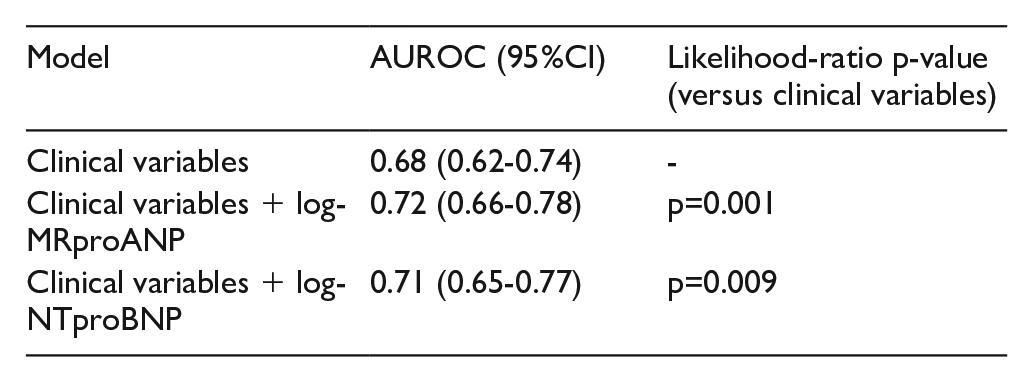
In direct comparison of AUROCs for models with clinical variables + log-MRproANP versus log-NTproBNP, MRproANP and NTproBNP performed similarly (AUC 0.72, 95%CI 0.66-0.78 versus AUC 0.71, 95%CI 0.65-0.77, p=0.28).
P0621 / 974
CARDIAC CT FOR INTRA-CARDIAC THROMBUS DETECTION IN EMBOLIC STROKE OF UNDETERMINED SOURCE (ESUS)
1 Rabin Medical Center, Tel-Aviv University, Neurology, Petach Tikva, Israel
P0622 / 89
YIELD OF ECHOCARDIOGRAPHY IN ISCHEMIC STROKE AND TIA PATIENTS WITH ESTABLISHED INDICATIONS FOR PERMANENT DIRECT ORAL ANTICOAGULANT THERAPY
1 Stroke Research Center Bern, Inselspital, University of Bern, Bern, Switzerland
P0623 / 577
ACUTE NEUROLOGICAL COMPLICATIONS ASSOCIATED WITH INFECTIVE ENDOCARDITIS. CHARACTERISTICS AND THERAPEUTIC MANAGEMENT
1Basurto University Hospital, Neurology, Bilbao, Spain, 2Basurto University Hospital, Infectious Diseases, Bilbao, Spain, 3Basurto University Hospital, Cardiac Surgery, Bilbao, Spain
P0624 / 478
PREDICTORS OF MOBILITY IMPAIRMENT IN ELDERLY PATIENTS WITH ATRIAL FIBRILLATION: STRAT-AF STUDY
1Azienda Ospedaliera Universitaria Careggi, NEUROFARBA, Florence, Italy, 2Azienda Ospedaliera Universitaria Careggi, Atherothromobotic Disease Centre, Florence, Italy, 3Azienda Ospedaliera Universitaria Careggi, Neuroradiology Department, Florence, Italy, 4Azienda Ospedaliera Universitaria Careggi, Stroke Unit, Florence, Italy
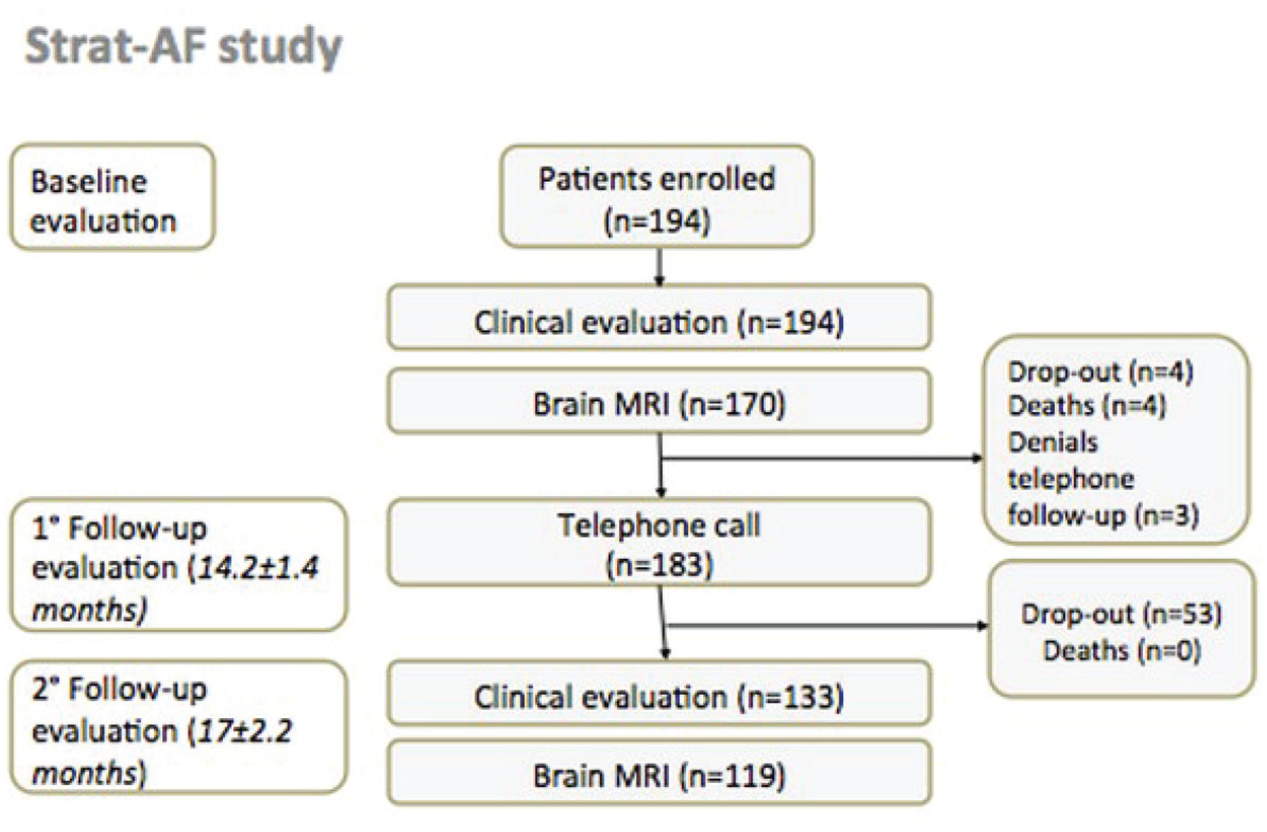
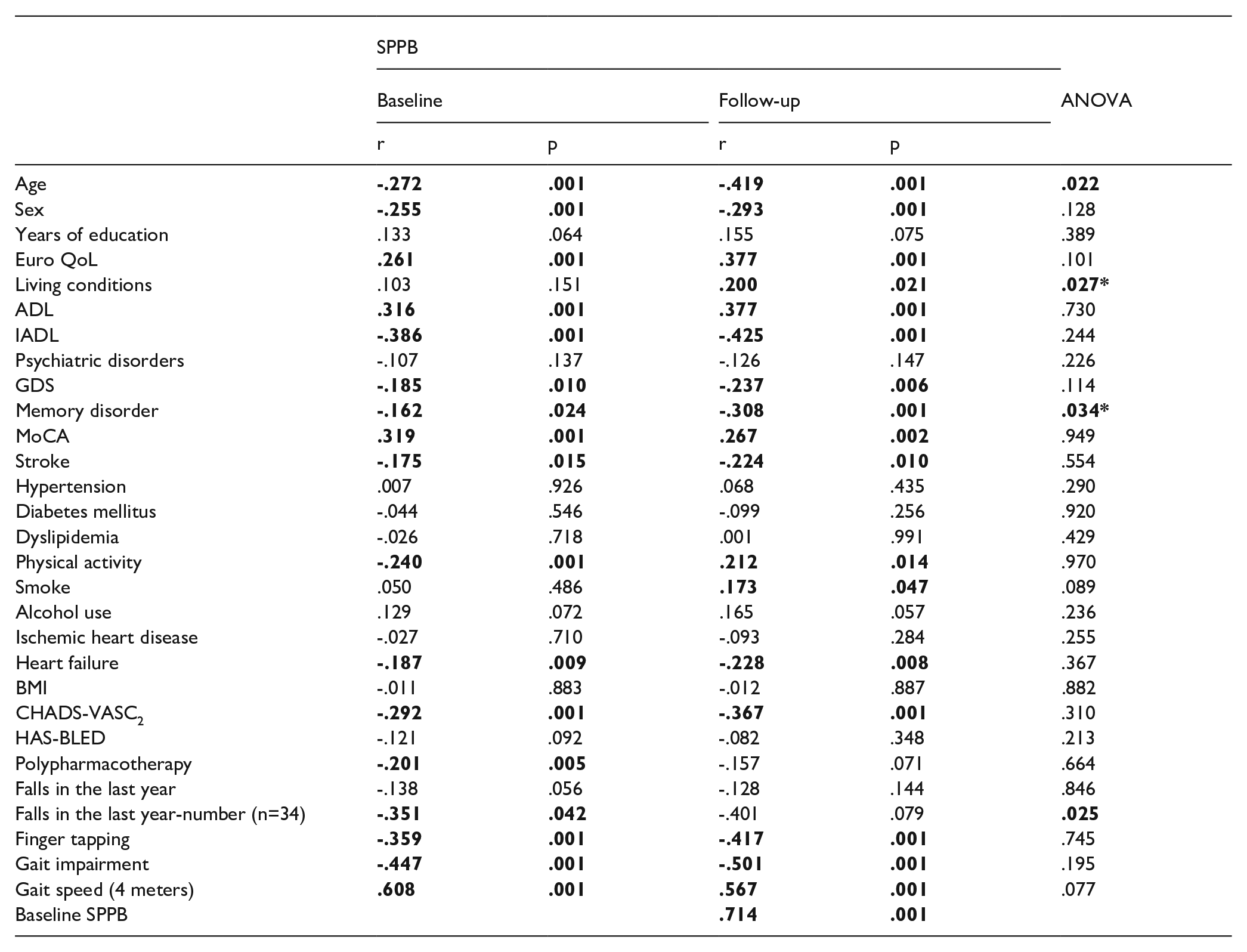
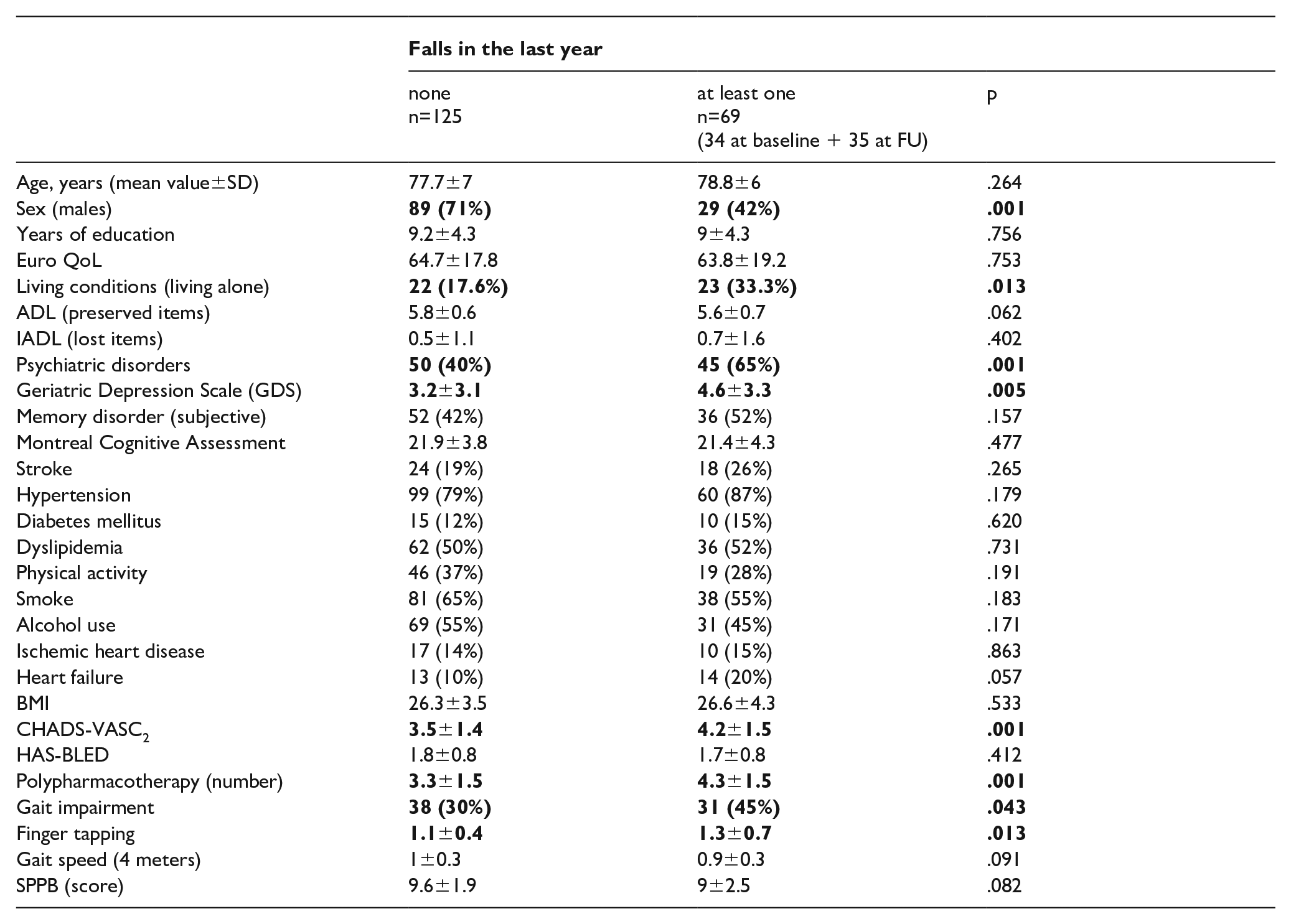
P0625 / 1403
ANALYSIS OF CEREBRAL THROMBI IN STROKE FROM INFECTIVE ENDOCARDITIS DISPLAYS UNIQUE IMMUNE FEATURES
1San Raffaele Scientific Institute, Milan, Italy, 2Lausanne University Hospital, Lausanne, Switzerland
P0626 / 1398
ANTITHROMBOTIC TREATMENT AND CLINICAL EVENTS AFTER LEFT ATRIAL APPENDAGE CLOSURE IN PATIENTS WITH ATRIAL FIBRILLATION AND INTRACEREBRAL HEMORRHAGE
1Hospital Universitario La Paz. IdiPaz Health Research Institute. Universidad Autónoma de Madrid, Department of Neurology and Stroke Center, Madrid, Spain, 2Hospital Universitario La Paz. IdiPaz Health Research Institute. Universidad Autónoma de Madrid, Interventional Cardiology Section, Department of Cardiology, Madrid, Spain
P0627 / 276
ISCHEMIC AND HEMORRHAGIC STROKE COMPLICATIONS IN LONG-TERM FOLLOW-UP AFTER AORTIC VALVE REPLACEMENT DUE TO SEVERE AORTIC STENOSIS
1Santa Barbara Hospital, Cardiology, Soria, Spain, 2Clinico Lozano Blesa Hospital, Cardiology, Zaragoza, Spain, 3Monteprincipe Hospital, Arrhythmias/Cardiology, Boadilla de Monte, Spain, 4Santa Barbara Hospital, Neurology, Soria, Spain, 5Vithas Hospital, Neurology, Málaga, Spain, 6Aragon Research Institution, Zaragoza, Spain
P0628 / 1525
PATENT FORAMEN OVALE AND OBSTRUCTIVE SLEEP APNEA: A PROBLEMATIC ASSOCIATION
1Coimbra University Hospital Centre, Neurology Department, Coimbra, Portugal, 2Coimbra University Hospital Centre, Cardiology Department, Coimbra, Portugal, 3Coimbra University Hospital Centre, Internal Medicine Department, Coimbra, Portugal, 4Faculty of Medicine, Coimbra University, Coimbra, Portugal
P0629 / 791
COST-EFFECTIVENESS ANALYSIS OF TRANSTHORACIC ECHOCARDIOGRAPHIC ASSESSMENT IN PATIENTS WITH ISCHEMIC STROKE OR TIA OF UNDETERMINED CAUSE
1Medisch Spectrum Twente, Neurology, Enschede, Netherlands, 2University of Twente, Health Technology & Services Research, Enschede, Netherlands, 3Medisch Spectrum Twente, Cardiology, Thoraxcentrum Twente, Enschede, Netherlands, 4Isala Hospital, Neurology, Zwolle, Netherlands
(1) TTE in all patients;
(2) TTE only in patients with major ECG abnormalities; and
(3) TTE not performed.
Input data were derived from ATTEST and systematic literature reviews. A Markov model was developed that simulated recurrent ischemic stroke or TIA and intracerebral and gastro-intestinal bleeding complications in patients with ischemic stroke or TIA of undetermined cause. Primary outcome was the additional costs per additional quality-adjusted life-year (QALY) from a Dutch societal perspective.
INTRACEREBRAL HAEMORRHAGE
P0630 / 117
INTRACEREBRAL HAEMORRHAGE INCIDENCE AND HAS_BLED SCORE IN ADJUSTED MORBIDITY GROUPS: COULD BE USEFUL?
1Institut Catala de la Salut. EAP Tortosa-Est. SAP Terres de l’Ebre, Primary Care, Tortosa, Spain, 2Faculty of Medicine and Health Sciences, Universitat Rovira i Virgili, IDIAP JGol, Reus, Spain, 3Institut Catala de la Salut. EAP Amposta. SAP Terres de l’Ebre, Primary Care, Tortosa, Spain, 4Institut Catala de la Salut. Institut Universitari d’Investigació en Atenció Primària Jordi Gol (IDIAP JGol), Primary Care, Reus, Spain
P0631 / 918
O2L-001, AN EXTENDED-RELEASE FORMULATION OF OPTIMIZED W253R/R275S TISSUE PLASMINOGEN ACTIVATOR, FOR EFFICIENT AND SAFE TREATMENT OF HAEMORRHAGIC STROKE
1Op2Lysis, Caen, France, 2Normandie Univ, UNICAEN, INSERM UMR-S U1237, INSERM UMR-S U1237, Physiopathology and Imaging of Neurological Disorders (PhIND), Caen, France
P0632 / 1268
THIRTY-DAY MODIFIED RANKIN SCALE SCORE PREDICTS 90-DAY VALUES IN ACUTE INTRACEREBRAL HAEMORRHAGE: A POST-HOC ANALYSIS OF THE ANTIHYPERTENSIVE TREATMENT OF ACUTE CEREBRAL HEMORRHAGE-2 TRIAL
1University of Connecticut School of Pharmacy, Storrs, United States, 2Evidence-based Practice Center, Hartford Hospital, Hartford, United States, 3Sarasota Memorial Hospital, Sarasota, United States, 4Alexion, AstraZeneca Rare Disease, Boston, United States, 5Guy’s and St. Thomas’ Hospitals, King’s College London, London, United Kingdom
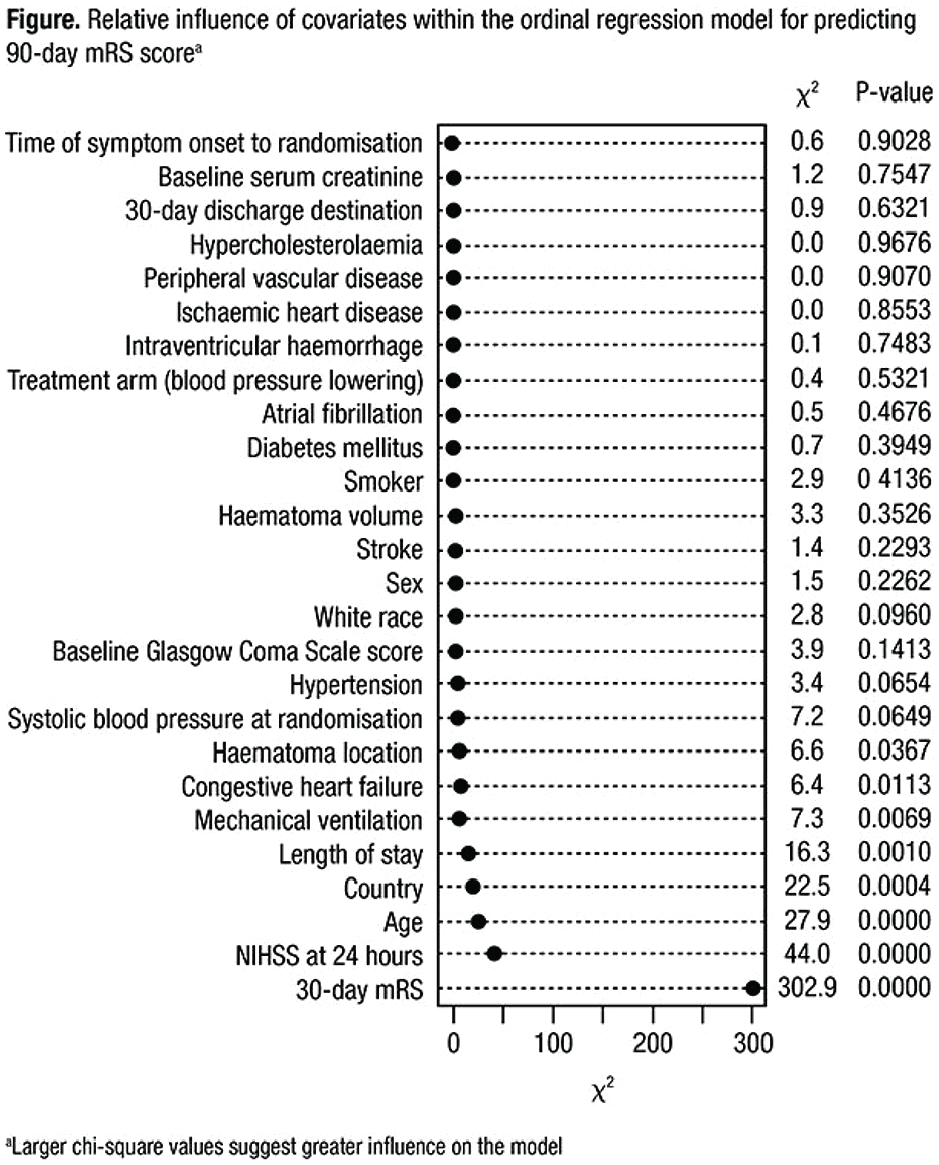
P0633 / 1367
ADVANCED CEREBRAL AMYLOID ANGIOPATHY: A RISK FACTOR FOR RECURRENT CEREBRAL HEMORRHAGE
1 Hospital Universitario La Princesa, Madrid, Spain
RCH was associated with alcohol intake (33.3%% vs. 10.7%; p=0.032) and previous lobar ICH (53.3% vs. 5.4%; p<0.001). In SWI-weighted brain MRI > 3.5 microbleeds (AUC 0.72; p=0.033) and >4.5 sulci with siderosis (AUC 0.8; p=0.016) were associated with RCH. Patients with advanced CAA presented a high risk of RCH, OR 46.4 (95% CI 4.72-456.03; p=0.001).
P0634 / 492
MACROPHAGE INFLAMMATORY PROTEIN-1 ALPHA UPREGULATION IS ASSOCIATED WITH POOR PERIHEMATOMAL PERFUSION AND IN-HOSPITAL LETHALITY IN ACUTE HYPERTENSIVE INTRACEREBRAL HEMORRHAGE
1Pirogov Russian National Research Medical University, Moscow, Russian Federation, 2Federal Center of Brain Research and Neurotechnologies, Moscow, Russian Federation
P0635 / 681
POTENTIAL ROLE OF CIRCULATING EXTRACELLULAR VESICLES IN THE OUTCOME OF PATIENTS WITH INTRACEREBRAL HAEMORRHAGE
1La Paz University Hospital, IdiPAZ Health Research Institute, Universidad Autónoma de Madrid, Neurology and Cerebrovascular Diseases Research Group, Department of Neurology and Stroke Center, Madrid, Spain, 2Health Research Institute of Santiago de Compostela (IDIS), Proteomic Unit, Santiago de Compostela, Spain
P0636 / 314
BLOOD DERIVED EXTRACELLULAR VESICLES AS A NOVEL AND AFFECTIVE TREATMENT IN A CEREBRAL HEMORRHAGE RAT MODEL. SAFETY AND PROTEIN CONTENT ANALYSIS
1IdiPAZ Health Research Institute, Department of Neurology and Stroke Center, La Paz University Hospital, Madrid, Spain, 2Health Research Institute of Santiago de Compostela (IDIS), Proteomic Unit, Santiago de Compostela, Spain
P0637 / 844
BRAIN PERI-HEMATOMAL AREA, A STRATEGIC INTERFACE FOR BLOOD CLEARANCE: A HUMAN NEUROPATHOLOGICAL AND TRANSCRIPTOMIC STUDY
1Lille University Hospital, Lille Neuroscience & Cognition research centre UMR-S1172, Degenerative and Vascular Cognitive Disorders, F-59000, Lille, France, 2Lille University Hospital, Lille, France
P0638 / 461
METABOLIC CHANGES SURROUNDING INTRACEREBRAL HEMORRHAGE IN THE RAT COLLAGENASE MODEL
1Ghent University, 4Brain Lab, Department of Head and Skin, Gent, Belgium, 2KU Leuven, Laboratory for Neurobiology and Gene Therapy, Department of Neurosciences, Leuven Brain Institute, Leuven, Belgium, 3Ghent University, IBiTech MEDISIP-Infinity Lab, Gent, Belgium
P0639 / 983
POSITIVE PREDICTIVE VALUE OF AMYLOID CATEGORY USING AN ICH CLASSIFICATION
1 Hospital Universitari Arnau Vilanova, Neurology, Lleida, Spain
We selected those patients with probable CAA and calculated the proportion with respect to patients who had been previously classified as amyloid using the SMASH-U classification.
P0640 / 871
RISKS FOR MAJOR BLEEDING AND INTRACRANIAL HAEMORRHAGE IN FRAIL PATIENTS
1Vrije Universiteit Amsterdam, Ageing and Public Health, Amsterdam, Netherlands, 2North West Hospital, Cardiology, Alkmaar, Netherlands, 3North West Hospital, Neurology, Alkmaar, Netherlands, 4North West Hospital, Internal Medicine, Alkmaar, Netherlands, 5Radboud Universiteit, Cardiologie, Nijmegen, Netherlands, 6North West Hospital, Geriatric Medicine, Alkmaar, Netherlands
P0641 / 603
CIRCLE OF WILLIS MORPHOLOGY IN PRIMARY INTRACEREBRAL HAEMORRHAGE
1 West China Hospital, Sichuan University, Department of Neurology, Chengdu, China
P0642 / 799
STROKE SEVERITY, IMAGING AND COURSE IN PATIENTS WITH ORAL ANTICOAGULATION-RELATED INTRACEREBRAL HEMORRHAGE
1Bispebjerg Hospital, Department of Neurology, Copenhagen NV, Denmark, 2University of Copenhagen, Department of Clinical Medicine, Copenhagen Ø, Denmark, 3Odense University Hospital, Research Unit for Neurology, Odense, Denmark, 4University of Southern Denmark, Department of Clinical Research, Odense, Denmark, 5Klinikum Frankfurt Höchst, Department of Neurology, Frankfurt am Main, Germany, 6University of Heidelberg, Department of Neurology, Heidelberg, Germany
P0643 / 798
THE EFFECTS OF MIDLINE SHIFT IN ACUTE INTRACEREBRAL HAEMORRHAGE: DATA FROM THE RIGHT-2 AND TICH-2 TRIALS
1Nottingham University Hospitals NHS Trust, Stroke, Department of Acute Medicine, Nottingham, United Kingdom, 2University of Nottingham, Stroke Trials Unit, Nottingham, United Kingdom, 3National University of Malaysia, Department of Medicine, Kuala Lumpur, Malaysia, 4Nottingham Biomedical Research Centre, University of Nottingham, Nottingham, United Kingdom, 5University Hospitals of Birmingham NHS Foundation Trust, Stroke, Department of Medicine, Birmingham, United Kingdom, 6University of Birmingham, Institute of Applied Health Research, College of Dental and Medical Sciences, Birmingham, United Kingdom, 7University of Edinburgh, Centre for Clinical Brain Sciences, UK Dementia Research Centre, Edinburgh, United Kingdom
P0644 / 95
ADJUSTED MORBIDITY GROUPS AND INTRACEREBRAL HAEMORRHAGE: A RETROSPECTIVE PRIMARY CARE COHORT STUDY
1Institut Catala de la Salut. Institut Universitari d’Investigació en Atenció Primària Jordi Gol (IDIAP JGol), Primary Care, Tortosa, Spain, 2Institut Catala de la Salut. EAP Tortosa-Est. SAP Terres de l’Ebre, Primary Care, Tortosa, Spain, 3Institut Catala de la Salut. Universitat Rovira i Virgili, Primary Care, Tortosa, Spain, 4Institut Catala de la Salut. EAP Amposta. SAP Terres de l’Ebre, Primary Care, Tortosa, Spain, 5Faculty of Medicine and Health Sciences, Universitat Rovira i Virgili, IDIAP JGol, Reus, Spain
P0645 / 412
PREDICTORS OF EARLY TIME FROM SYMPTOM ONSET IN SPONTANEOUS ICH
1McMaster University/Population Health Research Institute, Division of Neurology, Hamilton, Canada, 2Beth Israel Deaconess Medical Center, Harvard Medical School, Department of Neurology, Boston, United States
P0646 / 747
SPEED OF HAEMATOMA GROWTH AND OUTCOME IN ACUTE INTRACEREBRAL HAEMORRHAGE
1The George Institute for Global Health, Faculty of Medicine, University of New South Wales, Sydney, Australia, 2The Second Affiliated Hospital of SooChow University, Department of Neurology and Clinical Research Center of Neurological Disease, Jiangsu, China, 3Centre for Clinical Brain Sciences, University of Edinburgh, University of Edinburgh, Edinburgh, United Kingdom, 4Oslo University Hospital, Department of Neurology, Oslo, Norway, 5The Norwegian Air Ambulance Foundation, Research and Development Department, Oslo, Norway, 6Stroke Trials Unit, University of Nottingham, Queen’s Medical Centre, Nottingham, United Kingdom, 7Stroke, Nottingham University Hospitals NHS Trust, Nottingham, United Kingdom, 8Central Clinical School, University of Sydney, Sydney, Australia, 9Neurology Department, Royal Prince Alfred Hospital, Sydney, Australia, 10Royal Prince Alfred Hospital, Neurology Department, Sydney, Australia, 11The George Institute China at Peking University Health Science Center, Beijing, China
P0647 / 1215
EXPLORING VARIATIONS IN PROPORTIONAL ADMISSION OF PRIMARY INTRACEREBRAL HAEMORRHAGE
1National Office of Clinical Audit, Irish National Audit of Stroke, Dublin, Ireland, 2Trinity College Dublin, Medical Gerontology, Dublin, Ireland
P0648 / 1631
EPIDEMIOLOGY AND CLINICAL PRESENTATION OF SPONTANEOUS CEREBELLAR HEMORRHAGE IN A NORWEGIAN POPULATION
1Akershus University Hospital, Department of Neurology, Lørenskog, Norway, 2Akershus University Hospital, Department of Radiology, Lørenskog, Norway, 3Oslo University Hospital, Department of Neurosurgery, Oslo, Norway, 4Oslo University Hospital, Department of Neurology, Oslo, Norway
P0649 / 794
LONG-TERM ANXIETY IN SPONTANEOUS INTRACEREBRAL HAEMORRHAGE SURVIVORS
1Univ. Lille, Inserm U1172 - LilNCog - Lille Neuroscience & Cognition, CHU Lille, Neurology, Lille, France, 2Inserm UMR 1266, GHU Paris Psychiatrie et Neurosciences, Centre Hospitalier Sainte-Anne, Paris University, Neuroradiology, Paris, France, 3Univ. Lille, Inserm U1172 - LilNCog - Lille Neuroscience & Cognition, CHU Lille, Neuroradiology, Lille, France, 4Centre Hospitalier Universitaire Reims, Hôpital Maison Blanche, Neurology, Reims, France
P0650 / 597
ASSOCIATION BETWEEN CIRCULATING INFLAMMATORY BIOMARKERS AND FUNCTIONAL OUTCOME OR PERIHAEMATOMAL OEDEMA AFTER INTRACEREBRAL HAEMORRHAGE: A SYSTEMATIC REVIEW AND META-ANALYSIS
1The University of Edinburgh, Centre for Clinical Brain Sciences, Edinburgh, United Kingdom, 2Radboud University Medical Centre, Department of Neurology, Donders Institute for Brain, Cognition and Behaviour, Nijmegen, Netherlands, 3The University of Edinburgh, Centre for Discovery Brain Sciences & UK Dementia Research Institute, Edinburgh, United Kingdom
Sixteen studies (n=1299) examined the association between 21 inflammatory biomarkers and PHO but differences in the method and timing of PHO measurements precluded meta-analysis. We did not find any biomarker associated with both PHO and clinical outcome in >1 study.
P0651 / 626
IMPACT OF ANTITHROMBOTIC TREATMENT ON ASSOCIATIONS BETWEEN PREHOSPITAL SYSTOLIC BLOOD PRESSURE AND OUTCOMES IN ACUTE, SPONTANEOUS INTRACEREBRAL HAEMORRHAGE
1Oslo University Hospital, Department of Geriatric Medicine, Oslo, Norway, 2Akershus University Hospital, Department of Neurology, Lørenskog, Norway, 3University of Oslo, Institute of Clinical Medicine, Oslo, Norway, 4Akershus University Hospital, Department of Diagnostic Imaging, Lørenskog, Norway, 5Oslo University Hospital, Department of Neurology, Oslo, Norway, 6The Norwegian Air Ambulance Foundation, Oslo, Norway, 7University of Oslo, Institute of Health and Society, Department of General Practice, Oslo, Norway
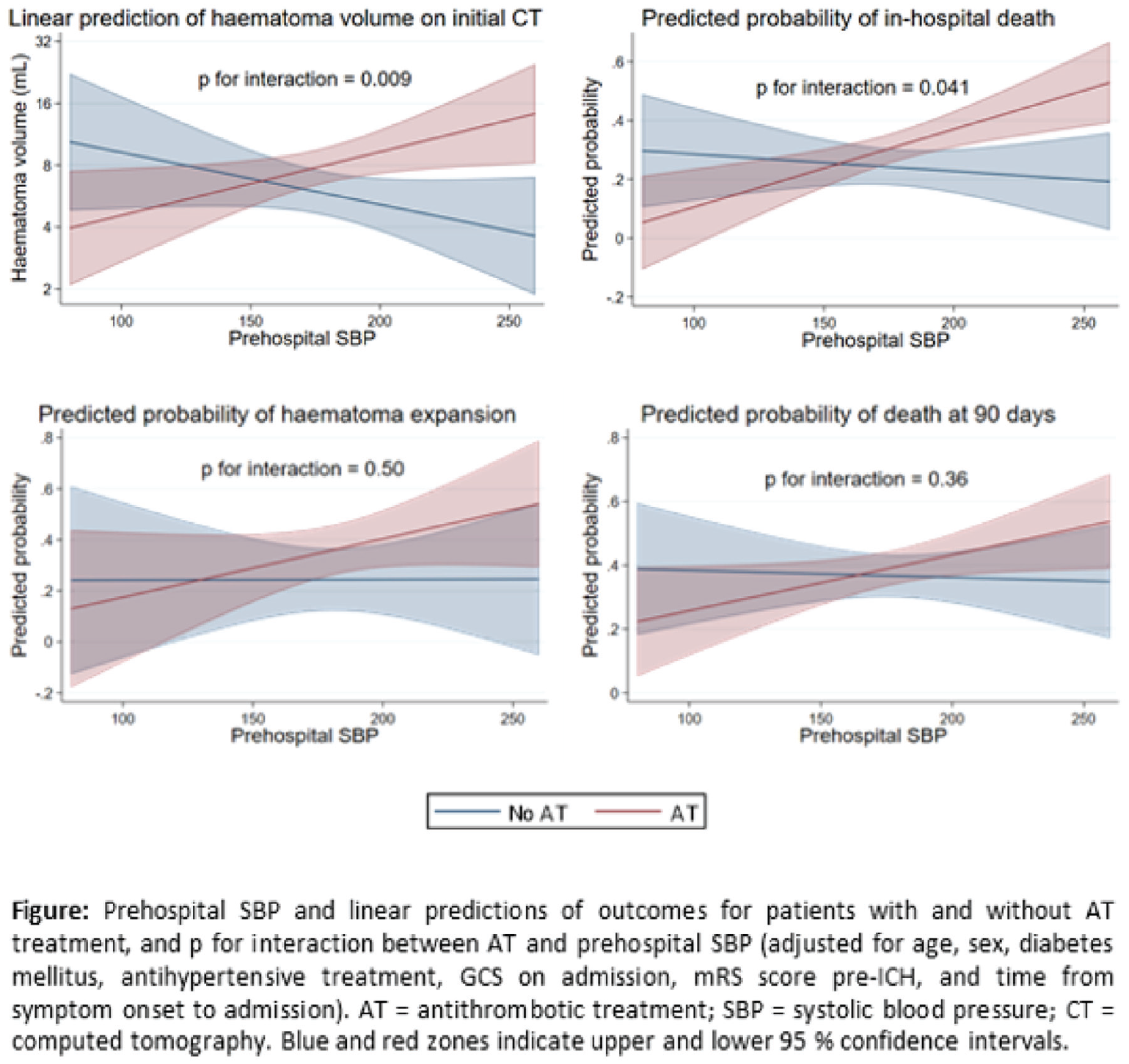
P0652 / 1314
PERCUTANEOUS GASTROSTOMY TUBE PLACEMENT AFTER INTRACEREBRAL HEMORRHAGE: EXTERNAL VALIDATION OF THE GRAVO SCORE
D. Lin1, M. Minyetty1, B. Gogia1, S. Hasan1, E. Heistand1, F. Carvalho1, S. Marchina1, V. Lioutas1,
1 Beth Israel Deaconess Medical Center, Harvard Medical School, Neurology, Boston, United States
P0653 / 971
PRESCRIPTION OF ANTIEPILEPTIC DRUGS IN SEIZURES AFTER INTRACEREBRAL HEMORRHAGE IS ASSOCIATED WITH BETTER PROGNOSIS
1 Hospital Universitari Arnau de Vilanova, Neurology, Lleida, Spain
We aimed to analyze the impact on outcome of prescription of AED in seizures after ICH.
Primary outcome was mRS scale at 3 months.
Patients who received AEDs had a significantly better evolution than those without prescription. mRS at 3 months was significantly higher among those patients without prescription of AEDs (median mRS 4.5 [IQR: 3-6]) than in patients who received (median mRS 3 [IQR: 2-4]) (p<0.05).
Our results suggest that receiving treatment with AEDs after early seizure could be related to a better evolution at 3 months, ant therefore, could be indicated.
Future studies would be necessary to evaluate the impact of AEDs on prognosis of acute symptomatic seizures.
P0654 / 1208
CLINICAL FRAILTY IS INDEPENDENTLY ASSOCIATED WITH 28-DAY MORTALITY FOLLOWING ACUTE INTRACEREBRAL HAEMORHAGE
1University of Cambridge, Department of Medicine, Cambridge, United Kingdom, 2University of Cambridge, Department of Clinical Neurosciences, Cambridge, United Kingdom
P0655 / 1456
THE EFFECT OF CONCOMITANT ANTIPLATELET AND STATIN EXPOSURE ON INTRACEREBRAL HEMORRHAGE OUTCOME
1 Harvard University/Beth Israel Deaconess Medical Center, Neurology, Boston, United States
P0656 / 1328
TIME TRENDS IN SURVIVAL AFTER FIRST PRIMARY INTRACEREBRAL HAEMORRHAGE AND ISCHAEMIC STROKE BETWEEN 2000 AND 2015 IN THE SOUTH LONDON STROKE REGISTER(SLSR)
1King’s College London, Department of population health sciences, London, United Kingdom, 2National Institute for Health Research (NIHR) Biomedical Research Centre, London, United Kingdom, 3National Institute for Health Research (NIHR) Collaboration for Leadership in Applied Health Research and Care (CLAHRC) South London, London, United Kingdom
P0657 / 1499
WE ARE NOT THE SAME: GEOGRAPHIC DIFFERENCE IN INCIDENCE AND EPIDEMIOLOGY FOR INTRACEREBRAL HAEMORRHAGE IN SPAIN.NEUROEPI STUDY
1Stroke Centre, Torrecárdenas University Hospital, Department of Neurology., Almería, Spain, 2Torrecárdenas University Hospital, Emergency Department, Almería, Spain
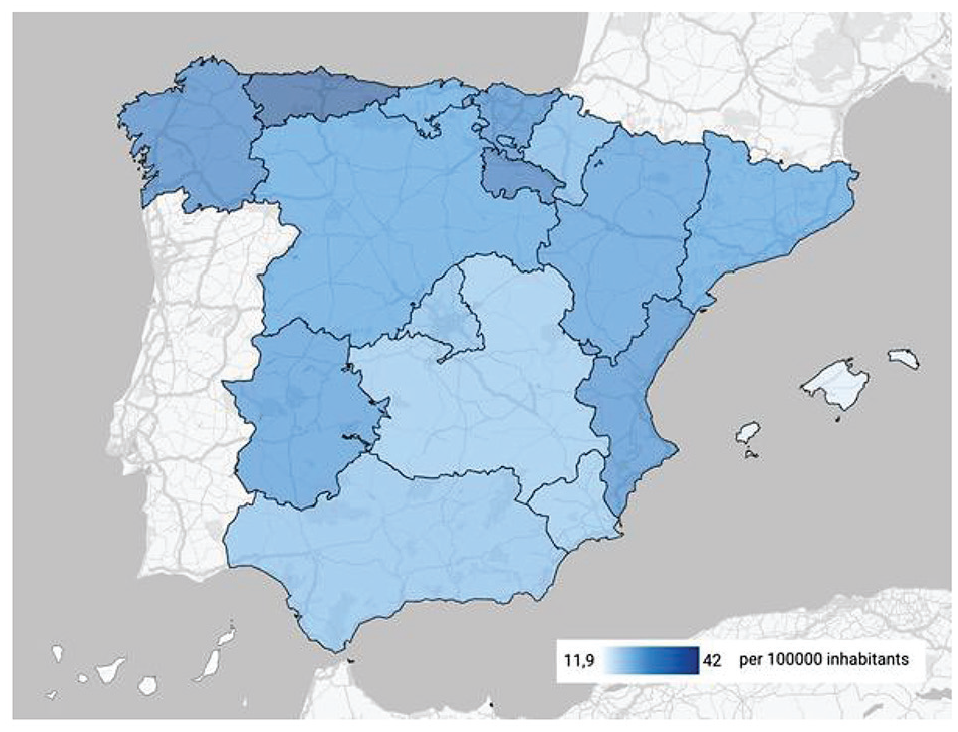
SAH, ANEURYSMS AND VASCULAR MALFORMATIONS
P0658 / 354
S UBARACHNOID H EMORRHA GE BENEFIT OF TR EATMENT P REDICTION MODELS (SHARP): PERSONALIZED DECISION-MAKING IN ANEURYSMAL SUBARACHNOID HEMORRHAGE
1Erasmus MC University Medical Center Rotterdam, Department of Neurology, Rotterdam, Netherlands, 2Erasmus MC University Medical Center Rotterdam, Department of Public Health, Rotterdam, Netherlands, 3Erasmus MC University Medical Center Rotterdam, Department of Neurosurgery, Rotterdam, Netherlands, 4Erasmus MC University Medical Center Rotterdam, Department of Radiology and Nuclear Medicine, Rotterdam, Netherlands, 5Erasmus MC University Medical Center Rotterdam, Department of Intensive Care Adults, Rotterdam, Netherlands, 6University of Oxford, Nuffield Department of Surgical Sciences, Oxford, United Kingdom
P0659 / 927
SCREENING FOR INTRACRANIAL ANEURYSMS IN RELATIVES OF PATIENTS WITH UNRUPTURED INTRACRANIAL ANEURYSMS: AN OBSERVATIONAL PROSPECTIVE COHORT STUDY
1UMC Utrecht Brain Centre, Neurology and Neurosurgery, Utrecht, Netherlands, 2UMC Utrecht, Radiology, Utrecht, Netherlands, 3Julius Centre for Health Sciences and Primary Care, Utrecht, Netherlands
P0660 / 956
SCREENING FOR UNRUPTURED INTRACRANIAL ANEURYSMS IN PERSONS ⩾35 YEARS WITH HYPERTENSION AND WHO SMOKE(D)
1UMC Utrecht Brain Centre, Neurology and Neurosurgery, Utrecht, Netherlands, 2UMC Utrecht, Radiology, Utrecht, Netherlands, 3Julius Centre for Health Sciences and Primary Care, Utrecht, Netherlands
P0661 / 166
PREDICTORS OF OPTIMAL TREATMENT TIME FOLLOWING ANEURYSMAL SUBARACHNOID HEMORRHAGE ACROSS TWO TERTIARY REFERRAL CENTERS IN AUSTRALIA
1University of Tasmania, Menzies Institute for Medical Research, Hobart, Australia, 2University of Tasmania, School of Nursing, Hobart, Australia, 3Monash Health, Clayton, Australia, 4Monash University, Clayton, Australia, 5Ambulance Victoria, Doncaster, Australia, 6Royal Hobart Hospital, Hobart, Australia, 7Michigan State University, East Lansing, United States
Predictors of receiving aSAH treatment ⩽12.5 hours and within 12.5-24 hours compared to treatment >24 hours.
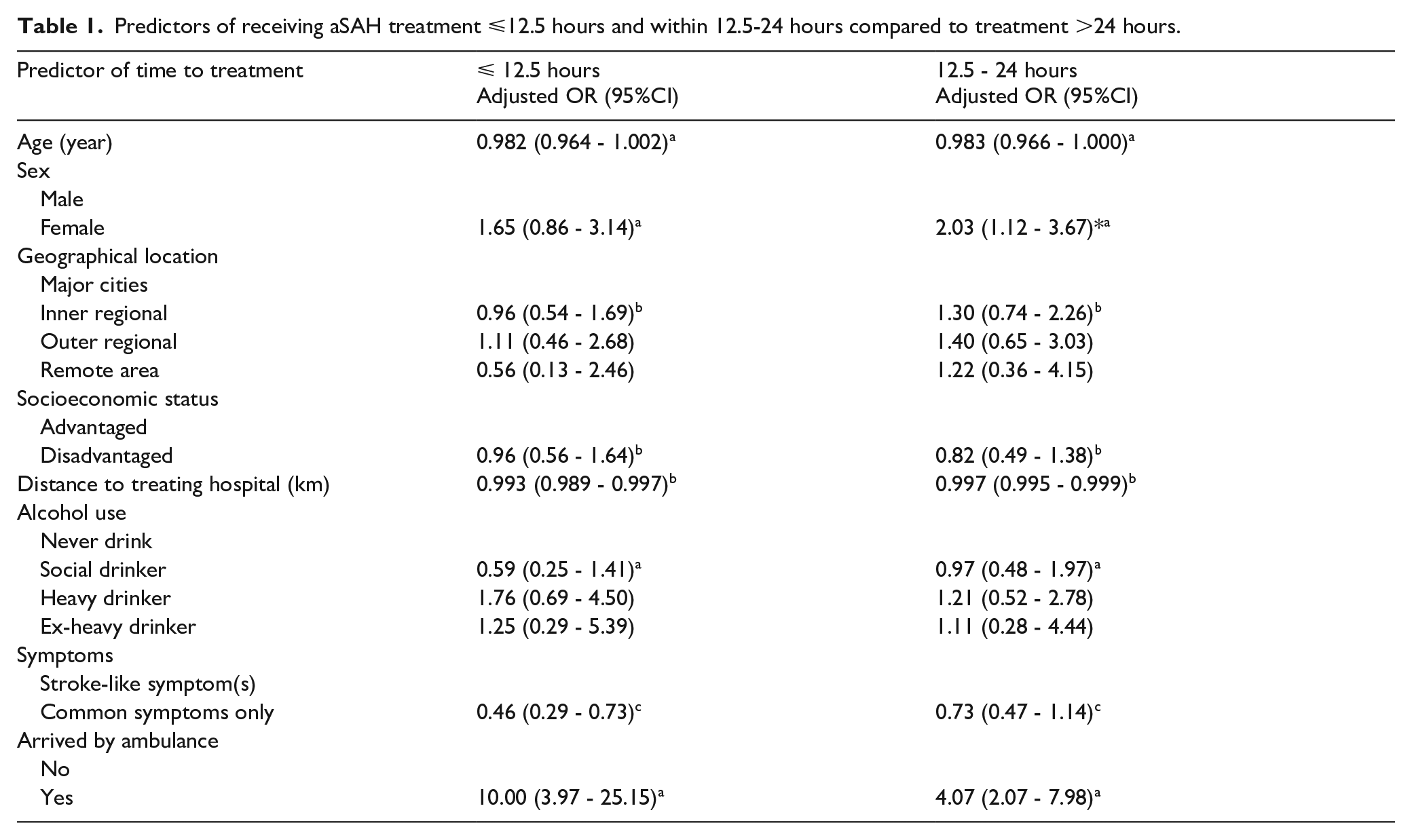
Adjusted for age, sex, alcohol use, arrived by ambulance, distance to treating hospital, interfacility transfer, triage groups, WFNS, modified Fisher Scale, DSA and ventriculostomy.
Adjusted for socioeconomic groups, geographical locations and distance to treating hospital.
No adjustment needed.
P0662 / 1426
IMPACT OF COVID-19 PANDEMIC ON THE OUTCOME OF ANEURYSMAL SUBARACHNOID HAEMORRHAGE
1Elias Emergency University Hospital, Neurology, Bucharest, Romania, 2Carol Davila University of Medicine and Pharmacy, Neurology, Bucharest, Romania, 3Elias Emergency University Hospital, Neurointerventional Radiology, Bucharest, Romania
P0663 / 1343
PREDICTORS AND CLINICAL RELEVANCE OF CIRCULATING AND CEREBROSPINAL FLUID NEUROFILAMENT LIGHT CHAIN LEVELS IN SPONTANEOUS SUBARACHNOID HEMORRHAGE
1Hospital Clínic de Barcelona, Neurology, Barcelona, Spain, 2Hospital Clínic de Barcelona, Neurosurgery, Barcelona, Spain, 3Hospital Clínic de Barcelona, Anesthesiology, Barcelona, Spain
P0664 / 837
THE VANISHING OF THE ANTERIOR COMMUNICATING ARTERY (ACOA) SYNDROME: IS THERE A RELATIONSHIP WITH THE SHIFT FROM SURGICAL CLIPPING TO ENDOVASCULAR REPAIR OF ANEURYSMS?
1University Medical Center Groningen, Neurology, subdepartment Neuropsychology, Groningen, Netherlands, 2University Medical Center Groningen, Neurosurgery, Groningen, Netherlands
P0665 / 1474
CLINICAL RELEVANCE OF INTRACRANIAL BRAIN VOLUMES CHANGES AFTER SPONTANEOUS SUBARACHNOID HEMORRHAGE: A LONGITUDINAL SYNTHETIC MRI STUDY
1Hospital Clínic de Barcelona, Neurology, Barcelona, Spain, 2Hospital Clínic de Barcelona, Neurosurgery, Barcelona, Spain, 3Hospital Clínic de Barcelona, Anesthesiology, Barcelona, Spain, 4Institut d’Investigacions Biomèdiques August Pi i Sunyer (IDIBAPS), Magnetic Resonance Imaging Core Facility, Barcelona, Spain
COGNITION AND VASCULAR COGNITIVE IMPAIRMENT
P0666 / 1447
TIME OF REPERFUSION AND COGNITIVE FUNCTION
1Vila Nova de Gaia/Espinho Hospital Centre, Neurology, Vila Nova de Gaia, Portugal, 2Pontifical Catholic University of Rio de Janeiro, Rio de Janeiro, Brazil, 3Fluminense Federal University, Niteroi, Brazil, 4Vila Nova de Gaia/Espinho Hospital Centre, Internal Medicine, Vila Nova de Gaia, Portugal
We aim to assess cognitive function and evaluate the impact of reperfusion time and extent of ischemic injuries in cognitive performance. We postulate that speed treatment in the acute phase of stroke could influence cognitive outcome.
P0667 / 636
ASSOCIATION BETWEEN COGNITIVE FUNCTION EARLY AFTER STROKE AND SUBJECTIVE COGNITIVE COMPLAINT THREE MONTHS LATER
1University of Padua, Padua, Italy, 2University of Gothenburg, Institute of Neuroscience and Physiology, Department of Clinical Neuroscience, Rehabilitation Medicine, Gothenburg, Sweden, 3Sahlgrenska University Hospital, Department of Occupational Therapy and Physiotherapy, Gothenburg, Sweden
P0668 / 1514
NEUROVASCULAR COUPLING IMPAIRMENT IS ASSOCIATED WITH LOWER PERFORMANCE IN LANGUAGE-RELATED SUBCATEGORY OF COGNITIVE FUNCTION AT 90 DAYS-AFTER STROKE
1Faculty of Medicine of University of Porto, Porto, Portugal, UnIC@RISE, Department of Clinical Neurosciences and Mental Health, Porto, Portugal, 2Faculty of Medicine of the University of Porto, Porto, Portugal, Porto, Portugal, 3Centro Hospitalar Universitário São João, Neurology, Porto, Portugal, 4Faculty of Medicine of the University of Porto, Porto, Portugal, UnIC@RISE, Department of Surgery and Physiology, Porto, Portugal, 5Centro Hospitalar Universitário São João, Internal Medicine, Porto, Portugal, 6Centro Hospitalar Universitário São João, Porto, Portugal, Internal Medicine, Porto, Portugal
P0669 / 1094
DIFFUSION TENSOR IMAGING TO PREDICT VOXELWISE PROGRESSION OF LEUKOARAIOSIS IN CHRONIC STROKE PATIENTS
1NINDS, Stroke Branch, Bethesda, United States, 2NINDS, Division of Clinical Research, Bethesda, United States, 3Johns Hopkins University, Neurology, Baltimore, United States
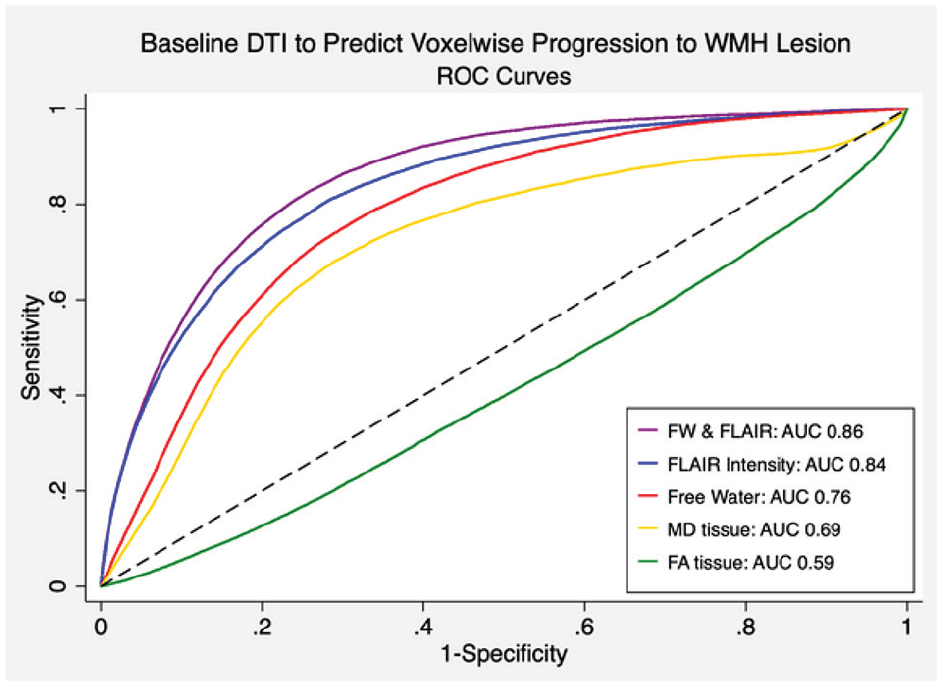
P0670 / 1239
COGNITIVE TESTING FOLLOWING TRANSIENT ISCHAEMIC ATTACK: A SYSTEMATIC REVIEW OF CLINICAL ASSESSMENT TOOLS
1University of Leicester, Department of Cardiovascular Sciences, Leicester, United Kingdom, 2University of Leicester, Leicester, United Kingdom
P0671 / 1325
USING MEMTRAX MEMORY TEST TO DETECT POST-STROKE COGNITIVE IMPAIRMENT AFTER ISCHEMIC STROKE
1The First Affiliated Hospital of Kunming Medical University, Department of Neurology, Kunming, China, 2Yunnan Provincial Clinical Research Center for Neurological diseases, Kunming, China, 3Bothwin Clinical Study Consultant, Shanghai, China, 4SIVOTEC Analytics, Boca Raton, United States, 5War Related Illness and Injury Study Center, Palo Alto, United States, 6Stanford University, Department of Psychiatry and Behavioral Sciences, Stanford, United States, 7SJN Biomed Ltd., Kunming, China, 8The First Affiliated Hospital of Dali University, Department of Neurology, Dali, China
P0672 / 581
GLOBAL VARIATION IN TESTS OF COGNITIVE AND PHYSICAL FUNCTION: ANALYSIS OF SIX INTERNATIONAL RANDOMIZED CONTROLLED TRIALS OF CARDIOVASCULAR INTERVENTIONS
1McMaster University, Hamilton, Canada, 2Tel Aviv University, Tel Aviv, Israel, 3University of Edinburgh, Edinburgh, United Kingdom, 4National University of Ireland, Galway, Ireland, 5Bayer Pharmaceuticals, Leverkusen, Germany
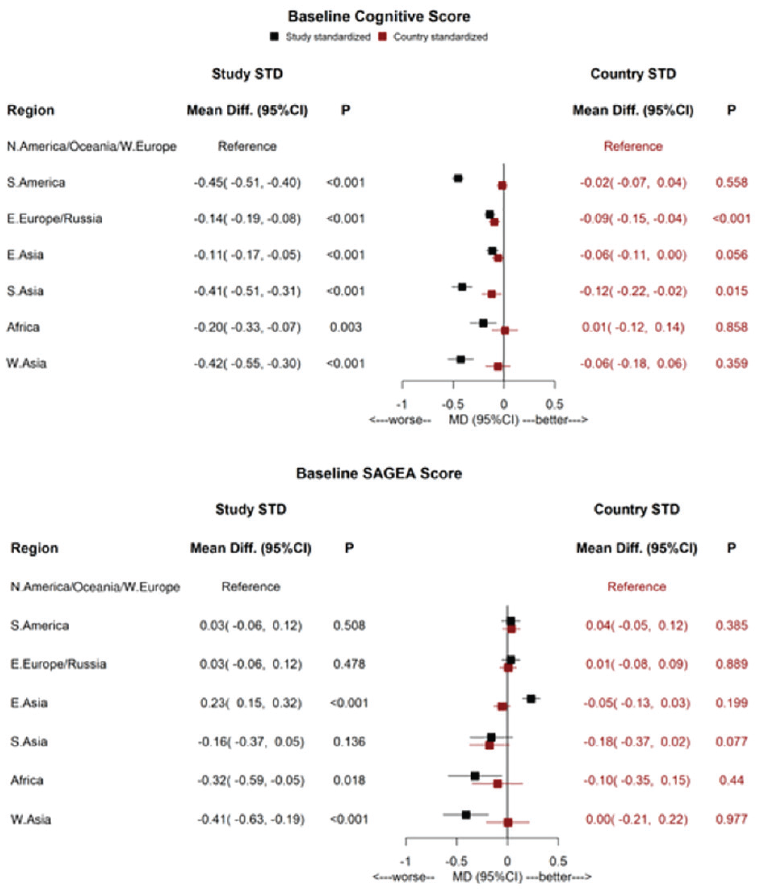
In different regions, the proportion of trial participants with MMSE⩽24 or MoCA⩽25 ranged from 23–36%; the proportion below a country-standardised z-score threshold of ⩽1 ranged from 10–14%.
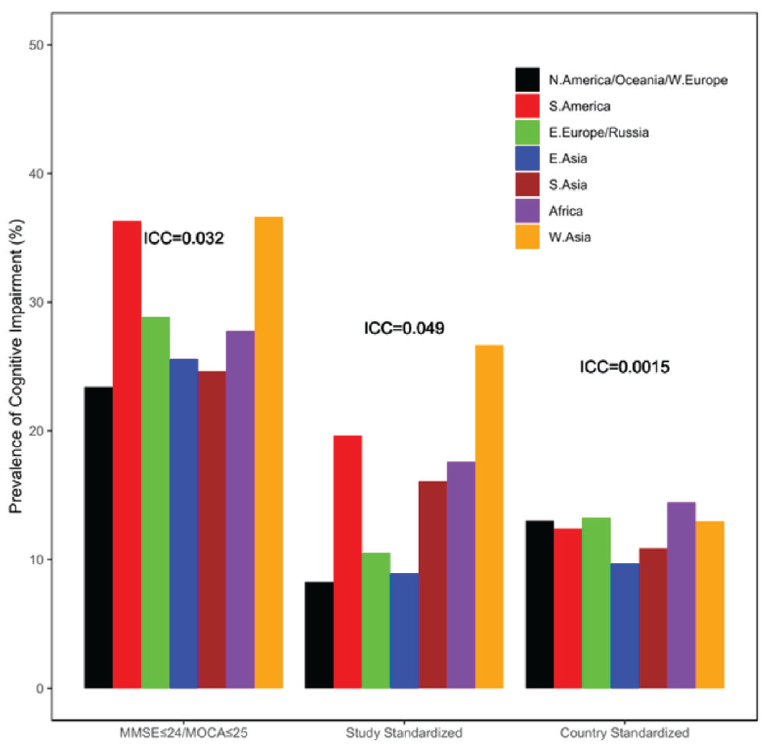
The differences in prevalence of impaired IADL (SAGEA⩽7) ranged from 2–6% and by country-standardised thresholds from 3–6%.
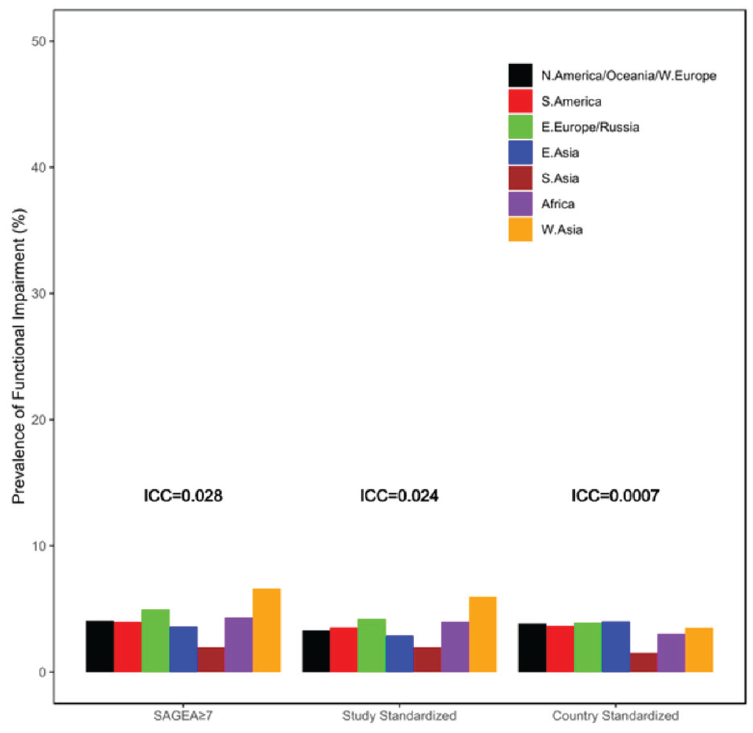
P0673 / 1493
VALIDATION OF THE OXFORD COGNITIVE SCREEN-PLUS IN SUBACUTE AND CHRONIC STROKE
1University of Oxford, Oxford, United Kingdom, 2Oxford Health NHS Foundation Trust, Oxfordshire Stroke Rehabilitation Unit, Abingdon, United Kingdom
P0674 / 537
CAUSAL EVIDENCE FOR TASK REGULATION BY ANTERIOR CINGULATE CORTEX: AN EXPERIMENTAL PROSPECTIVE STUDY IN PATIENTS WITH STROKE IN THE FRONTAL LOBE
1University Hospital Ghent, Department of Neurology, Gent, Belgium, 2University of Ghent, Department of Experimental Psychology, Gent, Belgium
The aim of this study is to:
(1) provide evidence of the causal role for task regulation of ACC by demonstrating that its functions are affected by ACC damage and
(2) investigate the contribution of ACC dysfunction to the development of neuropsychological disorders, in patients with stroke in the frontal lobe.
P0675 / 321
EFFECT OF CAROTID ARTERY STENTING ON COGNITIVE FUNCTION IN PATIENTS WITH CAROTID ARTERY STENOSIS IN A SAMPLE OF EGYPTIAN PATIENTS
1 Nasser Institute, Neurology, Cairo, Egypt
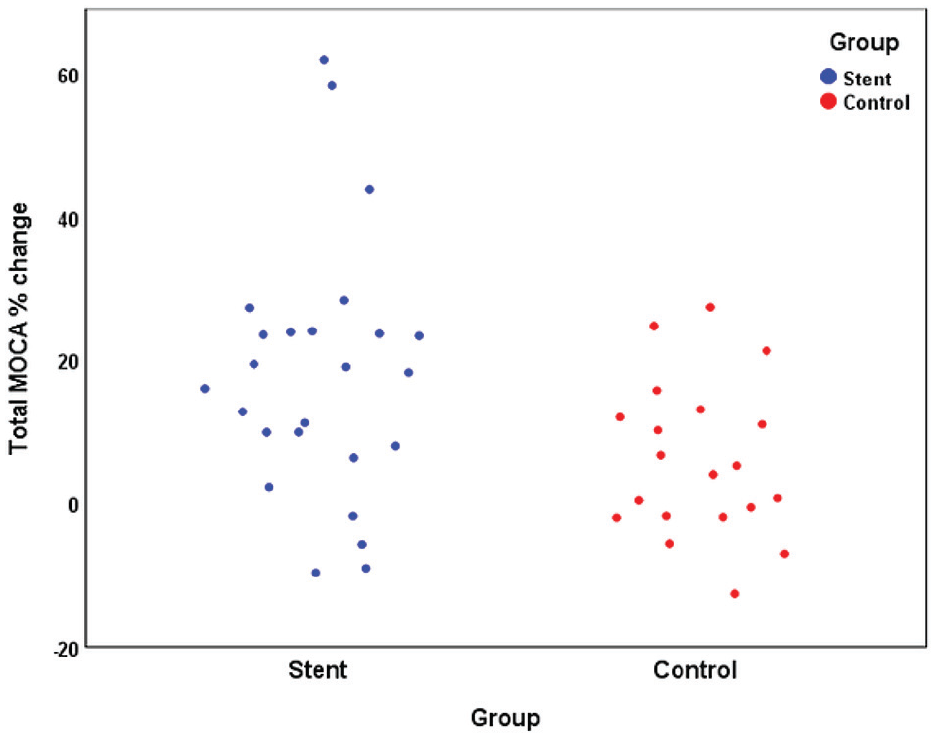
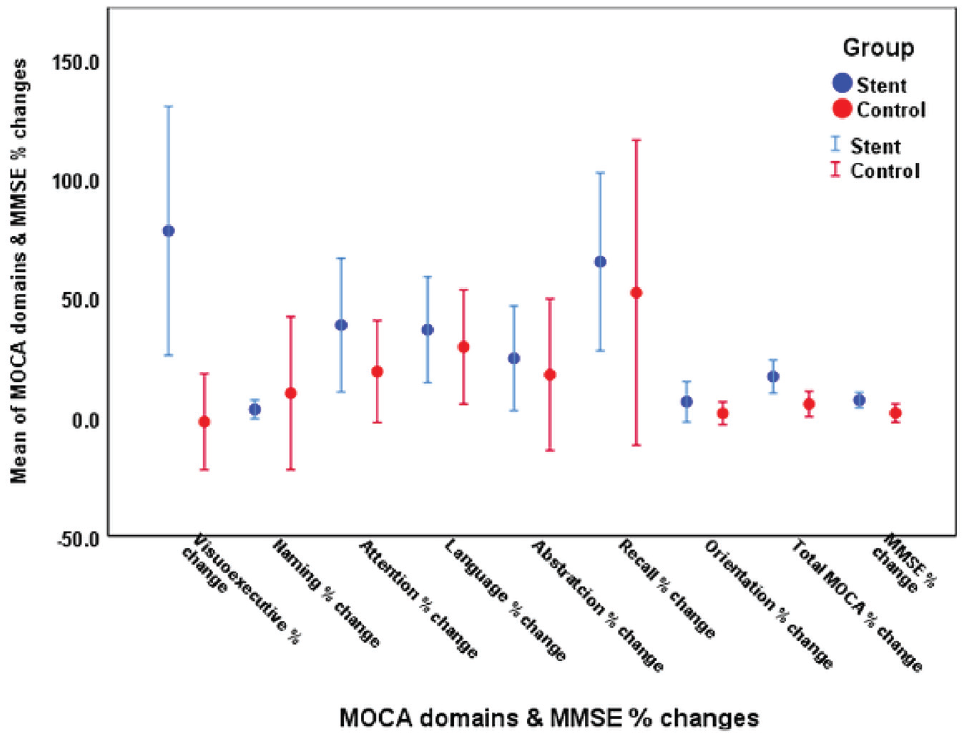
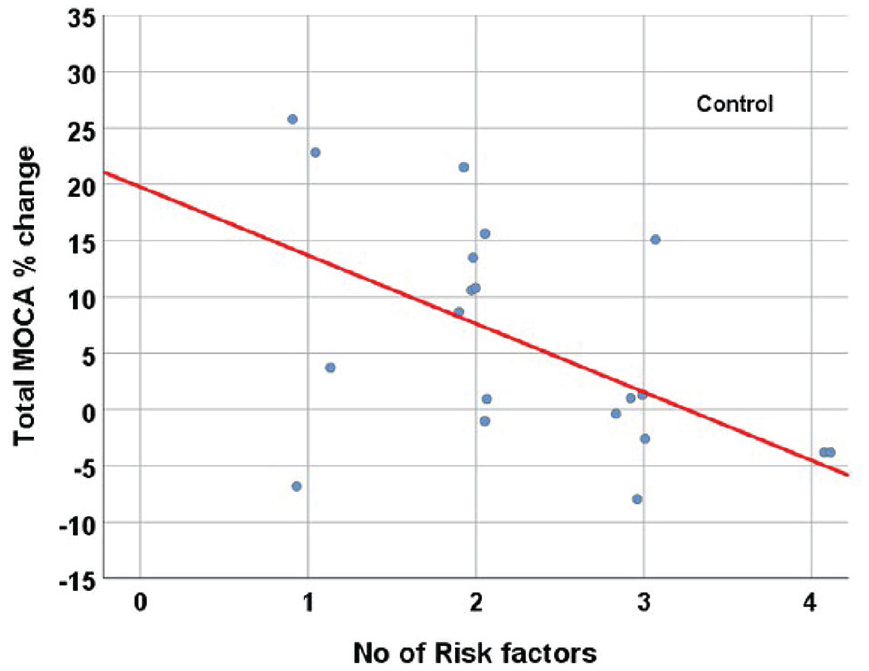
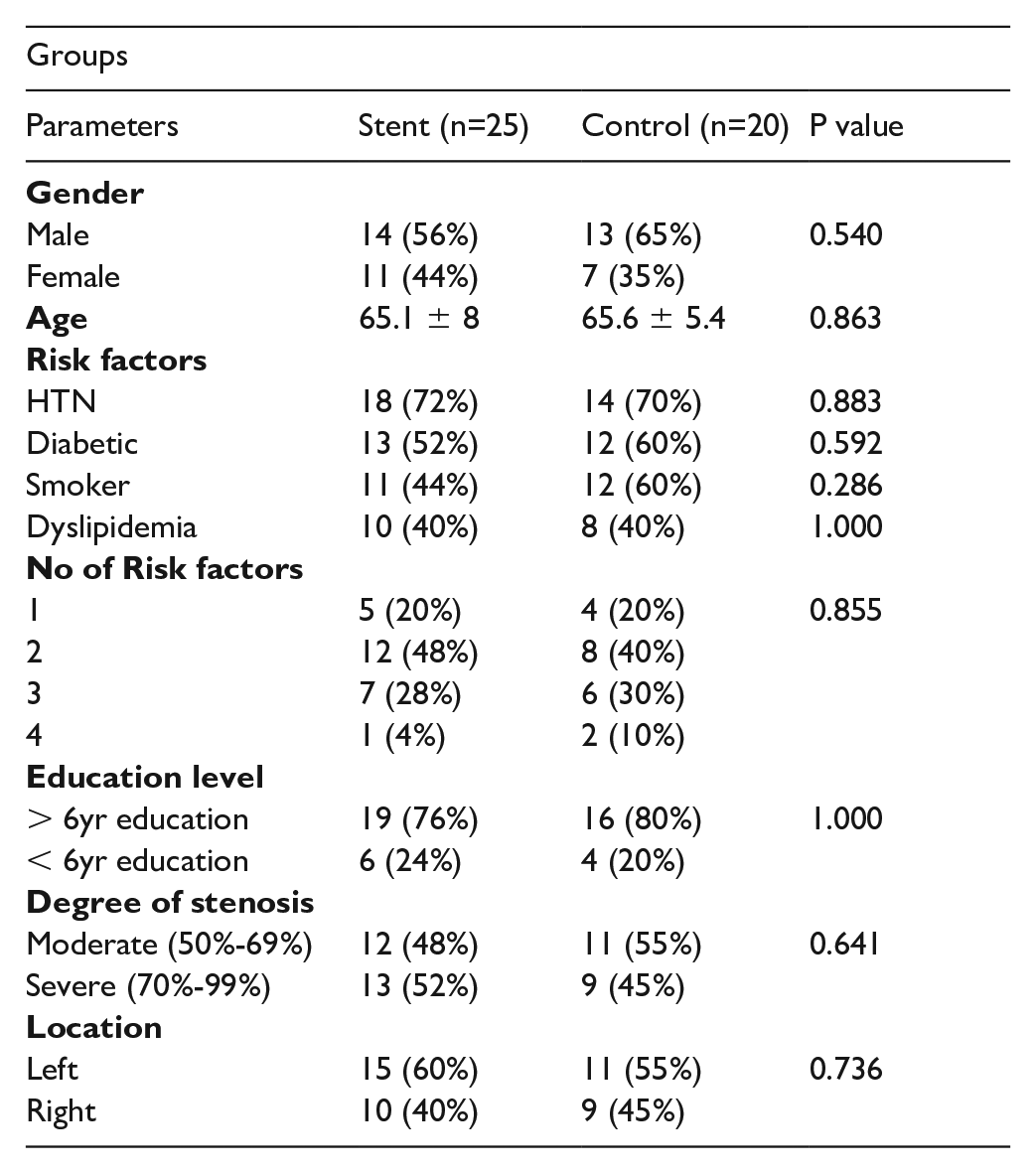
P0676 / 859
SELF-REPORTED COGNITIVE AND EMOTIONAL FUNCTIONING AT 3 MONTHS PREDICTS DAYTIME SLEEP AND FATIGUE 12 MONTHS AFTER ISCHEMIC STROKE: A STRUCTURAL EQUATION MODELLING ANALYSIS
1Norwegian University of Science and Technology, Department of Psychology, Trondheim, Norway, 2Akershus University Hospital HF, The Health Services Research Unit – HØKH, Lørenskog, Norway, 3Norwegian Institute of Public Health, Division for Health Services, Oslo, Norway, 4University of Bergen, BCEPS, Bergen, Norway, 5Trondheim University Hospital, Clinic of Medicine, Trondheim, Norway, 6Trondheim University Hospital, Department of Physical Medicine and Rehabilitation, Trondheim, Norway, 7Akershus University Hospital HF, Department of Neurology, Lørenskog, Norway, 8Norwegian University of Science and Technology, Department of Neuromedicine and Movement Science, Trondheim, Norway, 9Trondheim University Hospital, Department of Medicine, Stroke Unit, Trondheim, Norway
P0677 / 845
COGNITIVE PHENOTYPES AND FACTORS ASSOCIATED WITH COGNITIVE DECLINE IN A COHORT OF ELDERLY PATIENTS WITH ATRIAL FIBRILLATION. THE STRAT-AF STUDY
1University of Florence, NEUROFARBA Department, Florence, Italy, 2Azienda Ospedaliera Universitaria Careggi, Stroke Unit, Florence, Italy, 3Azienda Ospedaliera Universitaria Careggi, Atherothromobotic Disease Centre, Florence, Italy, 4Azienda Ospedaliera Universitaria Careggi, Neuroradiology Department, Florence, Italy
P0678 / 300
STRATEGIC WHITE MATTER HYPERINTENSITY LOCATIONS FOR COGNITIVE IMPAIRMENT IN COMMUNITY-DWELLING INDIVIDUALS: RATIONALE AND DESIGN OF THE META VCI MAP STUDY
1 UMC Utrecht, Neurology, Utrecht, Netherlands
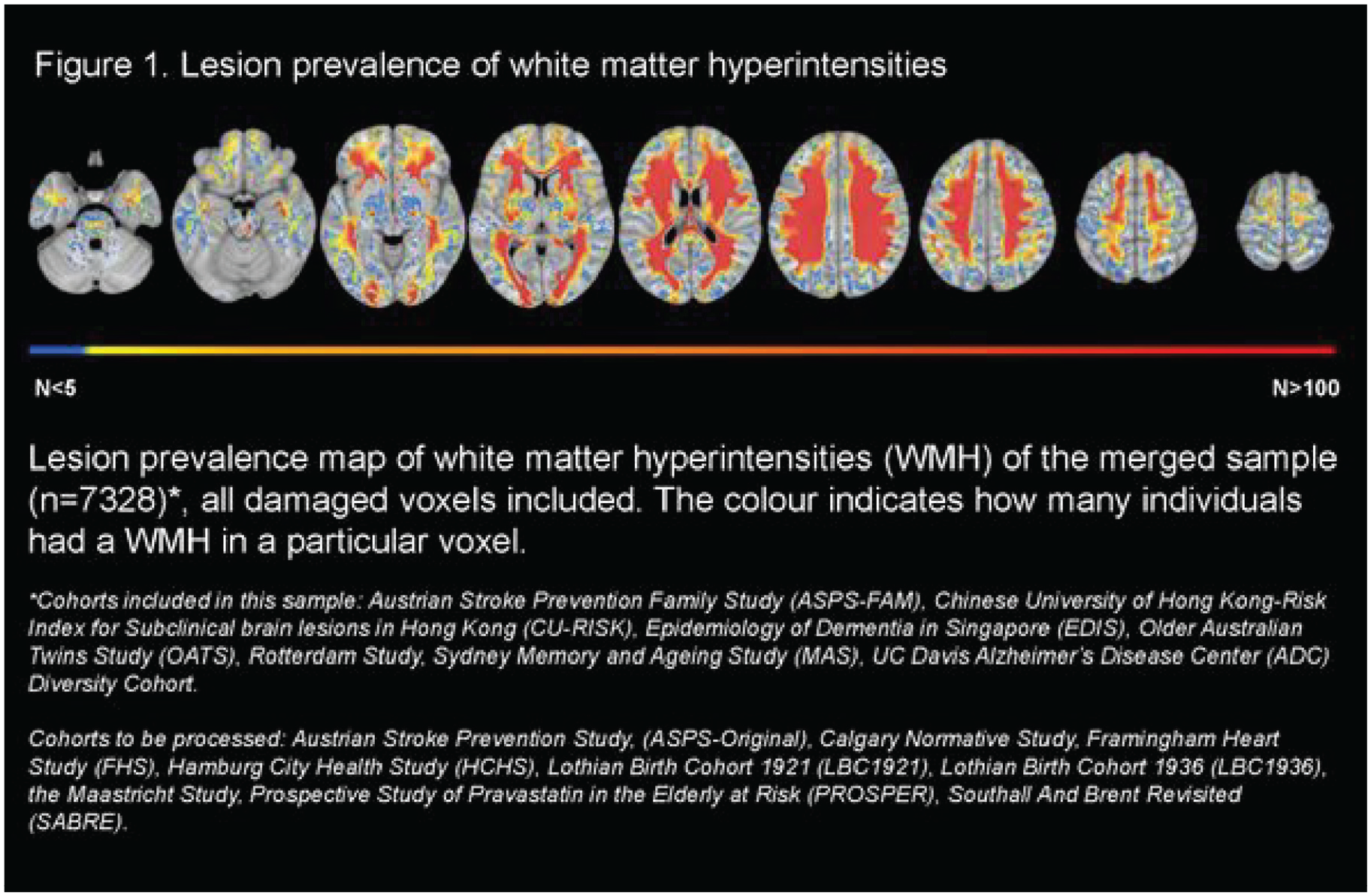
P0679 / 1279
EFFICACY OF SEQUENTIAL DI-3-N-BUTYLPHTHALIDE THERAPY FOR PREVENTING POST-STROKE COGNITIVE IMPAIRMENT IN PATIENTS WITH ACUTE ISCHEMIC STROKE
1The First Affiliated Hospital of Kunming Medical University, Department of Neurology, Kunming, China, 2Yunnan Provincial Clinical Research Center for Neurological diseases, Kunming, China, 3Bothwin Clinical Study Consultant, Shanghai, China, 4The First Affiliated Hospital of Dali University, Department of Neurology, Dali, China
Logistic regression showed that the presence of education (OR 0.362, 95% CI 0.142~0.921, p=0.033), number of cerebral infarction (OR 4.031, 95% CI 1.189~13.664, p=0.025), treatment of DNBP (OR 0.078, 95% CI 0.020~0.303, p<0.001), and baseline MTx-%C (OR 0.156, 95% CI 0.042~0.608, p=0.007) were significantly associated with the incidence of PSCI.
P0680 / 157
PEAK WIDTH OF SKELETONIZED MEAN DIFFUSIVITY AND ITS ASSOCIATION WITH GLOBAL COGNITION AFTER MILD STROKE
1 Centre for Clinical Brain Sciences, UK Dementia Research Institute at University of Edinburgh, Edinburgh, United Kingdom
P0681 / 1177
IDENTIFYING NEUROCOGNITIVE DISORDER AFTER STROKE: RESEARCH DIAGNOSTIC CRITERIA VERSUS CLINICAL DIAGNOSIS
1Norwegian University of Science and Technology, Department of Psychology, Trondheim, Norway, 2St. Olav University Hospital, Clinic of Medicine, Trondheim, Norway, 3Norwegian University of Science and Technology, Department of Neuromedicine and Movement Science, Trondheim, Norway, 4St. Olav University Hospital, Department of Geriatrics, Trondheim, Norway, 5Bærum Hospital, Vestre Viken Hospital Trust, Department of Medicine, Drammen, Norway, 6University of Oslo, Institute of Clinical Medicine, Oslo, Norway, 7Akershus University Hospital, Health Services Research Unit (HØKH), Lørenskog, Norway, 8Michigan Medicine, Neuropsychology Section of Psychiatry, Ann Arbor, United States
SMALL VESSEL DISEASE
P0682 / 1138
RELATIONSHIP BETWEEN EEG ALPHA-BAND OSCILLATIONS AND LANGUAGE, PROCESSING AND EXECUTIVE ABILITIES IN PATIENTS WITH CEREBRAL SMALL VESSEL DISEASES
1 Beijing Tiantan Hospital affiliated to Capital Medical University, Department of Neurology, Beijing, China
P0683 / 419
BRAIN WHITE MATTER HYPERINTENSITIES-PREDICTED AGE REFLECTS NEUROVASCULAR HEALTH IN MIDDLE-TO-OLD AGED SUBJECTS
1 Taipei Veterans General Hospital, Neurological Institute, Taipei, Taiwan, Province of China
P0684 / 428
LONGTERM CHANGE OF WHITE MATTER HYPERINTENSITIES IN SPORADIC SMALL VESSEL DISEASE: SYSTEMATIC REVIEW AND META-ANALYSIS
1University of Edinburgh, Centre for Clinical Brain Sciences, Edinburgh, United Kingdom, 2UK Dementia Research Institute at University of Edinburgh, Edinburgh, United Kingdom, 3University of Edinburgh, Centre for Discovery Brain Sciences, Edinburgh, United Kingdom
P0685 / 1355
SUBCLINICAL SIGNS SUSPECT FOR INFLAMMATION ON MRI IN SPORADIC AND HEREDITARY CEREBRAL AMYLOID ANGIOPATHY
1Leiden University Medical Center, Neurology, Leiden, Netherlands, 2Leiden University Medical Center, Radiology, Leiden, Netherlands
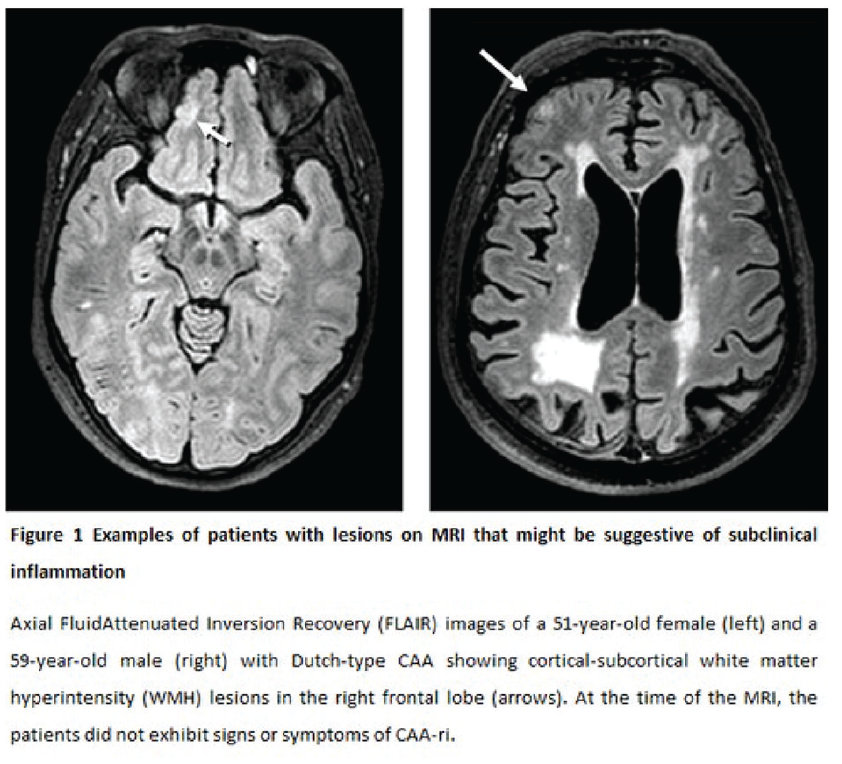
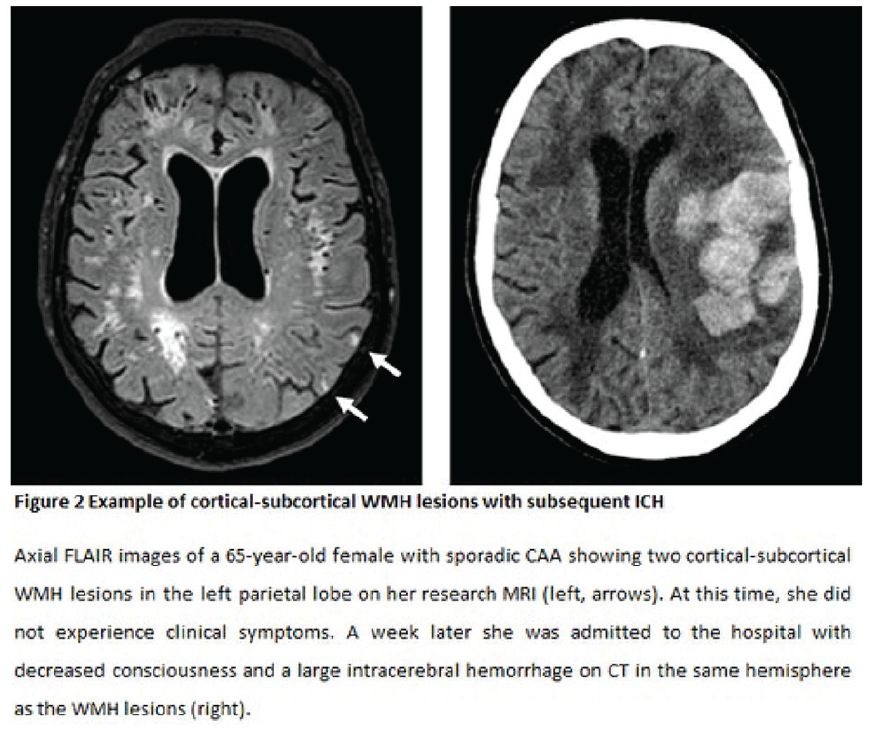
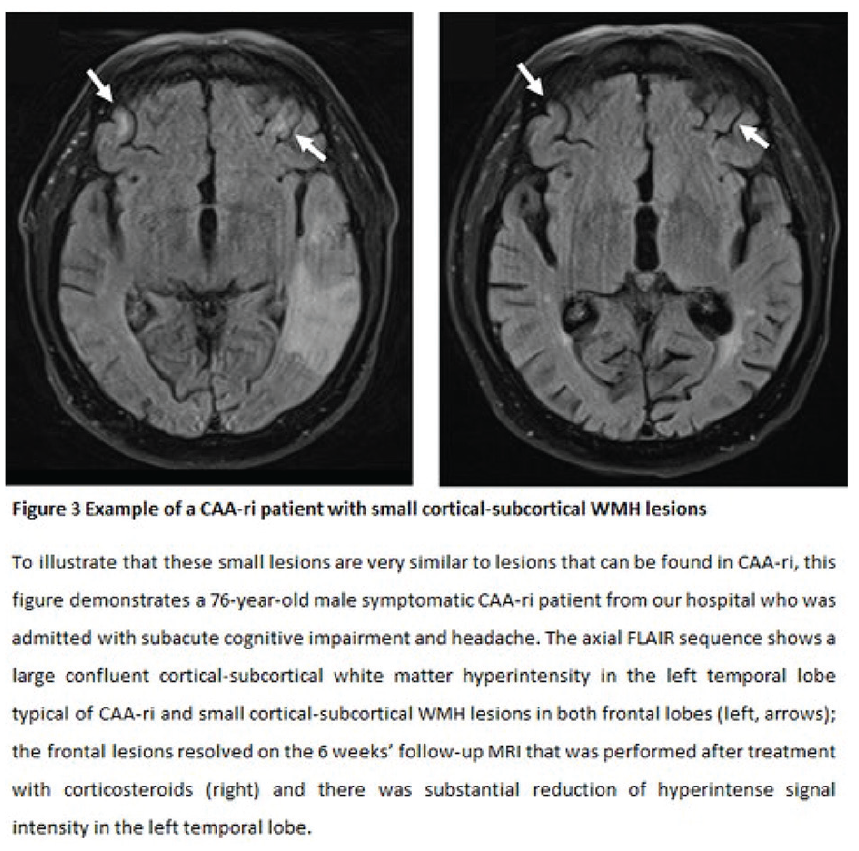
P0686 / 322
RISK FACTORS FOR WHITE MATTER HYPERINTENSITIES AND ITS LONG-TERM OUTCOME AFTER SPONTANEOUS INTRACEREBRAL HEMORRHAGE
1 Beijing Tiantan Hospital, Neurology, Beijing, China
Univariable and multivariable associations for extensive periventricular WMH and extensive deep WMH.
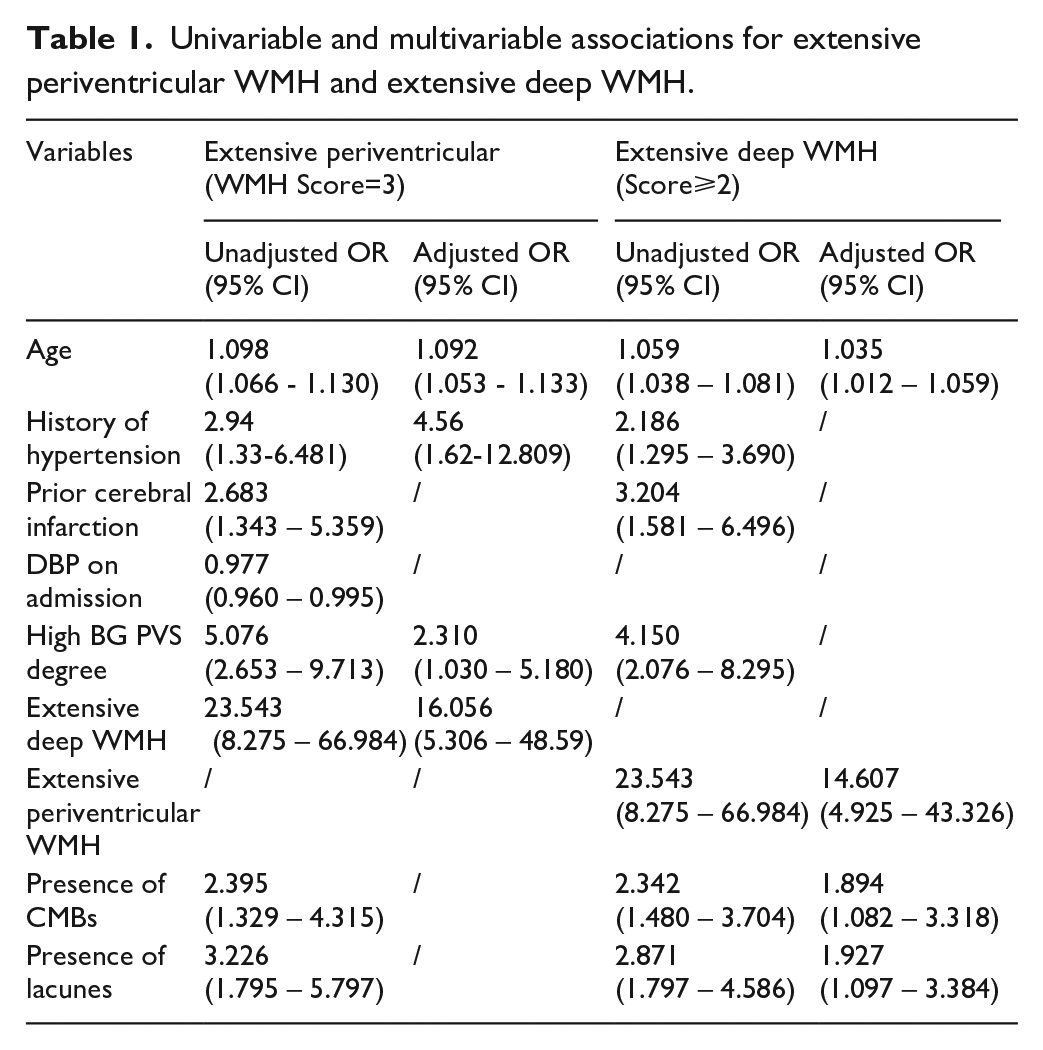
Univariate and multivariate associations between WMH and 1year unfavorable function outcome after ICH.
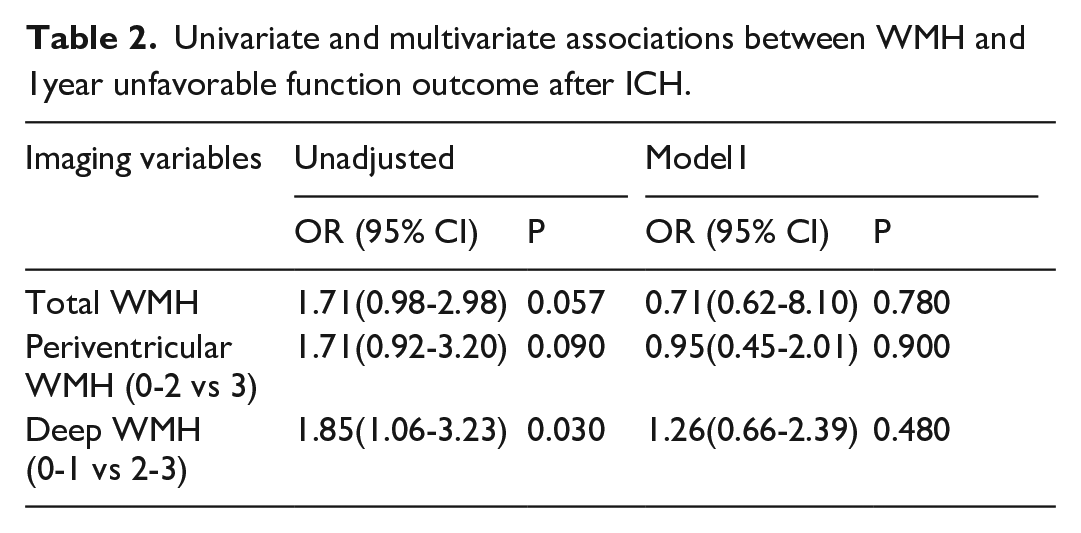
P0687 / 982
LOW-FREQUENCY OSCILLATIONS IN RESTING-STATE BOLD FMRI DATA REFLECT VASCULAR DYSFUNCTION IN SMALL VESSEL DISEASE: A UK BIOBANK ANALYSIS
1University of Oxford, Nuffield Department of Clinical Neuroscience, Oxford, United Kingdom, 2University of Oxford, Wellcome Centre for Integrative Neuroimaging, Oxford, United Kingdom
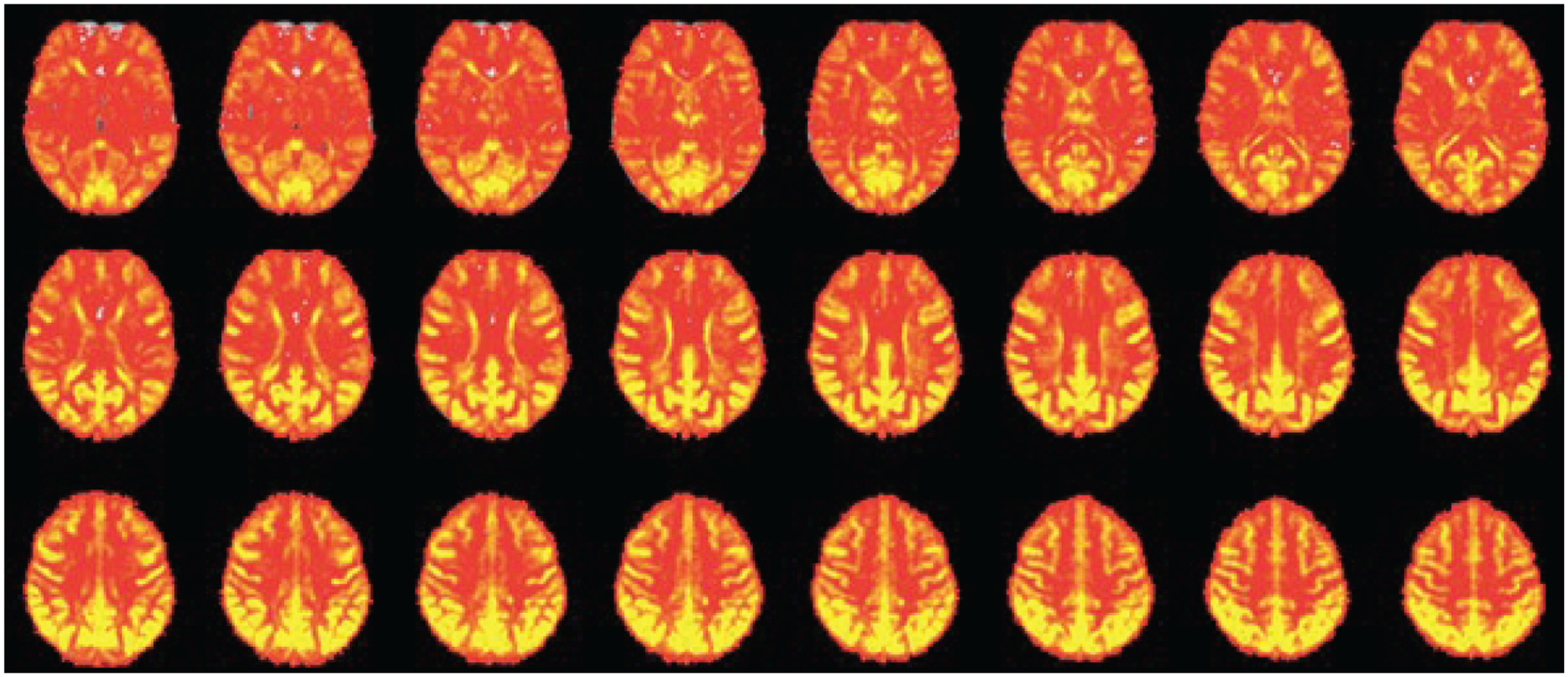
P0688 / 1270
IMAGING NEUROVASCULAR, ENDOTHELIAL AND STRUCTURAL INTEGRITY IN PREPARATION TO TREAT SMALL VESSEL DISEASES (INVESTIGATE-SVDS): SIMILARITIES AND DIFFERENCES BETWEEN SPORADIC/MONOGENIC SVD – A PRINCIPAL COMPONENTS ANALYSIS
1University of Edinburgh, Brain Research Imaging Centre, Centre for Clinical Brain Sciences, UK Dementia Institute Centre at the University of Edinburgh, Edinburgh, United Kingdom, 2LMU Munich, Institute for Stroke and Dementia Research (ISD), University Hospital, Munich, Germany, 3Maastricht University, Department of Neurology, CARIM School for cardiovascular diseases, Maastricht, Netherlands, 4Maastricht University, Department of Radiology & Nuclear Medicine, Maastricht University Medical Center, Schools for Mental Health & Neuroscience and Cardiovascular Disease, Maastricht, Netherlands, 5German Center for Neurodegenerative Diseases (DZNE, Munich), Munich, Germany, 6Munich Cluster for Systems Neurology (SyNergy), Munich, Germany, Munich, Germany
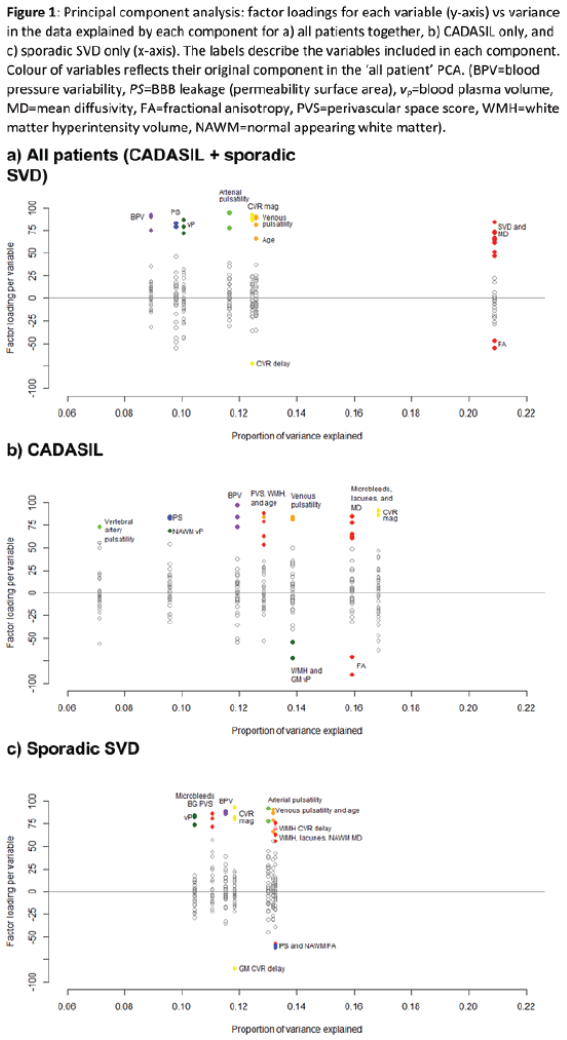
P0689 / 1434
WHITE MATTER HYPERINTENSITIES ASSESSMENT: PERFORMANCE OF AUTOMATED COMPUTERIZED TOOLBOXES VS CLINICIANS’ MANUAL SEGMENTATION
1Universidad Complutense de Madrid, Experimental psychology, Madrid, Spain, 2Universidad Complutense de Madrid, Radiology, Madrid, Spain, 3Hospital Clinico San Carlos, Radiology, Madrid, Spain
Cerebral small vessel disease (SVD) is a common accompaniment of ageing, not only in dementia patients, but also in healthy population. Neuroimaging markers of SVD are present in practically every individual over 60 years old, and its prevalence increases with age. According to the STRIVE criteria, white matter hyperintensities (WMH) is one of the most prevalent features of SVD. Magnetic resonance imaging (MRI) is enabled to detect the lesions in the white matter of the brain. Clinical scales based in visual assessment are the most used method to detect and evaluate their severity, but did not report true quantitative information, which make difficult the evaluation of the progression. On the other hand, clinicians’ manual segmentation is the most accurate method to measure lesion volume, but it is extremely time-consuming, and it comprises high inter-rater variability making its application infeasible in routinary protocols.
For this reason, automatic segmentation tools are increasingly on clinical demand. The main objective of the present study is to identify the most accurate software for the automatic detection of WMH according to clinicians’ manual segmentations (gold standard). 45 old and cognitively healthy participants were recruited (mean age 71 SD 4,74). T1 and Flair images were used for segmentation process. Lesion segmentation tool – LST (SPM), SAMSEG (Freesurfer) and Bianca (FSL) performances were analyzed and compared with the gold standard and correlated with the clinical scale Fazekas. Deep understanding of new automated computerized methods could incredibly assist the clinicians in the diagnostic decision.
P0690 / 257
NFL AND GFAP IN EARLY AND ADVANCED CEREBRAL AMYLOID ANGIOPATHY
1Leiden University Medical Center, Neurology, Leiden, Netherlands, 2Radboud University Medical Center, Neurology, Nijmegen, Netherlands, 3Leiden University Medical Center, Radiology, Leiden, Netherlands, 4Leiden University Medical Center, Biostatistics, Leiden, Netherlands, 5ADx NeuroSciences, Ghent, Belgium, 6Leiden University Medical Center, Human Genetics, Leiden, Netherlands
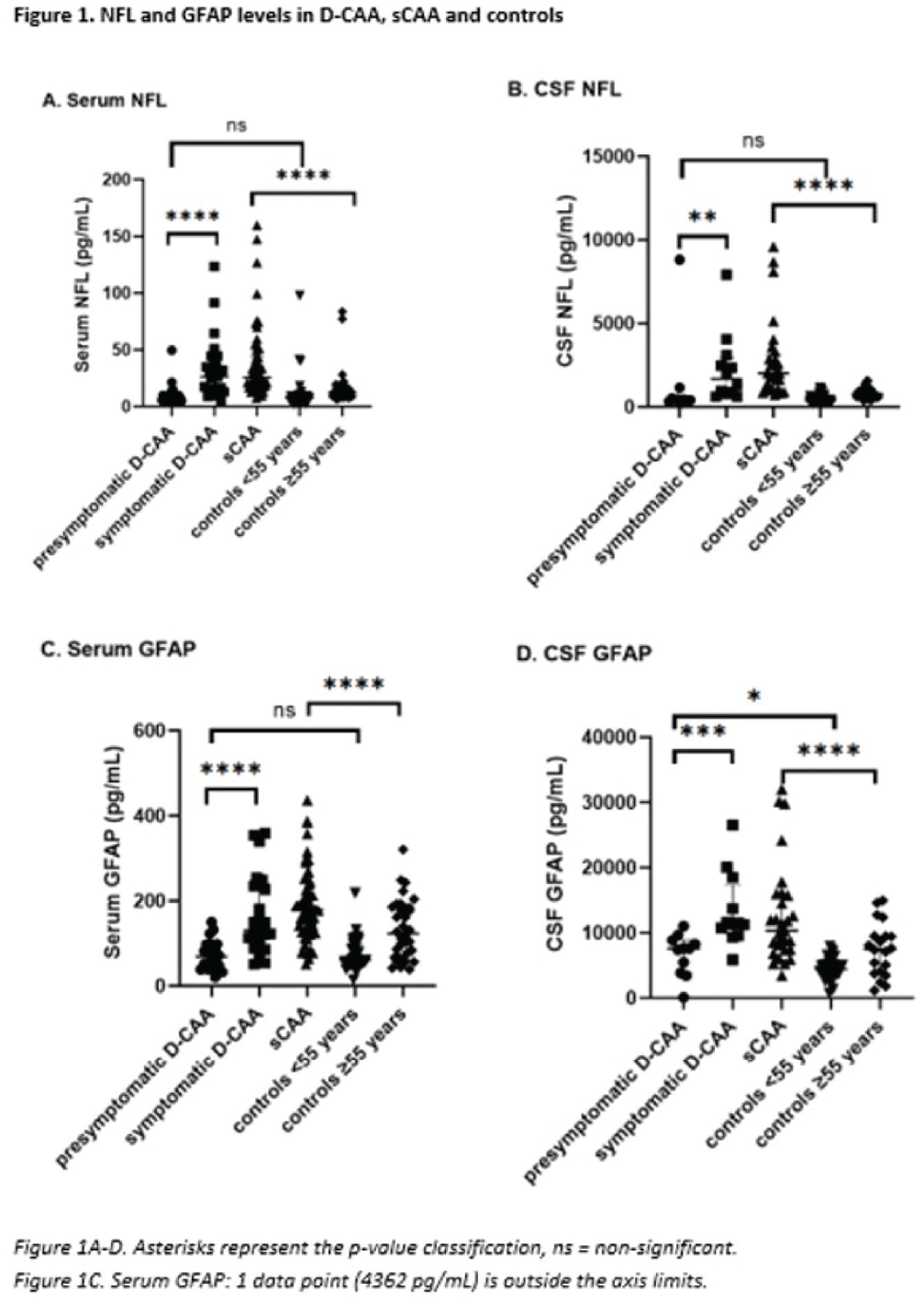
P0691 / 1588
LONGITUDINAL EVOLUTION OF RECENT SMALL SUBCORTICAL INFARCTS ON MAGNETIC RESONANCE IMAGING
1University of Edinburgh, Edinburgh Imaging and the UK Dementia Research Institute, Centre for Clinical Brain Sciences, Edinburgh, United Kingdom, 2Sichuan University, West China Hospital, Center of Cerebrovasccular Diseases, Department of Neurology, Chengdu, China, 3University of Aberdeen, Centre for Rural Health, Inverness, United Kingdom
P0692 / 233
CEREBRAL VENOUS REFLUX AND CEREBRAL AMYLOID ANGIOPATHY: AN MRI/PET STUDY
1National Taiwan University Hospital Beihu Branch, Neurology, Taipei, Taiwan, Province of China, 2National Taiwan University Hospital, Neurology, Taipei, Taiwan, Province of China, 3National Taiwan University Hospital, Medical Imaging, Taipei, Taiwan, Province of China, 4National Taiwan University Hospital, Nuclear Medicine, Taipei, Taiwan, Province of China
P0693 / 653
TWENTY-FOUR HOUR BLOOD PRESSURE VARIABILITY AND THE VOLUME AND PROGRESSION OF CEREBRAL WHITE MATTER HYPERINTENSITIES
1University Medical Centre Utrecht, Department of Neurology and Neurosurgery, Utrecht, Netherlands, 2Erasmus MC, Department of Epidemiology & Department of Radiology and Nuclear Medicine, Rotterdam, Netherlands, 3Amsterdam UMC, VU University Medical Centre, Alzheimer Centre Amsterdam, Department of Neurology, Amsterdam Neuroscience, Amsterdam, Netherlands, 4Erasmus MC, Biomedical Imaging Group Rotterdam, Departments of Medical Informatics and Radiology and Nuclear Medicine, Rotterdam, Netherlands, 5Maastricht University Medical Centre, Department of Cardiology, Maastricht, Netherlands, 6Maastricht University Medical Centre, Department of Neurology, Maastricht, Netherlands
P0694 / 191
RELATIONSHIP BETWEEN CEREBROVASCULAR REACTIVITY AND SMALL VESSEL DISEASE NEUROIMAGING FEATURES
1Centre for Clinical Brain Sciences, University of Edinburgh, Edinburgh, United Kingdom, 2UK Dementia Research Institute, University of Edinburgh, Edinburgh, United Kingdom, 3Edinburgh Imaging Facility RIE, University of Edinburgh, Edinburgh, United Kingdom
P0695 / 214
ASSOCIATION BETWEEN RETINAL MICROVASCULAR FUNCTION AND CEREBRAL MICROPERFUSION MEASURED BY INTRAVOXEL INCOHERENT MOTION MRI
1Maastricht University Medical Center+, Neurology, Maastricht, Netherlands, 2Maastricht University Medical Center+, Radiology and Nuclear Medicine, Maastricht, Netherlands, 3Maastricht University Medical Center+, Internal Medicine, Maastricht, Netherlands, 4Maastricht University Medical Center+, Ophthalmology, Maastricht, Netherlands
P0696 / 107
SYSTEMIC IMMUNE INFLAMMATION INDEX IS RELATED TO WHITE MATTER HYPERINTENSITY IN A HEALTHY POPULATION
1Seoul Metropolitan Government-Seoul National University Boramae Medical Center, Neurology, Seoul, Korea, Republic of, 2Seoul National University Hospital, Family Medicine, Seoul, Korea, Republic of
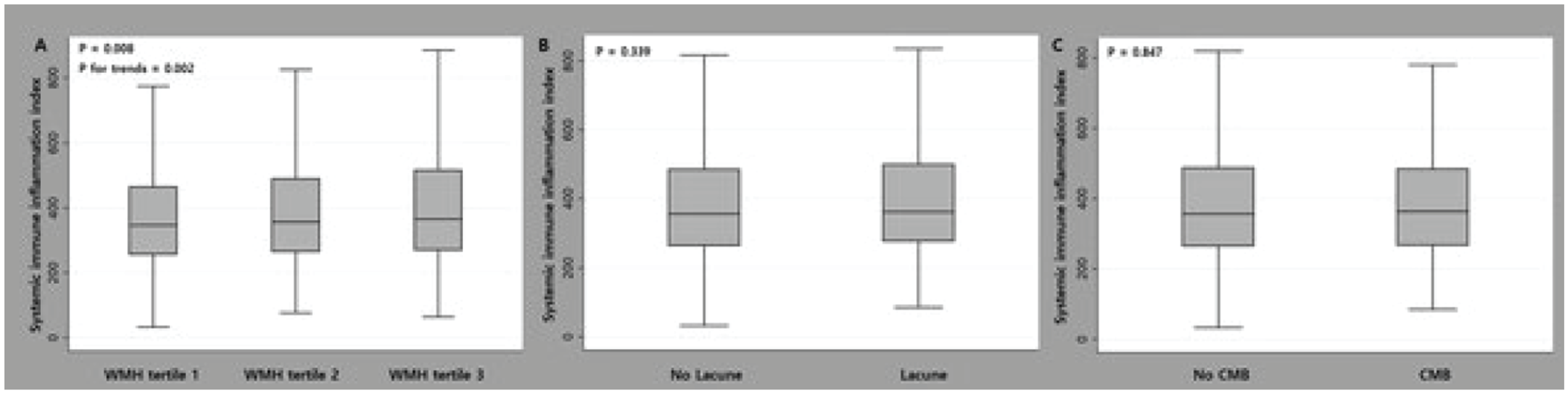
P0697 / 1473
CEREBRAL VASOREACTIVITY CHANGES OVER TIME IN PATIENTS WITH DIFFERENT CLINICAL MANIFESTATIONS OF CEREBRAL SMALL VESSEL DISEASE AND DIABETES
1 Military Institute of Medicine, Clinic of Neurology, Warsaw, Poland
P0698 / 366
AUTOMATIC DETECTION OF INCIDENT LACUNES DURING THE COURSE OF ISCHEMIC CEREBRAL SMALL VESSEL DISEASES (CSVD)
1INSERM U 1141, NeuroDiderot, Paris, France, 2FHU NeuroVasc, Paris, France, 3APHP Lariboisière Hospital, Neurology, Paris, France, 4CERVCO Reference Center, Paris, France, 5APHP Lariboisière Hospital, Neuroradiology, Paris, France
P0699 / 344
DETECTING WORSENING SVD AFTER STROKE–INCIDENT LACUNAR INFARCTS AND WHITE MATTER HYPERINTENSITY PROGRESSION
1University of Edinburgh, Centre for Clinical Brain Sciences, Edinburgh, United Kingdom, 2Sichuan University, Center of Cerebrovascular Diseases, Department of Neurology, West China Hospital, Chengdu, China, 3The University of Hong Kong, Division of Neurology, Department of Medicine, Li Ka Shing Faculty of Medicine, Hong Kong, Hong Kong, SAR of China, 4Shanghai Jiao Tong University School of Medicine, Department of Neurology, Shanghai General Hospital, Shanghai, China, 5University of Barcelona and August Pi i Sunyer Biomedical Research Institute, Comprehensive Stroke Center, Department of Neuroscience, Barcelona, Spain
Incident infarcts (n=40/203 [20%]; total 77 infarcts; 64/77 lacunar; on DWI/FLAIR) occurred median 2 (IQR 2-8) months post-stroke. Incident lacunar infarct associations (Figure 1) included total SVD score OR=1.84, 95%CI=1.23-2.86, p=0.004; diabetes OR=2.52; 0.98-6.46; p=0.05 (trend).
Median baseline WMH volume was 8.1mL (IQR 3.7-18.6). Between baseline-12 months, mean WMH volume change was +0.99mL (SD2.73); maximum growth=12.83mL; maximum shrinkage=4.27mL. WMH progression associated with previous stroke/TIA (std.β=0.54, 95%CI=0.20–0.88,p=0.002), hypertension (β=0.17, 95%CI=0.05–0.29, p=0.005), index lacunar stroke (β=0.25, 95%CI=0.004–0.50, p=0.046), and age (β=0.35, 95%CI=0.23–0.48, p=<0.001), but not smoking, diabetes, sex, or incident infarcts (n=188).
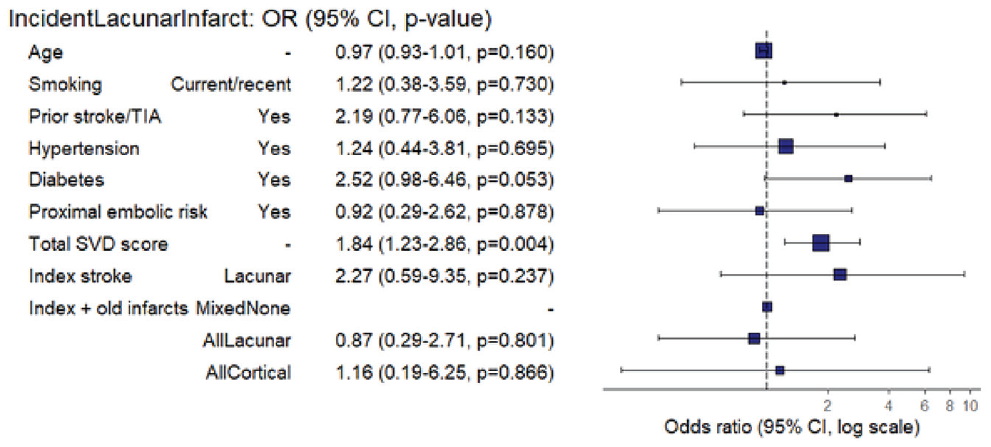
P0700 / 417
CEREBRAL SMALL VESSEL DISEASE IS ASSOCIATED WITH CONCURRENT PHYSICAL AND COGNITIVE IMPAIRMENTS AT PRE-CLINICAL STAGE
1 Taipei Veterans General Hospital, Neurological Institute, Taipei, Taiwan, Province of China
P0701 / 1384
NFL AND GFAP IN (PRE)SYMPTOMATIC RVCL-S, A MONOGENIC SMALL VESSEL DISEASE
1Leiden University Medical Center, Neurology, Leiden, Netherlands, 2Amsterdam UMC, Vrije Universiteit, Clinical Chemistry, Amsterdam, Netherlands
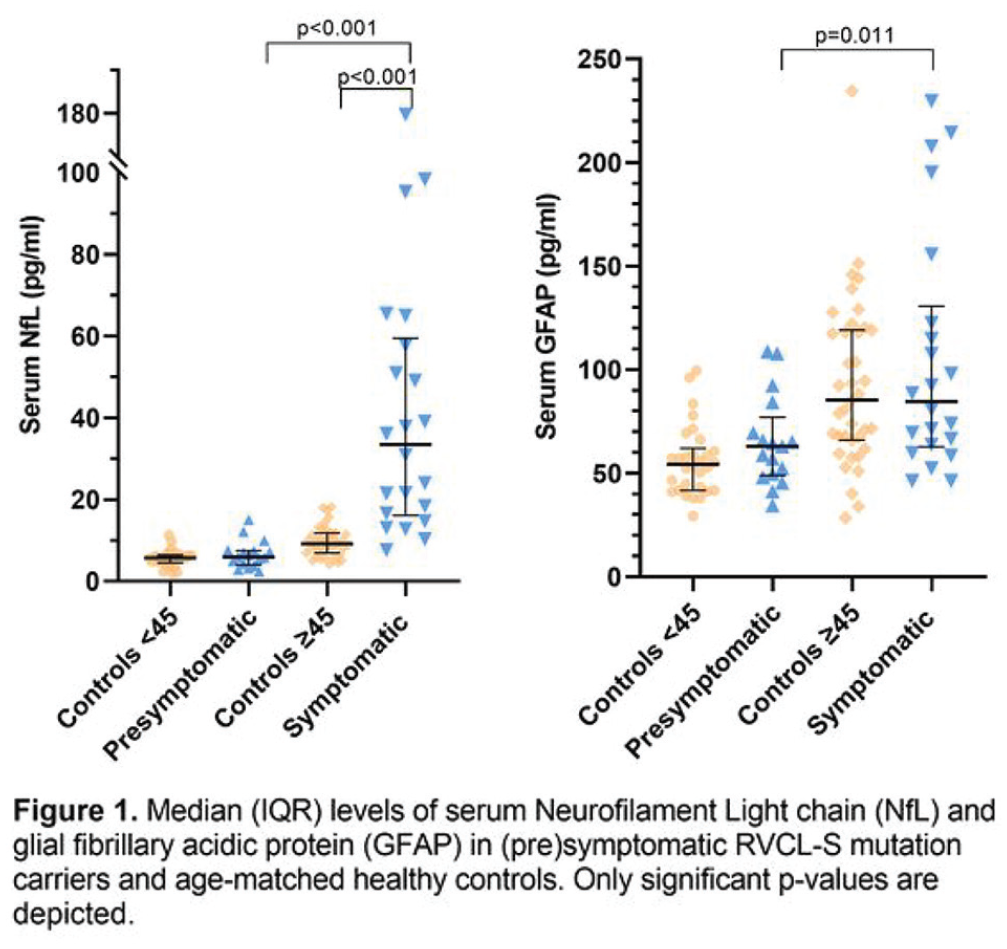
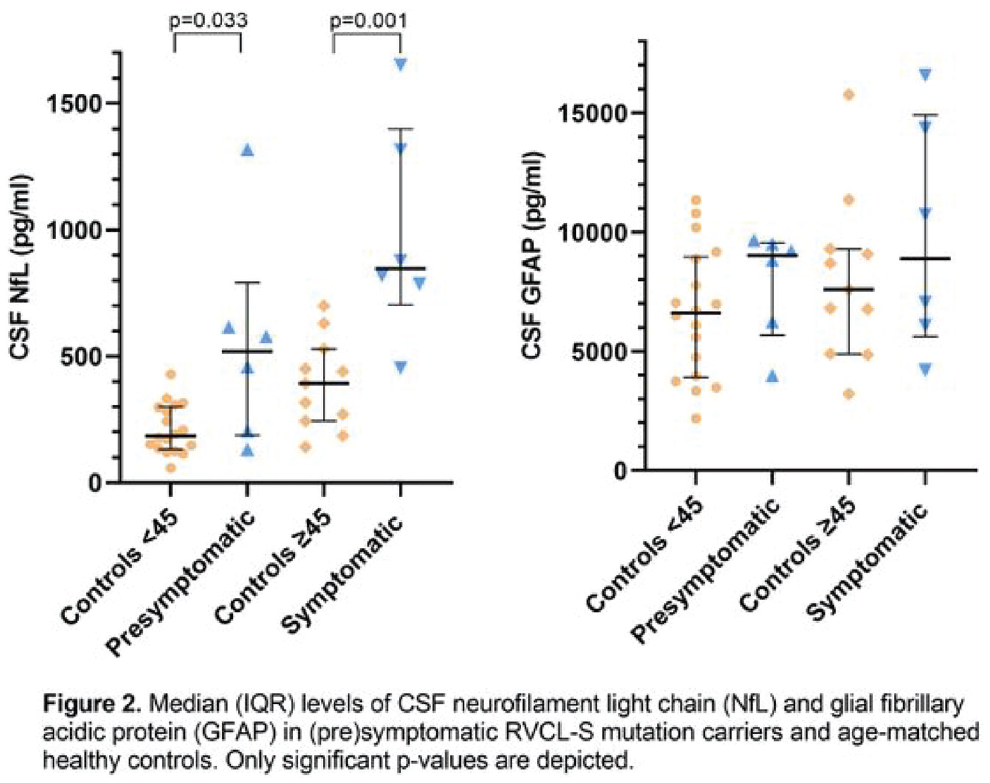
P0702 / 1231
A NOVEL “DE NOVO” COL4A1 MUTATION CAUSING CEREBRAL SMALL VESSEL DISEASE WITH MULTIORGAN INVOLVEMENT: CASE REPORT AND REVIEW OF THE LITERATURE
1University of Florence, NEUROFARBA, Florence, Italy, 2IRCSS Mondino Foundation, Neurogenetics research center, Pavia, Italy, 3University of Pavia, Department of Molecular Medicine, Pavia, Italy, 4IRCSS Mondino Foundation, Neurogenetics Research Center, Pavia, Italy, 5AOU Careggi, Florence, Italy, 6IRCSS Fondazione Don Carlo Gnocchi, Florence, Italy, 7AOU Careggi, Stroke Unit, Emergency Department, Florence, Italy
P0703 / 1304
STRIVING FOR THE BEST - COMPARISON AND COMBINATION OF AUTOMATED WHITE MATTER HYPERINTENSITY SEGMENTATION TOOLS
1 University Medical Center Hamburg-Eppendorf, Department of Neurology, Hamburg, Germany
P0704 / 1564
EFFECT OF CILOSTAZOL IN COMBINATION WITH ACETYLSALCYLIC ACID ON THE ENDOTHELIAL VASCULAR HOMEOSTASIS IN ACUTE LACUNAR STROKE
1Republican Research and Clinical Center of Neurology and Neurosurgery, Department of Neurology, Minsk, Belarus, 2Republican Scientific and Practical Center for Transfusiology and Medical Biotechnologies, Minsk, Belarus, 3Minsk City Clinical Emergency Hospital, Minsk, Belarus
P0705 / 890
WHITE MATTER HYPERINTENSITY SEGMENTATION BY FULLY CONVOLUTIONAL NEURAL NETWORK ON 1.5T CLINICAL MRI IN PATIENTS WITH ACUTE ISCHEMIC STROKE
1Hospital Clínic of Barcelona, Neurology, Barcelona, Spain, 2IDIBAPS, Center of Neuroimmunology, Laboratory of Advanced Imaging in Neuroimmunological Diseases, Barcelona, Spain, 3IDIBAPS, Magnetic Resonance Imaging Core Facility, Barcelona, Spain
P0706 / 1301
NEUROFILAMENT LIGHT CHAIN RELATES TO INCREASED RISK OF LONG-TERM MOTALITY IN CEREBRAL SMALL VESEL DISEASE
1Radboud University Medical Centre; Donders Center for Medical Neuroscience, Nijmegen; The Netherlands, Department of Neurology, Nijmegen, Netherlands, 2Stroke Center and Department of Neurology, University Hospital Basel and University of Basel, Switzerland, Basel, Switzerland, 3University Center for Medicine of Aging, Felix Platter Hospital, Basel Switzerland, Basel, Netherlands, 4Stroke Center, Klinik Hirslanden, Zürich, Switzerland, Zürich, Switzerland, 5Medical Image Analysis Center (MIAC AG) and qbig, Department of Biomedical Engineering, University of Basel, Basel, Switzerland, Basel, Switzerland, 6Neurologic Clinic and Policlinic, Departments of Medicine, Biomedicine and Clinical Research, University Hospital Basel, University of Basel, Switzerland, Basel, Switzerland
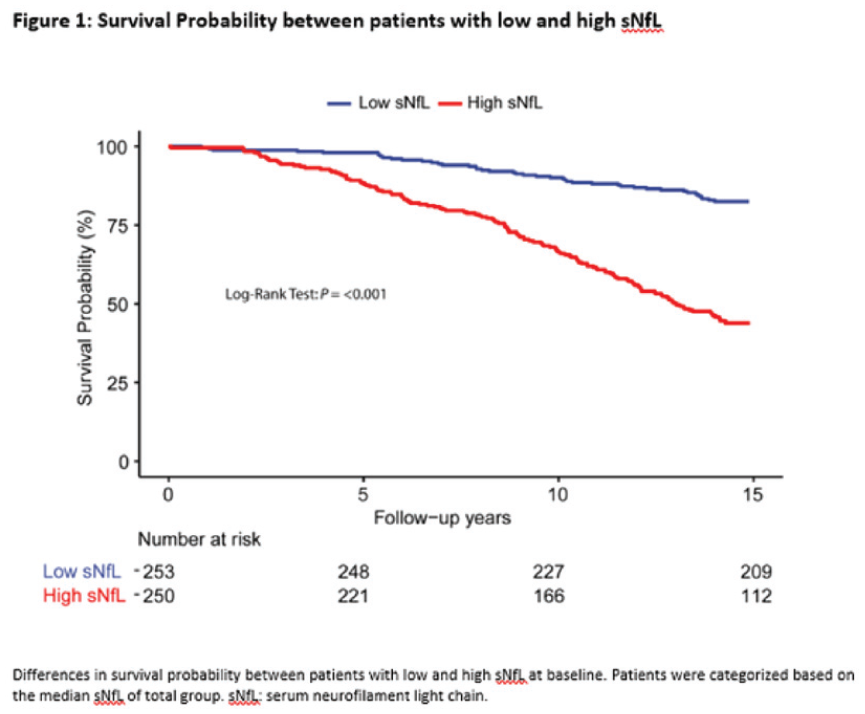
P0707 / 1302
DISEASE MODIFIERS IN CADASIL: A GENOTYPE-DRIVEN CROSS-SECTIONAL COHORT STUDY
1 Leiden University Medical Center, Leiden, Netherlands
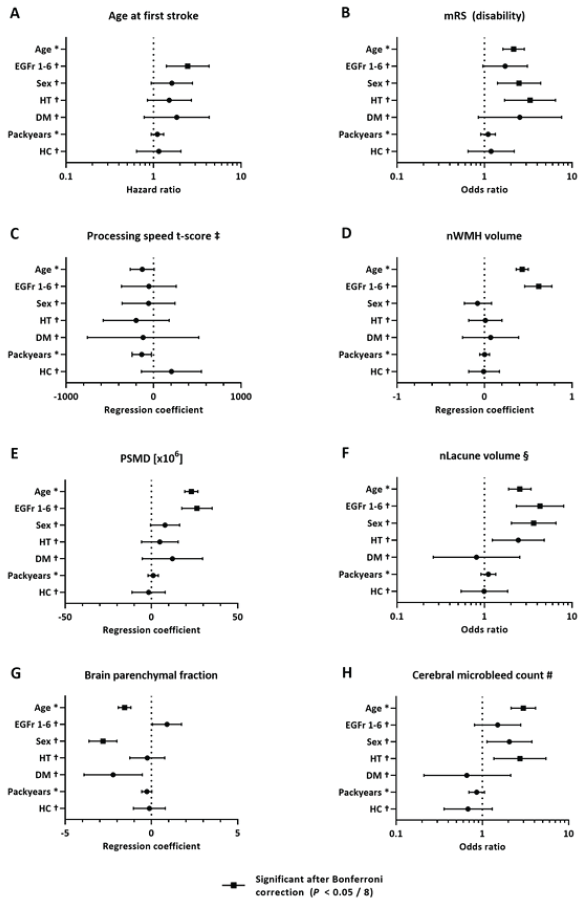
P0708 / 848
OPTICAL COHERENCE TOMOGRAPHY ANGIOGRAPHY OF RETINAL CAPILLARY MICROVESSELS PREDICT BRAIN VASCULAR DAMAGE AND DYSFUNCTION IN CEREBRAL SMALL VESSEL DISEASE
1University of Edinburgh, Centre for Clinical Brain Sciences, Edinburgh, United Kingdom, 2Shanghai General Hospital, Department of Neurology, Shanghai, China, 3West China Hospital, Department of Neurology, Chengdu, China
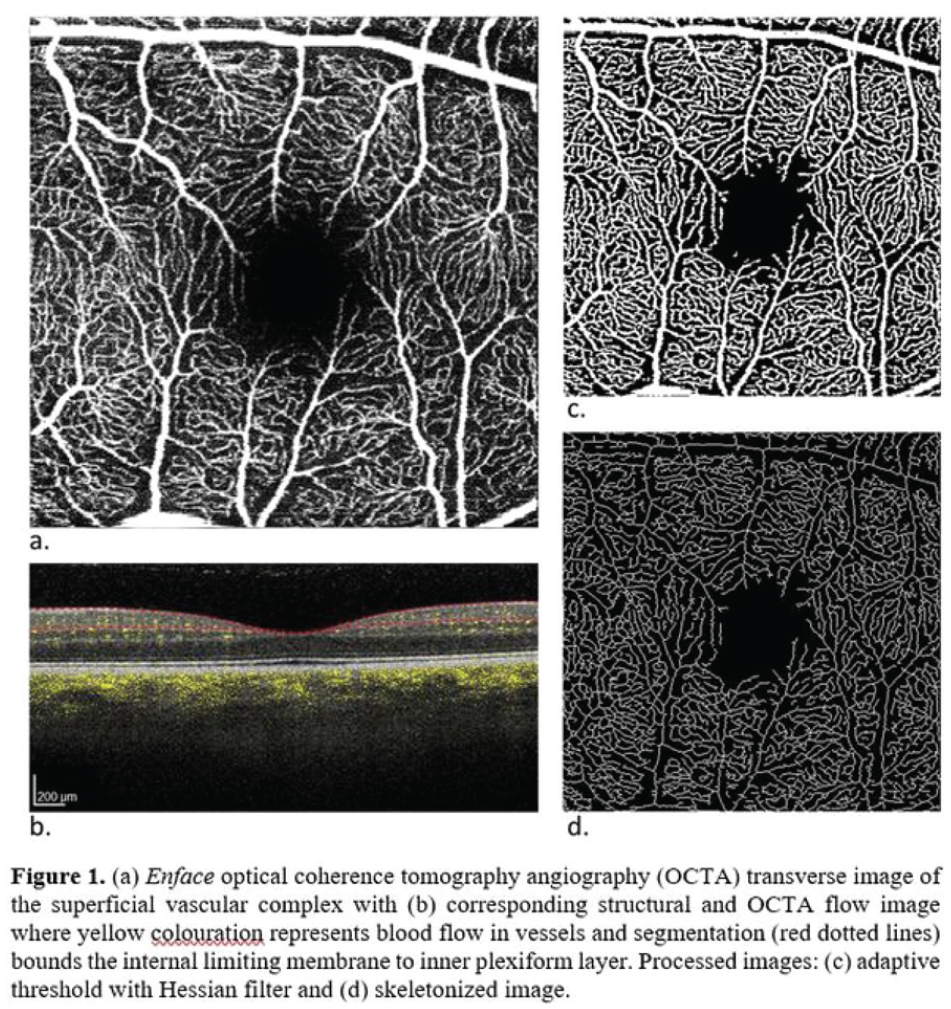
P0709 / 1056
COMPOUND HETEROZYGOUS NOTCH3 MUTATIONS IN A FAMILY WITH CADASIL
1 Virgen Macarena Hospital, Seville, Spain
P0710 / 878
NEW CEREBRAL MICROBLEEDS AFTER CATHETER-BASED STRUCTURAL HEART INTERVENTIONS
1Charité - Universitätsmedizin Berlin, Department of Neurology, Berlin, Germany, 2Charité - Universitätsmedizin Berlin, Berlin, Germany, 3Charité - Universitätsmedizin Berlin, Department of Cardiology, Berlin, Germany, 4Charité - Universitätsmedizin Berlin, Institute of Medical Informatics, Berlin, Germany, 5Charité - Universitätsmedizin Berlin, Center for Stroke Research Berlin (CSB), Berlin, Germany, 6Universitätsklinikum Würzburg, Department of Neurology, Würzburg, Germany
P0712 / 831
CEREBRAL ARTERY PULSATILITY, BLOOD PRESSURE, AND SMALL VESSEL DISEASE ON BRAIN IMAGING
1 Oxford University, Wolfson Centre for Prevention of Stroke and Dementia, Nuffield Department of Clinical Neurosciences, Oxford, United Kingdom
P0713 / 140
SMALL VESSEL DISEASE AND LEPTOMENINGEAL COLLATERALS IN PATIENTS WITH LARGE VESSEL ISCHEMIC STROKE TREATED WITH THROMBECTOMY
1Paris Descartes University, INSERM U1266, DHU Neurovasculaire, Sainte-Anne Hospital / CHU Limoges, Neuroradiology, Paris, France, 2Paris Descartes University, INSERM U1266, DHU Neurovasculaire, Sainte-Anne Hospital, Neuroradiology, Paris, France, 3Univ. Lille, Inserm, CHU Lille, U1172 - LilNCog (JPARC), Neuroradiology, Lille, France, 4Paris Descartes University, INSERM U1266, DHU Neurovasculaire, Neurology, Paris, France, 5Lille University, Neuroradiology, Lille, France, 6Univ. Lille, Inserm, CHU Lille, U1172 - LilNCog - Lille Neuroscience & Cognition, Neurology, Lille, France, 7J. Philip Kistler Stroke Research Center, Massachusetts General Hospital and Harvard Medical School, Department of Neurology, Boston, United States, 8Université de Lorraine, Inserm, IADI, CHRU Nancy, Department of Diagnostic and Interventional Neuroradiology, Nancy, France, 9Pitié-Salpêtrière University Hospital, Neuroradiology, Paris, France, 10Pierre Wertheimer Hospital, Hospices Civils de Lyon, Neuroradiology, Lyon, France, 11Hospices Civils de Lyon, Claude Bernard University Lyon 1, Neurology, Lyon, France
P0714 / 418
FRAILTY AND DEMENTIA RISKS IN ASYMPTOMATIC CEREBRAL SMALL VESSEL DISEASE: A LONGITUDINAL COHORT STUDY
1 Taipei Veterans General Hospital, Neurological Institute, Taipei, Taiwan, Province of China
P0715 / 1350
SPATIAL DISTRIBUTION AND PREDICTORS OF INCIDENT LACUNES IN CEREBRAL SMALL VESSEL DISEASE: THE RUN DMC STUDY WITH 14-YEAR FOLLOW-UP
1Radboud University Medical Centre;Donders Centre for Medical Neurosciences, Neurology, Nijmegen, Netherlands, 2Xiangya Hospital,Central South University, Geriatrics, Changsha, China, 3National Clinical Research Centre for Geriatric Disorders, Changsha, China
P0716 / 975
INTRACEREBRAL HEMORRHAGE – A PHENOTYPE OF COL4A1/2 MUTATIONS
1Centro Hospitalar Lisboa Ocidental, Neurology, Lisboa, Portugal, 2NOVA Medical School | Faculdade de Ciências Médicas, Universidade NOVA de Lisboa, Chronic Diseases Research Centre (CEDOC), Lisboa, Portugal
P0717 / 731
CEREBRAL SMALL VESSEL DISEASE AND COLLATERAL RECRUITMENT IN LARGE-VESSEL OCCLUSION STROKE
1Medical University of Graz, Neurology, Graz, Austria, 2Medical University of Graz, Division of Neuroradiology, Vascular and Interventional Radiology, Department of Radiology, Graz, Austria
P0718 / 675
CEREBRAL AMYLOID ANGIOPATHY IS ASSOCIATED WITH INTRACORTICAL LOBAR CEREBRAL MICROBLEEDS
1National Taiwan University, College of Medicine, Taipei, Taiwan, Province of China, 2National Taiwan University Hospital, Department of Medical Imaging, Taipei, Taiwan, Province of China, 3National Taiwan University Hospital, Department of Neurology, Taipei, Taiwan, Province of China, 4National Taiwan University Hospital Bei-Hu Branch, Department of Neurology, Taipei, Taiwan, Province of China
P0719 / 511
ASSOCIATIONS BETWEEN SLEEP APNEA RISK AND OXYGEN DESATURATION INDICES WITH CEREBRAL SMALL VESSEL DISEASE IN PATIENTS WITH STROKE
1The University of Hong Kong, Division of Neurology, Department of Medicine, Hong Kong, Hong Kong, SAR of China, 2The University of Hong Kong, Division of Respiratory Medicine, Department of Medicine, Hong Kong, Hong Kong, SAR of China, 3The University of Hong Kong, Department of Diagnostic Radiology, Hong Kong, Hong Kong, SAR of China, 4The University of Hong Kong, The State Key Laboratory of Brain and Cognitive Sciences, Hong Kong, Hong Kong, SAR of China
P0720 / 489
COMPUTATIONAL MEASURES OF PERIVASCULAR SPACE BURDEN IN THE BRAIN SHOW SENSITIVITY TO CARDIOVASCULAR RISK FACTORS
1University of Edinburgh, Centre for Clinical Brain Sciences, Edinburgh, United Kingdom, 2McGill University, Research Institute of the McGill University Health Centre, Montréal, Canada
Each mmHg higher MAP multiplies PVS counts and volumes by 1.008 [95%CI 1.001-1.016] and 1.011 [95%CI 1.001-1.022] in BG and by 1.014 [95%CI 1.001-1.027] and 1.014 [95%CI 1.001-1.028] in CSO (p-value<0.05 consistently).
Ever smokers presented higher PVS counts than never smokers (BG: 162.0 [95%CI 138.0-190.0] vs 124.0 [95%CI 104.0-148.0], Tukey test, p-value=0.004; CSO: 368.0 [95%CI 289.0-469.0] vs 265.0 [95%CI 204.0-346.0], Tukey test, p-value=0.02).
Diabetes was not associated with PVS burden (p-value>0.1).
P0721 / 1395
FACTORS PROMOTING LEUKOARAIOSIS IN PATIENTS WITH CEREBRAL LARGE VESSEL OCCLUSION
1University Hospital Kralovske Vinohrady and Third Faculty of Medicine, Charles University, Neurology, Prague, Czech Republic, 2University Hospital Kralovske Vinohrady and Third Faculty of Medicine, Charles University, Radiology, Prague, Czech Republic, 3University Hospital Kralovske Vinohrady and Third Faculty of Medicine, Charles University, Cardiology, Prague, Czech Republic
Conclusion: Leukoaraiosis in patients with acute LVO stroke is negatively related to good clinical outcome and is linked with increased age, female sex and diabetes, but a clear connection with leptomeningeal collaterals was not proved. The pathways of detrimental role of LA and diabetes in LVO strokes are to be determined.
Supported by Charles University research program PROGRES Q35 and UNCE/MED/002.
P0722 / 644
RISK PROFILE AND CEREBRAL SMALL VESSEL DISEASE MARKERS OF LACUNAR STROKE VERSUS DEEP INTRACEREBRAL HAEMORRHAGE
1West China Hospital, Sichuan University, Department of Neurology, Chengdu, China, 2Centre for Clinical Brain Sciences, Edinburgh Imaging and the UK Dementia Research Institute at the University of Edinburgh, Edinburgh, United Kingdom, 3Baotou Central Hospital, Department of Neurology, Baotou, China
P0723 / 685
INSULIN RESISTANCE BASED ON POST-GLUCOSE LOAD MEASURE IS ASSOCIATED WITH PREVALENCE AND BURDEN OF SMALL VESSEL DISEASE
1Capital Medical University, Beijing, China/Beijing Tiantan Hospital, Department of Neurology, Beijing, China, 2Capital Medical University, Beijing, China/Beijing Tiantan Hospital, Beijing, China
P0724 / 673
CLINICAL MANIFESTATIONS OF DEEP PERFORATOR SMALL VESSEL DISEASE: COMPARISON OF INTRACEREBRAL HAEMORRHAGES VERSUS LACUNAR ISCHAEMIC STROKE
1Inselspital Bern University Hospital and University of Bern, Department of Neurology, Bern, Switzerland, 2University of Bern, Graduate School for Health Sciences, Bern, Switzerland, 3Onze-Lieve-Vrouwziekenhuis Campus Aalst, Department of Neurology, Aalst, Belgium, 4Inselspital Bern University Hospital and University of Bern, University Institute for Diagnostic and Interventional Neuroradiology, Bern, Switzerland, 5Inselspital Bern University Hospital and University of Bern, Department of Neurosurgery, Bern, Switzerland, 6University Hospital Basel, Department of Neurology, Basel, Switzerland
P0725 / 687
MEDIATION OF THE RELATIONSHIP BETWEEN INSULIN RESISTANCE AND CEREBRAL SMALL VESSEL DISEASE BY BLOOD PRESSURE IN NONDIABETIC SUBJECTS
1 Capital Medical University / Beijing Tiantan Hospital, Beijing, China
P0726 / 1592
SHARED TRAJECTORIES OF AFFECTIVE AND COGNITIVE CHANGES IN PATIENTS WITH SMALL VESSEL DISEASE INDICATE INCREASED VASCULAR BRAIN BURDEN
1University of Belgrade, Faculty for Special Education and Rehabilitation, Belgrade, Serbia, 2University of Belgrade, Faculty of Medicine, Belgrade, Serbia
P0727 / 591
THE INTERACTION EFFECT BETWEEN CEREBRAL LARGE-VESSEL DISEASES AND SMALL VESSEL DISEASE IN THE NICE POPULATION
1 Second Affiliated Hospital of Soochow University, Neurology, Suzhou, China
Comparison between groups with and without multiple cerebral artery plaques.
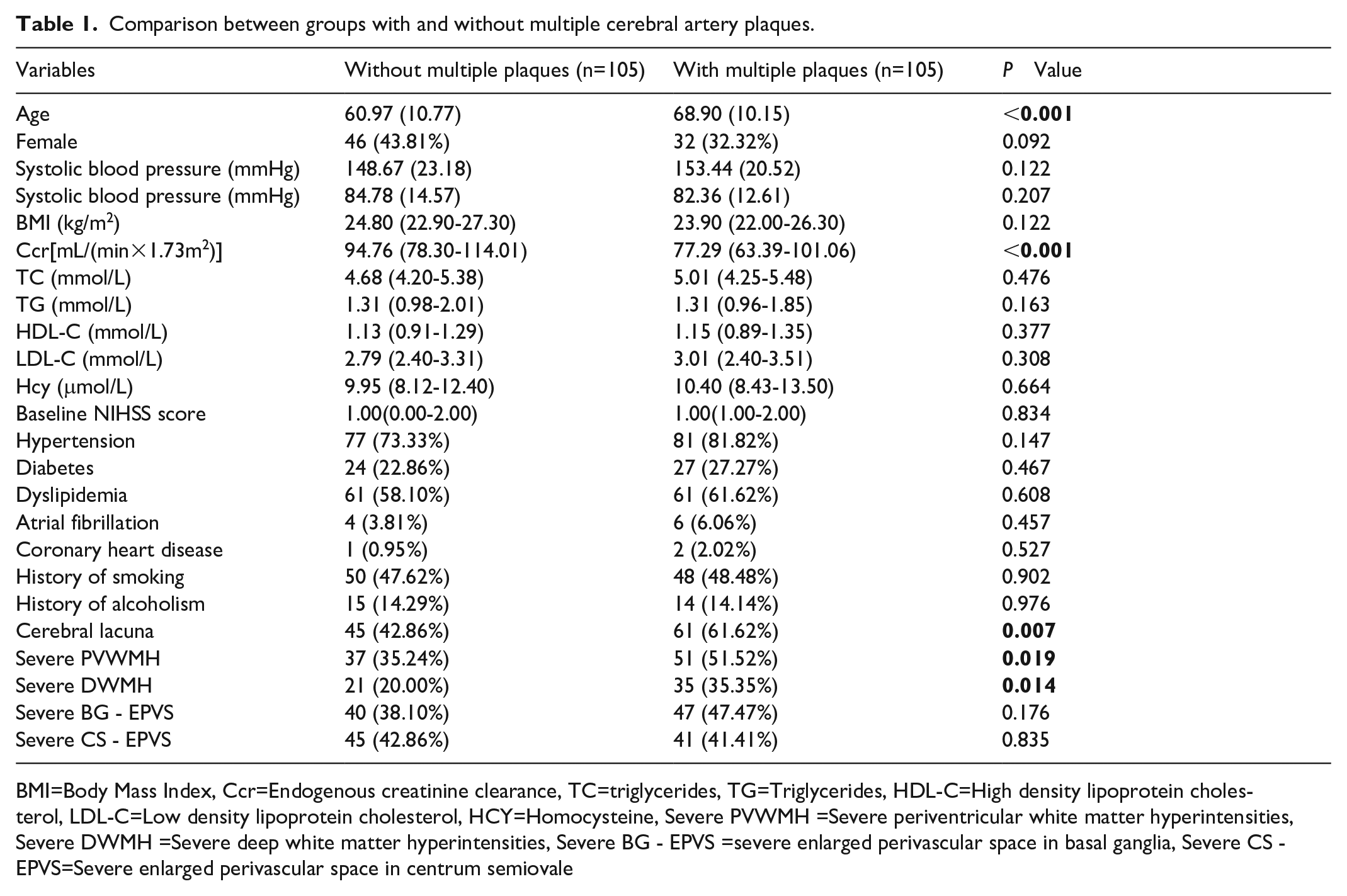
BMI=Body Mass Index, Ccr=Endogenous creatinine clearance, TC=triglycerides, TG=Triglycerides, HDL-C=High density lipoprotein cholesterol, LDL-C=Low density lipoprotein cholesterol, HCY=Homocysteine, Severe PVWMH =Severe periventricular white matter hyperintensities, Severe DWMH =Severe deep white matter hyperintensities, Severe BG - EPVS =severe enlarged perivascular space in basal ganglia, Severe CS - EPVS=Severe enlarged perivascular space in centrum semiovale
Relationship between cerebral large-vessel disease and lacune (with vs without)*.
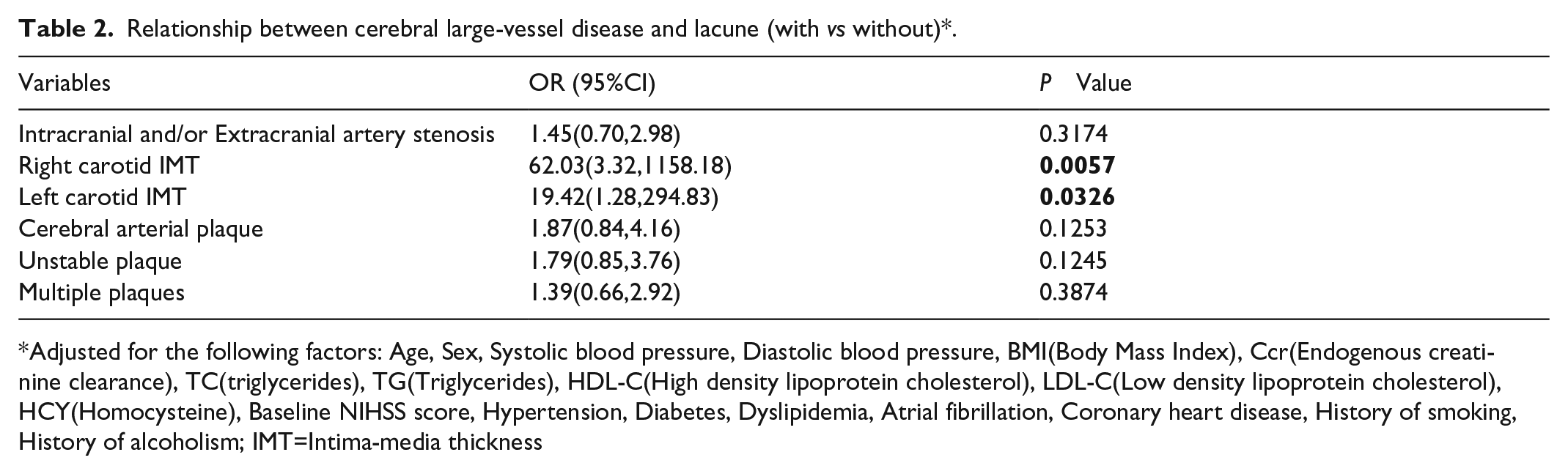
Adjusted for the following factors: Age, Sex, Systolic blood pressure, Diastolic blood pressure, BMI(Body Mass Index), Ccr(Endogenous creatinine clearance), TC(triglycerides), TG(Triglycerides), HDL-C(High density lipoprotein cholesterol), LDL-C(Low density lipoprotein cholesterol), HCY(Homocysteine), Baseline NIHSS score, Hypertension, Diabetes, Dyslipidemia, Atrial fibrillation, Coronary heart disease, History of smoking, History of alcoholism; IMT=Intima-media thickness
Cognitive effects of severe CS-EPVS in patients with intracranial and/or extracranial artery stenosis*.
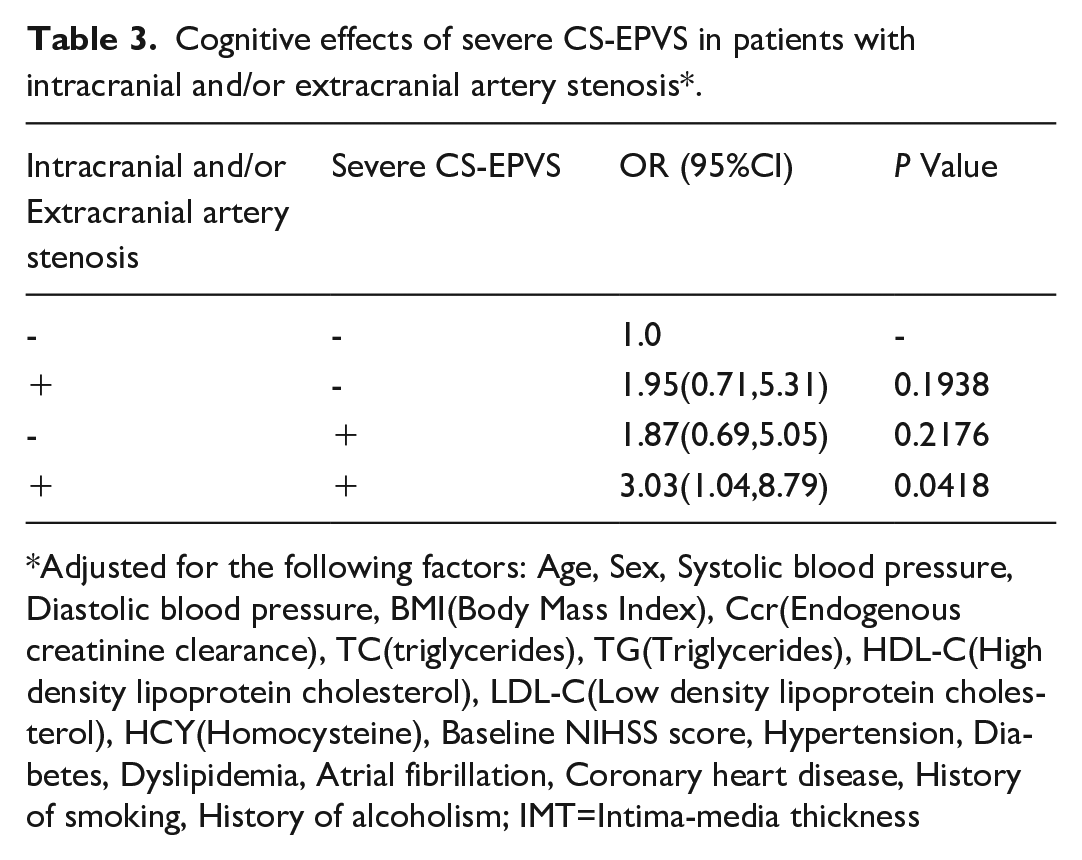
Adjusted for the following factors: Age, Sex, Systolic blood pressure, Diastolic blood pressure, BMI(Body Mass Index), Ccr(Endogenous creatinine clearance), TC(triglycerides), TG(Triglycerides), HDL-C(High density lipoprotein cholesterol), LDL-C(Low density lipoprotein cholesterol), HCY(Homocysteine), Baseline NIHSS score, Hypertension, Diabetes, Dyslipidemia, Atrial fibrillation, Coronary heart disease, History of smoking, History of alcoholism; IMT=Intima-media thickness
P0728 / 535
CEREBRAL WHITE MATTER HYPERINTENSITIES INDICATE SEVERITY AND PROGRESSION OF CORONARY ARTERY CALCIFICATION
1Medical University of Graz, Department of Neurology, Graz, Austria, 2Medical University of Graz, Division of Cardiology, Department of Internal Medicine, Graz, Austria, 3Medical University of Graz, Institute for Medical Informatics, Statistics and Documentation, Graz, Austria, 4Medical University of Graz, Division of Neuroradiology, Vascular and Interventional Radiology, Department of Radiology, Graz, Austria
P0729 / 785
OPHTHALMOLOGICAL BIOMARKERS IN RVCL-S, A MONOGENIC SMALL DISEASE
1Leiden University Medical Center, Neurology, Leiden, Netherlands, 2Leiden University Medical Center, Ophthalmology, Leiden, Netherlands
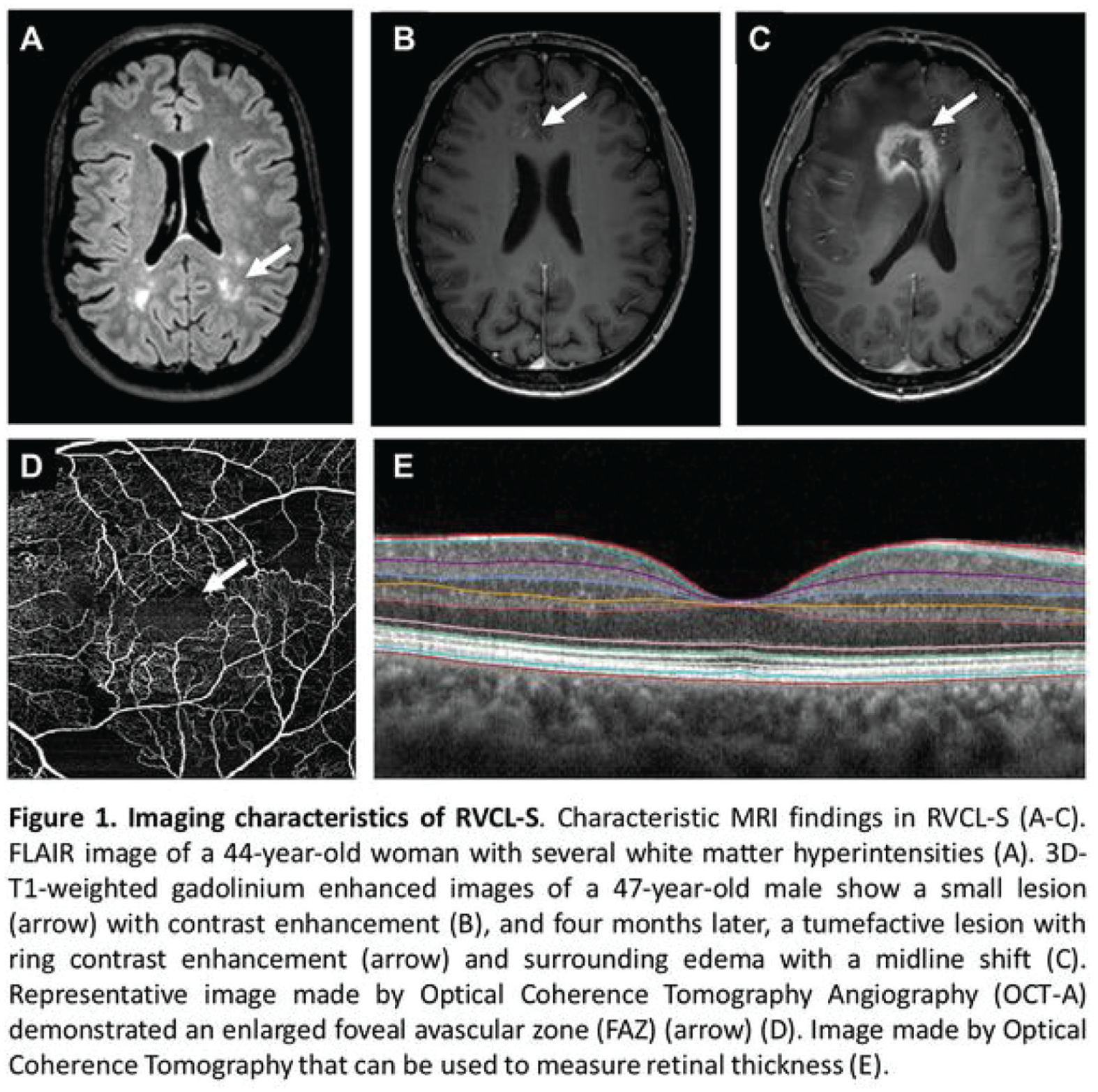
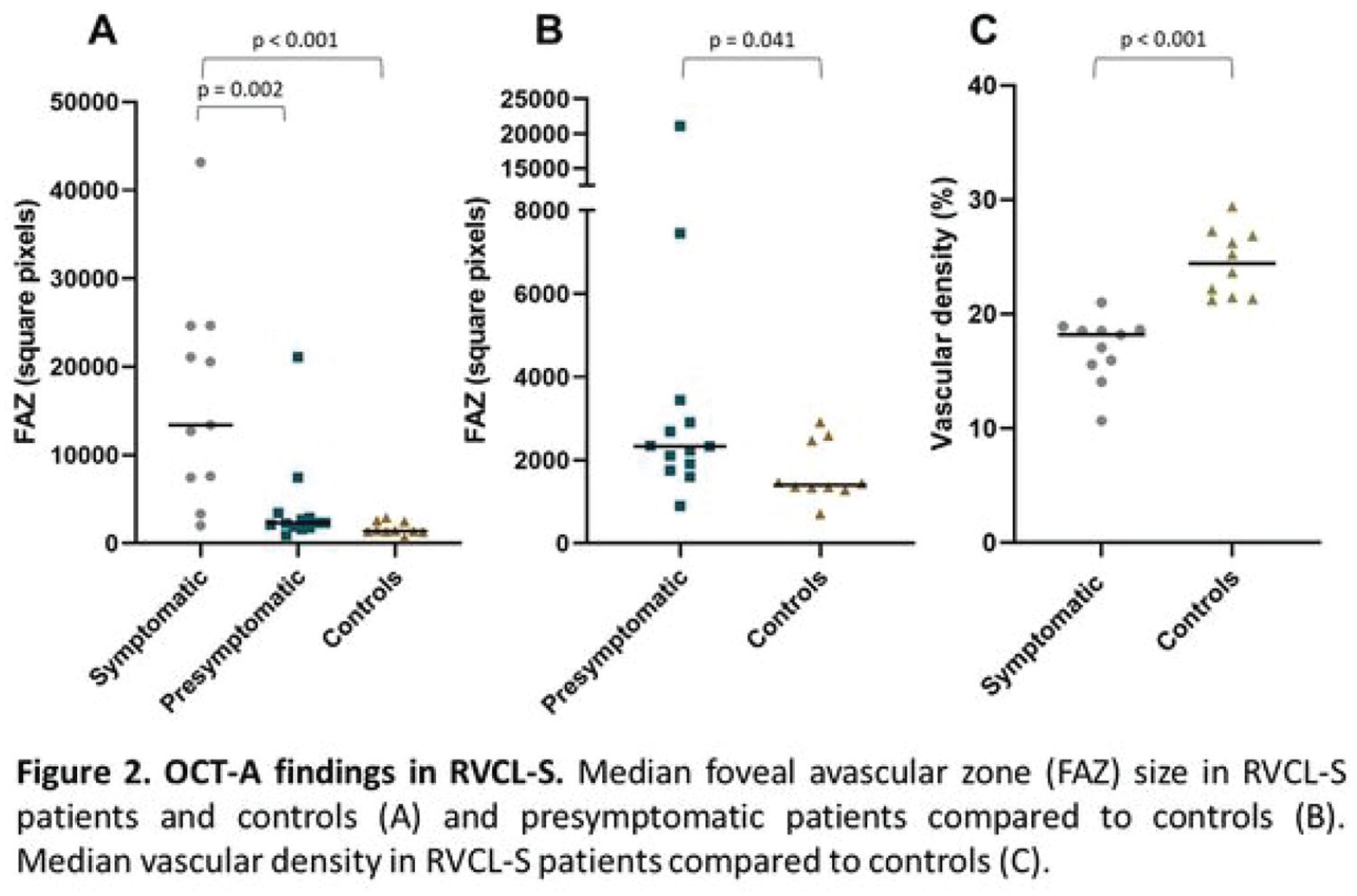
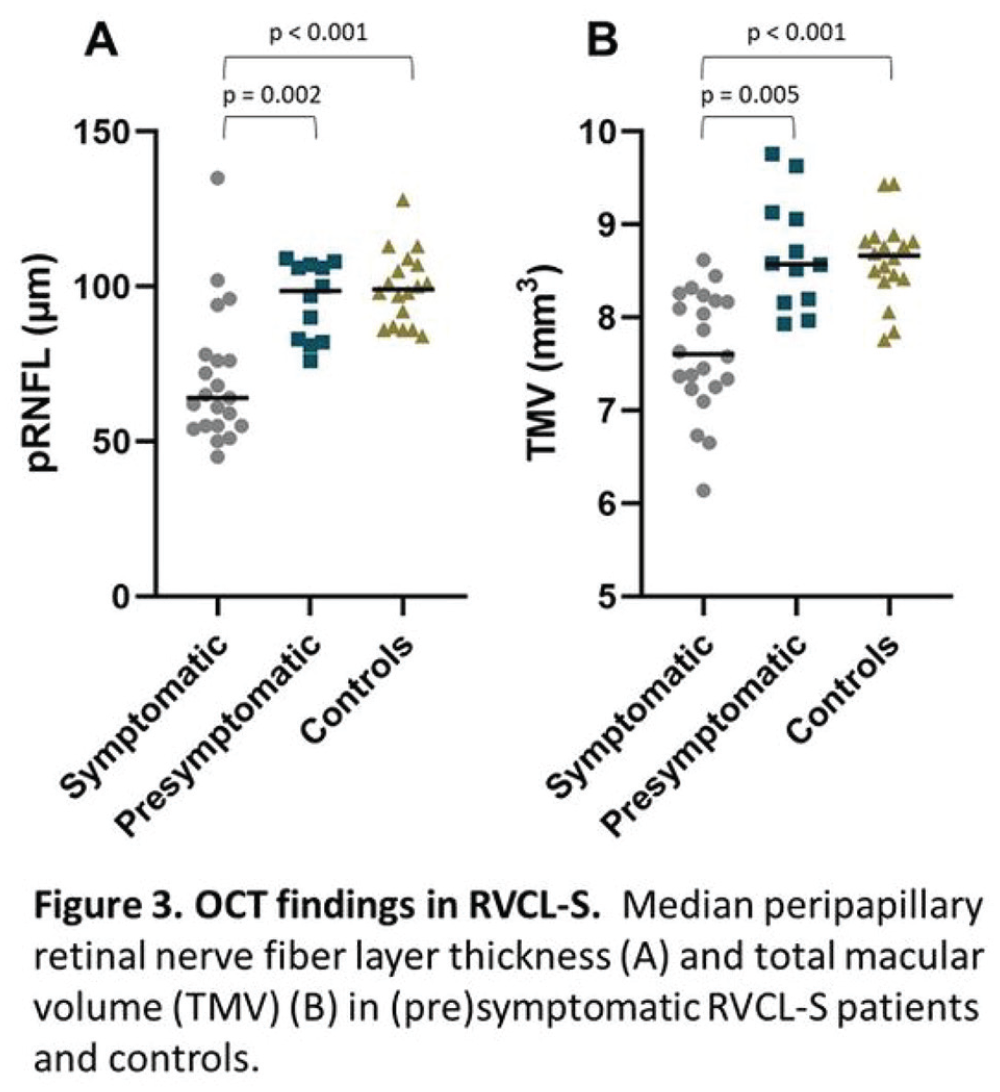
P0730 / 1356
THE RELATION BETWEEN SMALL VESSEL REACTIVITY AND WHITE MATTER INTEGRITY IN CADASIL - THE ZOOM@SVDS STUDY
1University Medical Center Utrecht, Department of Neurology and Neurosurgery, Utrecht, Netherlands, 2Institute of Stroke and Dementia Research, LMU Munich, Munich, Germany, 3University Medical Center Utrecht, Department of Radiology, Utrecht, Netherlands, 4Spinoza Centre for NeuroImaging Amsterdam, Amsterdam, Netherlands, 5Munich Cluster for Systems Neurology (SyNergy), Munich, Germany, 6Medical Image Analysis Center (MIAC) and Department of Biomedical Engineering, University of Basel, Basel, Switzerland, 7German Center for Neurodegenerative Disease (DZNE), Munich, Germany
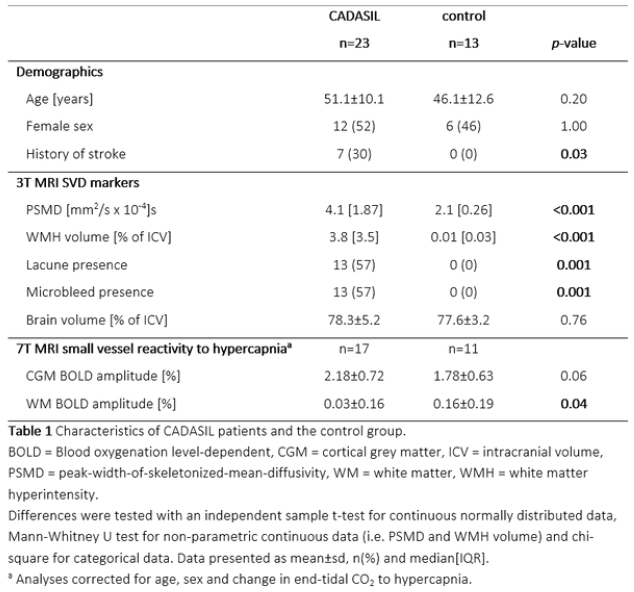
SEX, GENDER AND STROKE
P0731 / 1332
SEX-BASED CASE FATALITY AFTER ISCHEMIC STROKE: NATIONWIDE RETROSPECTIVE COHORT STUDY
1Neuro Center, Turku University Hospital and Clinical neurosciences, University of Turku, Turku, Finland, 2Heart Center, Turku University Hospital and University of Turku, Turku, Finland
P0732 / 285
CLINICAL PERSPECTIVE IN RELATION TO AGE IN PATIENTS TREATED WITH THROMBECTOMY FOR LARGE VESSEL OCCLUSION IN A STROKE CENTER IN COLOMBIA
1Sabana University, Bogotá, Colombia, 2Autonomous University of Bucaramanga, Bucaramanga, Colombia
P0733 / 1241
SEX DIFFERENCES IN INTRAVENOUS THROMBOLYSIS OUTCOMES IN ACUTE ISCHEMIC STROKE PATIENTS WITH PREADMISSION USE OF ANTIPLATELET AGENTS A POPULATION-BASED STUDY IN THE SWISS STROKE REGISTRY
1Division of Clinical Pharmacology and Toxicology, Institute of Pharmacological Sciences of Southern Switzerland, Ente Ospedaliero Cantonale, Lugano, Switzerland, Lugano, Switzerland, 2University of Milano-Bicocca, Milan, Italy, Milan, Italy, 3National Centre for Healthcare Research and Pharmacoepidemiology, Milan, Italy, Milan, Italy, 4Clinical Trial Unit, Ente Ospedaliero Cantonale, Lugano, Switzerland, Lugano, Switzerland, 5Department of Intensive Care, Ente Ospedaliero Cantonale, Bellinzona, Switzerland, Bellinzona, Switzerland, 6Division of Pneumology, University of Geneva, Geneva, Switzerland, Geneva, Switzerland, 7Neurocenter of Southern Switzerland, Ospedale Regionale di Lugano, Ente Ospedaliero Cantonale, Lugano, Switzerland, Lugano, Switzerland, 8University Hospital Bern, Department of Neurology, Bern, Switzerland, Bern, Switzerland, 9Lausanne University Hospital, Stroke Center, Neurology Service, Lausanne, Switzerland, Lausanne, Switzerland, 10Kantonsspital Aarau, Department of Neurology, Aarau, Switzerland, Aarau, Switzerland, 11University Hospital Basel and University of Basel, Department of Neurology and Stroke Center, Basel, Switzerland, Basel, Switzerland, 12Kantonsspital St. Gallen, Department of Neurology, St. Gallen, Switzerland, St. Gallen, Switzerland, 13Stroke Unit, Hopital Nyon, Switzerland, Nyon, Switzerland, 14Luzerner Kantonsspital, Center of Neurology and Neurorehabilitation, Luzern, Switzerland, Luzern, Switzerland, 15Universitätsspital Zürich, Neurology, Zürich, Switzerland, Zürich, Switzerland, 16Kantonsspital Münsterlingen, Division of Neurology, Münsterlingen, Switzerland, Münsterlingen, Switzerland, 17HFR Fribourg, Stroke Unit, Division of Neurology, Fribourg, Switzerland, Fribourg, Switzerland, 18Kantonsspital Winterthur, Neurology, Winterthur, Switzerland, Winterthur, Switzerland, 19Hirslanden Hospital, Department of Neurology and Stroke Center, Zurich, Switzerland, Zurich, Switzerland, 20Pourtalès Hospital, Division of Neurology, Neuchatel, Switzerland, Neuchatel, Switzerland, 21Stadtspital Waid und Triemli, Stroke Unit, Zürich, Switzerland, Zürich, Switzerland, 22Hôpitaux Universitaires de Genève, Department of Neurology, Geneva, Switzerland, Geneve, Switzerland, 23Faculty of Biomedical Sciences, Università della Svizzera italiana, Lugano, Switzerland, Lugano, Switzerland, 24Department of Clinical Pharmacology and Toxicology, University Hospital Zurich, Zurich, Switzerland, Zurich, Switzerland
P0734 / 1572
POST-STROKE DISABILITY: ASSOCIATION BETWEEN SEX AND PATIENT REPORTED OUTCOMES
1 Harvard Medical School, J Philip Kistler Stroke Research Center, Department of Neurology, Massachusetts General Hospital, Boston, United States
THIS IS A PLACEHOLDER ABSTRACT FOR A STUDY WE ARE CURRENTLY FINISHING ALL ANALYSIS.
RESULTS: At baseline, 236 participants were male (mean age 65) and 162 were female (mean age 70). Groups had similar rates of cardiovascular risk factors, admission NIHSS and discharge mRS. At follow-up, males were more likely to have better rates of T Physical (mean 48.92 vs. 44.67) and BI (mean 92.60 vs. 87.22). In linear regression analysis, PROMs T Physical, BI, and also PROMs Global 01 and Global 10r, which stand respectively for patient reported general health and emotional problems, were associated with female sex. Similar relationship was found with all subcomponents of PROMs Global Physical evaluation.
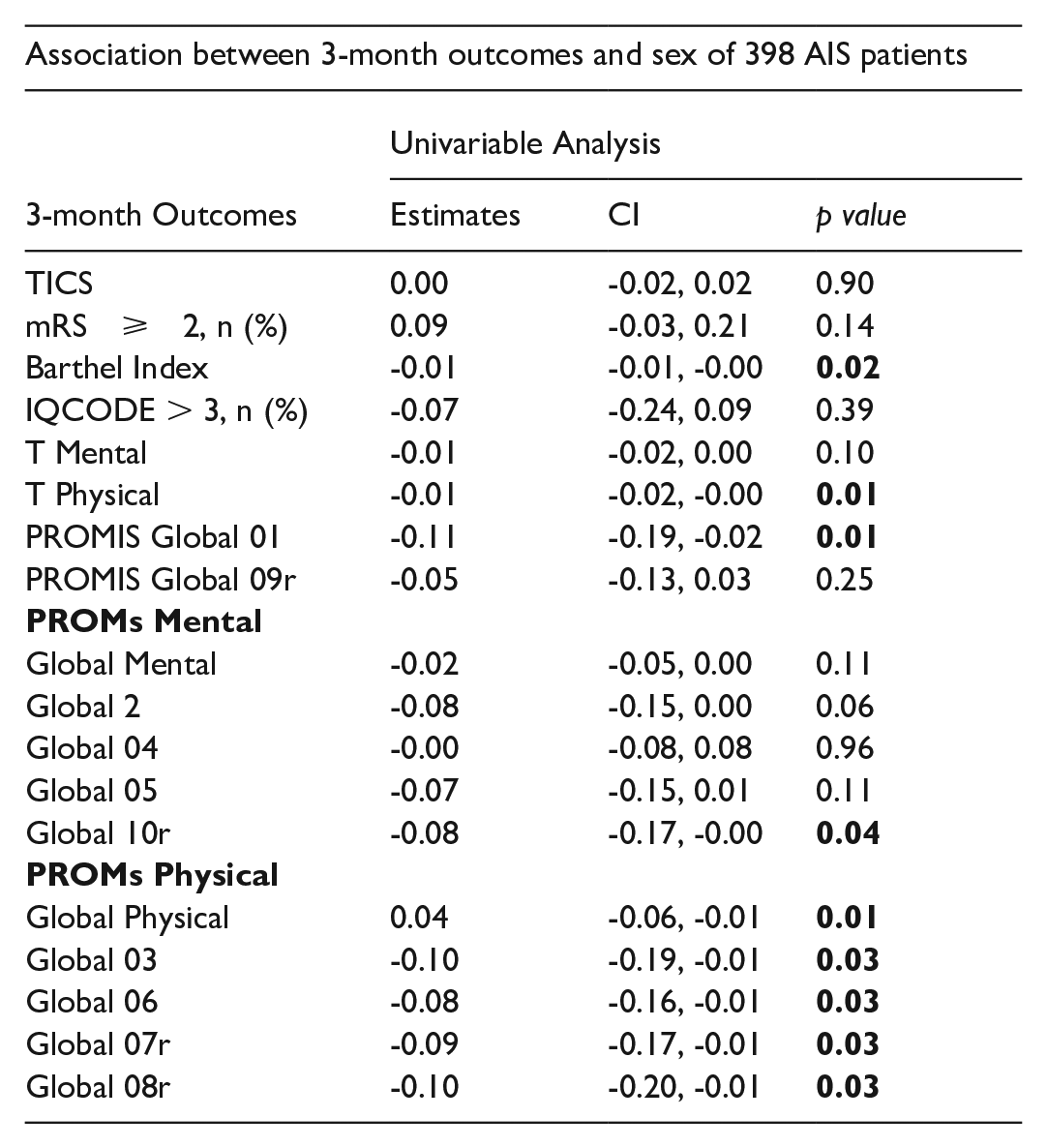
P0735 / 1340
CAN TELESTROKE MANAGEMENT AVOID SEX DISPARITIES? OUR TEN-YEAR EXPERIENCE
1Hospital Infanta Sofía, Department of Neurology, San Sebastián de los Reyes, Spain, 2Hospital La Paz Institute for Health Research-IdiPAZ (La Paz University Hospital-Universidad Autónoma de Madrid), Department of Neurology and Stroke Center, Madrid, Spain, 3Torrecárdenas University Hospital. University of Almería, Stroke Centre and Department of Neurology, Almería, Spain
We aim to evaluate sex differences for recanalization therapies and access to Stroke Unit (SU) in our 10-year TS experience (2011-2021).
P0736 / 1311
IS THERE A GENDER EFFECT ON ONE-YEAR POST STROKE DISABILITY?
1Hospices Civils de Lyon, Pôle de Sante Publique, Service Recherche et Epidémiologie Cliniques, Lyon, France, 2Université Claude Bernard Lyon 1, Research on Healthcare Performance (RESHAPE), INSERM U1290, Lyon, France, 3Hospices Civils de Lyon, Hôpital Pierre Wertheimer, Service Neuro-vasculaire, Lyon, France
Factors associated with mRS >2 at 12 months.
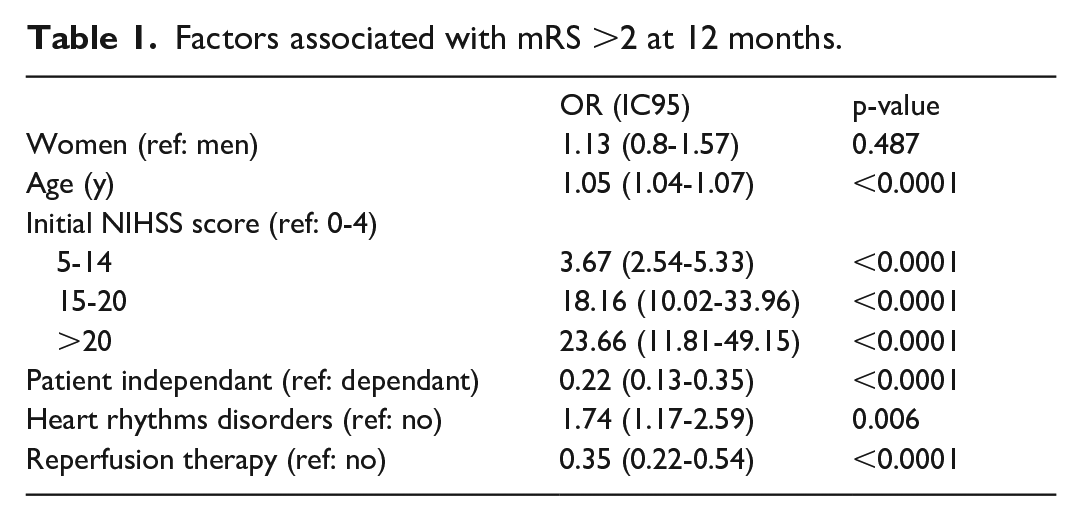
P0737 / 769
SEX, GENDER AND STROKE
1The George Institute for Global Health, Faculty of Medicine, University of New South Wales, Sydney, Australia, 2School of Medical Sciences, Faculty of Medicine and Health, The University of Sydney, Sydney, Australia, 3The George Institute China at Peking University Health Sciences Center, Beijing, China, 4Neurology Department, Royal Prince Alfred Hospital, Sydney, Australia
P0738 / 789
EFFICACY OF SYSTEMIC THROMBOLYTIC THERAPY OF ACUTE ISCHEMIC STROKE IN WOMEN WITH RISK FACTORS
1 M.F. Vladimirskiy Moscow Regional Research Clinical Institute, Department of Neurology, Moscow, Russian Federation
P0739 / 741
CEREBROVASCULAR COMPLICATIONS: WHAT TO EXPECT DURING POSTPARTUM - CASE SERIES
1Emergency University Hospital Bucharest, Neurology, Bucharest, Romania, 2Emergency University Hospital Bucharest, Interventional Neuroradiology, Bucharest, Romania
P0740 / 1537
SEX DIFFERENCES IN OUTCOME AFTER CAROTID REVASCULARIZATION IN SYMPTOMATIC AND ASYMPTOMATIC CAROTID ARTERY STENOSIS - A SYSTEMATIC REVIEW AND META-ANALYSES
1Santa Maria della Misericordia, University of Perugia, stroke Unit, Perugia, Italy, 2Skåne University Hospital, Dep. Clinical Sciences Lund University, Neurology Department, Malmö, Sweden, 3Faculty of Medicine P.J. Safarik University Košice, Neurology Department, Košice, Slovakia, 4University Hospital of Dijon, University of Burgundy, UBFC, Dijon Stroke Registry, EA7460, Pathophysiology and Epidemiology of Cerebro-Cardiovascular diseases, Dijon, France, 5European Stroke Organisation (ESO), Basel, Switzerland, 6eso, Basel, Sweden, 7Klinikum Hanau, Neurology Department, Hanau, Germany, 8Sapienza University of Rome, Department of Human Neurosciences, Roma, Italy, 9Municipal Hospital Waid und Triemli, Zürich; and University Hospital and University of Bern, Department of Neurology, Bern, Switzerland, 10School of Medicine, Faculty of Health Sciences, Aristotle University of Thessaloniki, Department of Neurology, Thessaloniki, Greece, 11University of Belgrade, Department of Emergency Neurology, Belgrad, Serbia, 12University of Glasgow, Institute of Cardiovascular and Medical Sciences, Glasgow, United Kingdom
Whereas, for asymptomatic carotid artery stenosis from 4 RCTs and 17 observational studies, females compared to males had similar rates of stroke (20 studies, 329,585 patients, 0.9% vs 0.8%, OR 1.10, 95% CI 0.94-1.29, I2: 48%, P=0.24), of stroke or death (8 studies, 63,193 patients, 2.0% vs 1.8%, OR 1.33, 95% CI 1.03-1.71, I2: 52%, P=0.03) and of the composite stroke/death/MI (3 studies, 5,088 patients, 3.3% vs 3.2%, OR 1.29, 95% CI 0.68-2.43, I2: 56%, P=0.43). Furthermore, carotid stenting in asymptomatic females was associated with low risk of postprocedural stroke in both sexes.
P0741 / 1496
CEREBRAL VENOUS THROMBOSIS AMONG WOMEN; CLINICAL AND RADIOLOGICAL FEATURES AND PROGNOSTIC IMPLICATIONS
1Hadassah Hebrew-University Medical Center, Neurology, Jerusalem, Israel, 2Ziv Medical Center, Neurology, Safed, Israel, 3Rabin Medical Center, Neurology, Petach-Tikva, Israel, 4Sheba Medical Center, Neurology, Ramat-Gan, Israel, 5Tel-Aviv Sourasky Medical Center, Neurology and Stroke, Tel-Aviv, Israel
Among women, OCP usage was associated with a better functional outcome (90-day-mRS 0-1) (p=0.048). Within CVT women patients younger than 50-year-old, pregnancy was associated with higher rates of neurological deficit (41% vs 21%, p=0.011), venous infarction (10% vs 22%, p=0.009), intracerebral hemorrhage (31% vs 16%, p=0.027).
P0742 / 1127
SEX DIFFERENCES IN TREATMENT TIMES AND OUTCOME OF ACUTE ISCHEMIC STROKE
1Amsterdam University Medical Center, Neurology, Amsterdam, Netherlands, 2University Medical Center Utrecht, Neurology, Utrecht, Netherlands, 3Zaans Medical Center, Neurology, Zaandam, Netherlands
P0743 / 1387
ASSOCIATION OF HIGH SENSITIVITY C-REACTIVE PROTEIN WITH DEPRESSIVE SYMPTOMS UP TO THREE YEARS AFTER FIRST ISCHEMIC STROKE: PROSPECTIVE COHORT WITH INCIDENT STROKE STUDY BERLIN (PROSCIS-B)
1Center for Stroke Research Berlin, Charité - Universitätsmedizin Berlin, Berlin, Germany, 2Charité- Universitätsmedizin Berlin, Klinik und Hochschulambulanz für Neurologie, Belrin, Germany, 3Experimental and Clinical Research Center (ECRC), Charité – Universitätsmedizin Berlin & Max Delbrück Center for Molecular Medicine, Berlin, Germany, 4German Center for Cardiovascular Research (Deutsches Zentrum für Herz-Kreislaufforschung), BerlinGermanger, Germany, 5Institute of Biometry and Clinical Epidemiology, Berlin, Germany, 6Berlin Institute of Health, Translational Research Unit of Charité – Universitätsmedizin Berlin, Berlin, Germany, 7German Center for Neurodegenerative Diseases (Deutsches Zentrum für Neurodegenerative Erkrankungen), partner site Berlin, Berlin, Germany
P0744 / 349
PINK CARE
1University of Campania, Vanvitelli L., S. Ottone Frangipane Hospital, ASL AV, Neurology, Ariano Irpino, Italy, 2S. Ottone Frangipane Hospital, ASL AV, Neurology, Ariano Irpino, Italy, 3University of Campania, Vanvitelli L., Criscuoli - Frieri Hospital, ASL AV, Physiotherapy, S. Angelo dei Lombardi, Italy, 4S. Ottone Frangipane Hospital, ASL AV, Medicine, Ariano Irpino, Italy, 5S. Ottone Frangipane Hospital, ASL AV, Cardiology, Ariano Irpino, Italy, 6S. Ottone Frangipane Hospital, ASL AV, Cardiology, Ariano irpino (AV), Italy, 7S. Ottone Frangipane Hospital, ASL AV, Intensive Care, Ariano Irpino, Italy, 8S. Ottone Frangipane Hospital, ASL AV, Intensive Care, Ariano irpino (AV), Italy, 9S. Ottone Frangipane Hospital, ASL AV, Radiology, Ariano Irpino, Italy, 10S. Ottone Frangipane Hospital, ASL AV, Laboratory, Ariano Irpino, Italy, 11University of Campania, Vanvitelli L., S. Ottone Frangipane Hospital, ASL AV, Nursing Coordinator, Ariano Irpino, Italy, 12University of Naples, Experimental Medicine, BIOGEM, Institute of Genetic Research, Laboratory of Molecular and Precision Oncology, Ariano Irpino, Italy, 13S. Ottone Frangipane Hospital, ASL AV, Emergency Department, Ariano Irpino, Italy
Our recent study showed higher rate of Paroxysmal Atrial Tachyarrhythmias (PAT) and Non-Paroxysmal Atrial Fibrillation (NPAF) in females compared to males, admitted for Acute Cerebro-Vascular events (ACV) (Fiori P. et al., submitted). The aim of our study was to identify negative haemodynamic factors accounting for higher risk of ACV in females.
We recruited 83 Other Neuropsychiatric Diseases (OND), 92 Chronic Cerebrovascular Diseases (CCVD), 552 Acute Strokes (AS) patients. They were subgrouped in no-hysterectomized (A) and hysterectomized (B).
Our preliminary results showed a rate of 9/33 (11%) PAT vs 1/33 (3%) NPAF in OND-A, 1/2 (50%) PAT in OND-B, 22/89 (25%) PAT vs 5/89 (6%) NPAF in CCVD-A, 1/4 (25%) PAT in CCVD-B, 90/519 (17%) PAT vs 94/519 (18%) NPAF in AS-A, 2/33 (6%) PAT vs 6/33 (18%) NPAF in AS-B. GCS, pre-MRS, day 7 GCS and MRS were not significantly different in AS. Although a higher percentage of A-patients had levels of BNP and ths Tro above normal range, the values were not significantly different compared to those detected in B-ones.
PAT may evolve to NPAF, especially if risk factors are present. The unexpected finding of similar rate of NPAF in no-hysterectomized compared to hysterectomized AS patients suggests that atrial disarrangement may be related to other concomitant pathological conditions. On the other hand, the presence of PAT also in OND highlights that haemodynamic factors may contribute to acute worst conditions in females, requiring careful management, which may be realized by “pink triage” and dedicated care during hospitalization and at follow-up.
PATHOPHYSIOLOGY OF STROKE / TRANSLATIONAL MEDICINE
P0745 / 780
PROGNOSTIC VALUE OF CIRCULATING ENDOTHELIAL PROGENITOR CELLS COUNT IN PATIENTS WITH ACUTE ISCHEMIC STROKE TREATED WITH MECHANICAL THROMBECTOMY
1Sant Pau Research Institute, Neurology, Barcelona, Spain, 2Hospital de la Santa Creu i Sant Pau, Neurology, Barcelona, Spain, 3Sant Pau Research Institute, Cytometry, Barcelona, Spain, 4Sant Pau Research Institute, Cardiovascular Biochemistry, Barcelona, Spain, 5Sant Pau Research Institute, Stroke Pharmacogenomics and Genetics Laboratory, Barcelona, Spain
P0746 / 1643
IS MEAN PLATELET VOLUME ASSOCIATED WITH THE OCCURRENCE AND/OR OUTCOME OF LARGE VESSEL OCCLUSION?
1 Centro Hospitalar de Trás-os-Montes e Alto Douro, Neurology, Vila Real, Portugal
P0747 / 1511
WITHDRAWN PLASTICITY OF PERISYNAPTIC ASTROGLIA DURING STROKE-INDUCED SPREADING DEPOLARIZATIONS REVEALED BY QUANTITATIVE SERIAL SECTION ELECTRON MICROSCOPY
1Medical College of Georgia, Neuroscience and Regenerative Medicine, Augusta, United States, 2Medical College of Georgia, Neurosurgery, Augusta, United States
P0748 / 1357
METABOLOMICS IN ACUTE STROKE
1Rigshospitalet, University of Copenhagen, Neurology, Glostrup, Denmark, 2Rigshospitalet, Neurology, Glostrup, Denmark, 3Örebro University, School of Science and technology, MTM Research Centre, Örebro, Sweden, 4Rigshospitalet, University of Copenhagen, Neurology, Glostrup and Copenhagen, Denmark
P0749 / 267
EFFECT OF DL-3-N-BUTYLPHTHALIDE ON MITOCHONDRIAL COX7C IN MODELS OF CEREBRAL ISCHEMIA/REPERFUSION INJURY
1Peking University First Hospital, Beijing, China, 2Beijing Children’s Hospital, Beijing, China
P0750 / 1154
ISCHEMIC STROKE AND PERIODONTAL DISEASE: IMPACT OF THE PRESENCE OF PORPHYROMONAS GINGIVALIS WITHIN THE IINTRACRANIAL THROMBUS
1Rothschild Foundation Hospital, Department of Interventional Neuroradiology, Paris, France, 2Université de Paris/INSERM U1148, Hemostasis, Thrombo-Inflammation and Neurovascular Repair, Paris, Central African Republic, 3Université de Lille/CHU de Lille, EA 2694, Santé publique: épidémiologie et qualité des soins, Lille, France, 4Université de Paris/INSERM U1148, Cardiovascular immunobiology, Paris, France
P0751 / 980
ANALYSIS OF HISTOLOGICAL THROMBUS FEATURES AND OUTCOME IN DIFFERENT EMBOLIC ISCHEMIC STROKE GROUPS
1Pauls Stradiņš Clinical University Hospital, Department of Neurology, Rīga, Latvia, 2Rīga Stradiņš University, Faculty of Medicine, Rīga, Latvia, 3Pauls Stradiņš Clinical University Hospital, Department of Pathology, Rīga, Latvia, 4Pauls Stradiņš Clinical University Hospital, Department of Radiology, Rīga, Latvia
P0752 / 1273
NOVEL ISCHEMIC STROKE MODEL OF PERMANENT OCCLUSION BY ENDOVASCULAR APPROACH IN SWINE
1Germans Trias I Pujol Research Institute (IGTP), Cellular and Molecular Neurobiology, Badalona, Spain, 2Germans Trias i Pujol University Hospital (HUGTP), Neurointerventional Radiology Unit, Badalona, Spain, 3Germans Trias i Pujol University Hospital (HUGTP), Stroke Unit, Badalona, Spain, 4Universitat Autònoma de Barcelona, Department of Cellular Biology, Physiology and Immunology, Bellaterra, Spain, 5Comparative Medicine and Bioimage Centre of Catalonia (CMCiB), Badalona, Spain
P0753 / 374
MRI CHARACTERIZATION OF THE ISCHEMIC STROKE MODEL OF INTRALUMINAL MIDDLE CEREBRAL ARTERY IN SWISS MICE: VALUE FOR NEUROPROTECTION STUDIES
1Univ-Lyon, CarMeN Laboratory, Inserm U1060, INRA U1397, INSA Lyon, Université Claude Bernard Lyon 1, Lyon, France, 2BIORAN Team, Lyon Neurosciences Research Center, CNRS UMR5292, Inserm U1028, Université Claude Bernard Lyon 1, Lyon, France
ANR-15-CE18-0026-01
ANR16-RHUS-0009
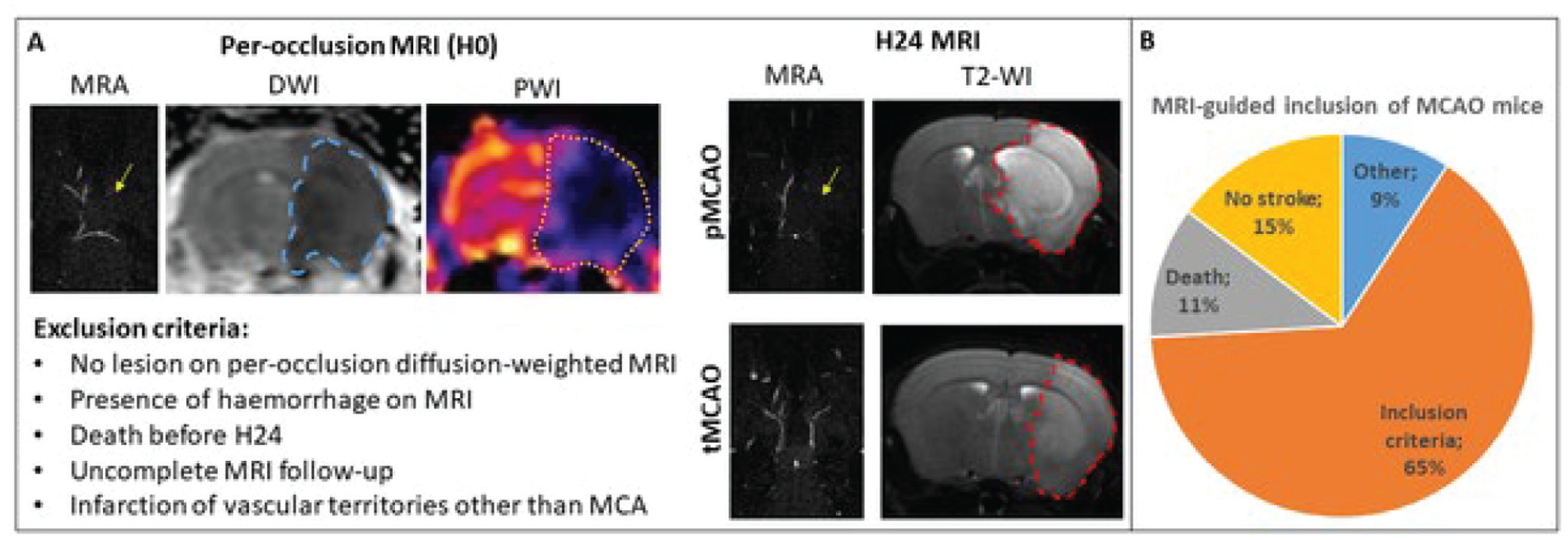
Study design (A) and outcome of MCAO (B)
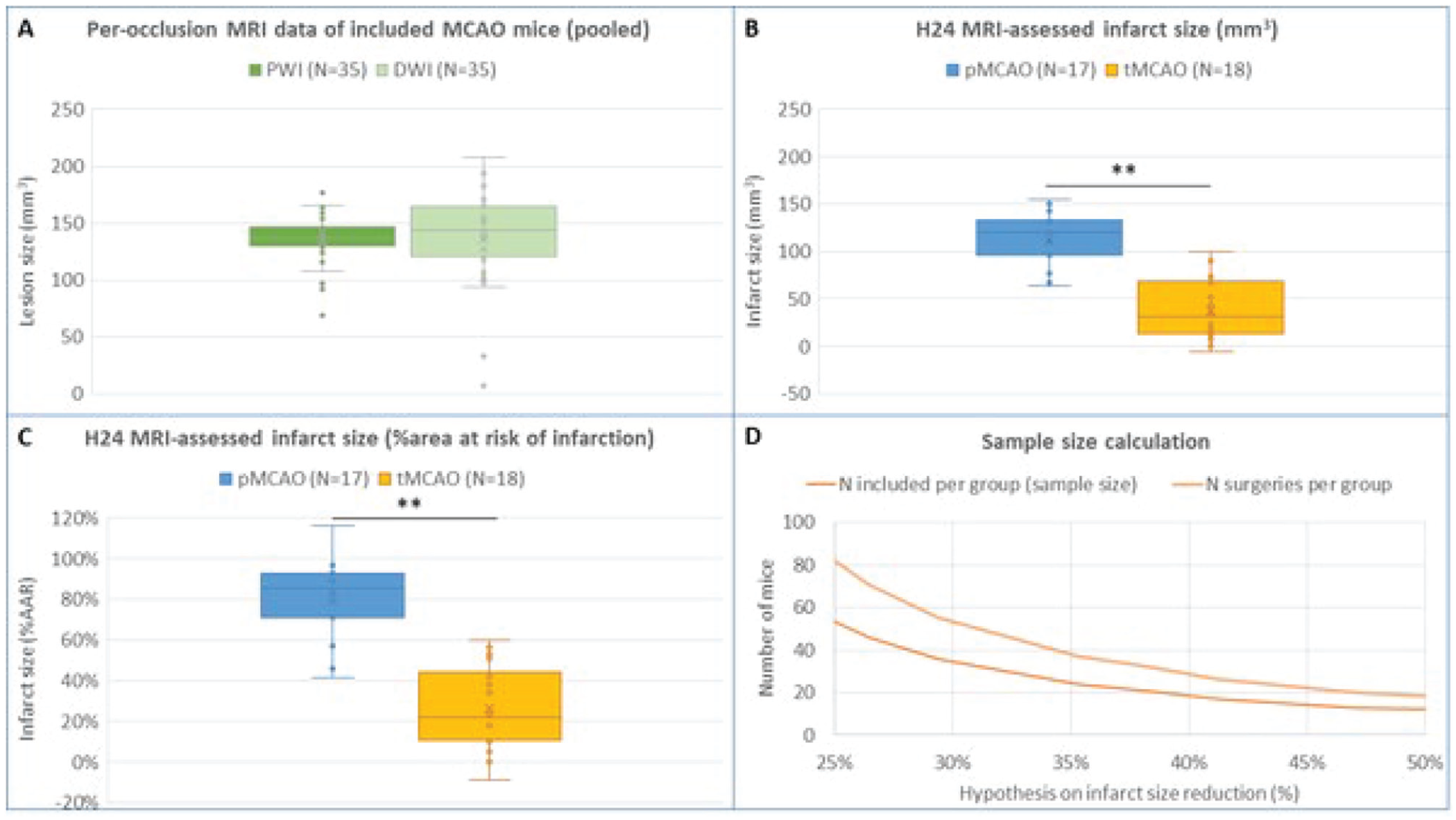
Longitudinal MRI data (A-C) and sample size calculation (D)
P0754 / 423
ENDOGENOUS REGULATION OF NEUTROPHIL EXTRACELLULAR TRAPS IN ACUTE ISCHAEMIC STROKE DUE TO VACCINE-INDUCED IMMUNE THROMBOTIC THROMBOCYTOPENIA
1University of Veterinary Medicine Hannover, Hannover, Germany, 2Hannover Medical School, Hannover, Germany
P0755 / 1117
STUDY OF NEUROPROTECTIVE EFFECT OF PRE- AND POST-CONDITIONING WITH CYCLOSPORINE A IN A MOUSE MODEL OF TRANSIENT FOCAL CEREBRAL ISCHEMIA
1HCL, Lyon, France, 2U1060 CARMEN-IRIS, Lyon, France
CRC results after 24h of reperfusion: right ischemic hemisphere (A) and left non-ischemic hemisphere (B)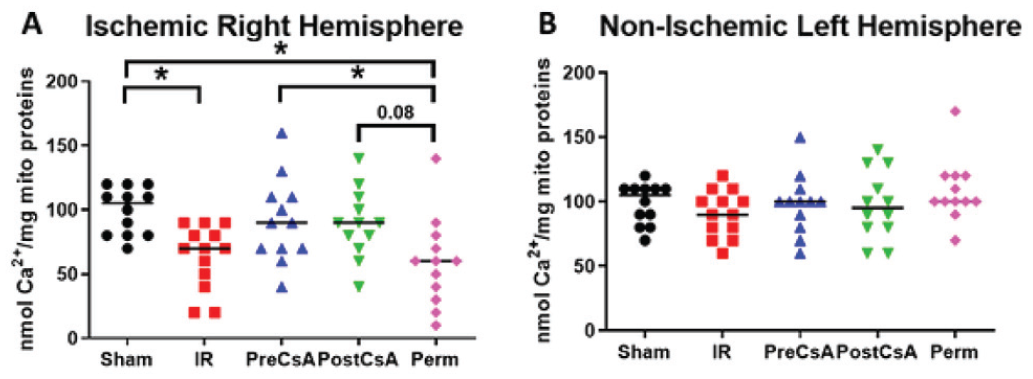
P0756 / 1482
THROMBIN GENERATION IS RELATED TO LEUKOCYTE INFLAMMATORY PROFILE IN ACUTE ISCHEMIC STROKE
1 University of Alberta, Medicine, Edmonton, Canada
Thrombosis is central to the pathogenesis of acute ischemic stroke, with higher thrombin generation being associated with increased stroke risk. The immune system may contribute to thrombin generation in stroke, and may offer novel strategies for stroke prevention. We examined the peripheral immune system transcriptome in relationship to thrombin generation capacity in patients with acute ischemic stroke. Due to its effects on thrombin generation, patients on anticoagulants were excluded from the study. The relationship of gene expression with peak thrombin was evaluated by analysis of co-variance (ANCOVA) across peak thrombin quartiles adjusted for sex and age. In 97 patients with acute ischemic stroke, thrombin generation was variable, ranging from 252.0nM to 752.4nM peak thrombin. Increased thrombin generation was associated with differences in thromboinflammatory leukocyte gene expression, including a decrease in ADAM metallopeptidase with thrombospondin type 1 motif 13 (ADAMTS13) and an increase in NF-kB activating protein (NKAP), protein disulfide isomerase family A member 5 (PDIA5), and tissue factor pathway inhibitor 2 (TFPI2) expression. Pathways associated with peak thrombin included interleukin 6 (IL-6) signaling, thrombin signaling, and NF-kB signaling. A discriminant analysis model summarizing the immune activation associated with thrombin generation in first cohort of stroke could distinguish patients with low peak thrombin from high peak thrombin in second cohort of 112 acute ischemic stroke patients. The identified genes and pathways support a role of the immune system contributing to thrombus formation in patients with stroke. These may have relevance to reduce thrombus formation and stroke prevention.
P0757 / 375
SIMVASTATIN IS NOT PROTECTIVE AT THE ACUTE STAGE OF ISCHEMIC STROKE IN THE MOUSE MODEL OF DISTAL PERMANENT MIDDLE CEREBRAL ARTERY OCCLUSION
1Univ-Lyon, CarMeN Laboratory, Inserm U 1060, INRA U 1397, INSA Lyon, Université Claude Bernard Lyon 1, Lyon, France, 2Université de Lyon, Ecole Normale Supérieure de Lyon, CNRS UMR 5182, Université Lyon 1, Laboratoire de Chimie, Lyon, France, 3Institut NeuroMyoGène, Université Claude Bernard Lyon 1, CNRS UMR 5310, INSERM U 1217, Lyon, France, 4Hospices Civils de Lyon, Lyon, France, 5BIORAN Team, Lyon Neurosciences Research Center, CNRS UMR 5292, Inserm U 1028, Université Claude Bernard Lyon 1, Lyon, France, 6CNRS, Lyon, France, 7Department of Biomedicine, Biophysical Immunology Laboratory, Aarhus University, Aarhus, Denmark
ANR-15-CE18-0026-01
ANR16-RHUS-0009
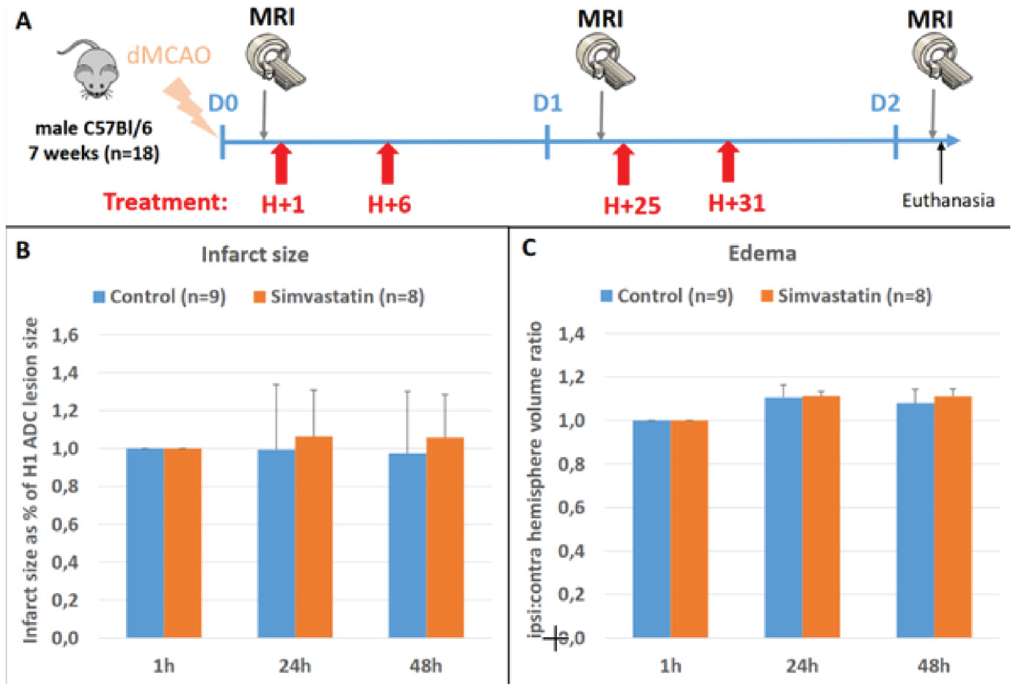
Simvastatin does not decrease infarct size or edema in dMCAO
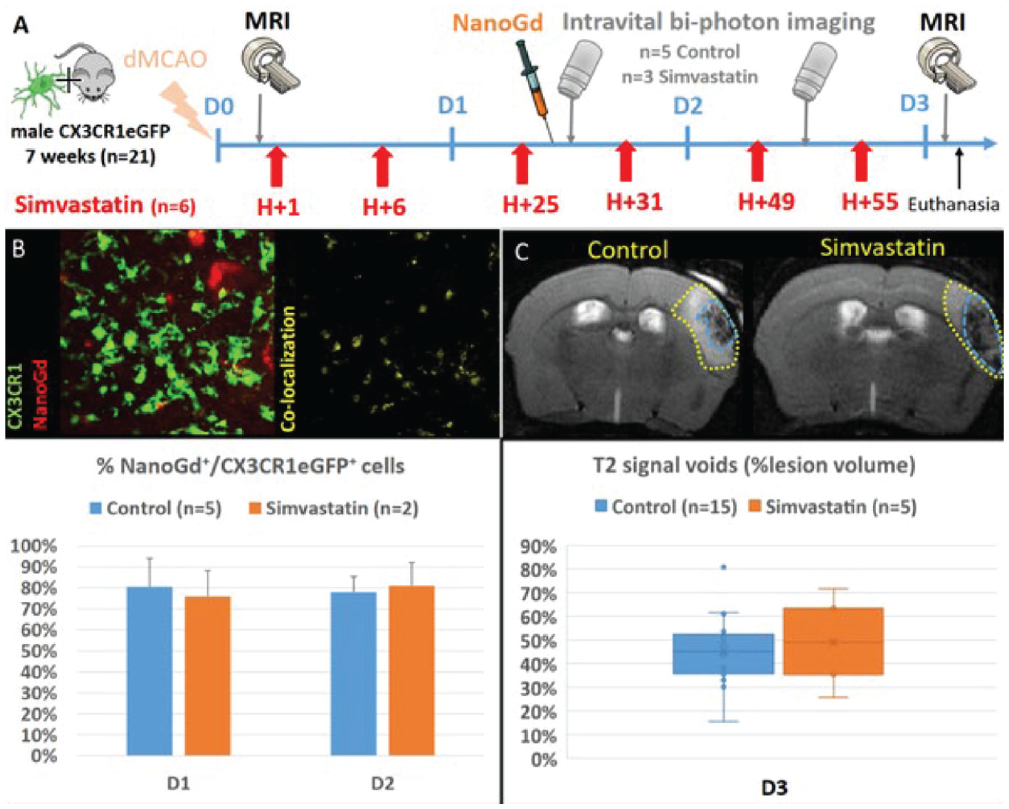
Simvastatin does not inhibit phagocytosis activity in dMCAO
P0758 / 1217
TREATMENT STRATEGIES INVESTIGATED IN A HUMAN IN VITRO MODEL OF THE ISCHEMIC PENUMBRA
1 University of Twente, Clinical neurophysiology, Enschede, Netherlands
P0759 / 196
ASSESSMENT OF AMPA RECEPTOR MODULATION AGAINST ISCHEMIC REPERFUSION INJURY IN RATS BY MAGNETIC RESONANCE IMAGING
1 All India Institute of Medical Sciences, Pharmacology, New Delhi, India
P0760 / 1255
DNASE 1 UNVEILS THE PRESENCE AND UNLOCKS THE THROMBOLYTIC POTENTIAL OF INTRAVENOUSLY ADMINISTERED T-PA IN LARGE VESSEL OCCLUSION ACUTE ISCHEMIC STROKE
1INSERM U1148 Laboratory of Vascular Translational Science, TEAM 6: Hemostasis, Thrombo-Inflammation and Neurovascular Repair, Paris, France, 2Lariboisiere university hospital APHP, Department of Neurology, Paris, France, 3Rothschild Foundation Hospital, Department of Interventional Neuroradiology, Paris, France
We investigated whether biologically relevant intra-thrombus concentrations of t-PA were achieved following IVT for LVO-related AIS, and whether extracellular DNA contributed to IVT failure.
P0761 / 985
ROLE OF ENDOTHELIN-1 AND NITRIC OXIDE IN ACUTE ISCHEMIC STROKE LEPTOMENINGEAL COLLATERALS ACTIVATION
1Sapienza University - Umberto I Hospital, Emergency Department - Stroke Unit, Rome, Italy, 2Sapienza University, Department of Medical and Surgical Sciences and Biotechnologies, Latina, Italy, 3Sapienza University, Department of Clinical Internal, Anaesthesiological and Cardiovascular Sciences, Rome, Italy, 4Sapienza University - Umberto I Hospital, Department of Human Neurosciences - Neuroradiology Unit, Rome, Italy, 5Umberto I Hospital, Emergency Department - Stroke Unit, Rome, Italy
P0762 / 565
DEVELOPMENT OF A TRANSLATIONAL MODEL FOR CEREBRAL ISCHEMIA REPERFUSION IN ADULT MINIPIGS
1Erasmus MC University Medical Center, Cardiology, Rotterdam, Netherlands, 2Erasmus MC University Medical Center, Neurology, Rotterdam, Netherlands, 3Erasmus MC University Medical Center, Neurosurgery, Rotterdam, Netherlands
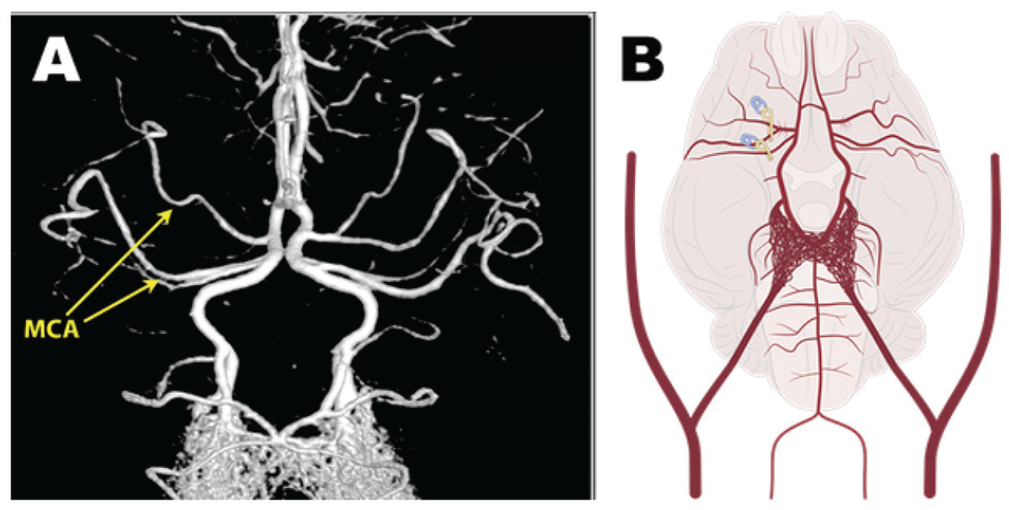
3D-Angiography (
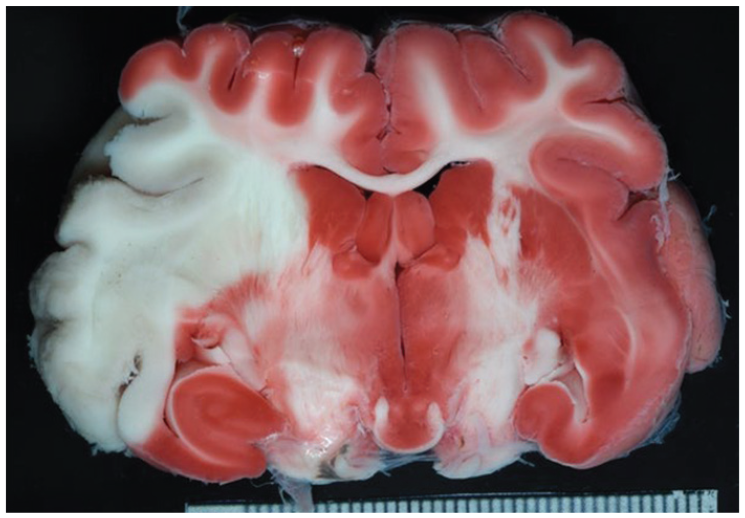
Example of TTC infarct staining. Infarcted tissue does not stain red.
P0763 / 509
LONGITUDINAL CHANGE IN GLOBAL METABOLOMIC PROFILING BETWEEN THE ACUTE AND CHRONIC STAGES OF ISCHEMIC STROKE
1University of Oklahoma Health Sciences Center, Neurology, Oklahoma City, United States, 2University of Oklahoma Health Sciences Center, Statistics, Oklahoma City, United States, 3University of Oklahoma Health Sciences Center, Oklahoma City, United States, 4University of Oklahoma Health Sciences Center, Pediatrics, Oklahoma City, United States
Subpathway analysis of metabolites with different concentrations in acute to chronic stages of stroke after TSBH correction for multiple testing.
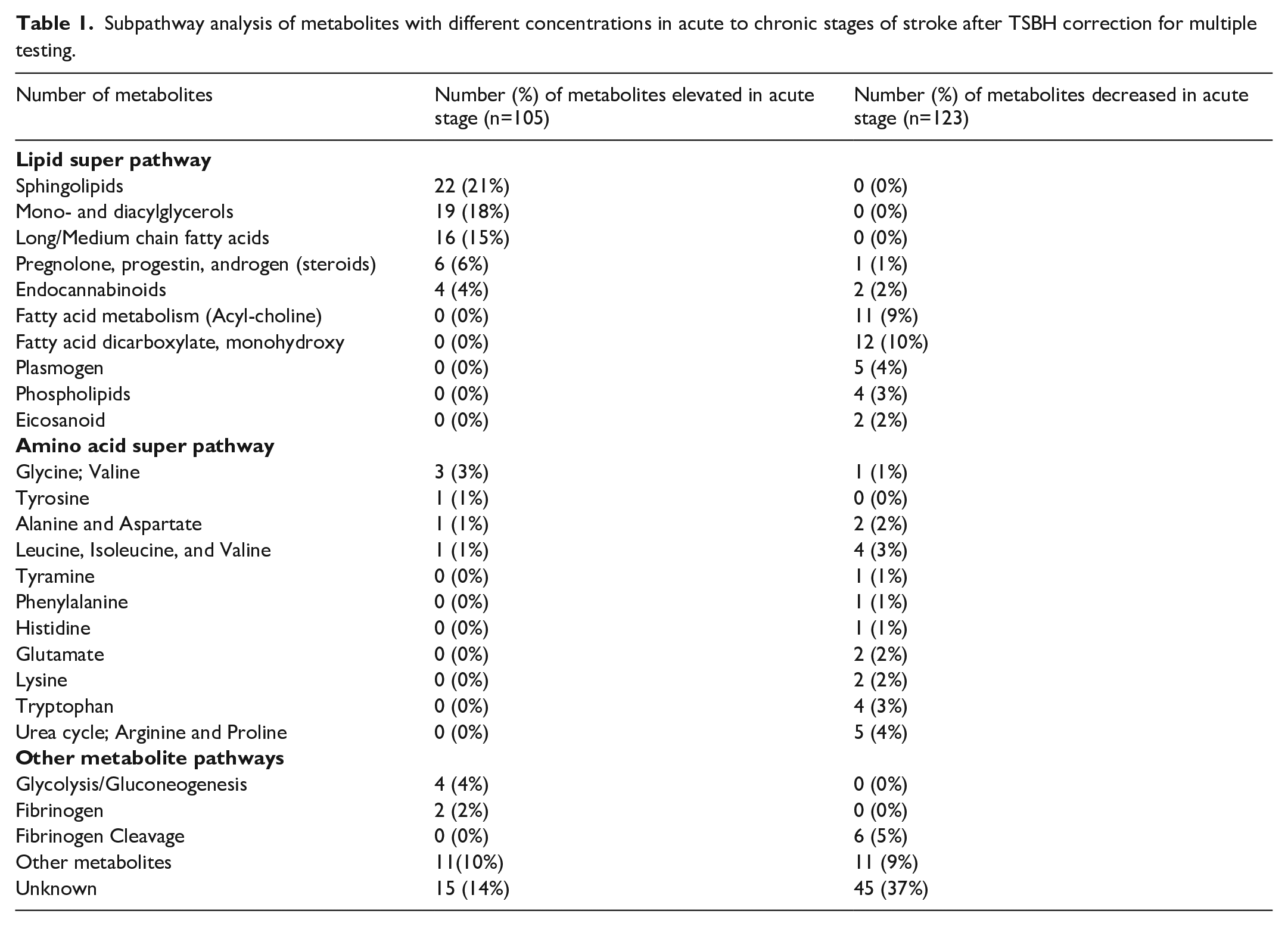
Summary of metabolites showing significant variation between the acute and chronic stages of stroke, sorted by regression coefficients.
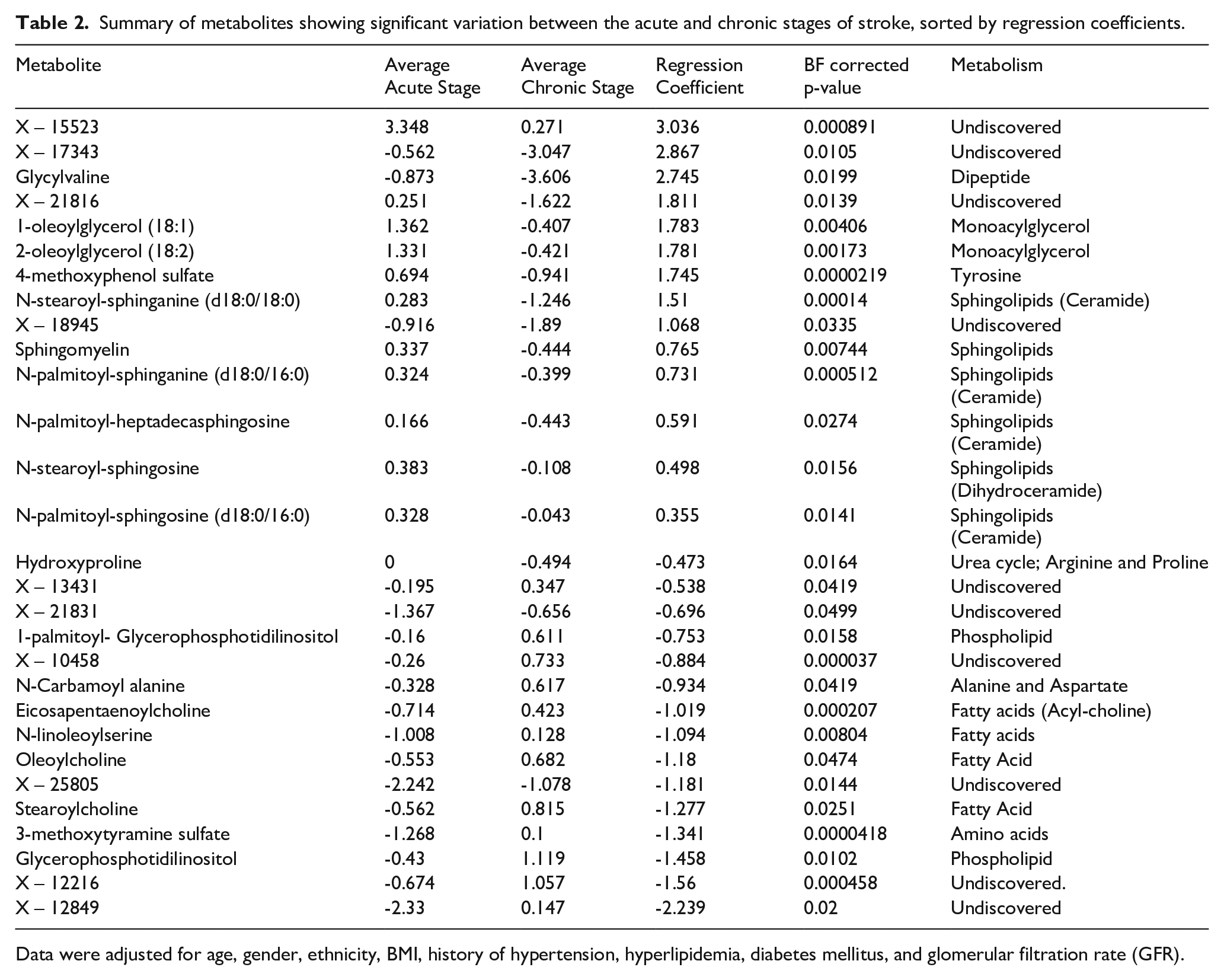
Data were adjusted for age, gender, ethnicity, BMI, history of hypertension, hyperlipidemia, diabetes mellitus, and glomerular filtration rate (GFR).
P0764 / 1278
WITHDRAWN CARBAMYLATION IN ACUTE ISCHEMIC STROKE THROMBI IMPAIRS TPA-MEDIATED THROMBOLYSIS AND INCREASES THROMBUS FRAILTY
1INSERM U1148 Laboratory of Vascular Translational Science, TEAM 6: Hemostasis, Thrombo-Inflammation and Neurovascular Repair, Paris, France, 2Rothschild Foundation Hospital, Department of Interventional Neuroradiology, Paris, France, 3Lariboisiere University Hospital APHP, Department of Neurology, Paris, France
P0765 / 510
CHANGE OF THYROID FUNCTION AFTER ISCHEMIC STROKE AND ITS RELATION TO STROKE SEVERITY
1University of Oklahoma Health Sciences Center, Neurology, Oklahoma City, United States, 2University of Oklahoma Health Sciences Center, Statistics, Oklahoma City, United States, 3University of Oklahoma Health Sciences Center, Endocrinology, Oklahoma City, United States, 4University of Oklahoma Health Sciences Center, Psychiatry, Oklahoma City, United States
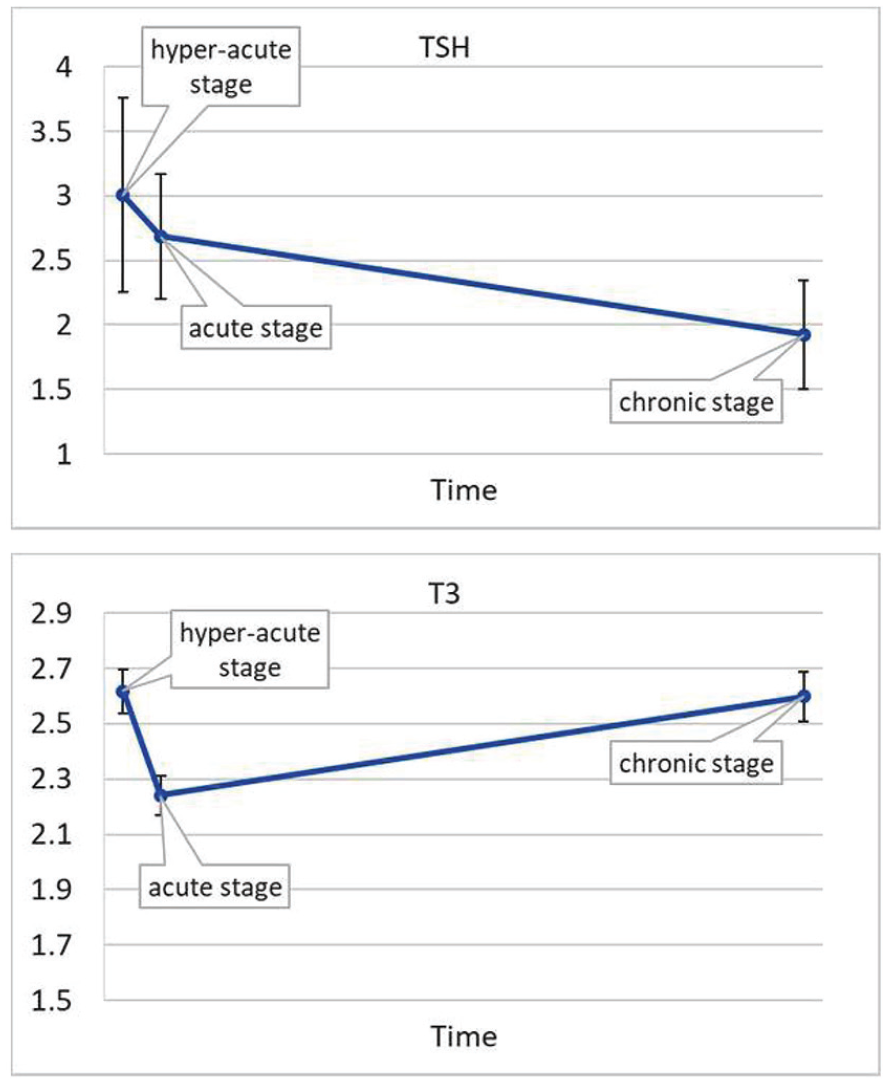
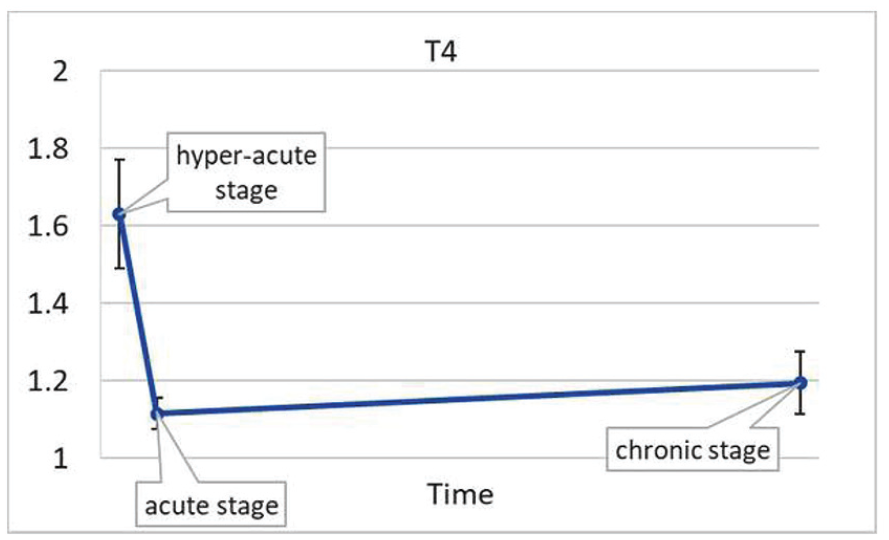
P0766 / 893
HUMAN T-LYMPHOCYTES DYNAMICALLY CHANGE THEIR ACTIVATIONAL STATUS POST STROKE AND INTERACT WITH MICROGLIA CELLS EX VIVO
1University Medicine Greifswald, Department of Neurology, Greifswald, Germany, 2AMEOS Clinic Ueckermünde, Department of Neurology, Ueckermünde, Germany, 3Carl-Thiem-Clinic Cottbus, Department of Neurology, Cottbus, Germany, 4University Greifswald, Zentrum für Innovationskompetenz: Humorale Immunreaktionen bei kardiovaskulären Erkrankungen, Greifswald, Germany
P0767 / 826
INVESTIGATION OF THE RELATIONSHIP BETWEEN THROMBUS HISTOPATHOLOGY AND HYPERINTENSE ACUTE REPERFUSION MARKER IN ACUTE ISCHEMIC STROKE
1Bakırköy Prof. Dr. Mazhar Osman Mental Health and Neurological Diseases Training and Research Hospital, Neurology, Istanbul, Turkey, 2Koç University, Pathology, Istanbul, Turkey, 3Bakırköy Dr. Sadi Konuk Training and Research Hospital, Neuroradiology, Istanbul, Turkey, 4Koç University, Koç University Research Center for Translational Medicine, Istanbul, Turkey, 5Yeditepe University, Physiology, Istanbul, Turkey, 6Koç University, Neurology, Istanbul, Turkey
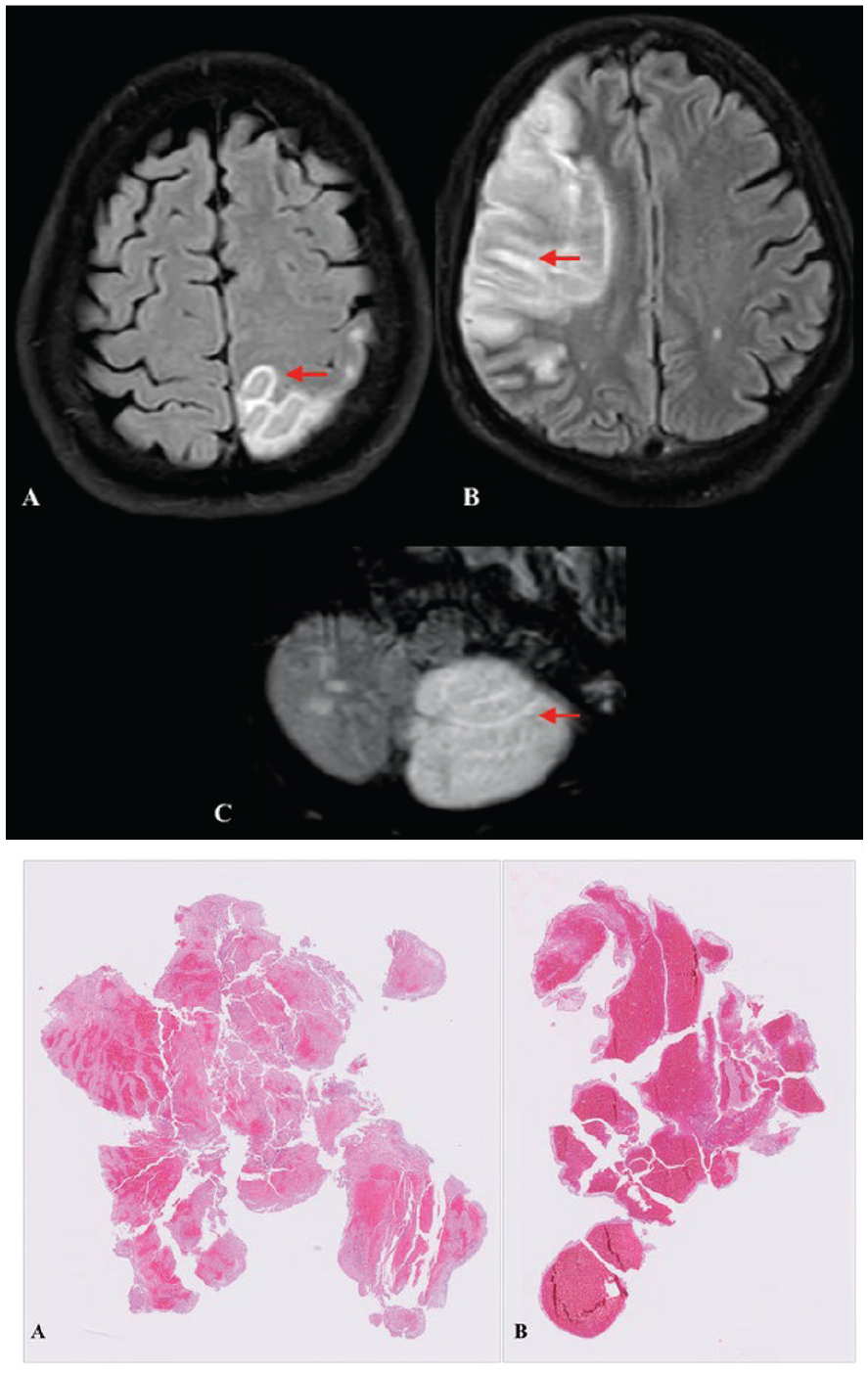
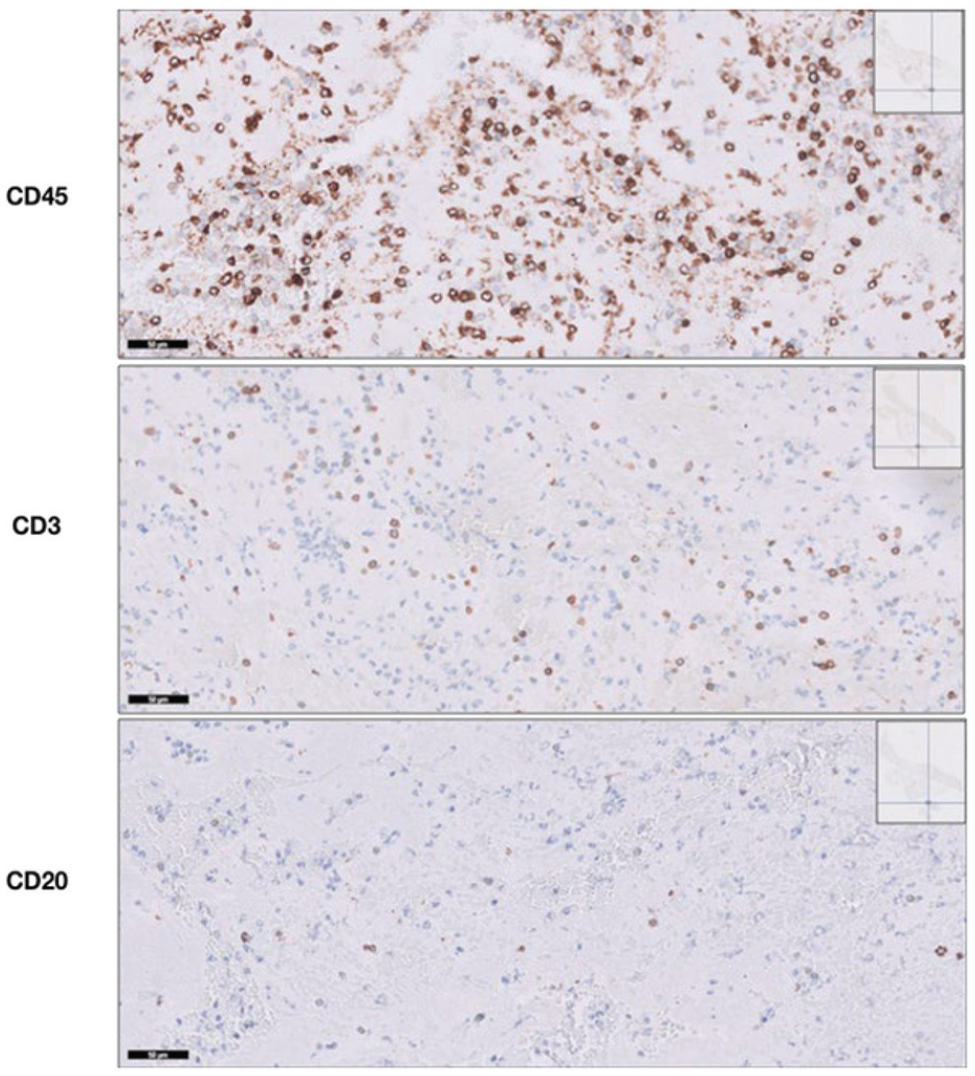
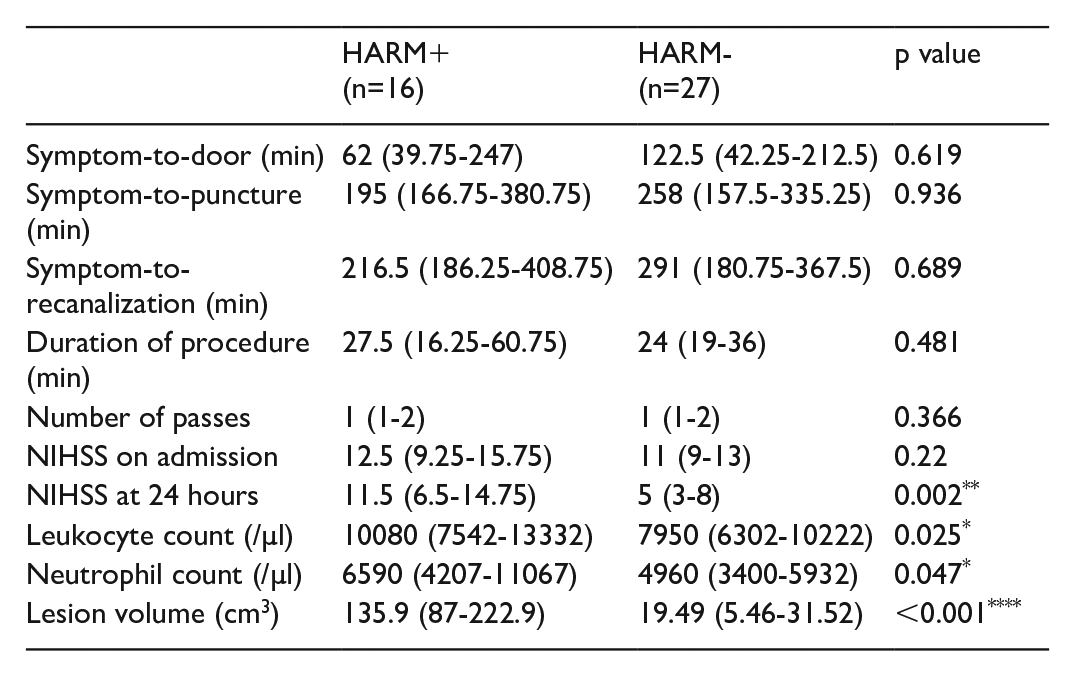
P0768 / 1401
NEUROPROTECTIVE EFFECT OF REMOTE ISCHEMIC PERCONDITIONING AND POSTCONDITIONING IN A PRECLINICAL MOUSE MODEL OF ACUTE ISCHEMIC STROKE
1Clinical Neurosciences Group, Institut de Recerca Biomèdica de Lleida (IRBLleida), Lleida, Spain, 2Experimental Medicine Department, Universitat de Lleida, Institut de Recerca Biomèdica de Lleida (IRBLleida), Lleida, Spain, 3Stroke Unit, Department of Neurology, Hospital Universitari Arnau de Vilanova, Clinical Neurosciences Group IRBLleida, Universitat de Lleida, Medicine Department, Lleida, Spain, 4Universitat de Lleida, Institut de Recerca Biomèdica de Lleida (IRBLleida), Medicine Department, Lleida, Spain
P0769 / 842
SYSTEMATIC OBSERVATION OF BRAIN VASCULAR HIERARCHY IN A TMCAO MODEL OF PDGFRB::AI14 MICE BY TWO-PHOTON IMAGING
1Beijing Tiantan Hospital, Capital Medical University, Department of Neurology, Beijing, China, 2China National Clinical Research Center for Neurological Diseases, Beijing, China
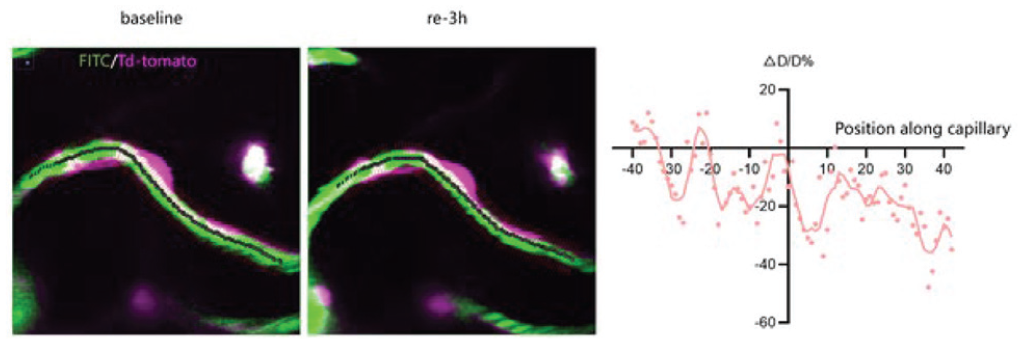
P0770 / 1272
THE EFFECT OF HYDROGEN SULFIDE DONOR – AP39 – ON EXCITOTOXICITY IN A RAT MODEL OF BRAIN ISCHEMIA
1Jagiellonian University Medical College, Department of Biochemical Toxicology, Krakow, Poland, 2University of Exeter Medical School, Institute of Biomedical and Clinical Science, Exeter, United Kingdom
The study supported by National Science Centre grant (2016/21/D/NZ4/03302) and funds of Jagiellonian University Medical College (N42/DBS/000118).
P0771 / 870
CIRCULATING ANTIGENIC TISSUE-TYPE PLASMINOGEN ACTIVATOR AS AN EARLY BIOMARKER OF ISCHEMIC STROKE
1INSERM U1237, Caen, France, 2Hospital Universitario Virgen Macarena, Sevilla, Spain, 3CHU Caen, Department of Clinical Research, Caen, France, 4CHU Caen, Department of Emergency Medicine, Caen, France
P0772 / 1376
EICOSAPENTAENOIC ACID (EPA) REDUCES OXIDATIVE STRESS PROTEIN EXPRESSION IN BRAIN ENDOTHELIUM DURING INFLAMMATION
1Elucida Research LLC, Beverly, United States, 2University of New Hampshire, Durham, United States, 3Brigham and Women’s Hospital, Harvard Medical School, Boston, United States
P0773 / 667
ENDOVASCULAR STROKE MODEL IN SWINE WITH REPERFUSION CAPABILITY – A NEW PLATFORM FOR TESTING THERAPEUTICS IN ACUTE STROKE
1Ti-com sp. z o.o., Olsztyn, Poland, 2John Paul II Western Hospital in Grodzisk Mazowiecki, Grodzisk Mazowiecki, Poland, 3Warsaw University of Life Sciences, Center for Translational Medicine, Warsaw, Poland, 4University of Warmia and Mazury, Olsztyn, Poland, 5Ludwig-Maximilian University, Department of Psychiatry, Munich, Germany, 6University of Maryland, Department of Diagnostic Radiology and Nuclear Medicine, Baltimore, United States
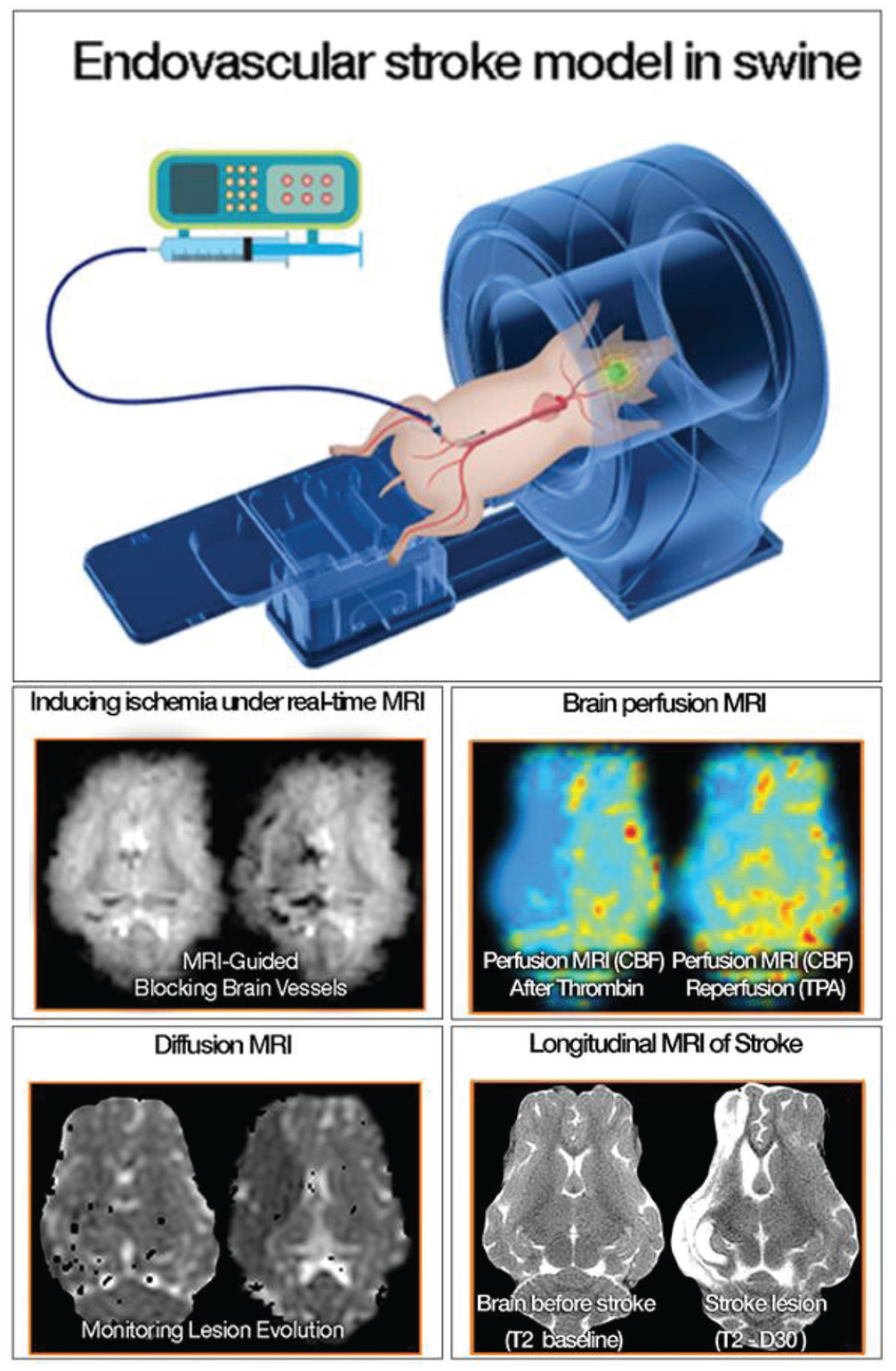
P0774 / 752
PROFILE OF THROMBIN GENERATION PARAMETERS AND RELATIONSHIP WITH CEREBRAL MICRO-EMBOLIC SIGNALS IN PATIENTS WITH ASYMPTOMATIC AND SYMPTOMATIC ⩾50-99% CAROTID STENOSIS
1Tallaght University Hospital / The Adelaide and Meath Hospital, Dublin, incorporating the National Children’s Hospital (AMNCH), Department of Neurology/Stroke Service, Dublin, Ireland, 2Tallaght University Hospital / The Adelaide and Meath Hospital, Dublin, incorporating the National Children’s Hospital (AMNCH), Vascular Neurology Research Foundation/Department of Neurology, Dublin, Ireland, 3Tallaght University Hospital / The Adelaide and Meath Hospital, Dublin, incorporating the National Children’s Hospital (AMNCH), Department of Vascular Surgery, Dublin, Ireland, 4Tallaght University Hospital / The Adelaide and Meath Hospital, Dublin, incorporating the National Children’s Hospital (AMNCH)/Trinity College Dublin, Department of Neurology/Stroke Service/Academic Unit of Neurology, Dublin, Ireland, 5Tallaght University Hospital / The Adelaide and Meath Hospital, Dublin, incorporating the National Children’s Hospital (AMNCH), Stroke Service/Age-Related Health Care Department, Dublin, Ireland, 6St. James’s Hospital, Departments of Medicine for the Elderly/Stroke Service, Dublin, Ireland, 7St. James’s Hospital, Vascular Surgery, Dublin, Ireland, 8Royal College of Surgeons in Ireland, Department of Molecular and Cellular Therapeutics/Irish Centre for Vascular Biology, Dublin, Ireland, 9Royal College of Surgeons of Ireland, Department of Molecular and Cellular Therapeutics/Irish Centre for Vascular Biology, Dublin, Ireland, 10Royal College of Surgeons in Ireland, Department of Haematology/Department of Molecular and Cellular Therapeutics/Irish Centre for Vascular Biology, Dublin, Ireland, 11Royal Free Hampstead NHS Trust, Department of Vascular Surgery/University Department of Surgery, London, United Kingdom, 12Tallaght University Hospital / The Adelaide and Meath Hospital, Dublin, incorporating the National Children’s Hospital (AMNCH)/Trinity College Dublin/Royal College of Surgeons in Ireland, Vascular Neurology Research Foundation/Department of Neurology/Stroke Service/Irish Centre for Vascular Biology/Academic Unit of Neurology, Dublin, Ireland
P0775 / 1144
DIAGNOSTIC ACCURACY OF NON-ENHANCED CT FOR DIFFERENTIATING PENUMBRA AND CORE AFTER ISCHAEMIC STROKE: A SYSTEMATIC REVIEW AND META-ANALYSIS
1University of Edinburgh, Centre for Clinical Brain Sciences, Edinburgh, United Kingdom, 2King Abdulaziz University, Department of Diagnostic Radiology, Faculty of Applied Medical Sciences, Jeddah, Saudi Arabia, 3University of Edinburgh, Edinburgh Imaging, and UK Dementia Research Institute at the University of Edinburgh and Centre for Clinical Brain Sciences, Edinburgh, United Kingdom
P0776 / 298
NEUTROPHIL GRANULOCYTES INTERACT WITH DAMAGED NEURONS AFTER CEREBRAL ISCHEMIA
1 University of Muenster, Neurology, Muenster, Germany
GENETICS, ‘OMICS AND BIOMARKERS
P0777 / 809
DNASE1 POLYMORPHISM ROLE IN NETS LEVELS AND INFARCT VOLUME AFTER STROKE
1Universidad Complutense de Madrid, Hospital 12 de Octubre, Madrid, Spain, 2Centro Nacional de Investigaciones Cardiovasculares (CNIC), Madrid, Spain
P0778 / 1393
THE ROLE OF NEUROVASCULAR COMPLEX DYSFUNCTION IN MOYAMOYA ARTERIOPATHY: A MOLECULAR CHARACTERIZATION
1Fondazione IRCCS Istituto Neurologico Carlo Besta, Neurology IX Unit, UCV, Milan, Italy, 2University of Milan, Dept. of Health Sciences, Clinical Biochemistry and Mass Spectrometry Lab, Milan, Italy, 3Fondazione IRCCS Istituto Neurologico Carlo Besta, Neurosurgical Unit, Milan, Italy
P0779 / 813
CAUSAL EFFECT OF FREE TRIIODOTHYRONINE LEVEL ON ISCHEMIC STROKE OUTCOME: A MENDELIAN RANDOMIZATION STUDY
1V.K. Gusak Institute of Urgent and Reparative Surgery, Experimental Surgery Department, Donetsk, Ukraine, 2M. Gorky Donetsk National Medical University, Child and General Neurology Department, Donetsk, Ukraine, 3L.M. Litvinenko Institute of Physical-Organic and Coal Chemistry, Department of Biologically Active Substances, Donetsk, Ukraine
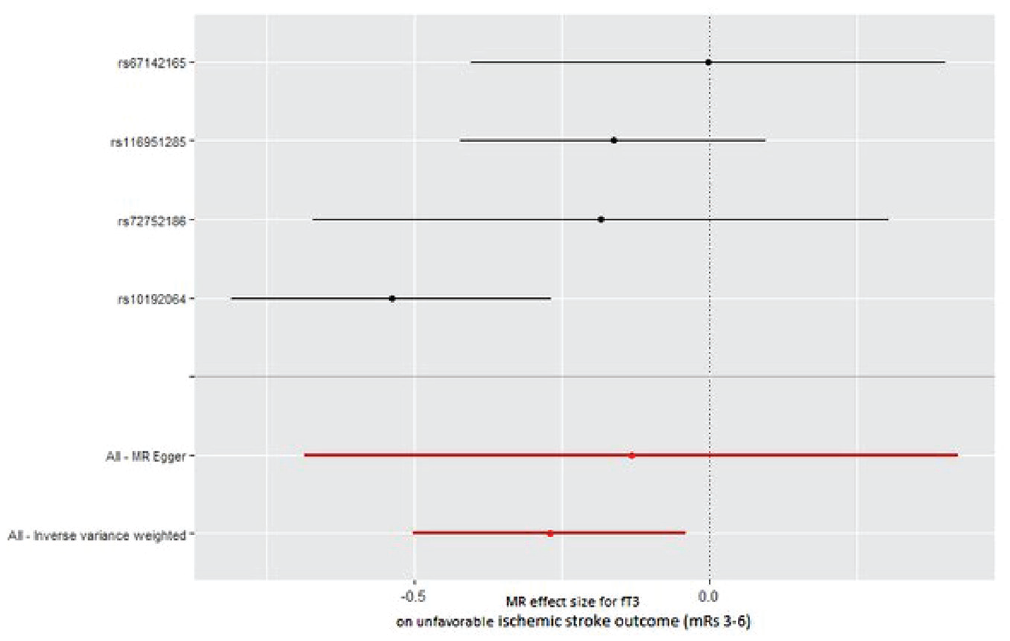
P0780 / 1360
FEATURES OF GENETIC MARKERS OF THROMBOPHILIA IN OLDER PATIENTS WITH CEREBRAL VENOUS THROMBOSIS IN THE SVERDLOVSK REGION, RUSSIA
1 Ural state medical university, Sverdlovsk Regional Clinical Hospital No1, Ekaterinburg, Russian Federation
Cerebral venous thrombosis (CVT) is rare in older patients. We investigated genetic markers differ in older patients.
P0781 / 1611
BENEFICIAL AND DELETARIOUS EFFECT OF GLUCOSE ON CLINICAL PROGNOSIS IN STROKE PATIENTS TREATED BY THROMBECTOMY: A METABOLOMIC STUDY OF CEREBRAL THROMBI
1University hospital of Marseille, Stroke Unit, Marseille, France, 2Aix Marseille University, C2VN, Marseille, France, 3University hospital of Marseille, Marseille, France, 4University Cote d’Azur, TIRO Laboratory, Nice, France, 5University Hospital of Nice, Nice, France
P0782 / 877
A PROTEOMICS APPROACH TOWARDS IDENTIFICATION AND VALIDATION OF BLOOD-BASED PROTEIN BIOMARKERS FOR THE DIAGNOSIS AND DIFFERENTIATION OF ISCHEMIC STROKE
1All India Institute of Medical Sciences, Neurology, New Delhi, India, 2CSIR-Institute of Genomics and Integrative Biology, New Delhi, India, 3All India Institute of Medical Sciences, Emergency Medicine, New Delhi, India, 4All India Institute of Medical Sciences, Dr. R.P. Centre, New Delhi, India, 5All India Institute of Medical Sciences, Clinical Epidemiology Unit, New Delhi, India, 6Rajendra Institute of Medical Sciences, Neurology, Ranchi, India
P0783 / 1428
S100B IN ACUTE ISCHEMIC STROKE (AIS) CLOT IS A BIOMARKER FOR HAEMORRHAGIC TRANSFORMATION (HT)
1National University of Ireland Galway, Department of Physiology and Galway Neuroscience Centre, Galway, Ireland, 2CÚRAM–SFI Research Centre in Medical Devices, National University of Ireland Galway, Galway, Ireland, 3Cerenovus, Galway, Ireland, 4Sahlgrenska University Hospital, Department of Neurology, Gothenburg, Sweden, 5Institute of Neuroscience and Physiology, Sahlgrenska Academy at University of Gothenburg, Department of Clinical Neuroscience, Gothenburg, Sweden, 6Sahlgrenska University Hospital, University of Gothenburg, Department of Interventional and Diagnostic Neuroradiology, Gothenburg, Sweden, 7National Institute of Clinical Neurosciences, Department of Neurointerventions, Budapest, Hungary, 8Royal College of Surgeons in Ireland, Beaumont Hospital, Department of Radiology, Dublin, Ireland, 9National & Kapodistrian University of Athens, “Attikon” University Hospital, Second Department of Neurology, Athens, Greece, 10Metropolitan Hospital, Stroke Unit, Piraeus, Greece
P0784 / 906
UNBIASED MULTI-TRAIT ANALYSIS OF GWAS REVEALS NEW LOCI ASSOCIATED TO STROKE RISK
1Biomedical Research Institute Sant Pau (IIB Sant Pau), Stroke Pharmacogenomics and Genetics Group, Barcelona, Spain, 2Universitat Autònoma de Barcelona, Department of Medicine, Barcelona, Spain
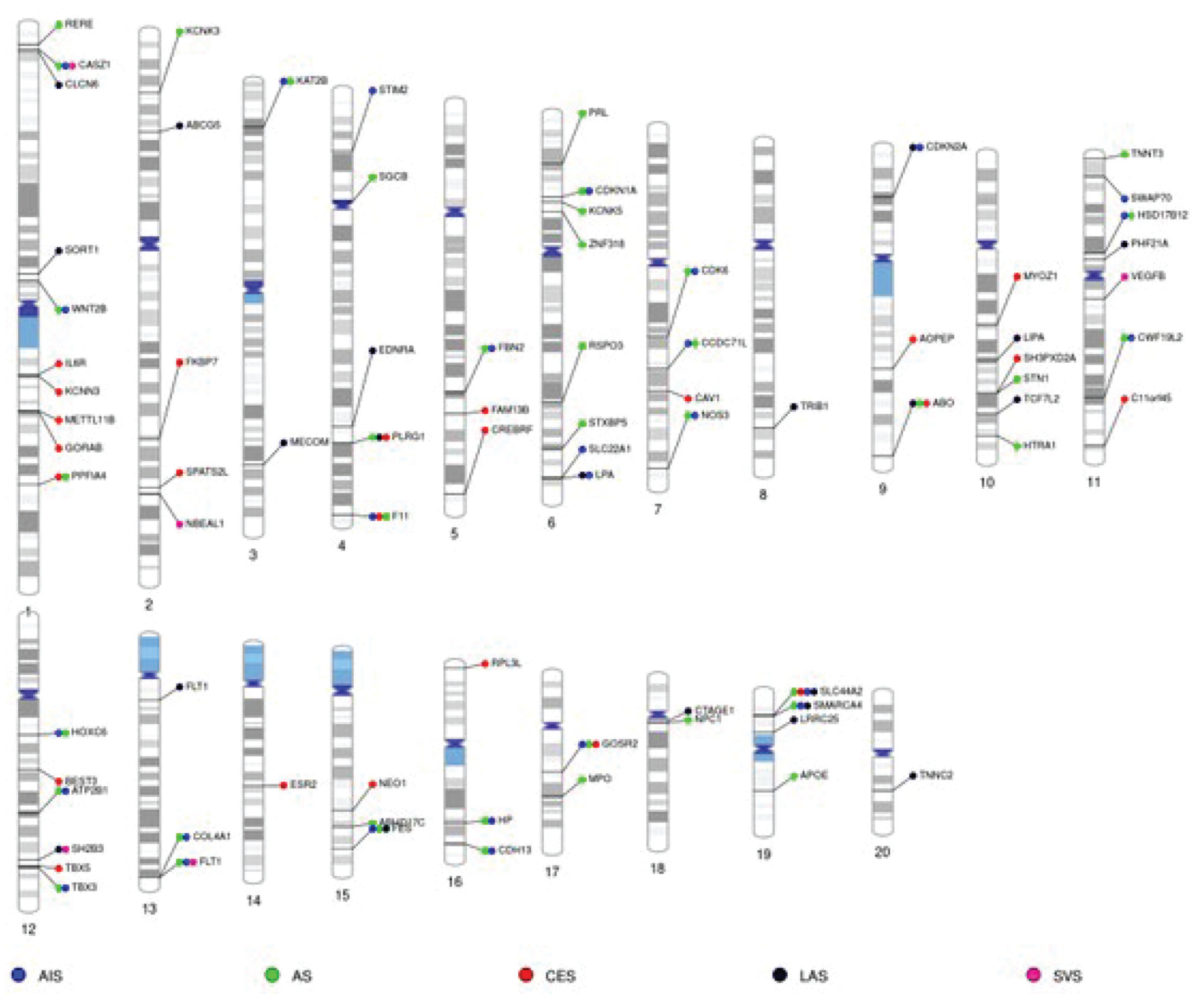
P0785 / 886
EFFICIENCY OF UNAFFECTED PARTS OF THE BRAIN NETWORK DIFFERENTIALLY IMPACTS MOTOR AND ATTENTIONAL IMPAIRMENT AFTER STROKE
1EPFL, Geneva, Switzerland, 2EPFL, Sion, Switzerland, 3University of Fribourg, Fribourg, Switzerland, 4EPFL, Lausanne, Switzerland, 5Lausanne University Hospital, Lausanne, Switzerland, 6CRR SUVA, Sion, Switzerland, 7Berner Klinik, Crans-Montana, Switzerland, 8Valais Hospital, Sion, Switzerland, 9Würzburg University Hospital, Würzburg, Germany, 10University of Lübeck, Lübeck, Germany, 11Geneva University Hospital, Geneva, Switzerland, 12University of Geneva, Geneva, Switzerland
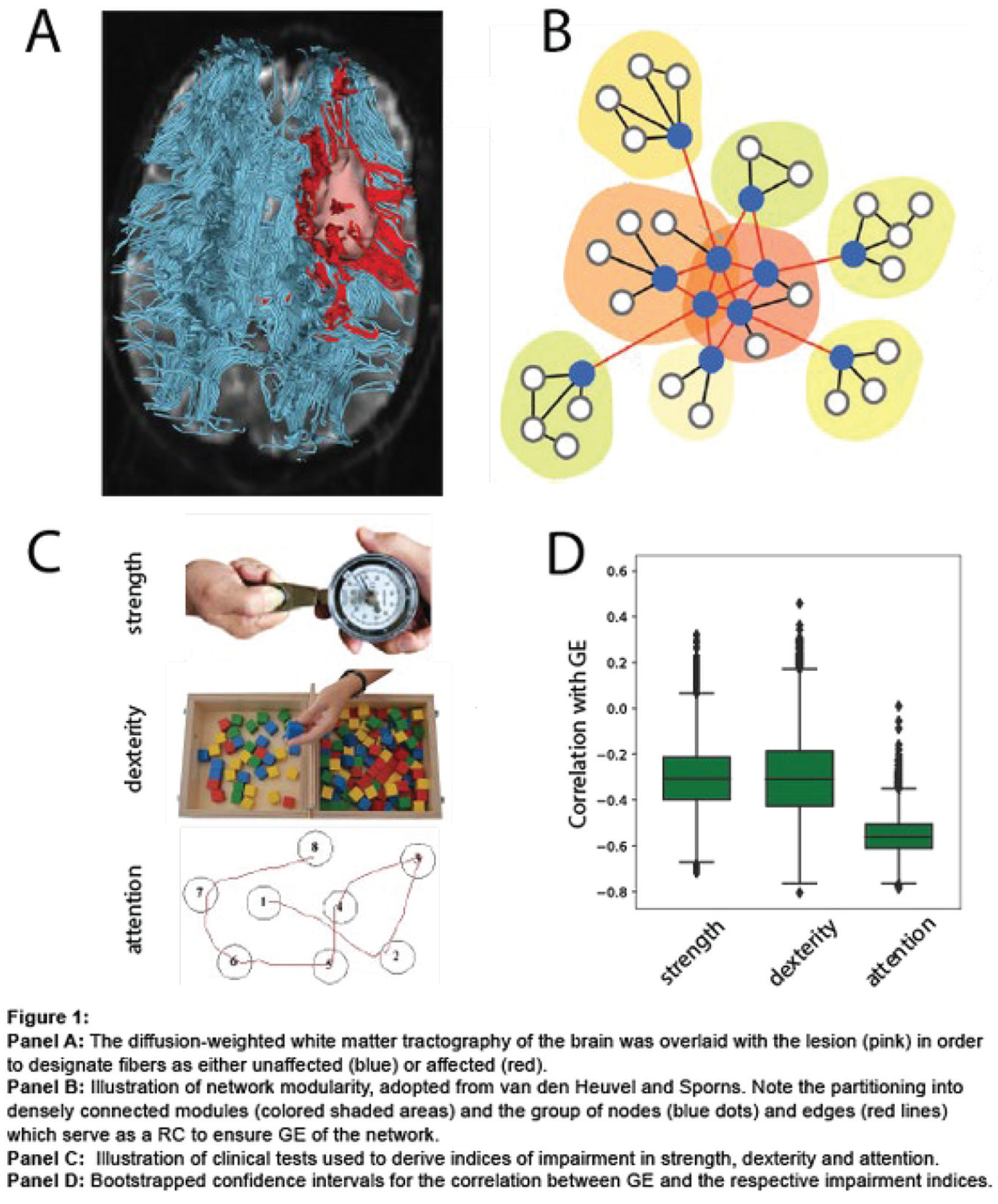
P0786 / 585
EXPRESSION PROFILE AND FUNCTIONAL PREDICTION OF PLASMA EXOSOME-DERIVED CIRCRNAS FROM ACUTE ISCHEMIC STROKE PATIENTS
1Chengdu Medical College, School of Public Health, Chengdu, China, 2Chengdu Medical College, School of Bioscience and Technology, Chengdu, China, 3Clinical Medical College and The First Affiliated Hospital of Chengdu Medical College, Department of Neurology, Chengdu, China, 4Chengdu Medical College, International Clinical Research Center, Chengdu, China, 5Sichuan Provincial People’s Hospital, Department of Neurology, Chengdu, China
P0787 / 766
PHOSPHODIESTERASE 4 D GENE POLYMORPHISMS AND RISK OF ISCHEMIC STROKE: A SYSTEMATIC REVIEW AND META-ANALYSIS
1 All India Institute of Medical Sciences, Neurology, New Delhi, India
P0788 / 1321
S-100B FAILS TO PREDICT LATE OR ANY SEIZURE AFTER ACUTE ISCHEMIC STROKE: DATA FROM THE BIOSIGNAL STUDY
1University Hospital and University of Zurich, Neurology, Zurich, Switzerland, 2University Hospital Zurich, Institute of Clinical Chemistry, Zurich, Switzerland, 3University of Thessaly, Laboratory of Biometry, Volos, Greece, 4Inselspital and University of Bern, Institute of Clinical Chemistry, Bern, Switzerland, 5University Hospital and University of Basel, Neurology, Basel, Switzerland
P0789 / 111
BIOMARKERS PREDICT STROKE SEVERITY AND HEMORRHAGIC TRANSFORMATION AFTER ACUTE ISCHEMIC STROKE
1Sree Chitra Tirunal Institute for Medical Sciences and Technology, Neurology, Trivandrum, India, 2Sree Chitra Tirunal Institute for Medical Sciences and Technology, Achutha Menon Centre for Health Science Studies, Trivandrum, India, 3Sree Chitra Tirunal Institute for Medical Sciences and Technology, Biochemistry, Trivandrum, India
CLINICAL PRACTICE, MANAGEMENT AND CARE
P0790 / 1031
POST-VACCINE-INDUCED IMMUNE THROMBOTIC THROMBOCYTOPENIA (VITT) STROKE: LITERATURE REVIEW AND PROPOSAL OF A THERAPEUTIC ALGORITHM FOR THE ACUTE PHASE
1Sapienza University of Rome, Emergency Department, Stroke Unit, Rome, Italy, 2Weill Cornell Medicine, Neurology, New York, United States, 3Sapienza University of Rome, Department of Human Neurosciences, Rome, Italy, 4Sapienza University of Rome, Neuroradiology Unit, Department of Human Neurosciences, Rome, Italy
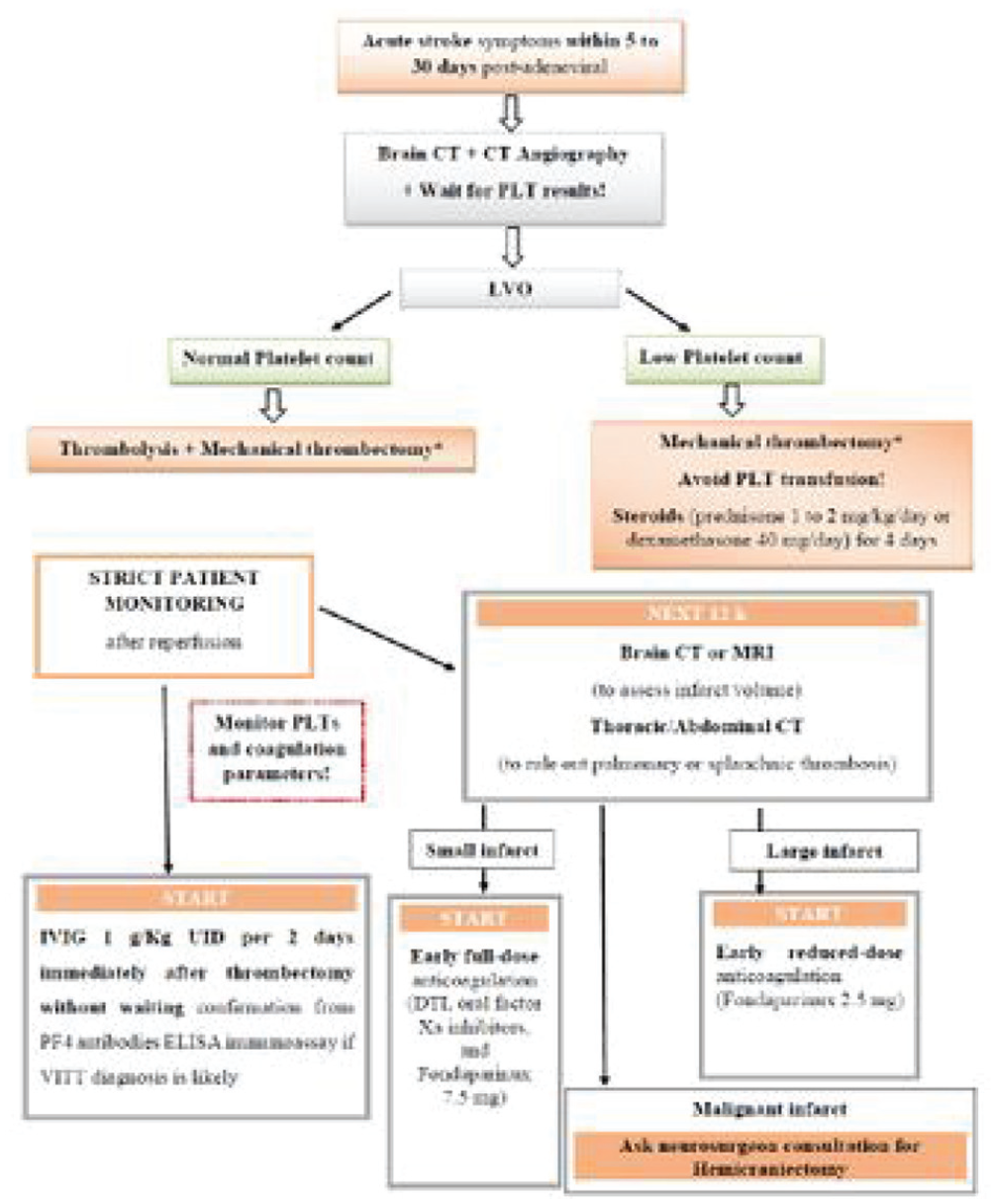
P0791 / 596
CLINICAL SIGNIFICANCE OF STROKE NURSE IN PATIENTS WITH ACUTE ISCHEMIC STROKE RECEIVING INTRAVENOUS THROMBOLYSIS
1 Nanjing First Hospital, Nanjing Medical University, Department of Neurology, Nanjing, China
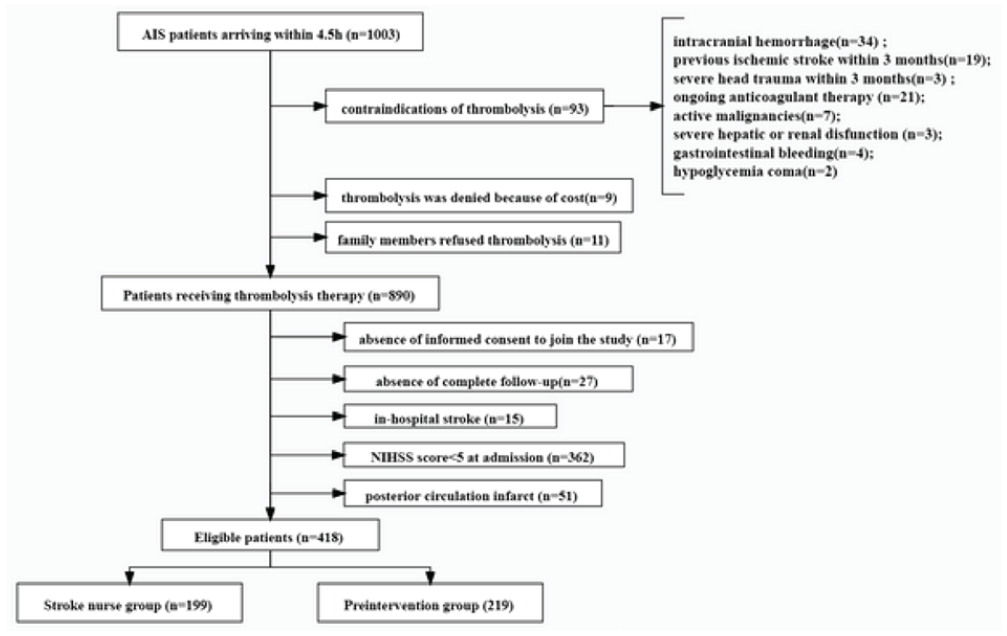
P0792 / 683
PATIENT BEHAVIOUR FROM STROKE SYMPTOM TO PREHOSPITAL CONTACT: WHAT PROMPTS FIRST CALL?
1Copenhagen University Hospital - Herlev and Gentofte, Department of Neurology, Copenhagen, Denmark, 2University of Copenhagen, Department of Clinical Medicine, Copenhagen, Denmark, 3Copenhagen University Hospital - Rigshospitalet, Department of Cardiology, Copenhagen, Denmark
P0793 / 977
“DRIP-AND-STAY” VS “DRIP-AND-SHIP” MODEL IN A REGIONAL TELESTROKE NETWORK
1Hospital Universitario Virgen Macarena, Seville, Spain, 2Hospital Puerta del Mar, Cádiz, Spain, 3Hospital Universitario de Torrecárdenas, Almeria, Spain, 4Hospital Universitario Virgen del Rocio, Seville, Spain, 5Hospital Serrania, Ronda, Spain, 6Hospital Santa Ana, Motril, Spain, 7Hospital El Poniente, El Ejido, Spain, 8Hospital San Juan de Dios, Bormujos, Spain, 9HAR Sierra Norte, Constantina, Spain
P0794 / 1023
DEVELOPING A FRAMEWORK FOR UTILIZING ADJUNCT REHABILITATION THERAPIES IN MOTOR RECOVERY OF UPPER EXTREMITY POST STROKE
R. Teasell1,2,3, A. McIntyre1, R. Viana1,2,3, E.A. Bateman1,2,3, M. Murie-Fernandez4, S. Janzen1,
1Lawson Health Research Institute, Parkwood Institute Research, London, Canada, 2St. Joseph’s Health Care London, Parkwood Institute, London, Canada, 3Western University, Schulich School of Medicine and Dentistry, London, Canada, 4Hospital Ciudad de Telde, Neurorehabilitaion Unit, Canary Island, Spain
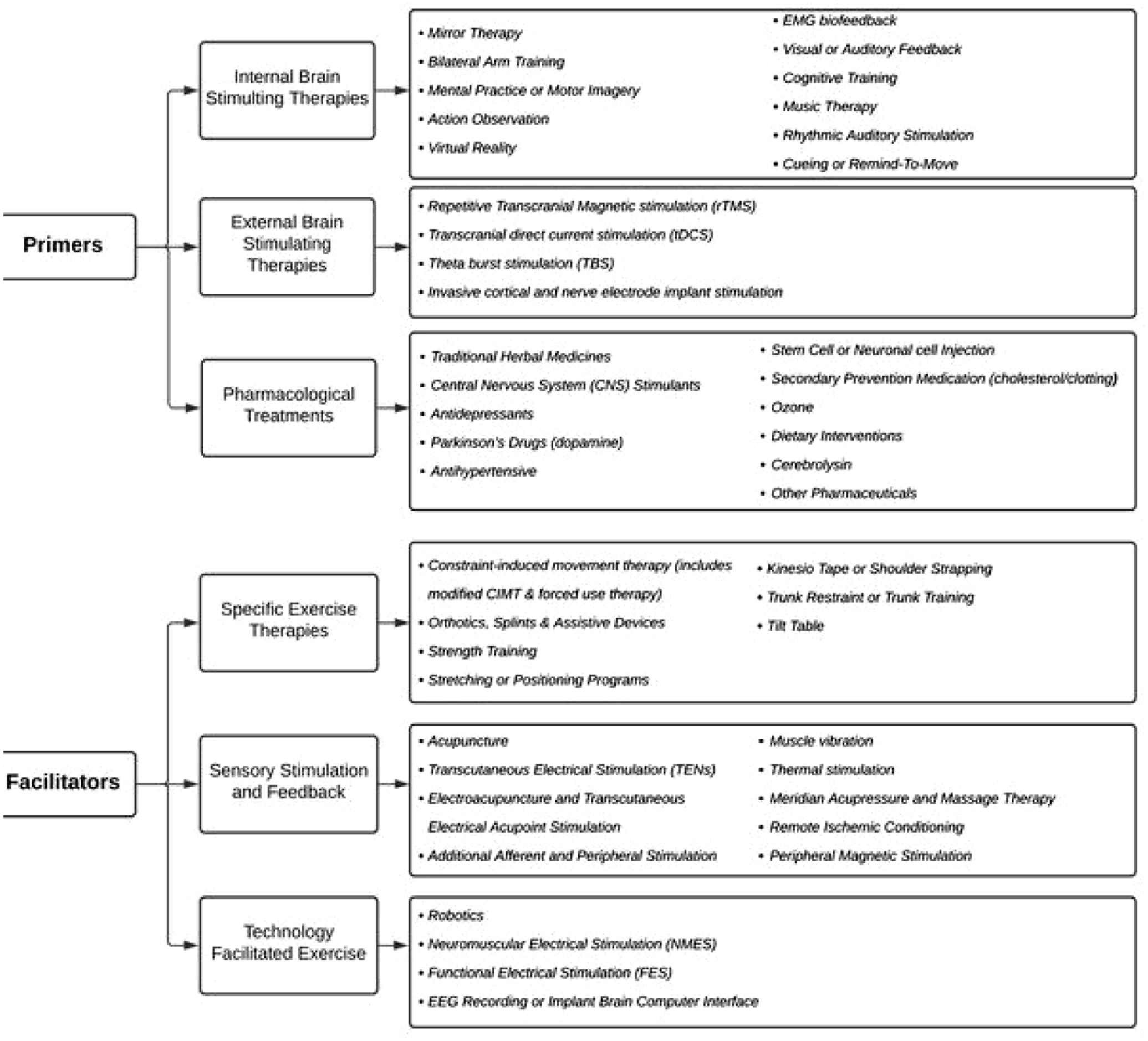
Figure 1.
P0795 / 1533
MONITORED ISOLATION ROOM: AN ALTERNATIVE SOLUTION DURING COVID-19 CRISIS
1 Hospital Clínico Universitario Lozano Blesa, Neurologia, Zaragoza, Spain
Only 10,1% of the patients stayed in the room for more than 24 hours. Camera detect care needs in 22% of the patients. The destination at discharge was conventional stroke unit in 83.4% of the patients.
P0796 / 1532
TRANEXAMIC ACID IN PATIENTS WITH TRAUMATIC BRAIN INJURY: A META-ANALYSIS OF 36,692 PATIENTS
1Al-Azhar University, Faculty of Medicine, Cairo, Egypt, 2Harvard Medical School, Department of Global Health, Boston, Massachusetts, United States, 3South Valley University, Faculty of Medicine, Qina, Egypt, 4October 6 University, Giza, Egypt, Faculty of Physical Therapy, October, Egypt, 5Zagazig University, Faculty of Medicine, Zagazig, Egypt, 6Damanhur University, Faculty of science, Abou Hammos, Egypt, 7Menofia University, Menofia, Egypt, Faculty of Medicine, Menofia, Egypt
P0797 / 327
COST-EFFECTIVENESS OF ENDOVASCULAR TREATMENT IN LARGE VESSEL OCCLUSION STROKE WITH MILD PRE-STROKE DISABILITY
1University of Calgary, Department of Radiology, Calgary, Canada, 2University Medical Center Hamburg-Eppendorf, Department of Diagnostic and Interventional Neuroradiology, Hamburg, Germany, 3University Hospital Basel, Department of Neuroradiology, Basel, Switzerland, 4LMU University Hospital, Department of Radiology, Munich, Germany, 5Maastricht University Medical Center, Department of Radiology, Maastricht, Netherlands, 6David Geffen School of Medicine, UCLA, Department of Neurology, Los Angeles, United States, 7University of Calgary, Department of Clinical Neurosciences, Calgary, Canada, 8Cooper University Health Care, Department of Neurology, Camden, United States, 9Royal Melbourne Hospital, Department of Radiology, Melbourne, Australia, 10Royal Melbourne Hospital, Department of Neurology, Melbourne, Australia, 11Newcastle University, Institute of Neuroscience, Newcastle upon Tyne, United Kingdom, 12University of Glasgow, Department of Neurology, Glasgow, United Kingdom, 13Nancy University Hospital, Department of Medicine, Nancy, France, 14Nancy University Hospital, Department of Neuroradiology, Nancy, France, 15Bright Research Partners, Inc, Mooresville, United States
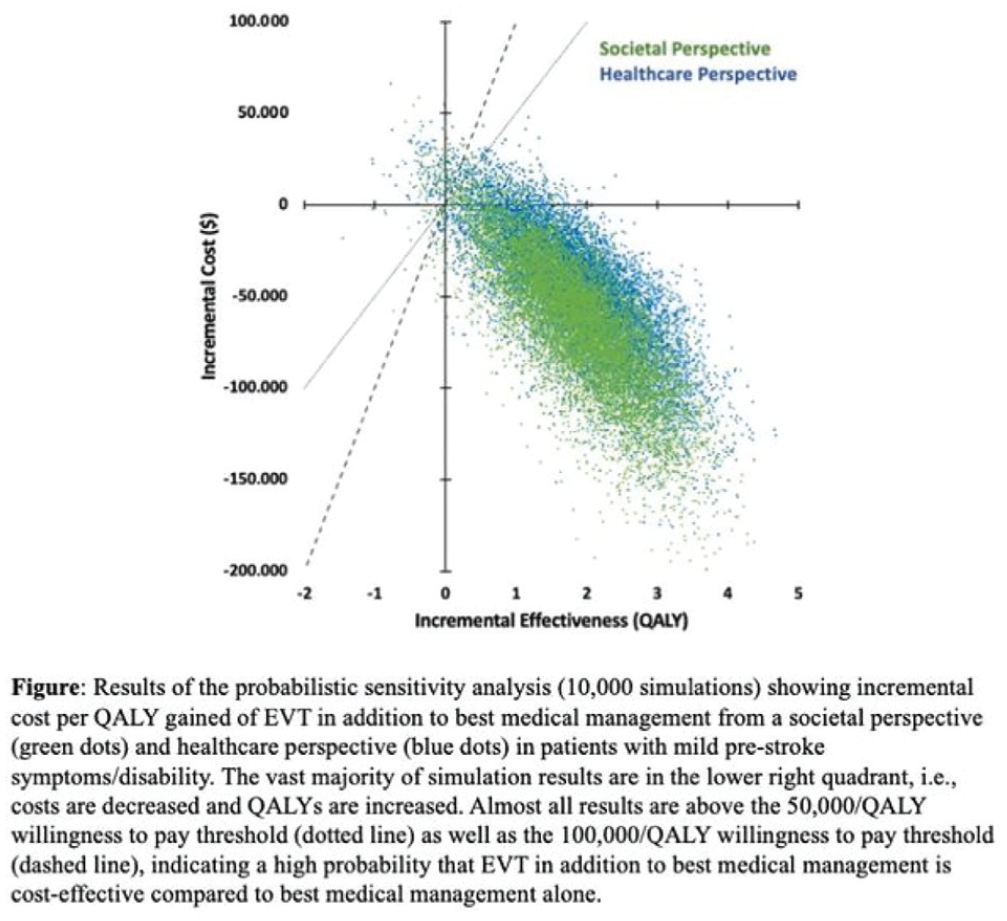
P0798 / 875
PLACE OF SOCIAL AND CLINICAL HEALTH INEQUALITIES IN STROKE MANAGEMENT DURING THE COVID-19 PANDEMIC: RESULTS FROM A FRENCH REGIONAL STROKE OBSERVATORY
1Bordeaux Population Health, University of Bordeaux, ISPED, Centre INSERM U1219, Bordeaux, France, 2CHU de Bordeaux, CIC-EC 14-01, Bordeaux, France, 3CHU de Bordeaux, Pôle de Santé Publique, Service d’Information Médicale, Bordeaux, France, 4Libourne Hospital Neurology, Stroke Unit, Libourne, France, 5Mont de Marsan Hospital Neurology, Stroke Unit, Mont de Marsan, France, 6Agen Hospital Neurology, Stroke Unit, Agen, France, 7Bordeaux University Hospital Neurology, Stroke Unit, Bordeaux, France, 8University of Bordeaux, INCIA CNRS UMR 5287, Bordeaux, France
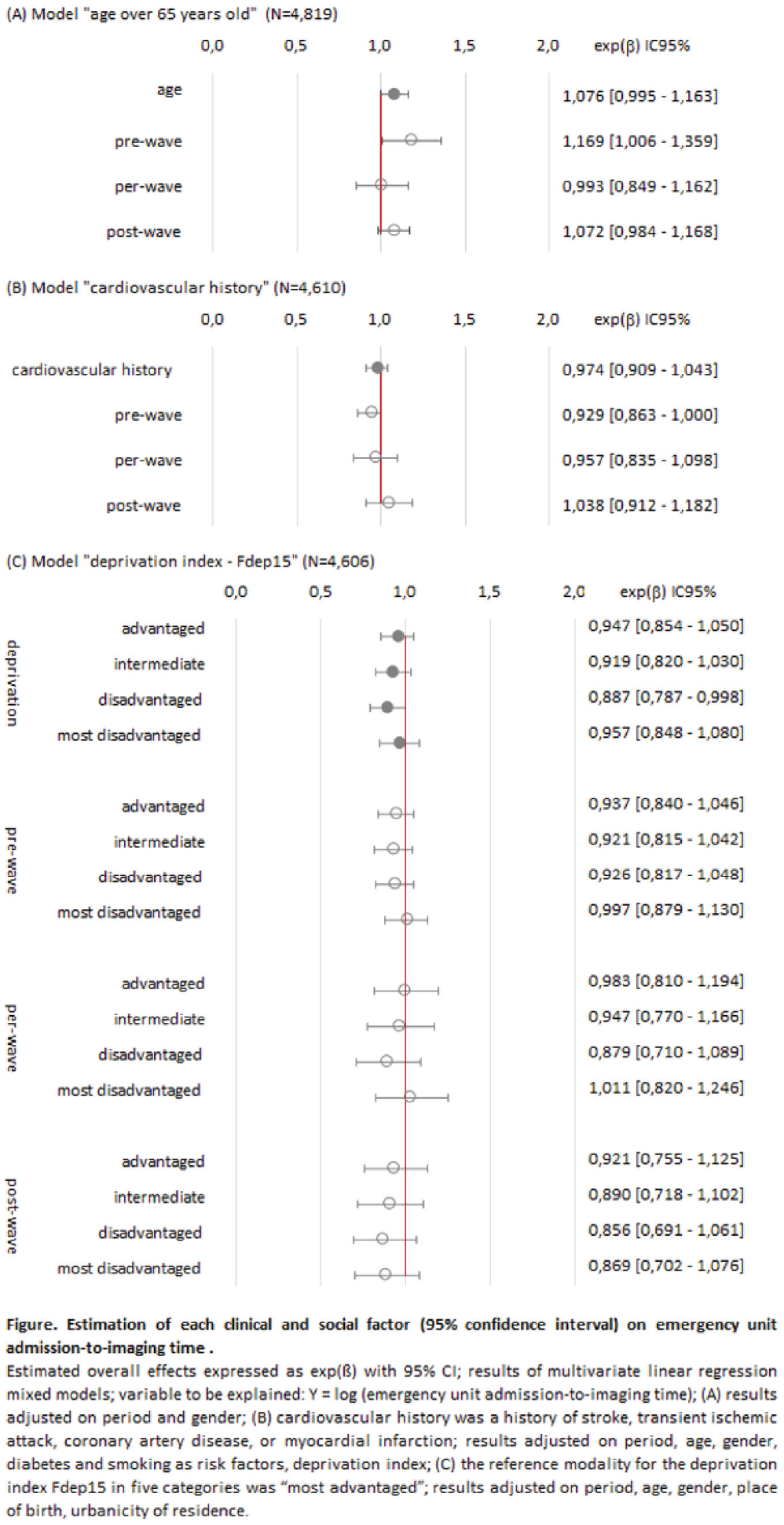
P0799 / 1047
ACUTE ISCHAEMIC STROKE IN PATIENTS WITH AF WHO ARE ALREADY TAKING A DOAC: A SINGLE-CENTRE OBSERVATIONAL STUDY OF CHARACTERISTICS, TREATMENT STRATEGIES AND OUTCOME
1Imperial College Healthcare NHS Trust, Department of Stroke & Neurosciences, London, United Kingdom, 2Imperial College London, Department of Brain Sciences, London, United Kingdom
On arrival, 3% received IV thrombolysis and 13% underwent mechanical thrombectomy. At discharge, 62% remained on the same DOAC, 13% were changed to a different DOAC, 7% were changed to warfarin, 10% to aspirin/clopidogrel, and 8% had their antithrombotics withheld.
Neurological deterioration (<7 days) occurred in 9% and in-hospital mortality was 8%. At 6 months, recurrent stroke/TIA occurred in 8% and mortality was 10%.
P0800 / 1049
HOW HAS COVID-19 AFFECTED REFERRALS TO A TERTIARY HYPER ACUTE STROKE UNIT?
1 The National Hospital for Neurology and Neurosurgery, London, United Kingdom
We accepted significantly fewer patients for transfer post-Covid compared with pre-Covid (21% vs. 43% respectively, p=0.0001).
The percentage of cases with a confirmed stroke diagnosis post-transfer was marginally higher post-Covid than pre-Covid (69% vs. 59% respectively, p=0.2443). Importantly, of the patients not accepted for transfer post-Covid, none had a subsequent stroke diagnosis.
P0801 / 689
TICAGRELOR AND ASPIRIN VS CLOPIDOGREL AND ASPIRIN IN PATIENTS WITH MINOR ISCHEMIC STROKE OR TRANSIENT ISCHEMIC ATTACK (TIA) – AN UPDATED NETWORK META-ANALYSIS
1The Ottawa Hospital, Department of Medicine, Division of Neurology, Stroke Program, Ottawa, Canada, 2University of Ottawa, School of Epidemiology and Public Health, Ottawa, Canada, 3Ottawa Hospital Research Institute, Ottawa, Canada
P0802 / 1034
ORAL ANTICOAGULANT PRESCRIBING IN OLDER PERSONS: AN AUDIT OF A COMMUNITY HOSPITAL REHABILITATION UNIT
1University Hospital Limerick, Department of Aging and Therapeutics, Limerick, Ireland, 2St Ita’s Community Hospital, Rehabilitation Unit, Newcastle West, Ireland
P0803 / 1032
RISKS OF CAROTID ARTERY STENTING IN A CANADIAN STROKE CENTRE: A CHART REVIEW OF 50 CONSECUTIVE PATIENTS
1University of Ottawa, Medicine, Ottawa, Canada, 2Ottawa Hospital Research Institute, Ottawa, Canada, 3University of Ottawa, Department of Medicine, Ottawa, Canada
Common complications included hypotension (14/48, 29%), need for a repeat CT (12/48, 25%), iatrogenic dissection (13%, 6/48), and groin hematoma (8%, 4/48). Serious adverse events include intracerebral hemorrhage (10%, 5/48), ICU admission (6.2%, 3/48), and in 2 cases the critical care outreach team was consulted (4.2%).
P0804 / 335
COMPARING THE IMPACT OF INSERTABLE CARDIAC MONITOR VERSUS STANDARD CARE AFTER ISCHEMIC STROKE ON RECURRENT ISCHEMIC STROKE RISK: META-ANALYSIS OF RANDOMISED CLINICAL TRIALS
1Yong Loo Lin School of Medicine, National University of Singapore, Singapore, Singapore, 2National University Hospital, Department of Medicine, Division of Neurology, Singapore, Singapore, 3National University Heart Centre, Department of Cardiology, Singapore, Singapore
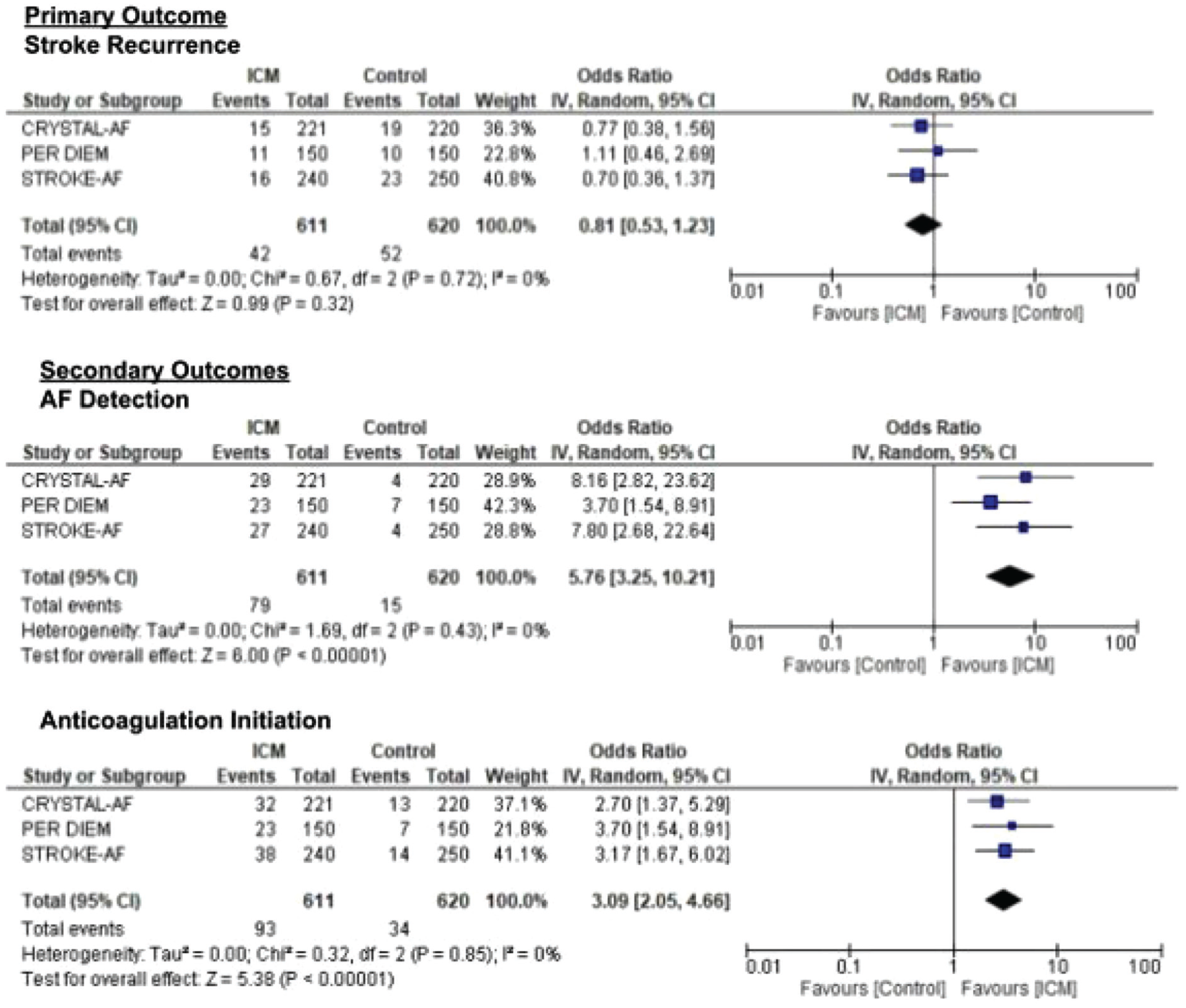
Figure 1
P0805 / 380
MLC901 IN COMBINATION WITH ANTICOAGULANT IN EAST-EUROPEAN COHORT. A PRELIMINARY RESULT OF THE NEST REGISTRY
1 University Clinic of Neurology, University “Ss Cyril and Methodius”, Faculty of Medicine-Skopje, Faculty of Medicine-Skopje, Skopje, North Macedonia, The Republic of
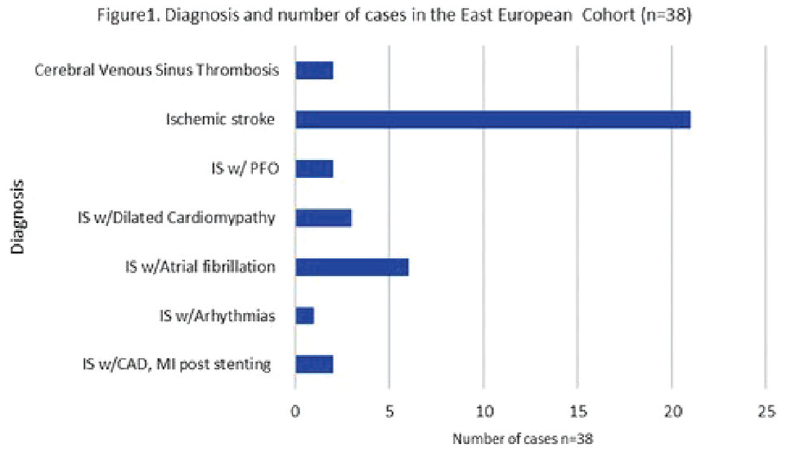
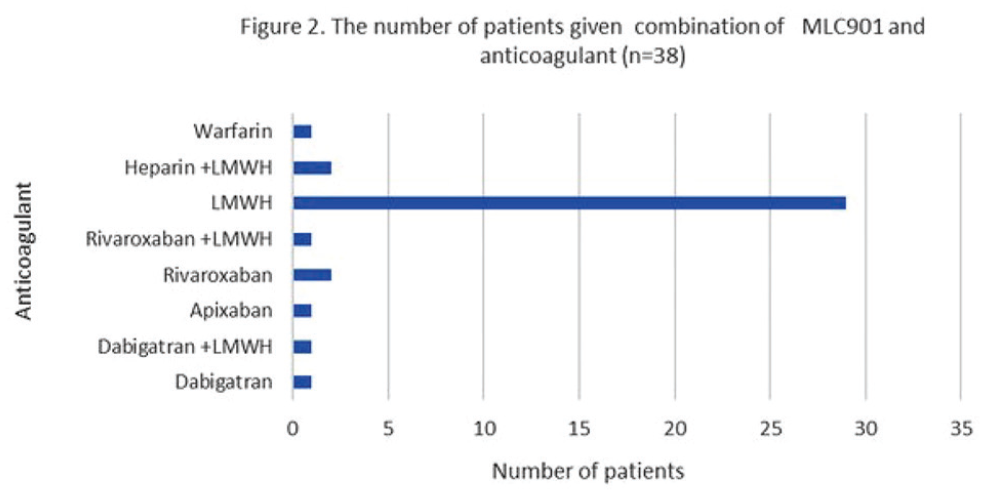
P0806 / 1040
STROKE CARE QUALITY BETWEEN 2017-2020: OBSERVATIONAL DATA FROM THE AUSTRALIAN STROKE CLINICAL REGISTRY
1Monash University, Stroke and Ageing Research, School of Clinical Sciences at Monash Health, Clayton, Australia, 2University of Melbourne, Stroke Division, Florey Institute of Neuroscience and Mental Health, Heidelberg, Australia, 3St Vincent’s Health Network, Sydney, Australia, 4Australian Catholic University, Nursing Research Institute, Sydney, Australia, 5Sunshine Coast University Hospital, Birtinya, Australia, 6University of Melbourne, Department of Medicine and Neurology, Melbourne Brain Centre at the Royal Melbourne Hospital, Parkville, Australia, 7Monash University, Eastern Health Clinical School, Box Hill, Australia, 8Stroke Foundation, Sydney, Australia, 9University of Sydney, Westmead Applied Research Centre, Sydney, Australia, 10Westmead Hospital, Department of Aged Care and Stroke, Sydney, Australia, 11University of Sydney, Faculty of Medicine and Health, Sydney, Australia, 12Monash University, Department of Neuroscience, Central Clinical School, Melbourne, Australia
P0807 / 1313
ANNUAL INCIDENCE OF STROKE MIMICS IN A HIGH VOLUME COMPREHENSIVE STROKE CENTER AND ZERO RATE OF IVT TREATMENT IN STROKE MIMICS
1University Hospital Ostrava, Neurology, Ostrava, Czech Republic, 2Faculty of Medicine, University Ostrava, Clinical Neurosciences, Ostrava, Czech Republic
P0808 / 1546
POSTERIOR CIRCULATION STROKE DIAGNOSIS IN PATIENTS WITH ACUTE VESTIBULAR SYNDROME
1 2nd Faculty of Medicine, Charles University in Prague and Motol University Hospital, Department of Neurology, Praha 5, Czech Republic
P0809 / 409
MANAGEMENT AND FUNCTIONAL OUTCOMES OF ACUTE MINOR ISCHEMIC STROKE CAUSED BY LARGE ARTERY OCCLUSION
1 YSMU, Neurology AMC, Yerevan, Armenia
Patients with acute minor stroke caused by LVO pose a particular challenge in clinical decision making. Well-developed collateral circulation can lead to mild symptoms in early hours. From the other hand same collateral circulation is not a guarantee to have mild stroke or to avoid future disability.Till now it remains unclear what is the best therapeutic approach in this case.
The aim of our study is to report the risk of neurological deterioration and functional outcomes of acute minor ischemic stroke caused by LVO.
We analyzed acute ischemic stroke patient data of our hospital between February to December 2021 who benefited from reperfusion therapies.We included all patients presented with NIHSS<6 at admission and LVO visible on CT or MRI angiography.Neurological deterioration was defined as increase of NIHSS>6 in first 24 hours.Functional outcome was assessed by NIHSS score at discharge from hospital and modified Rankin scale at 3 months.
12 patients corresponded the selection criteria.Iv r-tPA was performed in 5 cases.Bridging therapy or direct mechanical trombectomy was performed in the rest 7 cases.All patients had neurological deterioration in the first 24 hours. Patients of the last group had faster recovery at discharge and better functional outcome at 3 months.
P0810 / 420
ENDOVASCULAR TREATMENT OR BEST MEDICAL TREATMENT IN MINOR STROKES WITH LARGE VESSEL OCCLUSION
1 The Second Affiliated Hospital of Zhejiang University, School of Medicine, Department of Neurology, Hangzhou, China
P0811 / 903
EVALUATION OF THE CURRENT CARE PROCESSES IN STROKE CARE IN 28 BELGIAN HOSPITALS VIA AN IMPROVEMENT COLLABORATIVE
1University of Leuven, Institute for Healthcare Policy, Department of Public Health KU Leuven, Leuven, Belgium, 2University Hospitals Leuven, Department of Oncology, Leuven, Belgium, 3University Hospitals Leuven, Department of Neurology, Leuven, Belgium
P0812 / 1256
STROKE CODE: DIFFERENCES BETWEEN ACTIVATION BY AN EMERGENCY PHYSICIAN VERSUS A TRIAGE NURSE
1Universidad de los Andes-Clínica Dávila, Neurologia, Santiago, Chile, 2Clínica Dávila, Emergency department, Santiago, Chile, 3Clínica Dávila, Santiago, Chile, 4Universidad de los Andes, Santiago, Chile
Stroke is a major cause of morbidity and mortality worldwide. Thrombolysis with alteplase has shown improving functional outcomes in patients with ischemic stroke, furthermore, the benefit of rtPA depends largely on how early it is administered.
In 2020 we published a poster in the ESOC showing our experience implementing the classic work algorithm to improve our Needle Door Time (DTNT) and we demonstrate that with intensive training of the entire emergency team of our hospital, we achieved a significant reduction in DTNT of 29% in a short time. Now, we wanted to estimate whether allowing the activation of the Stroke Code by the triage nurse (without waiting the evaluation of the emergency physician) can reduce de DTNT even more. We review from July to September 2021 (group 1) with the classic system activated by the emergency physician, and we compare the months from October to December (group 2) (with the the new protocol). In group 1, of the 106 stroke code activations, 38% were mimics. Of the AIS patients, 22.5% receive rtPA and the DTNT was 37 minutes. In group 2 from a total of 105 stroke code activations, 37% were mimics and the 29% of the AIS patiens received rtPA with a DTNT of 35 minutes.
In summary, in this initial experience, activation of the Stroke Code from triage by the nurse did not increase the number of mimics, did not significantly reduce DTNT and significantly increased the percentage of patients who received IV rtPA by 29%.
P0813 / 1604
PRESCRIBING FOR STROKE PATIENTS WITH ENTERAL FEEDING TUBES
1 Stockport NHS Foundation Trust, Stockport, United Kingdom
P0814 / 946
ALERT ON ELONGATED INTRA-HOSPITAL ACUTE STROKE MANAGEMENT TIMES: FEEDBACK FROM A FRENCH REGIONAL STROKE OBSERVATORY
1Université de Bordeaux - CHU Bordeaux, Bordeaux, France, 2CH Arcachon, Arcachon, France, 3CH Oloron Sainte Marie, Oloron Sainte Marie, France, 4CH Agen-Nérac, Agen, France, 5CHU Bordeaux, Bordeaux, France
Description of stroke management times in stroke unit according to year of admission. Aquitaine Stroke Observatory (ObA2), 2012-2020,*, France.
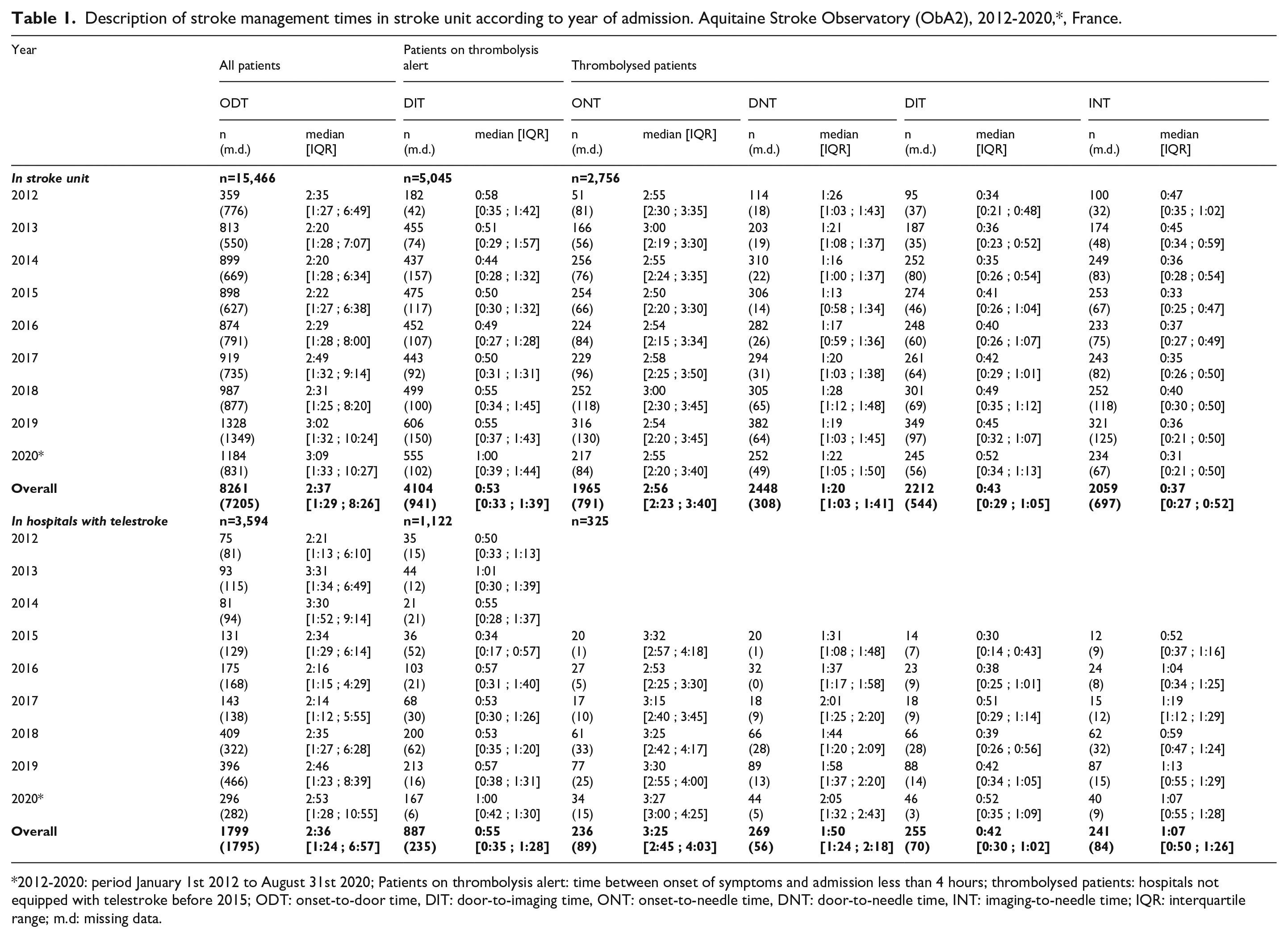
2012-2020: period January 1st 2012 to August 31st 2020; Patients on thrombolysis alert: time between onset of symptoms and admission less than 4 hours; thrombolysed patients: hospitals not equipped with telestroke before 2015; ODT: onset-to-door time, DIT: door-to-imaging time, ONT: onset-to-needle time, DNT: door-to-needle time, INT: imaging-to-needle time; IQR: interquartile range; m.d: missing data.
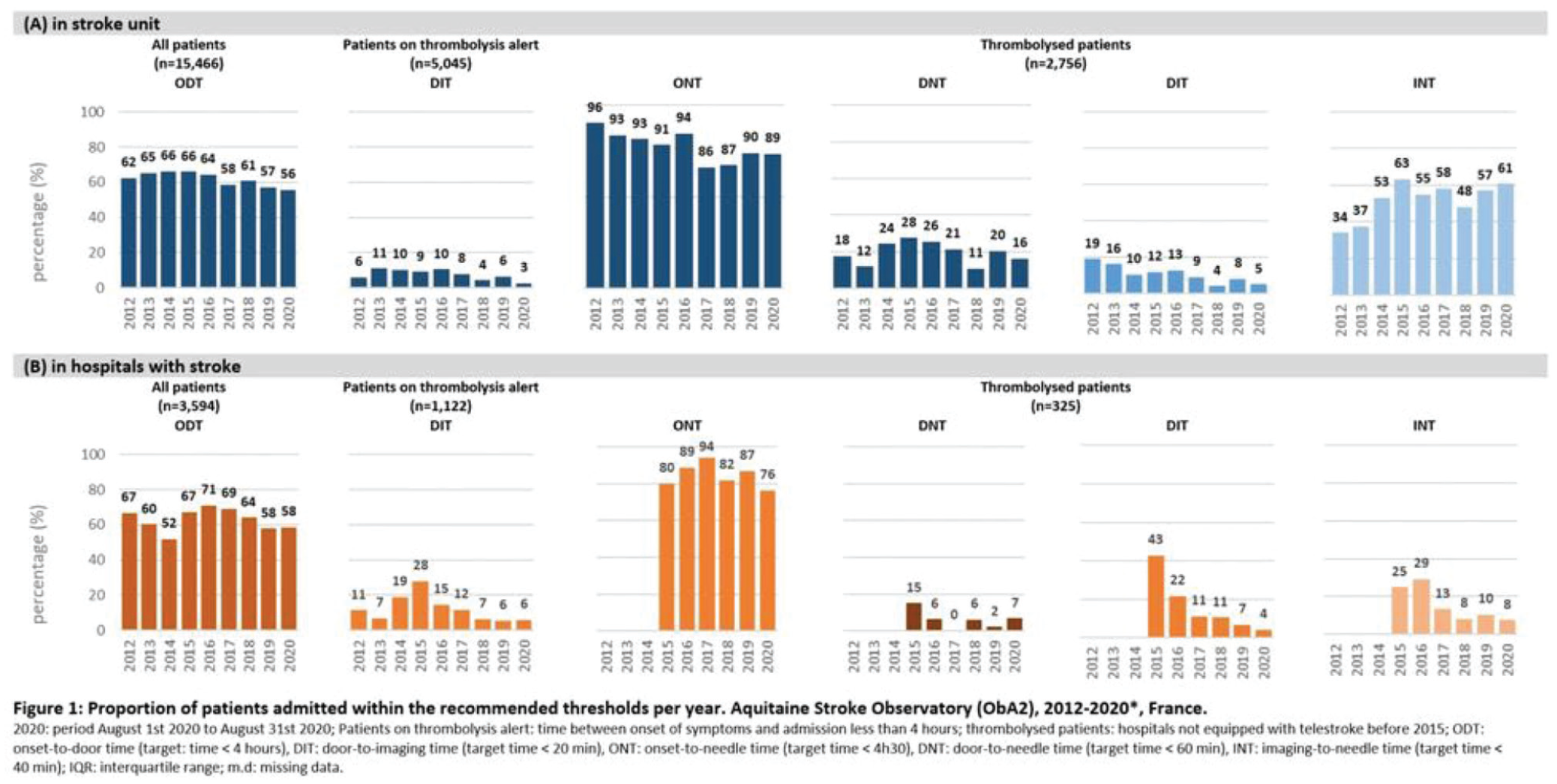
P0815 / 178
FIVE YEARS’ EXPERIENCE OF PARTICIPATION OF THE INSTITUTE OF EMERGENCY MEDICINE FROM CHISINAU, REPUBLIC OF MOLDOVA IN THE REGISTRY OF STROKE CARE QUALITY
1Institute of Emergency Medicine, Neurology, Chisinau, Moldova, Republic of, 2Nicolae Testemitanu State University of Medicine and Pharmacy of the Republic of Moldova, Neurology Nr. 2, Chisinau, Moldova, Republic of
P0816 / 782
CURRENT TREATMENT PRACTICE OF PATIENTS WITH MALIGNANT MIDDLE CEREBRAL ARTERY INFARCTION: RESULTS AMONG A SURVEY OF GERMAN NEUROLOGICAL INTENSIVE CARE UNITS
1 University Hospital Carl Gustav Carus at the Technische Universität Dresden, Department of Neurology, Dresden, Germany
P0817 / 364
NATIONAL INSTITUTES OF HEALTH STROKE SCALE BY PARAMEDICS – INTERRATER AGREEMENT WITH STROKE PHYSICIANS IN A DIGITAL TRAINING SETTING
1Norwegian Air Ambulance Foundation, Department of Research, Oslo, Norway, 2Oslo University Hospital, Division of Prehospital Services, Oslo, Norway, 3University of Oslo, Institute of Clinical Medicine, Oslo, Norway, 4Oslo University Hospital, Department of Neurology, Stroke Unit, Oslo, Norway, 5University of Oslo, Institute of Basic Medical Sciences, Oslo, Norway, 6Oslo University Hospital, Norwegian National Advisory Unit on Prehospital Emergency Medicine (NAKOS) and Air Ambulance Department, Division of Prehospital Services, Oslo, Norway, 7Østfold University College, Research and Dissemination, Halden, Norway, 8Oslo Metropolitan University, Department of Health Science, Oslo, Norway
P0818 / 377
ACUTE ISCHAEMIC STROKE IN THE CONTEXT OF CAROTID ARTERY FREE-FLOATING THROMBUS: A SINGLE-CENTRE OBSERVATIONAL STUDY OF CHARACTERISTICS, TREATMENT STRATEGIES AND OUTCOME
1Imperial College Healthcare NHS Trust, Department of Stroke & Neurosciences, London, United Kingdom, 2Imperial College Healthcare NHS Trust, Department of Radiology, London, United Kingdom, 3Imperial College Healthcare NHS Trust, Department of Vascular Surgery, London, United Kingdom, 4Imperial College London, Department of Brain Sciences, London, United Kingdom
On arrival, 27% received IV thrombolysis and 19% underwent mechanical thrombectomy. Acute antithrombotic strategies included IV heparin (49%), low molecular weight heparin (47%), oral anticoagulation (15%), and antiplatelet agents (63%). 24 patients (41%) were referred to vascular surgery, of whom 9 (38%, 15% of total) received emergency carotid endarterectomy.
Neurological deterioration (<7 days) occurred in 14%. In-hospital mortality was 8% overall, but 67% for COVID-positive patients. At 6 months, recurrent stroke occurred in 12% and mortality was 3%.
P0819 / 1252
HEALTHCARE QUALITY OF TIME-DEPENDENT DISEASES DURING COVID-19 EPIDEMIC: THE EXPERIENCE IN STROKE
1 The Second Affiliated Hospital of Zhejiang University, School of Medicine, Neurology, Hangzhou, China
P0820 / 1635
TIME ON SCENE BEFORE ADMISSION OF ACUTE STROKE AND STROKE MIMICS: THE AKERSHUS STUDY OF ISCHEMIC STROKE AND THROMBOLYSIS-1
1Akershus University Hospital, Department of Neurology, Lørenskog, Norway, 2Akershus University Hospital, Department of Radiology, Lørenskog, Norway, 3Oslo University Hospital, Department of Neurology, Oslo, Norway
P0821 / 315
TRENDS IN THE DUTCH ACUTE ISCHEMIC STROKE CARE BETWEEN 2017 AND 2020. RESULTS OF THE DUTCH ACUTE STROKE AUDIT (DASA)
1Amsterdam University Medical Center, Neurology, Amsterdam, Netherlands, 2Leiden University Medical Center, Biomedical Data Sciences, Leiden, Netherlands, 3OLVG, Neurology, Amsterdam, Netherlands
P0822 / 197
FACTORS ASSOCIATED WITH INCREASED SHOULDER SUBLUXATION RISK: AN AUDIT OF POST-STROKE SHOUDLER SUBLUXATION PREVALENCE ON AN ACUTE STROKE UNIT
1King’s College Hospital NHS Foundation Trust, London, United Kingdom, 2Imperial College London, Division of Brain Sciences, Charing Cross Campus, London, United Kingdom, 3King’s College London, School of Biomedical Engineering and Imaging Sciences, London, United Kingdom
P0823 / 373
THE IMPACT OF SARS-COV-2 INFECTION ON THE OUTCOME OF ACUTE ISCHEMIC STROKE - A RETROSPECTIVE COHORT STUDY
1Semmelweis University, Department of Neurology, Budapest, Hungary, 2National Institute of Mental Health, Neurology and Neurosurgery, Budapest, Hungary, 3Semmelweis University, “János Szentágothai” Doctoral School of Neurosciences, Budapest, Hungary, 4Department of Neurology, University Hospital Carl Gustav Carus, Dresden, Germany, 5Division of Health Care Sciences, Center for Clinical Research and Management Education, Dresden International University, Dresden, Germany, 6Semmelweis University, Department of Family Medicine, Budapest, Hungary, 7European Academy of Neurology, EANcore COVID-19 Task Force, Vienna, Austria, 8MTA-SE Neuroepidemiological Research Group, Budapest, Hungary
P0824 / 295
ASSOCIATION OF HYPERGLYCEMIA AND COMPUTED TOMOGRAPHIC PERFUSION DEFICITS IN PATIENTS WHO UNDERWENT ENDOVASCULAR TREATMENT FOR ACUTE ISCHEMIC STROKE
1Medisch Spectrum Twente, Neurology, Enschede, Netherlands, 2Erasmus Medisch Centrum, Rotterdam, Netherlands, 3Amsterdam University Medical Centers, Amsterdam, Netherlands, 4Medisch Spectrum Twente, Enschede, Netherlands, 5Maastricht University Medical Centre, Maastricht, Netherlands, 6Isala, Zwolle, Netherlands
P0825 / 1404
CAUSES OF READING DIFFICULTY IN ACUTE STROKE SURVIVORS: FINDINGS OF A PROSPECTIVE, EPIDEMIOLOGY VISUAL IMPAIRMENT STUDY
1University of Liverpool, Institute of Population Health, Liverpool, United Kingdom, 2Salford Royal NHS Trust, Orthoptics, Manchester, United Kingdom
P0826 / 1201
ASYMPTOMATIC CAROTID STENOSIS CEREBROVASCULAR RISK AND FRAILTY CONDITION RISK IN A CONTEMPORARY COHORT UNDER REAL CLINICAL CONDITIONS
1Universidad de Oviedo / Hospital Universitario Central De Asturias, Neurology, Oviedo, Spain, 2Hospital Universitario Central De Asturias, Radiology, Oviedo, Spain, 3Hospital Universitario Central De Asturias, Angiology and Vascular Surgery, Oviedo, Spain, 4Universidad de Oviedo / Hospital Universitario Central De Asturias, Radiology, Oviedo, Spain, 5Hospital Universitario Central De Asturias, Neurology, Oviedo, Spain
P0827 / 248
HEALTHCARE STAFF’S KNOWLEDGE, EXPERIENCES AND ATTITUDES REGARDING POST-STROKE HYDRATION CARE PROVISION: A QUALITATIVE CROSS-SECTIONAL STUDY
1University of Central Lancashire, Stroke Research Team, Faculty of Health and Care, School of Nursing, Preston, United Kingdom, 2Lancashire Teaching Hospitals NHS Foundation Trust, Royal Preston Hospital, Preston, United Kingdom, 3Blackpool Teaching Hospitals NHS Foundation Trust, Blackpool Victoria Hospital, Blackpool, United Kingdom
P0828 / 278
THE NEW LDL-C TARGET IS REACHED BY LESS THAN ONE-THIRD OF VERY HIGH-RISK STROKE PATIENTS. IMPLEMENTATION OF THE NEW DYSLIPIDEMIA GUIDELINES IS CHALLENGING FOR NEUROLOGISTS
1Badajoz University Hospital, Stroke Center. Neurology., Badajoz, Spain, 2Badajoz University Hospital, Stroke Center. Neurology, Badajoz, Spain, 3Extremadura University. Faculty of Medicine and Health Sciences, Biomedical Sciences, Badajoz, Spain
SERVICE ORGANISATION/QUALITY IMPROVEMENT AND PATIENT CENTERED OUTCOMES
P0829 / 1485
TEMPORAL TREND OF TRANSIENT ISCHEMIC ATTACK MANAGEMENT OVER A 10-YEAR PERIOD: DATA FROM THE RHÔNE COUNTY, FRANCE
1Hospices Civils de Lyon, Lyon, France, 2Université Claude Bernard Lyon 1, Lyon, France, 3Hôpital Nord Ouest - Villefranche, Villefranche-sur-saône, France, 4St Joseph St Luc hospital, Lyon, France
P0830 / 1052
EXPLORING THE EXPERIENCES OF ACCESS AND PARTICIPATION IN COMMUNITY-BASED POSTSTROKE SERVICES AND SUPPORT
1University of Toronto, Department of Occupational Science & Occupational Therapy, Toronto, Canada, 2March of Dimes Canada, Toronto, Canada, 3University Health Network, OpenLab, Toronto, Canada, 4University of Toronto, Leslie Dan Faculty of Pharmacy, Toronto, Canada, 5Sinai Health System, Bridgepoint Collaboratory for Research & Innovation, Toronto, Canada, 6University of Toronto, Institute of Health Policy, Management and Evaluation, Dalla Lana School of Public Health, Toronto, Canada
P0831 / 1046
EXPLORING THE EXPERIENCES OF CHINESE AND SOUTH ASIAN PARTICIPANTS IN CULTURALLY-TAILORED STROKE PROGRAMS
1University of Toronto, Department of Occupational Science & Occupational Therapy, Toronto, Canada, 2March of Dimes Canada, Toronto, Canada, 3University Health Network, OpenLab, Toronto, Canada, 4University of Toronto, Leslie Dan Faculty of Pharmacy, Toronto, Canada, 5University of Toronto, Institute of Health Policy, Management and Evaluation, Dalla Lana School of Public Health, Toronto, Canada, 6Sinai Health System, Bridgepoint Collaboratory for Research & Innovation, Toronto, Canada
P0832 / 1029
RUN-TIA: IMPROVING THE MANAGEMENT OF TRANSIENT ISCHEMIC ATTACK
1Hospital Universitario Virgen Macarena, Neurology, Seville, Spain, 2Hospital Universitario Virgen Macarena, Radiology, Seville, Spain, 3Hospital Universitario Virgen Macarena, Emergency Department, Seville, Spain
P0833 / 1213
COMPERATIVE ANALYSIS OF LOGISTIC FACTORS IN PATIENTS WITH HEMORRAGIC AND ISCHEMIC STROKE (DATA FROM POMERANIAN STROKE REGISTER)
1Regional Hospital in Kielce, Department of Neurology and Stroke Unit, Kielce, Poland, 2Medical University of Gdańsk, Medical Simulation Center, Gdańsk, Poland, 3Jan Kochanowski University, Department of Neurology and Stroke Unit in Sandomierz, Sandomierz, Poland, 4Collegium Medicum, Jan Kochanowski University of Kielce, Department of Neurology and Storke Unit in Sandomierz, Sandomierz, Poland
P0834 / 1598
FREQUENCY OF INTER-SPECIALTY CONSENSUS DECISIONS AND ADHERENCE TO ADVICE FOLLOWING DISCUSSION AT A WEEKLY NEUROVASCULAR MULTIDISCIPLINARY MEETING
1Dept. of Neurology, Dublin, Ireland, 2Stroke Service, Dublin, Ireland, 3Dept. of Vascular Surgery, Dublin, Ireland, 4Dept. of Age-Related Health Care, Dublin, Ireland, 5Vascular Neurology Research Foundation, Dublin, Ireland, 6Dept. of Radiology, Dublin, Ireland, 7Dept. of Radiology, Tallaght University Hospital (TUH) / The Adelaide and Meath Hospital, Dublin, incorporating the National Children’s Hospital (AMNCH) /, Dublin, Ireland, 8Dept. of Geriatrics and Stroke Medicine, Kildare, Ireland, 9Dept. of Geriatrics and Stroke Medicine, Naas General Hospital, Co, Kildare, Ireland, 10Vascular Neurology Research Foundation, Tallaght University Hospital (TUH) / The Adelaide and Meath Hospital, Dublin, incorporating the National Children’s Hospital (AMNCH) /, Dublin, Ireland, 11Dept. of Clinical Neurosciences, Royal Free Campus, UCL Queen Square Institute of Neurology, London, United Kingdom, 12Academic Unit of Neurology, School of Medicine, Trinity College Dublin, Dublin, Ireland
P0835 / 1594
SOCIAL AND CULTURAL BARRIERS TO STROKE CARE IN LOW/MIDDLE INCOME COUNTRIES
1Westchester Medical Center, Neurosurgery, Valhalla, United States, 2Methodist Le Bonheur, Neurology, Memphis, United States, 3Univeristy of Iowa, Iowa City, United States, 4University of Illinois Chicago, Chicago, United States, 5Thomas Jefferson, Philadelphia, United States, 6Cleveland Clinic, Cleveland, United States, 7Johns Hopkins, Baltimore, United States, 8University of Pittsburgh, Pittsburgh, United States, 9University of California Los Angeles, Los Angeles, United States, 10SUNY Upstate, Syracuse, United States, 11Indiana University School of Medicine, Indianapolis, United States, 12University of Miami, Miami, United States
We explore the available literature to determine region-specific social and cultural barriers to obtaining stroke care.
A literature review was performed to identify studies that described stroke care in low-income and middle-income countries (LMICs). We used the search term “stroke” along with the following terms: “burden”, “incidence”, “prevalence”, “awareness”, “transportation”, “stroke services”, “rehabilitation”, “acute stroke”, “emergency care”, “infrastructure”, “stroke services”, “quality improvement”, and “stroke units”, between January 1st, 2015 and August 1st, 2021.
We identified two broad limitations to expanding stroke care across the globe: infrastructure and education/ culture. We subdivided stroke care regionally into Middle East and North Africa (MENA), Europe, Asia, Latin America, and Subsaharan Africa. In MENA, religious health fatalism scores on questionnaires are negatively correlated with adherence to rehabilitative protocols and stroke outcome. Only 6.5% in a nationwide survey in China were aware that there was a therapeutic window for thrombolytic therapy in 2016, increased to 32.8% after a 2 year nationwide campaign. The RESILIENT trial demonstrated the effectiveness of EVT in Brazilian public hospitals, which helped convince the government to change policy and promote the use of EVT. Some African communities consider stroke to be an illness of debilitating/ paralytic, ghost, or shivering etiology.
Trust in care and compliance with preventive/rehabilitative measures may be helped by connecting NGOs such as Stroke Angels and Mission Thrombectomy 2020 with community-based/ religious leaders to correct assumptions about origin and treatment.
P0836 / 1101
STROKE SURVIVOR AND FAMILY CARER PRIORITIES FOR DEVELOPMENT OF STROKE SERVICES IN IRELAND: PRELIMINARY RESULTS OF AN EXPLORATORY QUALITATIVE STUDY
1RCSI University of Medicine and Health Sciences, Dublin, Ireland, 2Irish Heart Foundation, Dublin, Ireland, 3Patient Collaborator, Sligo, Ireland, 4University College Cork, Cork, Ireland, 5Tallaght University Hospital, Dublin, Ireland
P0837 / 1108
CO-DESIGNED PERSON-CENTRED CARE TRANSITIONS FOR PEOPLE WITH STROKE – A FEASIBILITY STUDY
1Karolinska Institutet, Department of Neurobiology, Care Sciences and Society, Huddinge, Sweden, 2Karolinska Institutet, Department of Clinical Sciences, Stockholm, Sweden, 3Dalarna University, School of Health and Wellfare, Falun, Sweden
P0838 / 944
TRENDS OF QUALITY OF STROKE CARE IN ESTONIA 2015-2020
1 University of Tartu, Department of Neurology and Neurosurgery, Tartu, Estonia
P0839 / 1050
EVALUATING CONFIDENCE OF JUNIOR DOCTORS IN THEIR KNOWLEDGE OF EVIDENCE BASED CLINICAL PRACTICE AND SATISFACTION WITH STOKE EDUCATION BEFORE LAUNCHING AN ONLINE EDUCATION TOOL
1University College London Hospital, Hyperacute Stroke Unit, London, United Kingdom, 2Queen Square Institute of Neurology, University College London, Department of Clinical and Experimental Epilepsy, London, United Kingdom, 3University College London Hospital, Medical Education, London, United Kingdom
P0840 / 869
COST-EFFECTIVENESS STRATEGIES TO REDUCE ONSET TO TREATMENT TIMES IN ACUTE ISCHEMIC STROKE PATIENTS: A SYSTEMATIC REVIEW
1University of Groningen/ Faculty of Economics and Business, Operations Department, Groningen, Netherlands, 2University Medical Center Groningen, Epidemiology Department, Groningen, Netherlands, 3University Medical Center Groningen, Epidemiology Department and Neurology Department, Groningen, Netherlands, 4University Medical Center Groningen, Neurology Department and Radiology Department, Groningen, Netherlands
P0841 / 968
WHAT FEAR OF COVID-19 VACCINE-ASSOCIATED CEREBRAL VENOUS THROMBOSIS DID TO THE NEUROLOGICAL EMERGENCY DEPARTMENT - A RETROSPECTIVE STUDY AND EXPERIENCE FROM A GERMAN UNIVERSITY HOSPITAL
1 University Hospital Dresden Carl Gustav Carus, Technische Universität Dresden, Department of Neurology, Dresden, Germany
P0842 / 325
THE HUNTER-8 PRE-HOSPITAL STROKE SCALE IN PRACTICE: DO STROKE TEAMS AND PARAMEDICS AGREE?
1John Hunter Hospital, Neurology, Newcastle, Australia, 2University of Newcastle, School of Medicine and Public Health, Newcastle, Australia, 3Hunter Medical Research Institute, Newcastle, Australia, 4New South Wales Ambulance Service, New South Wales, Australia, 5Royal Melbourne Hospital, Melbourne Brain Centre, Melbourne, Australia, 6University of New South Wales, South Western Sydney Clinical School, Sydney, Australia, 7Ingham Institute for Applied Medical Research, Sydney, Australia, 8Liverpool Hospital, Neurology, Sydney, Australia
P0843 / 1123
IMPACT OF STROKE RECOVERY ONLINE RESOURCES ON PSYCHOLOGICAL BURDEN AMONG STROKE SURVIVORS AND THEIR CAREGIVERS: A SCOPING REVIEW
1Research on Healthcare Performance RESHAPE, INSERM U1290, University Claude Bernard Lyon 1, Lyon, France, 2Hospices Civils de Lyon, Pôle de Santé Publique, REC - Recherche et Epidémiologie Clinique, Lyon, France, 3Hospices Civils de Lyon, Hôpital Pierre Wertheimer, Service Neuro-vasculaire, Lyon, France
P0844 / 811
DIAGNOSTIC ACCURACY FOR NEUROLOGICAL PATIENTS VIA TELEMEDICINE
1Heidelberg University, Department of Neurology, Heidelberg, Germany, 2Heidelberg University, Department of Neuroradiology, Heidelberg, Germany
P0845 / 767
THE IMPLEMENTATION OF A STROKE INPATIENT ASSESSMENT FORM FOR QUALITY IMPROVEMENT
1Royal North Shore Hospital, Neurology / Stroke, St Leonards, Australia, 2University of Technology Sydney, Graduate Research School, Sydney, Australia, 3Royal North Shore Hospital, Neurology, St Leonards, Australia, 4Royal North Shore Hospital, Neurology, TIA / Stroke Clinic, St Leonards, Australia, 5University of Sydney Northern Clinical School, St Leonards, Australia
Out of 596 discharge summaries 20 were found to have errors (regarding medication, follow up, and diagnosis) these errors were identified and corrected prior to discharge. The implementation of the SIAF enabled the stroke service to establish a comprehensive local stroke database. Also, a trend of improved adherence to clinical stroke guidelines in regards to hyperacute treatment, secondary prevention management and mood screening was demonstrated.
P0846 / 735
RAPID ACCESS PATHWAYS ARE ASSOCIATED WITH TIMELY CAROTID REVASCULARISATION IN ACUTE TRANSIENT ISCHAEMIC ATTACK AND STROKE PATIENTS
1St Vincent’s Hospital Melbourne, Department of Vascular Surgery, Melbourne, Australia, 2St Vincent’s Hospital Melbourne, Department of Neurosciences, Melbourne, Australia
P0847 / 732
CROATIAN EXPERIENCE ON RES-Q REGISTRY FOR MONITORING THE QUALITY OF STROKE CARE FROM 2018 TO 2021 YEAR
1Sveti Duh University Hospital, Neurology, Zagreb, Croatia, 2University Hospital Center Zagreb, Neurology, Zagreb, Croatia, 3Clinical Hospital Center Rijeka, Neurology, Rijeka, Croatia, 4Regional Hospital Vinkovci, Neurology, Vinkovci, Croatia, 5General Hospital Virovitica, Neurology, Virovitica, Croatia, 6University Hospital Center Sestre Milosrdnice, Neurology, Zagreb, Croatia, 7Clinical Hospital Centre, Neurology, Split, Croatia, 8County Hospital, Neurology, Cakovec, Croatia, 9General County Hospital, Neurology, Vukovar, Croatia, 10University Hospital Dubrava, Neurology, Zagreb, Croatia, 11General Hospital, Neurology, Pula, Croatia, 12General Hospital, Neurology, Zabok, Croatia, 13General County Hospital, Neurology, Pozega, Croatia, 14General Hospital, Neurology, Sibenik, Croatia, 15General Hospital, Neurology, Karlovac, Croatia, 16General Hospital ‘Dr. J. Benčević’, Neurology, Slavonski Brod, Croatia, 17General Hospital, Neurology, Bjelovar, Croatia, 18General Hospital, Neurology, Dubrovnik, Croatia, 19Varazdin General Hospital, Neurology, Varazdin, Croatia, 20General Hospital ‘Dr. Ivo Pedišić’, Neurology, Sisak, Croatia, 21General Hospital ‘Dr. Tomislav Bardek’, Neurology, Koprivnica, Croatia
The aim was to compare results captured from the RES-Q registry in Croatia during 2018 and the first quarters of 2019 and 2020 and 2021 year.
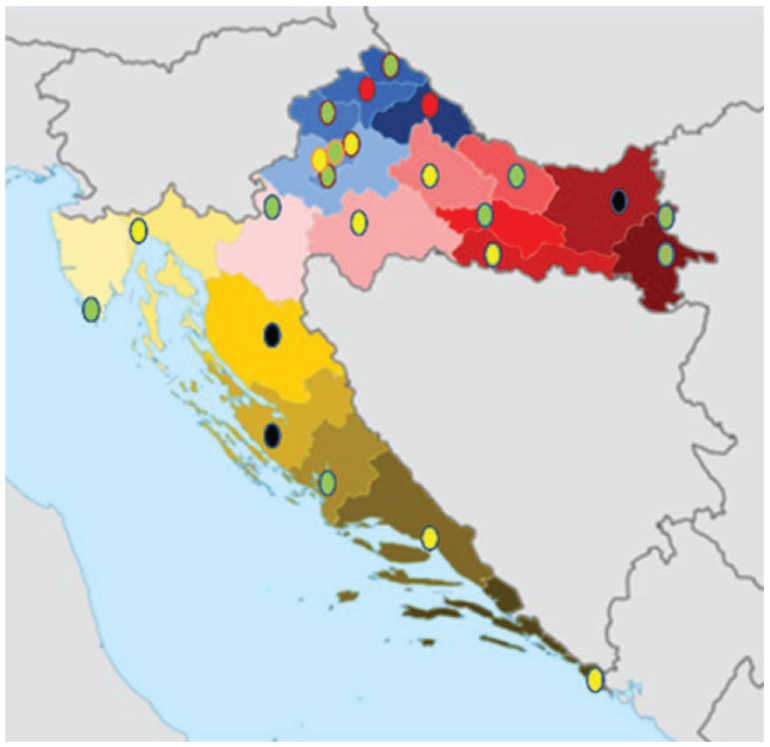
shows a map of Croatia with all centers (green – > three periods, yellow – two periods, red – one period, black–no data).
shows the numbers of patients recruited by site and time period.
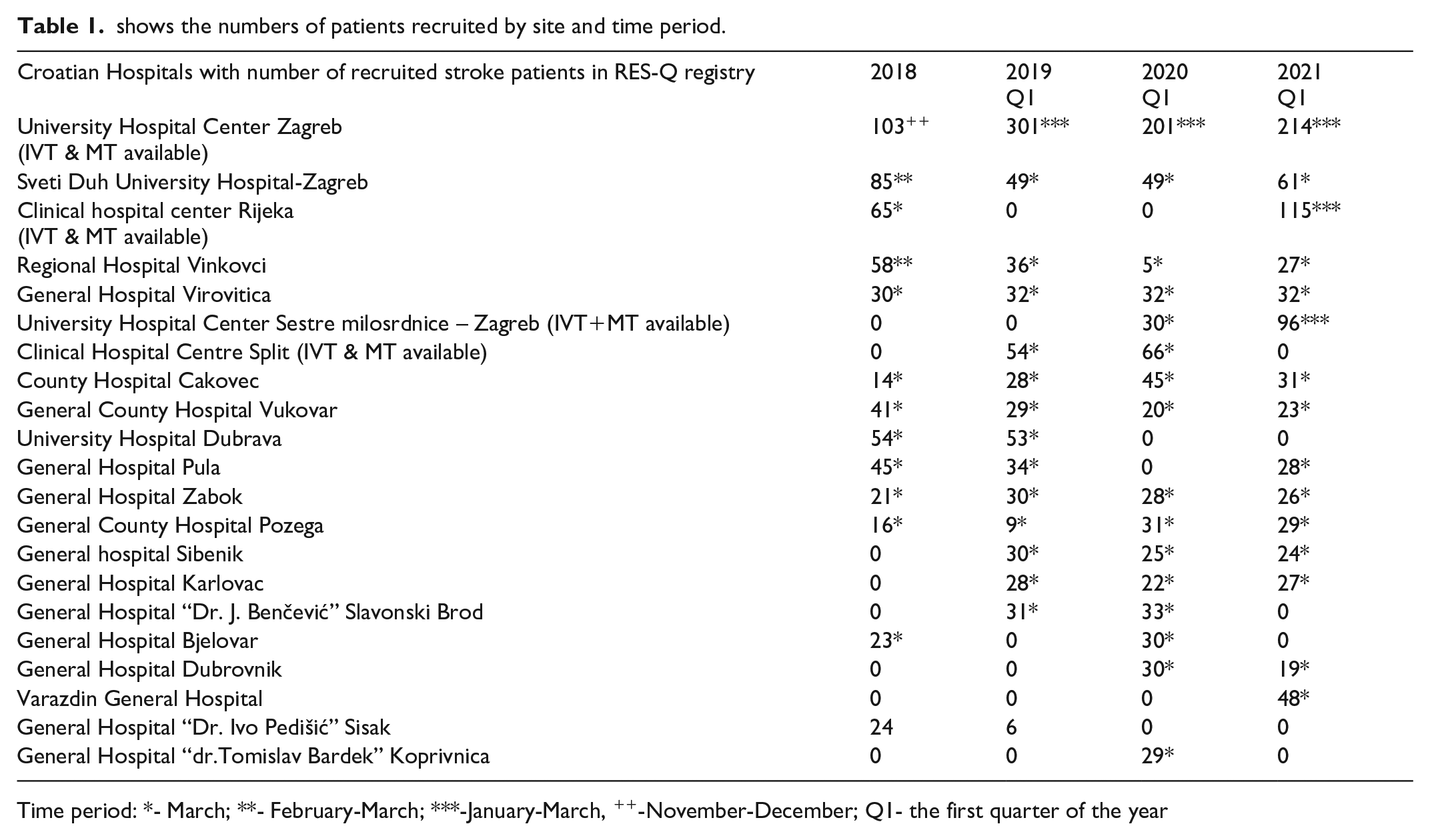
Time period: *- March; **- February-March; ***-January-March, ++-November-December; Q1- the first quarter of the year
shows patients’ main baseline characteristics and outcome measures.
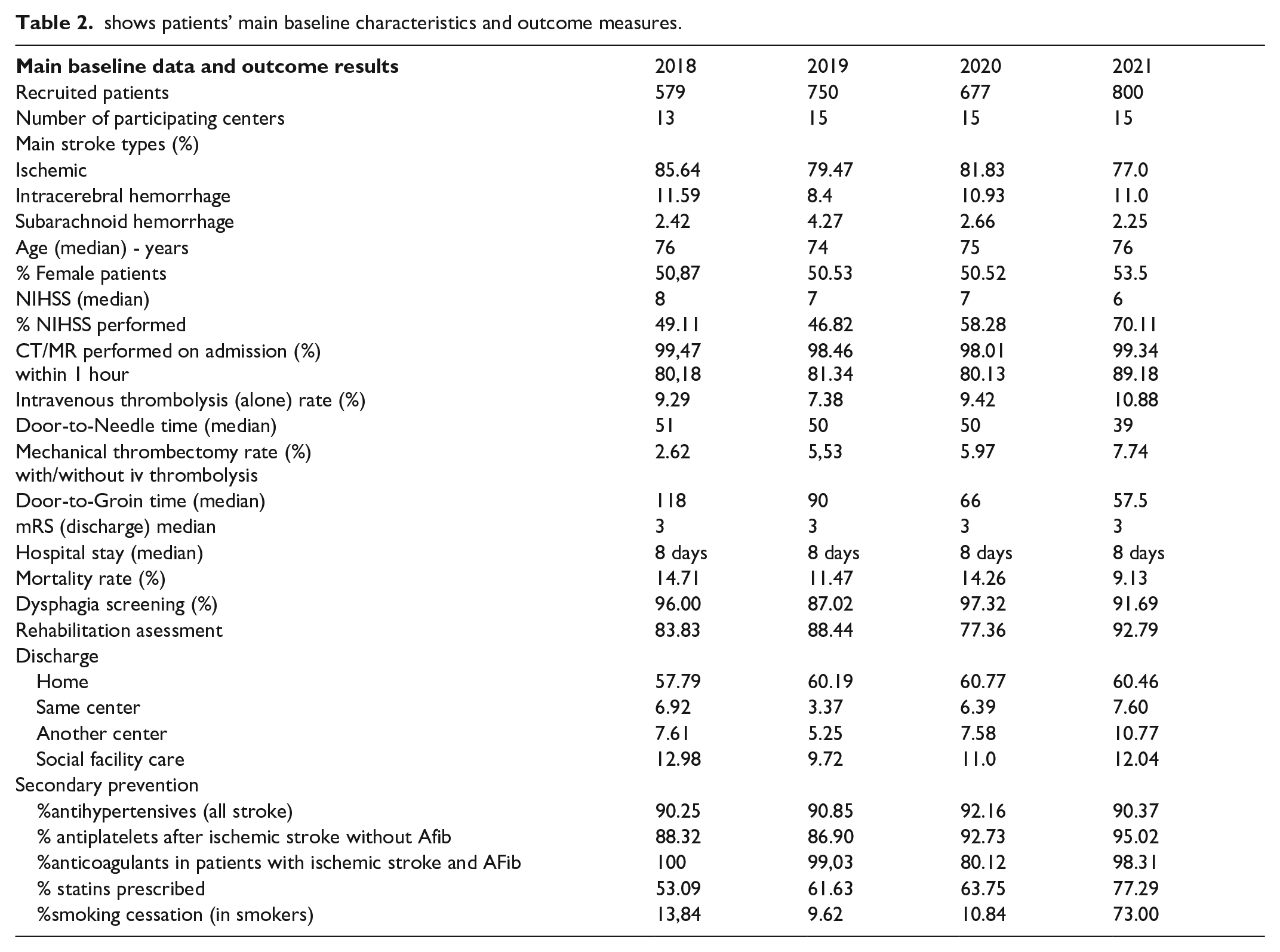
P0848 / 865
PREHOSPITAL VIDEO TRIAGE FOR SUSPECTED STROKE: LESSONS FROM A RAPID, MIXED-METHOD EVALUATION OF SERVICES IMPLEMENTED IN TWO REGIONS OF THE ENGLISH NATIONAL HEALTH SERVICE
1University College London, Applied Health Research, London, United Kingdom, 2South East Coast Ambulance Service NHS Foundation Trust, Crawley, West Sussex, United Kingdom, 3East Kent University NHS Foundation Trust, Canterbury, Kent, United Kingdom, 4London Ambulance Service NHS Trust, London, United Kingdom, 5Patient Representative, East Kent, United Kingdom, 6Patient Representative, London, United Kingdom, 7Comprehensive Stroke Service, University College London Hospitals NHS Foundation Trust, London, United Kingdom
• Interviews with ambulance and stroke clinicians (n=27); observations (n=12); documents (n=23);
• Survey of ambulance clinicians (n=233) in NC London and East Kent.
• Descriptive statistical analysis of local ambulance conveyance data (n=1,400; April-September 2020).
• Difference-in-differences regression analysis of team-level national audit data, to understand changes in delivery of clinical interventions in NC London and East Kent relative to the rest of England (n=137,650; 2018-2020).
Neither area saw increased time from symptom onset to arrival at services, while delivery of clinical interventions either remained unchanged or improved significantly, relative to the rest of England.
P0849 / 690
MODEL-BASED ECONOMIC EVALUATIONS OF COMMUNITY-BASED INTERVENTIONS FOR POST-STROKE CARE: A SYSTEMATIC REVIEW
1RCSI, Health Outcome Research Centre, Dublin, Ireland, 2Queens University, Belfast, Ireland
P0850 / 648
TACKLING THROMBO-LYSO-PHOBIA: USING SIMULATION TO IMPROVE CONFIDENCE IN STROKE THROMBOLYSIS IN GENERAL INTERNAL MEDICAL REGISTRARS
1 Plymouth Hospitals NHS Trusts, Neurology and Stroke Department, Plymouth, United Kingdom
There has been yet to show a clear improvement in door-to-needle time however this is likely compounded by the current pressures facing the NHS with COVID-19 pressures and over-crowding.
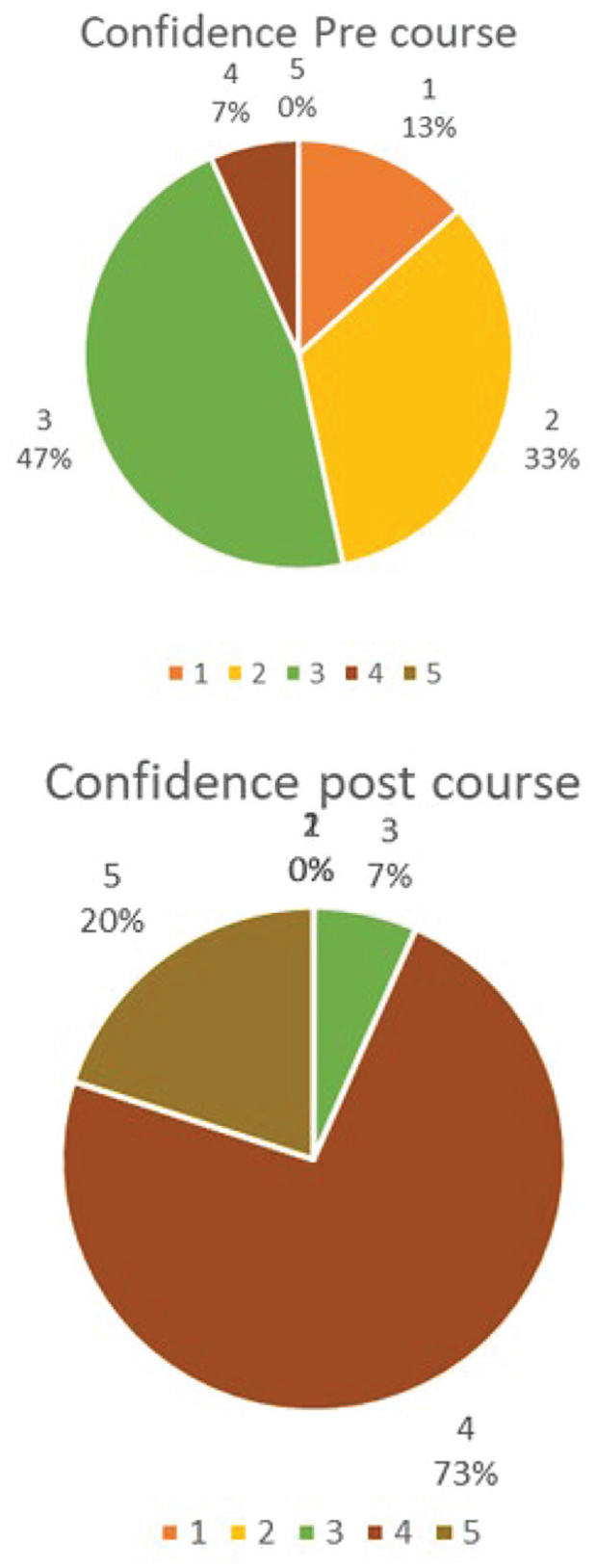
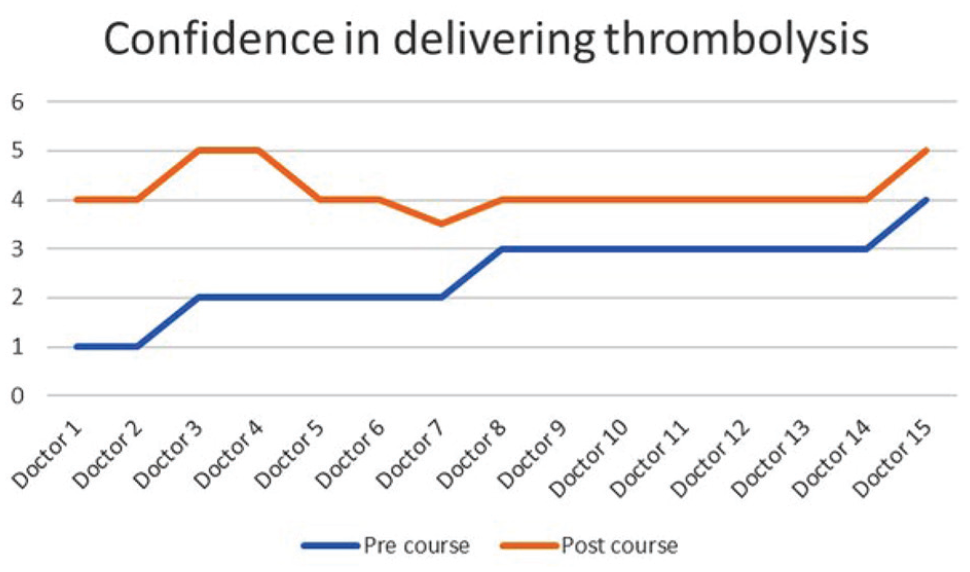
P0851 / 588
STRATEGIES FOR IMPROVING ACCESS TO REPERFUSION STROKE THERAPY FOR RURAL POPULATIONS: A SYSTEMATIC REVIEW
1The George Institute, Sydney, Australia, 2Macquarie University, Department of Clinical Medicine, Faculty of Medicine, Health and Human Sciences, Sydney, Australia, 3University of Newcastle, School of Medicine and Public Health, Newcastle, Australia, 4University of Melbourne, Department of Medicine and Neurology, Melbourne Brain Centre, Melbourne, Australia, 5Statewide Stroke Clinical Network, Queensland Health, Brisbane, Australia, 6John Hunter Hospital, University of Newcastle, Hunter Medical Research Institute, Department of Neurology, Newcastle, Australia
P0852 / 137
CHARACTERISTICS OF STROKE CODE PATIENTS TREATED BY A PRIVATE EMS IN ARGENTINA
1 ACUDIR EMS, Buenos Aires, Argentina
P0853 / 1162
STRUGGLING TO RECOVER: THE LONG TERM IMPACT OF STROKE, VIEWS FROM STROKE SURVIVORS, STROKE CARERS AND CLINICIANS
1 Ulster University, Psychology, Coleraine, United Kingdom
P0854 / 929
WHAT ARE THE OPPORTUNITIES AND CHALLENGES OF AUDITING POST-ACUTE STROKE CARE? SSNAP POST-ACUTE ORGANISATIONAL AUDIT (PAOA) 2021
1King’s College London, Sentinel Stroke National Audit Programme, London, United Kingdom, 2King’s College London, Population Health Sciences, London, United Kingdom
P0855 / 957
IMPROVEMENT IN REPERFUSION TREATMENT RATES AT HOSPITAL-LEVEL AFTER THE ESTABLISHMENT OF A REGIONAL CENTRALIZED STROKE NETWORK (CATI)
1Hospital Universitario Virgen Macarena, Seville, Spain, 2Hospital Universitario Virgen del Rocio, Seville, Spain, 3Hospital Universitario de Torrecárdenas, Almeria, Spain, 4Hospital Universitario Reina Sofia, Córdoba, Spain, 5Hospital Juan Ramón Jimenez, Huelva, Spain
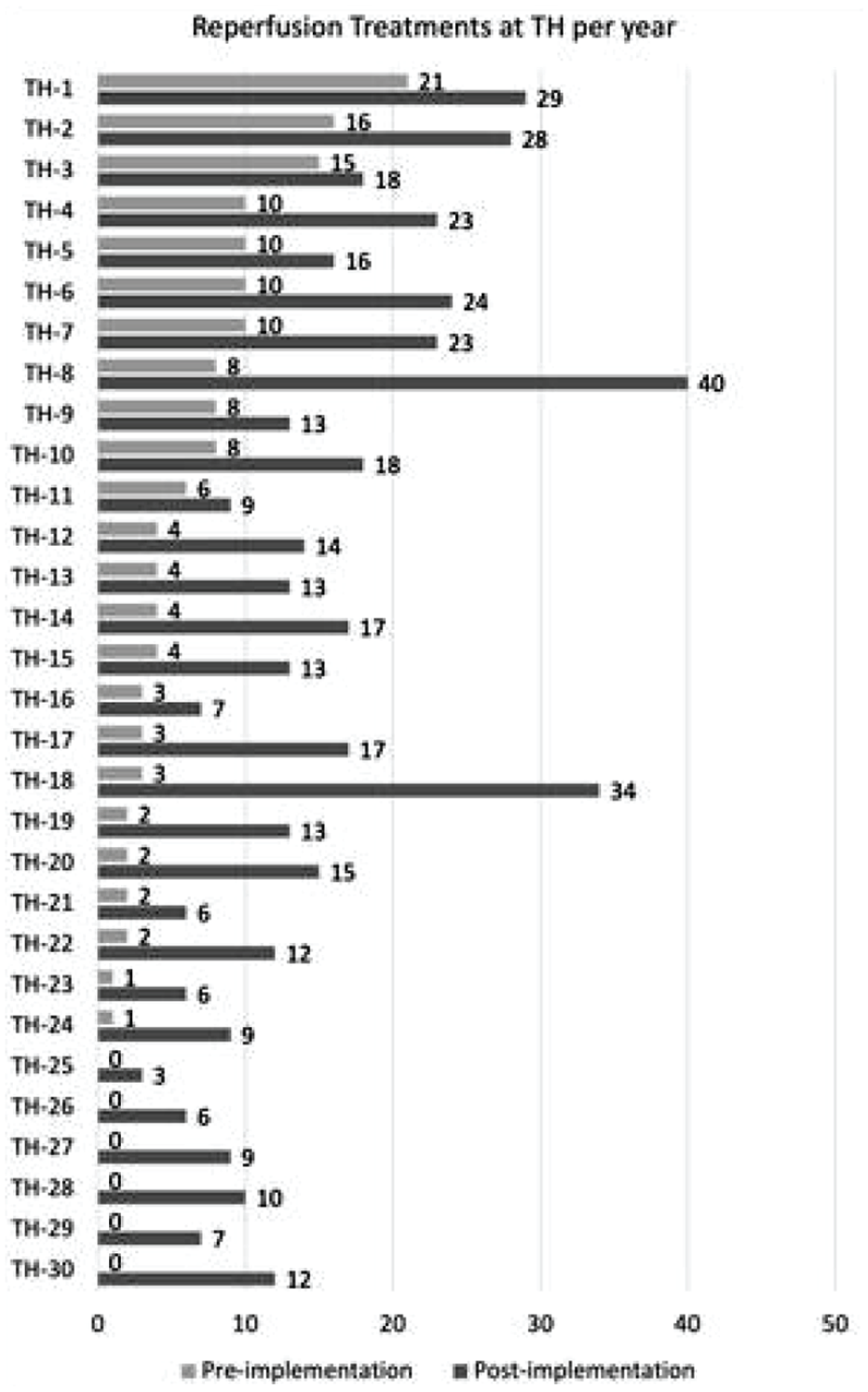
P0856 / 1349
FEVER SUGAR SWALLOW (FESS) PROTOCOL ON RES-Q PLATFORM: MONITORING NURSING QUALITY OF CARE IN STROKE PATIENTS
1St. Anne’s University Hospital Brno, International Clinical Research Center, Brno, Czech Republic, 2St Vincent’s Hospital Melbourne and Australian Catholic University, Darlinghurst, Australia, 3Motol University Hospital, Prague, Czech Republic, 4IQVIA RDS Czech Republic, Prague, Czech Republic, 5Hospital Network Area-Regional Health Department, Regione Lazio, Italy, 6ULSNE Macedo de Cavaleiros, Macedo de Cavaleiros, Portugal, 7Vall d’Hebron Hospital Universitari Barcelona, Barcelona, Spain, 8Boehringer Ingelheim International GmbH, Ingelheim/Rhein, Germany
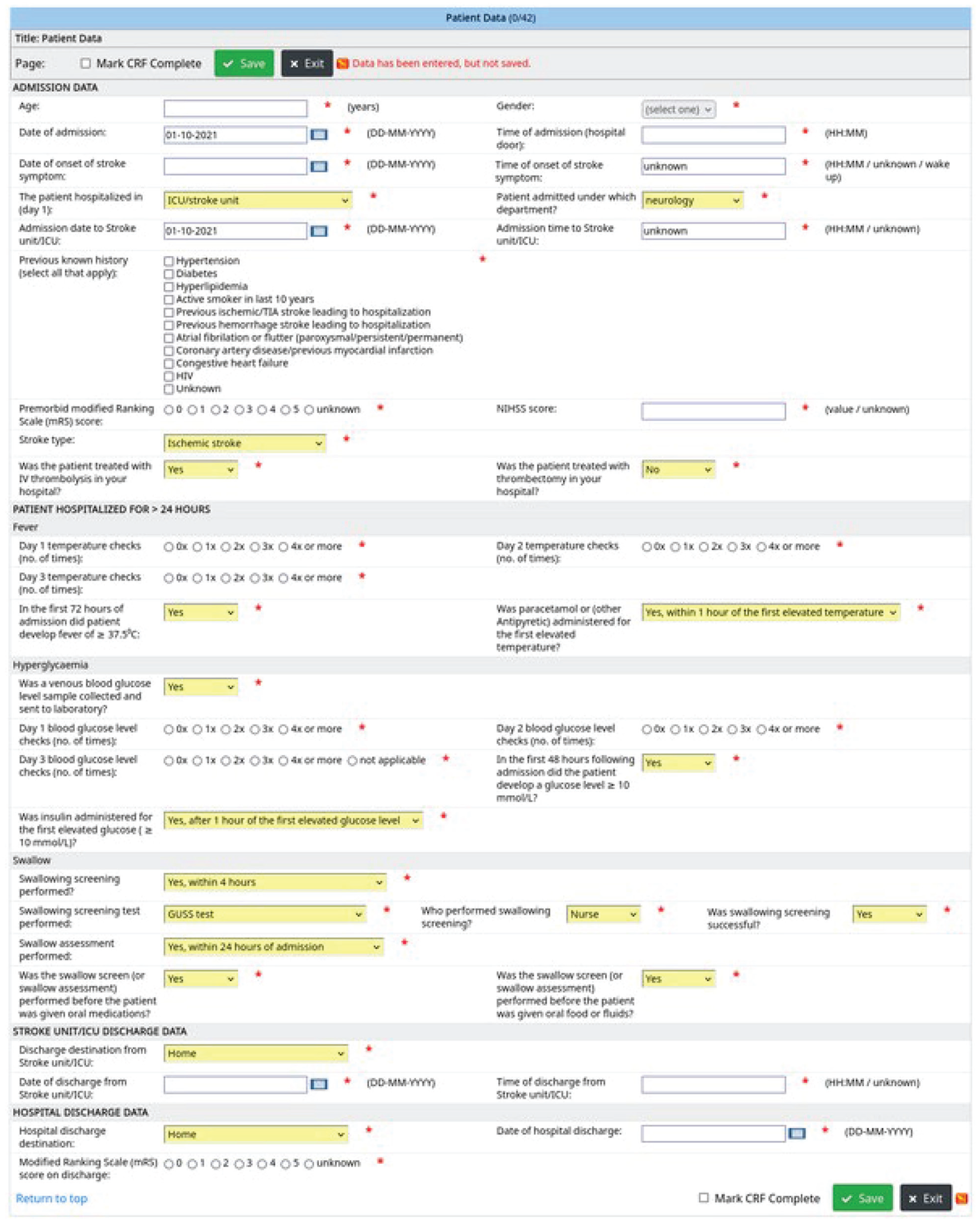
P0857 / 452
PATIENT AND PROCESS OUTCOMES FOR ACUTE STROKE IN IRELAND: IN-HOURS VERSUS OUT-OF-HOURS
1University Hospital Limerick, Department of Geriatrics and Stroke Medicine, Limerick, Ireland, 2National Office of Clinical Audit, Dublin, Ireland, 3Trinity Inst. of Neurosciences (TCIN), Medical Gerontology, Dublin, Ireland, 4Beaumont Hospital, Interventional Neuroradiology, Dublin, Ireland, 5University of Limerick, School of Allied Health, Limerick, Ireland
On univariate logistic regression, out-of-hours was associated with a higher odds of overall mortality compared with in-hours (n=6761) (OR 1.1; p=0.195) Adjustment for age, gender, pre-stroke modified Rankin scale, stroke subtype, arrival time <4.5 hours, thrombolysis and admission to stroke unit did not alter these findings (OR 1.1; p =.25).
P0858 / 1113
DOES IMPLEMENTATION OF A STANDARDIZED PATHWAY OF STROKE CARE AFFECT FUNCTIONAL OUTCOME AFTER STROKE?
1Norwegian University of Science and Technology, Department of Neuromedicine and Movement Science, Trondheim, Norway, 2Akershus University Hospital, Department of Neurology, Lillestrøm, Norway, 3Akershus University Hospital, Health Services Research Unit, Lillestrøm, Norway, 4St. Olavs University Hospital, Department of Medical Quality Registries, Trondheim, Norway
P0859 / 393
OF APPLES AND ORANGES - TO WHOM STROKE REGISTRY USERS WANT TO COMPARE THEMSELVES TO SET GOALS FOR HOSPITAL QUALITY INDICATORS
1Aalborg University, Architecture, Design and Media Technology, Aalborg, Denmark, 2St. Anne’s University Hospital Brno, Brno, Czech Republic
P0860 / 410
CAN PRE-HOSPITAL STROKE SCALES EFFECTIVELY IDENTIFY PATIENTS REQUIRING ACUTE THROMBOLYTIC TREATMENT? AN ASSESSMENT USING THE HUNTER-8 PRE-HOSPITAL STROKE SCALE
1John Hunter Hospital, Department of Neurology, New Lambton Heights, Australia, 2John Hunter Hospital, Department of Nephrology, New Lambton Heights, Australia, 3Hunter Medical Research Institute, Priority Research Centre for Stroke and Brain Injury, New Lambton Heights, Australia
Baseline variables, NIHSS and Hunter-8 score comparison in patients who received no reperfusion therapy, those who received thrombolysis only and those who received ECR +/- thrombolysis.

Sensitivity and Specificity of Hunter-8 thresholds for predicting thrombolysis +/- ECR.
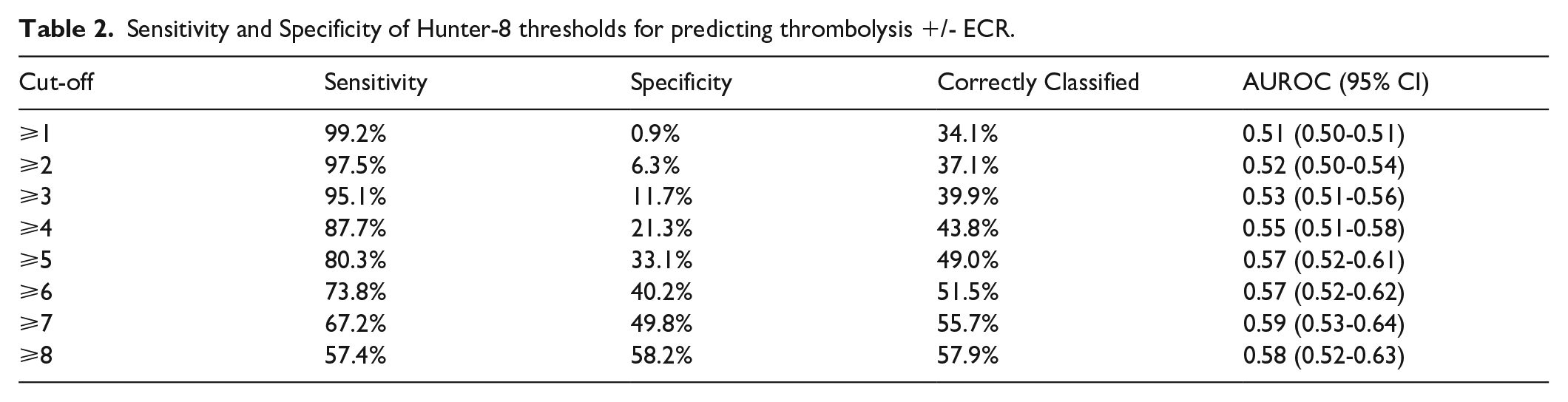
P0861 / 1440
LINCOLNSHIRE STROKE SERVICE UK: A SERVICE FIT FOR OUR OWN FAMILIES
1 Stroke Association UK, London, United Kingdom
Collaborative working including United Lincolnshire Hospitals NHS Trust, Lincolnshire Community Health Services NHS Trust, Stroke Association, Adult Social Care, Healthwatch Lincolnshire.
Stroke ‘100 Day Challenge’ added momentum with emphasis on pace, outcomes, staff influence, trust and teamwork. Joint vision and values developed and the mantra, ‘to have a stroke service that is fit for our own families’.
A pathway review undertaken.
Collected quantitative and qualitative data (‘deep dive’ and staff engagement).
Development of patient journal; shared use of Care Portal; jointly delivered virtual stroke prevention sessions; support for self-management through digital platforms.
Awarded the Chief Allied Health professions officer award for Innovations and delivery systems
Individual stroke services became the ‘Lincolnshire Stroke Service’ as collaborative/integrated working became the ‘norm’.
A seamless pathway for Stroke Survivors.
Acute stroke length of stay reduced to an average of 4.5 days. Well within the national average.
Community Stroke Service is available to all patients who require it.
Rehabilitation streams encompass personalisation; the whole stroke journey; fluid involvement of services and joint working, and clarity for patients.
P0862 / 1210
EVOLUTION OF STROKE SERVICES IN IRELAND: A FIFTEEN YEAR REVIEW
1National Office of Clinical Audit, Irish National Audit of Stroke, Dublin, Ireland, 2Trinity College Dublin, Medical Gerontology, Dublin, Ireland, 3Heath Service Executive, National Clinical Programme for Stroke, Dublin, Ireland
Over this 15 year period, 30 day age and sex standardised, inpatient mortality rate for Ischaemic Stroke declined from 11.0% to 6.4%. 30 day Mortality for haemorrhagic stroke dropped from 26% to 22%.
P0863 / 742
IMPACT OF THE CORONAVIRUS (COVID-19) PANDEMIC ON STROKE CODE ACTIVITIES AND OUTCOME: A RETROSPECTIVE OBSERVATIONAL STUDY
1University of Technology Sydney, Graduate Research School, Sydney, Australia, 2Royal North Shore Hospital, Neurology / Stroke, St Leonards, Australia, 3Royal North Shore Hospital, Neurology, St Leonards, Australia, 4University of Sydney Northern Clinical School, St Leonards, Australia, 5Northern Sydney Local Health District, Royal North Shore Hospital, Nursing and Midwifery Directorate, St Leonards, Australia, 6University of Technology Sydney, Faculty of Health, Sydney, Australia
P0864 / 465
FIRST, SECOND AND THIRD COVID-19 PANDEMIC WAVES AND THEIR DIFFERENT IMPACTS ON STROKE CARE: EVIDENCES FROM THE TUSCANY STROKE NETWORK
1National Research Council, Inst. of Neuroscience, Sesto Fiorentino - Florence, Italy, 2Agenzia Regionale Sanità, Florence, Italy, 3Stroke Unit Careggi Hospital, Firenze, Italy, 4Stroke Unit, Le Scotte University Hospital, Siena, Italy, 5Stroke Unit S. Stefano Hospital, Prato, Italy, 6Stroke Unit Arezzo Hospital, Arezzo, Italy, 7Stroke Unit, Nuovo Ospedale Apuano, Massa Carrara, Italy, 8Stroke Unit, Pisa Uiversity Hospital, Pisa, Italy
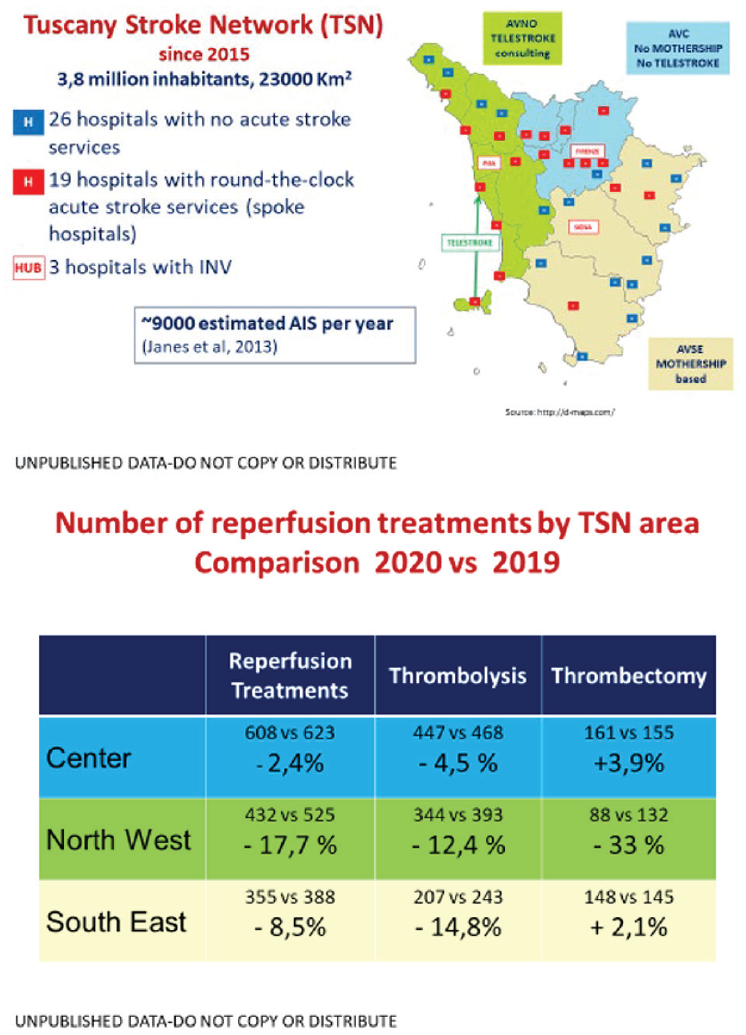
P0865 / 1424
WITHDRAWN PATIENT REPORTED EXPERIENCE MEASURES IN THE UK - DEVELOPING A NATIONAL QUESTIONNAIRE
1 Stroke Association UK, London, United Kingdom
The questionnaire will be distributed to 27,000 stroke survivors. It is hoped to stagger the sample at 6 months, 12 months and 24 months post-discharge
P0866 / 1164
FLYING INTERVENTION TEAM - IMPACT OF FLIGHT DISTANCE ON TIME TO TREATMENT
1Munich Clinic, Academic Teaching Hospital of the Ludwig-Maximilians-University, TEMPiS Telemedical Stroke Center, Munich, Germany, 2Munich Clinic, Department of Diagnostic and Interventional Radiology, Munich, Germany
P0867 / 434
PROVISION OF EVIDENCE-BASED STROKE REHABILITATION SERVICES IN THE UK: FINDINGS FROM A NATIONAL STROKE AUDIT
1King’s College London, Sentinel Stroke National Audit Programme, Department of Population Health Sciences, London, United Kingdom, 2University of Nottingham, School of Medicine, Nottingham, United Kingdom, 3Dorset County Hospital, Dorchester, United Kingdom, 4Royal Devon & Exeter Hospital, Exeter, United Kingdom
P0868 / 282
KNOWLEDGE OF STROKE RISK FACTORS AND WARNING SIGNS IN A LOCAL POPULATION IN SWITZERLAND USING THE STROKE AWARENESS QUESTIONNAIRE
1Spitalzentrum Biel, Neurology, Stroke Unit, Bienne, Switzerland, 2Lausanne University Hospital, Neurology, Lausanne, Switzerland, 3Inselspital Bern, Neurology, Bern, Switzerland
P0869 / 227
PATIENT AND PUBLIC INVOLVEMENT IN CHRONIC STROKE AND APHASIA RESEARCH
1University of Fribourg, Medicine Section/Neurology Department, Fribourg, Switzerland, 2Cyprus University of Technology, Rehabilitation Sciences, Limassol, Cyprus, 3Nicosia Municipality, Solidarity Network Nicosia In Action (NicInAct) Multifunctional Foundation, Nicosia, Cyprus, 4University of South Australia, Allied Health & Human Performance, Adelaide, Australia
(1) the kinds of Restrictions that make involvement in research difficult,
(2) the preferred levels and ways of Involvement during the research process,
(3) the Support required for active and collaborative involvement, and
(4) the Impact of their involvement and how it benefits the study’s outcomes.
People with aphasia stressed the importance of constant contextual and third-party support to sustain their active engagement within the research team.
P0870 / 1088
ESTABLISHING ORGANIZED STROKE CARE IN LOW-AND-MIDDLE INCOME COUNTRIES: FROM TRAINING OF NON-SPECIALIST TO IMPLEMENTATION ON BEHALF OF WORLD STROKE ORGANISATION-FUTURE STROKE LEADERS PROGRAM
1St. Stephen’s Hospital, Neurology, Delhi, India, 2All India Institute of Medical Sciences, Neurology, Delhi, India, 3University of Southern California, California, United States, 4National Institute of Health, Yerevan, Armenia, Neurology, Yerevan, Armenia, 5Pusat Perubatan Universiti Kebangsaan, Malaysia, Neurology, Malaysia, Malaysia, 6University of Mauritius, Mauritius, Mauritius
Develop a set of training modules on evidence-based stroke care to build capacity among non-specialists
Develop an App (Android and iOS) to deliver and monitor evidence-based stroke care
Implement the non-specialist driven model of stroke care
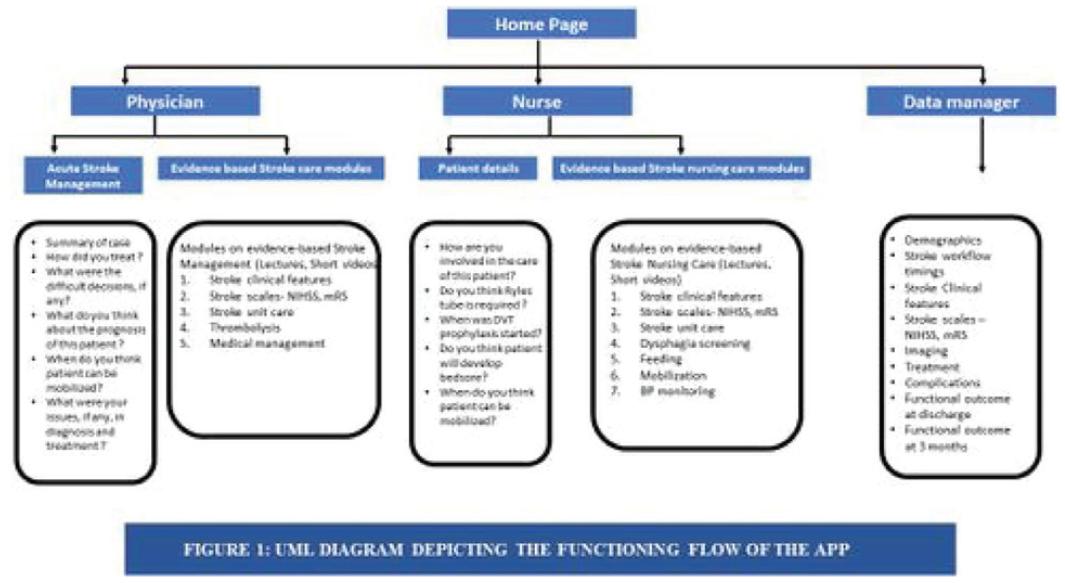
A pre-and-post knowledge, attitude and practices (KAP) assessment of the non-specialists will be conducted to evaluate the effectiveness of the virtual training.
A pre-and-post implementation data on Key quality indicators (KQIs) will be collected from the hospitals to assess the effectiveness of the non-specialist model (Table1).
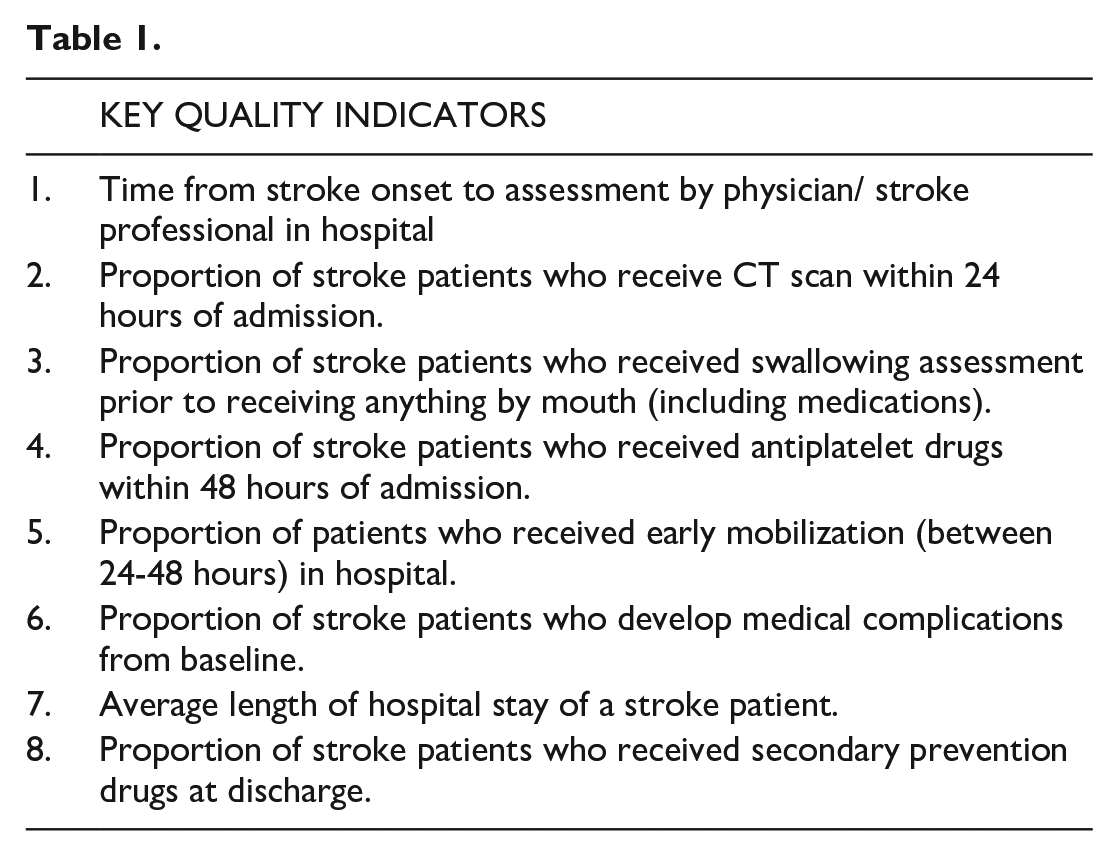
P0871 / 1439
GEOGRAPHICAL ACCESSIBILITY AND TRAVEL TIME TO MECHANICAL THROMBECTOMY CENTERS IN INDIA - AN MT2020+ PILOT GEOMAPPING PROJECT
1University of Illinois - Chicago (UIC) and AMITA Health, IL, Neurosurgery, Chicago, United States, 2Achuta Menon Center for Health Science Studies, Public Health, Trivandrum, India, 3Jagannath Gupta Institute of Medical Sciences, Community Medicine, Kolkata, India, 4Sidney Kimmel Medical College, Thomas Jefferson University, Philadelphia, United States, 5University of Iowa Hospitals and Clinics, Iowa, United States, 6HonorHealth Research Institute, Scottsdale, Arizona, United States, 7Society of Vascular and Interventional Neurology, Chicago, United States, 8All India Institute of Medical Sciences, New Delhi, India, 9NH Institute of Neuroscience, Bengaluru, India, 10Alleghany General Hospital, Pittsburg, United States, 11Sri Chitra Tirunal Institute, Trivandrum, India, 12University of Miami and Jackson Memorial Hospitals, Miami, United States
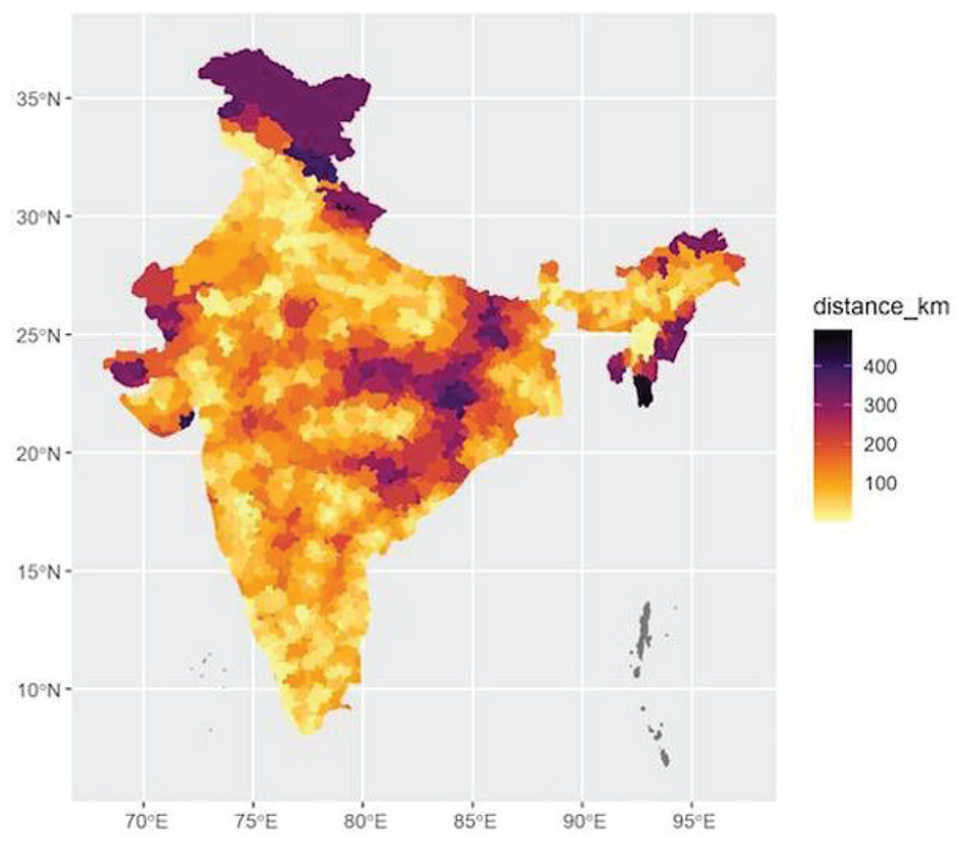
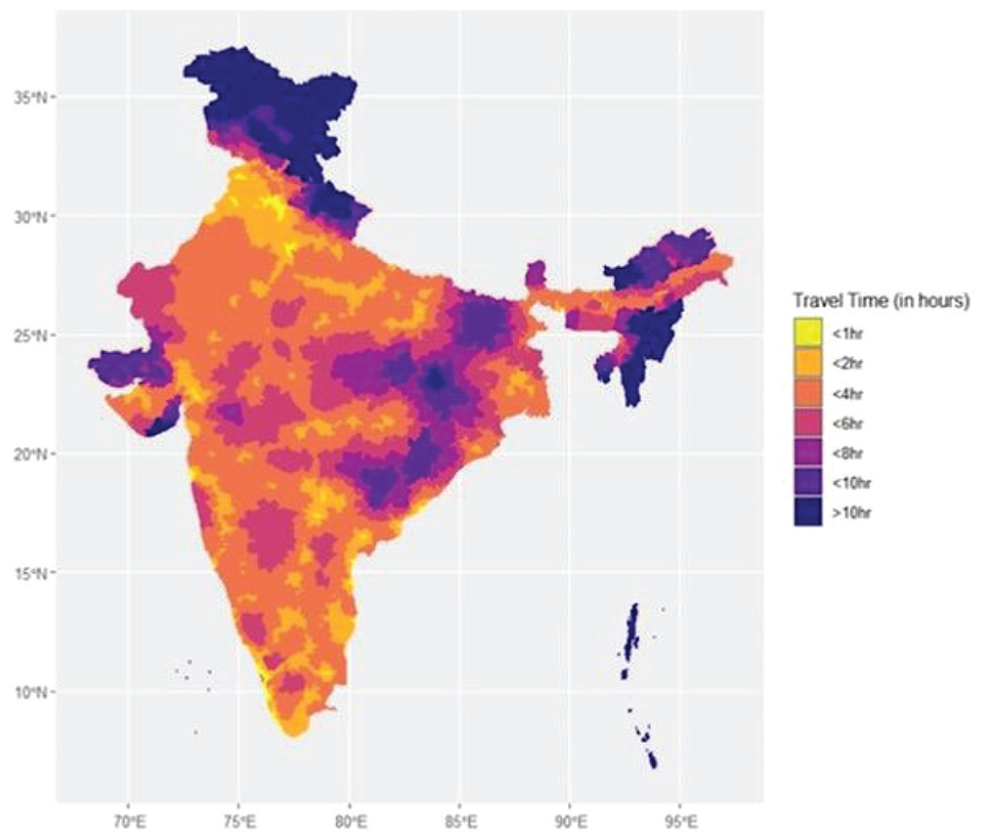
P0872 / 323
A QUALITATIVE EVIDENCE SYNTHESIS: EXPERIENCES OF EARLY SUPPORTED DISCHARGE SERVICES FOLLOWING A STROKE FOR PEOPLE WITH STROKE, CAREGIVERS AND HEALTHCARE PROFESSIONALS’
1University of Limerick, School of Allied Health, Limerick, Ireland, 2Connolly Hospital, Stroke and Older Persons Care, Dublin, Ireland, 3Royal College of Surgeons in Ireland, School of Physiotherapy, Dublin, Ireland, 4University of Limerick, Ageing Research Centre, Health Research Institute, Limerick, Ireland
1) ESD is experienced by people with stroke as a goal-focused and supportive process leading to positive outcomes,
2) ESD eases the transition from the hospital to the home environment but the transition from ESD to social and community services is often problematic,
3) Organisational, logistical and inter-professional factors are critical to the success of ESD and
4) The home environment enhances rehabilitation.
P0873 / 1652
COST-EFFECTIVE ANALYSIS OF EVIDENCE BASED INTERVENTIONS UNDERLYING ACUTE ISCHEMIC STROKE: A RETROSPECTIVE STUDY OF PATIENTS IN A TERTIARY CARE HOSPITAL, DELHI, INDIA
1All India Institute of Medical Sciences, Neurology, New Delhi, India, 2Public Health Foundation of India (PHFI), Health Economics and Financing Division, New Delhi, India
P0874 / 124
PREHOSPITAL STROKE NOTIFICATION: NO RECORD, IT DIDN’T HAPPEN
1 University of Virginia, Neurology, Charlottesville, United States
P0875 / 1510
FUNCTIONAL OUTCOME OF PATIENTS WITH LARGE VESSEL OCCLUSION SUBMITTED TO ENDOVASCULAR TREATMENT OVER A 5-YEAR PERIOD IN A REGIONAL TELESTROKE NETWORK
1Centro Hospitalar e Universitário de Coimbra, Coimbra, Portugal, 2Centro Hospitalar de Leiria, Leiria, Portugal, 3Centro Hospitalar Tondela-Viseu, Viseu, Portugal, 4Centro Hospitalar do Baixo Vouga, Aveiro, Portugal, 5Centro Hospitalar Universitário Cova da Beira, Covilhã, Portugal, 6Unidade Local de Saúde de Castelo Branco, Castelo Branco, Portugal, 7Unidade Local de Saúde da Guarda, Guarda, Portugal, 8Hospital Distrital da Figueira da Foz, Figueira da Foz, Portugal, 9Administração Regional de Saúde do Centro, Coimbra, Portugal
P0876 / 774
QUALITY AND OUTCOME OF ACUTE STROKE CARE AT THE GOVERNMENT-INITIATED REGIONAL CARDIO-CEREBROVASCULAR DISEASE CENTRE
1Seoul National University Hospital, Seoul National University College of Medicine, Department of Neurology, Emergency Medical Center, Seoul, Korea, Republic of, 2Seoul National University Bundang Hospital, Seoul National University College of Medicine, Department of Neurology and Cerebrovascular Center, Seongnam, Korea, Republic of, 3Seoul National University College of Medicine, Department of Preventive Medicine, Seoul, Korea, Republic of, 4Seoul National University Hospital, Central Division of Cardio-Cerebrovascular Disease Management, Seoul, Korea, Republic of, 5Korea University College of Medicine, Department of Biostatistics, Seoul, Korea, Republic of
P0877 / 389
TIME METRICS OF AIR VS. GROUND INTERHOSPITAL TRANSFER FOR ENDOVASCULAR THERAPY IN RURAL AREAS
1Munich Clinic, Academic Teaching Hospital of the Ludwig-Maximilians-University, TEMPiS Telemedical Stroke Center, Munich, Germany, 2Munich Clinic, Academic Teaching Hospital of the Ludwig-Maximilians-University, Clinic for Neuroradiology, Munich, Germany, 3Munich Clinic, Academic Teaching Hospital of the Ludwig-Maximilians-University, Clinic for Neurology and Neurological Intensive Care, Munich, Germany
Further comparisons addressed differences in Δd-gp for transfer from close (<40km), medium (40-70km) and long (>70km) distance PSCs.
Rate of EVT and rate of successful recanalization were similar in both groups.
P0878 / 110
INTEGRATED TIA CLINIC DURING COVID-19 PANDEMIC: SERVICE EVALUATION TO ASSESS IMPACT ON WAITING TIMES, DIAGNOSTIC OUTCOME AND 28-DAY READMISSIONS AT THE UNIVERSITY HOSPITAL SOUTHAMPTON, UK
1 University Hospital Southampton NHS Foundation Trust, Department of Neurosciences, Southampton, United Kingdom
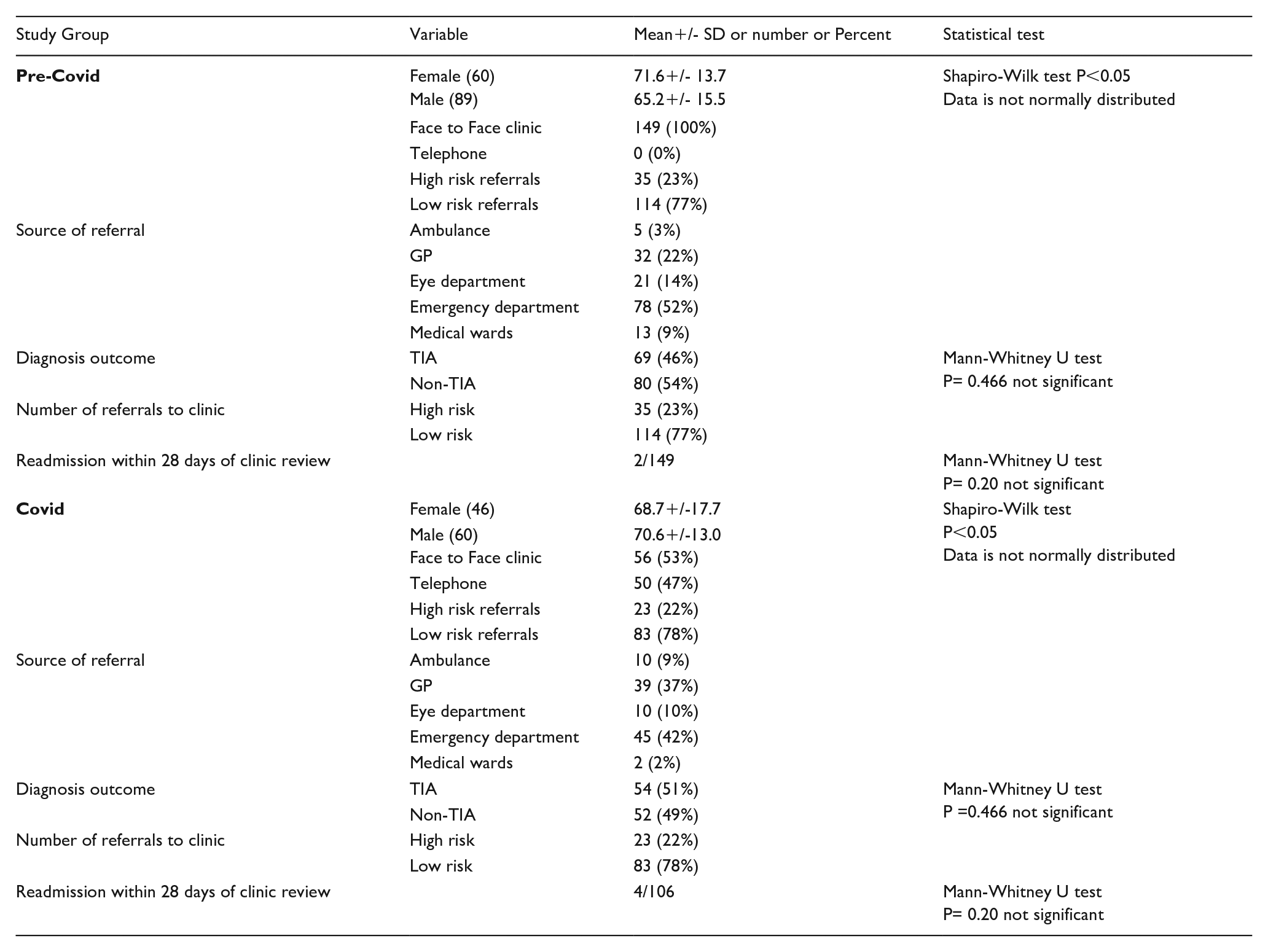
The time to clinic in the Covid group (2.58+/-2.19 days) is significantly shorter compared to the Pre-Covid group (4.77+/-5.01, p <0.05).
There was a statistically significant improvement in time to clinic for low-risk TIA cases in the covid group.

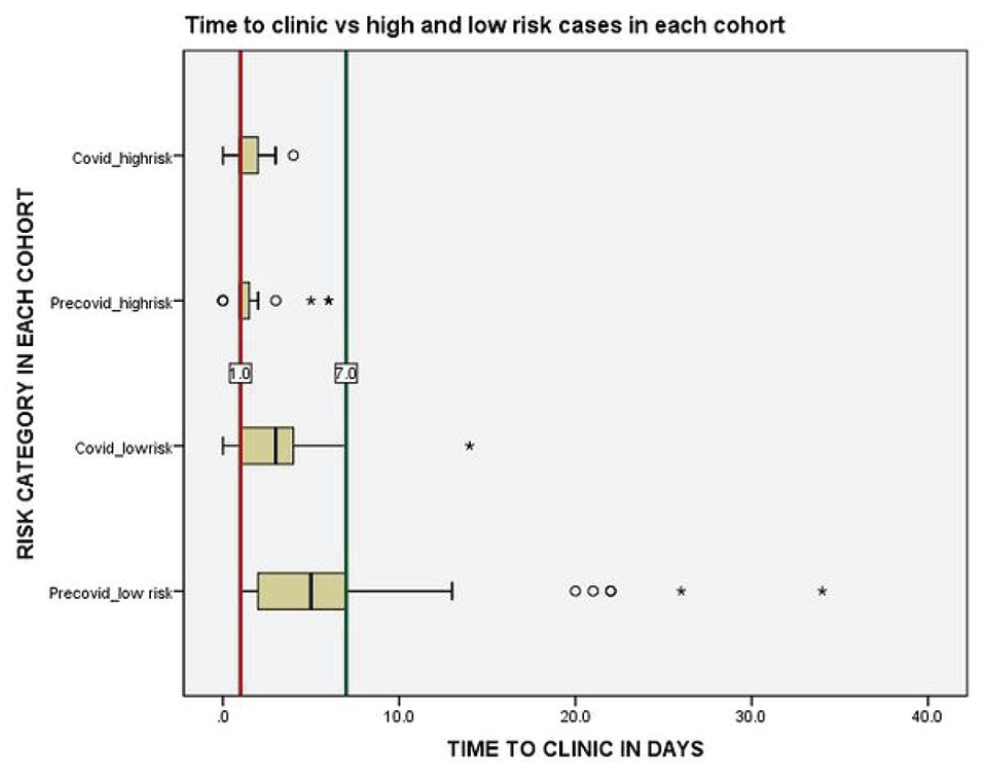
There was no difference in the diagnosis outcome and readmission rate between groups. within 28days.
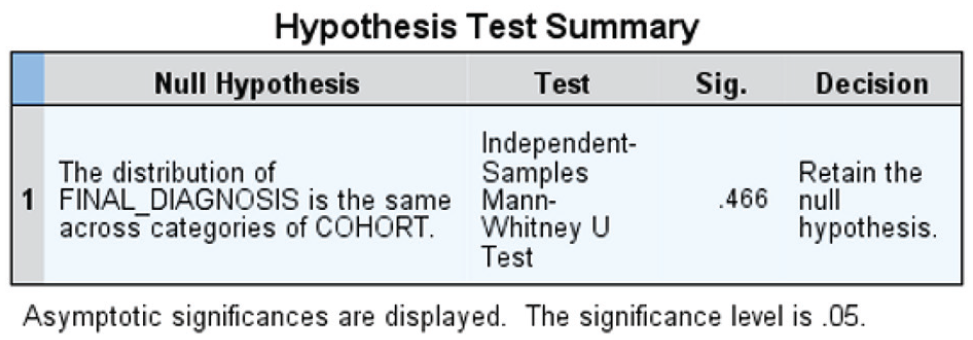
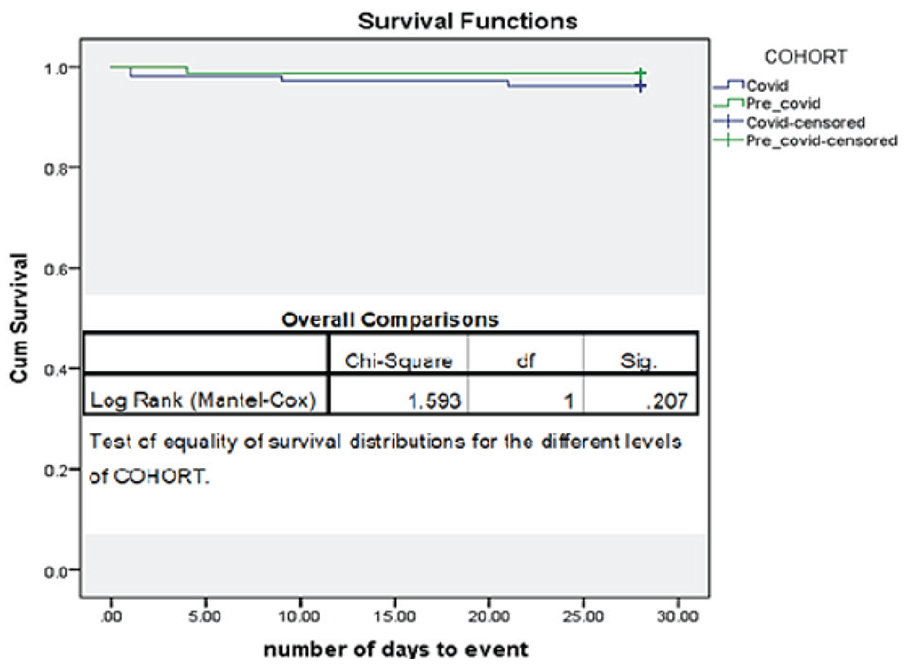
P0879 / 1541
OUR 10- YEAR TELESTROKE EXPERIENCE
1Infanta Sofia University Hospital, San Sebastian de los Reyes (Madrid), Spain, 2Torrecardenas University Hospital. University of Almeria, Almeria, Spain, 3La Paz University Hospital. Institute for Health Research-IdiPAZ (Universidad Autónoma de Madrid), Department of Neurology and Stroke Center, Madrid, Spain
technologies to assess patients with suspected acute stroke. Its use increases the patients access to stroke neurologists and improves thrombolysis rates and/or mechanical thrombectomy.
Our aim is to describe the evolution of TS parameters such as number of consultations, thrombolysis and thrombectomies from 2011-2021.
P0880 / 1261
EXPLORING THE EXPERIENCES OF STROKE SURVIVORS, INFORMAL CAREGIVERS AND HEALTHCARE PROVIDERS IN SIERRA LEONE: A QUALITATIVE STUDY
1King’s College London, King’s Centre for Global Health and Health Partnerships, School of Life Course and Population Sciences, London, United Kingdom, 2University of Sierra Leone, College of Medicine and Allied Health Sciences, Freetown, Sierra Leone, 3University of Nottingham, Faculty of Medicine and Health Sciences, Nottingham, United Kingdom
P0881 / 1084
IMPACT OF THE LOCKDOWN DUE TO COVID-19 PANDEMIC IN KYRGYZSTAN ON THERAPEUTIC AND LOGISTICAL APPROACHES APPLIED TO STROKE PATIENTS
1Jalal-Abad State Medical College, Department of Neurological and Psychiatric Disorders, Jalal-Abad, Kyrgyzstan, 2Kyrgyz State Medical Academy, Online and Advanced Training, Bishkek, Kyrgyzstan
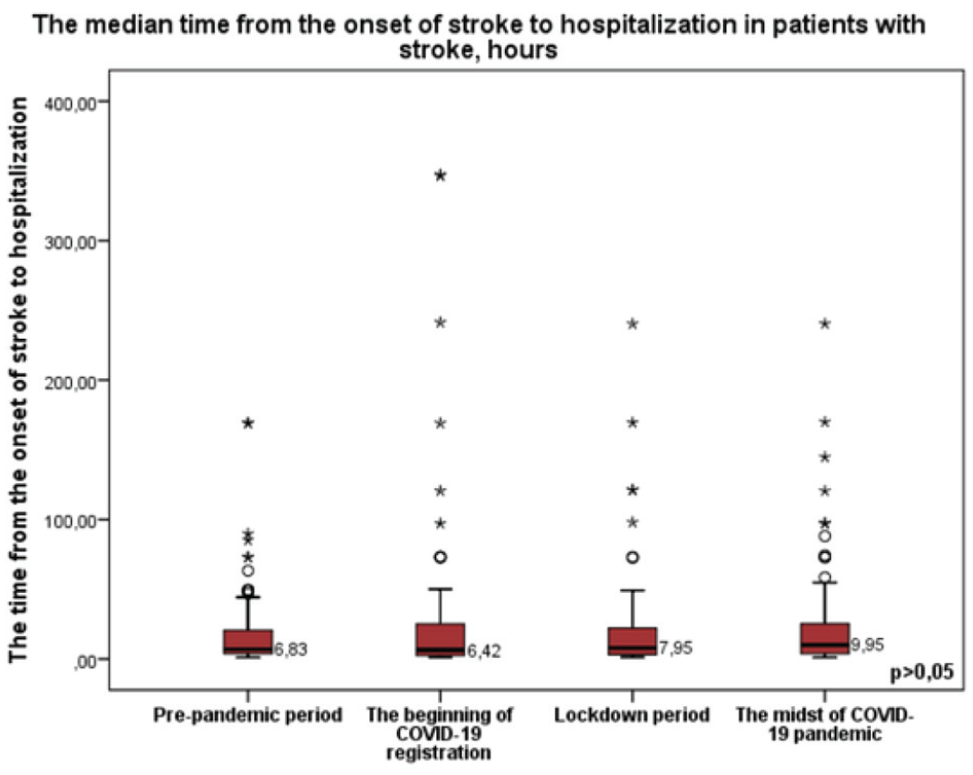
P0882 / 1414
QUALITY IMPROVEMENT PROJECT: THE PROVISION OF COVID-19 VACCINATIONS TO INPATIENTS ON THE ACUTE STROKE UNIT
1 The National Hospital for Neurology and Neurosurgery, Stroke Medicine, London, United Kingdom
P0883 / 1402
STARTING A TIA CLINIC: OUR CLINICAL EXPERIENCE IN THE FIRST YEAR
1 Hospital Universitario Fundación Jiménez Díaz, Neurology, Madrid, Spain
P0884 / 127
PHASE 2 OF A MULTIDISCIPLINARY MULTI-MODAL STROKE SIMULATION PROGRAMME TO IMPROVE RECOGNITION AND MANAGEMENT OF COMMON POST STROKE COMPLICATIONS
1 Hampshire Hospital NHS Foundation Trust, Stroke Medicine, Winchester, United Kingdom
P0885 / 1265
EXAMINING CHANGES IN STROKE RESEARCH RECRUITMENT TRENDS PRE AND POST COVID-19
1Imperial College London, Brain Sciences, London, United Kingdom, 2Imperial College Healthcare NHS Trust, London, United Kingdom, 3University Hospitals Dorset NHS Foundation Trust, Physiotherapy, Bournemouth, United Kingdom, 4University of Southampton, Life Sciences, Southampton, United Kingdom
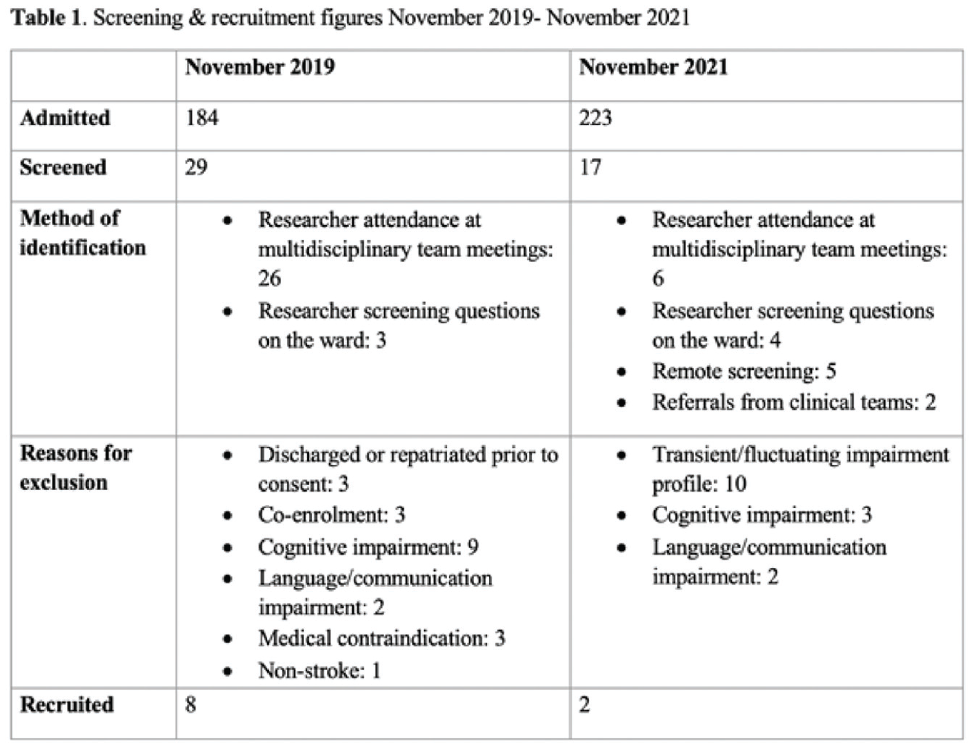
P0886 / 1297
THE BROADER IMPLICATIONS OF IMPLEMENTING A NEW MECHANICAL THROMBECTOMY SERVICE
1Oslo University Hospital, Ullevål, Stroke Unit, Department of Neurology, Oslo, Norway, 2Oslo University Hospital, Ullevål, Department of Geriatrics, Oslo, Norway, 3Norwegian Air Ambulance Foundation, Oslo, Norway
P0887 / 1263
CLINICAL STAFF PERSPECTIVES OF POST-DISCHARGE STROKE CARE IN INDIA
1Christian Medical College & Hospital, Ludhiana, India, 2University of Central Lancashire, Lancashire, United Kingdom, 3Sree Chitra Tirunal Institute for Medical Sciences and Technology, Thiruvananthapuram, India, 4All India Institute of Medical Sciences, New Delhi, India, 5Indira Gandhi Medical College, Shimla, India, 6Baptist Christian Hospital, Tezpur, India, 7National Institute of Mental Health And Neuro Sciences, Bengaluru, India, 8Zydus Hospitals And Healthcare Research Pvt. Ltd., Ahmedabad, India
P0888 / 1223
POTENTIAL FOR, AND OBSTACLES TO, ESO STROKE UNIT ACCREDITATION: A NATIONAL STUDY
1National Office of Clinical Audit, Irish National Audit of Stroke, Dublin, Ireland, 2Trinity College Dublin, Medical Gerontology, Dublin, Ireland
The most poorly met other criteria (2 units each) were related to availability of specific neurovascular clinics, full standard operating procedures and recording of neurological outcomes.
P0889 / 1400
STRATEGIES TO IMPROVE ACCESS TO STROKE CARE IN RURAL AND REMOTE AREAS ON THE EXAMPLE OF KYRGYZSTAN
1 Kyrgyz State Medical Academy, Online and Advanced Training Department, Bishkek, Kyrgyzstan
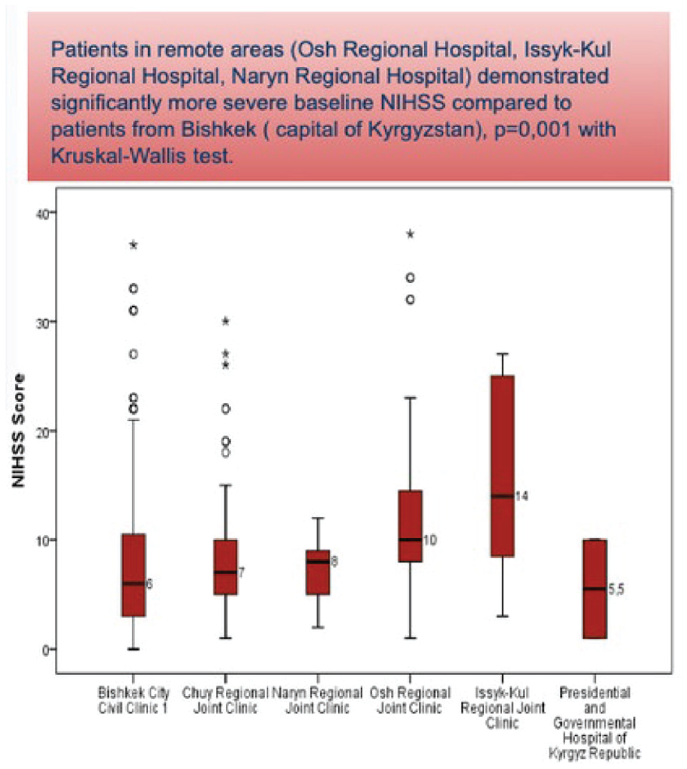
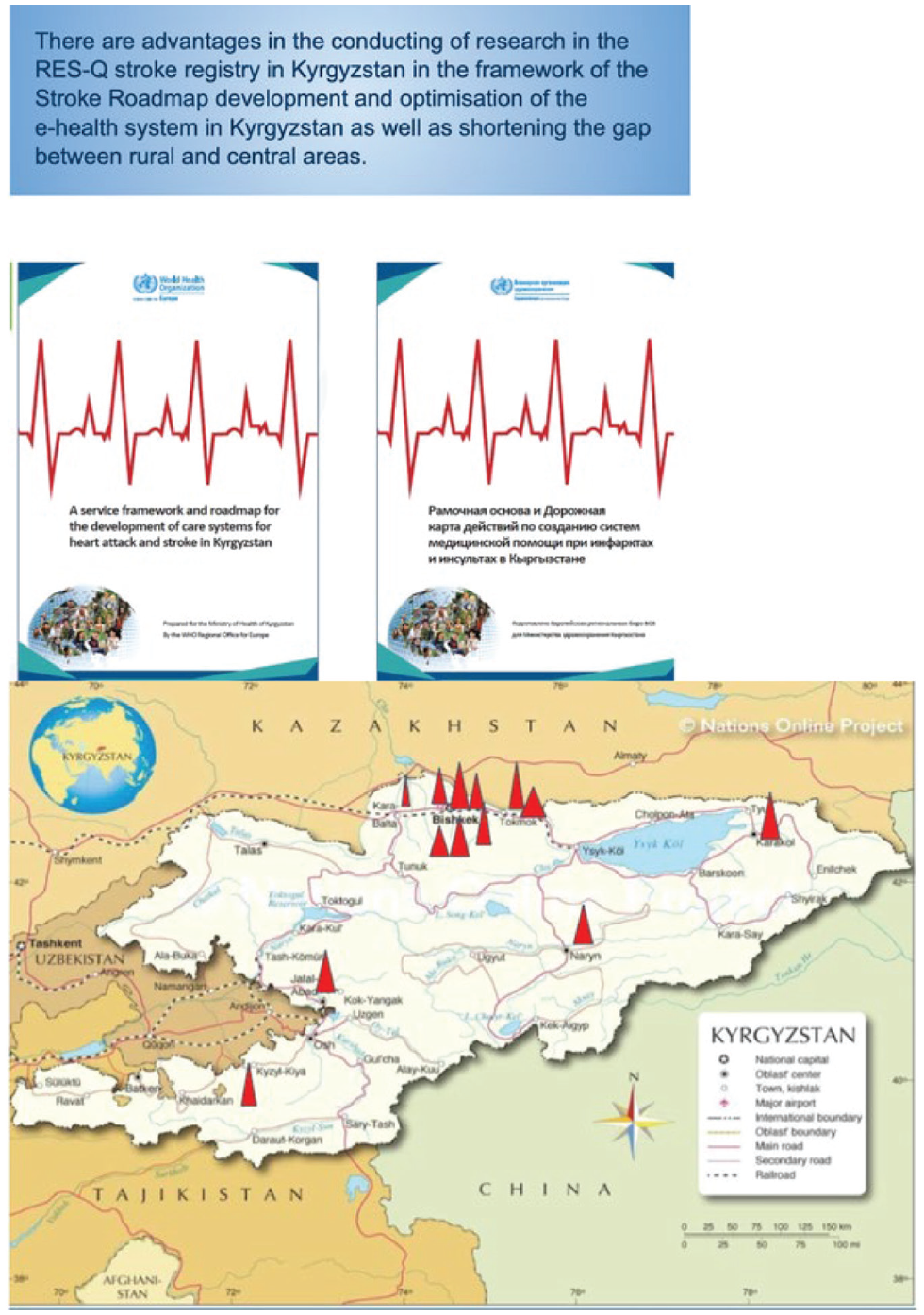
P0890 / 1370
ORGANIZING HEALTHCARE FOR BETTER ACUTE ISCHEMIC STROKE TREATMENT IN METROPOLITAN AREA OF BARI, ITALY
1University of Bari Aldo Moro, Neurology Unit, Department of Basic Medical Sciences, Neurosciences and Sense Organs, Bari, Italy, 2University of Bari Aldo Moro, Neuroradiology Unit, Department of Basic Medical Sciences, Neurosciences and Sense Organs, Bari, Italy
P0891 / 1477
COMPARING SINGLE-CENTRE STROKE ADMISSIONS IN SCOTLAND BEFORE AND DURING TWO LOCKDOWN PERIODS DUE TO THE SARS-COV-2 PANDEMIC
1Medical School, University of Glasgow, Glasgow, United Kingdom, 2Institute of Neurological Sciences, Queen Elizabeth University Hospital, Glasgow, United Kingdom
In the 6-month pandemic periods, 13/531 strokes (2.4%; 11 ischaemic, 2 TIAs) were related to SARS-CoV-2-infection. Age and sex were similar compared with non-SARS-CoV-2-related strokes; however, the former had a much higher baseline NIHSS (12 vs 4, p<0.05), with 2 receiving tPA.
BRAIN REORGANISATION AND RECOVERY
P0892 / 953
BRAIN VOLUMETRIC CHANGES AFTER FOUR WEEK AEROBIC TRAINING IN SUBACUTE STROKE PATIENTS – SUBGROUP ANALYSES FROM THE PHYS-STROKE TRIAL
1Charité Universitätsmedizin Berlin, Center of Stroke Research, Berlin, Germany, 2Berlin Institute of Health, QUEST Center for Responsible Research, Berlin, Germany, 3Charité-Universitätsmedizin Berlin, Department of Neuroradiology, Berlin, Germany, 4Klinikum Braunschweig, Department of Neurology, Braunschweig, Germany, 5Medical Park Berlin Humboldtmühle, Berlin, Germany, 6University Medicine Greifswald, Department of Neurology, Berlin, Germany, 7Charité-Universitätsmedizin Berlin, Klinik und Hochschulambulanz für Neurologie, Berlin, Germany
P0893 / 698
NON-PARETIC ARM MOTOR DEFICIT AND RECOVERY AS A FUNCTION OF DAMAGE LATERALIZATION AFTER STROKE: BIOMECHANICAL STUDY
1 M.F. Vladimirskiy Moscow Regional Research Clinical Institute, Department of Neurology, Moscow, Russian Federation
P0894 / 757
ROLE OF MOTOR AND COGNITIVE NETWORKS ON UPPER EXTREMITY MOTOR RECOVERY AFTER STROKE
1Samsung Medical Center, Sungkyunkwan University School of Medicine, Department of Physical and Rehabilitation Medicine, Center for Prevention and Rehabilitation, Heart Vascular Stroke Institute, Seoul, Korea, Republic of, 2SAIHST, Sungkyunkwan University, Department of Health Sciences and Technology, Department of Medical Device Management & Research, Department of Digital Health, Seoul, Korea, Republic of
P0895 / 714
HUMAN NEUROGENESIS IN ISCHEMIC ADULT BRAIN: EFFECT OF REPETITIVE TRANSCRANIAL MAGNETIC STIMULATION
1Sapienza University of Rome, Emergency Department, Stroke Unit, Rome, Italy, 2Istituto Superiore di Sanità, Department of Neuroscience, Rome, Italy, 3Sapienza University of Rome, Department of Human Neurosciences, Rome, Italy
P0896 / 394
AUTOLOGOUS GENETICALLY-ENRICHED LEUCOCONCENTRATE FOR ISCHEMIC STROKE TREATMENT IN A MINI-PIG MODEL
1Kazan State Medical University, Operative Surgery and Topographic Anatomy, Kazan, Russian Federation, 2Kazan State Medical University, Medical Biology and Genetics, Kazan, Russian Federation, 3Kazan [Volga Region] Federal University, Operative Surgery and Topographic Anatomy, Kazan, Russian Federation
P0897 / 858
INFARCT SIZE AND SENSORIMOTOR RECOVERY IN A COMBINED MOUSE MODEL FOR ISCHEMIC STROKE AND ALZHEIMER’S DISEASE
1Vrije Universiteit Brussel, Department of Pharmaceutical Chemistry, Drug Analysis and Drug Information, Research Group Experimental Pharmacology, Center for Neurosciences (C4N), Brussels, Belgium, 2UZ Brussel, Department of Neurology, Brussels, Belgium, 3Vrije Universiteit Brussel, Center for Neurosciences (C4N), Brussels, Belgium, 4University of Antwerp, Reference Center for Biological Markers of Dementia (BIODEM), Institute Born-Bunge, Antwerp, Belgium, 5Vrije Universiteit Brussel, Research Group Experimental Pharmacology, Center for Neurosciences (C4N), Brussels, Belgium
TECHNOLOGY INNOVATIONS: ROBOTS, VIRTUAL REALITY, ARTIFICIAL INTELLIGENCE AND MORE
P0898 / 573
TELENEUROLOGY AS A SUPPORT STRATEGY FOR STROKE PATIENTS DURING THE COVID-19 PANDEMIC IN RECIFE-BRAZIL
1Hospital Alemão Oswaldo Cruz, Sustainability and Social Responsability Department, São Paulo, Brazil, 2Brazilian Health Ministry, Brasília, Brazil
P0899 / 388
IN-VIVO ROBOTIC NAVIGATION OF MAGNETIC MICRO-CATHETER AND SUPER-SELECTIVE ANGIOGRPAHY WITHIN PORCINE VASCULATURE – POTENTIAL USE FOR DISTAL VESSEL OCCLUSIONS
1ETH Zurich, Multi-Scale Robotics Lab, Zurich, Switzerland, 2Aarau Cantonal Hospital, Department of Neuroradiology, Aarau, Switzerland
Currently, endovascular therapy (EVT) of distal vessel occlusion (DVO) in acute ischemic stroke (AIS) is increasingly performed (1). Endovascular treatment of DVO requires a high degree of technical expertise and is not without risk.
Here, present a novel concept of MSM that can be applied to AIS patients with DVO using intra-arterial thrombolysis (IAT).
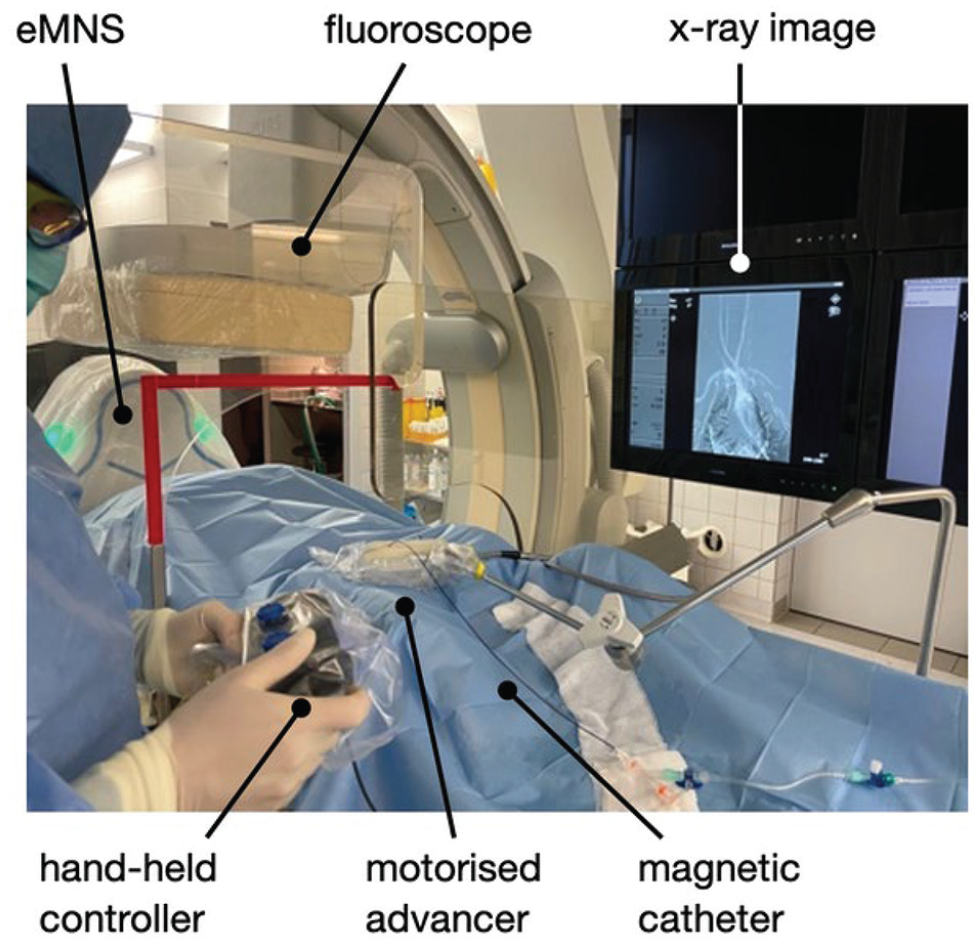
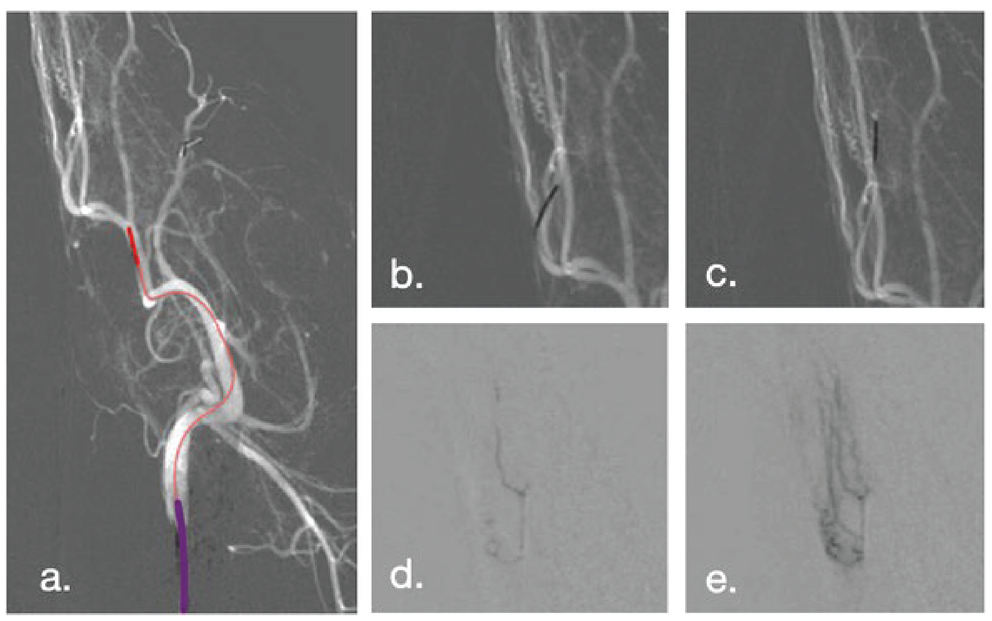
P0900 / 1503
ARTIFICIAL INTELLIGENCE: A NOVEL TOOL TO MEASURE DYNAMIC AUTOREGULATION IN SUBARACHNOID HEMORRHAGE
1 Azienda Ospedaliera di Padova, Padova, Italy
P0901 / 293
IN-VIVO ROBOTIC MAGNETIC NAVIGATION OF A DIAGNOSTIC CATHETER WITH DEPLOYMENT OF A STENT RETRIEVER IN A PORCINE VASCULATURE
1ETH Zürich, Zürich, Switzerland, 2Cantonal Hospital Aarau, Department of Neuroradiology, Aarau, Switzerland
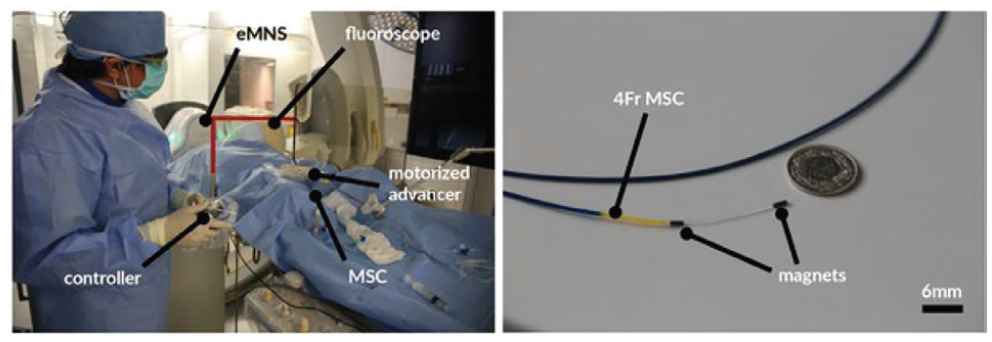
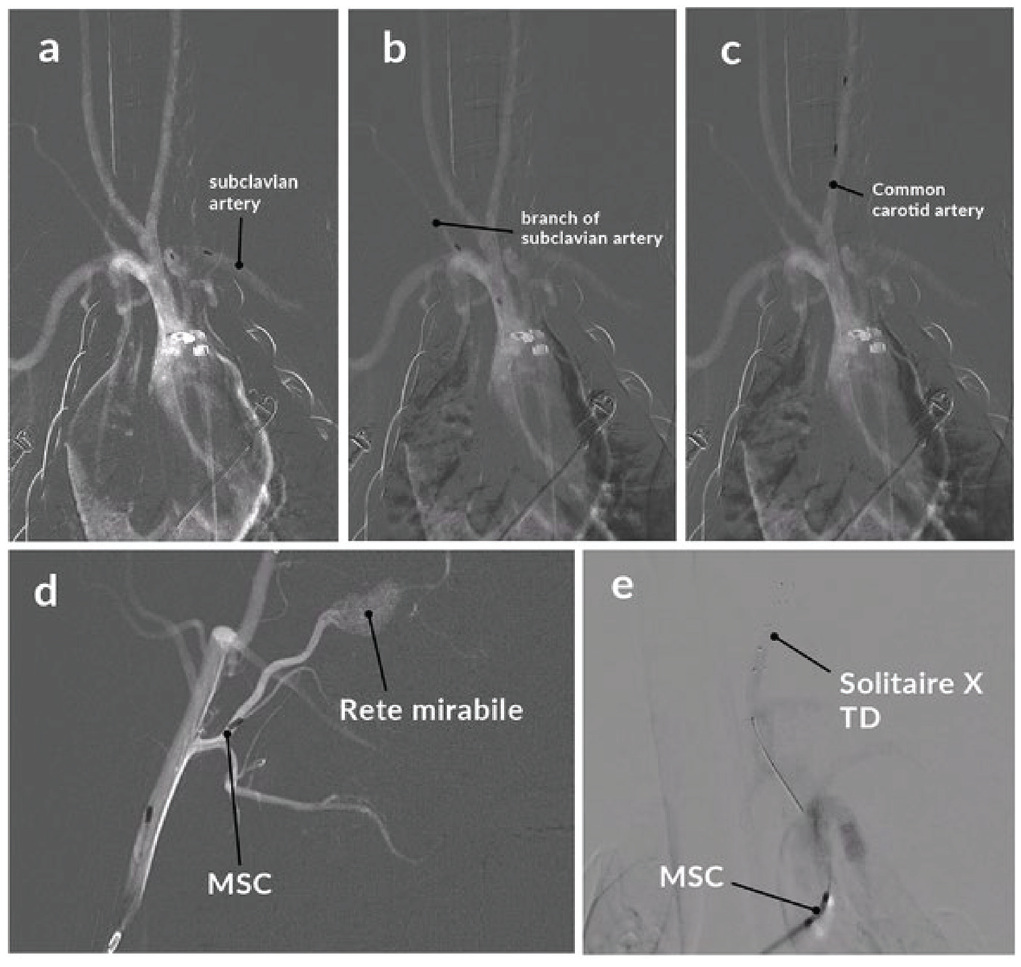
P0902 / 901
COMPUTATIONAL MEASUREMENT OF PERIVASCULAR SPACES ON 3T MRI IN PATIENTS WITH SPORADIC SMALL VESSEL DISEASE
1 University of Edinburgh, Neuroimaging Sciences, Edinburgh, United Kingdom
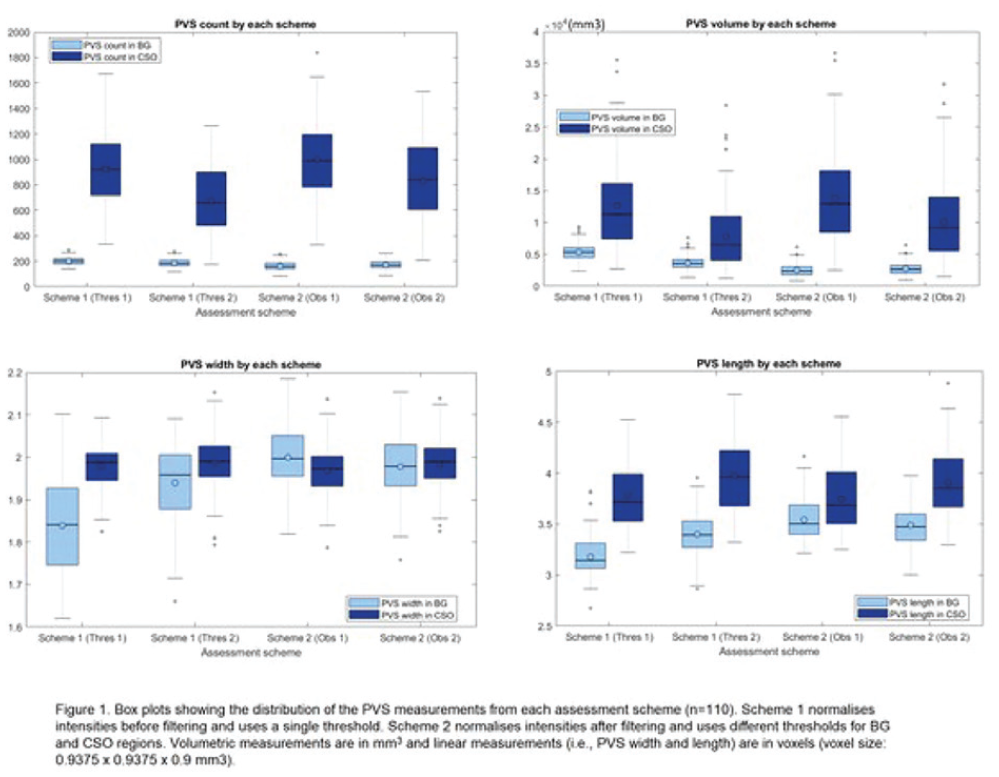
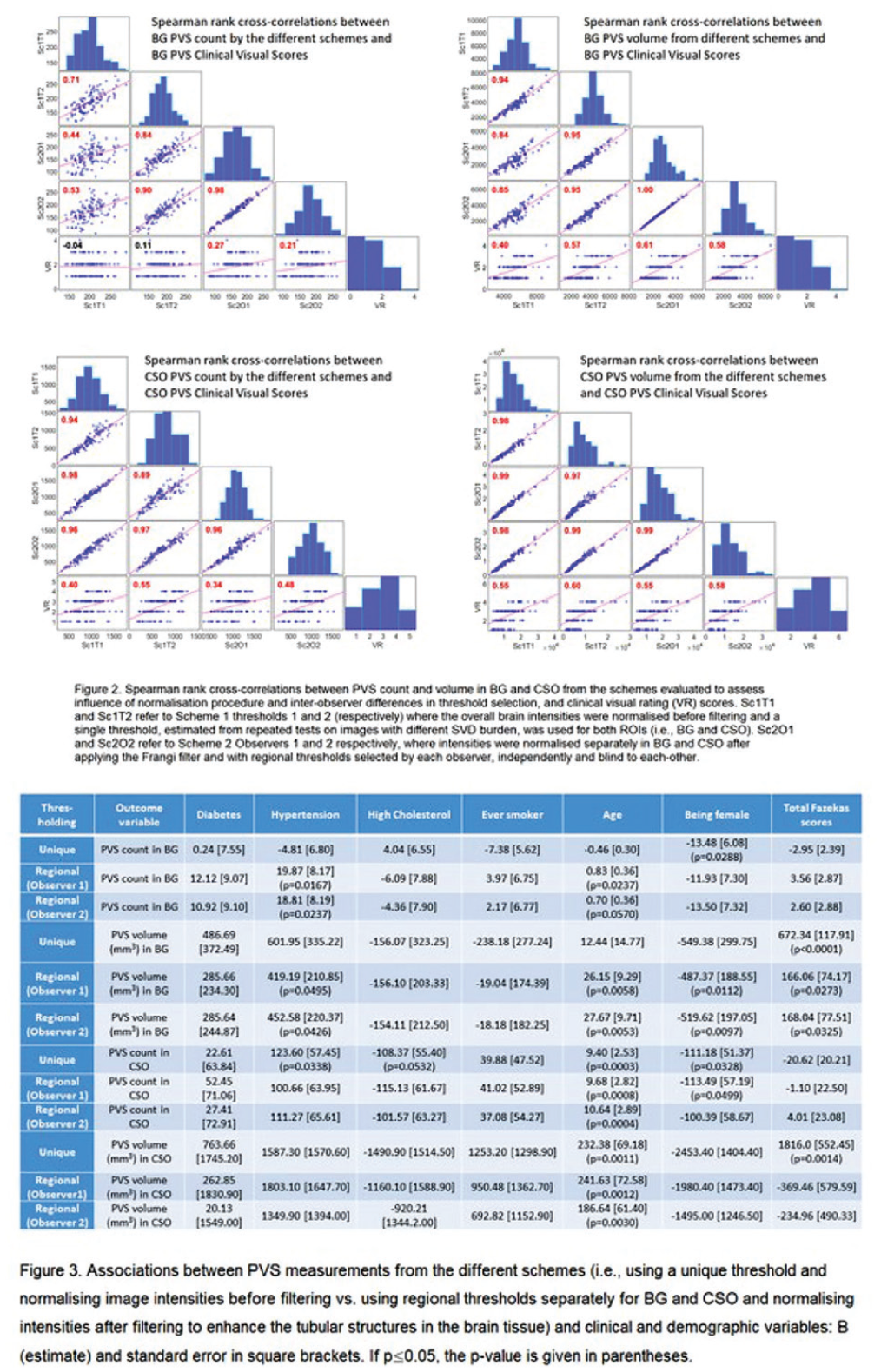
P0903 / 949
TICTUS: A SMARTPHONE APP FOR TRACKING REPERFUSION TREATMENT TIMES AND SCREENING CANDIDATES FOR ACUTE STROKE CLINICAL TRIALS
1Hospital Universitario Virgen Macarena, Seville, Spain, 2Hospital Universitario Virgen del Rocio, Seville, Spain, 3Instituto de Biomedicina de Sevilla (IBIS), Seville, Spain
Nowadays, TICTUS development is in a phase of expansion and improvement with new functions such as the customization of clinical trial criteria by a super-user at each center.
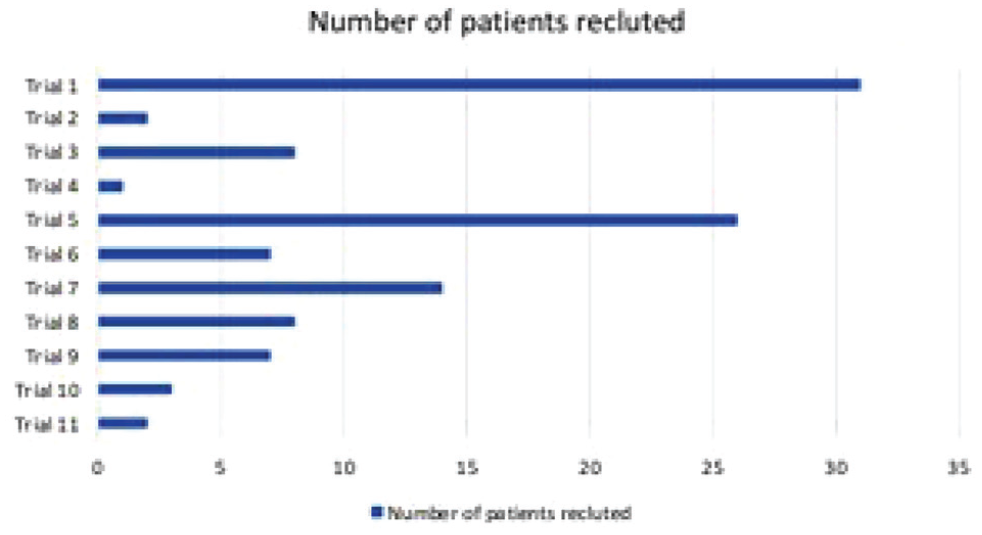
P0904 / 864
SMARTWATCH MONITORING OF NATURAL BEHAVIOUR IMPROVES PREDICTION OF IN-HOSPITAL STROKE DETERIORATION
1Imperial College London, Brain Sciences, London, United Kingdom, 2Imperial College London, Department of Computing, London, United Kingdom
P0905 / 1299
CEREBRAL ARTERY-VEIN SEGMENTATION IN DIGITAL SUBTRACTION ANGIOGRAPHY USING DEEP LEARNING
1Erasmus MC, Rotterdam, Netherlands, 2TU Delft, Delft, Netherlands, 3Maastricht UMC, Maastricht, Netherlands, 4University of Twente, Twente, Netherlands, 5Rijnstate Hospital, Arnhem, Netherlands, 6Philips Healthcare, Best, Netherlands
P0906 / 1160
QASPECTS: A FAST AI ENABLED ASPECT SCORING SYSTEM
1Qure.ai, Mumbai, India, 2Dr Biviji Radiology Diagnostic Center, Nagpur, India, 3Christian Medical College, Ludhiana, India
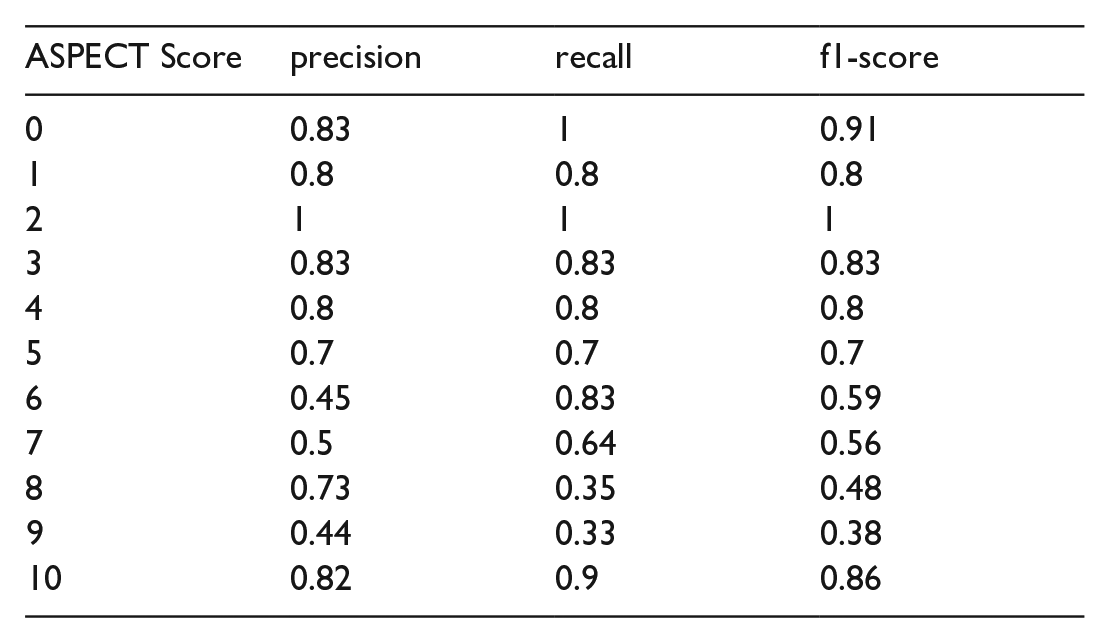
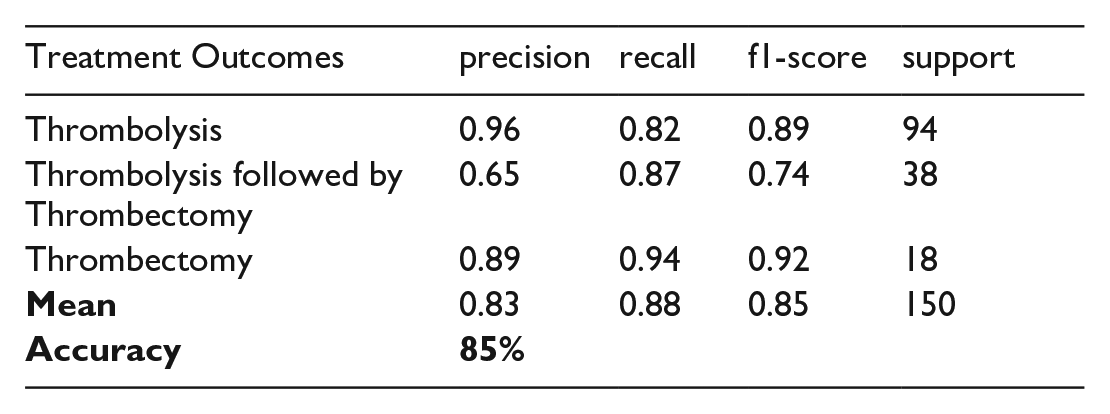
P0907 / 582
USE OF VIDEO HEAD IMPULSE TESTING TO ASSIST ACCURATE DIAGNOSIS OF POSTERIOR CIRCULATION STROKE IN THE EMERGENCY DEPARTMENT – A PROSPECTIVE TRIAL
1Liverpool Hospital, Department of Neurophysiology, Liverpool, Australia, 2University of New South Wales, Sydney Brain Centre, Liverpool, Australia, 3University of New South Wales, South Western Sydney Clinical School, Liverpool, Australia, 4The Royal Melbourne Hospital, Melbourne Brain Centre, Parkville, Australia, 5Wollongong Hospital, Department of Neurology, Wollongong, Australia, 6Gosford Hospital, Department of Neurology, Gosford, Australia, 7Liverpool Hospital, Department of Emergency Medicine, Liverpool, Australia, 8Ingham Institute, South Western Emergency Research Institute, Liverpool, Australia, 9Western Sydney University, MARCS Institute for Brain, Behaviour and Development, Liverpool, Australia, 10University of Sydney, Emergency Medicine, Camperdown, Australia, 11Royal Prince Alfred Hospital, Department of Neurology, Camperdown, Australia, 12University of Sydney, Central Clinical School, Camperdown, Australia
P0908 / 519
INFLUENCE OF E-CTA SOFTWARE ON CT ANGIOGRAPHY-BASED DECISION MAKING
1Oxford University Hospitals NHSFT, Acute Stroke Service, Oxford, United Kingdom, 2Royal Berkshire NHSFT, Reading, United Kingdom, 3University of Dundee / University of Nottingham, Nottingham, United Kingdom, 4Swansea Bay UHB, Swansea, United Kingdom
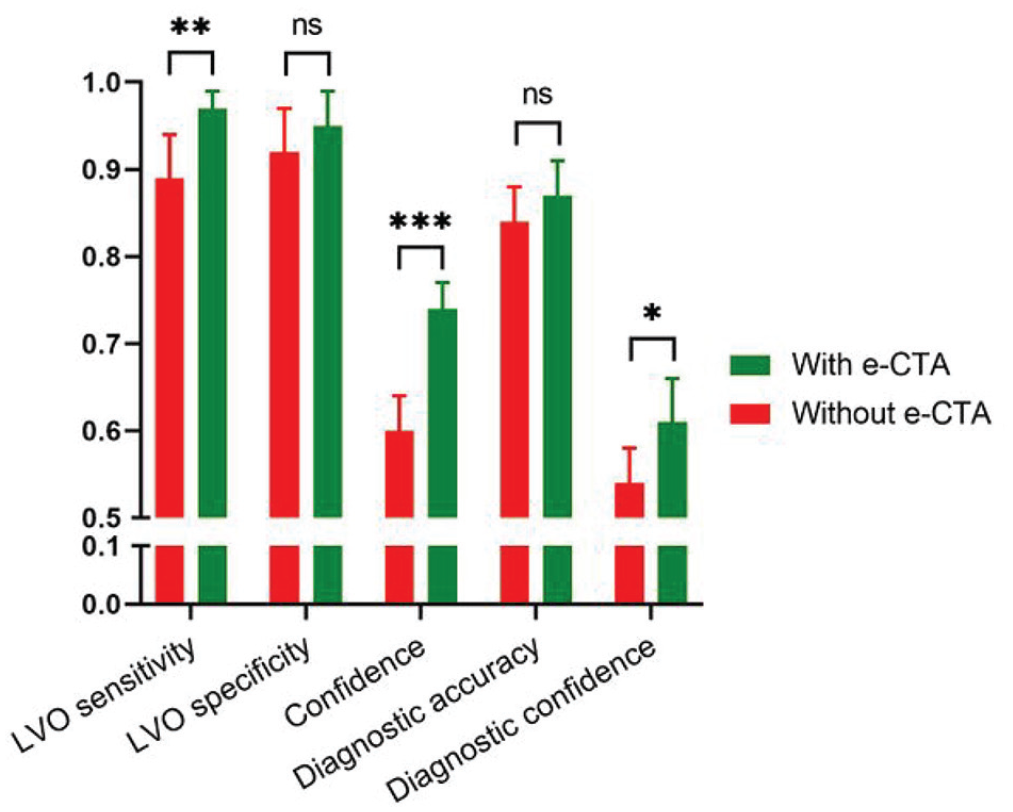
P0909 / 707
MACHINE LEARNING-ENABLED MULTITRUST AUDIT OF STROKE CO-MORBIDITIES USING NATURAL LANGUAGE PROCESSING
1King’s College London, School of Neuroscience, Institute of Psychiatry, Psychology, & Neuroscience, London, United Kingdom, 2King’s College Hospital NHS Foundation Trust, London, United Kingdom, 3Guy’s & St Thomas’ Hospital NHS Foundation Trust, London, UK, Neurology / Stroke, London, United Kingdom, 4South London & Maudsley NHS Foundation Trust, National Institute for Health Research, Maudsley Biomedical Research Centre, London, United Kingdom, 5Kings College London, School of Biomedical Engineering and Imaging Sciences, London, United Kingdom
P0910 / 784
THE USING OF FUNCTIONAL MYOSTIMULATION UNDER THE BIOMECHANICAL CONTROL OF WALKING IN RECOVERY OF POSTSTROKE PATIENTS
1 M.F. Vladimirskiy Moscow Regional Research Clinical Institute, Department of Neurology, Moscow, Russian Federation
P0911 / 513
UTILISING MACHINE LEARNING AND BIG DATA TO EXPLORE THE DECISIVE PREDICTORS RESULTING IN THE AMELIORATION IN FUNCTIONAL MEASUREMENTS OF ISCHAEMIC STROKE PATIENTS
1Chang Gung Memorial Hospital, Centre for Artificial Intelligence in Medicine, Taoyuan, Taiwan, Province of China, 2China Medical University, Department of Medicine, Taichung, Taiwan, Province of China, 3China Medical University Hospital, Artificial Intelligence Centre for Medical Diagnosis, Taichung, Taiwan, Province of China, 4China Medical University Hospital, Department of Neurology, Taichung, Taiwan, Province of China, 5Chang Gung University, Bachelor Programme in Artificial Intelligence, Taoyuan, Taiwan, Province of China
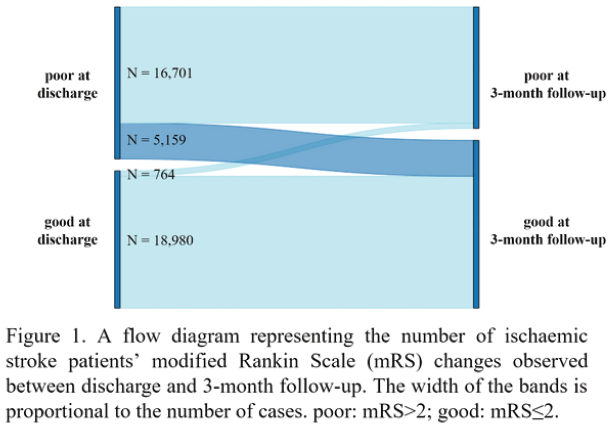
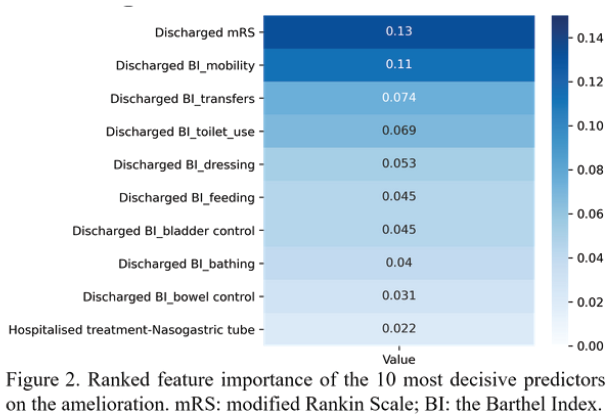
P0912 / 899
USABILITY OF A COACHING PLATFORM FOR STROKE REHABILITATION: RESULTS FROM THE VCARE PROJECT EXPERIENCE IN A HOME-LIKE SCENARIO
1Casa di Cura del Policlinico, Department of Neurorehabilitation Sciences, Milan, Italy, 2Need Institute Foundation, Milan, Italy
Data-analysis and interpretation on potential benefits (satisfaction, usability and compliance) and ongoing activities will be presented during ESOC2022.
CASE REPORTS
P0913 / 703
RETRACTED: POSTERIOR REVERSIBLE ENCEPHALOPATHY SYNDROME (PRES) SECONDARY TO RENAL ARTERY THROMBOSIS FOLLOWING COVID-19 VACCINATION
1Guys and St Thomas NHS Trust, Clinical Pharmacology/Stroke, London, United Kingdom, 2Guys and St Thomas NHS Trust, Clinical Pharmacology/Obstetric Medicine, London, United Kingdom, 3Guys and St Thomas NHS Trust, General Medicine, London, United Kingdom, 4Guys and St Thomas NHS Trust, Neurology, London, United Kingdom
Abstract P0913/703 has been retracted at the request of the author due to the withdrawal of patient consent.
P0914 / 437
RECURRENT CEREBRAL INFARCTION DUE TO CEREBRAL VASCULITIS IN A PATIENT WITH ULCERATIVE COLITIS
1 Kyung Hee University Hospital, Neurology, Seoul, Korea, Republic of
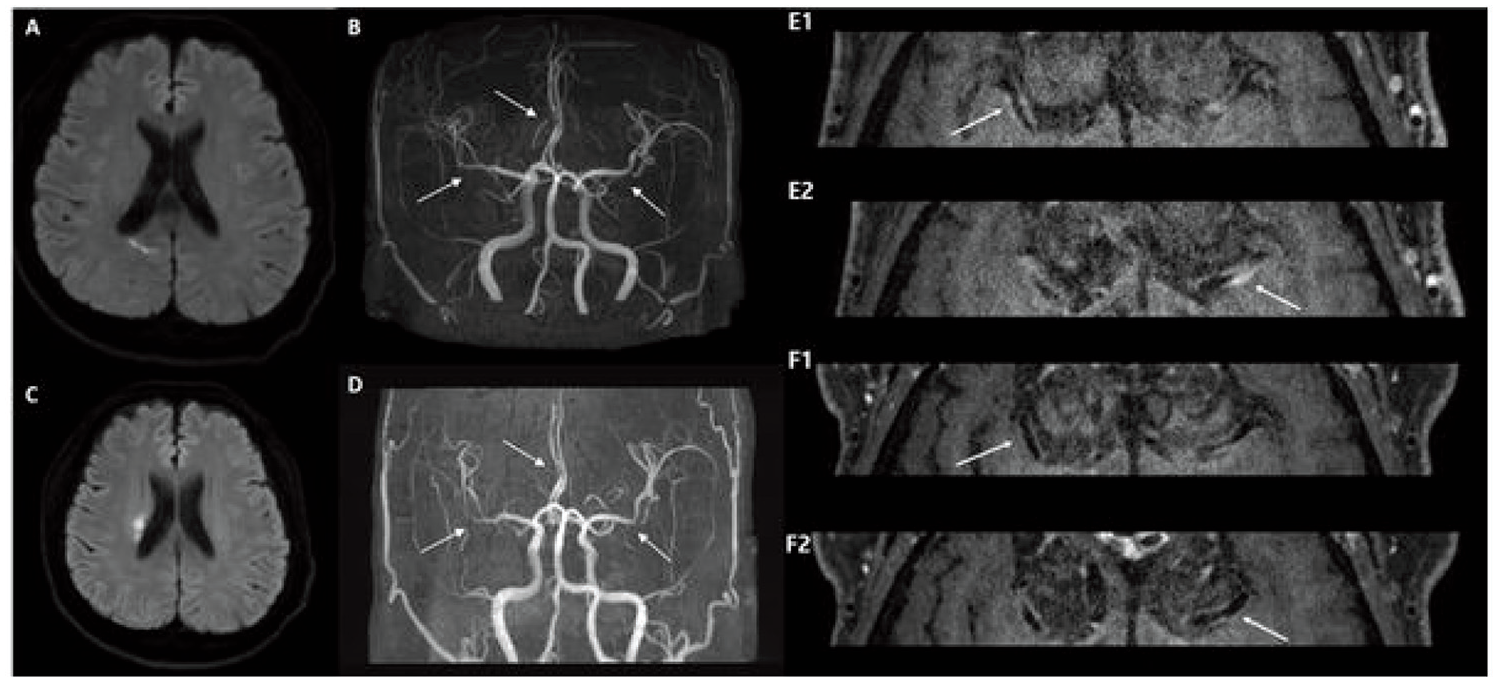
P0915 / 272
SEVERELY ISCHEMIC TISSUE WITH UNCERTAIN VIABILITY: AN ILLUSTRATION CASE
1115’s People Hospital, Cerebrovascular Disease, Ho Chi Minh, Vietnam, 2University Medical Center, Neurology, Ho Chi Minh, Vietnam, 3115’s People Hospital, Neurointervention, Ho Chi Minh, Vietnam, 4Pham Ngoc Thach Medical University, Neurology, Ho Chi Minh, Vietnam
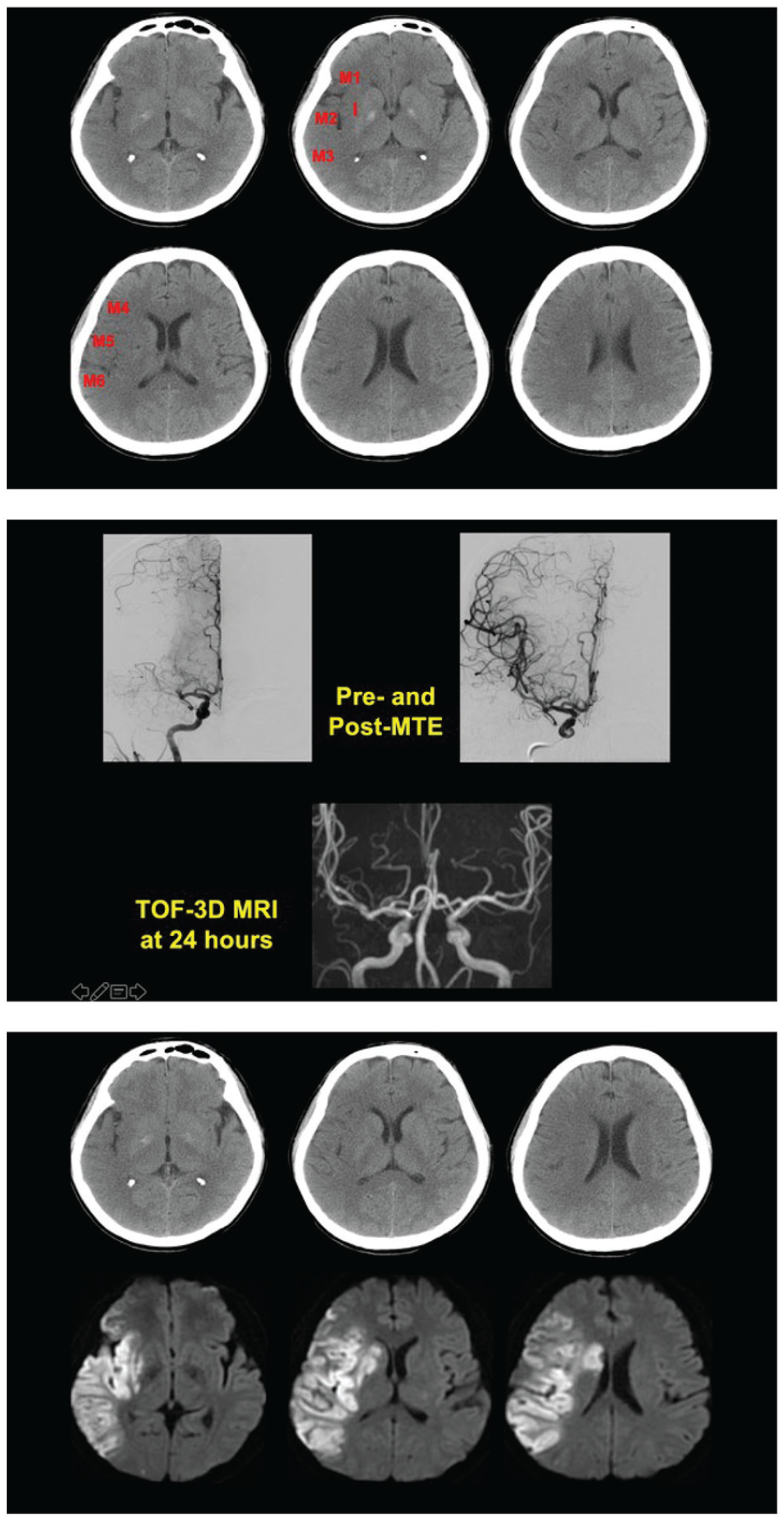
P0916 / 1286
CONTRAST-INDUCED ENCEPHALOPATHY: CHALLENGING NEUROLOGICAL DIAGNOSIS
1University Federico II, Naples, Italy, 2“Villa dei Fiori” Hospital- Acerra, Naples, Italy
P0917 / 183
BILATERAL CEREBRAL PEDUNCULAR INFARCTION WITH INCOMPLETE LOCKED-IN SYNDROME: A CASE REPORT AND LITERATURE REVIEW
1The Chinese University of Hong Kong, Medicine & Therapeutics, Hong Kong, Hong Kong, SAR of China, 2The First Affiliated Hospital of Harbin Medical University, Department of Neurology, Harbin, China
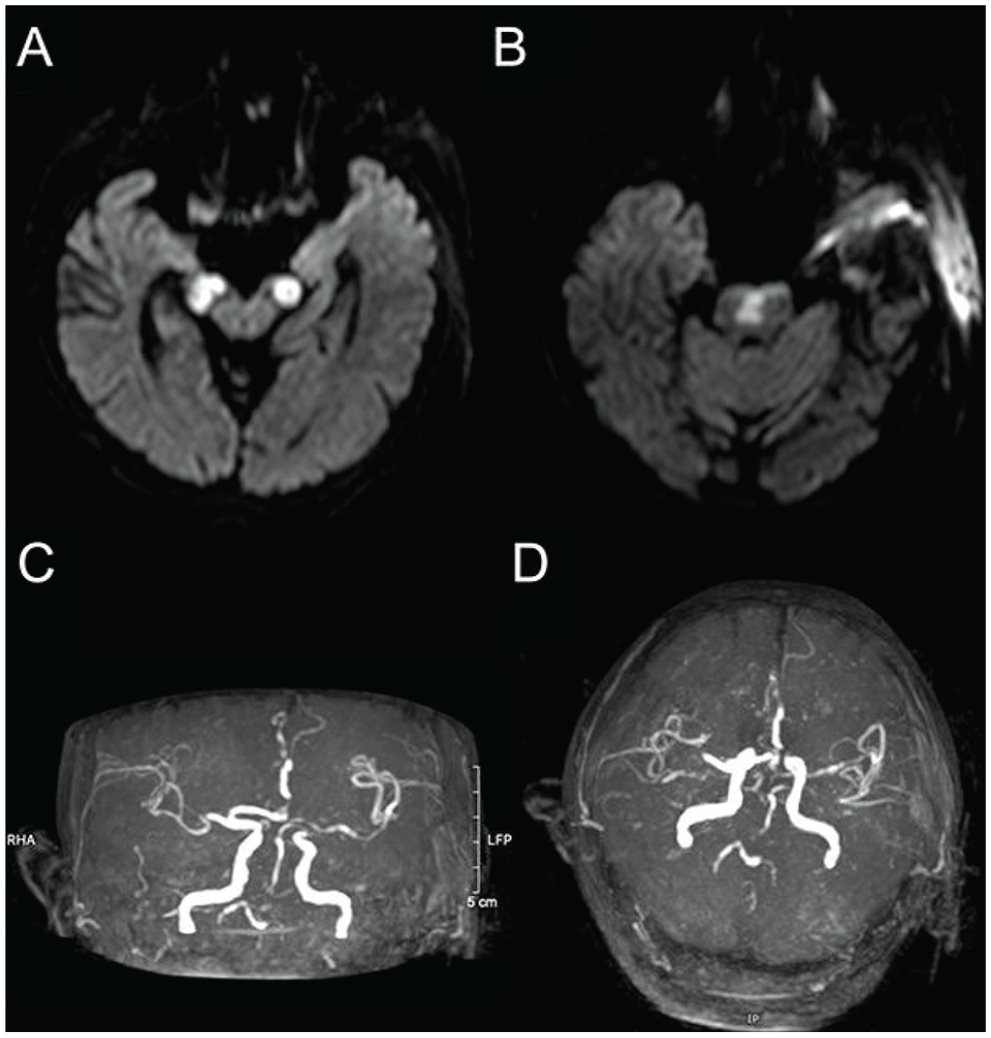
P0918 / 1293
LIMB SHAKING TIAS DUE TO INTRACRANIAL CAROTID DISEASE HERALDING A FULL BLOWN STROKE
1 Royal Wolverhampton NHS trust/New Cross Hospital, Stroke Medicine, Wolverhampton, United Kingdom
We present a 56yr old with a history of recurrent right limb shaking who posed a diagnostic challenge until he suffered a left hemispheric ischemic stroke.
Four months later, he experienced right facio-brachial paresis. Brain MRI showed left watershed ACA/MCA frontal acute infarct, CTA revealed a thrombus in the cavernous segment of the left internal carotid artery. He had a repeat CTA a week after receiving therapeutic doses of lower molecular weight heparin for 7 days and this revealed complete recanalization. Unfortunately, further MRA after 3 weeks with new symptoms while on anti-platelet suggested reformation of thrombus, young stroke screenings were unremarkable and he has since been on anti-coagulation. He has remained well since.
P0919 / 590
MOYMOYA SYNDROME SECONDARY TO SICKLE CELL DISEASE
1 Tawam Hospital, Neurology, Al Ain, United Arab Emirates
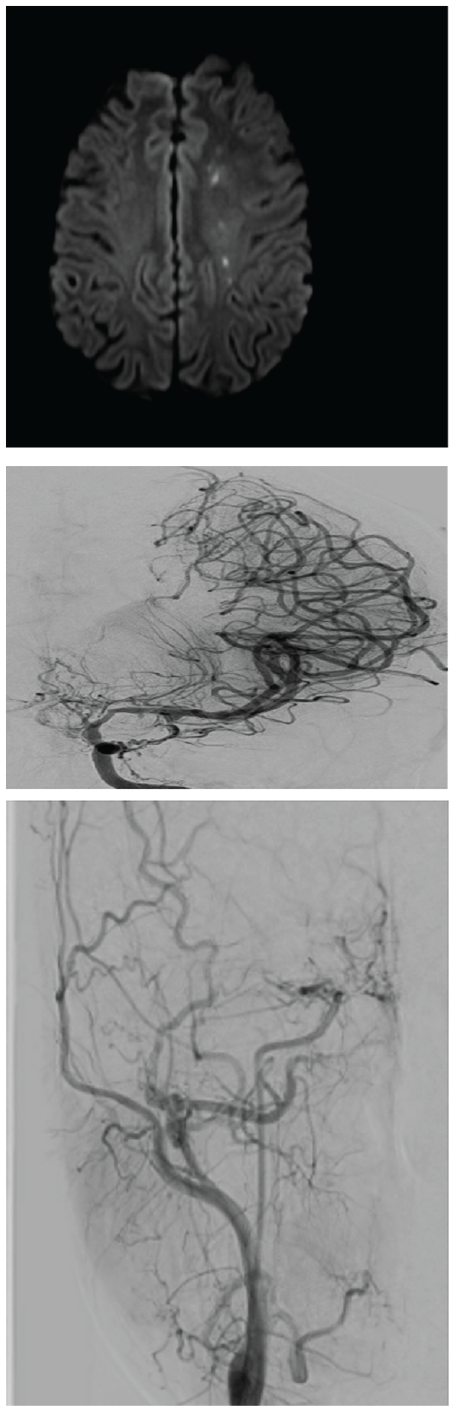
P0920 / 301
WITHDRAWN ANTON’S SYNDROME (VISUAL ANOSOGNOSIA) DUE TO ACUTE STROKE: A CASE REPORT
1 Ankara City Hospital, Neurology Department, Ankara, Turkey
We present a case of a patient with Anton’s syndrome, who developed bilateral occipital lobe infarct. Bilateral occipital brain damage results in disfunction of visual cortex and blindness. Patients claim they can see and confabulate visual perceptions, despite loss of sight. This particular condition is a distinct feature of cortical blindness. This also is defined as visual anosognosia. In our case, a 69-year-old man has been admitted to Neurology Department due to a syncope and sudden onset blindness. According to neurological examination the patient was not aware of impaired visual perception. Video demonstrating visual anosognosia and confabulation was taken with the written consent of the patient’s son. Cranial CT and MRI revealed bilateral occipital ischemic lesions due to acute stroke. During the follow-up period, the patient was shown to have paroxysmal atrial fibrillation, which is the underlying cause of bilateral posterior cerebral artery thrombosis. With this case, we present a rare cortical perception disorder resulting from cerebrovascular disease.
P0921 / 367
CEREBELLAR COGNITIVE AFFECTIVE SYNDROME IN THE CONTEXT OF CROSSED CEREBELLAR DIASCHISIS POST PONTINE INFARCTION
1CHU Brugmann, Neurology, Brussels, Belgium, 2UZ Brussels, Neurology, Brussels, Belgium
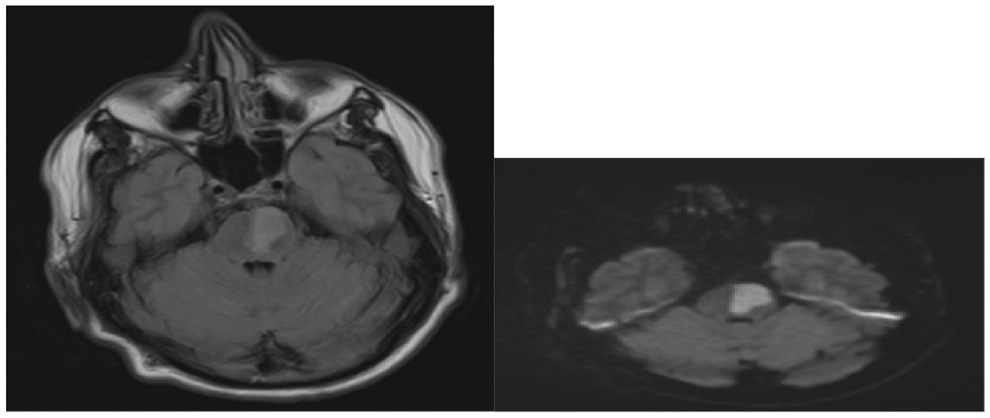
MRI FLAIR (left) and DWI (right) imaging (2 days post-stroke)
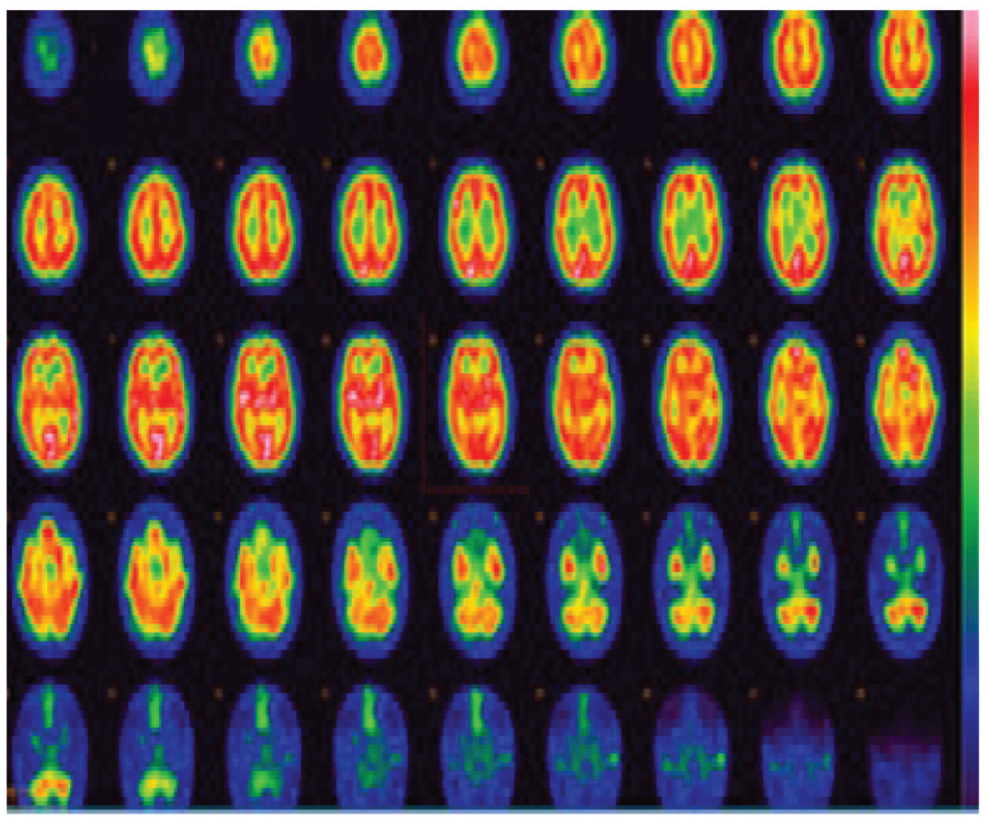
Brain SPECT
P0922 / 1436
MENINGOVASCULAR NEUROSYPHILIS: ILLUSTRATIVE CASE
1Complejo Hospitalario Universitario de Albacete, Neurología, Albacete, Spain, 2Complejo Hospitalario Universitario de Albacete, Hematología, Albacete, Spain, 3Complejo Hospitalario Universitario de Albacete, Medicina Interna, Albacete, Spain, 4Complejo Hospitalario Universitario de Albacete, Radiodiagnóstico, Albacete, Spain
P0923 / 303
TRANSIENT PERIVASCULAR INFLAMMATION OF THE CAROTID ARTERY (TIPIC SYNDROME) IN A BULGARIAN PATIENT
1Medical University Plovdiv, Department of Neurology, Plovdiv, Bulgaria, 2Medical University Plovdiv, Department of Image Diagnostics, Plovdiv, Bulgaria, 3Medical University Plovdiv, Translational Neuroscience Complex, Plovdiv, Bulgaria, 4Medical University Sofia, Department of Image Diagnostics, Sofia, Bulgaria, 5Medical University Plovdiv, Department of Human Anatomy, Histology and Embryology, Plovdiv, Bulgaria
Transient Perivascular Inflammation of the Carotid artery is a rare unclassified clinicoradiologic vascular syndrome that usually affects common carotid artery near the bifurcation and has a benign prognosis after treatment with anti-inflammatory drugs.
A 52-year-old male visited the Clinic of Neurology in UMHAT “Saint George” Plovdiv, Bulgaria in June 2021. He had cervical pain on the right side and tinnitus from a month ago.On physical and neurological examinations no pathological findings were discovered. On ultrasound examination (figure 1)
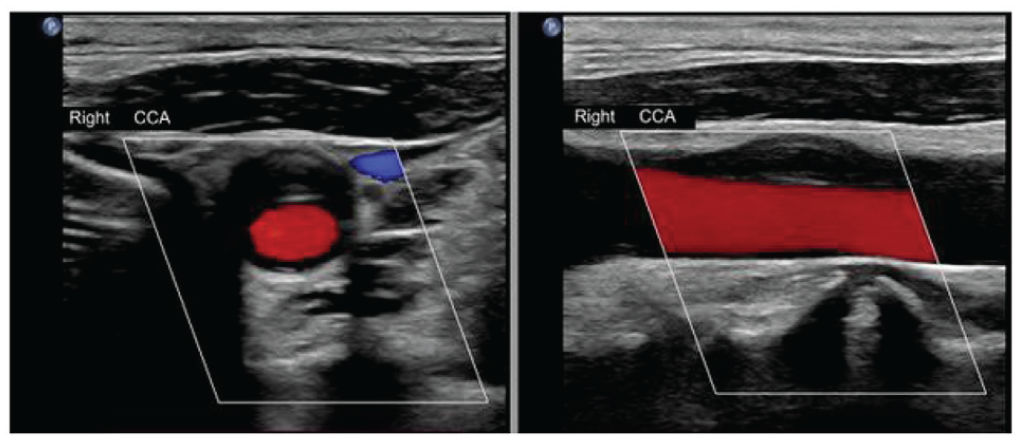
in B mode and Color Doppler mode a longitudinal, irregular thickening of the wall of the right common carotid artery near to the bifurcation was observed. The patient performed CT angiography and no stenosis was detected (figure 2).
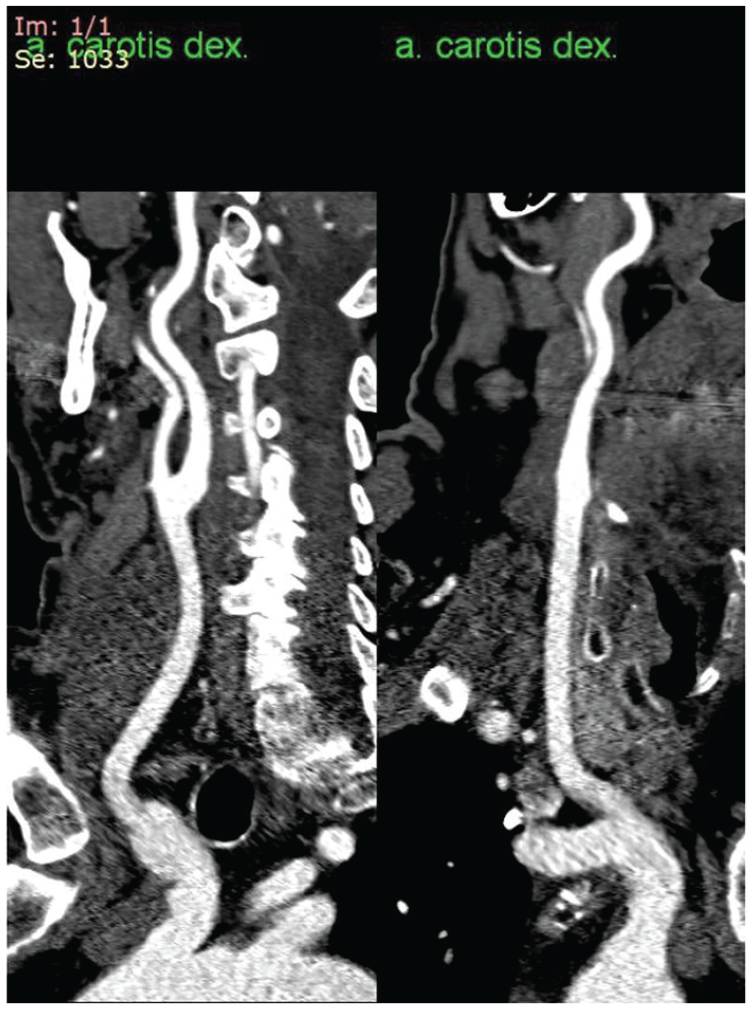
MR imaging (figure 3) showed eccentric, spindle-shaped thickening of the wall of the right common carotid artery. The lesion affected the middle and distal segment of the artery on its ventral side. It was about 28 mm long and with the greatest width 5 mm. On postcontrast T1-weighted MRI an eccentric enhancing surrounding the carotid artery was noted. The laboratory investigations of the patient showed normal values of hs-CRP and ESR. Differential diagnosis with vasculitis, carotid dissection and thrombus were excluded. The patient received NSAIDs for a month and had an immediate reduction of the wall thickening. He continued follow up ultrasound investigations. This is the first diagnosed Bulgarian case of TIPIC syndrome that has a good recovery after treatment. Its pathophysiology remains unclear and further investigations have to be done.
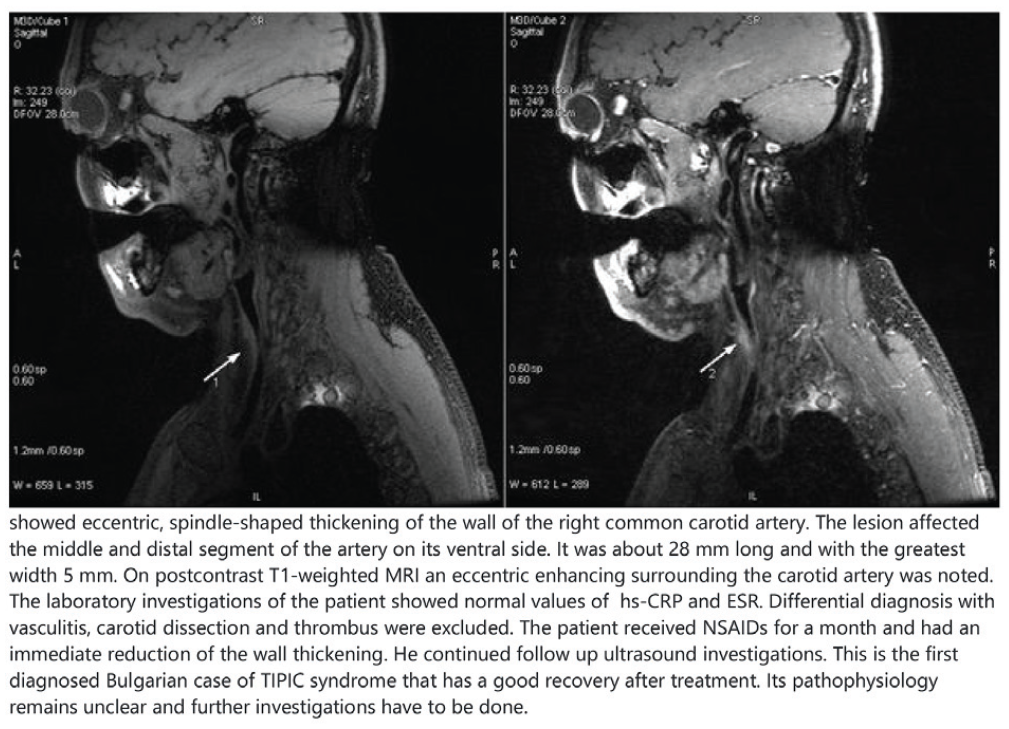
P0924 / 368
SPONTANEOUS FBN1 MUTATION ACCOMPANIED BY MYH11 DUPLICATION, CAUSING AORTIC DISSECTION AND STROKE IN A YOUNG WOMAN
1University of Vermont Robert Larner, MD College of Medicine, Burlington, United States, 2University of Vermont Medical Center, Department of Clinical Genetics, Burlington, United States, 3University of Vermont Medical Center, Department of Cardiovascular Medicine, Burlington, United States, 4University of Vermont Medical Center, Department of Neurological Sciences, Burlington, United States
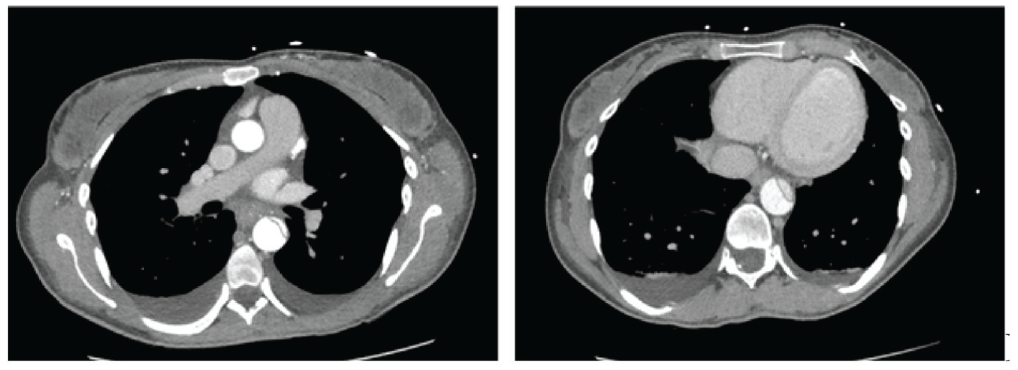
Spontaneous type 2 aortic dissection.
1. Kuang et al., doi: 10.1371/journal.pgen.1002118. PMID: PMC3116911.
2. Erhart et al. doi: 10.1002/mgg3.371. PMID: PMC6014458.
P0925 / 1602
ARTERY OF PERCHERON INFARCTION: A CASE SERIES OF FIVE
1Vilnius University Faculty of Medicine, Vilnius, Lithuania, 2Vilnius University Center of Neurology, Vilnius, Lithuania
Occlusion of artery of Percheron (AOP) causes bilateral thalamic infarction that accounts for around 0.5% of all ischemic strokes. However, due to its unusual clinical presentation and no clear abnormalities in early medical imaging, it raises complicated diagnostic challenges, resulting in delayed diagnosis and limited treatment possibilities.
Our case series includes five patients diagnosed with bilateral thalamic stroke due to AOP occlusion, admitted to Vilnius University Hospital between December 2018 and December 2021.
Three male and two female patients had a median age of 58 years (range 55–89 years). Dysphasia (5/5), decreased vigilance (4/5), memory impairment (4/5), ophthalmoplegia (4/5), motor impairment (3/5), and spatiotemporal disorientation (3/5) were the most common clinical signs. On admission, no abnormalities were observed in one patient who underwent Computed Tomography (CT), and three who received CT Angiography. Another patient with unknown time of symptom onset had bilateral thalamic lesions on baseline CT. Thalamic lesions were reported in follow-up CT or Magnetic Resonance Imaging in all cases. High D-dimer levels were observed in 3/3 patients. One comatose patient underwent intravenous thrombolysis with recombinant tissue plasminogen activator, resulting in complete neurological recovery. At three months, slight residual memory impairment was observed in one patient, slightly improved symptoms - in two patients, and the 89 year-old patient had died.
Timely diagnosis of AOP occlusion may be difficult due to unusual clinical presentation and lack of baseline imaging abnormalities. However, if diagnosed within the therapeutic window, reperfusion therapy could lead to excellent patient outcomes even in comatose patients.
P0926 / 1030
EMBOLIC OCCLUSION OF FETAL TYPE POSTERIOR CEREBRAL ARTERY TREATED WITH ENDOVASCULAR THROMBECTOMY - REPORT OF TWO CASES
1University of Continuing Education Krems, 3500 Krems, Austria, Department for Clinical Neurosciences and Preventive Medicine, Krems, Austria, 2Landes Klinikum Baden-Mödling, Neurological Departement, Mödling, Austria, 3Landes Klinikum Baden-Mödling, Radiological Departement, Mödling, Austria, 4University Clinic Tulln, Landsteiner Private University, Neurological Department, Tulln, Austria, 5University Clinic Tulln, Radiological Departement, Tulln, Austria
P0927 / 629
ISCHEMIC STROKE IN A YOUNG ADULT WITH HEMOPHILIA A: A RARE CAUSE NOT TO BE MISSED
1Laiko General Hospital, First Department of Propaedeutic and Internal Medicine, Athens, Greece, 2Laiko General Hospital, Athens, Greece, 3Laiko General Hospital, Blood Centre, National Reference Centre for Congenital Bleeding Disorders, Athens, Greece, 4Euroclinic, Department of Diagnostic and Interventional Radiology, Athens, Greece, 5Laiko General Hospital, Department of Neurology, Athens, Greece, 6Medical School, National and Kapodistrian University of Athens, Department of Medical Genetics, Athens, Greece, 7Medical School, National and Kapodistrian University of Athens, Department of Pathophysiology, Athens, Greece
P0928 / 1544
HEART AND BRAIN CONNECTION IN EVERYDAY CLINICAL PRACTICE: MULTIPLE CASE STUDIES REPORT
1University Hospital Kralovske Vinohrady, Third Faculty of Medicine, Charles University, Department of Neurology, Prague, Czech Republic, 2University Hospital Kralovske Vinohrady, Third Faculty of Medicine, Charles University, Department of Cardiology, Prague, Czech Republic
The second patient, 20 years old female, with acute onset left hemiplegia was diagnosed with right proximal MCA occlusion by embolus previously formed on a mechanical mitral valve while having low INR.
The third patient, 38 years old female, who suffered from several focal to bilateral tonic-clonic seizures with persisting right hemiplegia, was diagnosed with left proximal MCA occlusion by a septic embolus due to infectious endocarditis.
First two patients were successfully treated with mechanical thrombectomy (MT), while the third patient was not eligible for acute reperfusion therapy.
P0929 / 1450
NON-KETOTIC HYPERGLYCEMIA MIMICKING A LEFT MIDDLE CEREBRAL ARTERY STROKE
1“Dimiccoli” General Hospital, Operative Unit of Neurology, Barletta, Italy, 2“Dimiccoli” General Hospital, Operative Unit of Radiology, Barletta, Italy
In conclusion, we report a case of hyperglycemia mimicking a left MCA syndrome without evidence of seizure or stroke reversed with medical management.
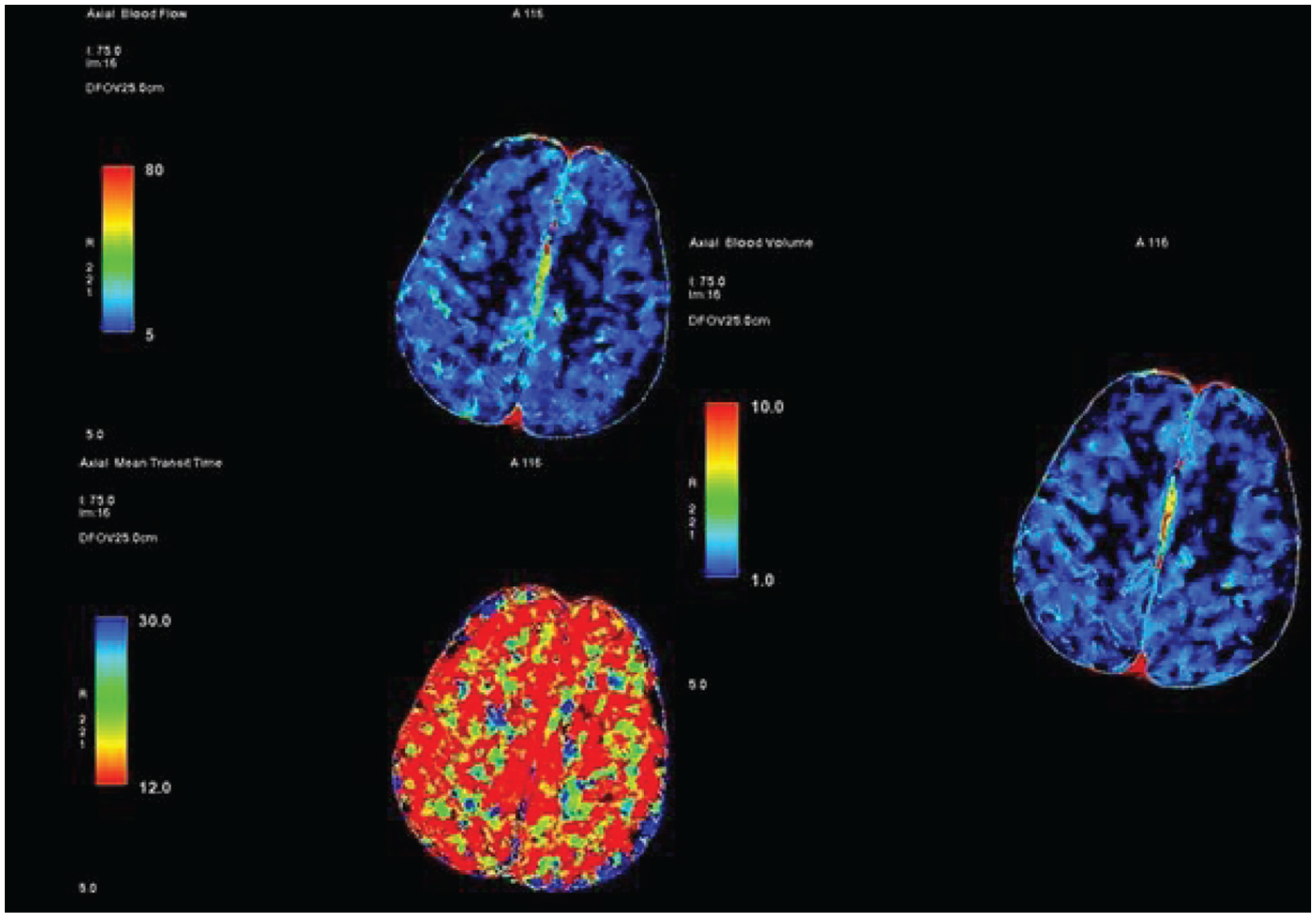
P0930 / 622
ACUTE ISCHEMIC STROKE IN PREGNANCY TREATED WITH INTRAVENOUS THROMBOLYSIS AND ENDOVASCULAR THERAPY – FIRST CASE FROM BULGARIA
1‘St. Anna’ University Hospital, Department of Neurology, Sofia, Bulgaria, 2South-West University ‘Neofit Rilski’ (SWU), Blagoevgrad, Bulgaria, 3‘St. Anna’ University Hospital, Department of Neurosurgery, Sofia, Bulgaria
P0931 / 1240
TWO THROMBECTOMIES: RESCUE THROMBECTOMY AT HOUR 40
1 North Bristol NHS Trust, Stroke, Bristol, United Kingdom
Day two, patient deteriorated in both GCS and neurology. CTA showed re-occluded M1, CTP showing large salvageable penumbra. Patient underwent rescue thrombectomy including stent deployment at M1 narrowing.
This case demonstrated several important learning points:
Importance of rapid assessment in patients who deteriorate post-hyperacute reperfusion therapy, and the consideration of second rescue-thrombectomy.
Patients with ICAD at higher risk of recurrent stroke and failed thrombectomy.
Risks vs benefits of antiplatelet therapy for stents in the context of intracranial haemorrhage post-thrombectomy.
Benefit of extended window thrombectomy when patients are carefully selected using advanced imaging such as CTP.
Fast vs slow progressors depending on collateral supply is important in deciding whether a patient may benefit from extended window thrombectomy.
P0932 / 1579
APHASIA AS AN UNCOMMON SYMPTOM OF ANTERIOR CHOROIDAL ARTERY ISCHEMIC STROKE
1 Complejo Asistencial Universitario de Salamanca, Neurology Department, Salamanca, Spain
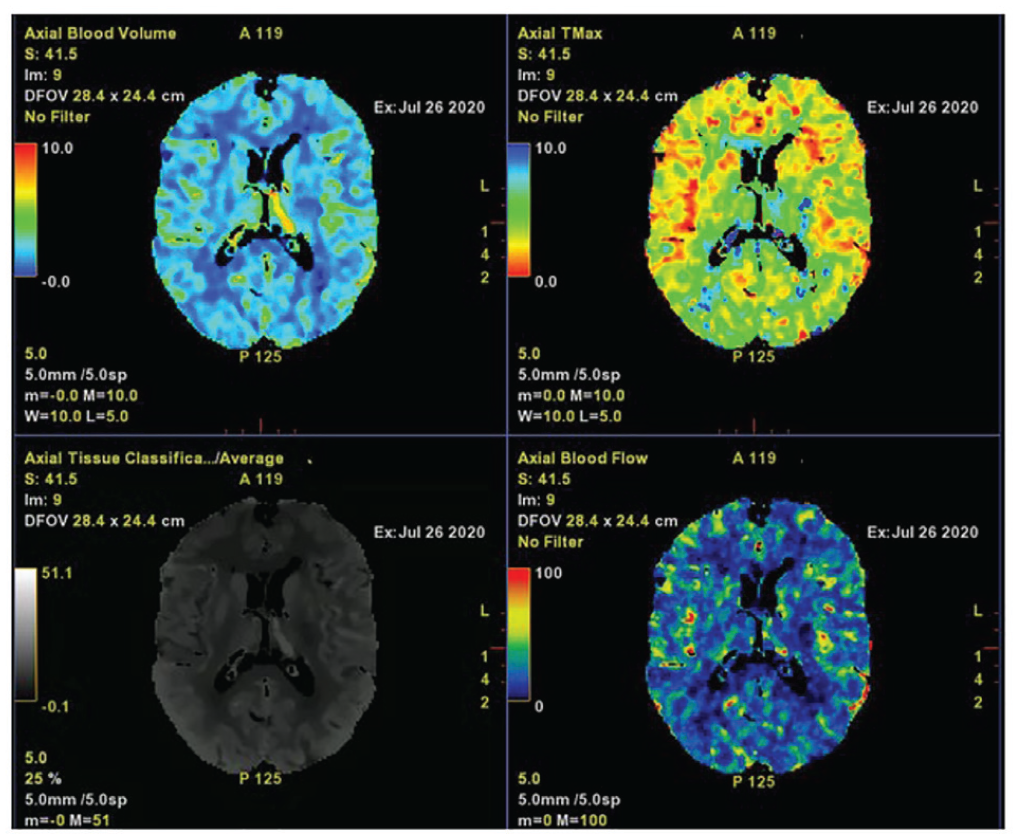
Nevertheless, focal neurological deficit reappeared and a multimodal brain CT was realized again. No infarct core, artery occlusion nor perfusion impairment were objectified, and consequently, fibrinolytic therapy was administered. Nonetheless, no signs of recovery were shown.
Throughout the SU hospitalization, a brain MRI was done and a left Anterior Choroidal Artery vascular territory infarct was objectified. Additional supplementary testing was performed (transthoracic echocardiography, neurosonology study and blood testing), although no certain etiology was determined.
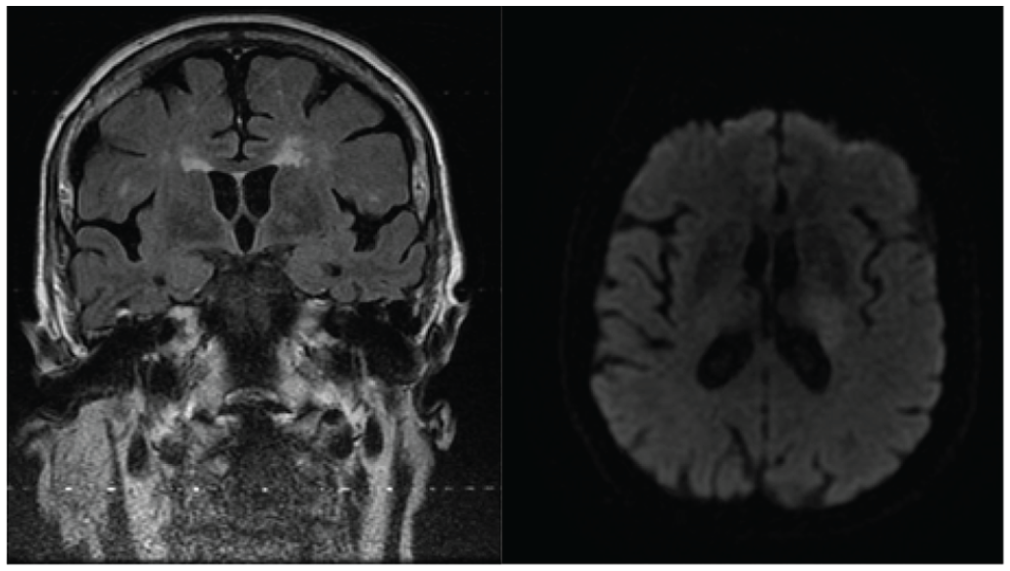
Unfortunately, the patient suffered from a different cerebrovascular episode, sustaining serious neurological symptoms.
P0933 / 1567
“CONFUSING STROKE PRESENTATIONS” - TWO UNUSUAL CASES IN WHICH PATIENTS WITH ACUTE STROKES PRESENTED WITH SUDDEN ONSET CONFUSION AND AMNESIA
1 Croydon Health Services NHS Trust, London, United Kingdom
P0934 / 555
PROLONGED LOW-DOSE INTRAVENOUS THROMBOLYSIS IN EARLY RECURRENCE OF STROKE: CASE REPORT
1 Masaryk Hospital, Krajská zdravotní a.s., Neurology, Ústí nad Labem, Czech Republic
The aim of the case report is to present a specific situation suitable for this therapy.
P0935 / 1562
A LESS KNOWN CAUSE FOR CEREBRAL MICROBLEEDS – A CASE REPORT
1 Luton and Dunstable University Hospital NHS Trust, Luton, United Kingdom
De Sciscio M, De Sciscio P, et al. Cerebral microbleed distribution following cardiac surgery can mimic cerebral amyloid angiopathy. BMJ Neurology Open. 2021;3:e000166. doi: 10.1136/bmjno-2021-000166
Patel N, Banahan C, et al. Perioperative cerebral microbleeds after adult cardiac surgery. Stroke. 2019;50:336-343. doi: 10.1161/STROKEAHA.118.023355
Greenberg SM, Charidimou A. Diagnosis of cerebral amyloid angiopathy - evolution of the boston criteria. Stroke. 2018;49(2):491-7. doi: 10.1161/STROKEAHA.117.016990
P0936 / 1397
EXERTIONAL HEAT STROKE WITH RECURRENT POSTERIOR REVERSIBLE ENCEPHALOPATHY SYNDROME (PRES)
1Lariboisière Hospital, Assistance Publique Hôpitaux de Paris, Neurology, Paris, France, 2Lariboisière Hospital, Assistance Publique Hôpitaux de Paris, Anesthesiology and Critical Care, Paris, France
One month and 2 months after the initial collapse, the patient experienced recurrent neurological deterioration (i.e. consciousness disturbance) lasting for 14 and 8 days respectively with cerebellar and supratentorial subcortical edema including hemorrhagic transformation on MRI and CT scan, that resolved after 20 and 8 days. Of note, 24 hours before each recurrence blood pressure increased significantly and both outbreak improved at least partially.
P0937 / 1009
MECHANICAL THROMBECTOMY AND TRANSCRANIAL DOPPLER MONITORING IN A PATIENT WITH MASSIVE CEREBRAL VEIN AND DURAL SINUS THROMBOSIS
1Complejo Hospitalario Universitario de Albacete, Neurology, Albacete, Spain, 2Complejo Hospitalario Universitario de Albacete, Radiology, Albacete, Spain, 3Complejo Hospitalario Universitario de Albacete, Intensive Care Unit, Albacete, Spain, 4Complejo Hospitalario Universitario de Albacete, Anesthesiology, Albacete, Spain
The aim of this case report is to show the clinical outcome of a patient diagnosed of CVT and treated with EVT.
P0938 / 1283
ENDOVASCULAR TREATMENT AS THERAPY FOR CEREBRAL VENOUS THROMBOSIS IN A 2-LEVEL STROKE CENTRE IN SPAIN: A REPORT OF TWO CASES
1H. Universitario de Cáceres, Neurology, Cáceres, Spain, 2H. Universitario de Cáceres, Neurointerventional Radiology, Cáceres, Spain
P0939 / 311
UNILATERAL CEREBRAL AMYLOID ANGIOPATHY: A RARE PRESENTATION OF A COMMON DISEASE
1CHU Brugmann, Neurology, Brussels, Belgium, 2UZ Brussels, Neurology, Brussels, Belgium
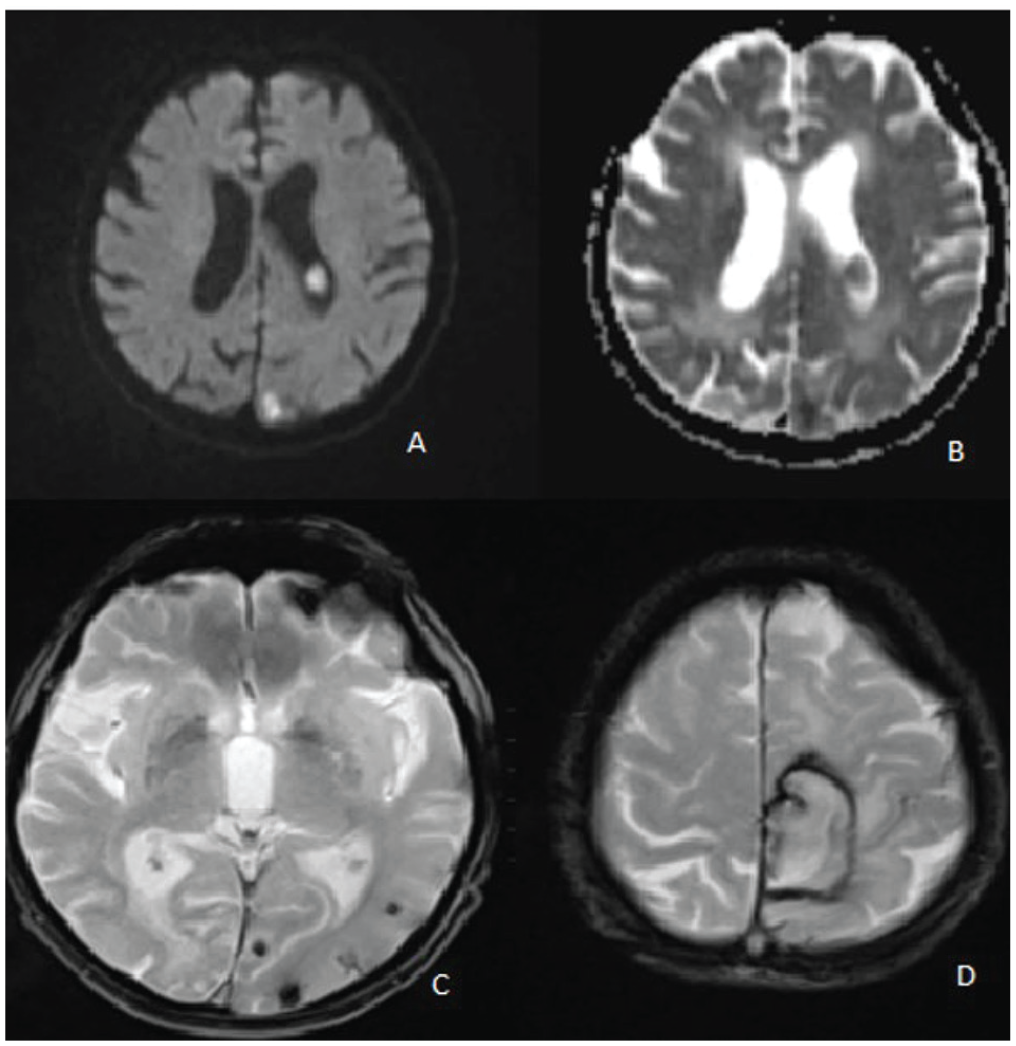
Axial DWI images and ADC MAP (A, B) revealed a recent ischemic lesion in the left occipital lobe. Axial gradient recalled echo T2-weighted images showed left juxta cortical microbleeds (C) and left lobar hemorrhage and superficial cortical hemosiderosis (D).
P0940 / 1124
NEONATAL STROKE: CLINICAL CASE
1Medical State University ‘Nicolae Testemițanu’, Neuropediatrics, Chisinau, Moldova, Republic of, 2Hospital of Mother and Child Healthcare, Neuropediatrics, Chisinau, Moldova, Republic of, 3Medical State University ‘Nicolae Testemițanu’, Chisinau, Moldova, Republic of, 4National Epileptology Center, Chisinau, Moldova, Republic of, 5Hospital of Mother and Child Healthcare, Pediatrics, Chisinau, Moldova, Republic of
Neurological status: consciousness - inhibited, weakly reacting to stimuli. The child does not fix the eyes, does not follow. Muscle tone - hypotonic. OTR R=L, hyporeflexia.
In neurosonography: lateral ventricles at the anterior horns 7x3 mm. Ventricle III: width - 5 mm, depth - 10 mm. The choroid plexus - 9 mm, inhomogeneous, on the right a 3 mm diameter shaped liquid body. Cerebral parenchyma of relatively high echogenity - pronounced periventricular infiltration. CT imaging data suggestive for changes in perinatal hypoxic-ischemic encephalopathy. Hemorrhagic embolism in the cerebellum projection on the right. Signs suggestive of hyperdensity of venous cerebral sinuses.
P0941 / 472
CONUNDRUMS OF OCULAR MOTOR APRAXIA MASQUERADING AS ACUTE ISCHEMIC STROKE
1 Fairfield General Hospital, Northern care Alliance, Stroke, Bury, United Kingdom
His neurological examination revealed bilateral ptosis, complete right third nerve palsy, bilateral non-reactive pupils, vertical nystagmus, dysarthria and bilateral upper limb impaired coordination with normal power in his limbs. He demonstrated frontalis contraction and backward thrusting of the head with active eyelid opening in keeping with ALO; he couldn’t open his eyelids voluntarily.
We wanted to exclude neuromuscular or neurodegenerative condition due to his ALO. Further brain imaging didn’t reveal any structural lesions in the cortical, supranuclear, midbrain or pontine region. He had weakly positive acetylcholine receptor antibodies which became negative after few weeks. Within 2 months, he developed epilepsy partialis continua refractory to treatment and was commenced on end-of-life care. His quick progression of symptoms was suggestive of neurodegenerative condition.
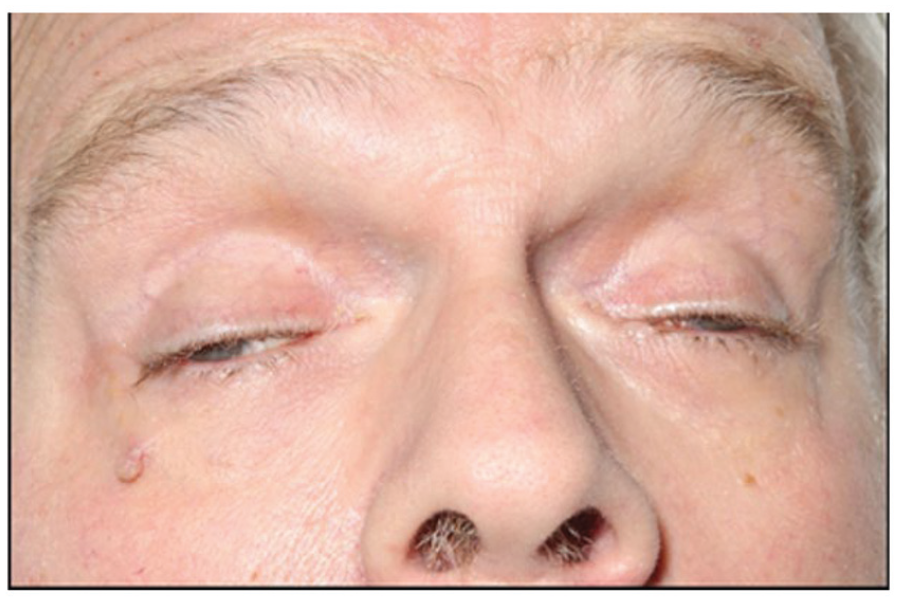
Manual eye opening
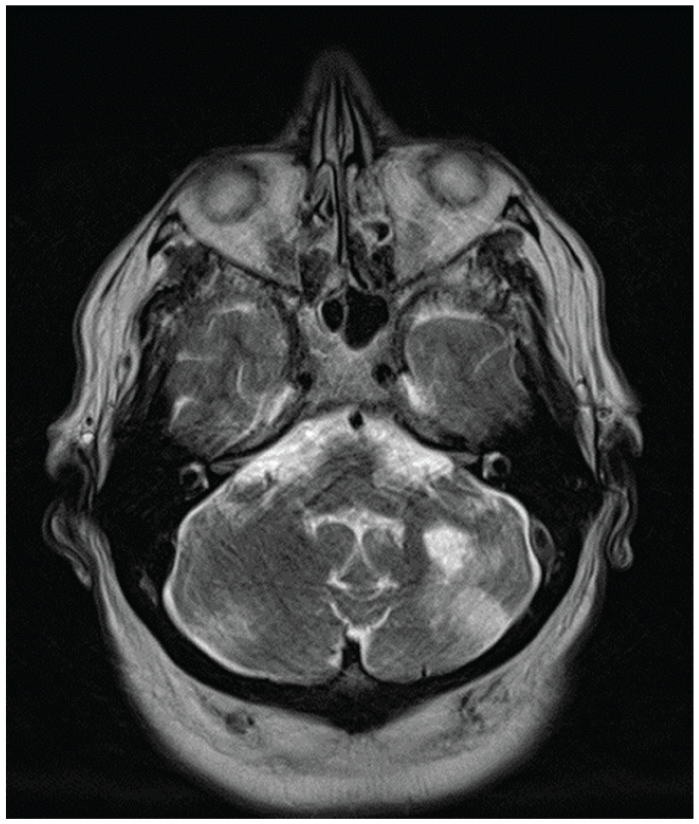
T2 MRI
P0942 / 155
STROKE IN A PATIENT WITH A FABRY DISEASE
1The National Centre for Neurosurgery, Department of Vascularand Functional Neurosurgery, Nur-Sultan, Kazakhstan, 2Medical University Astana, Faculty of Neurology, Nur-Sultan, Kazakhstan
Patient was tested for Fabry disease in 2020: Lys0-Gb3 0,6 ng/ml (normal), alpha-galactosidase A 10,7 µmol/L/h (pathologic). Alpha galactosidase activity is reduced, undefined significance variant, Fabry disease is possible. Further patient’s close relatives were screened to Fabry disease. Patient’s all three daughters appeared to be carriers.
P0943 / 625
A LIFE-THREATENING STROKE MIMICKER: AN EXTENSIVE AORTIC DISSECTION PRESENTING WITH ACUTE STROKE
1 NHS, Norwich, United Kingdom
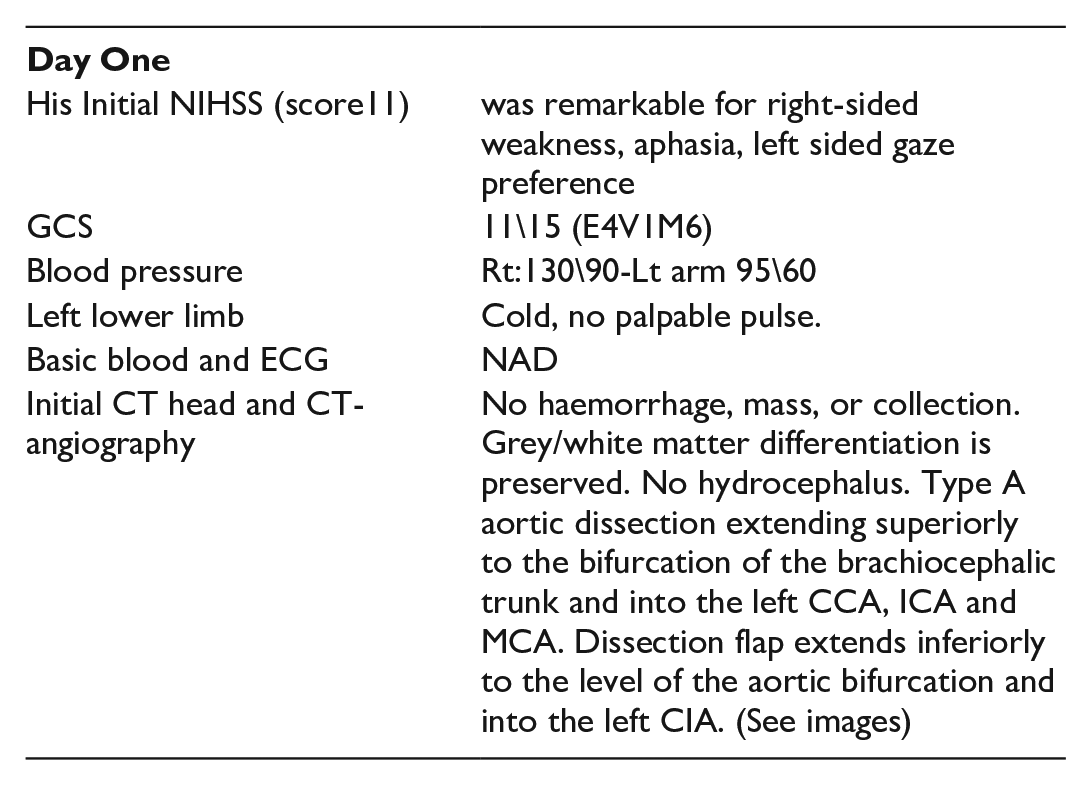
2-D\W Cardiothoracic; agreed that surgery is very risky, and the patient is unlikely to survive.
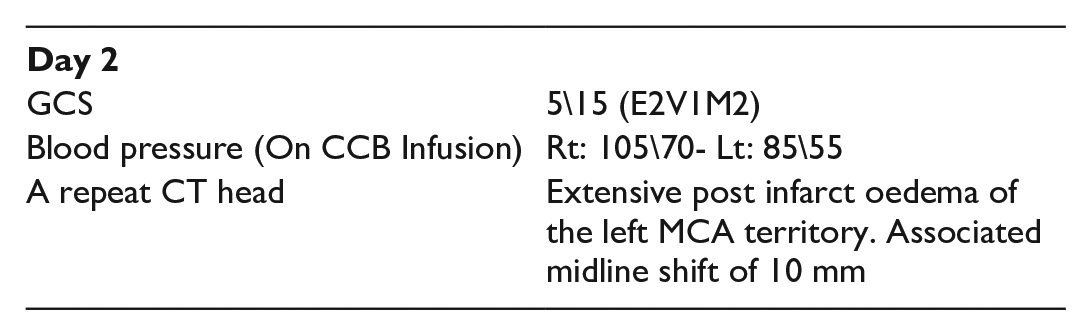
3-After MDT discussion, Palliative care was in his best interest. Later, on the same day, the patient passed away.
1) Typical symptoms of acute aortic dissection are not always present (See table 3). CT-angiography of the entire aortic arch can expedite early diagnosis.
2) Emergency aortic surgery provides the only chance for survival.However, in such extensive dissection, surgeons weigh the risk and benefit of surgery.
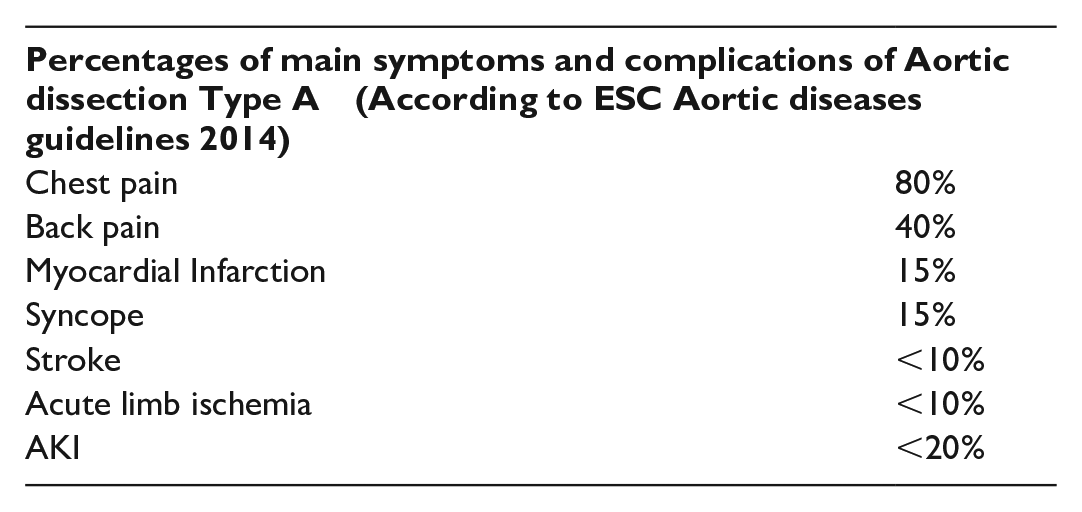
1) Stroke secondary to acute aortic dissection- rare diagnosis and represent a diagnostic challenge for many physicians.
2) CT Angiography help prevent intravenous thrombolysis, which may be detrimental.
3) Early involvement of surgical specialities and interventional radiology may play an important role in the management of these patients.
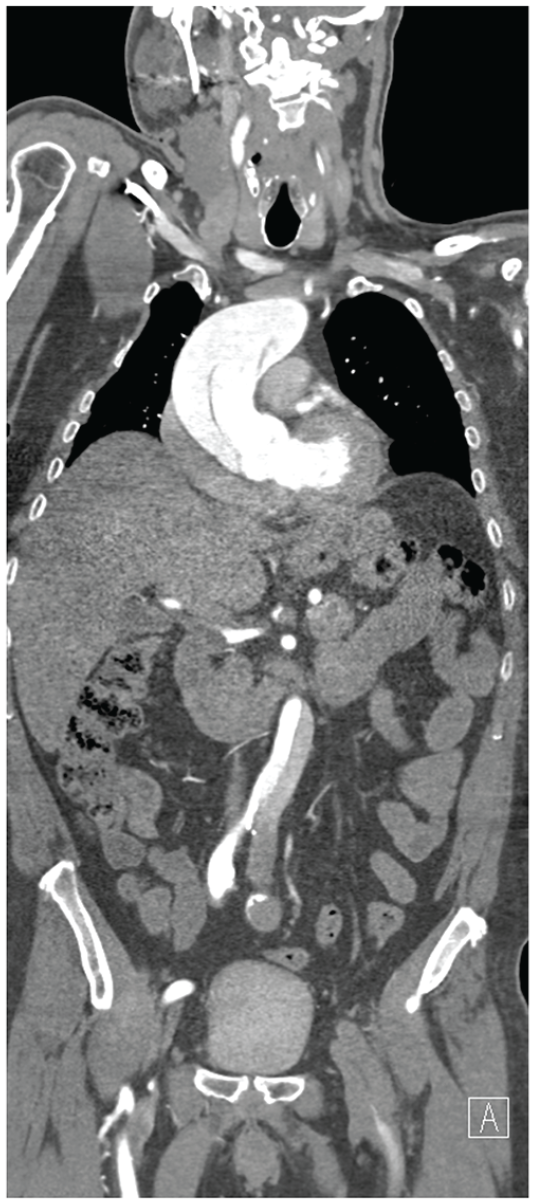
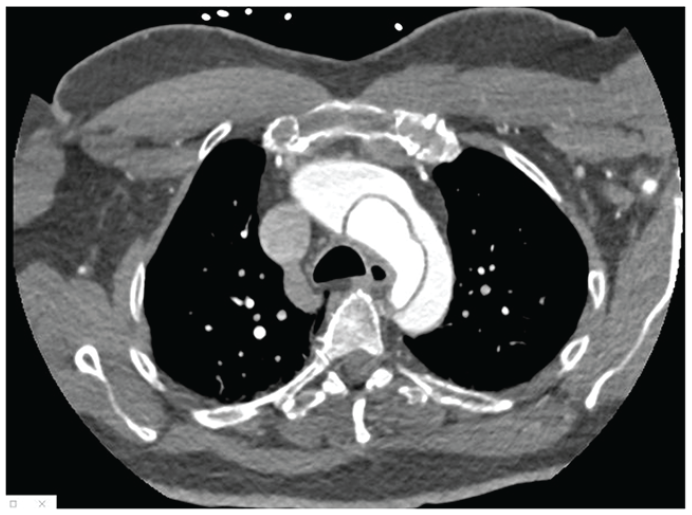
P0944 / 1417
CEREBRAL MICROBLEED PHENOMENON IN CRITICALLY ILL PATIENT
1Hospital Universitario de Salamanca, Neurology, Salamanca, Spain, 2Hospital Universitario de Salamanca, Radiology, Salamanca, Spain, 3Instituto de Investigación Biomédica de Salamanca, Salamanca, Spain
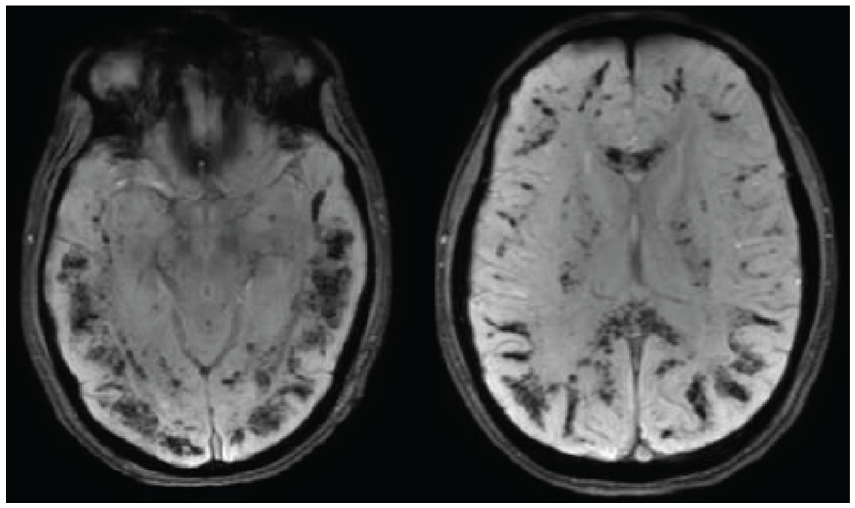
P0945 / 1437
SUBSEQUENT ISCHAEMIC EVENT AFTER INTRACEREBRAL HEMORRHAGE- CASE REPORT
1CGH “8 th September” Skopje, Neurology, Skopje, North Macedonia, The Republic of, 2Healthcare Center Skopje, Neurology, Skopje, North Macedonia, The Republic of, 3University “Goce Delcev”, Anatomy, Stip, North Macedonia, The Republic of, 4Private Neurology Practice, Neurology, Tetovo, North Macedonia, The Republic of
P0946 / 1601
FUNCTIONAL NEUROLOGICAL DEFICIT OR SPINAL SHOCK?
1 King’s College Hospital, Neurology/Stroke, London, United Kingdom
P0947 / 496
SUDDEN ‘STRATEGIC’ HYPERACTIVE DELIRIUM
1The National Hospital for Neurology and Neurosurgery, UCLH Stroke Department, London, United Kingdom, 2Queen Square Institute of Neurology, UCL, Department of Clinical and Experimental Epilepsy, London, United Kingdom
P0948 / 922
A RARE CASE OF EIGHT-AND-A-HALF SYNDROME
1 Ipswich Hospital, East Suffolk and North Essex NHS Foundation Trust, Stroke Medicine, Ipswich, United Kingdom
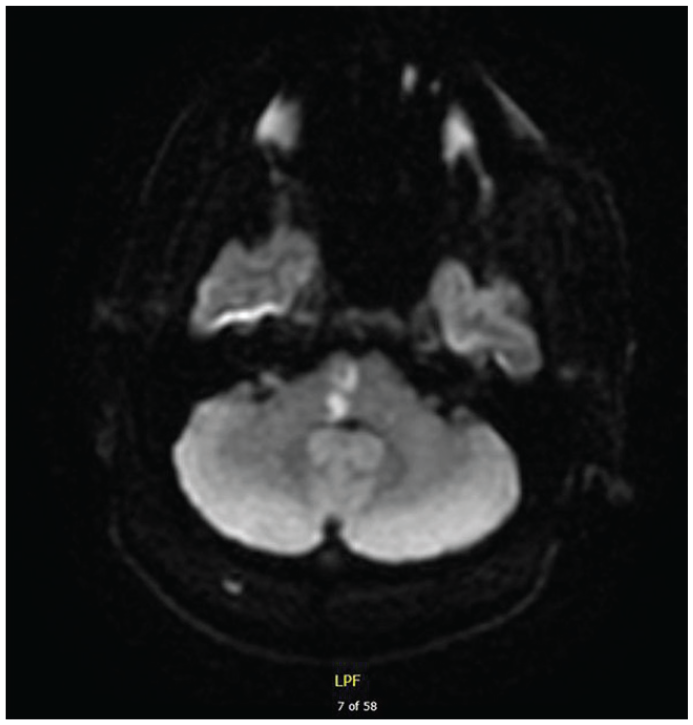
P0949 / 1222
SPONTANEOUS SPINAL EPIDURAL HEMATOMA WITH SLIGHT PURE MOTOR HEMIPARESIS IN A PATIENT UNDERGOING THERAPY WITH RIVAROXABAN BECAUSE OF PAROXYSMAL ATRIAL FIBRILLATION: A CASE REPORT
1Klinik Hirslanden Zürich, Department of Neurology, Zürich, Switzerland, 2Klinik Hirslanden Zürich, Department of Neuroradiology, Zürich, Switzerland
Spontaneous spinal epidural hematoma is a rare condition which may present with diverse neurological symptoms, mimicking more common neurological emergencies, especially strokes. Our aim was to present a case of SSEH and to review the available literature for other clinical representations in order to facilitate the diagnosis of this disorder as stroke mimic, which may be encountered in clinical practice. An 84-year-old female was admitted to the hospital because of severe neck and back pain radiating into the right arm and leg, which was followed by weakness of the right upper and lower limb. Any trauma has been denied. The patient was undergoing anticoagulation therapy with rivaroxaban due to atrial fibrillation. The MRI showed a spinal epidural hematoma, dorsal on the C4/7 level on the right side with a minimal spinal cord compression and no signs of edema. After neurosurgical consultation, due to the slightness of the symptoms and the small blood volume, we have decided on conservative therapy. We started steroid therapy to avoid edema development. The rivaroxaban therapy has been stopped. The control MRIs during hospitalization showed a decrease of hematoma and a complete regression after few days. On the day of discharge, only minimal motor disfunction of the right hand was present.
In a constellation of symptoms with acute onset of pain along the spine in connection with weakness or numbness of the limb without accompanying deficits of cranial nerves, spontaneous spinal epidural bleeding should be considered as possible cause, especially by patients under anticoagulation medication.
P0950 / 1059
BENEFITS OF DETAILED CLINICAL ASSESSMENT AND ADVANCED IMAGING IN RIGHT MIDDLE CEREBRAL ARTERY STROKE
1 Beaumont Hospital, Department of Stroke Medicine, Dublin, Ireland
Non contrast computed tomography (CT) brain was normal. CT angiogram revealed a right middle cerebral artery M2 branch occlusion and CT perfusion suggested a 31mL ischaemic penumbra in the territory of the occluded vessel without any established core. (Figure 1).
Given the acute cognitive decline and risk of further neurological deterioration the patient was treated with low-dose alteplase.
24 hour intracranial CT angiogram showed recanalisation of the M2 branch. (Figure 1). Repeat MOCA at 24 hours was 28/30 with resolution of visuospatial and recall deficits.
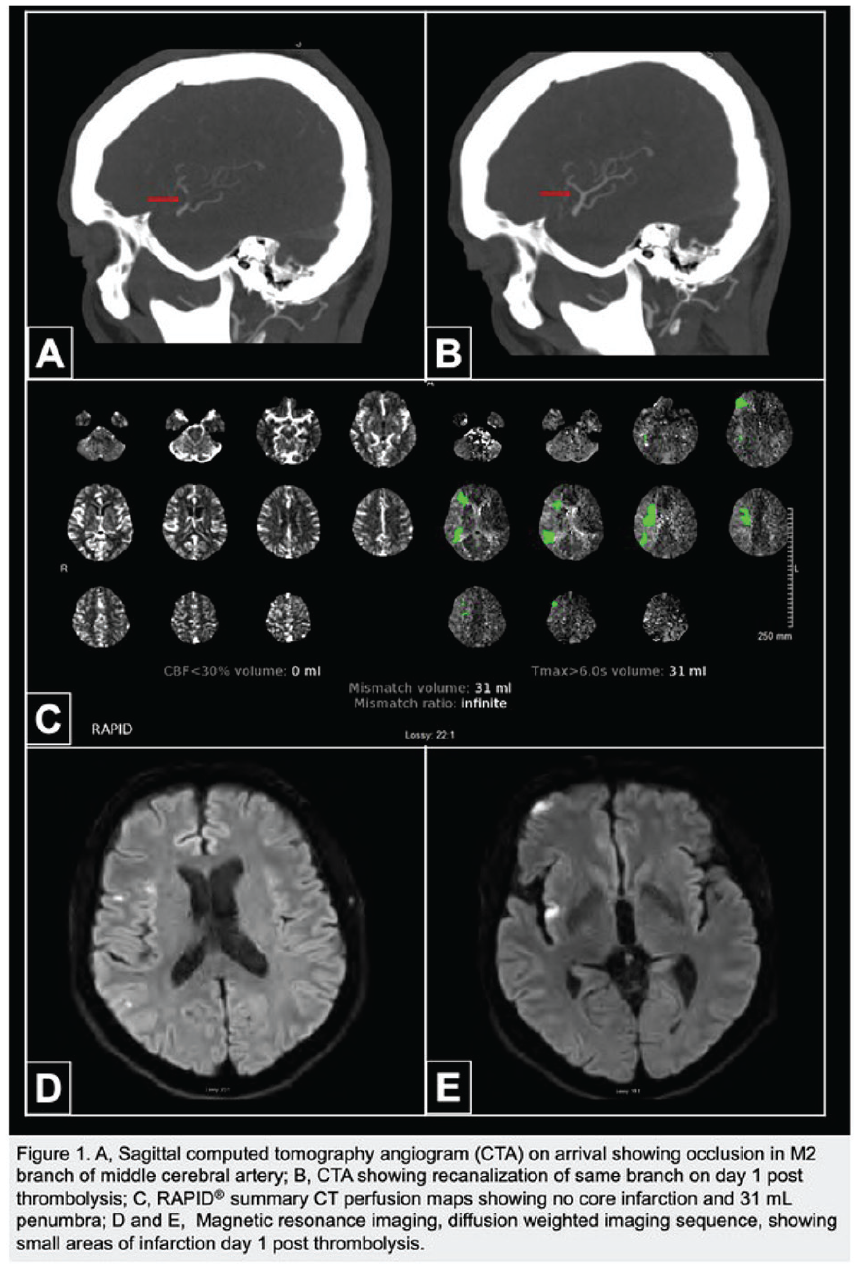
P0951 / 1576
FATAL CEREBRAL SINUS THROMBOSIS FOLLOWING CHADOX1 NCOV-19 VACCINE: A CASE REPORT OF VACCINE-INDUCED IMMUNE THROMBOTIC THROMBOCYTOPENIA (VITT)
1Warsaw Military Institute, Department of Neurology, Warsaw, Poland, 2Warsaw Military Institute, Medical Diagnostic Imaging, Warsaw, Poland, 3Warsaw Military Institute, Department of Haematology, Warsaw, Poland, 4Warsaw Military Institute, Department of Anaesthesiology and Intensive Care, Warsaw, Poland
Vaccine-induced immune thrombotic thrombocytopenia (VITT) with cerebral venous sinus thrombosis (CVST) has been recently reported after vaccination against severe acute respiratory syndrome coronavirus 2 (SARS-CoV-2). We present a case of a patient with fulminant CVST and thrombocytopenia after receiving the ChAdOx1 nCoV-19 vaccine. Although the patient received immediate anticoagulant and intravenous immune globulin treatment, he died within 24 h after hospital admission. VITT and CVST are rare conditions; however, the course may be fatal. Therefore, clinicians should be familiarized with the clinical and laboratory features of VITT.
P0952 / 165
SEVERE IRON DEFICIENCY ANAEMIA SECONDARY TO UTERINE FIBROIDS CAUSING CEREBRAL VENOUS SINUS THROMBOSIS
1 Princess Royal University Hospital, King’s College Hospital NHS Foundation Trust, Hyperacute Stroke Unit, Medical Department, London, United Kingdom
P0953 / 1354
ISCHEMIC STROKE DUE TO VERTEBROBASILAR DOLICHOECTASIA: CASE REPORT
1 Hassan II University Teaching Hospital, Department of Neurology, Fes, Morocco
Vertebrobasilar dolichoectasia (VBD), is an arteriopathy characterized by tortuosity, elongation, and dilatation of the vertebrobasilar arteries or their junction. VBD is a known clinical entity with a patient presentation ranging from severe symptoms such as ischemic/hemorrhagic stroke, thromboembolic lesions, or cranial nerve compression.
Here we reported the case history of a 58-year-old man with Hypertension history, admitted to the emergency department for sudden-onset left-sided weakness and speech difficulty at 3 Hours from his last known well. Neurological examination revealed left hemiplegia and left central facial paralysis with dysarthria. The patient’s NIHSS was 14. Capillary glycemia was normal. Blood pressure was 180/95 mm Hg. A cerebral computed tomography (CT) scan was normal. The CT Angiography objectives VBD with a floating thrombus of the basilar artery. The patient was received intravenous thrombolysis but the thrombectomy was not available. Neurological worsening occurred 24 hours after thrombolysis and the control CT scan objectified a pontine infarction. The patient was treated with subcutaneous low molecular weight heparin, but he died after 4 days of his hospitalization in the neurovascular unit.
VBD is a rare vasculopathy. The etiology of this disease is unknown. VBD is often asymptomatic. The most frequent complication of a VBD is the ischemia of the brainstem in 2/3 of the patients. Its main risk factors are age, male gender, hypertension, and smoking. Several imaging modalities can be used to diagnose VBD. CT Angiography remains the most sensitive and available. The treatment consists in treating its complications.
P0954 / 1641
TO BE INFECTIOUS OR NOT TO BE, THAT IS THE QUESTION
1 Hospital Vila Franca de Xira, Neurology, Vila Franca de Xira, Portugal
Cortical bilateral ischemic lesions are strongly linked to an embolic cause. However, its source may not be found and strokes are then classified as embolic stroke of undetermined source. We present a case with the opposite problem: the embolic source was straightaway discovered but not its etiology.
A 72 year-old-man, with high blood pressure, diabetes and alcoholism presented to the emergency department with a one-week duration of loss of vision and gait struggles. He was disorientated, had right homonymous hemianopsia and left central facial palsy. Blood studies showed leukocytosis, high CRP and persistently elevated pro-BNP and troponin. EKG revealed ST elevation in DII and aVF which led to a transthoracic echocardiography that revealed an intracardiac mass attached to the mitral valve, compatible with vegetation after transesophageal echocardiography. Brain-MRI showed an acute left occipito-temporal infarct and multiple microembolic bilateral lesions. Blood cultures, serologies and IGRA were negative. Full-body CT-scan revealed a lung tumor with multiple adenopathies. Bronchofibroscopy and aspirative punction were compatible with non-small cell lung carcinoma. The diagnosis of nonbacterial endocardithis was admitted and anticoagulation was started. Two weeks later there was new embolization to brain and myocardium which resulted in the patient death.
In this case the embolic source was obvious, but its etiology was less clear. Nonbacterial thrombotic endocarditis is as rare cause of stroke that may occur in cancer patients due to a prothrombotic state leading to deposition of sterile thrombi in heart valves. We emphasize the importance of excluding oncologic disease in patients with this diagnosis.
P0955 / 1634
THREE CASES OF CAA-RI: CLINICAL “MOSAIC” OF AMYLOID SPELLS, MIGRAINE, AND TRANSIENT ISCHEMIC ATTACKS
1University of Belgrade, Faculty for Special Education and Rehabilitation, Belgrade, Serbia, 2University of Belgrade, Faculty of Medicine, Belgrade, Serbia
P0956 / 1038
MULTIPLE INTRACRANIAL ANEURYSMS FOLLOWING RESECTION OF CARDIAC MYXOMA
1Hospital Central do Funchal – SESARAM, Department of Neurology, Funchal, Portugal, 2Centro Hospitalar Universitário de São João, Department of Neurology, Porto, Portugal, 3Centro Hospitalar Universitário de São João, Department of Neuroradiology, Porto, Portugal, 4Centro Hospitalar Universitário de São João, Department of Internal Medicine, Porto, Portugal, 5Faculty of Medicine of University of Porto, Department of Clinical Neurosciences and Mental Health, Porto, Portugal
P0957 / 1197
RECURRENT STROKES BY RETROGRADE EMBOLISM FROM A THROMBOSED RIGHT DORSAL SCAPULAR ARTERY
1Hôpital Lariboisière, Department of Neurology, Paris, France, 2Hôpital Lariboisière, Interventional Neuroradiology Unit, Paris, France
P0958 / 1633
STROKE AND NEPHROTIC PROTEINURIA: A CLINICAL CASE
1 Hospital Vila Franca de Xira, Neurology, Vila Franca de Xira, Portugal
The association between antineutrophil cytoplasmic antibodies (ANCA) and vasculitis like granulomatosis with polyangiitis or microscopic polyangiitis is well established. However, stroke as a presentation before renal or lung manifestations is very rare. We present a case of ANCA-associated vasculitis diagnosed following stroke etiologic investigations.
A 46-year-old man, with medical record of smoking, migraine and Sweet syndrome, presented to the emergency room with speech disturbances and incoordination of his right hand. The neurological examination was positive for dysarthria. Initial brain CT scan was normal but 24 hours after there was a left striatocapsular infarct, confirmed by MRI which also excluded other lesions. CT angiography was normal. Stroke workup revealed acute renal lesion (creatinine 2.02mg/dL), high sedimentation velocity (79mm/h), moderately elevated lupic anticoagulant, nephrotic proteinuria, hypoalbuminemia and positive ANCA-MPO antibodies (130/UI/mL). Renal biopsy showed glomerulus with global sclerosis, fibrocelular crescents, necrotizing lesions and interstitial fibrosis in 50%. Immunofluorescence was negative. The diagnosis of stroke associated with ANCA- vasculitis was admitted. The patient was started on steroids therapy followed by rituximab. ANCA levels lowered, renal function improved and there was complete recovery of neurological deficits.
This case emphasizes the importance of performing a complete workup of stroke etiology, especially on the young with stroke, to discover some rarer etiologies. A high degree of susception is key to make the diagnosis of autoimmune vasculitis and to promptly start adequate treatment.
P0959 / 1605
WHEN LESS IS MORE: CONSERVATIVE MANAGEMENT OF INTERNAL CAROTID ARTERY DISSECTION – A CASE REPORT
1University of Parma, Department of Neurological Sciences, Parma, Italy, 2University Hospital of Parma, Interventional Neuroradiology Unit, Parma, Italy, 3University Hospital of Parma, Stroke Unit, Parma, Italy
Traumatic carotid artery dissection (tCAD) is a leading etiology of stroke in young people. However, prevalence in the general population is low, making difficult to produce strong recommendations on treatment, that includes antiplatelets or anticoagulants and endovascular approach. We present a teaching case of conservative management with the aim of contributing to the definition of the best medical practice for extracranial tCAD.
A 46-year-old man admitted to our ED because of acute onset of dysarthria, hemianopsia and left hemisyndrome (NIHSS=11). Brain CT was negative for acute ischemia or bleeding. Angio-CT was suggestive for right extracranial tCAD. Systemic thrombolysis was performed. Angiography confirmed the diagnosis but based on clinical improvement (NIHSS=3), the localization, and flourishing compensatory collateral circles, a wait-and-see approach was decided and decoagulant treatment was set. The second day NIHSS worsened to 6. CT, angioCT and angiography were repeated and reported partial recanalization of the ICA. Again, given the rapid clinical improvement (NIHSS=2) no procedure was undertaken. Next day because of a new worsening (NIHSS=5), angio-MRI was performed, showing substantial stability of the partial recanalization of the ICA and a better definition of the known ischemic areas. One more time, no intervention was made. In the following days neurologic signs regressed progressively and the patient was discharged with a NIHSS=1.
To date, there is no strong evidence of the best approach for tCAD between medical and mechanical treatment. In our experience, conservative management is an effective approach for tCAD following a favorable multidisciplinary evaluation of neurological features and neuroimaging.
P0960 / 1490
A WARNING SIGN: A MINI-SERIES OF CAPSULAR WARNING SYNDROME
1 St George’s University Hospitals NHS Foundation Trust, London, United Kingdom
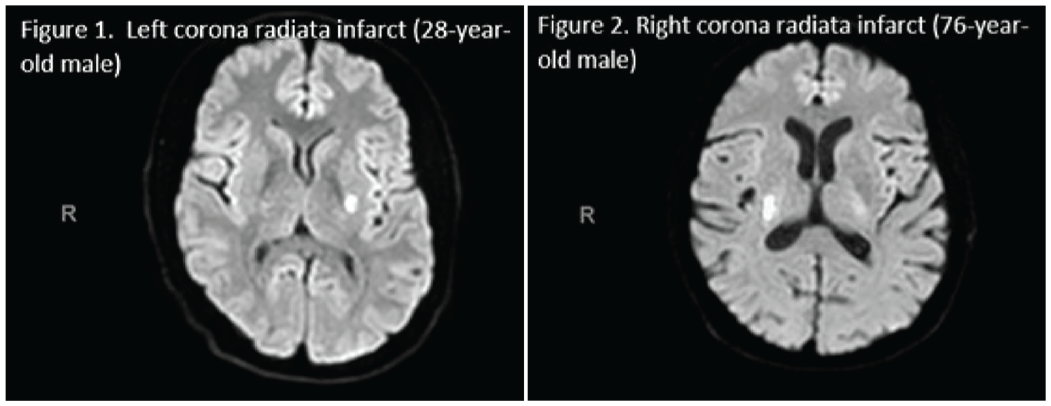
P0961 / 1061
NEUTROPHIL MENINGO-ENCEPHALITIS AND VENTRICULITIS IN TWO PATIENTS WITH ACUTE SARS-COV-2 INFECTION
1County Emergency Hospital, Department of Neurology, Cluj-Napoca, Romania, 2Hospital Bichat, Department of Vascular Neurology, Paris, France, 3Hospital Bichat, Department of Radiology, Paris, France, 4Hospital Bichat, Department of Infectious Diseases, Paris, France, 5Hospital Louis-Mourier, Department of Internal Medicine, Paris, France
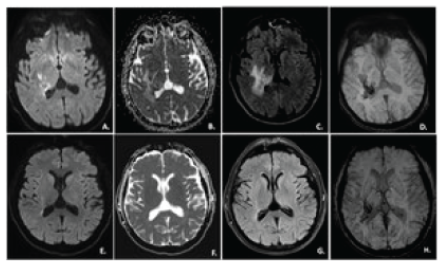
Patient1
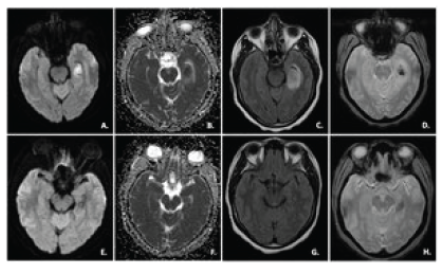
Patient2
P0962 / 1017
A CASE OF CHANTER SYNDROME
1St George’s Hospital, London, Neurology & Stroke, London, United Kingdom, 2Cambridge University Hospital, Neurology, Cambridge, United Kingdom
An unknown male in his 40s presented having been found collapsed and unresponsive outside a pub. No history was available at all. He was very agitated, had pinpoint pupils, bitten his cheek and been incontinent of urine. A CT head showed bilateral cerebellar hypodensity suggestive of infarction so he was admitted under the stroke team.
MRI (figure 1) demonstrated changes in the cerebellum, basal nuclei and hippocampi, highly metabolically active tissues. Therefore, a toxic/metabolic aetiology was thought more likely than vascular. Urine toxicology studies were positive for cocaine and opioids. A diagnosis of Cerebellar Hippocampal and Basal Nuclei Transient Edema with Restricted Diffusion (CHANTER) syndrome was made.
The patient deteriorated markedly and required a posterior fossa craniectomy. However, 3 weeks after admission, he showed some improvement: initially just moving spontaneously, looking around and tracking. His improvement continued so that by 4 months he could conduct a simple conversation.
The acute changes on imaging such as in our case may appear similar to acute ischaemia but they are in very metabolically active areas, and can occur in various toxidromes and hypoxic ischaemic brain injury. Therefore, CHANTER syndrome, which occurs in the context of opioid and benzodiazepine abuse, is an uncommon but important stroke mimic with the potential for good recovery in spite of profound imaging changes and early very severe illness.
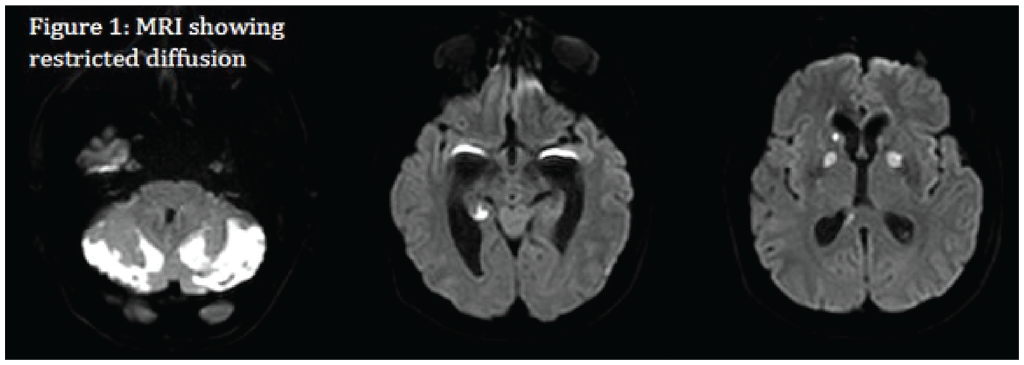
P0963 / 1386
THE CENTRAL RETINAL ARTERY OCCLUSION: A WALKING PATIENT IN LIFE-THREATENING CONDITION
1 Masaryk Hospital, Krajská zdravotní a.s., Neurology, Ústí nad Labem, Czech Republic
P0964 / 1158
CAROTID ARTERY ANGIOPLASTY – A POTENTIALLY LIFE-SAVING DECISION IN PARTICULAR CASES OF POSTERIOR CIRCULATION STROKE
1Emergency University Hospital Bucharest, Neurology, Bucharest, Romania, 2University of Medicine and Pharmacy Carol Davila, Neurology, Bucharest, Romania
P0965 / 212
JAMAICAN SUSUMBER BERRY POISONING MIMICKING ACUTE STROKE
1SUNY Downstate Health Sciences University, Neurology, Brooklyn, United States, 2SUNY Downstate Health Sciences University, Psychiatry, Brooklyn, United States, 3Kings County Hospital Center, Neurology, Brooklyn, United States, 4Jaffe Stroke Center, Maimonides Medical Center, Neurology, Brooklyn, United States
Systematic review: 531 abstracts were screened after removal of duplicates; 5 articles were selected describing 13 patients (Fig.1). A total of 15 patients were analyzed, including our 2 patients. Fourteen patients (93%) developed dysarthria and/or unstable gait, 7 (47%) nystagmus/gaze deviation, 5 (33%) autonomic symptoms. Six (40%) required ICU admission, 3 (20%) intubation. Twelve (80%) had a rapid complete recovery, 3 were hospitalized up to one month.
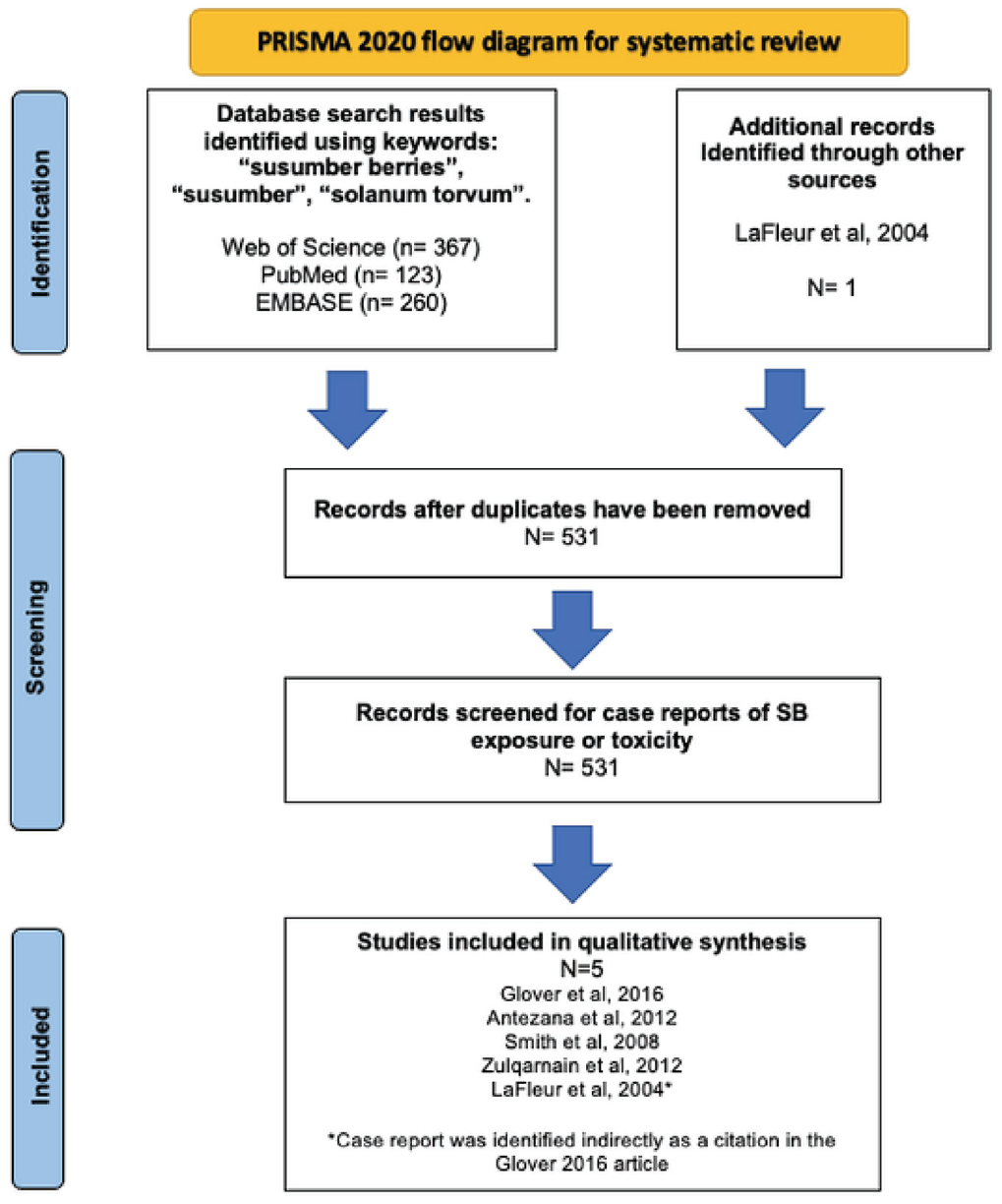
P0966 / 618
PATHOLOGICAL YAWNING AND LAUGHTER AS AN UNUSUAL MANIFESTATION OF ACUTE ISCHEMIC STROKE
1Brugmann University Hospital, Emergency Department, Brussels, Belgium, 2Brugmann University Hospital, Neurology Department, Brussels, Belgium
P0967 / 682
ARGATROBAN RESISTANCE AND SUCCESSFUL ENHANCED ANTICOAGULATION IN A CEREBRAL VENOUS SINUS THROMBOSIS CASE WITH SERPINC1 MUTATION
1Xuanwu Hospital, Capital Medical University, Department of Emergency and Neurology, Beijing, China, 2Xuanwu Hospital, Capital Medical University, Department of Neurology, Beijing, China
P0968 / 449
UNUSUAL STROKE MIMIC: HEREDITARY ANGIOEDEMA TYPE I, A CASE REPORT
1 Hospital Universitario Central de Asturias, Neurology, Oviedo, Spain
P0969 / 688
A RARE PRESENTATION OF ISCHEMIC STROKE FROM HERPES SIMPLEX VIRUS 2 VASCULITIS
1 St George’s University Hospitals NHS Foundation Trust, Neurology, London, United Kingdom
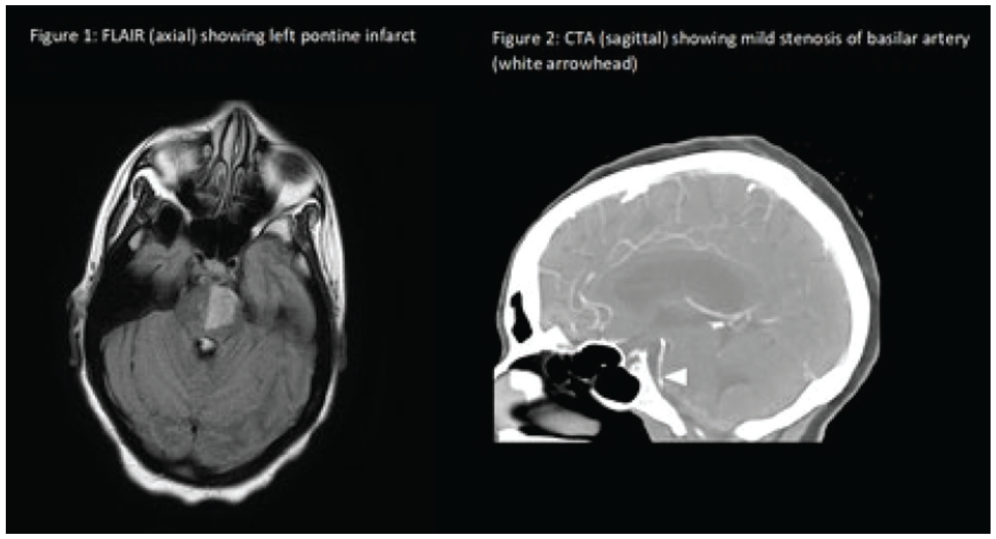
YOUNG STROKE PHYSICIANS AND RESEARCHERS: RESEARCH DESIGN WORKSHOP FOR STUDIES IN DEVELOPMENT*
P0970 / 1277
STAKEHOLDERS’ VIEWS AND EXPERIENCES OF STROKE REHABILITATION AND RECOVERY RESEARCH IN THE ACUTE CLINICAL SETTING: STUDY DESIGN PROCESS
1Imperial College Healthcare NHS Trust, London, United Kingdom, 2Imperial College London, Brain Sciences, London, United Kingdom, 3University Hospitals Dorset NHS Foundation Trust, Physiotherapy, Bournemouth, United Kingdom, 4University of Southampton, Life Sciences, Southampton, United Kingdom
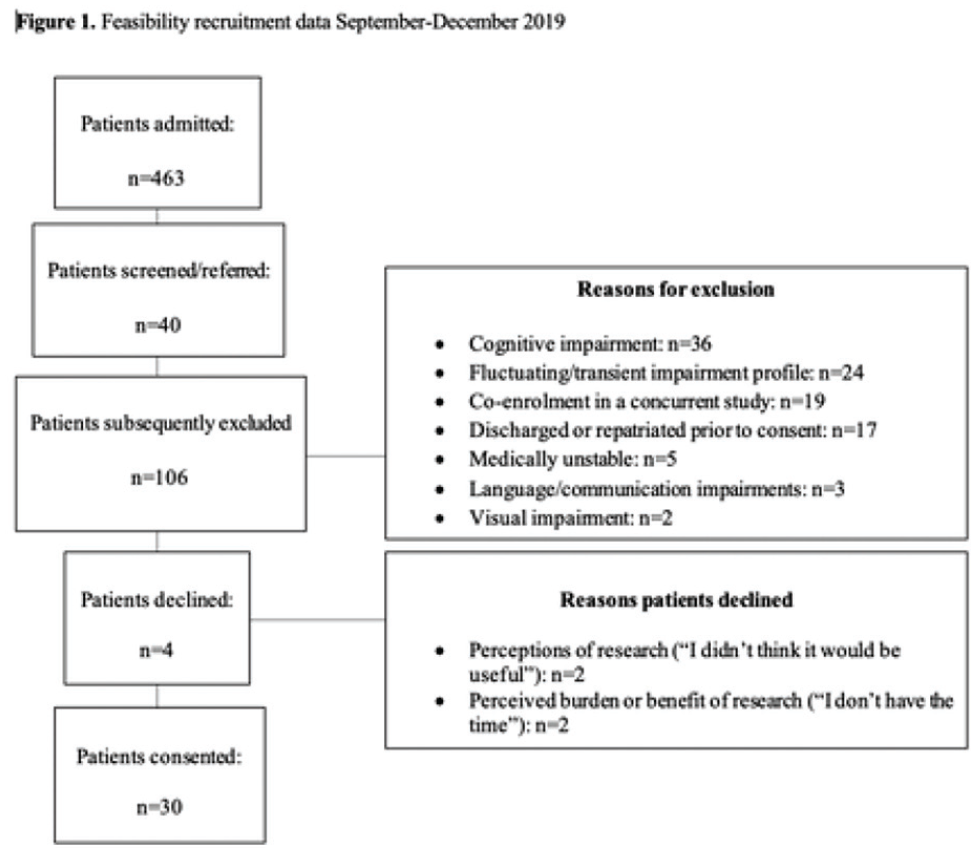
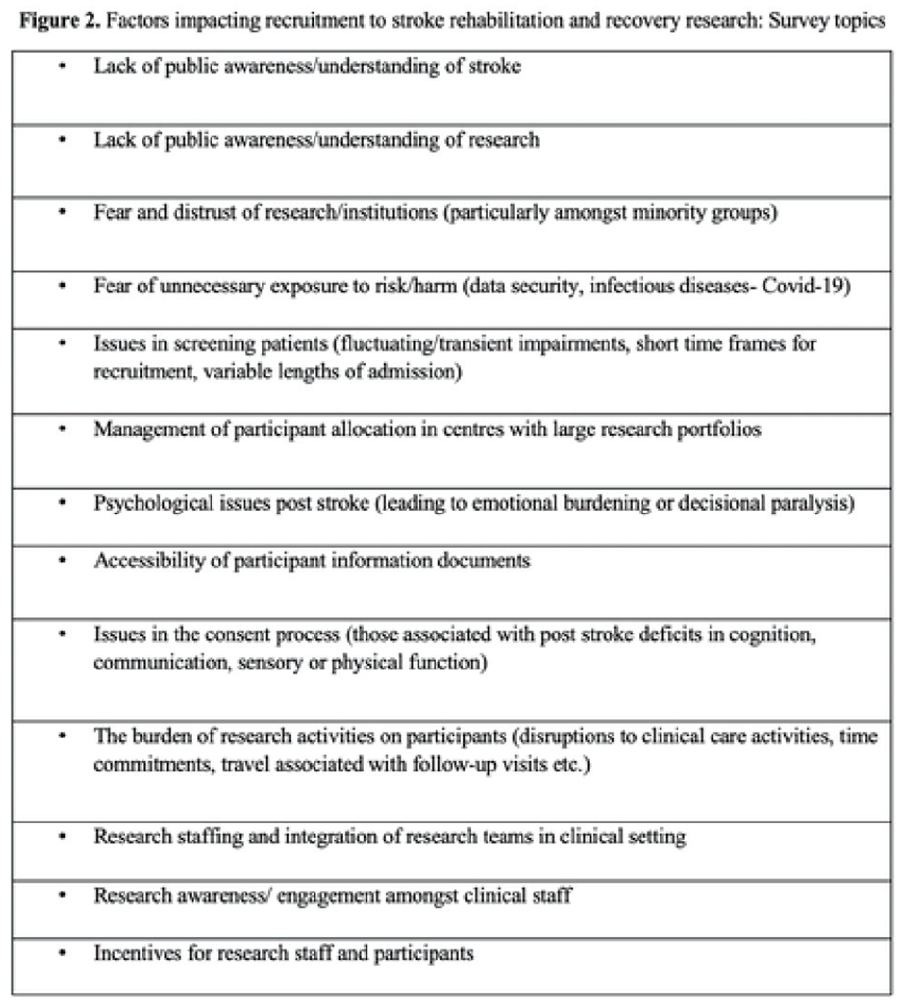
P0971 / 1363
MODIFIED MULTI-PHASIC CTA - CARDIAC EVALUATION IN ACUTE STROKE IMAGING
1KMCH, Neuroradiology, Coimbatore, India, 2KMCH, Coimbatore, India
P0972 / 932
EFFECTS OF THE COVID-19 PANDEMIC ON PRE - HOSPITAL CARE FOR STROKE AND TRANSIENT ISCHAEMIC ATTACK : A PROTOCOL FOR A SYSTEMATIC REVIEW AND META-ANALYSIS
1University College Cork, School of Public Health, Cork, Ireland, 2University College Cork, School of Nursing and Midwifery, Cork, Ireland, 3Cork University Hospital, Department of Neurology, Cork, Ireland, 4Health Service Executive South East, Office of the NCAGL for Chronic Disease, Kilkenny, Ireland
HYPERACUTE MANAGEMENT – EXCLUDING CLINICAL TRIAL RESULTS
P0973 / 1623
IN-HOSPITAL ASPIRIN DOSE AS A RISK FACTOR OF HEMORRHAGIC TRANSFORMATION IN PATIENTS NOT SUBMITTED TO REPERFUSION THERAPIES
1Universidade Federal de Sao Paulo, Sao Paulo, Brazil, 2Columbia University, New York City, United States, 3Hospital Geral de Fortaleza, Fortaleza, Brazil, 4Universidade Estadual do Ceara, Fortaleza, Brazil, 5Universidade de Sao Paulo, Ribeirao Preto, Brazil
P0974 / 1209
EMERGENT CAROTID STENTING DURING MECHANICAL THROMBECTOMY IN ACUTE STROKE
1Department of Neurology and Stroke Center, Neurological Sciences and Cerebrovascular Research Laboratory, La Paz University Hospital, IdiPAZ Health Research Institute, Universidad Autónoma de Madrid, Madrid, Spain, 2Department of Neuroradiology, La Paz University Hospital, Madrid, Spain
P0975 / 1639
PRE-HOSPITAL SYSTOLIC BLOOD PRESSURE AND DIAGNOSIS IN SUSPECTED STROKE: THE AKERSHUS STUDY OF ISCHEMIC STROKE AND THROMBOLYSIS-1
1Akershus University Hospital, Department of Neurology, Lørenskog, Norway, 2Oslo University Hospital, Department of Neurology, Oslo, Norway, 3Akershus University Hospital, Department of Radiology, Lørenskog, Norway
P0976 / 450
EFFECT OF NVNS ON HEMODYNAMIC PARAMETERS IN THE TR-VENUS STUDY
1Hacettepe University, Ankara, Turkey, 2Massachusets General Hospital, Harvard Medical School, Boston, United States, 3electroCore, Inc, Basking Ridge, United States
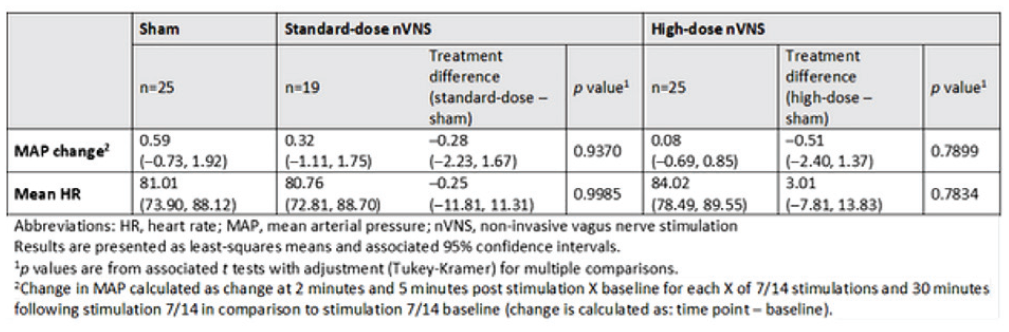
P0977 / 184
COMPARING STANDARD AND EXTENDED TIME WINDOW REPERFUSION TREATMENTS IN AN MRI BASED STROKE CARE SYSTEM: A PROSPECTIVE SINGLE-CENTRE STUDY
1Semmelweis University, Neurology, Budapest, Hungary, 2Semmelweis University, Emergency Medicine, Budapest, Hungary, 3Semmelweis University, Neuroradiology, Budapest, Hungary, 4National Institute of Mental Health, Neurology and Neurosurgery, Neurointervention, Budapest, Hungary
P0978 / 1307
ASSOCIATION BETWEEN ONSET-TO-SUCCESSFUL ENDOVASCULAR RECANALIZATION AND BLOOD PRESSURE MANAGEMENT ON THE INCIDENCE OF HEMORRHAGIC TRANSFORMATIONS: A POST-HOC ANALYSIS FROM BP-TARGET TRIAL
1Ottawa Hospital Research Institute, Neurology, Ottawa, Canada, 2The Ottawa Hospital - Civic Campus, Department of Medicine / Division of Neurology, Ottawa, Canada, 3Fondation Rothschild Hospital, Interventional Neuro-radiology, Paris, France, 4Lille University, Biostatistics, Lille, France, 5Hospital of Nancy, Neurology, Nancy, France, 6Foch Hospital, Neurology, Suresnes, France, 7CHU Bordeaux, Neurology, Bordeaux, France, 8Hospital of Nancy, Diagnostic and Therapeutic Neuroradiology, Nancy, France, 9Bordeaux University Hospital, Interventional and Diagnostic Neuroradiology, Bordeaux, France, 10Foch Hospital, Neuroradiology, Suresnes, France, 11Toulouse University Hospital, Neurology, Toulouse, France, 12University of Cincinnati College of Medicine, Neurology and Rehabilitation Medicine, Cincinnati, United States, 13Université Caen Normandie, Neurology, Caen, France, 14University of Missouri - Women’s and Children’s Hospital, Neurology, Columbia, United States, 15Fondation Rothschild Hospital, Clinical Research, Paris, France, 16Fondation Rothschild Hospital, Neurology, Paris, France
P0979 / 1008
PROMETHEO STUDY:RESCUE THERAPY WITH ANGIOPLASTY AND/OR INTRACRANIAL STENT AFTER FAILURE OF MECHANICAL THROMBECTOMY
1Hospital Clínico San Carlos, Stroke Unit Neurology, Madrid, Spain, 2Hospital Clínico San Carlos, Neurointerventional Radiology, Madrid, Spain
mTICI 2b/3 result was obtained in 70%. 34% achieved functional independence (mRs ⩽ 2). sICH rate was 6% and 3-month mortality rate was 11%.
P0980 / 299
MECHANICAL THROMBECTOMY (MT) OUTCOME IN OLDER STROKE PATIENTS: LOCAL CENTER STUDY
1 Hull University Teaching Hospitals NHS Trust, Stroke Medicine, Hull, United Kingdom
The study period was from March 2018 to march 2021.
81% were directly presented to our center and 19% were transferred from the District Hospital.
Atrial Fibrillation was recorded in 50% and 18% of them were thrombolysed.
Pre stroke mRS 0-2 was (54%). Average NIHSS on admission was 21 and 24 hours post procedure was 15.
Average time from symptom to groin puncture was 150 minutes.
Good MT outcomes (TICI2b-3) was achieved in 68% with single pass (31%) and 2 passes (31%). 9% had simultaneous carotid stenting.
Any type of hemorrhage( 44% )and new territory infract (4.9%) were noted.
Inpatient Mortality was 36% and 90 days was 31%.
13% was discharged to home with mRS 0-2 but 50% ended in institutional care with mRS 3-5, half of them were on palliative care.
P0981 / 425
CURRENT DIAGNOSIS AND TREATMENT PRACTICE OF CENTRAL RETINAL ARTERY OCCLUSION (CRAO): RESULTS FROM A SURVEY AMONG GERMAN STROKE UNITS
1Medical Faculty Mannheim, Heidelberg University, Department of Neurology, Mannheim, Germany, 2Carl Gustav Carus University Hospital, Technische Universität Dresden, Department of Neurology, Dresden, Germany, 3Carl Gustav Carus University Hospital, Technische Universität Dresden, Department of Ophthalmology, Dresden, Germany, 4Vivantes Klinikum Neukölln, Department of Neurology, Berlin, Germany
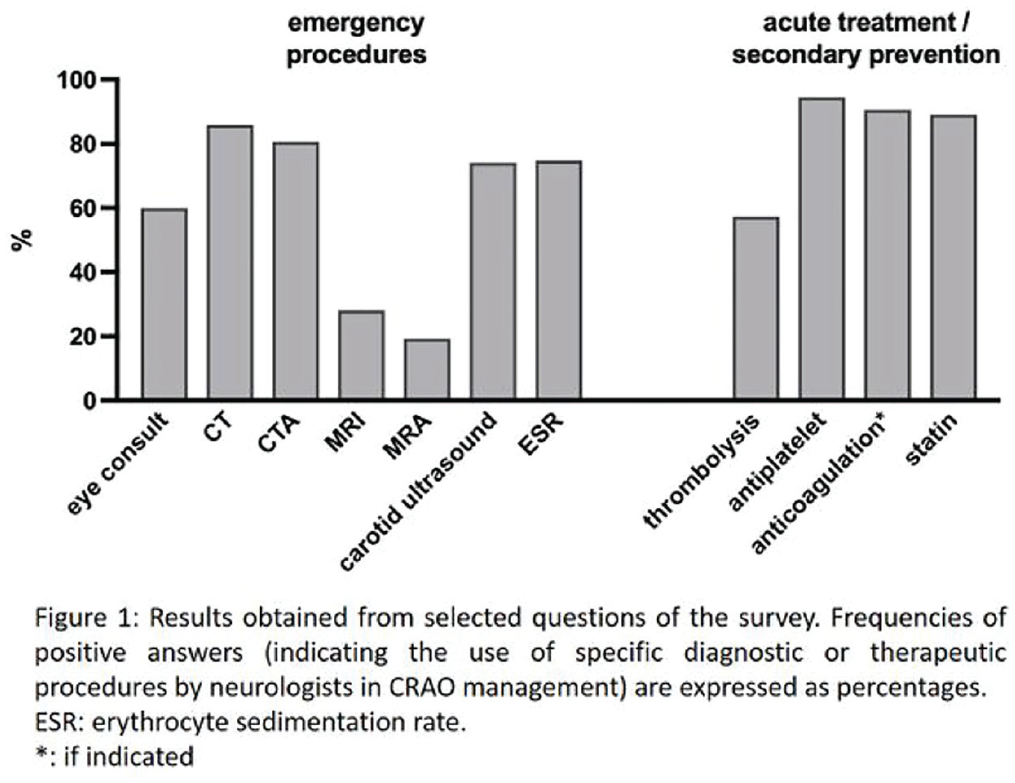
P0982 / 568
RAPID AND STANDARDISED ORAL ANTICOAGULATION REVERSAL IN ACUTE INTRACEREBRAL HAEMORRHAGE: A HOSPITAL QUALITY IMPROVEMENT INITIATIVE
1Comprehensive Stroke Service, National Hospital for Neurology & Neurosurgery, London, United Kingdom, 2University College London Hospitals NHS Foundation Trust, Department of Haematology, London, United Kingdom, 3Stroke Research Centre, UCL Queen Square Institute of Neurology, London, United Kingdom
(1) investigate local practice for DOAC reversal;
(2) standardise care; and
(3) reduce the scan-to-needle time for reversal in DOAC-associated ICH (DOAC-ICH).
P0983 / 579
BLOOD PRESSURE MANAGEMENT AFTER ENDOVASCULAR STROKE THROMBECTOMY IN CANADA: A CROSS-SECTIONAL PHYSICIANS SURVEY
1McMaster University, Hamilton, Canada, 2University of Calgary, Calgary, Canada
P0984 / 605
BLOOD PRESSURE CONTROL IN PATIENTS WITH ACUTE INTRACEREBRAL HAEMORRHAGE
1 St George’s University Hospitals NHS Trust, Stroke Unit, London, United Kingdom
P0985 / 1353
VERY EARLY NEUROLOGICAL IMPROVEMENT AS A PRIMARY OUTCOME PREDICTING FACTOR AFTER THROMBECTOMY
1Interventional Neuroradiology, Department of Radiology, University Hospital Virgen del Rocío, Seville, Spain, 2Neurovascular Research Laboratory, Institute of Biomedicine of Seville (IBiS), Seville, Spain, 3Department of Neurology, University Hospital Virgen del Rocío, Seville, Spain, 4Department of Neurology, University Hospital Virgen Macarena, Seville, Spain, 5Unit of Clinical Management of Public Health-Prevention and Promotion of Health, Area of Sanitary Management South of Seville, Seville, Spain
P0986 / 1526
ENDOVASCULAR TREATMENT IN LOW NIHSS ACUTE ISCHEMIC STROKE: IS PREVENTION BETTER THAN CURE?
1 Basurto University Hospital, Neurology, Bilbao, Spain
Outcomes in low NIHSS and medical management (BMM) patients.
Outcomes in EVTs with NIHSS>= 6.
Modified Rankin Scale (mRS) 0-2 and mRS 0-1 at 90 days were the main objectives. Secondary objectives were related to indication (neurological deterioration, motor/speech symptoms), revascularization (TICI IIB/III, discharge NIHSS, revascularization time, 24-hour CT) and safety data (haemorrhages, death).
In the second comparison, haemorrhages were more frequent in the high NIHSS group (5.9 vs 36.3 p=0.01). No other significant differences were found.
However, the results suggest that patients with low NIHSS and disabling symptoms may benefit from ETV, being a safer option than in NIHSS>=6 patients.
P0987 / 1057
CAN RAPID THROMBOELASTOGRAPHY DETERMINE ANTICOAGULATION STATUS IN STROKE PATIENTS RECEIVING APIXABAN?
1County Emergency Hospital, Department of Neurology, Cluj-Napoca, Romania, 2University of Texas School of Public Health, Houston, United States, 3University of Texas Health Science Center at Houston McGovern Medical School, Department of Neurology, Houston, United States, 4Memorial Hermann Hospital–Texas Medical Center, Houston, United States, 5University of Texas Health Science Center at Houston McGovern Medical School, Department of Neurosurgery, Houston, United States
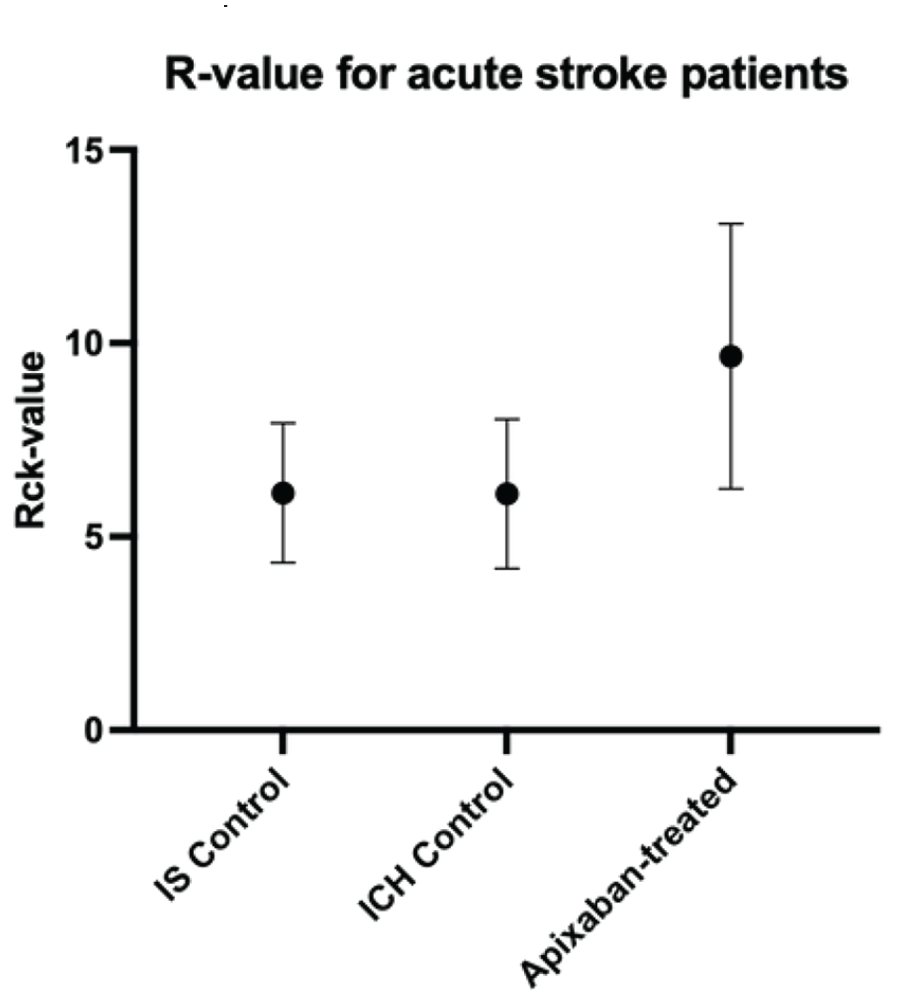
P0988 / 168
FACTORS ASSOCIATED WITH EARLY AND DELAYED NEUROLOGICAL IMPROVEMENT IN PATIENTS TREATED WITH MECHANICAL THROMBECTOMY IN ACUTE ISCHEMIC STROKE
1 Hospital Universitario Torrecárdenas, Almería, Spain
A lower NIHSS at admission (OR 0.79, 95% CI 0.67-0.91) and younger age (OR 0.92, 95% CI 0.87-0.97) were associated with higher probability of achieving DNI.
P0989 / 1204
CLINICAL FRAILTY IS ASSOCIATED WITH REDUCED PENUMBRAL VOLUMES IN ACUTE ISCHAEMIC STROKE
1University of Cambridge, Department of Medicine, Cambridge, United Kingdom, 2University of Cambridge, Department of Clinical Neurosciences, Cambridge, United Kingdom
P0990 / 1483
SAFETY AND EFFICACY OF COMBINED INTRAVENOUS THROMBOLYSIS PLUS MECHANICAL THROMBECTOMY VERSUS DIRECT MECHANICAL THROMBECTOMY IN DIFFERENT AGE GROUPS OF ACUTE ISCHEMIC STROKE PATIENTS
1University of Rome Tor Vergata, Department of Systems Medicine, Roma, Italy, 2Nuovo Ospedale dei Castelli, Roma, Italy, 3University of Rome Tor Vergata, Department of Biomedicine and Prevention, Roma, Italy, 4University of Melbourne, Department of Medicine and Neurology, Melbourne, Australia, 5L’altrastatistica srl, Roma, Italy
P0991 / 797
A NEW TIMEFRAME INDICATOR FOR ISCHEMIC STROKE TREATMENT: THE TREATMENT TO STROKE UNIT ADMISSION TIME
1Sapienza University of Rome, Emergency Department Stroke Unit, Rome, Italy, 2Sapienza, University of Rome, Rome, Italy, 3IRCCS Istituto delle Scienze Neurologiche di Bologna, UOC Neurologia e Rete Stroke Metropolitana Ospedale Maggiore, Bologna, Italy
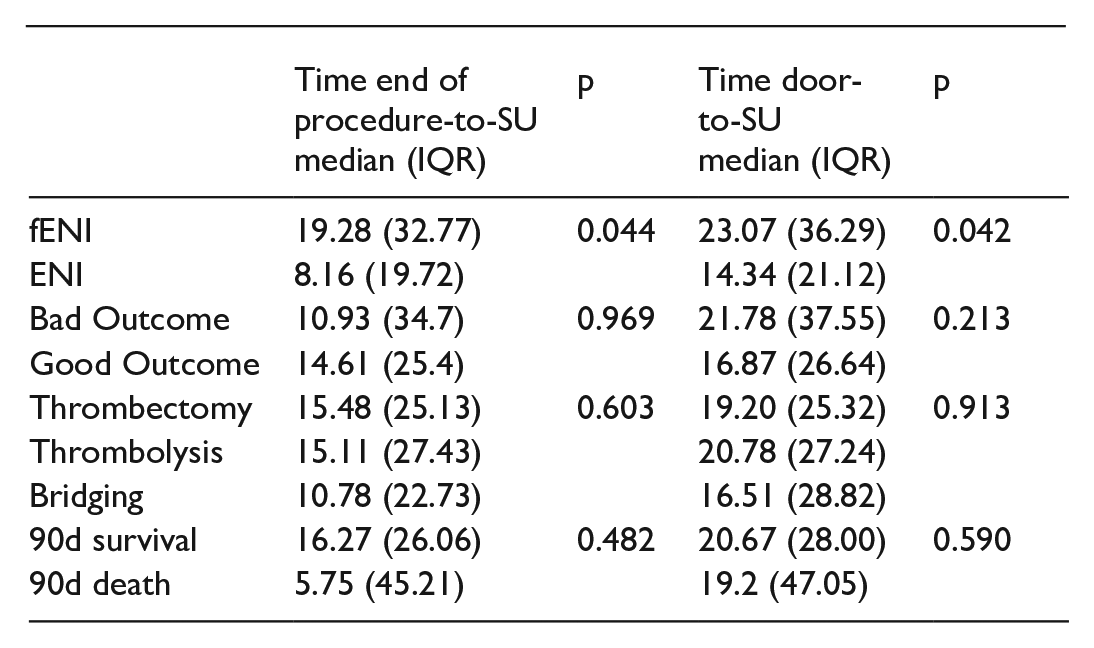
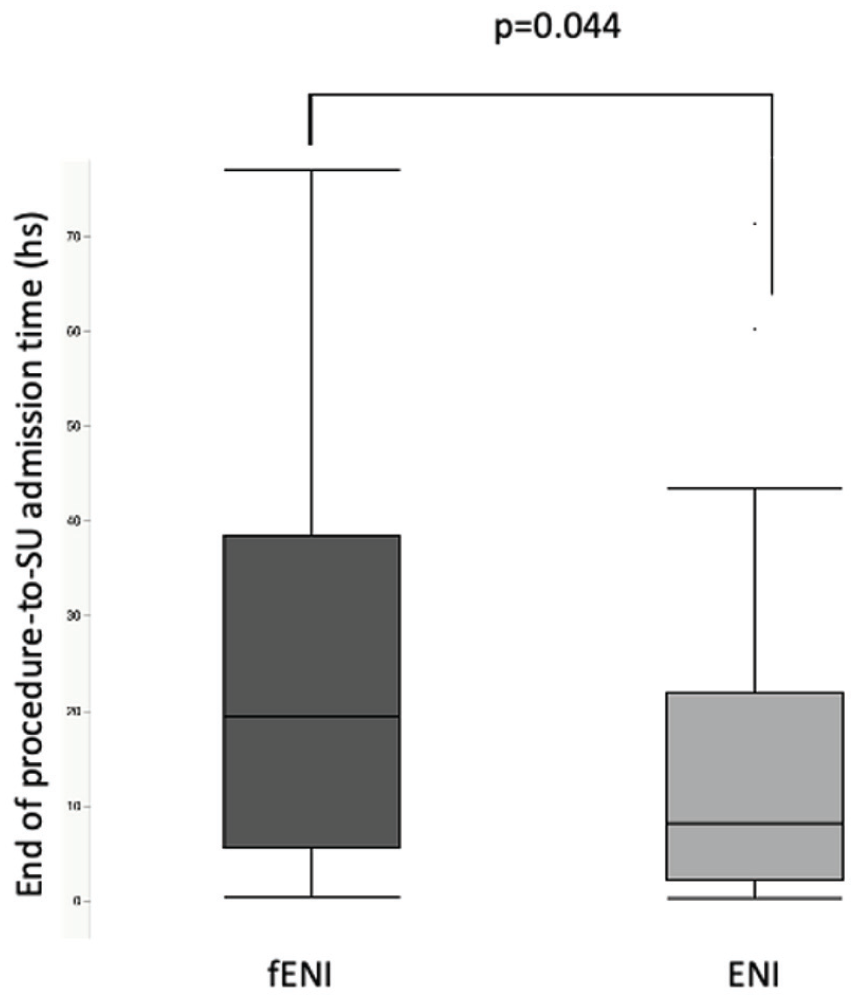
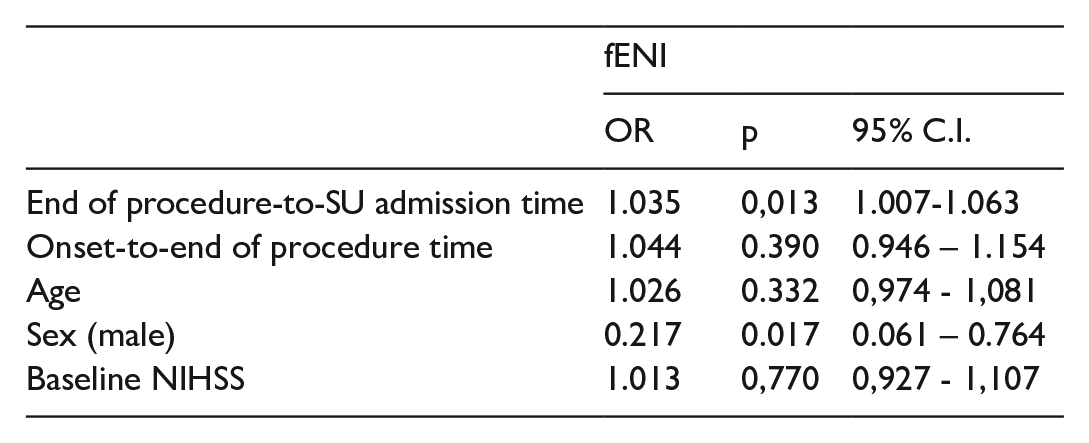
P0992 / 530
MORE FAST PROGRESSORS AND LOWER RECANALISATION RATES LEADS TO SMALLER SAMPLE SIZES IN ACUTE ISCHAEMIC STROKE TRIALS
1University of Glasgow, Glasgow, United Kingdom, 2University of New South Wales, Sydney, Australia, 3University of Melbourne, Melbourne, Australia, 4University of Newcastle, Newcastle, Australia
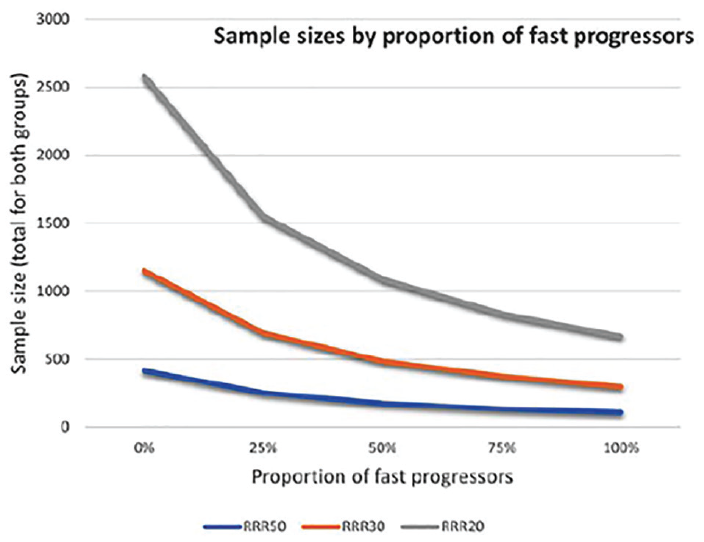
Sample size by proportion of fast progressors
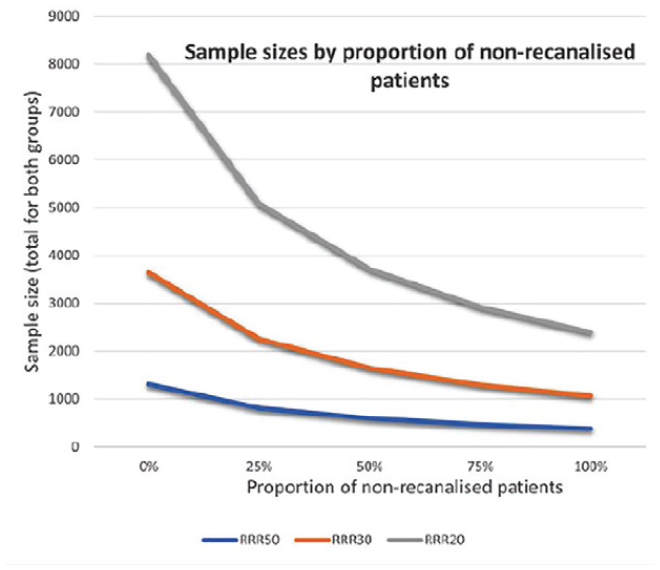
Sample size by proportion of non-recanalised patients
P0993 / 1230
IMPROVING DOOR-TO-NEEDLE TIMES IN ACUTE STROKE CARE FOLLOWING REPEATED PROCESS ANALYSIS - NEVER GIVE UP!
1Hannover Medical School, Department of Neurology, Hannover, Germany, 2Hannover Medical School, Department of Anesthesiology, Hannover, Germany, 3Hannover Medical School, Department of Neuroradiology, Hannover, Germany
P0994 / 459
USE OF SIMULATION BASED TEAM TRAINING FOR EMERGENCY NEUROLOGY CRISIS MANAGEMENT: A PARADIGM SHIFT IN MEDICAL EDUCATION FOR NEUROLOGY RESIDENTS
1Tel Aviv Sourasky Medical Center, Medical Technology and Simulation Center, Tel Aviv, Israel, 2Tel-Aviv Sourasky Medical Center, Stroke Department, Division of Neurology, Tel- Aviv, Israel, 3Tel Aviv Sourasky Medical Center, Division of Neurology, Tel Aviv, Israel
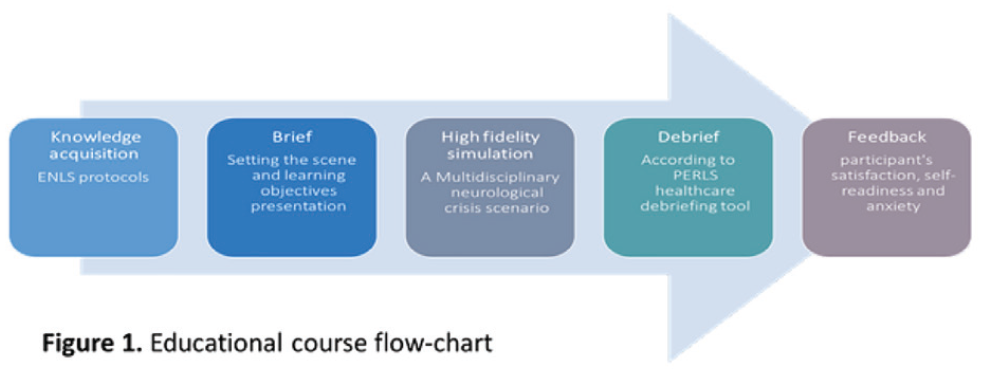
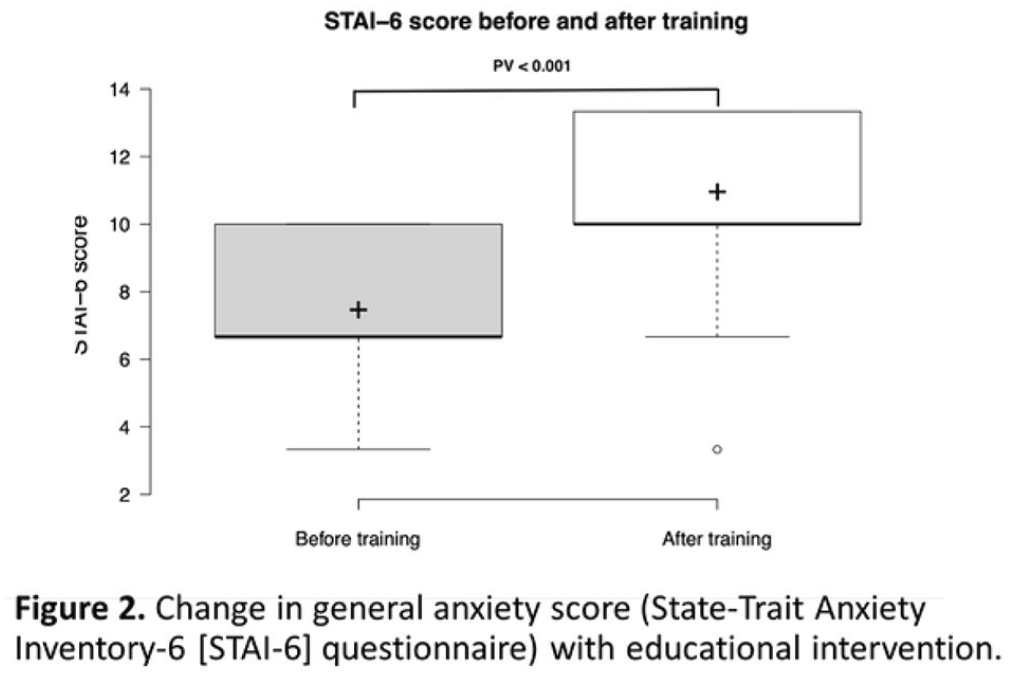
P0995 / 756
ASSESSING PRE-STROKE FUNCTIONAL STATUS IN ACUTE STROKE: DRIVING, SHOPPING, BANKING CAPABILITY AS A SIMPLE AND RAPID ALTERNATIVE TO THE MODIFIED RANKIN FOR STROKE TREATMENT DECISIONS
1Ambulance Victoria, Doncaster, Australia, 2Florey Institute of Neuroscience and Mental Health, Heidelberg, Australia, 3Monash University, Clayton, Australia
P0996 / 947
LEAPFROGGING THE BAYESIAN REVOLUTION IN STROKE RESEARCH – A FOUR-ARM HYPOTHETICAL STUDY FOR NEUROPROTECTION IN THE HYPERACUTE STAGE
1The Walton Centre NHS Foundation Trust, Neurology, Liverpool, United Kingdom, 2Lancashire Teaching Hospitals NHS Foundation Trust, Interventional Neuroradiology, Preston, United Kingdom
P0997 / 1232
THE ASSOCIATION OF TIME TO ARTERIAL PUNCTURE WITH PATIENT OUTCOME AFTER ENDOVASCULAR THERAPY STRATIFIED BY STROKE AETIOLOGY
1Huashan Hospital, Fudan University, Department of Neurology, National Center for Neurological Disorders, National Clinical Research Centre for Aging and Medicine, Shanghai, China, 2Fudan University, State Key Laboratory of Medical Neurobiology, Shanghai, China
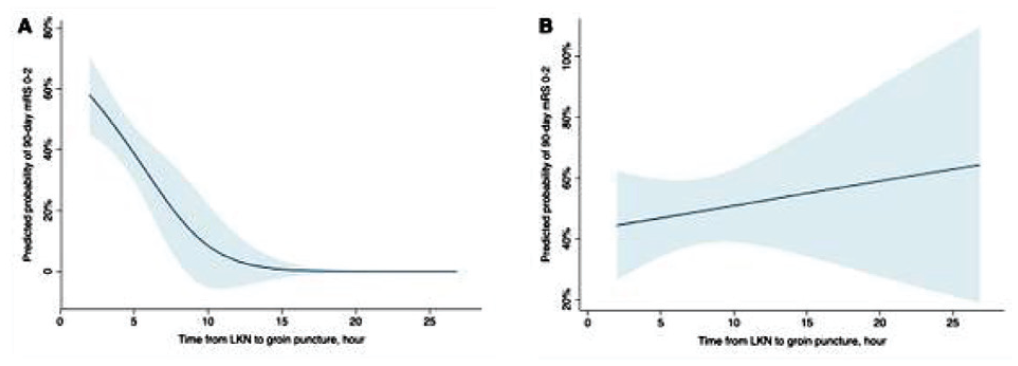
P0998 / 169
MOBILE STROKE UNIT OR USUAL CARE FOR ACUTE ISCHAEMIC STROKE MANAGEMENT: SYSTEMATIC REVIEW AND META-ANALYSIS
1Université de Paris & GHU Paris Psychiatrie et Neurosciences & INSERM U 1266 & FHU Neurovasc, Neurology, Paris, France, 2GHU Paris Psychiatrie et Neurosciences, Neurology, Paris, France, 3Saarland University Medical Center, Neurology, Homburg, Germany, 4Faculty of Medicine, Dentistry and Health Sciences, University of Melbourne, Biostatistics, Victoria, Australia, 5The Norwegian Air Ambulance Foundation & Institute of Basic Medical Sciences, University of Oslo, Anesthesiology, Oslo, Norway, 6Clinical Innovation and Research Institute, Memorial Hermann Hospital-Texas Medical Center, Houston, TX, United States of America, Houston, United States, 7University of Texas Health Science Center at Houston, School of Public Health, Department of Biostatistics and Data Science, Houston, United States, 8McGovern Medical School, University of Texas Health Science Center at Houston, Department of Neurology and Neurosurgery, Houston, United States, 9McMaster University/Population Health Research Institute, Division of Neurology, Hamilton, Canada, 10Melbourne Brain Centre at Royal Melbourne Hospital, The University of Melbourne, Australia, Department of Neurology and Department of Medicine, Melbourne, Australia, 11Melbourne Brain Centre at Royal Melbourne Hospital, The University of Melbourne, Department of Neurology and Department of Medicine, Melbourne, Australia, 12Cerebrovascular Center, Cleveland Clinic, Department of Neurology, and Critical Care Transport Team, Cleveland, United States, 13Klinik und Hochschulambulanz für Neurologie, Campus Benjamin Franklin, Charité Universitätsmedizin Berlin, Berlin, Germany, 14Klinik für Neurologie, Neurologische Intensivmedizin, Zentrum für Hirngefäßerkrankungen, Asklepios Fachklinikum Brandenburg, Brandenburg, Germany, 15Klinikum Frankfurt Höchst & Heidelberg University Hospital, Department of Neurology, Frankfurt, Germany, 16University of L’Aquila, Department of Biotechnological and Applied Clinical Sciences, L’Aquila, Italy, 17Klinik und Hochschulambulanz für Neurologie, Campus Benjamin Franklin, Charité Universitätsmedizin Berlin & Klinik für Neurologie Medical Park Berlin Humboldtmühle, Berlin, Germany, 18Attikon University Hospital, School of Medicine, National and Kapodistrian University of Athens, Second Department of Neurology, Athens, Greece, 19University of Tennessee Health Science Center, Department of Neurology, Memphis, United States, 20Klinik und Hochschulambulanz für Neurologie, Campus Benjamin Franklin, Charité Universitätsmedizin & Center for Stroke Research Berlin, Berlin, Germany
P0999 / 1392
ENDOVASCULAR TREATMENT IN PATIENTS WITH ACUTE ISCHEMIC STROKE DUE TO DISTAL VESSEL OCCLUSION OF THE MIDDLE CEREBRAL ARTERY: A FEASIBLE AND SAFE TREATMENT
1Hospital Clínico San Carlos, Stroke Unit Neurology, Madrid, Spain, 2Hospital Clínico San Carlos, Neurointerventional Radiology, Madrid, Spain
P1000 / 810
PREDICTING OUTCOME OF POSTERIOR CIRCULATION ACUTE ISCHEMIC STROKE FOLLOWING THROMBECTOMY USING PC-ASPECTS IN NON-CONTRAST COMPUTED TOMOGRAPHY
1Rigshospitalet, Copenhagen University Hospital, Department of Neurology, Copenhagen, Denmark, 2Rigshospitalet, Copenhagen University Hospital, Department of Radiology, Copenhagen, Denmark, 3University of Copenhagen, Faculty of Health Sciences, Copenhagen, Denmark
P1001 / 805
SYMPTOMATIC HEMORRHAGE AND IN-STENT THROMBOSIS FOLLOWING ACUTE CAROTID STENTING IN ISCHEMIC STROKE
1Rigshospitalet, Copenhagen University Hospital, Department of Neurology, Copenhagen, Denmark, 2Rigshospitalet, Copenhagen University Hospital, Department of Radiology, Copenhagen, Denmark, 3Baylor College of Medicine, Department of Radiology, Houston, United States, 4University of Copenhagen, Faculty of Health Sciences, Copenhagen, Denmark
P1002 / 998
AN ANGIOGRAPHIC EVALUATION OF NO-REFLOW PHENOMENON IN PATIENTS WITH ACUTE ICHEMIC STROKE FROM LARGE VESSELS OCCLUSION SUCCESSFULLY TREATED WITH MECHANICAL THROMBECTOMY
1Policlinico Umberto I - Sapienza University of Rome, Stroke Unit, Rome, Italy, 2Sapienza University of Rome, Department of Human Neurosciences, Rome, Italy
No-reflow phenomenon (NRP) is a possible cause of FR and fENI, described in global ischemia animal models and human myocardial infarction as deficient microvascular reperfusion. Evidence of NRP in IS patients is scarce.
Aim of our study was to identify an angiographic marker of NRP and explore its association with clinical outcome.
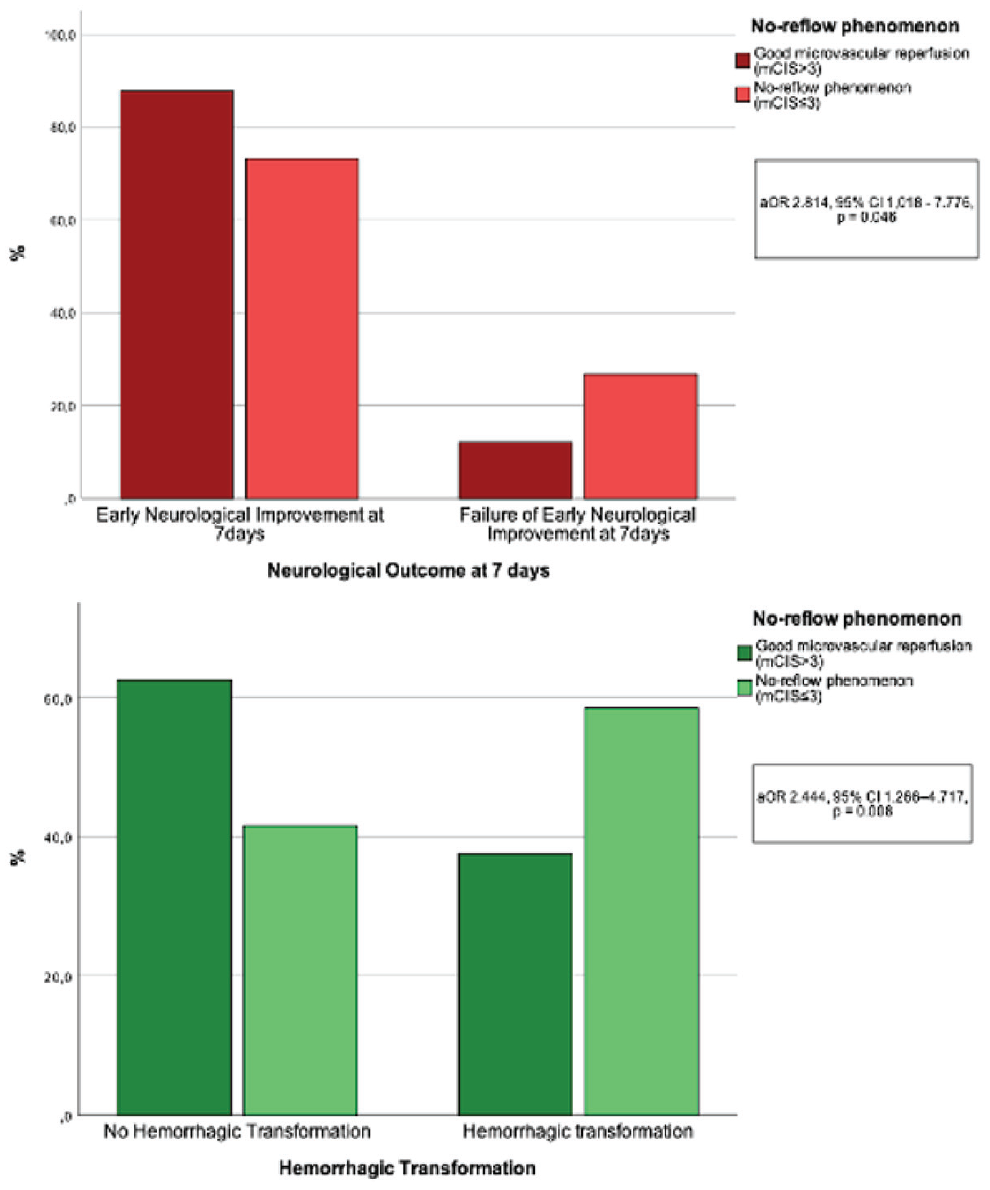
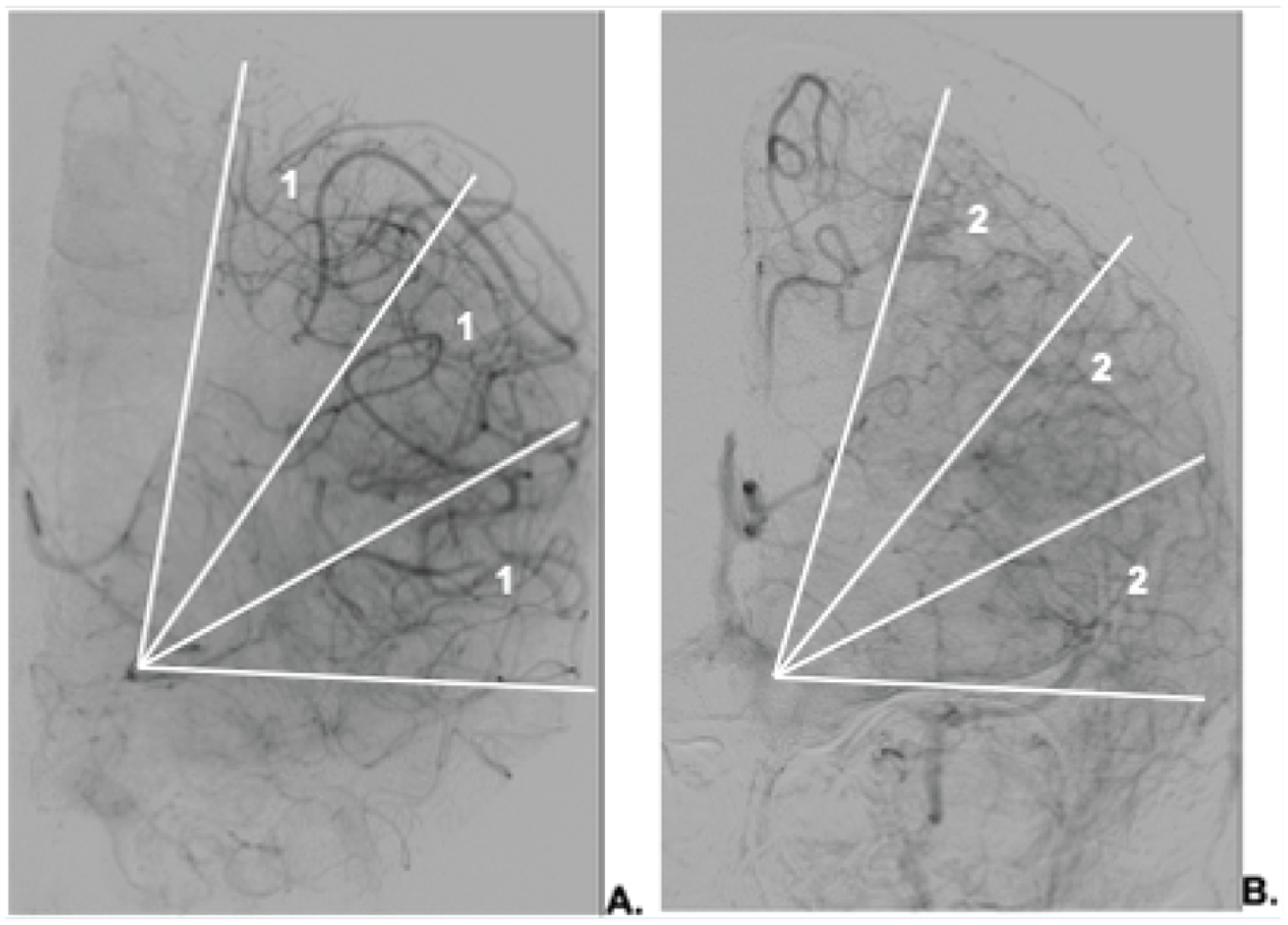
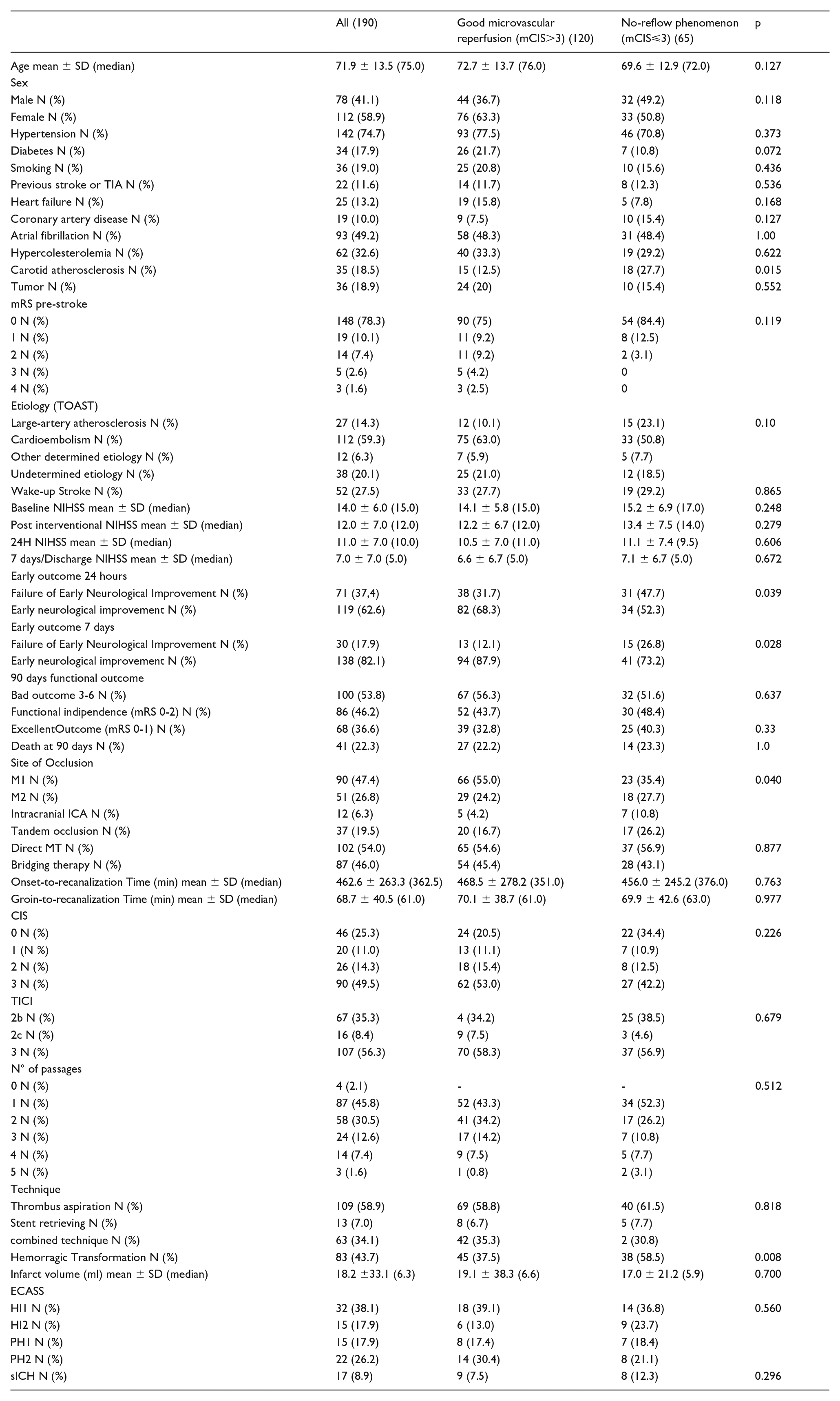
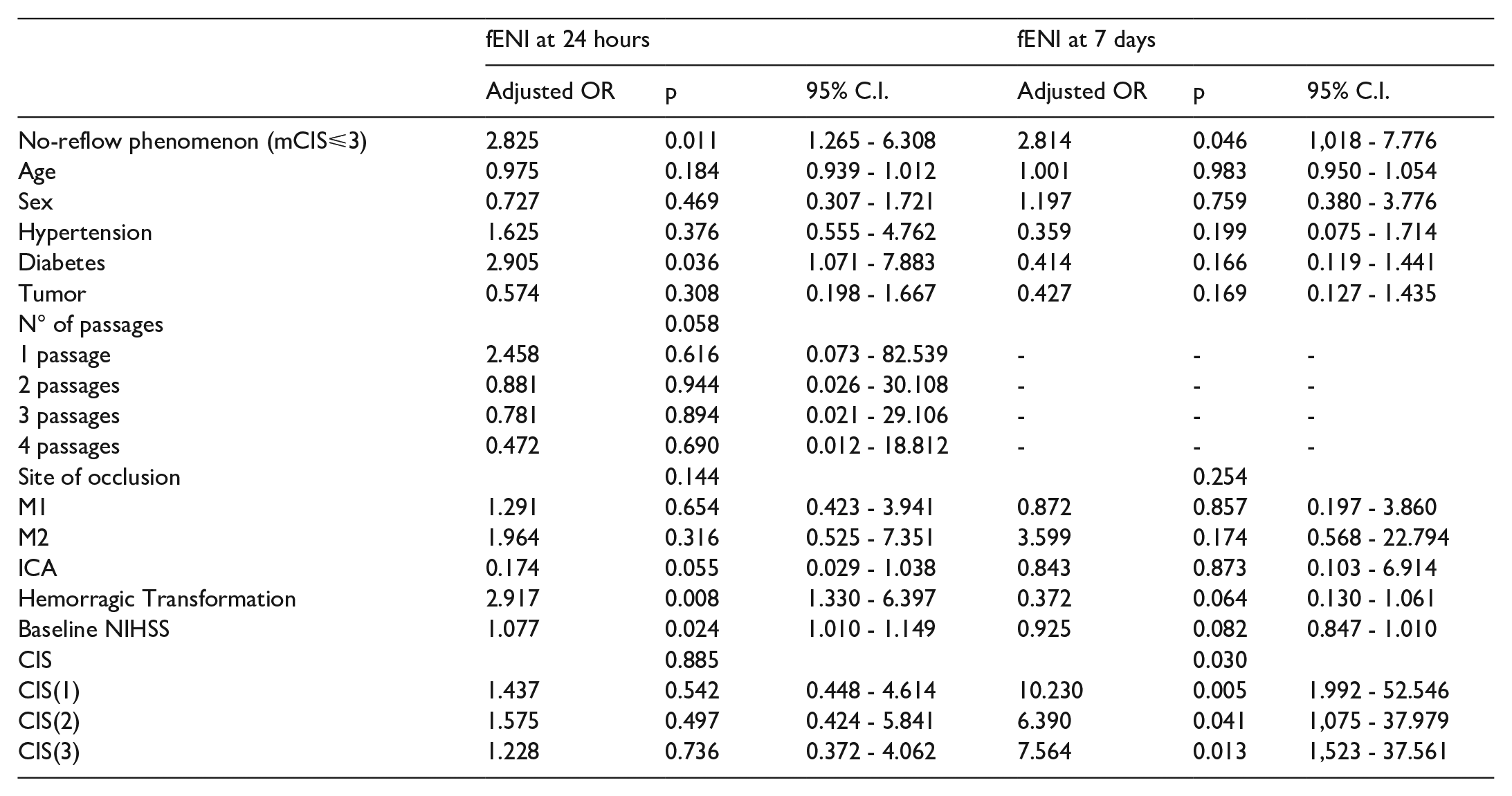
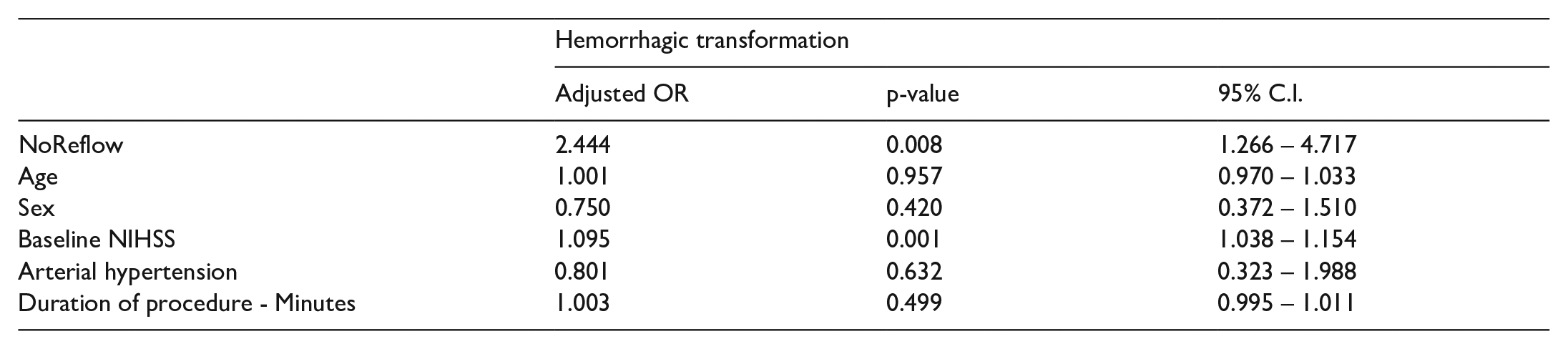
P1003 / 854
LOWER BLOOD PRESSURE AFTER SUCCESSFUL MECHANICAL THROMBECTOMY IS ASSOCIATED WITH POOR FUNCTIONAL OUTCOME
1 University Medical Center of the Johannes Gutenberg University Mainz, Department of Neurology, Mainz, Germany
P1004 / 1074
IMPACT OF THE COVID-19 PANDEMIC ON THE ACTIVATION OF EMERGENCY MEDICAL SERVICES FOR STROKE IN ADALUSIA SPAIN
1Hospital Virgen del Rocio, Neurology, Sevill, Spain, 2Servicio Andaluz de Salud, Emergency, Sevill, Spain, 3Hospital universitario Virgen del Rocio, Neurology, Sevill, Spain, 4Servicio Andaluz de Salus, Emergency, Sevill, Spain, 5Hospital universitario Virgen del Rocío, Neurology, Sevill, Spain
P1005 / 815
FUNCTIONAL OUTCOME OF PRE-STROKE DEPENDENT PATIENTS AFTER ENDOVASCULAR THROMBECTOMY IN ACUTE ISCHEMIC STROKE
1Rigshospitalet, Copenhagen University Hospital, Department of Neurology, Copenhagen, Denmark, 2Rigshospitalet, Copenhagen University Hospital, Department of Radiology, Copenhagen, Denmark, 3Baylor College of Medicine, Department of Radiology, Houston, United States, 4University of Copenhagen, Faculty of Health Sciences, Copenhagen, Denmark
P1006 / 1091
UTILIZATION OF MECHANICAL THROMBECTOMY AND OUTCOMES AFTER ISCHEMIC STROKE IN PATIENTS WITH VERSUS WITHOUT PRE-STROKE DISABILITY IN THE CZECH REPUBLIC
1University of Calgary, Clinical Neurosciences, Calgary, Canada, 2University Hospital Ostrava, Neurology, Ostrava, Czech Republic, 3International Clinical Research Centre, Stroke Research Program, St. Anne’s University Hospital, Brno, Czech Republic, 4Charles University, 2nd Medical Faculty, Neurology, Prague, Czech Republic, 5Faculty of Medicine, University Ostrava, Ostrava, Czech Republic, 62nd Faculty of Medicine, Charles University in Prague and Motol University Hospital, Radiology, Prague, Czech Republic, 7Masaryk Hospital, Radiology, Usti nad Labem, Czech Republic, 8Hospital Ceske Budejovice, Neurology, Ceske Budejovice, Czech Republic, 9Neurocenter, Regional Hospital Liberec, Liberec, Czech Republic, 10Military University Hospital, Neurology, Prague, Czech Republic, 11Na Homolce Hospital, Neurology, Prague, Czech Republic, 12Faculty of Medicine in Pilsen, Charles University in Prague, Neurology, Pilsen, Czech Republic, 13Charles University, First Faculty of Medicine and General University Hospital, Neurology, Prague, Czech Republic, 14Masaryk Hospital Usti nad Labem - KZ a.s., Comprehensive Stroke Center, Neurology, Usti nad Labem, Czech Republic, 15University Hospital Brno and Faculty of Medicine Masaryk University, Neurology, Brno, Czech Republic, 16AGEL Research and Training Institute, Ostrava Vitkovice Hospital, Neurology, Ostravs, Czech Republic, 17St. Anne’s University Hospital and Faculty of Medicine, Masaryk University, Neurology, Brno, Czech Republic
P1007 / 1111
TRAJECTORY OF STROKE SEVERITY IN THROMBOLYSIS AND THROMBECTOMY TRIALS
1Monash University, Medicine, Melbourne, Australia, 2Universitatsklinikum Hamburg, Hamburg, Germany, 3University of Calgary, Deaprtment of Radiology and Clinical Neuroscience, Calgary, Canada, 4University of Calgary, Department of Radiology, Calgary, Canada, 5Stanford University, Department of Medicine, Stanford, United States, 6University of Heidelberg, Heidelberg, Germany, 7University of Heidelberg, Department of Neurology, Heidelberg, Germany, 8University of Melbourne, Department of Medicine, Melbourne, Australia, 9Massachusetts General Hospital, Department of Neurology, Boston, United States, 10National Cerebral and Cardiovascular Center, Osaka, Japan, 11Seton Dell Medical School Stroke Institute, Austin, United States, 12Hospices Civils de Lyon, Lyon, France, 13Athinoula A. Martinos Center for Biomedical Imaging, Charlestown, United States, 14University of Melbourne, Melbourne, Australia
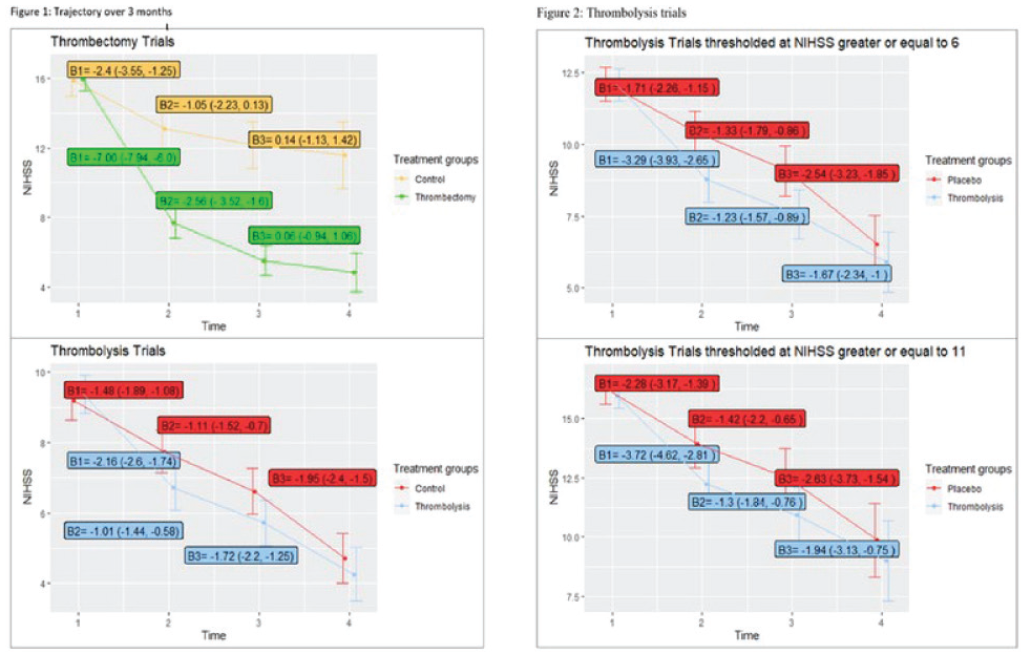
P1008 / 1471
DID THE SEVERITY OF THE COVID-19 OUTBREAK AFFECT THE QUALITY OF ACUTE STROKE CARE? (DATA FROM ACROSS THE COUNTRY)
1P.J.Safarik University Kosice, Faculty of Medicine and L.Pasteur University Hospital, Neurology, Kosice, Slovakia, 2National Health Information Centre, Registry department, Bratislava, Slovakia
The main characteristics of the sample and results from two time periods.
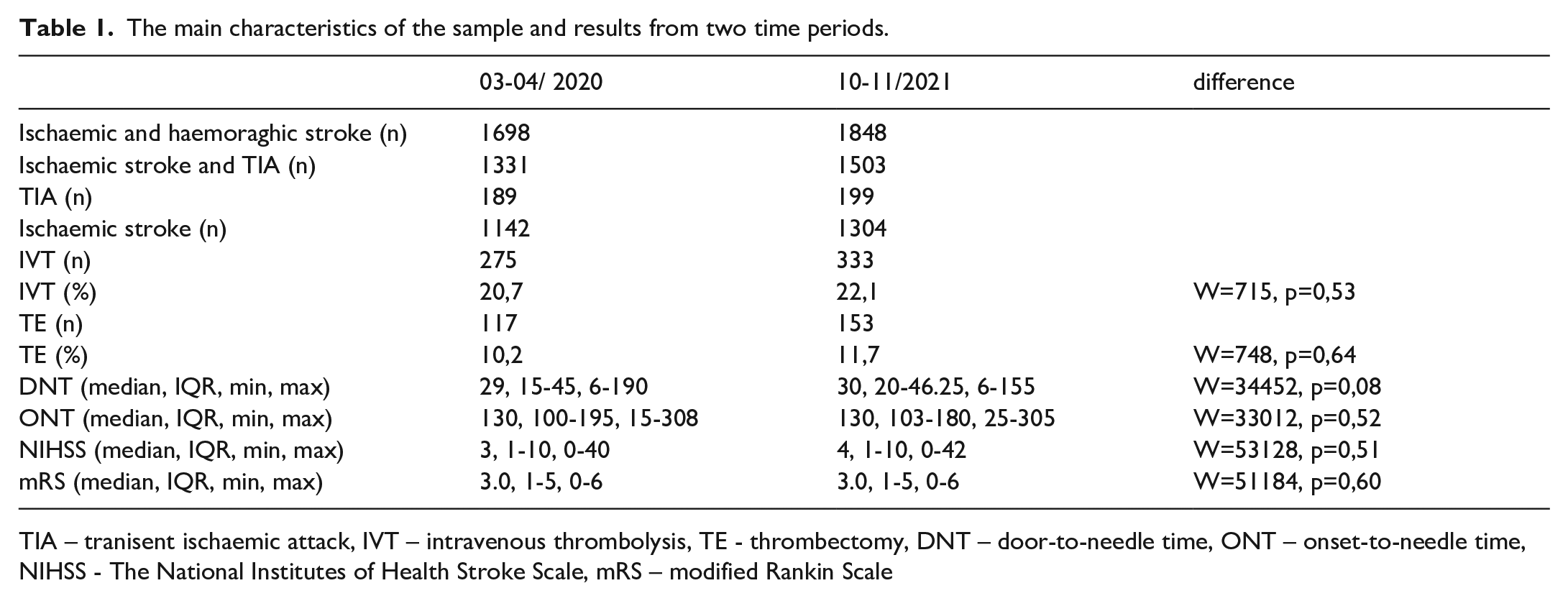
TIA – tranisent ischaemic attack, IVT – intravenous thrombolysis, TE - thrombectomy, DNT – door-to-needle time, ONT – onset-to-needle time, NIHSS - The National Institutes of Health Stroke Scale, mRS – modified Rankin Scale
P1009 / 469
EXPLORING THE ACCURATE DEFINITION OF ACUTE STROKE IMAGING OUTCOMES WITH CIRCULATING BIOMARKERS
1University of Florence, NEUROFARBA, Florence, Italy, 2University of Oxford, Acute Vascular Imaging Centre, Radcliffe Department of Medicine, Oxford, United Kingdom, 3University of Florence, Department of Biomedical, Experimental and Clinical Sciences, Florence, Italy, 4Careggi University Hospital, Stroke Unit, Florence, Italy, 5National Research Council, Institute of Neuroscience, Florence, Italy
P1010 / 1629
IMPACT OF COVID-19 ON ACUTE STROKE CARE IN A LARGE CENTER FROM A MIDDLE- INCOME COUNTRY
1 HCFMUSP, São Paulo, Brazil
P1011 / 435
WITHDRAWN N20 MONITORING PREDICTS FUNCTIONAL RECOVERY IN PATIENTS WITH ANTERIOR ACUTE ISCHEMIC STROKE TREATED WITH MECHANICAL TRHOMBECTOMY (PROMISE STUDY; CLINICALTRIALS.GOV: NCT04099615)
1Germans Trias Pujol Hospital, Neurosciences, Badalona, Spain, 2Hospital Clínic, Neurosciences, Barcelona, Spain, 3Hospital Mataró, Neurology, Mataró, Spain, 4Hospital Central Asturias, Neurology, Oviedo, Spain
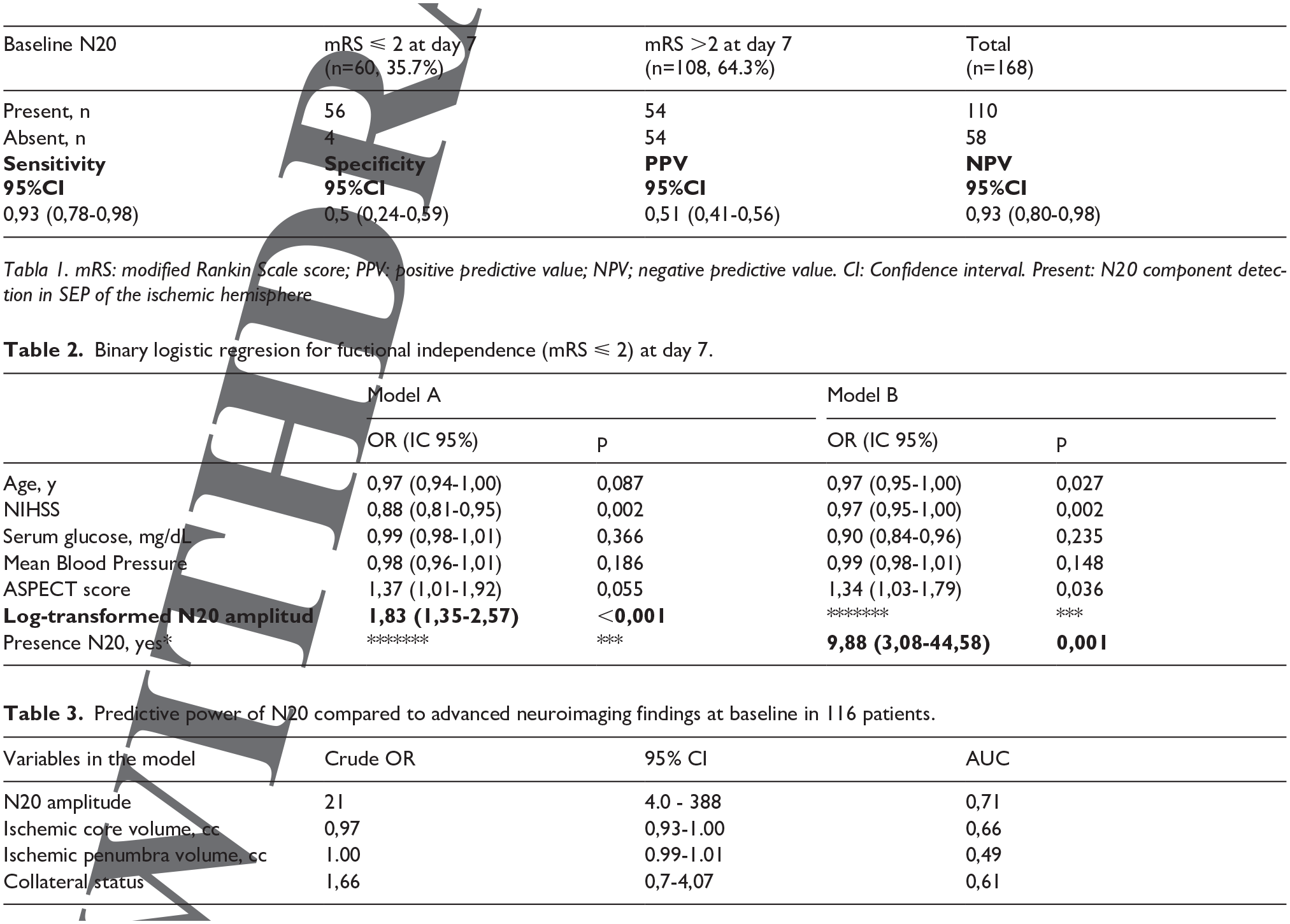
P1012 / 247
NLPR3-INFLAMMASOME INHIBITION AMELIORATES SECONDARY INFARCT GROWTH IN SUBACUTE ISCHEMIC STROKE IN MICE
1 University Clinic of Wuerzburg, Neurology, Wuerzburg, Germany
P1013 / 1453
INTRAVENOUS THROMBOLYSIS PLUS MECHANICAL THROMBECTOMY VERSUS DIRECT MECHANICAL THROMBECTOMY IN ACUTE ISCHEMIC STROKE: A RETROSPECTIVE ANALYSIS FROM A TERTIARY CENTER
1Basurto University Hospital, Neurology, Bilbao, Spain, 2Basurto University Hospital, Biostatistics, Bilbao, Spain
The main objective was to compare the functional independence at 90 days (mRS 0-2). Secondary outcomes were the comparison of safety (haemorrhage, infections, death) and revascularization (TICI IIB/III, revascularization time, 24-hour CT result) related data.
P1014 / 149
DID THE STROKE CODE IN MADRID JAM DURING THE FIRST WAVE OF COVID-19?
1SUMMA 112, Stroke Comission, Madrid, Spain, 2SUMMA 112, IT Department, Madrid, Spain, 3Ramon y Cajal University Hospital, Clinical Biostatistics Unit, Madrid, Spain, 4Ramon y Cajal University Hospital, Internal Medicine Department, Madrid, Spain, 5Ramon y Cajal University Hospital, CIBER of Epidemiology and Public Health (CIBERESP), Madrid, Spain, 6La Paz University Hospital, Department of Neurology and Stroke Center, Madrid, Spain
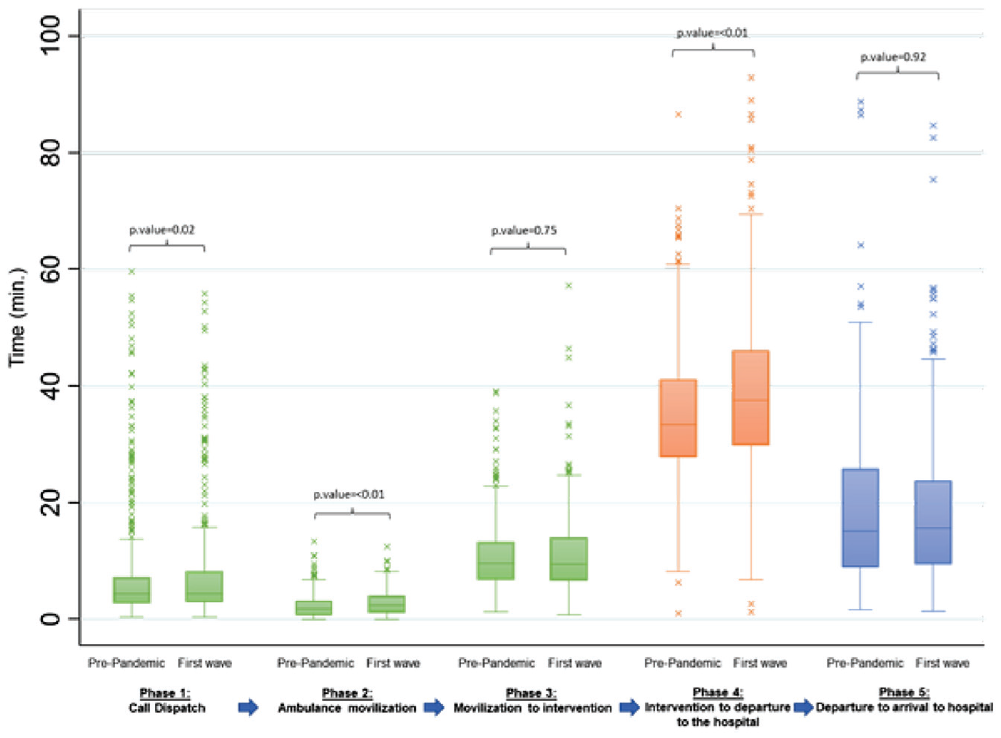
Pre-hospital times
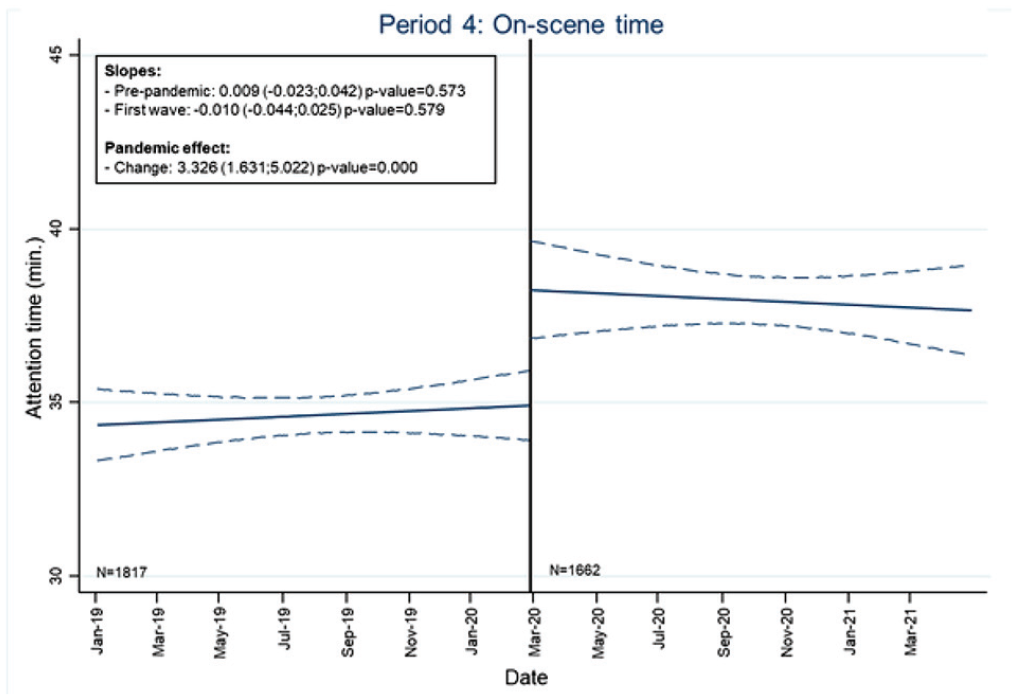
Pre-hospital on-scene time (interrupted time series)
P1015 / 186
ENDOVASCULAR TREATMENT IN PATIENTS WITH PRESTROKE FUNCTIONAL DEPENDENCY
1Hospital Clínico San Carlos, Stroke Unit Neurology, Madrid, Spain, 2Hospital Clínico San Carlos, Neurointerventional Radiology, Madrid, Spain
Median NIHSS was 19.5 (15-23) and median ASPECTS was 9 (8-10). Intravenous thrombolysis was administrated in 19 patients (30.64%). mTICI 2b-3 score was achieved in 44 patients (70.97%) and sICH rate was 3.22%. At 3 months, 16 patients (25.81%) reached baseline mRS and mortality rate was 41.93%.
Patients with mTICI2B-3 reperfusion had better functional outcomes (31.82% vs 11.11%, p=0.109) and lower mortality (31.82% vs 66.66%, p=0.02013).
P1016 / 1481
THROMBECTOMY IN CERVICAL ARTERY DISSECTION RELATED STROKE: A CHALLENGE OR AN OPPORTUNITY?
1 Azienda ospedaliera di Padova, Padova, Italy
P1017 / 1152
COMBINED TECHNIQUE AS FIRST APPROACH IN MECHANICAL THROMBECTOMY: EFFICACY AND SAFETY OF REACT CATHETER COMBINED WITH STENT RETRIEVER
1Hospital Universitari Vall d’Hebron, Barcelona, Spain, 2IRCCS Istituto Delle Scienze Neurologiche di Bologna, Bologna, Italy
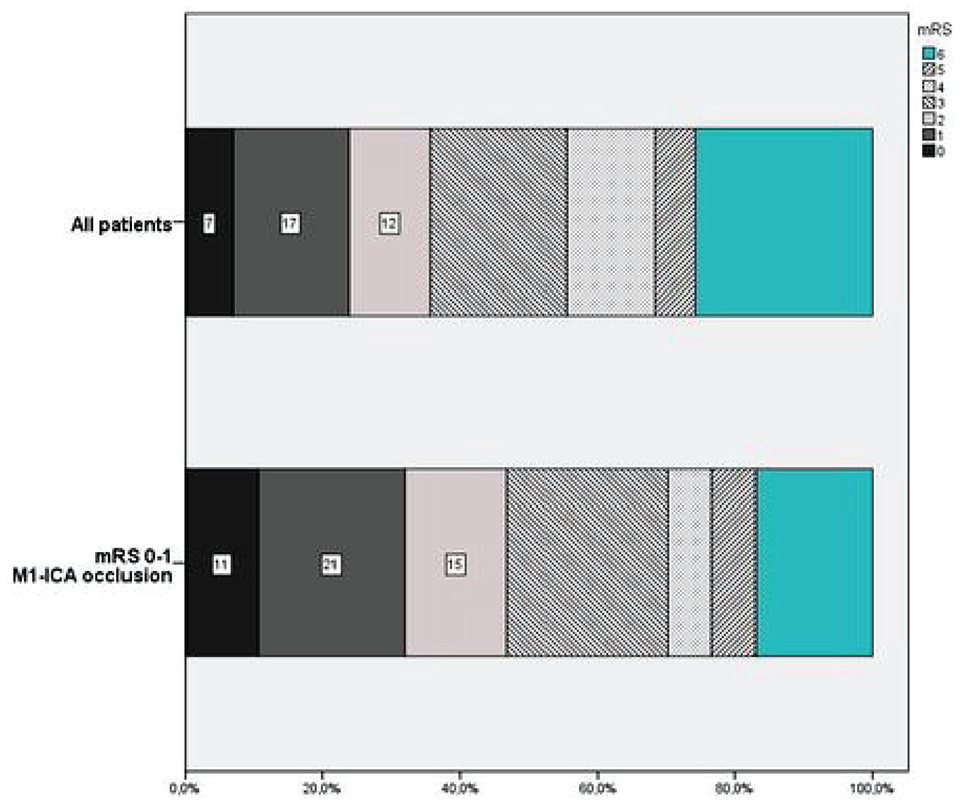
P1018 / 455
ULTRA-LONG TRANSFERS FOR ENDOVASCULAR THROMBECTOMY: MISSION IMPOSSIBLE? THE AUSTRALIA-NEW ZEALAND EXPERIENCE
1John Hunter Hospital, Neurology, New Lambton Heights, Australia, 2Christchurch Hospital, Christchurch, New Zealand, 3Gold Coast University Hospital, Gold Coast, Australia, 4Royal Melbourne Hospital, Melbourne, Australia, 5Royal Adelaide Hospital, Adelaide, Australia, 6Charles Gairdner Hospital, Perth, Australia, 7The University of Auckland, Auckland, New Zealand, 8Wellington Hospital, Wellington, New Zealand, 9Royal Brisbane and Women’s Hospital, Brisbane, Australia, 10Royal Prince Alfred hospital, Sydney, Australia, 11University of New South Wales South Western Sydney Clinical School, Sydney, Australia
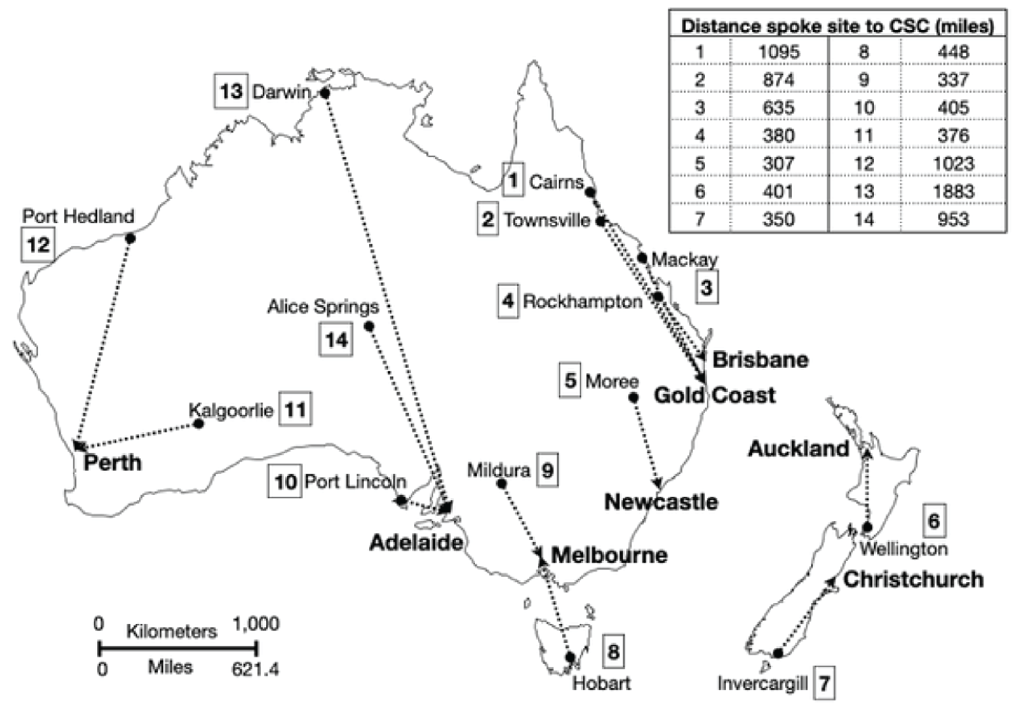
P1019 / 264
TREATMENT OF PATIENTS WITH ACUTE ISCHEMIC STROKE OUTSIDE DAWN AND DEFUSE-3 CRITERIA: A REAL-WORLD RETROSPECTIVE ANALYSIS
1 Sapienza University of Rome, Emergency Department, Stroke Unit, Rome, Italy