




Abstract
Background and aims
Peer interaction difficulties are often elevated amongst children with language disorders, yet the mechanisms underlying these difficulties are unclear. Previous research indicates that poor conflict management, social withdrawal, emotion regulation difficulties, and reduced prosocial behavior may contribute to peer interaction difficulties. However, this research often uses adult perspectives, failing to acknowledge child perceptions of these experiences. The present study aimed to qualitatively investigate perceptions of peer interactions from the perspective of children with language disorders.
Methods
Seven participants aged between 7- and 10-years-old took part. All participants were diagnosed with a language disorder and had language as their primary area of difficulty. Participants were recruited from a specialist language school and via an online database. Semi-structured interviews were conducted, with participants given the choice to answer questions verbally or creatively, using toys or drawing materials. Interview transcripts were analyzed using interpretative phenomenological analysis.
Results
Participants valued play, conversation, and helping others. They felt that spending time with peers could alleviate loneliness. However, sometimes solitude was needed as social interaction could be overwhelming. Participants found conflict challenging and exhibited difficulties with regulating emotions. Participants relied on running away, retaliation, or asking an adult for help, to resolve conflict.
Conclusions and implications
The findings suggest that children with language disorders are socially motivated and have relative strengths in displaying prosocial behavior. However, children with language disorders require support to promote positive relationships. This support includes help with making deeper connections with peers, opportunities to spend time alone when needed, and providing adept conflict resolution and emotion regulation strategies.
Keywords
Introduction
Language disorders (LDs) are characterized by impairments in receptive and/or expressive language (Bishop et al., 2016). LDs are highly prevalent: approximately 15.7% of all children with special educational needs in England have speech, language, and communication needs (SLCN) as their primary area of difficulty (Lindsay & Strand, 2016). LD can be diagnosed as associated with a biomedical condition that affects language development, such as autism (Bishop et al., 2016). Developmental language disorder (DLD) is diagnosed when language difficulties are present in the absence of a neurodevelopmental condition (St Clair et al., 2023). In comparison to typically developing (TD) children, children with LDs often have elevated socioemotional difficulties, including peer interaction difficulties (Mok et al., 2014). A recent systematic review found that the underlying mechanisms for these difficulties are not yet clear, although this knowledge is needed to design effective intervention strategies (Lloyd-Esenkaya et al., 2020).
Children with LDs suffer elevated levels of conflict (Gibson et al., 2011), which could be one mechanism underlying peer difficulties. Yew and O’Kearney (2015) suggest that this is because children with LDs resort to aggressive behavior as they lack the expressive language skills necessary to explain their needs to peers. However, parents and practitioners suggest that conflict may arise because children with LDs mistakenly perceive peers’ behavior as antagonistic (Lloyd-Esenkaya et al., 2021). This indicates children with LDs may have a high hostile attribution bias, that is, ascribing hostile intentions to others’ behavior, as opposed to perceiving neutral or good intentions (Martinelli et al., 2018). This can lead to aggressive behavior, suggesting this may be one source of conflict amongst children with LDs (Gibson et al., 2011). High levels of conflict may be exacerbated by difficulties with resolving disputes. Children with LDs score significantly lower on tasks of conflict resolution than TD children (Bakopoulou & Dockrell, 2016). During conflict resolution, children with LDs tend to avoid language-demanding skills, such as persuasion or taking another's perspective, instead relying on ineffective means, such as physical retaliation or involving an adult (Bakopoulou & Dockrell, 2016). Thus, conflict and its resolution may be important factors to explain peer interaction difficulties in this population. However, it is unclear how children with LDs perceive conflict, as previous research relies on adult interpretation.
Aggression is not the only maladaptive behavior exhibited in social interaction by this population. Children with LDs have significantly higher levels of social withdrawal (Hart et al., 2004). The Social Adaptation Model (SAM) proposes that children with LDs are rejected by peers because of their low language levels (Redmond & Rice, 1998). Subsequently, children with LDs exhibit social withdrawal as an adaptive behavior to protect themselves from the negative biases and behaviors of others (Redmond & Rice, 1998). Craig and Washington (1993) found that children with LDs were rejected when attempting to turn-take and consequently withdrew into solitary play, highlighting that social withdrawal could result from peer rejection. However, the SAM cannot explain peer interaction difficulties for all children with LDs, as not all children with LDs exhibit social withdrawal, with some being able to successfully initiate social interaction (Craig & Washington, 1993). Lloyd-Esenkaya et al. (2021) posit that social withdrawal allows children to disengage from language processing, contradicting the assertion that withdrawal results from peer rejection. Therefore, the mechanism underlying social withdrawal is unclear. Indeed, there could be multiple reasons for social withdrawal and different contexts may elicit social withdrawal for different reasons, even within the same child. Furthermore, developmental shifts may change the pattern of social withdrawal or the reasons behind the social withdrawal, with social withdrawal for language processing time potentially being more relevant for younger children, while social withdrawal as an adaptive protective behavior might be more common in older children and adolescents. Research examining this area from a child perspective is needed to clarify their opinions on this matter (Blaskova & Gibson, 2021). Recent research has found that children with LD aged 7–8 do have an uneven profile of friendship understanding, which supports the above conclusion that friendship understanding and behaviors may vary depending on the overall context (Blaskova & Gibson, 2024).
Social withdrawal can be predicted from both emotion regulation and language ability, suggesting that language deficits are not the only factor underlying this behavior as suggested by the SAM (Fujiki et al., 2004). Emotion regulation is the ability to monitor and adjust emotions in line with the social environment and is essential for successful social interaction (Lemerise & Arsenio, 2000). Previous research has suggested that emotion regulation is an area of difficulty for children with LDs: population cohort studies have established that children at risk of DLD have significantly elevated emotion regulation difficulties (Forrest et al., 2020; St Clair et al., 2019). Fujiki et al. (2002) found that teachers gave significantly lower ratings of emotion regulation abilities to children with LDs in comparison to TD children, particularly for boys with LDs. Poor emotion regulation was predictive of later peer difficulties (Forrest et al., 2020), whilst greater recognition, understanding, and regulation of one's own emotions was associated with lower levels of victimization, irrespective of language problems (van den Bedem et al., 2018). Thus, deficits in emotion regulation may underlie peer interaction difficulties amongst children with LDs and may be an important area for intervention to prevent against the higher levels of victimization reported by children with LDs (van den Bedem et al., 2018).
A factor strongly associated with emotion regulation and peer difficulties is prosocial behavior, an area in which children with LDs have been shown to struggle (Forrest et al., 2020). Prosocial behavior includes helping, sharing, and comforting others and can protect against social, emotional, and behavioral difficulties in this population (Toseeb et al., 2020). Teachers rate children with LDs to have significantly lower levels of prosocial behavior and higher levels of peer interaction difficulties than TD children (Levickis et al., 2018; Lindsay & Dockrell, 2012). Conversely, longitudinal research has indicated that 71% of children with LDs are prosocial, suggesting this could be an area of relative strength, although mean scores remained lower than their age-matched peers (Toseeb et al., 2017). However, these results may have been found because all participants received intensive support at school that may have nurtured prosocial development (Toseeb et al., 2017). Discrepant findings in previous literature could also be reflective of the methodology used: teachers rate children with LDs to have low levels of prosocial behavior, yet children rate themselves within the normative range in this domain (Lindsay & Dockrell, 2012).
It is evident that a limitation of previous literature is the reliance on adult report. Discrepancies between adult-report and child self-report have not only been found in the domain of prosocial behavior, but within the overall field of peer relationships (Gough Kenyon et al., 2021). Children with LDs perceive peer relations in the normative range, giving similar ratings of best friends as TD children, yet parents report this as an area of difficulty (Forrest et al., 2021; Gough Kenyon et al., 2021). Adults are unable to gain insight into children's thoughts and emotions beyond what they are told, or what they can subjectively interpret from observation (Gough Kenyon et al., 2021). Therefore, research from a child perspective is necessary, yet lacking. Although children may be considered too immature to self-reflect, consulting children increases the likelihood of producing findings relevant to their everyday lives, without introducing high levels of adult bias (Blaskova & Gibson, 2021). Qualitative, interview-based studies are recommended to give children an active voice (Blaskova & Gibson, 2021).
Some previous quality-of-life and wellbeing studies touch upon perceptions of friendship in this population. Some children considered themselves to have many friends, whilst others report that they would like more friends (Lyons & Roulstone, 2018). Importance was attached to having friends, being happy, and having fun (Roulstone & Lindsay, 2012). However, many children misunderstood how to make, develop, and maintain friendships, exhibiting feelings of frustration, loneliness, and exclusion (Markham et al., 2009). The underlying reasons for these experiences are unclear. However, a recent study utilizing similar methods to the current study has found that children with LDs around the age of 8 emphasized the importance of play in friendships and had relatively immature understanding of what good and bad friends are, for example by emphasizing the importance of physical interaction when describing friendships (Blaskova & Gibson, 2024).
Therefore, several mechanisms have been proposed to underlie peer difficulties in this population, yet it is unclear how these are perceived from a child perspective, with few papers investigating this in children directly (e.g., Blaskova & Gibson, 2024). Furthermore, research in this area focuses on difficulties, not strengths, potentially because there is a lack of research from a child perspective (Lloyd-Esenkaya et al., 2020). Consequently, the current study was conducted to qualitatively explore the nature of peer relationships amongst children with LDs from their perspective, acknowledging strengths and difficulties. This study aims to use participatory methods, utilizing means such as drawing and providing visual support alongside questions, to engage children in data collection, which can support children to have more agency in expressing their views (Coyne & Carter, 2018; Montreuil et al., 2021). Through this, the present study aims to develop a richer understanding of the perception of friendship from the perspective of children with LDs, via interpretative phenomenological analysis (IPA), which aims to provide detailed exploration of personal lived experiences (Smith et al., 2022). This will aid in developing meaningful support to prevent peer interaction difficulties in children with LDs.
Method
Ethics
Ethical approval for this study was obtained from the Psychology Research Ethics Committee (REF: UG 21-049). Full parental consent was obtained prior to participation. Child assent was also obtained prior to the interview through a visual information sheet. Child comfort in the interview was evaluated throughout the interview and they could ask to finish at any time. Interviews would have been terminated if child discomfort was identified or it was requested for the interview to stop. This did not happen in any instance.
Participants and recruitment
Seven participants took part in this study: three male and four female. Participants were aged 7–10. For full demographic information, see Table 1. Participants were recruited via purposive sampling, from a specialist school for children with SLCN or via Engage with DLD (St Clair et al., 2023), a research database that supports recruitment of individuals affected by DLD. The parents of potential participants were emailed an information sheet and volunteered their child for the study by filling in a consent form. They were given the opportunity to contact the researcher with any questions.
Participant demographics.

DLD: developmental language disorder.
Inclusion criteria for participants were: (a) diagnosis of LD (which may be associated with another condition) or DLD; (b) 6–11-years-old; and (c) language level advanced enough to understand questions meaningfully when provided with a visual support. This age group were chosen as middle childhood is an important developmental period for peer relationships (Maunder & Monks, 2019). Peer problems such as rejection, victimization, and friendlessness at this age are associated with poorer psychosocial adjustment (Pedersen et al., 2007). Furthermore, IPA requires a fairly homogeneous sample, and thus, to facilitate understanding of a specific group of individuals, a narrow age category was selected (Smith et al., 2022). To provide a rich, detailed account of data as is the focus of IPA, a small number of participants were recruited (Smith et al., 2022).
For participants attending the SLCN school, understanding of questions had been previously assessed by a speech and language therapist and participants were chosen that had sufficient skills to recall and reflect upon past experiences. For participants recruited via the research database, it was assumed that parents would only volunteer children with sufficient language skills based on the information provided.
Data collection
In-depth, semi-structured interviews were used to elicit participant attitudes and beliefs. This style of interview is flexible and useful for those with communication disorders as it allows access to experiences and perceptions which cannot be directly observed (Lyons, 2019).
Interviews were based upon an interview schedule which aimed to examine both positive and negative aspects of peer relationships. Some questions were based on previously found topics associated with peer relationships in this population, such as prosocial behavior (“What do you think a good friend is?”), or social withdrawal (“Who do you play with?”). If novel topics arose, these were explored through spontaneous probe questions. The language of the interview schedule was checked by a highly specialist speech and language therapist to ensure it was pitched appropriately for participants’ comprehension ability.
Following guidance set out by Smith and Osborn (2003), the interviewer began with general, open-ended questions (e.g., “What is a friend?”). If participants did not understand, or gave short replies, more specific prompts were used to elicit more talk (e.g., “What does a good friend do or say”). The interview moved between general and specific questions to gain a broad picture of participants’ views (Smith & Osborn, 2003). For the full interview schedule, please see the Appendix.
However, interviews are inherently reliant on language skills and therefore, participants may struggle with understanding questions or articulating appropriate responses. To overcome this, the researcher gave participants the choice to answer each question verbally, or creatively, by drawing or using toy people. Children were also provided with visual supports alongside each question made using Widgit InPrint 3 (Widgit Software, 2019).
Furthermore, as children with LDs often have difficulty recognizing and describing emotions, emotion-based questions were asked alongside Zones of Regulation resources. The Zones of Regulation is an intervention that aids in recognition of emotion, associating specific feelings with four colors: red, blue, yellow, and green. Participants were given colored paper, or colored slides on the computer screen, alongside symbols to represent emotions and were able to point or describe their emotions in terms of colors in response to emotion-based questions.
Procedure
Interviews lasted approximately 30–45 min and took place either in school or remotely via Microsoft Teams, whereby participants were at home. This was to enhance IPA, as participants were in a familiar environment, this supported them to feel safe and comfortable to share their experiences (Smith et al., 2009). Five interviews took place in person and two interviews took place online. For online interviews, a parent was present throughout the interview. The researcher conducting interviews took time to establish a rapport with participants so that they were comfortable to discuss their experiences, as is needed for IPA (Smith et al., 2009). Participants were given a visual timetable, so they were aware of the activities to follow, made using Widgit InPrint 3 (Widgit Software, 2019). Children were also given a visual information sheet, created using the same software, which was read out to them prior to interview and were given the opportunity to ask questions. Children were shown the drawing materials and toys available to them and the purpose of these was explained by the researcher. For children who took part online, parents were encouraged to provide drawing resources and toys if they had these available and these children were given the same explanation as children who took part in person.
Interviews were videotaped to capture all verbal and nonverbal content, and children were made aware of this. Following guidelines for good practice in research with vulnerable children (Blaskova & Gibson, 2021), participants were asked to assent at the beginning of the study either verbally or by writing their name on the information sheet (if in person). In accordance with guidelines, assent was gained throughout by asking if they were happy to continue to the next question (Blaskova & Gibson, 2021).
After finishing all interview questions, children were given a visual debrief resource, made using Widgit InPrint 3 (Widgit Software, 2019). They were also given the opportunity to choose a pseudonym for themselves if they wished. Parents were emailed a debriefing sheet and a copy of the visual debrief sheet, should participants wish to refer to it later, with contact details for any further questions.
Interviews were transcribed verbatim, making note of any nonverbal means of communication used. All names mentioned were transformed into pseudonyms to protect the identity of participants and peers.
Analysis
Data were analyzed using IPA. This analytical approach aims to understand individual participants’ experiences of reality and the subjective meaning of these experiences through seeking thematic patterns within data (Smith & Osborn, 2003). IPA acknowledges that interpretation of data is dependent on researcher conceptions but attempts to understand how participants perceive their world through openness to hearing participants describe these experiences (Smith & Osborn, 2003). Therefore, this analytical approach allows for an exploration of how children with LDs perceive their peer relationships.
Guidelines set out by Smith and Osborn (2003) for conducting an IPA were followed. Since the analysis was conducted, new guidance has been published in which terminology has been modified and refined; this new terminology will be used to describe the analysis of the data in this study (Smith et al., 2022). Transcripts were read multiple times to become familiar with the accounts. Each transcript was analyzed independently, before moving onto the next. A close reading of the first case was conducted, noting initial responses to the text. Experiential statements were generated based on initial responses. These statements were then connected, creating a list of personal experiential themes (PET). This process was repeated for each interview. After analysis was completed on all cases, the researcher looked for patterns of convergence and divergence between PETs. PETs were clustered to create a list of group experiential themes (GETs), in which similarities between accounts were connected, whilst also acknowledging differences in individuals’ experiences.
When participants had provided drawings in their interviews, these were analyzed when the individuals’ case was analyzed in a similar manner. A PET was attributed to the drawing and included when clustering PETs into GETs.
Researcher positionality
The first author conducted the interviews and analysis. After conducting interviews, initial thoughts on ideas expressed were noted down in a reflexive journal. When analyzing interviews, the researcher ensured to use as many of the participants’ words as possible so as to avoid imposing preconceptions and provide a detailed account of participants’ lived experiences. However, the researcher acknowledges that it would not be possible to dispose of all preconceptions; the researcher ensured that a range of quotations across participants were included to provide a deep analysis of data, providing all individual participants with a voice and reducing the amount of researcher interpretation within the narrative account of data (Lingard, 2019).
Results
Experiences of peer relationships were organized into three overarching GETs. For a visual representation of GETs, see Figure 1. Many aspects of friendship were discussed positively, which will be explored through the GET “Positive aspects of interacting with peers,” which is divided into three subthemes: (a) play and activities; (b) talk; and (c) helping others. Participants explored time spent alone, which will be discussed through the second GET, “Solitude,” which is split into two contrasting subthemes: (a) enjoying time alone; and (b) wanting human connection. The final GET, “Negative peer experiences,” focuses on challenges experienced by participants and is divided into two subthemes: (a) peer hostility; and (b) managing peer hostility, which is itself divided into two further subthemes: (a) coping by myself; and (b) seeking help from adults.

Map of GETs.
GET 1. Positive aspects of interacting with peers
When asked to define friendship, participants explored positive aspects of peer interaction, highlighting that friendship is perceived as an enjoyable experience because of being together with other people. Participants were enthusiastic about playing and talking with others and discussed how friends help each other.
Play and activities
Play was a pertinent aspect of peer relationships for all participants. When asked to define a friend, every participant used “play” in their answers, for example: “it's someone who you play with” (Brooke); “a person you can play with” (Barbie); “when you play with someone, and you play a game” (Tom). Therefore, play is a means to define and express friendship. Play was talked about positively: “it's fun to play with my friends and exciting and silly” (Brooke). Here, Brooke shows enthusiasm toward playing with peers, highlighting play as a positive and valued aspect of friendship. Similarly, Olivia explored positive emotions in relation to games: “I’m happy because I like playing with my friends. Playing ‘it’ or hide and seek or basketball or football.” Olivia not only expresses enjoyment of play, but further indicated enjoyment of the shared nature of play, as she likes games that require a group of peers interacting.
The importance of shared play was further made clear through the images participants chose to draw. Two participants drew themselves playing games with their friends (see Figures 2 and 3). Both games illustrated involve a reciprocal, shared interaction between peers that are all smiling, demonstrating happiness in play.

Barbie's drawing: “Me and my friend playing ball.”
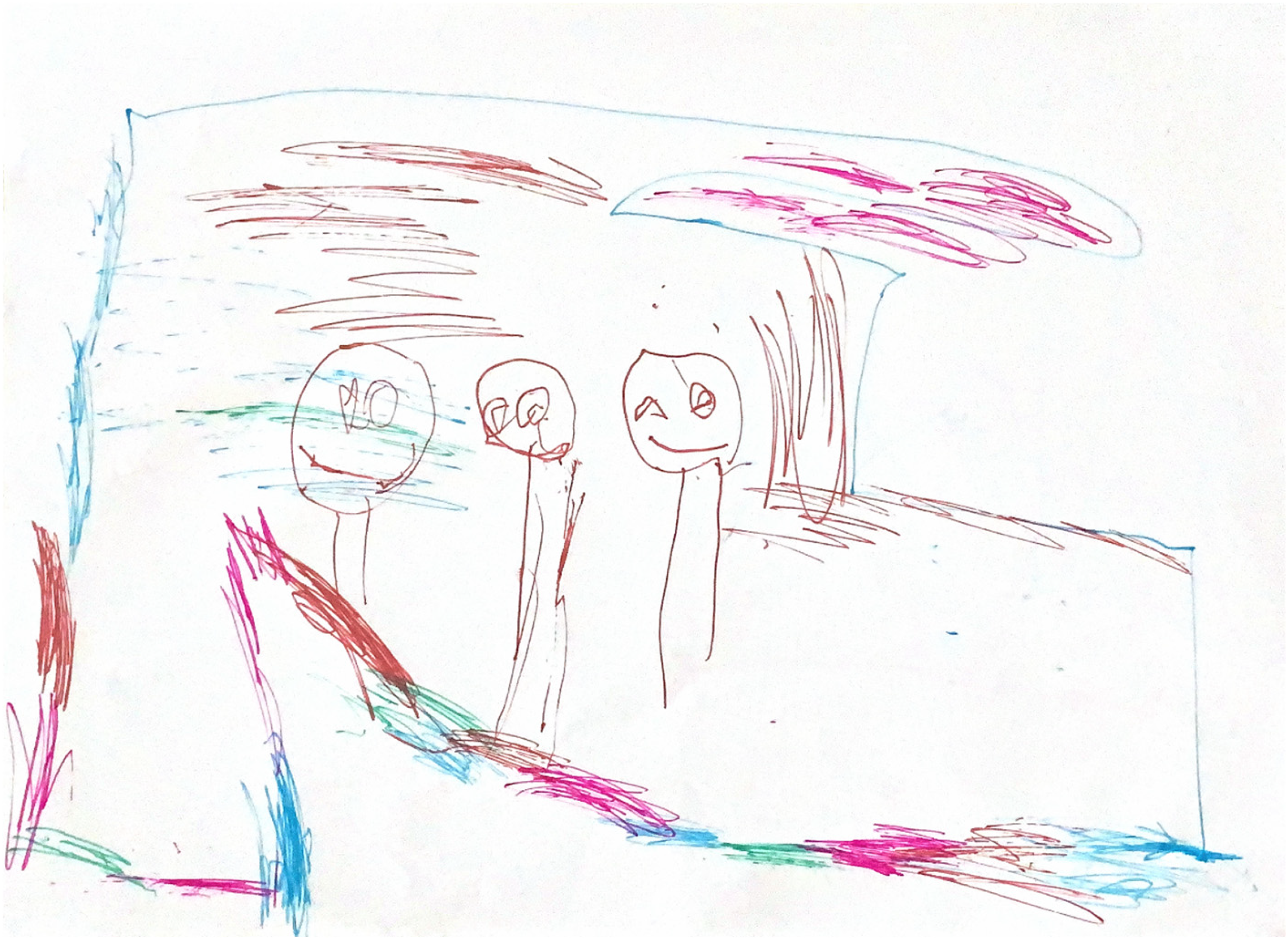
Tom's drawing: “The where the play phones when we play on […] we normally play games with them.”
Sharing with friends was not only important in play, but also in other activities. Leah explored the idea of shared experiences in friendship: Well, Ben is my friend now Ah, amazing, and so why is Ben your friend? Well, well, I just, I just saw him at the fireworks. […] We were wearing winter clothes and we were all having hot chocolate
Leah perceives Ben to be her “friend now” because she “saw him at the fireworks” highlighting that friendship can be defined through sharing experiences. Leah implies that Ben is a new friend because of this experience, demonstrating that spending time together can help create new connections. The shared nature of this event is emphasized through the aspects that Leah and Ben had in common, such as their clothes.
Therefore, spending time playing and sharing experiences together with peers was how participants defined friendship, demonstrating these as essential components of positive peer relationships.
Talk
Participants discussed their enjoyment of talking with others, presenting this as another important aspect of friendship. Participants expressed positivity around talking with others, for example, “I like when you can chat to your friends” (Noah); “I like talking to my friends” (Kevin). Thus, conversation is a pleasant aspect of social interaction. Noah further explored how he makes his friends feel happy: “To say a joke,” highlighting the importance of humor in friendship.
Reciprocal conversation enabled participants to relate to one another. For example, Tom converses with his friends about “going to Tony's house” and Barbie talks with her friends “about Barbies.” Therefore, an aspect of participants’ friendships was talking with peers about shared experiences and interests. Participants also enjoyed divulging information about themselves. Olivia explained how she likes talking “about the weekends […] so that other people know what we did on the weekend.” Therefore, conversations around shared experiences, interests, and one's own activities are perceived as enjoyable aspects of friendship.
Participants also perceived friendship to be expressed through compliments, such as “your hair looks lovely” (Brooke) and “I like you” (Tom). This indicates that giving peers praise and talking positively toward them is one feature of friendship, highlighting friends to be those with positive opinions of oneself. Relaying these positive opinions is one way to express friendship.
Helping others
Prosocial behavior was considered an important aspect of friendship. One way friendship was defined was through helping: “people who help you” (Kevin); “Someone which help you if you’re sad” (Noah). Tom explained how his friends help him when he falls over: “get me up and play with me then make me really happy.” Friends, therefore, are people who exhibit helping behavior. Noah and Tom's examples demonstrate that friends can help to alleviate negative emotions or promote positive emotions when experiencing distress.
Noah discussed how his friends help him by “telling adults,” and highlighted that he reciprocates this helping behavior: What sorts of things do you do to be a good friend? I tell if someone are bullying them or say stop If someone was feeling sad what would you do? I would tell them to stop and I would tell the adult
Therefore, one prosocial behavior Noah and his peers use to help each other is to gain help from an “adult.” This demonstrates a reciprocal, prosocial relationship between friends. Noah further describes how he directly helps his friends in a situation of conflict by “say[ing] stop.” This demonstrates that Noah alleviates conflict for his friend. Therefore, being prosocial when others are in need, such as being injured, sad or in a situation of conflict, is an important aspect of positive peer relationships.
GET 2. Solitude
When talking about time spent with friends, participants also discussed time spent alone. This was framed both positively and negatively.
Enjoying time alone
Social interaction was not always desired by participants. Leah framed solitude positively: “You want to be alone sometimes,” highlighting being alone can, on occasion, be preferred to being with others. She explained her reasoning behind this: “Well I feel like I have to rest and sometimes I talk to myself at playtime.” This presents social interaction as tiring, highlighting that solitude can be restorative. Leah spends time “talk[ing] to myself,” indicating that it may be the demand of social language that she is withdrawing from, as she enjoys speaking without the need to be understood by others. Noah also indicated that he finds social language demand difficult, discussing how he feels “hyper” when he is interacting with others, “because when everyone keeps asking me questions and when you run around with other people it makes you more hyper.” Others’ questions are presented to be overstimulating, indicating Noah feels overwhelmed by this aspect of social interaction. Not only is language perceived as overstimulating, but also the physical activity associated with others (“when you run around with other people”). However, these demands can be overcome by spending time alone: I like playing by myself Why is that do you think? What do you like about playing by yourself? Because I feel more calm when I play by myself
Therefore, solitude is portrayed as a “calm” experience, highlighting solitude to enable relaxation. In contrast, Noah feels “hyper” when interacting with others. Therefore, solitude can be positive and valuable as social interaction can be overwhelming.
Wanting human connection
However, whilst solitude was sometimes considered positively, some participants expressed feelings of loneliness and motivation to socially interact. Olivia and Barbie both described spending time alone as “boring.” Tom talked about spending time alone: “Sometimes I gets lonely without any friends.” Tom indicates that spending time with “friends” can alleviate the feeling of loneliness. Leah expressed a similar idea: “Well now I’m not lonely because I have so many friends.” This highlights that peer interaction can alleviate feelings of loneliness, portraying solitude as negative and socializing as positive. Leah's use of “so many friends” highlights that having many friends has relieved her feelings of loneliness, showing a desire to connect with many peers. Tom suggested one way to alleviate loneliness is to “play with [friends] a lot.” This further emphasizes that spending time with others is desirable and an activity he wishes to engage in many times (“a lot”). This highlights that some participants perceived solitude negatively and desired social connection which could be achieved through spending time with peers.
GET 3. Negative peer experiences
Participants described episodes of peer hostility, their emotions associated with peer hostility, and subsequent coping mechanisms employed.
Peer hostility
Participants shared many examples of being treated with hostility by their peers, highlighting this as an area of difficulty. Leah gave one example of peer hostility: “They said I’m too stupid and ugly.” Verbal insults are one means by which participants are mistreated by peers. Tom indicated that negative verbalizations make him feel “really cross and really sad at the same time.” The emotions felt following episodes of hostility encompass both intense anger and sadness, highlighting the detrimental impact of negative verbalization from peers. Therefore, peers’ opinions of oneself are important, as these verbal insults are hurtful for participants. These intense emotions may lead to a situation of conflict: Sometimes Ben says to John that John is a lunatic A lunatic? That's not very nice No And how does that make John feel? Sad and frustrated Frustrated, that's a great word. And what does he do when he is feeling sad and frustrated? He chases him round and round and tries to hurt him
In this extract, it is evident that one reaction to verbal insults is to retaliate with aggression. This is portrayed to result from the intense, negative emotions (“sad and frustrated”) felt following peer hostility, indicating difficulties with managing negative emotions. Therefore, conflict may arise from hostility and the subsequent emotions felt.
However, physical violence is not always a reaction to victimization, but instead the source of victimization, as described by Tom: “I play with them they says I don’t like you Tom […] then hurt me then push me.” Here, Tom showed that peers are displaying verbal and physical antagonistic behaviors, perhaps without provocation, as he was trying to establish a positive interaction, through “play.” Olivia also highlighted an episode where she felt a peer was being physically aggressive: Can you tell me about people being mean? What sorts of things happen? If you hit a ball in a face, it really hurts
Here, Olivia perceives that a peer is intentionally being unkind through causing physical harm. These examples illustrate physical aggression as an area of difficulty for peer relationships, both provoked and unprovoked.
Participants described why they think peers exhibit hostile behavior: Why do you think people sometimes say or do not very nice things? Because they hate you Anything else? Because you know they just like decide
Therefore, Leah believes hostility stems from peers’ negative opinions about oneself (“because they hate you”). These negative opinions are perceived to result from a spontaneous decision to dislike someone, seemingly unprovoked (“because you know they just like decide”). However, not all participants felt that hostility occurred due to these negative opinions but instead due to the perpetrator's character: “because some people are mean” (Barbie); “because they are bad” (Olivia). This indicates that innate characteristics, such as being “bad” or “mean” are perceived to be the motivators behind hostility.
Managing peer hostility
Participants described their coping strategies for managing conflict. Participants described running away or using emotion regulation strategies as the main means by which they coped independently. More commonly, participants sought out adult support in hostile peer situations.
Coping by myself
The predominant independent coping mechanism described by participants was to remove themselves from the hostile situation. Immediately after a negative experience, participants described their response: “I run away and break everything and everyone said Leah's so angry” (Leah); “they will get angry and run away” (Olivia). These examples present “run[ning] away” as a means of coping with anger. Removing oneself was not only used in response to anger, but as a preventative measure: “I don’t play with Tilly anymore” (Brooke). Brooke has permanently removed herself from the situation, explaining that this was because “Tilly pulls my hair.” Therefore, removing oneself from the situation can be a permanent strategy employed to prevent against a future episode of hostility.
Participants also described emotion regulation strategies that they use to cope with negative emotions following hostile experiences: “By do deep breaths” (Noah). Noah recognizes that doing deep breaths is one way he can regulate negative emotions. Similarly, Leah described how she uses a “foot fidgeter” to help regulate anger: How do you make yourself feel in the green zone again when you’re angry? I got something to help me You need something to help you? Well I got a foot fidgeter in my classroom, Cameron gave it to me
Whilst an adult (Cameron) had given Leah the “foot fidgeter,” Leah demonstrated that she is aware it can “help” her to regulate her angry emotions and indicated that she employs this strategy independently. Therefore, emotion regulation strategies are sometimes independently employed to help cope with negativity, in addition to removing oneself from the situation.
Seeking help from adults
Participants often described seeking out adult help to cope with negative situations, implying a difficulty with managing these situations alone. For example, Tom stated: “When someone hurt me I tell a grown up.” This suggests that Tom believes that an adult will help him manage the situation, representing a trusting relationship. Leah described a similar situation in which her carer, Melanie, helps her to cope: “I just run away and tell Melanie and she’ll scream at them.” This further highlights the trust participants place on adults to handle negative peer experiences. Additionally, Leah recognizes the power imbalance between adult and child, as when Leah feels that a peer has done something wrong, an adult can manage the situation by “scream[ing] at them,” suggesting that participants feel powerless to overcome negative peer experiences. Therefore, participants rely on adult help, perhaps because of difficulty with managing conflict independently, or due to a recognition of the power imbalance between adult and child.
Discussion
The present study aimed to explore the nature of peer relationships from the perspective of children with LDs. The findings revealed that participants felt positively about playing, conversing, and displaying prosocial behavior. Some participants felt overwhelmed by social interaction, which was alleviated by spending time alone, yet others felt lonely when they did not have anyone to interact with. The main challenge experienced was peer hostility. Participants managed this by removing themselves from the situation, employing emotion regulation strategies, or seeking adult help. These findings are discussed in relation to prior research, followed by their implications and recommendations for future research.
Participants’ exploration of the importance of play, activities, and conversation with peers echoes and expands upon previous qualitative literature involving children with LDs (e.g., Roulstone & Lindsay, 2012). Children valued playing and chatting with others, corroborating prior findings that importance is attached to being happy and having fun with friends (Roulstone & Lindsay, 2012). The present study further found that play, activities, and conversation were a means of defining friendship for these children, aligning with literature that found children with LDs assign meaning to friendship via play and joined activities (Blaskova & Gibson, 2024). Participants valued language in their friendships, describing complimenting each other and discussing their lives with one another as positive aspects of friendship, emphasizing that some children with LDs do consider language to be an important part of friendship, supplementing previous research that found children with LDs focused primarily on physical activities when describing their friendships (Blaskova & Gibson, 2024). Positive relationships with others can strengthen wellbeing and promote resilience (McLeod et al., 2013). Additionally, play is thought to contribute to the development of self-esteem and social acceptance (Rubin et al., 1995). Therefore, encouraging play, conversation, and shared activities is one way to foster positive relationships in children with LDs. The positive aspects of friendships described by participants in this study are reflective of neurotypical children's friendships, in which children aged between 6- and 12-years-old are suggested to engage in emerging reciprocal relationships focused on specific incidents, rather than long-lasting relationships (Selman, 1980), characterized by positive communication and prosocial relationships (Marcone et al., 2015).
Prosocial behavior was another positive aspect of friendship discussed by participants. Children described a reciprocal, helping relationship between themselves and their peers and explained how they undertake action to alleviate sadness, pain, or conflict for their friends. This suggests that prosocial behavior is an area of relative strength for children with LDs, in contrast to previous literature that demonstrated this as an area of difficulty (Levickis et al., 2018; Lindsay & Dockrell, 2012). The present findings corroborate literature indicating that most children with LDs are prosocial (Toseeb et al., 2017). Prosocial behavior can mitigate emotion regulation difficulties, protect against psychosocial problems, and is associated with fewer adolescent peer interaction difficulties (Mok et al., 2014; Toseeb et al., 2020). Therefore, encouraging prosocial skills may be one way to diminish peer difficulties in this population, which can be done through family or school-based interventions, although more research is needed to determine the effectiveness of these interventions for children with LDs (Mok et al., 2014). However, most examples of prosocial behavior given in the present study were helping behaviors, yet prosocial behavior encompasses sharing, cooperating, and comforting (Radke-Yarrow et al., 1983). Future research should examine each prosocial dimension specifically to determine whether these are areas of difficulty or strength for children with LDs.
Some participants perceived solitude as a relief from social interaction. Corroborating Lloyd-Esenkaya et al.’s findings, social withdrawal is underpinned by feeling overwhelmed. However, the present study suggests that peer interaction itself is overwhelming, whereas previous literature indicates that children need time alone to process the preceding events of the day (Lloyd-Esenkaya et al., 2021). Two children expressed difficulty managing the language demand of social interaction, which was alleviated by withdrawal. Therefore, this study revealed a novel finding: social interaction is considered by some children with LDs as overwhelming, in part because of the demands of social language, and this may underlie social withdrawal. This contradicts the previous assertion that children with LDs engage in reticent withdrawal as an adaptive reaction to the negative biases of others (Redmond & Rice, 1998). Instead, children engage in solitary-passive withdrawal, characterized by enjoyment of being alone (Fujiki et al., 1999). However, although the children sometimes perceive withdrawal positively, solitary-passive withdrawal is associated with internalizing difficulties (Hart et al., 2004). Furthermore, children need peer interaction to develop social skills, such as collaboration and cooperation (Howes et al., 1988). Therefore, a potential solution is to provide opportunities for both solitude and social interaction to ensure social development, whilst giving children with LDs the time apart that is beneficial for them.
Despite sometimes enjoying spending time alone, some participants perceived solitude as lonely, which could be resolved by spending time with peers. In accordance with previous research, children desired interaction with peers, yet reported feelings of loneliness (Markham et al., 2009). Markham et al. note that children with LDs often misunderstand how to make and develop friendships, which may lead to isolation. This was reflected in the present study, in which one child defined someone as a friend simply because they had spent time together on one activity. This may indicate a superficial friendship, illustrating a general misunderstanding of the depth of such relationships. Therefore, although children with LDs aspire to have friends, they may struggle to create meaningful connections with others, which could underlie isolation. On the other hand, it may be that children with LDs just have a different method of understanding friendships and a unique perspective. This may be reflected in literature with older children with DLD having more positive self-ratings of friendships than parental ratings of their friendships (Forrest et al., 2021). There are no specific interventions to help children with LDs create more meaningful relationships with one another, although play-based interventions have been successful in helping children with intellectual disability to become more socially connected to their peers (O’Connor & Stagnitti, 2011). Future research should investigate the effectiveness of these interventions in boosting social connection for children with LDs.
Another area of difficulty experienced by participants was peer hostility. Many examples of verbal and physical aggression were given, reflecting previous observational research that showed elevated levels of conflict amongst children with LDs (Gibson et al., 2011). The present findings indicate that high hostile attribution biases may underpin conflict in this population. One participant described an occasion where she believed a peer was being intentionally harmful: “If you hit a ball in a face, it really hurts” (Olivia). Although it is not certain whether the peer intended to hurt the participant, Olivia perceived this potentially unintentional action as deliberately hostile. Additionally, participants ascribed negative valence to the intentions of others, purporting that hostility occurs because someone hates you, or is a “mean” or “bad” person. These findings align with previous research, which found that children with LDs have a negative bias toward the intentions of others and often mistakenly perceive others’ behavior as antagonistic, which can lead to aggressive behavior (Lloyd-Esenkaya et al., 2021). This may be detrimental to peer relationships, as these intensely negative perceptions may prevent a reconciliation between peers after conflict. Thus, children with LDs should be taught skills to accurately recognize the intentions of others.
Conflict may be exacerbated by difficulties with selecting appropriate conflict resolution strategies. The conflict resolution strategies chosen by participants were unsophisticated, such as running away or relying on adult assistance, mirroring previous research that demonstrates conflict resolution as an area of difficulty (Bakopoulou & Dockrell, 2016). This is a key area for intervention, as children who are poor at resolving conflict risk social rejection (Rose & Asher, 1999). However, the underlying mechanism for poor conflict resolution is not yet known; it has been suggested that these strategies are chosen because children with poor expressive language skills struggle with language demanding strategies, such as negotiation (Lloyd-Esenkaya et al., 2021). Conversely, some suggest that it is not poor expressive language underlying this difficulty, but instead a deficit in social knowledge (Timler, 2008). Future research should explore the mechanisms underlying poor conflict resolution in children with LDs to design specific interventions targeting the underlying difficulty (Lloyd-Esenkaya et al., 2020).
Emotion regulation difficulties may further exacerbate conflict. Participants described themselves and their peers to have difficulty coping with anger, often resorting to aggression. These findings corroborate previous research that highlights elevated emotion regulation difficulties in children at risk of and diagnosed with DLD (Forrest et al., 2020; Fujiki et al., 2002; St Clair et al., 2019). Both boys and girls exhibited problems in this area in the present study, suggesting that emotion regulation could be an overarching problem for children with LDs and not more specific to boys as found by Fujiki et al. (2002). However, the small sample size limits generalizability of the present study's results. Future research should investigate whether boys and girls with LDs experience emotion regulation problems equally or differentially. Nonetheless, poor emotion regulation has been found to predict peer and emotional difficulties in children at risk of DLD (Forrest et al., 2020), whilst greater emotional competence is associated with less victimization (van den Bedem et al., 2018). Therefore, this is a key area for intervention to prevent peer interaction difficulties in children with LDs, although further research is needed to determine the relationship between emotion regulation and peer interaction difficulties in children diagnosed with LDs. However, some children showed a relative strength in this area, describing strategies such as taking deep breaths and using a foot fidgeter. Despite this, only two strategies were described in total, highlighting limited knowledge in this area. Furthermore, one child was clearly unable to use her strategy adaptively, as she went on to describe how she breaks things when she feels angry. Therefore, future research should examine how and when children with LDs apply emotion regulation strategies to real-life situations.
This study has provided an important contribution to literature, providing an insight into how children with LDs perceive friendship. Participatory methods were used: a range of means were used to help engage children in data collection, such as the use of visuals and the employment of creative strategies, such as drawing (Montreuil et al., 2021). These techniques support participants to express themselves freely, give them more agency in the research process, and enable more dialogue (Coyne & Carter, 2018). Furthermore, this study equally balances both strengths and difficulties, producing findings that can more accurately predict future behavior (Tremblay et al., 1992). Giving participants the opportunity to use creative materials to answer questions is a strength of this study as they can be more suitable for participants with communication difficulties, giving more insight into their own lived experiences (Lyons, 2019). Furthermore, a similar study looking at friendships in children with LDs also used artistic methods as part of their methodology (Blaskova & Gibson, 2024). As most children chose not to use creative means to answer the questions, this indicates that participants felt their verbal skills were sufficient to answer the questions, suggesting that the questions were pitched at the correct language level. Furthermore, incorporating children into research has recently been used to inform speech and language therapy service delivery for children with DLD, as the children in this study clearly identified the barriers that needed to be addressed to allow them to succeed (Gallagher et al., 2019). Thus, research investigating children's points of view, particularly in relation to children with LDs, is increasing and is of importance.
However, there are limitations to the present study. Firstly, some participants had a DLD diagnosis, whilst others had an LD associated with another condition. Although all participants had SLCN as their primary area of need, different results may have been found had a more homogenous sample been investigated (e.g., only DLD participants, only LD associated with ASD participants). However, the heterogeneous population also brings strengths, as this is likely a more accurate reflection of the clinical and educational context of working with children with LDs. Future research could explore the perceptions of friendship of children diagnosed with DLD in comparison to children with an LD associated with another condition to resolve this limitation and explicitly evaluate differences across common distinctions in the clinical and educational casebooks. Another limitation of this study is the characteristics of the children selected to partake. Only children who were competent in expressing views were able to participate and thus, the present study is only representative of children with LDs with the linguistic ability to recall and reflect on past experiences. Additionally, all participants had specialist provision at school, which may have nurtured social skills to a greater extent than mainstream schools (Toseeb et al., 2017). Therefore, the profile of peer interaction strengths and difficulties of children with LDs attending non-specialist schools may be different. Future research should explore whether this is the case. Finally, parent perspectives were not considered explicitly within this research. Whilst there is a paucity of evidence relating to child perspectives, with some existing literature on parent and practitioner perspectives (e.g., Lloyd-Esenkaya et al., 2021), it may have been useful to gather parent and/or practitioner perspectives to compare and contrast findings. This is suggested as a final area for future research.
The present study was conducted to investigate the nature of friendship from the perspective of children with LDs, allowing them to speak for themselves about a matter that impacts their everyday lives: friendship. They expressed a desire to make connections with others, which they do through play and prosocial behavior. It is important to provide support that is meaningful for them, including support to spend time alone when needed, providing more adept conflict resolution strategies, helping to create deeper connections, and aid to understand and regulate emotions, to improve peer relationships and promote wellbeing.
Footnotes
Declaration of conflicting interests
The authors declared no potential conflicts of interest with respect to the research, authorship, and/or publication of this article.
Funding
The authors received no financial support for the research, authorship, and/or publication of this article.

Appendix
Friends
What is a friend?
What do you think is a good friend?
What does a good friend do or say?
Why?
What do you think is a bad friend?
What does a bad friend do or say?
Why?
What is different about somebody who is your friend and somebody that is not your friend?
Play
What do you like about play time?
What is your favorite thing about play time?
What do you play with?
What toys do you play with?
What do you not like about play time? Who do you play with?
Do you play with your friends?
Do you play with the same or different friends?
What games do you play?
What is fun when you are playing? What is not fun when you are playing?
Emotions
How do you feel during play time?
How do you know?
What makes you feel happy at play time? What makes you feel sad at play time? How do your friends feel during play time?
How do you know?
What makes your friends feel happy? What makes your friends feel sad?