




Abstract
Background and aims
Parent-mediated interventions have been shown to be effective for improving communication skills for children with autism spectrum disorder when implemented by mothers. Little is known about the efficacy of autism spectrum disorder communication interventions implemented by fathers. This study investigated the effects of a 12-week coaching program on a father’s use of responsive strategies. Targeted responsive strategies included follow-in comments, follow-in directives, responsive physical play, and responsive object play. Collateral measures of changes to child communication skills and parental stress levels were also investigated.
Methods
A single subject, multiple baselines across behaviors experiment was conducted with one dyad (i.e. father and child with autism spectrum disorder).
Results
Results showed that the participating father was able to quickly learn to use three of the four targeted responsive strategies (i.e. follow-in comments, follow-in directives, responsive physical play). Child’s use of single words increased over baseline level and beginning use of multi-word utterances was documented. Pre–post intervention changes in ratings of stress for the participating father and mother were noted across child and parent domains.
Conclusions and implications
Findings of this pilot study may have important implications for developing much-needed parent coaching programs to enhance fathers’ use of responsive strategies and increase social communication skills for children with autism spectrum disorder.
Currently, it is estimated that one in 59 children are diagnosed with an autism spectrum disorder (ASD; Baio et al., 2018). Children with ASD have marked impairments in social communication skills, and approximately 30% of children with ASD are minimally verbal (Tager-Flusberg & Kasari, 2013). From both public health and educational perspectives, developing interventions that can be effectively implemented so as to achieve functional communication for young children with ASD is critical. Interventions targeting communication skills for children with ASD have been shown to be effective when delivered early and when implemented by parents (National Research Council, 2001). A common focus of parent-implemented intervention is increasing parent responsiveness. Broadly defined, parent responsiveness refers to “parents’ use of affectively positive and contingent reactions to children’s acts of play and communication” (Ruble, McDuffie, King, & Lorenz, 2008, p. 158). Parents use responsive verbal strategies when they establish a joint focus of attention with their child, interpret a child’s ambiguous requests, model words that “linguistically map” to the child’s focus of attention, and shape more appropriate communicative attempts from a child’s limited communication repertoire (Landry, Smith, & Swank, 2001; Warren & Brady, 2007). Parents use responsive play strategies when they match their play to their child’s focus of attention and help the child with play, imitate and expand the child’s play, and model new play actions (e.g. adding a new animal to toy barn) that reference the child’s focus of attention (McDuffie & Yoder, 2010).
Use of responsive strategies by mothers has been linked to better short- and long-term language outcomes for children with ASD (Haebig, McDuffie, & Ellis Weismer, 2013; McDuffie & Yoder, 2010; Siller & Sigman, 2002, 2008). Numerous intervention studies have shown that coaching mothers to use responsive strategies can improve communication skills for children with ASD (Aldred, Green, & Adams, 2004; Baranek et al., 2015; Carter et al., 2011; Green et al., 2010; Mahoney & Perales, 2005; McDuffie et al., 2013). In contrast, few studies have involved fathers. This is a limitation of the ASD intervention literature. By not actively involving fathers in intervention, clinicians and researchers may be unintentionally excluding an important caregiver and communication partner from having a role in supporting communication for children with ASD. Fathers today are increasingly more involved than fathers of past generation in all aspects of child raising, including education (Baker, 2016; Lamb & Lewis, 2010). However, fathers of children with disabilities have described being the “odd man out” or invisible to their child’s interventionists (Mueller & Buckley, 2014). For their part, fathers of children with ASD have expressed interest in wanting to be more involved in their child’s communication intervention than they are currently (blinded for review). In addition, evidence suggests that father involvement may mediate the high levels of stress experienced by mothers of children with ASD (Laxman et al., 2015). Thus, involving fathers may improve communication outcomes for children with ASD and have benefits across the family. However, few studies of ASD parent interventions have involved fathers. Of the 27 studies examining parent-implemented intervention for young children with ASD, reviewed by (Flippin & Crais, 2011), only three studies specifically involved fathers. While ASD interventions designed for mothers may be efficacious for some parents, a concern regarding this literature is that findings with mothers may not generalize to fathers.
Fathers have communication and play styles that are different from mothers and uniquely influence child development. In general, father–child language tends to be more direct and more complex than mother–child language (Bernstein-Ratner, 1988; Pancsofar & Vernon-Feagans, 2006, 2010; Walker & Armstrong, 1995). Importantly, this more complex father language is associated with higher language skills for children. For example, fathers’ vocabulary use at 24 months has been shown to uniquely predict child vocabulary use at three years (Pancsofar & Vernon-Feagans, 2006, 2010). In addition, fathers’ use of more syntactically complex “wh” questions elicits higher-level linguistic responses from toddlers (Leech, Salo, Rowe, & Cabrera, 2013). In play, fathers tend to be the primary partner for young children, spending more time in play than mothers (Lamb & Lewis, 2010). Whereas mothers’ physical interactions with young children are structured around care taking, fathers’ physical interactions with young children tend to be structured around play (Goldberg, Clarke-Stewart, Rice, & Dellis, 2002; Lindsey, Mize, & Pettit, 1997). In general, mother–child play tends to be verbal and didactic. That is, mothers tend to talk with their children and teach through play. In contrast, a common behavior across fathers of many cultures is physical father–child play. That is, fathers tend to incorporate more gross motor movements and “rough and tumble” interactions during play (Paquette, 2004; Paquette & Dumont, 2013). For example, fathers tickle, wrestle, and throw their children in the air. Fathers may also play chase games with their children and model early pretend play (e.g. playing “scary monsters”). Through these play interactions with fathers, children can learn important social communication skills. For instance, children who engage in supportive rough and tumble play with fathers show stronger self-regulation skills (Flanders, Leo, Paquette, Pihl, & Séguin, 2009). More broadly, when fathers engage in responsive interactions with children, children have better outcomes across many developmental areas including emotional regulation, cognition, and language skills (Baker, 2016; Shannon, Tamis-LeMonda, London, & Cabrera, 2002). For children with ASD specifically, observational studies suggest that fathers’ use of responsive language and play is similarly associated with stronger social communication skills, including higher-level language skills and more complex play (Flippin & Watson, 2011, 2015). Taken together, results of these studies suggest that fathers are currently overlooked in ASD intervention. Nevertheless, fathers may play unique and potentially important roles in supporting communication skills through responsive father–child interactions.
A logical next step toward effectively involving fathers in communication intervention for children with ASD is to determine whether fathers can be coached to use responsive communication and play strategies that may lead to improved communication outcomes. To date, however, few studies have specifically examined interventions to increase responsiveness for fathers of children with ASD. One exception is Elder and colleagues who employed a single-subject design to examine the effects of parent responsiveness training on the social reciprocity of children with ASD (Elder, Valcante, Yarandi, White, & Elder, 2005; Seung, Asher, Elder, & Valcante, 2006). In that study, parents were trained to use two responsive strategies, imitation with animation and expectant waiting. Participating fathers successfully learned and implemented the more active responsive strategy, imitating with animation. However, fathers had difficulty learning and using the expectant waiting strategy. The authors suggested that the waiting strategy may be less amenable to father interaction styles. Enhancements to parent coaching, by tailoring strategies to father–child interaction styles may increase the effectiveness of father-implemented intervention. One intervention enhancement that may be amenable to fathers and lead to improved communication skills for children with ASD is coaching fathers to use responsive verbal strategies that include both comments and directions. For children who are typically developing, directive parental styles have been associated with lower levels of child engagement and language acquisition (Landry et al., 2006). In contrast, for children with ASD, who have difficulty establishing and maintaining joint attention, parent use of directives that follow the child’s focus of attention (i.e. follow-in directives) may be beneficial (Haebig et al., 2013). Given that father–child language tends to be more directive than mother–child language, coaching fathers to use follow-in directives may fit paternal interaction styles and also enhance child communication skills. A second enhancement to make parent coaching more amenable to fathers is targeting responsive play strategies in addition to responsive verbal strategies. Fathers are a primary play partner for young children; and in a previous study of father–child play observations, fathers of children with ASD were found to use responsive play and verbal behaviors at equal rates (blinded for review). Coaching fathers to use responsive play may also fit father–child interaction styles and support communication skills for children with ASD. Finally, a collateral benefit of engaging fathers in intervention may be reductions in stress for parent couples. Measuring potential impacts of ASD intervention on parental stress is particularly salient, as mothers of children with ASD are at risk for experiencing stress and depression (Hastings et al., 2005; TeHee, Honan, & Harvey, 2009). However, evidence suggests that maternal stress may be mediated by father involvement. For example, in a study of parent couples, mothers of children with ASD reported significantly fewer symptoms of depression when fathers engaged in responsive caregiving activities such as reading or soothing the baby (Laxman et al., 2015). Thus, understanding whether parent coaching intervention can increase fathers’ use of responsive strategies and have collateral effects on child communication and parental stress are important next steps toward more effectively involving fathers in ASD intervention.
Study purpose
In the present study, we used a single-subject design to determine whether a weekly, individualized 1:1 coaching program can increase the participating father’s use of targeted responsive verbal and play strategies. Collateral measures of child expressive word production and parental stress for the participating couple were also assessed. Coaching sessions were aimed at increasing father’s use of four targeted responsive strategies (i.e. follow-in comments, follow-in directives, responsive object play, and responsive physical play). These responsive verbal and play strategies were selected for the present study because (a) responsive strategies have been shown to be effective for children with ASD when used by mothers, (b) fathers’ verbal and play responsiveness is positively associated with child social communication skills, and (c) the strategies are a theoretically good fit for father–child interaction styles (blinded for review). The single-subject methodology allowed us to track acquisition and maintenance for each of the four targeted responsive strategies. Specifically, the present study aimed to answer the following three research questions: (1) can the participating father learn to use responsive verbal and play strategies through in-home coaching? (2) What changes in child word production are observed when father uses responsive verbal and play strategies? (3) Are there pre–post test changes to parental ratings of stress following completion of the father-coaching program?
Method
Participants and setting
Family demographics and selected tests and subtests for child participant.

PLS-5: Preschool Language Scale, Fifth Edition; MSEL VR: Visual Reception subscale of the Mullen Scales of Early Learning; ABA: Applied Behavioral Analysis.
Study design and procedures
A single-subject multiple baselines across behaviors design was used to investigate the effects of the intervention on father’s use of the targeted responsive strategies and child expressive communication. This design permitted demonstrations of a basic effect across the four responsive strategies taught in the intervention (Horner et al., 2005). The design was used to examine the effect of the Father Communication Coaching (FCC) intervention on (a) changes in parent strategy use with introduction of coaching and (b) child communication skills coinciding with changes in father’s strategy use. Levels of parental stress were also measured pre–post intervention, for both the participating father and spouse. Single-subject designs are particularly suitable for ASD intervention studies as they allow for experimental control with participants from heterogeneous populations (McReynolds & Kearn, 1983). The four phases of the investigation included baseline, intervention, follow-up, and maintenance.
Baseline
Prior to intervention, baseline data were collected with the participating father–child dyad at three time points over two weeks. During 10-minute father–child play sessions, baseline levels were established for the dependent study measures (i.e. father’s use of targeted responsive strategies) and collateral measures were collected for child’s word production. The father was instructed to “play as you normally do” and was not provided with feedback or instruction.
Parent coaching sessions
Father communication coaching program components.

Responsive parent strategies targeted in father communication coaching.

Instructional sessions for the first target strategy began after the baseline phase and continued until the participating father used the targeted strategy to criterion (i.e. three consecutive sessions above highest baseline level). Once criterion was reached with the first targeted strategy, instruction began on the next responsive strategy and continued across the four targeted strategies (i.e. follow-in comments, follow-in directives, responsive object play, and responsive physical play). Two 10-minute samples of father–child interactions were collected and coded each week to measure parent responsive strategy use and monitor child expressive word production. One father–child video was collected immediately following the coaching session, and a second father–child video was recorded by the participating family later in the same week.
Follow-up and maintenance
Once the father had reached criterion for a targeted strategy, follow-up data were taken to monitor the father’s use of the strategy across subsequent intervention phases. In addition, maintenance data were collected at two and four weeks post-intervention to measure father’s use of targeted responsive strategies and child word production upon completion of the coaching program.
Dependent measures
The dependent measure for this investigation was proportion of fathers’ implementation of target responsive strategies in an obligatory context (i.e. after a child lead). Collateral data were also examined for frequency of child expressive word production (i.e. single words and multi-word utterances), and pre–post ratings of parent couple stress were measured using the PSI-4. Recordings of 10-minute father–child interactions were coded to monitor parent use of responsive verbal and play strategies (i.e. follow-in comments, follow-in directives, responsive object play, and responsive physical play) and child word production. Parent and child behaviors were coded using a schema developed by Yoder, Fey, Thompson, McDuffie, and Lieberman (2007) and used to code parent responsiveness in multiple studies (e.g. blinded for review; Yoder & Stone, 2006; Yoder, Watson, & Lambert, 2015). Two undergraduate students in communication disorders coded sessions. Prior to coding, coders trained with the author to reliability (above 80% agreement) on previously collected father–child videos. Using Noldus Observer XT 12.5 software, father–child sessions were coded in 5-second intervals (180 intervals per father–child session). Seven behavioral categories were coded for father–child sessions (i.e. codeable, child lead, follow-in comments, follow-in directives, responsive object play, responsive physical play, and child spontaneous word use). Father’s use of responsive strategy scores were calculated as follows: number of intervals with one or more parent responses, divided by number of intervals with a child lead, multiplied by 100 to create a percentage (i.e. [# intervals with responsive strategy/# child lead intervals] × 100). Parent responsiveness coding methods are described in supplementary Appendix A.
Inter-observer reliability
To ensure continued reliability throughout data collection, 12 father–child sessions (approximately 41% of the parent–child sessions) were randomly selected from across study phases and assessed by a second coder. Inter-observer agreement (IOA) was defined as the number of observer agreements divided by the total number of agreements plus disagreements, resulting in a percentage of agreement. Mean IOA for the coded father–child play sessions was 95.1% with a range of 90.8%–97%. IOA was uniformly above 80% for coded study variables and was as follows: (a) codeable (100%; range: 98.7%–100%); (b) child lead (95.6%; range: 89.9%–100%); (c) follow-in comments (97.1%; range: 95.7%–100%); (d) follow-in directives (94.2%; range: 88.0%–97.4%); (e) responsive object play (93.3%; range: 89.1%–97.3%); (f) responsive physical play (97.2%; range: 93.3%–100%); and (g) child word use (96.0%; range: 93.6%–99.1%).
Procedural fidelity
To ensure that the investigator consistently implemented the instructional steps within the father-coaching program, fidelity was coded for parent coaching sessions. After each parent coaching session, a trained graduate student in communicative disorders viewed the video and checked the investigator’s performance against the procedural standard (i.e. six steps of the FCC Fidelity Checklist). Reliability was 100% for coaching sessions, indicating that the investigator accurately followed the parent instruction procedures.
Social validity
Upon completing the intervention, the participating father completed a social validity survey to rate the effectiveness of the overall coaching intervention and program components on a seven-point Likert scale (i.e. 7 = “strongly agree” and 1 = “strongly disagree”).
Results
Effects of the coaching program on father’s use of responsive verbal and play strategies
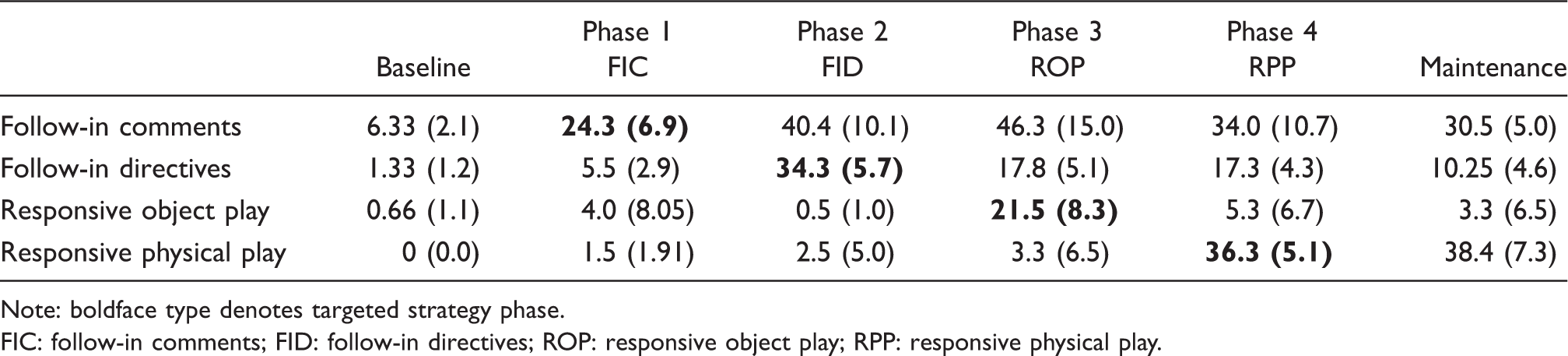
The first aim of the present study was to examine effects of the coaching program on the participating father’s use of responsive verbal and play strategies. To assess the father’s cumulative use of targeted responsive strategies, visual analysis was used. Level, trend, consistency, immediacy, and variability of father’s strategy use were analyzed within and between strategies (Horner et al., 2005). Visual analysis revealed an immediate increase in the level and trend for father’s use of two targeted verbal strategies (i.e. follow-in comments and follow-in directives) and one responsive play strategy (i.e. physical play). Figure 1 presents the father’s use of targeted responsiveness techniques during father–child sessions. Table 4 presents mean strategies use across study phases.
Father's use of responsive behaviors. Mean proportions of father’s responsive strategy use across study phases. Note: boldface type denotes targeted strategy phase. FIC: follow-in comments; FID: follow-in directives; ROP: responsive object play; RPP: responsive physical play.
Follow-in comments
Visual inspection revealed immediate increases in level and trend for the participating father’s use of the follow-in comments strategy. The participating father used a mean of 6.3% follow-in comments across baseline sessions. During intervention, an immediate rise in the participating father’s use of follow-in comments was noted, increasing to a mean of 24.3% following coaching sessions. The father achieved criterion for use of the follow-in comments strategy within two coaching sessions, continued to use the strategy at levels above baseline during three subsequent phases, and maintained a mean use of 30.5% following completion of the intervention.
Follow-in directives
Similarly, visual inspection revealed immediate increases in level and trend for the father’s use of follow-in directives with introduction of the strategy. The father used follow-in directives at a mean of 5.5% across baseline, increasing to 34.3% during the intervention phase. The participating father achieved criterion for use of this strategy in two coaching sessions. Use of follow-in directives decreased following the targeted strategy phase, but levels remained above baseline across two subsequent strategy phases (17.8% and 17.3%, respectively). Use of follow-in directives remained also above baseline levels (10.3%) at maintenance.
Responsive object play
Father’s use of the responsive object play increased from a mean of 1.9% at baseline to 21.5% during the targeted strategy phase. However, five coaching sessions were required to achieve criterion for this strategy, and visual inspection revealed variability in the use of responsive object play. Use of the responsive object play strategy decreased in a subsequent phase, and was not maintained at levels above baseline following intervention.
Responsive physical play
Visual inspection revealed an immediate increase in level and trend for father’s use of the responsive physical play strategy, from a mean of 1.9% at baseline to 36.3% during the targeted strategy phase. The father achieved criterion for use of the physical play strategy in two parent coaching sessions and maintained use above baseline (38.4%) following completion of intervention.
Follow-up and maintenance
The father continued to use three of the four targeted responsive strategies (i.e. follow-in comments, follow-in directions, and responsive physical play) at levels above baseline across subsequent phases of the intervention and maintained use at two and four weeks after the intervention was completed. In contrast, use of the responsive object play strategy was not maintained over baseline levels either during a subsequent intervention phase or after the completion of the coaching program.
Collateral effects of the father coaching program on child expressive word use
The second aim of the present study was to examine collateral effects of the father-coaching program on child spontaneous word use. Again, visual analysis was used to examine changes in child word use across intervention phases. Figure 2 presents child production of single words and multiword utterances. Across baseline sessions, the child produced no words during father–child interactions. Small increases in child word use were documented across intervention strategies, and the child used a mean of 2.25 single words (SD = 1.5) across maintenance sessions. Small increases were also observed for child use of multi-word utterances during the intervention, increasing from a baseline of no multi-word utterances to a mean of 2.5 (SD = 3.7) multiword utterances across maintenance sessions. Results suggest that implementation of the father coaching program had small, positive, collateral effects on child word production.
Child single and multi-word use across study phases.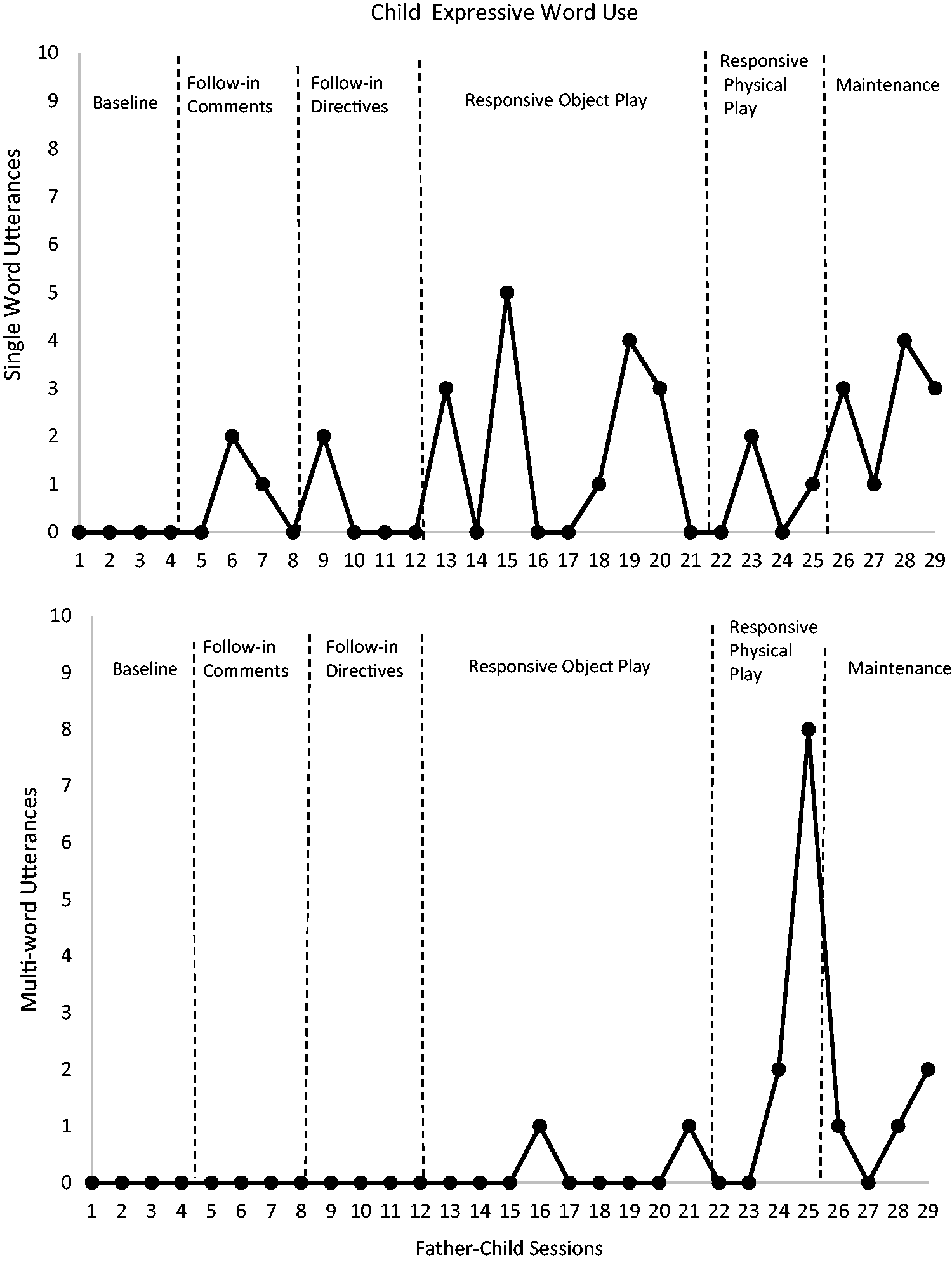
Collateral effects on pre–post intervention ratings of parent couple’s stress
Participating couple pre/post intervention parent stress index-4 scores.

Mother’s ratings of parental stress
In the Parent Domain, the participating mother had largest reductions in ratings of stress (>20 percentile points) related to attachment, competence, and health, respectively. Smaller reductions in ratings were reported post-intervention for stress related to depression and role restriction. Small increases in stress-related isolation and spouse relationship were also noted post-intervention. In Child Domain, the participating mother reported small reductions in ratings of stress related to acceptability, and reinforces parent. Small increases were reported in ratings of stress related to mood, adaptability and distractibility, and hyperactivity.
Father’s ratings of parental stress
In the Parent Domain, the participating father had relatively large reductions in post-intervention ratings for stress related to competence, health, and isolation. Smaller reductions were reported for stress related to attachment. However, post-intervention, the participating father reported higher ratings of stress related to spouse relationship, depression, and role restriction. In the Child Domain, the participating father reported relatively large reductions in stress related to reinforce parent and adaptability. Smaller reductions were documented for the father’s ratings of stress related to acceptability, and no change was reported in stress related to child mood. Similar to the participating mother, the participating father also had higher ratings in the Child Domain for stress related to child distractibility/hyperactivity. These pre–post intervention increases in ratings of stress related to distractibility/hyperactivity child for the participating father were larger than for the participating mother (+ 26 vs. + 7, respectively), and child distractibility/hyperactivity was the highest rated item by the participating father on the PSI-4, following intervention.
Social validation
Parent social validity survey results.
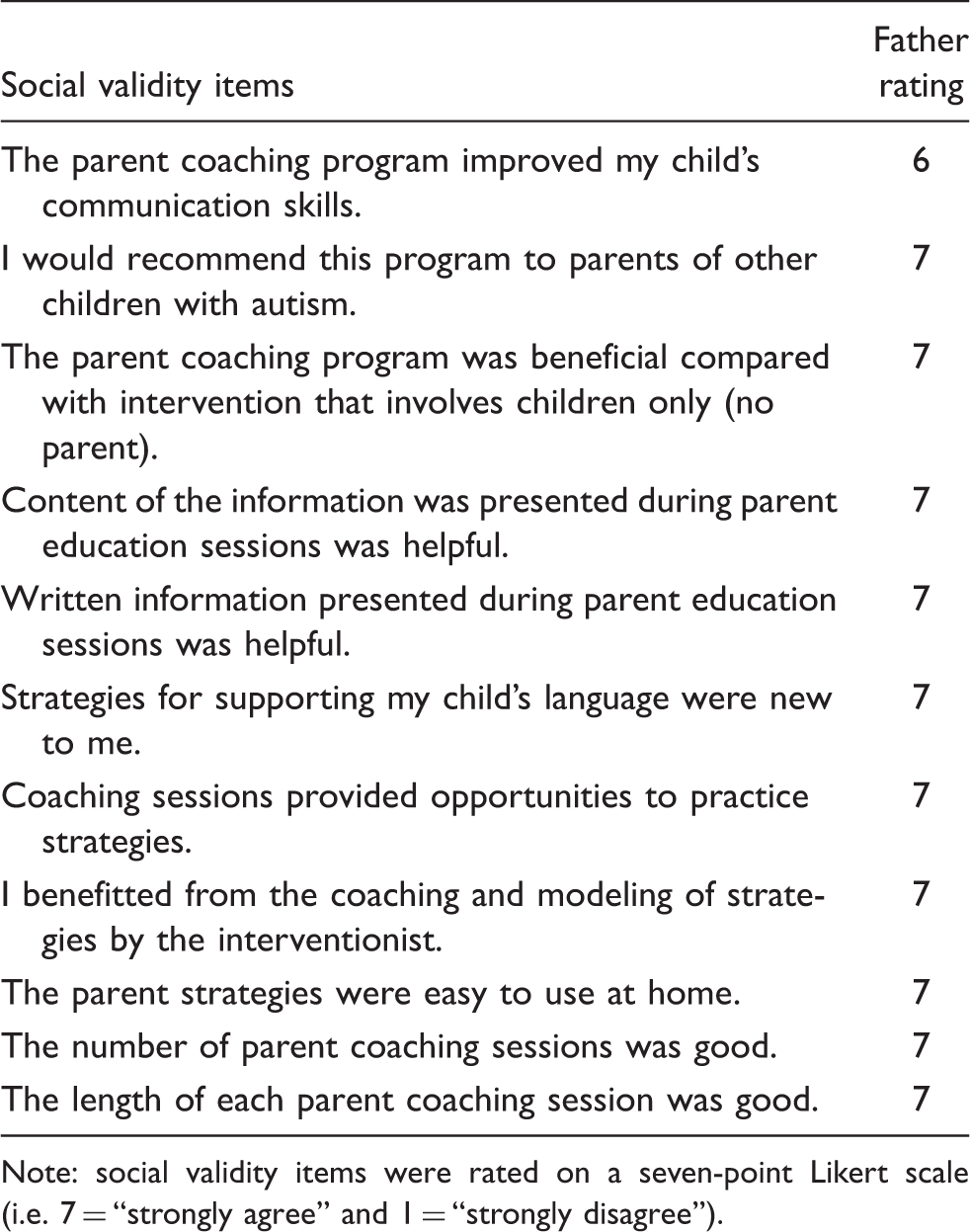
Note: social validity items were rated on a seven-point Likert scale (i.e. 7 = “strongly agree” and 1 = “strongly disagree”).
Discussion
Considerable evidence indicates that for young children with ASD, responsive parenting has long-term impacts on language development. Moreover, a growing body of evidence suggests that coaching mothers to use responsive strategies can result in improved language skills for children with ASD. While interventions designed for mothers may be efficacious, few intervention studies have specifically included fathers in the parent sample. This is a shortcoming in the literature, as strategies used effectively by mothers may not generalize to fathers. The present study contributes to our limited understanding of how to more effectively involve fathers in ASD communication intervention. Fathers have interaction styles that differ from mothers and may impact social communication skills for children with ASD in unique ways. Intervention strategies that do not fit father–child interaction styles may show low adherence. For instance, in study of parent couples, by Elder and colleagues, participating fathers learned to use the more active responsive strategy (i.e. imitation with animation) but failed to learn another responsive strategy (i.e. expectant waiting) that was successfully learned by mothers (Seung, Asher, Elder, & Valcante, 2006). Aligning intervention strategies with father–child interaction styles may improve parent fidelity and intervention efficacy. The present study examined the effects of a parent-coaching intervention on a father’s use of targeted four responsive strategies and child language skills. Responsive verbal and play strategies taught in the father coaching program were selected to fit paternal interaction styles and thus be more readily implemented by the participating father.
Responsive verbal strategies
The participating father was able to quickly acquire use of both targeted responsive verbal strategies (i.e. follow-in comments and follow-in directives) and maintained use following completion of the intervention. Given that father–child communication tends to be more direct than mother–child communication, it was anticipated that the participating father would use follow-in directives more frequently than follow-in comments (Gleason, 1975; Goldberg et al., 2002; Masur & Gleason, 1980). However, in the present study, the participating father used follow-in comments at higher rates than follow-in directives. One explanation for this finding may be related to pre-intervention child characteristics. At the start of the intervention, the participating child was minimally verbal. Studies suggest that parent verbal responsiveness may have differential effects depending on the expressive language level of the child. For example, Haebig et al. (2013) reported that parents’ use of follow-in directives was associated with improved language outcomes for toddlers with ASD who began the study with relatively higher language skills. For children who were minimally verbal, however, parents’ use of follow-in comments was uniquely associated with improvements in child language. Similarly, in studies of mothers and children with Down syndrome, Mahoney noted that some types of maternal follow-in directives were positively associated with child language skills. However, use of follow-in directives that placed the burden on the child to produce behaviors that exceeded his or her current level of development was not as effective. Thus, in selectively using follow-in comments more frequently than follow-in directives, the participating father may have adapted his language input to fit the child’s level of emerging expressive language. A similar interpretation may apply to findings for the father’s use of targeted responsive play strategies.
Responsive play strategies
During baseline sessions, the participating father displayed some responsive object play strategies (e.g. moving toy animals and making toys “talk”) and he was able to learn to use object play schemas during coaching sessions (e.g. moving cars, flying airplanes, walking toy animals, stirring play food, and feeding a baby doll). However, the father required longer (i.e. five coaching sessions) to achieve criterion for this strategy than the other three targeted strategies. In addition, the father did not maintain use of the responsive object play strategy above baseline levels either during a subsequent intervention phase or following completion of the coaching program. The participating father was motivated to learn the intervention strategies; however, he used follow-in comments more frequently than follow-in directives and responsive physical play strategies more than responsive object play. In problem-solving discussions, the participating father described that the child enjoyed and had a preference for movement activities and was less interested in play with objects. In the current study, the child’s pre-intervention sensory characteristics were not assessed. However observations across sessions suggested a pattern of hypo-reactivity/sensory seeking. For instance, throughout sessions, the participating child frequently sought out many kinds of movement (e.g. climbing, jumping, running, and crashing). He also enjoyed activating toys that made sounds and playing musical instruments, but showed less interest and persistence in playing with objects and toys that did not have these features. In contrast to challenges with using the responsive object play strategy, the participating father quickly learned the physical play strategy and maintained use of physical play following completion of the intervention. As the father reported, physical play interactions seemed to be enjoyed by both the participating child and by the parent. Again, one interpretation for the participating father’s more frequent use of responsive physical play strategies may be that the father did not find the responsive object play strategies to be engaging or useful for his child. Alternatively, the participating father may have used the physical play strategies at a higher rate because he also preferred engaging in physical play with his child. Responsive physical play may have been a good fit for the child’s skills and preferences, or the father’s interaction style, or both.
Parent adherence to targeted strategies may be influenced by a parent’s view of whether or not a specific strategy is effective or a good fit for the child. Thus, child characteristics may impact parent intervention implementation. For example, in a recent study of one-year olds at risk for ASD, Kinard and colleagues reported that two child characteristics, language skills and hypo-reactivity, were significant predictors of the parents’ use of follow-in utterances and responsive play (Kinard et al., 2017). Specifically, parents tended to talk less and use more play actions with children who had lower communication skills and higher levels of hypo-reactivity. Conversely, parents tended to talk more and use fewer play actions when their children communicated more and demonstrated less hypo-reactivity. In the present study, we hypothesized that use of follow-in directives and physical play in addition to follow-in comments and object play would align with father–child interaction styles and be easily learned and used by the participating father. We did not tailor targeted strategies to pre-intervention child characteristics (e.g. sensory profile and expressive language level). However, by selectively using follow-in comments and physical play at higher rates than follow-in directives and symbolic object play, the participating father may have been fitting his use of strategies to his child’s interests, preferences, and strengths. Effectively fitting strategies to both parent and child characteristics may be important aims of future ASD intervention studies. Overall, results of the present study yielded positive results for both fathers’ use of three of the four targeted responsive strategies. Positive collateral effects were also found for child expressive word use and some aspects of parental stress.
Child expressive word use
Data on child word production demonstrated small increases in child spontaneous production of single words and beginning use of multi-word utterances across phases of the intervention. At the start of the intervention, child was minimally verbal and no expressive word production was documented during baseline father–child sessions. Child’s use of single words was documented following the second coaching session targeting father’s use of follow-in comments. Frequency of child single word use continued to increase across subsequent intervention phases. Following intervention, the participating child used a mean of 2.25 single words (SD = 1.5) across maintenance sessions. Child’s first use of spontaneous multiword phrases during father–child sessions was documented during the intervention phase targeting father’s use of responsive object play. Small increases were noted in a subsequent phase of the intervention (i.e. responsive physical play) with a mean of 2.5 (SD = 3.7) multiword utterances produced by the child across maintenance sessions.
Parental stress
Post-intervention reductions in parental stress were noted for both the participating father and his spouse, in both the Parent and Child Domains of the PSI-4. Given that mothers of children with ASD are at significant risk for stress and depression, an encouraging outcome of this pilot study was a reduction in mother’s rating of stress related to depression, competence, role restriction, health, and attachment. The participating father reported lower post-intervention ratings of stress in most areas of the Parent Domain (i.e. health, attachment, isolation, and competence) and Child Domain (acceptability, reinforces parent, and adaptability). However, large post-intervention increases were noted for stress related to child distractibility/hyperactivity. In fact, child distractibility/hyperactivity was the father’s highest scored item on the PSI-4 post-intervention. It is possible that the participating child may have displayed more distractibility and hyperactivity over the course of the intervention. The participating mother also reported increases in ratings of stress related to child distractibility/hyperactivity; however, the increase in ratings for this item was smaller for the mother than the father. An alternative explanation may be that the father’s ratings for stress related to child hyperactivity/distractibility reflect greater parental awareness of the child’s communication, play, and interaction skills and challenges. In order to effectively use the targeted responsive strategies, the participating father was required to first notice and then respond to his child’s attentional leads. Involvement in the parent coaching program may have increased parent awareness of the frequency with which the child changed activities, sought out activities that were more movement-based, and showed less interest and attention for sedentary play interactions.
Finally, a surprising finding of this study was post-intervention increases in the participating father’s ratings of stress related to isolation and spouse relationship. Among parents of children with disabilities, spill-over effects of child-related stress to spouse relationships are common, and the high stress ratings found for parents in this study are consistent with findings of a large study of father–mother couples with a child with ASD (Hartley, DaWalt, & Schultz, 2017). In that study, compared to parents of children without disabilities, parents of children with ASD reported spending less time with their partner, had lower ratings of partner closeness, and fewer positive couple interactions. Nevertheless, parents of children with ASD also demonstrated more positive affect and sensitivity toward one another. The researchers highlighted the need for relationship education for parents of children with ASD. In the present study, parental stress was not assessed as a direct outcome of the father coaching intervention. However, findings highlight the need for future studies to examine changes in parent couple stress that may be associated with involvement in interventions. Specifically, studies should aim both to identify whether father involvement reduces maternal stress levels, but also to examine changes in patterns of fathers’ stress. Fathers have rarely been included in parent-implemented ASD interventions. Little is known about the potential impacts of participation in interventions on paternal stress.
Taken together, findings of the present study lend early support to the efficacy of using a father coaching program to increase fathers’ use of responsive verbal and physical play strategies. In addition, the father coaching program may potentially enhance child communication skills and decrease some sources of stress for parent couples. The participating father quickly learned and maintained use of both responsive verbal strategies (i.e. follow-in comments and follow-in directives) and one responsive play strategy (i.e. responsive physical play). Small increases in child single word production and child use of multiword utterances were documented across intervention phases, and reductions in some areas of parental stress were noted post-intervention for both the participating father and his spouse. The present study met recommended single-subject design standards including systematic manipulation of independent variables measures of outcomes over time, inter-observer agreement on more than 30% of sessions, and three demonstrations of effectiveness of the intervention with more than three data points in each phase (Horner et al., 2005). In addition, procedural fidelity for parent coaching sessions was measured, and social validity was assessed for the participating father and pre–post intervention measures of stress were assessed for the parent couple. Despite the strengths of the current study, there were several limitations.
Limitations and future directions
The first limitation of the present study is that each intervention phase had only one participant dyad, and findings of this study may be not be generalizable to other fathers and children with ASD. In addition, the participating father was married. Although approximately 67% of U.S. children with ASD currently reside in two parent households, married mother–father couples are not representative of parents of children with ASD (Freedman, Kalb, Zablotsky, & Stuart, 2012). Related to this, the participating parents each held professional degrees and had middle-class income, which is also not representative of all families of children with ASD. The findings and limitations of the present study support the need for several future lines of inquiry. First, it is necessary to extend the work of this single-subject study to include a larger, more representative sample of fathers from diverse family structures (e.g. single fathers, same-sex couples) and economic settings. Second, it is also is necessary to examine the efficacy of communication intervention strategies designed to fit both parent and child characteristics. The four responsive strategies targeted in this study were selected because they were previously shown to be effective when used by mothers and because they were a theoretically good fit for father–child interaction styles. Strategies targeted in in this study were not selected based on child characteristics (e.g. sensory profile, expressive language level). Research examining the influence of both parent and child characteristics on treatment fidelity will be instrumental for learning more about how to design effective communication interventions for children with ASD. Finally, future studies of parent coaching interventions should examine potential impacts of father involvement on both maternal and paternal stress.
Potential clinical implications
Given the heterogeneous nature of ASD, researchers have recently highlighted the need to tailor interventions to fit child characteristics (Schreibman et al., 2015; Zwaigenbaum et al., 2015). However, communication is a bidirectional transaction between parent and child, with each contributing to the success of the exchange (McLean & McLean, 1978; Sameroff, 2009). Tailoring ASD interventions to fit the needs, strengths, and characteristics of both parents and children may be the most effective approach. Toward this aim, identifying pre-intervention language skills, object interest, and sensory profiles may allow clinicians to select strategies to fit individual child characteristics. For instance, a child who displays emerging language, hyposensitivity/under-responsiveness, and low object interest, coaching parents to use of follow-in comments and responsive physical play, at least at the beginning therapy stages, may be beneficial. Given the physical aspects of father–child play, involving fathers in intervention may benefit young children with ASD who seek out more movement-based activities. Alternatively, for children who display more developed expressive language skills and stronger interest in objects, coaching parents to use of follow-in directives and higher-level object play strategies may be effective. Fathers can also have a role in intervention for these children by using follow-in directions and responsive object play. A second related way clinicians may more optimally fit interventions to the needs and characteristics of families of children with ASD is to give parents choices of intervention strategies that may work best for their children. Parents’ view of the effectiveness of strategies and whether a particular strategy is a good fit for their child may influence intervention fidelity. Soliciting parent input on which strategies are best suited to their child may increase parent adherence to providing such techniques and in turn improve child social communication outcomes.
Conclusion
Fathers are currently overlooked in ASD intervention research; however, fathers are potentially important contributors to social communication intervention for young children with ASD. This study provided information regarding the treatment efficacy of a clinically relevant instructional program designed to enhance fathers’ use of responsive strategies and increase social communication skills for children with ASD. The participating father was able to quickly learn three of the four strategies (i.e. follow-in directives, follow-in comments, and responsive physical play) and maintained use of these strategies after coaching sessions were completed. The participating father expressed approval of the feasibility and effectiveness of the father-coaching program. Small increases in child production of single words and multiple word phrases were noted throughout the intervention. In addition, positive changes in some ratings of child and parent domain stressors were noted for the participating parent couple. Overall, results of the present study suggest the FCC program may be effective for increasing fathers’ responsive verbal and physical play strategies and that child communication skills and some aspects of parental stress may be improved.
Supplemental Material
DLI877375 Supplemental Material - Supplemental material for Father communication coaching for children with autism spectrum disorder: A single-subject study
Supplemental material, DLI877375 Supplemental Material for Father communication coaching for children with autism spectrum disorder: A single-subject study by Michelle Flippin in Autism & Developmental Language Impairments
Footnotes
Declaration of Conflicting Interests
The author(s) declared no potential conflicts of interest with respect to the research, authorship, and/or publication of this article.
Funding
The author(s) disclosed receipt of the following financial support for the research, authorship, and/or publication of this article: This study was supported by the American Speech-Language-Hearing Foundation New Investigators Research Grant awarded to the author.
Supplemental Material
Supplemental material is available for this article online.
References
Supplementary Material
Please find the following supplemental material available below.
For Open Access articles published under a Creative Commons License, all supplemental material carries the same license as the article it is associated with.
For non-Open Access articles published, all supplemental material carries a non-exclusive license, and permission requests for re-use of supplemental material or any part of supplemental material shall be sent directly to the copyright owner as specified in the copyright notice associated with the article.
