




Abstract
Background
It has been reported that people on the autism spectrum have difficulty making and maintaining friendships. Congruence of perspective on friendships and friendship practices may affect the frequency and intensity of friendships, but this is not well understood.
Aims
The aims of the current project were to identify the similarities and differences in the broad perspectives and friendship practices of young adults with and without autism.
Method and procedures
Young adults with and without autism between the ages of 18 and 24 years completed an online survey to determine the friendship preferences that most define the perspectives of young adults with autism.
Outcomes and results
The results identified primarily differences in the broad perspectives and friendship practices of young adults with and without autism spectrum disorder, which may provide a context for understanding the values and priorities that need to be considered as two people (whether they have an autism spectrum disorder diagnosis or not) embark on a new potential friendship, and may help people with autism (as well as clinicians, educators, and caregivers) understand why some friendships flounder and others are established and maintained with relative ease.
Introduction
The importance of friendship is well established (Bagwell & Schmidt, 2011). Having friends contributes to overall well-being in ways that cannot be replicated in other types of significant social relationships (e.g. relationships with parents and/or siblings). Moreover, there is compelling evidence that the developmental context provided by friendship is necessary, not just advantageous, for the social, emotional, and cognitive development and psychosocial adjustment across several stages of development (Bagwell & Schmidt, 2011; Howes, 2009).
Making and maintaining friendships is not simple. There are known cognitive, social, and linguistic demands associated with this process (Bauminger, Solomon, & Rogers, 2010). Further, language and communication are known to play a role. As these abilities improve with age, the nature of the social interactions that occur between friends and the expectations for maintaining a friendship change (Rosenblatt & Howes, 1995). These changes in expectations are implicit in the developmental process, and for individuals who are typically developing, the changes in how friends are made and maintained are adapted to occur naturally over time (Bagwell & Schmidt, 2011; Hartup & Stevens, 1999). These implicit expectations may not be as accessible to individuals with autism (Mendelson, Gates, & Lerner, 2016). Given the importance of making and maintaining friendships to quality of life (Burgess & Gutstein, 2007; Verdugo, Schalock, Keith, & Stancliffe, 2005), and the fact that it is understood that individuals with autism have underlying social–cognitive factors that greatly impact their ability to make and maintain friendships (Locke, Ishijima, Kasari, & London, 2010), it is important to figure out how individuals with autism think about friendships and their preferences for participating in friendships.
Literature review
People with autism spectrum disorder (ASD) often report challenges associated with making and maintaining friendships (Daniel & Billingsley, 2010; Vine Foggo & Webster, 2017). According to the extant literature, these challenges appear to be different for boys and girls. Boys with autism have reported difficulty choosing potential friend candidates and in making initial advances to establish new friendships (Daniel & Billingsley, 2010). Girls have reported being less confident in group situations and actively avoiding conflict with their friends (Vine Foggo & Webster, 2017). Both boys and girls with autism have reported having friends of varying levels of intensity and being interested in socializing with their peers (Bauminger, Solomon, Aviezer, Heung, Gazit, et al., 2008). Similar to their peers without autism, both girls and boys with autism have reported socializing most regularly with same gender peers, and report having fewer friends overall than their peers without autism (Dean et al., 2014). Contrary to popular belief, however, most people with autism report having at least one reciprocal friendship (Mendelson, et al., 2016; Sedgewick, Hill, Yates, Pickering, & Pellicano, 2016).
Qualitative differences in friendship
In addition to the discrepancy in the quantity of friendships between people with and without autism, differences have also been reported suggesting people with autism have lower quality friendships than their non-autistic peers (Bauminger & Kasari, 2000; Bauminger & Schulman, 2003; Bauminger, Solomon, Aviezer, Heung, Brown, et al., 2008; Bauminger, Solomon, Aviezer, Heung, Gazit, et al., 2008). Recently Donaldson, Nolfo, and Montejano (2018) suggested that perhaps these discussions about friendship quality could be reframed as a dialog on the qualitative differences in the friendships of people with and without autism. In this way, the friendships of people with autism would not be considered lower quality, but, instead, would be described as being different, and potentially less focused on the establishment of an emotional connection (Donaldson et al., 2018). Viewing friendship quality as a continuum rather than a binary classification (high vs low) creates a whole new lens for examining friendships. This lens refocuses the discussion around the congruence in perspectives, values, and preferences of the two individuals within the friendship. One basic indicator of congruence in perspectives between friends is reciprocity in friendship acknowledgement.
Reciprocity in friendship
Reciprocity within the friendships of individuals with autism has been explored in several studies (Chamberlain, Kasari, & Rotheram-Fuller, 2007; Kasari, Locke, Gulsrud, & Rotheram-Fuller, 2011; Rotheram-Fuller, Kasari, Chamberlain, & Locke, 2010) using mutual friendship nomination as the primary indicator of friendship reciprocity. In 2007, Chamberlain and colleagues investigated the social networks of children with autism in classrooms. The participants were children in second, third, fourth, and fifth grades and included 17 students with high functioning autism. All of the participants completed a variety of scales and surveys about their friendships. One of the survey instruments provided the participants the opportunity to list friends in different categories such as “Buddies”, “Top 3”, and “Best Friend”. The data generated from this activity were then compared across the participants to identify matches in category nominations. These matches formed the basis for the reciprocity data. The researchers calculated a Top 3 reciprocity score, and a Best Friend reciprocity score based on reciprocal nominations (a nomination in which both people listed each other in the same category). The results indicated children with autism experienced less reciprocity in their friendships at all three levels. The children with autism in this study nominated more peers as people they liked and spent time with than they, themselves, were nominated by their peers in the same categories.
In 2011, Kasari and colleagues examined the social networks and friendships of children with autism at school, specifically investigating playground engagement and interactions. A total of 60 children with autism and 815 children without autism (mean age 8.14 years) participated in the research project. These participants completed a variety of tasks, including completing the Social Networks and Friendship Survey, an instrument developed specifically for this research investigation to identify preferred peers within the classroom (Kasari et al., 2011). In this survey, the participants identified the peers they liked to hang out with in the classroom and generated a list of their Top 3 friends. Results indicated the percentage of nominated reciprocal friendships and best friendships was lower for the children with autism in the sample than those without autism. Overall conclusions by the authors indicated the participants with autism were most often on the periphery of their classroom social networks, that their social networks were smaller than those of their peers without autism, and their friendships were less often reciprocated.
Finally, in 2010, Rotheram-Fuller and colleagues completed a study using surveys to collect information examining childhood friendships, peer acceptance and rejection as well as social involvement. A total of 79 children with autism and 79 children with typical development (mean age 8.11 years) were randomly selected from a larger sample and matched on gender. Results indicated children with autism were not more likely to be rejected by their peers in general, but had fewer reciprocated friendships than their matched peers and were more likely to be peripheral to social relationships and interactions in the classroom.
Collectively, the results of these studies have indicated individuals with autism have lower reciprocity ratings with their nominated peers when compared to matched groups without autism. This could indicate people with autism conceptualize friendship in different ways than people without autism, or, as has been suggested most frequently in the research literature, have a fundamentally different understanding and conceptualization of friendship than those without autism (Petrina, Carter, & Stephenson, 2014; Petrina, Carter, Stephenson, & Sweller, 2016).
The only researchers to date to collect in-depth reciprocity and mutuality data from friend dyads that include a person with autism are Petrina et al. (2016). This group examined the congruency of perception in relation to mutuality and reciprocity in the established friend dyads of children with autism (mean age was 8.45 years). Participants were 45 friend dyads where either one friend (a mixed friendship, n = 23) or both friends (a non-mixed friendship, n = 22) had an autism diagnosis. Although the methods used to collect reciprocity data were similar (though not exactly the same) as the previous research studies that included reciprocity data (Chamberlain et al., 2007; Kasari et al., 2011; Rotheram-Fuller et al., 2010) in contrast to previous research, these researchers found that best friendships were more frequently reciprocated, but still less reciprocated than those friendships where neither child has an ASD diagnosis.
Petrina et al. (2016) also reported differences in perceptions of the friendship quality, based on analysis of responses on the Friendship Quality Questionnaire (Parker & Asher, 1993), specifically with respect to the extent to which disagreements were resolved, the quality and quantity of disclosure of personal information, as well as the feelings/emotions between the friends in the dyad. These researchers concluded, based on their data, that children with autism may have different perceptions of friendships than their partners, and that because of this future research should consider the perceptions of both members of the friend dyad. These researchers further suggested a need for research that includes direct comparisons of people with and without autism in order to obtain a better understanding of the extent of the differences in friendship preferences across groups.
Perspectives on making new friends
Research designed to address this gap will be affected by the theoretical lens through which the study would be interpreted. The medical model approaches thinking and talking about people with autism from a deficit perspective (Baker, 2011; Kapp, Gillespie-Lynch, Sherman, & Hutman, 2012). That is, this model approaches functioning through a description of similarity and difference from what is considered typical. The medical model also considers differences in functioning as secondary to a primary medical diagnosis, such as ASD (Ancharsater, 2010; Baker, 2011). Differences identified in friendship preferences may be interpreted, from this perspective, as being a result of the ASD diagnosis and relegated to the list of characteristics that reduce the capacity of people with autism (Baker, 2011).
An alternative to this perspective is the social model of disability. The social model distinguishes between “disability” and “impairment”, so that not all of the challenges observed in functioning start within the person with autism (Kapp et al., 2012). From this perspective, the environment and barriers within environments create “disabilities” (lack of information, independence, choice, and opportunity), while “impairments” are the physiological differences experienced by the individual (e.g. mental, physical, neurological) as well as the associated challenges that result from those impairments (Donaldson et al., 2018; Thomas, 2004). From the social model, perspective changing the functioning of an individual person is only one potential option for changing and improving overall functioning and outcomes (Kapp et al., 2012). Approaching the examination of how people with autism make and maintain friendships from a social model framework provides the opportunity to address the challenges experienced (and expressed) by people with autism related to social communication (impairment) while recognizing the barriers that may exist in the social and communicative environment (Donaldson et al., 2018).
Because friendships are transactional and reliant on the presence and participation of two people (Newcomb & Bagwell, 1995), it is important to understand the viewpoints of both of the friends in the friendship to appreciate why some friendships work while others do not. Before there are two people in a friendship, though, there is one person who is attempting to identify a potential friend candidate, initiate an interaction, make a friend, and become half of a friend dyad (Bagwell & Schmidt, 2011). This person’s perception of friendship, and ideas about how to be a friend, will impact their behavior toward their potential friend candidates and will also affect how they interpret the behaviors of their friend candidates during social interactions (Berndt, 1981). Understanding the perspectives and preferences of people with autism with respect to friendship might help, then, to understand why some people with autism prefer being friends with other people with autism (Bauminger & Shulman, 2003; Cook, Ogden, & Winstone, 2018; Sedgewick et al., 2016), while others have satisfying relationships with people without autism (Petrina et al., 2014). Understanding how people with and without autism approach friendships will help with understanding congruency or lack of congruency in relationships (Petrina et al., 2016). Before friendships are established, congruence in perspectives, beliefs, values, practices, and preferences may help predict the likelihood that two people will get along and have positive interactions with each other (Bagwell & Schmidt, 2011; Petrina et al., 2016). It may help with that first step in the friendship process, choosing a friend candidate and making a new friend.
The current project
The purpose of the current project was to understand how young adults with and without autism think about and prefer to approach friendship generally. This study was designed to explore the personal opinions, perspectives, and preferences of the respondents related to making and keeping friendships. The data from the current project provide information on the ways young adults with and without autism think about friendship generally and about their preferences for interacting with friends. The questions asked in the current project were stated as preferences (e.g. I would rather have a friend who feels the same way as I do, or I would rather have a friend who enjoys the same things as me) and were not questions about specific friends or established friendships. Given this, there were two main aims of the current investigation: (1) to identify the similarities and differences in the broad perspectives and friendship practices of young adults with and without autism. It was hypothesized that the differences would outnumber the similarities and that there would be a lack of congruence in perspectives for most, if not all of the topics addressed in the survey items; and (2) to identify the friendship preferences that most define the perspectives of young adults with autism, that is, what are the perspectives that are most specific to young adults with autism? It was hypothesized that the participants with and without autism would differ most significantly with respect to their preferences for physical and emotional proximity.
Method
Research design
Data for this study were collected as part of a larger study investigating the friendships and romantic relationships of young adults with autism. Prior to initiation of any research activities, approval was obtained through a university Institutional Review Board (IRB). Implied informed consent, consistent with IRB approval requirements, was obtained from young adults with and without autism between the ages of 18 and 24 years prior to their completion of a self-administered Qualtrics™ online survey about their preferences within friendships. Additional questions on the larger survey asked the participants about how they interact with and respond to the friends they have, their knowledge and understanding of the similarities and differences between friends and acquaintances, as well as their perspective, practices, and behaviors within their romantic relationships.
A survey research method was deemed appropriate for the current project with respect to answering the research questions of interest as well as allowing the researchers to collect data from a large and geographically dispersed sample of participants drawn from the Interactive Autism Network (IAN) database (van Selm & Jankowski, 2006). Online surveys have been demonstrated to be an effective method for collecting data from people with autism about a variety of topics including their healthcare and educational preferences and practices (Nicolaidis et al., 2013; Parsons, 2015). Other established benefits of survey research methodology included getting a first person perspective from participants while also limiting the interviewer bias and data entry error rates of other research approaches (Rea & Parker, 2005; van Selm & Jankowski, 2006).
Survey development
The survey questions for the current project were adopted from the Friendship Questionnaire (FQ) developed by Baron-Cohen and Wheelwright (2004) to assess the friendships of adults with Asperger Syndrome. The FQ, as originally designed and validated, is a self-report survey that uses forced choice, multiple choice, and Likert scale questions to quantify the gender differences in how relationships are conducted by people with autism. The FQ items assess the quality of the respondents’ friendships, the respondents’ level of investment in their friendships as well as the enjoyment derived from social interaction with other people in and of itself.
To investigate the aims of the current project, seven forced choice questions and five Likert scale questions were adopted exactly as they appear in the original FQ. The questions included are items that explore the personal opinions and perspectives of the respondents related to making and keeping friendships. The intent was to determine the importance young adults with autism place on friendship as well as their preferences in personal relationships. Hyman, Lamb, and Bulmer (2006) reported several advantages to using “recycled” questions from a validated instrument. The primary advantage includes knowing the survey items accurately measure the construct of interest. This can result in obtaining data of higher quality over creating new questions that have not previously been tested or examined for validity (Hyman et al., 2006). For this reason, questions from a previously validated survey instrument were selected for use in the current project, despite being used to answer a different question than originally intended. Because the FQ was not used in its entirety for the current project, an FQ score was not calculated. See Appendix A for specific survey question items.
Prior to distribution of the survey to young adults with and without autism for data collection, 30 young adults with and without autism (15 with and 15 without) piloted the survey. The pilot participants were asked to provide the research team with feedback on the flow of the survey and adequacy of the instructions provided. The survey was revised based on the feedback from the pilot participants. Specific changes included modifying the grouping of questions and skip patterns, and including instructions at the beginning of each subsection of the survey. For convenience purposes, the survey automatically advanced participants based upon their responses (i.e. a skip pattern was used, so every participant did not respond to every question, specifically some demographic questions were only appropriate for those respondents with an ASD diagnosis).
Inclusion criteria
Inclusion criteria were established to locate respondents who had characteristics and experiences relevant to the research questions (Creswell, 1998). To participate in the study, an individual needed to: (1) be at least 18 years old; (2) have either a confirmed diagnosis of ASD or report no history of a diagnosis; (3) have access to the internet; and (4) provide implied informed consent to participate in the study. Participants who did not meet the inclusion criteria were not eligible to complete the survey. The survey was designed to screen respondents on relevant characteristics in order to determine which respondents matched the criteria (van Selm & Jankowski, 2006). Responses were collected from young adults between the ages of 18 and 24 with and without a diagnosis of ASD for the purpose of being able to compare across groups. The recruitment processes for these two groups of participants are described below.
Recruitment of participants with autism
Individuals with autism were recruited as participants for this study through assistance from the IAN, a research database established in 2006 located at the Kennedy Krieger Institute. The IAN is sponsored by the Autism Speaks Foundation and Simons Foundation in order to better facilitate research regarding autism, its causes, and advancement of treatment. The goal of IAN is to give individuals with autism and their families the opportunity to share their thoughts and opinions with researchers. There are over 17,000 registered participants with autism in IAN, which provides a large pool of participants to sample for research purposes. This method of recruitment provided the researchers the ability to have documented confirmation of the participants’ ASD diagnosis, monitor the progress of participation, screen for eligibility, and offer incentives for participation. For this project, each individual was provided access to the URL with an explanation of the importance and intention of the research study. Per IAN protocol, the participants who completed the survey received a 10-dollar gift card incentive.
Recruitment of participants without autism
The primary method used to recruit individuals with typical development was through social media platforms. First, an approved recruitment message and the link to the online survey were posted on various social media websites, such as Facebook and Twitter. For group pages on these social media platforms, moderators were asked if they would post the IRB approved recruitment message on the group website/page or allow the researcher to post the recruitment message. If the group was public and/or did not have a moderator, the researchers posted the approved recruitment message. Recruiting via social media is an appropriate strategy as many young adults report using social media networking sites (Smith & Anderson, 2018). Second, some individuals or groups who read the recruitment materials shared the recruitment message with other groups or their “friends” or “followers” through the use of information diffusion functions on social media platforms (e.g. “share” on Facebook; “retweet” on Twitter).
Participants
A total of 126 young adults with autism and 125 young adults without autism between the ages of 18 and 24 years completed the survey and were included in the analysis for the current project. Respondents with autism had a mean age of 21.37 years, while the respondents without autism had a mean age of 22.20 years. The range in ages represented across both groups was 18 to 24 years. The majority of the participants without autism were female (72%; n = 90), non-Hispanic/Latino (95.2%; n = 119), White (89.6%; n = 112), and were, at the time of survey completion, enrolled in some level of college education (66.4%; n = 83).
The majority of the participants with autism were male (70.6%; n = 89), non-Hispanic/Latino (92.1%; n = 116), White (88.9%; n = 112), and were, at the time of survey completion, enrolled in some level of high school or college education (62.4%; n = 78). Specific ASD diagnoses reported by the autism respondents included Autism (33.3%; n = 42), Asperger Syndrome (49.2%; n = 62), and Pervasive Developmental Disorder-Not Otherwise Specified (17.4%; n = 22).
Procedure
Recruitment messages were posted and individuals interested in the survey clicked on the link provided in the recruitment announcement to access the survey. The first screen of the online survey informed the participants of the purpose of the survey and their rights as research participants. The first section of the survey was comprised of demographic questions. This information was collected in order to be able to adequately describe the participants. Two questions in the demographic information section were screening questions. First, if a respondent indicated they were not over the age of 18, the survey automatically skipped to the end and thanked the respondent for his/her participation. Second, if the respondent indicated he/she did not have a diagnosis of ASD then he/she skipped the demographic questions associated with having autism.
The second section of the survey included the forced choice and Likert scale questions adopted for the purpose of answering the research questions. Prior to all sections the participants were reminded they could discontinue the survey at any time and/or skip any question they did not want to answer. Additionally, the respondents were reminded they could exit and return to the survey, provided they accessed the survey link on the same computer and through the same web browser. Although all responses were anonymous, the final section of the survey provided the respondents the opportunity to enter their email address to be stored securely by the research team so that participant could be contacted about future research opportunities. Once the end of the survey was reached, the participant was finished with the study and did not need to provide further information.
Data analysis
After all data were collected, the data were cleaned and checked for outliers. Descriptive statistics were used to describe responses to the various demographic questions. Binary logistic regression was used to determine the odds ratios of individuals with autism reporting similar responses as the participants without autism for the seven binary forced choice questions. Sex and ASD status were included in all logistic regression models to account for any differences as a result of these demographic factors across and within the groups. Multivariate general linear modeling was used to analyze and compare the responses to the five Likert scale items across the groups (ASD and non-ASD). Further logistic regression and Chi-Square analyses were used to identify the survey items that were the best predictors of participant group status and to determine any differences between male and female participants in both groups. Data analysis for this study was completed using SPSS version 25, a statistical analysis program.
To ensure the results reported in the manuscript were not biased based on the composition of the participant sample, the larger proportion of females in the non-ASD group, two matched sub-samples were created and the analyses were repeated using these smaller data sub-groups. One sub-sample was comprised of male participants with and without autism and one sample comprised of female participants with and without autism. The participants in both of sub-samples were matched on four variables including gender, age (19–24), education (to the greatest extent possible), and ethnicity. Each matched sub-sample contained 29 people with autism and 29 people without autism. Where multiple potential matches existed, a random number generator was used to select the case to be included in the sub-sample from the potential matches. Data from the matched sub-sample analyses are reported where discrepancies were noted from the analyses from the original, complete data set.
Results
Satisfaction with number of current friends
Satisfaction with number of current friends.

Note: For model: X(3) = 51.97, p < .001.
**p < .001.
Someone to confide in or have fun with
Someone to confide in or have fun with (whole sample).

Note: For model: X(3) = 61.64, p < .001. **p < .01.
Someone to confide in or have fun with (matched sub-sample).

Note: For model: X(3) = 12.24, p < .001.
p < .05.
Findings also indicated a significant difference between male and female survey respondents (X(1) = 7.393, p < .007). Males were 3.5 times (OR = 3.500, 95% CI = 1.419–8.635) more likely to say they would prefer to have someone to have fun with than female respondents. This should be viewed with caution, however, as the comparison based on sex was not significant in the matched sub-group data analysis (p < .124; OR = 2.812). Data indicated the ASD × sex interaction (p < .855; OR = 1.119) was not significant in either the whole sample nor the match sub-group sample (p < .959; OR = .957).
Someone who feels the same way about life or who enjoys the same things as me
Someone who feels the same way about life or who enjoys the same things as me.

Note: For model: X(3) = 20.886, p < .001.
p < .05, **p < .01, ***p < .001.
Being close or keeping physical distance
Being close or keeping physical distance.

Note: For model: X(3) = 46.435, p < .001.
***p < .001.
Like to be emotionally close or prefer emotional distance
Like to be emotionally close or prefer emotional distance (complete sample).
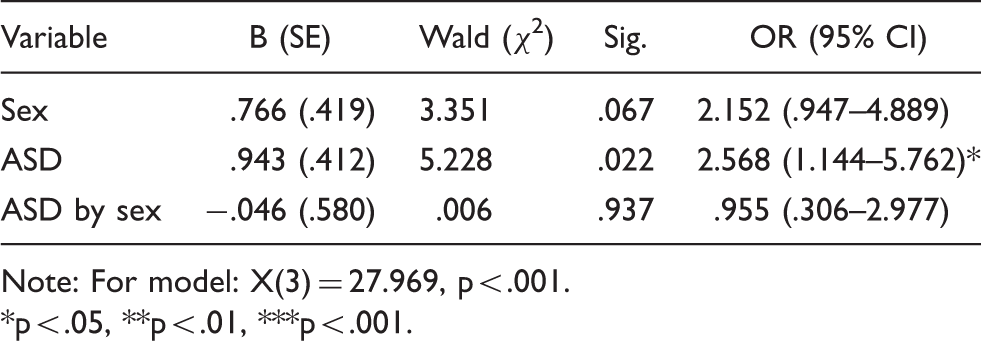
Note: For model: X(3) = 27.969, p < .001.
p < .05, **p < .01, ***p < .001.
Like to be emotionally close or prefer emotional distance (matched sub-sample).

Note: For model: X(3) = 7.501, p < .001.
Findings from the complete sample further indicated neither sex (p < .061; OR = 2.152) nor the ASD × sex interaction (p < .937; OR = .955) were significant, which was confirmed in the matched sub-sample analysis. This indicated there was no difference in preference for emotional closeness with friends between males and females in the sample generally (p < .061) nor between females with autism and males with autism.
Find a friend, then think of an activity to do together
Find a friend, then think of an activity to do together (complete sample).

Note: For model: X(3) = 15.089, p < .002.
p < .05, **p < .01, ***p < .001.
Find a friend, then think of an activity to do together (matched sub-sample).

Note: For model: X(3) = 6.529, p < .002.
p < .05, **p < .01, ***p < .001.
Make new friends or keep old friends
Make new friends or keep old friends.

Note: For model: X(3) = 7.176, p < .067.
p < .05, **p < .01, ***p < .001.
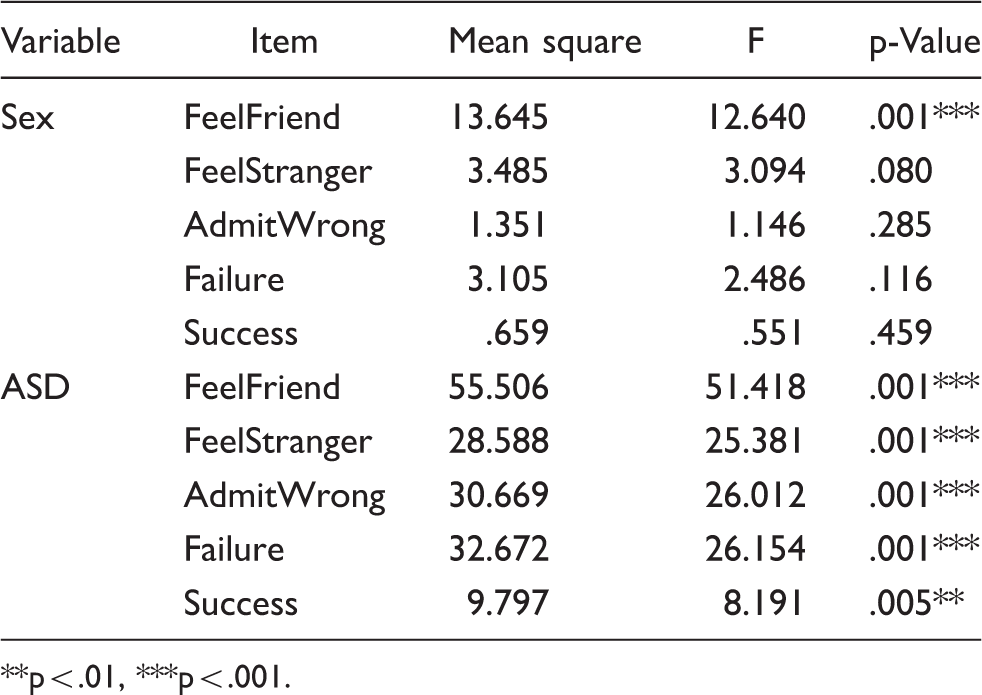
Sharing personal information
Sharing personal information with friends – significantly different means.

Sharing personal information with friends – between-subjects effects.
*p < .01, ***p < .001.
Prediction of group status
Forward step-wise logistic regression was used to determine the individual survey items that best predicted the group status (ASD or non-ASD) of the survey respondents. Results indicated responses to the questions about preferences related to having someone to confide in versus having someone to have fun with; having someone who feels the same way about life versus likes to do the same things; and preferences for physical closeness or distance in friendship relationships were the best predictors of group status. Responses to the question about preferences for physical closeness or distance was the best predictor of group status (p < .001) followed by preferences for someone to confide in or have fun with (step 2; p < .001) and having a friend who feels the same way as you or likes to do the same things as you do (step 3; p < .032).
The analysis correctly classified 64% of the participants with autism and 81.3% of the participants without autism and indicated participants with autism were more than five times more likely to report a preference for physical distance in their friendships, close to four times more likely to report a preference for a friend to have fun with over having a friend to confide in, and 1.97 times more likely to seek friendships with people who like to do the same things over friends who feel similarly about life.
Best predictors of group status (whole sample).

Variable(s) entered on step 1: CloseFar.
Variable(s) entered on step 2: ConfideFun.
Variable(s) entered on step 3: DoFeel.
Best predictors of group status (matched sub-sample).
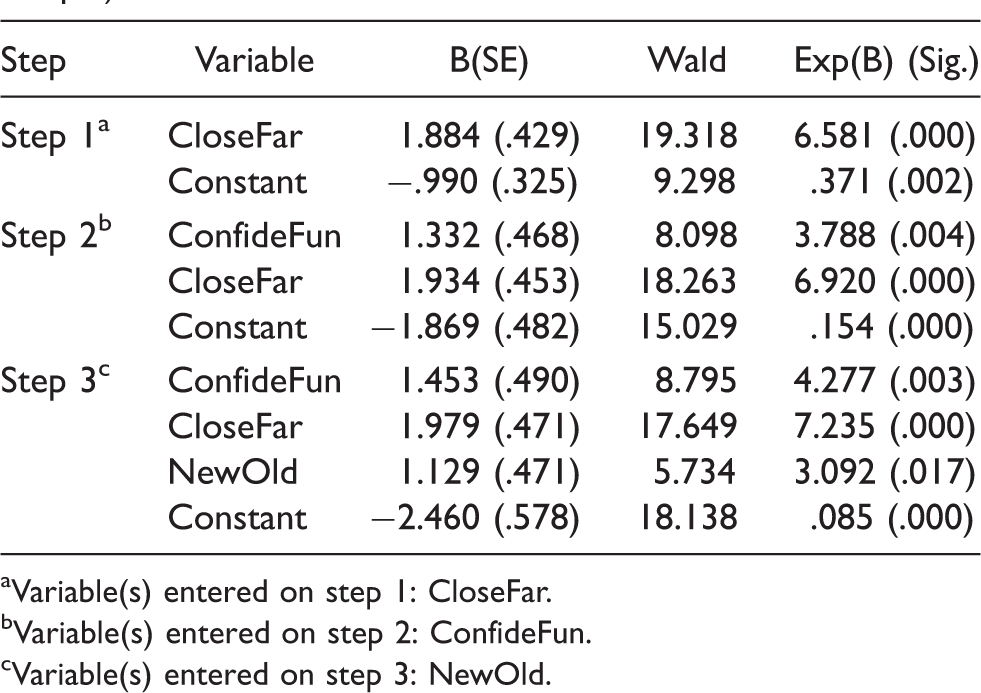
Variable(s) entered on step 1: CloseFar.
Variable(s) entered on step 2: ConfideFun.
Variable(s) entered on step 3: NewOld.
Gender differences in group classification
A bivariate cross-tabulation analysis was completed to describe the relationship between gender and group status based on responses to the three survey items determined to best predict group status (i.e. CloseFar, ConfideFun, and DoFeel; see Tables 13 and 14). Results of the cross-tabulation indicated 28.2% of the male participants with autism were misclassified in the non-ASD group based on their survey responses; and 45.9% of the female participants with autism were misclassified. Further, 25.7% of the male participants without autism were misclassified, while only 15.6% of female participants without autism were misclassified based on their survey responses.
Predictors for classification of male participants
Best predictors of group status for male participants (whole sample).

Variable(s) entered on step 1: CloseFar.
Variable(s) entered on step 2: ConfideFun.
Predictors for classification of female participants
Forward step-wise conditional regression was also used to determine the best predictors of group assignment for the female participants in both groups (ASD and non-ASD). Results indicated a single variable, CloseFar (p < .001), was the only variable that predicted group membership for the female participants. At step 1, the variable CloseFar predicted group membership for female participants with autism 71.4% of the time, and 76.4% of the time for female participants without autism. According to the regression analysis, females with autism were eight times more likely than the female participants without autism to report a preference for physical distance in their friendships.
Best predictors of group status for female participants (matched sub-sample).

Variable(s) entered on step 1: CloseFar.
Variable(s) entered on step 2: NewOld.
Discussion
The aims of the current investigation were: (1) to identify the similarities and differences in the broad perspectives and friendship practices of young adults with and without autism; and (2) to identify the friendship preferences that most define the perspectives of young adults with autism, that is, to determine the perspectives that are most specific to young adults with autism. It was hypothesized that the differences would outnumber the similarities and that there would be a lack of congruence in perspectives for most, if not all of the topics addressed in the survey items; and that the participants with and without autism would differ most significantly with respect to their preferences for physical and emotional proximity.
Congruence in broad perspectives and friendship practices
The literature on friendship indicates congruence between friends is important to friendship intensity and longevity (Bagwell & Schmidt, 2011). Understanding the perspectives of people with autism with respect to what they would prefer and potentially value in their friendships might increase understanding about the friendships people with autism currently have as well as support the development of new friendships. Before friendships are established, congruence in perspectives, beliefs, values, and preferences may help predict the likelihood that two people would get along and have positive interactions with each other. The goal of the current project was to better understand how young adults with autism approach friendship generally (i.e. their friendship preferences and practices) and to compare these preferences to those stated by their same age peers without autism. The similarities identified may be markers of congruence in general friendship practices and perspectives between young adults with and without autism, while the differences may be explored as topics for negotiation or further discussion between two people during the process of becoming friends.
Results of the current project identified primarily differences in the broad perspectives and friendship practices of young adults with and without autism. These findings are significant because they may assist with interpreting the findings in the research literature to date with respect to the well documented differences in the quantity and intensity of the friendships of people with autism (Petrina et al., 2014). The results of the current project may provide a context for understanding the values and priorities that should be considered as two people (whether they have an ASD diagnosis or not) embark on a new potential friendship and may help people with autism (as well as clinicians, educators, and caregivers) understand why some friendships flounder and others are established and maintained with relative ease.
In general, the results of the current project indicated young adults with autism are not satisfied with the number of friends they currently have and would like to have more friends. Of the current sample, nearly 60% of the respondents with autism (n = 75/125) indicated they were not satisfied, while only slightly under 18% (n = 22/125) of the respondents without autism reported having this same perspective. This is consistent with the research literature (though most of the studies that have been published to date included participants who were younger than the current sample) which indicates both boys and girls with autism want to have friends and want to make new friends (Daniel & Billingsley, 2010; Sedgewick et al., 2016). It has also been established that most people with autism have at least one reciprocal friendship (Mendelson et al., 2016), but the current evidence suggests young adults with autism want more friends than they currently have.
The results further indicated individuals with autism, at the group level, expressed different preferences for their friendships than their non-autistic peers. For example, young adults with autism reported a preference for being friends with other people who share similar interests, that is, with people with whom they would have things to do (65.9%; n = 83/126) over being friends with someone who feels the same way about life as they do. This is an interesting pattern of results because it could be seen as being at odds with the reported preference for more physical distance.
It may be that the participants with autism find methods of interacting with others that allow them to both focus on the shared interest or activity, and also remain physically distant, while being pragmatically appropriate for the context all at the same time. For example, Kuo, Orsmond, Cohn, and Coster (2013) reported younger individuals with autism preferred spending time with their friends playing games, primarily video games and board games, followed by physical activities, and playing on the computer. In fact, adolescents with autism who reported spending time with their friends playing video games reported greater feelings of companionship with their friends compared to adolescents with autism who did not play video games with their friends (Kuo et al., 2013). Playing video games with friends, especially playing video games online, would allow a person with autism to be friends with someone with a shared interest and also maintain physical distance. These data, taken collectively, appear to indicate the opportunities provided by virtual interactions, and game-based interactions, could provide an ideal context for friendship formation and/or maintenance based on the preferences for friendships reported by the young adults with autism in the current study (Finke, 2016; Finke, Hickerson, & Kremkow, 2018).
This is also consistent with the results for the survey item about whether the respondents with autism would rather think of an activity first, and then find a friend to do that activity with, or, alternatively, find a friend to spend time with and then come up with an activity to do together. Although the results from the between-groups statistical comparison did not indicate a significant difference between the preferences of the two groups (differences were detected for the sub-sample of participants), well over half of the participants with autism in the original sample reported a preference for choosing an activity first and then finding a friend to do that activity with them. Participants who responded to the survey in this way may prefer finding a context where they feel comfortable (e.g. an online game or forum) and then extending invitations to others to join them in that activity after the common ground has been established. This could help the person with autism ensure they will have a place to start with conversation and interaction.
Finally, it is interesting to consider the different ways young adults with and without autism would channel their energy with respect to their friendships when faced with a move to a new place. A clear majority of young adults with autism reported they would spend their time and efforts maintaining their current, established, friendships (59.5%; n = 75) rather than putting that time and effort toward making new friends in their new location. This may confirm the findings in the literature that some people, particularly boys, with autism find it difficult and overwhelming to make new friends (Daniel & Billingsley, 2010). The results reflect the perspective of the young adults with autism that friends are valuable and cannot be replaced easily (Vine Foggo & Webster, 2017). Many of the respondents without autism appeared to feel similarly, as their responses were fairly evenly split between the two options. Only slightly over half reported they would dedicate more of their time and energy to making new friends in their new area (52%; n = 65).
Friendship preferences that most define the perspectives of young adults with autism
Ultimately, the data collected in this current project appear to identify several friendship preferences that define the perspectives of the participants with autism. These preferences may be the foundation on which negotiations regarding congruence or, at the very least, acceptance of differences in preferences may need to begin in order for a friendship with a person with autism to be established and maintained with a person without autism. The first, and arguably most, defining factor is the preference for either physical closeness or physical distance in friendships. This variable predicted group membership for all participants (male and female) in both groups (ASD and non-ASD). The young adults with autism reported a preference for keeping physical (65.9%; n = 83) distance from other people, unlike their peers without autism who reported preferring physical (76%; n = 95) closeness. Other survey items that assisted in predicting the group status of the participants included preferences for having someone to confide in or have fun with. The respondents with autism were also more likely to prefer having someone to have fun (60.8%; n = 76) with over having someone to confide in (38.9%; n = 49). This was again, opposite of the preference of the young adults without autism (79.2%; n = 99) who reported a preference for having someone to confide in over someone to have fun with.
Implications
The results of the current study indicate a lack of congruence in almost all of the areas surveyed between young adults with and without autism at the group level of analysis. When looking at the data on an item-by-item, and group-by-group level, however, it is clear the responses were not unanimous for one response option or another for any survey item for either group. This would indicate there could be people with and without autism who have higher levels of congruence in their friendship preferences than the analysis of the data at the group level shows. Based on this, and the research literature available to date, it would seem young adults with autism may form friendships with other young adults with or without autism that are based on congruent preferences about friendship, but that these instances would be more the exception than the rule. It is more likely that there will need to be discussion and negotiation about friendship preferences and how these preferences may translate to behaviors within friendships as new friendships are being established, if they are to be maintained longer term.
The results of the current investigation do, however, offer a potential explanation for the higher proportion of individuals with autism who report being friends with other people with autism (Bauminger & Kasari, 2000; Bauminger & Shulman, 2003; Bauminger, Solomon, Aviezer, Heung, Gazit, et al., 2008; Cook et al., 2018; Locke et al., 2010). According to the results of the current investigation, young adults with autism have a higher likelihood of having congruent perspectives and preferences in friendships with other young adults with autism than with their peers without autism. This finding has important clinical implications. Although friendships should not, and cannot, be artificially prescribed (Finke, 2016), the results of the current investigation can guide clinicians, teachers, parents, and others involved in the daily lives of individuals with autism in creating opportunities for interactions with others on the spectrum. These findings can also support the assertions that considering other formats for interaction, other than face-to-face, may better accommodate the preferences of people with autism (Finke, 2016).
Research has demonstrated that for people without autism, having friends is crucial to well-being and the development of adequate cognitive, linguistic, and social skills (Howes, 2009). What is not known is whether these findings generalize to people with autism, and whether a friendship must have certain qualities or characteristics in order for these stated benefits to be realized. What is better understood on the basis of the findings from the current project is that people with autism want to have friends, they want to have more than one friend, and they have stated some preferences about how those friendships be constructed. People with autism have reported they would generally prefer less physical and emotional closeness in their relationships, but it is not known how these stated preferences translate to real life interactions with other people and how they manifest during the friendship formation process. It is not known if some of these preferences are non-negotiable or if all are negotiable to some extent to make compromises and find common ground with potential friend candidates. According to the results of the current investigation, the majority of people with autism have stated they have different friendship preference than those without autism. This needs to be the new basis for understanding the friendships of young adults with autism, this is the new lens through which researchers and clinicians alike need to think about, plan for, and support the friendships of individuals on the autism spectrum.
Limitations
Although this study utilized many best-practice guidelines for survey development, some limitations may affect the generalizability of the results of the survey. First, respondents were a self-selected convenience sample, not a randomized sample of the population; therefore, the respondents may not be representative of all young adults with and without autism. For example, young adults with autism who were dissatisfied with the number of friends they currently have, those who have had negative friendship experiences, or those who have had less success in making and/or maintaining friendships may have been more likely to take the survey to express their dissatisfaction; whereas, those who had more friends or who were more satisfied with their friendship outcomes may not have committed the time for the survey. Similarly, the sample may have demographic characteristics that differ from the population of people generally. The proportion of males with autism compared to females with autism was roughly consistent with the overall prevalence statistics. However, it should be noted the proportion of males and females across the groups was inverted. That is, there were more males in the ASD group and more females in the non-ASD group. The impact this may have had on the overall results was minimized through creation of a matched sub-sample and reanalyzing all of the data. The results were largely the same as with the whole sample, but where differences existed they have been reported in the results section. Finally, participants for the control condition were recruited using social media; therefore, there was no way to confirm the participants in this group are truly without a diagnosis. All potential participants were asked whether they had an ASD diagnosis or not, but confirmatory checks of diagnostic status could not be completed for the participants who were recruited through social media sources.
Additionally, due to the online, self-administration nature of the survey, respondents were not able to ask questions regarding the survey content. It is possible respondents answered in a way they thought was appropriate for the question, but was not compatible with the researcher’s intent. To decrease the effect of this limitation, a pilot test with members of the target population was conducted and noted ambiguities were corrected prior to wide distribution of the survey instrument.
Future research
Future research should continue to examine the congruence of perspectives, values, beliefs, and practices relative to friendships between young adults with and without autism. Future research could collect data on actual friendships or investigate specific friendship styles or behaviors of individuals with and without autism. This information would add to and expand on the current findings on general friendship perspectives and preferences. Future research could also investigate ways to support people with autism in identifying other individuals with congruent friendship perspectives and preferences, and examine how to construct environments and contexts that may encourage friendship formation between people with autism. A better understanding of the supports that may be necessary to scaffold emerging and developing friendships for young adults with autism would help address both the WHO model “disability” and “impairment” aspects of having and ASD diagnosis (Donaldson et al., 2018).
Footnotes
Declaration of conflicting interests
The author(s) declared no potential conflicts of interest with respect to the research, authorship, and/or publication of this article.
Funding
The author(s) received no financial support for the research, authorship, and/or publication of this article.