




Abstract
Background and aims
Children diagnosed with an autism spectrum condition are known anecdotally to be especially vulnerable during the transition to secondary school. Yet, very little is known about the child-, school- and system-level factors that can potentially make changing schools particularly difficult for these children. Here, we report on a mixed-method study, which examined the factors that influence a successful school transition for autistic children in one local education authority in England.
Methods
Fifteen children were seen twice in the space of four months – once during the final term of their mainstream primary school and again during the first term of secondary school. Parents and teachers were also interviewed at both time points.
Results
Overall, our participants reported negative experiences of their transition to secondary school – regardless of the type of secondary provision (mainstream or specialist) to which they transferred. None of the child-level factors measured during the pre-transition phase, including verbal ability, autistic symptomatology, sensory responsiveness and anxiety, predicted children’s transition success four months later. Rather, transition success appeared to be predominantly related to several school- and system-level factors, including tensions over school choice, delays in placement decisions, lack of primary preparation and communication between schools. Identity-related issues were also a key concern for many children, which appeared to have a particularly negative influence on adjustment to their new school.
Conclusions
We identified predominantly negative experiences of primary-to-secondary transition for the autistic children sampled here, which appeared to be accounted for largely by school- and system-level factors.
Implications
Applying interventions that are designed to ease the transition to secondary school by modifying the school environment before, during and after transition to improve the fit between the autistic child and their educational environment should go some way in tackling school-related barriers to a successful transition for these children. System-level changes in the way that local authorities manage the transition process may also improve children and families’ experiences.
The transition from primary to secondary school is a landmark moment in a child’s life (Zeedyk et al., 2003). The move to a new school, with new teachers, new routines and new friends can be an exciting time, affording many opportunities (Coffey, 2013). Equally, however, the discontinuities across social, academic and organisational spheres can also present considerable challenges. Indeed, the loss of familiar places, structures and people together with a ‘fear of the unknown’, particularly of greater academic and social demands and the prospect of bullying, can be daunting for children at the cusp of adolescence (Ashton, 2008; Coffey, 2013; Evangelou et al., 2008; Zeedyk et al., 2003). Although many children adapt well to these changes (Evangelou et al., 2008), others struggle to adjust – which can sometimes have detrimental consequences, including lowered self-esteem and decline in academic progress, combined with increased anxiety and depression (Ashton, 2008; Galton et al., 2003; West et al., 2010; Zeedyk et al., 2003). Understanding the key factors underlying a successful school transition – at the level of the child but also within the broader context of the family and school environments – is therefore of considerable importance, particularly for children who are at risk of negative transition experiences (Chung et al., 1998).
The current study focuses on the primary-to-secondary transition process for one group of children, who may be especially vulnerable during this period, namely those diagnosed with an autism spectrum condition (hereafter, ‘autism’). Although autism is most well known for the way it affects how a child interacts and communicates with others, difficulties with transitions – whether at the micro level (e.g. moving between activities) or the macro level (e.g. moving between schools; Attwood, 1998) – are also one of the defining characteristics of the condition (American Psychiatric Association [APA], 2013). Autistic 1 children, 70% of whom are educated within mainstream schools in England (UK Department for Education, 2016), often face additional challenges with their learning and behaviour, and are at increased risk of developing mental health problems, especially anxiety (Simonoff et al., 2008). These child-related factors can make it hard to include these children effectively within mainstream schools compared with children with other special educational needs (SEN; House of Commons Education and Skills Committee, 2006; Parsons, Lewis, & Ellins, 2009) and may hinder the successful transition to secondary school.
The school environment itself can also present challenges for autistic children. Secondary schools are often physically large, noisy and chaotic, which may be overwhelming for children with heightened sensitivity to sensory stimuli (APA, 2013). Transitions between classes occur frequently throughout the school day, which may be difficult for autistic children to adjust to without appropriate support. The social milieu also becomes increasingly more complex during mainstream secondary school, with the majority of neurotypical children concerned with belonging to a peer group. Although studies report autistic children and adolescents’ desire to fit in and ‘act normal’ (Carrington & Graham, 2001; Humphrey & Lewis, 2008), they also report being marginalised, often having fewer friends than typical children (Bauminger & Kasari, 2000; Calder, Hill, & Pellicano, 2013; Rotheram-Fuller, Kasari, Chamberlain, & Locke, 2010) and being the victims of teasing and bullying (e.g. Humphrey & Symes, 2010). Further still, secondary schools make increasing demands on students’ academic progress, including the ability to learn independently. Organising their own learning is an area in which autistic children and adolescents often show considerable difficulty, placing them at serious risk of academic underachievement (Jones et al., 2009; see also Keen et al., 2016, for review).
Given autistic children’s intrinsic characteristics and the nature of the secondary school context, it is not surprising that the transition to secondary school may be a particularly testing time for these children. In the surprisingly few existing studies on the primary-to-secondary transition process, the factors identified as important for autistic children overlap considerably with those found to predict successful transition in non-autistic children, including concerns about their new environment, structures and routines (Dann, 2011; Jindal-Snape et al., 2006), elevated levels of anxiety (Dann, 2011; Peters & Brooks, 2016) and fear of bullying (Dillon & Underwood, 2012). Importantly, however, these factors appear to be exacerbated in those on the autism spectrum. Consequently, parents (Dann, 2011; Dillon & Underwood, 2012; Peters & Brooks, 2016; Tobin et al., 2012), teachers (Dann, 2011) and the young people themselves (Jindal-Snape et al., 2006; Maras & Aveling, 2006) highlight the need for greater preparation for the transition, including effective home–school communication and collaboration, continuity of support and prior familiarisation with the secondary school environment, staff and structures.
The demands of mainstream secondary school combined with the perceived lack of teachers’ understanding of their individual child’s needs lead many parents to question whether this setting is the ‘right’ learning environment for their child, even for those who are intellectually able (McNerney et al., 2015). This issue is particularly pertinent in England where, under the Children and Families Act 2014, parents of children with SEN, including autism, are legally entitled to state their preferred placement on school choice applications, which could include a continuum of placements, ranging from general mainstream provision to specialist provision of varying degrees – a preference that local education authorities have a duty to consider (UK Department for Education, 2014). Several studies have shown that parents of autistic children find this process unduly stressful and bureaucratic (McNerney et al., 2015; Tissot, 2011; Tissot & Evans, 2006), with reports of insufficient support in the decision-making process (Parsons et al., 2009), especially when their views on the ‘right’ placement conflict with their child’s (McNerney et al., 2015). Indeed, in McNerney et al.’s study, parents desired a nurturing, flexible and inclusive secondary-school environment, which emphasised both academic and life skills and which had staff that had some understanding of autism, but their cognitively-able children were instead concerned with social issues, especially wanting to continue their school career with their primary-school friends. This process of choosing a school, the associated anxiety and uncertainty of the decision-making process, both for parents and children, and the potential tensions that exist between parents, children and local education authorities are therefore likely to have an additional and significant impact on autistic children’s secondary school transition experience.
A few studies have attempted to examine the factors associated with a successful primary-to-secondary school transition for autistic children, and some have made important potential discoveries. All of these studies have, however, either been piecemeal in their approach (e.g. focusing on child factors only [Mandy et al., 2016a] or on one informant only [Dillon & Underwood, 2012; Tobin et al., 2012]), been small in scale (e.g. with samples sizes less than 7; Dann, 2011; Jindal-Snape et al., 2006) or relied on a narrow methodology (e.g. quantitative methodology alone [Peters & Brooks, 2016] or gained views at one time point only [Jindal-Snape et al., 2006; McNerney et al., 2015]). The current study therefore sought to address these issues by conducting a comprehensive investigation of autistic children’s transition from primary to secondary school, focusing on the crucial child-, school- and system-level factors influencing this process from the perspective of the children themselves, their parents and their teachers both before and after the move to secondary school.
To this end, we saw 15 autistic children twice within the space of four months. During the first, pre-transition phase, we assessed children’s general cognitive ability, autistic symptomatology, sensory responsiveness and trait anxiety to describe the cognitive and behavioural profile of the children we had sampled and to determine which, if any, of these child-related factors were predictive of transition success. We also conducted semi-structured interviews with the children themselves, their parents and primary-school teachers to gain their perspectives on the impending transition to secondary school.
During the second, post-transition phase, children and parents completed a questionnaire, which asked questions about their experience of the transition process and provided an index of transition success (based on Evangelou et al., 2008). Children and parents were interviewed again about their experiences of the transition process and we also interviewed the secondary school teachers of a sub-sample of children.
It is noteworthy that, to be included in this study, children needed to be in their final year (Year 6) of mainstream primary school. During transition, only seven of the children continued on to mainstream secondary school; the remaining children transferred to specialist provision. This serendipitous divide allowed us to examine in greater depth potential differences between these two groups in terms of pre-transition cognitive and behavioural characteristics, post-transition success and their experiences of transition more broadly.
Method
Participants
Fifteen autistic children (two girls) were recruited from one particular local educational authority in England. The authority is densely populated and sits outside of, but within proximity to, London. More than 190,000 children and young people attend educational provision in the local authority with more than half concentrated in more urban districts. There is less diversity in this particular local authority compared to England as a whole: 21% of children come from ethnic backgrounds other than White British (less than the national average, at almost 30%) and approximately 8% are eligible for free school meals (less than that of England as a whole; ∼14%). A significant minority (14%) has an identified SEN, 30% of whom have autism identified as their primary type of need. Three percent of all pupils have statements of SEN or Education Health and Care plans (UK Department for Education, 2016).
Participant details.

ADHD: Attention Deficit Hyperactivity Disorder; SENCo: Special Educational Needs Co-ordinator; TA: Teaching Assistant.
Scores for individual children on measures of cognitive ability, autistic symptomatology, sensory responsiveness and trait anxiety and summary statistics.
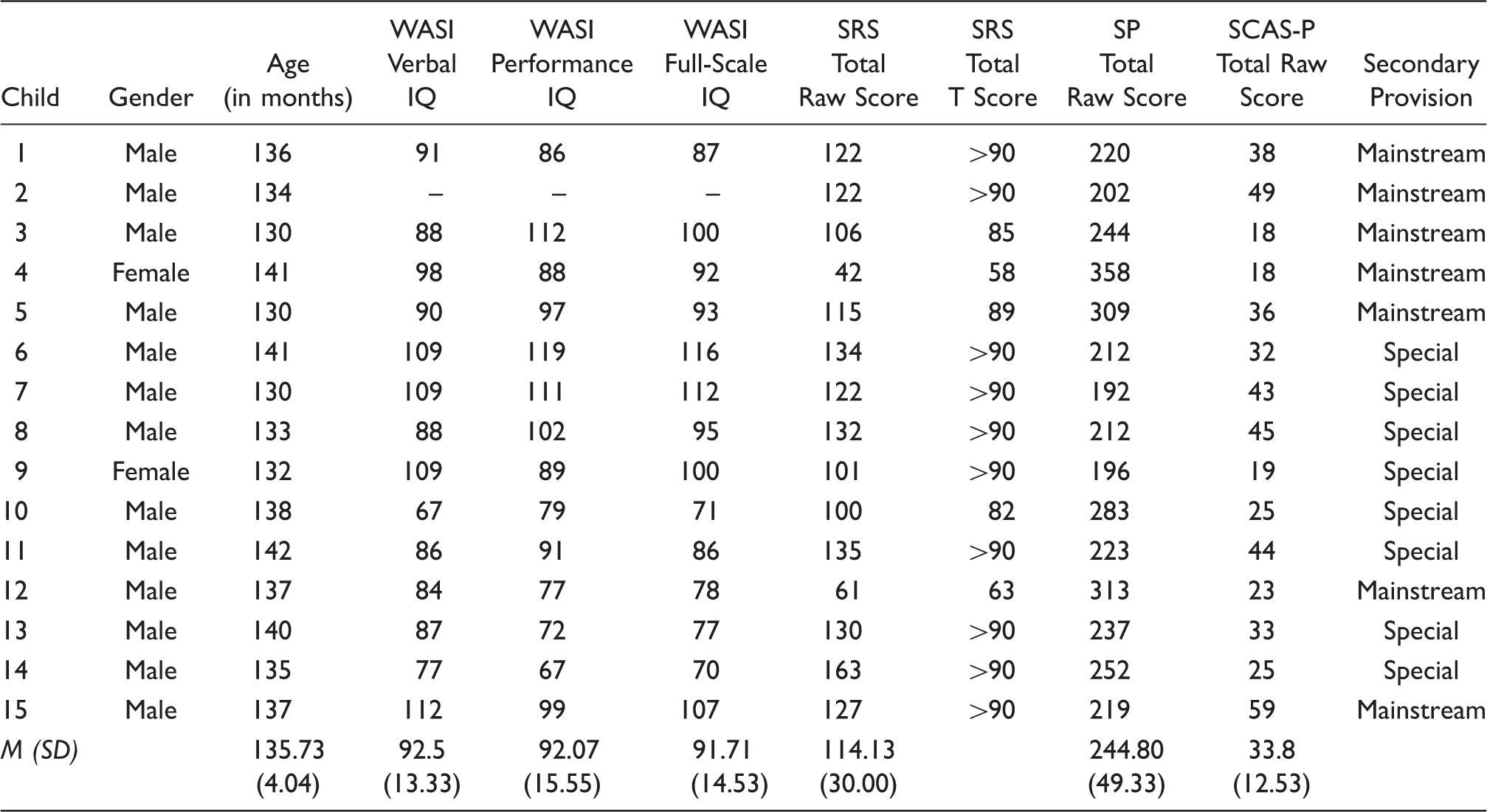
WASI: Wechsler Abbreviated Scale of Intelligence; SRS: Social Responsiveness Scale (scores of >76 are strongly associated with a clinical diagnosis for an autistic spectrum condition); SP: Sensory Profile (lower scores reflect greater levels of sensory responsiveness); SCAS-P: Spence Children’s Anxiety Scale for Parents (higher scores reflect greater levels of anxiety).
One biological parent (13 mothers; 1 father) of each of the child participants took part, with the exception of the parents of one child (child 14) whose adoptive mother and father took part, in both the pre- and post-transition interviews. Thirteen primary-school teachers (12 female) and 5 secondary-school teachers (4 female) agreed to be interviewed during the pre-transition and post-transition phases, respectively.
Procedure
Pre-transition questionnaires
Children’s autistic symptomatology was measured using the Social Responsiveness Scale (SRS; Constantino & Gruber, 2005), a parent-report 65-item questionnaire that assesses social and behavioural difficulties associated with autism in children and adolescents. On each item, parents are asked to rate their child’s behaviour over the past six months a 4-point scale ranging from ‘not true’ (score of 1) to ‘almost always true’ (score of 4). SRS total raw scores and T scores are reported in Table 2; higher scores indicate greater severity of symptoms. The SRS has excellent reliability (Cronbach’s alpha = 0.95) and strong predictive validity.
The Sensory Profile (SP; Dunn, 1999) was used to index children’s sensory responsiveness. The SP is a 125-item parent-report questionnaire, which measures frequency of observable sensory behaviours (e.g. ‘withdraws from splashing water’) on a 5-point scale ranging from ‘always’ (score of 1) to ‘never’ (score of 5). These scores are summed to yield a total score, with lower scores indicative of greater sensory symptoms. The SP shows good psychometric properties, with Cronbach’s alpha ranging from .47 to .91. Note that the upper age range of the children in the current sample exceeded the age range of the normative population for the SP (5:0–10:11 years). Therefore, raw rather than standardised scores are reported in Table 2.
Finally, children’s trait anxiety was measured using the 38-item Spence Child Anxiety Scale for Parents (SCAS-P; Spence, 1997). Parents rate the frequency of anxiety-related behaviours (e.g. ‘my child is scared of the dark’) on a 4-point scale ranging from ‘never’ (score of 0) to ‘always’ (score of 3). This scale has been shown to have good psychometric properties, including excellent internal consistency (Cronbach’s alpha = 0.89; Nauta et al., 2004). Scores across all items are summed to yield a total score; higher scores reflect greater levels of anxiety (see Table 2).
Post-transition questionnaires
Children and parents were administered a questionnaire derived from a large-scale, national transitions study, the Effective Preschool, Primary and Secondary Education (EPPSE) transitions sub-study (Evangelou et al., 2008) to provide an index of ‘transition success’. Evangelou et al. (2008) defined ‘successful transition’ as a multidimensional construct made up of five underlying factors: developing friendships and confidence, settling in school life, showing a growing interest in school and work, getting used to new routines and experiencing curriculum continuity. The parent and child questionnaires were standardised on 550 children and their parents, 20% of whom were identified as having an SEN. Some minor alterations were made to the original EPPSE questionnaires. Items relating to entrance exams, buying resources for secondary school and racism were omitted from the parent questionnaire because these items (1) were deemed irrelevant for the aims of the present study and (2) had not been included in Evangelou et al.’s (2008) factor analysis in determining key transition dimensions. The final questionnaires included 36 items for children and 46 items for parents (the exact questions are available from the authors on request). All other aspects (wording, rating scales) remained unchanged.
Interviews
Face-to-face semi-structured interviews were carried out with children, parents and teachers at both the pre-transition and post-transition phases. In the pre-transition phase, the aim of the interviews with the child and parent was to discover which factors they felt could support or hinder transition and, ultimately, what a ‘successful transition’ would look like from their perspectives. Interviews with primary-school teachers sought to ascertain the structures and initiatives in place to support a child’s transition to secondary, and to identify their perceived key features of a successful transition.
In the post-transition phase, new interviews were conducted with each child and their parent, which examined how the child had settled into their new school and their perceptions of the transition process. Interviews with secondary teachers sought to understand the arrangements and adjustments made for children in the secondary context.
General procedure
Ethical approval for this study was approved by the Institute’s Research Ethics Committee. Parents of all children gave their written informed consent for their own and their children’s participation in the project and all children gave their verbal assent, with the exception of one child who did not want to be involved directly and therefore did not take part. All teachers also gave their written informed consent prior to participation.
Pre-transition interview sessions were organised during the children’s last term of primary school (Year 6). Children were seen individually in a quiet room at their school (n = 12) or home (n = 2) for approximately 45 minutes. The WASI was always administered first, followed by the interview. Visual support was used throughout the interviews, including emotion cards and mind maps. Interviews with parents and primary school teachers, conducted in school, lasted approximately 30 minutes. Parents completed the questionnaires immediately following the interview.
Post-transition interviews were organised to take place during the child’s first term of secondary school (Year 7), approximately four months after their initial interview. The researcher administered the post-transition questionnaire to the child prior to carrying out the post-transition interview. Parents received their post-transition questionnaire in the post and were asked to complete it prior to their post-transition face-to-face interview. All interviews were digitally recorded with participants’ prior consent.
Data analysis
Quantitative analysis
One of our aims was to determine which child-level factors were related to children’s successful transition to secondary school. To this end, we constructed a ‘successful transition’ score based upon Evangelou et al.’s (2008) post-transition parent and child questionnaires. The current sample size precluded the possibility of conducting our own factor analysis on the data. We therefore derived factor scores using the same items identified by Evangelou et al. (2008) for all five dimensions. To begin, individual items were first transformed to z scores, thus placing all of the items on the same scale. The z scores of the items within each individual factor (cf. Evangelou et al., 2008) were then averaged to yield a factor score for each of the five factors. Correlational analyses showed significant inter-relationships (Pearson r ranged from .36 to .62; see Supplementary Table 1): children who reported developing friendships and confidence in their new school were more settled in to secondary school life and more interested in school and work. The exception to this pattern was the ‘experiencing curriculum continuity’ factor, which was not significantly associated with any other factor in our sample (all rs < .21), and so was not included in the study’s overall ‘transition score’. Instead, this continuous variable was derived by averaging the scores of the four factors (‘developing friendships and confidence’, ‘settling in school life’, ‘showing a growing interest in school and work’, ‘getting used to new routines’), which showed significant interrelationships.
Analysis of qualitative data
All 73 interviews were transcribed verbatim. The data for each group (children, parents, primary-school teachers and secondary teachers) were analysed separately using thematic analysis (Braun & Clarke, 2006). We adopted an inductive approach, providing descriptive overviews of the key features of the semantic content of data within an essentialist framework. All three authors independently familiarised themselves with the data, meeting regularly to discuss preliminary themes and make a list of provisional codes. Each author then independently applied an exhaustive list of codes to each transcript. The authors met several times to review the results, resolve discrepancies and decide on the final themes and subthemes.
Results
Quantitative results
Descriptive statistics: Pre-transition phase
Table 2 shows the individual and mean scores for the autistic children on the WASI, the SRS, the SP and the SCAS-P. Overall, children’s full-scale IQ scores on the WASI varied widely, ranging from the 2nd to the 86th percentile. Thirteen children showed elevated scores on the SRS (within the ‘severe’ range), with two children showing lower scores, indicative of individuals with ‘mild-to-moderate’ autistic spectrum conditions. Children’s SP and SCAS scores also showed wide variation. Nine of the 15 children had a SCAS-P total score within the range suggestive of high anxiety levels (see Table 2). Even among the six children who did not reach this threshold, their scores were still considered to be elevated.
Pre-transition predictors of successful transition
We performed correlational analyses to investigate the relationship between children’s pre-transition scores on the WASI Verbal Scale, the SCAS-P, the SRS and the SP and individual differences in their overall post-transition success score. Although we did not have firm hypotheses, we tentatively expected that children with lower verbal ability and elevated levels of autistic symptoms, anxiety and sensory responsiveness would experience a less successful transition. Unexpectedly, however, Pearson correlation coefficients revealed no significant associations between successful transition and children’s pre-transition scores on the WASI Verbal Scale (r = −0.05), the SCAS-P (r = −0.10), the SRS (r = .20) and the SP (r = −0.11).
We also examined whether there were any differences between children who transitioned to mainstream and those who transitioned to specialist provision on pre-transition measures and transition success. We found no significant group differences in terms of their verbal ability, F(1,12) = 0.10, p = 0.76,
Children also did not differ in terms of their transition success, F(1,12) < 1, suggesting that transition success was not dependent on the type of secondary provision to which the child transferred.
Qualitative results
Themes and sub-themes identified from children’s pre- and post-transition interviews (n = 14).

Semi-structured interviews with children: Pre- and post-transition combined (see Table 3)
School is a challenge
Although some children enjoyed going to school, many spoke of their unhappiness in their current school, including their dislike of both schoolwork and homework. Several children also reported feeling unsupported by their teachers during school, especially during altercations with other children. This overall disaffection towards school made the prospect of going to secondary school difficult to face.
Difficulties adjusting to a new setting
The majority of children reported feeling daunted by the size of their prospective school, in terms of the physical space and the number of students and teachers. Many children also spoke about the changes in the curriculum, particularly the ‘lessons will be different, they will be harder’ and ‘more homework’, which they perceived to be almost unmanageable.
Consistent with these anticipated concerns, children reported difficulties in acclimatising to the demands of their new school, particularly those who had transferred to mainstream secondary school. For some children, becoming used to changes in people and routines was particularly challenging. Others noted the sensory challenges of a larger, busier, noisier environment. Children also spoke of their struggles to cope with the increased demands of the curriculum, the pressures of managing their homework and organising their personal effects (e.g. gym bag/kit). They also highlighted the different level of expectations and discipline they were experiencing within secondary school.
Not all of their sentiments were negative, however. Children also referred to supportive systems and structures, including visits to their new secondary school prior to transition; diaries, timetables and planners to help them organise their secondary-school lessons and homework; student buddies and teachers to help them navigate their way around their new school; and social skills groups to support them with making friends.
Continued social difficulties
Prior to transition, children reported experiencing challenges with their peers, including bullying and exclusion. The descriptions they gave were, in some cases, linked to feelings of unhappiness, loneliness and social isolation within school. Some also reflected on how their own differences made them susceptible to bullying. Several children, however, spoke positively about their friendships during primary school, although these friendships did not appear to be of a reciprocal nature or were with younger children. Even in those cases where the children had been successful in forming friendships, their circle of friends was often small – which they themselves recognised.
In light of these comments, it is not surprising that children’s worries about the transition were largely focused on the social difficulties they might face at secondary school. While many children were upset at the prospect of being separated from their primary-school peers, they also reported ‘being excited and apprehensive’ about forming new friendships. For other children, this excitement was marred by the belief that they would also have new conflicts to contend with. One child summed up his feelings about his impending transition: ‘I am not ready yet to go.’
The children felt this loss of familiar relationships as they transitioned to secondary school, referring explicitly to missing their primary-school teachers and their friends who had transferred to a different school. Other children told us that making ‘friends is hard and getting to know new people, because I haven’t really got any friends. I should have more’. Some felt that this was a result of not being with the same pupils across lessons.
Not fitting in
For children transitioning to mainstream secondary, some children reported feeling more aware of their differences, referring to themselves as ‘weird’ or a ‘nerd’ and had sought ways to fit in, including ‘all you have to do is act normal’, ‘being funny’ or helping students with directions and how to use computers. Some children reported feeling vulnerable and were particularly concerned about older children in/on the playground. In other cases, it was appearing ‘different’ or not fitting in that they felt was causing them to be more susceptible to torment. Some of these children had clearly not accepted being in their new school. Several children reported particularly negative experiences: ‘I am more depressed’; ‘That’s why it is very hard not to cry sometimes because it brings lots of memories [thinking about primary school]’.
Of the children who transferred to secondary specialist provision, more than half rejected their new ‘special’ identity. Some reported being ill-prepared for the move. They spoke of finding their new peers annoying and intolerable. They also ‘found it difficult to make friends’ and, in particular, comparing themselves to their ‘special’ peers, having trouble understanding why they had not transferred to their local mainstream school.
Semi-structured interviews with parents: Pre- and post-transition combined (see Table 4)
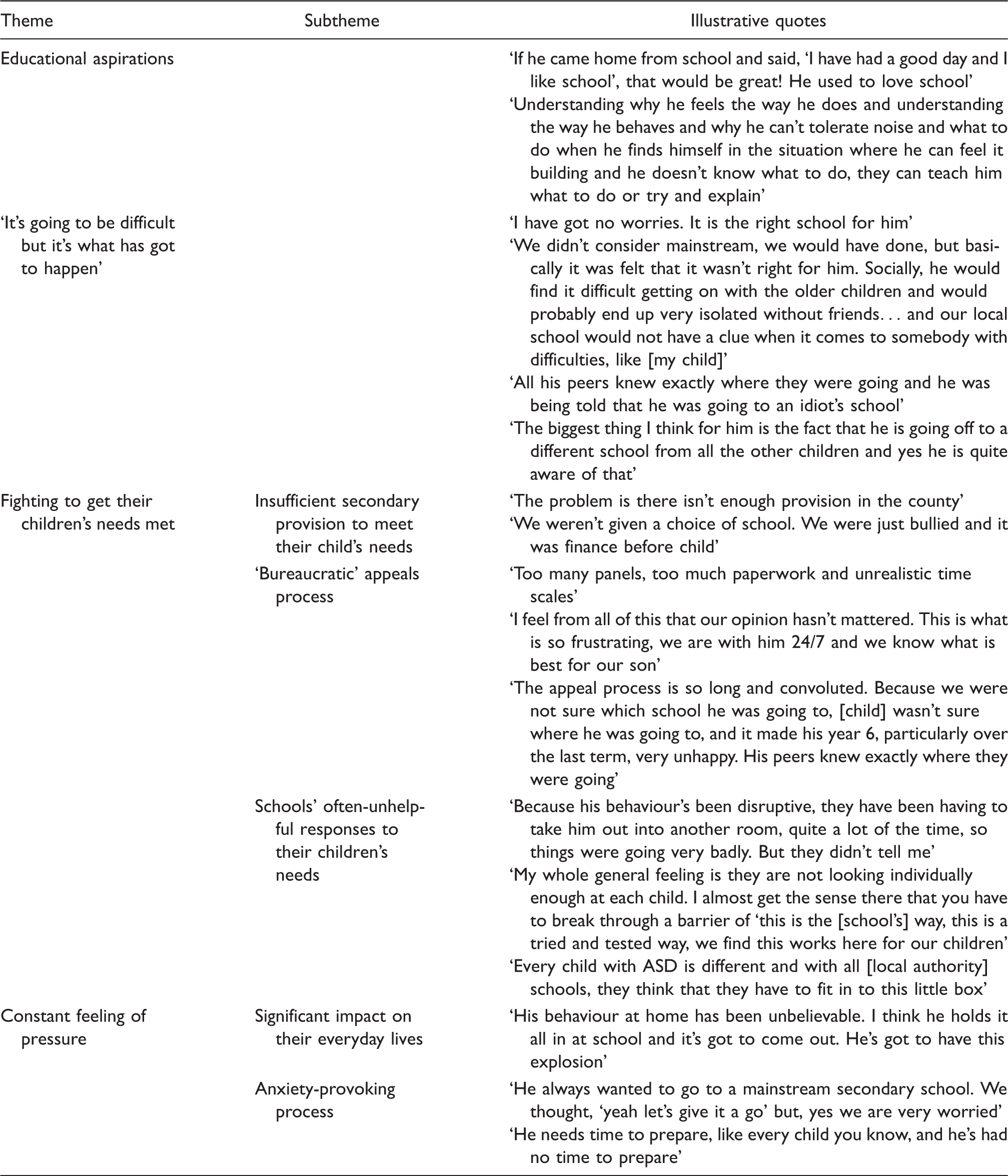
Educational aspirations
Themes and sub-themes identified from parents’ pre- and post-transition interviews (n = 14).
Themes and sub-themes identified from primary school teachers’ pre-transition interviews (n = 13) and secondary school teachers’ post-transition interviews (n = 5).

‘It’s going to be difficult but it’s what has got to happen’
For some children who transitioned to a specialist secondary school, this decision was made by their parents, despite their children showing opposition. These decisions were made largely on the basis that they felt that their children would not be able to cope in a mainstream setting. Some parents appreciated, however, the potentially negative effects this mainstream-to-specialist transition may have on their child, not least confusion and conflict to their personal identity.
For some of the children who transitioned to a mainstream secondary school, some parents noted ‘how badly he wants to fit in’ and how their children resisted support that could make them stand out as needing extra help, such as eating lunch in a designated room or accessing a teaching assistant. Other parents highlighted their children’s intolerance of their peers, which impacted upon their ability to effectively interact with others: ‘He thinks the other children are silly and they are all idiots, which isn’t really going to help him make friends’. Some parents highlighted how their children’s difficulties adjusting to their new school were so pronounced that they were either absconding from school or showing behaviours that drew attention towards rather than away from their differences (e.g. one child wore a blazer over his head during the first few weeks at school).
Fighting to get their children’s needs met
Many parents stressed the struggles they had experienced getting their children’s needs met within education: ‘I think that’s the hardest thing. I want to stop fighting now. I want to be able to put my feet up and concentrate on my other children instead of dreading a phone call that it’s the school and I am going to have to go up’. These difficulties continued when it was time to decide on a secondary school placement. Parents overwhelmingly felt that there was insufficient secondary provision to meet their child’s needs – there were too few schools with specialist expertise, an often limited number of places in these schools, with many schools a prohibitive distance from home, which ultimately resulted in conflicts with the local authority. In fact, one third of families had been involved in a ‘bureaucratic’ appeals process with the local education authority regarding an appropriate secondary school placement, with ‘too many panels, too much paperwork and unrealistic time scales’. They also highlighted opaque decision-making processes, poor communication channels and the lack of two-way partnership with the local education authority. Despite feeling they knew their child the best, the parents described feeling not listened to, resulting in them feeling very alone and unsupported.
This lengthy ‘fight’ meant that sufficient and appropriate transition arrangements were compromised, including delaying or even missing out altogether on transition visits, which ultimately they felt left their already-vulnerable youngsters feeling distressed, isolated and unhappy during their final term at primary school.
Parents also spoke of the schools’ often-unhelpful responses to their children’s needs. For those transitioning to mainstream secondary schools, parents felt that these schools showed an inability, or in some cases, a reluctance to tailor provision to their child’s specific needs. One parent described how a teacher questioned whether the receiving secondary school would be able to accept her child and meet his needs. Other parents spoke of the poor communication they were receiving from the new secondary school.
Parents also experienced a similar lack of responsiveness by some specialist secondary schools. They were concerned that even these specialist schools were unable to meet the holistic needs of their child, in terms of access to therapy for their language, sensory and mental health needs, or to meet the needs of their autistic children who were of average academic ability but nevertheless perceived to be unable to cope within a mainstream environment. Four parents reported having been turned away from numerous schools either because their child did not fit the schools’ criteria or they had received overt messages from schools, both mainstream and specialist providers, that they would not be able to cope with their child or meet their needs. One family reported having been turned away from more than 10 schools, which meant that they ended up ‘without a school and without a child knowing where to go’ by the end of the final term of primary school.
Constant feeling of pressure
Many parents highlighted feeling ‘very apprehensive’ about the uncertainty of the secondary transition process. Many parents described how their child’s behaviour and sensory differences had such a significant impact on their everyday lives that they were doubting whether their child would cope in their new school, to the extent that they had considered the daunting prospect of home tuition. For some, these concerns had been borne out, with significant changes seen in the child’s behaviour at home post-transition, including verbal and physical aggression and ‘purposively self-harming’. Parents were also concerned that their children were ‘lonely’ and ‘really struggling making friends’.
While some parents were ‘reasonably comfortable’ about their secondary placement decisions and felt that it was ‘absolutely the right decision’, many others described it as an anxiety-provoking process. These decisions became even more difficult when there was disagreement between the parent and child about the best placement, especially for those children transferring to a different school to their mainstream peers. Parents reported experiencing a mix of emotions as they tried to balance the educational needs of their child with the potential negative trade-off on their child’s well-being attending a school that may demarcate them as ‘different’ and ‘not fitting in’ with their mainstream peers. Again, these concerns were exacerbated by the lengthy delays in decision making over the placement by the local education authority.
Semi-structured interviews with primary-school teachers: Pre-transition phase (see Table 5)
Fear of the unknown
Teachers spoke of how the children, whilst anticipating their move to secondary school, felt anxious and worried because they knew things would be different and were unsure of what to expect. For some children, this anxiety around transition was perceived to be impacting negatively on their behaviour and their attention in class. They were also concerned about how the children’s fear of change, need for familiarity and difficulties knowing how new people might react, would affect the transition to secondary school. For some children, teachers felt that the child needed to accept that they were moving on.
Secondary is a very different context
Teachers also spoke about the organisational discontinuities between primary and secondary school. They highlighted the structure and routine of primary school, and particularly, the high level and consistency of adult support, especially from teaching assistants, which they felt allowed the children to access both the curriculum and less structured times of the day. Teachers spoke of the often-close staff–pupil relationships, which they felt would be very different to what they would receive in secondary school, and the loss of these key relationships was perceived to be potentially detrimental academically and emotionally.
Differences in secondary school pedagogy, the number of subject teachers and the sheer size of secondary schools, were also considered to be potentially problematic for these children. Some teachers explained how adjustments would need to be made to account for children’s sensory differences, such as coping with noise and wearing a school uniform, as well as other systems they felt would support transition success, including ‘a clear timetable and a designated safe space’ in school where they could go when it all got a ‘bit much’.
Teachers also focused on potential social discontinuities between the different contexts. They noted how the children’s peers were generally very supportive to them, mostly because they had known them for a long time, and showed acceptance and patience towards their ‘differences’. Some teachers described how some peers were particularly ‘lenient’, assuming a facilitative role by being supportive, nurturing and encouraging towards the autistic children. They reported a number of strategies that had been put in place in primary school to support children at playtimes, including timetabled activities, monitor jobs and training for lunchtime staff, which they felt was necessary to continue into secondary school to help ‘develop their social skills’, avoid ‘getting themselves into trouble’ and to support cooperative group work. Teachers felt that structured support around making and keeping friends needed to be a particular priority.
Children need plenty of time to prepare
Teachers emphasised the need for the child to be prepared for the transition to secondary school. They felt that a gradual introduction to the new environment would be the best way to prepare the children for their imminent move, including several opportunities to visit the new school firsthand. The need for adequate preparation was best illustrated by the experiences of those children, who had not yet received a confirmed secondary placement, and who, as a result, were perceived to be very unsettled.
Overall, primary teachers were in agreement that the children were likely to require high levels of support during their first term of secondary school and that regular contact with a familiar and dependable mentor was likely to be paramount during this time and beyond in the new school. In particular, they emphasised the importance of having trusting relationships with key adults and peers.
Semi-structured interviews with secondary-school teacher: Post-transition phase (see Table 5)
Preparing for the demands of secondary school
Overall, secondary school teachers felt there was a need for greater liaison between the two school phases, to prepare children socially and emotionally for the ‘stark differences’ that they would encounter in the secondary context. Teachers felt that visits by the child and their primary teachers would help thoroughly prepare the children prior to changing schools. Some teachers felt that primary teachers were not fully aware of the organisational differences between primary and secondary schools.
One difference emphasised by teachers was the role of secondary schools in ‘encouraging [children] to be as independent as possible’, fostering greater flexibility. Some teachers felt that there was not enough done in primary school to prepare children to become less dependent on just one key adult and deal with a wide variety of different teachers and teaching assistants across subjects.
Importance of child involvement in decision making
Secondary school teachers also highlighted the importance of the child to be involved in transition visits and in open discussions with their parents and with the secondary school about their move as early as possible. This open communication between all parties was perceived to help address any challenges ‘within a supportive discussion’. Teachers also felt that the family’s acceptance and satisfaction with placement decisions influenced the child’s transition success. On the one hand, when families were positive about the secondary school placement and supported a ‘working together’ ethos with secondary schools, this was perceived to help reduce children’s anxiety levels, ensuring a smooth transition. On the other hand, when parents felt anxious or anticipated any difficulties with the transition, teachers felt that these feelings could be transferred to the child and could impact on the school working effectively with the family. Teachers further highlighted that children’s level of anxiety was greater and their acceptance of their secondary placement was worse when they had not been involved in placement decisions.
Understanding the needs of the child in a new context
Secondary teachers felt that staff with good awareness and understanding of autism and previous experience of working with autistic children was essential in supporting successful secondary transition for these children. They also highlighted the good practice in place to support staff to get to know individual children before they transitioned, including the sharing of information with primary schools and careful observation of children during open day visits. Finally, they noted the need for effective communication within the secondary context once the children had started in their new school, including the importance of children’s Individual Education Plan (IEP), as well as liaison and discussion between staff working with them to build knowledge specific to individual children in their new context.
Discussion
Children diagnosed with autism are known anecdotally to be especially vulnerable during the transition to secondary school. Yet very little is known regarding the child-, school- and system-level factors that can potentially make changing schools particularly difficult for these children. The current study adopted a two time-point, multi-informant approach, which allowed a fuller examination of these factors. Overall, the participants in our study reported negative experiences of their transition to secondary school – regardless of the type of secondary provision (mainstream or specialist) to which they transferred. Indeed, quantitative analyses also showed no significant differences in terms of our measure of ‘transition success’ between the seven children who transitioned to mainstream and the eight who transitioned to specialist provision. Furthermore, none of the child-level factors that we measured during the pre-transition phase, including verbal ability, autistic symptomatology, sensory responsiveness and anxiety, predicted children’s transition success four months later. Although the small number of child participants is a limitation of our study, the lack of relationships did not appear to be attributable to the small sample size as none of the correlations approached significance. Rather, transition success appeared to be predominantly related to several school- and system-level factors, including tensions over school choice, delays in placement decisions, lack of primary preparation and communication between schools, in addition to conflicts with the child’s identity.
Our findings are consistent with existing studies showing that autistic children experience difficulties adjusting to, and coping in, their new secondary placements (e.g. Dillon & Underwood, 2012; Tobin et al., 2012). Although this is not encouraging for families whose children are about to embark on their secondary school career, there may be some grounds for optimism. There is evidence that, for typical children at least, levels of anxiety and stress do not persist beyond the first few months following their transfer to secondary school (Graham & Hill, 2003; Tobbell, 2003) rendering it possible that these negative sentiments may be short-lived. Further support for this possibility comes from Dillon and Underwood (2012), who found that parents reported significant challenges and negative experiences during the transition process, but that this was confined to the transition period (pre-transition phase and first term of secondary school). Parents made fewer negative references one year following their child’s transition to secondary school. Perhaps the situations of the children sampled here might improve somewhat over the course of the first year at secondary school. Future research should allow for additional, longer term follow-up periods to address this issue.
Indeed, some of the difficulties highlighted by children with regard to adjusting to their new school, including their concerns around the fear of the unknown (physical environment, new structures), changes in curriculum, homework and new peers, might well be overcome as they become more familiar with their new school. It is noteworthy that these concerns are not unique to students on the autism spectrum (e.g. Hughes, Banks, & Terras, 2013; Zeedyk et al., 2003), although they are likely to differ by degree. New teachers, routines and structures may be especially difficult to become accustomed to for individuals who prefer stable, predictable environments. The children in this study identified, however, helpful support structures put in place by secondary schools to assist all children (e.g. diaries, timetables and planners) and, like other studies (Dann, 2011; Maras & Averling, 2006; Tobin et al., 2012), highlighted the need to know in advance what to expect from secondary school. In fact, preparation was one key factor identified by all informants, who stressed the need for several visits to their secondary school, better communication between sending and receiving schools (see Stoner, Angell, House, & Bock, 2007), and, for secondary school teachers, promoting greater knowledge in primary teachers of the potential issues encountered at secondary school.
Other issues, however, may well persist in the absence of continued support. There were several issues – that may well be unique to autistic children, or children with other SEN – raised by our participants, including sensory issues, difficulties with organisation and problems with developing and maintaining peer relationships. These are defining characteristics of autism (APA, 2013) and, with the right training and guidance from parents (Dillon & Underwood, 2012), ones in which schools should be well placed to be prepared for, making reasonable adjustments (e.g. headphones in class to cancel out noise; extra time to get to the next lesson) and providing the necessary support (e.g. buddy/mentor systems, safe spaces). Of course, these issues will vary widely between individuals, which means that school staff need to attend carefully to the specific needs of individual children. Doing so is especially important, given that some of these issues were prioritised by children only. Although some parents and teachers acknowledged the loss of friendships their children would experience following the transition to a different school, they (particularly parents) were more concerned about whether they were getting the right ‘holistic’ support, than their child’s social well-being (see McNerney et al., 2015). Friends and peer acceptance, however, were strongly identified as a priority for children, which is consistent with research on the transition process for typical children (Evangelou et al., 2008), children with SEN (Hughes et al., 2013; Maras & Aveling, 2006) and autistic children (McNerney et al., 2015).
The importance of attending to the specific concerns of individual children (in this case, social issues) is also highlighted by a related issue – one that had not been identified in previous research on transition – concerning the comparisons the children made to their peers and the way in which they internalised these comparisons. Children reported feeling weird and not fitting in with their mainstream peers, and as a result, tried to ‘act normal’, even refusing help from teaching assistants, which they felt exacerbated their differences. This negative labeling has also been identified by Humphrey and Lewis (2008), who reported that secondary-aged autistic children used negative connotations such as ‘freak’, ‘retard’, having a ‘bad brain’ and being ‘mentally disabled’ to describe themselves. These and other authors (Carrington & Graham, 2001) have also noted that their teenage autistic participants reported being ‘forced to adapt’ to mainstream secondary by ‘masking’ or ‘masquerading’ their difficulties. Although these identity-related issues are also raised to some extent by typical children (Zeedyk et al., 2003), they are of special concern for autistic children, who face additional challenges related to bullying (Humphrey & Symes, 2010) and are at increased risk of developing co-occurring mental health problems, such as anxiety and depression (Simonoff et al., 2008). Indeed, social comparison processes have been linked to depressive symptoms in autistic individuals (Hedley & Young, 2006), calling for specific attention to be paid to autistic children’s mental health needs during – and after – the transition process.
Most notably, we found that autistic children who transitioned to specialist transition also reported identity-related issues, which appeared to have a negative influence on their adjustment to their new school. These issues were unlike those who transitioned to mainstream: they had difficulty tolerating their new peers and struggled to understand and accept their new ‘special’ identity. These sentiments were perhaps the most unexpected, given previous research has noted that autistic children valued the support that they receive in specialist environments having transitioned from mainstream primary school (Dann, 2011). Potential explanations for the discrepancy in findings might be accounted for by considering the broader context in which decisions about school placements were made. In many cases where children transitioned to specialist provision, the child themselves voiced a strong preference for transferring to mainstream provision to remain with their existing peer group but were overruled by their parents, who instead felt that a special school was the right place for their child. Although it is expected that children should be involved in educational decisions, especially regarding school placements (UK Department for Education, 2014), this appears to rarely take place in practice (see McNerney et al., 2015). Indeed, the secondary school teachers in the current study identified that this lack of involvement might well have impacted on children’s acceptance of their new school.
Children’s difficulties adjusting to their new special school are also likely to be due to lack of time to prepare for the transition. Legislation in England since the 1990s (UK Department for Education, 1996) has meant that parents can express a preference regarding where to place their autistic children and are increasingly in the position of challenging local educational authorities regarding access to specialist secondary provision for their children, who they feel cannot be accommodated within mainstream settings (Special Educational Needs & Disability Tribunal [SENDIST], 2010; Tissot, 2011). This is the situation in which some – in fact, one third – of the parents in our study found themselves. These families reported ‘fighting’ with the local educational authority about the best place to educate their autistic child, resulting in both delays in the identification and naming of a suitable school and considerable anxiety for both the child and their family. The issues raised by these parents are not new (see also Connolly & Gersch, 2016; McNerney et al., 2015; Tissot, 2011), but nevertheless reflect system-level factors that, at least for the children studied herein, appear to have a substantial impact on children’s adjustment to their new school, particularly for those entering specialist provision. Importantly, teachers in our study noted that the stress and adversarial nature of the transition process for some children, and the anxiety this caused the family, exacerbated the children’s difficulties adjusting to their new school. New legislation in England, which states that parents should have greater choice and control when choosing a secondary school for their child (UK Department for Education, 2014) offers some hope towards potentially reducing at least some of the stress and uncertainty for parents (see Lindsay et al., 2016, for parents’ views on their involvement in decision making), although future research is necessary to determine the potential benefits of the new legislative context. It is also possible that school placement problems may have a disproportionate effect on families of autistic children compared to children with other SEN, given that autism is one of the most frequently named disabilities for consideration at SENDIST (see Tissot, 2011), although this possibility again warrants further examination.
This study is not without its shortcomings. One potential limitation is that we did not measure child-level characteristics at both time points (pre- and post-transition), which means we were unable to determine whether, in particular, their sensory responsiveness and anxiety increased having made the transition to secondary school (cf. Mandy et al., 2016a). Pilot data had suggested, however, that the questionnaires used to measure these characteristics were not sufficiently sensitive to capture change during this relatively brief (four-month) period. Another potential limitation is that this research centred on children living within one local education authority in England, rendering it possible that the issues raised are idiosyncratic to this context. Yet, the parity with existing studies (e.g., Maras & Averling, 2006; Tobin et al., 2012), the fact that the study was not confounded by potential differences at a systemic level (e.g. different services operating in different authorities) and that there was considerable agreement of key issues across different informants warrant confidence in the findings. Finally, the number of interviews conducted with secondary school teachers (n = 5) was smaller than anticipated, which most likely reflected the fact that secondary school teachers did not feel like they ‘knew’ the child, given that they had only been in the school for a single term. Nevertheless, the responses still served to provide a range of views regarding the transition process across mainstream and specialist settings.
In sum, this study is the first to examine the nature of the primary-to-secondary transition process for autistic children using mixed methods, multiple informants and two time-points. We identified predominantly negative experiences of transition for the children sampled here, which appeared to be accounted for largely by school- and systemic-related factors. Applying interventions that are designed to ease the transition to secondary school by modifying the school environment before, during and after transition to improve the fit between the autistic child and their educational environment (see Mandy et al., 2016b) should go some way in tackling school-related barriers to a successful transition for these children. More work, however, needs to be done to support parents and children as they navigate the transition to secondary school, including ensuring that children are actively involved in school placement decisions, that local authorities make timely decisions about placements, which may require an earlier start to the transition process, and that schools attend to the mental health needs of autistic students immediately following the transfer to secondary school and beyond.
Footnotes
Acknowledgements
This study was conducted as part of a Doctorate in Professional Educational, Child & Adolescent Psychology awarded to CM. We are very grateful to all the children, parents and teachers for taking part and to Marc Stears for comments on a previous version of this manuscript.
Declaration of conflicting interests
The author(s) declared no potential conflicts of interest with respect to the research, authorship, and/or publication of this article.
Funding
The author(s) received no financial support for the research, authorship, and/or publication of this article.
