




Abstract
BACKGROUND
Traditional anatomical education often lacks clinical application. This study aimed to investigate the feasibility of clinical-relevant education in the anatomy curriculum.
METHODS
A total of 109 4th-year and 5th-year undergraduate medical students, including 8 international students, completed the questionnaire. The questionnaire comprised 20 questions divided into 5 sections, resulting in 109 responses collected for all questions. Students enrolled in the 5-year program at Guizhou Medical University in 2019 (n = 27) and 2020 (n = 30) were included in the clinical-relevant education evaluation in the anatomy curriculum.
RESULTS
The questionnaire return rate was 100%. Approximately 40.4% of undergraduate medical students expressed neutrality or dissatisfaction with the traditional anatomy teaching methods. Most students felt that the methodology overly emphasized theory while neglecting clinical experience. Over half had not taken advantage of clinical opportunities offered by the university, and only 58.7% felt adequately prepared with anatomical knowledge for clinical work. Forty-four percent had not systematically reviewed the dissection laboratory after starting clinical practice. However, the majority strongly supported the need for clinical experiential education, with abdominal surgical observation being the most preferred type. In the “Human Anatomy” course, average daily scores for students enrolled in 2019 and 2020 were 89.6 ± 1.4 and 90.9 ± 2.3 (P < .05), respectively. For “Regional Anatomy” averages were 88.8 ± 3.6 and 91.5 ± 0.7 (P < .001). The final scores for “Human Anatomy” were 67.7 ± 10.6 and 81.0 ± 7.6 (P < .0001), while “Regional Anatomy” scores were 92.4 ± 3.9 and 96.3 ± 3.0 (P < .0001).
CONCLUSIONS
This study highlights students’ dissatisfaction with their anatomical knowledge and the traditional anatomical education. Our reform demonstrates the positive impact of the clinical-relevant learning anatomy curriculum we are currently implementing.
Introduction
“Human anatomy” is a discipline that examines the typical form and structure of the human body. As the need for medical professionals’ expertise expands rapidly in fields such as population health, health policy, healthcare delivery systems, and interdisciplinary medicine, it has become essential for medical graduates to acquire a thorough understanding and proficiency in human anatomy. 1 Traditional approaches to teaching anatomy can be broadly categorized into 6 methods: student-led dissection, specimen examination, didactic instruction, the use of anatomical models, computer-assisted learning, and the study of living and radiological anatomy.2–5 However, these traditional methods have notable limitations. Many of these approaches create a gap between foundational knowledge and clinical practice, often leading students to memorize information without achieving a deep understanding. Additionally, the separation between theoretical concepts and their real-world application can result in underdeveloped clinical reasoning skills, poor spatial comprehension, and an inability to adequately meet the challenges of clinical practice. 6
A wide variety of innovative educational strategies have been explored in recent researches to enhance anatomy instruction.7,8 Notable teaching models include the hybrid “online and offline” approach known as the flipped classroom, which combines asynchronous and synchronous learning to encourage active student engagement outside of traditional classroom settings. 9 Another widely adopted method is problem-based learning (PBL), where students are guided by instructors to independently identify and solve clinical problems, thereby developing critical thinking and problem-solving skills in real-world contexts.10,11 Our team has implemented similar reforms, introducing a group-based reporting model for teaching anatomy in laboratory settings for international students, followed by a combination of team-based learning and PBL in systematic anatomy courses. However, it is important to note that these changes primarily focus on enhancing teaching approaches and student interaction rather than fundamentally transforming how anatomical knowledge is applied in clinical practice. The most effective way to teach modern anatomy is by integrating multimodal and systems-based learning resources that complement each other. Research suggests that students demonstrate improved learning outcomes when diverse, interconnected teaching methods are combined to foster a more comprehensive and applied understanding of anatomy. 12
In recent decades, undergraduate medical education has undergone significant transformations, particularly in the field of anatomy education. These changes include a reduction in dedicated anatomy hours and the increasing integration of basic science with clinical practice within the anatomy curriculum in countries like the United States and others around the world. 13 Several studies have suggested that incorporating relevant clinical content into anatomy teaching may boost student engagement and improve long-term retention of anatomical knowledge. 14 During the COVID-19 pandemic, some researchers explored adding clinical case studies to the laboratory manual for first-year gross anatomy dissection courses. The results suggested that clinical-oriented learning modules could potentially address the gap between theoretical anatomical knowledge and clinical application. However, these efforts did not create a fully integrated undergraduate anatomy curriculum that effectively incorporates clinical applications across all aspects of learning. 15 Many studies have specifically focused on the integration of clinical applications into specialized areas of anatomy, such as neuroanatomy, 16 but a holistic approach to clinical integration across the entire anatomical curriculum for medical undergraduates remains largely unexplored.
We propose clinical-relevant learning methods that gradually expose clinical scene to the anatomy teaching, covering a wide range of anatomical theoretical and laboratory learning content. The findings of this research can serve as a basis for future teaching reforms and provide valuable insights for similar provincial medical schools.
Methods
Study design and participants
The reporting of this study conforms to the SRQR, 17 details were shown in Supplemental file. Figure 1 summarizes the key steps in the study, including students’ preparation, experimental procedures, and data analysis. A questionnaire that investigated “clinical-relevant learning anatomy curriculum” was distributed to 4th-year and 5th-year undergraduate medical students (n = 109), including international undergraduate medical students (n = 8) at Guizhou Medical University. We chose 5 times the number of questions in the questionnaire as the sample size. 18 The inclusion criteria for this study were as follows: First, all participants were 5th-year undergraduate students in the Clinical Medicine program at Guizhou Medical University, and they had completed systematic courses in Human Anatomy and Regional Anatomy. Additionally, all participants voluntarily agreed to participate in the survey and signed an informed consent form. The exclusion criteria included: individuals who were not 5th-year Clinical Medicine students at our university, as well as respondents who did not complete the questionnaire. Furthermore, individuals who refused to sign the informed consent form were also excluded from the study. Twenty-seven students from Xiehe class enrolled in 2019 are included in control group. They still use traditional anatomy teaching methods. Thirty students from Xiehe class enrolled in 2020 were study group. They received a systematic clinical-relevant learning on anatomy curriculum.
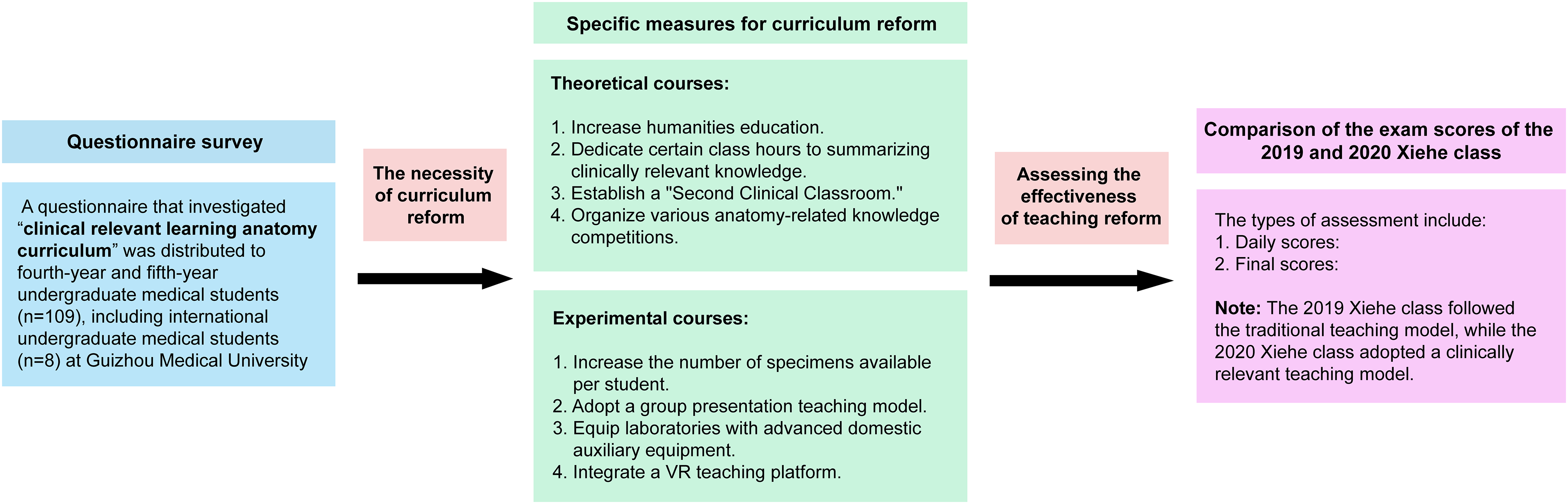
The study plan.
The questionnaire design follows the following rules: avoid using vague words in question design to reduce the possibility of ambiguity; avoid subjective question design; randomize the order of questions; use neutral language to avoid conveying certain preferences; provide neutral options to reduce the interference of subjective bias. This questionnaire consisted of 20 questions and was distributed and collected with the assistance of Justar software. We explained the purpose of the study before the participants began the questionnaire. This questionnaire addressed the following points: (1) the basic information of the students; (2) participants’ satisfaction with and evaluation of traditional anatomy curriculum; (3) self-assessed anatomical knowledge (self-contentment scores) and level of understanding and application of anatomical knowledge (self-efficacy scores); (4) participants’ acceptance of the forthcoming implementation of clinical-relevant learning in the anatomy curriculum; (5) suggestions for education reform.
As part of the questionnaire survey, the research team provided an explanation regarding the purpose of collecting information and how that information would be utilized. The participants were assured that their privacy would be protected and that their individual identities would remain anonymous. The questionnaire emphasized the fact that participants would suffer no negative consequences for failing to respond and that participants had the freedom to decline answering any questions. Moreover, to ensure that participants had an accurate understanding of the questionnaire content, an English-language version of the questionnaire was created specifically for international students.
Anatomy learning environment
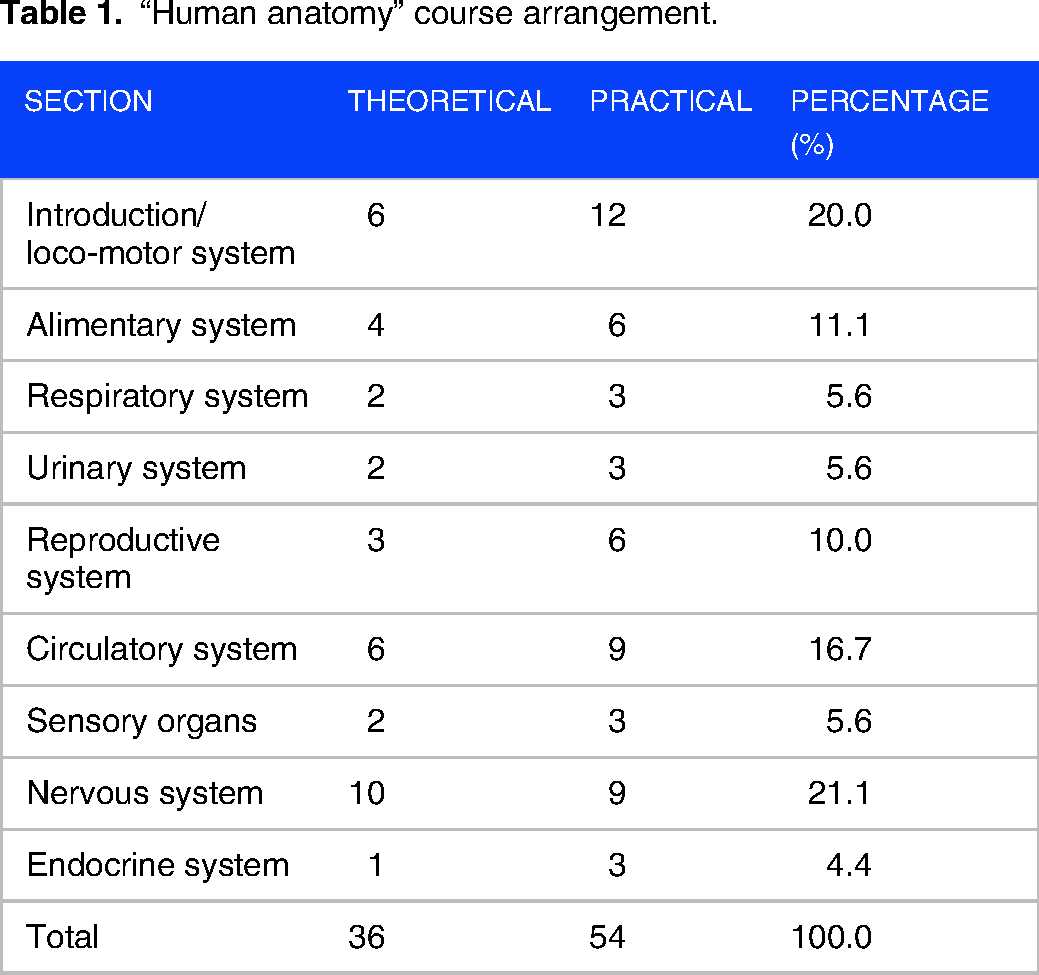
In China, the 5-year undergraduate program is the most common academic system in most provincial higher medical schools. At Guizhou Medical University, anatomy curriculum includes 2 courses: “Human anatomy” and “Regional anatomy.” “Human anatomy” spans a total of 90 contact hours, is conducted during the second semester of the first-year class. In addition, a separate course on “Regional anatomy,” totaling 72 contact hours, is offered in the first semester of the third grade. Both of these anatomy courses are instructed by experienced anatomy teachers. Typically, the anatomy courses consist of conventional lectures coupled with cadaver dissections. “Human anatomy” course comprised 36 contact hours of lecture-based teaching, while the cadaver dissection courses consisted of 54 contact hours (Table 1). While “Regional anatomy” course comprised 36 contact hours of lecture-based teaching and 36 contact hours of cadaver dissection (Table 2).
“Human anatomy” course arrangement.
“Regional anatomy” course arrangement.

After each cadaver dissections class, one contact hour is used as review session. Students are required to identify the crucial components specifically during this time and the scores from are treated as their daily scores. At the end of each semester, a written examination, known as the final examination was conducted within 2 weeks after completing anatomy courses. The exam content was randomly and blindly selected from the test item bank of Guizhou Medical University. The test item bank is constructed by all anatomy teachers encompassing single-choice questions, multiple-choice questions, descriptive anatomical terms, and quiz questions. The written examination of the anatomy course maintained a fixed proportion of questions to ensure that the difficulty of each examination was balanced.
Clinical-relevant learning based “human anatomy” course
In the second semester of 2020 to 2021 academic year, the clinical-relevant learning based “Human anatomy” curriculum began to be reformed. The total number of contact hours of “Human anatomy” course has not changed, and the allocation of theoretical contact hours and cadaver dissection contact hours has also not changed. The reform of theoretical teaching of “Human anatomy” courses is divided into 4 parts.
Firstly, a new theoretical course called “the first lesson” was added to introduce the body donation. This aims to help students understand the purpose of the course and develop respect for the donors. Secondly, teachers will spend 1/3 of the contact hours summarizing the relationship between common clinical diseases and the anatomy of the system being taught. This is done to deepen students’ understanding of the structure, location, and adjacent relationships of the system and its organs. For example, after teaching the motor system, the calculation method of ossification centers is introduced to familiarize students with the structure and sequence of carpal bones. Thirdly, after lectures on the 5 important systems, surgical observations are organized, which are conducted by clinicians, surgeons, and radiologists, rather than anatomy teachers. This is known as the second clinical classroom. For example, after the lecture on the movement system, there is an observation of total hip joint replacement surgery, and after the digestive system lecture, there is an observation of cholecystectomy. The arrangement of the theoretical courses and the teachers are shown in Table 3.
Theoretical course arrangement of experiential education based “human anatomy.”

Lastly, at the late semester, we organize many activities, such as, the annual “Human anatomy” Knowledge Competition to enhance students’ understanding of anatomy. Esteemed clinicians are invited to design practical clinical scenarios, allowing students to apply their knowledge in a flexible manner. Additionally, we host the “Human anatomy” Drawing Competition” (Supplemental Figure S1) to foster a deeper interest in learning anatomy. Moreover, on Tomb-Sweeping Day, we hold a Commemoration and arrange a visit to the cemetery to pay tribute to the revered donor.
The cadaver dissection of “Human anatomy” encompasses a total of 54 contact hours, and significant reforms have been implemented in these classes as well. There are 2 cadaver dissection classrooms specifically designed for conducting anatomy experimental classes. Each classroom is equipped with 4 bodies, which are available for students. Additionally, one body is reserved for the teacher's instructional purposes. To enhance the learning experience, the group learning model is adopted, where a study group comprising 4 students collaboratively engages in the learning process. Prior to each class, the learning materials based on clinical scenarios, is made accessible to students through educational software platforms. During class, every study group is responsible for nominating a student to present learning concerns and facilitate class discussions. The 128NW-S under-the-scope teaching system (Advan Science, Shenzhen, China) coupled with the SEEWO interactive intelligent flat-panel display device (Shirui Technology, Guangzhou, China) is equipped within the laboratory (Figure 2a), with which teachers can provide clear and comprehensive explanations to students, ensuring a deeper understanding of the subject matter. Moreover, to facilitate the exploration of complex anatomical structures, the “Human anatomy” VR teaching platform (basic medical experiment teaching platform of Guizhou Medical University) (Figure 2b) is employed as a training tool. After each class, one contact hour is dedicated to reviewing the key concepts, students are required to identify the crucial components specifically. The students’ scores from this review session are then incorporated into their daily scores.

Educational equipment within the laboratory. (a)128 NW-S under-the-scope teaching system and SEEWO interactive intelligent flat-panel display device. (b) “Human anatomy” VR teaching platform.
Clinical-relevant learning based “regional anatomy” course
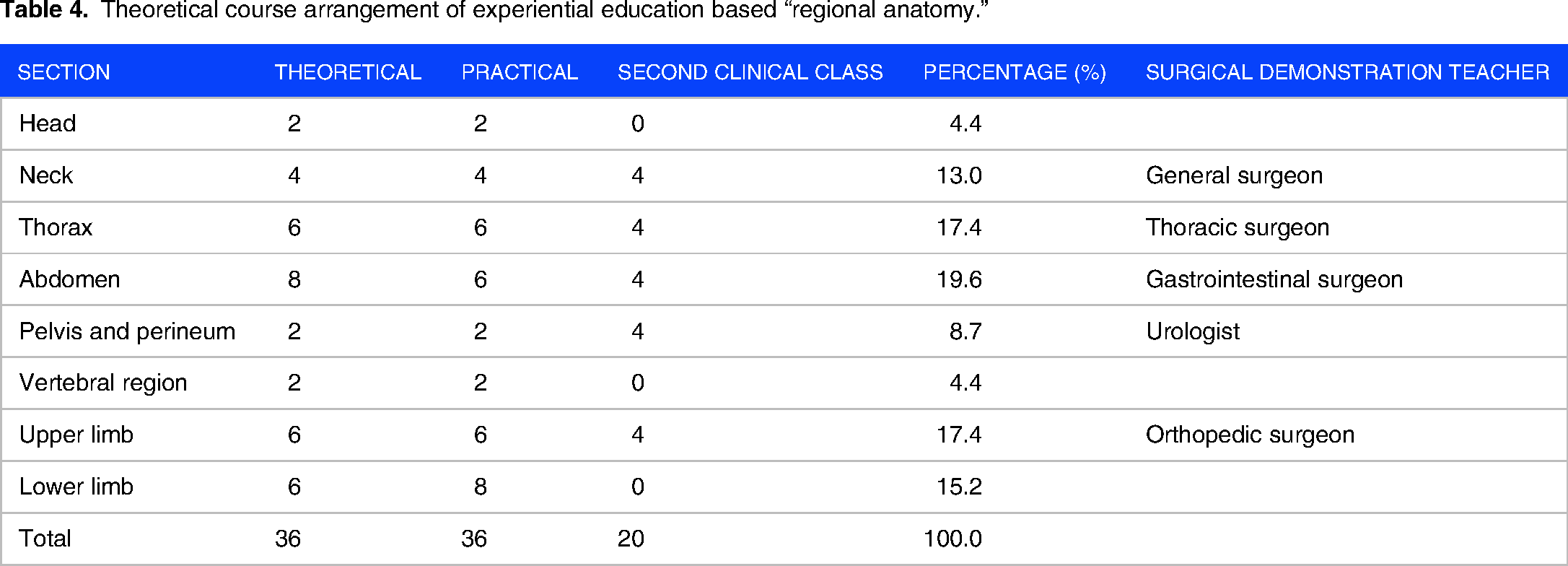
Similar to the “Human anatomy” course, the first lesson of “Regional anatomy” is dedicated to a solemn “opening ceremony” which underscores the significance of body donation and instills deep respect for donation among the students. Students are provided with preview material on the software platform before each class. This empowers them to independently delve into the topics related to “Regional anatomy” focusing specifically on distinct divisions of the human body, such as the head, neck, chest, abdomen, pelvic perineum, spinal area, and upper and lower limbs. During class, the teacher utilizes the problem-oriented teaching model to present clinical cases that are relevant to the content being studied. Through the analysis of these cases, students are exposed to crucial considerations during surgical operations, including the selection of incision locations, anatomical levels, as well as blood vessels and nerves that must be avoided. The content of “Regional anatomy” is presented in a sequential manner, commencing with clinical knowledge and progressing from observation to comprehension. Furthermore, the second clinical class is offered too, where clinicians from affiliated hospitals are invited to present surgical operations during their spare time. The second clinical class schedule is provided in Table 4. The cadaver dissection course of “Regional anatomy” is arranged similarly with “Human anatomy.” The students’ scores from review session are also incorporated into their daily scores.
Theoretical course arrangement of experiential education based “regional anatomy.”
Statistical analyses
The questionnaire items were scored on a 5-point Likert scale. The final exam transcripts were acquired from the Academic Affairs Office of Guizhou Medical University, and we obtained their approval to analyze and publish the data. All statistical analyses were performed with the assistance SPSS for Windows software version 26.0 (IBM Corp., Armonk, New York, USA). A student's t-test was employed to assess statistical differences between the 2 groups, and value of .05 was considered statistically significant for all analyses.
Results
Study participants and characteristics
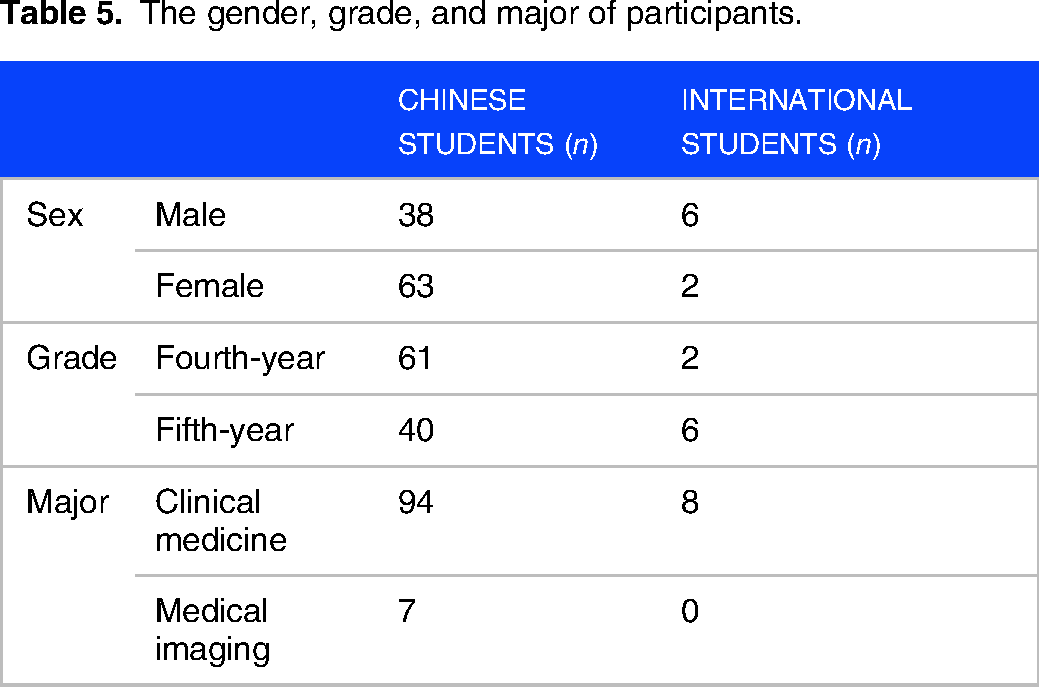
Among the survey participants, females accounted for 59.6% of the total, while males accounted for 40.4%. In terms of participants’ academic year, 57.8% were in their 4th year, while 42.2% were in their 5th year. Among the international students, 75.0% were male and 25.0% were female. In terms of international students’ academic year, 25.0% were in their 4th year, and 75.0% were in their 5th year. Additionally, 93.6% of the surveyed students were majoring in clinical medicine, while 6.4% were studying for medical imaging majors (Table 5). Notably, the questionnaire return rate was 100%, and all internships were conducted at the affiliated hospital of Guizhou Medical University.
The gender, grade, and major of participants.
The results of the questionnaire survey show students’ satisfaction with the traditional anatomy curriculum
The survey results indicate that students’ satisfaction with the traditional anatomy curriculum is limited. Specifically, 34.9% of the participants reported being very satisfied, while 24.8% expressed satisfaction. On the other hand, 40.4% of the students felt either neutral toward or dissatisfied with the curriculum. Overall, 19.3% of the participants were neutral, 14.7% were dissatisfied, and an additional 6.4% were very dissatisfied. Moreover, many students expressed concerns regarding the traditional anatomy curriculum, indicating that it places excessive emphasis on theoretical teaching and neglects practical guidance. Only 14.7% of the students believed that the anatomy course adequately incorporated clinical knowledge, while 85.3% felt that it was lacking in this respect. Additionally, 2.8% of the students strongly believed that the course was extremely lacking in this regard (Figure 3).
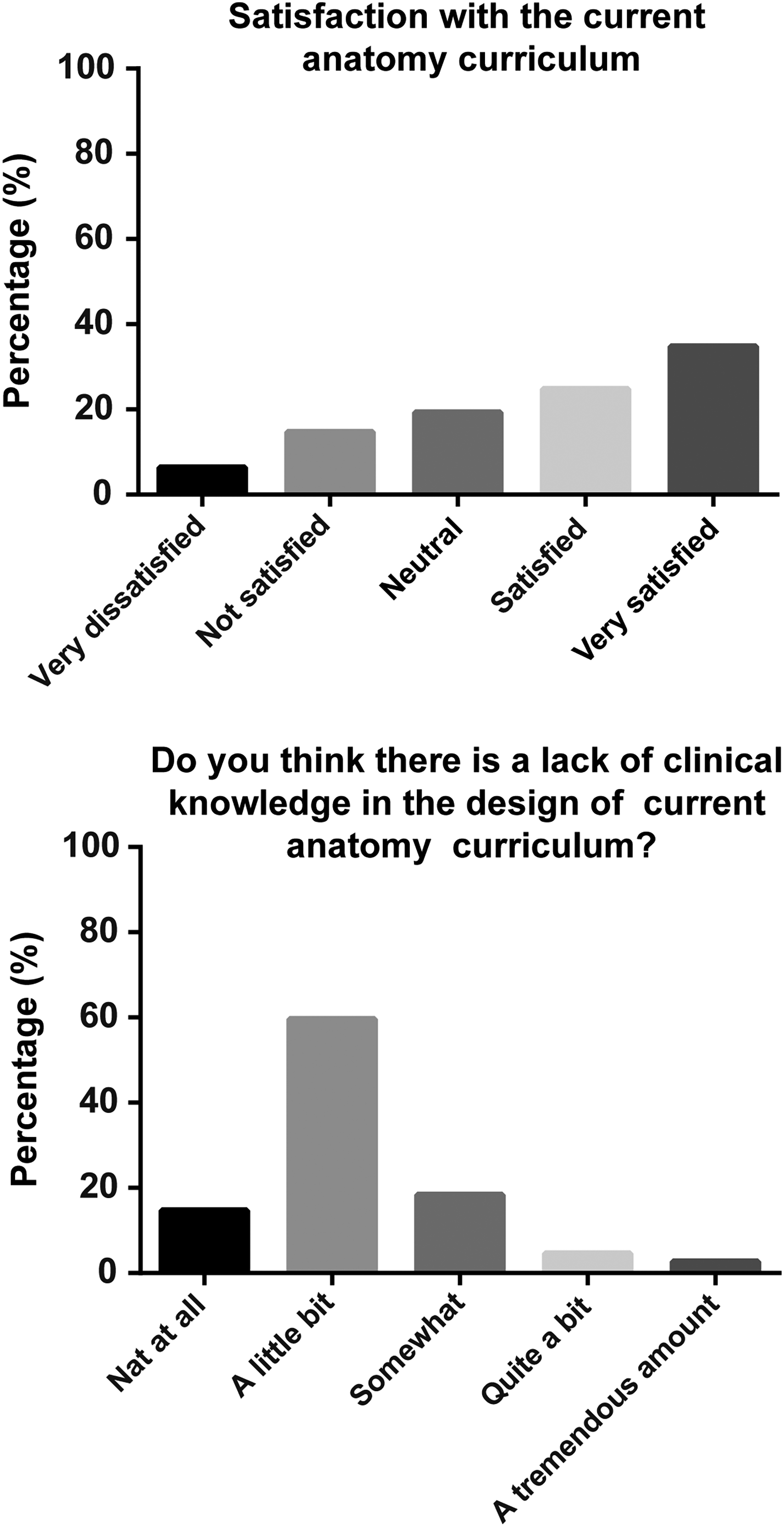
Students’ satisfaction of traditional anatomy curriculum.
For example, one student made the following statement:
The knowledge being taught appears to be disconnected from clinical practice. I would appreciate additional lectures on relevant clinical topics.
Another suggestion from a student was as follows: “It is advisable for instructors to deviate from relying solely on the textbook during while teaching.”
Furthermore, it was proposed that “it would be beneficial if we could engage in discussions with clinicians prior to class to understand the clinical significance of anatomical knowledge.” Additionally, some students expressed the desire to minimize the frequency of cadaver dissections and increase the degree to which simulation-based teaching methods were incorporated into the instruction.
We also conducted an investigation into the traditional methods used to support students’ exposure to clinical experience at our university. These methods included observing basic surgical skills during after-school hours and participating in operational simulation training at the clinical skills center. A total of 56.9% of the undergraduate medical students who participated in our research indicated that they had never observed clinical open surgery or other clinical scenarios during their basic anatomy courses, while 43.1% indicated that they had had such experience. Similarly, more than half of the students (56.0%) had never participated in simulation training in the clinical skills center during their spare time. Only 44.0% of the students reported that they had occasionally participated in simulation training in the clinical skills center.
Students’ confidence in their anatomical knowledge
Our findings from the questionnaire revealed that approximately 29.4% of the students adopted neutral stances, while 50.5% and 8.3% of the surveyed students believed that their knowledge of anatomy was below average or poor, respectively. Only 4.6% of the students felt confident in their ability to master anatomical knowledge easily (Figure 4). Correspondingly, only 6.4% of the students believed that anatomical knowledge was easy to learn. Most students believed that anatomical knowledge entails many points and requires memorization, thus making it difficult to master.

Students’ confidence in their anatomy knowledge.
Students’ acceptance of clinical-relevant learning in the anatomy curriculum
Our analysis of the questionnaire indicated that 44.0% of the undergraduate students reported a lack of or lectures regarding anatomical knowledge at the particular hospitals at which they served as interns, while 56.0% of the students indicated that they had received relevant anatomy training. Furthermore, if the university were to open a second classroom, 81.7% of the students would be eager to participate in the learning process, viewing it as highly necessary.
Additionally, if full-time teachers specializing in basic anatomy were to deliver lectures on anatomy-related knowledge within clinical departments, 77.1% of students would express interest in and actively participate in these sessions. Moreover, with regard to returning to the fundamental learning stage of anatomy, 76.2% of the students would welcome the involvement of clinicians. Remarkably, 57.8% of the students would appreciate their presence highly, while 18.4% would exhibit a moderate level of interest (Figure 5).

Students’ acceptance of clinical-relevant learning on anatomy curriculum.
Students’ suggestions regarding clinical-relevant learning in the anatomy curriculum
Students provided their own perspectives concerning clinical-relevant education. According to the survey results, 38.5% of the students believed that the amount of time spent integrating clinical knowledge in the context of basic anatomy classes should account for one-third of the total time spent on such courses. Moreover, 28.4% of the students believed that one-quarter of the time should be allocated to this purpose, 14.7% suggested spending half of the time teaching in clinical contexts in basic anatomy courses, and 18.4% recommended assigning one-fifth of the total time to this purpose (Figure 6).
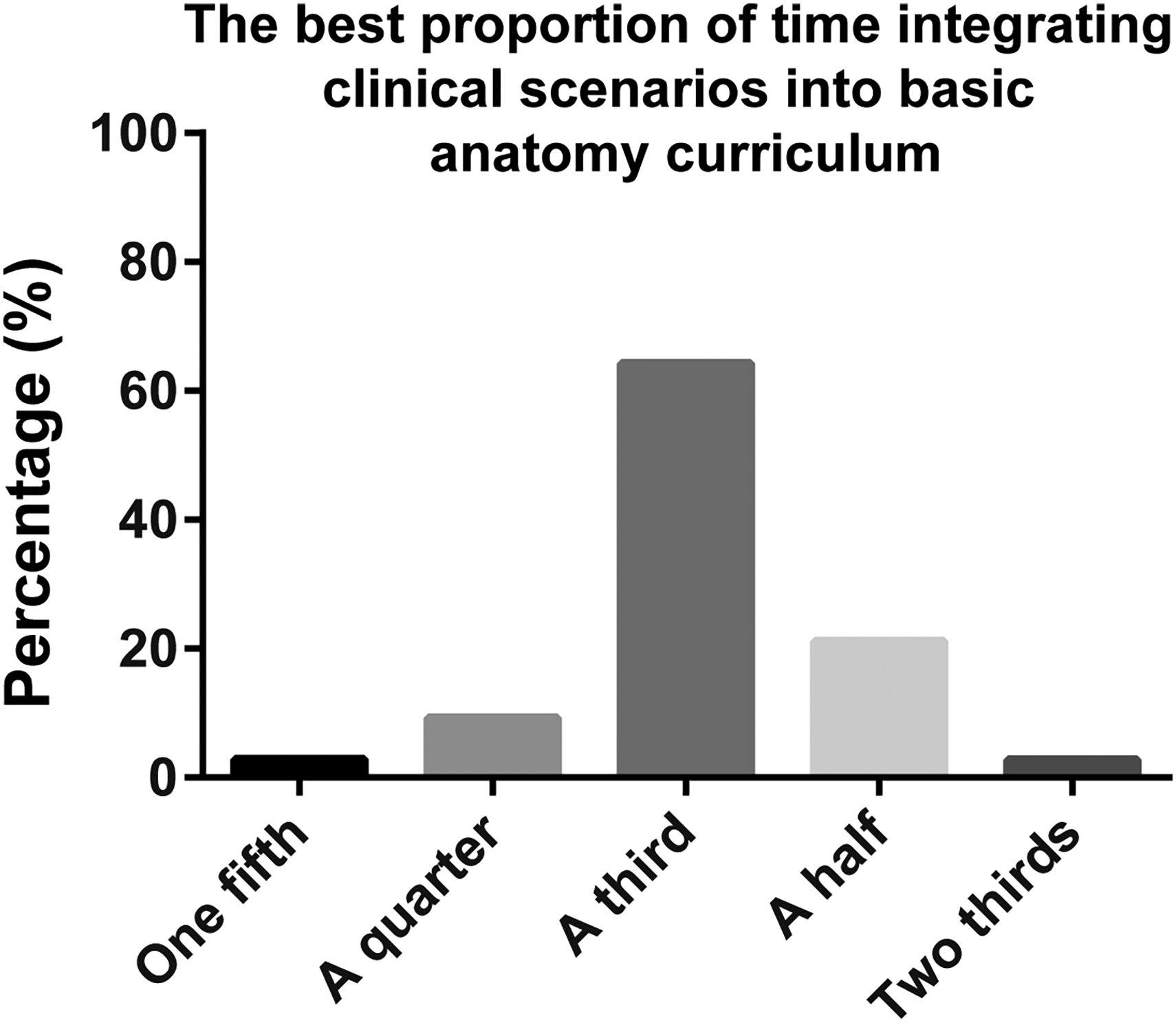
Optimal balance in clinical and basic anatomy fusion.
Moreover, students expressed their concerns regarding the inclusion of clinical-relevant education in the anatomy curriculum. Sixty-five students, including 5 international students who provided feedback, emphasized the importance of clinicians considering the students’ cognitive level. These participants suggested that teaching content should be simplified and made easier to understand without overemphasizing professional knowledge. Moreover, 32 students mentioned that the objective of clinical contact should be to facilitate students’ comprehension of fundamental knowledge. Furthermore, 13 students believed that integrating clinical application knowledge with standardized training for residents would be the most effective approach in this context. Furthermore, we received numerous suggestions from students regarding the implementation format, such as the use of a flipped classroom model, surgical videos, and classroom demonstrations of simple and classic surgical procedures. The students specifically requested the inclusion of surgical demonstrations such as those pertaining to appendectomy, cholecystectomy, and other forms of abdominal surgery.
Comparison of the daily scores and final exam scores of the 2019 and 2020 class
Analysis of daily scores
The lowest scores of “Human anatomy” and “Regional anatomy” of undergraduate medical students enrolled in 2019 were 87 and 83, while the highest scores were 92 and 96, respectively. The lowest scores of “Human anatomy” and “Regional anatomy” of undergraduate medical students enrolled in 2020 were 81 and 90, while the highest scores were 94 and 93, respectively. The average scores of “Human anatomy” enrolled in 2019 and 2020 were 89.6 ± 1.4 and 90.9 ± 2.3, respectively (P < .05) and the average scores of “Regional anatomy” were 88.8 ± 3.6 and 91.5 ± 0.7 (P < .001). After implementing the anatomy teaching reform, there has been a slight overall improvement in the daily scores of “Human anatomy” and “Regional anatomy” for undergraduate medical students enrolled in 2020 compared to those enrolled in 2019 (Figure 7).

Comparison chart of daily scores for 2019 and 2020.
Analysis of final exam scores
The average final examination scores of “Human anatomy” for undergraduate medical students enrolled in 2019 and 2020 were 67.7 ± 10.6 and 81.0 ± 7.6, respectively (P < .0001). The average final examination scores for “Regional anatomy” for the 2019 and 2020 cohort were 92.4 ± 3.9 and 96.3 ± 3.0 respectively (P < .0001). After the implementation of the anatomy teaching reform, there was a slight overall improvement in the final examination scores of “Human anatomy” and “Regional anatomy” for the 2020 cohort compared to the 2019 cohort (Figure 8). For the 2019 cohort, the lowest scores of final examination scores of “Human anatomy” and “Regional anatomy” were 51 and 84, while the highest scores were 87 and 98 respectively. For the 2020 cohort, the lowest scores of final examination scores of “Human anatomy” and “Regional anatomy” were 64 and 83, while the highest scores were 91 and 99 respectively.

Comparison chart of final exam scores for 2019 and 2020.
Figure 9 illustrates the distribution of students across different scores ranges in the final examinations for “Human anatomy” and “Regional anatomy.” For the “Human anatomy” (Figure 9a), in the 2019 cohort, the number of students scoring below 60, between 60 and 70, between 70 and 80, between 80 and 90, and above 90 were as follows: 6, 8, 9, 4, and 0. The corresponding scores ranges for the 2020 cohort are 0, 3, 8, 16, and 3, respectively. For “Regional anatomy” (Figure 9b), in the 2019 cohort, the number of students scoring below 60, between 60 and 70, between 70 and 80, between 80 and 90, and above 90 were as follows: 0, 0, 0, 5, and 22. The corresponding scores ranges for the 2020 cohort are 0, 0, 0, 1, and 29 respectively.

Comparisons of final exam scores in different groups.
Discussion
This study implemented a clinical-relevant education in the anatomy curriculum. Before that, we conducted and analyzed a questionnaire to understand how undergraduate medical students currently perceive the anatomy curriculum, collect their opinions and expectations regarding experiential education, and lay the groundwork for the successful implementation of this educational reform. The results revealed that the average self-satisfaction score in anatomy education among undergraduate medical students and their confidence in their own anatomical knowledge are relatively low, and they anticipate the development of clinical-relevant education in the future. Furthermore, most students exhibit a keen interest in clinical surgery, hoping that it can serve as a starting point for clinical-relevant learning education. After this reform, we analyzed and compared the daily and final exams scores of students who did not undergo with those who embraced the systematic educational reforms. The findings indicate that this curriculum reform not only enhances students’ understanding and proficiency in anatomy, but also directly enhances their performance in anatomy courses.
Problem-based teaching and lecture-based teaching are the most commonly employed teaching methods in anatomy curricula. However, the effectiveness of these methods is still being explored. 19 Most researches evaluated students’ opinions and contentment, the academic atmosphere, the process of teaching and learning, the knowledge and skills thus acquired, and the outcomes of course materials in relation to the efficacy of problem-based learning versus that of traditional methods and gained good results.20,21 But our university has also employed these teaching methods, the results of the current survey show that student satisfaction is low. Almost half of the students included in this research expressed neutrality toward or dissatisfaction with the current anatomy curriculum. The students included this study also explained that an excessive emphasis on theory made the class boring. There are many studies that have confirmed the attitude toward whether to include clinical application in anatomy teaching.22–25 These positive attitudes toward clinical application are consistent with our research, except that these studies were conducted on more specialized anatomical teaching, while our study was conducted on medical undergraduates. The anatomy curriculum in the United States 26 is currently undergoing significant changes too, which involve reducing course contact hours and integrating anatomy into other courses. 27 While many of these measures align with our own reforms, the differences in student numbers and specific institutional contexts necessitate a small-scale implementation at present.
Although we discovered that many students appreciate clinical-relevant education, they would prefer a situation in which clinical knowledge comprised only one-third of anatomy classes. Therefore, most students still desire a dominant focus on basic teaching and warn against blindly increasing the proportion of clinical knowledge in the curriculum. Moreover, students expressed their concerns regarding the difficulty of acquiring clinical knowledge. Many students were concerned with the possibility that the clinical knowledge introduced in this context would be too complex for them to comprehend it fully. This finding reminds us to ensure that the clinical knowledge introduced in curriculum designs should be simplified. The content of clinical knowledge should also be a focal point in curriculum design. Students indicated a strong interest in simple surgical procedures, such as abdominal surgery. Moreover, students who participated in clinical internships expressed a desire to review basic anatomical knowledge to cope with upcoming medical practitioner qualification examinations or other examinations.
Limitations of the study
Our research population is small and the information on which this study relies was collected from a single higher medical university; a significant limitation is the unmeasured variable of the final exam because the difficulty of the exams in different years may vary slightly, although the questions are randomly selected from the question bank; while the overall improvements are evident, it is challenging to isolate the individual impact of each change. Finally, the study was conducted during the COVID-19 pandemic, while these changes may break continuity of education, they may have influenced students’ engagement and learning outcomes, particularly in areas requiring learning experiences.
Conclusions
Our findings indicate that students have a positive view of clinical-relevant teaching approach and revealed that students who actively engaged in the anatomy teaching reform outperformed those who did not partake in the daily and final examination of “Human anatomy” and “Regional anatomy.” In the future, we need to expand the research populations, involve more students in this teaching method, and conduct evaluations of long-term effects.
Supplemental Material
sj-pdf-1-mde-10.1177_23821205251328952 - Supplemental material for Investigating Clinical-Relevant Learning in the Anatomy Curriculum: Perspectives and Effectiveness for Undergraduate Medical Students
Supplemental material, sj-pdf-1-mde-10.1177_23821205251328952 for Investigating Clinical-Relevant Learning in the Anatomy Curriculum: Perspectives and Effectiveness for Undergraduate Medical Students by Mudan Zhang, Yan Yu, Baofei Sun, Chaolun Xiao, Jingxi Yang, Zijiang Yu and Dan Yang in Journal of Medical Education and Curricular Development
Supplemental Material
sj-pdf-2-mde-10.1177_23821205251328952 - Supplemental material for Investigating Clinical-Relevant Learning in the Anatomy Curriculum: Perspectives and Effectiveness for Undergraduate Medical Students
Supplemental material, sj-pdf-2-mde-10.1177_23821205251328952 for Investigating Clinical-Relevant Learning in the Anatomy Curriculum: Perspectives and Effectiveness for Undergraduate Medical Students by Mudan Zhang, Yan Yu, Baofei Sun, Chaolun Xiao, Jingxi Yang, Zijiang Yu and Dan Yang in Journal of Medical Education and Curricular Development
Footnotes
Authors’ Contributions
First author, Mudan Zhang: design of the work, analyzing data and writing the manuscript; Yan Yu: data analysis and review the manuscript; Baofei Sun: design of the work and review the manuscript; Chaolun Xiao: distribute and collect questionnaires; Jingxi Yang: distribute and collect questionnaires; and Zijiang Yu: data analysis.
Availability of Data and Materials
The datasets used and/or analyzed during the current study are available from the corresponding author on reasonable request.
Declaration of Conflicting Interests
The authors declared no potential conflicts of interest with respect to the research, authorship, and/or publication of this article.
Ethics Approval and Consent to Participate
All experimental protocols were approved by Ethics Committee of Guizhou Medical University (NO. 2023207) and in compliance with institutional guidelines and national laws and regulations. Informed consent was obtained from all subjects.
Funding
The study was supported by the Project for Undergraduate Teaching Content and Curriculum System Reform at Guizhou medical University (Grant Nos. JG2021029 and JG2023003) and Guizhou Province Higher Education Teaching Content and Curriculum System Reform Project (Grant Nos. 2023123).

Supplemental Material
Supplemental material for this article is available online.
Notes
References
Supplementary Material
Please find the following supplemental material available below.
For Open Access articles published under a Creative Commons License, all supplemental material carries the same license as the article it is associated with.
For non-Open Access articles published, all supplemental material carries a non-exclusive license, and permission requests for re-use of supplemental material or any part of supplemental material shall be sent directly to the copyright owner as specified in the copyright notice associated with the article.
