



Abstract
OBJECTIVE
To better construct teaching resources, enhance real-time interaction and feedback between teachers and students in and out of class, and improve the teaching quality of parasitology, our team set up a WeChat public account I love Parasitology.
METHODS
The data sources were mainly from original pictures and multimedia materials of different parasites collected and produced by our team, as well as related materials collected from traditional publications and digital media. With the instant interactive platform, course schedules and corresponding teaching contents were sent by push notifications, case-based learning was carried out, and 2-way communication between students and teachers was achieved. Teaching effectiveness was assessed using a self-evaluation questionnaire.
RESULTS
A WeChat public account suitable for our daily teaching of parasitology was established. The second recursion and implementation of the learning resources allowed students to conduct in-depth reading and get unrestricted access to high-quality resources through the public account. In addition, all contents were in digital forms and made the original resources reborn, which would make up for our current and future shortage of physical teaching specimens. Moreover, the results from the questionnaire indicated that all these actions encouraged students to master theoretical knowledge, improved their abilities of case analysis and communication, and increased their knowledge of academic progress.
CONCLUSION
Our WeChat public account can provide excellent learning materials for students and is a good supplement to the routine education of human parasitology.
Introduction
Human parasitology is an important basic medical course in medical universities. Generally, human parasitology teaching involves didactic lectures and laboratory-based practical training. The main contents of the theoretical lecture include life cycle, pathogenesis, clinical manifestations, and the prevention and treatment of parasitic diseases. The laboratory-based class focuses on teaching the morphological features of parasites, hands-on techniques to identify and distinguish parasites of different species, and field practice teaching. 1 In-depth mastery of this subject is indispensable to preparing competitive medical workers, especially in the field of parasite diagnosis and prevention.
Parasitic infections are among the most common communicable diseases of humans in the world. 2 With rapid economic development, China has made remarkable achievements in the prevention and control of parasitic diseases, such as schistosomiasis, filariasis, leishmaniasis, and malaria.3–6 These great achievements lead to the shortage of real specimens of parasites and the absence of social practice bases in parasitology teaching. On the other hand, China has new trends in the prevalence of parasitic diseases, including the increase of foodborne parasitic diseases (clonorchiasis, angiostrongyliasis, etc) and imported parasitic diseases (imported malaria, imported schistosomiasis, etc), as well as zoonotic diseases caused by pets (toxoplasmosis, cryptosporidiosis, etc). 7 Therefore, the teaching contents and methods of human parasitology have to be adjusted according to the epidemic characteristics of parasitic diseases.7,8 In addition, during the traditional teaching process, teachers and students lack appropriate online platforms and tools for immediate interaction and learning feedback outside the classroom.
It has been demonstrated that digital approaches can transform medical education to achieve higher levels of knowledge and skills through competency-based education.9,10 The social medium WeChat, first launched by the multinational company Tencent in January 2011, has more than 1.2 billion monthly active users in 2022. 11 A WeChat public account is a free, Internet-reliant, and easily managed communication tool. On WeChat public accounts, account managers can express opinions and spread information in various forms including text, pictures, voice, and video. Furthermore, users can get any information they need from a WeChat public account as long as they follow it. As such, a growing body of organizations, including enterprises, universities, and governments, are utilizing WeChat public accounts as a new channel to deliver information to specific users and interact with them. 12 WhatsApp and Facebook have been introduced successfully into medical education in colleges and universities in Western countries. 13 The quick and instant communication function of the WeChat public account enables teachers and students notifications and interactive feedback anytime and anywhere, which will facilitate a student-centered teaching mode. 14 WeChat is becoming an auxiliary tool in medical education.15–17 However, to our knowledge, there is a lack of original WeChat public account construction in parasitology, let alone a WeChat public account designed according to the teaching needs.
In an era of increasing digital education, to better construct teaching resources, enhance real-time interaction and feedback between teachers and students inside and outside the classroom, and improve the teaching quality of parasitology, our team established a WeChat public account and began to use it as an auxiliary communication platform in routine teaching. After subscribing to the account, students could receive push messages on smartphones or tablets and had unlimited access to relevant learning materials and feedback from teachers at any time. Moreover, the results of the questionnaire survey suggested that the implementation of the WeChat account in teaching encouraged students to master theoretical knowledge, improved their case analysis and communication skills, and increased their awareness of academic progress.
Methods and Materials
Establishment of a WeChat public account I Love Parasitology
The WeChat public account, I Love Parasitology, was set up in 2014. The data sources were mainly from original pictures and multimedia materials of different parasites collected and produced by our team. They consisted of Computing Aided Instruction courseware Medical Protozoology 18 and Detection Techniques of Parasitic Pathogens, 19 audiovisual textbooks Detection Techniques of Parasitic Pathogens, 20 Nematode, 21 Hand-painted human vermicular eggs, 22 and Affiliated Multimedia Disk of Human Parasitology. 23 In addition, there were 2 other ways to collect related materials. The first one included traditional public publications, such as books 24 and professional journals25,26 and so on, with high professional knowledge quality. The second was from the official websites of the Centers for Disease Control 27 and digital media, such as WeChat Public Accounts and portal websites, which were very convenient, but the qualities were uneven and needed to be carefully screened. As depicted in Figure 1, the contents of the WeChat account were divided into 3 sections, including “morphological resources of parasites,” “window for learning,” and “mass media.”
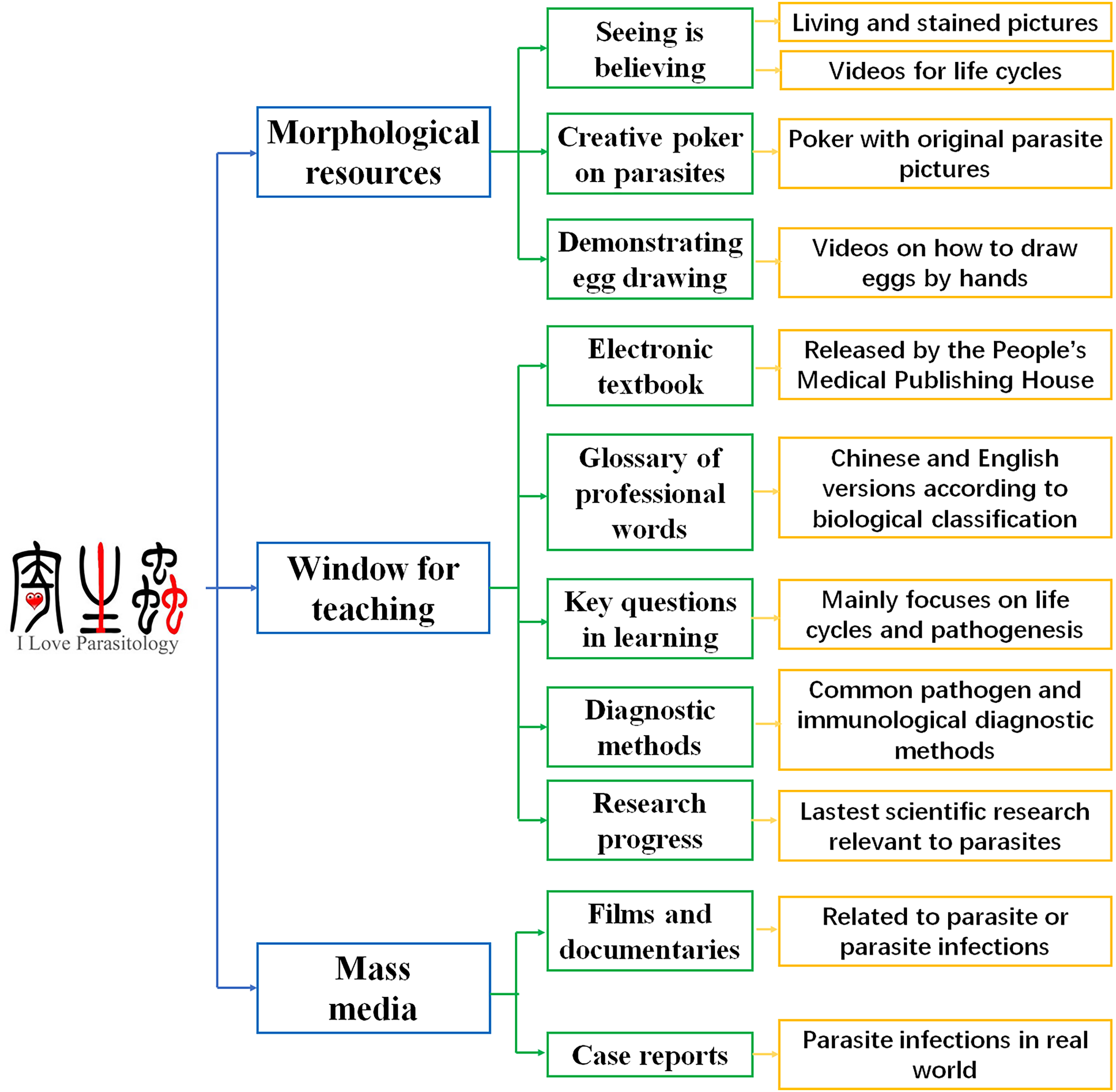
The content framework of the WeChat public account I Love Parasitology.
Morphological resources
This section presented the morphology of parasites in electronic form, which made up for the shortage of current real parasite specimens for our laboratory-based class. This section consisted of “Seeing is believing,” “Original parasitological poker,” and “Demonstrating egg drawing.” “Seeing is believing” included original parasite images of eggs (Figure 2), adults, and larval stages, as well as videos on the establishment of infection models in experimental animals

Egg of Schistosoma japonicum.

A creative poker with morphological pictures of common parasites.
Window for learning
It was composed of 5 topics: an electronic textbook, a glossary of Chinese and English professional words, a collection of key questions during education, common diagnostic methods (Video 2 29 ), and research advances in parasitology with full-text links. The research advances included key publications, such as advanced research on Toxoplasma gondii, 30 as well as news reports, such as the report on China being certified as a malaria-free zone. 31 All of them were organized according to biological categories, including protozoa, helminths, and arthropods. The public account provides students with a wide range of reading resources to help users apply parasitology knowledge to the prevention and control of parasitic diseases in their daily lives, and explore their potential future research interests by learning about the frontiers of parasitology research.
Mass media
The section was to increase students’ interest in parasitology, including a list of films and documentaries on parasitology and case reports of parasite infections, collected from various mass media. In addition, it could raise public awareness of parasitic infections, whereby to effectively prevent parasitic infections in daily life. For example, cat owners know that handling cat feces requires wearing gloves to prevent Toxoplasma infection. Moreover, to facilitate the interaction between WeChat subscribers and us, this section also published letters about parasites from readers. Our parasitology teaching team was responsible for answering questions from the public, aiming to provide professional knowledge of parasitology to safety issues of public concern, such as foodborne parasitic diseases.
Preliminary application of the WeChat account in teaching human parasitology
Three years ago, we began to apply the WeChat platform as an auxiliary teaching tool. The main target group of students using the public account as an aid teaching platform was the third-year medical students of Tongji Medical College since human parasitology is one of their compulsory courses.
Delivery of push notifications
Using Push notifications is reported to stimulate students’ learning interest and enthusiasm. 14 Taking advantage of the instant interactive platform of WeChat, the schedule of the “course notice” was pushed 1 week before the class (Figure 4 and Table 1). Moreover, studying resources were prepared and pushed to students, including morphological resources, teaching content, key questions, and research progress related to the class context (Figure 5). The course contents were pushed by multimedia presentations, such as audio, video, and pictures, to provide students with rich learning materials and facilitate repeated review.

Screenshot (A) and its translated version (B) of an example of Human Parasitology course schedule.
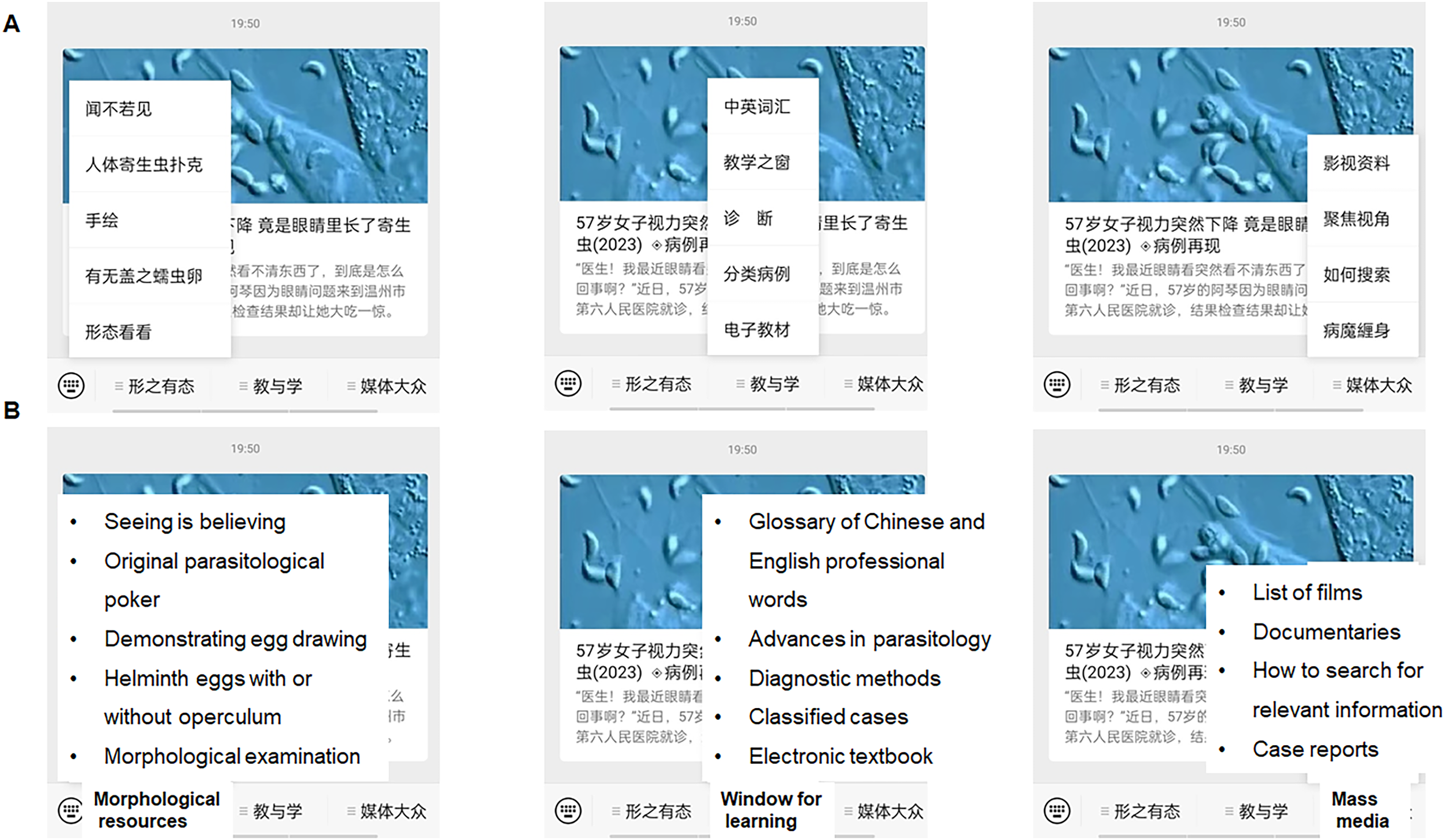
Screenshots (A) and their translated versions (B) of the content framework of the WeChat public account.
An example of Human Parasitology course schedule, week 8, fall semester 2022.

Carrying out case-based learning
The effective integration of case-based teaching and information technology in current teacher education is a significant and urgent task. 32 To gauge students’ knowledge and understanding, participants completed a discussion based on a real case that is closely related to what they have learned after each topic. Generally, each case is composed of 4 questions, involved in life cycles, pathogenesis, clinical symptoms, diagnosis, and treatment of important parasite infections (Figure 6). Additionally, WeChat groups were established to allow communication and comments by students promptly. A brief reference explanation was released to students a week later.
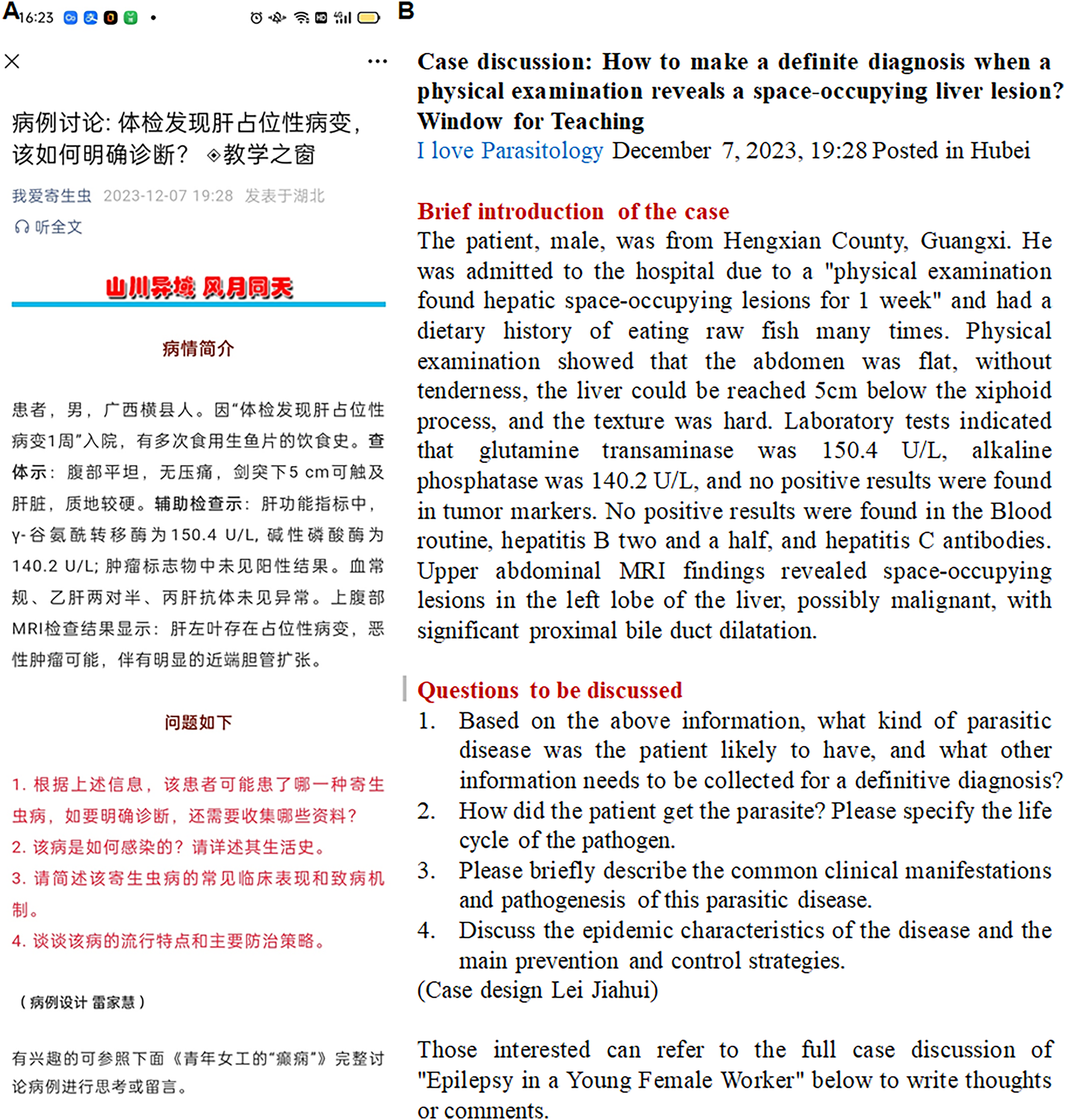
Screenshot (A) and its translated version (B) of an example of a case-based discussion.
Achieving 2-way communication between students and teachers
Active learning pedagogy has been shown to promote collaborative group work and incorporate continuous assessment of conceptual understanding to provide feedback to both students and teachers. 33 On the WeChat platform, students could leave messages about their questions at any time, and teachers answered students’ questions within 48 h, realizing 2-way interaction. The interaction encouraged students’ feedback about the course and promoted student–teacher interactions in and out of class. In addition, students’ comments were used for teachers to modify the teaching emphasis or direction if required.
Evaluation of teaching effectiveness with the WeChat account
Participants
The main target group of students using the public account as an aid teaching platform was the third-year medical students of Tongji Medical College. Considering that small classes are more conducive to the implementation of our teaching reform, we chose the Sino-German medical classes from Grades 2018 and 2019 as participants. There was no difference in the scores of the college entrance examination between the 2 classes. Inclusion criteria included students studying human parasitology in the relevant group who participated in the study with satisfaction. Individuals who had incomplete questionnaires were excluded from the study. The Grade 2018 (traditional group, n = 30) carried out the traditional teaching model (lectures and laboratory-based classes), while the Grade 2019 (WeChat group, n = 30) adopted the WeChat platform as an auxiliary teaching tool in addition to the traditional teaching model.
Data collection
One week after completing the teaching of our subject, the participants used a questionnaire (Supplemental materials 1 and 2) to self-evaluate the teaching effect. Teaching effectiveness was evaluated using a teaching quality questionnaire with 6 self-evaluation items, including theoretical knowledge, laboratory skills, professional English level, case analysis ability, communication ability, and scientific research progress. A 4-point grading method was adopted: 0 (bad), 1 (ordinary), 2 (good), and 3 (great), with a total score of 18. 34
Statistical analysis
All experimental data were presented as means ± SDs and analyzed with SPSS v19.0 (SPSS, Chicago, IL, USA). The t-test was used for intergroup comparisons. A degree of significance of P < .05 was considered significant, and P < .01 was extremely significant.
Results
A WeChat public account suitable for our daily teaching of parasitology was established. Our team constructed the creative WeChat I love Parasitology for more than 9 years. To keep subscribers abreast of the latest progress in parasite research, the contents of WeChat were updated every semester. To facilitate potential future applications in teaching, all materials were reclassified and packaged according to the teaching schedule and indexed as teaching topics (Figure 7). Given the account took teaching topics as the index, subscribers could conduct in-depth reading and get unrestricted access to high-quality resources through the public account, instead of retrieving relevant information from massive resources on the Internet. In addition, the digital content, which made the original resources reborn, would make up for our current and future shortage of physical teaching specimens.

An example of learning materials indexed according to teaching topics: Trematode I.
The reliability coefficient of the questionnaire was calculated by calculating the internal cohesion index (Cronbach's alpha). Cronbach's alpha for the whole questionnaire was 0.839. It allows students to participate in the entire production process of the teaching, timely feedback questions, and discussion, whereby a combination of the WeChat account with the traditional teaching promoted students to master theoretical knowledge (2.50 ± 0.51 vs 2.10 ± 0.54, 95% CI), improved their case analysis ability (2.30 ± 0.79 vs 1.90 ± 0.70, 95% CI) and communication ability (2.30 ± 0.65 vs 1.90 ± 0.54, 95% CI), and increased their knowledge of academic progress (2.40 ± 0.67 vs 1.70 ± 0.78, 95% CI) (Figure 8). These findings indicate that the WeChat account can act as an excellent e-teaching resource for regular teaching and learning, though no difference in the scores of the final exam on parasitology between the 2 classes. Therefore, further investigation is required to clarify the alignment of the content and activities on the novel platform with the curriculum and intended learning outcomes for students.
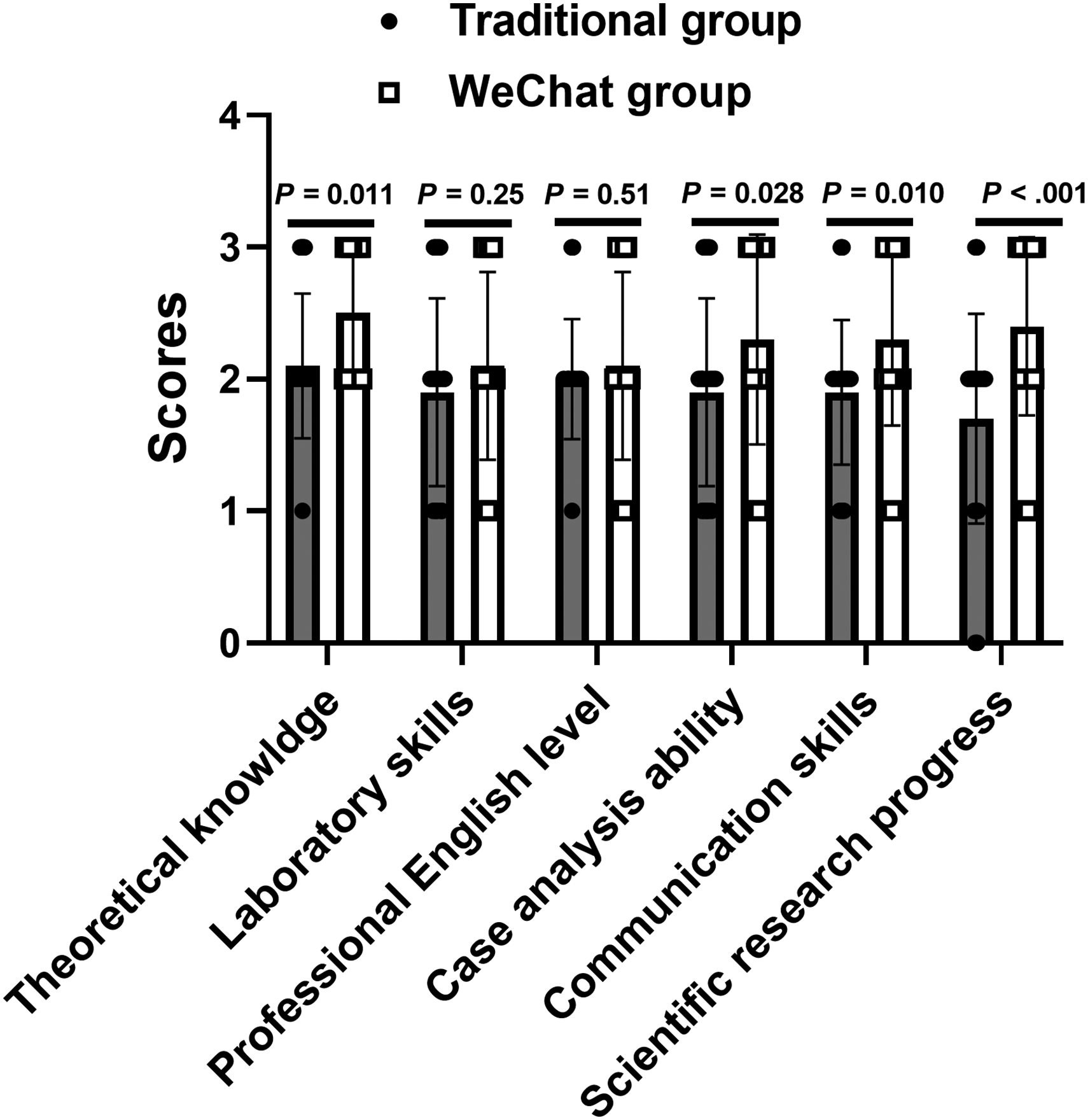
Comparison of teaching effectiveness between the traditional group and the WeChat account group by a self-assessment questionnaire. The students in the traditional group (n = 30) only received the traditional teaching model (lectures and laboratory-based classes), while those in the WeChat group (n = 30) received push information from the WeChat public platform in addition to the traditional teaching model.
In addition, the WeChat public accounts were also open to other students and social groups. We hope that the public can learn parasitology knowledge through the platform, thereby effectively preventing the infection of parasites in daily life.
Discussion
With the advent of the big data era, exploring a new mode of digital medical practice has become a new direction for medical education.35–37 Educational technology has become an indispensable aspect of higher education, crucial in affecting student engagement. 38 Our team has been committed to reforming online and offline combined teaching in recent years. 37 Blended learning practices, involving face-to-face and online instruction, have been applied in our routine teaching. 1
The popularization of the Internet provides an excellent platform for updating knowledge and information. Social network sites, including WeChat, have been novel tools to enhance educational interactions among peers, students, and instructors. 39 In addition, WeChat achieves instant interactive functions and improves users’ interest in learning. 40 In China, WeChat public accounts have been used in the teaching of many medical disciplines, including Traditional Chinese medicine, 41 hematology, 15 medical health law, 42 and prosthodontics. 43 The introduction of new teaching strategies, including case-based learning (CBL) and problem-based learning (PBL), makes student learning more engaged and creative. 35 The public account achieved 2-way communication between teachers and students outside of the classroom, and thus improved communication ability and efficiency. The advantages of the WeChat platform mentioned above indicate the feasibility and acceptability of the WeChat teaching method in medical education.14,15,36 In line with the previous reports, we confirmed that the WeChat account is a good auxiliary platform for routine medical education and facilitates a student-centered teaching model. In addition, using the WeChat account, the 3-dimensional presentation of parasite specimens in the form of audio and video effectively improves students’ understanding of the parasite specimens. As a beneficial supplement to the normal experiment, the virtual experiment extends the experiment on time and space effectively. Moreover, the public account allowed the output of academic ideas and progress to be updated more efficiently, thus enhancing the academic influence and expanding the popularity of the discipline parasitology.
It has been indicated that the application of WeChat public accounts in medical teaching is conducive to improving students’ grades, autonomous learning ability, and learning effect, which is a beneficial exploration of medical curriculum reform. Virtual worlds are rapidly becoming part of the educational technology landscape. Shanxi Medical University applies the network virtual learning community platform to medical ethics education of nursing students and achieves a good teaching effect. 44 The use of digital media and resources to establish a comprehensive information base for medical education helps shorten the learning curve, improve the quality of training, and promote the training of medical education talents. 37 Medical education has benefited from digital technology and the adaptation of new learning strategies, such as virtual labs and interactive learning, is believed to enrich the educational process. It has been proved that interactive and 2-way learning is more effective in enhancing self-motivation and communication with teachers and peers. 45 With the innovation of integrated teaching methods, a combination of medical education reform with these virtual resources will be the educational trend. 46
Limitations
Our development of the WeChat I Love Parasitology and its preliminary application in parasitology teaching have some limitations. Firstly, more and more international students come to China. Generally, they have only 1-2 years of Chinese learning and cannot completely read learning materials in Chinese. Therefore, it is necessary to develop an alternative English version of the WeChat account to meet the requirements of international education. Secondly, the assessment of the WeChat-based education was based on a self-evaluation questionnaire from a small sample of participants. The sample size/power analysis was not performed for this study. In addition, the questionnaire used in this study was not validated. Thus, a higher quality evidence-based, and formative evaluation system with an increased number of participants is needed to evaluate the effectiveness of WeChat-based education, to provide theoretical support for improving teaching quality. Thirdly, the use of the WeChat public account in teaching did not affect students’ scores in the final exam on parasitology. This could be because of the small number of participants or because the exam did not test the skills gained from the WeChat teaching. Lastly, it will be necessary to keep the information updated all the time to fully reflect the academic progress of the subject. The current situation is that our team members take shifts to update the content of the public account before the beginning of each semester. The huge amount of information and screening work is a big challenge for us, which is why we used the public account as a teaching aid after 6 years of its development.
Conclusion
In the present study, we constructed a creative WeChat public account, I Love Parasitology. All contents were reclassified and packaged according to the daily teaching schedule and indexed as teaching topics, which allowed students to conduct in-depth reading and get unrestricted access to high-quality resources through the public account. Furthermore, with the instant interactive platform, course schedules, and corresponding teaching content were sent by push notifications, WeChat-based CBL was carried out, and 2-way communication between students and teachers was achieved. All of these actions promote students to master theoretical knowledge, improve their abilities of case analysis and communication, and increase their knowledge of academic progress. With the advances in the information age, new media as a communication tool will accelerate further advancement of medical teaching, thus innovating medical education methods.
Supplemental Material
sj-docx-1-mde-10.1177_23821205241255224 - Supplemental material for Development of the WeChat Public Account I Love Parasitology and its Preliminary Application in the Teaching of Human Parasitology
Supplemental material, sj-docx-1-mde-10.1177_23821205241255224 for Development of the WeChat Public Account I Love Parasitology and its Preliminary Application in the Teaching of Human Parasitology by Honggang Zhu, Weiwen Deng, Fei Guan and Jiahui Lei in Journal of Medical Education and Curricular Development
Supplemental Material
sj-xlsx-2-mde-10.1177_23821205241255224 - Supplemental material for Development of the WeChat Public Account I Love Parasitology and its Preliminary Application in the Teaching of Human Parasitology
Supplemental material, sj-xlsx-2-mde-10.1177_23821205241255224 for Development of the WeChat Public Account I Love Parasitology and its Preliminary Application in the Teaching of Human Parasitology by Honggang Zhu, Weiwen Deng, Fei Guan and Jiahui Lei in Journal of Medical Education and Curricular Development
Supplemental Material
Supplemental Material
Footnotes
Acknowledgments
We appreciate all the students who took the time to participate in the study and fill out the questionnaire.
Author Contributions
HGZ and JHL contributed to the study conception and construction, the analysis and interpretation of data, and the drafting and revising of the paper. WWD and FG contributed to the study design and the analysis and interpretation of data.
Data Availability
The data supporting the present study are available from the corresponding author upon request.
DECLARATION OF CONFLICTING INTERESTS
The authors declared no potential conflicts of interest with respect to the research, authorship, and/or publication of this article.
Ethics Approval and Consent to Participate
The study involving human participants was approved by the Medical Council of Tongji Medical College, Huazhong University of Science and Technology (2021-A230). Informed consent forms were provided to the participants and signed before the study began.
FUNDING
The authors disclosed receipt of the following financial support for the research, authorship, and/or publication of this article: This study was supported by the Teaching Research Project of Huazhong University of Science and Technology in 2022 (No. 2022122).

Supplemental Materials
Supplemental materials for the manuscript are available online.
References
Supplementary Material
Please find the following supplemental material available below.
For Open Access articles published under a Creative Commons License, all supplemental material carries the same license as the article it is associated with.
For non-Open Access articles published, all supplemental material carries a non-exclusive license, and permission requests for re-use of supplemental material or any part of supplemental material shall be sent directly to the copyright owner as specified in the copyright notice associated with the article.
