




Abstract
OBJECTIVE
We, therefore, aim to conduct a systematic review to assess the academic potential of ChatGPT-3.5, along with its strengths and limitations when giving medical exams.
METHOD
Following PRISMA guidelines, a systemic search of the literature was performed using electronic databases PUBMED/MEDLINE, Google Scholar, and Cochrane. Articles from their inception till April 4, 2023, were queried. A formal narrative analysis was conducted by systematically arranging similarities and differences between individual findings together.
RESULTS
After rigorous screening, 12 articles underwent this review. All the selected papers assessed the academic performance of ChatGPT-3.5. One study compared the performance of ChatGPT-3.5 with the performance of ChatGPT-4 when giving a medical exam. Overall, ChatGPT performed well in 4 tests, averaged in 4 tests, and performed badly in 4 tests. ChatGPT's performance was directly proportional to the level of the questions’ difficulty but was unremarkable on whether the questions were binary, descriptive, or MCQ-based. ChatGPT's explanation, reasoning, memory, and accuracy were remarkably good, whereas it failed to understand image-based questions, and lacked insight and critical thinking.
CONCLUSION
ChatGPT-3.5 performed satisfactorily in the exams it took as an examinee. However, there is a need for future related studies to fully explore the potential of ChatGPT in medical education.
Introduction
In the modern era, artificial intelligence (AI) has taken the world by storm whereby in various fields, huge tasks that were solely performed by humans previously, are easily performed by AI-assisted software and robots expeditiously. 1 ChatGPT, is a prime example, being the latest tool among a class of large language models (LLMs) known as autoregressive language models that have been developed by open AI in November 2022.2,3 ChatGPT is a freely accessible conversational AI tool designed on the concept of reinforcement learning from human feedback. 4 ChatGPT has vast applications in education, research writing, scientific advancement, diagnostics, disease management, treatment regimes, and safety measures.5–8 One of its popular uses includes academic assessment and assistance among medical students. 1 Recently, ChatGPT successfully simulated clinical scenarios, enabling medical students to practice new elements of clinical curriculum along with therapeutic insights through patient interactions. 9
The potential use of ChatGPT as a clinical tool is quite explicit as it has manifested the ability to answer clinical questions accurately in simple English, which can be understood by both healthcare providers and patients. 3 A study in 2023 by Gilson et al 2 found that ChatGPT is capable of correctly answering up to over 60% of questions representing topics covered in the USMLE Step 1 and Step 2 licensing exams. Also, ChatGPT accounts for the ability to generate new insights based on previously fed knowledge and past experiences. 10 These findings have opened an avenue for unveiling the credibility of ChatGPT when taking medical exams. However, the results of a recent study highlighted the poor performance of ChatGPT in the AHA ACLS exam. 11 ChatGPT failed to reach the passing threshold of the exam due to robustness and limited critical thinking.10,11 A recent meta-analysis conducted by Levin et al 12 also tried to study the accuracy of ChatGPT when giving medical exams with multiple-choice questions. However, the study showed great variation in the result and it remained inconclusive. ChatGPT-3.5 is a very new groundbreaking platform among LLM and launched not before than November 2022. Although, recent articles exist that have studied the efficiency and application of ChatGPT and multiple ongoing research are being conducted on it, but still available information currently is limited. Existing studies show contradiction to each other and are inconclusive. At this point in time, we believe that the true potential of ChatGPT in academics especially in medical exams is still unclear.
With such an increasing trend in the dependency of students on ChatGPT and its use as a prospering educational tool in medicine, we believe that there is a dire need to weigh the efficiency and productivity of ChatGPT as an examinee itself. 5 Medical students and healthcare providers need to evaluate the accuracy of medical information generated by AI to ensure that valid information is available for patients and the public. Moreover, it is necessary to provide not just quantitative but also, qualitative feedback on the academic performance of ChatGPT to characterize it as a useful tool for medical students and clinicians. We need to evaluate how accurately ChatGPT can solve questions on medical examinations. This would help to ensure that via ChatGPT reliable information is accessible to patients and provide insights into how medical students could use ChatGPT for their learning. 13
We, therefore, aim to conduct a systematic review to determine the overall academic performance of ChatGPT-3.5 when giving various medical exams. Additionally, we also aim to identify the academic strengths and limitations of ChatGPT-3.5 when attempting the medical exam.
Materials and method
Study design
This systematic review was performed following preferred reporting items for systematic review and meta-analysis (PRISMA) guidelines. 14
Data sources and search strategy
A systemic and thorough search of the literature was performed by AS using electronic databases PUBMED/MEDLINE, Google Scholar, and Cochrane. Articles from their inception till April 29, 2023, were queried. Our search strategy mainly consisted of the following keywords in combination with Medical Subject Headings (MeSH) terms and text words ((chatGPT OR chatgpt OR CHATgpt OR Generative Pre-trained Transformer OR GPT-4 OR GPT-3)) AND ((academic performance OR academic* OR score OR exam* OR academic grad* OR test* OR licensing exam* OR USMLE* OR medical licensing exam OR medical exam* OR perform* OR reasoning OR question* OR response* OR evaluat* OR multiple choice exam OR exam* OR analysis OR choice exam OR scenerio based*)) (detailed search strategy and research question are provided Supplemental Tables 1 and 2, respectively). Protocol in PROSPERO could not be registered because the study is not directly related to human health.
We included all the available and related articles in the English language only. Animal studies, commentary, conference abstracts, and articles with no full text available were removed. After de-duplication, title screening of the acquired articles was performed. Eligible articles underwent full-text screening. This screening was independently performed by AA and AS, any discrepancy was resolved by consultation from RS.
Study selection and inclusion criteria:
Studies meeting our predefined inclusion criteria were selected. According to our inclusion criteria we included (a) all available published scientific research papers or preprint, (b) conducted on ChatGPT, (c) evaluating its academic performance in any manner, for example, marks obtained, whether passed or failed, etc and (d) particularly in medical examinations and tests.
We excluded records that used any other artificial intelligence platform than ChatGPT, studies assessing nonacademic or other capabilities of ChatGPT, examinations not related to medicine/and or healthcare, and studies not mentioning results of academic exams given by ChatGPT.
Quality assessment and risk of bias in studies
We could not perform quality assessment and risk of bias in the included studies because selected studies have no human subjects involved.
Data extraction
All the articles queried were exported to Endnote Reference Library software version 20 (Clarivate Analytics). After a rigorous screening process, articles meeting predefined inclusion criteria were selected. Desired data was extracted using data extraction form from each study. The following key information was extracted:
Type of study, authors, time, and duration of the study Type of examination in which ChatGPT appeared (USMLE step1, USMLE step2, NBME, toxicology, parasitology, genetic test, etc) Exam-related data (total number of questions asked, no. of correct/wrong answers no. of attempts made, no. of subsets, etc) Model of examination (self-assessment, Multiple-choice questions, scenario-based questions, etc) Academic performance of ChatGPT (marks obtained, passed or failed, percentage, etc) Academic strengths (critical decision-making, logical reasoning, deep learning, etc) Academic limitations (automation bias, lack of insight, failure to interpret figures/tables, etc) Key result
Statistical analysis
We evaluated and summarized findings from all the studies, along with possible reasoning behind the obtained results. A formal narrative analysis was conducted by systematically arranging similarities and differences between individual findings together. Conclusions drawn from the obtained data were incorporated subsequently. Due to significant paucity in the study, pooling of the acquired data and its meta-analysis was not possible since it would have produced misleading results.
We will classify the performance of ChatGPT based on the conclusion stated by the individual study included in the review. We will consider its performance to be bad if a study reports that ChatGPT failed to reach the passing threshold, an average of a study states that ChatGPT's performance was near equal or equal to the passing threshold, and good when a study states that ChatGPT's performance was not only greater than passing threshold but it passed with distinction or considerably better than an average human score in the same exam.
Results
Literature search
A total of 375 articles were selected after the initial search. After removing duplicates and performing title/abstract screening, we included a total of 20 articles for full-text review. Finally, a total of 12 articles were included in this review1,2,4,10,11,13,15–20 (Figure 1).
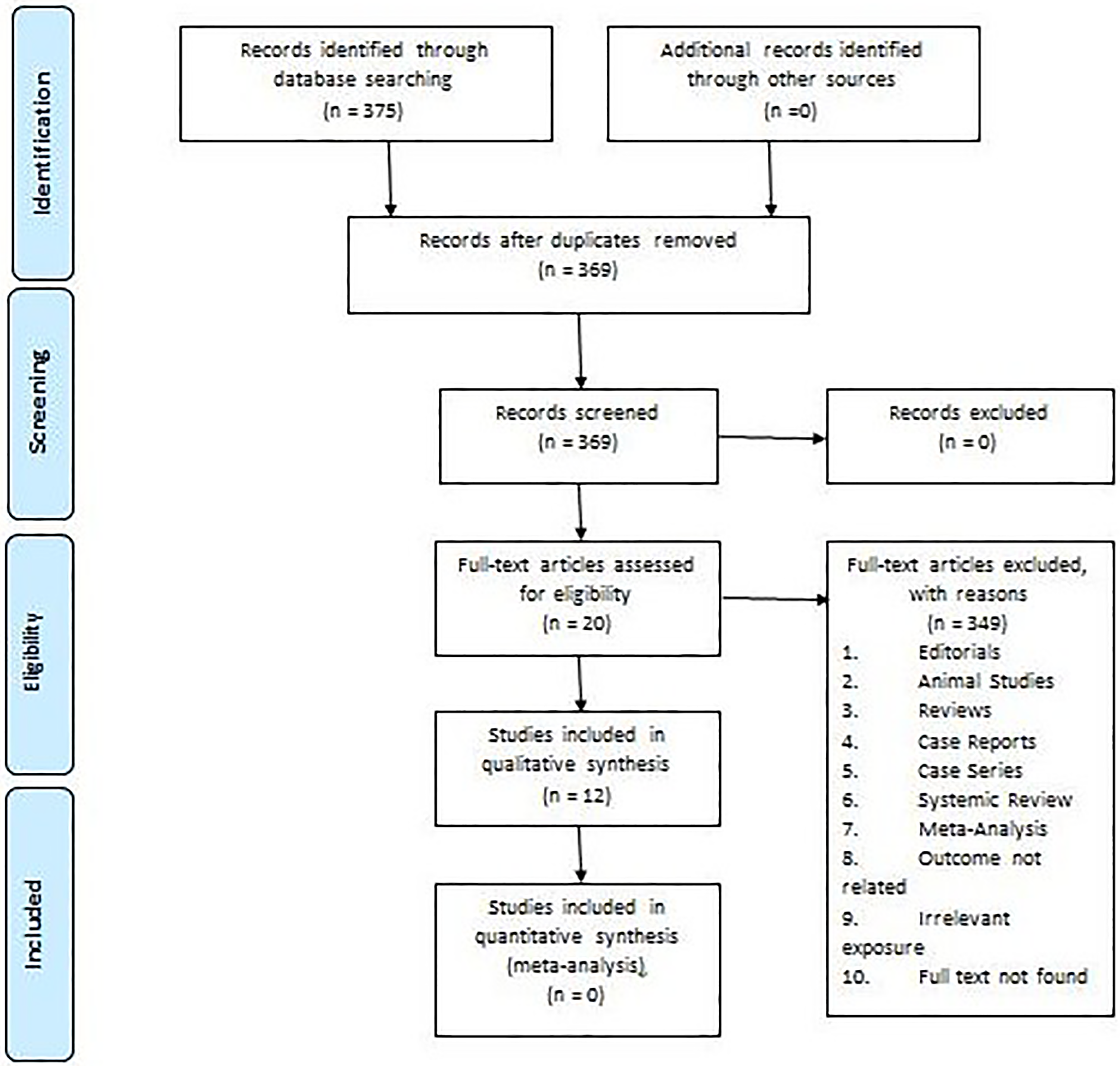
Preferred reporting items for systematic review and meta-analysis (PRISMA) flowchart.
Study characteristics
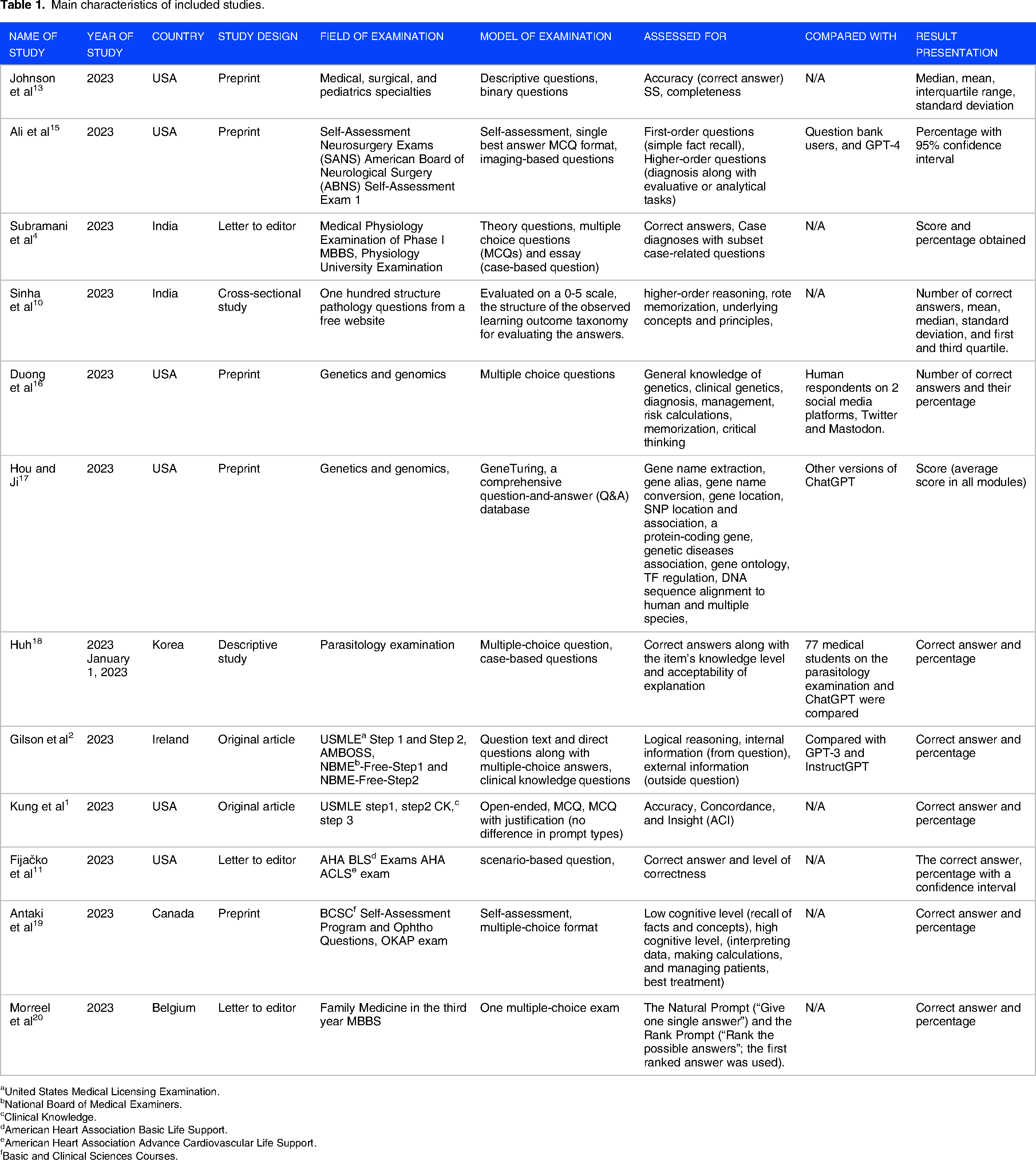
A total of 12 studies evaluating ChatGPT performance in different exams were selected.1,2,4,10,11,13,15–20 All the selected papers assessed the academic performance of ChatGPT-3.5. One study compared the performance of ChatGPT-3.5 with the performance of ChatGPT-4 when giving a medical exam. Out of these 12 studies, 5 studies were preprint,13,15–17,19 3 were letters to editors,4,11,20 2 were original studies,1,2, 1 was a cross-sectional study, 10 and 1 study was descriptive. 18 These studies were conducted across different countries. Out of these 12 studies, 7 were conducted in the United States of America,1,2,11,13,15–17 2 were conducted in India,4,10 while only 1 study was conducted in Belgium, 20 Ireland, 2 Canada, 19 and Korea. 18 The main characteristics of the included studies have been displayed in Table 1.
Main characteristics of included studies.
United States Medical Licensing Examination.
National Board of Medical Examiners.
Clinical Knowledge.
American Heart Association Basic Life Support.
American Heart Association Advance Cardiovascular Life Support.
Basic and Clinical Sciences Courses.
ChatGPT's overall performance in academic testing
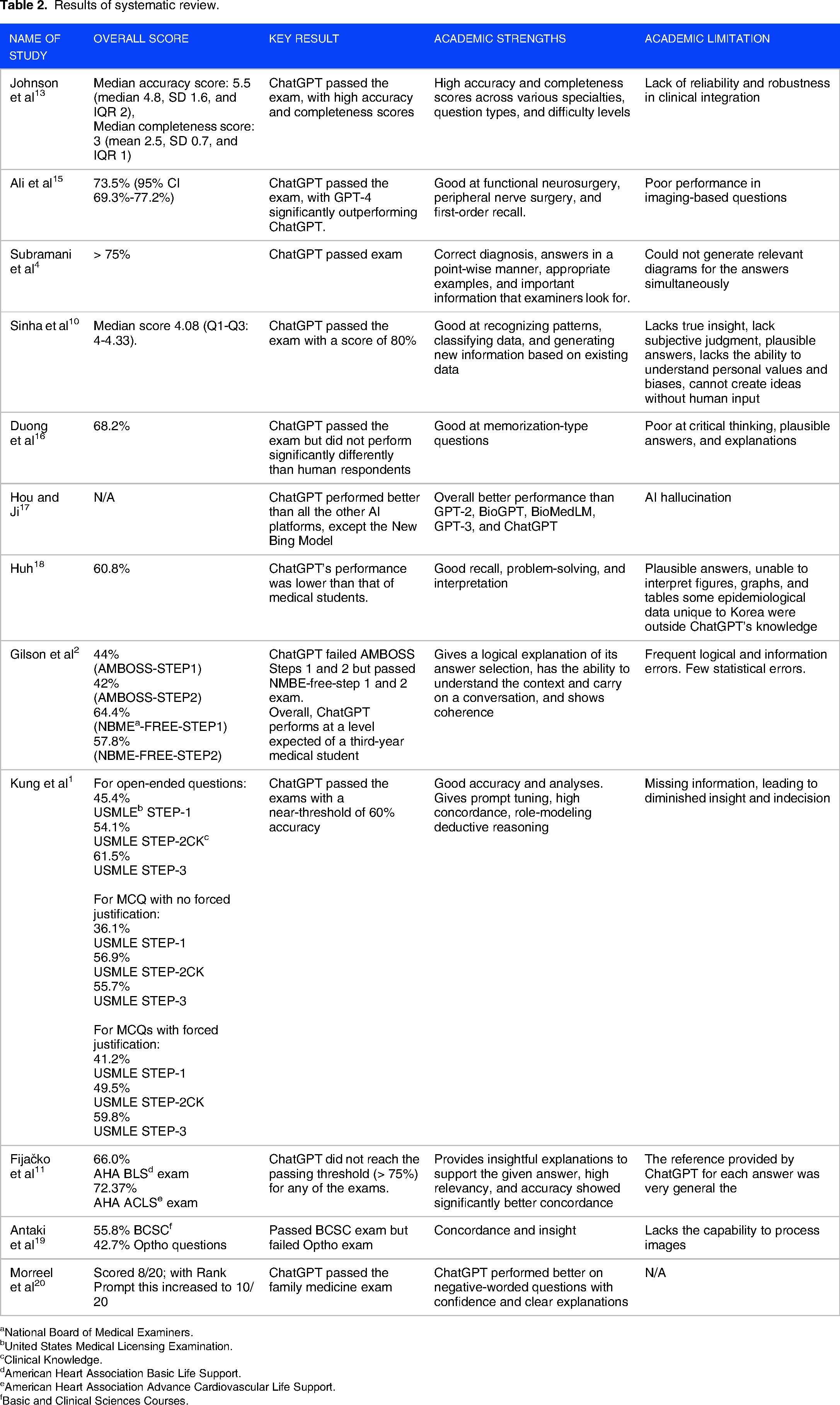
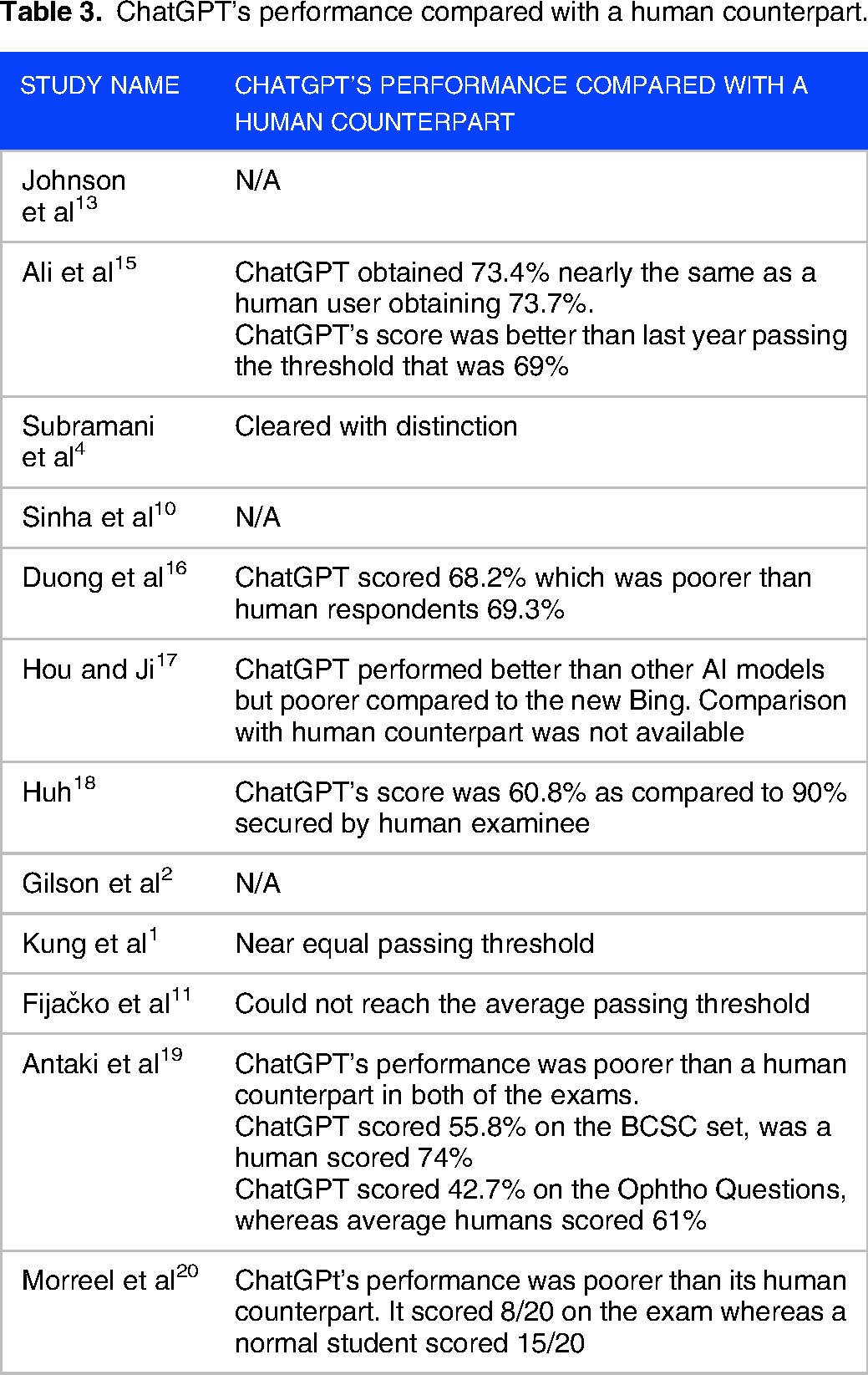
Twelve studies have evaluated the potential of ChatGPT-3.5 in various academic tests.1,2,4,10,11,13,15–20 Out of these tests, ChatGPT-3.5 performed very well in 4 tests,4,10,13,17 average in 4 tests,1,2,15,16 and performed badly in 4 tests.11,18–20 In the study by Sinha et al, 10 ChatGPT performed reasonably achieving a median score of 4 out of 5. Johnson et al 13 evaluated ChatGPT's performance across 17 different specialties and found that ChatGPT performed well both in accuracy and completeness. When ChatGPT was asked to take a first-year physiology exam, ChatGPT cleared it with distinction. 4 However, there were a few studies in which ChatGPT did not perform well. In a parasitology exam, ChatGPT scored 60.8% as compared to the 90.8% score by first-year medical students. 18 Similarly, ChatGPT failed the American Heart Association BLS and ACS examinations. 11 In other studies, ChatGPT significantly underperformed as compared to their human counterpart.15,20 Along with these studies, there were a few studies in which ChatGPT performed satisfactorily.1,2,15,16 Two studies evaluated ChatGPT's performance in USMLE examinations.1,2 ChatGPT barely reached the passing threshold in both studies. Similarly, ChatGPT scored 68.2% as compared to 69.3% by the human respondents in a genetic examination. 16 In another study, ChatGPT scored nearly the same as examinees giving neurosurgical board examinations. 15 Some studies compared ChatGPT's performance with other AI models.15,17 ChatGPT outperformed its previous models like GPT-1, GPT-2, and GPT-3. However, it could not score as well as GPT-4 or New Bing models. The academic performance of ChatGPT is displayed in Figure 2. The academic potential and limitations of ChatGPT have been comprehensively stated in Figures 3 and 4, respectively. The results of the systematic review have been mentioned in Table 2. Also, a comparison of ChatGPT's performance with a human counterpart is mentioned in detail in Table 3.
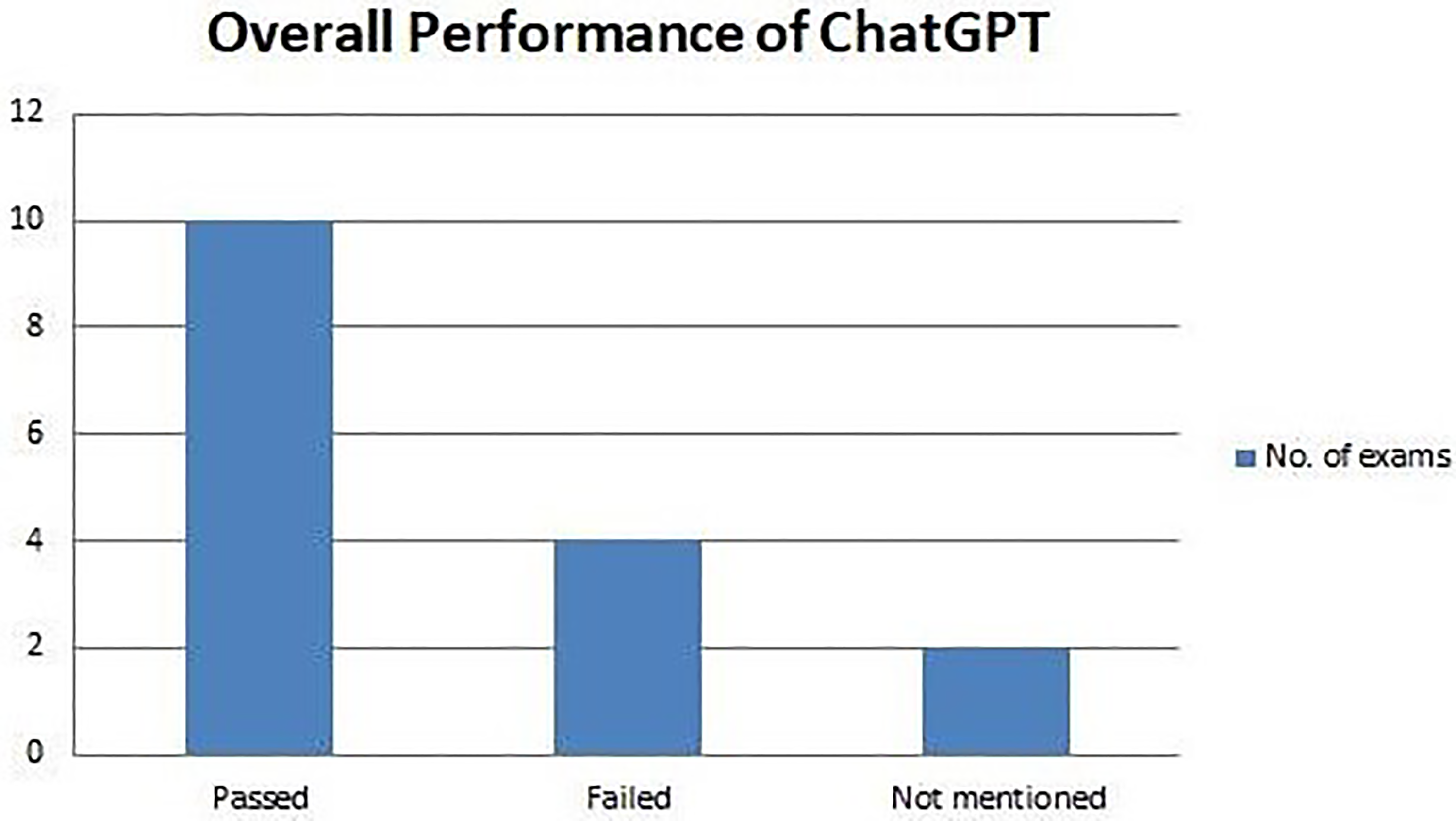
Overall performance of ChatGPT.

Academic strengths of ChatGPT.

Academic limitations of ChatGPT.
Results of systematic review.
National Board of Medical Examiners.
United States Medical Licensing Examination.
Clinical Knowledge.
American Heart Association Basic Life Support.
American Heart Association Advance Cardiovascular Life Support.
Basic and Clinical Sciences Courses.
ChatGPT's performance compared with a human counterpart.
ChatGPT's performance based on question difficulty
Three studies2,4,19 have studied the impact of the question's difficulty on ChatGPT's performance. Gilson et al 2 and Antaki et al 19 found that ChatGPT's performance was directly proportional to the level of the questions’ difficulty. On the contrary, Johnson et al 13 found that there was no significant difference in ChatGPT's performance based on difficulty levels. Details of ChatGPT's performance based on question difficulty are mentioned in Table 4.
ChatGPT's performance is based on difficulty level.

Levels 1 and 2 were assumed to be easy, level 3 was assumed to be medium, and levels 4 and 5 were assumed to be difficult in level by the author.
ChatGPT's performance across various question types
A total of 5 studies1,10,16,18,20 evaluated the impact of various types of questions on ChatGPT's performance. Johnson et al 13 found that there was no difference in ChatGPT's performance whether the questions were binary, descriptive, or MCQ-based. Similarly, Kung et al 1 found that there was no difference in ChatGPT's performance either on open-ended questions, MCQS, or MCQS with justifications. Huh 18 concludes that there was no difference in performance when ChatGPT answered questions based on recall, interpretation, and problem-solving. However, Duong and Solomon 16 found that ChatGPT performed poorly on critical thinking questions compared to questions requiring memorization. On the other hand, Morreel et al 20 found that ChatGPT performed badly on straight questions and scored well on negative or complex questions. Details of ChatGPT's performance based on question type are mentioned in Table 5.
ChatGPT's performance is based on the type of questions.

Efficacy of ChatGPT's explanations
ChatGPT's explanation was assessed in 4 studies,4,11,18,20 and all the authors found that they were effective. Fijačko et al 11 found that the rationale in ChatGPT's explanation was more detailed than the AHA answer key. Similarly, Morreel et al 20 found that ChatGPT gave confident and clear explanations even for wrong answers. Subramani et al 4 identified that along with giving a correct diagnosis, ChatGPT can structure its explanation in a point-wise manner. Also, it provides relevant examples and important background information to make its explanation more comprehensible to a human learner. Similarly, Huh 18 highlights that ChatGPT provides a deep understanding and practical interpretation in the explanation it provides.
Discussion
Through this review, we found that there is a mixed result regarding ChatGPT's performance in various medical tests. ChatGPT performed better in some tests and average in others while it failed to reach the passing threshold in the remaining exams. We further analyzed ChatGPT's performance based on the question's structure and difficulty level. We found that ChatGPT performed poorly when answering difficult questions. However, there was no difference in the results when the questions were either MCQ-type or open-ended questions.
A recent meta-analysis conducted by Levin et al 12 assessed ChatGPT's performance in medical examinations with multiple-choice questions. They found that ChatGPT's academic knowledge ranged from 40% in the biomedical admission test to 100% in a diabetes knowledge questionnaire. 12 The inconsistency in ChatGPT's performance raised concerns about the overall reliability of the data. Such a variation could be possible because this study was limited to multiple-choice exams only. Also, the study failed to appreciate an in-depth qualitative analysis of the performance of ChatGPT in individual exams. 12
ChatGPT is a large language model (LLM) that is trained on a specific dataset to generate human-like responses. 21 Although ChatGPT didn’t perform well in some tests, its overall performance was much better than previous models. This is seen as a huge achievement in LLM development since ChatGPT can also generate plausible explanations for its answers.1,16,19 Another feature that differentiates ChatGPT from its predecessors is that users can ask follow-up questions. This will further enhance the quality of answers generated. We also found that ChatGPT's performance was comparable to its human counterpart on various exams.
Apart from ChatGPT's overall performance in these tests, we also evaluated the impact of question types on these results. We found that ChatGPT's performance wasn’t affected by whether questions were in MCQ format or descriptive type. This means that questions of all types will yield similar results. Therefore there will be no need for any special prompts to get desired results. In addition, we found that explanations generated by ChatGPT were very concordant and succinct. A human learner can easily understand the logic and rationale behind every explanation. Furthermore, Kung et al 1 found that nearly 90% of ChatGPT's answers consists of valuable insight. All of this makes ChatGPT an important learning tool.
Although ChatGPT showed promising results in these tests, our review highlighted a few weaknesses of ChatGPT. ChatGPT's accuracy has improved from its earlier version; however, it is still far from being completely accurate. ChatGPT generated wrong answers on various occasions and that too in a convincing manner. Researchers believed that ChatGPT could not currently be used unsupervised. 22 ChatGPT-3.5 doesn't support visual input.15,22 This means that ChatGPT has limited knowledge regarding information present on visual diagrams. However, ChatGPT-4 currently includes support for image capabilities, although they are in the initial stages, and the performance may not be deemed impressive. 23 Our review highlighted that ChatGPT performed considerably poorly on questions that were associated with visual input. Similarly, the ChatGPT's performance was highly affected by the type of examination conducted. ChatGPT scored good marks in a first-year physiology test as compared to the USMLE examination. Since the latter requires a more complex approach.
Along with academic tests, researchers have also explored ChatGPT's performance in other academic fields.24,25 A lot of studies have been conducted to evaluate the role of ChatGPT in academic research.24,25 It is found that ChatGPT can conceptualize and propose a research topic. 26 Furthermore, ChatGPT can also write the manuscript. With all these advantages, there were certain flaws found during the process.24,27,28 There were certain ethical considerations attached to ChatGPT being an author. The manuscript prepared by ChatGPT has plagiarism issues.27,28 The dataset used by ChatGPT was not updated after 2021. 29 In addition, citations generated by ChatGPT were also fake. 27 With all these points many people now recommend the careful and supervised use of ChatGPT in research. 22
Our research opens up a lot of prospects. Through our research, we propose that ChatGPT could be incorporated into the educational system. But before this, we require clear policy-making in this regard. Along with this, careful consideration should be taken regarding its merits and demerits. ChatGPT is constantly learning and is expected to get better with time. ChatGPT could be used by students for learning in small groups. Evidence shows small group peer learning is equal to teaching by a teacher. 30 Students could use ChatGPT to answer their queries. Explanations provided with these answers will further solidify their concepts. In conclusion, our study provides evidence regarding the correct position of ChatGPT in the academic world and provides a layout of how it can be used in the future.
Our study should be viewed in light of the following limitations. First of all our review included studies from different medical fields but there are still several fields in which ChatGPT's performance is yet to be tested. These studies were conducted in different periods. Also, our review was conducted in a specific time duration; all those studies that met our inclusion criteria in that duration are included in our review. However, we are unable to include studies done after our literature search that were beyond our scope of review. Since ChatGPT is constantly learning and evolving, there is a chance that the time of the conducted study may have impacted the results. Furthermore, ChatGPT's results depend on the prompt given and there is a risk that results may not be constant when ChatGPT is tested again. However, in our research, we found that ChatGPT's answers are unaffected by the type of questions. But the risk remains. Currently, ChatGPT cannot process visual information so it could not answer questions whose data is given in images or graphs. Lastly, ChatGPT is trained on the dataset before 2021 therefore it is unaware of recent advances in the field. 29
Conclusion
ChatGPT-3.5 passed most of the exams it took as an examinee. Medical students, trainees, and doctors can safely rely on ChatGPT-3.5 when it comes to academic aid and clinical tools. In light of the academic strength identified by our study, we recommend such similar features should be added to this version of ChatGPT-3.5. Also, the academic limitation of ChatGPT identified by our study should be taken into account and those features must be modified. Such changes would help in the development of a better version in the future, increasing ChatGPT's reliability and efficiency in our healthcare.
Supplemental Material
sj-docx-1-mde-10.1177_23821205241238641 - Supplemental material for Can ChatGPT-3.5 Pass a Medical Exam? A Systematic Review of ChatGPT's Performance in Academic Testing
Supplemental material, sj-docx-1-mde-10.1177_23821205241238641 for Can ChatGPT-3.5 Pass a Medical Exam? A Systematic Review of ChatGPT's Performance in Academic Testing by Anusha Sumbal, Ramish Sumbal and Alina Amir in Journal of Medical Education and Curricular Development
Footnotes
FUNDING
The author(s) received no financial support for the research, authorship, and/or publication of this article.
DECLARATION OF CONFLICTING INTERESTS
The author(s) declared no potential conflicts of interest with respect to the research, authorship, and/or publication of this article.
Author's Contribution
Miss Anusha Sumbal: conceptualization, data curation, formal analysis, investigation, methodology, project administration, resources, software, supervision, validation, visualization, writing-original draft, and writing–review and editing. Dr Ramish Sumbal: formal analysis, investigation, methodology, resources, software, validation, visualization, writing–original draft, and writing–review and editing. Miss Alina Amir: resources, validation, visualization, writing–original draft, and writing–review and editing.

Supplemental Material
Supplemental material for this article is available online.
References
Supplementary Material
Please find the following supplemental material available below.
For Open Access articles published under a Creative Commons License, all supplemental material carries the same license as the article it is associated with.
For non-Open Access articles published, all supplemental material carries a non-exclusive license, and permission requests for re-use of supplemental material or any part of supplemental material shall be sent directly to the copyright owner as specified in the copyright notice associated with the article.
