




Abstract
Work control is widely recognized as a core dimension of job quality and a key determinant of worker health, especially in increasingly precarious labor markets. Yet the concept is inconsistently conceptualized and poorly measured. The author reconceptualizes and analyzes work control as a multidimensional, context-sensitive balance between autonomy-enhancing enablers and constraint-imposing barriers, using cross-national survey data from the 2015 International Social Survey Programme Work Orientations IV Module. The author examines how the reconceptualized work control measure relates to self-rated health across 15 countries with varying economic and welfare contexts. Results from survey-weighted and mixed-effects ordered logistic models show that workers with high work control, defined as having more enablers than constraints across control over work hours, time off, and work-family boundaries, report significantly better self-rated health, even after adjusting for job characteristics, household structure, and macro-level conditions. This relationship remains robust across multiple sensitivity tests. Descriptive and validation analyses further indicate that reducing constraints, particularly those from work-family interference, plays a more decisive role for well-being than autonomy alone. By distinguishing meaningful work control from nominal flexibility or perceived autonomy, this study clarifies how effective control is associated with health in the post-2008 labor market and underscores the importance of policies that make control both possible and meaningful in everyday work.
In an era of rising job insecurity and flexible work arrangements, the extent to which workers can control their working hours, time off ability, and work-family boundaries has become increasingly important for workers’ well-being. Limited control over work is consistently linked to poorer health, both physical and psychological, across a range of occupations and institutional settings. Recent evidence shows that greater work autonomy improves mental health and job satisfaction, even under new forms of digitalized or hybrid work modes (Lu et al. 2023). At the same time, workers in lower status occupations continue to experience chronic job strain and limited decision-making authority, contributing to persistent socioeconomic disparities in health (Sheftel et al. 2024). Similarly, in an earlier study, Marmot (2004) demonstrated that hierarchical inequalities within workplaces drive disparities in physical and mental health, with lower status workers experiencing chronic stress due to limited control over their work. These inequalities are not simply individual but structural, because national labor market institutions and welfare regimes shape the extent to which workers can exercise control and buffer health risks (Barnes, Hall, and Taylor 2023; Esping-Andersen 1990). Moreover, new studies highlight that schedule instability and erosion of temporal control threaten workers’ dignity and sense of agency, thus underscoring the contemporary relevance of control as a dimension of job quality (Woods 2025).
Likewise, other foundational research established that limited control at work is a powerful determinant of health. Drawing on the demand-control tradition, Clougherty, Souza, and Cullen (2010:107) showed that reduced decision-making authority and limited participation in work-related choices elevate stress and cardiovascular risk. Karasek’s (1979:286–89) job demands–control model similarly demonstrates that workers in high-demand, low-control jobs face greater health risks, whereas those with more control experience better outcomes. Building on this tradition, Bakker and Demerouti’s (2007:310–18) job demands–resources model highlights control as a central job resource that buffers strain and promotes engagement.
Yet these frameworks were developed in relatively stable industrial economies and largely capture formal autonomy, the right to decide, rather than effective control, the capacity to exercise flexibility without penalty. In today’s post-2008 labor markets and reshaped by the coronavirus disease 2019 (COVID-19) pandemic, as stable work schedules become rarer (Caza et al. 2022; St-Denis and Hollister 2023) and increasingly characterized by algorithmic management, platform and gig work, and unstable scheduling, the distinction between formal autonomy and effective control has become crucial. Revisiting work control through this lens is essential for understanding how contemporary employment structures shape health inequality.
However, despite work control’s established importance for health, the literature remains fragmented in three critical ways. First, many studies conflate work control with related but distinct constructs like flexibility and autonomy, often operationalizing it through narrow or unidimensional measures. For example, although Lyness et al. (2012:1024–26) offered a more precise treatment of temporal flexibility, they ultimately treat control as a secondary attribute rather than as a construct deserving independent attention, thereby obscuring its multidimensionality. Second, few studies have reexamined the health implications of work control in the context of rising labor market precarity, particularly in the post-2008 period marked by the growth of gig work, schedule instability, and widespread economic uncertainty (Abraham et al. 2019; Caza et al. 2022; Dunatchik et al. 2021; Kuhn 2016; St-Denis and Hollister 2023). Third, most studies largely draw on data from individual organizations, single industries, or country-specific contexts (Fenwick and Tausig 2001; Moen et al. 2011, 2016). Although these studies offer important insights, they often overlook the structural and institutional environments that shape how work control is exercised and how it relates to health outcomes.
In this study I address these gaps by (1) developing a multidimensional construction of work control that avoids conflating it with flexibility or autonomy, and that distinguishes enablers (formal autonomy) from constraints (interference and instability); (2) analyzing data collected in 2015, a period that captures the early consolidation of post-2008 labor market transformations, and before the additional disruptions brought by the COVID-19 pandemic, which further intensified precarity, digital monitoring, and schedule instability; and (3) using cross-national data from the International Social Survey Programme (ISSP) to examine how the relationship between work control and self-rated health varies across welfare and institutional contexts. Specifically, I ask, (1) How should we conceptualize and measure work control in an era of rising precarity? and (2) To what extent does this multidimensional construct predict worker health across countries? By answering these questions, this study advances sociological understanding of how work control functions as a multidimensional and stratified resource, and a central mechanism linking contemporary, nationally diverse work organization to health inequality.
Work Control, Flexibility, and Autonomy: Definitions and Measurement
Although work control is central to worker health, existing research often conflates it with flexibility and autonomy. Flexibility, in particular, remains inconsistently defined, frequently used as a catch-all term for arrangements such as flextime, part-time work, or job sharing, irrespective of who initiates or benefits from these arrangements (Eaton 2003; Glass and Finley 2002; Kelly and Moen 2007). Glass and Finley (2002:325–33) argued that such conflation obscures the true health implications of flexibility, especially when workers are situated in different institutional contexts, thus urging future research to explicitly focus on autonomy and control.
Building on this critique, Berg et al. (2004), and Kelly et al. (2011) reconceptualize flexibility as control over when work occurs and how long it lasts, suggesting that flexibility is meaningful only when it expands workers’ agency across these dimensions. Similarly, Hill et al. (2008) found that flexibility benefits health most when workers have genuine choices about when, where, and how much they work. Lyness et al. (2012:1024–26) extended this work by distinguishing between two temporal aspects of control, scheduling (start and stop times) and total work hours, including “hours mismatch,” in which workers want more or fewer hours than they are assigned. Their contribution lies in clarifying that flexibility is valuable because it enables realized control rather than merely formal options, and in linking unmet preferences to deeper issues of employer power and structural constraint.
However, Lyness et al. (2012) ultimately treated control as a component of flexibility rather than as a meaningful, distinct construct. Their framework confines control largely to temporal dimensions, overlooking other critical domains such as the ability to take time off and maintain boundaries between work and personal life (Kossek, Lautsch, and Eaton 2006:350–66). Moreover, control is often conceptualized as a binary condition, something a worker either has or lacks, rather than as a graduated, context-dependent resource. As prior studies indicate, nominal flexibility often masks deeper organizational constraints and informal sanctions that limit workers’ actual ability to exercise control (MacEachen, Polzer, and Clarke 2008:1020–27; Moen et al. 2011:407–20).
Therefore, this study redefines work control as a multidimensional construct that meaningfully shapes several aspects of work, including control over hours, time off, and boundary setting. Although it overlaps conceptually with flexibility, it extends beyond temporal scheduling to encompass decision-making power over when and how work intersects with personal life. Unlike flexibility, which refers to the existence of particular arrangements (e.g., flextime or remote work), and autonomy, which reflects a perceived dichotomous sense of choice, work control is conceptualized here as context sensitive and structurally contingent.
Importantly, this reconceptualization in this study is not only definitional but also historical and comparative. The forms and meanings of control have shifted dramatically since the 2008 financial crisis (Kuhn 2016) and especially after the COVID-19 pandemic, as algorithmic management (Kadolkar, Kepes, and Subramony 2025), hybrid work (Schaupp 2023), and platform labor have intensified both precarity and digital monitoring (Glavin, Bierman, and Schieman 2024; Vitak and Zimmer 2023). Examining data collected in 2015 allows this study to capture the early consolidation of these transformations, before the pandemic further restructured temporal and spatial aspects of control, thus offering a historical baseline against which to interpret more recent shifts in the organization and regulation of work.
Moreover, by analyzing different countries with distinct welfare regimes, I attempt to situate work control within broader institutional contexts. Cross-national variation in welfare and labor market institutions, building on Esping-Andersen’s (1990:22–29, 32–33) typology, fundamentally conditions how workers experience control and how it can translate into well-being. In liberal welfare states, limited decommodification and market-centered benefits (Esping-Andersen 1990:26–27) leave workers more dependent on employers, thus restricting their capacity to exercise meaningful control over time, schedules, and leave. In conservative or corporatist regimes, in which rights are tied to occupational status and the family remains central to welfare provision (Esping-Andersen 1990:27–29), formal job security may coexist with gendered constraints on temporal autonomy. By contrast, social democratic regimes, characterized by high decommodification and the fusion of welfare and work (Esping-Andersen 1990:28–29), can potentially promote more universal protections, collective bargaining coverage, and full-employment commitments that expand workers’ effective control and buffer health risks. Comparative research further shows that individuals in such egalitarian welfare contexts consistently report higher levels of life satisfaction and mental health (Chung 2022). From this perspective, work control operates not only as an individual-level resource but also as an institutionally mediated mechanism requiring an analysis linking macro-level institutional structures to micro-level experiences of health.
Work Control, Health, and Rising Precarity in Comparative Lens
Classic theory clarifies why control sits at the heart of worker well-being. Marx ([1867] 1976, chaps. 1, 7, 10, and 15; Marx [1932] 1978) located alienation in workers’ loss of control over production, linking estrangement to psychological distress and diminished agency. Weber ([1921] 2019, chaps. 2 and 3; Weber [1904] 2001, chap. 5) showed how bureaucratic rationalization traps workers in an “iron cage” of routinized, impersonal labor with mental health consequences. Braverman (1998, chaps. 3–6, pp. 86–87) detailed how managerial deskilling, separating conception from execution, systematically strips decision power and reinforces alienation. Yet control is uneven, not absent: Freidson ([1970] 2017:81–127) demonstrated how professional expertise sustains pockets of autonomy. Synthesizing these insights, Kalleberg (2011:61–104, 132–63; Kalleberg 2018) treated control as a structurally embedded resource that is stratified by class, gender, and employment arrangement and channels inequality into health. Figure 1 visualizes a timeline of the framework of control.

A timeline of work control.
Mechanistically, control protects health by reducing uncertainty, enabling recovery, and supporting boundary management. Where effective control is thin, chronic unpredictability elevates stress and undermines routines central to physical and mental health.
However, after 2008, the conditions under which this unequal structural resource operates have changed dramatically. Stable and predictable employment gave way to fragmented, remote, and uncertain forms of work (Abraham et al. 2019; Caza et al. 2022; Dunatchik et al. 2021; Kuhn 2016; St-Denis and Hollister 2023). Precarious employment, characterized by volatile hours, income instability, and limited protections, intensifies health risks through persistent insecurity and disrupted time structures (Glavin and Schieman 2022; Schneider and Harknett 2019; Standing 2016; Wang, Li, and Coutts 2022). Empirical studies consistently show schedule instability and insecurity predict psychological distress (Benach et al. 2014; Burgard and Lin 2013). Hochschild’s (1997) “time bind” concept helps explain how blurred work-family boundaries, under these newer regimes, compress recovery time and amplify strain in the post-2008 era.
Standing’s (2016) “precariat” class captures the diffusion of insecurity beyond a single sector; precarity now spans standard and gig work worldwide (Kalleberg 2009; Schneider and Harknett 2019; Vosko 2010a, 2010b). Nonstandard arrangements heighten work-family conflict and crowd out health-promoting behaviors under erratic schedules and limited control (Dunatchik et al. 2021; Kelly and Moen 2020; Voydanoff 2005). Consequently, precarious employment emerges as a social determinant of health, which is constantly linked to anxiety, depression, and distress through unstable time, money, and benefits (Bara and Arber 2009; Christie and Ward 2019:116–26; Fenwick and Tausig 2001; MacEachen et al. 2008; Vallas and Schor 2020).
Critically, autonomy is not control in today’s platforms. Gig workers (e.g., Uber, Lyft, Fiverr) face apparent discretion over login times but remain governed by algorithmic and market volatility that curtails meaningful discretion and isolates workers, which are conditions not conducive to better health (Davis and Hoyt 2020; Glavin and Schieman 2022; Thomas et al. 2022; Wang et al. 2022). The COVID-19 pandemic further spotlighted these vulnerabilities and thin protections (Milkman et al. 2021; Ravenelle, Kowalski, and Janko 2021), that even when choices exist, they are indeed constrained choices (Kalleberg 2018).
Shift-work evidence from the Shift Project shows employer-imposed unpredictability; gig work shows self-managed yet equally unstable time. Both produce low effective control despite different surface forms (Schneider and Harknett 2019). In the context of a “fourth industrial revolution” (Ghislieri, Molino, and Cortese 2018), automation and artificial intelligence (Acemoglu and Restrepo 2022), plus platformization that further commodifies and dehumanizes labor (De Stefano 2016:2–15), we need to reconceptualize control beyond “autonomy” and “flexibility” toward predictability, decision authority, and boundary sovereignty as the health-relevant core.
Additionally, a comparative lens is essential to understanding how work control shapes health across today’s unequal, evolving labor markets. Control is inherently multidimensional and context-dependent, reflecting the interplay between what workers are formally permitted to do, what they perceive they can do, and how institutional environments enable or constrain these possibilities (Ashforth, Kreiner, and Fugate 2000, 475–95; Goode 1960:485–87; Karasek 1979:287–89; Kossek and Ozeki 1998:82). Cross-national differences in economic development, gendered labor participation, workplace regulation, and welfare protections profoundly influence how control is experienced and how it translates into well-being. Higher development levels typically bring stronger labor protections and health care access; gender norms shape how control is negotiated between work and family; and work intensity and safety standards condition the psychological and physical risks workers face (Chung 2022).
This multidimensional, comparative approach is especially important in an era of rising precarity, which is not confined to the U.S. context. From gig work in the Global North to informal economies in the Global South, workers face overlapping challenges of instability, blurred boundaries between work and nonwork, and limited power to shape their schedules, take time off, or protect their health. Without this broader international perspective, research risks reinforcing U.S.-centric assumptions, treating work control as a static or individual-level trait rather than as dynamically shaped by institutional designs, collective norms, and broader structural constraints. Additionally, as earlier discussions of welfare regimes suggest (Esping-Andersen 1990), institutional arrangements fundamentally condition how these challenges are experienced and mitigated. Regime differences in decommodification, labor protections, and family policy shape not only workers’ access to control but also the degree to which control can function as security rather than precarity. Thus, control must be understood relationally, as its health implications also depend on the institutional context within which workers exercise it.
Given these complexities, I now return to the two central questions asked in the Introduction:
How should we define and measure work control in contemporary labor markets since 2008, especially given rising precarity?
To what extent does this multidimensional concept of work control predict worker health across diverse national, institutional, and structural contexts?
To my knowledge, this is the first study to systematically redefine work control against a backdrop of growing labor market precarity since 2008 and empirically examine its relationship with health cross-nationally. Understanding work control in today’s economy, amid the post-2008 rise of gig work and the postpandemic expansion of digital monitoring, requires recognizing that control is only meaningful when workers possess the structural support to exercise it effectively and when institutional constraints do not erode its benefits.
The sections that follow present the data and methods, results, sensitivity analyses, discussion including limitations, and conclusion.
Data and Methods
Data
This study draws on the 2015 Work Orientations IV Module of the ISSP, a cross-national research initiative that examines social beliefs, attitudes, and behaviors related to work. The 2015 wave of data collection was undertaken between January 19, 2015, and April 6, 2017, across 37 countries spanning six continents, ensuring representation from both developed and developing economies. The survey includes individuals 18 years and older (with some variations, e.g., Finland [15–74 years], Japan [≥16 years], and Norway [18–79 years]) (Jutz et al. 2018), and 51,668 respondents participated using a range of sampling methods (simple random, stratified proportional, multistage probability sampling) and modes (computer-assisted personal interviewing, paper and pencil interviewing, computer-assisted web interviewing, telephone).
I use the 2015 ISSP Work Orientations IV Module because it is the only wave that includes detailed measures of workplace characteristics and perceived control. Earlier waves focused primarily on attitudes and job satisfaction, whereas the 2015 survey introduced items on control over work arrangements (e.g., hours, time off, shift patterns) and work-life balance (e.g., job interference with family life). Crucially, it also added a self-rated health measure, thus allowing direct examination of how work control relates to worker health amid growing labor market precarity. These features make the 2015 wave uniquely suited to studying the link between work control and well-being.
Additionally, although the 2015 data precede the COVID-19 pandemic, they capture a critical transitional period, the consolidation of post-2008 labor market transformations such as the rise of gig work, flexible scheduling, and the diffusion of digital management systems. Using 2015 data thus provides a historical baseline for understanding how precarity and control were structured before the COVID-19 pandemic further intensified remote work, algorithmic surveillance, and temporal fragmentation. This historical grounding tries to strengthen rather than limit the analysis to offer perspective on how the foundations of today’s labor conditions were already taking shape.
The analytic sample includes 18,403 adults aged 25 to 54 years 1 with available data. This age range captures the core working-age population, which is a period when individuals are most stably attached to the labor market and when work conditions exert the strongest influence on health and family life (England, Levine, and Mishel 2020; Mirowsky and Ross 2003; Schnittker and Bacak 2014). Excluding younger and older respondents minimizes heterogeneity related to school-to-work transitions and retirement timing, to ensure that observed associations reflect variation in employment structures rather than life-course stage differences (Masters, Hummer, and Powers 2012). Fifteen of the 37 ISSP countries implemented the 2015 work characteristics and health modules.
Indicator of Control: A Composite Measure
Building on this study’s conceptual framework that work control will meaningfully shape multiple aspects of the work experience, I develop a composite measure that captures different aspects of control. This new measure reflects the multidimensional nature of worker control by accounting for both enabling and constraining factors that shape how control is experienced. To operationalize this concept, I construct a composite score using four key survey items from the 2015 ISSP Work Orientations IV Module:
Control over work hours: Best describes the working hours conditions. Can you decide on when you start and finish work? Rate from a scale from 1 to 3: 1 refers to “I cannot change, fixed time”; 2 refers to “I can decide within certain limits”; 3 refers to “I am entirely free to decide.”
Ease of taking time off: How difficult is it for you to take time off during working hours? Rate from a scale from 1 to 4: 1 refers to “Not difficult at all”; 2 refers to “Not too difficult”; 3 refers to “Somewhat difficult”; 4 refers to “Very difficult.”
Job-to-family interference: How often do demands of the job interfere with family life? Rate from a scale from 1 to 5: 1 refers to “Always”; 2 refers to “Often”; 3 refers to “Sometimes”; 4 refers to “Hardly ever”; 5 refers to “Never.”
Family-to-job interference: How often does family life interfere with job performance? Rate from a scale from 1 to 5: 1 refers to “Always”; 2 refers to “Often”; 3 refers to “Sometimes”; 4 refers to “Hardly ever”; 5 refers to “Never.”
Importantly, each respondent receives one point toward an enabler score (autonomy enhancing) if they report having at least some control over their work hours (e.g., “I can decide within certain limits” or “I am entirely free to decide”), facing minimal difficulty in taking time off (e.g., “Not difficult at all” or “Not too difficult”), rarely experiencing job-to-family interference (e.g., “Hardly ever” or “Never”), and reporting little to no family-to-job interference (e.g., “Hardly ever” or “Never”).
Conversely, each constraint factor: having no control over work hours, experiencing significant difficulty in taking time off, reporting frequent job-to-family interference, or facing high family-to-job interference, adds one point to a constraint score. The work control score is then calculated as the difference between a respondent’s enabler and constraint scores, taking on values of −4, −2, 0, 2, and 4. Because both the enabler and constraint indices are composed of four binary items, the resulting difference necessarily yields only even-numbered values, which reflects the net balance between enabling and constraining conditions of control:

To ensure that high control reflects a meaningful surplus of enabling over constraining conditions, the key independent variable, a binary indicator of work control, classifies respondents as having high control only if their work control score is ≥2, meaning that they report at least two more enabling conditions than constraining ones. Given that the composite score ranges from −4 to 4 in increments of 2, a value of 2 represents a net positive balance of control, indicating that enabling factors outweigh constraints in at least half of the measured dimensions. This threshold is deliberately conservative: it ensures that workers are only coded as having high control if their experiences are net-positive across the multiple dimensions of control: work hours, time off, and job-family interferences. By contrast, those with equal or greater constraints than enablers (e.g., work control scores of −4, −2, and 0), are classified as having low control, recognizing that the presence of even some enablers may not translate into meaningful control if they are offset by persistent structural or interpersonal constraints. Figure 2 shows the complete process to construct the variable of work control, which is a binary indicator where high work control equals 1 and 0 otherwise. Table 1 reports summary statistics for the measures I used to construct the binary variable of work control, including both enablers and constraints.

Construction of the key independent binary variable “work control.”
Summary Statistics for Measures Used to Construct “Work Control.”

Work control is associated with education as would be expected. Figure 3 shows a clear educational gradient in work control score: among those with the lowest possible score (−4, indicating zero enablers and the most constraints), only 46.5 percent hold a higher education degree, while 53.5 percent do not. In contrast, among those with the highest possible net score (+4, indicating four enablers and zero constraints), 56.3 percent hold a higher education degree, compared with 43.7 percent with lower educational attainment.

Distribution of work control score by high versus low education levels in percentages.
Indicator of Well-Being: Self-Rated Health
The dependent variable, self-rated health, is measured on an ordinal scale to capture individuals’ subjective assessment of their overall well-being. Respondents originally rated their health on a five-point scale where 1 = excellent, 2 = very good, 3 = good, 4 = fair, and 5 = poor. For ease of interpretation and modeling, I reverse-coded this measure so that higher values correspond to better self-rated health, such that 5 = excellent, 4 = very good, 3 = good, 2 = fair, and 1 = poor. This transformation ensures that positive coefficients in regression models indicate improved health outcomes to align with conventional interpretations of well-being.
Covariates and Contextual Controls
Personal demographics
The baseline model will include key demographic controls to account for individual characteristics that may be associated with work control and self-rated health. Age in years is included as a continuous variable, while higher education is measured as a binary indicator, coded 1 for individuals who have attained postsecondary, nontertiary education, lower level tertiary education, or upper level tertiary education, such as a master’s or doctoral degree. Gender is also included as a binary variable, with female coded 1.
The partnered variable is constructed to distinguish individuals who are in a legal partnership from those who are not. Those who are currently married or in a civil partnership are coded as partnered = 1 to reflect their status as being in a formal union. Conversely, individuals who are separated, divorced, widowed, or have never been married are coded as partnered = 0, categorizing them as not currently in a legal partnership (Liu and Umberson 2008; Zheng and Thomas 2013).
Urban residence is also measured as a binary variable, coded 1 for individuals living in a big city or its suburbs to reflect potential differences in access to health care resources and occupational opportunities between urban and rural areas (Banerjee 2021; Cyr et al. 2019; Sibley and Weiner 2011). Additionally, financial well-being is incorporated as a binary measure, coded 1 for respondents who self-report their current financial situation as “very good,” “good,” or “neither good nor bad,” capturing perceived economic stability, one of the most major influencers of health (Mercado et al. 2024; Sun and Chen 2022; Walker-Pow et al. 2024).
Work characteristics
Building on this baseline, the model will be extended to include key job characteristics that may affect health outcomes (Lyness et al. 2012). Work schedule regularity is included as a binary variable, coded 1 for those with a usual, regular working schedule. Weekly working hours are included as a continuous variable, using a cleaned version that excludes extreme outliers reporting more than 80 hours per week. Job security is captured through a binary measure, coded 1 if an individual strongly agrees or generally agrees that their job is secure. Similarly, advancement opportunities are measured as a binary variable, coded 1 for those who strongly agree or agree that their job provides high opportunities for career progression. Physical job demands (hard physical) is also a binary indicator and is coded 1 for individuals who report always or often engaging in hard physical labor, recognizing the potential health implications of physically strenuous work. Similarly, workplace stress (stressful work) is measured using a binary variable, coded 1 for individuals who report always, often, or sometimes finding their work stressful and 0 for those who indicate that work is hardly ever or never stressful.
Household characteristics
Finally, because work-family interference reflects both workplace autonomy and the household demands that condition whether autonomy can be meaningfully exercised, this study incorporates detailed measures of household composition to reduce confounding between private and work domains and to better approximate the extent to which reported autonomy reflects effective rather than merely formal control.
Employees with minimal family or caregiving obligations may report low job-family interference not because they possess high work control, but because they face fewer competing demands outside of work. Conversely, workers with significant caregiving duties may report higher interference even when their jobs allow considerable flexibility. Prior research has long emphasized that household structure, particularly the presence of children or other dependents, fundamentally shapes the work-family interface and its consequences for well-being (Greenhaus and Beutell 1985; Kalil, Ryan, and Chor 2014; Moen, Dempster-McClain, and Williams 1992). To address this concern, the analysis includes a four-category household composition variable distinguishing between (1) individuals living alone, (2) those residing exclusively with other adults, (3) those living with children only, and (4) those living with both adults and children. Including this measure allows the models to disentangle the effects of workplace control from life-stage and caregiving contexts, to ensure that higher or lower interference scores are not simply reflections of family responsibilities.
Methods
Descriptive Analyses
I conducted descriptive analyses to assess: (1) cross-national differences in work control levels, examining how the prevalence of high work control and its component dimensions vary across countries; (2) work control levels (high vs. low) by selected demographic and socioeconomic characteristics, including age, sex, education, marital status, urban vs. rural residence, household composition, and weekly work hours; (3) self-rated health by work control levels (high vs. low).
Survey-Weighted Ordinal Logistic Regression with Country Fixed Effects
Following an analytic strategy used by Lyness et al. (2012), I use, first, a survey-weighted ordered logistic model with country fixed effects and, second, a mixed-effects ordered logistic model to account for hierarchical data, where individuals are nested within countries. The mixed-effects model allows for random intercepts at the country level to ensure that differences in baseline health across countries are incorporated.
I start with a survey-weighted ordered logistic model with country fixed effects because it controls for unobserved country-level heterogeneity, isolating within-country variation in work control and health. This helps ensure that any observed effects are not driven by structural differences across countries, such as labor protections, health care systems, or cultural norms. By estimating this model, my goal is to answer the question, Does greater work control predict better self-rated health within countries, net of individual-level and job-related characteristics? However, this approach does not model between-country variation, which may be relevant for understanding broader institutional influences of work control.
To address this, I also employ a mixed-effects ordered logistic model, which relaxes the fixed-effects assumption by allowing country-specific random intercepts. This approach incorporates unobserved between-country variation while still estimating individual-level relationships. By incorporating both modeling strategies, I balance the need for within-country comparability with an acknowledgment of cross-national differences in labor market conditions, structures and social policies. By estimating this model, I answer the question: Does the association between work control and self-rated health hold across countries with different institutional and macroeconomic conditions?
As mentioned, the first model is an ordinal logistic regression with survey weights. This approach is appropriate given the complex survey design of the 2015 ISSP Work Orientations IV Module, which involves stratified and clustered sampling across multiple countries.
Below I present the formal specification for the survey-weighted model:

where Yi is the self-rated health of individual i (with five ordered categories, from “poor” to “excellent”); WC
i
is the binary composite work control measure, which is the key independent variable;
In other words, the model asserts that the log odds of reporting self-rated health above category j is a linear function of the composite measure of work control and other controls, with the effect of work control captured by β. A positive value of β would indicate that higher work control (i.e., more net enabler relative to constraints) is associated with lower odds of reporting poor health.
Mixed-Effects Ordinal Logistic Regression with Random Intercepts
Although the survey-weighted ordered logistic model accounts for the survey design, it does not explicitly model variation between countries, which is important for understanding how national-level factors, such as different welfare regimes, labor regulations, economic conditions, and social policies, shape the relationship between work control and health. To address this, I estimate a mixed-effects ordinal logistic regression, which accounts for both individual-level predictors and macro-level country characteristics.
The mixed-effects model includes a random intercept for the country, which captures unobserved heterogeneity at the national level that may influence self-rated health. Additionally, I incorporate four key macroeconomic predictors to capture cross-national differences in labor market structures and welfare regimes that may shape the relationship between work control and health outcomes:
Gross domestic product (GDP) per capita: I obtained 2015 per capita GDP (in U.S. dollars) for the 15 countries from the United Nations Statistics Division’s National Accounts Estimates database (United Nations Statistics Division 2015), which compiles official national accounts data from United Nations member states. This variable helps account for economic development and resource availability, both of which may affect labor market conditions and health disparities.
Women’s labor force participation rate: This measure was obtained from the ILOSTAT database for 2015 (ILO 2015c).
Average weekly hours worked per employed person: I obtained this measure from the ILOSTAT database (ILO 2015b). Work hours vary significantly across national labor regimes, and this measure helps capture cross-national differences in work intensity, which may affect control, job stress, and health outcomes.
Fatal occupational injury rate: This measure, reflecting the number of work-related fatalities per 100,000 workers in 2015, was sourced from the ILOSTAT database (ILO 2015a). Workplace safety varies across countries because of labor regulations, union strength, and industry composition, making this a critical factor in assessing how job-related risks influence health outcomes.
Here I provide the formal specification for the mixed-effects model:
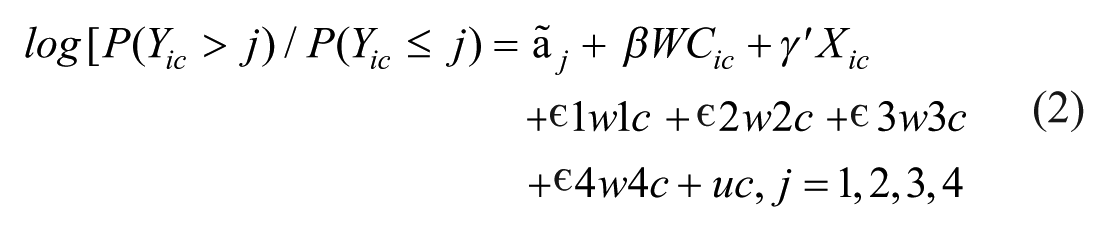
where Yic is the self-rated health of individual i in country c (with five ordered categories, from “poor” to “excellent”); WC
ic
is the composite work control measure and β is its coefficient;
Results
Descriptive Analyses
Cross-National Variation in Work Control and Its Components
Table 2 presents the percentage of workers reporting high levels of control overall and across four component dimensions: control over work hours, control over time off, job-to-family interference, and family-to-job interference. A design-based χ2 test confirms that the distribution of work control varies significantly across countries, χ2(14) = 213.71, F(11.85, 89,831.50) = 11.13, p < .001.
Percentages of Workers with High Levels of Control by Country and by Control Types.

Note: A Pearson χ2 test was conducted to examine the association between country and work control status. The results indicate a statistically significant relationship between these variables, χ2(14) = 213.71, design-based F(11.85, 89,831.50) = 11.13, p = .0000, suggesting that the distribution of work control varies significantly across countries.
The results show substantial cross-national variation. Workers in Latvia (60.9 percent), Switzerland (53.4 percent), Iceland (50.9 percent), and Estonia (51.5 percent) are among the most likely to report high overall control, while those in Russia (27.2 percent) and India (27.8 percent) are least likely to do so. Time-based forms of control, such as decision power in work hours and time off, are generally higher in countries with stronger labor protections and flexible scheduling norms (e.g., Iceland, Switzerland), whereas control over work-family interference follows a distinct pattern, with Central and Eastern European countries such as Latvia, Lithuania, and Hungary reporting the highest levels of low interference. By contrast, countries like Australia and Belgium exhibit relatively high time-based control but lower control over job-to-family interference, again illustrating that temporal control does not necessarily translate into effective overall work control, in isolation from work-family interferences.
These findings suggest that meaningful work control is shaped not only by temporal control but also importantly by the ability to manage boundaries between work and family domains. Consistent with welfare regime theory (Esping-Andersen 1990) and earlier work on cross-national job structures (Kalleberg and Sørensen 1979), these patterns reflect how institutional and policy arrangements, particularly those governing labor protections, collective bargaining, and family support, condition workers’ capacity to exercise control. In this sense, work control is not merely an organizational or individual attribute but a structurally embedded feature of national labor market and welfare systems.
Work Control by Self-Rated Health and Demographic Characteristics
Table 3 displays the distribution of low and high work control across self-rated health categories, ranging from “poor” to “excellent,” as well as across key demographic and socioeconomic characteristics. The findings indicate a clear association between work control and self-reported health status, with individuals experiencing low work control being more likely to report poorer health outcomes. Among respondents who rated their health as poor (1), 65.99 percent were in the low work control group, compared with only 34.01 percent in the high work control group. A similar pattern is observed for those reporting fair health (2), of whom 61.91 percent had low work control, while 38.09 percent had high work control. Conversely, among respondents reporting very good (4) or excellent (5) health, the proportion of individuals with high work control was greater than or equal to those with low work control. For instance, in the excellent health category (5), 52.71 percent had high work control, while 47.29 percent had low work control. A Pearson χ2 test confirms that the relationship between self-rated health and work control level is statistically significant, χ2(4) = 120.92, design-based F(3.99, 48,987.44) = 25.13, p < .001, indicating that the distribution of self-rated health varies significantly by work control status.
Distribution of Work Control Levels by Demographics in Percentages.

Note: Numbers in parentheses are numerical counts. Percentages and n’s are weighted survey estimates. Because survey weights adjust for population representation, the sum of subgroup n’s may not exactly match the total sample size. This is due to rounding and the application of probability weights, which ensure estimates reflect the broader population rather than raw respondent counts (Valliant et al. 2018).
p < .10. *p < .05. **p < .01. ***p < .001.
Gender disparities in work control are also pronounced (p < .05). Men are more likely to have high work control (47.70 percent) compared with women (43.27 percent), indicating that women face greater constraints in work control. Likewise, education is strongly associated with work control (p < .01), as individuals with higher education report greater work control (47.18 percent) compared with those with lower education (43.67 percent).
Marital status also plays a role (p < .10), with partnered individuals slightly less likely to report high work control (44.80 percent) compared with nonpartnered individuals (46.83 percent), suggesting that partnered individuals may have less autonomy in managing their work because of greater household responsibilities (Daminger 2019; Nomaguchi 2012), which is partly addressed by the household composition variables included in the main models. However, differences in work control by urban vs. rural residence are not statistically significant, suggesting within-country geographic location does not strongly affect work control.
Household composition, on the other hand, exhibits strong associations with work control (p < .01). Those living alone or with only adults are more likely to have higher work control (51.18 percent and 48.89 percent, respectively), whereas individuals living with only children (39.21 percent) or with both adults and children (42.55 percent) were much less likely to have high levels of work control. This pattern aligns with prior research suggesting that family care responsibilities, especially those shaped by gendered norms, can erode work control by constraining workers’ ability to manage their time, set boundaries, or remain in the labor force, particularly when household labor and parenting intensify alongside professional demands (Cha 2010; England 2005; Wharton and Erikson 1995).
Survey-Weighted Ordinal Logistic Regression with Country Fixed Effects
In the baseline survey-weighted ordered logistic model with country fixed effects as reported in Table 4, column 1, the estimated coefficient for high work control is 0.202 (p < .001), indicating that individuals with higher work control are significantly more likely to report better self-rated health. As this is an ordinal logistic model, the coefficient represents the log odds of being in a higher health category rather than a lower one for each unit increase in work control, holding all other covariates constant. Specifically, for individuals with high work control, the odds of reporting a better health category increase by approximately 22 percent (exp[0.202] ≈ 1.22). The relatively narrow standard error (0.051) suggests that this effect is precise and significant.
Association between Work Control and Self-Rated Health: Survey-Weighted Ordered Logistic Regression Models with Country Fixed Effects.

Note: Boldface indicates the key independent variable of interest (Work Control) across model specifications. Standard errors in parentheses.
p < .05. ***p < .001.
In the second model, reported in Table 4, column 2, which incorporates work characteristics such as schedule regularity, weekly work hours, job security, and advancement opportunities, the coefficient for high work control remains stable at 0.192 (p < .001). This again translates to an estimated 21 percent higher odds (exp[0.192] ≈ 1.21) of reporting better health for individuals with high work control compared with those with low work control, even after accounting for job-related factors. The stability of this coefficient suggests that the positive association between work control and self-rated health is not merely an artifact of job conditions. Notably, job security (exp[0.211] ≈ 1.23, or 23 percent higher odds, p < .05) and advancement opportunities (exp[0.259] ≈ 1.30, or 30 percent higher odds, p < .001) emerge as significant predictors of better health.
In the final model as reported in Table 4, column 3, which further adds household composition variables, the coefficient for high work control remains at 0.183 (p < .001), meaning individuals with high work control have 20 percent higher odds (exp[0.183] ≈ 1.20) of reporting better health compared with those with low work control, even after controlling for household structure. The inclusion of household composition variables, whether respondents live alone, with other adults only, with children only, or both, does not substantially alter the relationship between work control and self-rated health. Figure 4 shows that workers with high work control report noticeably better average self-rated health than those with low or no control. I generated Figure 4 after estimating the main survey-weighted model to visually summarize the bivariate association between work control status and mean self-rated health.

Mean self-rated health by work control status.
Across all models, higher education (exp[0.367] ≈ 1.44 to exp(0.411) ≈ 1.51, or 44 percent to 51 percent higher odds of reporting better self-rated health, p < .001) and good financial status (exp[0.621] ≈ 1.86 to exp[0.682] ≈ 1.98, or 86 percent to 98 percent higher odds of reporting better self-rated health, p < .001) remain strong predictors of better health, while being female is consistently associated with worse self-rated health (exp[−0.115] ≈ 0.89 to exp[−0.159] ≈ 0.85), or 11 percent to 15 percent lower odds of reporting better self-rated health, p < .05). This negative and significant coefficient for women likely reflects, in part, the heavier and more persistent nonwork and caregiving responsibilities that women disproportionately carry (Calarco et al. 2020).
Mixed-Effects Ordinal Logistic Regression with Random Intercepts
Table 5 reports on the second set of models using mixed-effects ordered logistic regression, which explicitly accounts for the hierarchical structure of the data, where individuals are nested within different countries across the globe.
Association between Work Control and Self-Rated Health: Mixed-Effects Ordered Logistic Regression Models with Country Random Intercepts.

Note: Boldface indicates the key independent variable of interest (Work Control) across model specifications. Standard errors in parentheses.
GDP = gross domestic product.
Of the 15 countries used in the survey-weighted ordinal logistic regression with country fixed effects, 2 were missing for the mixed-effects ordinal logistic regression India and Chile) because of insufficient within-country variation in the dependent variable or convergence issues in the model. When using mixed-effects ordinal logistic regression, countries with too little variation in self-rated health categories or small sample sizes may be excluded because the model cannot estimate random effects reliably.
p < .05. **p < .01. ***p < .001.
In all three models—(1) the baseline model including only individual demographics (Table 5, column 1), (2) the second model incorporating work characteristics (Table 5, column 2), and (3) the final model incorporating household characteristics (Table 5, column 3)—the coefficient for high work control remains stable and significant across specifications at 0.190 (p < .001), 0.193 (p < .001), and 0.186 (p < .001), respectively. These results indicate a positive association between high work control and self-rated health. Holding all other factors constant, individuals with high work control have 20.9 percent higher odds of reporting better health in the baseline model (exp[0.190] ≈ 1.209), 21.3 percent higher odds after adding in work characteristics (exp[0.193] ≈ 1.213), and 20.4 percent higher odds in the full model with household characteristics added (exp[0.186] ≈ 1.204). These findings closely align with the results from the previous survey-weighted models with country fixed effects, reinforcing the robustness of work control as a predictor of better self-rated health.
The inclusion of random intercepts for countries allows the estimation of country-level variation in self-rated health, reducing the likelihood that the observed relationship between work control and health is confounded by national labor market conditions and welfare regimes. Additionally, the incorporation of macroeconomic predictors: GDP per capita, women’s labor force participation rate, average weekly working hours, and fatal occupational injury rate, helps contextualize how structural labor market factors shape individual health outcomes. The stability of the work control coefficient across all models, despite the addition of individual, job-related, and macroeconomic factors, reinforces the conclusion that higher work control is a robust predictor of better self-rated health across diverse national contexts.
Sensitivity Analyses
Work Control: Key Measure Validations
To assess the reliability, dimensional structure, and robustness of the key work control measure, I conducted a series of validation analyses summarized in Tables A1 to A6 in the Appendix. Each step is designed to evaluate a distinct aspect of measurement validity, internal consistency, factor structure, and stability across demographic subgroups and conceptual dimensions. Table A1 presents the polychoric correlation matrix among the four component items of the work control variable: control over work hours, ease of taking time off, job-to-family interference, and family-to-job interference. The correlations are moderate in magnitude (|r| ≈ 0.45–0.65 among conceptually related domains) and signed in the expected directions, suggesting that the indicators capture related but nonredundant facets of perceived control. This moderate association pattern indicates that the measure appropriately balances enabling and constraining dimensions rather than reflecting a single behavioral frequency or attitudinal scale.
Building on this, Table A2 reports results from an exploratory factor analysis of the polychoric matrix. The exploratory factor analysis supports a dominant one-factor solution: all four items load positively on the first factor, while the second factor contributes negligible additional variance. This confirms that the items share a common latent construct, work control, defined by both autonomy and boundary management.
Internal consistency estimates are shown in Table A3. Cronbach’s α for the four ordinal items is modest (α = .48), as expected for a composite that intentionally combines items representing both autonomy and constraint. The polychoric α (α = −.18) similarly reflects this balanced design rather than poor reliability. When dichotomized into enabler indicators, α (α = .23) remains in the expected range for indexes capturing structural rather than affective coherence. These findings align with the theoretical intent of the measure: to represent the net balance of control rather than internal redundancy.
To assess the stability of the measure across life-course and family contexts, I estimated polychoric correlations stratified by parental and partnership status, reported in Tables A4 and A5. The matrices are broadly similar across strata, indicating that the covariance structure of the four items does not differ substantially between respondents with and without children or between partnered and nonpartnered workers. This consistency suggests that the measure performs equivalently across family configurations and that its dimensional relationships are not driven by life-stage differences. Importantly, this stratified assessment helps address the possibility that work-family interference items capture household-role demands rather than workplace constraints, thereby strengthening confidence that the measure reflects variation in effective control rather than merely differences in caregiving responsibilities.
Finally, Table A6 provides a sensitivity analysis that tests whether the association between work control and self-rated health is driven by a specific dimension of control. Two restricted binary indicators were constructed: one capturing scheduling and time-off control (on the basis of the ability to decide work hours and time-off items), and the other capturing work-family interference control (on the basis of job-to-family and family-to-job items). Mixed-effects ordered logit models, with random intercepts by country and full covariate adjustment, show that both restricted indicators are positively and significantly associated with self-rated health. The effect is somewhat stronger for work-family interference control (β = 0.276, p < .001) than for scheduling and time-off control (β = 0.115, p < .05). These findings confirm that the relationship between work control and health is not an artifact of a single dimension but rather reflects a broader pattern linking both temporal autonomy and boundary control to worker well-being, and that to some extent, the constraints from boundary control play a bigger role in health.
Taken together, the results across Tables A1 to A6 demonstrate that the work control index captures a coherent and conceptually valid dimension of workers’ autonomy and constraint.
Proportional Odds Assumption Diagnostics
To ensure that the ordered logit estimates presented in Table 4 are not biased by violations of the proportional odds (parallel lines) assumption, I conducted diagnostic tests using the Brant test and the generalized ordered logit model (gologit2, autofit). As shown in Table A7, the overall Brant test rejects the null of proportional odds across all predictors (χ2 = 123.16, df = 30, p < .001), indicating that several covariates, particularly financial status, schedule regularity, gender, and urban residence, exhibit threshold-specific effects. But, importantly, the assumption holds for our key predictor, work control (χ2 = 5.21, p = .16), confirming that its estimated association with self-rated health is not sensitive to this constraint. To verify robustness, I estimated a partial proportional odds model allowing the nonconforming variables to vary across response thresholds. The resulting Wald test (χ2 = 33.15, df = 21, p = .045) indicates that the final model adequately fits the data without remaining violations. Across both the standard and generalized ordered logit specifications, the coefficient for work control remains virtually identical (≈0.19, p < .001), which demonstrates that the positive relationship between work control and self-rated health is substantively consistent and statistically robust, even when relaxing the proportional odds assumption.
A More Stringent Work Control Framework
To evaluate the robustness of these results to the measurement of work control, I estimate the models again using a more stringent definition of work control. Specifically, this new measure defines work control with a stricter threshold. Control is coded 1 when the net score (enabler count − constraint count) is larger than 2. Despite this stricter threshold, as reported in Table 6, results remain significant and positive across both full models incorporating all demographics, work characteristics, household characteristics, and macro–national level features.
Association between Stringent Work Control and Self-Rated Health: Survey-Weighted Ordered Logistic Regression and Mixed-Effects Ordered Logistic Regression.

Note: Boldface indicates the key independent variable of interest (Work Control) across model specifications. Standard errors in parentheses.
GDP = gross domestic product.
p < .10. *p < .05. **p < .01. ***p < .001.
I also assess whether the results are sensitive to the incorporation of measures related to hard physical labor or stressful work. Control varies by type of work and work that is physically demanding or stressful could be associated with self-rated health. Reported in Table 7, results hold for both estimation strategies (survey weighted or mixed effects) after adding in the control variables of hard physical: a binary indicator coded 1 for individuals who report always or often engaging in hard physical labor, and stressful work, another binary variable coded 1 for individuals who report always, often, or sometimes finding their work stressful and 0 for those who indicate that work is hardly ever or never stressful, to recognize the potential health implications of physically and mentally strenuous work (Burgard and Lin 2013; Gale et al. 2016).
Association between Work Control and Self-Rated Health: Survey-Weighted and Mixed-Effects Ordered Logistic Regression Models after Adding in Hard Physical and Stressful Work.

Note: Boldface indicates the key independent variable of interest (Work Control) across model specifications. Standard errors in parentheses.
GDP = gross domestic product.
p < .10. *p < .05. **p < .01. ***p < .001.
Binary Logistic Regression Models
Then, I assess the robustness of the results to an alternate coding of self-rated health. Instead of using ordinal (ordered) logit models, I now estimate binary logistic regression models using both estimation strategies (survey weighted and mixed effects), where the outcome variable now, is a dummy for good health, coded 1 if self-reported health falls into the category of “good,” “very good,” or “excellent” health, and 0 otherwise. As reported in Table 8, the results consistently show that higher work control is associated with a higher likelihood of reporting good health.
Association between Work Control and Good Health: Survey-Weighted and Mixed-Effects Ordered Logistic Regression Models.

Note: Boldface indicates the key independent variable of interest (Work Control) across model specifications. Standard errors in parentheses.
GDP = gross domestic product.
p < .10. *p < .05. **p < .01. ***p < .001.
Grouping and Dropping the Worst Health Groups
To ensure that the results are not driven solely by individuals reporting the worst health (“poor” health), I reestimate the models again using both estimation strategies (survey weighted and mixed effects) with an updated health outcome variable, grouping “poor” and “fair” health together into a single category. This approach allows for a more balanced distribution of health outcomes while maintaining the ordinal structure of the dependent variable. The results contained in Table 9 remain robust and large, further reinforcing the conclusion that higher work control is consistently associated with better self-rated health.
Association between Work Control and Four-Category Self-Rated Health: Survey-Weighted and Mixed-Effects Ordered Logistic Regression Models.

Note: Boldface indicates the key independent variable of interest (Work Control) across model specifications. Standard errors in parentheses..
GDP = gross domestic product.
Groups in self-rated health now collapse into four categories by grouping the worst health groups (“fair” and “poor” health) together into one group.
p < .10. *p < .05. **p < .01. ***p < .001.
To further assess whether the main results could be driven by reverse causality, where individuals in poorer health may self-select into jobs with lower levels of work control, I conduct a robustness check excluding respondents who reported being in “poor” health. This restriction mitigates potential downward bias stemming from pre-existing health limitations that constrain occupational access or perceptions of control. Reestimating the models under both estimation strategies (survey weighted and mixed effects) yields results that remain highly consistent and statistically significant (Table 10). The magnitude and direction of the work control coefficients closely mirror those in the full-sample analyses, which implies that the positive association between work control and self-rated health is not primarily attributable to health selection effects or the disproportionate influence of respondents in the worst health category.
Association between Work Control and Self-Rated Health, Excluding the Worst Health Group.

Note: Boldface indicates the key independent variable of interest (Work Control) across model specifications. Standard errors in parentheses..
GDP = gross domestic product.
Groups in self-rated health now exclude the poorest health group, that is, respondents who reported “poor” self-rated health are not used in this sensitivity analysis.
p < .10. *p < .05. **p < .01. ***p < .001.
Discussion
In this study I examined the relationship between work control and self-rated health in the context of rising labor precarity after 2008. By conceptualizing work control as a multidimensional balance of enablers and constraints, the analysis challenges the assumption that flexibility or autonomy alone ensures well-being. Across models and robustness checks, greater work control consistently predicts better self-rated health, but only when structural constraints do not offset autonomy.
The study’s main contributions lie in addressing two key gaps in the existing literature: the lack of post-2008 evidence on work control amid expanding precarity and the predominantly single-country focus of prior research. By analyzing cross-national ISSP data from 2015, which captures the early consolidation of postrecession labor transformations, this study provides a historical baseline against which the intensified precarity and digital monitoring of the post-COVID-19-pandemic era can be understood. The findings also highlight how national welfare-state institutions shape the health consequences of work control: consistent with Esping-Andersen’s (1990) typology, social democratic regimes such as Switzerland and Iceland tend to convert control into well-being more effectively than liberal or postsocialist systems, where weaker protections and market dependence limit its benefits.
Taken together, the results reaffirm classic sociological insights from Marx, Weber, and Braverman about the health costs of lost control, while extending them to contemporary, cross-national labor markets. They demonstrate that control remains a core determinant of health, but its benefits depend on when and where it is exercised, embedded in historical shifts in work organization and in institutional contexts that enable or constrain workers’ real capacity to shape their time and boundaries.
Limitations
Nevertheless, this study is subject to several limitations. The most fundamental limitation lies in its cross-sectional design using data from 2015, which constrains the ability to draw causal conclusions about the directionality between work control and health. Although the results show a robust and significant association, it remains possible that individuals with poorer health self-select into jobs with lower control or perceive less autonomy because of their health limitations. This potential for health selection has been well documented in social science research on how health shapes occupational access and job quality (Burgard, Brand, and House 2007; Stauder 2019). To partially address this concern, sensitivity analyses excluding respondents in “poor” health (Table 10) yield nearly identical and statistically significant results, suggesting that the observed relationship is not primarily driven by reverse causality. Nonetheless, longitudinal or quasi-experimental data would be needed to disentangle these reciprocal processes and assess how changes in work control over time shape workers’ health trajectories.
A second limitation concerns the temporal scope of the data. Although the 2015 ISSP Work Orientations IV Module provides unique cross-national measures of control and health, it precedes major transformations in the organization of work following the COVID-19 pandemic and the rise of algorithmic management. However, this dataset captures an important historical baseline, the post-2008 consolidation of labor market precarity, against which contemporary developments can be interpreted. Future studies using more recent data could assess whether the rise of hybrid work, remote labor, and intensified digital surveillance has altered the mechanisms through which control affects worker well-being.
A third limitation involves the conceptual and operational boundaries of the work control measure. Although this study advances a multidimensional framework distinguishing between autonomy-enhancing enablers and constraint-imposing barriers, survey-based measures cannot fully capture the distinction between formal autonomy (the right to decide) and effective agency (the ability to act on those decisions) (Ryan and Deci 2000). Workers may report having discretion over their hours or time off yet remain constrained by organizational norms or workload pressures that limit real control. Nevertheless, the specific wording of items such as “Can you decide on your work hours?” provides some leverage for approximating effective, rather than merely nominal, control. Additionally, by controlling for gender, marital status, financial status, and household composition, the analysis accounts for key social and material factors that condition workers’ capacity to exercise effective control. These factors can shape whether formal autonomy can be meaningfully enacted, for instance, whether a worker who can technically adjust their hours has the financial stability, caregiving support, or organizational position to do so without penalty. In this sense, the inclusion of these controls helps approximate the contextual conditions under which reported autonomy translates into genuine, effective control. Additionally, by drawing on the stratified polychoric correlation analyses reported in Tables A4 and A5, I help reduce confounding between private and work domains and provide evidence that the dimensional structure of the control measure is not driven by caregiving responsibilities or life-stage differences. This also strengthens the extent to which reported control can be interpreted as reflecting effective control rather than household-role demands.
Another limitation pertains to the subjective nature of the outcome variable. This study relies on self-rated health, which reflects individuals’ perceived well-being rather than objective health outcomes. Although self-rated health is a widely validated and predictive measure of morbidity and mortality, future research could integrate administrative, employer-reported, or physiological health indicators to provide a more comprehensive understanding of how work control affects physical and mental health.
Finally, although this analysis incorporates cross-national variation across 15 countries representing distinct welfare regimes, institutional diversity within regime types remains substantial. Differences in collective bargaining coverage, labor protections, and family policies may further condition how work control translates into health. A qualitative or mixed-methods approach could deepen these insights by exploring how workers negotiate enablers and constraints in practice, whether reported autonomy translates into meaningful decision-making power, and how intersecting inequalities of class, gender, and family status shape the lived experience of control.
Despite these limitations, this study makes an important contribution by offering a theoretically grounded and empirically comparative framework for understanding work control in the post-2008 labor market. It highlights how control remains central to worker well-being, yet its benefits depend on whether enablers outweigh constraints to ensure that this control is supported rather than undermined. Ultimately, its positive effects also hinge on the structural and institutional supports that enable workers to exercise control effectively amid growing precarity and organizational change.
Conclusions
This study offers robust rethinking of work control in the context of rising precarity across countries. By moving beyond narrow definitions of flexibility and autonomy, I develop a multidimensional measure that captures how work control is enabled, and constrained, across key domains of the work experience. Drawing on cross-national 2015 ISSP data, the analysis shows that higher work control is consistently associated with better self-rated health, even after accounting for job conditions, household structures, and macroeconomic contexts. Taken together, work control’s descriptive patterns observed in Table 2 across countries and the sensitivity analysis reported in Table A6 showing strong association between work-family interference and health, both indicate that reducing constraints, particularly work-family interference, can potentially play a more decisive role for well-being than autonomy-enhancing enablers alone, highlighting that autonomy without corresponding structural support often fails to translate into effective control. As global labor markets are increasingly shaped by platform work, algorithmic management, and nonstandard employment, this study calls for renewed attention to the institutional and interpersonal conditions that make real control possible. In doing so, it advances both the conceptual clarity and empirical relevance of work control as a critical dimension of job quality and a social determinant of health.
Although this study shows a consistent association between higher work control and better self-rated health across diverse national contexts, it does not examine how this relationship may vary by institutional or policy environments. Future analyses incorporating interactions between work control and country-level indicators could help identify contextual moderators. One reason for the observed consistency may be that the multidimensional measure developed here, capturing both enabling and constraining conditions related to hours, time off, and boundary management, already reflects how national labor market institutions are experienced individually. Even so, further investigation into cross-national variation remains an important avenue for future research.
Implications for Policy and Labor Regulation
The findings of this study have implications for labor policy and workplace regulation, especially in an era when nonstandard, flexible, and precarious work arrangements are becoming the norm after the COVID-19 pandemic. The study demonstrates that work control, when measured as a multidimensional construct that captures control of many aspects of the work experience such as schedules, time off, and work-life boundaries, has a clear association with self-rated health. Policymakers might therefore consider how regulation can help ensure that control is both accessible and meaningful.
If greater work control can mitigate some of the health risks associated with precarious employment, policies such as right-to-request laws offer one avenue for reform. These laws give employees the legal right to request schedule or location changes without fear of retaliation (Chung and van der Lippe 2020), creating a formal channel for negotiating control for workers with limited bargaining power. Yet formal flexibility alone is insufficient when workers lack the practical ability to act on these rights. A persistent “implementation gap” arises when structural and cultural barriers, unsupportive managers, workplace norms, or fears of reprisal, limit workers’ ability to use formal options (Albiston 2010; Blair-Loy and Wharton 2002). Enhancing work control therefore requires not only legal rights but organizational environments that protect and normalize their use.
In the gig economy and other precarious jobs, work control is also inseparable from economic security. Foundational protections such as minimum hours guarantees, predictable pay, paid sick leave, and access to social insurance are necessary to make control meaningful as well (Benach et al. 2014; Schneider and Harknett 2019). Without such guardrails, workers may have the illusion of choice without the stability needed to support well-being.
Overall, this study offers a long needed, multidimensional, cross-national reconceptualization of work control in a post-2008 labor market marked by rising precarity. It shows that although expanding control is often proposed as a solution to poor job quality, control without security remains an incomplete remedy. Effective labor regulation must address both dimensions by enabling autonomy and reducing constraints, particularly for workers in precarious, informal, or platform-based jobs and for those with extensive nonwork responsibilities. In doing so, this study contributes to ongoing debates about what equitable and health-promoting work should entail in the twenty-first-century economy.
Supplemental Material
sj-docx-1-srd-10.1177_23780231251404528 – Supplemental material for Rethinking Work Control and Its Relationship to Health
Supplemental material, sj-docx-1-srd-10.1177_23780231251404528 for Rethinking Work Control and Its Relationship to Health by Zixi Li in Socius
Footnotes
Acknowledgements
I am deeply grateful to Dr. Susan Short and Dr. Margot Jackson for their generous guidance, feedback, and encouragement throughout the development of this paper. Their insights strengthened both the theoretical framing and analytic approach, and their mentorship has been invaluable to my growth as a researcher. I also appreciate their support in refining the research questions, clarifying the empirical strategy, and situating the findings within broader sociological debates. Any remaining errors are my own.

Data Availability Statement
All data and codes are available on the Open Science Framework upon request.
Supplemental Material
Supplemental material for this article is available online.
1
In the Appendix, Table A8 further verifies that the associations between work control and self-rated health are consistent across younger (ages 25–39 years) and older (ages 40–54 years) subgroups, with a slightly stronger effect observed among the younger group. This confirms that restricting the main analytic sample to respondents ages 25 to 54 years does not bias the main results.
Author Biography
References
Supplementary Material
Please find the following supplemental material available below.
For Open Access articles published under a Creative Commons License, all supplemental material carries the same license as the article it is associated with.
For non-Open Access articles published, all supplemental material carries a non-exclusive license, and permission requests for re-use of supplemental material or any part of supplemental material shall be sent directly to the copyright owner as specified in the copyright notice associated with the article.
