




Abstract
Introduction
Traditional clinical examination (TCE) and objective structured clinical examination (OSCE) are assessment methods that evaluate the ability of healthcare students to integrate their knowledge, skills, attitude, and clinical judgment in providing effective and safe care to patients.
Objectives
The study sought to assess the views and satisfaction of nursing students toward OSCE and TCE in Saudi Arabia.
Methods
This study was conducted in a college of nursing in Riyadh, Saudi Arabia.
Results
OSCE covered a wide range of knowledge areas, highlighted areas of weakness, and presented logical and appropriate clinical situations. The OSCE scores provided a true and standardized measure of essential clinical skills. The examination was well-designed and structured, was considered a fair assessment method, and was identified as the preferred form of assessment.
Conclusion
Both OSCE and TCE are widely used to assess the clinical competence of nursing students. They differ significantly in structure, scope, and objectivity.
Introduction
Nursing curricula include both theoretical and practical preparation of nursing students to attain a professional level of nursing competence (Immonen et al., 2019). The World Health Organization emphasizes that in addition to increasing the number of health professionals, it is crucial to ensure that they possess the required knowledge, skills, and competencies that are pertinent to meeting the healthcare needs of the society. Developing qualified health workers who can provide safe, high-quality care starts with high-quality education (Immonen et al., 2019). In modern healthcare education, problem-based learning and clinical simulation have become valuable in preparing students for complex skills and varying complexities of patient care (Lebdai et al., 2023). Students’ proficiency in a variety of clinical skills can be evaluated through traditional clinical examination (TCE) or objective structured clinical examination (OSCE).
Currently, OSCE is frequently utilized in nursing education, wherein students perform a specific clinical skill on standardized patients in a training simulation environment as they mimic a real-life situation (Bdair et al., 2019). In OSCE, students are assessed on their knowledge, core nursing skills, patient and team communication skills, patient assessment, education of patients and family members, and problem-solving (Ha & Lim, 2023). Formative assessment, which seeks to enhance students’ learning, and summative evaluation, which seeks to ascertain students’ abilities, are the two categories of OSCE assessments (Traynor & Galanouli, 2015). OSCE judges the knowledge and proficiency of graduates in terms of a list of core competencies. Furthermore, it plays an important role in the evaluation of postgraduates’ clinical competencies (Harding, 2017). It is currently utilized as a successful teaching and evaluation method in competency-based medical education (Dewan et al., 2023).
Literature Review
There are various advantages of using OSCE. This examination method provides an opportunity for nurses to practice critical clinical skills in a realistic environment without compromising patient safety, thereby supporting their professional growth and competence (Smrekar et al., 2017). It is effective in evaluating students’ aptitude for their future careers, showing a high degree of validity and reliability, as the evaluation process is predetermined, which eradicates bias because every student completes an identical station and is evaluated using the same standards (Bdair et al., 2019). In addition, OSCE can quantify the learning level of students and provide immediate feedback on their strengths and weaknesses (Ha & Lim, 2023). OSCE has also been shown to strengthen communication skills, increase motivation to learn, and improve basic nursing skills, thus promoting confidence and satisfaction in nursing students (Ha & Lim, 2023). The experience gained during OSCE allows nursing students to adapt easily to the actual clinical setting, as they gain confidence in their clinical performance in a real-world clinical setting (Chen et al., 2021).
In comparison with most other assessment techniques, OSCE incurs less subjectivity and more objectivity. It prepares students to face the real world and improves their comprehension of how to connect patient information with clinical skills without compromising patient safety (Bdair et al., 2019). Moreover, students experience OSCE positively, as it offers an opportunity for feedback, which can help them master the required competencies. OSCE also increases students’ responsibility by presenting them with a set of challenges that they have to tackle individually (Solà-Pola et al., 2020). In contrast, there are some disadvantages seen in OSCE: It requires many resources and demands that require planning and coordination (Chabrera et al., 2023). In addition, it is expensive, and exhaustion is expected when there are many students (Bdair et al., 2019). Furthermore, inconsistency in the evaluation process across educators may confuse students and lead them to view OSCE as a waste of time (Ha & Lim, 2023). OSCE also focuses only on analyzing certain nursing competencies, which undermines a comprehensive strategy of assessment (Bdair et al., 2019). It makes students feel more stressed and anxious, and station scenarios may not sometimes replicate real-life scenarios (Bdair et al., 2019). Additionally, the limited evidence on securing reliability, internal consistency, and validity of OSCE checklists may be an obstacle in expanding OSCE in the healthcare sector (Bobos et al., 2021).
Traditional examination methods include the use of examination papers, quizzes, lengthy essays, and other written documents. In most nursing schools, students are assessed using these methods in their nursing practical examinations. Traditional evaluation techniques are also employed to evaluate practical skills through practical and oral examinations (Basisha & Siva, 2019). Furthermore, most educational institutions consider TCE, including oral examinations, case studies, multiple-choice questions (MCQs), and essays, in assessing the clinical competence of nursing students (Vincent et al., 2021). MCQs, checklists, and written and oral examinations have been previously utilized to observe and grade nursing students’ clinical performance on a single patient in an authentic clinical setting (Pernar et al., 2020). This method makes it impossible to create a consistent clinical evaluation process for all applicants. Thus, teachers frequently find themselves evaluating students on clinical issues, which can introduce bias (Pernar et al., 2020).
Although TCE can be conducted quickly and does not require any specific preparation or additional faculty to assess students (Vincent et al., 2021), there are several drawbacks associated with it: TCE is not standardized in evaluating clinical competency and clinical reasoning abilities (Vincent et al., 2021). Moreover, it is challenging to observe nursing students’ development of critical thinking and problem-solving abilities (Eldarir et al., 2010). Teachers evaluating students’ performance using the traditional assessment approach (Eldarir et al., 2010) also typically provide summative scores. Consequently, it is difficult to create an objective assessment tool that can fully evaluate students’ clinical competencies, particularly when the number of students increases (Eldarir et al., 2010). In terms of practicality, TCE lacks validity and reliability (Vincent et al., 2021). TCE also has other shortcomings that make it impossible to evaluate learners consistently, including subjectivity of examiners, fluctuation in inter-examiner scores, and difficulty levels of certain skills.
There are several identified gaps in the implementation of OSCE and TCE in nursing education. Nursing students often face a lack of adequate educational aids such as instructional videos and demonstrations to effectively prepare for OSCE (Hosseini et al., 2025). This gap in resources leads to increased stress and reduced competency during assessments. There is also a need for incorporation of technology and establishment of infrastructure to support OSCE, including digital tools and internet access (Hosseini et al., 2025). Moreover, the effectiveness of clinical education is sometimes misaligned with OSCE requirements, which creates barriers to student success (Plöger et al., 2023). Improvements in the educational process, including active and collaborative teaching methods, are necessary for better preparation and higher self-efficacy among students (Plöger et al., 2023). Additionally, the complexity of clinical competence poses challenges in assessment methods (Ha & Lim, 2023). While OSCE is generally favored for its structured and comprehensive evaluation, TCE lacks some reliability and objectivity aspects (Ha & Lim, 2023). The literature shows significant differences and advantages of OSCE over TCE in student performance and clinical achievement (Hosseini et al., 2025). Implementation challenges include the need to adapt curricula to meet new competencies and practical skill focuses (Ha & Lim, 2023). Nursing education programs may need curricular reform to integrate OSCE effectively, requiring resources, training, and a shift in pedagogy (Plöger et al., 2023). These gaps highlight the need for improved educational frameworks, technological infrastructure, alignment of clinical teaching with OSCE standards, and curricular reforms to support the effective implementation of OSCE and TCE in nursing education (Hosseini et al., 2025).
Nursing curricula tend to be theory-heavy and insufficiently focused on practical and clinical skills, which exacerbate the difficulty in transferring classroom knowledge to clinical application in OSCE and TCE (Singh et al., 2024). A lack of clear objectives and preparation for clinical placements contributes to students’ struggles in bridging theory and practice during examinations (Singh et al., 2024). The gap affects nursing students’ confidence and competence during OSCE and TCE, as these assessments require integration and demonstration of both theoretical knowledge and practical skills under examination conditions (Akram et al., 2018). The intricate nature of clinical competence in nursing makes it difficult for nurse educators to find an appropriate assessment technique that accurately, impartially, and validly gauges all of the important competencies of nursing students—especially in high-stakes summative examinations (Vincent et al., 2021). Given their substantial influence on patients’ wellbeing and healing process, nurses must meet rigorous standards of clinical competency (Vincent et al., 2021). Indeed, new research specifies that nurses with high levels of competence typically deliver high-quality care, which improves patient outcomes and lowers medical expenses (Melnyk et al., 2017). Most studies have found students favoring OSCE as a more legitimate and credible technique for clinical assessment (Ameh et al., 2014; Mate et al., 2014; Nafee et al., 2018).
Regional accreditation standards in the Gulf recommend the use of OSCE in nursing programs, as it emphasizes competency-based education, clinical skill assessment, and professional practice aligned with international norms. In particular, the National Competency and Professional Practice Framework for Undergraduate Nursing Programs implicitly supports objective clinical skill assessments such as OSCE to meet competency standards (Alsufyani et al., 2020). Moreover, OSCE is recognized as a best practice method of assessment by the Accreditation Commission for Education in Nursing and the Commission on Collegiate Nursing Education (Rawas & Yasmeen, 2019). The Gulf Cooperation Council Accreditation Center also provides regional accreditation and emphasizes quality assurance mechanisms that align with international health education standards. These standards encourage academic programs to integrate objective assessment methods such as OSCE. However, no studies have yet explored nursing students’ views and satisfaction regarding OSCE and TCE in Saudi Arabia. Therefore, the primary aim of this study was to identify the most efficient, reliable, and valid method of clinical assessment by evaluating nursing students’ perception and satisfaction with OSCE and TCE in Saudi Arabia.
Methods
Research Approach and Design
The study adopted a quantitative research approach with a cross-sectional descriptive survey research design. It was reported in accordance with the Strengthening the Reporting of Observational Studies in Epidemiology guidelines.
Setting
This study was conducted in the College of Nursing at Princess Nourah bint Abdulrahman, Riyadh, Saudi Arabia. The college offers a Bachelor of Science in Nursing (BSN) program, which has a duration of 5 years. A total of 150 Saudi students are admitted to the BSN program annually. The program starts with direct admission to the foundation courses. After passing the foundation courses, students proceed to the nursing program. The program ends with a compulsory internship in the fifth year. The college has received full accreditation from the Education and Training Evaluation Commission, Saudi Arabia, through February 2028. The accreditation recognizes the college's compliance with national standards for academic excellence, curriculum quality, faculty qualifications, student learning outcomes, and continuous improvement processes. It ensures that the nursing program aligns with the Saudi Arabian Qualifications Framework and adheres to the National Commission for Academic Accreditation and Assessment.
Population
The study population consisted of female nursing students enrolled in Adult Health Nursing I (second year) and Adult Health Nursing II (third year) in the Spring 2021 and Spring 2022 semesters. These students were chosen, as they were exposed to both OSCE and clinical experience.
Sample and Sampling Technique
A convenience sampling technique was used in selecting study participants. At a 5% margin of error, the sample size was calculated using Slovin's formula. The available population comprised 370 nursing students. The calculated sample size was 125. In this study, 125 female students (48.8% of those enrolled in Adult Health Nursing I [second year] and 51.2% of those enrolled in Adult Health Nursing II [third year]) were recruited as study participants.
Sample Selection Criteria
Inclusion Criteria
Students enrolled in the BSN program, particularly Adult Health Nursing I (second year) and Adult Health Nursing II (third year), in the Spring 2021 and Spring 2022 semesters and exposed to a minimum of two OSCEs and clinical examinations were included in this study.
Data Collection Instruments
Demographic Characteristics
Demographic data including age, academic year, and grade point average (GPA) were collected.
Views on OSCE and TCE
A self-report questionnaire was used to collect data on nursing students’ views about OSCE and TCE. The questionnaire consisted of six parts and included questions related to students’ evaluation of the examination, evaluation of the quality of performance testing, perception of the validity and reliability of the examination, views on OSCE and TCE settings, overall learning experience, and preferred form of assessment. We prepared the study tool based on the literature review (Ameh et al., 2014; Pierre et al., 2004). The first part assessed students’ evaluation of the examination and comprised 12 questions. The second part examined students’ evaluation of the quality of performance testing, which consisted of eight questions, while the third part explored students’ perception of the validity and reliability of the examination with four questions. The fourth part assessed the views on OSCE and TCE settings (five questions each), whereas the fifth part explored the overall learning experience (10 questions). The sixth part evaluated the preferred form of assessment (five questions). Students answered the questions by selecting one of the following choices: agree (2), neutral (1), and disagree (0). Higher mean scores indicated agreement; lower mean scores, disagreement; and moderate mean scores, neutral agreement.
Satisfaction With OSCE and TCE
We measured satisfaction with OSCE and TCE using another self-report questionnaire. The responses were as follows: strongly agree (5), agree (4), neutral (3), disagree (2), and strongly disagree (1). The questionnaire had 10 questions. Higher mean scores indicated stronger agreement; lower mean scores, stronger disagreement; and moderate mean scores, neutrality between disagreement and agreement.
Instrument Reliability and Validity
The content of the tools was validated by experts in nursing education. The content validity index of the tools was .78, which was considered acceptable. The tools were pretested with 10% of the sample. The internal consistency of the tools was assessed using Cronbach's alpha. The reliability coefficient for the tool measuring students’ views on OSCE and TCE was .80, and that for the tool measuring satisfaction with OSCE and TCE was .82, indicating good internal consistency and acceptable reliability of the instruments.
Data Collection Procedure
Data collection commenced after receiving ethical approval from the Institutional Review Board (IRB). Formal permission was obtained from a women's academic institution in Riyadh, Saudi Arabia. Data were collected through a Google survey form. A 3-week period was provided to receive the responses. Reminder emails were sent to participants once a week. The email IDs of students were obtained from course coordinators, and the questionnaires were then mailed to participants.
Data Analysis Procedure
Statistical analysis was conducted using the Statistical Package for the Social Sciences (version 22) and STATA (version 12). Both descriptive (frequencies and means) and inferential statistics (χ2 values) were used to analyze data. A p-value of ≤ .05 was considered statistically significant. There were no missing data.
Ethical Considerations
Ethical approval was obtained from the IRB (H-01-R-059). The IRB determined that this study possessed no or minimal risk to participants. The autonomy of participants was maintained by providing them with the freedom to decide whether to participate in the study without imposing participation on them. Following a detailed description of the research procedures, written informed consent was provided by participants. In addition, participants were informed that their participation was voluntary and that they could withdraw from the research at any moment without giving a reason. There were no risks or harm involved in participating in the study, and confidentiality and privacy were maintained throughout the study.
Results
All 125 study participants were women. Among them, 48.8% and 51.2% were enrolled in Adult Health Nursing I (second year) and Adult Health Nursing II (third year), respectively. The majority (54.4%) of the participants were aged 24 to 25 years. A large number (74.4%) had a GPA of 4 to 5.
Table 1 shows the comparison of the participants’ evaluation of OSCE and TCE. Most of the participants agreed that OSCE covers a wider range of knowledge areas (χ2 = 19.61; p = .001) than TCE. The majority stated that TCE minimized the chances of failing (χ2 = 19.49; p = .001) compared with OSCE. A large number of the participants agreed that OSCE is stressful compared with TCE (χ2 = 6.08; p = .05). Most participants agreed that OSCE highlights their areas of weakness (χ2 = 8.51; p = .01) more effectively than TCE. Furthermore, a considerable proportion had greater awareness of the level of information expected in OSCE (χ2 = 8.97; p = .01) compared with TCE. Lastly, the majority stated that OSCE covered a wide range of clinical skills, whereas only limited clinical skills were assessed in clinical areas in TCE (χ2 = 7.12; p = .03).
Comparison of Student's Evaluation of OSCE and TCE, N = 125.

OSCE=objective structured clinical examination; TCE= Traditional clinical examination.
Table 2 presents the comparison of the participants’ evaluation of the quality of performance between OSCE and TCE. Most of them agreed that in TCE, the setting and context at each station feel more authentic to the clinical environment (χ2 = 6.40; p = .05), whereas the laboratory setting could not fully replicate real clinical situations. In addition, the majority agreed that the sequence of situations in OSCE is more logical and appropriate than that in TCE (χ2 = 9.10; p = .01).
Comparison of Student's Evaluation of Quality of Performance Between OSCE and TCE, N = 125.

OSCE=objective structured clinical examination; TCE= Traditional clinical examination.
Table 3 displays the comparison of the participants’ evaluation of the validity and reliability of OSCE and TCE. A large number of the participants agreed that the examination scores provide a true measure of essential clinical skills in OSCE (χ2 = 7.18; p = .03), whereas the TCE scores do not. The participants reported that the scoring system in OSCE was standardized (χ2 = 10.00; p = .001), whereas TCE lacked such standardization. The majority stated that their personality, ethnicity, and gender did not affect their OSCE scores (χ2 = 15.37; p = .001) but could influence their TCE scores.
Comparison of Perception of Validity and Reliability Between OSCE and TCE, N = 125.

OSCE=objective structured clinical examination; TCE= Traditional clinical examination.
Table 4 shows the comparison of the views on the clinical settings between OSCE and TCE. The participants reported that OSCE wards were adequately prepared to facilitate assessment compared with clinical areas used for TCE (χ2 = 19.61; p = .001). Staff members were more cooperative during OSCE than during TCE (χ2 = 27.05; p = .001).
Comparison of Views on Clinical Setting Between OSCE and TCE, N = 125.

OSCE=objective structured clinical examination; TCE= Traditional clinical examination.
Table 5 illustrates the comparison of the overall learning experience between OSCE and TCE. The participants perceived greater clarity regarding allowable materials in OSCE than in TCE (χ2 = 18.93; p = .001). They expressed that OSCE should be maintained as a preferred form of assessment over TCE (χ2 = 11.78; p = .01).
Comparison of Overall Learning Experience Between OSCE and TCE, N = 125.

OSCE=objective structured clinical examination; TCE= Traditional clinical examination.
Table 6 demonstrates the comparison of the preferred form of assessment between OSCE and TCE. Most participants reported that they preferred OSCE over TCE as a method of assessment (χ2 = 8.05; p = .02). Additionally, TCE was a more difficult form of assessment than OSCE (χ2 = 18.15; p = .001). The participants also stated that they learned more during OSCE (χ2 = 35.88; p = .001) than during TCE.
Comparison of Preferred Form of Assessment Between OSCE and TCE, N = 125.

OSCE=objective structured clinical examination; TCE= Traditional clinical examination.
Table 7 presents the comparison of the satisfaction with OSCE and TCE. A large number of the participants strongly agreed that OSCE is better designed and structured than TCE (χ2 = 209.66; p = .001). However, the participants felt that the time provided in TCE was more sufficient than that in OSCE (χ2 = 44.44; p = .001). The majority strongly agreed that OSCE provides clearer instructions for performing each activity than TCE (χ2 = 13.31; p = .01). In addition, most participants mentioned that sufficient information about the examination was provided well in advance for OSCE compared with TCE (χ2 = 38.16; p = .001). They also strongly agreed that OSCE represents a more equitable and fair method of assessment than TCE (χ2 = 14.87; p = .01). Figure 1 shows a bar diagram indicating the views and satisfaction of the participants toward OSCE and TCE.
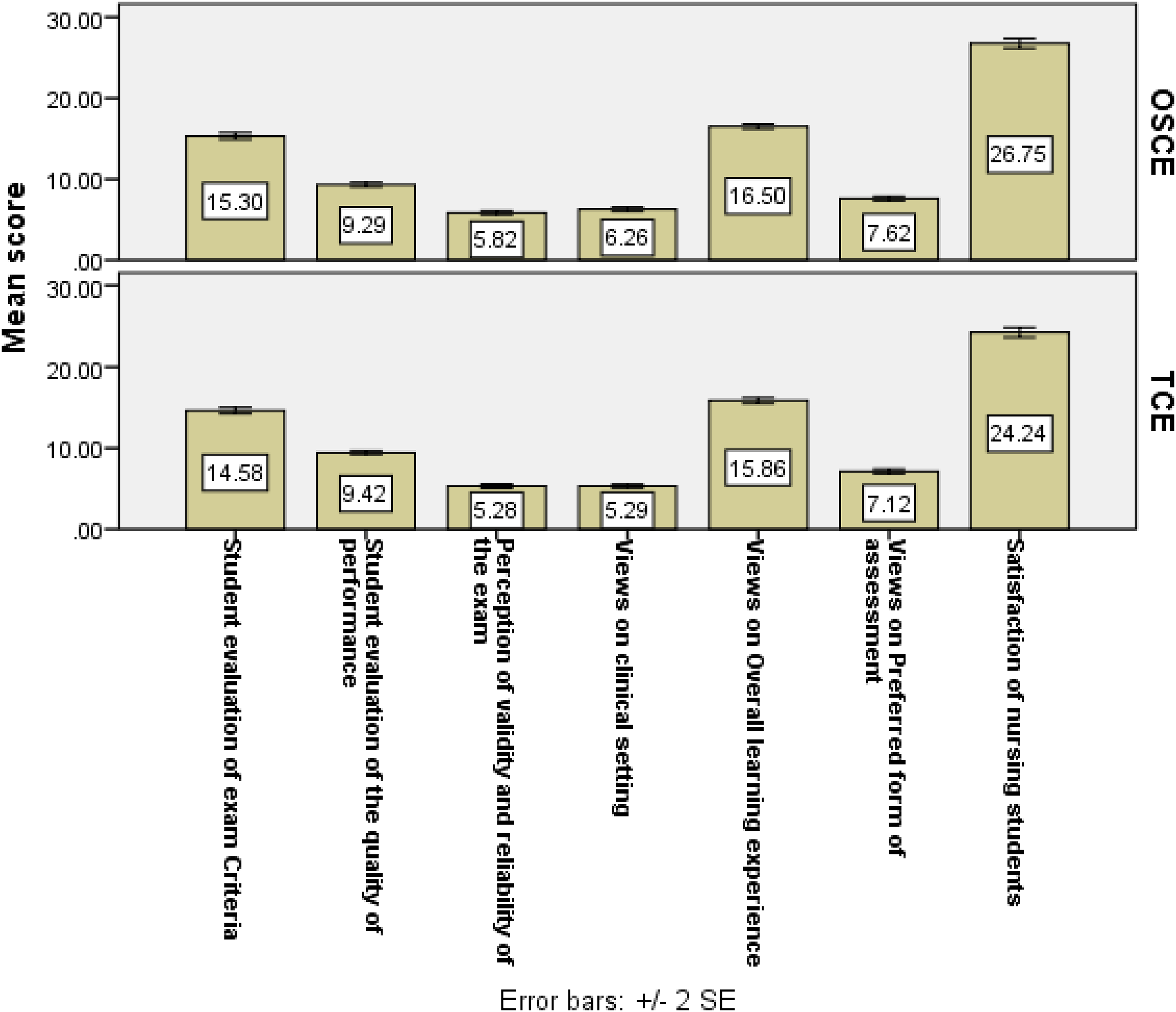
Bar diagram showing the views and satisfaction of undergraduate nursing students toward OSCE and TCE. OSCE= objective structured clinical examination; TCE= Traditional clinical examination.
Comparison of Satisfaction of Nursing Students on OSCE and TCE, N = 125.

OSCE=objective structured clinical examination; TCE= Traditional clinical examination.
Discussion
In TCE, a specific clinical procedure is performed, and evaluation is based on inclusive performance rather than on clinical competency. It mostly concentrates on the “knows” and “knows how” components of Miller's pyramid of competence. In contrast, OSCE is used for a more unbiased and objective assessment of nursing students’ clinical nursing abilities (Said & Draz, 2020). Accumulating evidence suggests OSCE as an appropriate tool for clinical evaluation of nursing students (Nafee et al., 2018; Said & Draz, 2020; Sharma et al., 2015). However, some studies on the perception and preference for OSCE and TCE have provided controversial findings in certain settings (Allhiani et al., 2020; Ameh et al., 2014).
Our study findings indicate OSCE as an effective and preferred method of assessing clinical competencies in nursing education. OSCE is a comprehensive, objective, and standardized assessment tool that effectively evaluates a wide range of clinical skills among nursing students. Moreover, in OSCE, immediate feedback is provided, which helps students identify their areas of improvement and prepare themselves further for improved practice. The structured and logical scenarios within OSCE enhance the learning experience, making it a fair and preferred form of assessment. As OSCE is associated with increased stress, it can be mitigated through adequate preparation and orientation of students and provision of support. OSCE is considered a best assessment method, as it promotes clinical competence, fairness, and satisfaction. Despite perceiving TCE as less stressful and more time-efficient, students consider it a difficult form of assessment, indicating that familiarity and comfort do not necessarily reduce the perceived challenge of the evaluation.
Views of Nursing Students Toward OSCE and TCE
The study showed that the majority of the students agreed that OSCE covers a wide range of knowledge areas and clinical skills, highlights areas of weakness, and presents logical and appropriate clinical situations. They were also aware of the level of information needed in OSCE. However, a large number of the students agreed that OSCE is stressful. In addition, most students agreed that the OSCE scores provide a true measure of essential clinical skills, are standardized, and are not affected by personality, ethnicity, and gender. The students stated that OSCE wards were well prepared, and staff members were cooperative during the examination. The students were made aware of the type of materials allowed in OSCE. OSCE was considered well-designed and structured, and the students learned more during OSCE. Sufficient information about the examination was provided well in advance. OSCE was identified as a fair assessment method, with instructions for performing each activity being clear. The students deemed OSCE as their preferred form of assessment. On the contrary, the students mentioned TCE as a difficult form of assessment. However, most of them felt that the time provided in TCE was more sufficient than that in OSCE and that TCE minimized the chances of failing. Additionally, the students agreed that the setting and context at each station feel more authentic in TCE.
In the current study, OSCE was reported as more stressful than TCE. Similarly, Vercio et al. (2024) reported that when compared with OSCE, clinical evaluation exercise yielded lower stress levels. To help students control and minimize their tension and anxiety during real-life OSCE encounters, educators in both academic and clinical contexts must first conduct dry-run simulated scenarios as OSCEs to minimize the high level of stress and feelings of ambiguity (Alaskar et al., 2022). According to Mojarrab et al. (2020), an anxiety-coping program can reduce the anxiety of students and improve their OSCE results. Contrary to these findings, the systematic review conducted by Martin and Naziruddin (2020) concluded that anxiety linked to OSCE seems to have minimal to no effect on students’ performance. Given these contradicting findings, further research is needed to prove the correlation between OSCE and stress.
Our findings indicate that OSCE covers a wide range of knowledge areas and clinical skills, highlights areas of weakness, and presents logical and appropriate clinical situations and that students are aware of the level of information needed in the examination. Similarly, according to Nasr et al. (2017) and Al Nazzawi (2018), OSCE covers a wide range of clinical skills and provides clear instructions and adequate information. Subhashini et al. (2018) also concluded that OSCE tests cover a wide range of topics and are well run, well structured, sequential, and fair. Additionally, OSCE covers a wide spectrum of clinical abilities and identifies areas of weakness (Subhashini et al., 2018). On the contrary, John et al. (2020) reported that many students found it challenging to interact with certain mannequins and models; they believed that mannequins were unreal, and it was difficult to show off all of their talents. Therefore, realistic situations in OSCE stations should be created using standardized patients instead of mannequins, consequently enhancing realism and emotional buy-in to scenarios (Kearney et al., 2022).
In the current study, the students stated that the OSCE scores provided a true measure of essential clinical skills and were standardized. Likewise, Sallam et al. (2022) reported that OSCE covered a wide range of knowledge and clinical skills. The students in the current study mentioned that their personality, ethnicity, and gender did not affect their OSCE scores. Moreover, OSCE wards were well prepared; staff members were cooperative during the examination; and OSCE was well-designed and structured. In corroboration with these findings, Al Nazzawi (2018) showed that the personality, ethnicity, and gender of their participants did not impact the OSCE scores. Two other studies also demonstrated that OSCE was sufficiently structured, scheduled, and instructed (Fawaz & Alsalamah, 2021; Said & Draz, 2020). High-quality simulators, sufficient lighting, silence, ventilation, and the availability of the required tools are the required elements in OSCE (Fawaz & Alsalamah, 2021).
The students in our study deemed OSCE as a fair assessment method, reported that the instructions for performing each activity were clear, and identified OSCE as their preferred form of assessment. Another study consistently demonstrated that OSCE was viewed as an objective, fair, valid, and dependable examination format by professors and nursing students (Vincent et al., 2021). In addition, a large number of students stated that OSCE provided a real measure of required clinical skills and that the evaluation method was standardized (Subhashini et al., 2018). Similarly, strong agreement was seen toward OSCE on its validity, reliability, and quality (Vijayalakshmi et al., 2021). Although the mean score of OSCE was comparable to that of traditional examination, OSCE was regarded as a more reliable method of assessment (Eze et al., 2020). OSCE was also demonstrated to be a superior clinical evaluation method over traditional evaluation (Kshirsagar, 2021). Additionally, students stated that OSCE assessed a wider variety of clinical and cognitive skills than conventional methods (Kassabry, 2023).
In the current study, the students emphasized that OSCE should remain as a form of assessment, which suggested an overall good learning experience from OSCE. A previous study found that OSCE provided a positive learning experience and recommended to have OSCE as a summative assessment method (Vijayalakshmi et al., 2021). In another study, majority of students highlighted that OSCE aided in identifying their areas for growth, putting information into practice, teaching them how to evaluate patients and think critically, encouraging self-reflection, and influencing favorable student learning outcomes (John et al., 2020). Similarly, Sridevi reported that most students believed that OSCE enhanced their educational experience. Furthermore, a systematic review showed that students had positive attitudes toward OSCE, which helped them develop their clinical abilities, and became more confident in their own knowledge (Kassabry, 2023).
Satisfaction of Nursing Students Toward OSCE and TCE
Chabrera et al. (2023), and Vijayalakshmi et al. (2021) showed a higher level of satisfaction with OSCE than with TCE. Additionally, Anh and Linh (2022) stated that nursing students offered positive feedback regarding OSCE's arrangement and showed a high degree of satisfaction with the examination. Fisseha and Desalegn (2021) also highlighted that students had an overall positive perception of OSCE. Although most of the students in the current study felt that the time provided in TCE was more sufficient than that in OSCE, that TCE minimized the chances of failing, and that the setting and context at each station felt more authentic in TCE, TCE was deemed as a difficult form of assessment. A previous study consistently showed that the overall satisfaction score of students in OSCE was higher than that in TCE, emphasizing OSCE's effectiveness as an evaluation tool (Vijayalakshmi et al., 2021). In their study, Soni et al. (2017) found that although students scored higher in OSCE than in TCE, there was no discernible difference in the opinions or satisfaction scores between the two methods. These contradictory findings should be validated in further studies.
Strengths
Our study determined the difference in the views and satisfaction of undergraduate nursing students toward OSCE and TCE. This is the first study of its kind conducted in Saudi Arabia. OSCE is a fair, structured, and standardized assessment method for evaluating the clinical competency of nursing students. This evidence can be adopted by educators in other nursing institutions in Saudi Arabia to follow best evidence-based practices for assessing clinical competency.
Limitations
The current study was conducted in a single setting, which limits the generalizability of the findings. The small sample size may have resulted in lower statistical power and limited representativeness; therefore, this study could be considered a pilot study. Recall bias may have occurred. Additionally, the study findings may have been influenced by response bias, as the data were collected through self-report measures. The participants may have provided socially desirable and favorable responses rather than expressing their true perceptions, potentially limiting the accuracy and objectivity of the findings.
Recommendations
We recommend conducting longitudinal studies assessing the effect of repeated exposure to OSCE and the levels of stress and satisfaction. Mixed-method studies can also be conducted to gain a comprehensive understanding of OSCE relative to the levels of stress and satisfaction. Future studies can assess how cultural, institutional, and educational differences impact the views and perceptions of students toward OSCE and TCE. Additionally, determinants of stress during OSCE can be explored. The effectiveness of OSCE and TCE preparatory activities such as mock OSCE and stress management workshops in enhancing satisfaction and reducing stress can be measured. OSCE can be incorporated as a core component of nursing education to provide a consistent and objective assessment of clinical skills.
Implications for Practice
The study findings emphasize the importance of planning and implementing comprehensive orientation programs to familiarize nursing students with the process and expectations of OSCE. Stress management resources focused on coping strategies for examination-related anxiety should be provided. Assessment criteria should be made consistent to uphold objectivity and fairness of the examination. Likewise, OSCE examiner training should be conducted to improve the objective evaluation of clinical competencies. Faculty and students should be encouraged to participate in the post-OSCE self-assessment and reflection processes to reinforce learning and areas of development. Moreover, continuous assessment of potential bias is necessary to support inclusion and diversity.
Conclusion
Our study findings and the available evidence indicate OSCE as an effective and preferred method of assessing clinical competencies in nursing education. OSCE is a comprehensive, objective, and standardized assessment tool that effectively evaluates a wide range of clinical skills among nursing students. Moreover, in OSCE, immediate feedback is provided, which helps students identify their areas of improvement and prepare themselves further for improved practice. The structured and logical scenarios within OSCE enhance the learning experience, making it a fair and preferred form of assessment. As OSCE is associated with increased stress, it can be mitigated through adequate preparation and orientation of students and provision of support. OSCE is considered a best assessment method, as it promotes clinical competence, fairness, and satisfaction. Despite perceiving TCE as less stressful and more time-efficient, students deem it as a difficult form of assessment, indicating that familiarity and comfort do not necessarily reduce the perceived challenge of the evaluation.
Footnotes

Ethical Considerations
The ethical approval was sought from the Institutional Review Board (IRB) (H-01-R-059). The IRB has determined that this study possesses no or minimal risk to the participants. The autonomy of participants was maintained by giving them the freedom to decide either to participate in the study or not without imposing them to participate in the study.
Consent Statement
Following a detailed description of the research procedures, written informed consent was signed by the participants. In addition, it was explained that their participation was voluntary and that they could leave the research at any moment without giving a reason. There were no risks or harm involved in participating in the study and confidentiality and privacy were maintained throughout the study.
Funding
The authors disclosed receipt of the following financial support for the research, authorship, and/or publication of this article: The authors are grateful for the facilities and other support given by Princess Nourah bint Abdulrahman University Researchers Supporting Project number (PNURSP2026R837), Princess Nourah bint Abdulrahman University, Riyadh, Saudi Arabia.
Declaration of Conflicting Interests
The authors declared no potential conflicts of interest with respect to the research, authorship, and/or publication of this article.