




Abstract
Introduction
Stoicism is a way of life that brings peace and happiness to humans as it shifts individuals’ perspectives on existence. From the Stoics’ perspective, suffering originates from beliefs, desires, and emotions, and can be reduced by managing them. This study aimed to systematically collect and analyze Stoic-related research in nursing care and allied health, to further the understanding of its practical applications in clinical settings.
Method
This scoping review was conducted using the PRISMA-ScR checklist and the following five stages were followed: (1) Identifying the research question; (2) Identifying relevant studies; (3) Selecting studies; (4) Charting the data; (5) Collecting, summarizing, and reporting the results. Five main databases including PubMed, Web of Science, Cochrane, Scopus, and Google Scholar were searched up to February 2025. Articles published from the year 2000 and onward were considered if they met the eligibility criteria. The data charted based on the type of studies, publication year, and population under the studies. Also, the researchers conducted a content analysis to synthesize the results.
Results
Twenty-eight studies were included in the final analysis. These included theoretical (42.85%), interventional (7.14%), cross-sectional (25%), longitudinal (3.57%), mixed-methods (10.71%), and qualitative studies (10.71%). Based on the content analysis six main themes emerged, including stoicism and its applications, philosophy of nursing and ethics, mental health and psychological stress, healthcare worker and patient interactions, cultural and gender influences, evolutionary biology and sexual selection.
Conclusion
Stoicism is influenced by culture, gender, economic, and social status. Since Stoic teachings appear to improve the psychological indicators of healthcare professionals, chronic patients, and students, it is recommended that more evidence-based interventional studies be conducted in this field rather than relying solely on theoretical studies based on historical reports. This would enable health policymakers to prioritize the inclusion of these teachings in educational and training programs, especially for students and frontline healthcare staff.
Introduction
Stoic philosophy emerged as one of the available options for changing perception and attitude and was studied and researched in prestigious universities worldwide. The roots of this philosophy trace back to around 300 BCE (Huecker & Zink, 2020), when it was founded by Zeno of Citium in Athens, where he established the school of thought known as stoicism. The philosophy aims for the attainment of virtue, emotional management, and achieving tranquility (Irvine, 2008).
Stoicism is a philosophy that enhances responsibility in individuals and positively and effectively regulated their thoughts, emotions, and actions (MacLellan & Derakshan, 2021). By changing one's perspective on life, Stoic philosophy promotes spirituality and ethics. This philosophy, which is a way of life, teaches individuals that there is meaning in suffering, pain, and adversity because these hardships are necessary for the existence of good and happiness; without hardship, goodness has no meaning (Long & Spalding, 1904). These fundamental teachings help individuals endure difficulties and hardships while striving to align themselves with the inherent wisdom of nature, as the divine providence embedded in the natural world is moving toward goodness (Sherman, 2021).
Psychotherapeutic approaches such as Cognitive Behavioral Therapy and Acceptance and Commitment Therapy have roots in stoic philosophy (Connery et al., 2023). Stoics were the psychologists of the ancient world, and in the contemporary age, researchers have revisited their teachings.
Various qualitative and descriptive-analytical studies have been conducted on coping styles, perceived social support, psychological distress, and optimism in cancer patients (Gomez et al., 2022); self-efficacy and resilience in individuals experiencing anxiety; self-esteem in men; quality of life and psychological distress in prostate cancer patients (McAteer & Gillanders, 2019); and resilience and empathy among medical students (Brown et al., 2022). These studies have recommended further research on this human philosophy of life, as the results have been inconsistent. Some studies have shown improvements in psychological indicators, while others have reported declines, and in some cases, no statistically significant effects were found.
For example, in the study conducted by David Gomez et al. (2022), the authors reported that Stoicism correlates with passive coping styles, reduced optimism, and decreased perceived social support (Gomez et al., 2022). However, in a mixed-method study by Alexander McLellan et al. in 2020, the authors reported that applying Stoic teachings decreases rumination in individuals with anxiety (MacLellan & Derakshan, 2021). Furthermore, the study by Hajizade et al. (2024) demonstrated that Stoicism improves the resilience of operating room staff (Hajizade et al., 2024). Stoicism, by separating judgment from events (mindfulness) and through its trichotomy of control teachings, helps manage job fatigue and prevented damage to professional reputation (Taylor et al., 2019). Stoicism can serve as a theoretical foundation for nursing and contribute to nursing professionalism. Human agency and ethical norms are among the significant topics in Stoic philosophy that can inspire nursing philosophy (Becker, 2003). Moreover, Stoicism practically enhance resilience, psychological well-being, and the prevention of burnout among nurses in the highly stressful and tense clinical environment (Kelly, 2021; Stanbouly et al., 2021).
The nature of nursing care is such that nurses constantly face patient deaths, the suffering of clients, difficult ethical decisions, and fears of infection and disease. Over time, this diminishes their sense of compassion, empathy, and responsibility, making them emotionally hardened toward patients (Mathias & Wentzel, 2017). Additionally, healthcare professionals are continually exposed to stress, which significantly reduces the quality of care in clinical settings, putting patients at risk of inadequate and unsafe care and violating their rights (Masoumi et al., 2016; Moeini et al., 2022; Rentmeester et al., 2007).
On the other hand, nurses must view patients as physical, psychological, social, and spiritual beings, adopting a holistic approach and providing comprehensive and spiritual care (Emblen & Pesut, 2001). Previous studies have considered spirituality an essential component of nursing care and have shown that patients regarded nurses as a source of spiritual support (Carr, 2010). Research has indicated that nurses should not view patients in an overly biomedical or reductionist perspective, focusing solely on their physical bodies, but also attended to their mental and emotional well-being (Burkhart & Hogan, 2008; Ramezani et al., 2014). To provide holistic and spiritual care, it is necessary to transform nurses’ perception and attitude toward patients and the hospital environment. Stoic philosophy can be employed to achieve this transformation (Rutty, 1998).
However, some studies have criticized Stoicism, arguing that it led to apathy, emotional detachment, social isolation, and psychological and physical harm (Khakbazan, 2021). These criticisms stems from misunderstandings of the fundamental concepts of this way of life (Huecker & Zink, 2020; Stanbouly et al., 2021).
Given that Stoic philosophy appears to function both as a theoretical foundation for nursing and as a practical framework for managing clinical stressors, this study aimed to systematically collect and analyze Stoic-related research in nursing care, thereby broadening the understanding of its practical applications in clinical settings.
Methods
The proposed scoping review was conducted in accordance with the Joanna Briggs Institute methodology for scoping reviews (Peters et al., 2020) and the following six stages have been followed: (1) Identifying the research question; (2) Identifying relevant studies; (3) Selecting studies; (4) Charting the data; (5) Collecting, summarizing, and reporting the results; (6) stakeholder consultation.
Stage 1: Identifying the Research Question
The objective of this study was to explore the application of Stoicism in nursing and allied health. This study's main questions were as follows:
How many studies had been conducted on Stoicism in nursing and allied health? What types of studies had been conducted? What populations had been studied the most? What were the applications of Stoicism in nursing and allied health?
Stage 2: Identifying Relevant Studies
To collect relevant information, a web search was conducted in the following databases until February 2025: PubMed, Web of Science, Elsevier, Cochrane, Scopus, and Google Scholar. As the first step, a preliminary search was performed in PubMed database using specific keywords. The search strategy was refined by analyzing the appropriateness of keywords in different databases. A detailed analysis of the words in titles, abstracts, and index terms was conducted to develop a more comprehensive search strategy. Then, in the second step, a full search was carried out using all identified keywords and their MeSH equivalents. This search was conducted twice and independently by two researchers across all the mentioned databases. Finally, in the third step, the reference lists of the retrieved studies were reviewed to identify additional sources. Since the search was conducted in both Persian and English, the same methodology was applied to the SID database. The keywords used included “Health, Medical, Medicine, Stoicism, Stoic, Stoics, Nursing, Nurse, Nurses.”
Inclusion Criteria
Articles published in Persian or English that investigated any aspect of application of Stoicism in nursing and allied health which included theoretical, mixed method, interventional, cross-sectional, qualitative and longitudinal studies.
Exclusion Criteria
Lack of full-text access,
Articles in languages other than Persian or English,
Studies published before 2000,
Other publication types, such as personal narratives, letters, editorials, or opinion articles, were excluded.
The final search for articles was conducted in February 2025. All identified sources were imported into the EndNote 21 reference management software. Duplicates were removed by merging records from different databases.
Stage 3: Selecting Studies
The study selection followed a two-stage process, including: (1) Screening titles and abstracts, (2) Reviewing full texts. At both stages, two independent reviewers (A.B. and A.V.-M.) assessed articles based on the eligibility criteria. Any disagreements were discussed, and in cases where consensus was not reached, a third reviewer (M.A.-Z.) was consulted. Studies meeting the inclusion and exclusion criteria outlined in Step 2 were selected. The full texts of the selected studies were retrieved, and the final list was confirmed by two researchers.
Stage 4: Charting the Data
Relevant information was extracted from all included studies by two independent reviewers (A.B. and A.V.-M.). A structured form designed by the reviewers was used to record the extracted data, which was then entered into Microsoft Excel. The extracted data included details such as: Authors, Year of publication, Study type, Study population, Number of participants, Study domain. The data extraction tool was reviewed as needed throughout the process. Any discrepancies between the reviewers were resolved through discussion, and if necessary, a third reviewer (M.A.-Z.) was consulted.
Stage 5: Collecting, Summarizing, and Reporting Results
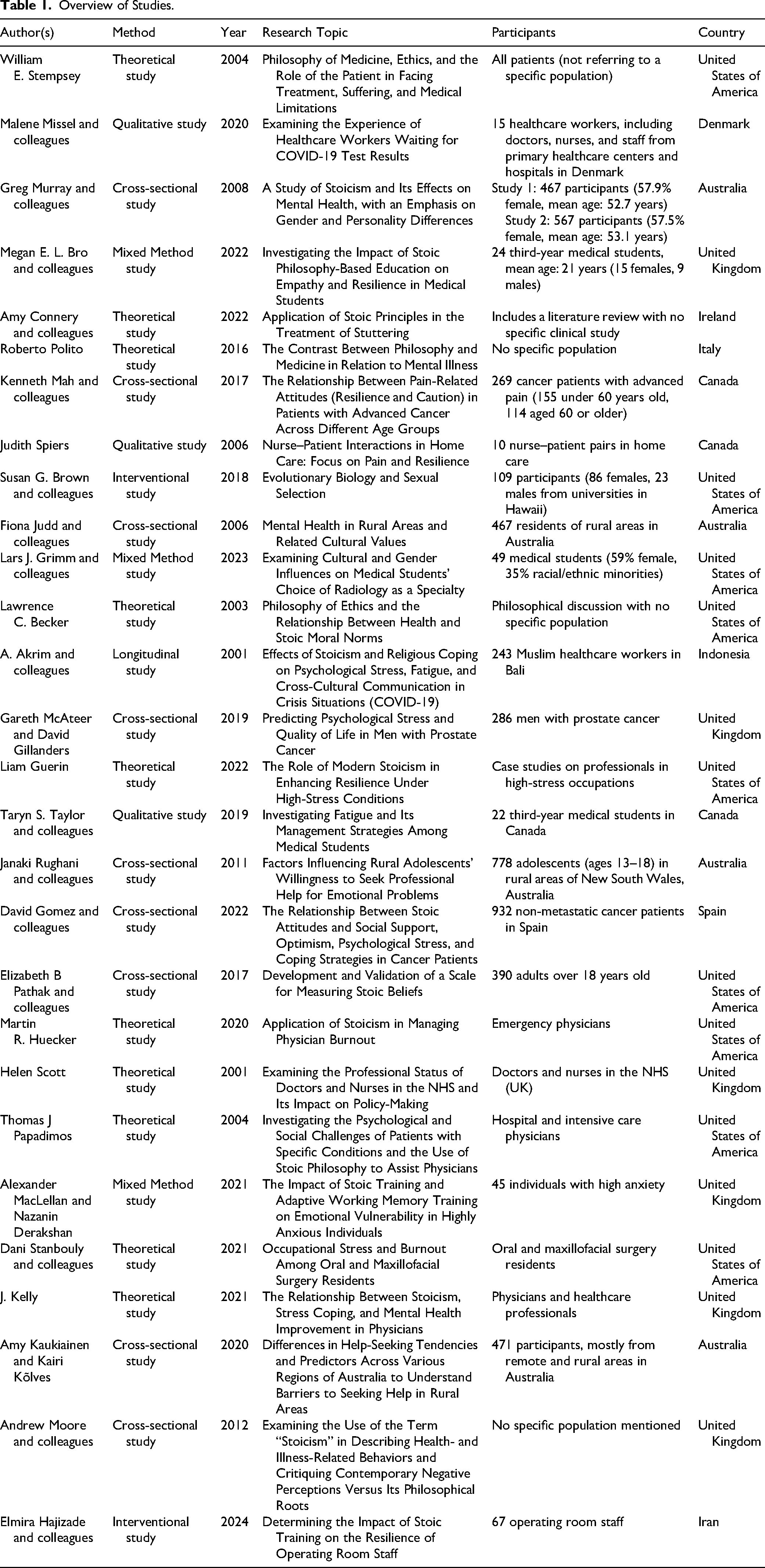
To describe and summarize the findings, a map of the extracted data from the included articles was presented in a table form. In alignment with the objective of this study, the researchers provided an overview of studies, stats on types of studies, studied populations and the year of articles publication. Also, the researchers conducted a content analysis to summarize the results of the individual studies (Table 1).
Overview of Studies.
Results
Selection of Sources of Evidence
Initially, after the final search of the mentioned databases and removal of unrelated and similar articles, 374 articles remained. Later, the titles and abstracts were reviewed and the remaining articles underwent full text review. Based on inclusion and exclusion criteria, eventually 28 articles were included in the final analysis (Figure 1).

PRISMA flow diagram.
Characteristics of Sources of Evidence
The final 28 articles included one Persian and 27 English publications (Figure 1). These comprised theoretical (42.85%), interventional (7.14%), cross-sectional (25%), longitudinal (3.57%), mixed-methods (10.71%), and qualitative studies (10.71%) (Table 2). In terms of population: Health care workers (28.57%), Students of all medical disciplines (14.28%), Specific number of the general public (35.71%), no specific population (21.42) (Table 3). In terms of year of publication, in 2022 the researchers observed a small increase in the number of published articles (Figure 2).

Distribution of articles by year.
Types of Studies.

Studied Populations.

Synthesis
Studies conducted with medical staff and students focused mostly on psychological indicators of resilience, empathy, fatigue, burn out, and self-efficacy. Studies conducted on specific populations, such as people with high anxiety and cancer patients were more likely to report rumination, help-seeking, social support, optimism, stuttering, mental illness, mental health, resilience, psychological stress, fatigue, quality of life, coping strategies.
Results of Synthesis
Based on this study's content analysis, the data comprises a diverse set of research topics primarily centered around philosophy (especially Stoicism), medicine, mental health, and healthcare practices. Below is a detailed content analysis highlighting key themes, patterns, and insights and potential research gaps.
1.
1-1. Stoicism and Its Applications
A significant portion of studies focused on stoic philosophy and its practical applications in healthcare and mental health. These topics include:
Effects of Stoicism on mental health with gender/personality considerations. Stoic philosophy-based education's impact on empathy and resilience in medical students. Application of Stoic principles in specific conditions (e.g., stuttering, cancer, physician burnout). Development of a scale to measure Stoic beliefs. Stoicism's role in managing stress, fatigue, emotional vulnerability, and psychological coping. Critiques and reinterpretations of the term “Stoicism” in health contexts.
1-2. Philosophy of Nursing and Ethics
Several studies explored the philosophical and ethical dimensions of Nursing:
The role of patients facing treatment, suffering, and medical limitations. The contrast between philosophy and nursing regarding mental illness. Ethical considerations linking health and Stoic moral norms. Professional status and policy-making in healthcare settings (e.g., NHS doctors and nurses).
1-3. Mental Health and Psychological Stress
Research targets mental health challenges across different populations:
Healthcare workers during COVID-19 (waiting for test results, crisis communication). Patients with advanced cancer and their pain-related attitudes. Medical students’ fatigue and stress management. Rural populations’ mental health and cultural barriers to seeking help. Psychological stress in men with prostate cancer. Occupational stress and burnout in medical residents.
1-4. Healthcare Worker and Patient Interactions
Focus on nurse–patient interactions in home care, especially concerning pain and resilience. Studies on physician burnout and resilience-building interventions. Investigations into the psychological and social challenges faced by patients and how Stoic philosophy may assist physicians.
1-5. Cultural and Gender Influences
Exploration of cultural and gender factors in:
Medical students’ specialty choices (e.g., radiology). Help-seeking behaviors among rural adolescents. Cross-cultural communication in crisis situations.
1-6. Evolutionary Biology and Sexual Selection
One study addresses a biological theme, indicating some interdisciplinary reach beyond philosophy and mental health.
Interdisciplinary Approach: Many studies integrate philosophy (Stoicism) with practical medical and psychological issues, indicating a trend toward holistic and integrative research. Focus on Resilience: Resilience emerges as a key outcome variable, especially in relation to Stoic training, education, and coping strategies. Healthcare Worker Well-being: Multiple studies address stress, fatigue, and burnout among medical professionals, reflecting ongoing concerns about healthcare workforce sustainability. Patient-Centered Perspectives: Ethical and experiential dimensions of patient care are prominent, emphasizing the importance of patient roles and attitudes in treatment and suffering. Measurement and Validation: The development of measurement tools (e.g., Stoic beliefs scale) suggests efforts to quantify philosophical constructs for empirical research. Crisis Contexts: COVID-19-related studies highlight the relevance of Stoicism and coping strategies in acute healthcare crises.
Limited focus on longitudinal outcomes of Stoic interventions. Few studies explicitly address diverse cultural contexts beyond rural areas and cross-cultural communication. Minimal exploration of technology's role in supporting Stoic-based mental health interventions. Limited inclusion of patient voices in Stoicism-related healthcare research.
Discussion
Stoic philosophy possesses unique characteristics that served as an inspiration for nursing. It is not abstract but straightforward and practical, and in this regard, if healthcare professionals become familiar with it, they can easily apply it in clinical settings (Kelly, 2021). Stoicism, through teachings such as the trichotomy of control, premeditation of adversity, mindfulness, and others, reduced suffering, occupational burnout, and fatigue among healthcare staff, thereby enhancing their happiness and tranquility. Consequently, it improved and elevated the quality of healthcare services (Huecker & Zink, 2020).
The studies were divided into six categories: theoretical, cross-sectional, qualitative, longitudinal, mixed methods, and interventional. Theoretical studies highlighted topics such as ethics, suffering, mental illness, resilience, psychological stress, burn out, and fatigue (Becker, 2003; Connery et al., 2023; Guerin, 2022; Huecker & Zink, 2020; Judd et al., 2006; Kelly, 2021; Papadimos, 2004; Polito, 2016; Stanbouly et al., 2021; Stempsey, 2004). Cross-sectional studies highlighted topics such as mental health, resilience, psychological stress, quality of life and help-seeking (Judd et al., 2006; Mah et al., 2018; McAteer & Gillanders, 2019; Murray et al., 2008). Qualitative articles focused more on pain and resilience (Missel et al., 2020; Taylor et al., 2019). Longitudinal articles focused more on psychological stress (Akrim et al., 2021). Mixed methods studies addressed the concepts of empathy, resilience, self-efficacy, anxiety, and rumination (Brown et al., 2022; MacLellan & Derakshan, 2021). Interventional studies also examined the effect of Stoicism on resilience (Hajizade et al., 2024). The concepts of resilience, psychological stress, and fatigue received more attention in various studies.
Five of the studies were related to resilience, and more this concept had been considered in the healthcare staff and students. This seemed to be because classical Stoic sources claimed that one of the main goals of Stoic teachings was to increase human resilience against problems, suffering, adversity, and calamity (Sherman, 2021).
Three of the studies were related to psychological stress, and more this concept had been considered in the chronic conditions as cancer and occupational burnout. Accordingly, Stoicism can reduce anger and psychological stress with the help of teachings such as the triad of control, mindfulness, negative visualization, and delaying response when emotions arise (Sellars, 2020).
Two of the studies were related to fatigue and more this concept had been considered in the healthcare staff and students. Fatigue had a psychological aspect and it was a suffering that can originate from human beings inside. Stoicism by controlling and managing emotions, desires, and beliefs could reasonably reduce fatigue (Irvine, 2019).
The application of Stoic philosophy to health care in chronic and long-term conditions had been highlighted in theoretical research, as Stoicism improved mental health in patients, healthcare staff, and students by improving psychological indicators such as psychological well-being, resilience, and self-efficacy.
Philosophizing in nursing had grown since the 20th century. Philosophical models and theories played a guiding role in nursing by clarifying the understanding of the human health process (Bender et al., 2021). These theories helped nurses understand the reasons behind nursing actions and procedures in the clinic. Models and theories in nursing helped describe, explain, and predict clinical phenomena. On the other hand, in a philosophical context, nursing questions and answers could be raised and nursing science could be advanced. Philosophy and ethics went hand in hand. Without philosophy, it was not possible to act ethically in the clinic. Therefore, in order to realize ethical codes such as social justice, it was necessary to take philosophy seriously in nursing education and the clinic (Bender et al., 2021). In nursing, a practical and tangible philosophy was needed to achieve the aforementioned goals, and it seemed that Stoicism can play a constructive role here.
Stoicism was influenced by culture, gender, economic status, and social status. This was something that researchers should have paid attention to.
Interventional studies on Stoicism in nursing and allied health were scarce, with most research being theoretical and based on historical evidence. Some studies critiqued this philosophy, while others highlighted its positive aspects, showing improvements in certain psychological indicators such as resilience, rumination, and empathy. To evaluate the impact of Stoicism on the psychological indicators of different populations, including healthcare professionals, students, and patients, evidence-based interventional studies were needed.
In this study's opinion, since Stoic philosophy had been poorly introduced in the field of medical sciences and there had been misconceptions about it, and given that nursing was an evidence-based science, it was necessary to conduct more empirical, evidence-based studies in this area. This would provide a foundation for defining nursing concepts based on this pristine and soothing philosophy.
It seems that using this philosophy as a theoretical foundation in nursing could lead to an enhancement in the quality of holistic care and reduce the suffering of both the patient and the nurse. Learning the principles and practical exercises of Stoic thought in a correct manner could lead to the growth of the character of both the nurse and the patient, side by side, and give meaning to their lives.
Additionally, it was essential to develop standardized protocols for teaching these principles, based on reliable Stoic sources such as “Meditations” and “Discourses of Epictetus.” Furthermore, questionnaires that assessed Stoicism should be validated and made reliable in various languages.
Strengths and Limitations
In this study, only articles published in Persian or English between 2000 and 2024 were reviewed. Studies that had not yet been published or whose full texts were inaccessible were not included. Additionally, studies based on personal experiences were excluded from the review. Although stakeholder consultation was considered a valuable optional stage in some scoping review methodologies, such as the Arksey and O’Malley framework and its subsequent enhancements, this step was not included in the present review. The primary objective of this study was to systematically map the existing literature on the application of Stoic philosophy in nursing and allied health fields, rather than to develop practice guidelines or policy recommendations. Given the exploratory and theoretical nature of the topic and the limited evidence of its direct implementation in clinical practice the inclusion of stakeholders was deemed unnecessary at this stage. However, future research might benefit from engaging practitioners or educators to evaluate the practical relevance and applicability of Stoic principles in healthcare contexts.
Implications for Practice
Having a Stoic philosophy could help nurses and other healthcare workers better understand themselves and their patients’ needs. In addition, by being aware of this type of thinking, they could use their thoughts in better ways and pay more attention to the effects of their decisions on their work. Also, being aware of this philosophy could help its learners to increase their composure during crises and lead them to make informed decisions because this philosophy could increase resilience and empathy in practice. Adopting a Stoic approach could lead to greater focus on work, less time spent on different tasks, more control over situations, fewer distractions at work, reduced anxiety and stress, and increased feelings of trust and gratitude in people.
Conclusion
Stoicism is influenced by culture, gender, economic, and social status. The application of stoic philosophy in nursing and allied health is more about improving psychological properties such as resilience, psychological stress, and fatigue. However, Stoic teachings appear to improve the psychological indicators of healthcare professionals, chronic patients, and students, but evidence-based studies in this field were very limited globally, so it is recommended that more evidence-based interventional studies be conducted in this field rather than relying solely on theoretical studies based on historical reports. This would enable health policymakers to prioritize the inclusion of these teachings in educational programs for various groups specially students. Such research would enable health policymakers to make informed decisions and conduct educational workshops to enhance the psychological well-being of healthcare professionals, ultimately improving the quality of healthcare services and preventing violations of patients’ rights.
Footnotes
ORCID iDs

Author Contributions
Idea and concept: AB, MA-Z. Design: MA-Z. Database search: AB, MA-Z. Screening: AB, SAVM. Data extraction: AB, SAVM. Data curation: AB, SAVM, KhM. Data synthesis: MA-Z. Supervision: MA-Z. Writing manuscript draft: AB, KhM, MA-Z. Revisions: MA-Z, AB. All authors read and approved the final manuscript before submission.
Funding
The authors received no financial support for the research, authorship, and/or publication of this article.
Declaration of Conflicting Interests
The authors declared no potential conflicts of interest with respect to the research, authorship, and/or publication of this article.
Data Availability
All data are available from the corresponding author upon request.