




Abstract
Introduction
Self-compassion plays a vital role in maintaining mental health. Evidence suggests that enhancing morality-related constructs can improve self-compassion among nursing students. This study examines the predictors of self-compassion in nursing students and explores its relationship with moral intelligence and moral perfectionism.
Methods
This cross-sectional, multicenter study was conducted between January and March 2022. Undergraduate nursing students from three Iranian universities—Tehran University of Medical Sciences, Lorestan University of Medical Sciences, and Semnan University of Medical Sciences—were surveyed using the Self-Compassion Scale, Moral Intelligence Questionnaire, and Moral Perfectionism Scale. Correlation analyses and stepwise linear regression were employed to assess the relationships between variables.
Results
A total of 250 nursing students participated, reporting moderate self-compassion levels (M = 37.19, SD = 5.02). Self-compassion was positively correlated with moral intelligence (r = .33, p < .001) and moral perfectionism (r = .23, p < .001). Forgiveness emerged as a significant predictor of self-compassion (β = 0.33, p < .001).
Conclusion
This study underscores the significance of moral intelligence and moral perfectionism in fostering self-compassion among nursing students. Integrating forgiveness and ethical development into nursing education could enhance professional competence and compassionate care delivery.
Keywords
Introduction
As a vital necessity in high-quality patient care, self-compassion is the capacity to interact with one's feelings and well-being. Nurses, specifically nursing students who will become future nurses, are responsible for providing comprehensive, compassionate clinical care (Su et al., 2020). Having a sense of self-compassion is a prerequisite for providing compassionate care. If one does not have compassion for himself/herself, he or she likely does not show compassion to others (Neff, 2003). A stronger emphasis on this notion in nursing education enables the growth and development of compassionate practices since self-compassion in nursing students can prepare them for compassionate care (Alquwez et al., 2021). The importance of self-compassion was highlighted as it can reduce mental health problems and shame (Kotera et al., 2021). Self-compassion is related to health behaviors and can protect nursing students from mental distress when sleep-deprived (Gedik, 2019; Kotera et al., 2021). The level of self-compassion observed in nursing students tends to be lower than in other disciplines (Kotera et al., 2023).
It has been shown that compassion for oneself and others is one of moral intelligence's four principles (integrity, responsibility, forgiveness, and compassion; Eskandari et al., 2019; Saleh, 2018). The Canadian Nurses Association (2017) and The College of Nurses of Ontario (2019) have linked compassionate behaviors with morals (Alquwez et al., 2021). In nursing, ethical criteria set the standards for ethical nursing practice, and moral intelligence is the cognitive capability that allows nurses to comprehend and enact these criteria. Together, they form the foundation of ethical nursing practice and quality patient care (Nobahar et al., 2022; Nurses, 2021; Shirazi & Sabetsarvestani, 2021). Moral intelligence helps people learn things cleverly and achieve the most appropriate action. Using it gives them access to the best information at every stage of life, minimizing the risks. Therefore, morally intelligent people act morally and uprightly (Nobahar et al., 2022). In clinical education, nursing students must excel in clinical skills and demonstrate essential mental qualities. These include ethical values such as respect, fostering positive relations, promoting educational justice, embracing an excellence-oriented perspective, demonstrating wisdom, and exhibiting desirable moral intelligence (Boozaripour et al., 2018; Eskandari et al., 2019). High moral intelligence increases sensitivities to conduct moral behavior toward oneself and others, which can be related to self-compassion (Eskandari et al., 2019; Pourteimour et al., 2021; Saleh, 2018).
On the other hand, moral perfectionism is related to morals and has two dimensions: personal morals criteria and concern about moral misdeeds. There are several common characteristics of perfectionists, including anxiety about performance error, skepticism about the quality of their performance or reluctance to accomplish a goal, overemphasis on parental expectations and their evaluation, high-level criteria, and excessive focus on correctness and order in performance (Abdollahi et al., 2021). Self-compassion can buffer against the negative effects of moral perfectionism, as it allows individuals to be kind and understanding toward themselves when they fall short of their ideals (Fung et al., 2022). Zeng et al. believe that moral perfectionism positively correlates with moral judgment and reasoning (Zeng et al., 2020). Since self-compassion requires some self-judgment (Neff, 2003), examining the correlation between these two phenomena is essential. This study aims to determine the predictors of self-compassion and its correlation with concepts including moral intelligence and moral perfectionism in undergraduate nursing students in three universities in Iran.
Review of Literature
The results of a cross-sectional descriptive study have shown that by increasing adaptability and optimism and decreasing perceived stress, self-compassion successfully lowers depressive symptoms in nursing students (Chen et al., 2018). According to a prior study, practicing self-compassion significantly lowers rumination and increases college students’ mindfulness, optimism, resilience, well-being, and self-efficacy (Smeets et al., 2014). Studies indicate that self-compassion among the majority of nursing students has been assessed at a moderate level (Delshad et al., 2023; Zhao et al., 2022; Zhou et al., 2022).
The study's results by Nobahar et al. showed that the moral intelligence of nursing students is good, and self-compassion is a predictor of ethical intelligence (Nobahar et al., 2022). Another study showed that psychological distress is inversely correlated with moral intelligence (Reihani et al., 2024).
The study by Delshad et al. (2023) showed a significant relationship between self-compassion and moral perfectionism in nursing students. Also, the results of Tan's study show that perfectionism indirectly affects psychological resilience through self-compassion (Tan, 2023). Abdollahi et al. (2021) found an inverse relationship between moral perfectionism and Machiavellian behavior, such as cheating. Reported dishonesty, low empathy, and poor interpersonal cooperation.
Previous studies on self-compassion have primarily concentrated on its outcomes, such as reduced anxiety and increased psychological well-being, without delving into the underlying moral or ethical dimensions that may support its development among future nurses (McKay & Walker, 2021; Muris & Otgaar, 2023). By investigating these associations, this study uniquely fills this gap, proposing that moral intelligence and perfectionism are relevant to ethical nursing practice and may serve as key elements in fostering self-compassion. Assumptions underlying this study include the idea that moral intelligence and perfectionism, as relatively stable constructs in personal development, can influence self-compassion in nursing students.
Materials and Method
Study Design
This cross-sectional descriptive, multicenter study was conducted in Iran from January to March 2022.
Study Setting
This study was conducted across three public universities in Iran: Tehran University of Medical Sciences, Lorestan University of Medical Sciences, and Semnan University of Medical Sciences. These universities, which are educational, medical, and research centers, were selected to represent a range of academic environments within the Iranian medical education system, enhancing the findings’ generalizability. Each institution is classified by academic and research standards, with Tehran University as a first-grade university and Lorestan and Semnan Universities as second-grade institutions. In Iran, the Ministry of Health and Medical Education grades universities based on parameters such as research output, quality of education, infrastructure, and contributions to community health. First-grade universities like Tehran University excel in these areas, while second-grade universities like Lorestan and Semnan have fewer resources and lower research output.
Participants
The study comprised undergraduate nursing students from three Iranian state universities.
Sampling
A convenience sampling method was used to recruit 250 nursing students across three diverse universities, selected to capture varied perspectives within Iran's nursing student population.
Sample Size
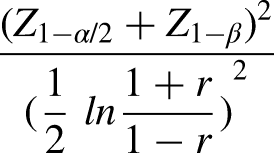
The required sample size was calculated based on previous studies (Gottlieb & Shibusawa, 2020) and the following formula: The final sample size was 250 participants.
Instruments
Four instruments were utilized for data collection that all are validated:
Procedure
After coordinating with the relevant authorities, the researchers went to the sampling sites, where they obtained the necessary permits from the Research and Technology Deputy of Semnan, Tehran, and Lorestan Universities of Medical Sciences. They explained the study's goals to the participants in one of the hospital's educational settings, presenting them in groups of 10 to 15 individual students and answering their questions. They were assured that participation in this study was voluntary and that nonparticipation would not have any educational consequences for them. After obtaining informed written consent, they were asked to receive the questionnaires and complete them within a week at their convenience, returning them to the researcher. It will take about 20 min to complete the questionnaires. Information from the forms was gathered and processed for statistical analysis.
Statistical Analyses
Result
Demographic Information and Level of the Main Variables
A total of 250 undergraduate nursing students participated in the study. The mean age of participants was 21.8 years (SD = 1.6), with 149 females (59.6%) and 101 males (40.4%). Detailed demographic data are presented in Table 1, illustrating the distribution of participants by age, gender, marital status, and academic year.
Descriptive Statistics of Study Variables (n = 250).
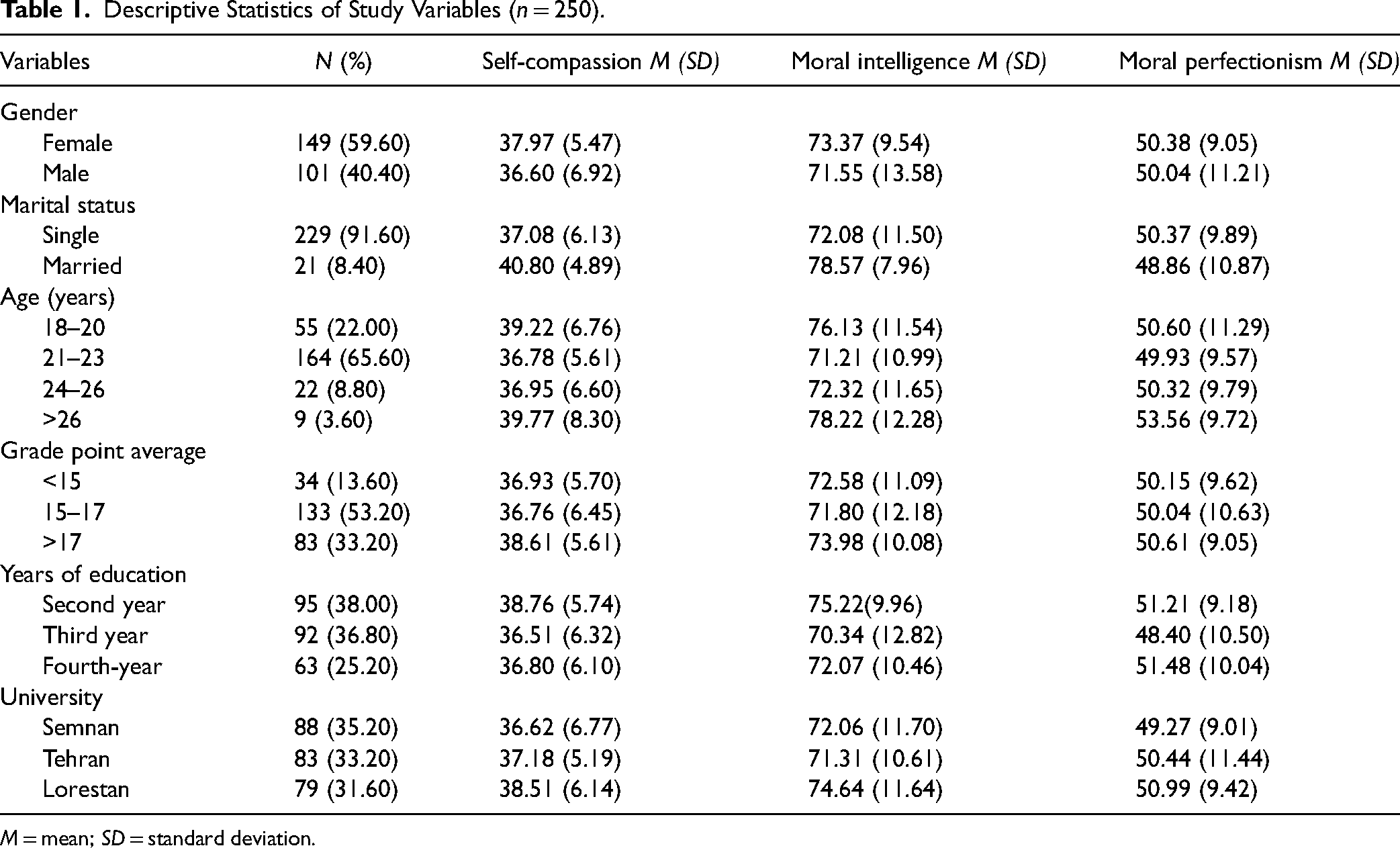
M = mean; SD = standard deviation.
The mean self-compassion score among participants was 37.19 (SD = 5.02), indicating a moderate level of self-compassion. Moral intelligence was assessed with a mean score of 72.63 (SD = 11.38), categorized as good. Moral perfectionism showed a mean score of 50.24 (SD = 9.97), reflecting variability in personal moral standards and concerns about moral misdeeds.
Correlation of Main Variables and Self-Compassion.

*Pearson correlation, **Spearman correlation.
Correlation Between Variables and Multiple Linear Regression
Pearson correlation coefficients revealed significant positive relationships between self-compassion and both moral intelligence (r = .33, p < .001) and moral perfectionism (r = .23, p < .001). These findings indicate that higher levels of moral intelligence and moral perfectionism are associated with greater self-compassion. No significant correlations were observed between self-compassion and demographic variables, such as age, gender, or Grade point average (all p > .05), (Table 2).
Multiple regression analysis identified moral intelligence as a significant predictor of self-compassion (β = 0.29, p < .001), explaining 12% of the variance in self-compassion scores (R² = 0.12, p < .001). While moral perfectionism demonstrated a positive association with self-compassion, its predictive effect was not statistically significant (β = 0.12, p = .06) (Table 3). A stepwise regression analysis further examined the subscales of moral intelligence. Forgiveness emerged as a statistically significant predictor of self-compassion, with a standardized coefficient of 0.33 (β = 0.33, p < .001). Other dimensions of moral intelligence, including integrity, responsibility, and compassion, did not significantly contribute to the model (Table 4).
Multiple Regression Analysis to Determine the Predictor of Self-compassion Among Moral Perfectionism and Moral Intelligence.

Note. B = unstandardized coefficient; SE = standard error; β = standardized coefficient; VIF = variance inflation factor; R² = coefficient of determination.
p < .05 indicates statistical significance.
Summary of Key Findings
The results underscore the importance of moral intelligence, particularly forgiveness, as a key predictor of self-compassion in nursing students. Although moral perfectionism showed a positive relationship with self-compassion, it did not independently predict self-compassion in the regression model. These findings highlight the role of moral constructs in fostering self-compassion, with implications for nursing education aimed at enhancing ethical and compassionate care practices.
Stepwise Multiple Regression Analysis of Moral Intelligence Dimensions as Predictors of Self-compassion.

Note. B = unstandardized coefficient; SE = standard error; β = standardized coefficient; VIF = variance inflation factor; R² = coefficient of determination.
p < .05 indicates statistical significance.
Discussion
This study highlights significant relationships between nursing students’ self-compassion, moral intelligence, and moral perfectionism, underscoring the value of integrating moral constructs into nursing education to enhance compassionate care. The finding that moral intelligence predicts self-compassion supports theoretical perspectives positing that ethical and moral development contributes to personal wellbeing and professional competence (Eskandari et al., 2019; Nobahar et al., 2022). The finding that forgiveness significantly predicts self-compassion aligns with research highlighting self-forgiveness as vital for healthcare professionals facing perfectionistic pressures. Tahir et al. (2024) suggest that self-compassion supports self-forgiveness, helping individuals manage the stress and demands of perfectionism (Tahir et al., 2024). This finding underscores the value of promoting forgiveness within nursing education to cultivate self-compassion, potentially aiding students in coping with clinical care challenges. As suggested by the Canadian Nurses Association (2017), these traits enable nurses to maintain high ethical standards and offer compassionate patient care. Therefore, this study's findings affirm the need to incorporate moral intelligence training into nursing curricula to strengthen students’ self-compassion, aligning with Nobahar et al.'s (2022) recommendation to foster moral intelligence in nursing education to support self-compassion.
The association between moral perfectionism and self-compassion reveals a nuanced relationship, where higher moral standards may promote self-compassion by fostering self-awareness and ethical self-judgment. This finding aligns with the theoretical framework that suggests perfectionism, particularly in moral contexts, can contribute to personal growth by encouraging individuals to reflect on and align with moral ideals (Stoeber & Yang, 2016; Zeng et al., 2020). Previous studies have shown that moral perfectionism when balanced, promotes values like responsibility and forgiveness, which are associated with positive psychological outcomes (Fung et al., 2022). Thus, our findings support the idea that a balanced form of moral perfectionism can enhance self-compassion, suggesting that educational programs emphasize healthy moral standards to cultivate self-compassion in nursing students.
Additionally, while demographic factors like age, gender, and academic performance were not found to correlate significantly with self-compassion, this aligns with previous research indicating that self-compassion is primarily influenced by individual psychological traits rather than demographic characteristics (Alquwez et al., 2021; Kotera et al., 2021). The lack of significant demographic influence suggests that nursing students could universally foster self-compassion through curriculum interventions focused on ethical and moral development, further supporting calls for standardized self-compassion training in nursing programs.
Overall, these findings contribute to an emerging understanding of the role of moral and ethical constructs in supporting nursing students’ self-compassion, thus providing a foundation for educational strategies that incorporate moral intelligence and balanced moral perfectionism. Integrating these constructs could promote self-compassion and equip nursing students with the ethical resilience necessary for compassionate clinical care (Pourteimour et al., 2021; Shirazi & Sabetsarvestani, 2021). Future research should explore interventions that strengthen these moral traits, providing evidence-based guidance for nursing educators seeking to cultivate compassionate and ethically grounded professionals.
Limitations
While this study provides valuable insights into the relationship between self-compassion, moral intelligence, and moral perfectionism in nursing students, several aspects merit further exploration. Potential biases could influence the findings as the data were collected through self-reported questionnaires. Future studies might consider using additional qualitative methods to capture more nuanced insights into students’ moral and self-compassionate behaviors. Despite this, the findings suggest practical recommendations: incorporating moral intelligence training within nursing curricula can enhance students’ compassion and ethical practice. Promoting balanced moral perfectionism could help students manage high standards without compromising self-compassion. Educators, policymakers, and curriculum designers are encouraged to use these insights to develop interventions that foster ethical resilience and compassionate care. Further research could examine specific teaching strategies and longitudinal effects of moral development on clinical practice to expand these recommendations and build a more comprehensive understanding of self-compassion's role in nursing education.
Conclusion
This study showed that self-compassion correlates with moral intelligence and perfectionism. Also, moral intelligence is a predictor of self-compassion. Promoting moral intelligence is an appropriate method to enhance self-compassion. So, it is necessary to identify strategies to support moral intelligence in nursing curricula to boost students’ clinical achievement and perform compassionate care for themselves and their patients.
Supplemental Material
sj-docx-1-son-10.1177_23779608251320517 - Supplemental material for Self-compassion in Nursing Students and Its Correlations With Moral Intelligence, and Moral Perfectionism: A Cross-Sectional Study
Supplemental material, sj-docx-1-son-10.1177_23779608251320517 for Self-compassion in Nursing Students and Its Correlations With Moral Intelligence, and Moral Perfectionism: A Cross-Sectional Study by Sajad Yarahmadi, Monir Nobahar, Nayyereh Raiesdana and Elham Shahidi Delshad in SAGE Open Nursing
Supplemental Material
sj-docx-2-son-10.1177_23779608251320517 - Supplemental material for Self-compassion in Nursing Students and Its Correlations With Moral Intelligence, and Moral Perfectionism: A Cross-Sectional Study
Supplemental material, sj-docx-2-son-10.1177_23779608251320517 for Self-compassion in Nursing Students and Its Correlations With Moral Intelligence, and Moral Perfectionism: A Cross-Sectional Study by Sajad Yarahmadi, Monir Nobahar, Nayyereh Raiesdana and Elham Shahidi Delshad in SAGE Open Nursing
Footnotes
Acknowledgments
The authors express their gratitude to the participants and Semnan, Tehran, and Lorestan Universities of Medical Sciences officials.
Author Contributions
S.Y: conceptualization, methodology, investigation, data curation, formal analysis, writing—original draft, and writing—review and editing; M.N: conceptualization, methodology, investigation, data curation, writing—original draft, and writing—review and editing; N.R: conceptualization, methodology, writing—original draft, and writing—review and editing. E.Sh.D: conceptualization, methodology, investigation, data curation, writing original draft, and writing—review and editing.
Availability of Data and Materials
The datasets generated during and/or analyzed during the current study are available from the corresponding author on reasonable request.
Consent for Publication
This article includes data obtained from individual participants. Written informed consent for publication was obtained from all participants. All authors hereby give their consent for the publication of the article including all associated data, figures, and supplemental materials published by Sage Publications.
Declaration of Conflicting Interests
The authors declared no potential conflicts of interest with respect to the research, authorship, and/or publication of this article.
Ethics Approval and Consent to Participate
The Ethics Committee of Semnan University of Medical Sciences ethically approved the study with the code IR.SEMUMS.REC.1400.264 and followed the Declaration of Helsinki's tenets. Participants were provided with necessary explanations regarding the study's objectives, methods, and other relevant details, and informed verbal and written consent was obtained from them. The confidentiality of the information was assured, emphasizing that students’ participation or lack thereof in the study would not influence their educational procedures or evaluations. All participants remained anonymous throughout the research, with measures taken to avoid including their names in all questionnaires and reports. Participants were guaranteed the right to withdraw from the study at any time without any restrictions. Furthermore, the principle of confidentiality and the nonuse of participants’ names were strictly adhered to at all stages of the research. Results from the current study will be made available to the organization utilizing the findings and to the participants themselves, should they wish to receive them.
Funding
The authors received no financial support for the research, authorship, and/or publication of this article.

Study Approval Number
The Ethics Committee of Semnan University of Medical Sciences ethically approved the study with the code IR.SEMUMS.REC.1400.264.
Supplemental Material
Supplemental material for this article is available online.
Use of AI Software
The authors declare that ChatGPT by OpenAI was used during the preparation of this manuscript for the purposes of language editing, generating suggestions for structure, grammar, or improving clarity. All content generated by the AI software was carefully reviewed and verified by the authors to ensure its accuracy, originality, and alignment with the research objectives. The authors take full responsibility for the integrity of the manuscript, including any content informed by AI software. The use of AI did not extend to data analysis, interpretation of results, or substantive research conclusions, which were conducted entirely by the authors.
References
Supplementary Material
Please find the following supplemental material available below.
For Open Access articles published under a Creative Commons License, all supplemental material carries the same license as the article it is associated with.
For non-Open Access articles published, all supplemental material carries a non-exclusive license, and permission requests for re-use of supplemental material or any part of supplemental material shall be sent directly to the copyright owner as specified in the copyright notice associated with the article.
