




Abstract
Background
Clinical education is crucial in nursing programs for preparing students to deliver compassionate, high-quality care. However, research on nursing students’ perceptions and expressions of caring behaviors in clinical settings is limited, particularly in Indonesia. This study aims to explore Indonesian nursing students’ views on caring behaviors in clinical settings, addressing a significant gap in nursing education research within the Indonesian context.
Methods
A descriptive phenomenology research design was employed in this study. Nursing students’ views and perceptions of caring were obtained through telephone interviews with semistructured questions. The research participants comprised 20 undergraduate nursing students undergoing clinical education at nursing education institutions in Surabaya, Indonesia, obtained through purposive sampling. The recorded interviews were transcribed and analyzed using a phenomenological method. To ensure reliability and validity in the data analysis process, grounded in Husserlian phenomenology and Giorgi's phenomenological method were employed.
Results
Seven key themes related to the perceptions of caring behavior emerged from the phenomenological analysis: (1) Caring as trying one's best to meet patients’ needs; (2) Caring as a central value of nursing practice; (3) Caring as compassion; (4) Caring as helping each other; (5) Caring as awareness of patients’ individual needs; (6) Caring as professionalism; and (7) Caring as support.
Conclusion
The findings of this study are expected to significantly improve nursing student application of caring behavior in the clinical setting. Increasing understanding and application of caring behavior in nursing students can have a positive impact on clinical practice. This study is useful as a guide for educators to help nursing students improve their caring practice in the clinical setting.
Introduction
Clinical education is an integral part of a nursing education program, making it essential for nursing students. In clinical learning, perceptions of caring may become an important aspect of producing caring nurses. Throughout clinical education, nursing students are also expected to develop skills and apply their theoretical knowledge in clinical settings to become competent and caring nurses. The value of caring is central to nursing practice (Ma et al., 2014). The foremost quality of a good nurse is caring behavior, which is deemed the most important quality of nursing that should be cultivated first (Ma et al., 2013). Fakhr Movahedi et al. (2013) and Heidari and Norouzadeh (2015) stated that clinical education is an important part of nursing education. Clinical education in nursing allows nursing students to learn from experienced staff members and embrace caring behaviors (Ma et al., 2013). Since caring is a core value and an essential component of the nursing profession, a decline in caring practices significantly reduces the quality of nursing care.
Research conducted by Phillips et al. (2015) found signs of a decreasing caring attitude among nursing students over time. Evidence from Indonesia indicates that only a small number of students—23%—had a good understanding of caring behavior, compared to those who lacked this understanding (Kusumawaty et al., 2016). Nursalam et al. (2015) found that 50% of bachelor nursing students exhibited caring behavior at a medium level. As a possible consequence, this may produce uncaring nurses who are unable to provide adequate care (Murphy et al., 2009). Since clinical learning is the first place where students learn the nature of caring in nursing, further studies on the perception of caring based on nursing students’ learning experiences in clinical settings are needed.
Literature Review
Many previous qualitative studies on nursing students’ perceptions of caring in Europe have been conducted (Dobrowolska & Palese, 2016; Kapborg & Bertero, 2003; Karaöz, 2005; Petrou et al., n.d.; Sapountzi-krepia & Sarpetsa, 2013; Schaefer, 2003; Sebold et al., 2016; Sorrell & Redmond, 1997; Wilkes & Wallis, 1998). For instance, Dobrowolska and Palese (2016) researched caring from students’ perspectives, identifying themes such as caring as the preservation of humanity, caring as the ontology of time, caring as mental presence, caring as a professional nurse response, caring as promoting patient independence, and caring as protecting patients. Another study conducted by Petrou et al. (2017) also examined caring, finding that students’ perceptions of caring included caring as help, caring as meeting a patient's needs, caring as health maintenance and prevention, caring as service provision, and caring as psychological and emotional support. Begum and Slavin (2012) found five themes of caring in their study: (i) mothering relationship, (ii) helping attitude, (iii) limit setting, (iv) communication, and (v) source of empowerment and development.
There have been previous studies conducted in Western contexts examining nursing students’ perceptions of caring, which highlighted both instrumental and emotional aspects. Instrumental aspects include caring as a professional nurse response and caring as health maintenance and prevention. Emotional aspects encompass caring as psychological and emotional support and caring as a mothering relationship. Examining perceptions of caring for nursing students’ perspectives has led to the development of caring curricula. Further studies are needed to understand nursing students’ perceptions of caring in developing countries.
In Indonesia, there are many studies explored caring from nursing students quantitatively. The researches were Kusumawaty et al. (2016), Aupia et al. (2018), and Nursalam et al. (2015). Kusumawaty et al. (2016) found only few nursing students have a good understanding of caring. Nursalam et al. (2015) found that caring behavior in bachelor nursing students in Indonesia is at a medium level. According to Costello and Haggart (2008); Judy and Chase (2010); Ma et al. (2013); Sadler (2004); and Dobrowolska and Palese (2016), students’ reflection on the caring concept, based on their clinical experience, the experience of caring in the real clinical setting, and obstacles of caring in reality are recommended for the teaching and learning strategy in clinical learning.
However, qualitative approaches investigating Indonesian nursing students’ perspectives on caring have been limited. Despite broad definitions, Leininger (1984) and Dobrowolska and Palese (2016) argue that caring can manifest differently across cultures. Additionally, Leininger (1988) and Zamanzadeh et al. (2014) have noted significant cultural variations in approaches to caring. Given the limited research on Indonesian nursing students’ perceptions of caring, especially from their viewpoint in clinical settings, studies describing these perceptions are necessary.
Research Question
How do Indonesian nursing students’ views on perception of caring in clinical setting?
Method
Design
This research employed descriptive phenomenology to explore and describe Indonesian nursing students’ perceptions of caring in a clinical setting. Descriptive phenomenology, as outlined by Reiners (2012), is well-suited to this study's objectives, as it allows for an in-depth, objective description of students’ lived experiences with minimal researcher bias. This approach aligns with the aim to capture authentic perspectives on caring behaviors, making it ideal for revealing underlying meanings and insights specific to Indonesian nursing students in clinical practice. This study was conducted following the Consolidated Criteria for Reporting Qualitative as a reporting guideline (Tong et al., 2007).
Setting and Participants
The population for this study comprised bachelor nursing students participating in clinical education. According to Eddles-Hirsch et al. (2012) and Eddles-Hirsch (2013, 2015), following phenomenological tradition, informants were selected based on criteria related to their specific experiences with the phenomenon under study and their willingness to explain these experiences in tape-recorded interviews. Purposeful sampling, aimed at selecting participants according to the research objectives, was employed in this study. Inclusion criteria encompassed undergraduate nursing students actively engaged in their clinical education program who were willing to disclose their clinical learning experiences. Exclusion criteria comprised nursing students who were not actively engaged in their clinical education program, those who had completed their clinical training, or those unwilling to disclose their clinical learning experiences.
Participants were already attached to clinical sessions in various hospitals with faculty approval. Communication with participants was established via an existing WhatsApp group created by nursing students attending clinical education, who would also serve as research participants in this study. The researcher introduced herself and the study's purpose through the WhatsApp group. To build rapport, daily conversations related to participants’ activities during clinical learning were held on WhatsApp. To ensure voluntary participation, interested nursing students who were willing to share their clinical experiences sent a personal message to the researcher through WhatsApp.
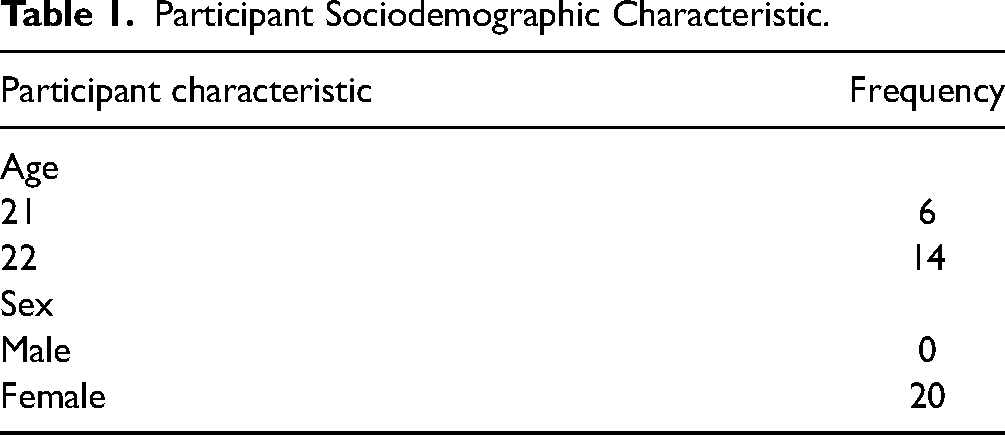
Subsequently, appointments were made with participants to explain the study's title, purpose, and data collection procedures over phone calls. Informed consent forms were sent to participants for their approval. Giorgi (1985) and Rosedale et al. (2009) recommended including more than one participant in descriptive phenomenological studies, emphasizing that Giorgi's method does not necessitate data saturation. The total number of participants in this study was 20. Demographic details of the participants are provided in Table 1.
Participant Sociodemographic Characteristic.
Data Collection
In this study, the researcher employed semistructured interviews from March 2020 to December 2020. The research team comprises three female and one male member, all of whom possess doctoral or master's degrees in nursing education and they have experienced in qualitative research. Researchers have no relationship or personal relationship with participants. To ensure the validity and relevance of the interview questions, the Interview Protocol Refinement (IPR) framework was used to develop and refine the interview guide. The process began by aligning each interview question with the overarching research questions, ensuring that the guide would prompt responses directly related to the study's objectives. Following this alignment, an inquiry-based conversational structure was created to encourage in-depth responses from participants. To enhance reliability, feedback was obtained from two colleagues with expertise in the research topic and from volunteers whose characteristics matched the study participants but who were not part of the final sample. This piloting phase allowed the researcher to gauge how well the interview questions were understood and to refine any questions that were unclear or misaligned with the study's aims. Given the time constraints due to participants nearing graduation, a traditional pilot study was not feasible. Thus, feedback from colleagues and volunteers was essential for fine-tuning the protocol. The final interview guide included questions such as, “As we know, nursing is related to caring. What do you think when we talk about caring?” and “Please explain what caring means from your perspective as nursing students.”
In the current study, telephone interviews were conducted after completing the process of IPR. Telephone interviews allowed the researcher to involve participants across a wider geographical scale and access individuals whom it may not be feasible or safe for the researcher to meet in person (Irvine, 2011). Telephone interviews were considered as effective as face-to-face interviews, achieving successful social interaction and generating useful data (Irvine, 2011). Since all nursing students were assigned to separate wards, the researcher (first author) used individual telephone interviews in the current study. According to Bevan (2014), conducting interviews is the most widely utilized method in phenomenological research. Telephone interviews provided valuable data and successfully facilitated social contact, similar to those conducted in person (Irvine, 2011). Due to the COVID-19 pandemic and the social distancing policy imposed by the Indonesian government, interviews were conducted by telephone. Sturges and Hanrahan (2004) argued that using telephones for interviews increased the possibility of obtaining data from those who are reluctant to have their views represented.
Telephone interviews may require initial contact by phone to solicit cooperation (Sturges & Hanrahan, 2004). According to Bolderston (2012), there may be a lower response rate for telephone interviews if the call is unsolicited and unexpected. In the current study, before conducting interviews with the participants, initial calls were made to explain the researcher's identity, the purpose of the study, and the interview process, and to obtain their permission for the telephone interview to be recorded (audio recorded). Subsequently, informed consent forms were sent to the participants for their approval. The main interviews were scheduled at mutually agreed times between the researcher and participants, during the participants’ free time (i.e., outside of their internship duties).
At the agreed time, the researcher called the participants for the interview. Interviews ranged from 45 min to 1 h. Interviews were rescheduled in cases where participants could not make it at the agreed time. Just before starting each interview, the duration of the interview was confirmed with the participant. Regarding recording information from participants, an audio recorder (from telephone devices) was used to record participants’ responses during data collection. With participants’ approval, all their spoken words were recorded. Audio recording involves capturing sound data for data collection purposes (Bloor & Wood, 2006). Follow-up interviews were conducted as needed.
Ethics
To conduct the study and collect data, the researcher sought ethical approval from the Institutional Review Board of Faculty of Nursing, Universitas Airlangga, with number 1917-KEPK. In this study, the researcher assured participants of their anonymity by assigning them numbers. For the purpose of anonymity, participant numbers were used when reporting the data.
Data Analysis and Trustworthiness
In Husserl's phenomenology, particularly in descriptive phenomenology, experiences are described, and the researcher's perception is bracketed or set aside to enter the world of research participants without presuppositions (Rodriguez & Smith, 2018). Bracketing, according to Tufford and Newman (2012), is a scientific process where researchers suspend their presuppositions, biases, assumptions, theories, previous experiences, history, and knowledge to observe and describe the phenomenon (Tufford & Newman, 2012).
In the current study, to maintain objectivity and avoid merging participant and researcher experiences, the researcher transformed participant statements from first person (“I”) to third person (“She/He”) when quoting them. Giorgi advocates limiting bracketing to the analysis process (Tufford & Newman, 2012), so in this study, bracketing was applied during the analysis stage. Giorgi (2012) stated that: Participants’ descriptions are not actually what the researchers experience themselves, researchers are analysing the experience of others, and in order to avoid fusion between researcher’ experiences and participants’ experiences, all the first-person statement is transformed into the third-person statements, but otherwise remain the same.
Giorgi (2012) emphasized that researchers analyze others’ experiences and transform first-person statements into third-person ones to prevent fusion between researcher and participant experiences, while preserving the original content.
In this study, the researcher brackets the researcher presuppositions during data analysis. The implementation of bracketing in this study involved transforming participants’ everyday expressions to highlight the psychological implications they experienced. Giorgi (2012) underscores the importance of avoiding fusion between participant and researcher experiences during data analysis, advocating for the transformation of first-person statements into third-person statements during analysis while preserving the content.
The current study utilized Giorgi's (1985) phenomenological method of analysis, strictly adhering to Husserl's framework. Giorgi's phenomenological method involved multiple readings of transcripts, identifying general meaning units, transforming participants’ expressions to highlight psychological implications, and synthesizing these units into consistent statements about participants’ experiences in the specific field (Giorgi, 1985). Data management was conducted using NVivo software in this study.
Peer debriefing and member checking (sending transcribed interviews and electronic copies of recorded interviews to participants) were employed to enhance the study's credibility. Given that interviews and analysis were conducted in Indonesian, the researcher followed the translation procedures developed by Chen (2004) and Chen and Boore (2010). This involved transcribing and analyzing transcripts in Indonesian and ensuring conceptual equivalence through an expert panel to use words understandable to most native speakers by two researchers.
Results
Giorgi (1985), phenomenological method of analysis was used in the current study, where the analysis produced seven themes: (1) Trying one's best to meet the patient's needs; (2) Central value of nursing practice; (3) Compassion; (4) Helping each other; (5) Knowing patient's needs; (6) Professionalism; and (7) Support. The emerging theme is presented in Table 2.
Theme and Categories from the Study.

Theme: Trying One's Best to Meet the Patients’ Needs
Based on their experience regarding caring behavior, nursing students perceived caring as trying their best to meet the patients’ needs or giving the best services to fulfill these needs. According to their experience, trying one's best to meet the patients’ needs involved giving the best services to patients and making efforts to provide quality nursing care. Below are statements from some of the nursing students about trying their best to meet the patients’ needs: Caring, in my opinion, during my clinical education is when we provide the best service to patients. (P23) Caring is more about how to care for people regardless of their condition. Even if the nurse is tired; for example, the patient usually does something strange, ask for many things; so we try to give our best even though we are tired. (P4)
Theme: Central Value of Nursing Practice
According to their experience, the nursing students perceived caring as a central value of nursing practice, which is described as a fundamental value in this study. It reflects caring as human nature to patients, a foundational component in nursing, and providing nursing care holistically. Below are some of the nursing students’ statements regarding caring as a central value of nursing practice: Caring is the fundamental of nursing. (P24) Caring is the act of nurses in providing nursing care to meet the patient's needs holistically, ma’am, not only physically but also psychologically, then spiritually like that ma’am. (P10)
Theme: Compassion
Based on their clinical learning experience regarding caring, the nursing students perceived caring as compassion and show love to patients. According to their experience in clinical settings regarding caring, compassion consists of empathy and loving each other. Below are statements from the nursing students related to caring, also known as compassion: Caring is like an attitude which, in my opinion, is an attitude that we must have in caring for patients… That empathy can give us deep caring. (P20) We also provide love and comfort for patients. (P21)
Theme: Helping Each Other
Based on their experience in the clinical setting regarding caring, the nursing students perceived caring as helping each other, described in this study as a perception of caring behavior in nursing related to helping patients fulfilling patients’ needs. According to their experience in the clinical setting regarding caring, helping each other consists of the desire to help. Below is presented the nursing students’ statement regarding caring, which means helping each other: Must be able to help what patients need, what they can't do, how do we provide help. (P19) In my opinion, caring is how my ability is to show my ability in terms of paying attention, showing my actions, providing help. (P17)
Theme: Knowing Patient's Needs
Based on the learning experience of nursing students in a clinical setting, they perceived caring as knowing the patient's needs. This study showed that the ability to understand the difference between a patient's needs is based on different individual needs. According to their experience regarding caring, knowing patient's needs consists of caring based on different individual needs by considering individual differences among patients, caring with knowledge about patients, and performing attentiveness. Below are some of the nursing students’ statements regarding caring, which means knowing the patient's needs: Humans are unique and vary, ma’am. Personality, various traits, so automatically the caring we do to them is also different depending on the needs and personality of each person. (P1) So, we don't just provide nursing care to patients, not only according to the procedure. Not only performing our obligations, for example, giving medicine, then checking TTV, and so on, not only that. But it is more about how we understand the patient's need, understand the pain they experienced, understand the anxiety. (P16)
Theme: Professionalism
Based on the nursing students’ experience in the clinical setting regarding caring, they perceived caring as professionalism, described in this study as the ability to carry out nursing services with qualified skill and knowledge, characterized by professional skill and professional responsibility. According to them, professionalism consists of maintaining professionalism as nurses, performing professional services sincerely, and requiring professional ethics and professional skill and knowledge. Nursing students’ statements regarding caring When we are tired, or we are not in the mood, or there are problems in our family, we should not mix those problems into our world of work, so it is more professionalism. (P4) …doesn't discriminate between tribes, races, do not discriminate between patients, does not harm the patient, patient safety is number one. (P8), which means professionalism are as follows:
Theme: Support
Based on the nursing students’ learning experience in the clinical setting regarding caring, they perceived caring as supporting, which is described in this study as a perception of caring behavior in nursing related to support and encouragement to patients. According to their experience in the clinical setting, support consists of holistically providing support to patient needs. Below are presented the nursing students’ statements regarding caring, which means supporting: …spiritual support, for example for praying equipment, then support in praying, reminding patients don't forget to always pray to Allah or his Lord to always be given healing. (P23) In my opinion caring is an action taken to provide support to clients or individuals whose actions are not only in the form of behavior but also related to emotional support, then psychological, then social and also cultural support and also includes the need for religiosity. (P3)
Discussion
Perceptions of caring among nursing students vary. They perceive caring as the central value of nursing practice and strive to meet patients’ needs with compassion, professionalism, and support. The finding that nursing students try their best to meet patients’ needs is supported by a previous study by Yam and Rossiter (2000), which identified this effort as a caring behavior perceived by Hong Kong nurses. In this study, based on their experiences, trying their best to meet patients’ needs involved providing optimal care and nursing support. According to Karlsson and Pennbrant (2020), the core of caring is essential in professional nursing practices to nurture and prioritize the patient's well-being. Regarding the central value of nursing practice, nursing students in this study perceive caring as fundamental. According to Leininger (1988), Watson (1988), and Sapountzi-krepia and Sarpetsa (2013), caring is considered pivotal in nursing. This finding aligns with past studies by Kelly (1991), Gregg and Magilvy (2004), Wros et al. (2004), Horton et al. (2007), Shih et al. (2009), Shahriari et al. (2013), Drayton and Weston (2015), and Schmidt and Brown (2016), all of which underscore caring as central to nursing values. In this current study, caring as a central value of nursing practice encompasses caring as intrinsic to human nature toward patients, as a foundational nursing component, and as a holistic nursing care provision. Spichiger et al. (2005) describe caring as a human trait, a moral obligation or ideal, an effect, an interpersonal relationship, and a therapeutic intervention, presenting five interconnected perspectives on the nature of caring. Sekse et al. (2018) argue that the extension of caring beyond nursing indicates its fundamental role within the profession.
In this study, nursing students perceived caring as compassion, a sentiment also noted by Wilkes and Wallis (1998) and Karaöz (2005). According to nursing students’ experiences and perceptions, compassion includes empathy and affection for others. Emotional gestures related to compassion, such as love, concern, sensitivity, and touch, were highlighted by Sapountzi-krepia and Sarpetsa (2013). Nursing has a long-standing association with caring, empathy, and compassion (Maben et al., 2010). Regarding the aspect of helping each other, nursing students perceived caring as mutual assistance. In qualitative studies by Begum and Slavin (2012) and Petrou et al. (2017), nursing students described caring behavior as involving mutual aid. Nursing students’ perceptions of caring behavior related to helping each other encompass a desire to assist and provide support. Petrou et al. (2017) previously found that nursing students viewed caring as assisting patients with daily activities.
Nursing students perceive caring as understanding the patient's needs. Phillips et al. (2015) previously found that nursing students view caring behavior as involving communication and comprehension of patients’ needs. In this study, nursing students’ perception of understanding patients’ needs includes caring based on individual needs, recognizing individual differences among patients, understanding and knowing the patients, and being attentive. Biophysical, emotional, genetic, medical diagnoses, and other factors can influence the implementation of caring, according to Leininger (1988). Bruderle (2002) also indicated that nursing students perceive understanding patients as part of caring. Aupia et al. (2018) highlighted that paying attention is perceived by patients, nurses, and nursing students as a caring behavior. Understanding entails avoiding assumptions, focusing on the person being cared for, thoroughly assessing all aspects of the client's condition and reality, and integrating the nurse's or client's self or personhood in a caring interaction (Swanson, 1993). Paying attention to patients with individual differences is considered an integral part of caring (Jenny & Logan, 1996; Kalfoss & Owe, 2015; Swanson, 1999).
Regarding professionalism, nursing students also perceive caring as involving professionalism. Based on their experiences, caring perceived as professionalism includes maintaining nurses’ professionalism, delivering professional services sincerely, and adhering to professional ethics, skills, and knowledge. Previous research by Ghadirian et al. (2014) described nursing professionalism as multifaceted, encompassing both knowledge and skill domains (competence). This professionalism is supported by adherence to nursing ethics, continuous education, involvement in professional organizations, self-regulation, and autonomy. Wilkin and Slevin (2004) emphasized that the foundation of caring includes technical competence and competent physical support combined with affective skills. The primary aim of professional ethics is to provide ethical guidance to nurses, defining their roles and responsibilities (Kangasniemi et al., 2015).
Regarding support, nursing students also perceive caring as involving support. According to Leininger (1988), Wilkin and Slevin (2004), and Sapountzi-krepia and Sarpetsa (2013), caring is described as assisting or supporting individuals or groups in meeting their expected needs to enhance their living conditions and quality of life. In this study, caring perceived as supporting encompasses providing holistic support to patients. McEvoy and Duffy (2008) suggest that in a culture fostering a therapeutic nurse–patient relationship; holistic nursing care integrates the patient's mind, body, and spirit; and promoting completeness, harmony, and healing. This finding aligns with Schaefer's (2003) study, which indicated that nursing students view caring as offering support and encouragement to patients and families requiring nursing care. Previous research by Sapountzi-krepia and Sarpetsa (2013) also demonstrated that nursing students perceive caring as providing support, focusing not only on the physical aspect but also on the psychological well-being of individuals.
Implications of Study
According to Leininger (1988), caring refers to a professional action by health professionals (nurses) to support individuals or groups in improving their health status. This study also provides evidence that caring is associated with understanding patients’ needs and paying attention. Swanson (1999) considers understanding as a caring process, and paying attention to patients’ differences is viewed as a component of caring. The findings of this study illuminate nursing students’ perceptions of caring in clinical settings, with the expectation that they can enhance and apply caring in their profession.
For future studies, it is recommended that researchers use other qualitative approaches, such as case studies, mixed methods research, or different designs of phenomenological studies, to gain a comprehensive understanding from various perspectives. Since the primary goal of nursing education is to produce caring nurses, future research should explore strategies in nursing education and hospital teaching to enhance nursing students’ clinical learning related to caring and improve caring practices. Another recommendation is to broaden the research participants to include instructors and nursing staff, thereby obtaining a holistic understanding of nursing students’ clinical learning from the perspectives of Indonesian instructors and nurses.
Strength and Limitations
Previous research exploring nursing students’ perceptions of caring has primarily originated from Europe. They perceived caring in various ways. Previous studies have shown that nursing students perceive caring as competence, compassion, communication, presence, and action. In the current study, from the perspective of Indonesian nursing students, caring is perceived as trying one's best to meet patients’ needs, as a central value of nursing practice, compassion, mutual assistance, understanding patient needs, professionalism, and support. One limitation of this study is that data collection was time-consuming due to telephone interviews, with each interview lasting between 45 min and 1 h per participant. Additionally, this study relied on telephone interviews for data collection, which meant the researcher could not observe participants’ nonverbal cues or reactions during the interview process.
Conclusion
It was learned that the perceptions of caring behavior among nursing students varied. The findings of this study demonstrated evidence that aligned with the caring theories by Leininger, Watson, and Swanson. Although this study is phenomenological research with a small sample size, it plays an important role in nursing education to explore strategies and policies for developing nursing students’ competencies regarding caring behavior. Moreover, this study provided evidence that caring is related to supporting patients and is a central value of nursing practice, besides establishing a caring relationship as a caring behavior. According to Leininger, caring refers to a professional action from a health professional (nurse) to support another individual or group to improve human health. This study also showed evidence that caring relates to knowing and paying attention to patients’ needs. According to Swanson, knowing or awareness is considered a caring process. As for attentiveness (i.e., paying attention), its practice among patients is considered a component of caring.
Supplemental Material
sj-docx-1-son-10.1177_23779608241312485 - Supplemental material for Indonesian Nursing Students’ Perceptions of Caring in Clinical Setting: A Descriptive Qualitative Study
Supplemental material, sj-docx-1-son-10.1177_23779608241312485 for Indonesian Nursing Students’ Perceptions of Caring in Clinical Setting: A Descriptive Qualitative Study by Herdina Mariyanti, Kee Jiar Yeo, Sirikanok Klankhajhon and Hidayat Arifin in SAGE Open Nursing
Footnotes
Author Contributions
Herdina Mariyanti: Conceptualization, Methodology, Formal analysis, Data Curation, Writing—Original Draft; Kee Jiar Yeo: Conceptualization, Validation, Writing—Review & Editing, Supervision; Sirikanok Klankhajhon: Validation, Writing—Review & Editing; Hidayat Arifin: Validation, Writing—Review & Editing.
Declaration of Conflicting Interests
The author(s) declared no potential conflicts of interest with respect to the research, authorship, and/or publication of this article.
Ethical Consideration
To conduct the study and collect data, the researcher sought ethical approval from the Institutional Review Board with the ethics number 1917-KEPK. In this study, the researcher provided assurance to participants regarding their anonymity (participants were numbered). To obtained anonymity purposes, participant number was utilized in this study while reporting the data.
Funding
The author(s) disclosed receipt of the following financial support for the research, authorship, and/or publication of this article: The authors would like to express their gratitude to Universitas Airlangga for funding this research (grant number: 1310/UN3.5/PPd/2017).

Supplemental Material
Supplemental material for this article is available online.
References
Supplementary Material
Please find the following supplemental material available below.
For Open Access articles published under a Creative Commons License, all supplemental material carries the same license as the article it is associated with.
For non-Open Access articles published, all supplemental material carries a non-exclusive license, and permission requests for re-use of supplemental material or any part of supplemental material shall be sent directly to the copyright owner as specified in the copyright notice associated with the article.
