




Abstract
Introduction
Dengue fever is a viral disease of public health concern. Adequate knowledge and self-care practices are the most effective strategies for vector control.
Objective
To describe the knowledge, attitudes, and practices for the prevention and vector control of dengue.
Methods
Mixed method study. A total of 283 residents in a Colombian rural population were studied. Relative and absolute frequency measures were used for statistical analysis of study variables; emergent categories were identified for qualitative data.
Results
73% were women, 60% were housewives, and 37% had completed primary education. Both knowledge and attitudes presented low percentages in relation to the characteristics of the vector. Regarding practices, 76% did not have a positive disposition toward the use of mosquito nets. Participants perceived problems related to waste management, lack of education, and the presence of mosquitoes in covered water tanks.
Conclusion
The inhabitants of the surveyed population demonstrated acceptable knowledge with respect to dengue control practices; however, they neglected sources of risk in their immediate environment.
Introduction
Dengue is one of the potential arboviral diseases affecting humans (Rodríguez, 2022); it is composed of four serotypes of analogous viruses. It is found in tropical and subtropical areas and is transmitted through the bite of the Aedes aegypti mosquito (Angulo & Peña, 2022).
The World Health Organization (2024) reported that dengue was present in more than one hundred (100) countries. Seventy percent of the disease burden is concentrated in the regions of Southeast Asia, the Western Pacific, and the Americas.
For the year 2022, in the Americas region, 2,809,818 cases of dengue were reported, with an accumulated incidence of 282.96 per 100,000 inhabitants; this figure shows a significant increase compared to previous years (Pan American Health Organization, 2023).
The most affected departments in Colombia are Cundinamarca, Cesar, Santander, Meta, Sucre, Tolima, Atlántico, Córdoba, La Guajira, and Bolívar, as well as the districts of Cali, Barranquilla, and Cartagena (Ministry of Health and Social Protection of Colombia, 2023).
In Cartagena, in 2022, 2,289 cases were recorded, of which 64 were classified as severe dengue, and seven deaths were probably caused by the disease (Ministry of Health and Social Protection of Colombia, 2023).
The township of San Cayetano, belonging to San Juan Nepomuceno, is a Colombian municipality located in the north of the department of Bolívar. The diseases transmitted by this mosquito are endemic in San Cayetano, aided by the deficiencies in drinking water coverage, health services, and poor basic sanitation that create the necessary conditions for DENV to represent a public health problem. In 2022, 310 cases were reported, of which 16 were classified as severe dengue and two deaths occurred (Bolívar Governorate, 2022).
There are determinant factors in dengue: environmental, social, biological, and behavioral (Terrero et al., 2020). Environmental factors are related to the presence and distribution of vectors, temperature, latitude, relative humidity, and altitude. A study in Cartagena reported that the occurrence of dengue cases was related to temperature, humidity, precipitation, and rainy days (Cano et al., 2022; Pasos & Archibold, 2020). Social factors enable vector density and distribution related to the presence of breeding sites due to the lack of frequency and regularity in the provision of public services, such as water supply and garbage collection (Terrero et al., 2020). Nevertheless, the phenomenon is also related to the inadequate management of household waste (Gudiño & Aguilar, 2010). Biological determinants integrate the genetic component from birth, characterized by patterns integrated into development, personality, and behaviors (Terrero et al., 2020). In this sense, maturation and aging processes can influence health complications in the face of an infectious agent (Galli et al., 2017). Finally, behavioral determinants are related to habits, beliefs, attitudes, and knowledge that individuals present, all of which influence decision-making regarding health.
Several investigations show that people's experiences and perceptions are related to knowledge and practices to control dengue (Benítez et al., 2020; Molina et al., 2023).
One of the main challenges of public health is to develop actions focused on vector control. To achieve this, as a first step, the individualities of people must be recognized, including knowledge gaps and erroneous practices that influence contracting the infection.
Literature Review
Dengue is a hyperendemic arboviral infection in tropical and subtropical climates. Clinical manifestations of dengue can range from asymptomatic infection to severe illness with multiorgan failure (Kularatne & Dalugama, 2022). Clinical diagnosis can be supported by signs, symptoms, and the detection of specific dengue antibodies, nonstructural antigen 1, or viral RNA (Raafat et al., 2019). Several studies have analyzed the biology, epidemiology, and transmission dynamics of dengue virus (DENV), including circulating serotypes and genotypes, immune response, disease pathogenesis, updated diagnostic methods, treatments, vaccine development, and vector control strategies (Harapan et al., 2020).
Regarding the latter, there is a significant association with the knowledge, attitudes, and practices assumed by individuals, which has become a critical aspect for preventing and controlling the vector (Benítez et al., 2020). Knowledge encompasses not only the general understanding of the disease but also the identification of its characteristics, causes, transmission mechanisms, life cycle, clinical signs, and methods to control virus spread (Dávila-González et al., 2020). Attitude refers to individuals’ disposition toward vector prevention and control, while practices are the behaviors they engage in, which can either pose risks or be beneficial to health.
Identifying these premises (CAP) in the study population will help restructure collective interventions, conduct surveillance, and vector control in the face of misinformation, passive attitudes, and risky practices, thereby reducing current morbidity and mortality indicators.
As a result of the above, this study aims to determine the knowledge, attitudes, and practices for the prevention and vector control of dengue in a Colombian population.
Method
Design
Mixed methods were employed in this cross-sectional study, which incorporated a qualitative approach to assess population perceptions regarding dengue fever. The research was conducted in a small town within a municipality in Colombia, specifically in the Colombian Caribbean region, located at the foothills of Montes de María, a mountain range in the department of Bolívar (Coordinates: 10°04′53″N 75°08′26″W). The area has an average elevation of 246 meters above sea level and experiences average temperatures ranging from 29 °C to 34 °C. The study was carried out from January to October 2023.
Data Collection Tool and Procedure
The instrument comprised the CAP (knowledge, attitudes, and practices), used in the research “Analysis of dengue prevention and control activities” in the La Florida and Las Palmas II neighborhoods of Neiva (Huila), during the second semester of 2014 (Sánchez, 2015). Variables were described in the survey as sociodemographic aspects, sources of Information, knowledge, attitudes, and practices. Additionally, informed consent form was prepared to be applied prior to the administration of the CAP survey to the community.
The original instrument was validated by experts in clinical and public health areas and then subjected to a pilot test by applying it to thirty people residing in neighborhoods different from the place of the study but similar in their social and demographic characteristics. As a result of this piloting, some of the items were adjusted to facilitate their understanding (Sánchez, 2015).
Before visiting the district, approval was obtained from the operational health subdirectorate of the municipality. Health promoters were informed about the upcoming fieldwork, and mapping and sampling were conducted. The survey was applied in approximately 20 min per household, and families were informed about upcoming focus group meetings, with the option to decide whether to participate (see Supplemental Material).
Qualitative Component Management-Focus Group Procedure
The qualitative component was exploratory in nature, aiming to achieve an overview or general understanding of a fact or context. It was led by the principal investigator, who has over 15 years of experience in public health research. Her qualifications include a university degree in nursing and a master’s degree in education.
Individuals who voluntarily expressed interest in participating were included in the focus groups.
Research Questions
What knowledge exists to exercise dengue's vector control in the population under study?
What are the attitudes toward vector control?
What practices do you use to control the vector?
What are the perceptions of the study population about dengue?
What are the factors associated with knowledge, attitudes, and practices for dengue control?
Sample
To calculate the sample size, the formula is used to find the proportion in a finite and known population.
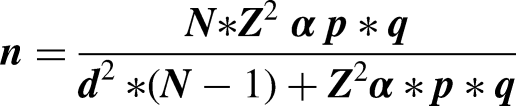
p: 0,17 (35)
q: 0,83
Zα: 95%
d: 5%
Ultimately, 283 individuals were recruited for the study. Stratified sampling included the major sectors of the municipality, and random street selection was employed.
Inclusion/Exclusion Criteria
The inclusion criteria considered people over 18 years of age, both men and women, residing in the municipality for at least 6 months, who expressed their decision to participate in the study by signing the informed consent.
Ethical Considerations
The research adhered to the norms established in Resolution 8430 of 1993 from the Ministry of Health and Social Protection of Colombia (1993) classified as “without risk.” Approval was obtained from the Research Committee of the University in Colombia. Written consent was obtained from all involved parties before interviews and instrument application.
Statistical Analysis
In the exploratory analysis of the quantitative data, the nonparametric behavior of the data was established using the Kolmogorov-Smirnov test, subsequently descriptive statistical methods were used, including univariate analysis through frequency analysis and estimation of the prevalence of the variables of interest. In the bivariate analysis, the relationship between the characteristics of the population, knowledge, attitudes, and practices regarding dengue control was explored. The statistical relationship between quantitative variables was verified using the Spearman correlation index, and when dealing with categorical variables, the chi-square test was used.
Qualitative data related to the problems, causes, and consequences of dengue from individual problem trees were shared and enumerated in plenary sessions for validation.
To analyze qualitative data on attitudes, a qualitative approach was used with the focus group technique, involving the same population that responded to the survey. The objective was to understand the perception of dengue and the attitude of the participants toward the practices they recognized.
Full transcripts of participants’ contributions to the issue tree were compiled for each participant, coded with the initial letter of their first name and, in some cases, the initial of their last name to identify the contributions.
Results
Sample Characteristics
The sample was made up of 283 individuals, with a predominance of the female sex (73.5%). The majority were housewives (60.99%). Regarding education, a large proportion had completed primary education (37.1%). The participants were classified according to socioeconomic status, with almost all being low (98.94%). Furthermore, most households were composed of 4–6 people, and more than 15% of households were inhabited by more than seven people (see Table 1).
Sociodemographic Characteristics of the Residents of the Studied District (2022).

Source: self-made.
Research Question Results
Of the participants, 3.9% (11) reported having suffered from the disease at some point in their lives, of which 54% (6) corresponded to dengue without warning signs, 18% to dengue with warning signs, and the rest of the population does not know the classification.
In relation to access to information about dengue, 62.9% (178) of the respondents claimed to have received information they consider comprehensive from sources such as flyers (61.1%), radio (42.3%), television (36.47%), and press (29.31%). However, only 52% of the inhabitants considered these media and information campaigns to be effective.
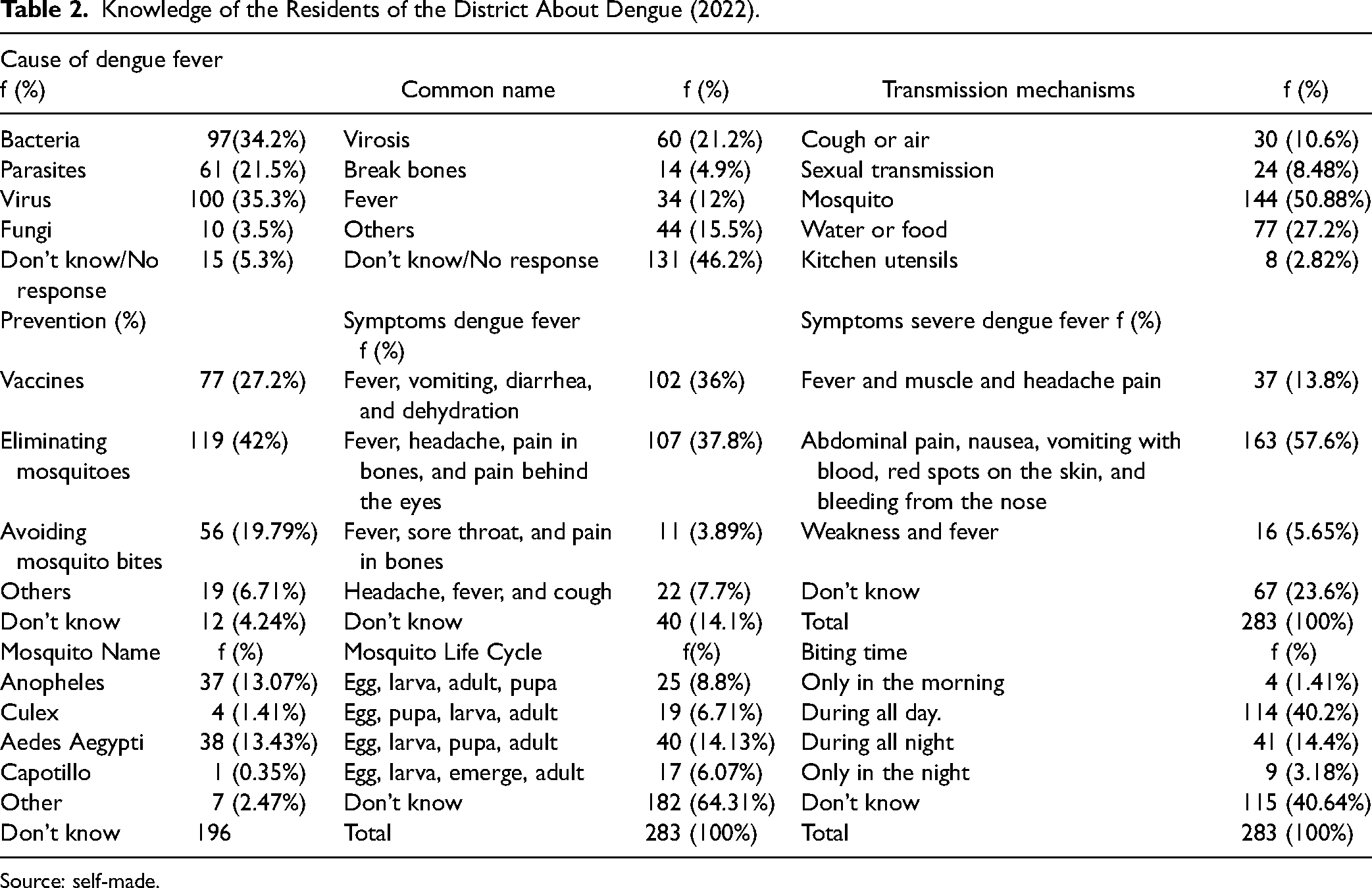
Knowledge of the population regarding the causes, transmission mechanisms, and prevention methods of dengue was also investigated. The results were as follows: only 35.4% (100) of individuals knew that the infection is caused by a virus, with the majority associating the disease with a bacterial origin, 34.28% (97); parasites, 21.55% (61); and fungi, 3.53% (10). The most common alternative name for dengue was “virosis,” mentioned by 21.20% (60).
Half of the participants identified mosquitoes as the means of dengue transmission; however, the remaining proportion had misconceptions, such as the possibility of person-to-person transmission through coughing or the air, as well as through food or personal utensils.
Regarding prevention methods, 62% identified actions related to the vector, such as mosquito eradication and barrier methods to avoid bites.
It is worth noting that the population has very little information about the vector, being unfamiliar with its name, appearance, habits, and life cycle; more than 60% of people admitted to having no information on these aspects.
When asked about key manifestations of dengue without warning signs, 37.81% identified the correct combination of signs and symptoms of dengue (fever, headache, bone pain, and pain behind the eyes). Additionally, 57.60% (163) of them were able to recognize warning signs of severe dengue (abdominal pain, nausea, vomiting with blood, reddish skin spots, and bleeding from the nose or gums) (see Table 2).
Knowledge of the Residents of the District About Dengue (2022).
Source: self-made.
Acceptable or adequate knowledge was considered equivalent to 60% correct answers. Only 9.5% of respondents had acceptable or adequate knowledge, with a maximum score of seven correct answers, an average of 3.41 (SD 1.49) (see Figure 1).
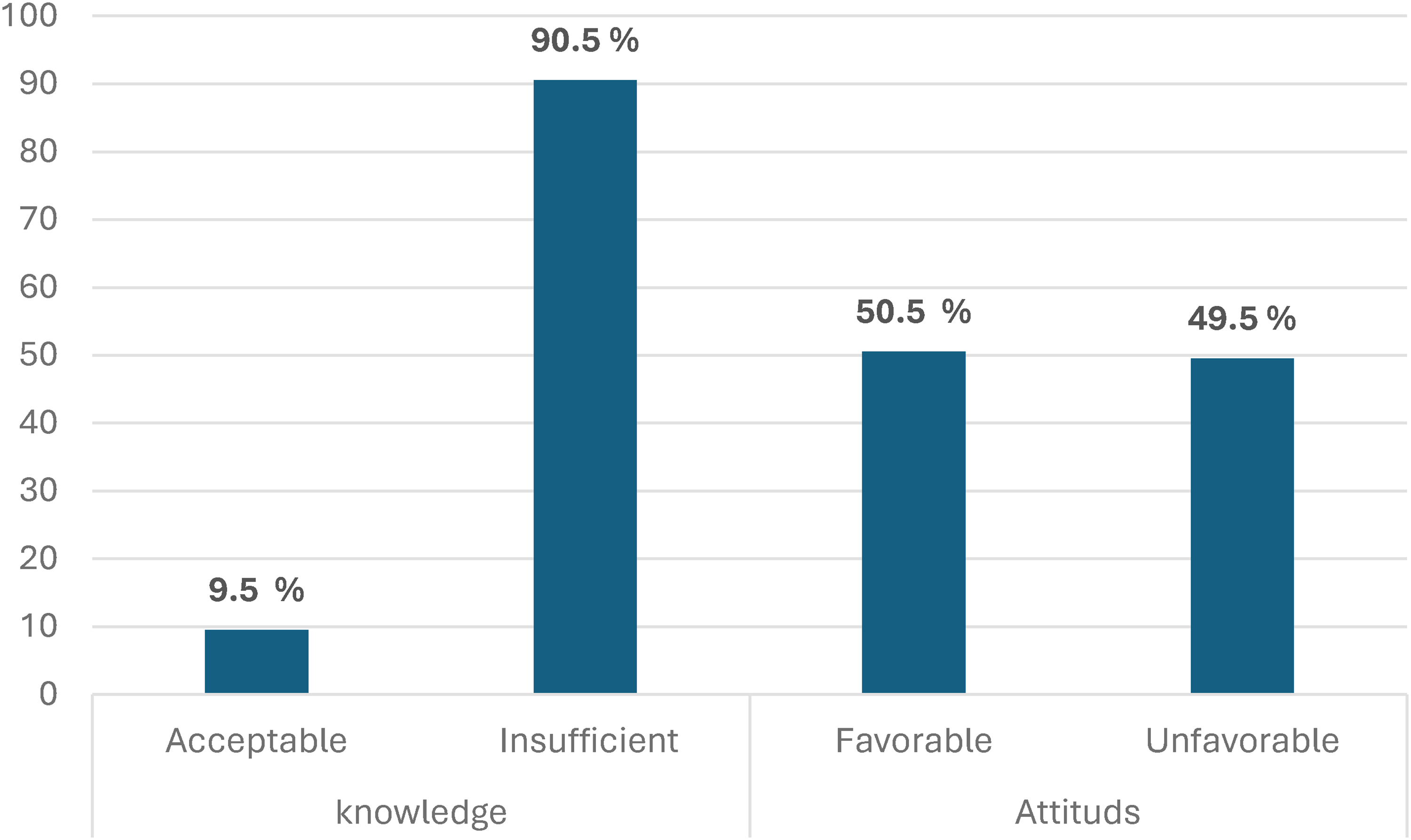
Classification of knowledge and attitudes for dengue control.
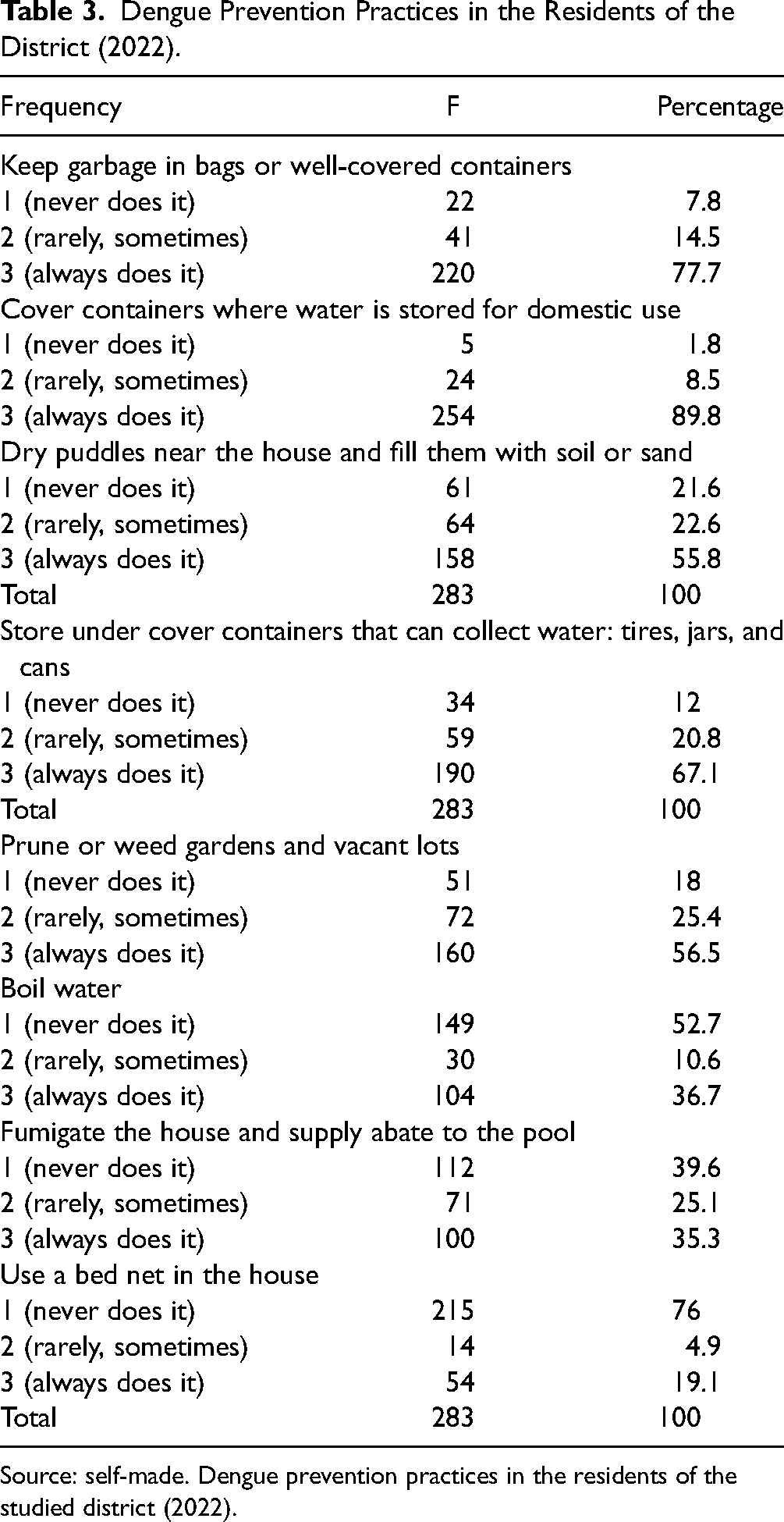
Regarding practices related to vector control, there is a higher tendency to cover containers containing water, with 89.8% of participants reporting that they always do so. However, there are lower levels for similar practices, such as drying puddles of rainwater near homes (55.8%) or weeding gardens (33.22%). This reflects that the community has adopted some habits but struggles to control other potential mosquito breeding sites, such as plant foliage, unused items holding water, and rainwater channels, which are common in the region, among other potential reservoirs. It is also noteworthy that the use of bed nets (toldillos) is not well accepted among community members. Seventy-six percent of people claim never to use this element, which could lead to disease transmission among family members or neighbors in case of an infected person (see Table 3).
Dengue Prevention Practices in the Residents of the District (2022).
Source: self-made. Dengue prevention practices in the residents of the studied district (2022).
Considering the frequency of the practices reported by the respondents, it was observed that 39.2% reported always or frequently carrying out dengue prevention and control practices (see Figure 2).

Classification of prevention practices and dengue control.
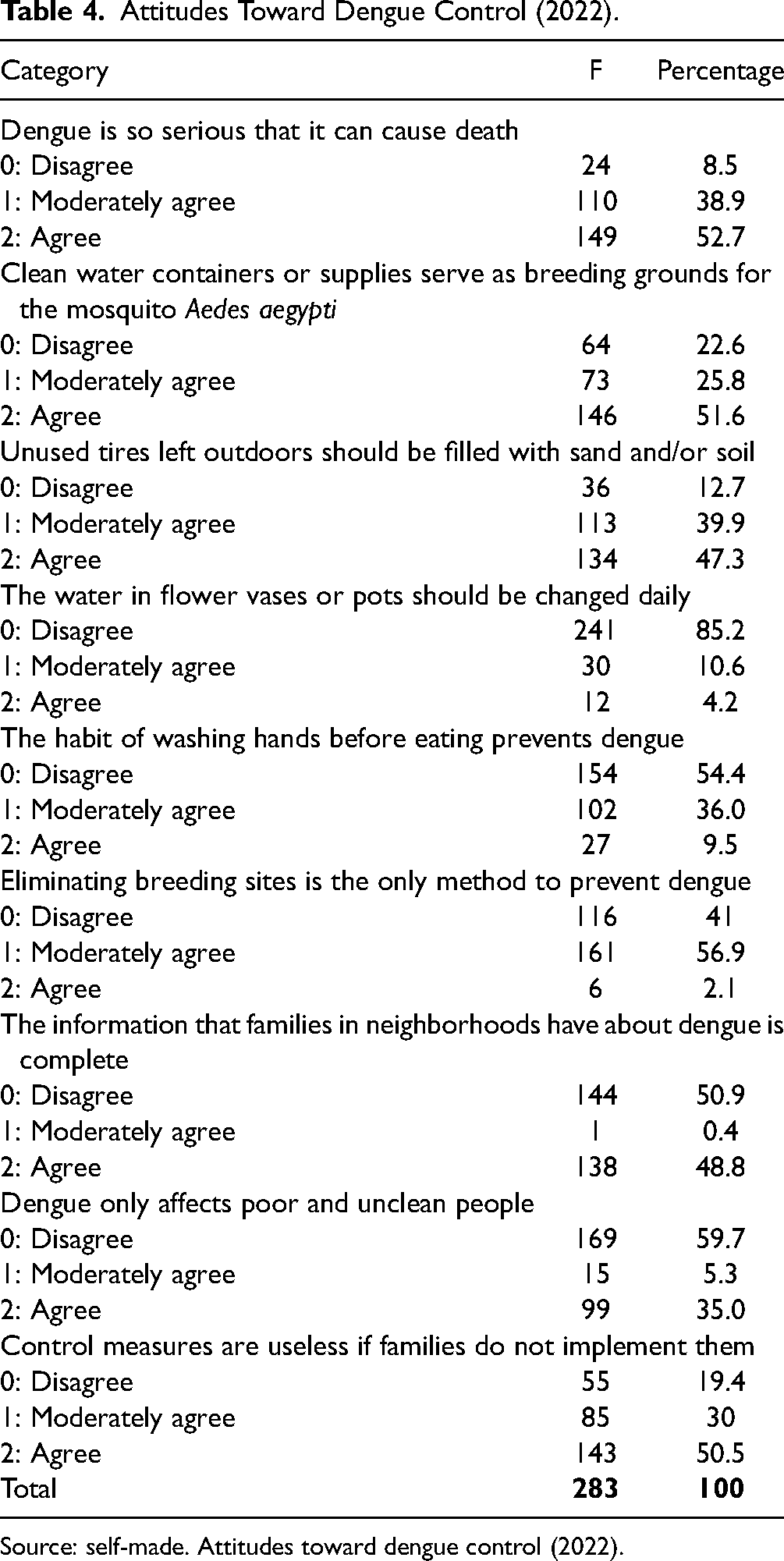
In relation to attitudes about the severity of and vulnerability to dengue disease, the majority of participants (97%) perceive it as potentially fatal; however, they show unfavorable attitudes toward certain practices, such as changing the water in vases daily; 12% of respondents agreed with this practice. This indicates that there are still mosquito breeding sites in the home that are not perceived as risk factors (see Table 4).
Attitudes Toward Dengue Control (2022).
Source: self-made. Attitudes toward dengue control (2022).
Moreover, 49.5% of the population has an attitude that does not favor vector control practices and consequently the prevention of vector-transmitted diseases such as dengue (Figure 1).
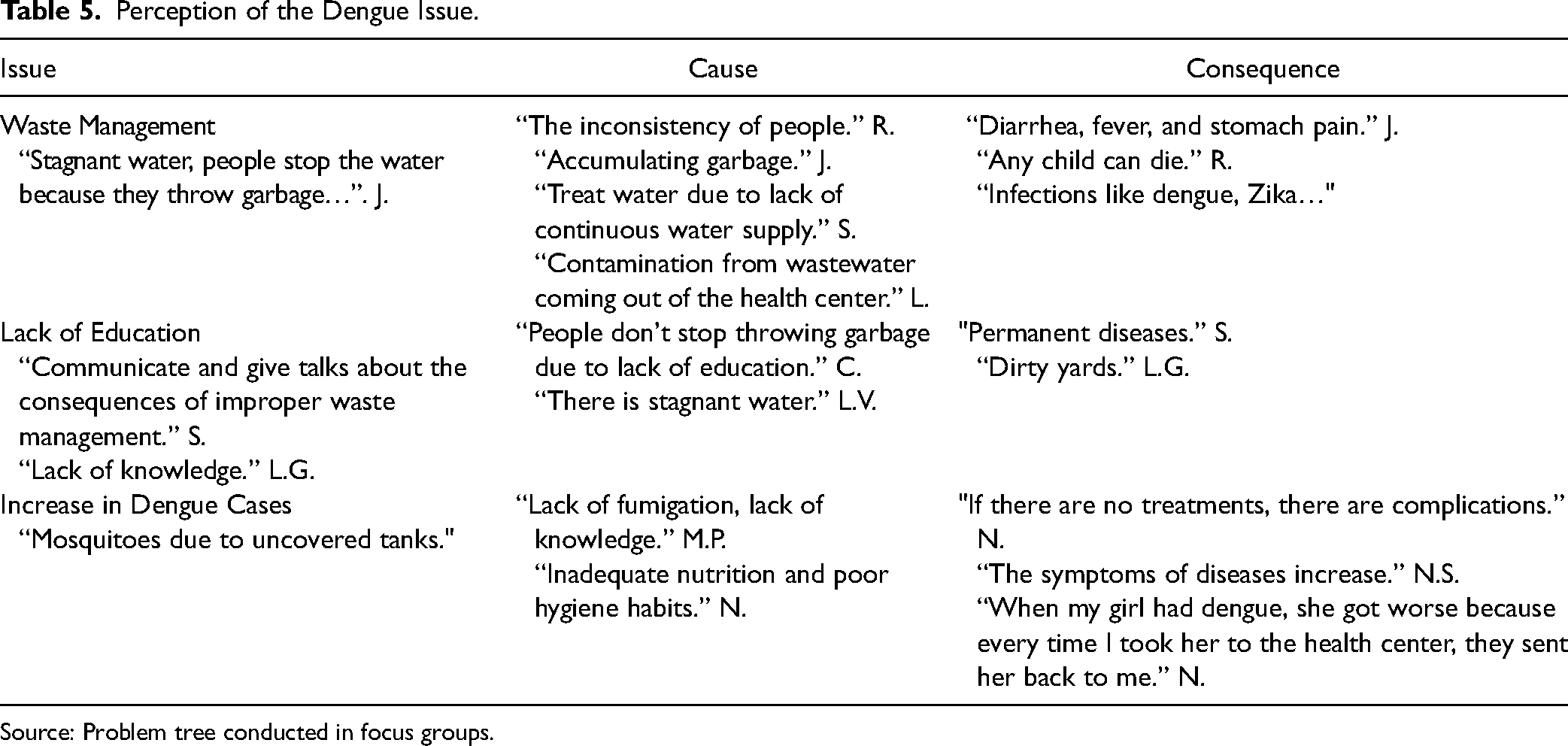
Based on the experiences of the 20 participants in the focus groups, it was found that knowledge is fragmented, and there is sometimes confusion with elements from other pathologies.
According to the information in Table 4, the community associates the presence of mosquitoes with the occurrence of the disease. In their accounts, they acknowledge the existence of risky practices among neighbors, attributing it to ignorance and the lack of guarantees for the continuity of public services. For this reason, they call for the presence of public health agencies with actions such as house-to-house fumigation. Additionally, they describe the difficulties in healthcare when their relatives have contracted dengue (see Table 5).
Perception of the Dengue Issue.
Source: Problem tree conducted in focus groups.
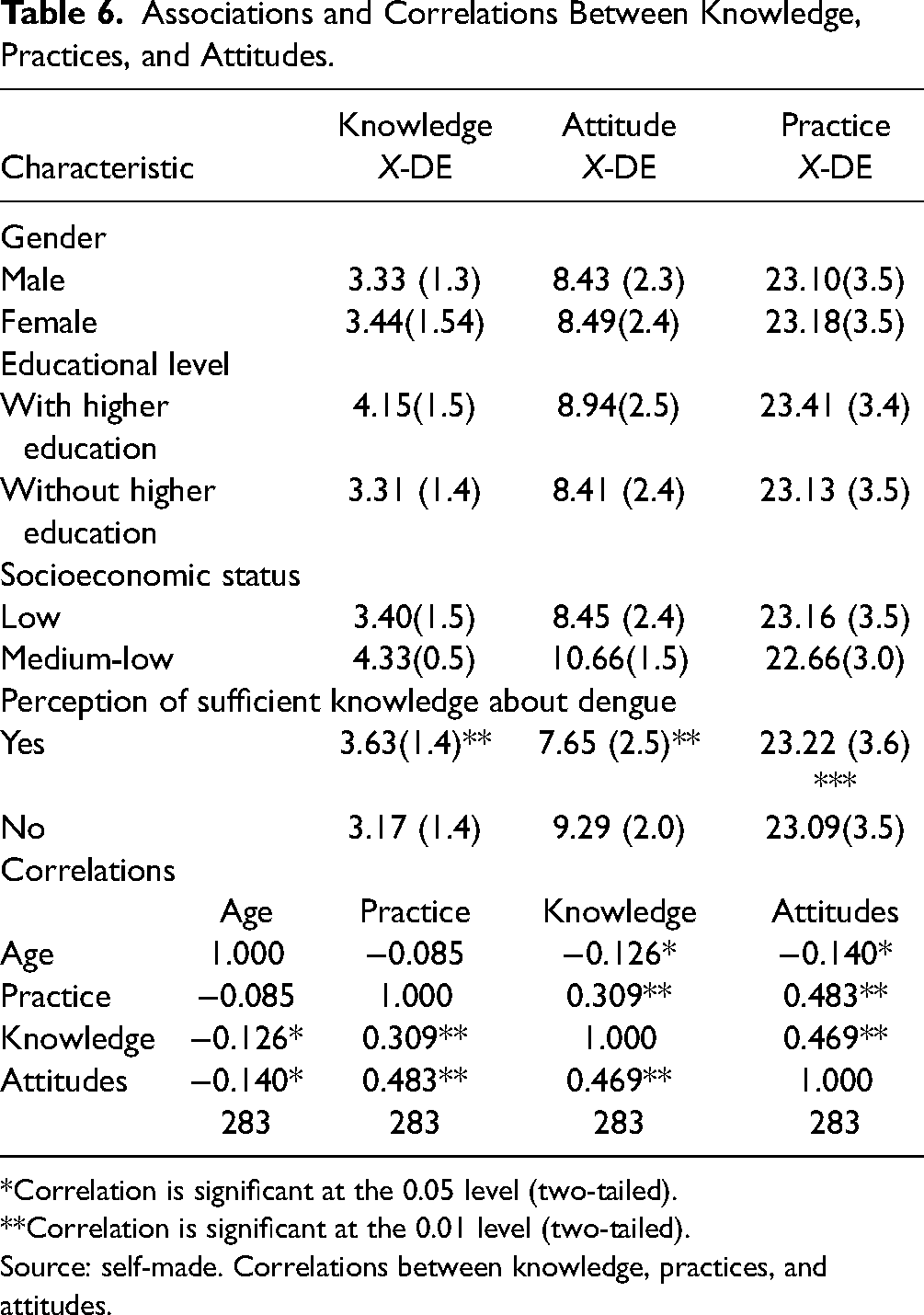
A statistically significant negative correlation was found between age and the means achieved in the dimensions of knowledge and attitudes toward dengue control and prevention. Similarly, there was a positive correlation between attitudes and knowledge and practices. Additionally, it was observed that the educational level is directly related to the level of knowledge of the participants (p-value = .035) (see Table 6).
Associations and Correlations Between Knowledge, Practices, and Attitudes.
*Correlation is significant at the 0.05 level (two-tailed).
**Correlation is significant at the 0.01 level (two-tailed).
Source: self-made. Correlations between knowledge, practices, and attitudes.
This relationship was confirmed by correlating the dependent variables in their categorical form: it was found that individuals with a higher level of knowledge were more likely to have appropriate practices (p = .025), a favorable attitude (p = .000). On the other hand, the perception of knowing enough about dengue was associated with better attitudes and coincided with those who performed better in the knowledge component (p = .000)
Discussion
Despite the efforts made to control the transmission of dengue, each year there is a progressive increase in infections, which becomes one of the main challenges in public health (Gallo et al., 2022).
The main findings of this study, derived from both quantitative and qualitative approaches, are related to the lack of knowledge of the target population about the vector. This includes morphological characteristics, vector habits, life cycle, and transmission methods. In contrast, the behaviors were positive, although incipient toward preventive practices. This information differs from a study carried out in Cambodia (Asia), which demonstrated high levels of knowledge about transmission and prevention methods but few practical skills to control it, with no correlation found between knowledge and implemented practices (Kumaran et al., 2018).
Another study in Bangladesh (India) reported that the level of preventive practice was moderately lower than the level of knowledge, although there was a significant association (p < .05) between knowledge and practices (Hossain et al., 2021). The results of the present study demonstrate that there is greater knowledge and better practices and attitudes to control the vector. However, it was evident that the inhabitants who best demonstrated their practices and attitudes also had a deficiency in knowledge.
However, the Sánchez (2015) study establishes that having knowledge does not ensure that favorable practices and attitudes are demonstrated for the prevention of the vector.
Regarding knowledge about the clinical manifestations with and without warning signs of dengue, favorable results were shown. Warning signs were the most identified by this population (57.60%). These data are similar to a study carried out in Honduras, whose results reported that 60% of the participants clearly defined the clinical picture of the disease (Sabillon et al., 2021).
Furthermore, it can be observed that participants have difficulty identifying the initial signs of the disease, as they confuse it with a cold. Therefore, they engage in incorrect practices, such as taking Ibuprofen after 3 days of fever and consuming antibiotics. These aspects influence the complication of the disease. This position is aligned with a study titled “The dilemma of self-medication in dengue,” which describes that people choose to prepare and consume home remedies, use alternative medicines, and self-medicate, leaving the health center as a last resort (Khan et al., 2022).
Regarding vector control methods, the main practice recognized by the participants was covering containers containing water (78.45%). However, there were low levels of knowledge about practices related to drying rainwater puddles near homes (40.28%), weekly cleaning of swimming pools (43.11%), and weeding gardens (33.22%). This finding was also visible in a study conducted in Indonesia, where less than 30% of respondents did not respond correctly, as they considered “ditches outside their homes” to be not possible breeding sites for the Aedes aegypti mosquito (Sulistyawati et al., 2019).
Regarding the practices most used among the participants, covering the containers used for storing domestic water stands out, while the least used is the use of mosquito nets. These data contradict those found by Mobin et al. (2022), who affirm that the most used preventive method is the use of mosquito nets (93.7%), followed by the use of spirals (85.7%) (Mobin et al., 2022).
In our study, 58% of the participants had completed primary and secondary education and belonged to the low socioeconomic status, at 98%. These data are similar to a study carried out in Medellín (Colombia), where 95% of the participants had a primary educational level. Another study carried out by Malacas (2020) demonstrated the relationship between age, level of schooling, and level of knowledge.
Furthermore, the results reported a lack of health coverage and did not belong to the subsidized regime. These aspects marked a difference between neighborhoods in terms of the study of the presence of vectors (Ortiz et al., 2018)
Certainly, studies highlight the need to intensify surveillance and education of people to control the vector. Community participation is recommended to carry out the prevention of vector-borne diseases (Sarmiento et al., 2019).
Strengths and Limitations
This study contributes to a more complete understanding of the community dynamics of dengue, allowing local health authorities to be guided to formulate health literacy programs and strategies that incorporate persuasion models, and therefore overcome the confusion and knowledge gaps necessary to improve awareness of health, and increase the perception of risk and individual and collective vulnerability to the disease.
Our study was inherently exposed to possible in the design, considering that information was collected by self-reporting. There is a possibility that informants were not entirely honest due to fear of judgment by the interviewer, despite the sensitization process carried out before the instrument's application.
Future studies should use instruments; it is recommended to use instruments for the objective assessment of vector control practices and dengue prevention, such as planned observation checklists and measurement of vector indices.
Implications for Practice
The results presented here will serve as input for decision-making by control entities and contribute to formulating programs and strategies for the prevention and control of dengue with cultural identity that are relevant to the population.
Conclusions
A significant proportion of the inhabitants of the surveyed population demonstrated little knowledge about dengue control practices. People incorporated vector control practices on which educational campaigns have emphasized; however, they neglected other sources of risk in their immediate environment. The perceived attitudes indicated a certain level of awareness about the disease, its consequences, and the importance of acquiring education to improve dengue prevention practices.
Supplemental Material
sj-docx-1-son-10.1177_23779608241302713 - Supplemental material for Knowledge, Attitudes, and Practices for the Prevention and Vector Control of Dengue in a Colombian Rural Population: A Mixed Method Study
Supplemental material, sj-docx-1-son-10.1177_23779608241302713 for Knowledge, Attitudes, and Practices for the Prevention and Vector Control of Dengue in a Colombian Rural Population: A Mixed Method Study by López-Saleme Rossana, Escobar-Velásquez Katty and Barajas-Lizarazo Mayra in SAGE Open Nursing
Supplemental Material
sj-docx-2-son-10.1177_23779608241302713 - Supplemental material for Knowledge, Attitudes, and Practices for the Prevention and Vector Control of Dengue in a Colombian Rural Population: A Mixed Method Study
Supplemental material, sj-docx-2-son-10.1177_23779608241302713 for Knowledge, Attitudes, and Practices for the Prevention and Vector Control of Dengue in a Colombian Rural Population: A Mixed Method Study by López-Saleme Rossana, Escobar-Velásquez Katty and Barajas-Lizarazo Mayra in SAGE Open Nursing
Supplemental Material
sj-pdf-3-son-10.1177_23779608241302713 - Supplemental material for Knowledge, Attitudes, and Practices for the Prevention and Vector Control of Dengue in a Colombian Rural Population: A Mixed Method Study
Supplemental material, sj-pdf-3-son-10.1177_23779608241302713 for Knowledge, Attitudes, and Practices for the Prevention and Vector Control of Dengue in a Colombian Rural Population: A Mixed Method Study by López-Saleme Rossana, Escobar-Velásquez Katty and Barajas-Lizarazo Mayra in SAGE Open Nursing
Footnotes
Acknowledgment
The authors express their gratitude to the collaborating universities for allowing the development of the research. Additionally, our thanks to the operational health subdirectorate of the municipality and to each of the inhabitants of that population who were part of the investigative process.
Author Contributions
López-Saleme Rossana: formulated the research idea, data collection. Escobar-Velásquez Katty: formulated the research idea, supported data collection, data processing. Barajas-Lizarazo Mayra: supported data collection, data processing, writing and submission of the manuscript.
Data Availability Interests
The data generated in this study, which include survey responses and focus group transcriptions, are available for review and analysis in the institutional repository of the University of Cartagena. To access the data, interested parties must submit a written request to the Women and Children Health Research Group, affiliated with the University of Cartagena. A brief description of the research purpose and a confidentiality agreement are required to access the data. For additional inquiries or access issues, please contact the principal investigator, Dr. Rossana Lopez Salema, via email at rlopezs@unicartagena.edu.co. Please note that participant data are protected by privacy policies and are not publicly available to ensure confidentiality.
Declaration of Conflicting Interests
The authors declared no potential conflicts of interest with respect to the research, authorship, and/or publication of this article.
Ethical Approval
This study was approved by the Research Ethics Committee of the Faculty of Nursing of the University of Cartagena (approval number 012022) on April 16, 2022. All participants provided written informed consent before participating.
Funding
The authors disclosed receipt of the following financial support for the research, authorship, and/or publication of this article: This work was supported by the Colombia University..

Supplemental Material
Supplemental material for this article is available online.
References
Supplementary Material
Please find the following supplemental material available below.
For Open Access articles published under a Creative Commons License, all supplemental material carries the same license as the article it is associated with.
For non-Open Access articles published, all supplemental material carries a non-exclusive license, and permission requests for re-use of supplemental material or any part of supplemental material shall be sent directly to the copyright owner as specified in the copyright notice associated with the article.
